
Malay bridal dressing works on a different logic from a Western white gown. Coverage is a given, so the craft lives in the cut of the baju, the weight of the cloth, the way the tudung frames the face and how the whole set sits on a pelamin for an hour. Most brides I dress now have at least two looks: something quiet and white or pastel for the akad nikah, then songket or beaded lace for the bersanding and reception, sometimes a third for outdoor portraits. Below are 25 outfits across all of those moments, from plain baju nikah to full gold songket, with notes on fabric, fit and tudung styling for each.
One Outfit or Three? Splitting the Looks Across the Wedding
The first conversation I have with a Malay bride is about how many times she’ll change. It shapes the budget and the choice of fabric for every piece.
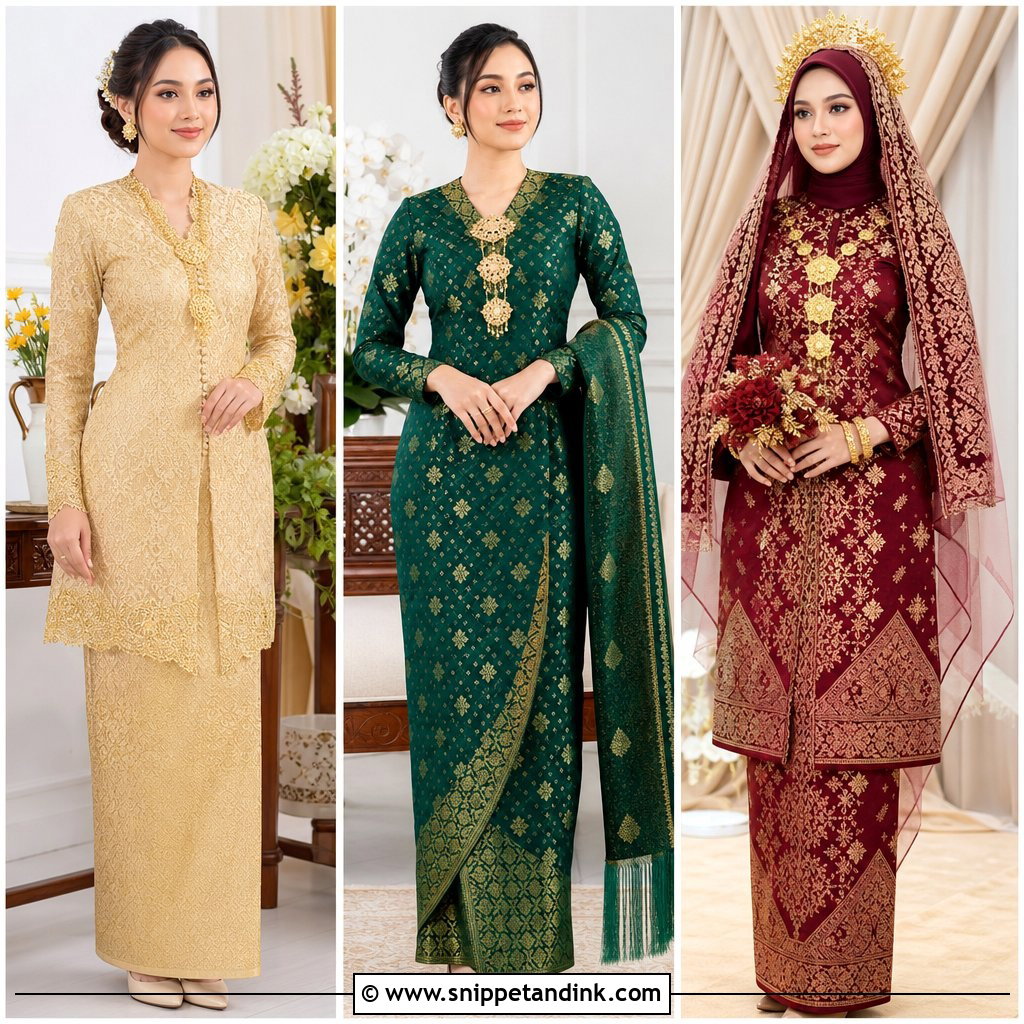
- Akad nikah: usually white, ivory or a soft pastel, modest and lightly embellished. You’ll be seated, often on the floor, so the skirt needs ease.
- Bersanding and reception: the showpiece. This is where songket, heavy beading and stronger colours belong, often matched with the groom.
- Portraits or a second reception: a lighter lace kebaya or a baju kurung with a detachable train gives a fresh look without another heavy set.
If the budget only covers one outfit, choose champagne or cream with songket in the skirt. It sits comfortably at the akad and still looks grand on the pelamin. Hand-woven songket can take a long time to make, so if you want it woven to order, ask the weaver for a timeline before you set fitting dates.
1. Baju Nikah Putih
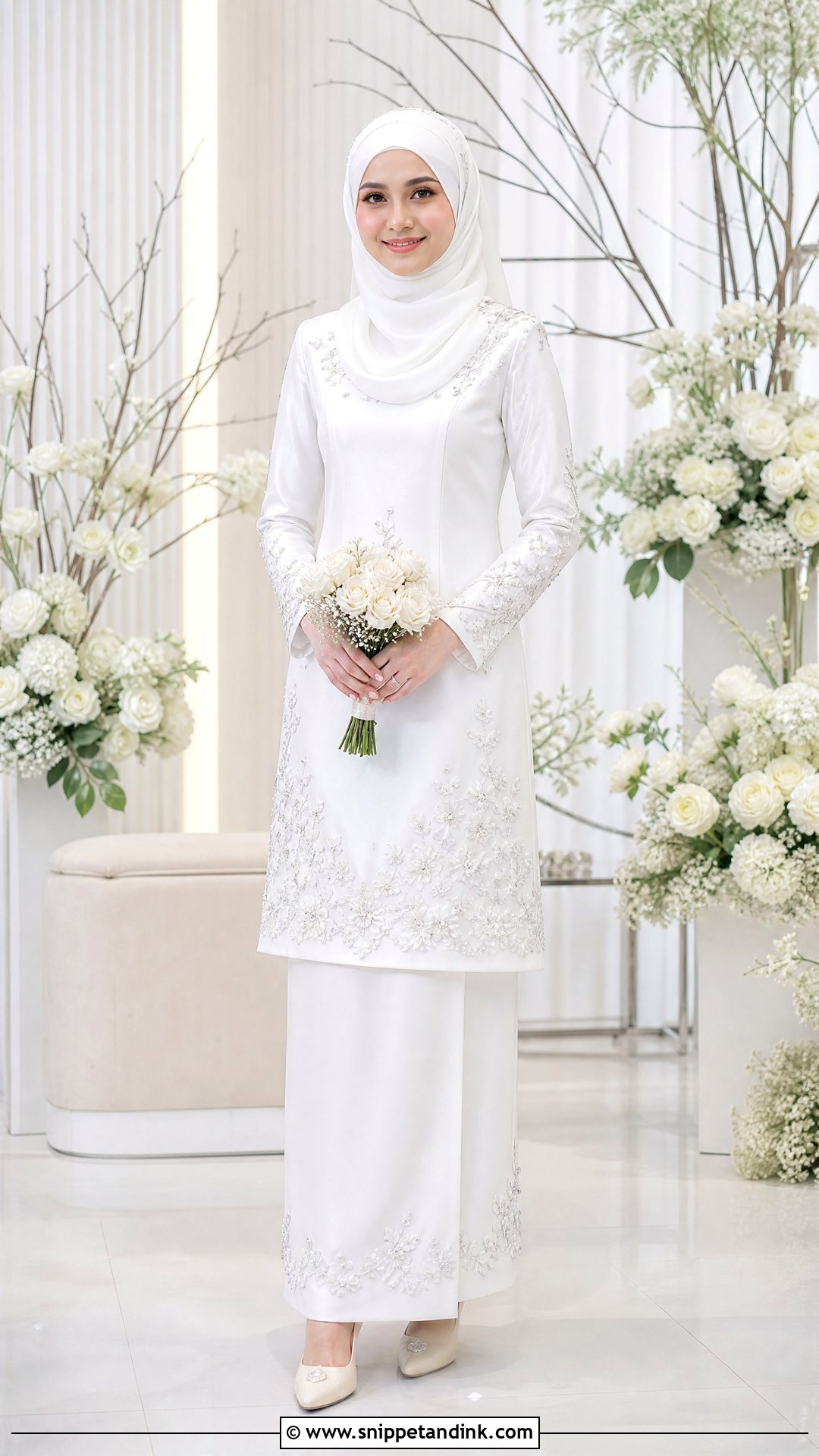
White is still the most common choice for the akad, and for good reason: it’s calm, it suits the seriousness of the vows, and it doesn’t compete with the moment. A baju kurung moden or kebaya-inspired top in pearl white, ivory or cream, with embroidery kept to the sleeves and hem, is plenty. The skirt needs enough ease to sit cross-legged or kneel without pulling. I prefer ivory to stark white on most skin, because bright white can make the face look grey under the strong lights many mosques and halls use. A neat white tudung, pearl pins, low heels and a small bouquet finish it.
2. Baju Kurung Moden Wedding Dress
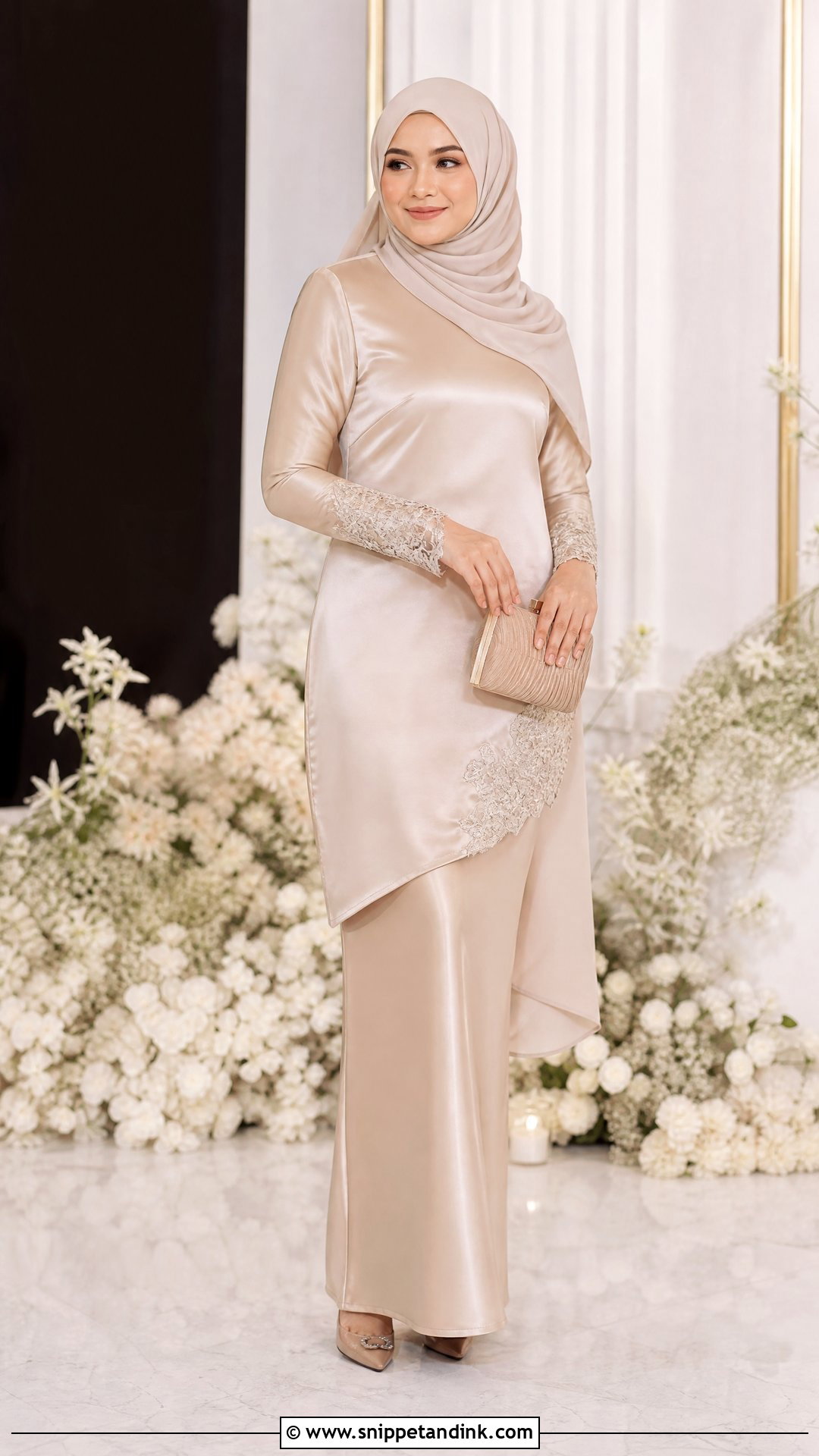
Baju kurung moden takes the traditional loose kurung and shapes it gently through the bodice and sleeves. The key word is gently: if the top follows the body too closely, it creases across the stomach when seated and loses the modest line. Satin, crepe or silk blends with lace panels, beadwork or subtle floral embroidery suit it. Champagne, blush, ivory, dusty blue and sage all feel current. A matching tudung, pointed heels and a structured clutch work for the akad, a daytime reception or studio portraits.
3. Songket Baju Kurung Pengantin
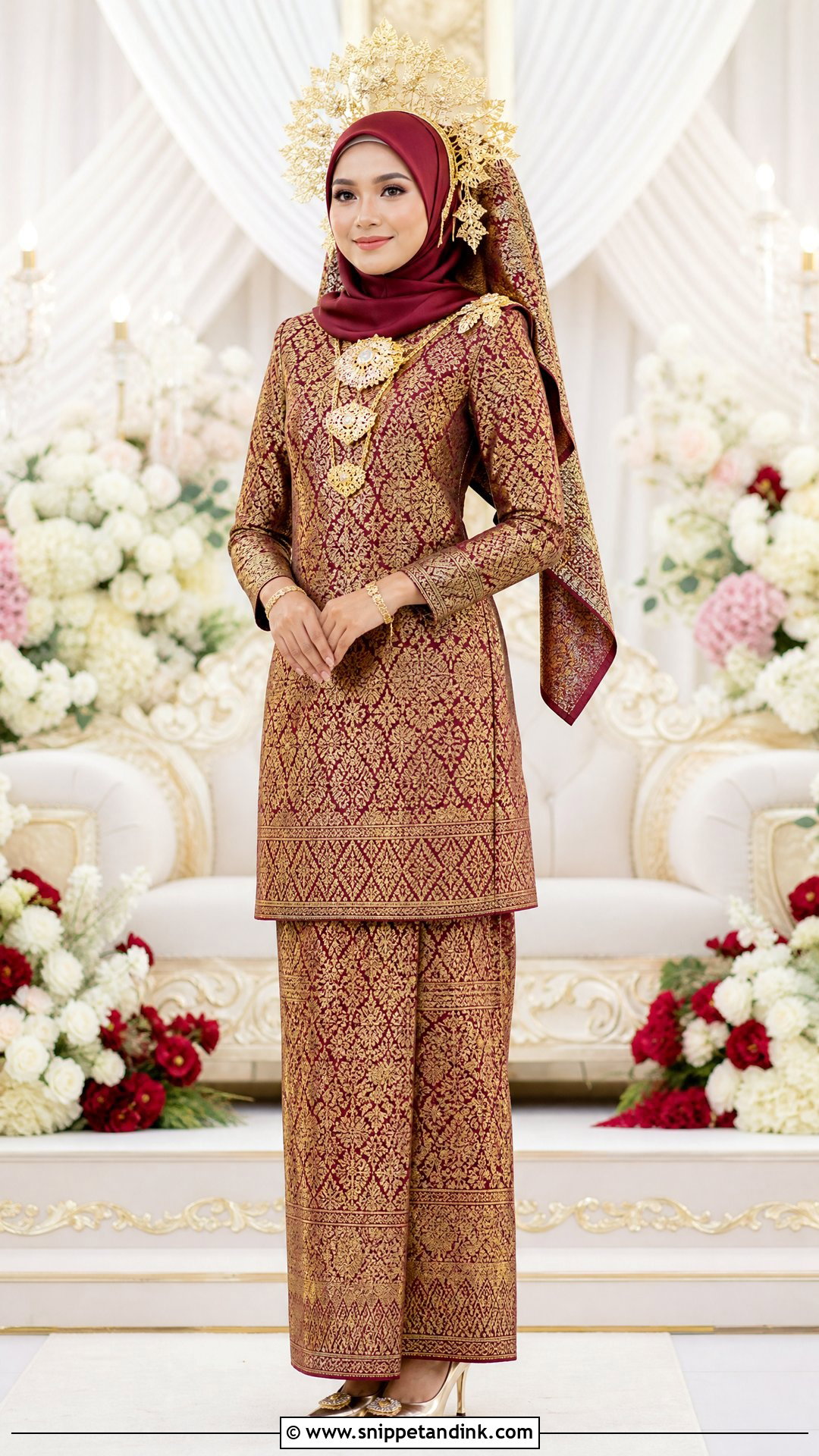
Songket is hand-woven with metallic thread laid into the cloth, which is what gives it that raised, royal texture. A songket baju kurung pengantin suits the bersanding, especially in gold, maroon, emerald, navy or silver. You can wear a full songket skirt with a simpler top, or a full matching set for the most formal look. Real songket is stiff and fairly heavy, so I keep the cut roomy at the hips and ask for a soft lining against the skin, since the metallic threads on the reverse can scratch. Add a structured tudung, a dokoh necklace and a jewelled brooch.
4. Kebaya Melayu Wedding Dress
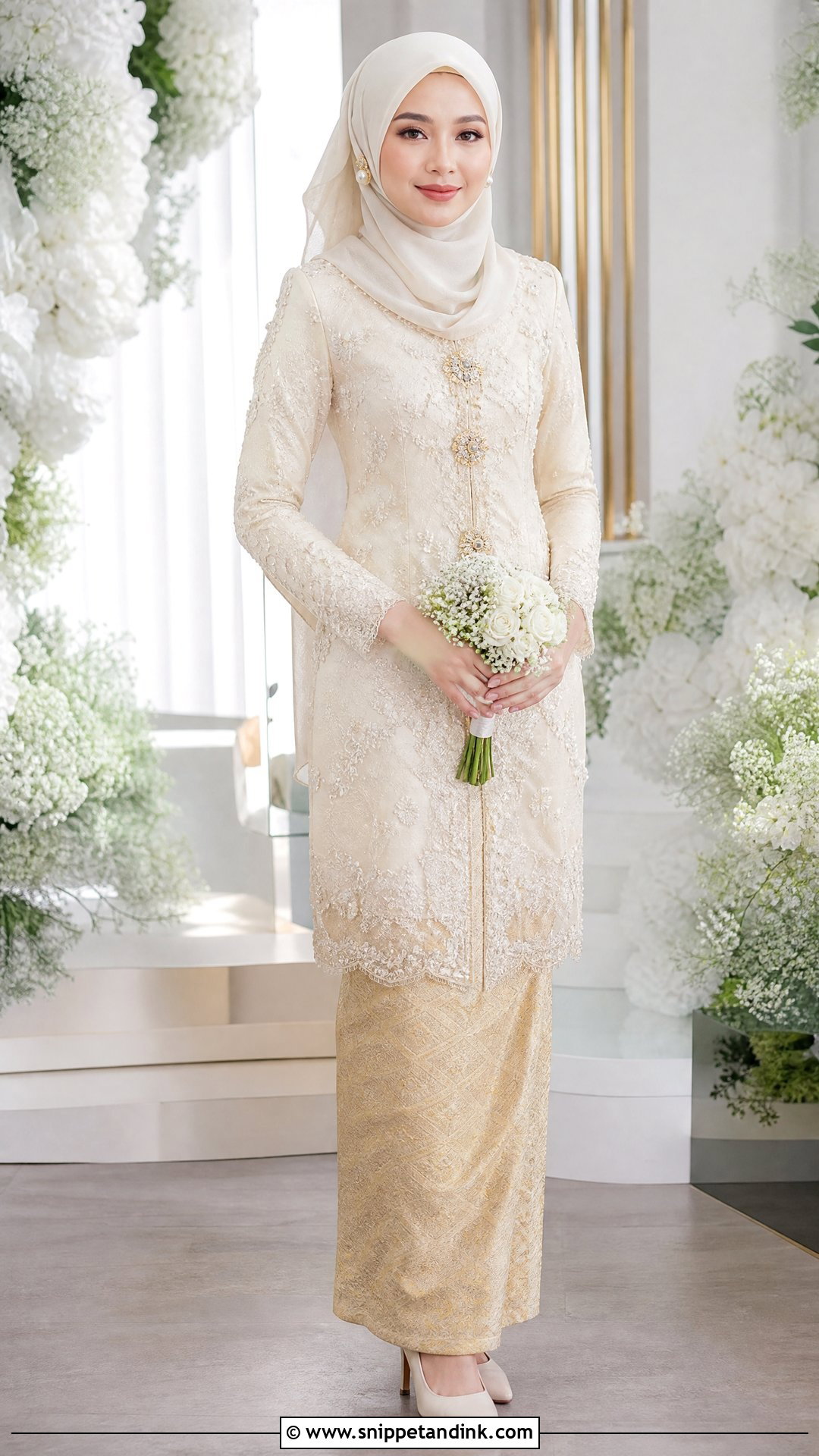
The kebaya gives a more fitted, feminine line than the kurung while staying traditional. The longer top pairs with a sarong-style skirt, songket skirt or smooth satin. Lace, embroidered organza or beaded fabric in ivory, gold, silver or pastels makes it bridal. Fit is everything: a kebaya that’s too tight across the back will pull open between the front fastenings when you raise your arms to salam guests. A matching tudung, slim heels, pearl earrings and a small bouquet complete it.
5. Baju Sanding Gold Songket
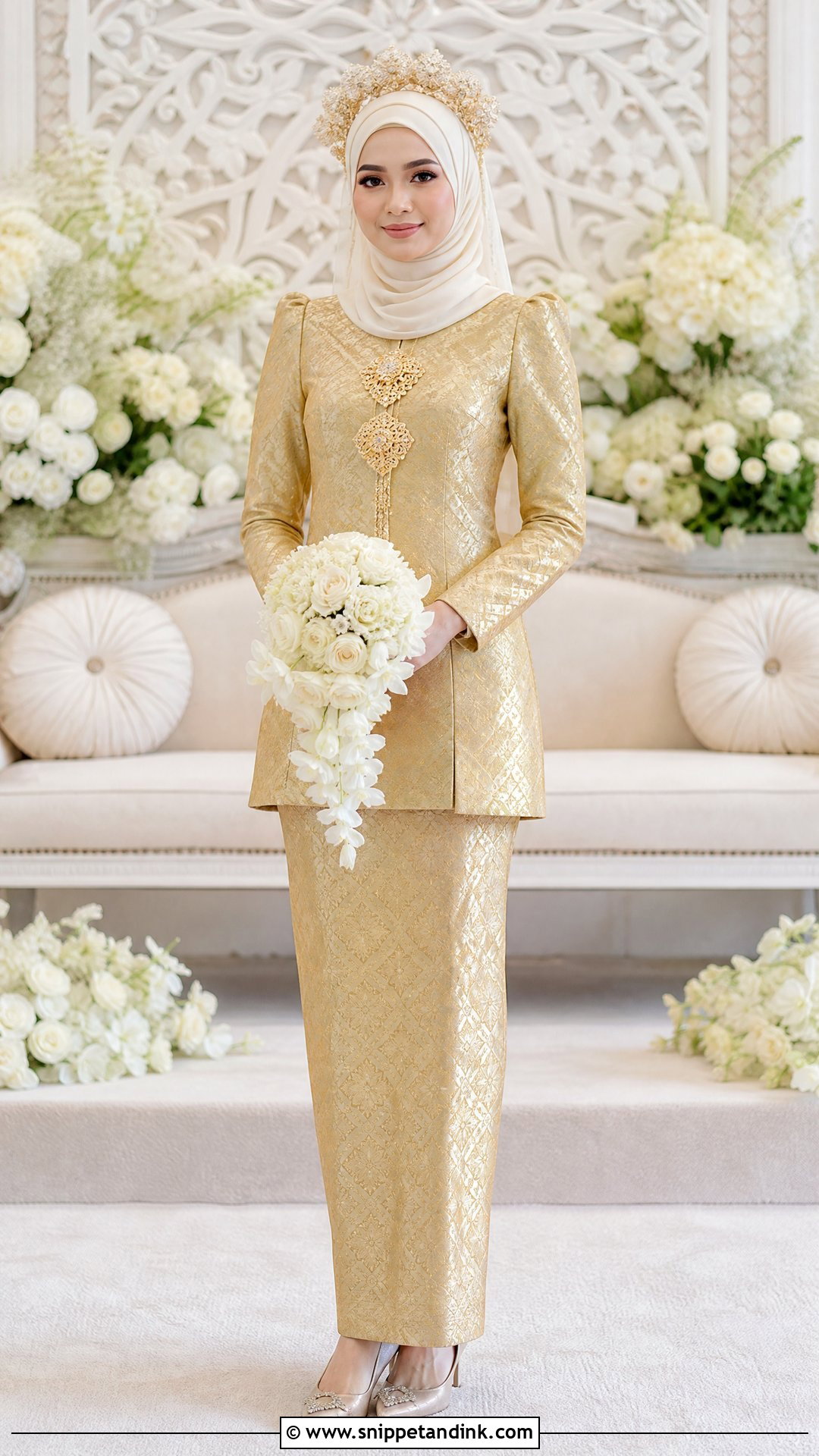
A gold songket baju sanding outfit is the classic raja sehari look for the main reception. The gold thread does the work, paired with a structured baju kurung, kebaya labuh or a modern peplum top, and a matching gold or cream skirt. A soft tudung with a tiara-style headpiece or jewelled covering adds height. Nude or metallic heels keep the line long. Gold sits well against white flowers, green foliage and a traditional pelamin. The one thing I warn about is glare: full gold under strong flash can flatten the weave in photos, so a matte-finish songket photographs better than a very shiny one.
6. Pastel Baju Nikah Dress
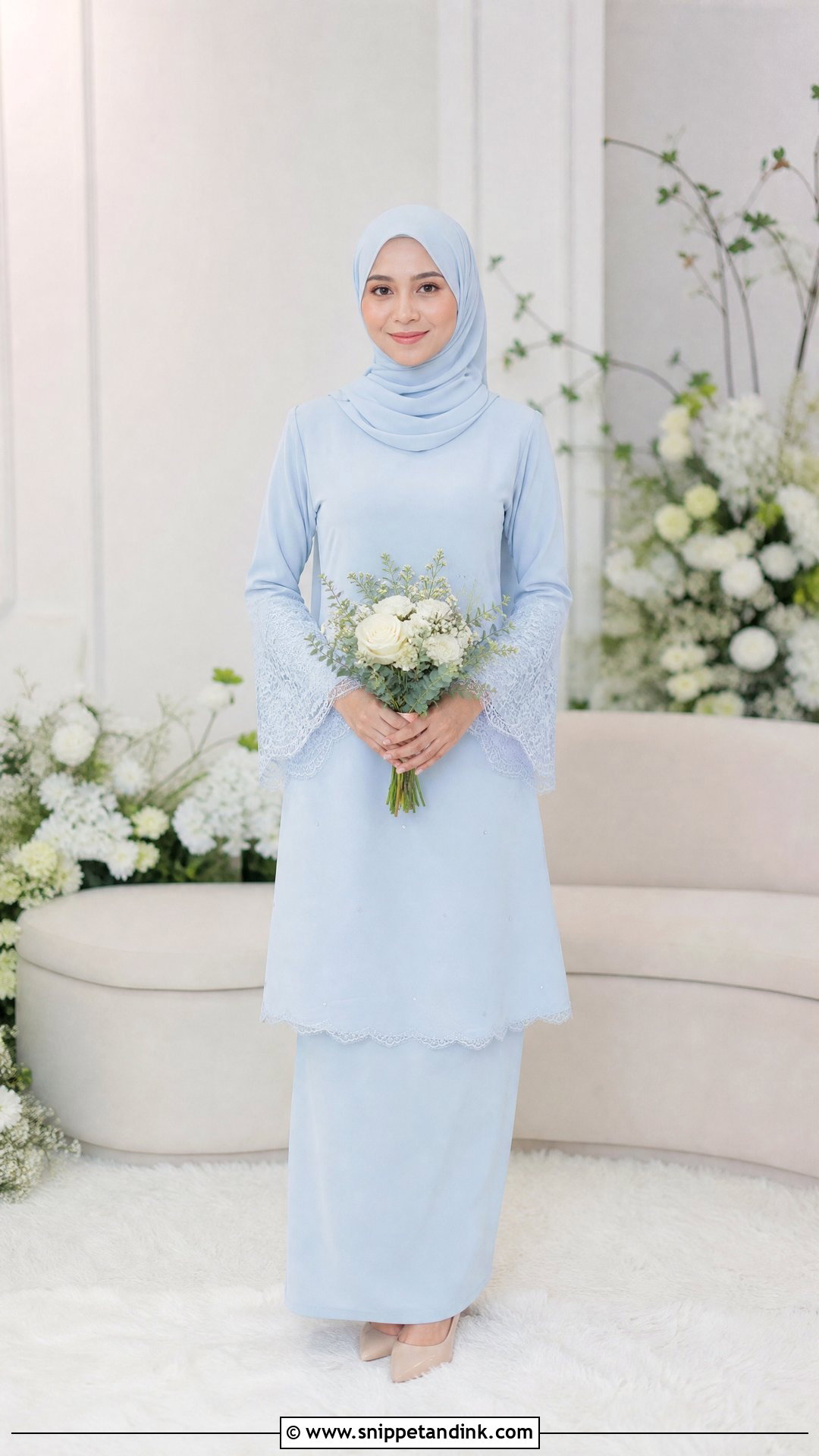
Pastels give a romantic baju nikah look with colour, which suits brides who don’t feel like themselves in white. Powder blue, blush, mint, lavender and peach all work for a daytime ceremony. A long baju kurung moden with lace sleeves, small pearl beading or floral embroidery adds texture. Match the tudung to the dress rather than going white, or the colour looks like an afterthought. Nude heels and a cream, blush or greenery bouquet keep it light. Mint and lavender lean cool, so hold them near your face in daylight first.
7. Modern Kebaya Lace Wedding Dress
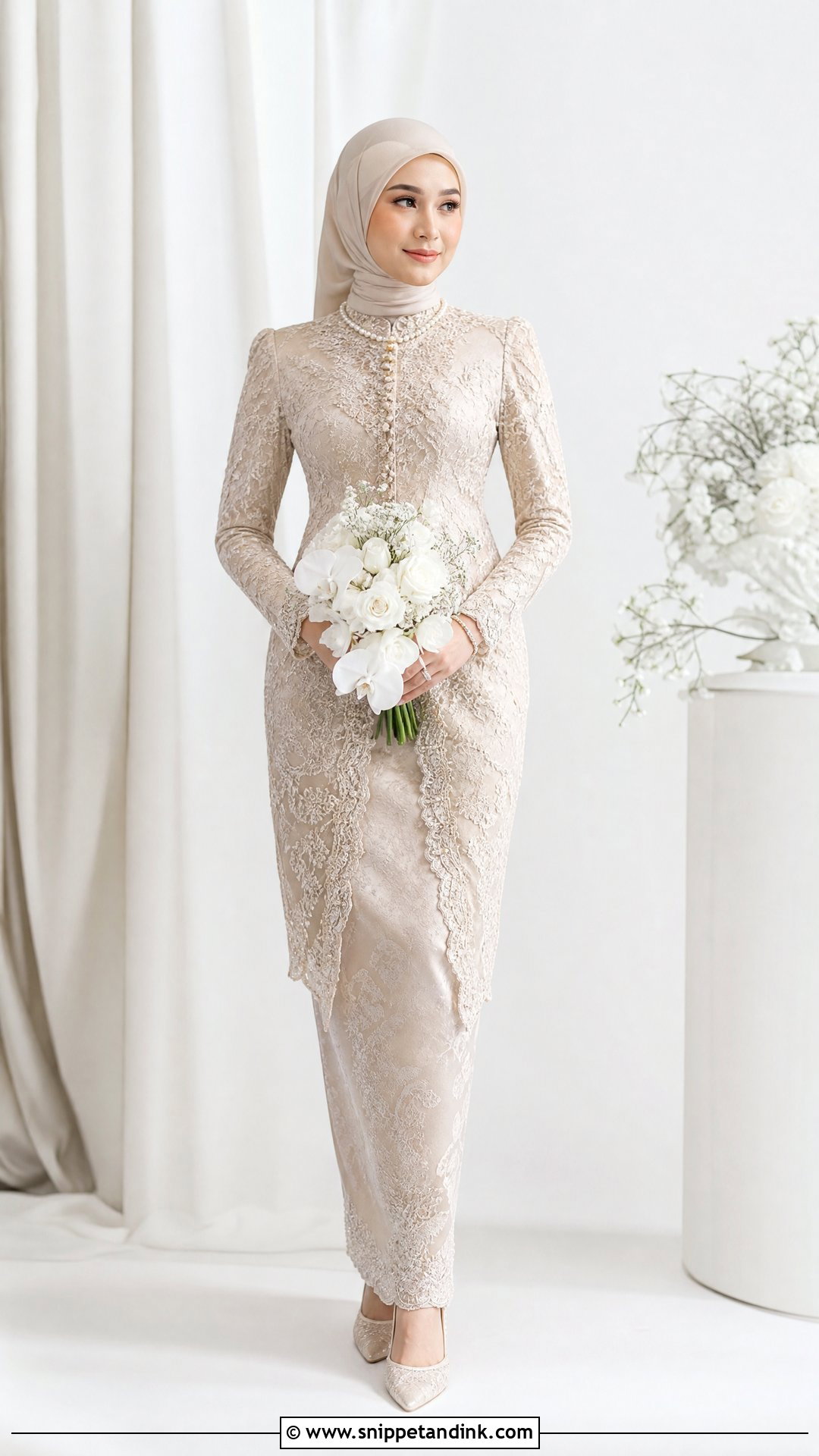
A modern lace kebaya layers lace over a satin lining, with beading at the neckline or cuffs and a straight or mermaid-inspired skirt. Ivory, champagne, dusty pink and soft grey all suit it. Because lace is already detailed, the tudung should be plain and in the same shade. The lining matters more than people expect: a lining one tone warmer than the lace makes the dress glow, while a stark white lining under ivory lace looks patchy. Pointed heels and pearls finish a look I often use as the second outfit after the solemnisation.
8. Baju Kurung Kedah Wedding Dress
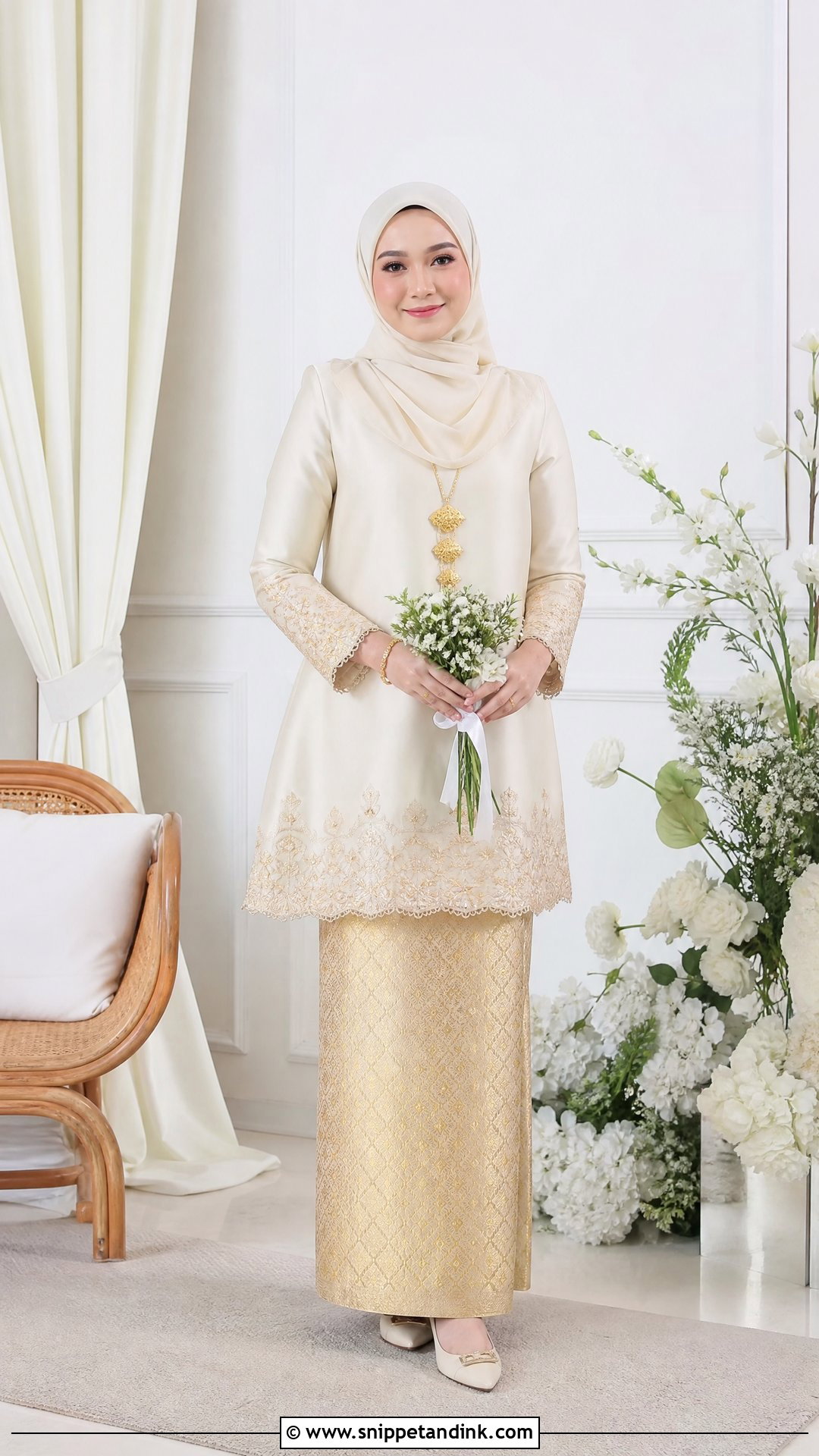
Baju kurung Kedah has a shorter, looser top, which makes it one of the coolest options for a hot kampung wedding or home ceremony. For a bridal version, choose silk, satin or a fine cotton blend with embroidery, lace edging or a songket skirt. White, cream, pale yellow and soft green feel fresh. Because the top ends around the hip, the skirt waist shows more, so a neat, flat waistband matters. A pinned tudung, low heels and simple gold jewellery are enough.
9. Baju Kurung Teluk Belanga Pengantin
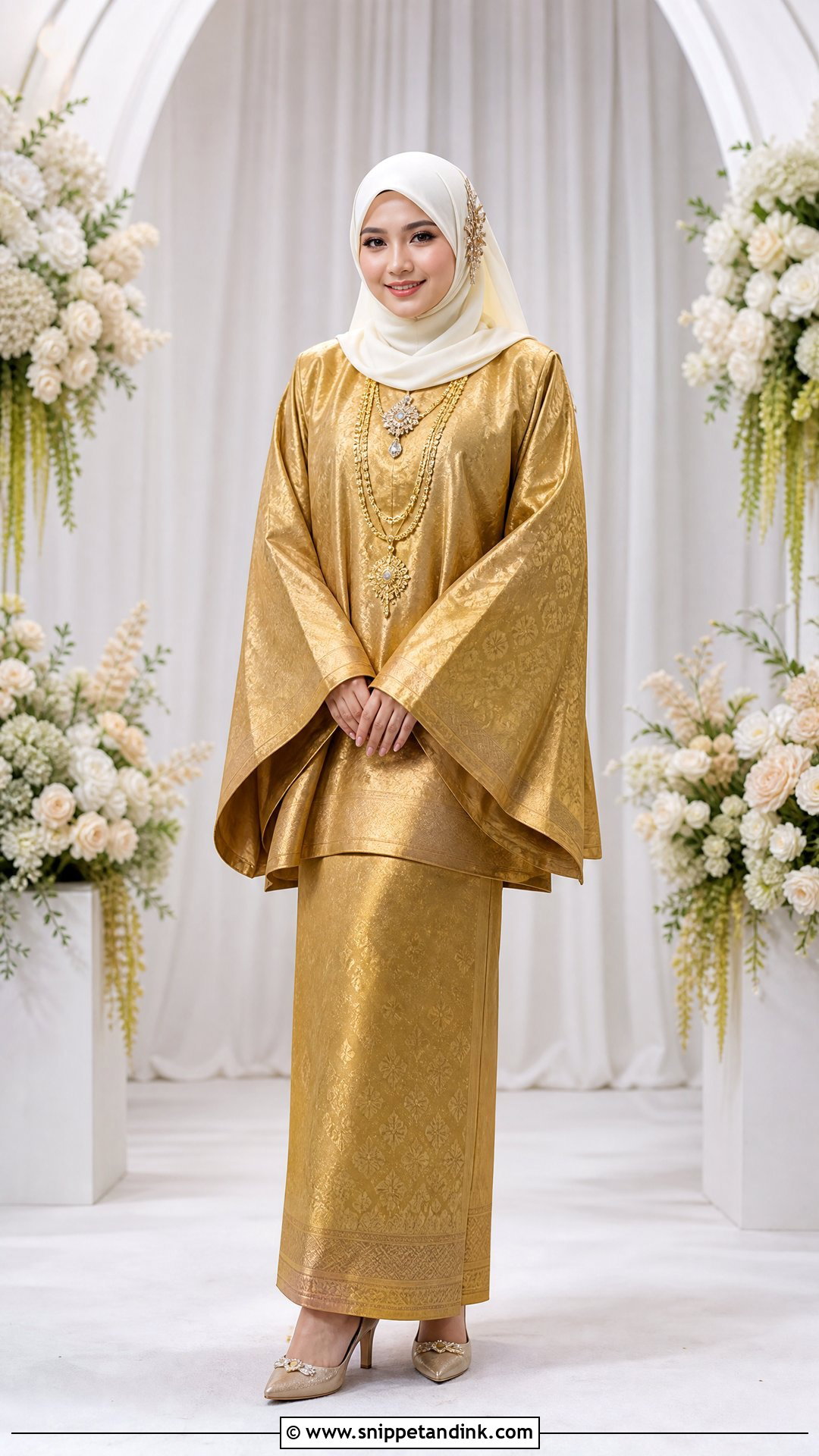
A baju kurung Teluk Belanga pengantin outfit has the round neckline finished with fine stitching instead of a collar, which is why it reads so clean and classic. A long, loose top with a matching skirt in silk, crepe or songket is the formal version. Pearl white, antique gold, deep blue and rose beige all work. With such a plain neckline, the bridal detail comes from accessories: a layered dokoh, a jewelled brooch, a soft tudung. It suits brides who want an understated, authentic look in family photos.
10. Baju Kebaya Labuh Wedding Dress
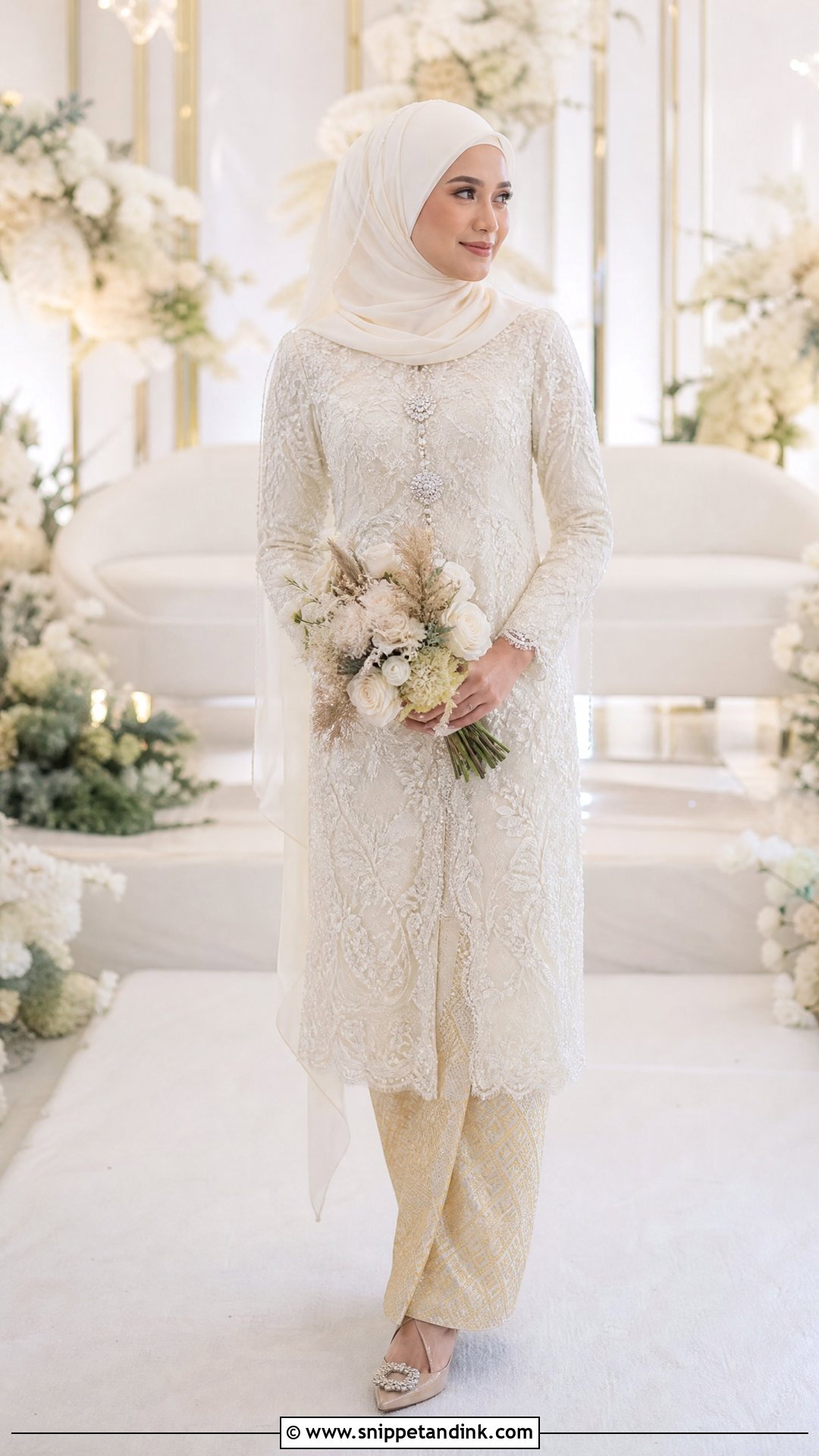
Kebaya labuh is the long kebaya, falling to the knee or below, so it skims the body and gives more coverage than a short kebaya. It pairs with a songket skirt, batik-inspired skirt or matching satin. Fine lace, embroidered tulle or smooth silk with delicate beads suits a wedding. The length also hides the skirt’s waistband, which helps brides who find a fitted waist uncomfortable after a long day. A matching tudung, slim heels, pearl pins and a neutral bouquet finish a graceful, formal look.
11. Ivory Baju Kurung With Pearl Details
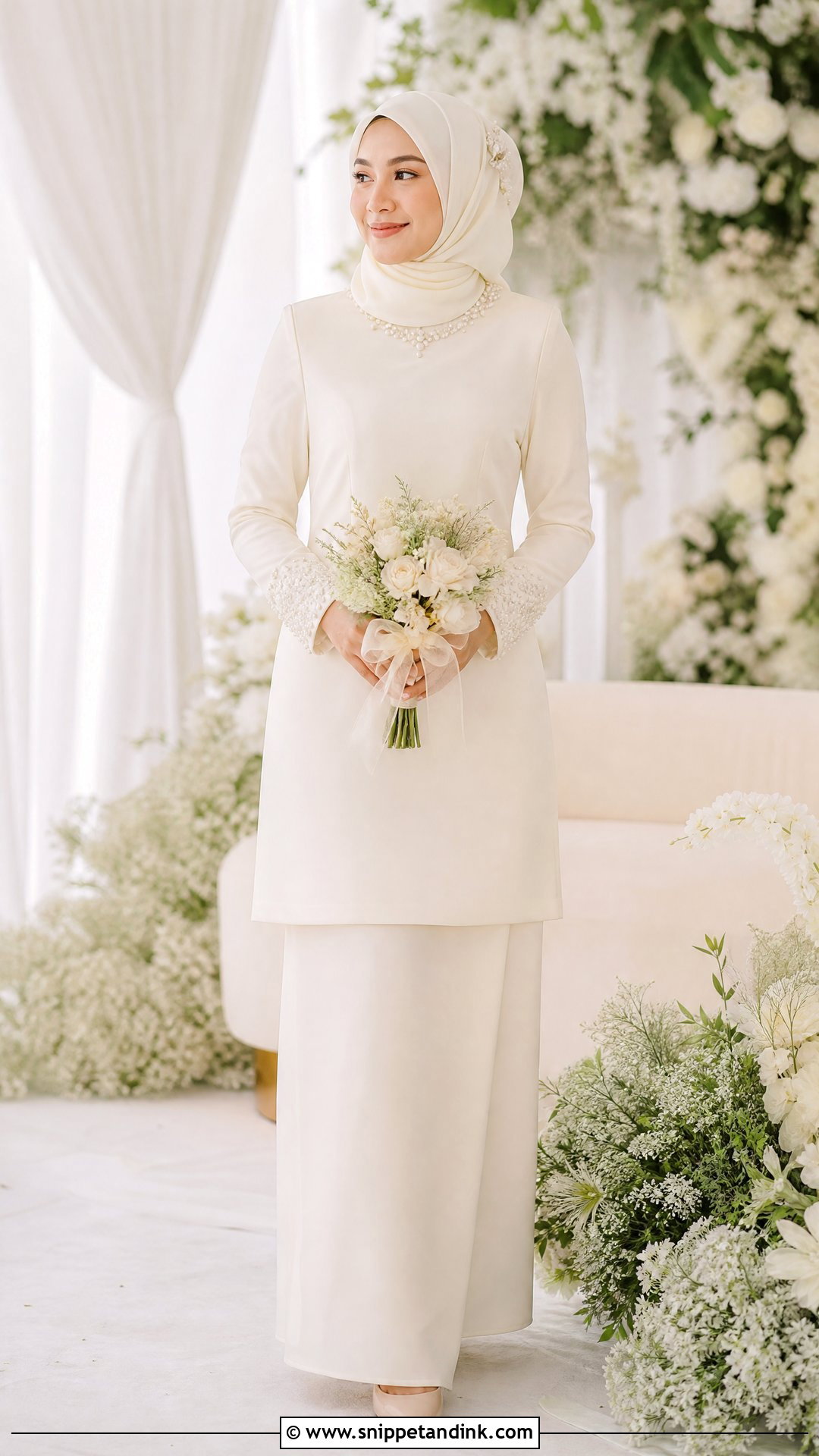
Ivory is warmer than bright white and sits more kindly on most Malay skin tones. Pearls along the cuffs, neckline, waist or skirt border give detail without shimmer, and they pick up light gently in indoor photos. Sew-on pearls should be checked for loose threads at the last fitting; they snag on tudung pins and fall off. A matching ivory tudung with pearl pins, nude or champagne heels and a white-and-cream bouquet complete it.
12. Emerald Green Songket Wedding Dress
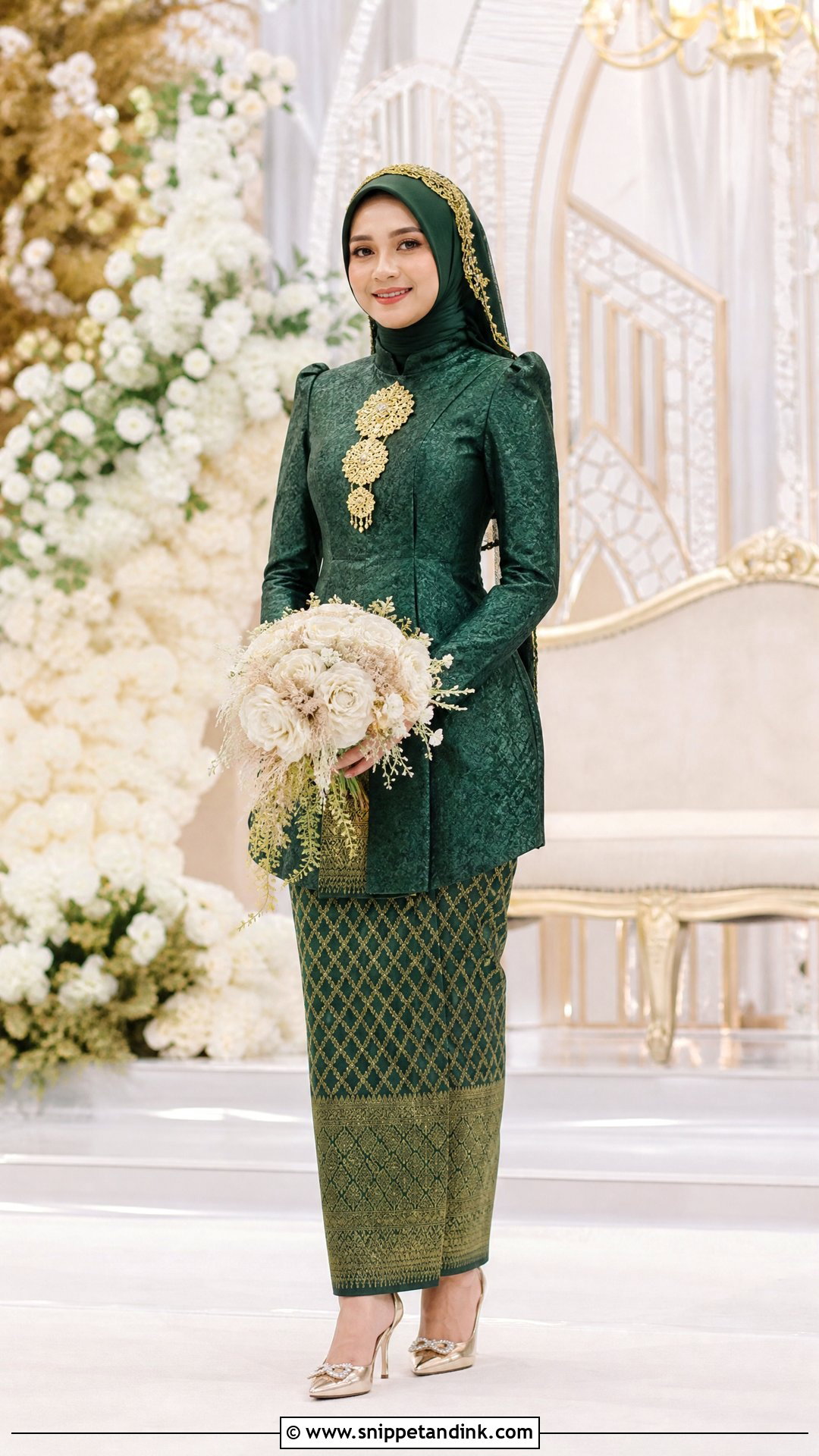
Emerald gives a royal depth, especially against gold songket. A structured baju kurung or kebaya top in emerald looks rich over a gold-threaded skirt. Add a green or gold tudung, an ornate brooch, classic heels and a cream bouquet to soften it. It’s at its strongest for the bersanding, evening receptions and pelamin photos, and it looks particularly good against dark wood decor. Emerald can make the face look sallow if the tudung is the same colour, so I often frame the face with gold or cream instead.
13. Blush Pink Melayu Wedding Dress
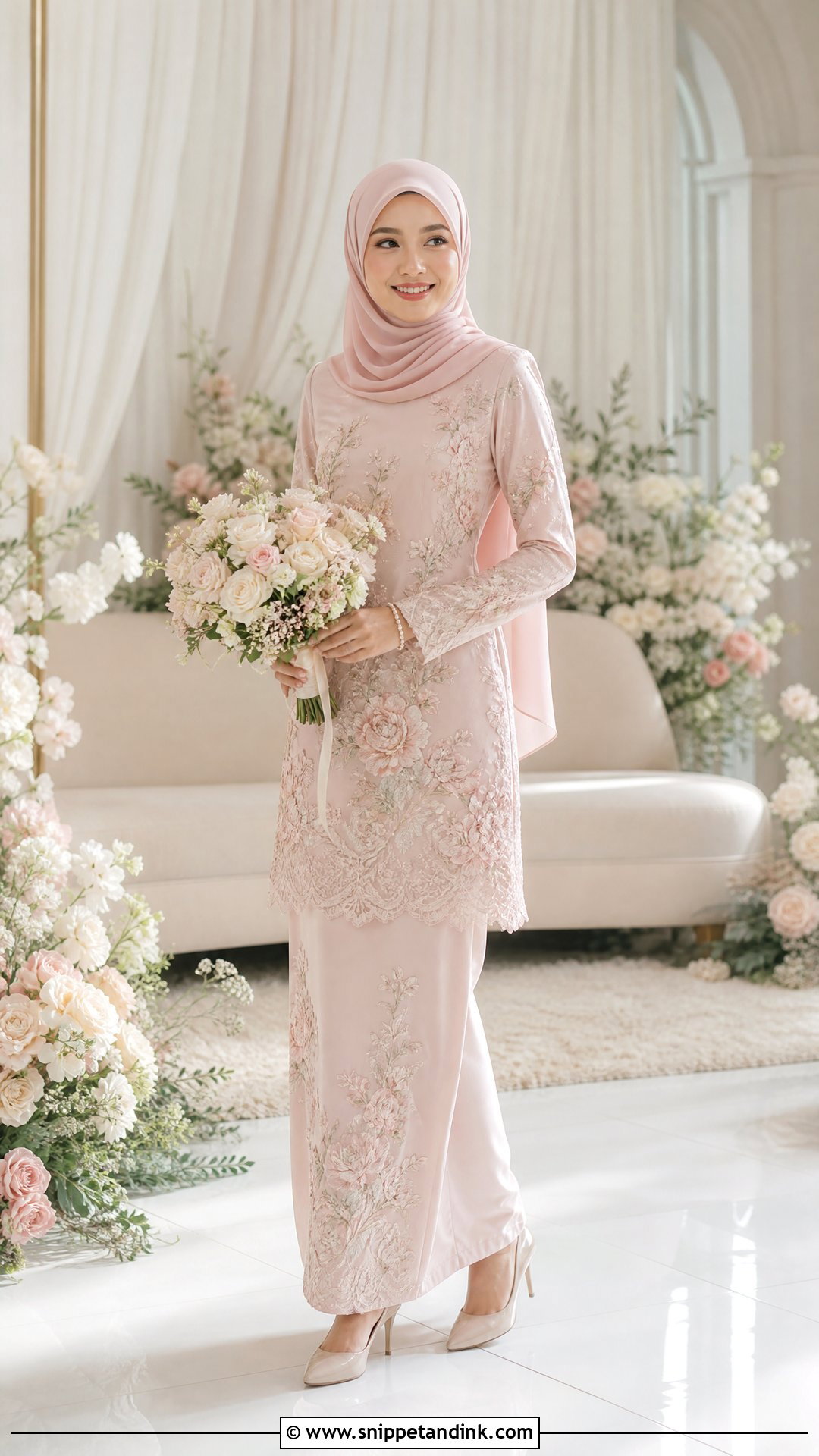
Blush is the easiest pink to wear because it reads as a warm neutral in photos. A baju kurung moden, lace kebaya or peplum top with a long matching skirt suits it; floral embroidery, small crystals or pearl beading add enough sparkle. A blush tudung or ivory veil keeps it delicate, and nude heels keep the whole thing light. Check the shade in daylight: some blush satins go faintly orange under warm hall lights. A cream, pale pink and greenery bouquet coordinates neatly.
14. Maroon Songket Baju Sanding
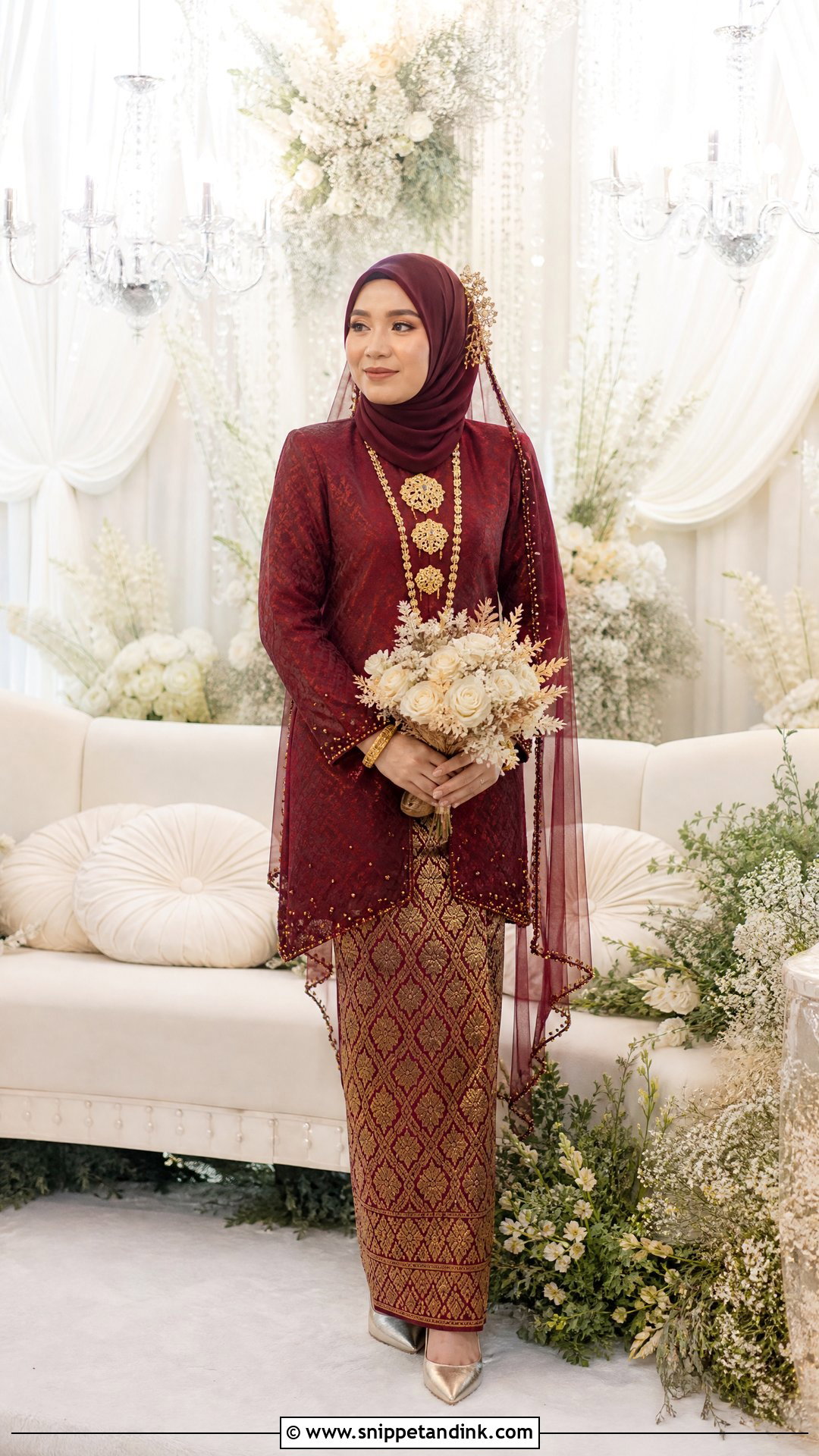
Maroon songket with gold thread is one of the strongest colour choices for a formal reception. A structured long top, fitted kebaya labuh or modern baju kurung over a floor-length songket skirt suits it. A matching maroon tudung, gold accessories and metallic heels complete the outfit. With such a deep colour, keep the makeup and bouquet balanced with cream flowers and warm gold, rather than adding more red. It feels grand without needing extra detail.

15. Champagne Baju Kurung Wedding Dress
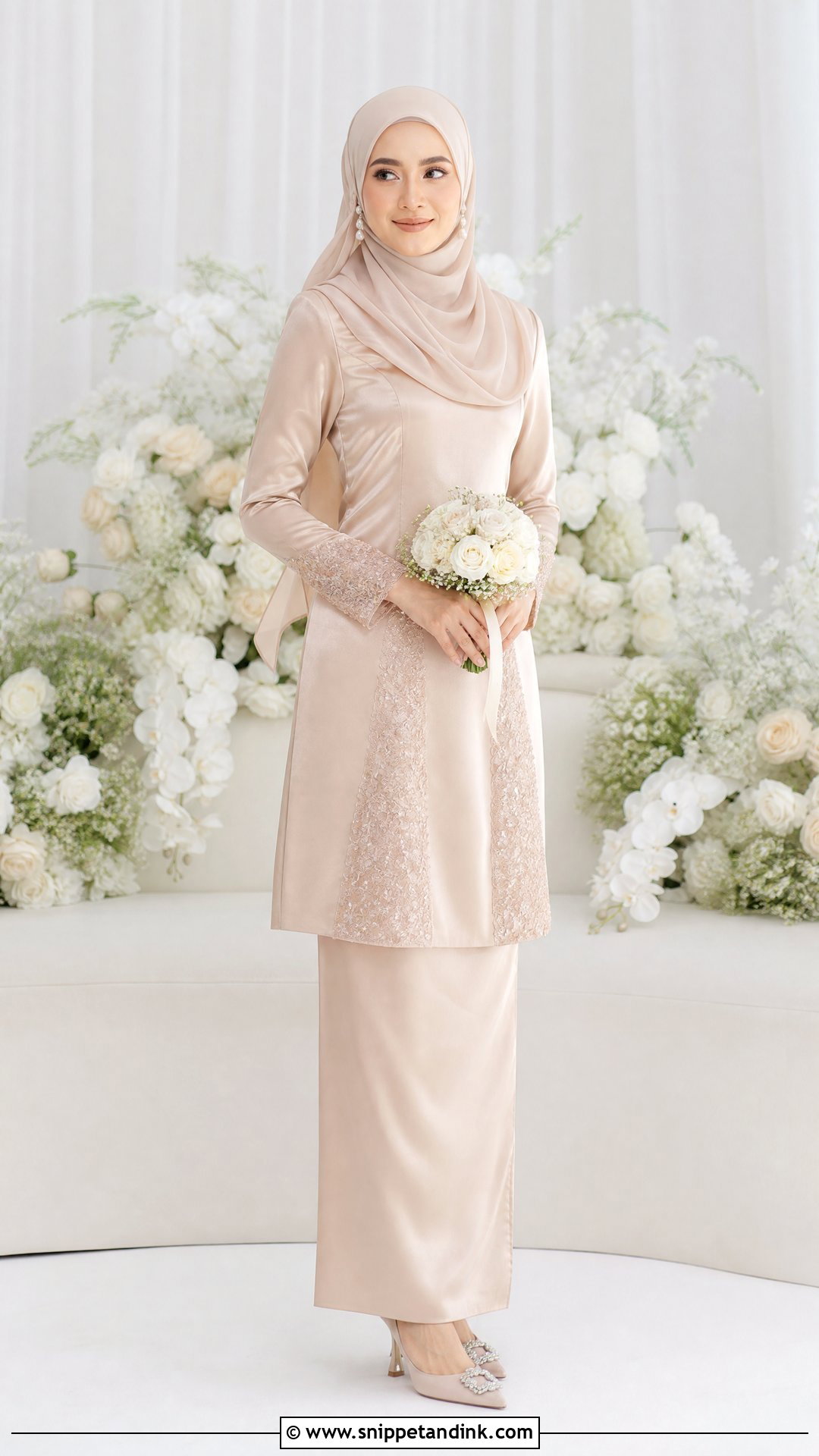
Champagne sits between beige, gold and ivory, so it looks expensive without the glare of bright gold. Satin, silk or beaded lace in this shade carries well in both daylight and warm evening lighting, which makes it a sensible one-outfit choice if you’re only buying one. A matching tudung, champagne heels and pearl or gold jewellery finish it. It’s also one of the easiest shades to coordinate with the groom’s baju Melayu.
16. Silver Songket Wedding Dress
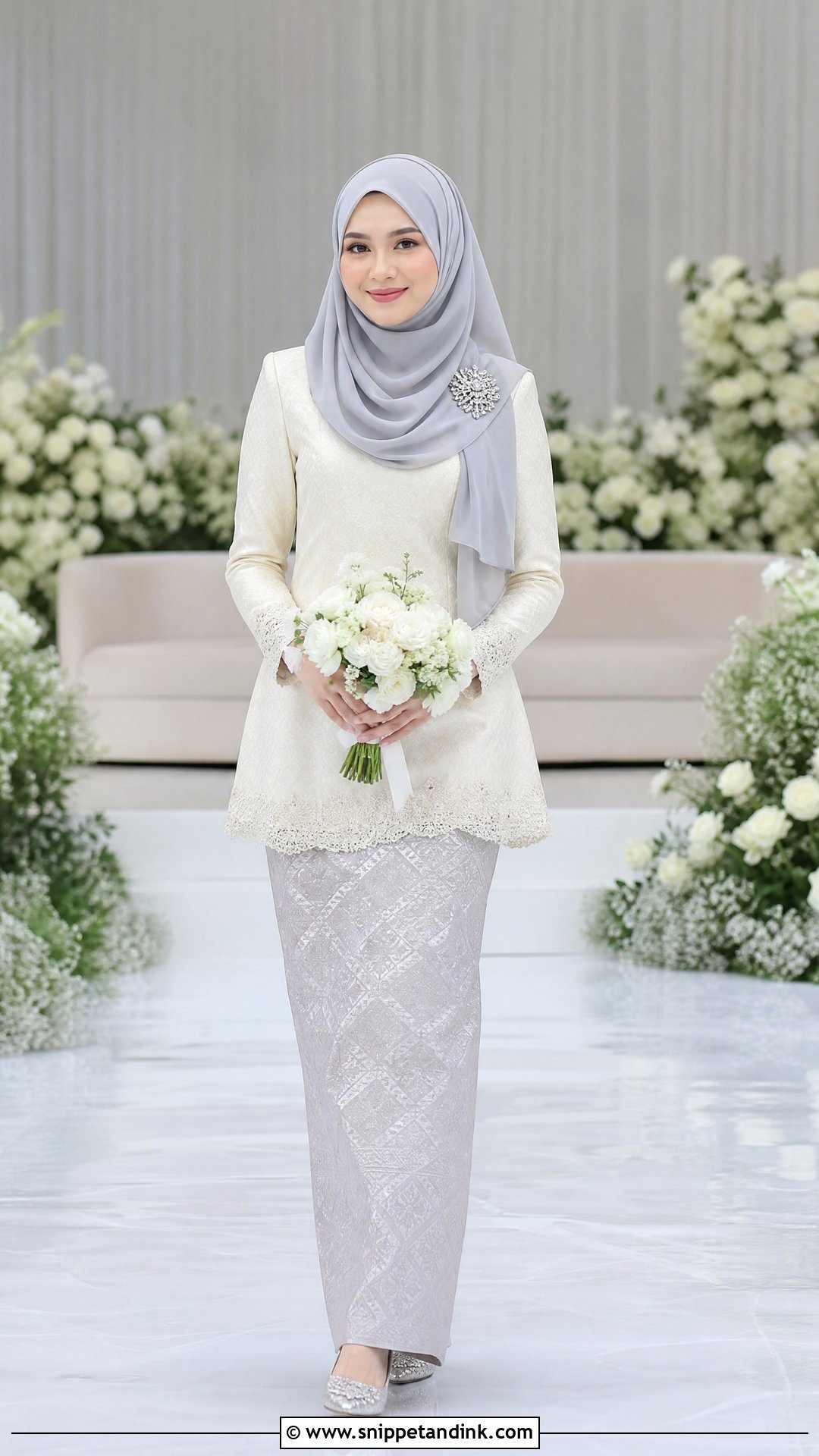
Silver songket is the cool-toned alternative to gold, still metallic but softer. Wear a silver songket skirt with an ivory or grey baju kurung top, or a full silver set for more impact. A soft grey tudung, crystal brooch, silver heels and a white bouquet complete it. Silver suits blue, white and pastel themes and modern indoor decor. On warm, golden skin it can look a little flat near the face, so a champagne or ivory tudung helps.
17. Peplum Baju Kurung Pengantin
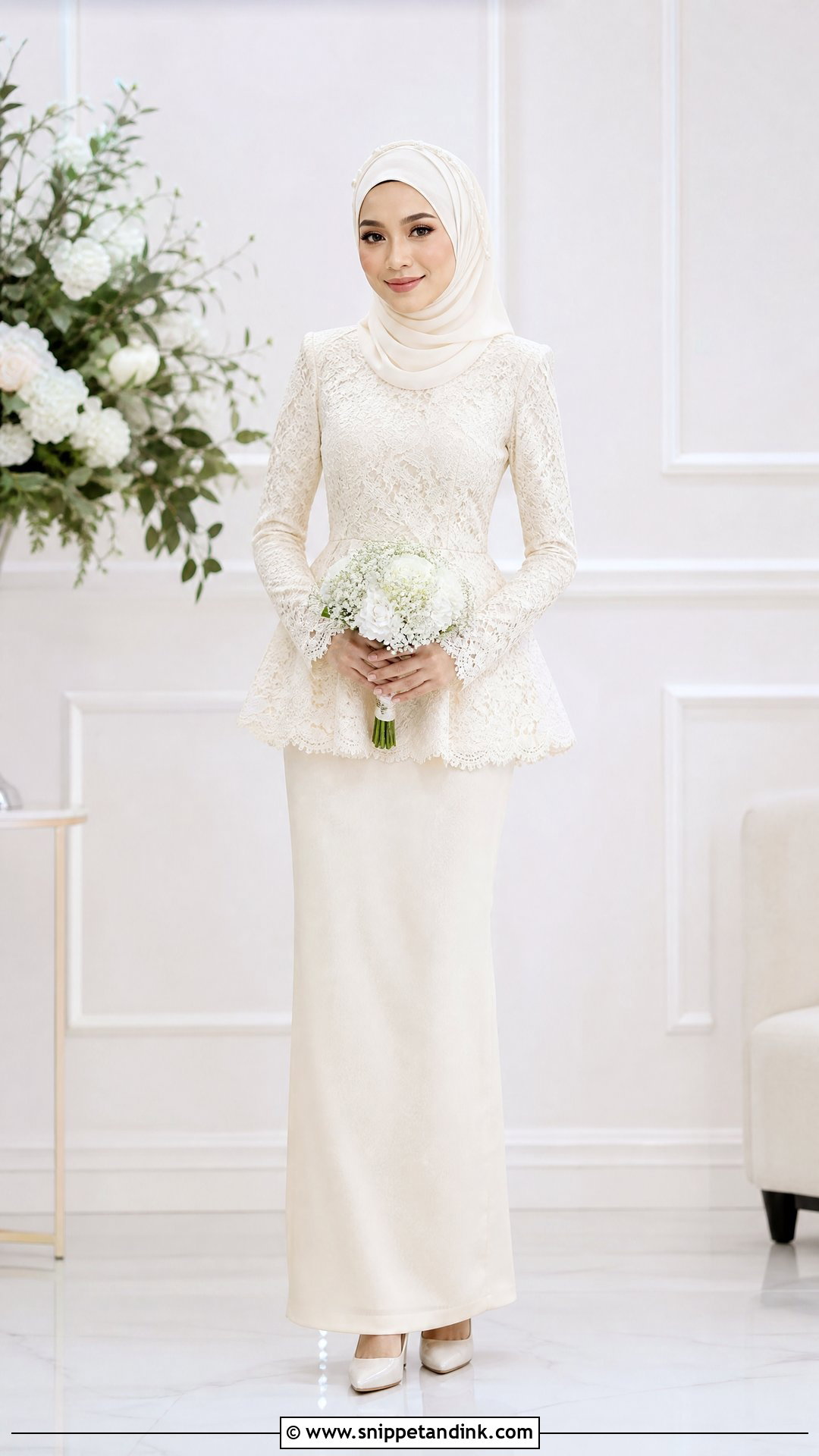
A peplum top defines the waist and keeps the outfit modest, which is why it’s become so common for pengantin. It pairs with a long straight skirt or a mermaid-style skirt. Lace, satin or crepe with beading on the bodice gives the bridal finish; ivory, dusty pink, navy and gold all work. Where the peplum flare starts matters: at the natural waist it flatters, a few inches lower it makes the torso look long and the legs short. A matching tudung, slim heels and a small bouquet keep it clean.
18. Dusty Blue Baju Nikah Dress
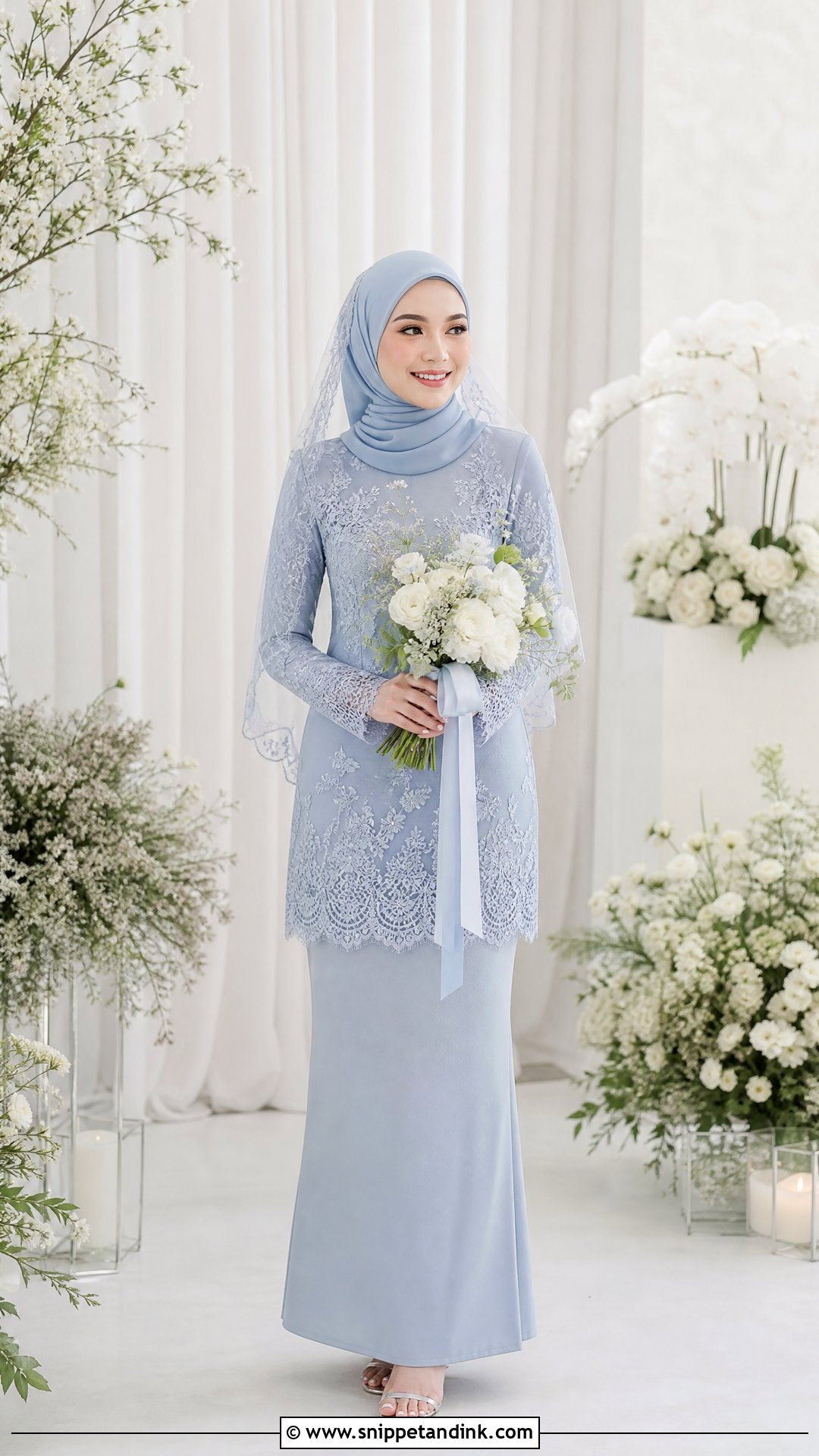
Dusty blue is the calm way to bring colour into the akad. A long baju kurung moden with lace sleeves, subtle beading or embroidered florals suits it. A matching dusty blue tudung keeps it cohesive, and silver or nude heels add polish. A white bouquet with a soft blue ribbon ties it in without looking overmatched. It looks best in morning and afternoon light; under yellow evening lighting, dusty blue can turn slightly grey.
19. Cream Kebaya With Songket Skirt
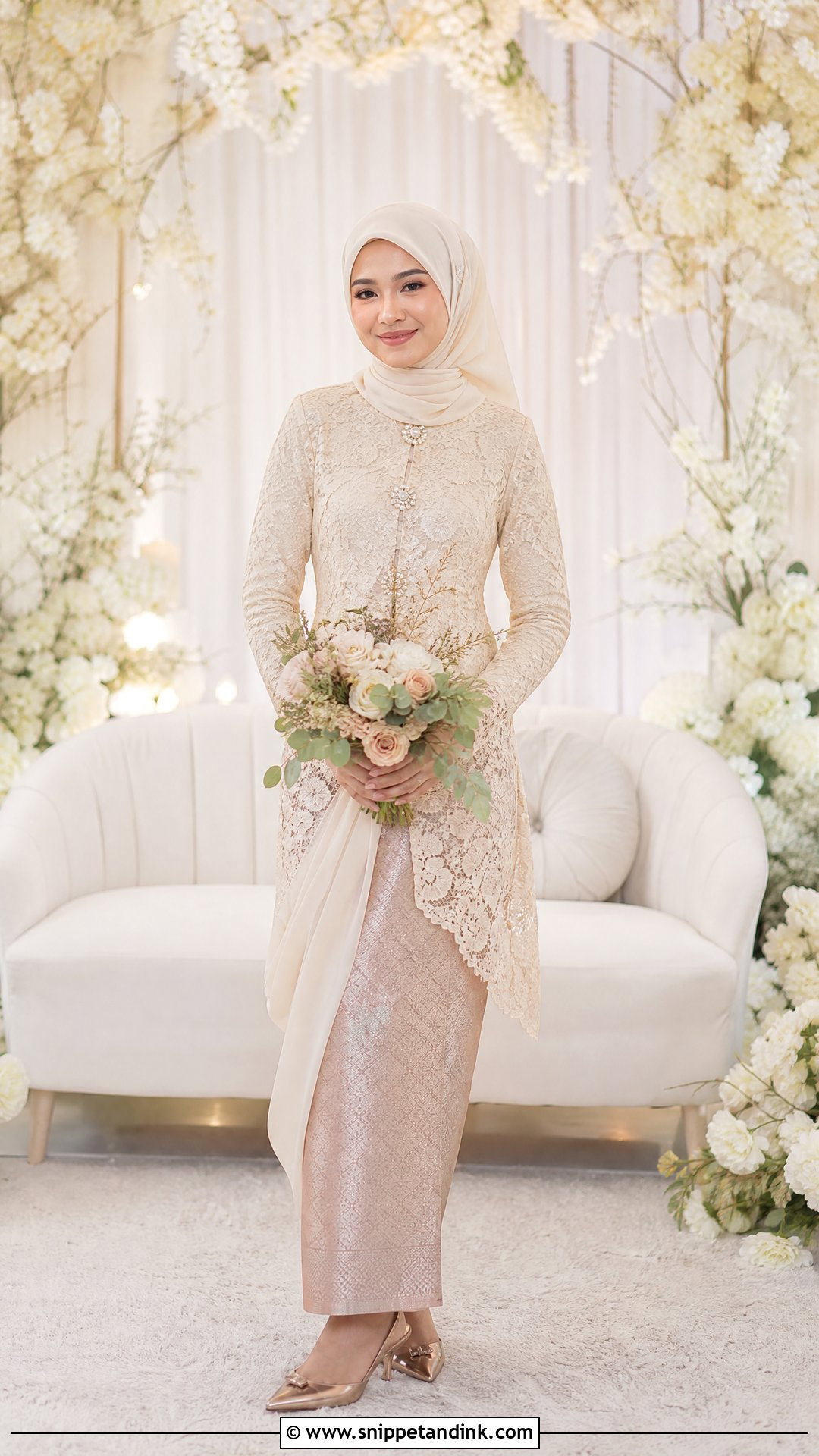
A cream kebaya over a songket skirt balances softness with tradition, and it’s the outfit I suggest when a bride wants one look that works for both ceremony and reception. Choose gold, beige, rose gold or pastel songket depending on the decor. The contrast between lace or silk on top and woven songket below gives texture. A cream tudung, pearl pins, metallic heels and a small bouquet finish it. Make sure the kebaya hem covers the songket’s waist fold neatly when you sit.

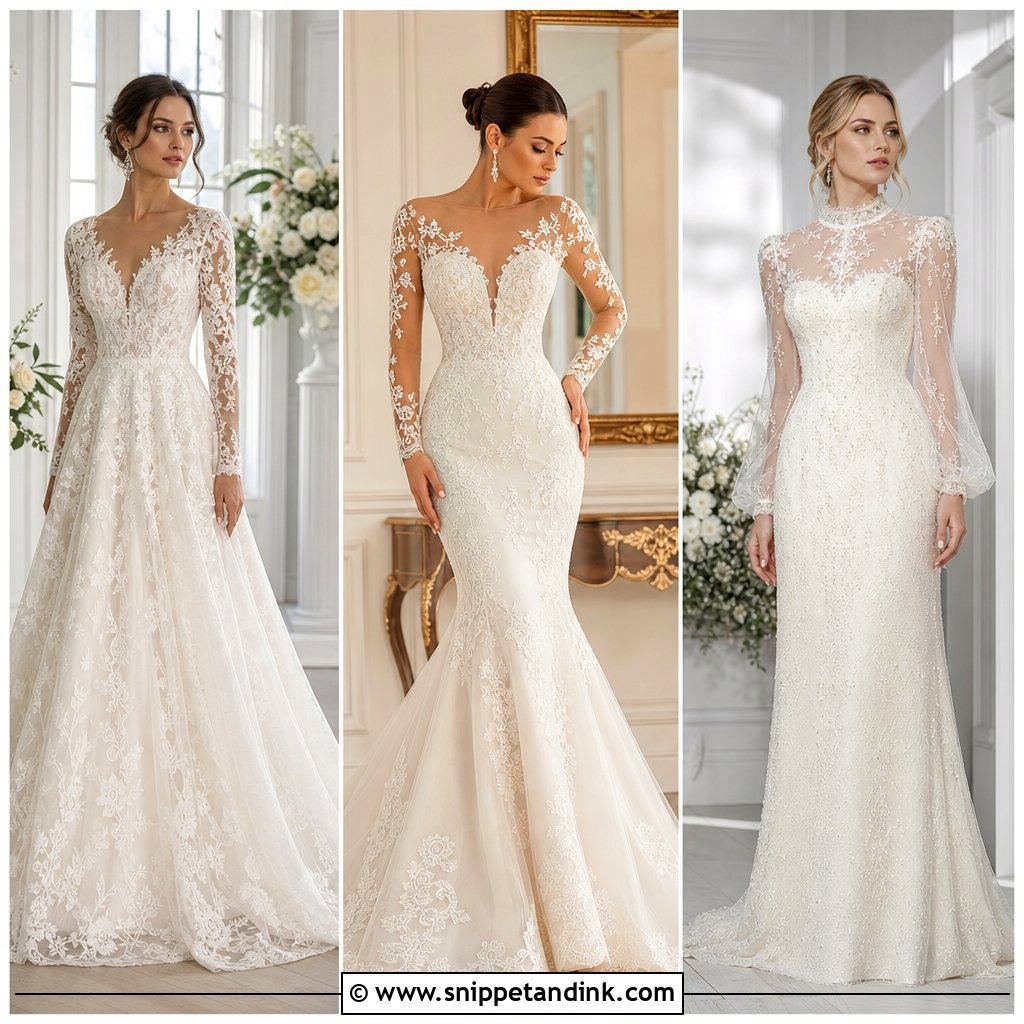
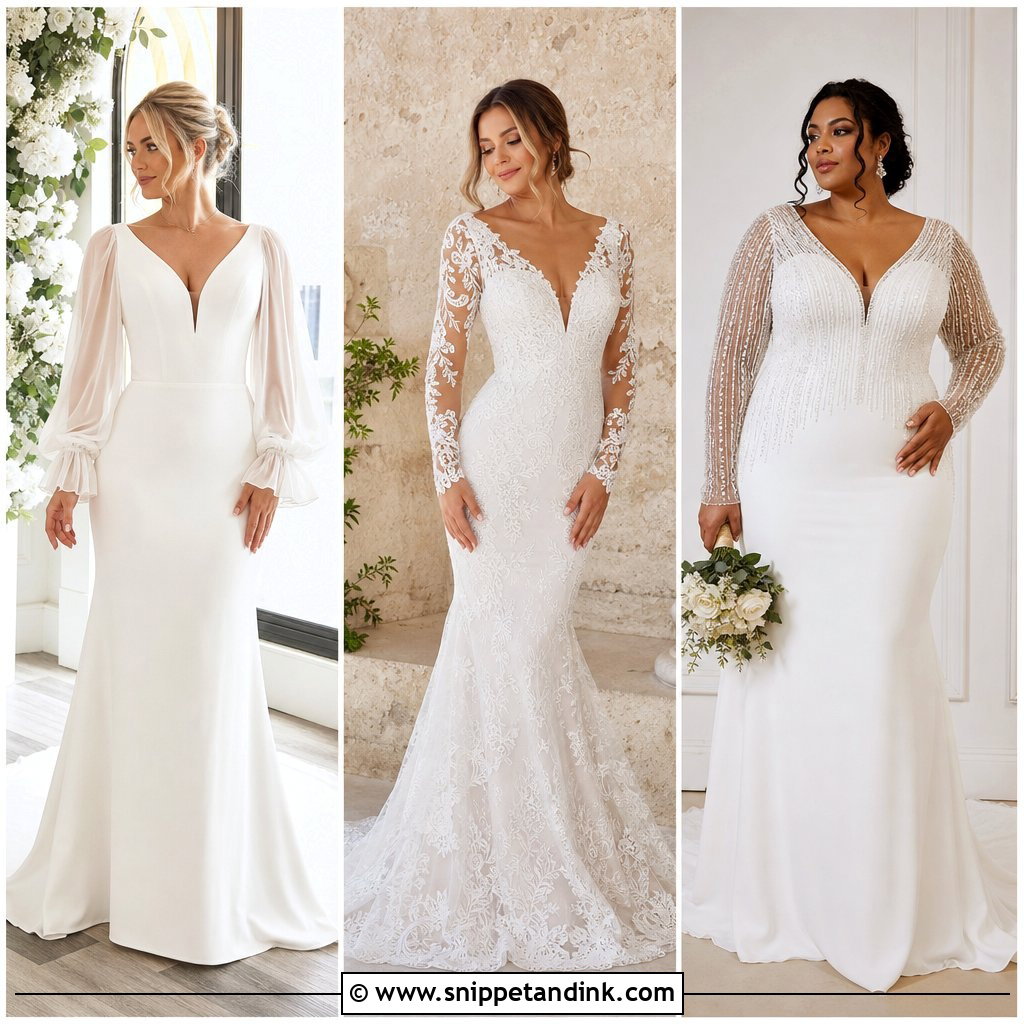
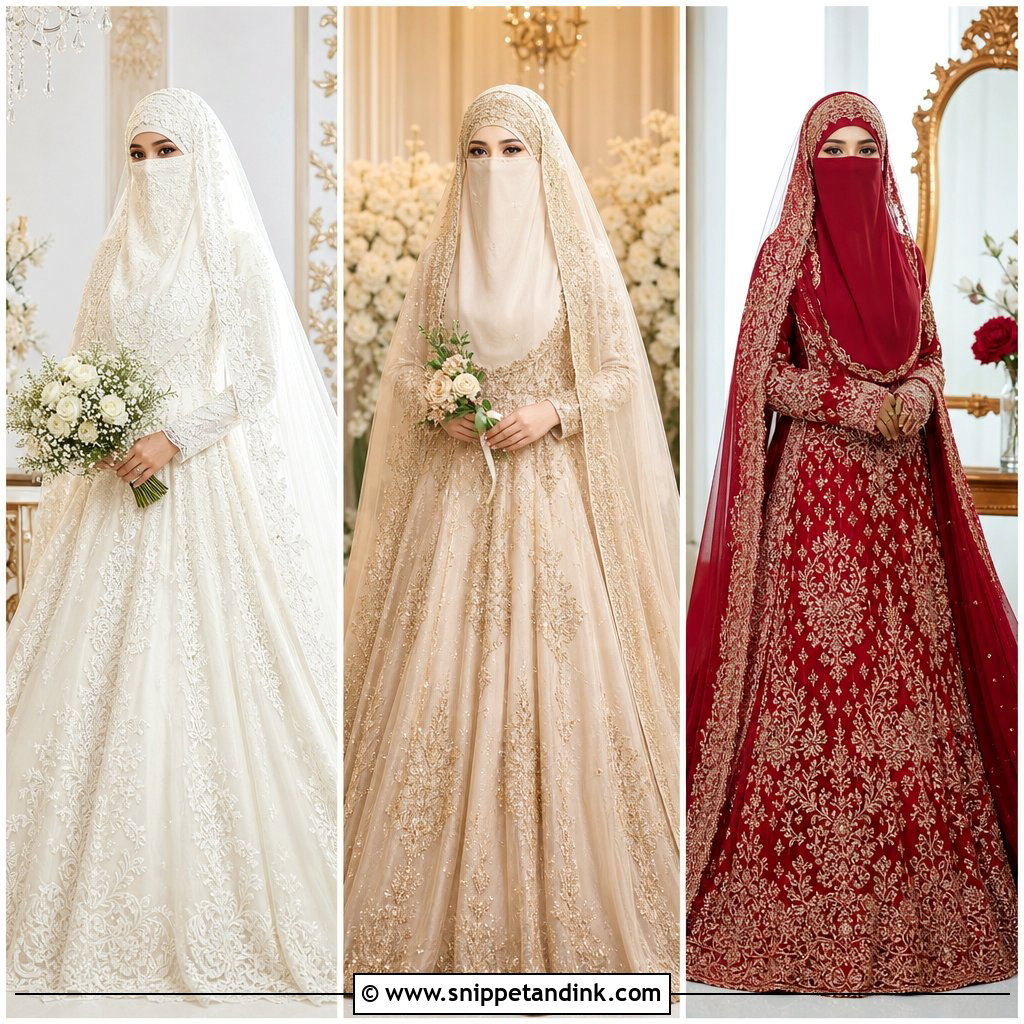
20. Baju Kurung With Detachable Train
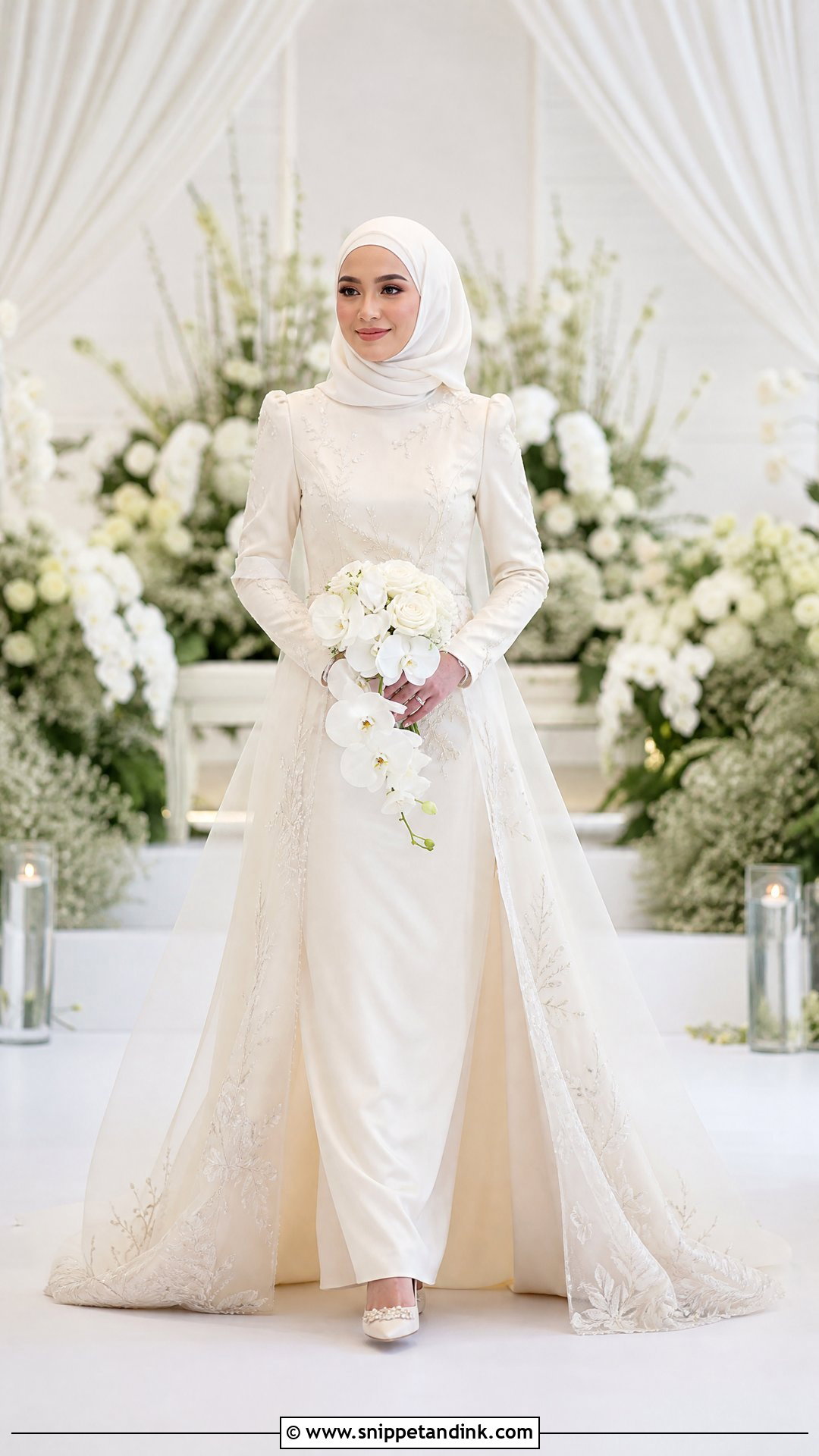
A baju kurung with a detachable train gives you drama for the entrance and portraits, then lets you move freely for the rest of the reception. The base outfit is a clean baju kurung moden in ivory, champagne, blush or silver with a matching skirt; the train can be organza, tulle, lace or embroidered fabric. Ask how it attaches: hooks or snaps at the waist are faster than buttons, and someone needs to practise removing it before the day. Keep the tudung neat and the jewellery simple.
21. Minimalist Baju Nikah Dress
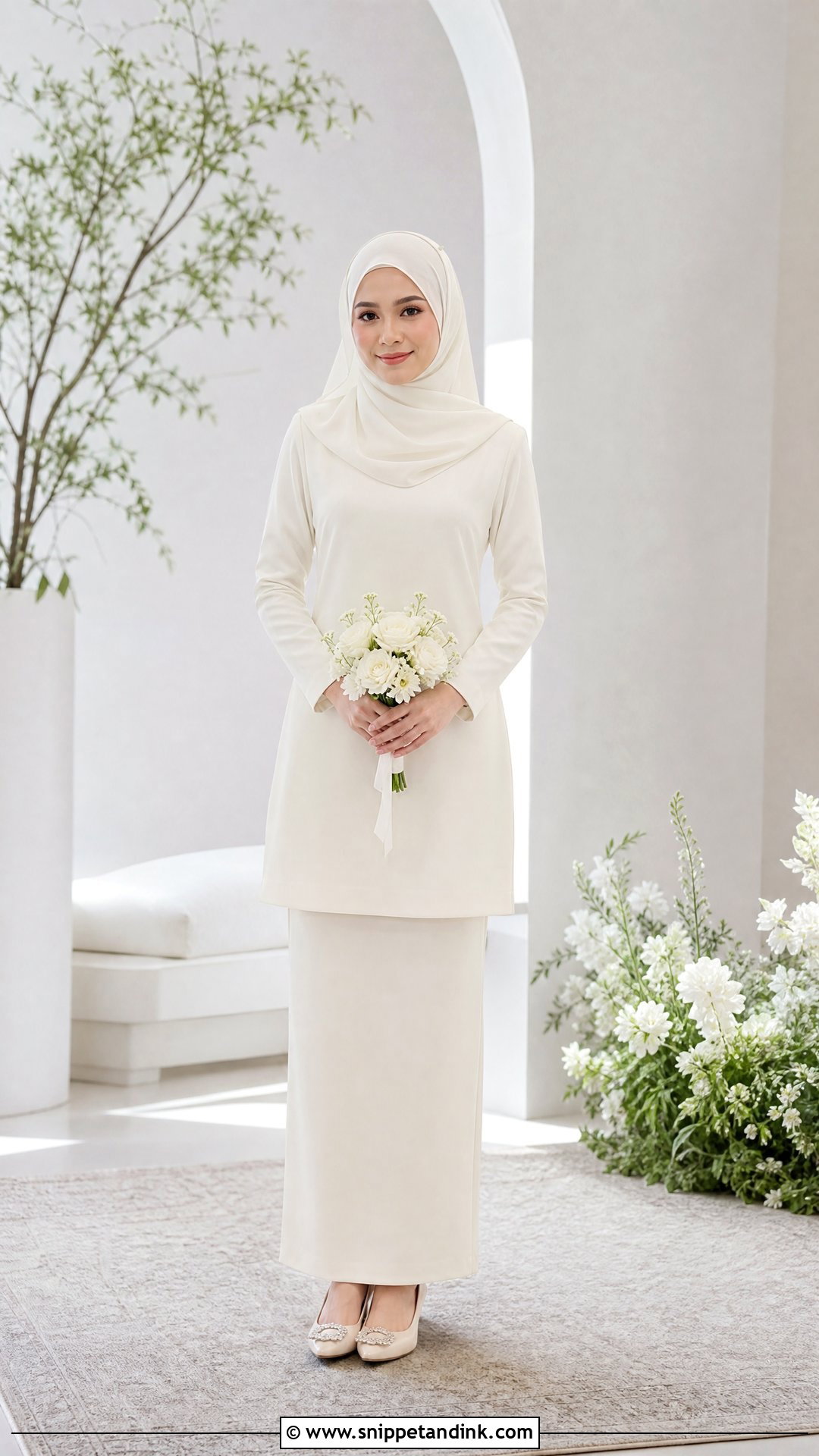
Minimal only works when the cut, fabric and fit are right, because there’s no embellishment to hide anything. Smooth satin, crepe or silk in white, ivory or soft beige, with long sleeves and a straight skirt, looks quietly refined. Have the seams pressed professionally the morning of the akad; on plain satin, a single crease from the car shows in every photo. A plain matching tudung, pearl pins, low heels and a small bouquet complete it. It suits smaller weddings and home ceremonies with natural light.
22. Royal Blue Songket Wedding Dress
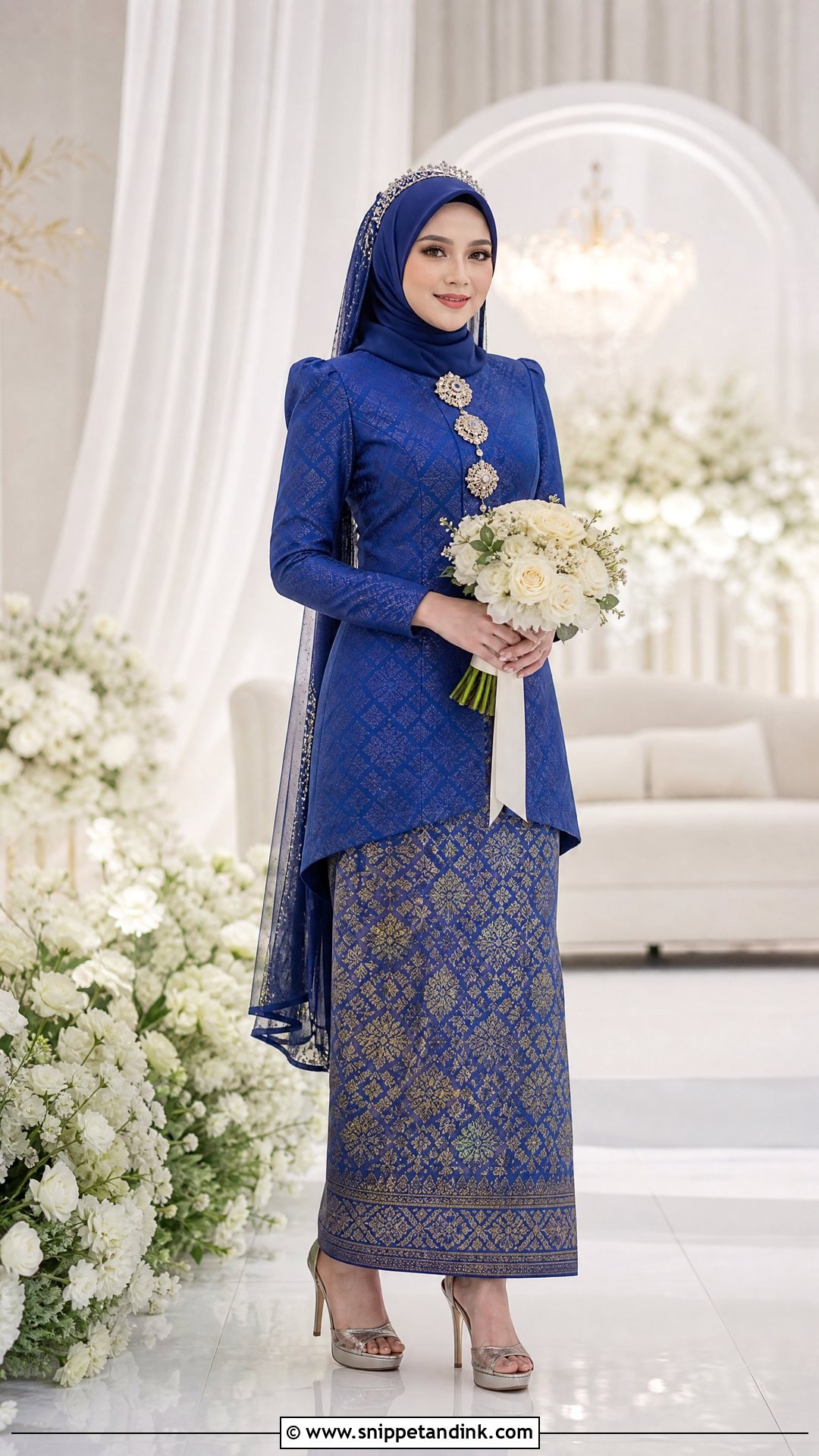
Royal blue songket with silver or gold woven details makes a bold ceremonial outfit. A baju kurung, kebaya labuh or structured peplum top over a matching songket skirt works. A royal blue tudung, metallic heels and a statement brooch are enough; resist adding more. A cream, white or pale yellow bouquet balances the strong colour. Royal blue reads well against neutral decor and gold accents, and it holds its depth under flash far better than pastels.
23. Sage Green Baju Kurung Wedding Dress
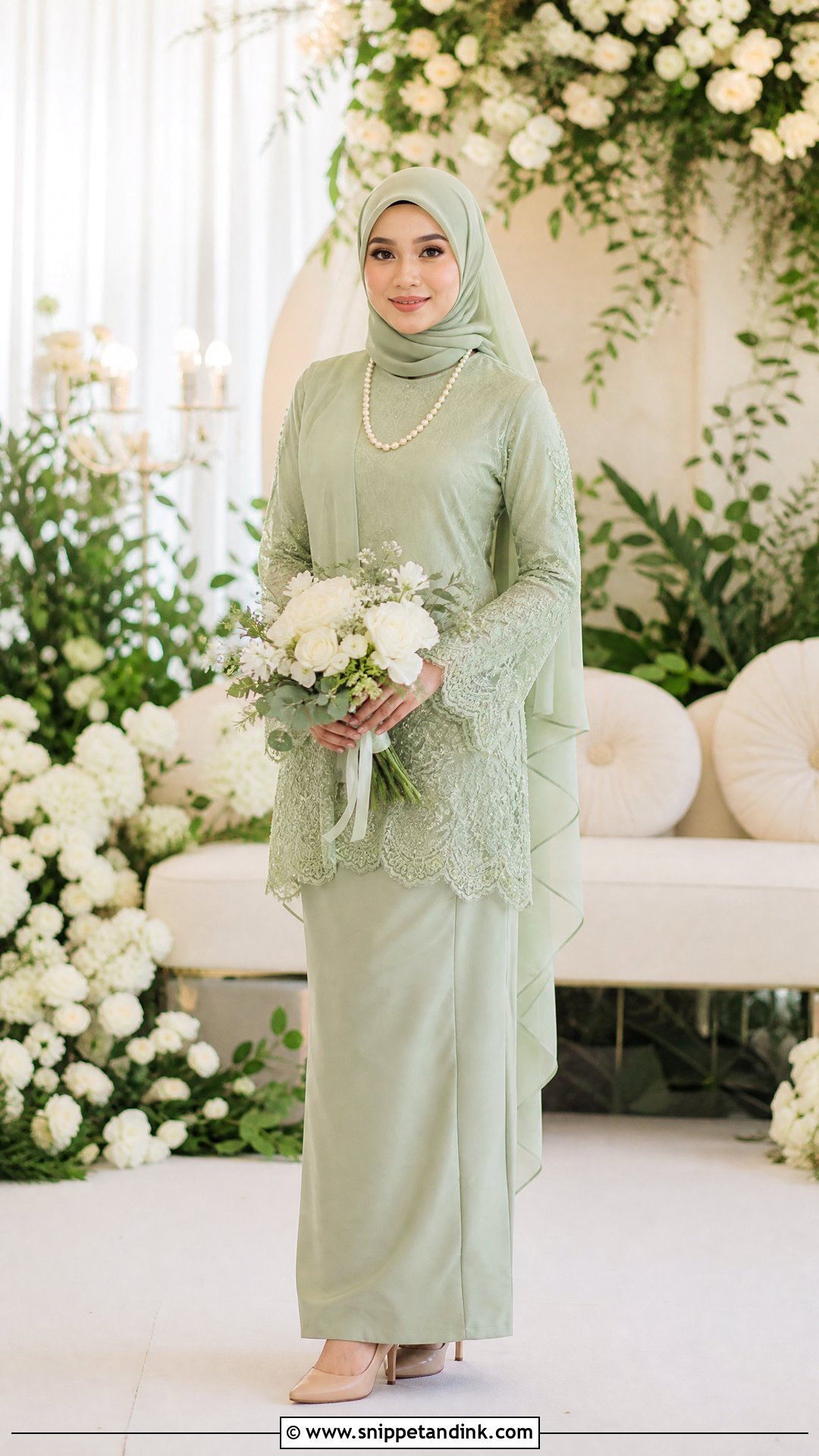
Sage green suits garden-inspired decor and daytime receptions, and it’s a gentle option for brides who’d rather not wear white. A baju kurung moden with lace sleeves, pearl details or embroidered florals suits it, with a matching skirt, sage tudung, nude heels and a white-and-greenery bouquet. It sits comfortably in both simple and formal settings and coordinates easily with a groom in cream, beige or a deeper green. Sage varies a lot between fabric lots, so buy the tudung fabric from the same batch as the dress.
24. Black And Gold Songket Wedding Dress
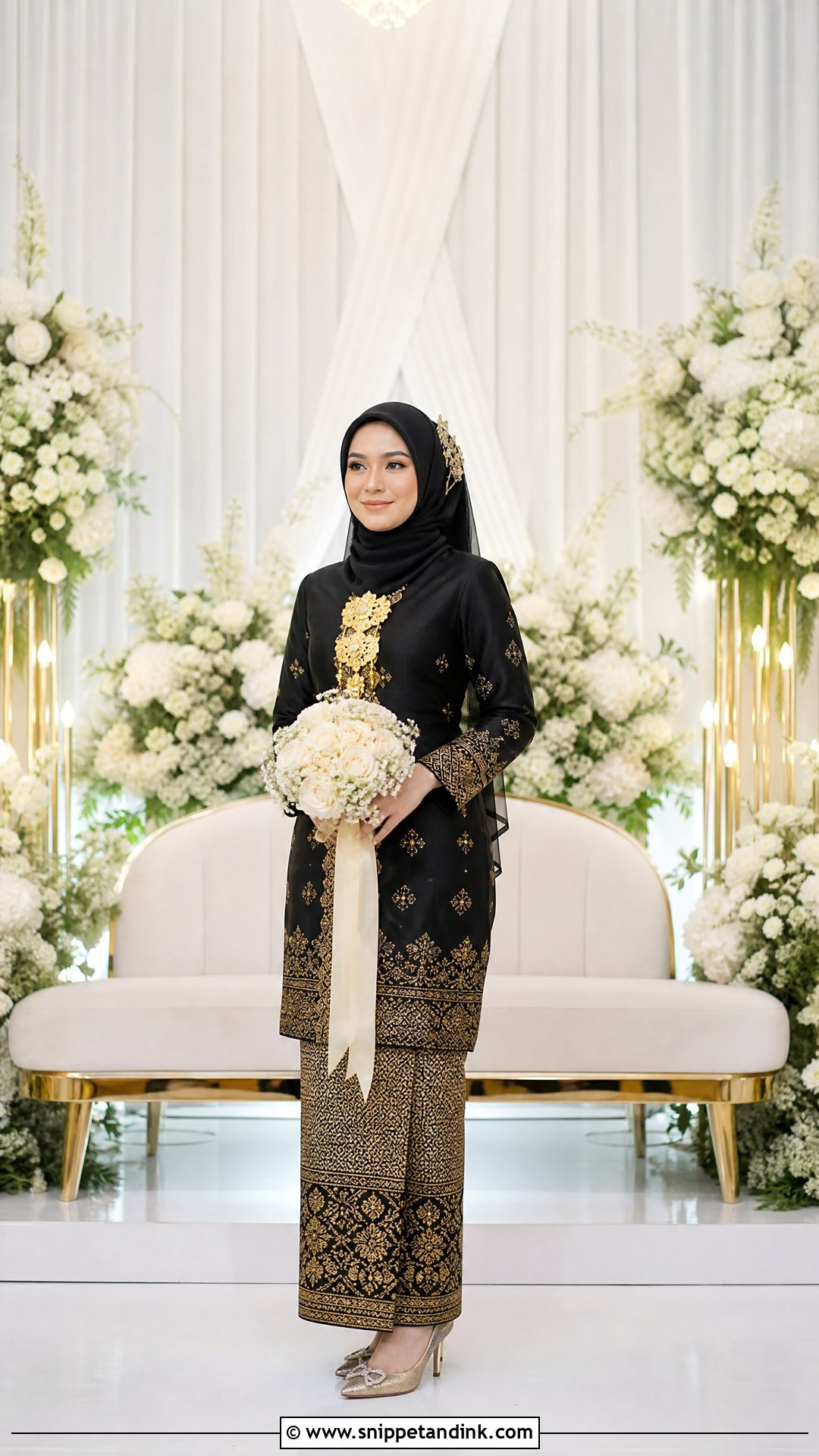
Black and gold songket is the most dramatic look here, and not every family will be comfortable with black at a wedding, so it’s worth asking first. Where it’s welcome, it works for a formal evening reception or a cultural portrait session. A black songket skirt with gold weaving and a matching long top or kebaya labuh is the core. A black tudung, gold brooch, metallic heels and a cream bouquet soften it. Keep the silhouette modest and the makeup warm so the black doesn’t drain the face.
25. White Kebaya With Veil
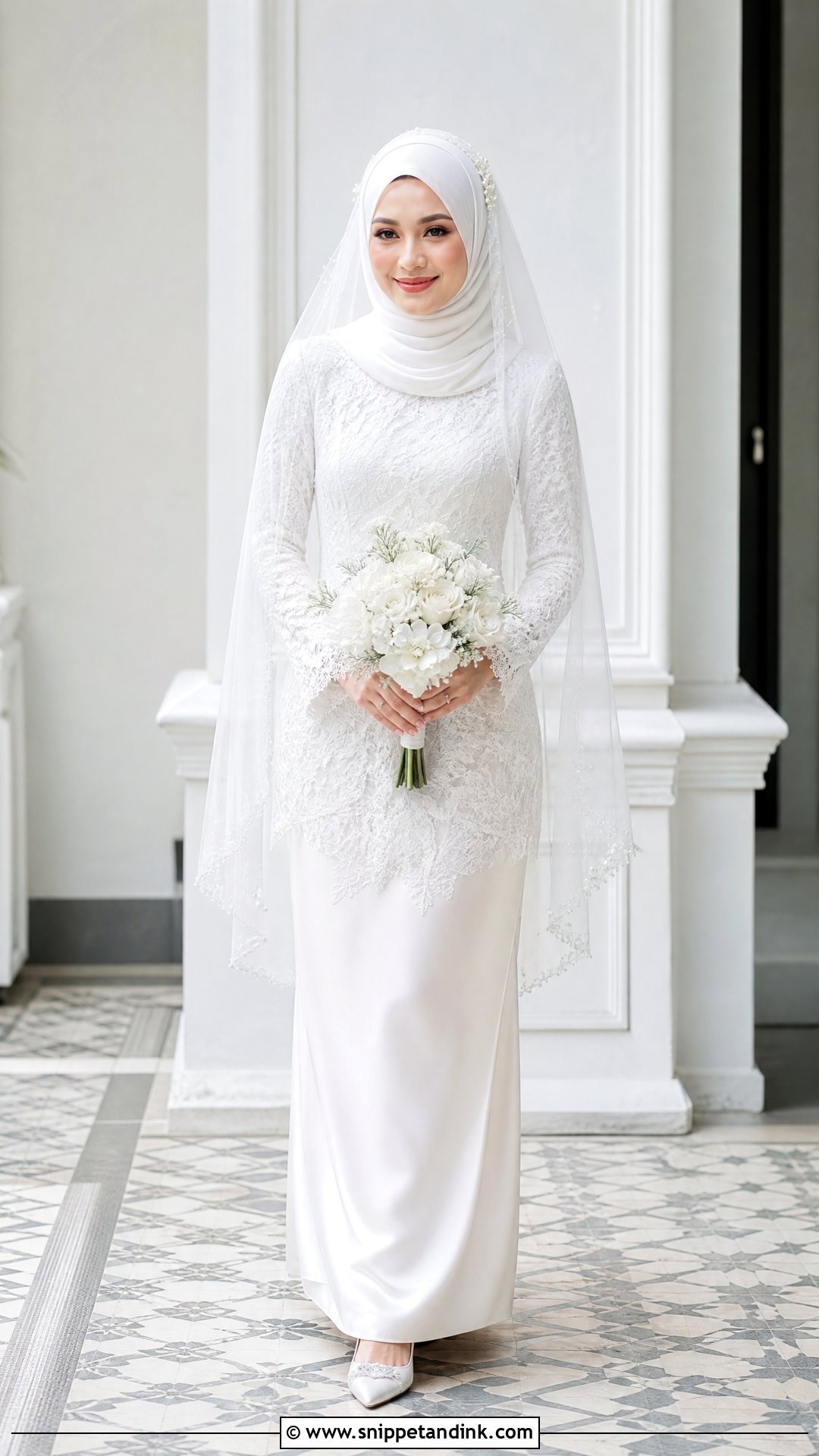
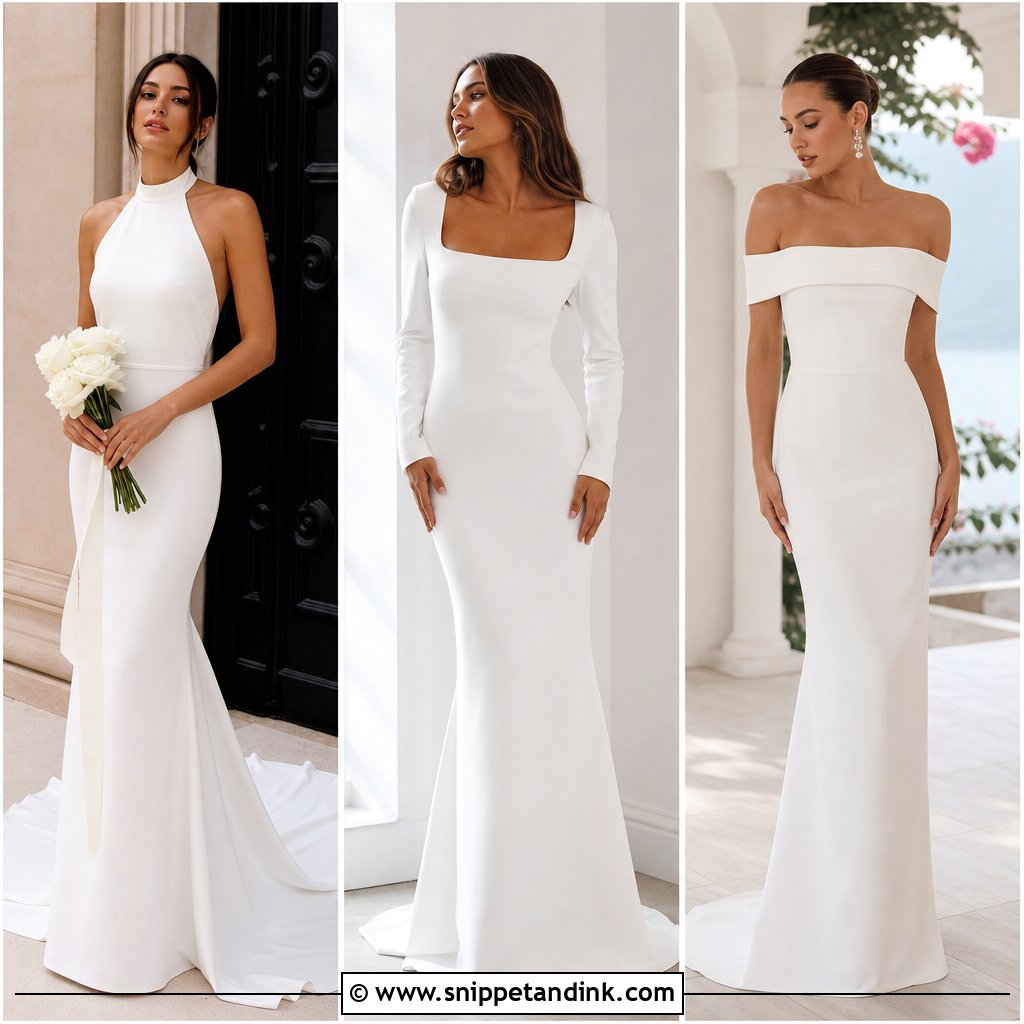
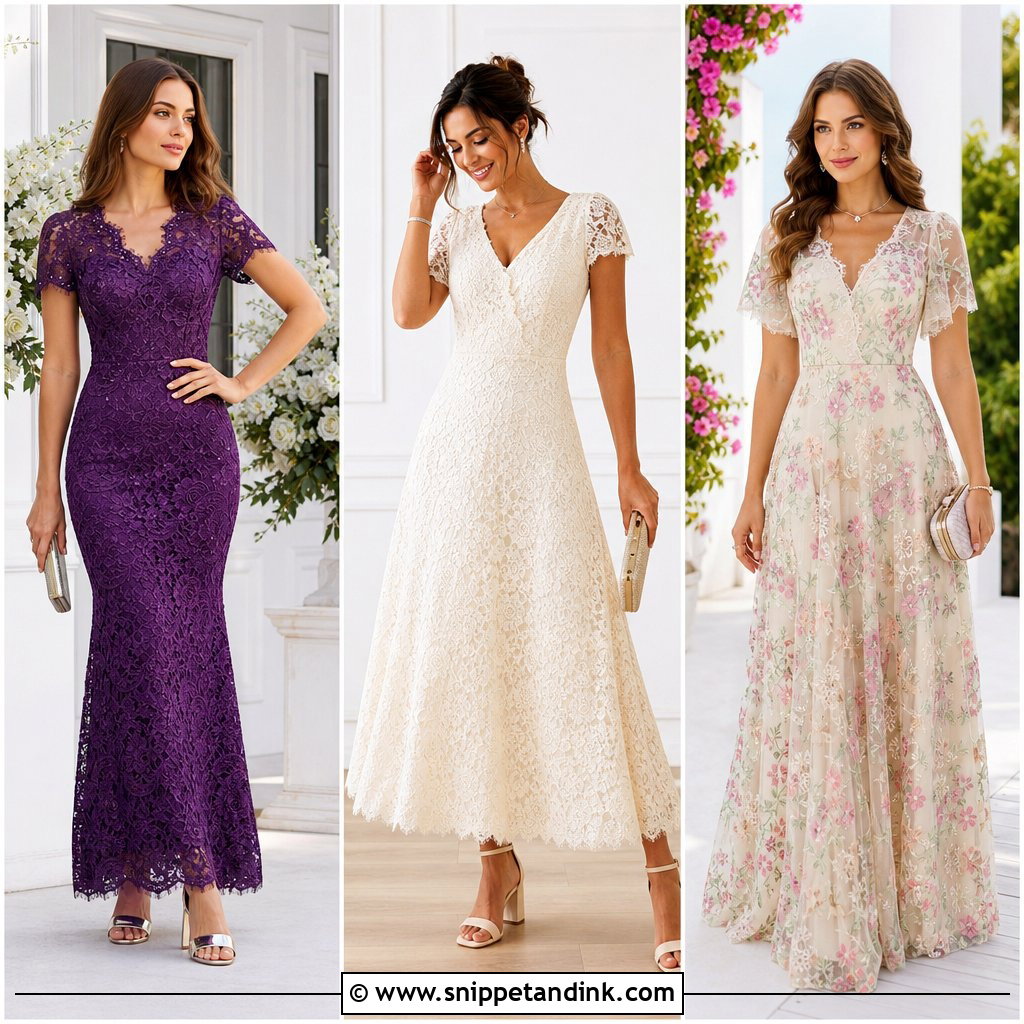
A white kebaya with a veil blends Malay tradition with a Western bridal touch. A long lace kebaya over a smooth white or ivory skirt is the base. The veil can be pinned over or behind the tudung, depending on how much coverage you want, and I always pin it to the tudung’s inner cap rather than the outer fabric so it doesn’t drag the tudung backwards. Pearl pins, simple heels and a white bouquet finish it. It works for the akad, studio portraits and reception entrances.
Songket, Satin and a Tudung in Tropical Heat
Most Malay weddings happen in heat and humidity, often in a hall or under a canopy full of guests. Heavy fabric and several layers around the head can make a bride uncomfortable fast, and discomfort shows in photos.
Staying comfortable on the pelamin
- Ask for a breathable cotton or voile lining under songket and satin; polyester linings trap heat.
- Wear a cotton inner cap under the tudung. It absorbs sweat at the hairline and gives the pins something to grip, so the tudung doesn’t slide.
- Use pins on the sides and back, not just at the chin, so the shape holds while you turn to greet guests.
- Keep blotting papers and a small fan with whoever is looking after you.
Looking after songket afterwards
Songket shouldn’t go in a washing machine. Air it out after the wedding, have it professionally cleaned if it’s marked, and store it rolled around a tube or folded loosely with acid-free tissue. Hard folds held for months can break the metallic threads along the crease. Kept well, a songket piece can be passed down and worn again by a daughter or niece.
Different Cloth for the Akad and the Pelamin
The best Malay bridal wardrobes treat each ceremony on its own terms. A soft white or pastel baju nikah suits the quiet focus of the solemnisation; songket, kebaya labuh or a peplum baju kurung brings the grandeur the bersanding calls for. Before deciding, think about the heat, how long you’ll sit, what your family expects, how the tudung will be styled and how each piece looks in photos. Soft pastels, regal gold or plain ivory can all be right, as long as each outfit is chosen for the moment you’ll wear it.
You'll Like These Ideas:






Leave a Reply