
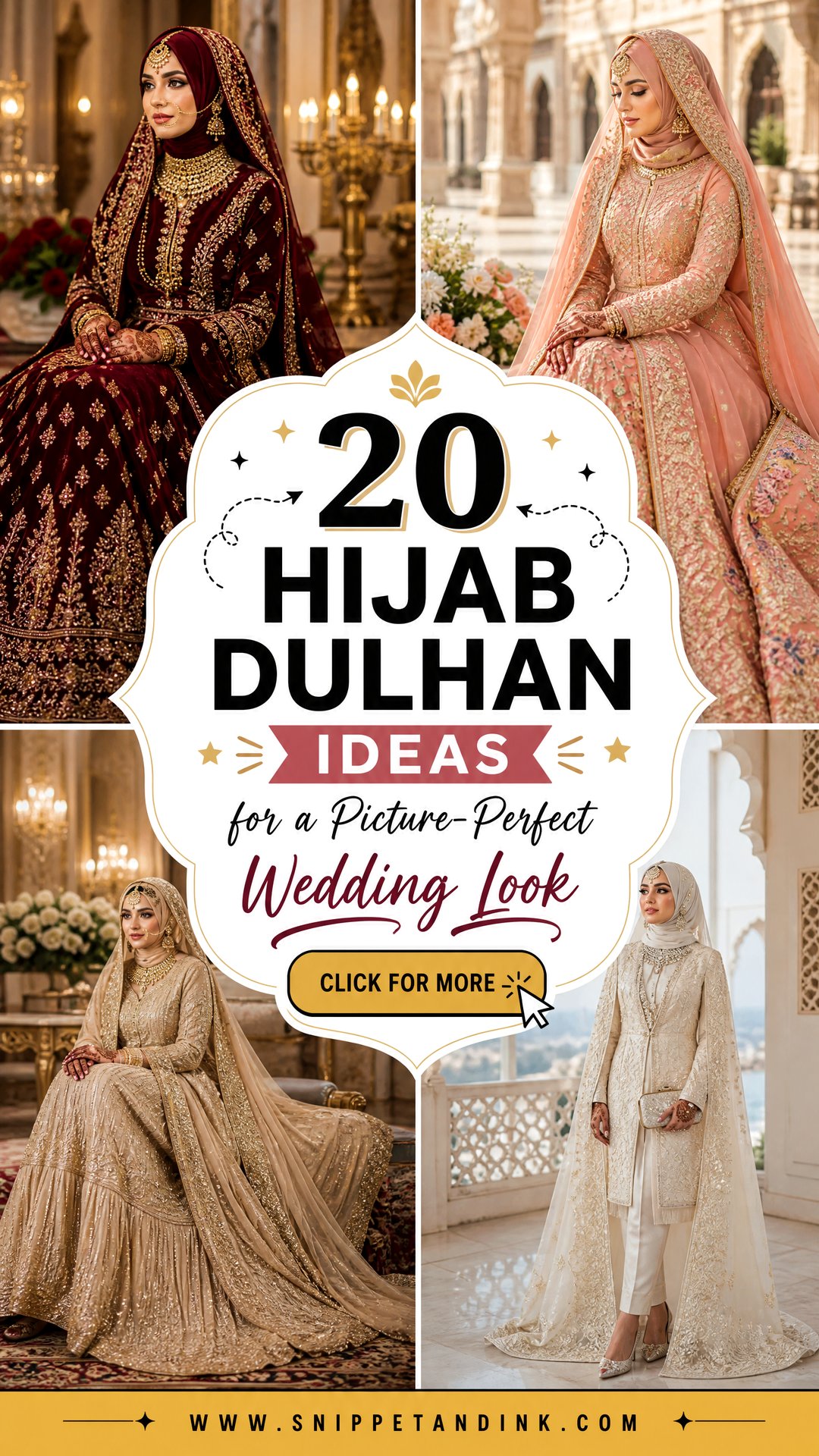
A dulhan look should be modest, comfortable and recognisably yours, and with a hijab, the planning starts at the head rather than the hem. Below you’ll find traditional South Asian outfits alongside modern gowns, coordinated hijabs, footwear and accessories chosen to go with them: rich red lehengas for the main ceremony, soft ivory for the nikah and pastels for the walima. I’ve styled each one head to toe, so the hijab works with the neckline, the jewellery and the dupatta rather than fighting them. The practical layer matters just as much. A secure undercap, lighter fabrics, embroidery placed where it counts and shoes you can stand in will carry you through a long celebration. Save the looks that suit your events.
Where a Tikka and Jhoomar Hook Into a Hijab
Most South Asian bridal jewellery was designed to hook into hair. Under a hijab there’s no hair to hold it, so every piece needs a new anchor. I sort this out at the trial, never on the morning itself.
- Maang tikka: pin the chain’s hook into the undercap at the crown before the hijab goes on, then bring the pendant out over the hijab’s front edge. Two crossed pins under the hijab stop it creeping to one side.
- Jhoomar or passa: it sits over the hijab on one side, so it needs its own anchor. Pin it through the hijab into the undercap at the top and bottom, or it swings forward whenever you bend.
- Earrings: most wraps cover the ears. Many brides switch to hijab earrings that clip or pin onto the fabric beside the cheek, or attach a lighter jhumka to the hijab with a small pin.
- Nath chain: the chain normally hooks into hair behind the ear. With a hijab, pin it to the fabric near the temple, leaving enough slack to talk and smile.
Wear the full set for half an hour at the trial. Anything that drags the hijab forward in that time needs a firmer anchor or a lighter replacement.
1. Red Lehenga Hijab Dulhan Look
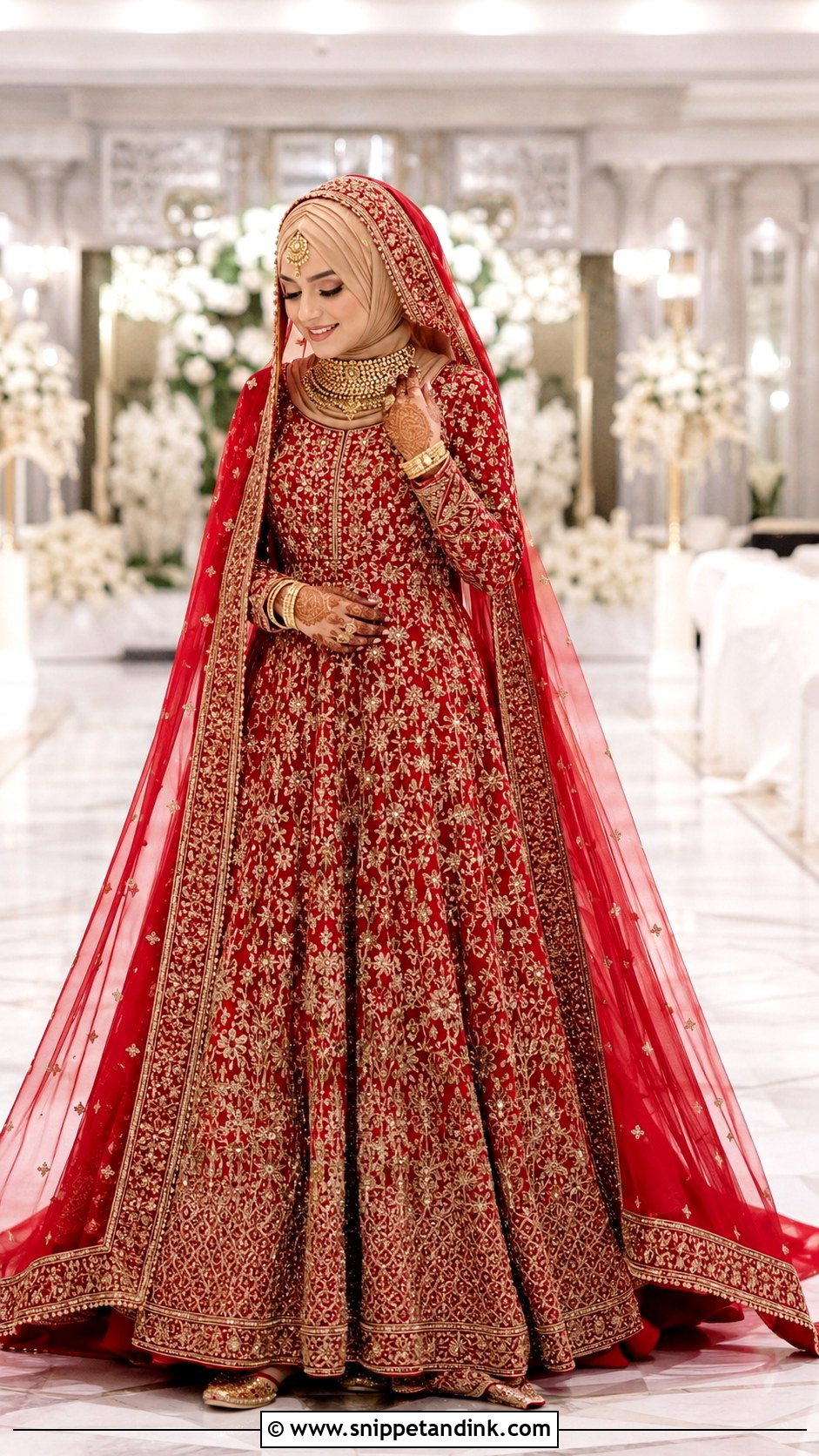
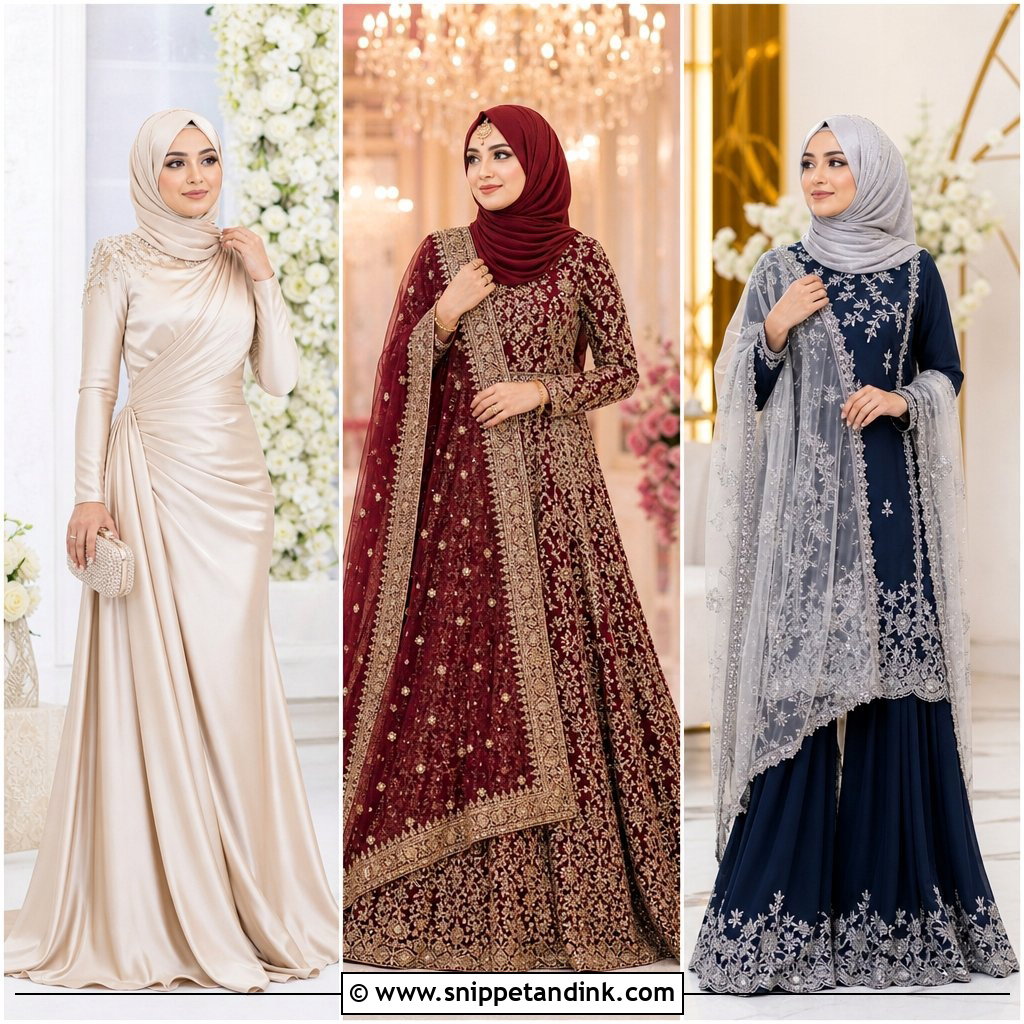
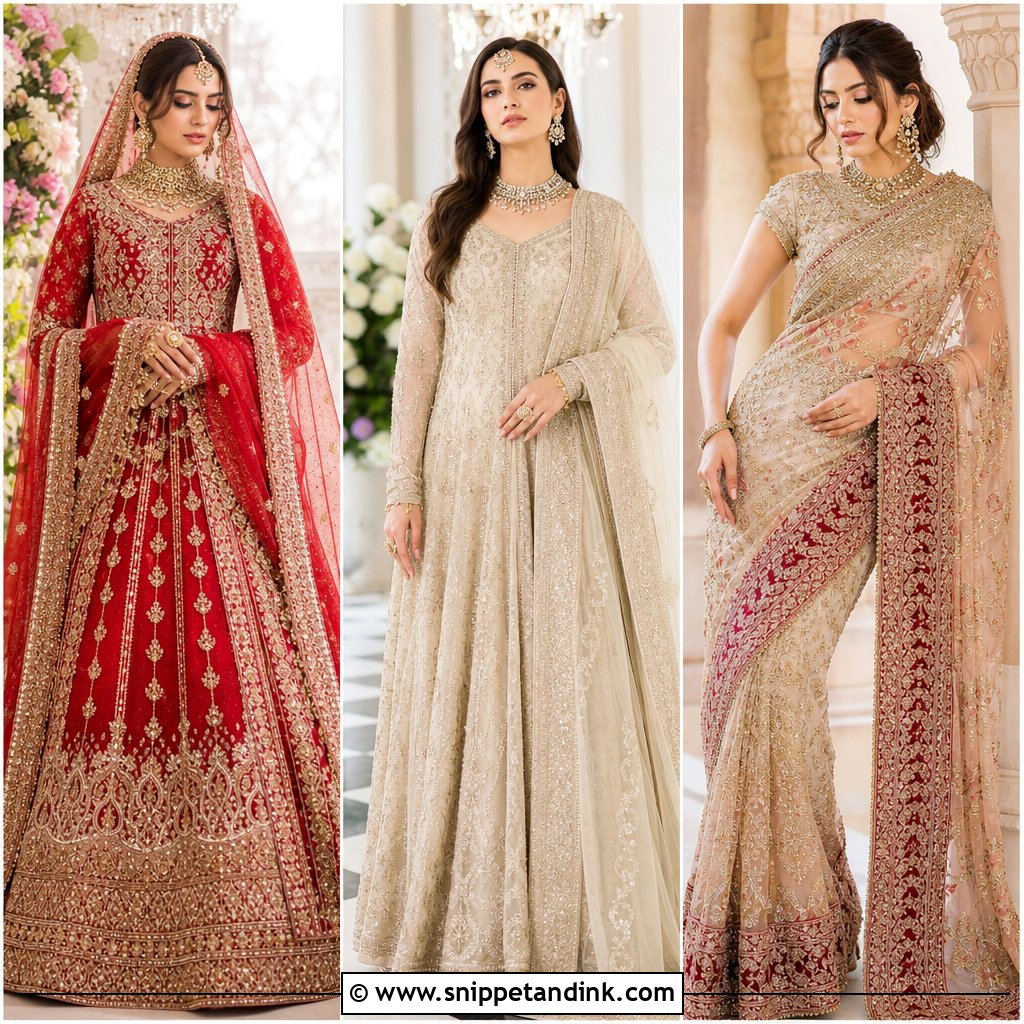
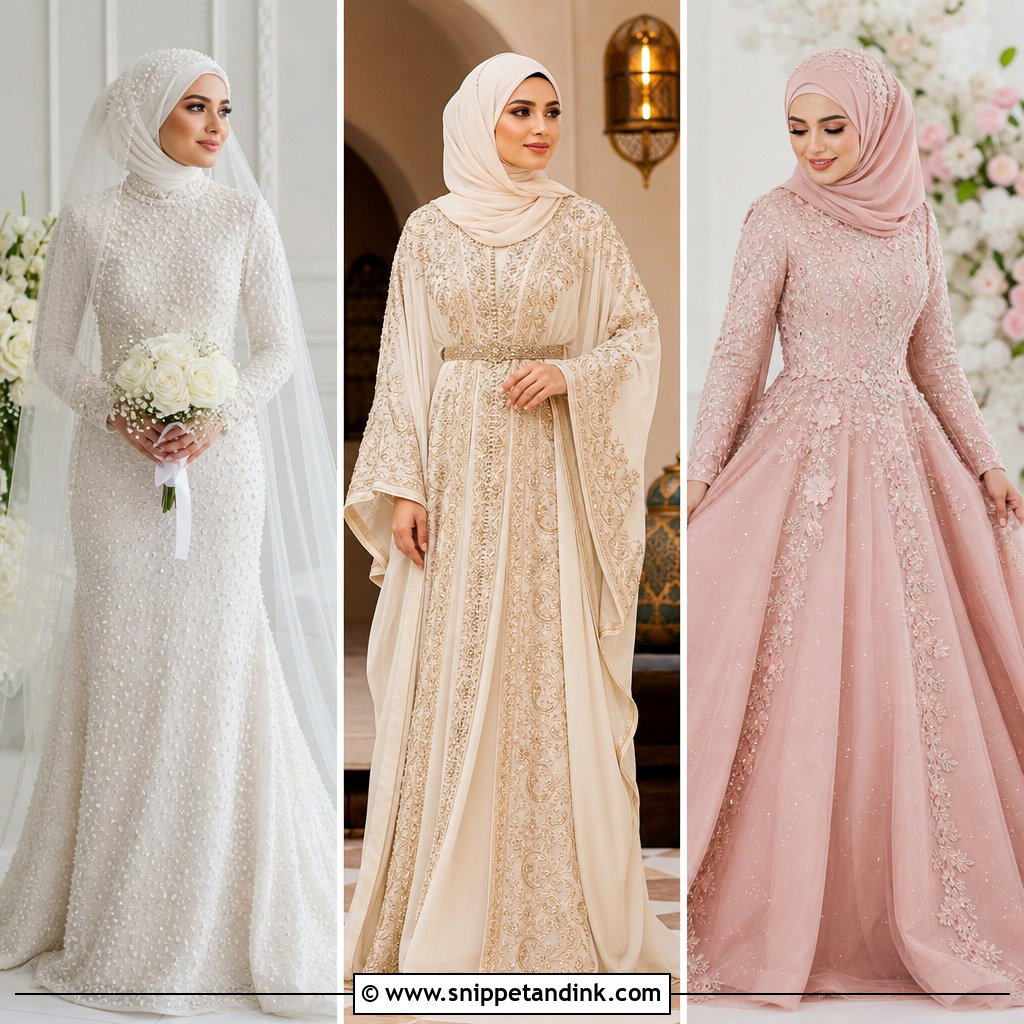
Red with gold is still the dulhan look most families picture, and it earns that place. Choose a high-waisted skirt with balanced gold embroidery and a long-sleeved blouse with a modest neckline. For the hijab, I usually go a step quieter than the lehenga, in smooth beige, muted gold or a plain matching red, so the face isn’t boxed in by a second layer of embroidery. The dupatta goes over the head as a loose veil, pinned behind the crown. Gold jhumkas, a tikka, bangles and a choker complete it. If the blouse neckline is heavily worked, one medium necklace looks better than three layered ones. Gold block heels or juttis finish it for the main ceremony and portraits.
2. White Nikah Dress Hijab Dulhan Look
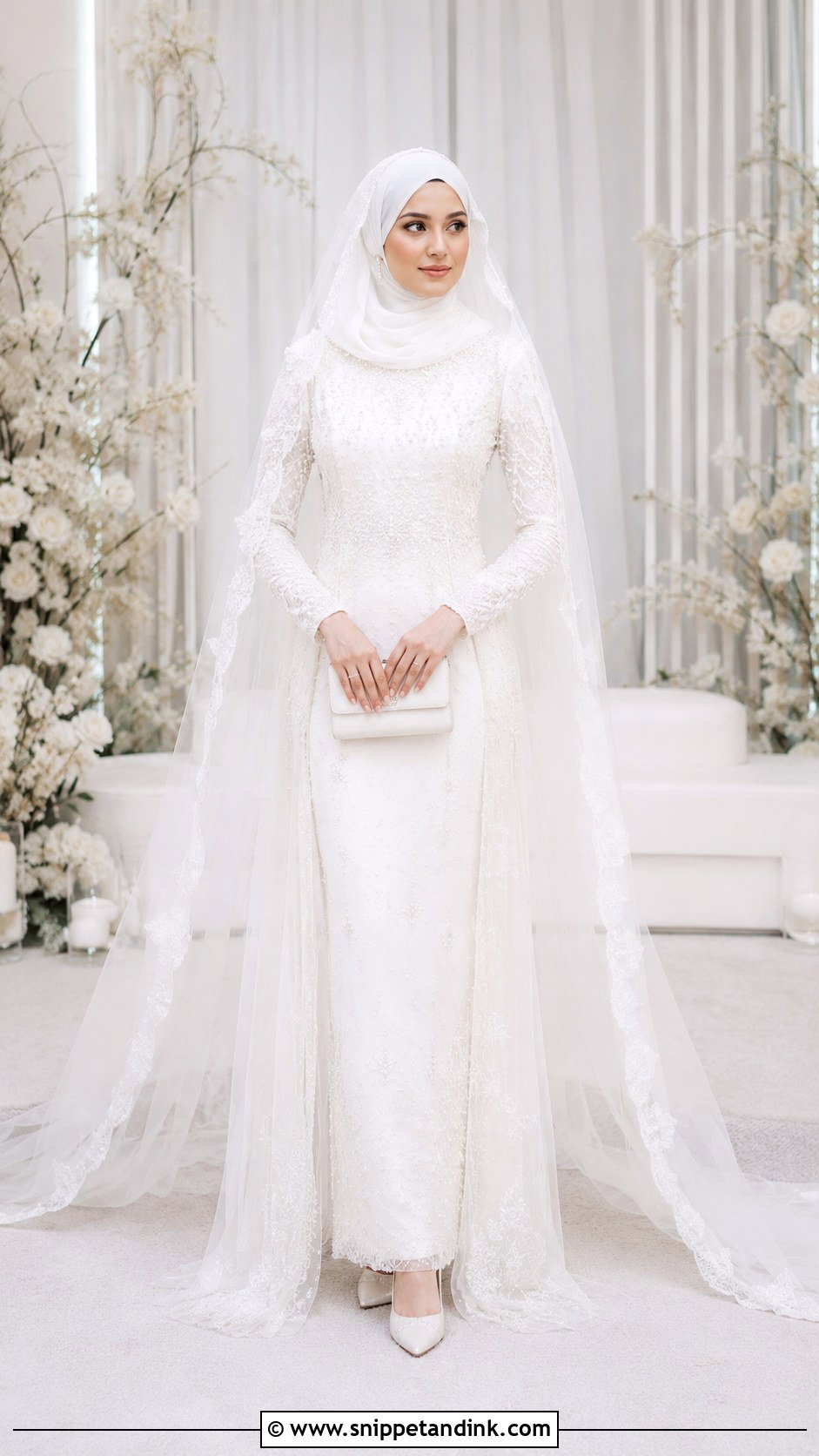
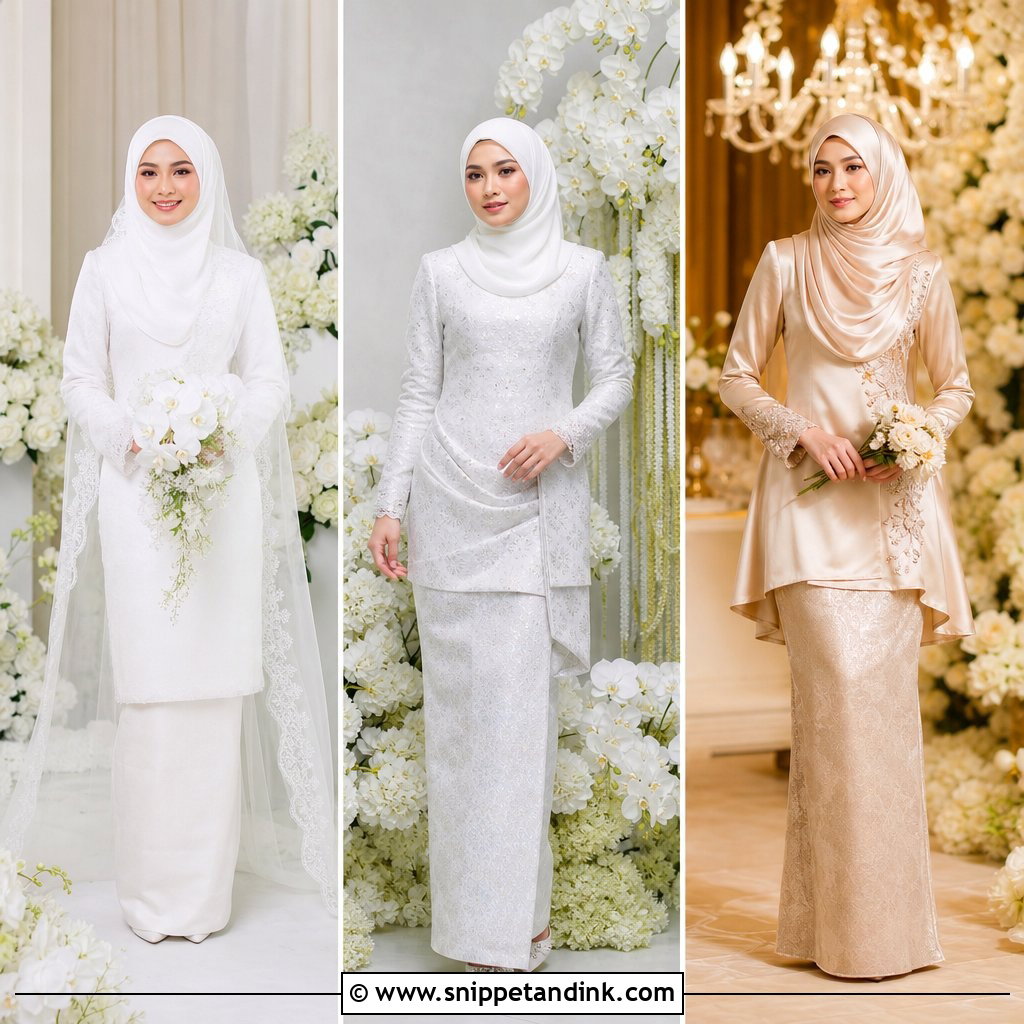
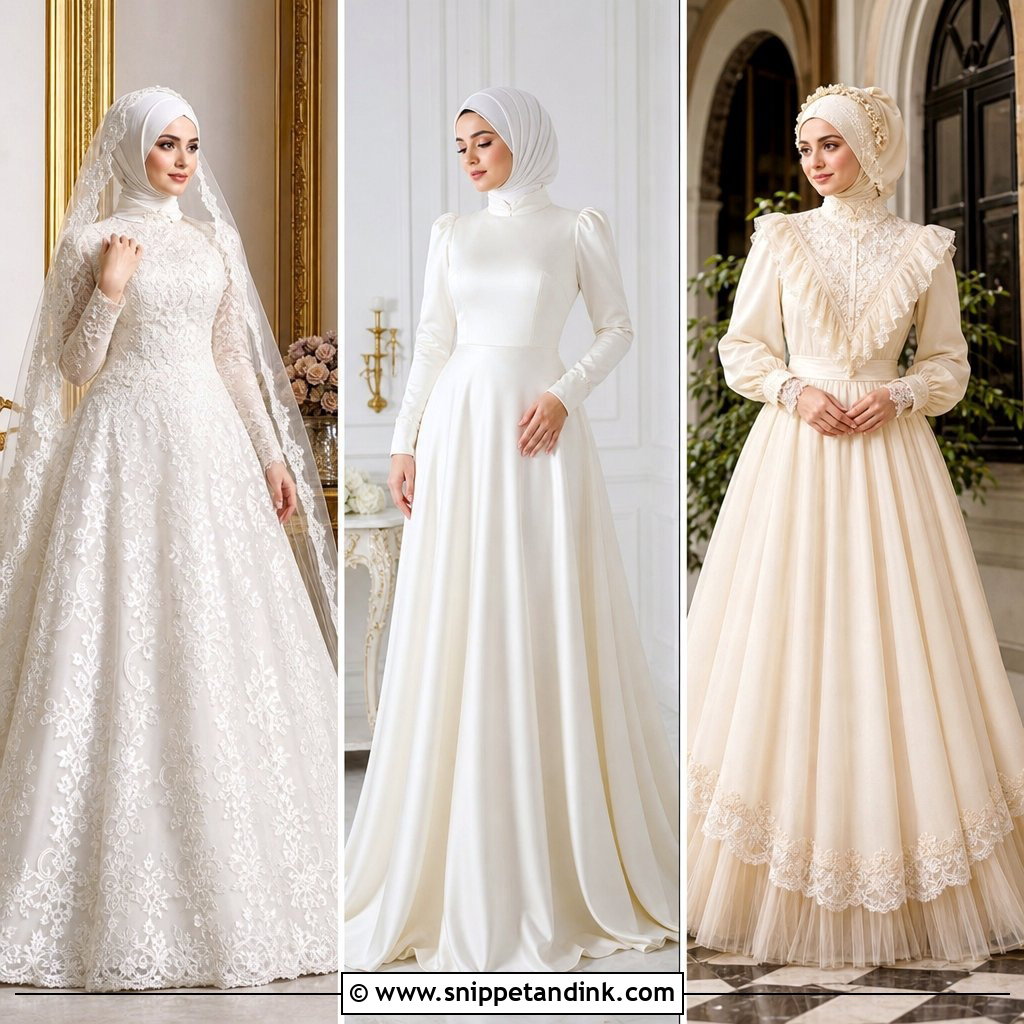
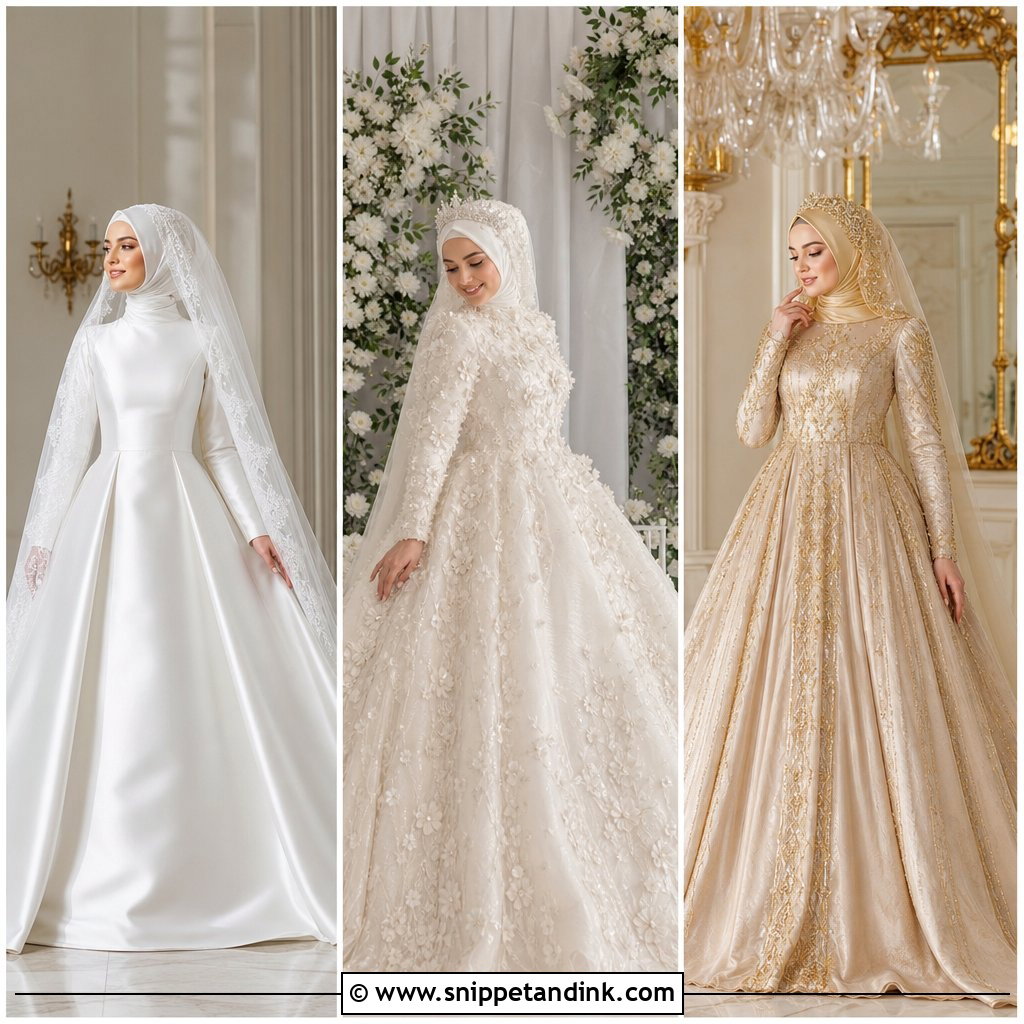
A white nikah outfit relies on fine detail rather than weight. Wear a floor-length dress with full sleeves, a high neckline and delicate pearl, lace or thread work. A chiffon hijab looks softer; satin looks more structured but needs an undercap to stop it sliding. Keep the sheer veil as a separate layer from the face-framing hijab, pinned at the back, so you can lift or remove it without redoing everything. Pearl earrings, a slim bracelet and a small white clutch are enough, and ivory pumps or crystal flats let you greet guests in comfort. Keep every shade in the white, cream and silver family. A cool white dress with a warm ivory hijab is the most common mismatch I see in nikah photos.
3. Blush Pink Sharara Hijab Dulhan Look
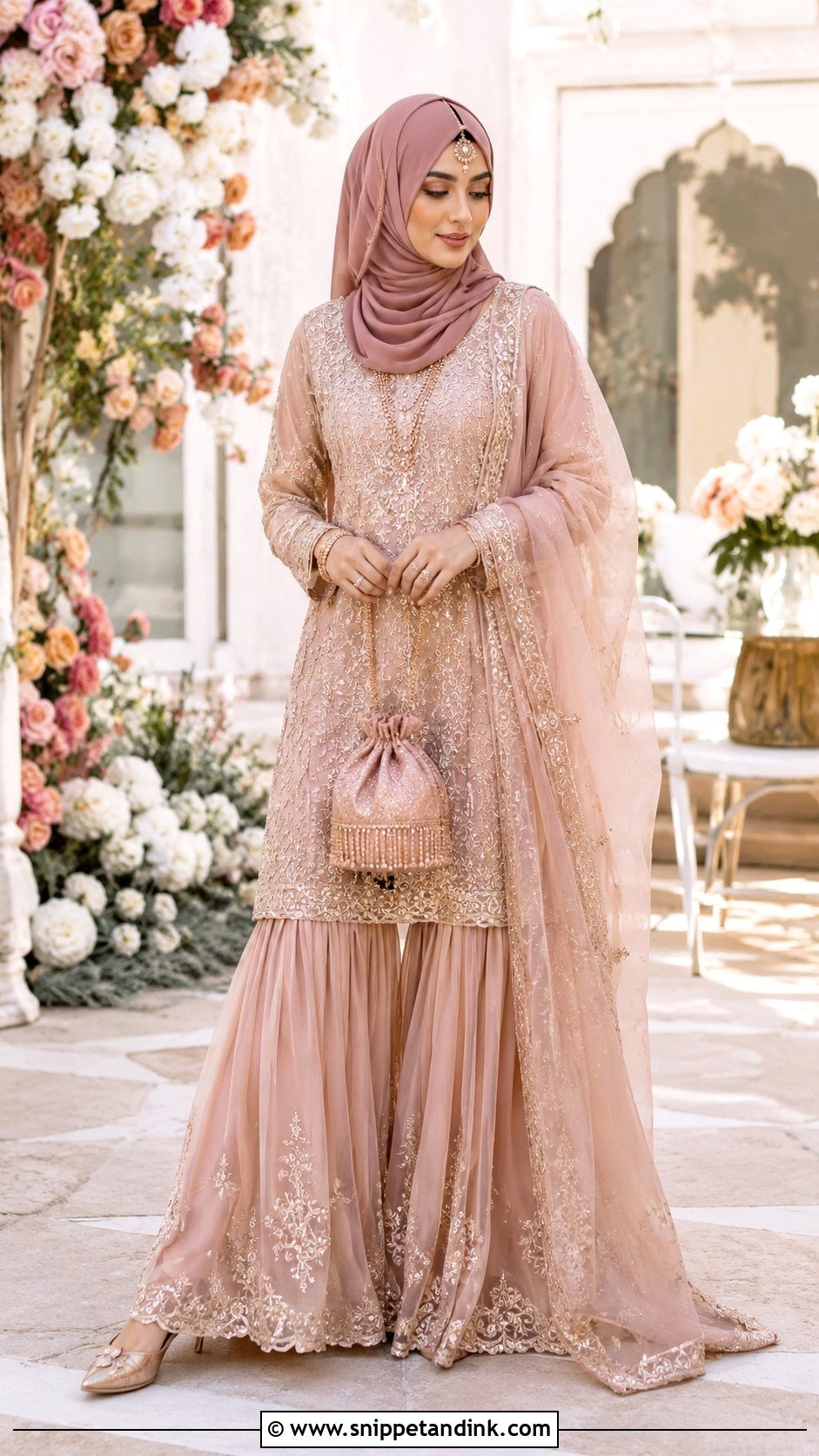
Blush gives romantic colour without the saturation of red, and a sharara is far easier to move in than a full lehenga. Build the outfit around the flared pants, a long modest kurti and a light embroidered dupatta. A matte chiffon hijab in blush or dusty rose frames the face and balances the movement below. Go small with jewellery. Rose-gold earrings, a small tikka and fine bangles suit pastel fabric, while heavy kundan swamps it. Pointed metallic flats or low block heels keep the look formal and comfortable. Sharara hems catch on heels, so have them finished while you wear your actual shoes. A beaded potli completes it for a daytime nikah or engagement.
4. Emerald Green Gharara Hijab Dulhan Look
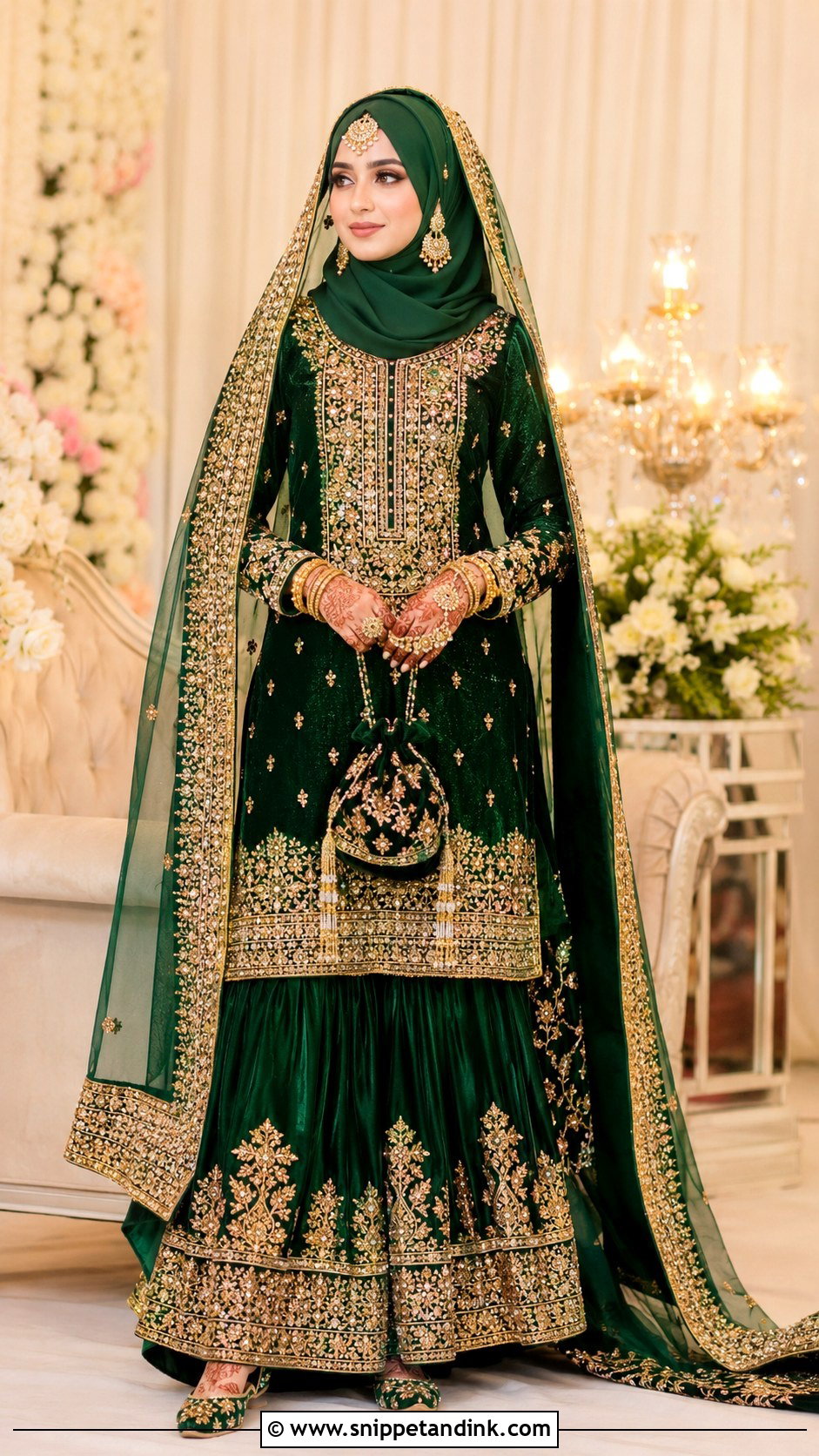
Deep emerald green with antique gold embroidery looks regal. Pair a structured full-sleeved kurti with a gharara that flares dramatically below the knee. A plain emerald hijab gives a calm base so the gold-edged dupatta can be the decorative layer. Keep the wrap smooth at the cheeks if you’re wearing a tikka or side jhoomar, since a bunched fold under a heavy piece makes it tilt. Antique gold earrings, stacked bangles and an embroidered potli suit the heritage mood, with green velvet juttis or gold heels. Emerald keeps its depth in photos against neutral decor, which makes it a strong pick for a mehndi, nikah or evening reception.
5. Maroon Velvet Lehenga Hijab Dulhan Look
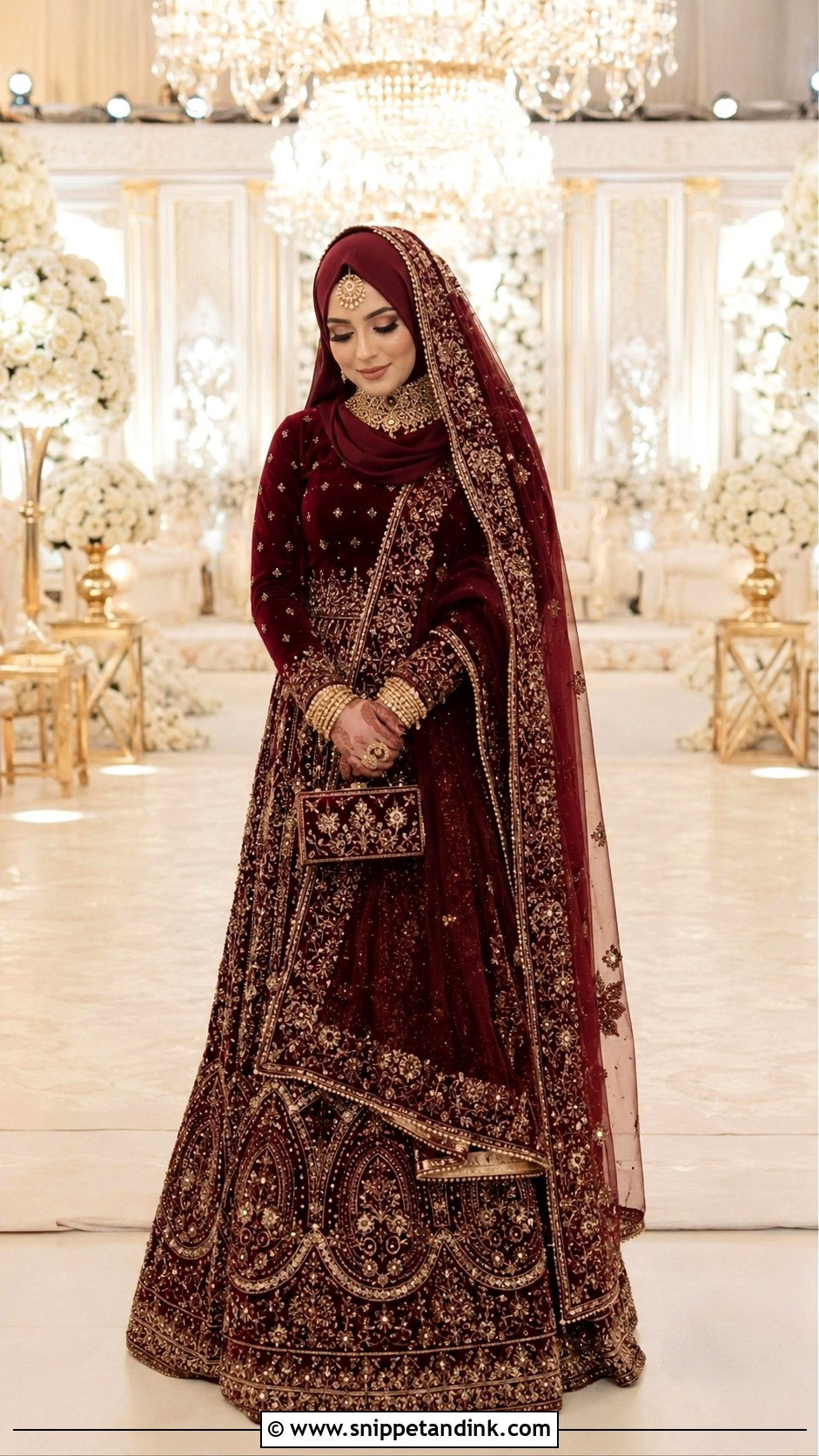
Velvet suits a winter wedding: deep colour, warmth and a surface that takes antique gold well, especially when the embroidery sits at the hem, cuffs and neckline. Pair it with a full-sleeved blouse and a matching matte hijab under the dupatta. Velvet is heavy, though, and a velvet dupatta on the head can pull the hijab backward within an hour. I drape it over one shoulder and across the head so the shoulder takes most of the weight. Antique kundan, maroon bangles and a structured clutch suit it, with cushioned juttis. One choker and a tikka are plenty against fabric this rich. Velvet also shows crush marks, so have it steamed on the morning rather than pressed flat with an iron.
6. Champagne Anarkali Hijab Dulhan Look
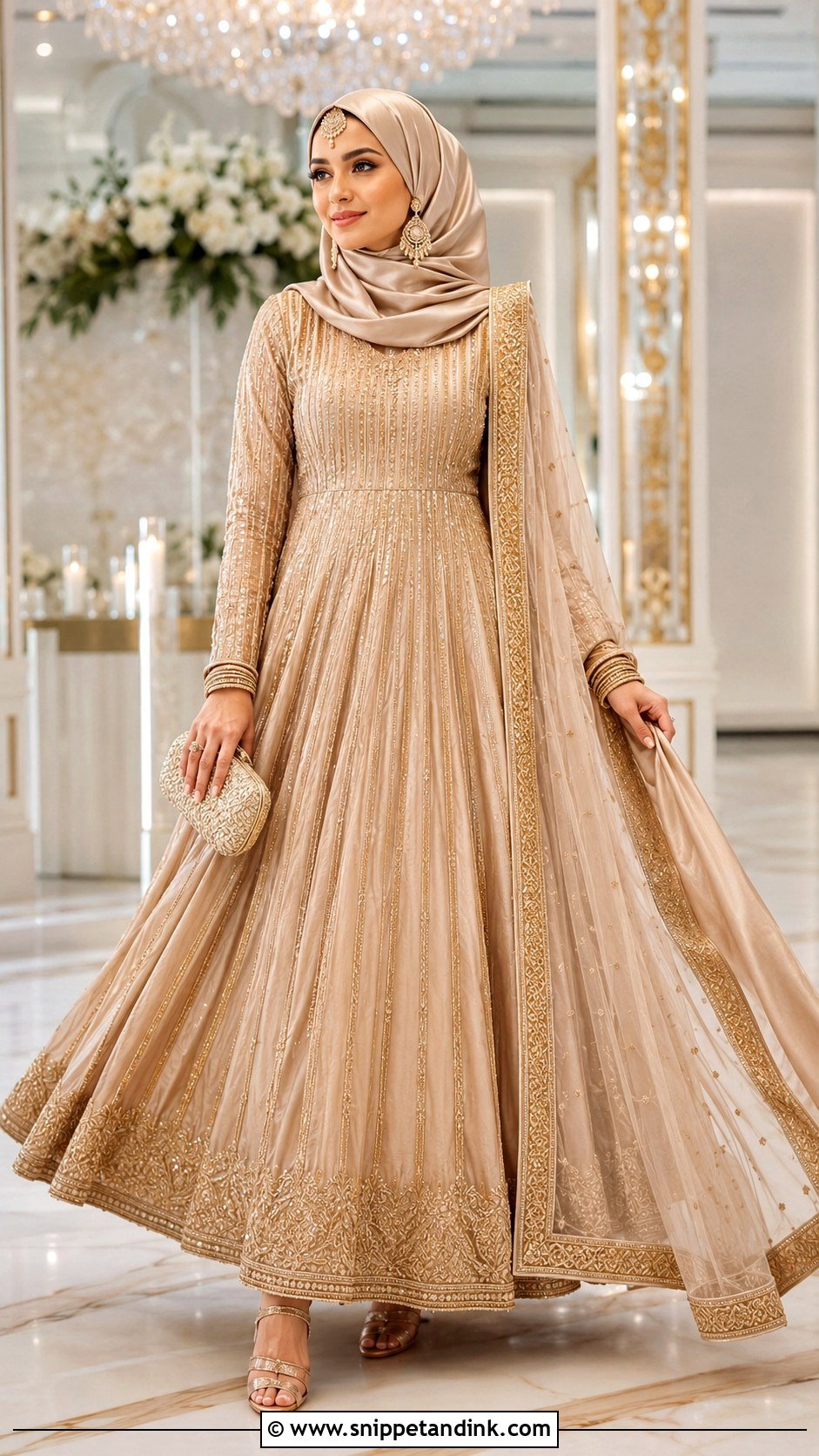
A champagne anarkali brings quiet glamour through flowing fabric and gentle shine. Look for floor length, full sleeves, a covered neckline and vertical embroidery that lengthens the line. A champagne satin hijab looks polished, while chiffon frames the face more lightly. A sheer dupatta with narrow gold edging can drape from crown to shoulder. Crystal earrings, a refined tikka and a few gold bangles keep it restrained, with nude pumps or low metallic heels and a compact beaded clutch. Champagne can wash a bride out under warm reception lighting, so I usually suggest a slightly deeper lip than she’d normally wear. It suits a walima, a reception or an evening nikah.
7. Ivory Satin Gown Hijab Dulhan Look
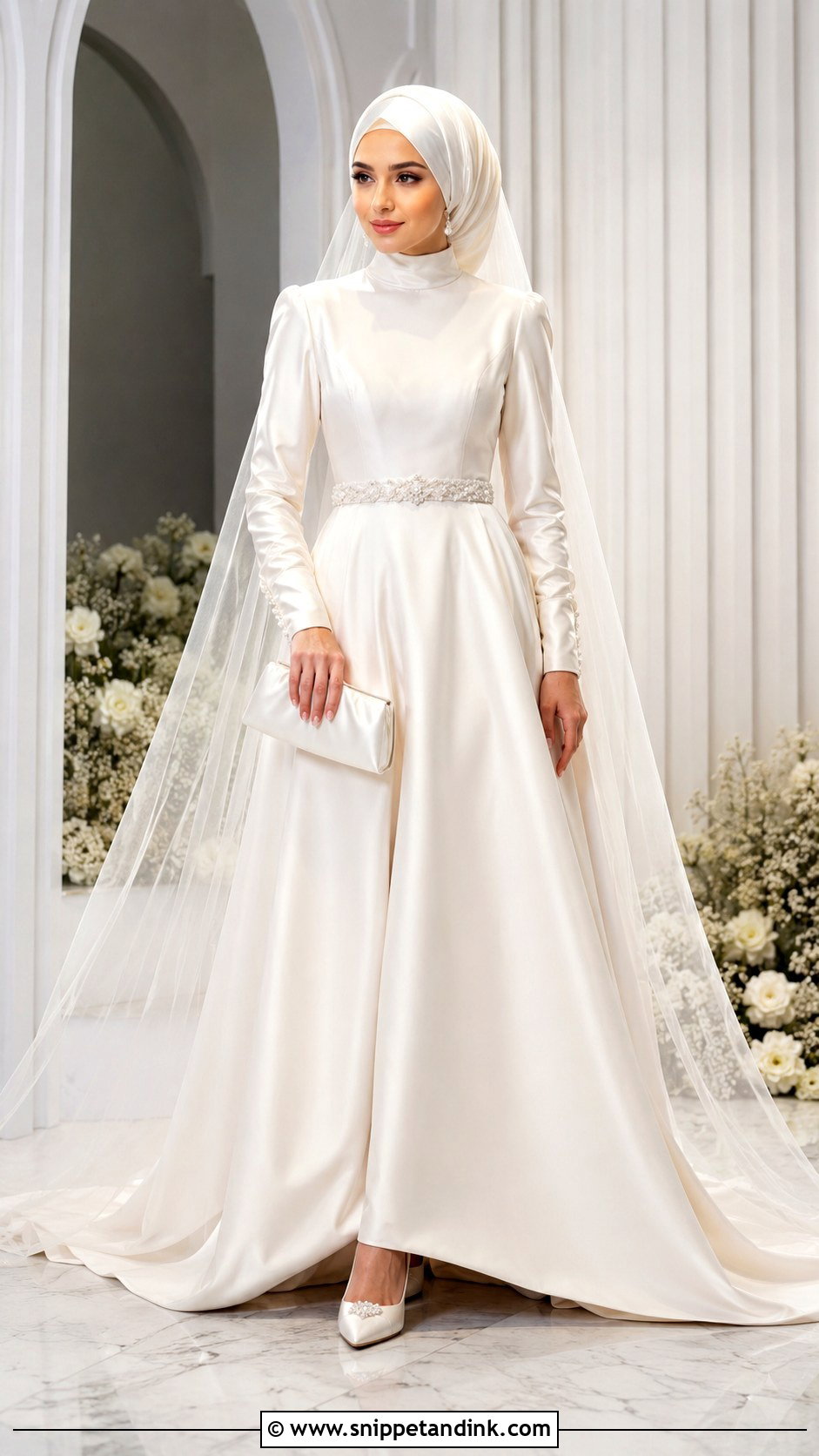
Clean lines make an ivory satin gown feel modern and modest at once. Choose a defined waist, full sleeves, a high neckline and a softly flared skirt. A structured ivory hijab with minimal folds echoes the smooth finish, and a long veil attached behind it gives drama without covering the face or bodice. Pearl drops, a crystal belt and a compact satin clutch add interest without breaking the minimal line, with pointed ivory shoes or block heels depending on the floor. Satin reflects light, so undertone matching is critical. If the gown is creamy and the veil is cool white, the difference shows in every photo. Hold all three pieces together by a window before you buy any of them.
8. Pastel Blue Walima Hijab Dulhan Look
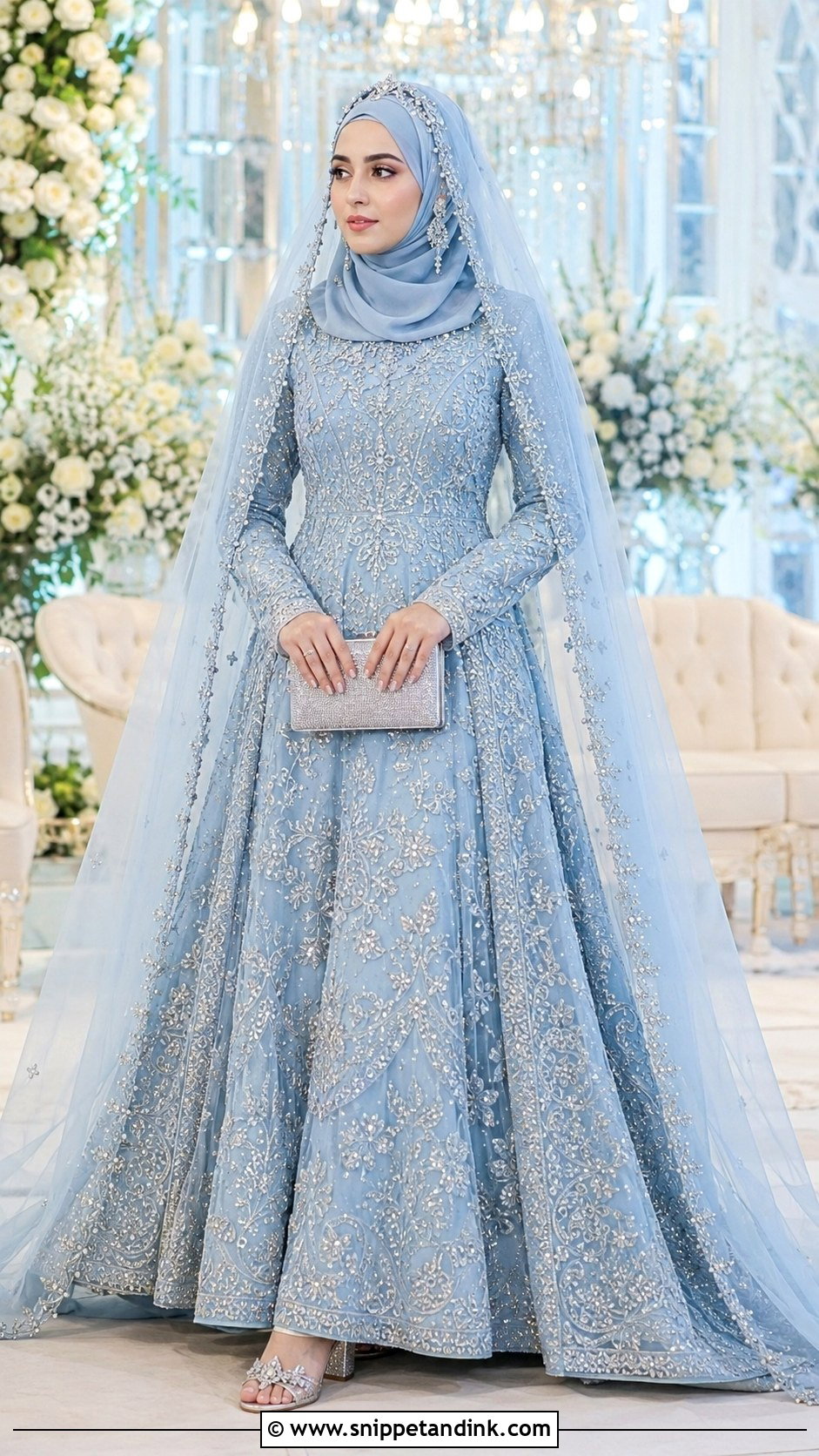
Pastel blue feels fresh at a walima while still reading as bridal. A long embroidered gown with a fitted bodice, modest neckline and layered skirt is the base. Match the hijab in blue chiffon, then add a silver-edged veil behind the crown. Crystal earrings, a small jewelled headpiece and a silver clutch keep the palette cool. I’d avoid introducing gold unless the embroidery already has it, because a single gold piece against icy blue looks like an accident. Silver block heels or embellished flats keep you comfortable. Ask for embroidery in mixed ice blue, pearl and silver rather than one flat shade; it gives depth in daylight and sparkle under reception lights.
9. Gold Saree Hijab Dulhan Look
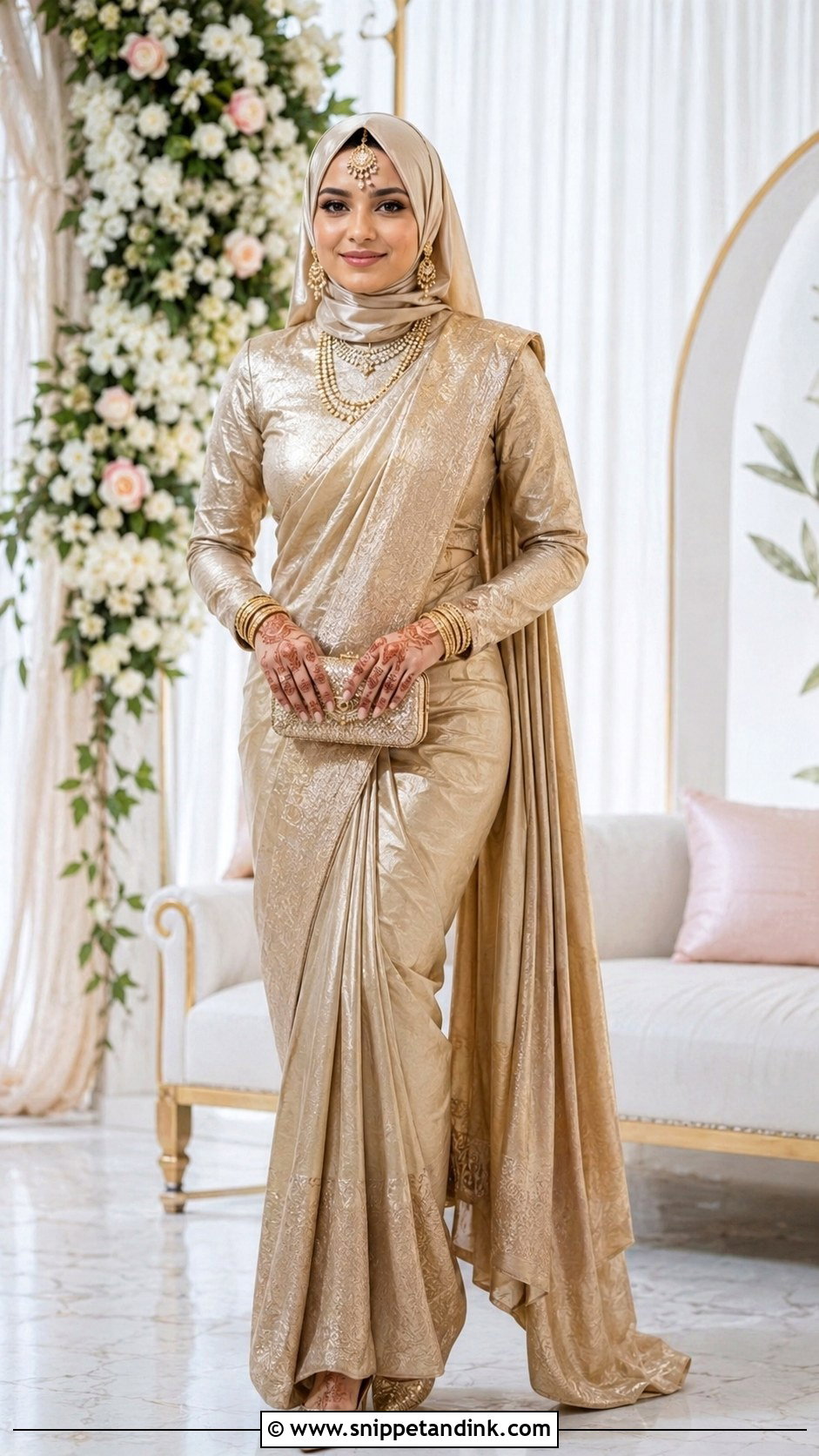
A saree can be fully modest, but it takes more planning than any other outfit here. Start with a full-sleeved blouse with a high neckline and a comfortable lining. Choose muted gold, champagne or antique metallic fabric, and drape the pallu over the shoulder without excess volume. A matching satin hijab gives a smooth base and keeps the heavy zari border from scratching the face. A long necklace, statement earrings, bangles and a small tikka complete the traditional look, with closed-toe gold heels. Have the pleats pinned by someone who drapes sarees regularly, and walk in it beforehand. A coordinated petticoat stops fine fabric from turning transparent under bright lights.
10. Dusty Rose Peplum Hijab Dulhan Look
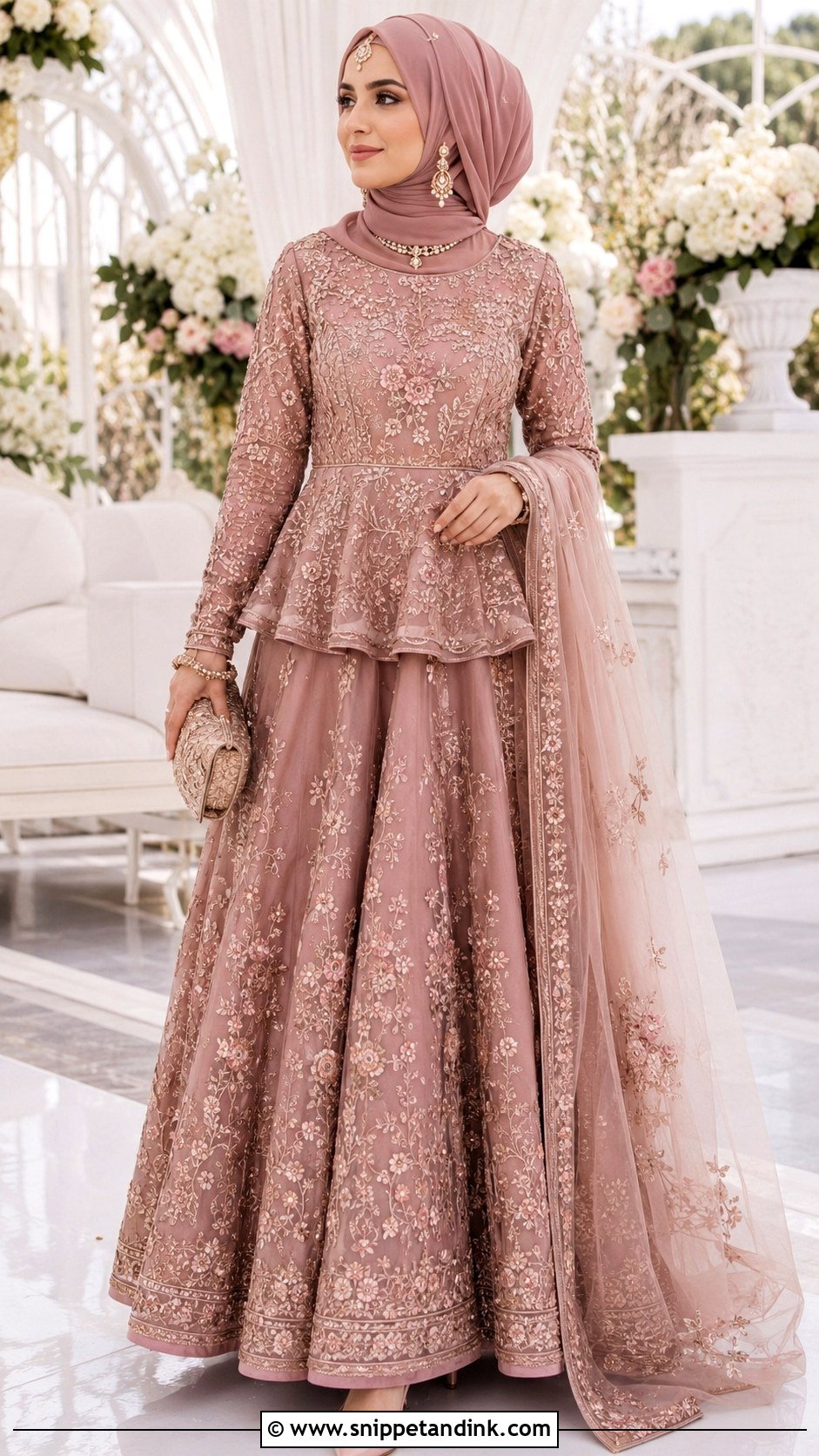
A dusty rose peplum over a lehenga skirt mixes a modern top with traditional detail. Choose a long-sleeved peplum that falls below the waist and a lightly flared skirt with embroidery concentrated at the border. Pair it with a plain dusty rose hijab and a sheer dupatta in the same color family, worn from one shoulder to the crown so the peplum shape stays visible. Rose-gold earrings, a delicate choker and a pearl tikka suit the muted pink, with blush block heels and a small embroidered clutch. Put the detail on the top and keep the skirt quieter. When both are equally heavy, the peplum flare gets lost. It suits an engagement, a nikah or a daytime reception.
11. Navy Blue Maxi Hijab Dulhan Look
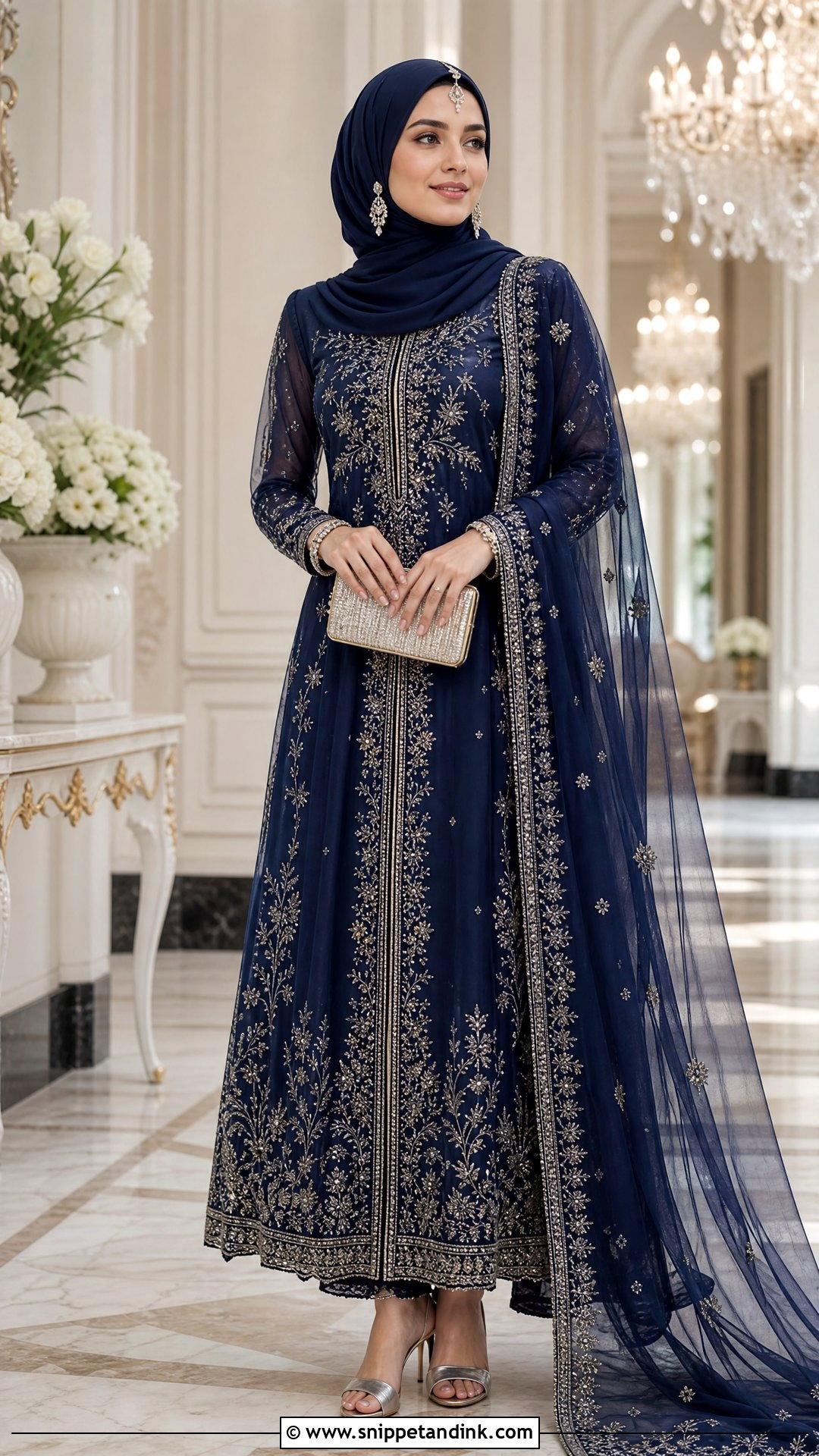
Navy is a confident step away from red and ivory, and it flatters most skin tones. Choose a floor-length dress with long sleeves, a high neckline and silver or antique gold embellishment. Match the hijab to the navy base, not the metallic work, so there’s one unbroken colour from head to hem. A light embellished dupatta can add sparkle without bulk at the face. Crystal or kundan earrings, a centred tikka and a slim bracelet stack are enough, with metallic heels and a box clutch. Dark hijabs show lint and powder marks clearly, so pack a lint roller and blot rather than rub. If the bodice is heavily decorated, keep the hijab plain and skip the large necklace.
12. Sage Green Nikah Hijab Dulhan Look
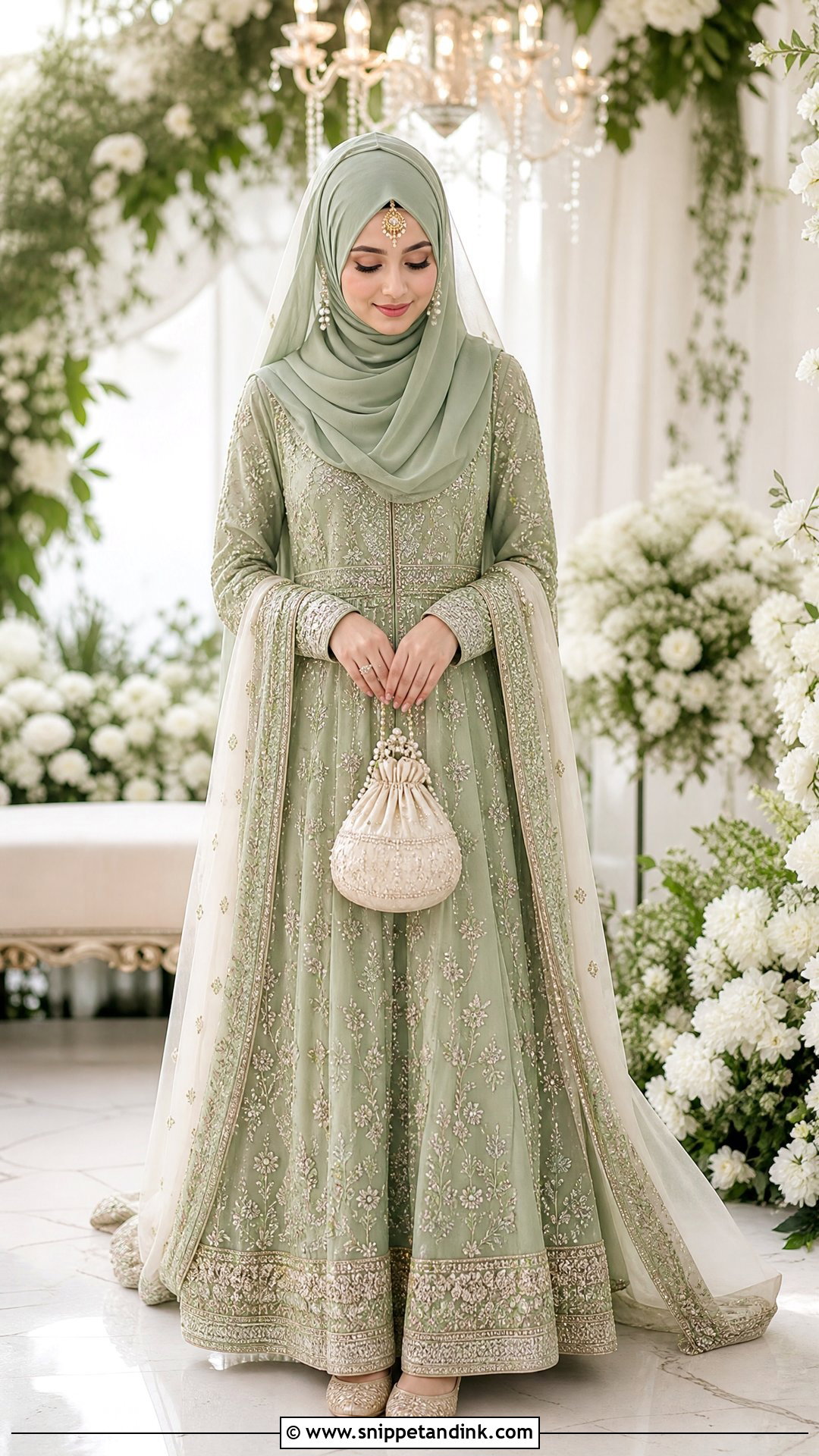
Sage makes a calm, contemporary nikah outfit that sits well with greenery and white decor. An embroidered maxi, an anarkali or a straight kameez with wide trousers all work, and full sleeves with a raised neckline make the hijab easy. A sage chiffon hijab is a light base, and an ivory dupatta with green threadwork adds the ceremonial layer. Pearl earrings, a small gold tikka and a cream potli finish it, with nude, ivory or pale gold shoes. Sage is muted, so heavy contour or a dark lip can overpower it; fresh, light makeup keeps the colour the focus. A garden nikah or a daytime ceremony suits it best.
13. Royal Purple Abaya Hijab Dulhan Look
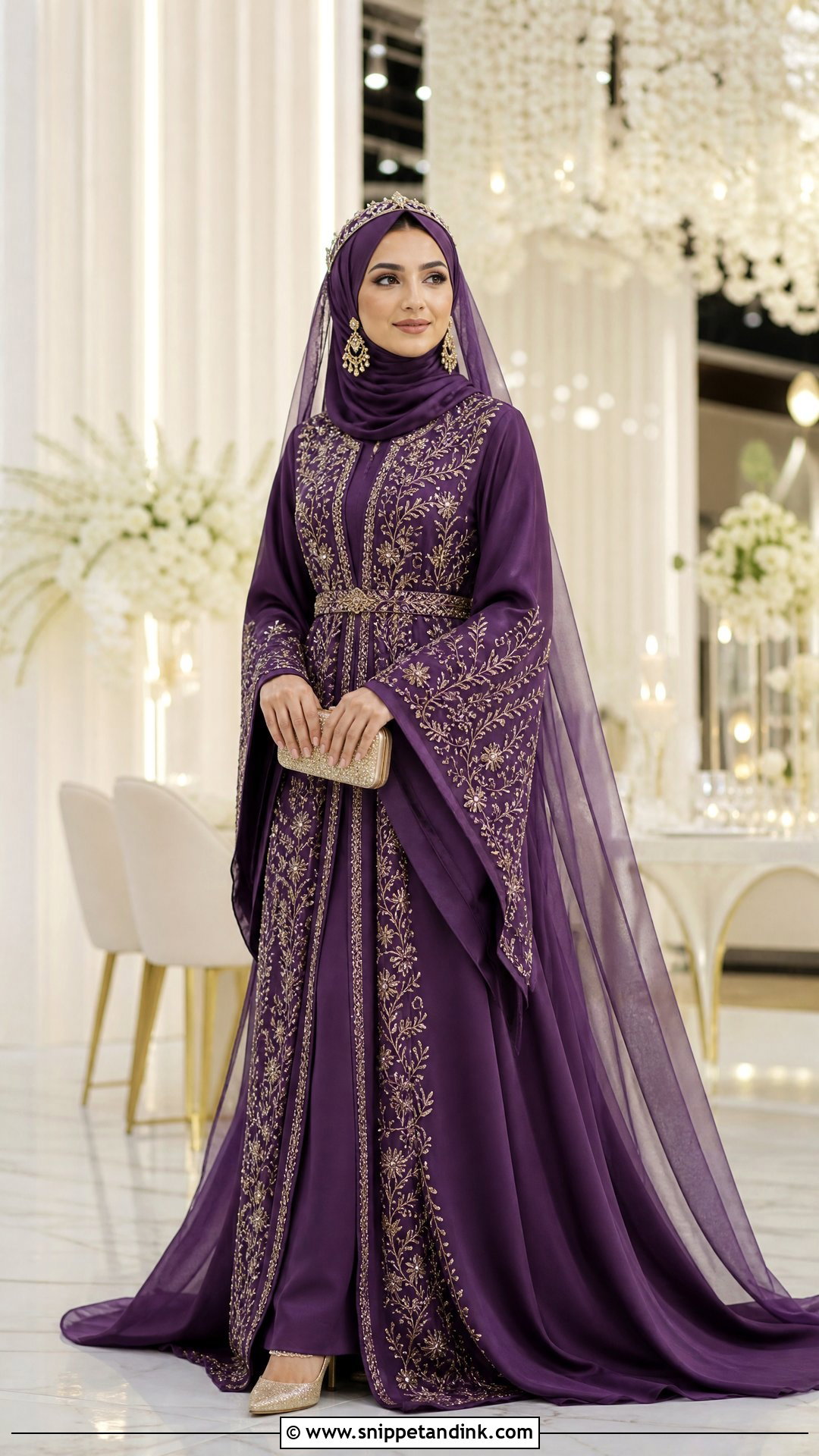
A formal bridal abaya gives generous coverage and still feels celebratory. The version here is royal purple, with a defined waist, a flowing skirt, wide sleeves and placed gold or crystal embroidery. Wrap a matching hijab simply around the face so the cuffs and front detail take the attention, and add a light veil from the back of the crown to make it read clearly as bridal. Gold earrings, a small headpiece and a structured clutch complete it, with pointed flats or low heels. Wide embroidered sleeves are weighty and swing into plates, so a hidden snap or loop at the inner wrist helps at dinner. Check opacity under strong light, and get the hem tailored to clear the floor.
14. Peach Angrakha Hijab Dulhan Look
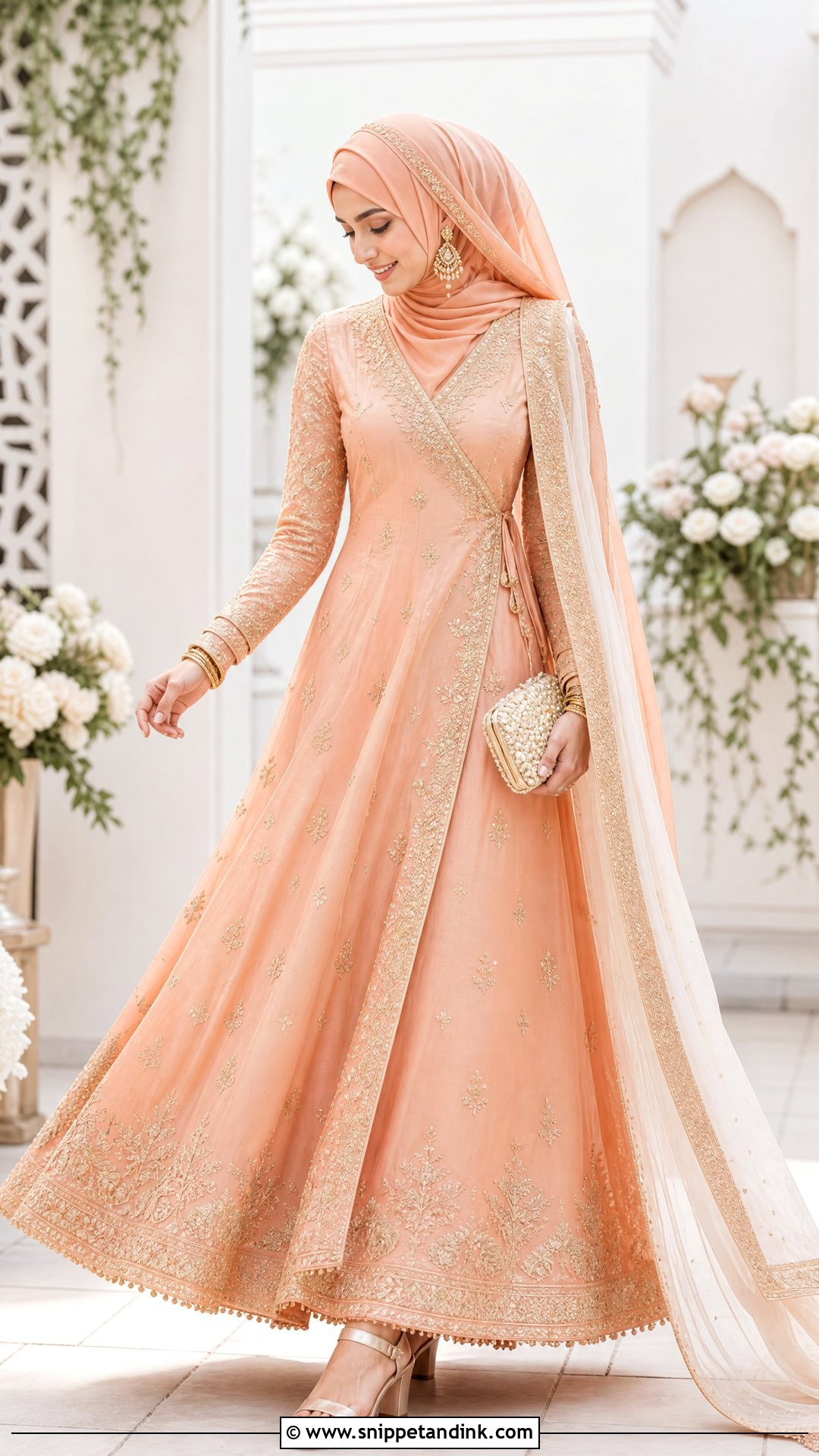
An angrakha’s overlapping front creates movement and a softer line than a standard gown. Choose floor length with full sleeves, a secure inner panel and gold embroidery along the neckline and hem. That inner panel is what I check twice. The wrap shifts when you sit, so it needs a hidden tie or hook as well as the outer fastening. A peach chiffon hijab stays simple around the face, and a contrasting ivory or soft gold dupatta pinned from shoulder to crown leaves the wrap visible. Gold drops, fine bangles and a small beaded clutch, with champagne block heels, suit the warm pastel. It’s a festive, comfortable pick for a nikah, dholki or engagement.


15. Silver Embellished Gown Hijab Dulhan Look
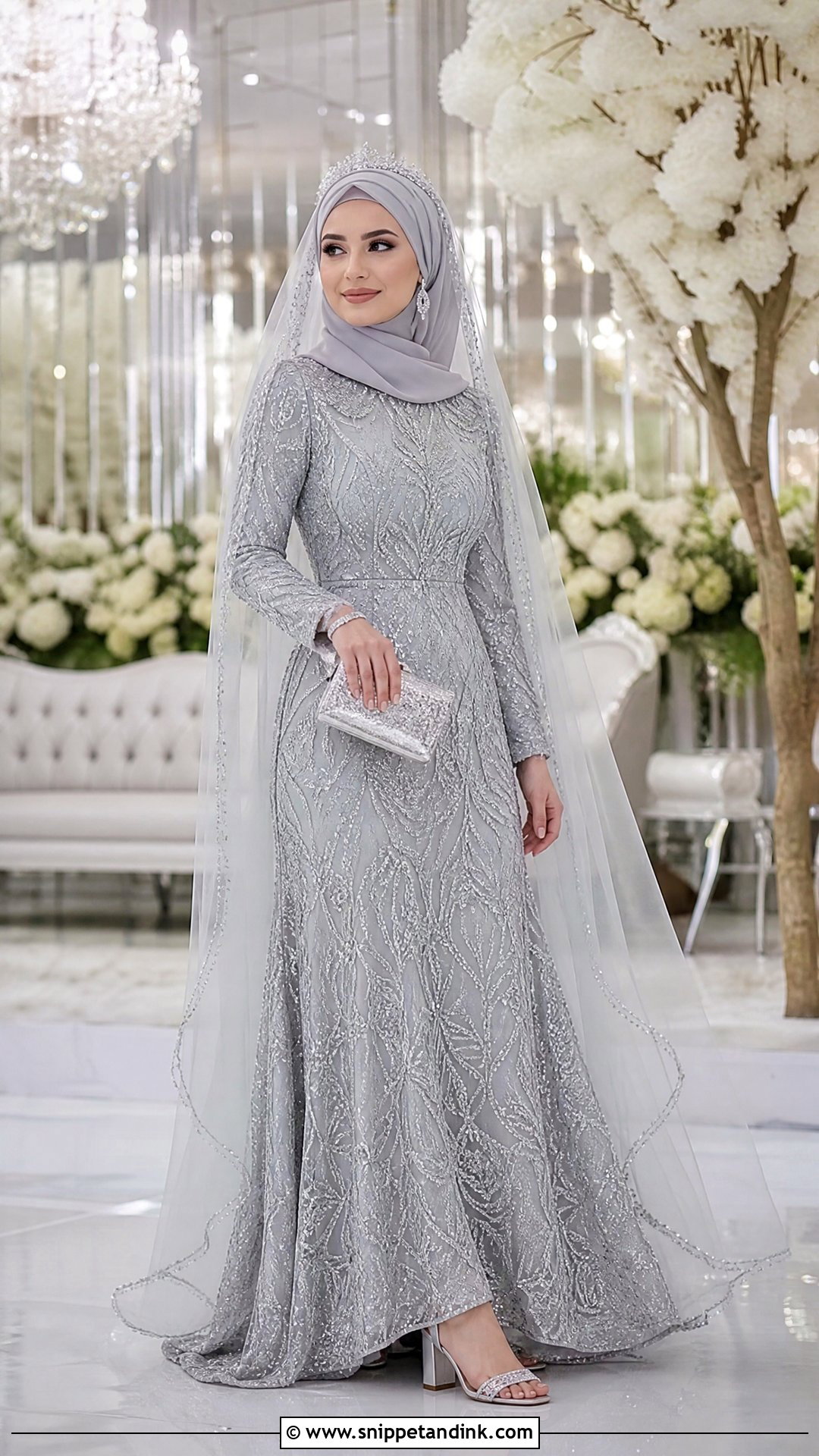
Silver embellishment gives a gown a cool sparkle that suits a formal reception. Choose grey, ice silver or pale blue with a modest bodice and long sleeves. A plain grey chiffon hijab softens the shine, and a veil with scattered crystals adds controlled drama. Heavier crystal veils need anchoring at the back of the head, never beside the cheeks, or they drag the hijab sideways. Crystal earrings, a slim headband and a metallic clutch complete it, with silver block heels. Since the gown already reflects a lot of light, keep jewellery refined. Ask your photographer to test flash on the crystals early, because dense sparkle can blow out into white spots.
16. Black And Gold Hijab Dulhan Look
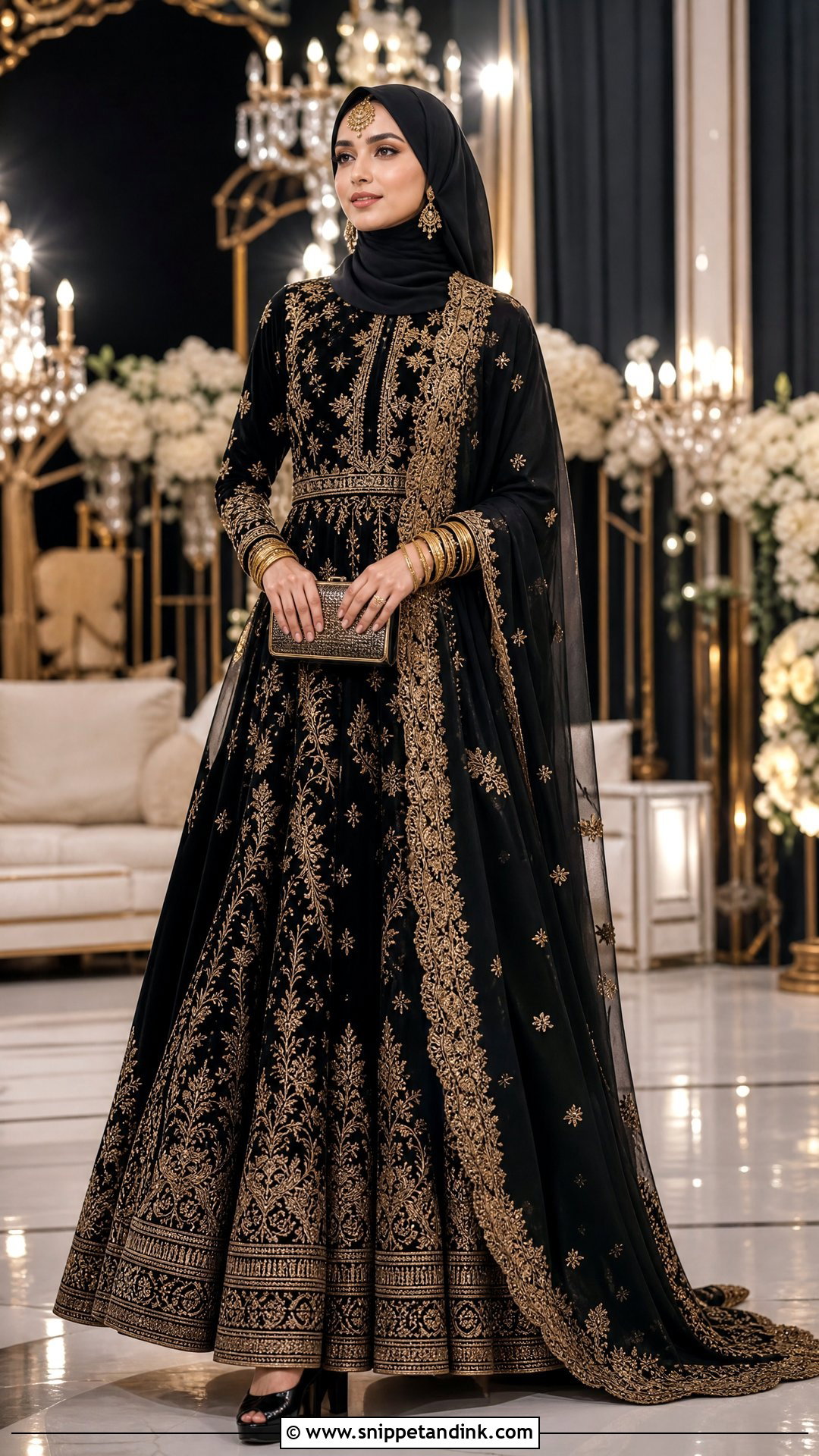
Black and gold makes a dramatic, unconventional dulhan outfit. Start with a black long-sleeved lehenga, gown or abaya with concentrated gold embroidery, and wear a smooth black hijab under a light gold-edged dupatta kept close to the face. Antique gold earrings, a statement tikka and bangles warm up the dark base, with a gold clutch and black velvet heels. Black swallows detail in low light, so the embroidery needs to be bold enough to read at an evening venue; fine tonal work simply disappears. In some families black still feels wrong for a bride, so it fits best at a reception or walima where everyone welcomes it.
17. Beige Farshi Gharara Hijab Dulhan Look
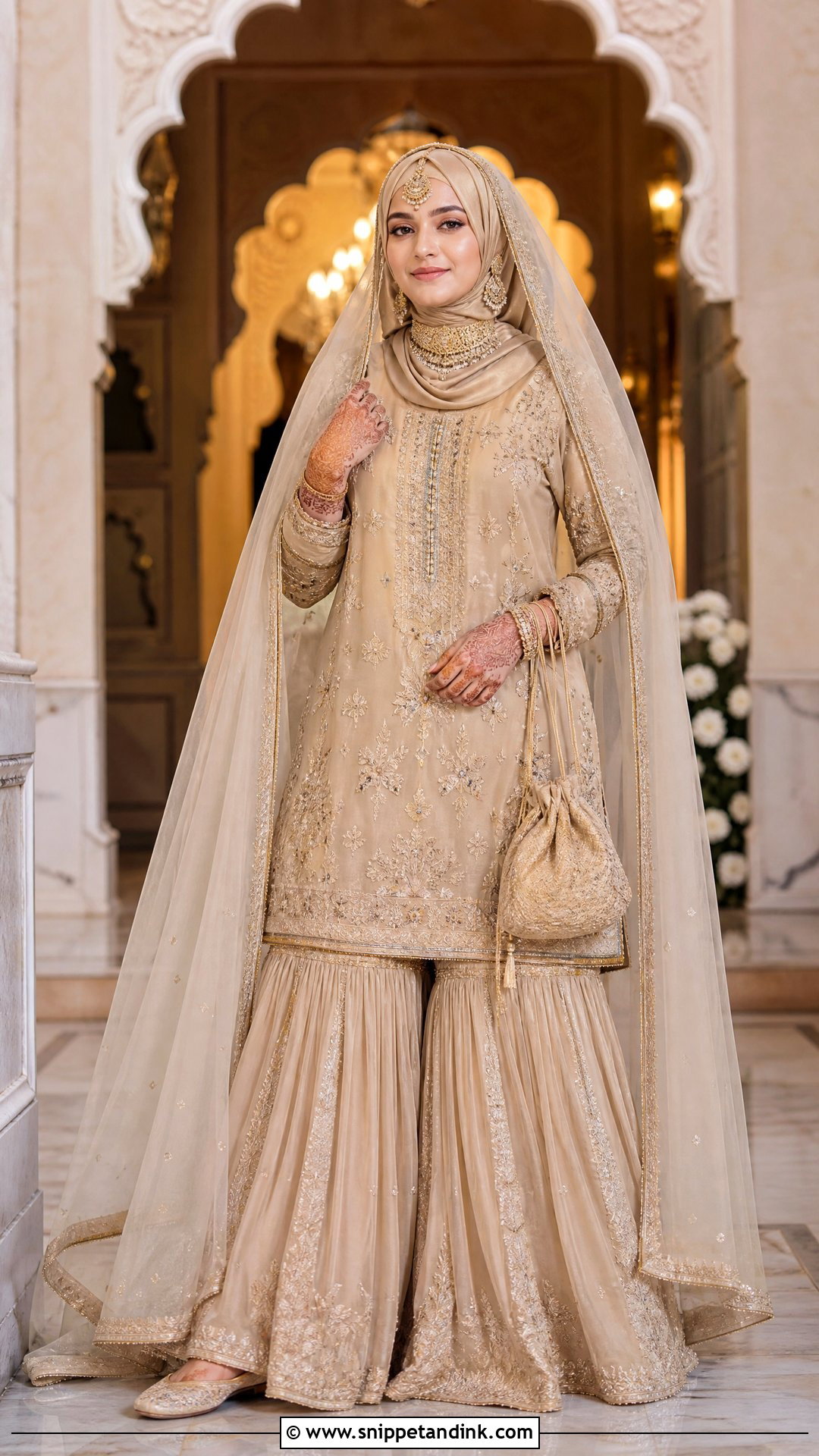
A beige farshi gharara trails across the floor with real grandeur. Pair the wide bottom with a long-sleeved kameez worked in zardozi, pearl or gold thread. A beige satin hijab gives a structured face frame, and a sheer dupatta placed loosely over the crown softens it. Antique gold or uncut stones suit the heritage mood, in medium earrings, a tikka and a fitted necklace. Juttis are far more practical than narrow heels under that much fabric, and a gold potli fits better than a modern bag. A farshi gharara is meant to be held as you walk, so practise lifting it from the side. Keep the upper draping controlled so the volume stays below the waist.
18. Teal Palazzo Hijab Dulhan Look
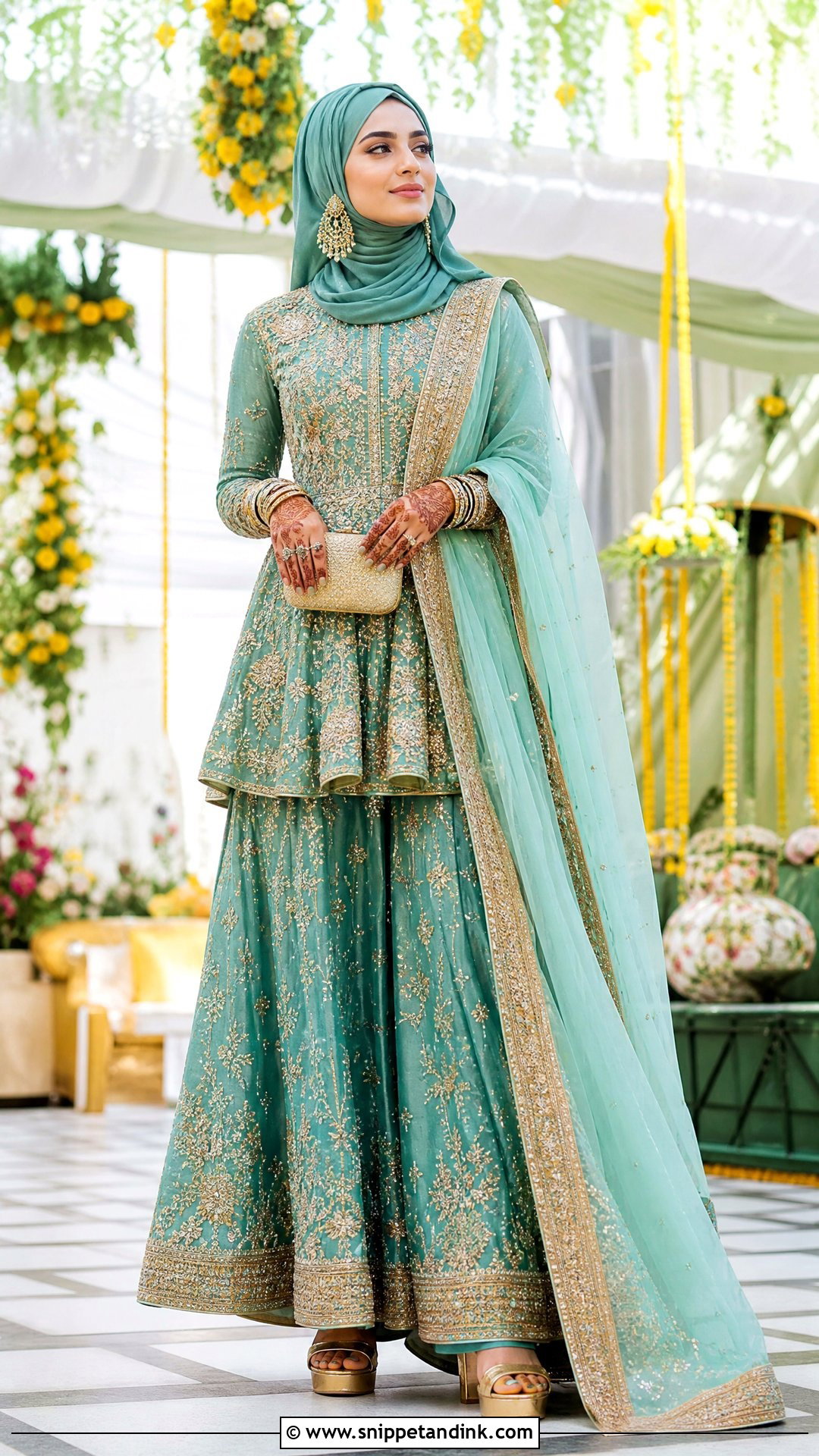
Palazzos give the dulhan a modern shape and the most comfortable legs on this list. Wear wide-leg palazzos with a knee-length embroidered tunic or a structured peplum, with full sleeves, a closed neckline and a matching teal hijab. Drape a lighter aqua or gold-edged dupatta from one shoulder and pin it behind the head so the trousers show. Statement earrings, stacked bangles and a box clutch suit it, while platform sandals or block heels balance the wide hem. The hem should just brush the top of the shoe; any longer and you’ll step on it on stairs. An engagement, mehndi or relaxed reception suits it, and sharp tailoring stops it from looking casual.
19. Lavender Cape Gown Hijab Dulhan Look
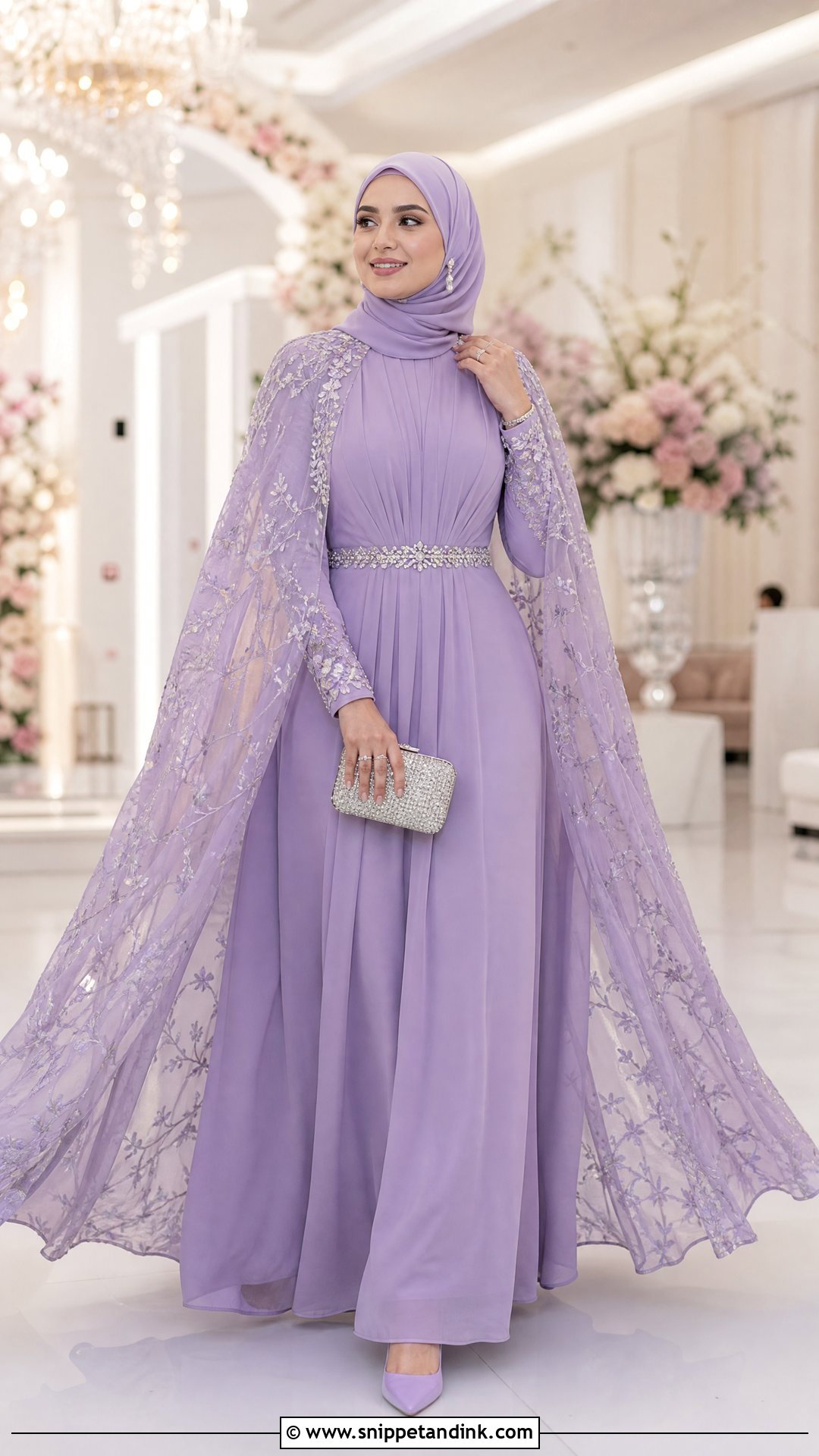
A lavender cape gown gives you a layered look without juggling a dupatta. Choose a modest gown with full sleeves and a sheer embroidered cape fixed at the shoulders. Wear a matching chiffon hijab with minimal folds underneath, so the cape stays the centrepiece. Pearl or crystal earrings, a jewelled belt and a compact silver clutch add definition, with lavender or silver pumps. The cape has to hang from the shoulder seams, not from the neck, or it tugs at the hijab every time you lift your arms. A walima or reception is the natural setting, since the movement shows on the entrance and in photos.
20. Ivory Bridal Pantsuit Hijab Dulhan Look
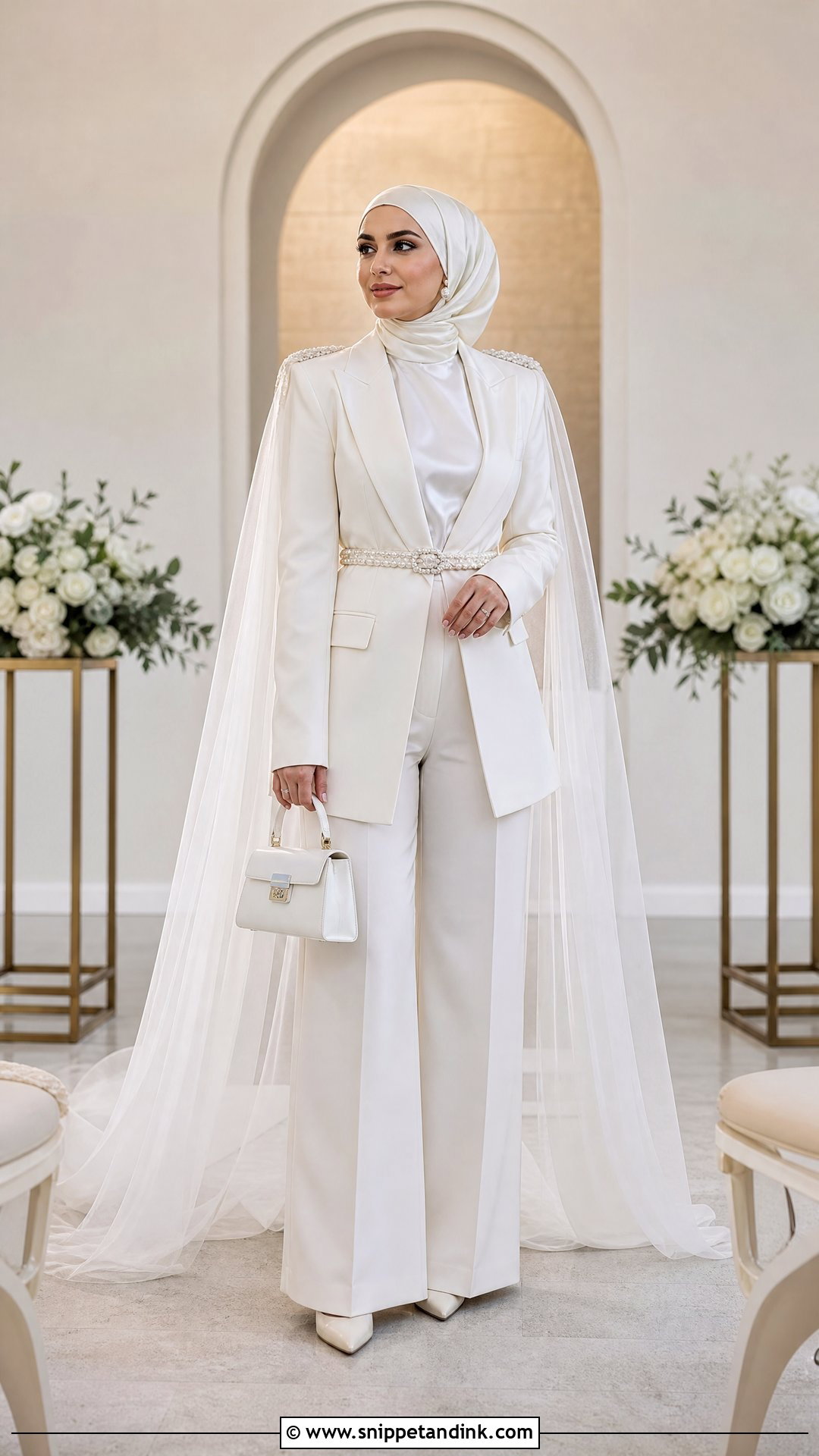
An ivory bridal pantsuit is a confident choice for a civil ceremony, a simple nikah or a modern reception. Choose wide-leg tailored trousers, a longline blazer and a high-neck satin or crepe top. A smooth ivory hijab keeps it cohesive, and a detachable sheer cape or light veil makes it read as bridal. Pearl earrings, a structured mini bag and pointed ivory pumps finish it, with a slim embellished belt if you want waist definition. Check that the blazer covers you comfortably when seated. Suiting fabric comes in many ivories, so match the top, suit, hijab and shoes to one undertone before anything is altered.
Pacing Colour and Weight Across Nikah, Rukhsati and Walima
Most dulhans wear three or more outfits across the wedding events. Planning them as a set avoids repeats in the album and saves your energy for the days that matter most.
Put the Heaviest Outfit on the Shortest Event
A fully worked lehenga with a heavy dupatta gets tiring after a few hours. If the main ceremony runs long, consider a lighter fabric there and save the heaviest piece for a shorter function or a portrait session.
Switch the Colour Family Each Time
Red for the main day, a pastel for the walima and ivory or sage for the nikah reads as a deliberate set. Two similar shades on consecutive days look like a repeat in photos.
Pack Every Outfit as Its Own Kit
Give each event a bag holding the matching undercap, a pin set, the jewellery, the shoes and the dupatta folded in tissue. Changes between functions go far faster when nobody is hunting for a hijab pin in the right colour.
Allow Proper Time for a Re-style
Taking down one hijab and jewellery set and building the next takes longer than most brides expect. Ask your stylist how long to allow, then add a margin for photos in between.
Hijab First, Then Dupatta, Then Jewellery
The most decorated outfit isn’t always the right one. The right one supports your comfort, modesty, culture and taste. Lehengas, nikah dresses, walima gowns, sarees, ghararas and modern tailoring all appear above, and the order of decisions is the same for each: settle the hijab against the dress first, then choose the dupatta and jewellery around it. That keeps bulk down and the face clear. Test every pin, undercap, shoe and veil before the wedding, and pick fabrics you can move in from the first function to the last photo.
You'll Like These Ideas:




Leave a Reply