
Purple is one of the most rewarding colours I style for weddings, and one of the least forgiving. Lavender needs very pale, healthy hair underneath; plum and eggplant can go over brown with far less damage; and every purple fades on its own schedule. Pick a purple tone with your dress, makeup and venue light in mind, because a lilac balayage that glows in a garden can go grey in a candlelit hall. Below are fifteen purple looks, with the colour and styling details I’d want a bride to know before she books.
Timing the Colour So It’s Fresh but Settled
Most purples are semi-permanent, which means they sit on the hair rather than inside it and soften with every wash. That affects your timeline more than the style does.
- If you’ve never lightened your hair, start months ahead, not weeks. Lifting dark hair to the pale base pastels need can take more than one session, and doing it in a rush risks breakage right before the wedding.
- Do a test colour well in advance and live with it for a few washes, so you see how it fades on your hair.
- Book the final colour or toner refresh roughly a week to ten days out. That’s close enough to look fresh and far enough that any excess pigment has rinsed away.
- Keep the hair trial after the final colour, so your stylist works with the real shade and texture.
Between now and then, wash less often, in cool water, with a sulphate-free shampoo. Heat and hot water are what strip purple fastest.
1. Lavender Wedding Waves
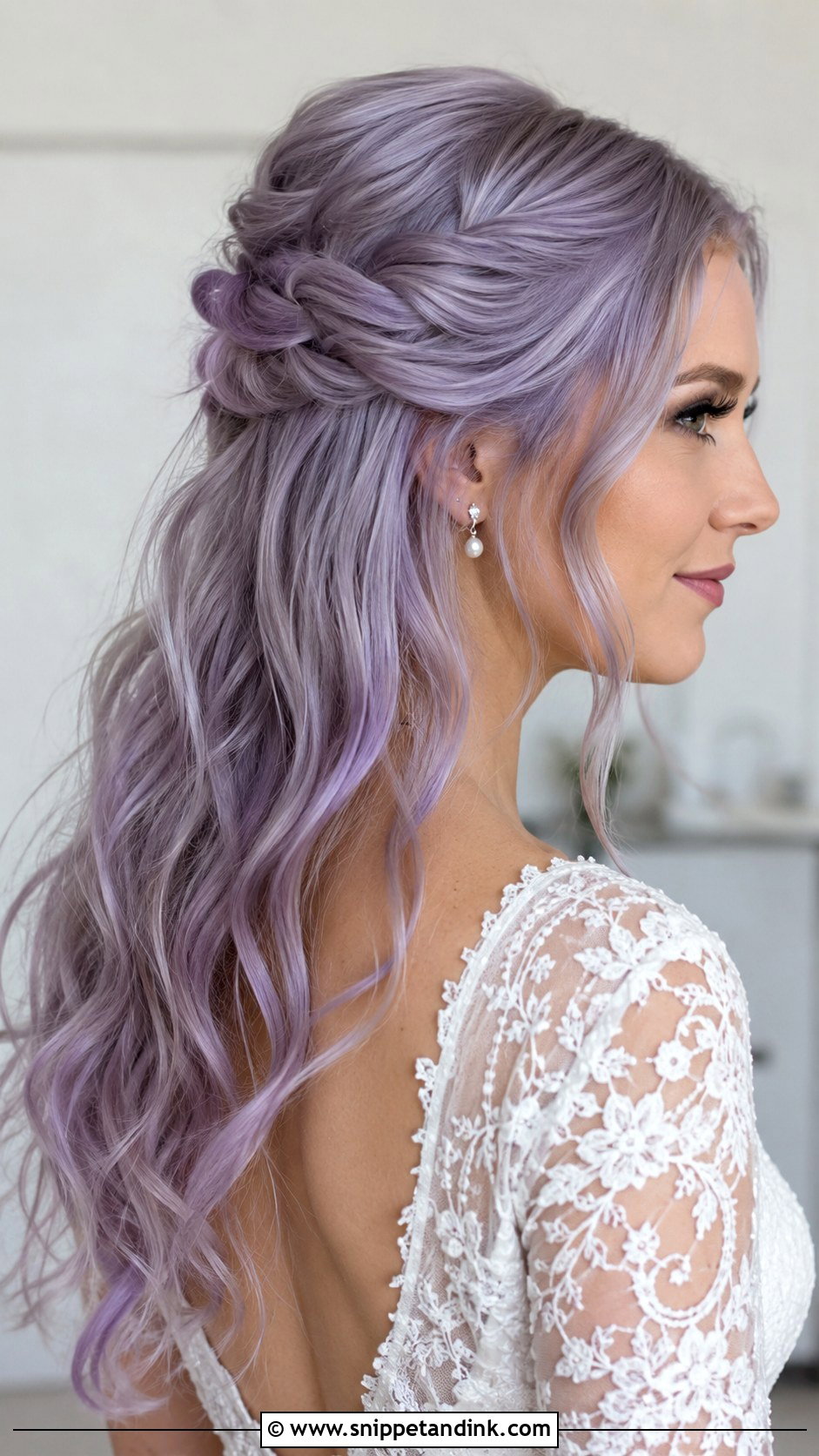
Pastel lavender shows best in loose waves, because every bend catches a slightly different depth of tone. The catch is that lavender only reads as lavender on hair lifted almost to white; on a yellow base it turns muddy grey. I’d ask your colourist for a muted, slightly smoky lavender, which fades more gracefully than a bright one. A centre part looks current; a soft side part is more classic. Pearl pins or tiny floral clips suit it better than heavy crystal.
2. Purple Wedding Updo
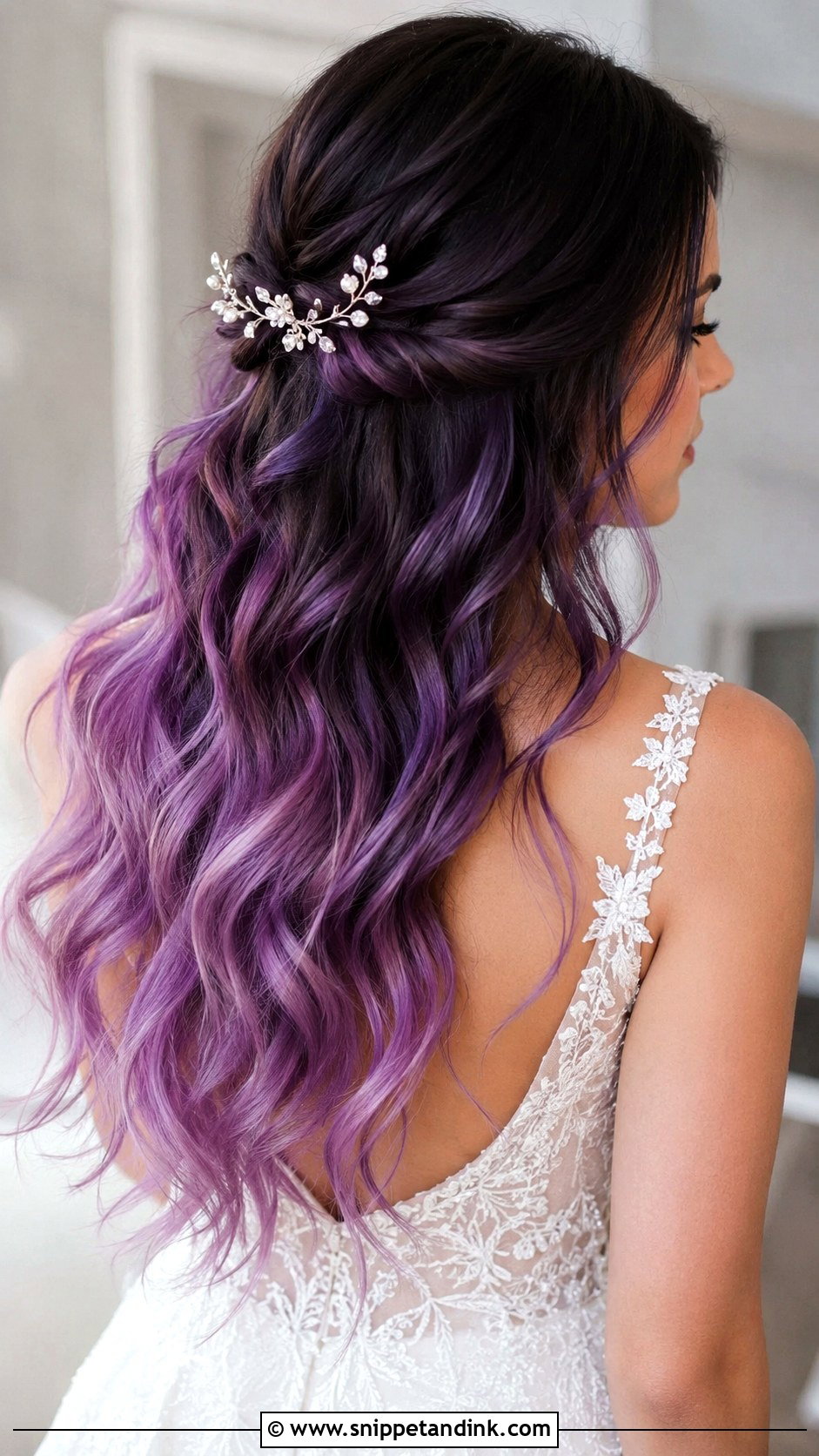
Updos show purple differently from loose hair: each twist and pinned curve catches light, so the colour looks deeper and more varied. Deep violet, plum and orchid tones work especially well in a low bun or chignon. I’d keep a few soft pieces loose at the face, and pin the updo with bobby pins matched to your darkest shade, since gold or blonde pins glint against purple. It keeps a detailed neckline or open back clear.
3. Lilac Bridal Half Up Hair
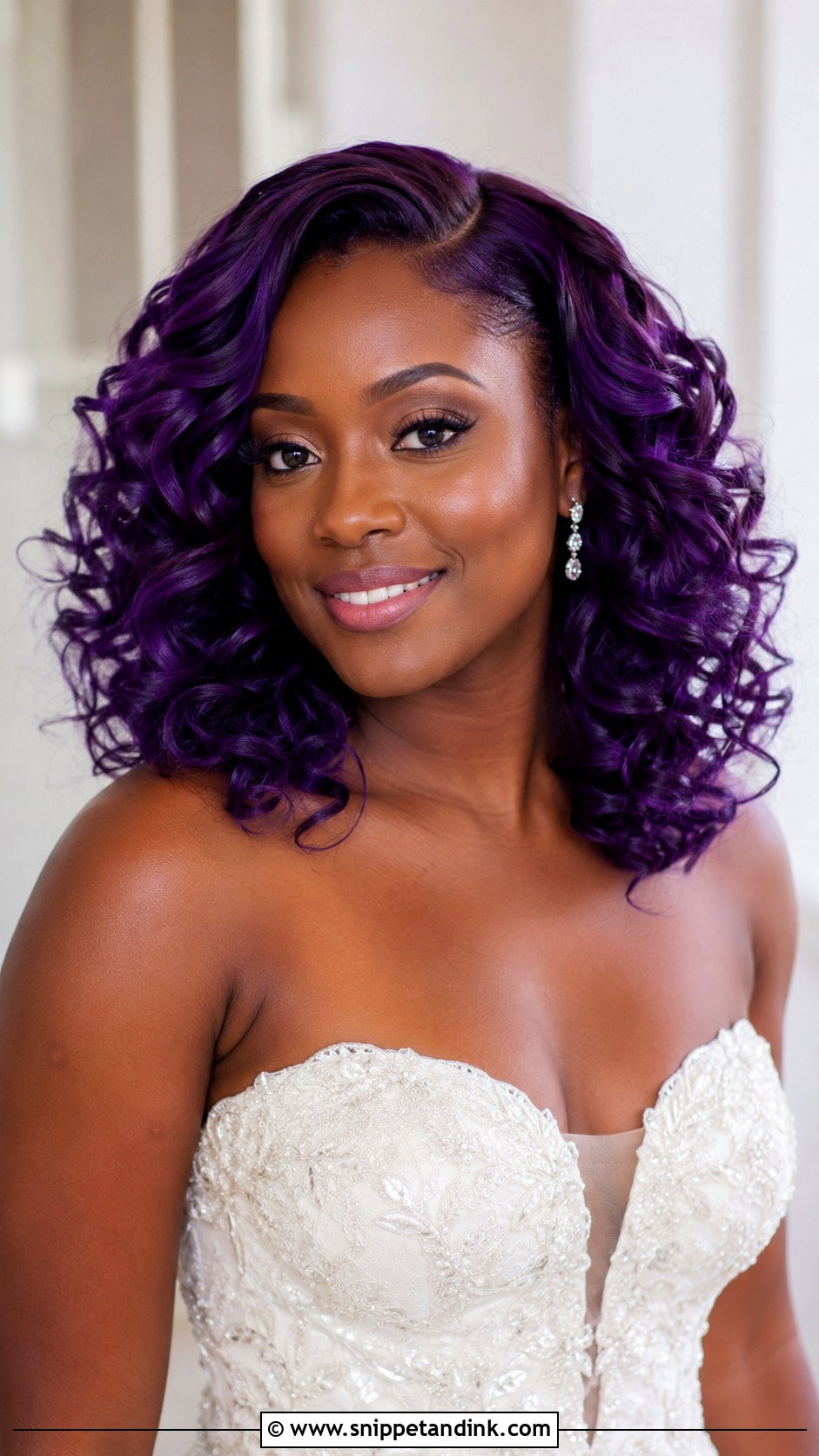
Half up is the gentlest way to show lilac through the lengths while keeping a little structure. I twist or braid the top back loosely and leave the rest in waves. That pinned section is also the best anchor for a comb, veil or crystal pins. For a softer result, ask for blended lilac with pale silver or blush undertones. Those blended pastels forgive uneven fading better than a single flat shade.
4. Plum Wedding Bun
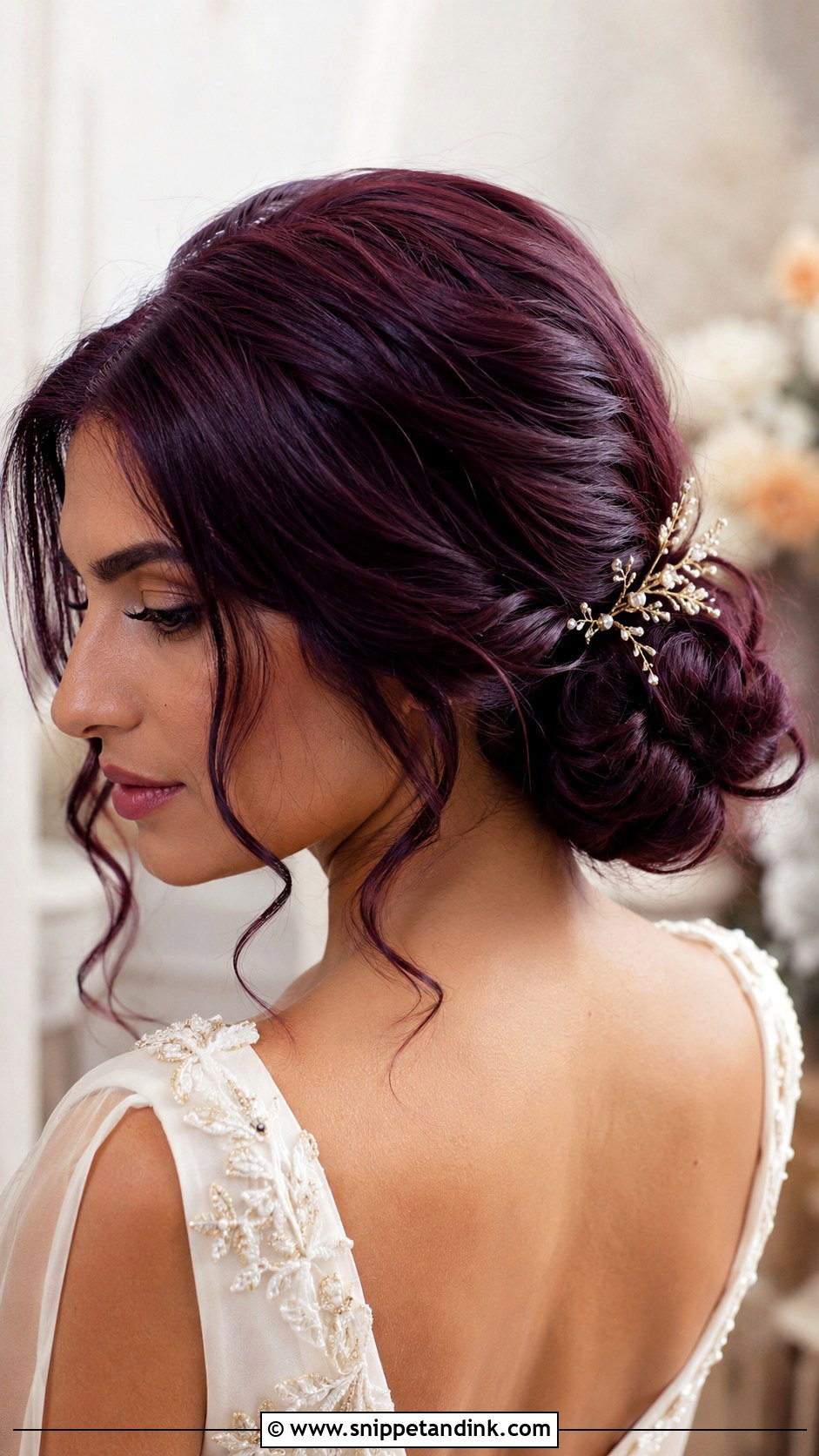
Plum is the colour I’d suggest to brunettes who want purple without bleaching, since a rich plum can often be deposited over medium brown with minimal lightening. It reads moody and warm, which suits autumn, winter and evening weddings. A low bun lets the colour sit against satin, lace or a minimal gown. I smooth the crown and keep volume through the bun itself so it doesn’t flatten. Gold pins or an amethyst clip finish it.
5. Purple Braided Wedding Hair
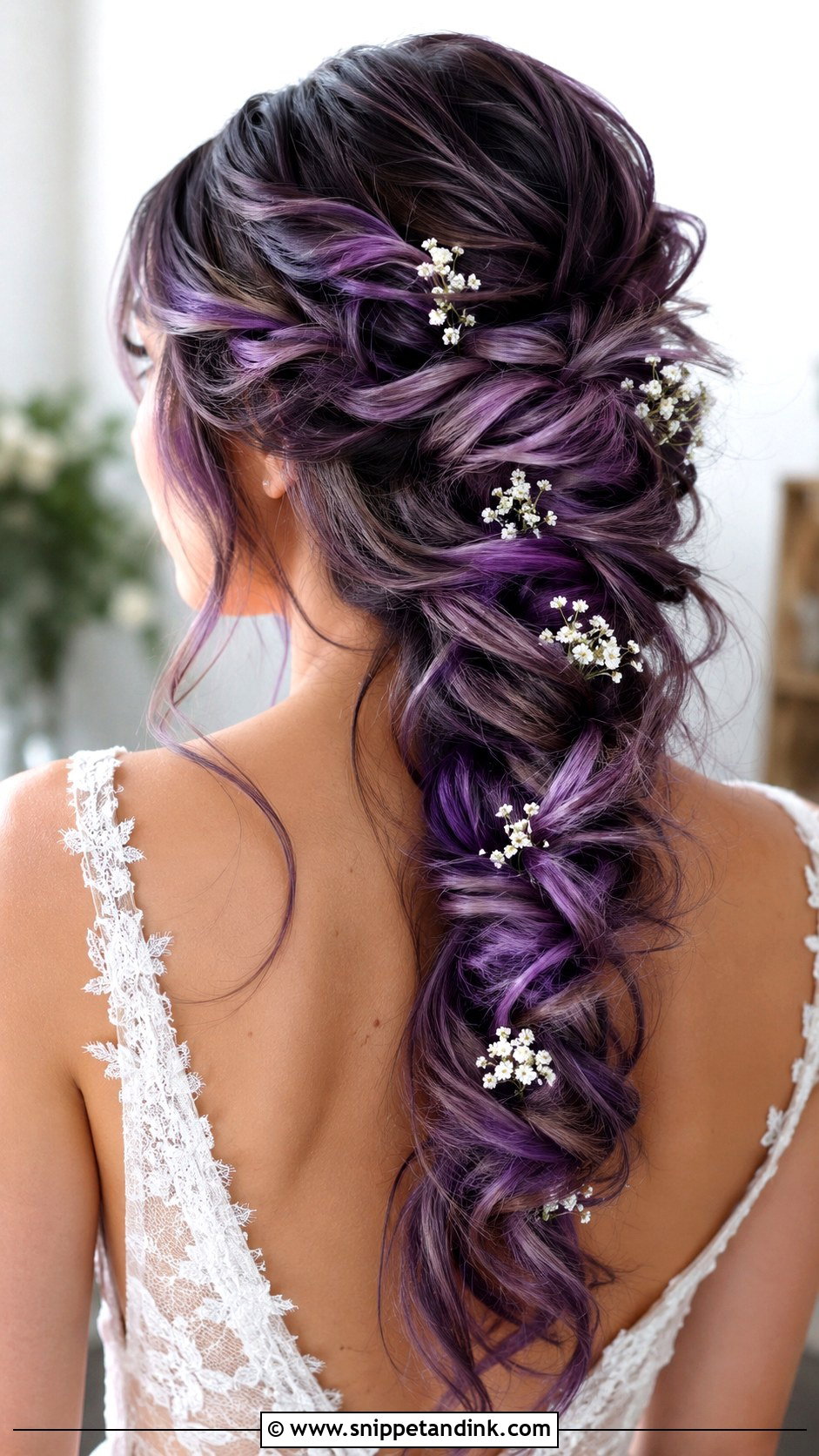
Braids are made for multi-tonal purple. When balayage or ombré hair is plaited, the lighter and darker strands interlock, and the pattern looks far more dimensional than it would loose. Crown braids, fishtails, side braids and braided updos all work. Keep the plait a little loose so the colours separate. Flowers, pearl pins or a thin ribbon add to it. It also holds well through dancing.
6. Violet Wedding Curls
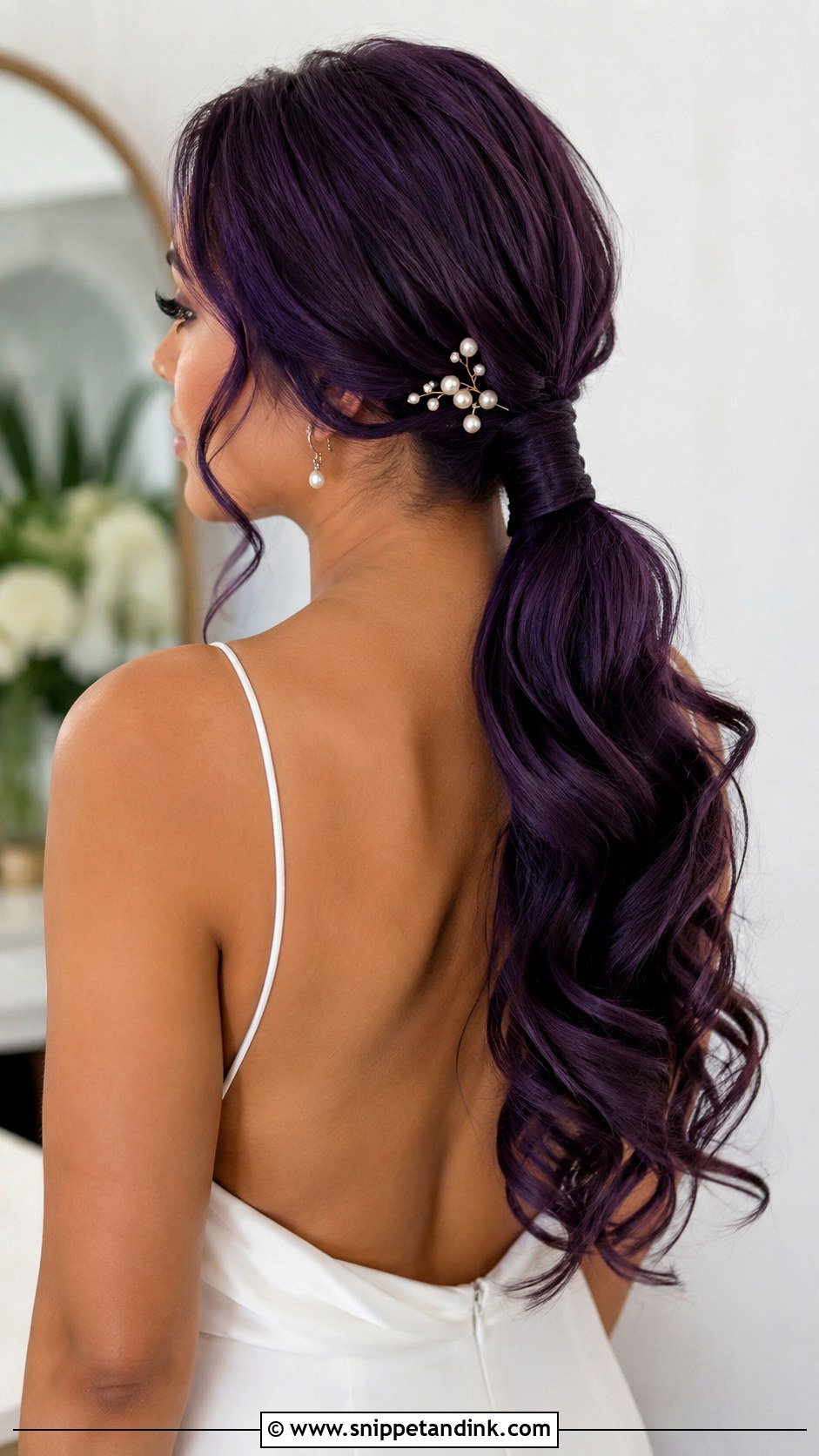
Curls bring out shine, and shine is what makes violet glow. Hair with deeper roots and brighter ends looks especially rich curled, because each spiral shows both. Natural curls, iron curls or wand spirals all work, but heat fades fresh semi-permanent colour, so I set curls at the lowest temperature that holds your hair. Keep them defined but soft. A light shine spray and an anti-humidity product finish it, for brides and guests alike.
7. Purple Wedding Ponytail
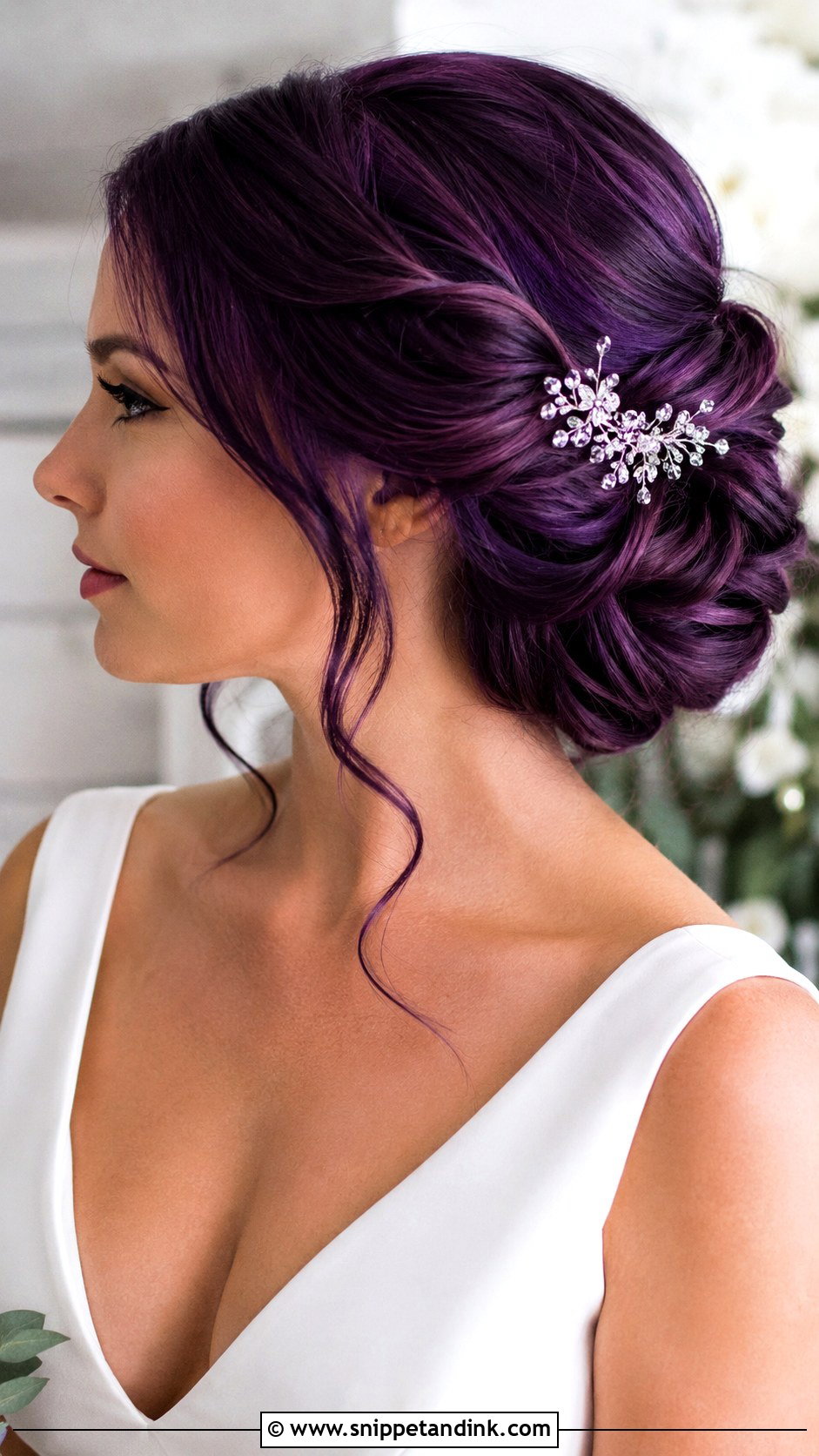
A ponytail puts the whole length of the colour on show in one sweep. Low feels minimal; high feels lifted and dramatic. I wave the tail so the purple looks dimensional rather than flat, then wrap a strand around the elastic and pin a slim crystal comb near the base. Strapless, halter and high-neck dresses all suit it. It’s my suggestion for anyone who wants hair off the face but doesn’t want a full updo.
8. Lavender Wedding Bob
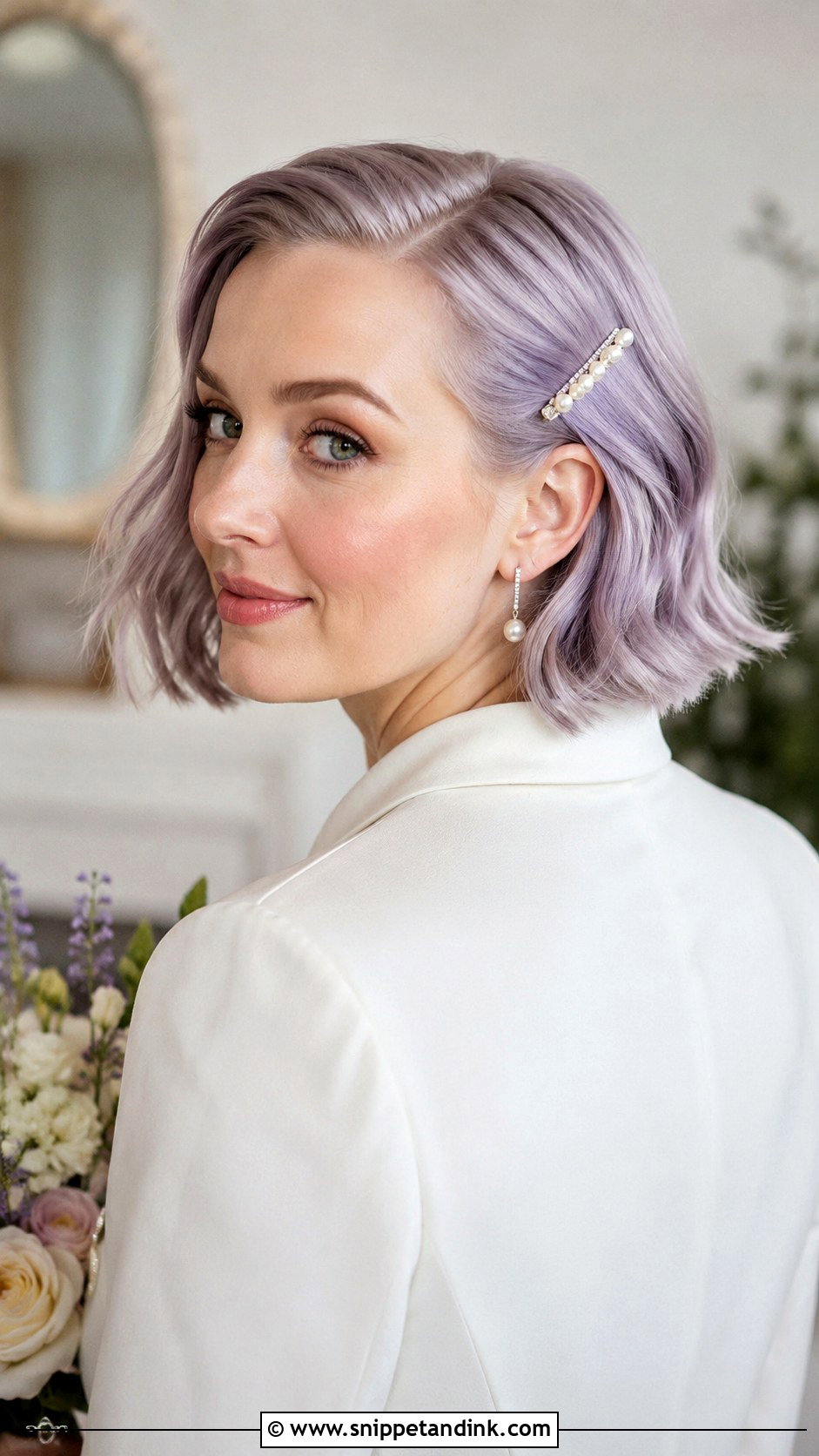
On a bob, lavender is the whole statement, because there’s no length to dilute it. The downside is that short hair is usually washed more often, so pastel fades faster; plan a toner refresh close to the date. Soft bends, polished waves or a tucked finish all suit it. A chin-length cut looks fresh with a side part, while a longer bob takes brushed vintage waves. Silver pins, small pearls or a short veil complete it.
9. Purple Ombre Wedding Hair
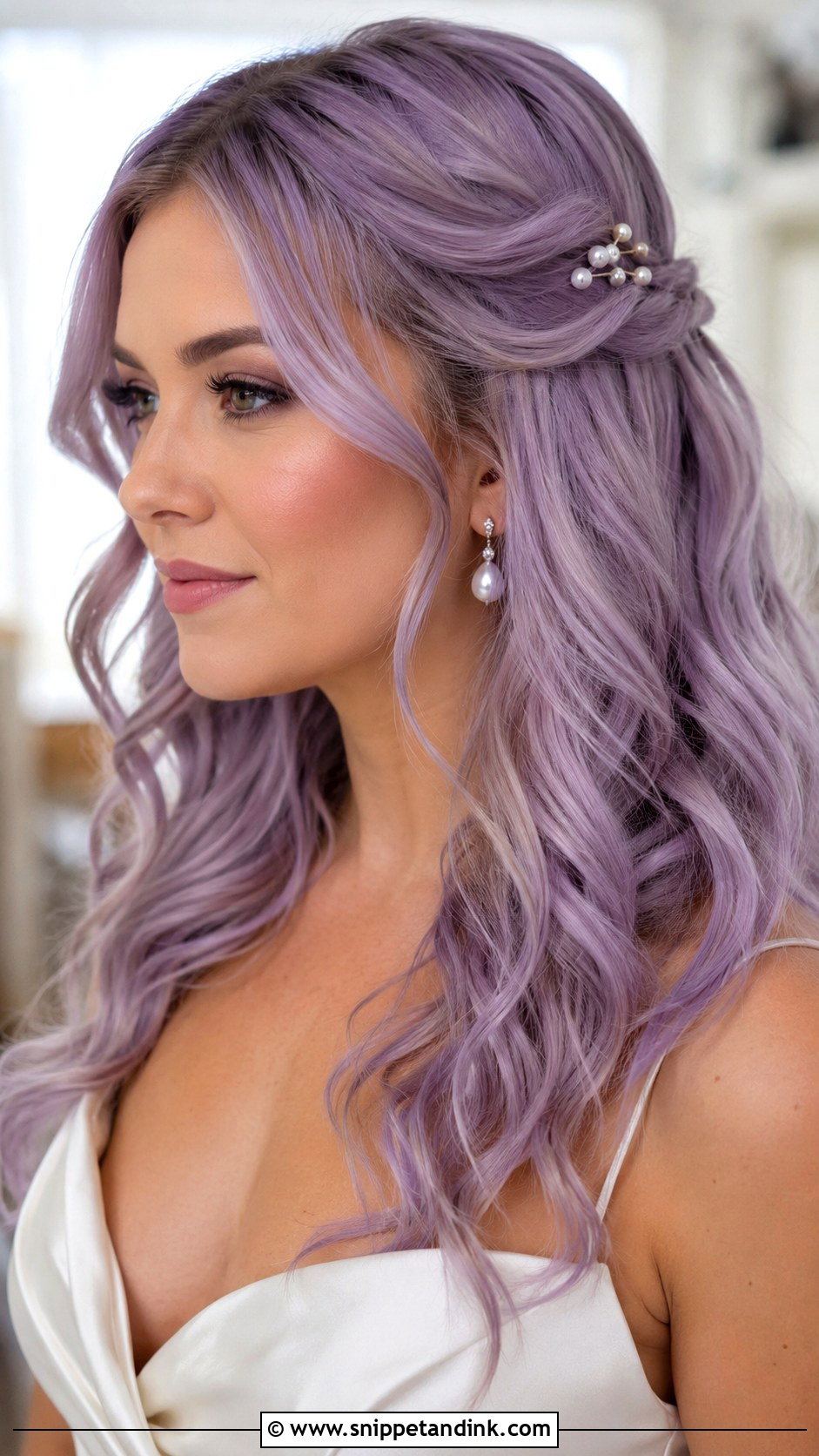
Ombré is the low-maintenance purple. Your own roots blend into violet, lavender or orchid ends, so regrowth doesn’t show and only the lengths need lightening. Waves or loose curls show the fade best from top to bottom. The transition should be gradual; a hard line halfway down looks unfinished in close-up photos. A simple veil or floral comb keeps the colour visible.
10. Dusty Purple Bridal Hair
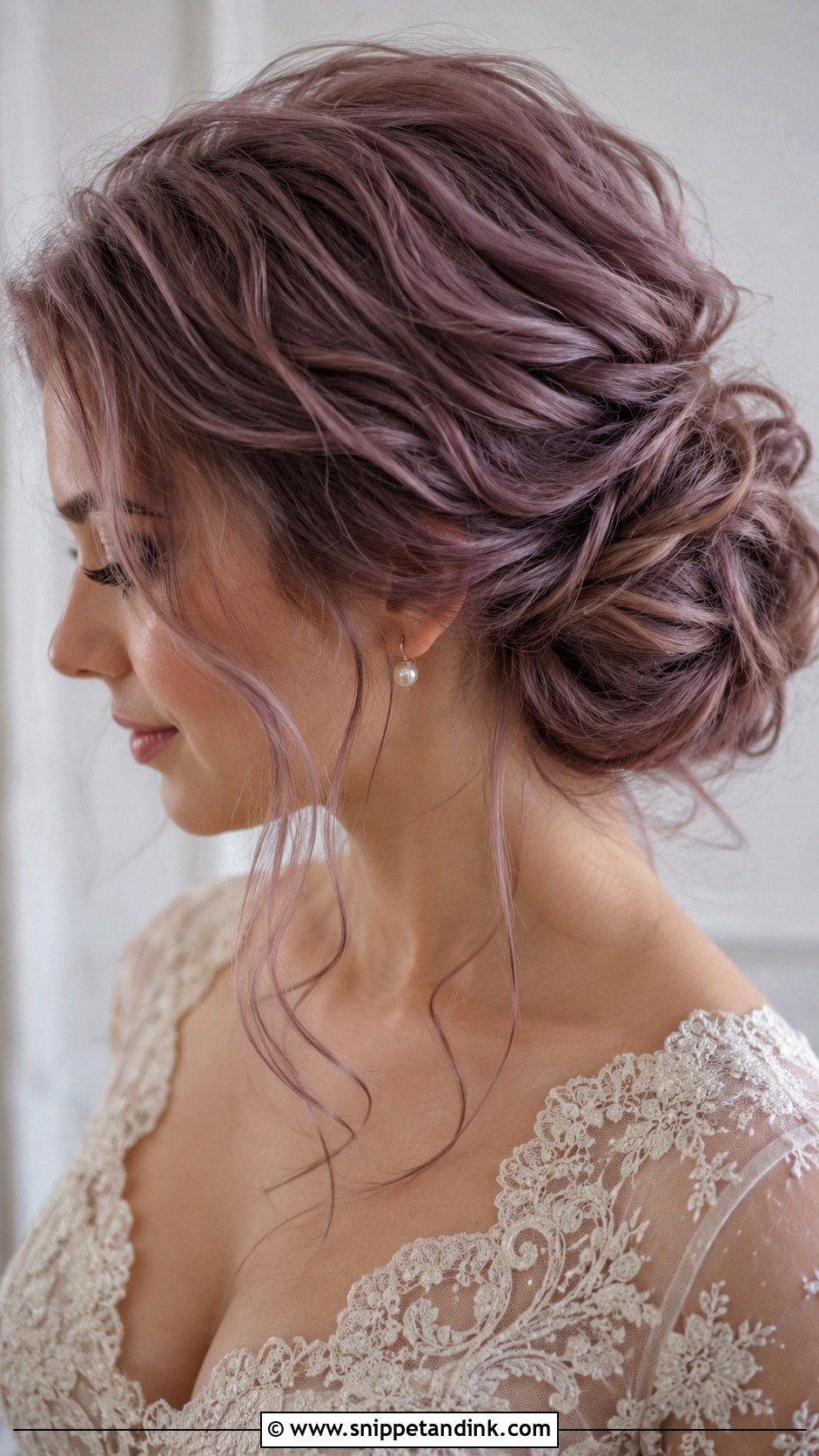
Dusty purple sits between lavender, mauve, and smoky violet, which makes it the easiest purple for a traditional dress to live with. It suits garden venues and vintage details. Loose waves, textured buns and half up looks show its subtle shifts. Muted shades can look dry because they lack the reflect of a bright tone, so ask for a gloss with the colour to keep some shine. Neutral makeup and rosy cheeks sit well beside it.
11. Purple Wedding Hair With Flowers
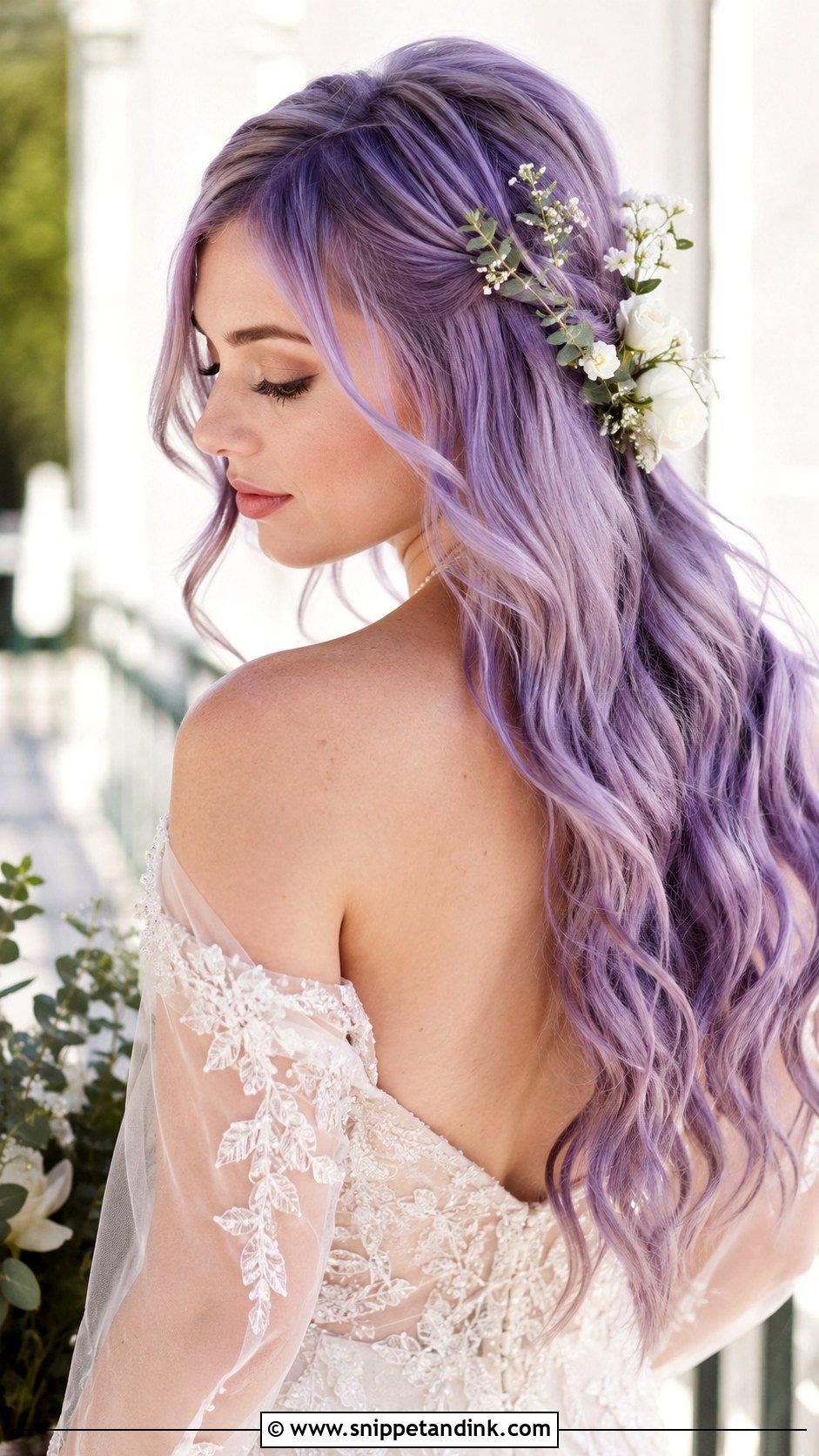
Flowers in purple hair can either match or contrast. White, blush and greenery make purple pop; violet flowers on violet hair tend to disappear. On lavender or lilac, smaller blooms keep it delicate; on deep violet or plum, larger blooms hold their own. Waves, braided crowns and low buns all give flowers somewhere to sit. Keep placement balanced with your earrings, veil and dress, and tuck fresh stems into wired pins so they don’t slide.
12. Amethyst Wedding Hair
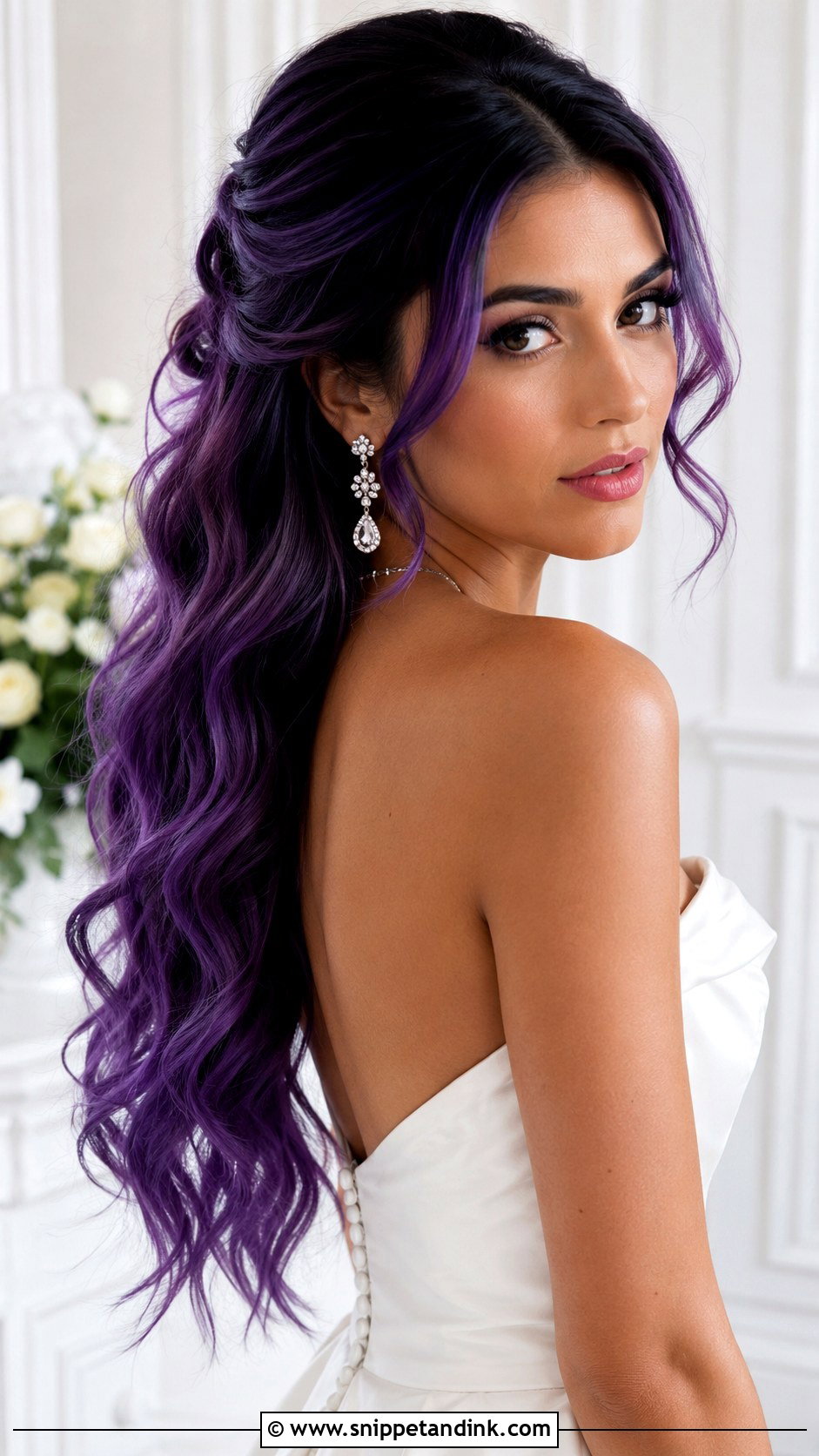
Amethyst sits brighter than plum and deeper than lavender, giving a jewel-toned finish that brides who want colour with restraint tend to love. It looks rich in long waves, glossy curls or a smooth low bun. Ask for depth at the root and lighter violet ribbons through the mids and ends, so it doesn’t look painted on. Silver jewellery, cool-toned makeup and white or ivory gowns suit it. It’s eye-catching but still reads refined.
13. Purple Wedding Hair With Veil
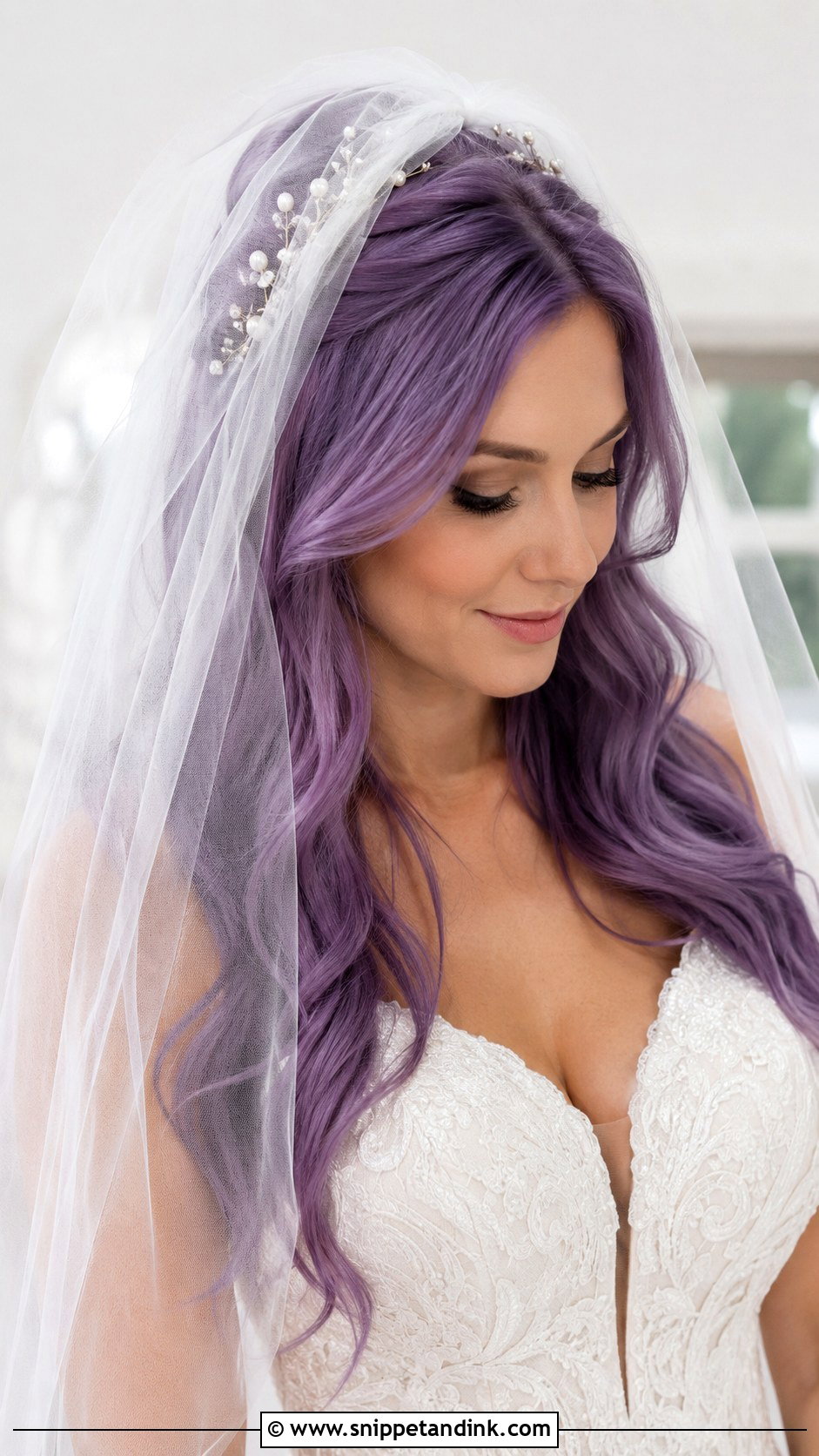
A veil changes what colour people see. Sheer tulle over soft waves lets the purple show through gently, while a low bun with the veil tucked above or below it looks more formal. Bright violet calls for a plain veil; pale lavender can carry lace or pearl edging. One practical note: freshly dyed hair can tint a white veil comb or edging where they touch, so wear the veil with your coloured hair at the trial. Check the result from the back too.
14. Purple Wedding Hair For Bridesmaids
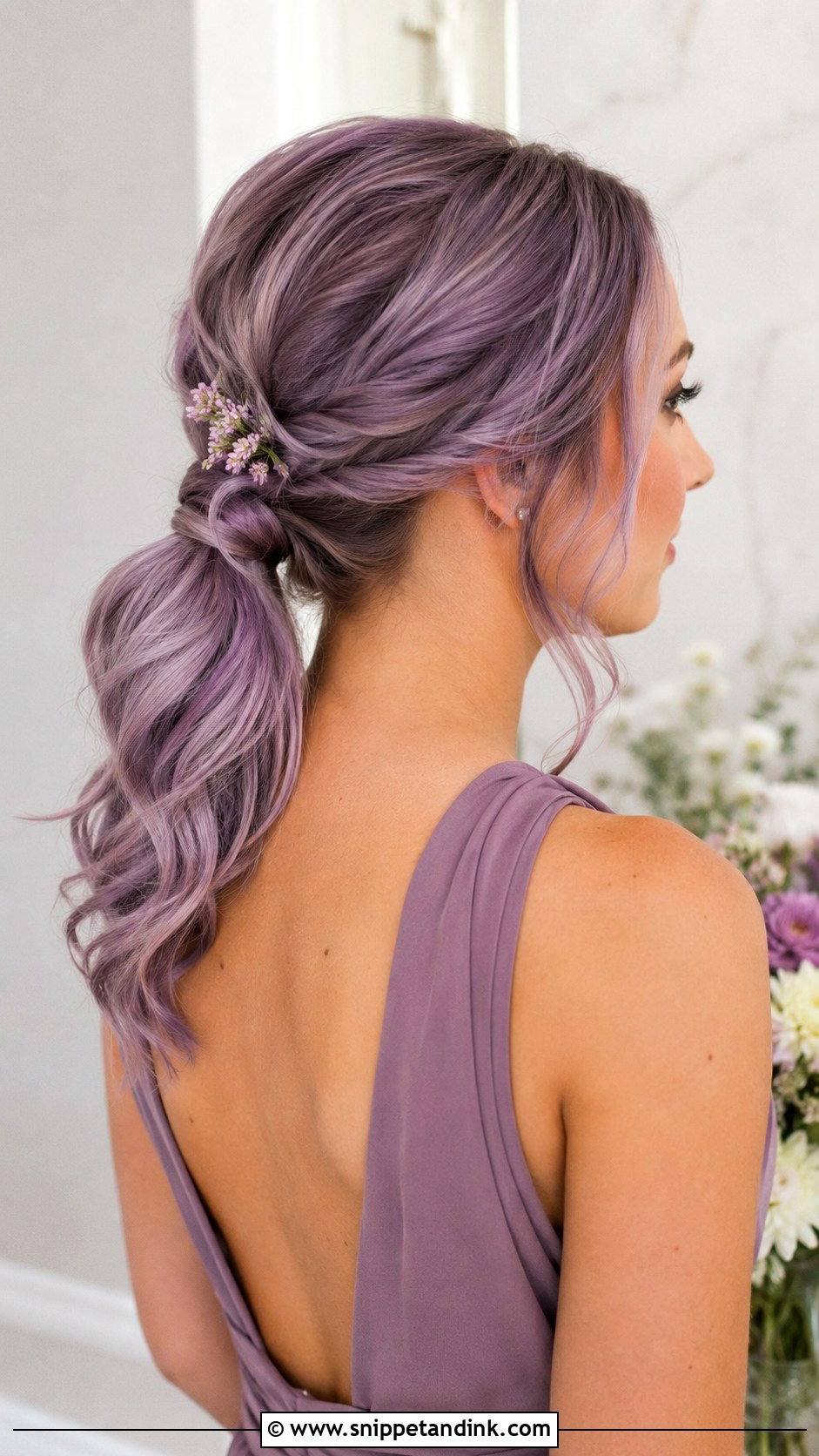
Bridesmaids don’t need identical hair to look like a group. One can wear lavender waves, another a braided updo, another a plum ponytail; the shared colour family ties them together. This works well with dusty purple, sage, silver, blush or navy dresses. Muted tones keep the group soft. If only one bridesmaid has purple hair, I’d style hers neatly so the colour looks chosen, not accidental.
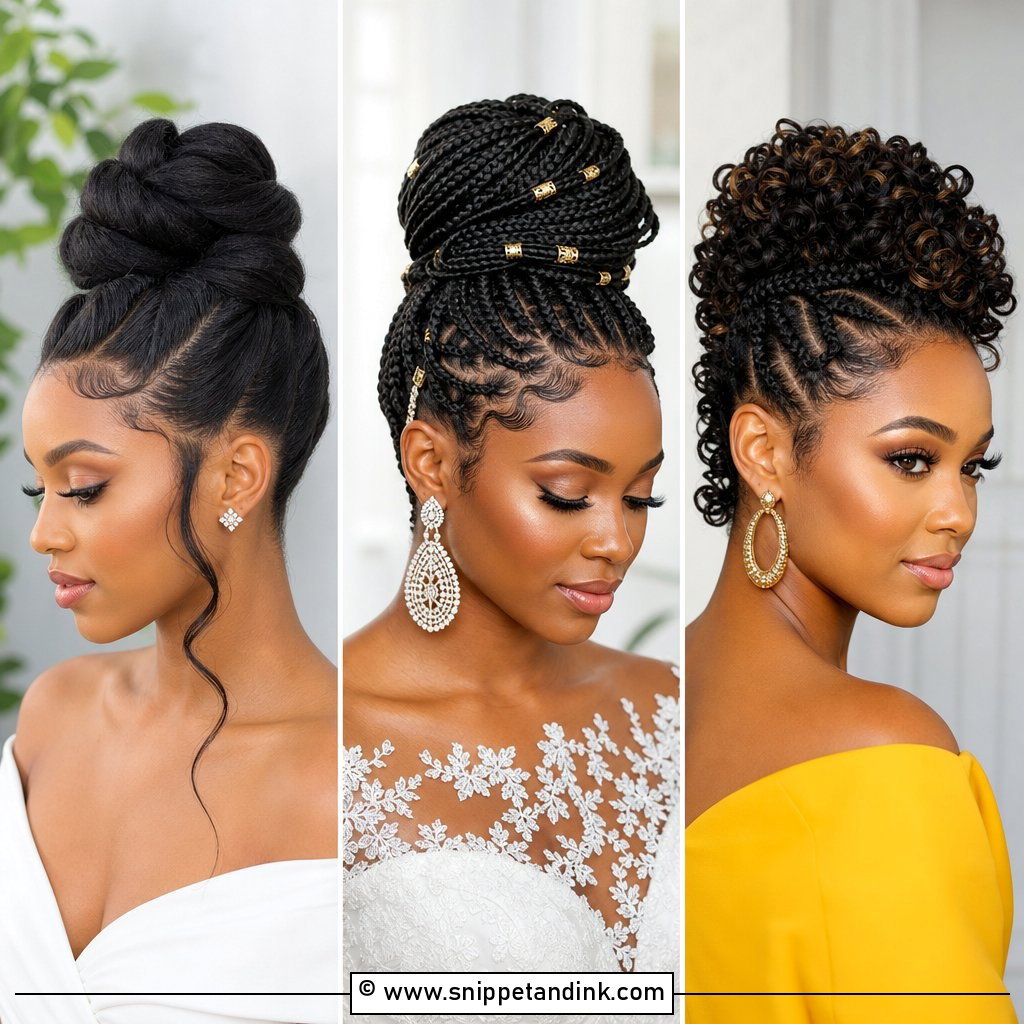
15. Dark Purple Wedding Hair
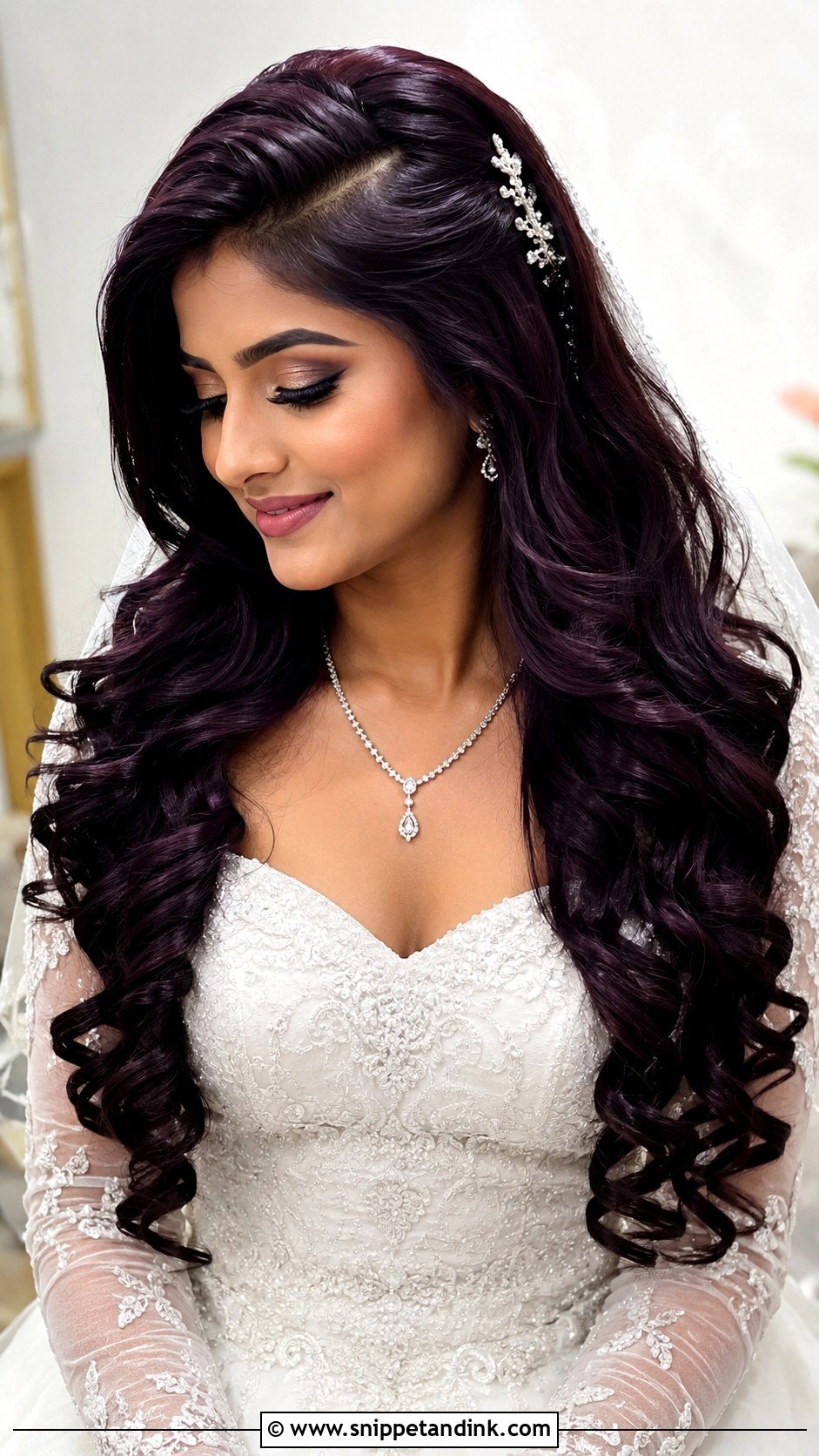
Eggplant, blackberry and deep violet look almost brunette indoors, then turn clearly purple outdoors. That makes dark purple the safest bold option for a formal wedding. Shine is everything here, so glossy waves, sleek buns and long layered curls are the best styles. Book a colour-safe gloss about a week before, and use a smoothing serum on the day. Soft makeup and simple accessories keep the whole look calm.
Will Purple Dye Rub Off on a White Gown?
It can, which is why I always mention it. Fresh semi-permanent purple releases pigment when it gets wet, and sweat, rain or a damp curl resting on a silk shoulder is enough to leave a faint tint. A few simple habits prevent it.
- On your last wash before the wedding, rinse in cool water until it runs clear, then rub a damp section on a white towel. If colour shows, rinse again.
- Make sure the hair is fully dry before styling, especially at the nape where a bun sits against the dress.
- A light finishing spray helps seal the surface, though it isn’t a guarantee.
- For an outdoor or summer wedding, an updo keeps coloured hair off the fabric altogether.
Purple Shifts Under Tungsten, Daylight and Flash
Warm indoor bulbs pull purple toward brown or burgundy, while shade and overcast skies push it toward blue. Pastel lavender can look nearly silver in flash. None of this is a problem if you know to expect it. At your trial, take one photo by a window, one under warm lights and one with flash, and show your photographer. A good editor can keep the shade consistent once they know what it actually looks like.
Lavender, Plum or Eggplant: Matching Shade to the Day
Purple can be quiet or loud, and the right shade depends on your hair’s starting point, the dress, the season and the light at your venue. Pastels suit daylight and very healthy pale hair; plum and dark violet suit evenings and brunettes. Book your trial after the colour is done, wear the veil and accessories, and step outside to see the shade in daylight before you decide anything is final.
You'll Like These Ideas:


Leave a Reply