
A fantasy cake turns dessert into part of the story: a castle ballroom, a hidden forest, a moonlit sky, a page from an old storybook. In my experience the couples who are happiest with these cakes are the ones who pick one world and commit to it, rather than mixing dragons with fairies with stars. Fantasy doesn’t have to look childish, either. Most of what makes these designs feel grown-up is technique: sugar flowers with real petal thickness, painted skies blended on smooth fondant, stonework pressed into the icing. Below are thirty ideas I’d be glad to make, with notes on structure, flavor and what each one needs from your venue.
What Holds Up a Dragon, a Tower or a Floating Tier
Most fantasy cakes are part cake, part construction. Sponge can only carry so much weight, so tall tiers sit on cake boards with dowels or straws pushed through them, and anything that sticks out (a dragon’s neck, a turret, swan wings) is usually modeled from rice cereal treats or modeling chocolate over a hidden support. Those pieces are edible but not meant to be sliced like cake, and some armatures are not edible at all.
That has two practical effects. Sculpted cakes are often delivered in sections and finished at the venue, so your planner needs to give the baker table access and time. And the decorative part rarely feeds as many guests as its size suggests, which is why I often pair a showpiece with a plain kitchen cake that is cut out of sight. Ask how many servings the display cake actually gives.
When dummy tiers make sense
If you want the height of a castle but have a small guest list, some tiers can be foam dummies iced exactly like the real ones. They also carry heavy sugar work without crushing sponge underneath. Just make sure your baker marks which tier is real before cutting time.
1. Fairytale Castle Wedding Cake
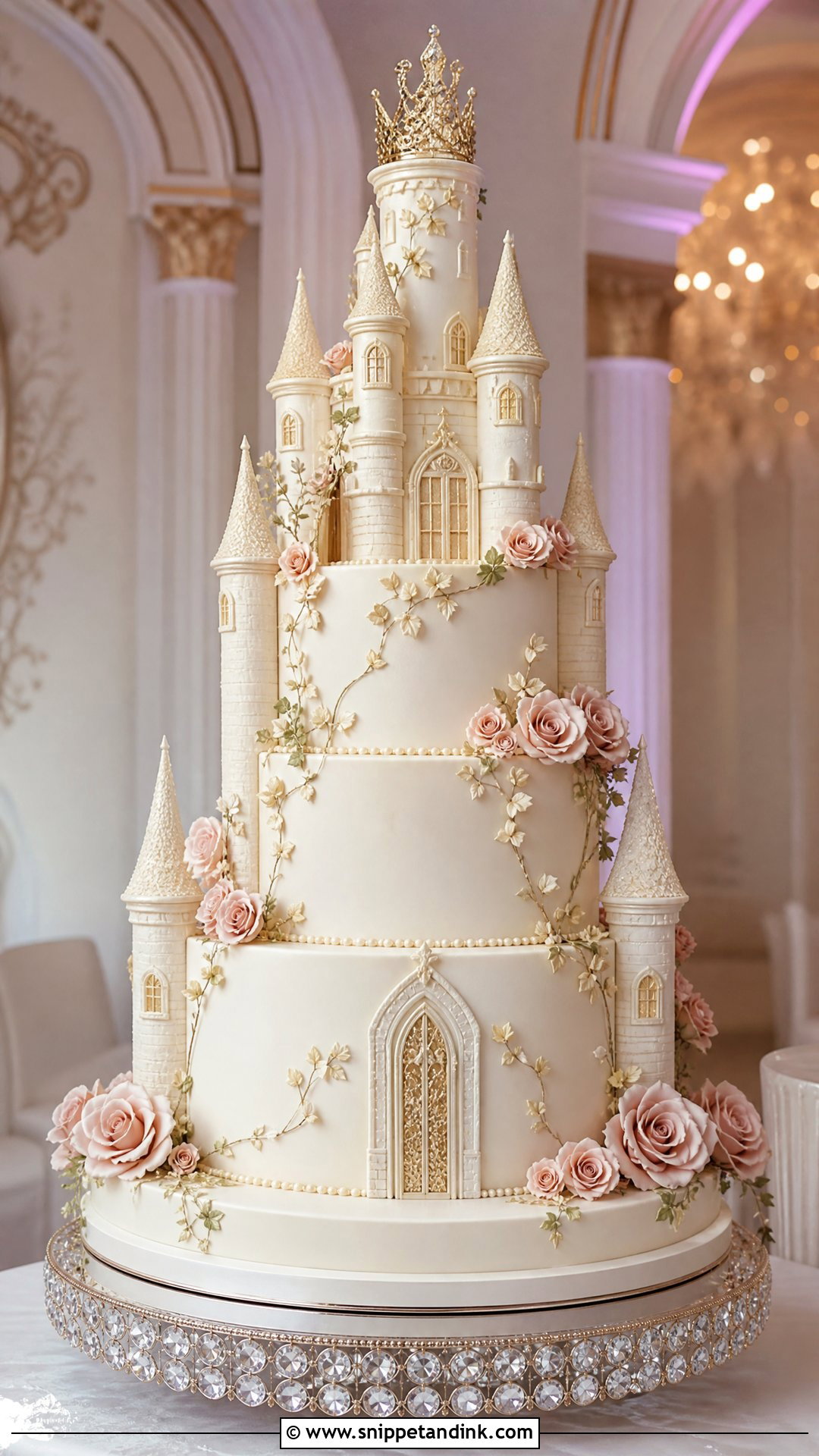
A castle is the most requested fantasy cake I make, and also the heaviest. Tall ivory fondant tiers carry the towers, arched windows and pearl details, so every tier needs internal dowels and the turrets themselves are usually sculpted from rice cereal treats or modeling chocolate rather than sponge. Keep the palette in champagne, blush, pale blue or antique gold and it reads romantic rather than cartoonish. I’d ask for pressed stone texture, fine sugar vines and a delicate topper instead of piling on more towers. Vanilla almond, white chocolate raspberry or champagne sponge suits it. Ballrooms and formal evening receptions give it the setting it needs.
2. Enchanted Forest Wedding Cake
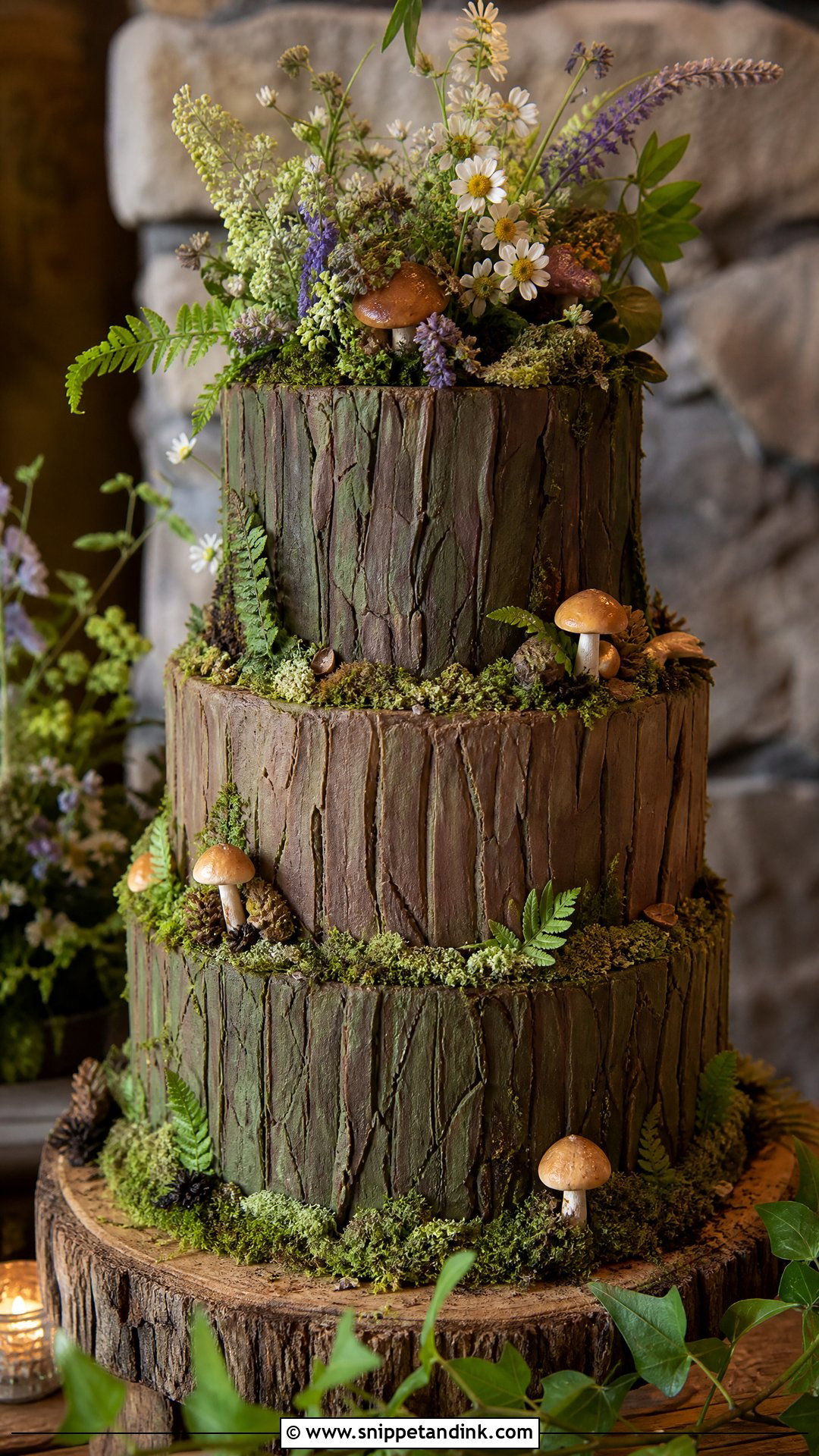
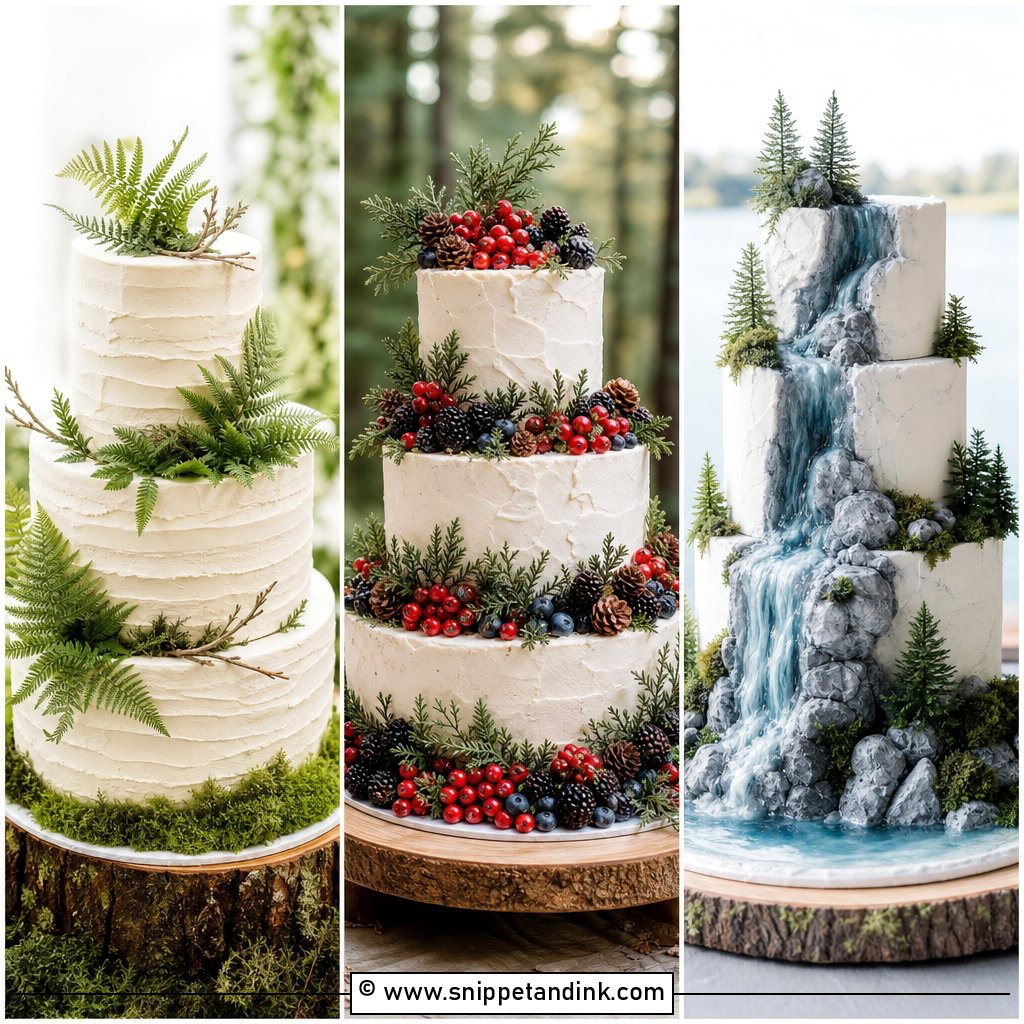
An enchanted forest wedding cake should look as if it belongs under old trees, not like a rustic cake with random greenery stuck in it. I build bark from textured buttercream or impressed fondant, then add edible moss made from crumbled green-tinted sponge, sugar mushrooms, small ferns and wildflowers. Chocolate, spice, pistachio or vanilla bean all suit it. A wood slice stand is charming, but a plain stone or ceramic stand keeps it polished. Muted greens, ivory, brown and tiny gold touches keep it bridal.
3. Celestial Wedding Cake
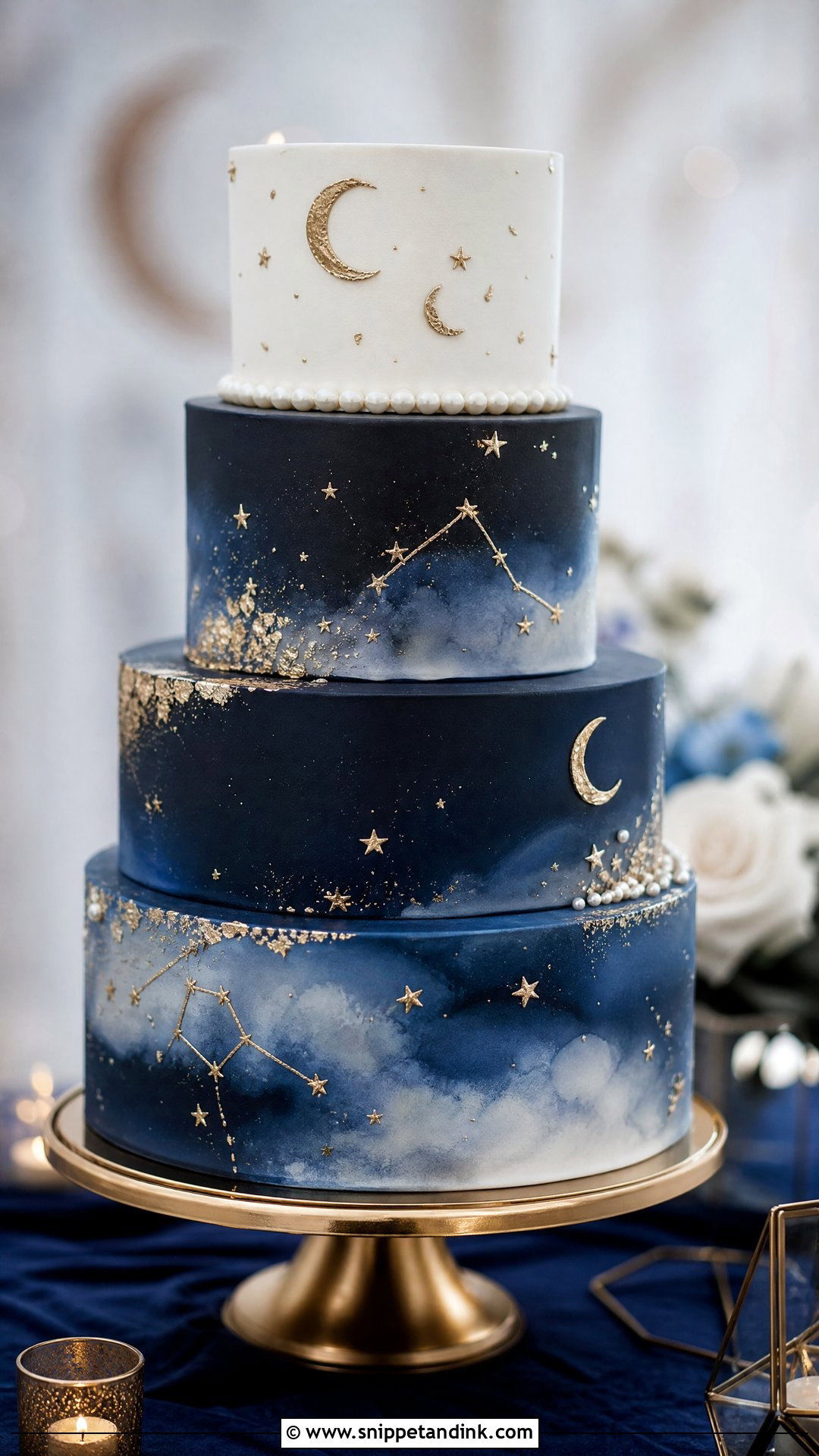
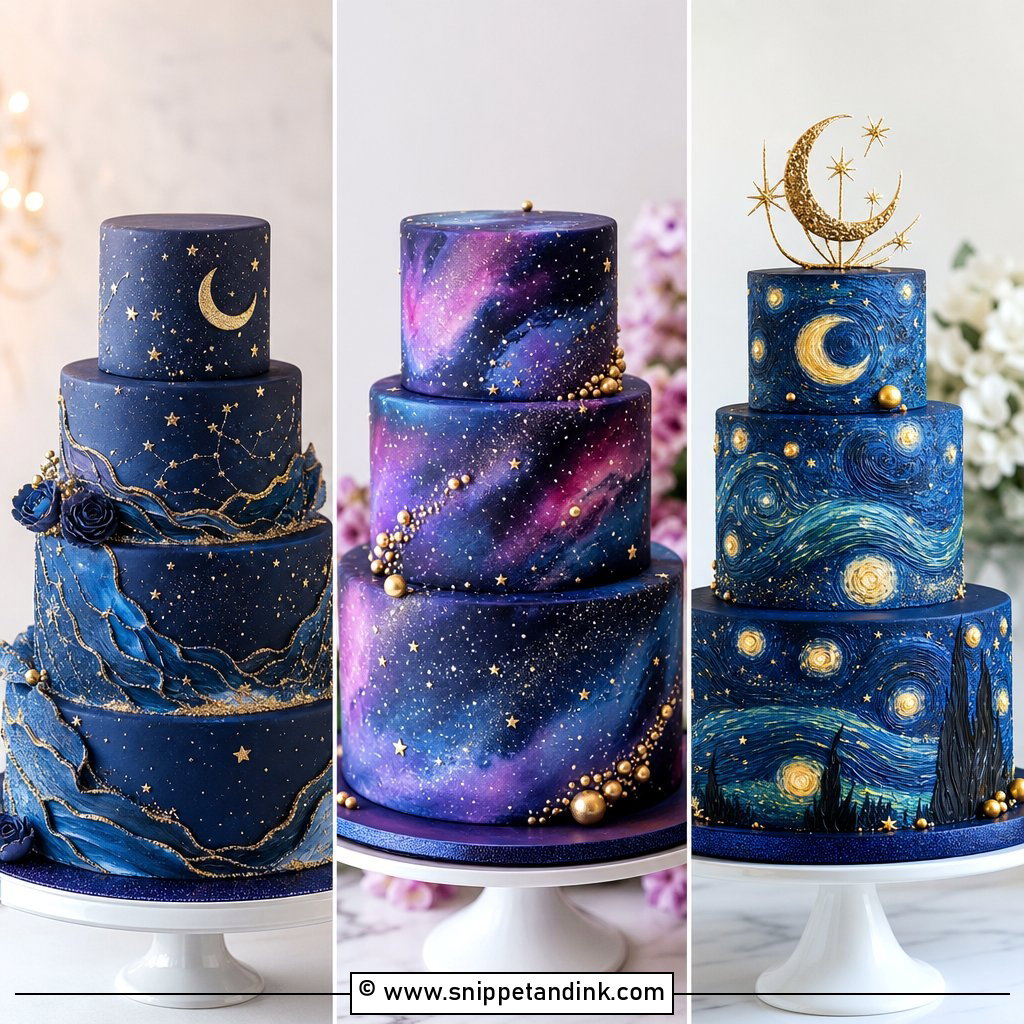
Celestial cakes work best with restraint. My usual layout is one deep navy or midnight tier with stars and a constellation in edible gold, set between two smooth ivory tiers, so the design breathes. Watercolor shading in lavender or blue keeps the sky soft. Dark navy fondant takes a lot of gel color, so I often airbrush it over a paler base instead. Dark chocolate, blackberry vanilla, lavender honey or champagne pair well with the moody palette. Evening weddings, rooftop receptions and planetarium venues suit it.
4. Dragon Wedding Cake
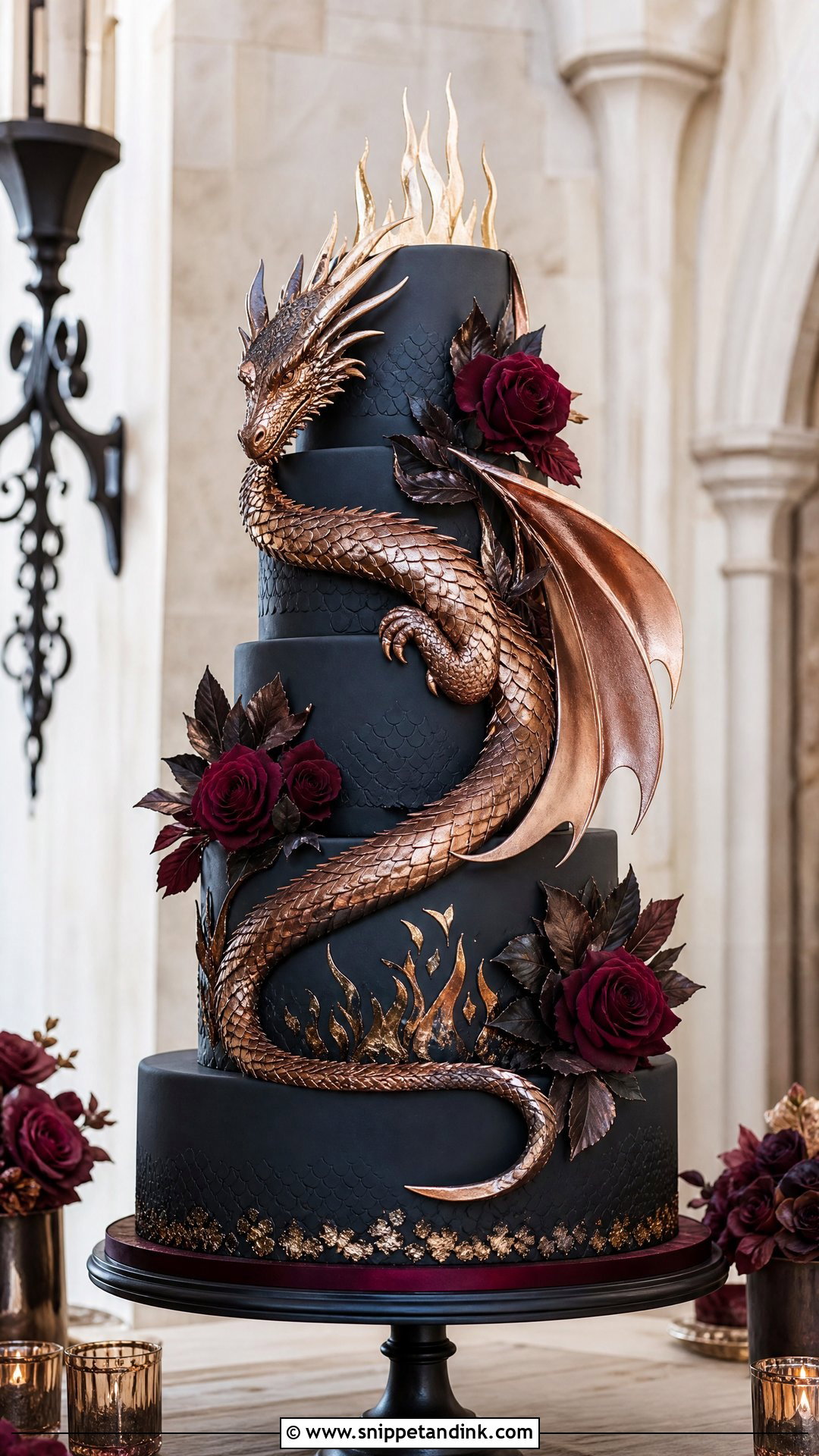
A dragon wedding cake is the most sculptural design on this list. The dragon is usually modeled separately over a hidden armature, with sugar scales and a curled tail wrapped around the tiers, so ask early which parts are edible. I’d keep it elegant rather than scary: emerald, burgundy, charcoal, gold or copper, with smooth fondant tiers and a few sugar roses to soften the drama. Red velvet, dark chocolate, black cocoa or spiced chai suit it. Castle venues and couples who love fantasy novels are its natural home.
5. Unicorn Wedding Cake
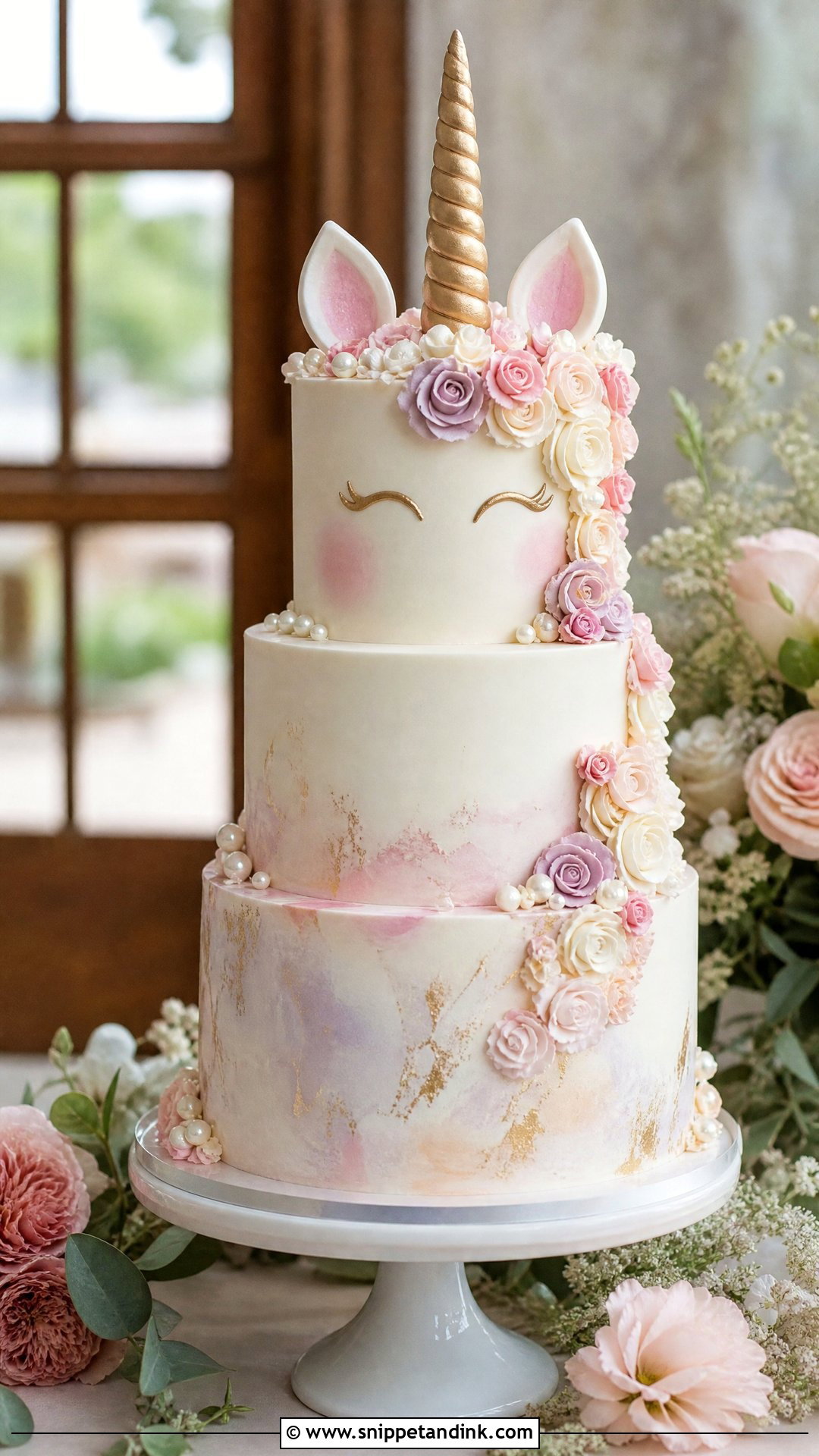
Unicorn cakes only look grown-up when the rainbow goes. I work in ivory buttercream with pastel watercolor washes, edible shimmer and a gold horn kept slim and refined. The mane is where the craft shows: piped buttercream flowers, sugar roses or wafer paper curls, arranged as one sweep rather than a full head of hair. Vanilla bean, funfetti, strawberry champagne or lemon elderflower suit the light look. Keep the tier shape clean so the details feel intentional, and it sits well at a garden or spring reception.
6. Mermaid Wedding Cake
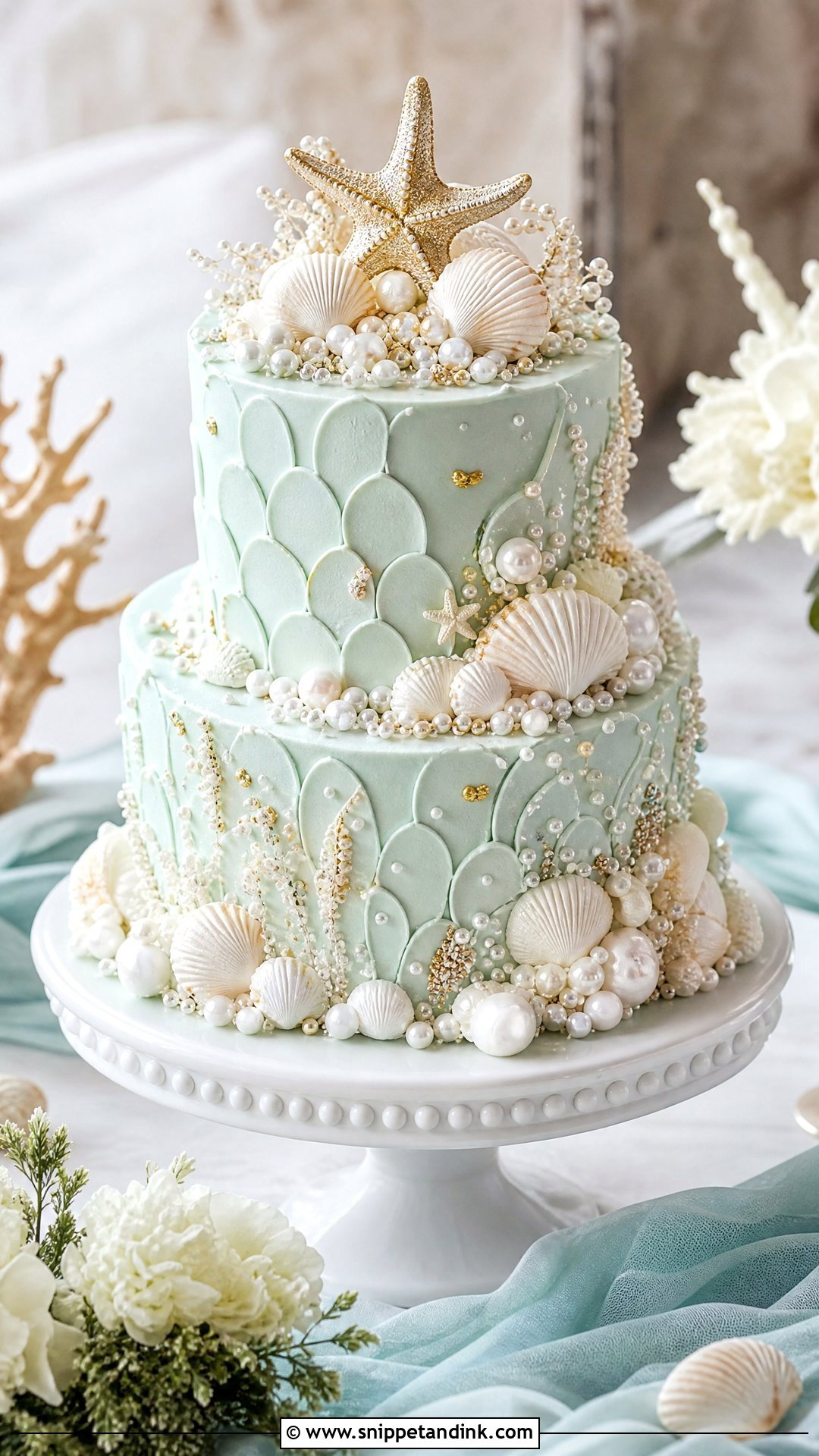
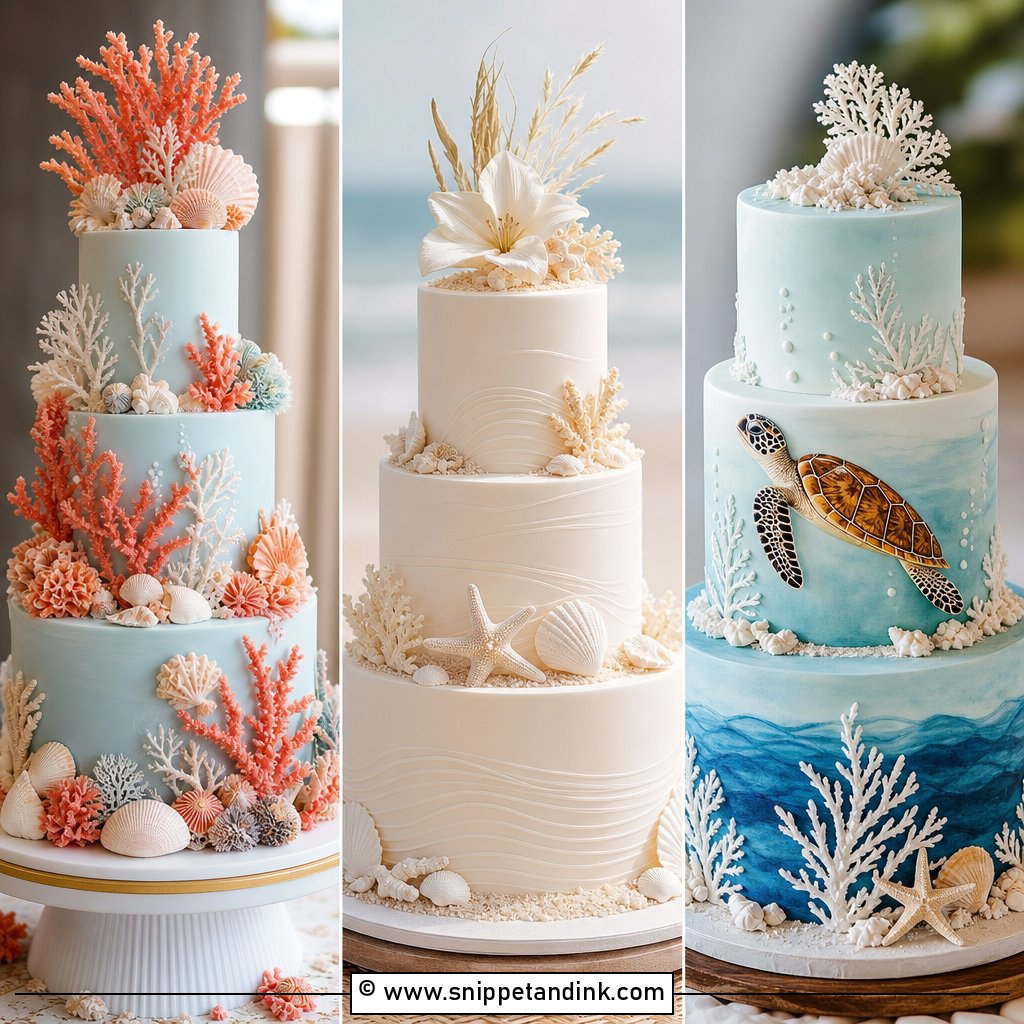
Seafoam, pearl white, aqua, lavender and soft gold give a mermaid cake its underwater feel. I cut scalloped fondant scales by hand or with a small cutter and overlap them from the bottom up, like roof tiles, then dust them with shimmer. Edible pearls, sugar shells and coral shapes add detail. I’d put the scales on one tier only and keep the next smooth, or the cake starts to look busy. Coconut, key lime, passion fruit or lemon suit the seaside mood. Beach weddings are the obvious fit, but plan shade, because buttercream under fondant softens fast in direct sun.
7. Fairy Garden Wedding Cake
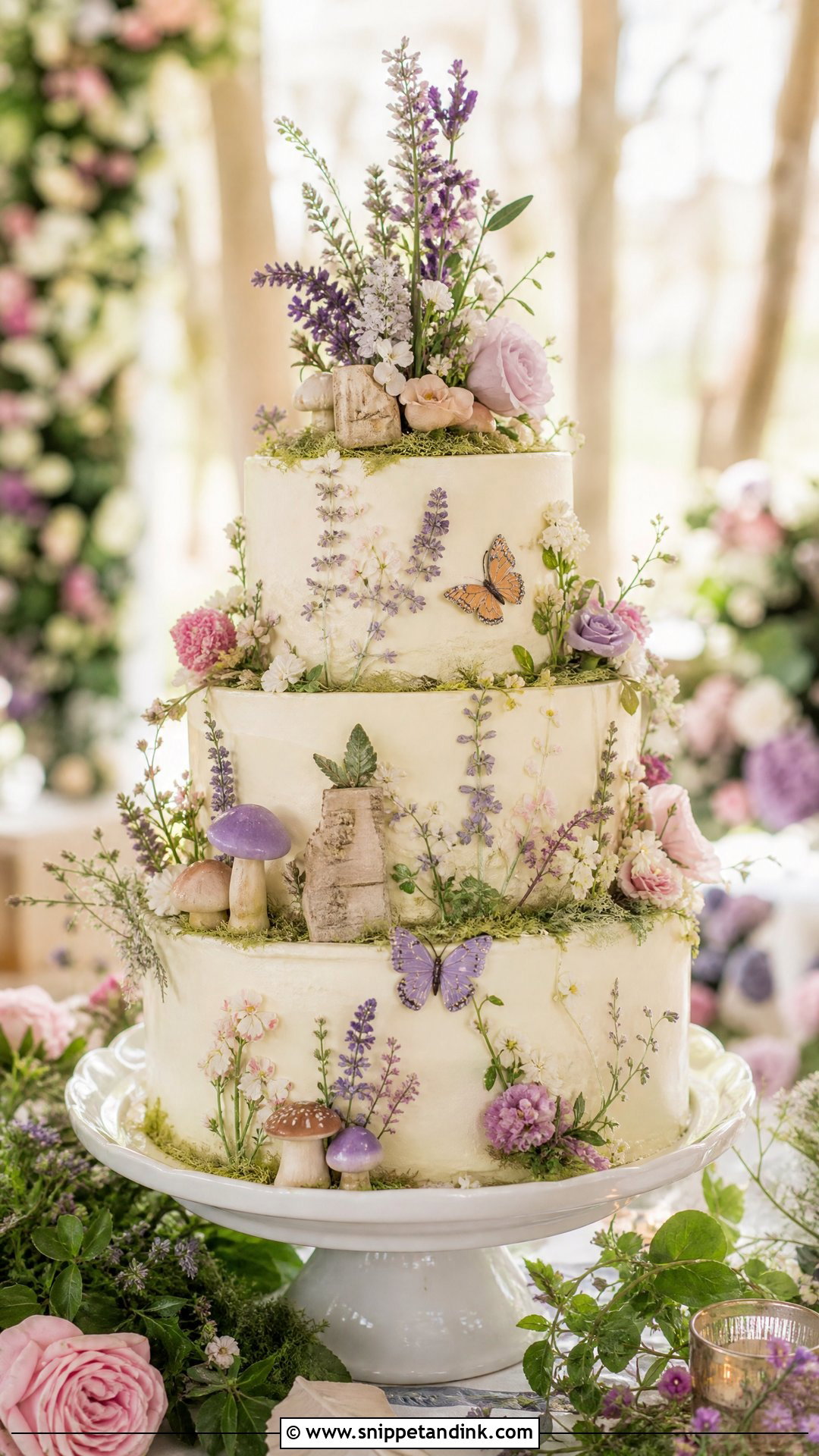
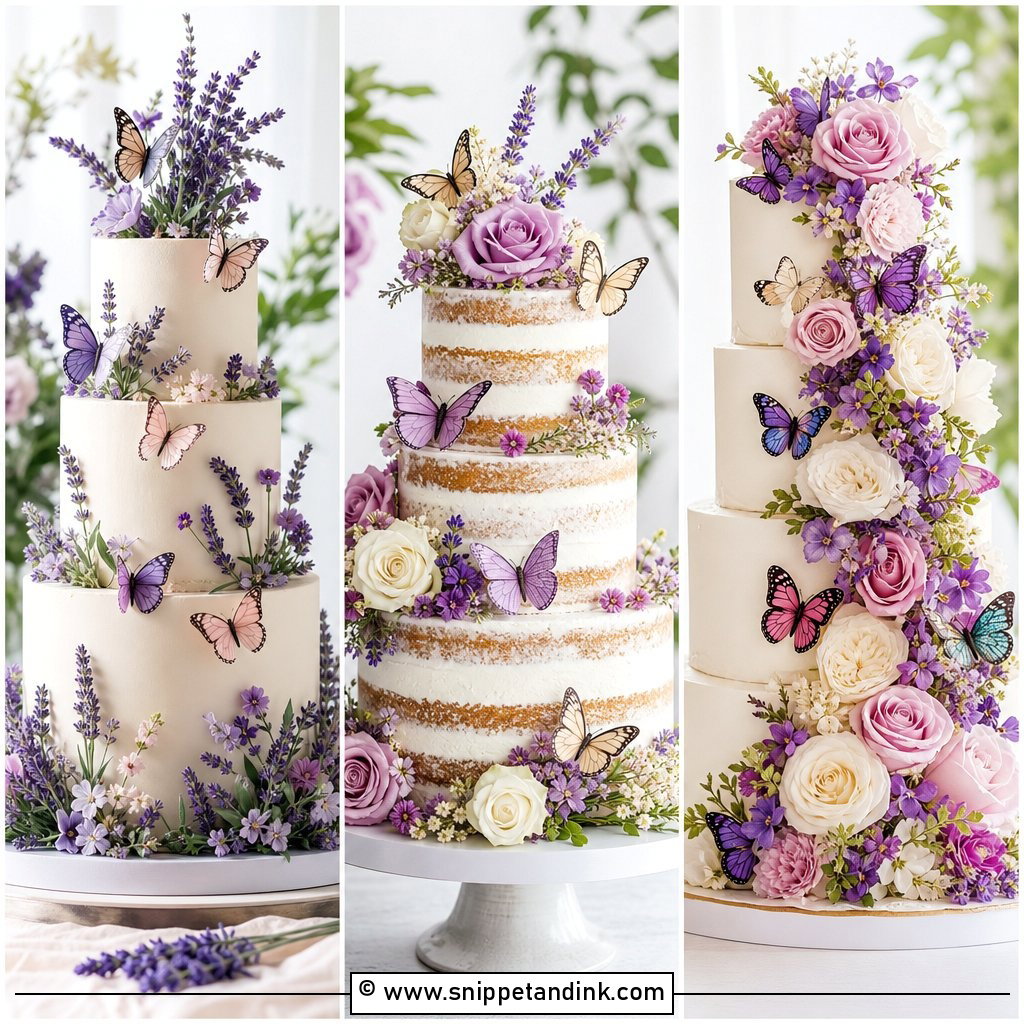
A fairy garden cake needs lots of tiny details and plenty of empty space between them. Soft buttercream, sugar blossoms, edible butterflies, miniature mushrooms and a few sprigs of herbs, with light moss at the base. Fresh herbs on a cake should be food-safe and kept off the cut surfaces, so I place them where they come away easily. Lavender vanilla, honey lemon, rose raspberry or pistachio cream fit the theme. Keep the palette airy in blush, sage, ivory, lilac and pale yellow, and set the cake on a simple white stand ringed with flowers so it reads as a centerpiece rather than a novelty.
8. Gothic Fantasy Wedding Cake
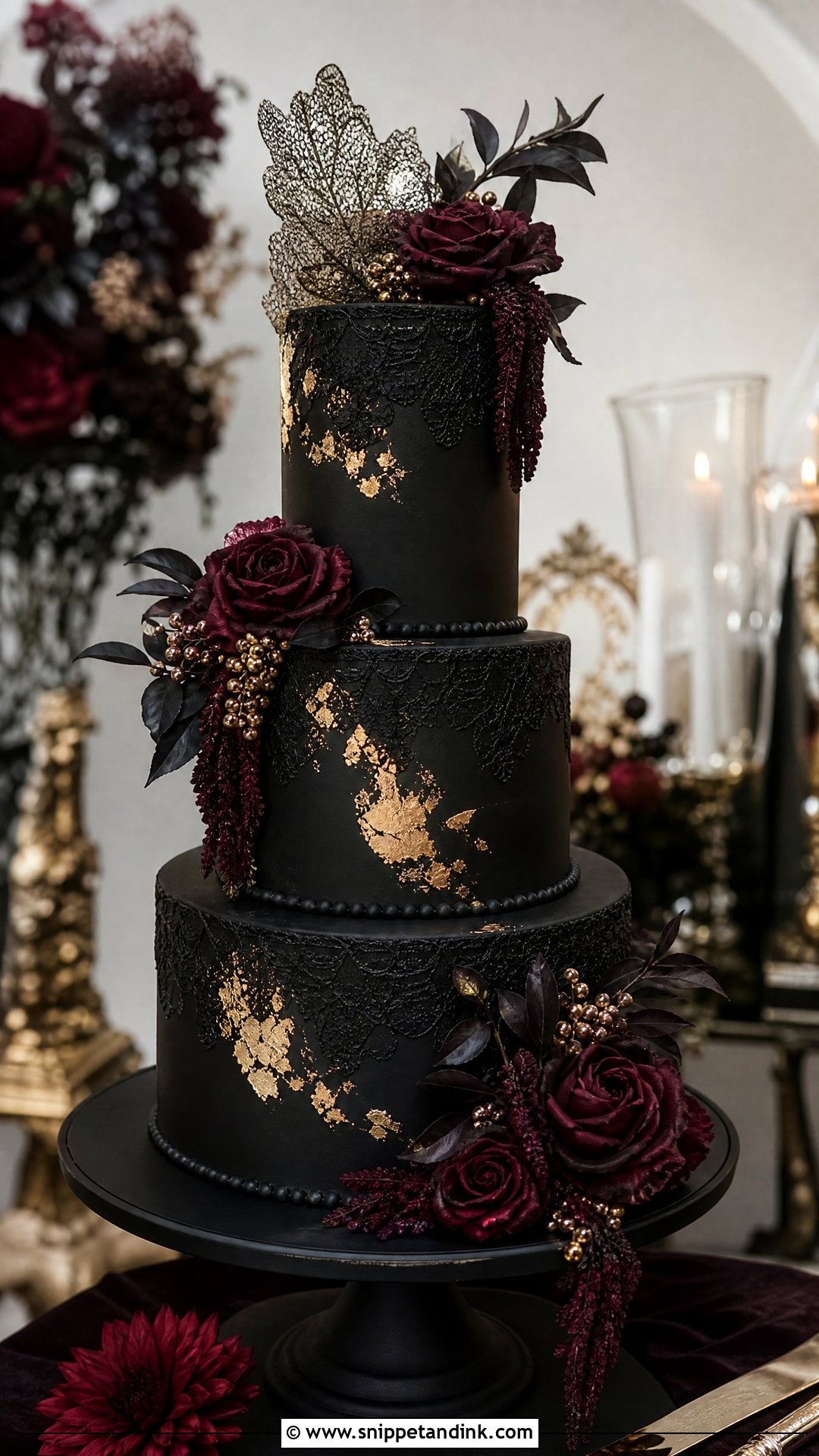
Gothic works when the contrast is deliberate: black fondant against ivory sugar flowers, burgundy roses, gold leaf and fine lace piping. Black fondant is the tricky part. It takes so much color that it can taste bitter and stain mouths, so I usually cover the cake in chocolate fondant tinted dark, or keep black to one tier. Chocolate espresso, black velvet, red velvet or dark cherry suit the mood. Ask for clean tier lines and texture with a purpose, so it feels luxurious rather than heavy. Historic venues and candlelit receptions suit it best.
9. Elven Wedding Cake
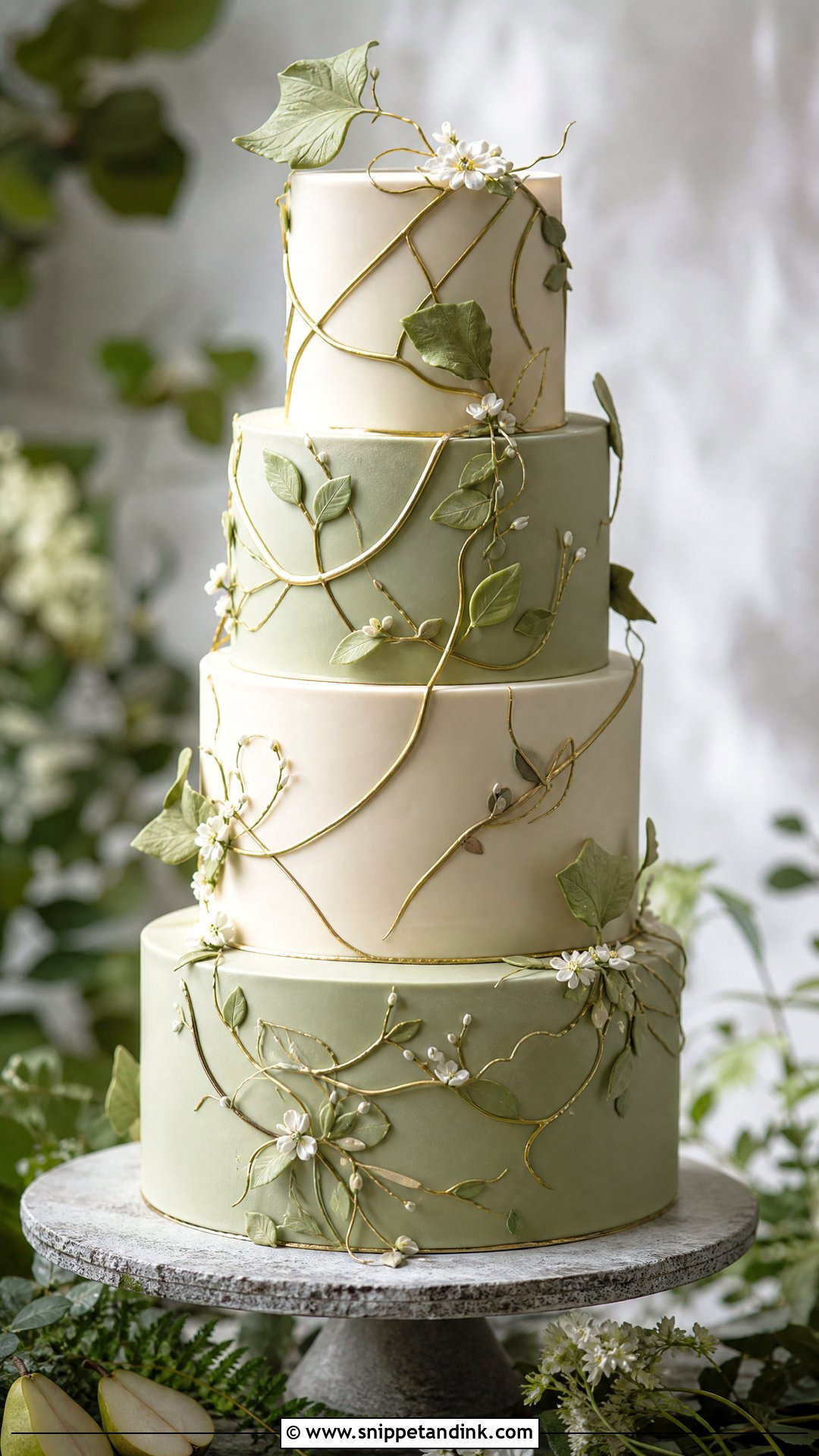
An elven cake should look ancient and natural, as if it came from a woodland hall. I use soft ivory or sage tiers with climbing sugar vines, pressed floral patterns, fine gold lines and leaf-shaped sugar work cut in graduated sizes. A tall, slim silhouette matters more than decoration here; extended-height tiers give that stretched elegance. Pistachio, pear almond, honey vanilla or lemon thyme are a great match. Forest venues, botanical gardens and outdoor ceremonies suit it.
10. Moon And Stars Wedding Cake
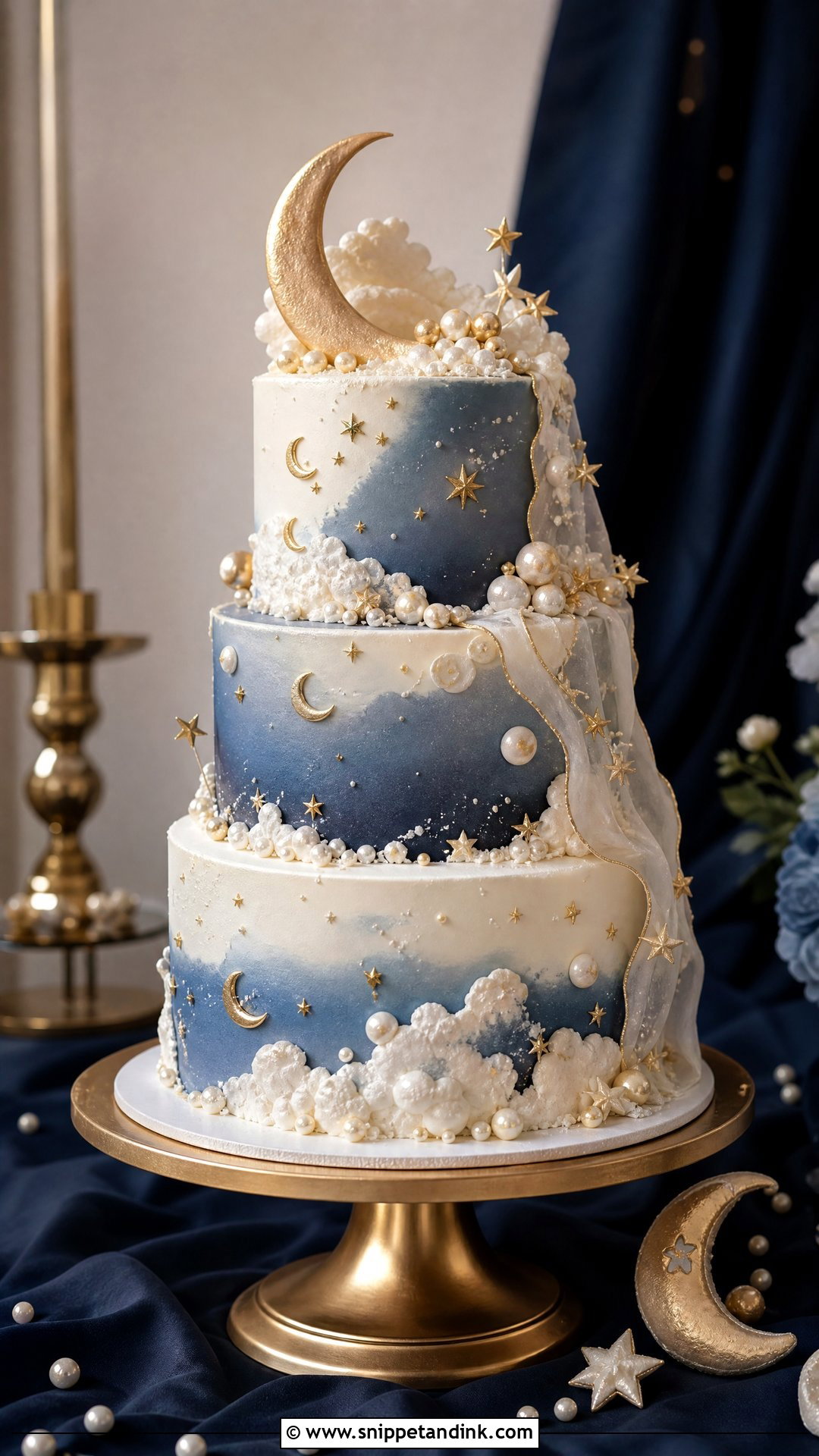
Of all the fantasy styles, moon and stars is the easiest to keep refined. I start with smooth ivory, navy or dusty blue tiers, then add gold moons, tiny stars and constellation lines piped in royal icing. A crescent moon topper does a lot without crowding the design. Vanilla champagne, blueberry lemon, lavender honey or white chocolate all work. For softness, add sugar clouds, pearl beads or a light shimmer glaze. Evening receptions, winter weddings and rooftop venues suit it.
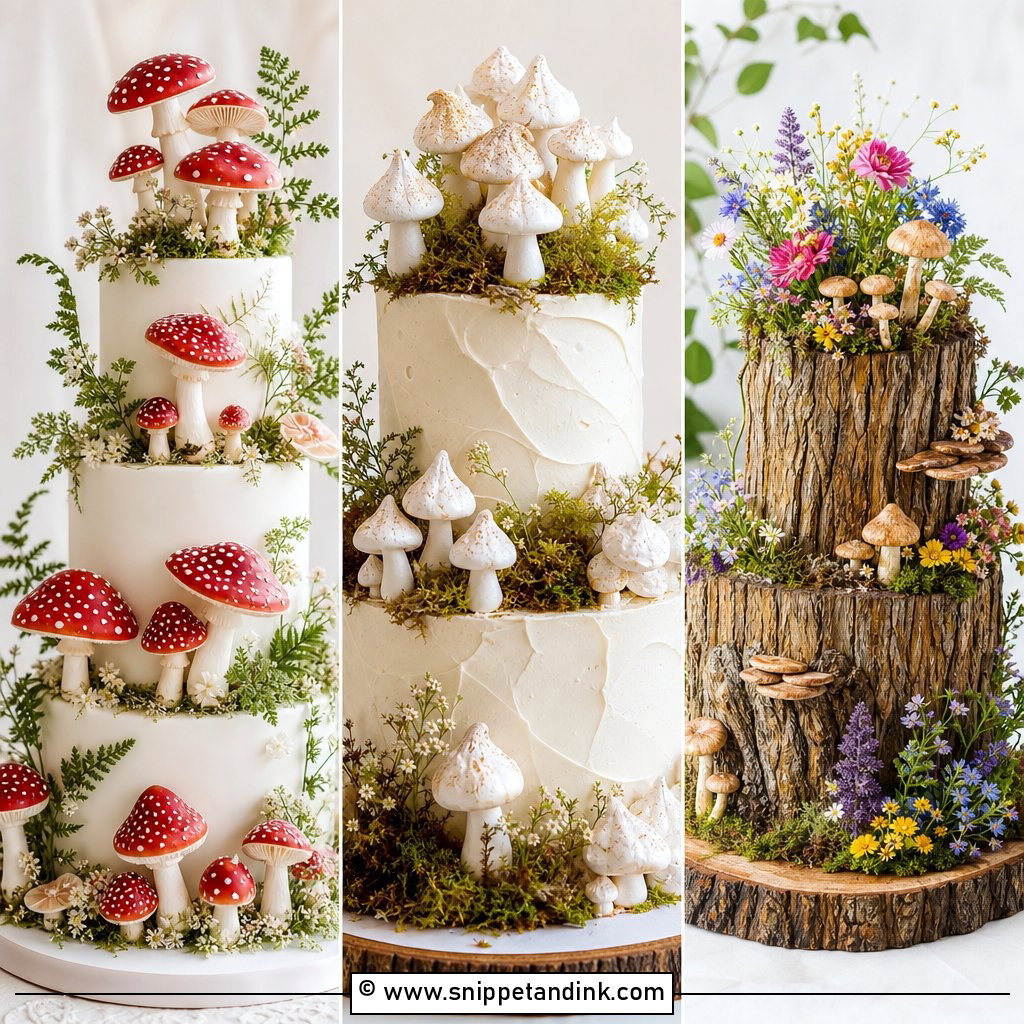
11. Woodland Mushroom Wedding Cake
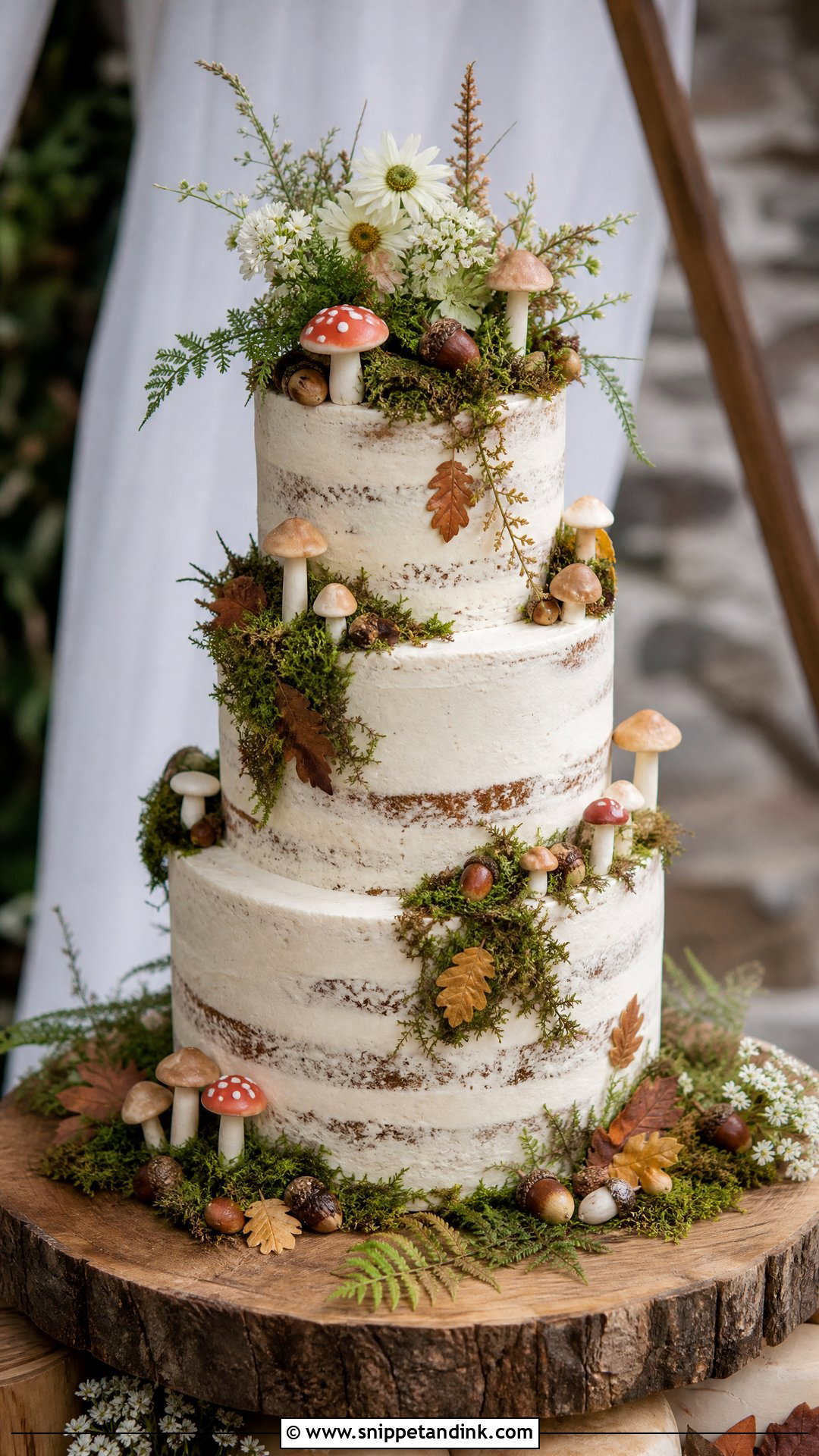
A woodland mushroom wedding cake lives or dies on scale. Keep the mushrooms small and detailed and it feels like a forest floor; make them big and it turns playful. I make the caps from sugar paste or meringue and cluster them with moss, acorns, leaves and wildflowers. Carrot, spice, chocolate hazelnut or maple pecan fit the cozy mood. A semi-naked finish suits a rustic wedding, though it dries out faster, so I’d keep it covered until the last moment. For something more polished, use smooth sage buttercream with the mushrooms grouped at the base, on a wood slab or stone stand.
12. Princess Wedding Cake
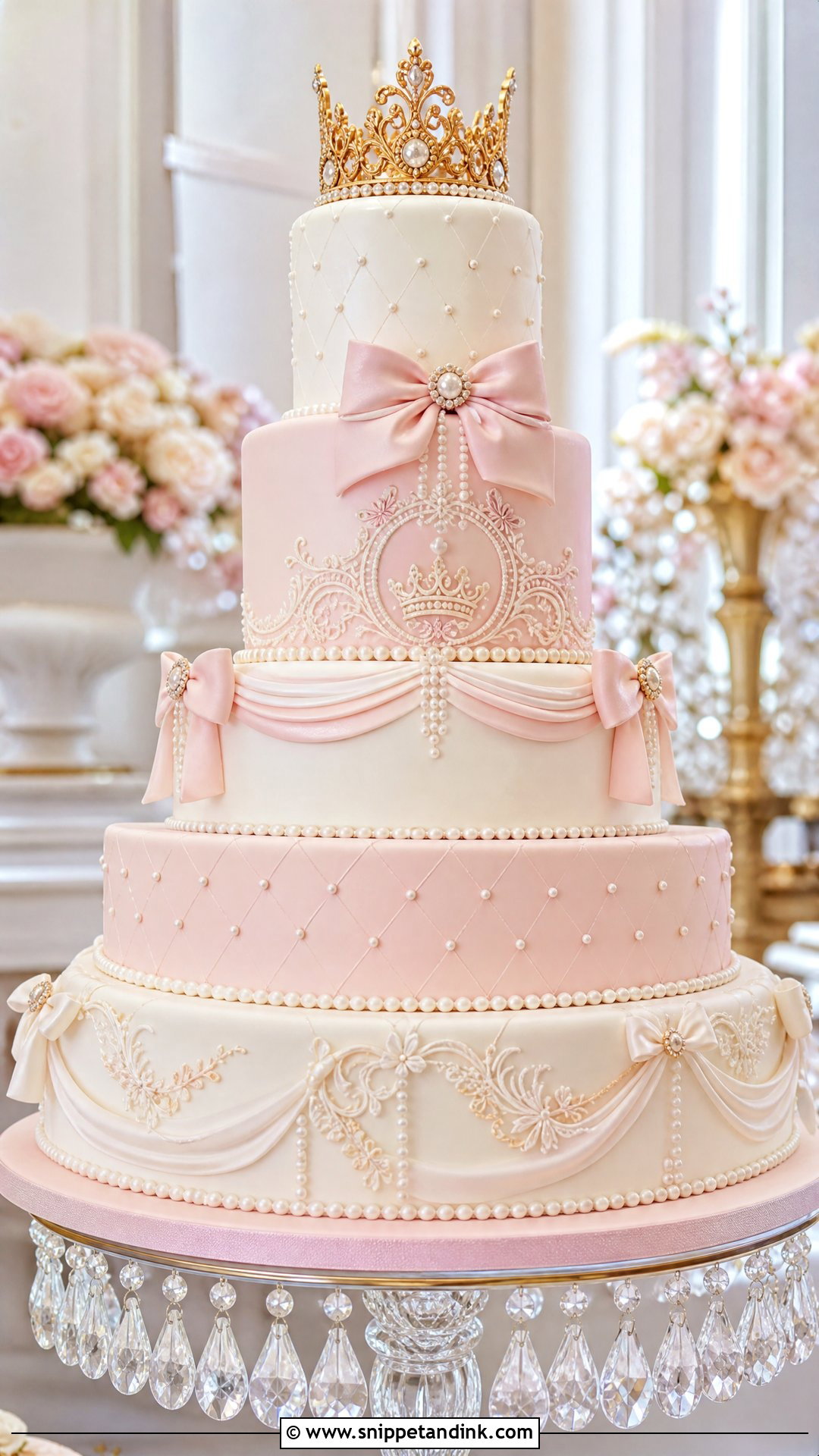
A princess cake leans on classic piping skills more than any theme. Tall ivory tiers, pearl borders, lace patterns, sugar bows and a few gold crown details carry it. I’d keep the palette to blush, champagne, pale blue or white; once bright colors appear it starts to look like a party theme. Vanilla bean, almond, white chocolate, strawberry or champagne are the usual flavors. A simple crown topper finishes it without overpowering the work below. Ballrooms and chandelier-lit rooms suit it.
13. Storybook Wedding Cake
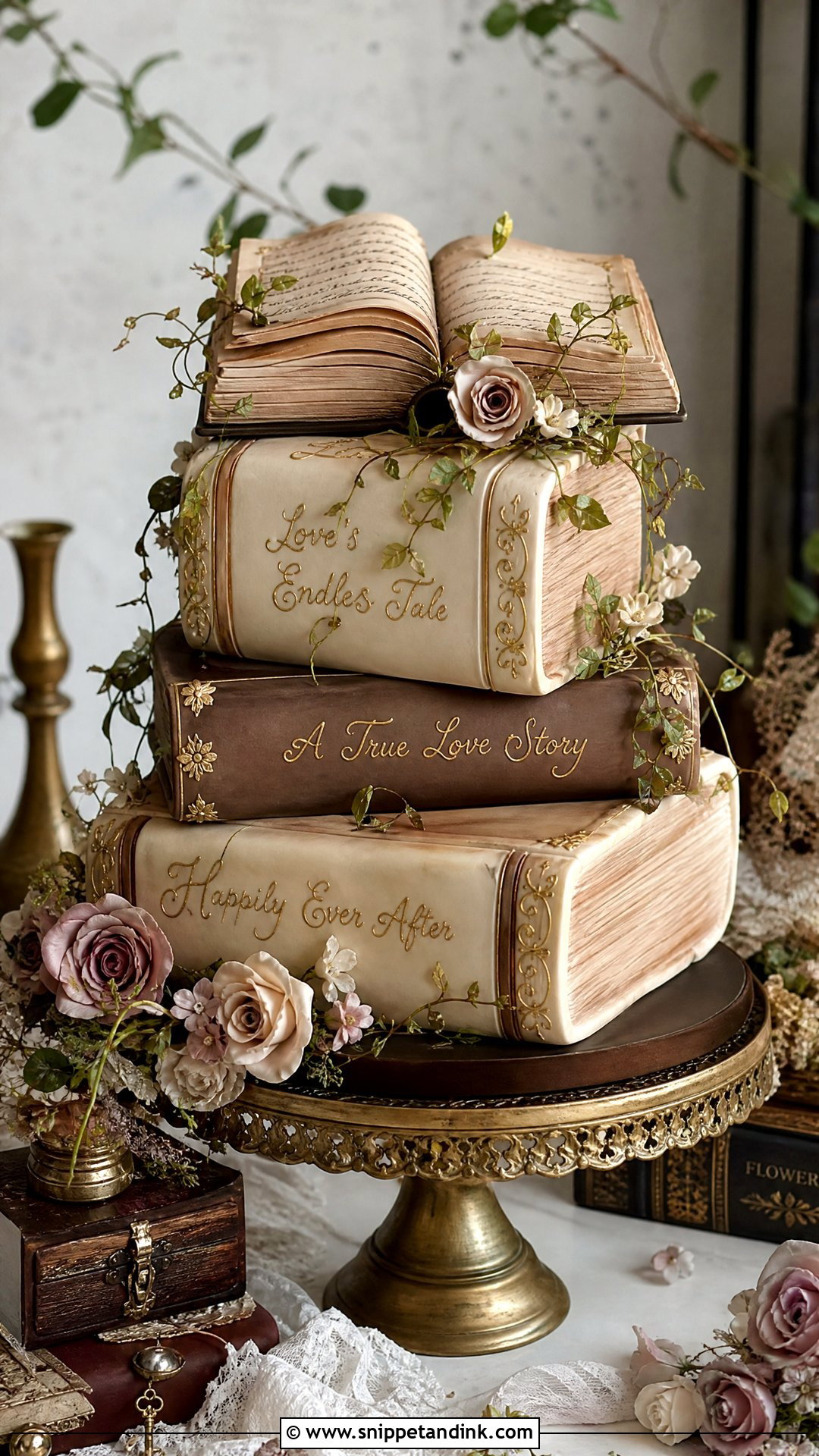
There are two ways to build a storybook cake. One is stacked vintage books, carved from sheet cake and covered in fondant, with sharp page edges scored in by hand. The other is a traditional tiered cake with edible pages, gold lettering and parchment-style fondant. The book stack is heavier to transport and usually assembled at the venue. Brown butter vanilla, cinnamon apple, almond or dark chocolate make it feel warm. Muted ivory, tan, gold, dusty rose and sage keep it soft. Library weddings and historic venues suit it, and a small open-book topper adds charm.
14. Magic Garden Wedding Cake
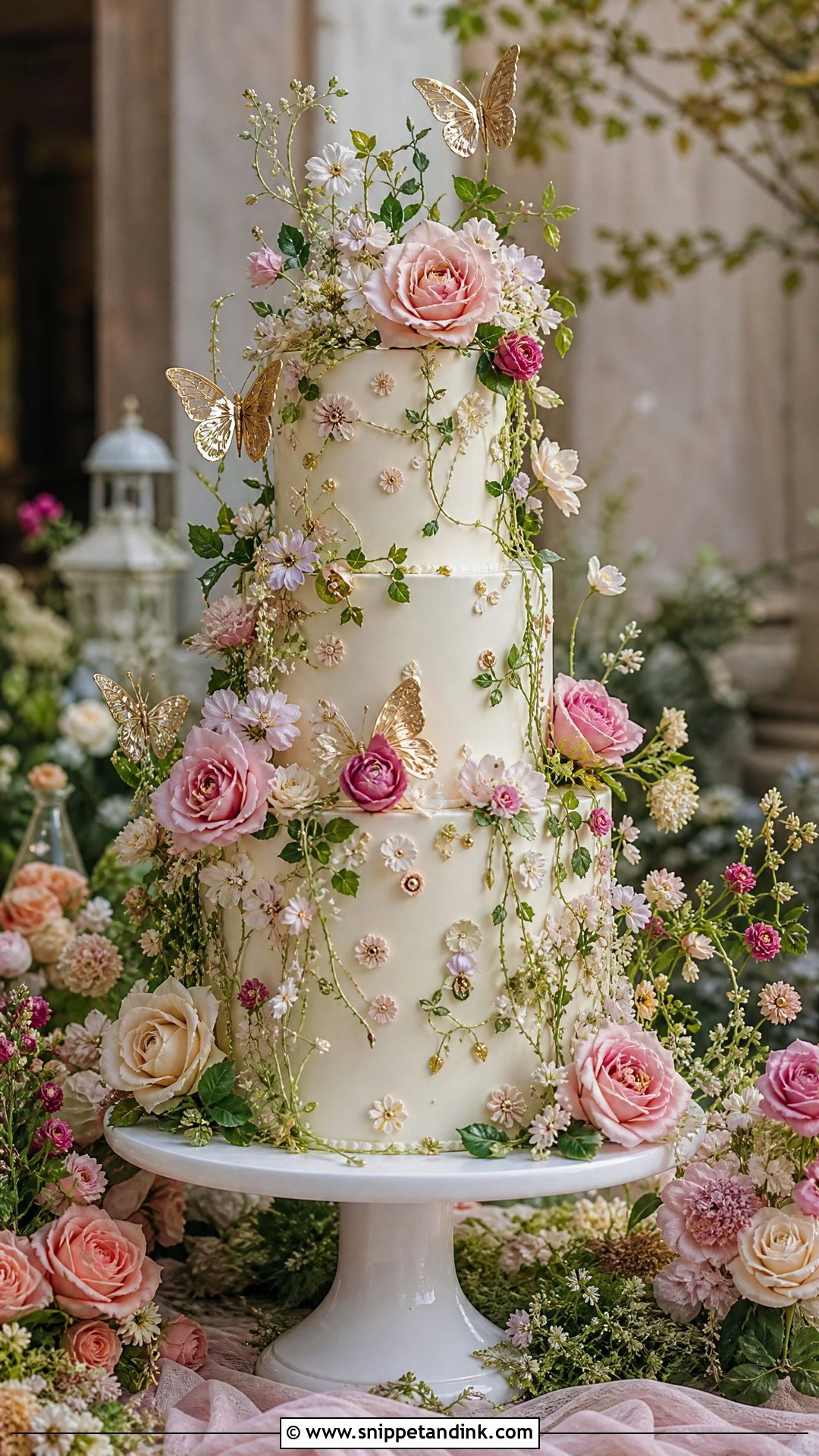
The magic garden look depends on layering, so the flowers seem to have grown over the cake overnight. I cascade sugar flowers, vines, butterflies and edible leaves down the tiers in one diagonal line, with soft buttercream textures in between. Lemon elderflower, strawberry vanilla, orange blossom or rose cake suit the floral style. Ivory, blush, lavender, sage and butter yellow keep it dreamy. Sugar flowers take time, so this design needs to be booked well ahead. A meadow of flowers around the base makes it even more photogenic at an outdoor or greenhouse wedding.

15. Castle Tower Wedding Cake
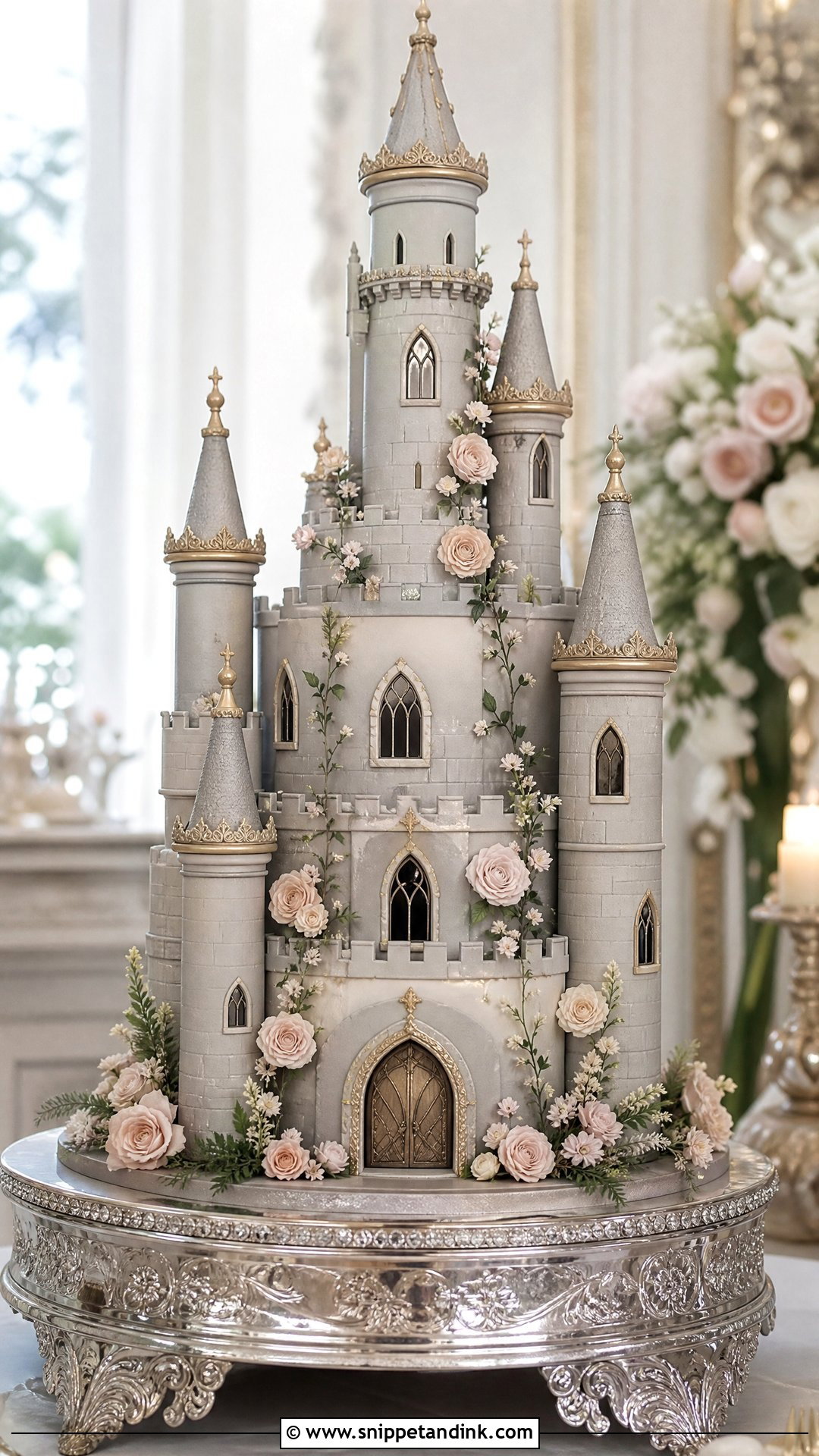
A tower is the focused version of a castle cake: tall round tiers, turret accents, stone-textured fondant, arched windows and climbing floral vines. It’s dramatic without taking over the room, and because it’s narrow and tall it needs a central dowel running through every tier. Ivory and gray stone tones with gold or blush accents keep it romantic. Vanilla almond, chocolate raspberry or champagne suit it. Set it on a sturdy stand with little décor around it. Ballroom, estate and castle venues are where it belongs.
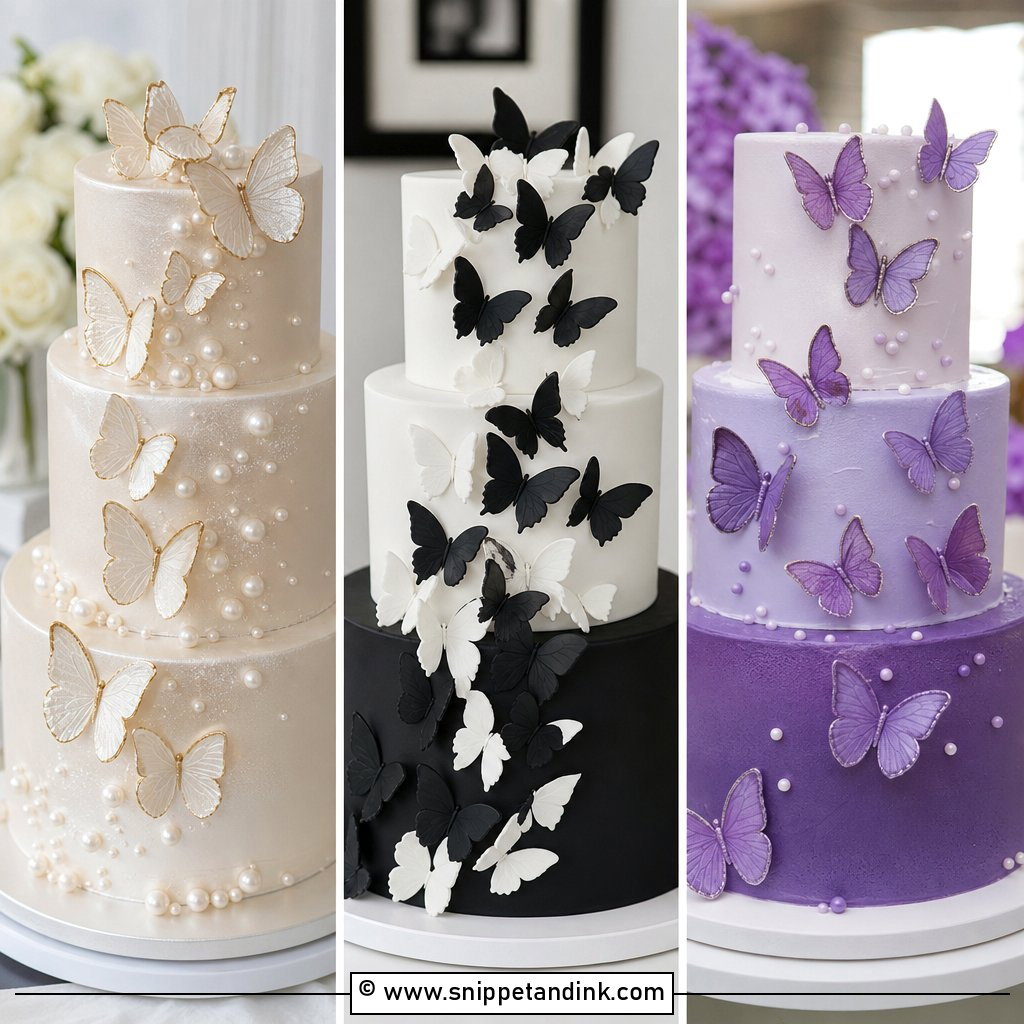
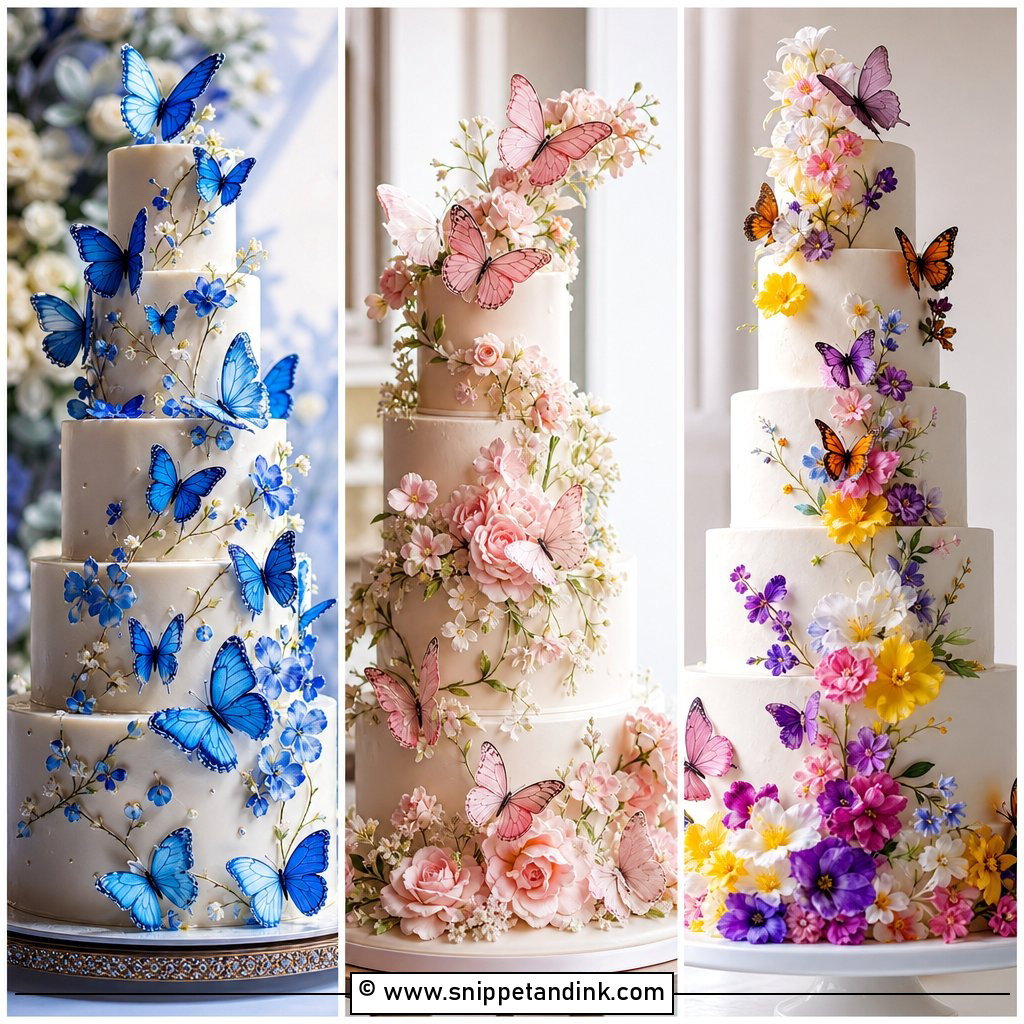
16. Butterfly Fantasy Wedding Cake
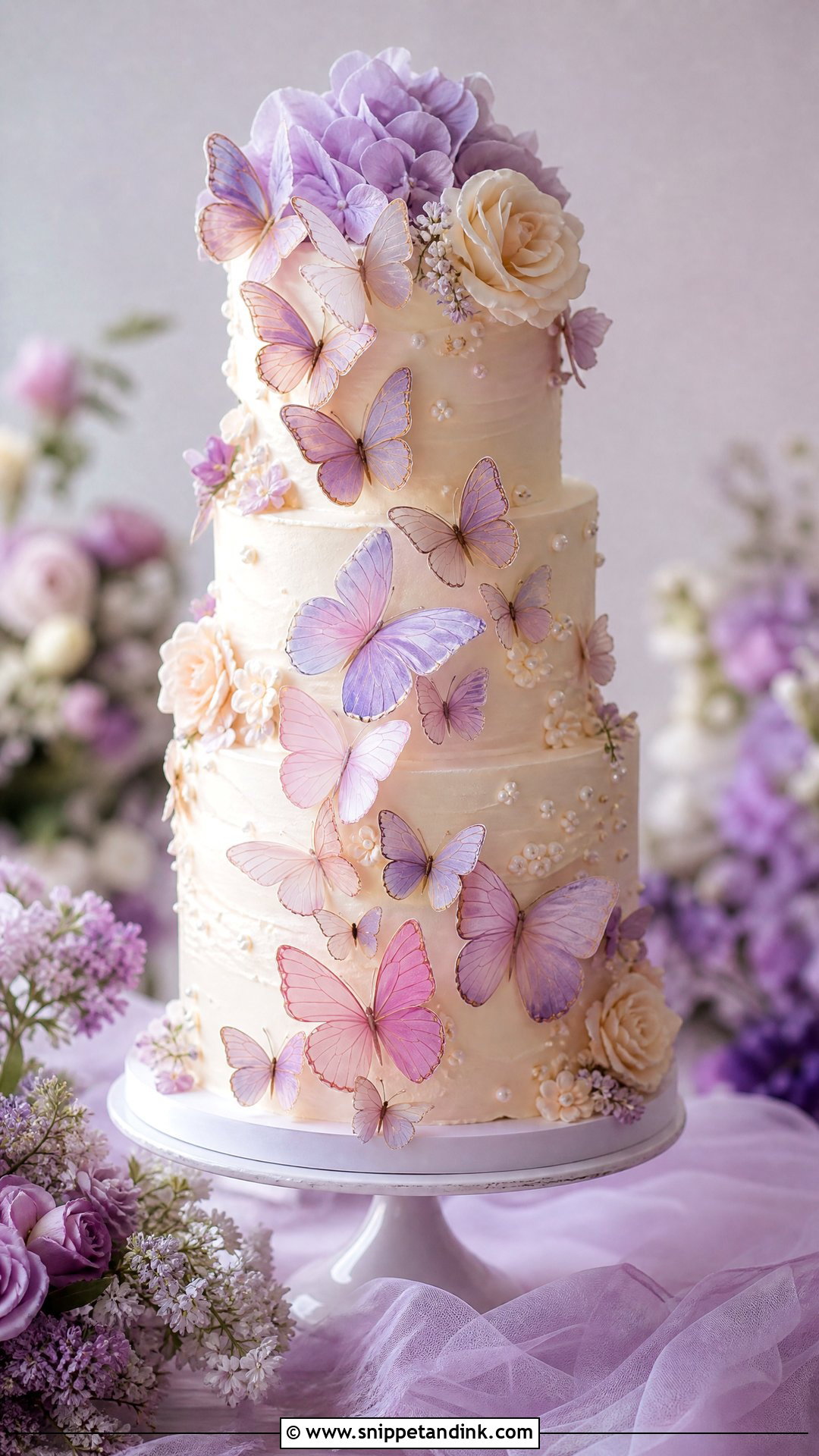
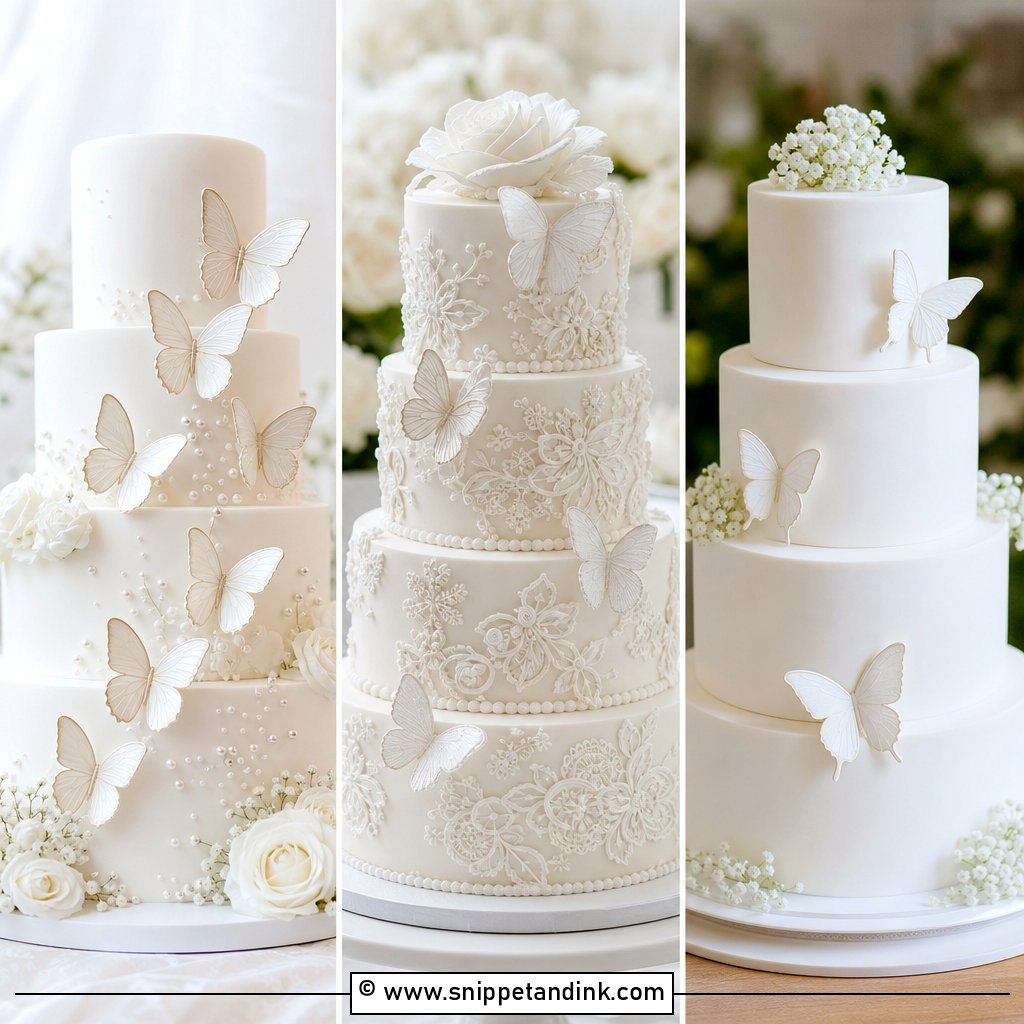
A butterfly fantasy wedding cake works when the butterflies look like they’re lifting off the tiers in one direction. I make them from wafer paper or gelatin sheets, fold the wings slightly and set them on wires so they appear to float. Smooth buttercream or fondant in ivory, blush, lavender or pale blue sits underneath, with sugar flowers and a few pearls. Lemon raspberry, vanilla bean, strawberry champagne or lavender honey match the airy look. Keep them in one graceful movement rather than scattered everywhere. Wafer paper wilts in humidity, so outdoors I’d add them on site.
17. Fairy Door Wedding Cake
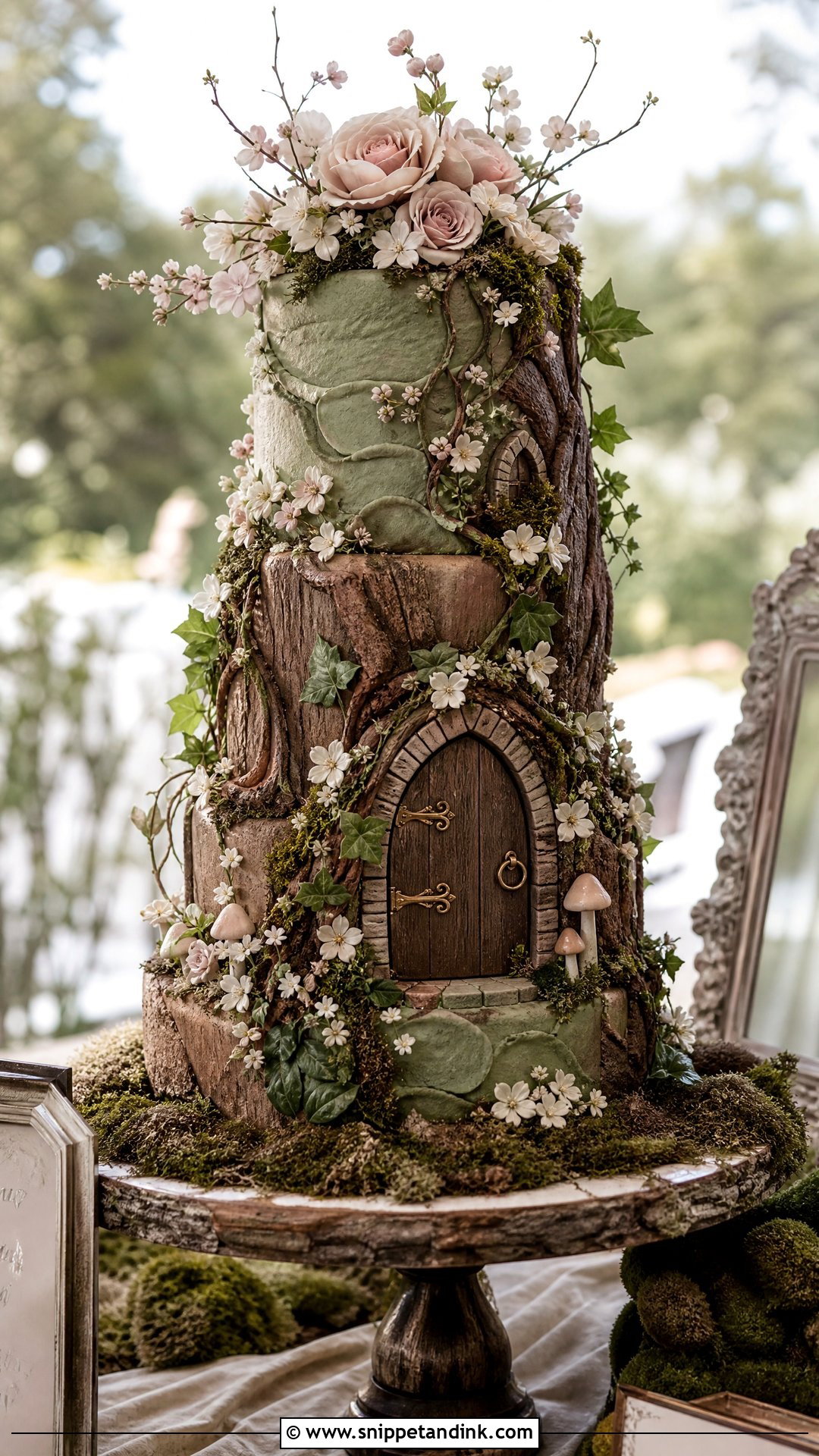
A fairy door wedding cake can be refined if the door stays the single focal point. I texture the bottom tier like a tree trunk, set a tiny arched door into it, and add sugar vines, small flowers, moss and little mushrooms at the base. A taller tiered shape keeps it from looking like a birthday cake. Chocolate, spice, pistachio or vanilla chai suit the woodland theme. Soft sage, ivory, brown and blush help it look romantic. Forest weddings and backyard ceremonies suit it.
18. Galaxy Wedding Cake
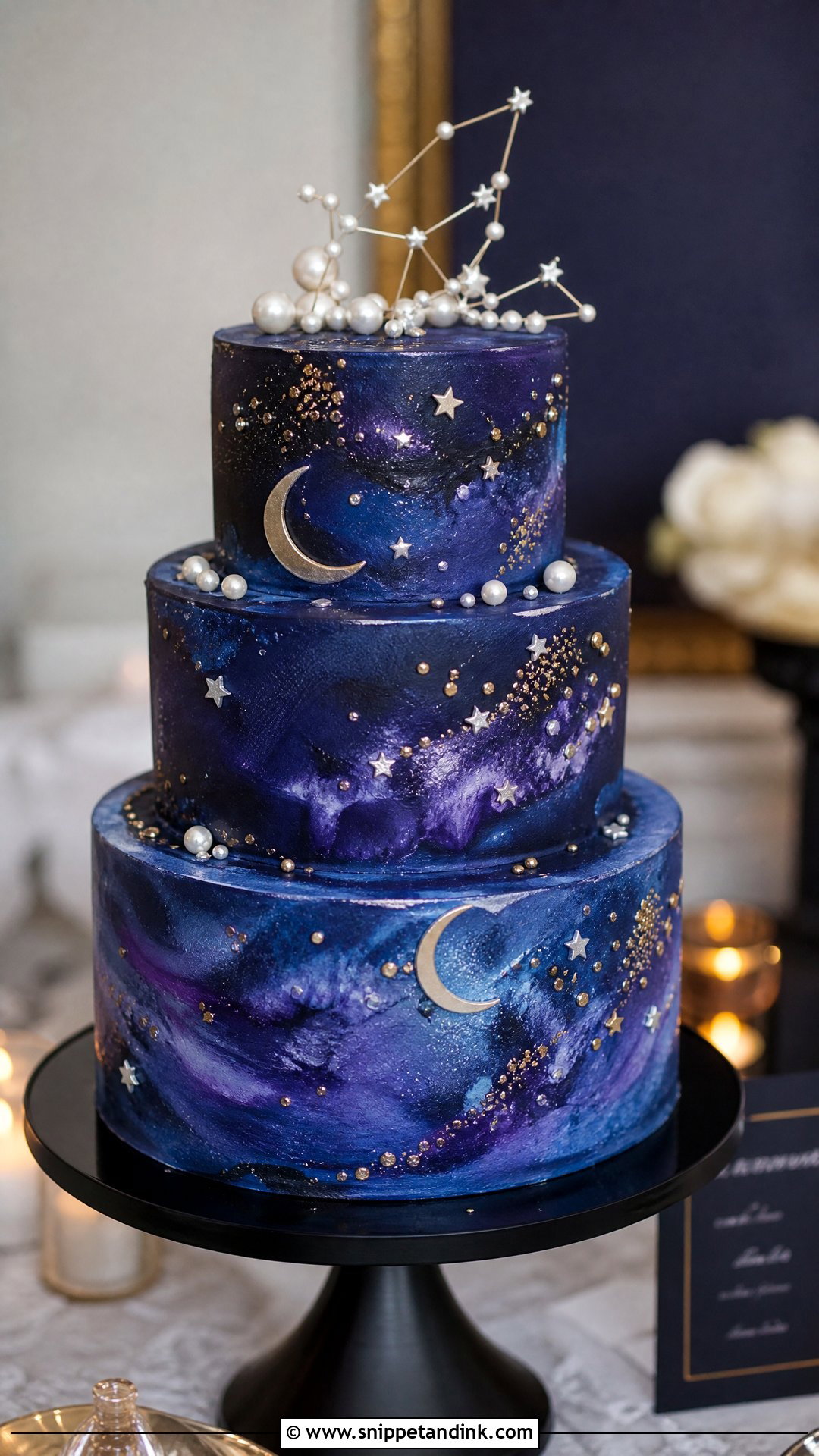
Galaxy finishes are painted, not printed. I blend deep blue, violet and black on buttercream or fondant, flick on white for stars, then add silver and gold accents. You can cover every tier, but I usually suggest one statement tier with plain ivory above and below, which looks more like a wedding cake and less like a science project. Dark chocolate, blackberry, vanilla bean or cookies and cream pair nicely. The deep tones look rich under warm reception lights. Modern venues and evening weddings suit it.
19. Floral Fantasy Wedding Cake
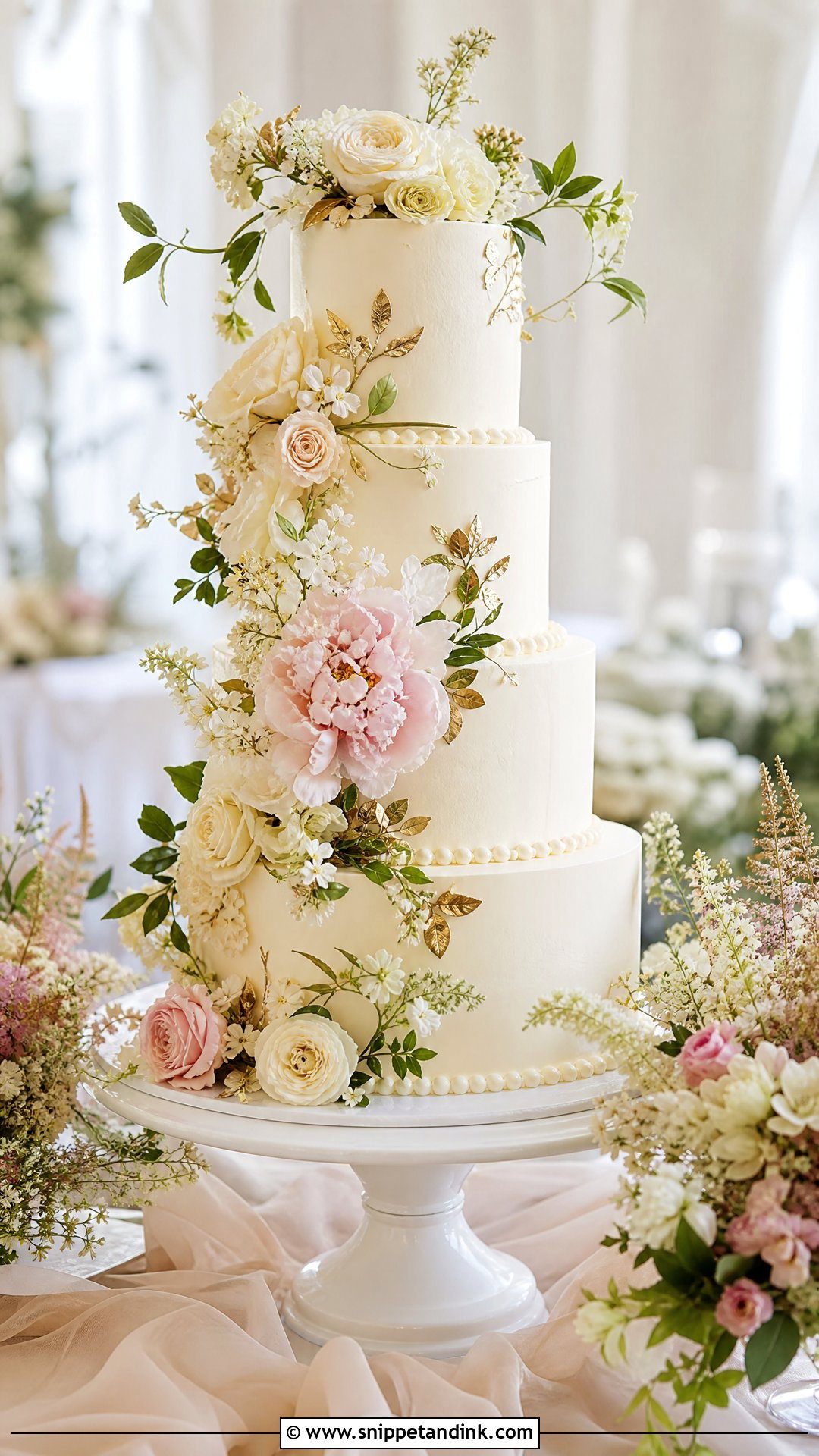
A floral fantasy cake is about abundance: a full cascade, a meadow around the tiers or a garden arrangement climbing the side. Sugar flowers give the most polished finish and can be kept afterward. Fresh flowers look softer, but they must be chosen by someone who knows which blooms are safe near food, with stems wrapped or set in picks so they never touch the sponge. Vanilla rose, lemon elderflower, raspberry almond or white chocolate pair well. Ivory buttercream, soft blush, sage leaves and a little gold keep it bridal. Garden weddings and tented receptions are its setting.



20. Swan Wedding Cake
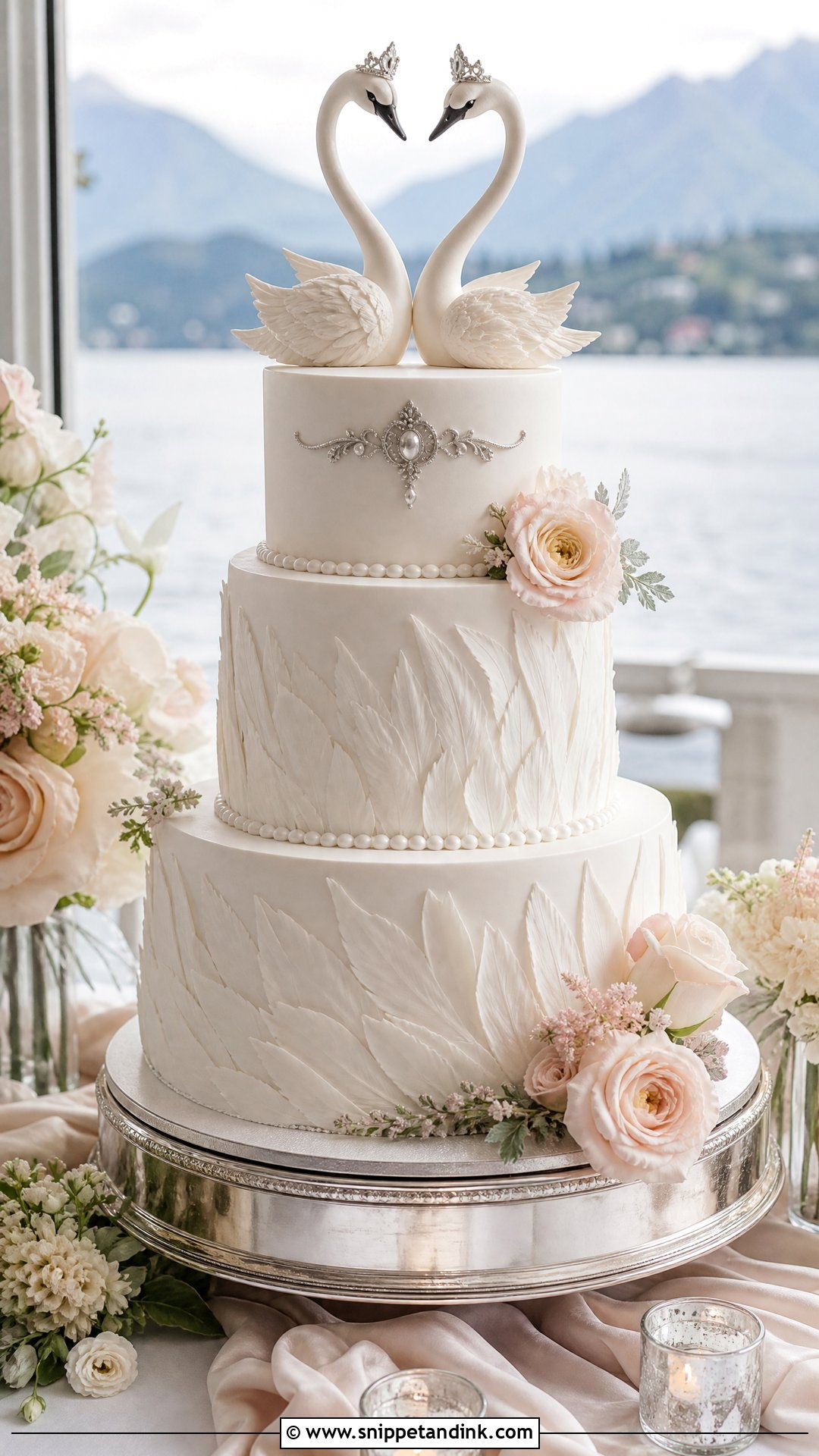
A swan cake suggests a fairytale without spelling it out. I use smooth white fondant, soft feather textures piped or impressed into the icing, pearl piping and two swan toppers forming a heart. Swan necks are fragile, so the toppers are usually made separately in sugar paste or modeling chocolate and placed last. Silver, blush or champagne accents keep it refined. Almond, vanilla bean, coconut or white chocolate raspberry suit the white palette. Keep the details symmetrical. Lakeside weddings and ballrooms both suit it.
21. Royal Gold Wedding Cake
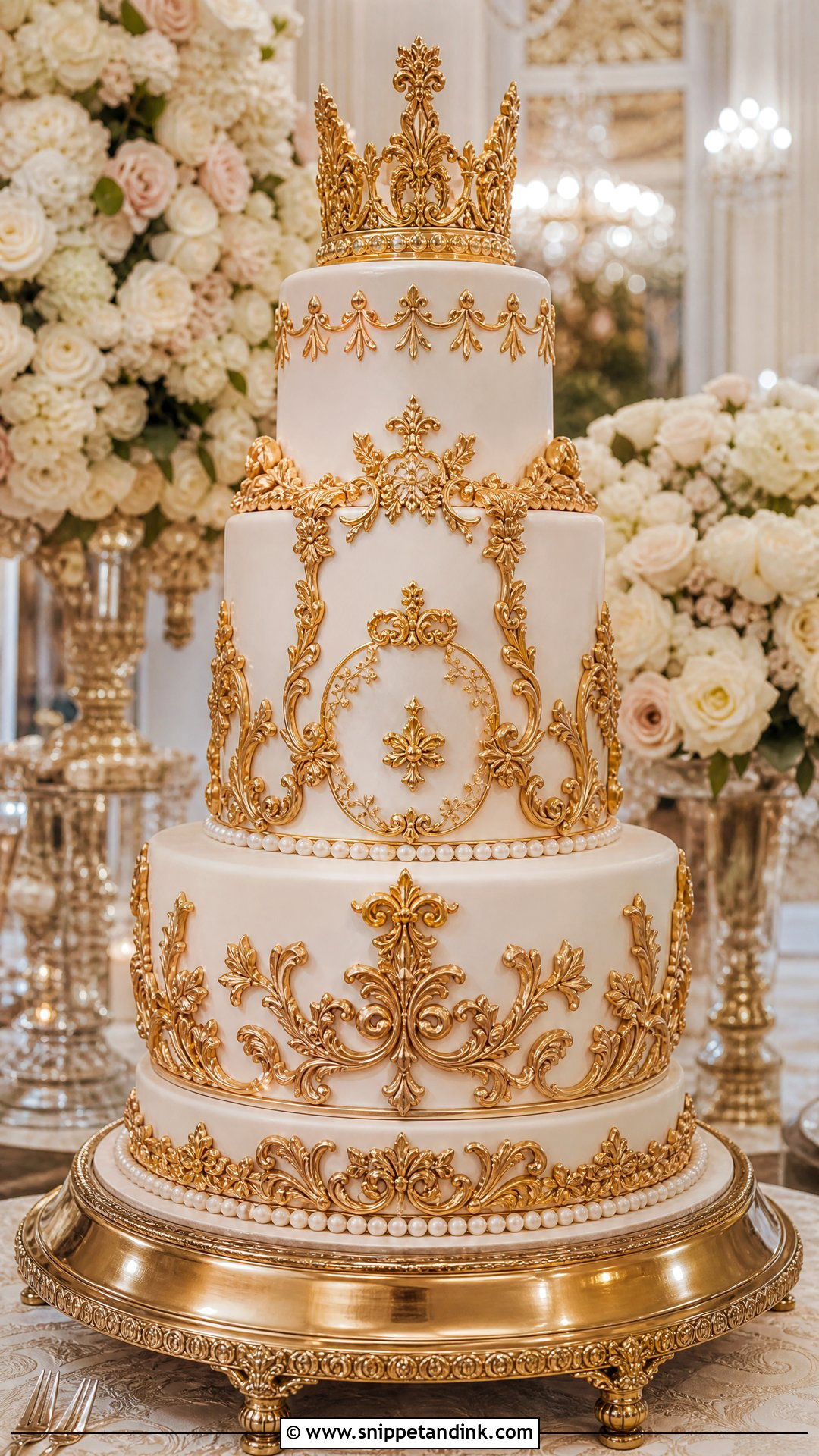
Royal gold works when the gold has white space around it. I use ivory fondant or buttercream with edible gold leaf, baroque piping, pearl borders and ornate details, and leave at least one tier plain so the cake doesn’t feel heavy. Real gold leaf for cakes should be edible-grade; some metallic dusts sold for decorating are labeled non-toxic and meant to be removed, not eaten. A gold crown, crest or floral topper completes the look. Champagne, vanilla almond, caramel or white chocolate suit it. Formal weddings and grand ballrooms are its home.
22. Secret Garden Wedding Cake
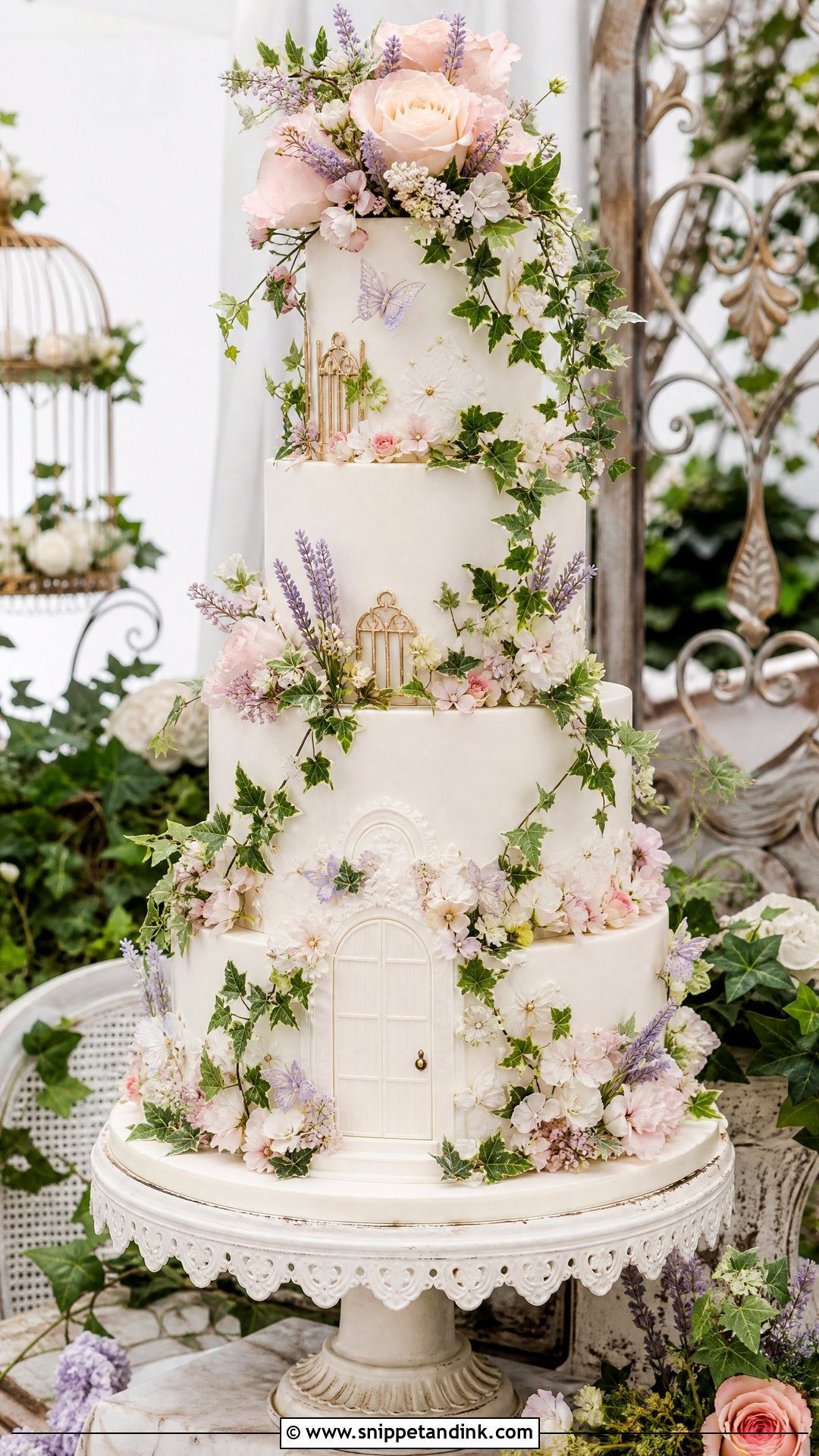
Secret garden is the quieter cousin of the magic garden: ivy trails, small blossoms, one or two hidden butterflies and a slightly overgrown feel, as if you found the cake behind an old gate. Piped buttercream ivy holds up better than fresh ivy, which isn’t food-safe. Lemon lavender, vanilla bean, honey almond or strawberry cream suit the gentle theme. Use ivory, sage, blush, lilac and pale green. A vintage stand or floral base finishes the display at an intimate garden ceremony.
23. Crystal Wedding Cake
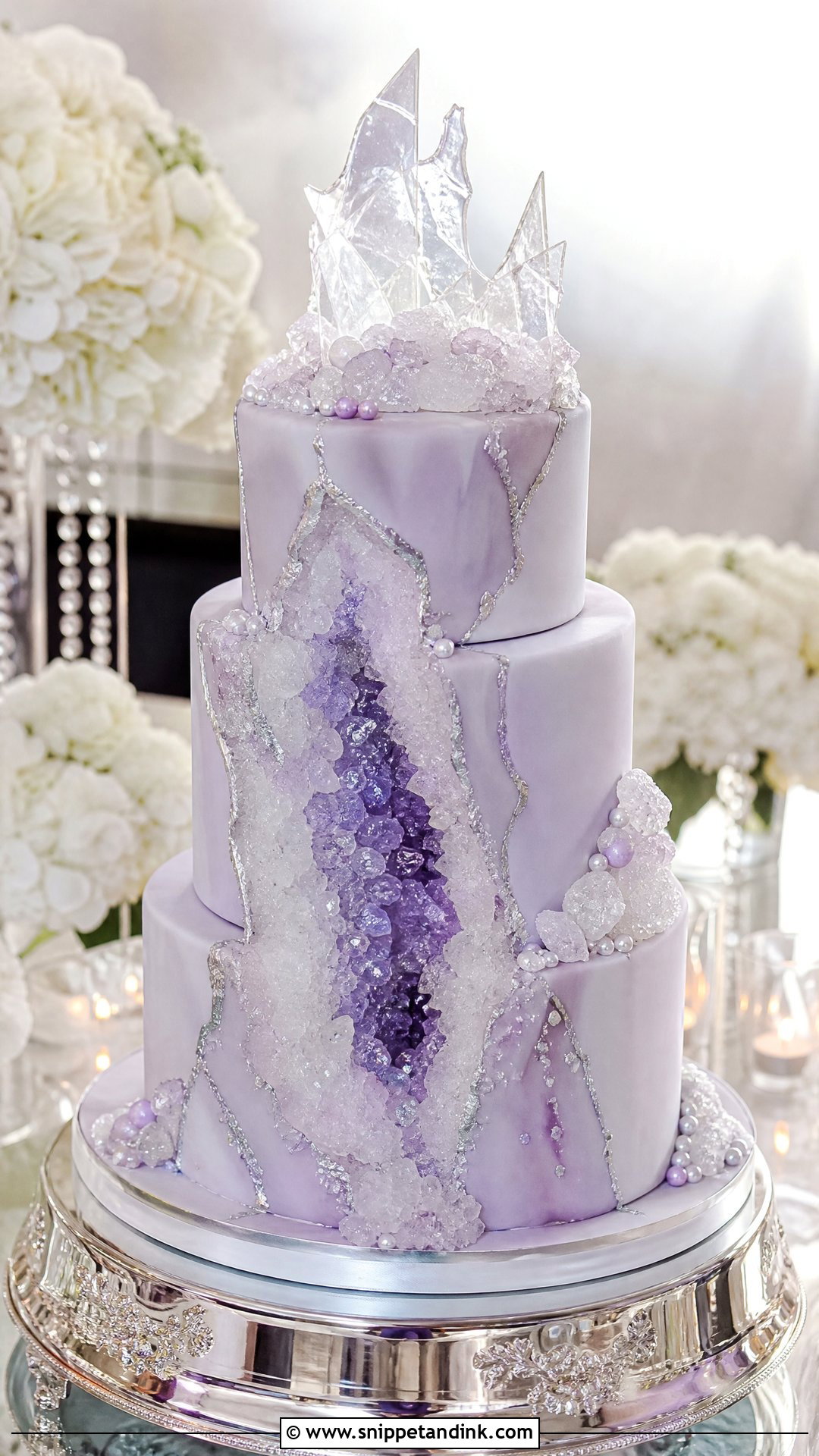
Crystal cakes use rock candy geodes, sugar crystals, clear isomalt shards and metallic edges against smooth icing. The clean base is what makes the crystals stand out. Isomalt is the material to plan around: it pulls moisture from the air, so in a humid room it can go cloudy or tacky. I add it as late as possible and keep it away from heat. White, blush, silver, champagne or pale lavender keep it bridal. Vanilla bean, white chocolate, raspberry or champagne suit the style. Elegant indoor venues and winter weddings suit it best.
24. Pegasus Wedding Cake
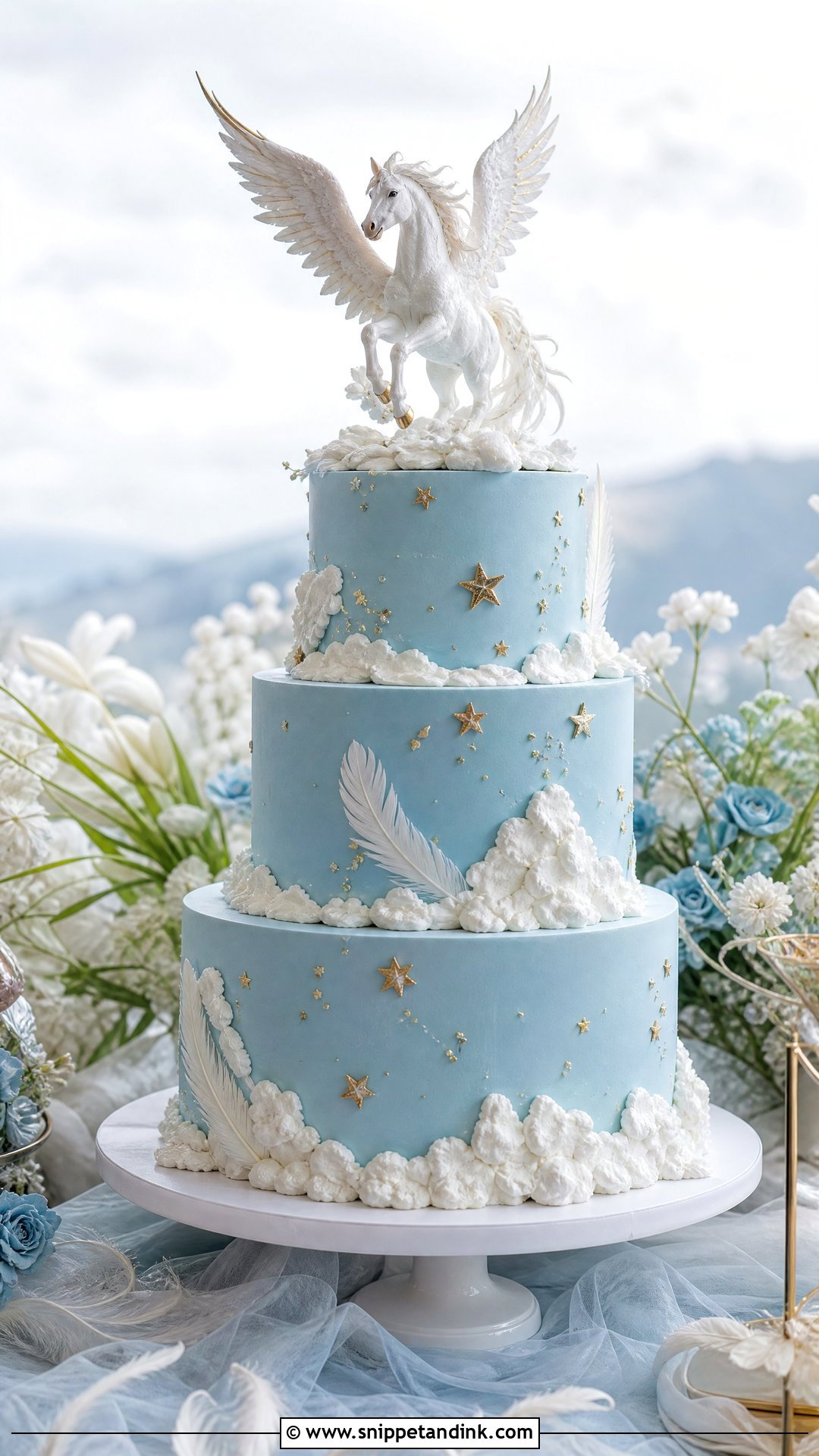
A Pegasus cake needs height so the topper has room. I’d make it two or three tall tiers with cloud-like buttercream, feather details, gold stars and pale sky-blue accents, and a white winged horse modeled in sugar paste on top. Fine wings are fragile, so the topper is supported internally and placed on site. Keep it airy rather than childish. Vanilla, coconut, lemon or white chocolate raspberry suit the light palette. Outdoor and hilltop weddings suit it.





25. Medieval Wedding Cake
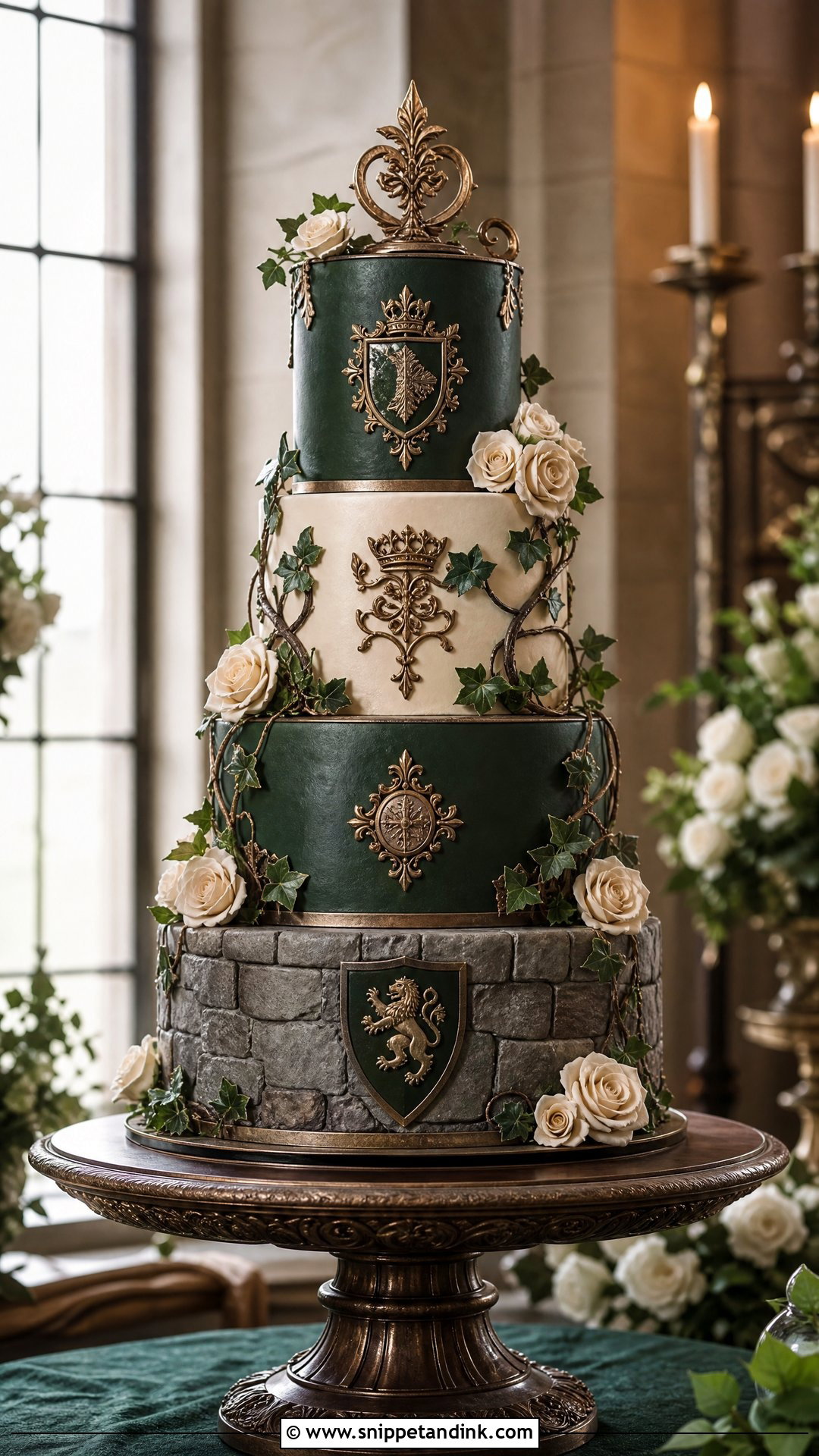
Medieval designs are textured and dramatic: stone-inspired fondant, shield motifs, deep jewel tones, metallic trim and subtle heraldic details. To keep it romantic rather than costume-like, I stick to clean tier shapes and one color story, such as ivory and gold, emerald and cream or burgundy and bronze. Dark chocolate, honey spice, fruitcake or almond suit the old-world style; fruitcake also handles a long day well. Add sugar roses, vines or a simple crest topper. Castle venues and historic halls suit it.
26. White Witch Wedding Cake
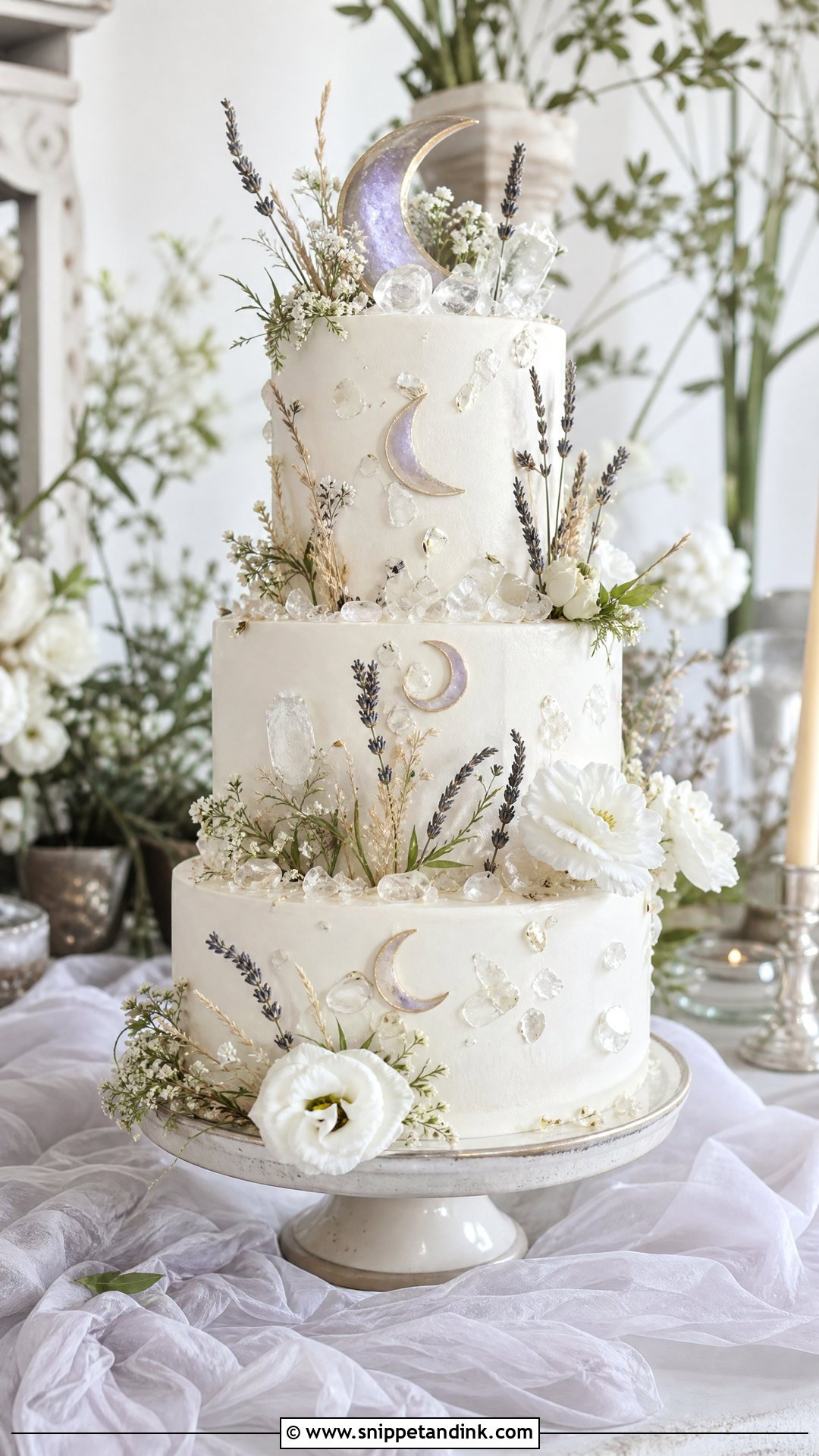
A white witch cake is mystical and soft rather than spooky. I use ivory buttercream or fondant with pearl shimmer, sugar herbs that look dried, crescent moons, clear sugar crystals and pale flowers. Real dried herbs on a cake should be culinary ones, and I keep them off anything that will be cut. Vanilla lavender, honey chamomile, pear almond or lemon thyme match the herbal feeling. A simple stand, gauzy fabric and soft flowers around the base finish it. Outdoor ceremonies and candlelit receptions suit it.
27. Floating Tier Wedding Cake
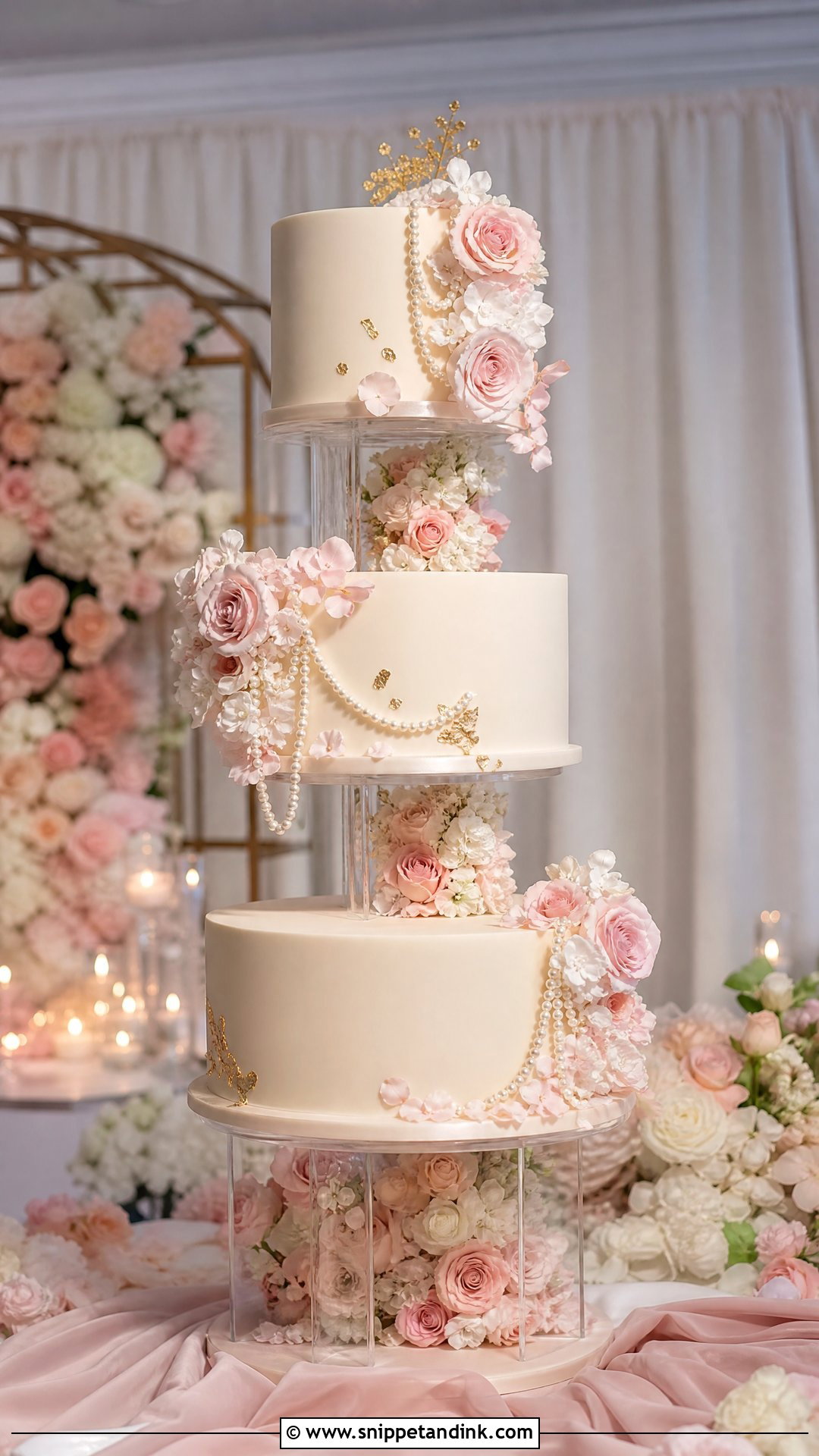
Floating tiers look impossible, and that’s the point. The illusion comes from clear acrylic separators, floral columns or hidden supports, sometimes wrapped in sugar clouds. The engineering matters more than the decoration: each suspended tier sits on its own board, and the supports have to run down to the base board. Keep the colors soft in ivory, blush, champagne or pale blue. Vanilla champagne, lemon raspberry, almond or white chocolate work well. Sugar flowers, cascading pearls or tiny lights around the separators finish it at a grand reception.
28. Waterfall Wedding Cake
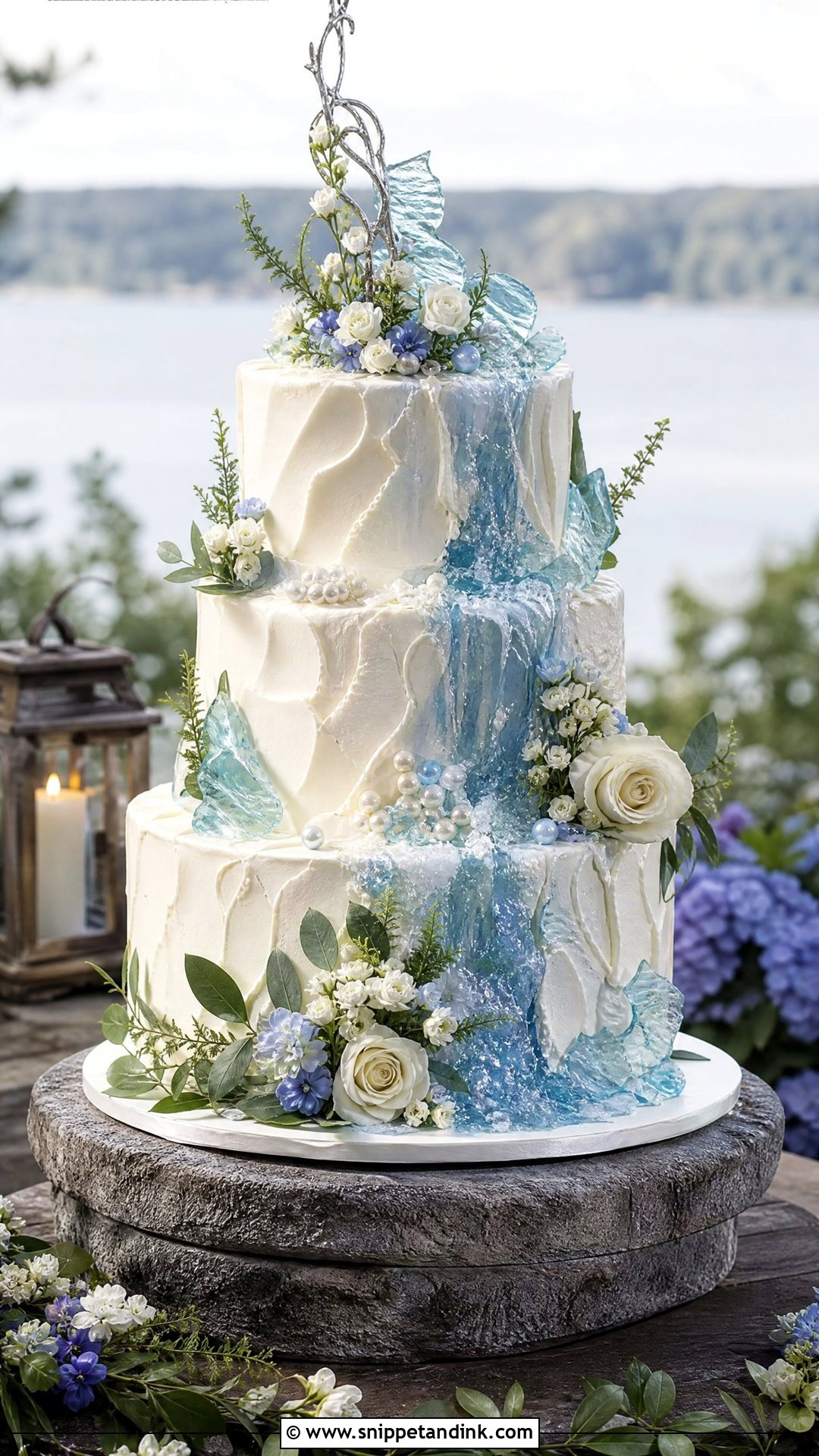
A waterfall cake needs movement down the tiers: blue sugar glass, ombré buttercream, edible pearls, cascading flowers or painted water. Sugar glass is the showpiece, and like isomalt it doesn’t like humidity, so outdoors I’d lean on painted water and flowers instead. Pale blue, ivory, silver and greenery keep it fresh. Lemon blueberry, coconut lime, vanilla or white chocolate raspberry suit the theme. A floral base with stones or greenery makes the fall of water look natural at a lakeside or garden wedding.
29. Vintage Fairytale Wedding Cake
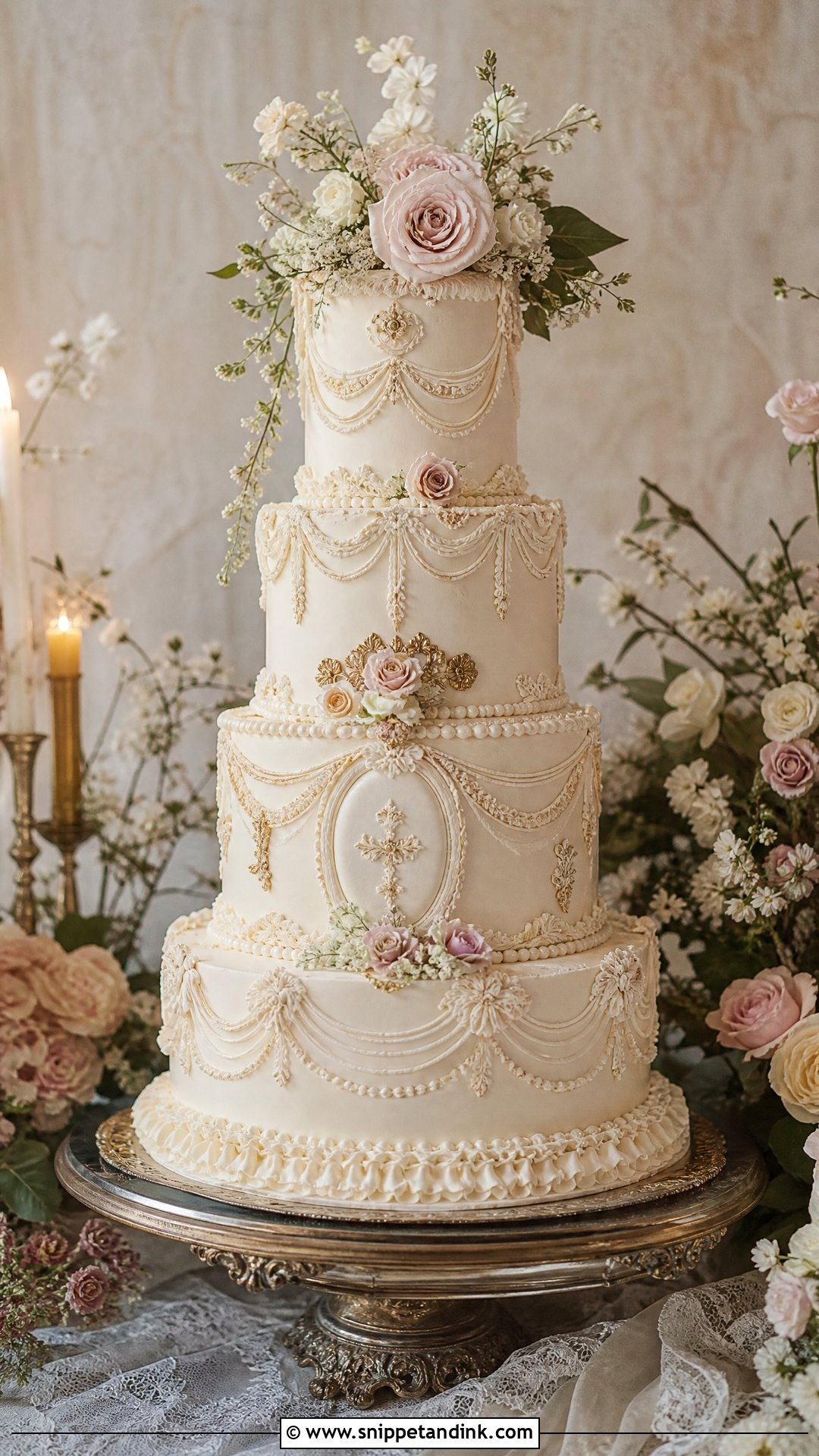
A vintage fairytale cake gets its fantasy from styling, not characters. Soft ivory or blush buttercream, Lambeth-style piping, pearls, sugar roses and antique gold accents. Lambeth piping is layered overpiping, built up in stages and left to set, so it takes time and needs a stable buttercream or royal icing. Vanilla almond, strawberry cream, champagne or chocolate raspberry all work. Keep the tiers tall and symmetrical. A vintage stand, lace linen and soft flowers finish the mood at an estate wedding.
30. Whimsical Pastel Wedding Cake
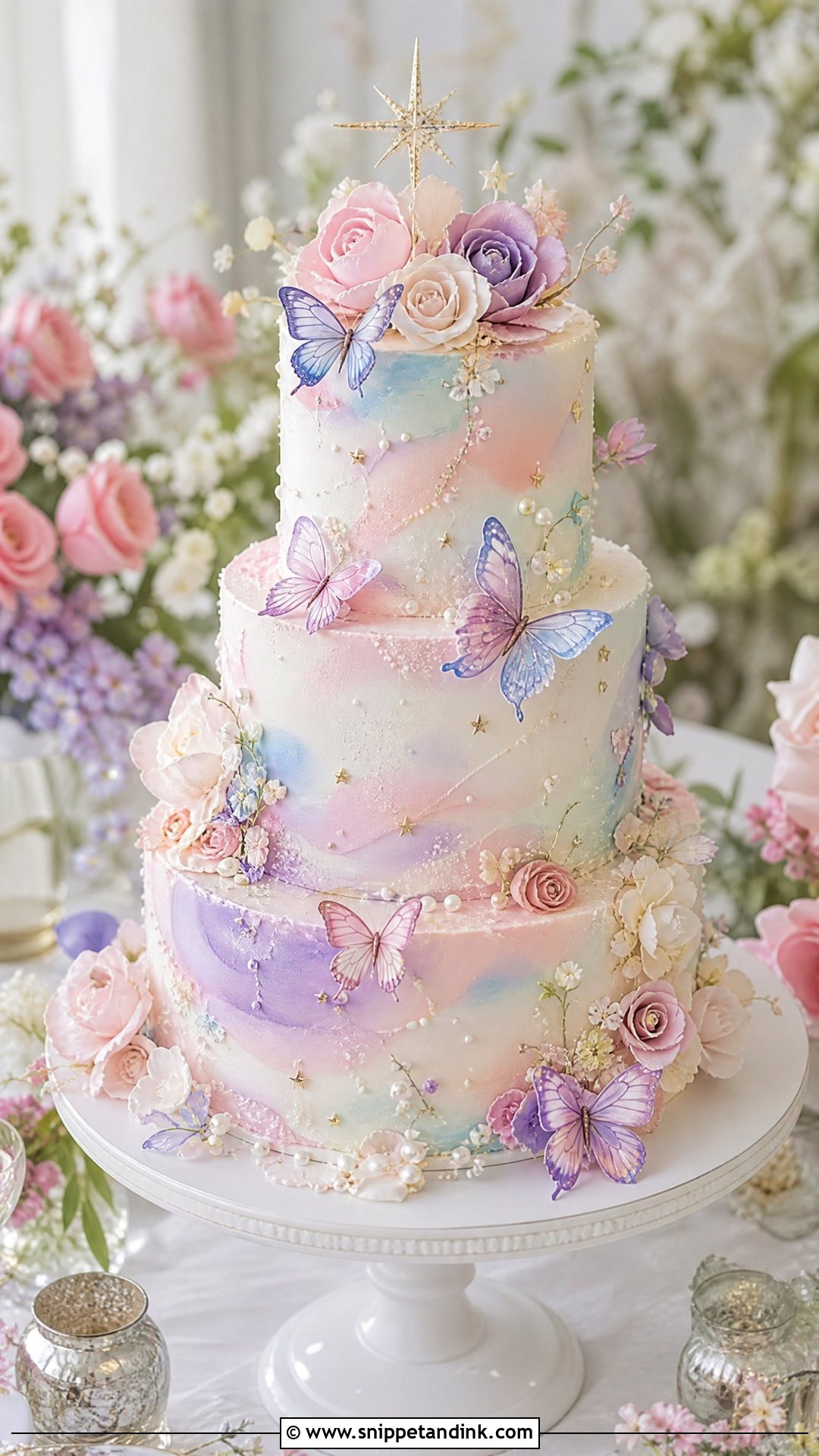
A whimsical pastel wedding cake is the playful option for couples who love color. Blush, lavender, mint, pale yellow and sky blue sit across smooth buttercream or fondant tiers, with sugar flowers, butterflies, pearls or small stars. Funfetti, strawberry vanilla, lemon or white chocolate raspberry suit the light look. The risk is that it tips into birthday cake. I keep each tier to one or two colors and repeat them in a planned pattern so it reads bridal. Spring and summer weddings suit it.
Black Fondant, Sugar Glass and Other Materials That Misbehave
Deep fantasy colors take a lot of gel color. Black and navy icing can taste bitter and leave tongues tinted, so I’ll often start from chocolate fondant or airbrush color onto a lighter base. Isomalt crystals and sugar glass draw moisture from the air and turn cloudy or sticky in humidity. Wafer paper butterflies go limp near steam or rain. Buttercream under fondant softens in a warm marquee, and heavy toppers can then start to lean.
None of this rules a design out. It shapes where the cake stands, when the delicate parts go on and how long it can sit out before cutting. A cake placed away from windows, heaters and the dance floor lasts far better than one in afternoon sun.
Questions I’d want you to ask at the tasting
- How far ahead do you need to book a sculpted or sugar-flower design?
- Which parts are edible, and which are supports or keepsakes to remove before cutting?
- How many servings does the display cake give, and do we need a kitchen cake?
- Will you assemble at the venue, and how long do you need at the table?
- What will you change if the room is hot or humid on the day?
One World, One Palette and a Baker Who Knows the Venue
Fantasy cakes let couples show personality while the reception still looks like a wedding. A castle, a forest, a moonlit sky or a secret garden can all stay bridal with a clear theme, a focused palette and decorations that suit the room. Before your consultation, gather your season, flowers, dress style, table décor and lighting. Bring your favorite photos and ask your baker plainly what can be built safely, what will hold up at your venue and what fits your budget.
You'll Like These Ideas:



Leave a Reply