
Most brides who ask me about a second dress really want two moods: something grand for the aisle and something they can dance in. A detachable skirt gives you both in one outfit. A removable overskirt adds volume, texture, coverage or a long train over a fitted base gown, then comes off to leave a lighter shape for greeting guests and the dance floor. The ones that work share three things: fabrics that match, a waist closure that stays put, and a base dress that looks finished on its own. Below are twenty convertible looks, from lace mermaids to satin minis, with the styling and the fitting checks I’d insist on for each.
Hooks, Snaps, Buttons or a Belt: How an Overskirt Actually Attaches
The fastening decides how secure the skirt feels, how quickly it comes off and whether you’ll see marks afterwards. Ask the shop exactly which one your gown uses.
Hooks and eyes along a waistband
The most common and the most discreet. They hold well under weight, but someone has to undo each one, so allow a few minutes and a patient helper.
Snaps or a hidden zip
Quicker to remove. Snaps can pop open under a heavy train, so they suit lighter tulle and chiffon better than satin.
Buttons or a wrap tie
Covered buttons can be decorative as well as functional, and a wrap closure is easy to adjust if your waist changes. Both are visible, so they become part of the design.
A separate belt or waistband
Some overskirts are entirely separate pieces on their own band, worn over any dress. That makes them easy to buy and adjust, but the band must be fitted to sit flat over your base gown’s waist seam, or it will ride up.
1. Mermaid Wedding Dress With Detachable Tulle Skirt
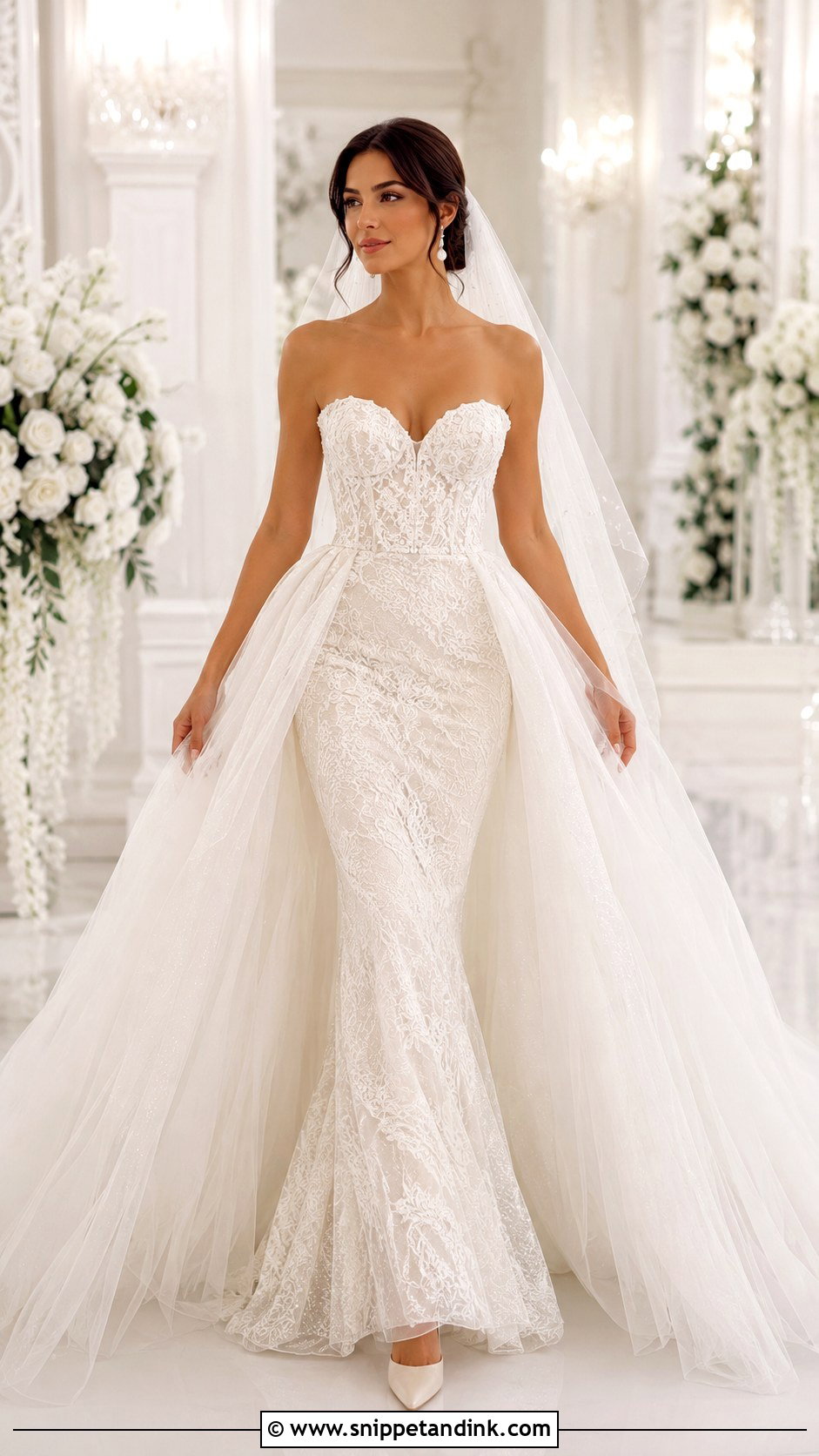
Tulle over a mermaid is the most popular pairing I fit, partly because sheer tulle lets the curve of the base gown show through. The base needs real boning and a waist that sits exactly at your natural waistline; if the overskirt’s band lands even slightly above or below, it bunches and the hooks show. Pointed satin pumps, pearl drops and a sheer fingertip veil suit the ceremony. Later the tulle comes off and the sculpted mermaid shape is all that’s left. It’s a formal, evening-leaning look.
2. Satin Ball Gown Wedding Dress With Detachable Skirt
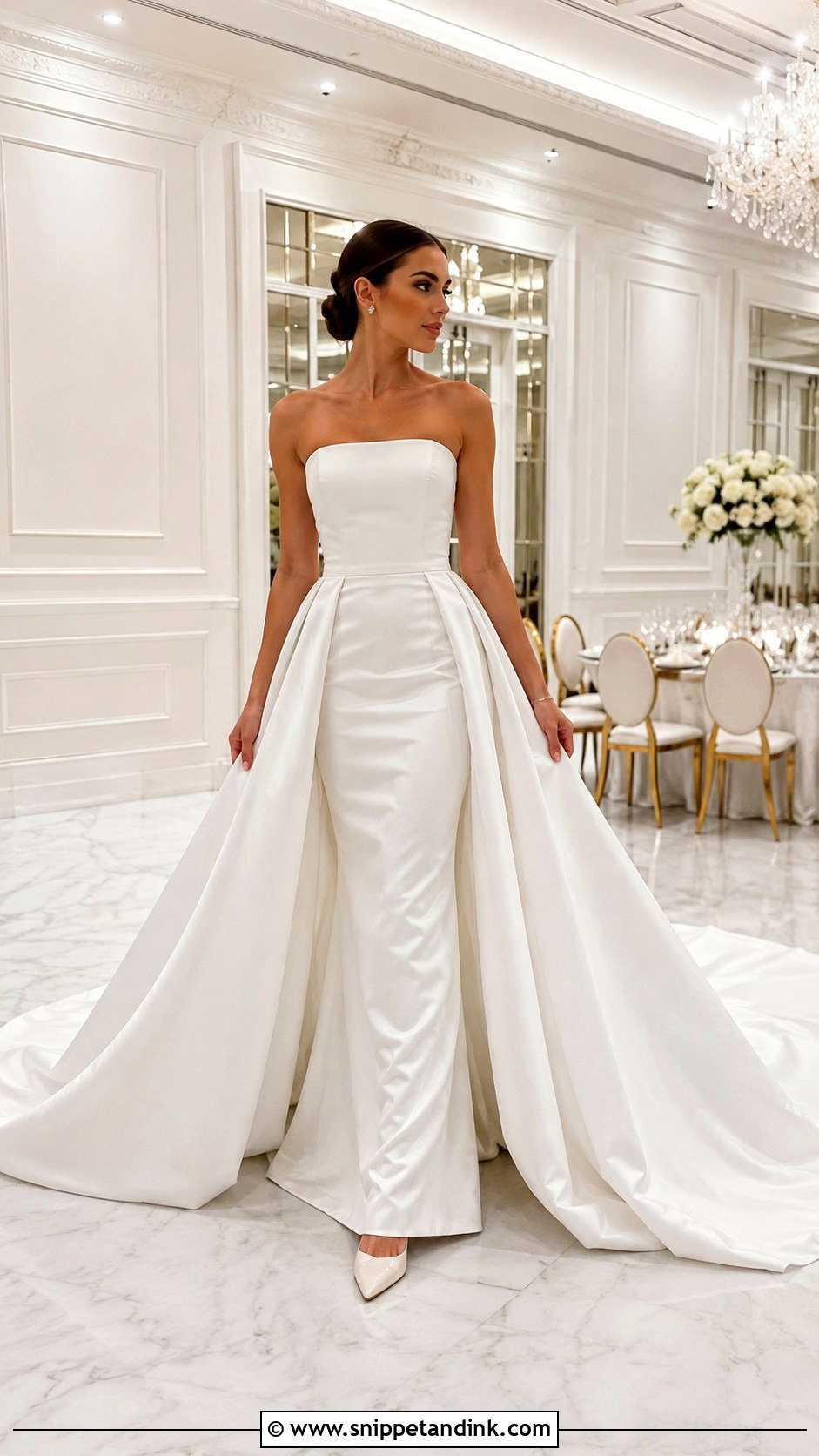
Satin over satin is unforgiving in one specific way: any difference in shade or sheen between the two pieces shows instantly. Ask for both cut from the same bolt. A strapless column with clean princess seams makes the base; a structured detachable ball gown skirt with wide pleats and a chapel train goes on top. Satin also shows the outline of hooks pressing through, so the waistband needs reinforcing and the closures need to sit flat. Crystal studs, a structured mini bag, pointed ivory heels and a sleek low bun keep it modern.
3. Lace Wedding Dress With Detachable Organza Skirt
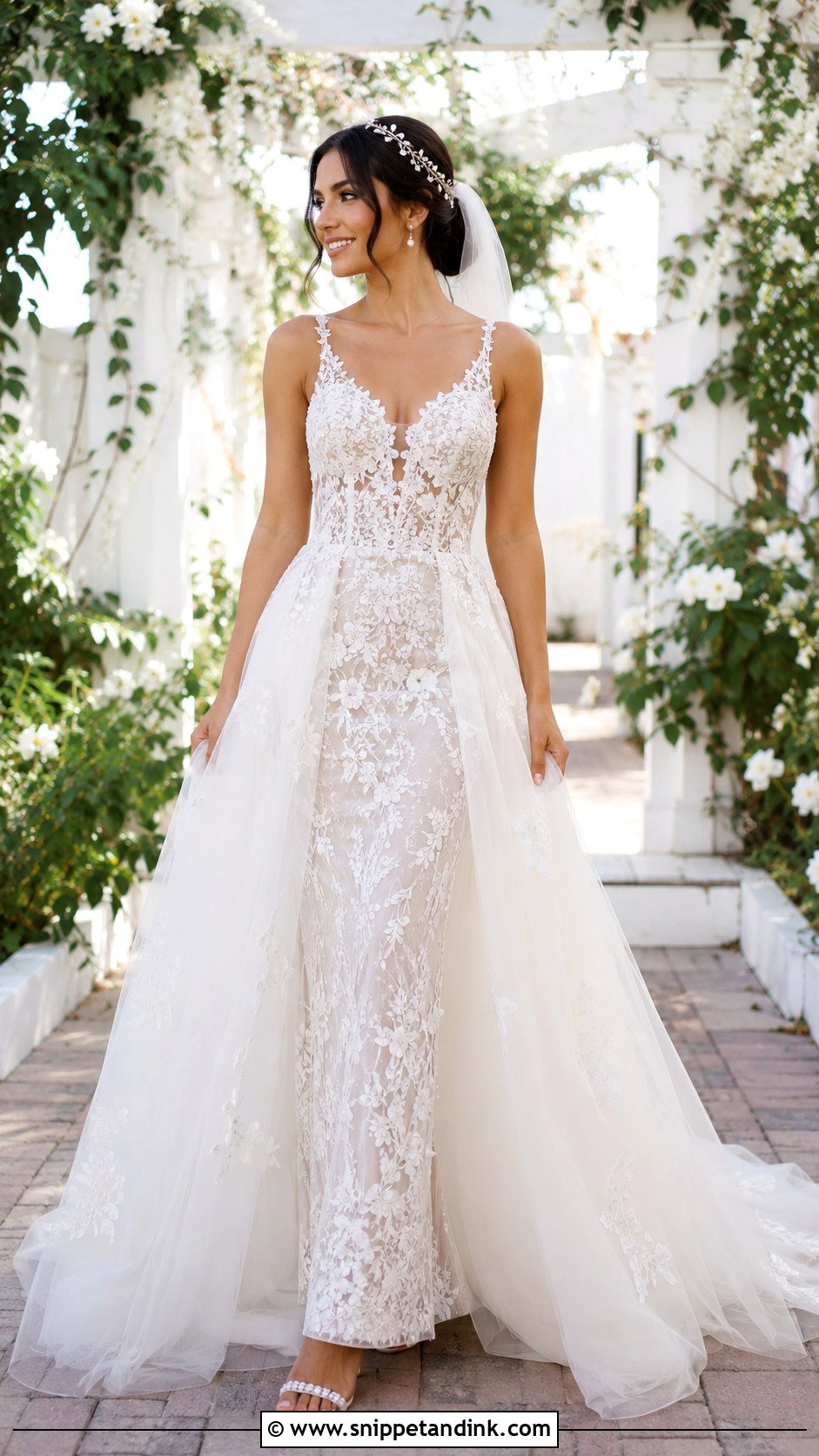
Organza is lighter than satin and stiffer than tulle, which is both its charm and its risk. A crisp organza can stand out from the hips like a lampshade; a softer one drapes into a flowing train. Feel the sample and watch how it falls when you turn. Underneath, a fitted lace gown with floral appliqués, a sweetheart neckline and a soft flare. A few matching appliqués scattered over the waistband join the two pieces visually. Pearl-accented heels, a floral comb, small drops and a plain veil are all I’d add.
4. Strapless Wedding Dress With Detachable Cathedral Skirt
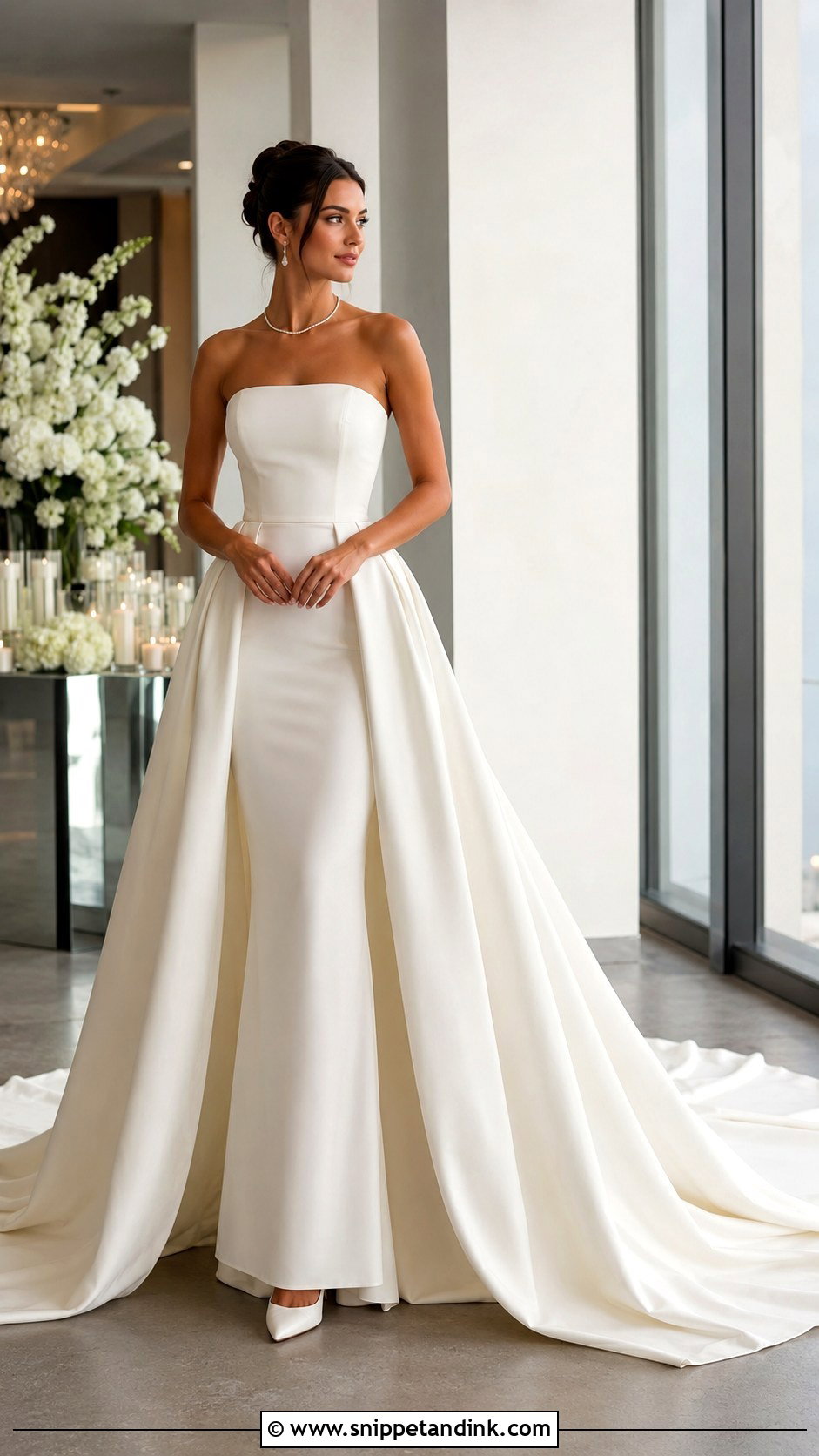
A cathedral overskirt makes the biggest entrance on this list, and it’s also the heaviest. All that fabric hangs from your waist, so the base needs internal corsetry and a waist stay, otherwise the strapless bodice gets dragged down as you walk. Ask the shop what the overskirt weighs and how it attaches before you order. A clean crepe sheath with a curved neckline is the best base. Keep jewelry quiet, a narrow tennis necklace and crystal earrings, with closed-toe pumps and a polished updo. After the formal photos, off it comes and you’re in a sleek gown for dinner.
5. Long Sleeve Wedding Dress With Detachable Skirt
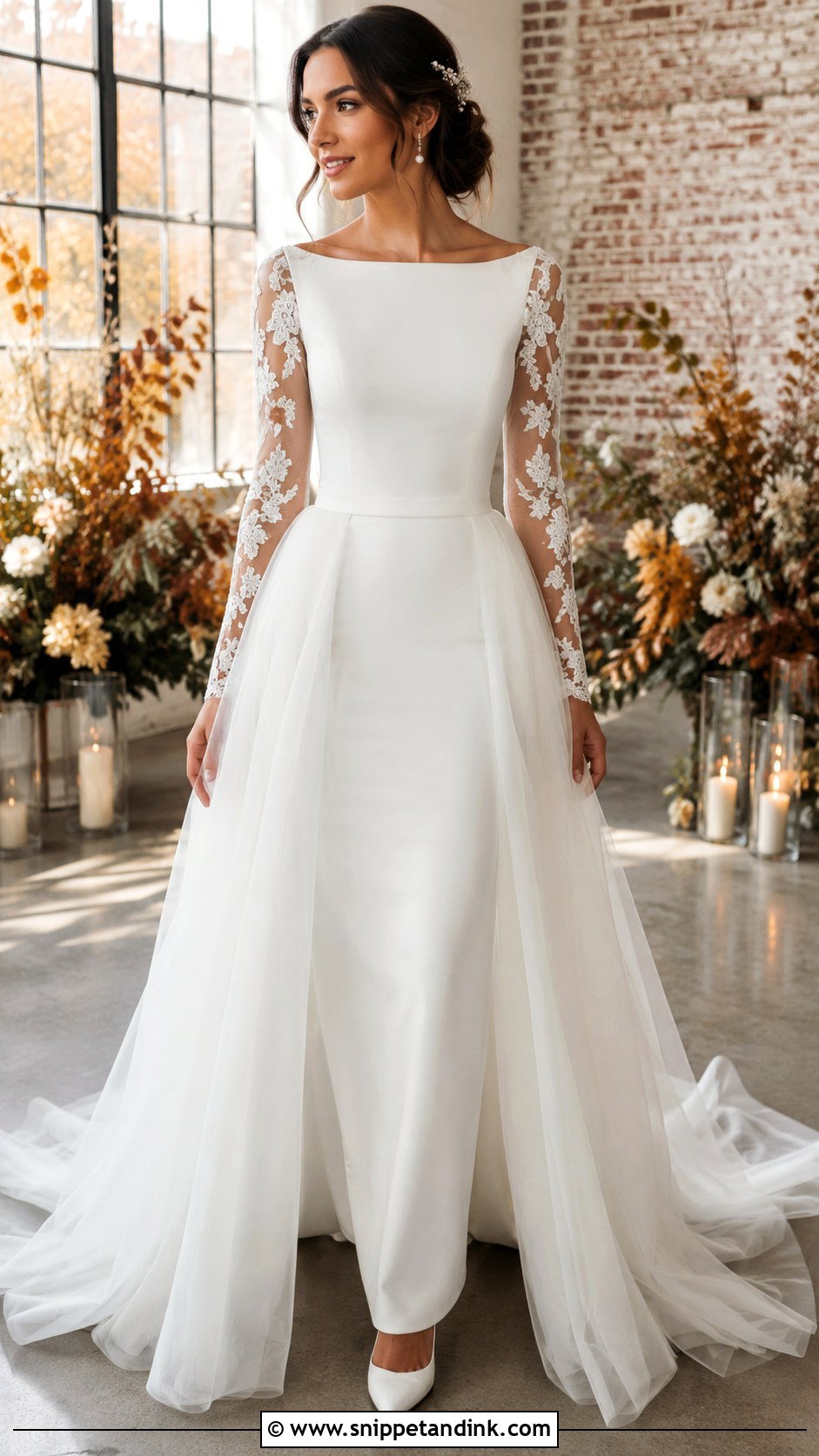
Long lace sleeves with a high bateau neck look classic, and an added tulle skirt softens the tailored line for the ceremony. It’s a practical choice for autumn and winter because it covers you without feeling heavy, and the fitted base still reads formal after the switch. Pearl earrings, low pointed heels and a neat chignon with a delicate comb suit it. At alterations, wear both layers together and sit, lift your arms and walk. Sleeves and waistband are fitted with the weight of the overskirt on, and that changes how both feel.
6. Off The Shoulder Wedding Dress With Detachable Skirt
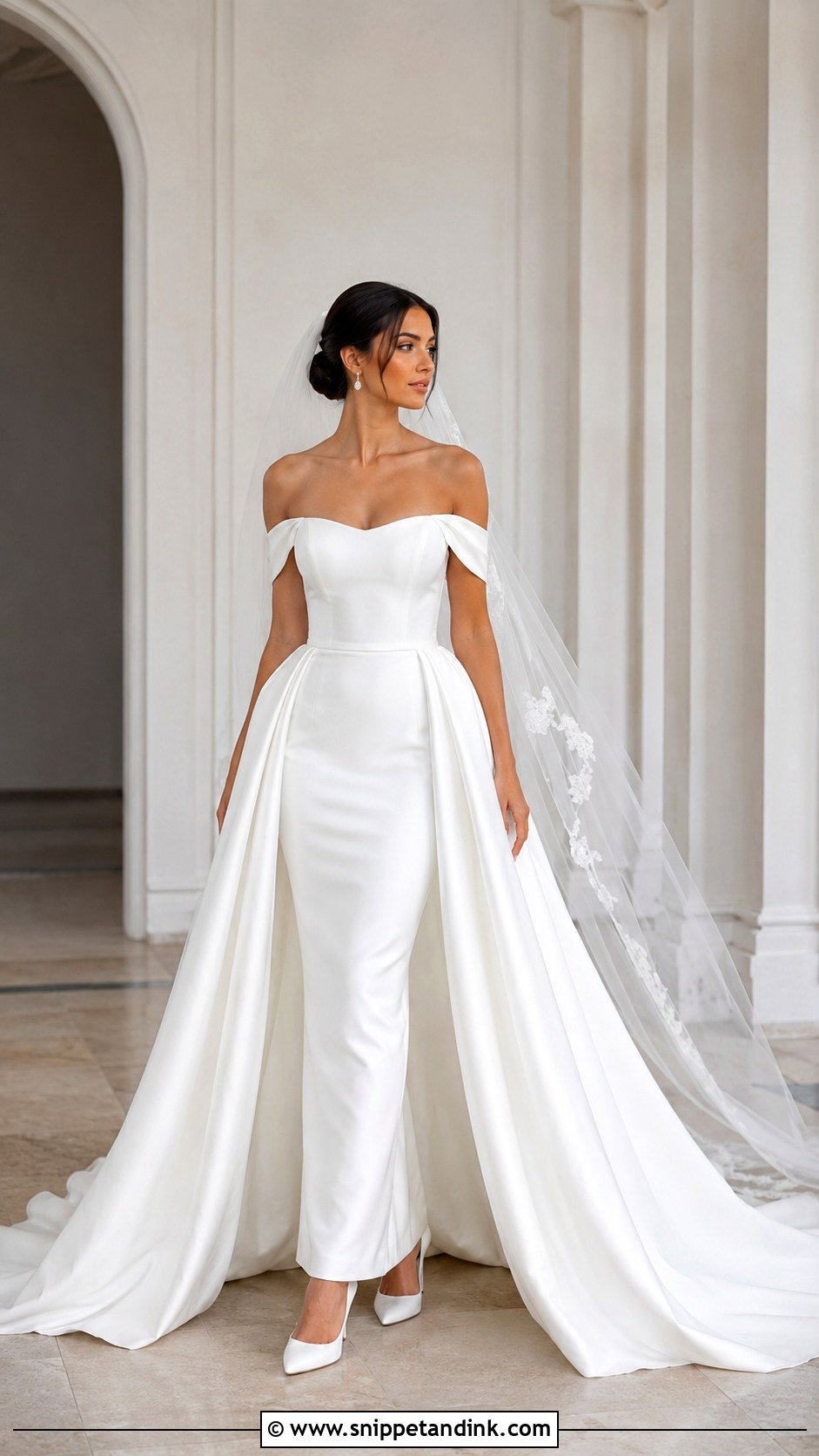
Off-the-shoulder bands on a stiff fabric like mikado look striking but limit how high you can raise your arms, so hug someone at your fitting before you commit. The base should have proper boning. A detachable box-pleated overskirt turns it into a full ball gown, finished with a cathedral veil, teardrop earrings and satin pumps. For the reception, both the skirt and veil go and the neckline takes over. One detail I always check: the skirt’s waistband should sit just under the bodice seam, not across it, so the join reads as one line.
7. Corset Wedding Dress With Detachable Tulle Skirt
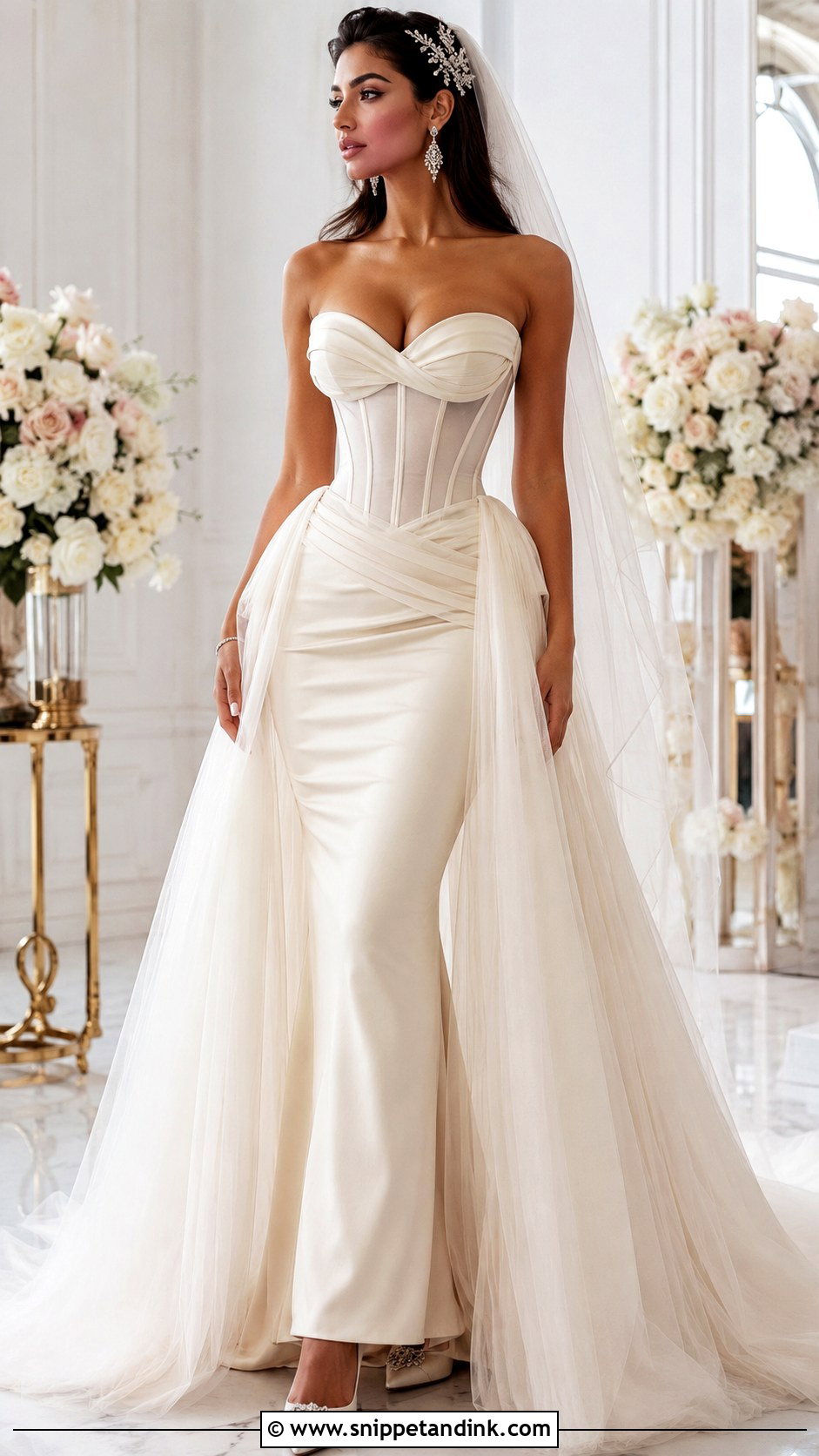
Corset bodices give a convertible gown its structure, which matters because the base has to look complete without the skirt. Choose a boned bodice with softly draped cups and a fitted lower skirt that still lets you take a full step. A layered tulle overskirt turns it into an airy A-line for the ceremony. Keep jewelry light: crystal drops, a sheer veil, pointed heels and a small hairpiece. Ask for a lining shade close to your skin tone, and make sure the overskirt’s band covers the seam where the corset meets the lower skirt.
8. A-Line Wedding Dress With Detachable Train Skirt
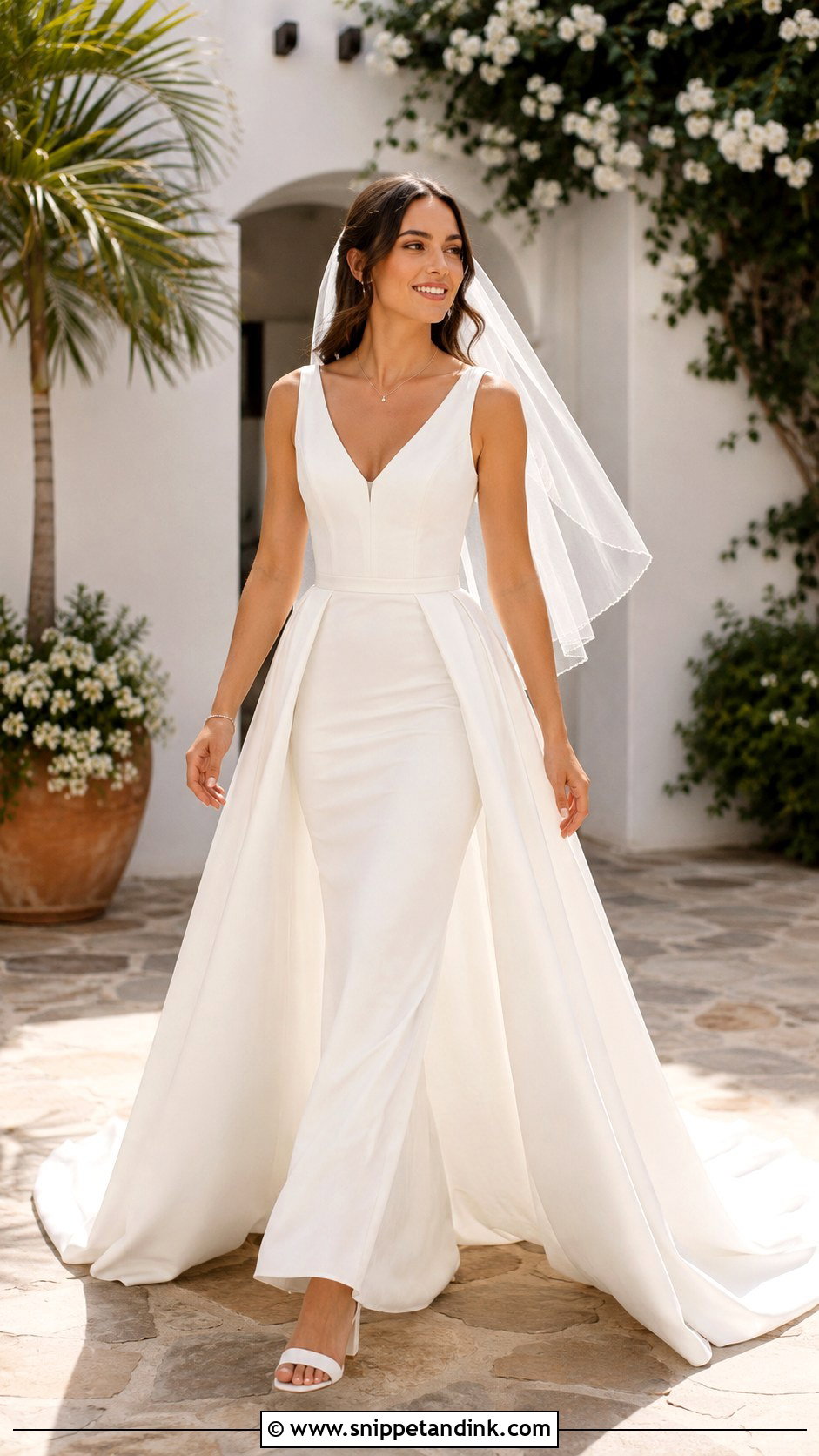
Not every detachable piece is a full skirt. An open-front train wraps around the sides and back only, so the A-line shape you chose stays exactly as it is and you just gain length and movement behind. The base is a softly structured V-neck with a defined waist. Because there’s no fabric across the front, it doesn’t bulk up the waist, which suits brides who dislike gathers there. Block-heel sandals, a fine pendant, pearl studs and a light veil fit the mood. Rehearse the removal with your helper so she unhooks it without tugging the gown.
9. Crepe Wedding Dress With Detachable Lace Skirt
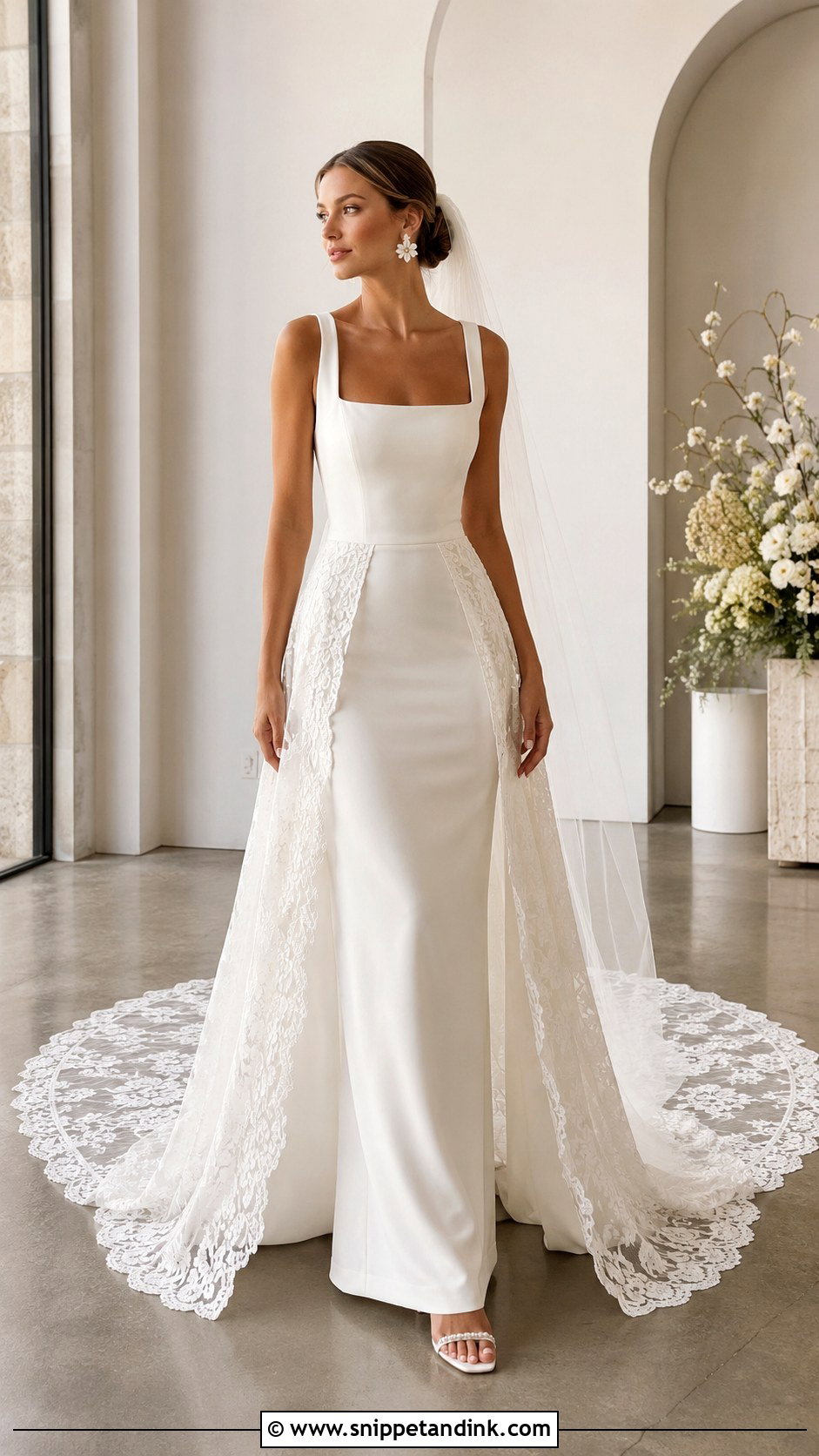
Crepe and lace together read refined, as long as the colours truly match. Ivory crepe beside bright white lace looks dingy, and boutique lighting hides it, so take both pieces to a window. The base is a fitted crepe gown with a square neck, wide straps and precise seams at the waist. The lace overskirt opens at the front and ends in a scalloped cathedral train, so the smooth crepe shows down the middle. Pearl slingbacks, a low bun, floral earrings and a plain tulle veil complete it. Without the lace, the crepe is sleek and modern.
10. Beaded Wedding Dress With Detachable Chiffon Skirt
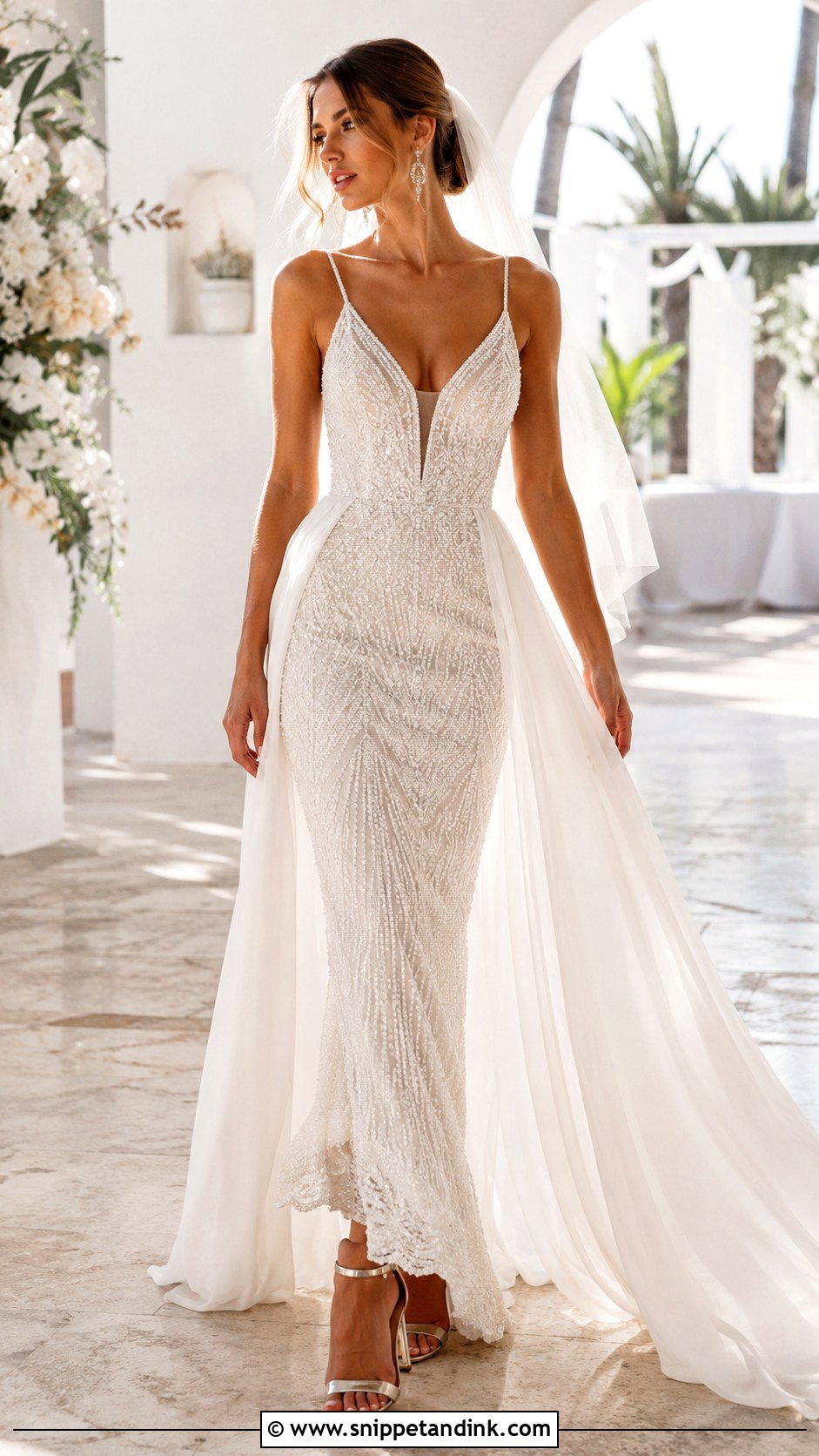
Beading under chiffon gives a soft shimmer, and the chiffon keeps the whole outfit light enough for warm weather. Start with a sparkling beaded gown, slender straps and a V-neck, with beadwork that follows the body. A gently gathered chiffon skirt with a flowing train lets glimpses of the sparkle through. The one thing I check closely is the inside of the waistband: any rough edge or exposed hook will catch beads and pull threads every time the skirt shifts. Metallic heels, crystal earrings and a veil with a narrow edge are enough; skip a heavy necklace.
11. Mini Wedding Dress With Detachable Full Skirt
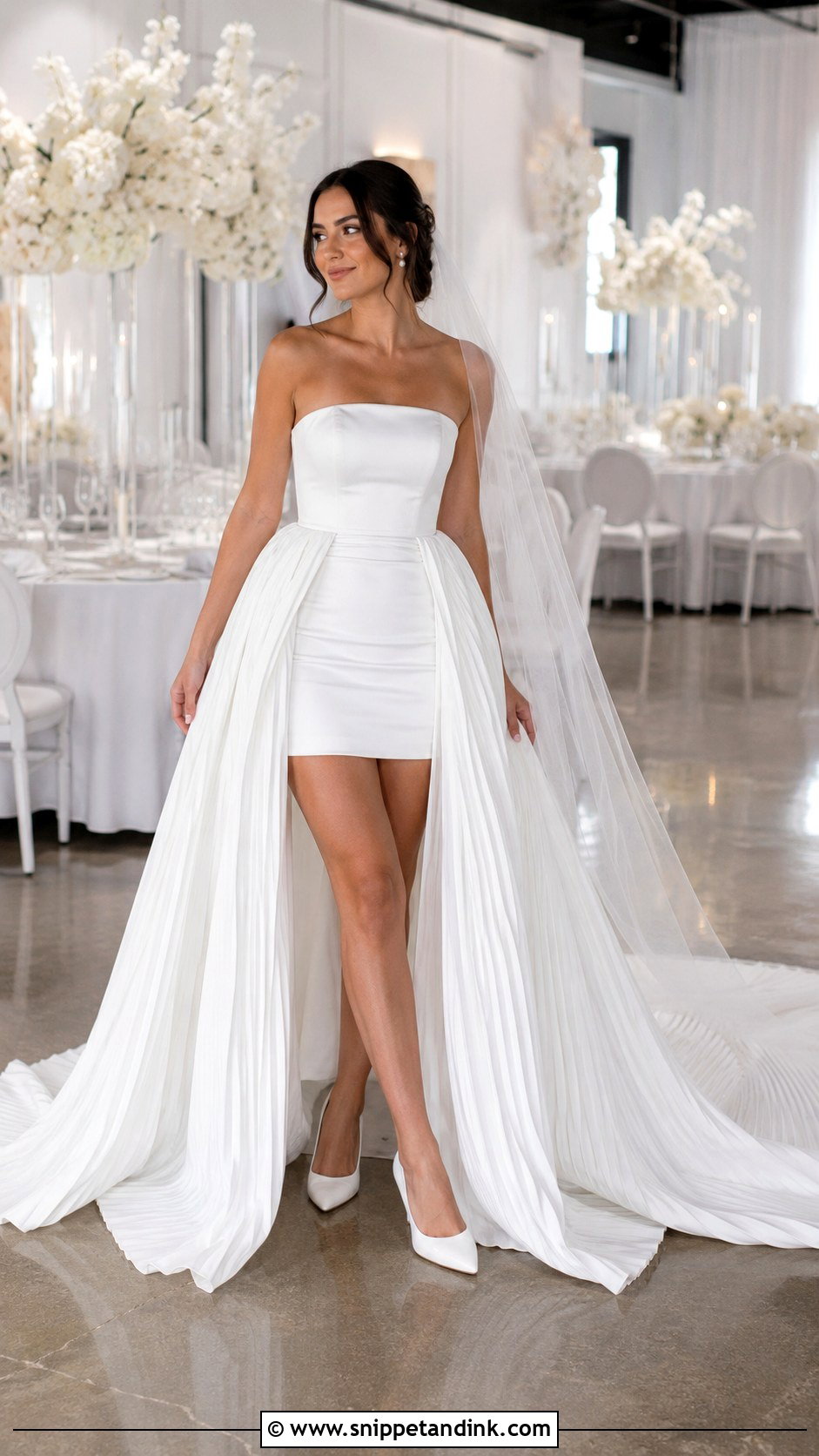
Mini under a full skirt is the most dramatic switch you can make, and the one that needs the most testing. The mini should be long enough to sit in without worry; a short base can show gaps at the overskirt opening when you walk, so turn in front of a mirror with someone watching from the side. A full lining stops the overskirt turning sheer in sunlight. Pair the ceremony look with pointed pumps, pearl earrings and a long veil. Then remove skirt and veil and swap into ankle-strap heels or embellished flats for dancing.
12. Floral Wedding Dress With Detachable Skirt
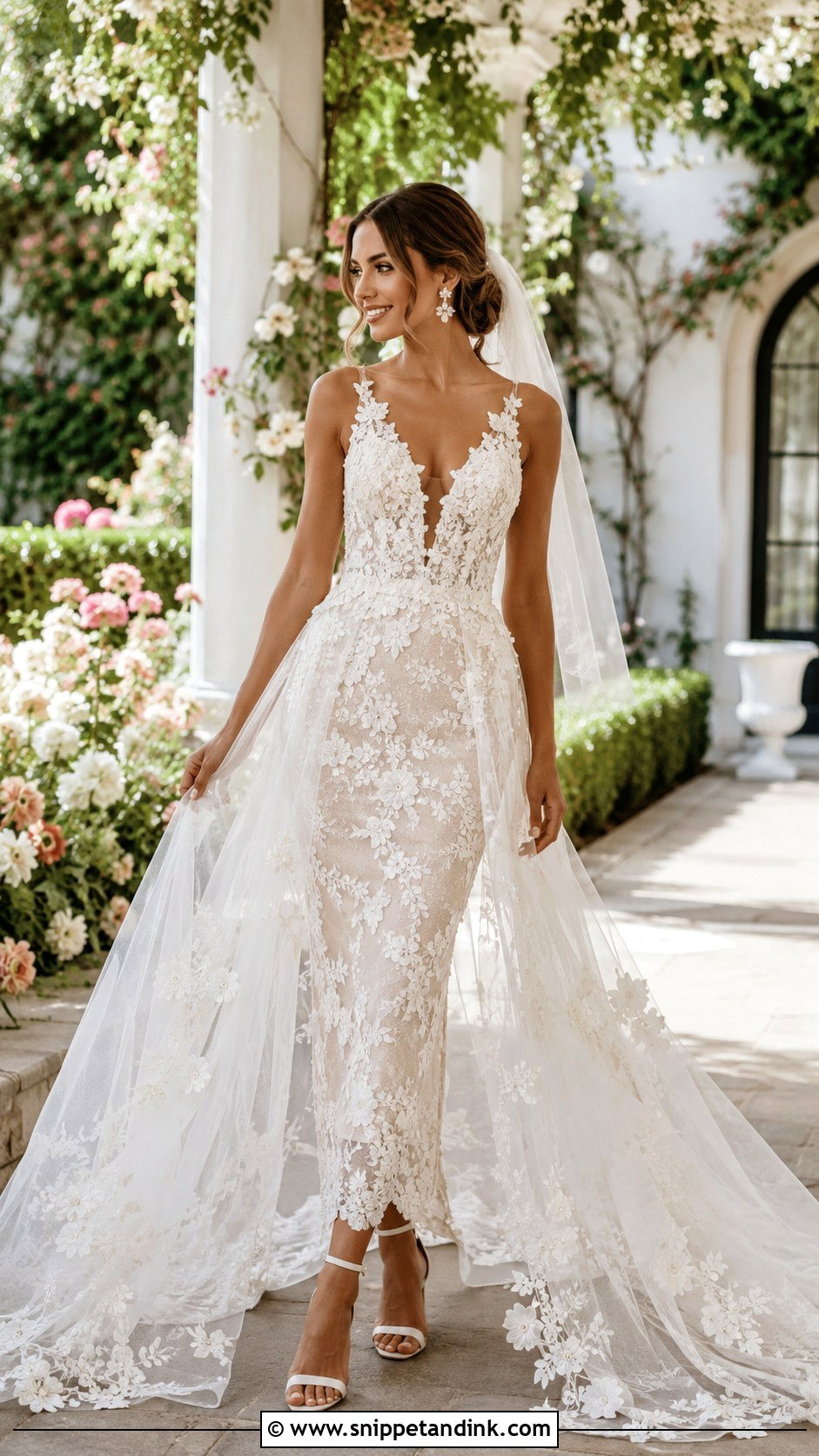
Flowers are the easiest way to make two pieces look like one. I like floral lace dense at the bodice and fading down the base skirt, with a sheer tulle overskirt carrying matching appliqués at the waist and lower train. Match the scale of the flowers, the thread colour and the spacing; mismatched appliqués look added on. Make sure none sit over the hooks, or they’ll be crushed every time the skirt goes on. Floral earrings, ivory heels and a veil under a loose low bun suit it, with a simple bouquet shape.
13. Square Neck Wedding Dress With Detachable Skirt
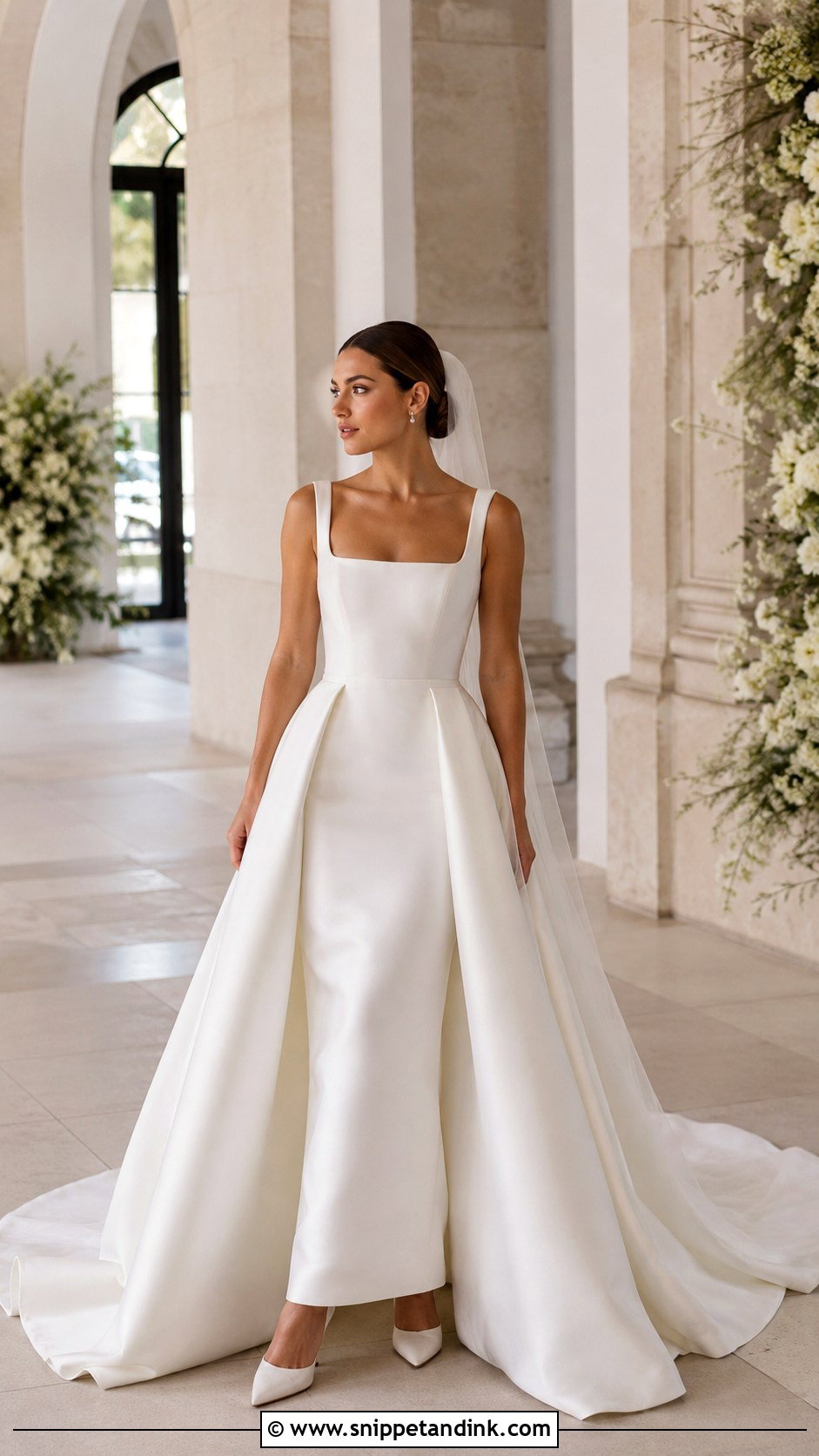
Square necklines suit structured fabrics like mikado and crepe, and the base here should have wide straps, a low square back and a sharp waist. Keep the overskirt plain with minimal pleating and an extended train so the architecture carries through. Mikado is stiff, so the waist seam can shift slightly when you sit; check it standing and seated at alterations. The overskirt band should follow the gown’s waist exactly, or you’ll see a horizontal break. Pearl studs, a smooth bun, a narrow veil and pointed slingbacks finish it.
14. High Neck Wedding Dress With Detachable Skirt
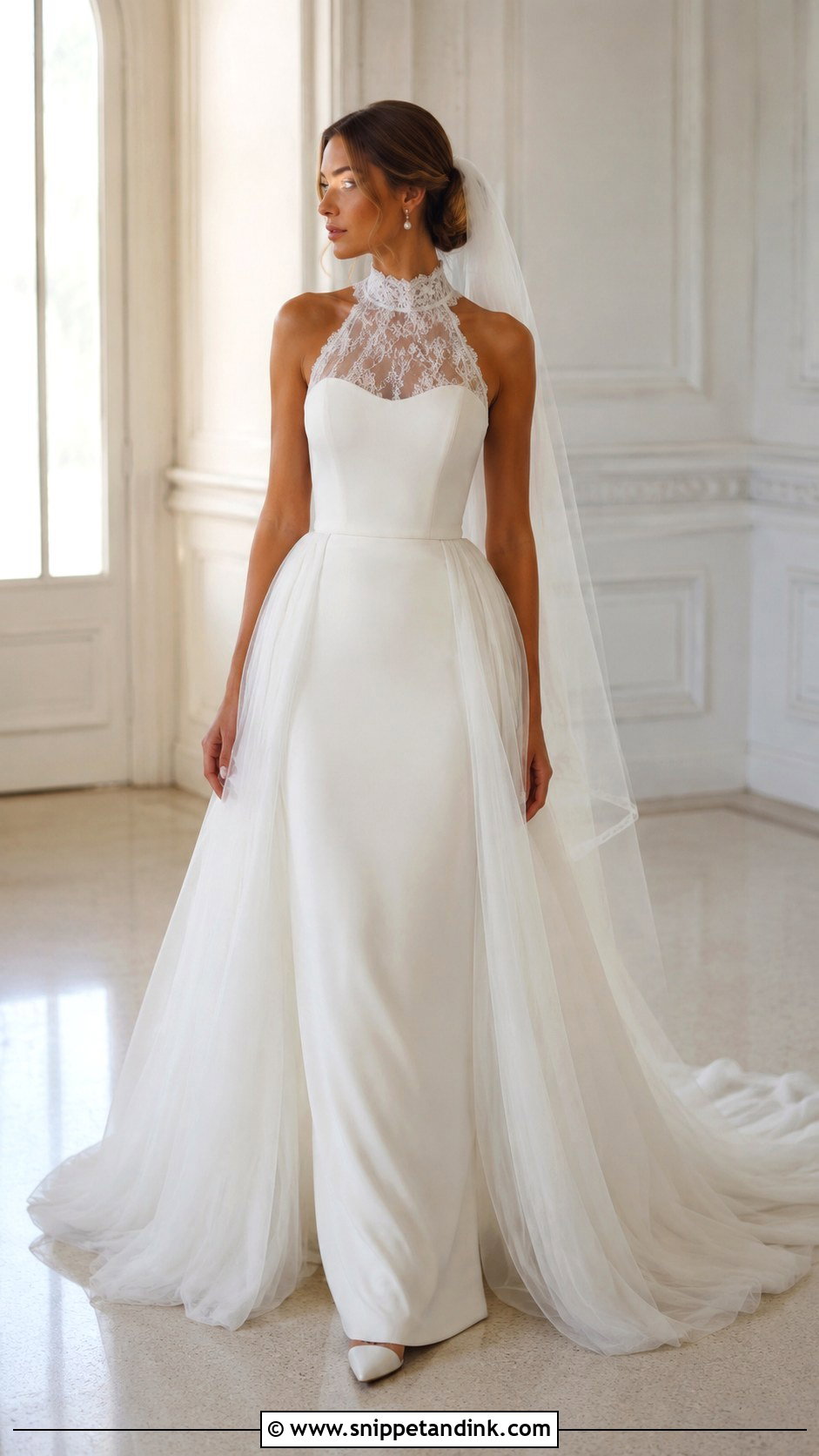
With a high neck, keep the volume low. A sheer lace collar on a sleeveless bodice with a clean crepe skirt is the base; an open-front tulle overskirt with a soft chapel train adds movement without crowding the top half. If your torso is short, ask for a narrow waistband so the bodice doesn’t look squashed. The lace pattern should run down toward the waist so the overskirt looks planned, not tacked on. Small pearl earrings, a low twisted bun, pointed heels and a veil set below the hair suit it; leave the neck bare.


15. Sweetheart Wedding Dress With Detachable Satin Skirt
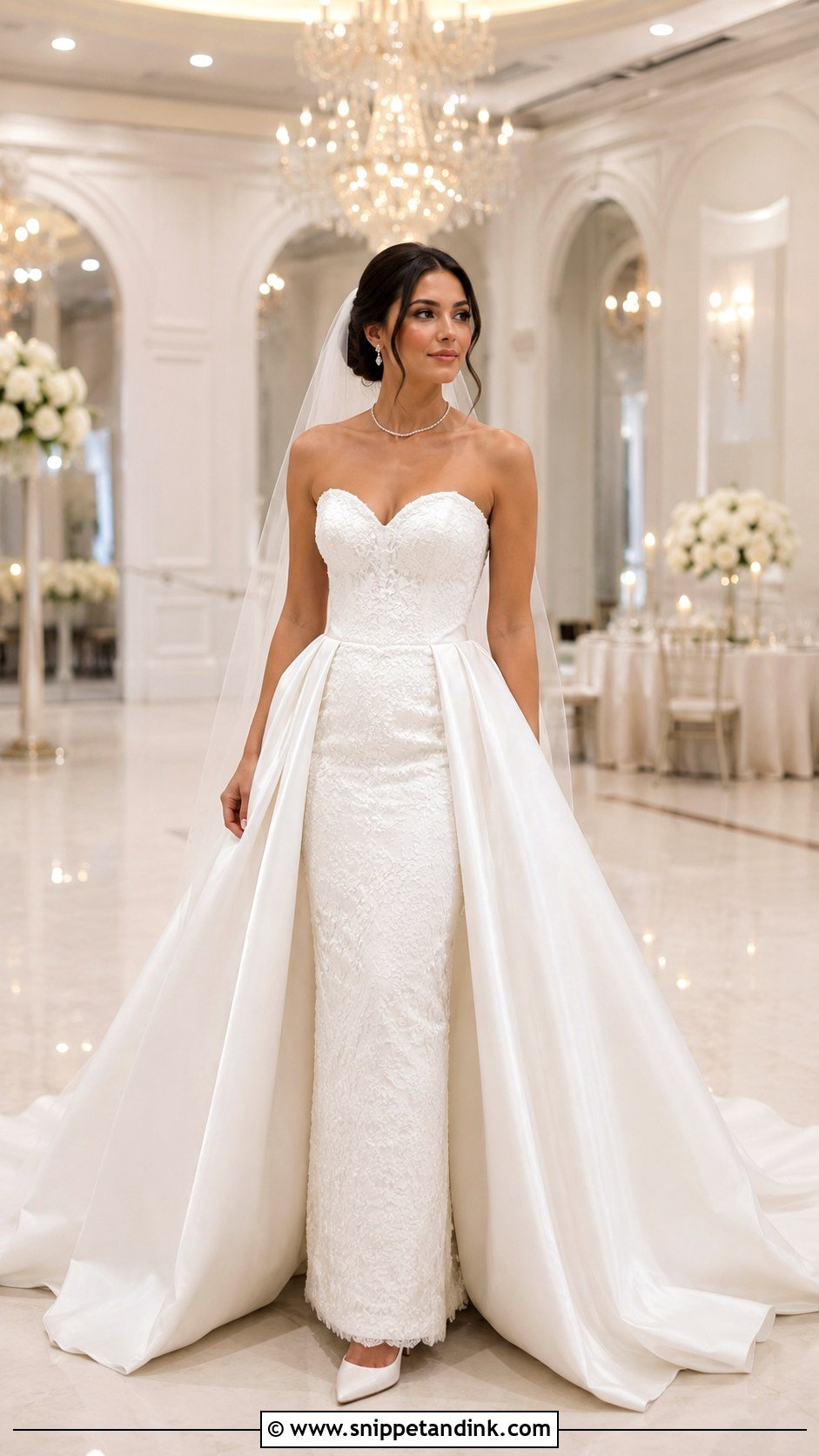
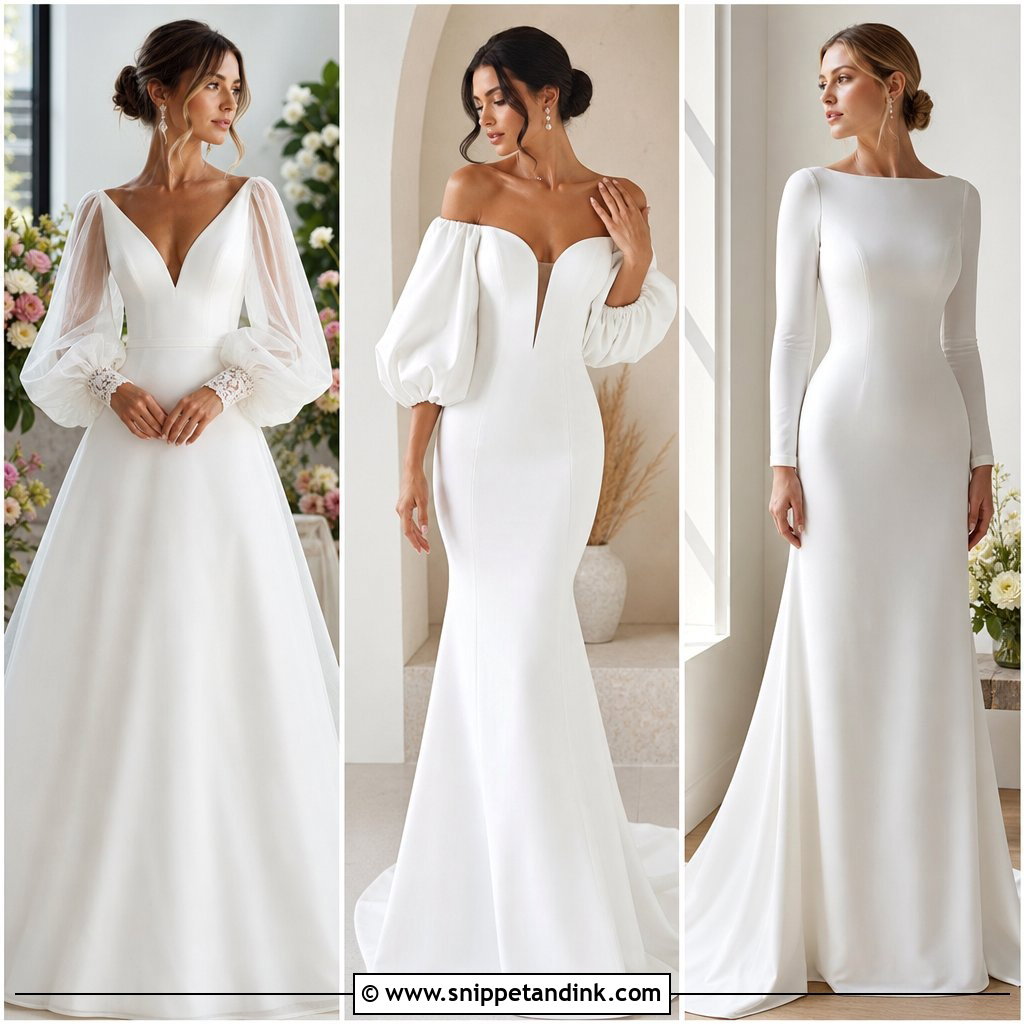
A sweetheart bodice has to stand up on its own. Plenty of convertible gowns lean on the overskirt band to hold the bodice in place, and once it’s off the neckline sags. So look for real corset structure in the base, covered buttons and a lightly flared skirt, then add the pleated detachable satin skirt with a formal train. A delicate necklace, pearl earrings, satin pumps and a sheer veil finish the ceremony look. For later, add a small shoulder bag or a sparkly hair accessory.
16. Halter Wedding Dress With Detachable Skirt
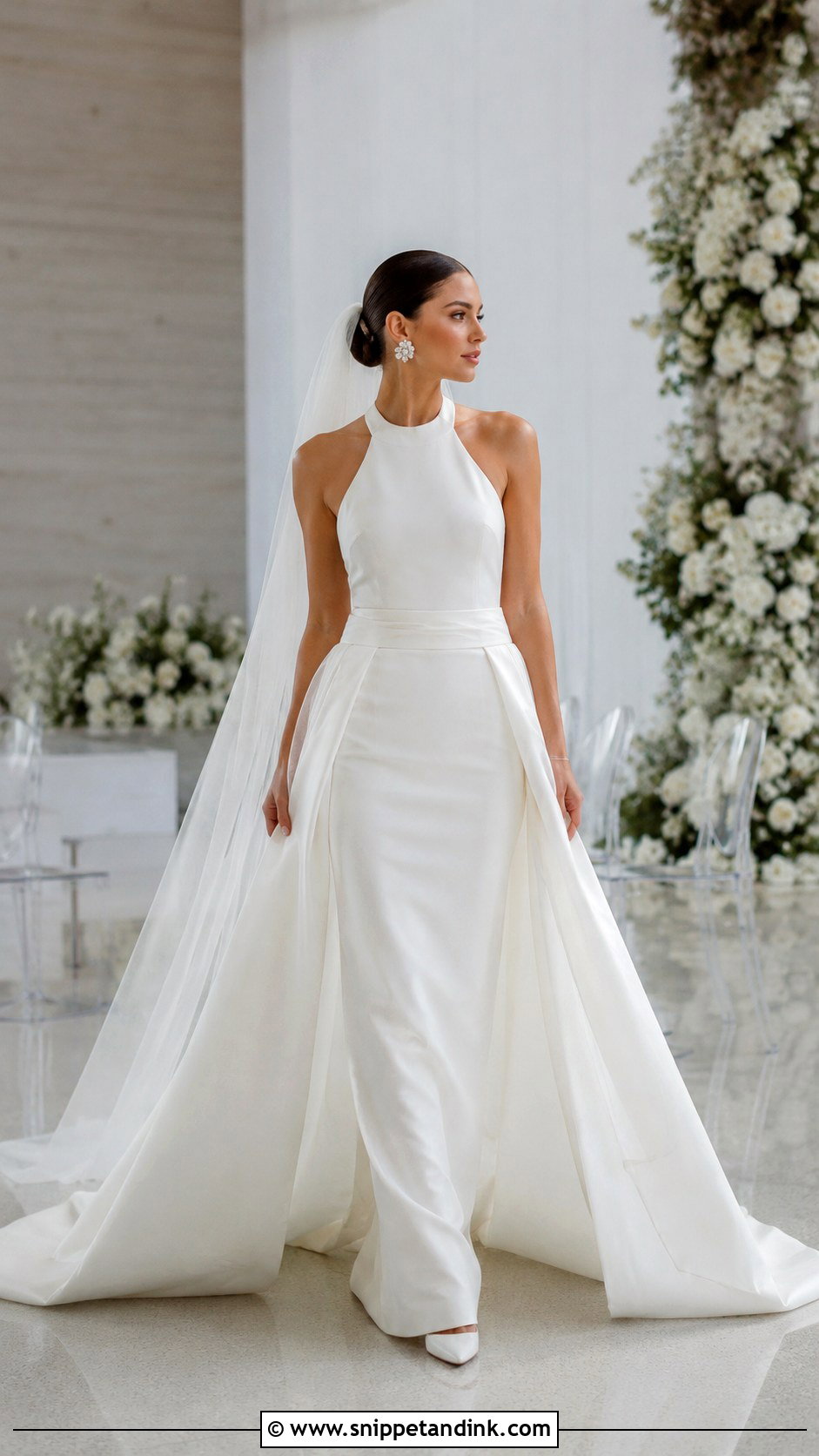
Halter gowns usually come with an open back, which complicates any detachable skirt. The overskirt’s waistband has to sit below the back opening, and its hooks must not show once it’s gone. Check both before you order. A fitted crepe halter with a column skirt is the base, with an open-front organza overskirt and soft train for the ceremony. Statement earrings, a smooth ponytail or bun, pointed heels and a fingertip veil are plenty; no necklace.
17. One Shoulder Wedding Dress With Detachable Skirt
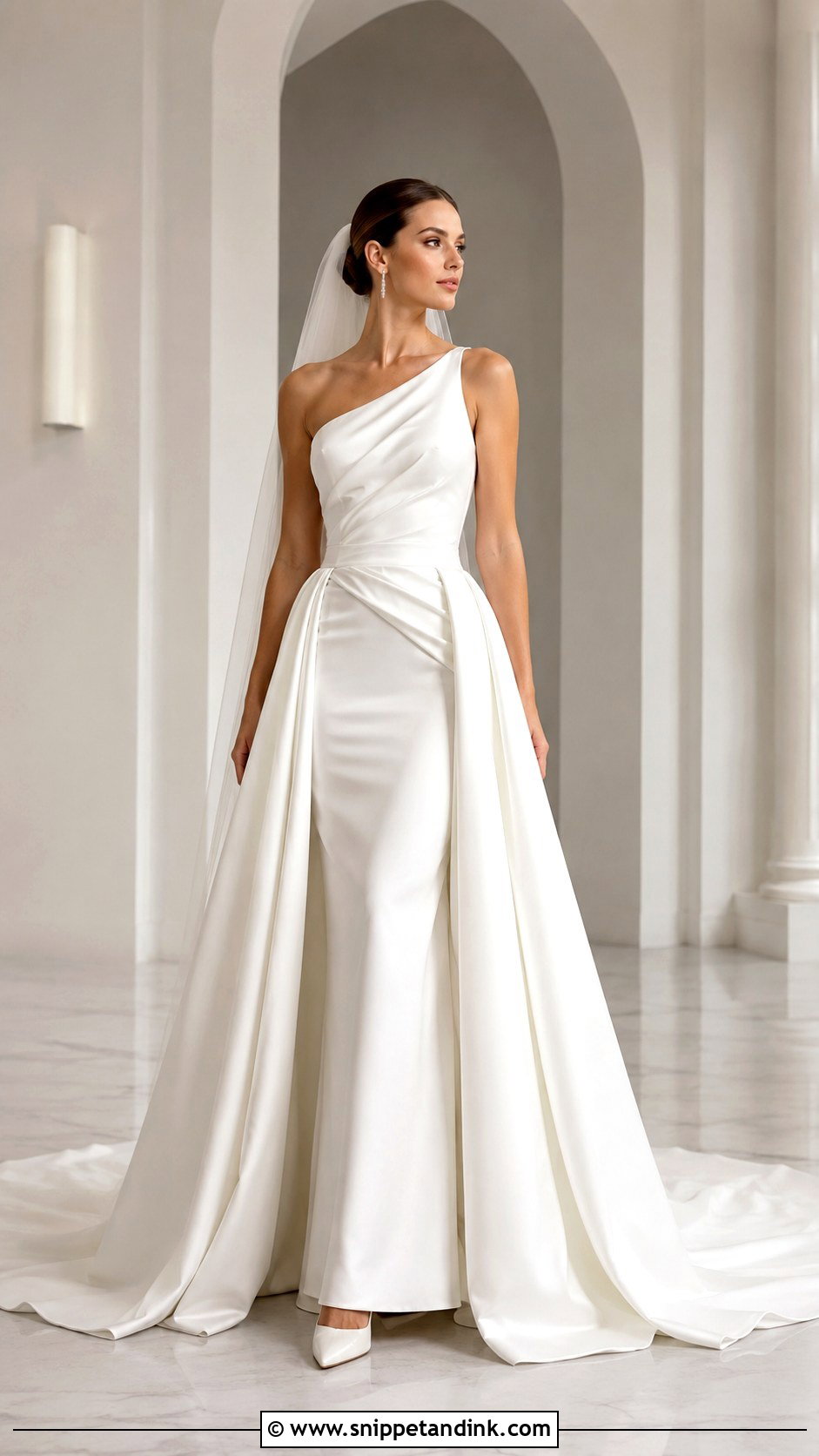
One-shoulder bodices are draped, and draping moves. Add a heavy overskirt that pulls down on one side and the bodice can twist as you walk. A firm internal waist stay holds both pieces in place, so ask for one. The base should be satin or crepe with soft draping across the bodice and a clean skirt; the overskirt has side pleats and a long train. Wear one statement earring or a pair of slim drops, a sleek bun, pointed pumps and a plain veil. Skip any belt.
18. Plus Size Wedding Dress With Detachable Skirt
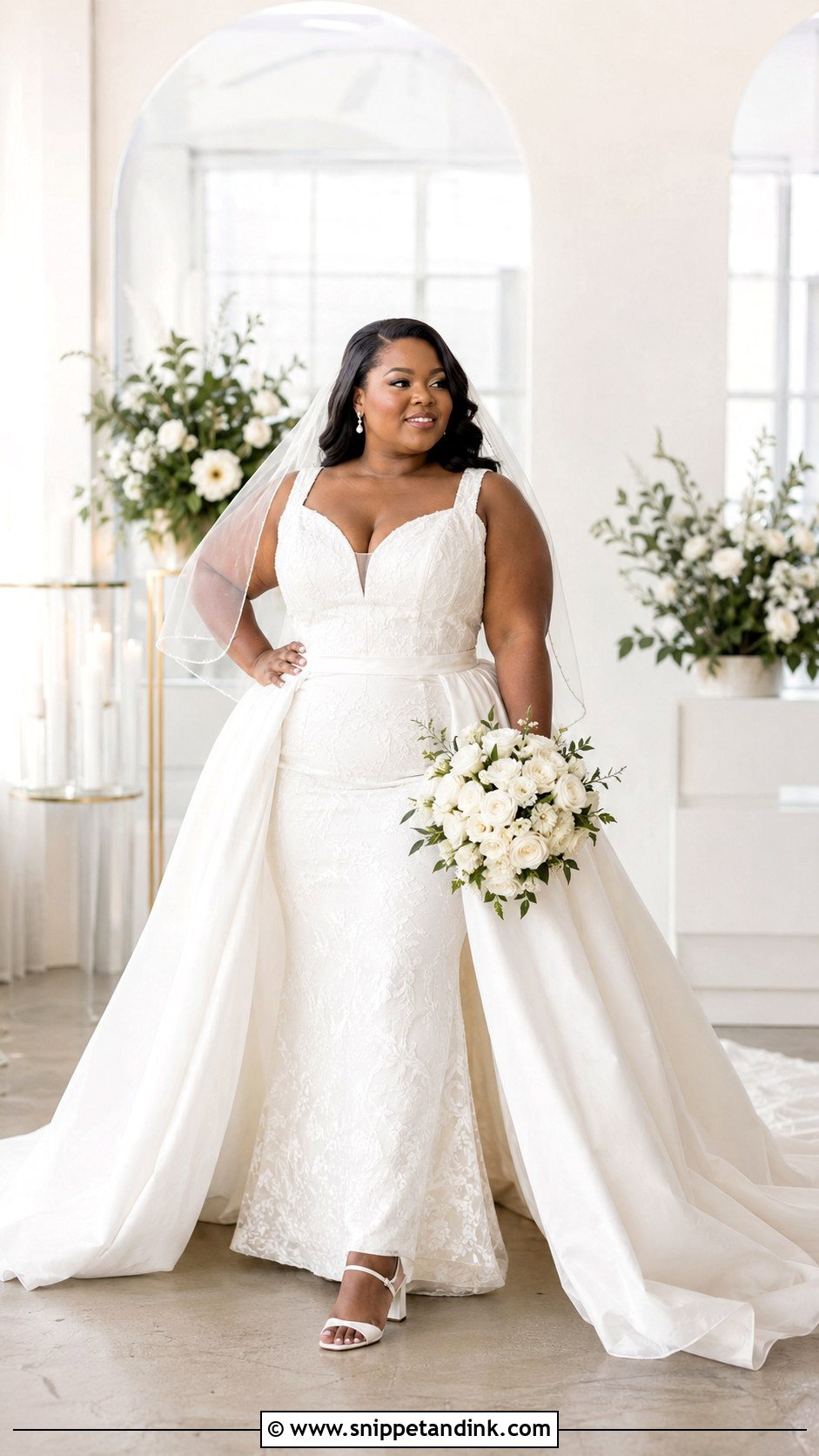
For plus-size brides, the open-front overskirt is usually the better choice, because it frames the base gown rather than adding gathered bulk around the waist and hips. Start with a supportive fit-and-flare with wide straps, a defined waist and flexible lining. A tulle or organza overskirt should fall smoothly with little gathering. The waistband must lie flat when you sit; a band that rolls or pinches will be the only thing you notice all evening. Block heels, pearl earrings, a fingertip veil and a structured bouquet suit it. An experienced bridal seamstress can spread the overskirt’s weight across more attachment points.
19. Blush Wedding Dress With Detachable Skirt
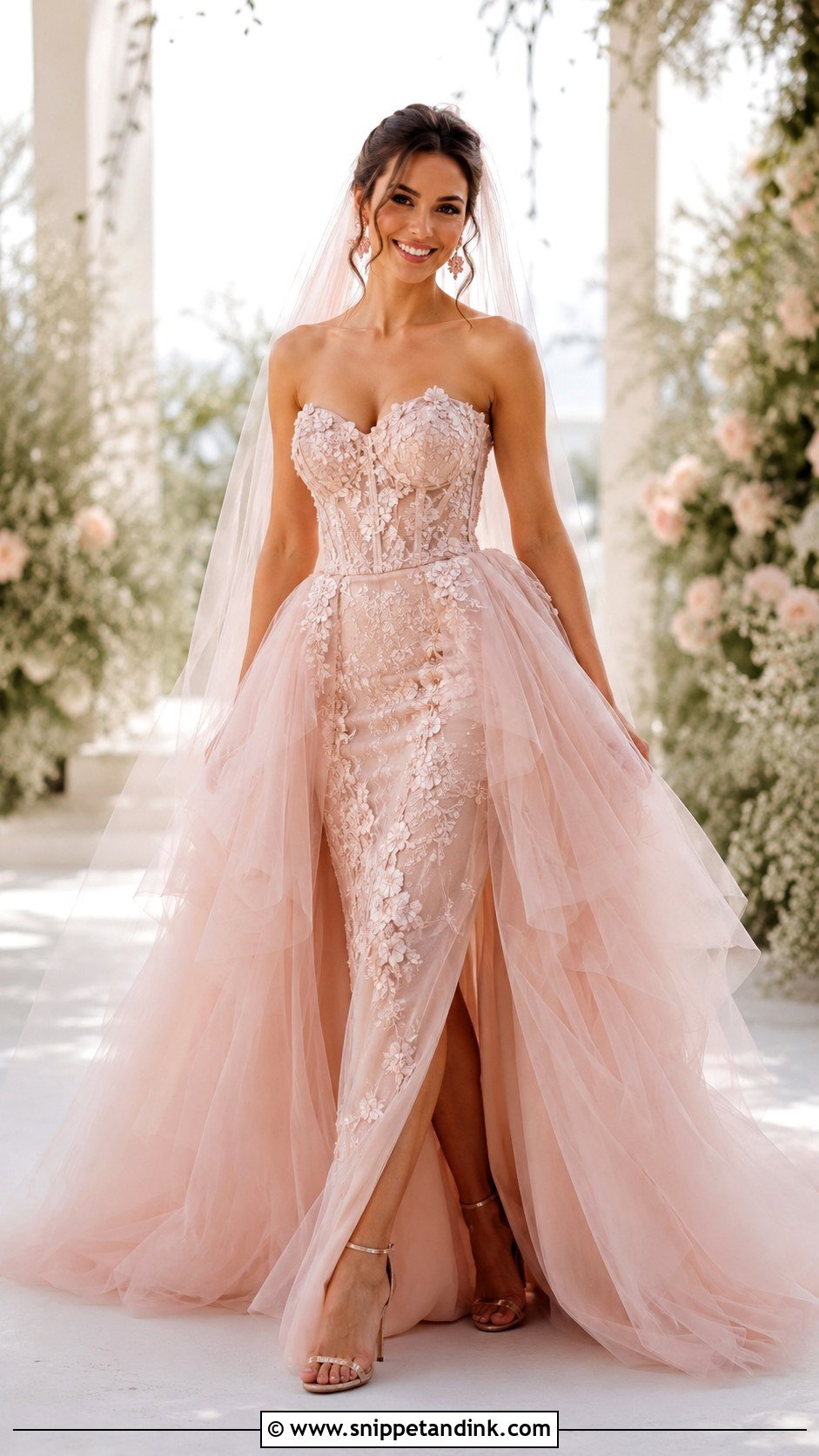
Blush adds colour while still reading bridal. A fitted blush gown with a corset bodice and lace appliqués, plus a matching tulle overskirt, gives a soft layered silhouette for the ceremony. Here’s the catch with two pieces: blush tulle and blush lining from different suppliers often shift between peach, pink and beige. Check them together in daylight. Champagne heels, rose-toned earrings and an ivory or blush veil keep accessories quiet. Without the overskirt, the fitted gown is more defined for the reception.
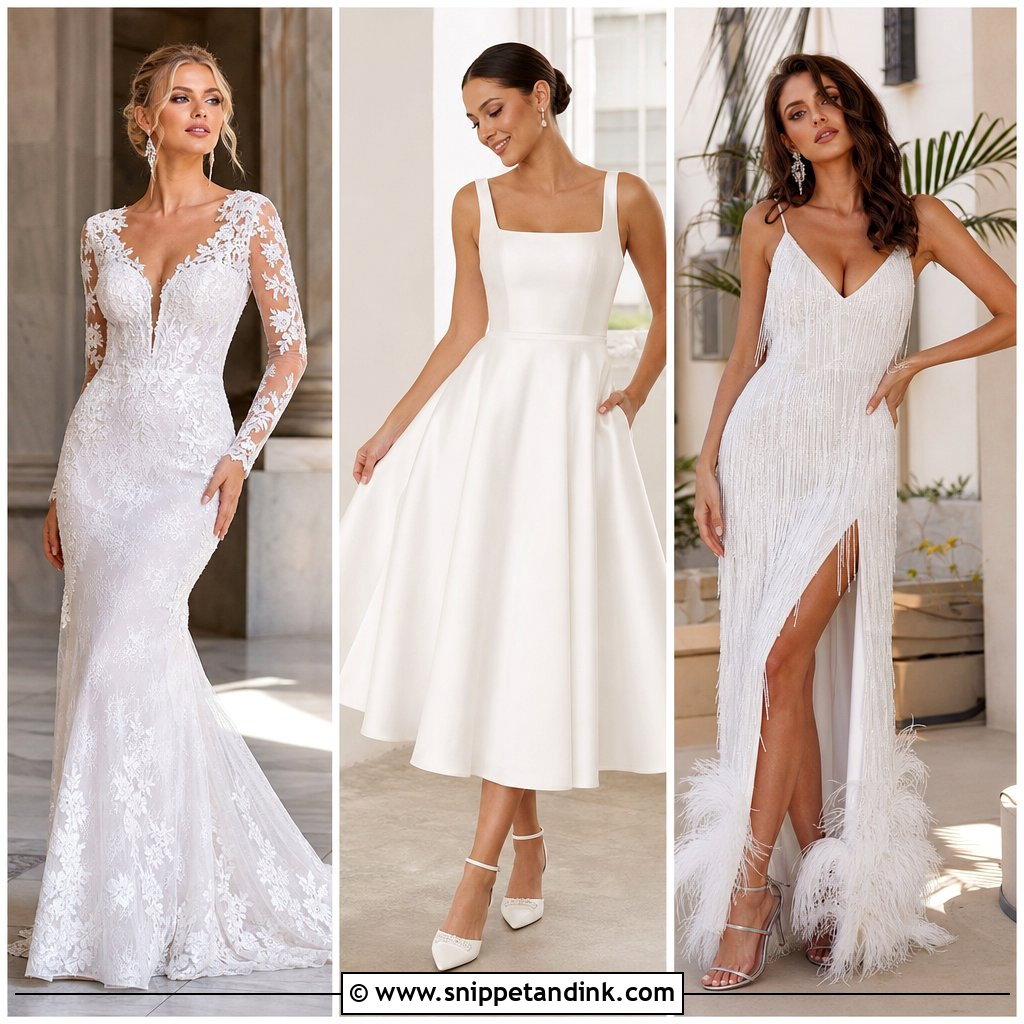
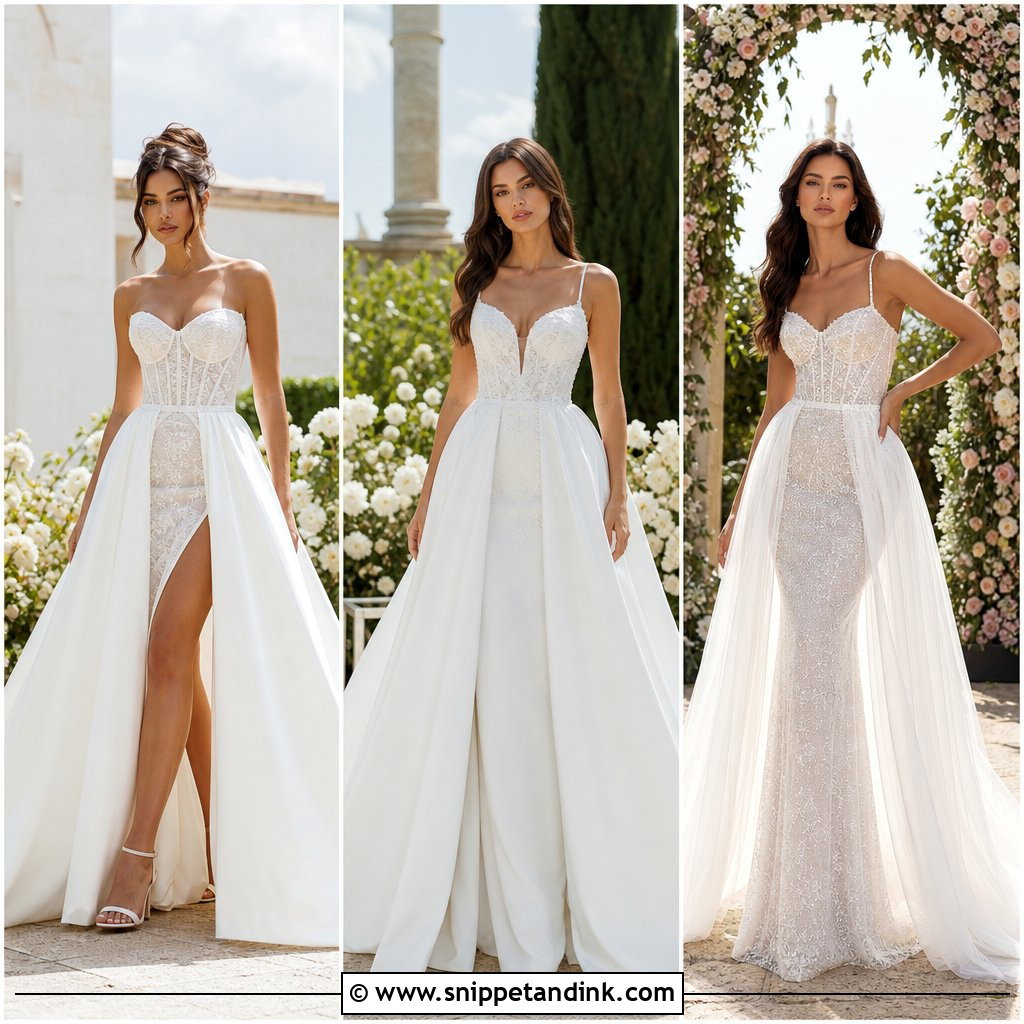
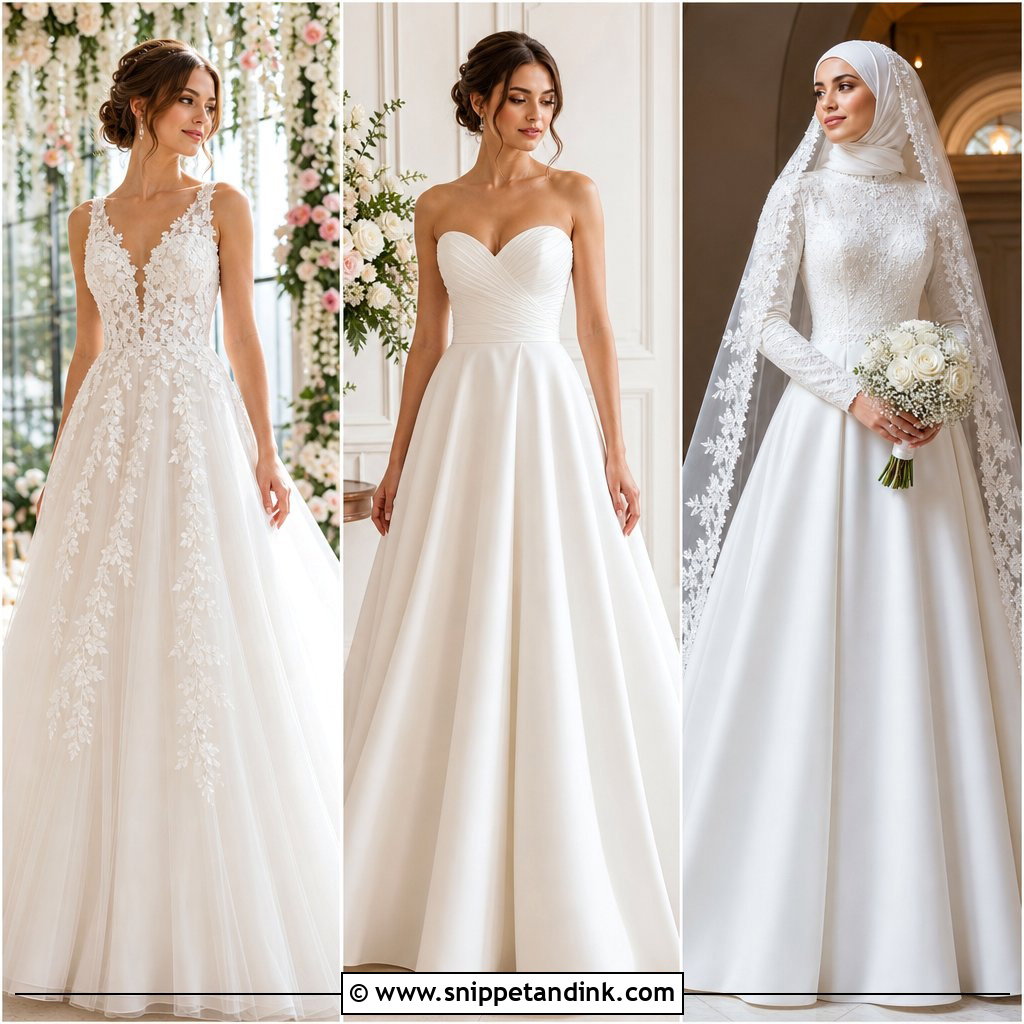

20. Simple Wedding Dress With Detachable Skirt
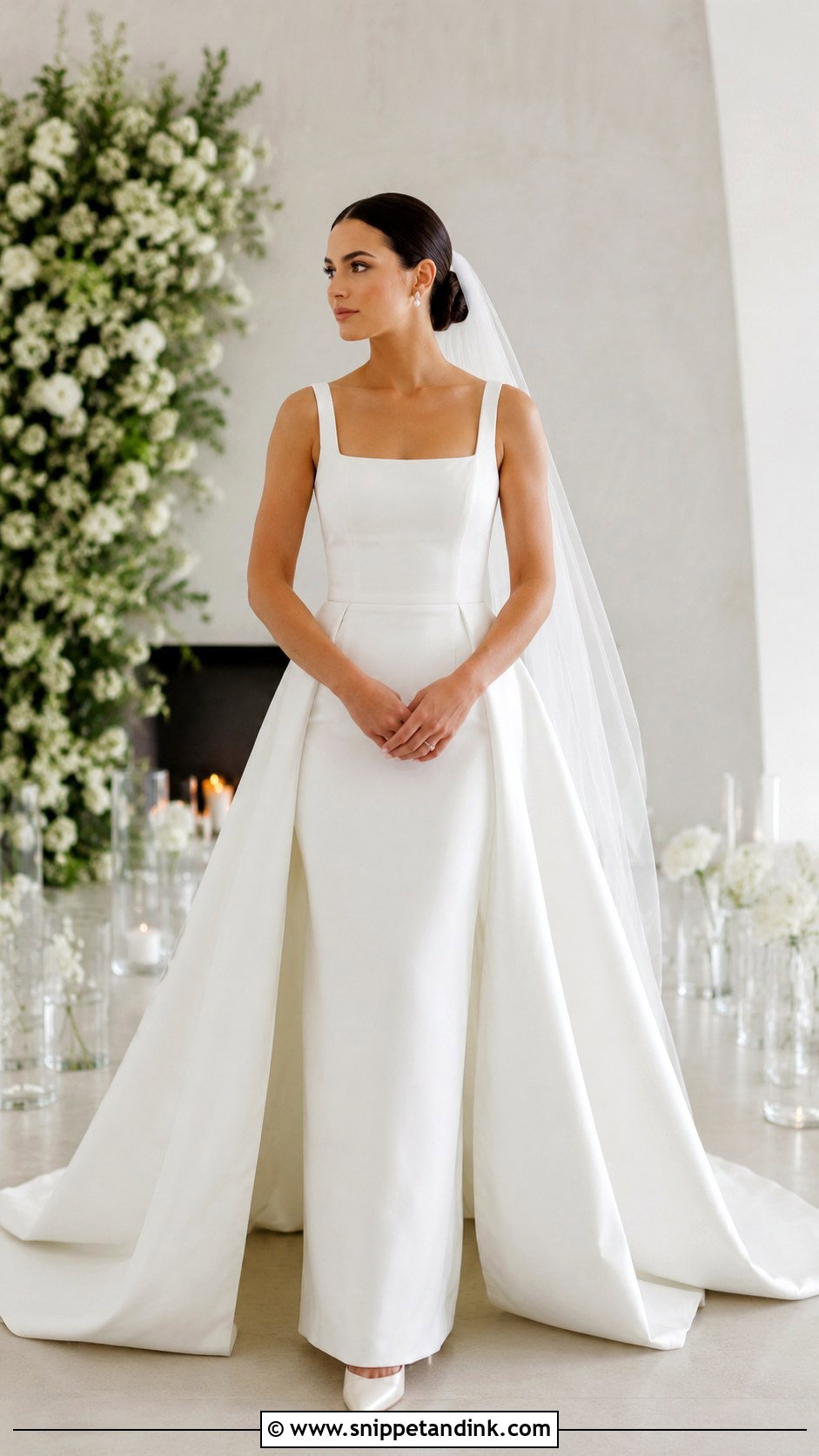
On a plain gown, the convertible construction becomes the design. A strapless or square-neck crepe base with minimal seams, a fitted waist and a straight column skirt, plus a plain overskirt in matching crepe, satin or light mikado, is all it takes. Pearl earrings, pointed heels, a neat bun and an unembellished veil leave room for a big bouquet or family jewelry. Simple fabrics show everything, so the waistband, hooks, hem and train all need to sit flat with no puckering or marks from the closures.
Planning the Two-Minute Swap on the Day
The removal itself is easy. What goes wrong is everything around it: nowhere private to do it, nobody who knows the hooks, and nowhere to put several metres of fabric afterwards.
- Decide when it happens. Most brides switch after formal portraits and before the first dance, or between dinner and dancing.
- Pick a private spot near the reception room, and check there’s a clean table or rail to lay the skirt on.
- Train one person at your final fitting. A bridesmaid or your planner should unhook it while you stand still, then lift it up and away rather than pulling it down over the base gown.
- Bring a long garment bag or a clean sheet so the overskirt can be folded loosely and stored away from drinks and candles.
- Change accessories at the same time: shorter veil or none, different earrings, comfier shoes, so the new look feels deliberate.
If you also have a bustle on the base gown, do both in one visit to that room. Two separate trips eat into the evening more than you’d think.
Judge the Base Dress With Nothing Over It
A detachable skirt gives you a real change of look without a second gown to fit, store and change into. The right overskirt can turn a mermaid, mini, sheath or column into an A-line or ball gown for the ceremony. Focus on matching fabrics, closures that stay hidden, a waist that’s comfortable, and a base dress you’d happily wear alone. At fittings, walk, sit, hug and practise taking the skirt off with your helper, and photograph both versions from the front, side and back. Get those right and it works whatever fabric you choose.
You'll Like These Ideas:








Leave a Reply