
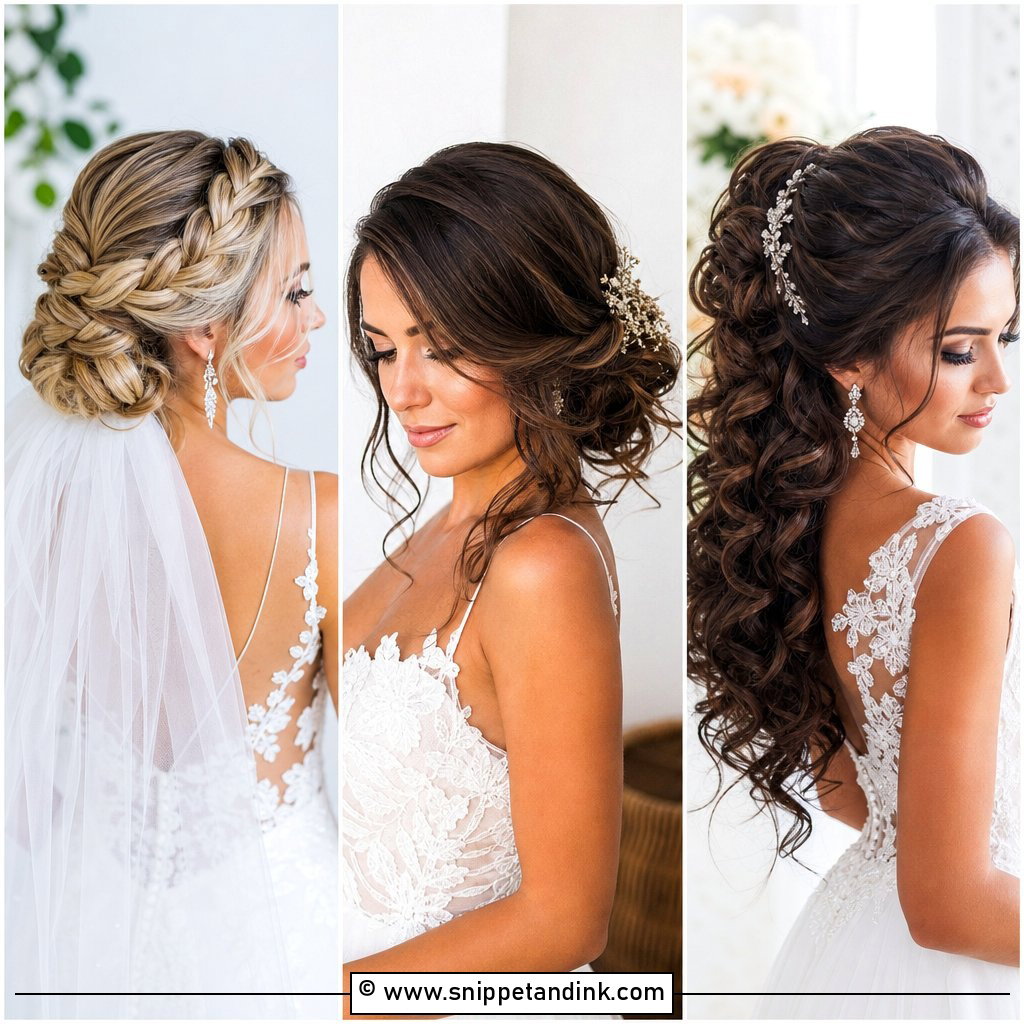
Updos are what I pin most often on wedding mornings, and for a practical reason: hair that’s up survives hugs, wind and a sweaty dance floor far better than hair left down. The shape still has to suit you, though. A sleek ballerina bun asks for very different hair than a loose chignon or a braid dotted with flowers. Below are 25 updos I’d happily put on a bride, each with a note on what it needs from your hair, your dress and your veil, so you can walk into your trial knowing what to ask for.
Necklines Decide Where the Bun Sits
Before I look at inspiration photos, I ask to see the dress. Bun height and neckline work together, and getting them wrong is the most common reason an updo looks off in photos even when the hair itself is fine.
- Strapless and sweetheart: a mid-height or high bun shows the shoulders and keeps the line long.
- High neck or lace collar: a low knot or French twist keeps hair clear of the fabric.
- Open back: almost any updo, but keep it tidy at the nape, since that’s what guests see during the ceremony.
- One-shoulder: a side-swept bun on the bare side balances the asymmetry.
- Off-the-shoulder: a soft chignon at the nape, with a few face-framing pieces.
Then the veil. A comb needs something solid to grip, and a crown-height bun leaves no room above it. If you’re wearing a long veil for the ceremony, plan the updo around that anchor point first.
1. Sleek Ballerina Bun
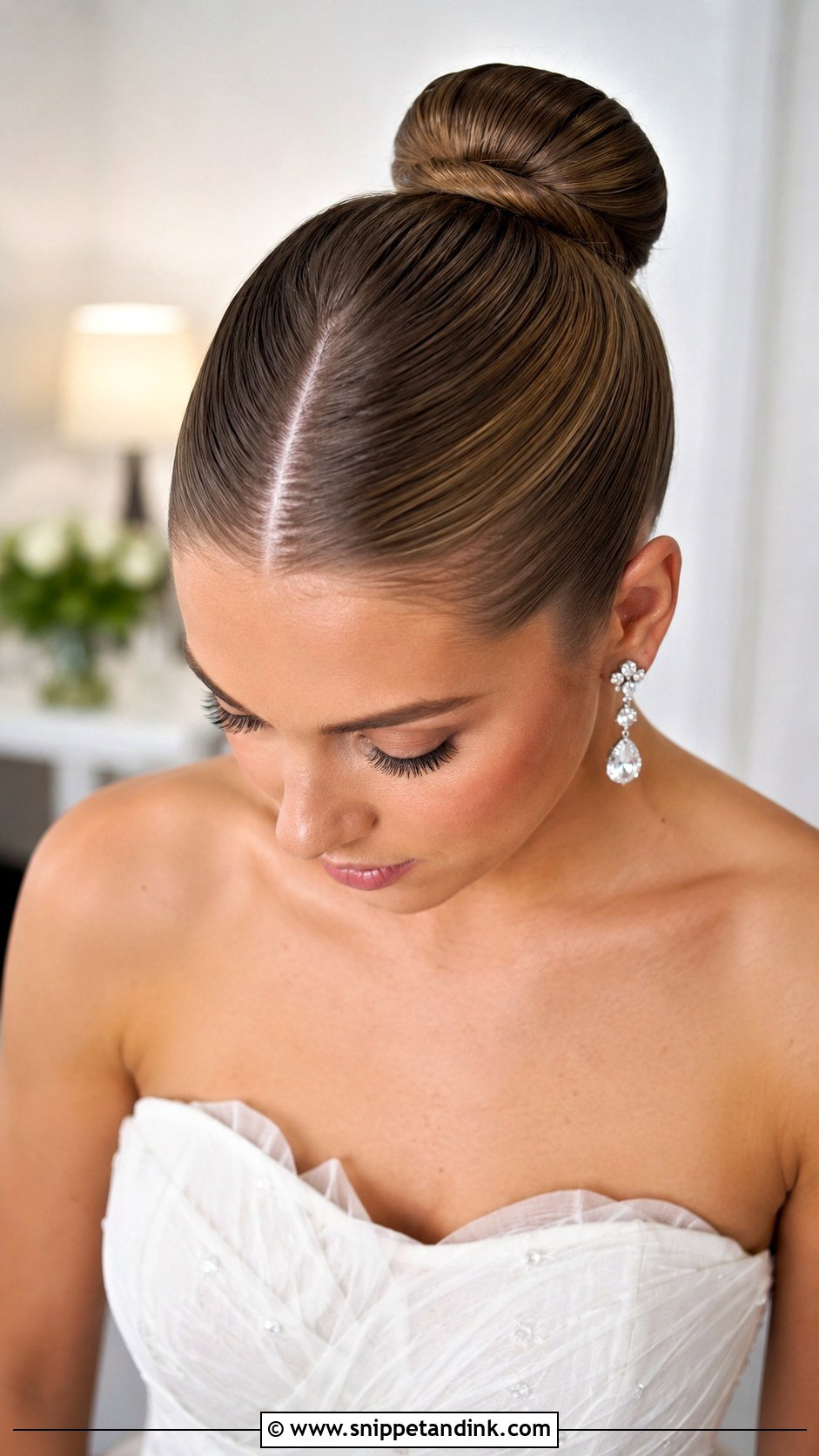
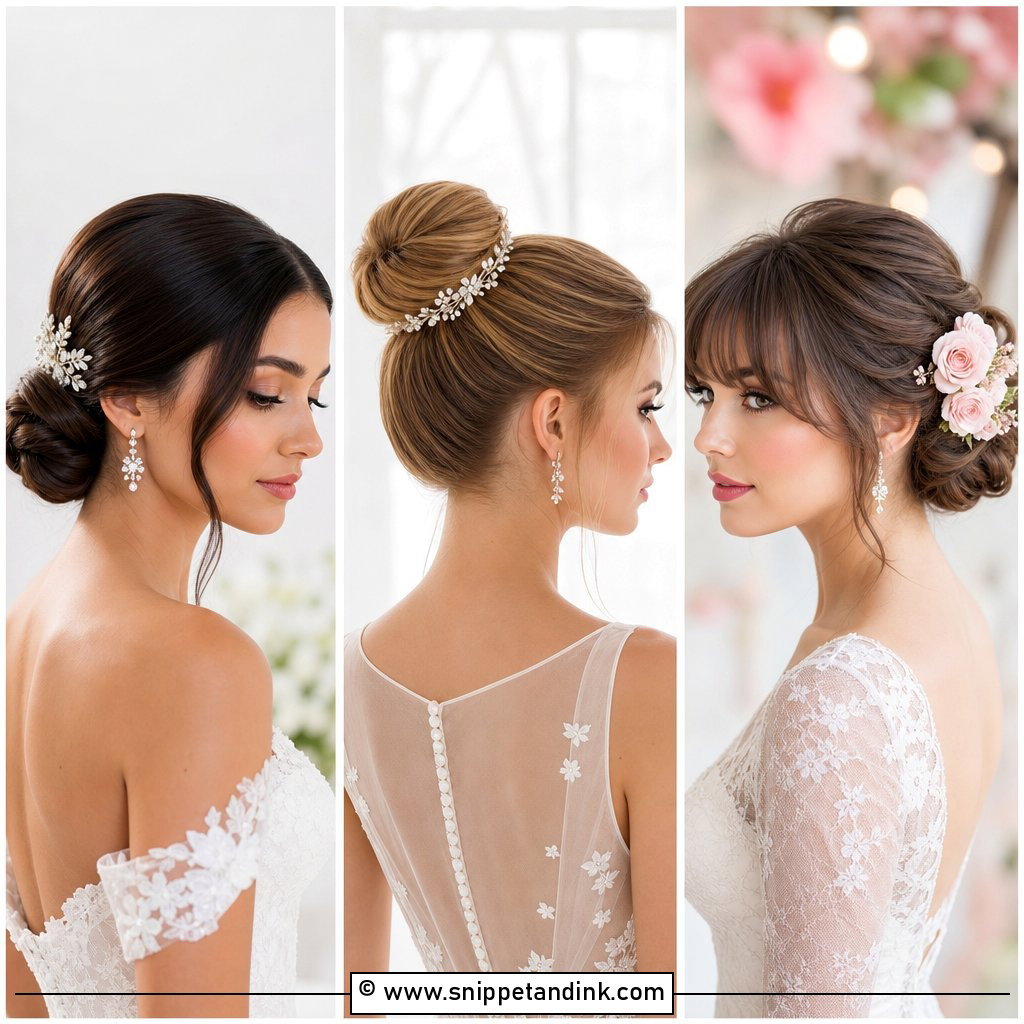
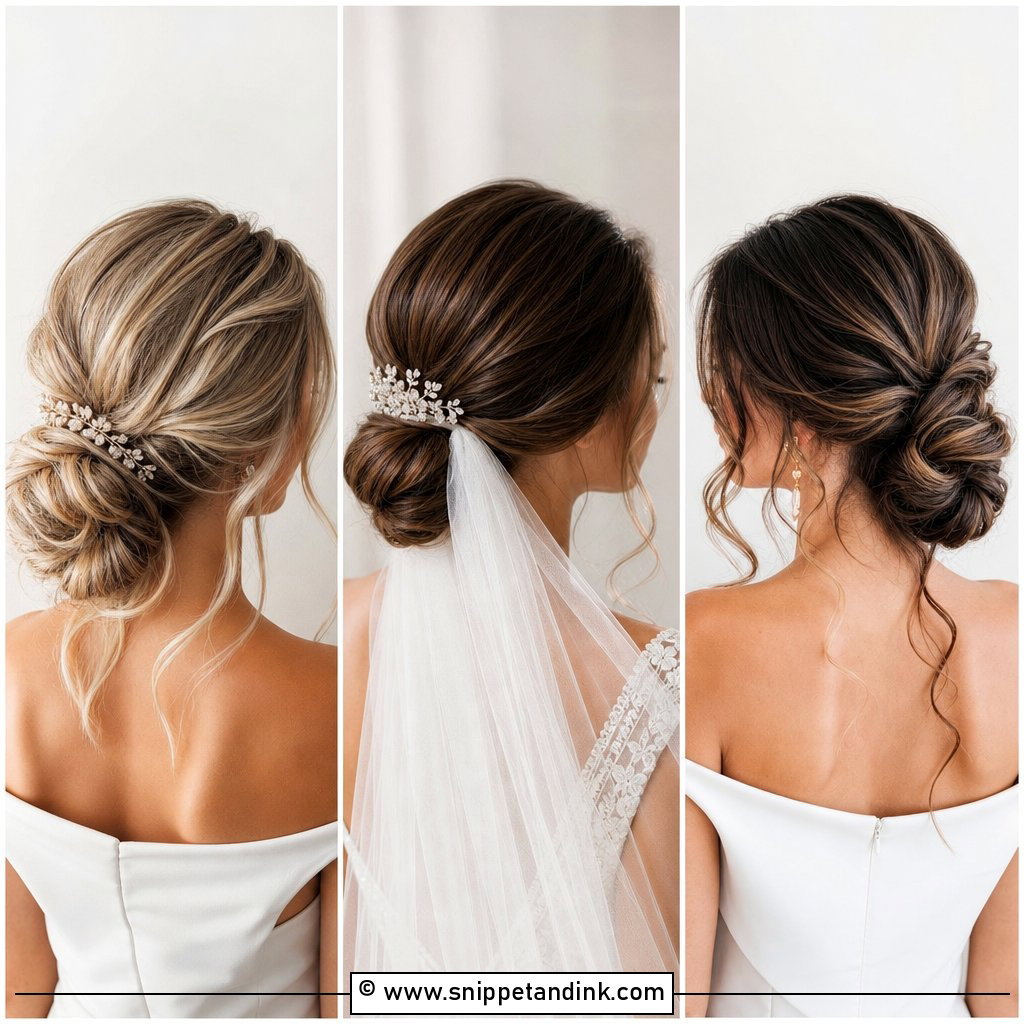
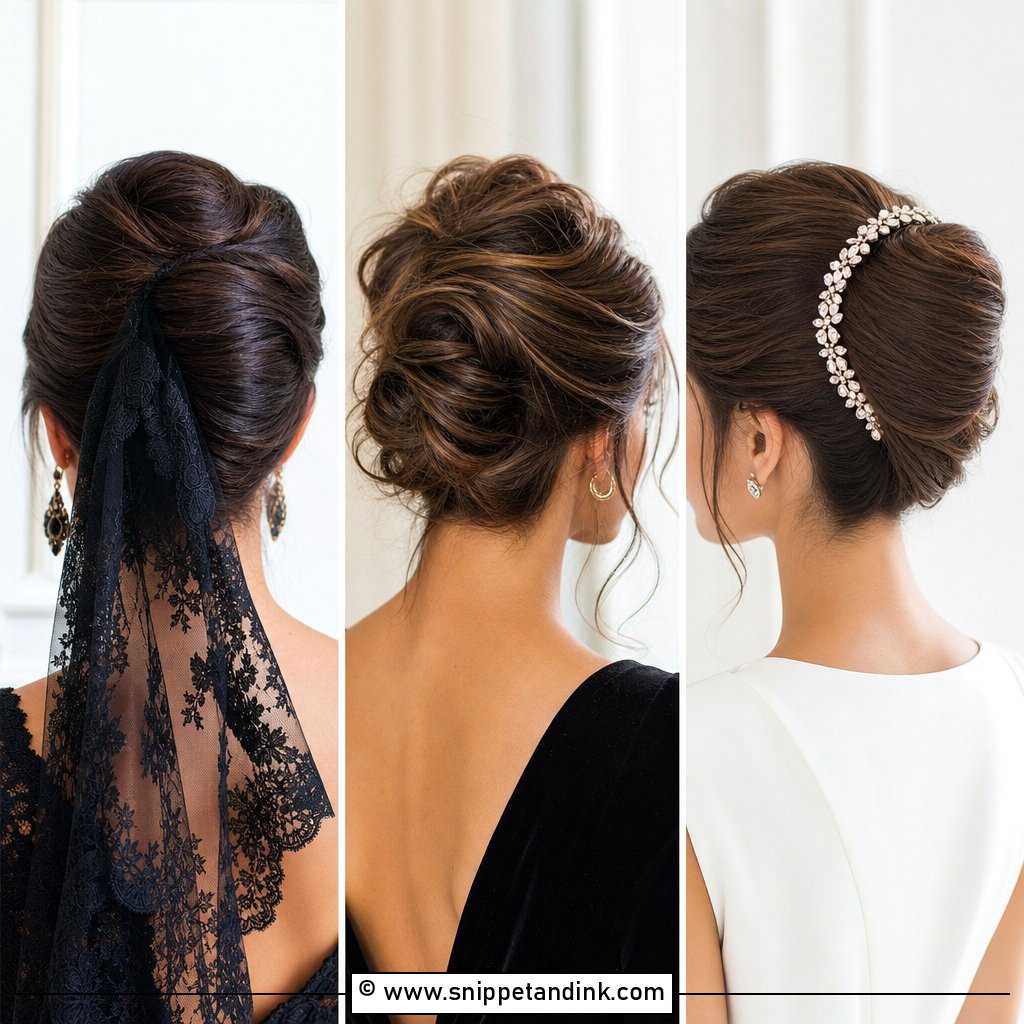
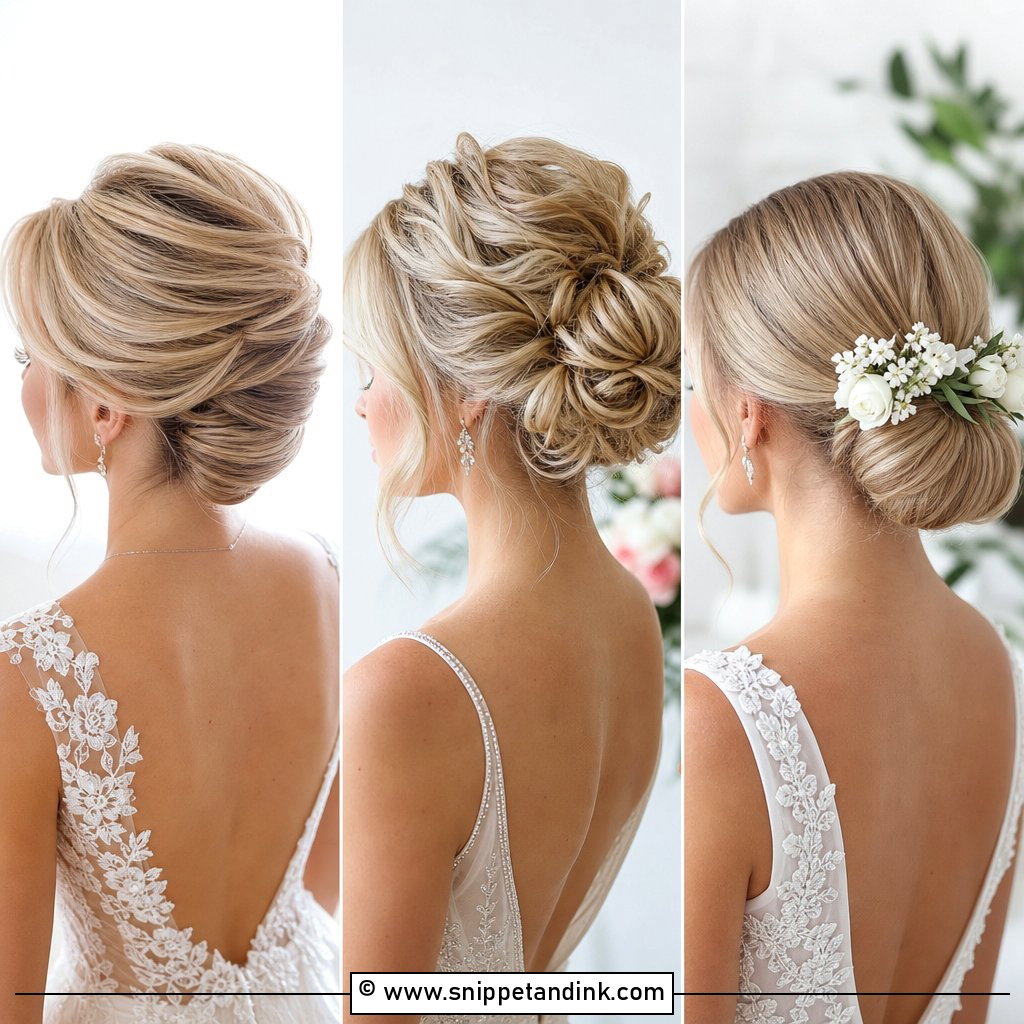
Requested constantly, and harder than it looks. The tight center part shows every bump, so I blow-dry the hair completely straight before I start and smooth it into the elastic with a little firm-hold cream. Placement changes the mood: at the crown it’s high-fashion, at the nape it’s quieter and veil-friendly. With a strapless gown and a pair of statement earrings, nothing else is needed. Fine hair benefits from a small hidden donut so the knot isn’t tiny.
2. Low Chignon With Loose Tendrils
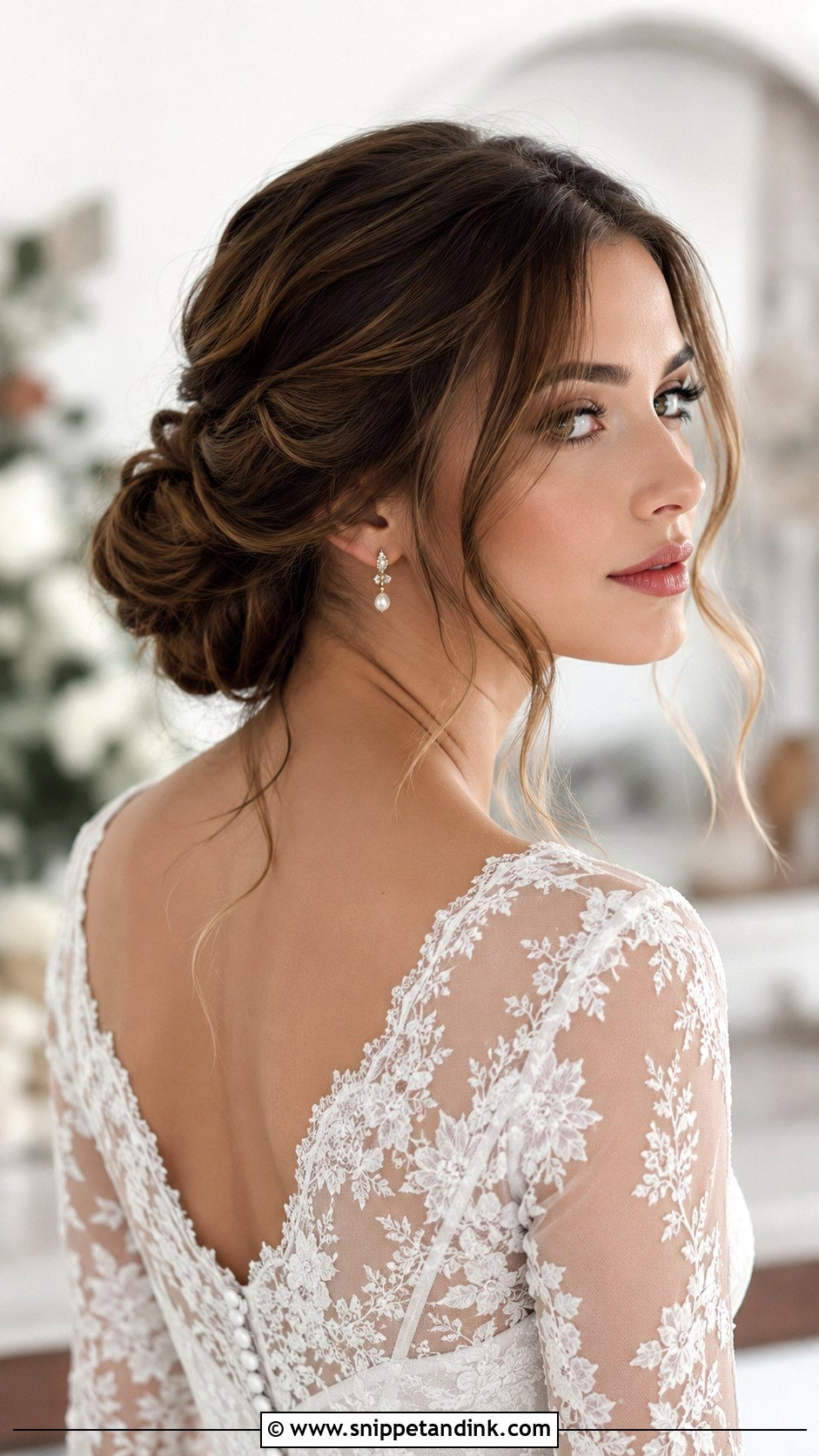
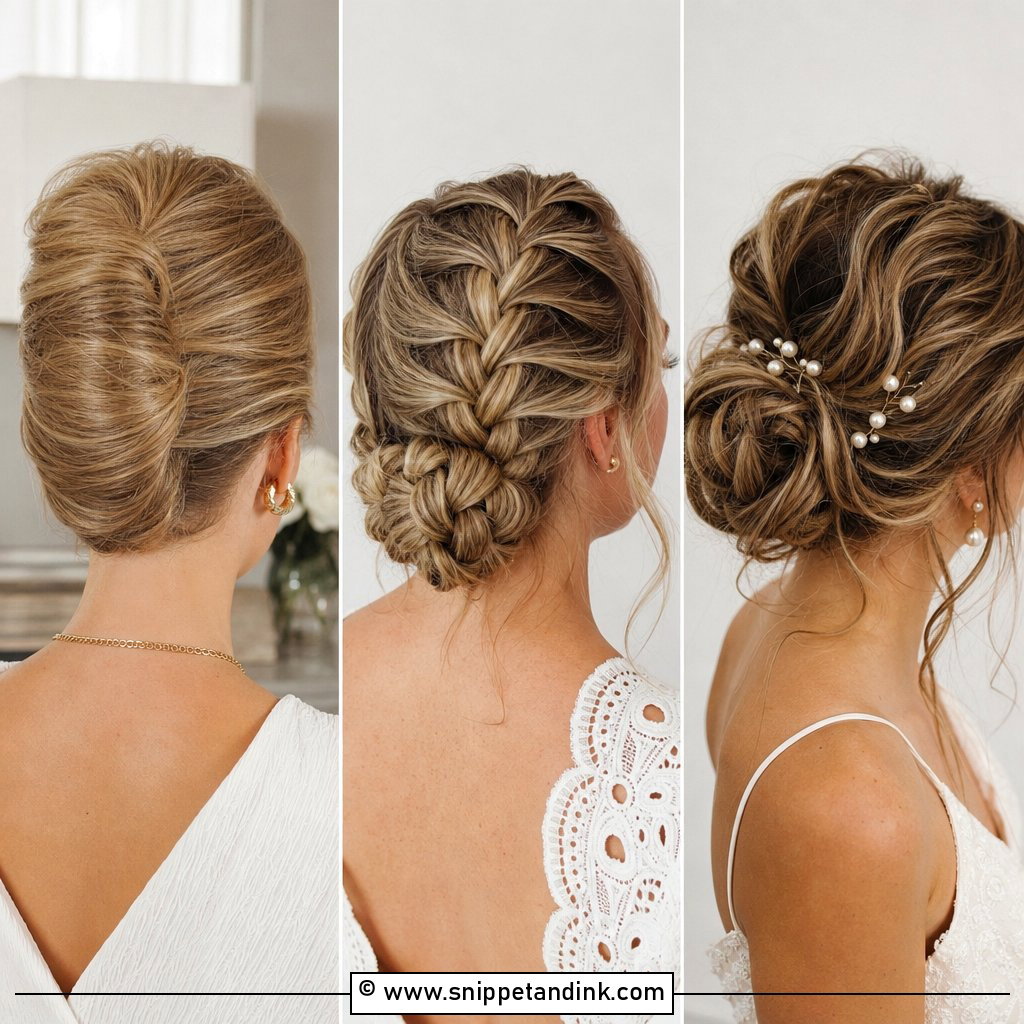
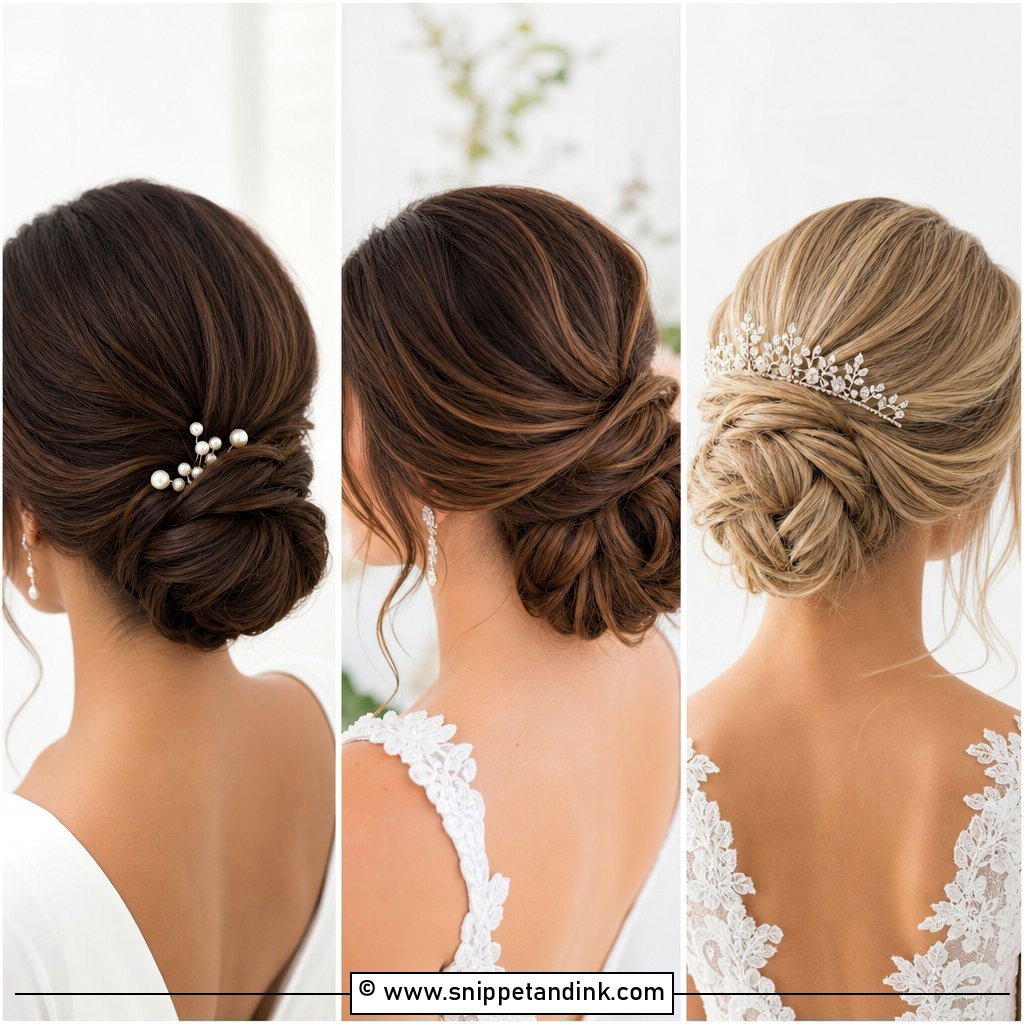
This is the updo I’d suggest to a bride who isn’t sure what she wants. The hair is twisted and rolled into a knot at the nape, and the delicate tendrils are cut from the front and curled separately with a small iron. A veil comb tucks straight in above the knot. On fine hair I backcomb the roll lightly first; on thick hair I split it into two rolls so it doesn’t become heavy.
3. Messy High Bun
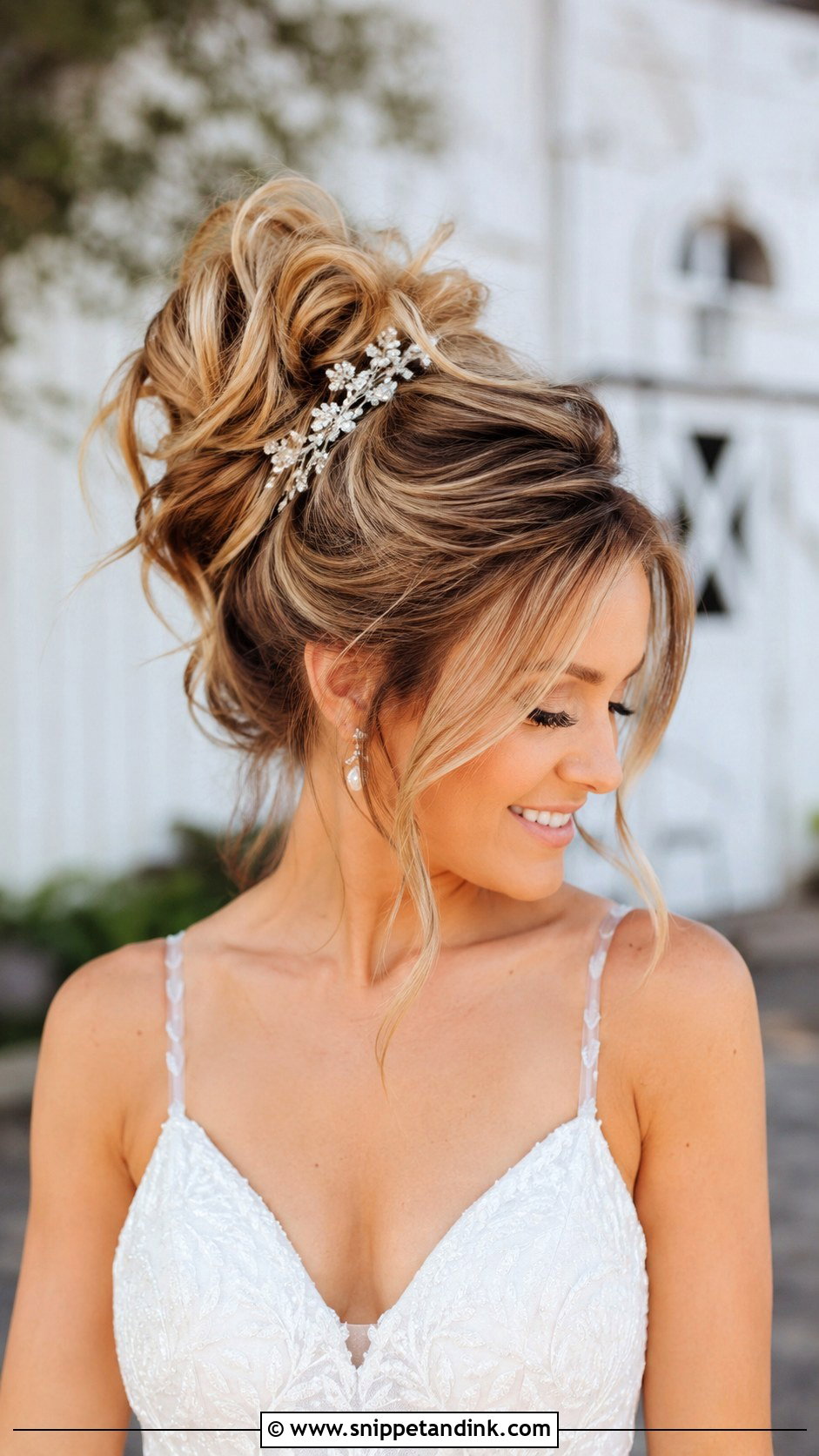
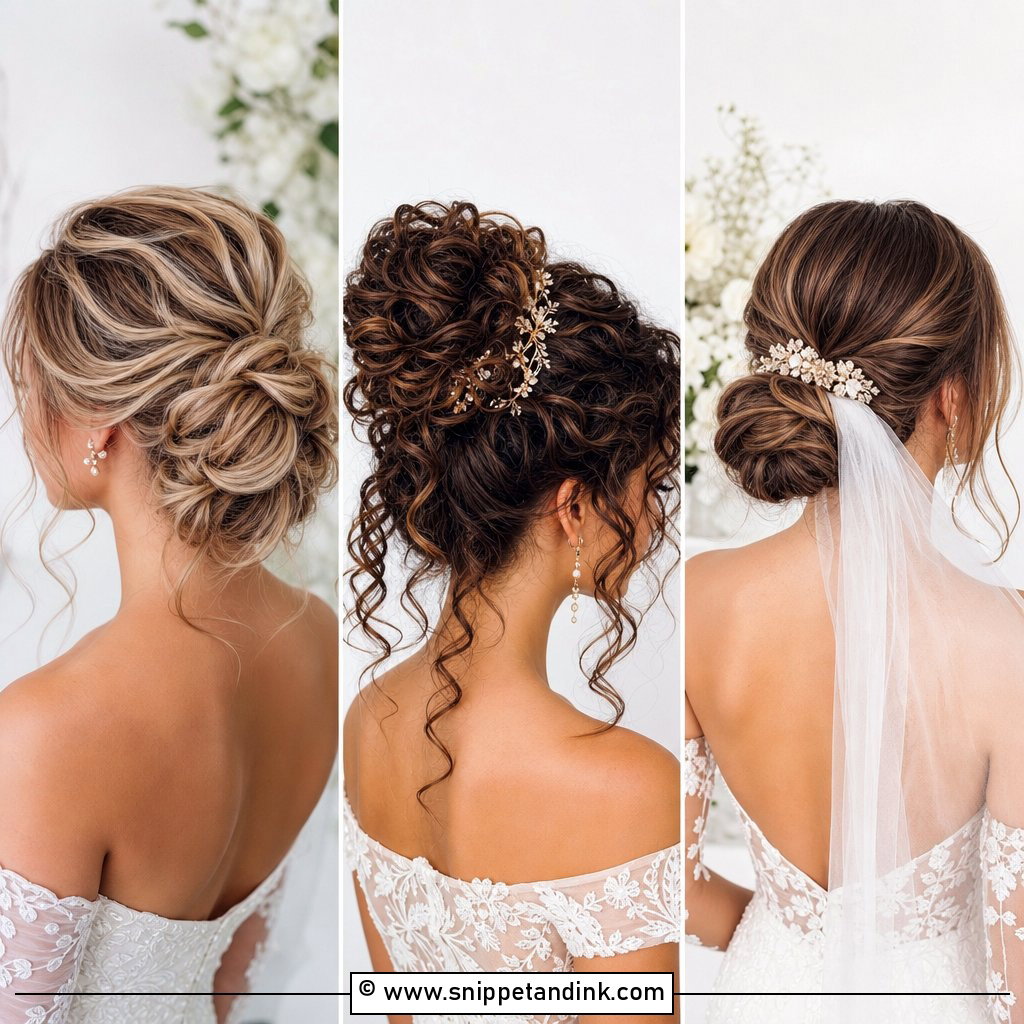
A messy bun has to be planned to look unplanned. I curl the hair first, then gather it high, twist loosely and pin it with a structure underneath, because a truly loose bun falls by the reception. Pulling a few pieces out after pinning gives the relaxed finish. It suits a garden or barn wedding, but I’d avoid it under a long veil, since a crown-height bun leaves the comb nowhere to sit.
4. Classic French Twist
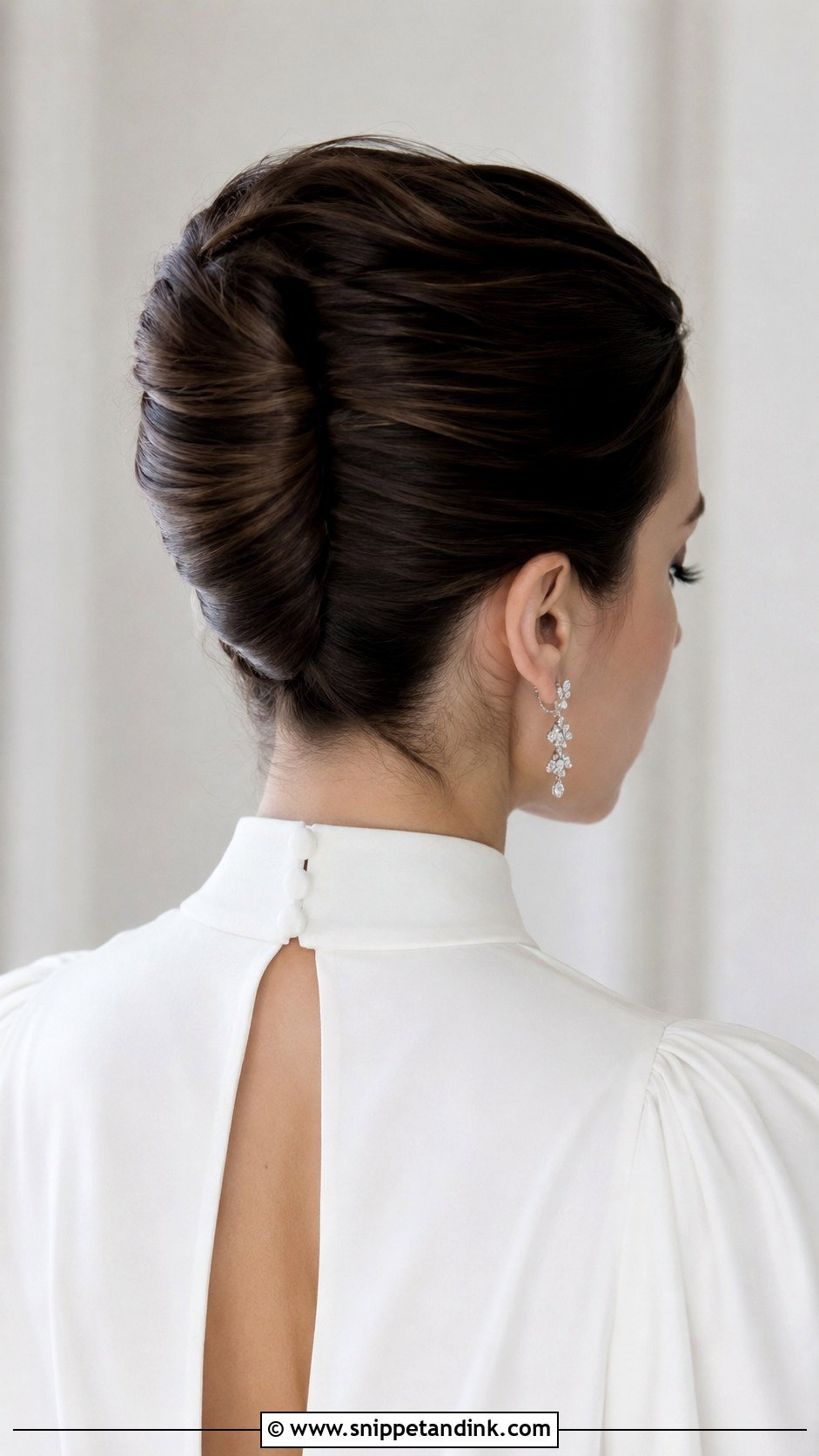
The French twist depends on the seam. Hair is brushed to one side, rolled upward and tucked, and the vertical seam down the back has to look clean from the ceremony aisle. I backcomb the inside of the roll so pins have something to grip, then cross-pin the seam from both sides. It suits high necklines and city venues, and it holds well when kept smooth. Very layered hair can poke out of the roll, so a light finishing cream helps.
5. Braided Low Bun
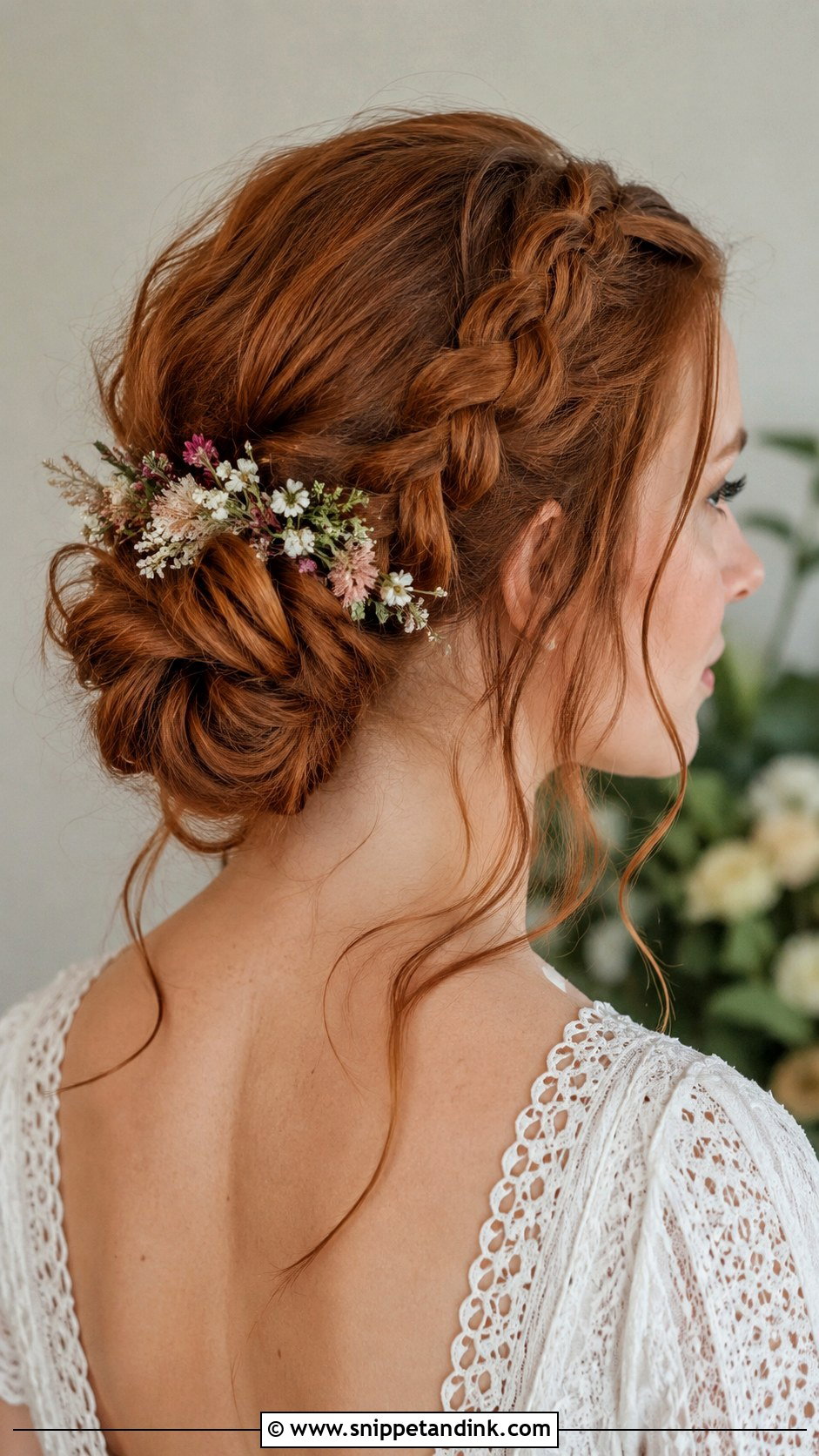
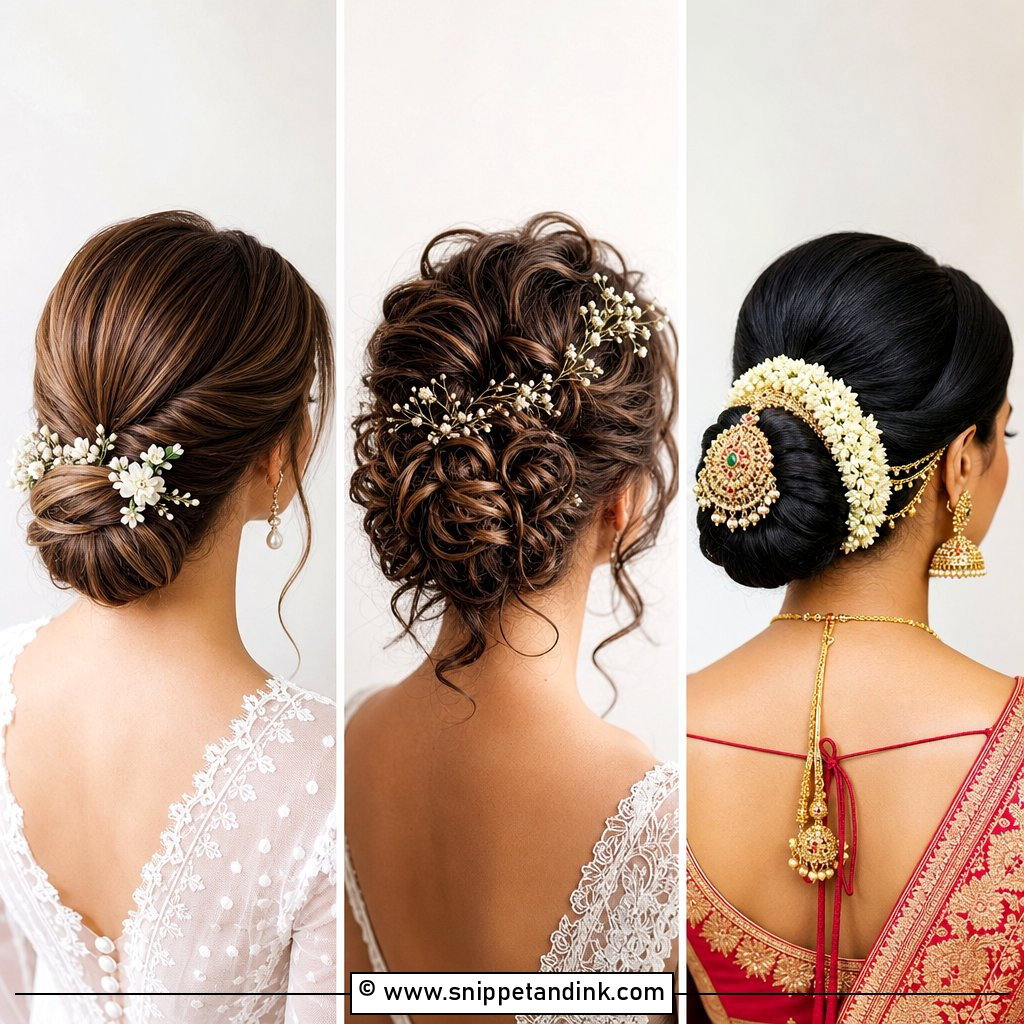
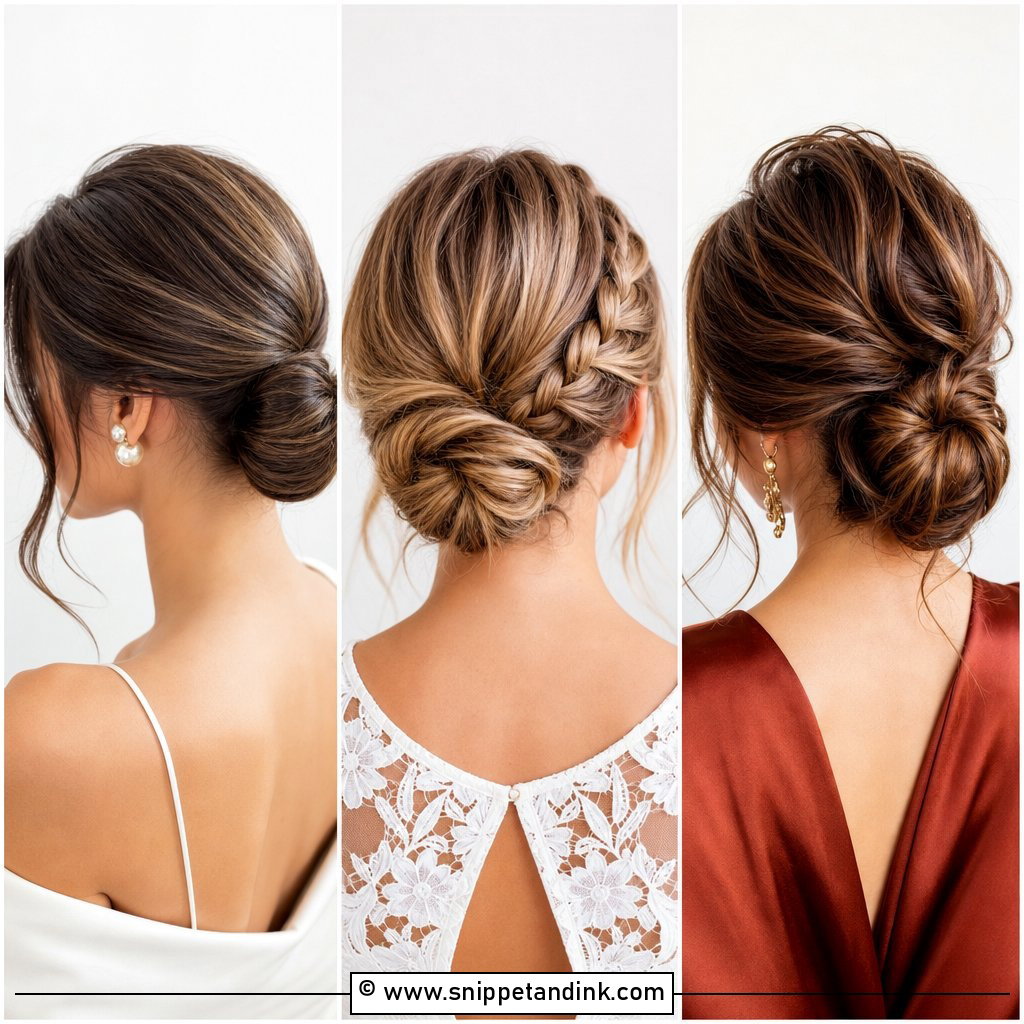
A Dutch or fishtail braid that winds into a low bun gives texture without fuss. I braid it slightly loose, pancake the edges with my fingertips, and then coil it at the nape. That pancaking is what makes the braid look full in photos. Tiny blooms woven into the plait suit a rustic or outdoor wedding, and the low placement leaves room for a veil above it.
6. Half-Up Half-Down With Curls
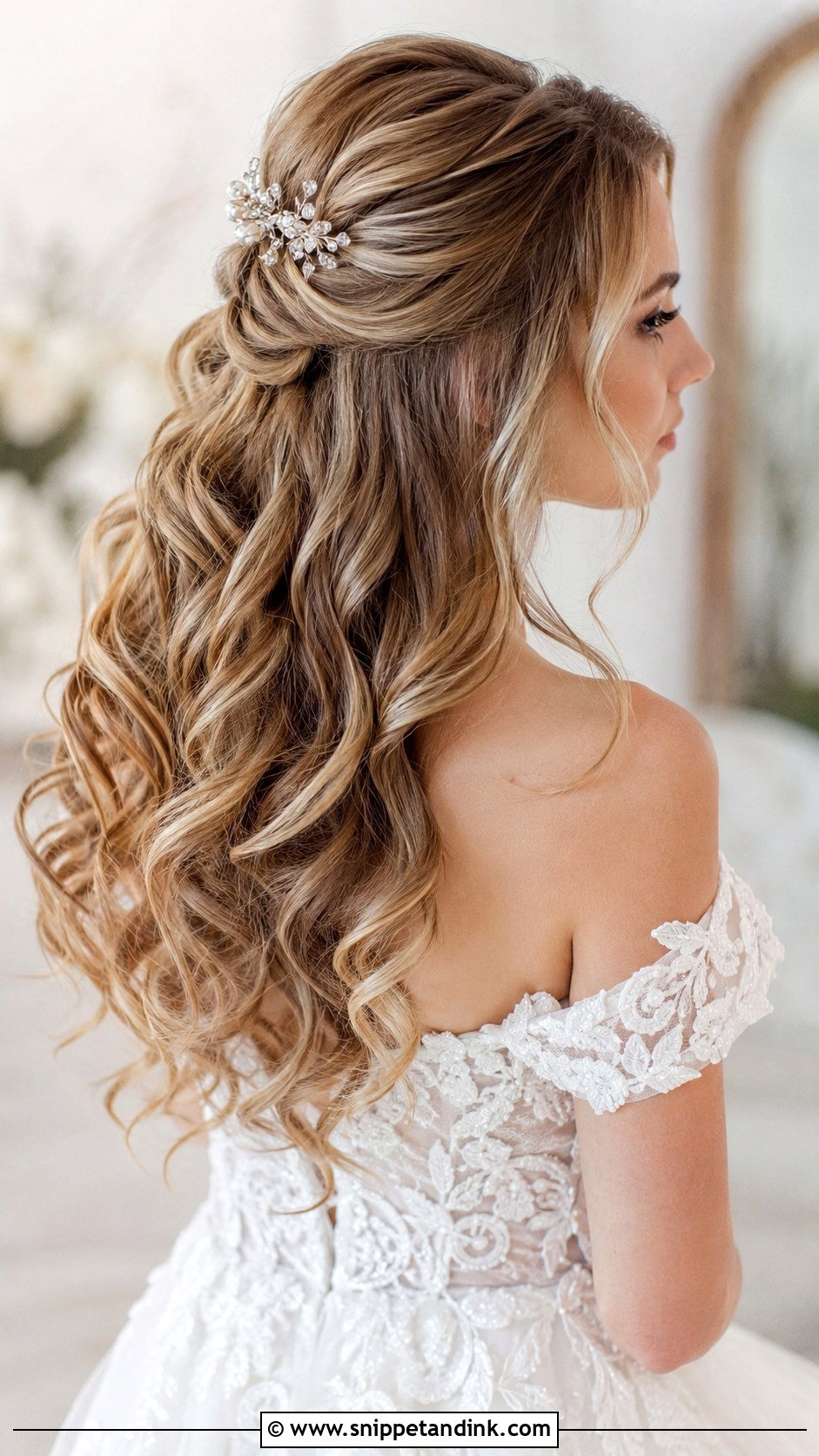
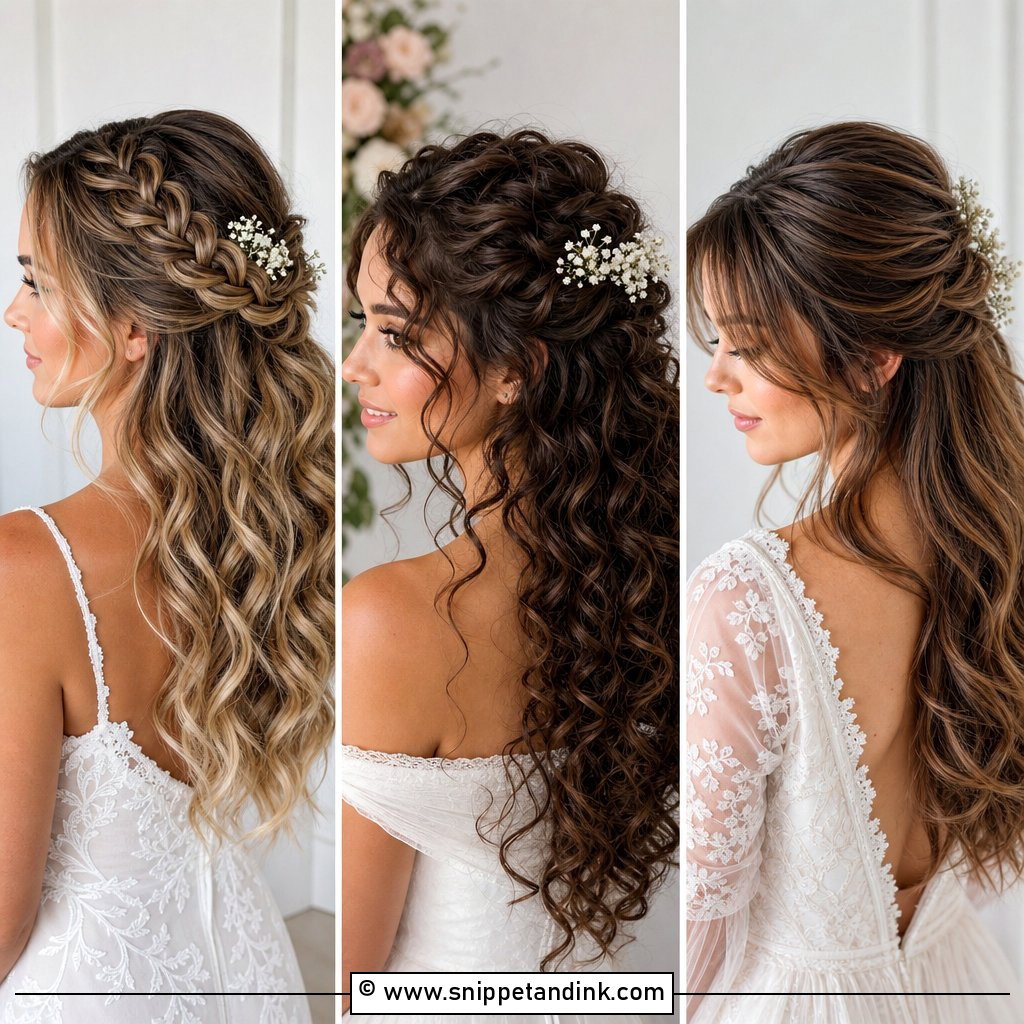
Half-up, half-down is the style brides choose when they can’t decide, and it’s also the one that drops first in humidity. The top section is pinned back and the length curled; I set those curls with pins and let them cool fully before brushing out, otherwise they relax into flat waves before the first dance. A sparkly clip or veil sits neatly under the pinned section.
7. Twisted Crown Updo
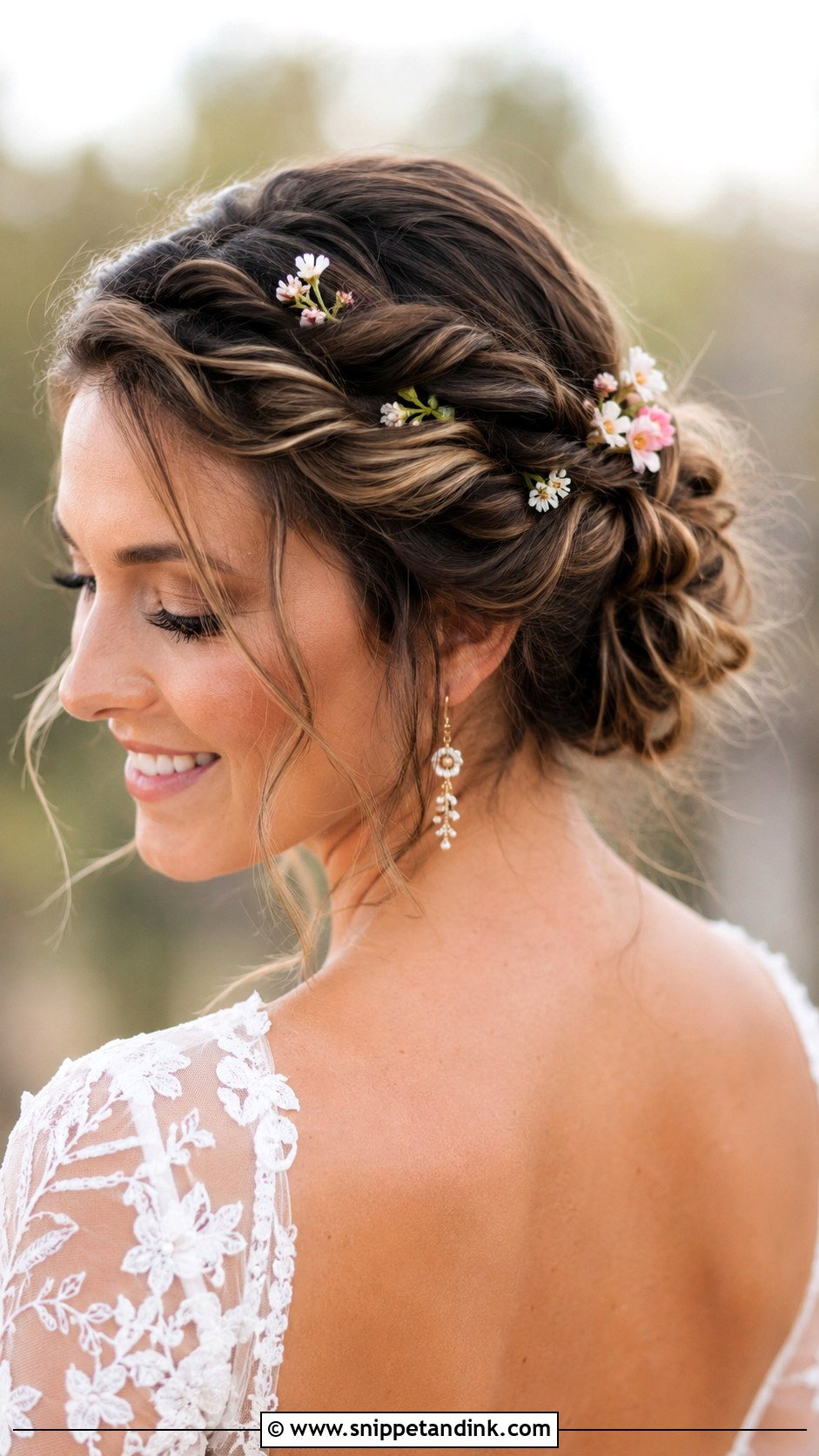
Twisted crowns use rope twists pinned around the head instead of a braid, so they’re quicker and a little softer. Wavy hair grips better than freshly washed straight hair, so I ask brides to come in with second-day hair. Medium to long lengths work best. Small flowers or pearl pins along the twists finish it, and it’s enough detail that most brides skip a tiara.
8. Sleek Low Bun With Center Part
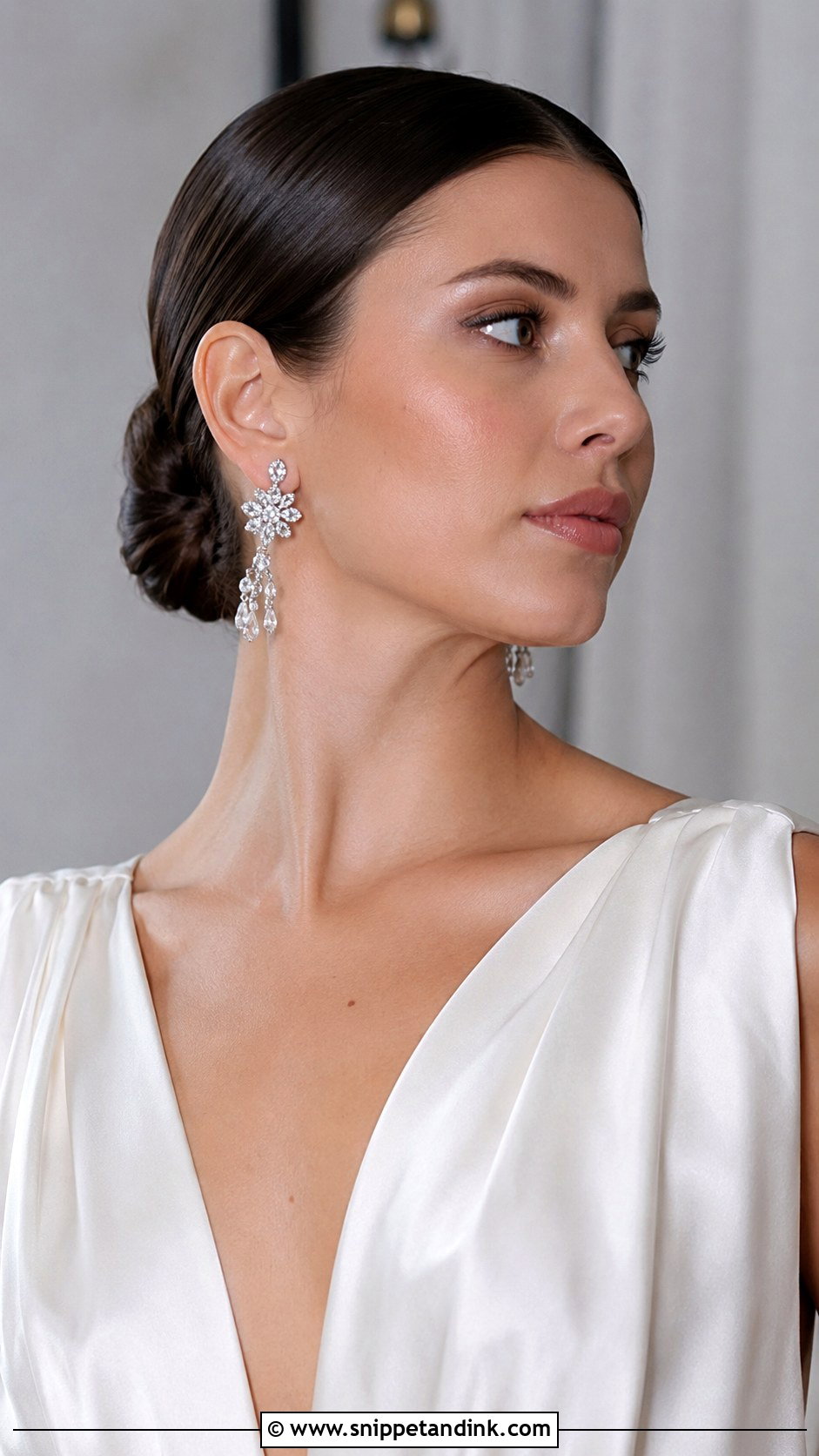
A center-parted low bun is minimal, so the part itself has to be perfectly straight. I use the tail of a comb from the bridge of the nose to the crown and check it in the mirror before anything else. Smoothing cream and a fine-tooth comb keep the surface glossy without crunch. It pairs naturally with a satin slip dress. If you want a little detail, a thin pearl headband placed just behind the part works without breaking the line.
9. Romantic Vintage Updo
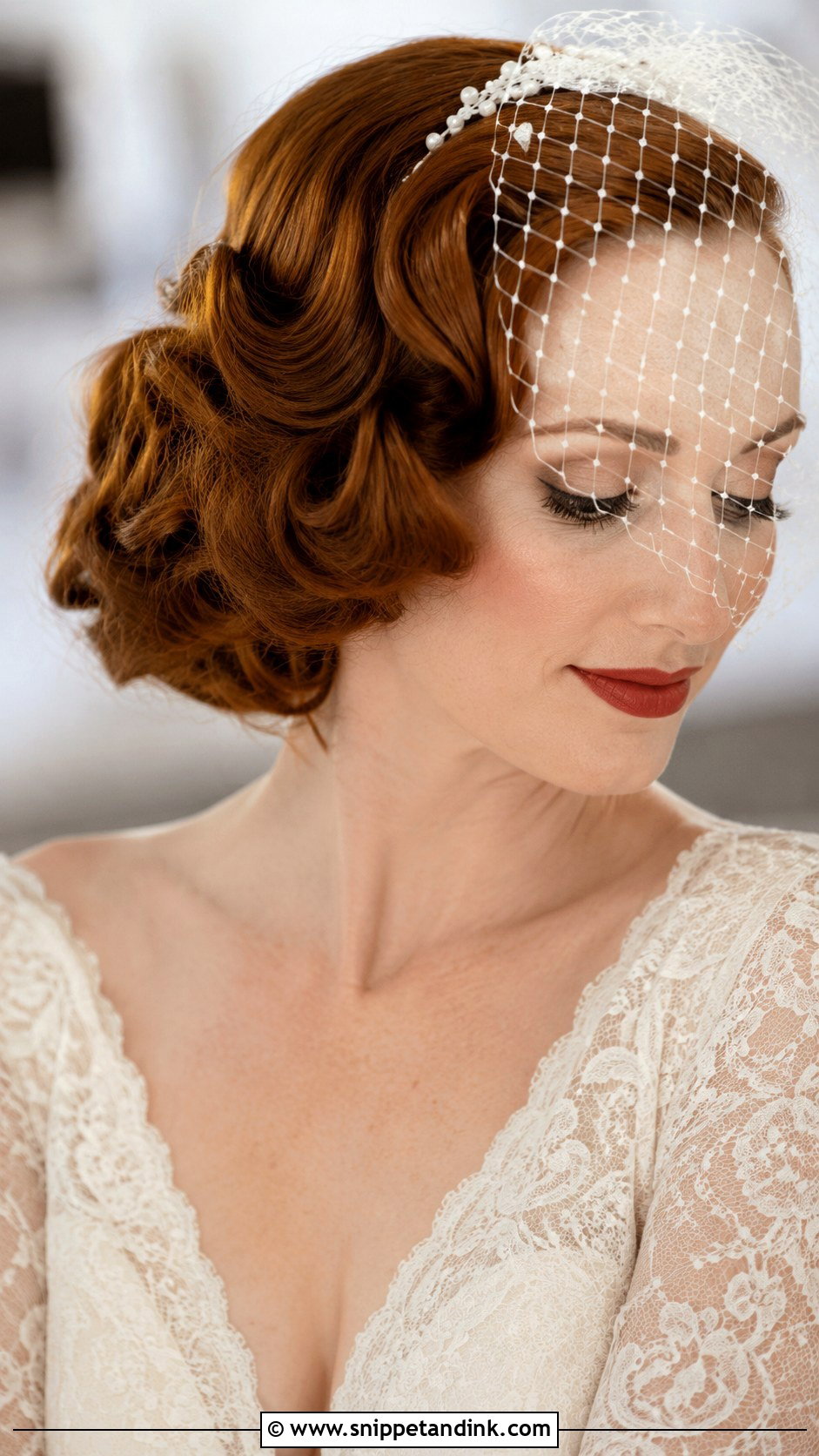
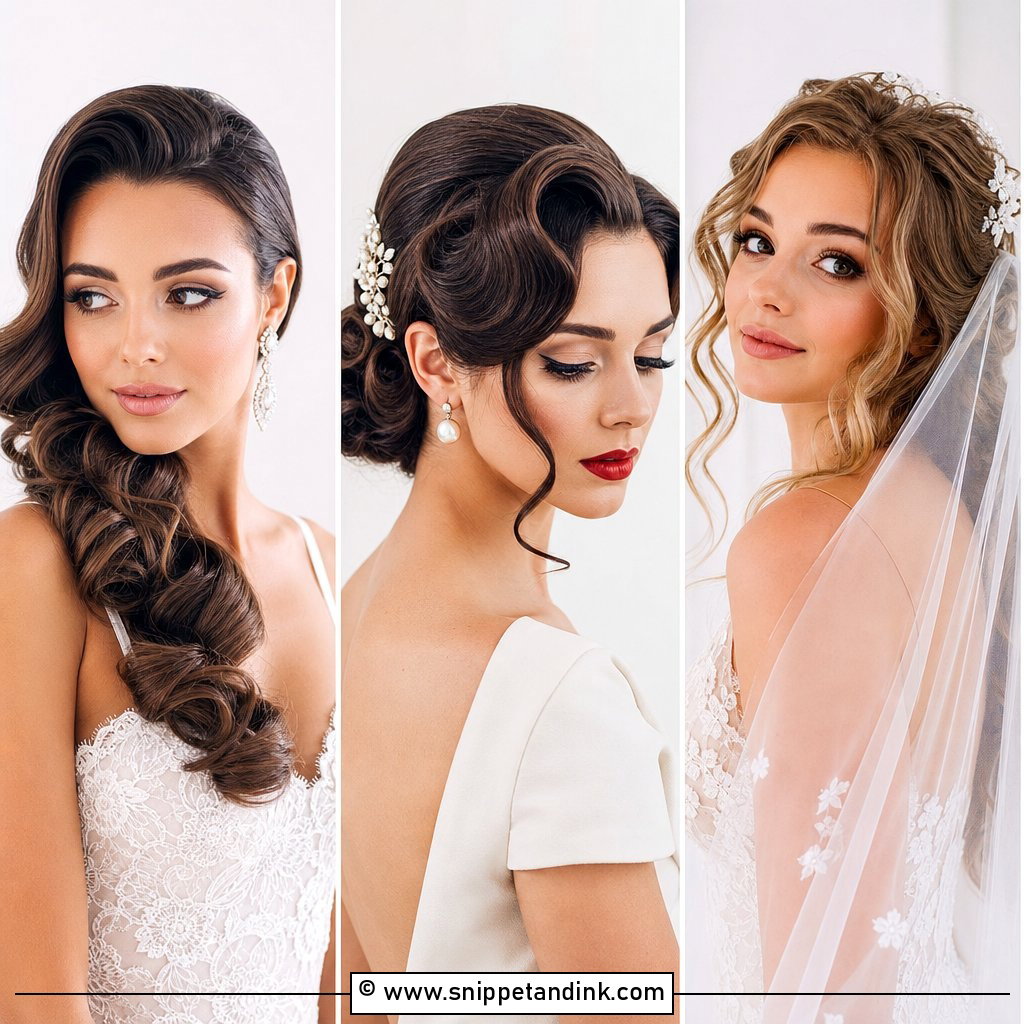
Old Hollywood volume comes from a proper set. I curl the hair in sections, pin each curl while it cools, then brush out and shape it into soft waves before pinning it up loosely at the back. Lace gowns and vintage details suit it, and a birdcage veil or decorative comb adds to the period feel. The waves need a good brush-out: skip it and the result looks like a row of curls rather than a shape.
10. Halo Braid
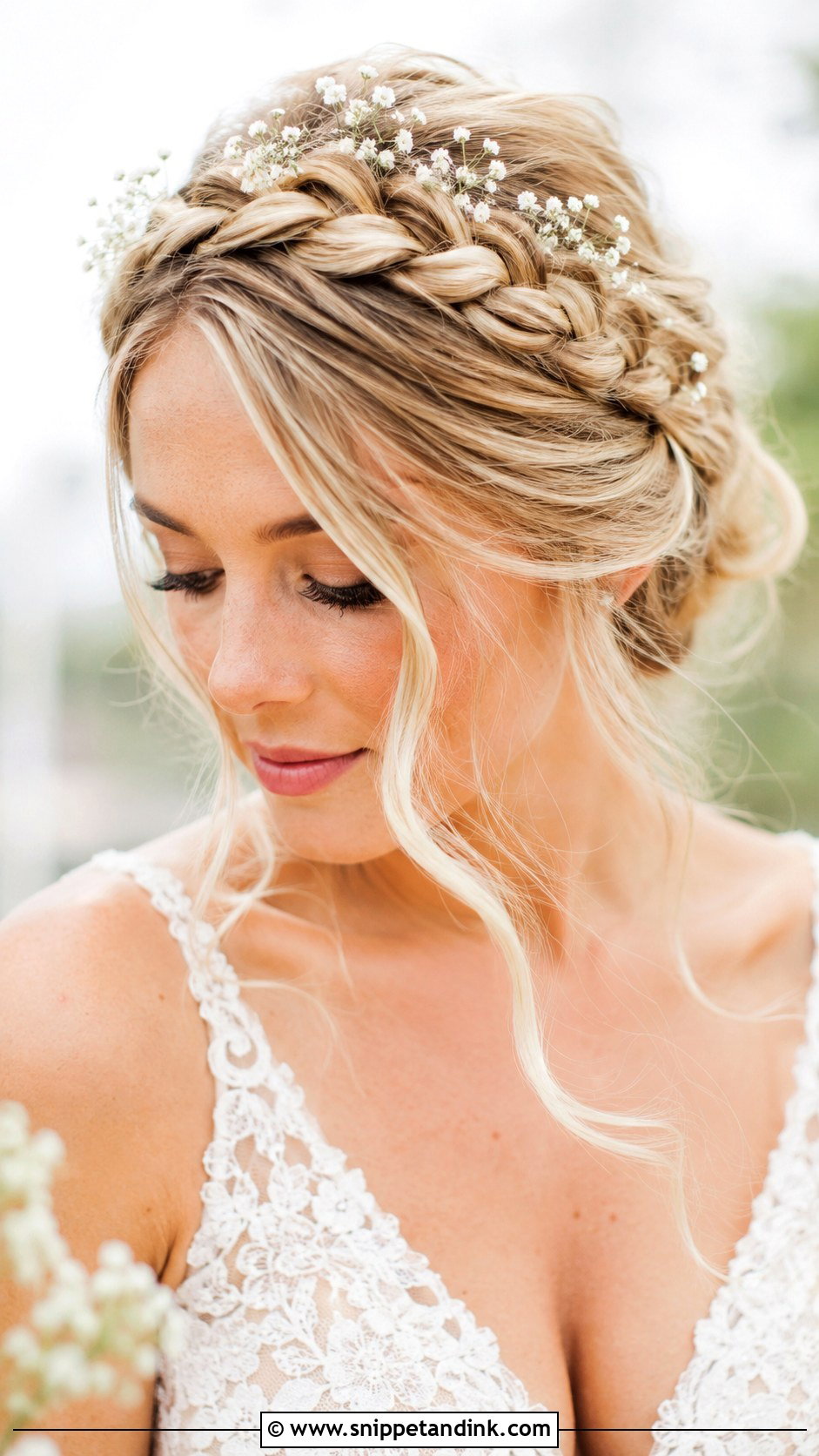
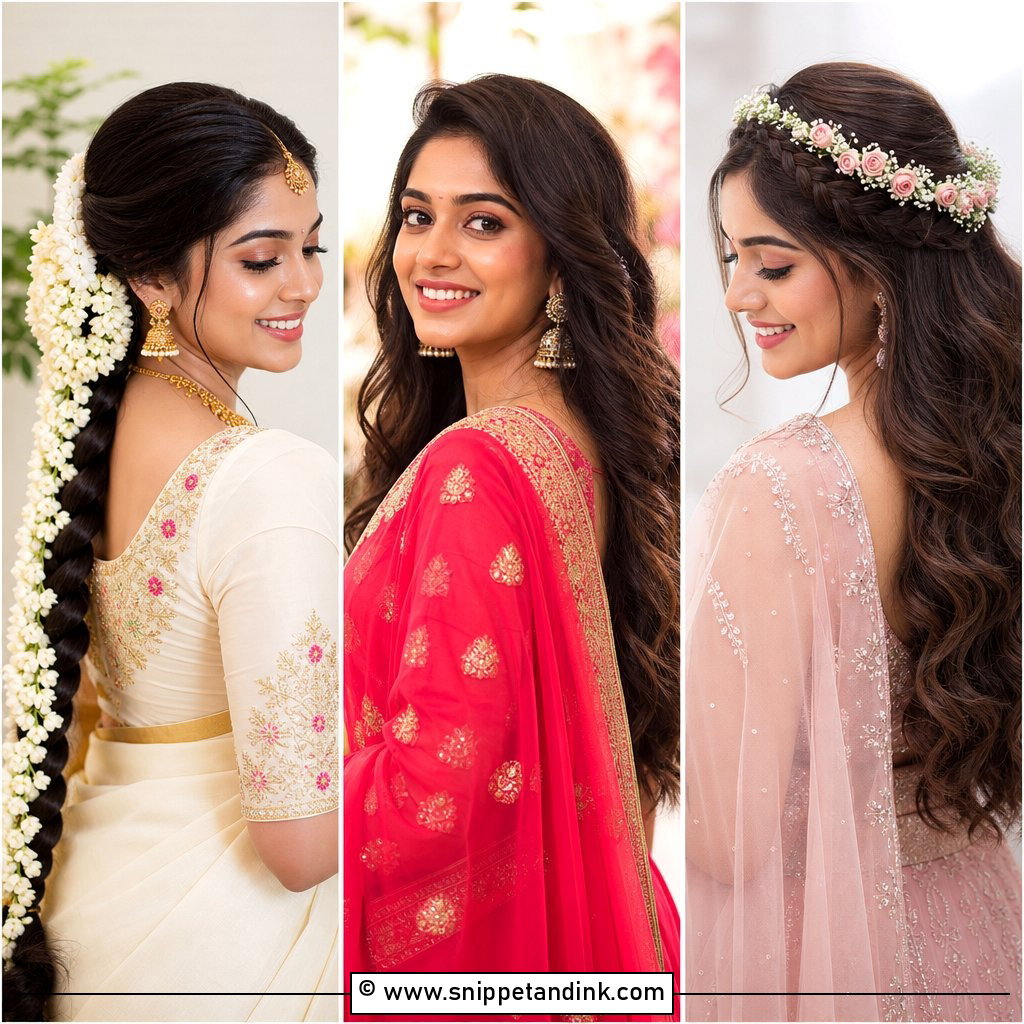
The halo braid needs length: hair should reach at least past the shoulders to wrap fully, or I add a clip-in braid to finish the circle. I start low behind one ear so the braid sits at the hairline rather than riding up toward the crown. It keeps the neck completely clear on a hot day. Tiny flowers or baby’s breath make it a goddess-inspired moment, though it isn’t the easiest base for a veil.
11. Textured Bun With Face-Framing Pieces
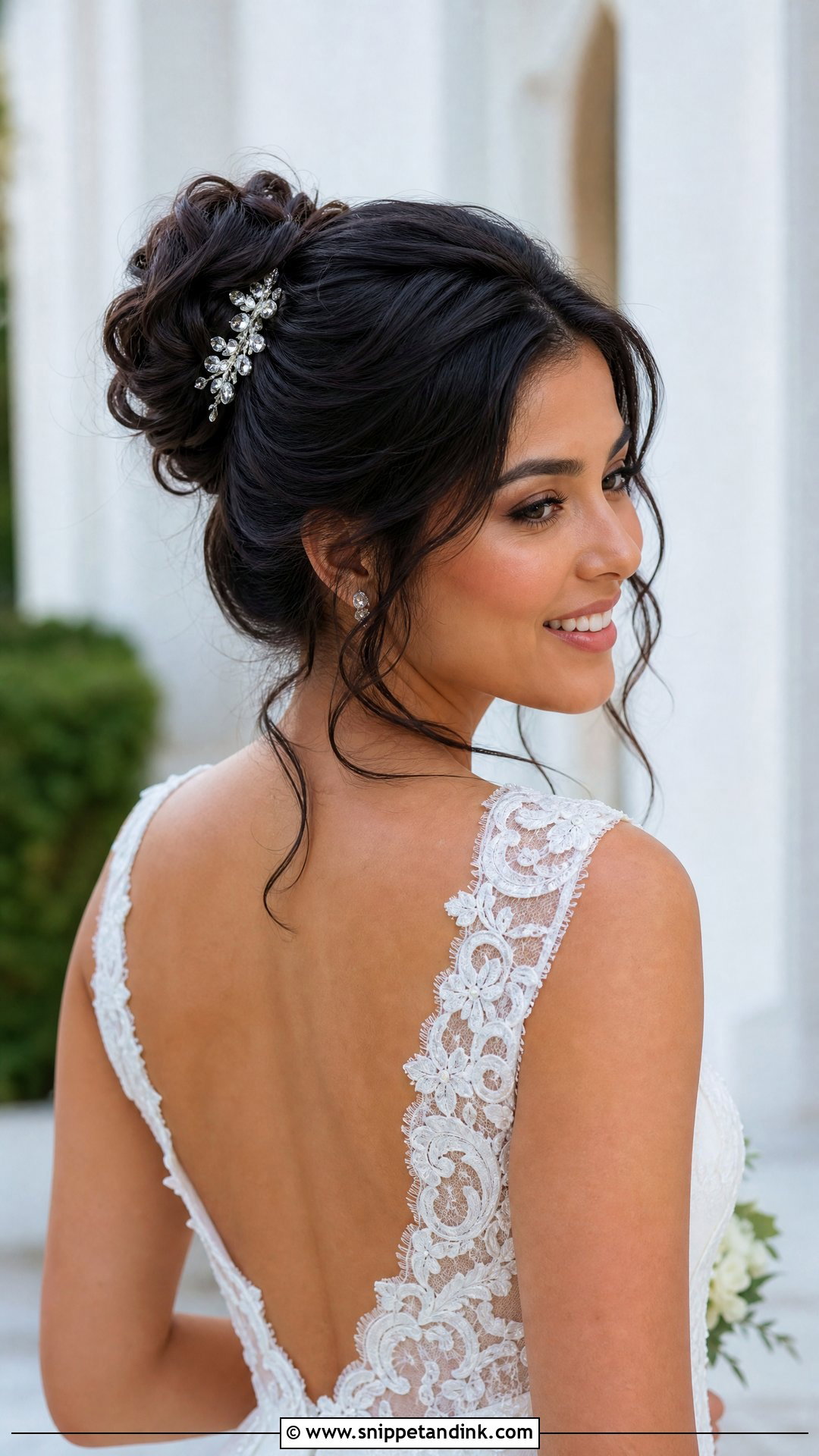
The trick to a textured bun is that the texture is added, not natural. I curl the hair first, gather it, then gently pull sections apart once it’s pinned. Wavy and curly hair do this beautifully. Pin height can follow your neckline: higher for strapless, lower for a high neck. Leave the face-framing pieces out before you start, not after, or they’ll pull the bun loose.
12. Low Bun With Pearl Pins
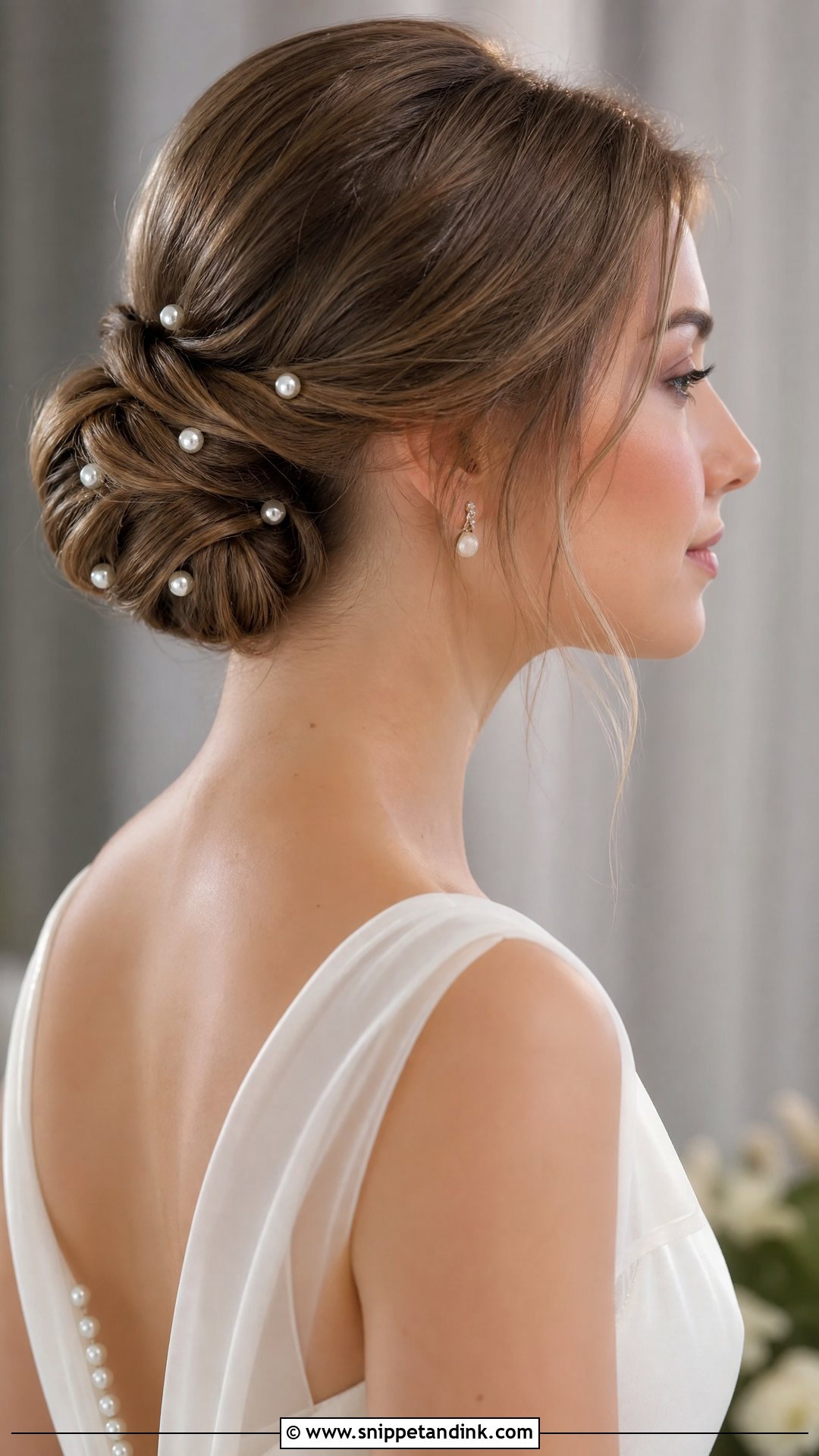
Pearl pins work best in a smooth knot, where they have a clean background. I place them after the hairspray, in odd numbers, and push each one in at an angle against the twist so it grips. Clustered on one side reads more formal; scattered reads softer. The knot also sits comfortably under a veil, and the pearls are what people see when the veil comes off.
13. Boho Braided Updo
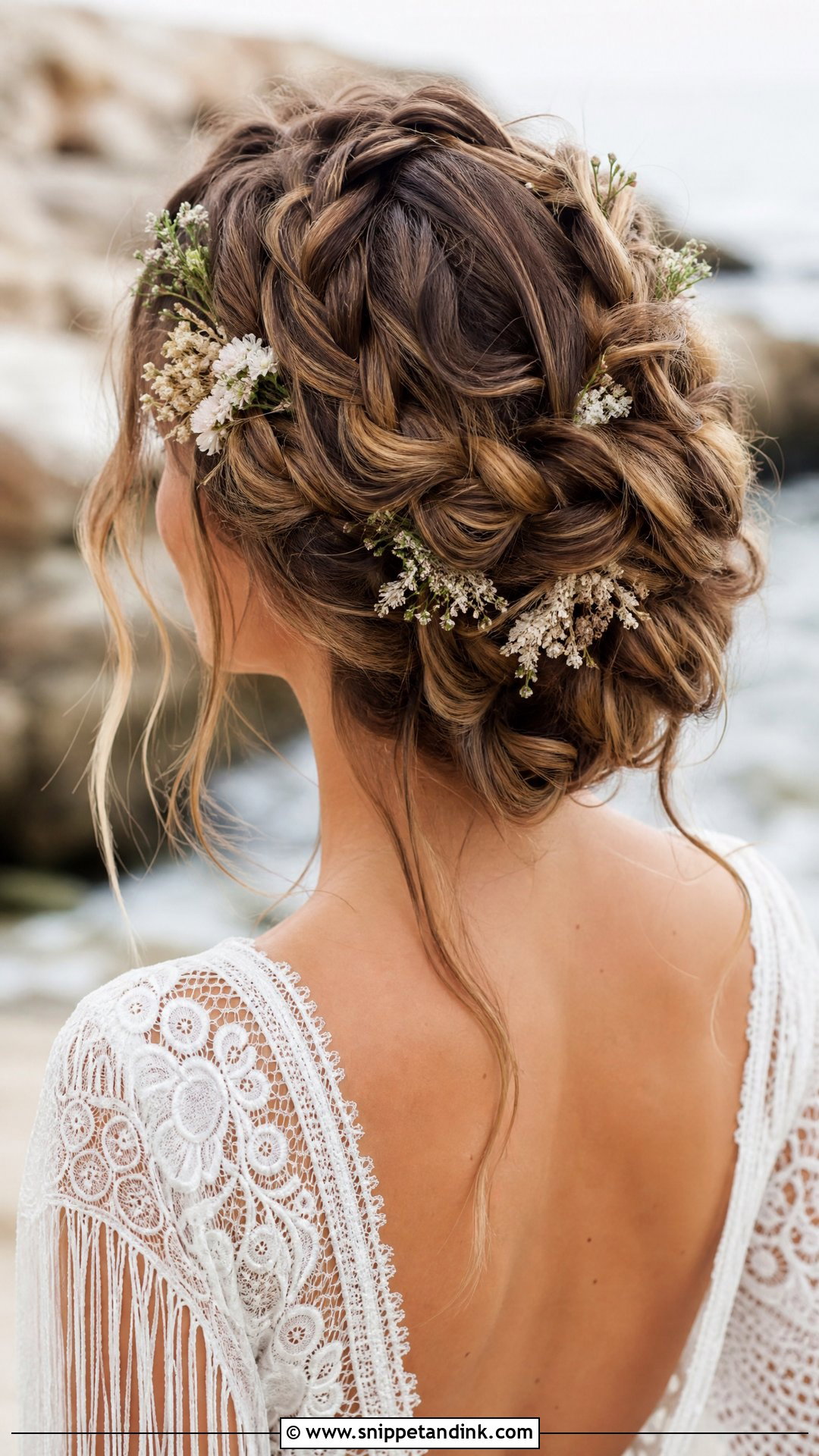
Several braids, twists and loose pieces pinned together make this one look organic. I braid each section separately first, then pin them into the shape, which lets me adjust the balance at the end instead of being stuck with one big braid. It suits wavy or textured hair best, and loose tendrils plus a few woven flowers finish it. On a windy beach, pin the loose pieces lightly at the back too.
14. Sleek Top Knot
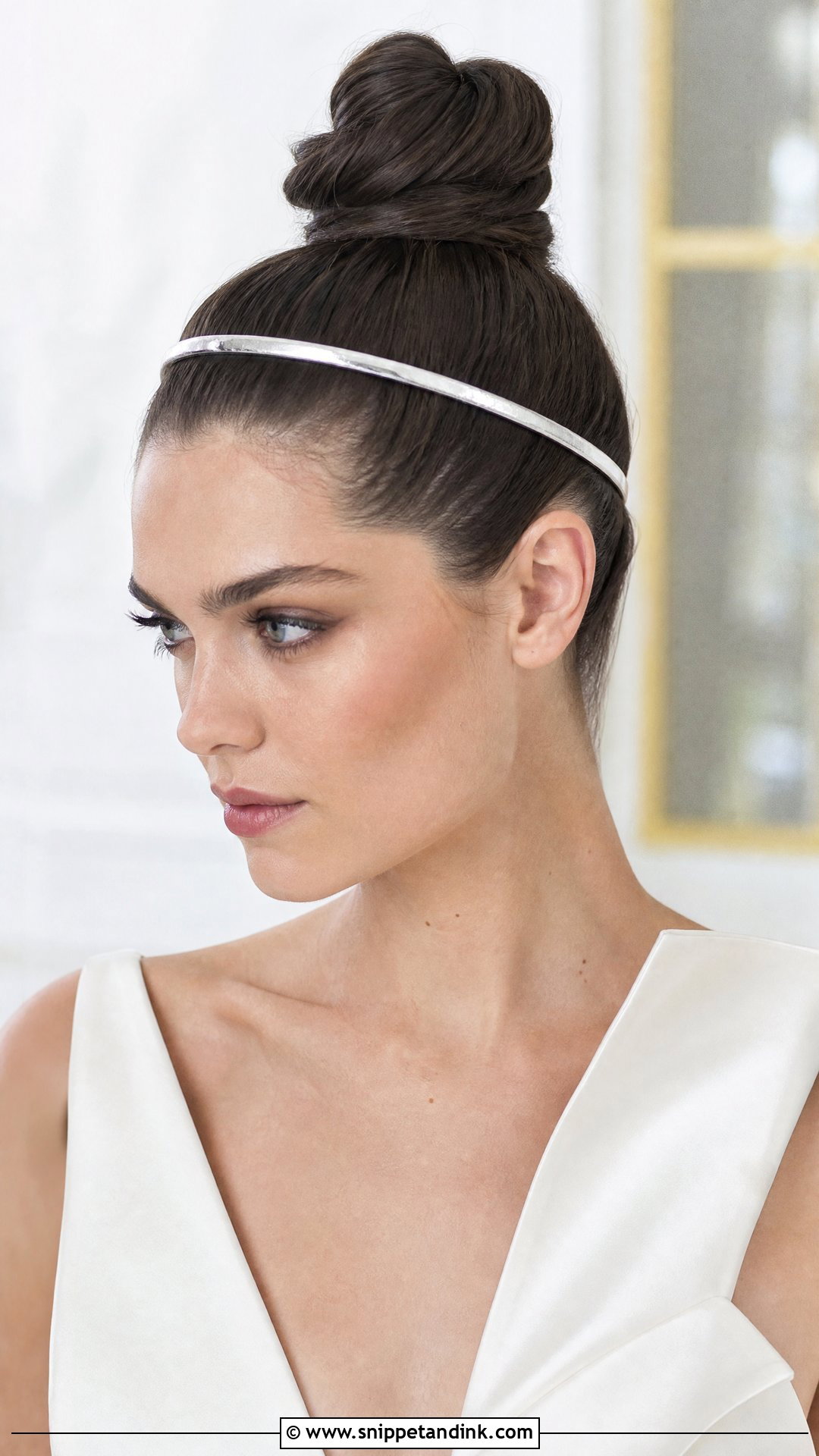
A top knot is graphic and modern, and it suits a structured gown or an editorial theme. I set the ponytail high and tight at the crown, smooth the surface, then wrap and pin the knot. The weight sits on top of the head, so on thick hair I thin the ponytail section slightly or use a small donut to keep it from sagging. A veil, if you want one, goes under the knot.
15. Twisted Updo With Veil
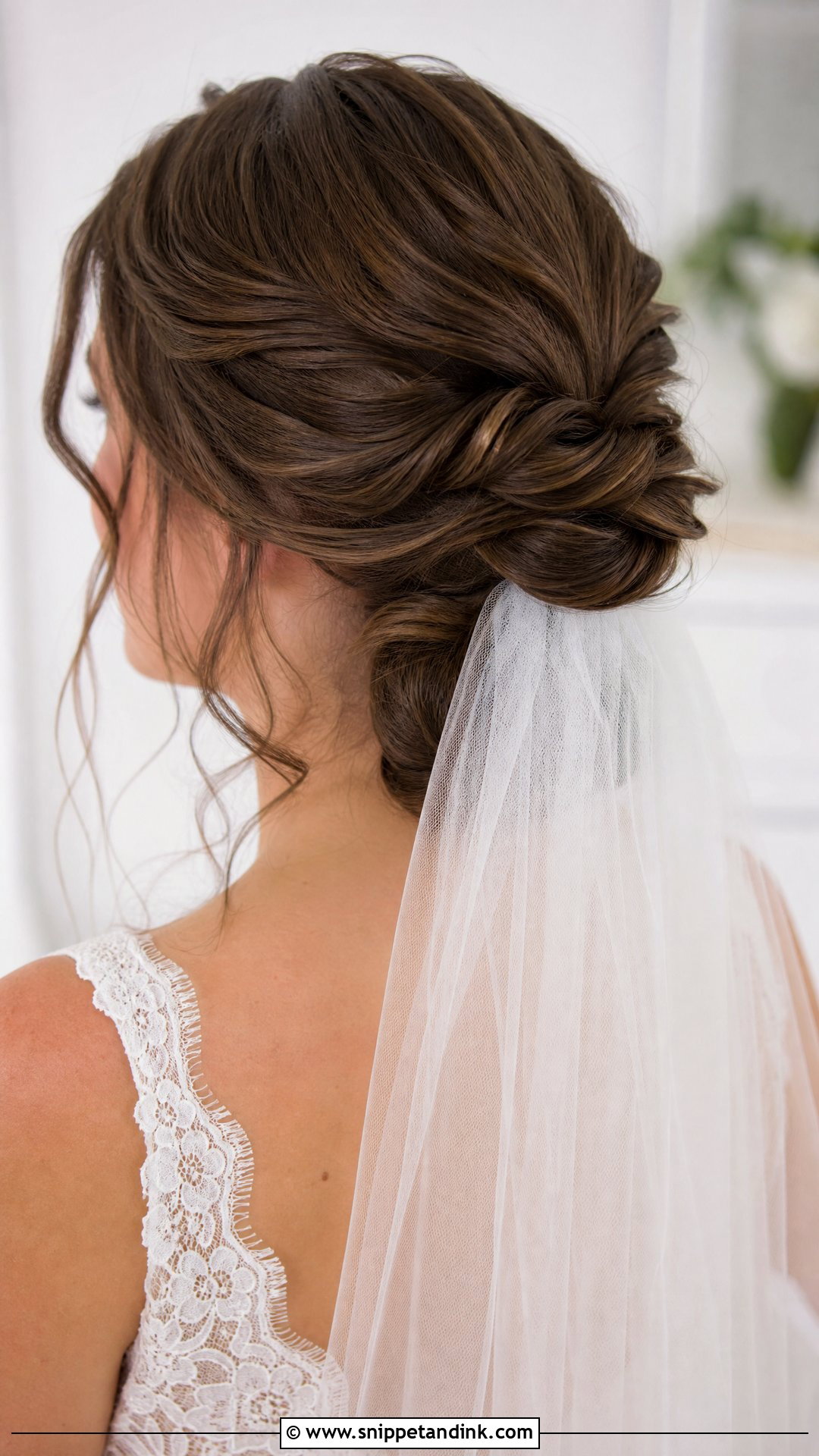
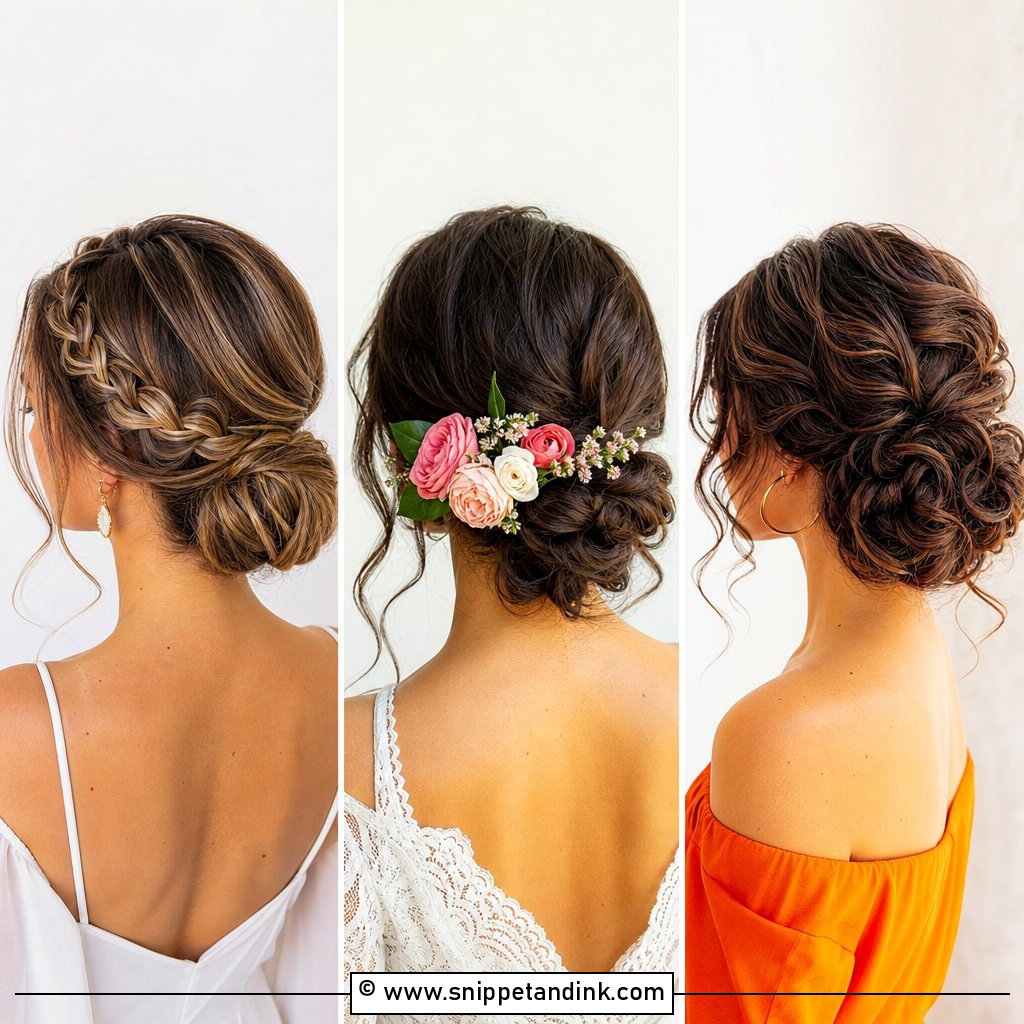
This one is designed around the veil from the start, which is how I prefer to work. I pin the twists into a soft shape and leave a solid anchor point, usually a small hidden braid, where the comb will go. Without that anchor, a long veil drags the whole style backward during the ceremony. When the veil comes off, the twists still look complete on their own.
16. Curly Updo for Natural Hair
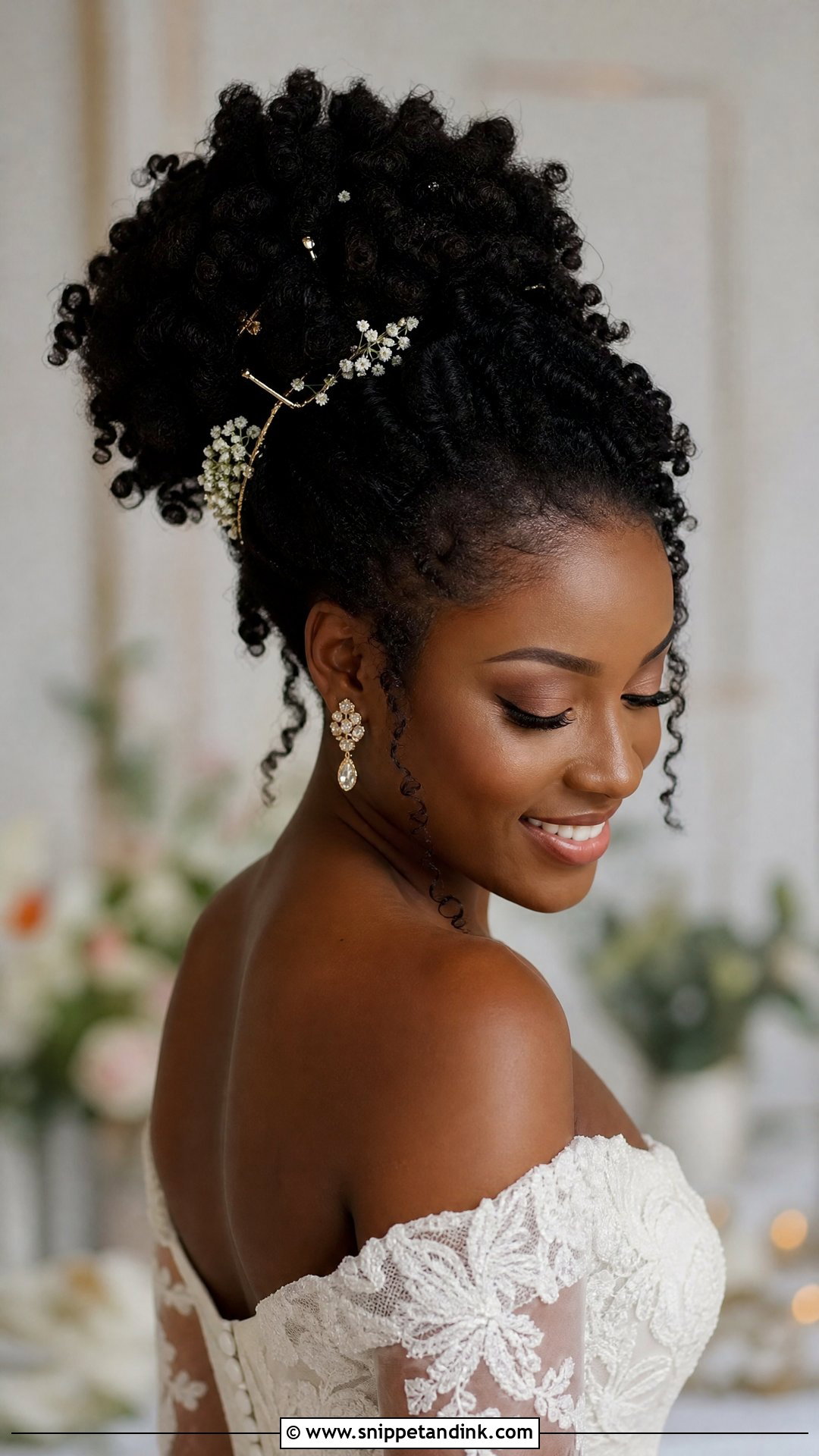
With curly and coily hair, I work with the pattern rather than against it. The hair should be stretched before shaping, either banded or lightly blow-dried, so shrinkage doesn’t change the outline during the day. I pin it into a full shape and use minimal product so the curls keep their definition. Gold pins or a decorative comb finish it, and the volume holds better than most straight-hair styles in humidity.
17. Side Swept Low Bun
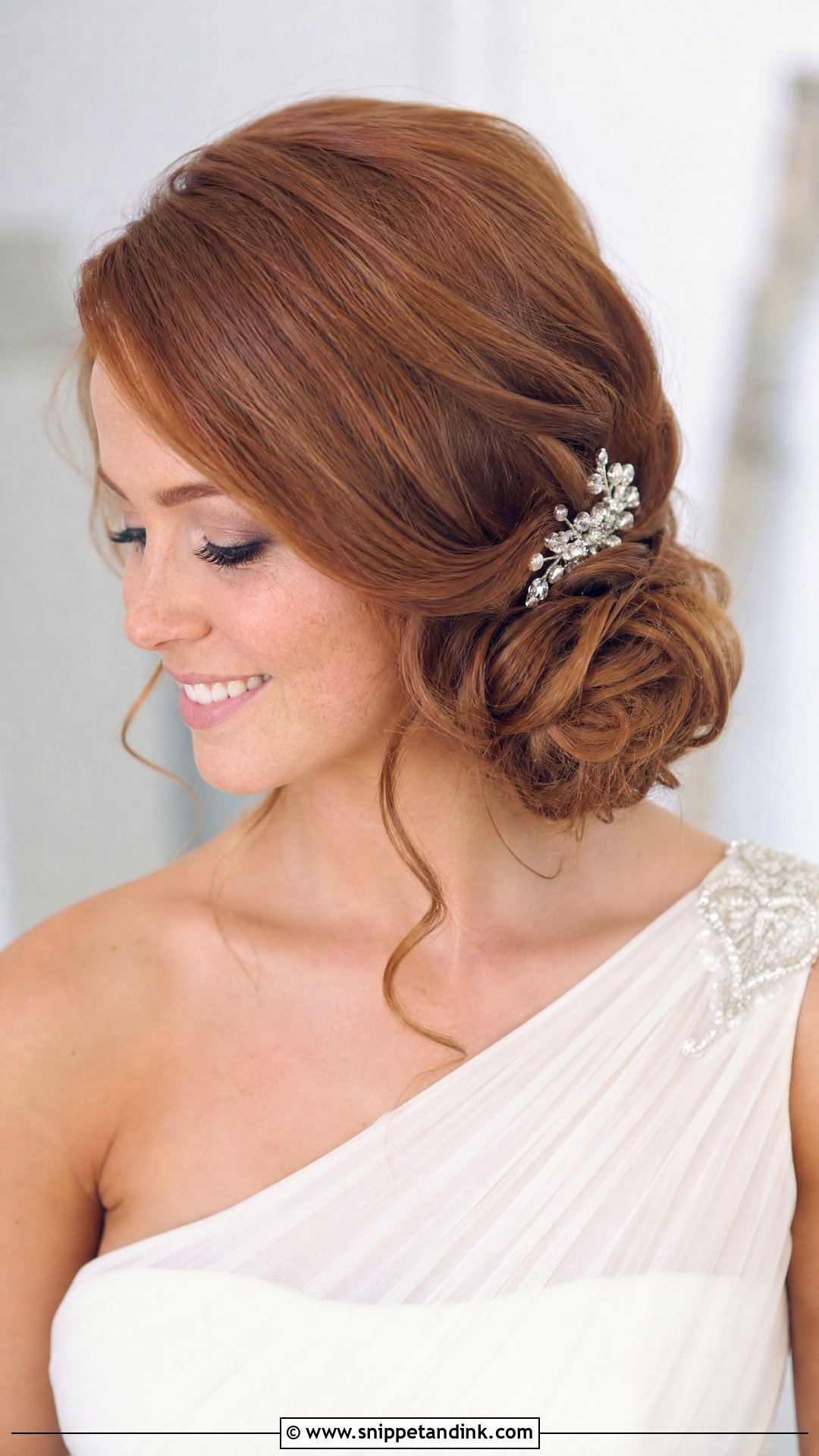
The asymmetry flatters most face shapes, especially round ones. Hair is waved first, then swept to one side and twisted into a low knot just below the ear. It pairs neatly with a one-shoulder gown, with the bun on the bare side. A decorative comb on the fuller side balances it. The swept side needs firm cross-pinning or it slides back by evening.
18. Braided Halo With Flowers
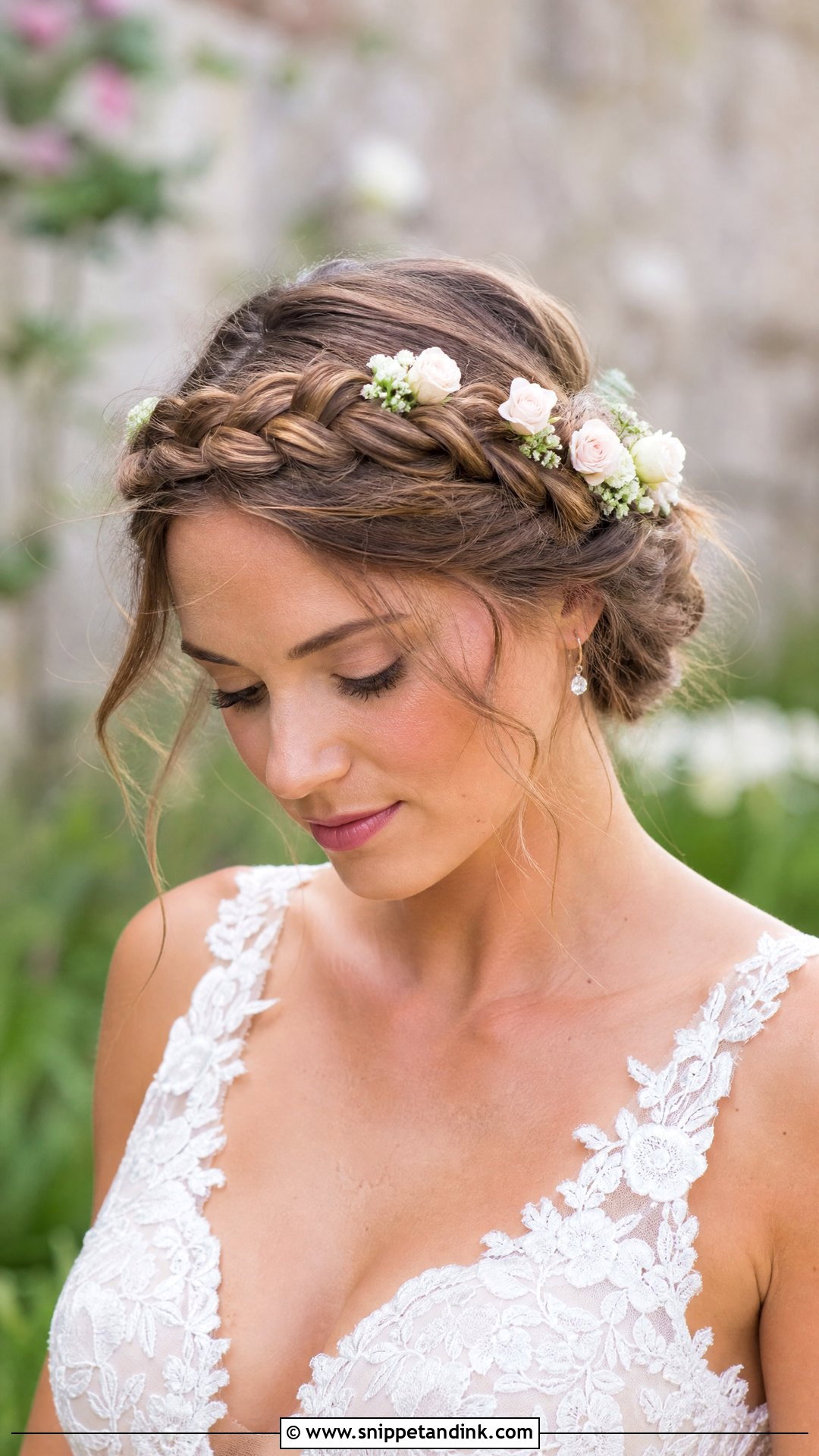
Adding flowers to a halo braid is mostly a florist conversation. Fresh blooms wilt fast against a warm head, so I ask for hardy small flowers like spray roses or waxflower, wired, and kept cold until I pin them in. Matching them to the bouquet ties the look together. The braid itself needs long, thick hair or a clip-in to wrap all the way round.
19. Polished Bun With Headband
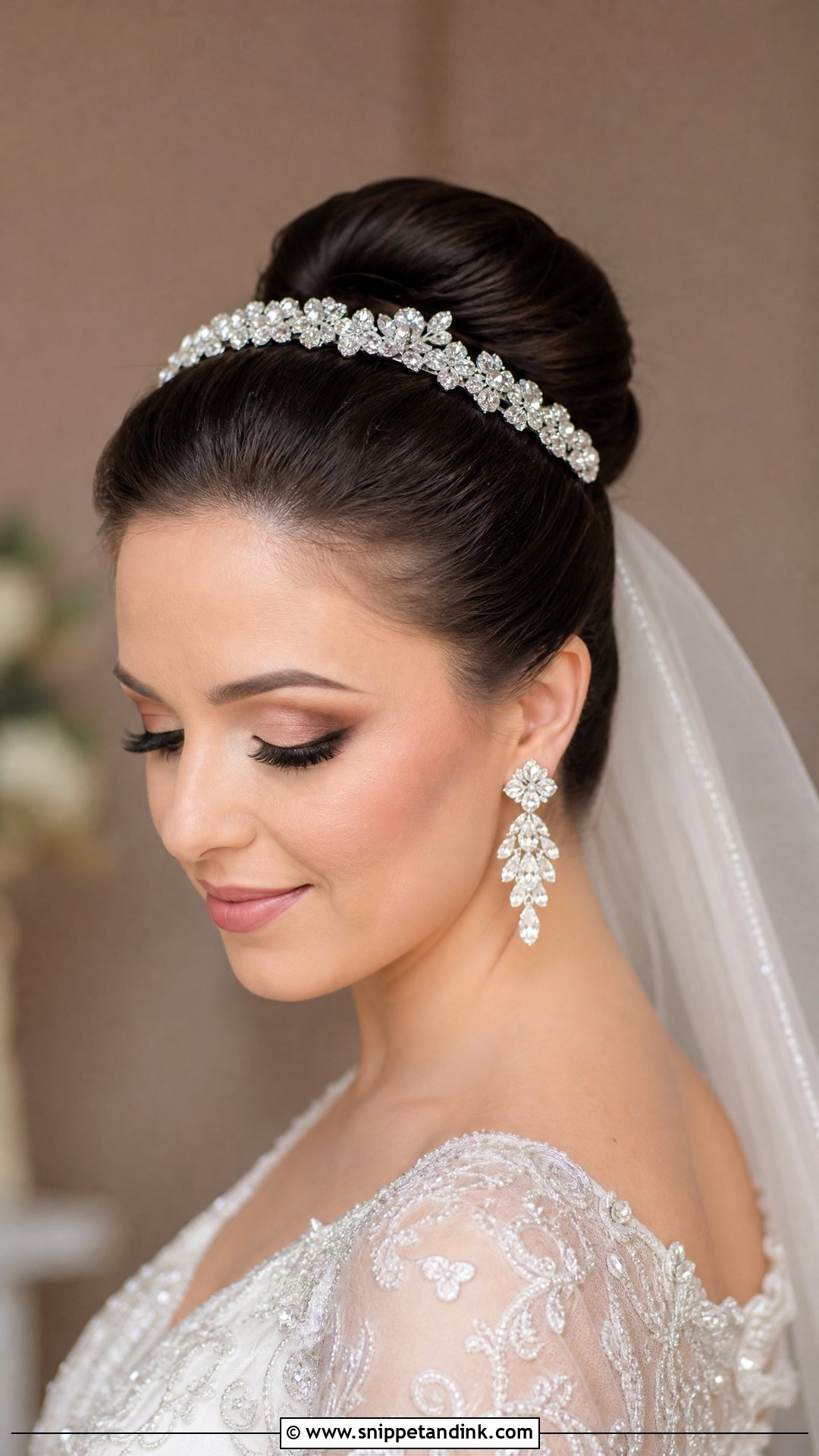
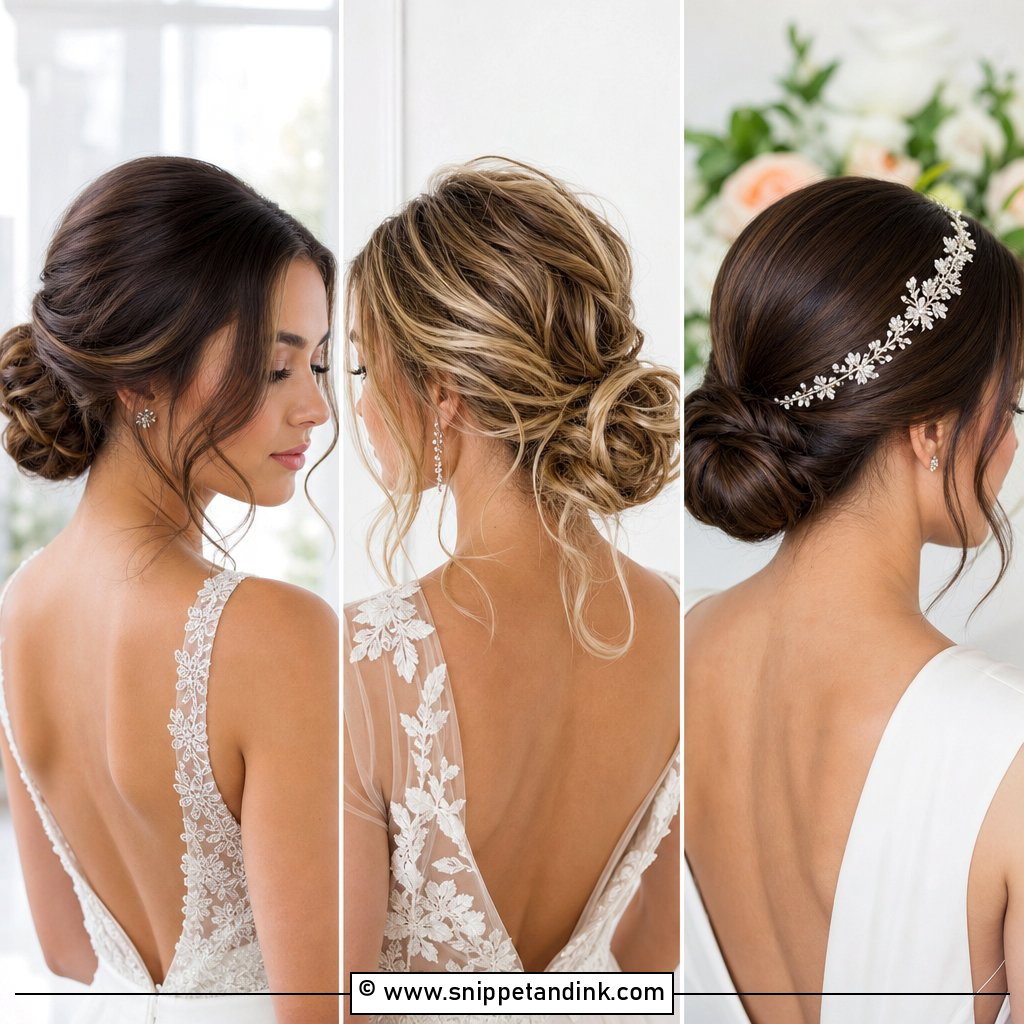
A headband sits better on a polished bun than on loose hair because there’s nothing for it to slide on. I place it after the bun is pinned and secure it behind the ears with two crossed bobby pins on each side. Crystal, pearl or metallic: match it to the metal in your jewelry. It’s a princess-inspired moment without the weight of a full tiara, and it pairs well with a formal gown.
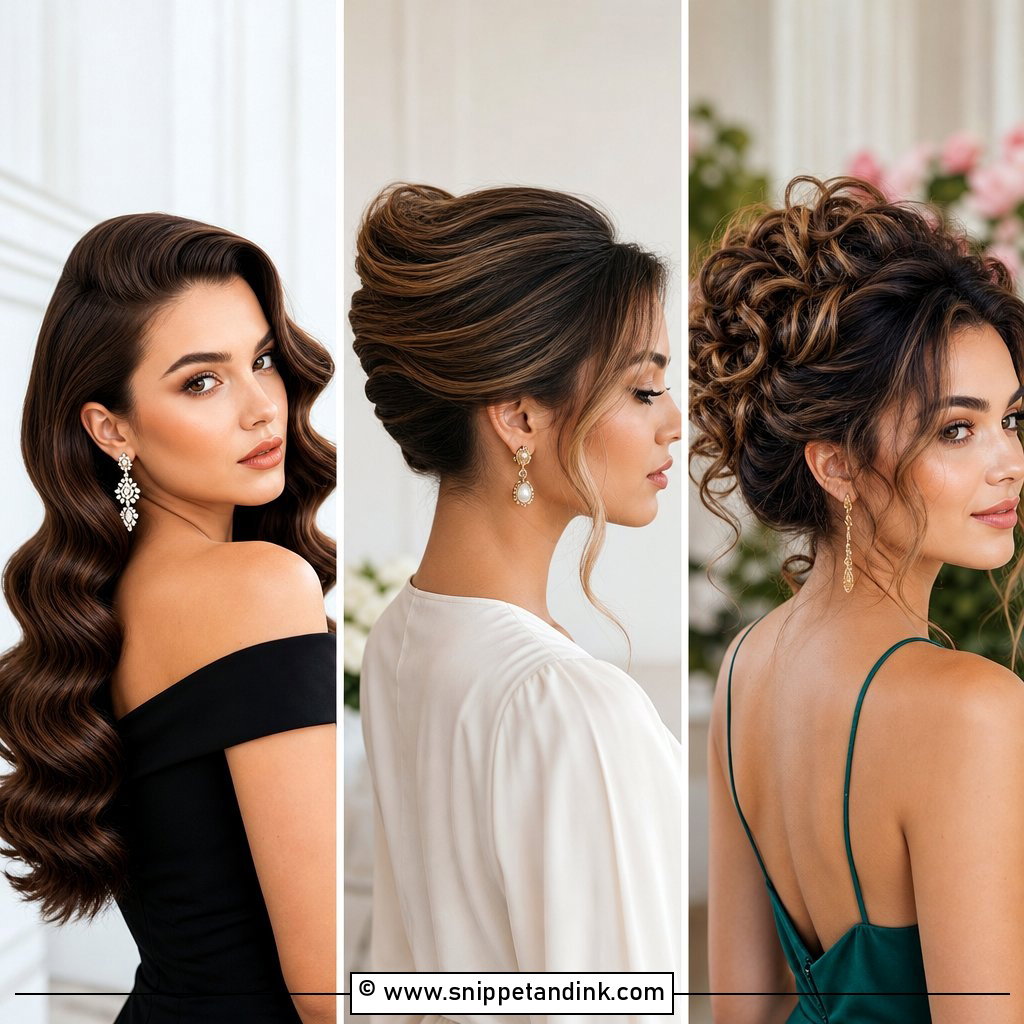
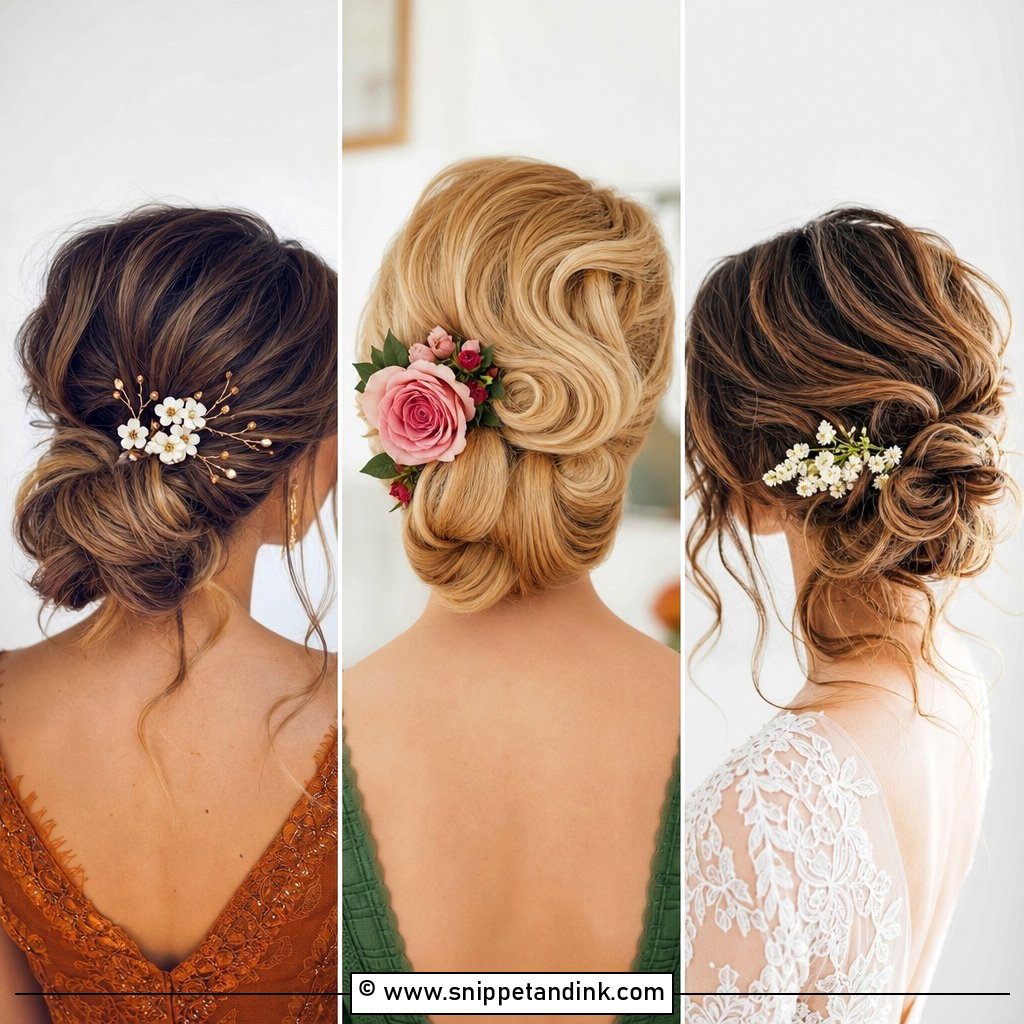
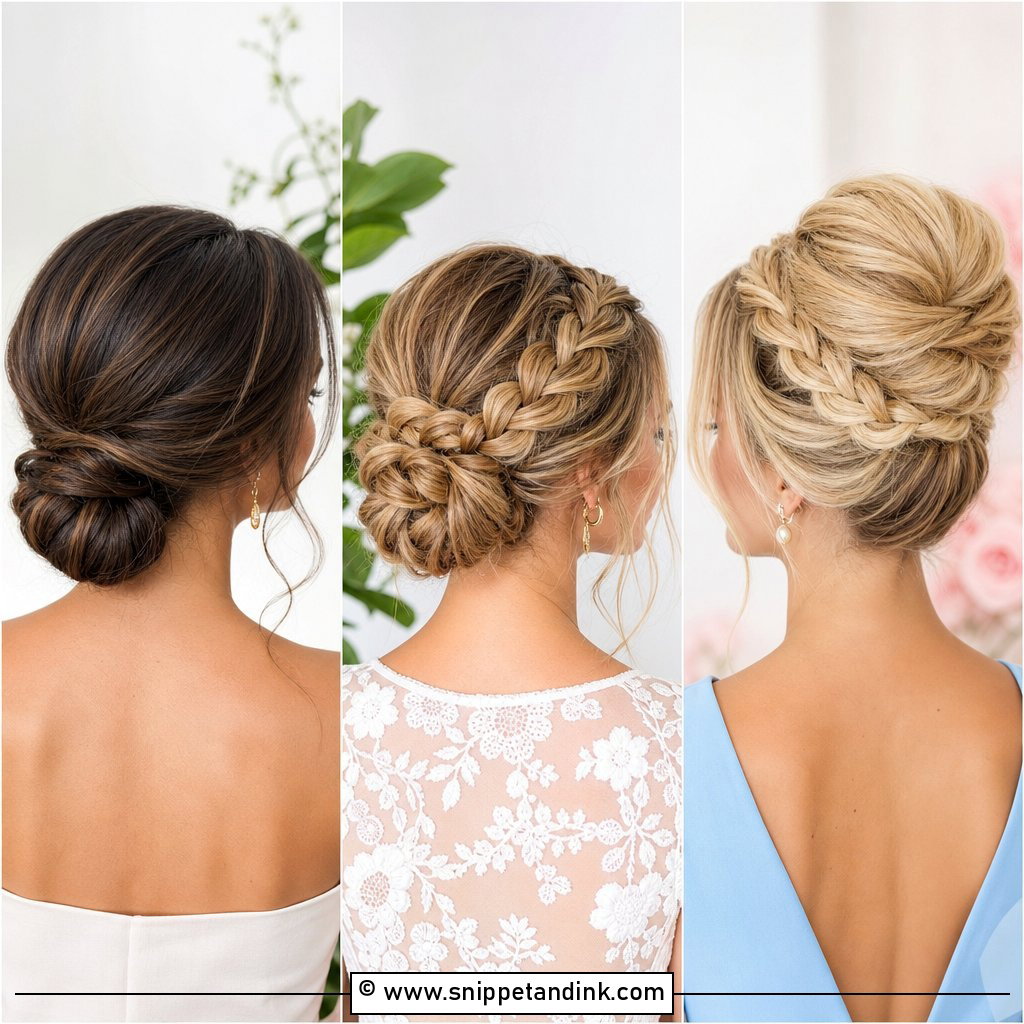
20. Loose Romantic Chignon
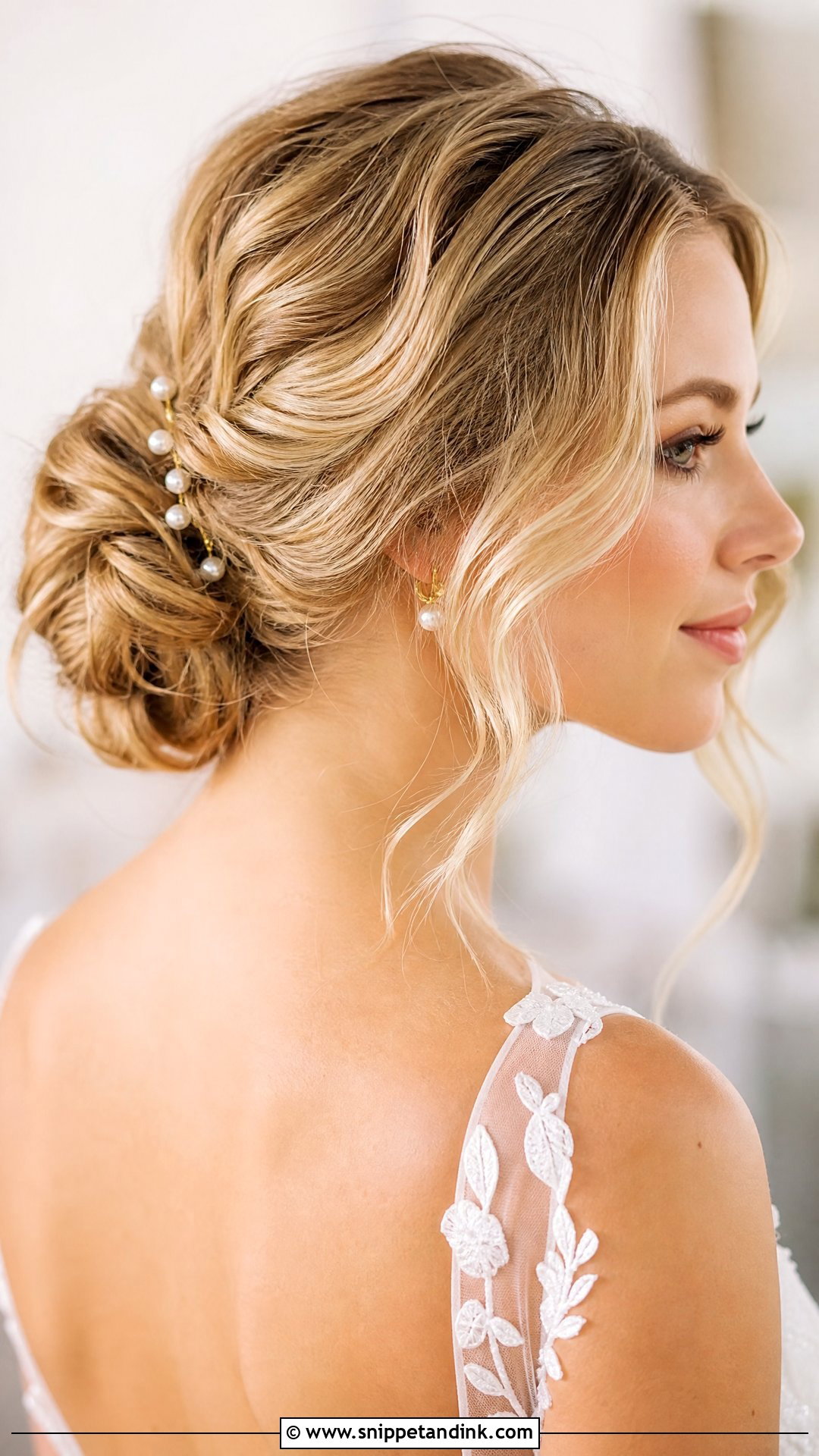
A loose chignon has to be built tight and loosened after. I pin the knot securely first, then pull it apart gently for volume and movement. Wavy hair gives this shape its softness; very straight hair benefits from a curl first. A few pearl pins or small flowers finish it. It suits almost any venue, and because the core is secure, it won’t collapse by the reception.
21. Sleek Wrapped Ponytail Updo
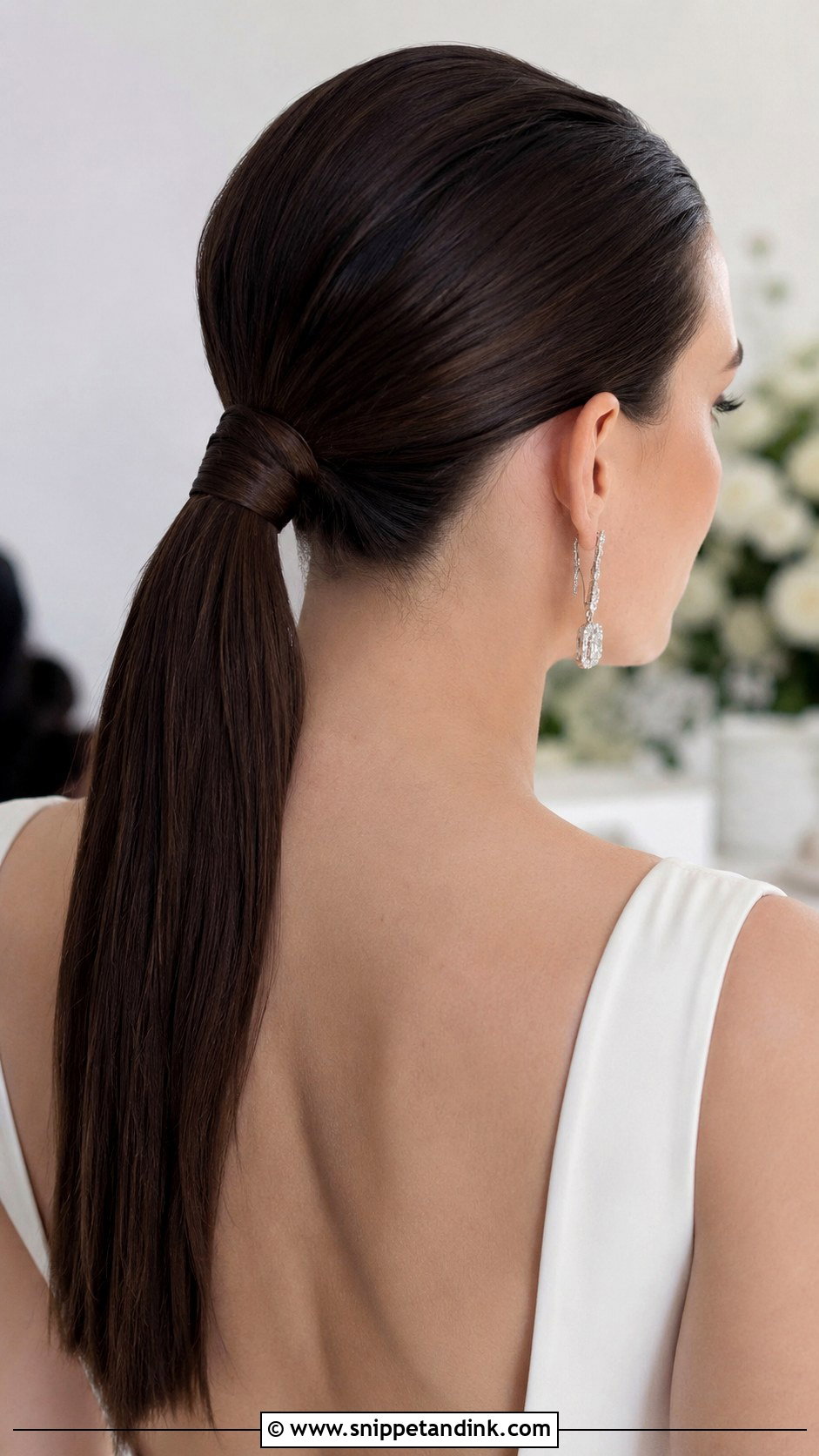
The wrapped ponytail is quick to style and very secure. I use a strong elastic, wrap a section around the base and pin it underneath to hide the band. High reads modern and playful; low is calmer and better with a veil. Straight or softly waved length both work. It keeps its shape through dancing, which is why brides who have a long reception often like it.
22. Braided Bun With Twists
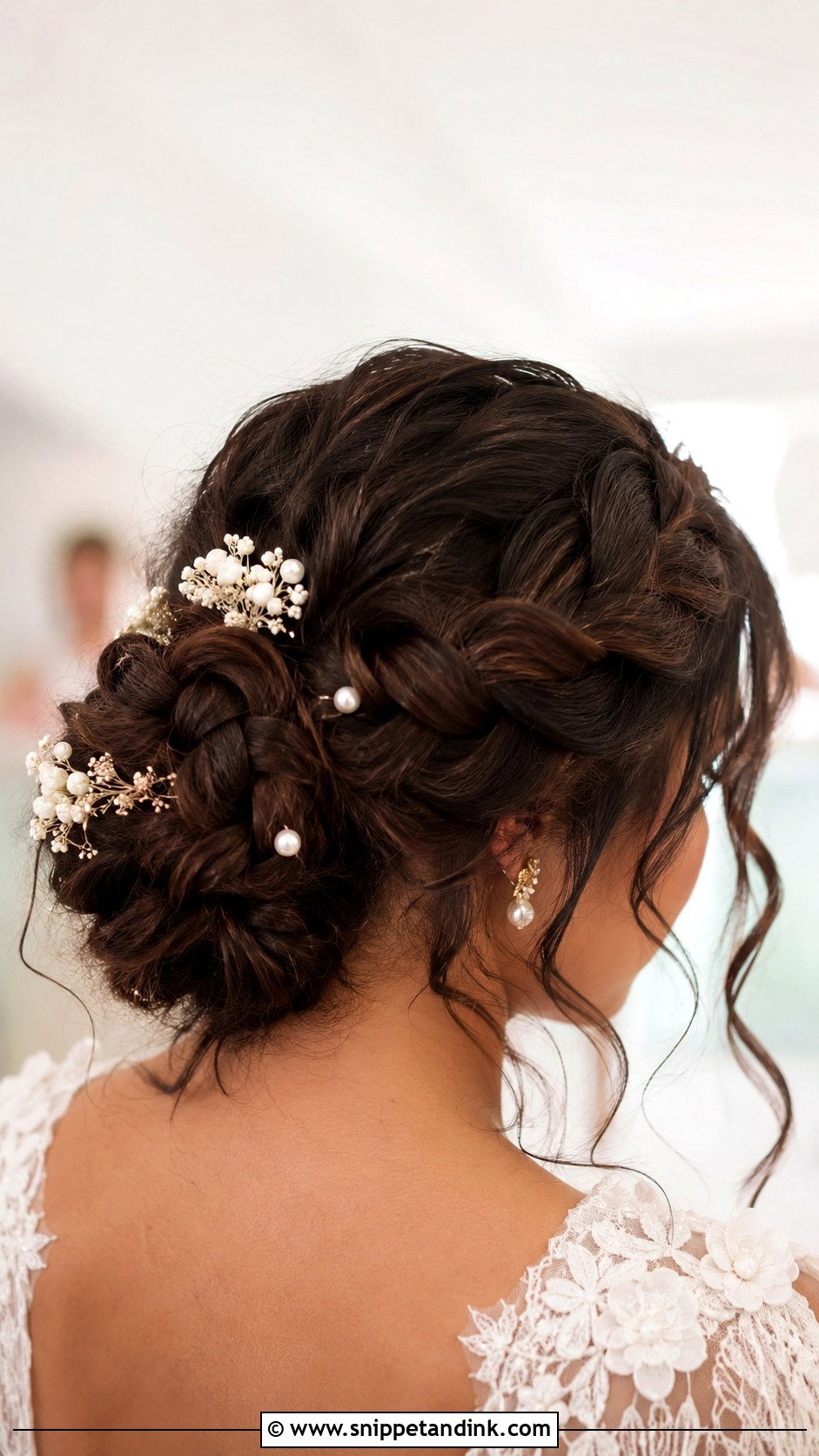
Several braids and twists woven into one bun take time, usually one of the longer styles on the morning schedule, so I plan an extra half hour. Each braid is made loose and pancaked before it’s pinned, which gives depth. Leave a few loose pieces at the face. Pearl pins or small flowers between the braids finish it, and from the back it shows its detail at every angle.
23. Voluminous Updo With Curls
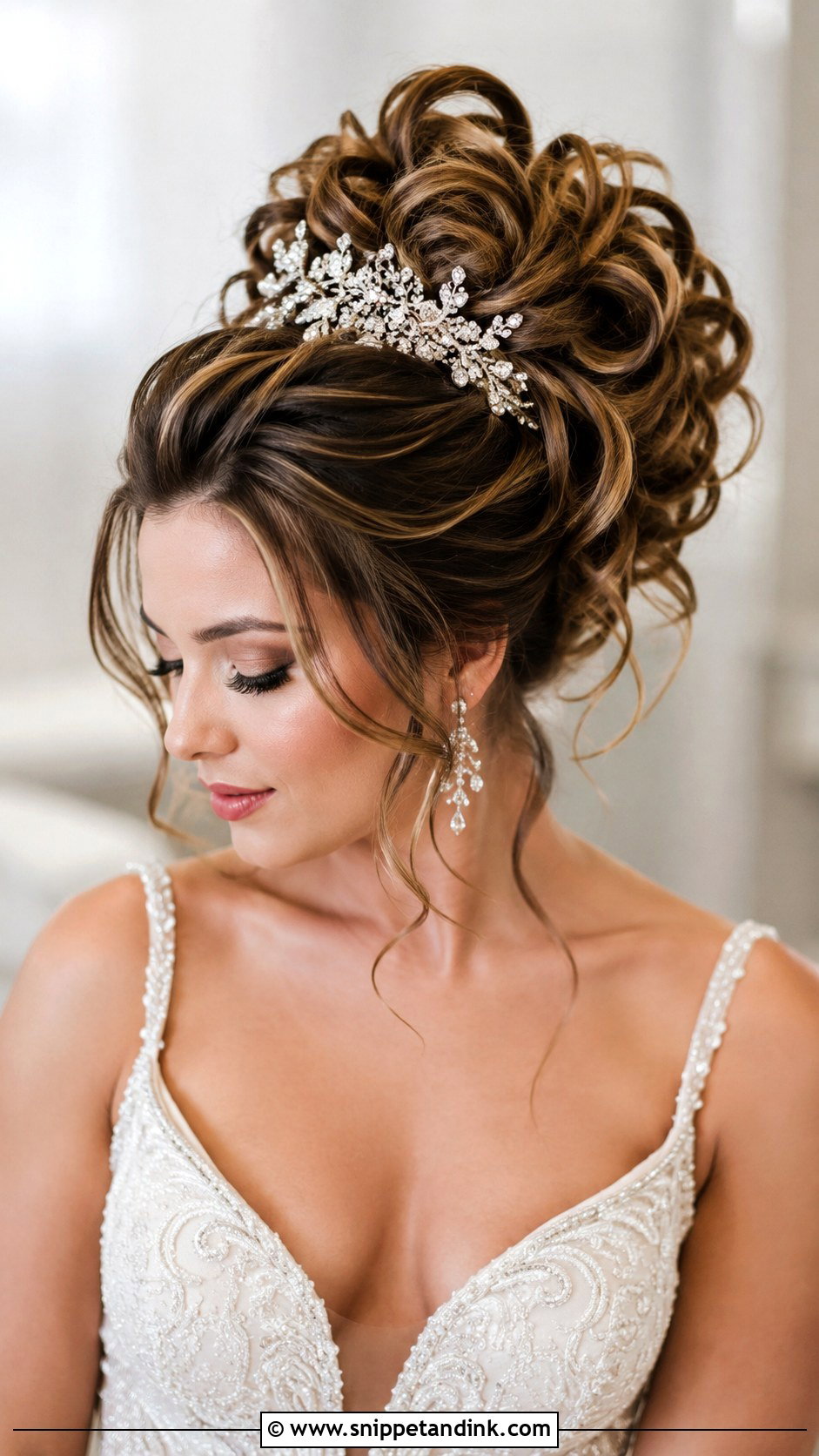
Volume like this comes from curling and backcombing at the root before anything is pinned. I set the curls, let them cool, then tease the crown lightly and shape the updo. It flatters long faces especially, since the height balances them. A statement gown and a sparkling comb suit it, though a bride wearing a dramatic veil may find the height competes.
24. Low Knot With Side Part
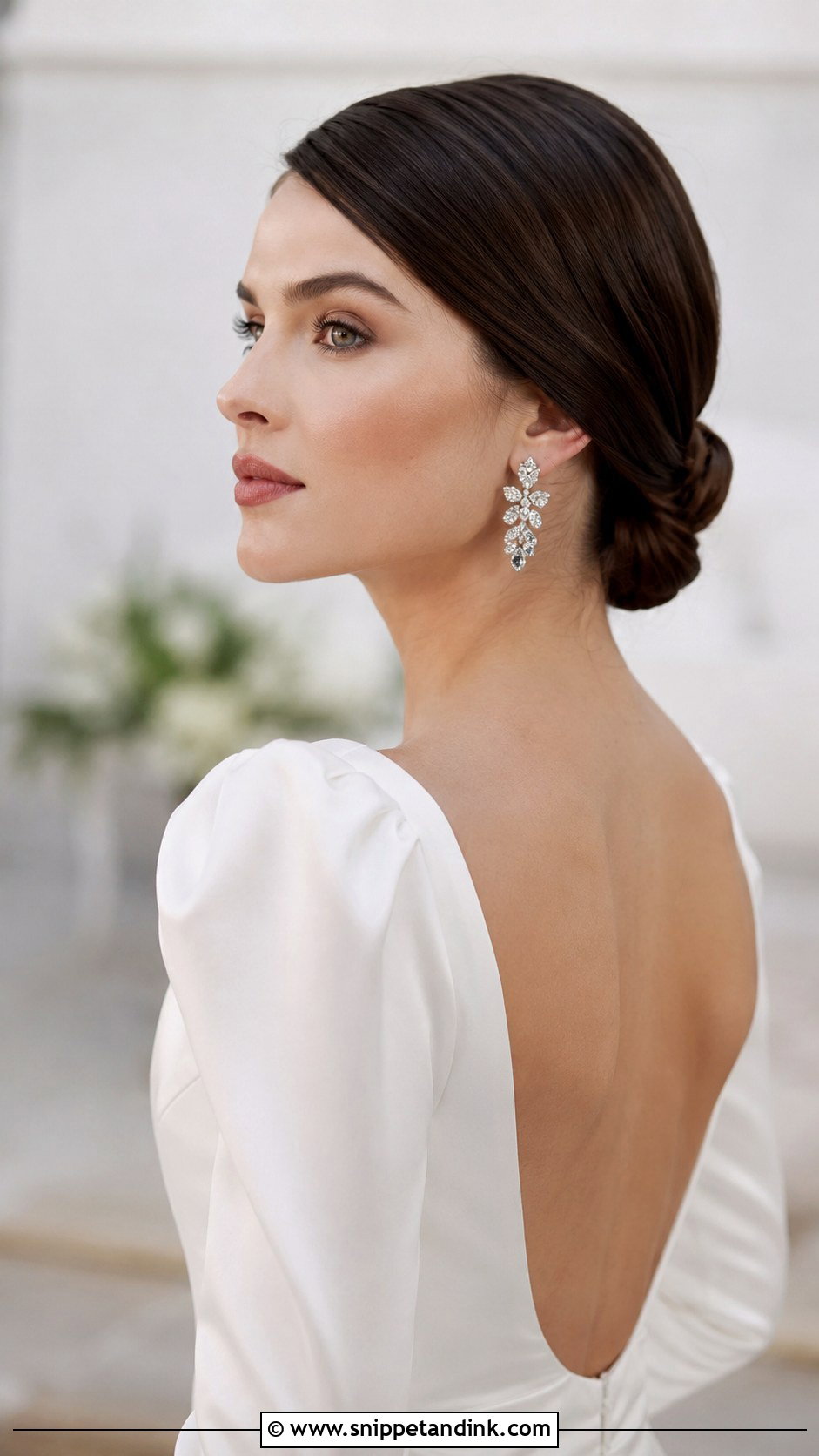
A deep side part gives a low knot a slightly vintage angle. I set the part first, then sweep the hair smoothly across and down to the nape. It suits structured gowns and bold earrings, and adding soft waves through the front softens it. The side part flatters most face shapes, and the low knot sits well under a veil. Use a little gel along the part line to keep it crisp all day.
25. Floral Crown Updo
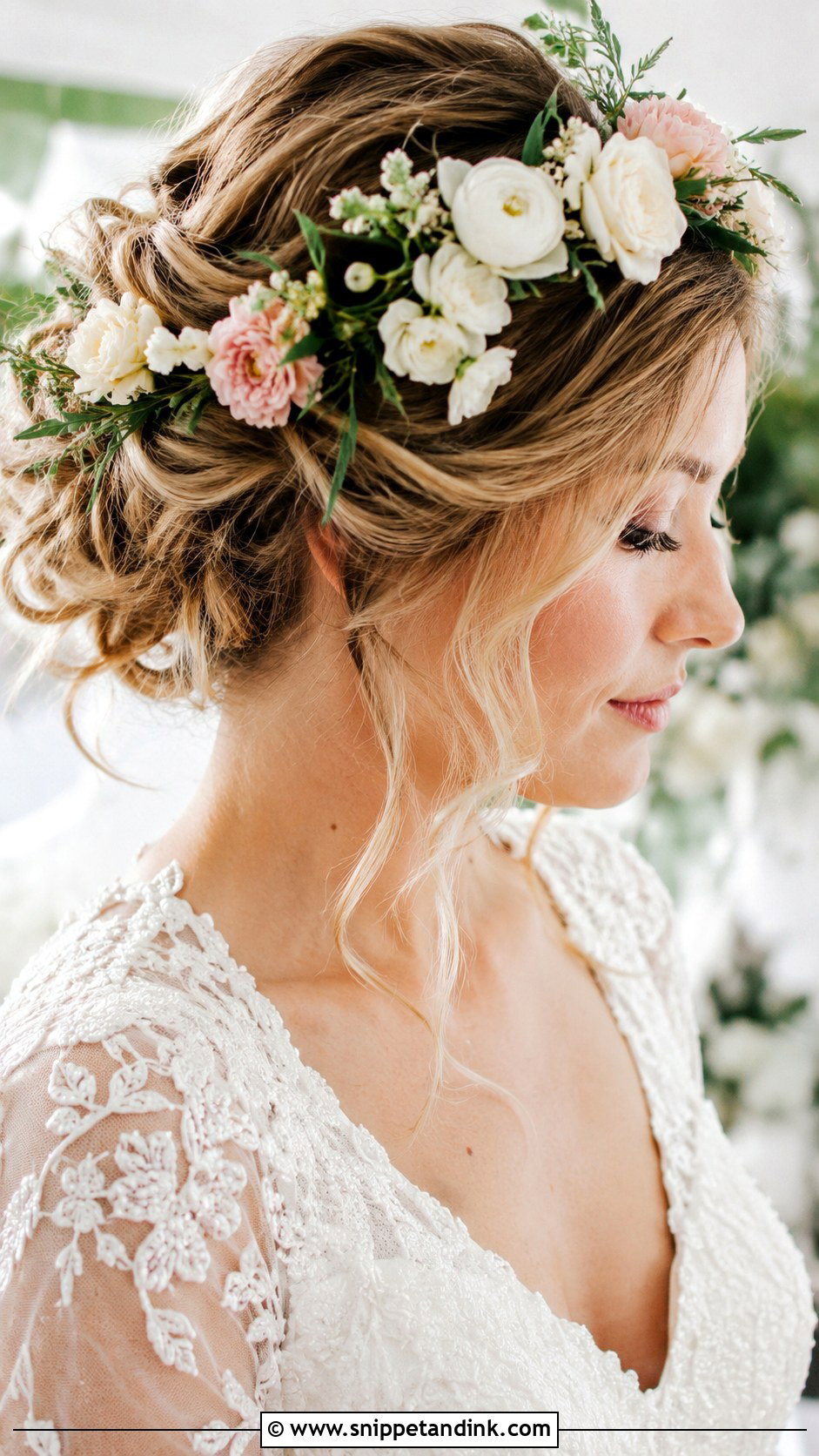
A floral crown sits on top of a finished updo, so the hair underneath should be secure on its own. I pin the crown in place with bobby pins hooked through the wire base, not just resting on the hair. Hardy blooms last better than delicate ones in heat, and the florist should keep the crown chilled until the last moment. Matching it to your bouquet keeps the whole look consistent.
Pins, Padding and What’s Hidden Inside an Updo
Most bridal updos have more structure inside than people realize. That structure is what keeps the shape from sliding for twelve hours.
The supports
Fine or short hair often needs a hair donut, a small padded roll or a clip-in weft to give the bun size. I match the padding to your hair color so it disappears even if a strand lifts. Thick hair rarely needs padding, but it often needs to be split into sections so the knot doesn’t become heavy.
The pins
Bobby pins grip; U-shaped hairpins shape. I use both, and I spray the bobby pins with dry texture spray first so they hold on smooth hair. Cross-pinning, where two pins form an X, is what keeps a twist from unrolling. Ask your stylist for a few spares in your color for the day.
The hair you bring
Hair washed the day before grips far better than hair washed that morning, which is slippery and harder to hold. Skip conditioner on the roots, arrive with hair fully dry, and don’t apply oil. That one change makes more difference to how long an updo lasts than any hairspray.
Will It Still Look Right Twelve Hours Later?
The right updo depends on your hair’s length and texture, your neckline and where your veil needs to sit, more than on any single photo. Bring a few inspiration images to your trial, mention any accessories you plan to wear, and ask your stylist how the style behaves in your weather. That is how an updo makes it from the morning chair to the last song still looking the way it did in the mirror.
You'll Like These Ideas:


Leave a Reply