
Haldi is the one wedding function where the bride is supposed to get messy, and that changes how I dress her. The paste lands on arms, feet, neck and anything within reach, she spends most of the ritual sitting low, and the photos are taken at close range. The looks below lean on light lehengas, organza sarees, sharara sets, gota patti and mirror work, in colors from butter yellow to lime and ivory. These are the Indian bridal haldi outfit ideas I’d actually put a bride in, with notes on how each one behaves once the turmeric comes out.

Where the Paste Lands Decides the Outfit
Before I suggest a single color, I ask how the family does the haldi. In most homes the paste goes on the face, neck, arms, hands and feet, and in some it ends with a bucket of water or a playful smear that reaches the hair. Each of those habits settles a question about the outfit.
- Sleeves: sleeveless, cap or elbow length lets relatives reach your upper arms without pushing fabric up.
- Neckline: a slightly wider neck keeps paste off the blouse when it is applied to your collarbone.
- Hem: anything that pools on the floor will sit in the drips, so ankle length is the practical choice.
- Sitting: you will probably be on a low chowki or cushion for a long stretch, so try the outfit sitting cross-legged before the final fitting.
- Water: if the ceremony ends wet, choose a darker or printed fabric with a lining, because light cotton and georgette turn sheer.
Fabrics I trust on a haldi morning
Cotton, cotton silk, chanderi and georgette are the easy ones. They are light, they breathe in a hot courtyard, and they are either washable or inexpensive enough to sacrifice. Organza holds its shape but water-spots. Heavy pure silk and zari look rich and are the hardest of all to clean. If you have your heart set on something precious, wear it for portraits first and change before the paste comes out.
1. Yellow Haldi Lehenga
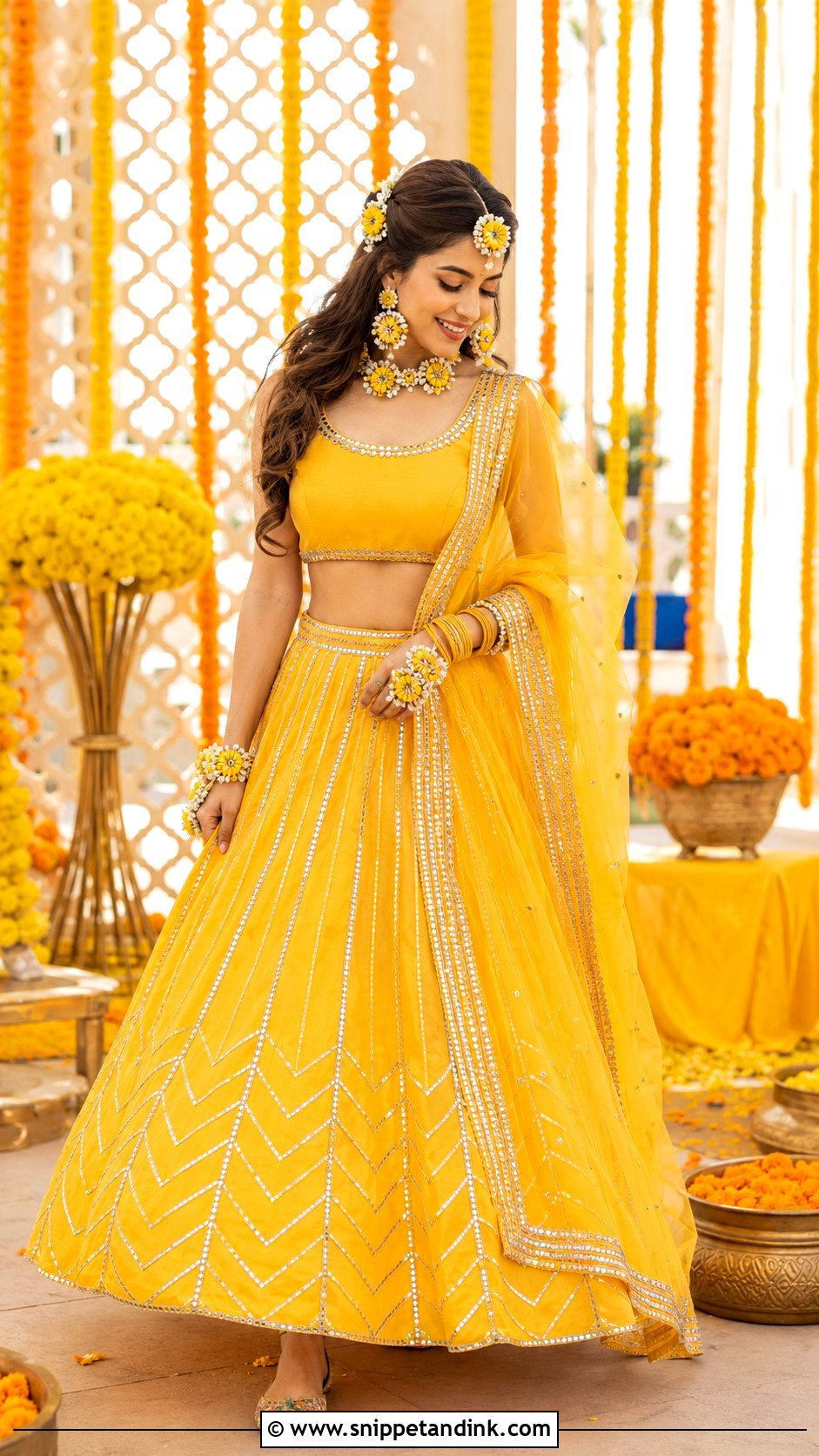
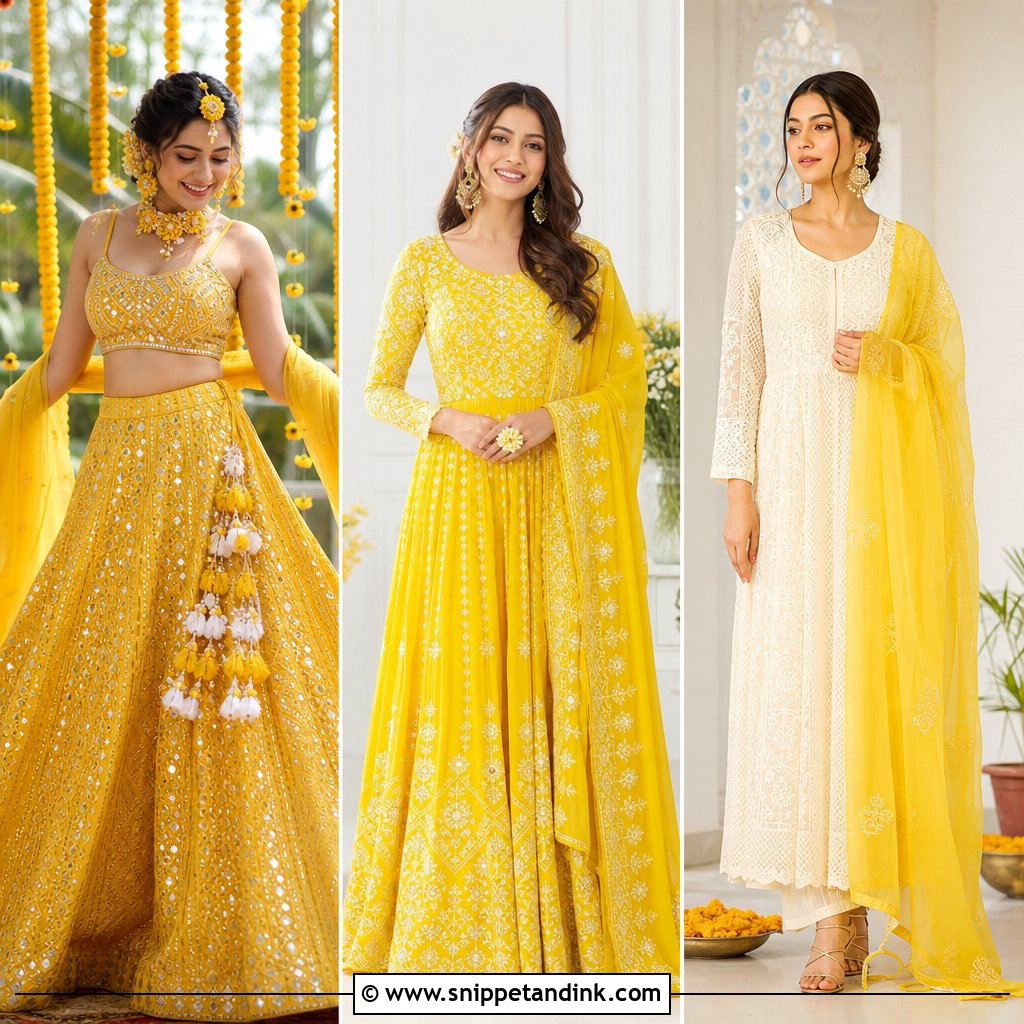
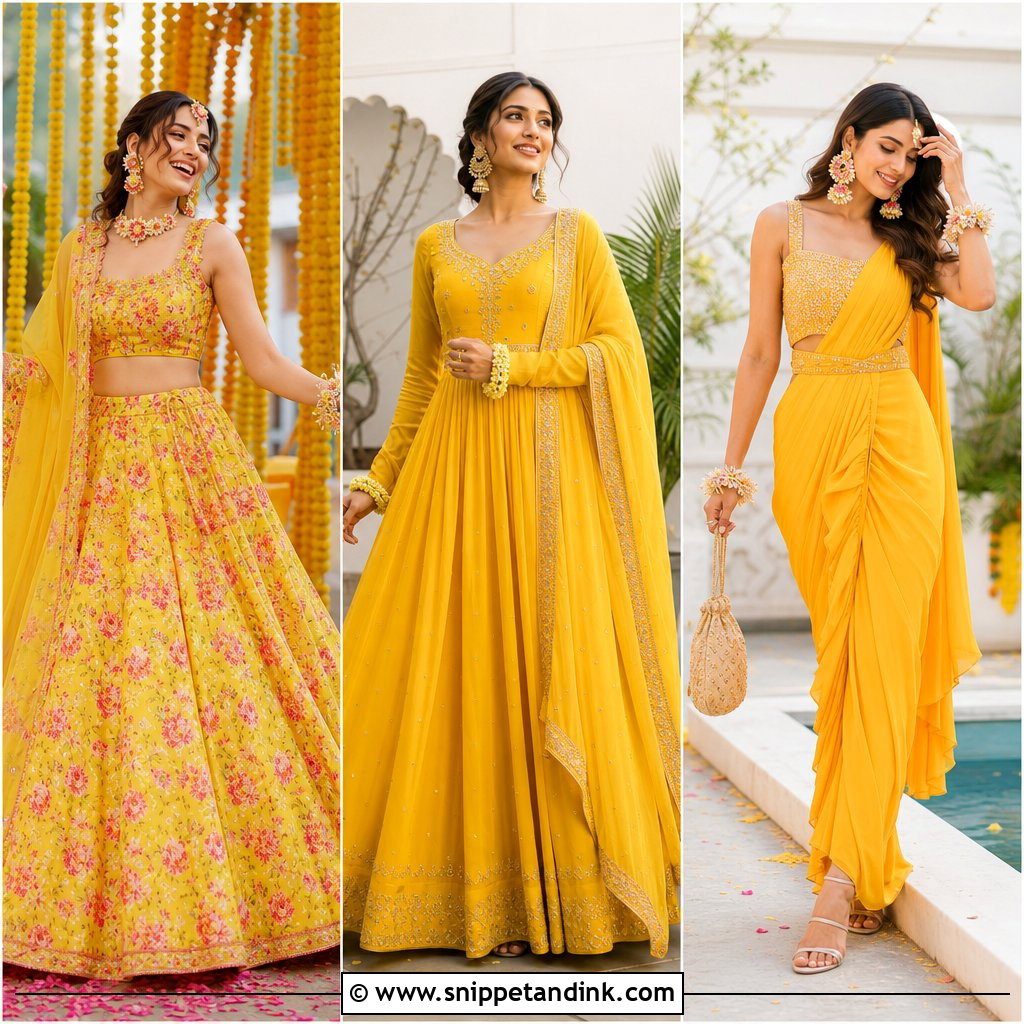
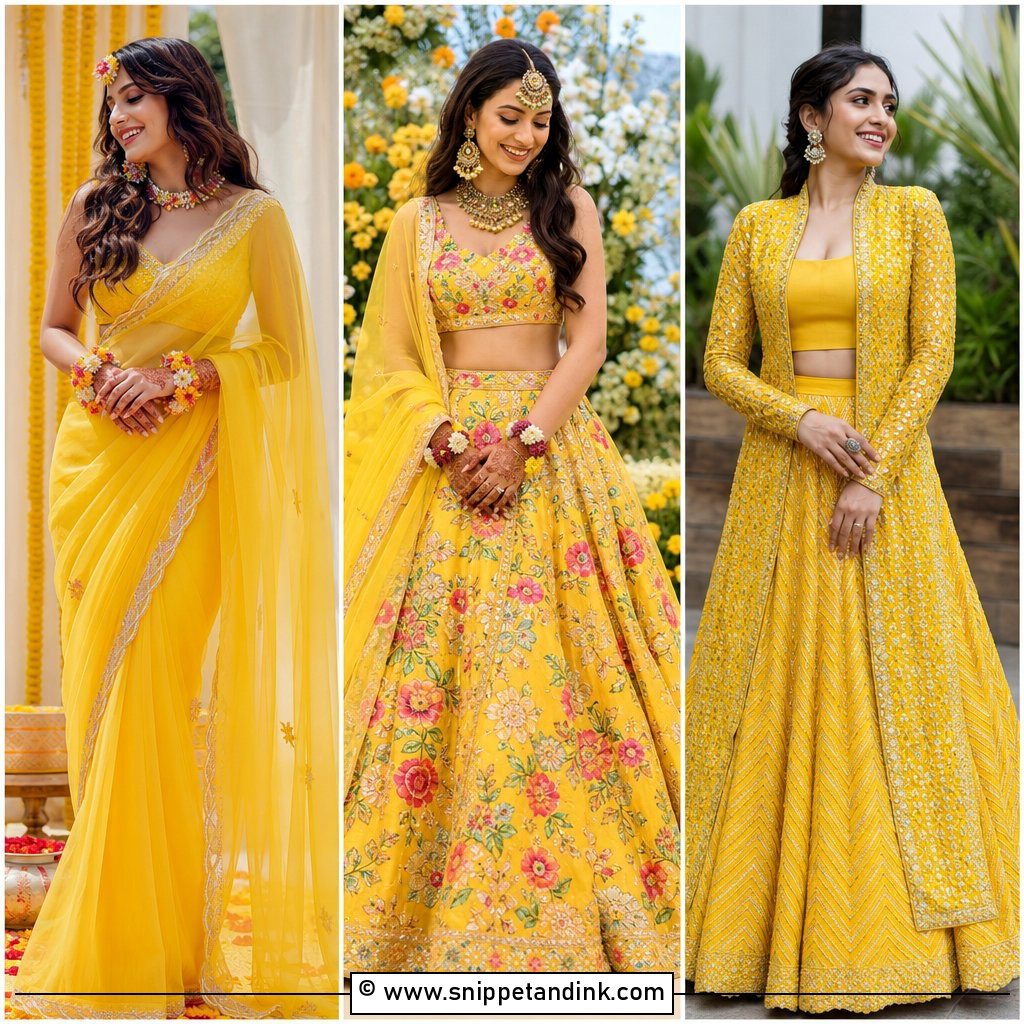
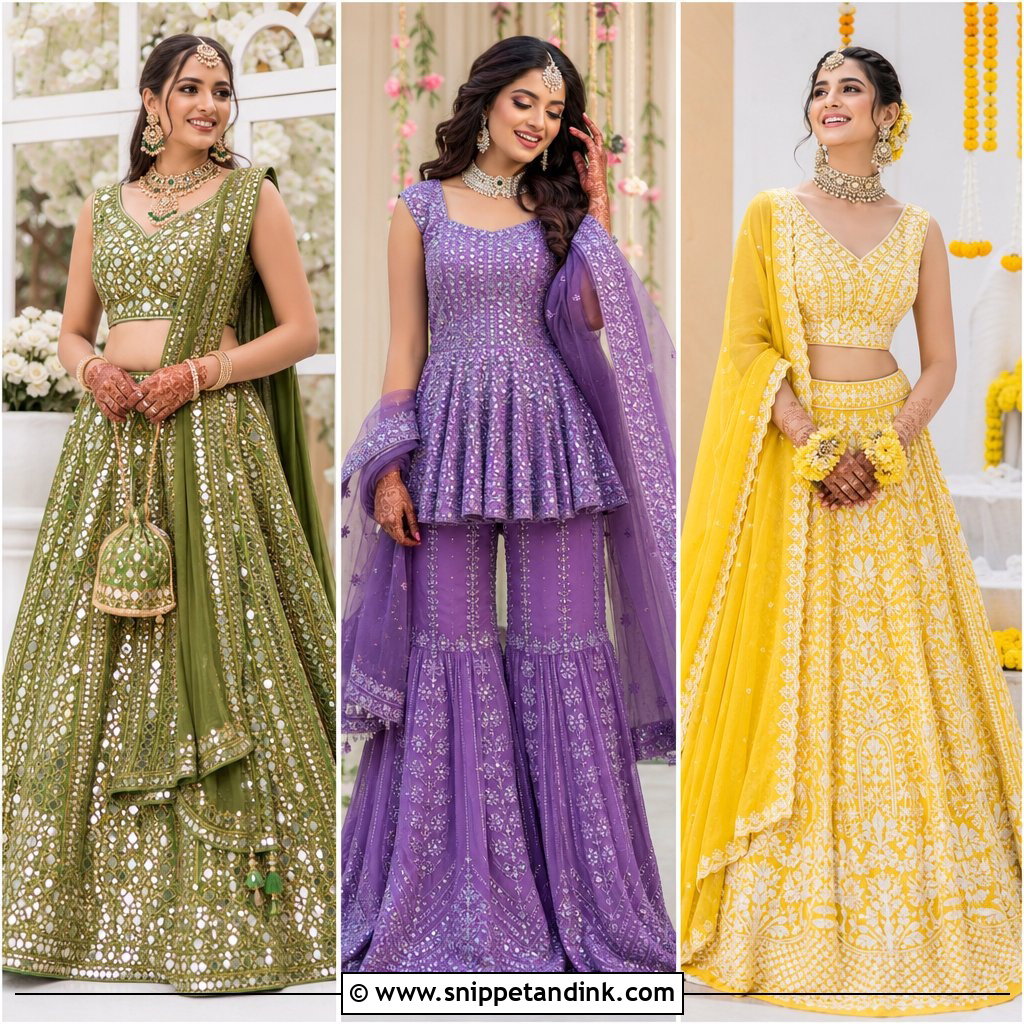
The classic, and for a practical reason: yellow hides turmeric better than any other color. A splash that would ruin ivory simply disappears into mustard or marigold georgette. I still steer brides toward georgette, cotton silk or chanderi over heavy silk, because the skirt will spend an hour folded under you on a low stool. Keep the embroidery to gota patti or small thread motifs and choose a sleeveless or short-sleeve blouse so relatives can reach your arms. Floral jewelry, juttis and dewy makeup finish it.
2. White And Yellow Haldi Lehenga
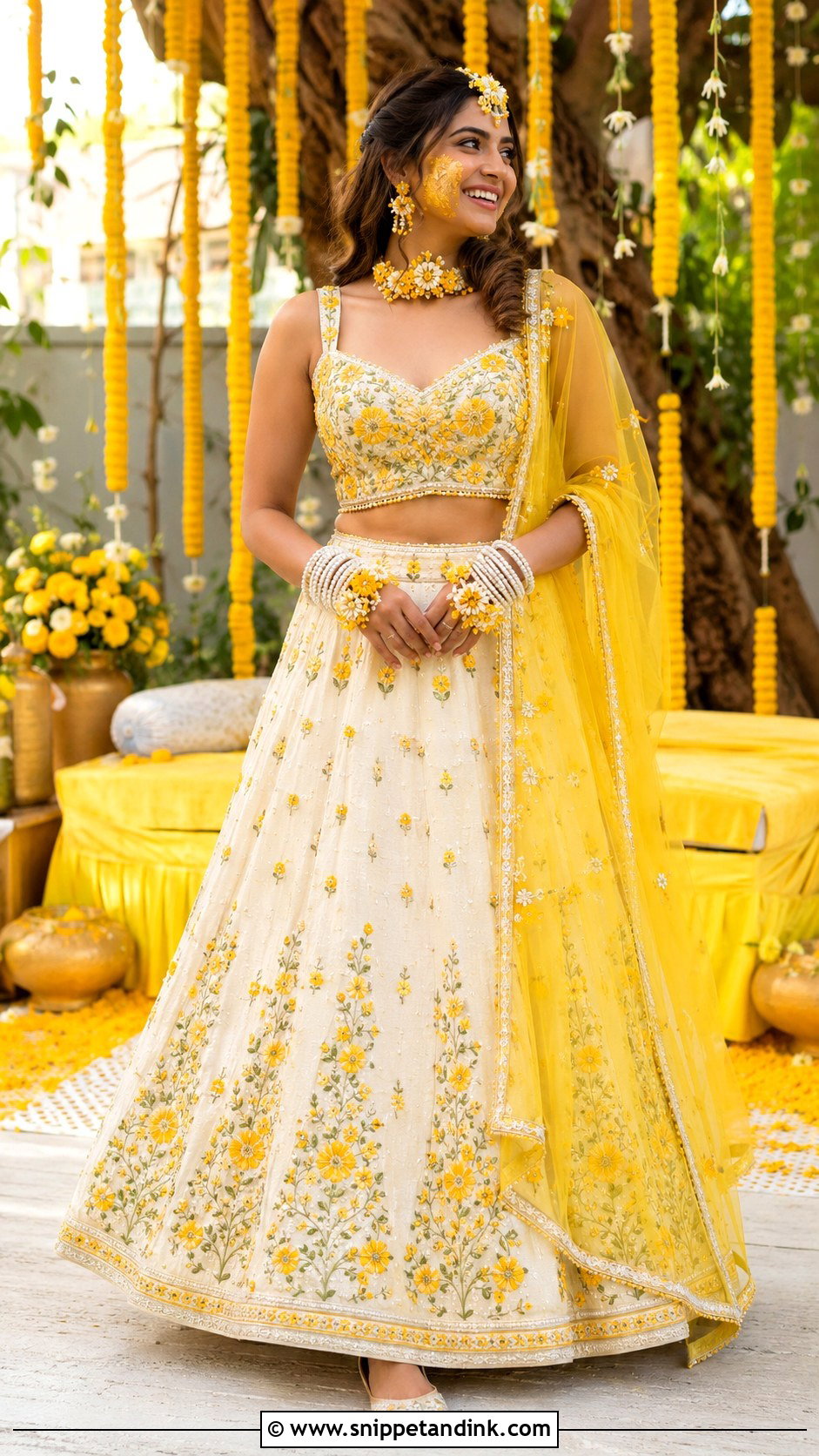
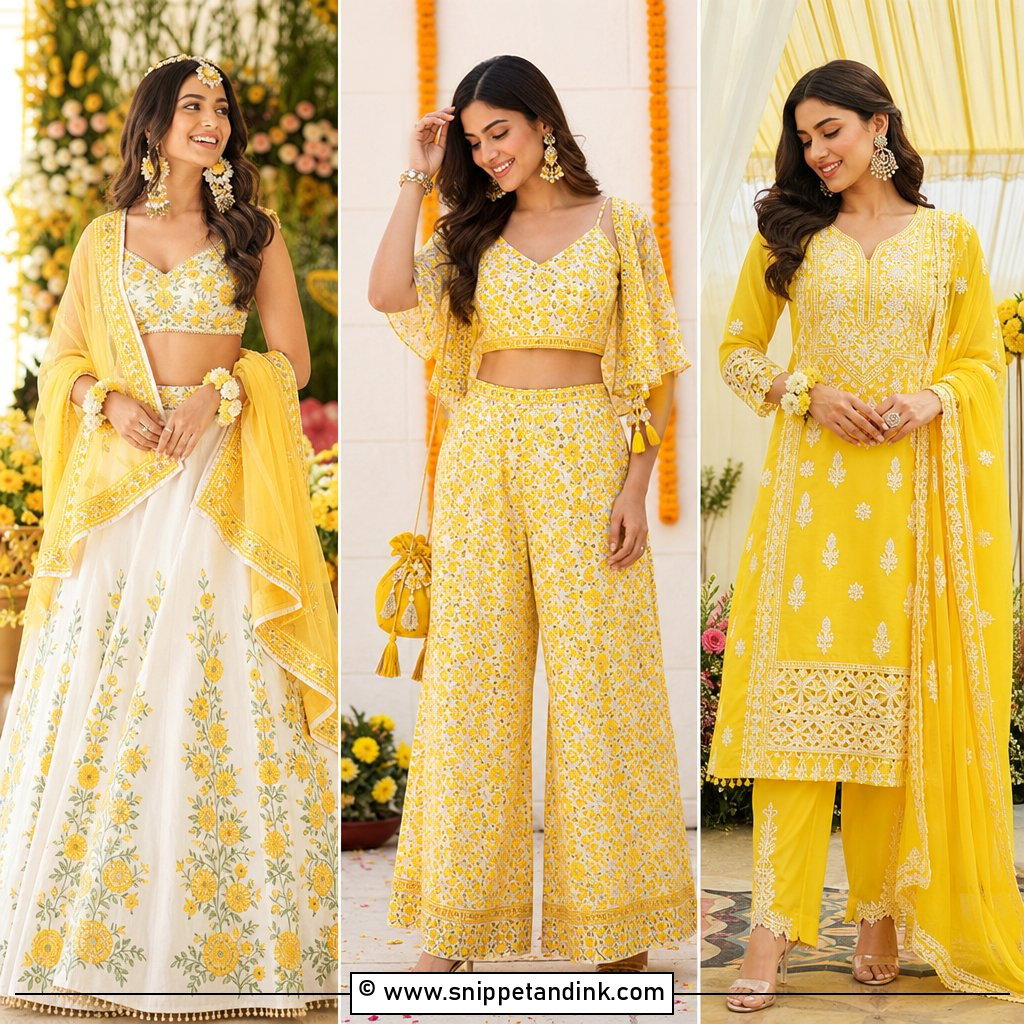
This is the one I’d plan carefully. A white base with yellow borders or a sunshine dupatta reads fresh at a daytime garden or poolside haldi, but wet white cotton turns see-through, and turmeric on white is the hardest stain to shift. I ask brides to choose a lined skirt and a fabric cheap enough that a permanent mark won’t hurt. Yellow floral jewelry, pearl accents, stacked bangles and a statement maang tikka bring it back to bridal, with nude juttis underneath.
3. Mustard Haldi Sharara Set
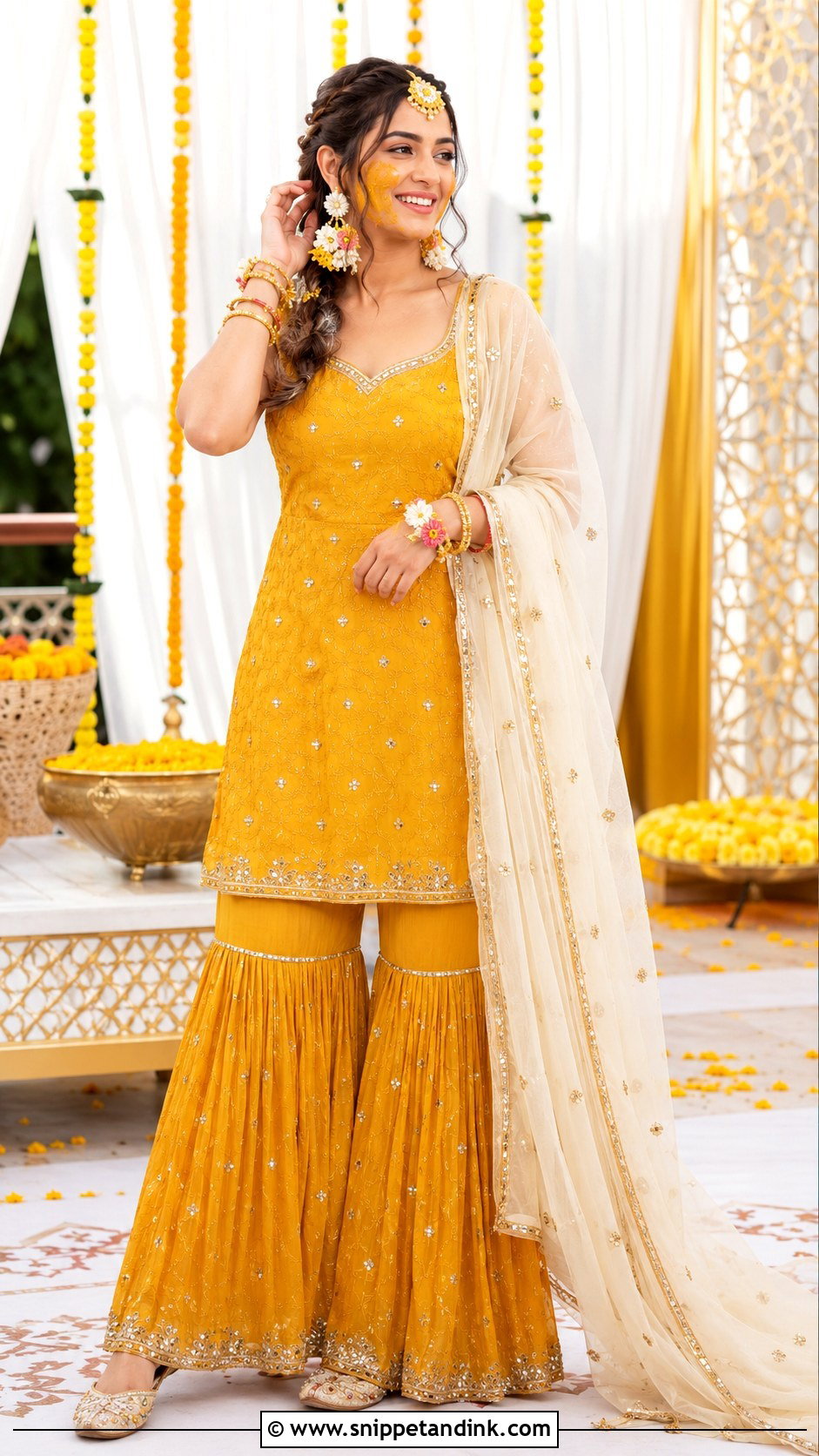
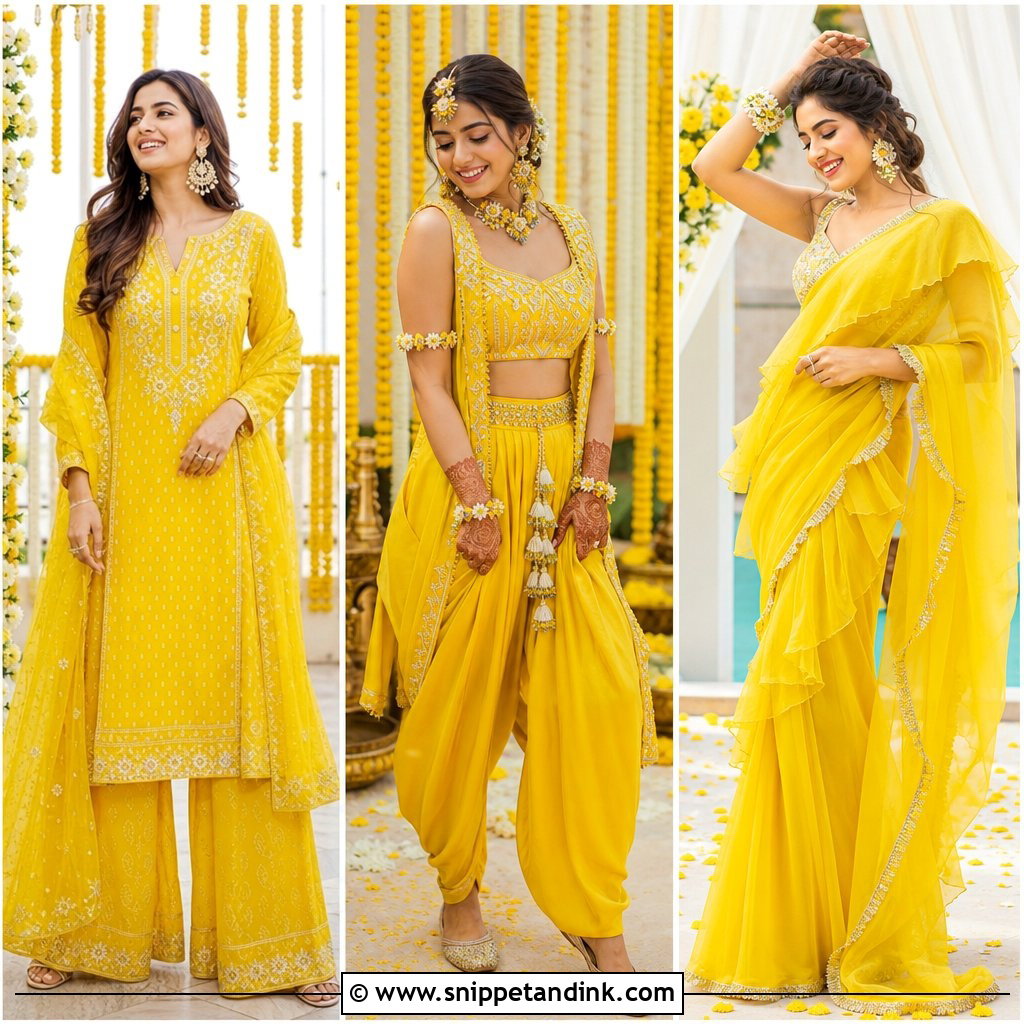
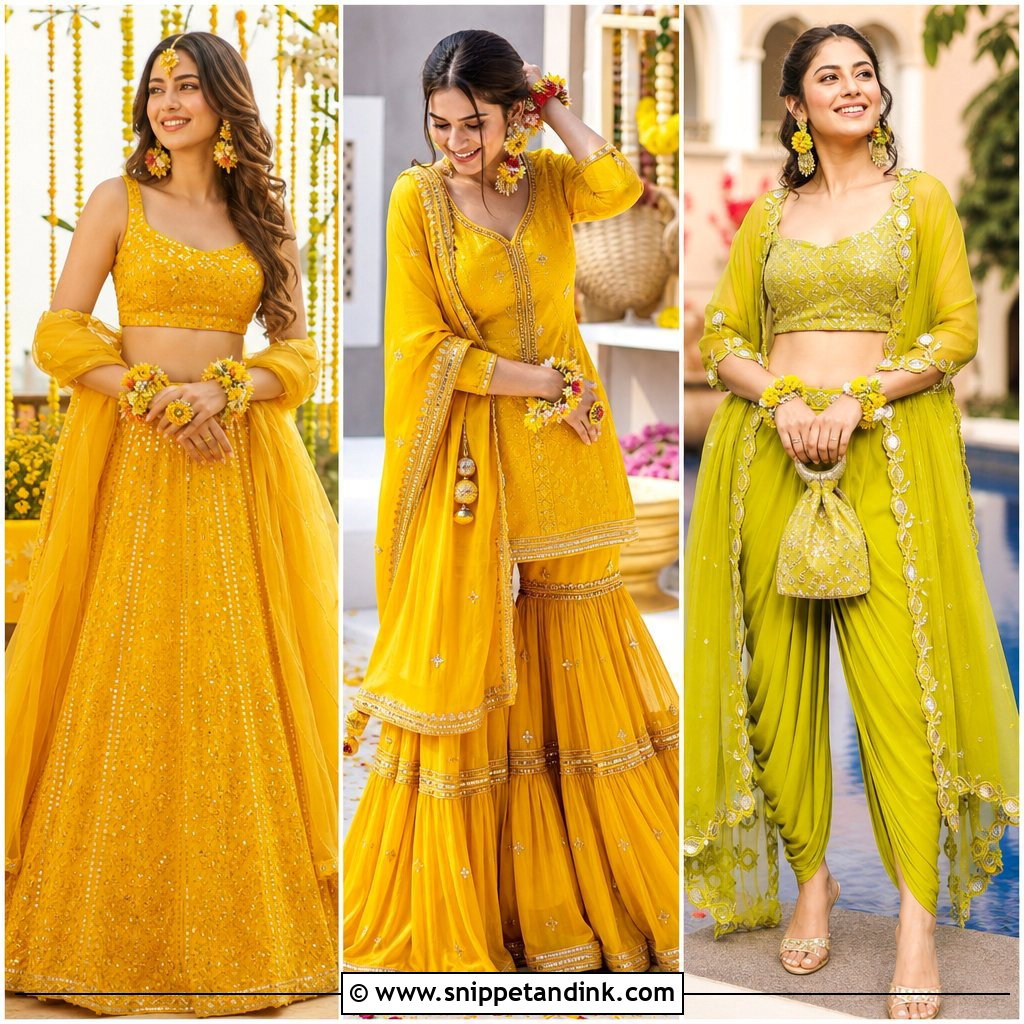
Mustard is deeper than haldi yellow, and on warmer and deeper skin tones I find it more flattering than pale lemon, which can wash a complexion out in harsh midday light. The flared sharara is also far easier to sit cross-legged in than a lehenga. I pair a short kurti with mirror work or zari edging and a contrast dupatta in orange or rani pink. A passa, floral earrings, soft curls and embellished juttis keep you clearly the bride in a crowd of yellow-wearing cousins.
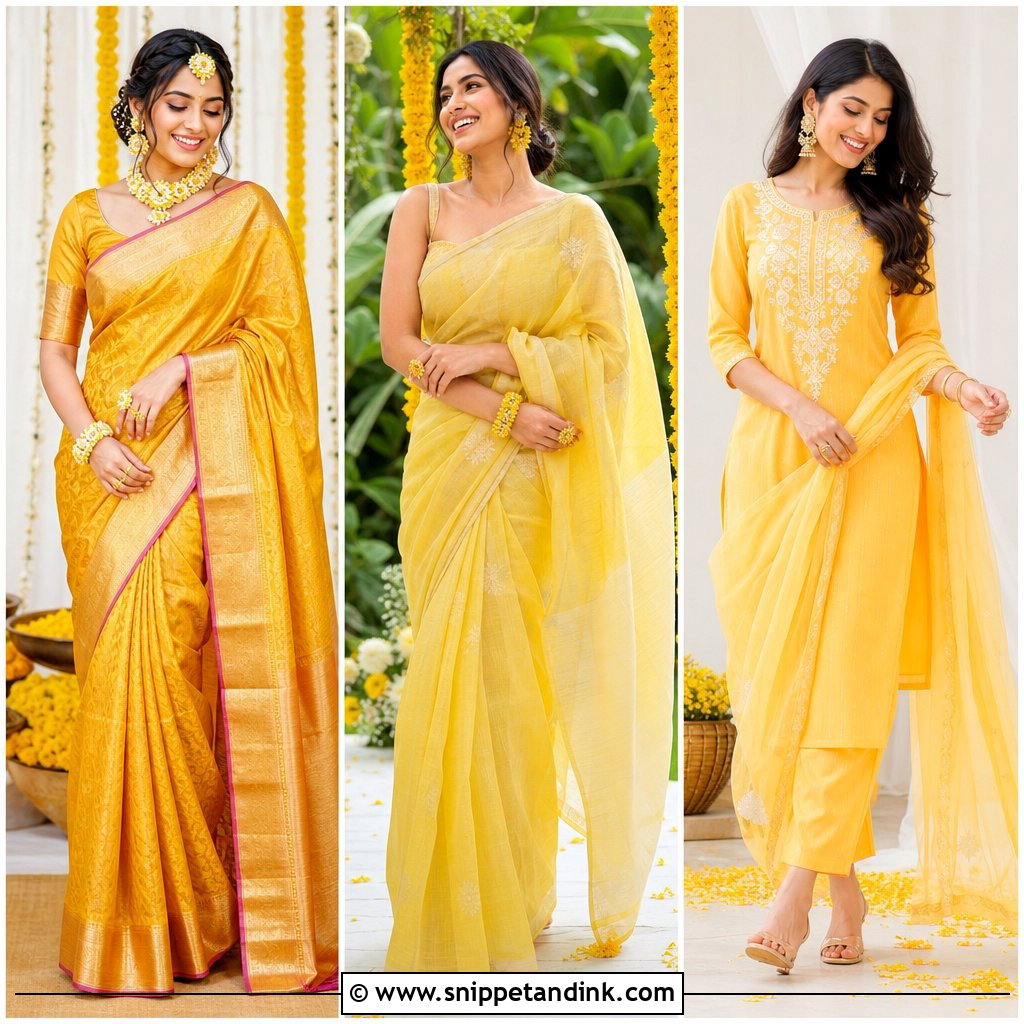
4. Floral Haldi Saree
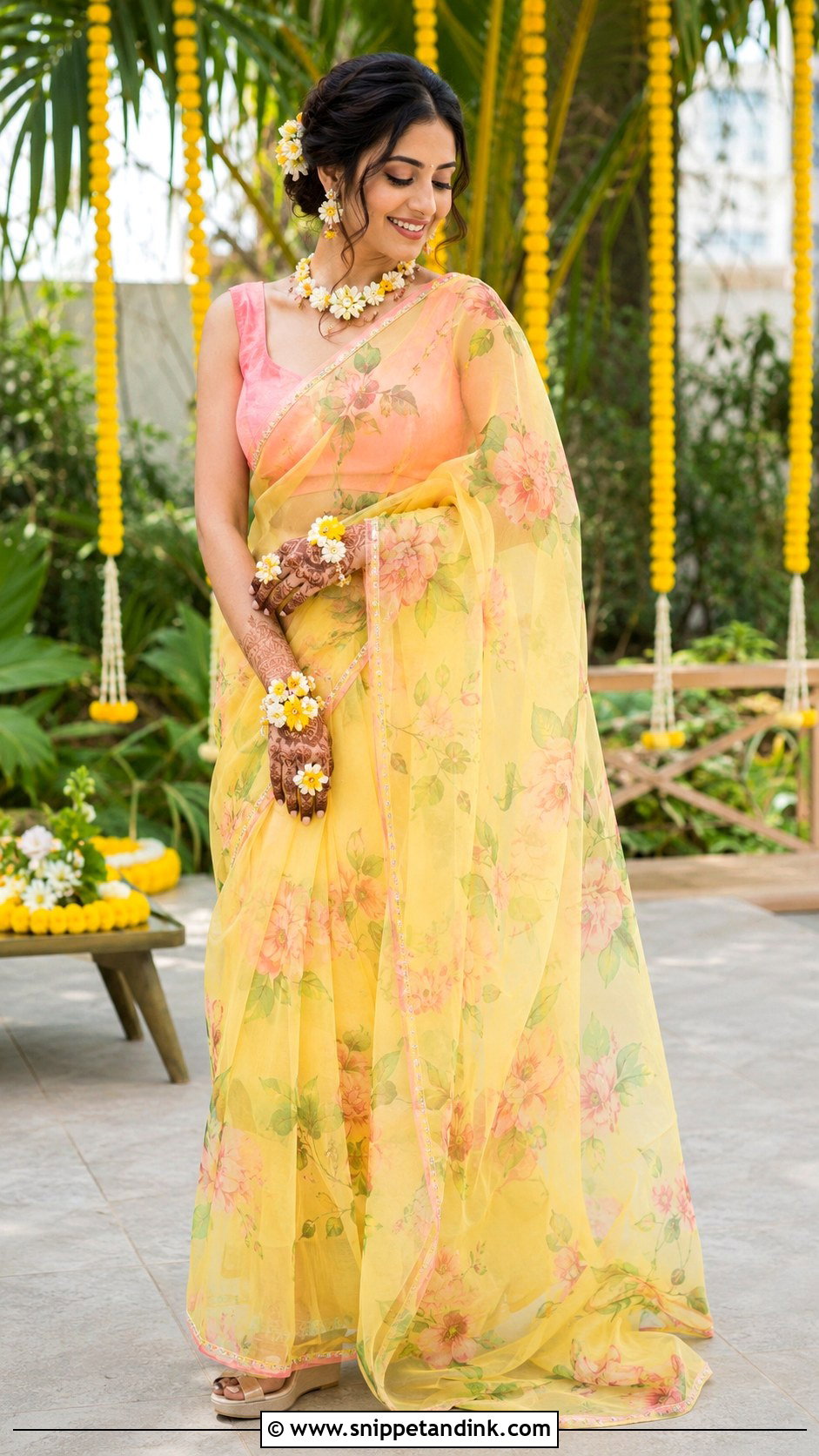
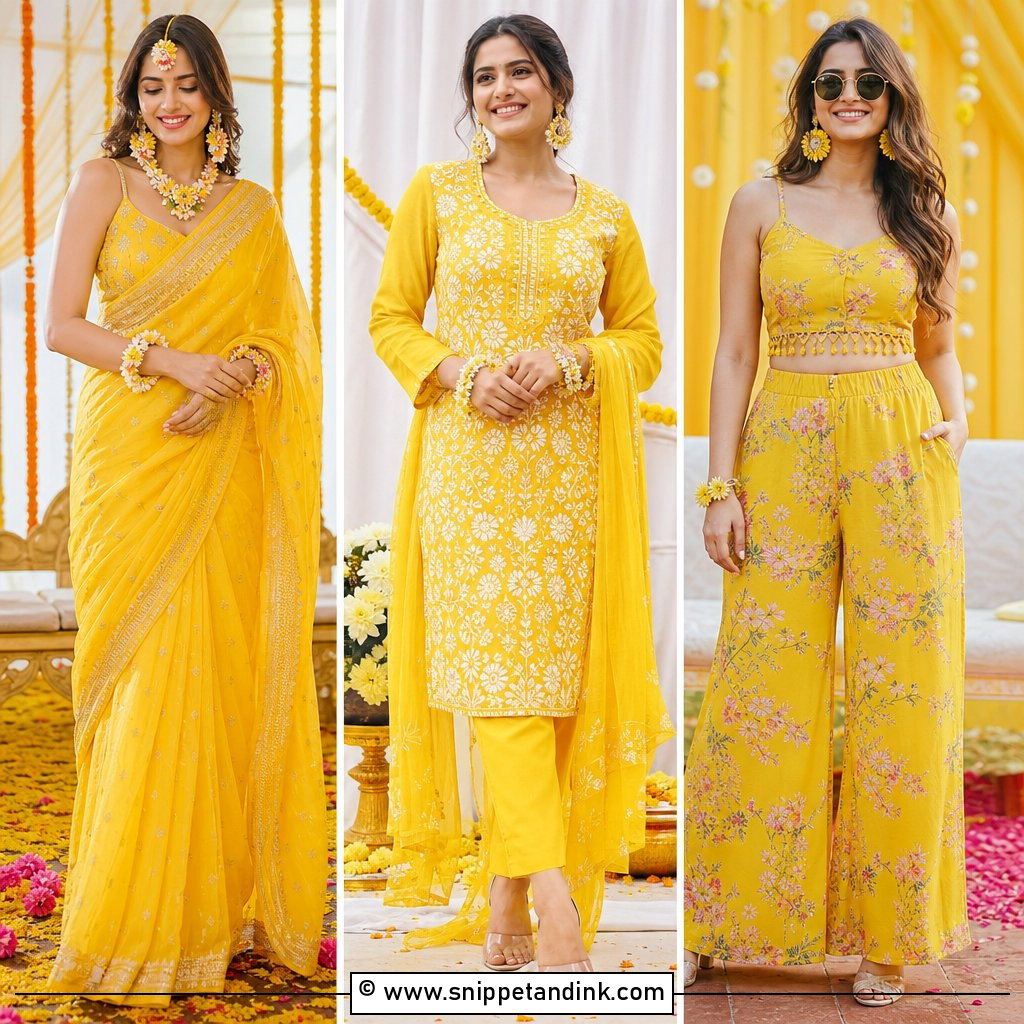
The softest look here, and the print quietly does a job: florals camouflage turmeric splashes far better than a plain weave. What I watch is the pleats. Sitting on a low stool pulls them apart, so I pin them at the waist and pin the pallu to the blouse at the shoulder. Organza, chiffon or georgette keeps it light, and a contrast blouse in lime or hot pink makes it feel current. Flats, flower jewelry and a sleek bun with fresh blooms suit it.
5. Yellow Haldi Saree With Pink Blouse
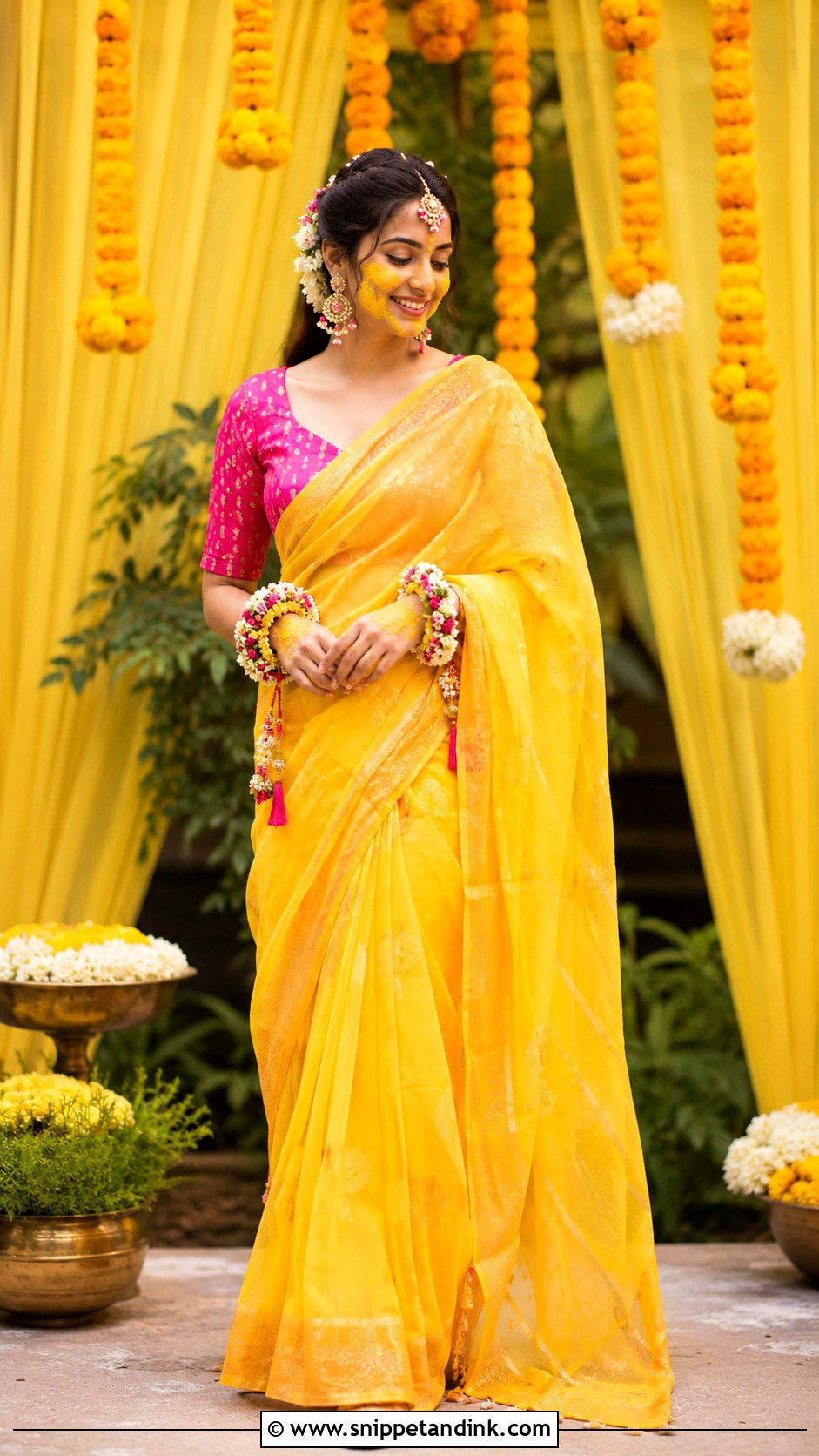
Yellow with rani pink is the pairing I reach for when a bride wants color without fuss. The pink blouse puts a strong shade right beside the face, which lifts the skin in photos far more than a matching yellow blouse would. Plain silk, printed georgette and lightly embroidered organza all take it well. Floral bangles, kundan earrings, a small bindi and fresh flowers in the hair are enough.
6. Lime Green Haldi Lehenga
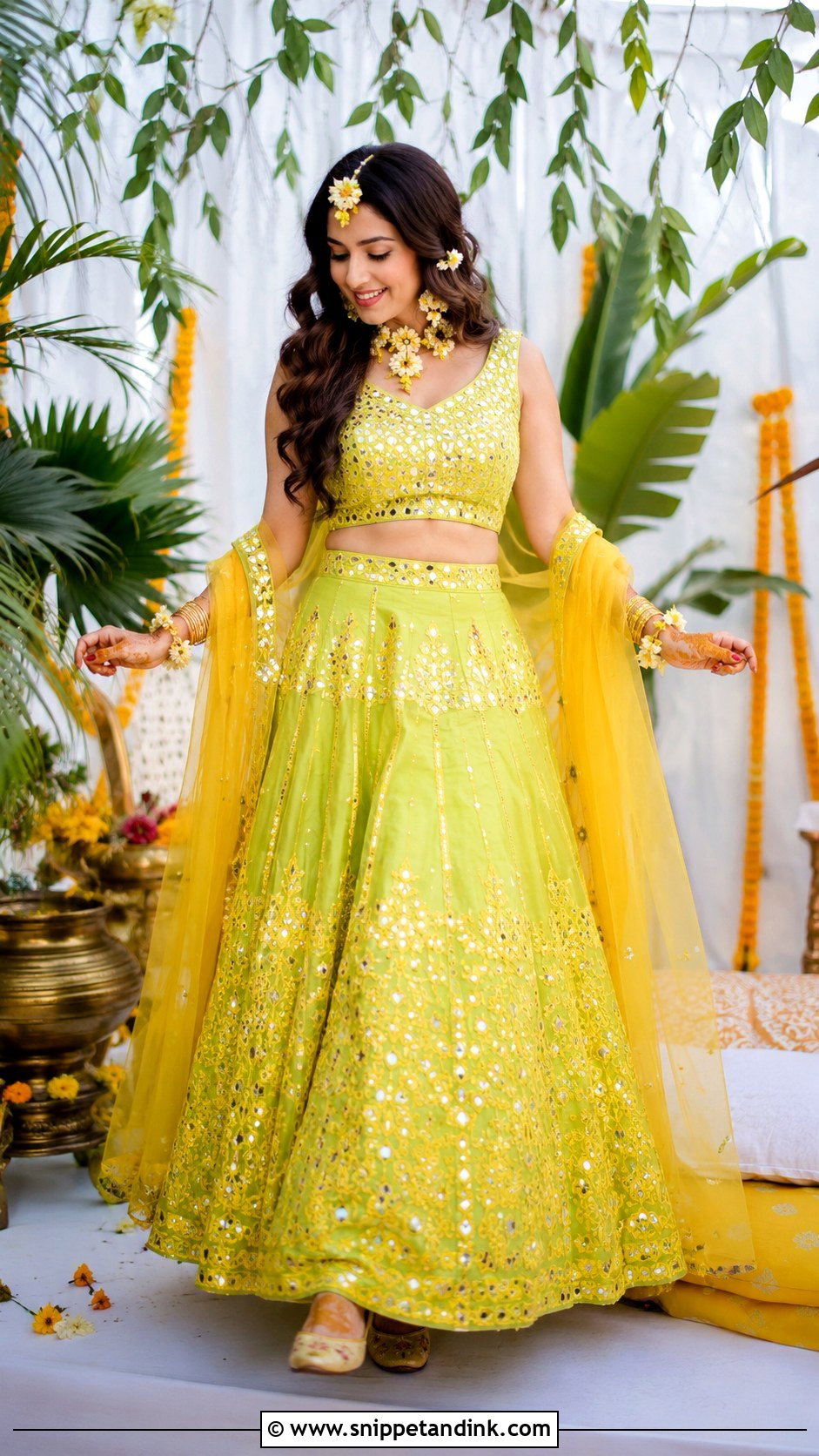
Lime green suits the bride who wants to stand apart from a room full of yellow. Turmeric shows more on lime than on mustard, though, so I’d choose a lehenga with yellow embroidery, mirror work or a floral print that already carries some yellow and lets a stray smudge look intentional. Against marigolds and banana leaves it reads very fresh. Keep the blouse fitted, the skirt light and the accessories gold-toned.
7. Yellow Haldi Anarkali Suit
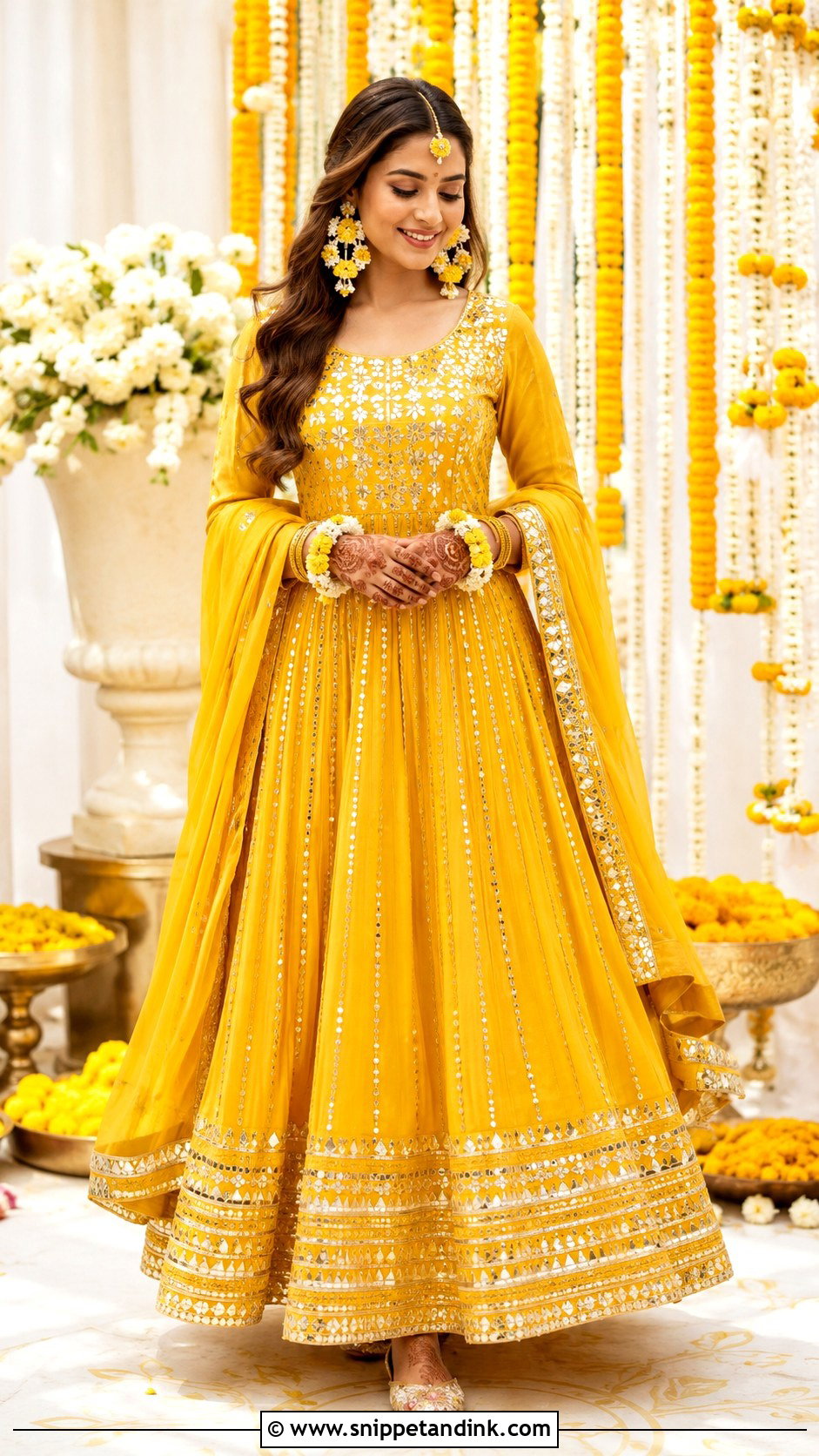
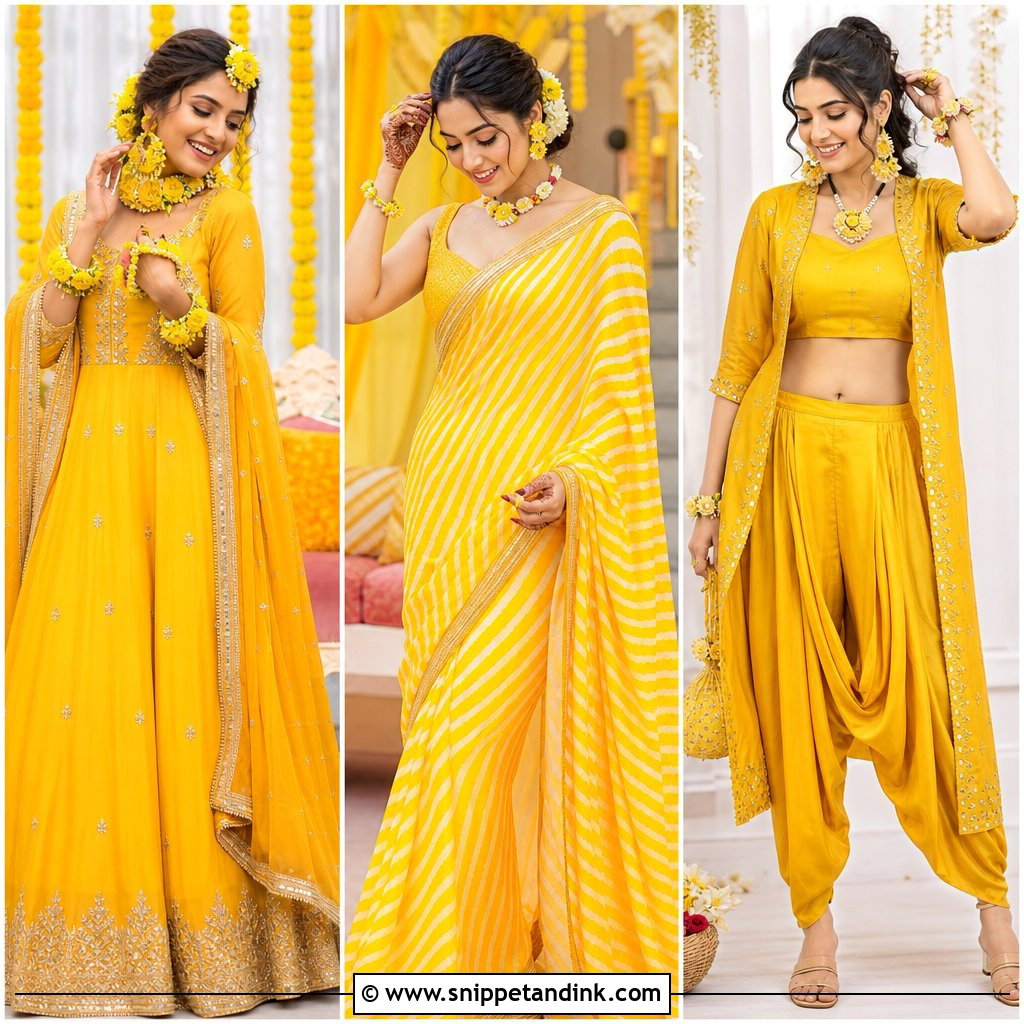
A floor-length yellow haldi anarkali suit is my answer when a bride wants coverage and no drape to manage. One thing to know before you commit: the full flare spreads across the floor when you sit, so it collects the paste and water that drip off you. I’d have it hemmed an inch above the floor for haldi rather than letting it pool. Cotton silk, chanderi or georgette with gota patti stays comfortable, and a light dupatta, maang tikka and fresh flowers keep it bridal.
8. Yellow Haldi Gharara Set
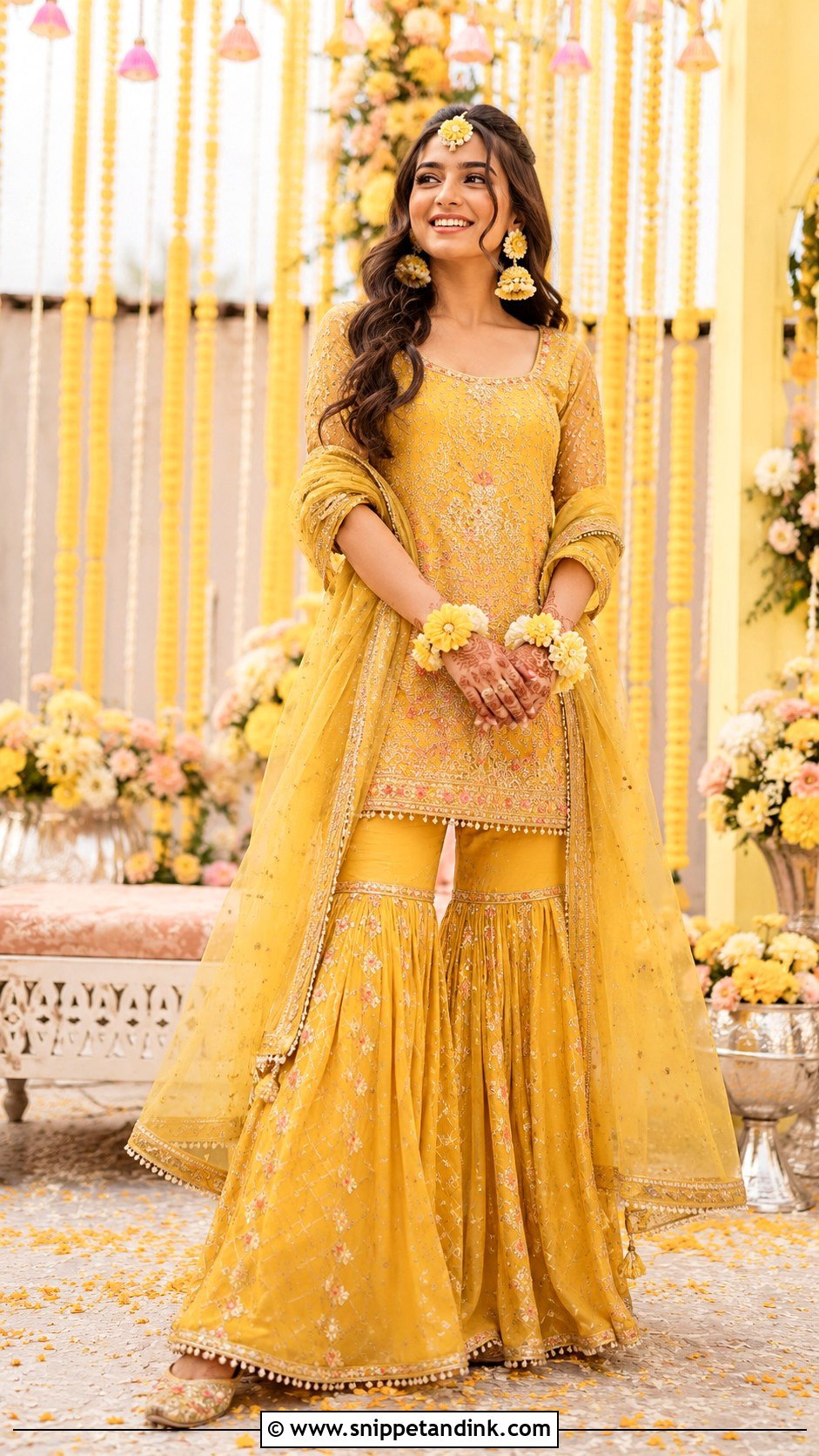
The gharara is fitted down to the knee, then flares out from a gathered joint that is usually hidden under a gota band. That joint is what I check at the trial. If it sits too high, it pulls tight across the thighs when you sit cross-legged. Pair it with a short kurti in zari or scalloped borders and a sheer dupatta. Its roots are Mughal and North Indian, so a passa, jhumkas and embroidered juttis suit it better than modern jewelry does.
9. Orange Haldi Lehenga
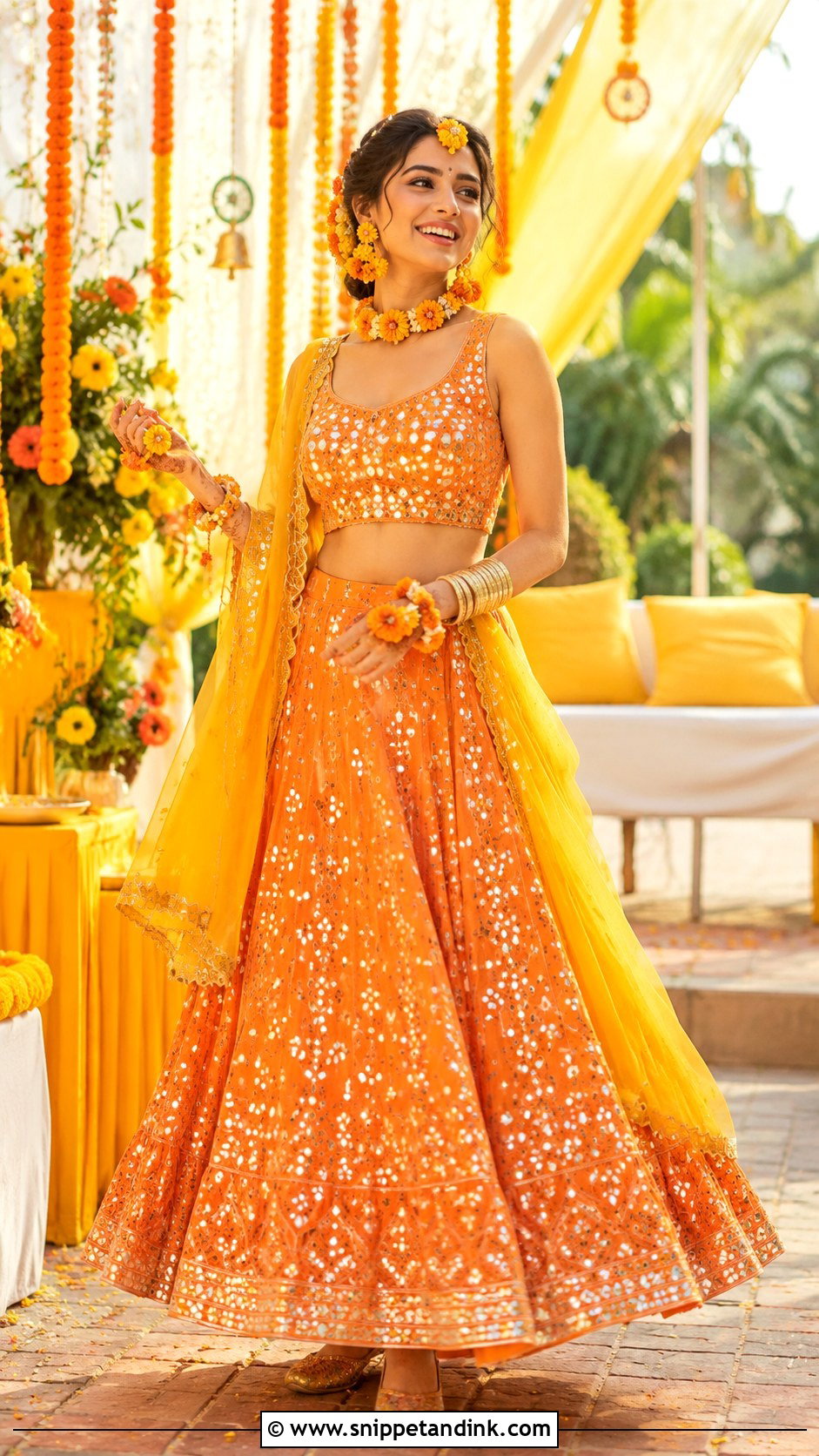
Orange sits right beside turmeric, so it hides stains nearly as well as yellow and photographs warmer. I like it in bandhani, mirror work or gota patti on a light base. A yellow dupatta softens the effect; a pink or green blouse makes it playful. Marigold-style floral jewelry and gold bangles are the natural match for a rustic or tropical outdoor setup.
10. Yellow Bandhani Haldi Outfit
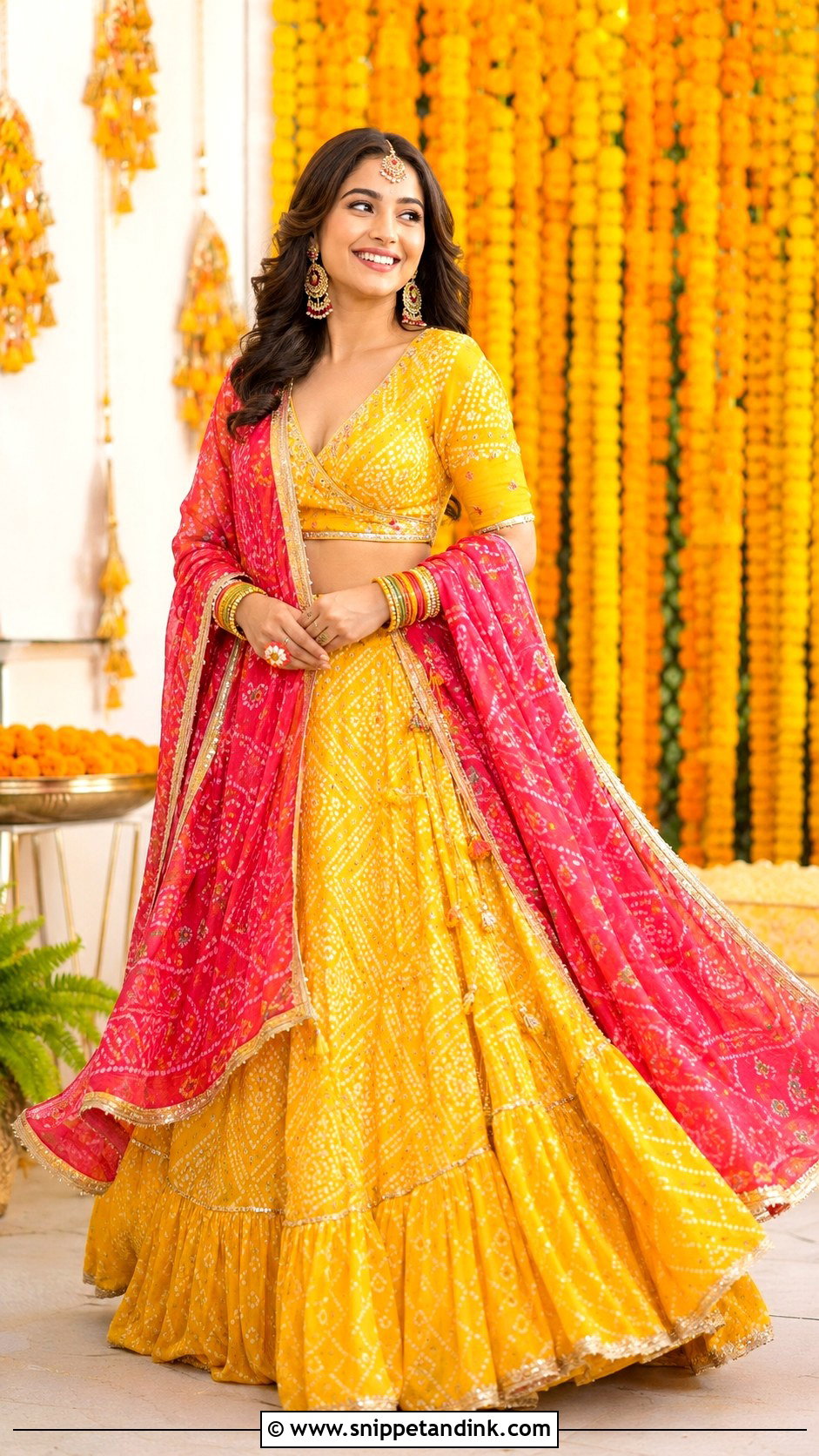
Bandhani is tied and dyed by hand, and the tiny resist dots leave a slightly crinkled texture that hides creases from sitting, which is a real plus at haldi. Wear it as a lehenga, saree, sharara or anarkali. Hand-dyed bandhani is not always colorfast, so I tell brides to expect some bleeding if it gets soaked and to keep it away from a white blouse. A yellow base with red or pink dots carries kundan earrings, glass bangles and a maang tikka well. With a print this busy, keep the silhouette clean.
11. Ivory Haldi Lehenga With Yellow Dupatta
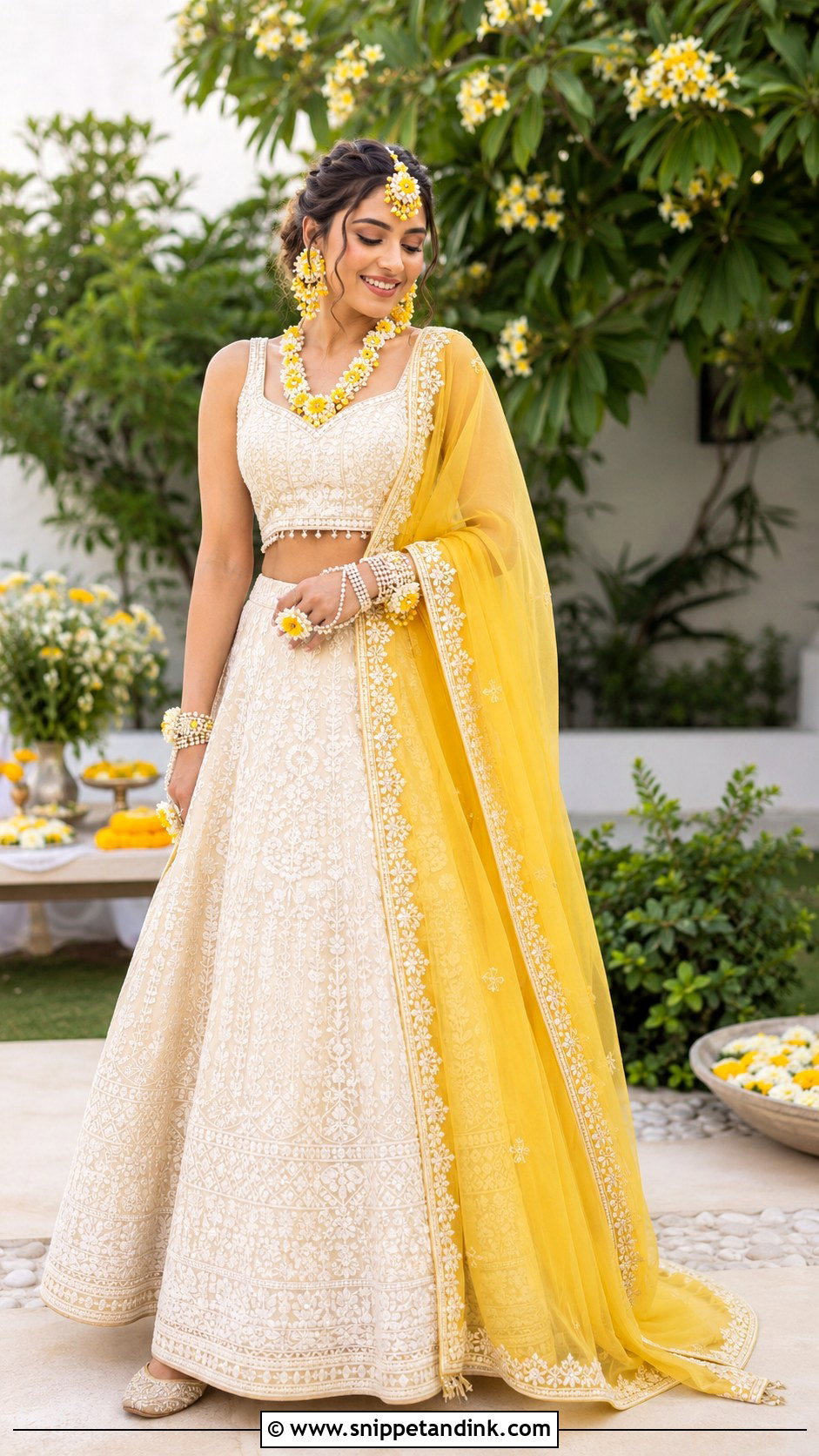
I love ivory with a yellow dupatta, but I’ll be honest about the risk: ivory holds turmeric for good. Chikankari, mirror work or subtle gota gives the base texture, and the yellow dupatta ties it to the ceremony. My usual compromise is to wear it for portraits and the opening of the ritual, then change into something darker before the paste gets serious. Yellow and white flowers, pearls and soft makeup suit it.
12. Yellow Chikankari Haldi Kurta Set
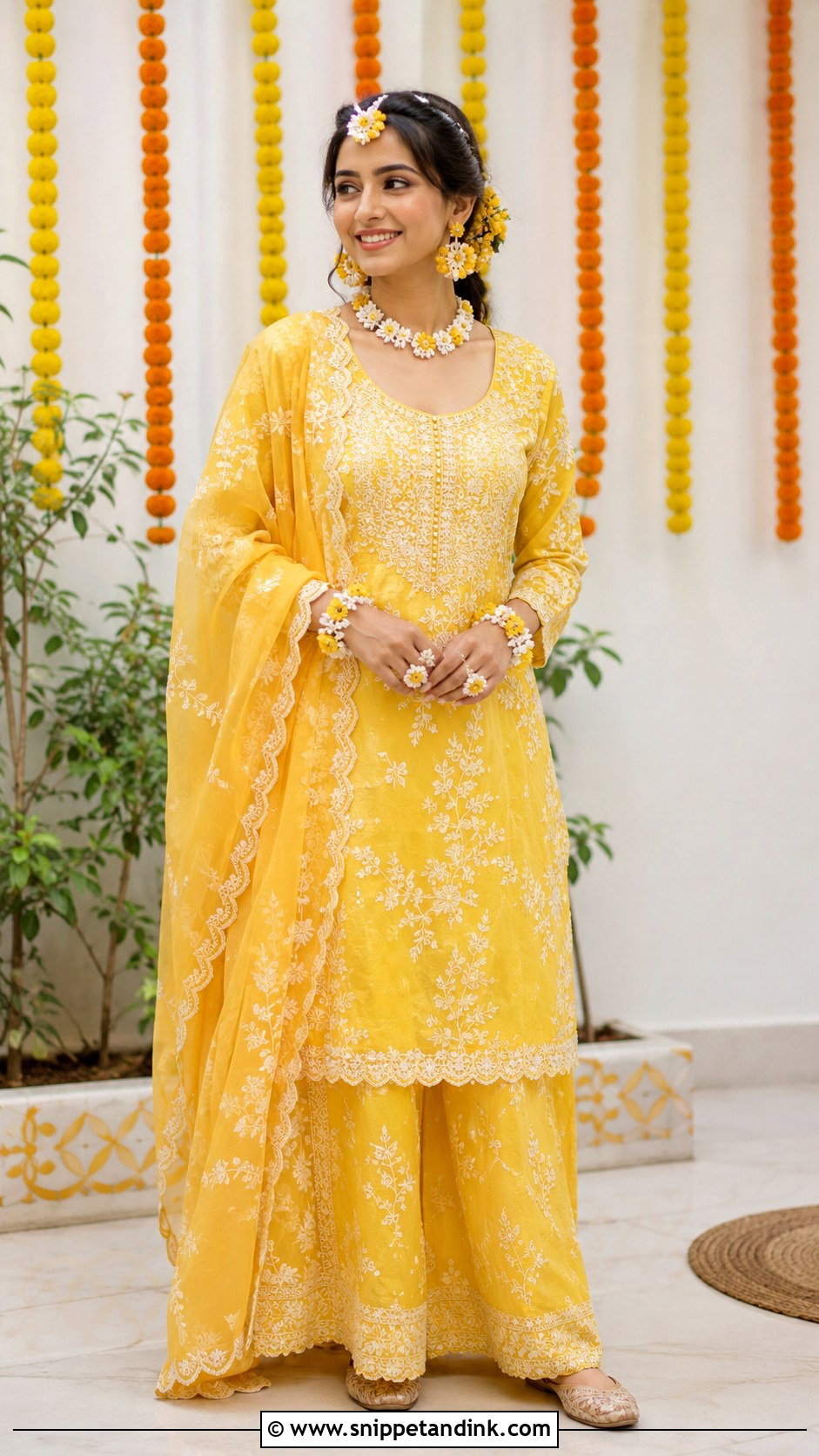
Chikankari is hand embroidery on fine cotton or georgette, so it breathes better than almost anything else here, and cotton chikankari is one of the few haldi outfits that genuinely washes clean. A long kurta with palazzos or a sharara, plus a dupatta edged in lace or gota, is all it needs. It suits an intimate haldi at home, and it is an outfit you will actually wear again afterwards.
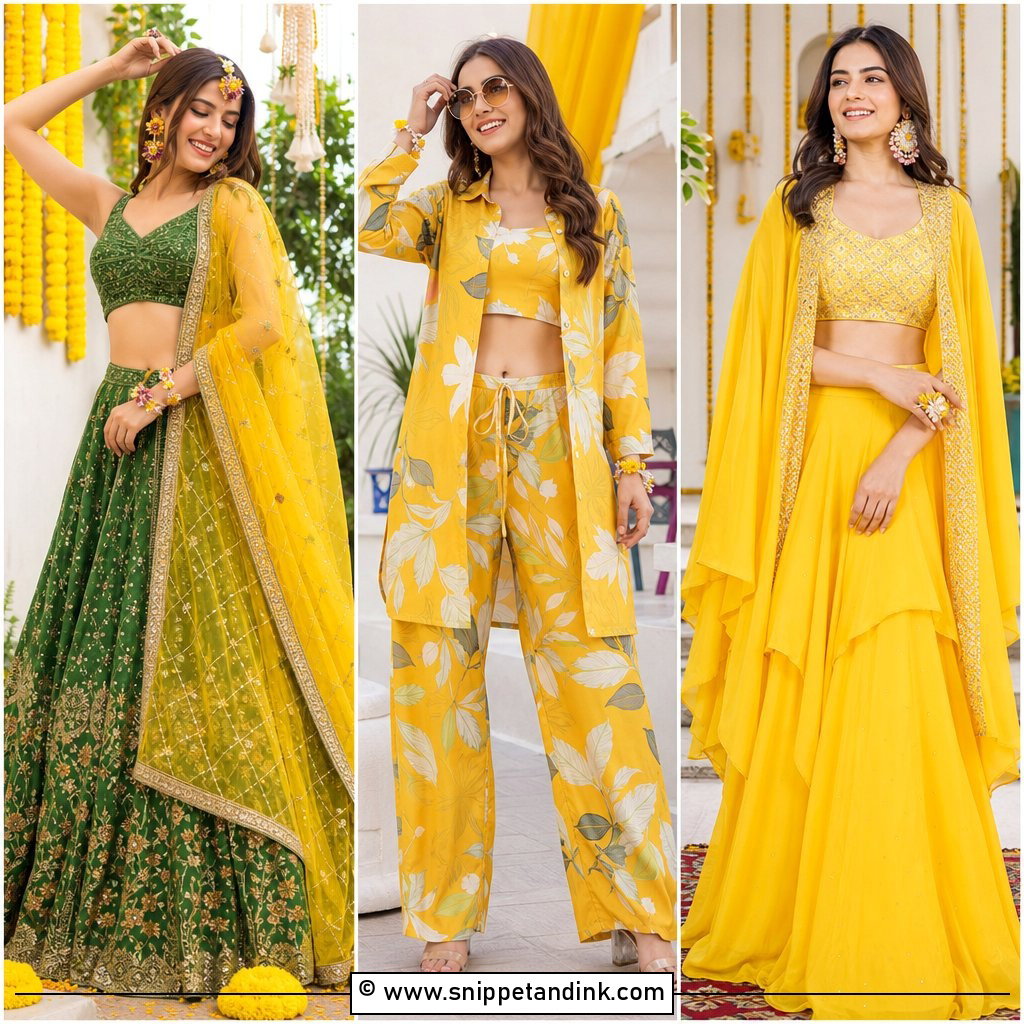
13. Yellow Haldi Palazzo Set
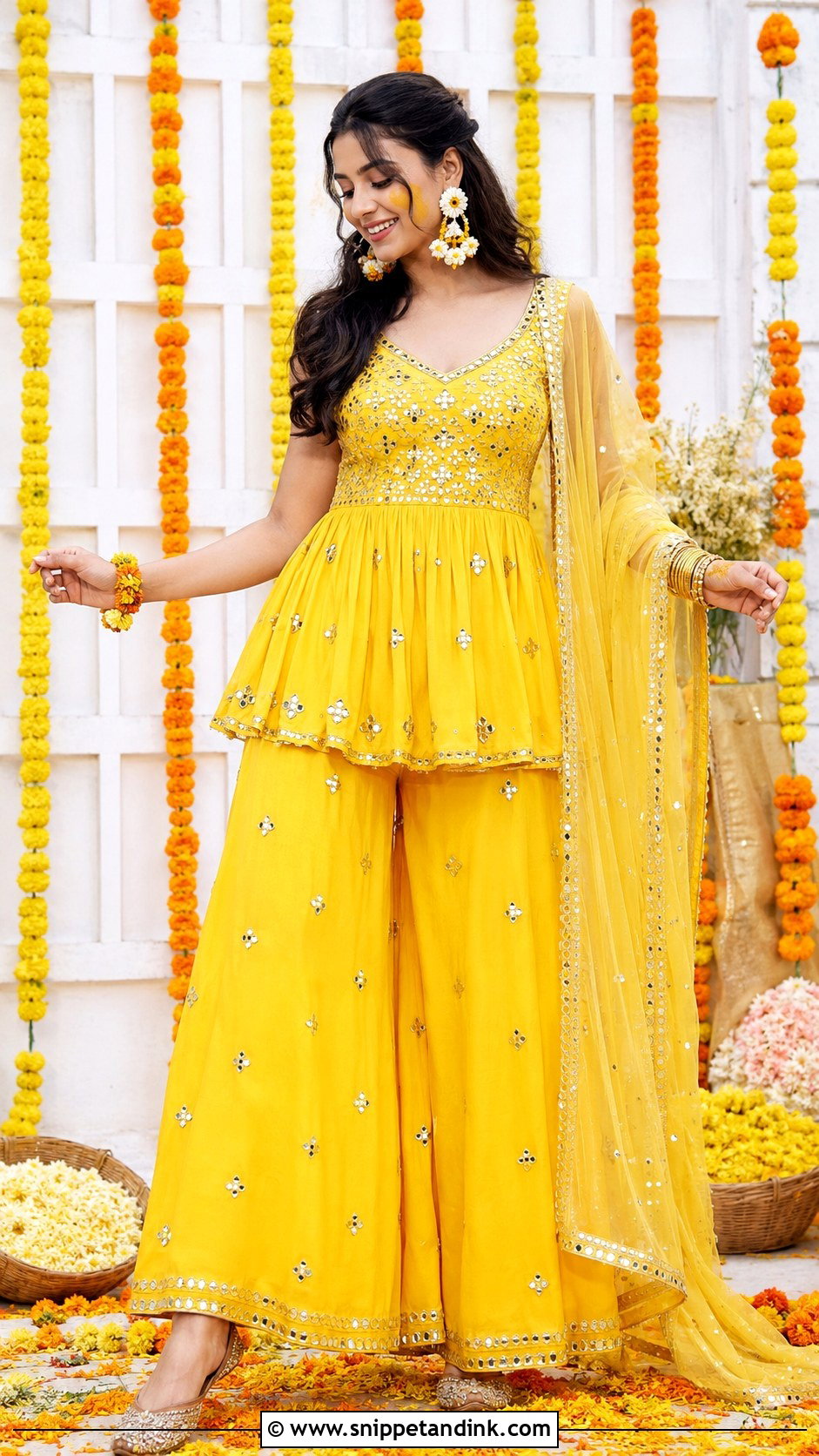
Short verdict: the most practical set here. Wide palazzos let you sit, kneel and stand up without gathering a skirt, and a short kurti or peplum blouse gives shape. Mirror work, tassels or gota borders bring the festive part. I’d plan this one if your haldi tends to turn into a water fight or a dance floor, since nothing drags on wet ground.
14. Yellow Cape Haldi Outfit
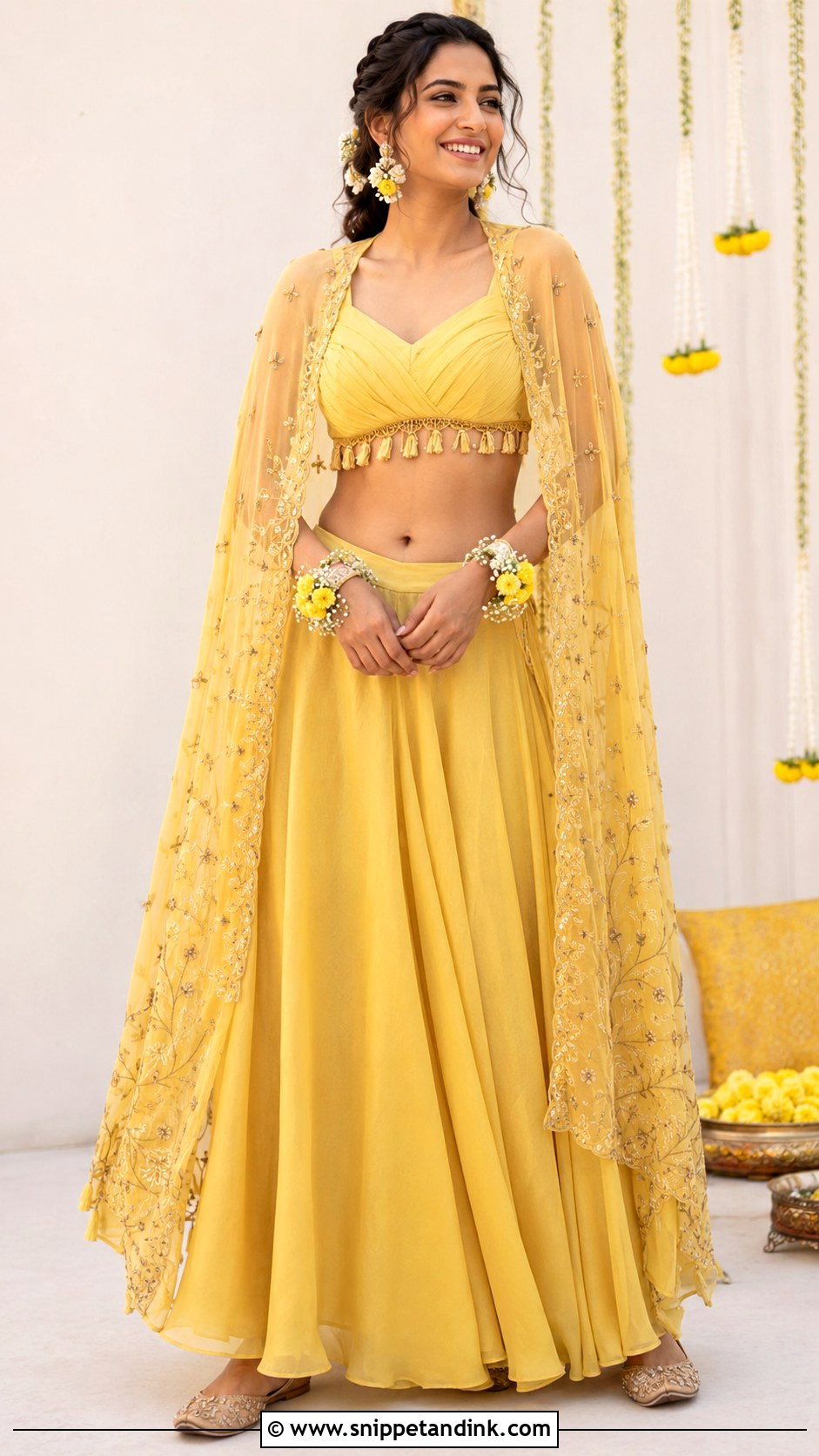
A sheer organza cape over a lehenga skirt, palazzos or dhoti pants makes the yellow cape haldi outfit I suggest to brides wanting an Indo-western feel. The cape moves as you walk, and that motion shows up well in video. The catch comes during application: an open cape slides off the shoulders as relatives reach for your arms, so I add a hidden hook or a pin at the blouse strap. Keep the jewelry to statement earrings and floral bangles.
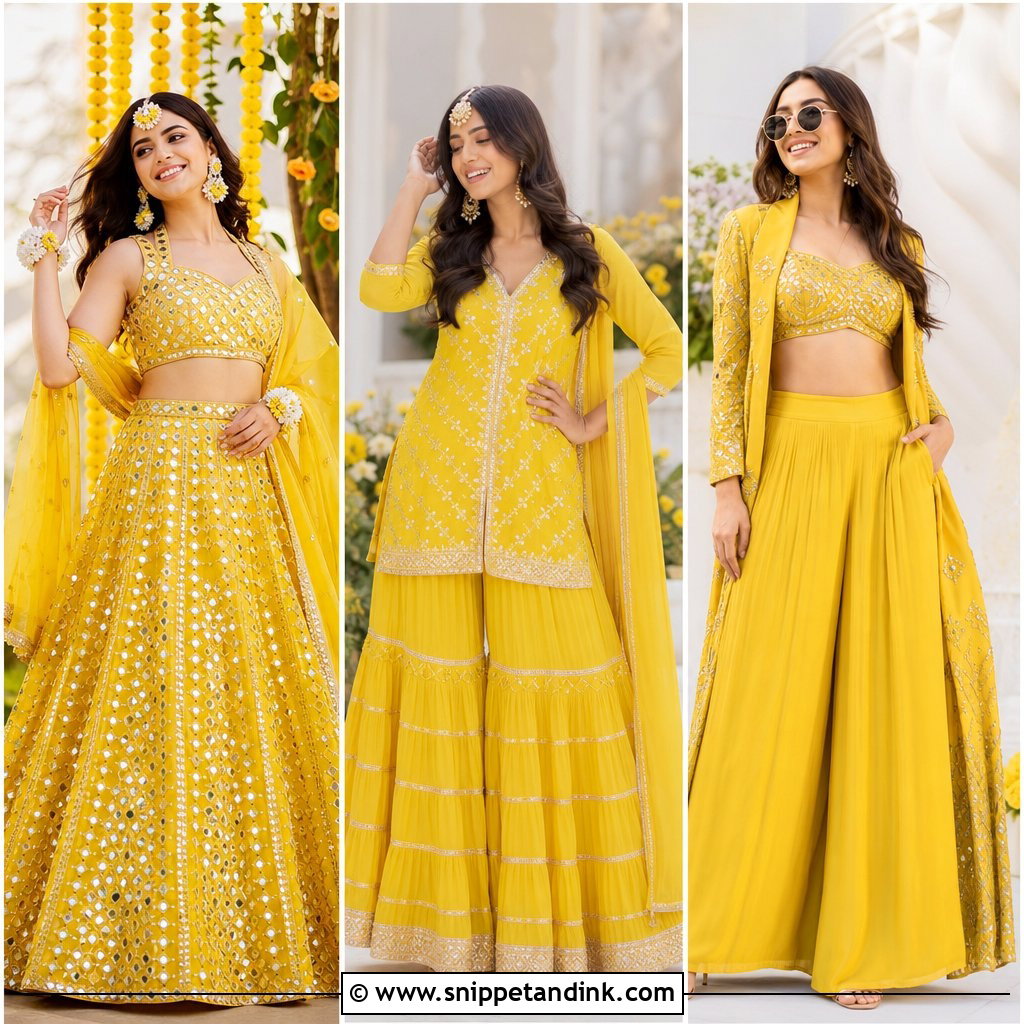
15. Yellow Dhoti Haldi Outfit
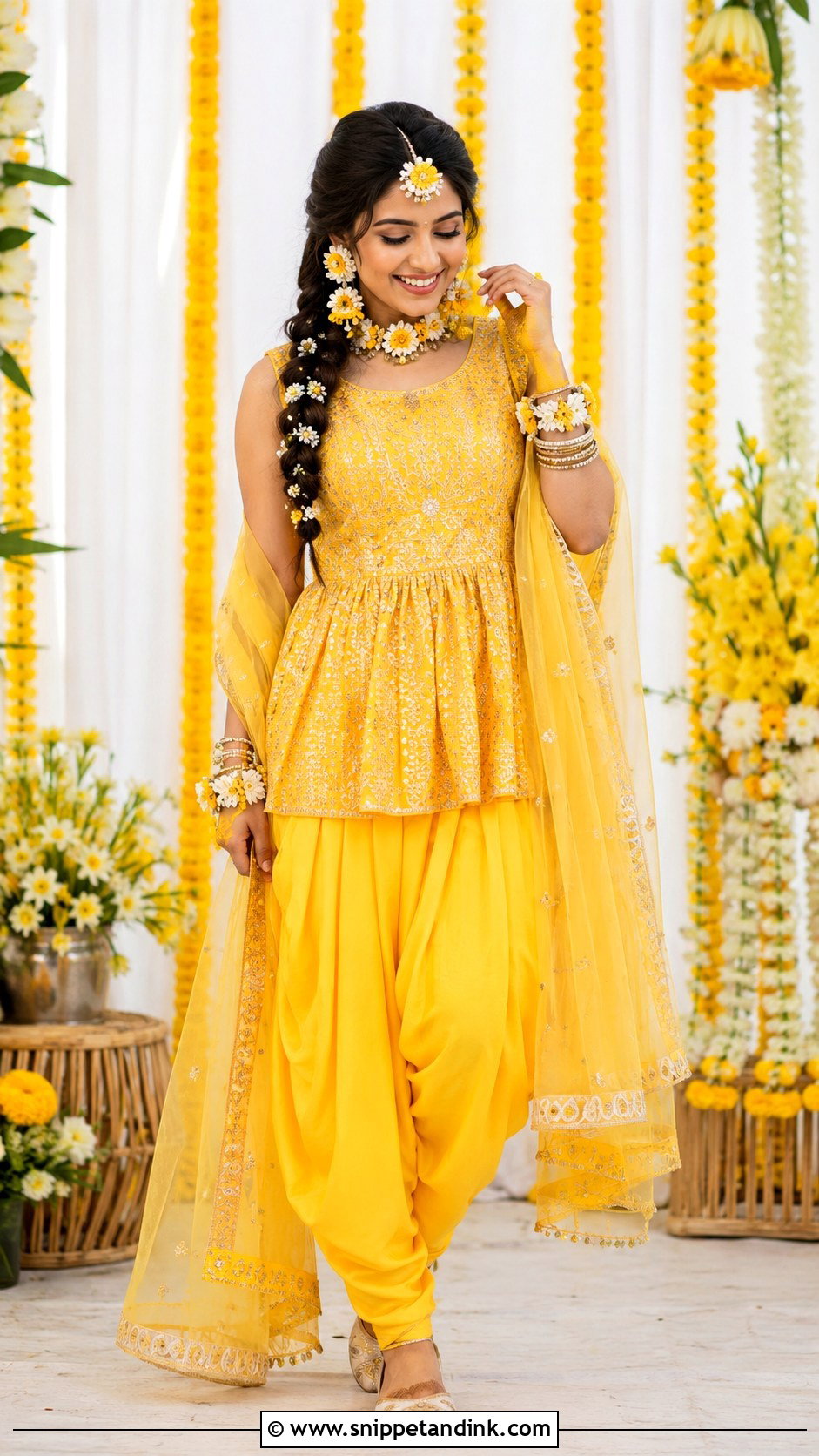
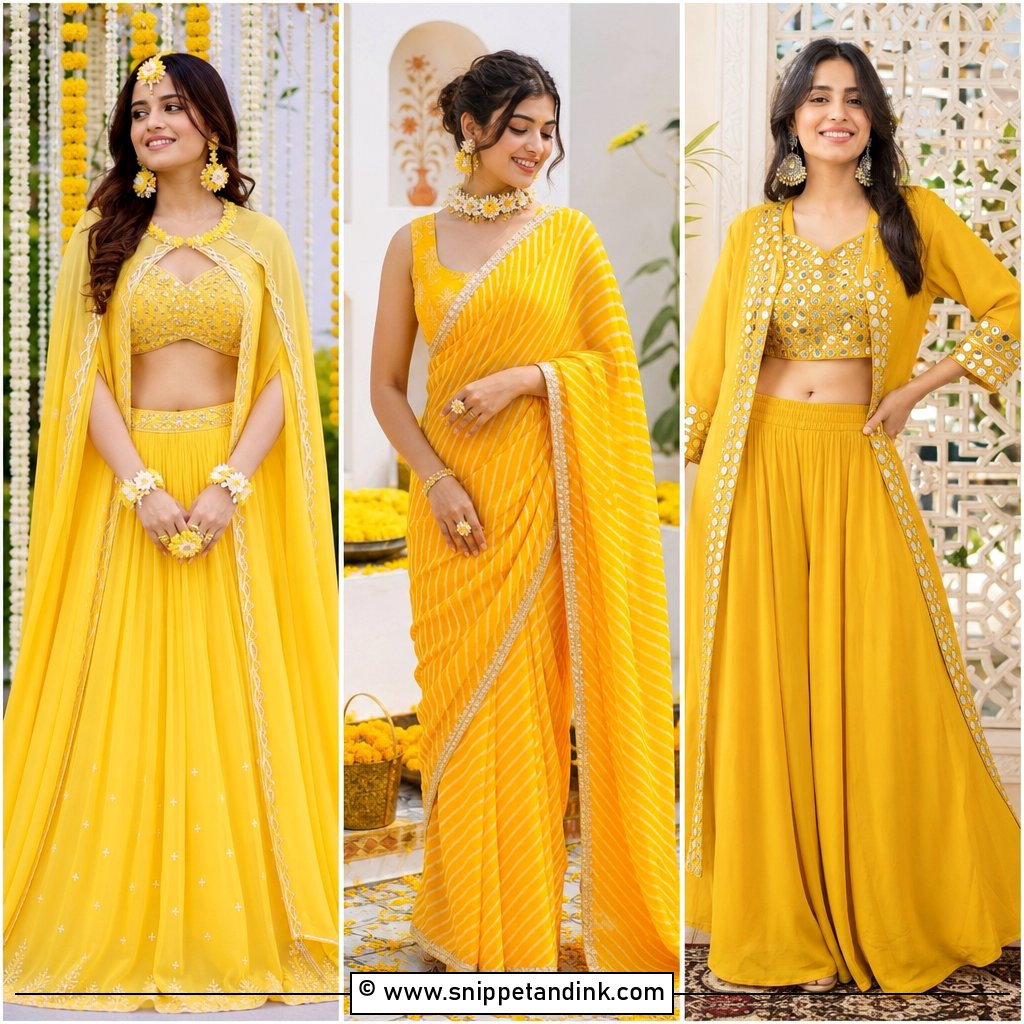
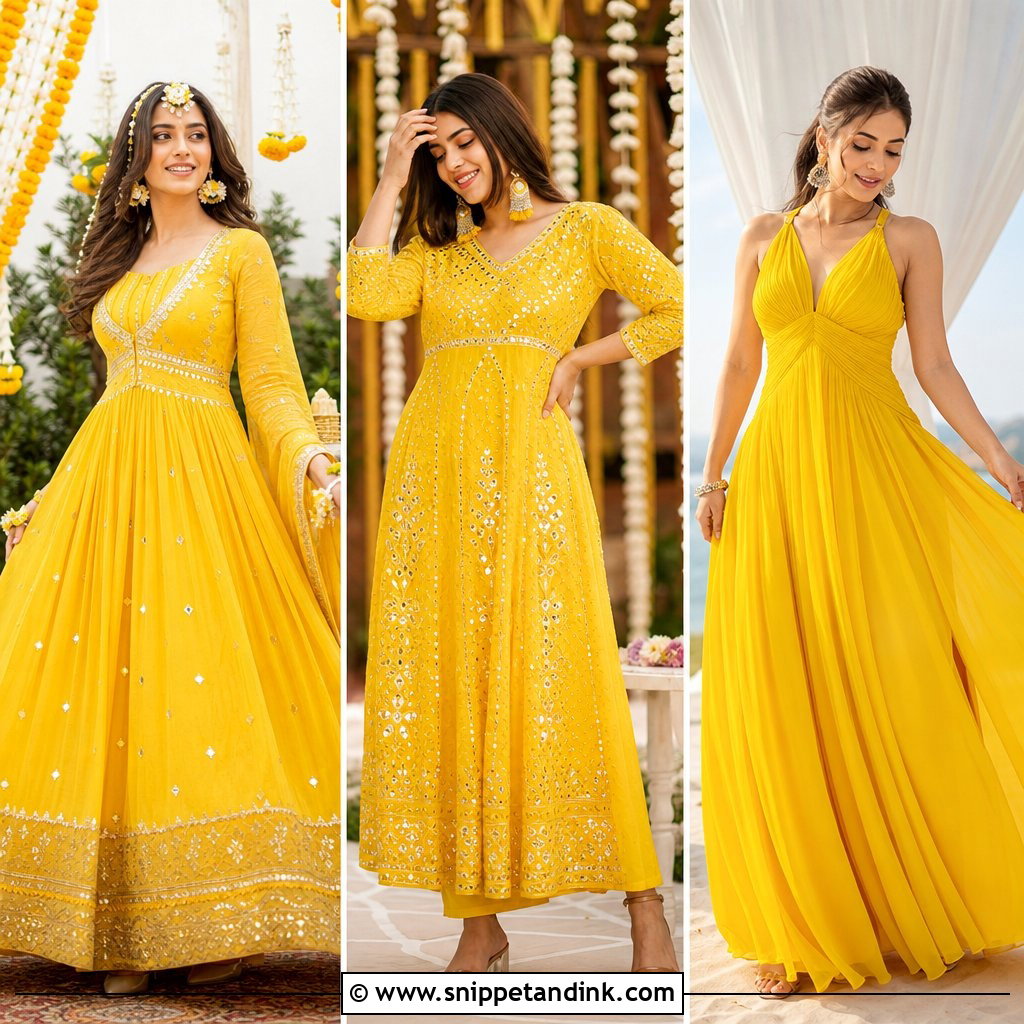
Pair draped dhoti pants with a crop top, short kurti or embroidered jacket and you can move as freely as anyone at the ceremony. On most ready-made sets the dhoti drape is stitched in place, so nothing unravels when you are pulled into a dance. Mirror work, gota patti and tassels make it festive, and a light dupatta or cape adds coverage. I’d skip it only if your family expects a more formal bridal silhouette.
16. Yellow Haldi Lehenga With Corset Blouse
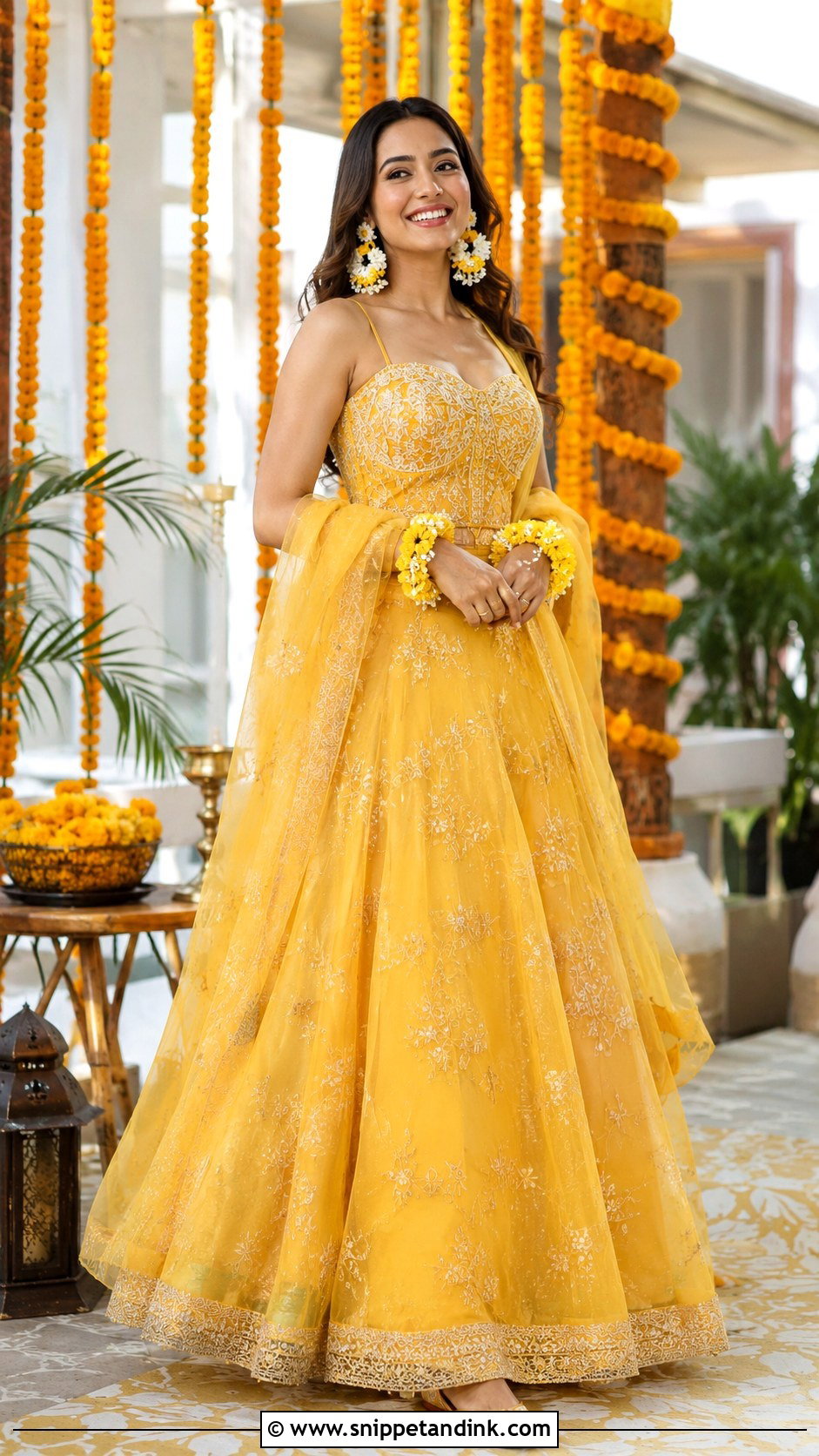
A corset blouse gives a structured line against a full skirt, but think about how much you will bend. Boning that feels fine standing can dig in after an hour sitting low, so at the fitting I have brides sit on the floor in it before anything is finalized. Keep the skirt in organza, georgette or a silk blend, and drape the dupatta over one shoulder or around the arms. Statement earrings and floral bangles are plenty.
17. Yellow Organza Haldi Saree
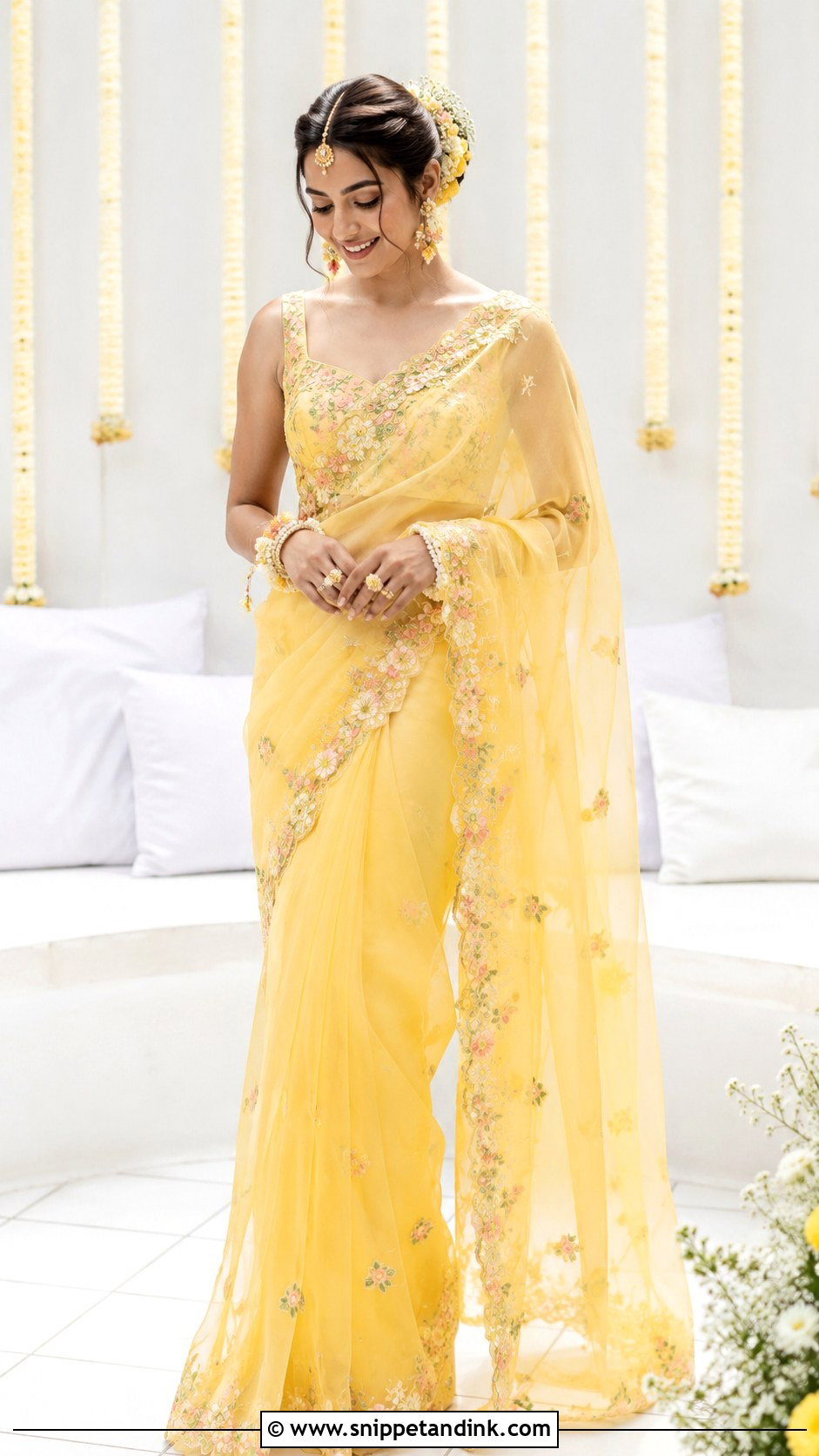
Organza holds its shape, so the pleats stay crisp in photos while the saree weighs very little. It is also slightly sheer, and silk organza water-spots, so a well-fitted petticoat in a matching tone matters more here than with any other saree. Floral embroidery or scalloped borders are enough decoration. A fitted blouse, pearl bangles, a dainty maang tikka and a low bun with fresh blooms keep it soft.
18. Yellow Ruffle Saree Haldi Outfit
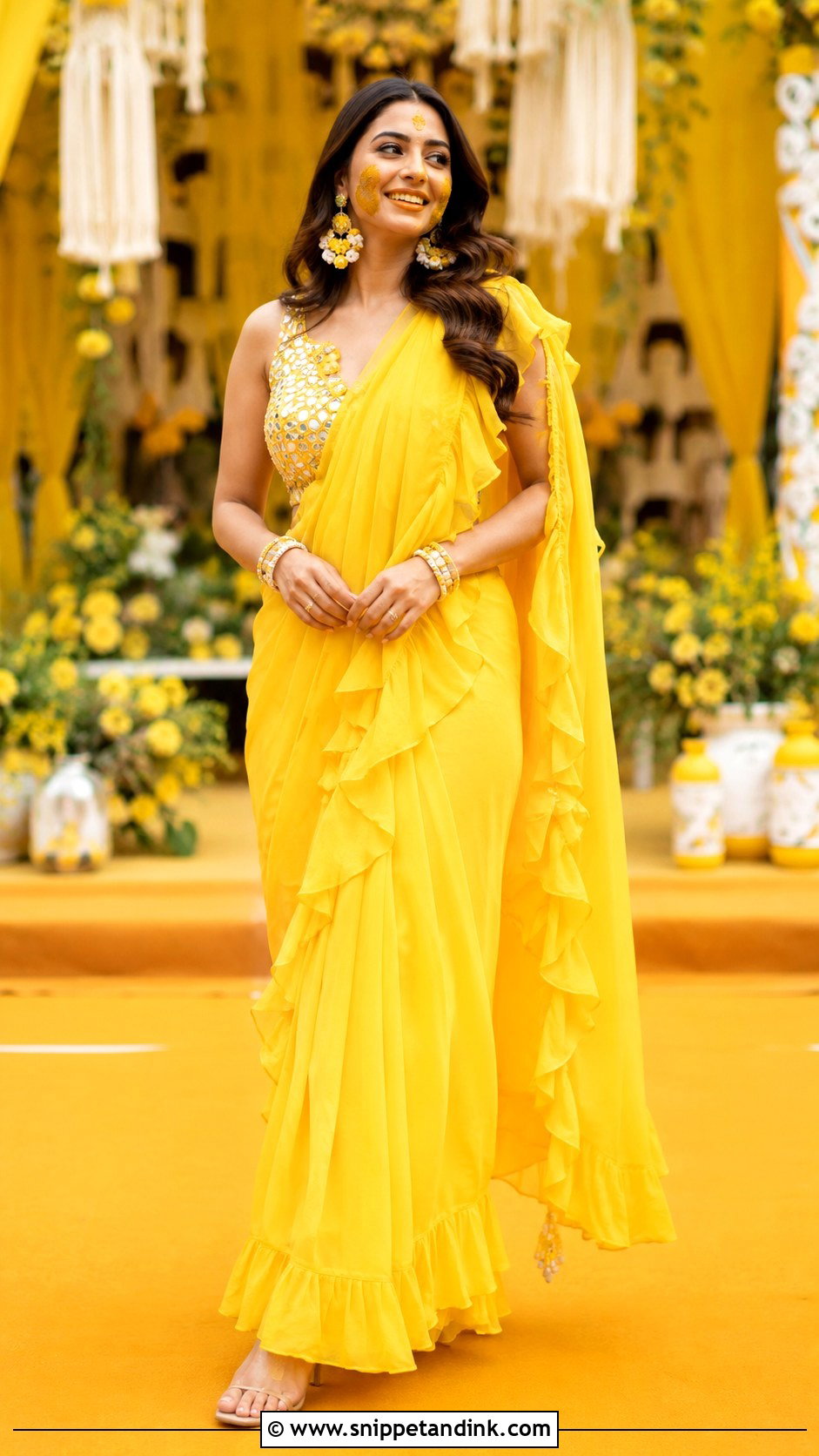
Ruffles add movement on camera, and most ruffle sarees come partly pre-stitched, which makes draping quicker. The downside: layered ruffles soak up water and turn heavy and limp fast if your haldi gets playful. I pair it with a structured crop top or a mirror-work blouse so the upper half keeps its shape even when the hem has collapsed. Floral jewelry and soft waves suit it at a colorful daytime haldi.
19. Green Haldi Saree
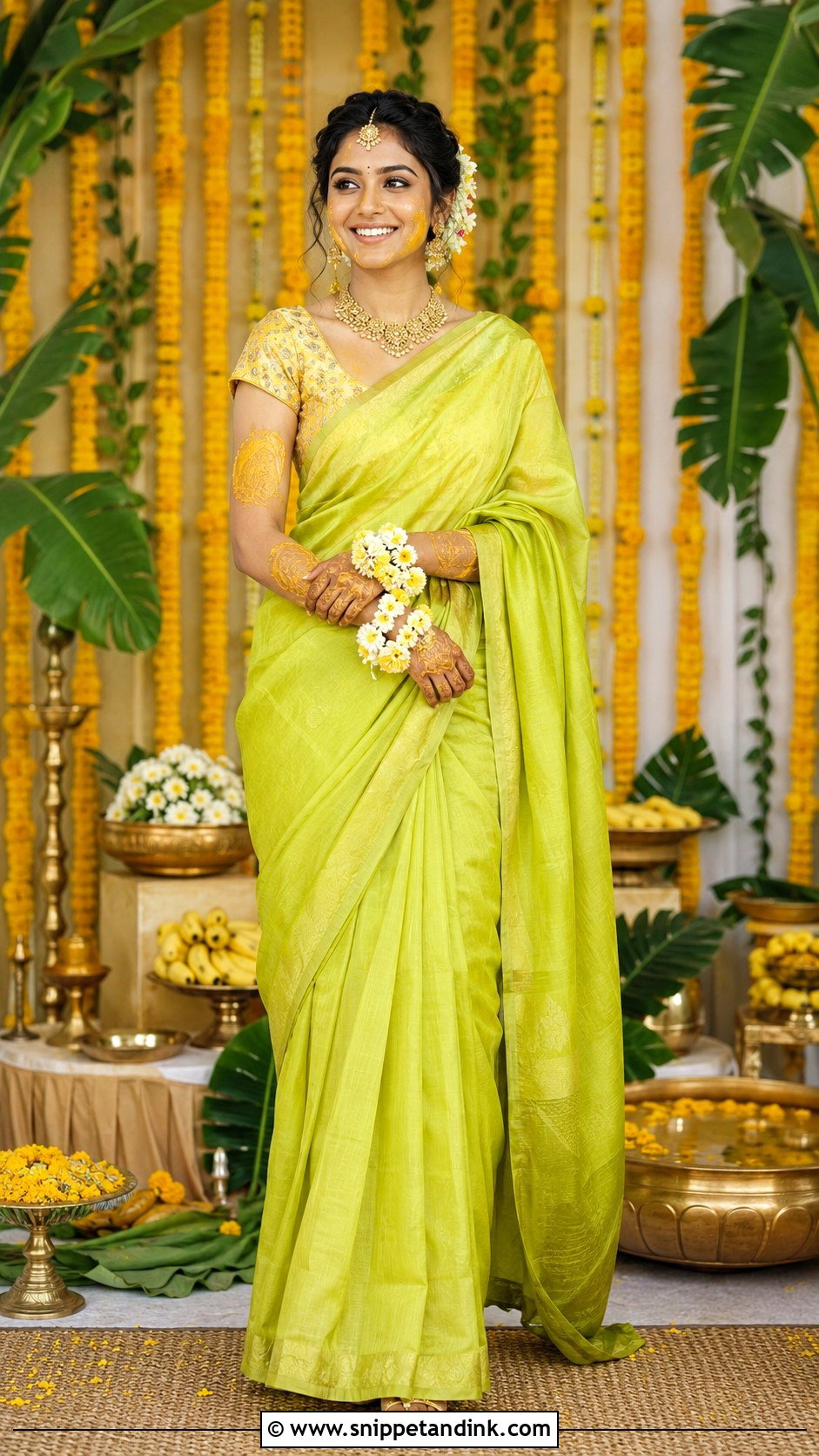
In some communities green belongs in the haldi palette by tradition, and I always ask the family before assuming yellow. Lime, parrot, sage or mehendi green all work, tied to the ceremony with a yellow blouse or yellow floral jewelry. Green looks rich against turmeric and marigolds, and it forgives the paste better than pale colors. Lightweight silk, cotton silk or georgette sits comfortably; gold jewelry and a neat braid finish it.
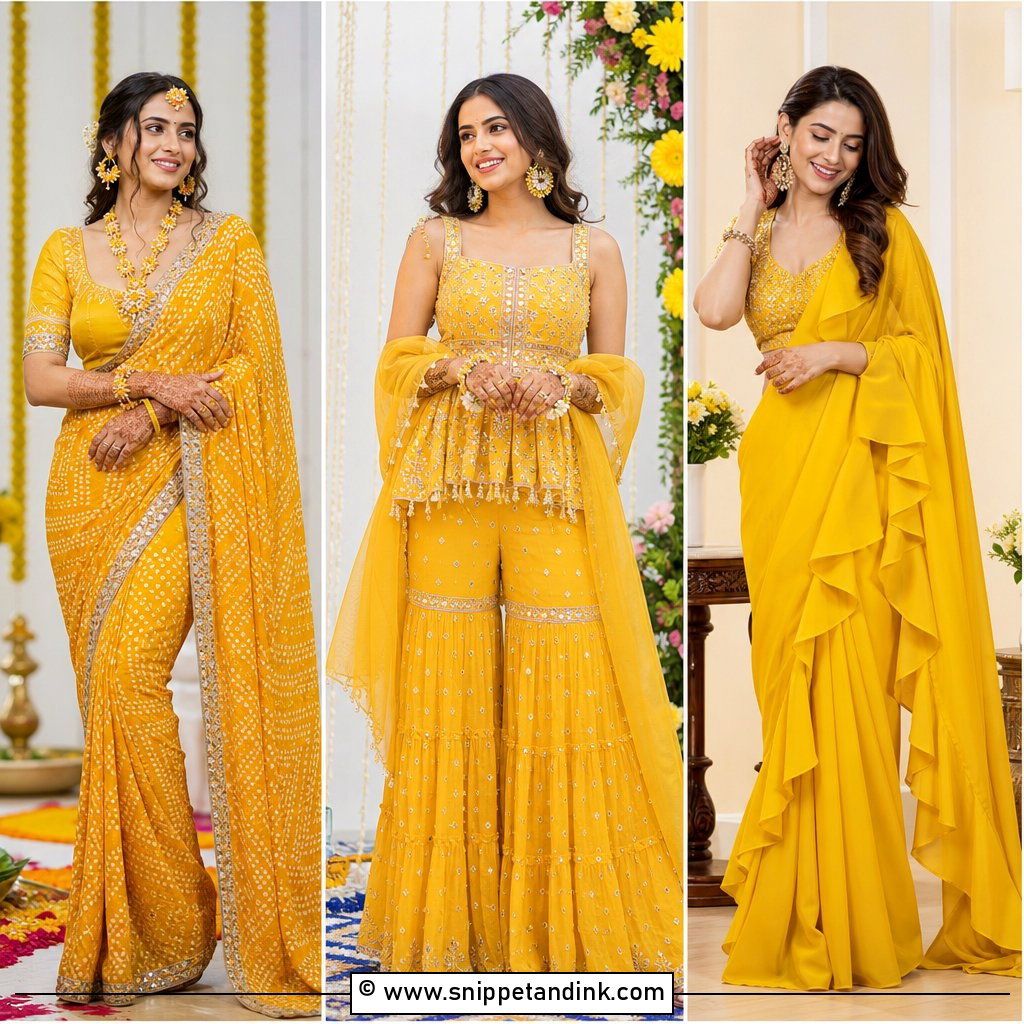
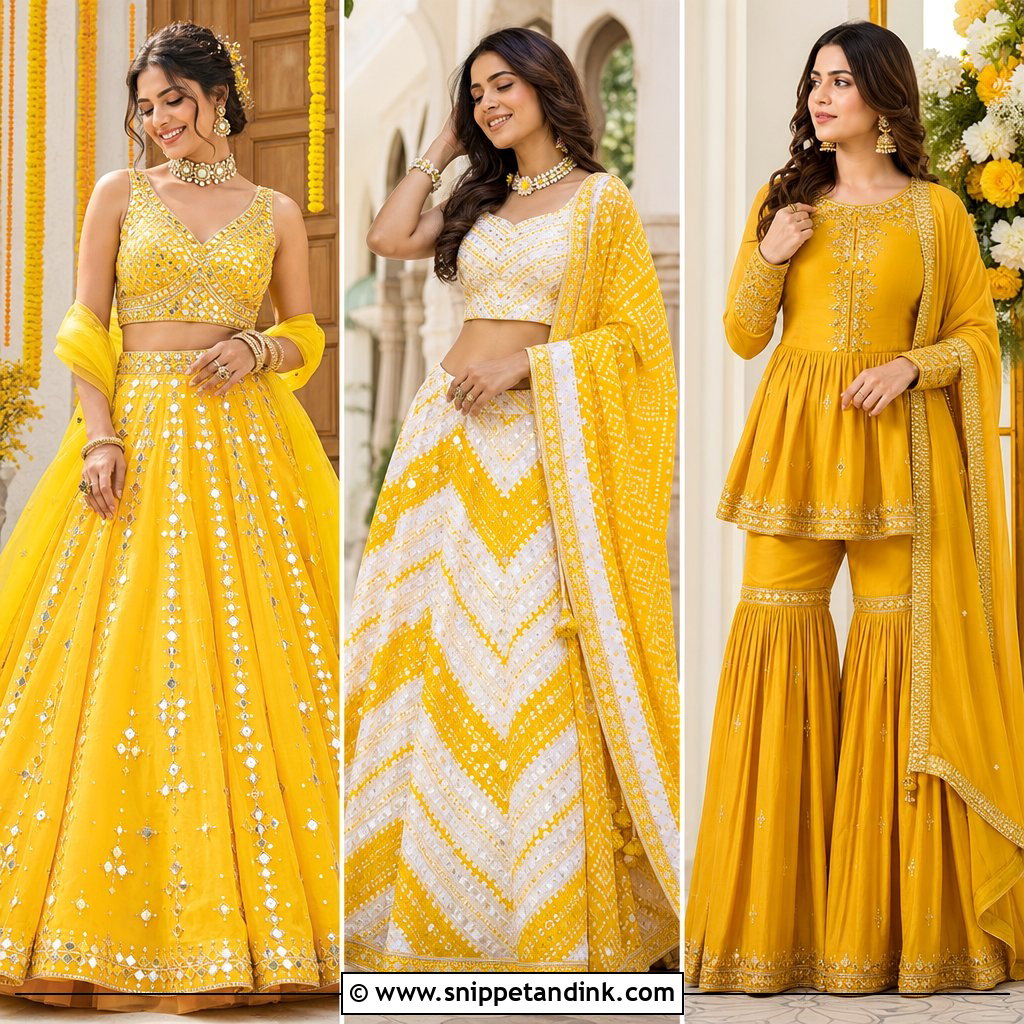
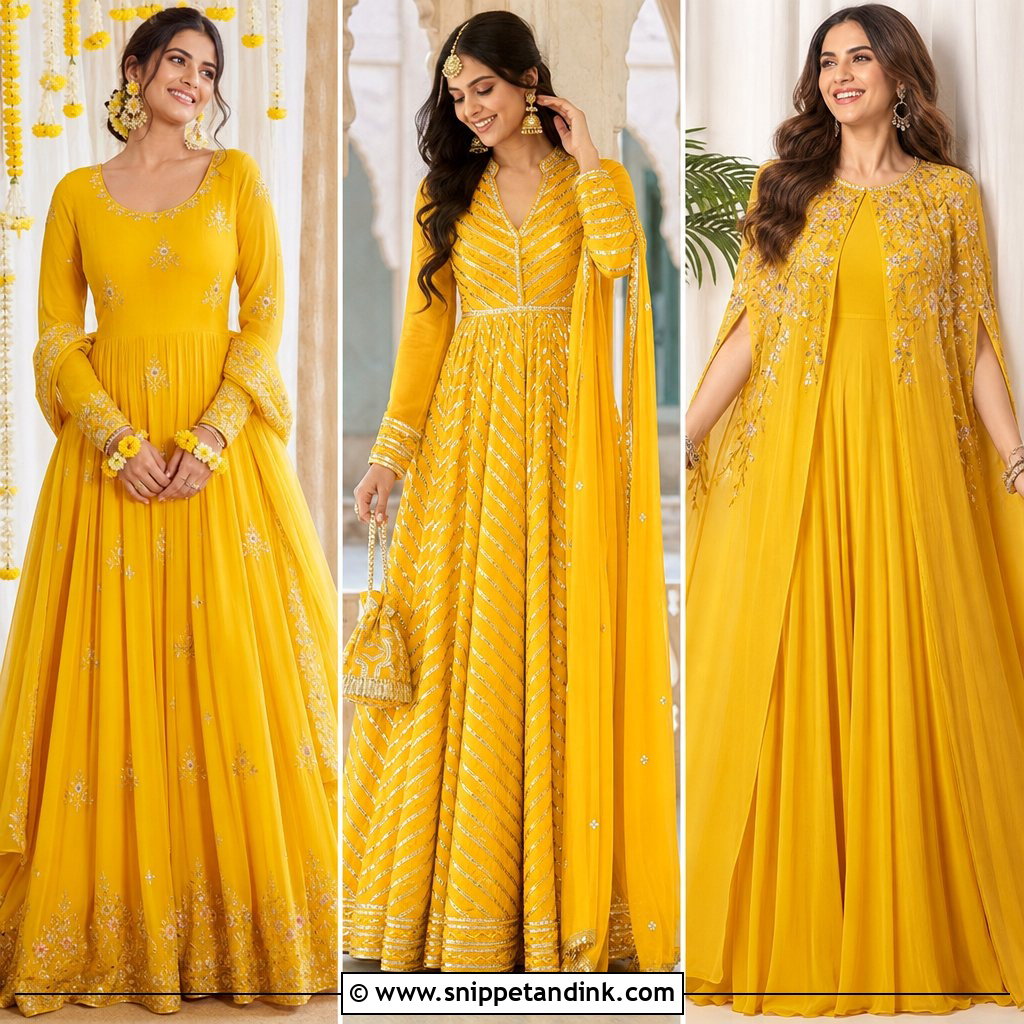

20. Yellow Kanjeevaram Haldi Saree
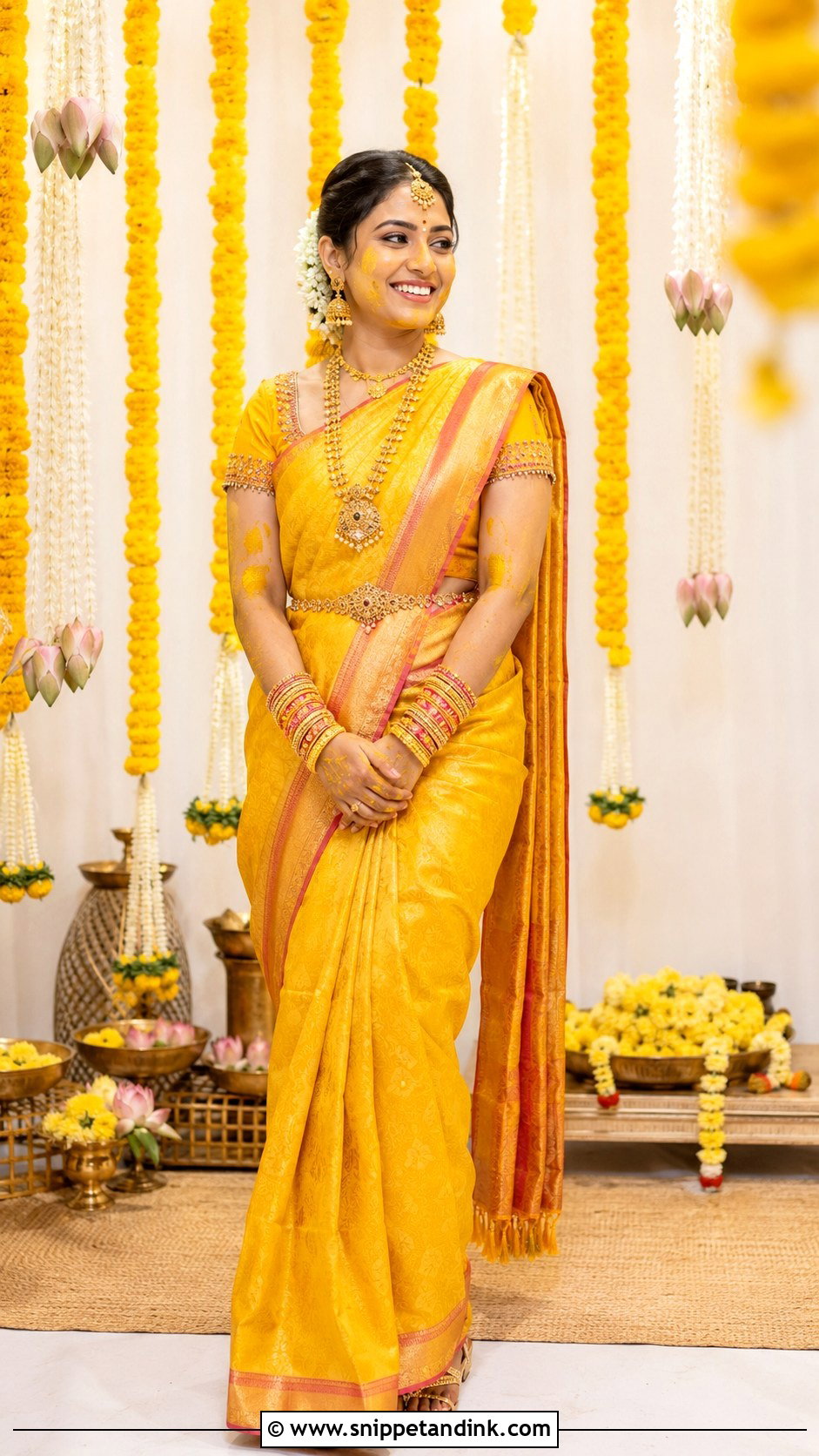
A Kanjeevaram is woven silk with a heavy zari border, and that zari is the part turmeric harms most, since paste rubbed into metallic thread is very hard to clean. I’d still wear one for a South Indian haldi, but I’d choose a less precious saree than your wedding silk. Gold, orange or pink borders on yellow look festive. Temple jewelry, jasmine and a classic bindi suit it, and the blouse needs enough ease for a long, active ceremony.
21. Yellow Patiala Haldi Suit
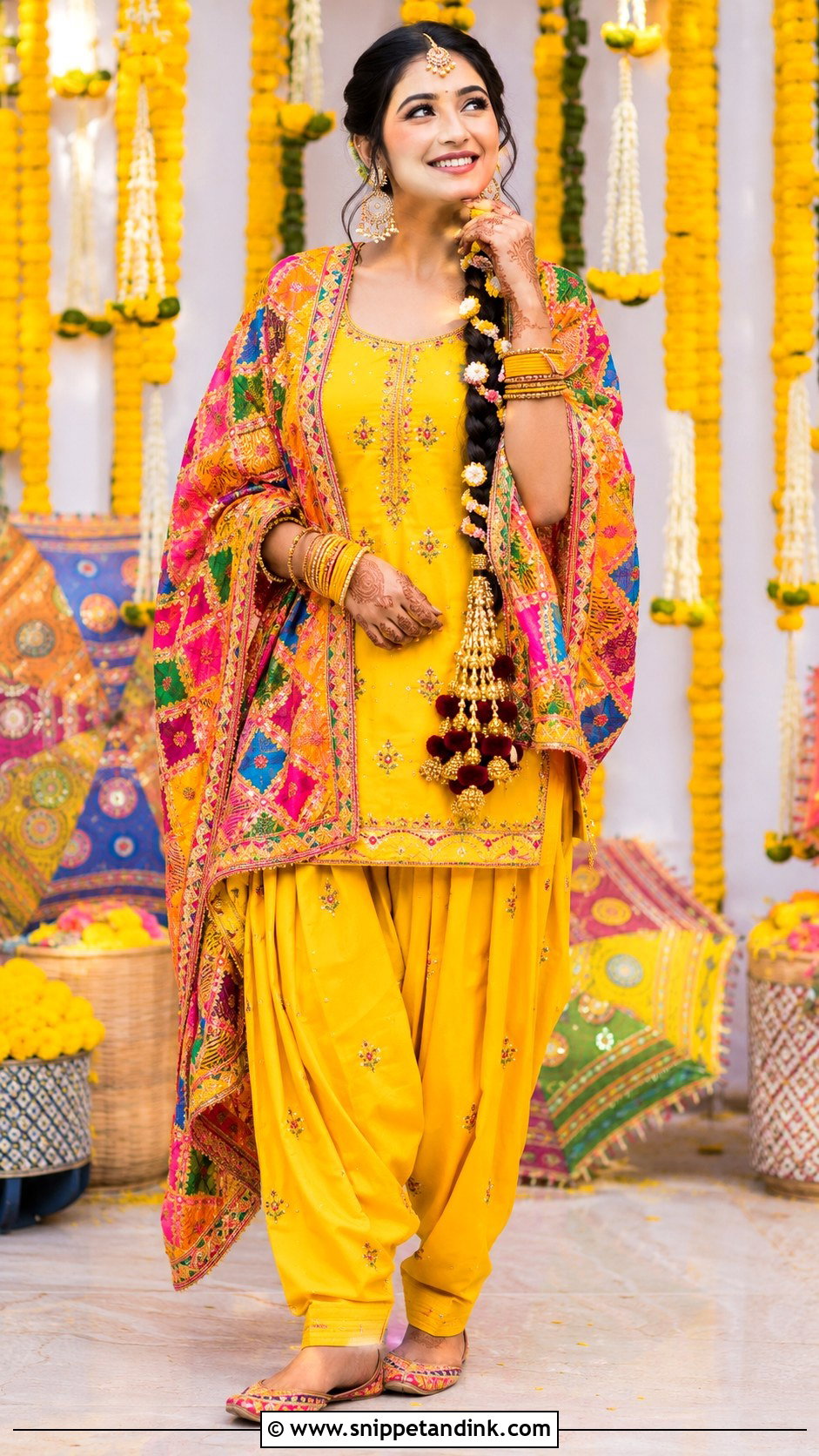
The Patiala salwar is cut with deep pleats gathered at the ankle, which gives you real room to sit and dance with no drape to manage, along with plenty of Punjabi wedding charm. A short kurti with phulkari or mirror work keeps it youthful, and a bright multicolor dupatta makes it pop. Add a paranda, jhumkas and Punjabi juttis. The one thing I check is the waist: a drawstring can loosen with dancing, so a hook closure is worth asking the tailor for.
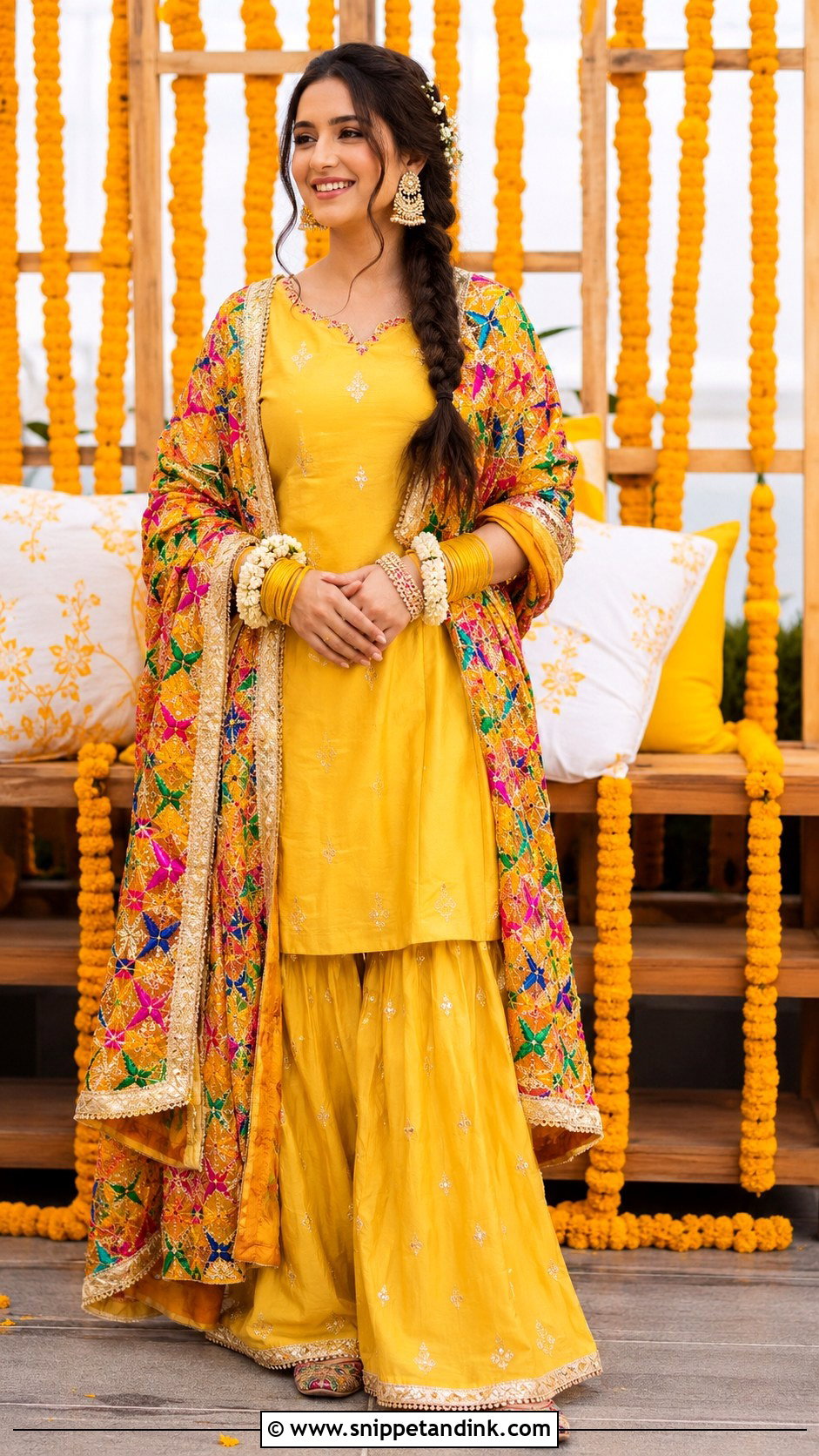
22. Yellow Phulkari Haldi Outfit
Phulkari is darn-stitch embroidery, traditionally in silk floss, and when the dupatta is the statement everything else should stay plain. Build it on a yellow kurta set, sharara, lehenga or Patiala suit, with pink, orange or red threadwork against the yellow. If the dupatta is a family piece, I’d keep it on for photos and take it off before the paste, because floss holds turmeric stubbornly. Juttis, glass bangles and a braid suit it.
23. Yellow Mirror Work Haldi Lehenga
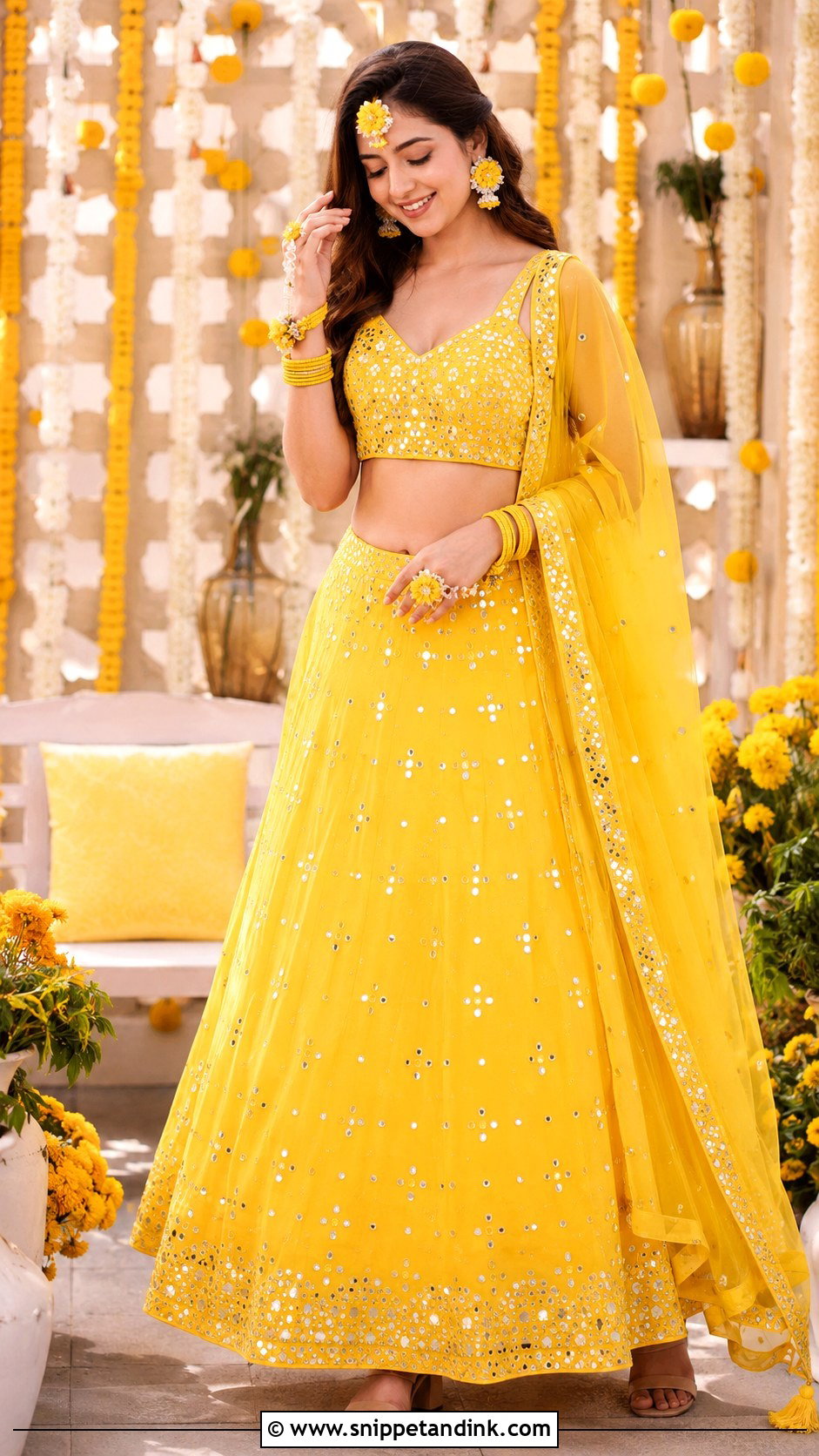
Mirror work catches daylight, which is exactly why I keep it scattered rather than all over. A densely mirrored lehenga gets heavy, and the edges of the little mirrors can scratch bare arms when everyone hugs you. A matching blouse with a sheer dupatta keeps the look coordinated. Floral jewelry, oxidized silver or kundan all work, and block heels or juttis keep you steady on uneven ground.
24. Yellow Gota Patti Haldi Lehenga
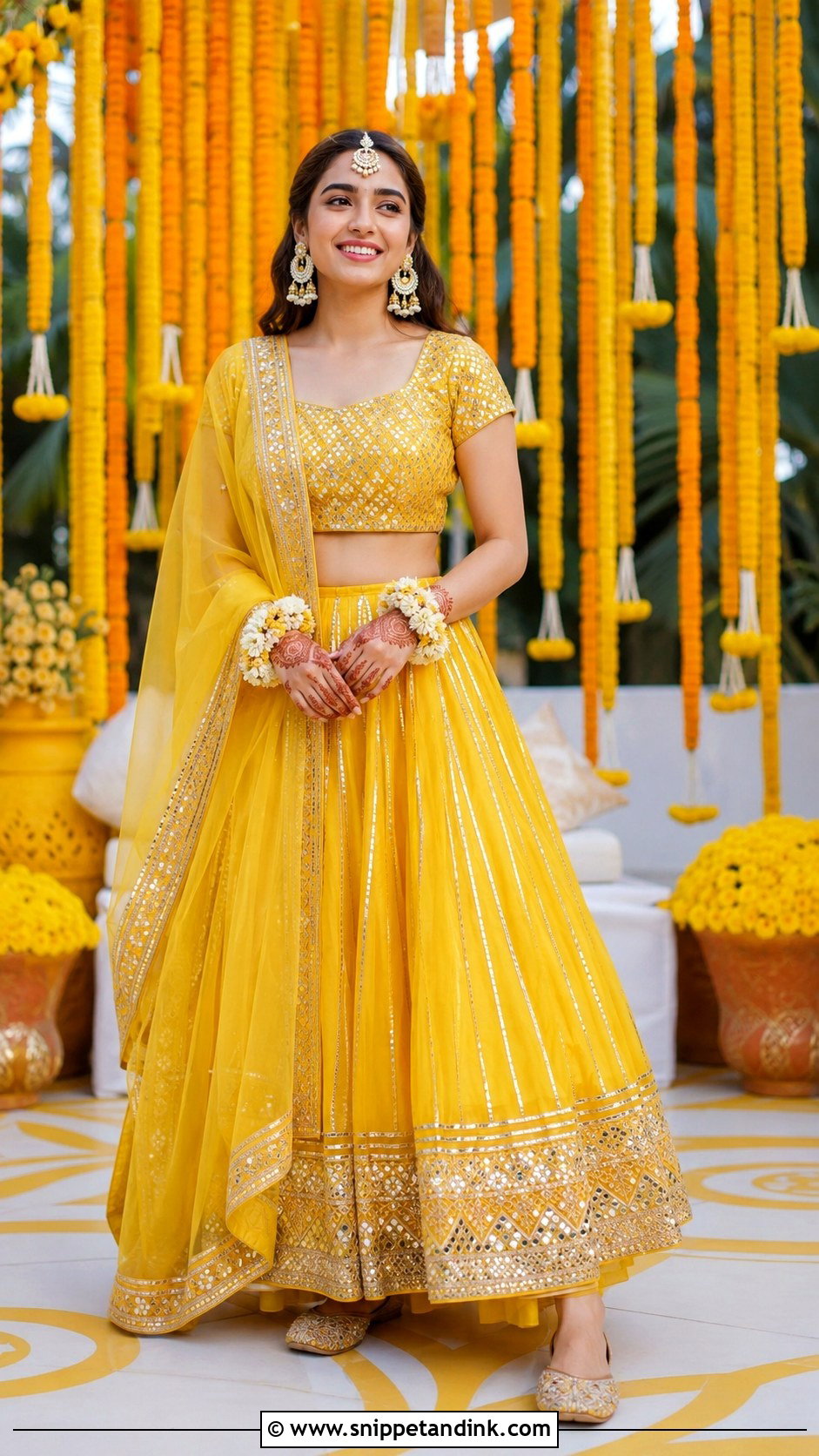
Gota patti is appliqued metallic ribbon, a Rajasthani craft, and it is much lighter than zardozi, so you get shine without weight. Because the work lies flat rather than adding bulk, it suits most body types. Borders and small bootis keep it balanced, with a short blouse, soft dupatta and light skirt. Kundan jewelry and a maang tikka sit well with it. One caution: cheaper gota can dull after contact with wet paste, so wipe it down soon after the ceremony.


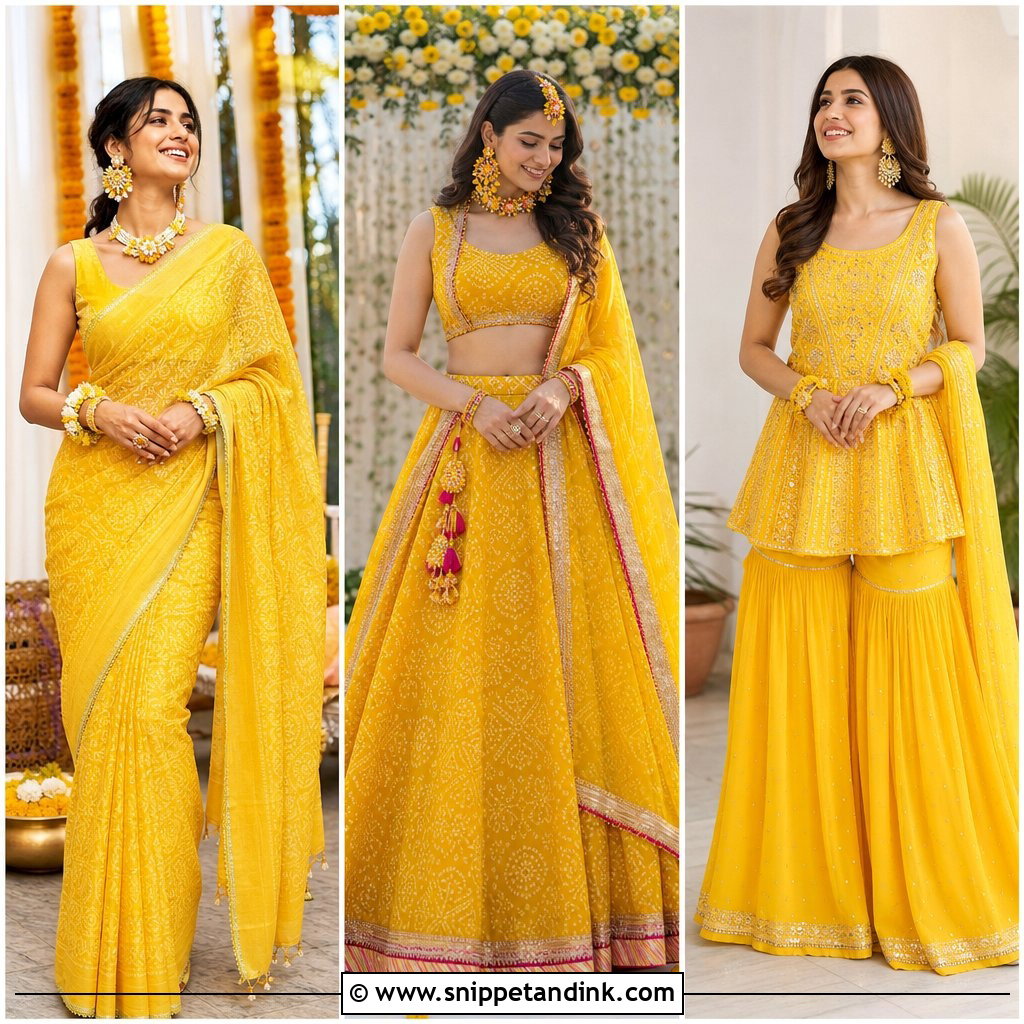
25. Yellow Printed Haldi Lehenga
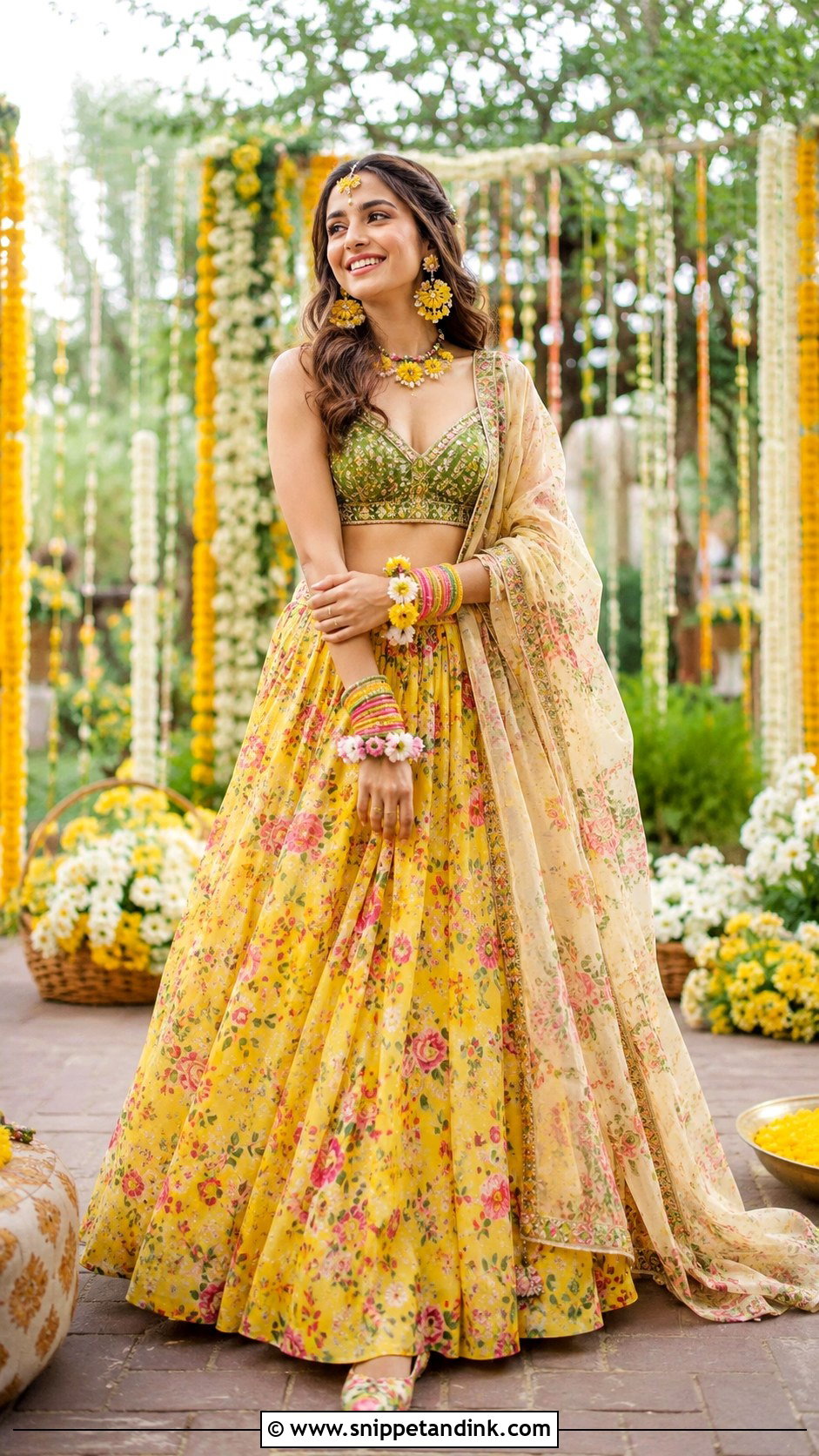
The most forgiving outfit on this list. Block print, leheriya, bandhani and floral prints all hide turmeric, and with print doing the work you can keep embroidery light and focus on fit. Pair it with a matching blouse or a contrast crop top, then add flower jewelry, colorful bangles and flats. It packs flat, which matters for destination and beachside haldis, and it rewears easily.
26. Yellow Leheriya Haldi Outfit
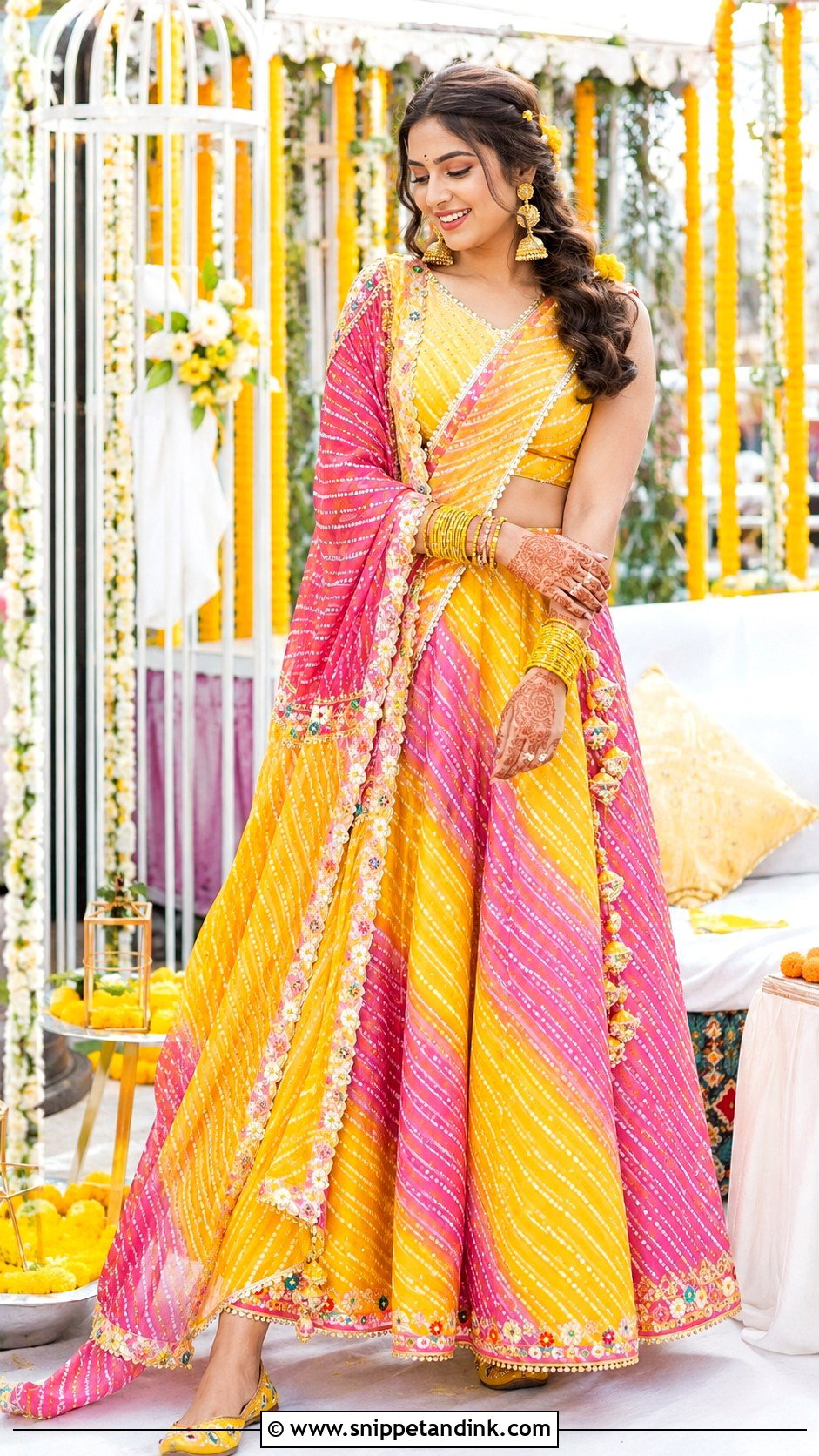
Leheriya is a Rajasthani resist dye made by rolling the cloth diagonally before dyeing, which creates those wave lines, and a yellow leheriya haldi outfit carries that movement straight into photos. It works as a saree, lehenga, sharara or anarkali, with pink or green accents, jhumkas, bangles and a bindi. Like bandhani, the dye can run if it gets soaked, so I avoid pairing it with anything white.
27. Yellow Peplum Haldi Sharara
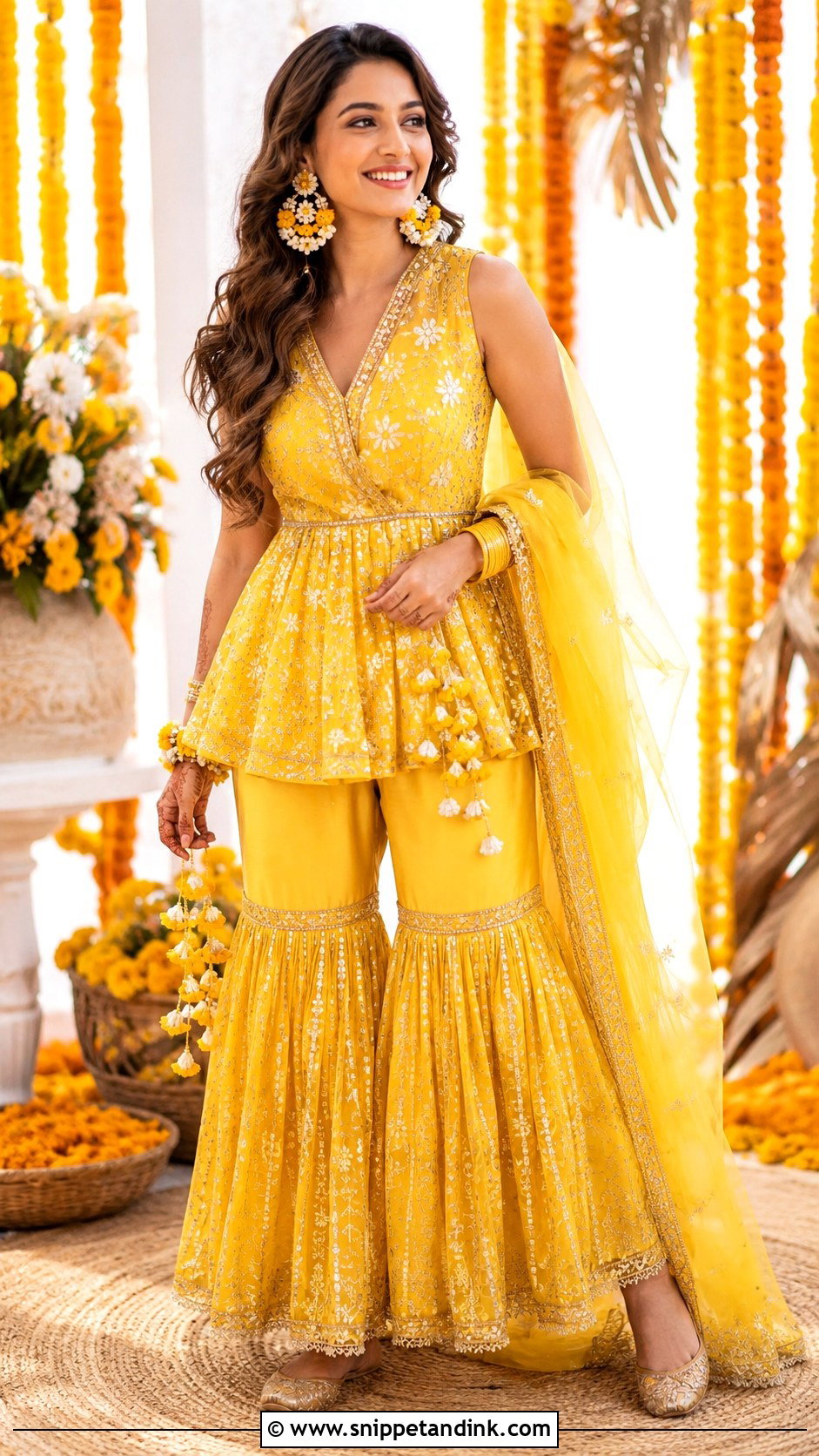
A peplum flares from the waist, so it defines your shape while hiding a sharara waistband that tends to shift as you sit. Keep the mirror work or sequins small; sequins in particular trap paste in their edges. A sheer dupatta can go over one shoulder or be left off for photos. Soft curls and juttis keep it light for a morning ceremony.
28. Yellow Jacket Haldi Lehenga
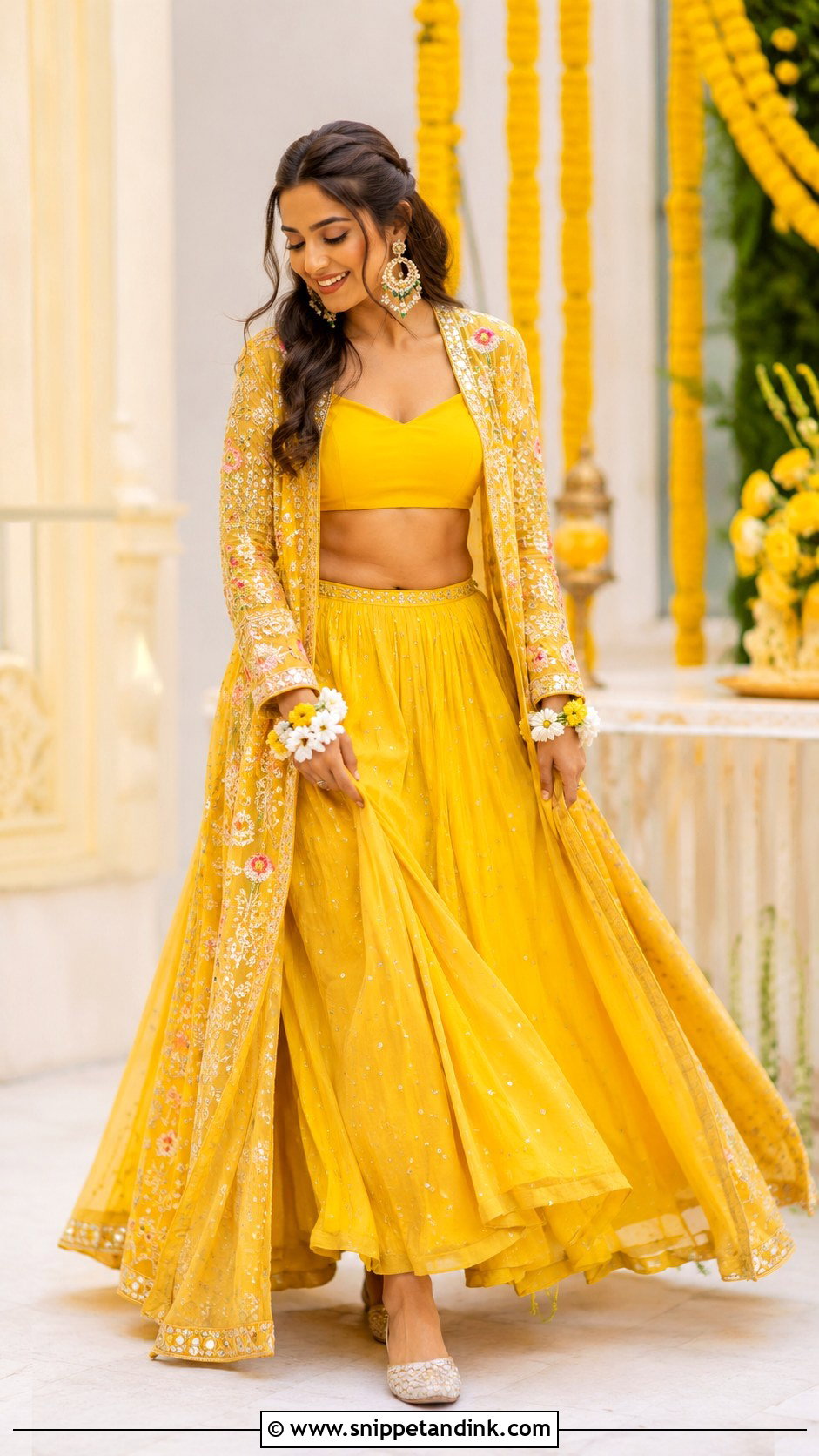
A jacket replaces the dupatta, and that is the main reason I suggest it: one less length of fabric dragging through the paste. It can be cropped, waist-length or long, worn over a crop top and lehenga skirt in embroidered organza or mirror-work cotton silk. Sleeves are the real question. Long jacket sleeves cover the arms where turmeric is traditionally applied, so I’d go short or three-quarter. Statement earrings and floral bangles finish it.
29. Yellow Saree Lehenga Haldi Outfit
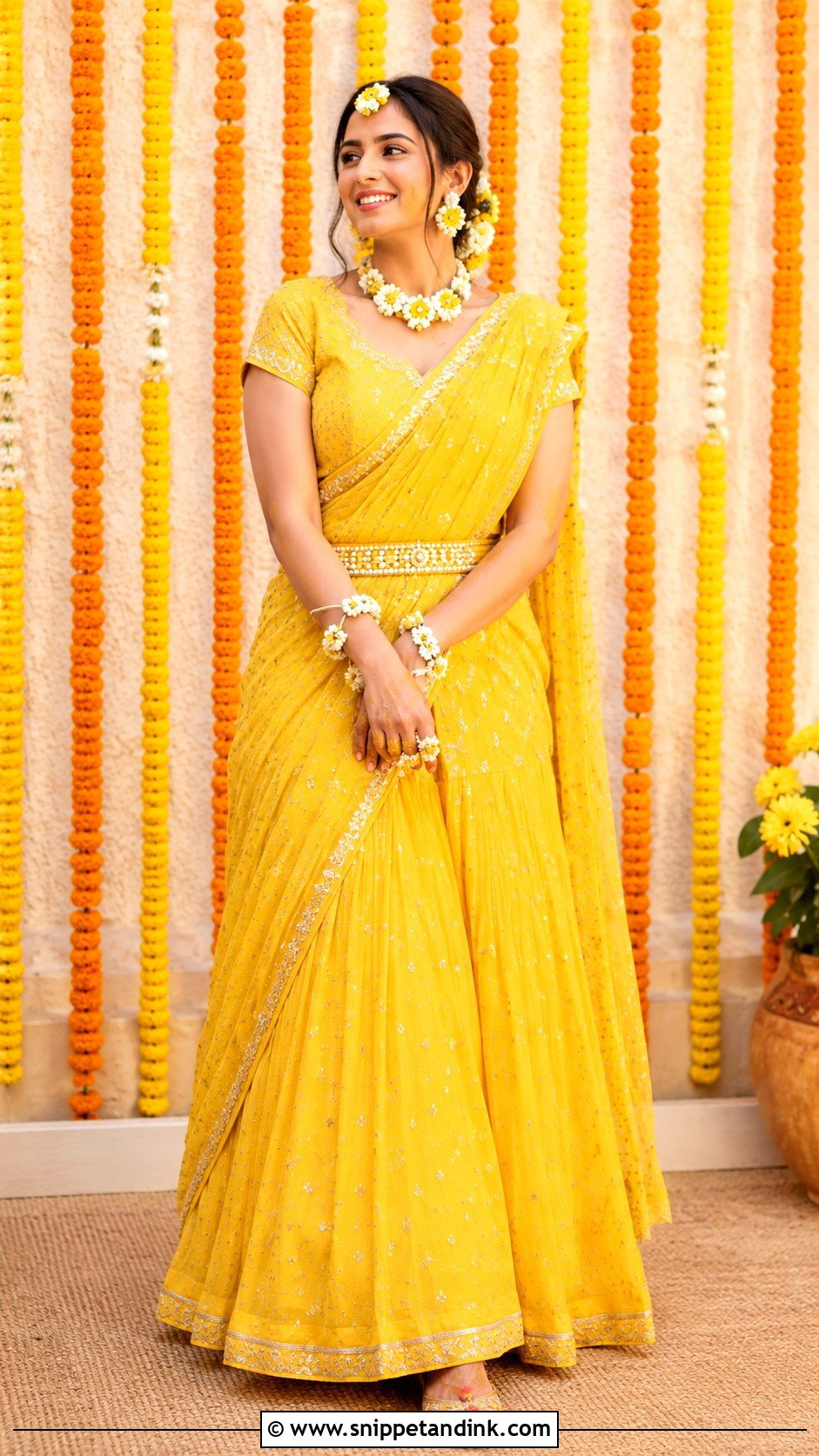
This is a pre-draped piece, a lehenga skirt with an attached pallu, so you get the saree line without any pleating. That makes it the saree option I trust for a bride who has never worn one for hours. A fitted blouse and a waist belt keep the pallu secure through hugs and rituals. Mirror work or gota borders add festivity, with soft waves and juttis or block heels.
30. Pastel Yellow Haldi Lehenga
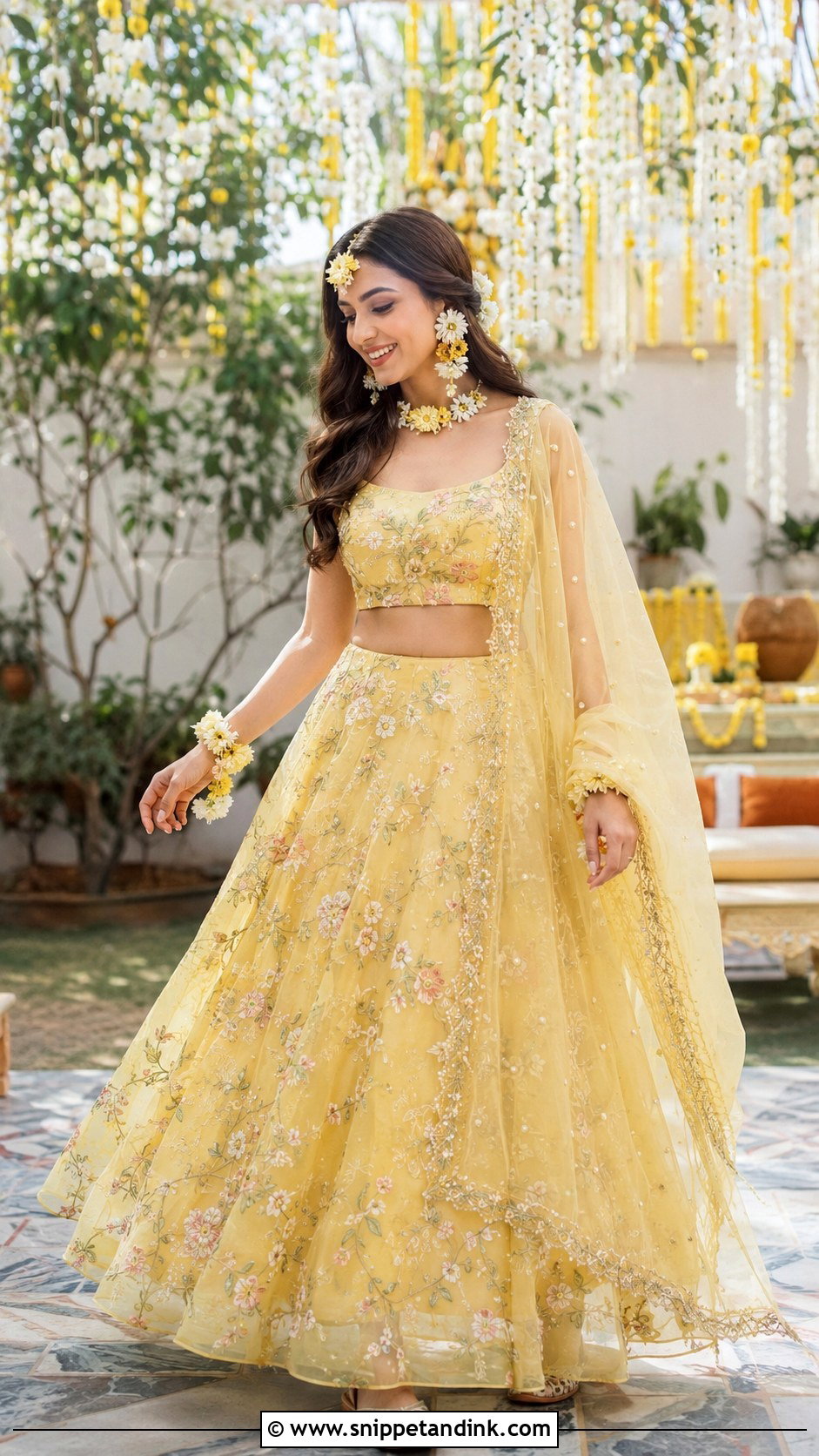
Butter, lemon and pale marigold read delicate in daylight, but pale shades show turmeric far more than deep mustard, so treat this as a look for the photographs as much as the ritual. Organza, net or chanderi with pearls or light sequins suits it. Yellow and white flowers, a dainty maang tikka, comfortable juttis and fresh skin with soft lips are all it needs.
Getting Turmeric Out, and When to Stop Trying
The yellow pigment in turmeric barely dissolves in water but binds to fiber quickly, especially when the paste contains oil or milk, so speed matters more than any product. As soon as you change, scrape the paste off with a blunt edge rather than wiping, which only pushes it deeper. Then rinse from the back of the fabric with cold water.
Don’t panic if a soapy wash turns the stain reddish brown. Turmeric changes color in alkaline conditions, and it usually drifts back toward yellow once the soap is rinsed out. Sunlight then does a surprising amount of the work, because the pigment fades in light. I’d dry a washable cotton piece outdoors for a day or two before reaching for anything harsher.
Pieces that should go straight to a cleaner
Silk, zari, gota and anything with mirrors or sequins needs a dry cleaner used to bridal wear, and the sooner the better. Tell them it is turmeric. Bleach is out for colored fabric, and on ivory silk a faint shadow may stay whatever anyone does. That is why I plan the outfit around the stain from the start instead of counting on the cleanup.
Dressed for the Turmeric and Still Unmistakably the Bride
Haldi asks more of an outfit than the photos suggest: you sit low, people reach for your arms and feet, and some of it will get wet. That is why I care most about breathable fabric, a drape that is pinned, shoes you can slip off and jewelry that stays out of the way. Yellow is the safest color for hiding paste, but green, ivory, orange and pastel all have a place if you plan around them. Wear the one you will enjoy while your family covers you in turmeric.
You'll Like These Ideas:




Leave a Reply