
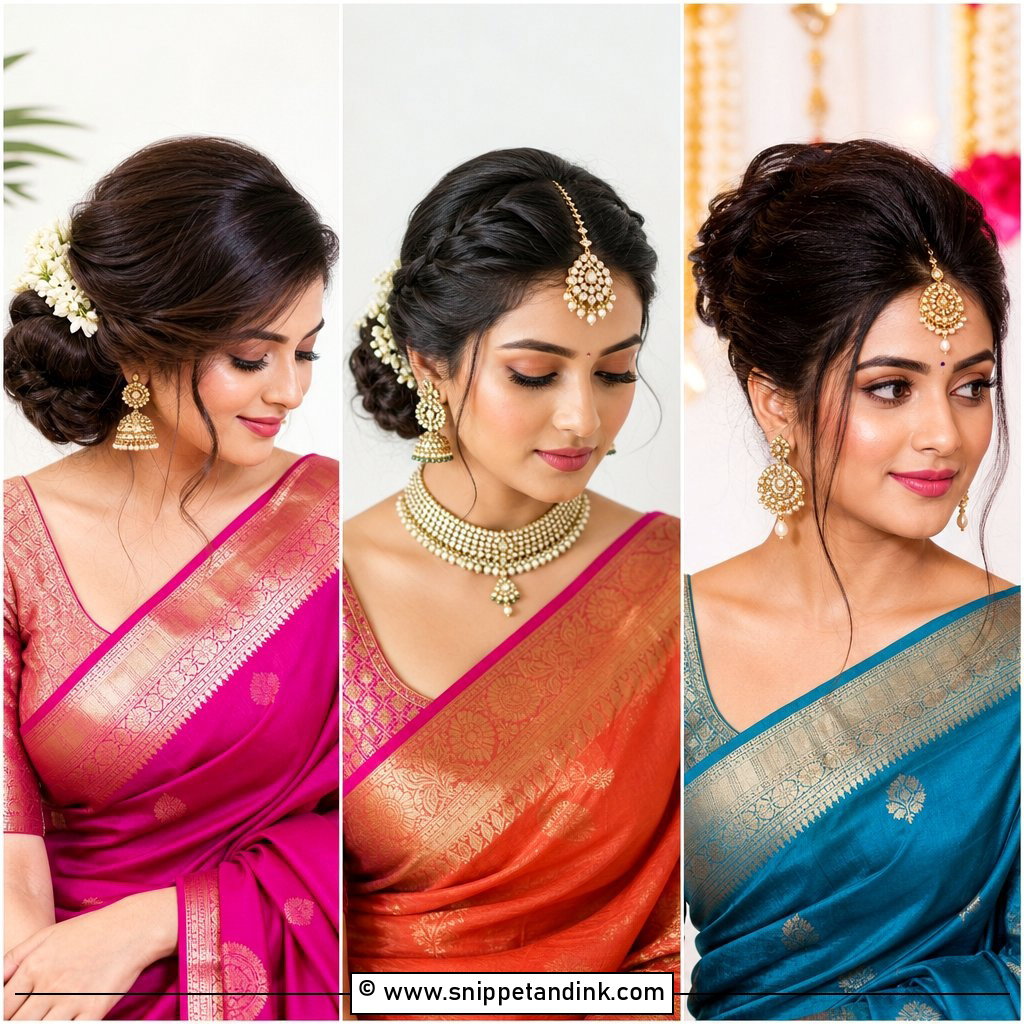
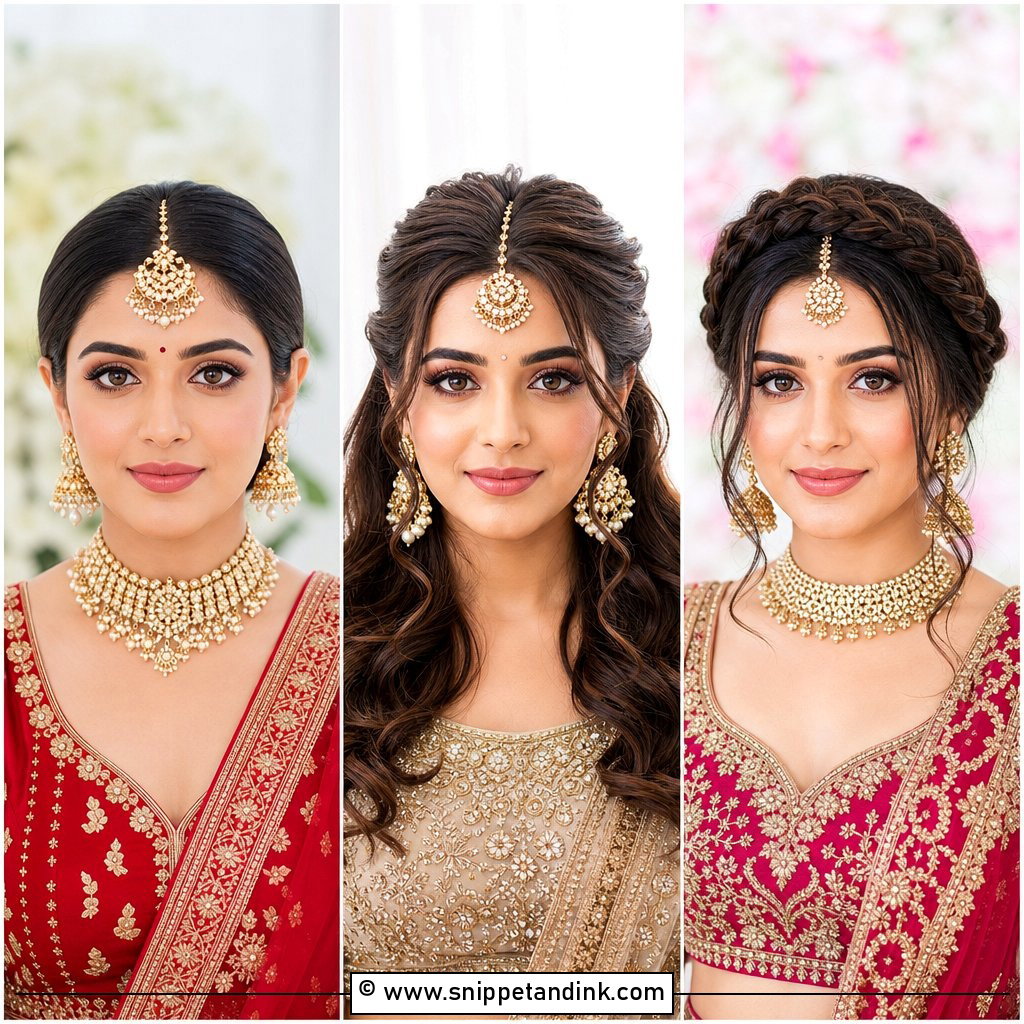
Brides tend to plan the juda first and the front as an afterthought, and in photos it works the other way round. The bun sits behind you; the hairline is what frames your face, your jewelry and the edge of the dupatta in every portrait. Soft curls, a middle part, a puffed crown, side sweep, where the maang tikka lands and how many face-framing pieces you leave out all decide whether the finished look reads traditional or modern. I like a juda for brides because it carries heavy outfits and stays put through long ceremonies, so each idea below is a complete look, the front and the bun together.

Where the Juda Sits Changes the Front
Most brides pick the front and the bun separately, but they are one decision. The height of the juda changes how the front reads in profile, and it decides where I can pin your dupatta.
- Low, at the nape: the softest look and the easiest under a dupatta draped over the head. It suits a middle part, a matha patti and loose face-framing curls. In side-on photos it lets your earrings and neck show.
- Mid, at the back of the crown: the most practical bridal height. The dupatta pins neatly above it, a gajra wraps around it without slipping, and it works with almost any front.
- High: gives a lifted, regal shape that pairs naturally with a front puff, but a heavy dupatta pinned over a high bun can look boxy, and it pulls on the scalp sooner.
At the trial I turn you sideways to the mirror before you approve anything. A front that looks balanced straight on can look flat or top-heavy once you see where the bun sits.
1. Front Look Bridal Juda With Middle Part
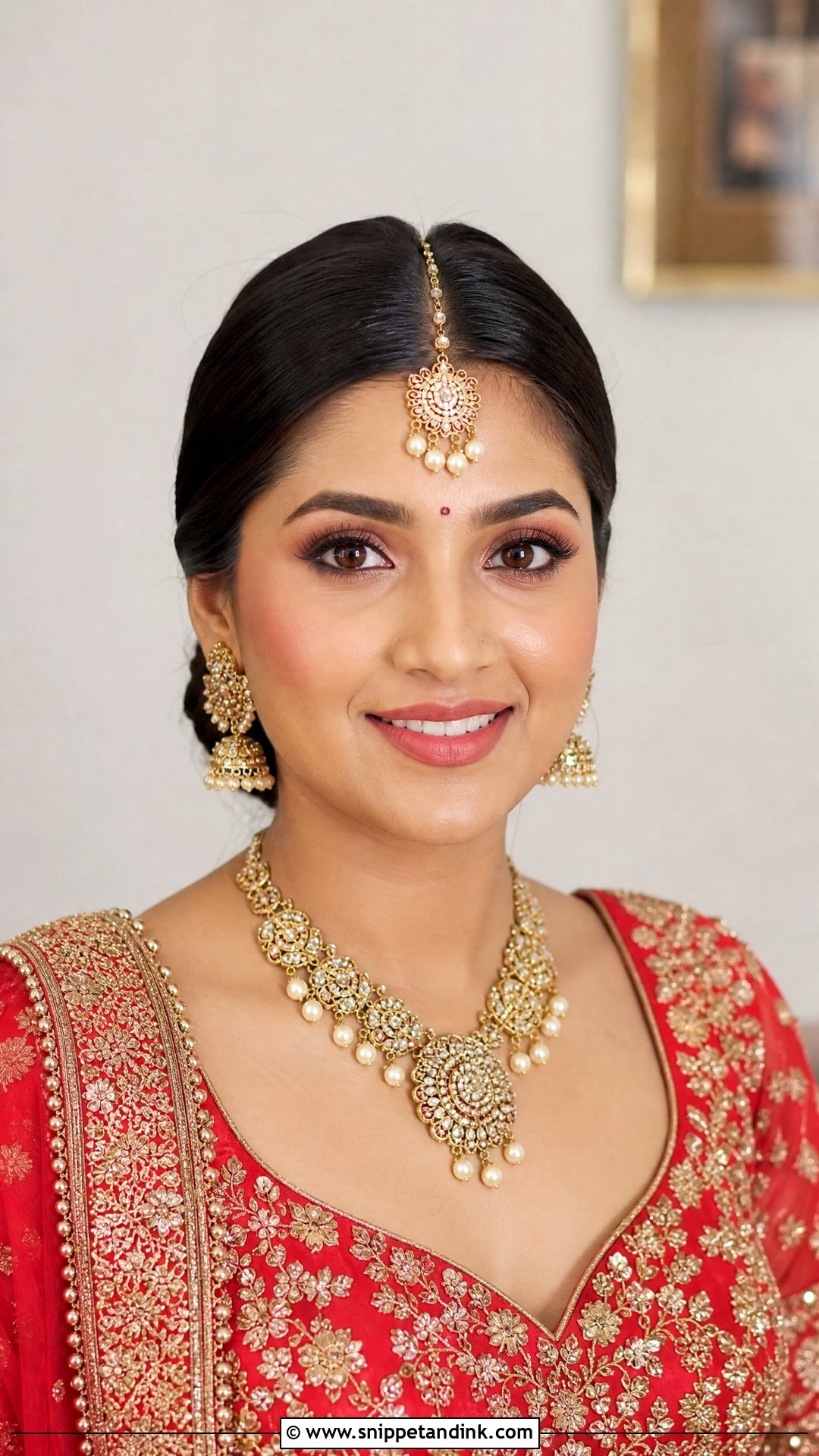
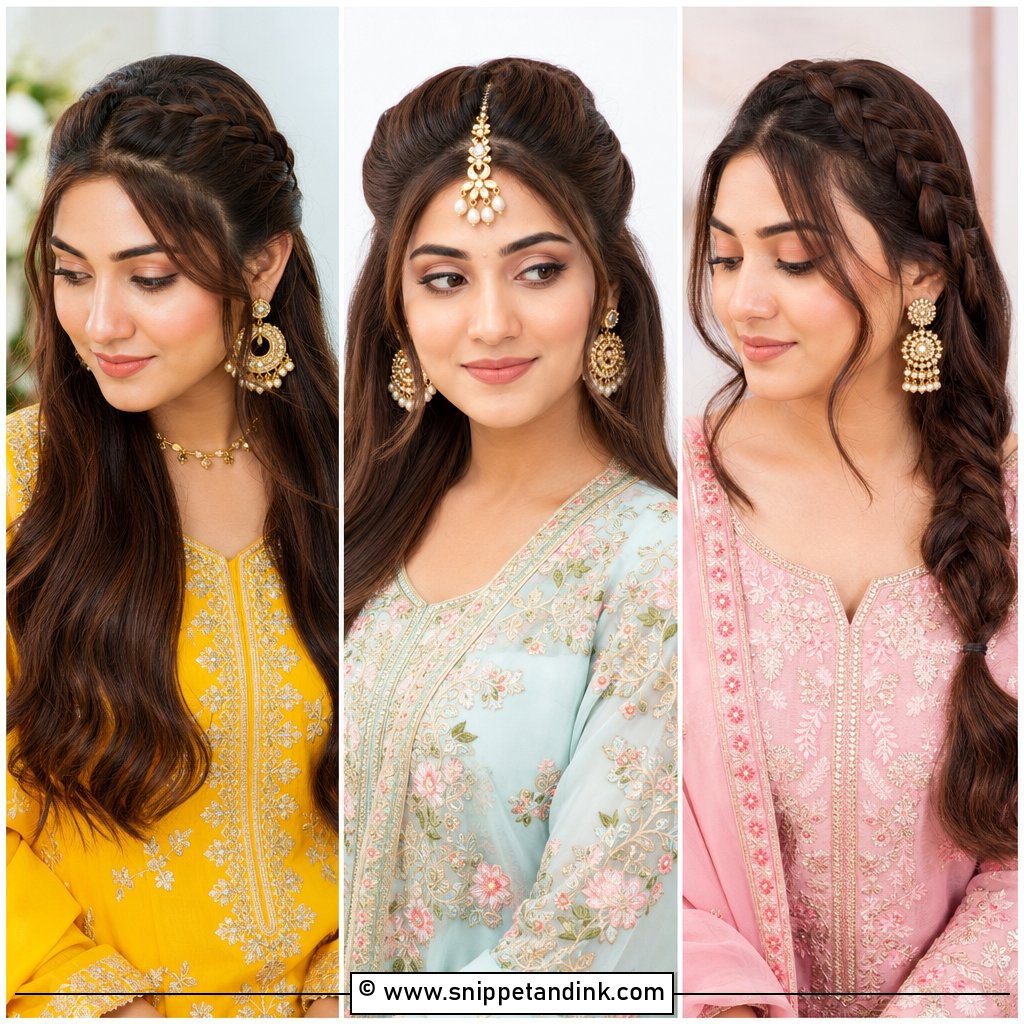
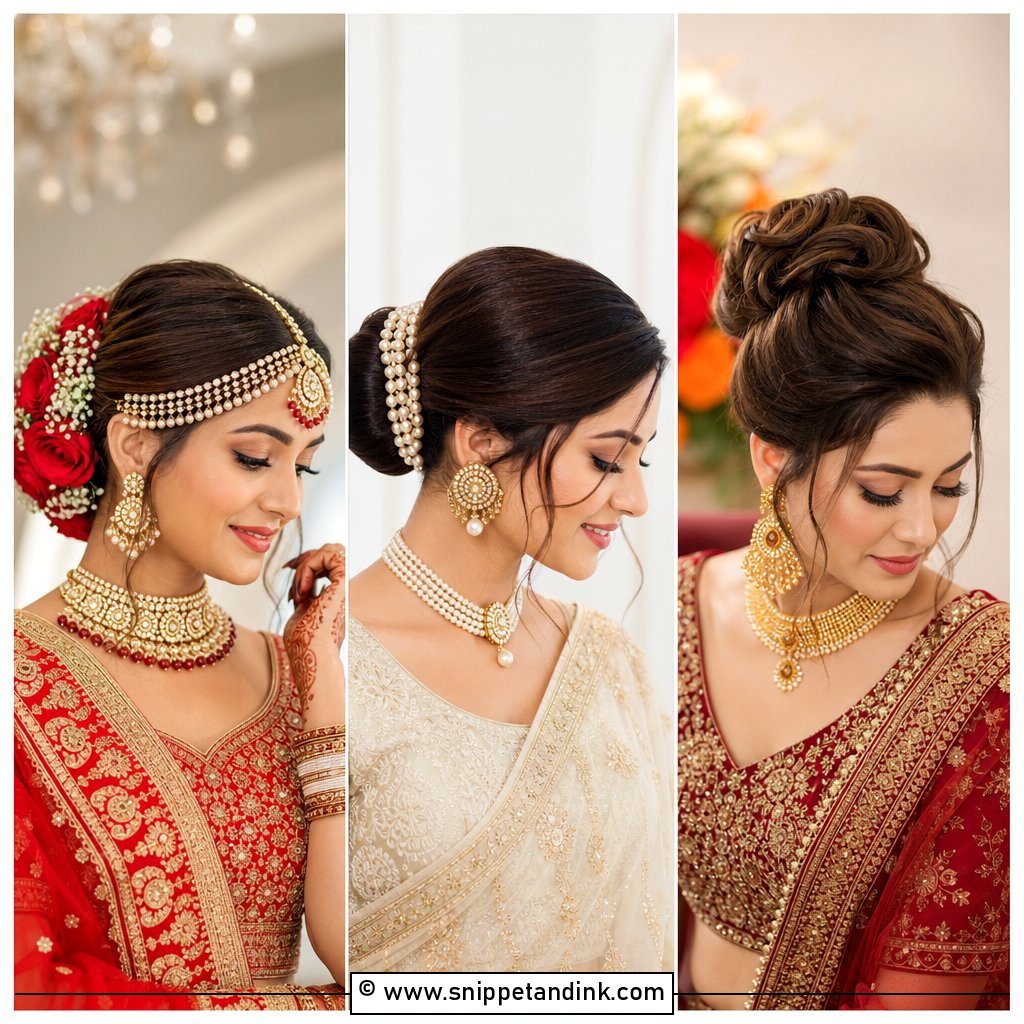
This is the version I trust most for a traditional bride. A clean centre part gives a tikka or matha patti a straight line to sit on, and the hair is smoothed down both sides into a low or mid juda at the back. Smoothed completely flat, though, it can look severe on a long face. I lift the roots a few millimetres either side of the part with a fine comb and leave the baby hairs soft rather than gelled down hard.
2. Front Look Bridal Juda With Side Part
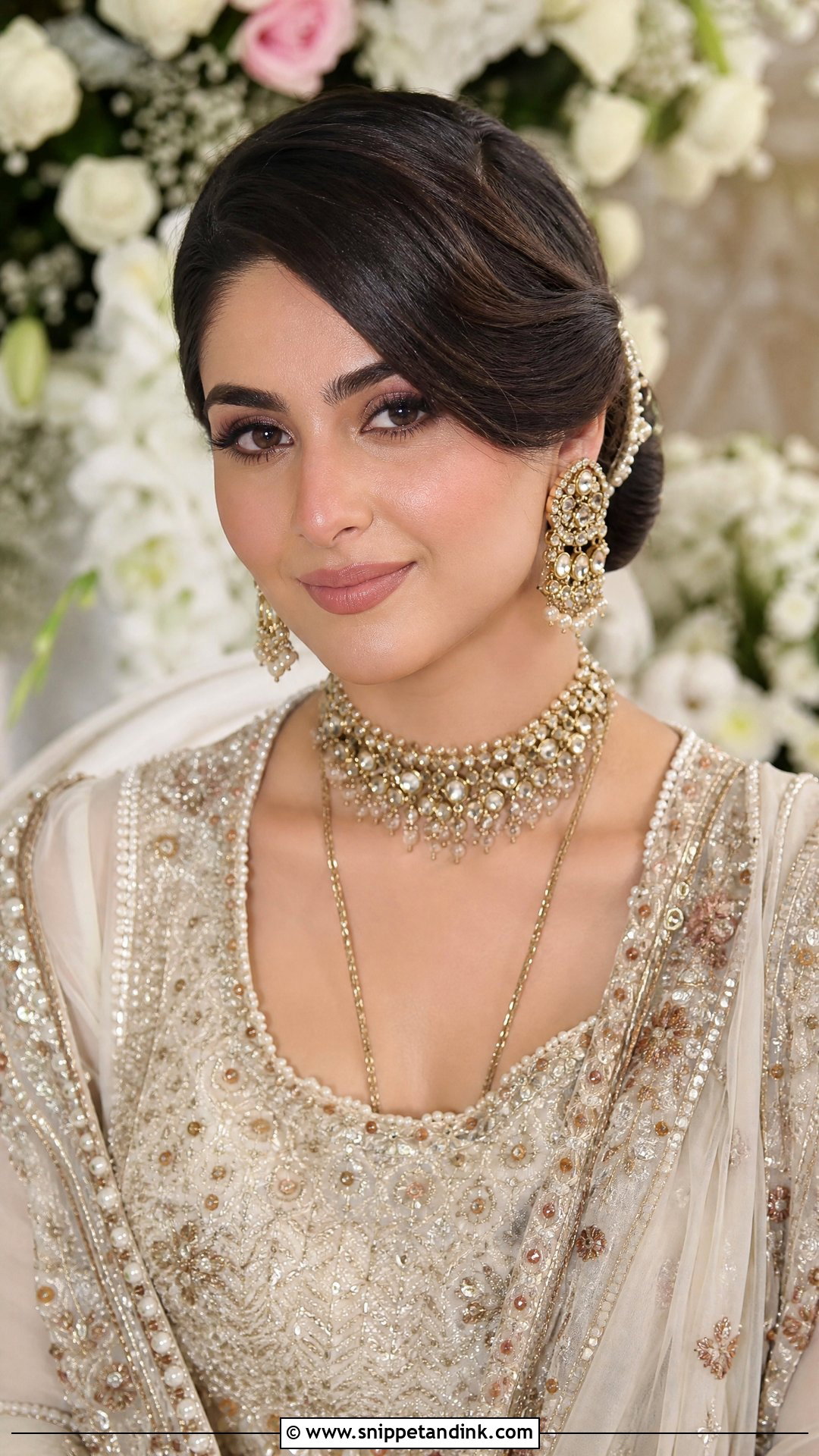
Moving the part to one side shifts the volume with it, so the fuller side lifts the forehead and softens a strong jaw. I suggest it to brides who feel exposed by a strict centre line. The heavier side also gives a passa or jhoomar something to sit against. What I watch is the fold: the hair on the heavy side has to be pinned under itself before it joins the bun, or it bulges out above the ear by the evening.
3. Front Look Bridal Juda With Soft Curls
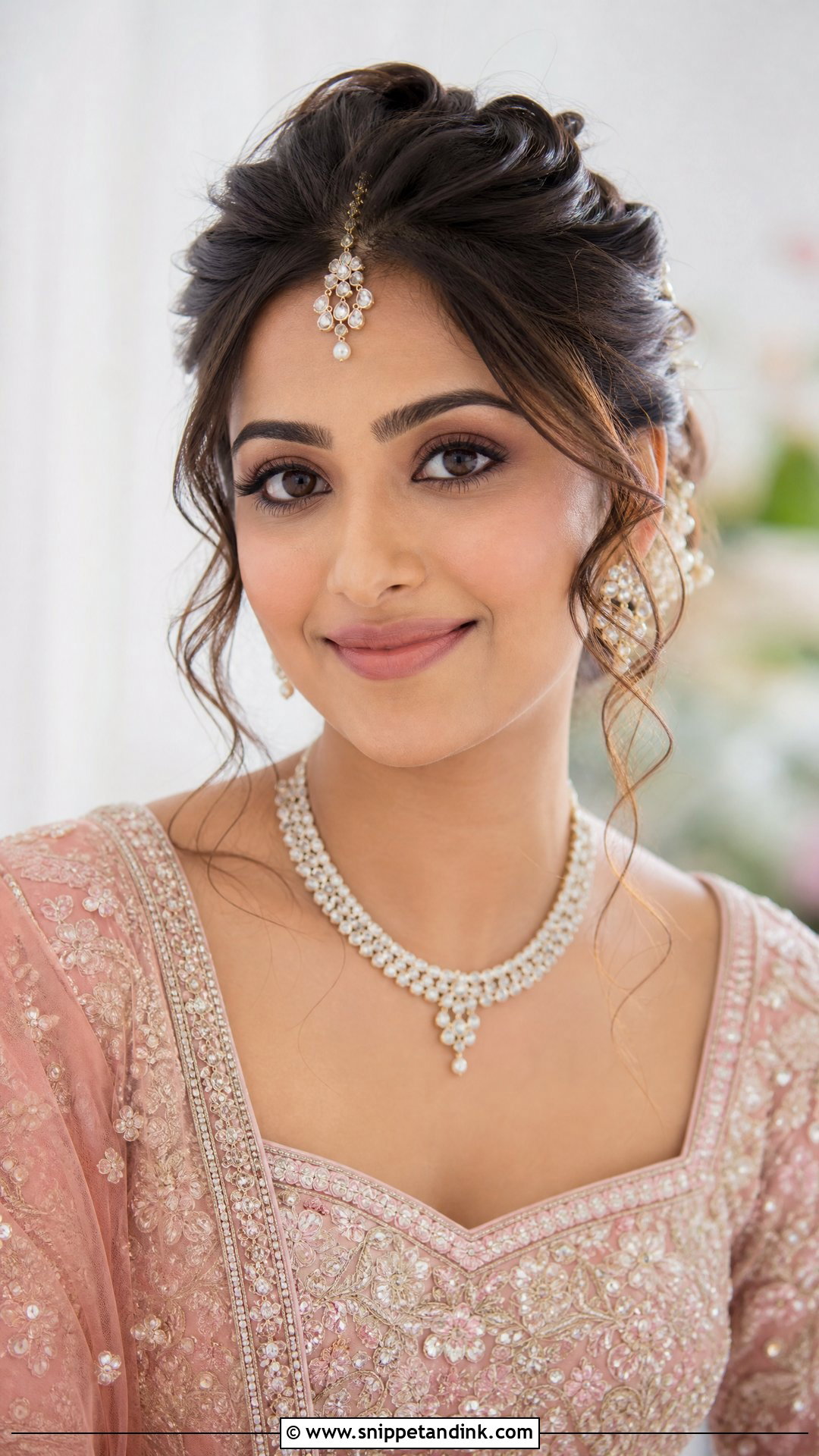
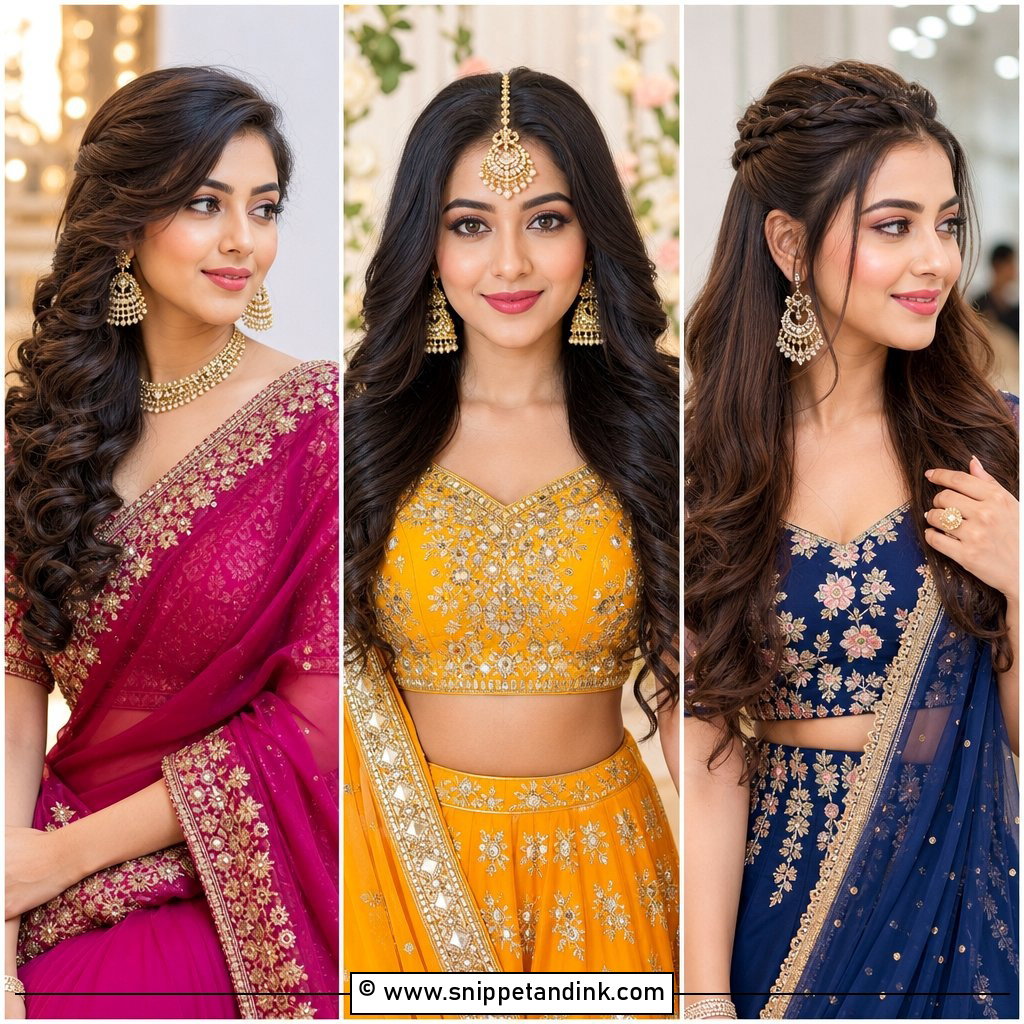
Curls around a pinned-up bun let the face breathe. I place them at the temples, the cheekbones or the jaw depending on where I want the eye to go: jaw-length pieces soften a square face, temple curls lift a round one. They are the first thing to fall in heat, so I curl these pieces on a smaller barrel than the rest and pin each one in a loop to cool. The juda behind can be low, loose or flower-covered.
4. Front Look Bridal Juda With Puff
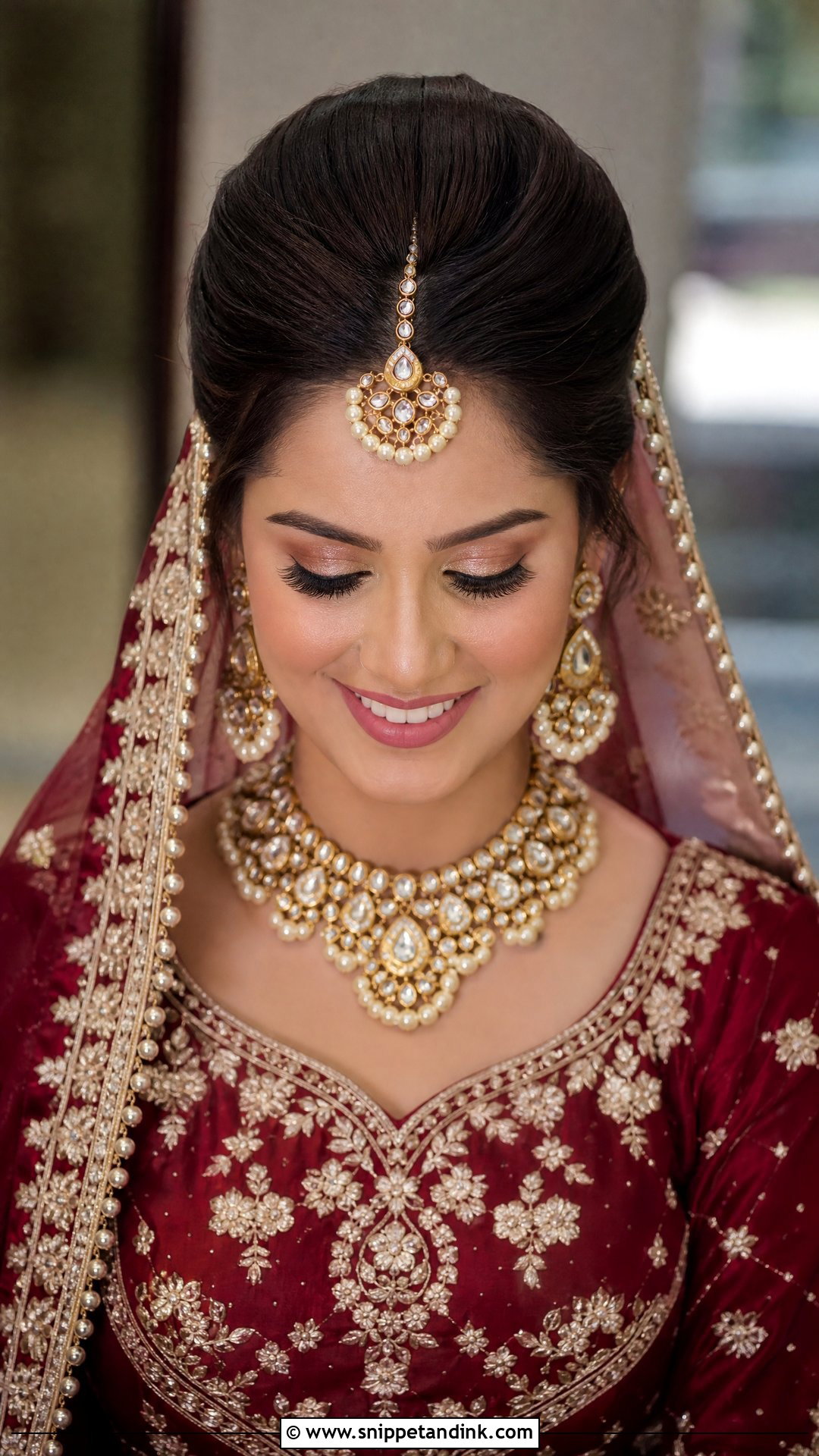
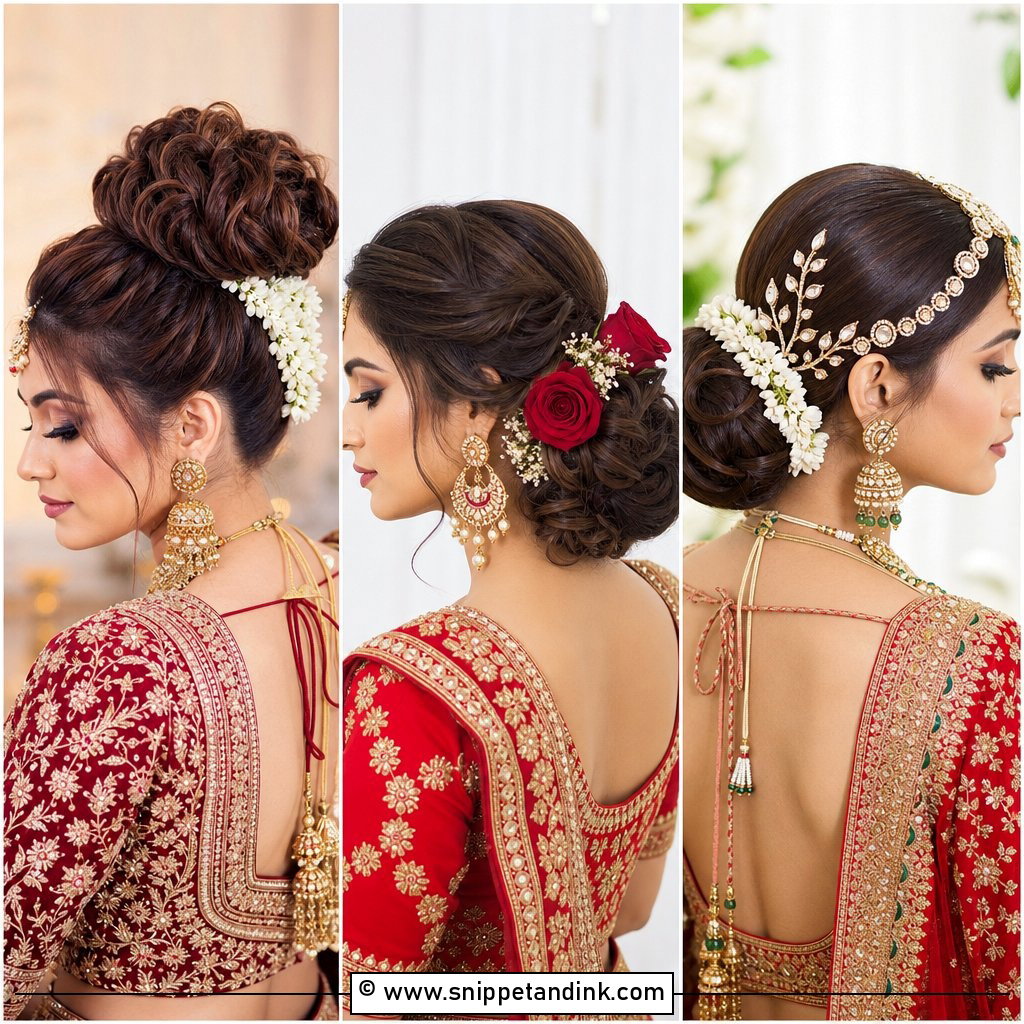
A puff at the crown gives the juda height and keeps the shape visible under a heavy dupatta, which is mostly why brides ask for it. It also balances a big necklace and a wide lehenga, and it makes a round or petite face look a little longer. My rule is to backcomb the base, not the surface, and to blend the sides into the bun with a soft brush so there is no visible ledge where the puff ends. A puff that looks stiff from the side is what makes this style look dated.
5. Front Look Bridal Juda With Maang Tikka
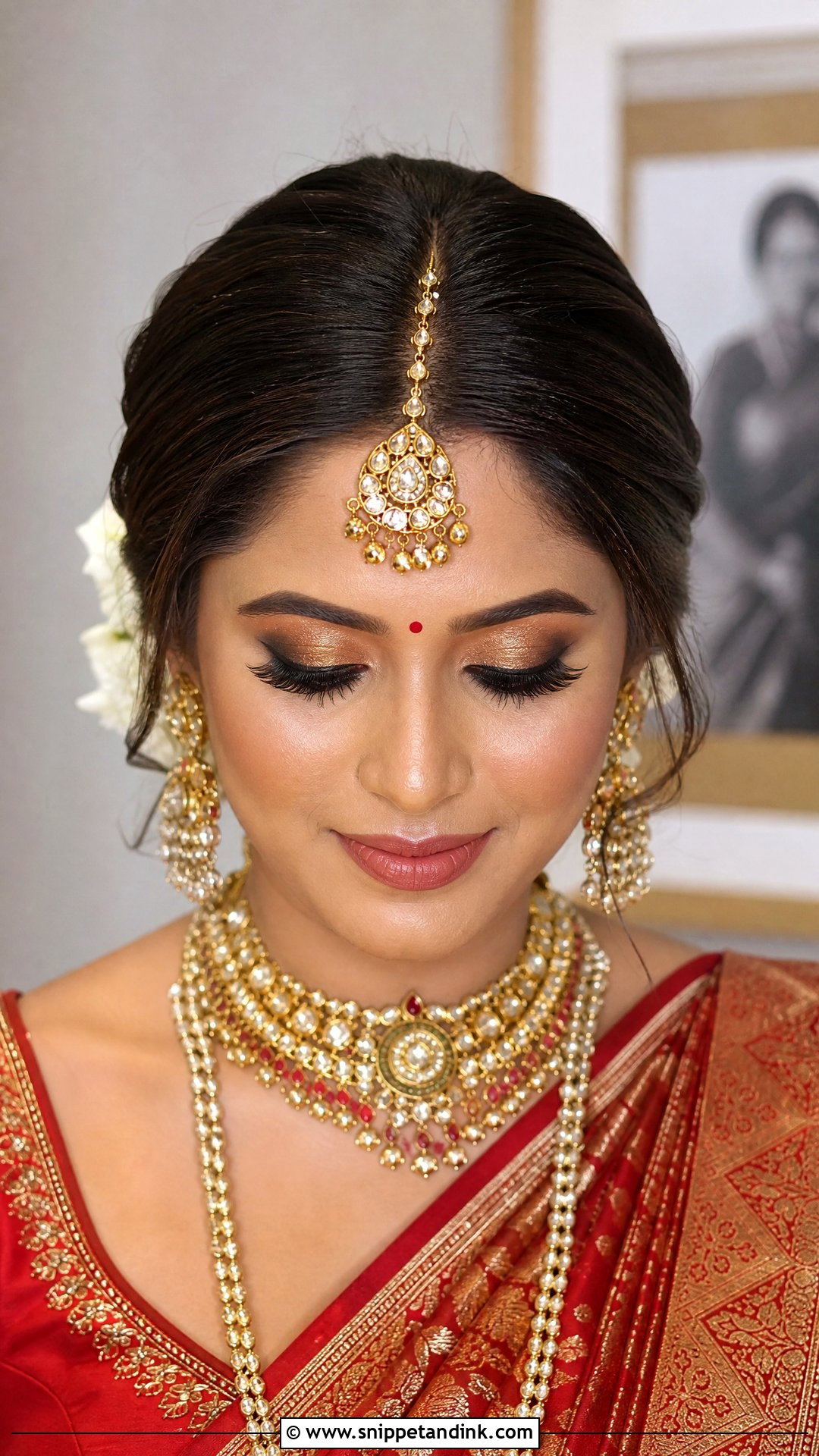
If the tikka is the centrepiece, the hair just has to give it a stable base. I part in the middle or smooth the front back softly, then fix the tikka hook into a small pinned section just behind the hairline so the bun takes none of the strain. Small pearl tikkas, bold kundan pieces, polki and temple jewelry all sit well this way. With a dupatta worn over the head, the front stays visible and is all anyone will see, so keep the hairline clean.
6. Front Look Bridal Juda With Matha Patti
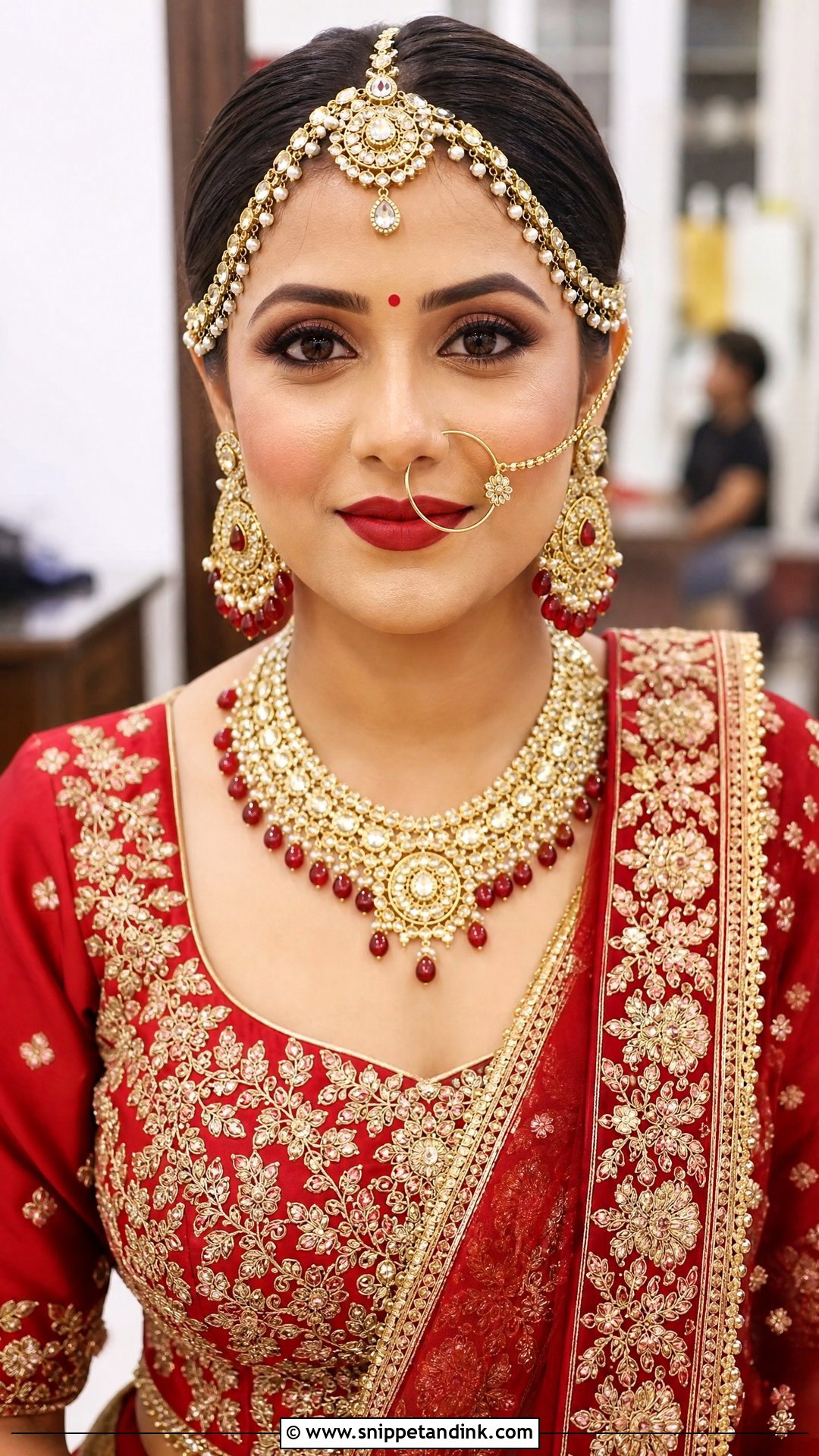
A matha patti looks wrong the moment one side chain sits higher than the other, and a juda makes a good base because nothing loose gets in the way. I centre-part or push the front softly back and pin flat so the side chains of the matha patti lie against the head. Then I check by eye from each chain to the top of the ear. The bun behind can be plain or flowered; the front should stay quiet so it does not fight the jewelry. Close-up portraits are where this pays off.
7. Front Look Bridal Juda With Passa
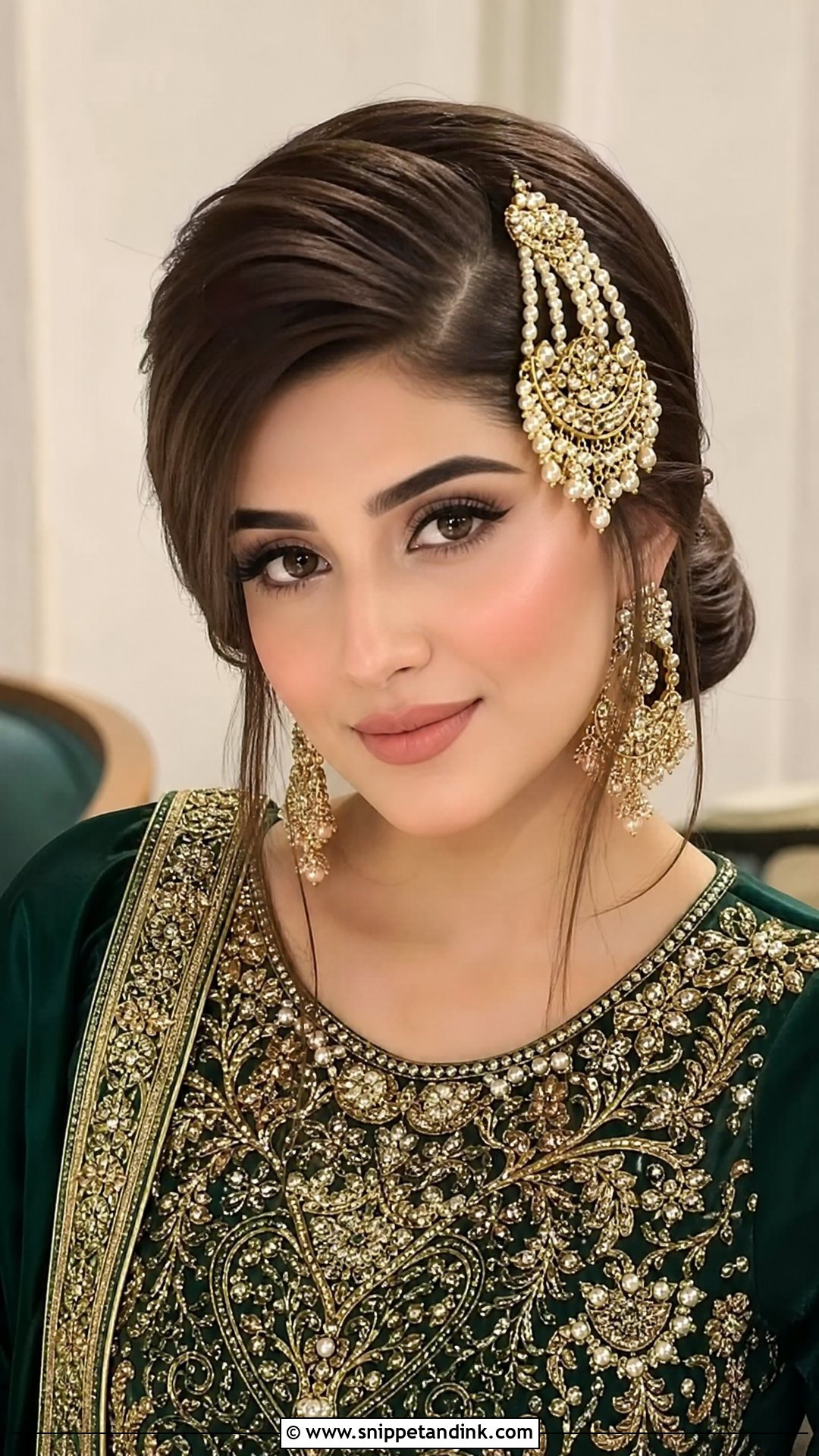
Passa looks have an old-world charm, and the asymmetry is the point. I set a deep side part with soft volume, or a sleek sweep, so the passa has room on one side of the head, and I keep the juda low or slightly off centre for balance. It suits shararas, ghararas, anarkalis and Mughal-inspired outfits. Leave the opposite side neat and bare. One thing to test: a heavy passa on the same side as a deep sweep can drag the hair down, so I anchor its hook to a pinned base, not to loose hair.
8. Front Look Bridal Juda With Braided Crown
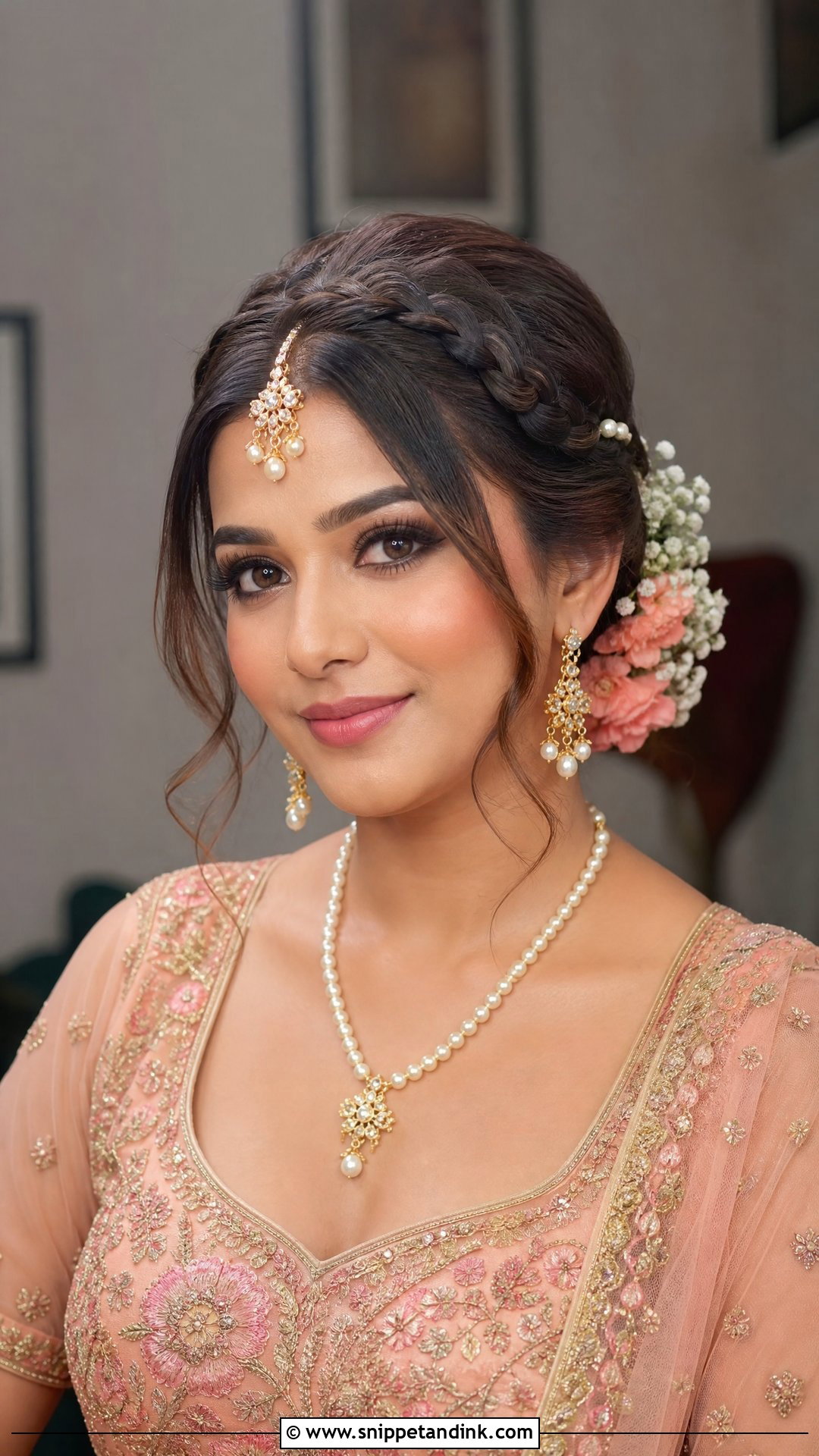
A braid along the front is how I control layered or short front pieces that would never stay in a smooth sweep. It can start at the part, follow the hairline or wrap down toward the bun, and it gives the look a handmade texture that does not depend on jewelry. I pull the braid edges out gently so it looks full from a distance. Small pins, fresh flowers or pearls tuck straight into the plait. On very fine hair the braid can look thin, so I sometimes add a slim clip-in weft underneath before braiding.
9. Front Look Bridal Juda With Sleek Hair
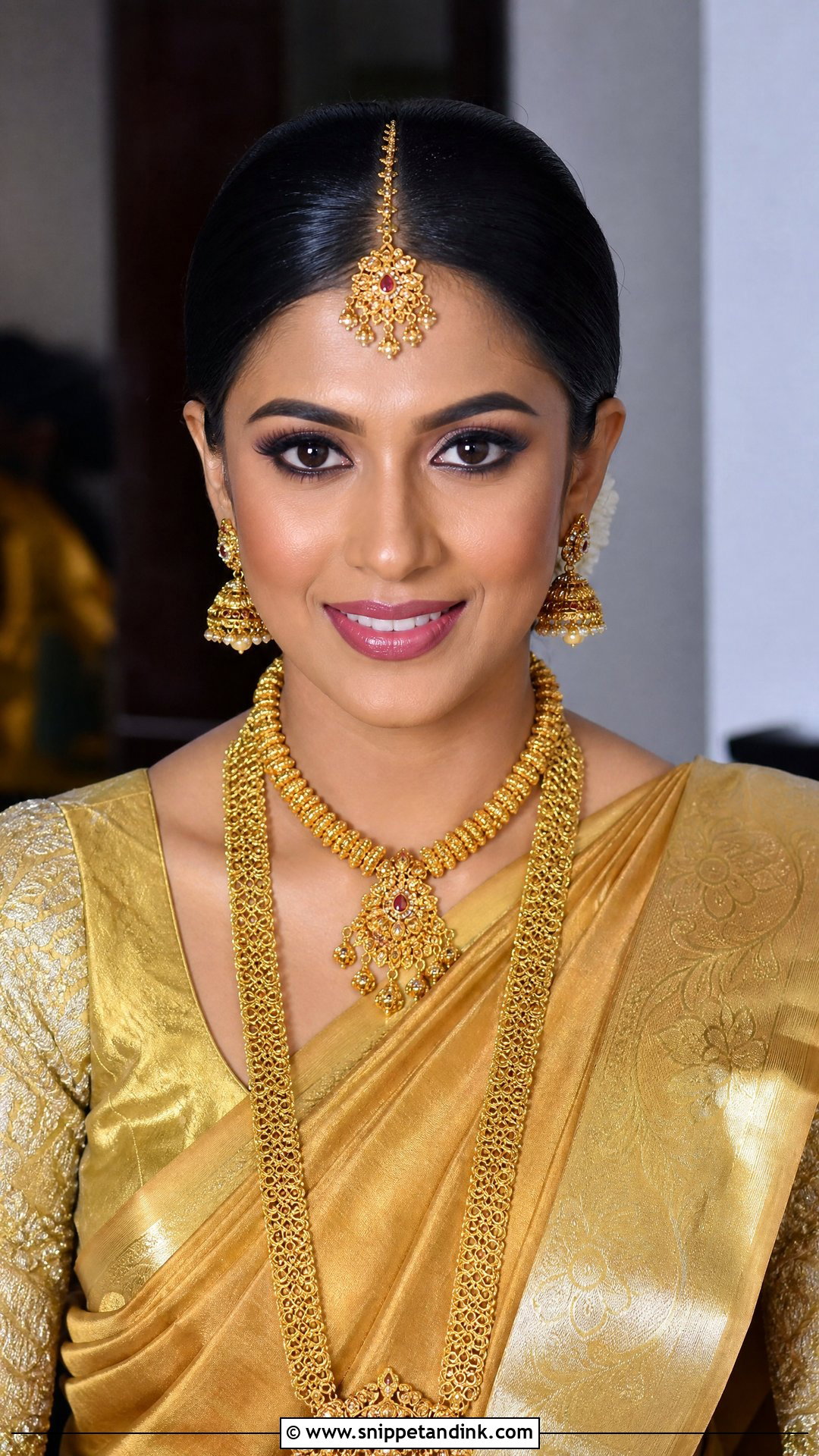
Sleek and firm: hair smoothed close to the head with a centre or side part, pulled into a tight juda. It suits sharp makeup, structured outfits and heavy jewelry that needs no competition, and it leaves the eyes, brows and earrings to do the talking. Shine is what makes it look expensive, so I finish with a drop of serum warmed between my palms, never sprayed straight on. The risk is tension headaches. A juda pulled tight enough for a perfect sleek finish is still tight at hour eight, so I keep a little give at the nape.
10. Front Look Bridal Juda With Messy Bun
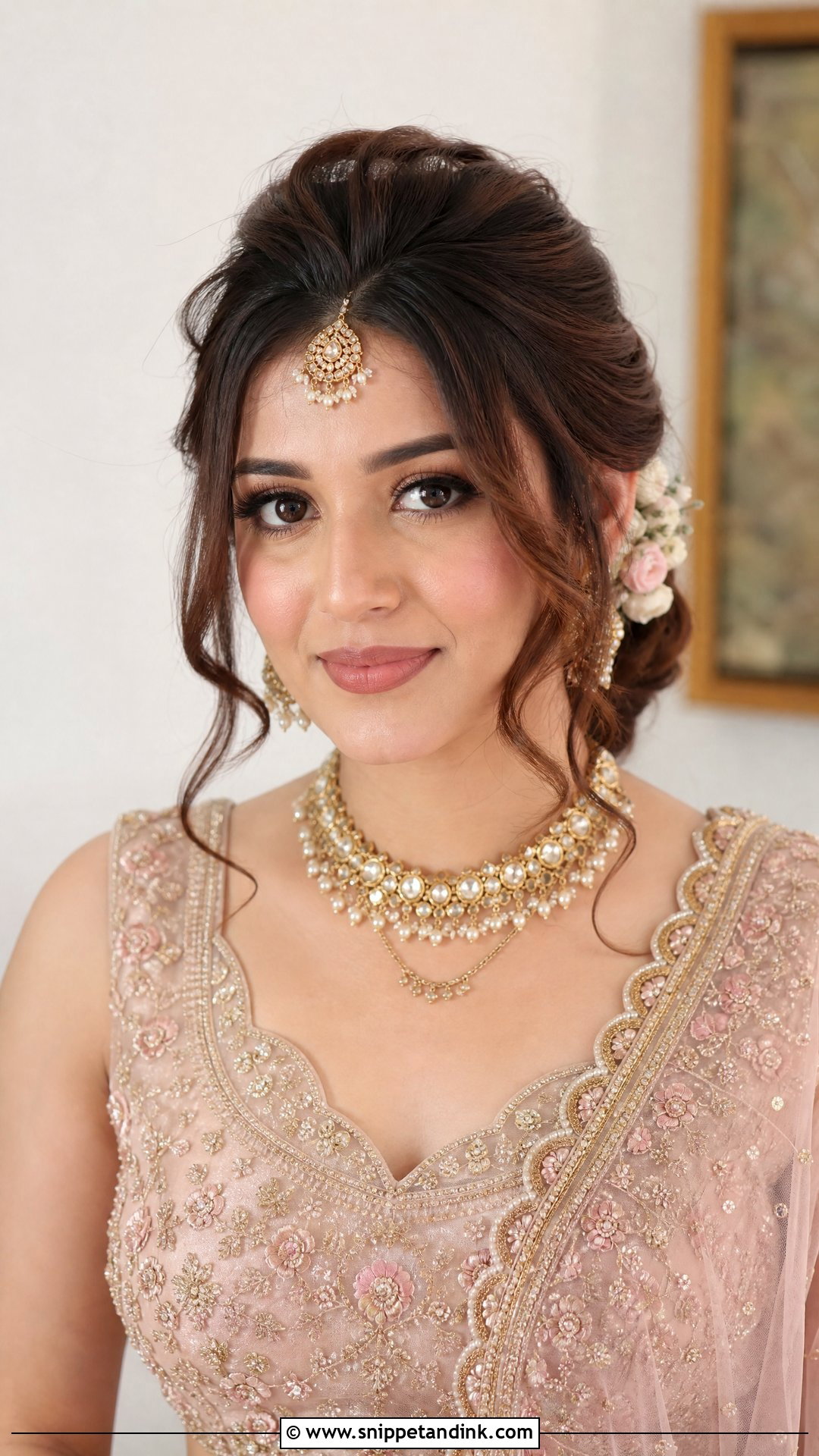
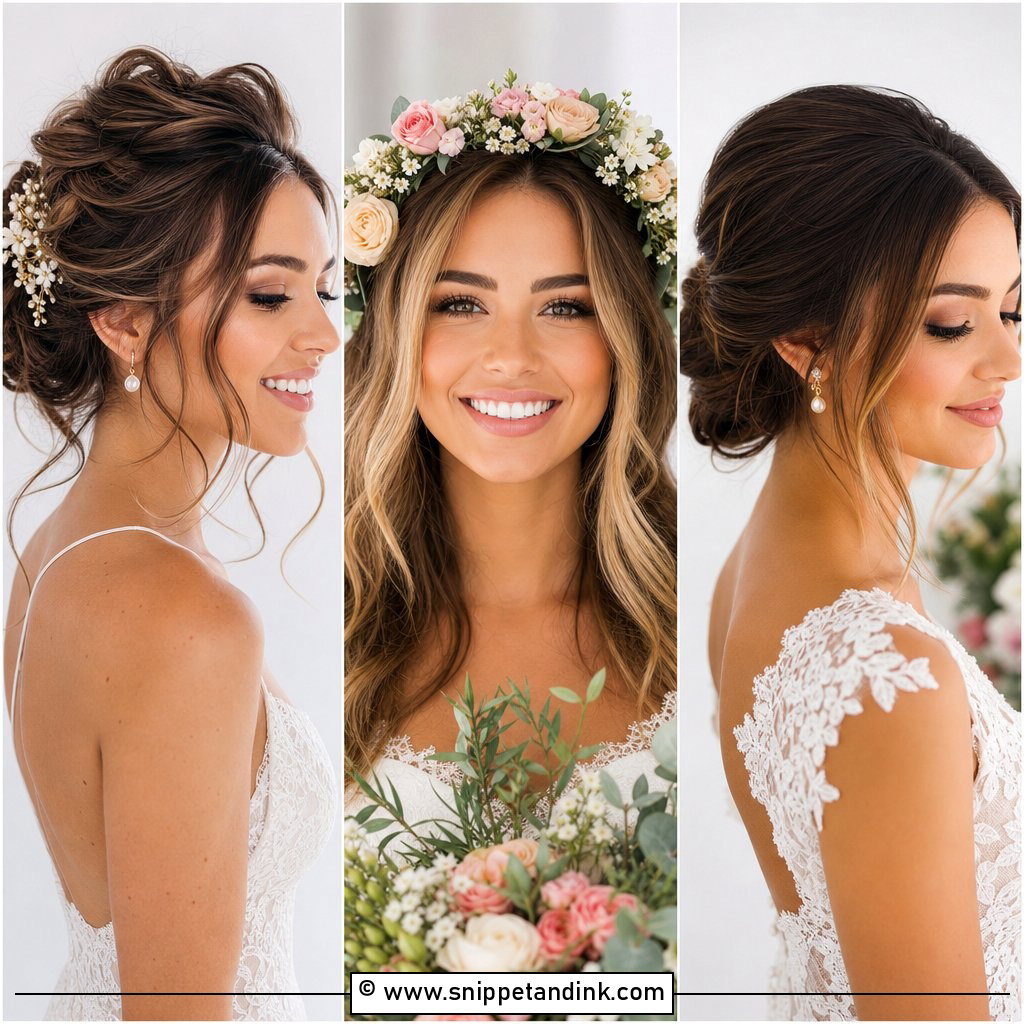
A messy bun has to be messy on purpose. I build a firm, pinned juda first, then pull out the texture, and only then loosen the front into curls and airy pieces where they flatter the face. Built the other way round, it collapses during the first round of photos. It works best with light dupattas, pastel outfits, floral jewelry and soft makeup. I would not pair it with a very heavy bridal dupatta, because the weight crushes the loose texture flat.
11. Front Look Bridal Juda With Gajra
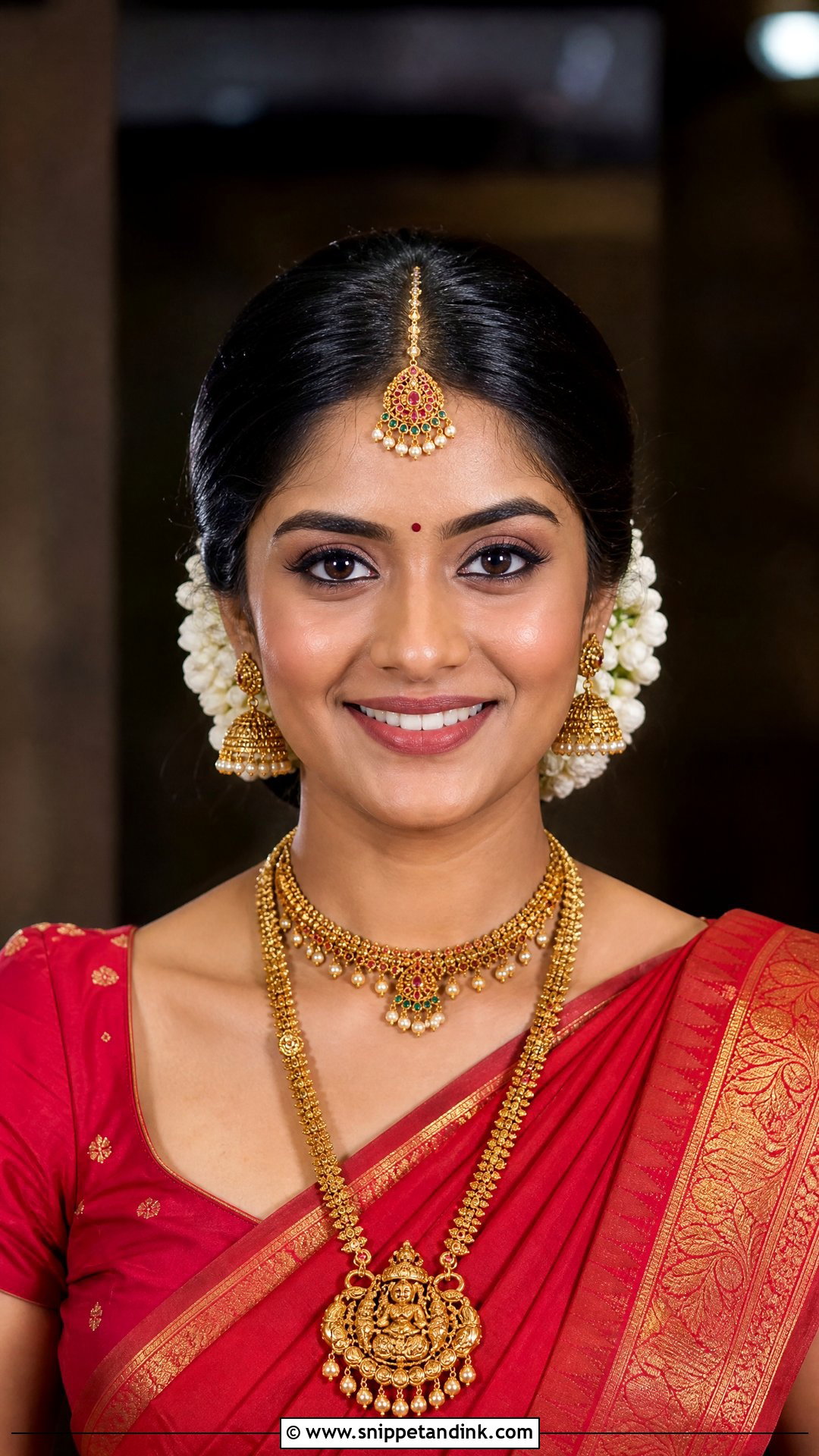
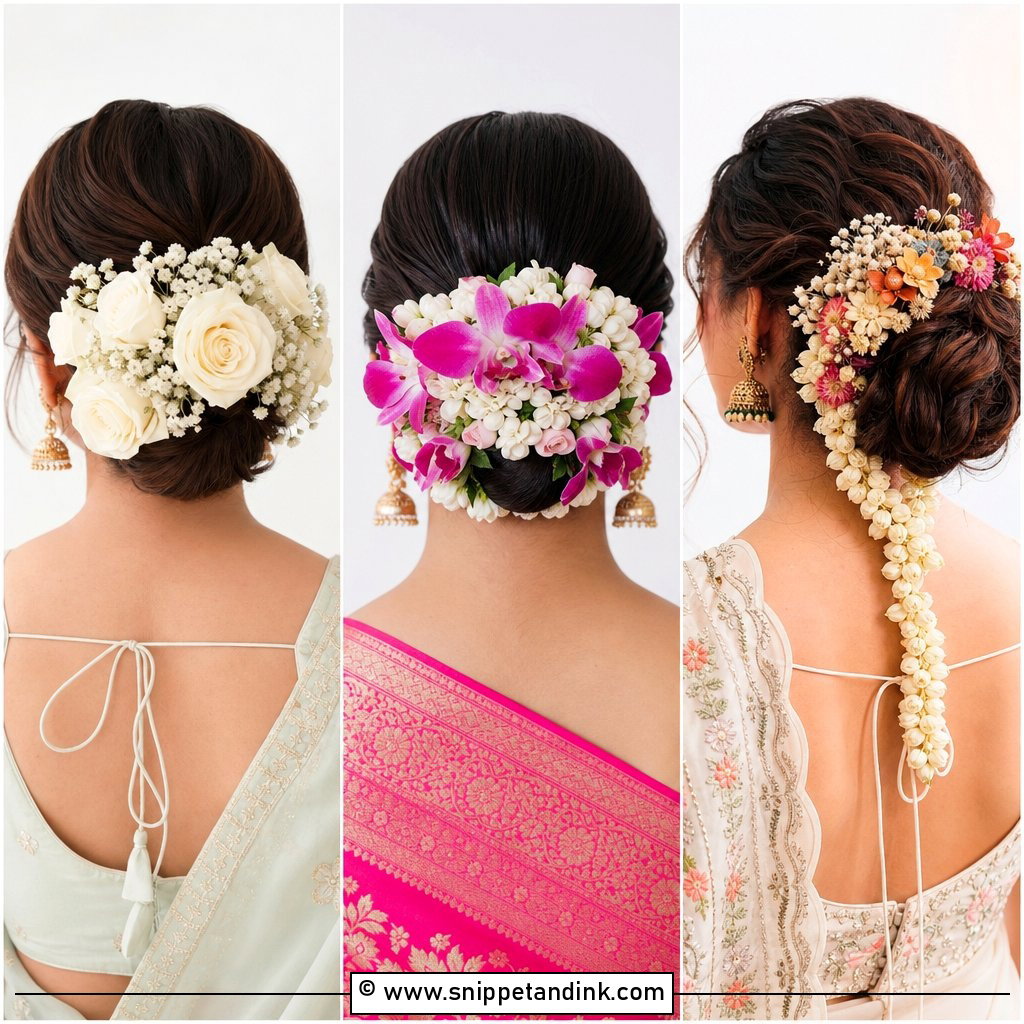
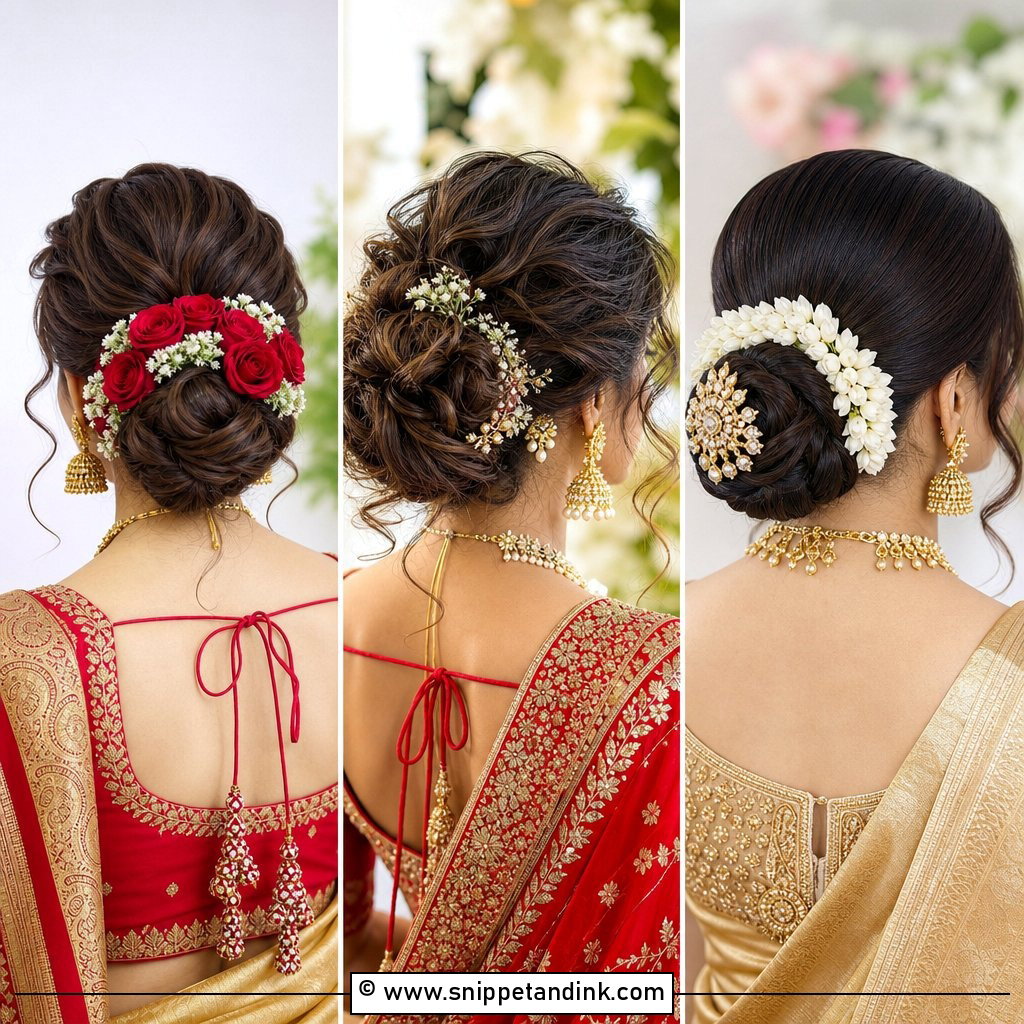
Gajra on a juda is the most traditional pairing here, and the contrast does the work: a sleek or softly lifted front, then white flowers wrapped round the bun. It suits saree brides, lehenga brides and temple ceremonies, and it brings fragrance as well as texture. I secure the strings with U-pins pushed into the bun every few centimetres, not bobby pins, because U-pins grip without flattening the flowers. Keep the front plain and let the flower-wrapped juda carry the decoration.
12. Front Look Bridal Juda With Roses
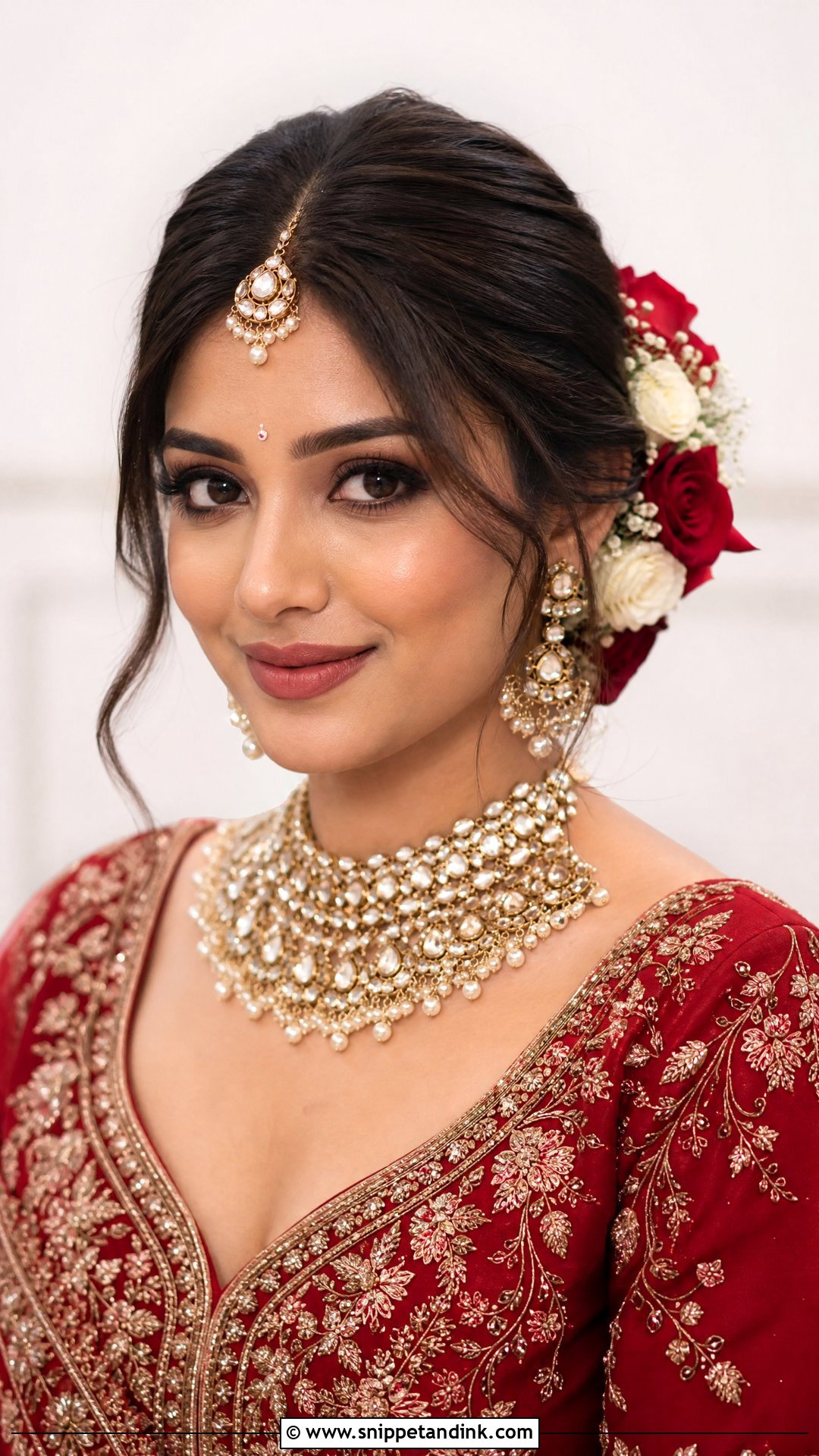
Roses look fuller than a gajra and can be matched to the outfit in red, pink, peach or ivory. I cut the stems short and wire them, because a rose pinned by its head alone droops forward within the hour. The front should follow the mood of the flowers: sleek with deep red reads royal, soft curls with blush roses read romantic. Pick a rose colour that sits with the outfit, not one that pulls attention away from it. Rose heads are heavy, so five or six well placed blooms usually do more than a full wreath.
13. Front Look Bridal Juda With Hair Accessories
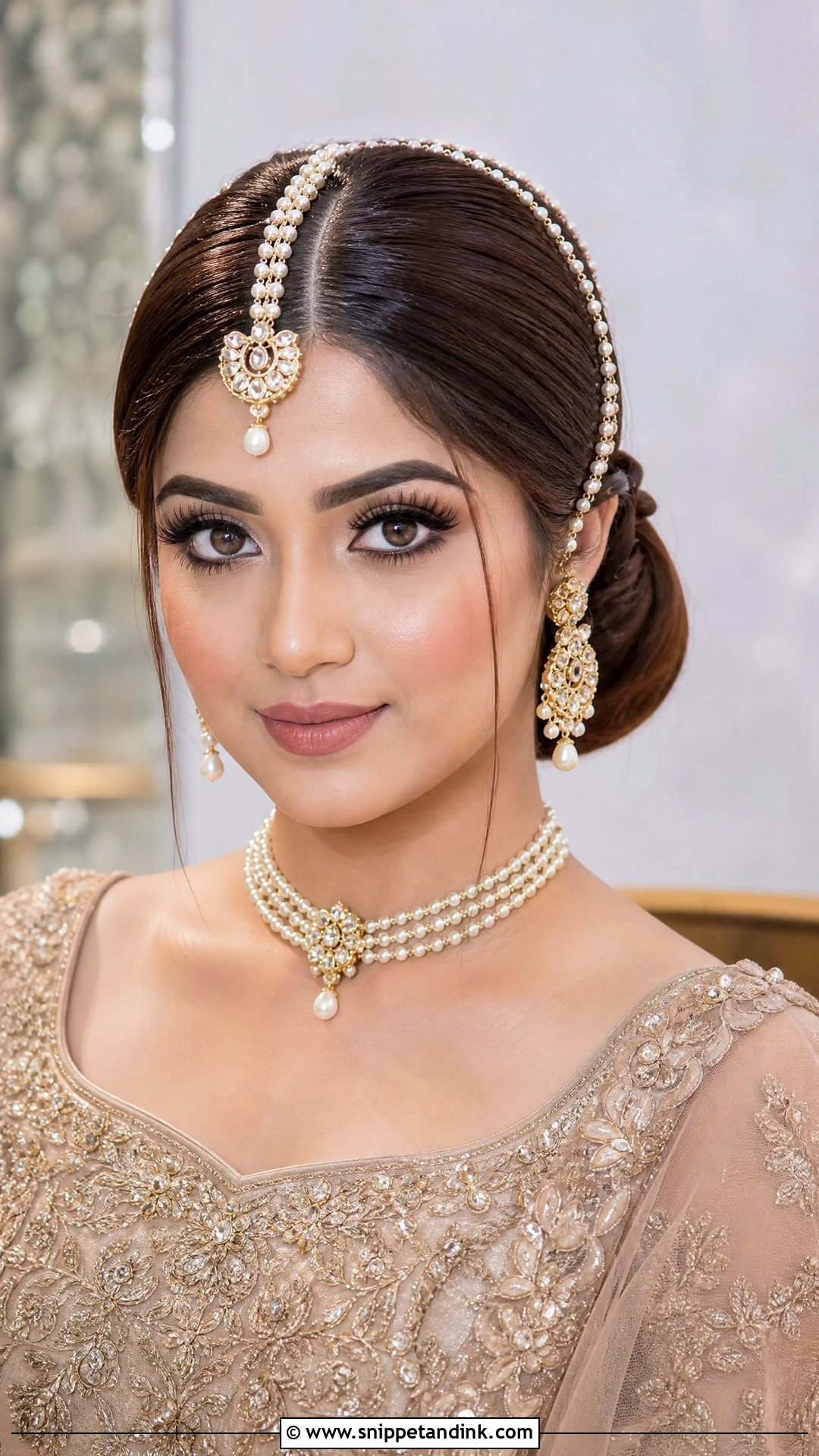
Hair accessories make the same juda feel personal. Over a middle part, side part, puff or curls I add pins, chains, pearls, kundan clips or small crystals, especially when the outfit is heavily embroidered and the hair needs some sparkle to match. Match the metal to your jewelry: gold with gold, antique with antique. The mistake I see most is too many pieces of different sizes. Two or three that repeat one shape look deliberate; eight different clips look like a jewelry box tipped out.
14. Front Look Bridal Juda With Dupatta
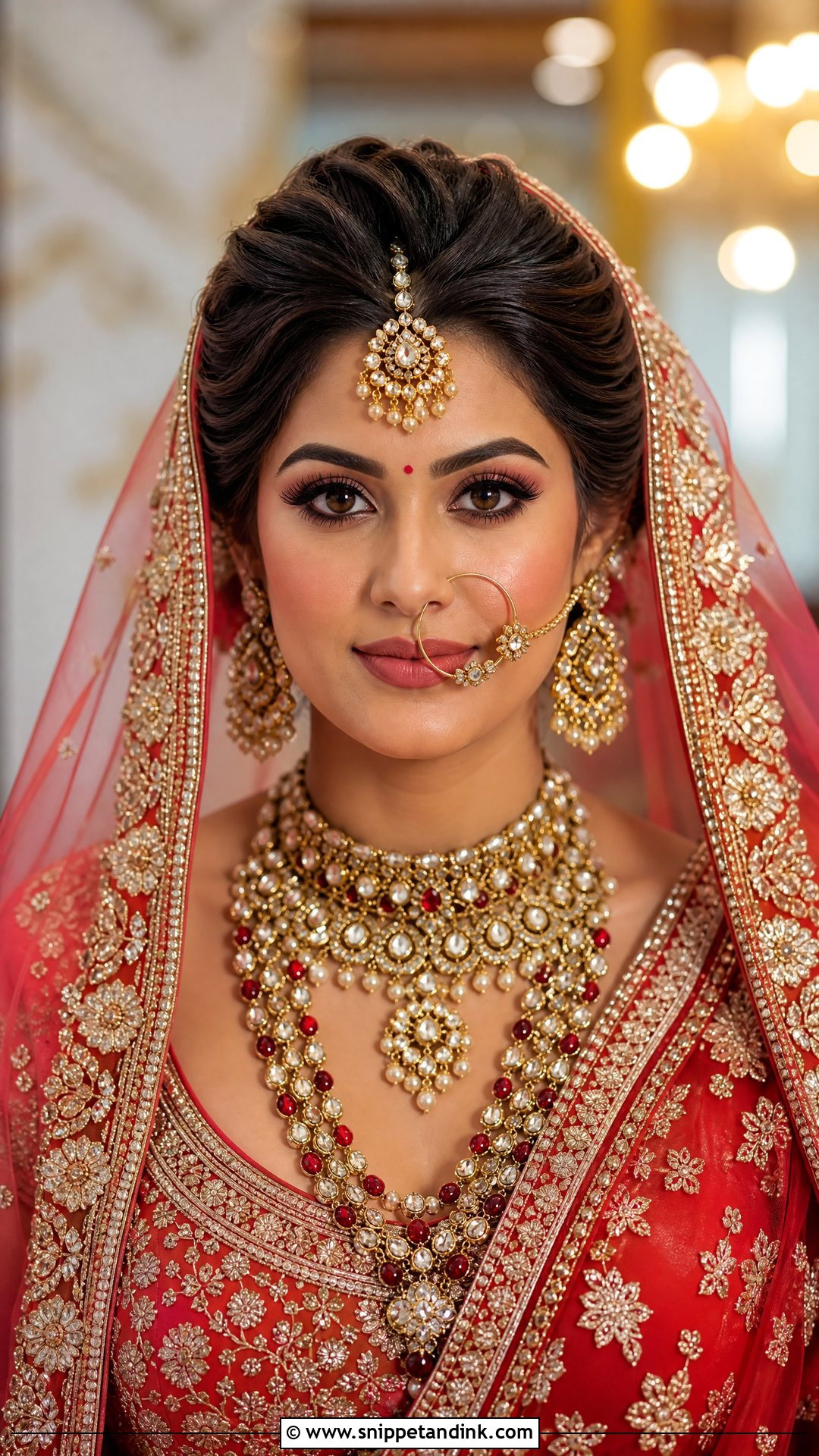
A bridal juda with dupatta is where pin placement matters most. The juda is the anchor: I pin the dupatta into the bun and into a small base at the crown, so the fabric weight sits on the bun and not on the front. A tikka with a middle part, a soft puff or sleek side sections all hold up well under fabric. What I avoid is pinning the dupatta right at the hairline, because every hug or turn of the head then drags the front out of place.
15. Front Look Bridal Juda With Open Front Flicks
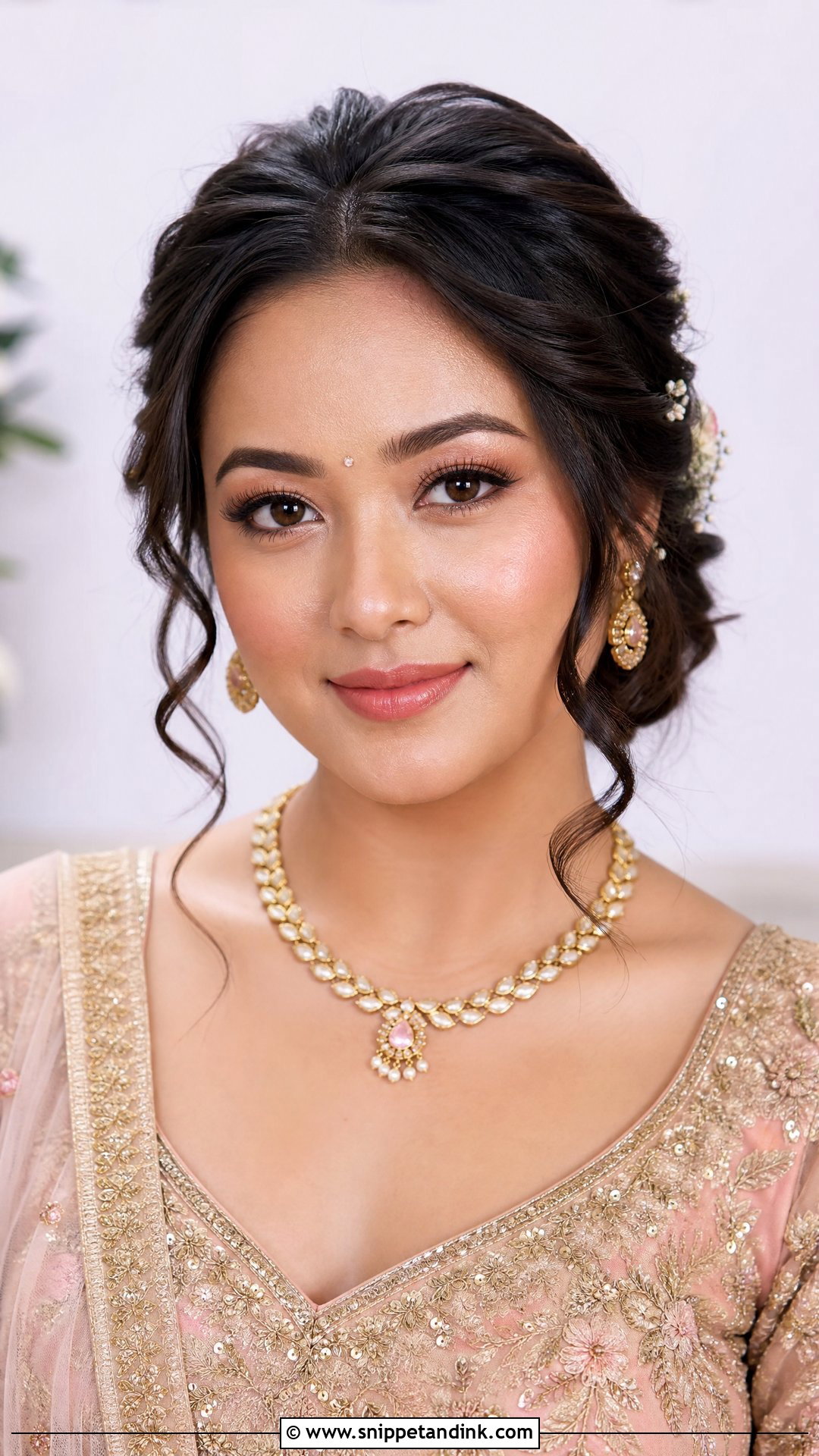
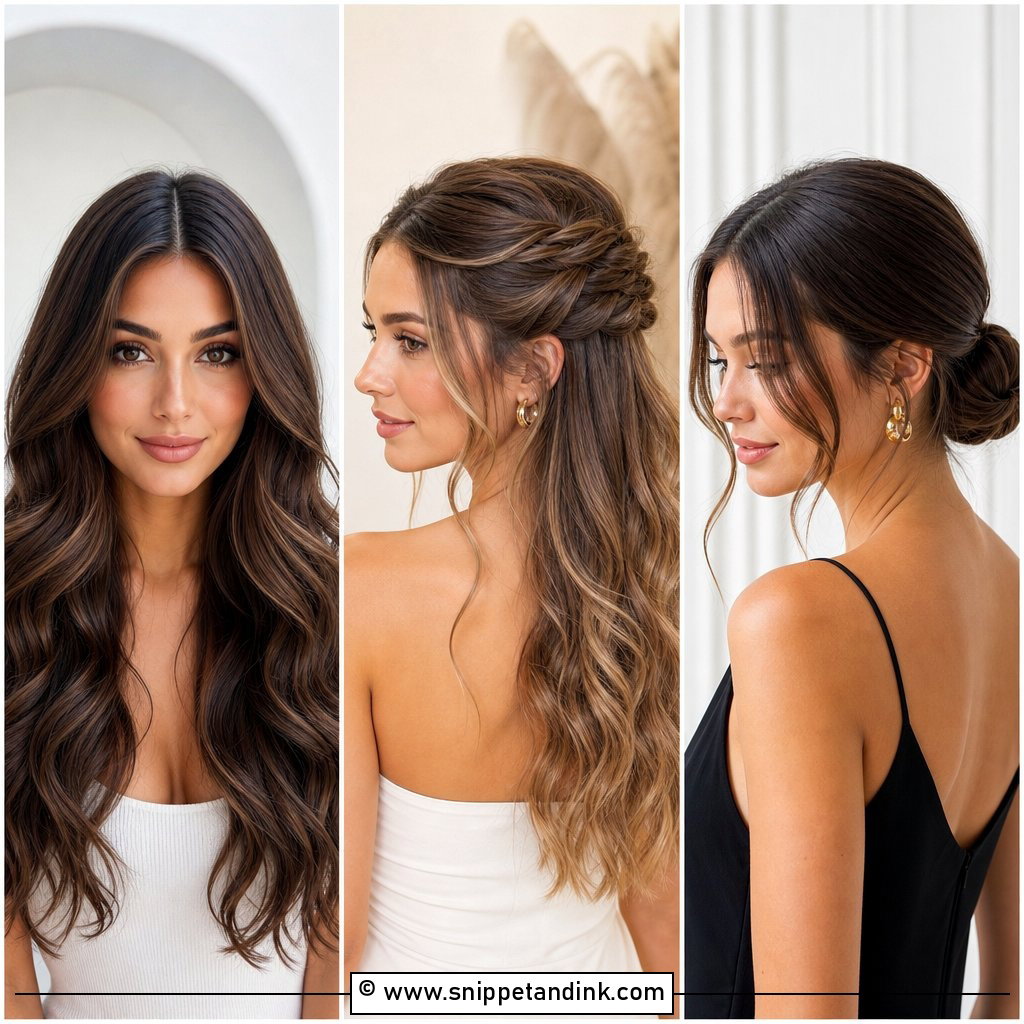
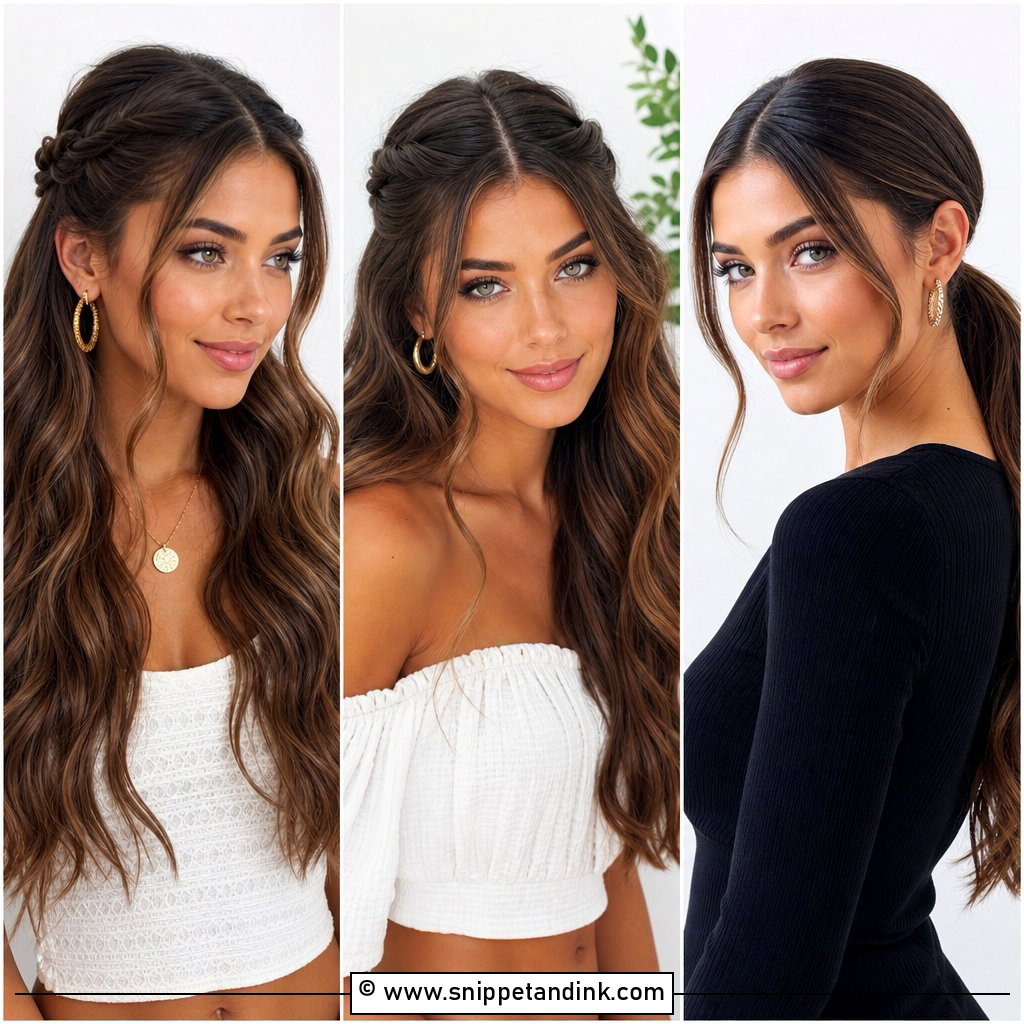
Leaving a few flicks out around the temples and cheeks softens a formal juda and suits brides who feel bare with the face fully exposed. I shape them with a small curling iron, let them set, then mist them lightly so they move without falling into the eyes. Flicks and heavy false lashes can catch on each other, which is worth testing at the trial. Paired with a low bun, floral pins or a light dupatta, it is the gentlest look on this list.
What Goes Inside a Bridal Juda
The full, rounded juda you see on most brides is rarely all her own hair. I build it over something, and it helps to know what before the day.
A mesh donut or a small padded bun is my usual base. Your hair wraps around it, so it adds size without much weight. If your hair is short, layered or fine, I may add a ready-made synthetic or human-hair juda on top. Ask to see it in daylight next to your own colour; a slightly warmer or shinier shade shows up badly in close-ups.
The honest trade-off is weight. A large juda plus a fresh gajra, a jhoomar and a pinned dupatta can start to ache by the third or fourth hour. I ask brides to wear the full build for at least an hour at the trial, ideally with the dupatta, and to speak up if their head starts to throb. A slightly smaller bun you can forget about photographs better than a huge one you keep touching.
The Unpinning Nobody Plans For
At the end of a long night, a bridal juda can hold dozens of pins, wilted flowers and layers of spray. Pulling at it while exhausted is how hair gets snapped. A calmer order helps:
- Take off the jewelry first, especially anything hooked into the parting, so chains don’t catch as the bun loosens.
- Unpin the dupatta and remove the gajra or roses carefully.
- Find the pins with your fingertips and slide them out along the direction they went in, starting from the outside of the bun and working inward.
- Lift the donut or added juda out once the hair around it is free.
- Work a little oil or conditioner through the backcombed areas and detangle from the ends upward with a wide-tooth comb. Don’t brush it dry.
Ask a sister or friend to help with the back. You won’t be able to see what you’re doing, and they’ll spot the pins you’d otherwise find in your pillow the next morning.
Look at the Bun in Profile Before You Approve the Front
The juda to go with is the one that suits your face, outfit, jewelry and comfort all at once. A sleek middle part reads classic, soft curls or flicks make it romantic, a puff gives height, a passa gives character and flowers bring the traditional finish to the bun. Before deciding, think about where the dupatta will be pinned, how long the ceremony runs and how heavy your jewelry is. Bring front, side and back references to your stylist together, because a front chosen without seeing the back is how a look ends up half finished.
You'll Like These Ideas:



Leave a Reply