
When a bride asks me for Hindu bridal mehndi designs, she rarely wants decoration alone. She wants blessings, family tradition and a few private details hidden in the lines of her hands. The classic vocabulary is rich: dulha-dulhan portraits, lotus, peacocks, mandalas, paisleys, jaali grids, temple borders and the groom’s initials tucked somewhere for him to find. More brides now also ask me for cleaner spacing, jewellery-style wrists and lighter Indo-Arabic flow. The right design depends on your outfit, your rituals, the shape of your hands and how many hours you can sit still. These 25 layouts are the ones I’m asked for most, with what each one needs to stain well.
Why I Book Bridal Mehndi Two Days Out
Henna doesn’t reach its deepest colour the moment the paste comes off. Freshly revealed skin is bright orange, and it darkens over the next day or two to reddish brown or maroon. If your mehndi is applied the night before, your hands will still be oranger than they’ll ever look again during the ceremony. That’s why I usually suggest the session one to two days before the wedding.
Full bridal work takes hours, and longer for intricate figures or feet. Times vary between artists and designs, so ask for an estimate when you book.
How to prepare for the session
- Finish waxing, scrubs and manicures beforehand; nothing exfoliating after application.
- Wash and dry your hands and skip lotion that morning, so the paste reaches clean skin.
- Eat and use the bathroom before I start; you won’t have use of your hands for a while.
- Wear something with sleeves that roll easily above the elbow.
- If you’ve never worn henna, ask for a small patch test a few days earlier.
1. Full Hand Hindu Bridal Mehndi Design
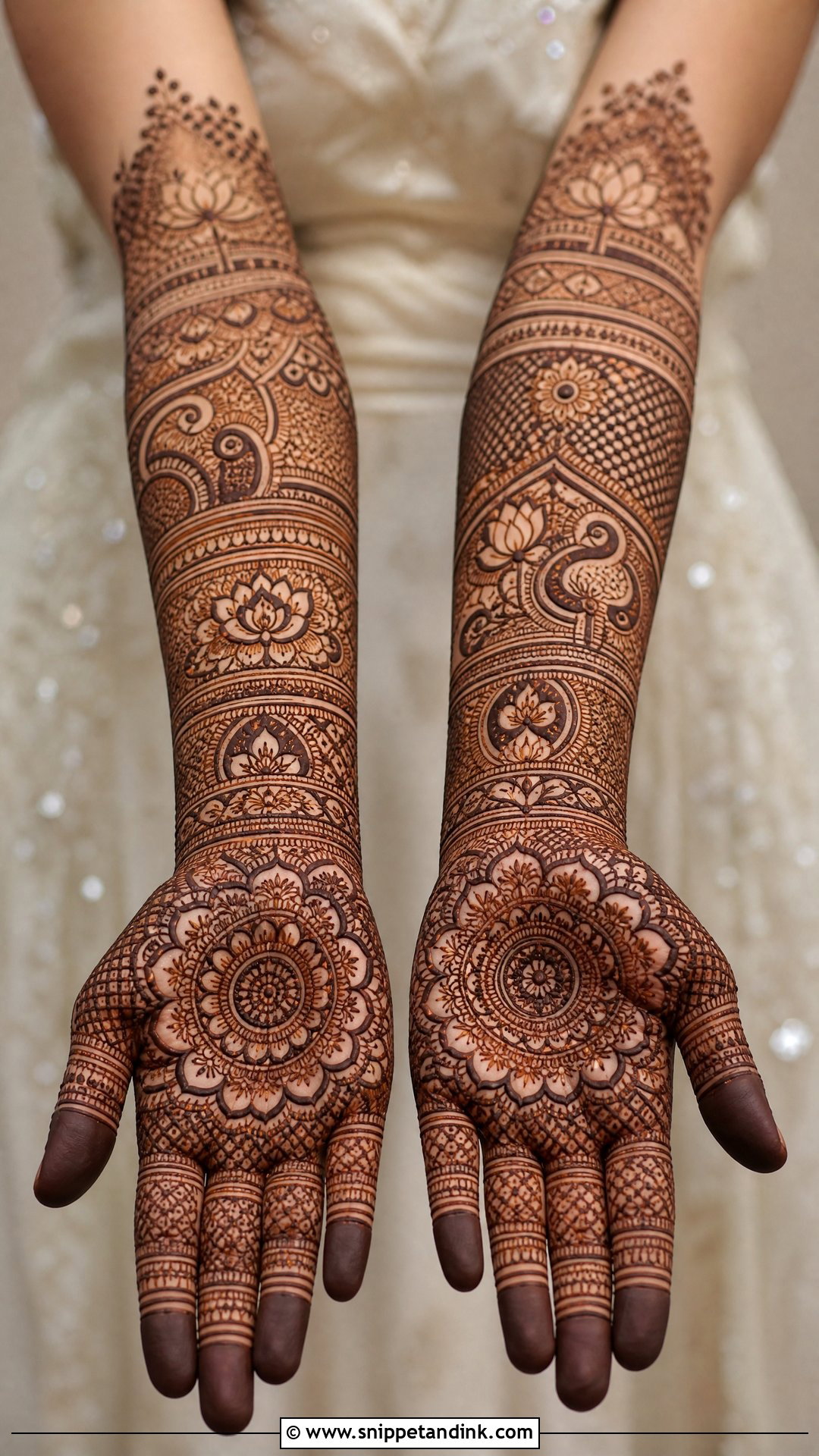
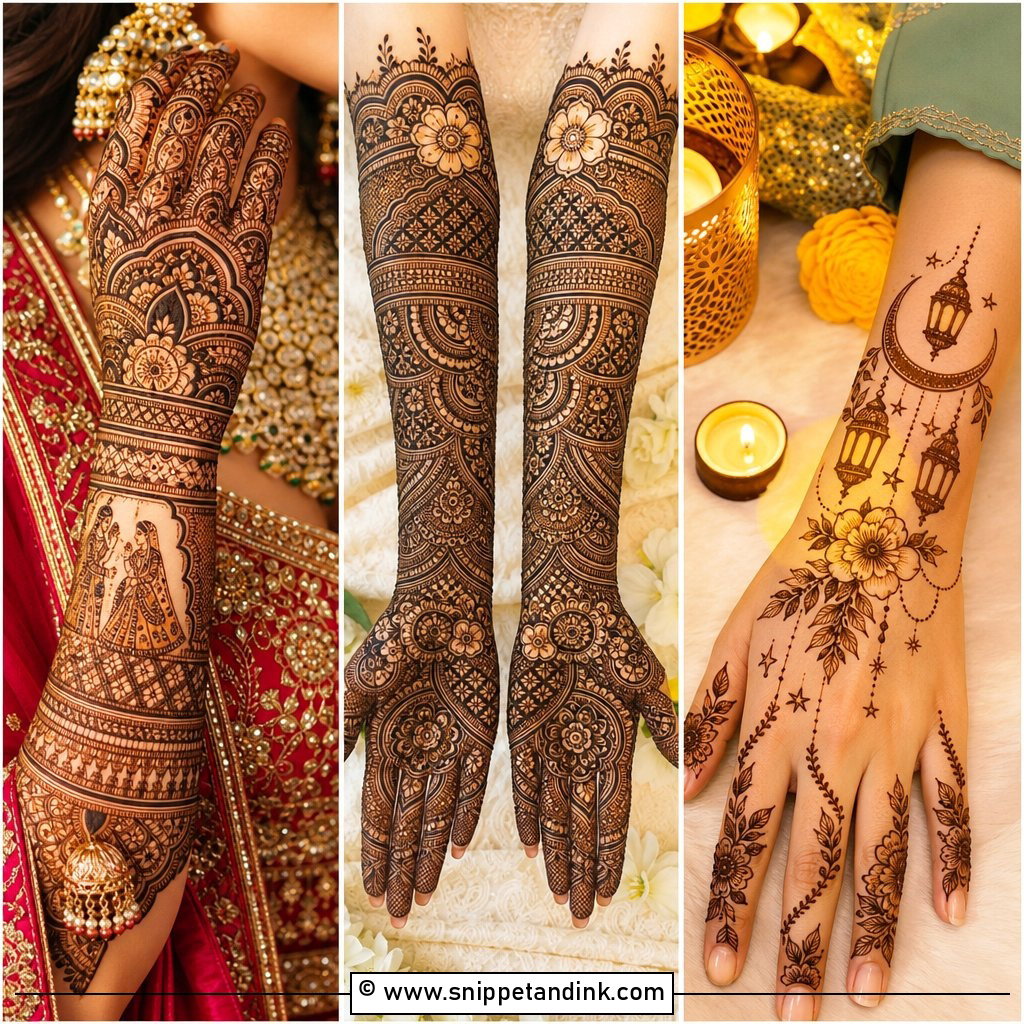
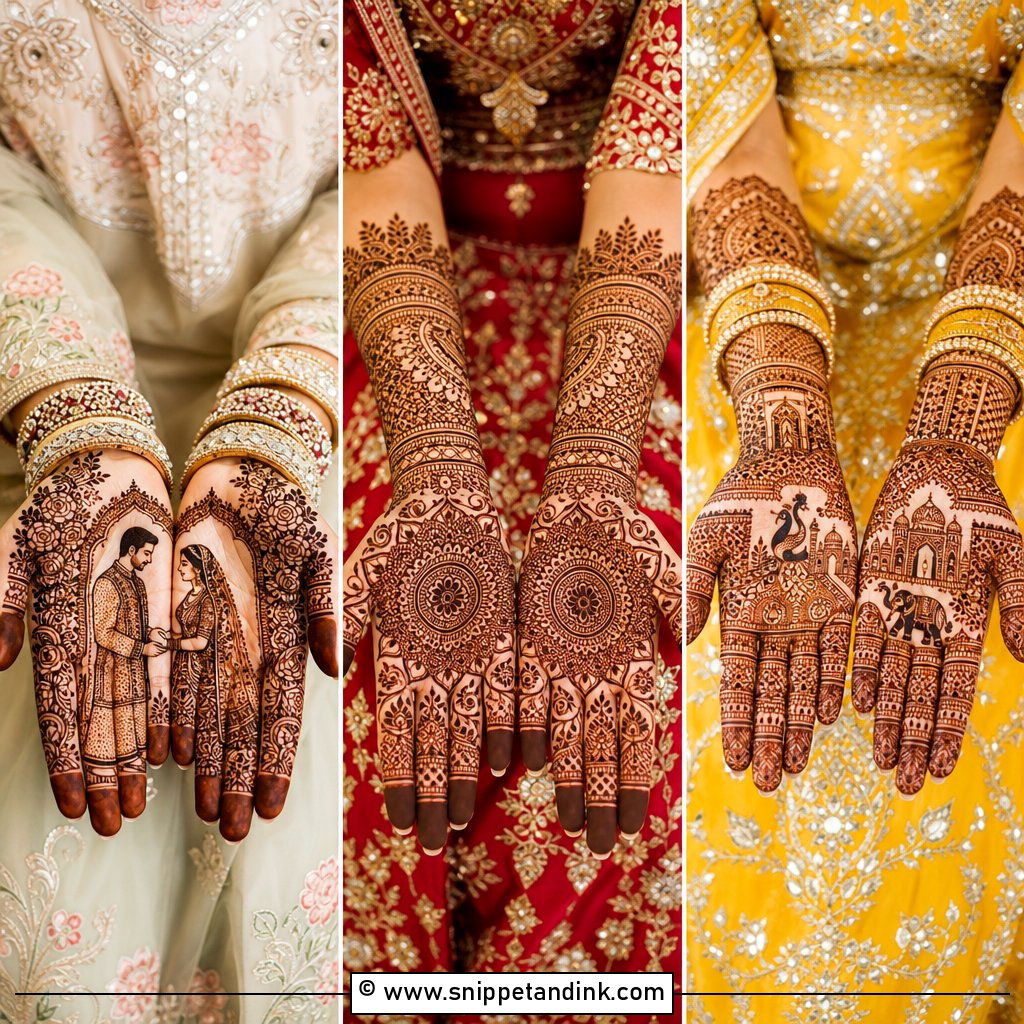
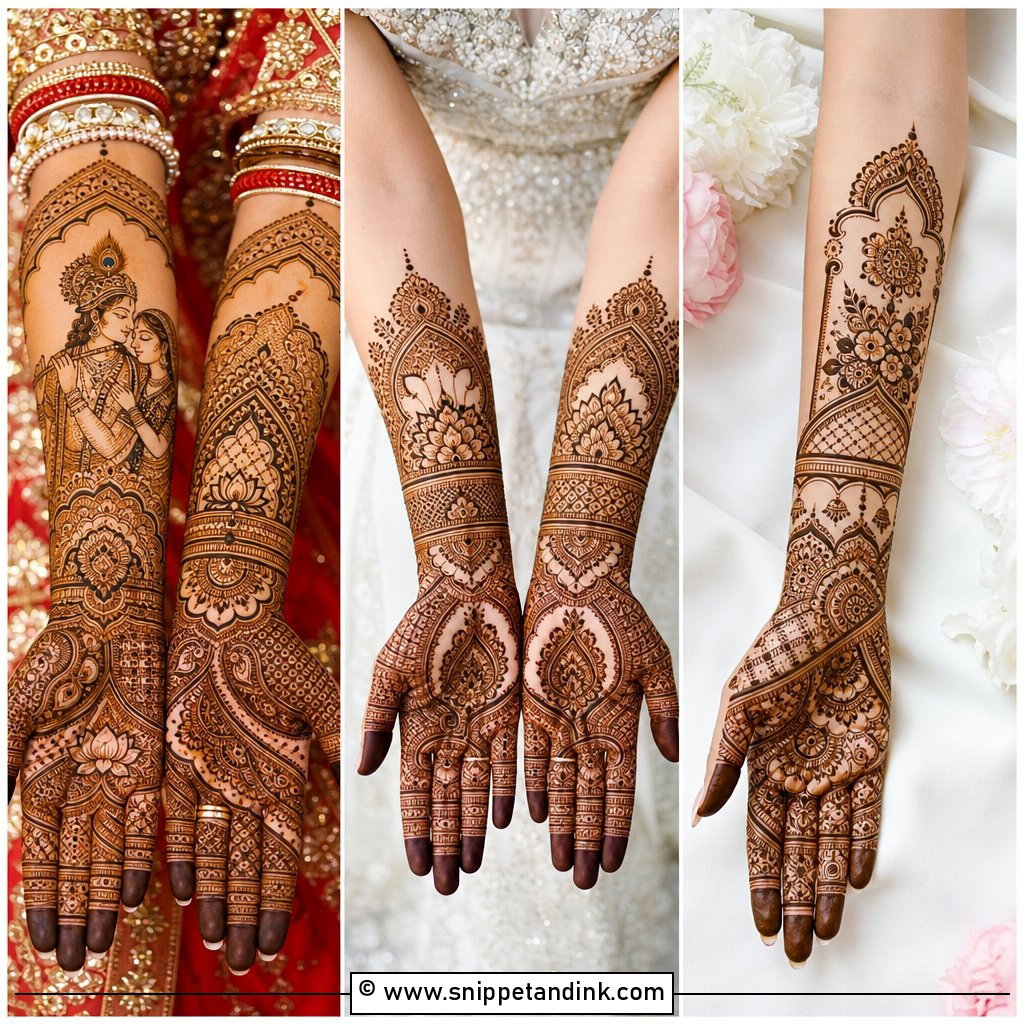
Fingertips to forearm, front and back: this is the grand traditional layout. The palms carry mandalas, paisleys, lotus and small wedding symbols; the backs carry floral vines, bracelet bands and filled fingertips. Dense henna looks rich against red, maroon, gold or ivory. The mistake I see most is filling every gap. Leave small breathing spaces between motifs, otherwise the stain merges into one dark patch from a distance. Budget a long sitting for this, and plan meals and bathroom breaks before I start, because both hands will be out of action.
2. Dulha Dulhan Hindu Bridal Mehndi Design
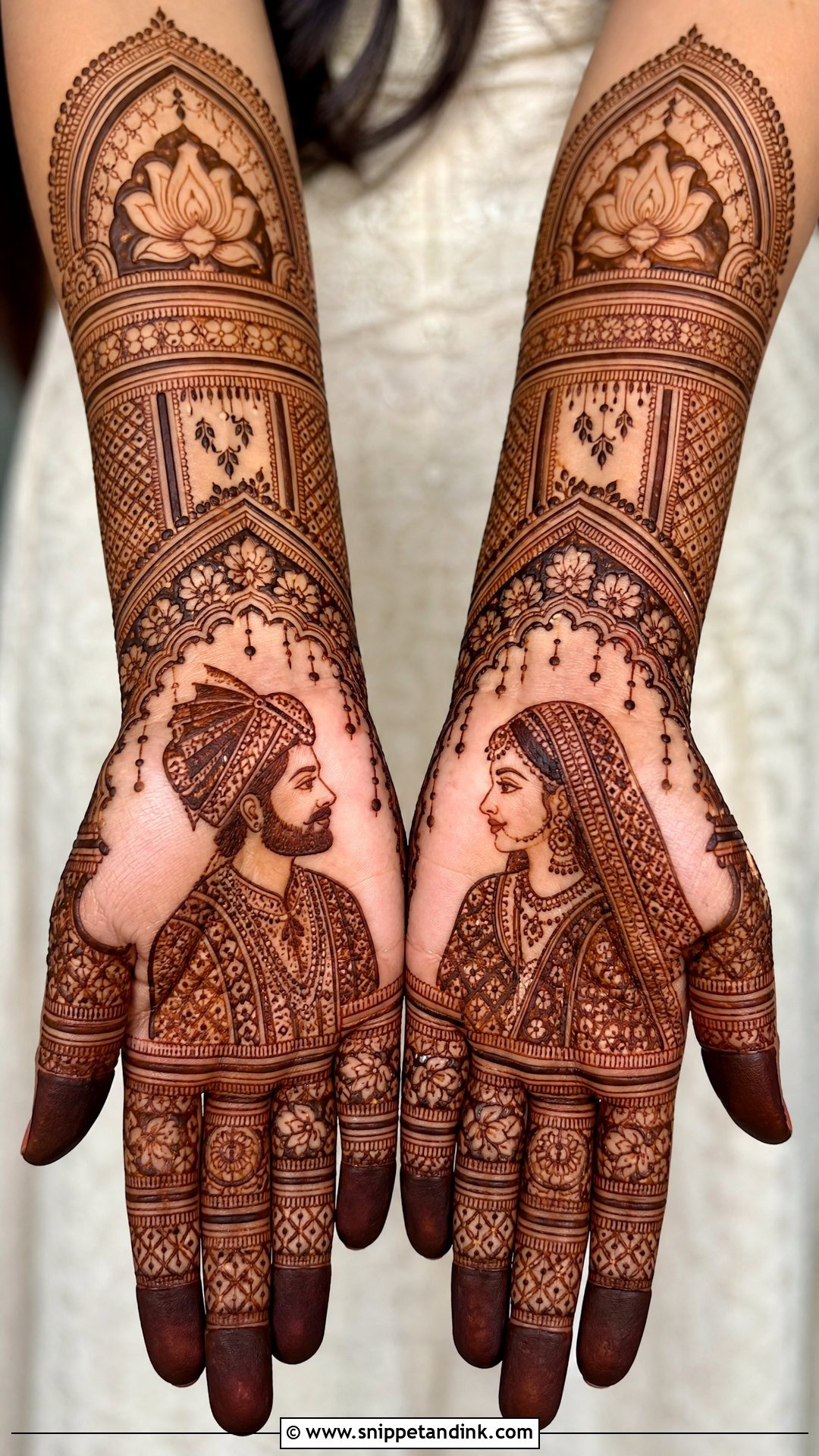
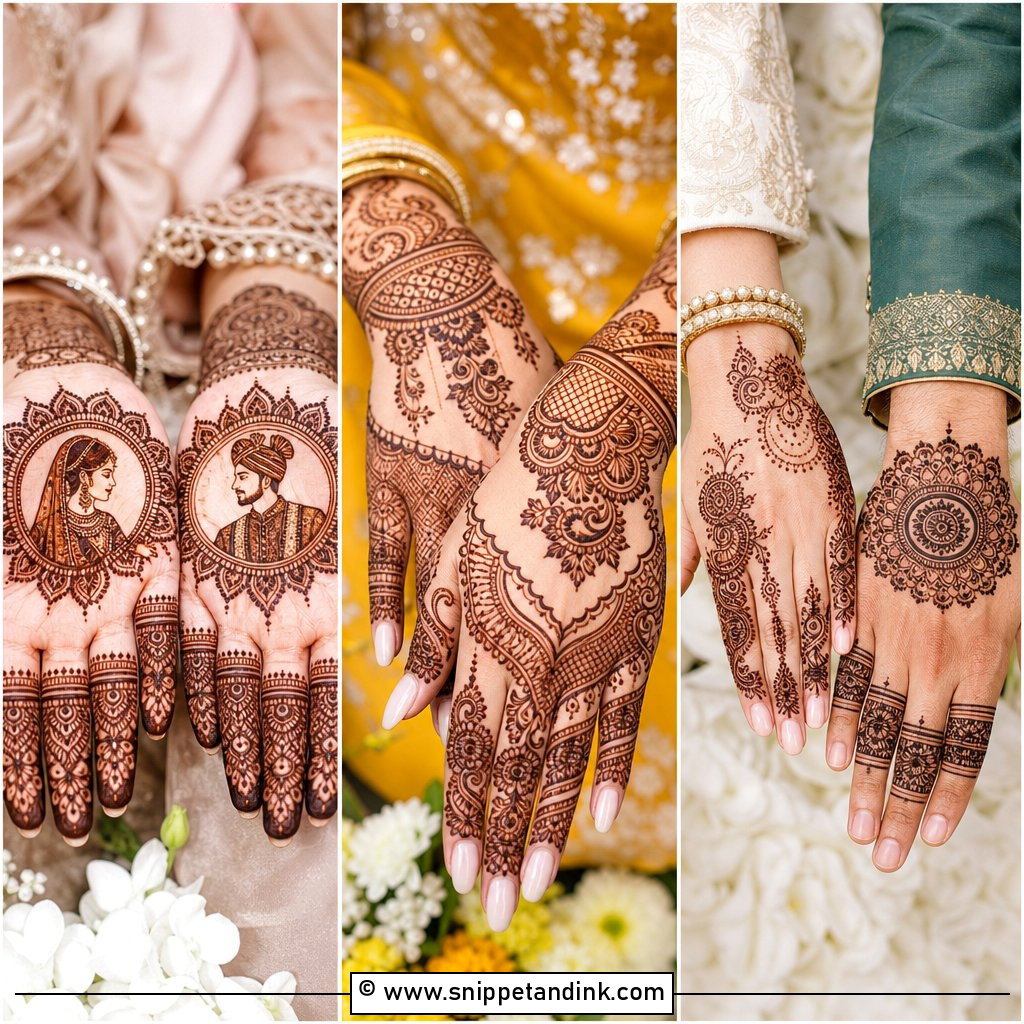
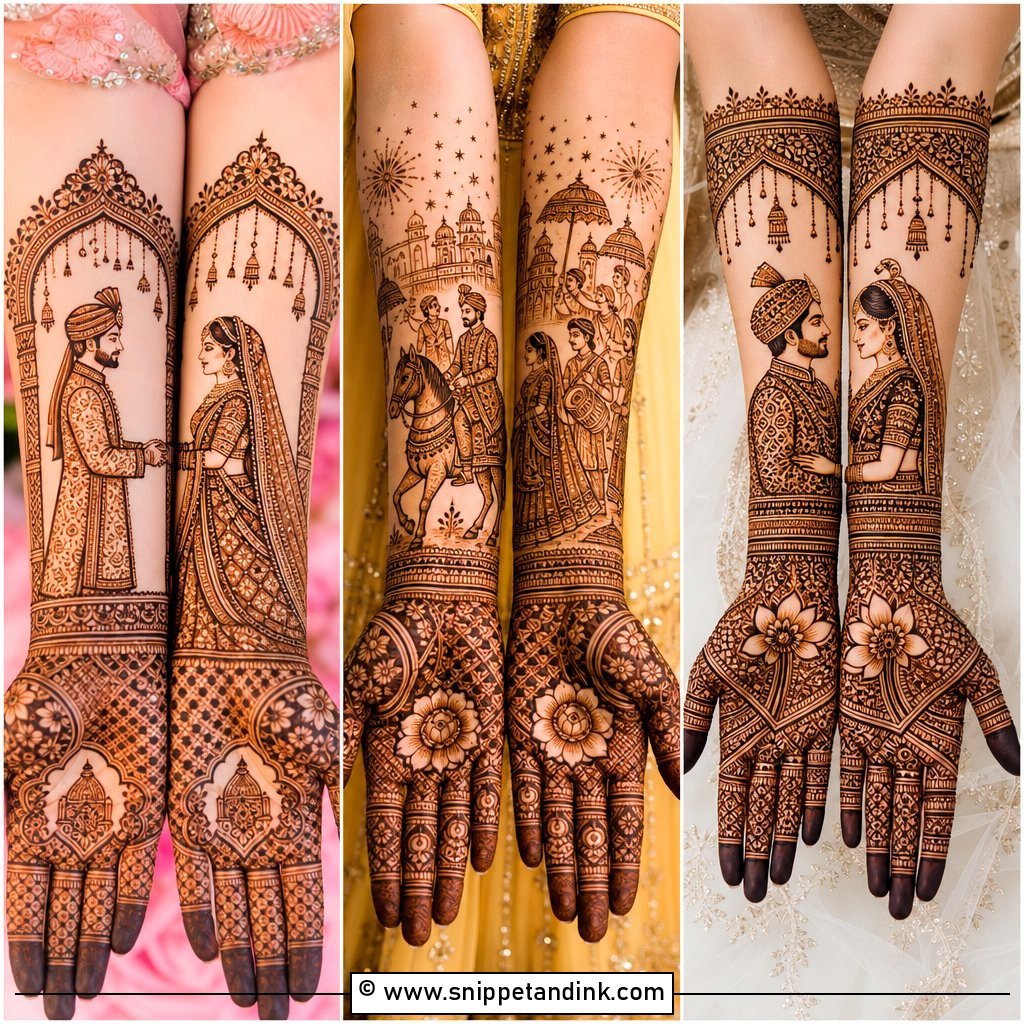
The dulha dulhan Hindu bridal mehndi design puts the bride on one palm and the groom on the other, so the two hands tell the story together. Around the figures I usually draw a mandap, a kalash, lotus petals and peacock feathers. Faces are where skill shows. I keep each face larger than you might expect and leave clean skin around the eyes and jawline, because fine detail packed into a small face blurs into a smudge once the stain develops. Let the fillers frame the portraits instead of crowding them.
3. Rajasthani Hindu Bridal Mehndi Design
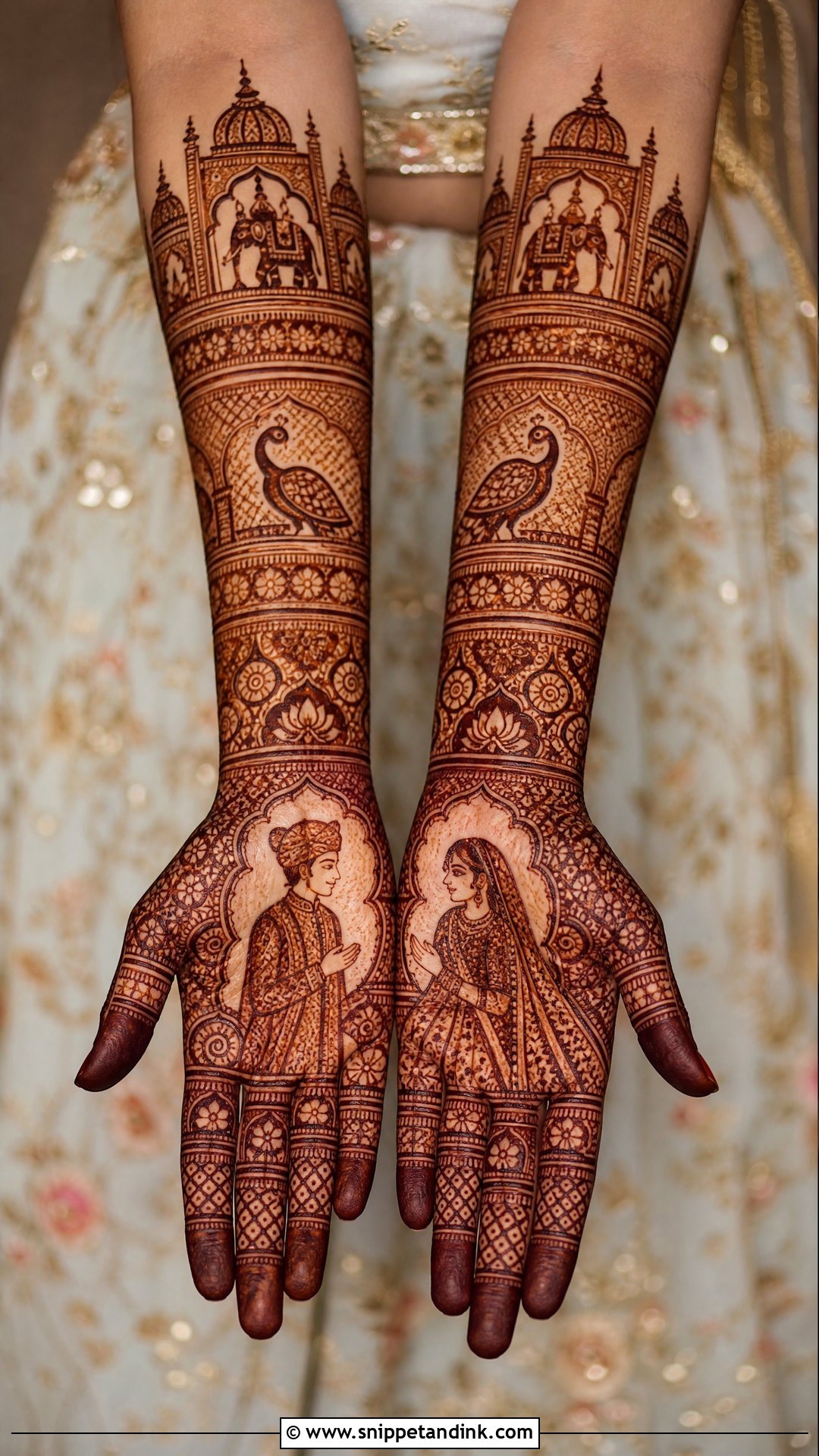
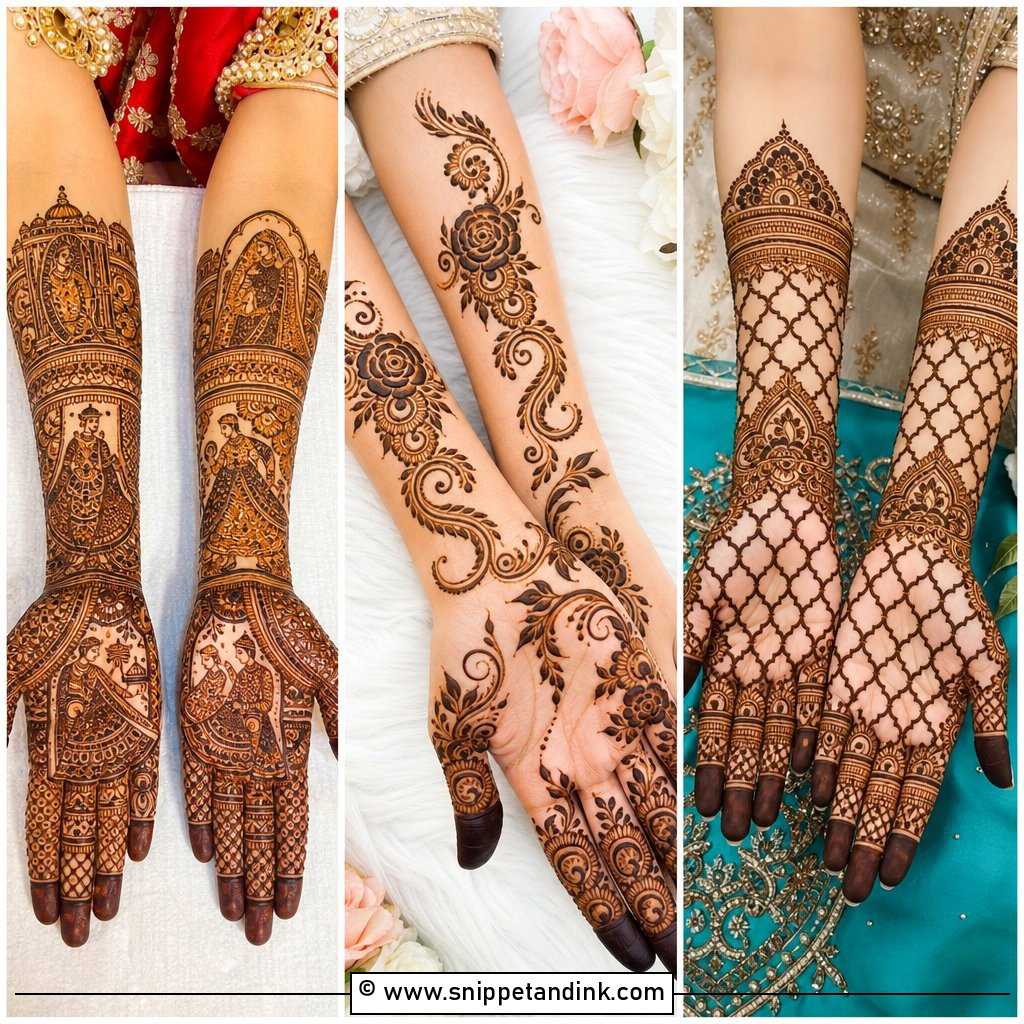
Rajasthani work is royal and densely symmetrical, with elephants, palaces, bride and groom figures, peacocks and layered paisleys running from the fingers to the forearms. The back hands often carry bold mandalas, hathphool chains and heavy wrist cuffs. It suits lehengas with zari, gota or mirror work. Be realistic about time: a full Rajasthani set on both arms can take most of a day. I’d book this session two days before the wedding rather than the night before, so you aren’t exhausted for the ceremony.
4. Marwari Hindu Bridal Mehndi Design
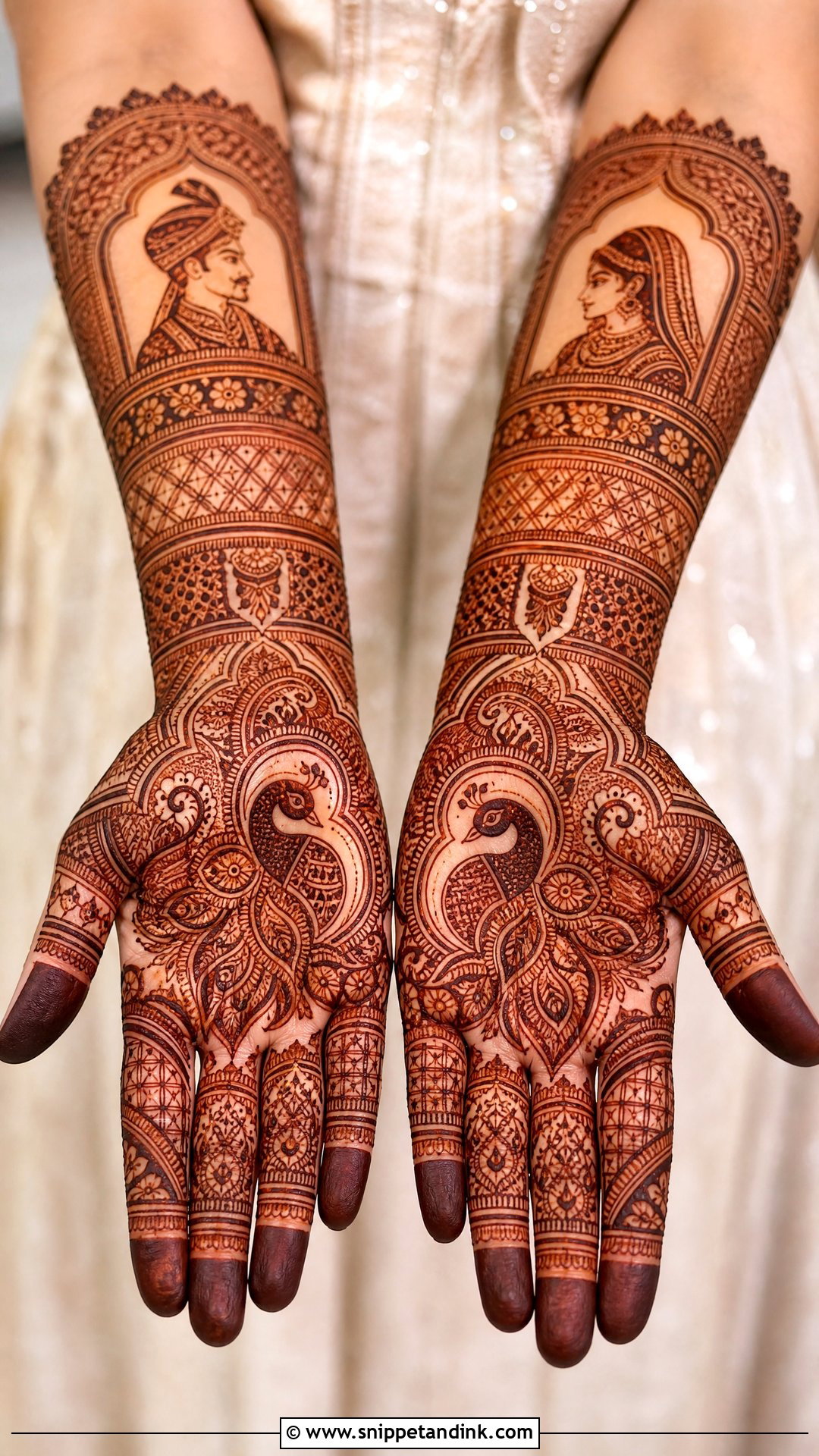
Marwari mehndi is dense and fine, with symmetrical palm panels, bride and groom elements, paisley trails and netted detail running onto the forearm. It’s a natural partner for chooda or heavy bangles, since the pattern continues above them. What separates good Marwari work is the contrast between bold outlines and very fine filling. The bold lines are what you’ll still see when the stain darkens; the fine work adds texture up close. Mandap arches, a wedding procession or hidden initials can all be built into the layout.
5. Gujarati Hindu Bridal Mehndi Design
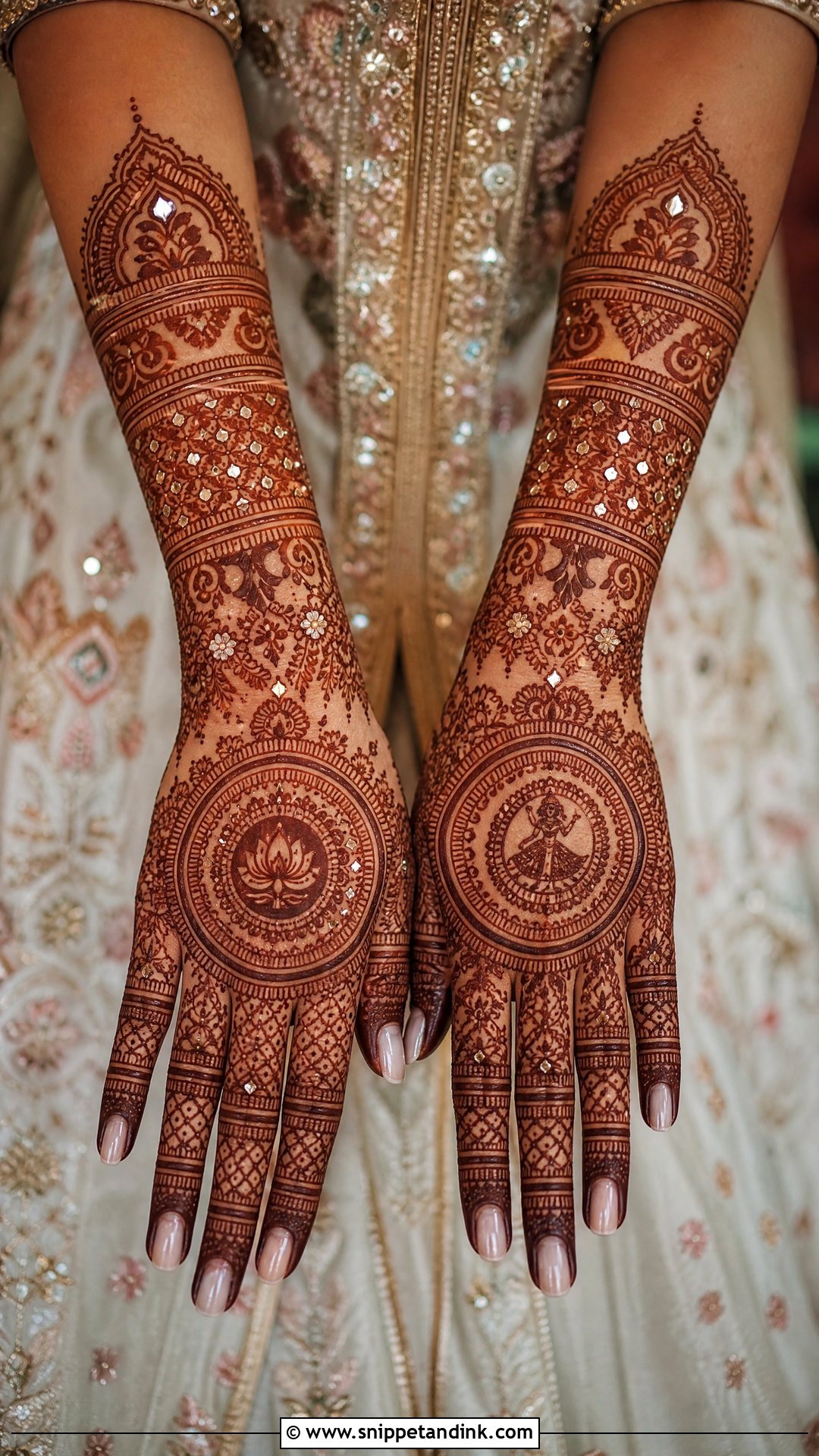
Gujarati designs have a lot of movement. I often use garba-inspired circles, lotus, peacocks and small mirror-like shapes with decorative wrist bands. Round mandalas or couple initials sit in the palms, while floral chains and bracelet patterns cover the backs. It sits well with colourful lehengas, bandhani dupattas and patola-style outfits. For a more modern feel, ask for a few cleaner gaps between the dense sections; the circles read better with space around them.
6. South Indian Hindu Bridal Mehndi Design
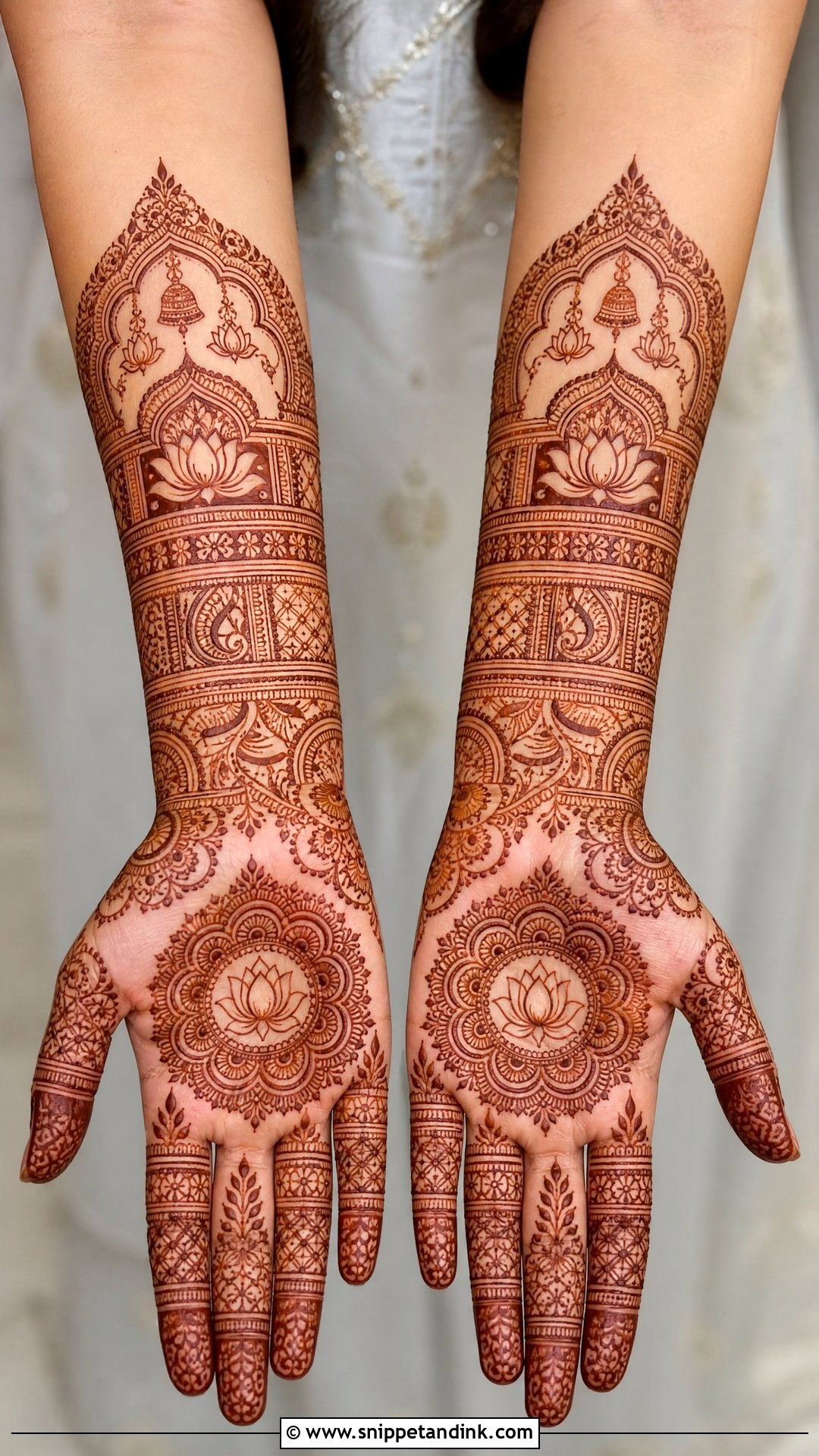
In South Indian bridal looks, temple jewellery, silk sarees, flowers and alta often lead, and mehndi adds a softer layer. I keep the layout structured: lotus, temple bells, mango motifs, mandalas and delicate patterns from wrist to forearm. With a Kanjivaram saree and heavy gold bangles, I avoid putting the densest work where the bangles sit, since it will be hidden anyway. Circular motifs on the palms and fine lines and leaves on the fingers look graceful against silk and gold.
7. North Indian Hindu Bridal Mehndi Design
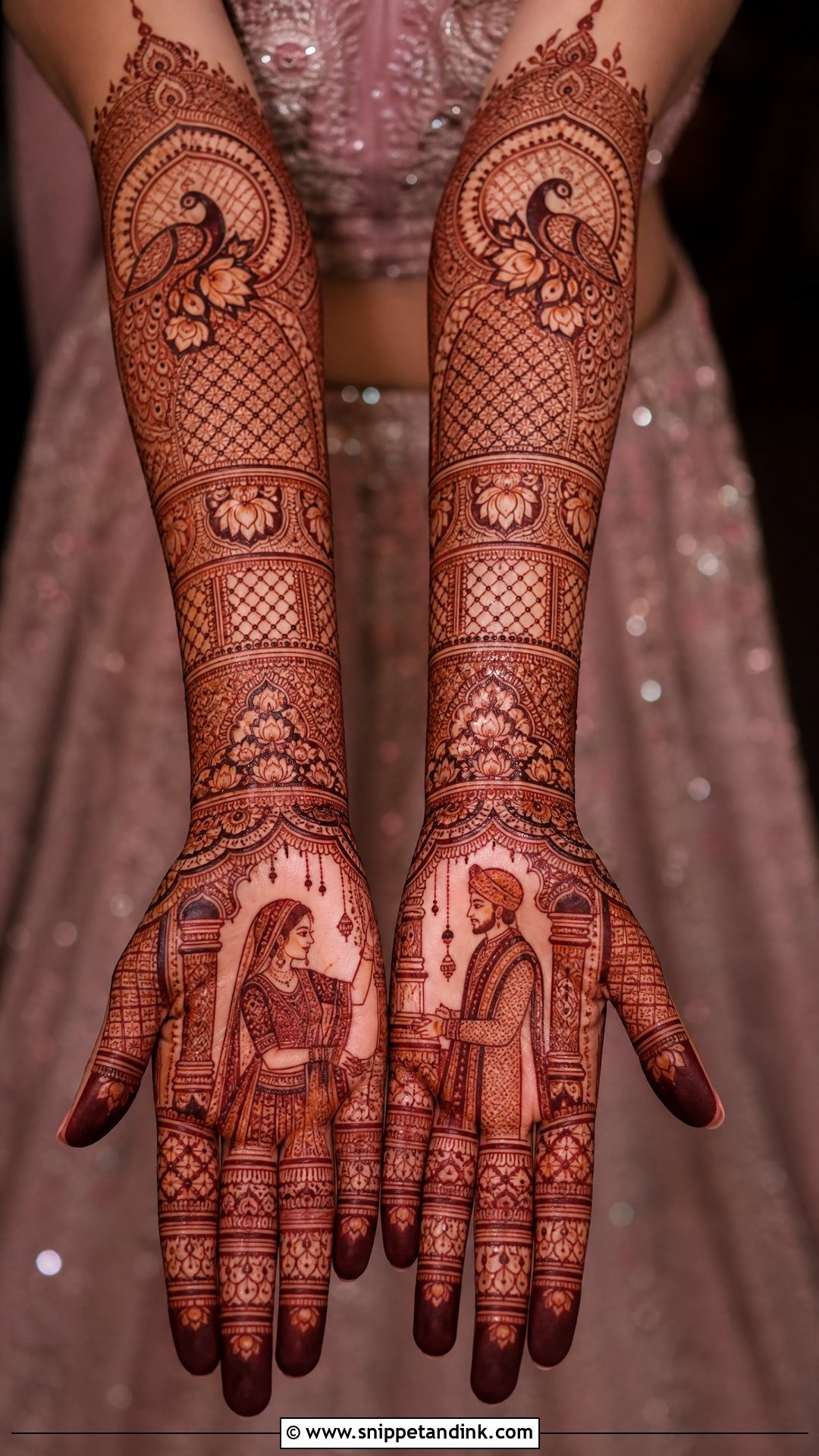
Bold and elaborate, North Indian work often combines dulha-dulhan portraits, peacocks, mandalas, jaali mesh and the groom’s hidden initials, covering both sides of the hands and running toward the forearms. The dense palms stain deeply; the backs can be shaped like jewellery. If you want a traditional but polished look, ask for symmetry across both hands. I sketch the central lines on both hands first before filling either, which keeps the two sides matched when they’re photographed together.
8. Peacock Hindu Bridal Mehndi Design
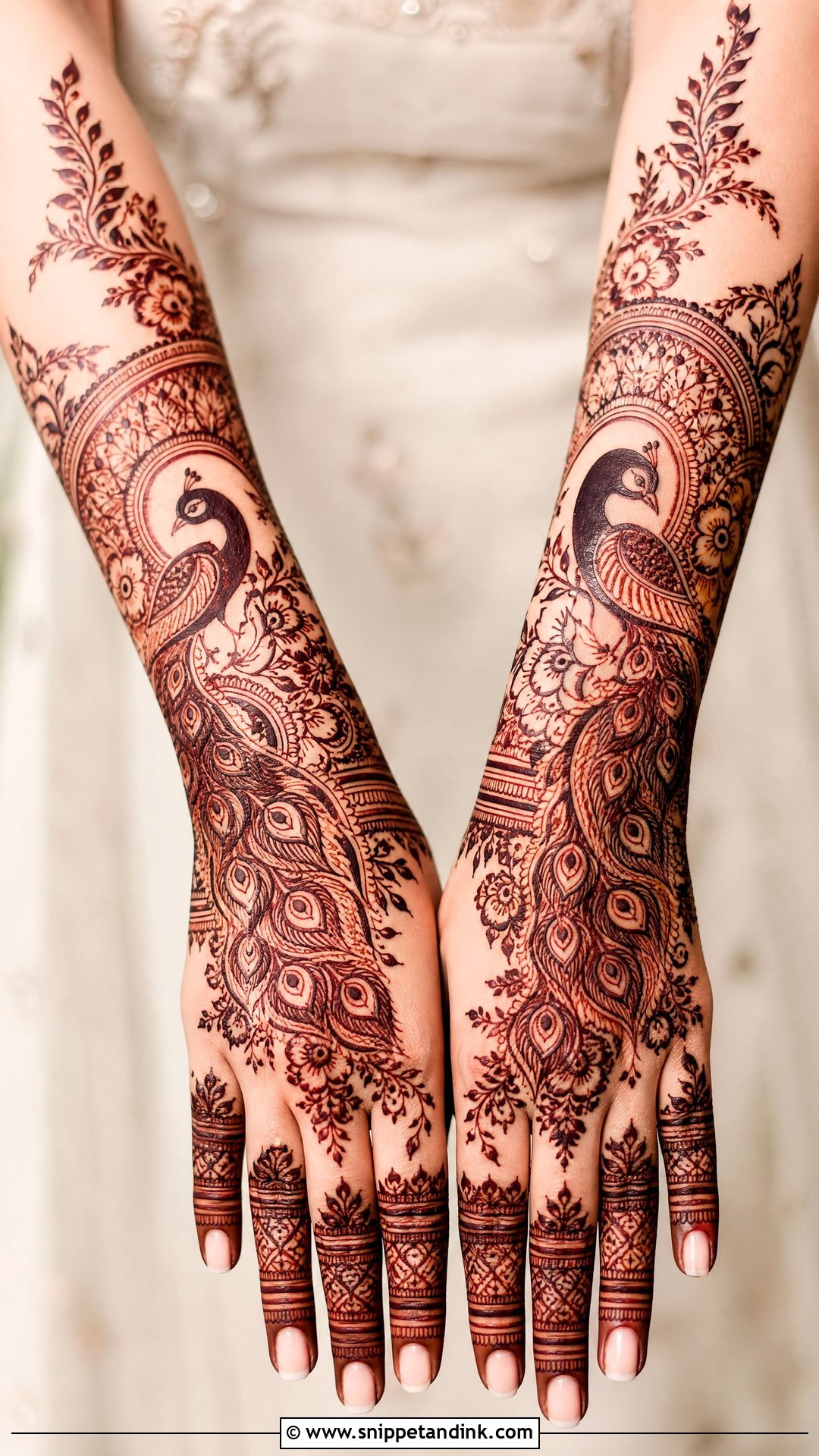
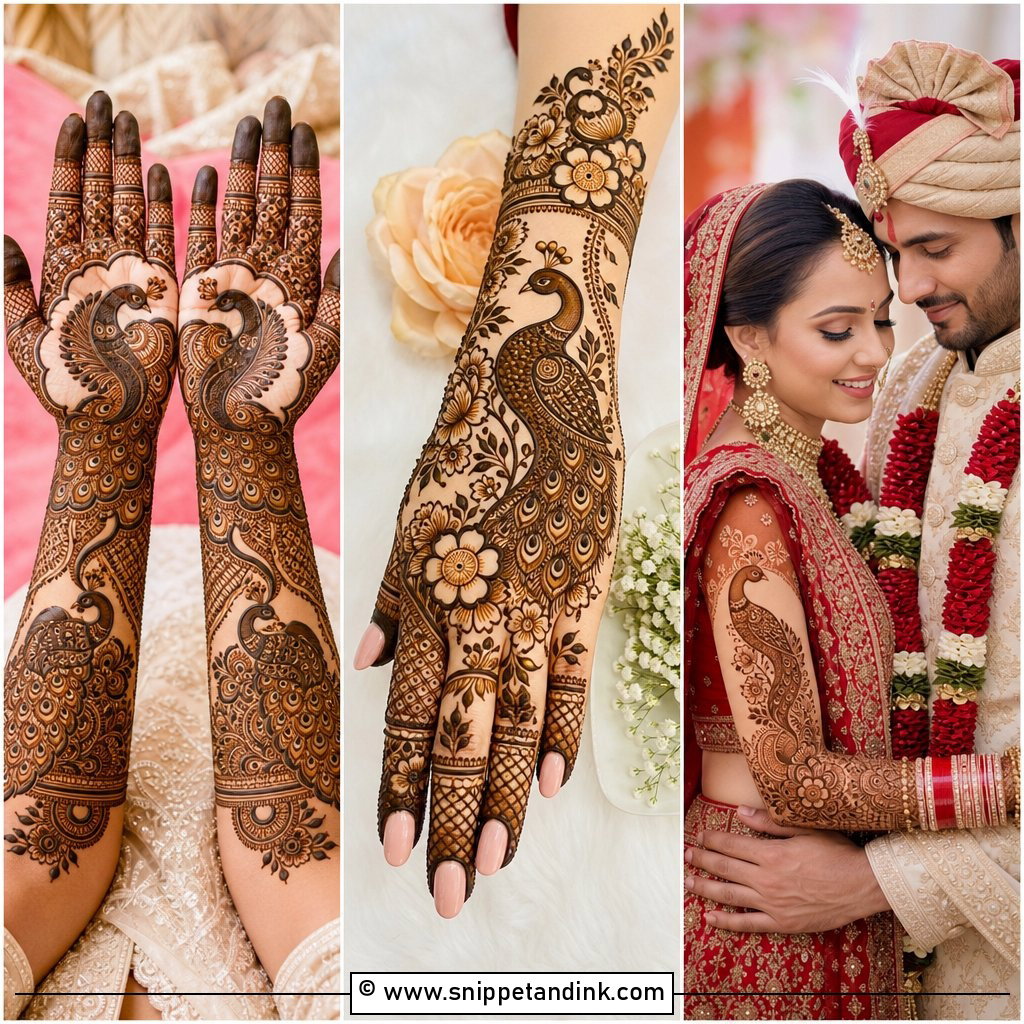
A peacock can sit across the palm, along the forearm or mirrored on both hands, surrounded by feathers, paisleys, lotus and vines. I like it for brides who prefer flowing curves to rigid geometry. The body of the peacock needs a strong outline, because the feather fill around it is fine and will otherwise swallow the bird when it stains. On the backs, feather trails ending in a bracelet band work well with statement bangles and a traditional lehenga or saree.
9. Lotus Hindu Bridal Mehndi Design
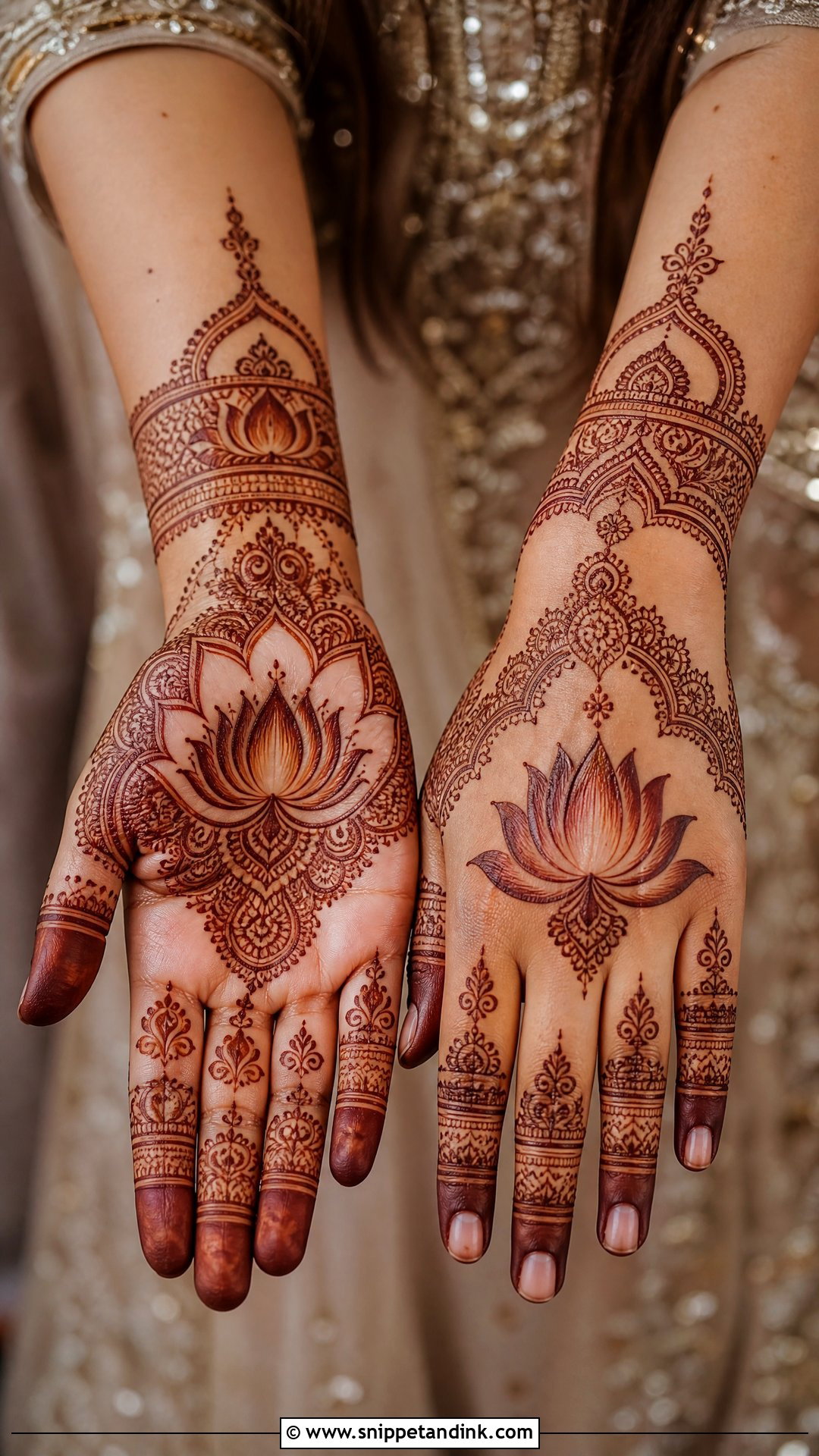
The lotus gives a design a calm, sacred feel. A complete set might include large lotus mandalas on the palms, lotus chains on the fingers and layered petals around the wrist. It pairs well with paisleys, temple borders and jaali. On the back hand, a lotus-centred hathphool layout looks like jewellery. Petals need bold outlines and some open skin inside each one, which keeps the flower crisp rather than a solid blob. It suits pastel lehengas and silk sarees as much as heavier bridal looks.
10. Mandala Hindu Bridal Mehndi Design
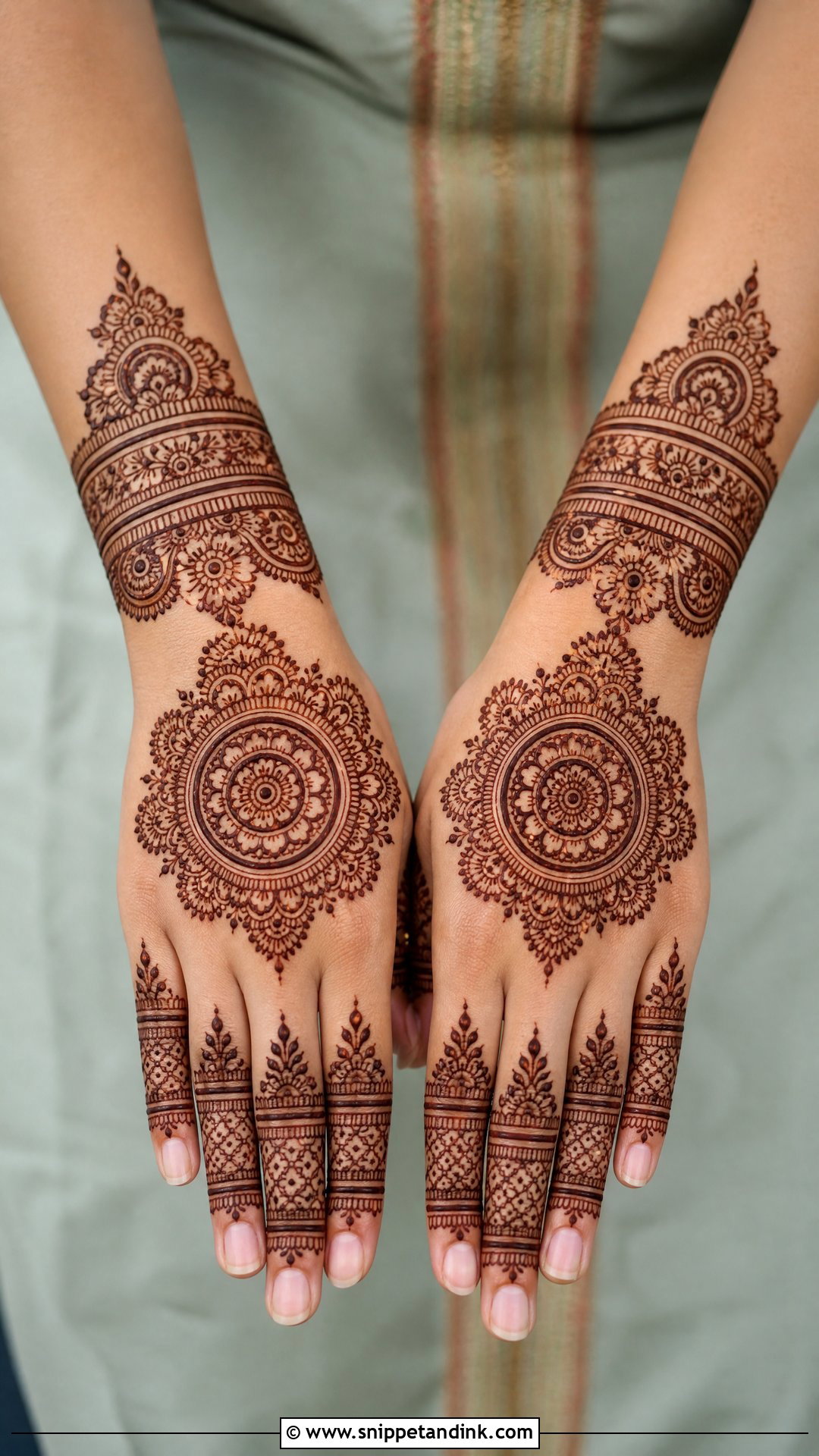
Brides who like order often pick a mandala layout. I place a detailed circle in the centre of the palm and build outward with floral rings, paisleys, finger details and wrist bands. On the back, the mandala can connect to leafy chains and bracelet patterns. It’s flexible: a large single mandala gives one clean focal point, while fine fillers around it add bridal richness. It reads more organised than fully packed work, which suits brides who want tradition without density.
11. Paisley Hindu Bridal Mehndi Design
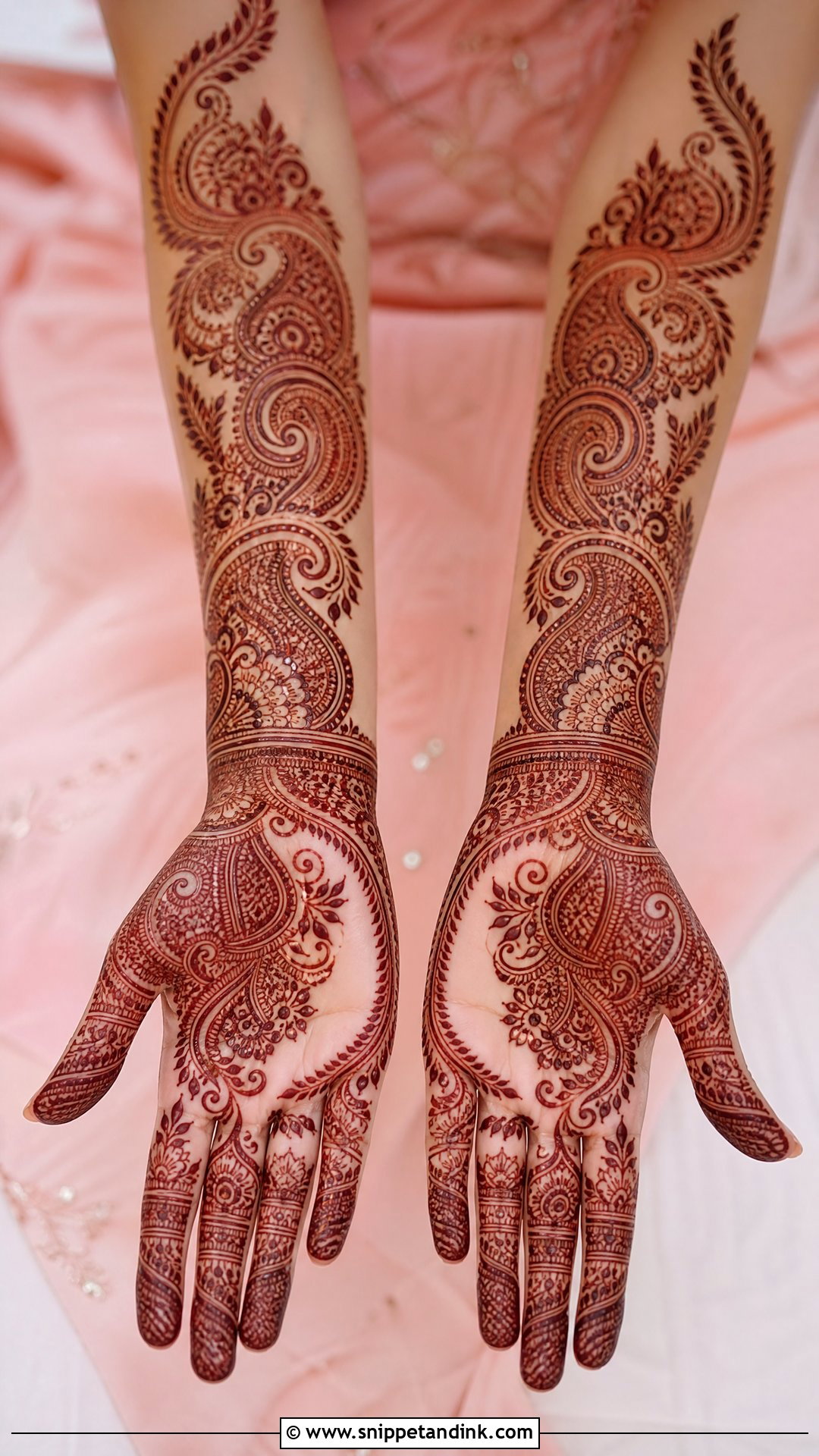
Paisley is the most adaptable motif I use. It can be stretched, stacked or curved around the natural lines of any hand, so it suits almost every hand shape. Larger paisleys on the palms and smaller flowing ones on the backs give a balanced result. I layer them with florals, dots, mesh and swirls. Brides who want full coverage without portraits often choose this, and it holds a classic Indian bridal feel.
12. Temple Hindu Bridal Mehndi Design
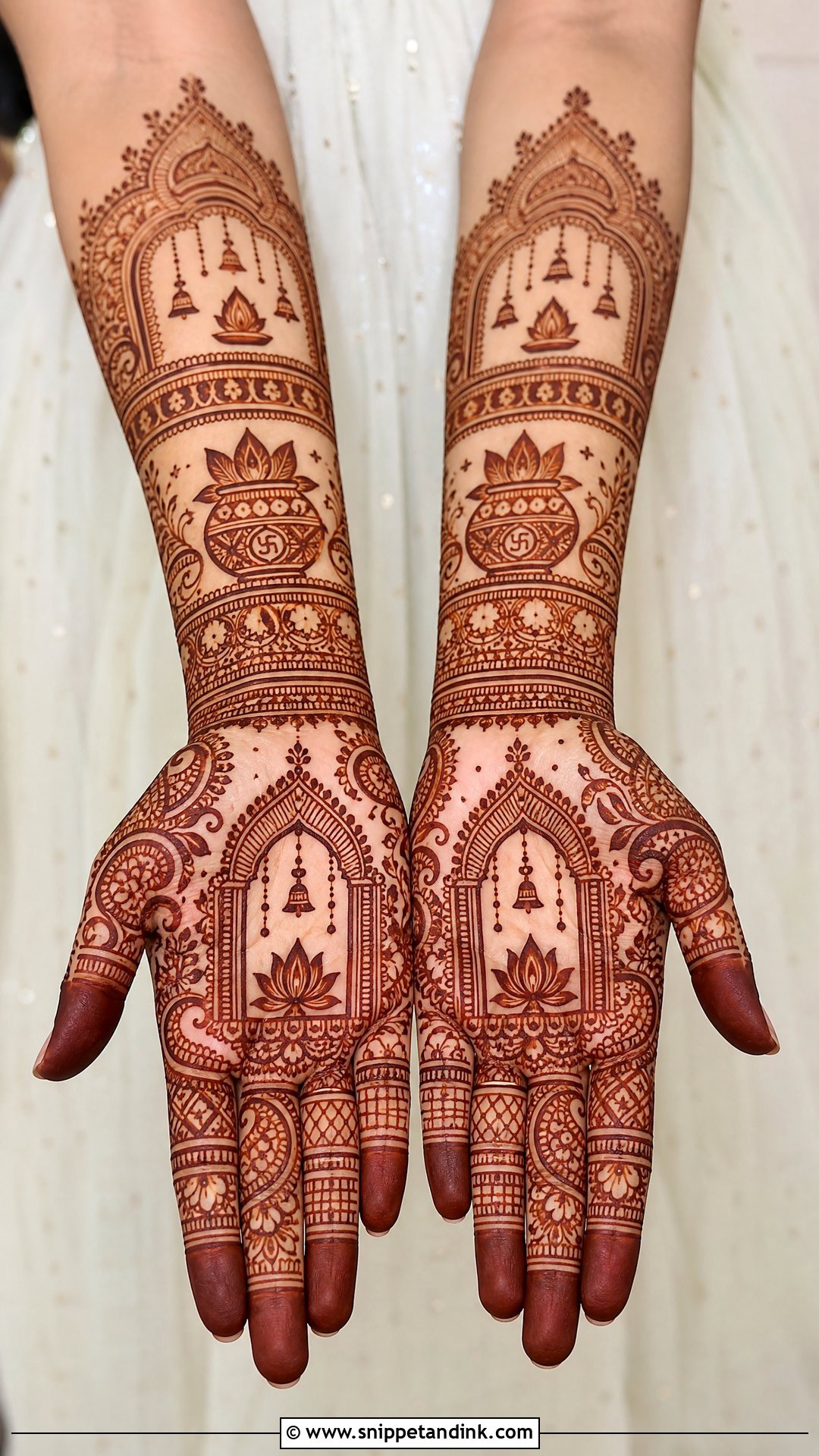
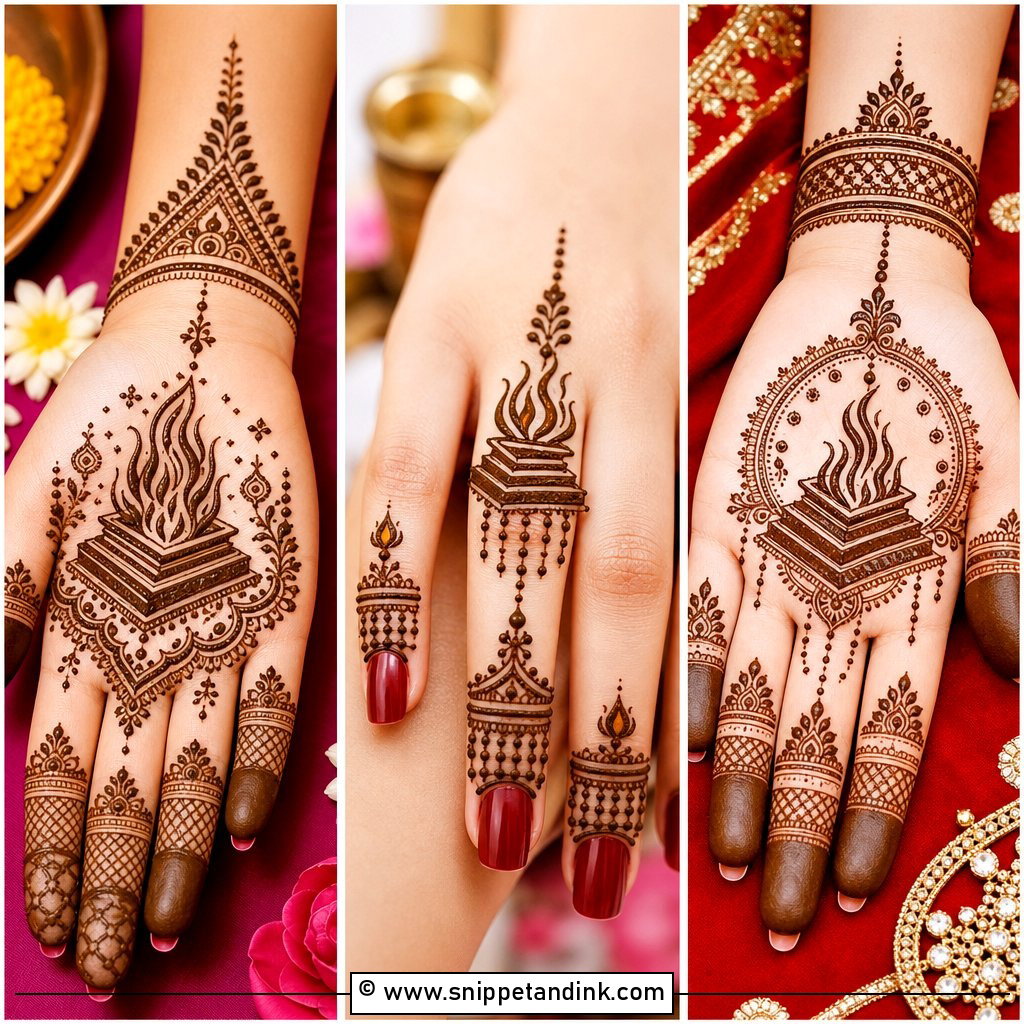
Temple designs bring a devotional tone: arches, bells, lotus petals, kalash and diya shapes with fine ornamental borders, running from palm to forearm. The back hand can carry temple-style wrist cuffs and delicate chains toward the fingers. With silk sarees, temple jewellery and a matha patti, it looks ceremonial. Temple elements must stay bold and clear. If they’re drawn too fine, they disappear into the fillers once the stain darkens.
13. Radha Krishna Hindu Bridal Mehndi Design
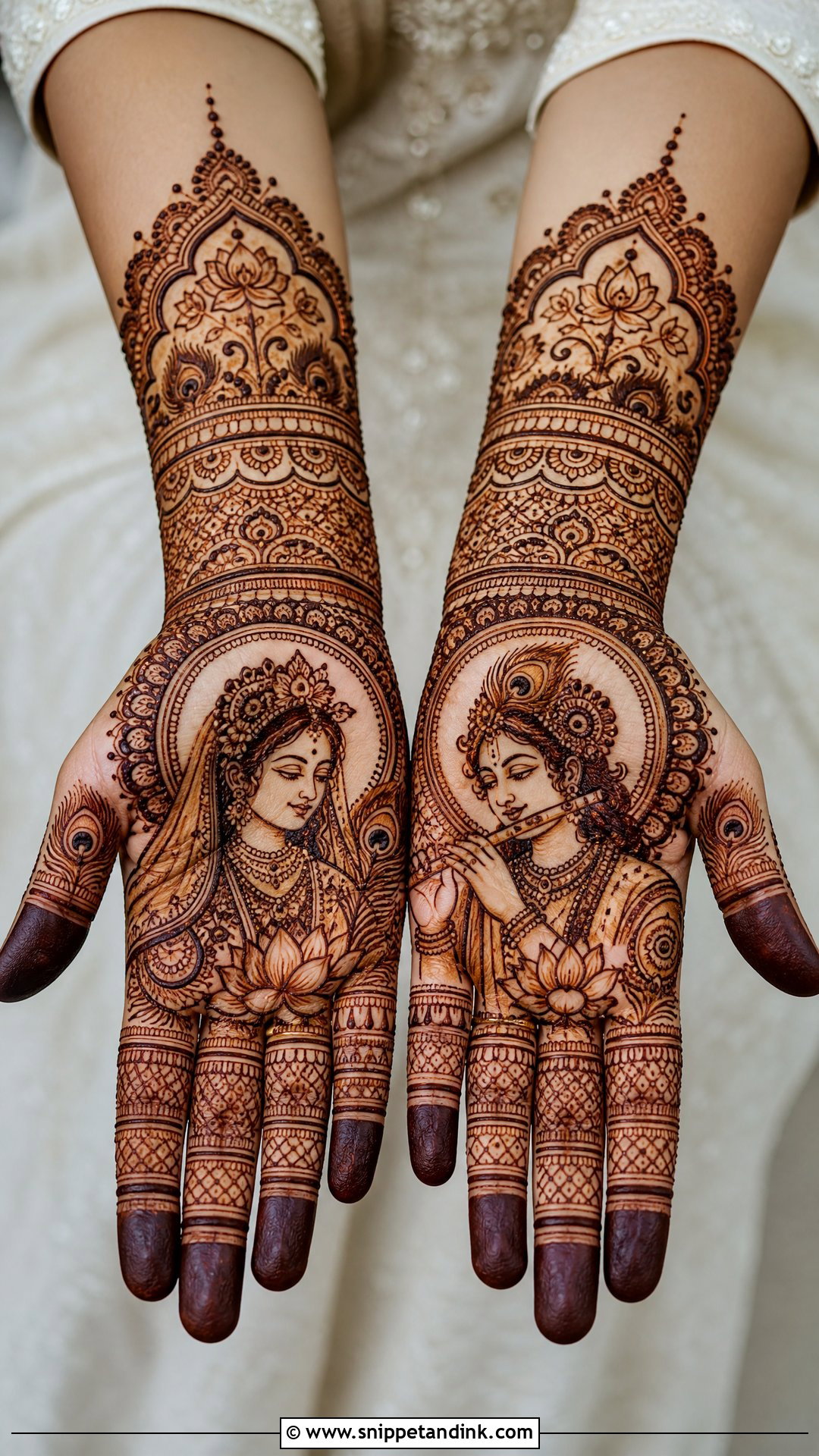
Radha on one palm and Krishna on the other, framed with flute details, lotus, peacock feathers and vines, turns the hands into a devotional love story. Figures need clarity, so this is not a design for a beginner artist. Ask to see photos of an artist’s stained figures, not just fresh paste, because figure work that looks crisp wet can blur when stained. I keep the fingers detailed but lighter and use paisley trails, mandala bands and jaali on the forearms so the central figures stay the focus.
14. Kalash Hindu Bridal Mehndi Design
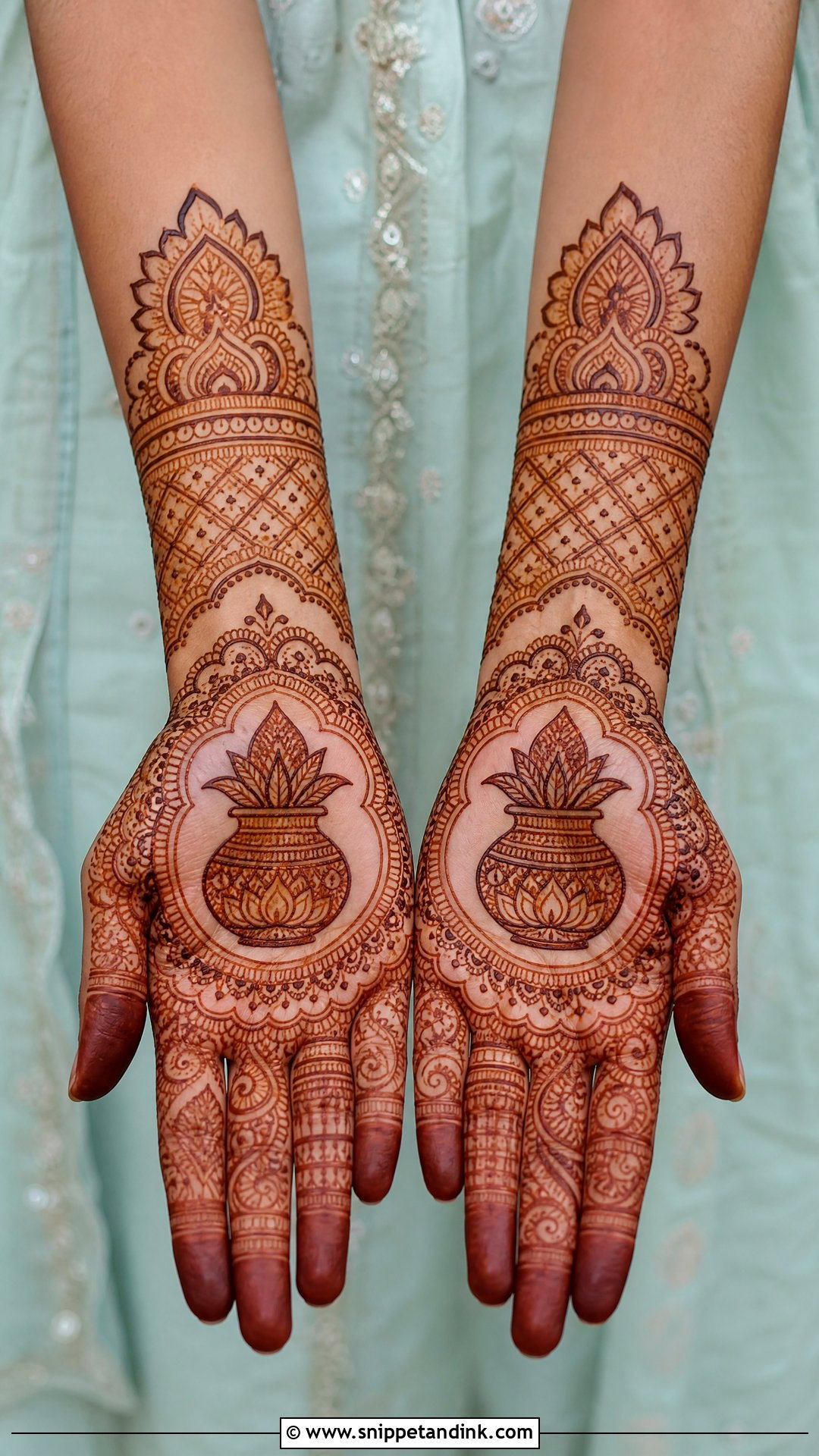
The kalash is an auspicious symbol and gives the hands a ceremonial feel for the pheras. I draw it on the palms with mango leaves, lotus petals, mandalas and sacred borders, and many brides pair it with dulha-dulhan art or a mandap scene. Make the kalash a clear focal point and keep fillers around it lighter. The backs can stay simpler, with bracelet bands and small floral vines. It’s symbolic without being crowded.
15. Elephant Hindu Bridal Mehndi Design
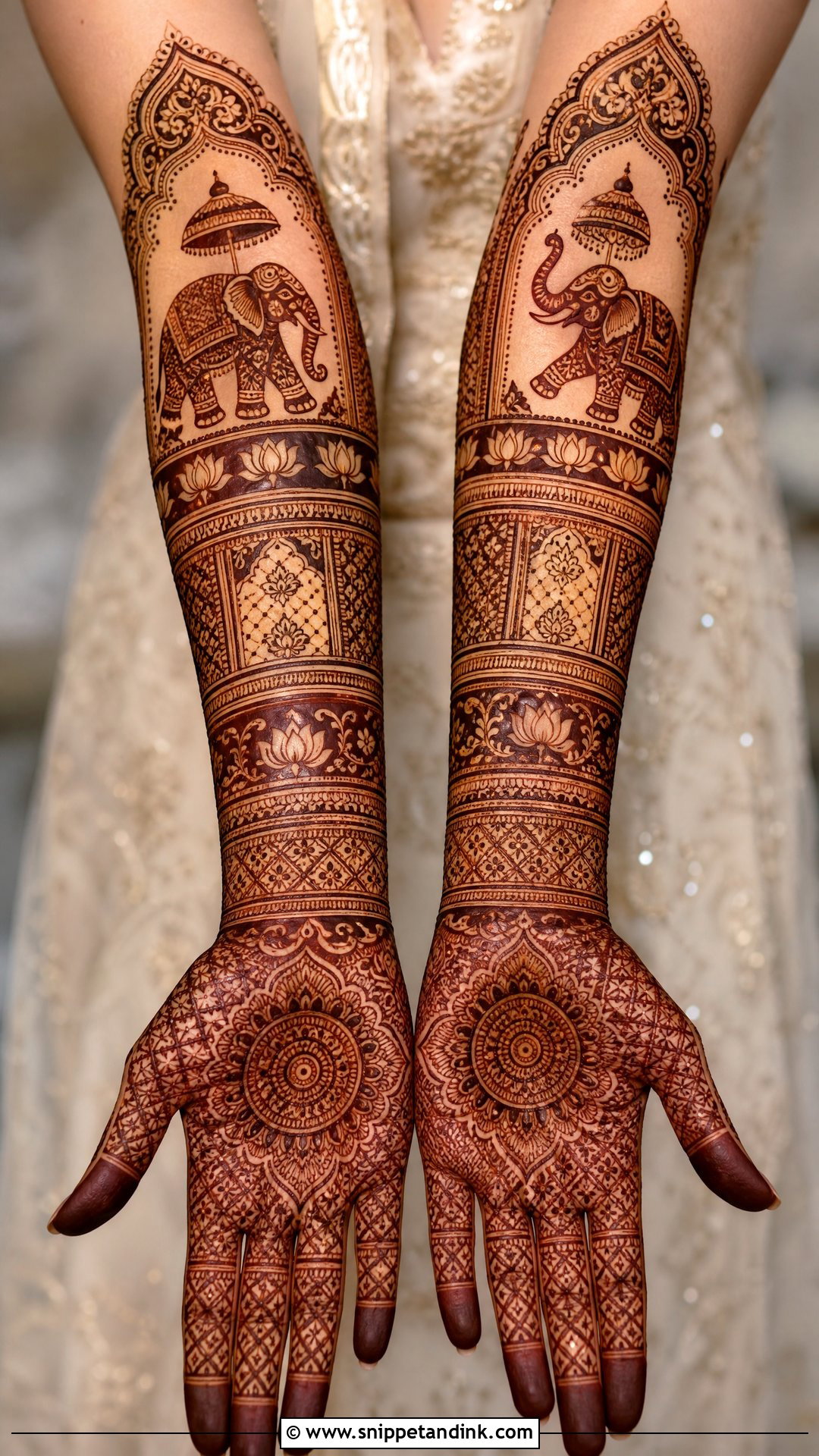
Elephants bring a regal, festive mood. A typical layout has decorated elephants on the forearms, mandalas on the palms, paisley fillers and ornate wrist bands. They suit heavily embroidered lehengas and palace-themed weddings. Keep the elephants big. Small animal motifs lose their shape when the stain darkens and the lines thicken slightly, so a tiny elephant can end up looking like a blob. The back hands can carry matching arches and jaali.
16. Jaali Hindu Bridal Mehndi Design
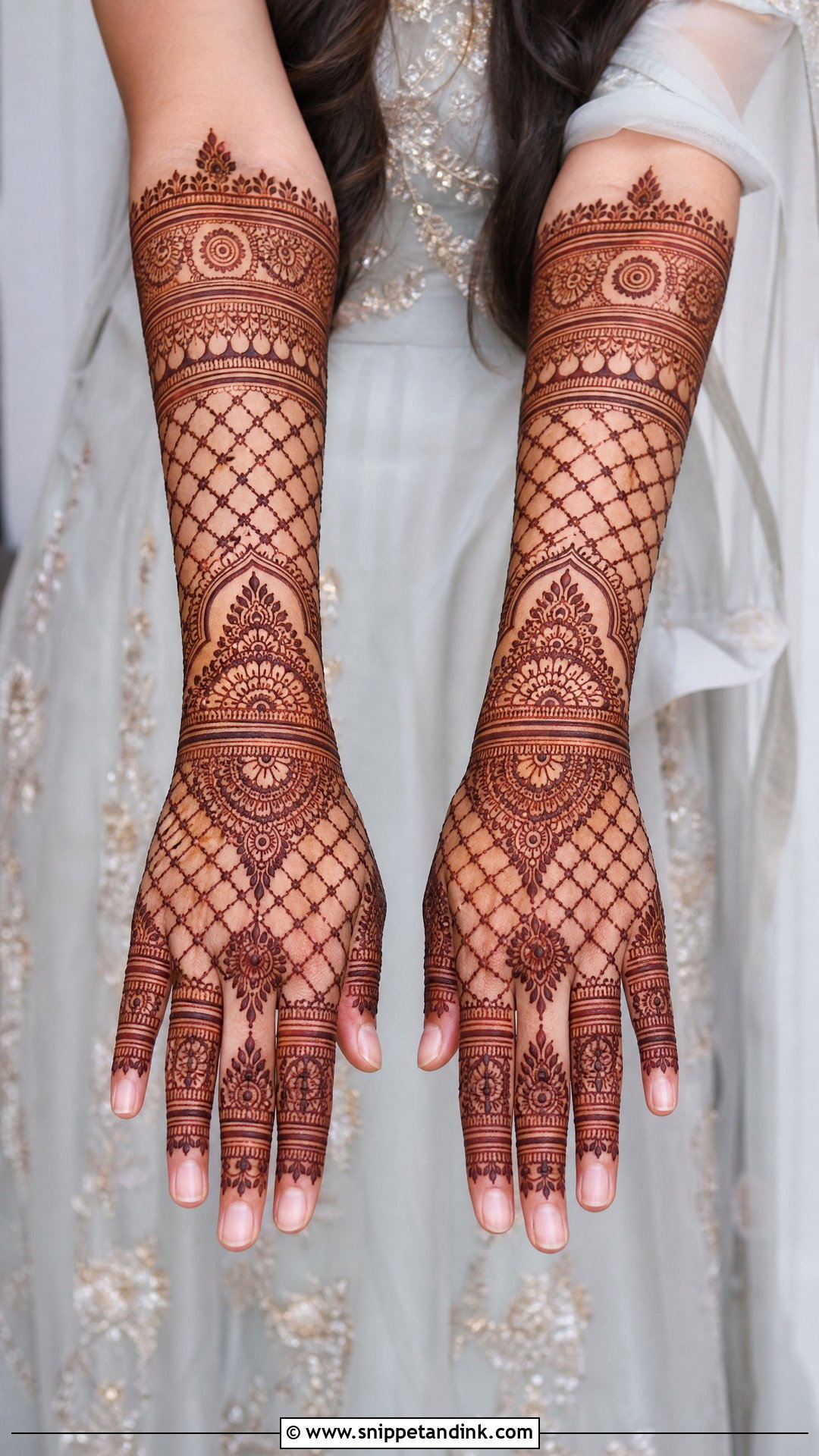
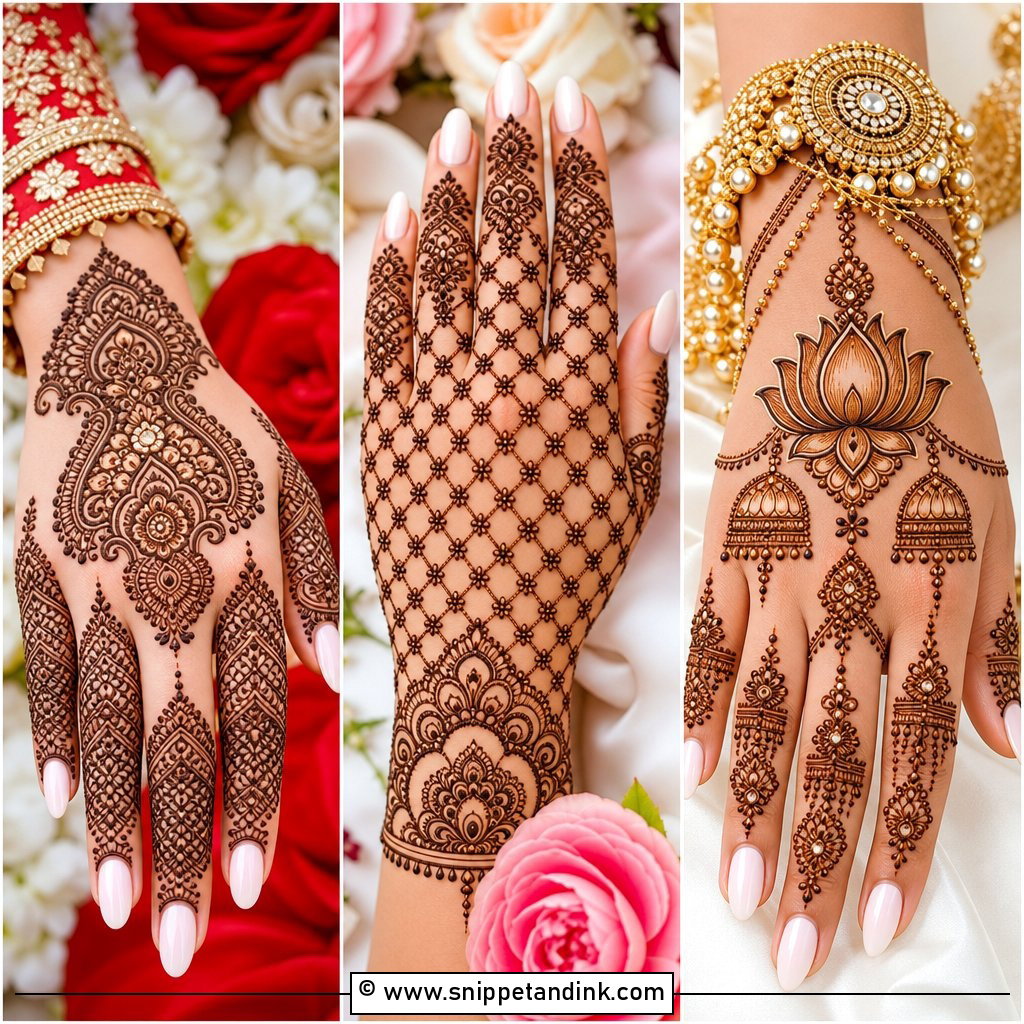
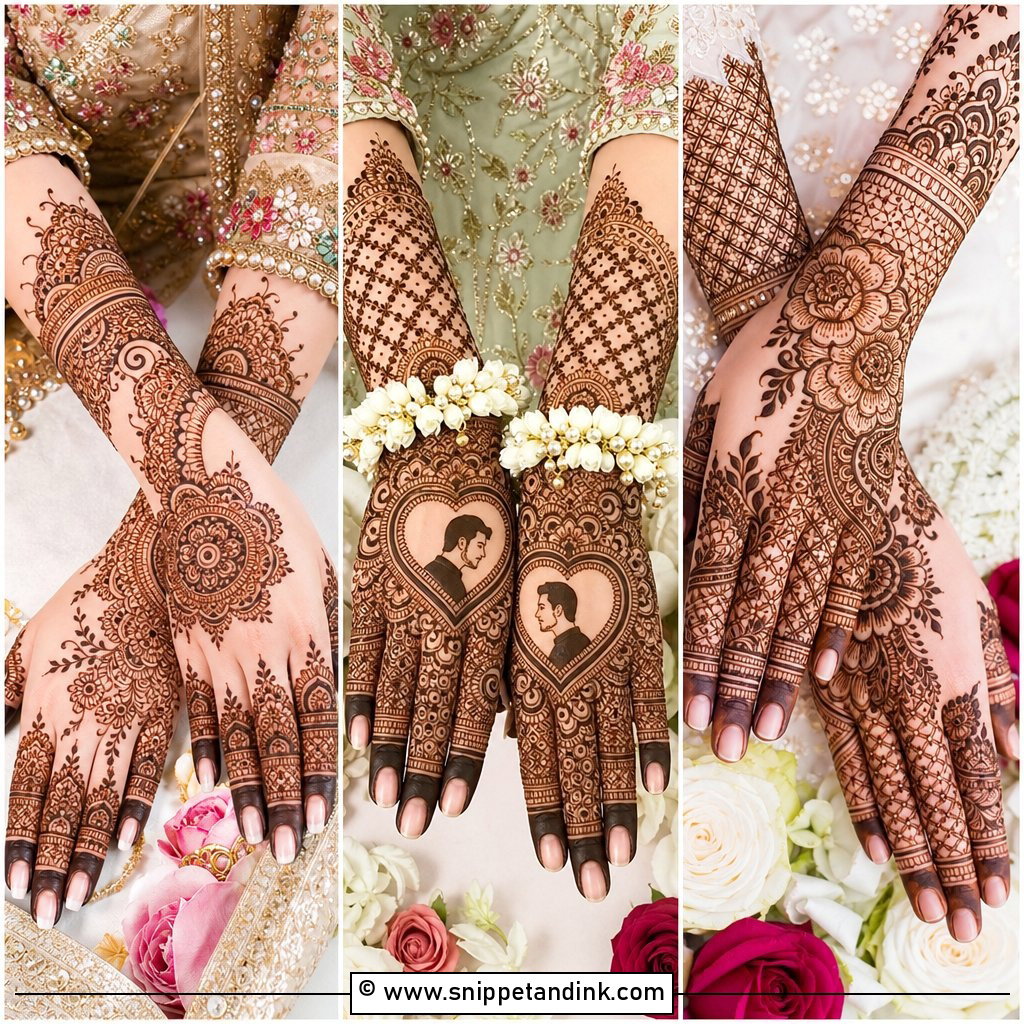
Jaali is a netted mesh that contrasts filled and open skin. It can cover the palms, backs, wrists and forearms with mesh panels, floral borders and finger bands. On the back of the hand it creates a glove-like effect, while the palm stays traditional. The thing that makes or breaks jaali is even spacing. If the gaps vary, the eye catches it immediately. I work with a very fine cone tip and keep a steady pressure, which matters more here than in freehand floral work.
17. Hathphool Hindu Bridal Mehndi Design
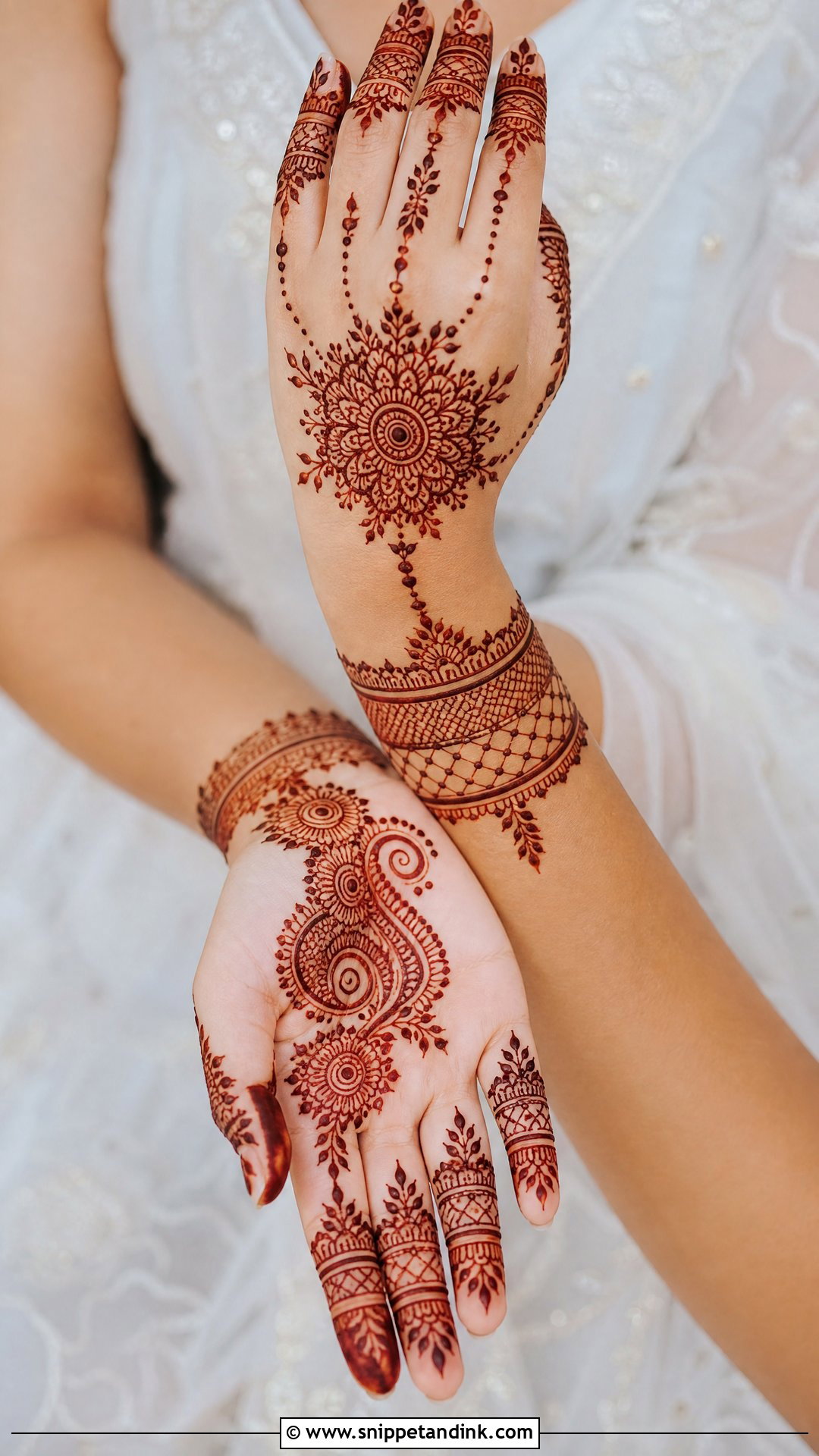
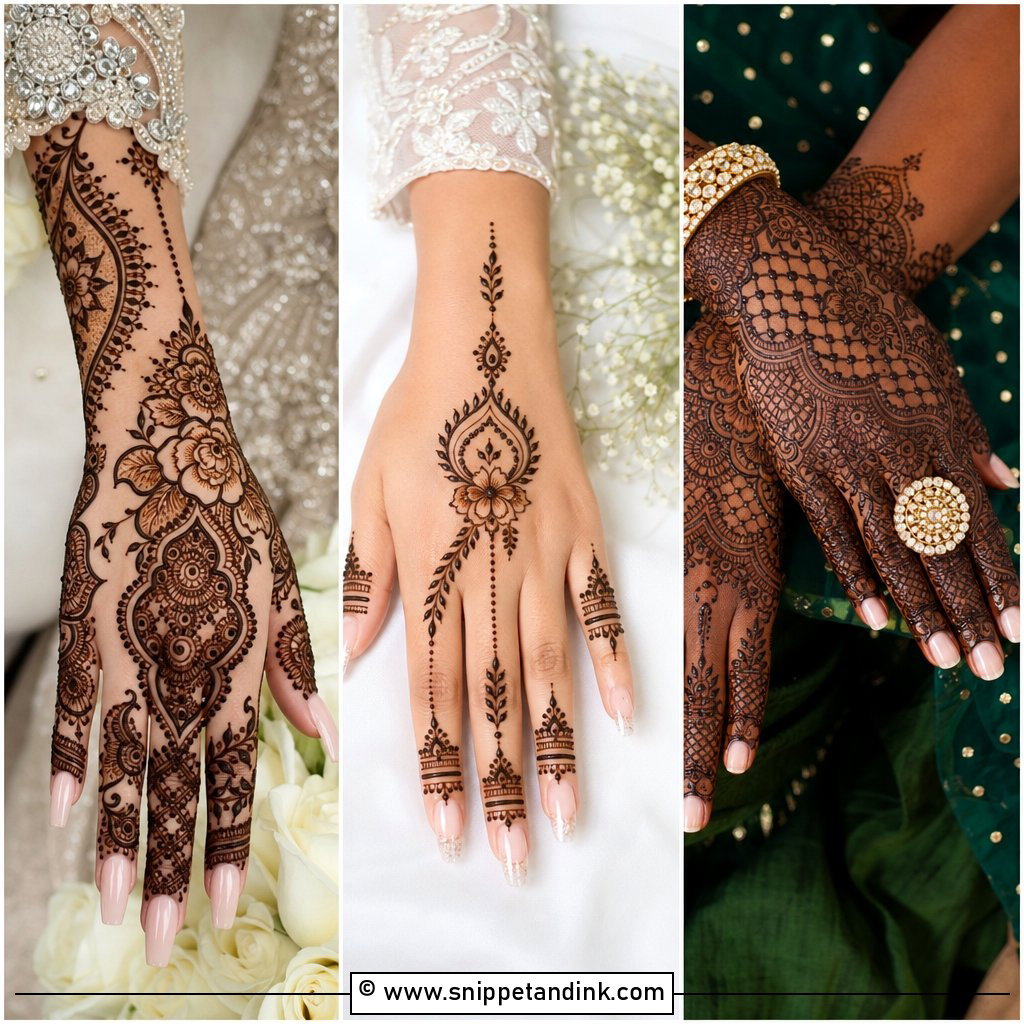
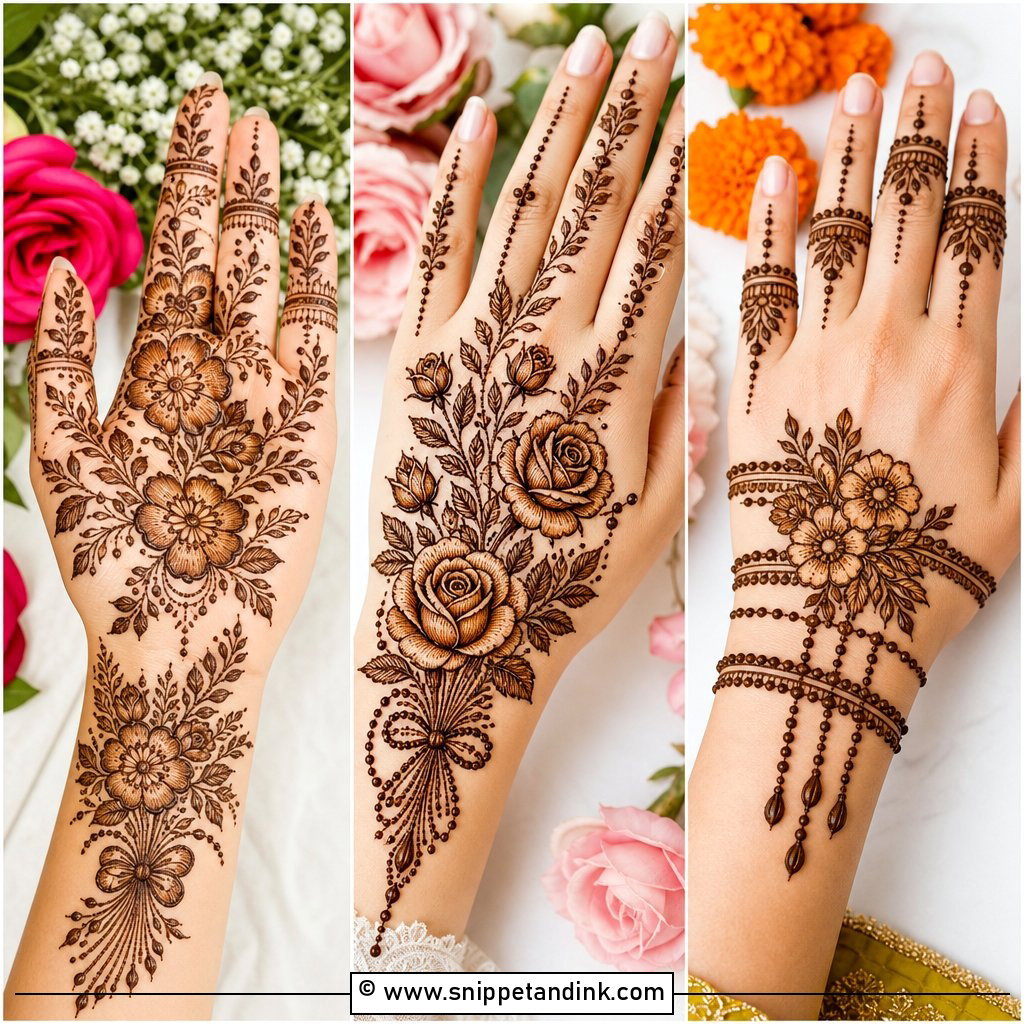
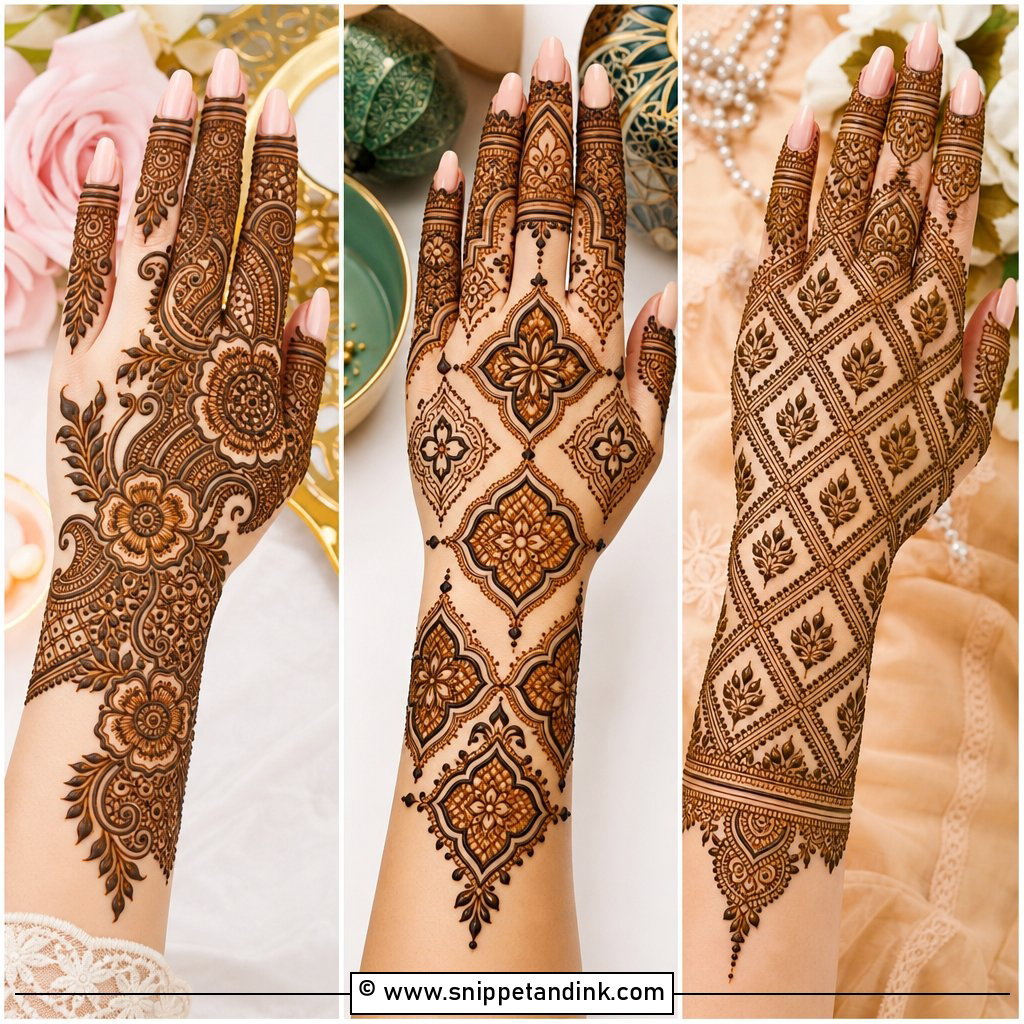
The hathphool layout looks like jewellery drawn in henna: a central floral or mandala motif on the back of the hand connects to rings on each finger through fine chains, with a bracelet band at the wrist. The palm can carry matching mandalas or lotus. It’s a modern choice that still feels traditional, and it echoes real haathphool jewellery if you’re wearing it. Keep the chain lines fine and the centre motif bold. It stains clean and photographs well in close-ups of the rings.
18. Bracelet Hindu Bridal Mehndi Design
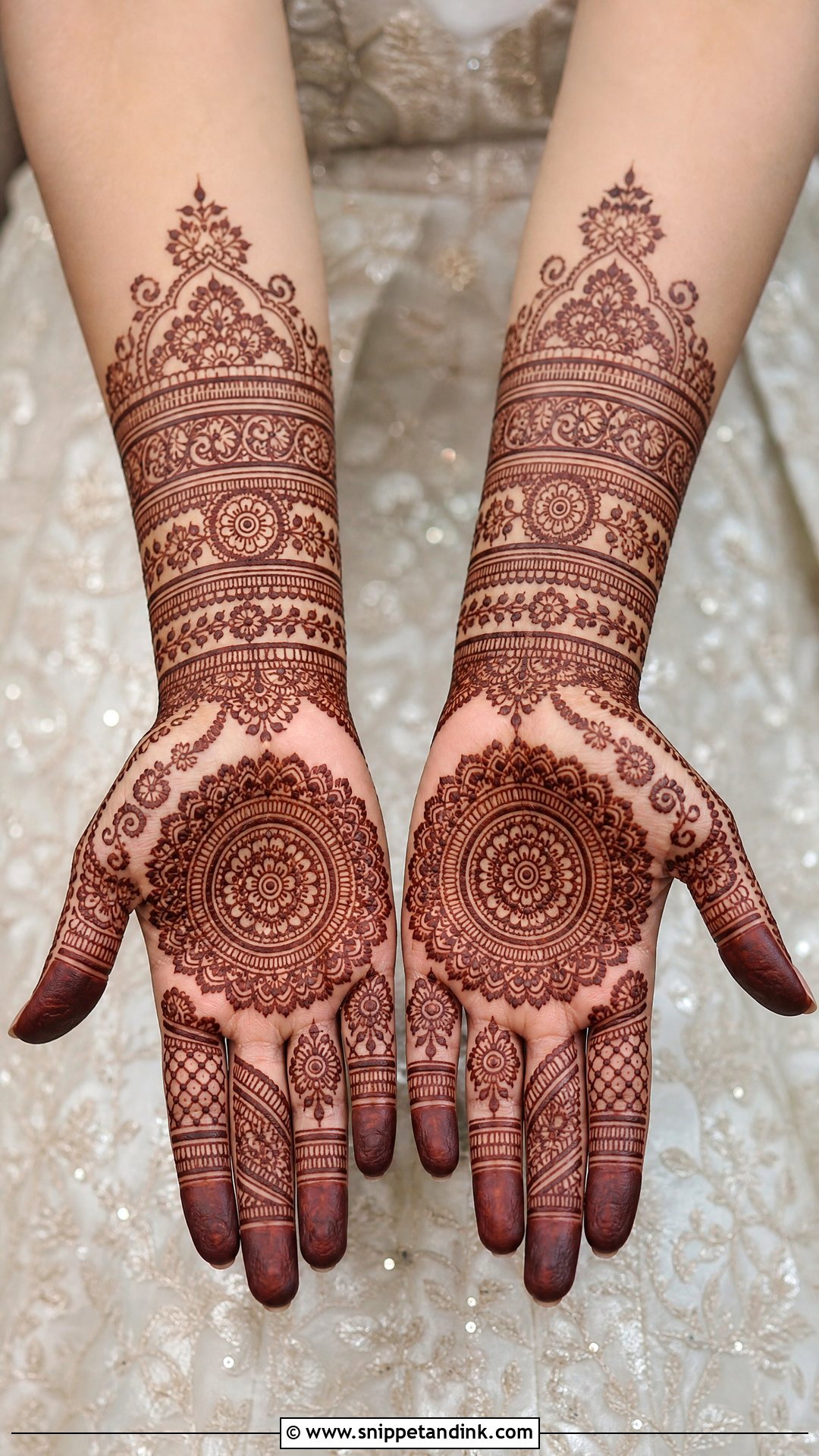
A bracelet Hindu bridal mehndi design builds structure around layered wrist and forearm bands while completing the hand. It suits brides who want their mehndi to blend with bangles, as the bands make the hands look dressed before any jewellery is added. Lotus, peacock or kalash in the palm makes it more traditional; clean wrist bands with small gaps make it modern. Measure your bangle stack at the trial, so the bands start just above and below where your bangles sit.
19. Minimal Hindu Bridal Mehndi Design
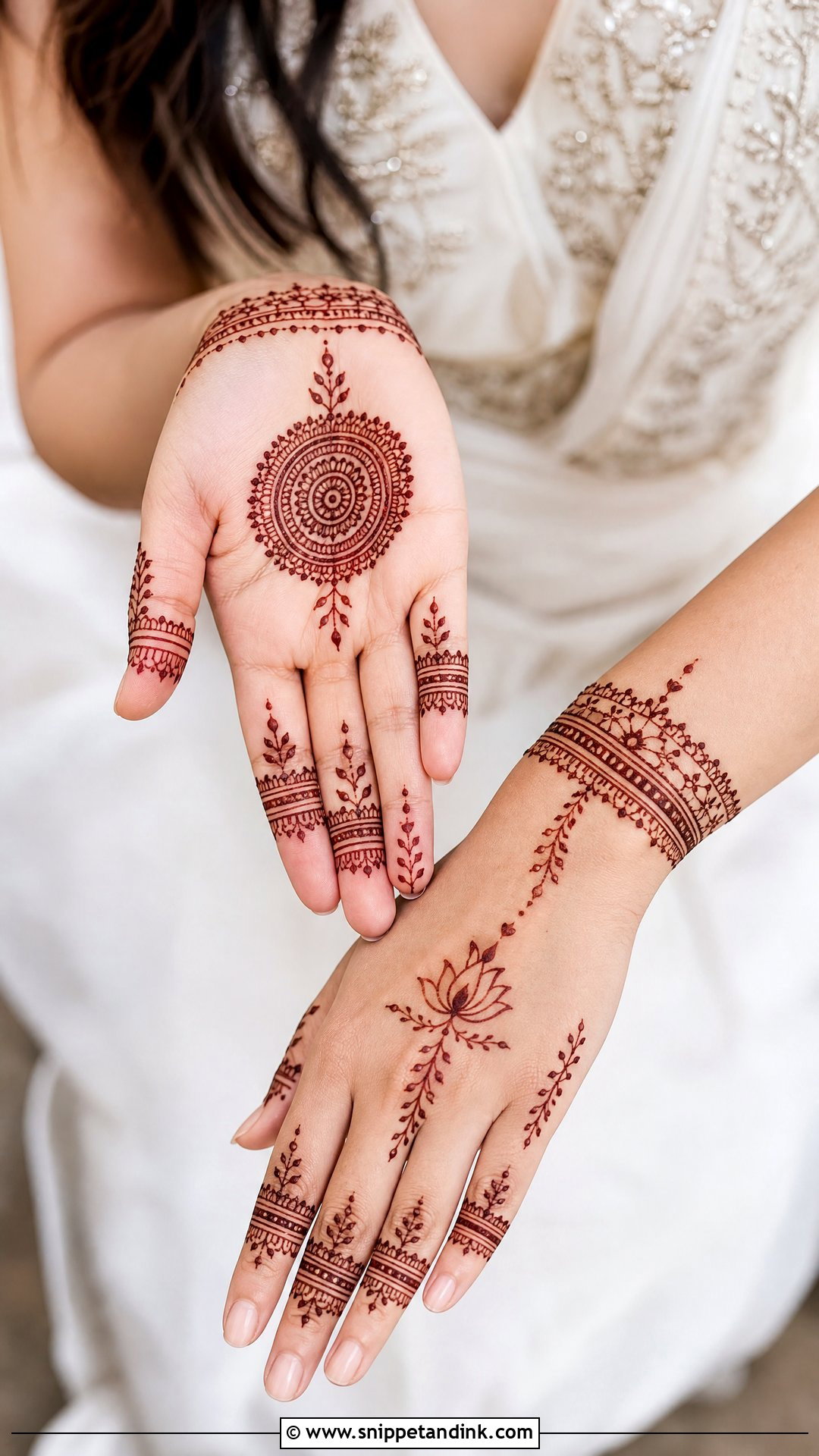
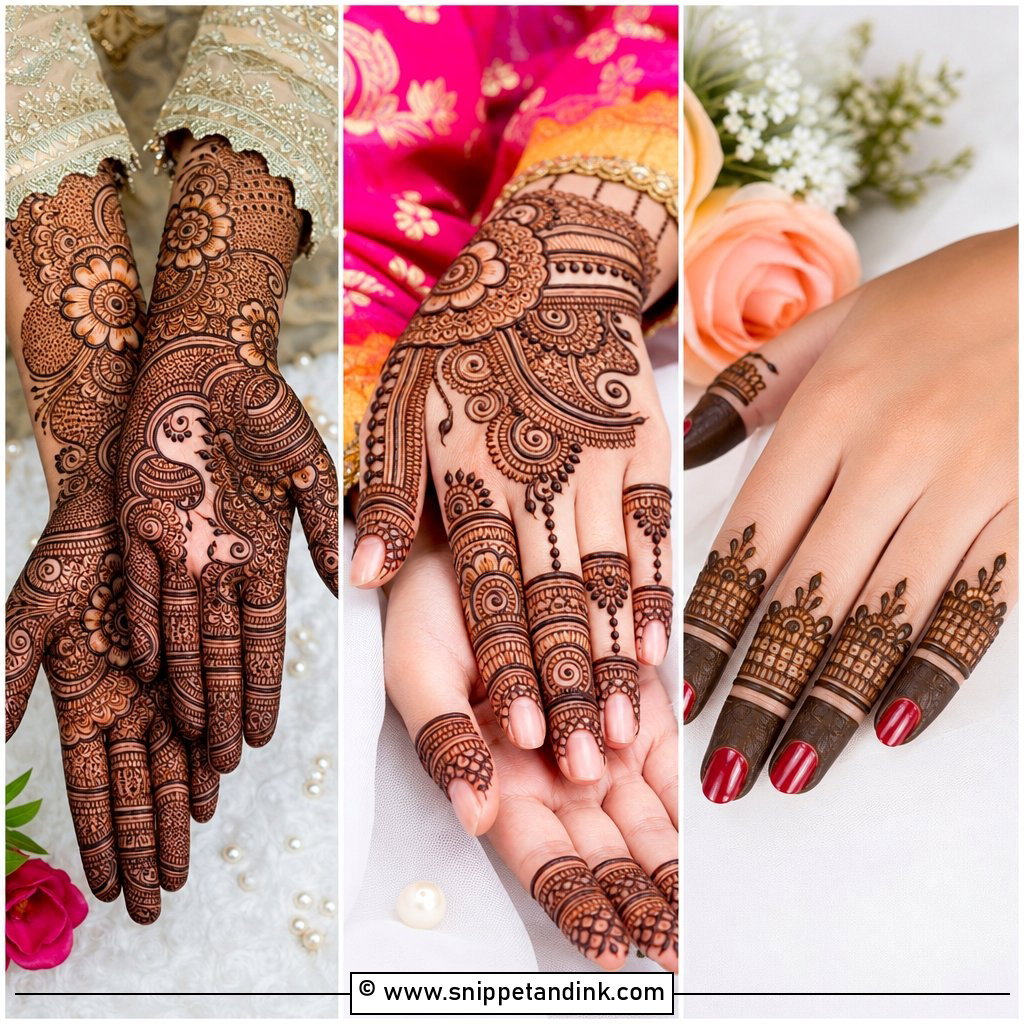
Minimal doesn’t mean bare. A palm mandala, delicate finger work, slim wrist bands, small lotus motifs and leafy trails still feel bridal when they’re balanced. This suits intimate weddings, destination weddings, a courthouse ceremony followed by Hindu rituals, or a bride who simply prefers lighter hands. I use fine lines, clear spacing and one strong focal motif on each hand. It also takes far less time to apply and dry, which matters on a packed wedding week.
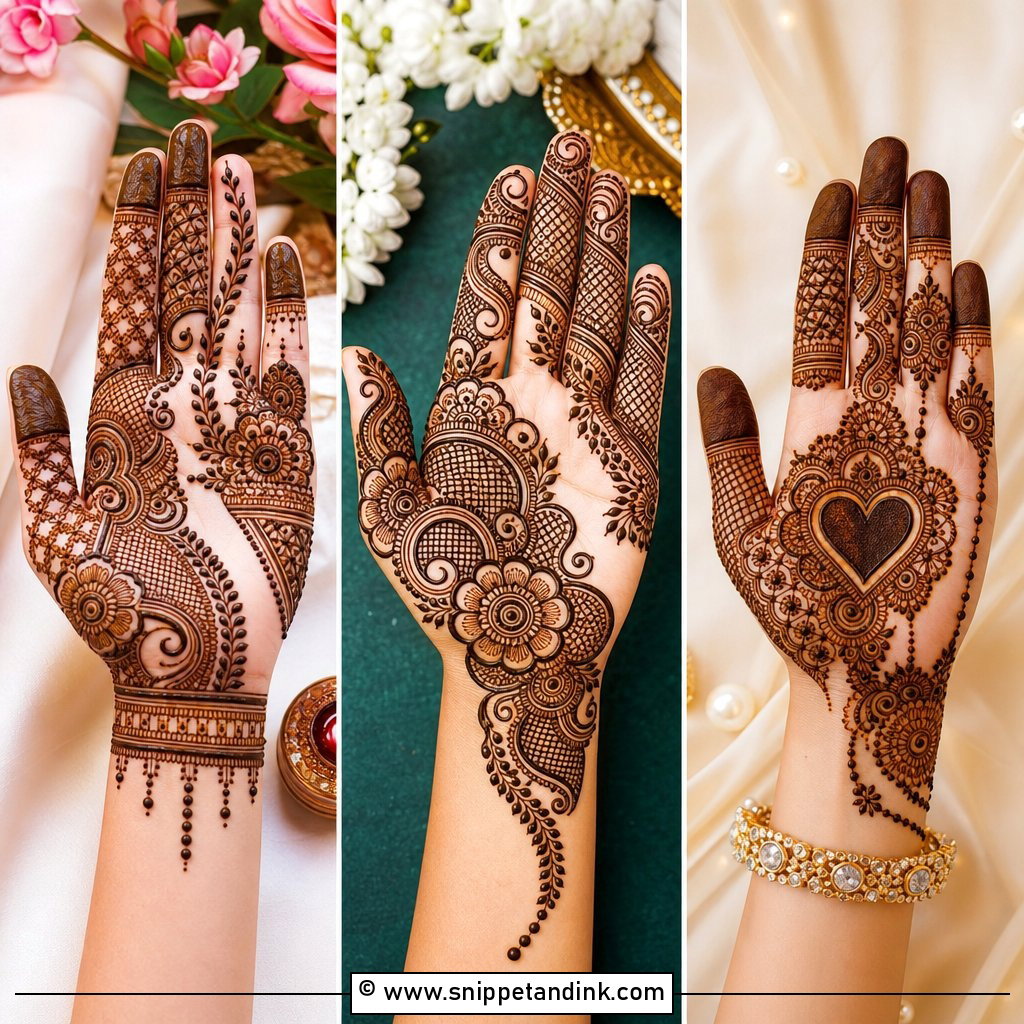
20. Modern Hindu Bridal Mehndi Design
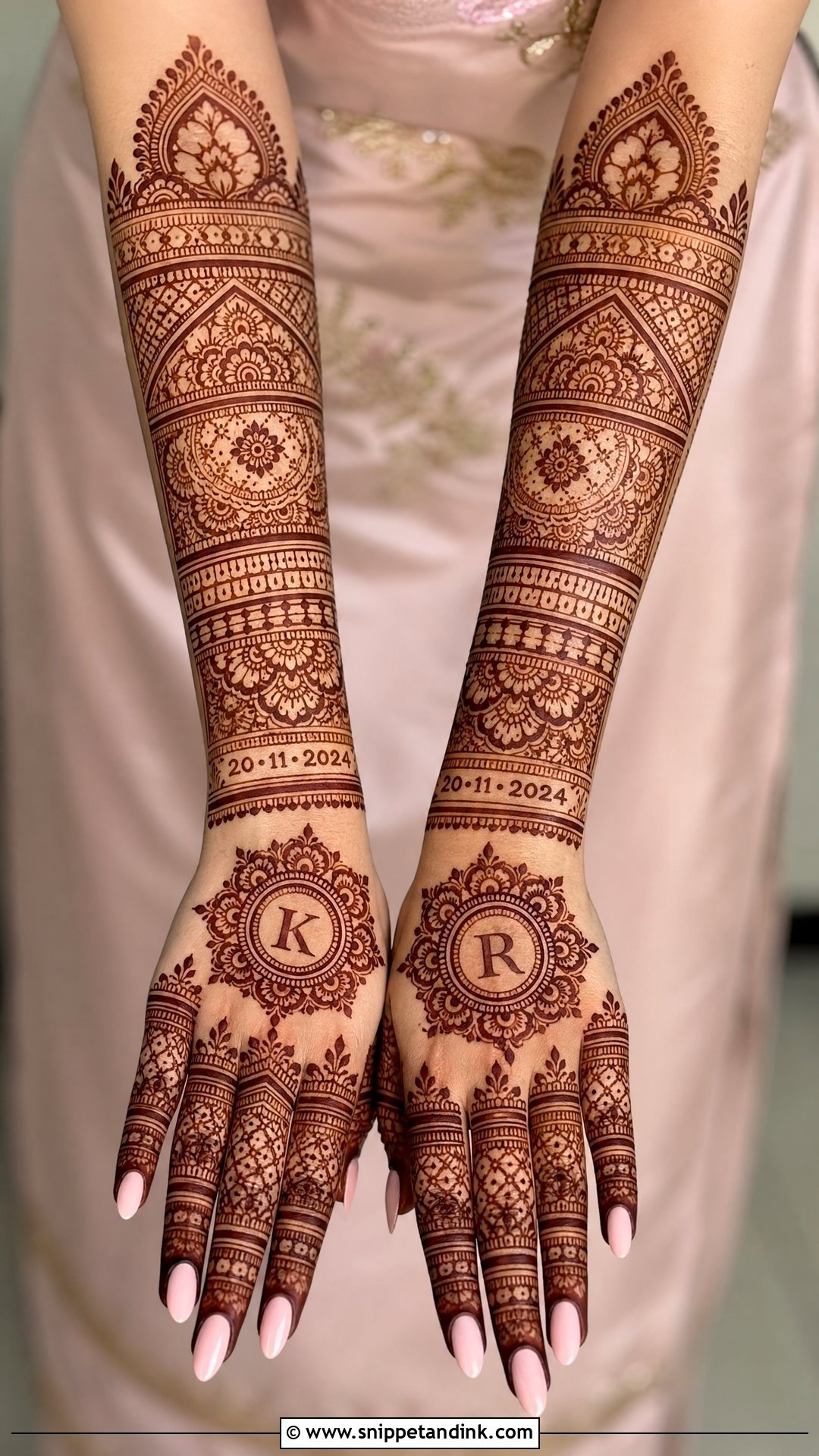
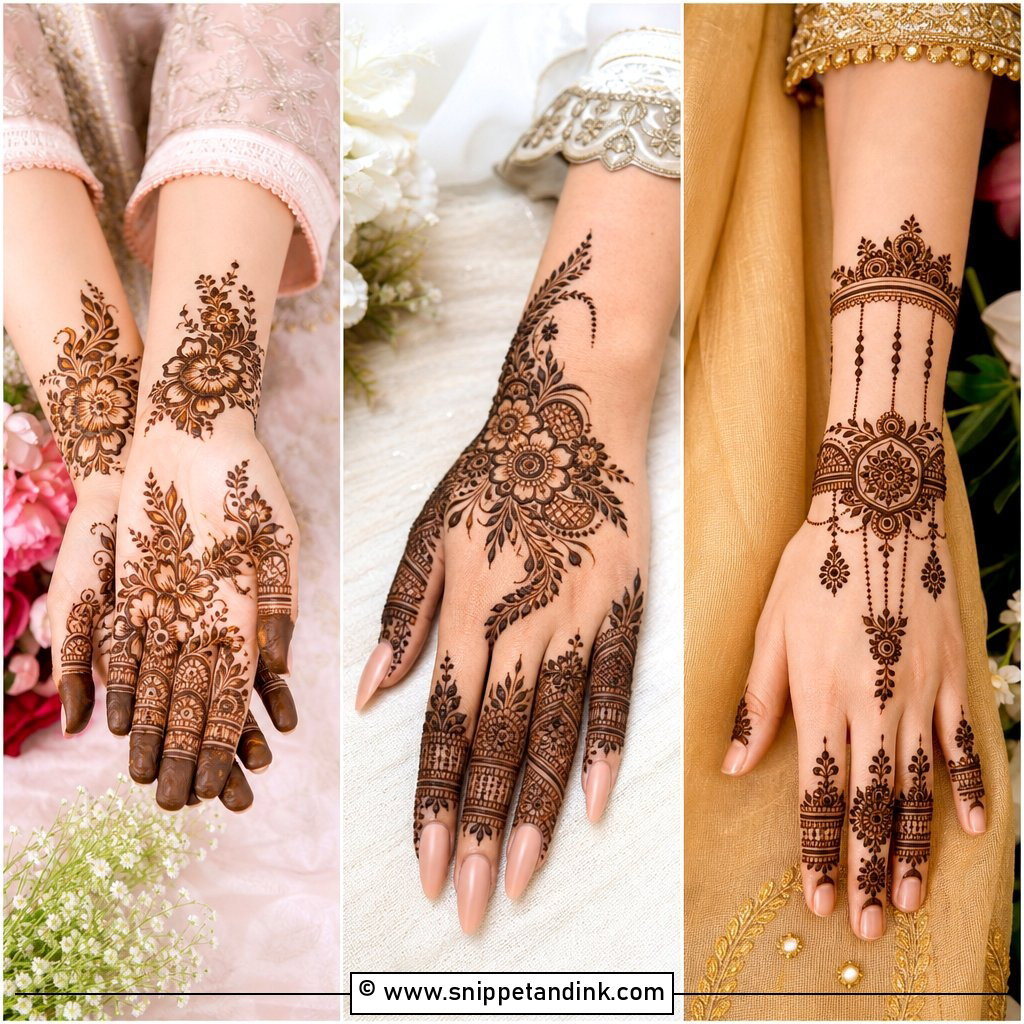
Modern layouts blend traditional motifs with planned negative space. Couple initials, the wedding date, small symbols, mandalas, florals, jaali panels and bracelet wrists each get room to stand out. The palms carry symbolic details, while the backs look like delicate jewellery. Fusion outfits and pastel lehengas suit this. Keep it meaningful rather than overloaded: two or three personal details read better than ten.
21. Indo Arabic Hindu Bridal Mehndi Design
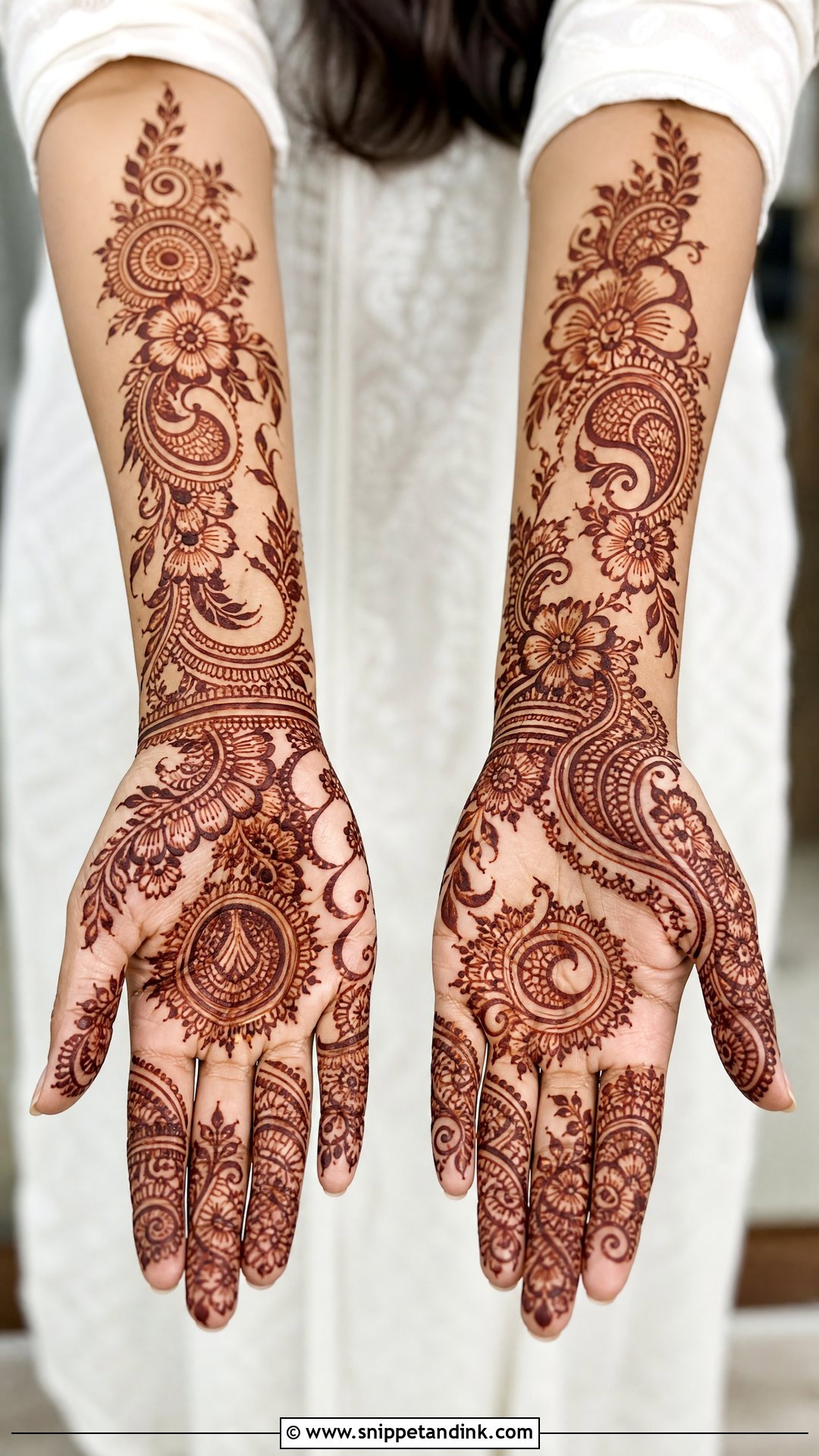
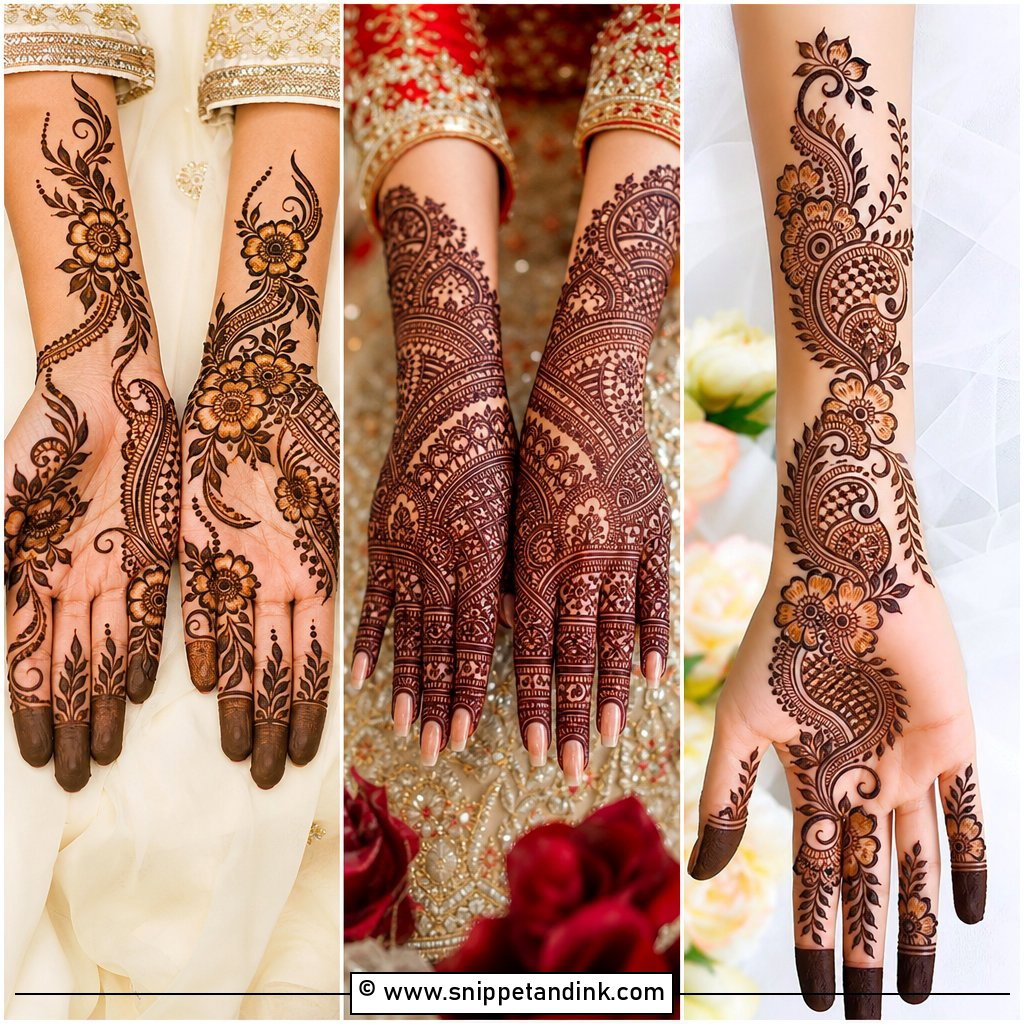
Indo-Arabic work mixes Indian detail with Arabic flow: bold floral trails, paisleys, mandalas and leafy vines with open skin between them. The movement usually runs diagonally across the hand and up the forearm. Traditional Hindu wedding motifs can sit in the palms while the backs carry flowing Arabic-style trails. The bold lines stain clearly and dry faster than dense work, so it suits brides who want rich coverage with a little more comfort.
22. Back Hand Hindu Bridal Mehndi Design
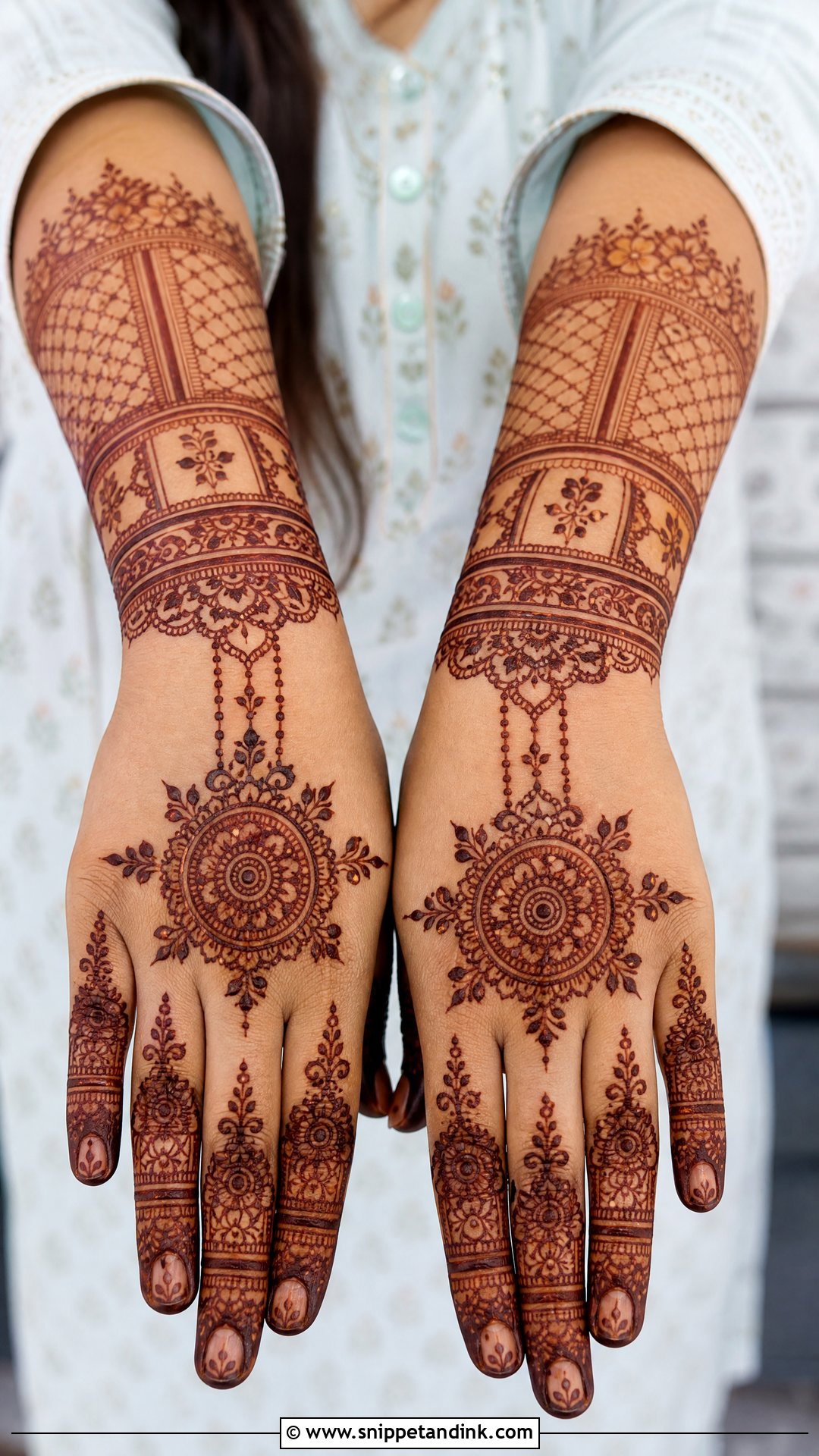
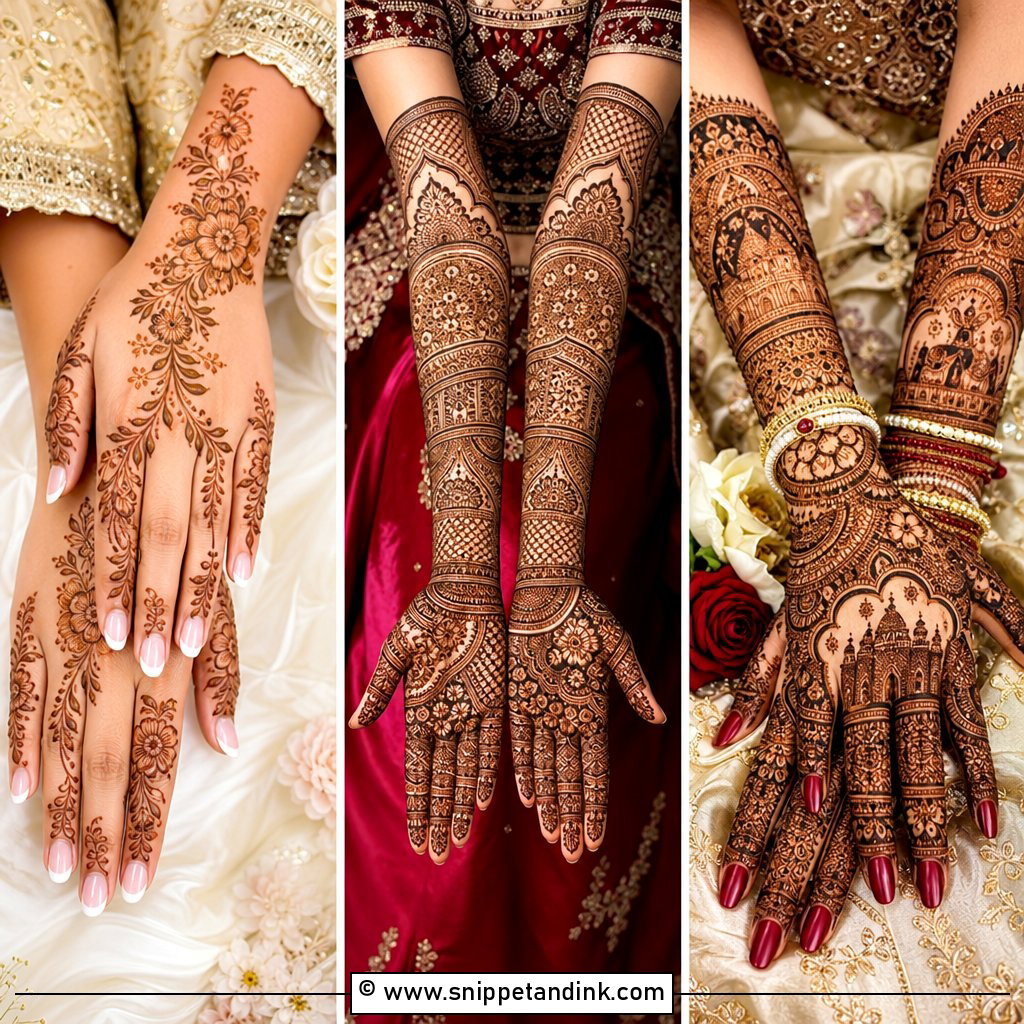
The back of the hand is in every ring shot and jewellery close-up, so I take as much care with it as with the palm. Mandalas, hathphool chains, floral vines, bracelet cuffs, jaali and detailed fingertips should flow naturally from fingers to wrist. Bear in mind that henna stains lighter on the back of the hand than on the palm, because the skin there is thinner and has fewer layers to hold dye. Many brides choose a heavier palm and a jewellery-style back to balance that. With very detailed bangles, keep the wrist mehndi cleaner.
23. Front Hand Hindu Bridal Mehndi Design
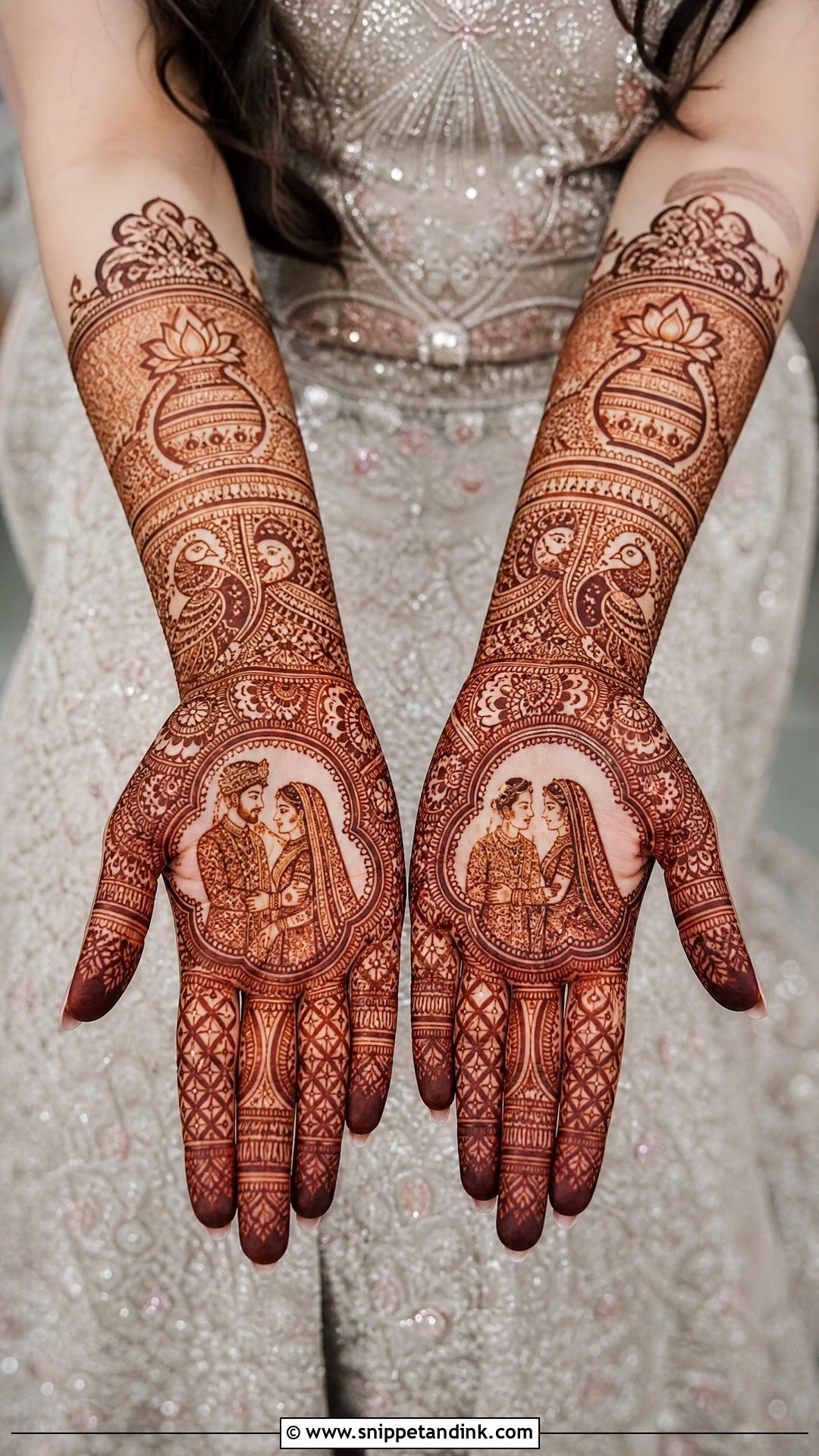
The palm gets the main wedding focus: mandalas, dulha-dulhan portraits, lotus, kalash, peacocks and paisley fillers. Palms stain darkest, so the most detailed motifs belong here. Fingers can be fully filled or banded with leaves and florals. The palm shows clearly during rituals and blessings, so brides who care about traditional photographs prioritise it. Keep the central motifs large enough to read after the paste is removed and the stain develops.
24. Forearm Hindu Bridal Mehndi Design
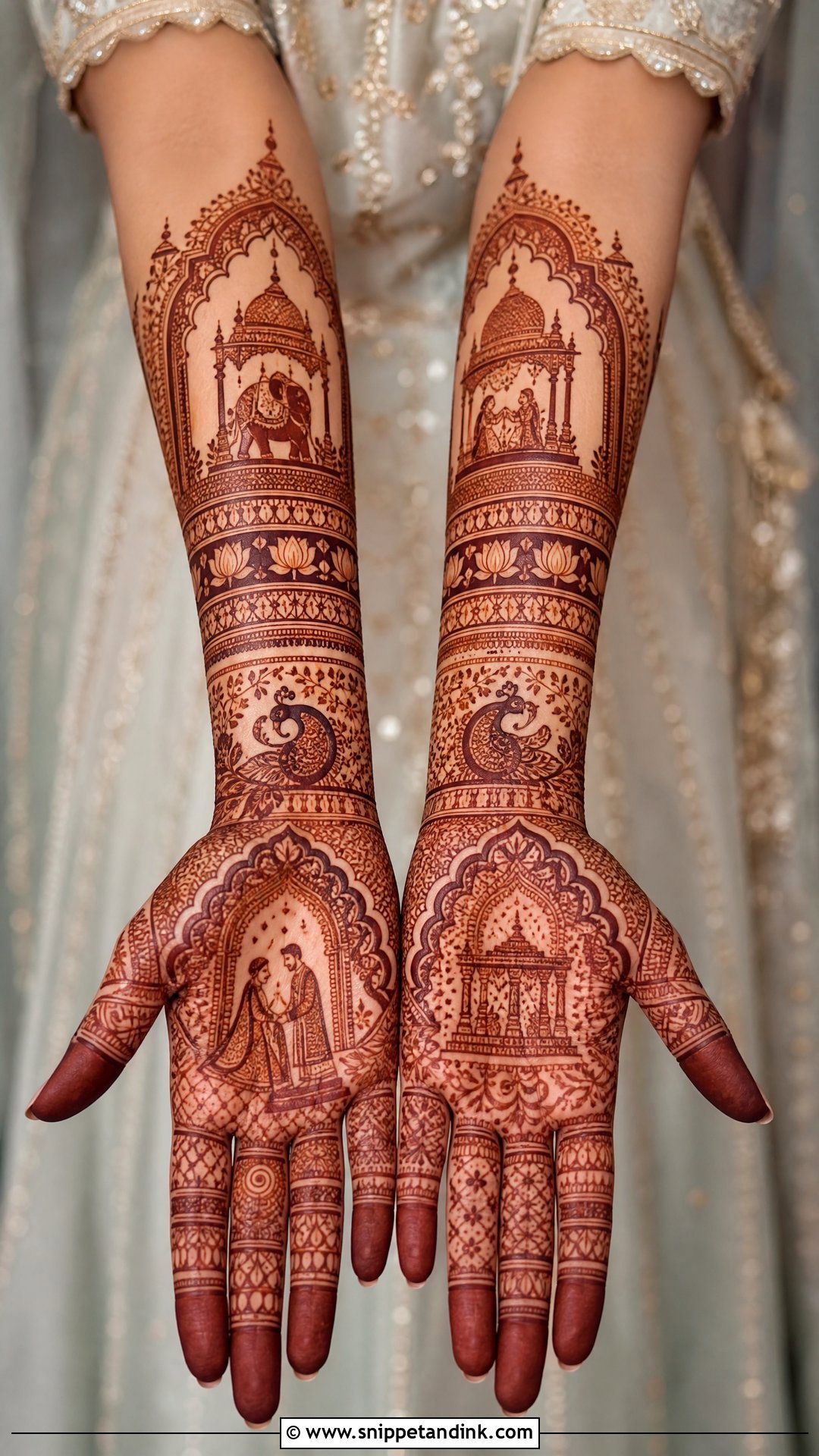
Forearm work extends the design beyond the wrist with temple arches, peacocks, elephants, mandap scenes, paisley trails and stacked bracelet bands. It stays visible above bangles, kaleere or sheer sleeves. The forearm has room for storytelling, so it’s a good place for dates, initials or symbolic art. One honest note: the forearm stains lighter than the hands, so expect a more orange-brown tone there. Keep the flow connected to the palm and wrist so it doesn’t look like a separate design.
25. Bridal Foot Hindu Mehndi Design
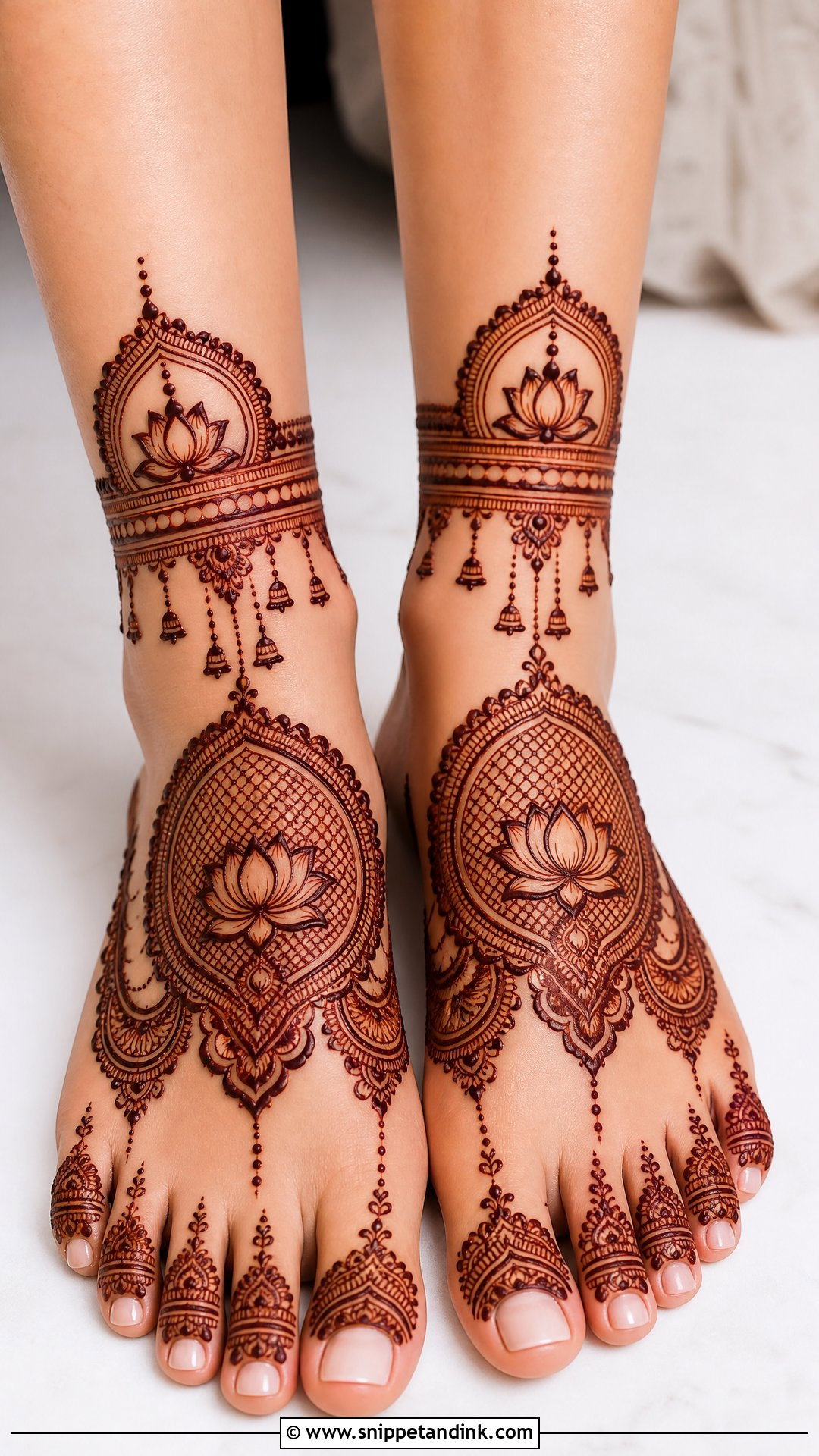
Foot mehndi completes the look and can cover the toes, tops of the feet, ankles and sometimes the lower legs, with lotus, anklet bands, paisleys, mandalas, jaali and tiny bells. It shows during rituals where the bride’s feet are visible and pairs with anklets and toe rings. Feet are usually done after the hands, and they need time to dry with the feet propped up on a cushion. Avoid thick paste where sandals rub, and wear loose, open footwear for a day while the stain sets.
Aftercare That Makes the Stain Darker
Most of the colour is decided in the hours after I finish. Keep the paste on as long as you comfortably can, ideally six hours or overnight. Once it starts to dry, I dab on a lemon and sugar mix, which keeps the paste moist and stuck to the skin. Warmth helps, so keep your hands warm rather than cold.
- Scrape the dried paste off with a blunt edge or your fingers. Don’t wash it off.
- Keep your hands away from water for as long as possible, ideally the rest of the day.
- Rub a little natural oil or balm over the design if it feels dry.
- Avoid chlorine, harsh soaps and hand sanitiser until after the wedding.
A word about black henna
Natural henna never stains black. Cones that promise jet black results in minutes often contain chemical dyes that can cause serious skin reactions. Ask your artist what’s in her paste. A good bridal artist mixes her own or uses fresh natural cones and will tell you exactly what’s in them.
A Design That Still Reads After the Paste Comes Off
Start with your outfit, your jewellery and your rituals. Brides who love tradition often go for full hand, dulha-dulhan, Rajasthani, temple or kalash work. Those who prefer lightness lean toward mandala, minimal, bracelet, hathphool or Indo-Arabic. For strong symbolism, lotus, peacock, Radha Krishna, elephant and forearm designs carry the meaning. Book an experienced artist, bring clear references, and give yourself enough time for both application and aftercare. The stain is only as good as the hours after the paste comes off.
You'll Like These Ideas:


Leave a Reply