
A dupatta changes how I build bridal hair. It adds weight at the crown, it gets tugged every time someone hugs you, and it has to sit over jewelry without crushing the shape underneath. So the hairstyle is really the scaffolding. A classic juda handles a heavy embroidered net very differently from open waves under a light chiffon drape. Below are 20 styles I’d consider with a dupatta, with notes on how each one holds up through a long ceremony and which brides each one suits.
Where the Dupatta Pins Really Go
Most dupatta problems on the day come from where it’s pinned, not from the hairstyle itself. A heavy embroidered net can weigh enough to drag a loose bun downwards over a few hours, so I always plan the anchor before I start styling.
- I set two bobby pins in an X at the crown, into hair that’s been lightly backcombed. That cross is the main anchor for the dupatta.
- U-pins go through the fabric into the bun or braid. They slide in without snagging the embroidery and hold more firmly than a single straight pin.
- The tikka and any matha patti go on before the dupatta. The fabric then sits behind them and covers the hooks.
- A heavier dupatta also gets a pin or two at each side just above the ears, so it doesn’t twist when you turn your head.
- Safety pins go only into the dupatta and the blouse, never into the hair, because they rip strands when removed.
Weight matters more than style here. Chiffon and georgette sit on almost any hairstyle. Velvet, heavy zari or a dupatta with a wide embroidered border needs a firm bun or a braided base. With open hair under a heavy fabric, the drape will slip and pull at the scalp.
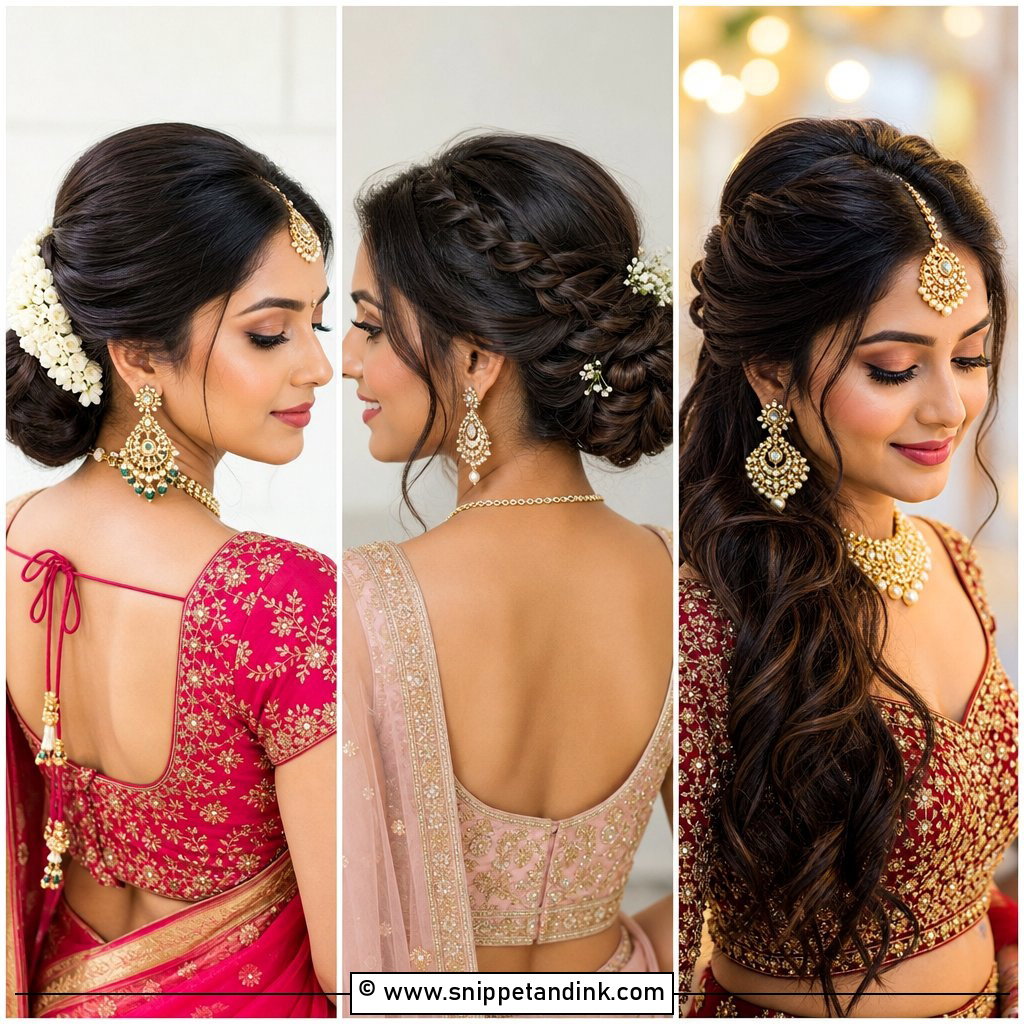
1. Low Bun Bridal Hairstyle With Dupatta
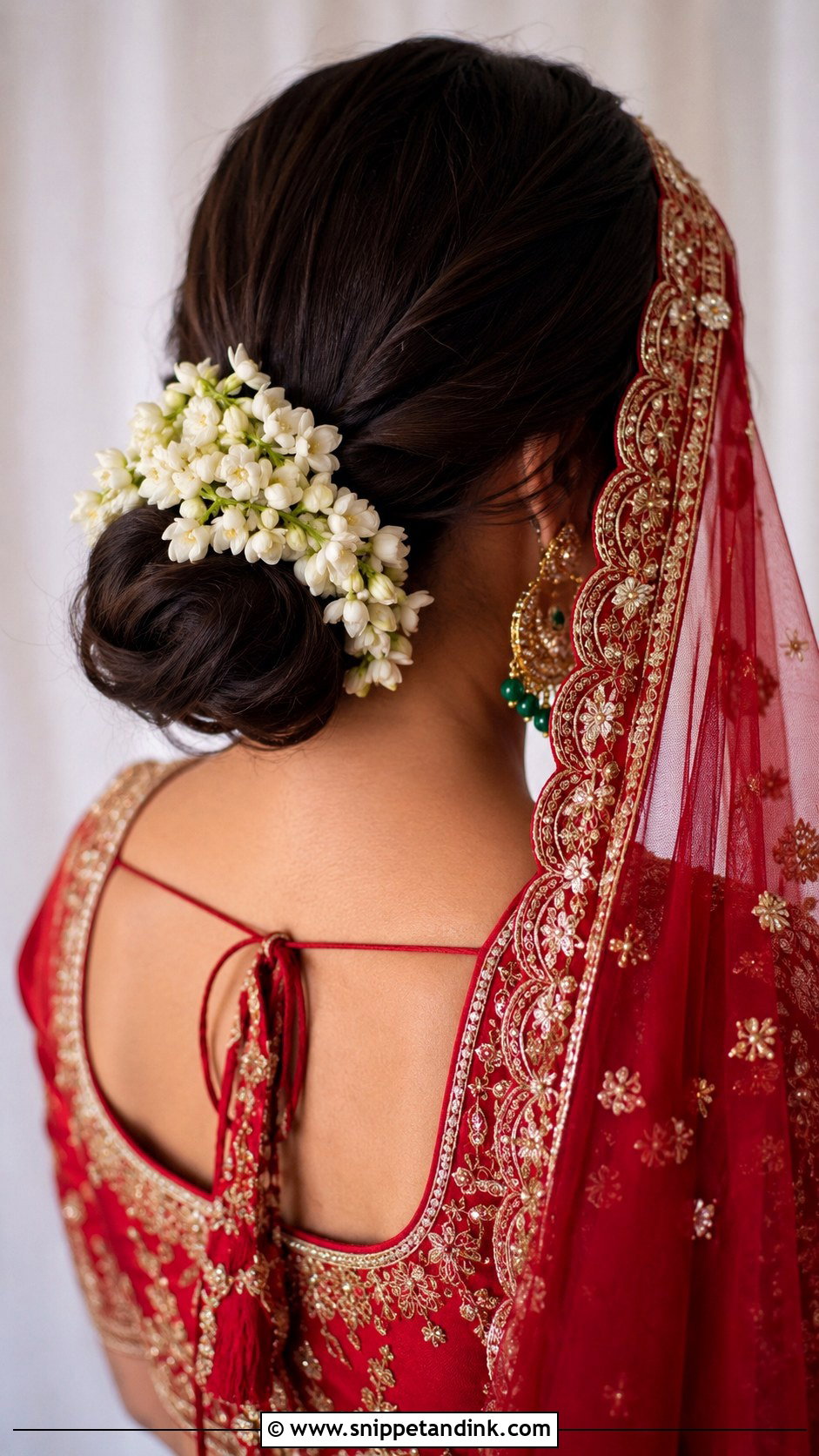
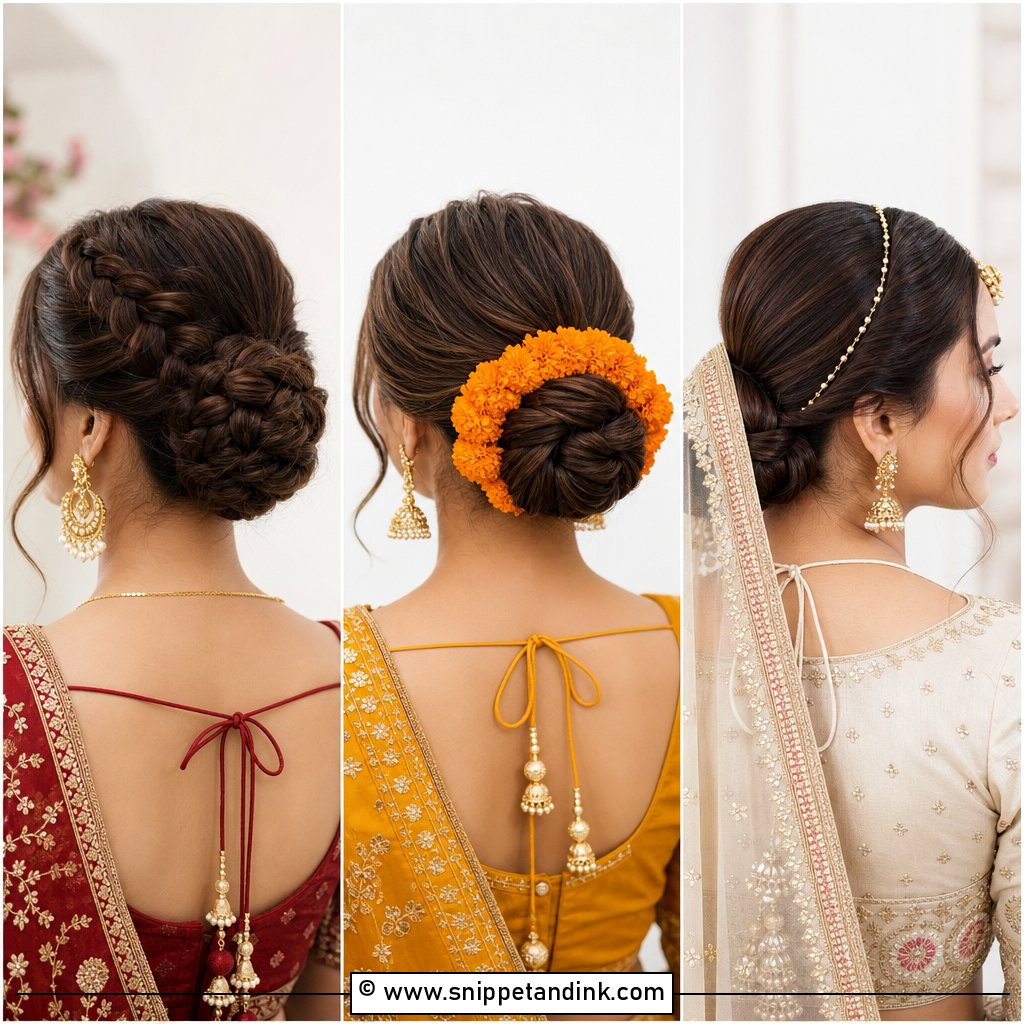
This is the style I reach for most when the dupatta is heavy. The bun sits at the nape, so the drape can be pinned above it at the crown and the weight rests on two anchor points instead of pulling the whole style backwards. I usually add a small padding donut so the bun keeps its round shape once fabric lies over it. A gajra wrapped around the base hides the pins, and the low placement leaves the center part clear for a maang tikka. It’s forgiving through hours of sitting for rituals, which matters more than people expect.
2. High Bun Bridal Hairstyle With Dupatta
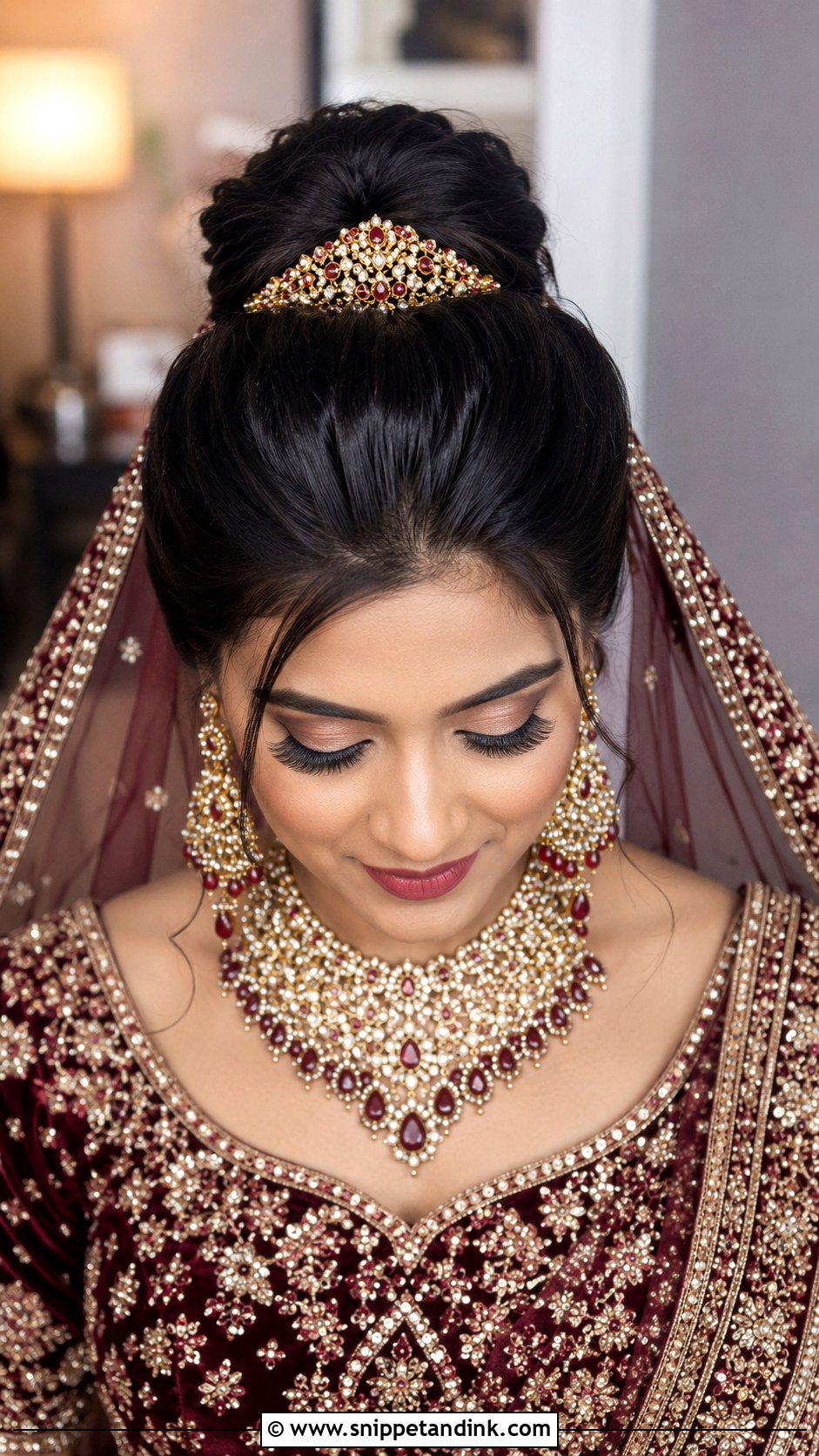
A voluminous high bun near the crown lifts the whole face and gives a head-covering dupatta something solid to grip. I wrap the fabric over the bun and pin through it into the base, which stops the drape sliding back when you look down at the mandap. The catch is height: a tall bun under a stiff, heavily worked dupatta can look like a hood from the side, so I check the profile in a mirror before setting it. Keep earrings bold and the bun itself fairly plain.
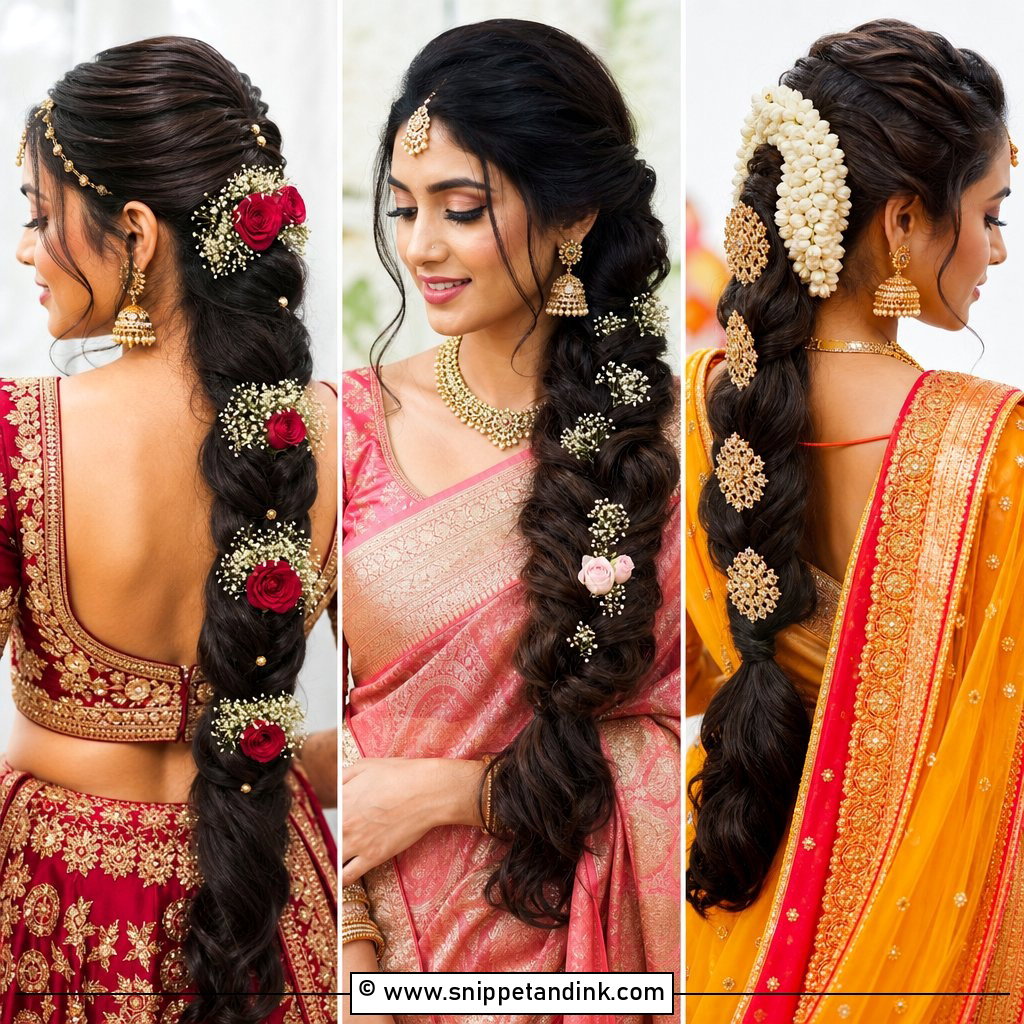
3. Floral Juda Bridal Hairstyle With Dupatta
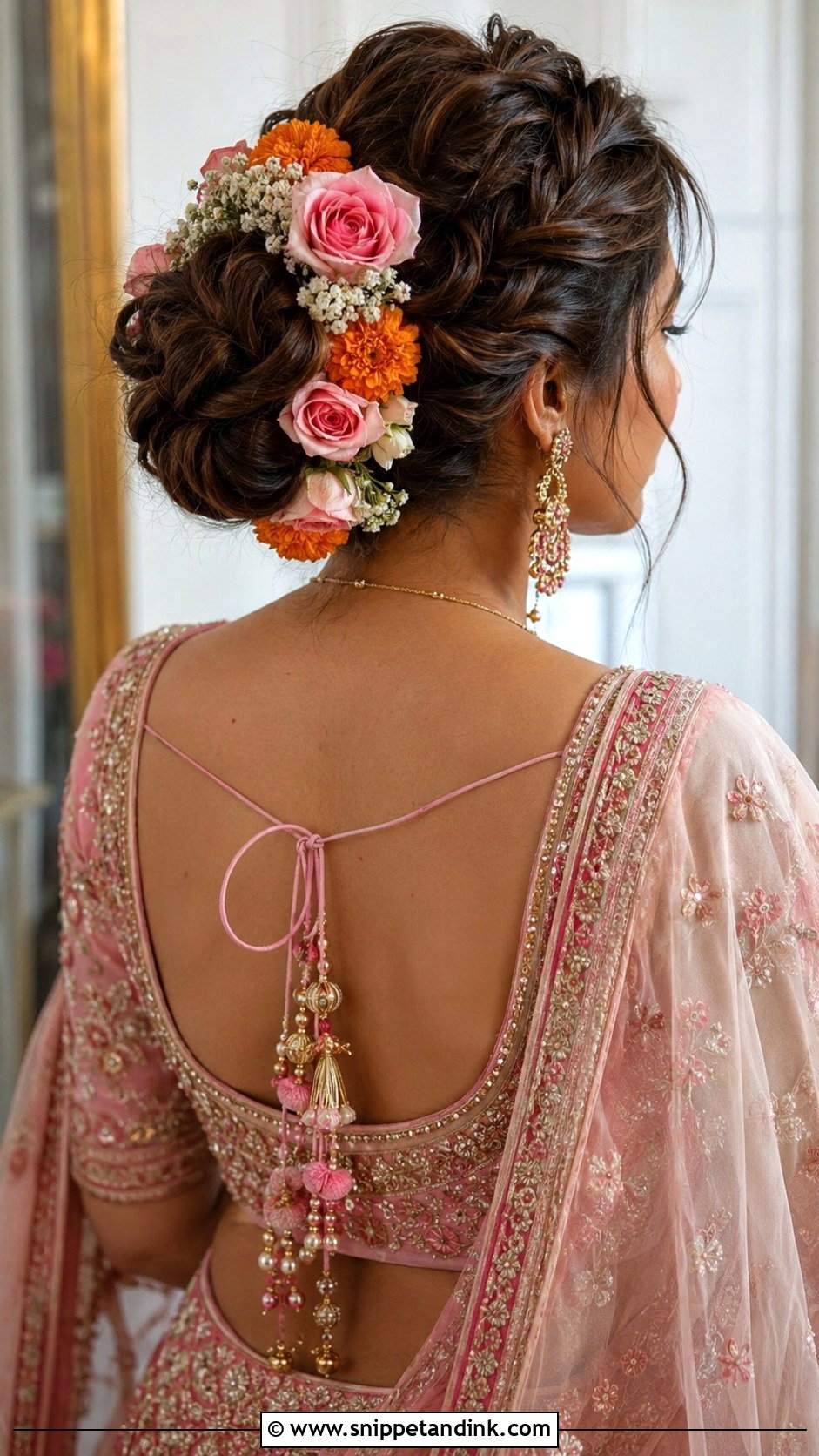
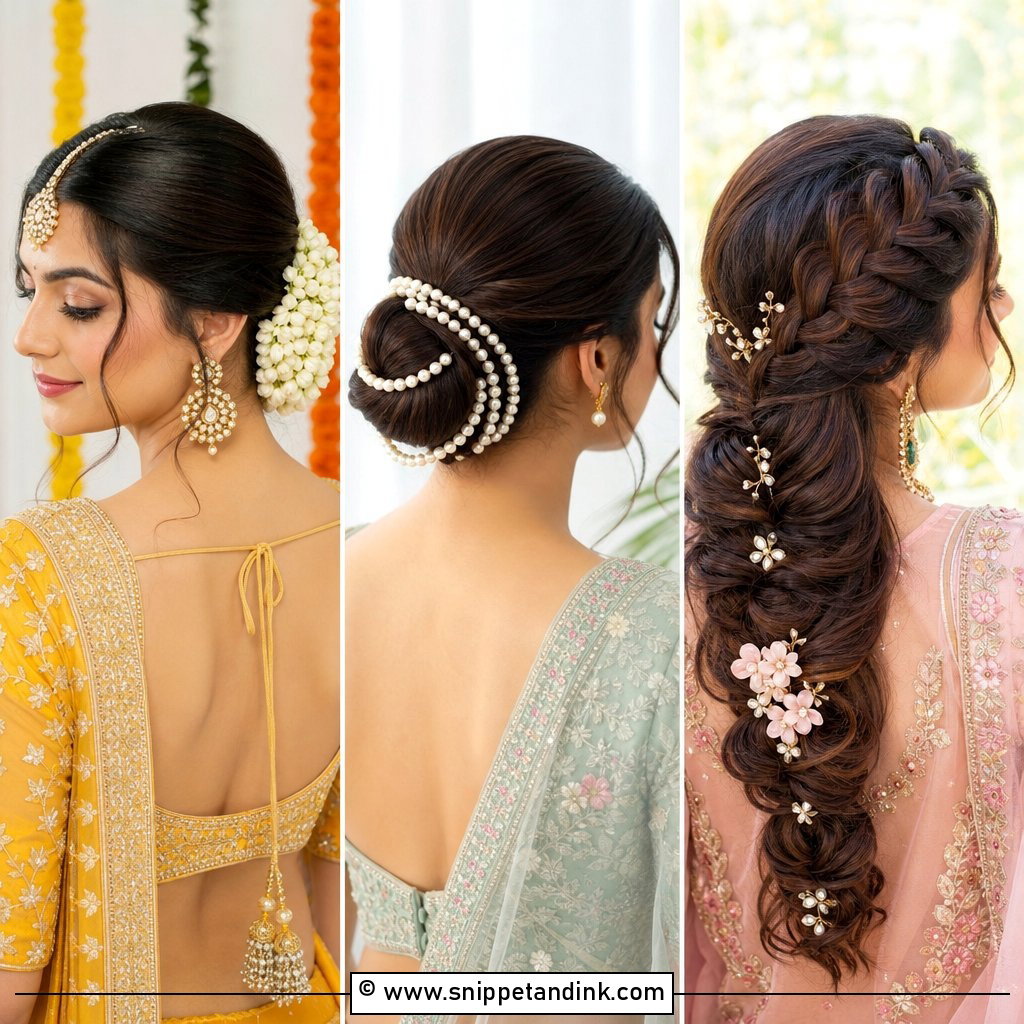
Most judas I build start from a braid coiled flat, because a braided coil grips pins far better than smooth hair and won’t collapse when flowers are pushed in. Roses and marigold add color for daytime functions, jasmine for scent. Fresh flowers do add weight and they wilt under a warm dupatta, so I insert them as late as possible and keep the heaviest blooms at the lower edge. A floral juda can be tight and polished or a little loose, but loose versions need more pins hidden underneath.
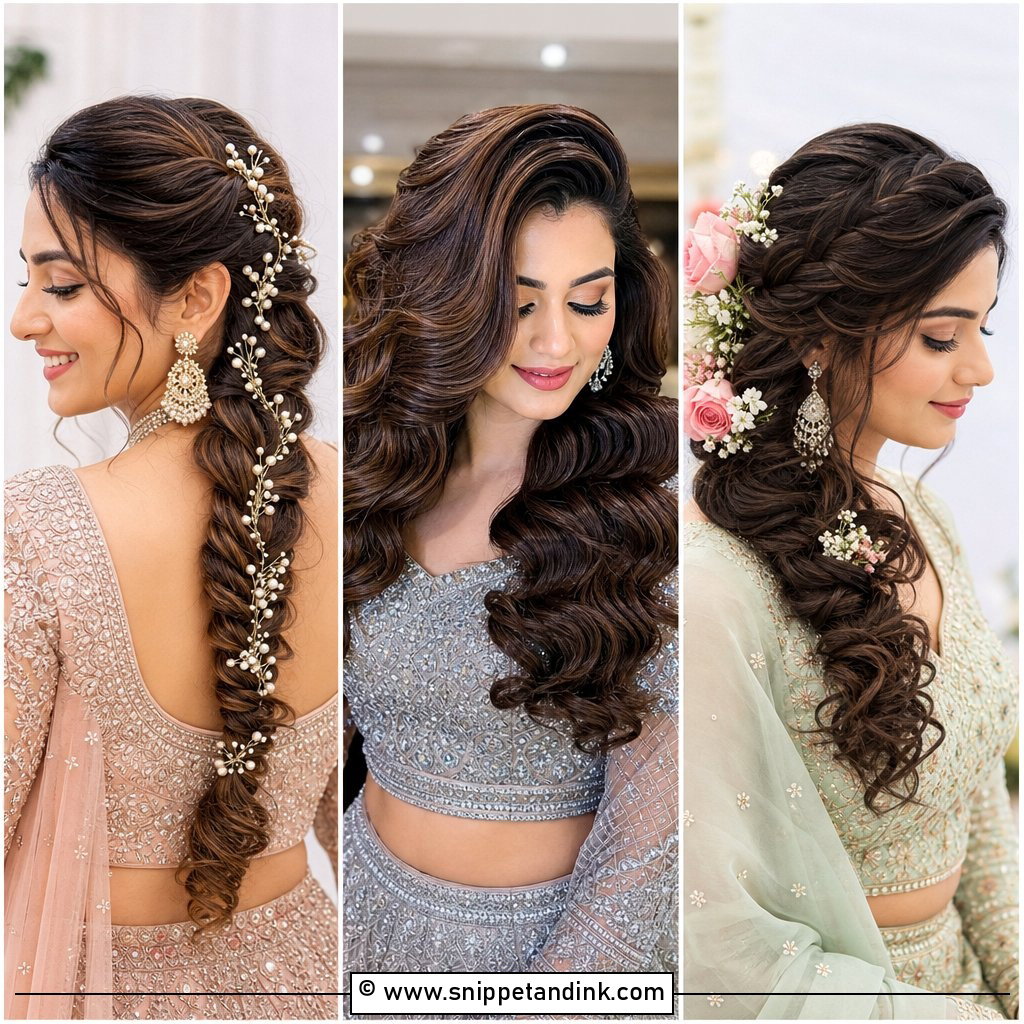
4. Side Braid Bridal Hairstyle With Dupatta
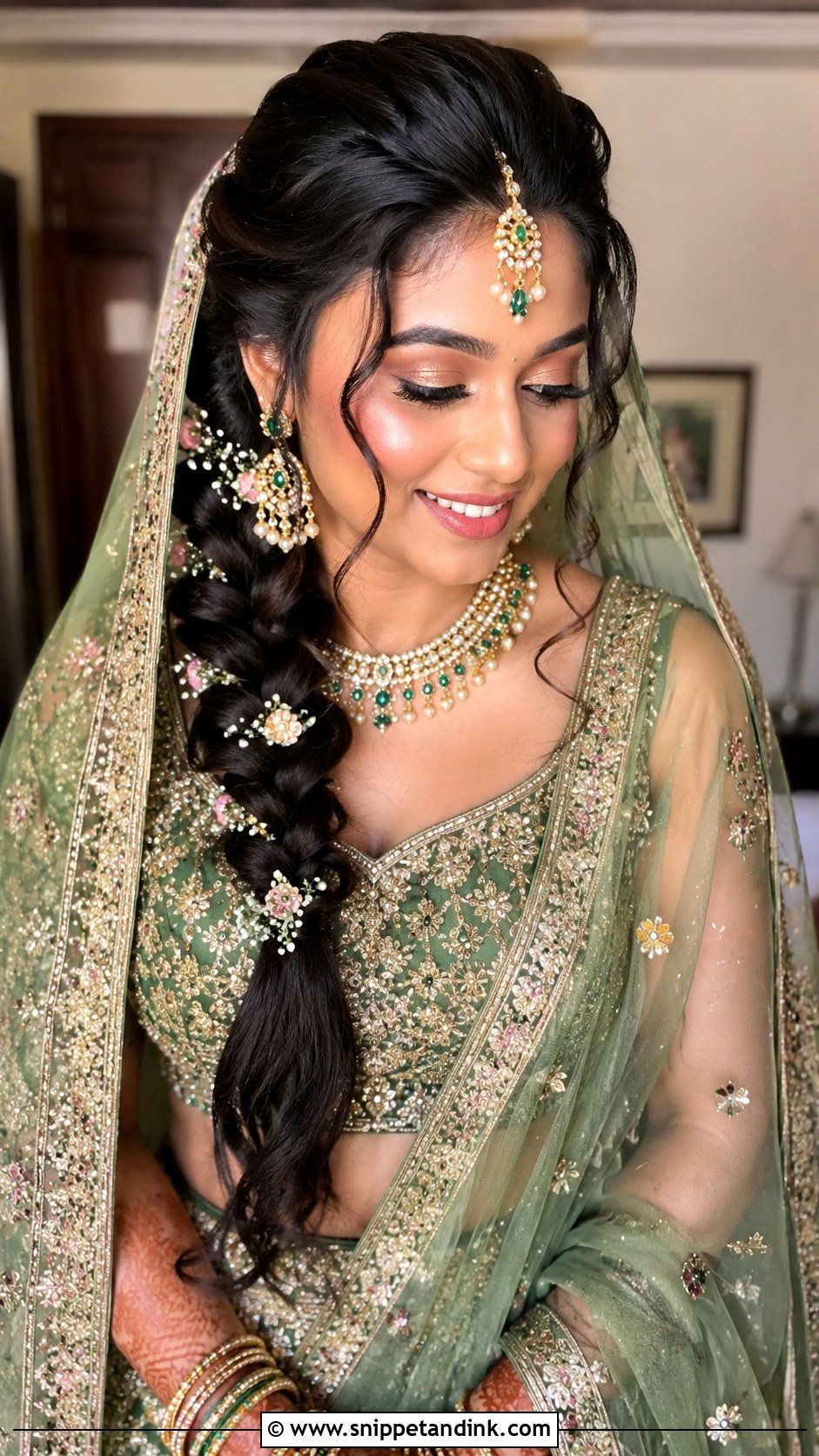
A side braid keeps your hair on show, which is the reason most brides ask for it. I prep with loose waves so the braid has grip, then plait gently down one side with the tension kept low near the ear so it doesn’t pull. Some brides like a thin strip of the dupatta woven in. That works with chiffon or net, not with heavy zari, which drags the braid apart within an hour. Drape the dupatta over the opposite shoulder so the two don’t fight for space. Mehndi and reception suit it better than the pheras.
5. Fishtail Braid Bridal Hairstyle With Dupatta
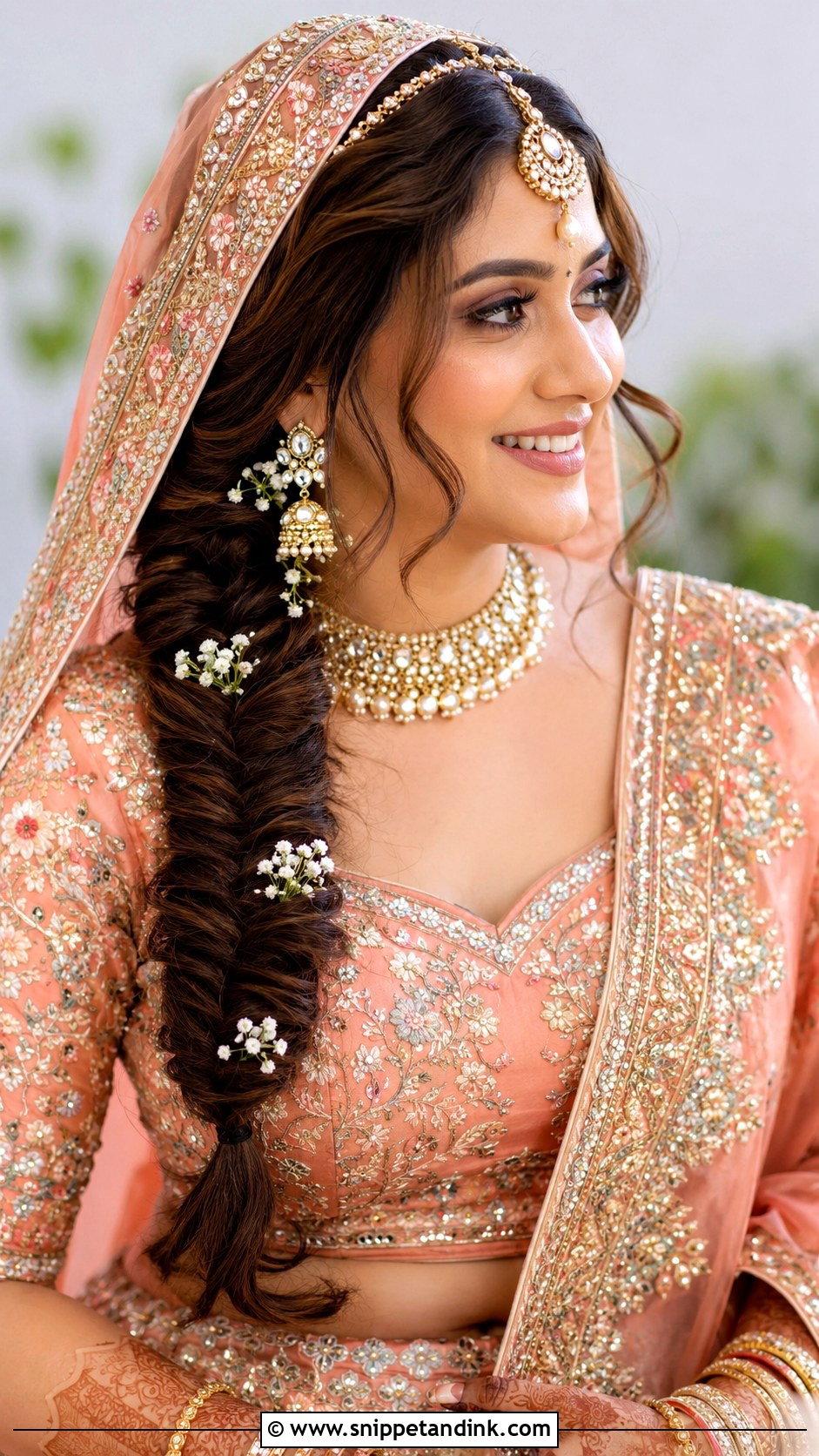
Fishtail is slower to braid than a standard plait, but the fine weave hides second-day texture and grips flower pins well. I pancake it gently after it’s tied off so it looks fuller in photos. Because the braid already reads as detailed, I keep decoration sparse: a few pearl pins rather than a full floral line. The dupatta should be pinned at the crown, above where the fishtail starts, otherwise the fabric rubs the top of the braid flat.
6. Messy Bun Bridal Hairstyle With Dupatta
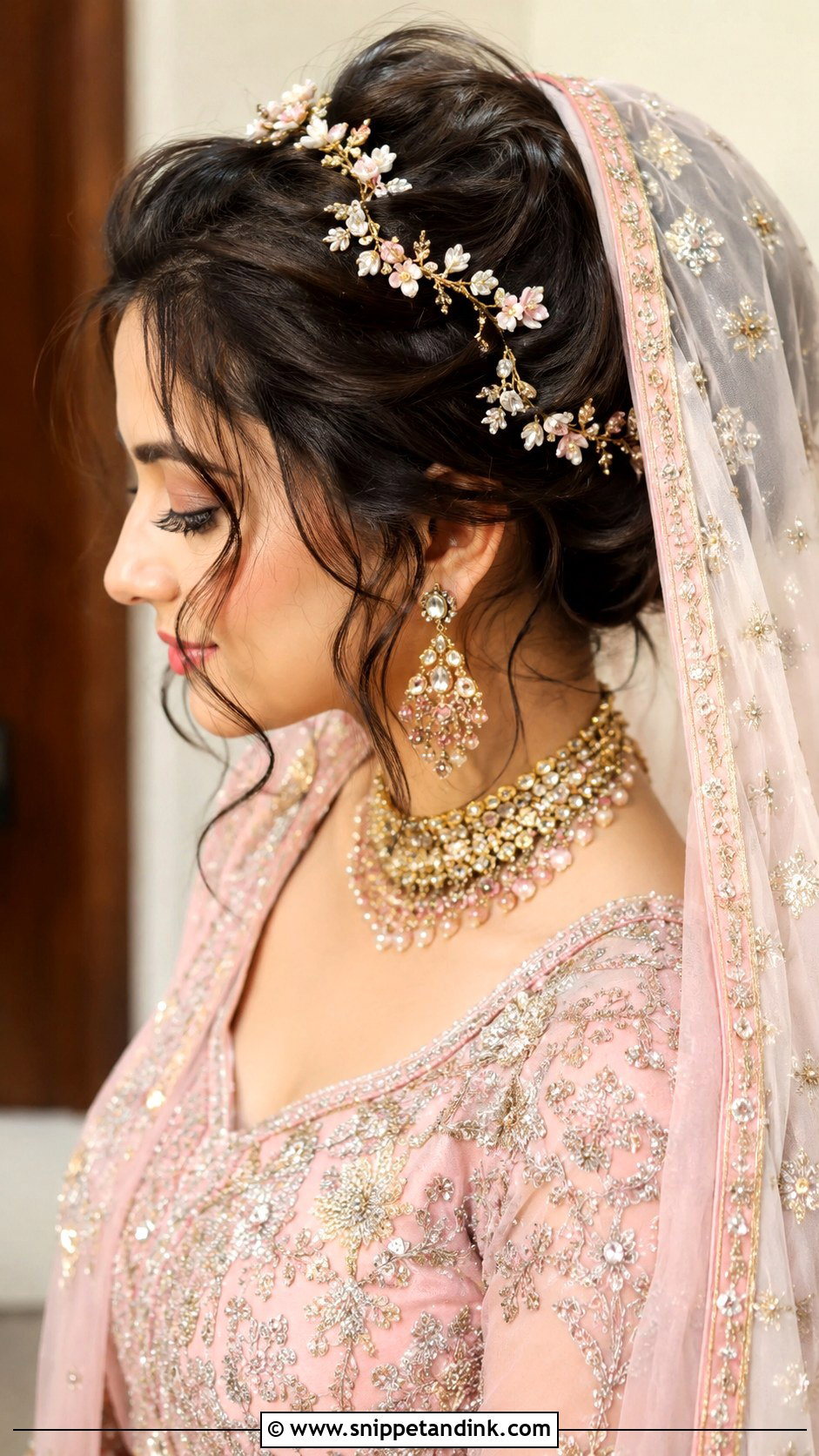
A messy bun is never actually messy. Underneath the pulled-out pieces there’s a firm, pinned base, or it won’t hold a dupatta over the head for more than an hour. I pull face-framing strands after the dupatta is set, not before, so they sit on top of the fabric instead of getting trapped under it. A fine floral vine suits it well. I’d skip this one with a very heavy dupatta, because the soft texture gets flattened and just looks unfinished.
7. Braided Bun Bridal Hairstyle With Dupatta
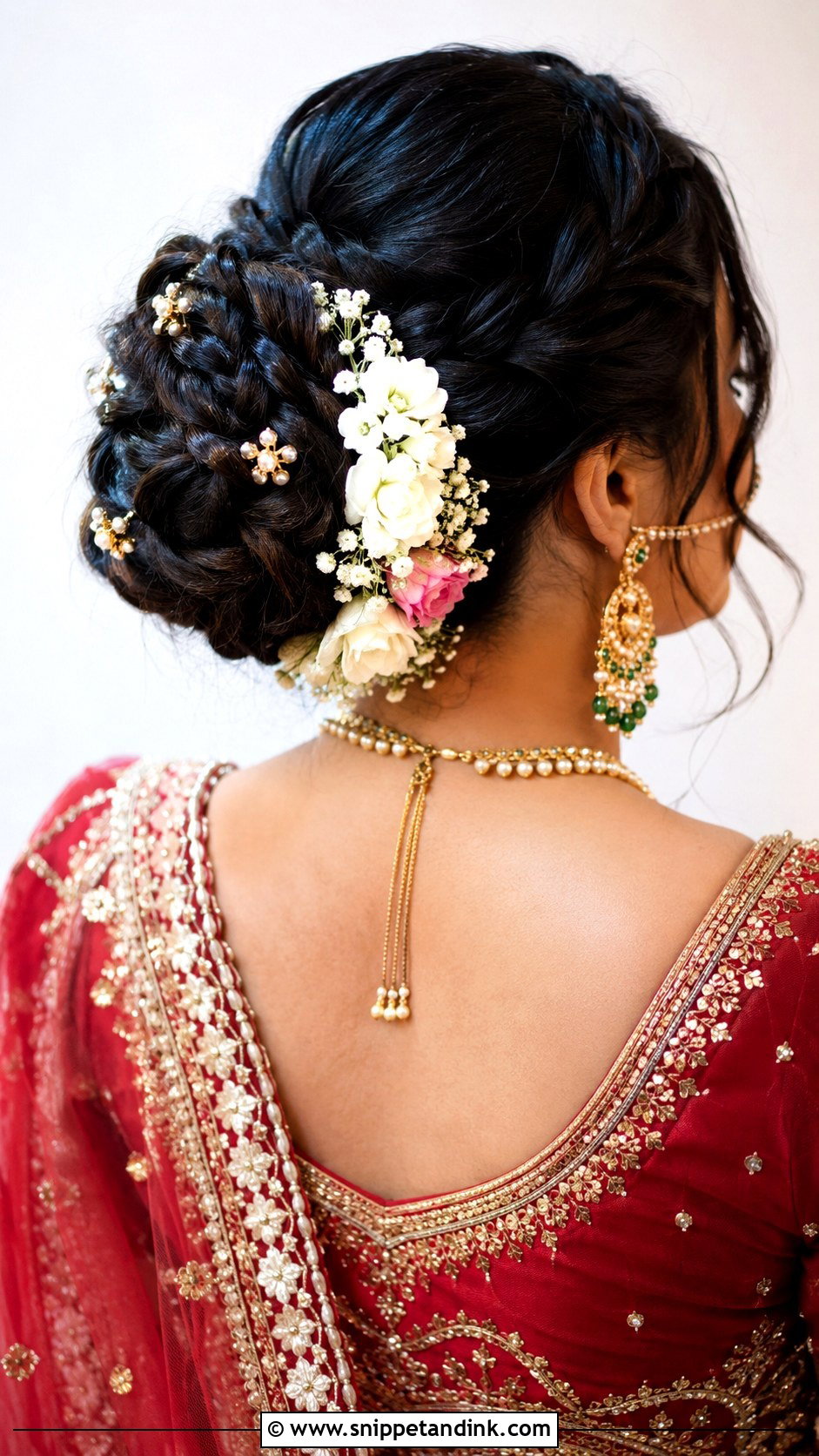
Braiding first and then coiling gives a bun real texture from behind, which is where guests and the photographer spend a surprising amount of time during the pheras. The braided coil also takes U-pins securely, so it carries a heavier dupatta than a smooth bun of the same size. Kundan pins or a net can sit in the gaps of the braid. Center or side part both work. If your hair is shoulder length, this usually needs a braided add-on to get enough coil.
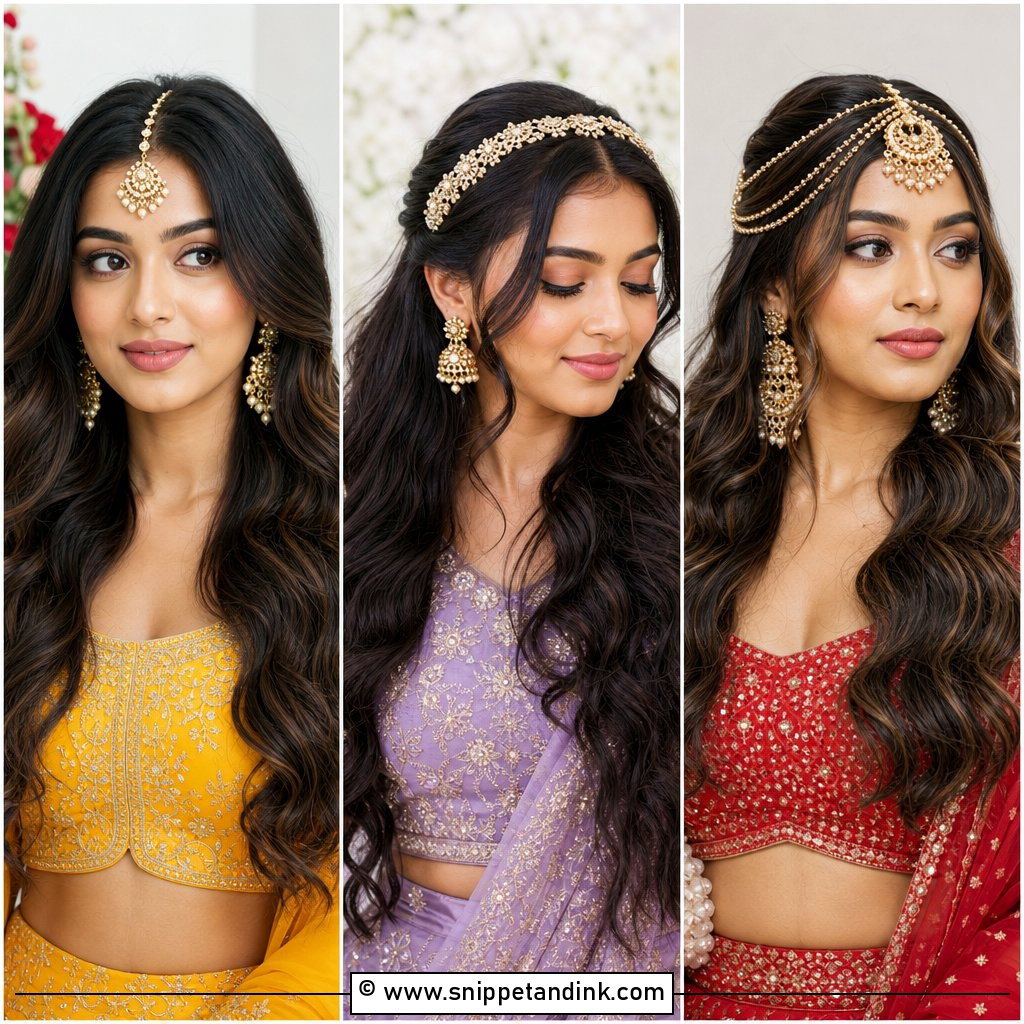
8. Open Hair Bridal Hairstyle With Dupatta
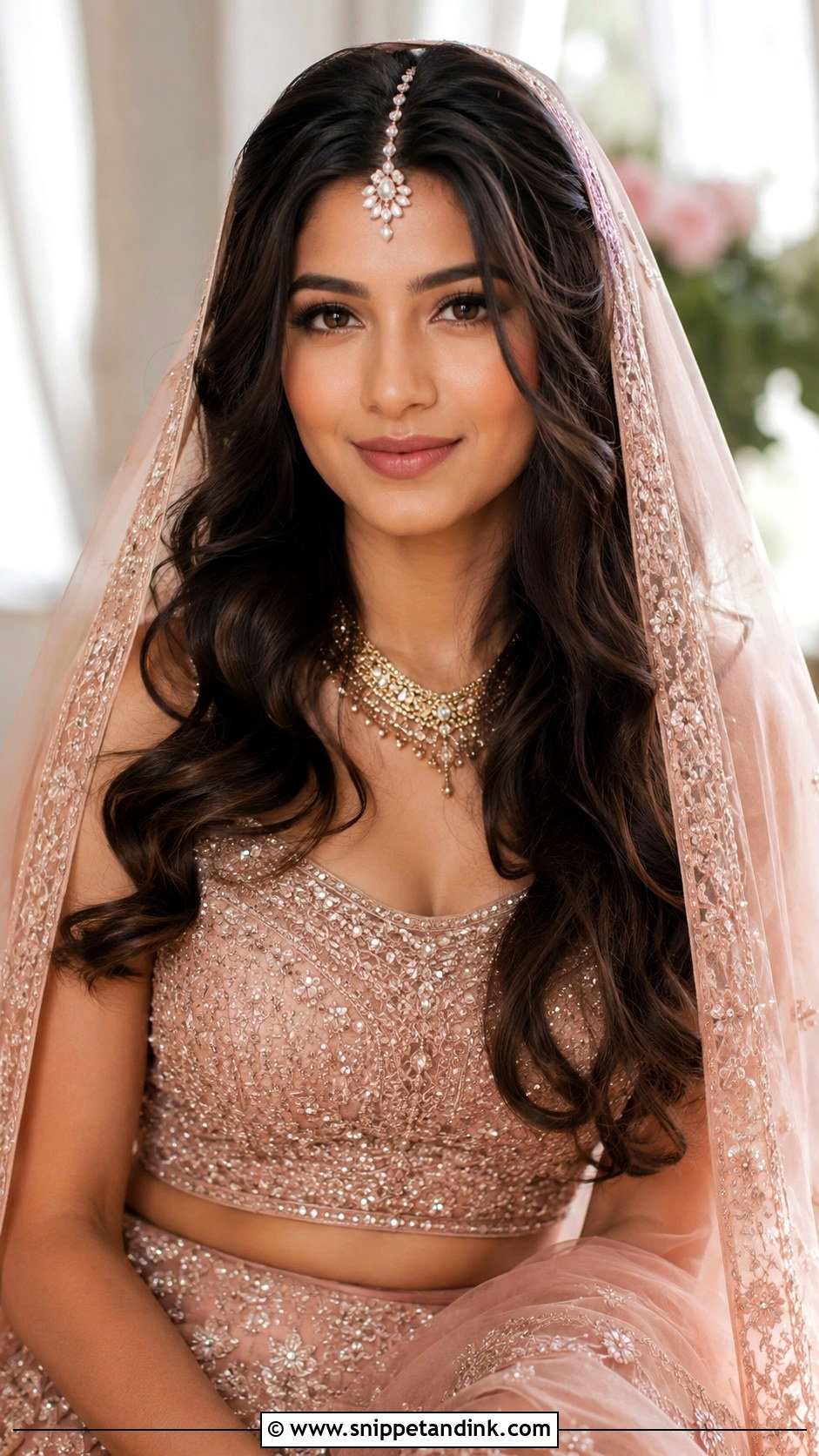
Open hair is the hardest style to keep a dupatta on, and I tell brides that honestly at the trial. Without a bun or braid, there’s nothing to pin into, so I create a hidden anchor: a small flat twist or a couple of criss-crossed pins at the crown. It only works with a light chiffon or georgette dupatta. Curls should be set firmly and cooled fully, since a draped fabric rubs waves out by the second hour. Receptions and mehndi suit it more than a long ceremony.
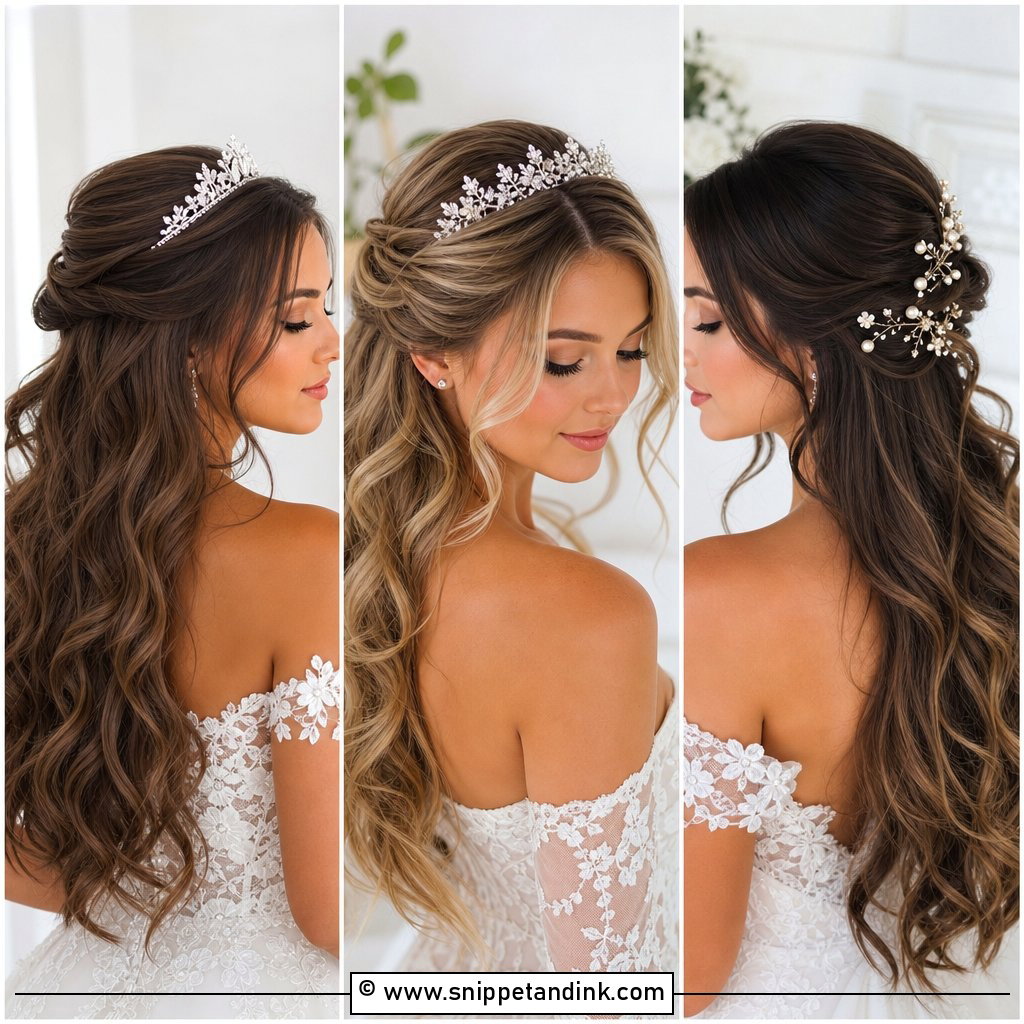
9. Half Up Half Down Bridal Hairstyle With Dupatta
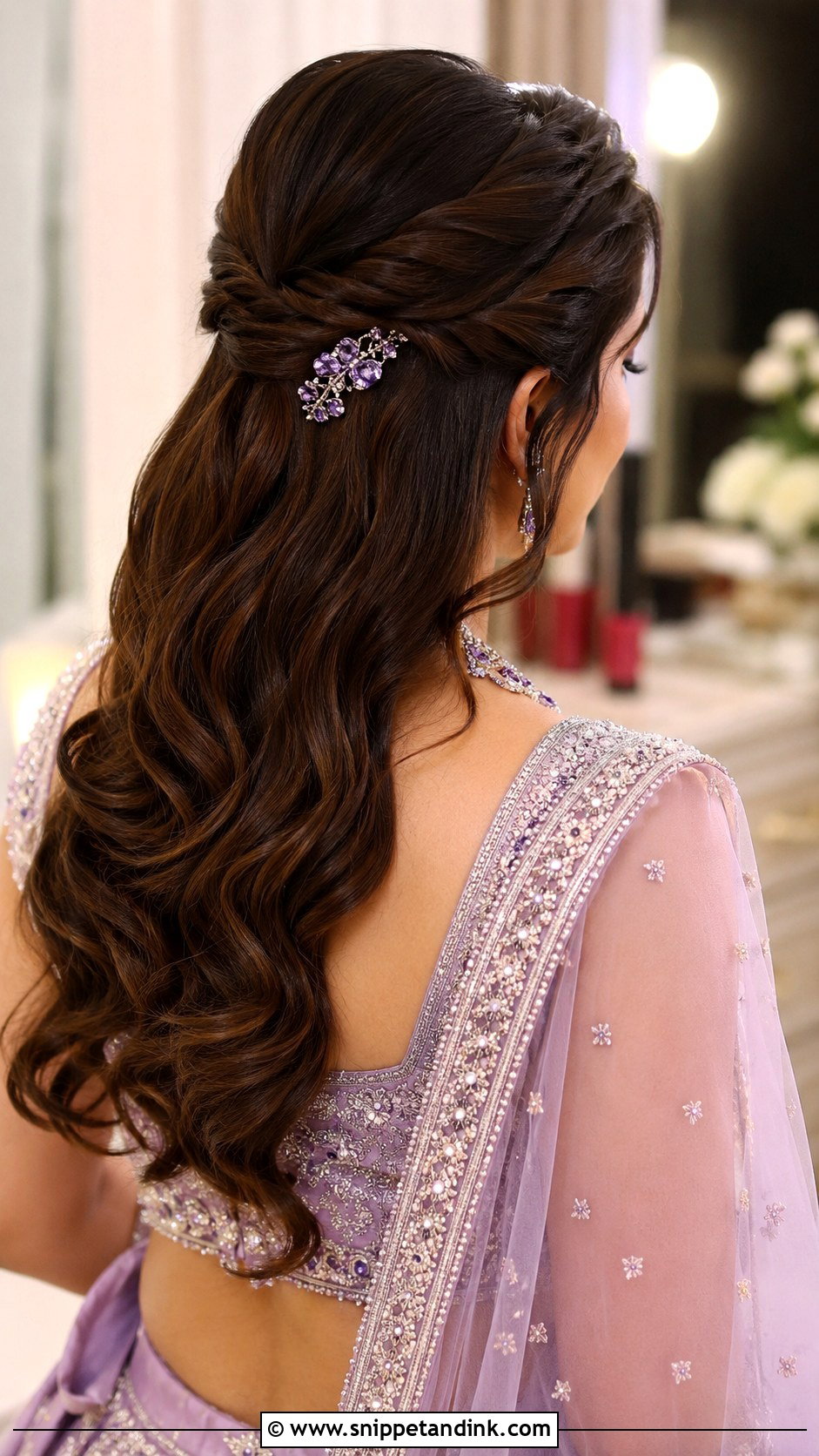
Pinning the crown section back into a small twist gives the dupatta a secure base while leaving length on show. The trick is to make the top section big enough to hold pins, roughly the area of your palm, or it pulls loose under the drape. I set the waves first and the dupatta last. A jeweled clip over the join hides the pins. Humid venues will soften the lengths, so I’d only choose this for indoor or evening events in muggy months.
10. Curly Bun Bridal Hairstyle With Dupatta
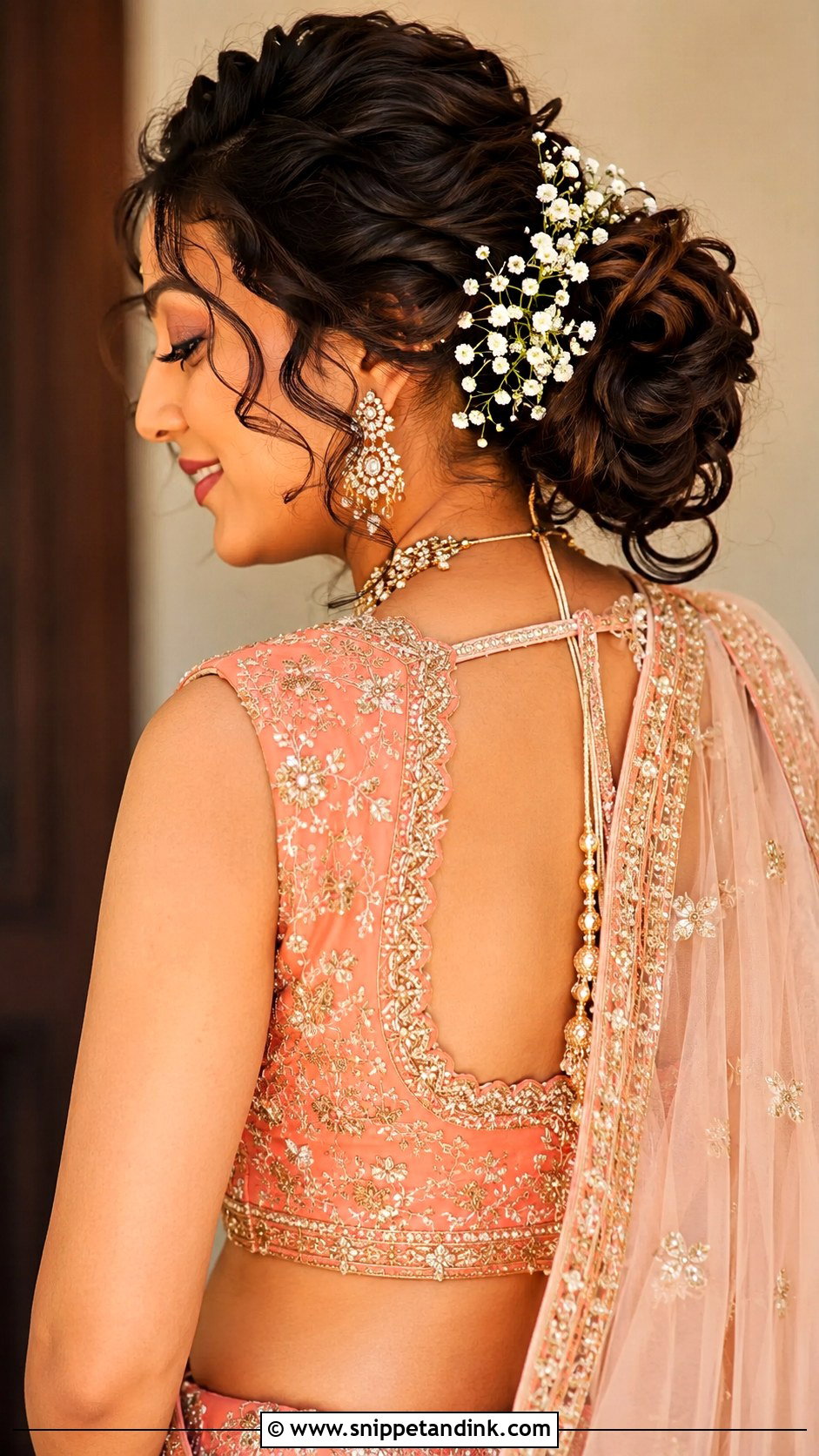
A curly bun looks soft but is built carefully. I curl in small sections, let each curl cool, and then pin the curls loosely into a round shape so the volume stays when a dupatta sits on top. Leave two or three ringlets at the face. Baby’s breath and small roses suit the texture without competing with it. It holds best on hair with some grit, so freshly washed silky hair usually needs a day-old wash or texture spray first. Daylight shows off the curl definition well.
11. Sleek Low Bun Bridal Hairstyle With Dupatta
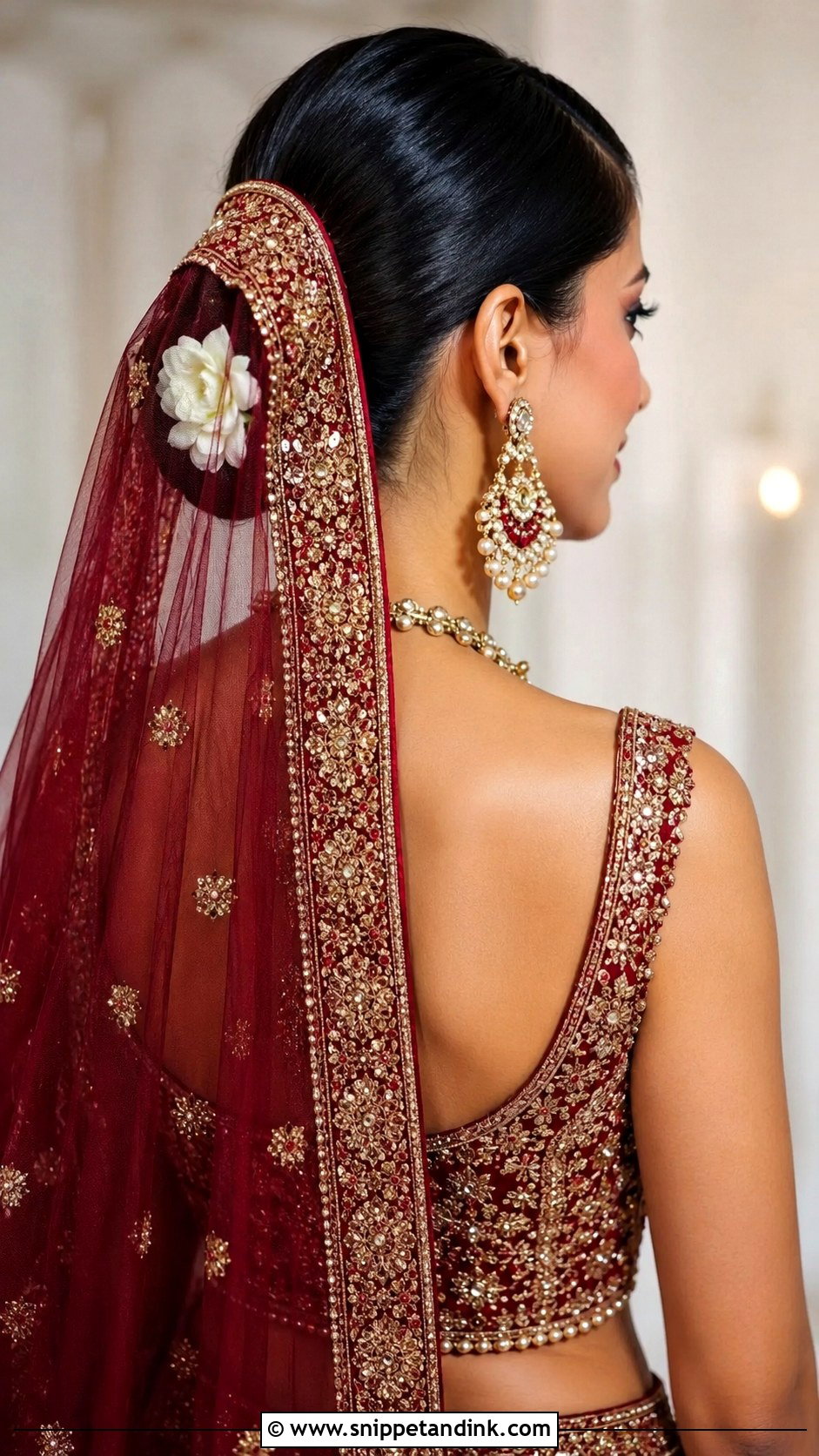
Sleek styles are less forgiving than they look. Every flyaway shows, so I smooth the hair back with a firm gel and a boar bristle brush and set the bun tight at the nape. The payoff is that a dupatta lies completely flat over it with no bumps. A single gold pin or one flower is enough. I wouldn’t do this for a bride with a lot of short regrowth around the hairline, since those pieces spring up as the gel dries. Structured, contemporary lehengas suit the clean line.
12. Dutch Braid Bridal Hairstyle With Dupatta
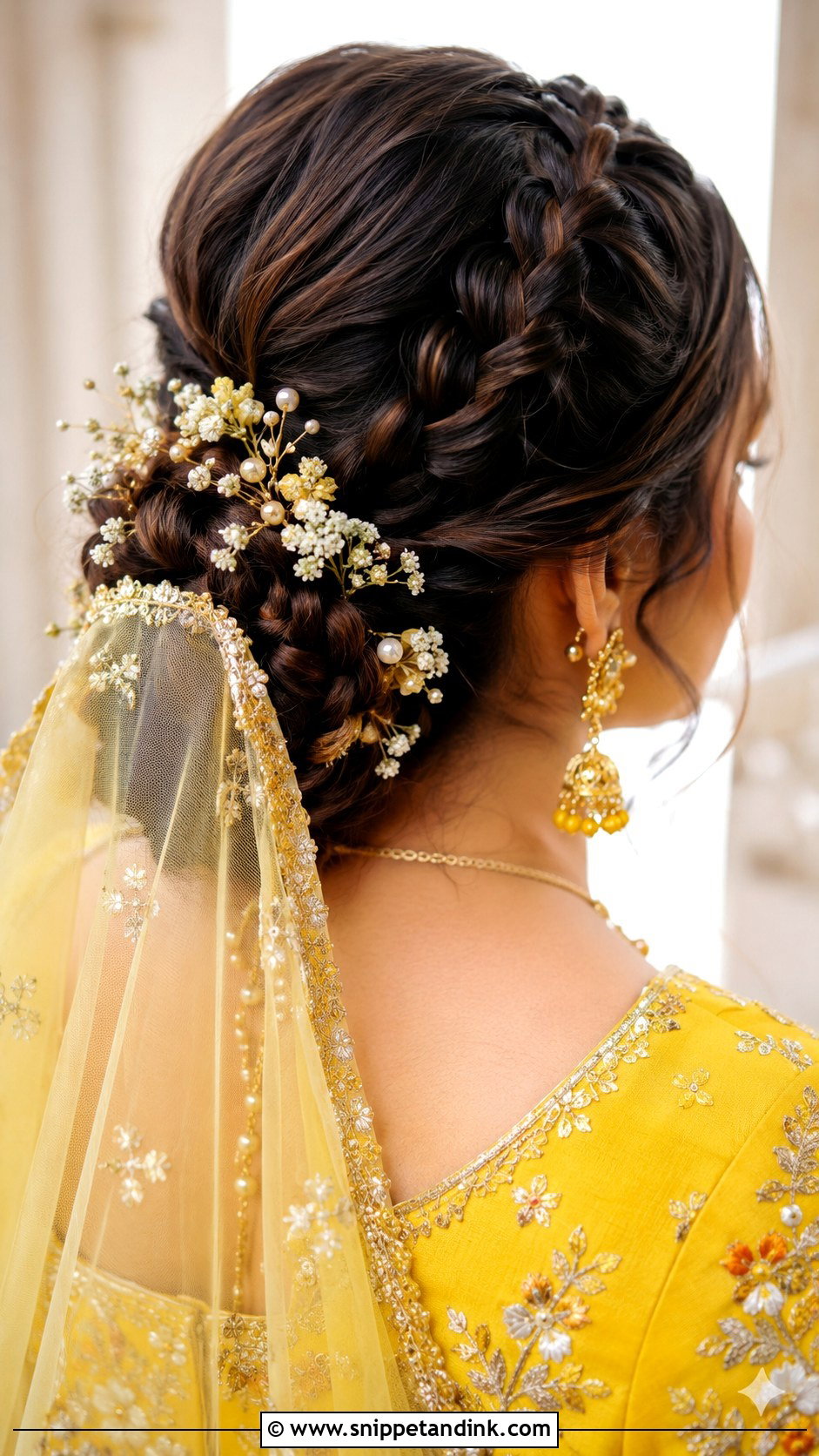
Because a Dutch braid is plaited underhand, it sits raised on the head and reads clearly in photos even from across a room. I braid one or two sections back and finish them into a bun or a single long braid. Small flowers or pearls sit neatly in the gaps between stitches. It’s a sturdy base for a dupatta. Mehndi and haldi are where I see it most, since the playful texture fits daytime events.
13. Bun With Maang Tikka Bridal Hairstyle With Dupatta
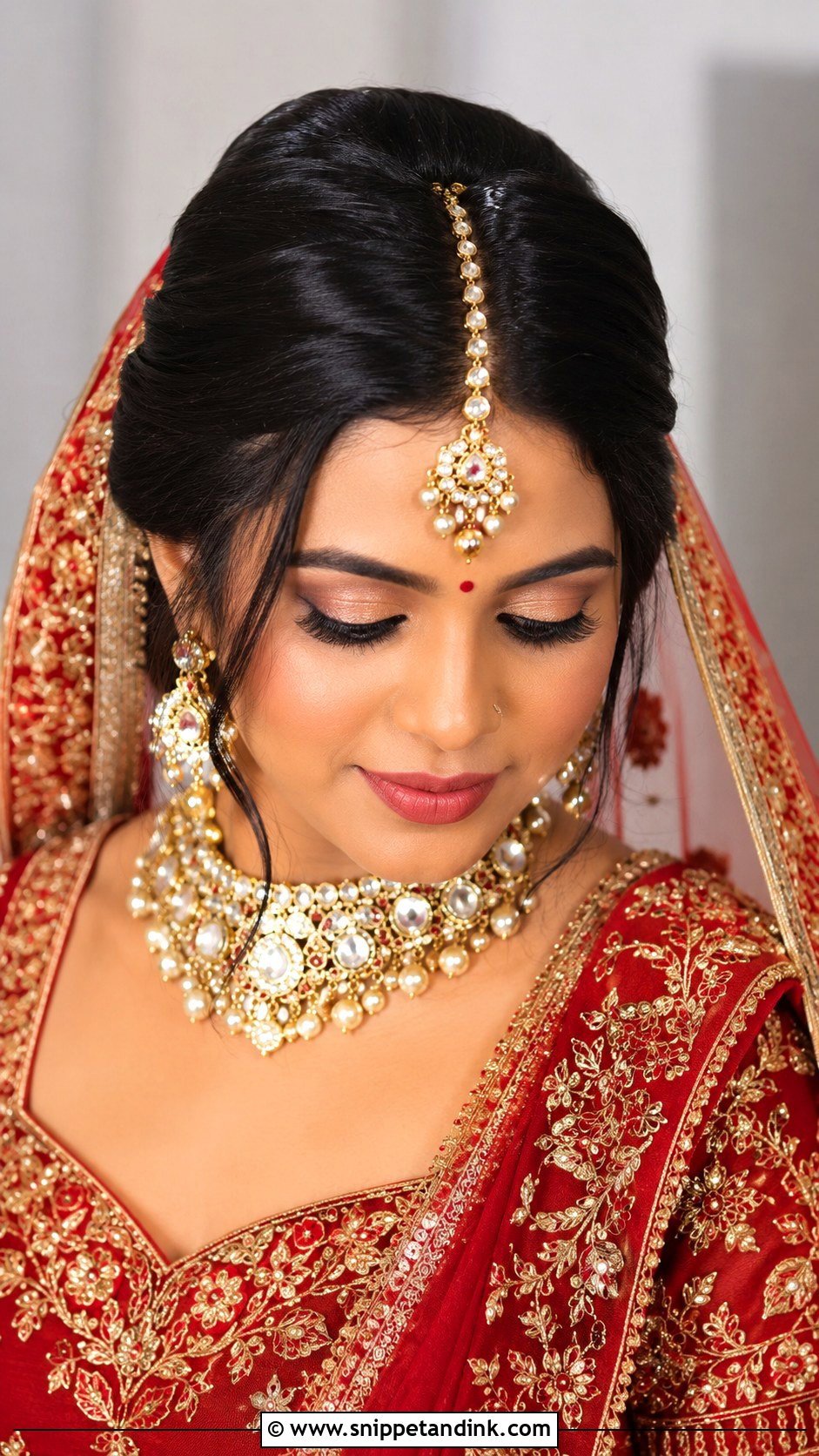
Pairing a bun with a striking maang tikka is the classic North Indian frame. The part has to be dead straight, because the tikka chain exaggerates any wobble. I pin the tikka hook into the hair behind the part, then drape the dupatta just behind it so the fabric hides the hook. Single-strand tikkas suit smaller faces; three-strand pieces need more pins and a firmer bun. Flowers around the bun are optional. Front-facing photos are where this style shows most clearly.
14. Twisted Updo Bridal Hairstyle With Dupatta
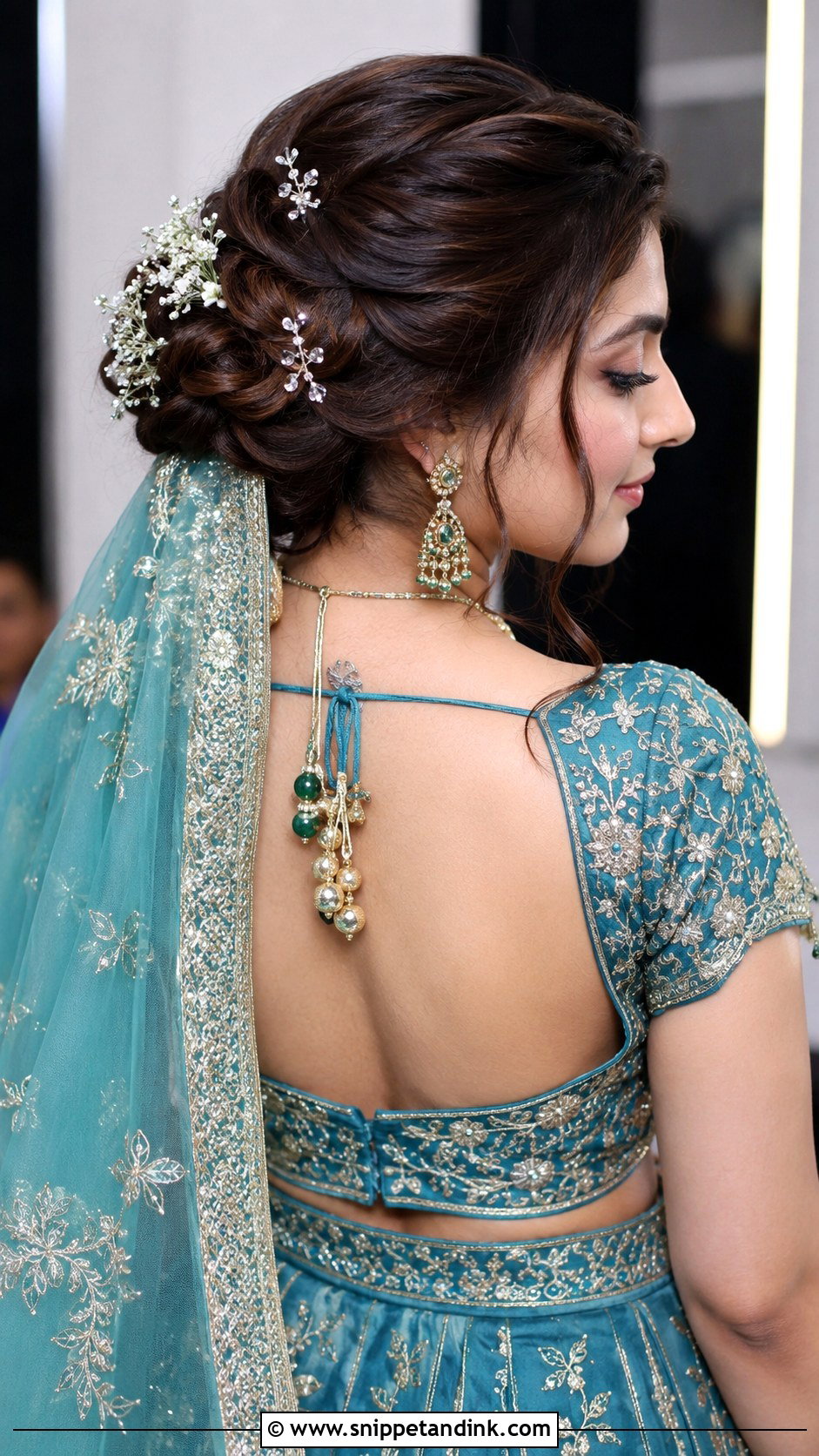
Twisted updos have movement that a sleek bun doesn’t, and they’re kinder to fine hair because twists add bulk. I twist sections and pin each one where it overlaps the last, which creates a sculpted shape that grips a dupatta well. Crystal pins can sit inside the folds. It carries a light or medium dupatta comfortably. A very heavy one can push the twists apart at the top, so I’d test that combination at the trial. Receptions and engagements suit it.

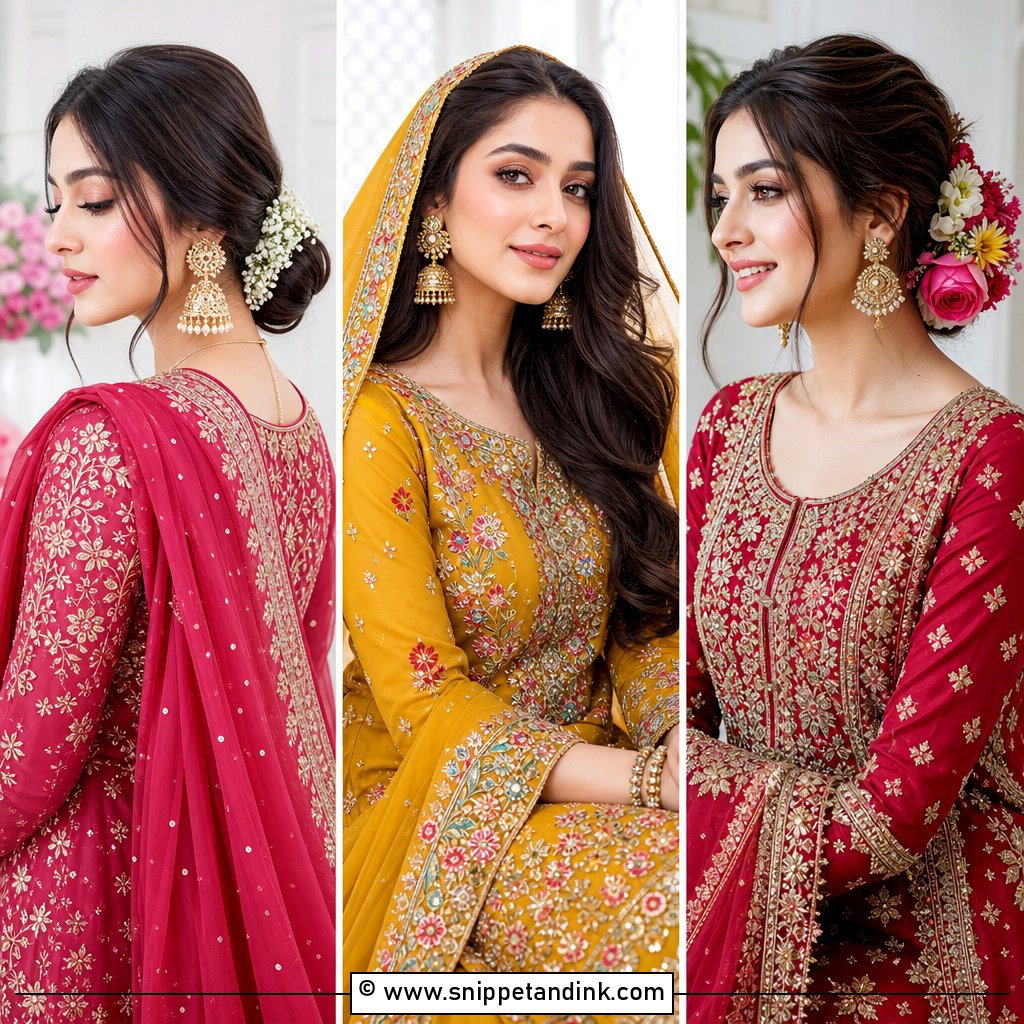
15. Gajra Bun Bridal Hairstyle With Dupatta
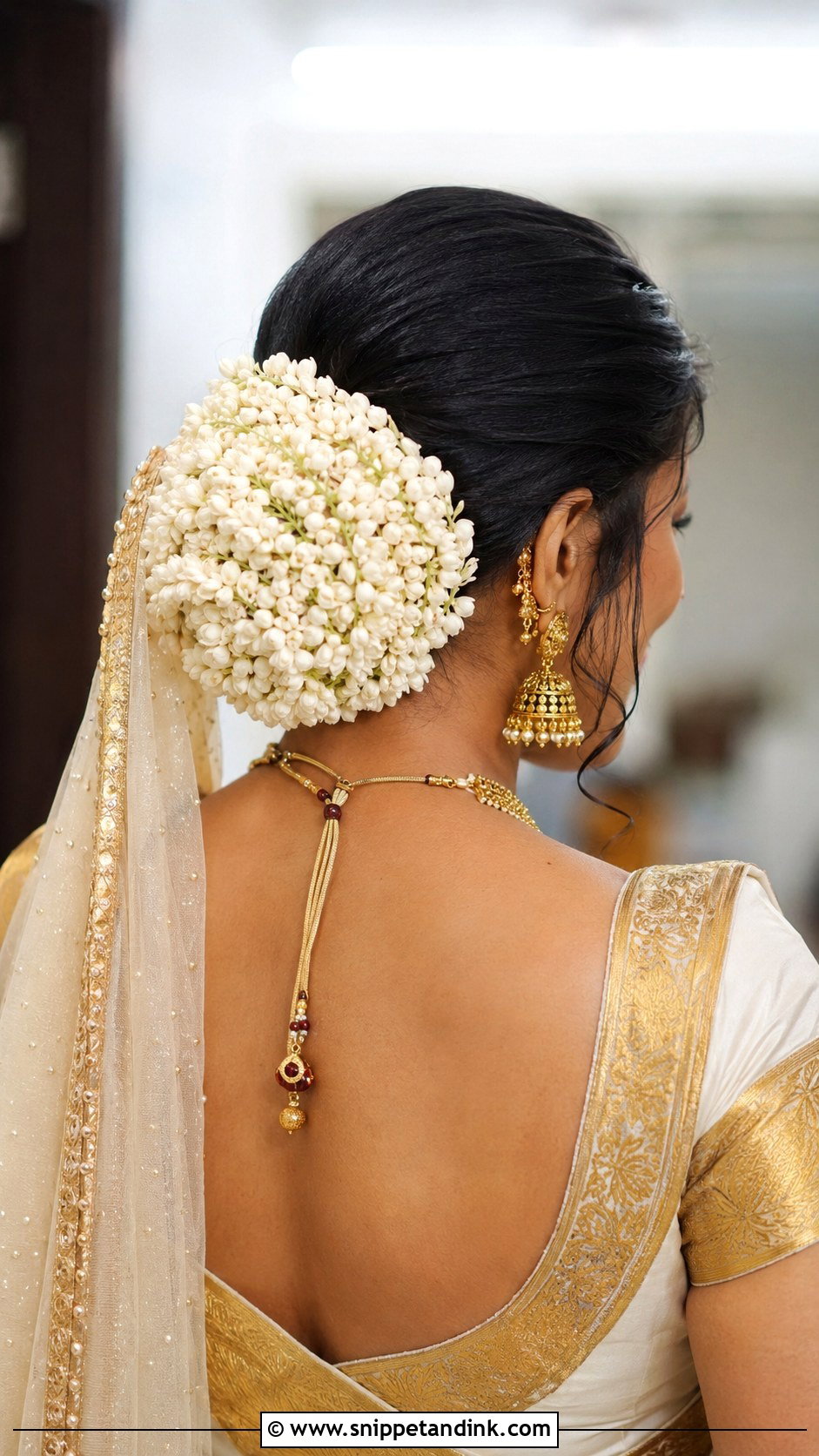
A gajra around the bun is still the look I’m asked about most for traditional ceremonies. I coil the hair into a low or mid bun and wrap the jasmine strands round it, pinning every few centimeters so they don’t swing. The white flowers show up sharply against dark hair. Jasmine wilts in heat, so I keep it in a cool, damp cloth until the last minute. It’s especially common in South Indian bridal looks, alongside temple jewelry and a bold tikka.
16. Waterfall Braid Bridal Hairstyle With Dupatta
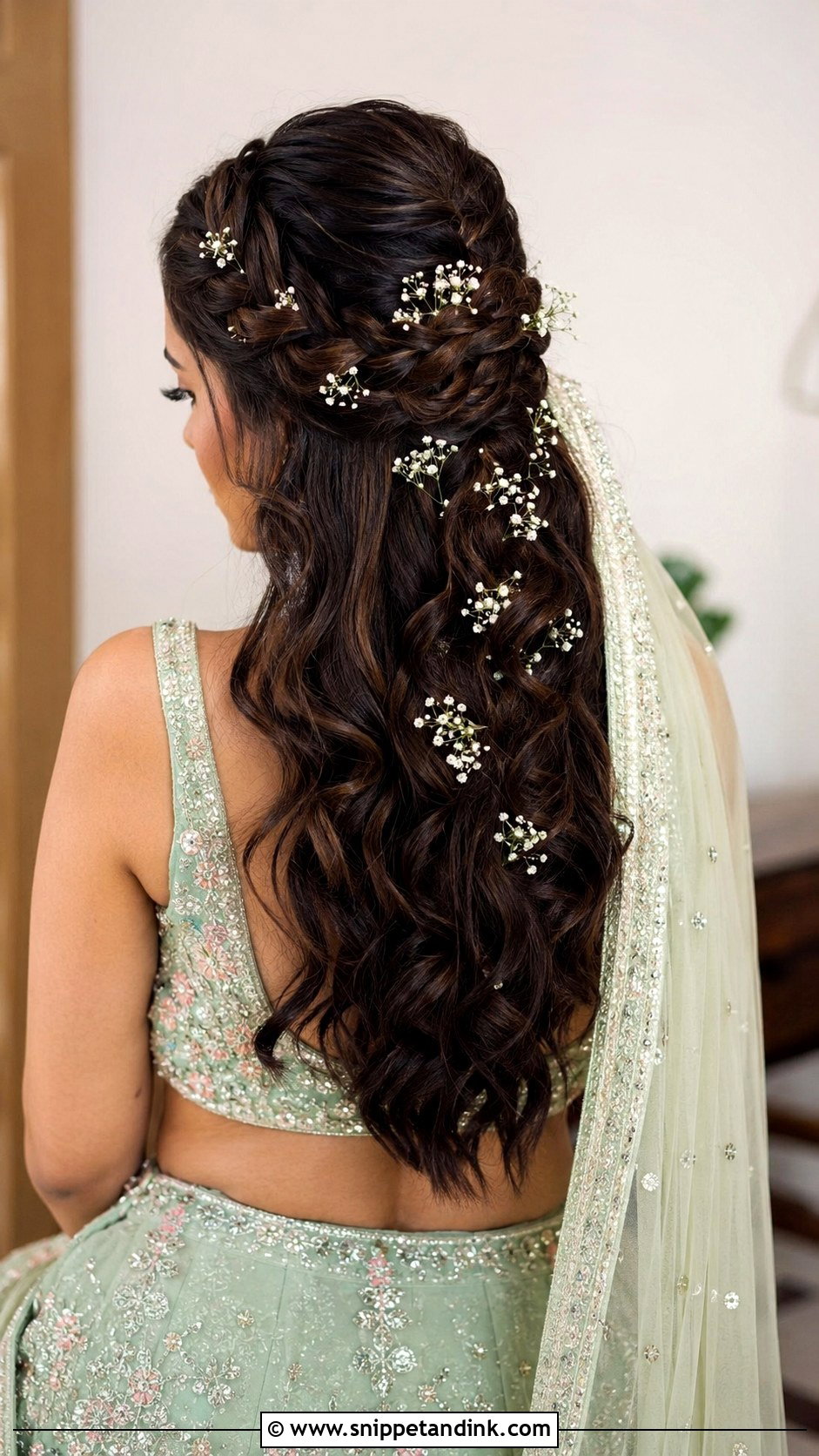
A waterfall braid runs across the crown and drops strands through as it goes, so the top is secured and the lengths stay free. That braided band is where I pin the dupatta. Curl the dropped strands for volume underneath. Tiny flowers along the braid suit it. It needs hair at least past the shoulders and some patience, since a tight waterfall pulls at the parting. Mehndi and sangeet are where I usually use it.
17. Bun With Hair Accessories Bridal Hairstyle With Dupatta
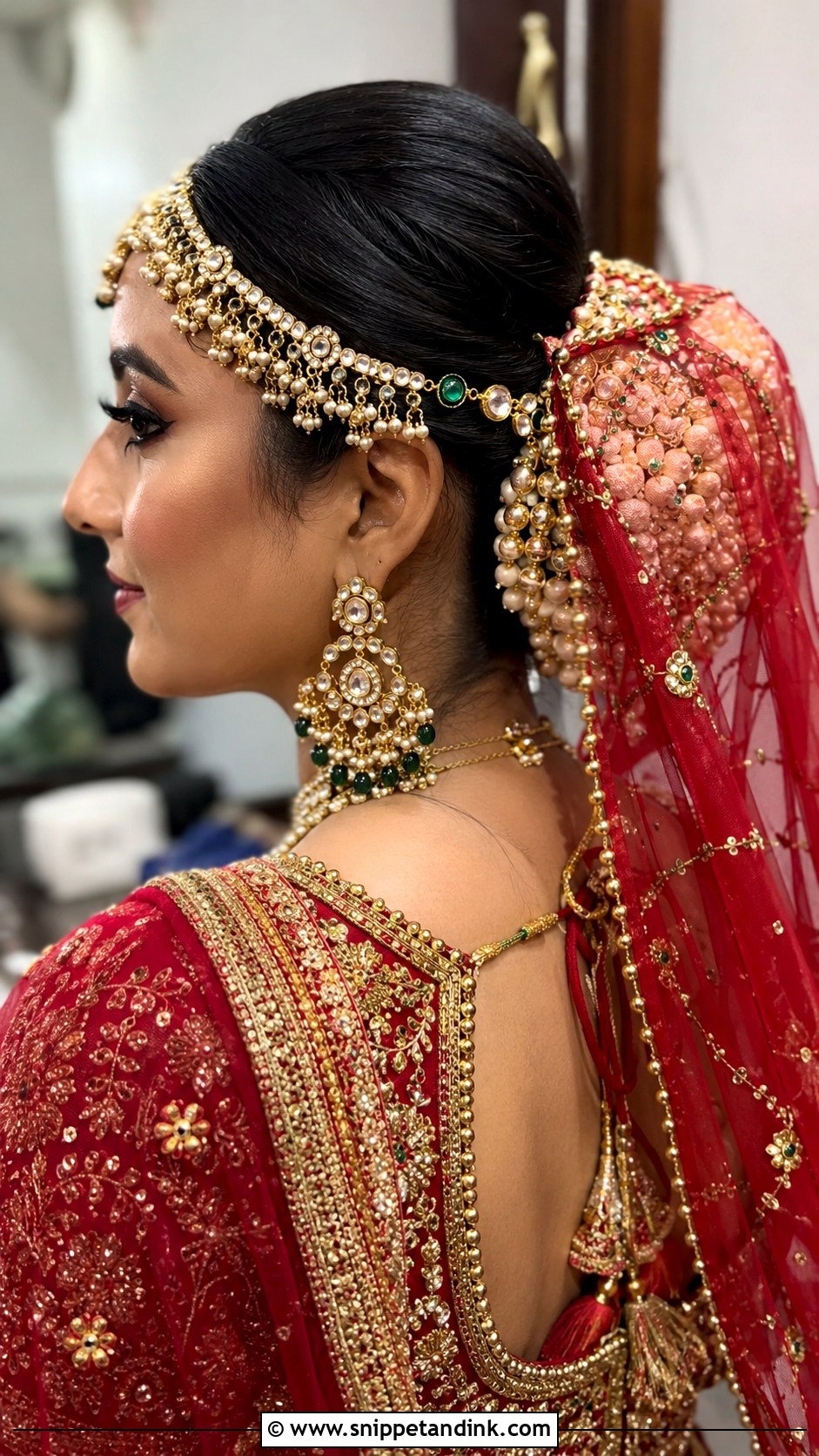
Accessories can carry a very simple bun. I start with a firm, round base, then add a jeweled net, kundan pins or a matha patti. The net in particular is useful because it holds stray hair in and gives the dupatta pins something extra to catch. Match the metals to your jewelry set. I check the total weight once everything is on, because a full net plus a matha patti plus a heavy dupatta can start to ache at the temples by the evening. This works with light and heavy dupattas alike.
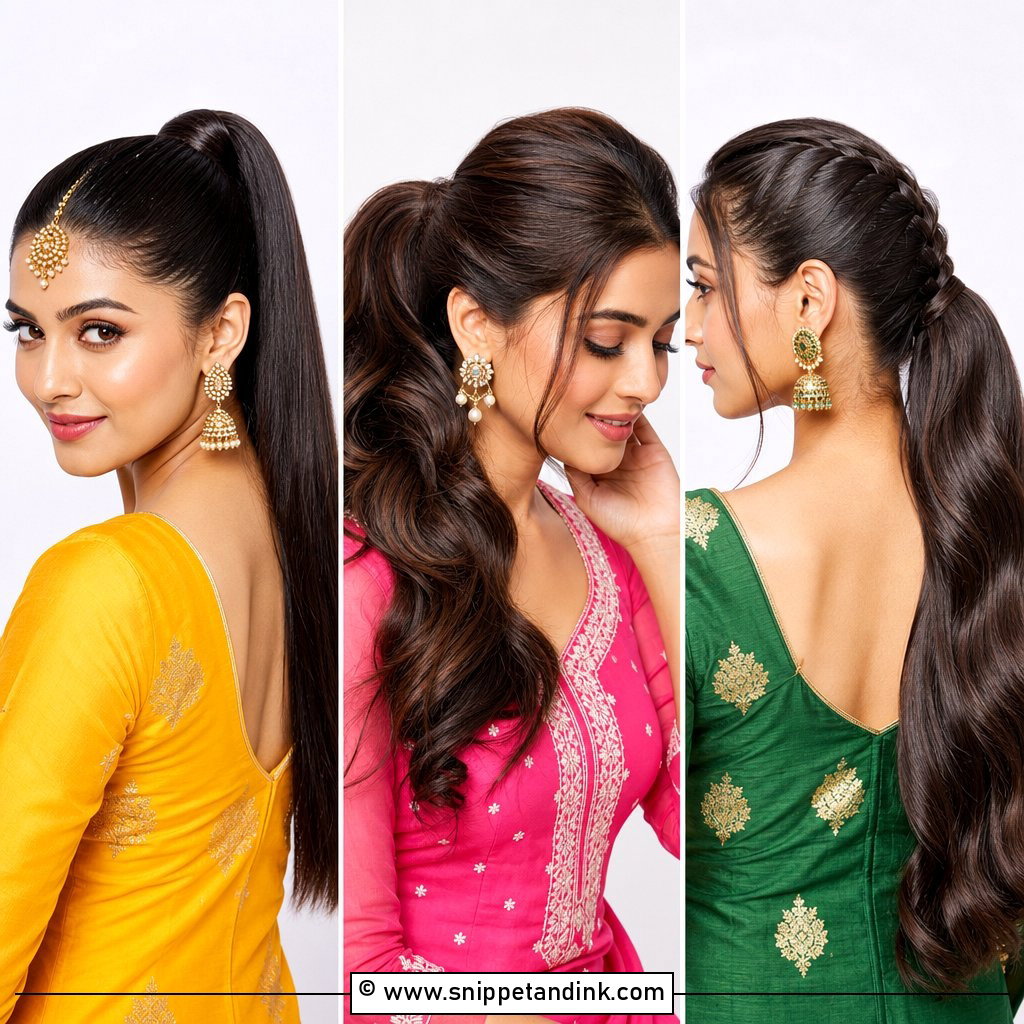
18. Low Ponytail Bridal Hairstyle With Dupatta
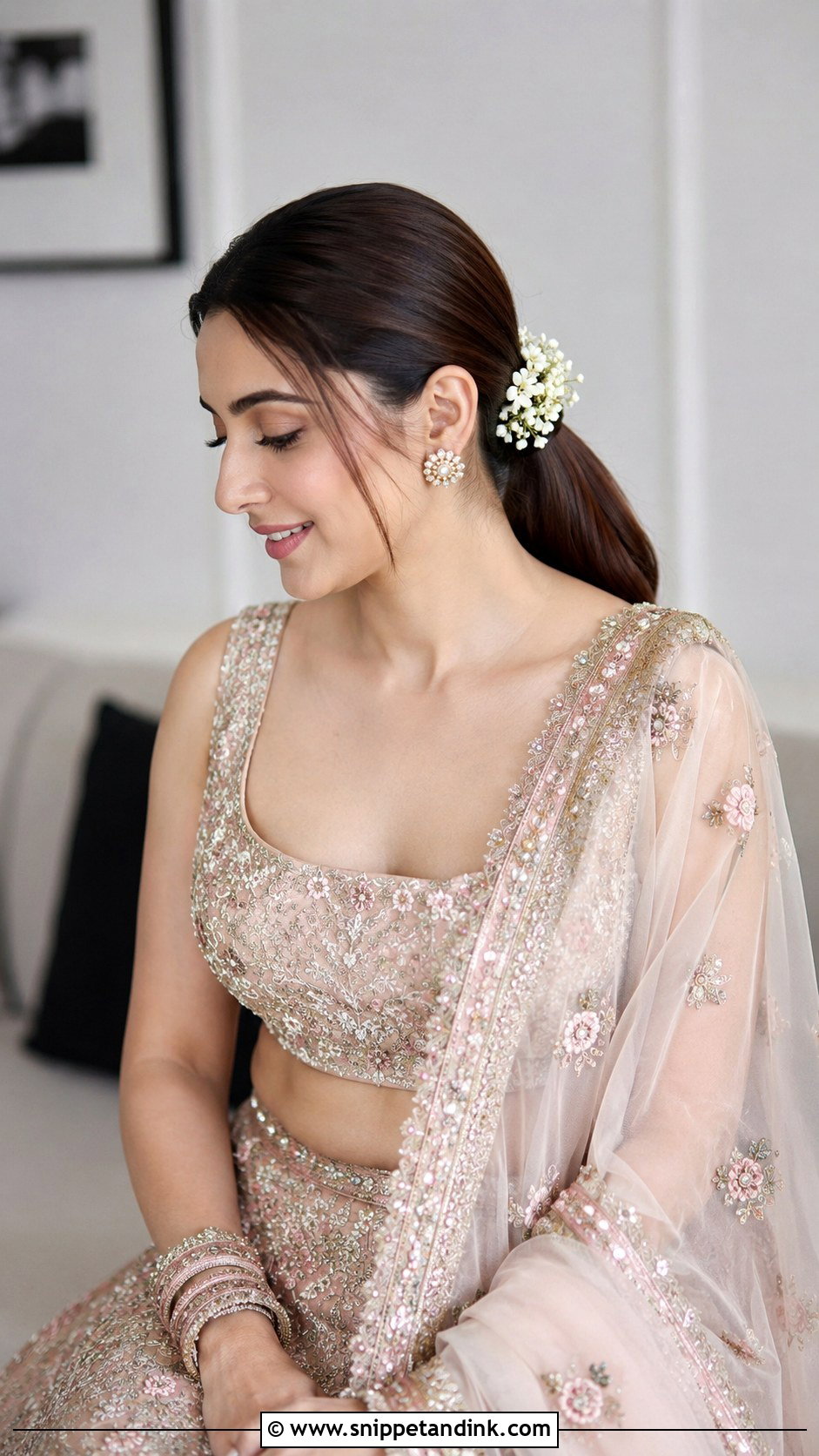
A low ponytail is quick, but it has to be smooth to look bridal. I brush the hair back, secure it at the nape with a strong elastic, and wrap a section of hair around the band to hide it. The weak point is the dupatta: a ponytail gives very little to pin into, so I set two crossed pins at the crown as an anchor. Chiffon over the head or a shoulder drape suits it. It’s a reception and engagement style, and fusion looks wear it well.
19. Crown Braid Bridal Hairstyle With Dupatta
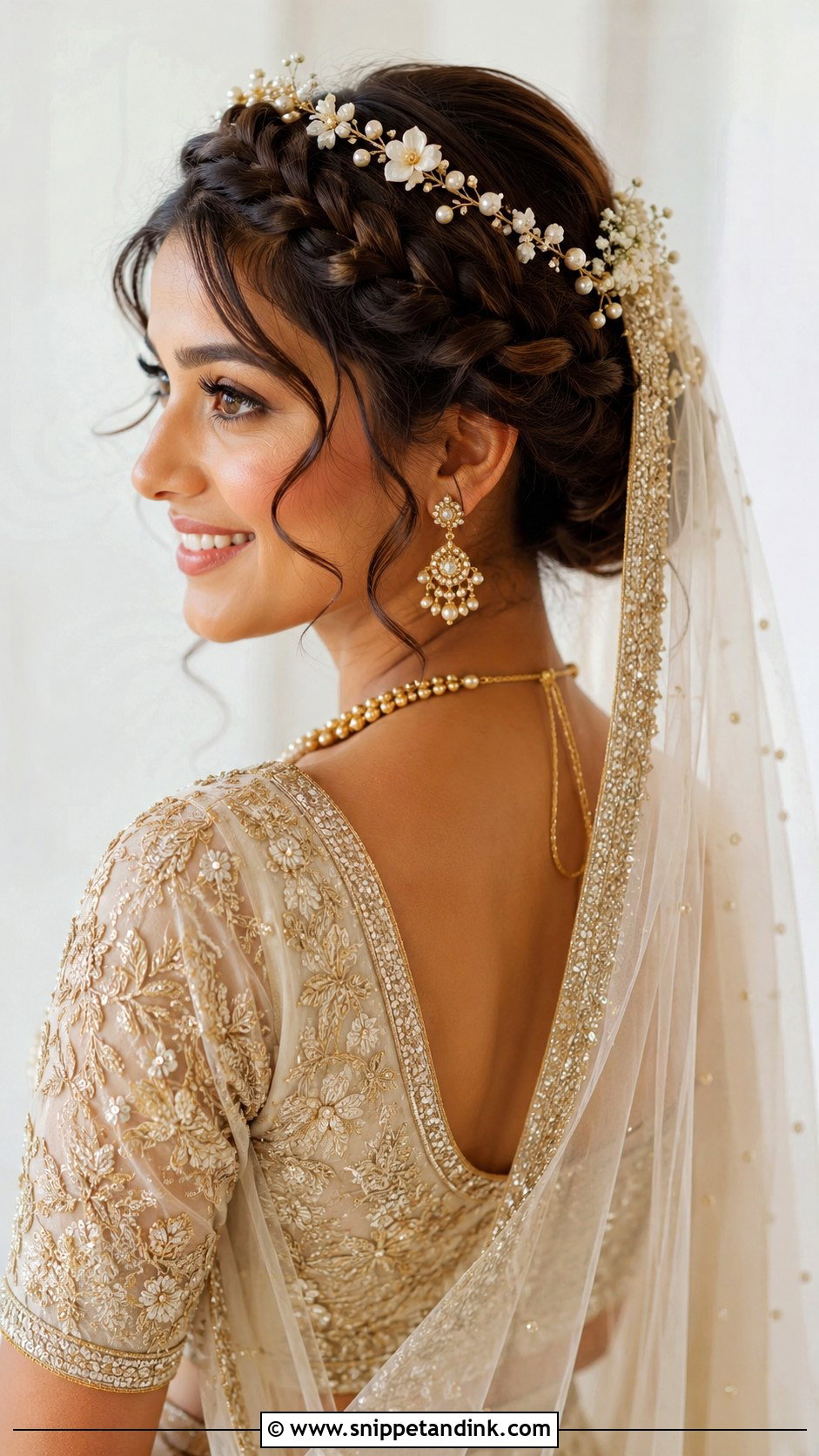
Wrapping a braid around the head like a crown gives a tidy halo and a strong ledge to pin a dupatta behind. I usually braid from one side across to the other and pin the tail underneath, which keeps the band flat. Small flowers or pearls sit between the stitches. Center and side parts both work. Very short layers tend to poke out of crown braids, so I add a little gel to each section first. It stays secure through dancing.

20. Bouffant Bun Bridal Hairstyle With Dupatta
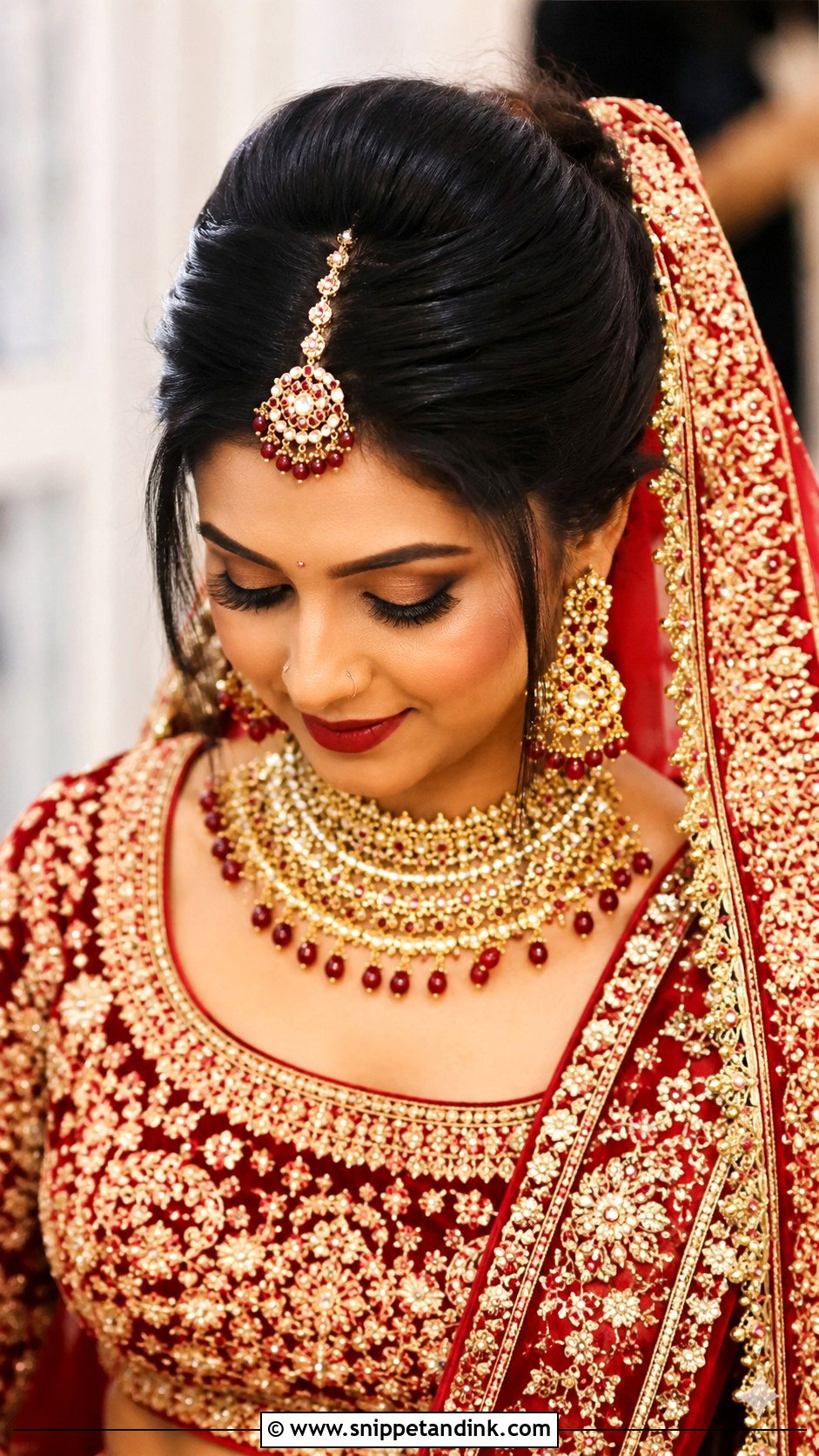
Volume at the crown is what a bouffant bun is all about. I backcomb the crown in small sections, smooth a top layer over it, then gather the rest into a bun behind. The teased area gives a heavy dupatta something firm to grip. It suits fine hair especially well, because the backcombing makes up for low density. Thick hair can go too big, so I tease less. A center-parted tikka balances the height. I’d keep the height moderate if your dupatta covers the head; otherwise the silhouette gets tall.
Switching From the Pheras Look to the Reception
Many brides want a covered, traditional style for the ceremony and something lighter for the reception, often with a gap of only an hour or two. A full restyle in that window is rushed. I plan both looks at the trial so the second builds on the first.
The simplest change is from a low bun to a half-up style: unpin the bun, brush the lengths out with fingers, and re-curl the ends. The crown anchor stays in place, so a lighter reception dupatta still has something to hold. A braided bun can be let down into soft, crimped waves. A sleek bun is harder to change, because the gel won’t brush out cleanly without washing.
Take the pins out slowly, in the order they went in, and remove flowers first. Pulling the dupatta off in one tug is the fastest way to snap hair at the crown, especially after a long day of backcombing.
Making Fresh Flowers Last Under a Warm Dupatta
Jasmine, roses and marigolds all suffer under fabric in a warm room. Order gajras for the morning of the wedding if you can and keep them wrapped in a damp cloth in the fridge until they’re needed. Ask your florist to wire the strands, which stops them flopping as they soften. If the ceremony is long and outdoors in summer, I’ll often suggest silk flowers at the back of the bun with a small fresh gajra at the side, so the scent is there but the shape doesn’t wilt by the time photos are taken.
Bring Your Actual Dupatta to the Hair Trial
Of everything here, the most useful thing you can do is bring the real dupatta, jewelry and tikka to your trial. A style that looks right with bare hair can behave very differently under heavy embroidery. Think about how long each function runs and how much you’ll be sitting, standing and hugging. Then pick the base that can carry your particular fabric, and build the softness and flowers around that.
You'll Like These Ideas:






Leave a Reply