
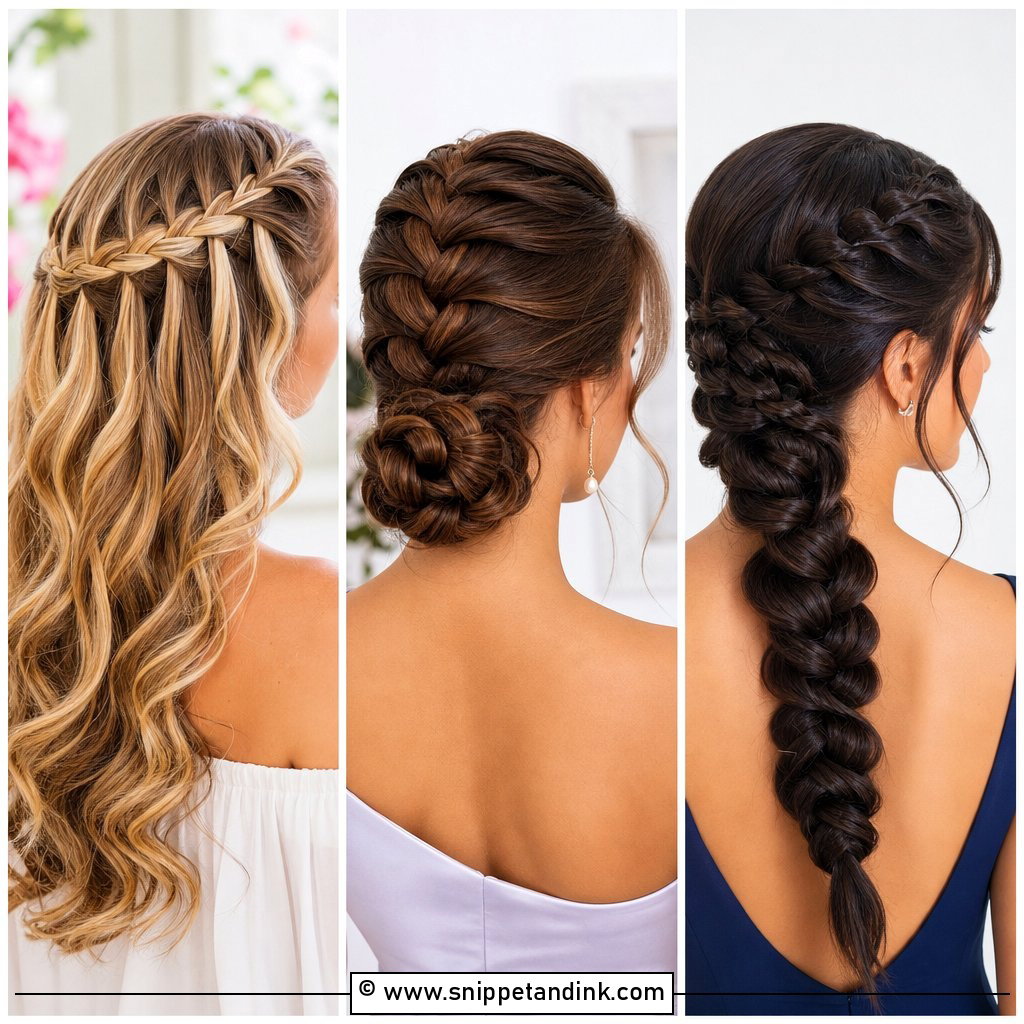
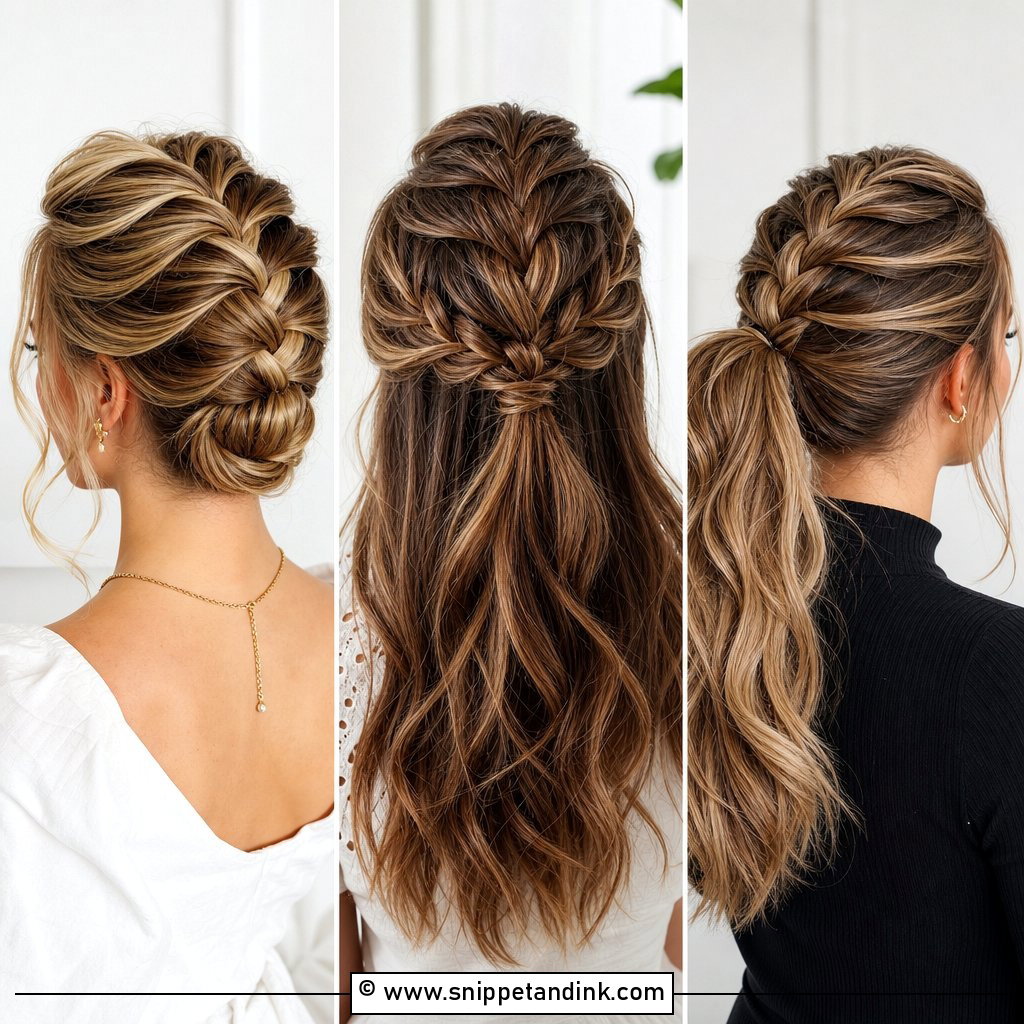
Among Indian wedding hairstyles, the fishtail is the braid I reach for when a bride wants more detail than a plait but less structure than a full bun. It’s built from only two sections, with thin pieces crossed from the outside of one into the other, so the pattern looks woven rather than chunky. Those small crossings are exactly why it holds gajra, pins and a hair chain so well, and why it survives a night of dancing. I use it for brides, bridesmaids and guests across mehndi, sangeet and reception. Below are twenty versions, each with what I watch for when I’m actually braiding it.
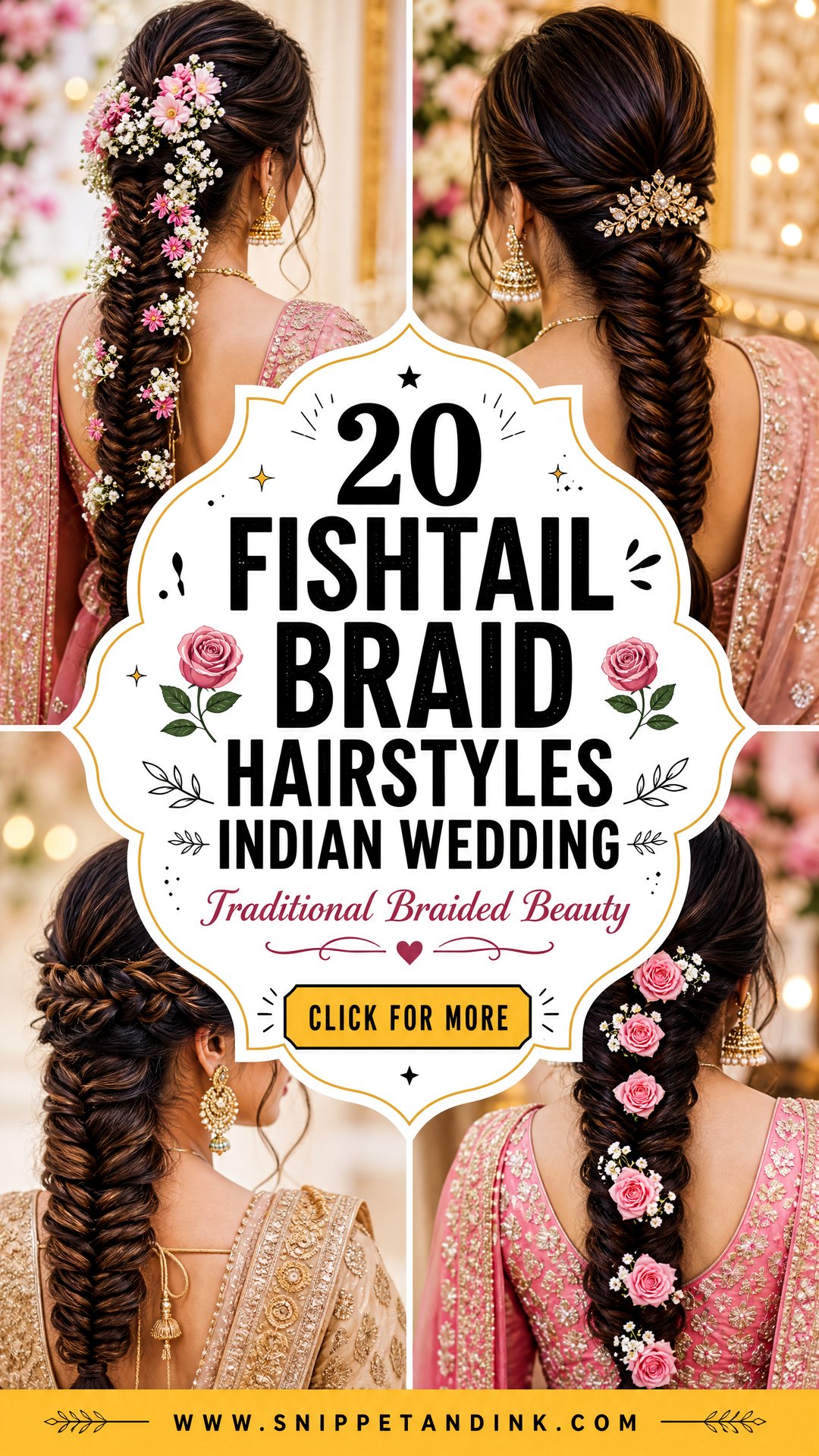
Adapting a Fishtail to Fine, Layered or Curly Hair
A fishtail looks its fullest on long, thick, one-length hair. Most people don’t have exactly that, and the braid still works with a few adjustments I make at almost every trial.
Fine or thin hair
Prep with a texturizing or dry shampoo spray through the roots and mid-lengths so the sections grip each other instead of sliding. Braid tight, then pancake the edges and the braid looks nearly twice as wide. If it still tapers to a thin tail, a clip-in or a matched braided extension pinned at the base adds bulk right where fine hair runs out.
Layered hair
Because the sections in a fishtail are so small, short layers pop out all along its length. Working a little pomade or wax into each section as you cross it keeps them in. The shorter your shortest layer, the sooner the braid should end, and the more I’d lean on the low bun or half-up versions.
Curly and coily hair
There are two good routes. Stretch the hair with a blow-dry so the weave reads crisply, or braid it in its natural texture with a curl cream, which gives a fuller, softer fishtail with plenty of grip. Either way, don’t brush curly hair dry right before braiding, or you’ll weave frizz into every section.
On length: a full fishtail down the back needs hair reaching roughly to the shoulder blades. Shorter than that, the front braid, the half updo or a short fishtail finished into a low bun will look far better than a stubby tail.
1. Fishtail Braid With Gajra
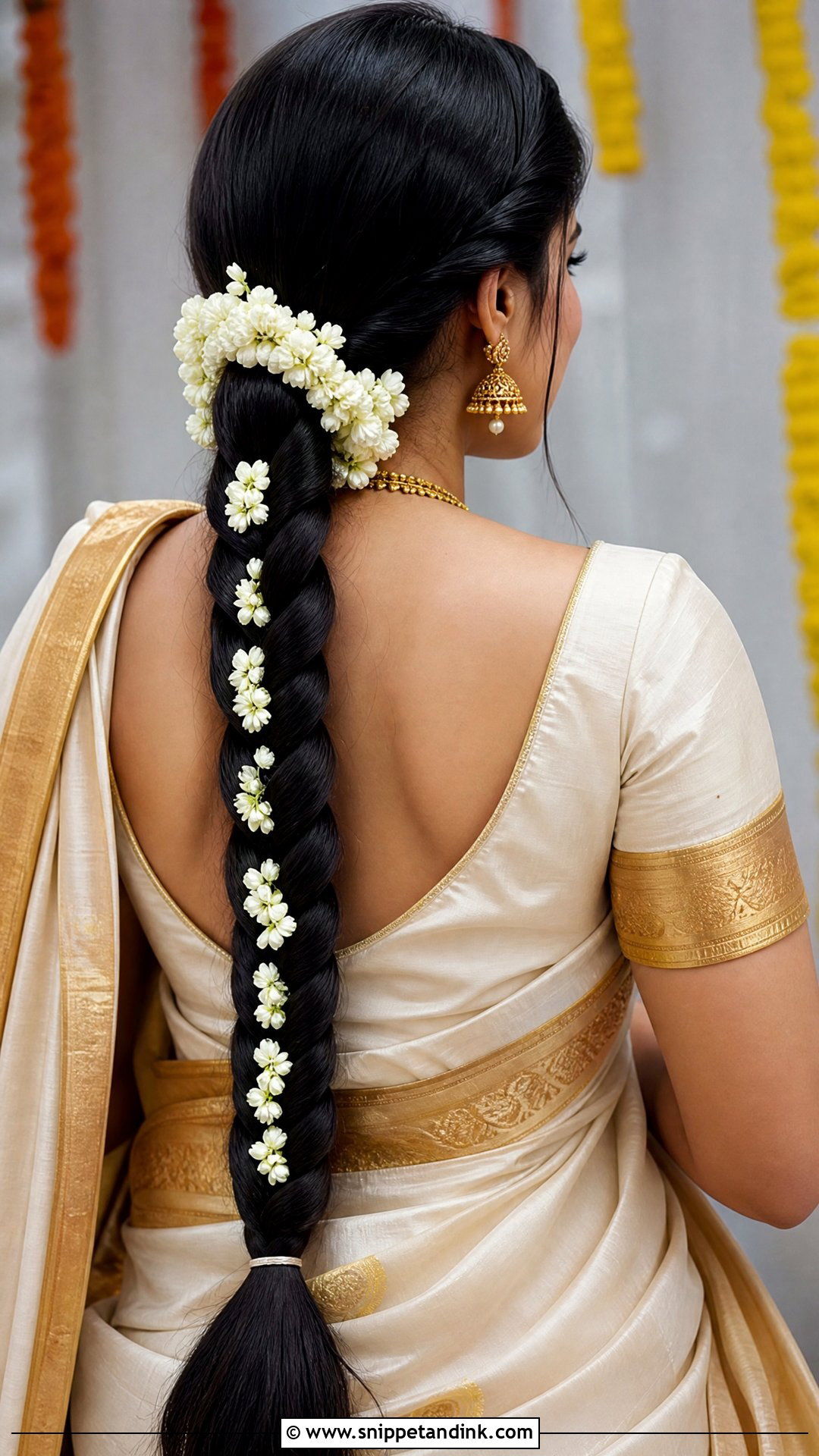
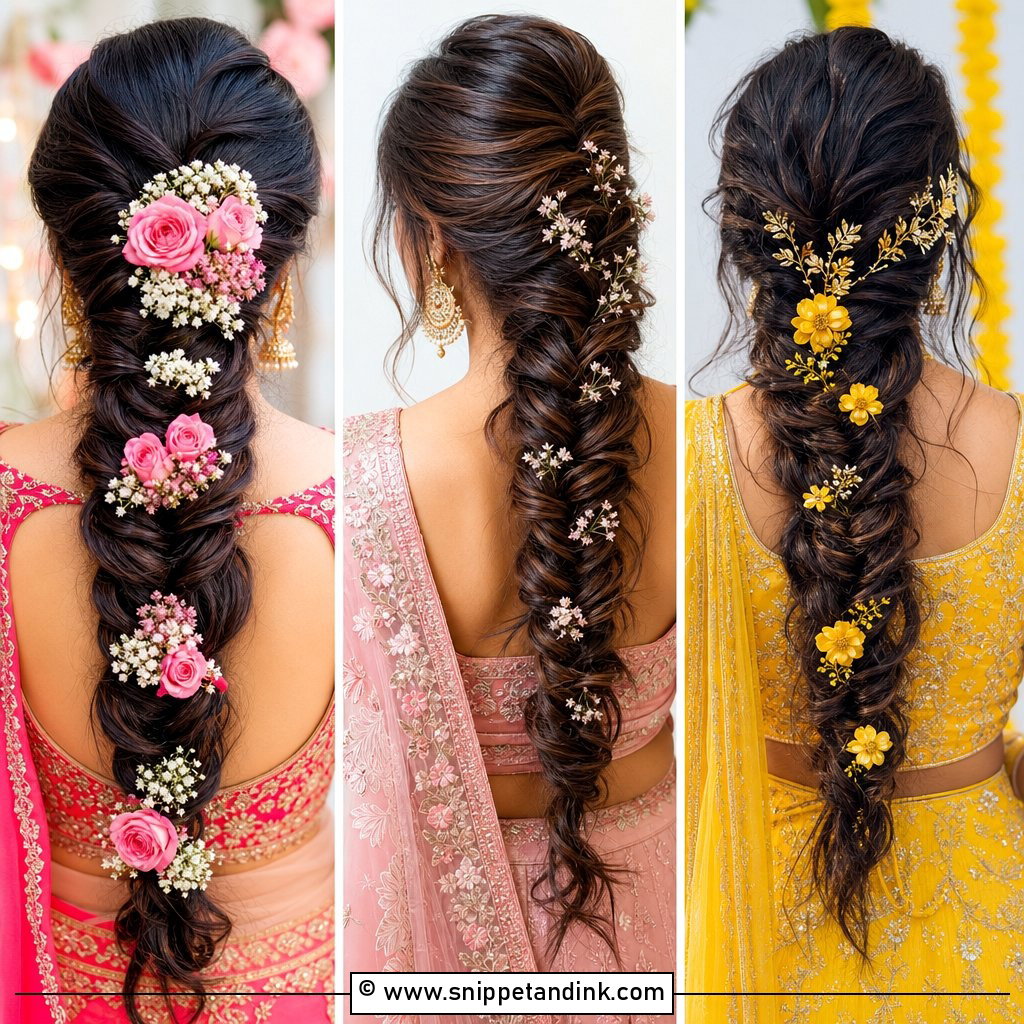
Long, neat and wrapped in fresh jasmine, this is the version many South Indian brides grew up seeing on their mothers. I braid it firm at the top and keep the weave even all the way down, because a gajra needs a solid base to pin into; on a loose braid the flowers slide toward the ends. You can cover the whole length or cluster the jasmine near the top. It sits naturally with a silk saree and temple jewelry. It’s happiest on long, thick hair, and on finer hair I add a braided extension underneath so the gajra has something to hold. The flowers themselves carry old associations with purity and auspicious beginnings.
2. Side-Swept Fishtail Braid
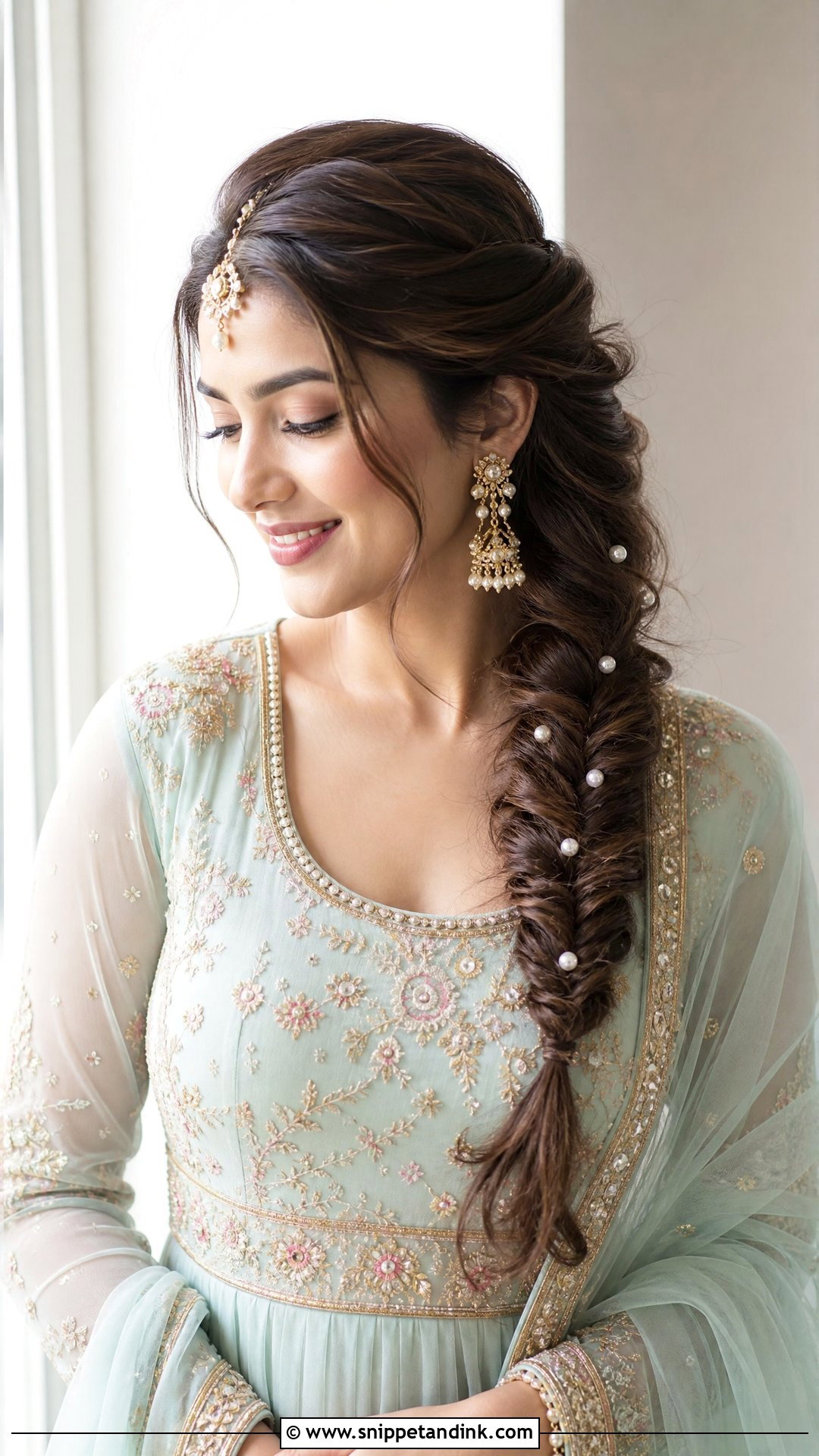
Bringing the braid over one shoulder pulls the eye toward your earrings and neckline, which is why I like it on round and heart-shaped faces. I start with a deep side part and anchor the base behind the ear with two crossed pins; without them the weight drags the braid back over the shoulder by the second hour. Weave it loosely. A thin hair chain or a few pearls add sparkle, and the open side leaves room for statement earrings and a maang tikka. It suits a sangeet or a pre-wedding shoot, especially with a flowing anarkali or a pastel lehenga.
3. Messy Fishtail Braid
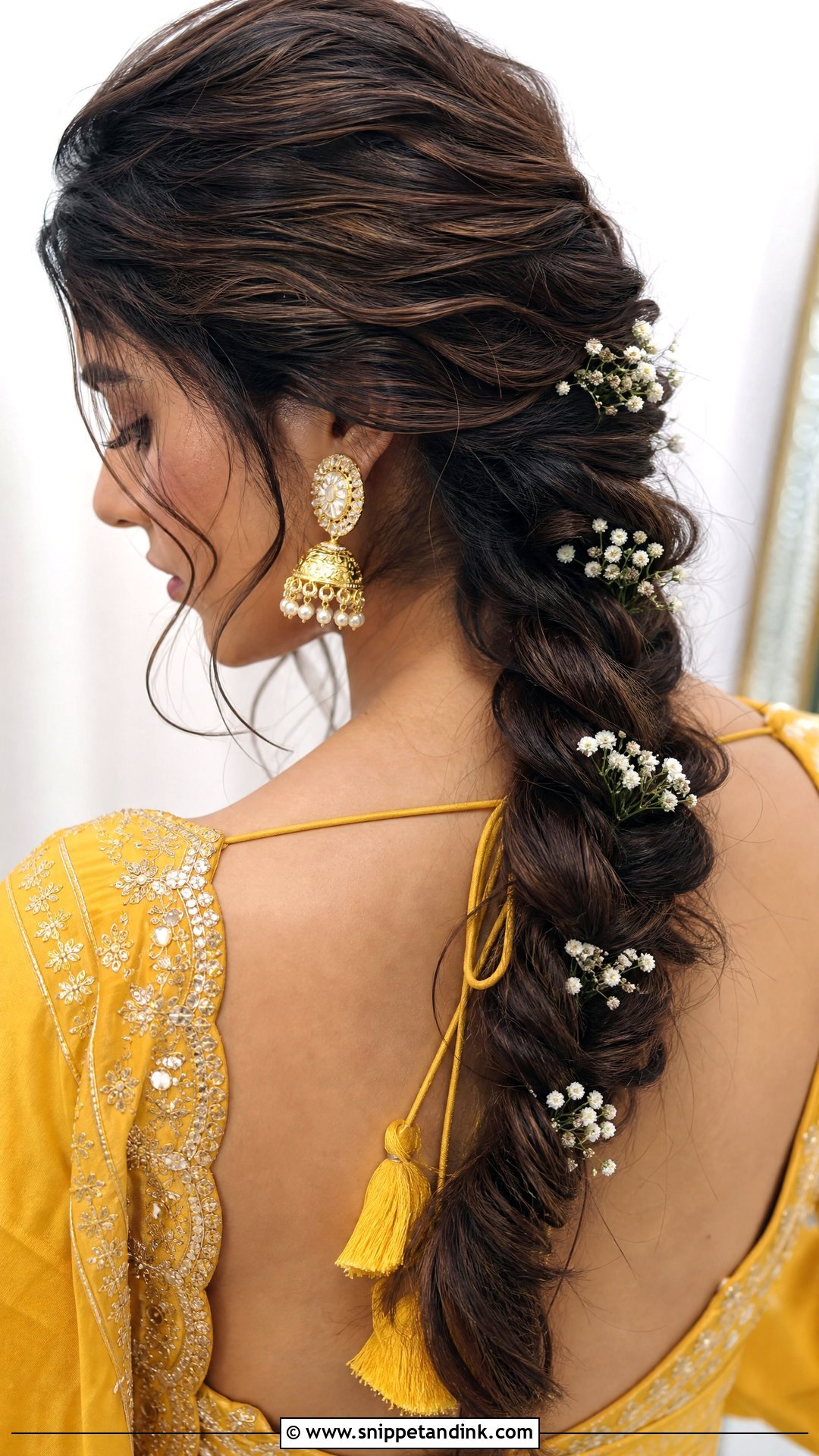
A slightly undone braid often looks better in photos than a perfect one, and it’s far easier to live in at a morning mehndi or an outdoor function. The trick is to braid it tight and then pancake it, gently pulling the outer edge of each loop wider. Braiding loosely from the start just makes it fall apart. Leave a couple of face-framing pieces out. Wavy or textured hair suits it best, and baby’s breath or tiny gold pins tucked in keep it fresh. If a strand escapes during the dancing, nobody can tell.
4. Fishtail Braid With Maang Tikka
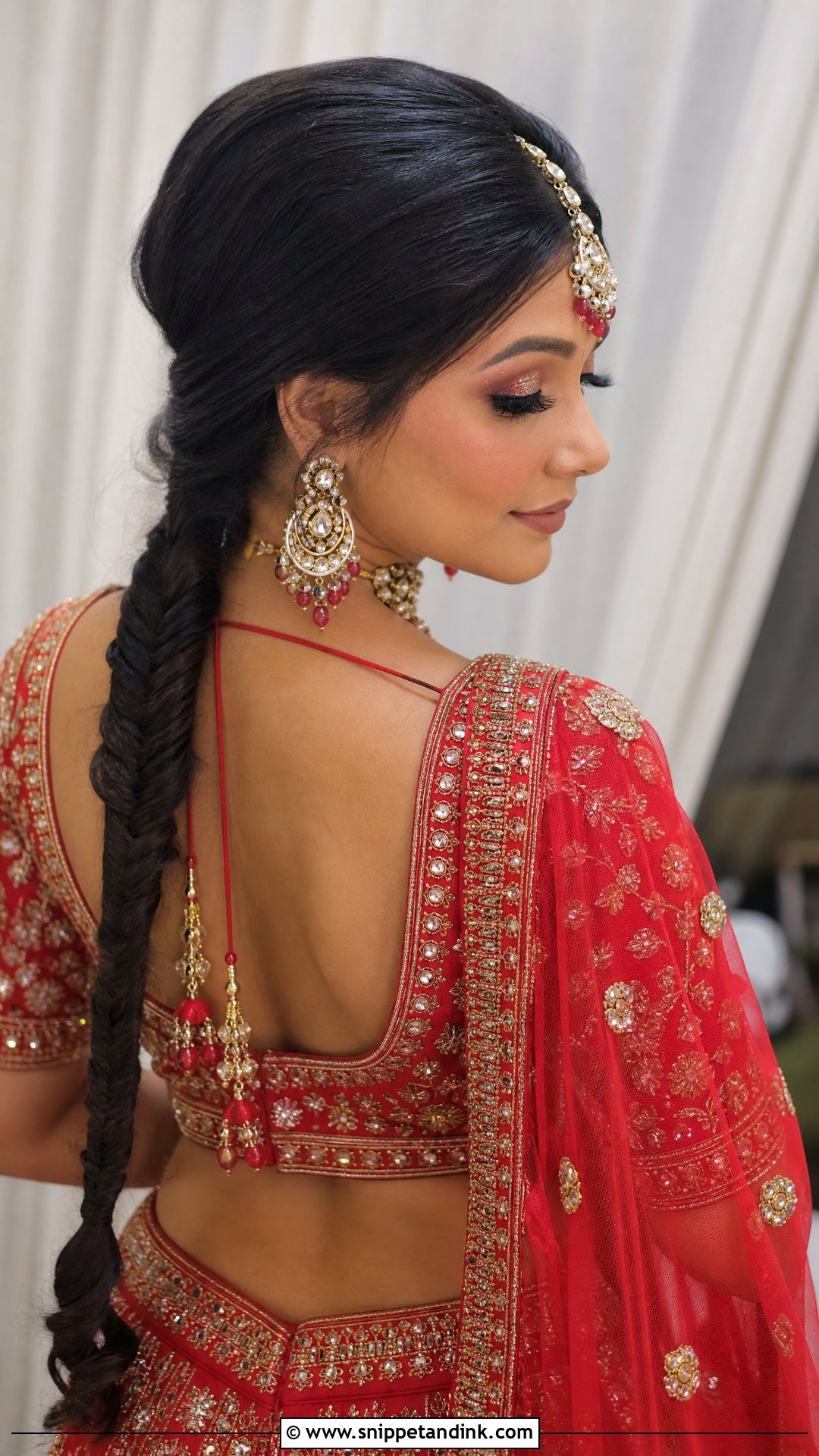
A clean fishtail keeps the hair quiet so the maang tikka can lead. For a bride who wants a regal look without a heavy updo, I send the braid straight down the back or to one side and smooth the front with a little gel so the tikka chain lies flat along the part. A kundan or polki piece matched to your set works best. The detail most people miss: the tikka’s hook needs a small anchor of hair, pinned and sprayed under the crown, or it drifts sideways every time you bend during the rituals. With heavy lehengas and rich saree drapes, the pairing stays balanced.
5. Fishtail Braid Half Updo
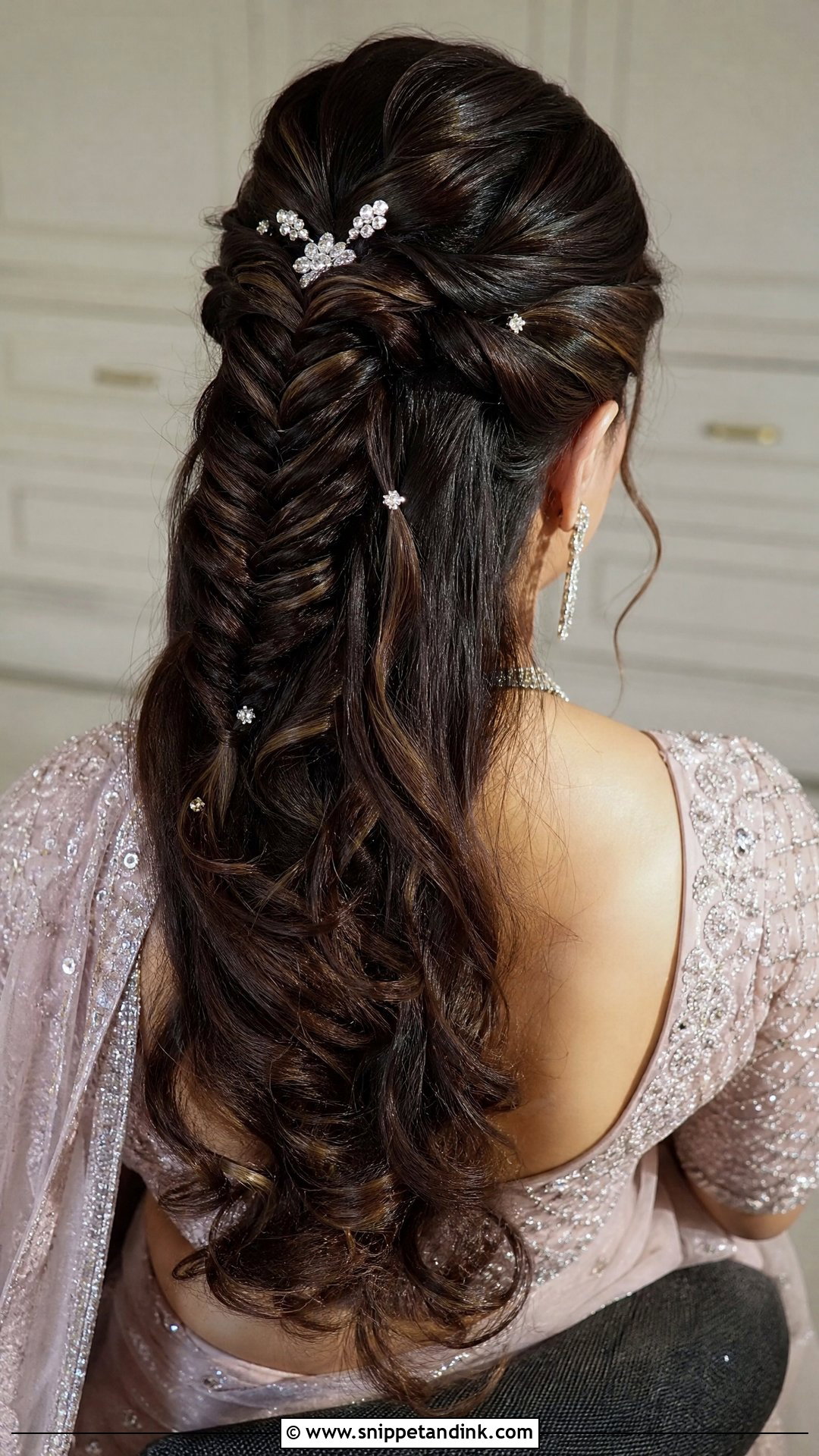
The top section is pinned back and woven into a fishtail while the rest falls free, so you get texture without covering the shoulders. It suits medium to long hair and most face shapes. I curl the loose lengths before I braid, never after, so the iron doesn’t snag the woven section. Small flowers or jeweled pins along the braid dress it for a reception. Expect the curls to relax over the evening while the braid stays put; it actually looks softer by the end of dinner.
6. Double Fishtail Braid
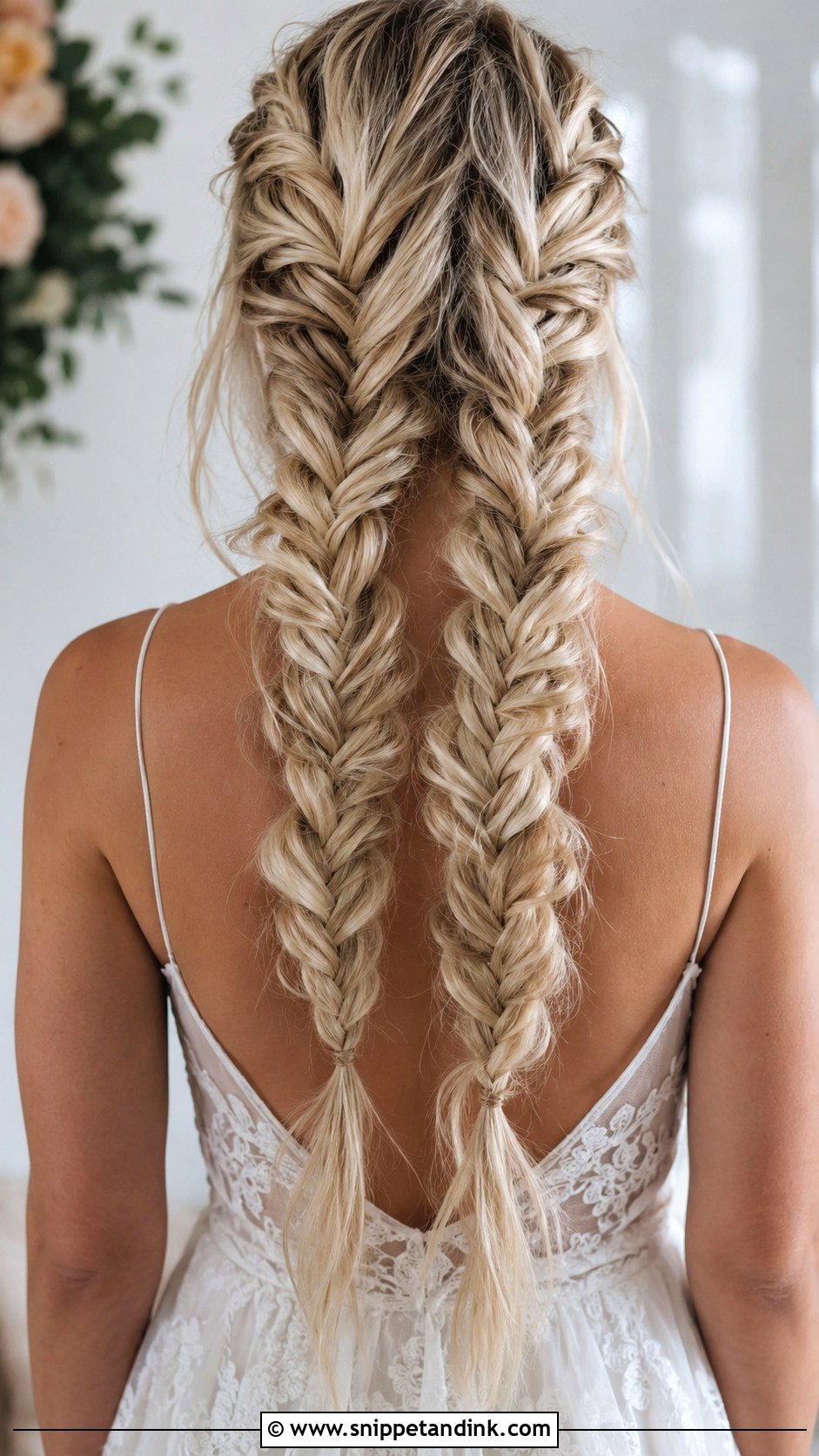
Two braids, one each side of a center part, either joined at the back or left hanging. It reads youthful and festive for mehndi and haldi. The part has to be dead straight, so I draw it with a tail comb and check it from behind in a hand mirror before the first crossing. Colorful threads or tiny flowers suit the occasion. Splitting fine hair in two makes each braid look skinny, so this one is better on long, thick hair. At haldi it has a practical bonus: it keeps the lengths tidy and away from the turmeric paste.
7. Fishtail Braid With Flowers
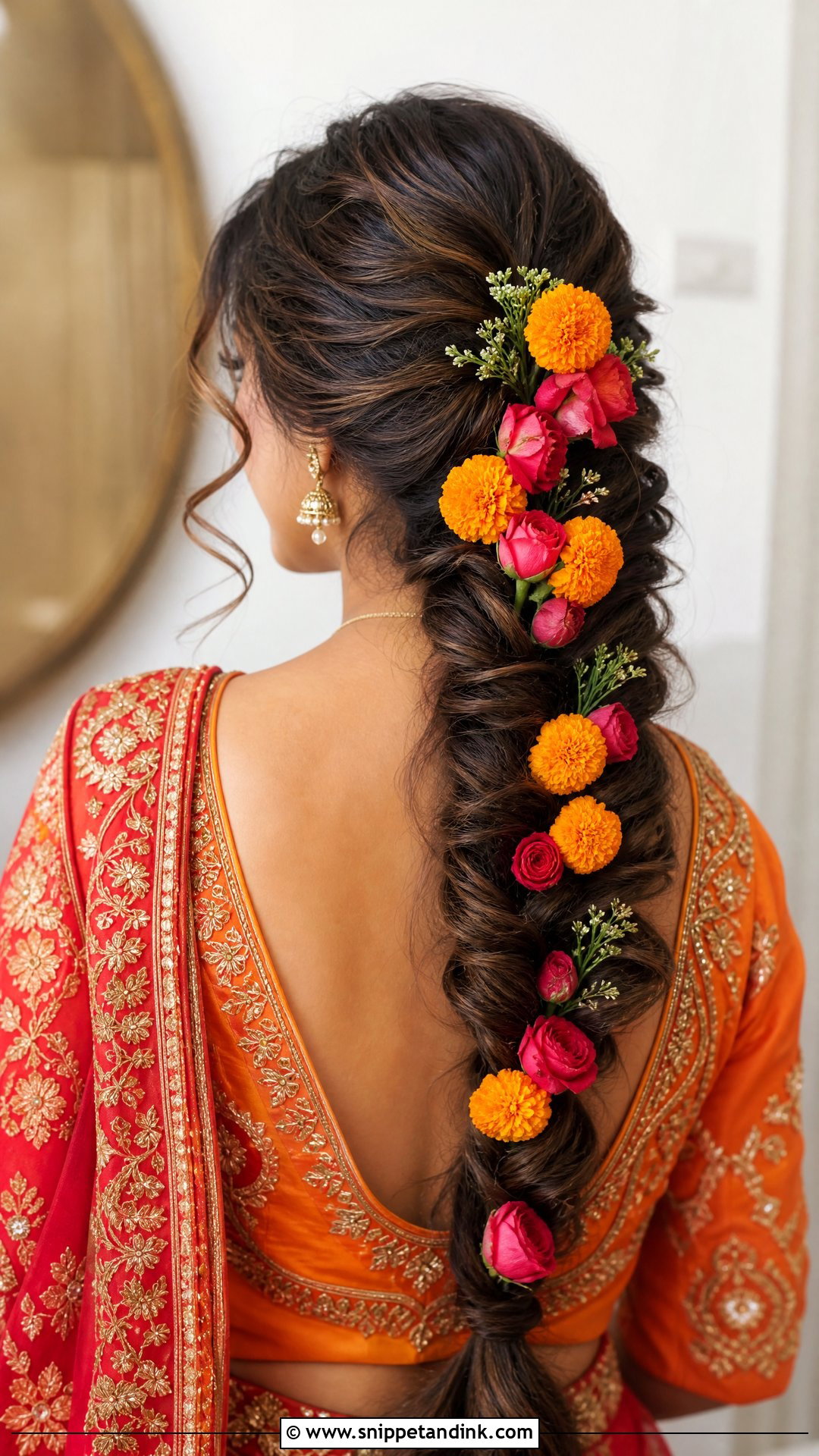
Roses, marigolds or orchids woven through the braid bring color and scent. I choose the flowers for stem strength before color. Marigolds and orchids hold up for hours out of water, while softer petals bruise once they’re pressed between braid sections. Go pastel for a soft palette or reds and oranges for a vivid one, matched to the outfit, and keep the jewelry light so the flowers stay the focus. In many families the blooms carry their own meaning of joy and prosperity, which suits daytime and outdoor functions.
8. Sleek Fishtail Braid
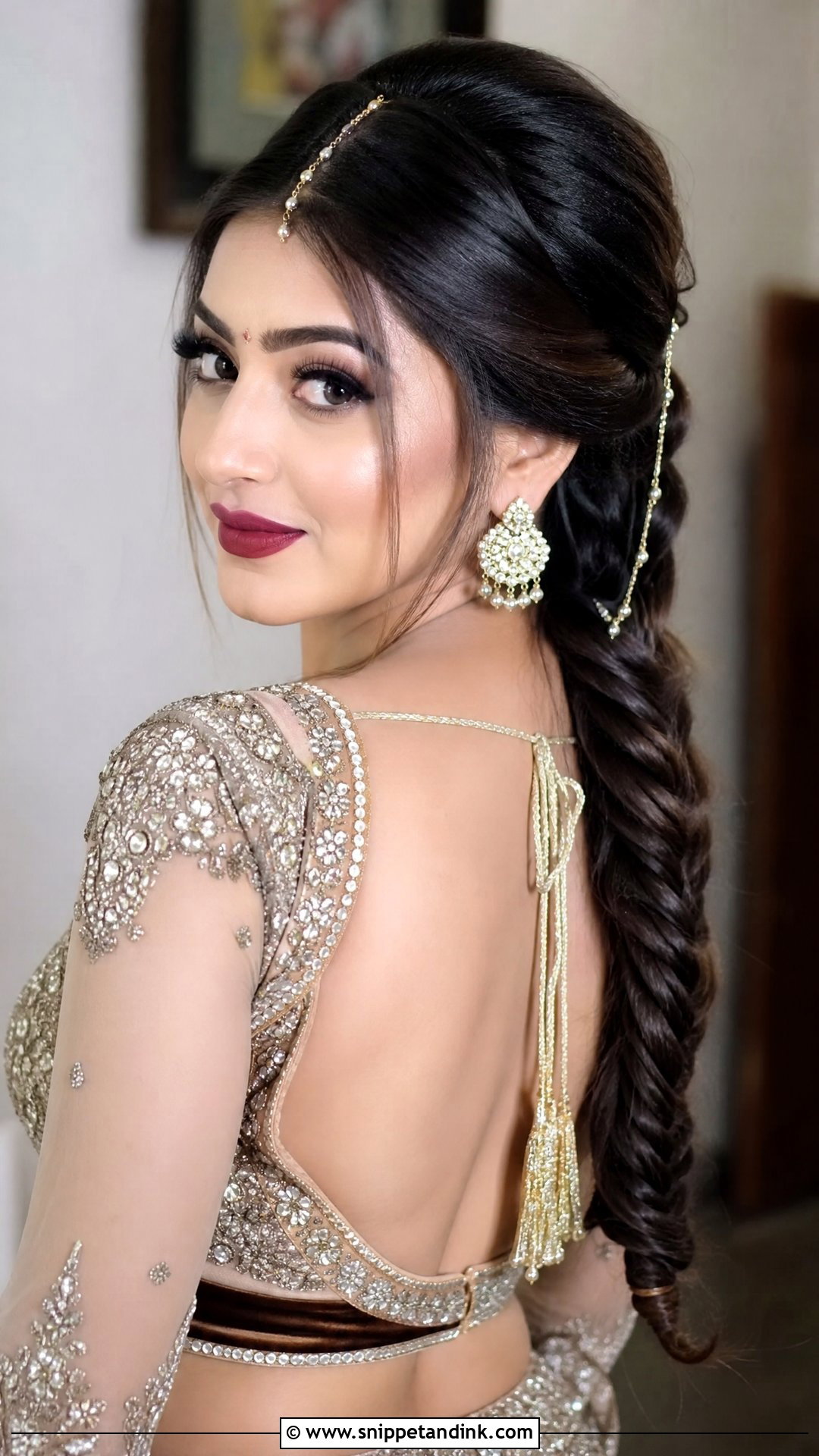
Every strand smoothed back, a tight weave, a polished finish: this is the modern reception braid. It needs healthy, straight hair. I prep with a smoothing cream and a boar-bristle brush, then finish with a light shine spray rather than heavy gel, which can flake by midnight. Fitted lehengas and designer sarees suit its structure, and a thin hair chain or a couple of subtle pins are enough alongside bold makeup. Frizz is its enemy, so on a humid day I’d steer you toward a softer style.
9. Fishtail Braid Bun
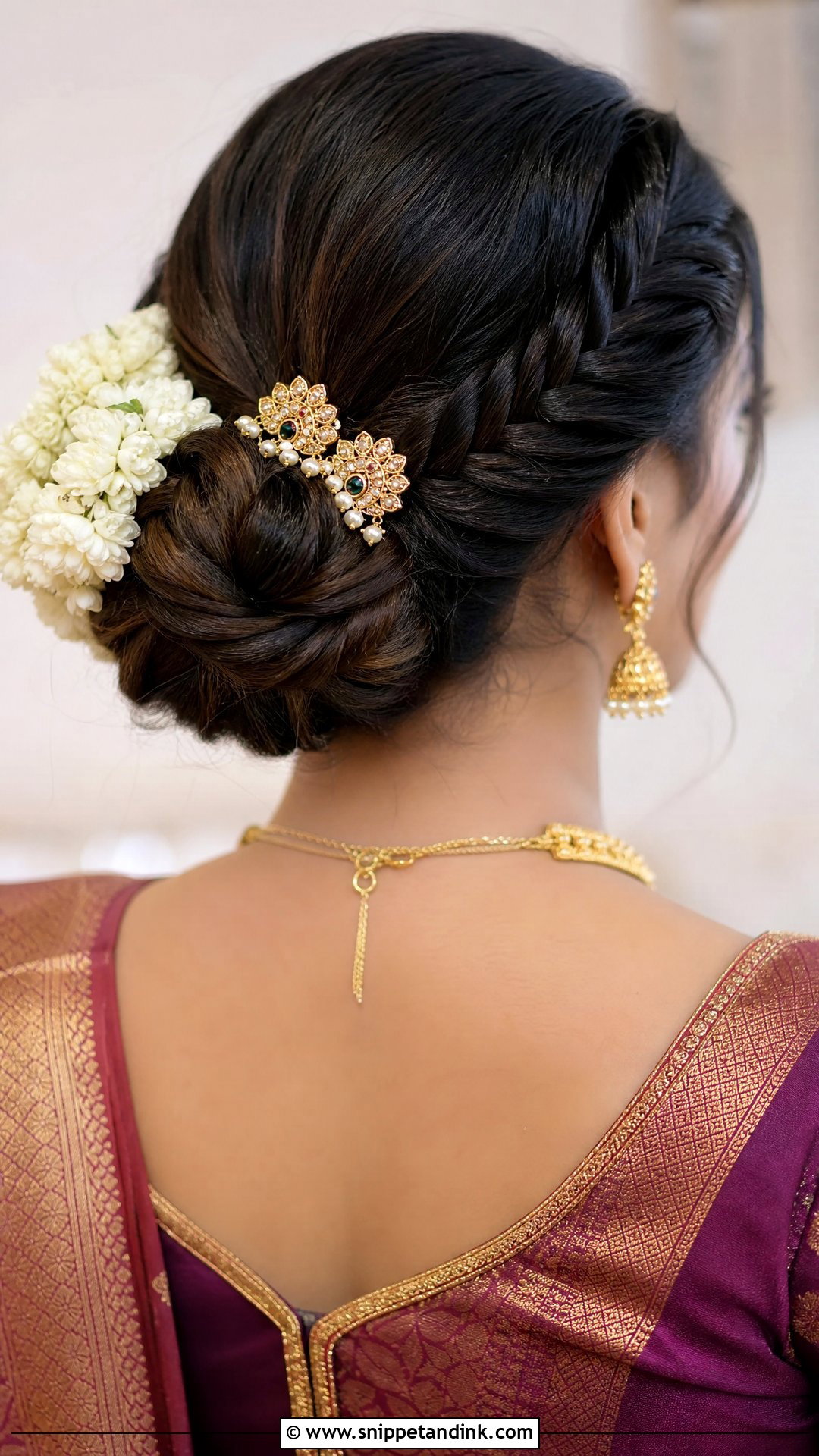
Braid first, then coil the fishtail into a low or side bun and pin it. The woven texture shows on the surface, so the bun looks far more detailed than a plain chignon. I pin through the coil into the base with U-pins rather than bobby pins, because they grip without flattening the weave. Your neck stays open for necklaces and earrings, and gajra, jeweled clips or fresh flowers wrap neatly around it. On long hair it’s the most secure style in this list, which matters for formal ceremonies that run all day.
10. Boho Fishtail Braid
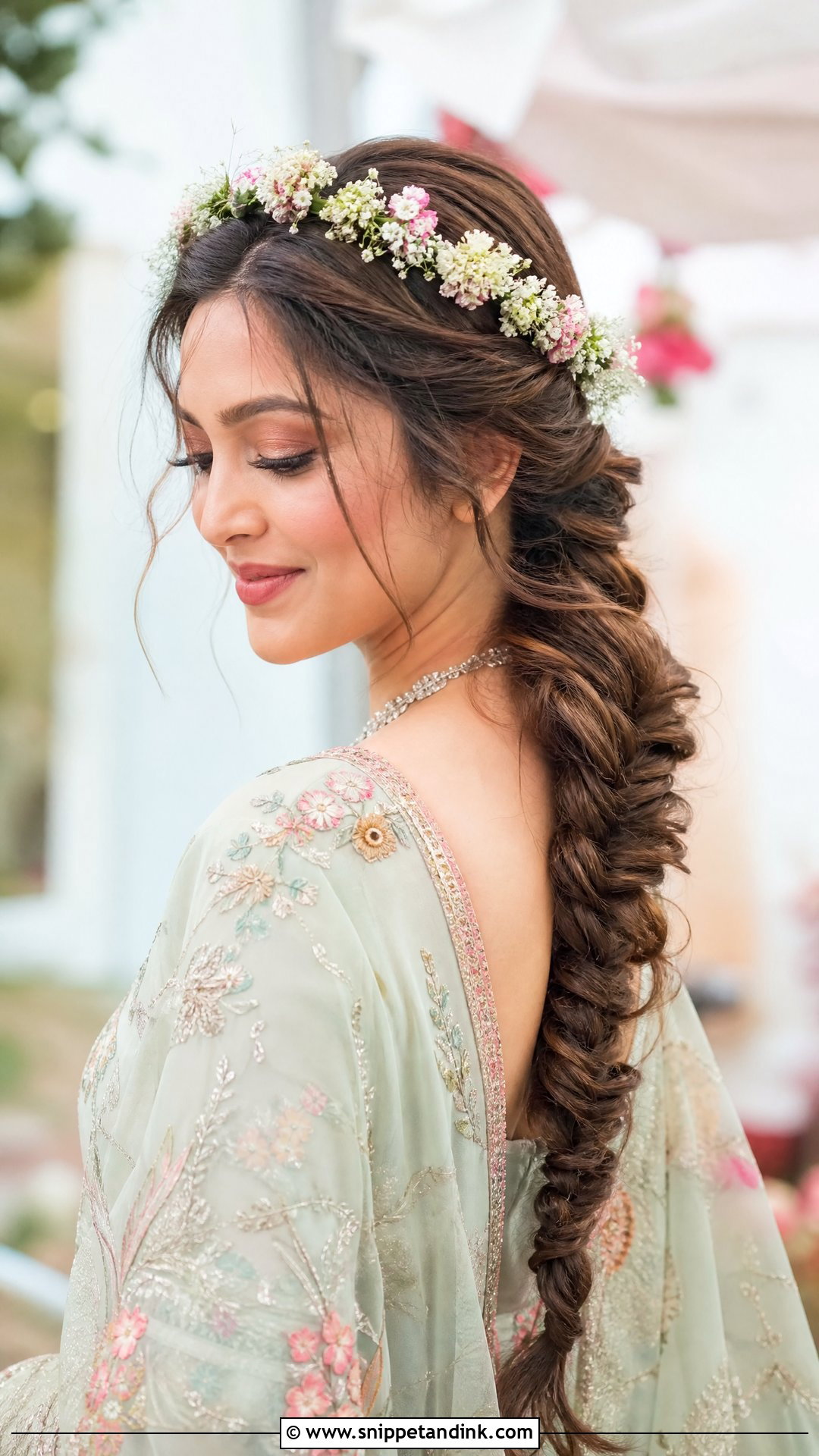
Soft texture and loose strands make this the airy cousin of the sleek braid. I pull the weave apart further than on the messy version and leave wispy pieces around the face. Wavy or curly hair adds dimension on its own. A floral crown, leaf accents or scattered tiny blooms suit daytime mehndi and garden functions, with light outfits and minimal jewelry. On very fine, straight hair this style can collapse within an hour, so I’d use a texture spray first or choose something tighter.
11. Fishtail Braid With Hair Accessories
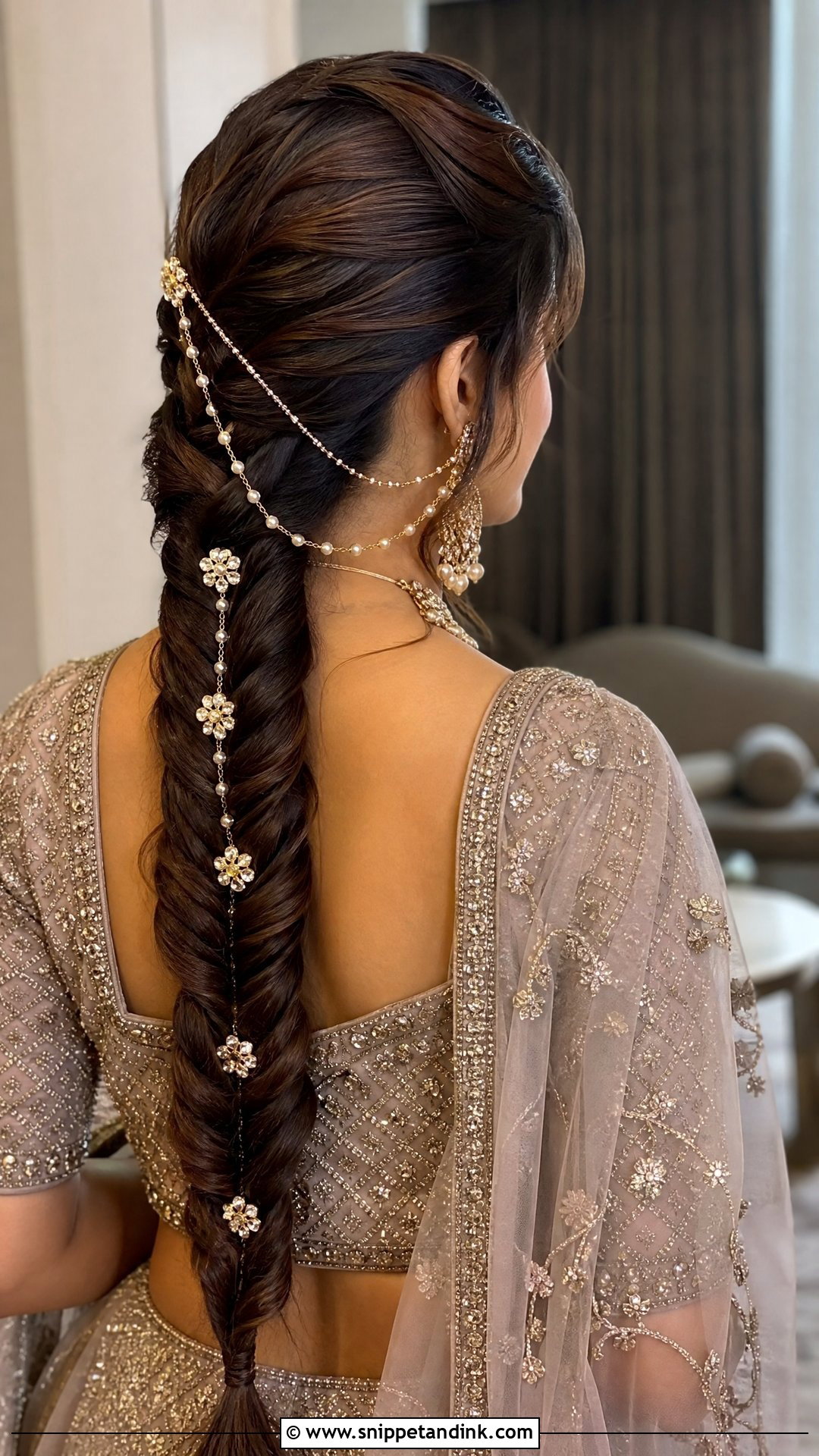
Jeweled pins, hair chains and sparkling clips turn a plain braid into the centerpiece. I thread a delicate chain along the length or tuck kundan pieces between the weaves, matching everything to your jewelry set so it reads as one look rather than a collection. My working rule is to count the weight. Five heavy clips on one braid will pull at the scalp by the end of a reception, so I place the heaviest pieces near the nape, where the braid is thickest and the pins have the most hair to grip. It suits medium to long hair.
12. Low Fishtail Braid
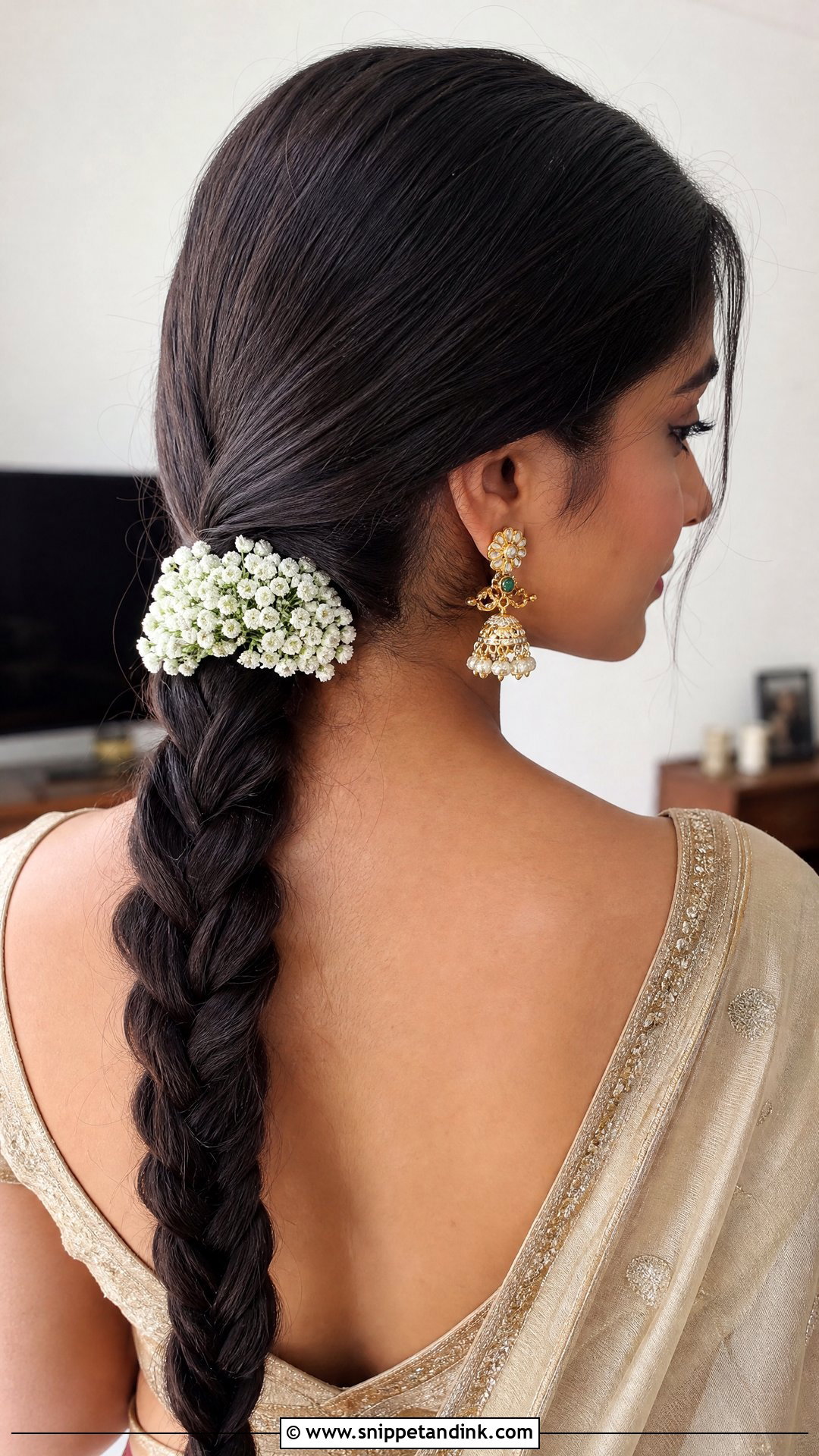
Resting at the nape, the low fishtail is the easiest to sit in through long ceremonies, because it doesn’t press against a chair back the way a high bun does. It keeps attention on your face and jewelry with sarees and lehengas. Weave it tight for polish or loose for softness. A gajra or jeweled pin at the base adds tradition. It suits most face shapes and carries well from mehndi to sangeet to the wedding itself, which is why I suggest it to brides who want one hairstyle across several events.
13. Fishtail Braid Ponytail
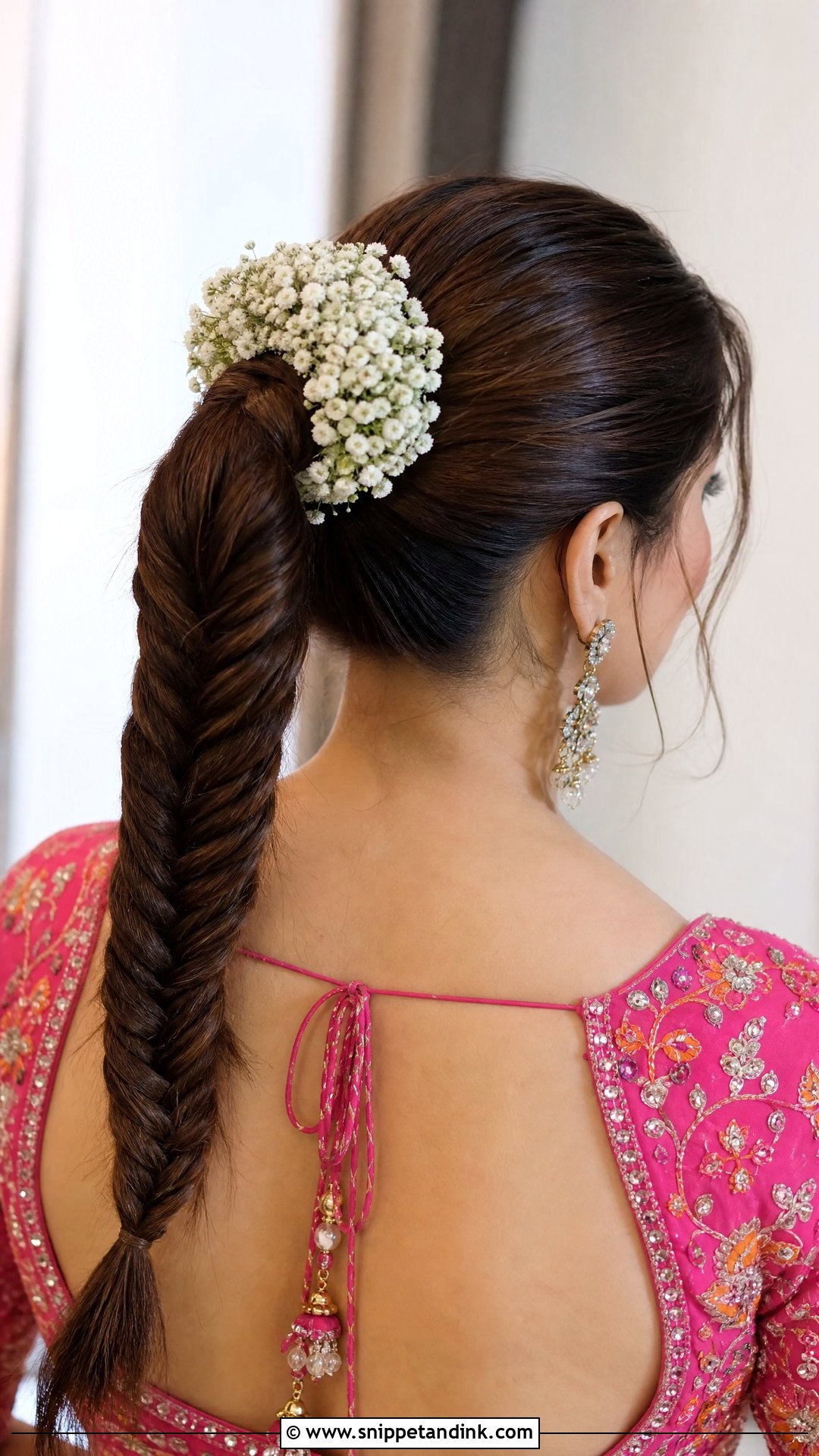
A high or mid ponytail first, then the length woven into a fishtail. The raised base gives height and swing, which suits a sangeet. I secure the pony with a strong elastic, then wrap a small strand of hair around it and pin it underneath, so the base can’t slip mid-dance. A gajra around the base or a few pins down the length finish it, and long, thick hair carries it best. If tight ponytails give you headaches, ask for it lower; a high pony pulled tight for six hours is uncomfortable for many people.
14. Fishtail Braid Crown
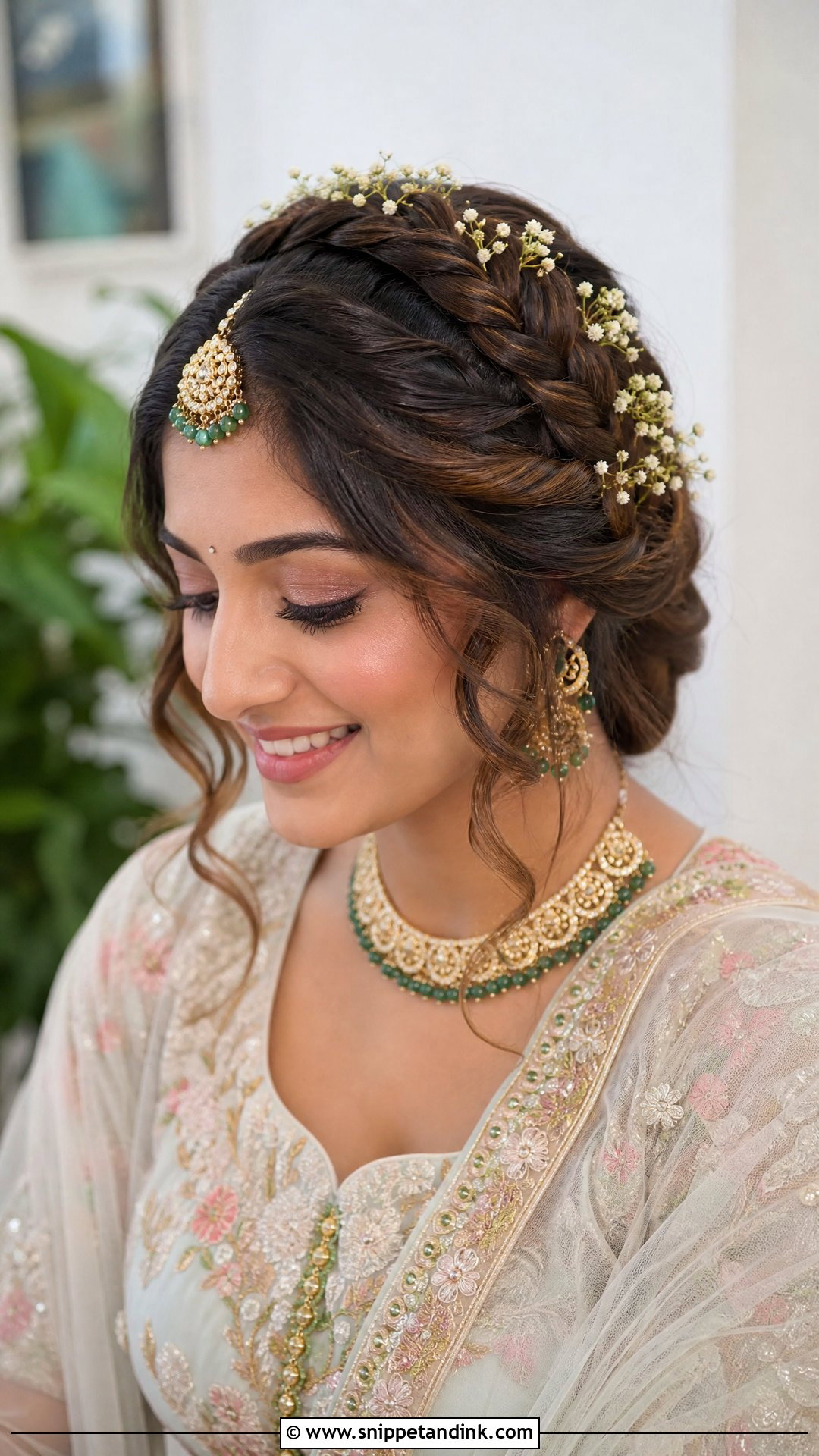
The fishtail wraps around the head like a crown and frames the face, keeping hair completely off the neck, which is welcome at a warm-weather wedding. I usually braid two thinner fishtails from behind each ear and pin them across the top, because a single braid rarely reaches all the way around. Flowers or jeweled accents tuck in easily, and a maang tikka can sit in front. It needs long hair and suits round, oval and heart-shaped faces.
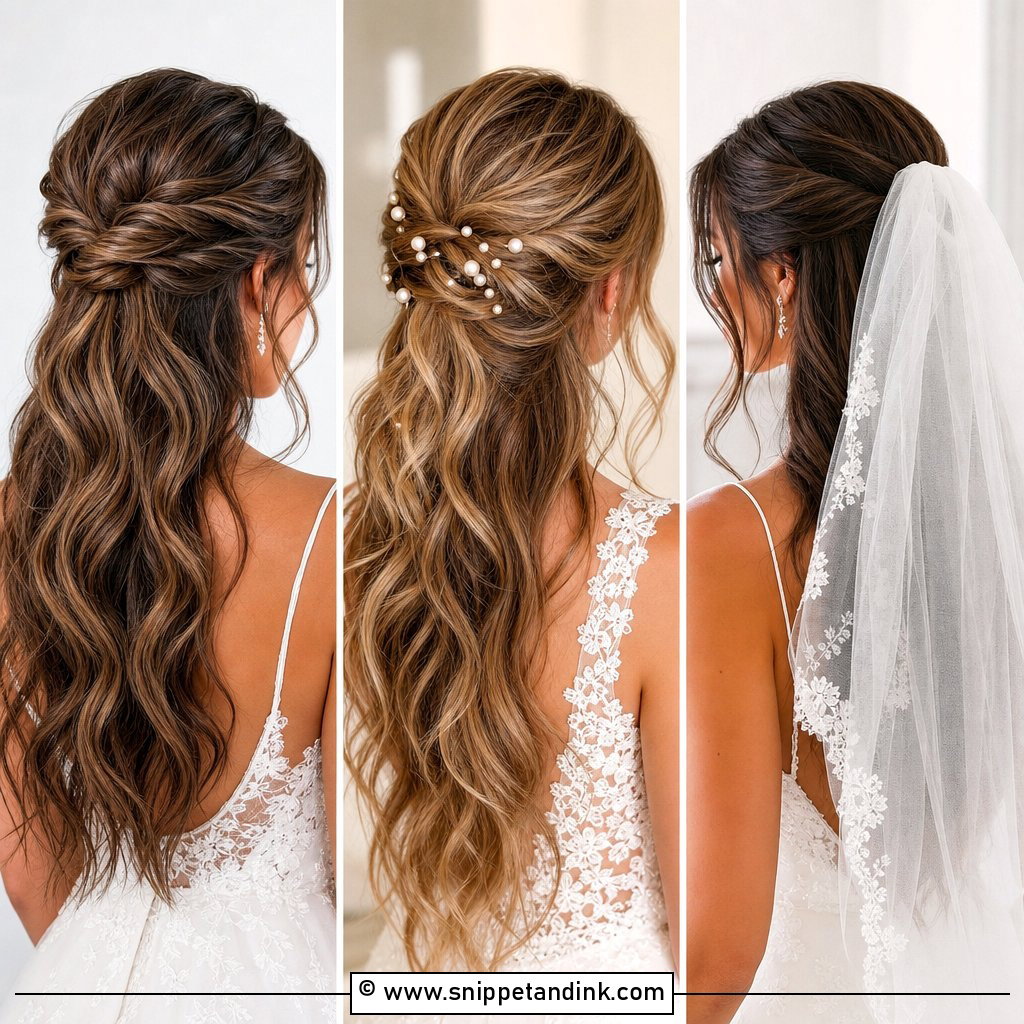
15. Fishtail Braid With Curls
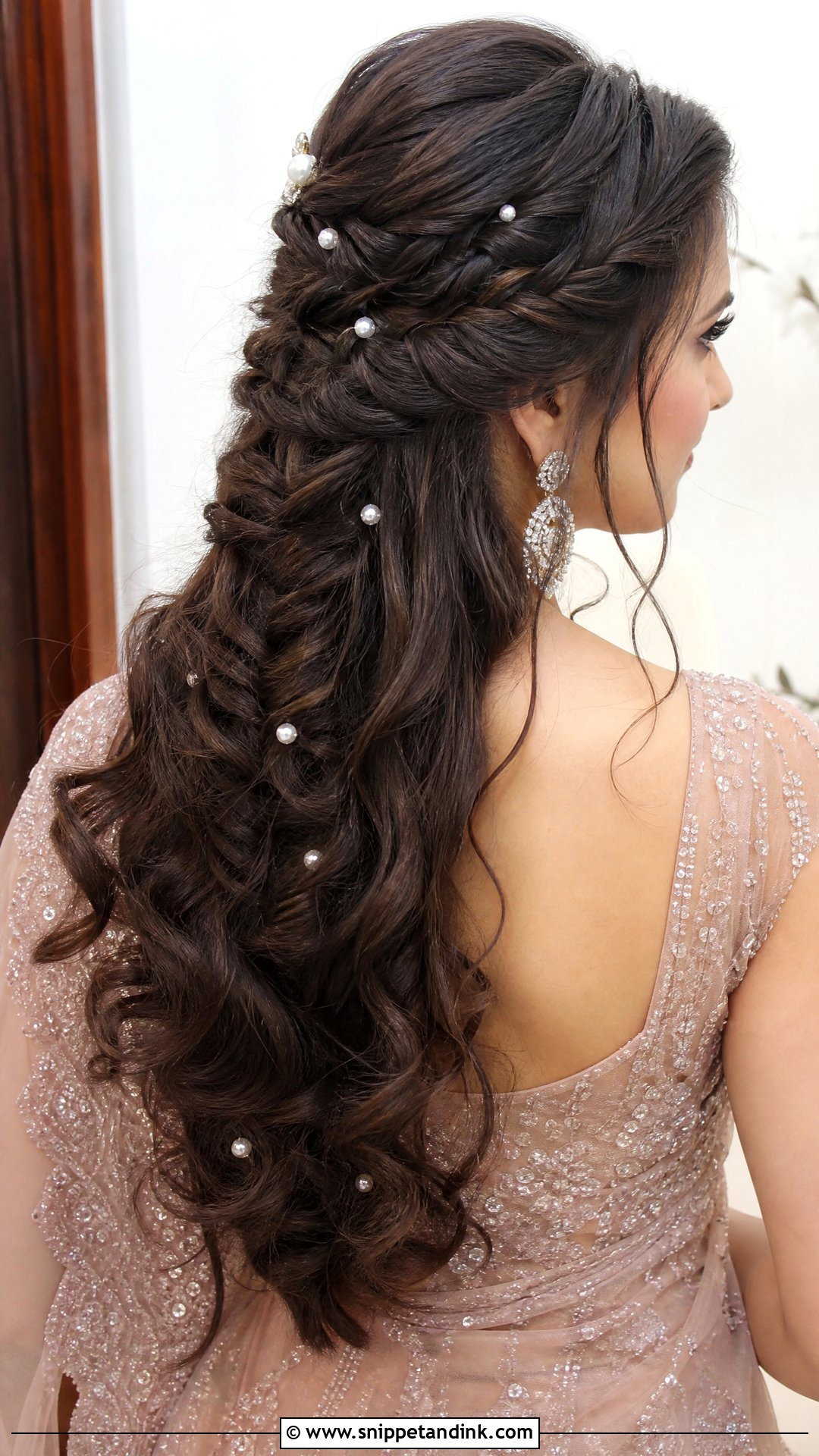
Part of the hair goes into a fishtail and the rest falls in loose curls, so you get volume and texture in one look. It suits reception nights and pre-wedding shoots. I curl with a large barrel and pin each curl to cool so it sets, then brush them out lightly at the end. Scattered flowers or pearl pins add detail. It needs medium to long hair and sits well with a flowing gown or lehenga. In a humid venue the curls drop faster, so set them with a heat-protecting spray and accept they’ll soften by the last dance.
16. Fishtail Braid for Mehndi
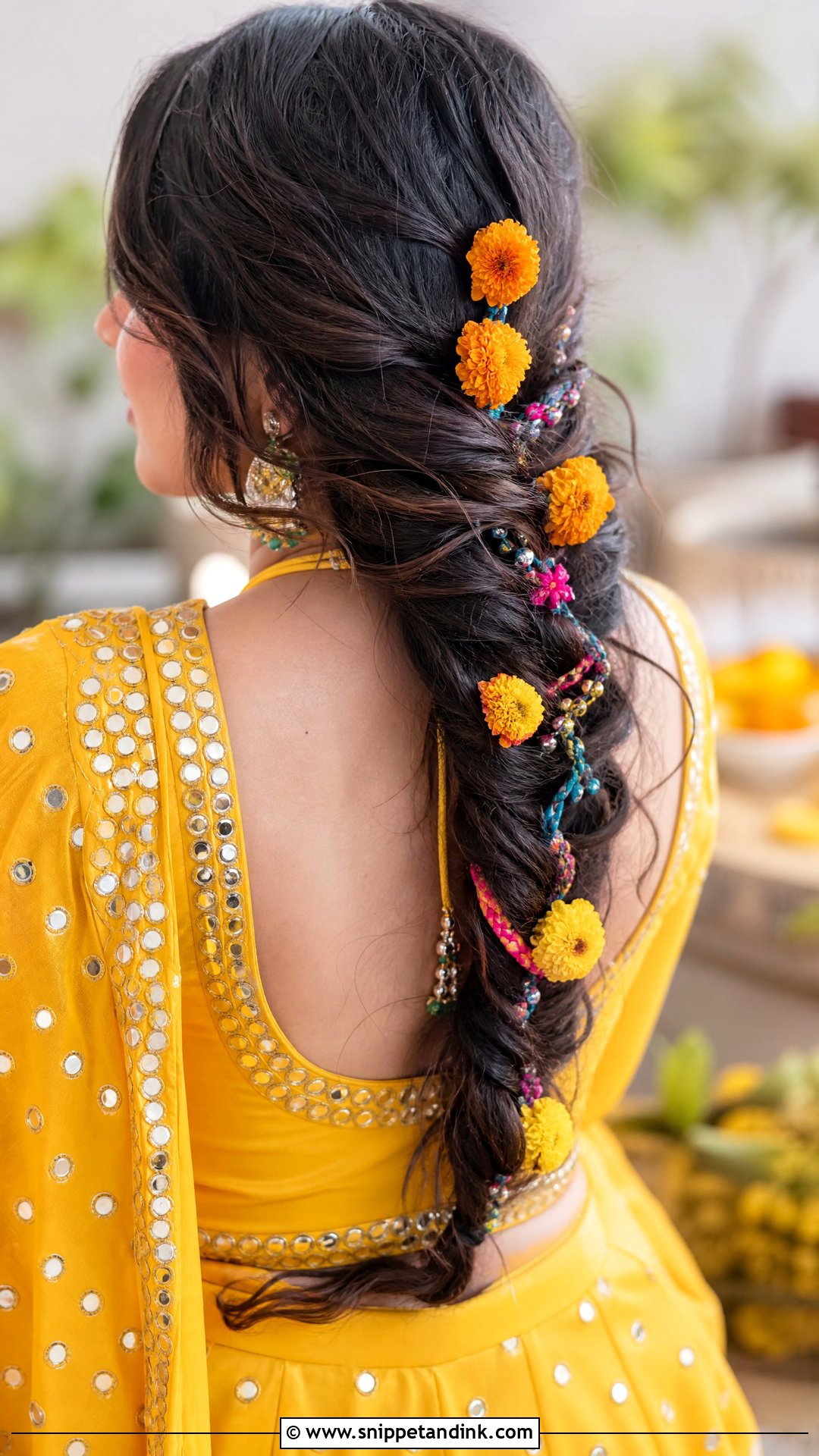
Mehndi means hours of sitting still while the henna goes on, then not being able to touch your own hair while it dries, so the braid has to look after itself. I keep it relaxed and a little messy, but with every face-framing piece pinned back, since you can’t push hair out of your eyes with wet paste on both hands. Bright marigolds, colorful threads or tiny mirror accessories match the mood. It suits long and medium hair. Wear it with a vibrant yellow or green outfit and the colorful decor takes care of the photos.
17. Fishtail Braid With Dupatta
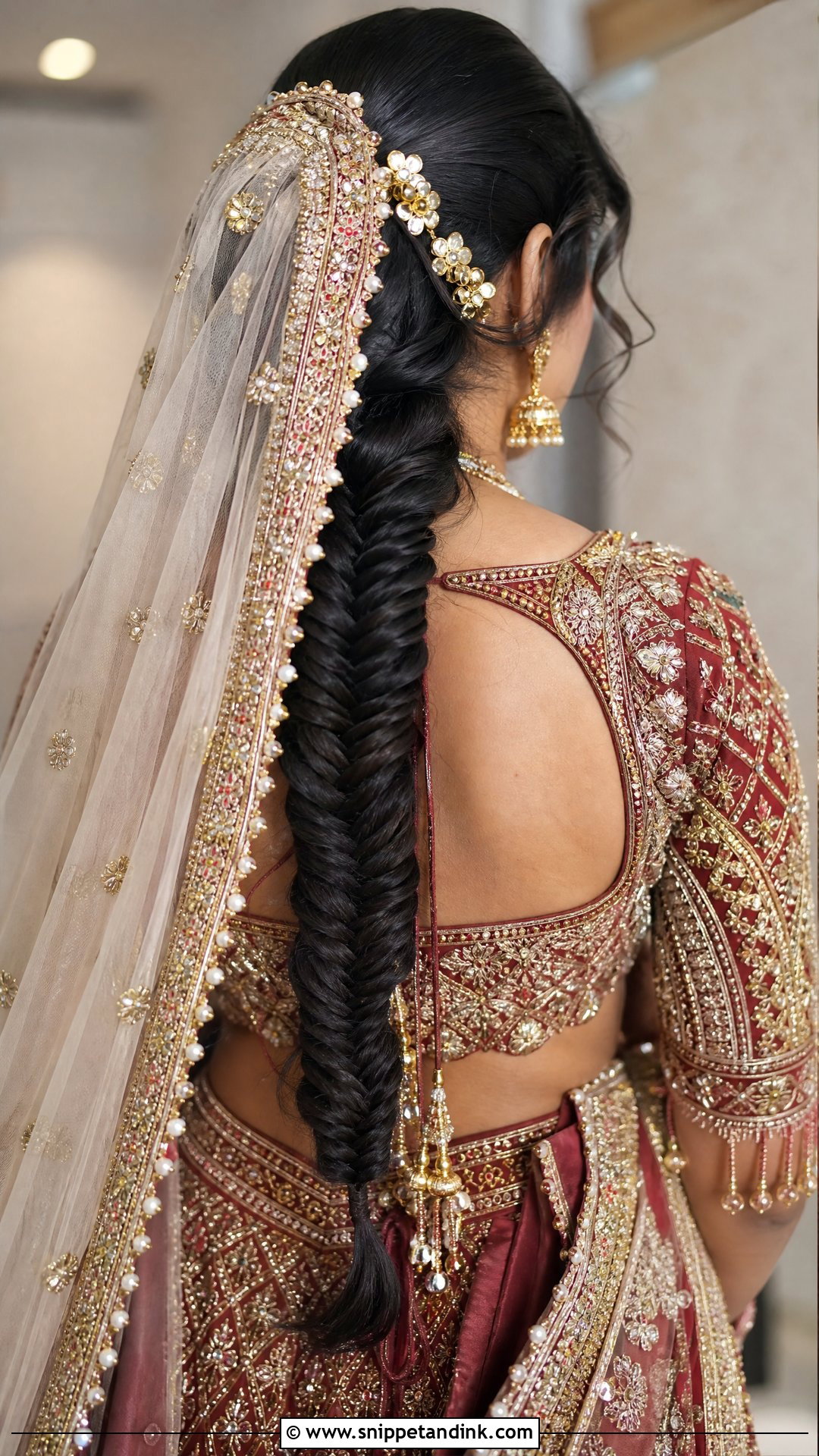
The braid sits beneath the dupatta and peeks out below it, so the veil stays put without crushing the hair. I place the dupatta pins into the braid itself, through the woven sections near the top, not just into loose hair, because the weave gives them something solid to bite into. A heavy dupatta can need four to six pins, so tell your stylist the fabric weight before the day. It suits traditional brides with long hair and ornate veils, and keeps everything tidy as you move through the rituals.
18. Fishtail Braid With Hair Chain
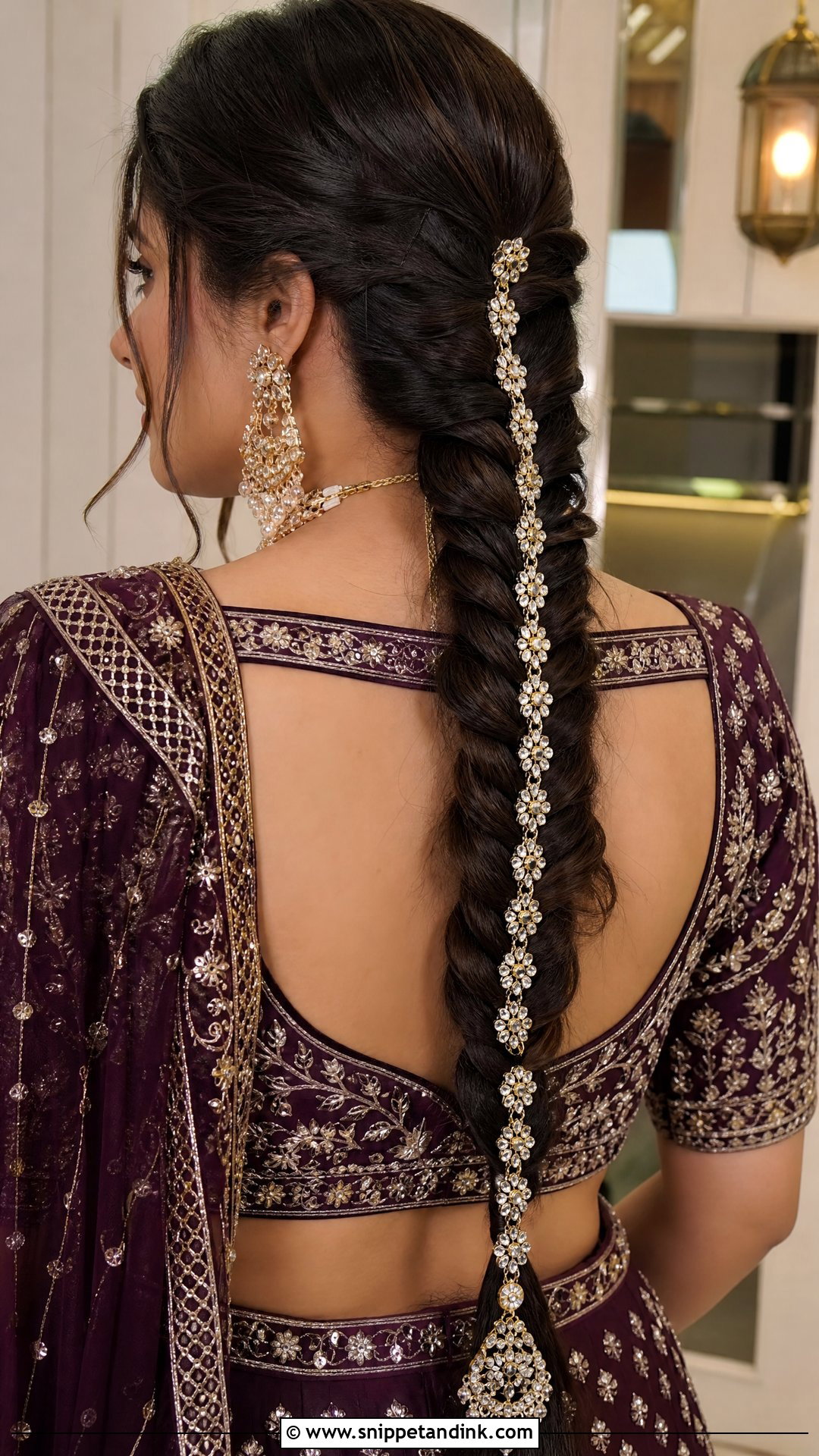
A chain running through the fishtail catches the light whenever you turn your head. I lay it into the sections as I braid instead of winding it on afterward, so it stays inside the pattern and doesn’t slide out. Match it to your kundan or polki set. Long, thick hair carries the extra weight best, and it suits a heavy bridal outfit. At the end of the night, take the chain out before you undo the braid, or the links snag.
19. Front Fishtail Braid
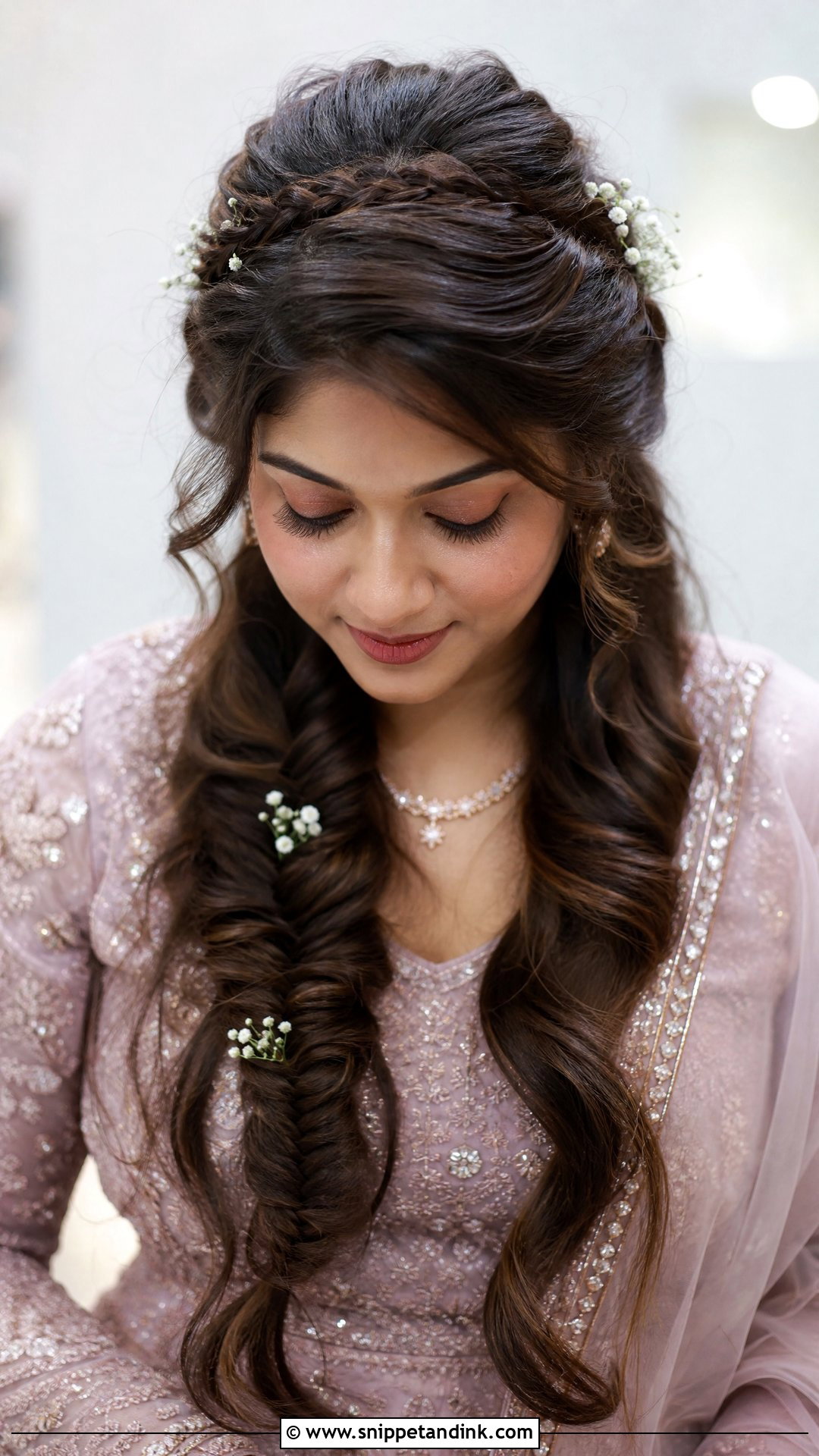
A slim fishtail along the hairline keeps hair out of your eyes and puts detail right next to your face. I use very small sections here, since this braid sits where everyone looks, and tuck the end under the rest of the hair so it disappears. Combine it with loose waves or a low bun, with tiny flowers or jeweled pins along it. It works on most lengths, shoulder length included, with a casual mehndi outfit or a reception lehenga. Short layers at the front can poke out, so a touch of pomade on each section helps.
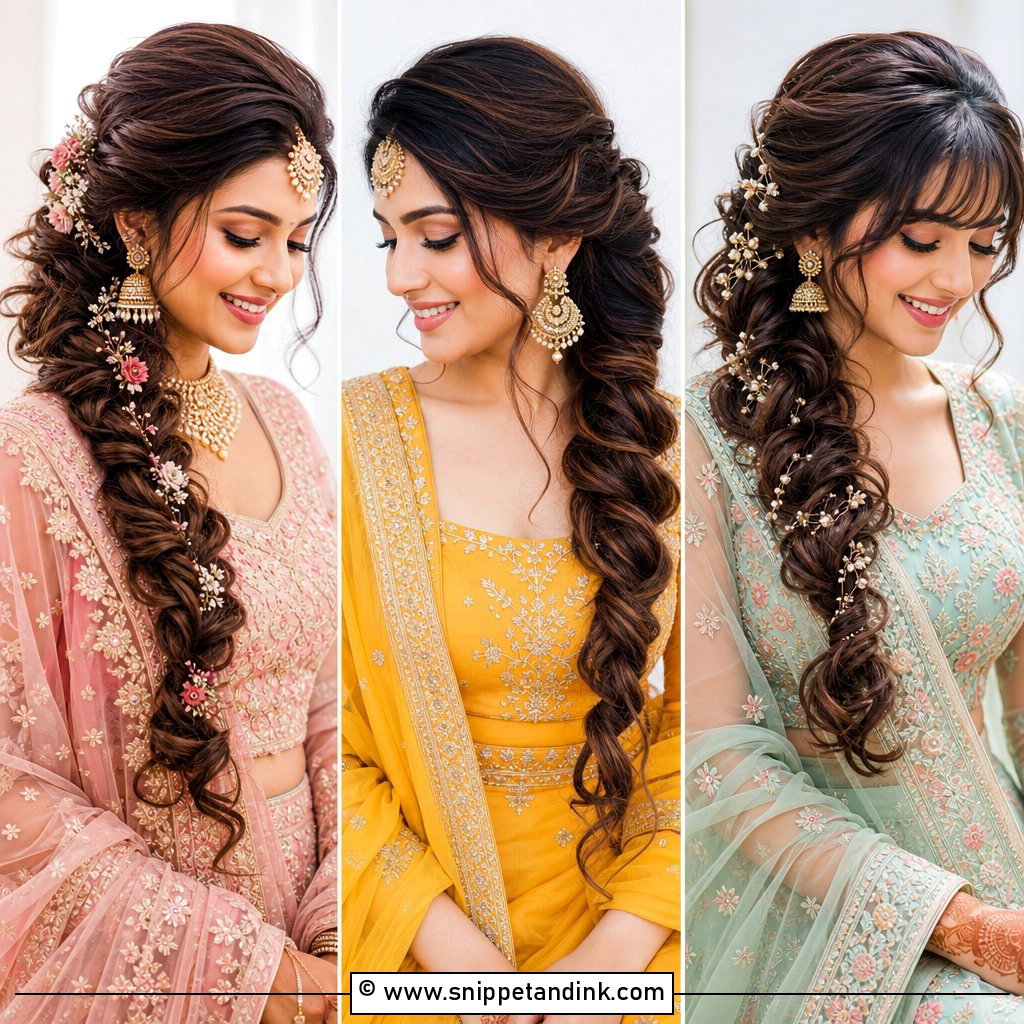
20. Fishtail Braid With Roses
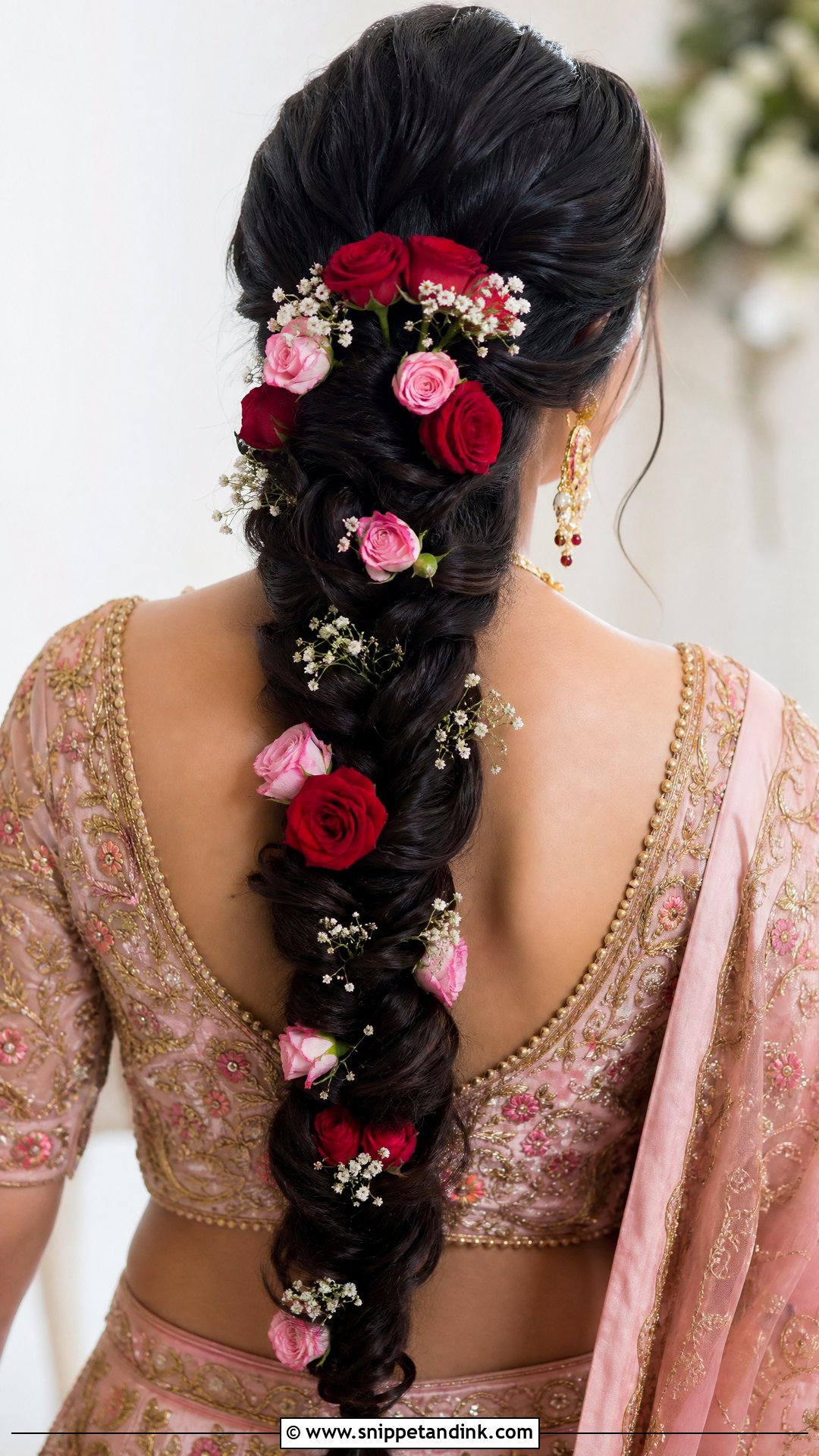
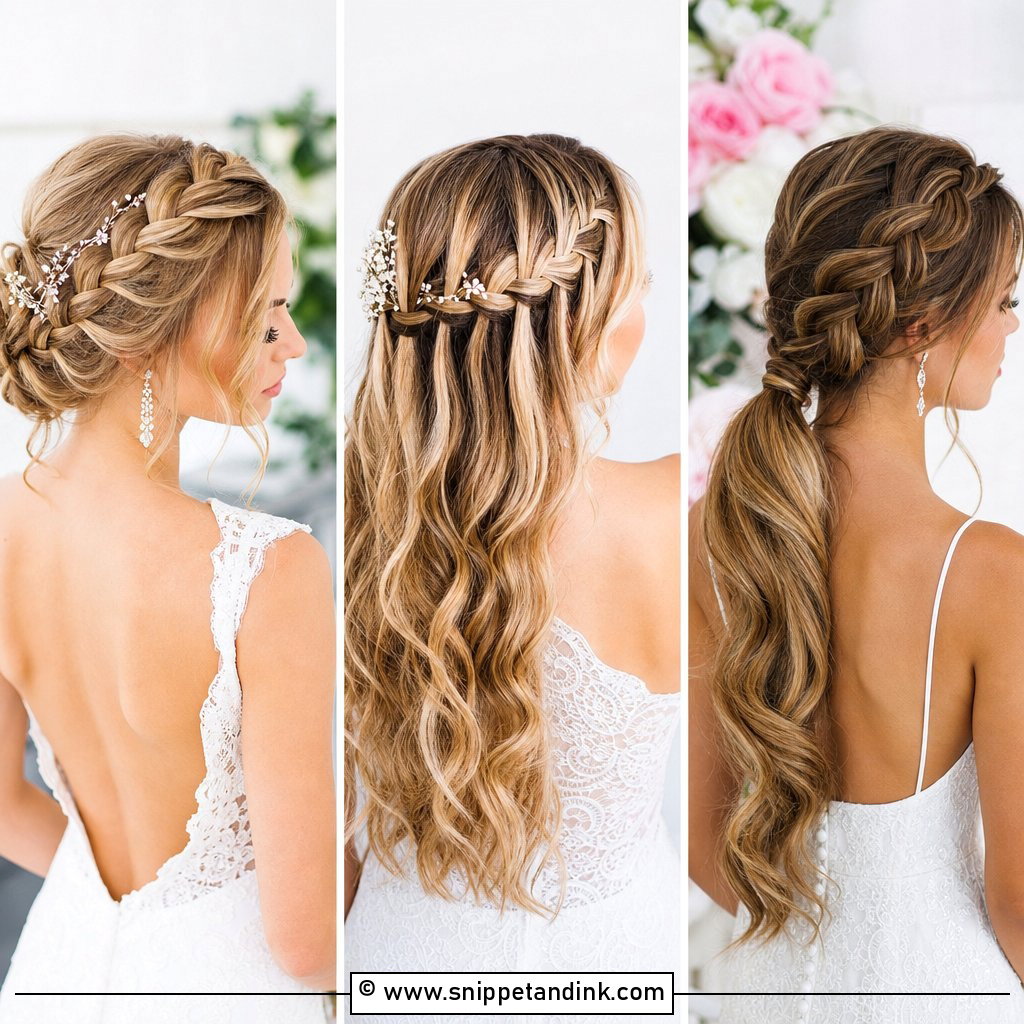
Deep red, pink or white roses woven through the braid look lush and smell good up close. I pin or wire each rose head separately rather than threading stems through the weave, which drags the braid out of shape. Roses are much heavier than jasmine, so this version works best on long, thick hair. Match the rose color to your outfit and keep the earrings and maang tikka strong but simple. The rose’s old meaning of love makes it a natural fit for the wedding ceremony or the reception.
Jasmine, Dupatta Pins and Taking the Braid Down
Fresh jasmine is lovely for an evening and limp by the next morning. Buy the gajra on the day, ideally strung from buds that open as the night goes on, and keep it wrapped in a damp cloth somewhere cool until it goes on. I pin it with U-pins every few inches and, for a long ceremony, stitch the ends to the braid with a needle and dark thread so it can’t slide. Real jasmine is heavier than it looks, so warn your stylist if you want a double strand. If strong scent bothers you over a long day, an artificial gajra with a few fresh blooms near the top is a fair compromise.
Bring the actual dupatta, tikka and any hair jewelry to your trial. A braid that feels fine on its own can pull once a heavy veil is pinned into it, and that’s far better discovered weeks ahead than at the mandap.
At the end of the night
- Take out every pin, clip and chain first. Run your fingers slowly down the braid, because one missed pin will tangle into the hair as you unravel it.
- Undo the fishtail from the bottom up, separating the two sections gently rather than pulling.
- Work a little leave-in conditioner or oil through the lengths and finger-detangle before any brush touches it.
- If it has been sprayed and pinned for many hours, sleep on it loosely and wash it the next morning instead of brushing it out stiff.
A Braid That Lasts From Mehndi to the Last Dance
Fishtails have a place at Indian weddings because they hold. From the gajra-wrapped classic to a loose boho weave, there’s a version for brides, bridesmaids and guests, and one braid can carry you through mehndi mornings, sangeet nights and a long reception. Choose the version that matches your hair’s real thickness, decide between flowers, chain or tikka based on your outfit, and do a trial with the actual accessories so you know how the braid feels three hours in.
You'll Like These Ideas:


Leave a Reply