
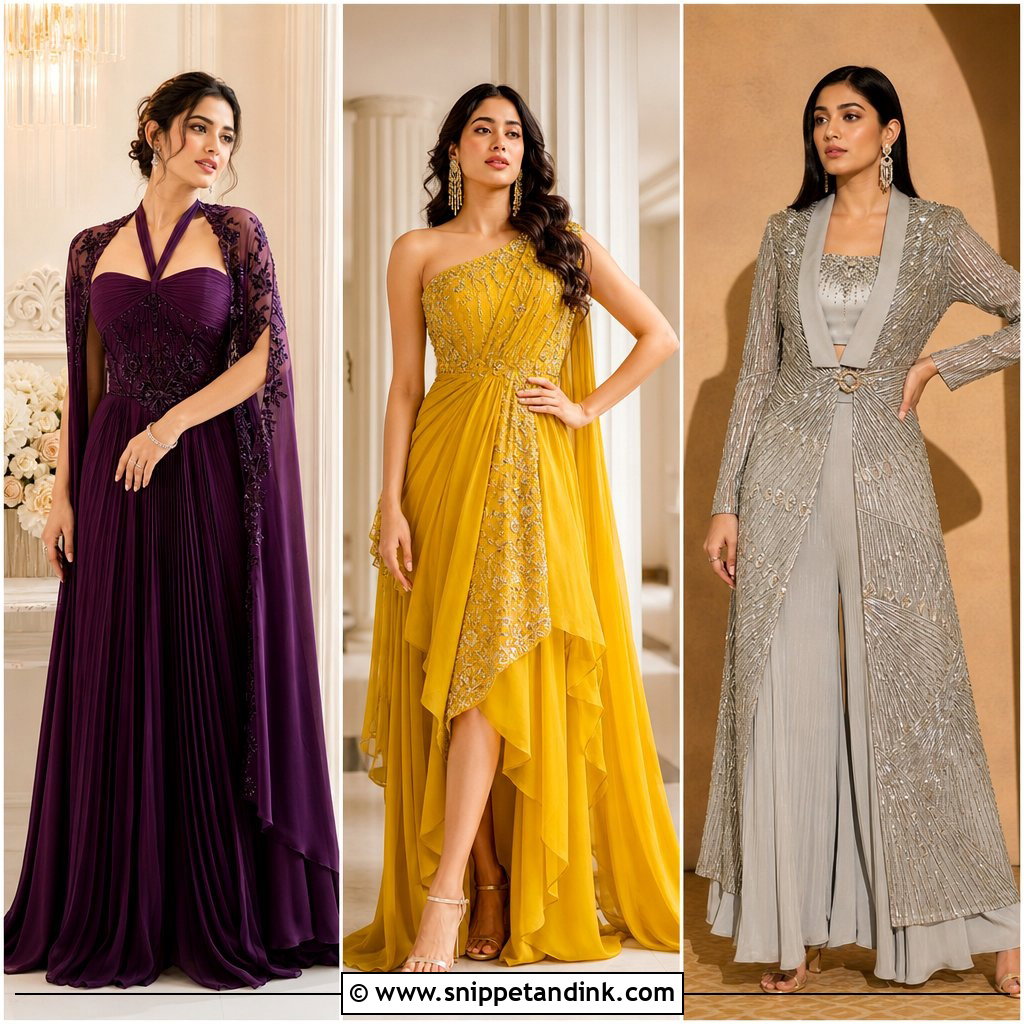
A gown at an Indian wedding used to mean the reception and nothing else. Now brides, bridesmaids, sisters, and wedding guests wear them across the week, with zardozi, mirror work and dupatta drapes that make them read as Indian rather than borrowed from a Western ballroom. A gown solves real problems: one piece to put on, no pleats to slip, no blouse to tug at. It also brings its own: hems that catch, trains in crowded halls, necklines that fight heavy jewellery. Below are thirty gowns sorted by colour, cut and fabric, with what I check before I let anyone wear each one for a long event.
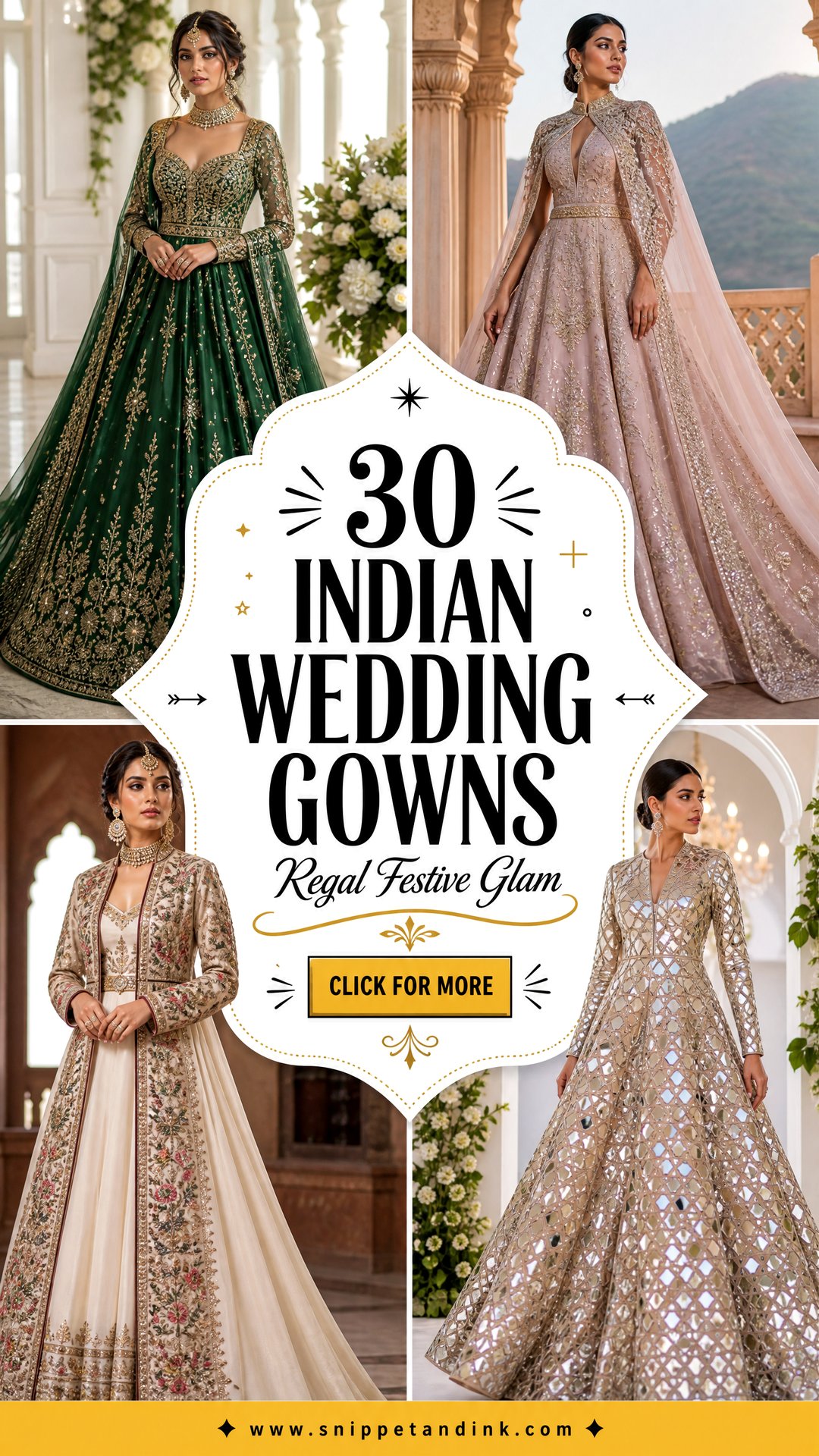
Which Necklines Carry Kundan, Polki and Chokers
Heavy Indian jewellery is designed for blouse necklines, and gowns change the rules. Before choosing a gown I ask what jewellery is going with it, because the neckline has to make room.
- Sweetheart and off-shoulder: the best frame for a choker or a layered kundan necklace, since there is open skin for the piece to sit on.
- High neck and boat neck: skip the necklace. Let the earrings do the work, perhaps with a matha patti or a cuff.
- V-neck: a long rani haar or a pendant follows the line, while a choker leaves an awkward gap between necklace and neckline.
- Embroidered necklines: any necklace competes with the embroidery. Earrings only, or a fine chain at most.
Bring the actual jewellery to the gown fitting. It is the only way to see whether a heavy piece sits flat or tips forward on the fabric.
1. Red Indian Wedding Gown
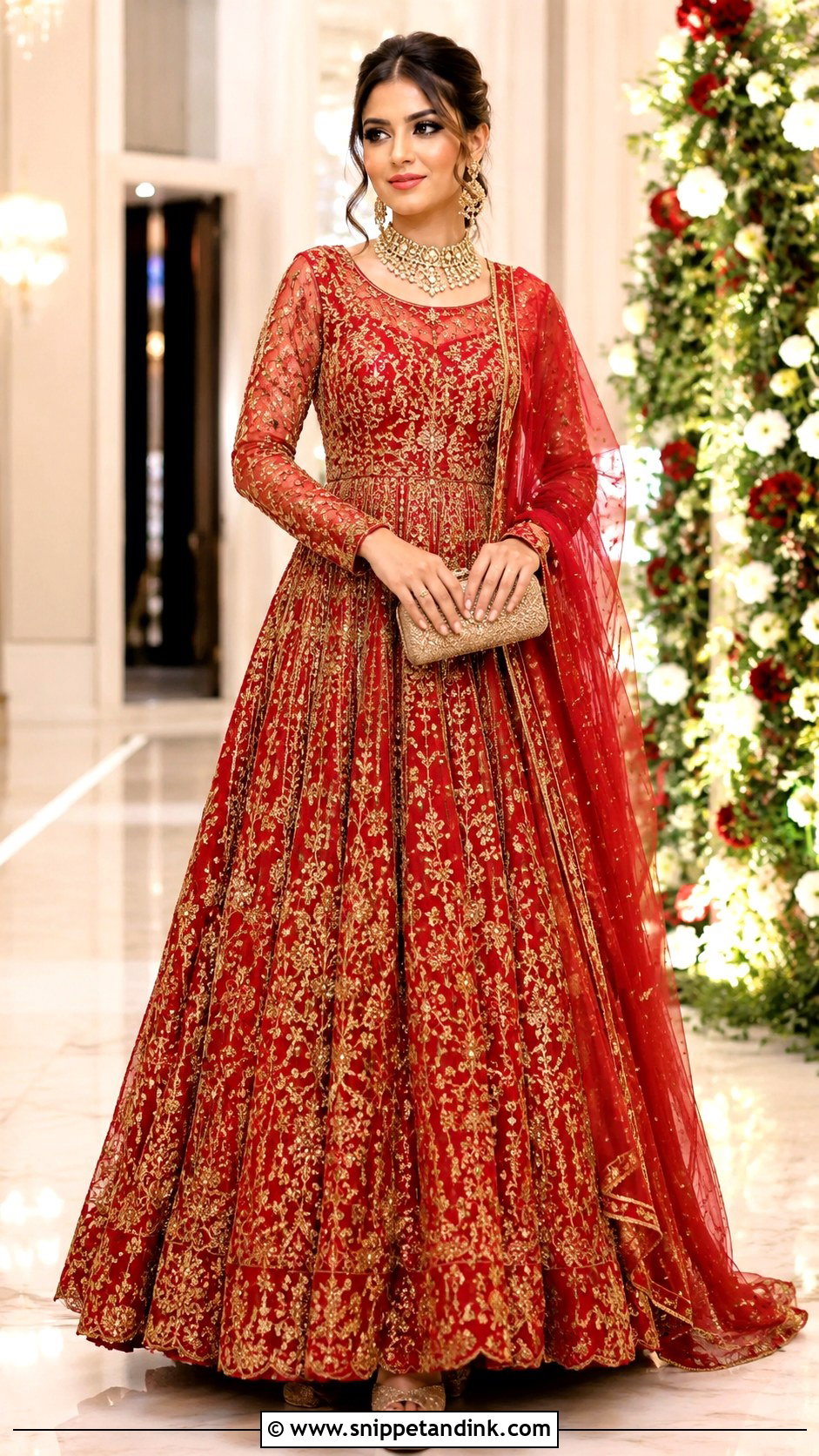
Red in a gown gives you the bridal colour without the weight of a full lehenga. A fitted bodice, flared skirt and gold embroidery keep it traditional. I’d reserve a true red for the bride or a grand reception entrance; close family can wear the same idea in a brick or berry red so the photos still show who the bride is. Antique gold jewellery, embellished heels and a sheer cape add drama, with defined eyes and a warm lip. Check that the red of the gown and the red of your lipstick share an undertone, because a blue-red lip against an orange-red gown looks off in every photo.
2. Gold Indian Wedding Gown
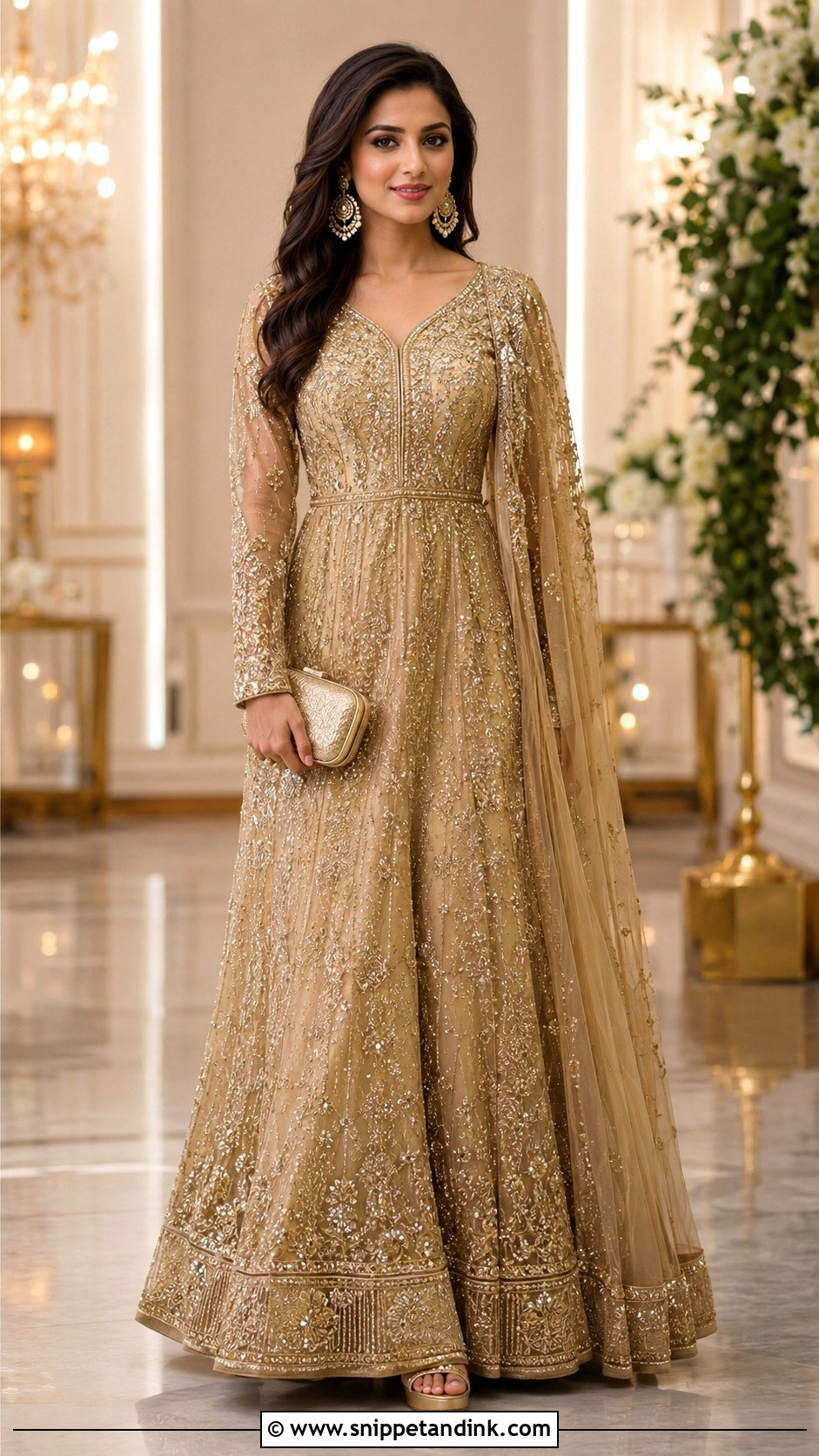
Gold gowns go wrong when they are too shiny. Champagne or antique gold with beadwork, sequins or zari looks rich under evening lights, while high-shine lamé reads costume-like on camera. Kundan earrings, nude or gold heels and a sleek clutch are enough, because the gown is already the statement. A soft bun or polished waves complete it. Gold flatters most skin tones and handles a long reception without looking tired.
3. Ivory Indian Wedding Gown
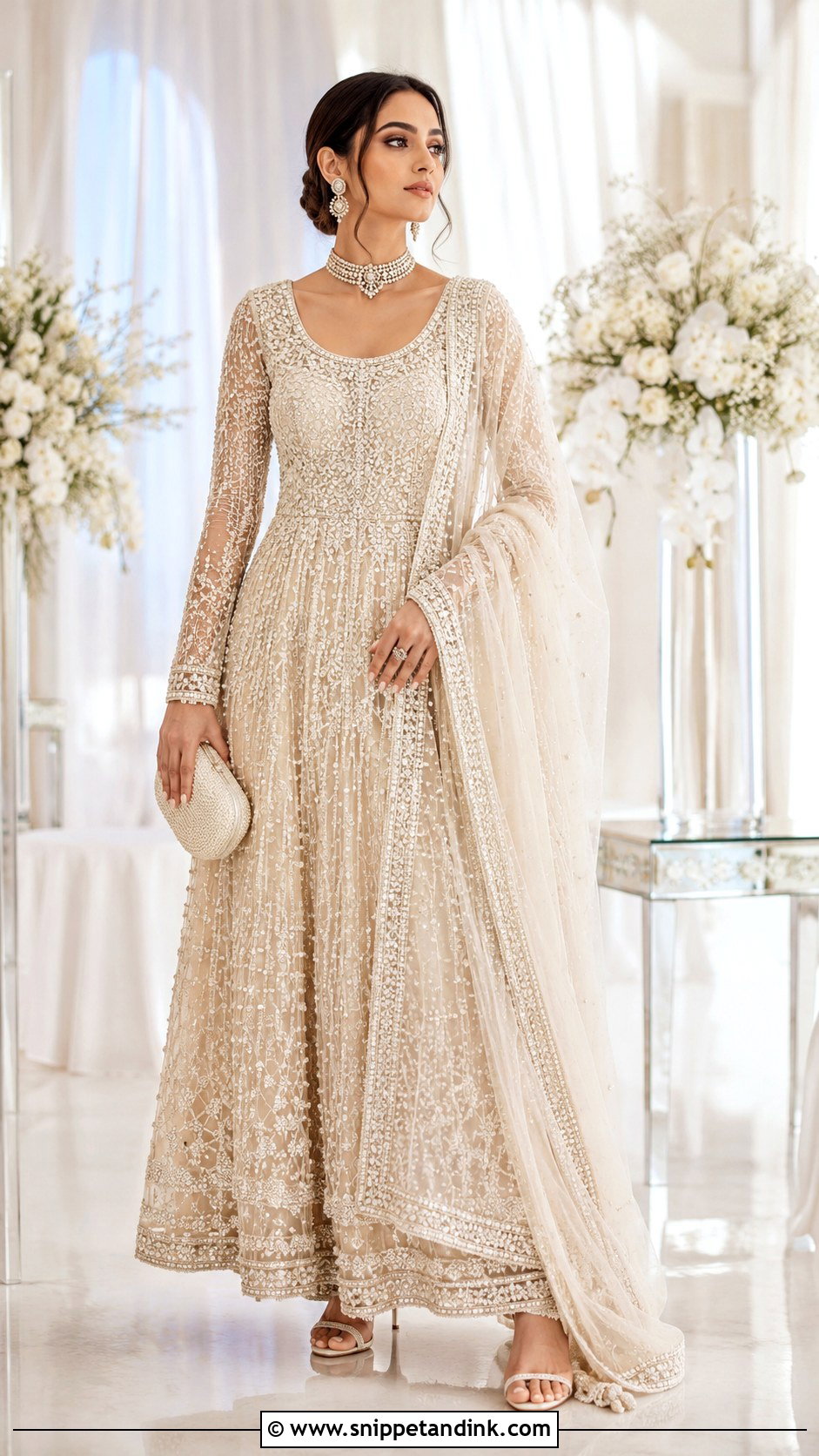
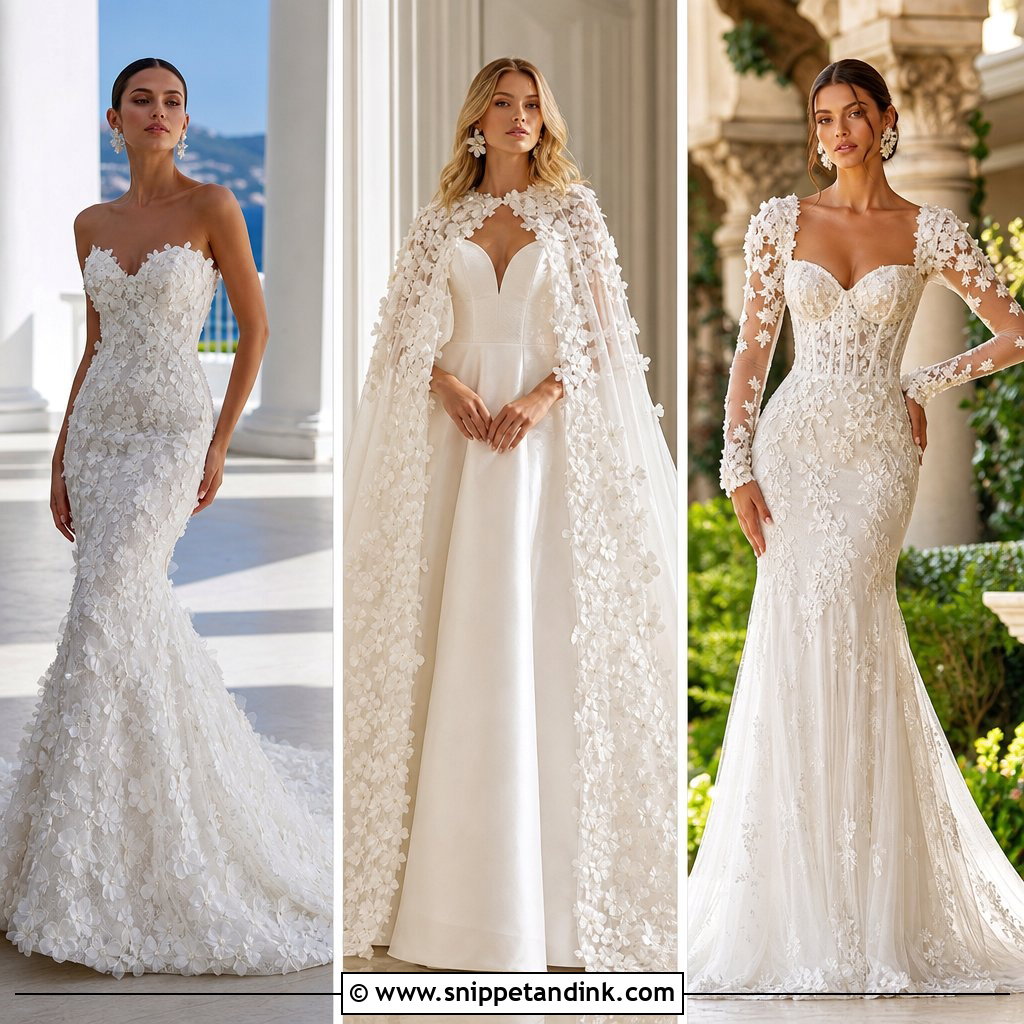
Ivory is the colour I suggest to brides who want a soft, modern bridal look for a reception, civil ceremony or destination wedding. Pearl work, chikankari-style embroidery or fine gold thread keep it wedding-appropriate rather than plain. Emerald jewellery gives strong contrast; pearls stay clean and bridal. A sheer embroidered dupatta or detachable trail makes it feel ceremonial. Hold the fabric against your face in daylight before buying, since some ivories lean yellow and others pink, and the wrong one dulls the skin.
4. Pink Indian Wedding Gown
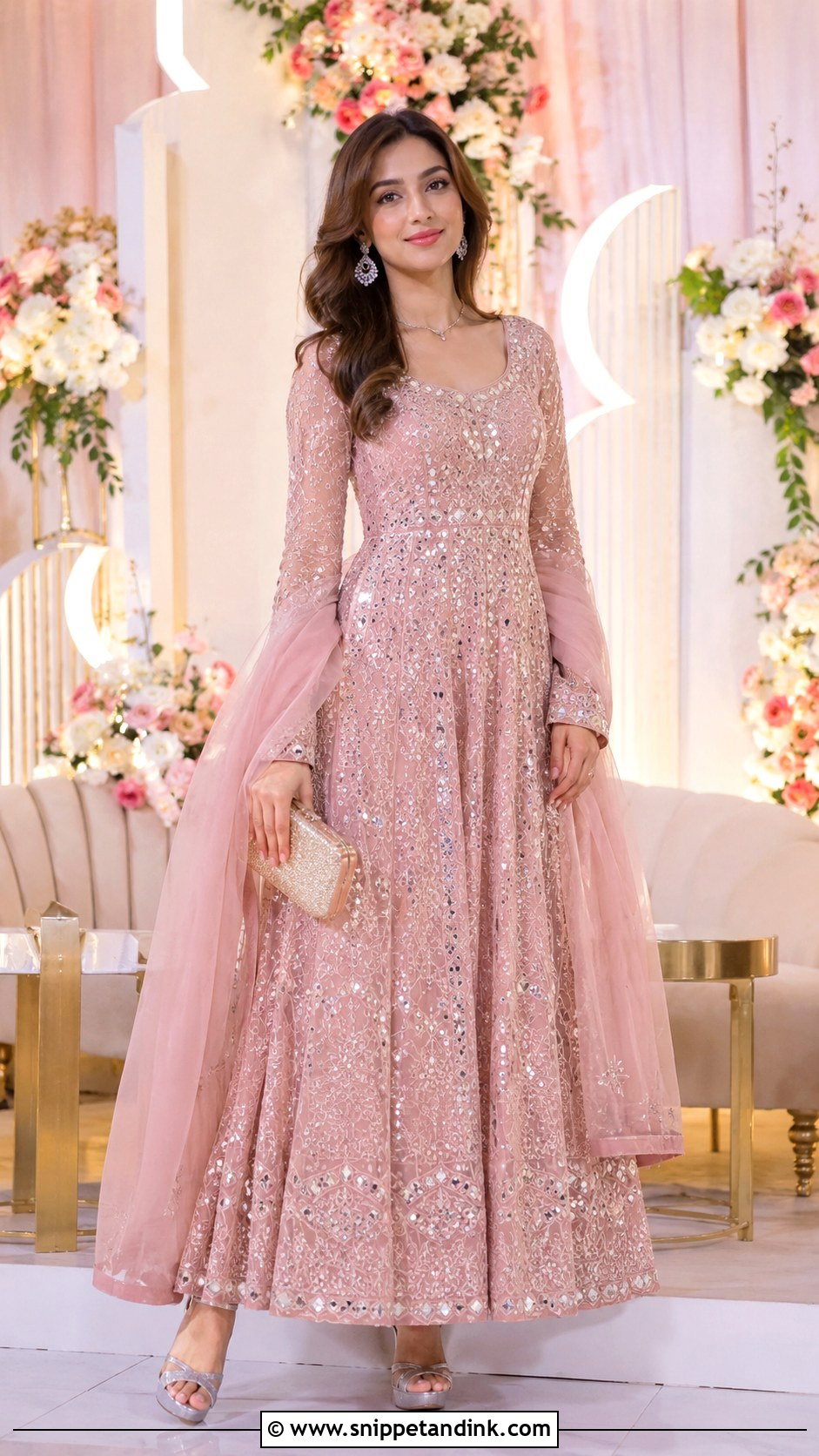
Pink gowns cover a wide spread. Blush and dusty pink suit engagement ceremonies and bridesmaids; hot pink with gold suits a sangeet. Mirror work, sequins or floral embroidery make pink festive. With the softer pinks I’d keep jewellery silver or diamond-style and makeup fresh. Hot pink needs gold and statement earrings, or it looks unfinished next to everyone else’s heavy outfits.
5. Green Indian Wedding Gown
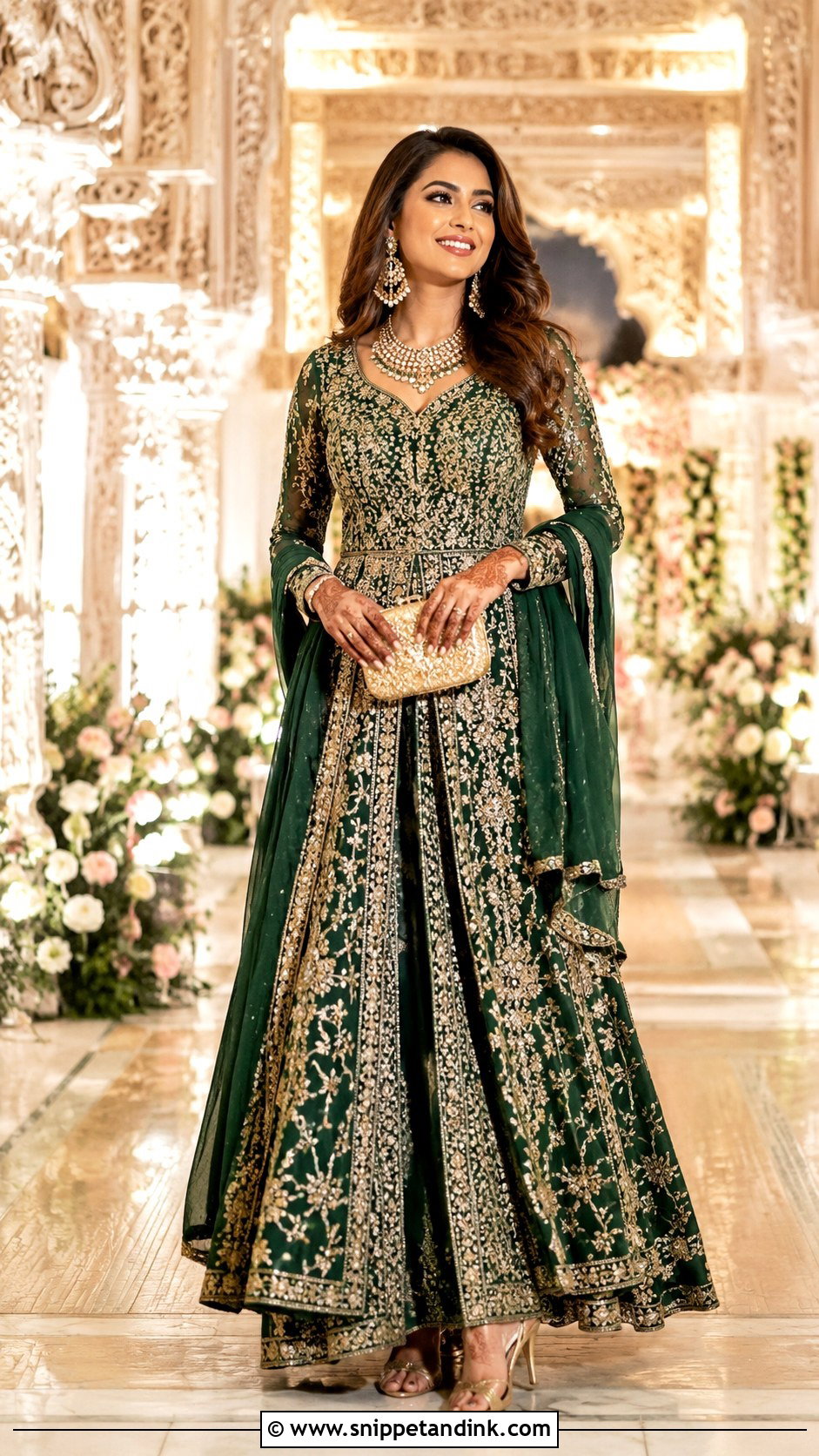
Emerald at night, sage or mint by day: green splits neatly by time. Emerald gowns with gold embroidery, crystal work or layered tulle look royal with polki jewellery and gold heels. The lighter greens suit pearls, soft waves and delicate bangles. Green has deep roots in Indian wedding colours, so even a modern gown cut feels appropriate. Bridesmaids and sisters can wear it confidently because it rarely clashes with a red bridal outfit.
6. Blue Indian Wedding Gown
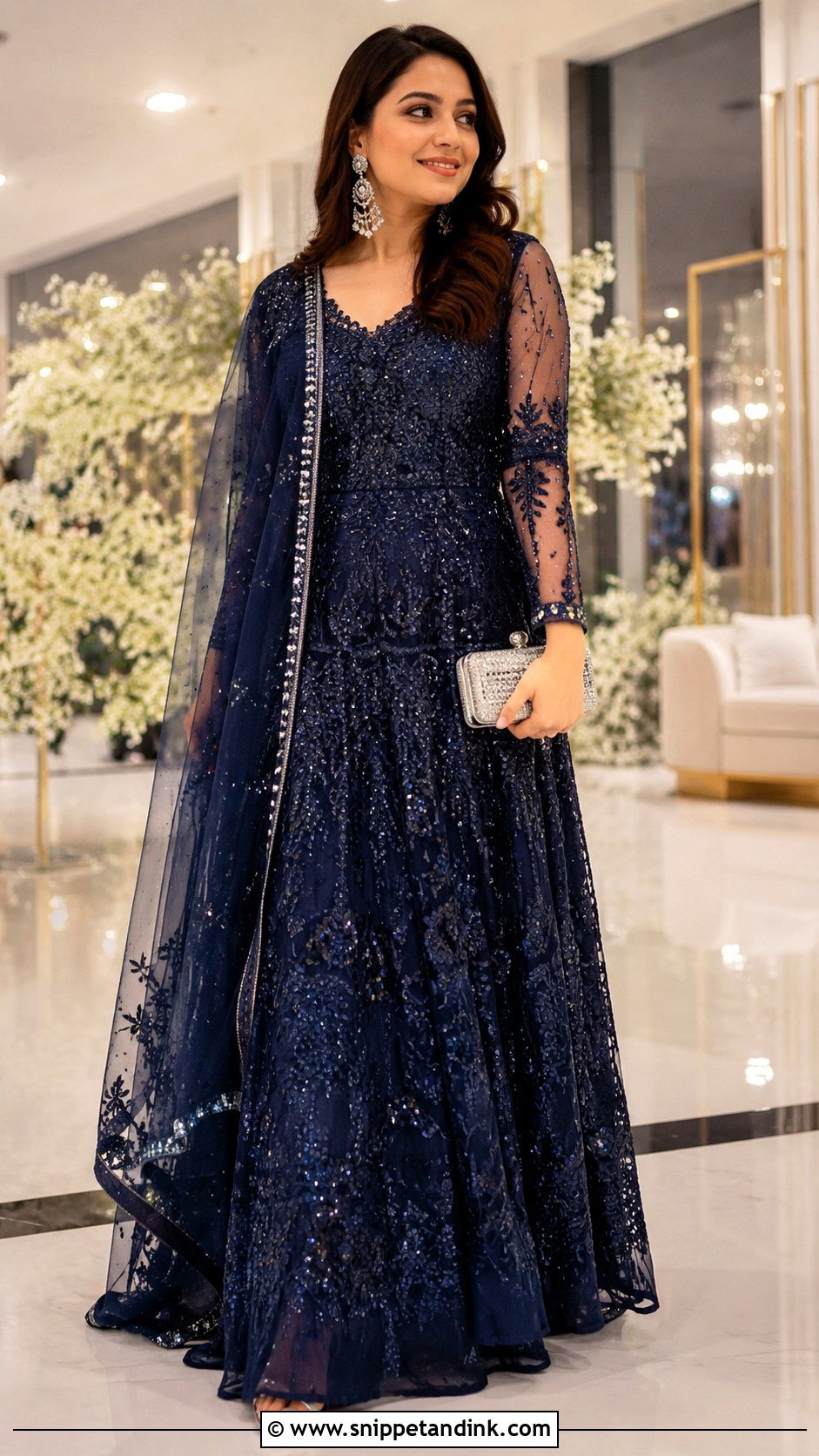
Blue is a strong alternative to the usual bridal shades. A navy gown with silver embroidery belongs at a reception; powder blue with pearls suits an engagement or daytime event. Royal blue and sapphire sit in between. If the gown is heavily worked, I keep the hair clean and sleek so the embroidery has room. Crystal earrings, metallic heels and a slim clutch finish it.
7. Black Indian Wedding Gown
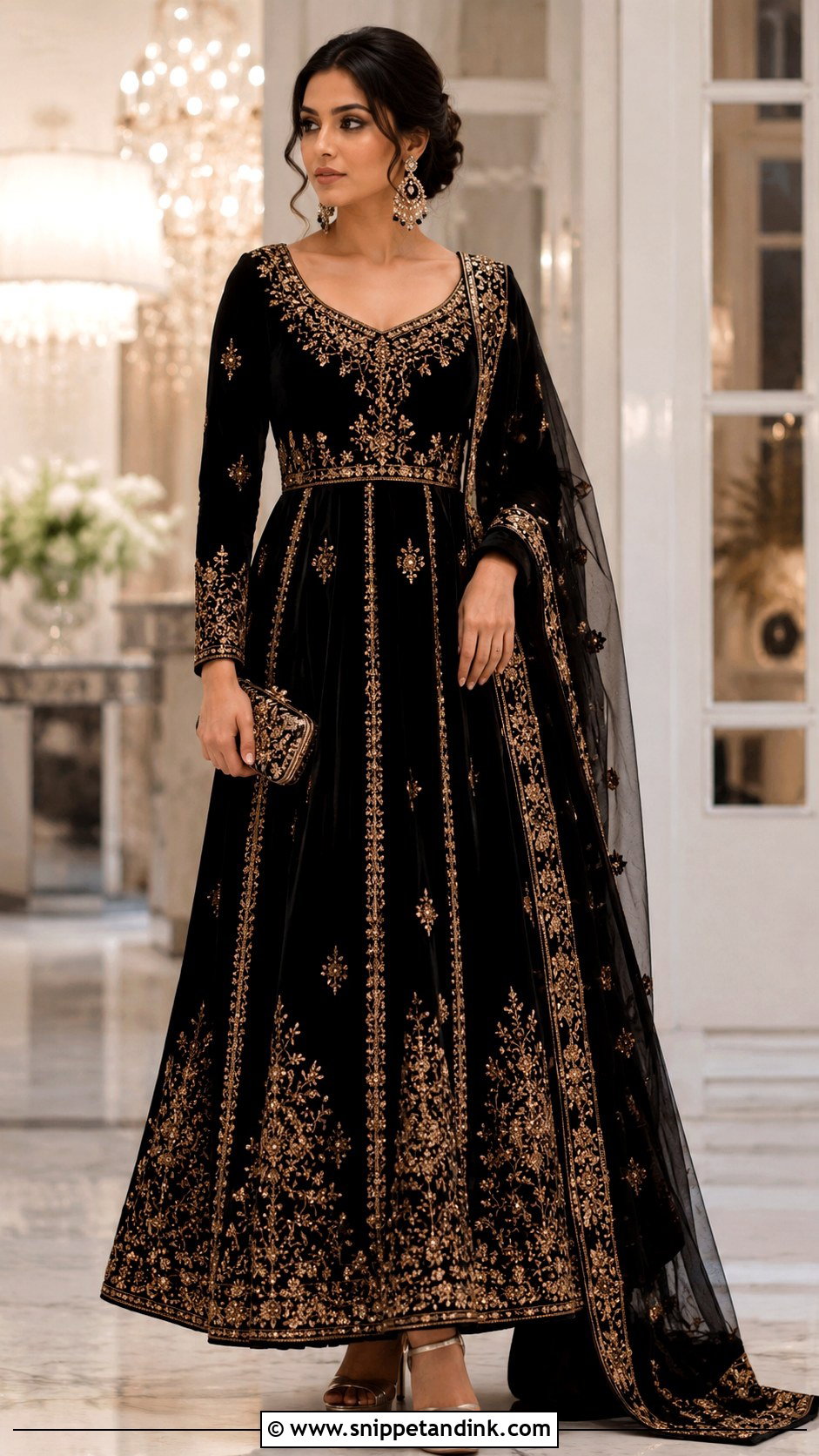
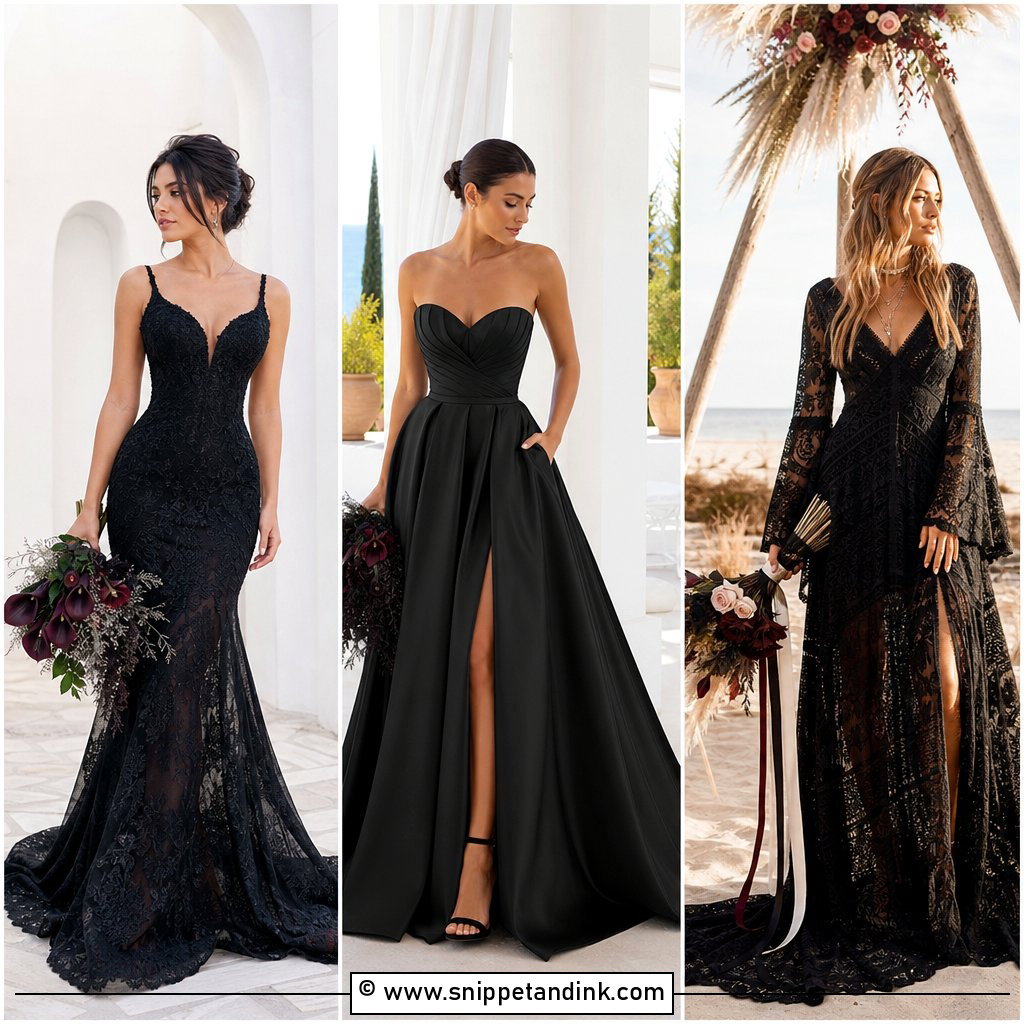
Black gowns can look very elegant at a reception, cocktail-style function or formal evening, but some families see black as inauspicious at a wedding. Ask before you buy. Where it is welcome, gold, silver or multicolour embroidery keeps it festive, and black velvet, sequin or cape gowns need very few accessories. Chandelier earrings, metallic heels and a clean clutch are plenty, with glowing skin and defined eyes.
8. White Indian Wedding Gown
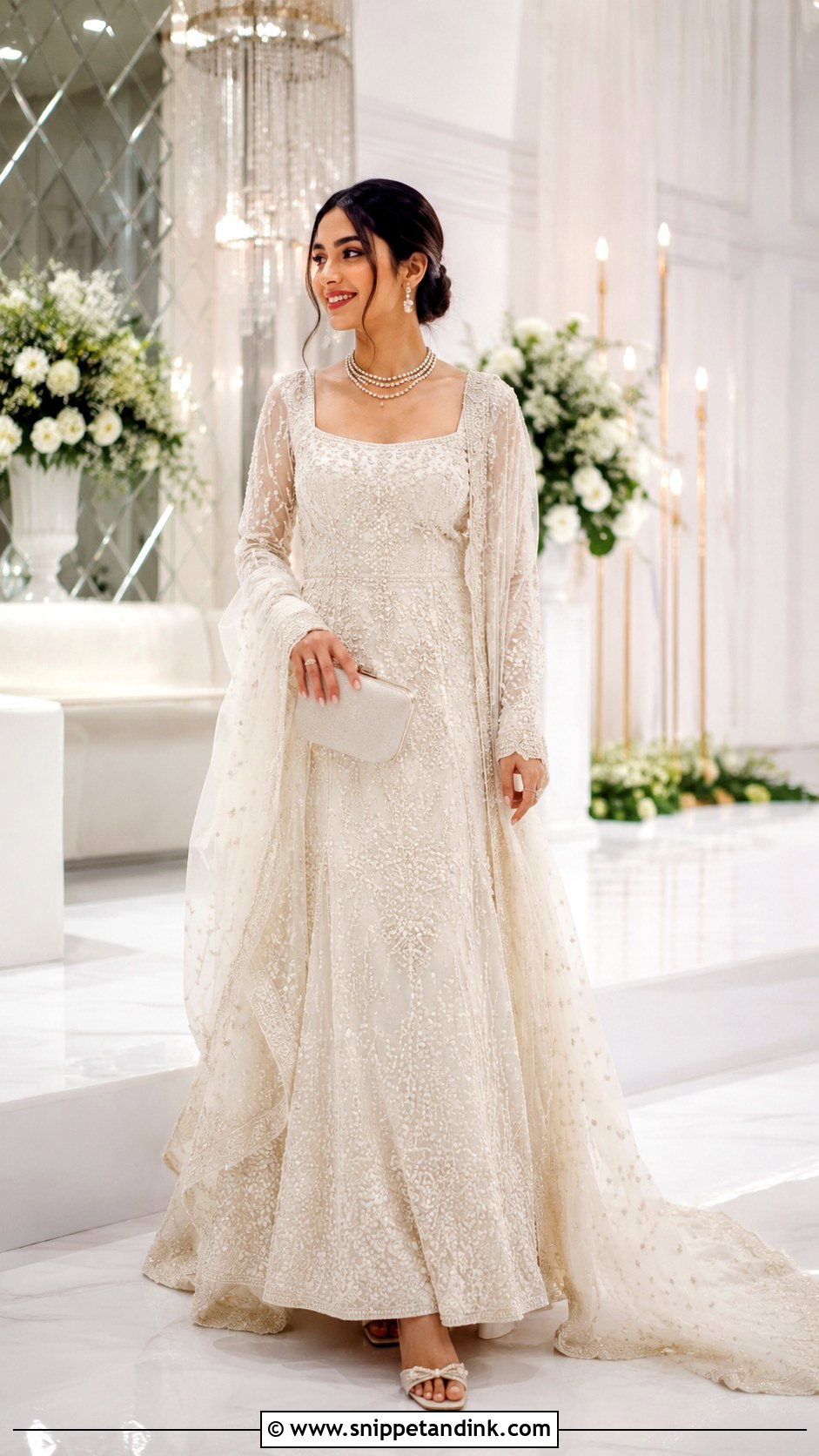
White gowns suit fusion weddings, civil ceremonies and receptions. To make one read Indian rather than Western bridal, the embroidery has to do the work: pearls, zari, sequins, chikankari or mirror work. A long trail or sheer dupatta adds ceremony. Diamond-style jewellery, pearl bangles and ivory heels finish it. White is hard to keep clean on outdoor ground, so for a garden or beach venue I suggest a hem that clears the floor by a centimetre.
9. Maroon Indian Wedding Gown
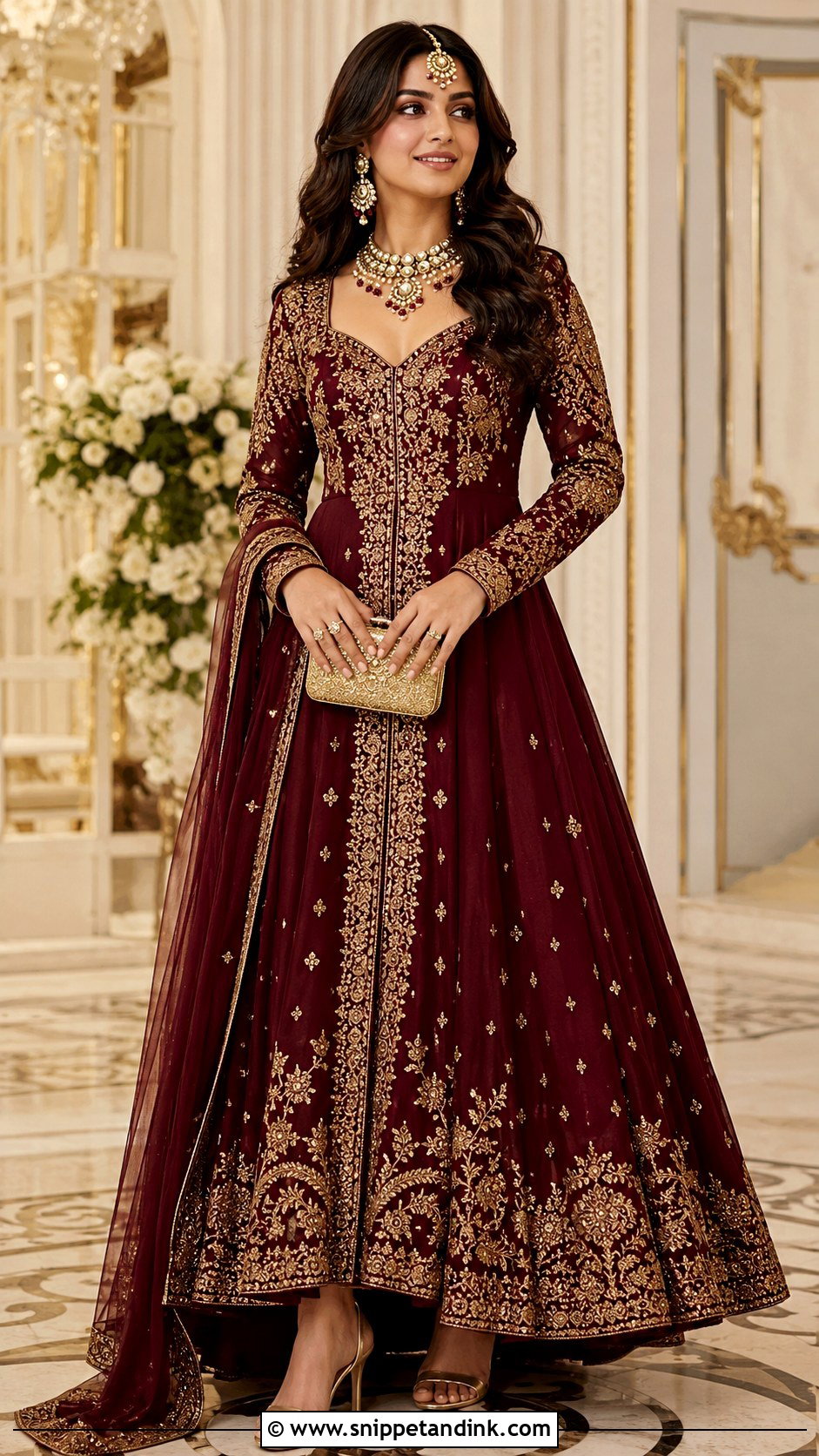
Maroon gives the bride or close family depth without bright red. Velvet, silk or embroidered net with gold zardozi, beadwork or antique embroidery suits it. Kundan jewellery, gold heels and a matching clutch complete the outfit. A deep berry lip works with maroon, but only if the rest of the makeup stays soft. It belongs to evening receptions, formal dinners and grand indoor venues.
10. Pastel Indian Wedding Gown
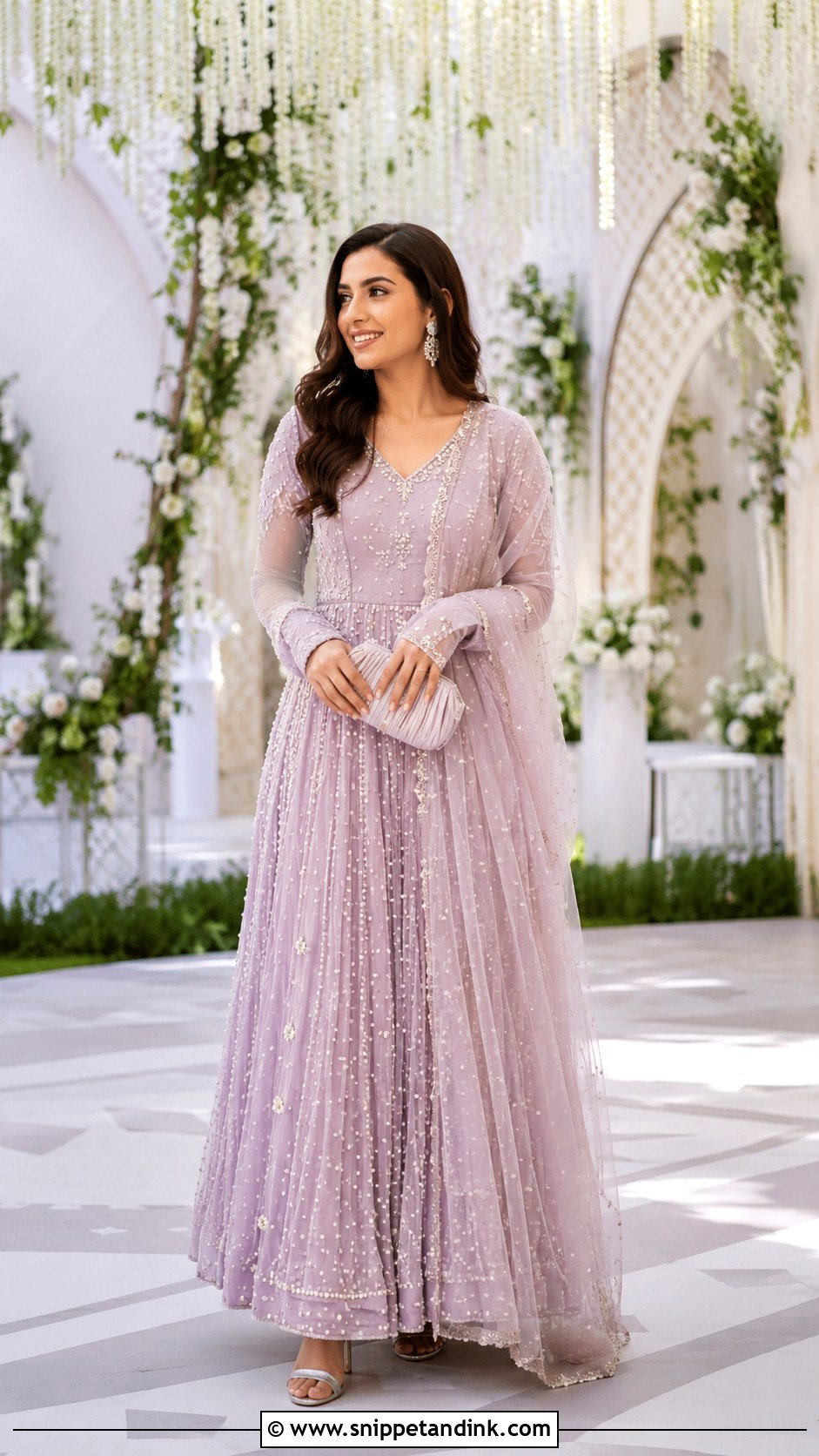
Pastel gowns are the bridesmaid favourite for engagements and daytime events. Lavender, mint, peach, powder blue and blush with light embroidery, pearls or subtle sequins keep them fresh. Garden venues, beach weddings and bright halls flatter them. They are less forgiving in dim evening venues, where pastels lose definition and can look washed out, so I’d save them for daylight. Glowing skin, soft waves and metallic sandals suit them.
11. Sequin Indian Wedding Gown
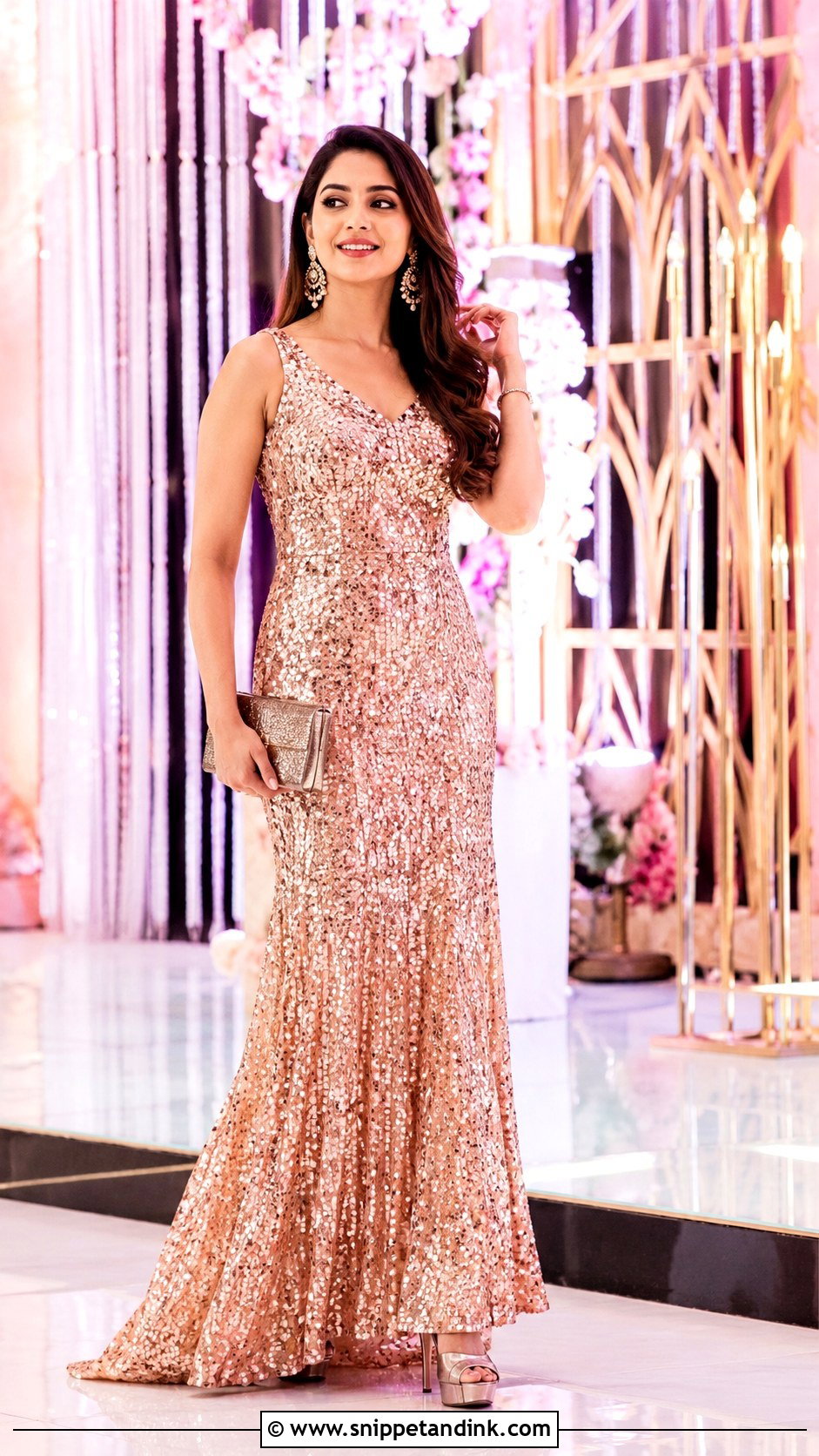
A full sequin gown is made for dancing and reception entrances. Gold, silver, rose gold, navy or emerald all sparkle under evening lights. If full sequins feel like too much, sequin panels, embroidered sleeves or a shimmer skirt soften the effect. Keep accessories to metallic heels, statement earrings and a sleek clutch. Sequin gowns are often unlined at the seams and can rub under the arms, so check the inside finishing as carefully as the outside.
12. Anarkali Indian Wedding Gown
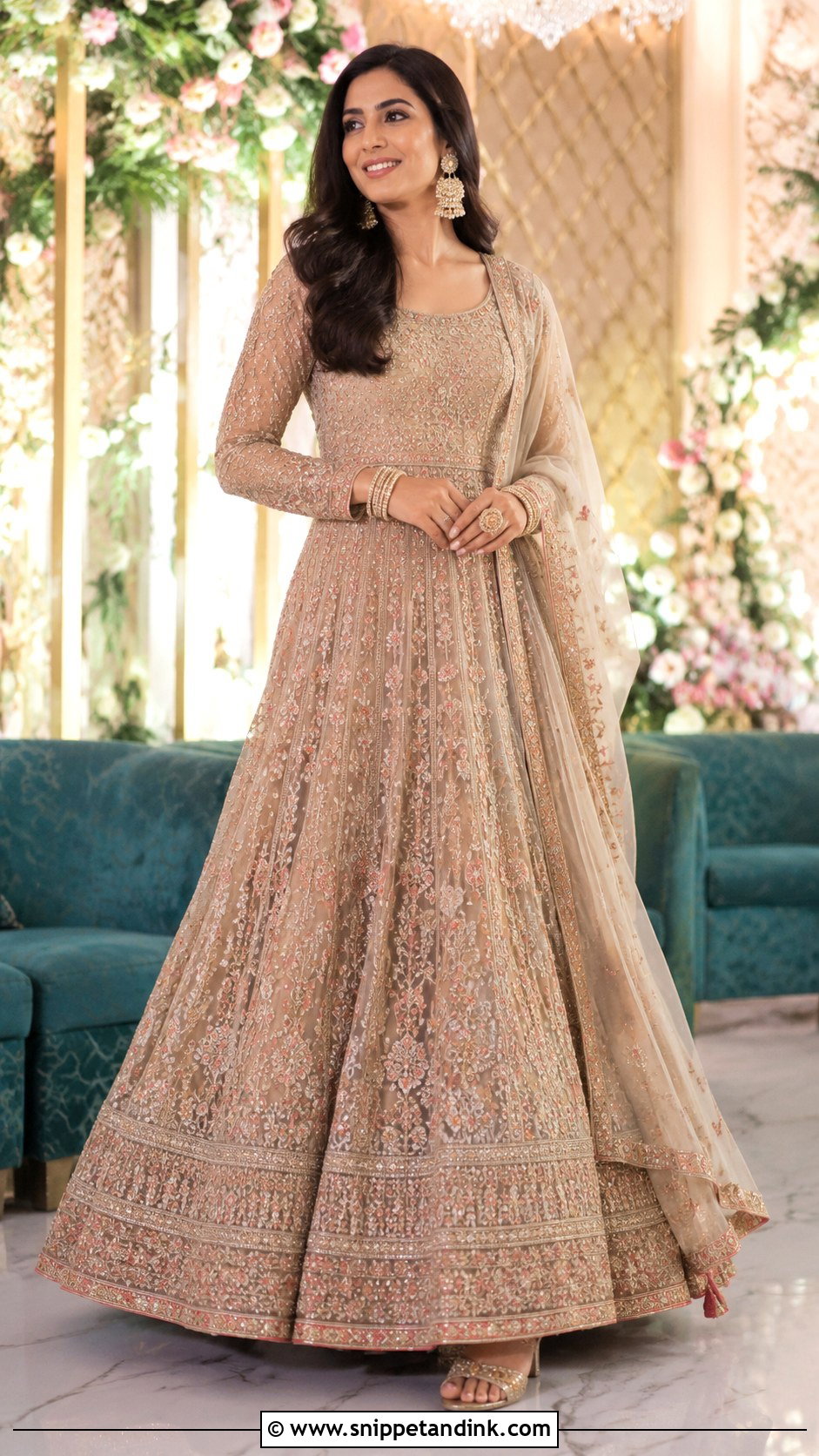
An Anarkali Indian wedding gown is the most traditional gown on this list, the long kurta silhouette stretched to floor length. A fitted bodice, flared skirt and embroidered dupatta look regal in silk, georgette, net or organza. Jhumkas, embellished heels and bangles complete it. It is easy to move in for sangeet, mehendi or family ceremonies, and the flare from the bust suits most body types. I always check that the bodice seam sits exactly under the bust; a few centimetres off and the whole gown looks borrowed.
13. Lehenga Indian Wedding Gown
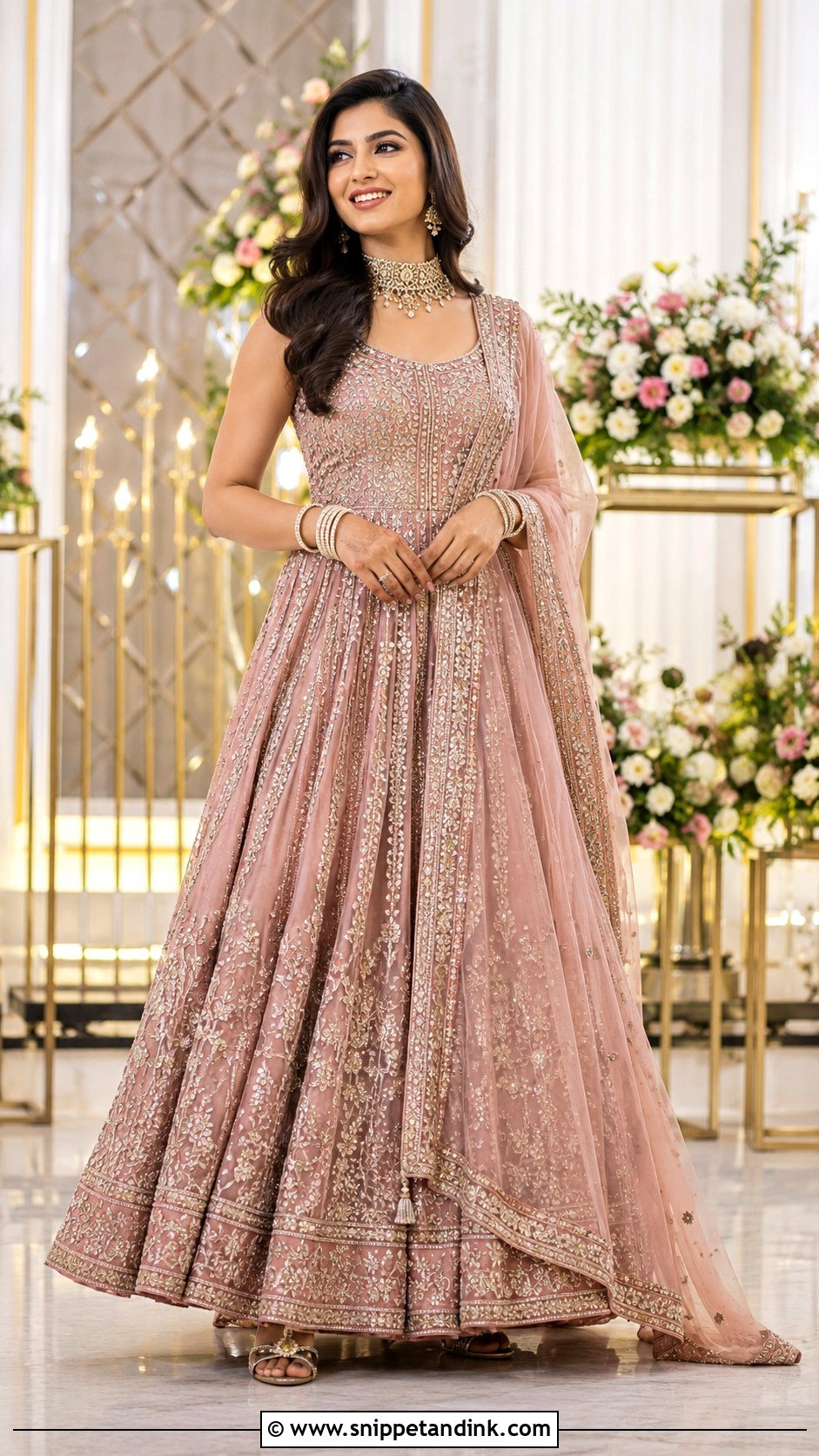
A lehenga gown gives the look of a lehenga in one piece, with a blouse-style top and a full skirt joined at the waist, sometimes with an attached dupatta or cape. That makes it much easier to wear than a separate lehenga and blouse. Embroidery around the waist, neckline and hem gives a bridal finish. A choker, earrings, bangles and embellished heels complete it. It suits receptions, sangeet nights and engagement celebrations, and feels younger and lighter than a heavy bridal lehenga.
14. Saree Indian Wedding Gown
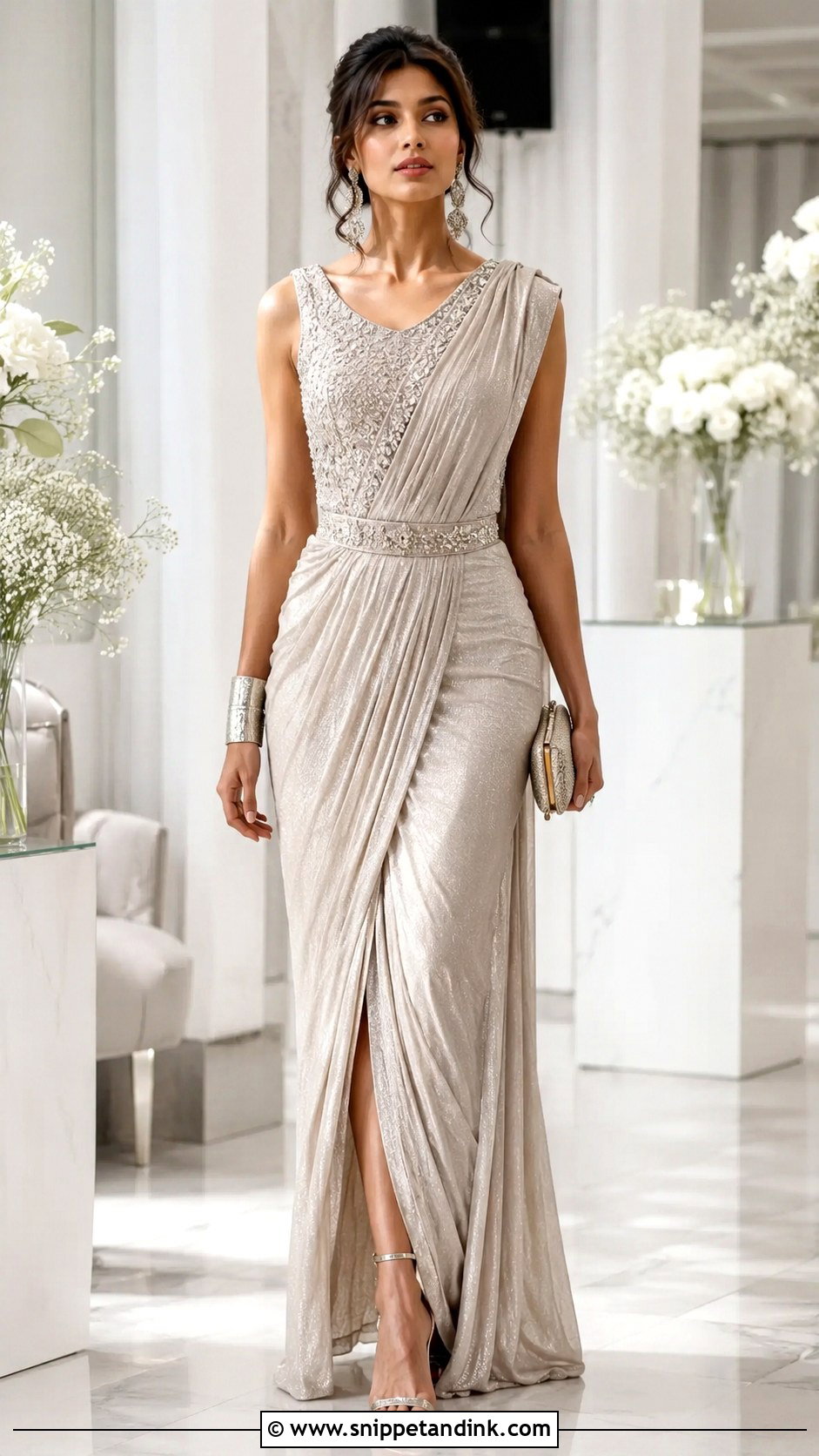
Saree gowns give you the saree drape with the pleats already stitched onto a gown base, plus a pallu-like panel at the shoulder. Satin, georgette, crepe or shimmer fabric drape well. Statement earrings, a cuff and sleek heels keep it polished. Nothing slips, so you never have to excuse yourself to re-pin. It suits receptions, cocktail functions and destination weddings, where there may be no one around to drape a traditional saree.
15. Cape Indian Wedding Gown
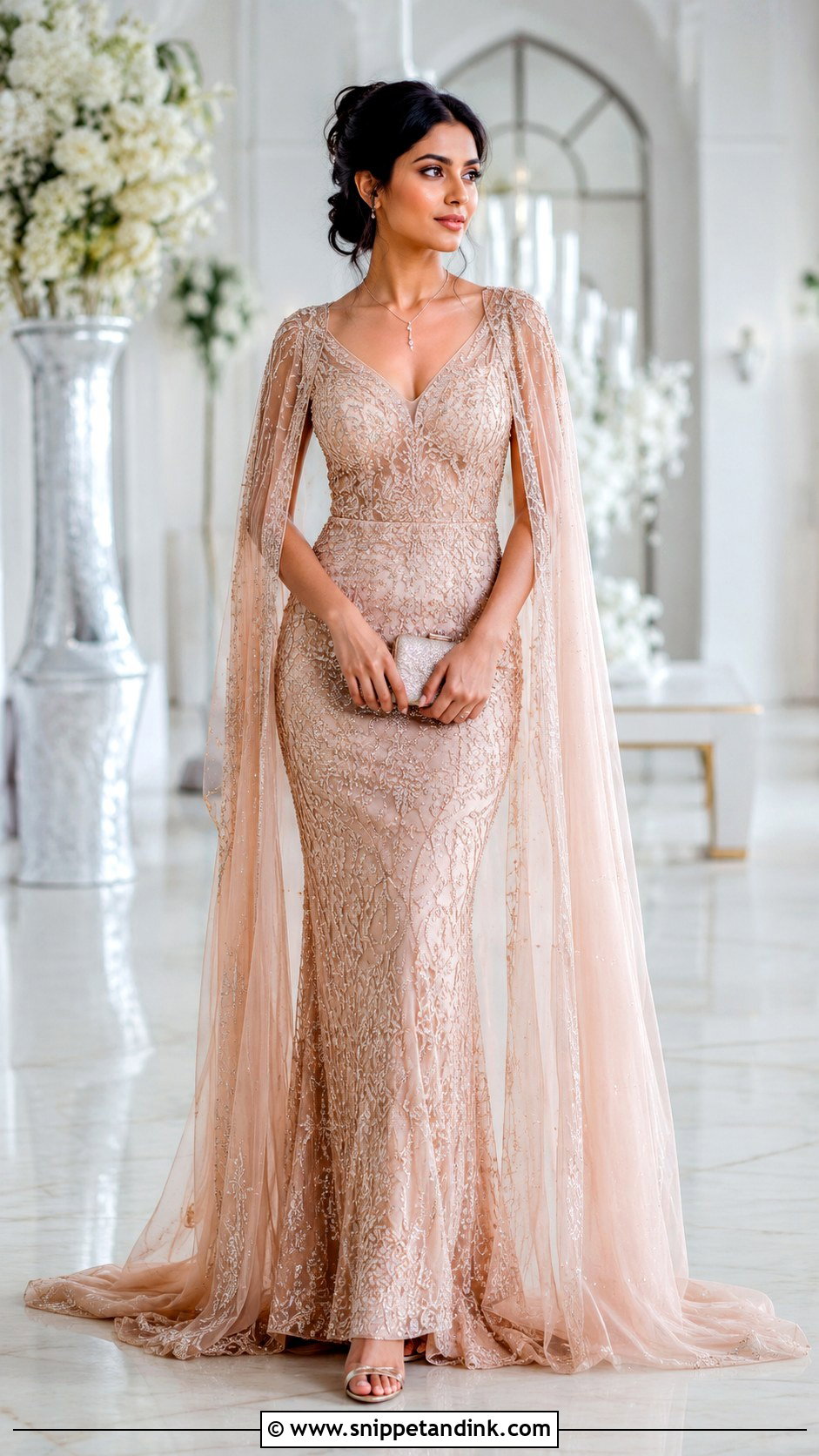
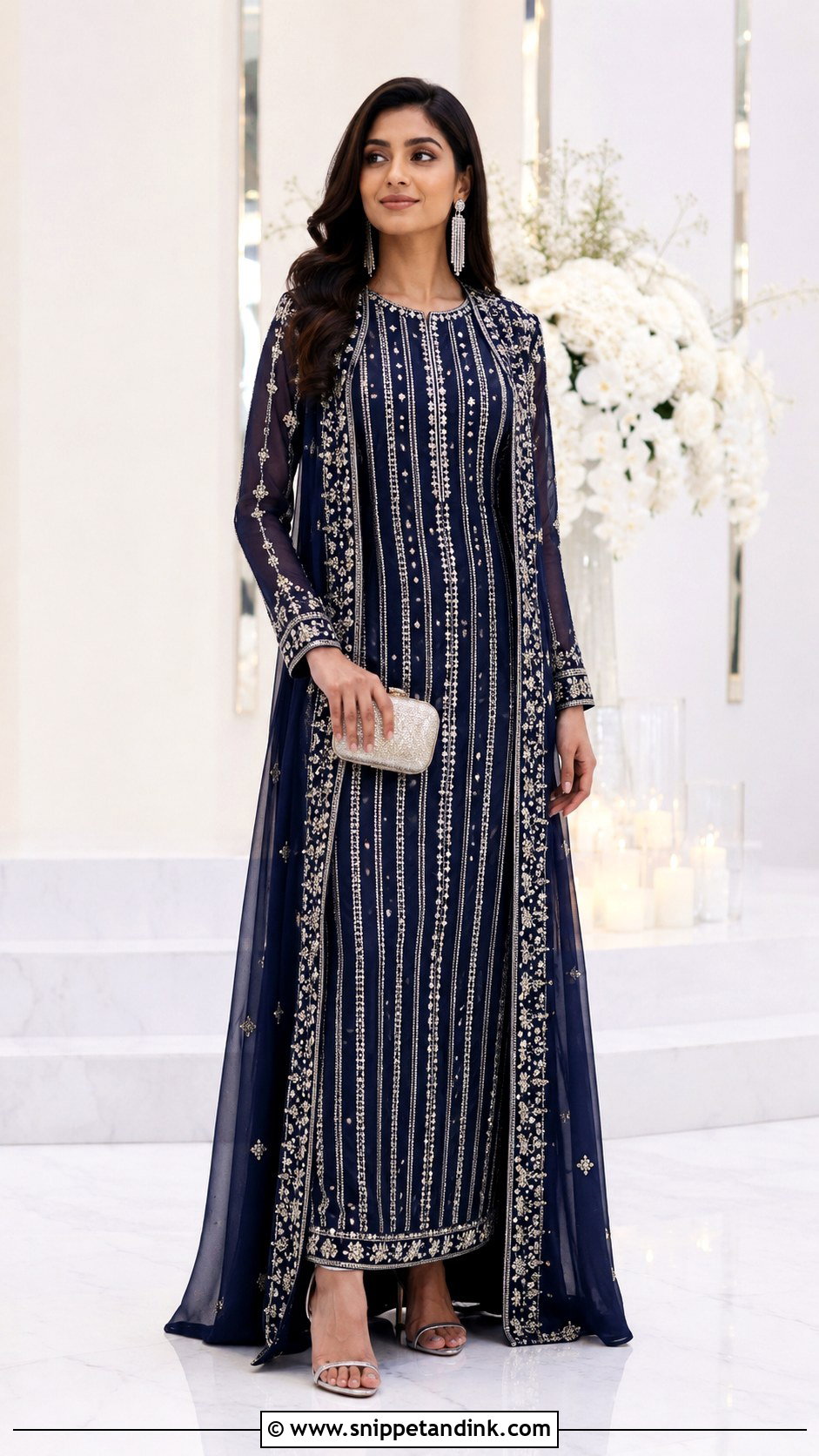
Capes give drama without heavy sleeves. The cape can be sheer, embroidered or beaded, attached at the shoulders to flow behind you. Choose a fitted or A-line gown underneath so the cape does not swallow your shape, and keep jewellery minimal. Sleek heels and a small clutch complete it. The cape also gives arm coverage, which matters at some family functions. It suits receptions, engagements and formal evenings.
16. Jacket Indian Wedding Gown
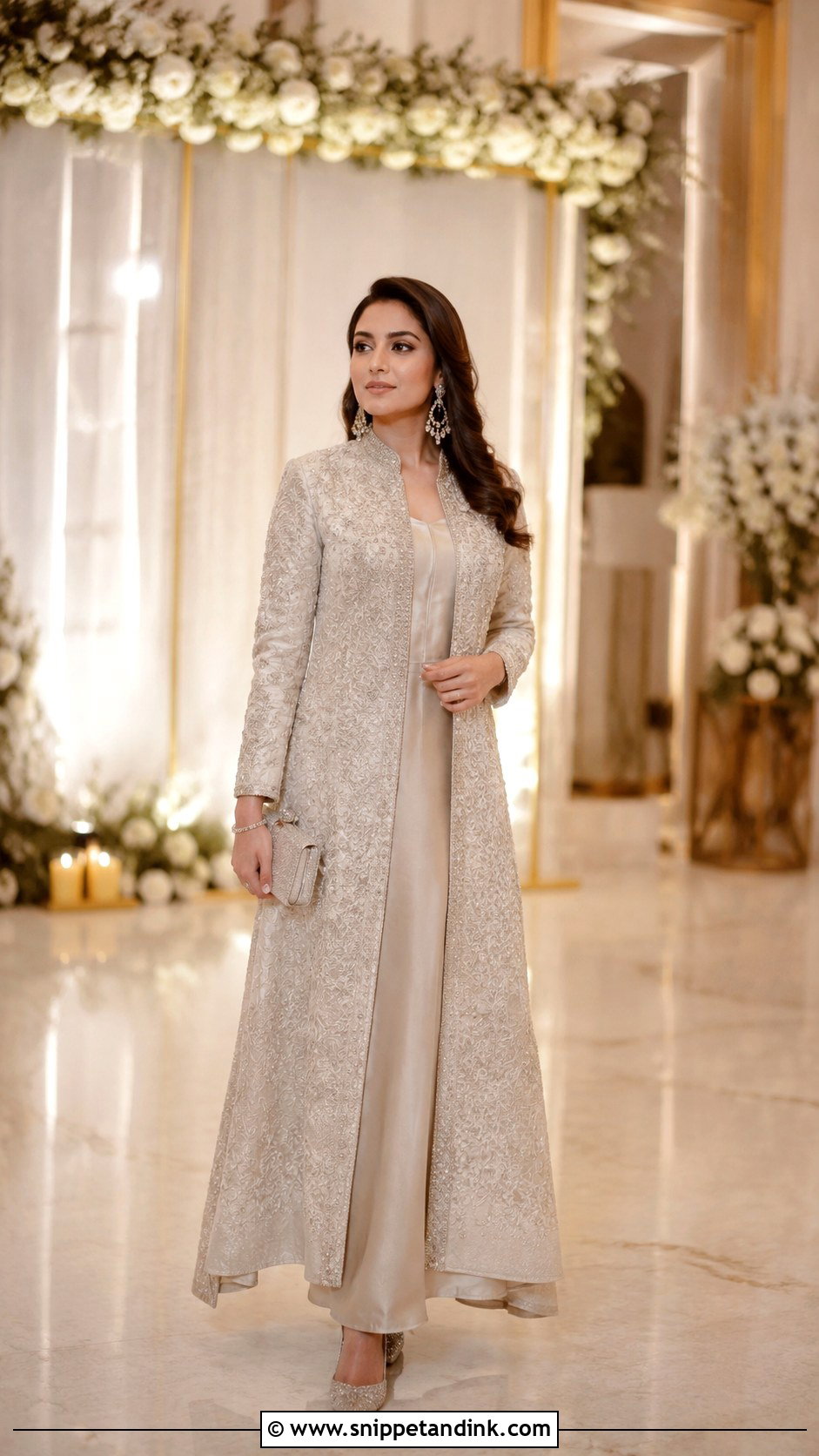
Jacket gowns bring structure and coverage. A long, sheer, embroidered or brocade jacket over a simple gown creates a layered outfit. They suit winter weddings, formal receptions and family functions. A belt defines the waist, while an open jacket moves gracefully. Earrings, a bracelet and elegant heels are enough. I like this for mothers and aunts who want something modern but not bare-armed.
17. Mermaid Indian Wedding Gown
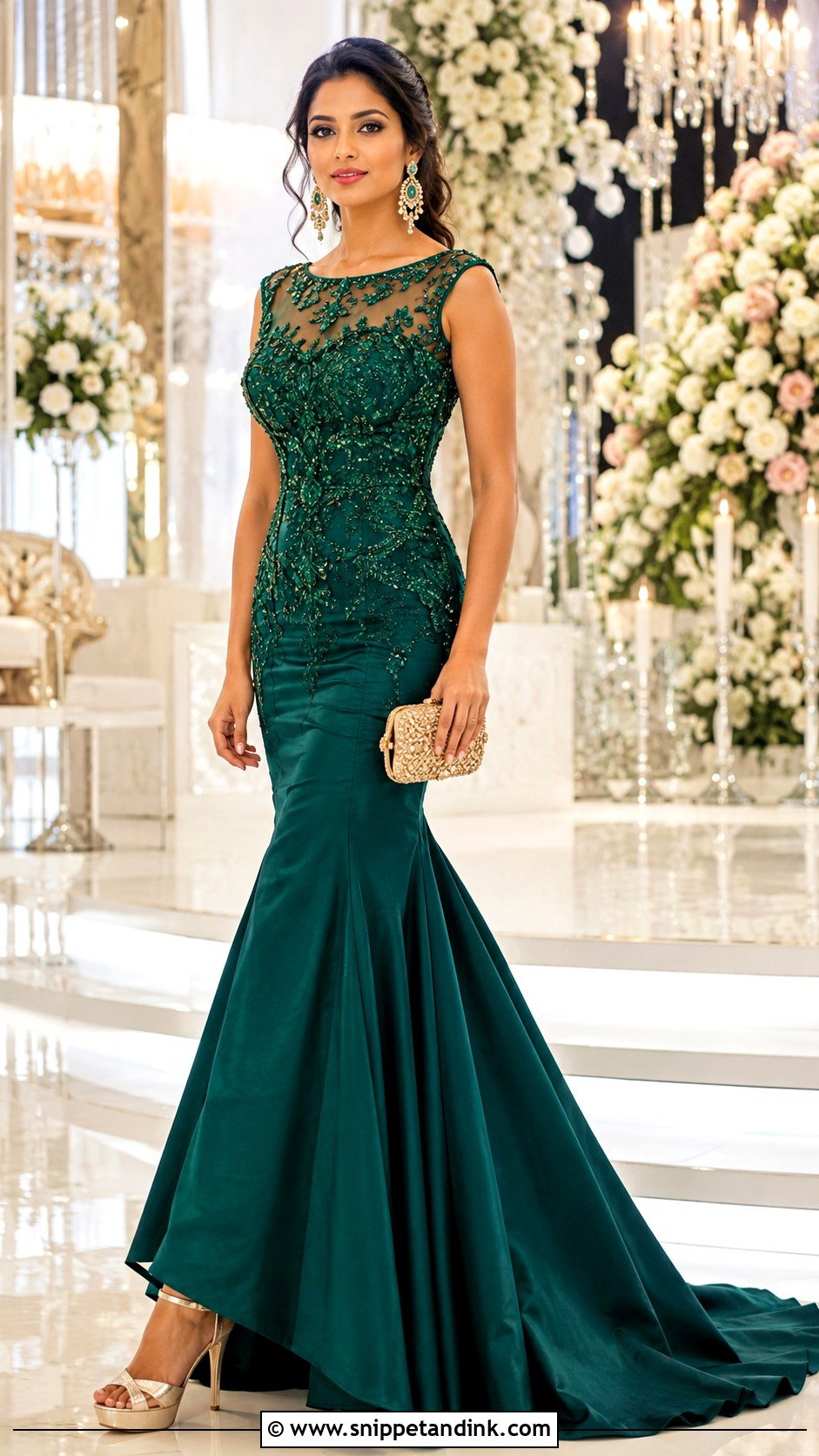
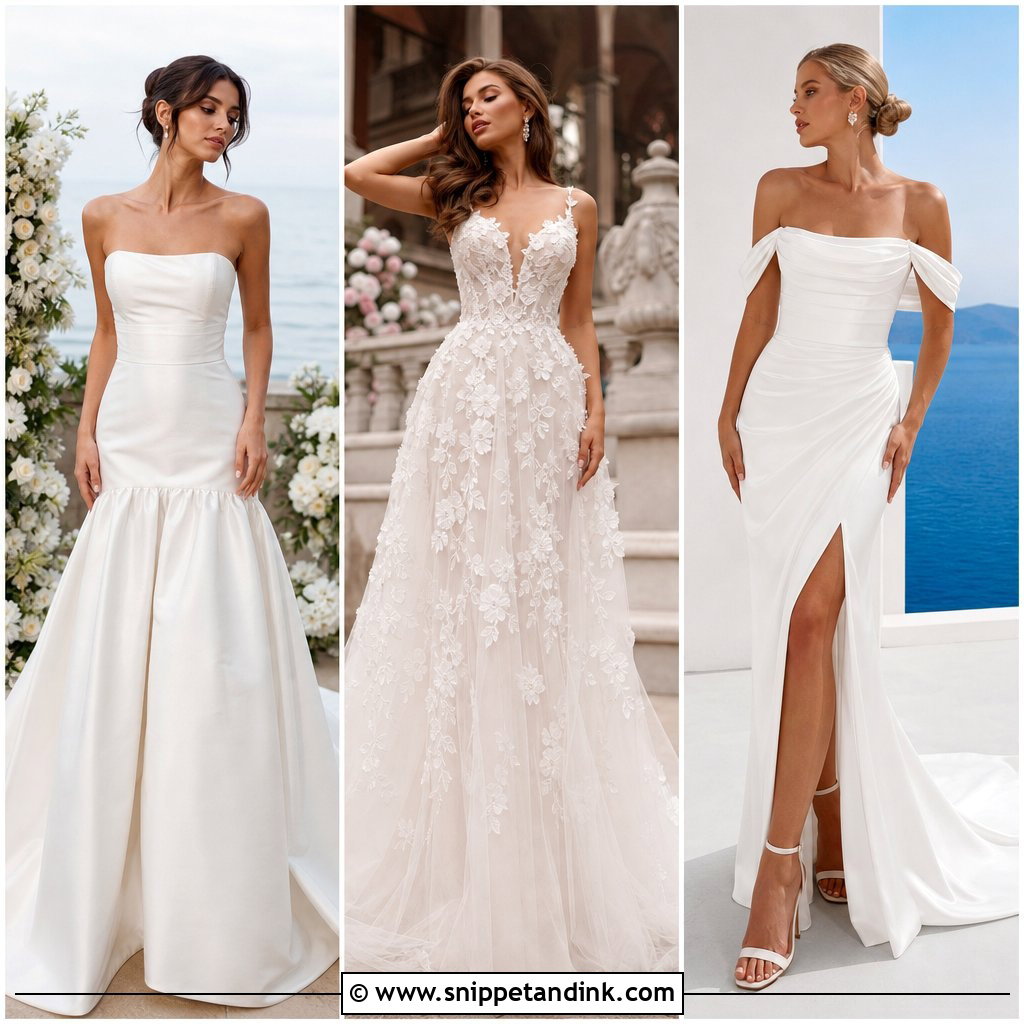
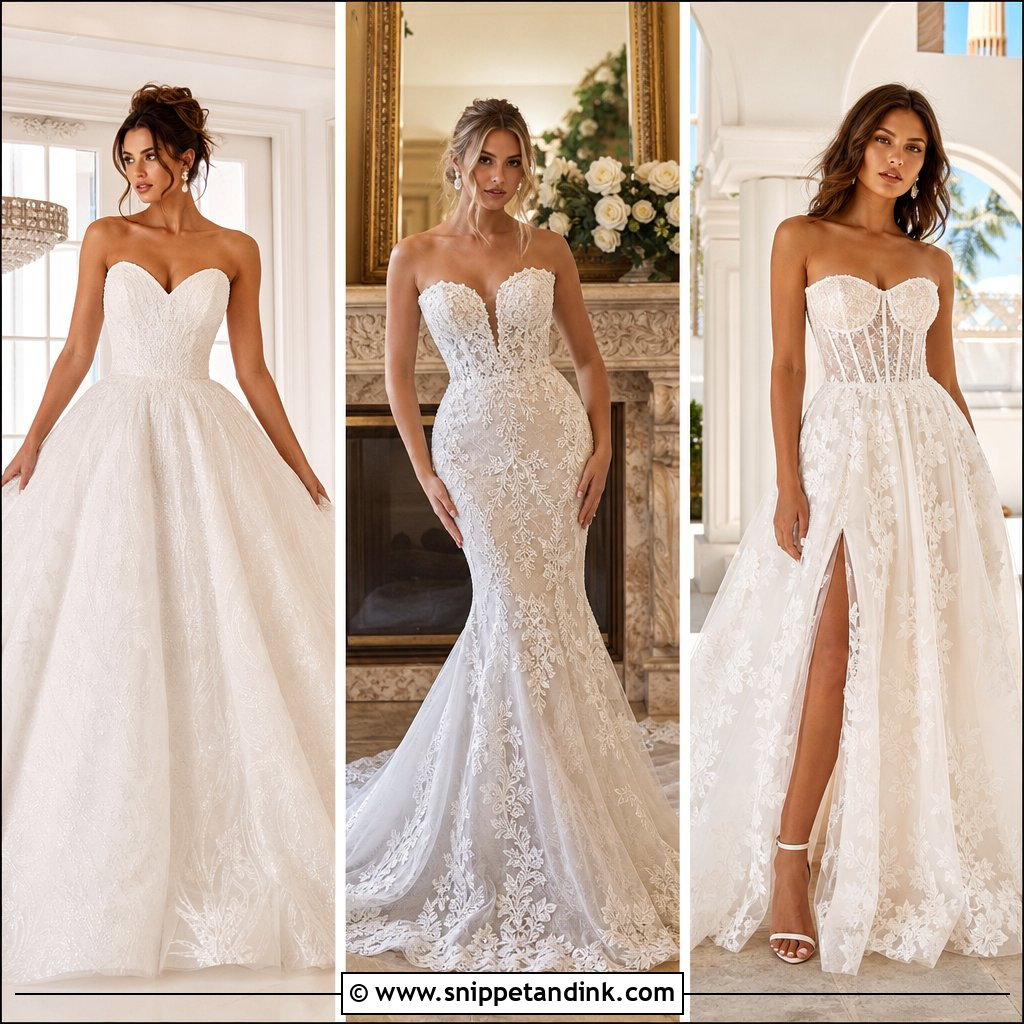
Mermaid gowns are dramatic but demanding. The fit follows the body and flares near the knee, so walking, sitting and stairs all take more effort than in any other cut on this list. I always put brides in a mermaid at the fitting and ask them to climb a step and sit on a low chair; if it fails either test, the flare point needs moving lower or a stretch panel. Embroidery on the bodice and soft volume at the hem keep it balanced. Statement earrings and high heels complete the look, and a detailed neckline means you can skip the necklace.
18. Ball Gown Indian Wedding Gown
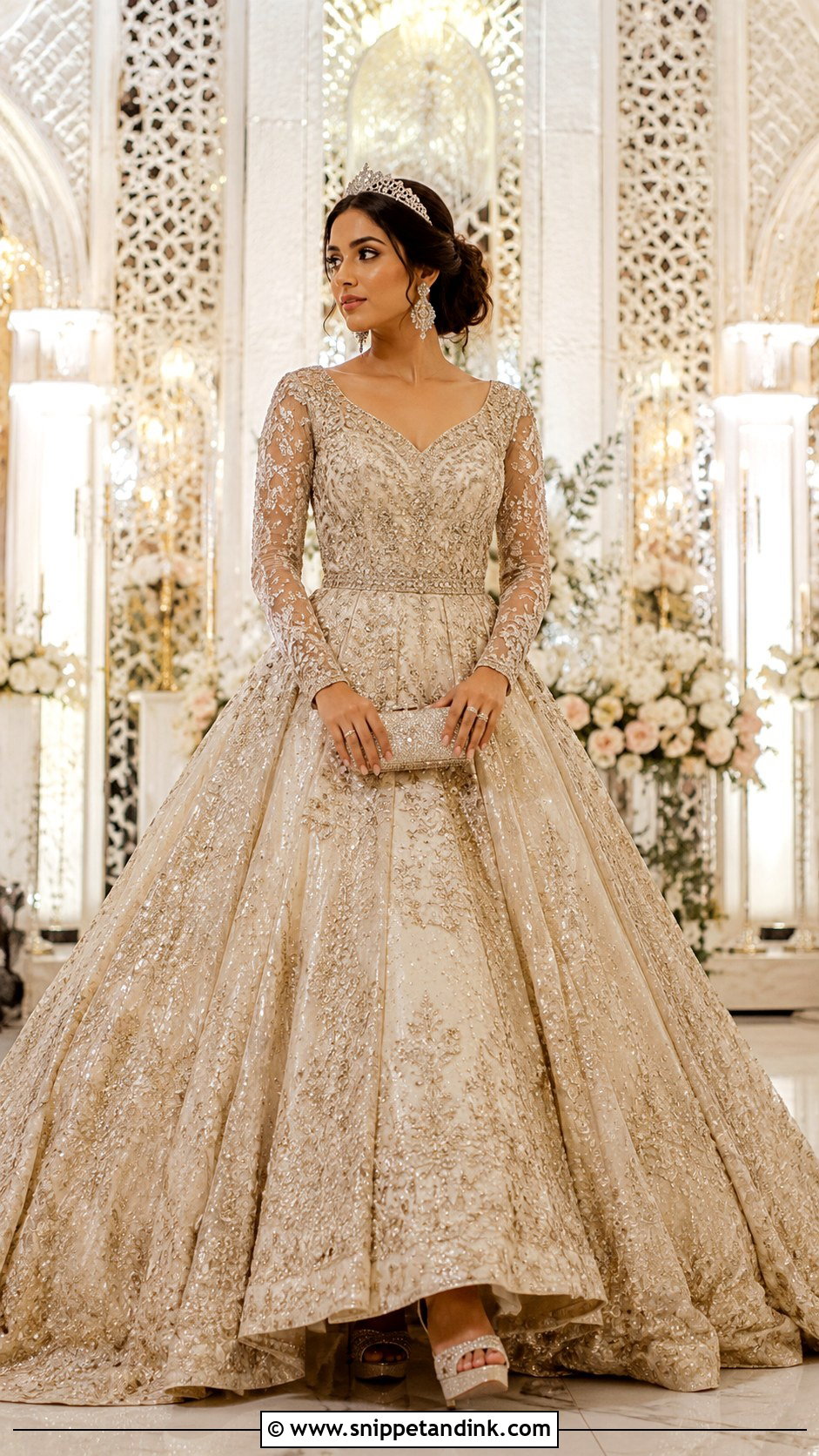
Ball gowns belong in grand venues and large receptions, where there is space for the skirt. Silk, tulle, organza or net with zardozi, crystals or pearls give volume and richness. A well-fitted bodice keeps it balanced. A tiara-style hair accessory, statement earrings and embellished heels finish it. It is hard work in crowded rooms, at buffet tables and in cars, and you will need help with the skirt all evening, but nothing else fills a portrait frame quite like it.
19. Straight Cut Indian Wedding Gown
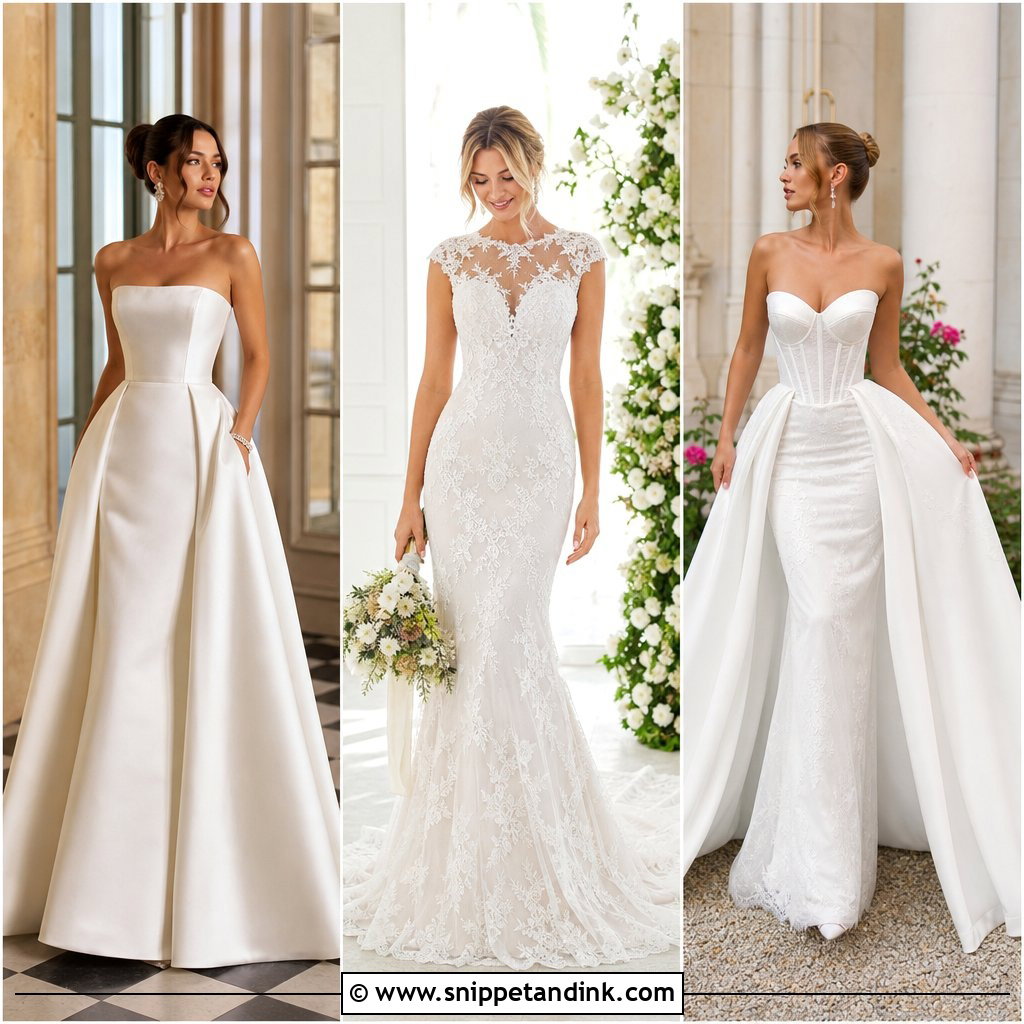
Straight-cut gowns fall close to the body without much flare, which gives a tall, clean line. Vertical embroidery, side slits or a long dupatta-style overlay add movement. Sleek heels, a clutch and long earrings complete the look. Busy venues are much easier in this shape than in anything with volume. It suits receptions, engagement parties and modern events, and petite women in particular find it lengthening.


20. Floral Indian Wedding Gown
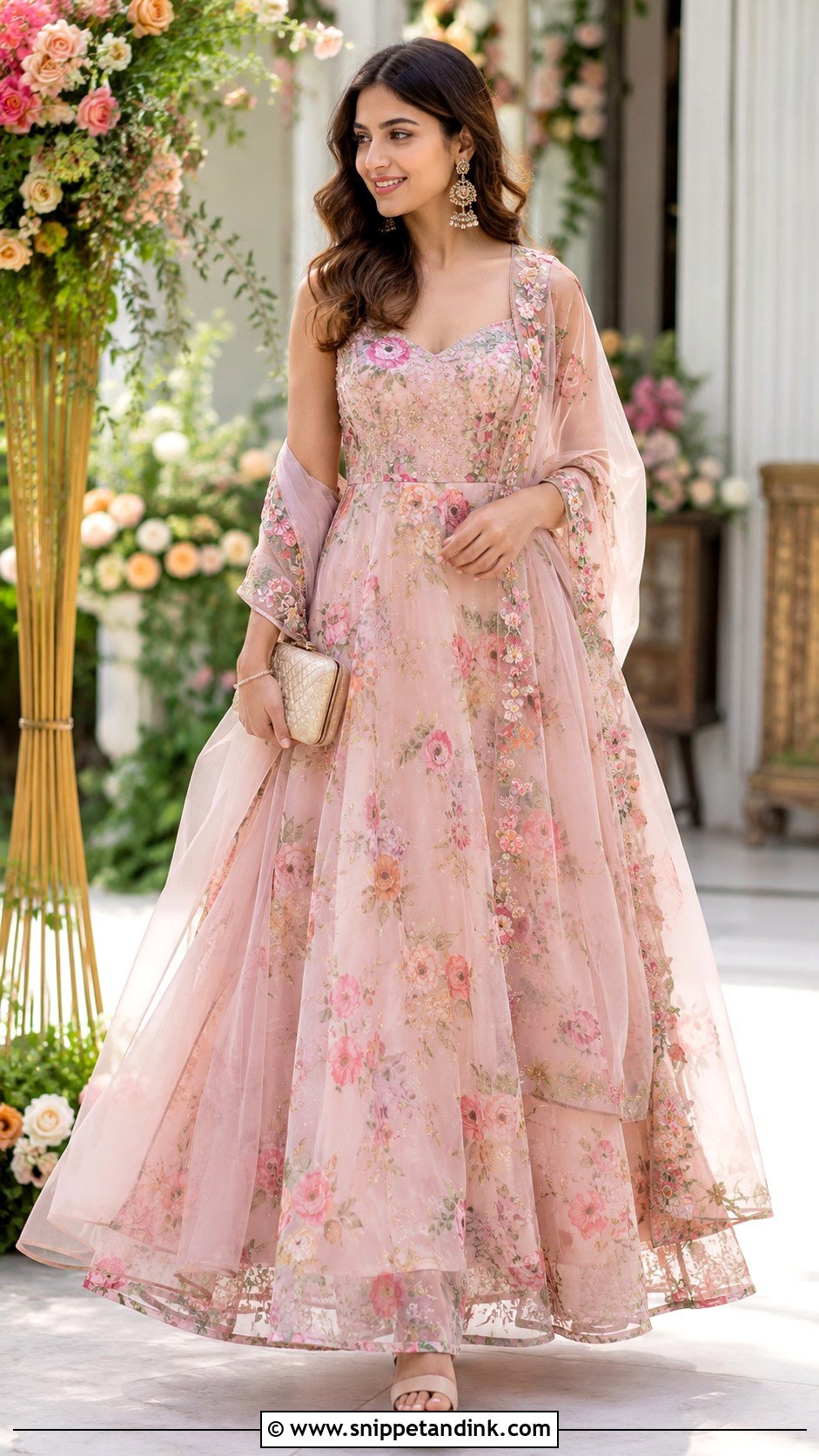
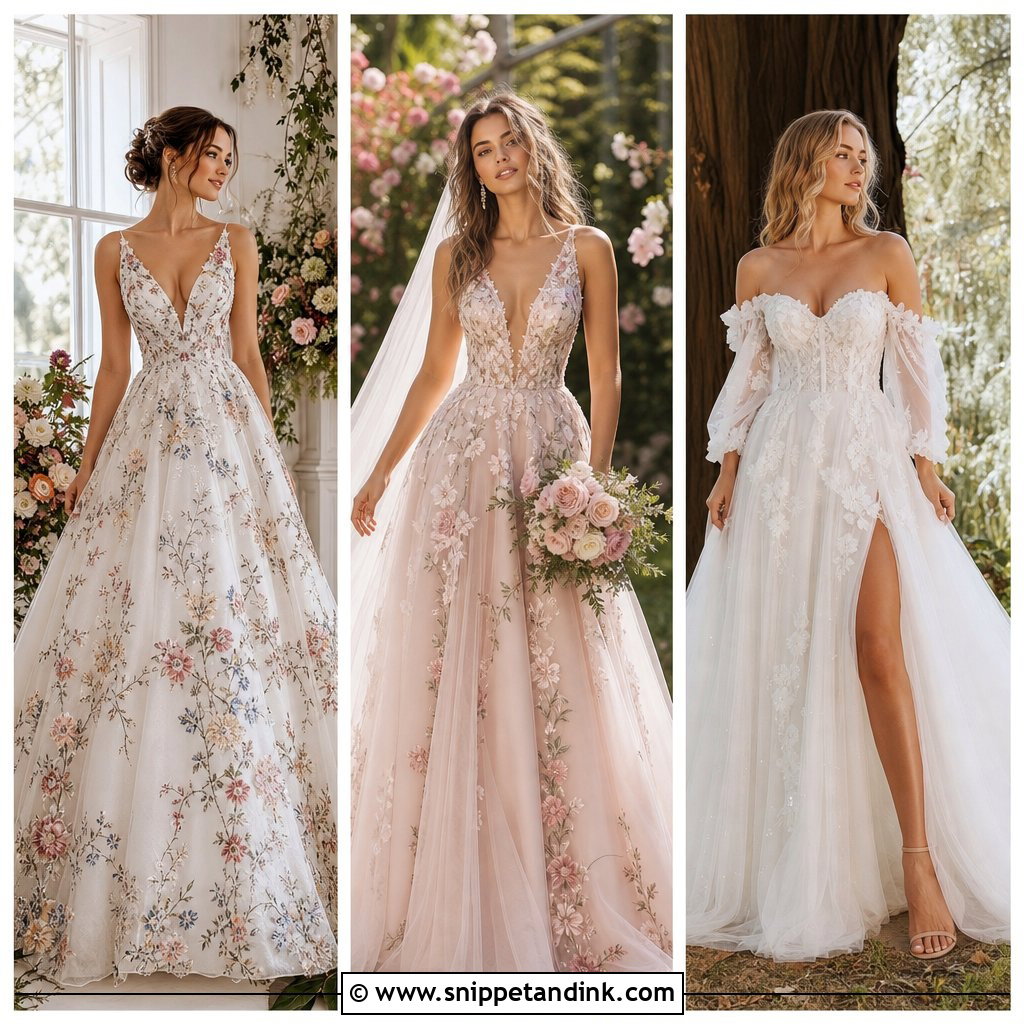
Floral gowns do best in daylight. Embroidered flowers, printed organza, threadwork or 3D floral appliqué suit engagement ceremonies, garden weddings and mehendi events in pastels; deeper florals on navy, maroon or emerald work for evening. Delicate earrings, soft heels and a small bag complete the look, and fresh makeup suits it better than heavy jewellery. It suits guests, bridesmaids, or brides who want something less traditional.
21. Mirror Work Indian Wedding Gown
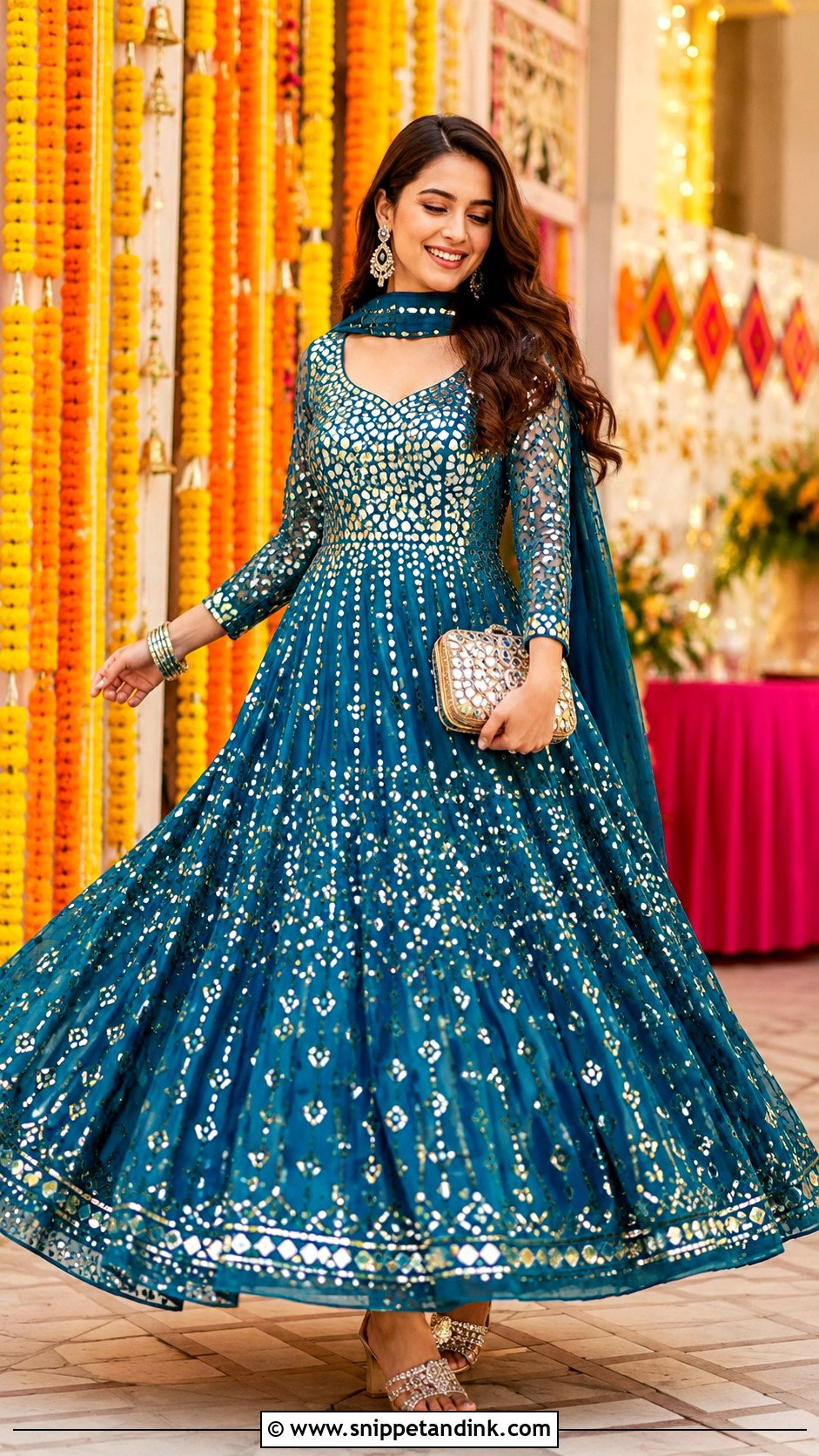
A mirror work Indian wedding gown brings a craft tradition into a modern shape, and it suits sangeet, mehendi and evening parties full of music. Yellow, pink, teal, white or green give it a playful feel. Mirror work is already loud, so I keep accessories to earrings, bangles and comfortable heels. A flowy skirt helps you dance; a fitted bodice keeps it polished. Mirrors add weight at the hem, which helps the skirt swing but also tires the legs over a long night.
22. Zardozi Indian Wedding Gown
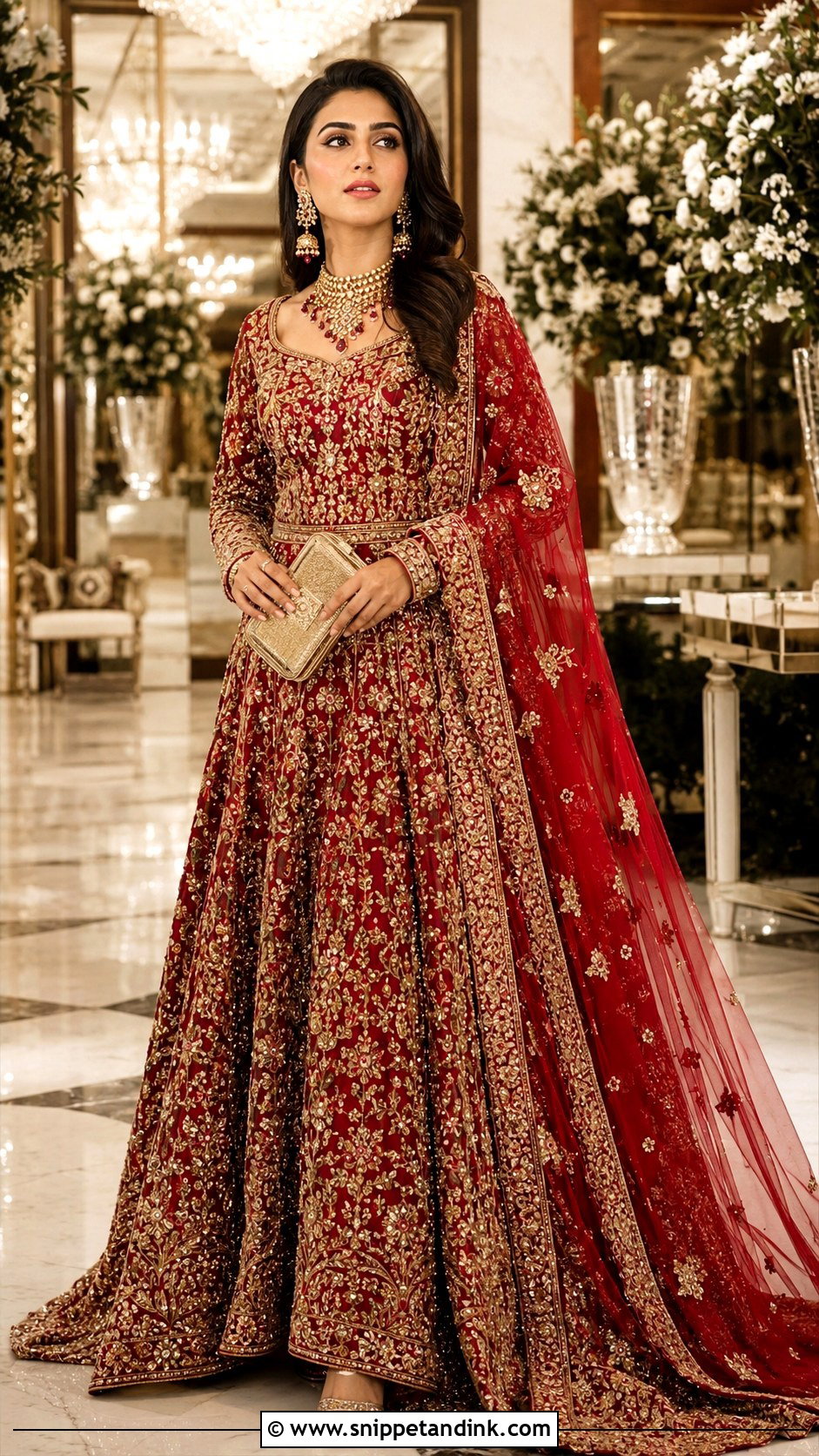
Zardozi in a gown silhouette gives you heritage embroidery without a separate lehenga. The metallic thread makes the gown look grand and ceremonial in deep red, maroon, emerald, ivory, navy or gold. Because zardozi is heavy, I look for it placed on the bodice, sleeves or hem rather than spread over the whole skirt, which drags and tires the shoulders. Traditional jewellery, embellished heels and a structured clutch complete the look. It suits brides, mothers of the bride and formal receptions.
23. Chikankari Indian Wedding Gown
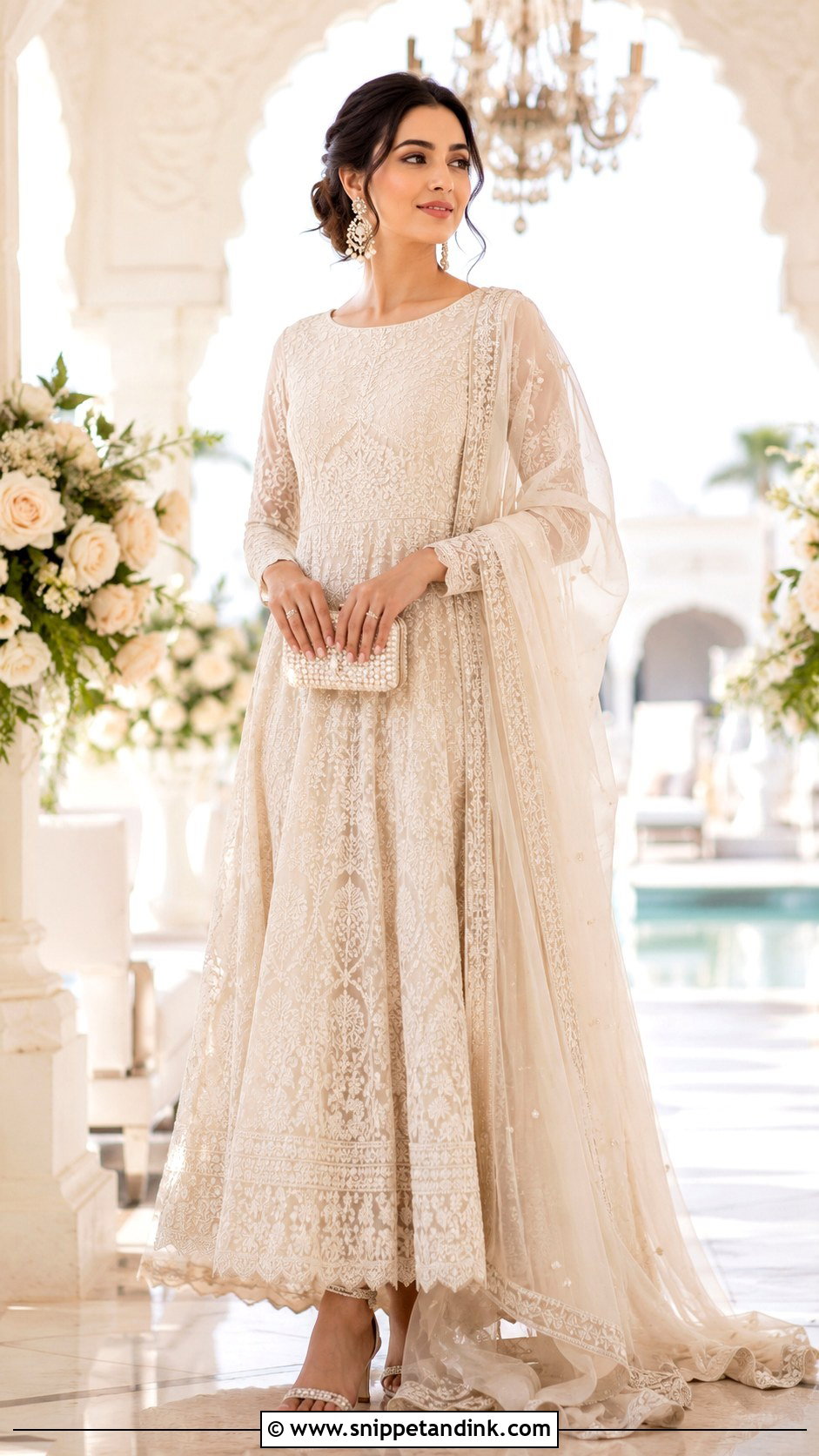
Chikankari gowns suit brides and guests who prefer understatement. White, ivory, blush, sage and powder blue look lovely at daytime events, engagements and destination weddings. Pearl accents, light sequins or subtle beadwork make them festive. Chikankari is usually stitched on fine, light fabric, so these gowns are cool to wear outdoors but often need a slip underneath. Pearl earrings, soft sandals and a delicate clutch finish them.
24. Velvet Indian Wedding Gown
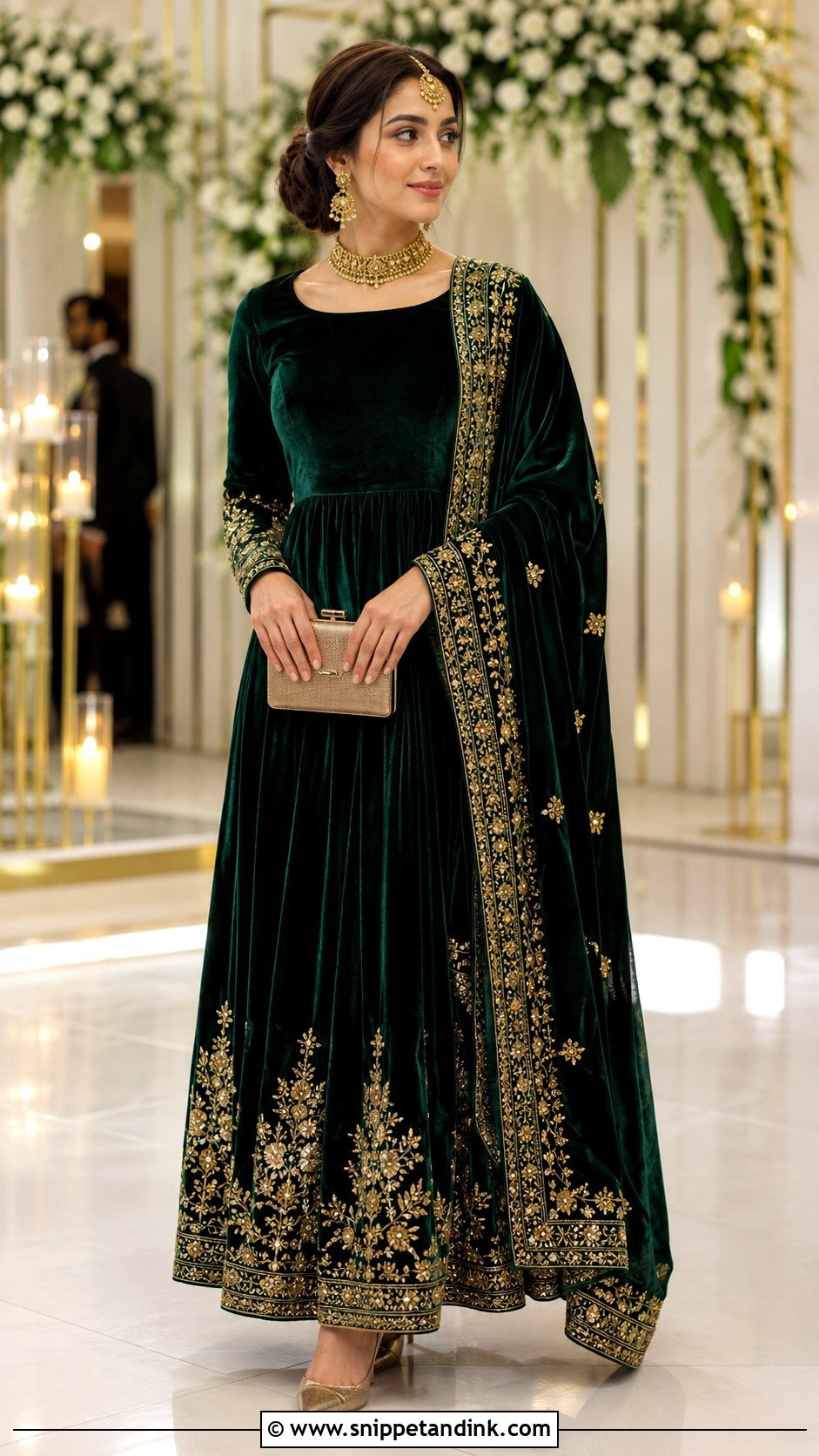
A velvet Indian wedding gown suits cooler weather and formal evenings. Velvet looks rich with even simple embroidery, especially in emerald, navy, wine, maroon or black. A structured bodice, long sleeves or a soft flare keep it balanced. Gold jewellery, pointed heels and a classic clutch finish it. Velvet is heavy and warm, so skip extra layers and save it for indoor winter receptions.

25. Organza Indian Wedding Gown
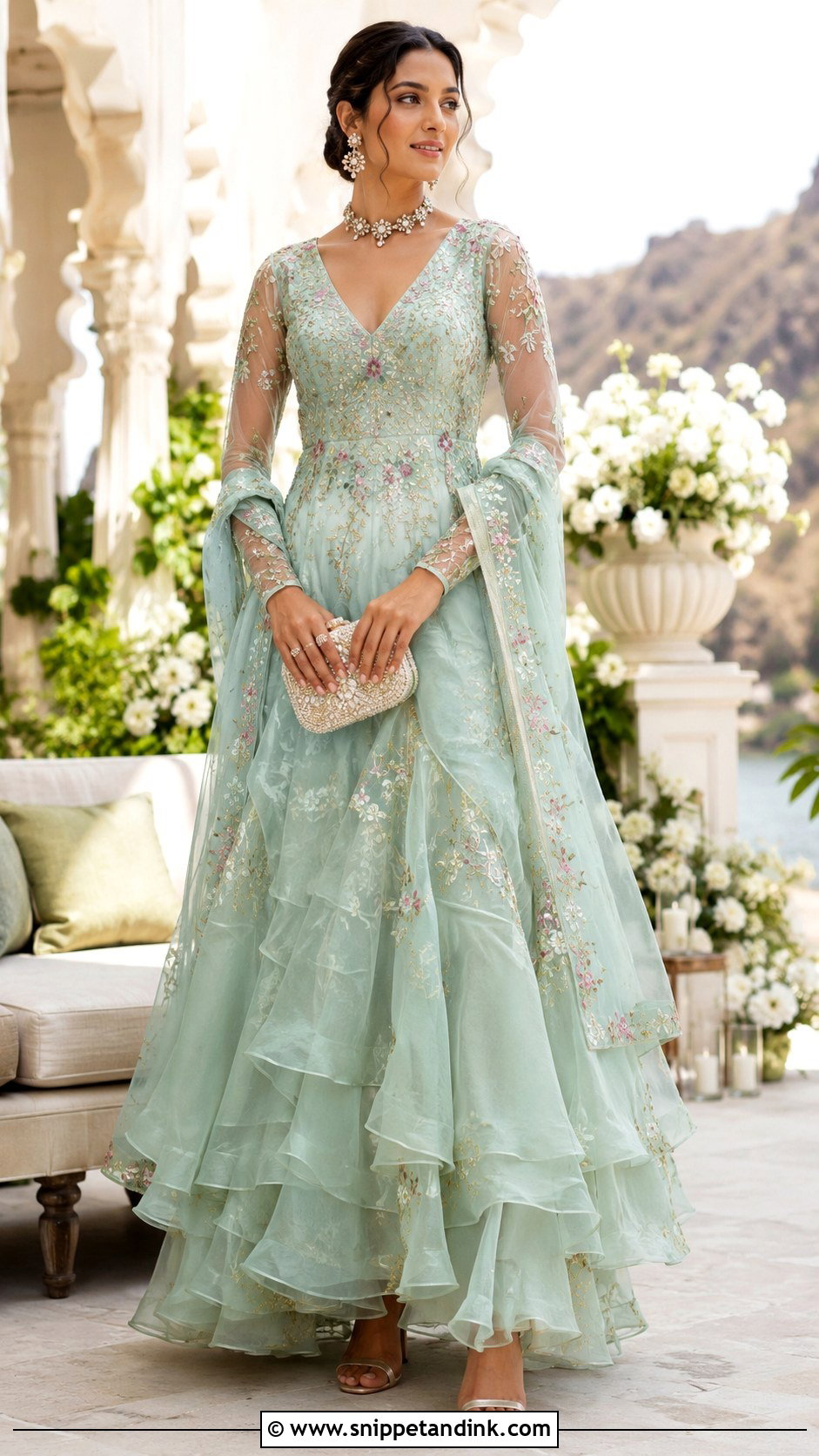
Organza gives volume without weight, and its crisp structure holds shape in the heat, which makes these gowns ideal for daytime or destination weddings. Pastel shades, ivory, peach, lilac or mint suit it, with embroidered flowers, pearl work or subtle sequins. Organza sleeves, capes or layered skirts add movement. Delicate jewellery, open-toe heels and a small clutch complete it. Pack it carefully, though: organza creases sharply and must be steamed, not ironed.
26. Silk Indian Wedding Gown
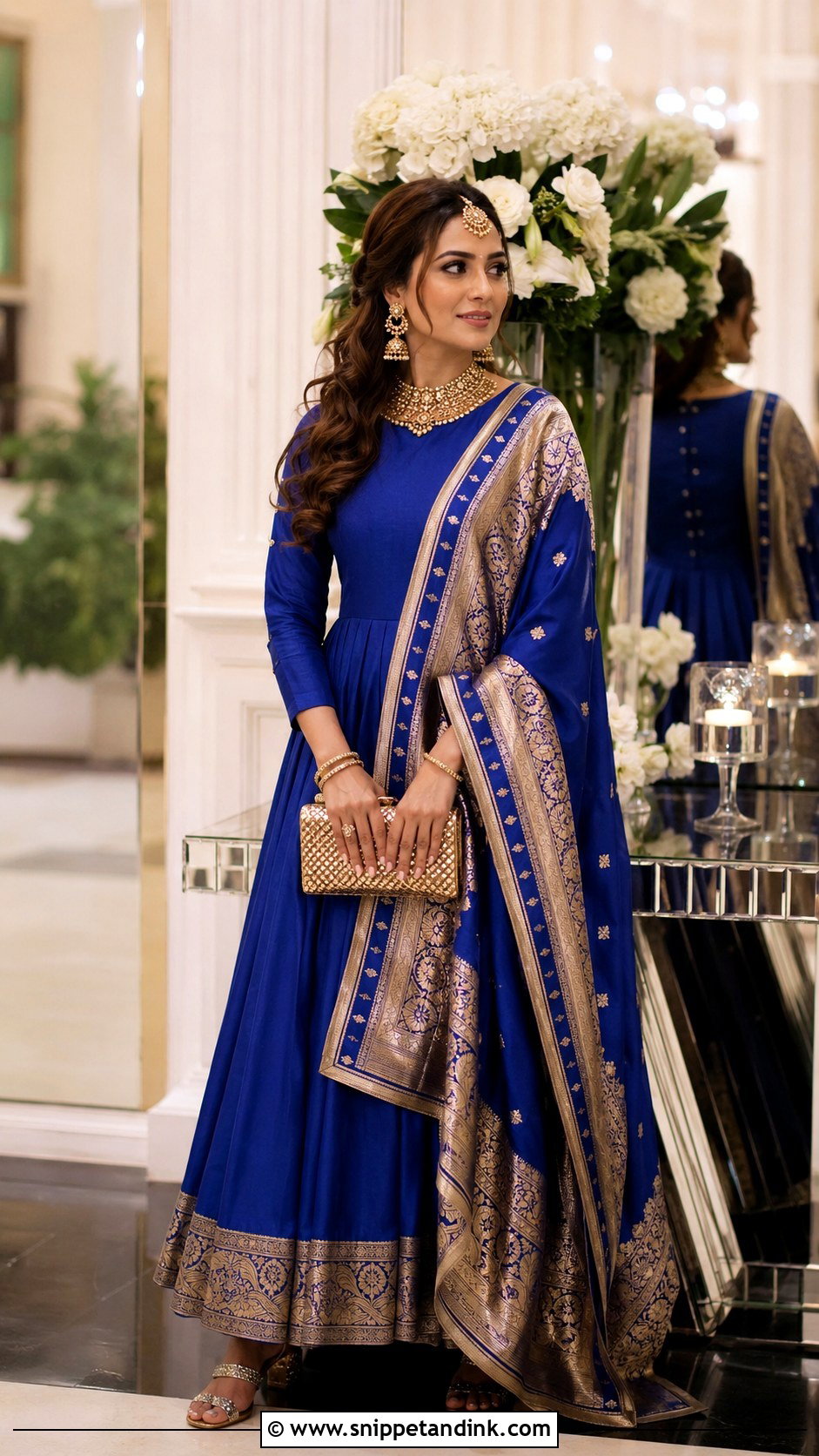
Silk holds colour better than almost any other fabric, so red, gold, emerald, royal blue and ivory look deep and rich in a silk gown. Brocade panels, zari borders or embroidered details give the traditional finish. Temple jewellery, kundan earrings or polished gold pieces suit it. A clean silhouette lets the fabric show. Silk marks with water and perspiration, so dress shields under the arms are worth having for a long reception.
27. Net Indian Wedding Gown
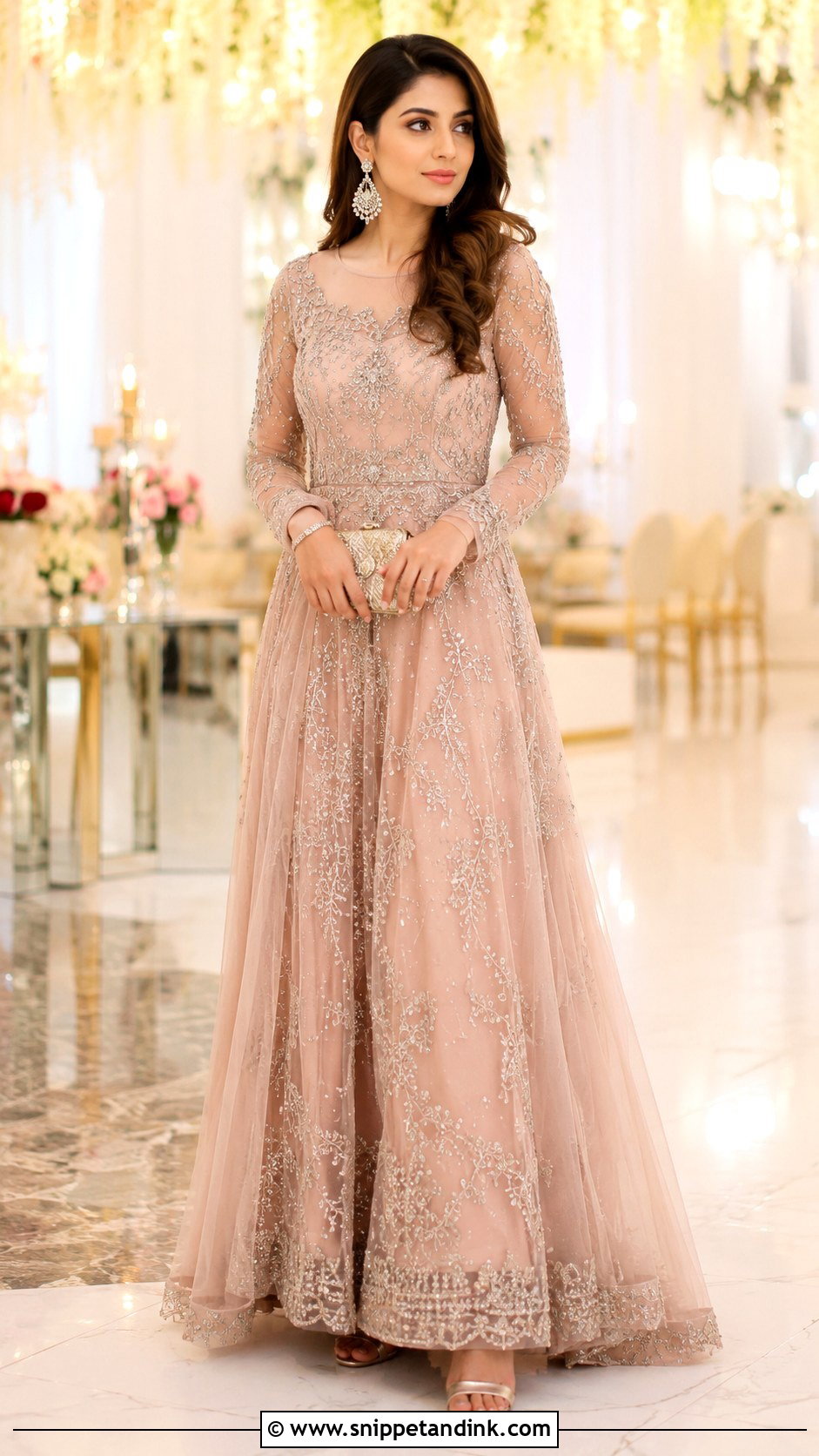
Net works for flared gowns, embroidered overlays, sheer sleeves and dupatta-style panels. Sequins, threadwork, crystals or lace-like embroidery give a wedding finish; light colours feel airy and deep ones dramatic. The lining makes or breaks a net gown. A cheap, shiny lining shows through in flash photos and scratches, so I check it before anything else. Elegant earrings, comfortable heels and a clutch matching the embroidery complete it.
28. Long Sleeve Indian Wedding Gown
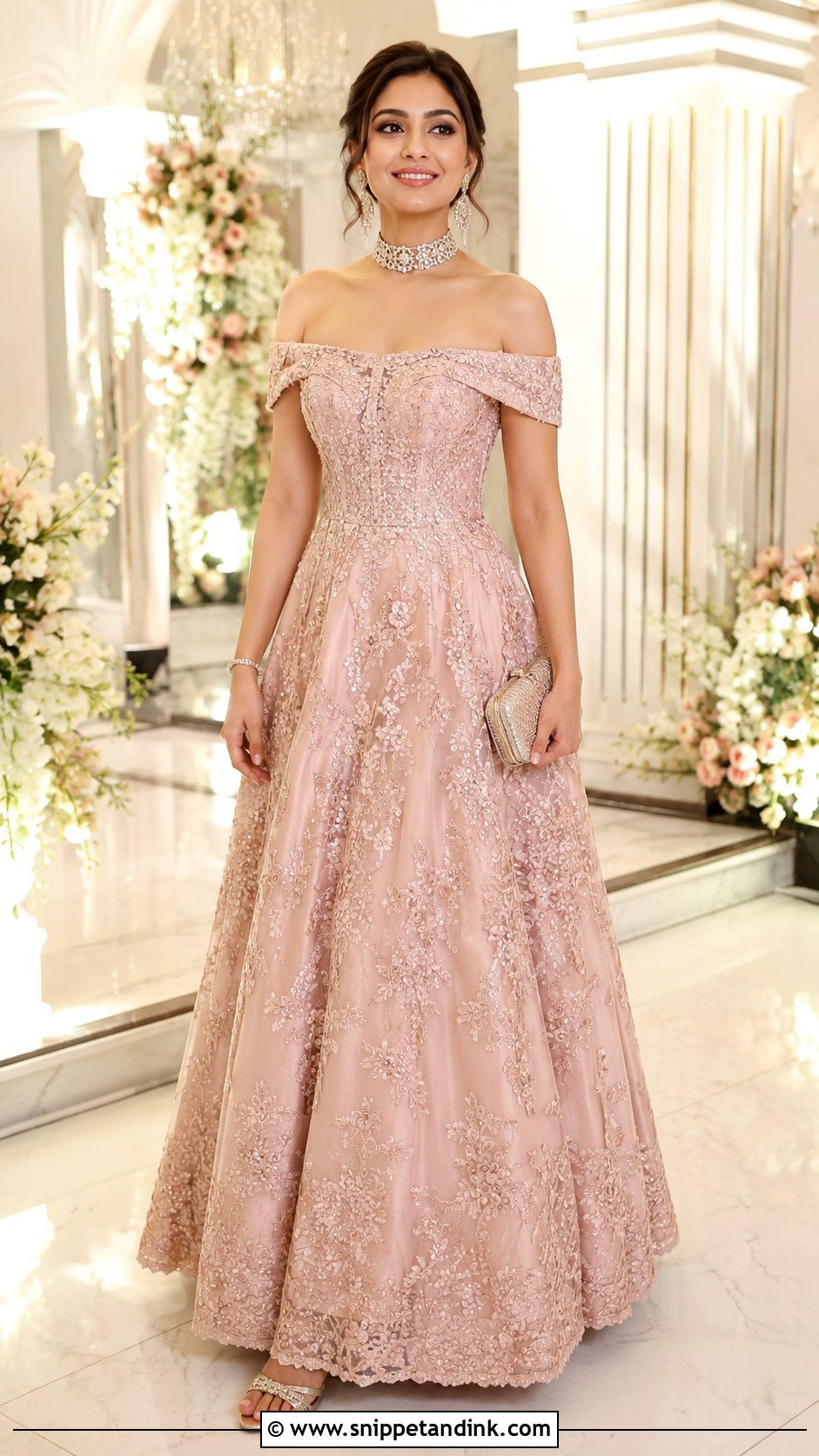
Long sleeves suit formal venues, cooler seasons and anyone who wants coverage. They can be sheer, embroidered, fitted or slightly flared. Detailed sleeves with a simpler skirt look balanced. Velvet, net, georgette or silk change the structure. Fitted sleeves need movement room at the elbow; I ask brides to raise their arms and hug at the fitting, because a sleeve that is fine standing still can rip at the seam on the dance floor. Keep the neckline quiet if the sleeves are heavily worked.
29. Off Shoulder Indian Wedding Gown
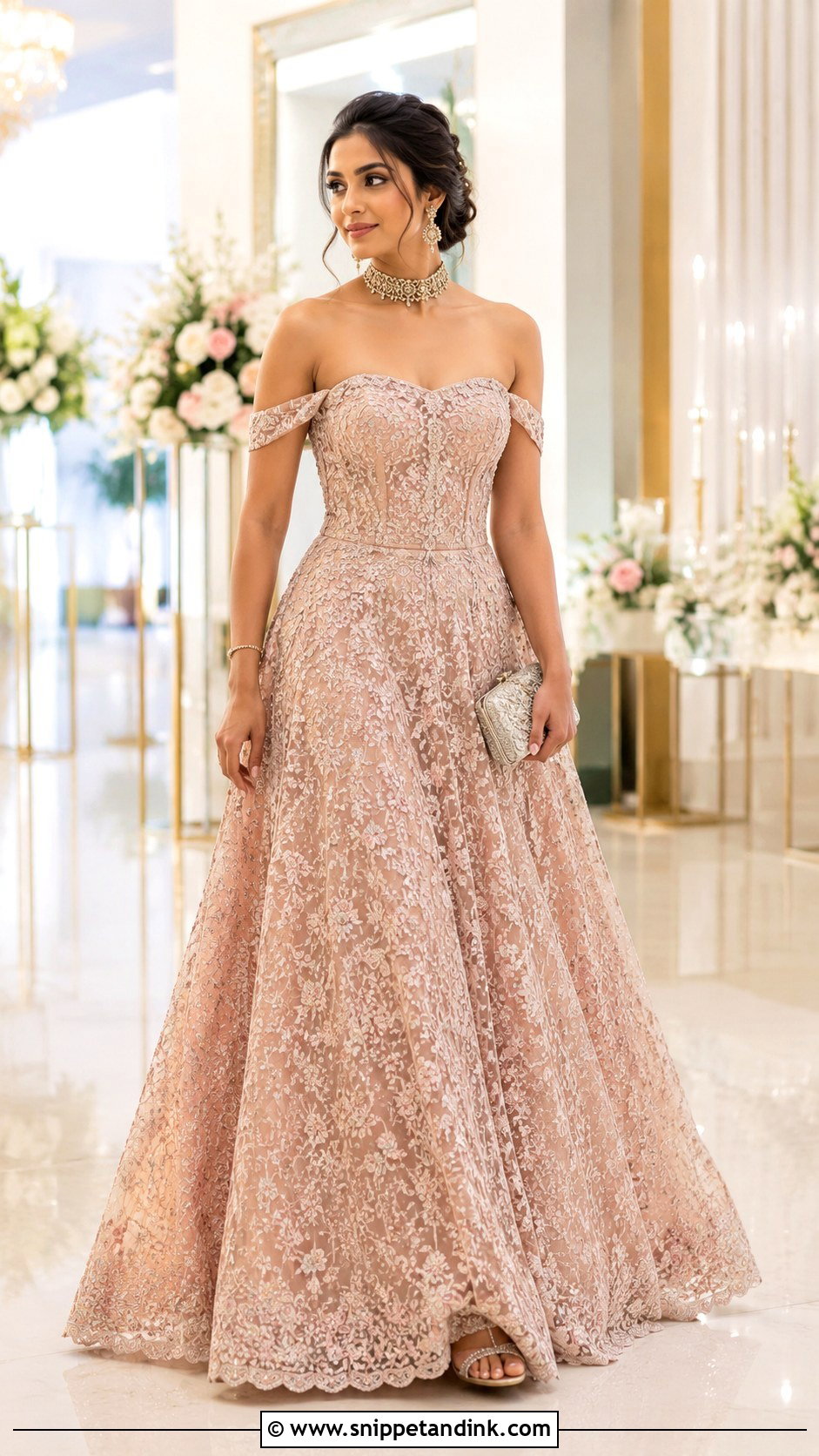
Off-shoulder gowns suit receptions, engagements and fusion weddings. A structured bodice, soft draped sleeves or a flared skirt give balance. A choker, statement earrings or a sleek necklace work depending on the neckline detail. The fit has to be secure: off-shoulder bodices need internal boning and a silicone grip at the top edge, or you will be pulling the neckline up all night. Champagne, blush, emerald, navy and ivory all suit it.
30. Reception Indian Wedding Gown
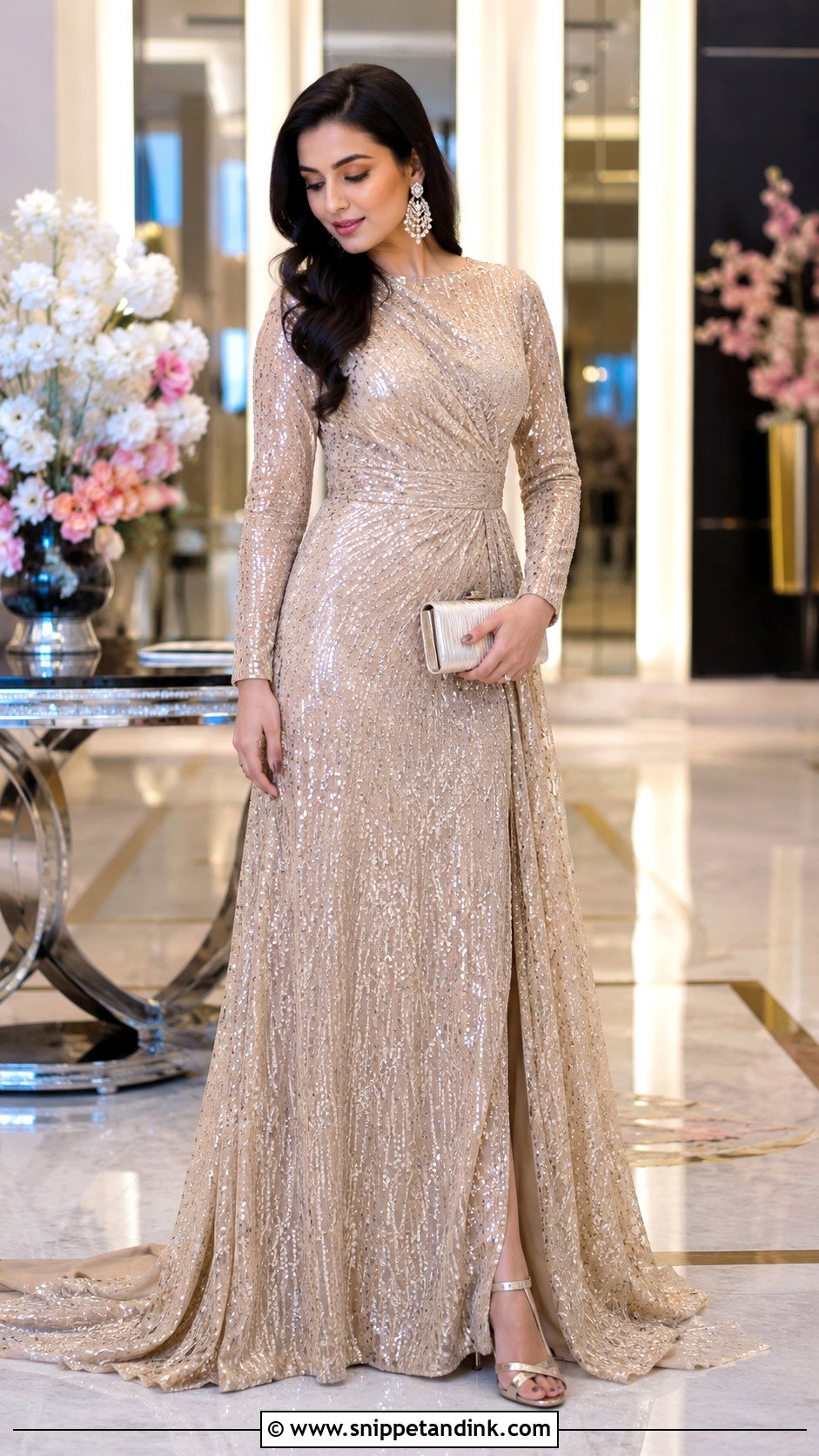
A reception gown has to look glamorous and still let you sit, walk, greet guests and dance for several hours. Shimmer, sleek silhouettes, trails, capes and statement embroidery all belong here. Champagne, silver, gold, emerald, navy, blush and ivory are the popular colours. Statement earrings, polished heels and a quiet clutch finish it. The reception can be more modern than the ceremony outfit while still reading as bridal or festive, which is why so many brides switch to a gown for it.
The Alterations Almost Every Gown Needs
Gowns bought off the rack, even designer ones, rarely fit perfectly. Leave a few weeks for alterations, and more for heavily embroidered pieces, because embroidery limits how much a tailor can take in without unpicking work.
- Hem length, set with the exact shoes you will wear. A gown hemmed for heels drags once you switch to flats, so decide early whether you will change shoes.
- Bodice fit. Most gowns need the bust or waist adjusting; boning and cups can be added for support.
- Sleeve and shoulder fit, tested with your arms raised, not only hanging.
- Bustle or wrist loop for any trail, so you can dance and walk through crowds.
- Dupatta or cape attachments, sewn with hooks or snaps rather than pinned on the day.
Trains, Bustles and a Crowded Reception Hall
A trail looks wonderful for the entrance and portraits, then becomes a hazard. Indian receptions are full of guests, children, waiters and stage steps, and someone will stand on the hem.
My approach is simple. Wear the train down for the entrance and photos, then bustle it up or loop it to your wrist before mingling. Ask your seamstress which bustle style suits the fabric; heavy embroidered trails usually need several attachment points. Make sure a sister or friend has practised the bustle before the day, because the bride cannot do it on her own.
Wearing the Same Gown Twice in One Wedding Week
A good Indian wedding gown balances beauty, comfort, tradition and personal style, whether it is a red bridal gown, an ivory reception gown, a cape or a sequin piece. Indian weddings run across several events, so one gown can often be restyled: add a dupatta and heavy jewellery for the engagement, then a cape and sleek hair for the reception. Look at fabric, movement, embroidery and colour first, then plan the shoes, jewellery, clutch and hairstyle around them, so the outfit looks finished rather than assembled at the last minute.
You'll Like These Ideas:











Leave a Reply