
An Indian wedding rarely asks a bride for one outfit. It asks for four or five, each worn for a different ritual, in different light, for a different number of hours on her feet. That’s why I dress brides by event rather than by trend: what works for a two-hour reception can be exhausting through a long night of pheras. Below are complete looks from red lehengas and silk sarees to pastel reception wear and fusion pieces, with the jewelry, dupatta, footwear and makeup that go with each, and my notes on how each one behaves once you’re actually wearing it.
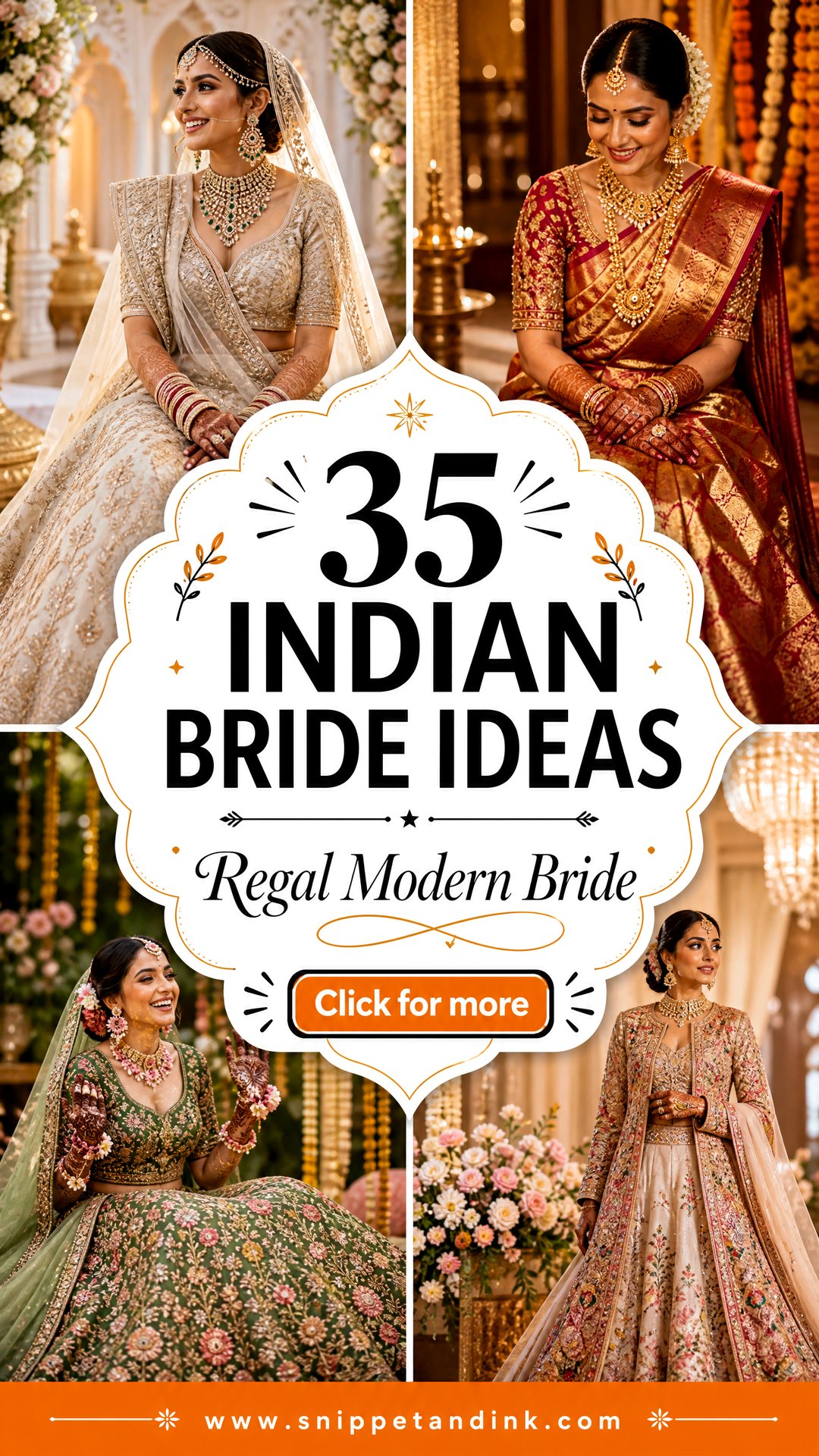
Lehenga Weight, Fittings and the Six-Month Order Window
Brides tend to fall in love with a lehenga on the hanger. I’d rather you fall in love with it after wearing it for twenty minutes. Heavy zardozi, velvet and real mirror work can make a bridal lehenga weigh several kilos, and that weight sits on your hips through hours of rituals.
How I test an outfit before committing
- Sit cross-legged on the floor, then stand without using your hands; that’s what the mandap asks of you
- Raise both arms above your head to check the blouse doesn’t ride up
- Walk up and down stairs in the shoes you’ll actually wear
- Ask for the skirt’s weight and whether it can be lightened with a lighter lining or cancan
Timing matters as much as the try-on. Made-to-order bridal wear often needs three to six months from order to delivery, and hand embroidery can take longer during the peak wedding season. I’d plan at least two fittings, with the last one about two to three weeks before the first event, wearing your actual undergarments, shoes and heaviest jewelry.
1. Red Bridal Lehenga Indian Bride Outfit
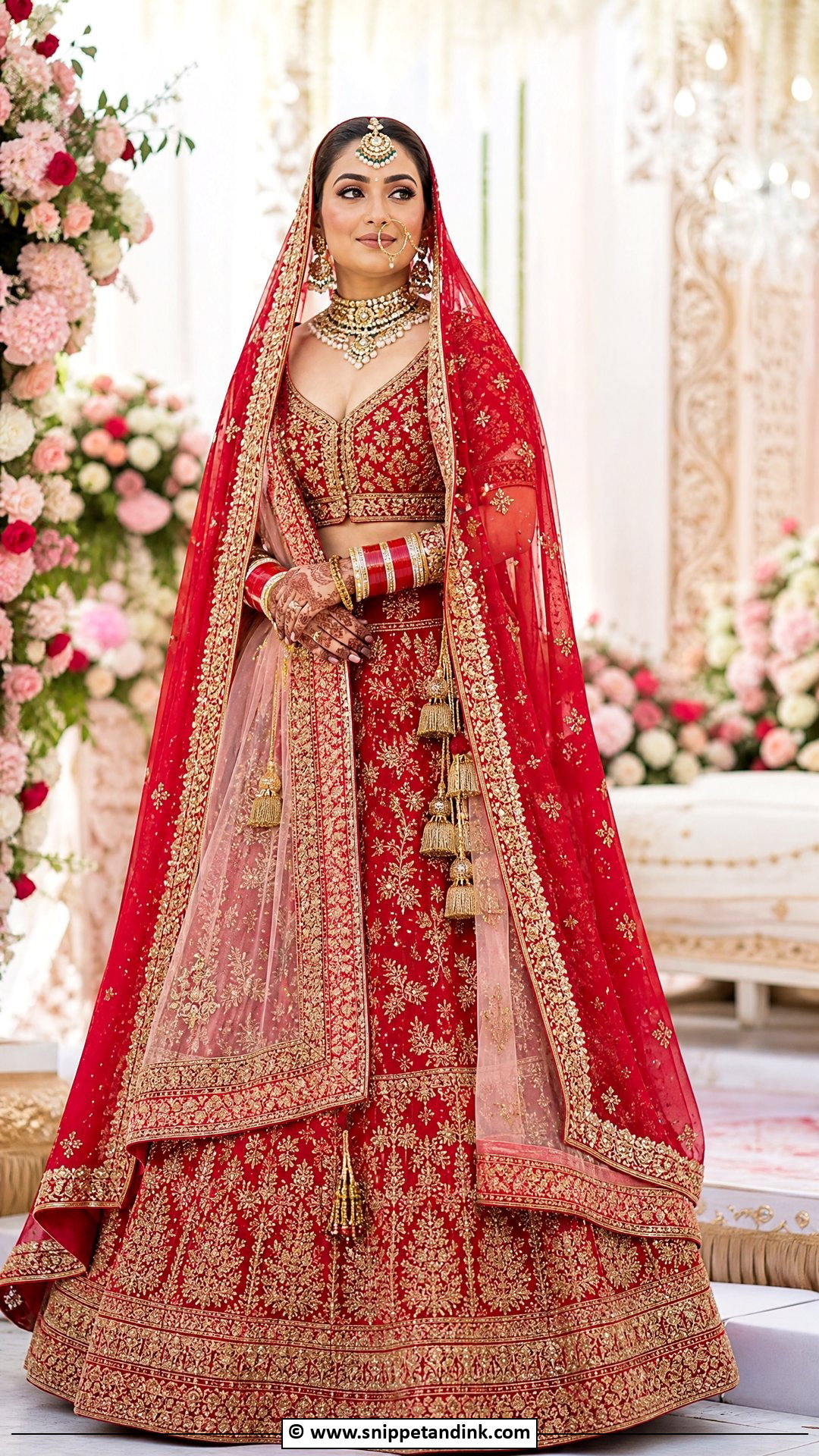
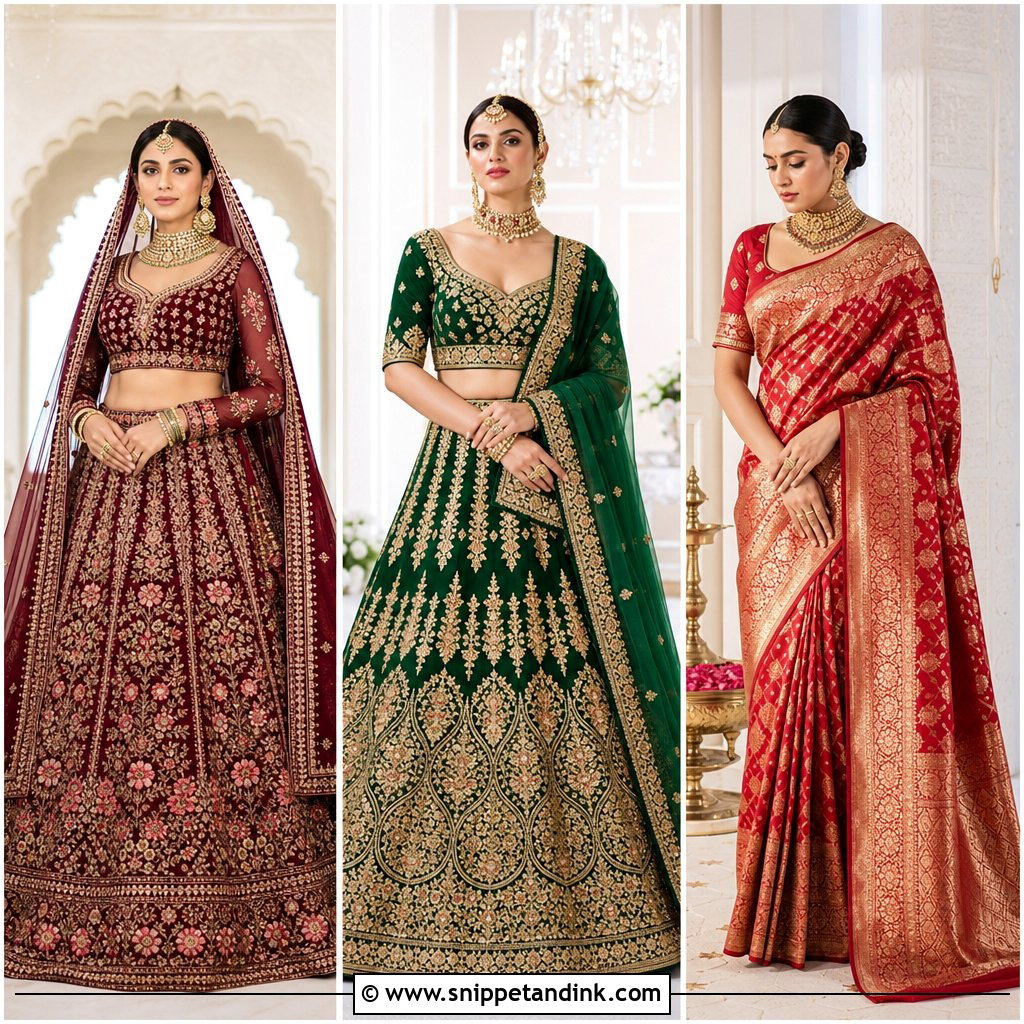
Red is still the color most families picture, and in front of the sacred fire it glows like nothing else. Raw silk or velvet with zari, zardozi or thread embroidery gives the depth a ceremony needs. I pair it with a fitted blouse, a double dupatta (one over the head, one across the body) and a cancan underskirt for volume. Kundan, a matha patti, layered necklaces, bangles and embroidered juttis finish it. Ask your makeup artist for defined eyes and a red that matches the lehenga’s undertone; a blue-red against an orange-red outfit looks off in every close-up.
2. Maroon Velvet Lehenga Indian Bride Outfit
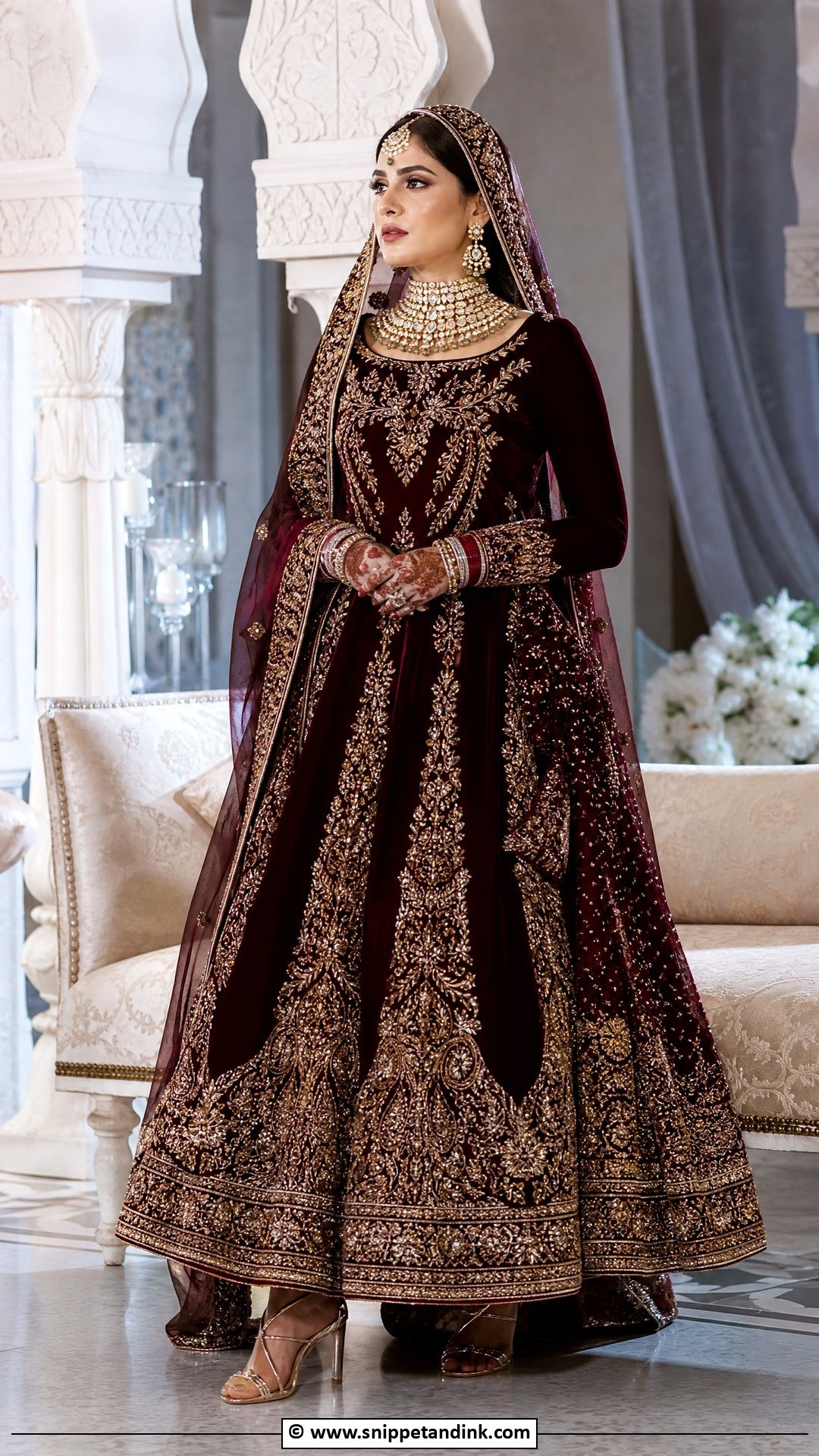
Maroon velvet reads regal without shouting, and it flatters a wide range of skin tones under warm evening light. It is also hot. I’d only put a bride in velvet for a winter wedding or an air-conditioned palace hall, never an outdoor summer mandap. Antique gold embroidery, a sweetheart or square-neck blouse and a sheer dupatta lighten the weight visually. Polki, a statement nath and stacked bangles suit it. Because velvet already carries so much texture, I keep hair smooth: a low bun or polished waves.
3. Pink Bridal Lehenga Indian Bride Outfit
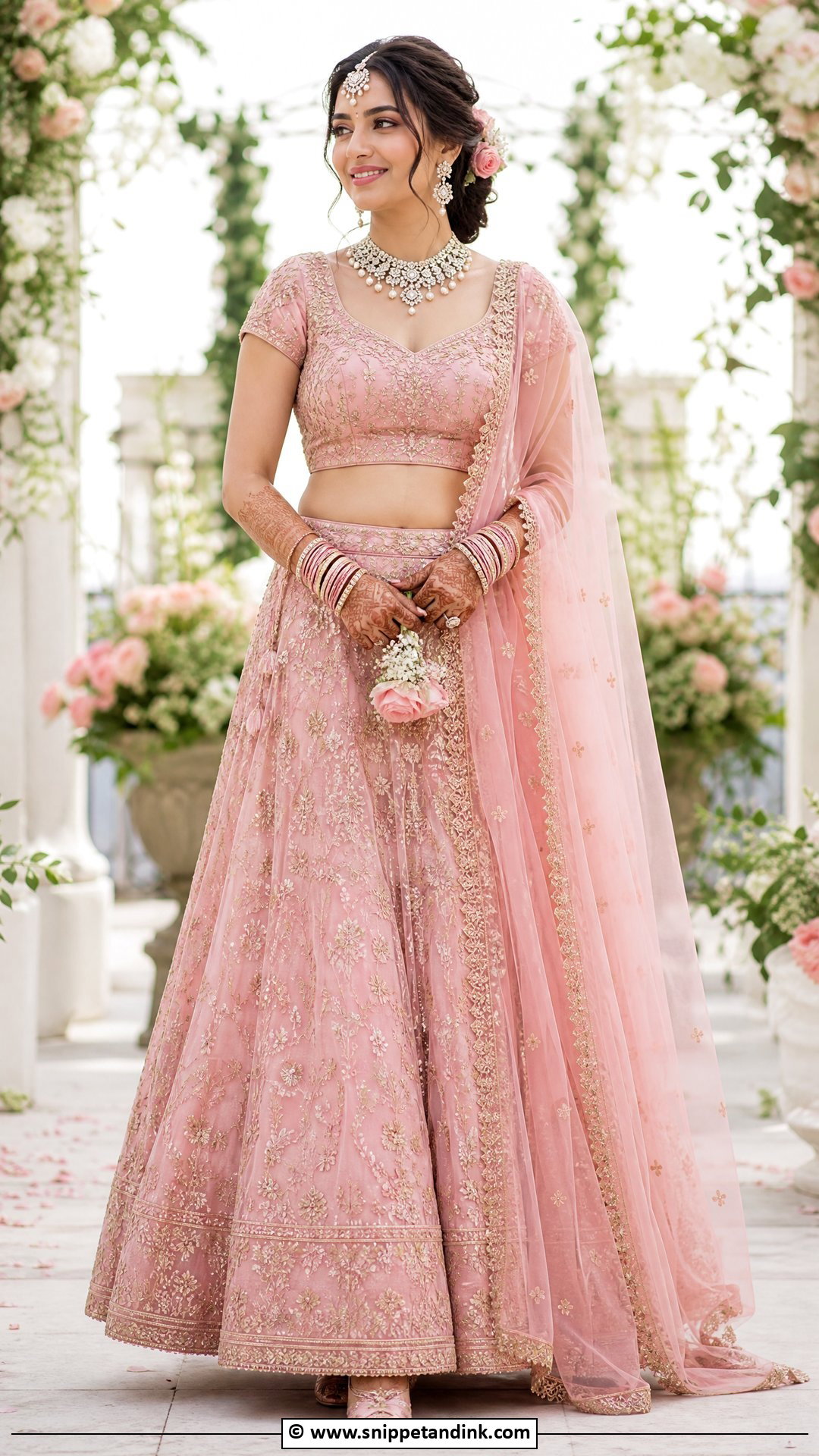
Pink covers a huge range, and the shade you pick changes the whole mood. Blush and dusty pink feel soft in daylight; rani pink holds its own at night. Silver embroidery cools the outfit and pairs with diamonds or pearls, while gold embroidery warms it and calls for kundan. I usually suggest a light dupatta over the head and block heels hidden under the skirt. Soft glam makeup and loose waves or a floral bun keep it fresh for a bride who doesn’t want red.
4. Ivory Bridal Lehenga Indian Bride Outfit
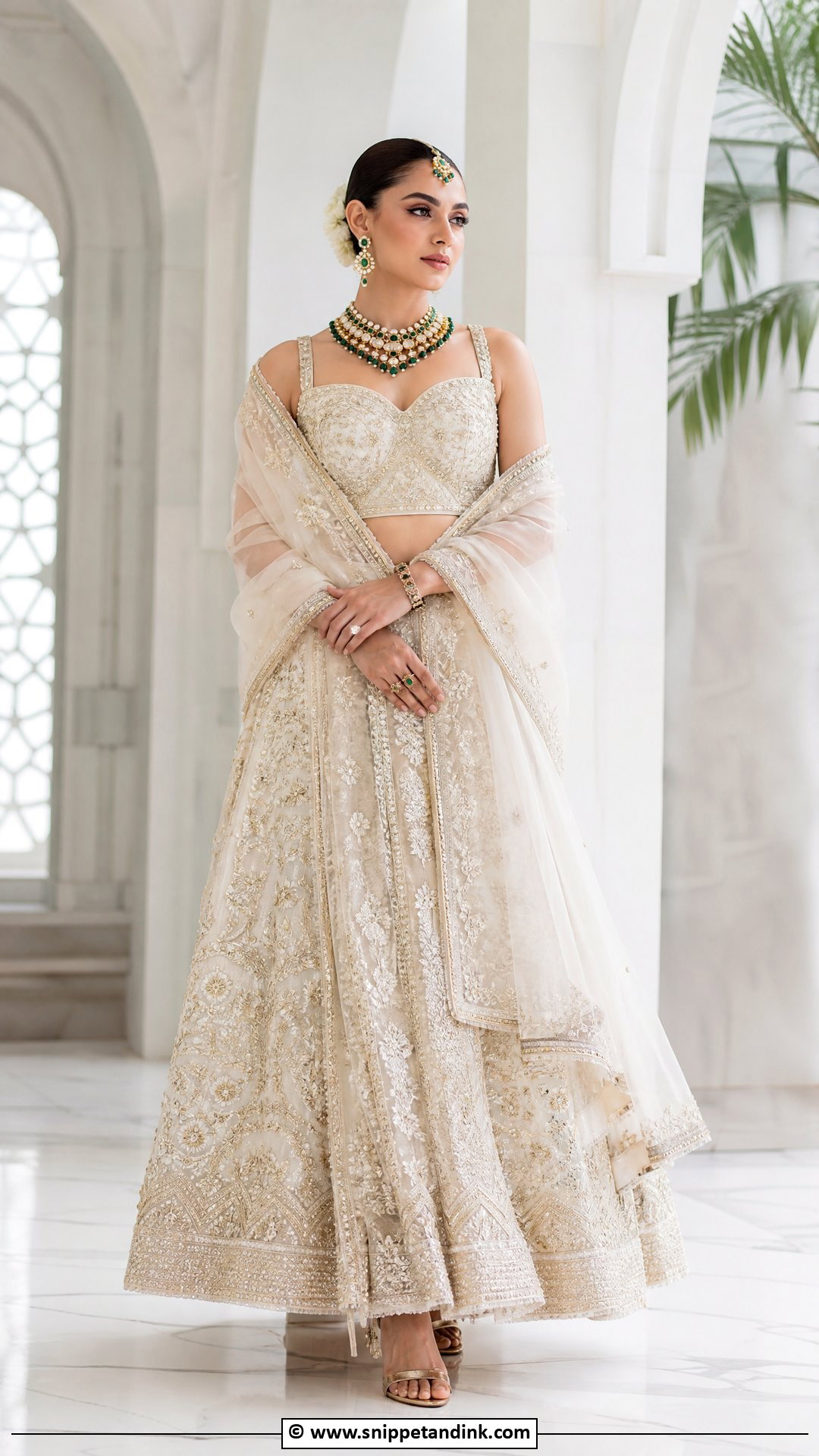
Ivory needs warmth in the fabric, or it can look washed out on camera next to a red-and-gold mandap. That’s why I steer brides toward silk, organza or tissue with gold, champagne or pearl embroidery rather than plain white. A fitted blouse and full skirt give the ceremonial shape. Emerald jewelry makes a strong contrast; polki and pearls keep it soft. Since the lehenga is quiet, the jewelry and the way the dupatta falls do the bridal work. Gold heels, a sleek bun and dewy skin finish it.
5. Gold Bridal Lehenga Indian Bride Outfit
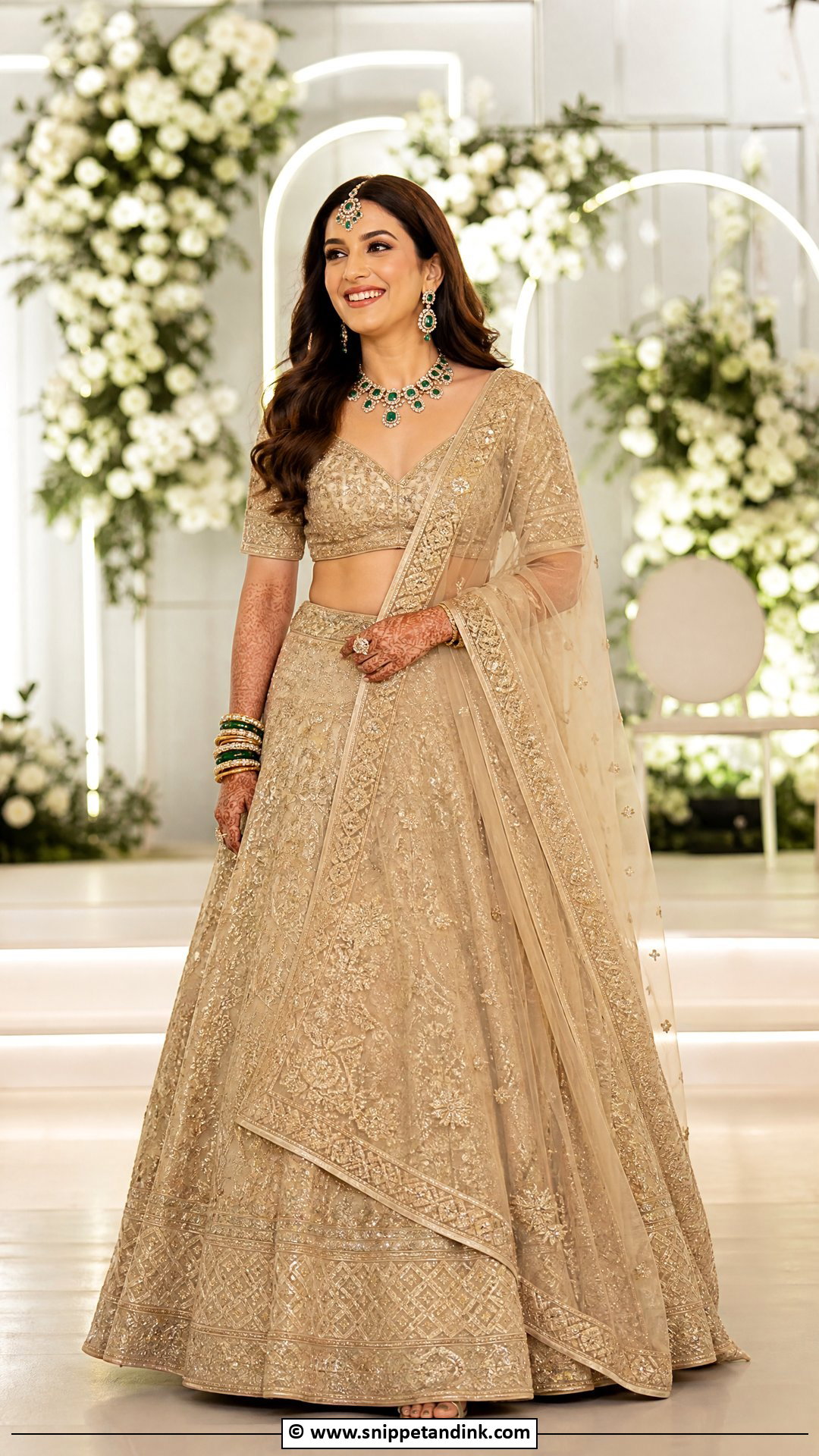
Gold catches every light at a reception, which is the whole point, and also the risk. Highly metallic fabric can flare white in flash photography, so I look for champagne or antique gold with real embroidery rather than a shiny base. A matching blouse and sheer dupatta create a monochrome effect, and emerald, ruby or polki jewelry adds the color. Keep footwear metallic and comfortable, especially under a heavy skirt. Soft brown eyes and a nude rose lip suit this palette best, for a reception entrance or a sangeet where you want a royal look without red.
6. Pastel Bridal Lehenga Indian Bride Outfit
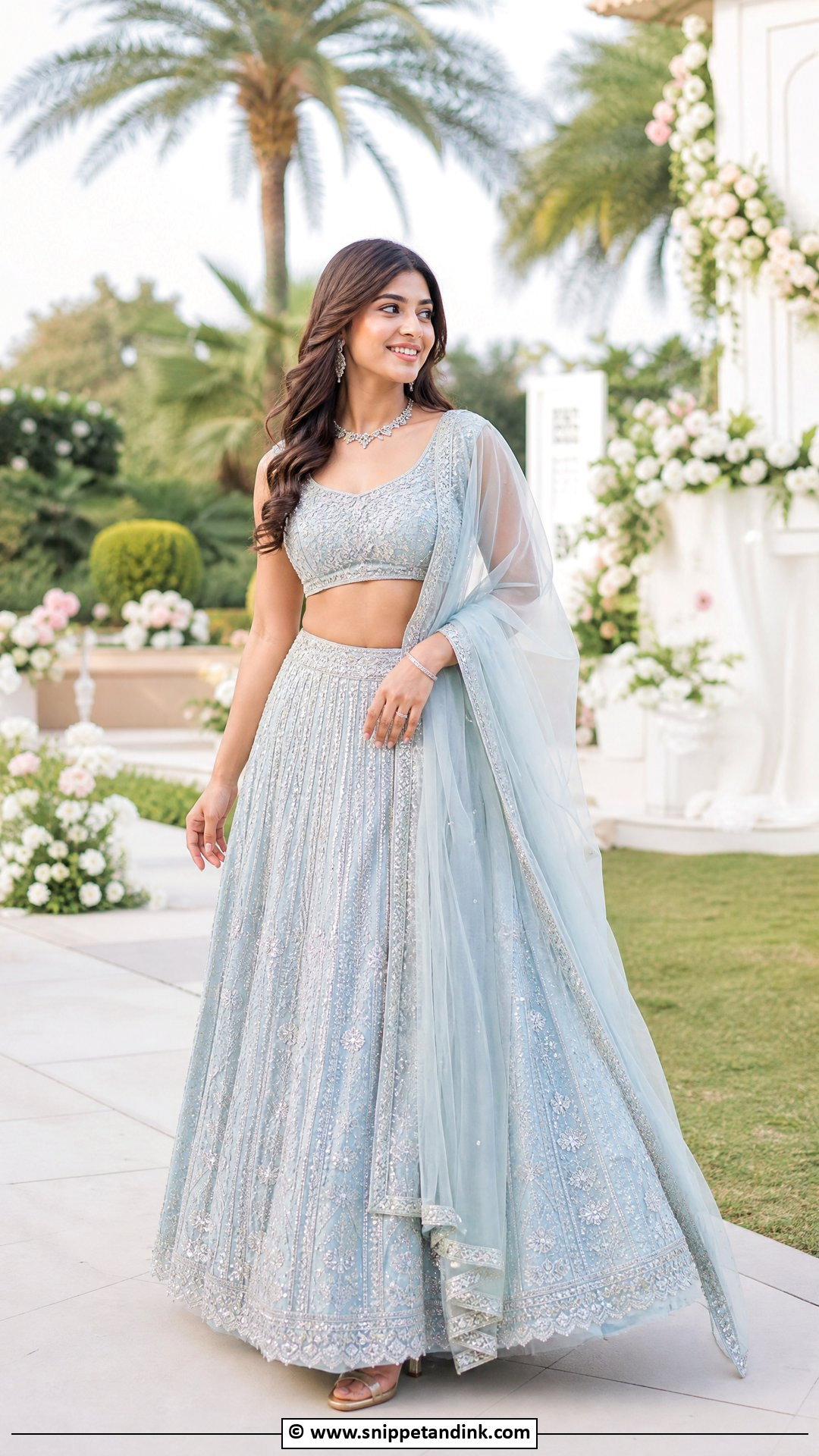
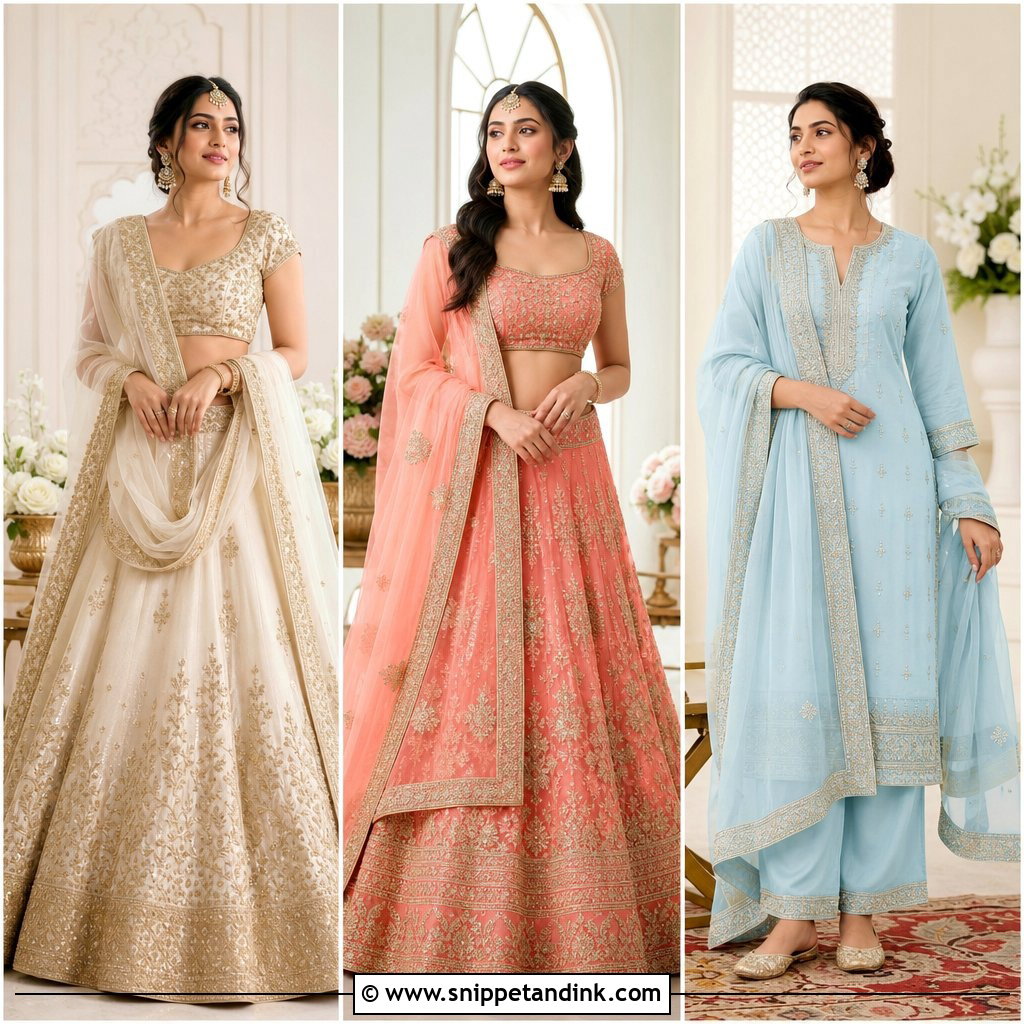
Pastels come into their own in daylight. Powder blue, mint, lavender, peach and blush look fresh in a garden or by a pool, though indoors under yellow lighting some of them can turn muddy, which is worth testing before you commit. Tone-on-tone embroidery, sequins, pearls or fine mirror work add shine without weight. Diamonds or pastel stones keep it cohesive. A sheer dupatta, soft curls and fresh makeup suit a daytime ceremony, a destination wedding or a bride who simply wants to feel light on her feet.
7. Orange Silk Saree Indian Bride Outfit
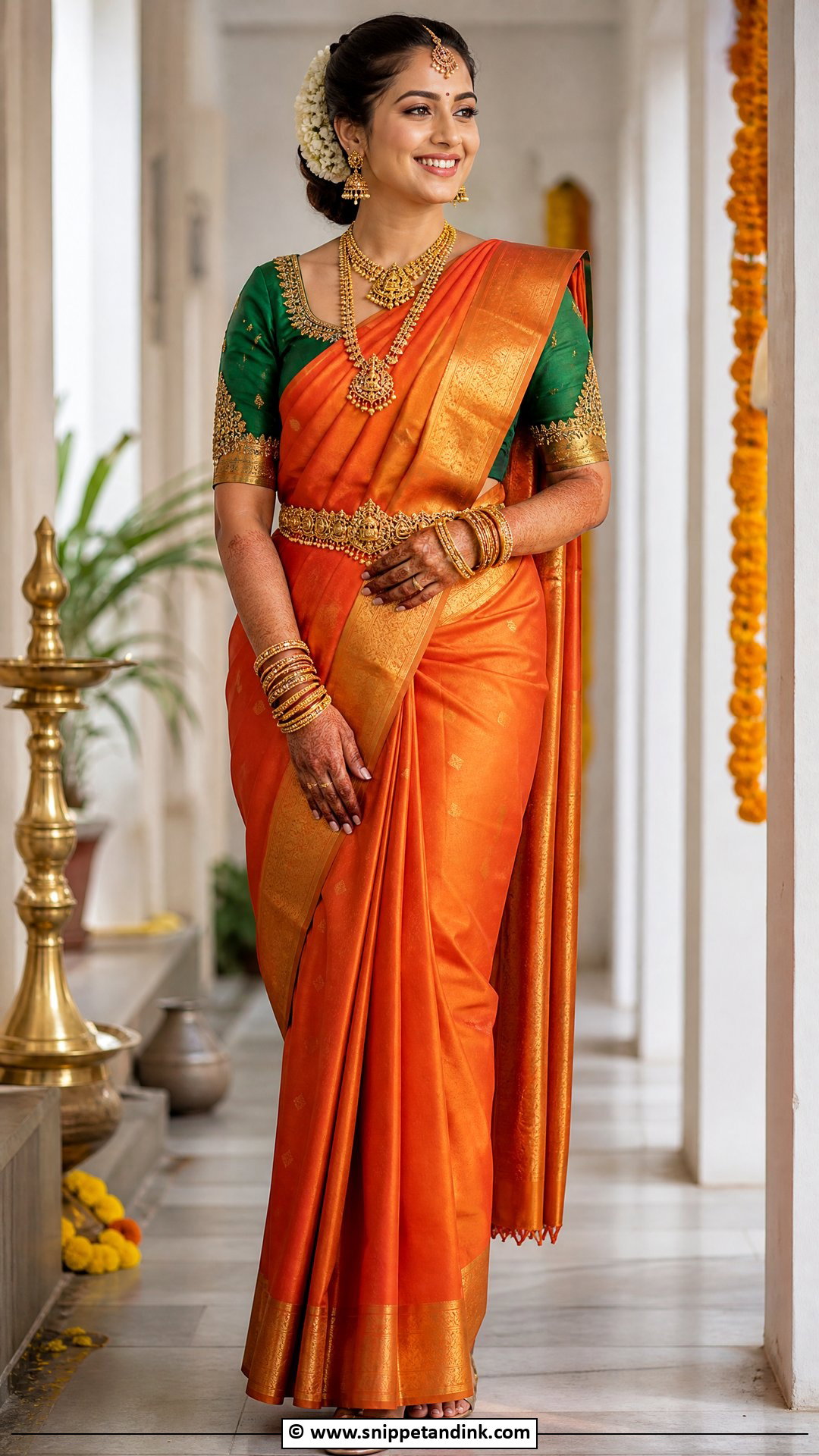
Orange silk is warm and joyful against jasmine and brass lamps. A Kanjeevaram, Banarasi or handwoven silk with a bold gold border is the classic base, and the blouse is where you can play: red, green, magenta or gold all change the feel. Temple jewelry, gold bangles, an oddiyanam waist belt, jasmine in the hair and traditional sandals complete it. A neat bun and kohl-lined eyes keep it rooted. This is a strong choice for South Indian ceremonies and early-morning muhurthams.
8. Red Banarasi Saree Indian Bride Outfit
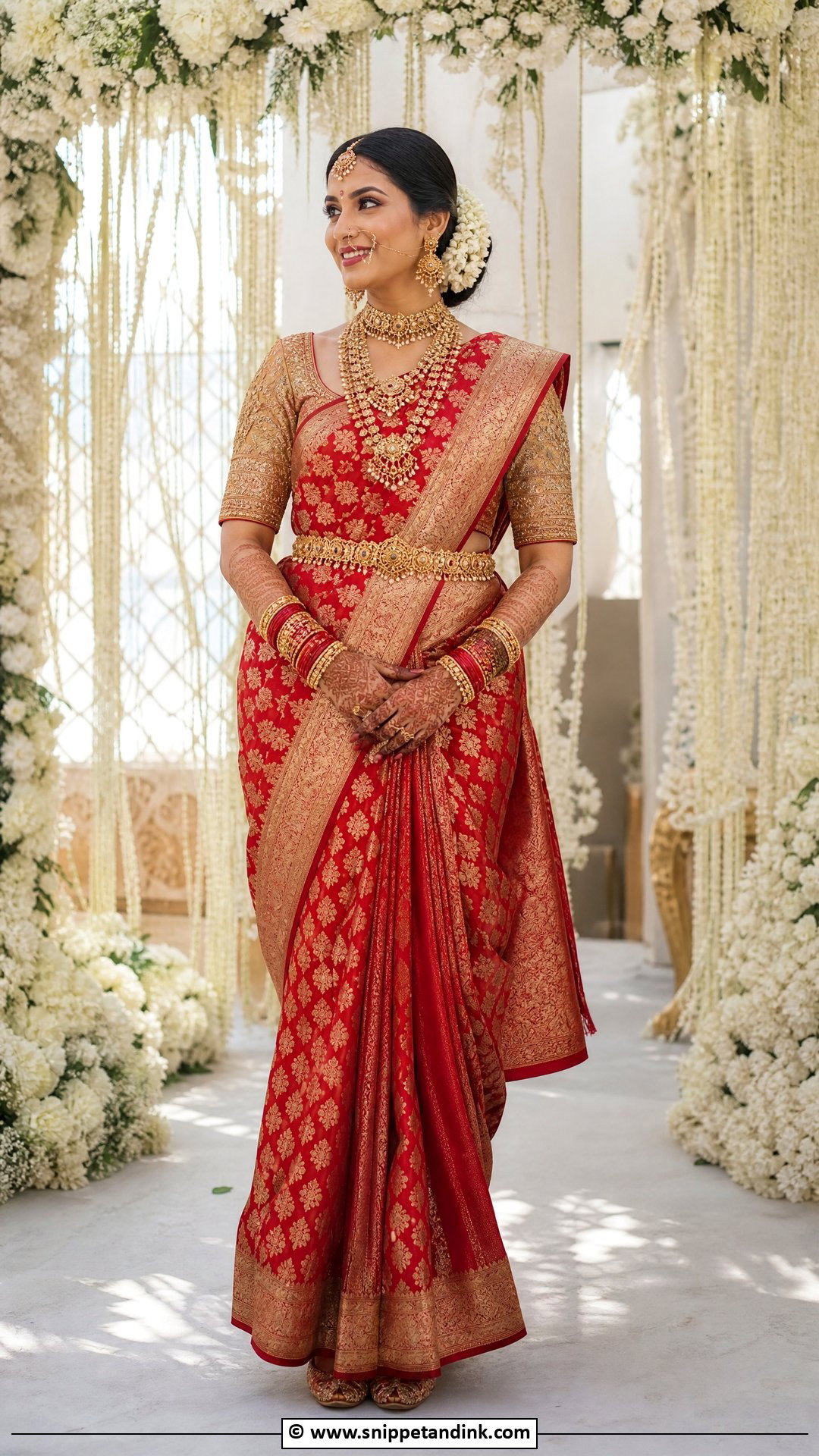
A red Banarasi gives you heritage without the bulk of a lehenga, and the woven zari does the decorating for you. The drape itself is the thing to get right. I always have the pleats set and pinned by someone experienced, and a waist belt helps keep them crisp through hours of sitting and standing. A gold blouse, temple or kundan jewelry, a nath and red or gold bangles suit it. Supportive embroidered sandals hidden under the hem, a center-parted bun with gajra and glowing skin finish it.
9. White And Gold Saree Indian Bride Outfit
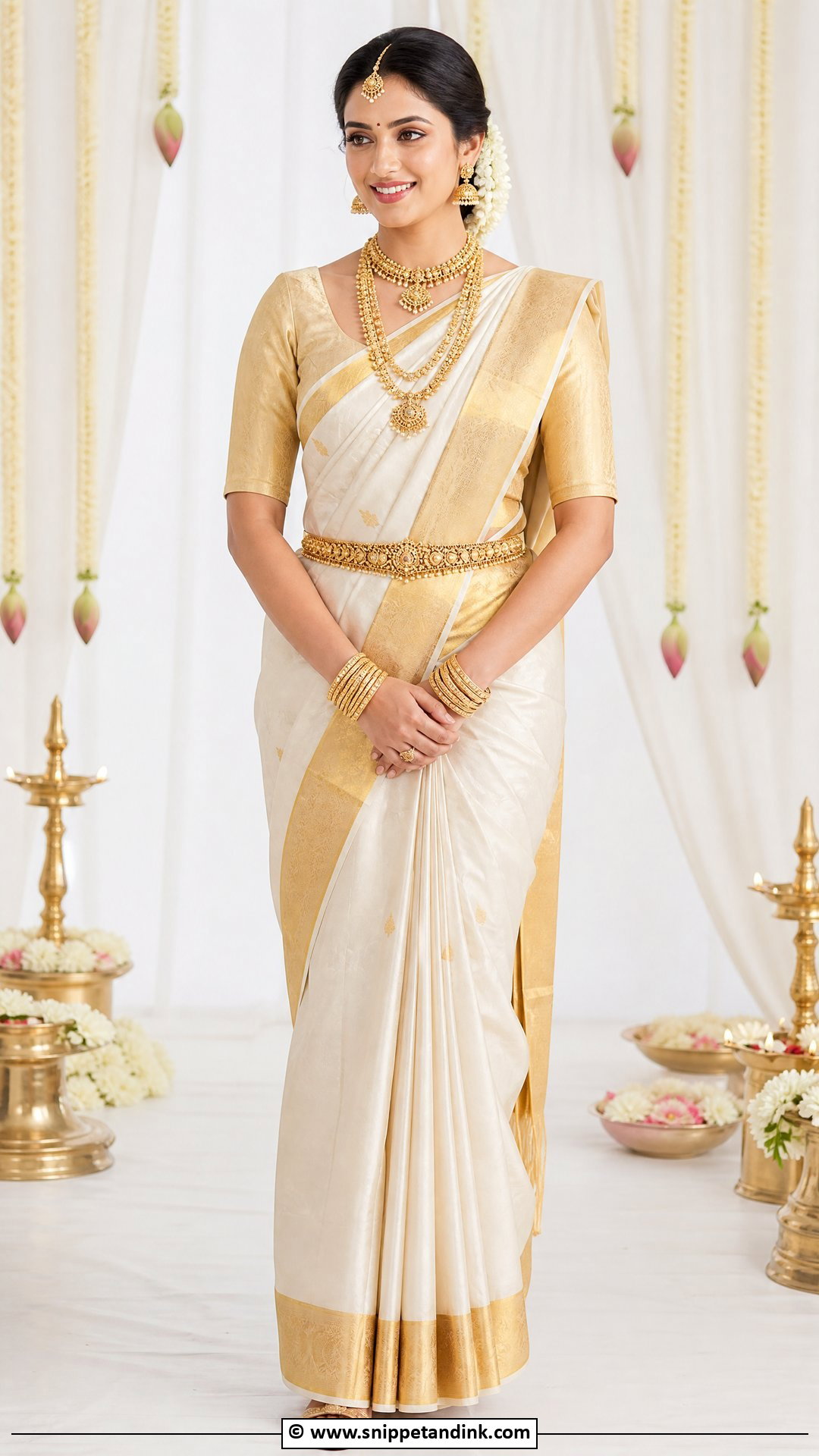
White and gold is calm and serene, especially in a temple setting. A silk saree with a gold zari border works with a gold, ivory or deep green blouse. Without enough jewelry it can look plain on a bride, so I layer gold necklaces, bangles and a waist belt deliberately. Jasmine, a neat bun and luminous makeup keep the purity of the palette. Choose gold sandals or low heels, since South Indian rituals can mean long stretches standing and sitting cross-legged.
10. Kanjeevaram Saree Indian Bride Outfit
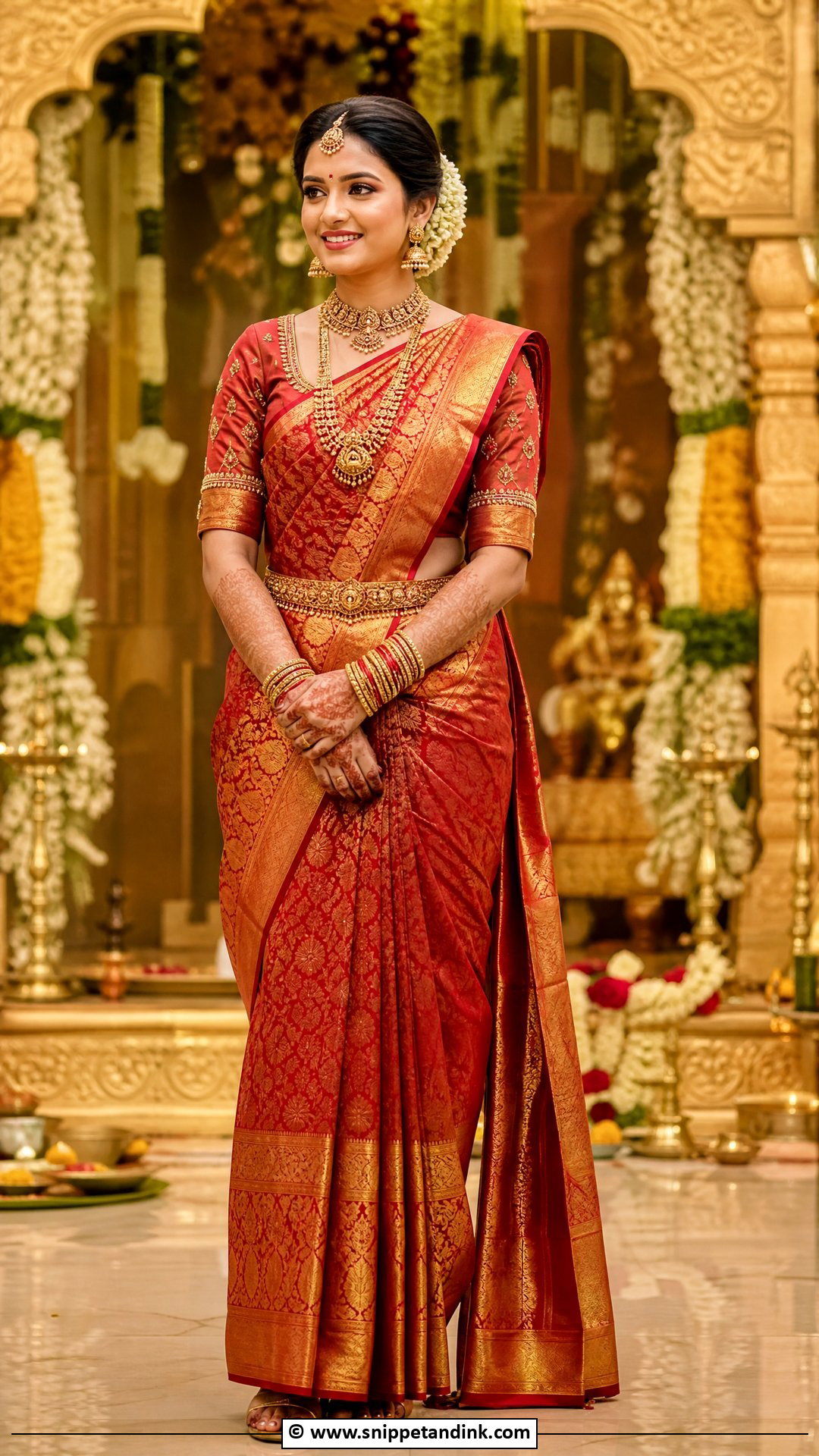
A good Kanjeevaram is heavy, and I warn brides about that up front. The thick silk and wide zari borders are what make it heirloom quality, but they also mean you need a drape that’s pinned securely and shoes you can stand in for hours. Red, maroon, mustard, green, purple and orange with heavy gold zari are all traditional. A fitted blouse, temple jewelry, gold bangles, a waist belt and a fresh flower bun complete it. Classic makeup, with defined brows, kohl and a warm lip, keeps the focus on the silk.
11. Green Bridal Lehenga Indian Bride Outfit
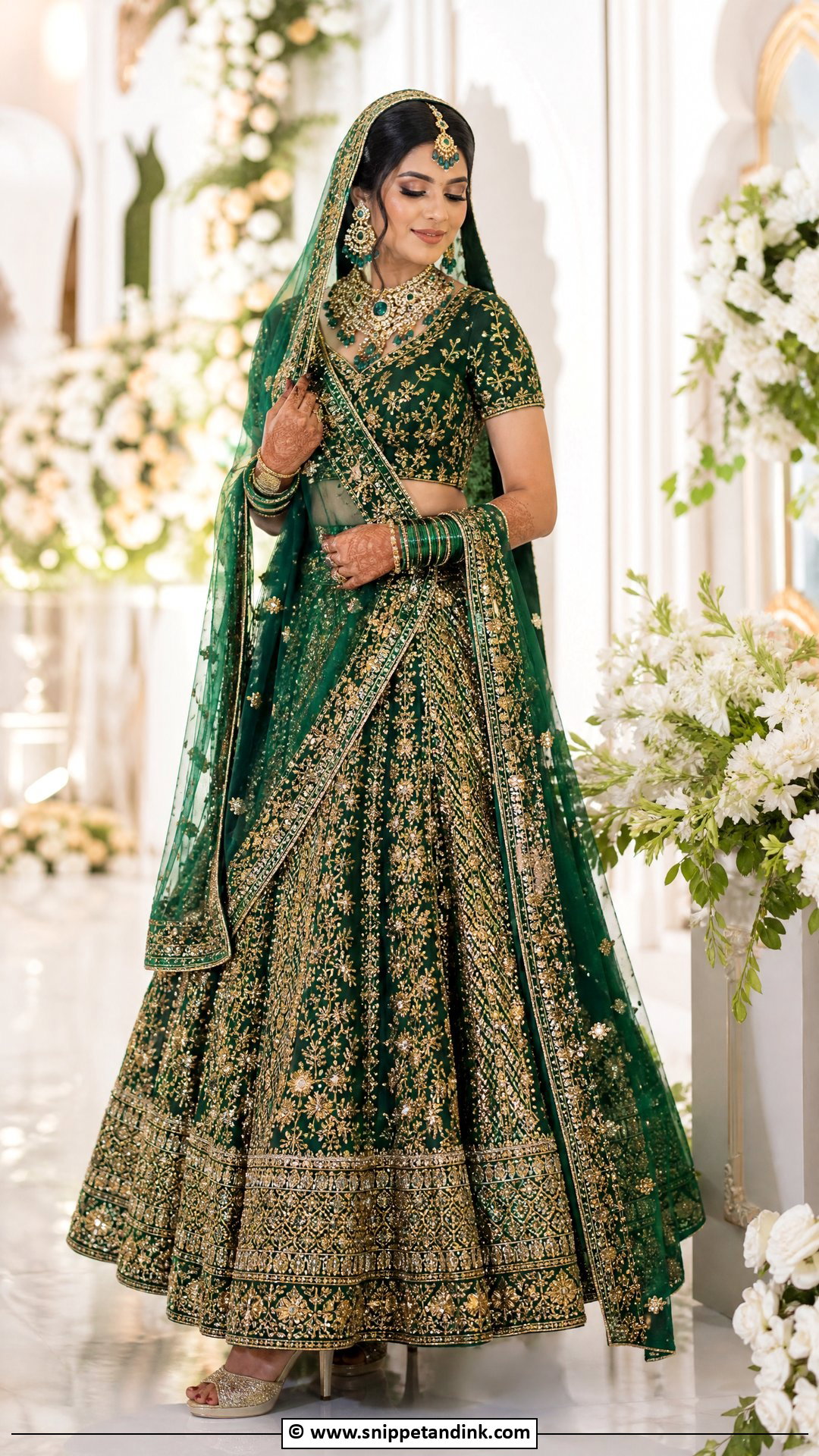
Green covers more ground than people expect. Emerald with gold embroidery is royal; sage with pearl work feels modern; bottle green and pistachio sit somewhere between. Pair it with polki, emeralds or kundan, a coordinated dupatta and embellished heels. Choose hair by the neckline: a sleek bun for high necks, soft waves for a deep sweetheart. I ask makeup artists to keep the cheeks and lips warm, since cool tones next to a strong green can make the face look tired.
12. Yellow Haldi Bride Outfit
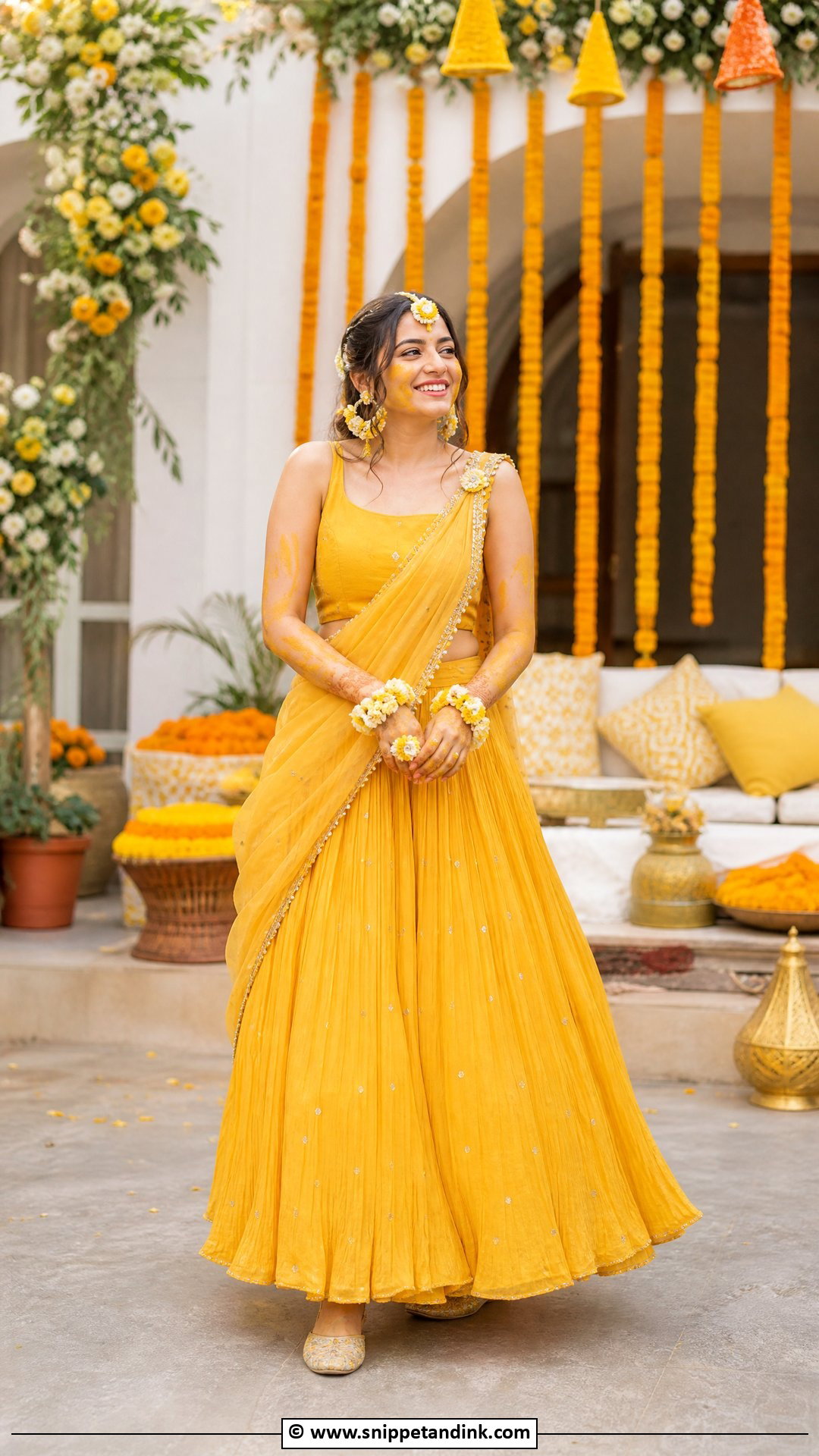
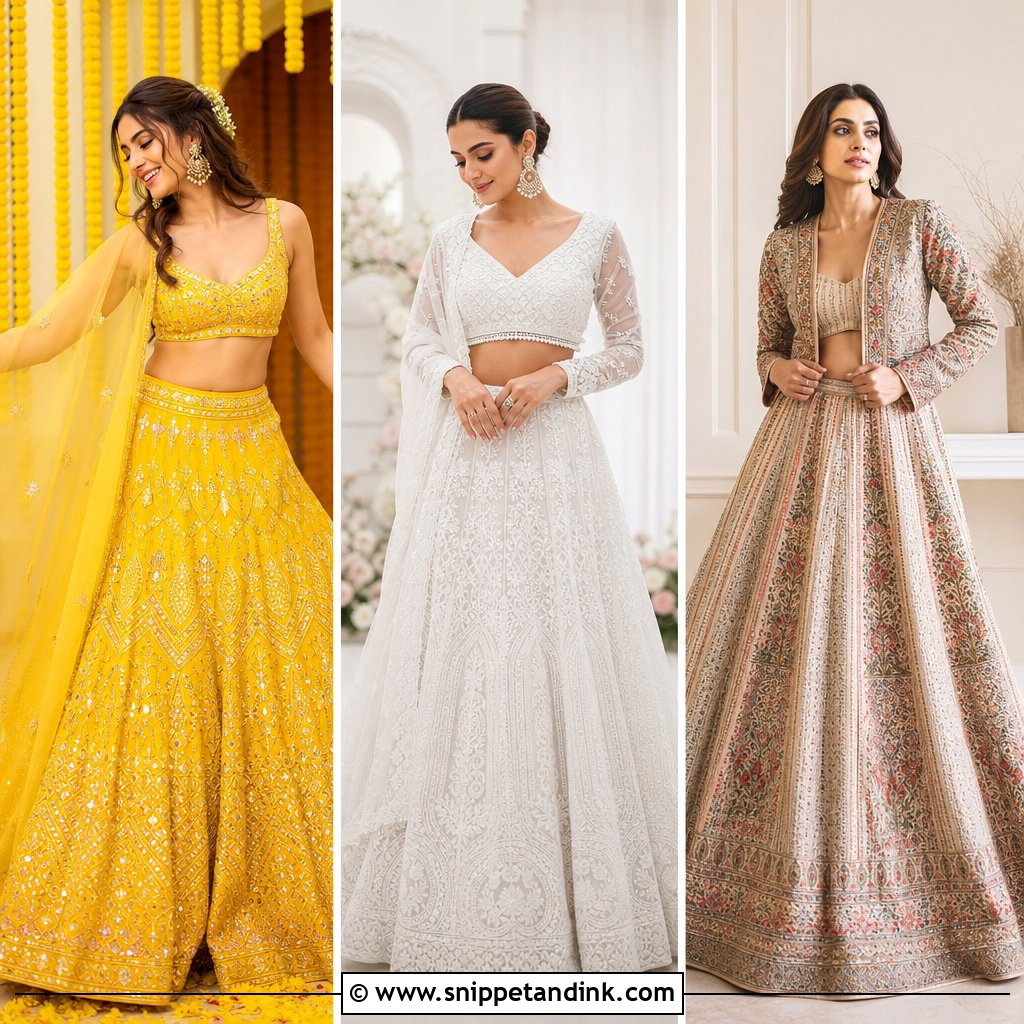
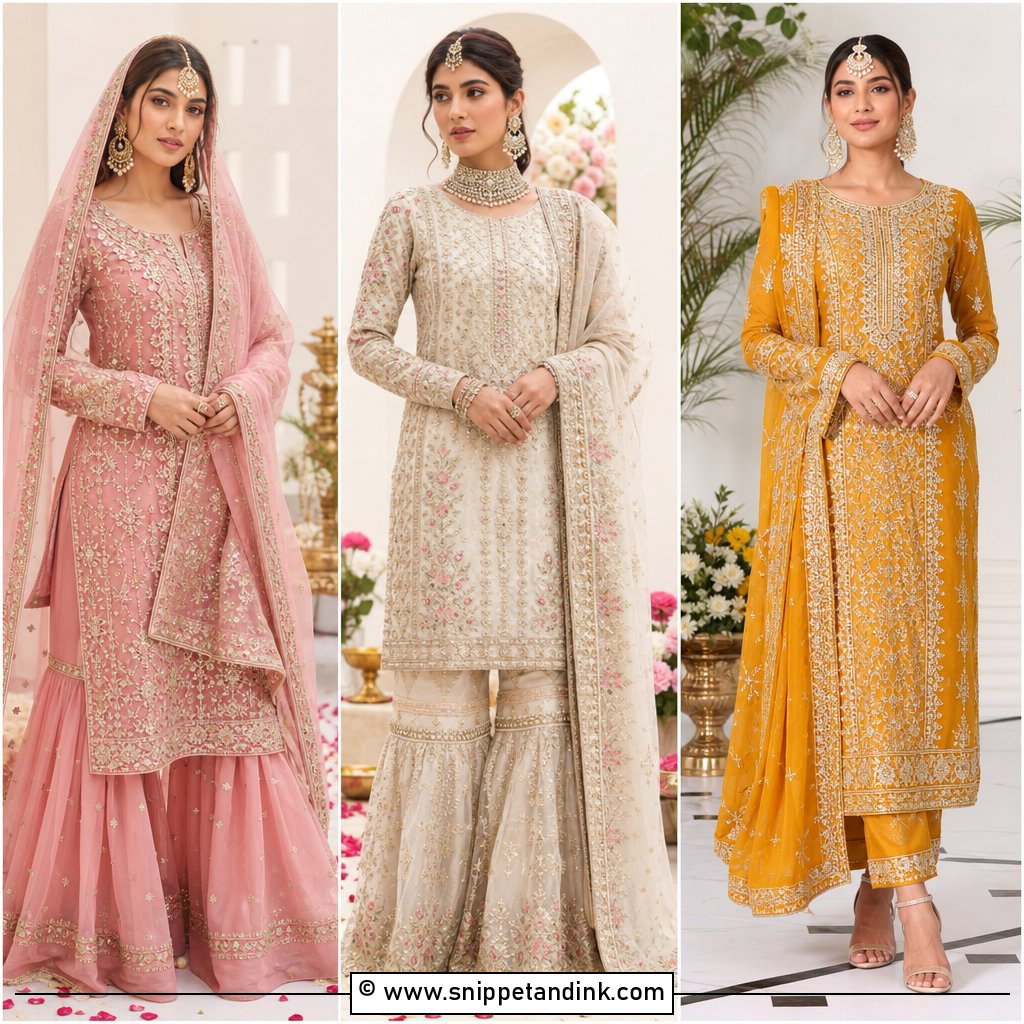
Haldi is the outfit that will get stained, so I never put a bride in anything precious for it. Turmeric paste marks silk and embroidery permanently, which is why cotton silk, chanderi, georgette or organza in turmeric yellow, lemon or mustard make sense. A light lehenga, a sharara, a simple saree or an anarkali all work. Floral jewelry, small earrings and flats or juttis keep it easy to move in. Pin the dupatta firmly, and keep the hair in a braid or soft bun that can survive a splash of paste.
13. Mehndi Lehenga Indian Bride Outfit
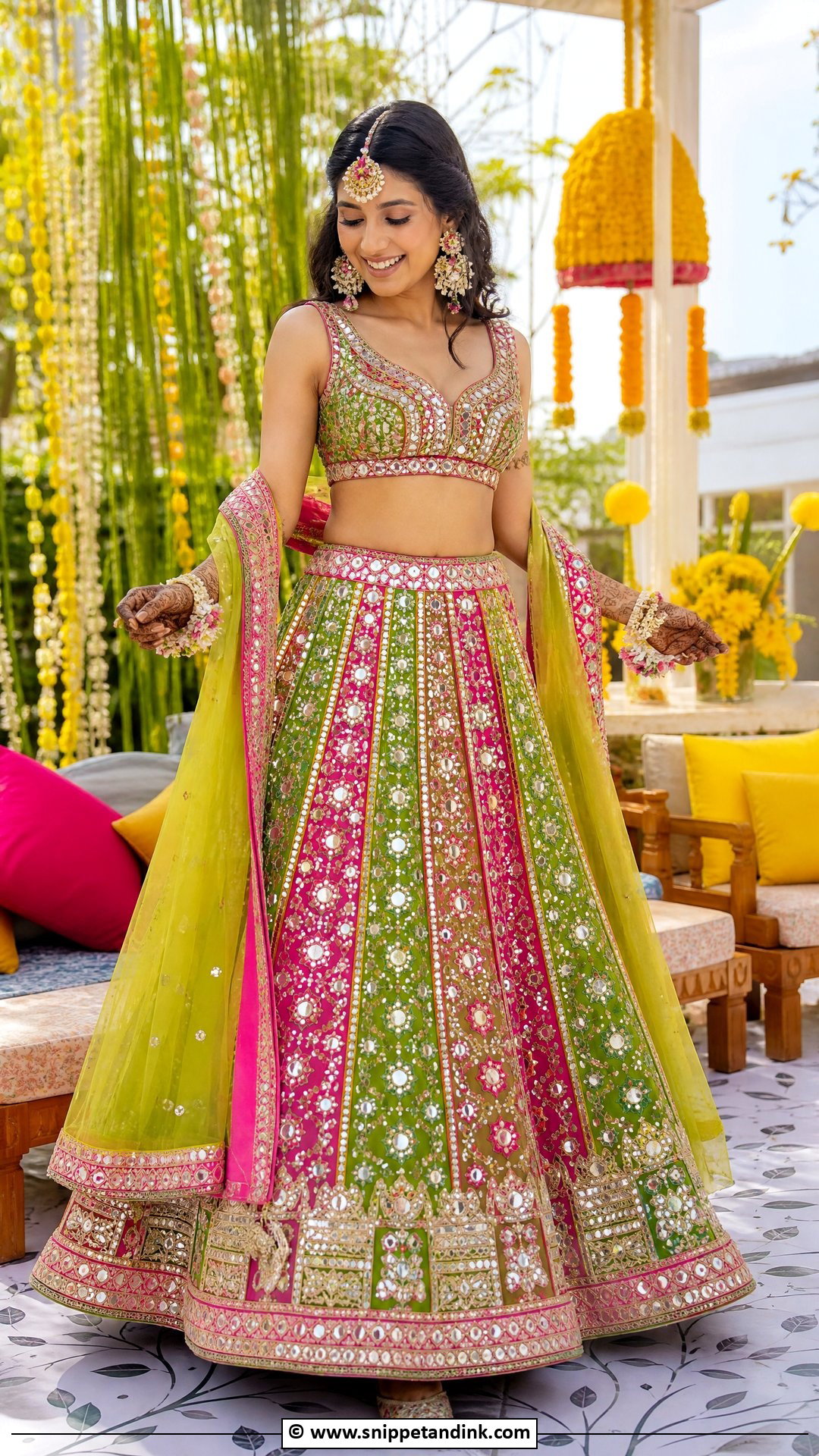
At a mehndi you’ll spend hours sitting still with wet paste on your hands and feet, so a mehndi lehenga needs to be light, short-sleeved or sleeveless, and easy to manage without using your fingers. Green, lime, turquoise, fuchsia, orange or a multicolor mix suit the mood. Mirror work, gota patti, thread work or prints give color without weight. A cropped blouse, a lighter skirt and a single dupatta pinned in place mean nobody needs to adjust anything while your henna dries. Statement earrings, a maang tikka and juttis complete it.
14. Sangeet Lehenga Indian Bride Outfit
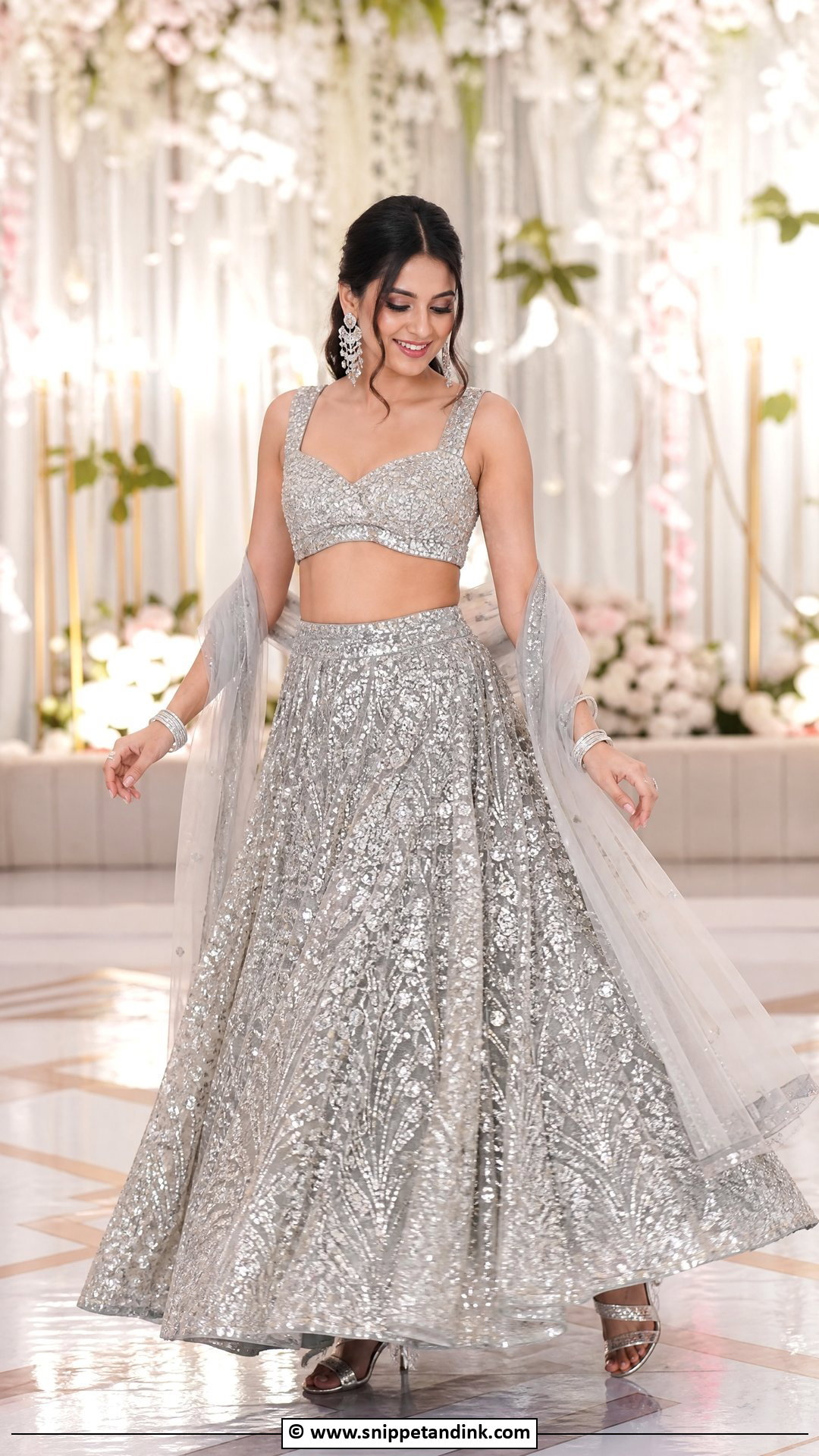
Before I approve a sangeet lehenga, I ask the bride to dance in it at the fitting. Sequins, mirror work and light embroidery catch the stage lights, but the blouse needs to stay put when your arms go up and the skirt needs to swing without tripping you. A lighter dupatta, secured at the shoulder, avoids constant fixing. Statement earrings and a bracelet stack are plenty if the blouse is detailed. Comfortable heels or wedges, and a high ponytail or half-up style that won’t fall apart in an hour, finish it.


15. Reception Gown Indian Bride Outfit
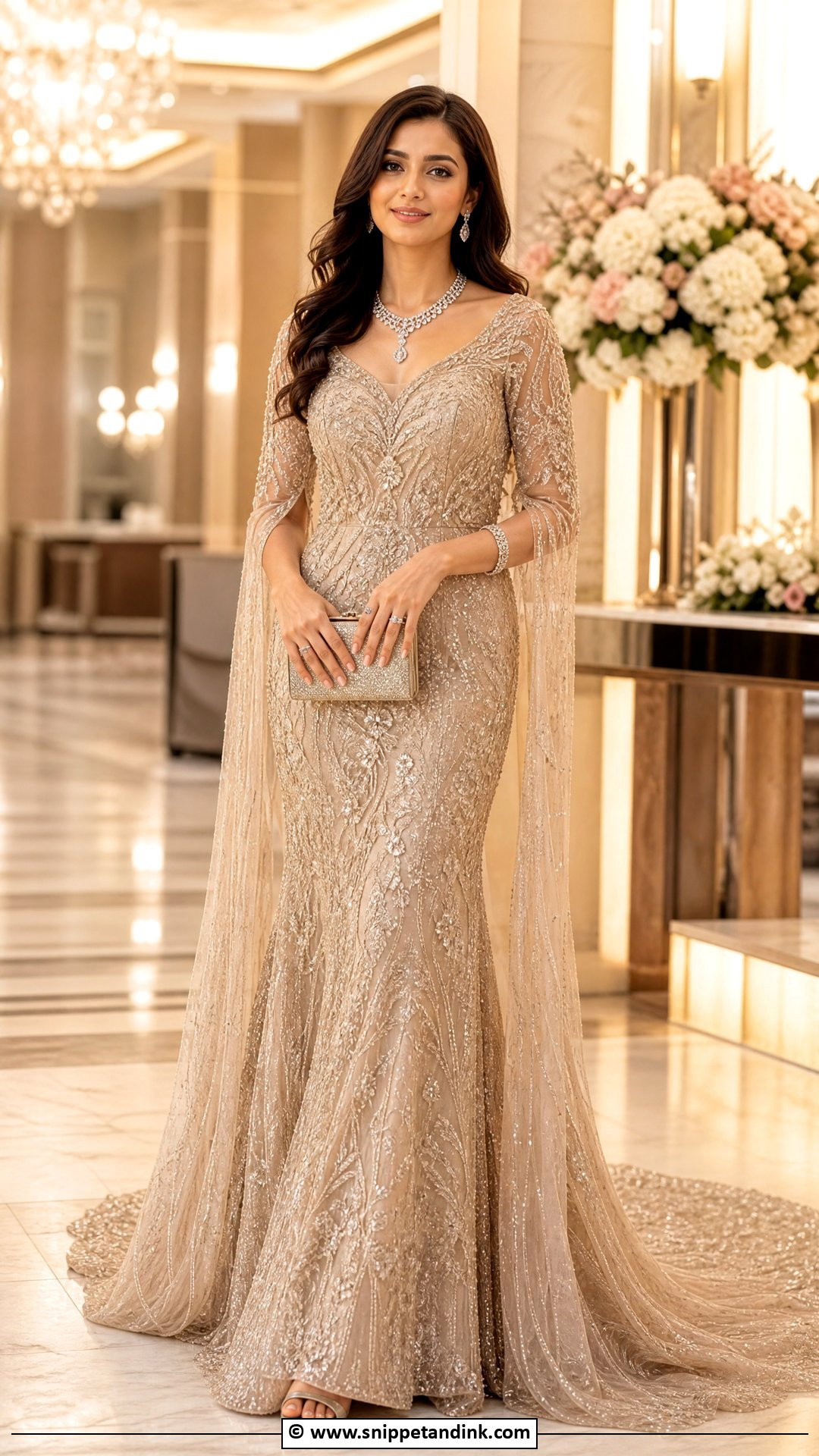
A reception gown gives a modern change after the traditional ceremony. A structured gown with embroidery, sequins, cape sleeves or a train suits a formal ballroom. Champagne, silver, navy, emerald, blush and ivory all photograph well under event lighting. Pair with diamonds, sleek heels and a clutch. A trail looks dramatic on the entrance but needs a bustle or wrist loop for greeting guests, so I’d ask your tailor to add one. A smooth bun or soft side-parted waves keeps the neckline clear.
16. Sharara Indian Bride Outfit
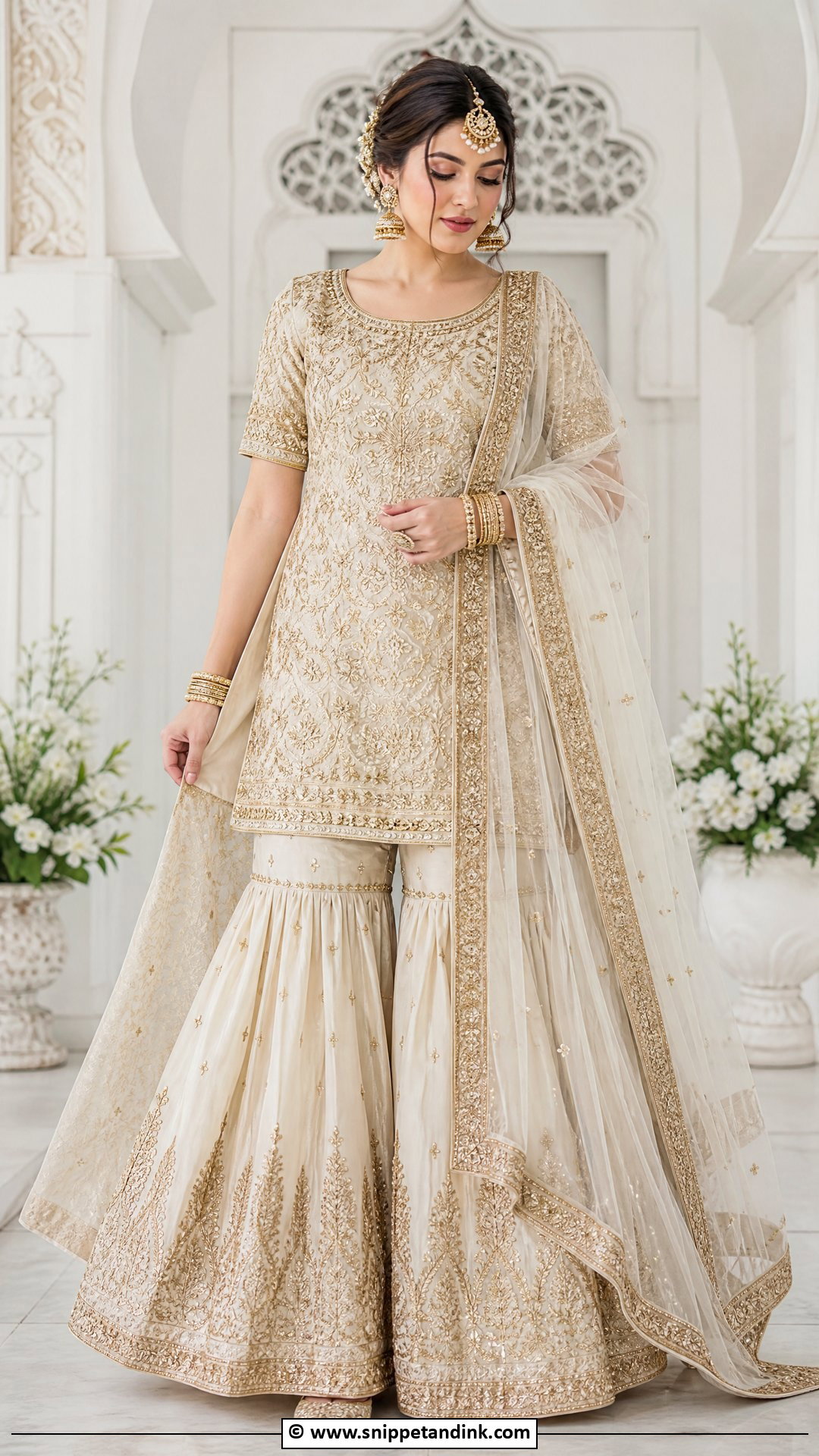
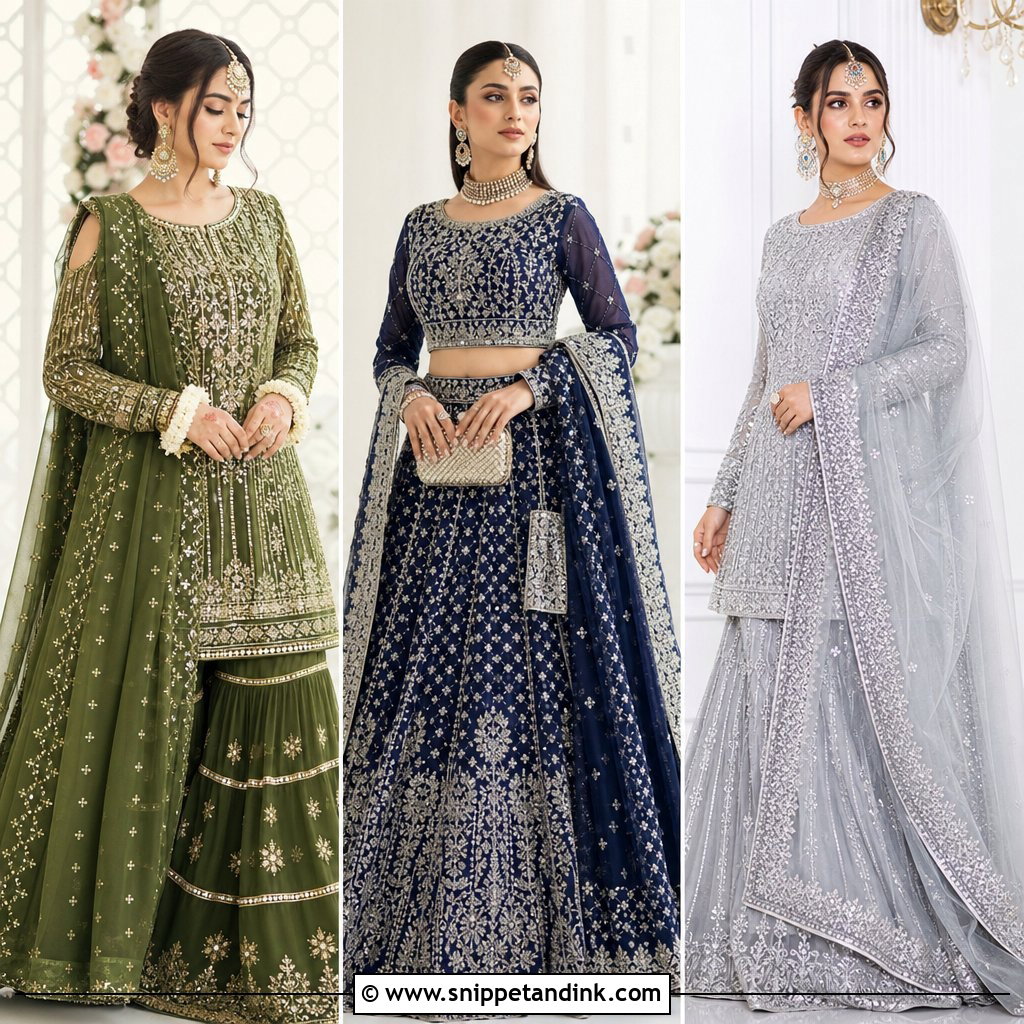
A sharara gives festive volume with the comfort of pants, and brides who like to move freely often prefer it. The flared legs carry the movement while the short kurti and dupatta keep it traditional. Silk, brocade, georgette or organza with zari, gota or pearl work all suit it, in red, gold, ivory, green, pink or peach. Jhumkas, a passa, bangles and embellished juttis complete it. Because the volume sits at the bottom, I keep the dupatta draped neatly so the whole outfit doesn’t look wide.
17. Anarkali Indian Bride Outfit
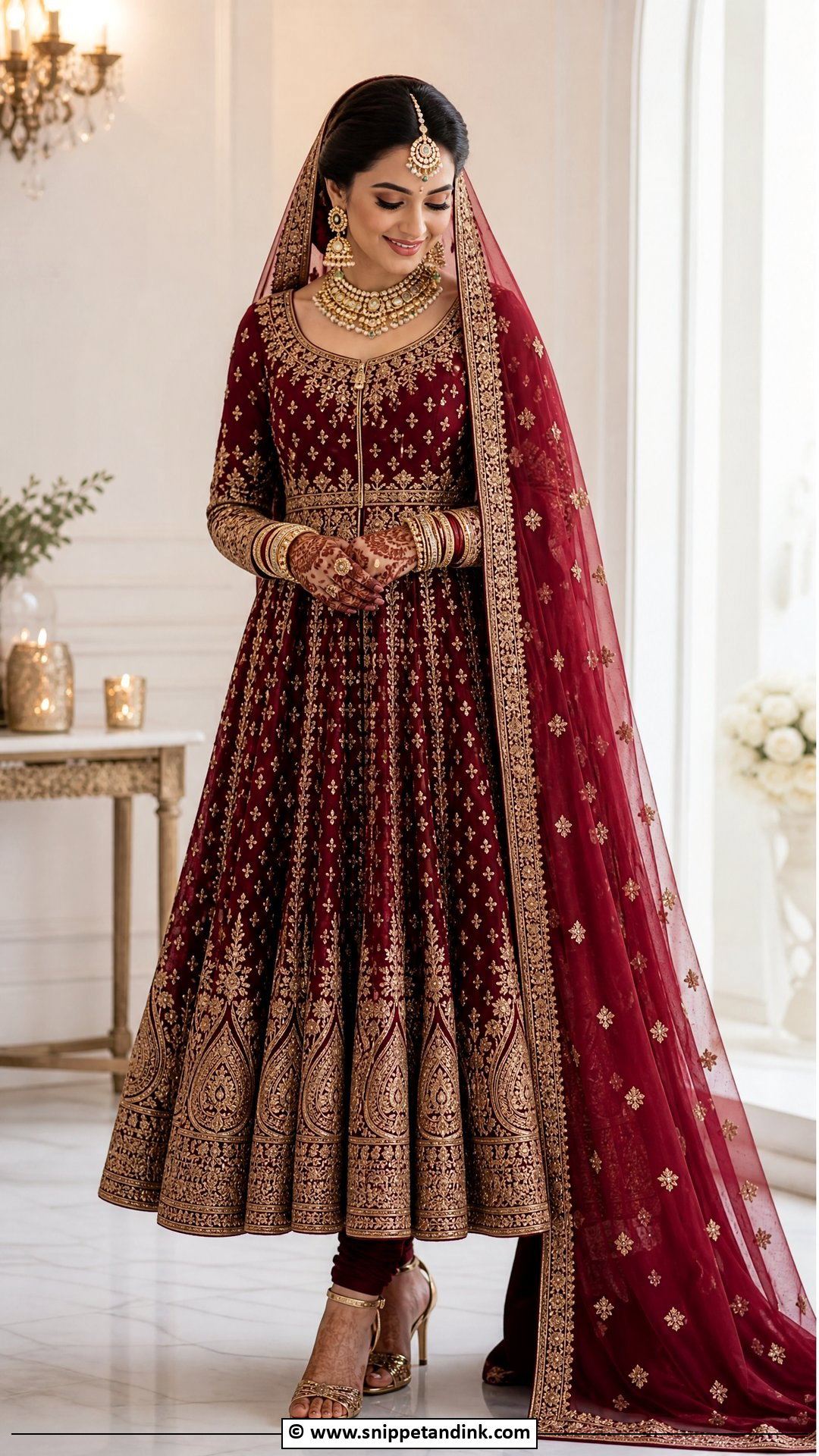
An anarkali covers more and moves more easily than most lehengas, which makes it a strong option for a long day of rituals. Choose a floor-length cut with heavy embroidery, a matching dupatta and churidar or slim pants underneath. Silk, net and georgette suit warm months; velvet suits winter. The flare starts high and gives shape without clinging, which is why it flatters so many builds. Kundan, a maang tikka and comfortable heels finish it, with a low bun, a braid or soft curls depending on the neckline.
18. Lehenga Saree Indian Bride Outfit
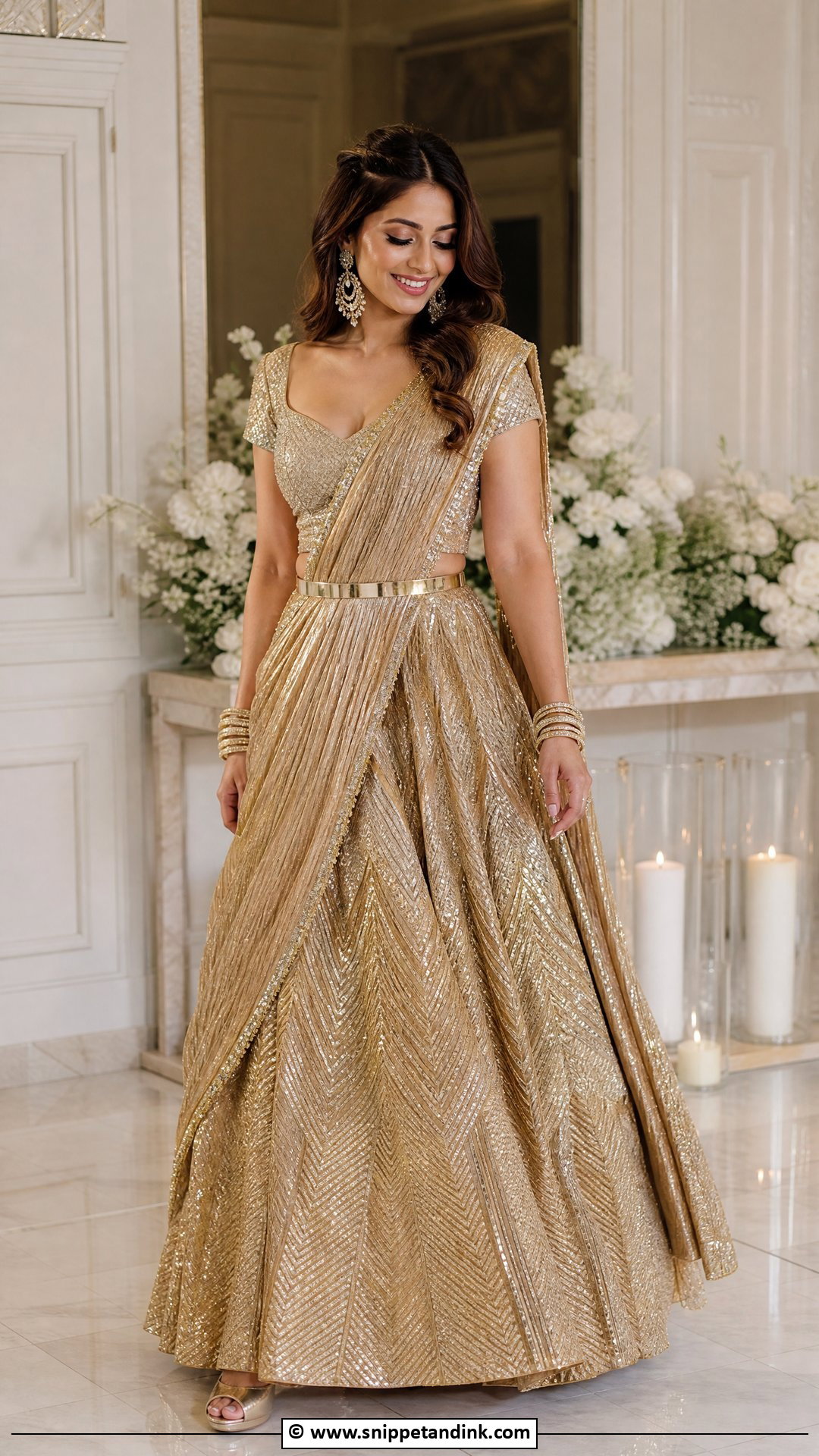
A lehenga saree is my usual answer when a bride loves the saree look but is nervous about pleats coming loose. The pre-stitched skirt holds its shape, and the pallu drapes like a saree without the risk. Silk, georgette, satin or net with embroidery, sequins or zari make it bridal. A waist belt keeps the pallu anchored, and heels give the drape the right length, so wear them at your fittings. Statement earrings, bangles, sleek hair and defined makeup complete it for a reception or engagement.
19. Cape Lehenga Indian Bride Outfit
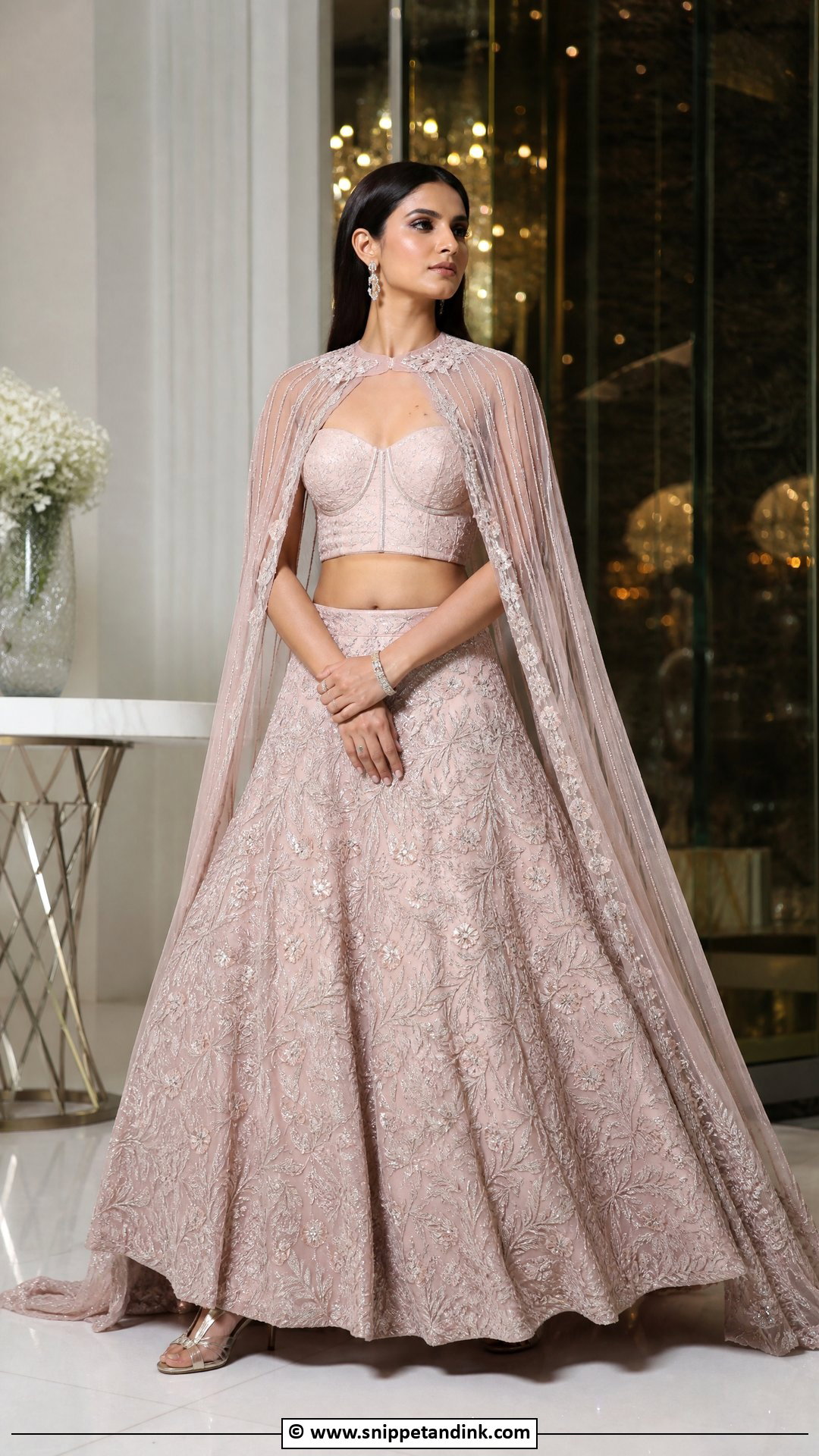
A cape replaces the dupatta and frames the shoulders differently in every photo. It suits brides who find a dupatta fussy and don’t want anything to manage. Choose a sheer embroidered cape over a structured blouse and a balanced skirt. Because the cape already adds detail near the face, I cut the jewelry right back: drop earrings, a bracelet and a ring. Metallic heels and smooth hair finish it. It belongs at a reception or cocktail evening rather than a traditional ceremony.


20. Jacket Lehenga Indian Bride Outfit
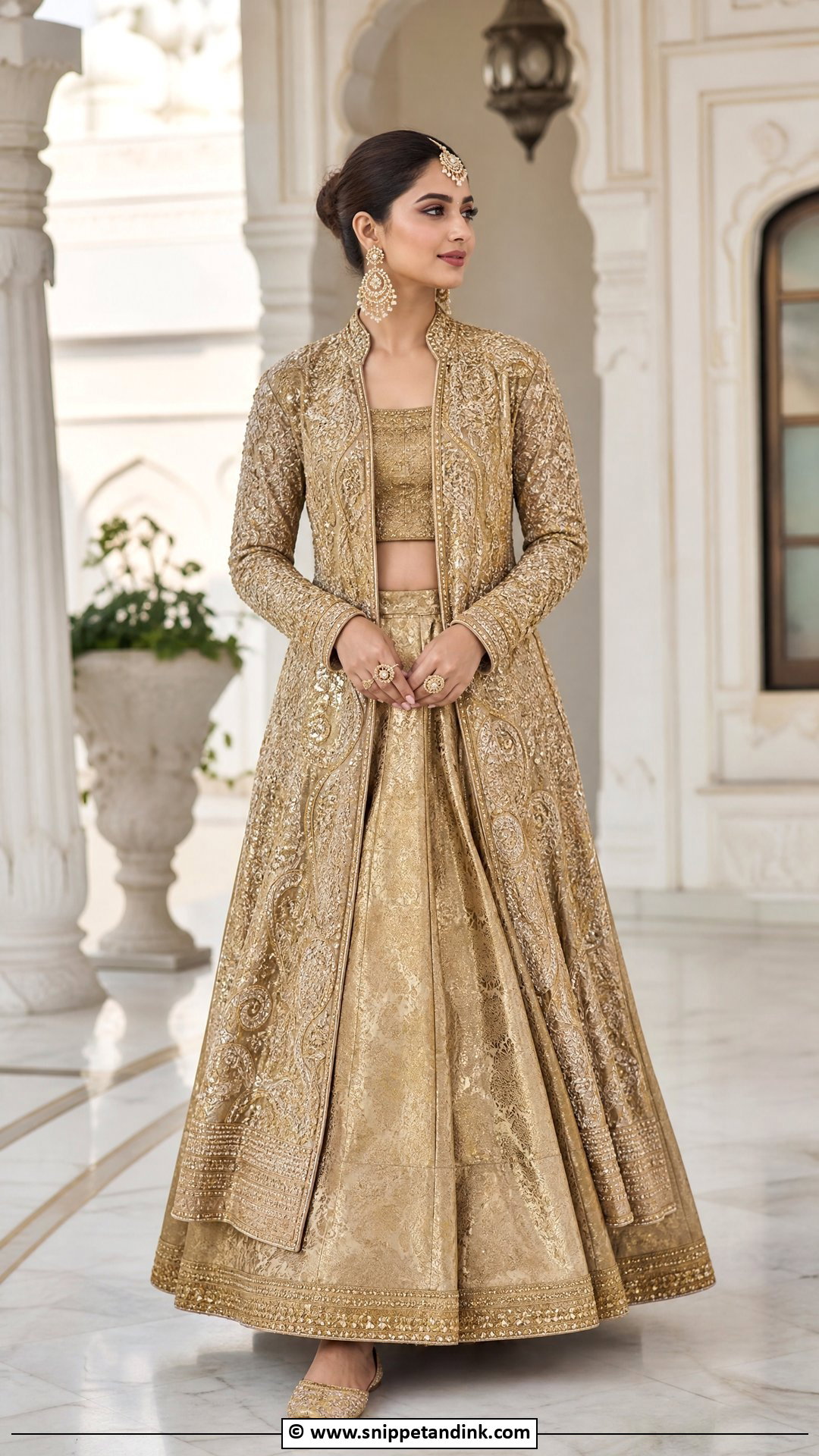
A jacket lehenga adds coverage and structure, and it suits winter or a formal indoor venue where layers feel natural. The jacket can be short, long, sheer, embroidered or brocade, so keep the blouse and skirt simpler and let the jacket lead. If it has a high neckline, I’d skip the necklace entirely and put the attention on earrings, hair and makeup. Rings, statement earrings and comfortable heels or juttis are enough. Check that the jacket sleeves allow you to lift your arms; heavy brocade often doesn’t.
21. Mirror Work Lehenga Indian Bride Outfit
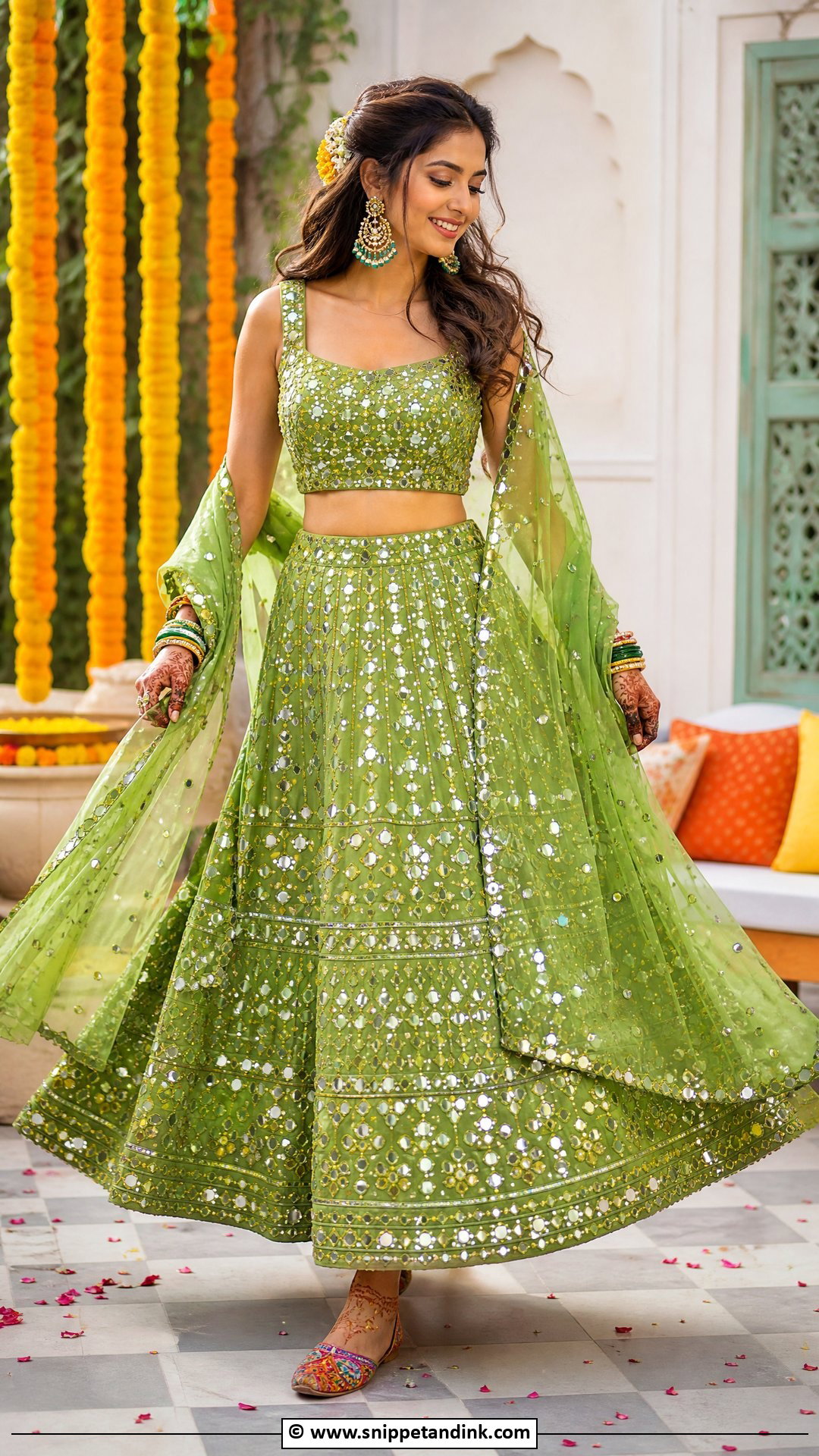
Real mirror work is heavier than it looks, and the edges can catch on a dupatta or scratch the next guest’s sleeve. Even so, a mirror work lehenga comes alive in daylight and fairy lights, so it suits mehndi, sangeet and daytime events. Green, yellow, pink, orange or ivory as a base all look lively. Keep the blouse fitted, the dupatta light, and the makeup fresh, because the outfit already brings the shine. A braid with accessories or loose waves suits the playful mood.
22. Floral Lehenga Indian Bride Outfit
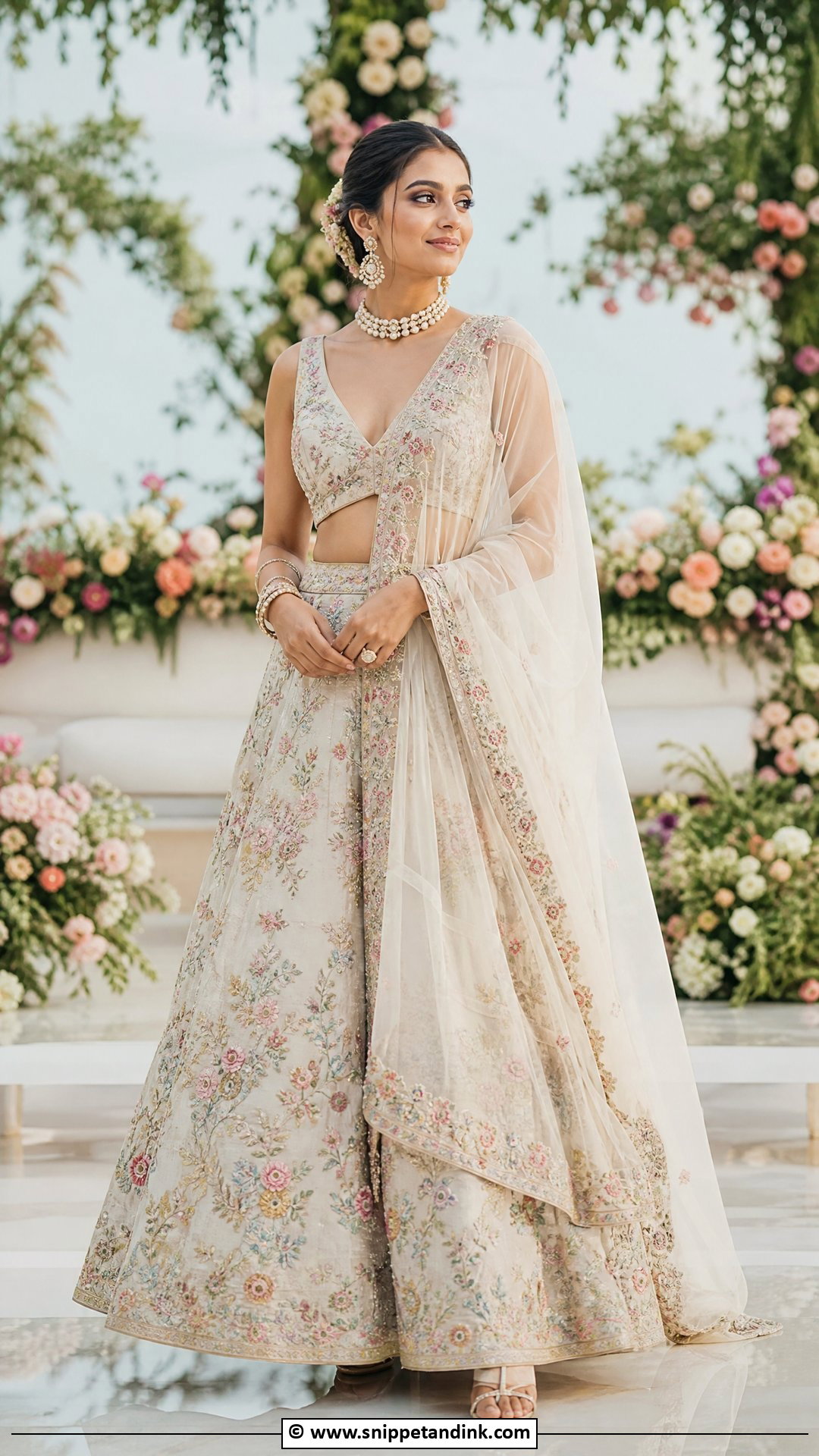
Printed florals suit a lighter daytime event; embroidered florals make a more formal bridal look. Pastels, ivory, soft pink, mint, lavender and peach work best for day ceremonies, where the detail can be seen in natural light. I pair them with pearl jewelry, delicate earrings and light heels. A sheer dupatta keeps it airy, and a flower-accented bun picks up the motif. Keep makeup glowing in pink or peach tones for a garden wedding, a daytime reception or a destination event.
23. Organza Saree Indian Bride Outfit
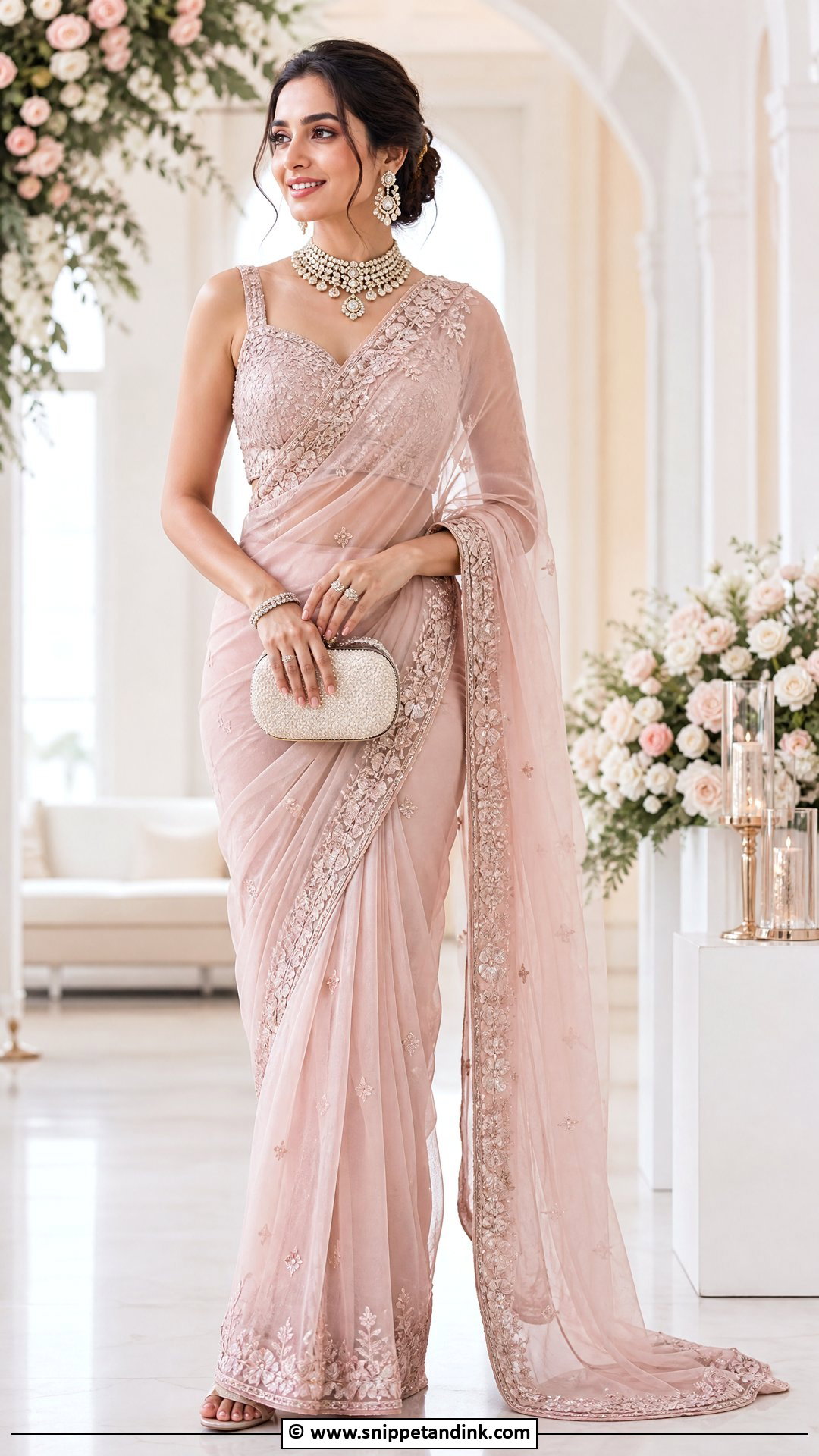
Organza floats, which is its charm and its difficulty: it creases sharply and is more sheer than brides expect. I always check it against light with the petticoat on before the wedding. Embroidered borders, floral detail, pearls or subtle sequins give it presence. A structured blouse balances the delicate fabric. Diamonds, pearls or polki depending on color, plus heels, a small clutch and a neat hairstyle, finish it for an engagement, reception or daytime ceremony.
24. Silk Lehenga Indian Bride Outfit
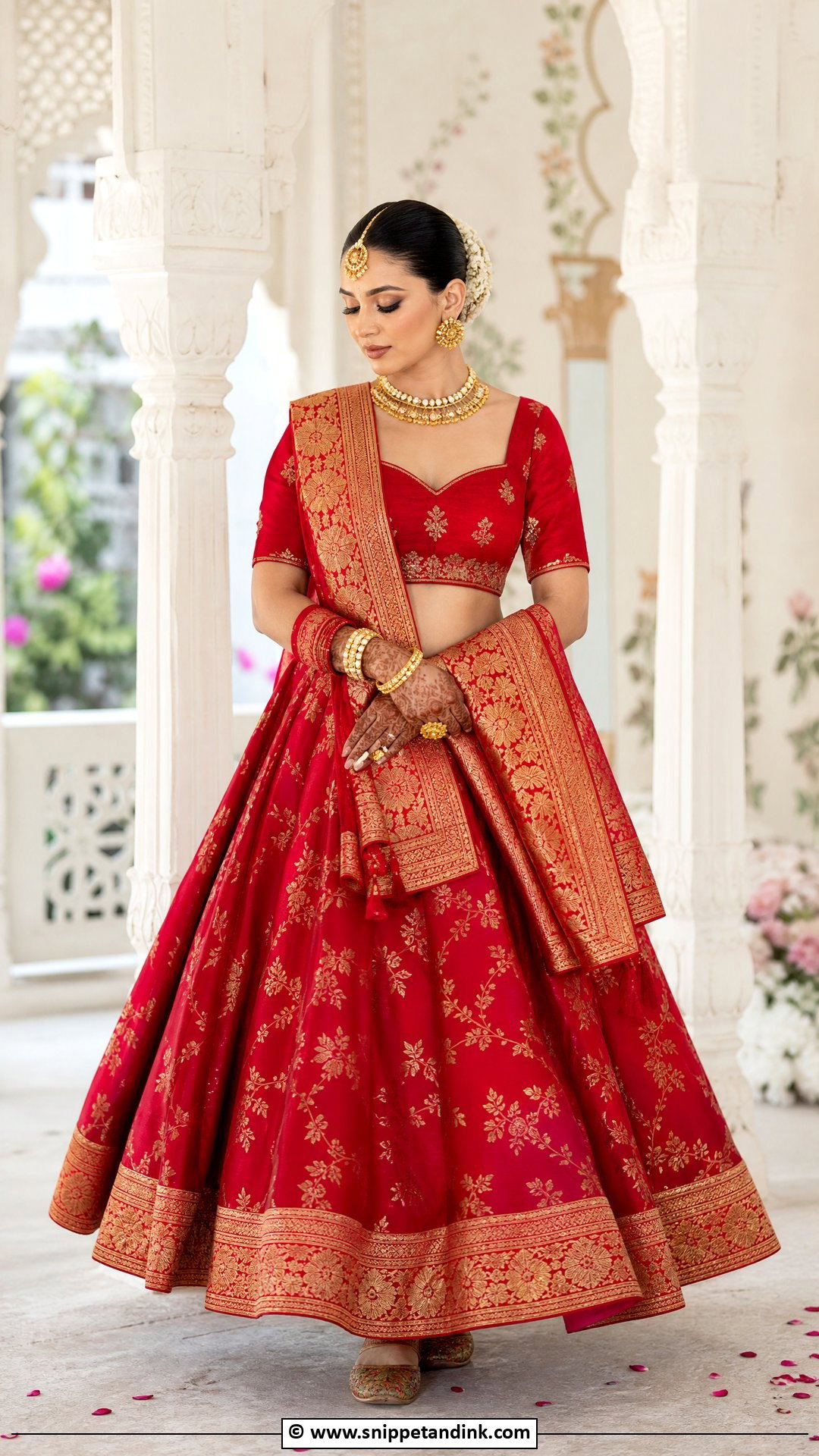
Silk doesn’t need much sparkle to look bridal. Raw silk, Banarasi silk and brocade all have natural body and sheen, so even light embroidery reads rich. Red, maroon, gold, green, rust or ivory suit different ceremonies. A classic blouse, a woven dupatta, gold jewelry, bangles and embroidered footwear complete it. This is also the lehenga most likely to be worn again or kept for a daughter, so I’d lean toward a color and cut you’ll still want years from now. A sleek bun, a bindi and warm makeup finish it.

25. Chikankari Lehenga Indian Bride Outfit
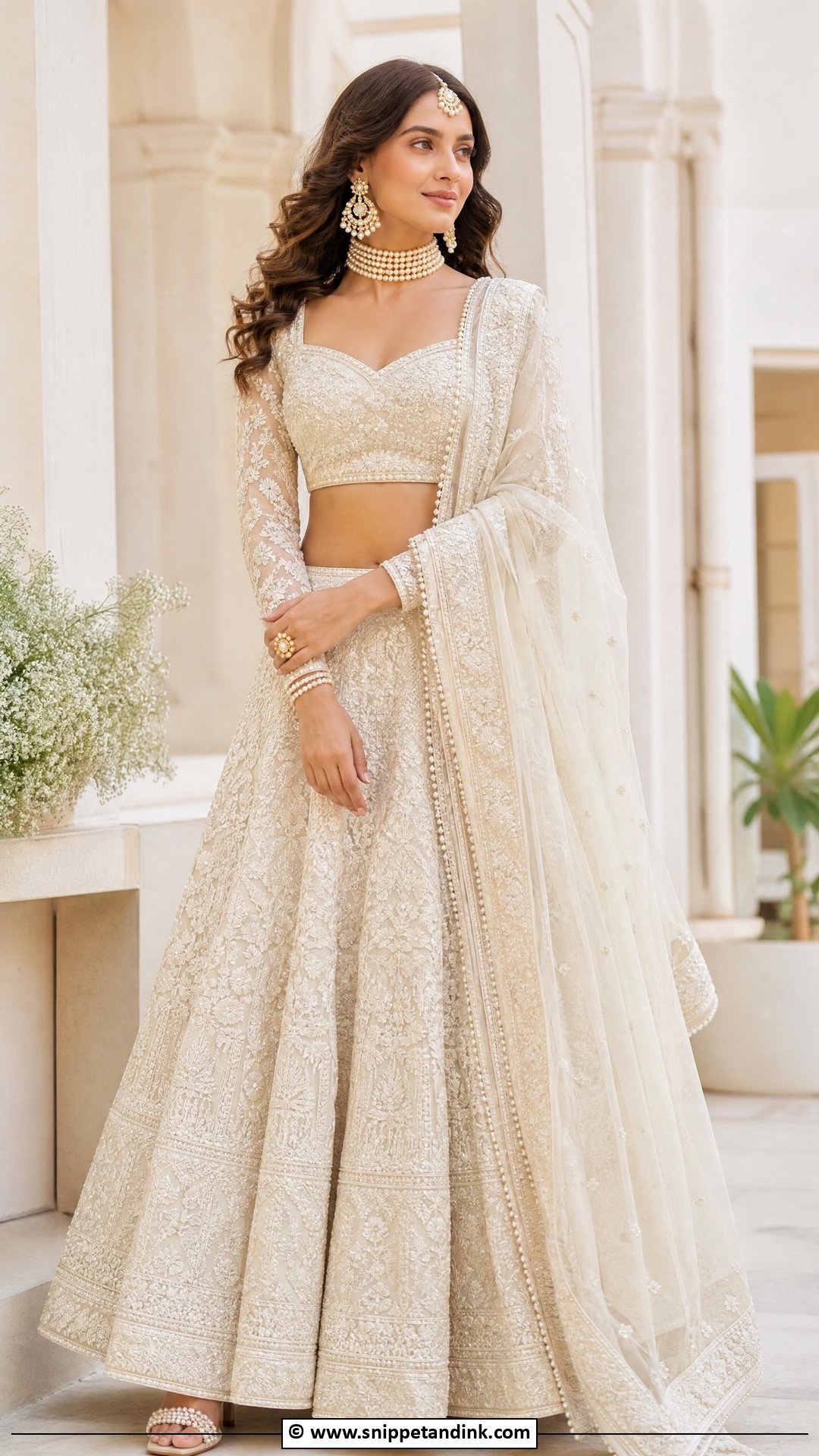
Chikankari is hand embroidery, traditionally white thread on fine fabric, and it rewards being seen up close. Ivory, blush, peach, powder blue and mint show the stitches best. Mukaish, pearl or sequin accents add bridal shine without hiding the handwork. Pearls, polki or diamonds work depending on the occasion. Because the fabric is fine, I’d keep it for daytime or summer events and away from long, rough outdoor walks. A sheer dupatta, soft curls, dewy makeup and embellished flats suit it.
26. Sequin Lehenga Indian Bride Outfit
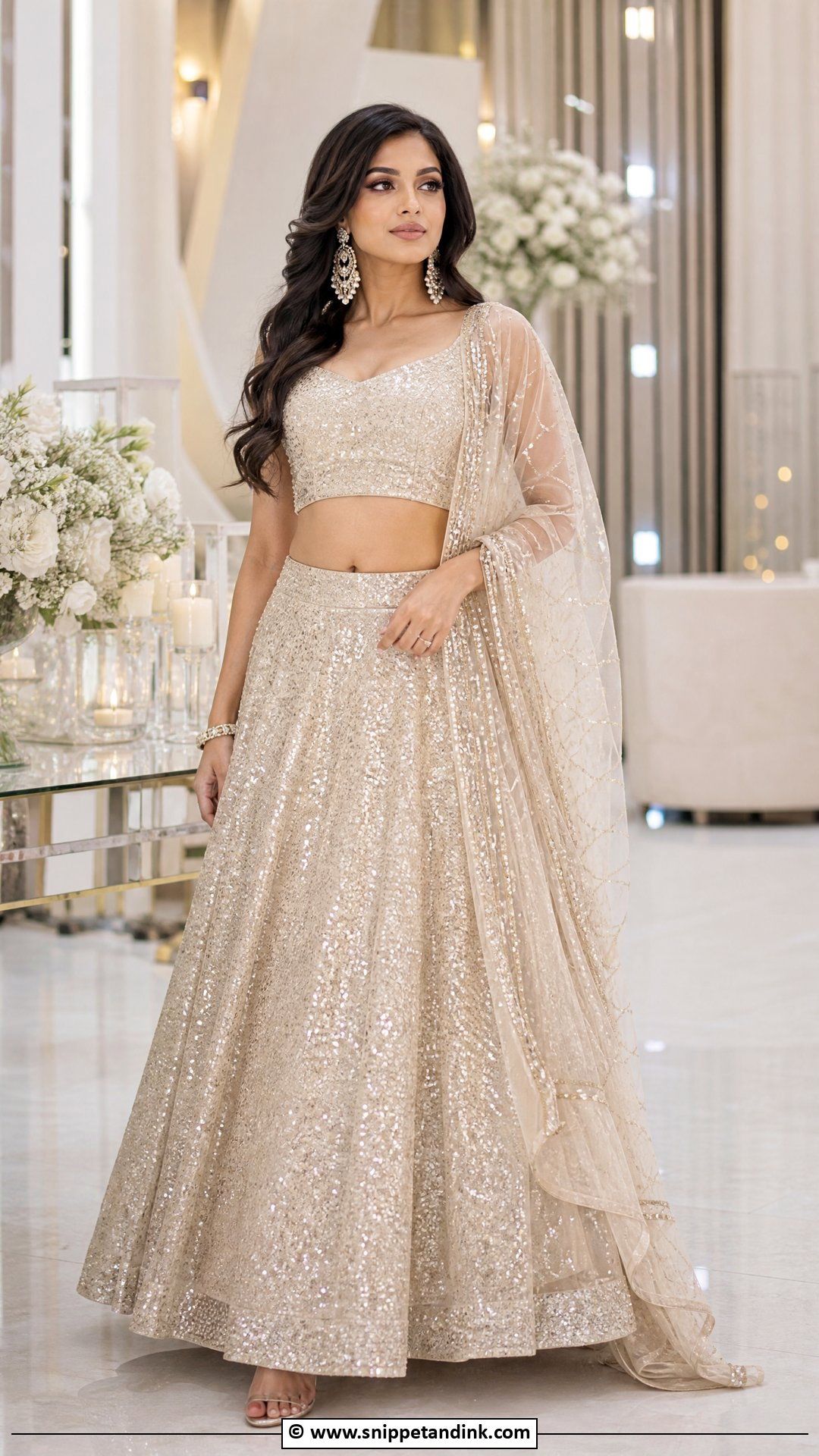
Sequins are the glamorous evening option, but the line between polished and busy is narrow. I look for balanced placement, often denser at the hem and lighter at the waist, and a silhouette that flatters. Champagne, silver, blush, emerald, navy and wine all suit a reception or sangeet. Keep jewelry minimal, statement earrings and a bracelet, because the lehenga already reflects light. Sequins scratch bare arms when you hug guests all night, so make sure the inside seams are lined.
27. Rajasthani Bride Lehenga Outfit
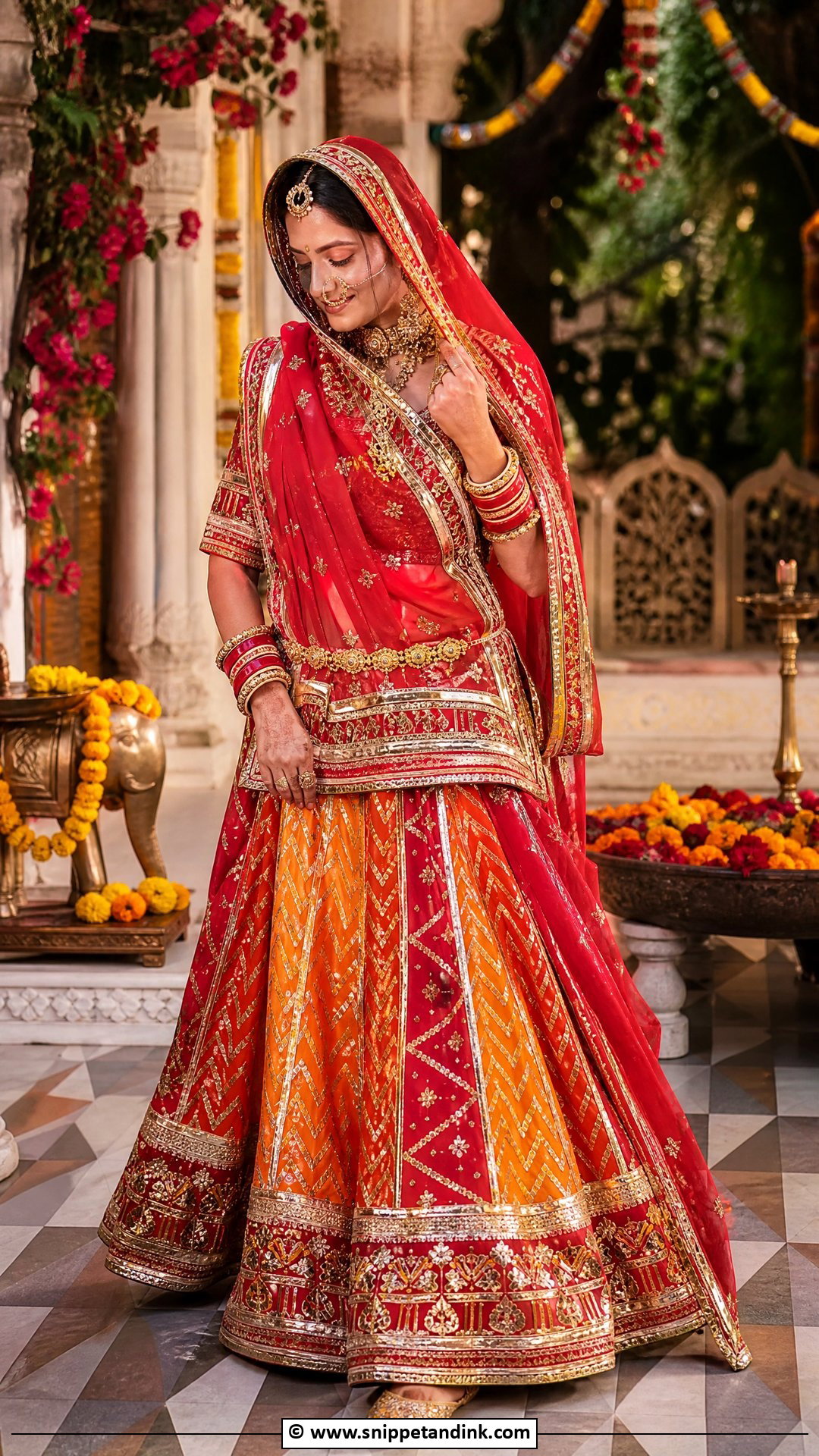
Gota patti, bandhani, leheriya and mirror work in red, orange, yellow, pink or green are what make a Rajasthani bride lehenga outfit so recognizable. Pair it with a traditional blouse, an odhni-style dupatta, a borla maang tikka, heavy bangles and juttis. A waist belt adds structure and anchors the odhni. Warm makeup with defined eyes and a lip that suits the outfit’s color keeps it grounded. It’s a regional look that carries real heritage and still photographs vividly in modern wedding albums.
28. Punjabi Bride Lehenga Outfit
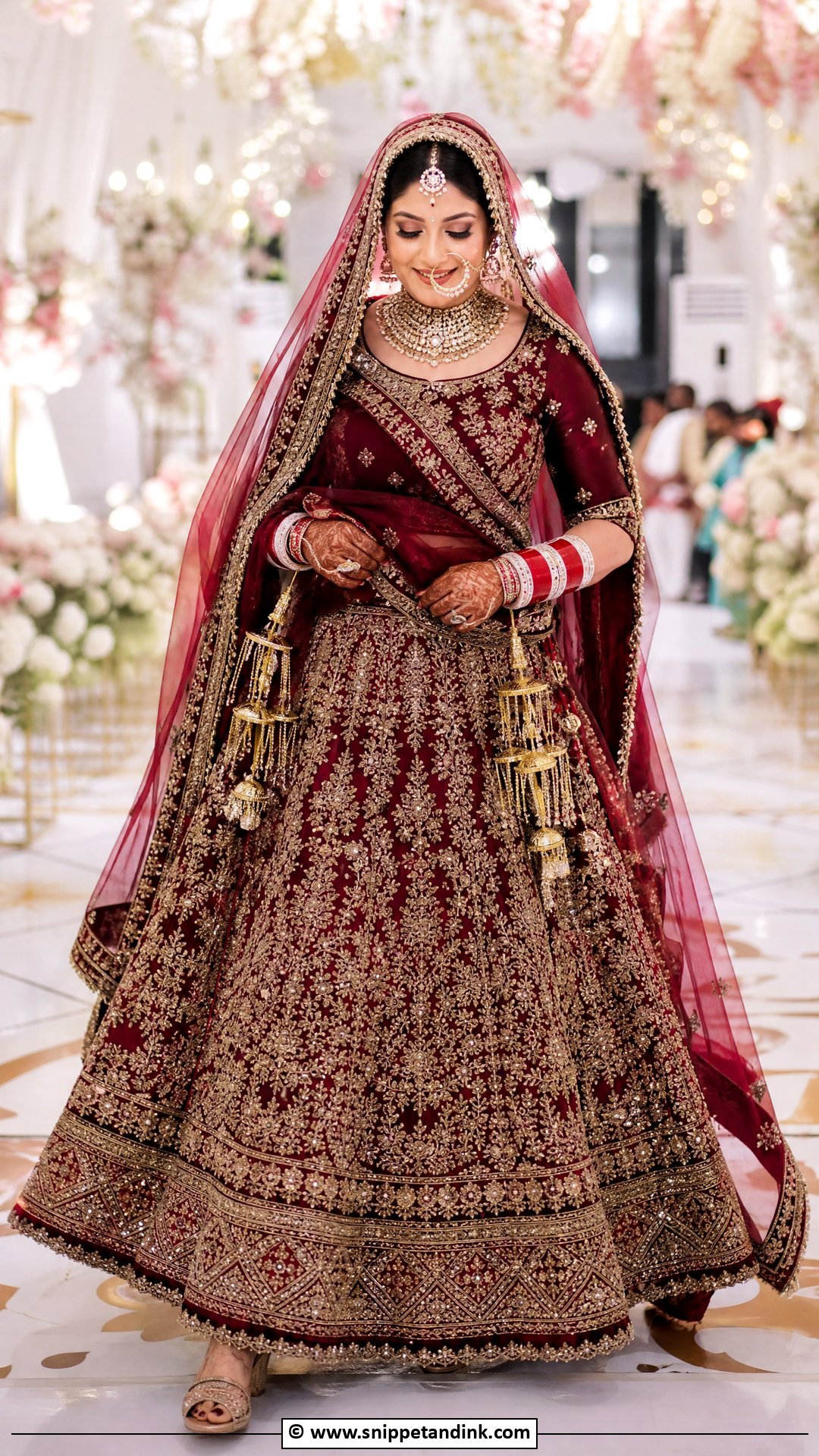
Kaleere tinkling from the chooda is a sound most people associate with a Punjabi bride lehenga outfit, and the outfit needs to leave room for them. I keep the sleeves short or sheer so the chooda shows. Red, maroon, hot pink, peach and gold are popular, with heavy embroidery and a dramatic dupatta draped over the head for the ceremony and rearranged to show the blouse for portraits. Kundan or polki, a nath and embellished heels complete it. A glowing base, defined eyes and a bold lip suit the energy.
29. Bengali Bride Saree Outfit
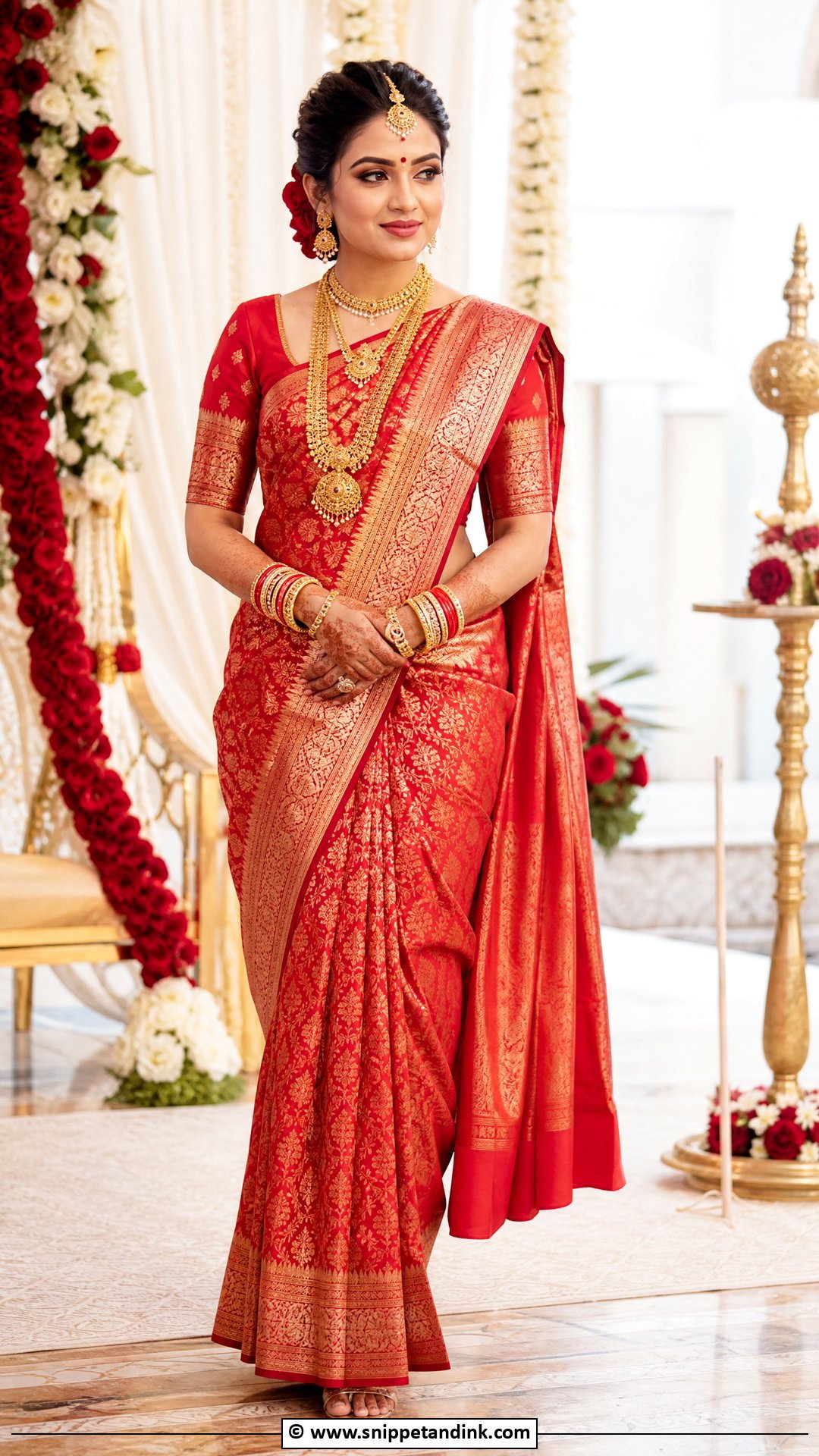
Red Banarasi, shakha pola on the wrists and a mukut on the head make a Bengali bride saree outfit instantly recognizable. A red or white-and-red saree with a matching blouse and layered gold necklaces is the classic base, with bangles, a tikka and a nath if the bride wishes. Sandalwood dots along the brows, a red bindi and defined eyes finish the face. The jewelry and silk together are heavy, so I recommend comfortable sandals and a blouse that doesn’t cut into the arms.
30. Maharashtrian Bride Saree Outfit
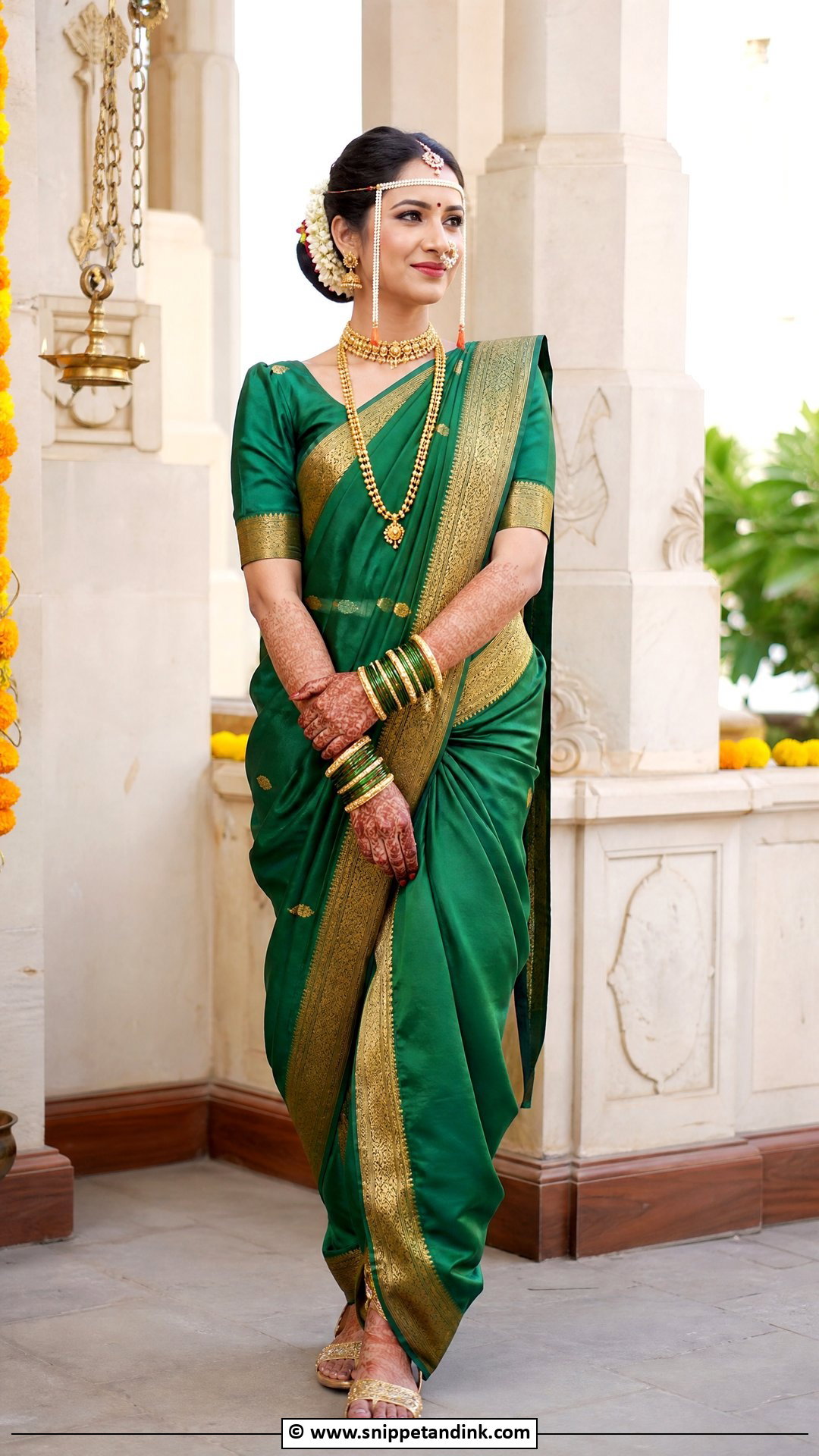
The Maharashtrian look starts with the drape. The nauvari saree drape is nine yards tucked between the legs like a dhoti, so it moves easily during rituals and has a silhouette all its own. Silk in yellow, green, red, purple or orange with a gold border is traditional. Green glass bangles, a nath, a mundavalya across the forehead and gold sandals complete it. Get the blouse fitted with room to lift your arms, because a nauvari leaves the shoulders and back very visible.
31. Gujarati Bride Panetar Saree Outfit
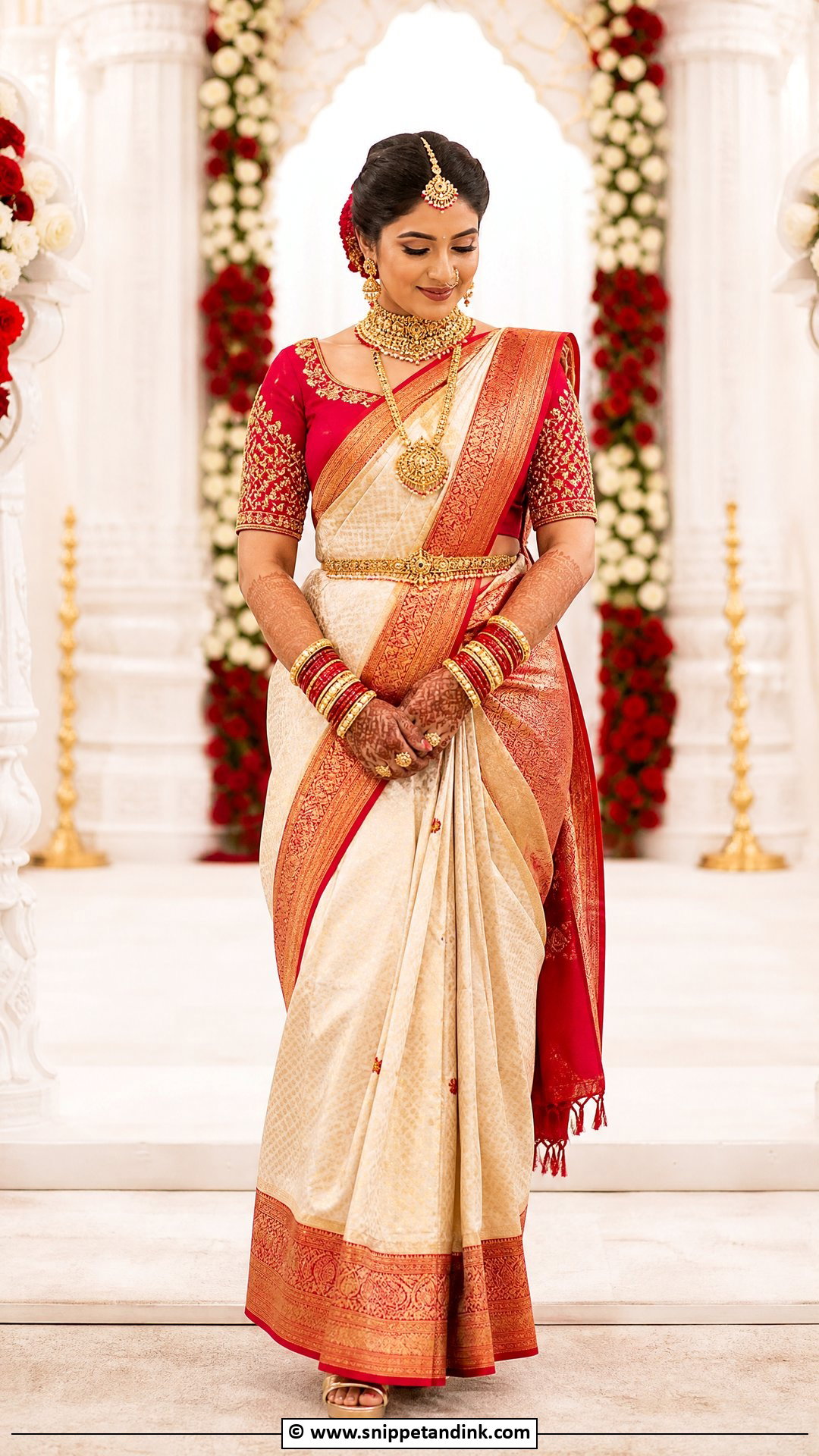
Traditionally the panetar is a gift from the bride’s maternal uncle, and that meaning is why so many Gujarati brides choose it. The white or ivory saree with a red border and accents feels bright and ceremonial. Pair it with a red blouse, gold jewelry, bangles and a maang tikka. Pleats and pallu need to be pinned securely, and a waist belt helps through the rituals. A polished bun and a red or rose lip echoing the border tie it together. Many brides change into the gharchola later in the ceremony, so plan hair that works with both.
32. Muslim Bride Sharara Outfit
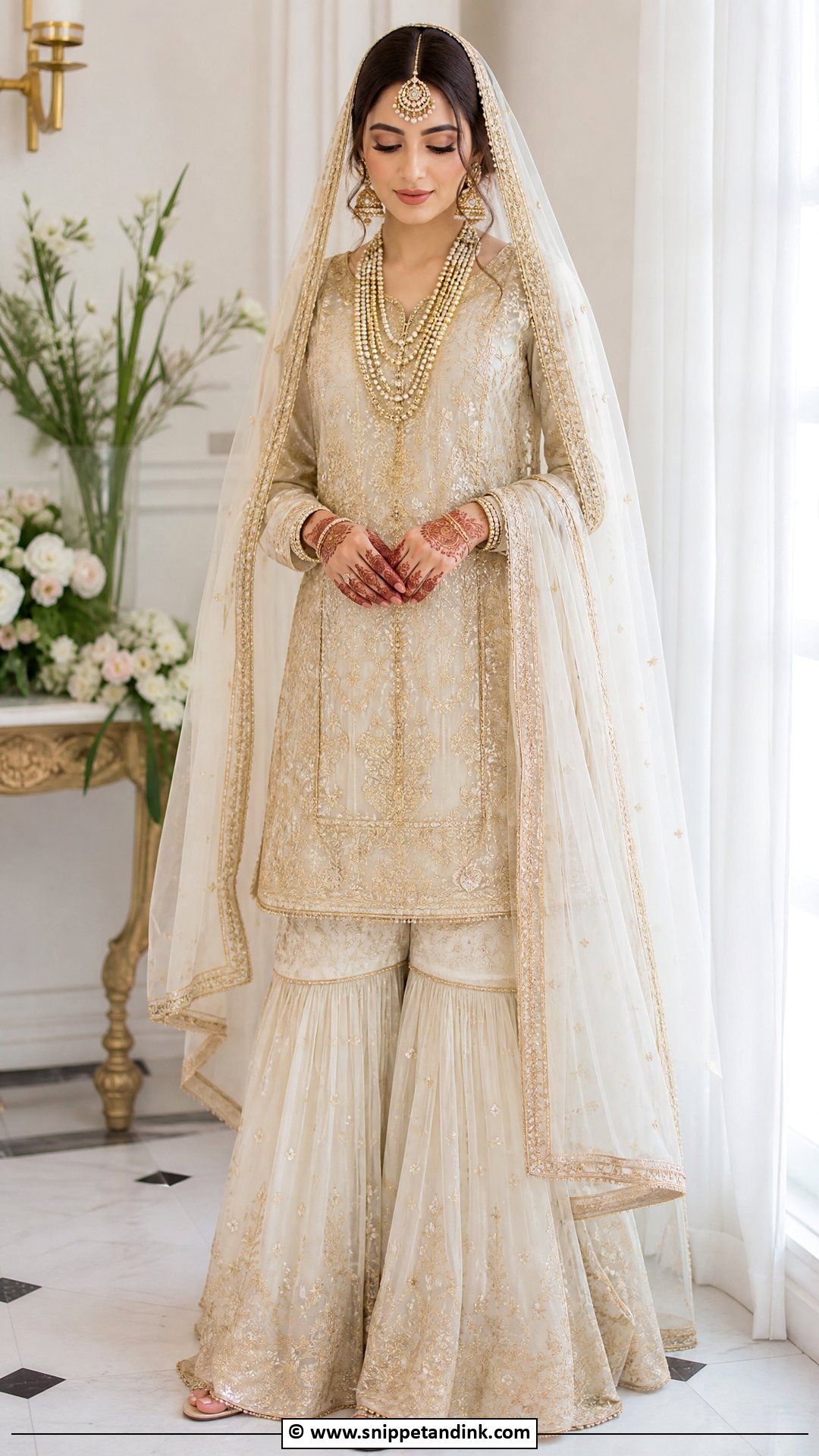
For a nikah, I build a sharara or gharara outfit around the dupatta, because it will usually cover the head through the ceremony. Ivory, gold, red, blush, emerald or pastels with zari, pearls or sequins all suit it. A long or short kurti, a soft dupatta and a passa, jhumkas, a layered necklace and bangles finish the look. Choose hair that sits flat under the dupatta: a low bun or smooth waves rather than height at the crown. Comfortable heels balance the flared legs, and luminous makeup keeps it fresh.
33. South Indian Temple Jewelry Bride Outfit
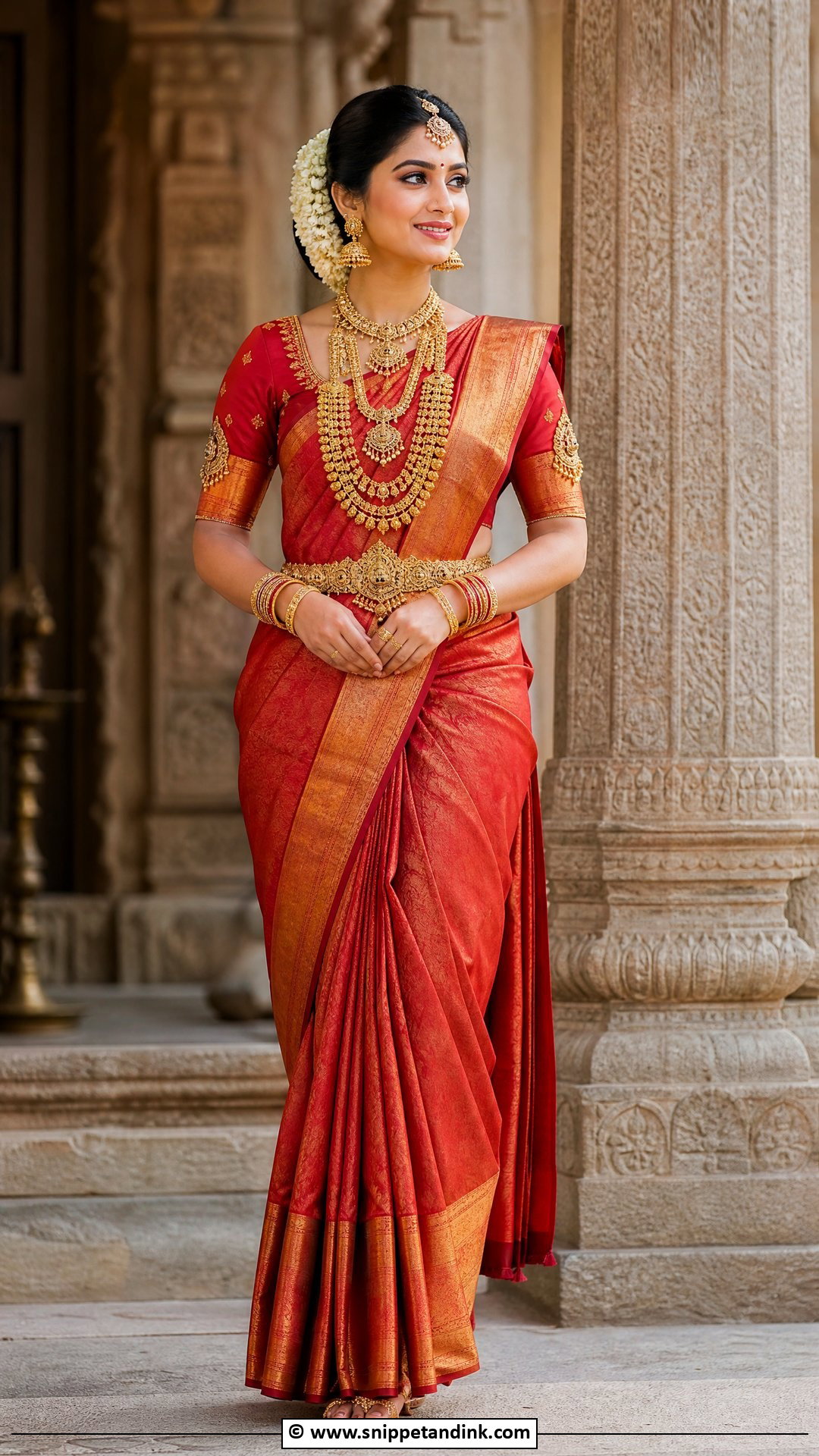
Temple jewelry is gold worked with images of deities and temple motifs, and it carries a lot of weight, literally. Layered necklaces, jhumkas, vanki armlets, bangles, a waist belt and a maang tikka on a red, orange, green, gold or purple silk saree make up the full look. A jasmine-covered bun softens all that gold. Secure the drape well and wear gold sandals for comfort during rituals. Makeup should be defined but not heavy: kohl, warm blush and a classic lip.
34. Minimal Indian Bride Lehenga Outfit
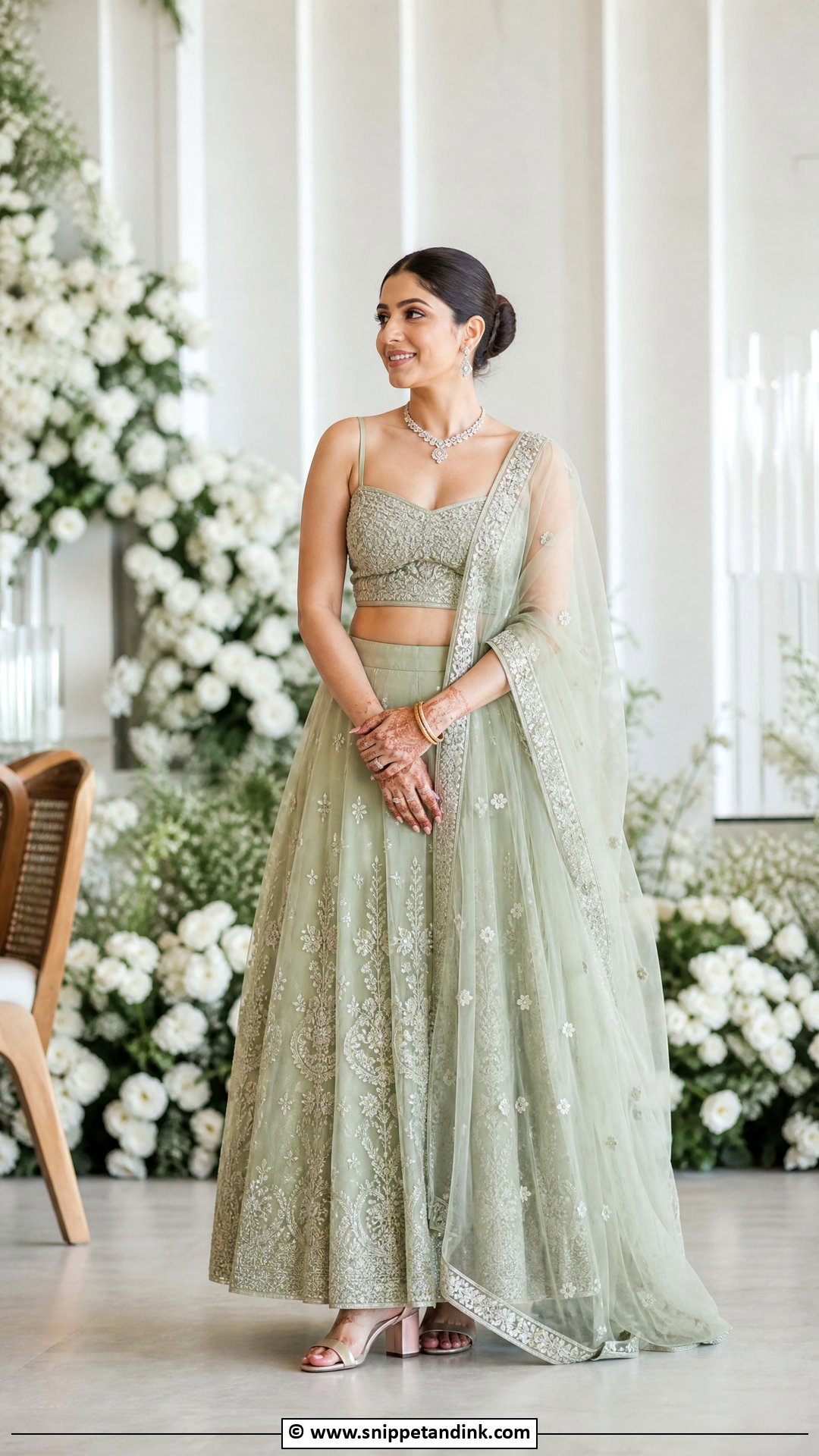
Minimal bridal wear lives or dies on fit and fabric. With little embroidery to distract, every seam and every hem shows, so I’d spend the budget on tailoring and a beautiful weave. Ivory, blush, beige, sage, champagne or soft gold with light embroidery or texture works well. A simple blouse, sheer dupatta, delicate jewelry and comfortable heels complete it. A sleek bun, glowing skin and soft eye makeup suit an intimate wedding, a civil ceremony or a modern reception.
35. Modern Fusion Indian Bride Outfit
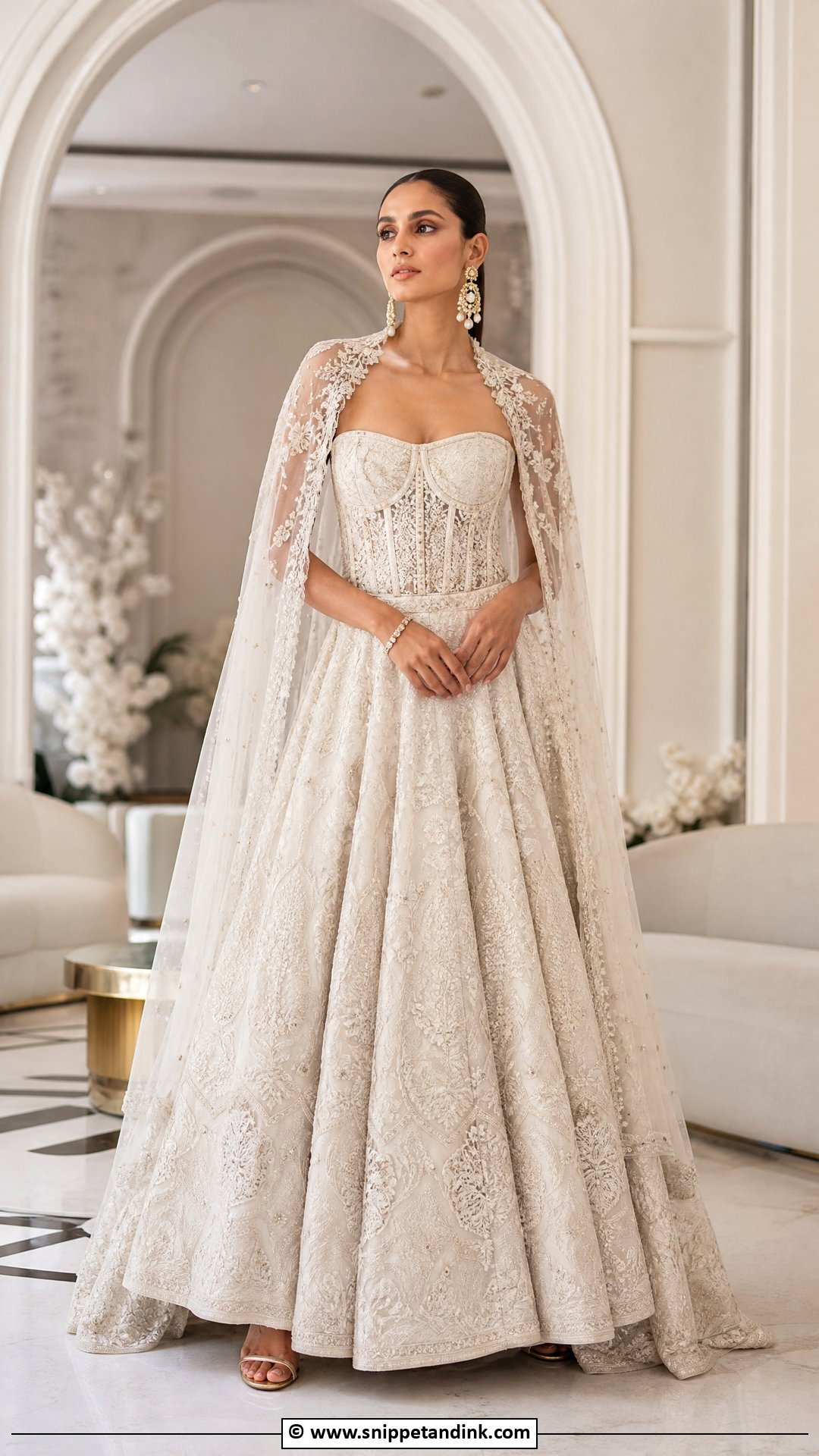
Fusion works best when one element stays firmly traditional. A lehenga with a corset blouse, a saree with a structured jacket, a dhoti skirt with an embroidered top or a cape set with bridal jewelry all qualify, as long as the zari, the drape or the kundan anchors it. Ivory, gold, emerald, blush, red and metallic champagne all suit it. Sleek heels, statement earrings and a clean hairstyle finish it for a reception, engagement party or destination event.
Pinning a Dupatta So It Stays Put Through the Pheras
Most of the on-the-day fixes I make are dupatta fixes. A heavy dupatta slides, pulls the maang tikka sideways and drags at the hair. Plan the drape at your last fitting and have whoever dresses you practice it.
For a head drape, I anchor the dupatta to the bun with U-pins or bobby pins pushed in against the direction it wants to slide, then add a small safety pin at the shoulder seam of the blouse. Sew a couple of tiny cotton loops inside the blouse at the shoulder; a pin through a loop holds better and won’t tear the fabric. For a double dupatta, pin the body drape at the waist under the belt so it can’t swing loose when you bend to touch elders’ feet. Carry spare pins in a small pouch with someone you trust.
Wrapping Zari and Silk in Muslin After the Wedding
Bridal silk and zari can last generations if they’re stored properly, and they tarnish or split quickly if they aren’t. Air the outfit for a day after the wedding, then have stains handled by a dry cleaner who works with embroidered bridal wear.
- Wrap each piece in plain cotton muslin, never plastic, which traps moisture
- Keep heavy lehengas folded flat, not hung, so the weight doesn’t stretch the waistband
- Refold along different lines every few months so zari doesn’t crack at the creases
- Use neem leaves or cedar rather than placing mothballs directly on the fabric
- Never spray perfume onto zari; it speeds up tarnishing of the metallic thread
Red, Ivory or Fusion, Let Each Ceremony Decide
There’s no single right Indian bridal look, only the right one for each ritual. A red lehenga for the pheras, silk for a temple ceremony, pastels for a daytime mehndi, a gown or fusion piece for the reception: each has its place. Get the fit right, try everything on with the jewelry and shoes, and choose outfits you can sit, stand and dance in for as long as the event asks. Do that, and the photos will take care of themselves.
You'll Like These Ideas:









Leave a Reply