
Lilac is one of the colors I mix most carefully, because it sits right on the edge between pink and blue and shifts with every change of light. Done well, it reads soft and romantic without shouting. It also suits a lot of finishes: smooth fondant makes it look crisp and modern, textured buttercream makes it feel relaxed, and a little metallic leaf pushes it toward evening glamour. It sits happily beside ivory, blush, sage and silver, so it rarely fights the rest of a wedding palette. The cakes below are full designs you can save and bring to your baker as a starting point, along with my notes on how each one behaves in real life.
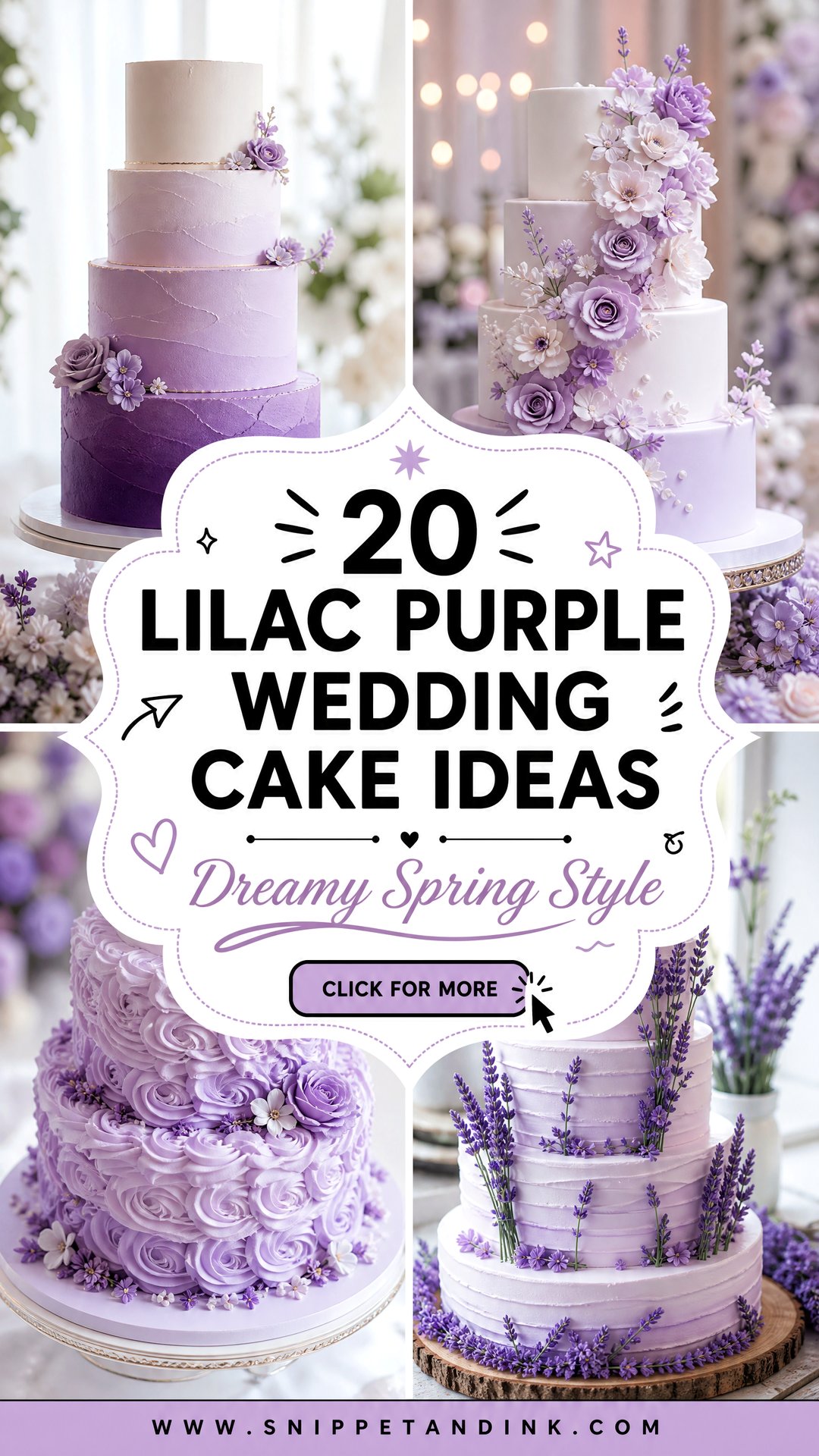
Why Lilac Icing Fades, Greys or Turns Blue
Purple is the least stable color in my kit. Most purple food colorings are light-sensitive, so a cake that leaves my kitchen a clear lilac can look washed out after an afternoon by a sunny window or under strong fluorescent tubes. Fading usually isn’t even, either. The pink part of the dye tends to go first, which leaves the icing looking slightly blue.
Then there’s the base. Buttercream made with real butter has a yellow cast, and yellow sitting under purple gives you grey or a dusty mauve. Fondant starts whiter, so it holds a truer lilac. Neither is wrong, but you should know which one you’re looking at in a photo.
- Ask for the cake to be displayed out of direct sun and away from skylights until it’s cut.
- If the venue is outdoors, a shaded table or a tent matters more than the cake design.
- Judge color samples in daylight and in warm indoor light, because lilac looks different in each.
- If an exact match to bridesmaid dresses matters, ask for a small colored sample a few weeks out.
1. Lilac Purple Ombre Wedding Cake
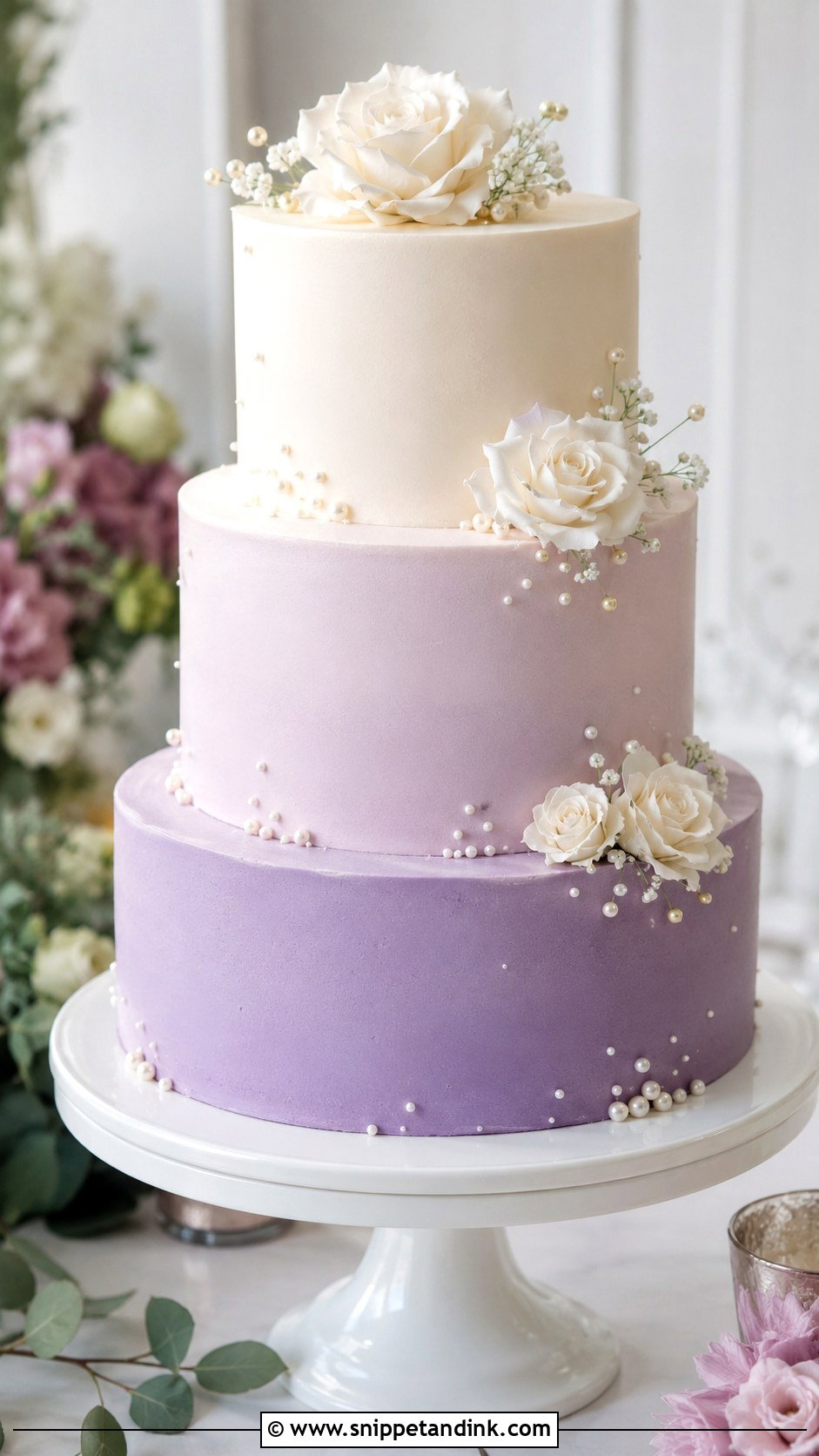
An ombre is the easiest way to make a pale shade feel dramatic. I usually run a lilac purple ombre wedding cake from ivory at the top tier down to a deeper violet at the base, mixing each band from the same master color so the steps stay related instead of jumping. It needs at least two tiers to fade properly; on a single tier the gradient gets compressed and looks like stripes. Buttercream gives a softer blend than fondant, though fondant holds a sharper edge between bands. Keep the decoration light, maybe a few white sugar flowers or a scatter of pearls, so the color change stays the point.
2. Lilac Purple Floral Wedding Cake
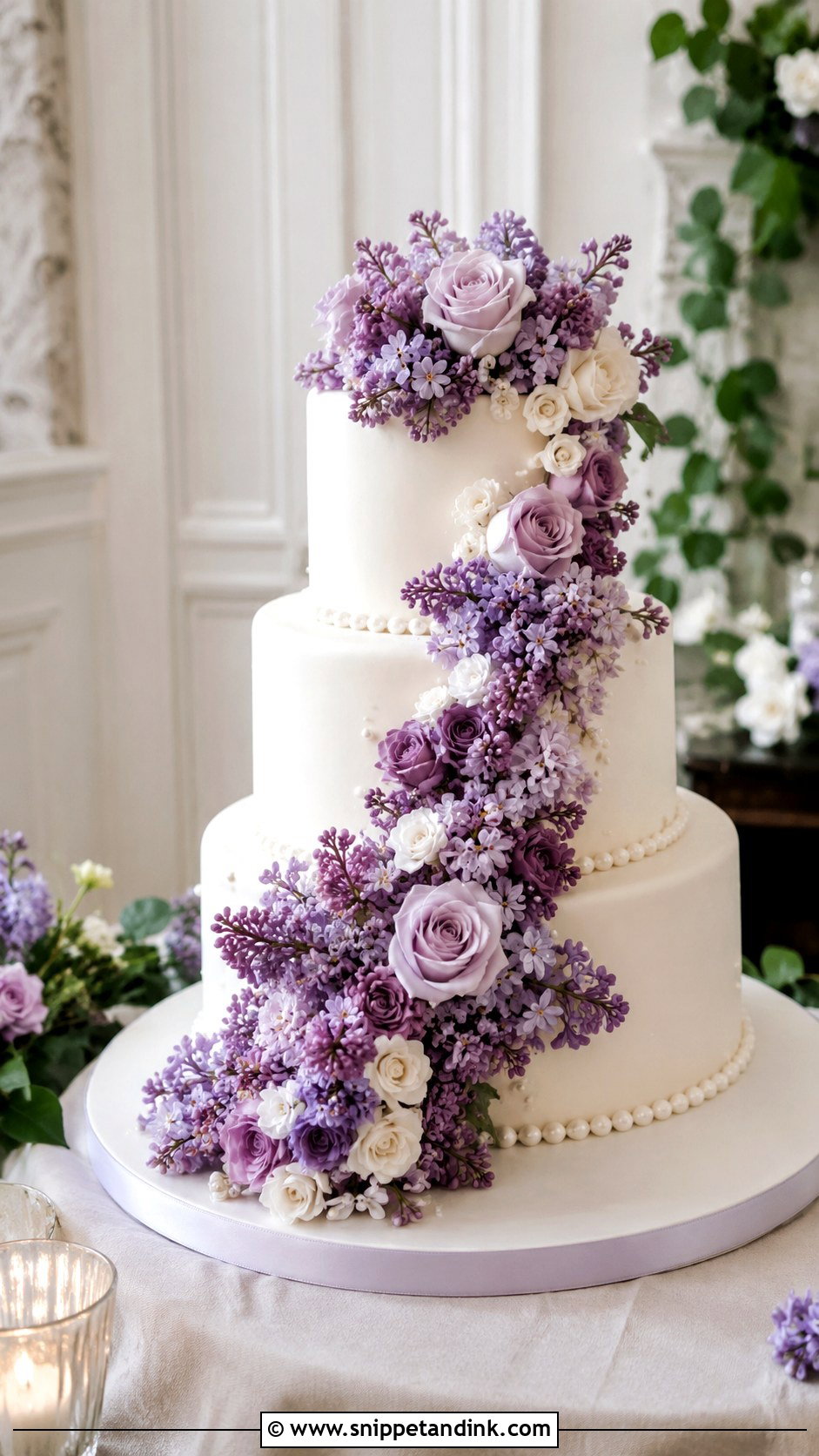
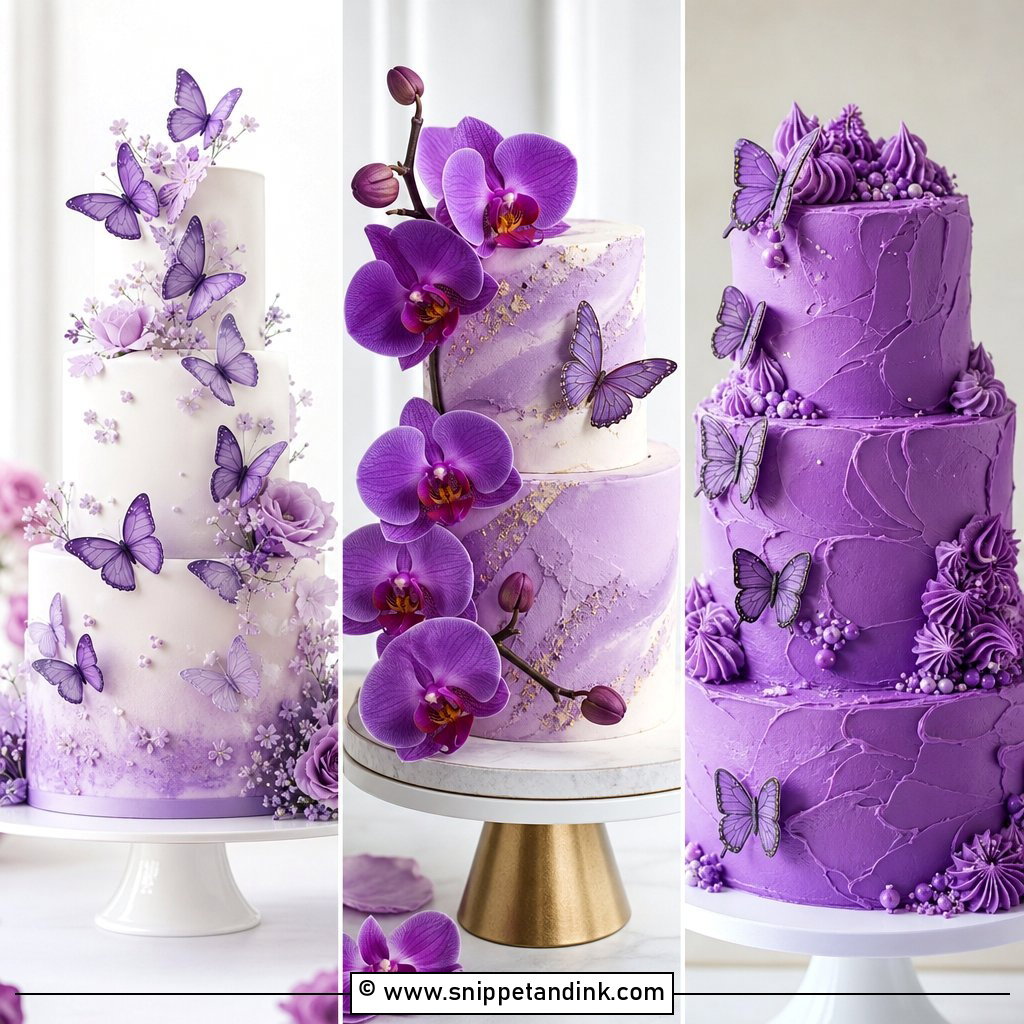
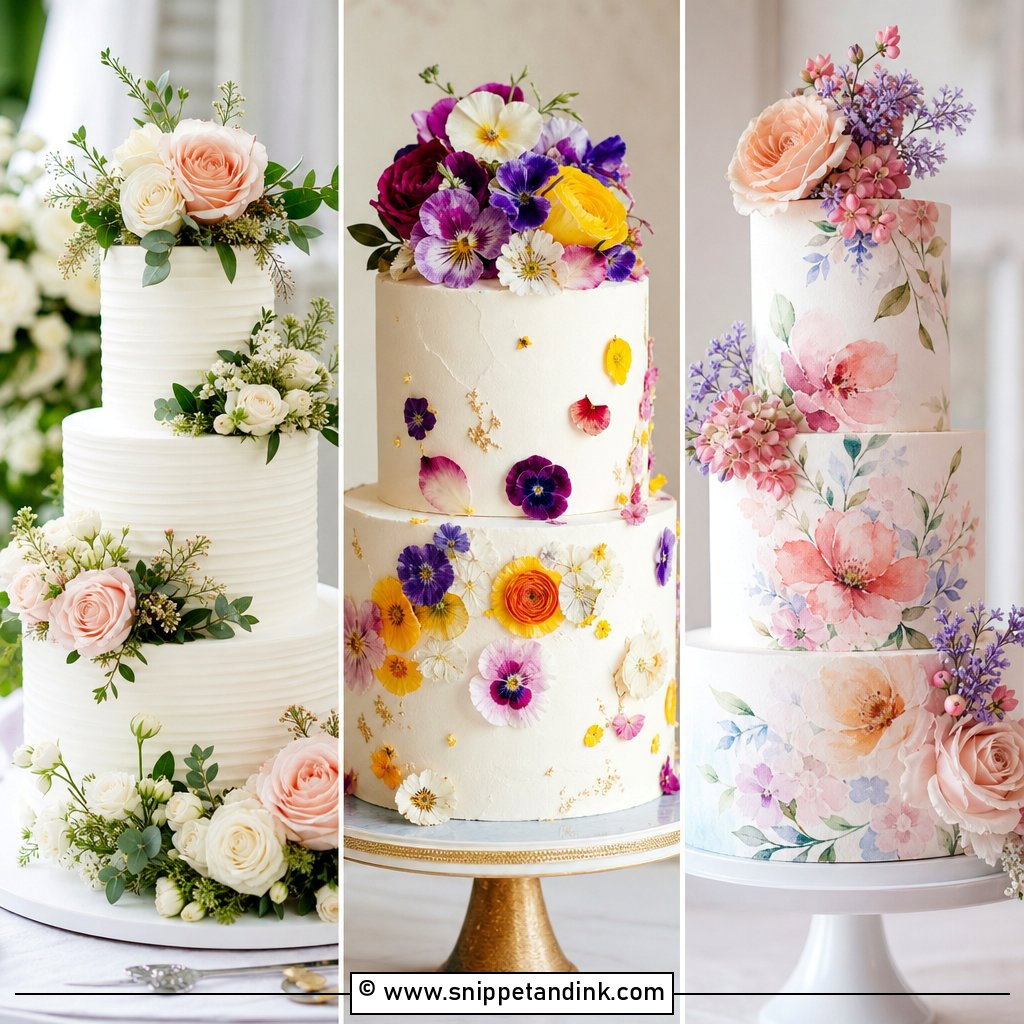
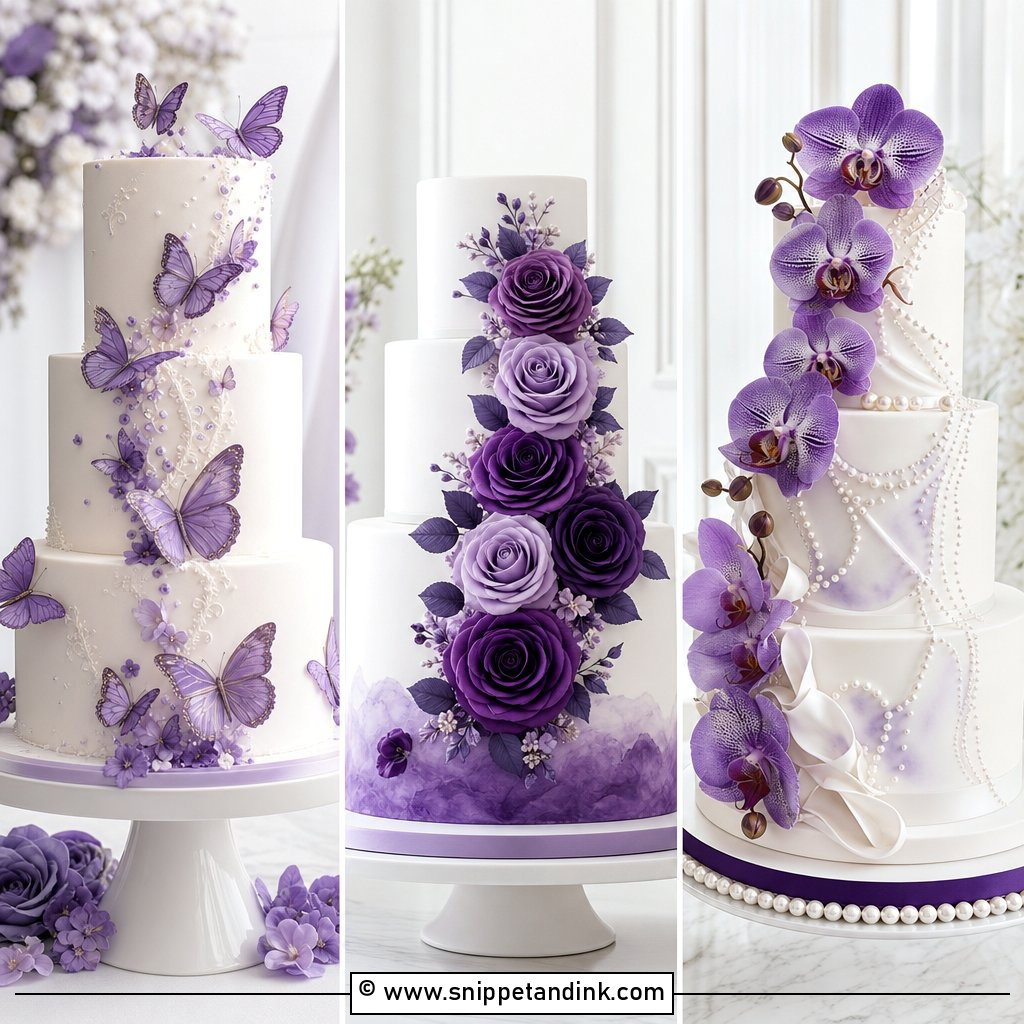
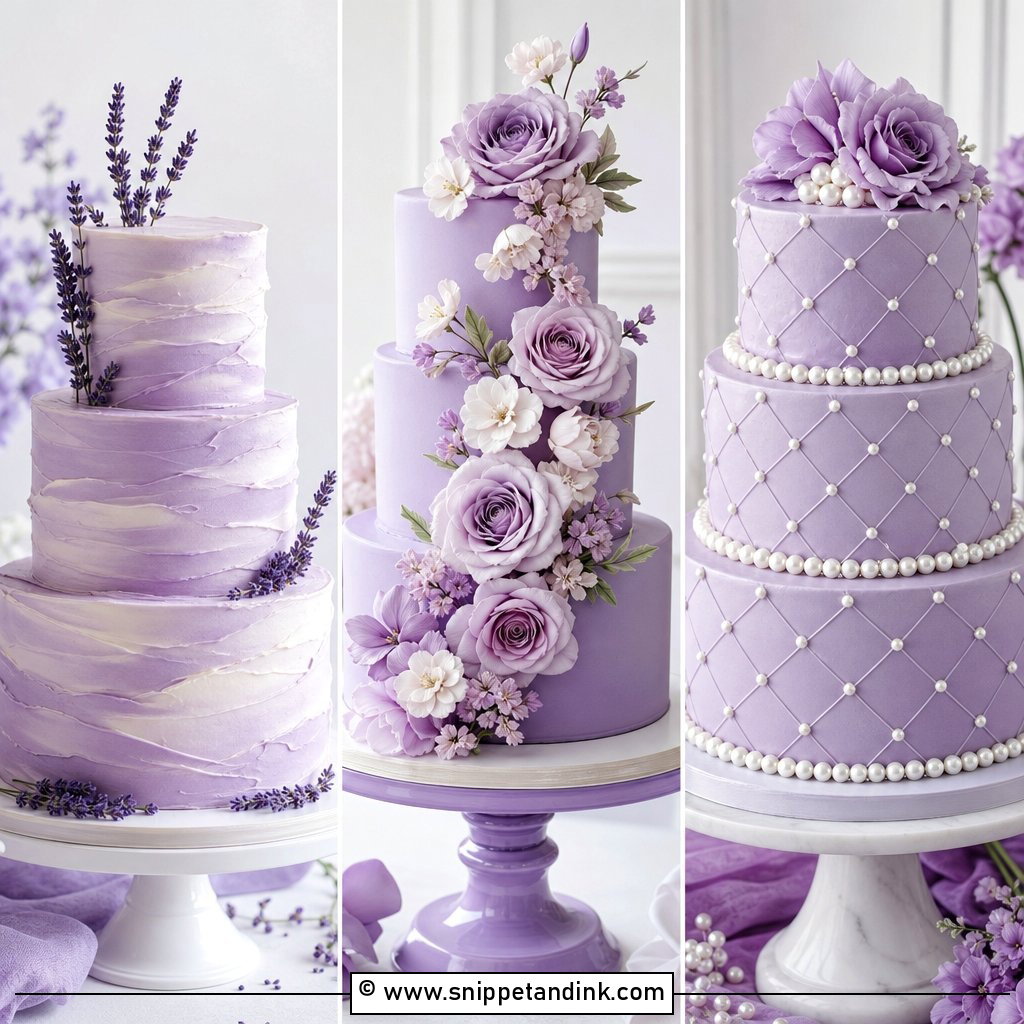
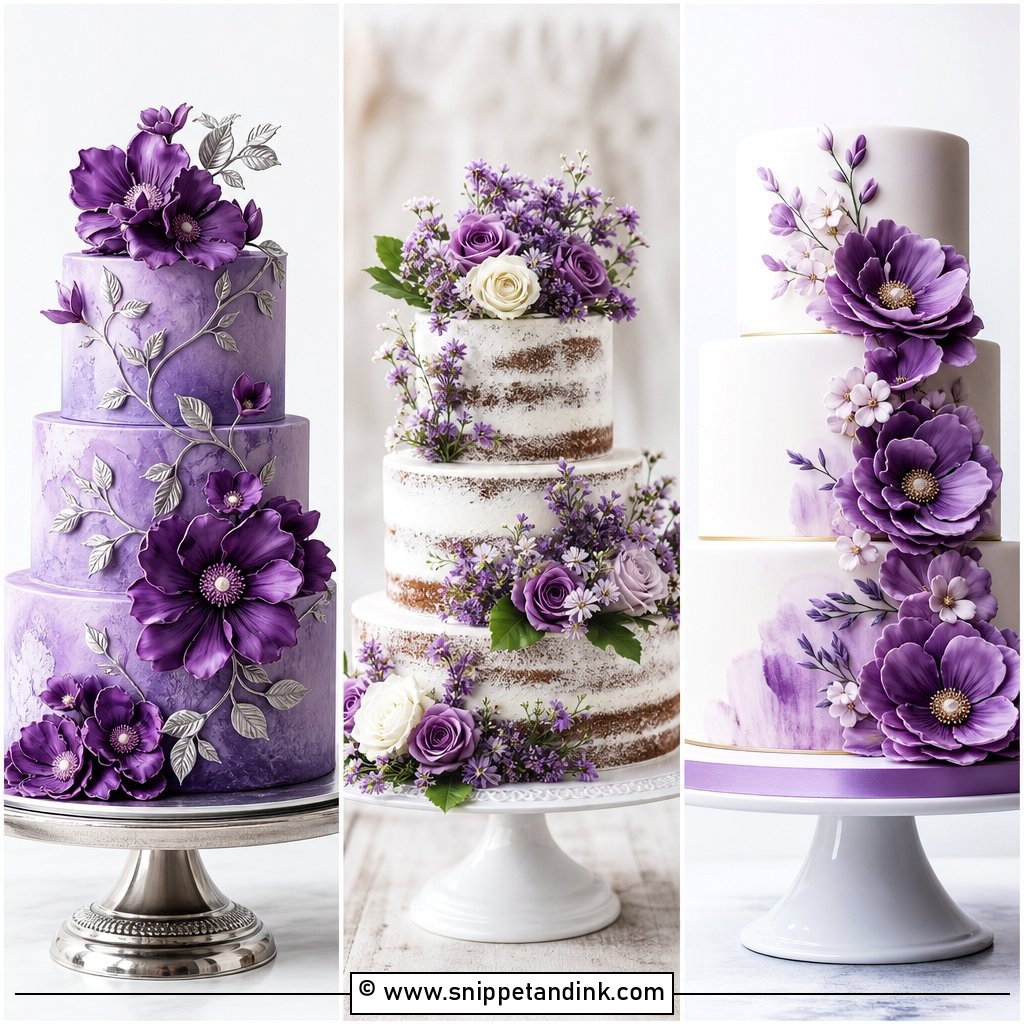
Flowers are where most couples start with purple, and for good reason: the cake ties straight back to the bouquets. I prefer an ivory or barely tinted base here, because the blooms supply the color and a strong lilac underneath can make lavender sweet peas disappear. Decide early whether you want a single side cascade or a full crescent that wraps the tiers. The cascade is calmer and easier to cut around; the crescent looks richer but needs more flowers and more setup time at the venue. Sugar flowers, real stems and pressed edible blossoms can all work, provided whoever places them knows which ones touch the cake.
3. Lilac Purple Buttercream Wedding Cake
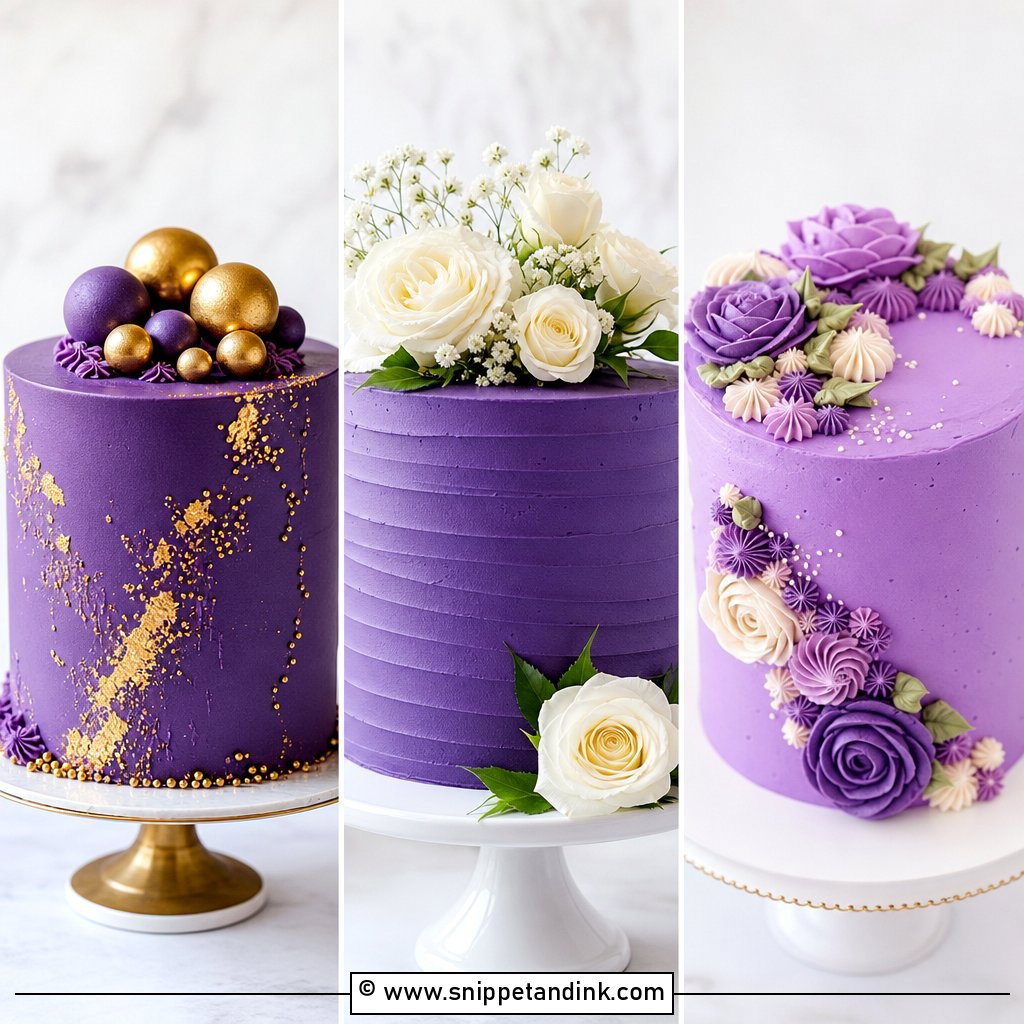
Buttercream is my default for a lilac cake that should taste as good as it looks. One thing most people never hear: butter is yellow, and yellow plus purple makes grey. I whiten the base first, sometimes with a tiny touch of violet to cancel the yellow, before tinting it lilac, otherwise the color comes out dusty. Smooth, ribbed or palette-knife finishes all take the color well. A few lines of white piping or a small cluster of pressed flowers is plenty. In summer, ask where the cake will stand; buttercream in direct sun softens fast and the color fades with it.
4. Lilac Purple Fondant Wedding Cake
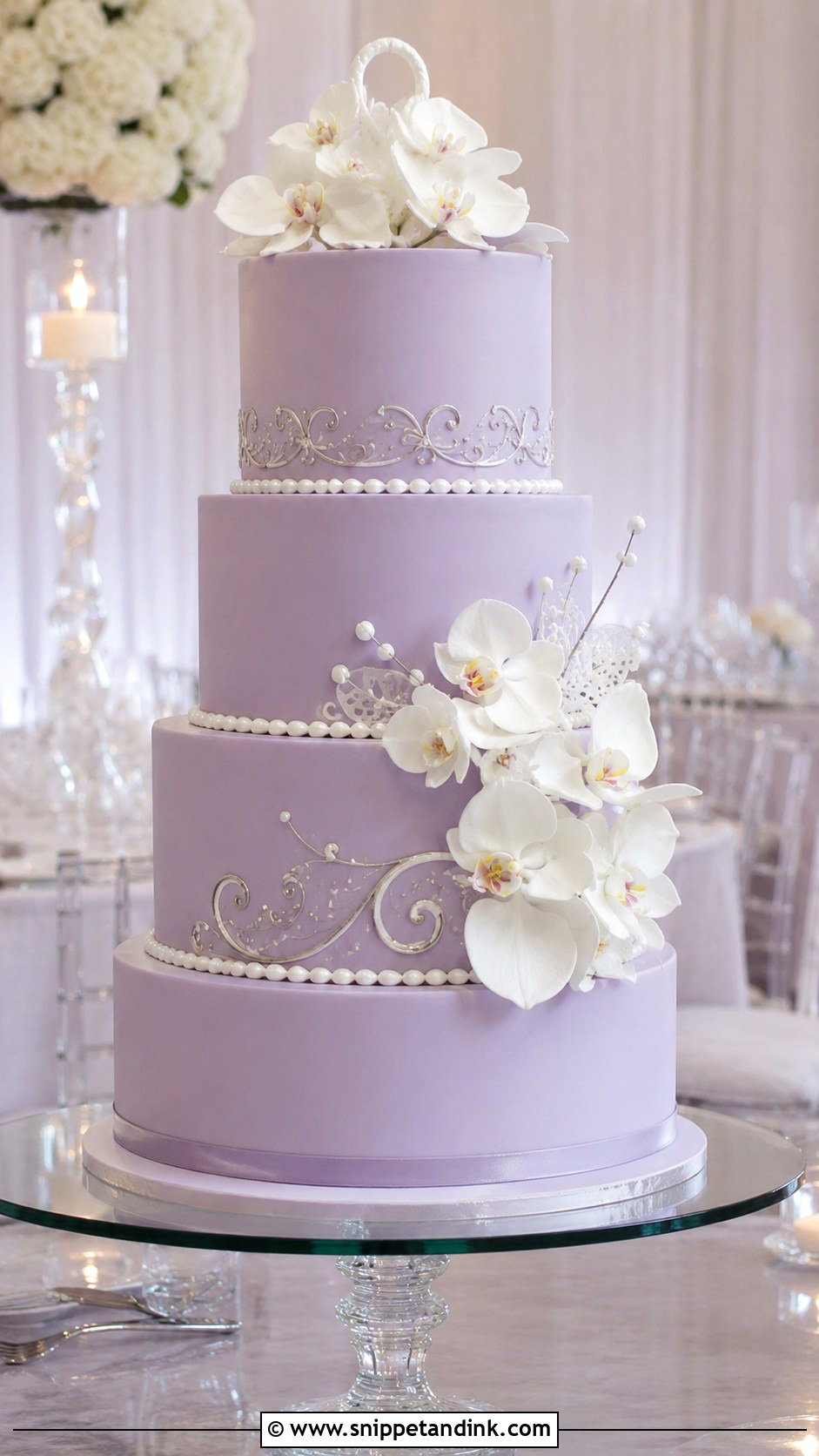
Fondant gives the cleanest, most even lilac you can get, which is why it photographs so evenly under flash. I knead the color into the paste a day ahead because purple deepens slightly as it rests, and I want to see the true shade before covering. It suits sharp edges, monograms, silver piping and neat pearl borders. Square tiers make it feel modern; round tiers keep it classic. Fondant isn’t everyone’s favorite to eat, so I often cover a buttercream cake in a thin layer and let guests peel it if they like.
5. Lilac Purple Watercolor Wedding Cake
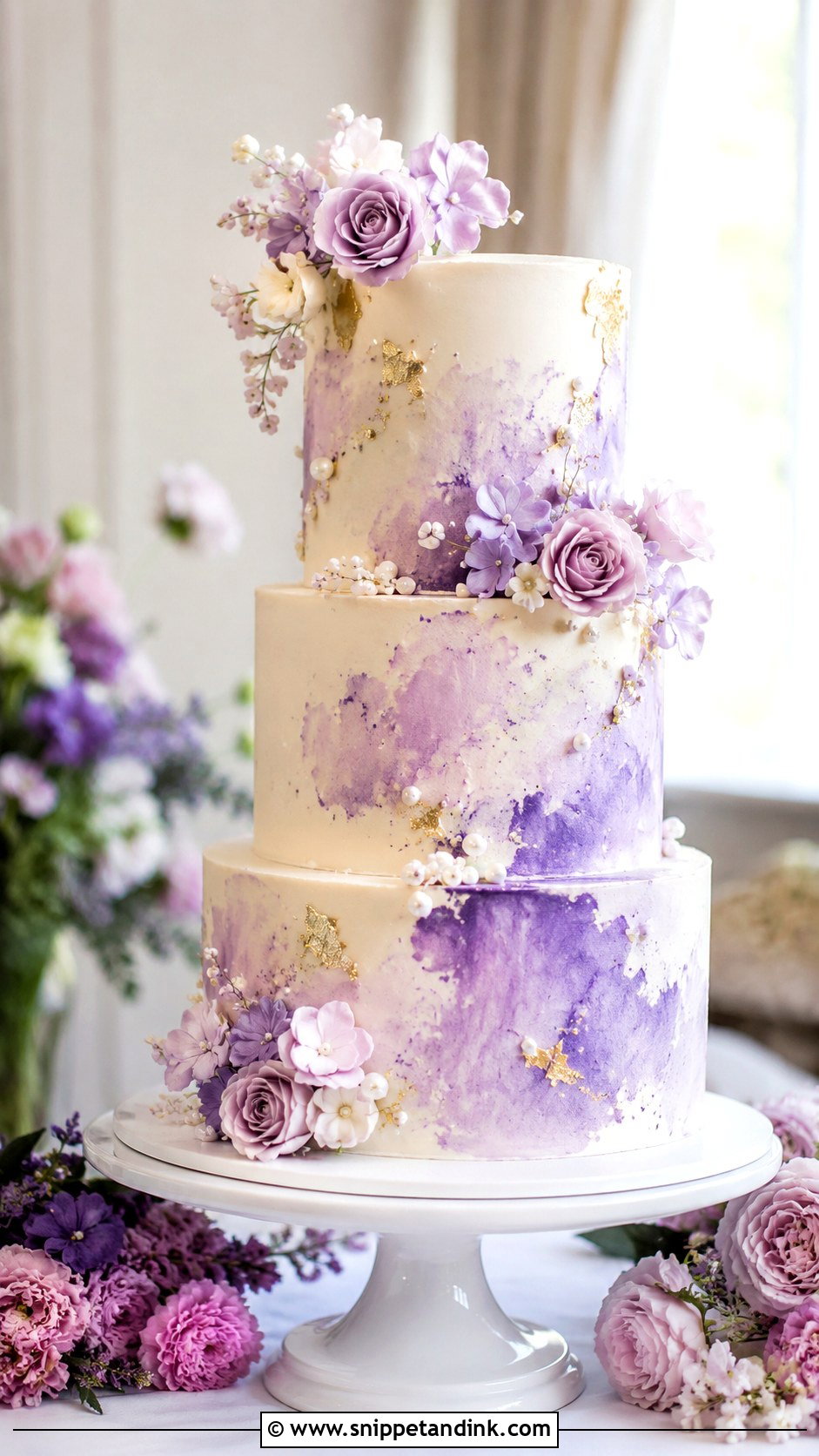
Watercolor is painted rather than piped, so it has a looser, hand-made quality. I brush thinned lilac and lavender across a chilled white buttercream or fondant surface in uneven washes, leaving plenty of white between strokes. That white space is what stops it looking muddy. A hint of blush or pale blue adds depth if you keep it faint. Finish with a few pieces of gold leaf or delicate sugar flowers placed where the paint is lightest. It suits garden and spring receptions better than a formal ballroom, where it can look a little casual.
6. Lilac Purple Marble Wedding Cake
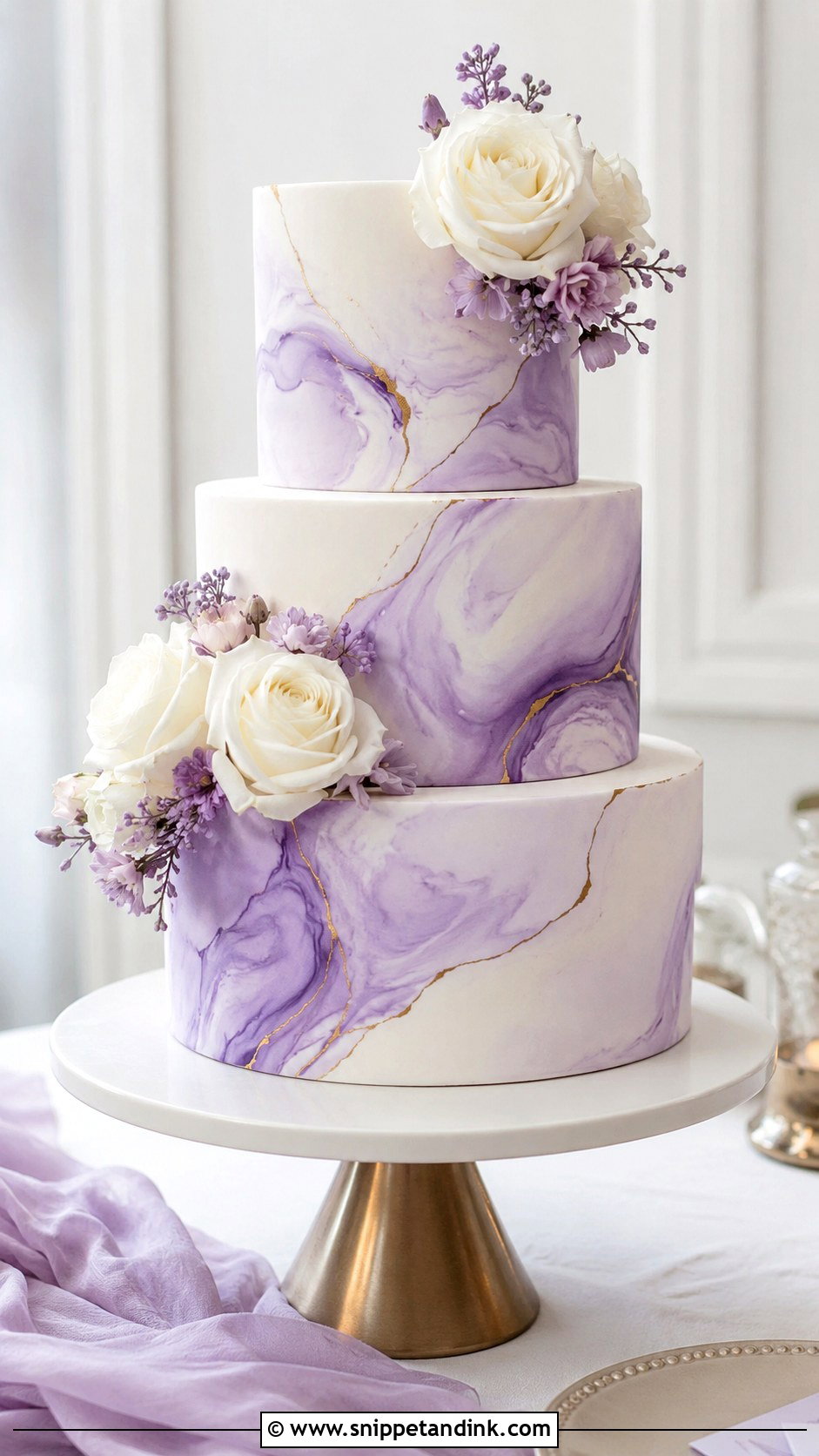
Marbling gives a lilac cake movement. I fold white, lilac, lavender and a little deep purple fondant together and stop twisting early, because overworked marble blends into one flat mauve. Buttercream marble is softer and less predictable, which some couples prefer. A thin hand-painted gold or silver vein through the pattern sharpens it. It makes a strong centerpiece as a tall two-tier or three-tier cake. Keep the table plain, with neutral linen and little else, or the pattern competes with everything around it.
7. Lilac Purple Wedding Cake With Gold Leaf
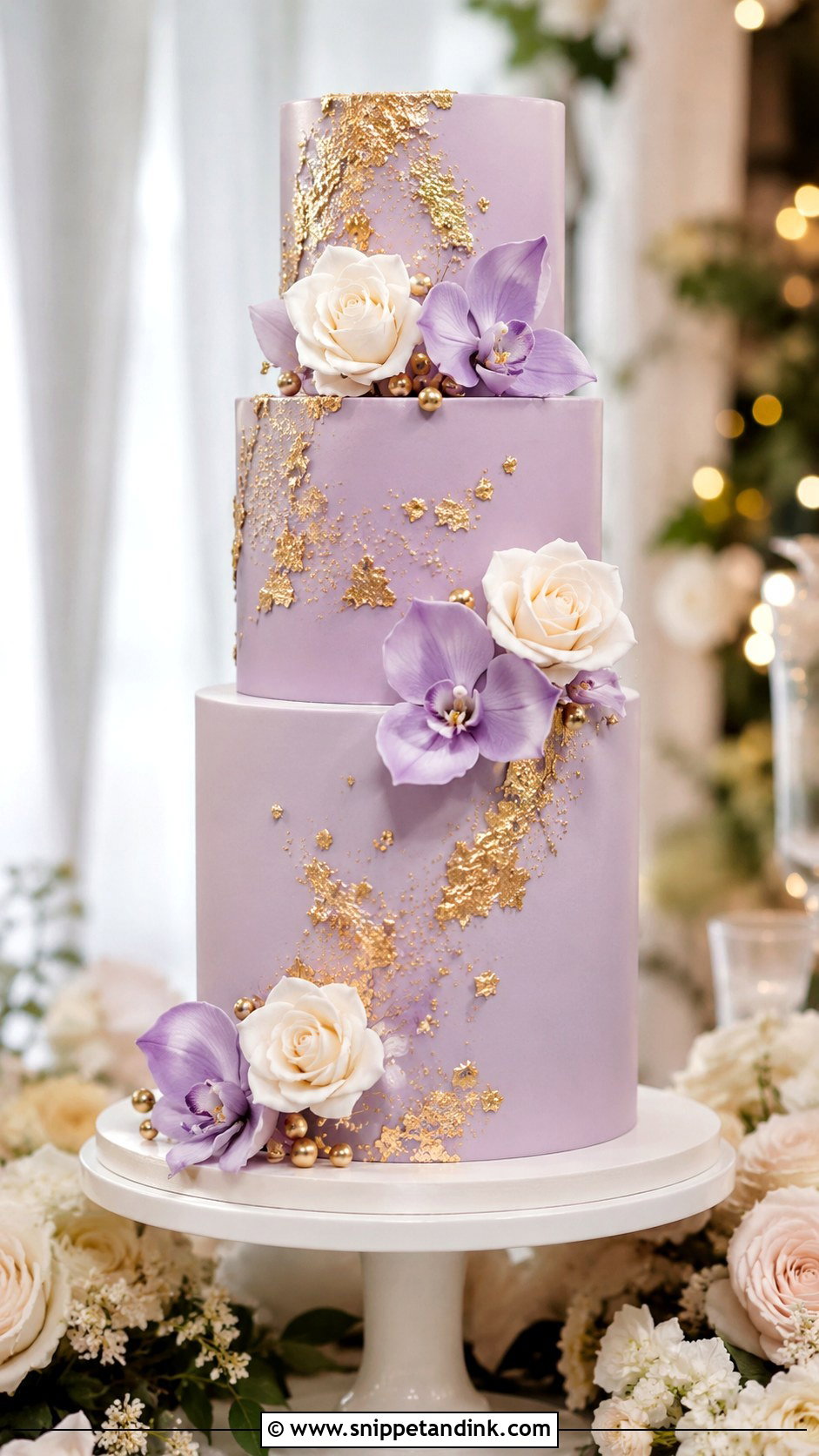
Gold leaf warms lilac up and pulls it slightly toward evening. My rule is clusters, never coverage: a few torn patches on one side of a tier look deliberate, while a cake wrapped in leaf turns heavy and brassy next to pale purple. Edible leaf is fragile, so I apply it on the cold cake with a dry brush and it goes on last. It sits well on smooth buttercream, fondant or a watercolor finish. White flowers or sugar orchids finish the design, and the combination suits candlelit, formal venues where the gold catches the light.
8. Lilac Purple Wedding Cake With Silver Accents
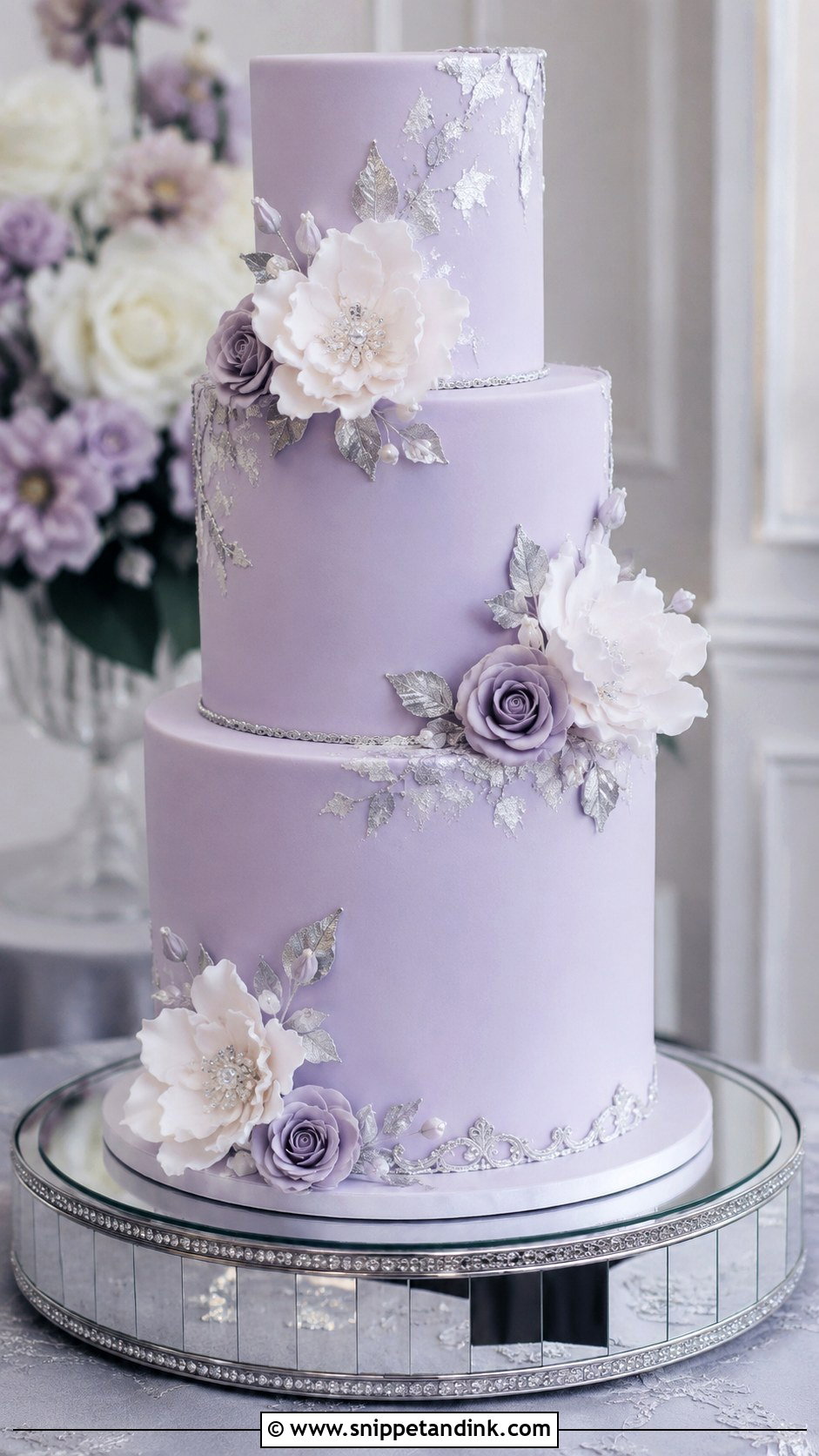
Silver keeps lilac cool and clean, so it’s my pick when the rest of the palette leans grey, blue or icy. Silver leaf, metallic piping or a pearlized border all work; I’d choose one, not all three. Lustre dust painted on with alcohol gives a soft sheen rather than mirror shine, which is usually what people mean when they say silver. On its own, silver against pale lilac can feel a bit stark, so I add white or lavender sugar blooms to soften the edges. It suits winter weddings without tipping into anything festive.
9. Lilac Purple Wedding Cake With Fresh Lilacs
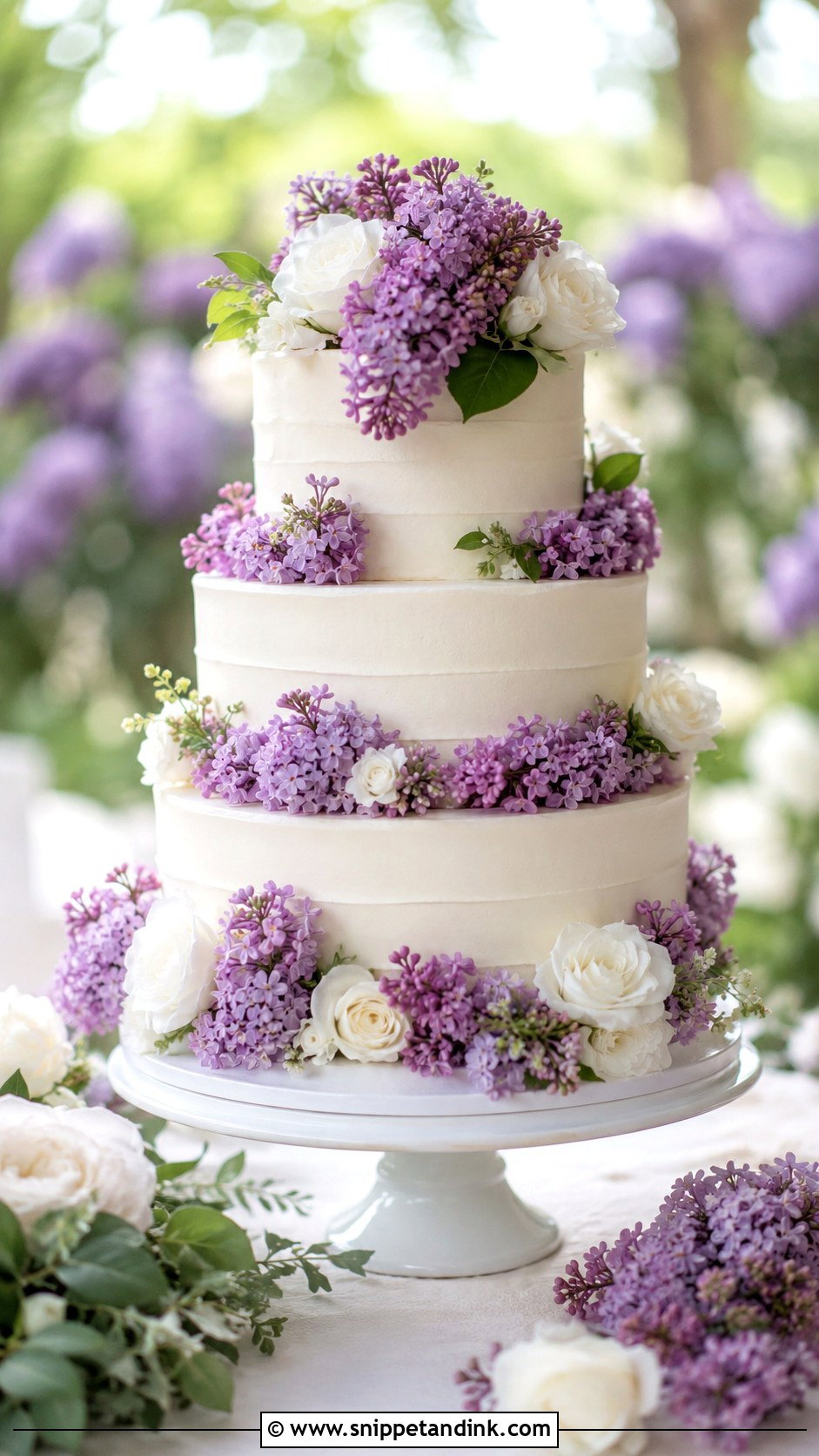
Fresh lilacs on a cake smell wonderful, but they are the trickiest flower on this list. Cut lilac wilts quickly once it leaves water, sometimes within a few hours on a warm day, so I never place it the night before. Every stem has to be prepared with the florist, wrapped or inserted into a food-safe pick so sap and any treatment never touch the frosting. The cake itself should stay simple, white or ivory buttercream with subtle piping, because the clusters provide all the shape. Lilac blooms in spring only, so for an autumn date you’ll need sugar or silk instead.
10. Lilac Purple Wedding Cake With Lavender
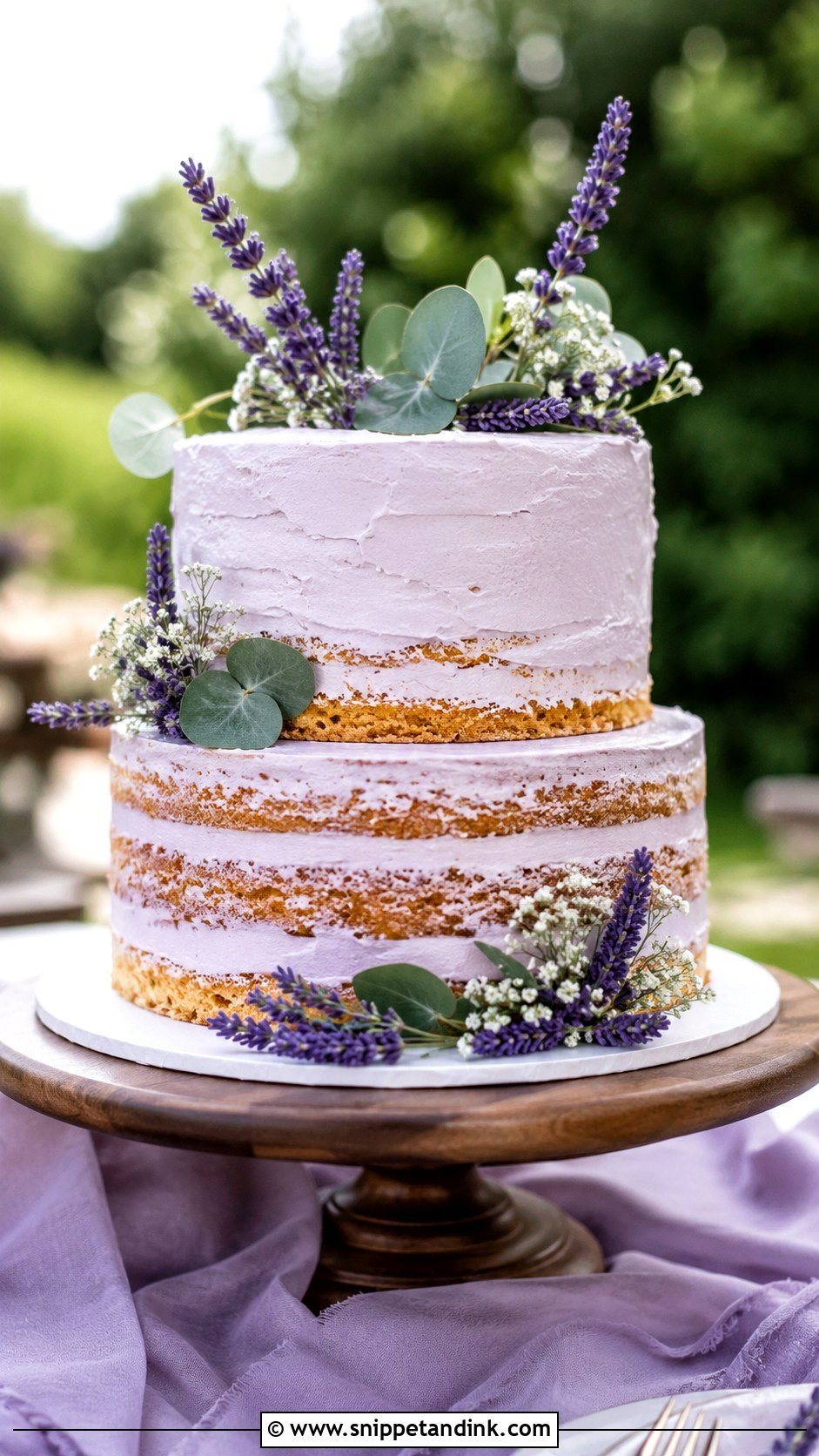
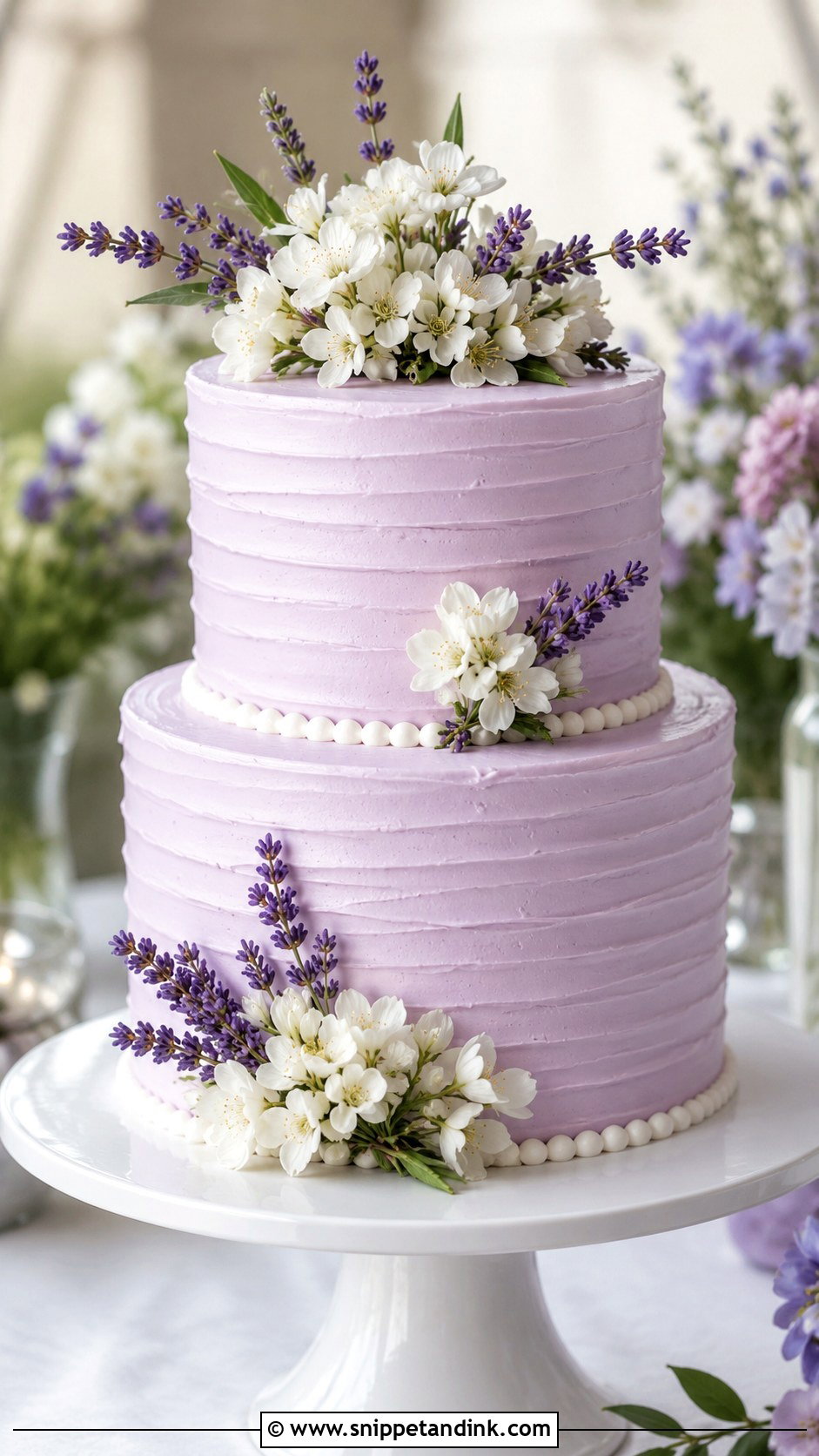
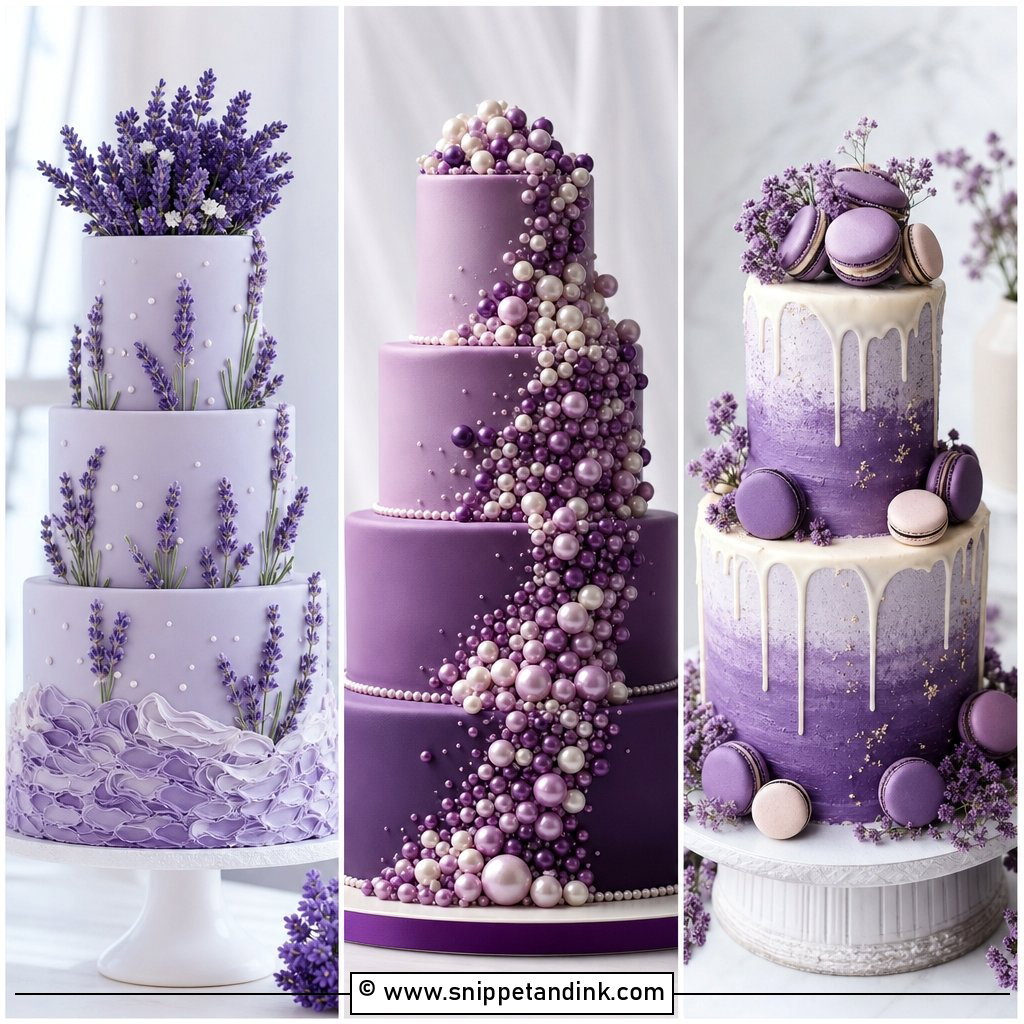
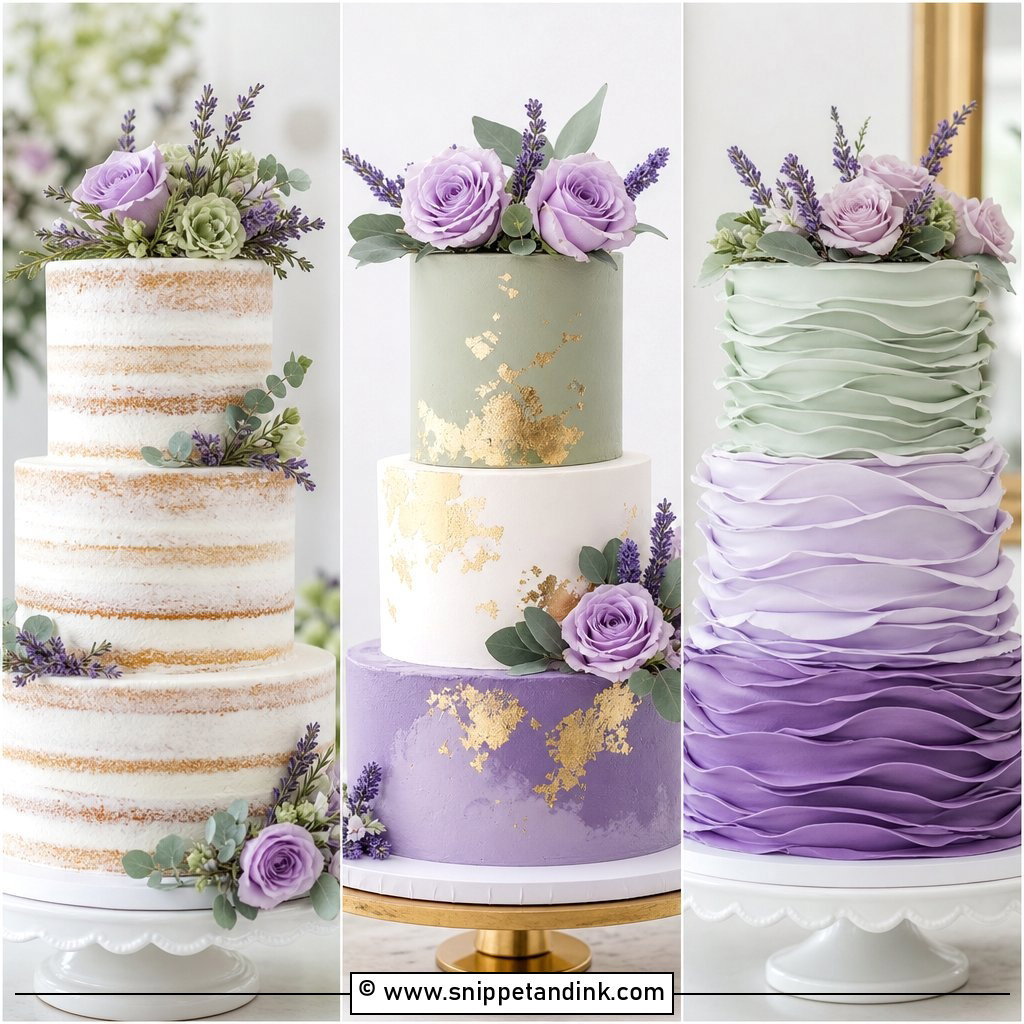
Lavender gives a quieter, rustic look than lilac blooms, and it holds up far better on the table because the sprigs are sturdy and dry gracefully. I tuck small bunches around the tiers or across the top with white flowers and a little greenery, and I use culinary lavender anywhere it might be eaten. Pale lilac buttercream, ivory frosting or a semi-naked finish all suit it. Flavor is where this cake shines: vanilla, lemon, honey or almond sponge with a light lavender syrup. Go easy with lavender in the bake itself, since too much tastes soapy.
11. Lilac Purple Rustic Wedding Cake
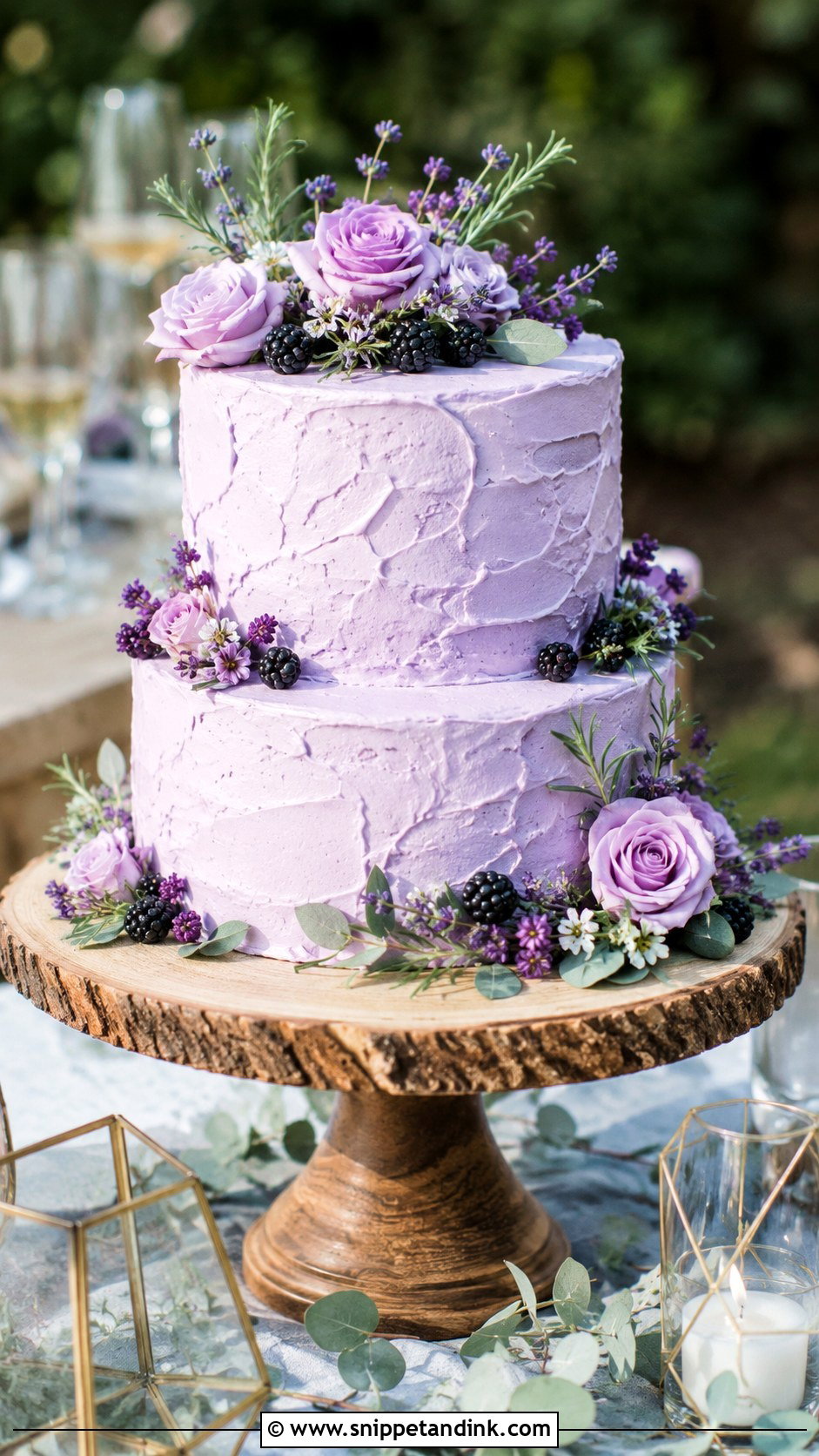
Barns, gardens and relaxed outdoor receptions are where a rustic lilac cake belongs. Instead of chasing a flawless finish, I drag a spatula in soft horizontal strokes or scrape the buttercream back to a semi-naked coat so the sponge shows through. Pale lilac keeps that texture from feeling too casual. Figs, berries, small roses and lavender sprigs make a natural finish. A word of warning on semi-naked cakes: exposed sponge dries out quickly, so I’d want it assembled and finished on the day rather than days ahead. A wooden stand or a linen-covered table completes it.
12. Lilac Purple Vintage Wedding Cake
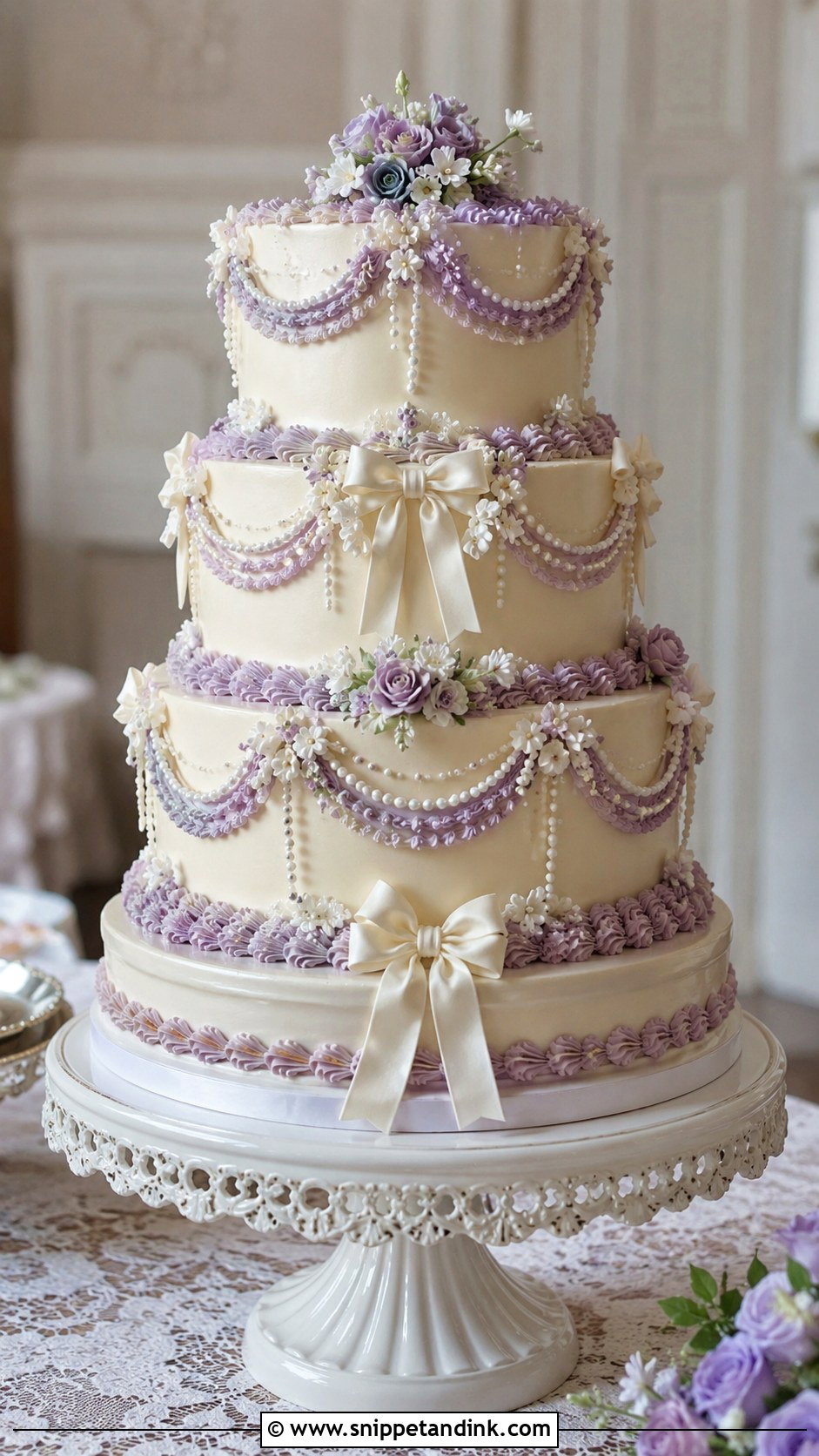
Vintage piping is my favorite kind of nostalgia: shell borders, pearl dots, scalloped edges and swags, all in pale lilac buttercream. It takes a steady hand and a stiff consistency, because soft icing loses its ridges in a warm room. This style works as a single tier for an intimate wedding or stacked tall for a grand table. Ivory with lilac piping is the classic pairing, and a few tiny sugar flowers keep it romantic. Balance matters more than quantity; I map the swags on each tier before I pipe so they line up all the way down.
13. Lilac Purple Lace Wedding Cake
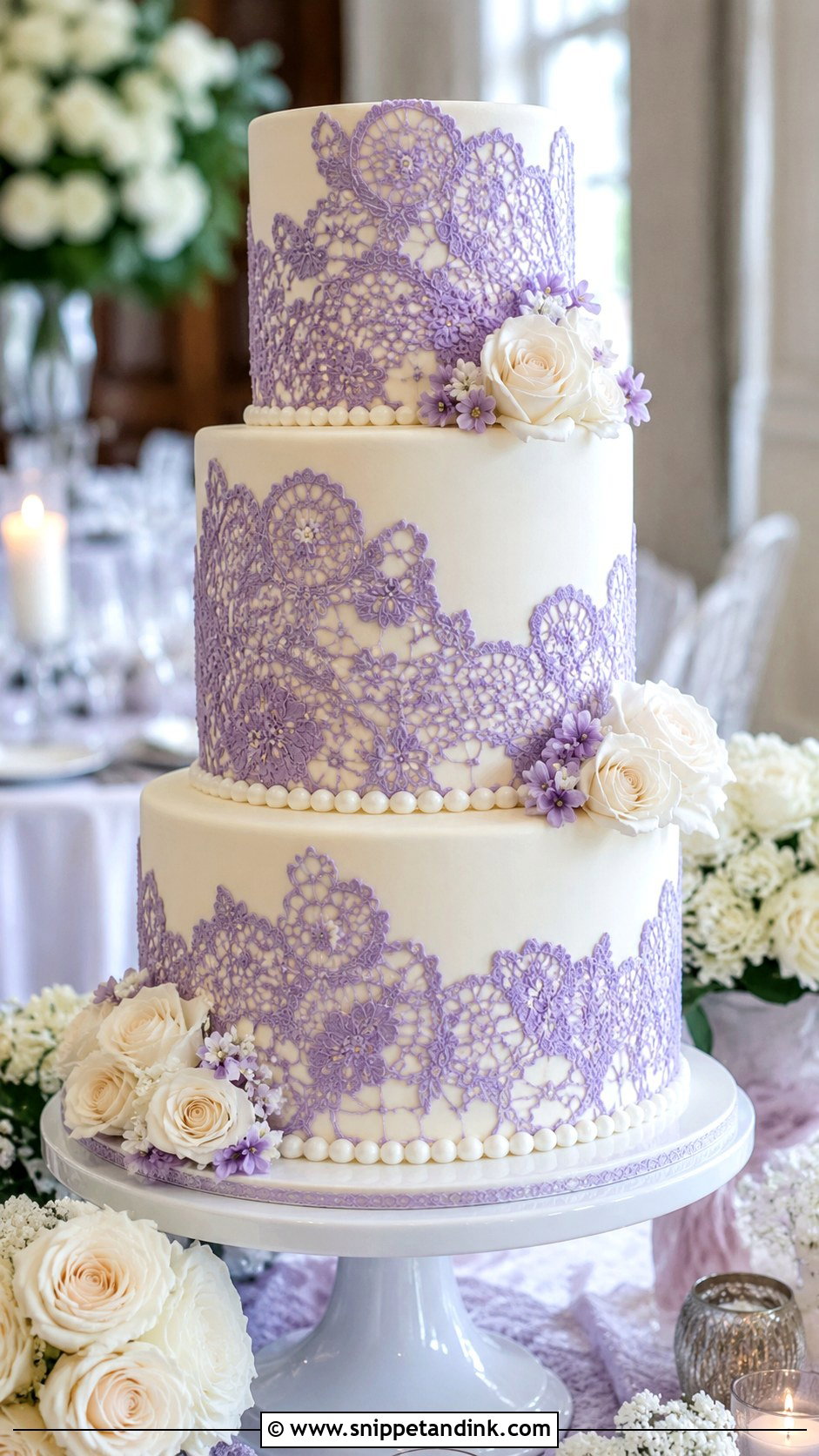
Lace can be piped in royal icing, set in a silicone mat as sugar lace, or cut from fondant, and each gives a different depth. White lace on a lilac cake reads detailed and feminine; lilac lace on white reads softer. If the bride’s gown has lace, bring a photo of it, because I can often echo the motif closely. Royal icing lace is brittle and can chip in transport, so I pipe it on site or use flexible sugar lace for bigger cakes. Keep the rest of the tier clean so the pattern has room.
14. Lilac Purple Geode Wedding Cake
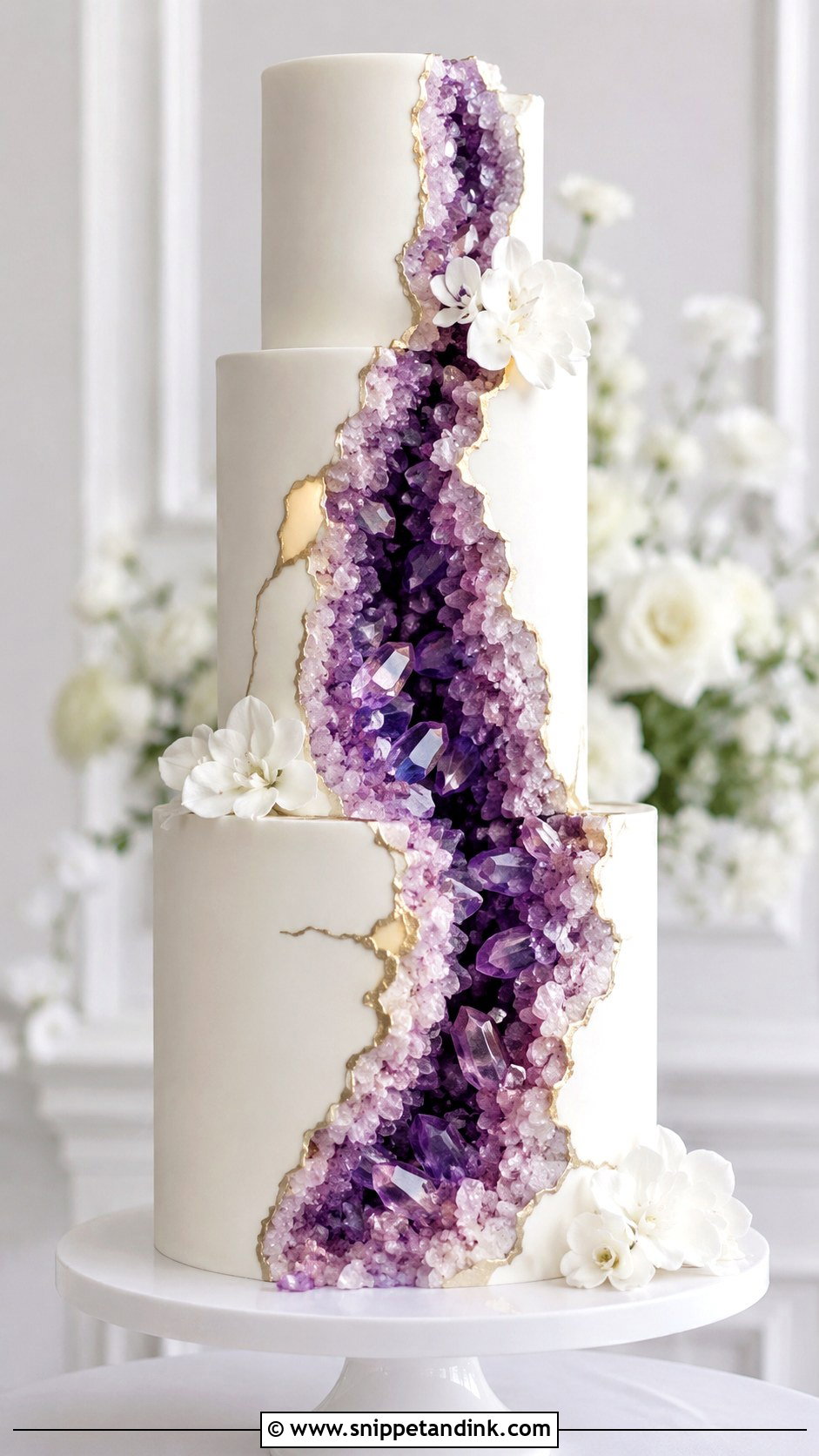
A geode is the bold option here, and guests always walk over to look. I carve a cavity through one side of the tiers and fill it with edible sugar crystals in lilac, lavender and deep violet, layering the darkest at the center. A white or pale lilac outer coat makes the crystal section pop, and a fine metallic edge defines it. The crystals are rock-hard isomalt or sugar, so warn guests, and cut slices from the plain side. It needs tall tiers and very few flowers; anything extra fights with the geode.
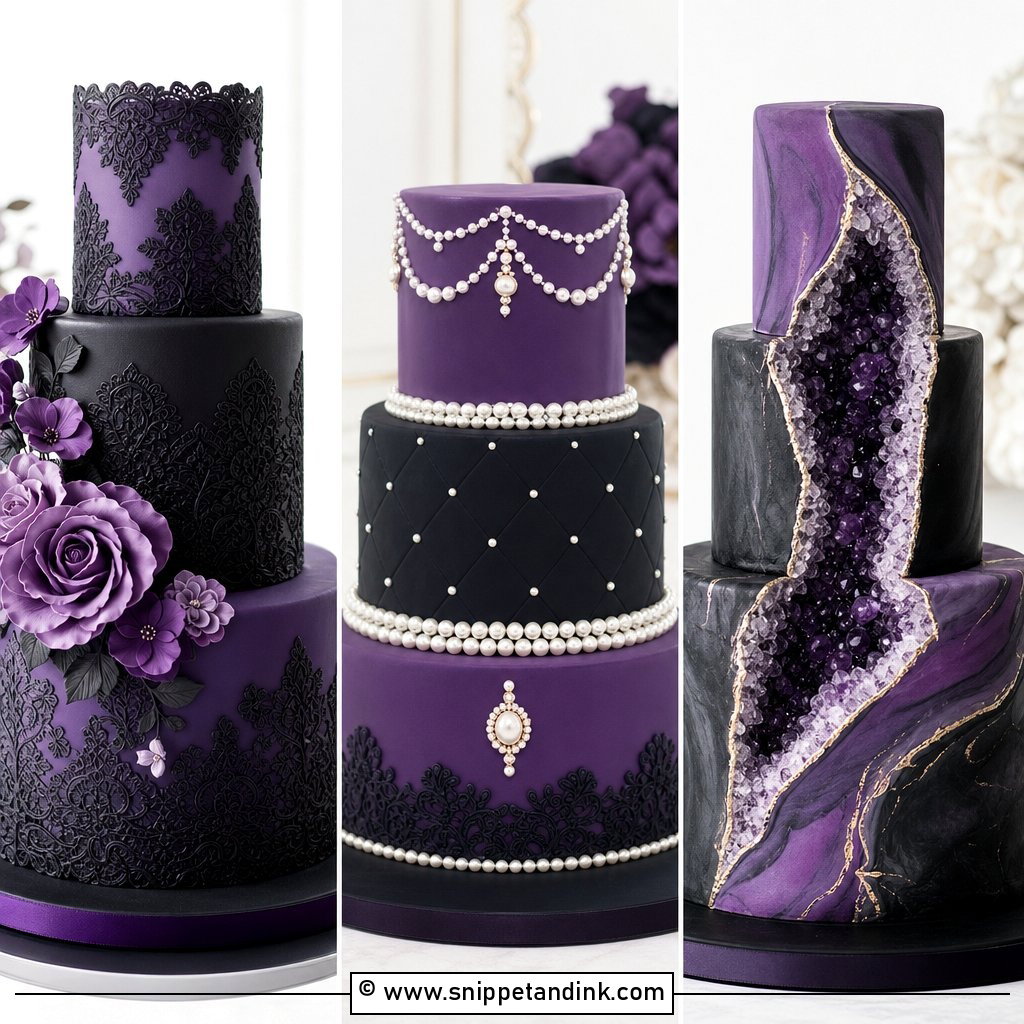
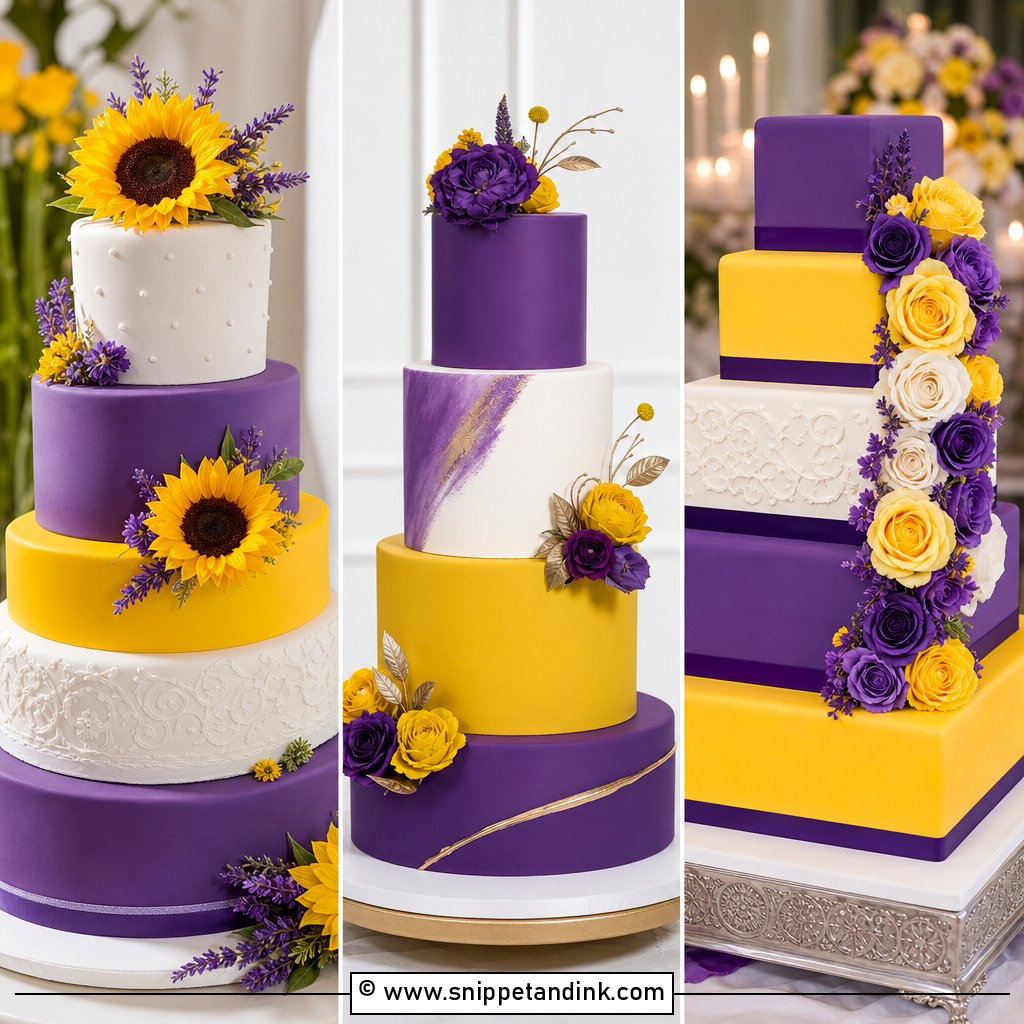
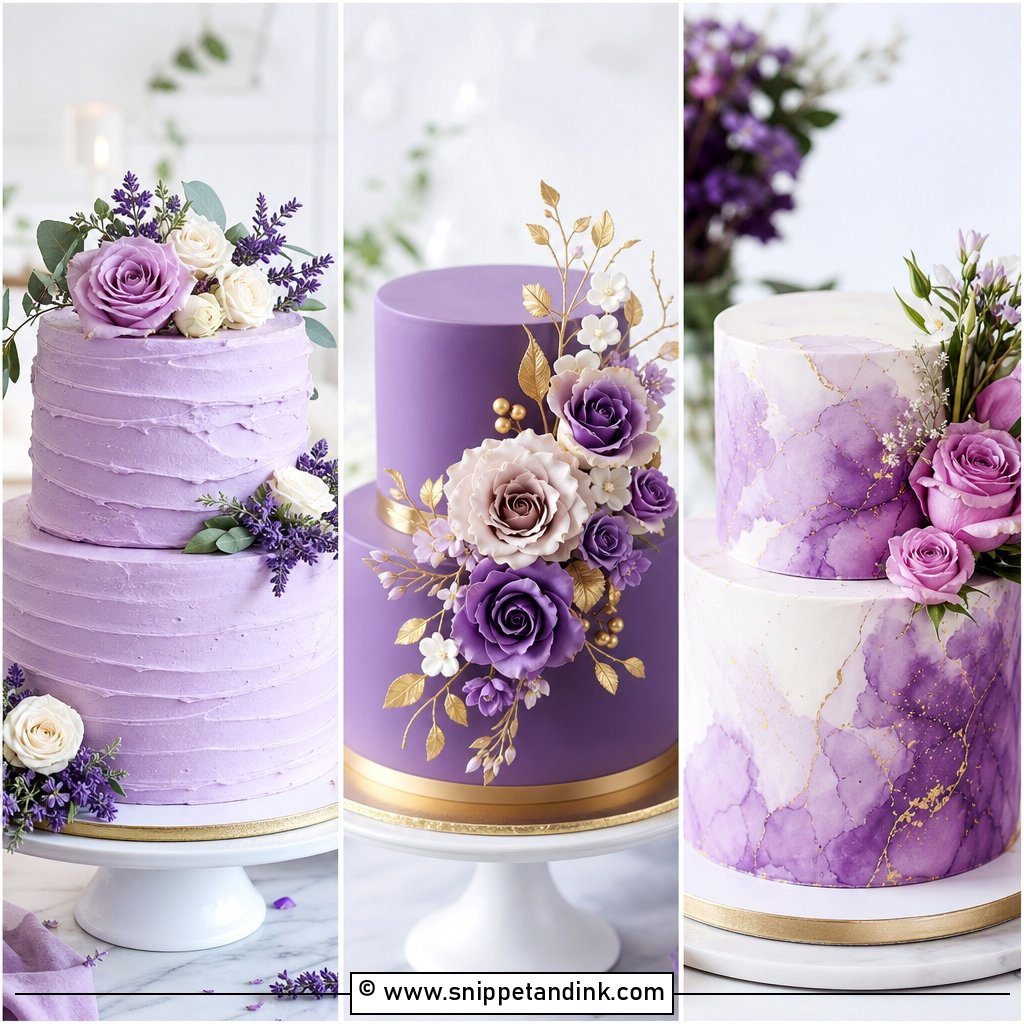
15. Lilac Purple Drip Wedding Cake
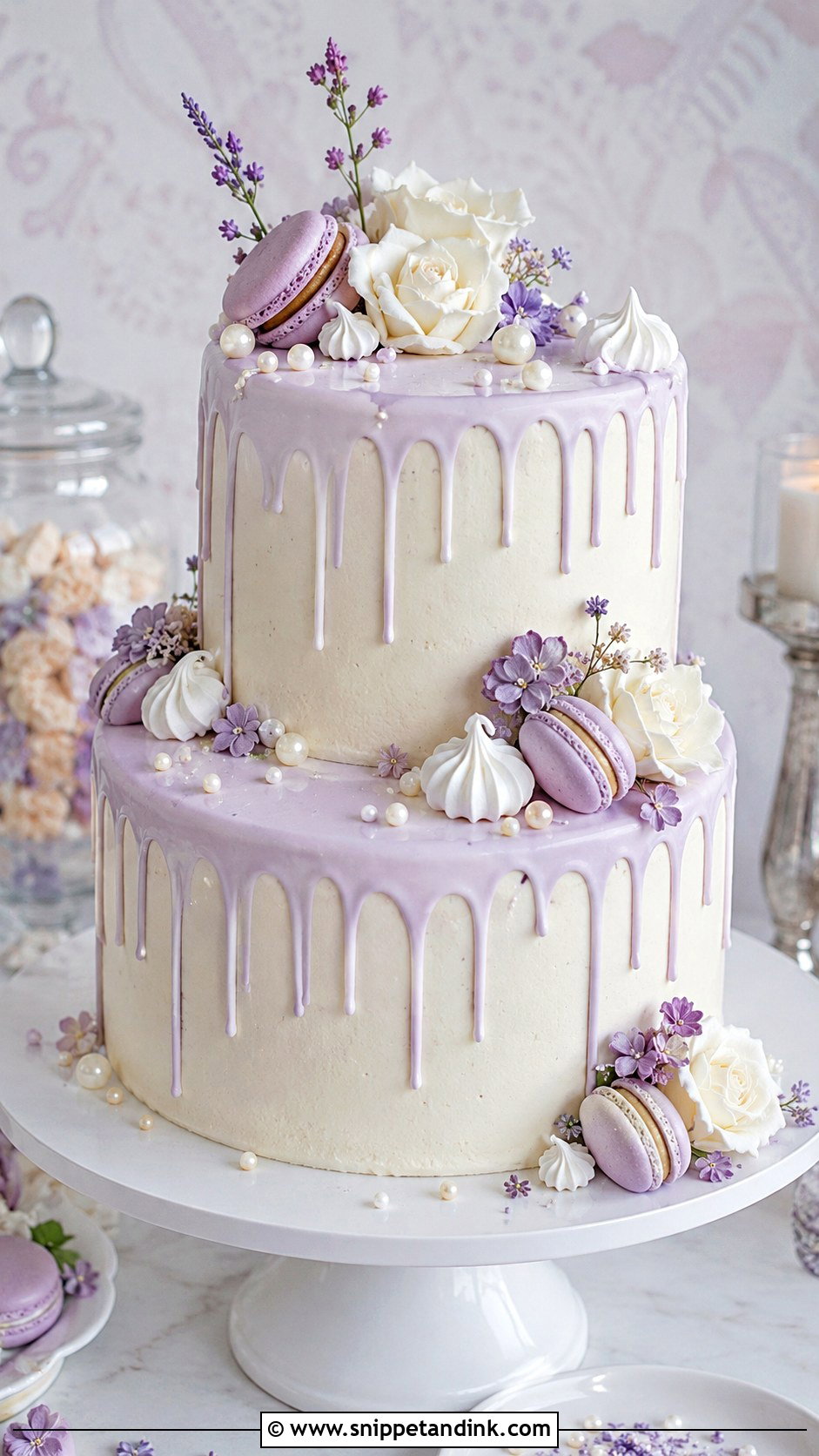
Drip cakes are the most relaxed of the lot. I make the drip from white chocolate ganache tinted lilac or a slightly deeper purple, and the temperature decides everything: too warm and it runs to the board, too cool and it stops in thick blobs. I test a single drip down the side before doing the whole cake. It sits best over smooth ivory buttercream, pale lilac frosting or an ombre base. Top it with macarons, sugar flowers, berries and a few meringues for height, and keep the drips evenly spaced so it looks intentional.
16. Lilac Purple Ruffle Wedding Cake
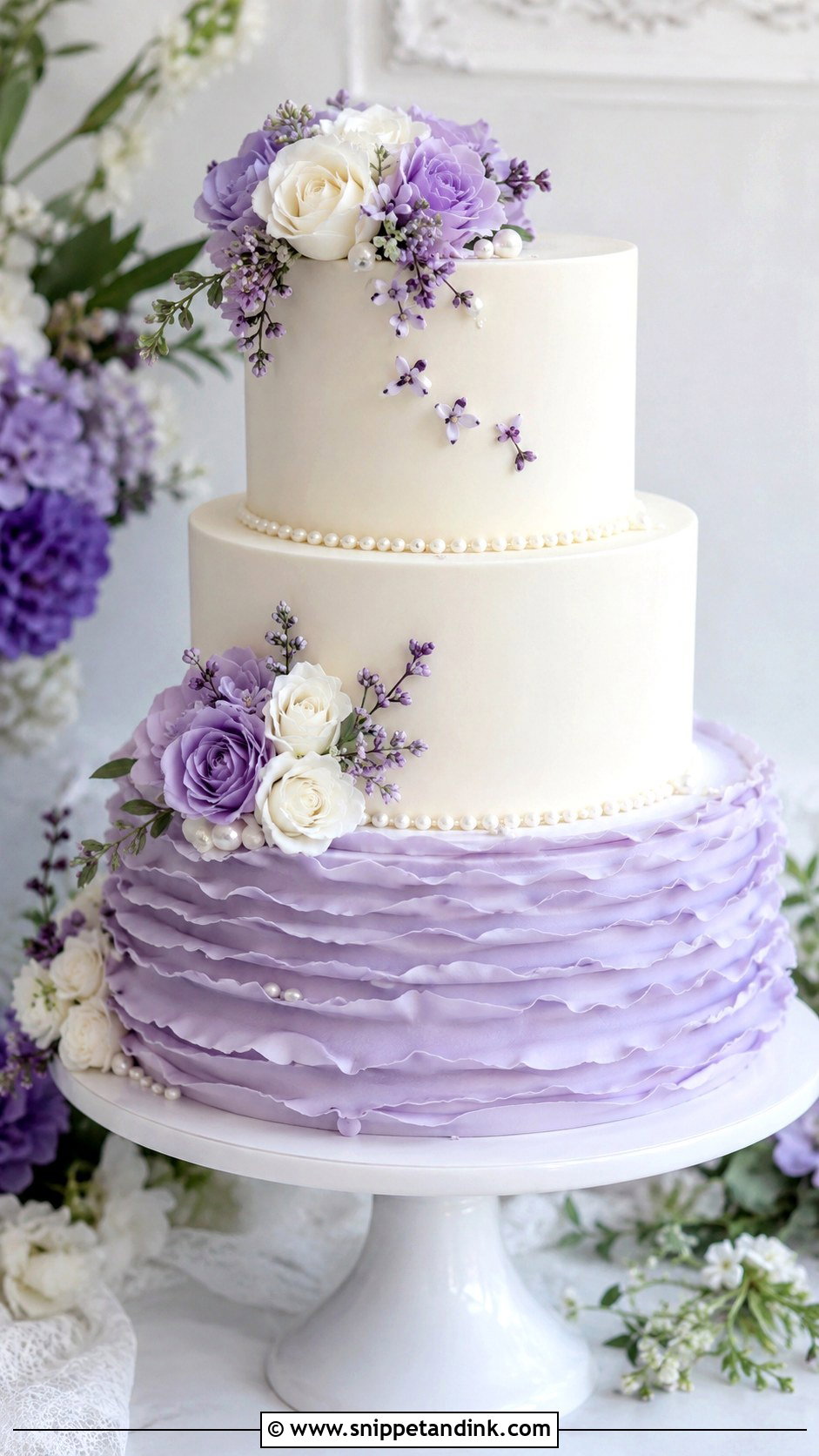
Ruffles bring a fabric-like softness, and the material changes the result. Buttercream ruffles are soft and edible, fondant ruffles hold crisp folds, and wafer paper gives the lightest, most petal-thin edge, though it hates humidity and will curl. Pale lilac ruffles with slightly deeper edges look airy and dimensional. I usually confine them to one statement tier and keep the others smooth, because a whole cake of ruffles can look heavy. Flowers are optional here; the texture is already doing the work.
17. Lilac Purple Pearl Wedding Cake
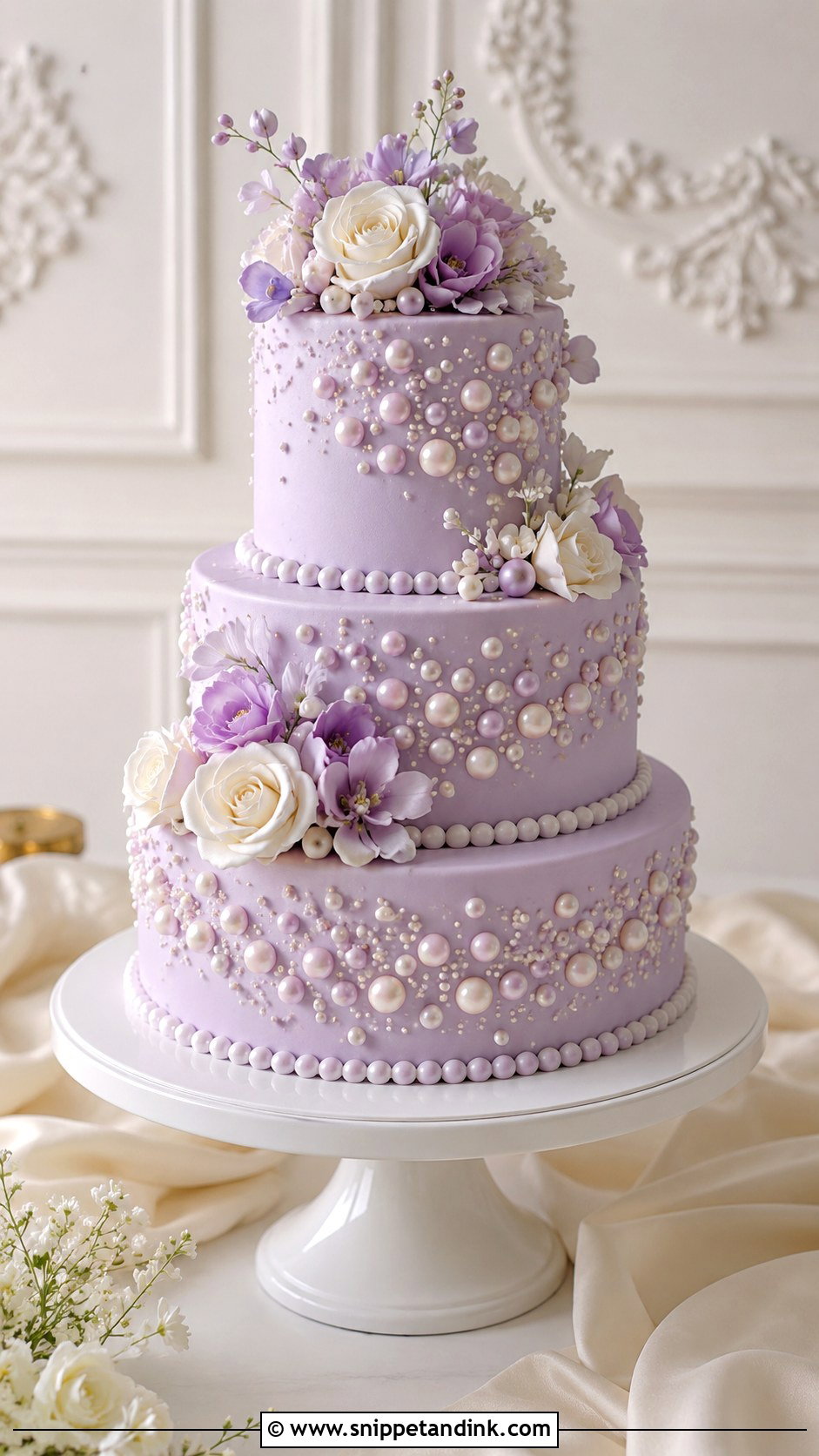
Pearls look refined without any flash. Edible sugar pearls can run as borders, march in clean vertical lines or scatter across a tier. On pale lilac, I like mixing two or three sizes in an asymmetrical drift for a modern version, and for something traditional, a single neat pearl border at the base of each tier. Pearls are fiddly to place and each one is set by hand, so a fully covered design adds real time to the order. They catch light softly and read especially well in close-up photos of the cake.
18. Lilac Purple Square Wedding Cake
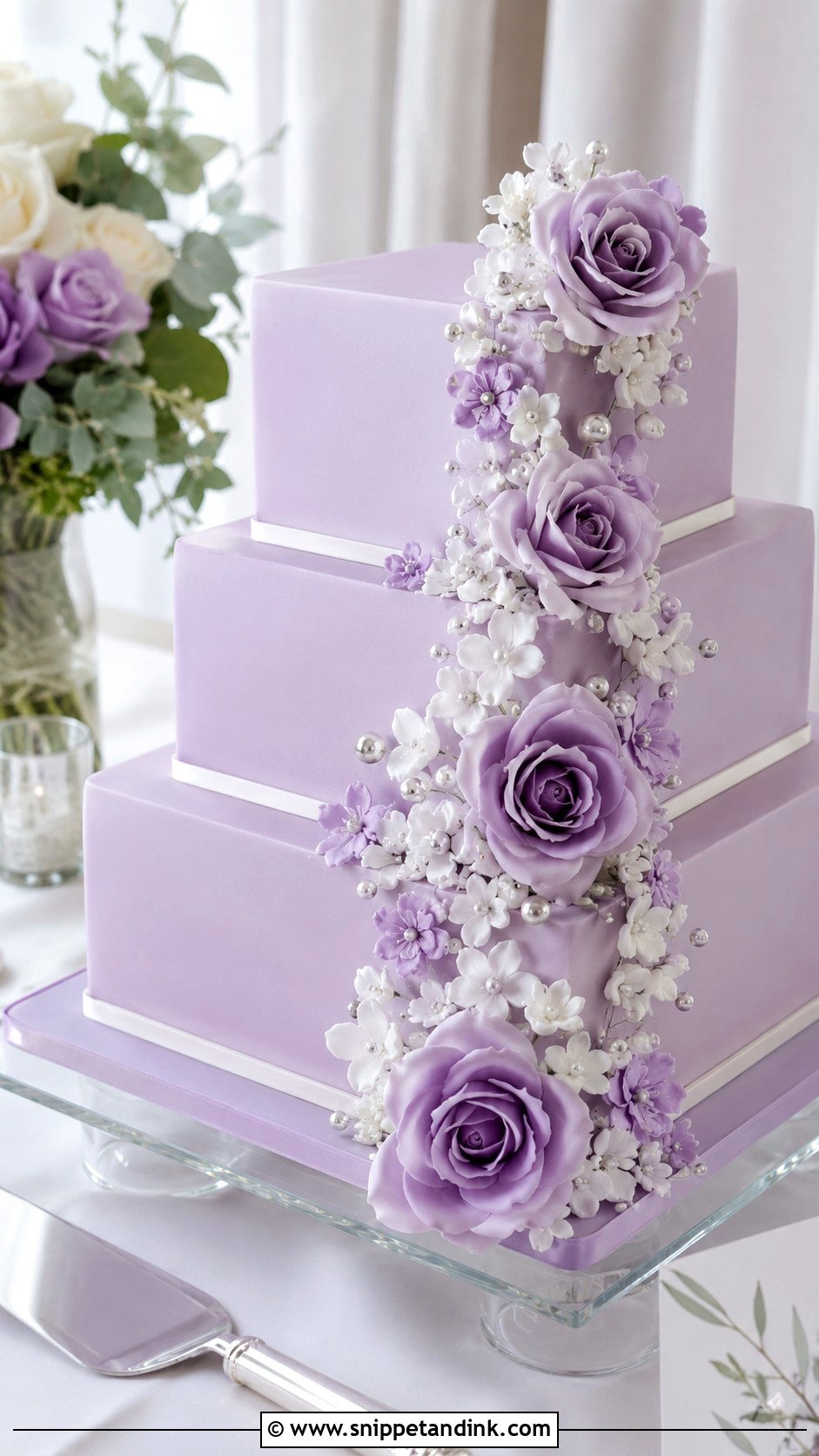
Square tiers change the whole character of a cake, and pale lilac stops them looking severe. They’re harder to finish than rounds, because every corner has to be sharp, which is why I usually cover them in fondant or a very well chilled buttercream. Decoration works best when it follows the geometry: a flower cascade off one corner, thin silver trim along the edges, or a marbled panel. Squares also yield more servings per tier than rounds of the same width. A white or clear acrylic stand suits the clean lines.
19. Lilac Purple Minimalist Wedding Cake
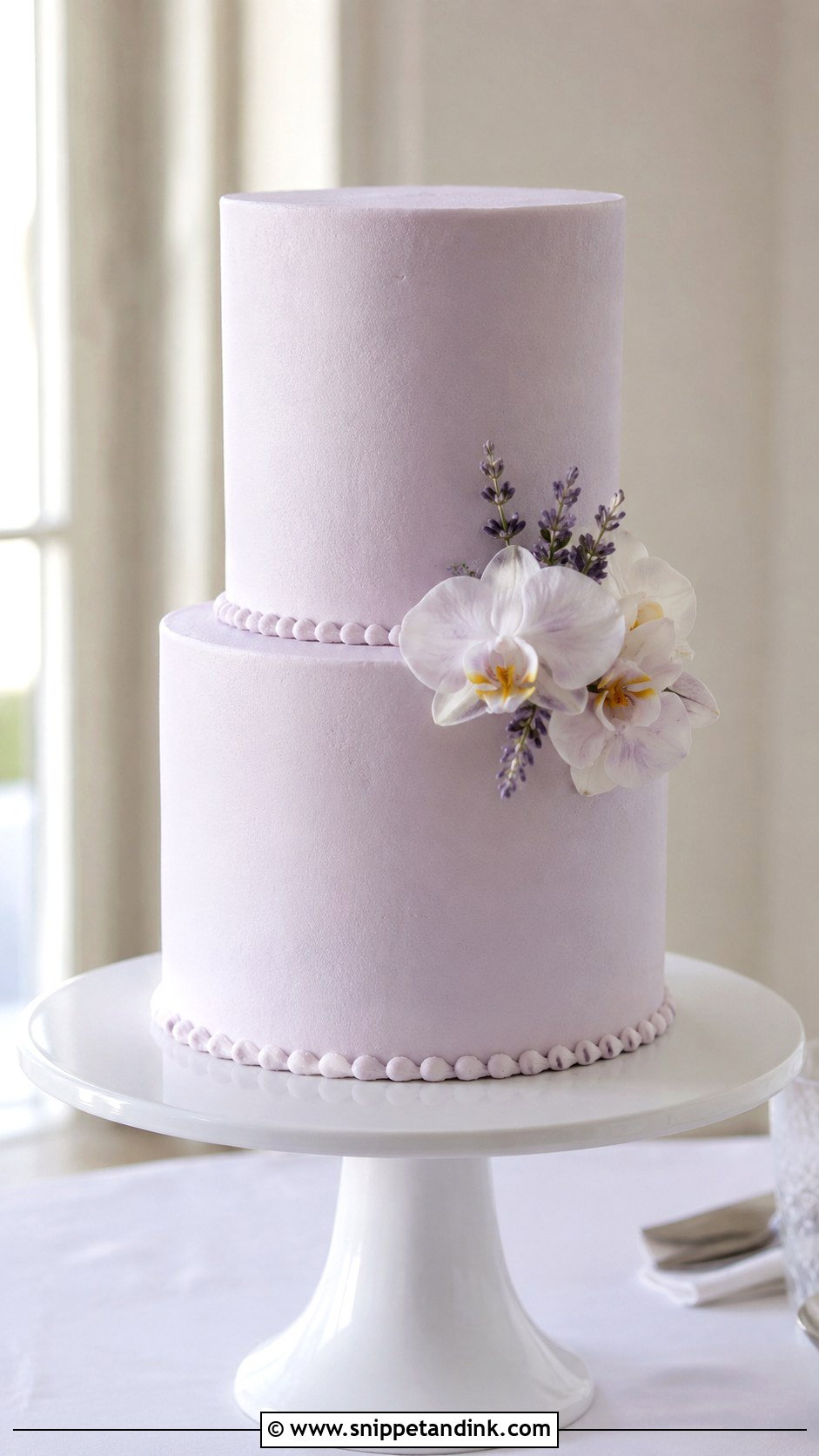
A minimalist cake is harder than it looks, because there’s nothing to hide behind. One or two smooth tiers in pale lilac with a single detail, a small flower cluster or a fine line of white piping, is the whole design. Every edge and surface has to be perfect, so I spend more time on the finish than on decoration. It suits intimate weddings and modern venues, and couples who’d rather put the budget into flavor. Pair it with a sleek stand and a few loose flowers nearby so the table doesn’t look bare.

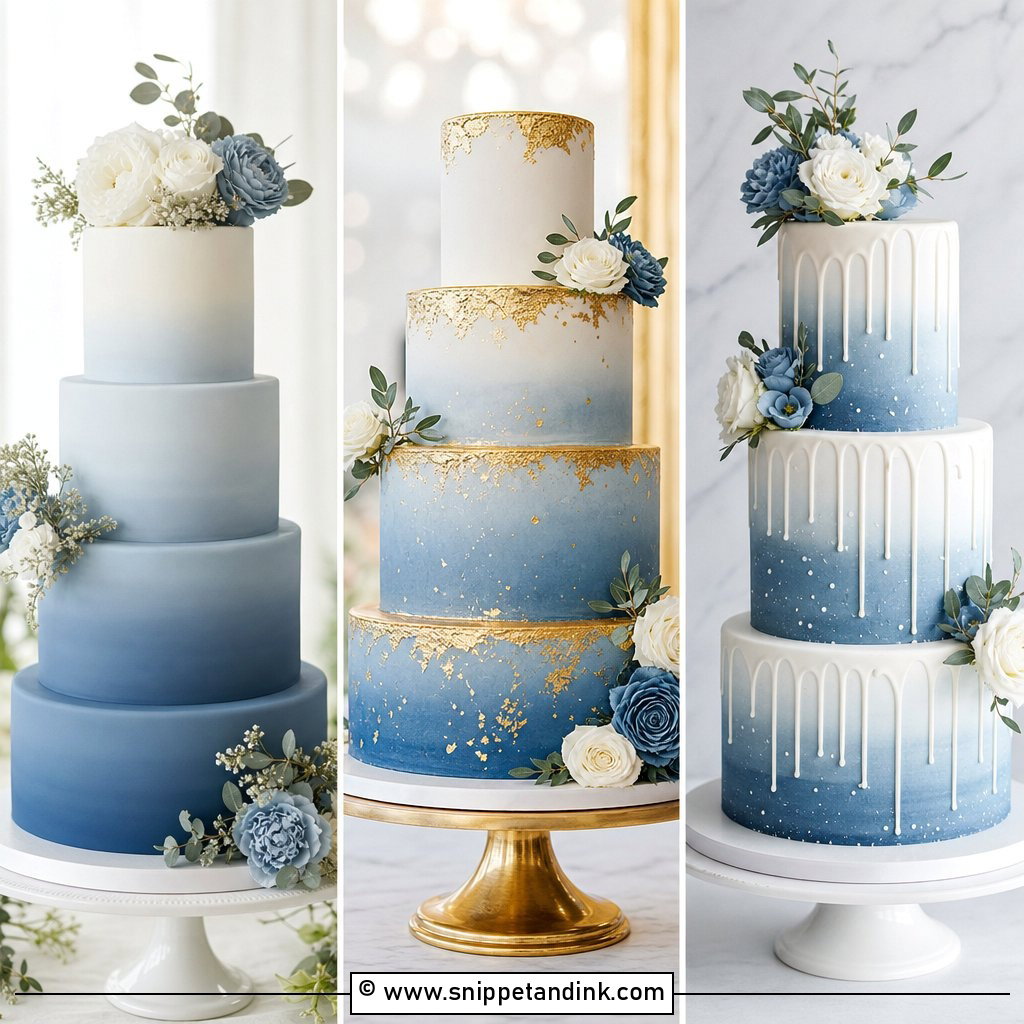

20. Lilac Purple Tall Wedding Cake
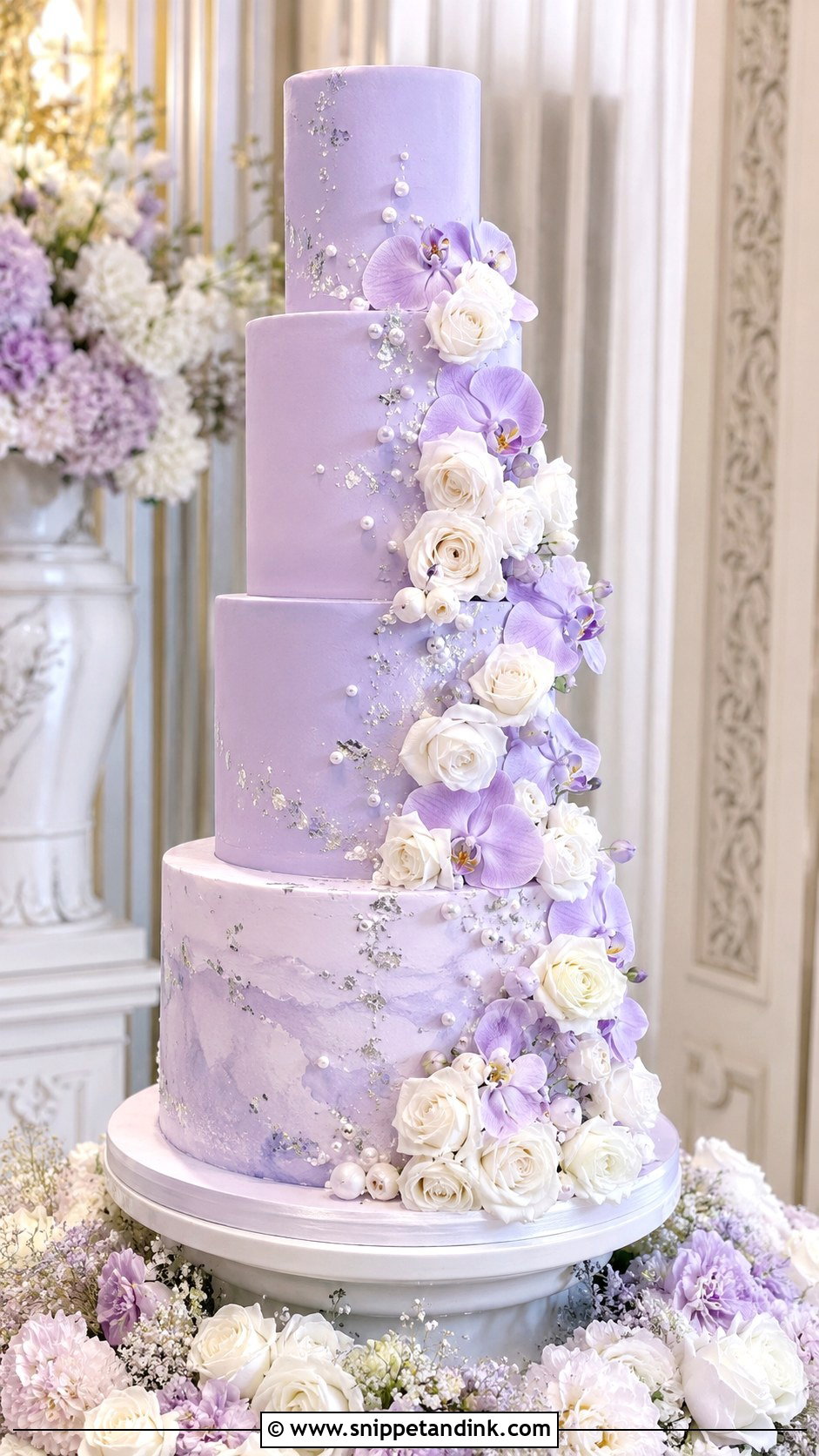
Height gives a lilac cake presence in a big room. Tall tiers can stack straight or be separated with a ring of flowers between them, which adds drama and a little more height without more cake. Cascading flowers, ombre shading, pearls and metallic touches all suit the format. It’s best for larger weddings and high-ceilinged venues; in a small room it can tower over the table. Structure matters most here: a tall cake needs dowels in every tier and a central rod, and I always deliver it in sections and stack it on site.
Bring a Fabric Swatch, Not Just a Pinterest Screenshot
Screens shift purple more than any other color, so the lilac on your phone is rarely the lilac anyone can mix. The most useful thing you can hand me is something physical: a ribbon, a scrap of bridesmaid fabric, a paint chip. I match to the object and check it in two lights.
What I need to know at the first consultation
- Guest count, so we can decide tiers versus a smaller display cake plus a kitchen sheet cake.
- Whether the reception is indoors, in a tent or fully outside, and roughly when the cake will be cut.
- Your florist’s name, if any real flowers will touch the cake, so we can agree who prepares the stems.
- Flavors you love and anything a guest can’t eat, since lavender and nut-based fillings change the plan.
Most bakers book popular spring and summer dates months ahead, so reach out once your venue and date are settled. Sugar flowers in particular are made by hand over days, and a design with many of them needs that lead time.
Real Lilac Blooms Have a Short Season and a Shorter Vase Life
Lilac flowers in spring, and outside that window real blooms are hard to source and expensive to import. Even in season, cut lilac droops faster than roses or spray flowers. If your heart is set on real ones, plan for them to go on within an hour or two of the reception, and have a florist on hand who conditions the stems properly.
For a summer or autumn wedding, I’d steer you toward sugar lilac clusters instead. They take time to make, but they don’t wilt, they keep their color, and you can keep the top tier’s flowers afterwards.
Let the Venue Light Decide Your Lilac
Lilac can go soft, modern, rustic, vintage or dramatic depending on the finish, and the color is gentle enough to suit a classic wedding while still feeling personal. If flowers are the heart of your day, look at the floral, fresh lilac and lavender designs. If you want a focal point, the marble, geode, drip and tall cakes deliver one. Buttercream, lace and pearls stay graceful for years of photos. Whatever you lean toward, bring your favorite images and a real fabric swatch to your tasting, and tell me where the cake will stand. That last detail decides the shade more than anything else.
You'll Like These Ideas:



Leave a Reply