
Deep color is harder to get right in frosting than almost anywhere else at a wedding, which is exactly why a well-made jewel-colored cake gets noticed. Emerald, sapphire, burgundy, plum, amethyst, teal, garnet and deep navy all sit naturally beside gold, black, ivory and candlelight. They suit fall and winter receptions, gothic romance themes, ballroom celebrations and any couple who would rather not have an all-white cake. Below are twenty directions, from sleek and modern to floral, textured and metallic, with notes from my side of the counter on how each one is actually built and where it tends to go wrong.
Deep Frosting Colors Behave Differently From Pale Ones
Most of what can go wrong with a dark cake happens in the mixing bowl. A pastel needs a drop of gel; emerald, navy and burgundy need a great deal of it, and that changes how the frosting tastes, sets and copes with a warm room. These are the things I explain before a couple falls for a shade on a screen.
- Dark shades keep deepening as they rest. I mix them a day ahead, because what looks like teal at noon can be close to navy by morning.
- Heavy coloring can be tasted. Large amounts of gel may leave a faint bitter note, which is why black and very dark browns are best built on chocolate.
- Very dark buttercream can tint lips and teeth for a little while, worth knowing if portraits come straight after the cutting.
- Light fades some colors. Purples and pinks especially can shift in direct sun or under hot spotlights, so placement matters.
- Condensation shows. A chilled dark fondant cake carried into a warm, humid room beads with moisture, and on a deep color those droplets dry into visible spots.
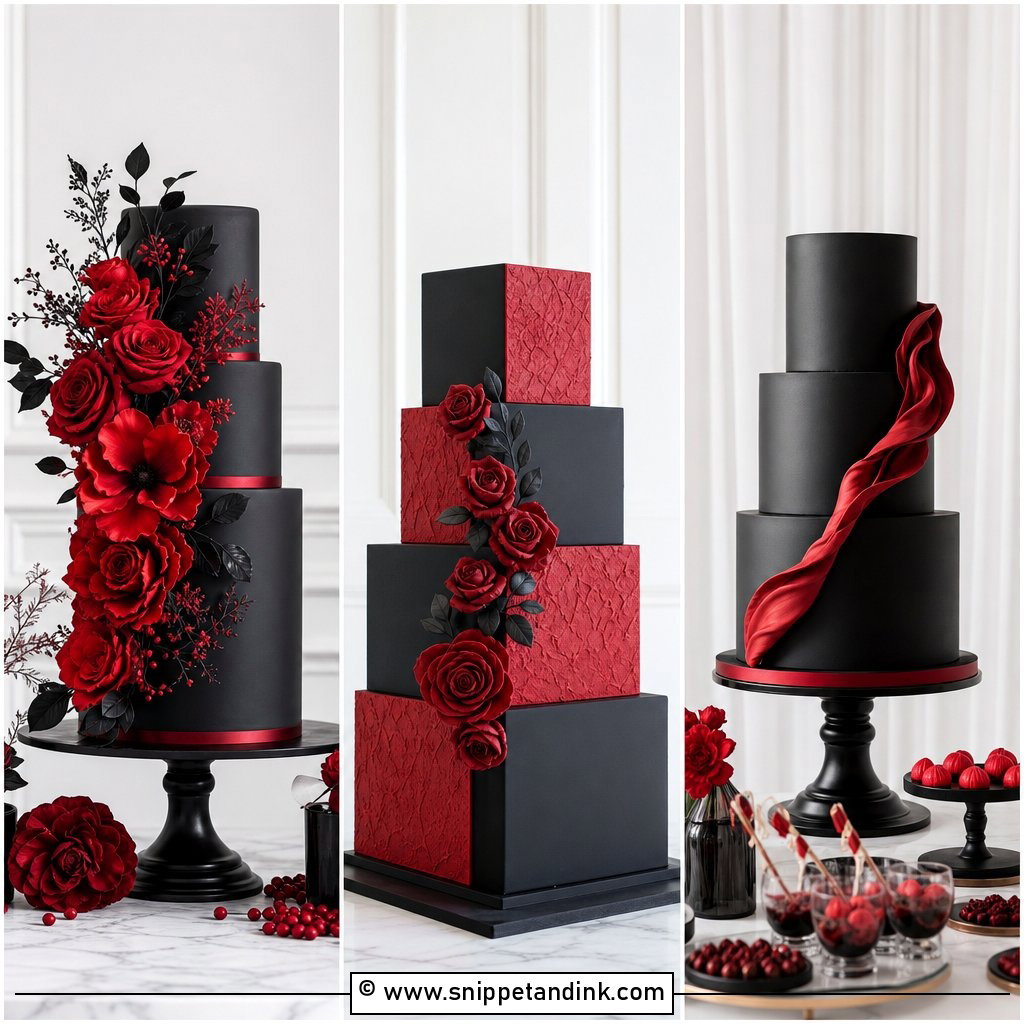
None of this rules a dark cake out. It simply means the shade, the frosting type and the cake’s spot in the room get decided together, not one at a time.
1. Emerald Green Wedding Cake
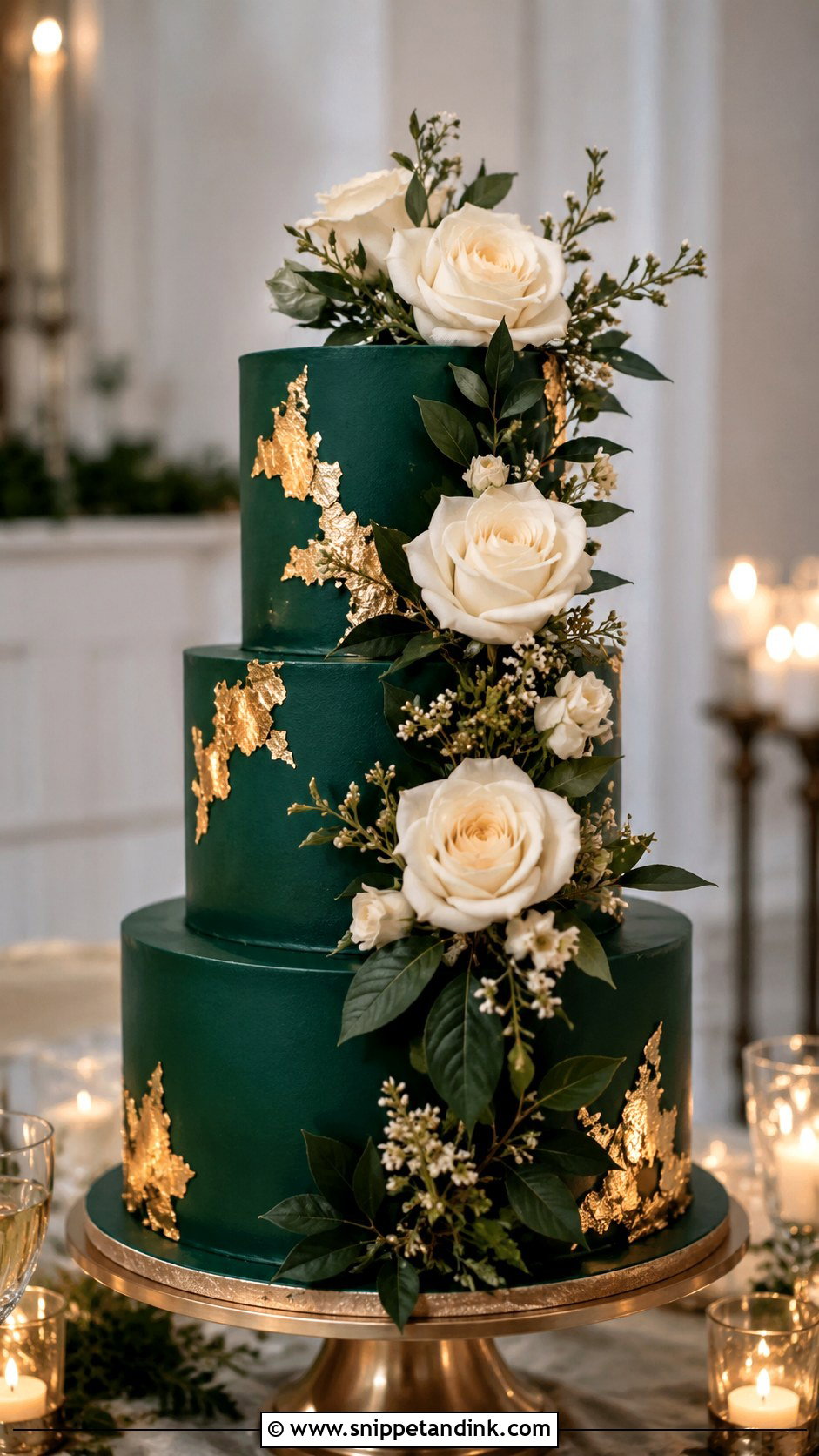
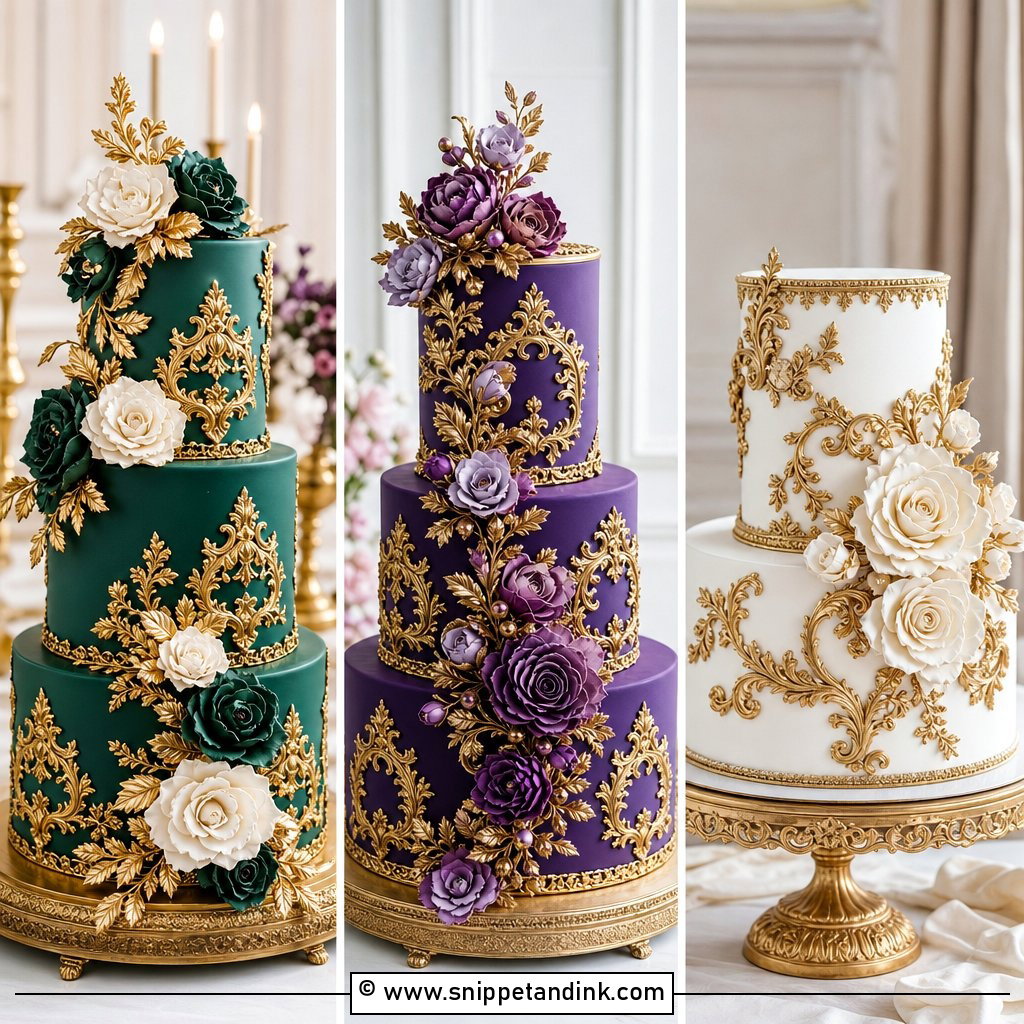
Emerald is the shade I’m asked for most, and the one most likely to drift. Green gel can lean yellow in a butter-based frosting, so I mix it a day ahead and let it rest; the color deepens overnight and I can correct it before it ever touches a cake. Smooth fondant gives a polished ballroom look, textured buttercream something more organic. For a dramatic reception, three tiers with an emerald base, an ivory middle and a metallic top hold the color without drowning in it. Gold leaf, ivory florals or deep burgundy blooms finish it, with velvet linens, brass stands and candlelight around it. I’d keep the flowers slightly asymmetrical so it reads modern rather than stiff.
2. Burgundy Wedding Cake
Burgundy sits well on smooth buttercream, softened with blush, ivory, mauve or dark greenery. You can cover every tier and add brushed gold, or keep burgundy to one or two tiers with the rest in ivory or charcoal. I usually lean toward the second, because a fully burgundy cake needs a lot of coloring, and that much gel can leave a faint bitter note. Roses, dahlias, ranunculus and berries make it lush without extra sugar work. In low light burgundy keeps its depth, which suits candlelit receptions, historic venues and autumn styling.
3. Navy Blue Wedding Cake
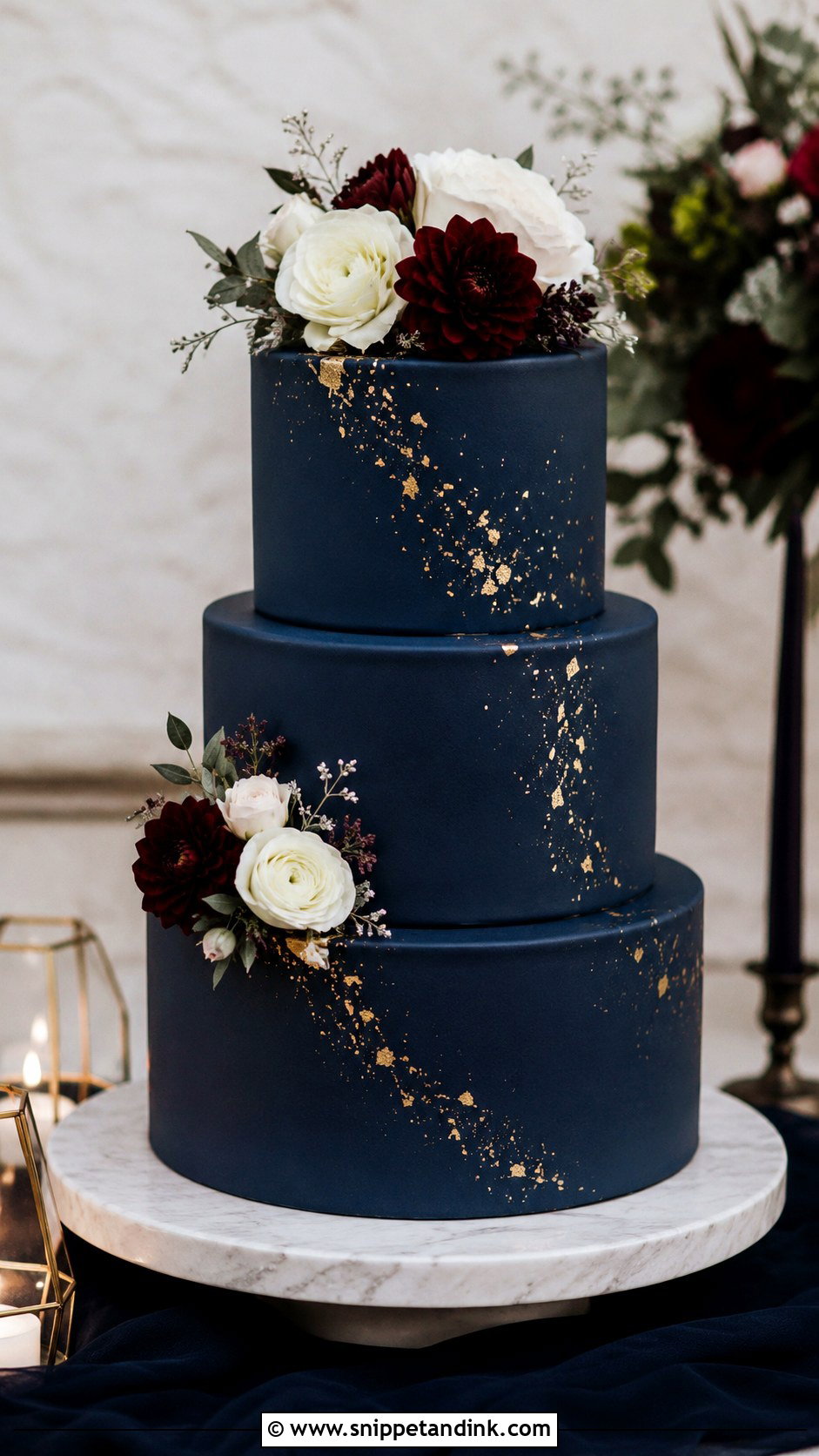
Navy behaves almost like a neutral on a cake table. It sits with gold, silver, ivory, burgundy, emerald and dusty blue, which is why I suggest it to couples who want drama but don’t want black. A tall three-tier navy blue wedding cake in smooth fondant looks sleek and formal; rough-textured navy buttercream looks more artistic. Metallic flecks, white sugar flowers or dark red blooms give it contrast. One practical note: navy fondant shows every fingerprint and dusting of cornstarch, so I finish it with a light pass of steam to even out the surface. Against white linens and warm candles it makes one of the strongest backdrops in this list.
4. Plum Wedding Cake
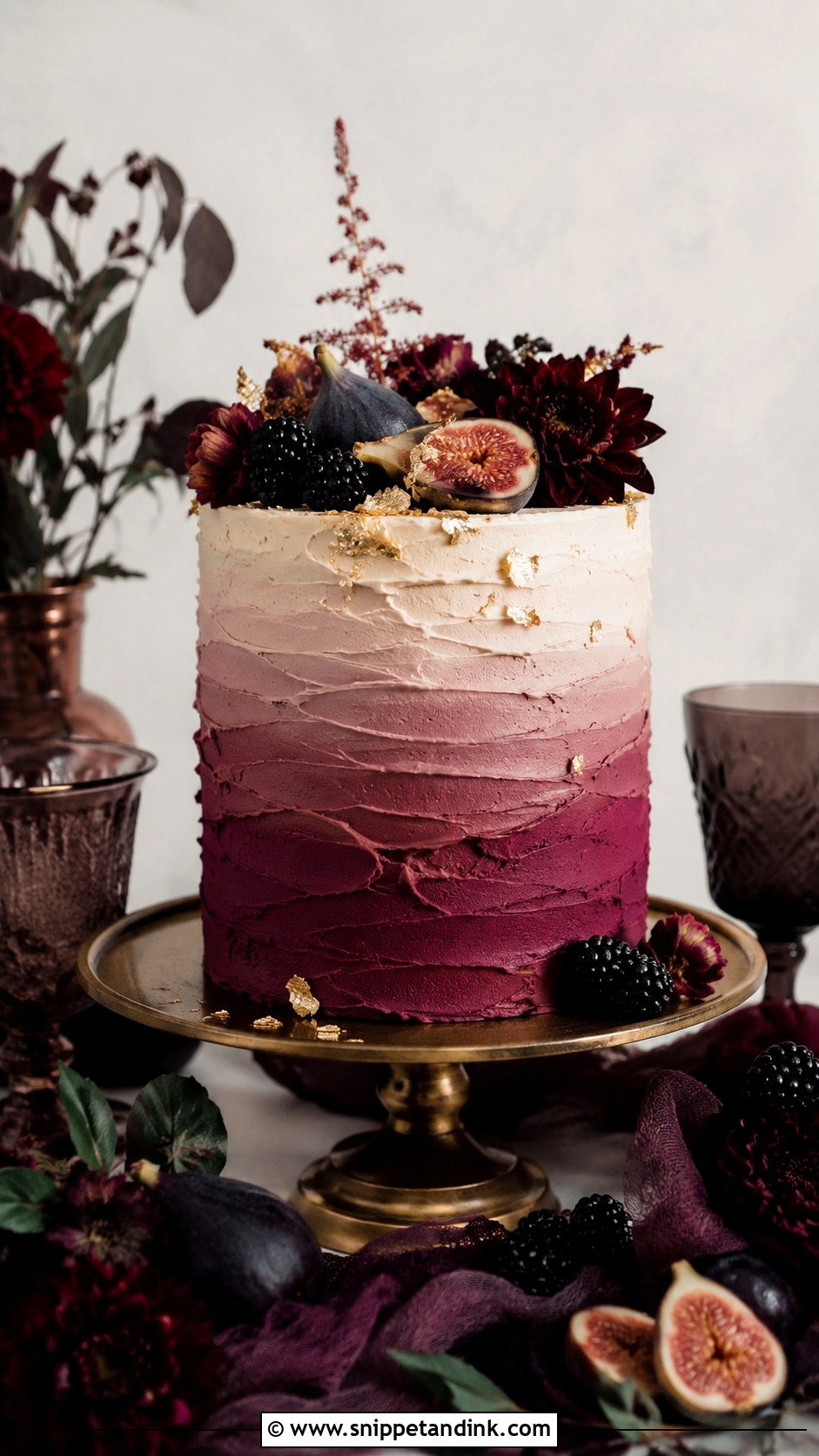
Plum is purple for couples who find violet too sweet. In buttercream it takes subtle texture, brushed edges or a watercolor fade from deep purple down to muted mauve. Dark berries, halved figs, blackberries, orchids or burgundy flowers decorate it, and a little gold leaf adds shine without flash. Purples are the shades most prone to fading, though. Under bright window light or a strong spotlight they can drift toward gray-blue within hours, so I ask where the cake will stand before I promise a color. Intimate indoor venues and fall receptions suit it, alongside antique brass and smoky glassware.
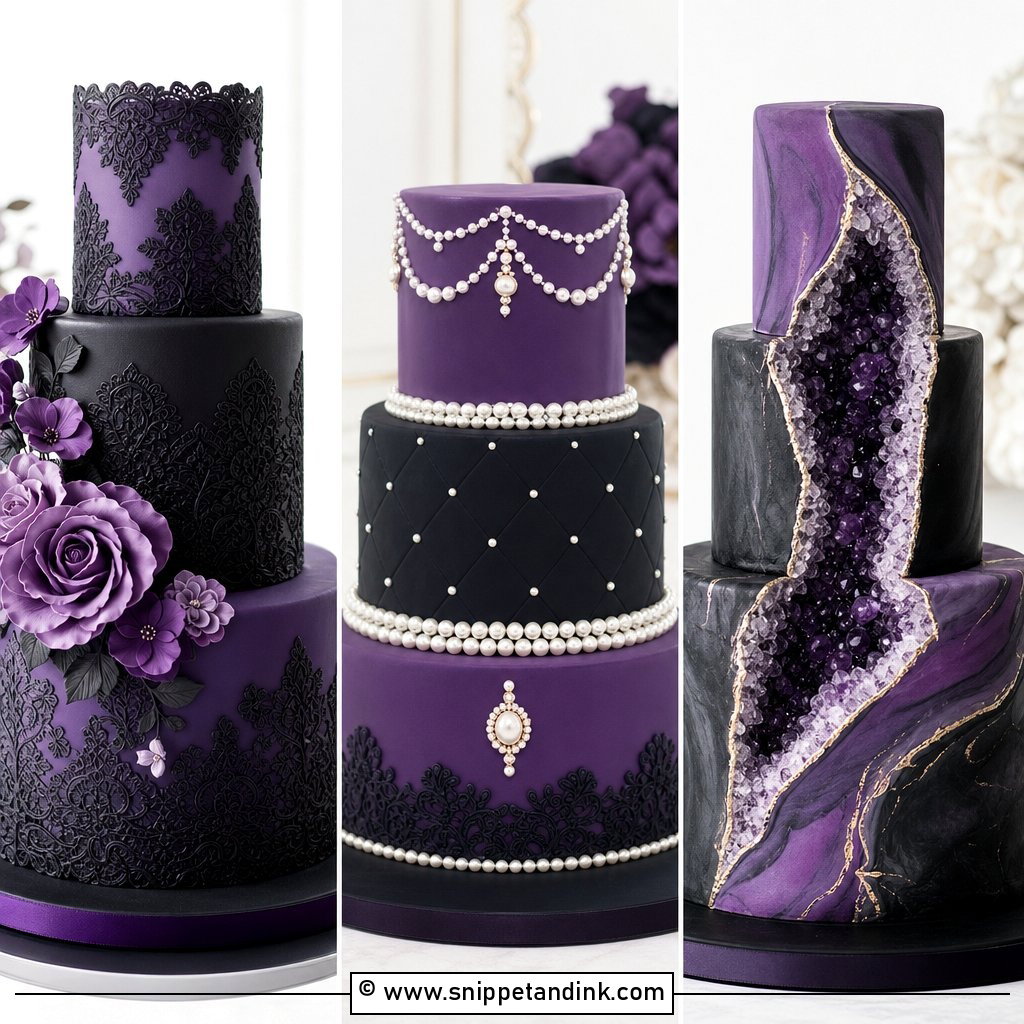
5. Amethyst Wedding Cake
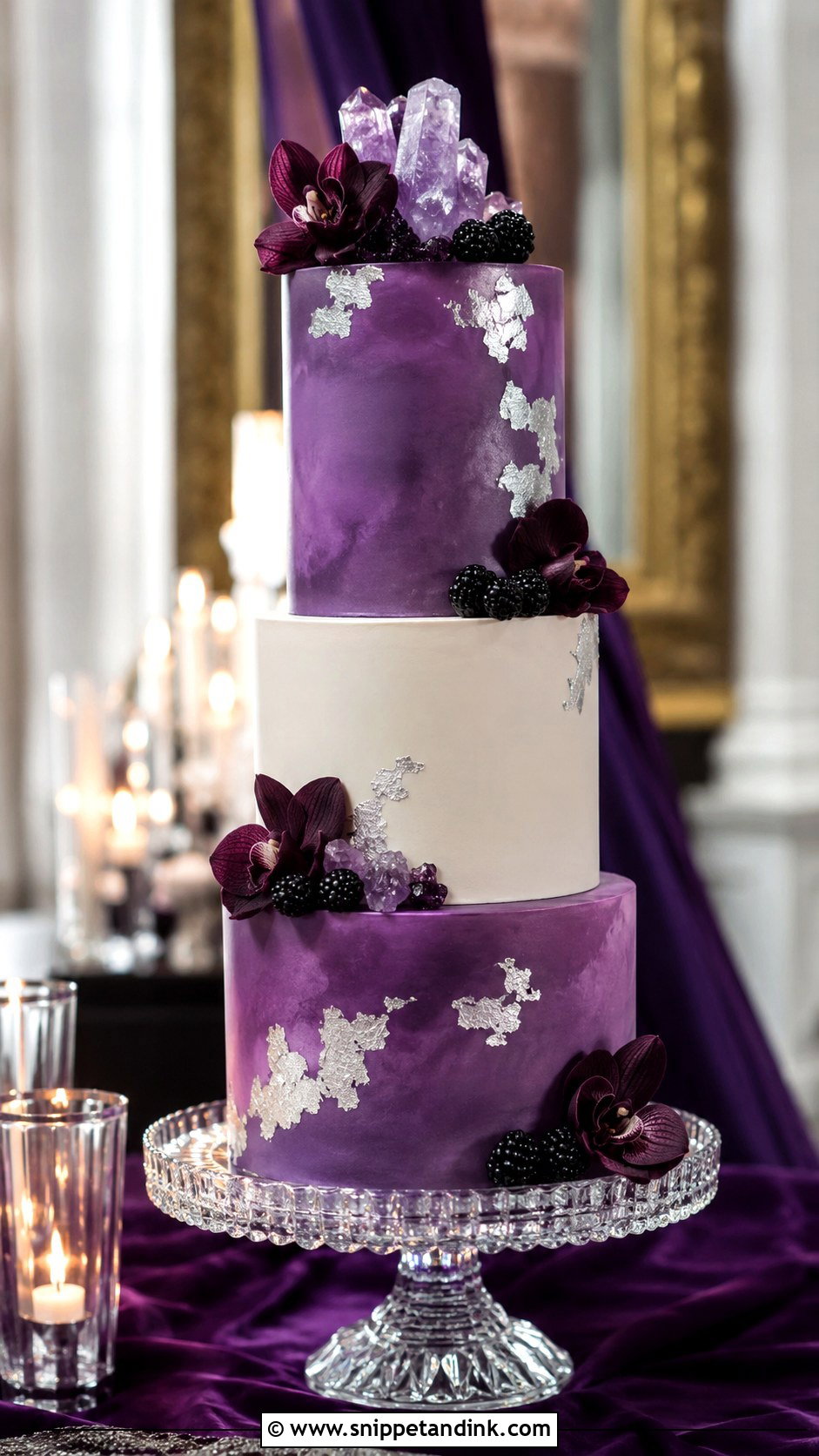
Amethyst runs from deep purple to soft lavender, which makes it a natural for ombre tiers, marbled fondant or a geode-style center. For a moody version I keep the base dark and add blackberries, dark florals and small touches of silver or gold. One clean white tier stops it feeling heavy and reminds everyone it’s a wedding cake. The finish has to be precise, with sharp edges and tidy decoration, or the gemstone idea starts to look like costume jewelry.
6. Sapphire Blue Wedding Cake
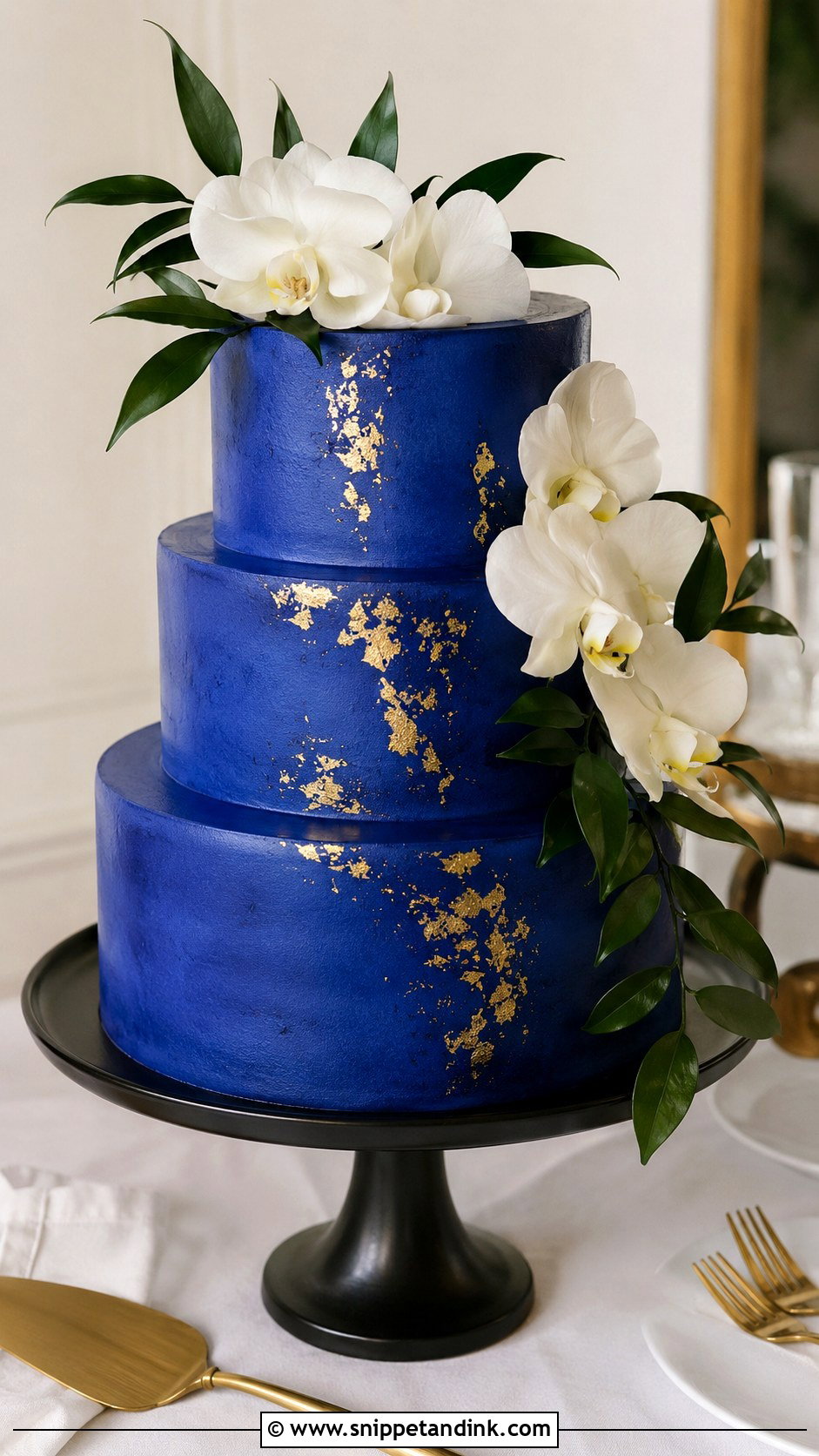
Sapphire is brighter than navy but still deep enough for a moody palette, and it gives the dessert table a regal focal point. Gold foil, white orchids, ivory roses or dark greenery all sit well against it, on a fully smooth modern finish or with painterly brushstrokes. Rich blues are hard to mix evenly across batches, so for a multi-tier sapphire cake I color all the frosting at once rather than tier by tier; two separate batches rarely match exactly. A black stand and warm candles push it toward drama, while an ivory tier and delicate florals soften it. Evening venues suit it best.
7. Teal Wedding Cake
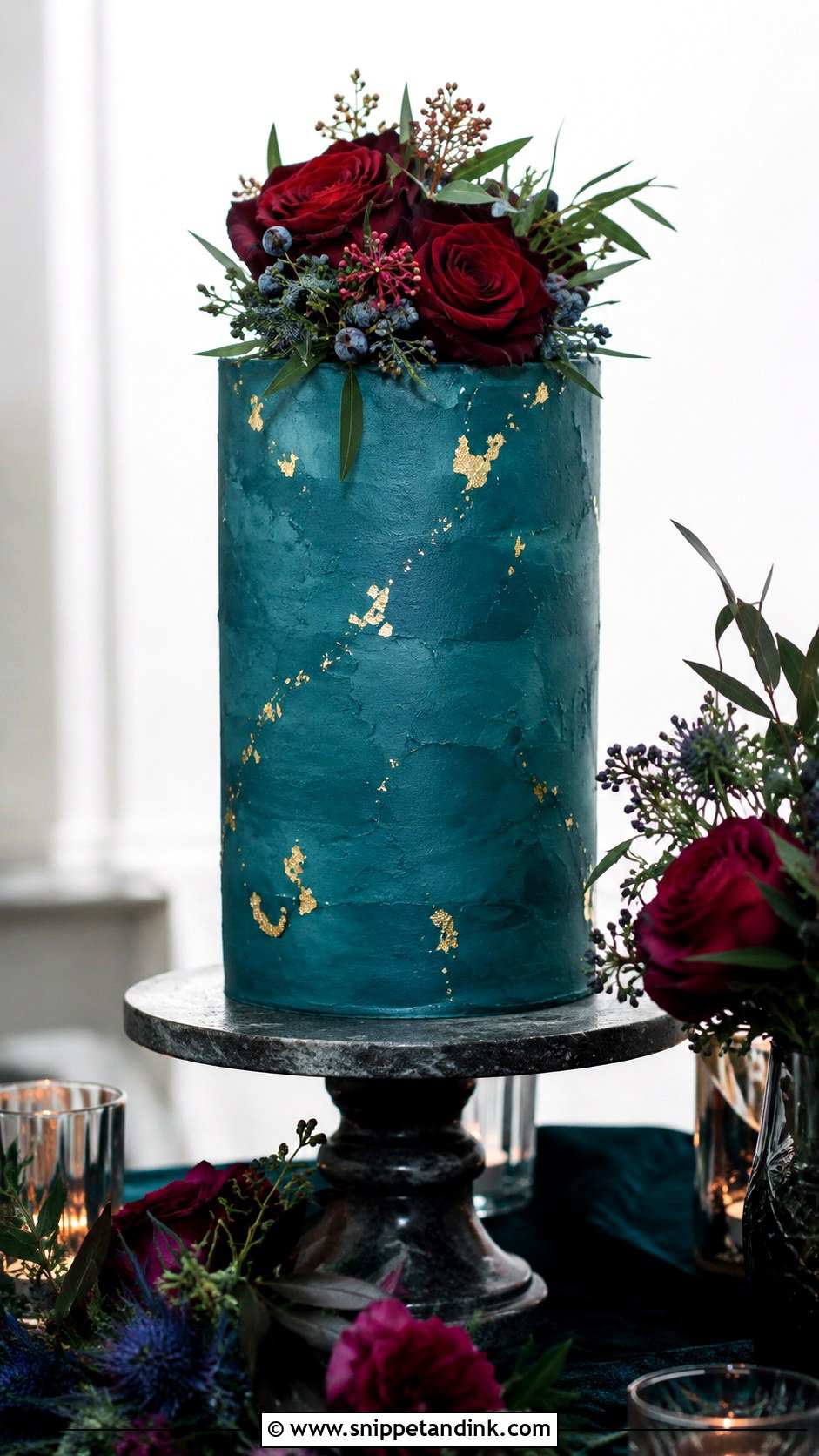
A teal wedding cake sits between blue and green, so it pairs naturally with emerald, navy, copper, burgundy, ivory and gold. Matte teal buttercream reads modern and dramatic; a teal watercolor finish feels softer. Fresh greenery, dark red flowers or gold leaf give it contrast, and it can nod to a peacock palette without turning into a theme. My advice is to keep the silhouette tall and clean. A plain three-tier teal cake says more than one buried in decoration, because the color is already doing the work.
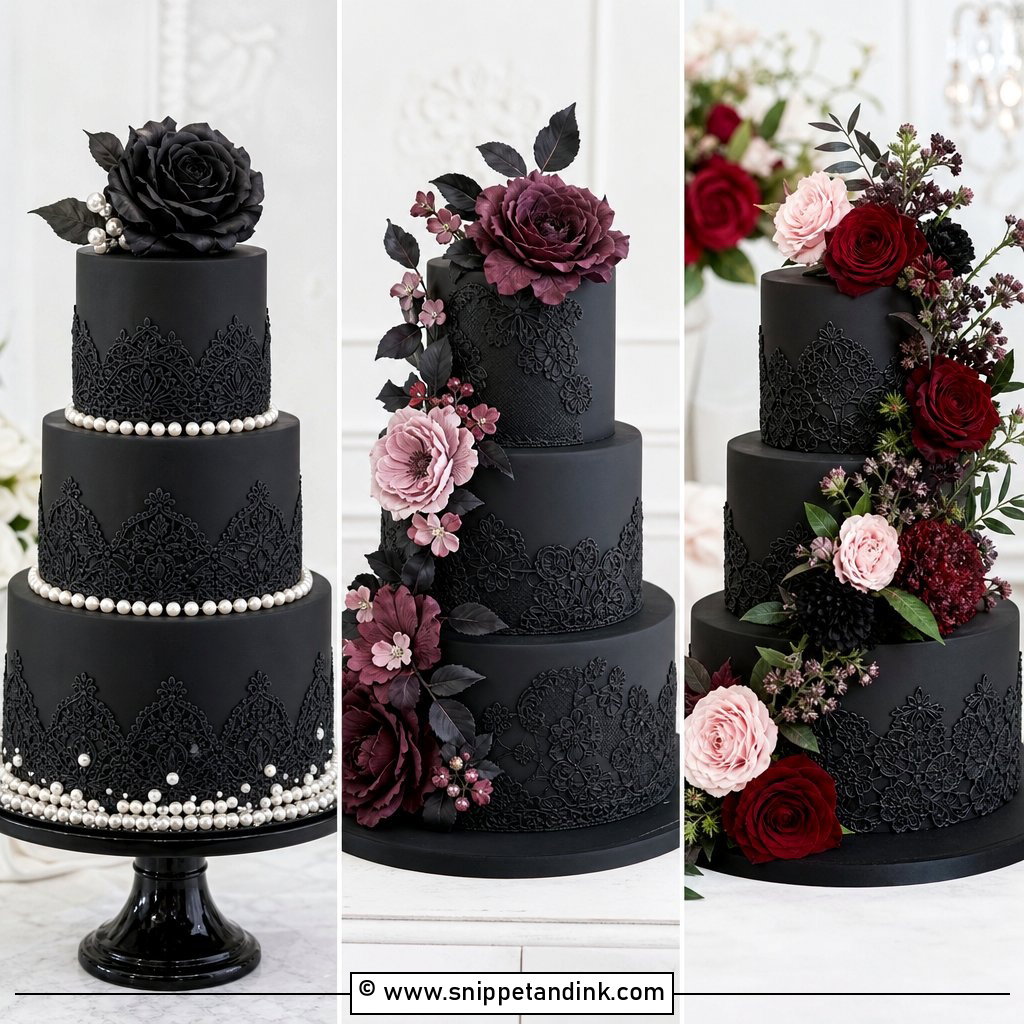
8. Black And Jewel Tone Wedding Cake
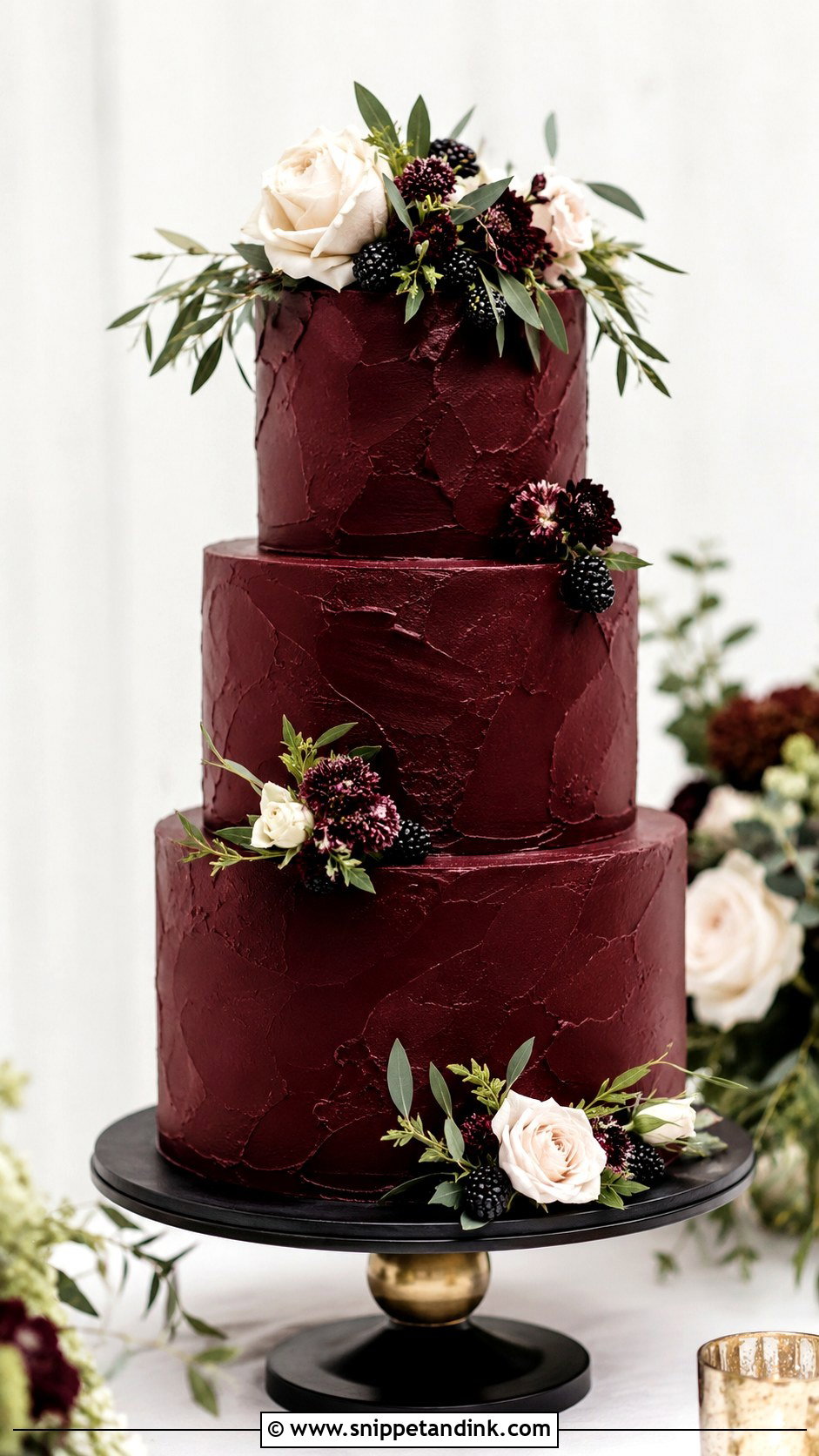
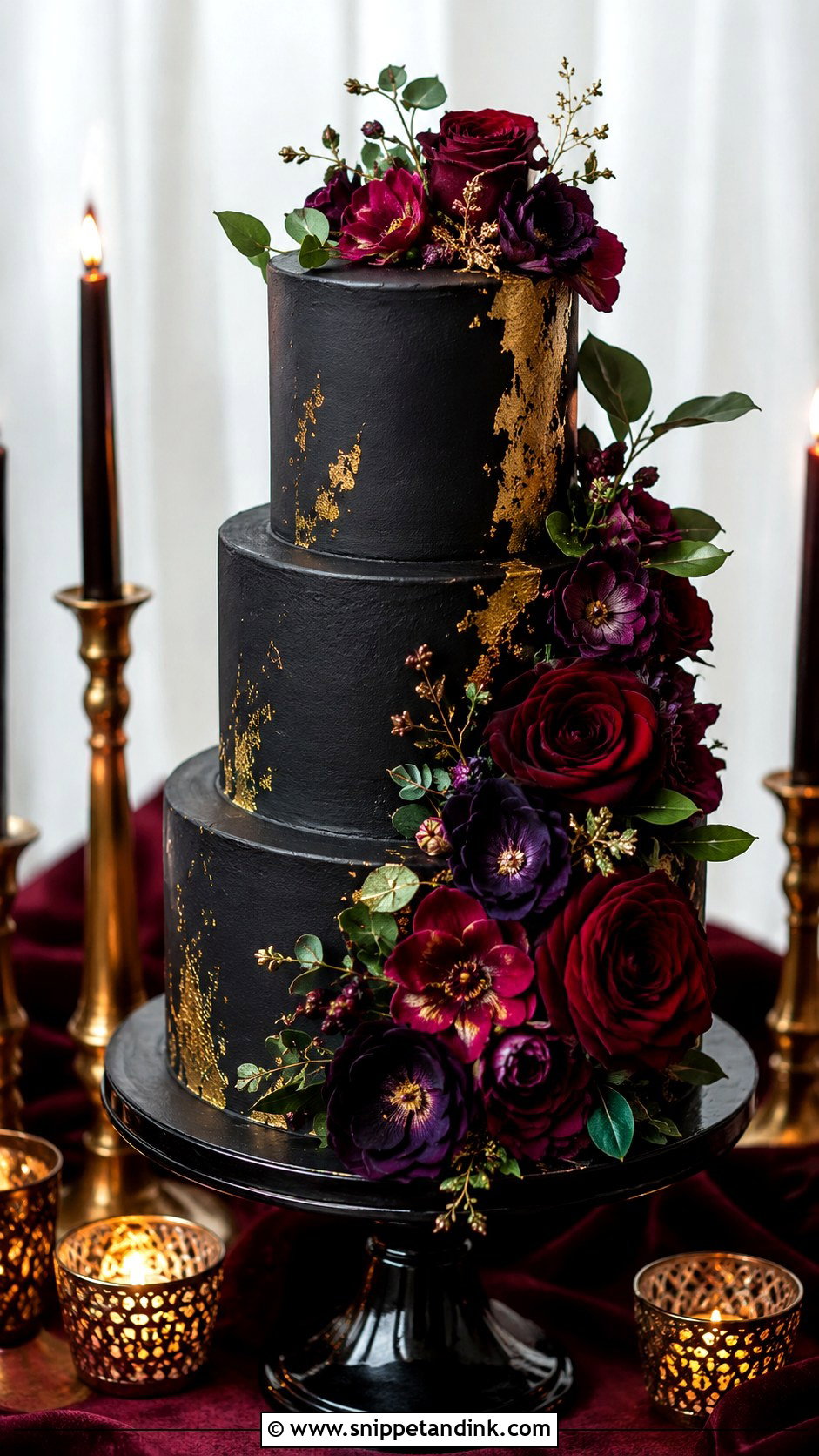
Black gives jewel tones something to glow against. I build black buttercream on a dark chocolate base, which needs far less coloring than starting from white and tastes noticeably better. Emerald leaves, burgundy roses, plum flowers and a few gold accents go on top. This style lives or dies on restraint: a smooth finish, balanced tiers and florals placed in one clean cascade. Crowd it and it turns into a Halloween cake. On a gold or black stand with candles nearby, it belongs at evening weddings and historic venues.
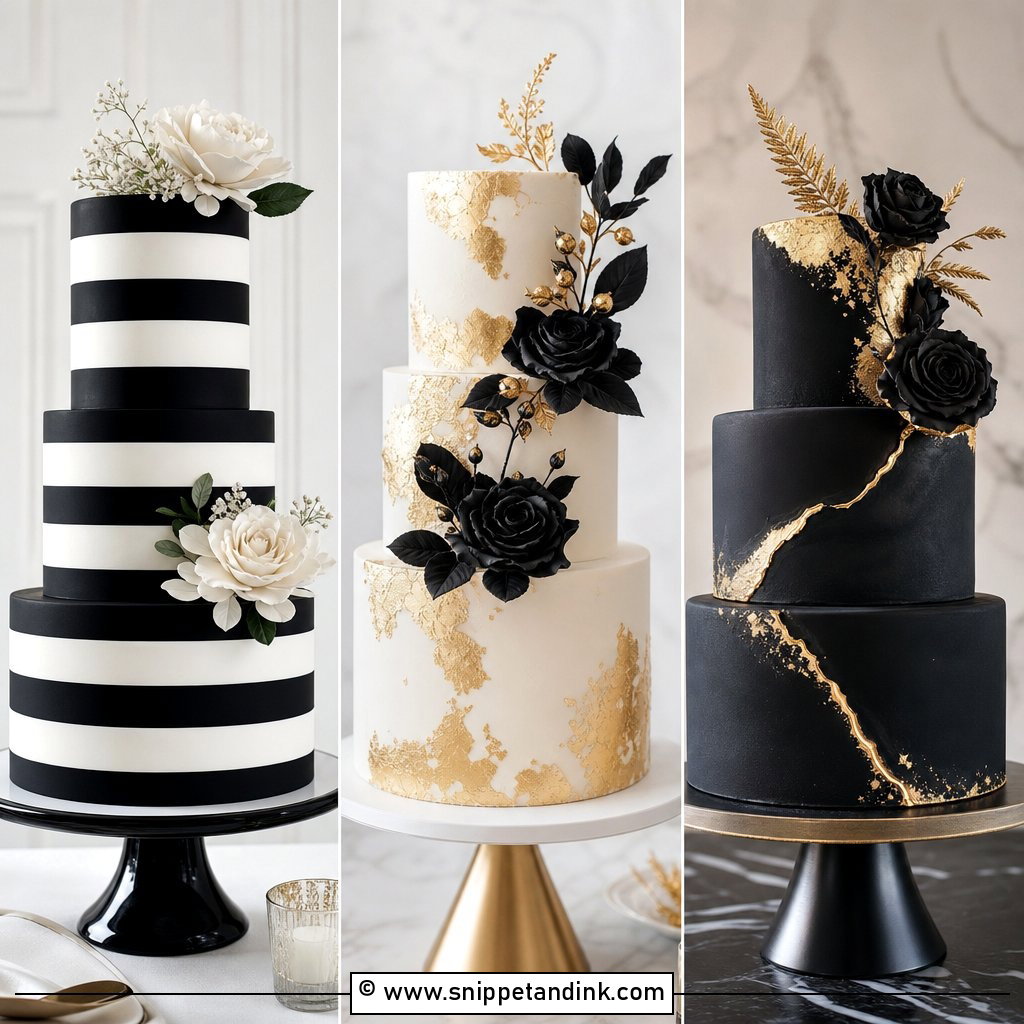
9. Gold Leaf Jewel Tone Wedding Cake
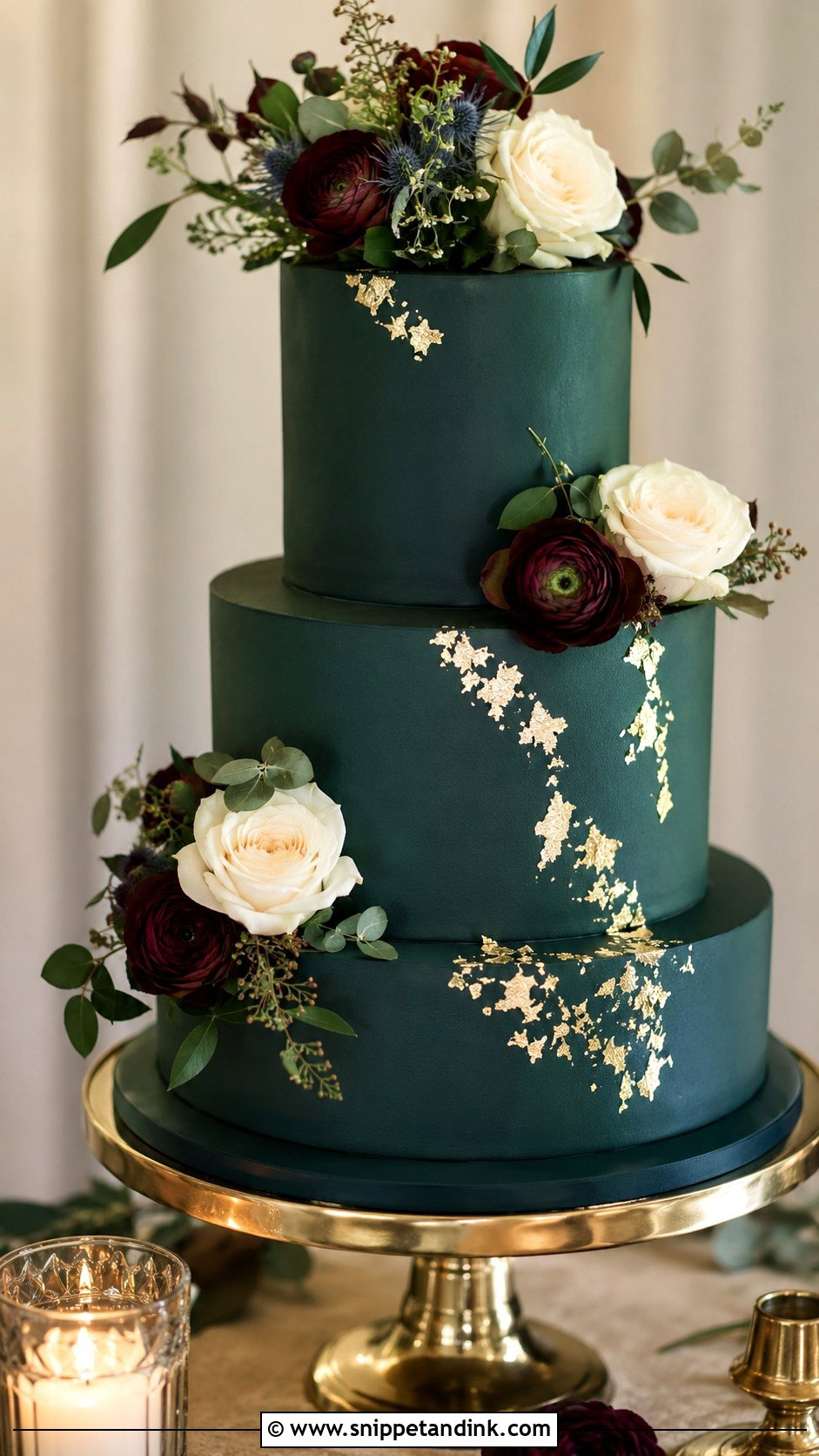
Gold leaf adds luxury without needing a complicated shape. It sits well against emerald, navy, burgundy, plum and sapphire frosting, either as small scattered flakes or larger torn sheets. Contrast is the whole trick: deep matte frosting with irregular gold looks expensive, while a shiny cake covered in accents looks busy. I lay leaf with tweezers and a soft dry brush, never fingers, since it clings to skin and tears instantly. Fresh flowers in a single jewel shade keep the design focused, and the metal catches soft light in photos, which is half its charm at a formal or ballroom reception.
10. Jewel Tone Floral Wedding Cake
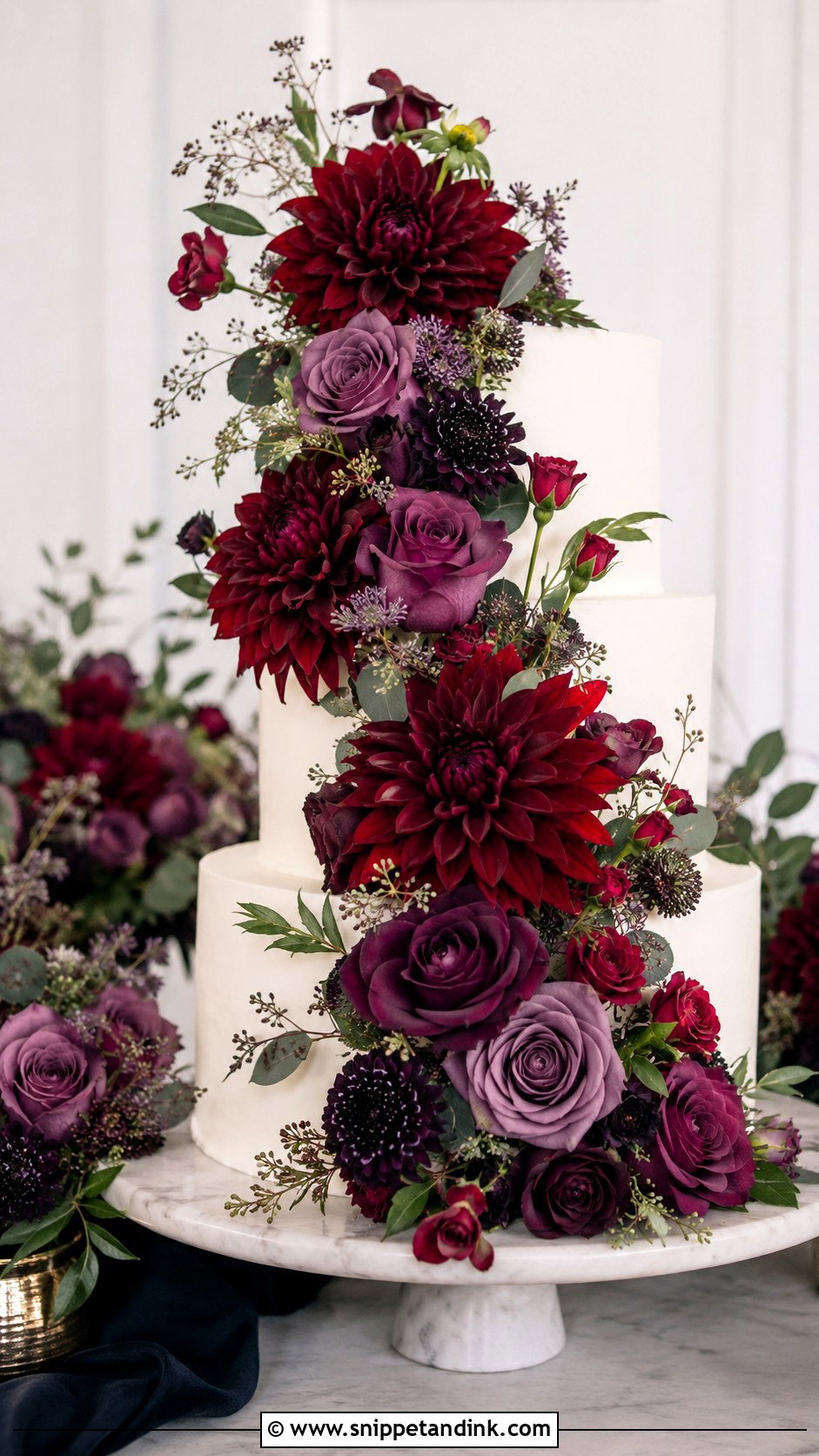
Sometimes the color should come from the flowers rather than the frosting. Start with an ivory, charcoal, emerald or navy cake and add burgundy, plum, ruby, deep pink and dark purple blooms. It’s the easiest version to match with bouquets and centerpieces, and I often coordinate it directly with the florist. Mix flower sizes so the cake has movement: large blooms anchor the design, smaller flowers and greenery fill the gaps. Every fresh stem is wrapped or set in a food-safe pick before it goes near the frosting, which stays simple so the flowers lead.
11. Jewel Tone Drip Wedding Cake
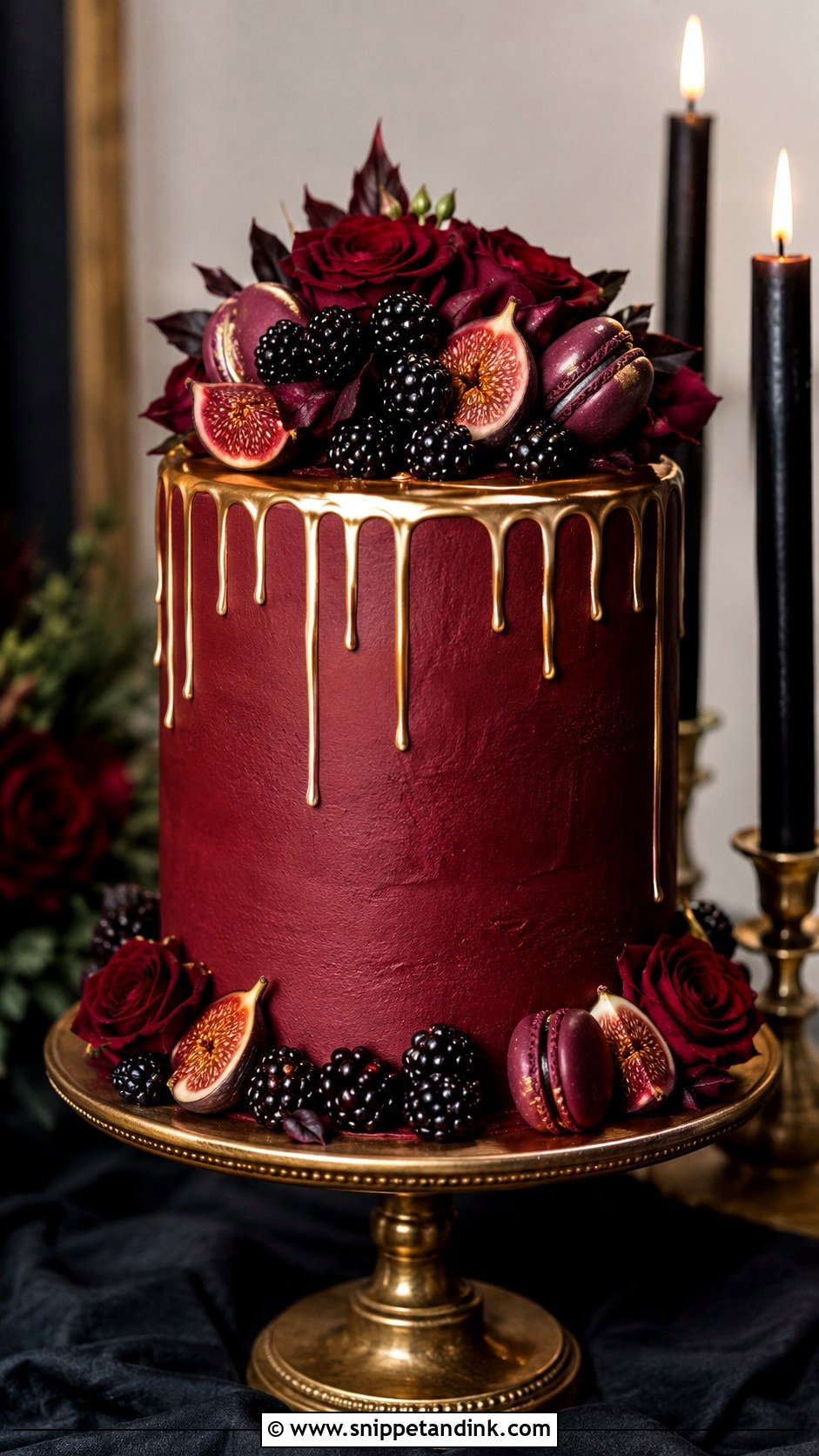
Drips feel modern and a little playful while still holding their own at a formal wedding. The drip can be gold, dark chocolate, berry or deep teal. A burgundy cake with gold drip feels warm and luxe; a navy cake with white chocolate drip feels crisp. Flowers, macarons, berries or figs around the top edge make it more romantic. A controlled drip comes down to temperature: the cake must be well chilled and the ganache only just warm enough to flow, or the drips run straight down to the board. It suits couples who want a less traditional centerpiece that still looks finished.
12. Jewel Tone Ombre Wedding Cake
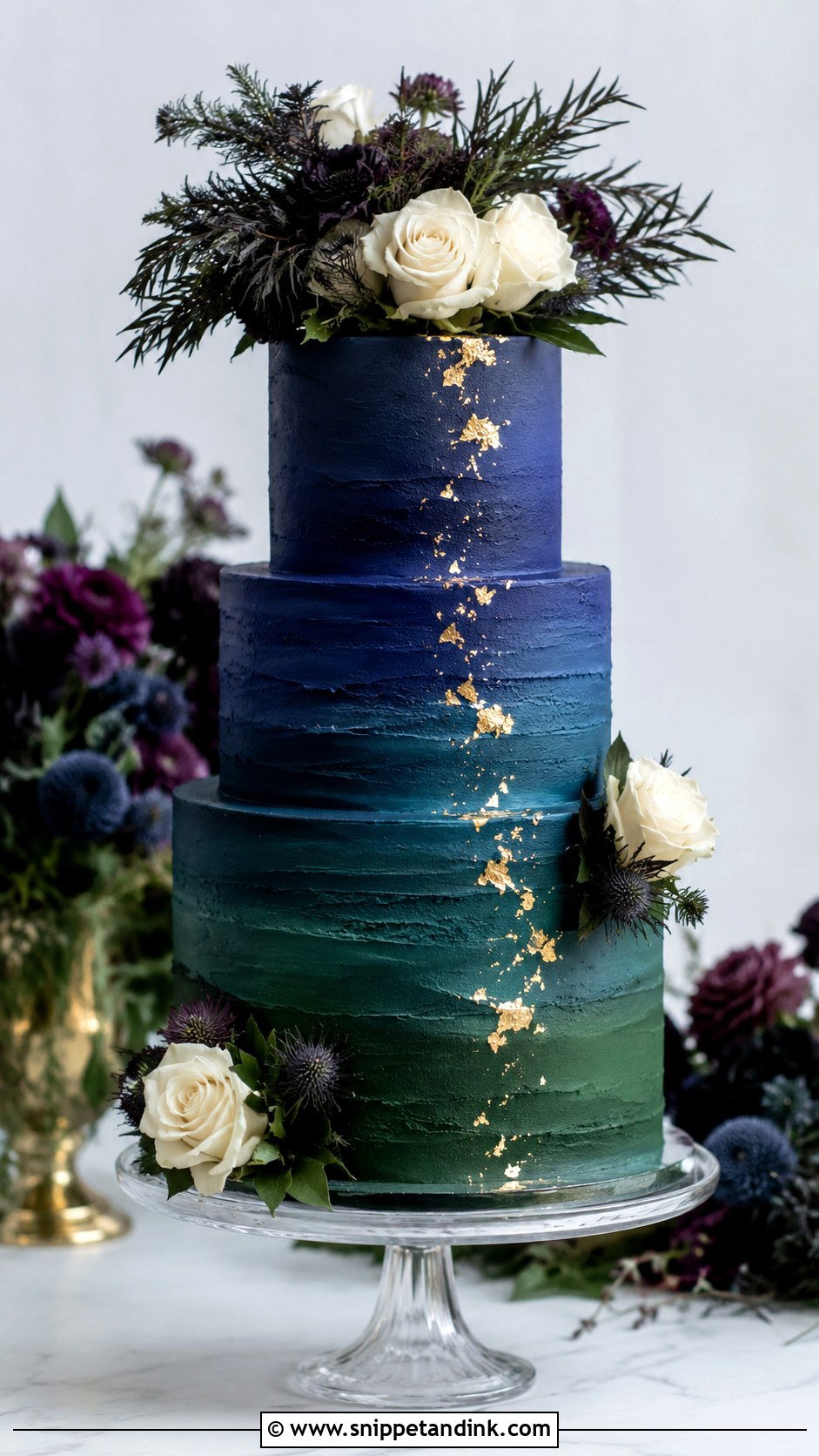
Ombre lets you use several colors without chaos. Black to navy, emerald to teal, burgundy to plum, amethyst to lavender: the blend gives a tall buttercream cake movement from top to bottom. Decoration stays minimal, a few flowers, some gold leaf or a textured edge. I mix every step of the gradient from the same base color, lightening it with white rather than starting fresh, so the shades genuinely relate to each other. If the bridesmaids wear mixed jewel tones, an ombre cake pulls that palette together on one table.
13. Jewel Tone Marble Wedding Cake
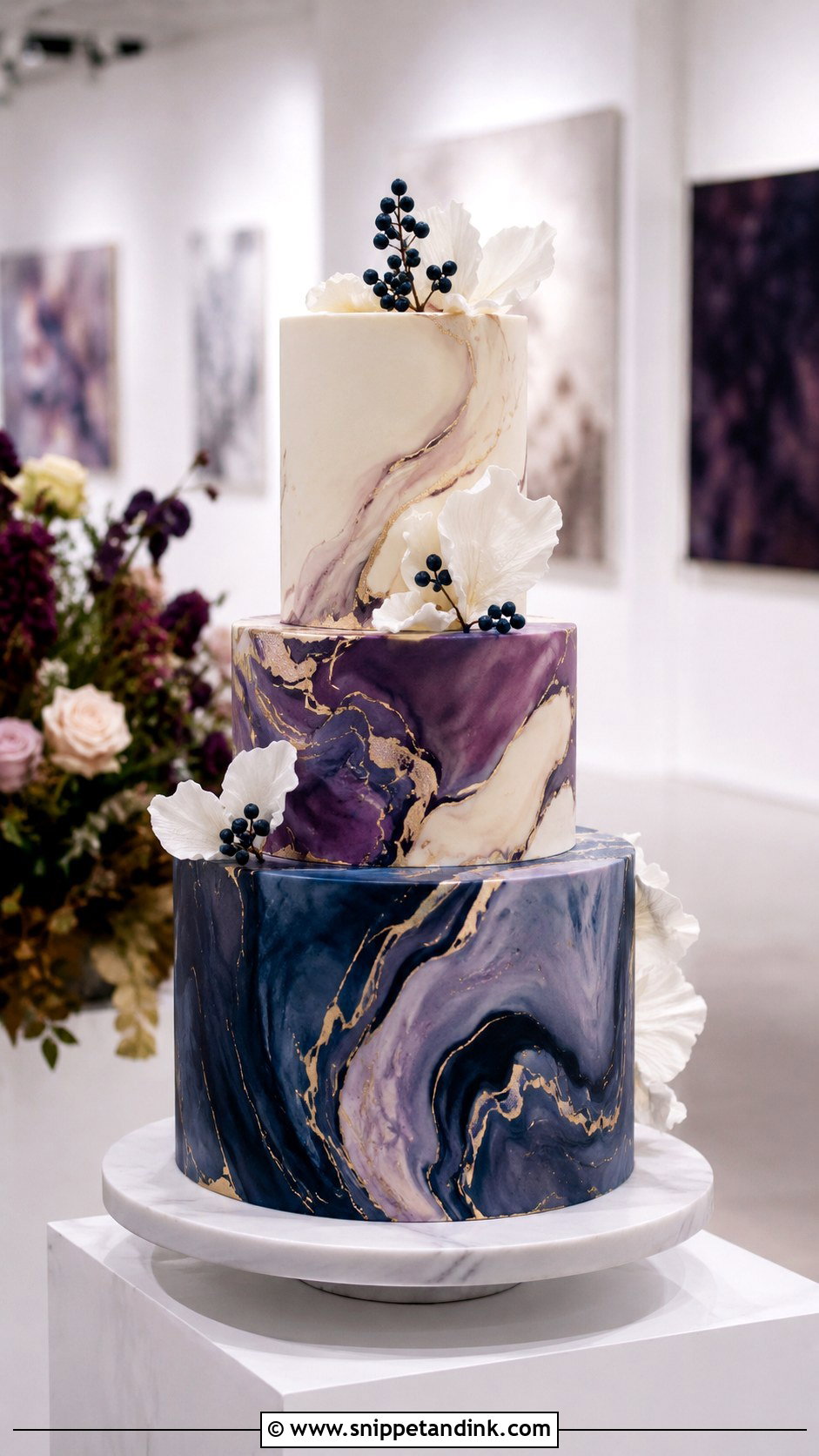
Marbled fondant can blend emerald, navy, plum, black, ivory and gold into something that reads like real stone. The veining should stay soft and the palette controlled: two main tones and one metallic at most. Every time marbled fondant is kneaded the colors blend further, so I fold it only a few times and roll it once; overwork it and you’re left with muddy gray. A three-tier design with one solid tier gives the eye somewhere to rest. Minimal flowers or sugar petals keep the marbling visible, which suits modern venues and gallery-style receptions.
14. Jewel Tone Geode Wedding Cake
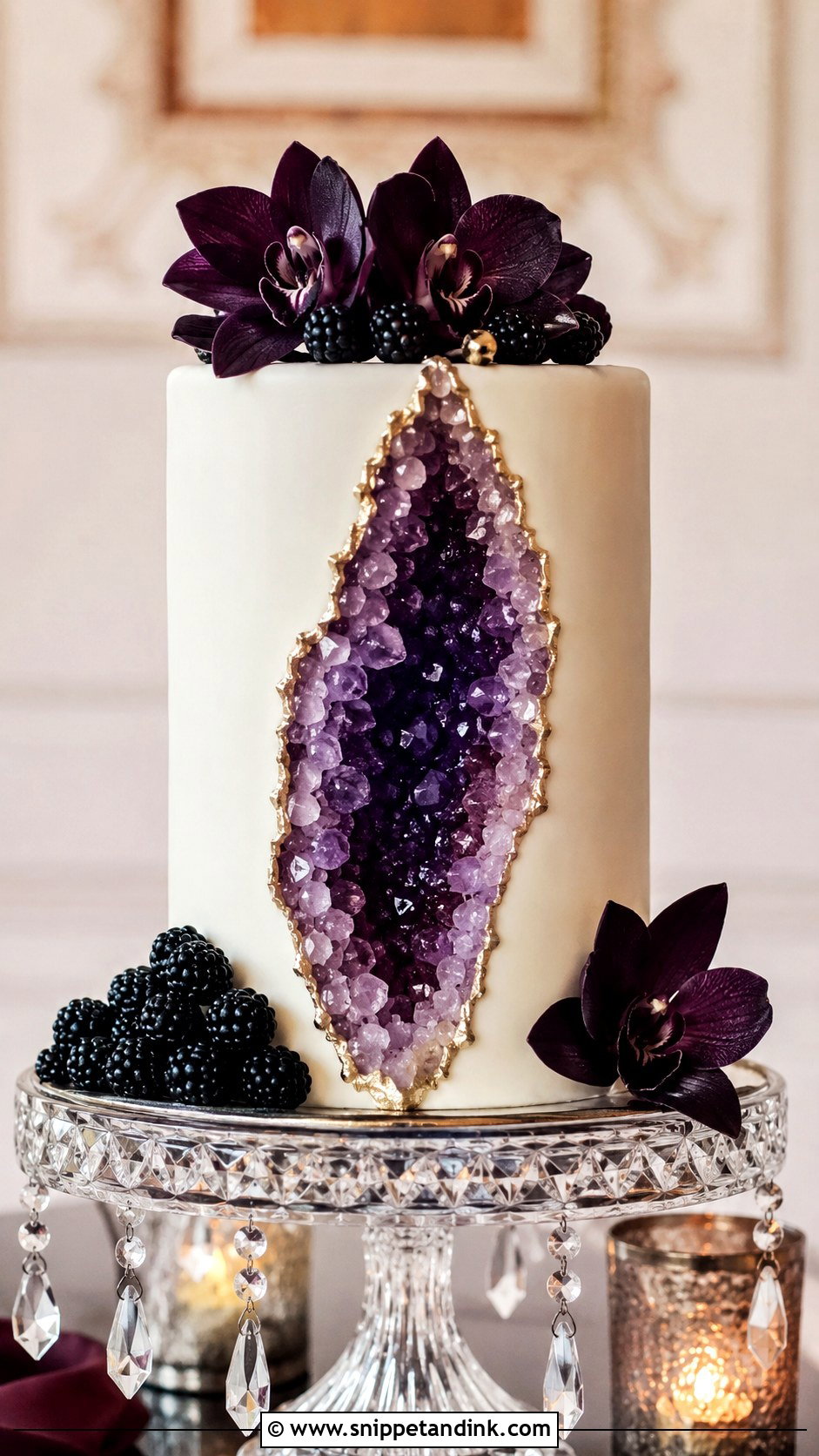
A jewel tone geode wedding cake carves gemstone texture straight into the tiers. Deep amethyst, sapphire, emerald or ruby crystals sit in a cut-out section, usually made from isomalt or rock sugar; isomalt stays clearer and copes better with humidity. I pair the geode with smooth white, black, navy or emerald frosting and paint its edge in gold to define it. Because it’s the centerpiece, the rest of the dessert table should stay simple. Modern weddings, moody ballroom receptions and celestial themes suit it. Ask your baker how the crystals are handled at serving time, since hard sugar isn’t something guests want to bite into.
15. Velvet Texture Wedding Cake
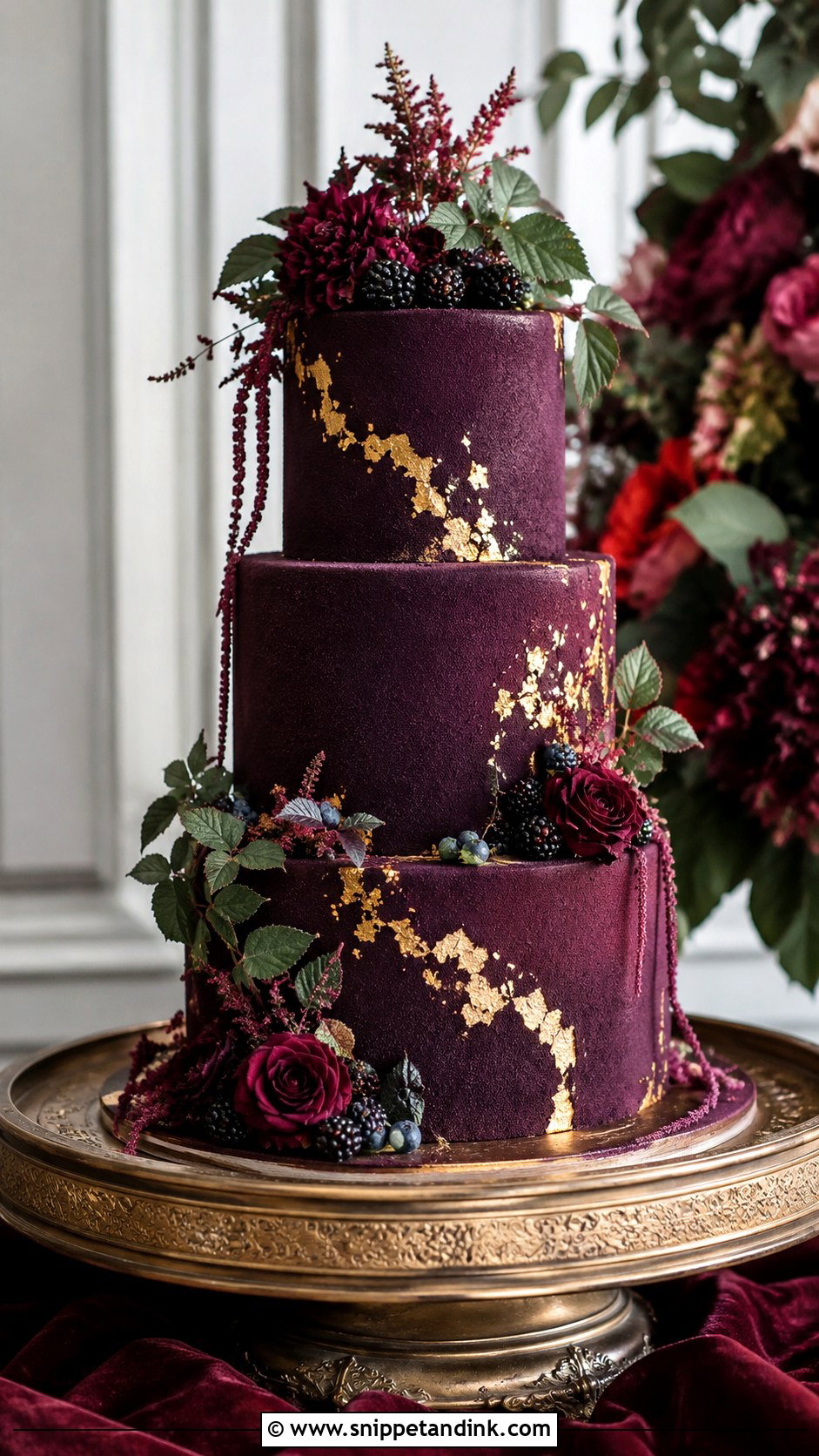
A velvet finish makes deep color look soft. Instead of a flat surface, the cake has a suede-like texture that catches light gently. It’s usually made by spraying a well-chilled cake with a mix of cocoa butter and chocolate, which sets into a fine matte fuzz the moment it hits the cold surface. Emerald, plum, burgundy and navy all look rich this way, with fresh flowers, gold accents or dark fruit. The texture adds depth even with very little decoration. It is fragile, though: fingers and box lids mark it, so I finish it as close to delivery as possible. Velvet linens, candlelit tables and elegant fall or winter receptions suit it.
16. Jewel Tone Watercolor Wedding Cake
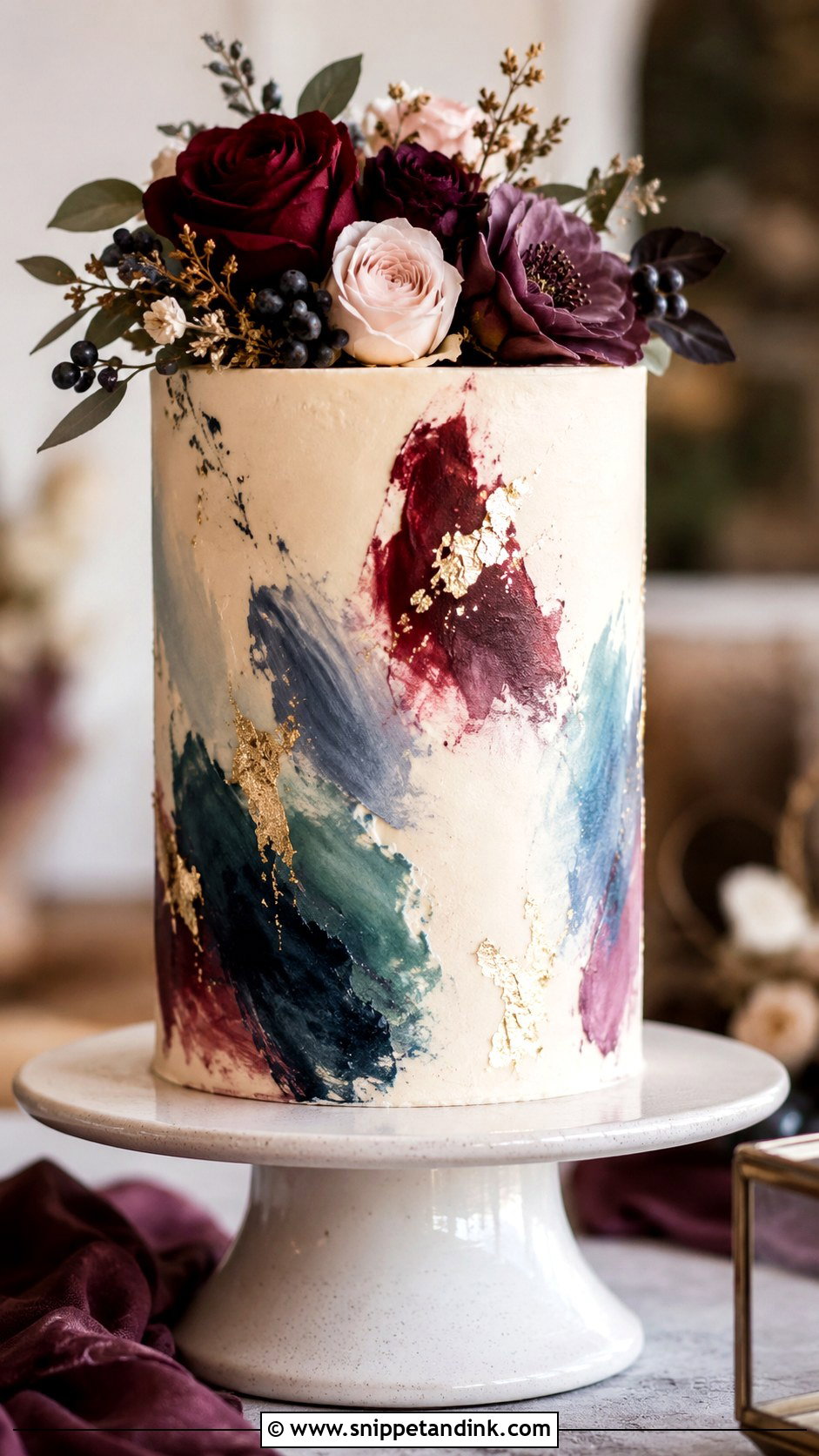
Washes of burgundy, teal, plum, navy or emerald brushed over white or ivory buttercream give you a moody palette without a fully dark cake. Gold leaf, delicate sugar flowers or a small floral cluster finish it. I build the wash in thin layers with a palette knife and stop before the colors overlap too much, because burgundy dragged over teal turns brown almost instantly. Garden venues, gallery weddings and couples who like an artistic hand suit it.
17. Dark Green Wedding Cake
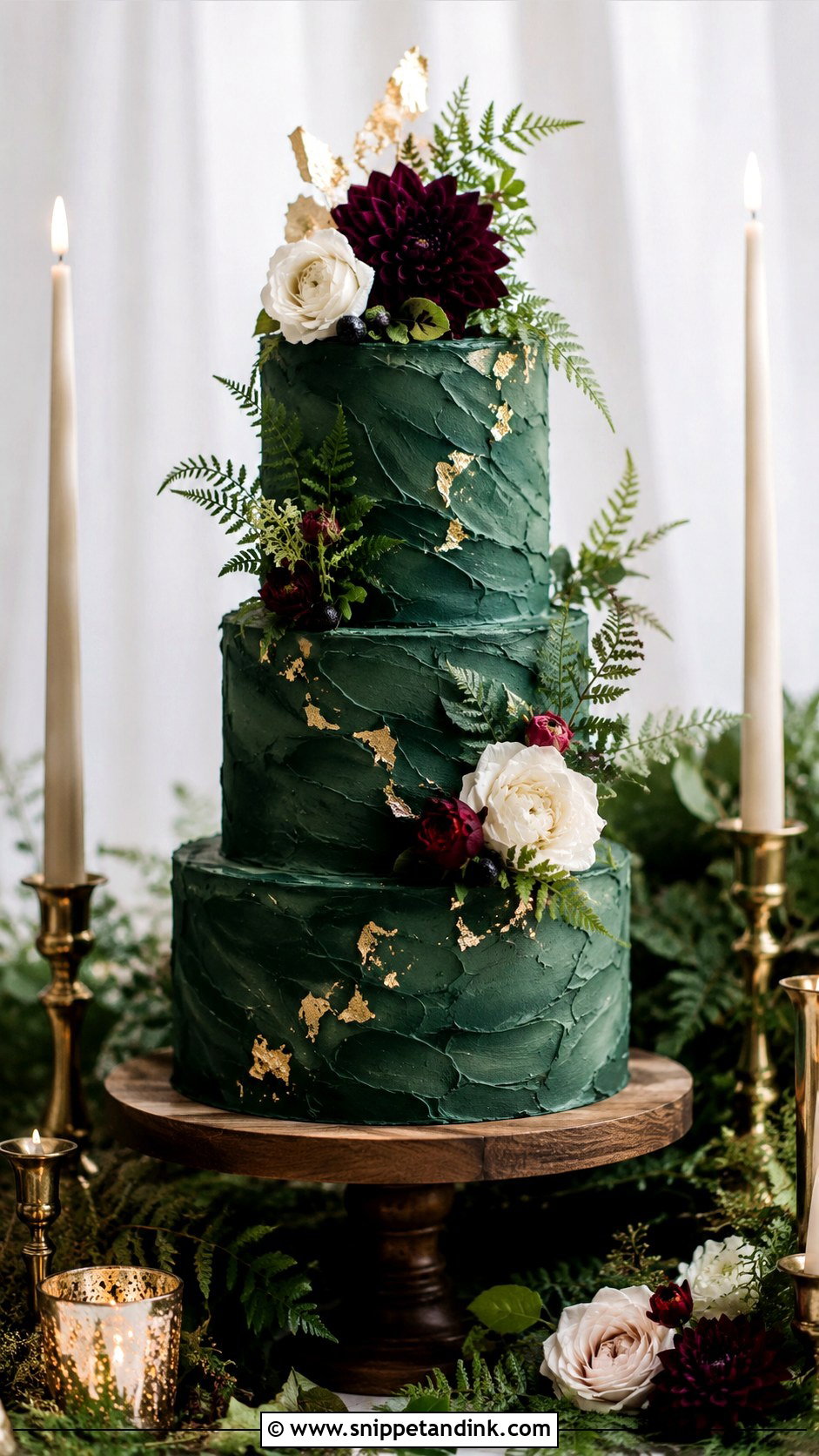
Dark green is softer than black and more grounded than emerald. Forest green buttercream sits comfortably beside ivory flowers, gold leaf and burgundy accents. Textured frosting with trailing greenery or fern-like sugar leaves looks organic; smooth fondant with clean tier lines looks formal. Because it pairs with wood, brass, marble and black details, it fits more wedding styles than most of the deep shades here. For botanical venues and fall garden receptions, it’s the green I’d steer a couple toward when emerald feels too bright.
18. Ruby Red Wedding Cake
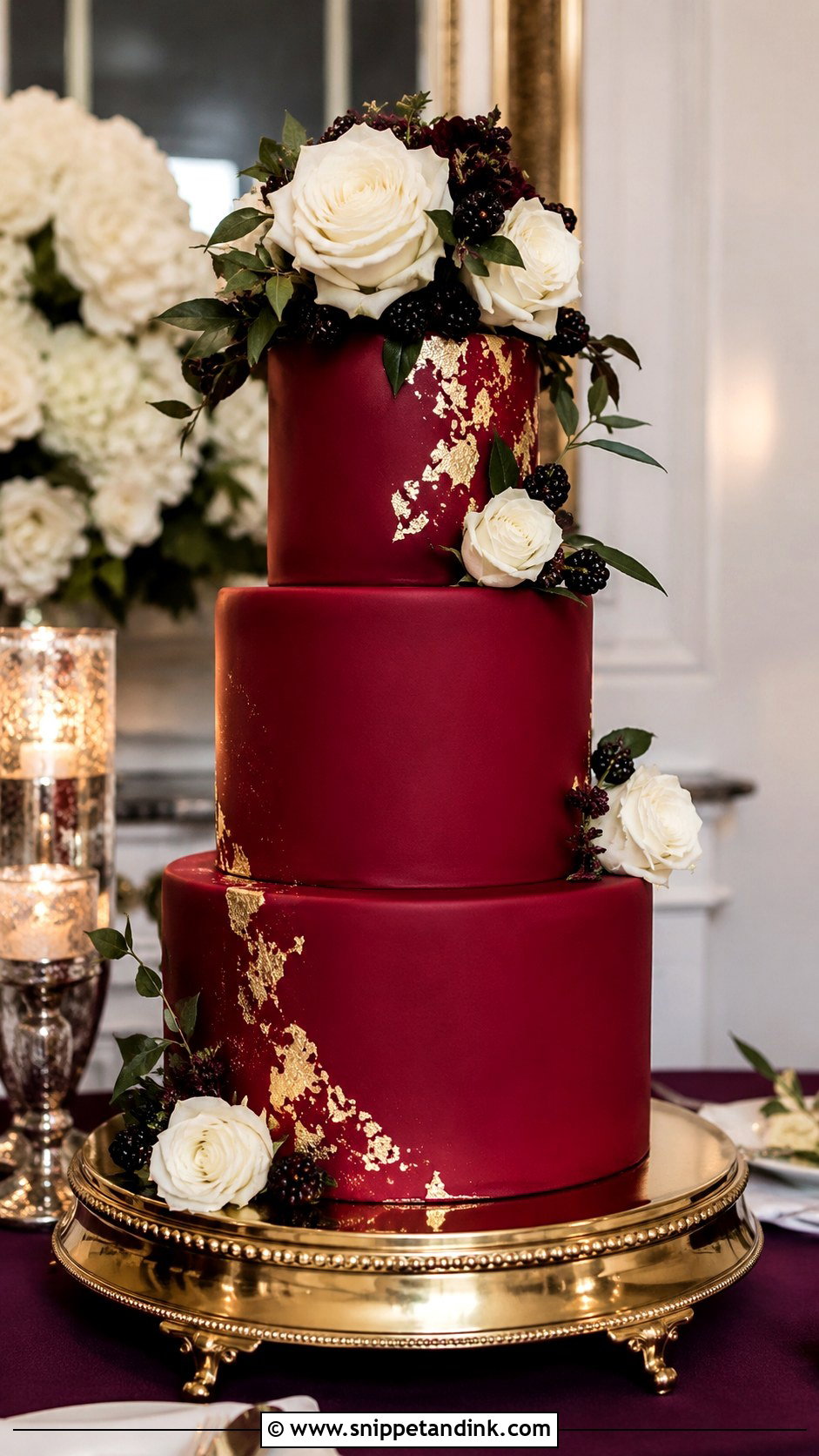
Ruby carries a cake with almost no decoration. The color has to be deep rather than bright, since a light red slides toward pink, and true reds take a lot of gel to reach. I use a concentrated red made to need less product and mix it the day before so it can darken on its own, instead of adding more on the morning. Smooth ruby buttercream or fondant goes with gold leaf, dark greenery, blackberries or ivory flowers. Add one charcoal or ivory tier for contrast, or keep every tier ruby and let the flowers add dimension. Formal receptions and candlelit venues suit it, especially with gold on the table.
19. Peacock Wedding Cake
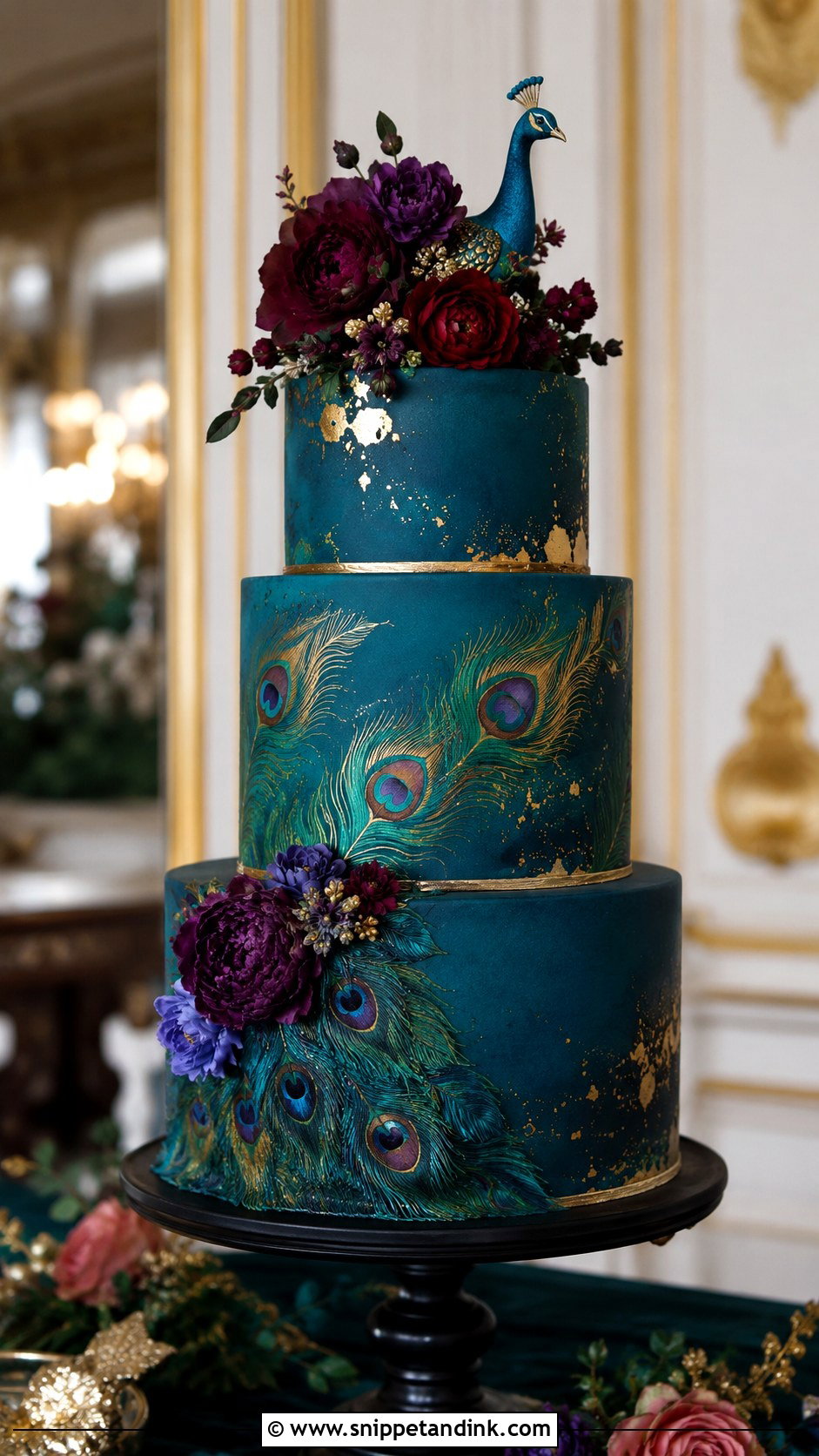
Peacock blends teal, emerald, sapphire, plum and gold instead of leaning on one color. The danger is costume, so I keep the base smooth teal or navy and add hand-painted feather details, metallic accents or a controlled floral cascade in matching shades. Real feathers are best left off: they aren’t food safe, and they push the design toward a theme party. A dark cake stand grounds all that color. Colorful ballroom weddings and cultural fusion celebrations are where it fits.
20. Jewel Tone Square Wedding Cake
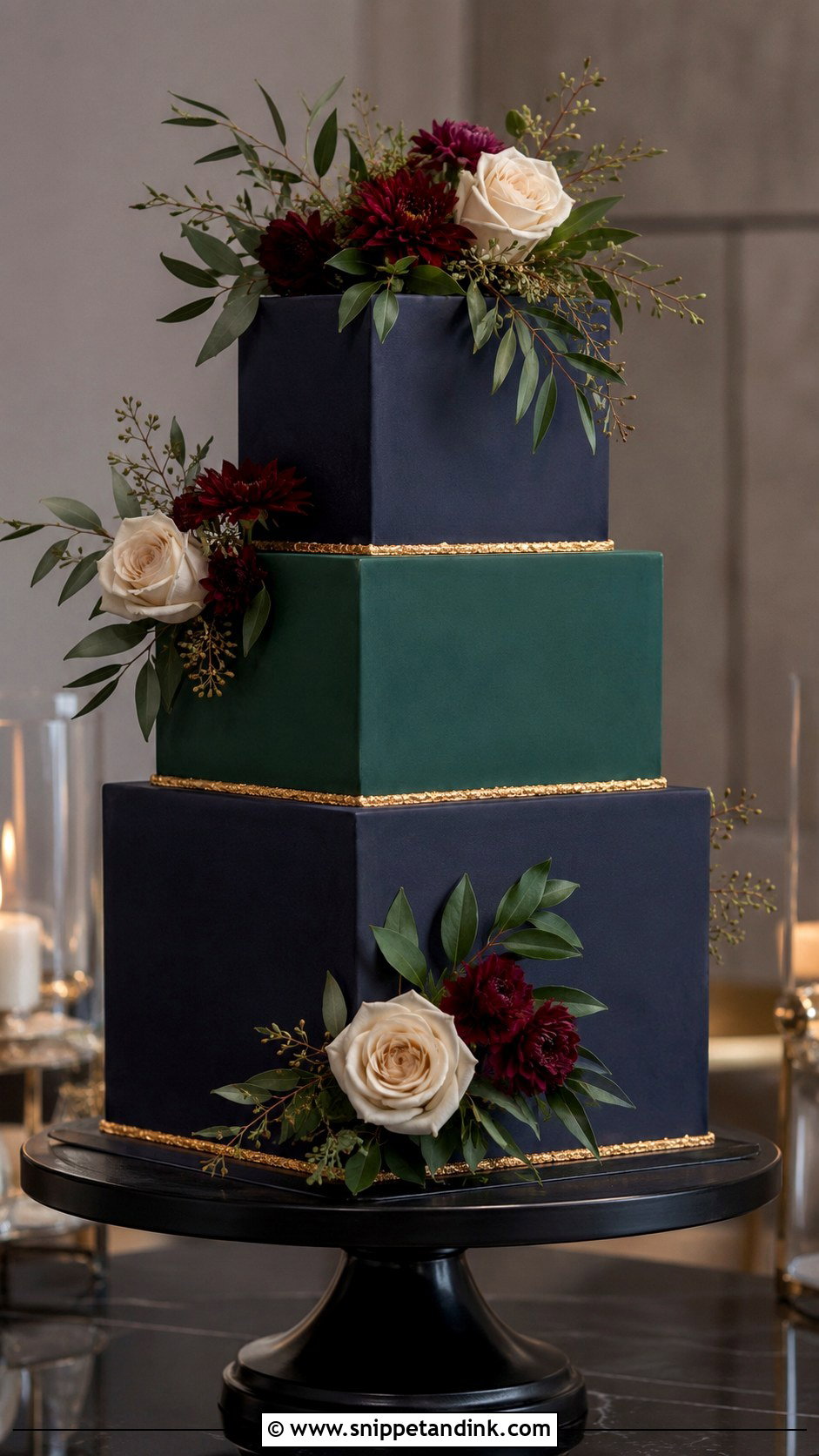
Square tiers make deep colors look deliberate. Navy, emerald, burgundy, black or plum with metallic trim or flowers at the corners gives you a cake that’s less traditional than round tiers but still formal. Sharp corners are the hardest finish in cake work, especially in buttercream, so expect a square design to take more hours than a round one of the same size. Alternating jewel tone tiers turn it into a bold centerpiece. Keep the lines crisp and the decoration balanced for a contemporary moody wedding.
Which Sparkle Is Edible and Which Comes Off Before Serving
Jewel tone cakes lean heavily on metallics and crystals, and not all of them belong in a slice. Here’s how I sort them.
- Genuine edible gold and silver leaf is safe to eat and passes through the body unchanged.
- Luster dusts are sold either as edible or as non-toxic. Non-toxic means decorative only, so anything finished with it is removed before cutting.
- Geode crystals in isomalt or rock sugar are edible but hard. I cut around them and set them aside rather than serving them inside a slice.
- Fresh flowers must be grown without pesticides and kept off the frosting with wrapped stems or food-safe picks. Some favorites, including lily of the valley, oleander and hydrangea, shouldn’t touch a cake at all.
Bring the Fabric Swatch, Not Just the Photo
Screens distort deep colors far more than pale ones, so a cake matched to a phone photo of the bridesmaid dresses rarely matches the fabric itself. I ask for a physical swatch, a length of ribbon or a sample bloom from the florist, and I check the mixed color under warm light as well as daylight, because most receptions are lit warm.
Give the design time, too. A cake built around a custom color, sugar flowers or a geode usually needs booking several months ahead, with a tasting and a color check along the way; sugar flowers alone take days to shape and dry. Then agree where the cake will stand: on a sturdy table, away from windows, heaters and the dance floor.
One Base Color, One Accent, One Texture
Every cake on this list works because it commits to one idea. Emerald, burgundy, navy, plum, teal, sapphire, ruby and amethyst all bring depth to a wedding table, especially with candlelight and warm metals, and they can lean modern, romantic, gothic, botanical or artistic depending on the finish and the flowers. The strongest designs I make have one clear base color, one accent shade and one finishing texture. Start from the cake you’re drawn to here, then adjust the tiers, florals and flavors with your baker until it fits your wedding.
You'll Like These Ideas:






Leave a Reply