
Eighteenth-century brides rarely married in white. They wore their best gown, which might be flowered silk, blue satin, silver brocade or a pink taffeta they would go on wearing for years. The shape kept shifting across the century too. Sack-back gowns over wide panniers ruled the Rococo decades, then fitted English gowns, looped-up polonaise skirts and soft muslin dresses took over toward the 1790s. When I dress a bride for a period wedding, the gown is only half the job; the shoes, jewelry, hair and especially the underpinnings decide whether it reads as Georgian or as fancy dress. Each of the twenty looks below is built that way, head to toe, for a historical ceremony, a museum venue or a period-themed celebration.
Why Your Stays Get Made Before the Gown Does
Every shape in this list depends on what is underneath it. An eighteenth-century bodice is cut over stays, the boned bodice of the period, which lift and smooth the torso into a cone and draw the shoulders back. If a gown is fitted over a modern bra, the bodice wrinkles and the neckline lands in the wrong place the moment real stays go on. So the order I work in never changes: stays first, then skirt supports, then petticoats, and only then the gown.
Match the support to the decade
- Wide panniers or side hoops belong under the formal French gowns, court dress and the big Rococo looks (items 1, 4, 5 and 11). Expect to think about doorways.
- Smaller pocket hoops give the moderate width you see on the floral silk, the pet-en-l’air and the silver-blue gown.
- A bum roll and layered petticoats suit the English gowns, the polonaise, the striped silk and the colonial looks of the 1770s and 1780s.
- One or two petticoats and nothing more sit under the round gown, the chemise and the high-waisted muslins of the 1790s.
Lead times vary a lot between makers, but made-to-measure stays usually need more than one fitting, and the gown cannot be fitted until they are finished. That is why I tell brides to start the conversation with a historical dressmaker many months ahead rather than a few weeks. Wear the same stays, shoes and supports to every fitting. Even a small change in heel height moves the hem of a petticoat that is meant to just clear the floor.
1. Ivory Robe À La Française Wedding Dress
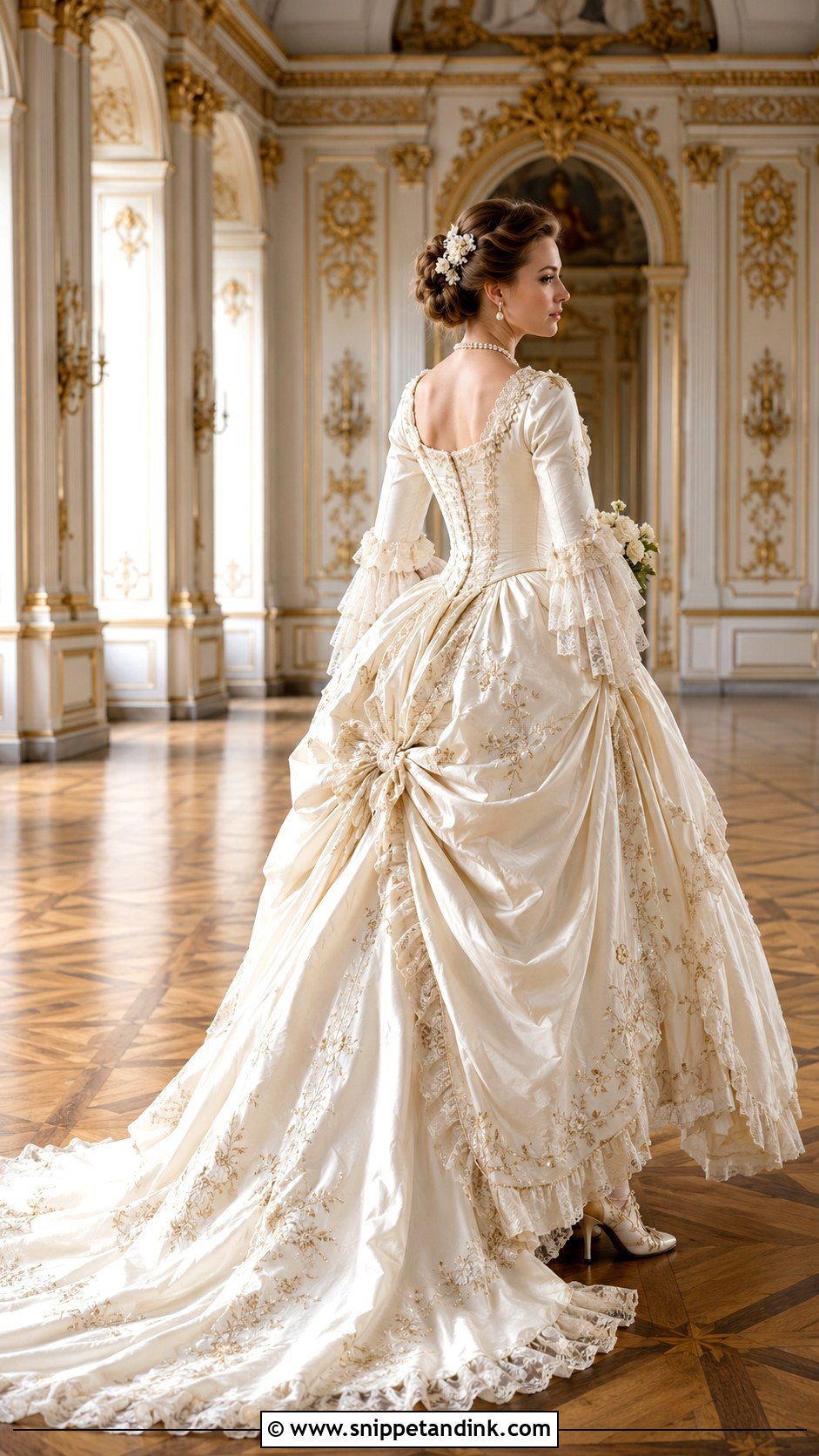
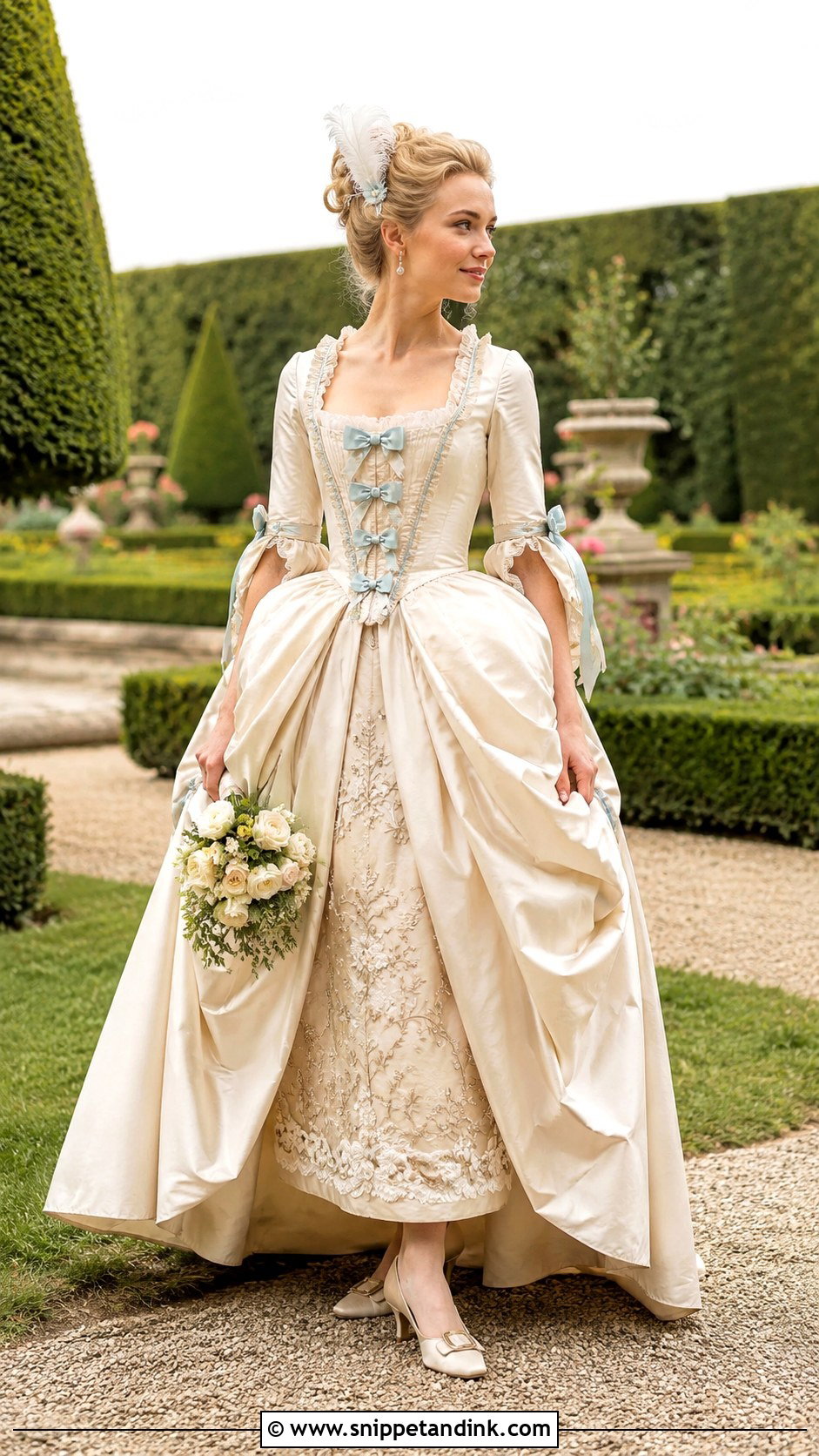
The ivory robe à la française is probably the most recognizable of all the Rococo bridal looks: an open-front bodice over a decorated stomacher, elbow sleeves, and box pleats falling loose from the shoulders into the train. Side panniers hold the petticoat out, and ivory silk keeps it bridal without tipping into modern. I keep the trim to silver embroidery, self-fabric ruching and lace sleeve ruffles, then add embroidered heels, a pearl choker, drop earrings and a small floral ornament. Those back pleats are the whole point of the gown. Skip the long veil, because anything lying over the shoulders flattens them and hides the one feature guests turn round to see.
2. Floral Silk Rococo Wedding Dress
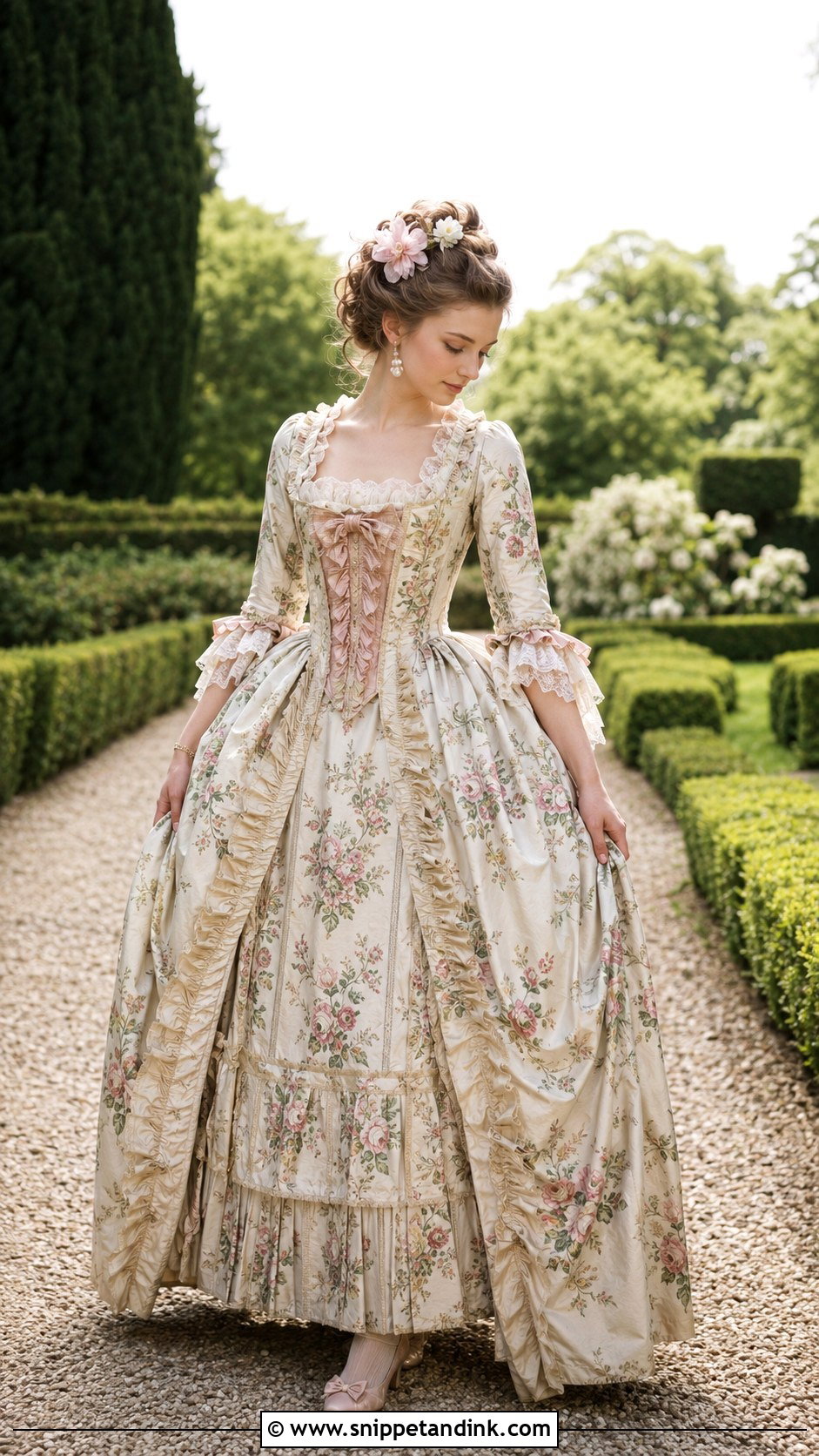
Mid-century silks were woven with flowers, and that patterned cloth was the luxury, so I let it do the talking. Look for a cream or blush silk with a woven floral and make the petticoat from the same length, so the pattern runs unbroken from bodice to hem. Serpentine bands of ruched fabric and a little narrow lace can frame the front edges, but a heavy hand with trim buries the very textile you paid for. Moderate panniers give width you can still walk in. Pastel silk shoes, pearl earrings, a folding fan and fresh flowers tucked into lightly powdered hair finish it, and a garden or a room with old plasterwork flatters the colors.
3. Blue Robe À La Anglaise Wedding Dress
The anglaise is the gown I suggest to brides who find the French back too theatrical. Instead of loose pleats, the back fabric is stitched down so it fits close all the way to the waist, then opens over a matching petticoat. Powder blue silk or a light taffeta, a pointed bodice, a square neck and elbow sleeves keep it recognizably period. Ivory lace at the neck and cuffs, a few bows or pearls on the stomacher, and a padded roll at the hips shape the skirt without real width. One fitting warning: that close back forgives nothing, so wear your final stays to every fitting or it will pull once you change them. Blue embroidered shoes, a pearl necklace, an ivory ribbon through the hair and a posy of white garden flowers pull it together.
4. Blush Pink Sack-Back Wedding Dress
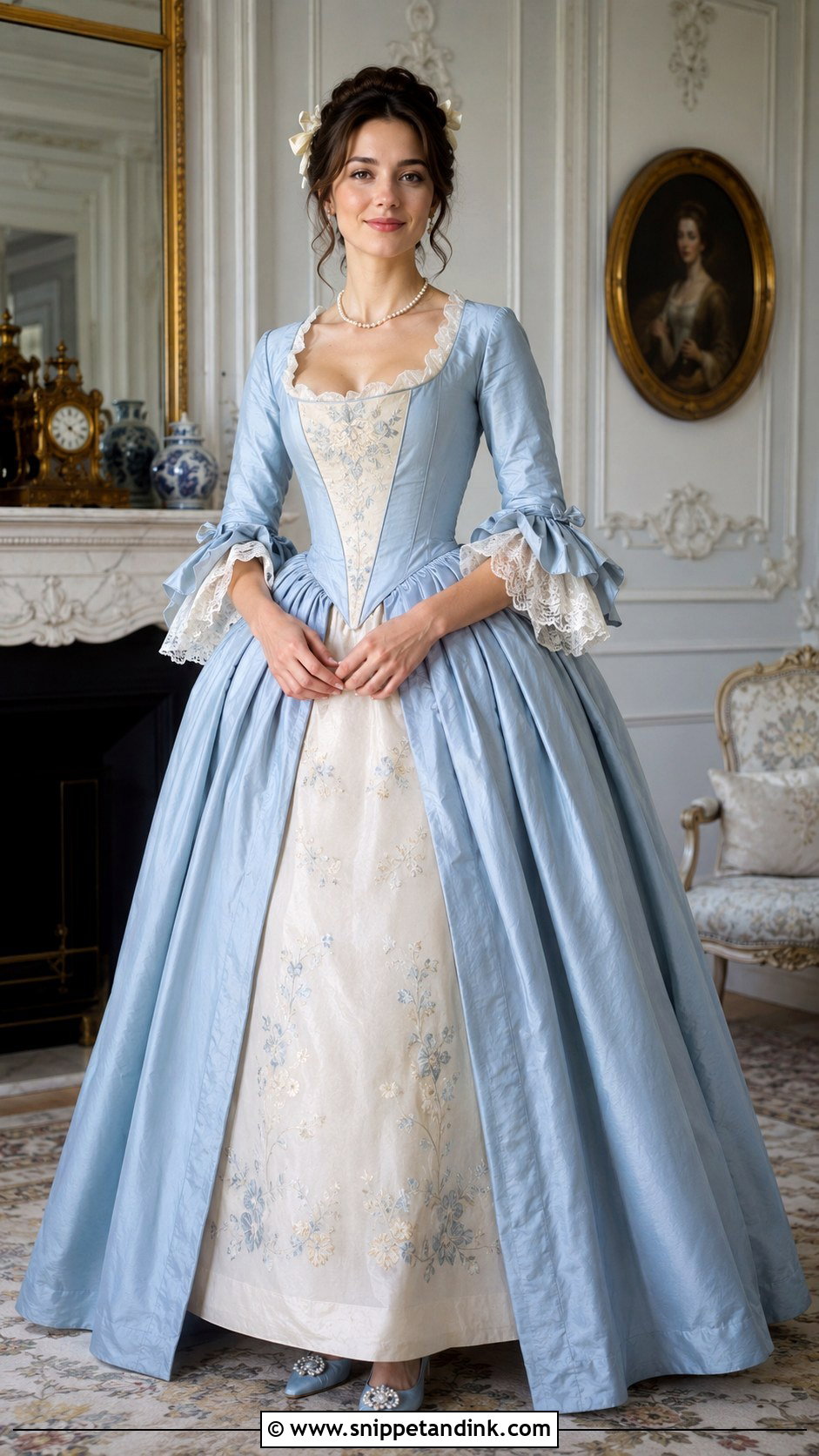
Watteau pleats are what make a sack-back, those loose folds that flow from the neckline down into the train, and blush pink softens the shape without taking away its drama. The front bodice is fitted, the skirt sits over panniers, and a matching pink petticoat keeps the color continuous. I put the ivory lace and pale ribbons at the neckline, sleeve flounces and center front, and leave the back plain, because trim on the pleats fights them. Pink silk heels, pearl drops and a floral headpiece set above a softly structured style finish it. For a modern reception, ask your maker for a hidden train loop. A sack-back train otherwise collects every crumb on the dance floor.
5. Silver Court Wedding Dress
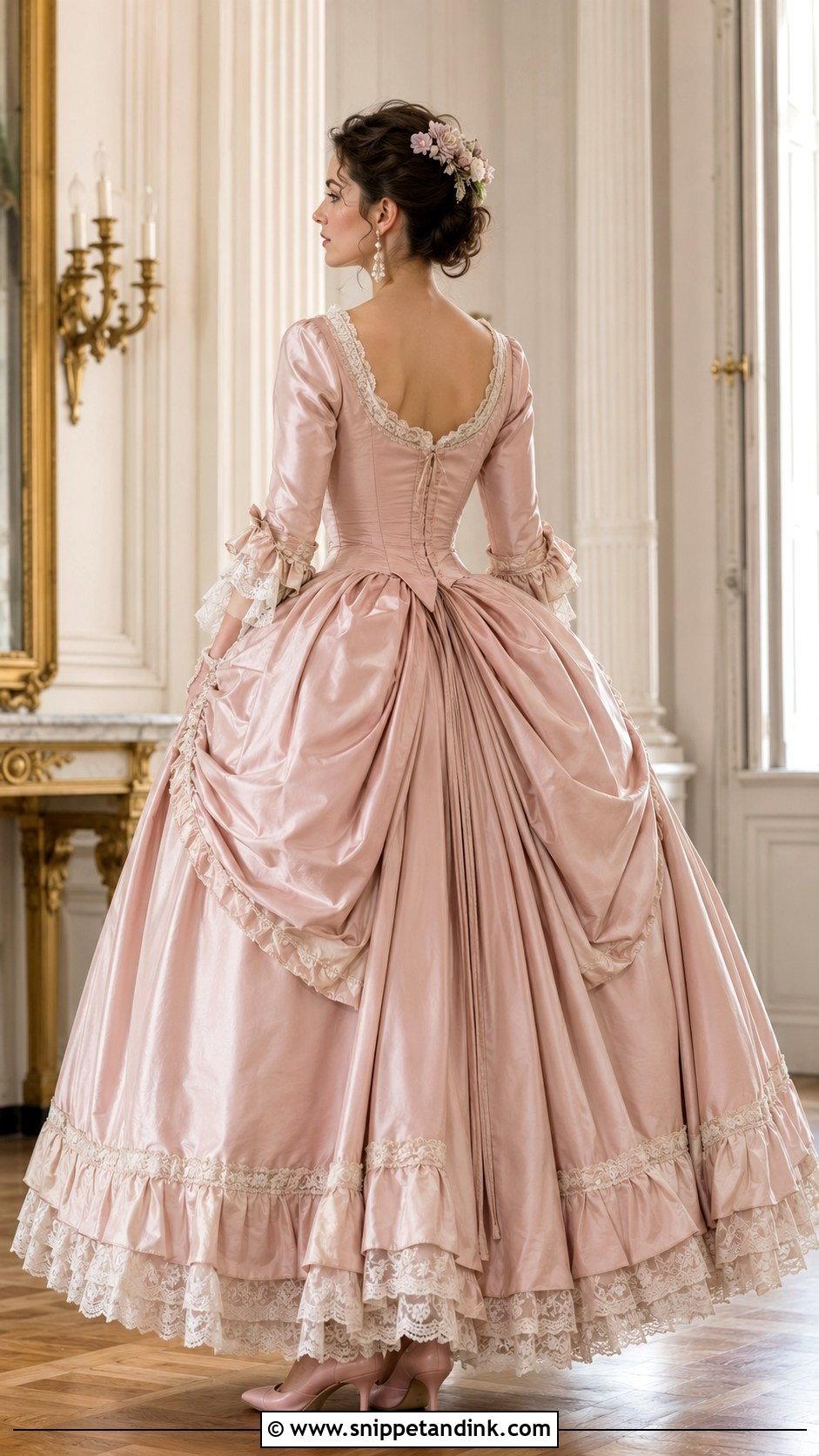
Court dress was the most formal thing an aristocratic bride could wear, and a silver gown is the closest modern echo of it. Silver silk, metallic brocade or ivory worked in silver thread will all do; the bodice must be boned and closely fitted, and broad panniers give the ceremonial width. The stomacher can carry scrolling embroidery, metallic braid and pearls, and the petticoat needs an equal finish because it shows at the front opening. I keep the headpiece small, a slim tiara or a silver floral ornament set into the hair, since a heavy crown on top of all that metal turns it into pantomime. Plain ivory lace calms the shine. Real metal thread is heavy and tarnishes, which is why many makers now embroider with a non-tarnishing metallic instead.
6. Champagne Silk Mantua Wedding Dress
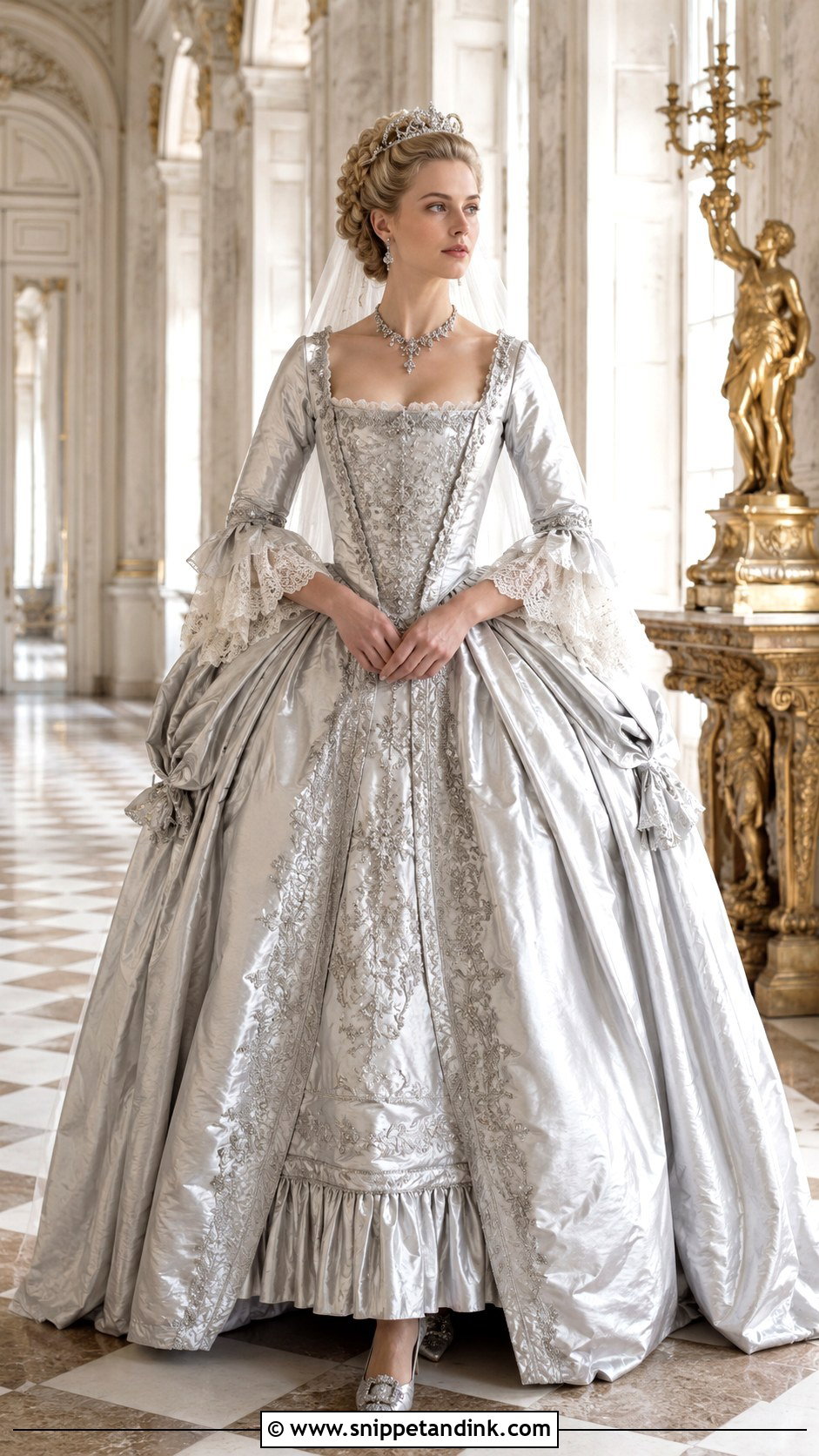
Champagne silk warms the mantua, a gown whose overskirt was folded and pleated up at the back into an elaborate train. Pair a structured bodice, a low square neck and fitted elbow sleeves with a full overskirt over an ivory or pale gold petticoat. That folded back gives you a strong processional silhouette, so I’d save this one for a long aisle where people actually see it leave. Narrow metallic trim along the neck and skirt edges is plenty. Lace sleeve ruffles, gold-toned heels, pearl earrings and a small embroidered bag finish it, with the hair lifted off the face and a few ivory flowers. I reach for champagne when a bride looks washed out in bright ivory; the warmth is kinder to most skin in a bright ballroom or a garden.
7. Ivory Robe À La Polonaise Wedding Dress
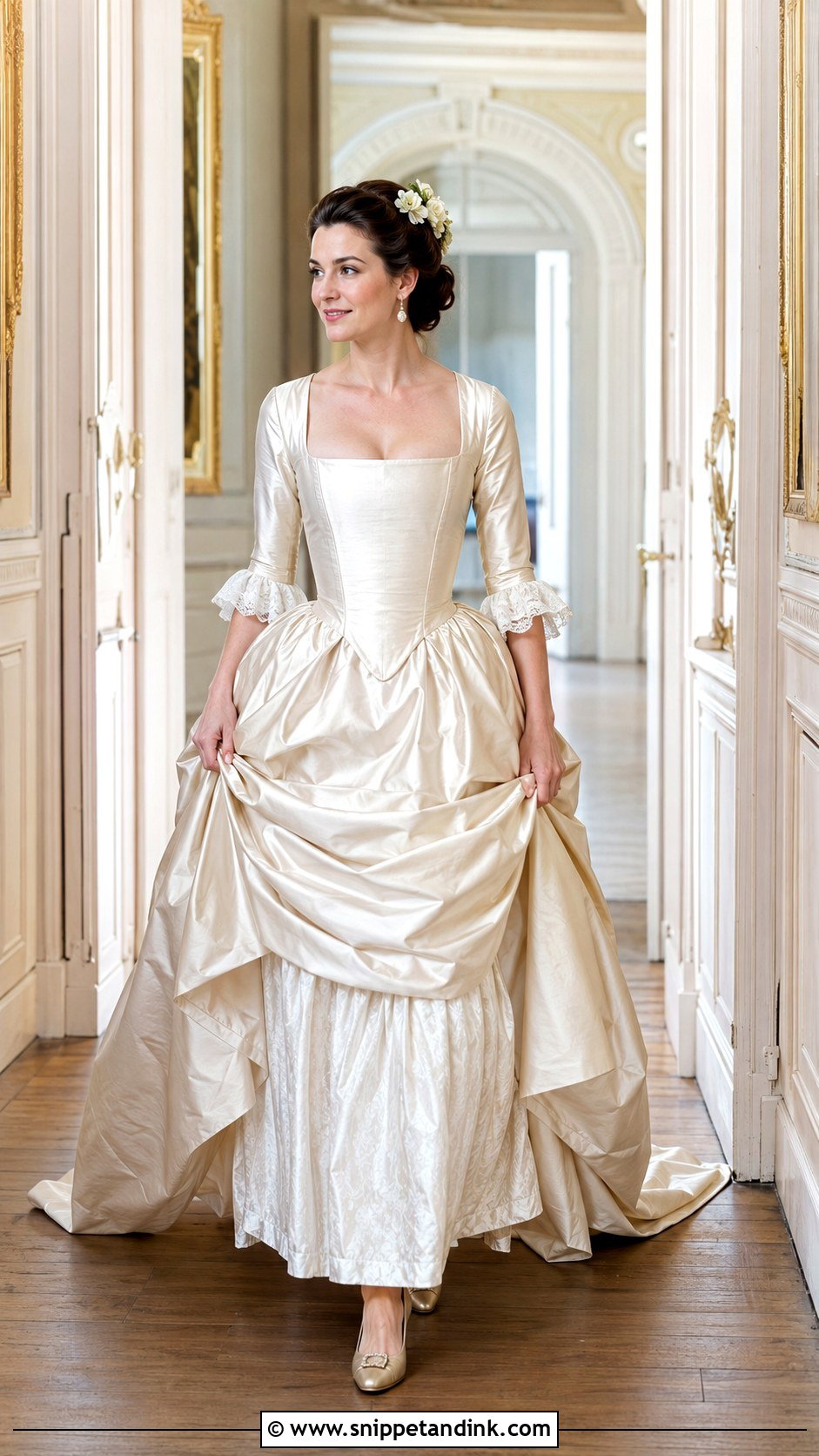
An ivory robe à la polonaise brings movement to a late-century bridal outfit. The overskirt is drawn up into three rounded puffs, usually with cords or loops inside the skirt, so the petticoat and shoes show beneath. Silk taffeta is the fabric I’d choose, because it holds a puff without bulk where a heavy satin simply sags. A fitted bodice, elbow sleeves and a softly pointed waist balance the draped back, and pale blue ribbons or small floral embroidery can add color at the neckline and petticoat hem. With the skirt raised, your shoes are on show all day: buckled ivory heels, then a ribbon choker, pearl earrings and a small feather or flower in the hair. Hide any modern slip completely. A hem peeking out under a looped skirt ruins the illusion faster than anything else.
8. White Round Gown Wedding Dress
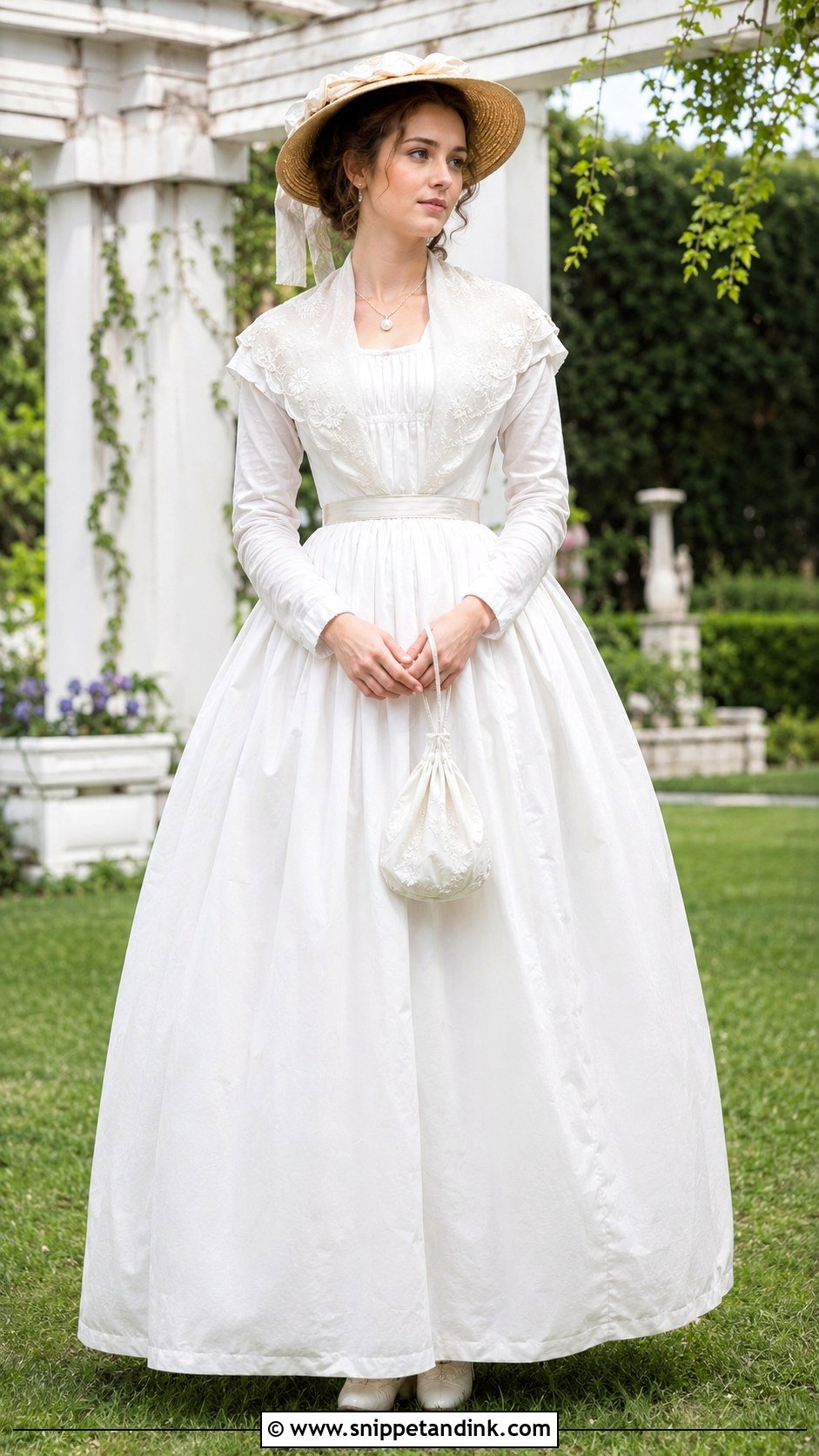
If wide skirts aren’t for you, the round gown is the gentlest way into late-Georgian dress. Its skirt closes all the way round instead of opening over a petticoat, so the silhouette reads softer and less ceremonial. White silk, fine cotton or a light linen with a fitted bodice and a gathered skirt is all it needs, plus a narrow sash, elbow sleeves and a modest neckline. An embroidered fichu tucked into the bodice adds coverage and texture, and it is also the easiest piece to adjust on the morning if the neckline feels lower than it did at the fitting. Low heels, a pearl pendant, a drawstring reticule, soft curls and a delicate cap or ribboned straw hat suit an outdoor wedding or a small historic house.
9. Striped Silk English Wedding Dress
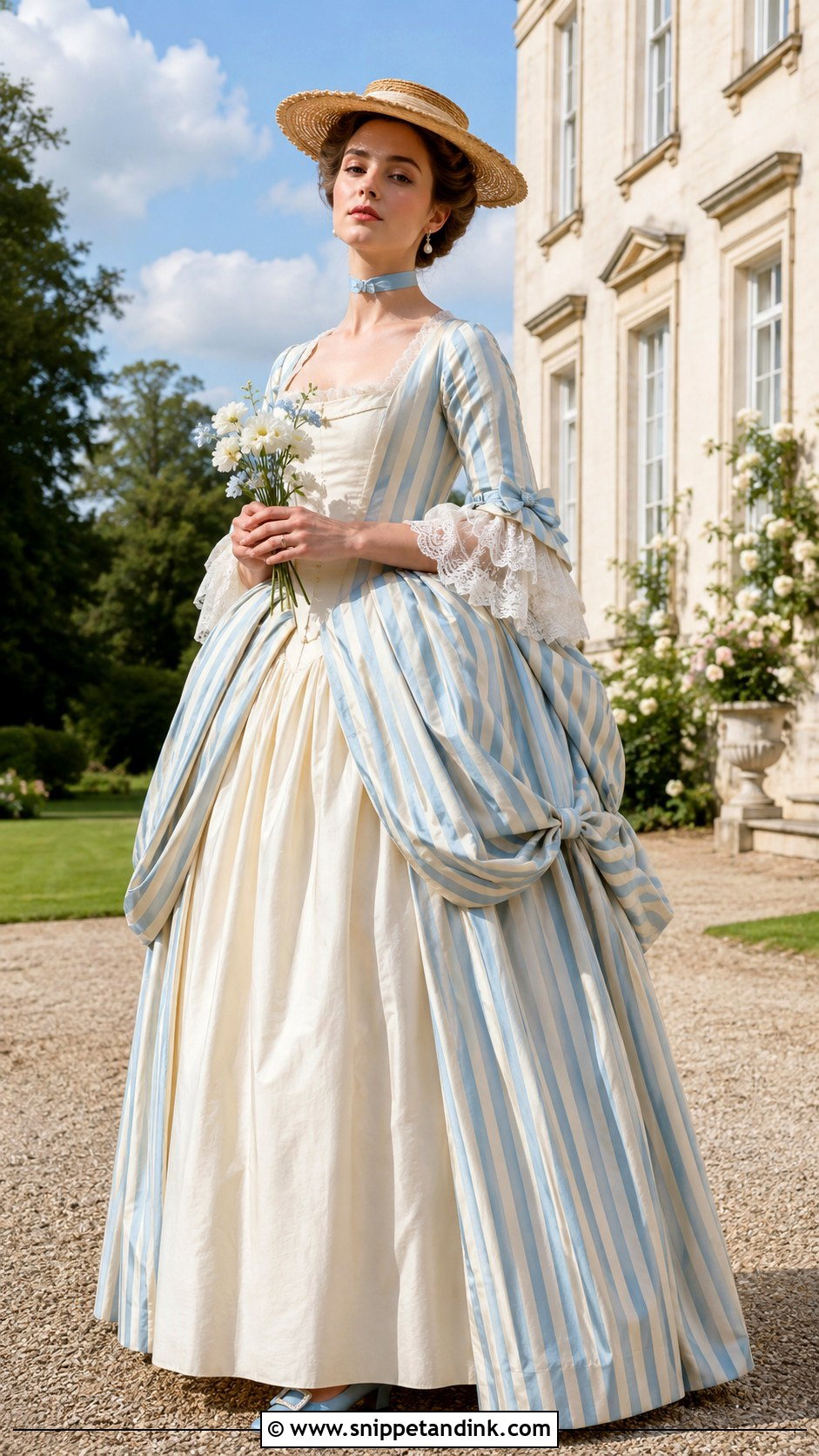
Striped silk is decoration in itself, so an English gown made from it barely needs trim. Narrow ivory-and-blue or ivory-and-sage stripes are what I’d look for. The cutting is where these succeed or fail: the stripes have to meet cleanly at the center back and run straight down the skirt, and matching them eats fabric, so order extra yardage. Wear it open over a solid ivory petticoat or the stripes start to buzz. A pointed stomacher, gathered cuffs and a pleated neckline give it quiet structure. Solid silk shoes, pearl studs, a ribbon choker and a flat-crowned straw hat with matching ribbon can stand in for a veil at a country wedding.
10. Pale Green Pastoral Wedding Dress
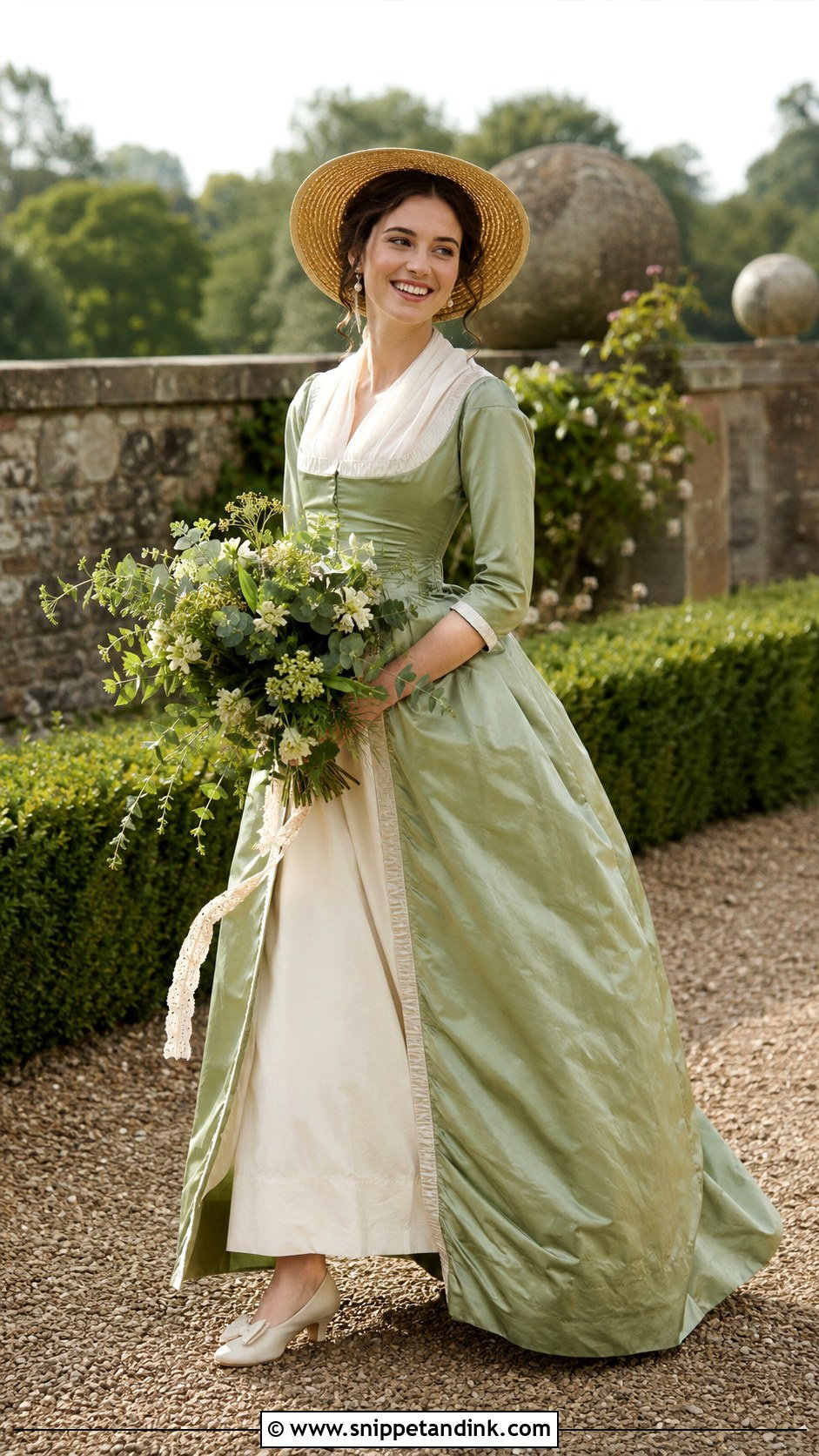
Sage or celadon silk sits naturally against hedges and spring planting, which is why I keep this gown for gardens. Cut it as a fitted robe à l’anglaise over an ivory petticoat with a light muslin fichu. Keep the skirt moderate rather than wide; grass and gravel paths are hard work in panniers. Tiny floral embroidery or a few cream ribbons at the neckline is enough. Low ivory heels, pearl earrings, a ribbon-tied bouquet and a wide straw hat dressed with greenery finish it, with soft curls or a low gathered style underneath. Before you commit to a pale green, look at the swatch outdoors at midday. Some of these shades turn grey or slightly yellow in daylight, and you want to know that before the fabric is cut.
11. Gold Brocade French Wedding Dress
Gold brocade on an ivory ground makes the French gown ceremonial with no help at all. The robe à la française cut keeps the fabric in front of everyone, especially across the back pleats and the wide skirt, so I pair it with a plain champagne petticoat embroidered only near the hem. A stomacher worked with gold braid and small pearls links the two cloths. Metallic silk shoes, pearl drops, an antique-style necklace and powdered curls with moderate height complete it. Then stop adding gold. The brocade already throws plenty of light, and a second gilt necklace or headpiece just makes the whole outfit look busy in photographs. Ivory lace at the sleeves and neckline softens the effect.
12. Lavender Pet-En-L’Air Wedding Dress
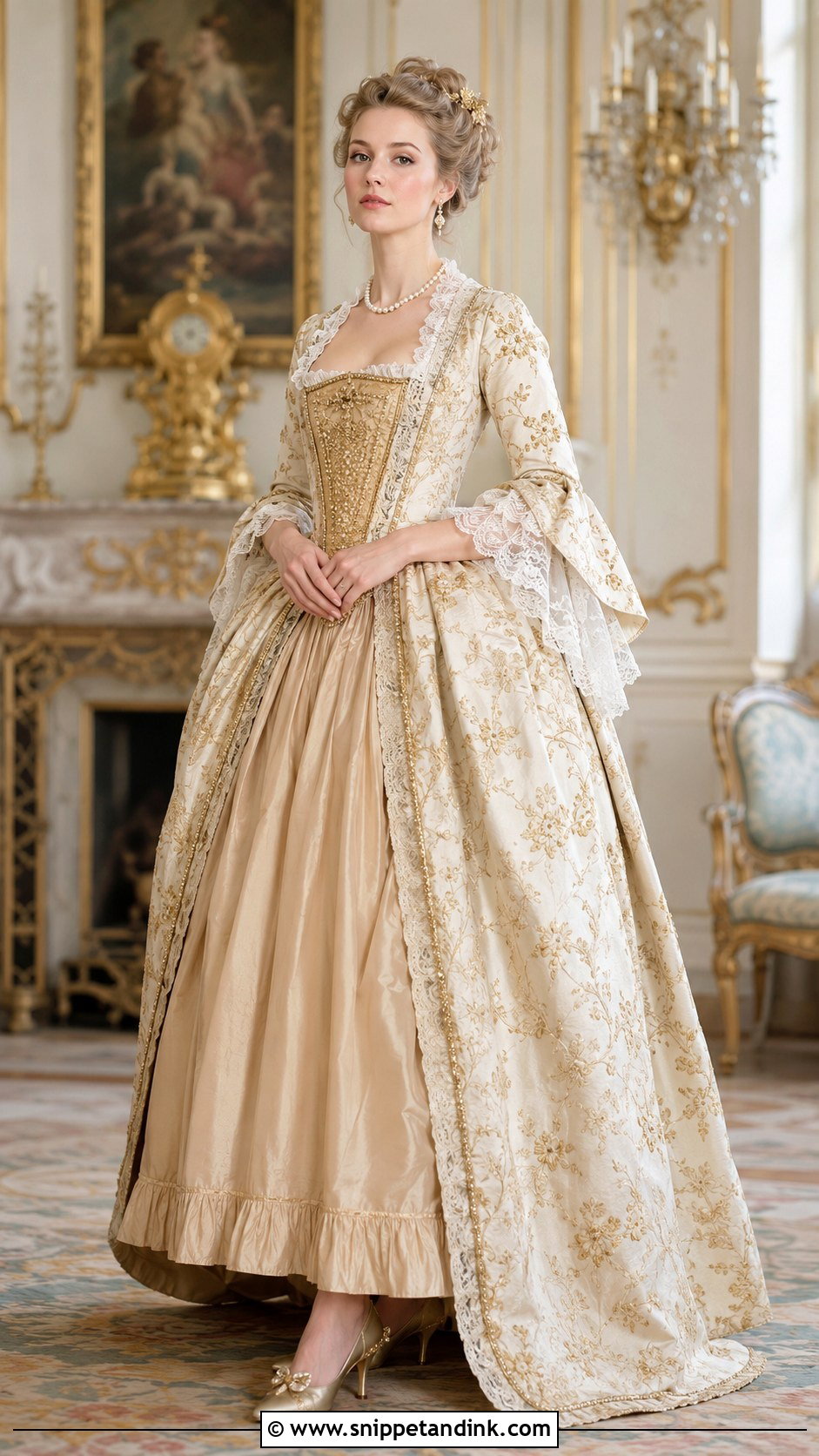
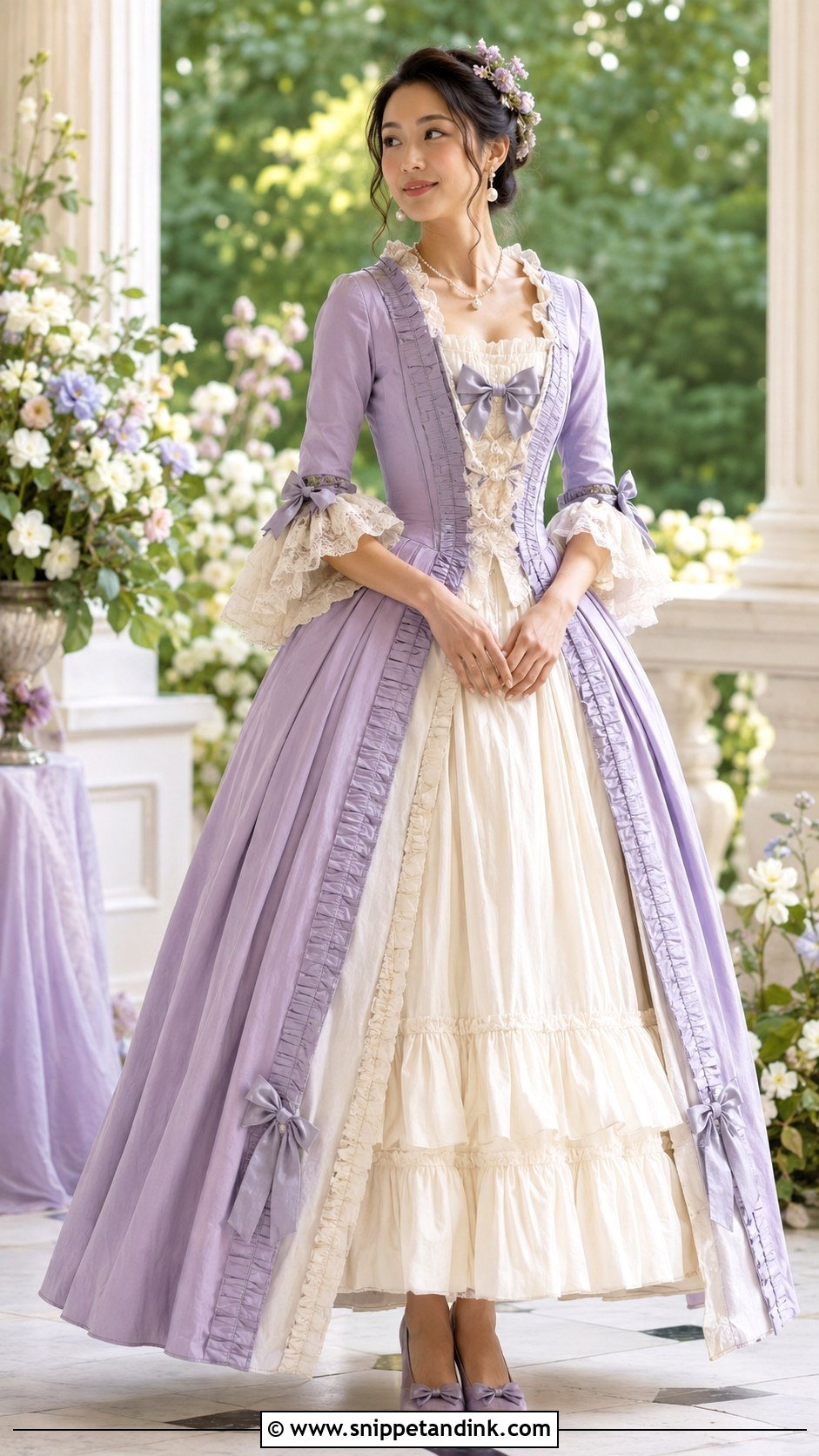
A pet-en-l’air is a short jacket, hip or knee length, with the same loose back pleats as a robe à la française, worn over a full-length petticoat. In lavender taffeta over ivory silk it becomes the lightest Rococo option on this list. A decorated stomacher, lace sleeve flounces and small ribbon bows dress up the top half, and modest side supports keep the period shape without dwarfing the jacket. Lavender silk shoes, pearl earrings and a tiny floral headpiece finish it. I often suggest this as a change for the reception or as the main look for a small civil ceremony, because you can sit, dance and climb steps in it without a second thought.
13. Ivory Zone-Front Wedding Dress
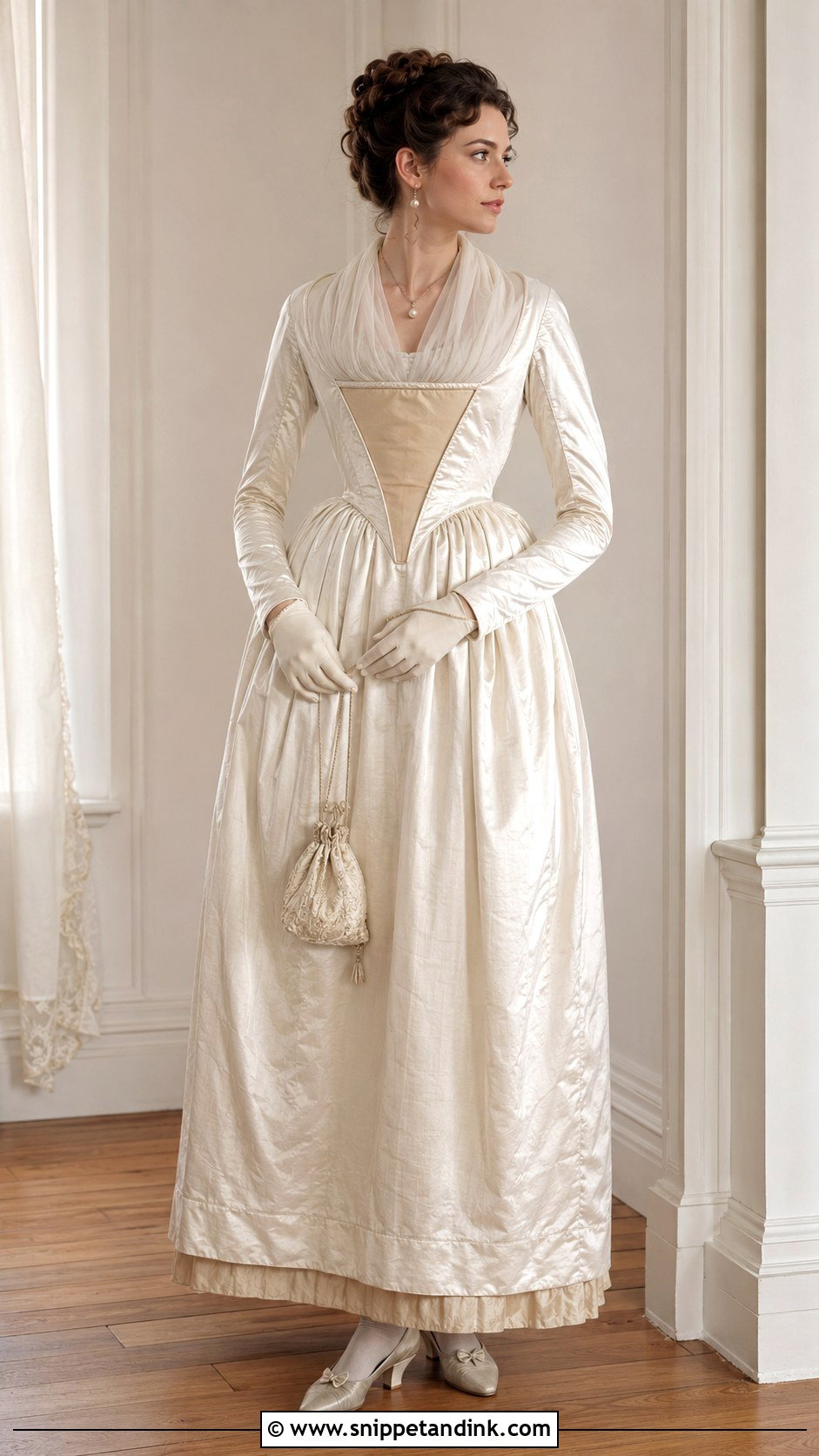
The zone-front is a late-century cut where angled bodice panels open over a contrasting center panel, which visually narrows the waist. Ivory silk or fine wool over champagne or an embroidered panel shows off those diagonals, so leave the neckline almost bare of trim. A full gathered skirt, fitted sleeves, a tucked muslin kerchief and a narrow sash are all it asks for. Low leather or silk shoes, a pearl pendant, gloves, a small reticule and loose curls tied with a ribbon complete it. This is the gown I hand to the bride who asks for clear historical structure and won’t hear of panniers.
14. Burgundy Colonial Wedding Dress
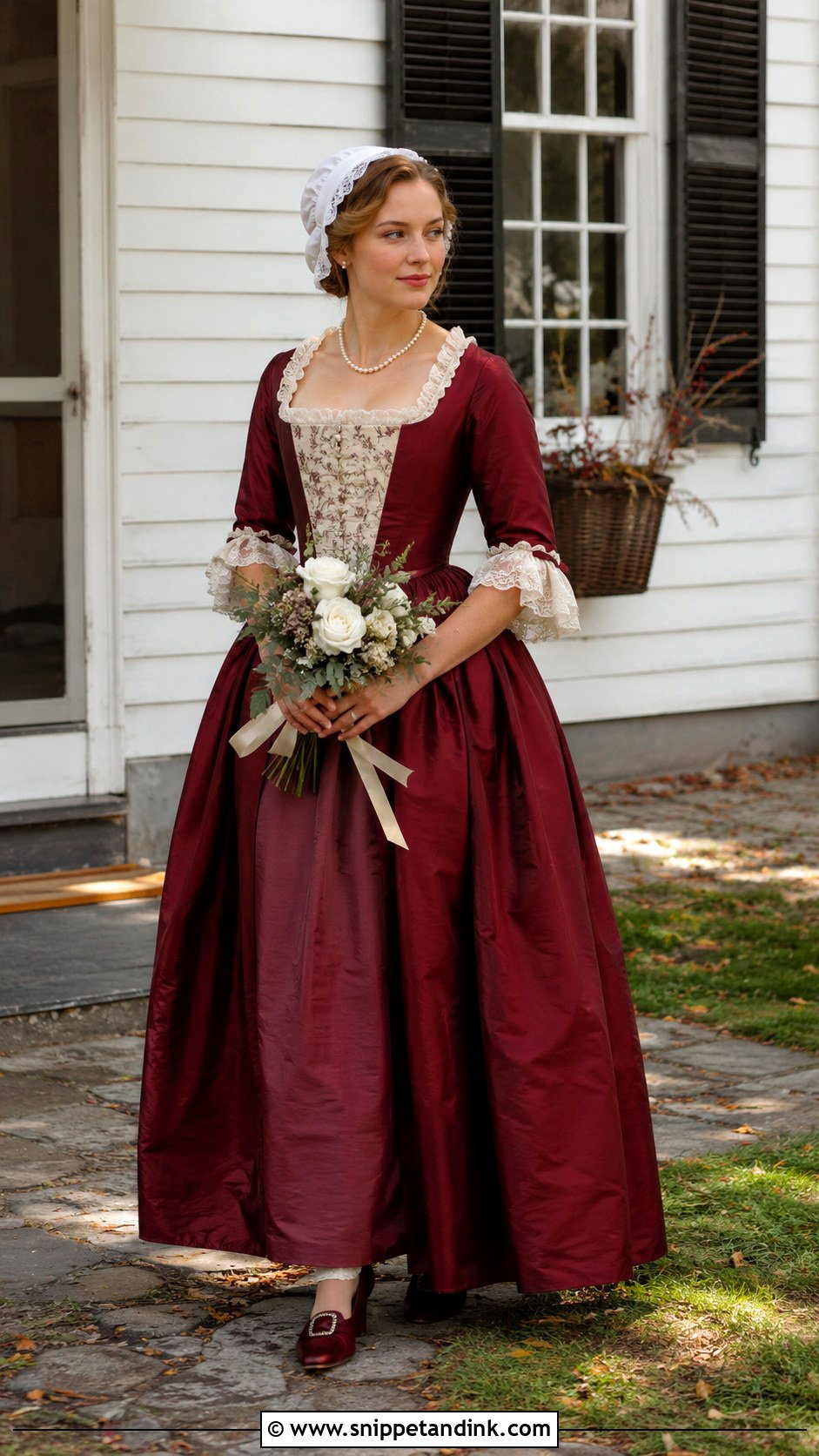
Plenty of Georgian brides married in a good colored gown they meant to wear again, and burgundy honors that habit. Silk taffeta, a wool-silk or a quiet damask suits a fitted English gown with an open front and a matching petticoat. Ivory lace at the neck and sleeves lifts the dark color near the face, and a cream stomacher embroidered with burgundy flowers ties the two shades together. Instead of wide panniers, a bum roll and layered petticoats give a practical colonial shape. Dark red shoes, a pearl necklace, an ivory cap and a posy tied in cream ribbon finish it. Deep reds lose their detail in dim rooms, so at an autumn indoor ceremony I mention it to the photographer so the gown is exposed properly.
15. Printed Cotton Country Wedding Dress
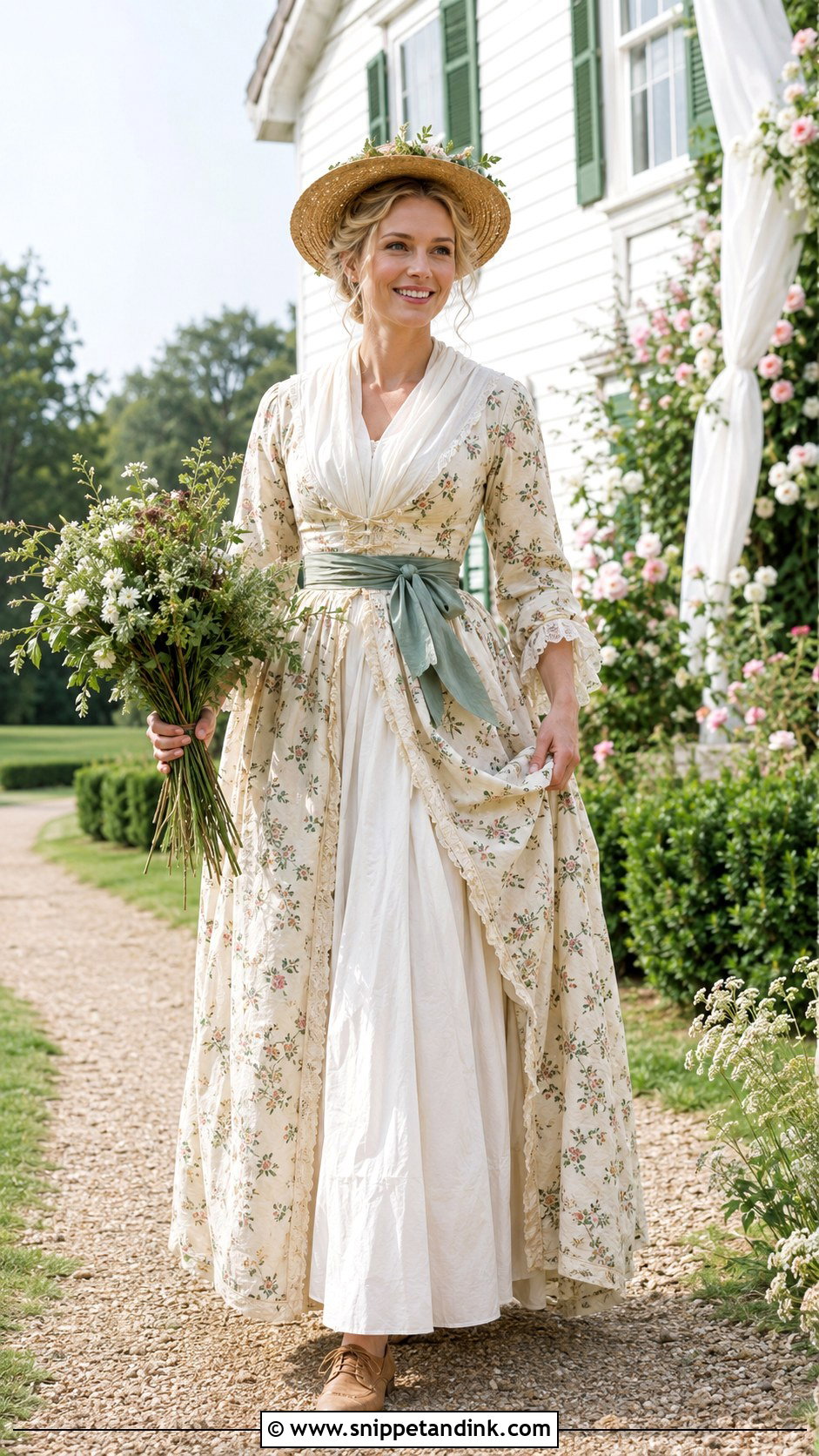
Printed cotton was a fashionable fabric in this period, not a poor relation of silk, and it makes a light, practical country wedding dress. A small floral or trailing-vine print on cream shows best on a fitted robe à l’anglaise with a gathered skirt. A plain petticoat, a muslin fichu, lace-edged cuffs and a ribbon sash picked out of the print is all the trim it needs. Low leather shoes, a straw hat, simple earrings and a loose handful of seasonal greenery keep it rural, and the hair should stay soft rather than tall. Its real advantage over silk is practical: cotton can be washed after a muddy field, so you’ll actually wear it again.
16. White Chemise À La Reine Wedding Dress
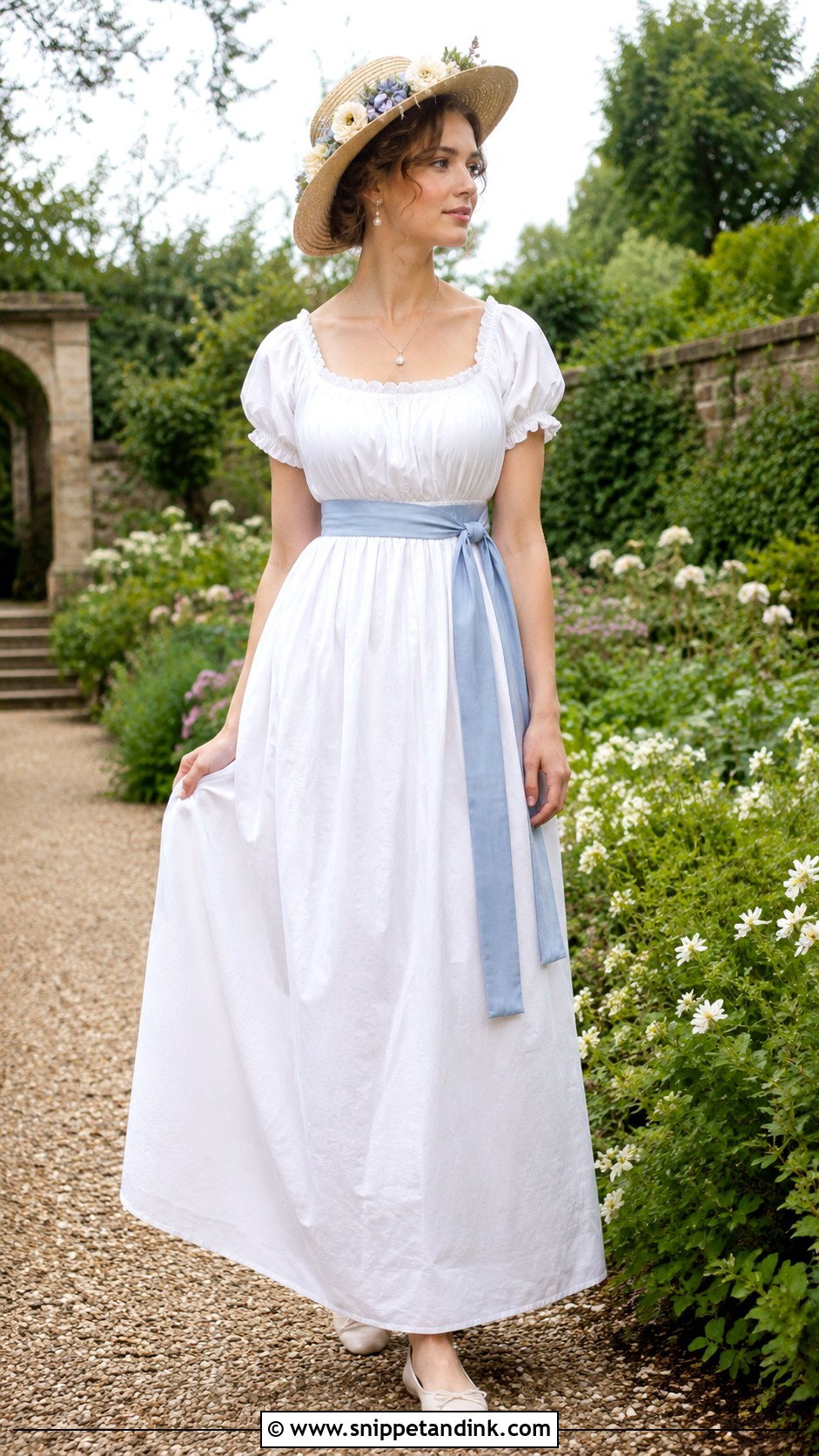
The chemise à la reine is gathered at the neckline, waist and sleeves, and in its day it caused a scandal for looking like underwear. In airy white cotton it is the exact opposite of a structured Rococo gown. A wide sash in pale blue or blush controls the volume. Sheer cotton needs a light petticoat underneath, and I always check the layers in daylight and with a flash before the wedding, because thin muslin can turn see-through in photographs. Flat or low shoes, a delicate pendant, pearl earrings and a wide straw hat trimmed with ribbons and flowers suit it, with loose curls. Let it look full on purpose; fitting it close defeats the style. A warm-weather garden is its natural home.
17. High-Waist Neoclassical Wedding Dress
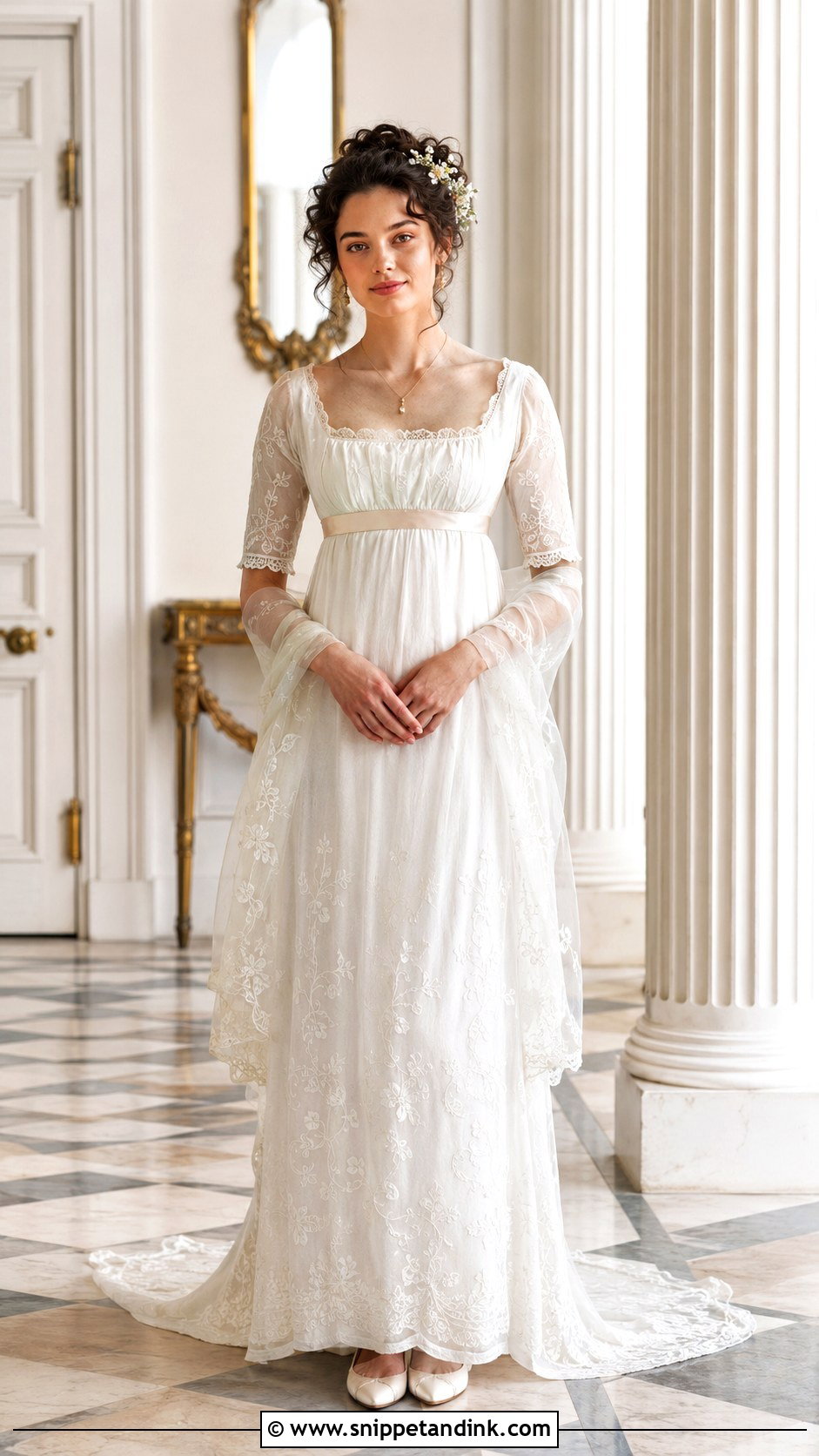
By the 1790s waists were rising and skirts narrowing. Pick a white muslin or fine cotton gown with a raised waist, a slim skirt, a short train and fitted elbow-length sleeves. Light embroidery at the hem and neckline keeps the long vertical line intact, and a pale ribbon under the bust marks the new silhouette. Flat slippers, a small pendant and a drawstring bag finish it, with a sheer shawl for cover and soft curls held by a ribbon or a small comb. A narrow muslin skirt shows every line beneath it, so smooth, skin-toned underwear matters here more than anywhere else in the list. Bring the actual pieces to your last fitting. The look sits right at the turn from Georgian structure to the empire line of the next century.
18. Navy Riding Habit Wedding Outfit
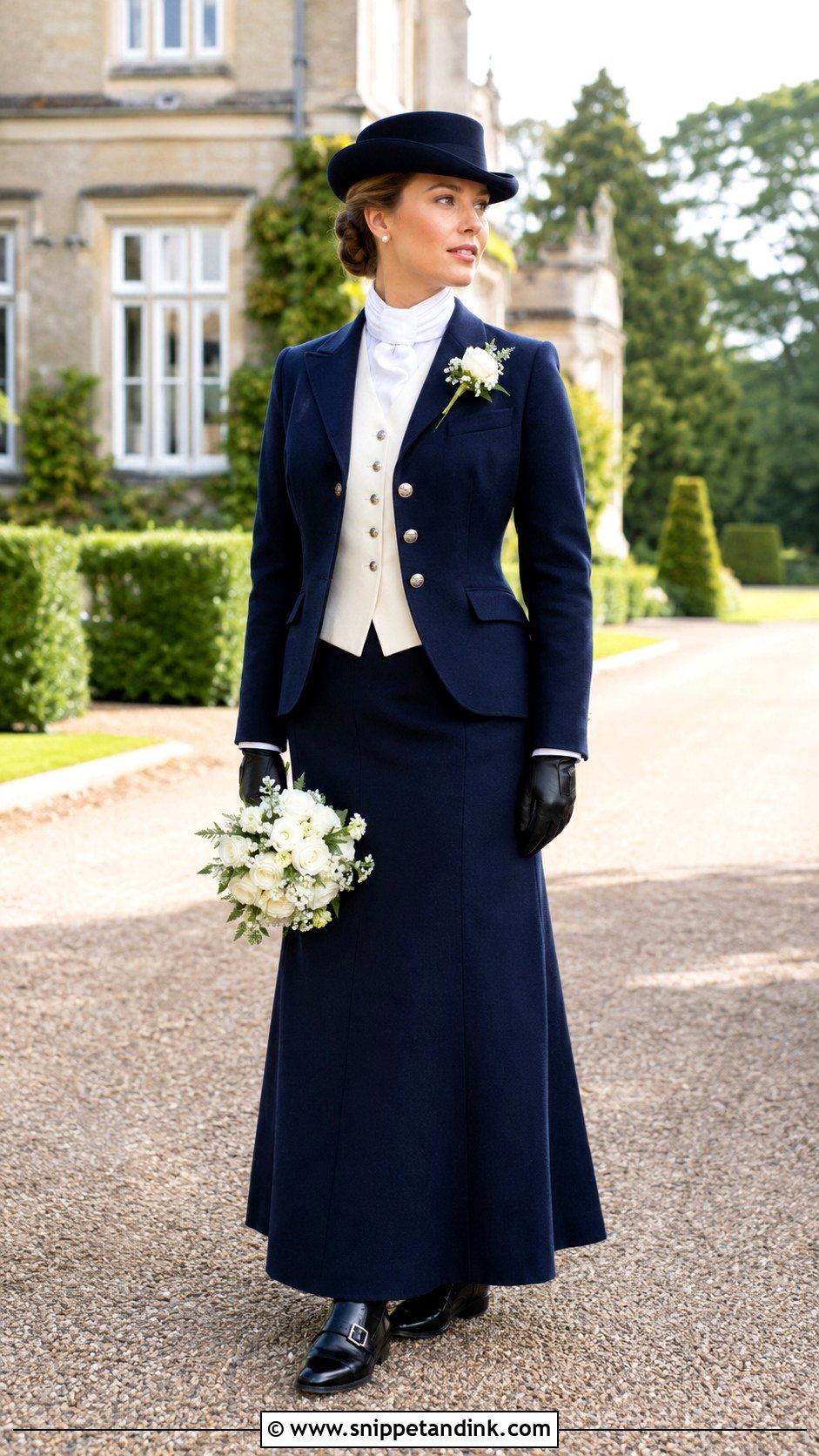
A riding habit swaps the gown for tailoring. Women’s habits of the period borrowed openly from menswear: a fitted navy wool jacket, a long matching skirt, an ivory waistcoat, a crisp neck cloth and a structured hat. Silver buttons and narrow braid outline the jacket; add more and it starts to look like a uniform. The skirt needs enough fullness to walk and climb steps. Black buckled shoes, pearl earrings, gloves and a small white bouquet bring in the bridal notes, with the hair tucked neatly under the hat. Wool is warm, so I’d keep this for a cool-season estate or an equestrian venue and steer a July bride elsewhere.
19. Tartan Open-Robe Wedding Dress
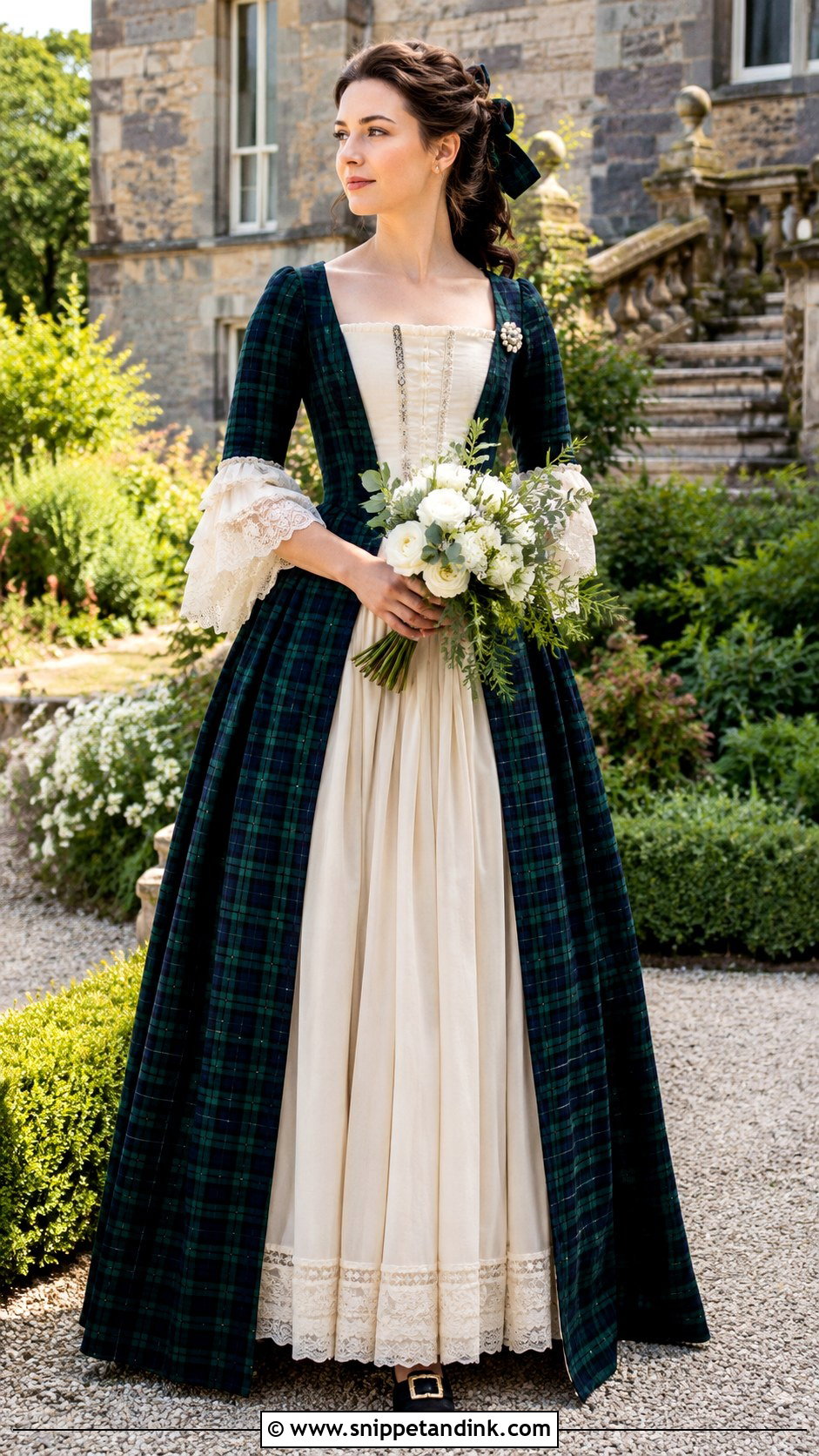
Tartan carries real meaning at a Scottish-inspired historical wedding, especially when a family tartan is involved. Go for a muted sett in green, navy and cream instead of a bright modern one, and use it for a fitted open-front gown over a plain ivory petticoat. Cutting matters as much as it does with stripes: the checks should line up at the center back and down the front edges. A cream stomacher, lace sleeve ruffles and narrow silk trim soften the strong lines, and a moderately full skirt keeps the pattern readable. Dark buckled shoes, a small pearl brooch, a tartan ribbon in the hair and white flowers with greenery finish it. Repeat only one or two of the tartan’s colors in your accessories.
20. Silver-Blue Colonial Wedding Dress
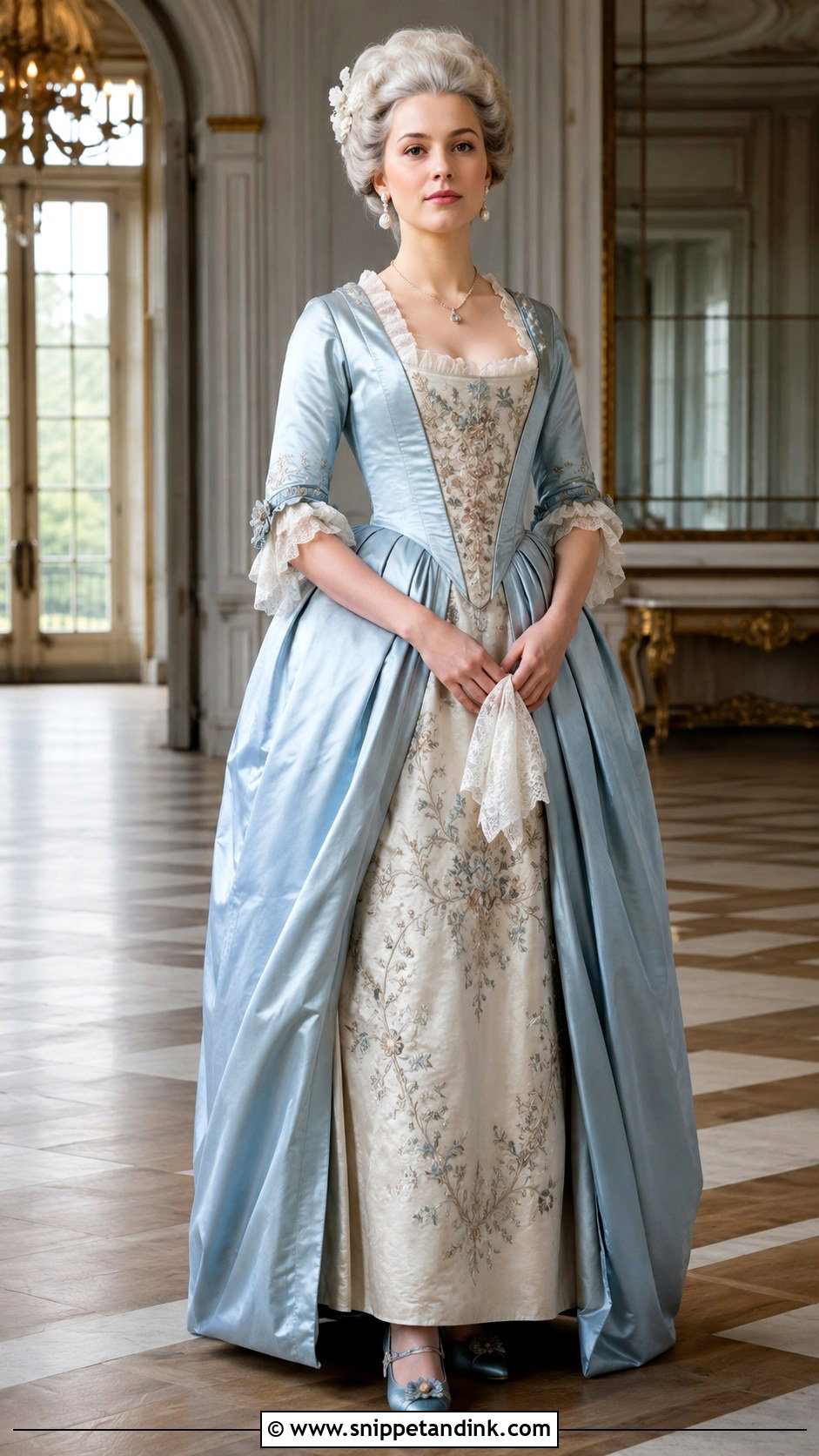
Silver-blue silk makes a good last word: bridal, believable and cooler than ivory. A fitted Georgian gown with a pointed bodice and elbow sleeves opens over a pale silver petticoat, with white flowers or fine metallic vines embroidered on the stomacher and hem. Moderate side supports give the skirt presence you can still manage for a whole day. Blue silk shoes, pearl drops, a silver pendant and a lace-edged handkerchief complete it, and the hair can be lightly powdered and dressed with white flowers and pale blue ribbon. Pale blue also keeps its detail in pictures where pure white can blow out, which makes it a sensible pick for a bright ballroom or an estate lawn.
A Full Day in Panniers, Silk and Pins
Period dress behaves differently from a modern gown, and most brides discover that at the venue door. These are the things I rehearse with a client before the wedding, not on it.
Doorways, aisles and chairs
Wide panniers mean walking through doors sideways, and many reproduction hoops are hinged or tied so the sides can be lifted with your forearms. Practise that at a fitting, not in the church porch. To sit, perch near the front of an armless chair and let the hoops tilt up slightly behind you. Ask the venue what the chairs look like, because armchairs and a wide skirt simply do not mix.
Pins instead of zips
Many open-front gowns were pinned to the stomacher, and good reproductions often still are. That means a dresser who knows where the pins go, a spare card of straight pins in a bridesmaid’s bag, and extra time in the morning schedule, since lacing stays alone takes far longer than zipping a modern bodice. Plan the bathroom too. With hoops and petticoats it is a two-person job, and it helps if your helper has seen the layers before.
Looking after the silk
Silk taffeta water-spots, so keep a large umbrella nearby for outdoor portraits and finish all perfume and hairspray before the gown goes on. Powder the hair before dressing as well; hair powder settles on dark silk and is stubborn to brush out of burgundy or navy. Afterwards, have the gown cleaned by someone who handles delicate or historical silks, and store it loosely folded in acid-free tissue in a breathable box, never sealed in plastic.
One Decade, One Set of Stays, Then Everything Else
Georgian and Rococo bridal dress covered a lot of ground: formal ivory French gowns, flowered silks, burgundy taffeta, tartan and printed cotton, then the lighter round gowns, polonaise skirts, chemises and muslins of the century’s last years. My advice is the same for every one of them. Settle on a single decade and make each choice answer to it, from the stays and skirt supports out to the shoes, jewelry, hair and hat. Within that frame you can narrow a skirt, raise a neckline or pick a lighter fabric for comfort, and the outfit will still read as one period rather than a mix.
You'll Like These Ideas:


Leave a Reply