
Rococo dressing was never subtle. Corseted bodices, pale silks, wide skirts, lace at the elbows, bows down the front and garlands of embroidery all came out of 18th-century court inspiration, and a bride borrowing from it has to decide early how much of that history she wants to carry down the aisle. In fittings, I find the modern versions that work pick one or two period features and build the rest of the outfit quietly around them. The same idea can fill a ballroom, soften a garden ceremony, or show up as a single bow on an otherwise plain gown. Below are the gowns I’d show a bride who loves the era, from pannier shapes to pastel tulle, each with the accessories that finish it.
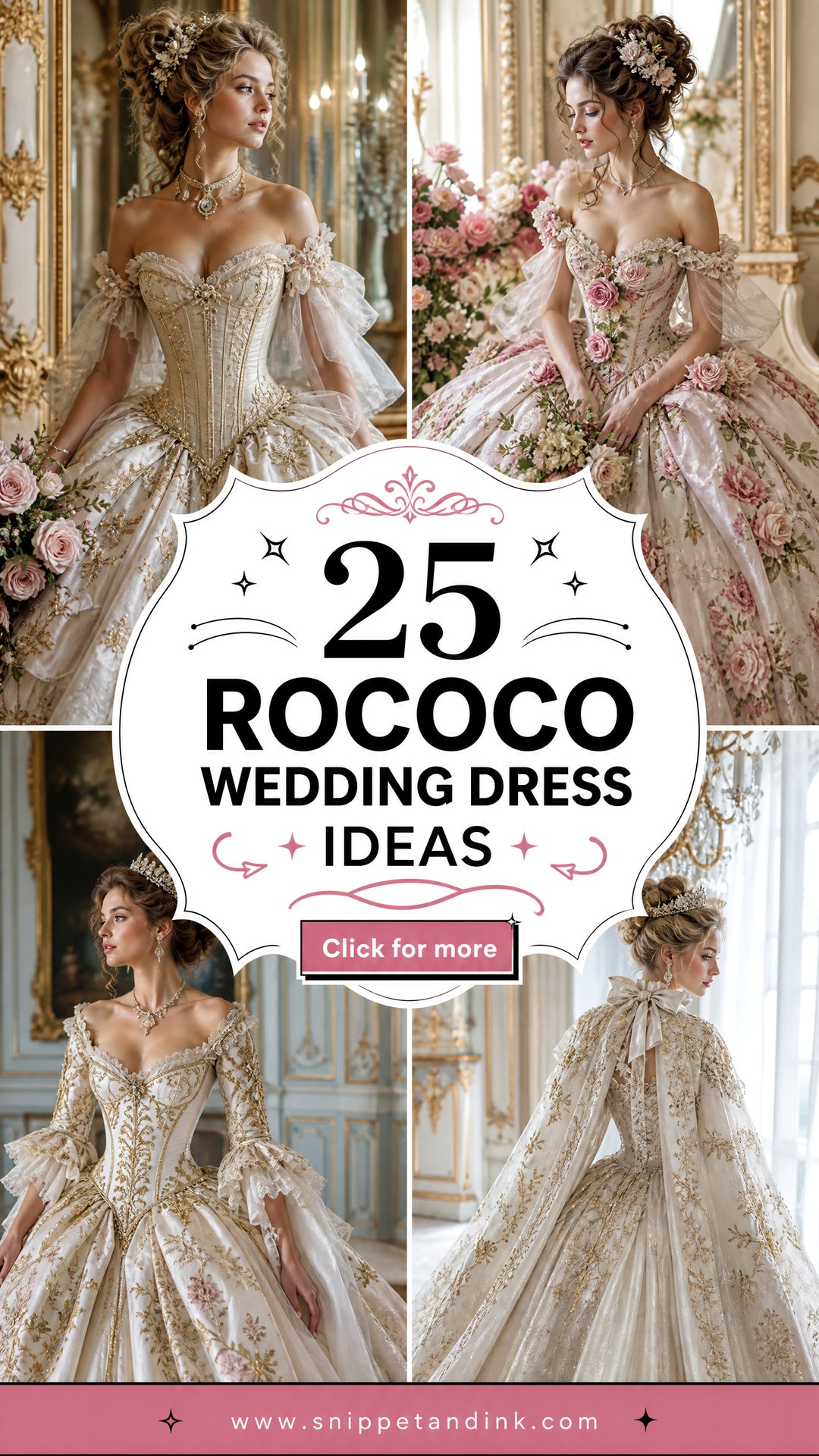
What Made an 18th-Century Gown Look Rococo
Brides often bring me screenshots of anything with a corset and a big skirt and call it Rococo. The period had specific features, and knowing them makes shopping much easier, because you can ask a salon for the detail rather than the mood.
- Watteau pleats: deep box pleats falling loose from the back neckline into the train. A few modern gowns copy this with a pleated back panel, and it moves well when she walks.
- The stomacher: a stiffened, decorated triangle down the front of the bodice. Today it shows up as a contrasting embroidered panel or a ladder of bows.
- Elbow sleeves with lace ruffles, called engageantes. A fitted sleeve that stops at the elbow with layered lace is one of the most authentic touches you can add.
- Panniers: side hoops that widened the hips. A softer modern version adds width through gathering or a structured underskirt.
- Pale silks with woven or embroidered florals, in shades like duck-egg blue, primrose and rose.
Pick the one or two that speak to you. A gown with all five starts to look like a museum reproduction, which is a valid choice for a themed wedding but not what most brides are asking for.
1. Rococo Ball Gown Wedding Dress
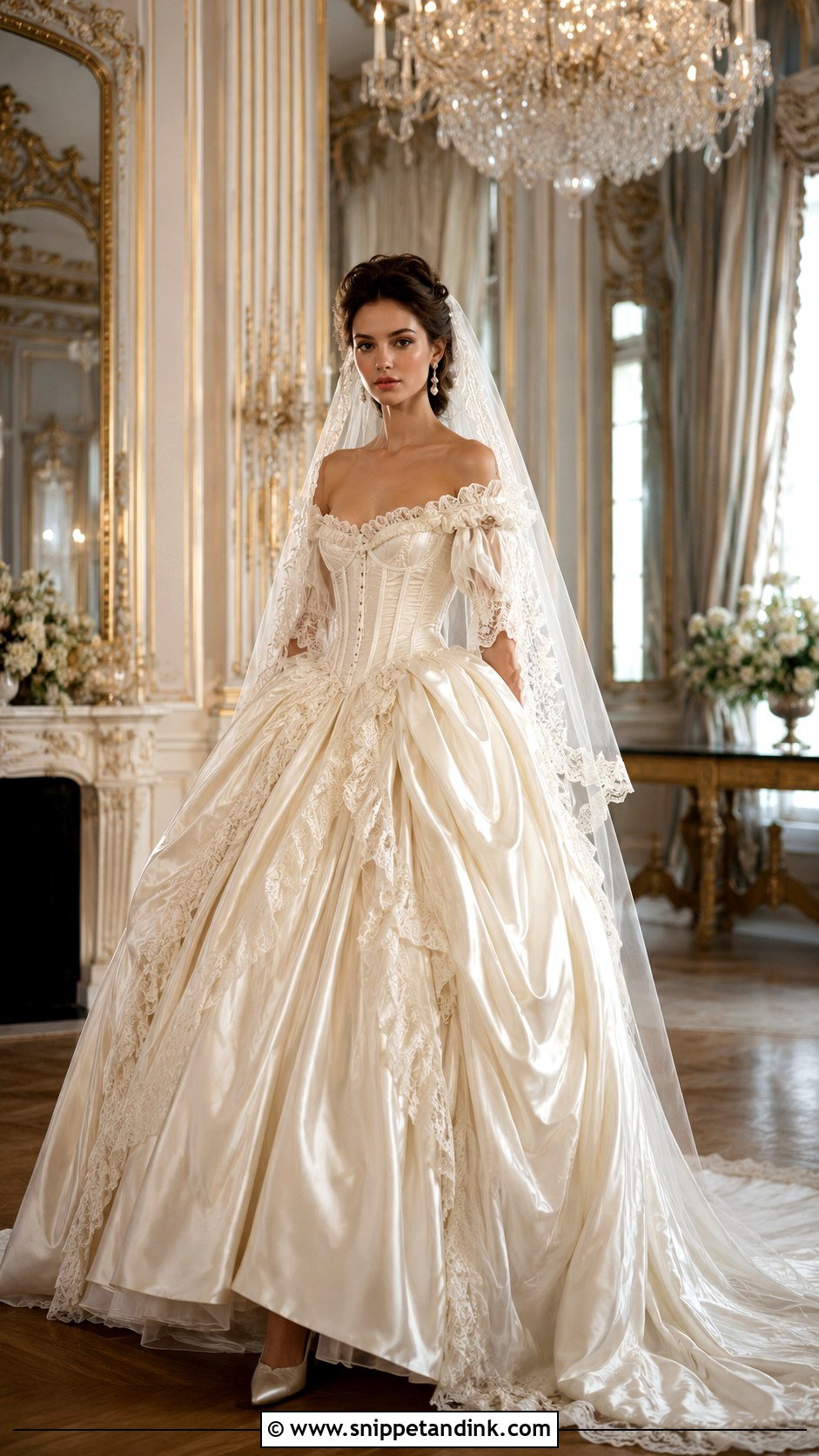
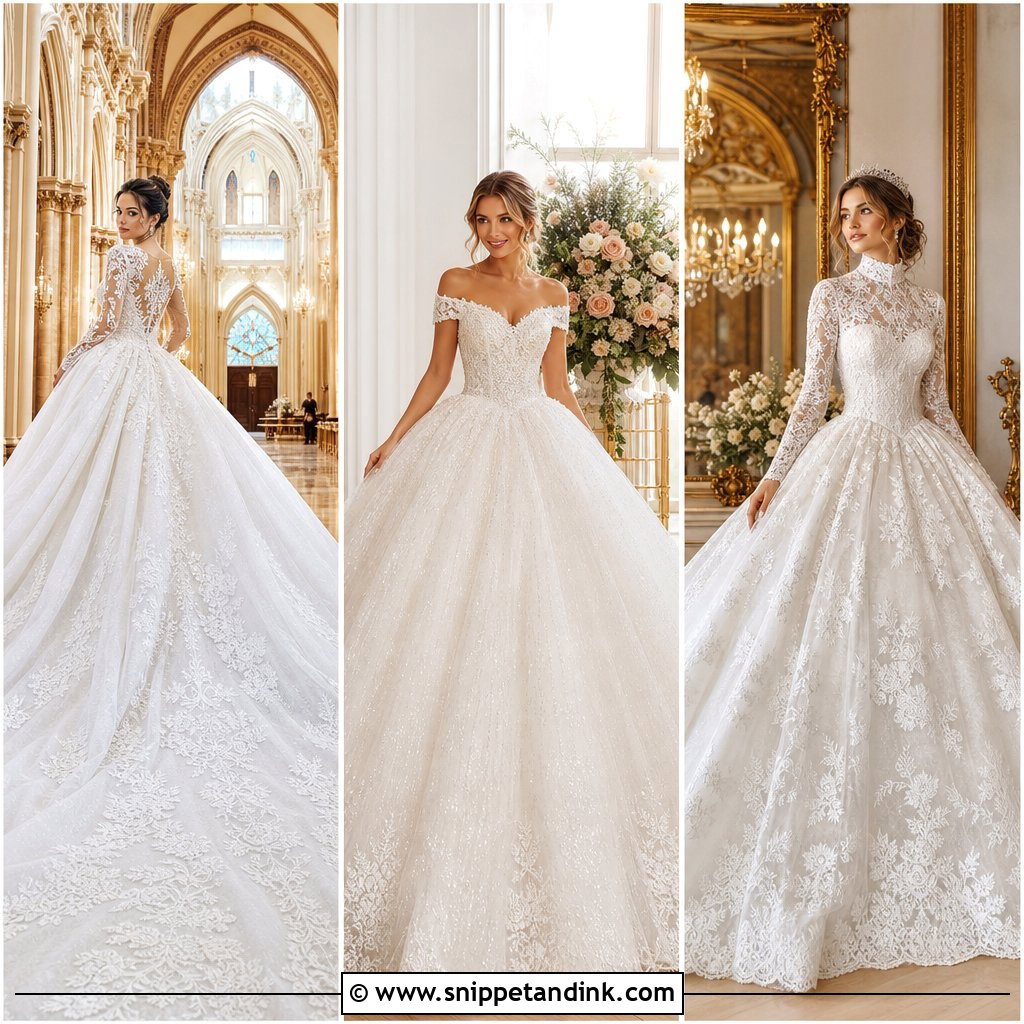
The full ball gown is the version most brides picture first, and it suits a dramatic, royal entrance better than anything else here. I look for a boned bodice, a wide skirt and a fabric with body: silk satin, taffeta or brocade. Width should come from the skirt’s cut and petticoat, not from piling on layers, or she’ll feel every pound by the first dance. Lace trim, pearl buttons and floral embroidery give the period feel. Pointed satin heels, a pearl drop necklace, a veil set behind the shoulders and a rounded bouquet in blush, ivory and pale blue finish it for a ballroom or historic estate.
2. Rococo Corset Wedding Dress
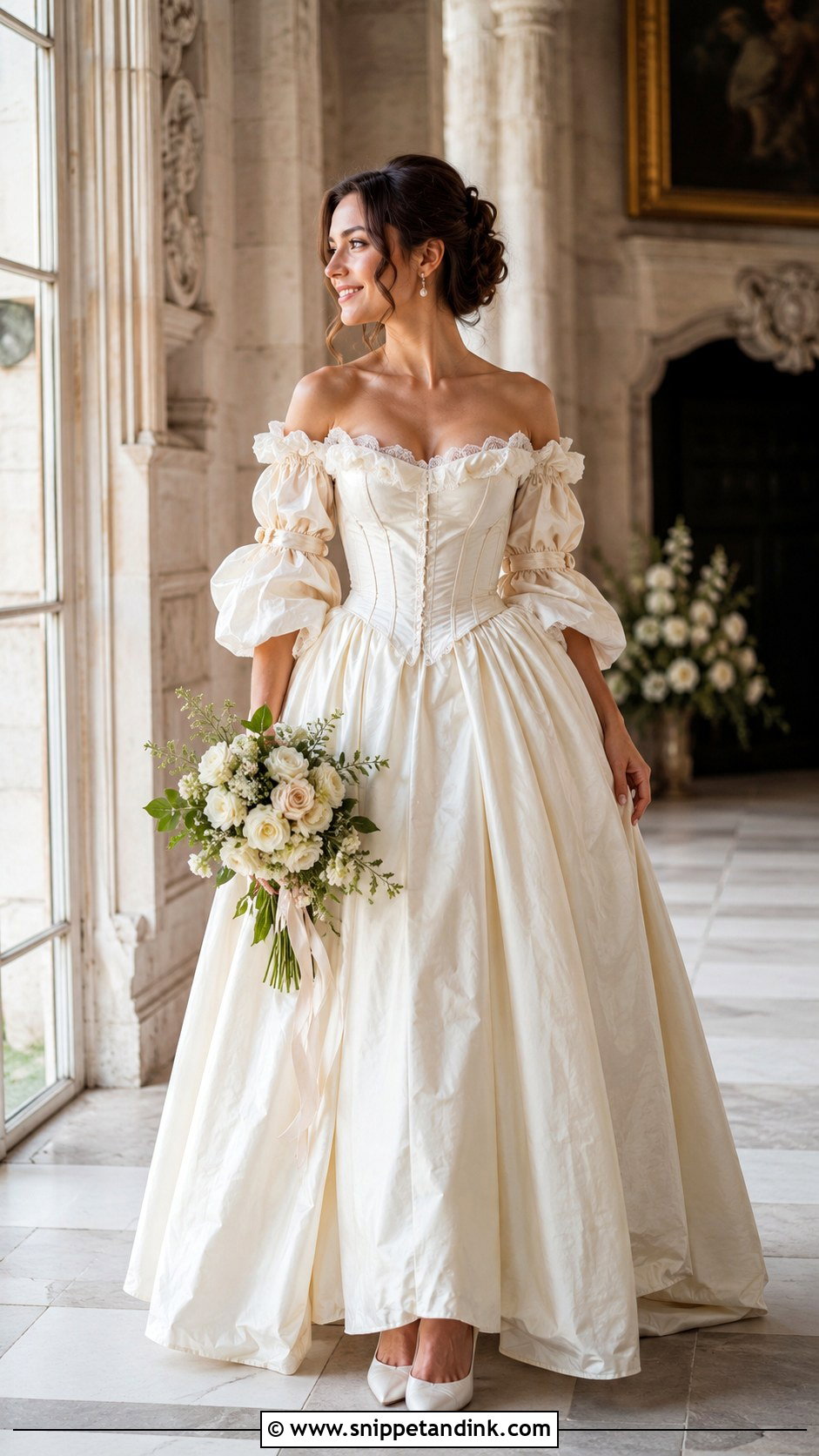
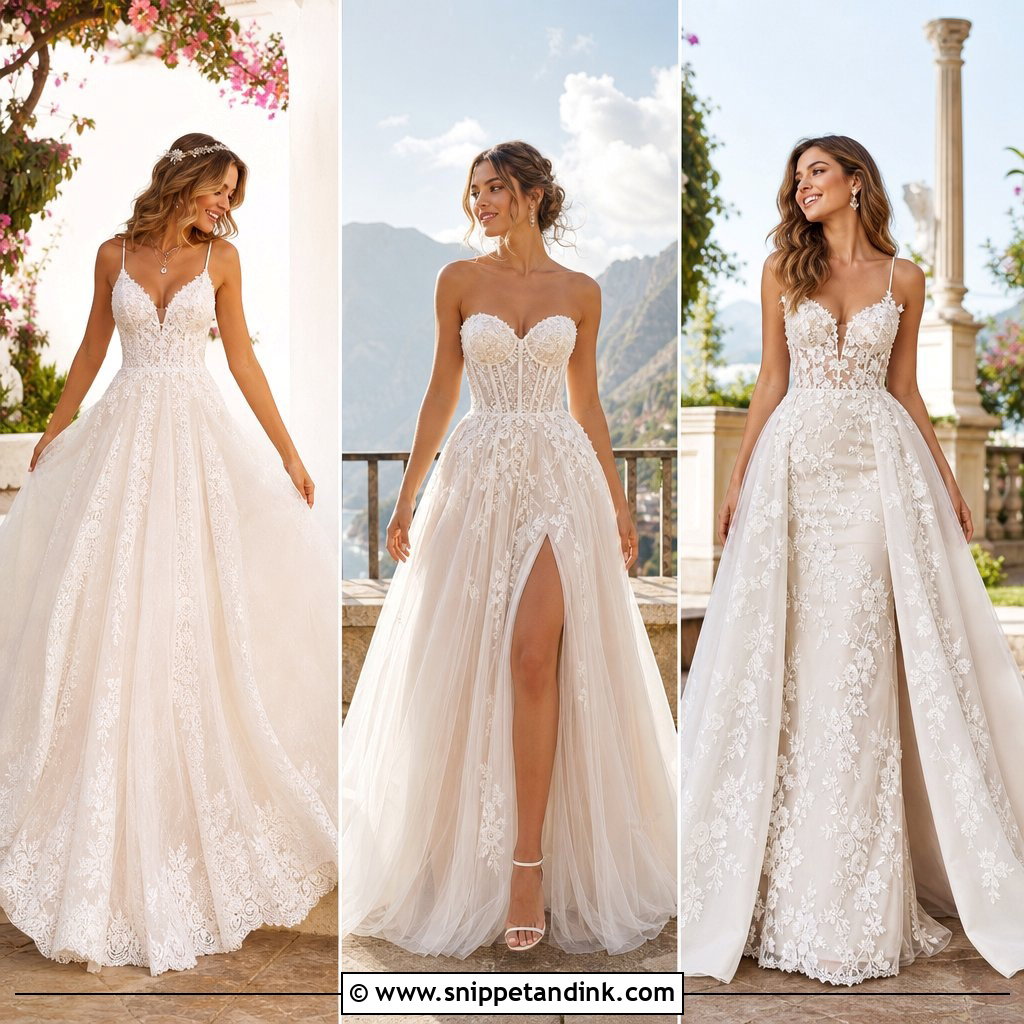
With a corset dress, the bodice is the whole story, so that’s where I spend fitting time. Visible boning, a lace-up back, soft cups or embroidered panels all work, balanced by a full A-line or ball gown skirt. Ivory lace over champagne lining, or blush tulle layered over white, softens the structure. Here’s what I tell every bride: a corset that’s comfortable standing in a fitting room can pinch after dinner, so sit, reach and breathe deeply in it before the final alteration. Lace-up backs help, because the fit can be eased an inch on the day.
3. Rococo Pastel Wedding Dress
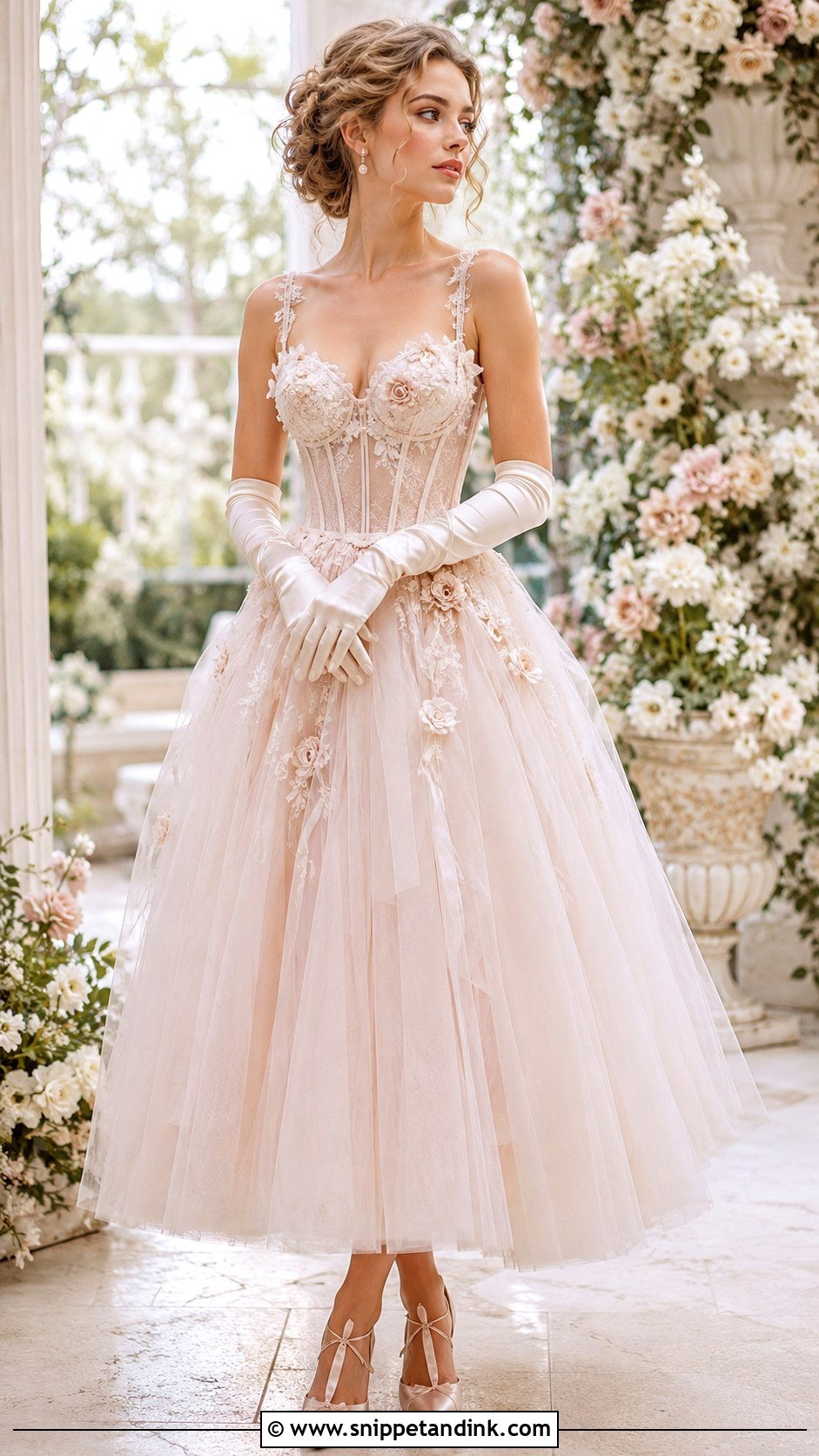
Color is where Rococo feels most authentic, since the original silks came in blush, powder blue, lavender, buttercream and pale mint. Airy tulle, silk organza or floral jacquard keep those shades soft rather than loud. Pastel fabric can look washed out next to some skin tones, so I always hold the swatch near the bride’s face in daylight before she commits. Ivory gloves, pearls and satin heels in a matching or neutral shade suit it. Keep the veil ivory and the dress can carry the color on its own, which works especially well in spring gardens or rooms with painted walls and antique mirrors.
4. Rococo Lace Wedding Dress
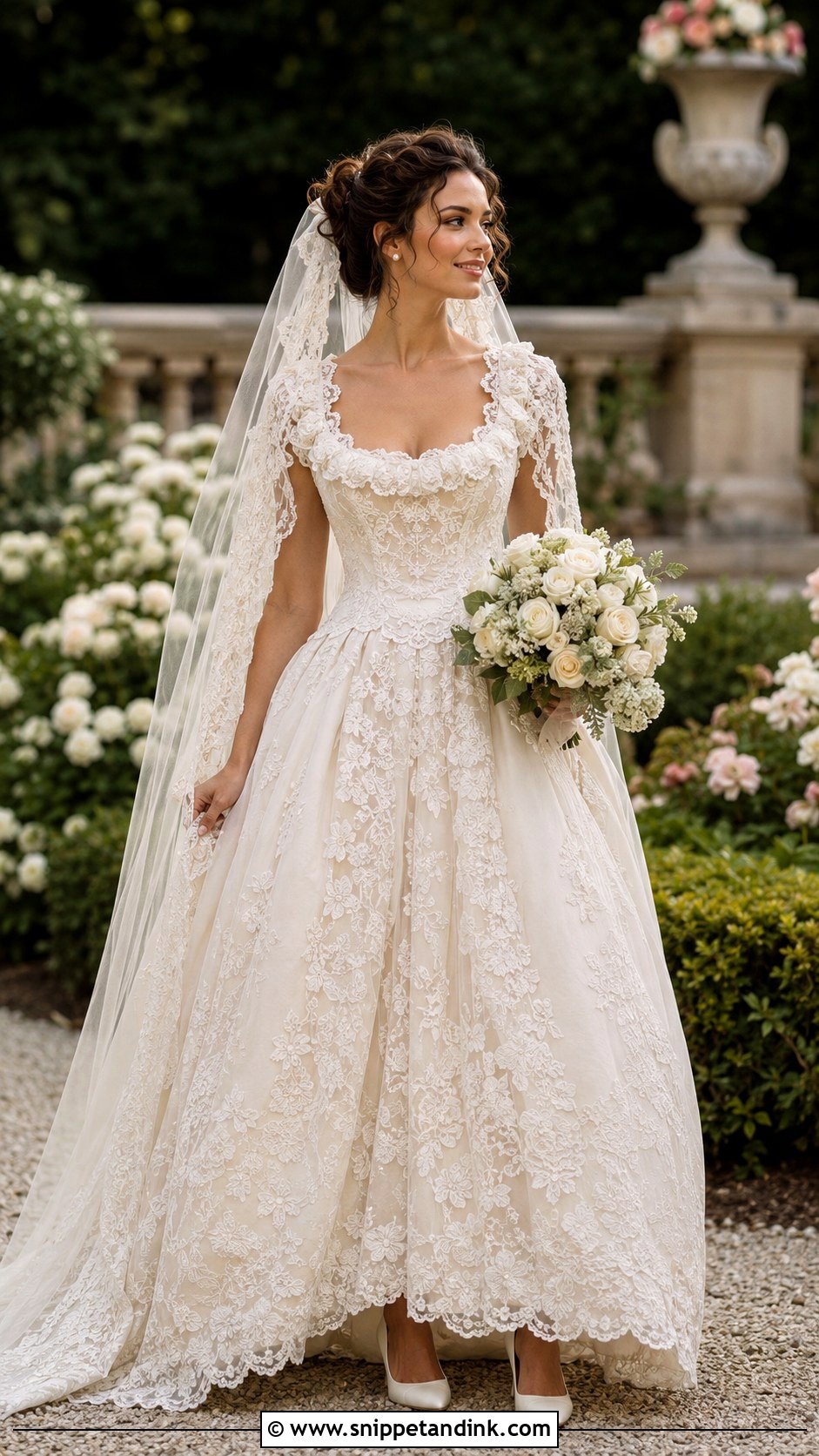
Floral, vine and scroll motifs are the lace patterns that echo Rococo ornament most directly. A fitted lace bodice over a full lace skirt reads formal; lace sleeves push it further toward regal. I’d style it with pearl studs, a lace-edged veil, ivory heels and a soft updo, and then stop. Heavy lace plus a busy veil plus statement earrings starts to look crowded, and at a garden wedding or vintage-style reception you want the pattern to be the only thing people study.
5. Rococo Off Shoulder Wedding Dress
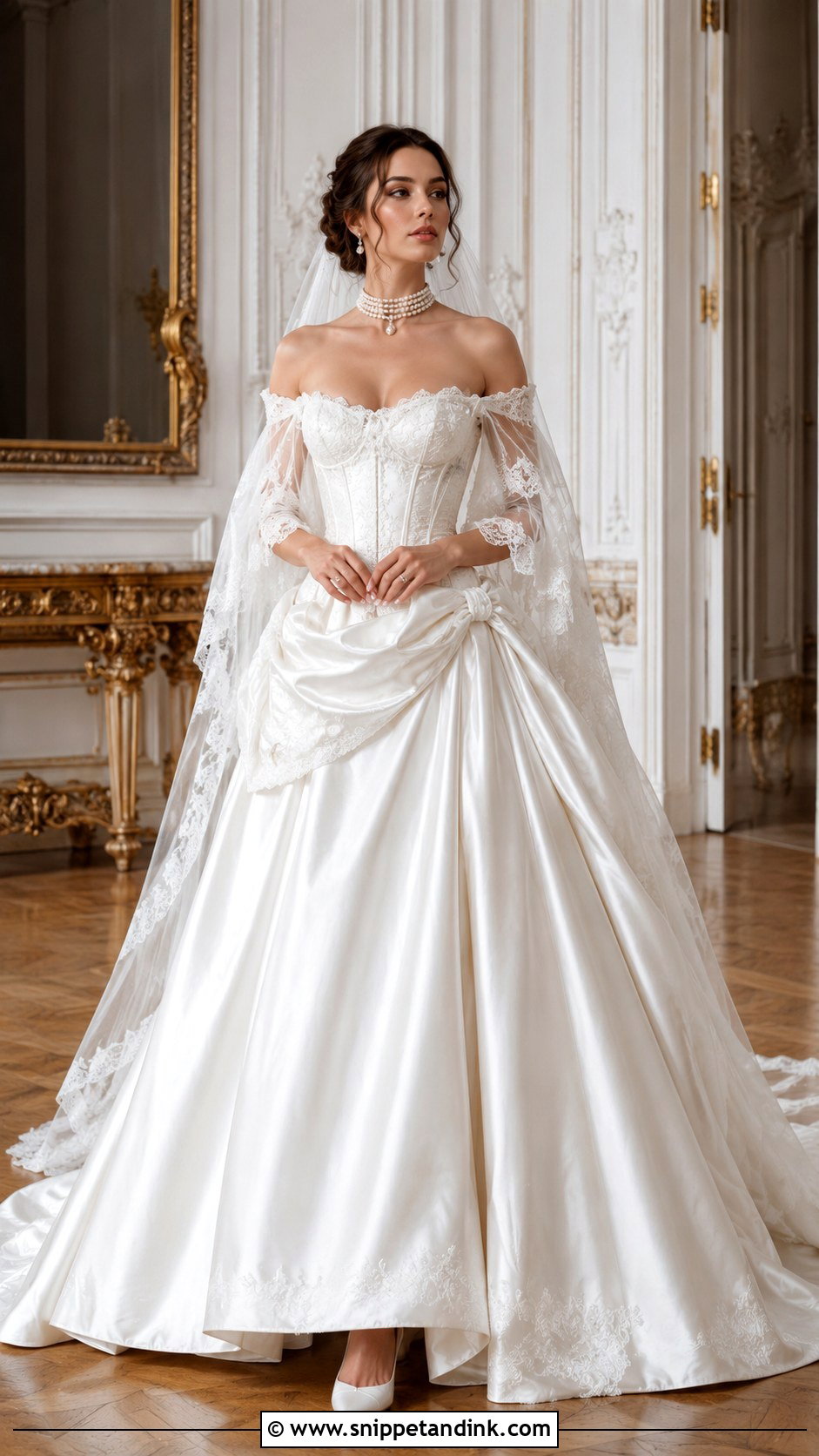
An off-shoulder neckline turns the bride into something close to a portrait, framing the collarbones the way painted sitters of the era were posed. It’s made for pearl chokers, drop earrings or a thin ribbon at the throat. A corseted bodice with draped sleeves or lace trim leans more historical, over a full, pleated or layered tulle skirt. Off-shoulder bodices need firm internal structure, or the bride spends the reception hitching them up. If she’s planning to dance with her arms raised, I suggest a sleeve with a little elastic grip inside.
6. Rococo Brocade Wedding Dress
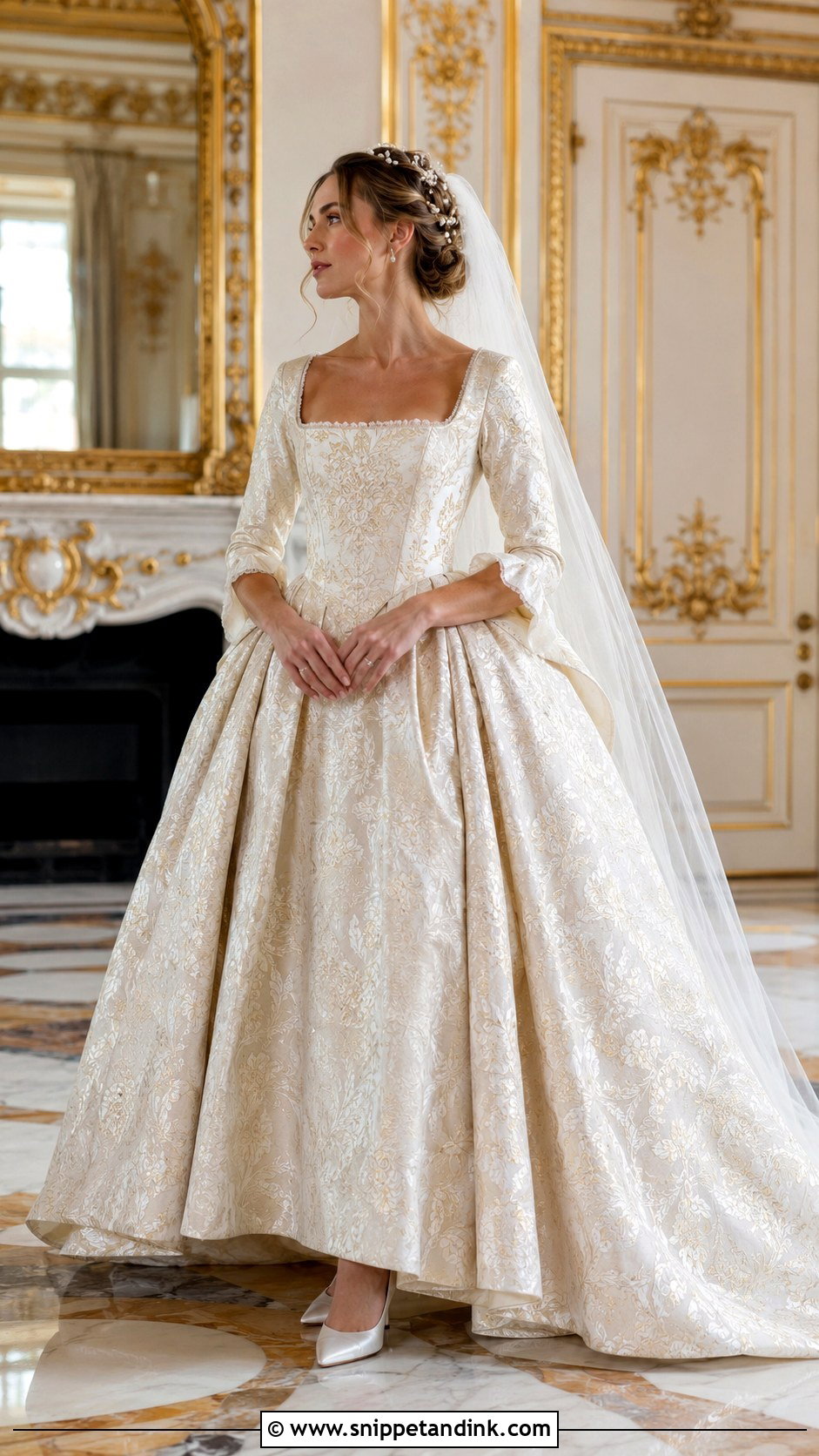
Brocade is woven, not printed or embroidered, so the pattern has depth before you add a single bead. Ivory, champagne, blush or pale gold floral brocade on a structured bodice with a pleated skirt gives the strongest historical shape on this list. I keep accessories minimal: satin heels, pearl hair pins and a simple veil. A detachable train or a bow at the back adds drama. Brocade is warm and fairly heavy, so I steer summer brides away from it and toward cooler-season, formal venues.
7. Rococo Tulle Wedding Dress
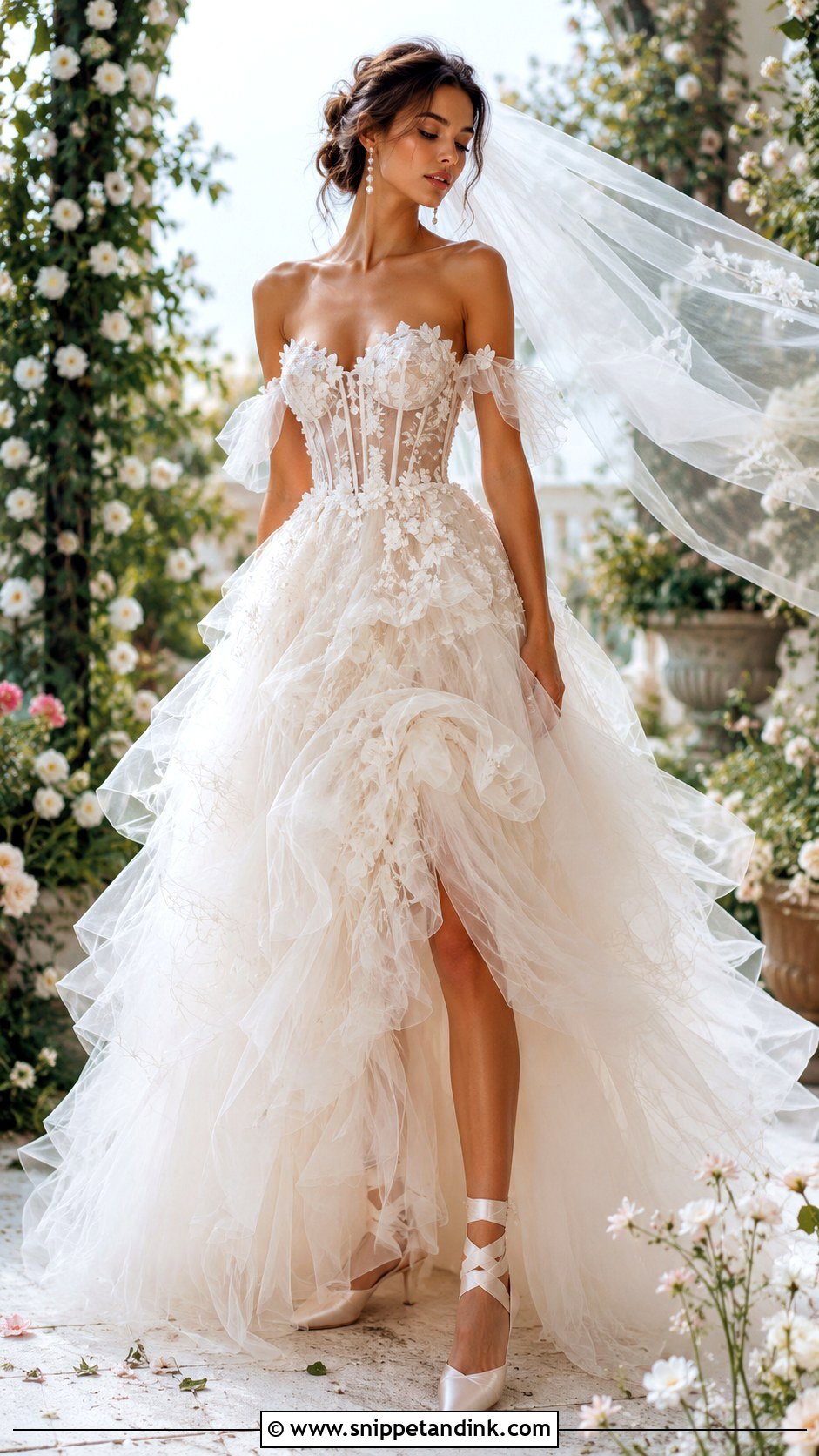
Tulle is how you get Rococo volume without the weight. Layers over a corset bodice, with floral appliqués or soft ruffles, give a cloud-like skirt in pale blush or ivory. Crystal or pearl earrings, ballet-style heels and a veil as soft as the skirt complete it, and a loose bun or soft waves keeps the mood relaxed. My one caution: tulle snags on rough stone, bark and Velcro on photographers’ bags, so for a garden ceremony I’d ask the venue about the path surface before the bride walks it.
8. Rococo Satin Wedding Dress
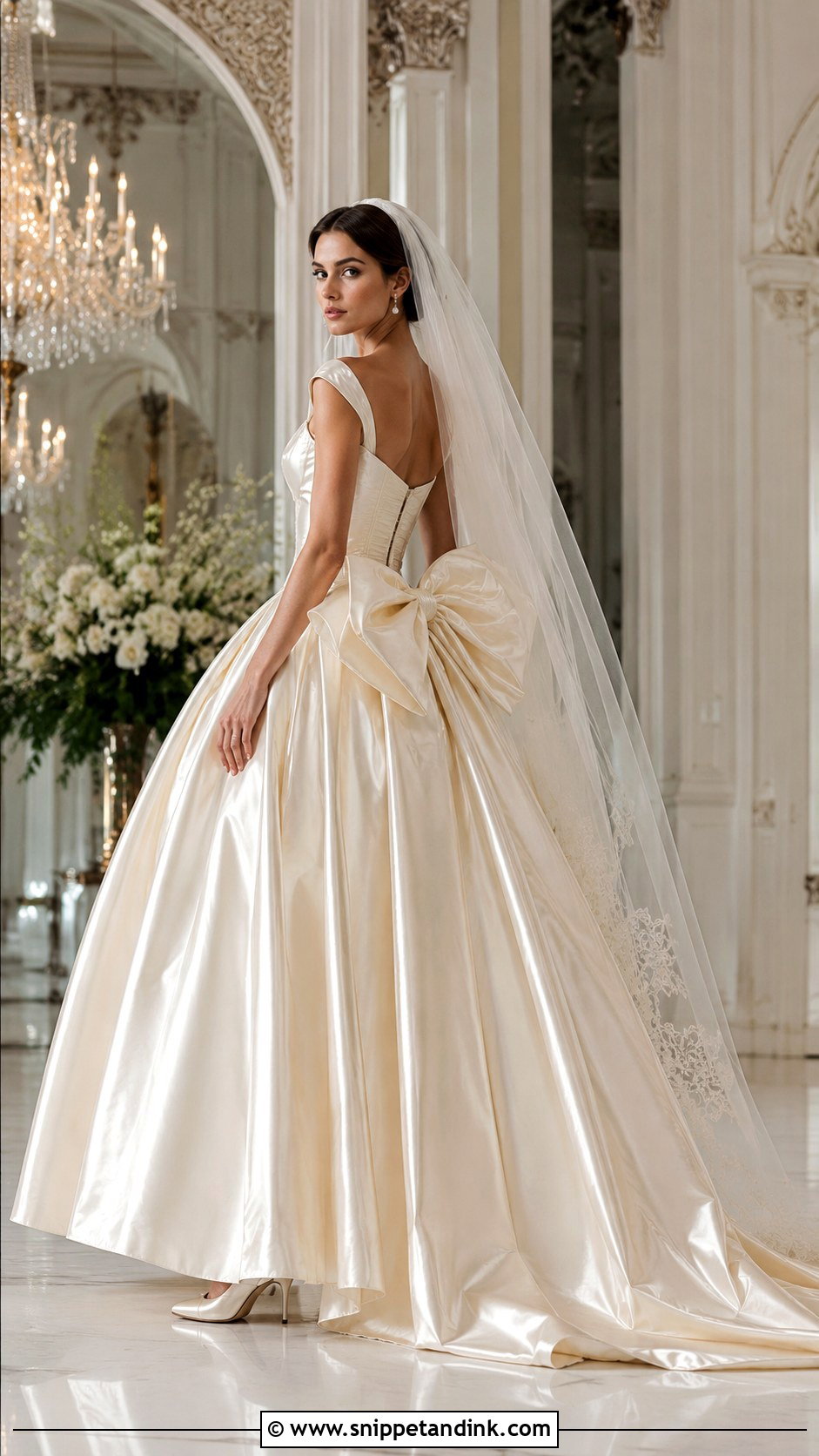
Satin shows off a dramatic silhouette because it has nowhere to hide. I look for a corseted bodice, a full skirt, a pleated waist or an oversized bow. Ivory reads classic; champagne adds a warm, antique tone. Pearl earrings, satin pumps, a structured bouquet and a long veil finish it without competing with the fabric. Satin does crease, so I tell brides to plan photos before she’s been seated in the car for half an hour. For a bride who wants Rococo influence with a cleaner finish than lace, it’s the one I’d try first, ideally in a grand room with natural light.
9. Rococo Floral Wedding Dress
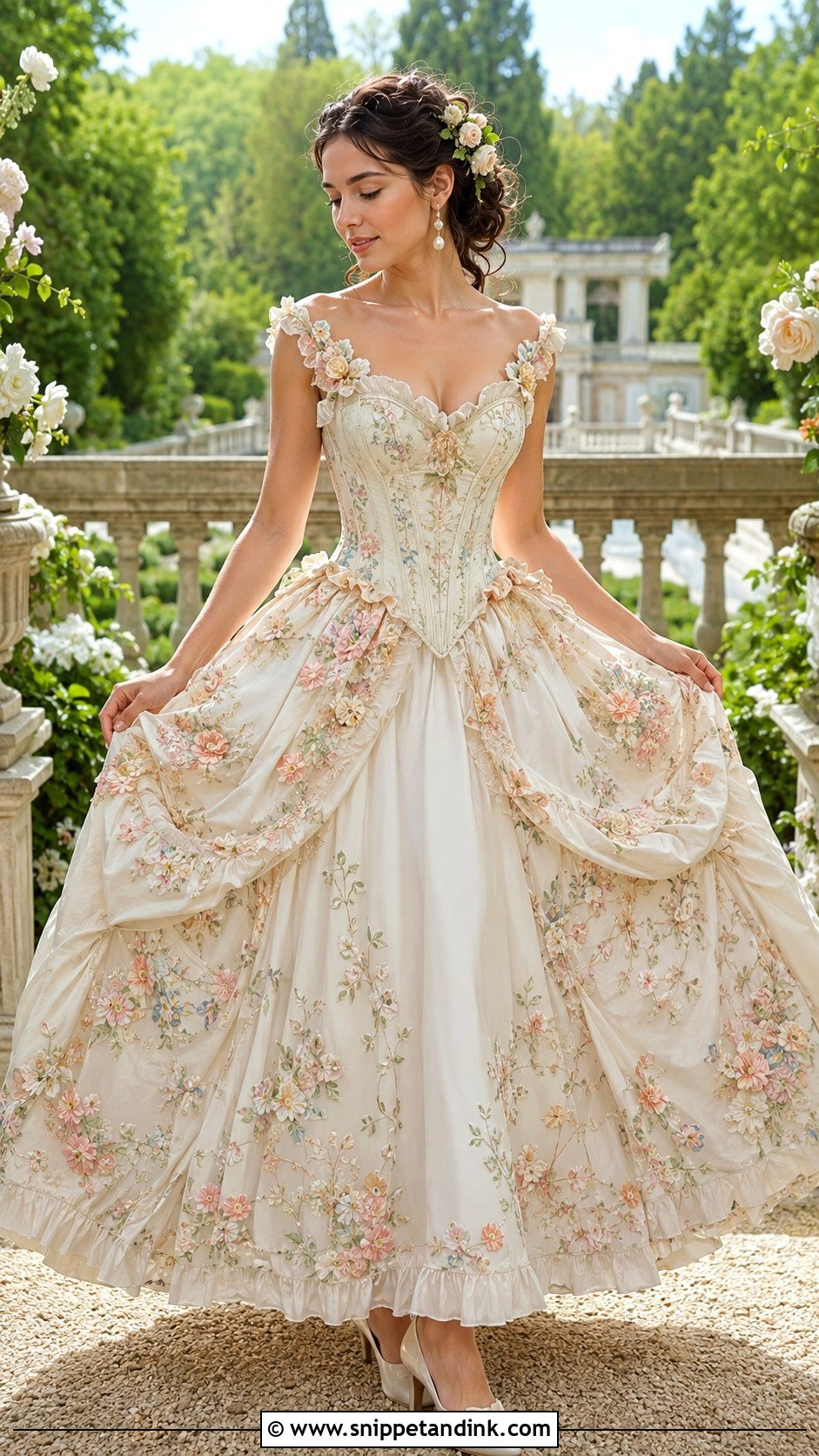
Floral gowns bring the garden-party side of the era indoors. Embroidery, 3D appliqués, painted-style blooms or brocade flowers all qualify, in blush, pale blue, ivory, sage or champagne. A corset bodice and full skirt keep the shape anchored in the period. Floral hair pins, pearl earrings and satin heels finish it. I always tell the florist about the dress early: an oversized bouquet hides exactly the detail she paid for, so something smaller and coordinated belongs with this gown in spring or summer, at an estate or conservatory.
10. Rococo Bow Wedding Dress
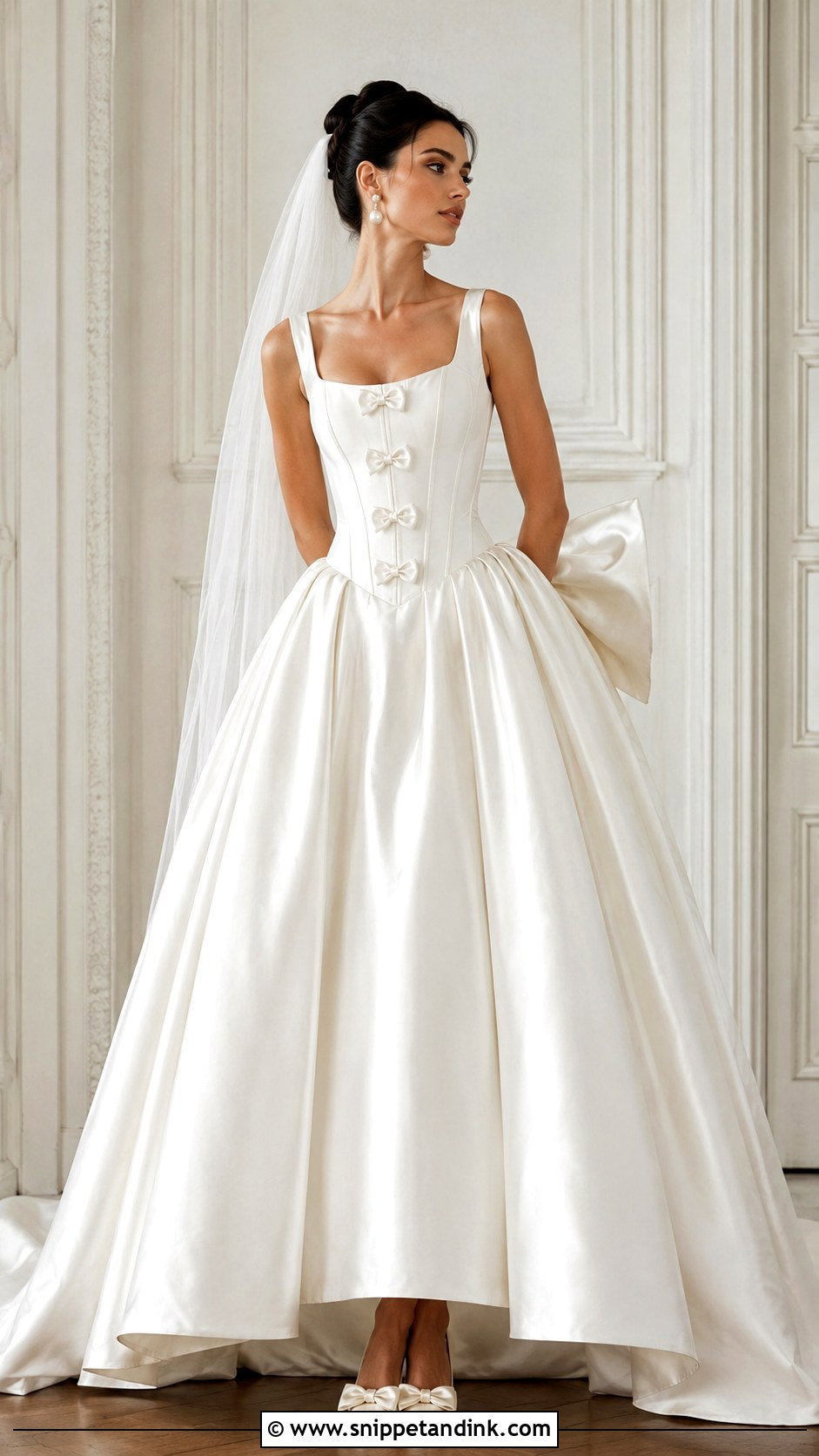
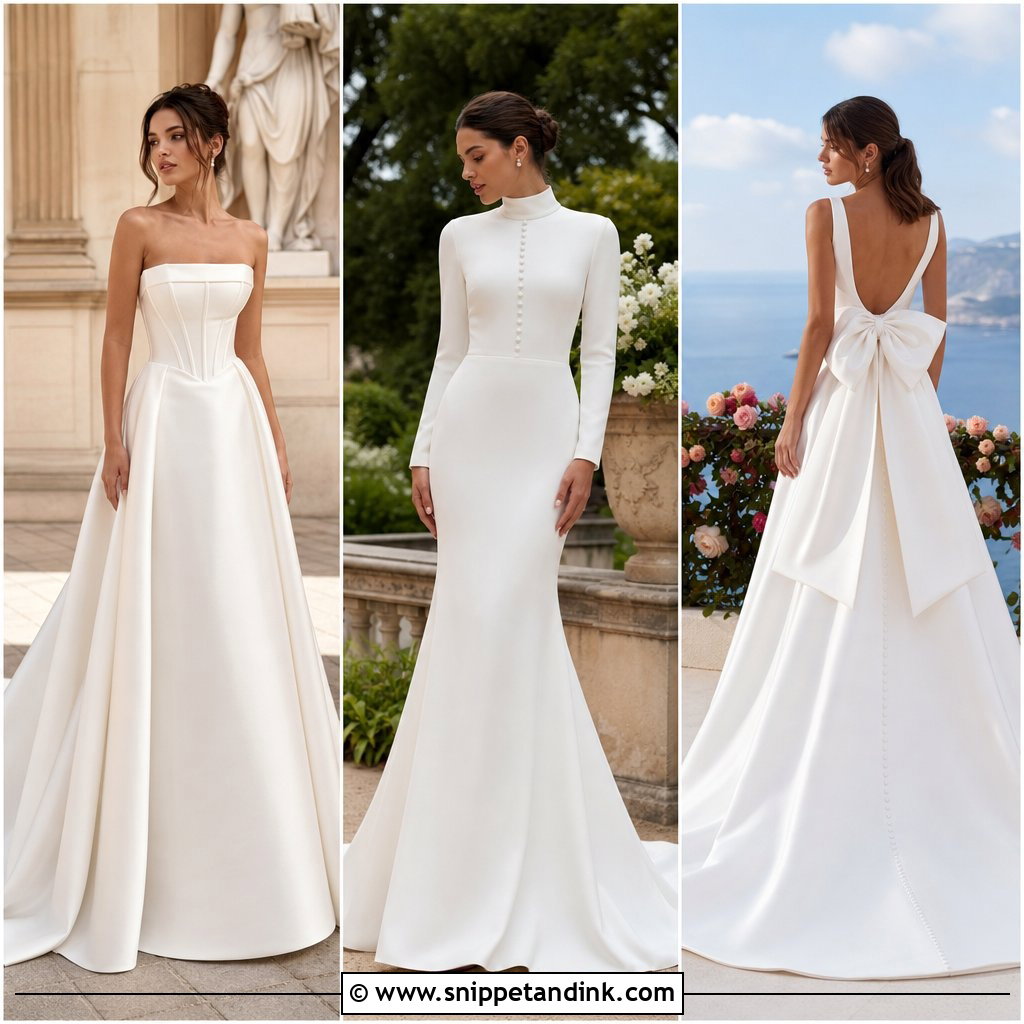
Bows were everywhere in the 1700s, often in a ladder of graduated bows down the front of the bodice, and they’ve come back into bridal fashion for good reason. Small bows down the bodice, shoulder bows, a waist bow or one large bow at the back each shift the mood. Pair them with a plain satin or tulle skirt, pearl earrings, bow-accent heels and a smooth veil so it doesn’t tip into sugary. On a petite frame, I scale the bows down or use a single one at the waist. A large back bow over a train makes the most dramatic exit up the aisle.
11. Rococo Pearl Wedding Dress
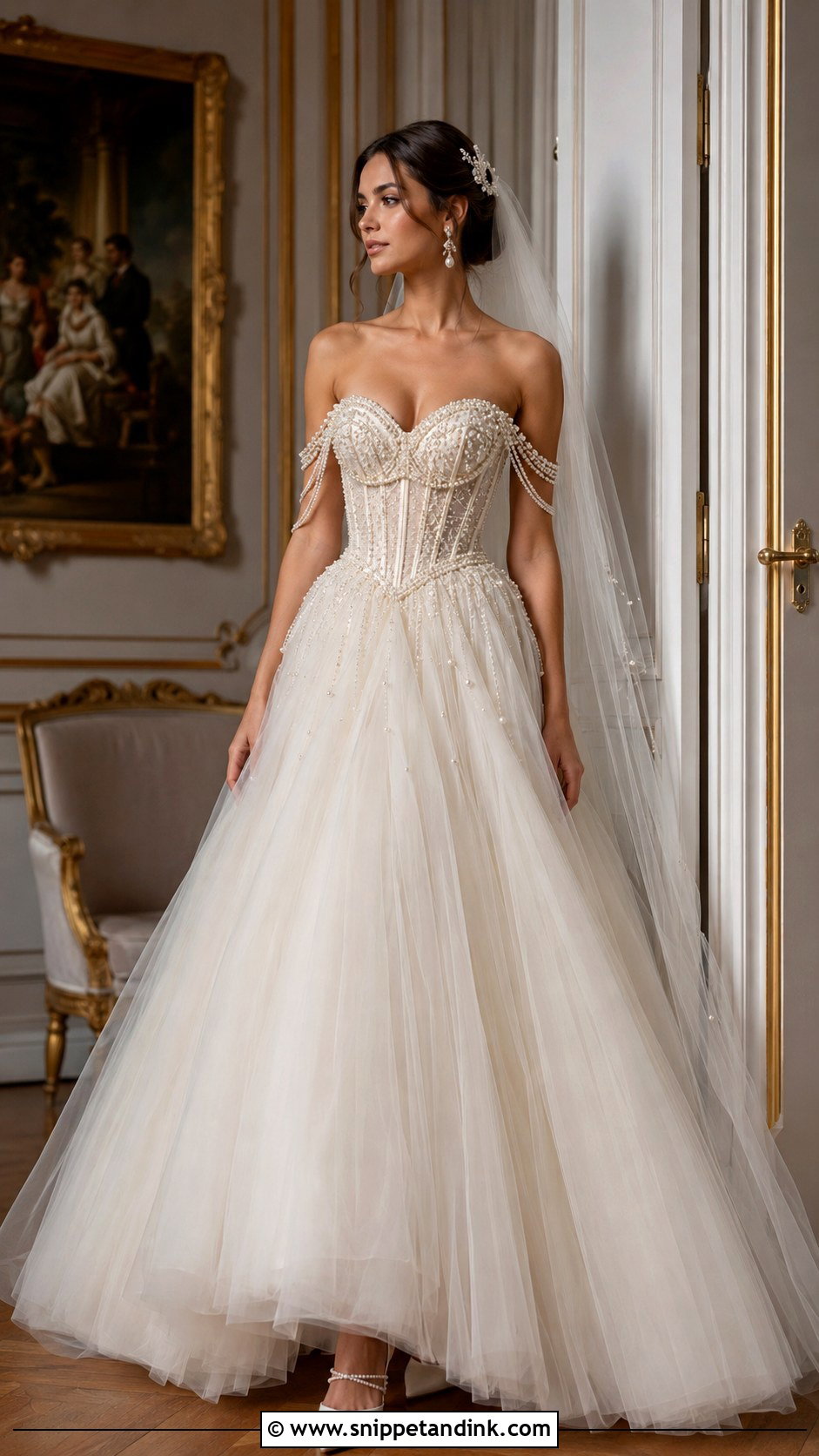
Pearls give a soft glow rather than sparkle, which is why I suggest them to brides who find crystals too bright. They sit well on corset bodices, sheer sleeves, veils and tulle skirts, scattered rather than packed. Ivory or champagne base fabric keeps them looking warm. Style with pearl drops, a pearl comb and classic pointed heels; white roses with pale blush flowers echo the glow. Heavy pearl beading adds real weight to a sheer sleeve, so check that the sleeve hangs without dragging at the fitting. It’s well suited to evening ceremonies and vintage-style rooms.
12. Rococo Embroidered Wedding Dress
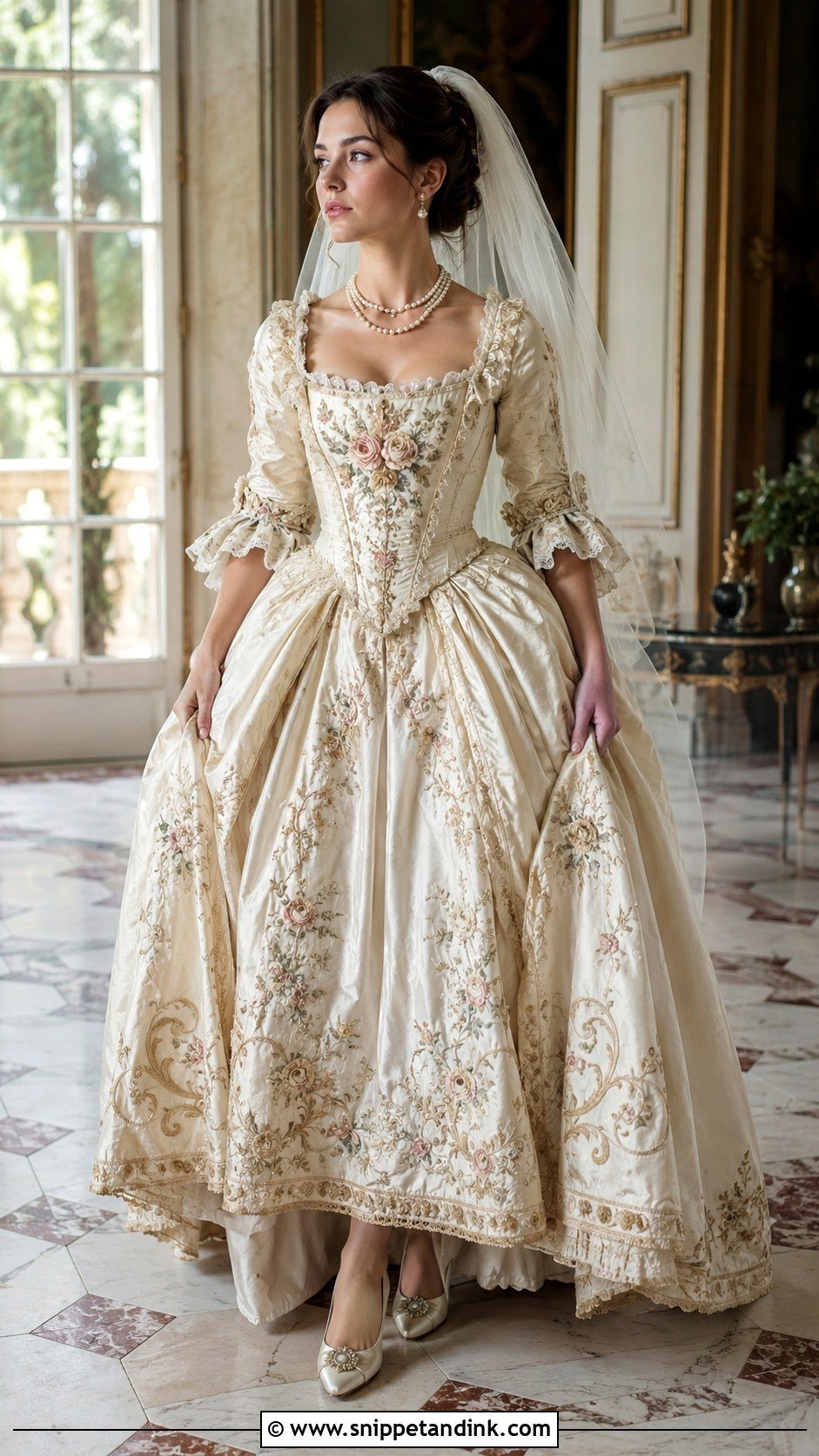
Embroidery is where you can see the hours that went into a gown. Scrollwork, vines, flowers, leaves or metallic thread can sit on the bodice, hem, sleeves or train, and a structured corset with a full skirt keeps it looking intentional. If the embroidery is heavy, I pair it with a clean-edged veil and plain pearls; if it’s light, a lace-trim veil can add texture. Metallic thread can tarnish or snag, so ask the bridal salon how the gown should be stored before the day. Close-up photos show every stitch, which is the reward.
13. Rococo Long Sleeve Wedding Dress
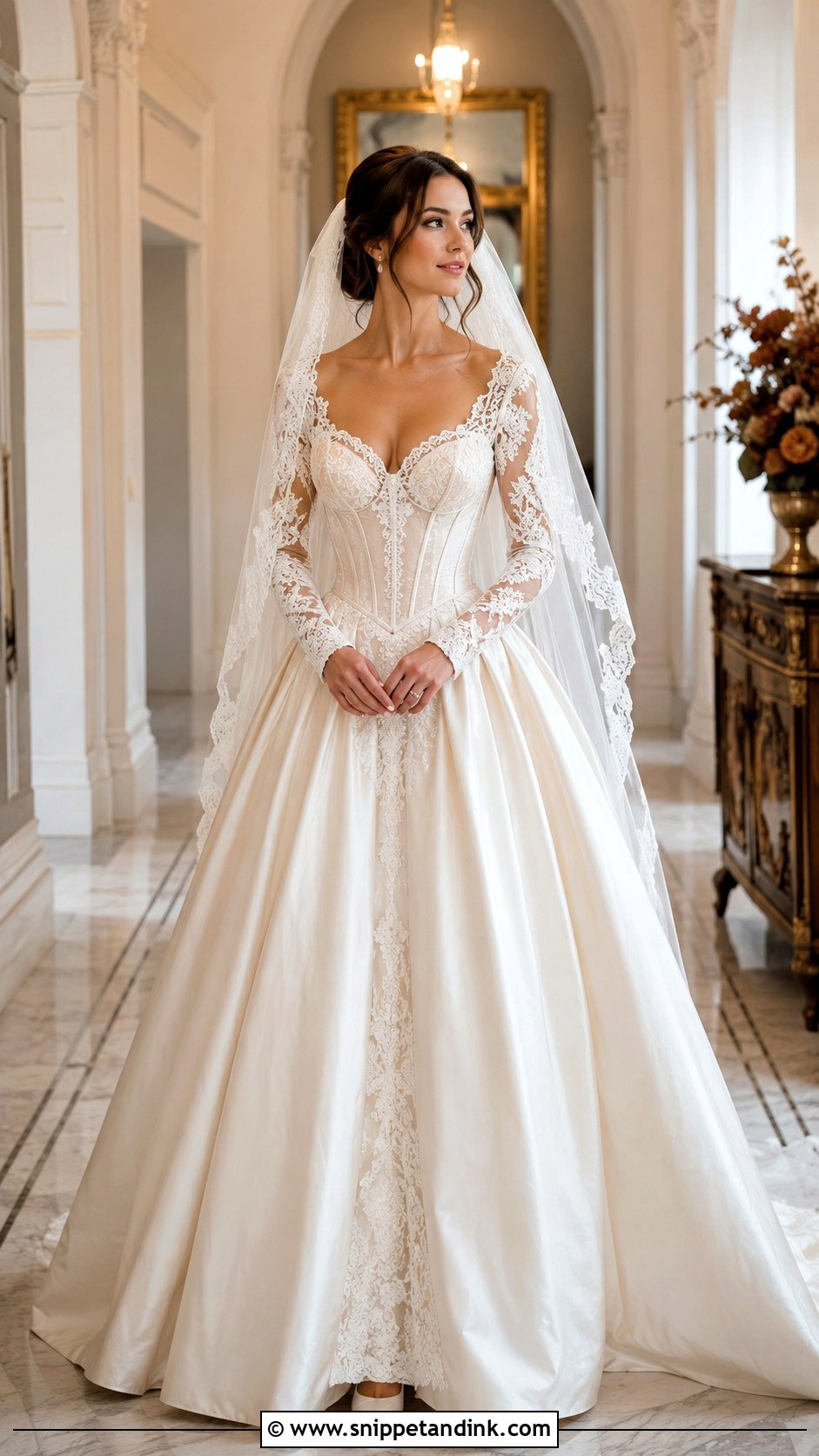
Long sleeves bring a formal, graceful mood, and in the period they would have ended at the elbow with lace ruffles, so a full-length sleeve is already a modern choice. Lace, sheer tulle, satin or a slight puff all work over a corset bodice and full skirt. They’re welcome in autumn and winter, and sheer versions handle spring. Pearl earrings, closed-toe heels and a soft veil finish it; skip bracelets if the cuffs are detailed. Fitted satin sleeves need to be tested with arms raised, because a tight sleeve can stop her hugging guests comfortably.
14. Rococo Short Sleeve Wedding Dress
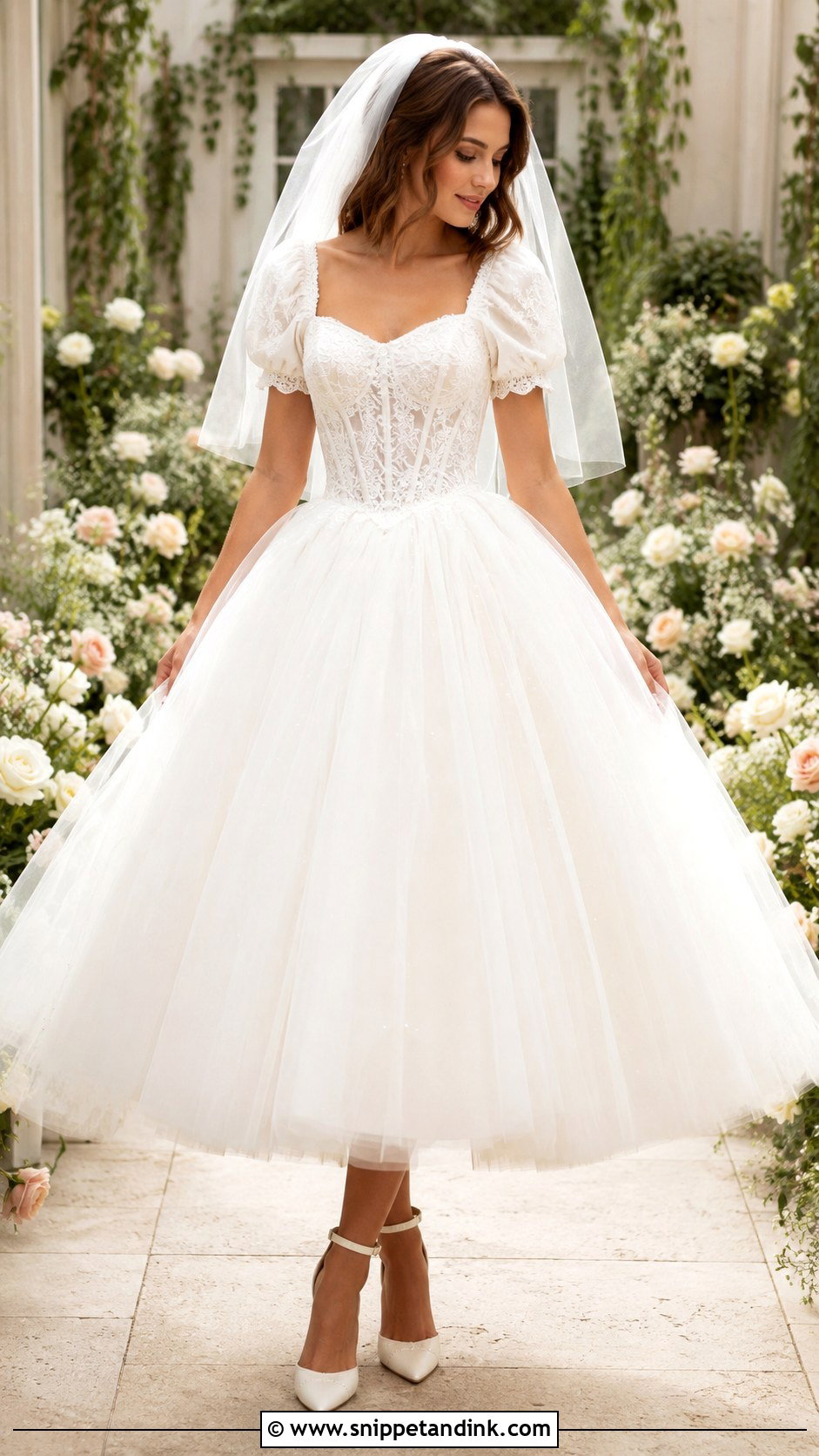
Small puff, lace or off-shoulder cap sleeves bring a light 18th-century touch for warm weather. A full tulle or satin skirt balances the bodice best. I’d add pearl studs, satin heels, a ribbon-tied bouquet and a shoulder-length tulle veil to keep everything light. Puff sleeves widen the shoulder line, so for a bride with broad shoulders I suggest a softer cap or off-shoulder version instead. Detail near the neckline draws the eye up, and the rest can stay simple.

15. Rococo High Low Wedding Dress
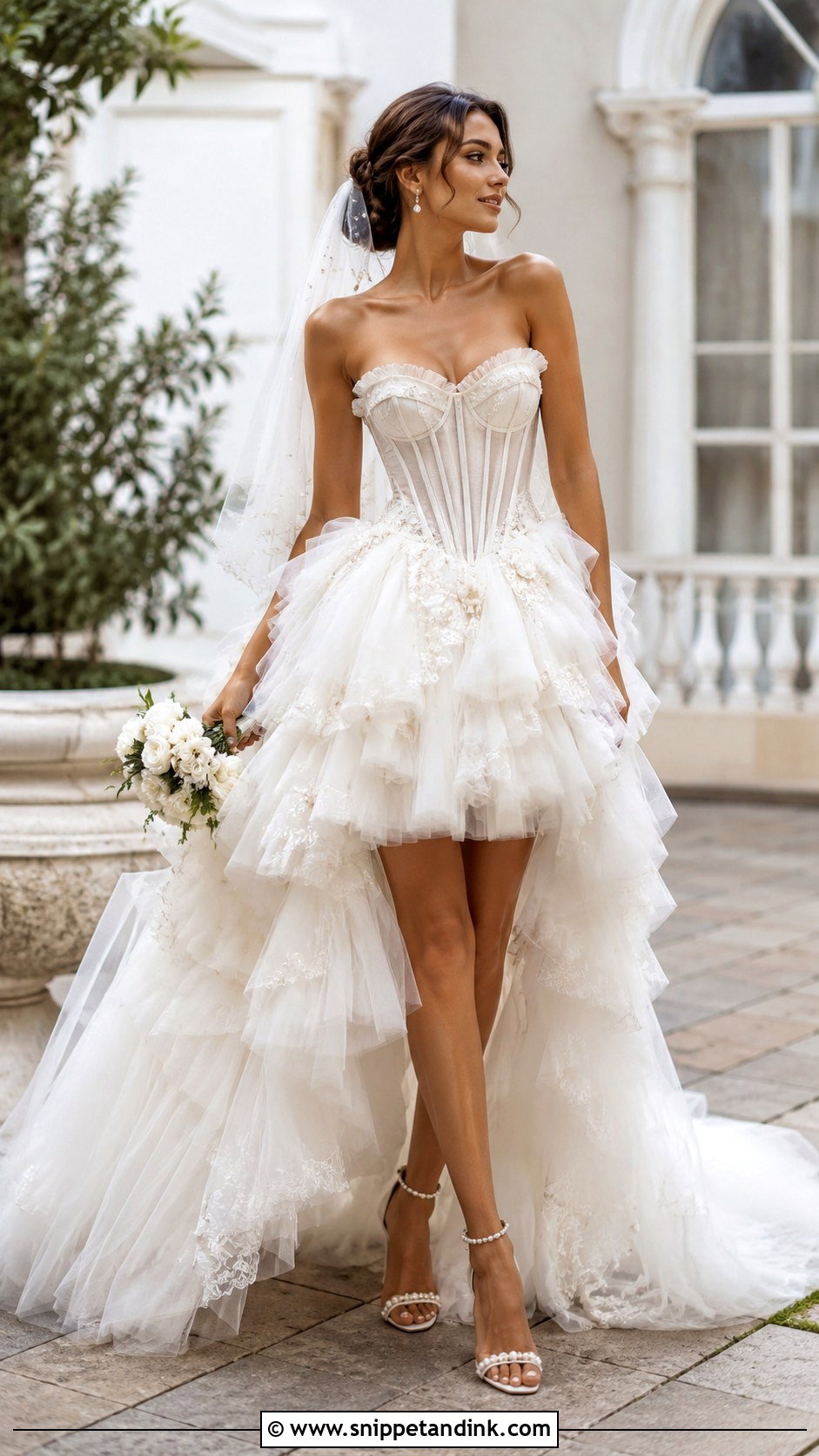
High-low hems are clearly modern, but the shorter front shows off the shoes and the longer back keeps the drama. A corseted bodice, layered tulle or brocade ties it back to the Rococo. Because the shoes are on show, choose them first: satin pumps, embellished heels or pearl-strap shoes. A short veil, pearl earrings and a small bouquet finish it. I recommend this for receptions, a courthouse wedding with grand styling, or a second look. Get the hem length right at fittings, since a back hem that’s an inch too long catches under the heel on stairs.
16. Rococo Tea Length Wedding Dress
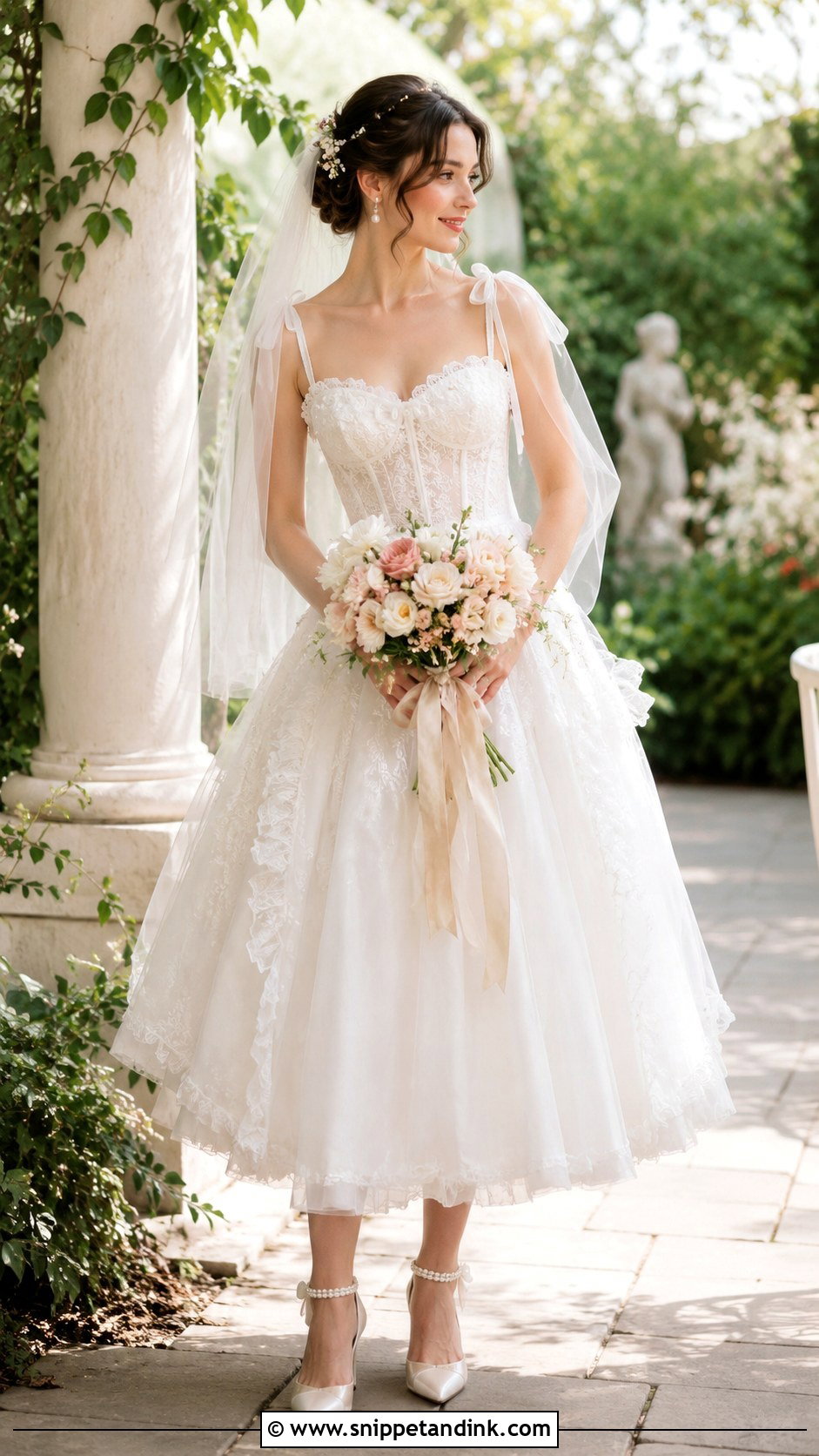
Tea length is the practical one: easier to walk and dance in, and it shows off the shoes. A corset bodice, lace overlay, bows or a full skirt with soft volume keeps the period link. Pair it with pearl heels, ankle-strap pumps or satin shoes with a small bow. A birdcage veil reads vintage, though more 1950s than 1750s, so if she wants to stay closer to Rococo, I suggest a soft shoulder veil instead. It fits garden ceremonies, small weddings and daytime celebrations.
17. Rococo Blue Wedding Dress
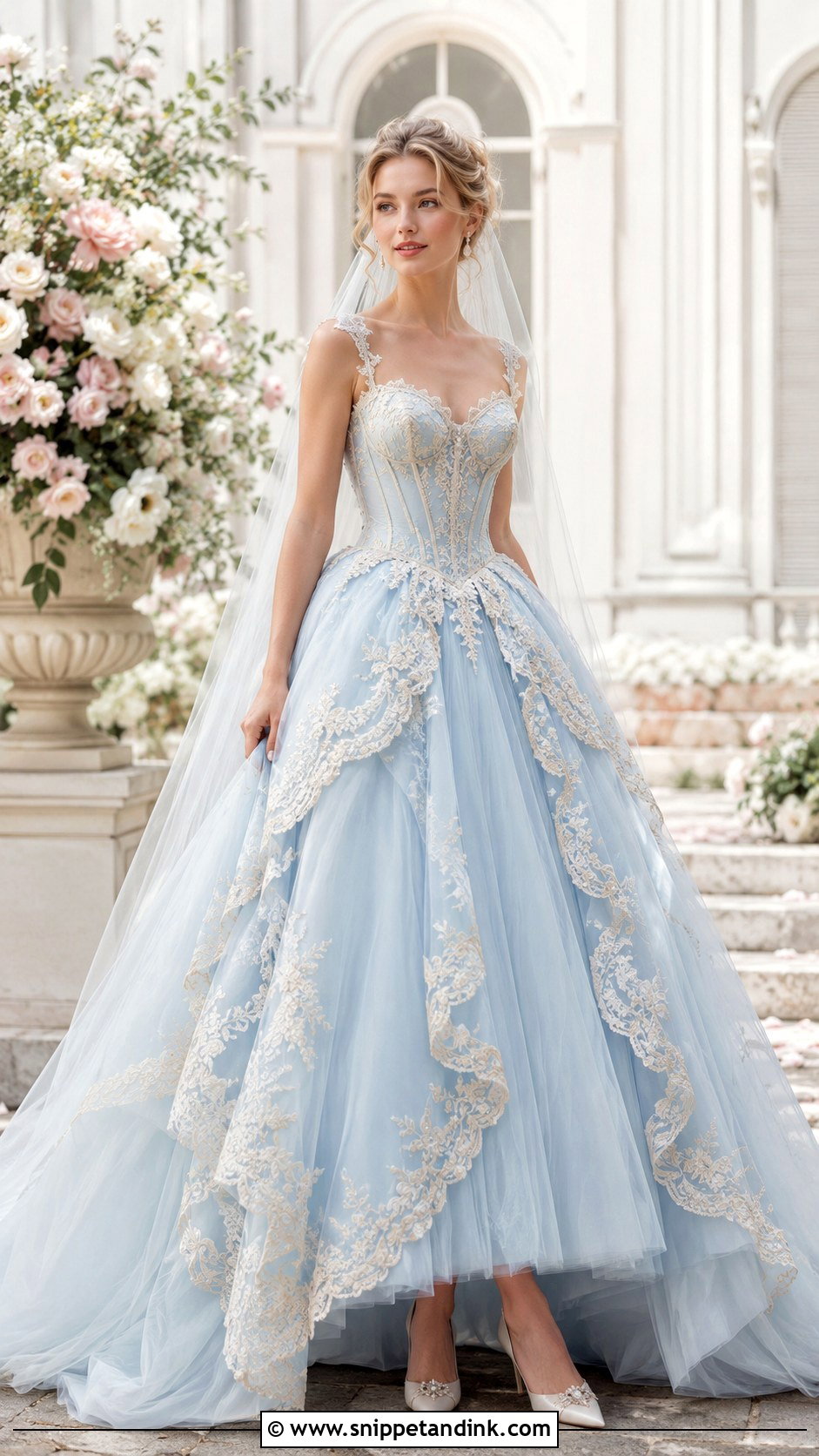
Powder blue was one of the signature colors of the period, especially next to ivory lace and pearls, so a blue gown here isn’t a whim. A pale blue tulle gown, blue floral brocade or an ivory dress with blue embroidery all work. The corseted bodice and full skirt are what stop blue reading as a bridesmaid’s dress. I style it with ivory heels, pearl earrings and white, blush and soft blue flowers, and keep makeup fresh. Order a swatch and look at it under the venue’s lighting; warm indoor bulbs can push pale blue toward grey.
18. Rococo Pink Wedding Dress
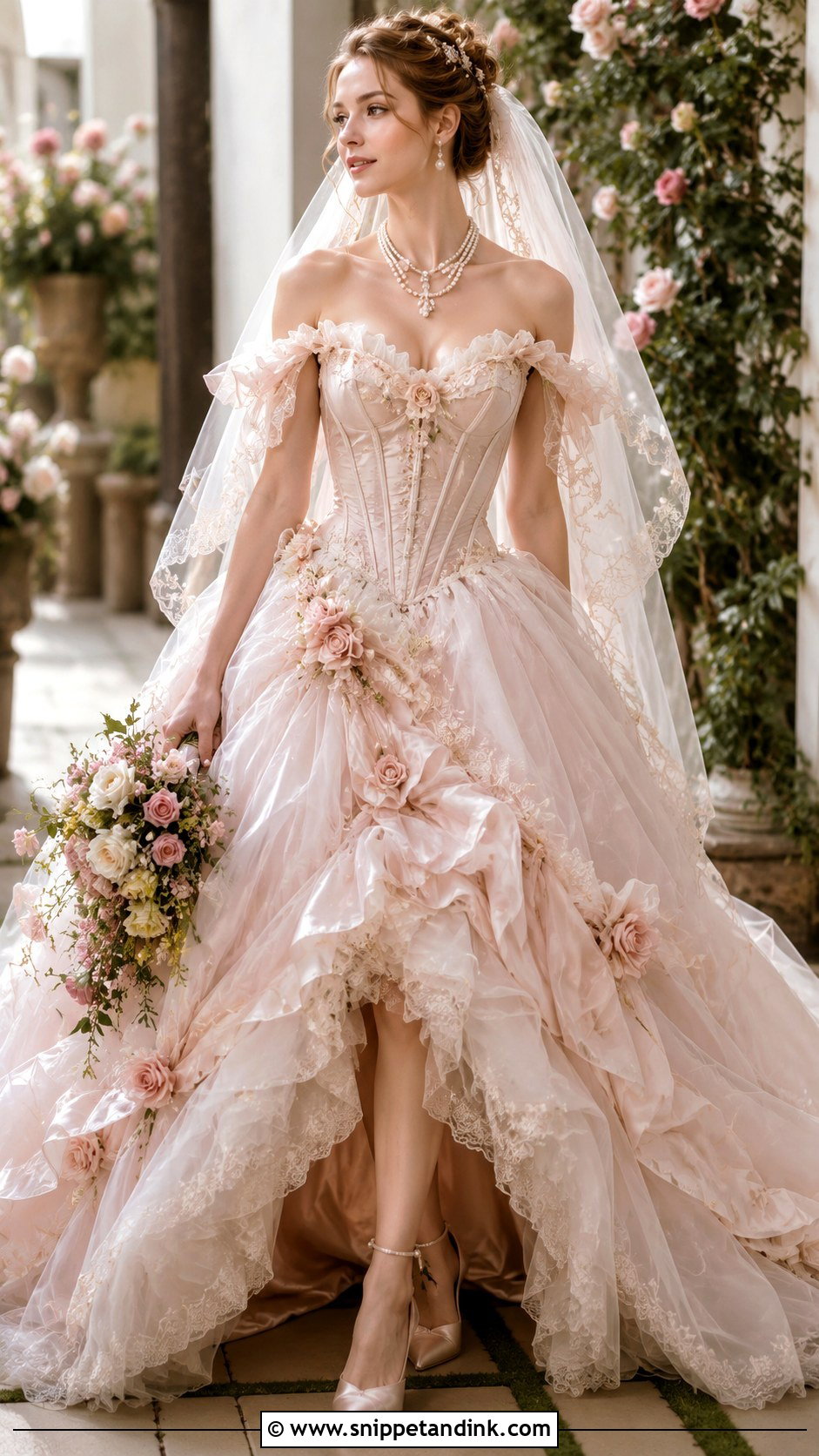
Pink works best in its quietest shades, blush, ballet pink and dusty rose, which keep it bridal. Tulle, satin, organza or floral lace all suit, with a corset bodice and full skirt for structure. Ivory heels, pearl jewelry, a blush or ivory veil and roses with ranunculus complete it for a garden wedding or a dreamy fairytale feeling. The shade matters more than the style. A cool blush flatters some skin tones and drains others, so try two or three pinks against her face before choosing.
19. Rococo Gold Wedding Dress
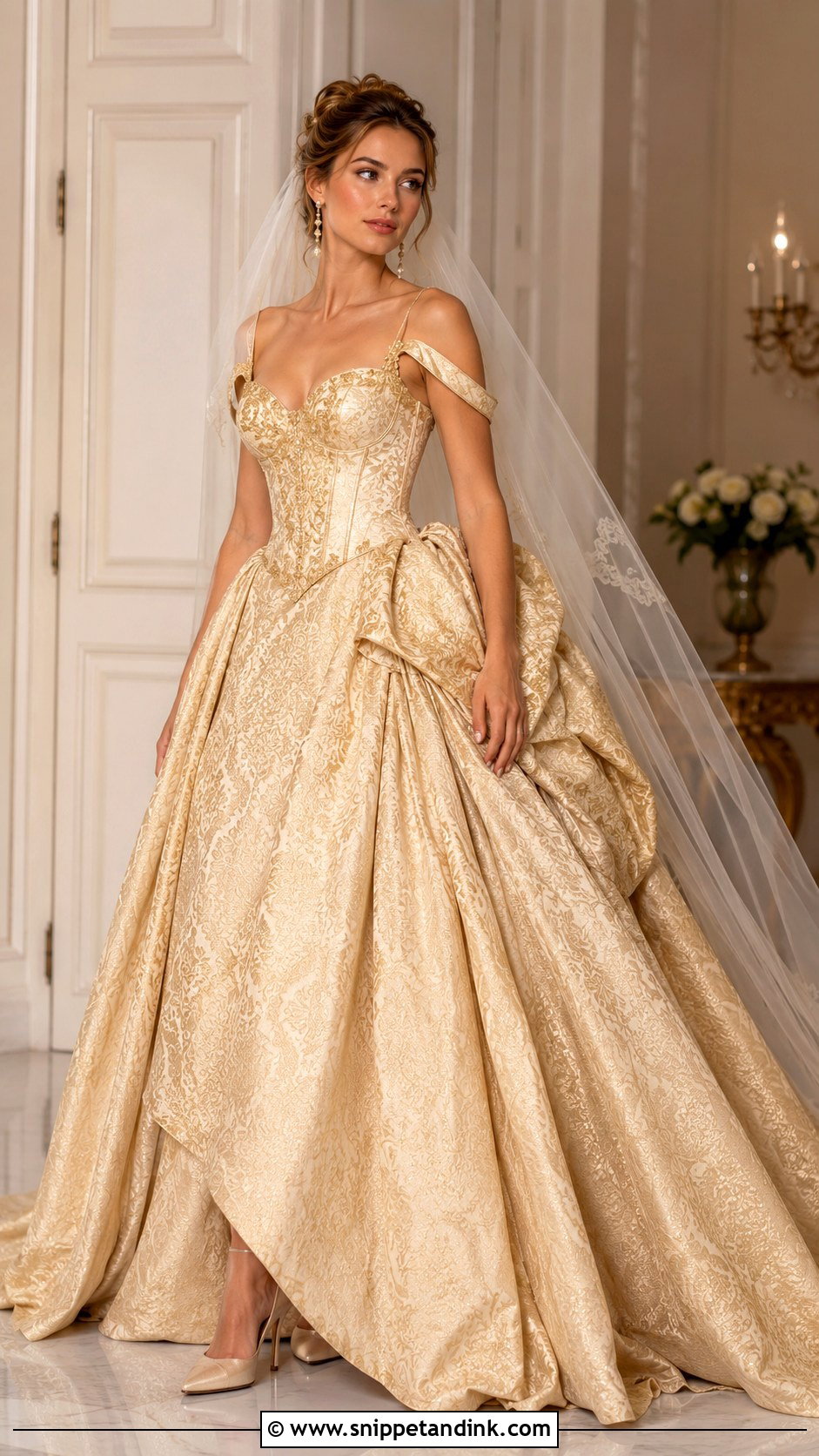
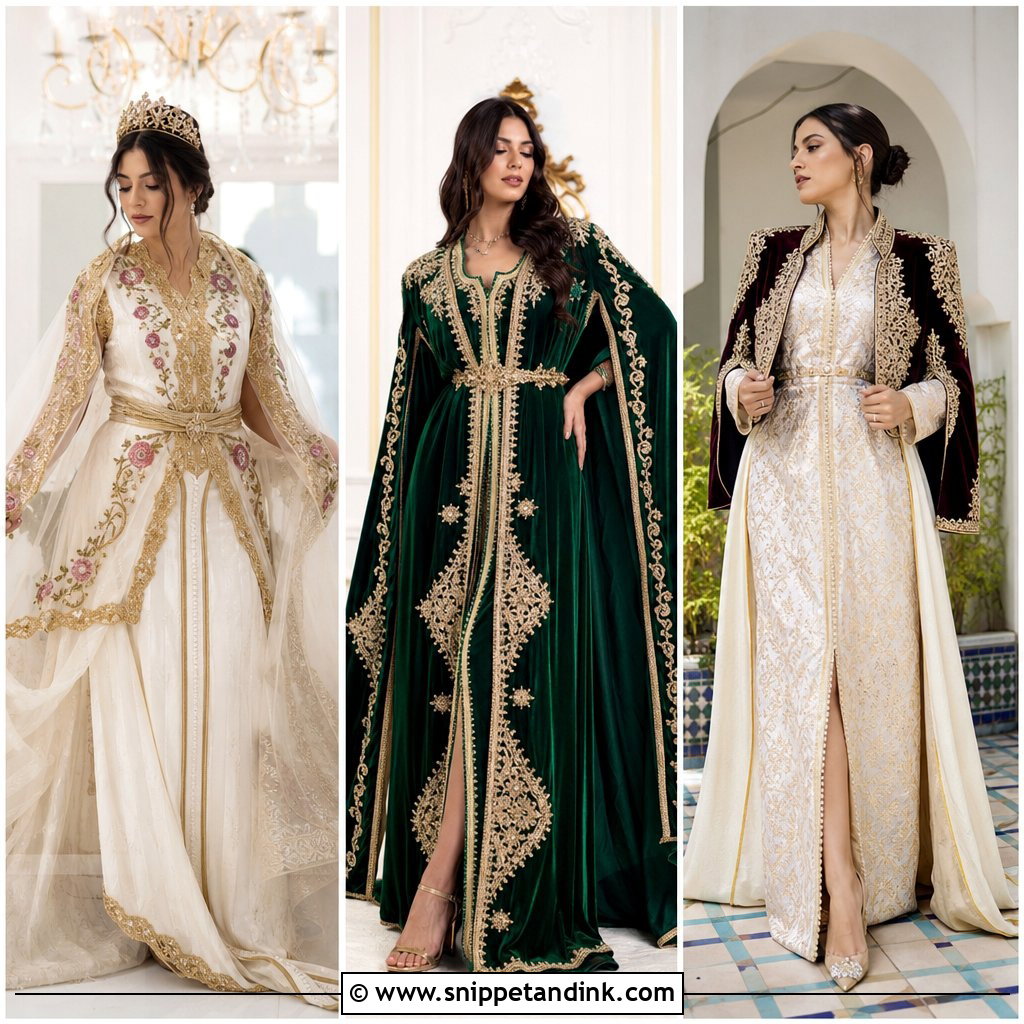
Gold can look cheap fast, and the fix is the shade. Soft gold, champagne gold or pale antique gold reads luxurious; bright metallic reads costume. Brocade, embroidered lace or satin with a low sheen are my picks. Pearl earrings, champagne heels and a simple ivory veil let the fabric lead, with a soft, neutral bouquet if the gown is heavily detailed. A corset bodice, pleated skirt or long train adds old-world weight. I’d keep this one for evening ceremonies in formal ballrooms, where gold looks rich under candlelight.

20. Rococo Ruffle Wedding Dress
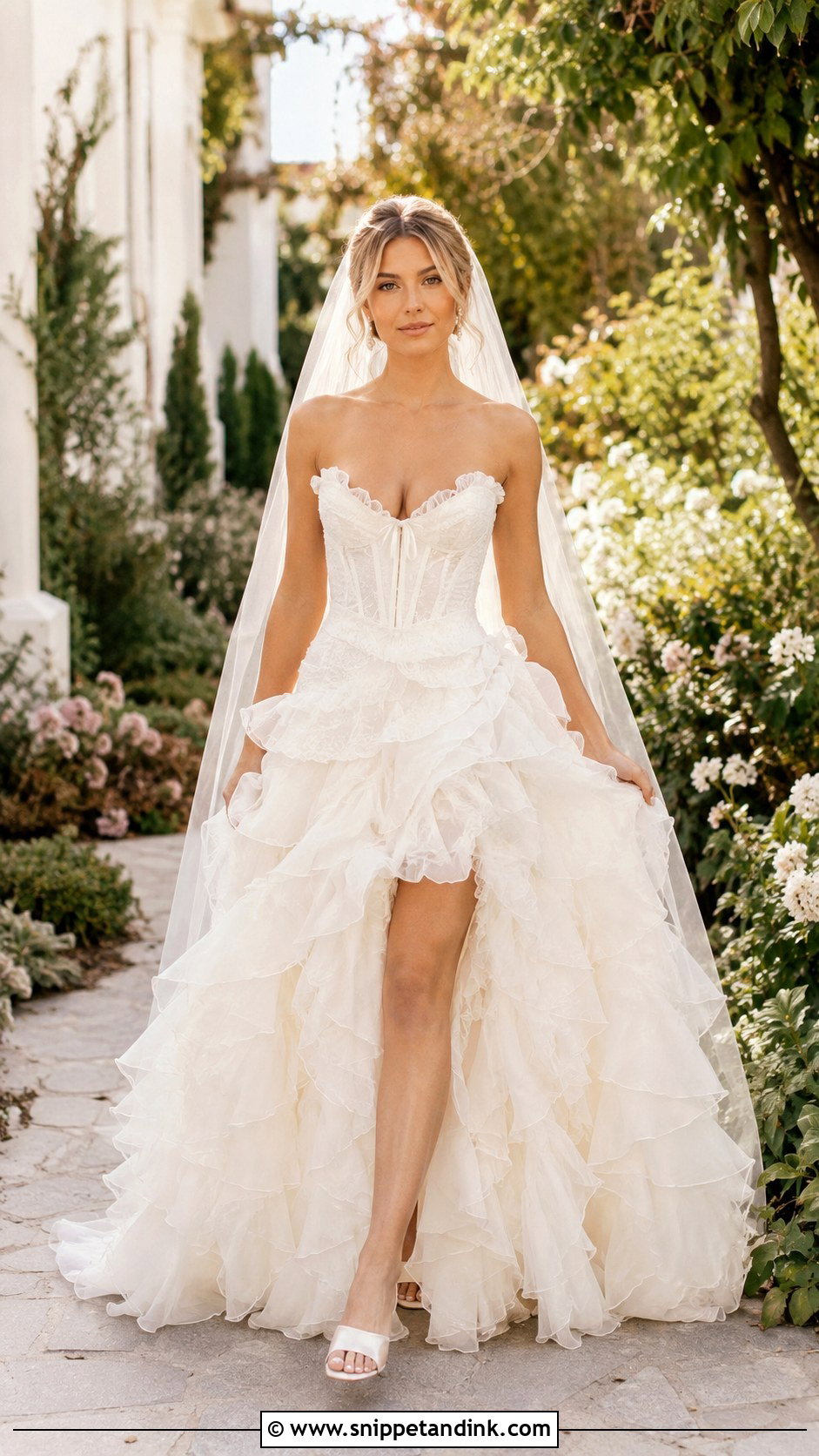
Ruffles framing the neckline, cascading down a skirt, trimming sleeves or edging a train bring movement into a big silhouette. The rule I hold to is light fabric: tulle, organza or chiffon. Ruffles in a stiff fabric stand away from the body and look like packaging. A fitted corset bodice balances the volume, and pearl earrings, plain heels and a smooth veil keep the ruffles in charge. Outdoors, the layers catch wind and light in photos, which is where this gown shows its best side.
21. Rococo Pannier Wedding Dress
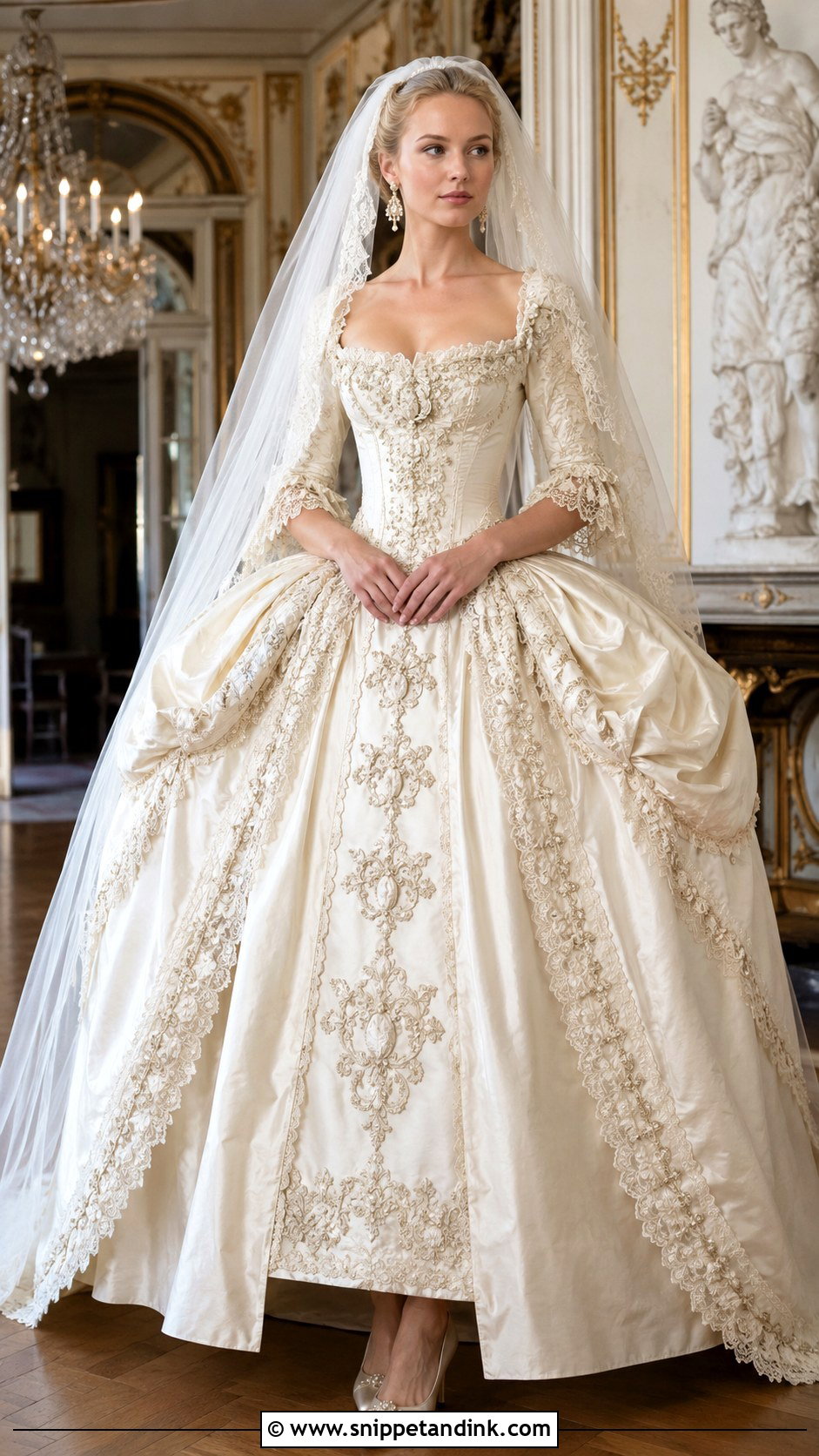
Panniers are the most historical choice here. They were hip supports that pushed skirts out sideways, creating the wide court silhouette of the 18th century. For a modern wedding, I suggest softer side volume, a wide overskirt or structured pleating rather than a full-width frame. A fitted bodice, square neckline and ornate trim finish the shape, with plain pearls, satin heels and a long veil that falls behind the skirt. Measure the venue’s doors and aisle before ordering. It suits brides who love fashion history and grand, museum-like venues.
22. Rococo Square Neck Wedding Dress
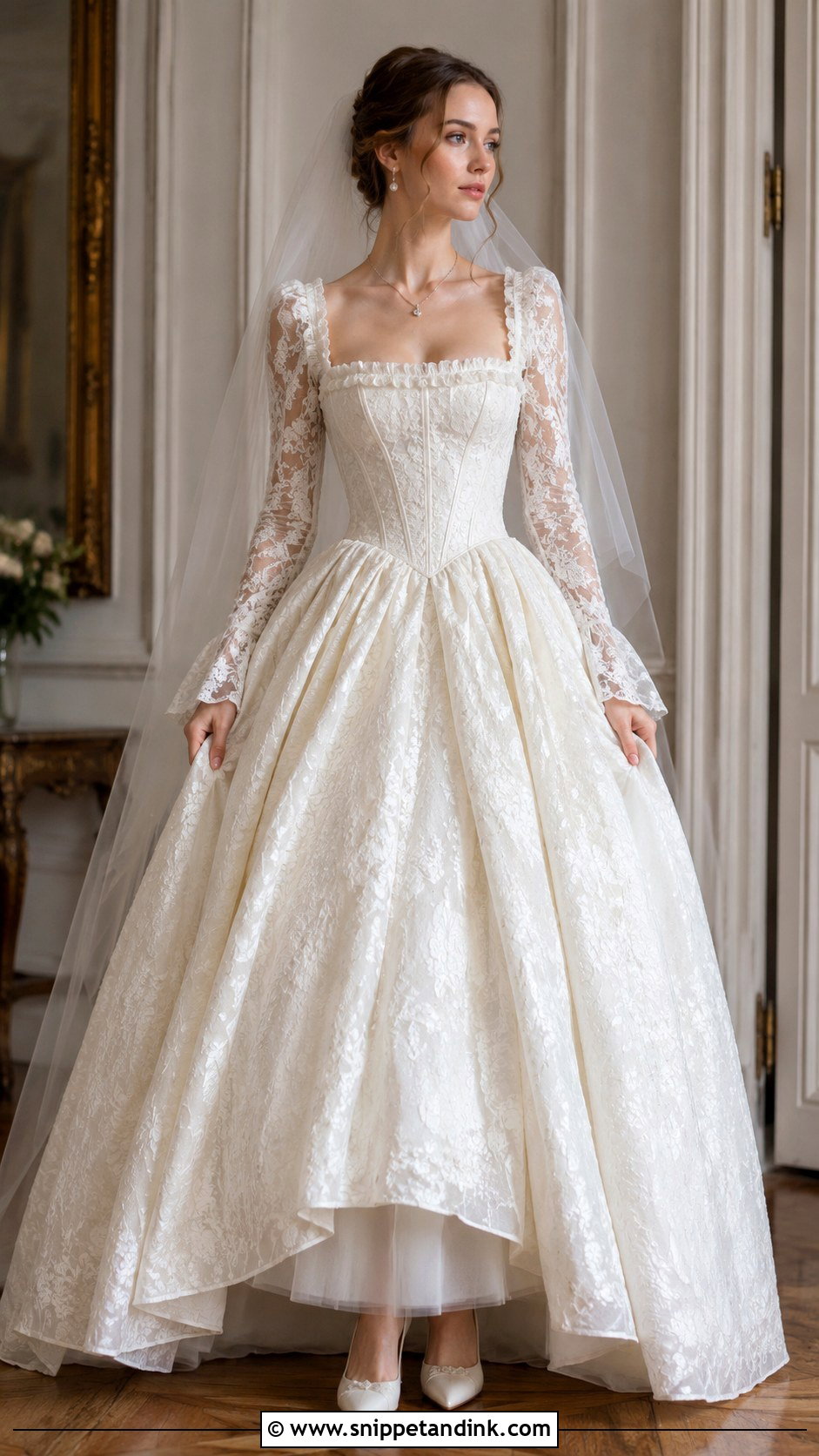
The square neckline is quietly historical and very wearable. It gives the bodice structure and lines up naturally with corset seaming. Lace, satin or brocade set how ornate it gets, and a full skirt with a soft veil keeps it romantic. Pearl drop earrings, a delicate necklace and pointed satin heels complete it. It frames the chest and shoulders with less exposure than an off-shoulder style, which is why I offer it to brides who want the period mood with a little more coverage. A square neck only looks crisp if the corners sit flat, so watch for gaping at fittings.
23. Rococo Cape Wedding Dress
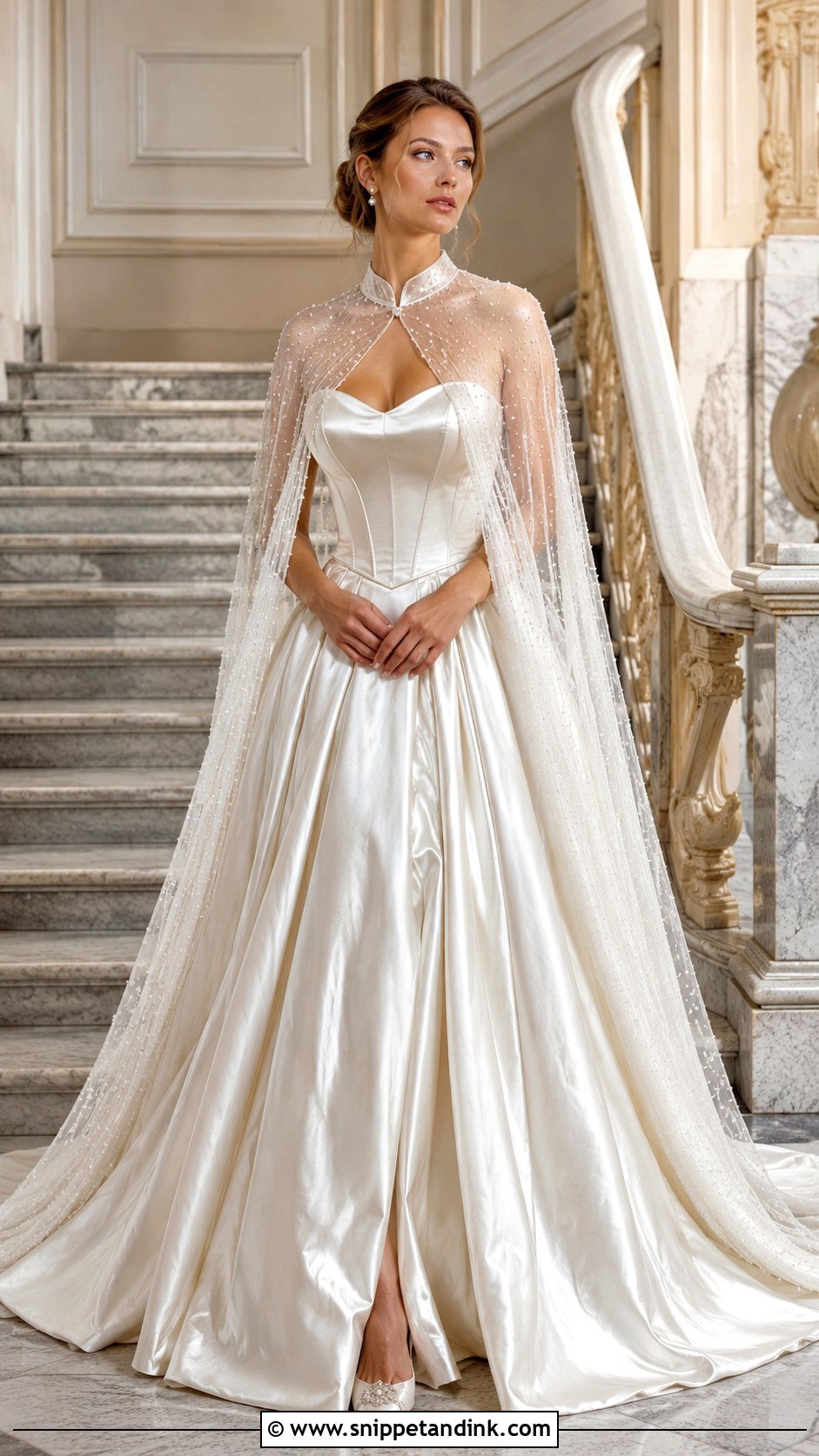
A cape can replace a veil entirely and gives a grand layer for a long aisle or a staircase. A lace cape, pearl-dotted tulle or sheer embroidered cape over a corset gown is the usual pairing. The base dress needs enough structure to carry it: satin, tulle or brocade. Keep earrings and heels plain. Most capes attach at the shoulders with hooks or snaps, so make sure the bridal attendant knows how to remove it after the ceremony and reveal the cleaner gown underneath. It’s warm enough to help on a cool evening.
24. Rococo Detachable Train Wedding Dress
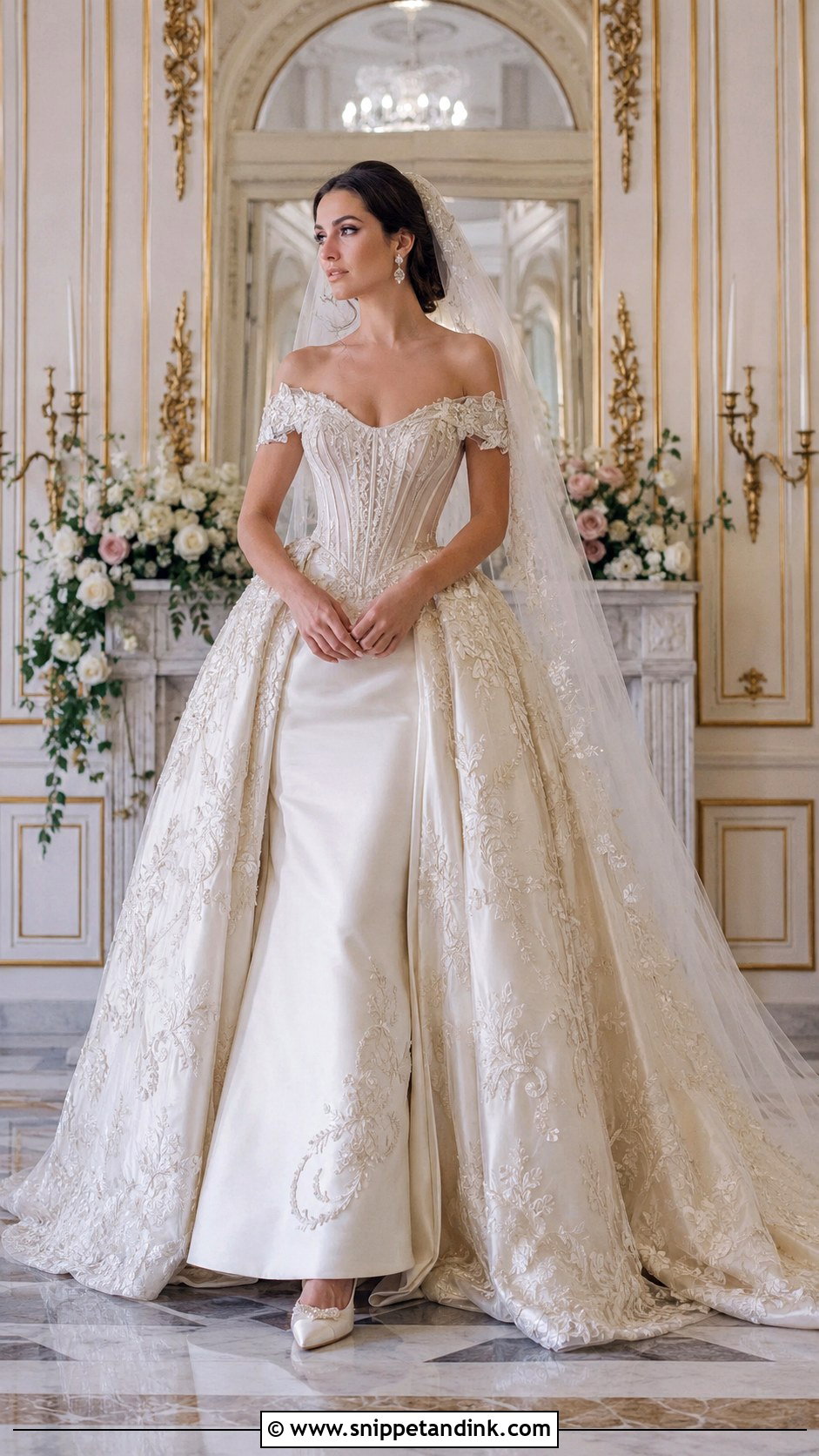
Detachable trains give ceremony drama and a reception she can move in. The gown starts with a corset bodice and a full overskirt or ornate train, then sheds it for dinner. Embroidery, bows or pearl trim on the train add the Rococo signature. Pair it with pearl earrings, a ceremony veil and comfortable heels for later. I always do a practice run of removing the train at the final fitting, because hidden hooks and snaps are fiddly in a bathroom with three helpers. It’s the way to have dramatic photos without buying a second dress.

25. Rococo Reception Wedding Dress
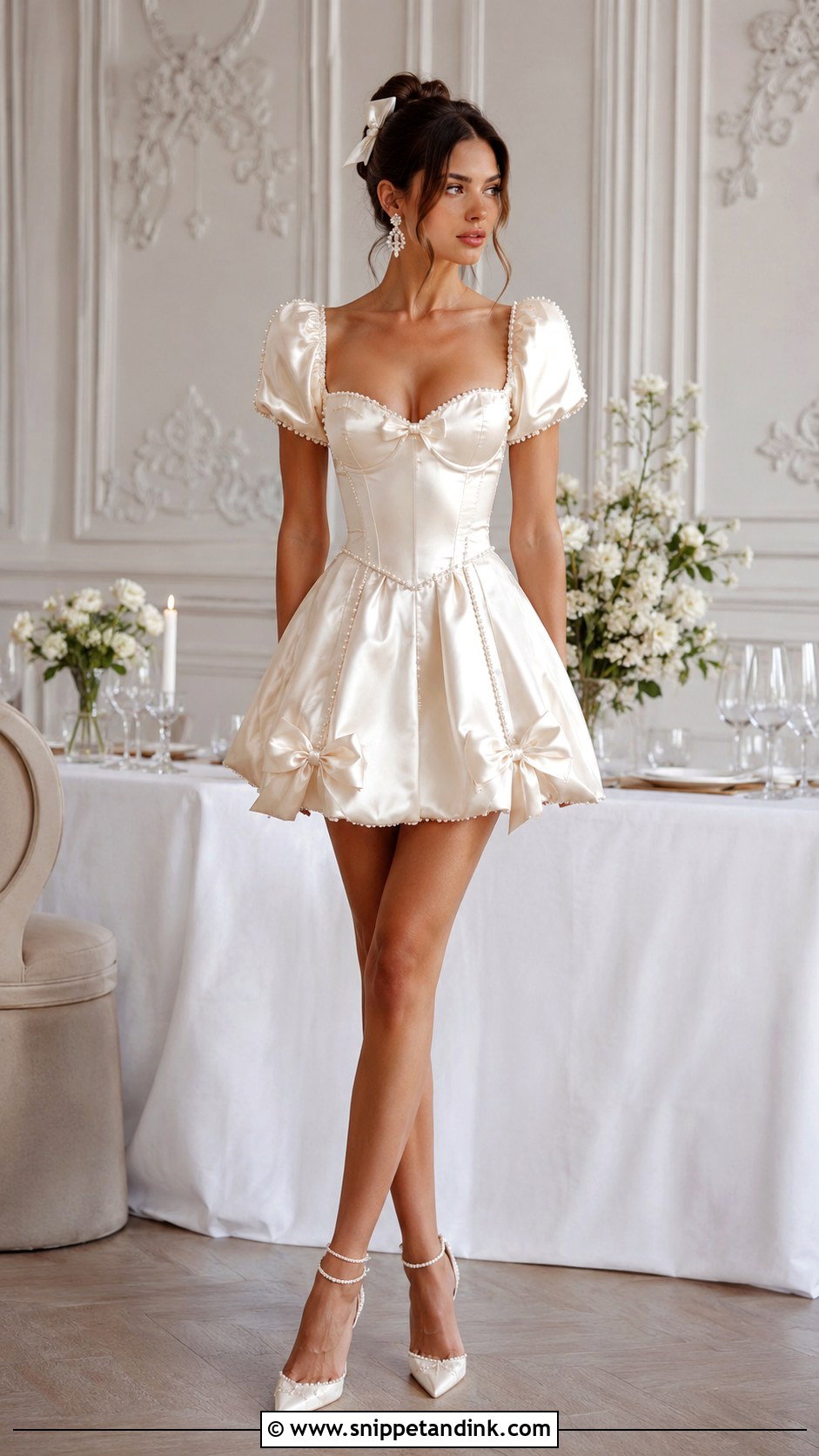
The reception look can be shorter and lighter while staying on theme. A mini or midi with a corset bodice, bow accents, pearl trim, puff sleeves or floral embroidery does it, with pearl heels, a small hair bow and statement earrings. Keep the palette in ivory, blush, pale blue or champagne so the color story carries through. When the ceremony gown is very grand, I like this change to feel playful. Plan when she’ll change and who will help, since unlacing a corset gown takes longer than most couples expect.
Living a Whole Day Inside a Wide, Structured Gown
Big Rococo skirts photograph wonderfully and behave awkwardly. The fittings are where I make them liveable, and these are the things I check with every bride wearing this much volume.
Doorways, cars and chairs
Measure the widest doorway she has to walk through and the back seat of the car taking her to the ceremony. A full petticoat compresses, a hoop does not. Choose a chair without arms at the reception, and practise sitting by sweeping the skirt behind her before she lowers down.
Weight and a long day
Brocade, satin and layered petticoats get heavy over ten hours, and the weight hangs from the waist and shoulders. Ask the seamstress to add a waist stay, a grosgrain band inside the bodice, which takes load off the zip and straps. Wear the real shoes at every fitting, since a heel change alters the hem.
Timing the order
Structured, highly decorated gowns usually take months to make and need several fittings, so order earlier than you would a simple sheath. Bustling a long train is part of the final fitting. Bring whoever will do it on the day, and have them practise once with you watching in the mirror.
One Ornate Feature, Then Let the Rest Stay Quiet
Rococo bridal style comes down to shape, softness and detail. The right gown might be a pannier dress, a pastel tulle skirt, a pearl-covered corset or a short reception dress with bows. Think about the whole outfit, since the shoes, veil, jewelry, bouquet and hair pieces all shift the mood. If you want it to feel modern, pick one or two ornate features, a bodice or a train or a color, and keep everything else calm. That restraint is what makes a period-inspired gown read as a wedding dress and not a costume.
You'll Like These Ideas:









Leave a Reply