
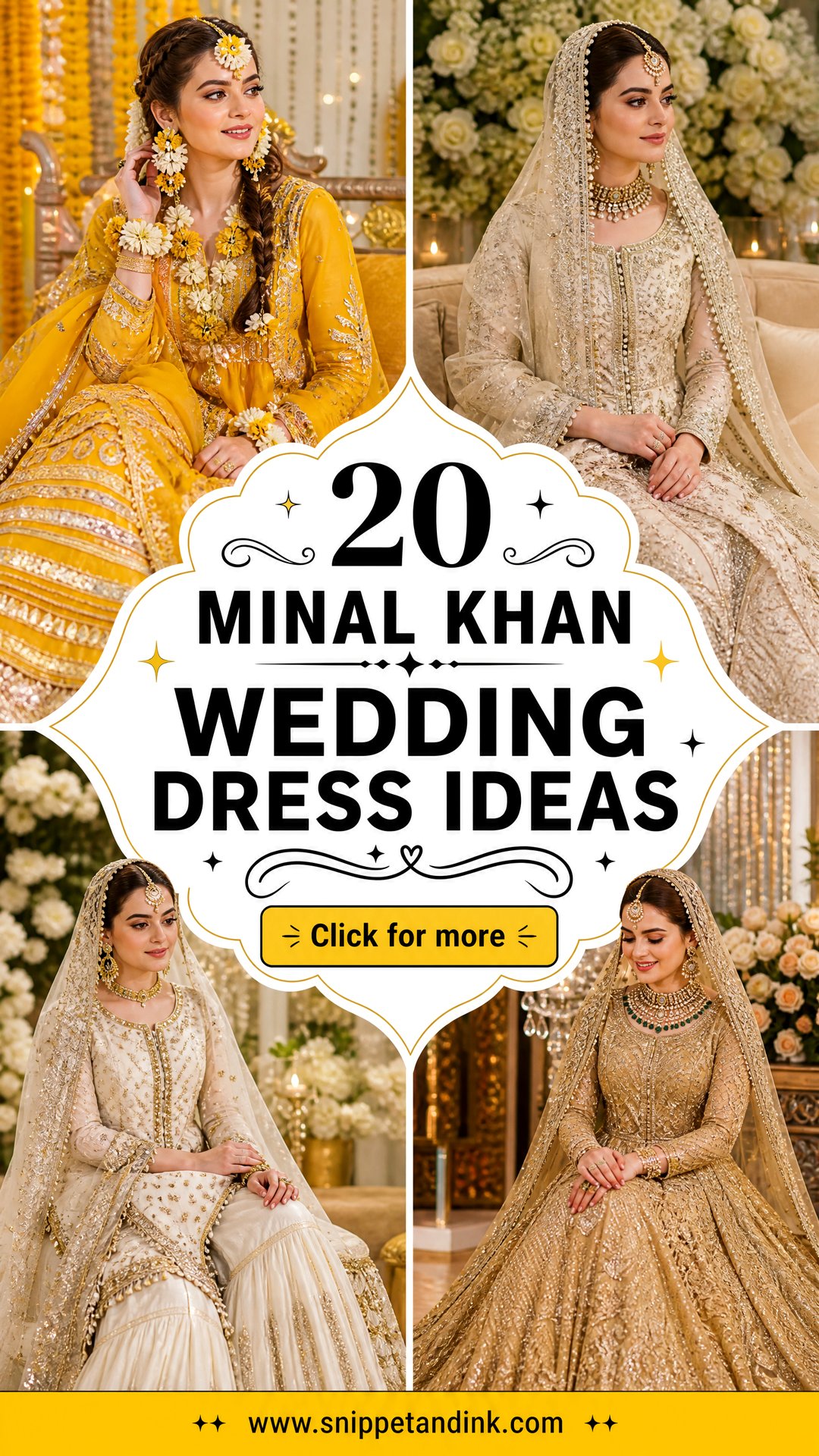
Why Minal Khan’s Wardrobe Works as a Whole Wedding Plan
When brides show me Minal Khan’s wedding photos, they rarely mean one dress. They mean the way her outfits changed from function to function: deep red for the baraat, sunny yellow at the mayun, and softer, lighter reception looks. That progression is the real lesson, and it’s how I’ve arranged the ideas below, roughly in the order your functions happen.
Before you fall for a particular colour, work out how heavy each outfit can be. A fully worked baraat lehenga with a farshi hem and two dupattas can weigh several kilos, and you’ll wear it for hours under hall lights. A mayun outfit, by contrast, needs to survive turmeric, oil and a lot of sitting on the floor. I ask every bride to list her functions, the venue for each, and whether she’ll be indoors or out, then we decide where the heavy embroidery goes and where it doesn’t.
Two Dupattas Without a Headache
Several of these looks use a double dupatta, one over the head and one across the body. Ask your hairstylist to build a firm base, a low bun or a flat padded section, so the head dupatta pins into hair rather than sliding on silk. Use small U-pins and a couple of dupatta pins rather than a fistful of safety pins, which pull threads in net. The second dupatta should be lighter than the first, or it drags the whole arrangement off one shoulder by dinner.
1. Minal Khan Cranberry Red Bridal Pishwas
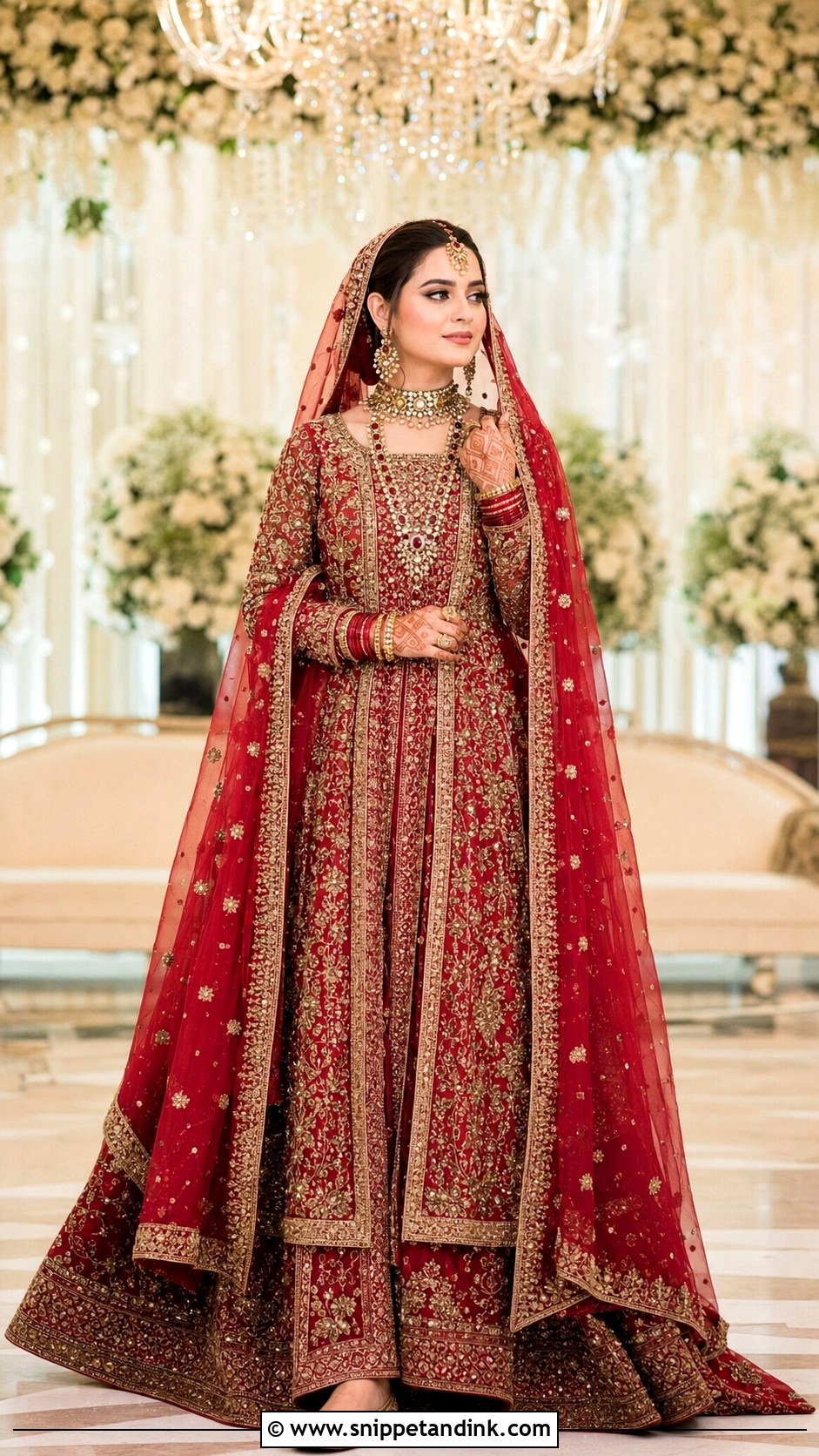
Minal Khan’s main wedding look set the tone for every function that followed, and a cranberry red pishwas is the closest way to bring that mood into your own baraat. What makes a pishwas sit right is panel count: more panels mean the skirt opens into a full circle when you walk, while a cheaper cut with few panels hangs flat in photos. I keep zardozi, dabka and a little kamdani concentrated so the red still shows between motifs. Underneath, a farshi lehenga or sharara adds volume. Frame the face with a sheer red dupatta with an embroidered border, and let a lighter second veil fall over one shoulder. Kundan choker, long necklace, jhumkas, tikka and red bangles carry the jewelry, with gold khussas, a soft bun and a muted rose lip.
2. Minal Khan Red Farshi Sharara Outfit
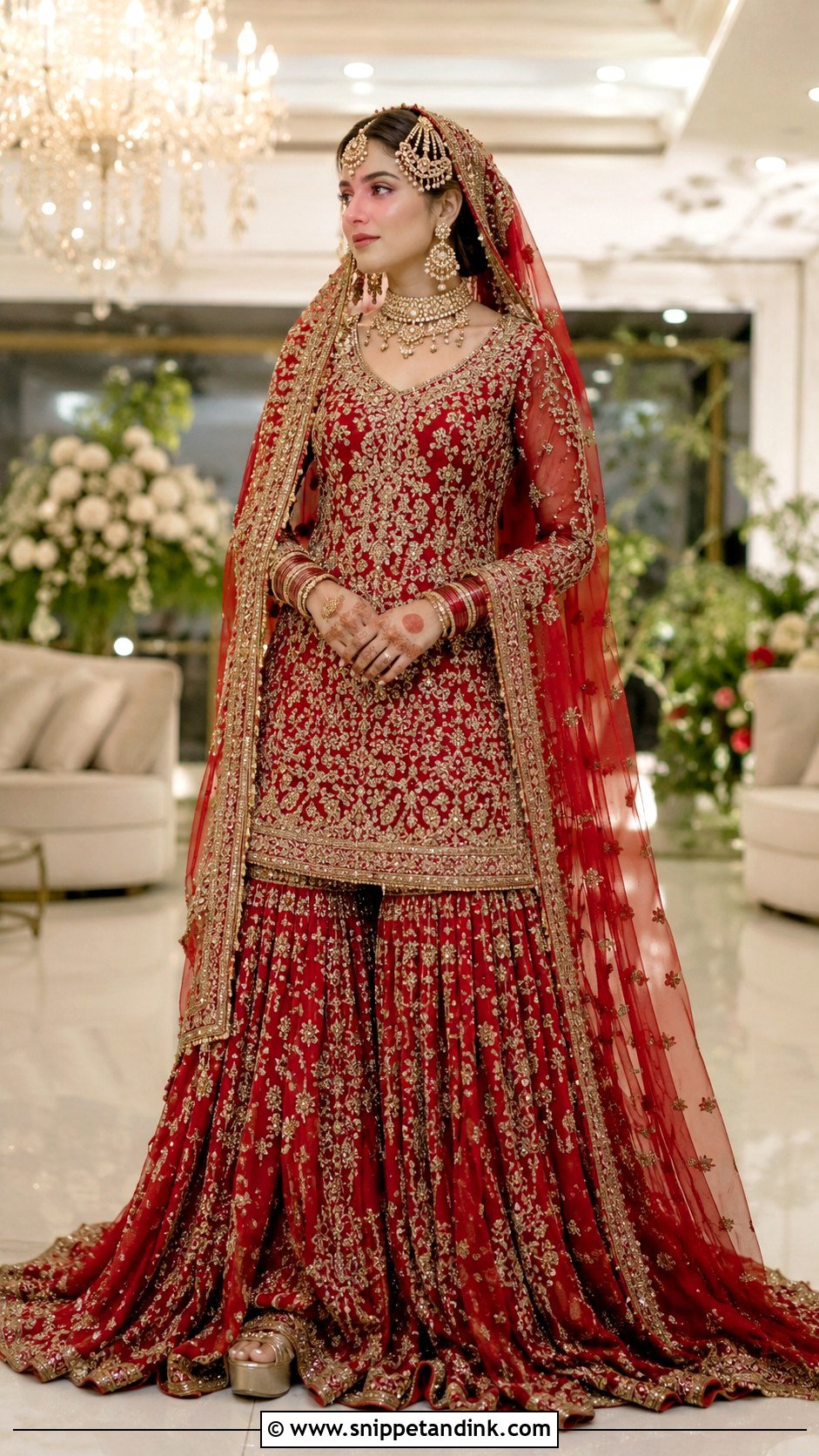
A farshi sharara is all about the floor. The hem is cut to pool and sweep, which looks regal on a stage and treacherous on stairs, so the first thing I ask a baraat bride is how many steps lie between the car and the stage. The shirt should be fitted and hip-length, with antique gold embroidery at the neck, sleeves and hem, and the sharara needs to stay smooth through the thigh before it spreads. A net dupatta with scattered motifs and a wide border goes over the head and along one arm. Polki necklace, passa and a central tikka give balanced sparkle. Cushioned gold platforms hide under that long hem and buy you height and comfort for rukhsati.
3. Minal Khan Red Bridal Lehenga Choli
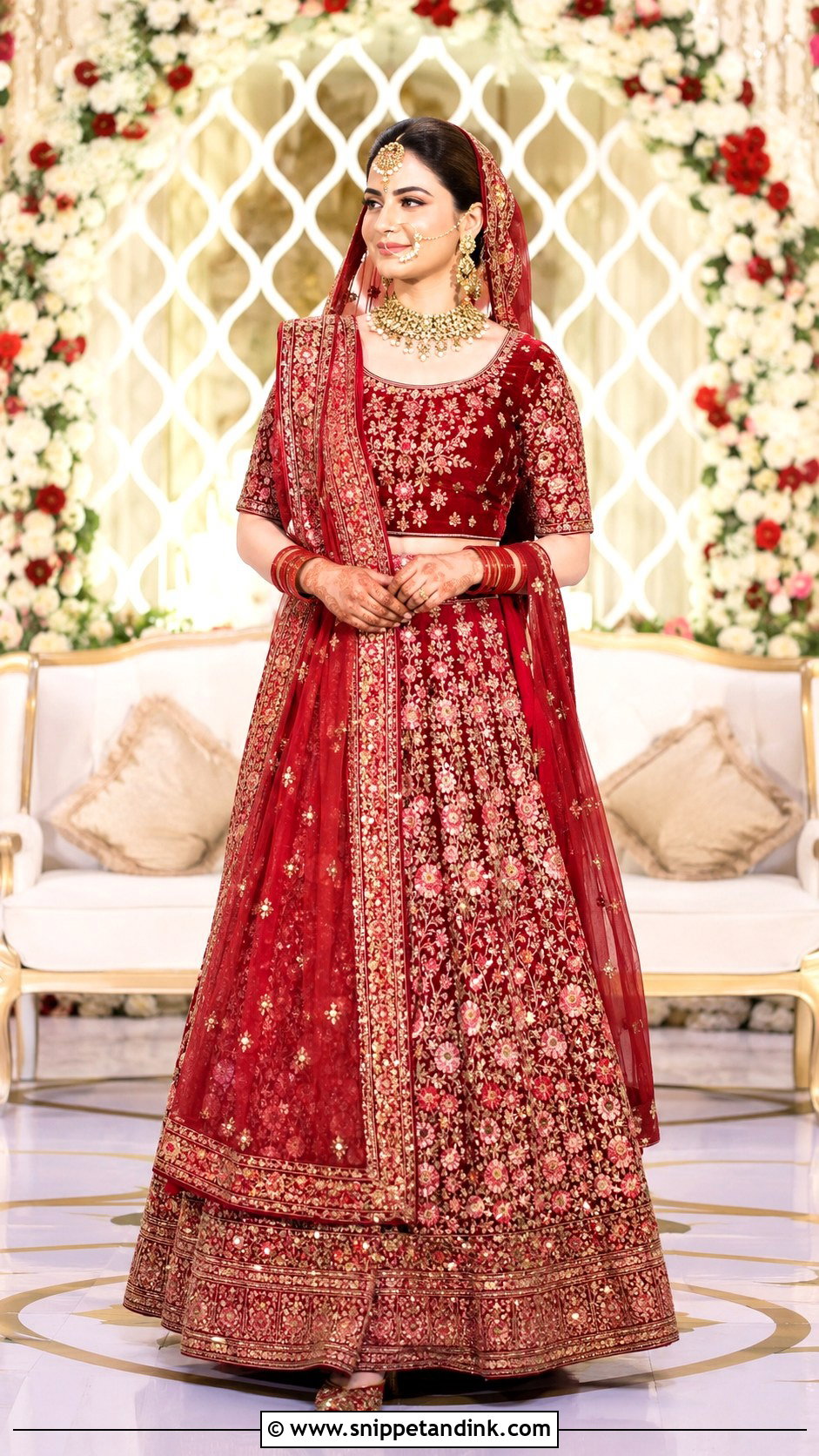
Some brides feel lost in a pishwas and want to see their waist. For them I suggest a red lehenga with a modest choli, cut high-waisted with floral zardozi vines and architectural borders. A structured blouse with elbow sleeves and a soft curved neckline stays in place when you lift your arms for photos or for the ring. Red tissue or organza goes over the head, with a second dupatta carried diagonally across the body. One thing to watch: two heavy dupattas on a fitted blouse drag the shoulder seam down, so ask your tailor to add a small hidden loop for pins. Kundan, stacked bangles, a delicate nath and embroidered khussas finish it, with fresh white flowers in a low bun and berry lips.
4. Minal Khan Maroon Zardozi Pishwas
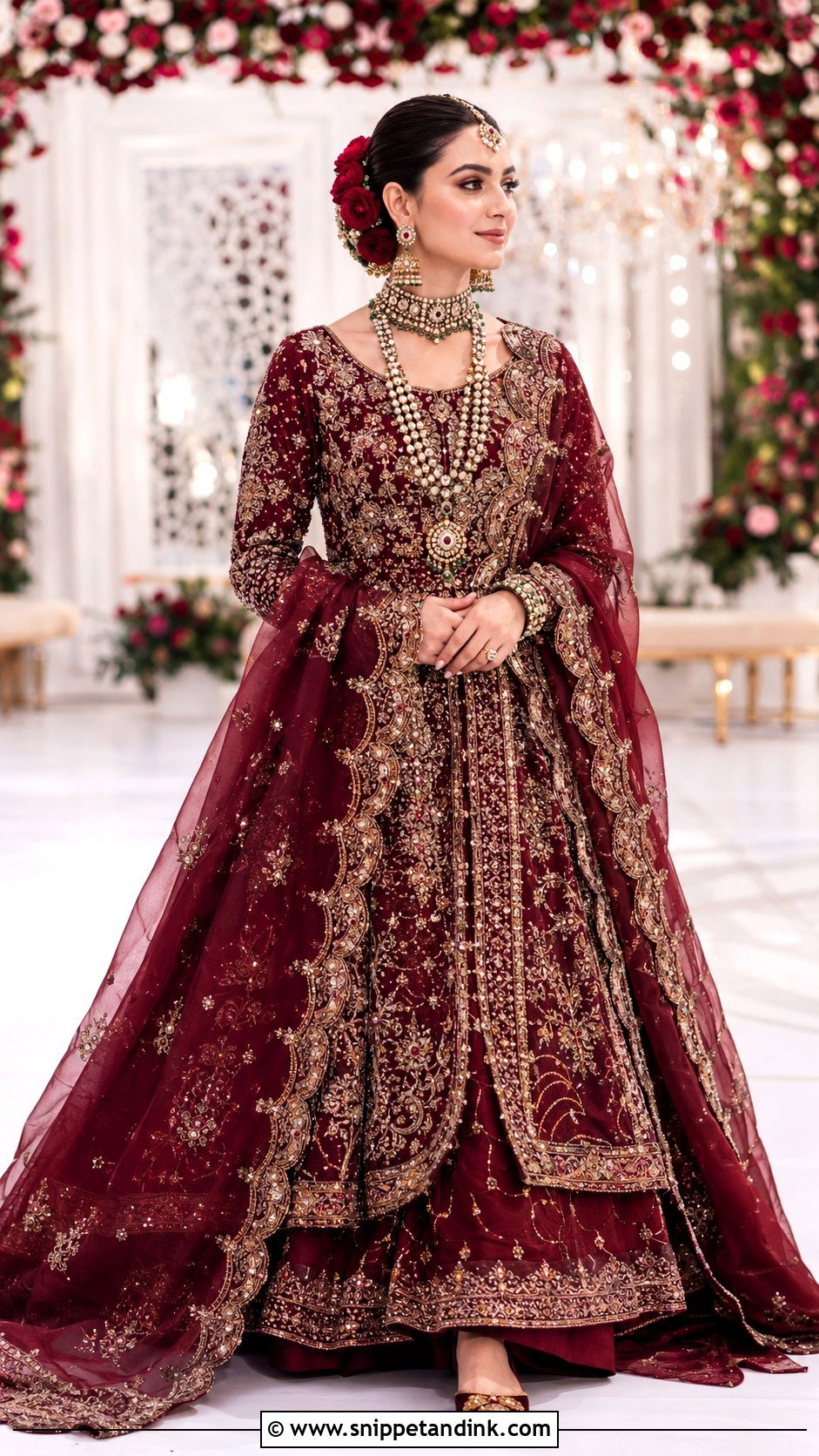
Maroon is my answer for the bride who loves the red tradition but has an evening function under warm hall lights, where bright red can flare orange on camera. A long pishwas with antique gold zardozi, dabka and marori work concentrated at the bodice and lower border reads richer in this deeper shade. Keep the lehenga underneath in raw silk; it gives structure without the bulk of a second heavily worked layer. A maroon net dupatta with tiny gold motifs and a scalloped edge goes over the head, one side falling forward. Antique polki looks especially good against maroon: a collar necklace, long mala, jhumkas and passa. Velvet khussas, a centre-parted bun and brick-red lips complete it.
5. Minal Khan Yellow Gota Mayun Dress
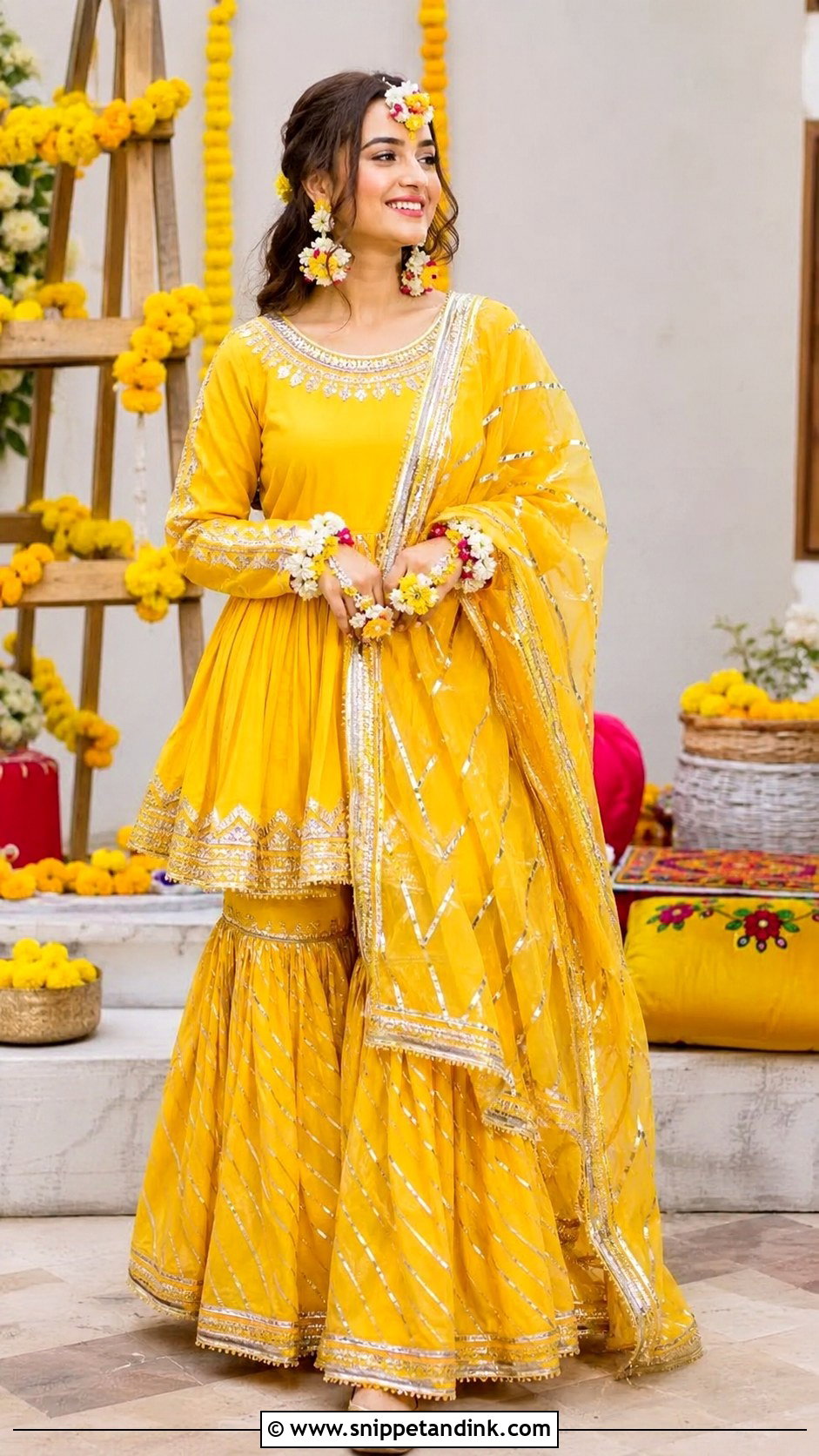
Mayun is the function where you get turmeric on your clothes, so I’d never put a bride in anything precious for it. Bright yellow fabric and reflective gota details capture the joy of Minal Khan’s mayun wardrobe while staying washable. A straight or lightly flared kurta with three-quarter sleeves keeps your wrists free, and a soft gharara lets you sit cross-legged on a takht. Small gota flowers on the shirt and broader trim at the hems catch the light. Drape a light yellow dupatta over the head or both shoulders. Floral earrings, a floral tikka and wrist garlands replace metal jewelry entirely. Loose waves, peach blush and a soft pink lip keep the face fresh.
6. Minal Khan Orange Gold Mehndi Sharara
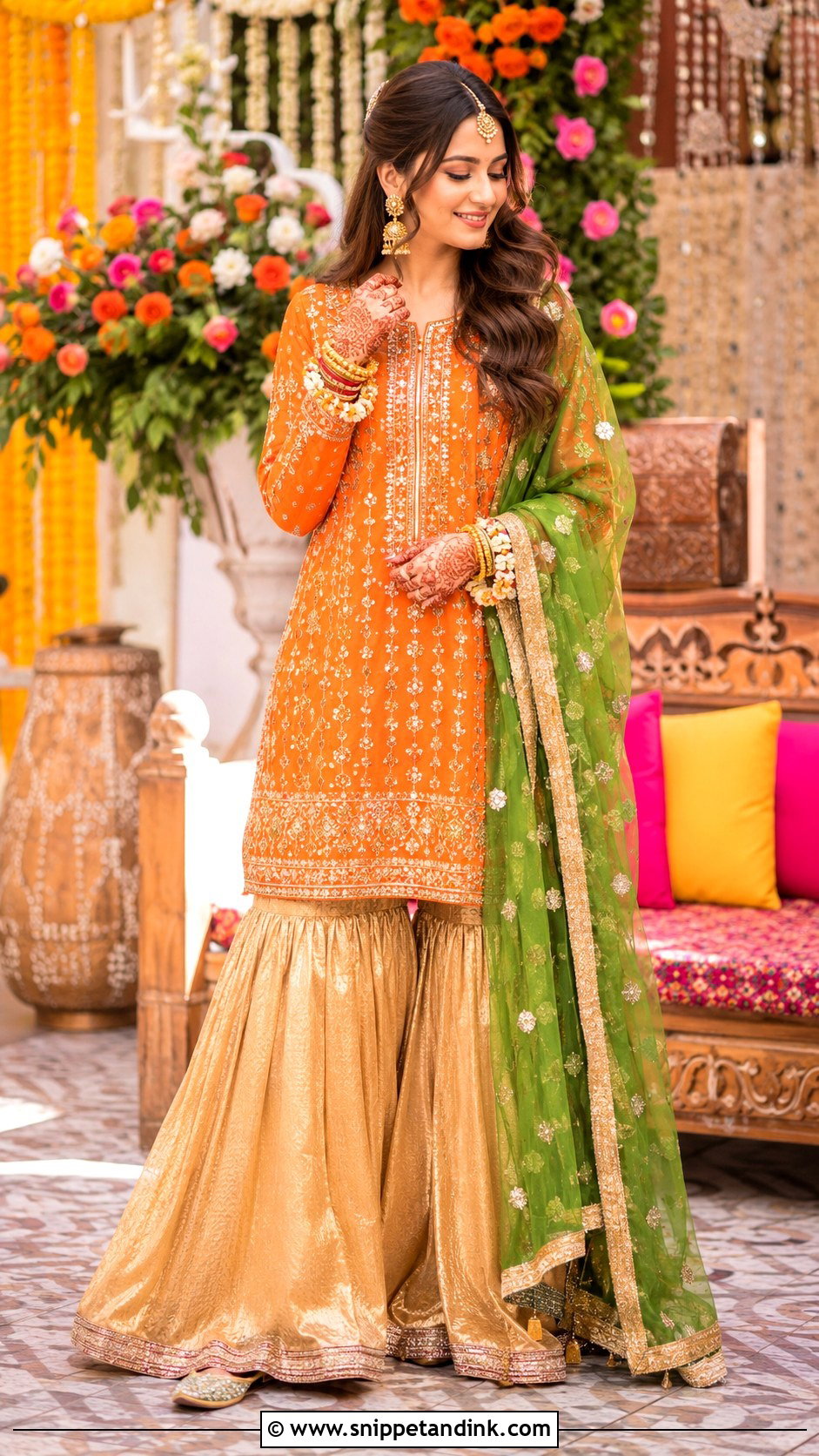
Orange and gold is for the bride who plans to dance at her own mehndi. A short orange kurti with restrained gold embroidery, mirrors or gota borders keeps the top light, while a flowing gold sharara with an orange band at the flare ties both pieces together. Mirror work is the detail I check: cheap mirrors are glued and pop off when you spin, while hand-stitched shisha holds. A green or hot-pink dupatta with small tassels makes the palette playful. Statement jhumkas, a fine tikka, stacked bangles and metallic khussas you can actually dance in finish it. A textured braid with tiny flowers survives a dholki far better than open waves.
7. Minal Khan Mustard Gharara Outfit
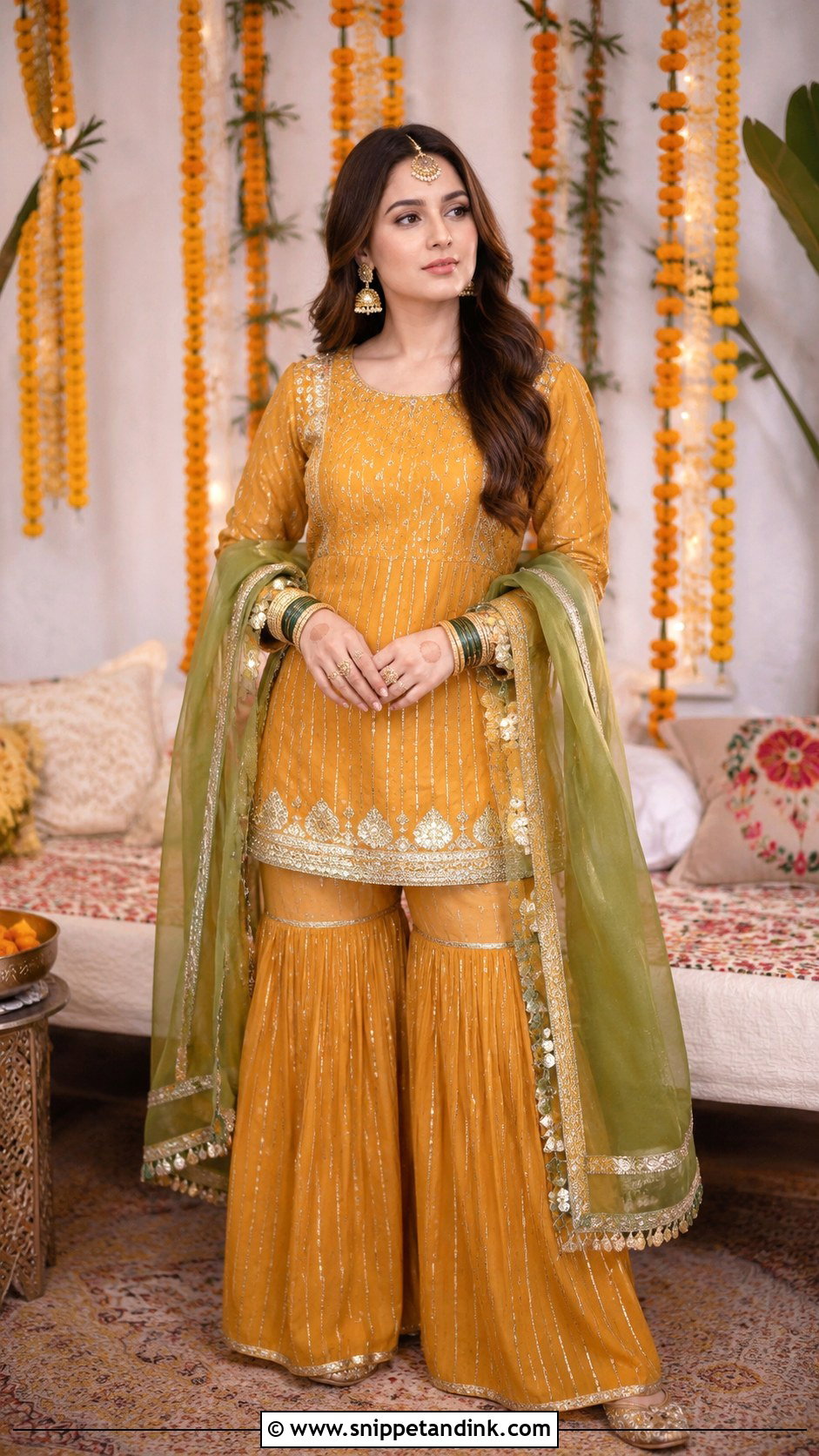
Mustard is calmer than bright yellow and flatters warm and olive skin tones better on camera. A short kameez with a square or rounded neck, fitted sleeves and gota borders sits over a mustard gharara with a clearly defined knee joint and a generous flare below. Get the joint height right before anything else; it should sit at the knee when you stand, or the gharara looks like it’s slipping. An organza dupatta with green edging adds contrast without stealing focus. Gold jhumkas, a small tikka, mixed green-and-gold bangles and flat embroidered khussas keep you comfortable through a long function. A neat side braid holds better than a bun if you’ll be sitting for rasms.
8. Minal Khan Green Pink Mehndi Lehenga
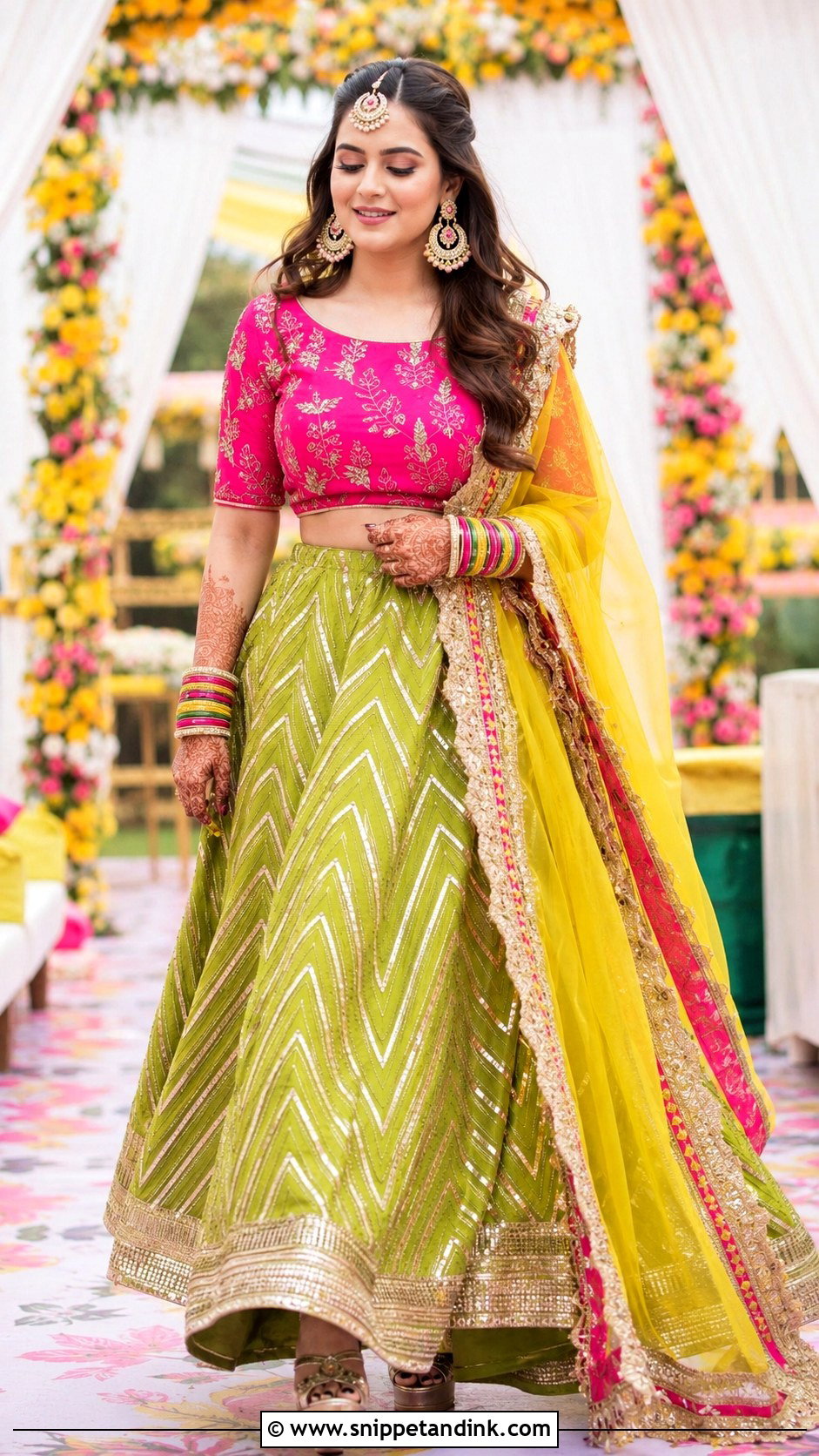
Could a clash make your mehndi easier to remember? Green and hot pink together is a classic Pakistani pairing, and it shows Minal Khan’s festive side well. A flared green skirt with gold gota borders sits under a fitted pink blouse with elbow sleeves, and a yellow or multicoloured dupatta goes over one shoulder. The trick that keeps three colours from looking random is repeating the same gold trim on every piece. Ask the karigar to cut all three trims from one roll, because gold gota varies more between batches than you’d expect. Chandbalis, a statement tikka, colourful bangles and a long braid wound with flowers complete it.
9. Minal Khan Ivory Nikah Pishwas
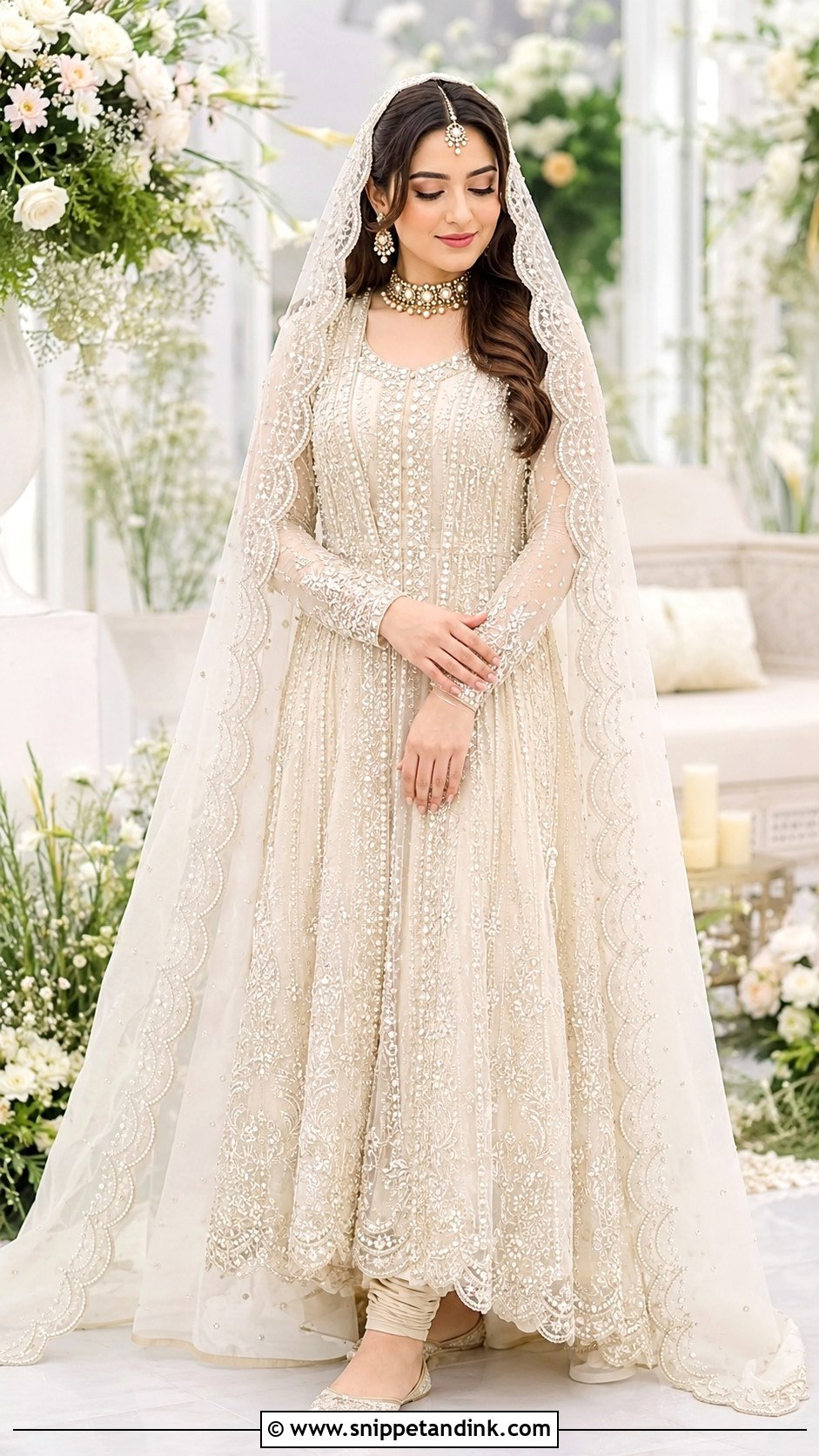
For a daytime nikah, an ivory pishwas gives you softness without looking washed out in natural light. I look for a fitted bodice, full sleeves and fine silver or champagne embroidery, with pearls and sequins that glint rather than glare. Ivory varies from cool to almost yellow, so hold the fabric against your skin in daylight before you approve a swatch. Wear it over a slim churidar or a lehenga depending on how much volume you want. An organza dupatta with a scalloped edge covers the head and still leaves the front embroidery visible. Pearl-and-kundan jewelry and ivory khussas keep the palette soft and modest.
10. Minal Khan White Gold Nikah Gharara
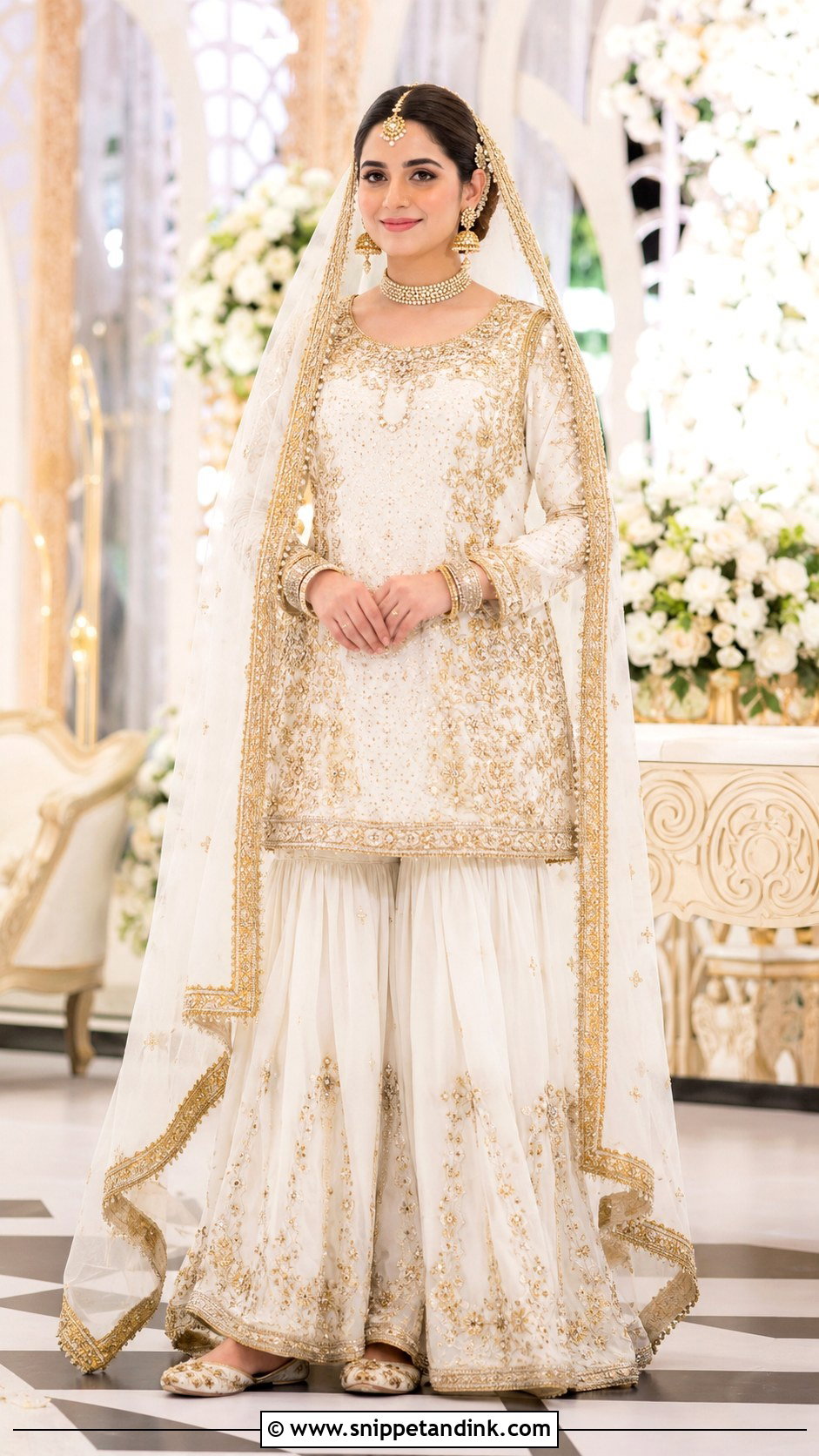
White and soft gold is the nikah pairing I see photograph most reliably in both a mosque courtyard and a lit hall. A knee-length white shirt with delicate gold embroidery at the neck, cuffs and hem goes over a traditional gharara finished with narrow gold bands. Narrow is the point; an oversized border on white quickly looks heavy. Kiran trim on a sheer dupatta catches light around the face. Pure white also shows every smudge of kajal and foundation, so keep a cotton bud and a dupatta clip in your bag. A pearl choker, gold jhumkas, a small passa and slim bangles stay polished, with white flowers in a smooth bun.
11. Minal Khan Blush Pink Nikah Lehenga
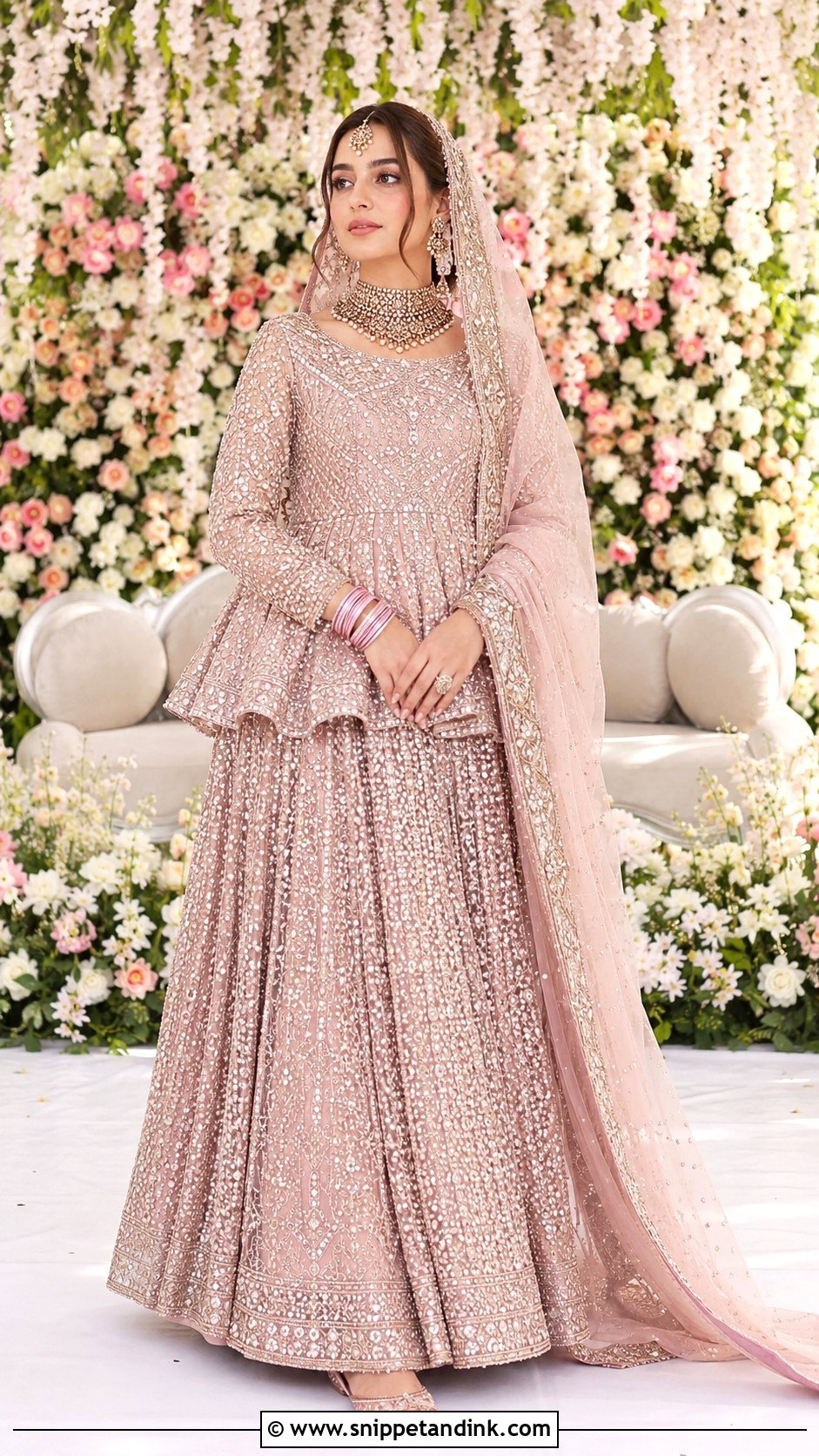
Blush pink is romantic without being bold, and it forgives a long day better than ivory because it doesn’t show marks as quickly. A softly flared lehenga with tonal threadwork, tiny pearls and a little silver sits with a long-sleeved blouse or peplum that defines the waist and gives comfortable coverage. Pin the matching net dupatta over the head and along the arms. Rose-gold kundan suits this shade better than yellow gold, which can make blush look muddy. Embroidered pink khussas or low block heels sit hidden under the skirt. A loose bun with face-framing strands and mauve-pink lips keep it gentle.
12. Minal Khan Champagne Walima Gown
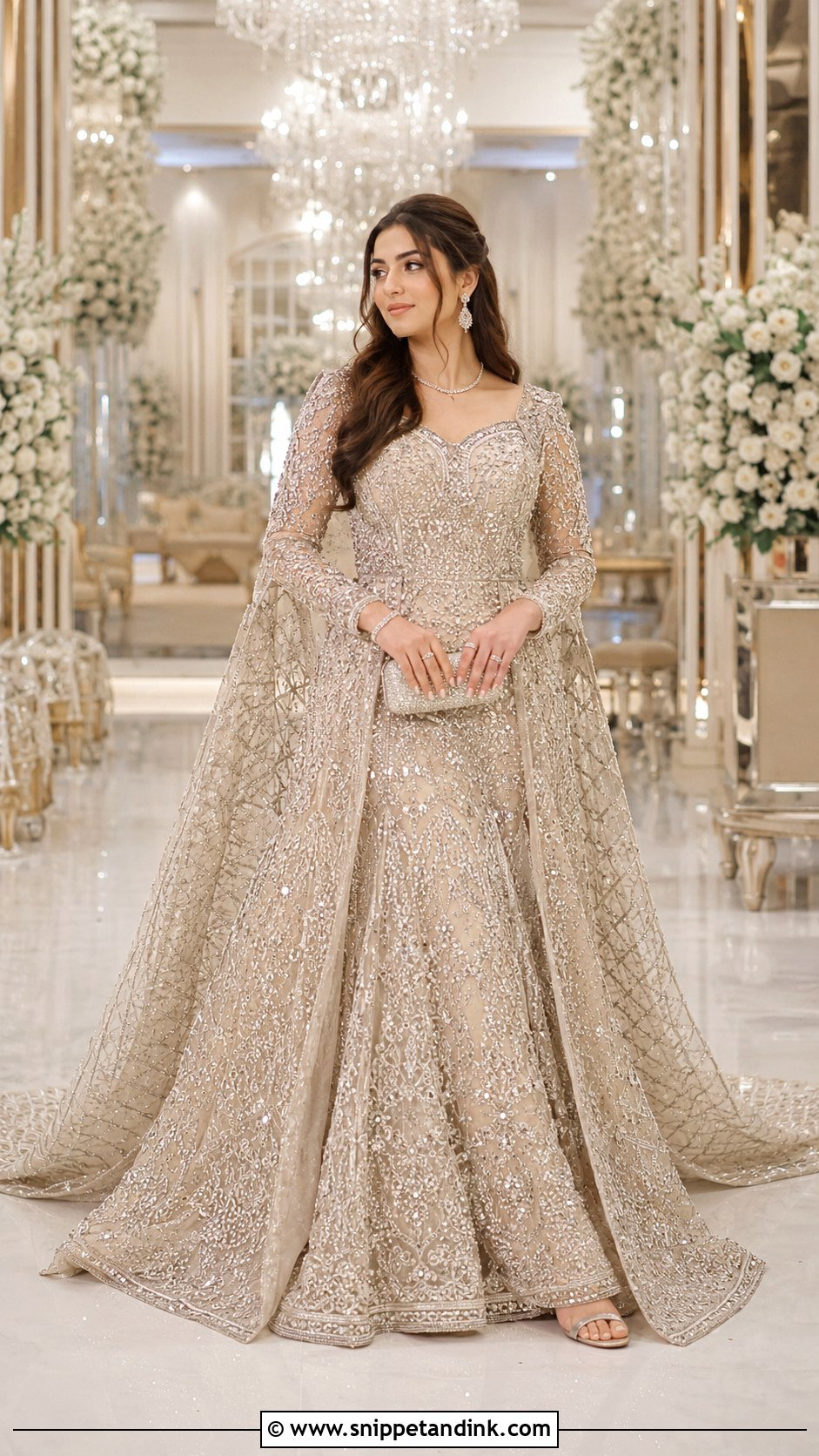
Champagne gives a walima gown a soft glow and stays formal, close to the reception look Minal Khan wore. Choose a structured bodice, a defined waist and a long skirt, with embroidery in silver, pearl and crystal tones so nothing contrasts harshly. Champagne swings warm or grey depending on the lights, so ask your photographer what lighting the hall uses. If you want coverage, sheer full sleeves and a softly curved neckline work well. A detachable train or long veil gives you entrance photos and comes off for dinner. Keep jewelry modern: diamond-style earrings, a slim necklace, a crystal bracelet. Silver pointed heels and glossy nude lips finish the reception look.
13. Minal Khan Silver Off-Shoulder Walima Gown
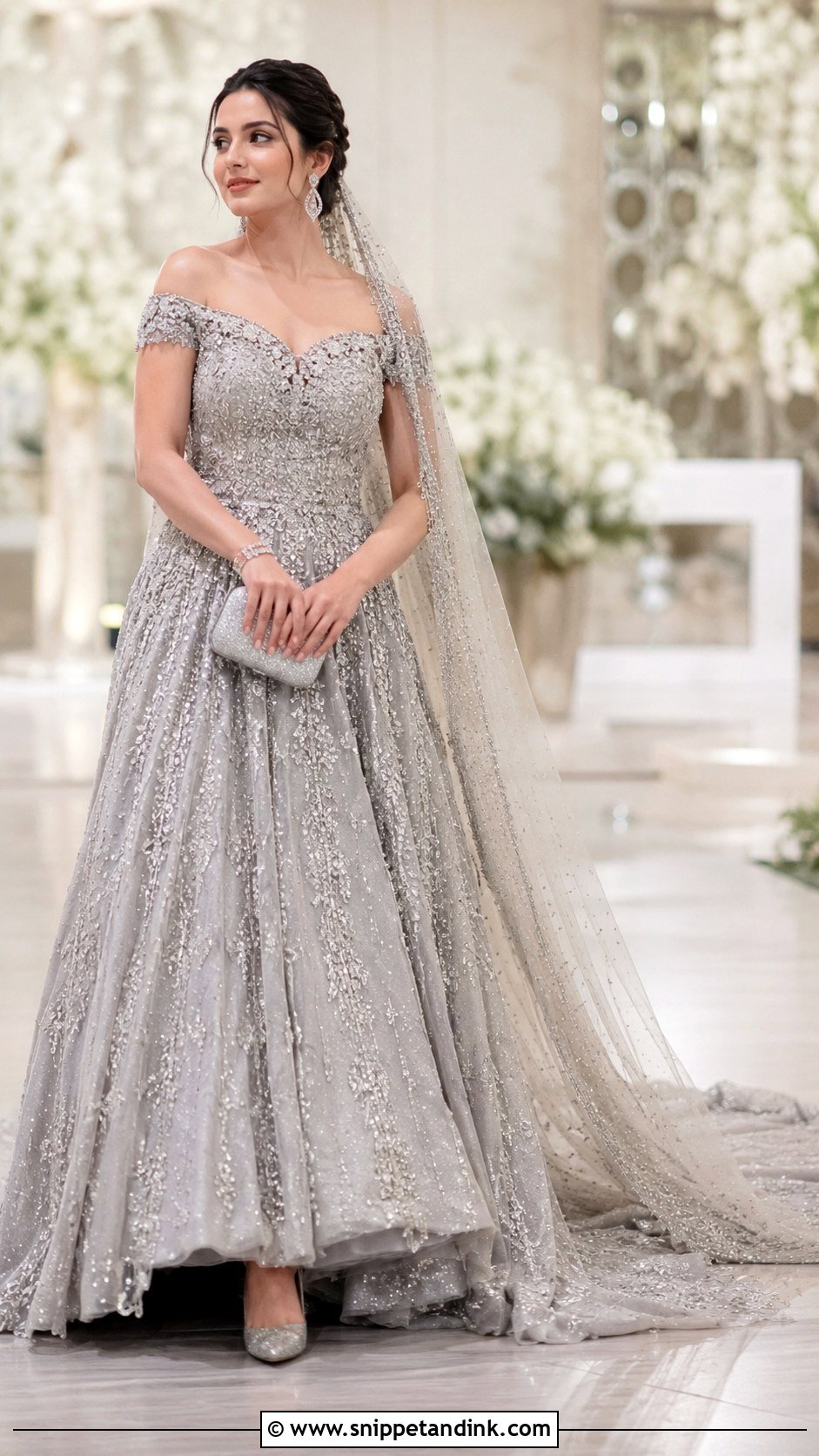
A silver off-shoulder gown is the most Western piece in this list, and it depends entirely on internal structure. Without boning and a grip band, an off-shoulder neckline slips every time you hug a relative, which is constant at a walima. Look for crystal beading, sequins and fine metallic embroidery spread evenly, plus a full skirt and long train. Set a sheer matching veil at the back of the hair rather than over the face. If you want more coverage, detachable sheer sleeves or a cape keep the line. Diamond-style drops, a small silver clutch and closed-toe heels are enough, with Hollywood waves or a neat bun.
14. Minal Khan Powder Blue Walima Maxi
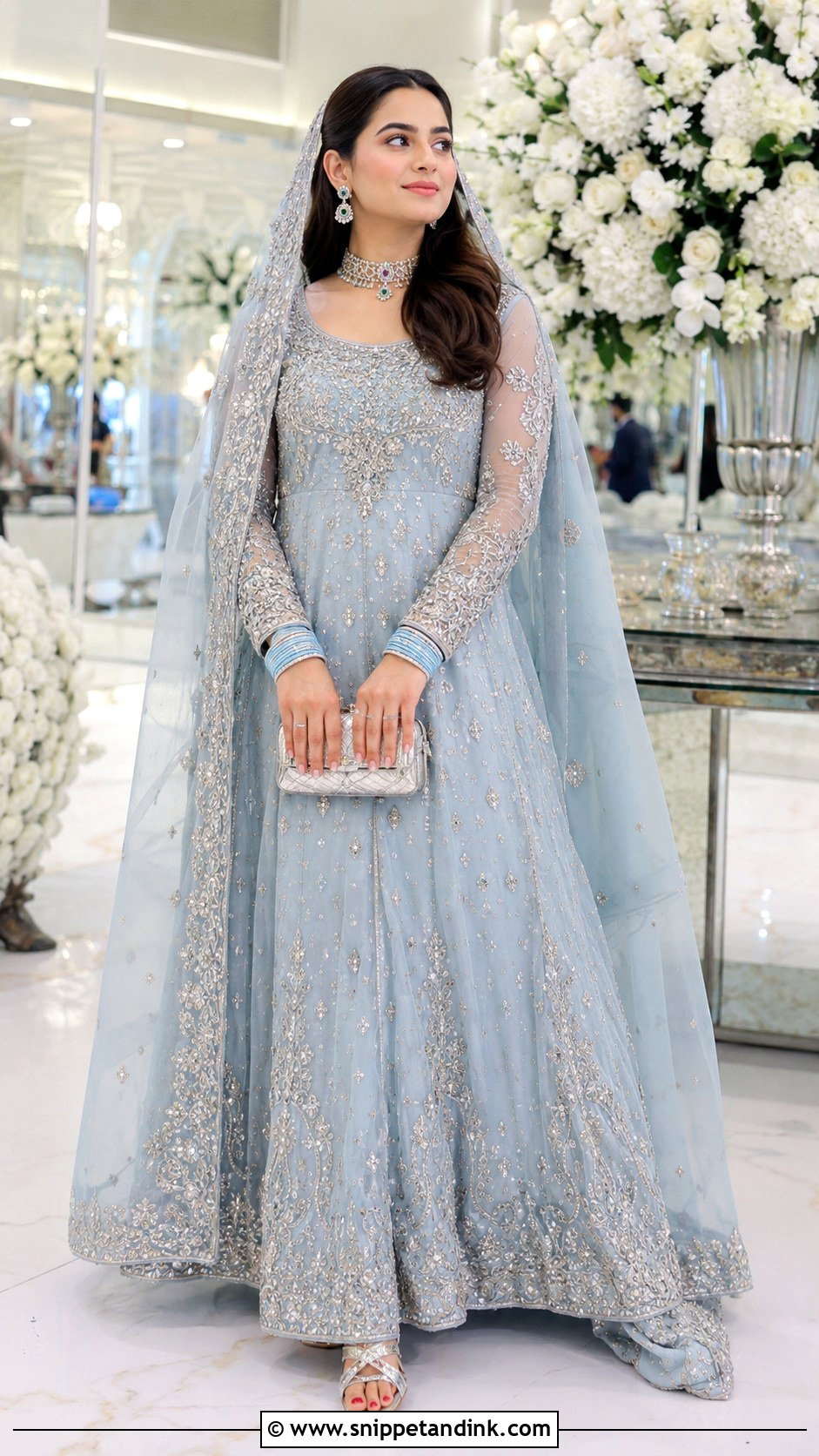
Powder blue feels fresh at a formal walima, though it’s one of the hardest colours to match accessories to, so I take the fabric swatch along when buying bangles and the dupatta. A floor-length maxi with a fitted top, full sleeves and a gently flared skirt keeps the shape simple. Concentrate silver threadwork, pearls and crystals at the bodice to draw the eye up, and scatter smaller motifs below. A powder-blue organza dupatta with a narrow silver edge, a diamond-style choker and pale blue bangles add subtle sparkle. Silver heels and a structured mini clutch complete it. Cool brown eyeshadow suits this shade better than warm bronze.
15. Minal Khan Dusty Rose Walima Lehenga
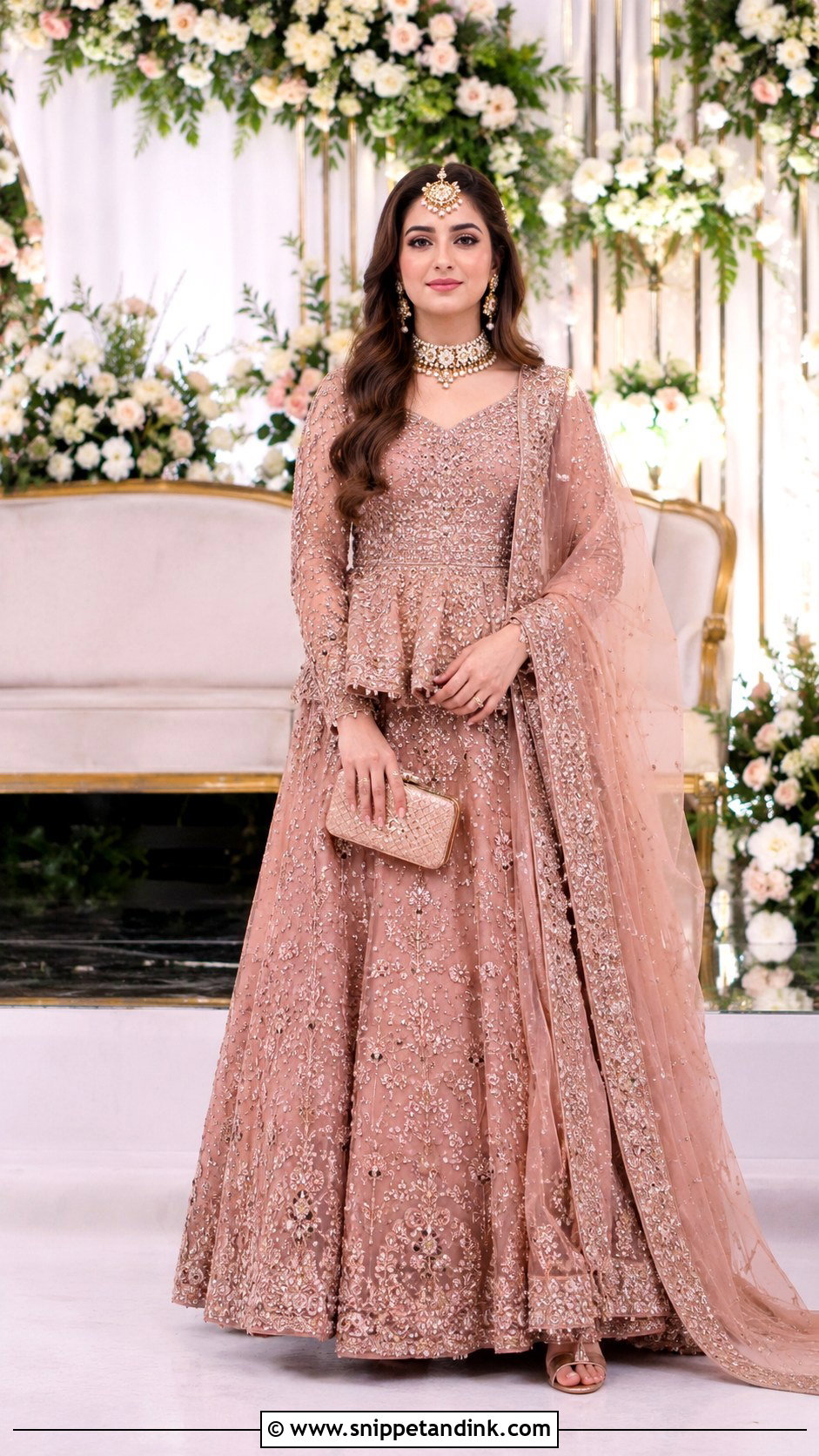
Dusty rose is the lehenga shade I suggest when a bride wants something mature for the walima but doesn’t want a Western gown. A full skirt with tonal resham, silver dabka, pearls and carefully placed sequins sits under a structured peplum or long blouse, which lengthens the silhouette. The dupatta needs both a detailed border and scattered motifs so it works as a veil and as a shoulder drape. Pearl-and-polki jewelry suits the muted colour far better than shiny diamonds. Rose-gold heels, a matching clutch and either a smooth bun or side-swept waves finish the walima look.
16. Minal Khan Mint Green Walima Pishwas
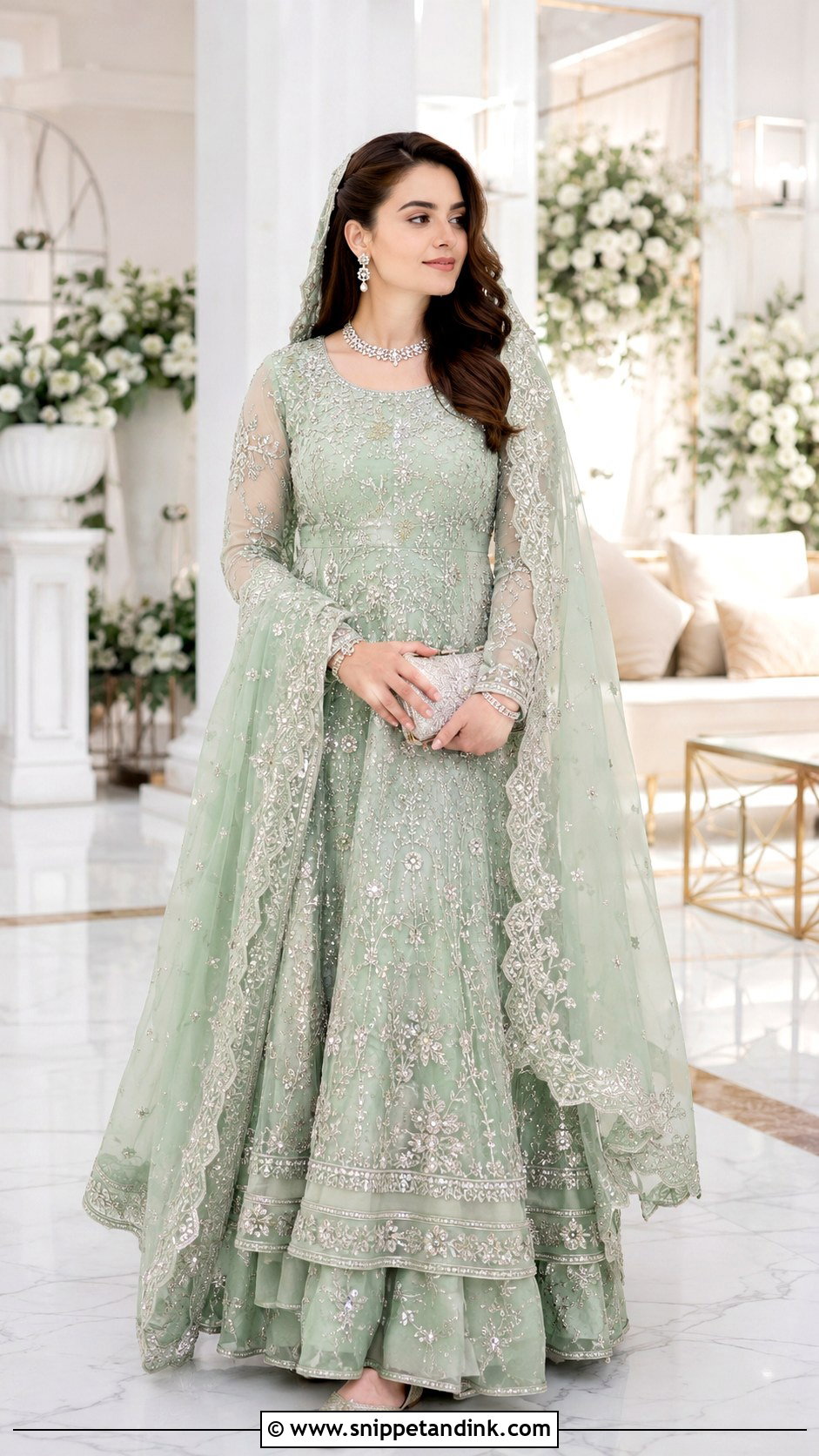
Mint green feels fresh and soft, especially at a daytime walima. I’d build it as a long pishwas in organza, net or tissue, with silver embroidery defining the bodice, sleeves and broad hem. Tissue is the fabric to be careful with: it creases sharply after a car ride and doesn’t steam out easily, so organza is the safer choice if you have travel between venues. A matching lehenga or straight silk pants underneath keeps you comfortable. Pin a scalloped mint dupatta over the head or let it rest on the shoulders. Pearl earrings, a diamond-style necklace and silver khussas keep the palette cohesive.
17. Minal Khan Gold Bridal Anarkali
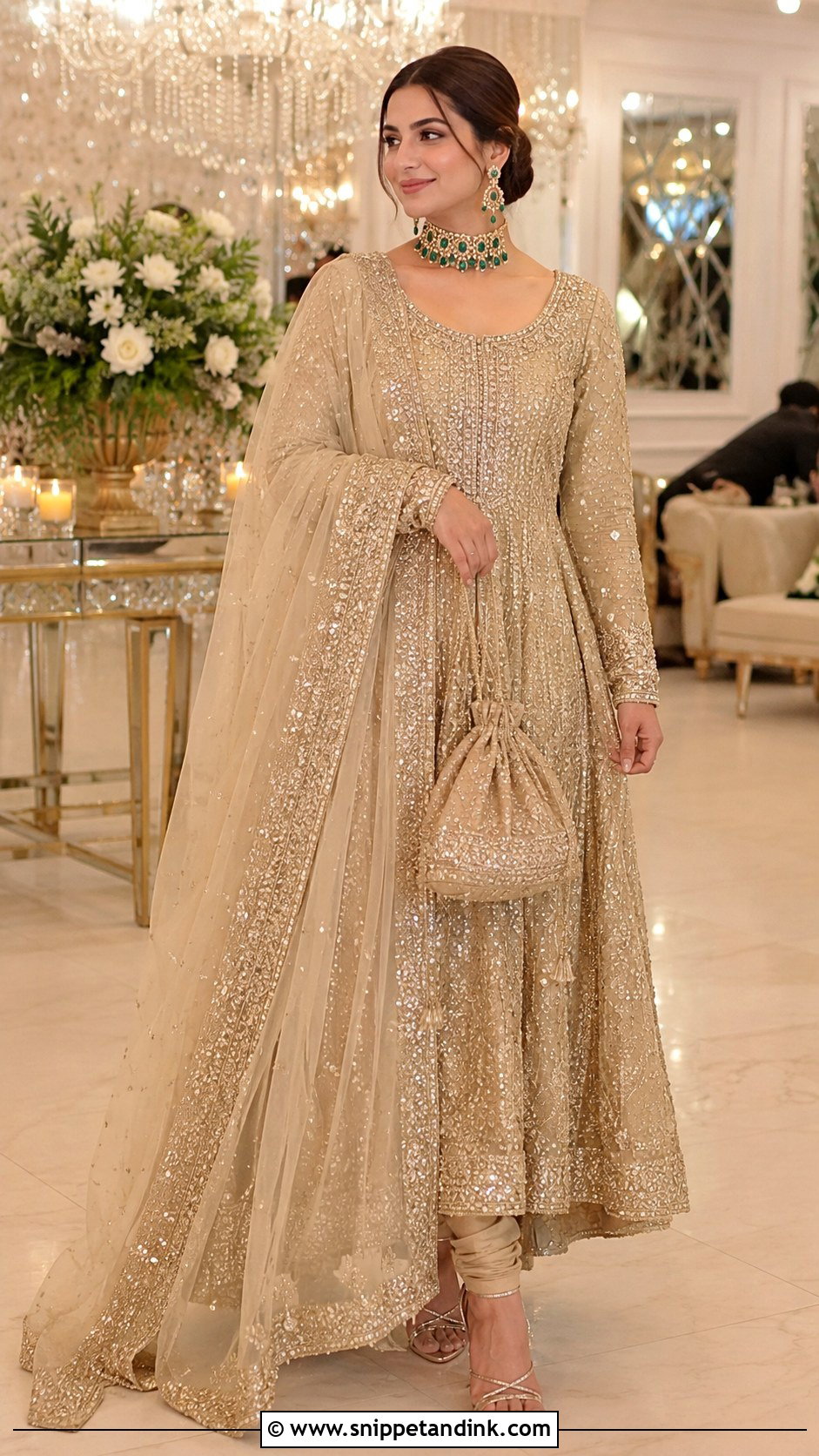
A gold Anarkali works for a reception, a formal nikah or a combined event. Ankle- or floor-length, it needs a fitted bodice and a wide, flowing skirt. All-gold outfits go flat on camera unless the surface has variety, so I mix antique threadwork with small pearls and crystals. A narrow churidar and a sheer champagne dupatta over one shoulder or lightly over the head keep it airy. Emerald jewelry gives a single strong accent: a choker, earrings and a ring. Metallic heels, a small potli and a low bun with a clean centre part finish it.
18. Minal Khan Deep Red Velvet Bridal Lehenga
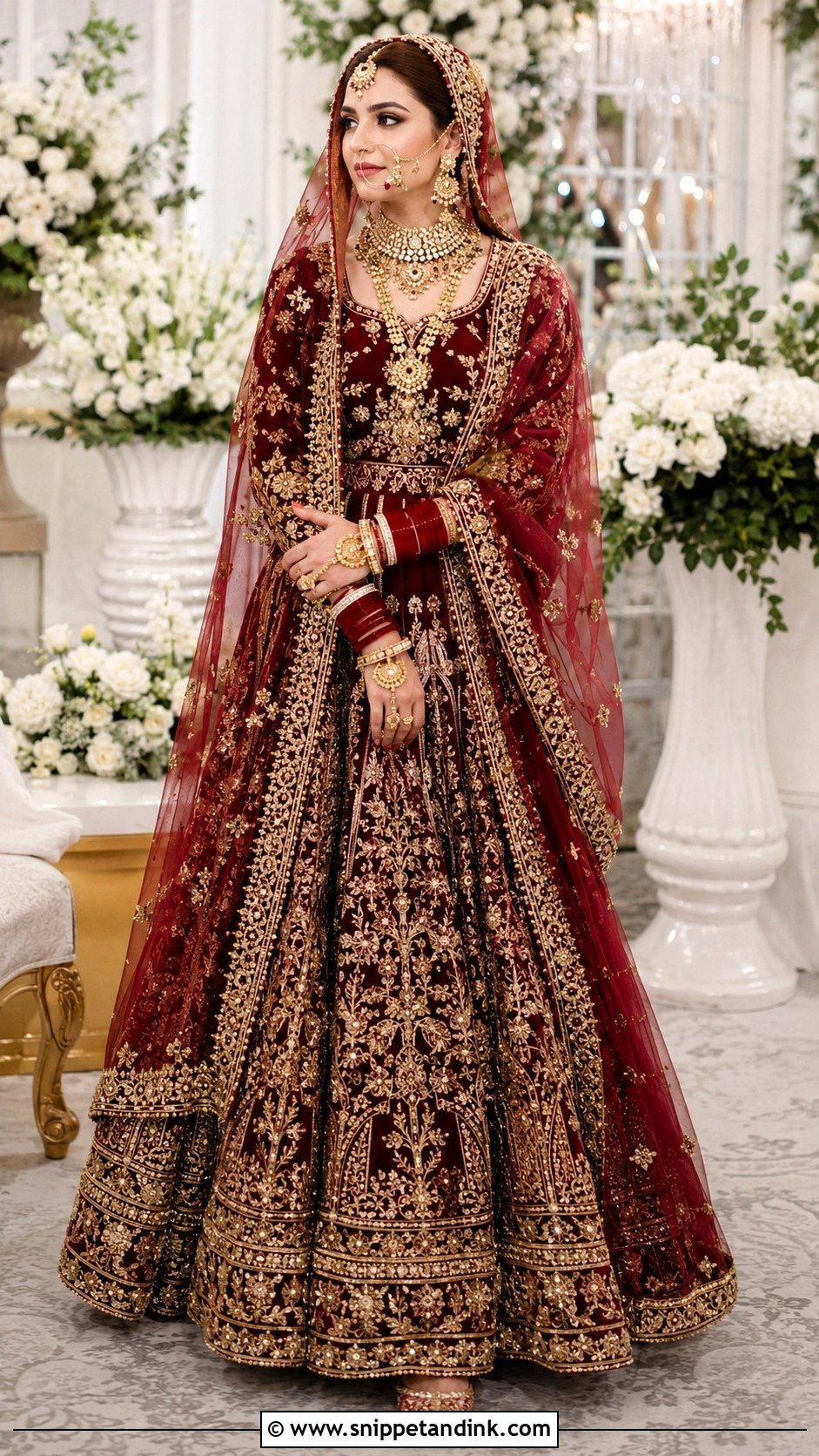
Velvet is the winter bride’s fabric. It absorbs light, so a deep red velvet lehenga looks richer in photos than silk, and it keeps you warm at an outdoor December function. It is also heavy and hot indoors, so I keep the zardozi to the borders and lighter work on the upper panels. A raw-silk or velvet blouse with full sleeves balances the weight. Use a light net dupatta, not velvet, over the head, with one end resting on the arm. Traditional polki, a passa, a nath, red bangles and embroidered khussas complete the bridal styling. A firm low bun gives the dupatta pins something solid to grip.
19. Minal Khan Peach Organza Bridal Sharara
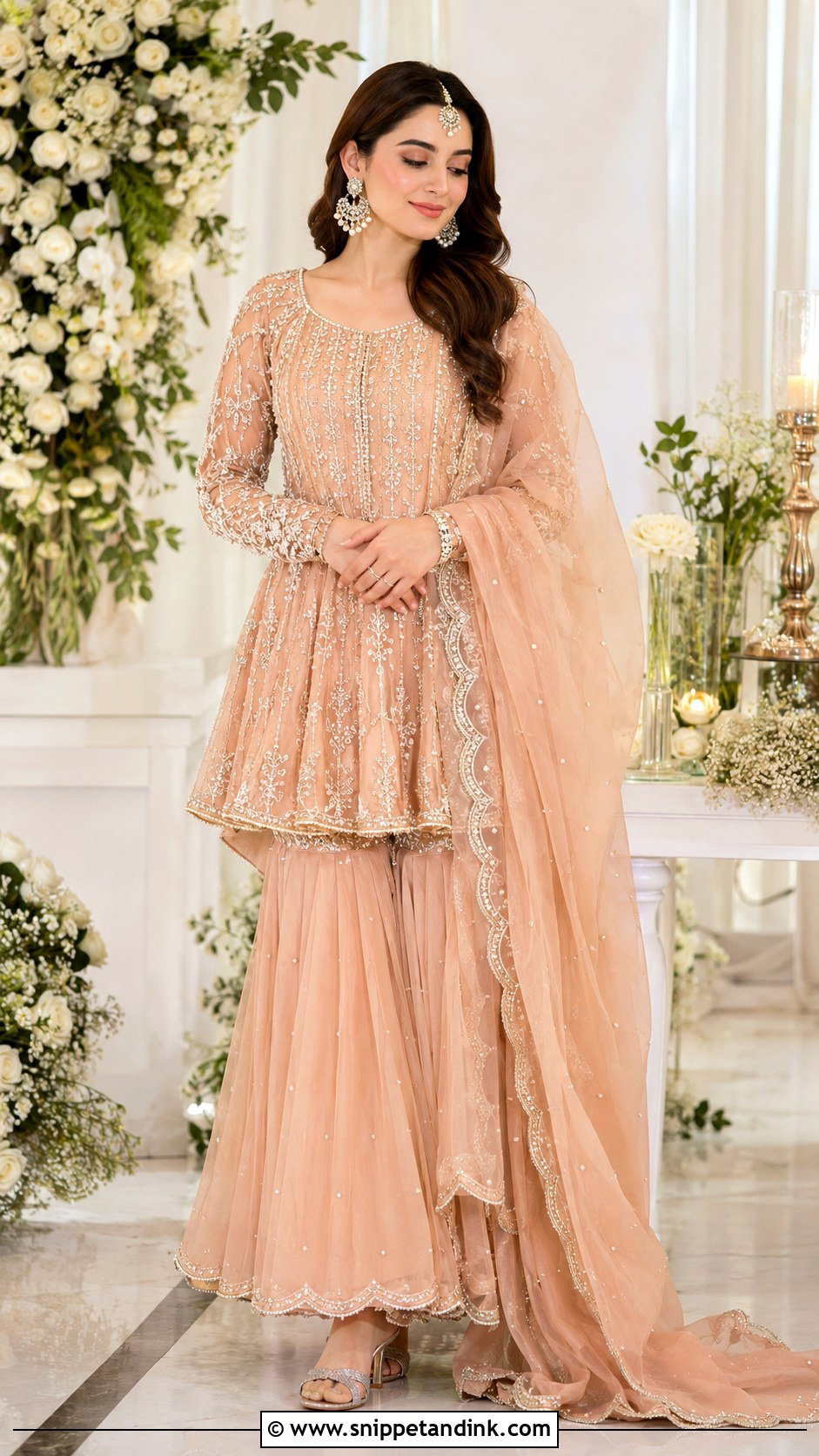
A peach organza sharara is airy enough for a nikah, an engagement or a small reception. Start with a short peplum shirt worked in pearls, silver thread and small florals. Layered organza gives the sharara its float, but the top section must stay smooth or the peplum sits on a ridge of gathers. A matching scalloped dupatta goes lightly over the head or across both arms. Peach washes out some complexions, so test it next to your face before ordering. Pearl chandbalis, a fine tikka and a bracelet give enough sparkle, with nude or silver block heels and soft waves.
20. Minal Khan Emerald Green Reception Lehenga
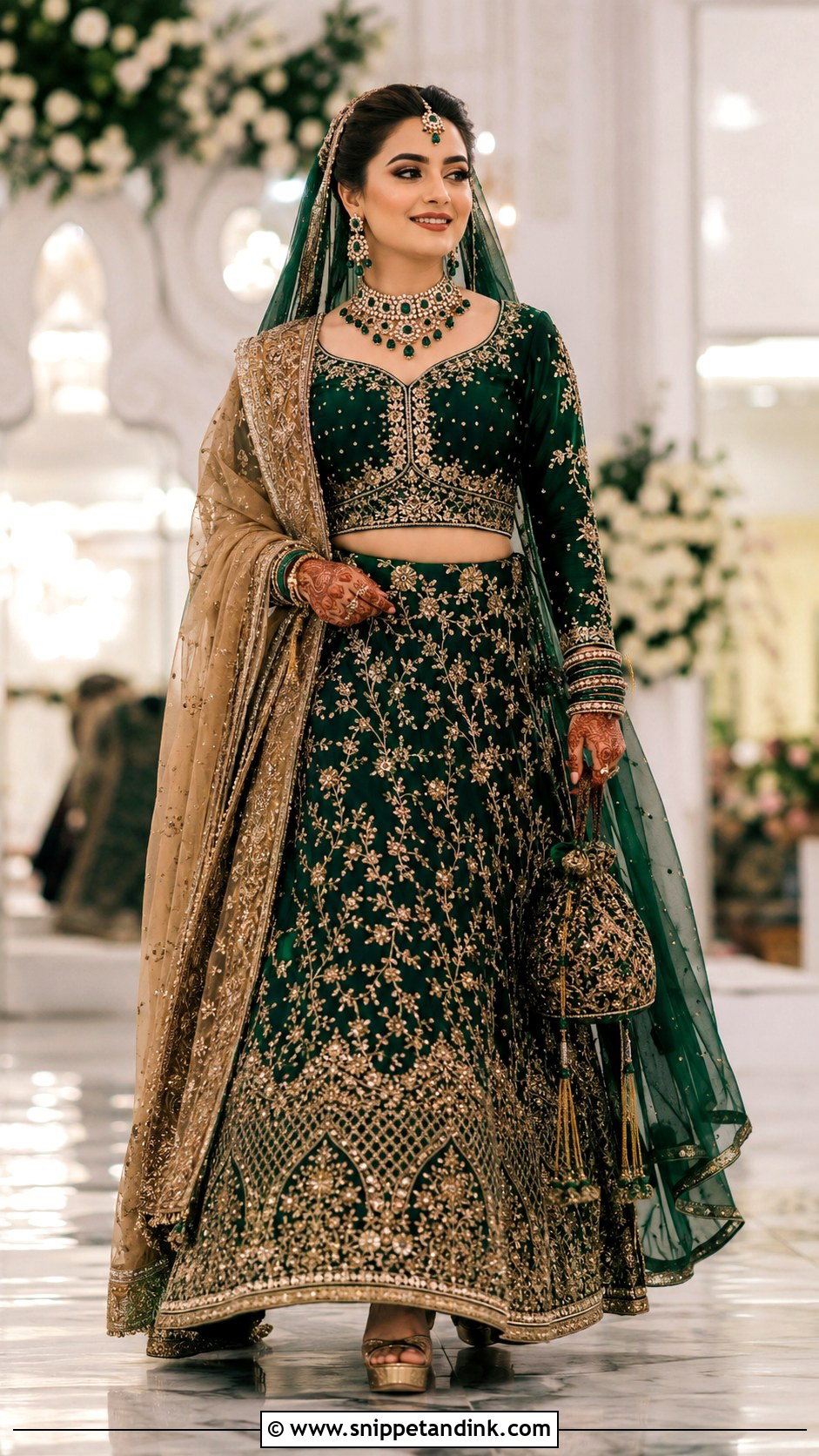
Emerald green is a confident reception colour if pastels feel too quiet for you. A structured lehenga with antique gold embroidery, vertical motifs and a broad hem pairs with a fitted blouse in full or elbow sleeves. The vertical motifs matter: they lengthen the body, which helps a jewel tone that otherwise reads heavy. An emerald net dupatta with fine gold edging goes on first, and a muted gold second dupatta can be draped diagonally. Kundan with emerald drops, stacked gold bangles and a small embroidered potli finish it. Side-parted waves or a bun both work.
Ordering Handworked Bridal Wear in Time
Zardozi, dabka and gota work are done by hand, and a busy atelier books its karigars months ahead of wedding season. For a baraat outfit with dense embroidery, I’d place the order at least four to six months out; lighter mehndi and walima pieces usually need less, but timings vary a lot between designers and seasons. If the outfit is being shipped from Pakistan, add time for courier delays and customs.
- Approve a fabric swatch and an embroidery sample in daylight, not on a phone screen.
- Give measurements taken by a tailor, and mention the heels you’ll wear so the hem length is right.
- Ask for one trial fitting after the embroidery is done, because heavy work changes how the garment hangs.
- Keep the final payment until you’ve seen the finished piece, either in person or on a clear video call.
Why Zardozi Hates Plastic Covers
Metal-thread work tarnishes when it’s sealed in plastic, because trapped moisture darkens the wire. After the wedding, air each outfit for a day, wrap it in clean muslin or soft cotton, and fold it with acid-free tissue between the layers so embroidered panels don’t rub against each other. Refold along different lines every few months; sharp permanent creases crack the threads over time.
One Bride, Five Functions, Five Different Moods
Her wardrobe shows how one sense of style can carry through every Pakistani wedding function without repeating itself. Red pishwas and farshi shararas own the baraat, yellow gota and bright lehengas belong to mayun and mehndi, soft whites and blush suit the nikah, and silver, mint or blue keep the walima calm. Plan each outfit around the venue, the season, the weight you can carry and how long you’ll be on your feet. Then adjust necklines, sleeves and embroidery until you can sit, eat and greet guests without thinking about your clothes.
You'll Like These Ideas:







Leave a Reply