
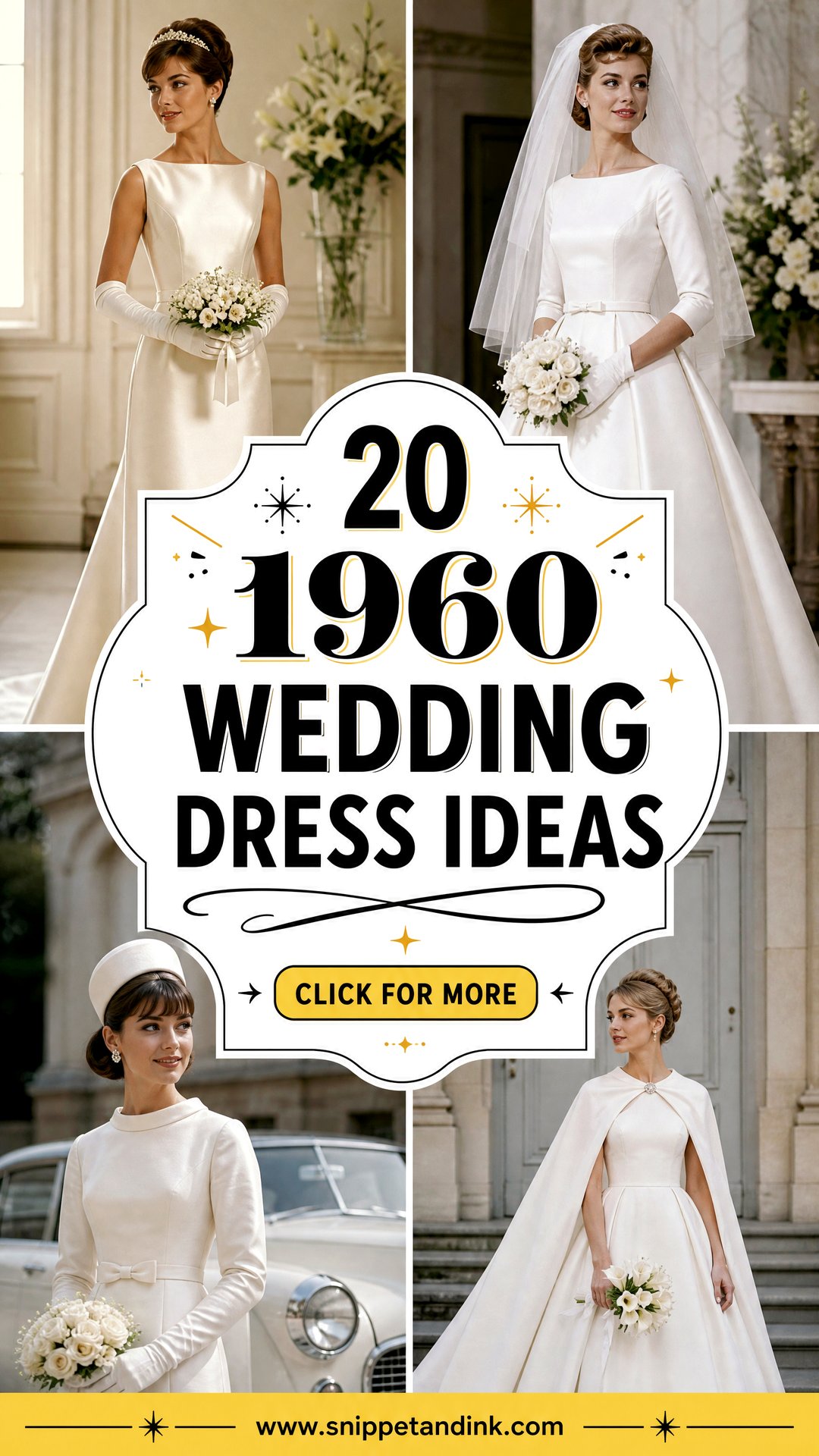
Sixties bridal fashion covers more ground than most people expect. The decade opened with polished, ladylike gowns and ended in youthful mod fashion and loose bohemian sleeves, so a “sixties dress” can mean a structured satin A-line, a slim shift, an empire waist or a courthouse mini. High necklines, three-quarter sleeves, lace, pillbox hats, short veils and gloves are the details that make the era readable. When I style a bride for this look, I start by asking whether she wants the full period picture or one retro feature on an otherwise modern dress, because that answer decides almost everything else, from the underpinnings to the hair. Below are twenty directions, from formal satin to playful minis, each with the styling I’d put around it.
Original Sixties Gowns Versus New Dresses Cut to the Era
Before you fall for any of the dresses below, decide if you’re shopping vintage or buying new in a sixties shape. They are very different processes, and I handle them differently with every bride.
Buying an original
Dresses from the decade were cut for different underwear and different proportions, and the size label means almost nothing today. Ignore it and buy on measurements: bust, waist, hip, back length and armhole. Ask the seller for flat measurements across the garment, then double them. Look closely at the underarms for old perspiration marks, at the hem for set-in dirt, and at satin seams for splitting. Old silk can shatter, cracking along the fold lines in a way that can only be covered, never repaired, and metal zips may have rusted into the fabric.
Alterations on an original are limited by its seam allowance. Taking a vintage dress in is usually possible; letting it out by more than a little often isn’t. Have a seamstress who knows vintage look at it before you commit, and allow several weeks for cleaning and repairs.
Buying new
A new gown in a sixties cut gives you modern zips, linings and sizing, plus fabric that hasn’t started to yellow. The trade-off is that many new versions are cut with a low, roomy armhole, which loses the neat, high fit that made the originals look so crisp. Ask about raising the armhole at your first fitting if the dress allows it.
1. 1960 Wedding Dress With Full Skirt
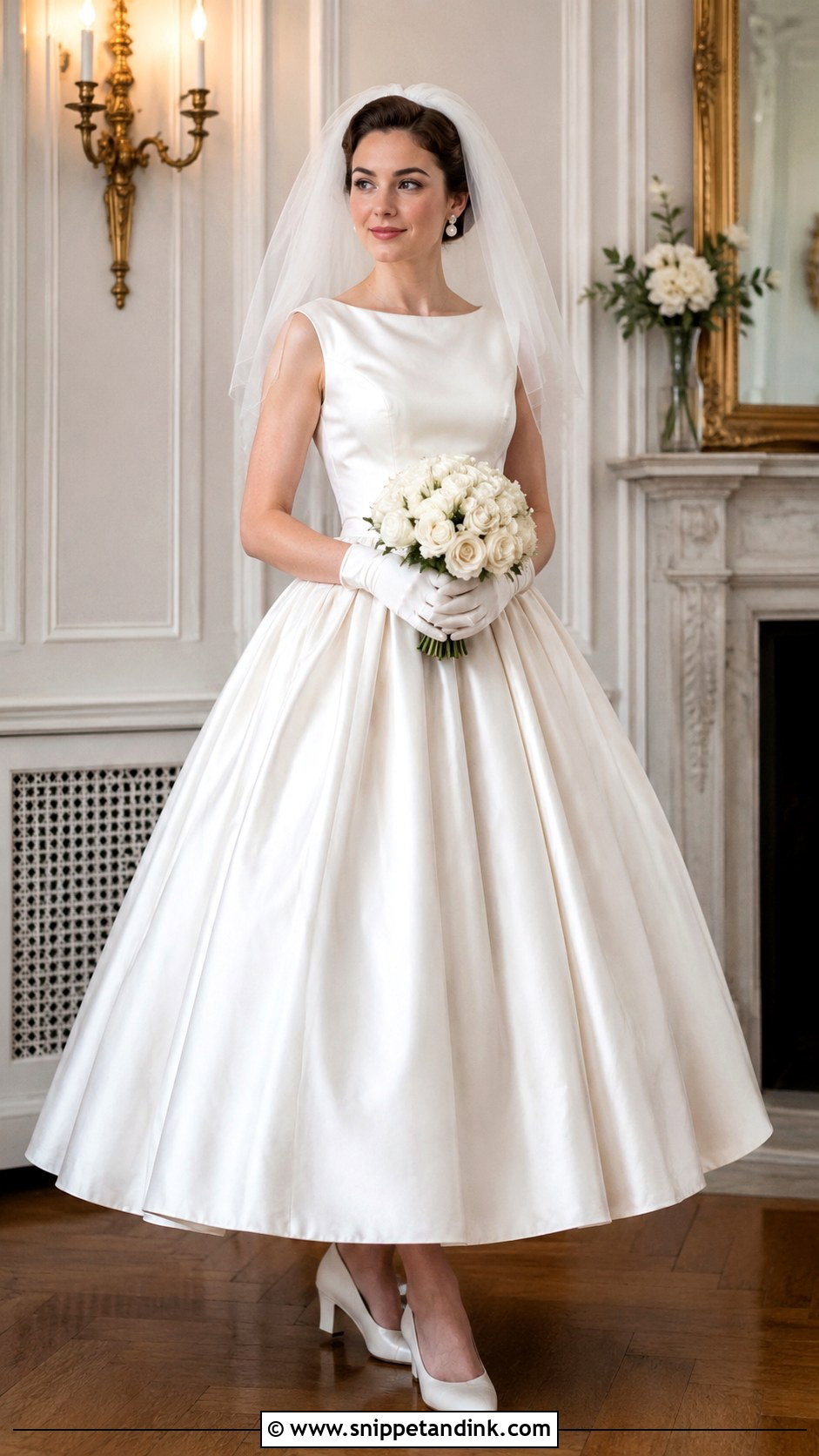
A fitted bodice and a clearly marked waist are what make a full skirt read as early sixties rather than fairytale. The fabric does the real work: crisp satin, silk mikado or layered organza will hold a rounded shape, while soft charmeuse collapses however many layers you add. A bateau or scoop neckline keeps the top modest and clean. I finish it with short gloves, pearl studs, ivory block-heel pumps and a fingertip veil on a smooth bun. On petite brides I usually ask the seamstress to remove a skirt layer, since too much volume swallows a short frame; taller brides can carry a wider hem. Keep the bouquet compact, white roses or carnations, so it doesn’t fight the skirt.
2. 1960 A-Line Wedding Dress
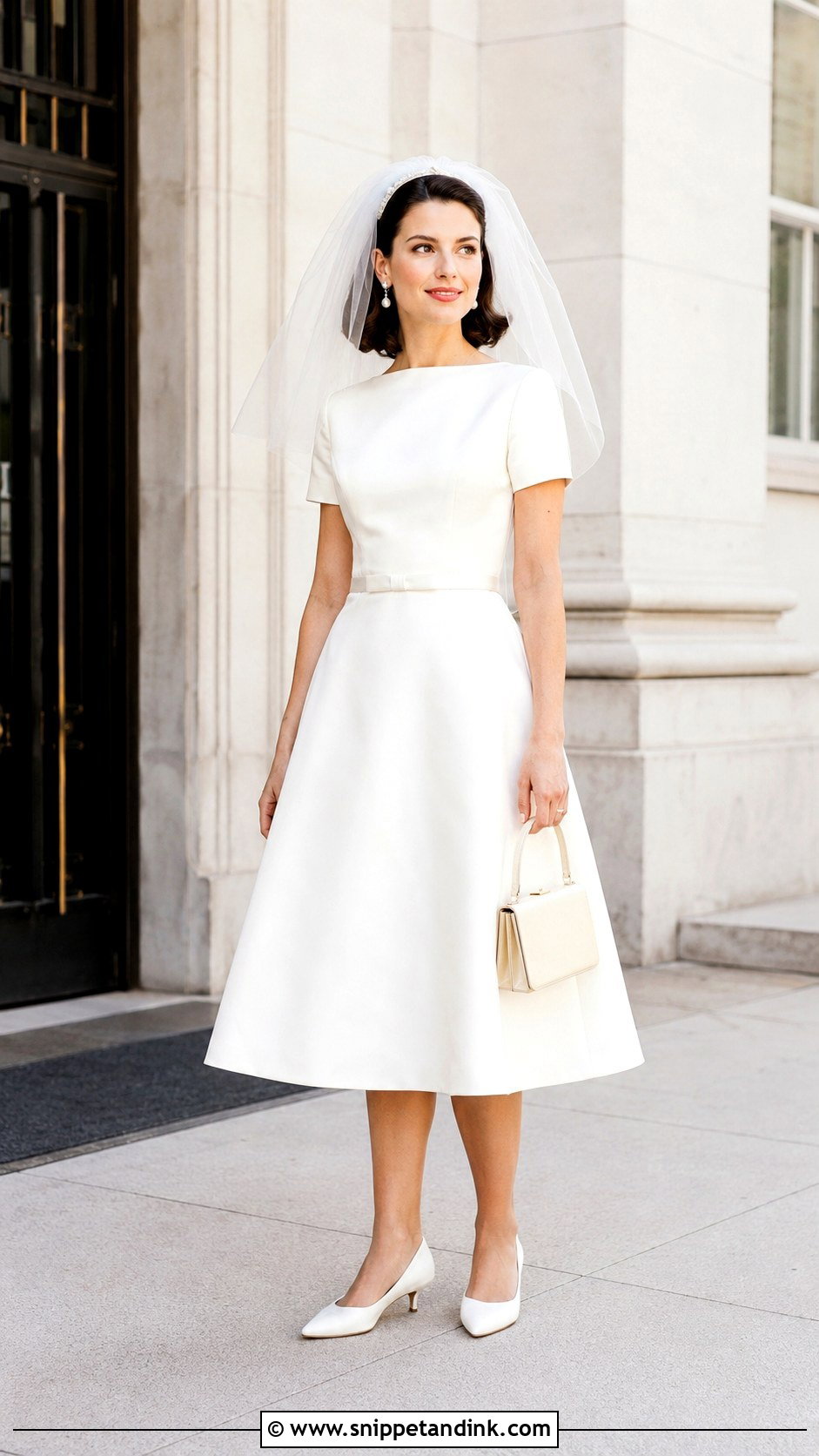
This is the silhouette I suggest most often to brides who are new to vintage shapes. The bodice fits, the skirt widens gradually from the waist, and you get structure without the weight of a ball gown. A high boat neckline, short sleeves and a lightly structured satin or bonded crepe give it the period feel. Bonded crepe is worth asking about, because it creases far less than satin when you sit through a long ceremony. Add a shoulder-length veil, pearl drops, white kitten heels and a top-handle bag, with a narrow satin belt only if your waist needs marking. The skirt skims rather than grips the hips, so it suits a wide range of figures and lets you move freely all day.
3. 1960 Lace Wedding Dress With Long Sleeves
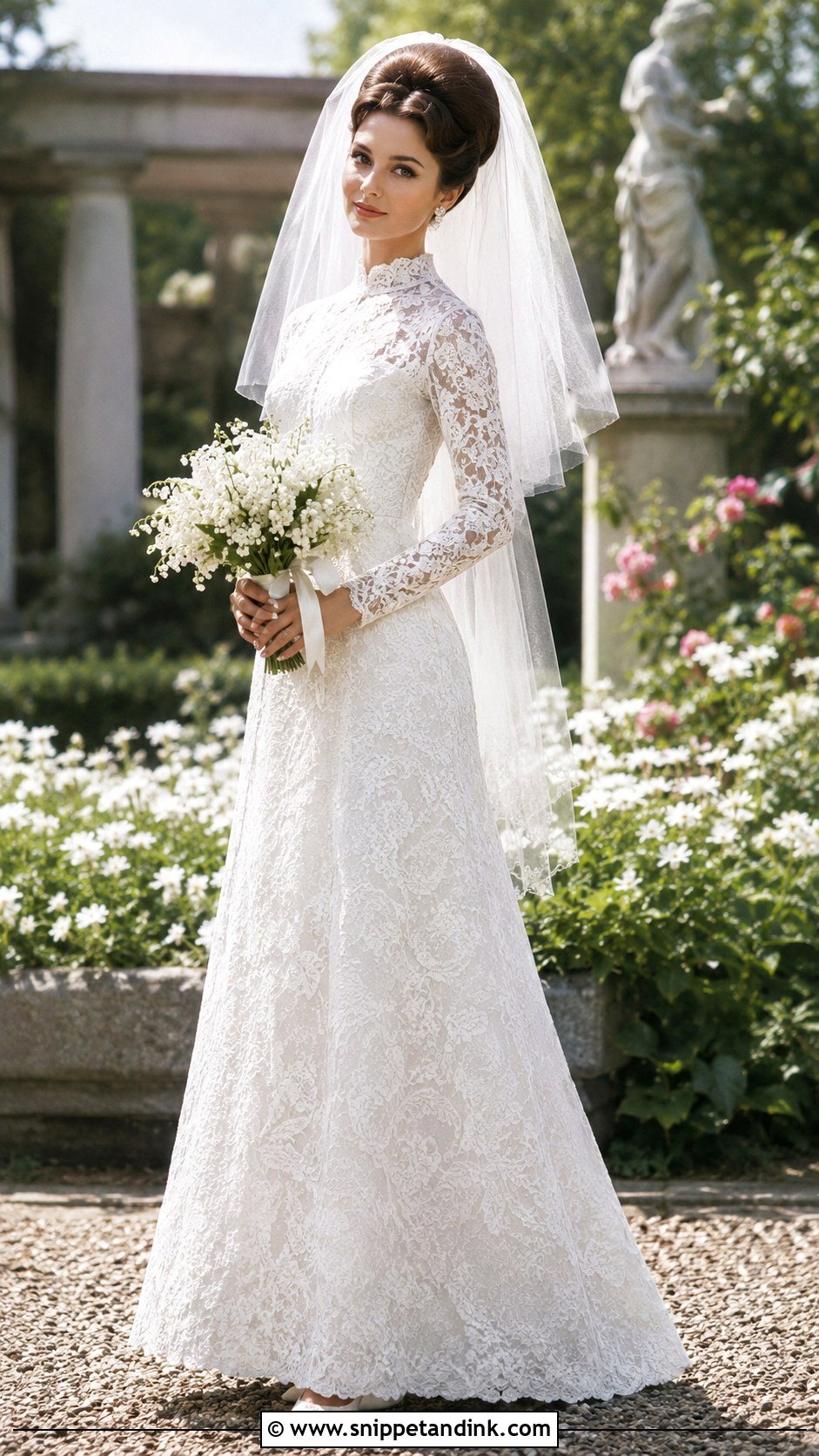
Long lace sleeves look romantic in photos and cause the most complaints by the reception. Lace with no stretch binds at the elbow when you lift your arms to hug or dance, so I ask for stretch lace or small underarm gussets at the first fitting rather than the last. The look itself is a fitted bodice, high neckline, lightly shaped waist and a straight or softly flared skirt. Floral lace over an opaque lining reads traditional; sheer sleeves keep it light. Covered ivory pumps, pearl earrings and a chapel-length veil under a smooth bouffant complete it, with a small bouquet in the spirit of lily of the valley. Cuffs should end cleanly at the wrist bone, and jewelry should stay minimal so the lace pattern carries the outfit.
4. 1960 Mod Mini Wedding Dress
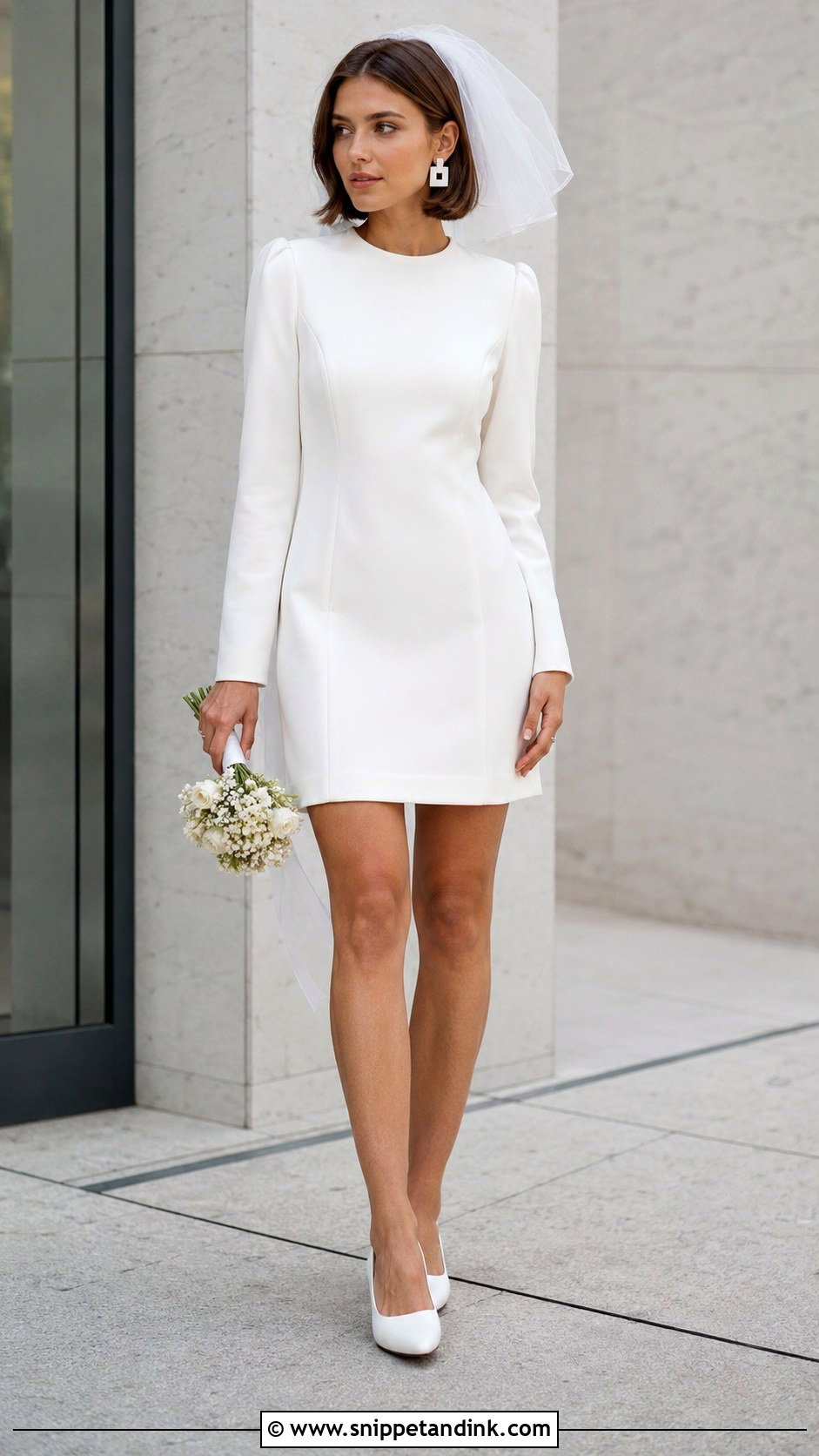
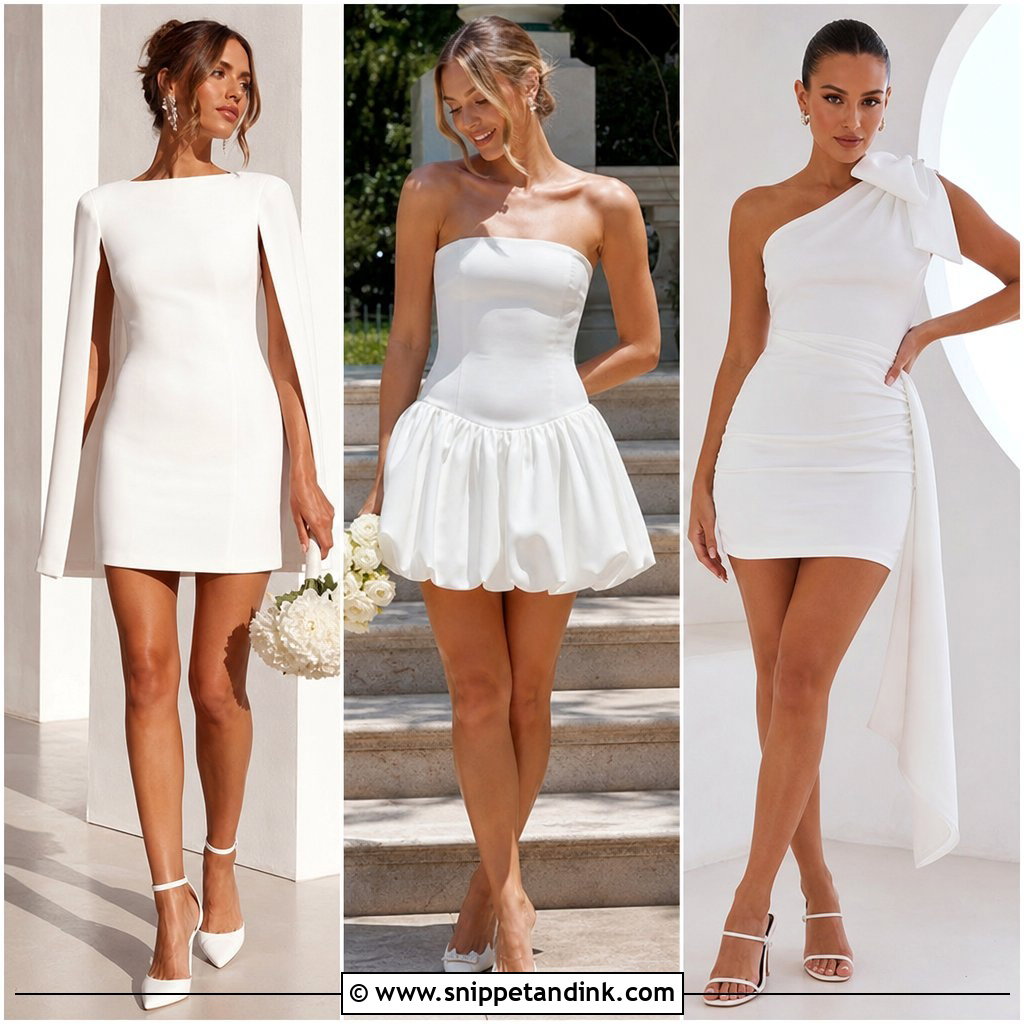
Short white bridal dresses belong to the middle and late sixties, when hemlines climbed and the shift took over. A mini can look like a costume very quickly, so I keep the shape structured: high round neckline, long sleeves, a clean hem and fabric with enough body to stand away from the legs. Opaque white tights suit a winter wedding; bare legs suit summer. Low block-heel pumps, geometric earrings and a short bubble veil finish it, and a neat pixie cut, polished bob or high ponytail matches the graphic line. Sit down in front of a mirror at your fitting. A hem that looks right standing can ride several inches higher once you’re seated.
5. 1960 Tea-Length Wedding Dress
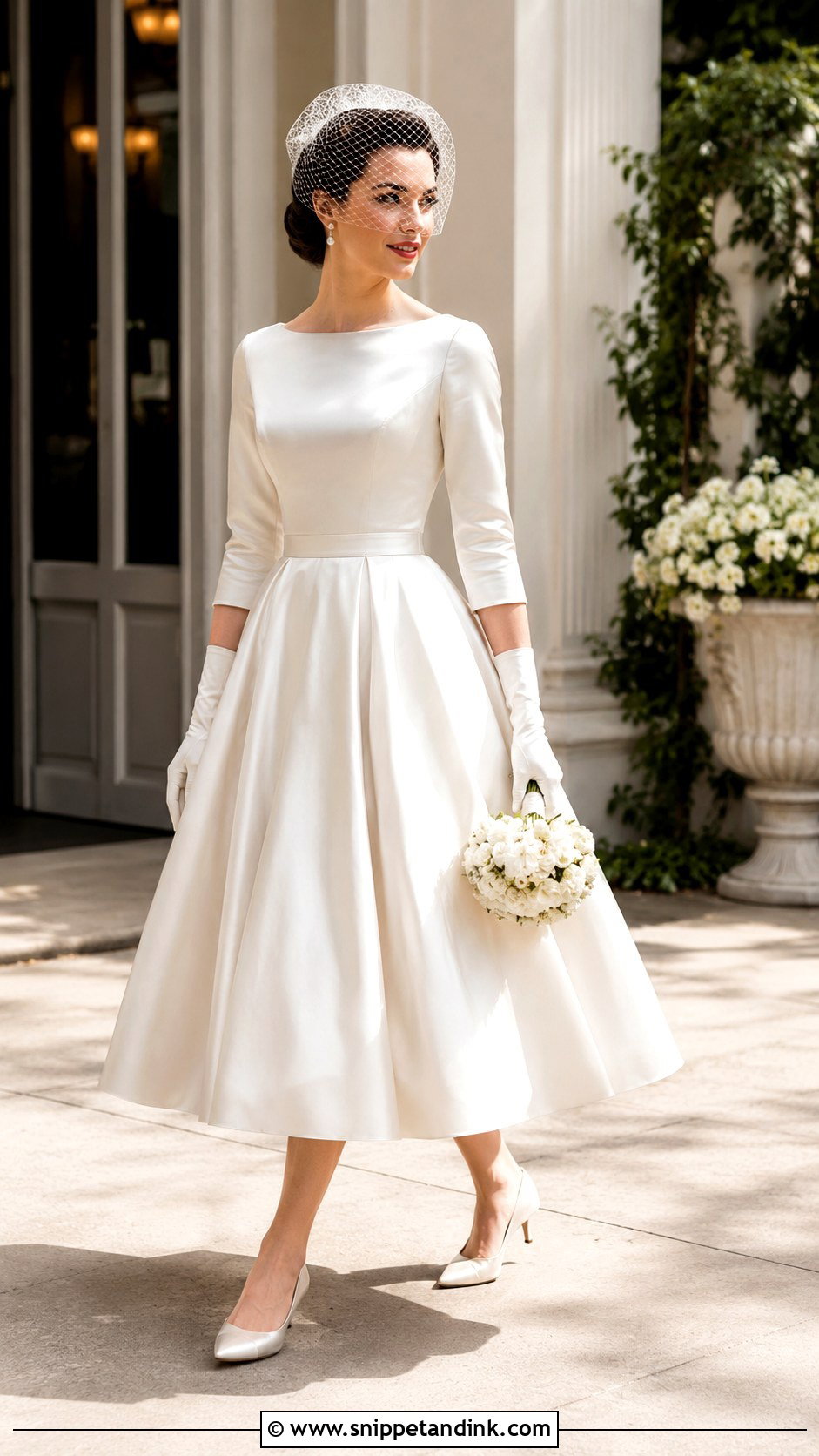
Tea length is the practical choice of the decade, and it puts your shoes on show. The hem should land between the lower calf and the ankle, and that exact point matters more than with any other length, because the hem draws a strong horizontal line across the leg. I pin it at two or three heights during fittings and step back to a full mirror before deciding. Pair the skirt with a fitted lace or satin bodice, three-quarter sleeves and a defined waist. Pointed kitten heels lengthen the leg, and a birdcage or short tulle veil keeps the vintage mood. Wrist-length gloves and pearls finish it.
6. 1960 Empire Waist Wedding Dress
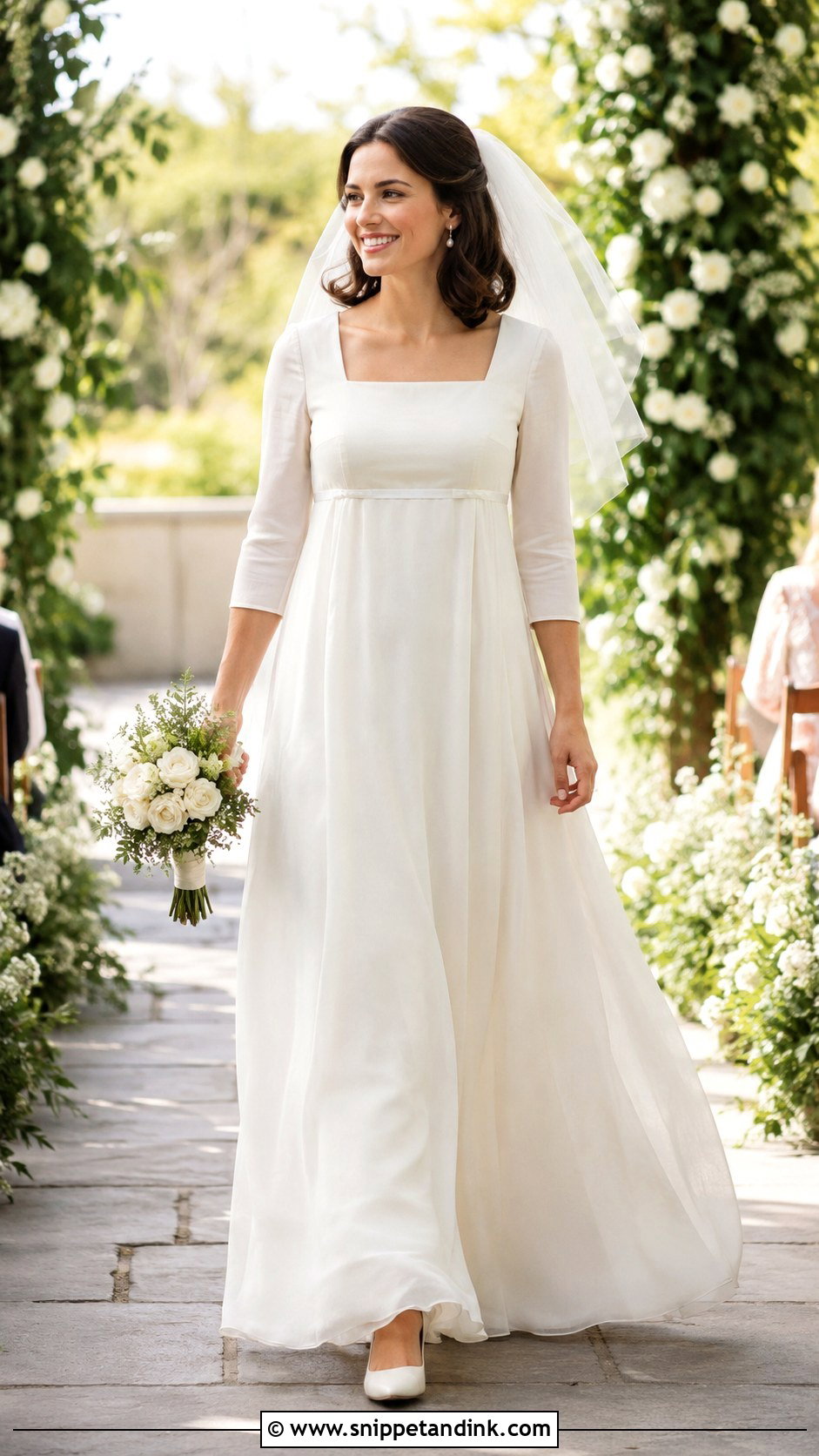
Moving the seam up to just under the bust gives you a long, fluid line, and the empire shape became more common as sixties bridal wear relaxed. The fabric has to fall away from the body rather than cling, so I steer brides toward lightweight crepe, chiffon or a soft satin and away from thin jersey, which shows every edge of the underwear. A square neckline and slim three-quarter sleeves keep it clearly retro. Low ivory heels, a soft shoulder-length veil and small pearl earrings are enough, with a ribbon under the bust if you want definition. Because there is no fitted waist, this is the dress I recommend to pregnant brides or anyone whose measurements may change between the final fitting and the wedding.
7. 1960 Shift Wedding Dress
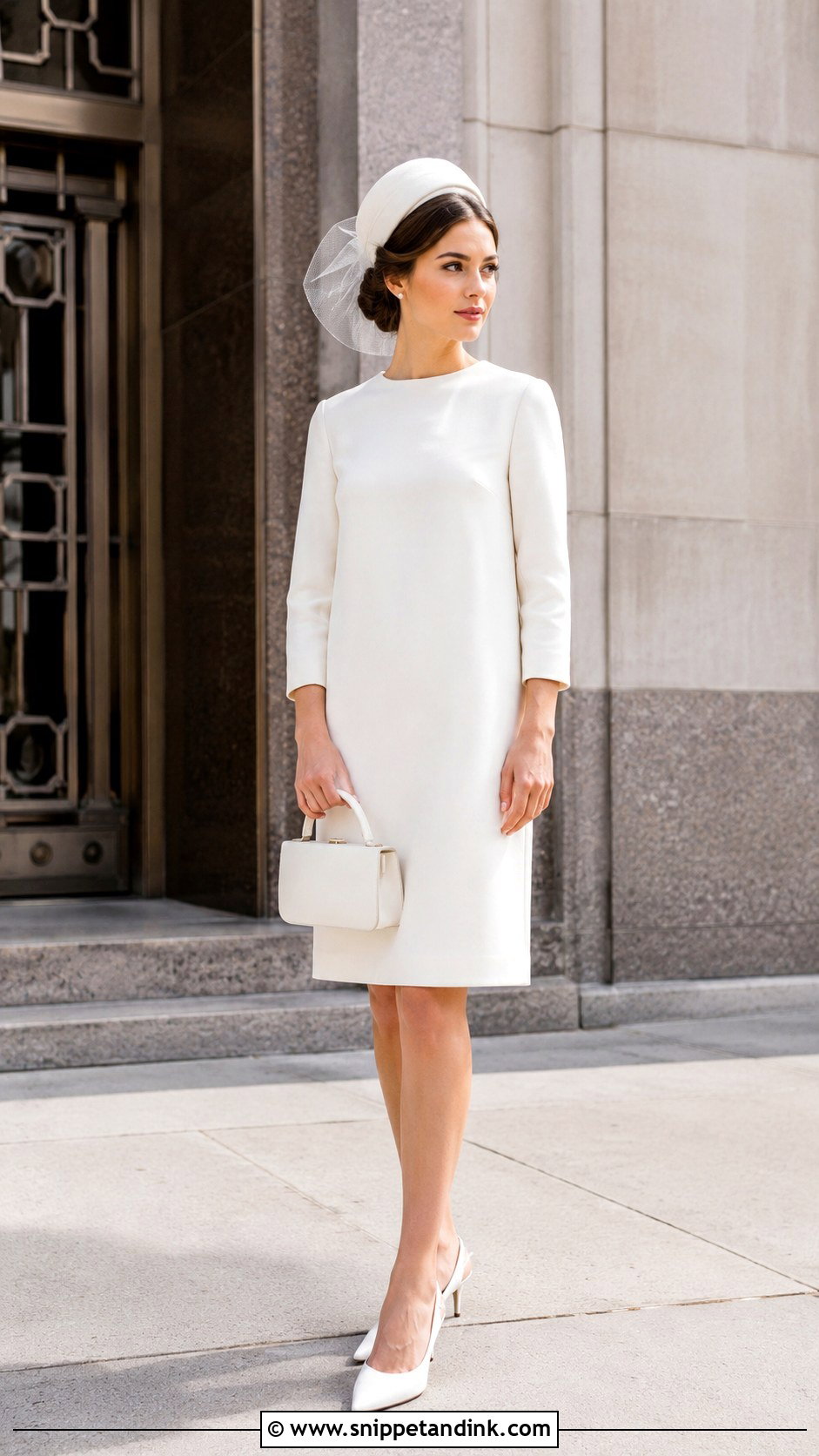
A shift hangs straight from the shoulders, which is why it suits a courthouse or a small ceremony so well: nothing to manage, nothing to hold up. It was one of the defining shapes of the decade as waistlines loosened. The risk is that a straight dress looks oversized, and the fix is almost always at the shoulder seam, not the hem. Get the shoulders tailored first, then look at the length. Choose a substantial crepe or textured jacquard that keeps its own shape. Slingback pumps, pearl or geometric earrings, a pillbox hat with a short veil and a small structured bag finish it, and a knee-length hem keeps it wearable long after the wedding.
8. 1960 Satin Column Wedding Dress
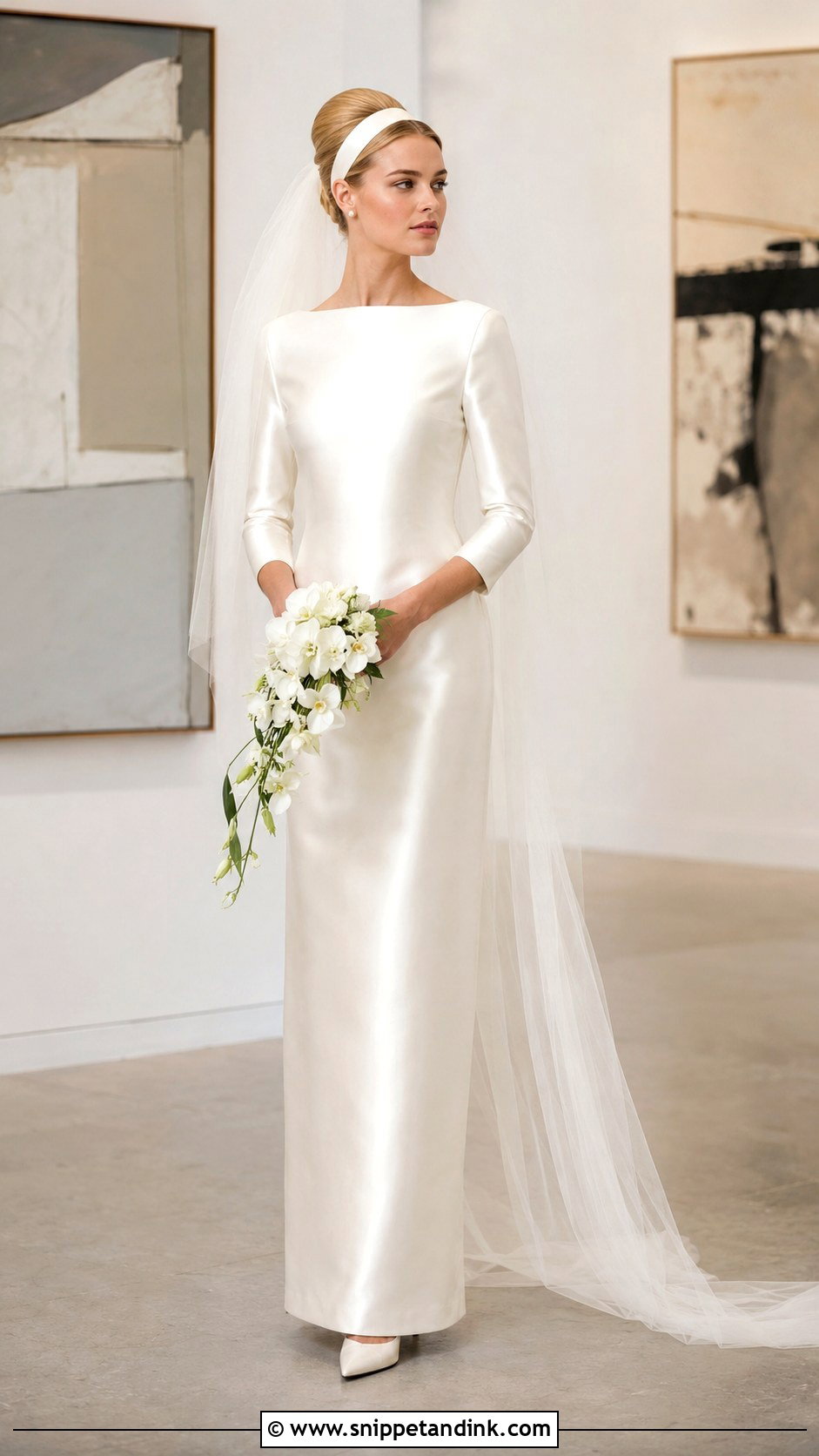
The column is the quiet side of sixties bridal style, and it is the least forgiving to fit. Medium-weight satin should fall straight from a softly fitted bodice without tracing every contour; too light and it clings, too heavy and it stands away like a tube. A bateau neckline, bracelet-length sleeves and minimal seaming keep it clean. I’d add pointed ivory pumps, a narrow headband, pearl studs and a long detachable veil for the ceremony. A straight skirt limits your stride, so ask for a back vent or a hidden kick pleat before you practise walking an aisle. Matte satin is the better choice for photos, since shiny satin flares under flash and direct sun.
9. 1960 Wedding Dress With Bateau Neckline
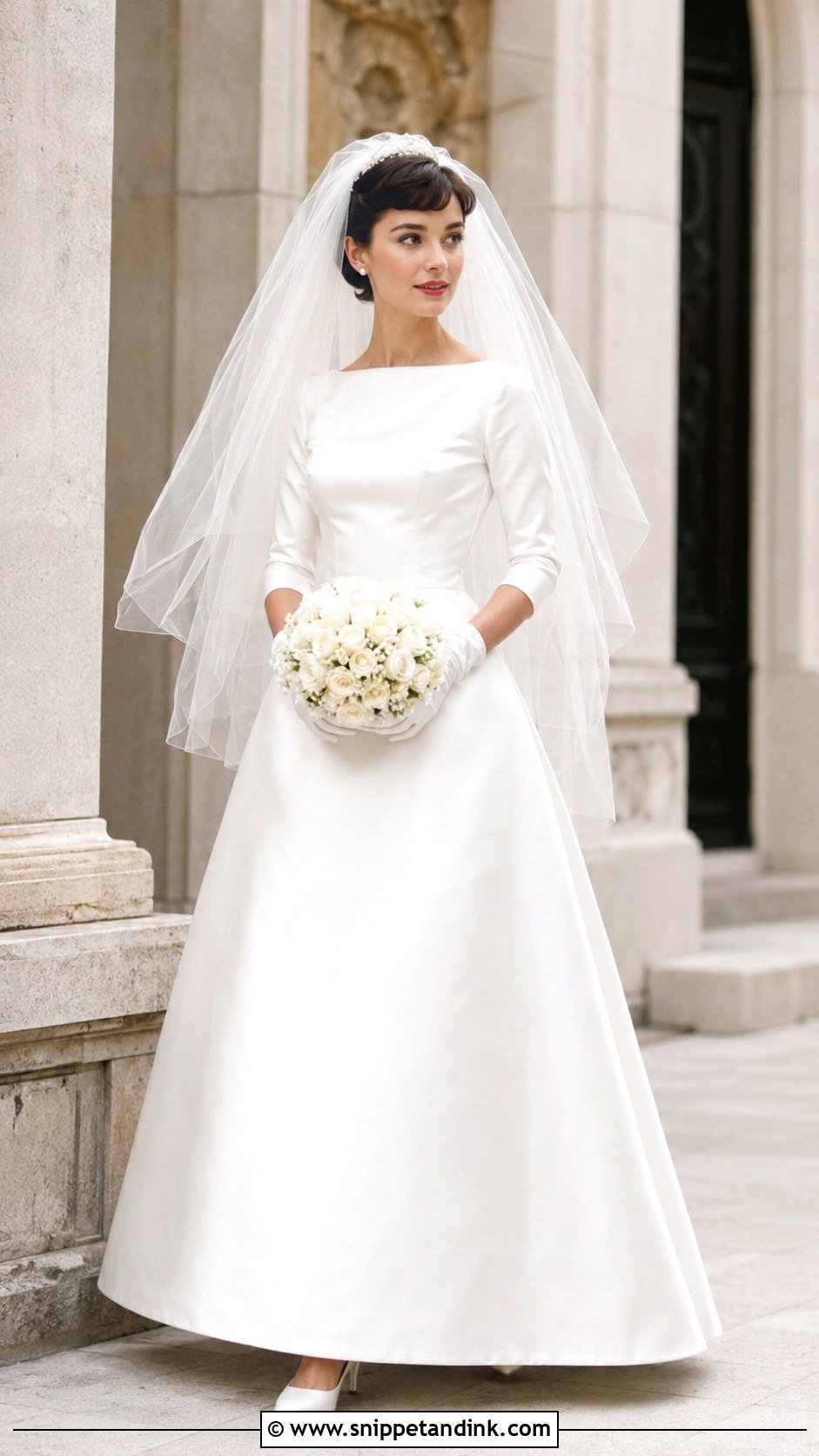
A bateau neckline runs along the collarbones, and it is one of the fastest ways to make a dress read as early sixties. The first thing I check is whether it lies flat across the shoulders. If it gapes when you lean forward, it needs taking in at the shoulder seam, not just a stitch at the edge. Brides with broad shoulders do better with a slightly narrower bateau, while a wider opening can visually widen a smaller frame. Build the rest around it: fitted bodice, natural waist, floor-length A-line skirt, three-quarter sleeves. Pearl studs, a smooth low bun, a fingertip veil set at the back of the head and pointed satin pumps finish it, with a small round bouquet.
10. 1960 Wedding Dress With Three-Quarter Sleeves
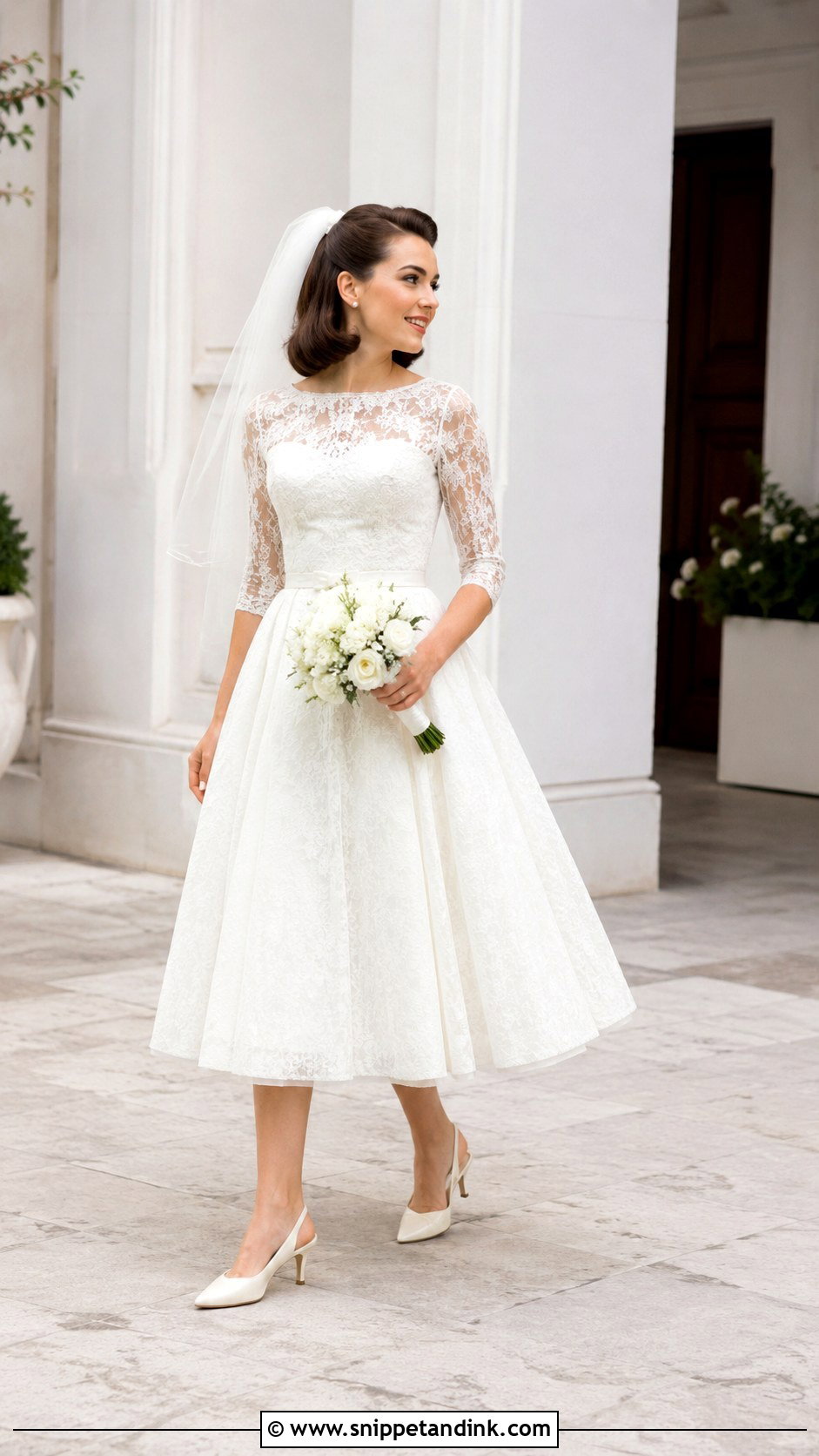
Three-quarter sleeves turn up again and again in sixties bridal wear, usually on A-line shapes with modest necklines, and they still make sense now: coverage for a church, cool arms for a summer reception. Lace gives a softer result; structured satin sleeves look more architectural. I end the sleeve at the narrowest part of the forearm, which flatters almost everyone, and I always ask the bride to raise both arms during the fitting to make sure the armhole doesn’t drag the bodice up. Pair it with a fitted bodice and a flared midi or floor-length skirt, pearl earrings, ivory slingbacks and a shoulder-length veil. Skip long gloves here, since they crowd the sleeve line. A small structured bag or compact bouquet is plenty.
11. 1960 Wedding Dress With Pillbox Hat
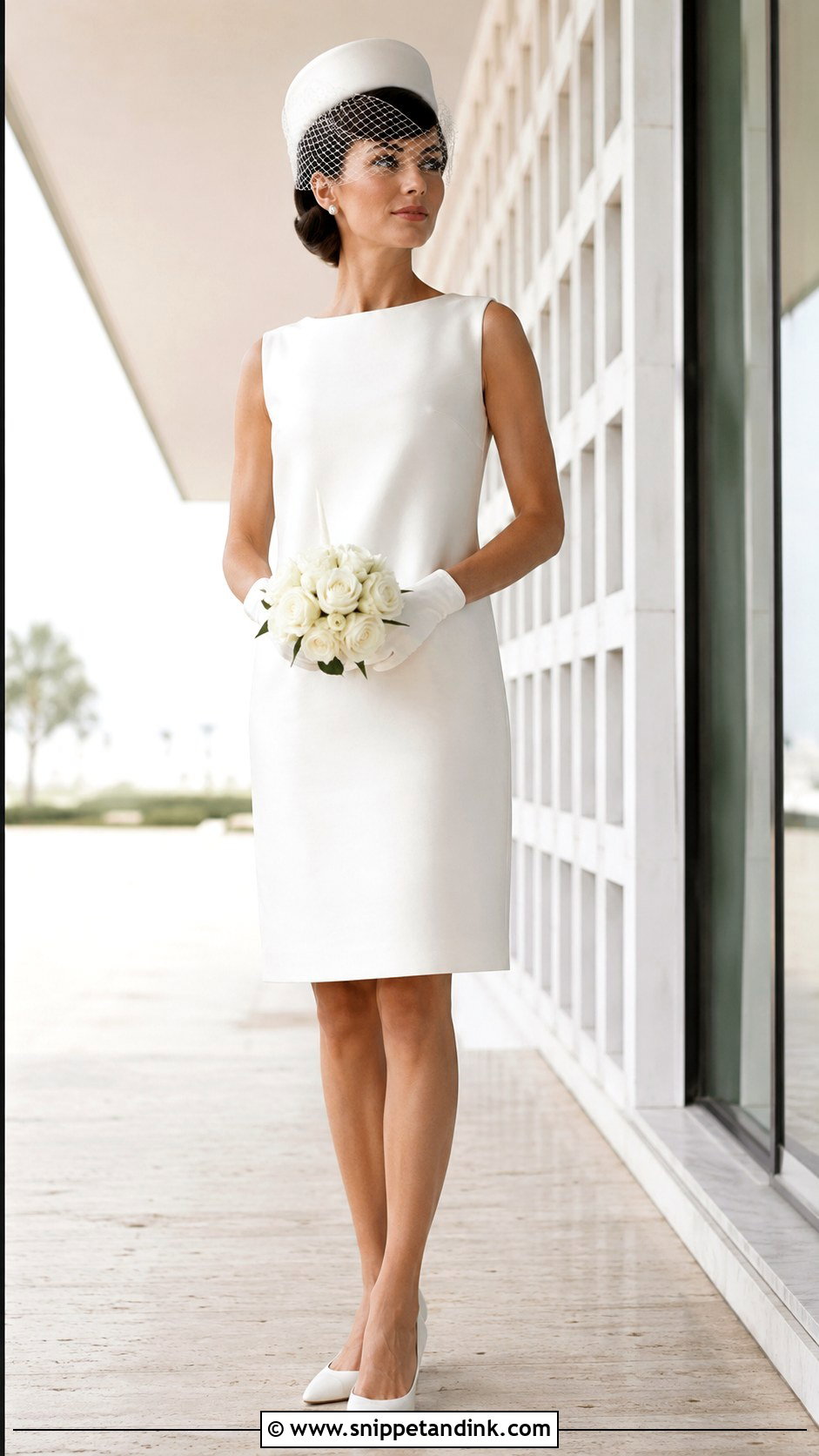
Nothing says the sixties faster than a pillbox hat. Pick a fitted white one in satin, textured fabric or understated lace, ideally with a short veil that frames the face. Pillboxes with attached veiling were a real bridal accessory in the decade, and the trick to wearing one now is restraint everywhere else. Keep the dress streamlined: a knee-length shift, a tea-length A-line or a slim floor-length gown. Short gloves, pearl studs and low pointed pumps are all it needs. Hair has to be planned for the hat, not the other way round, so bring the hat to your hair trial. A neat bob, French twist or smooth low bun sits well beneath it, and two small combs plus pins will keep it on outdoors.
12. 1960 Wedding Dress With High Neckline
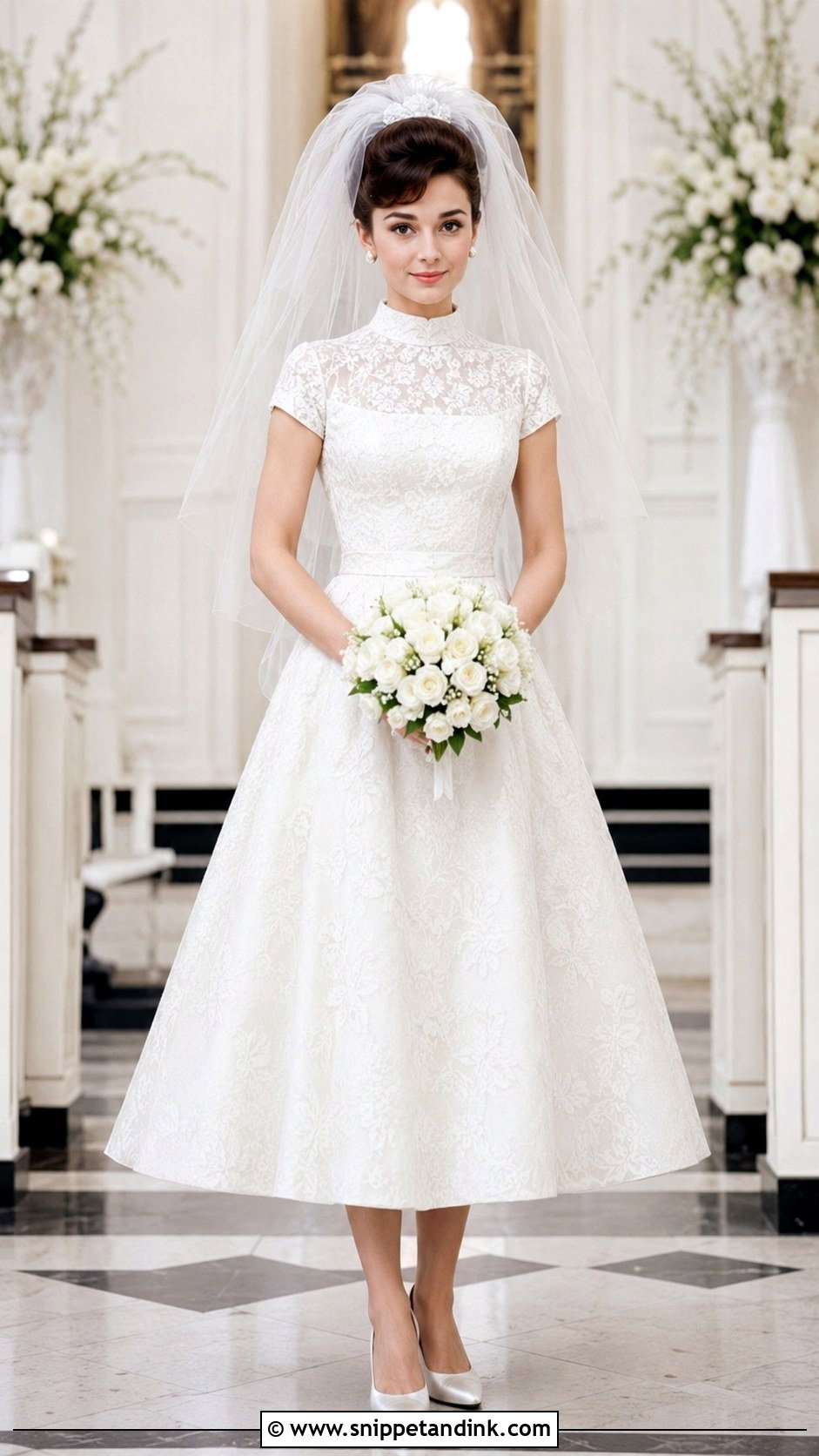
A high neck gives you a modest, poised outline without heavy embellishment. I like it on a fitted lace bodice with a softly structured A-line skirt, or on an all-crepe shift for a cleaner mod version. Long sleeves feel formal; sleeveless or cap-sleeve versions suit warm weather. The comfort problem is almost always the collar. If it presses on your throat when you swallow or turn your head, ask for the front to be lowered slightly or for a small opening at the back, and you keep the high-neck effect. Skip the necklace and let earrings, a bouffant veil or narrow headband, satin pumps and a restrained bouquet do the rest.
13. 1960 Wedding Dress With Bow Waist
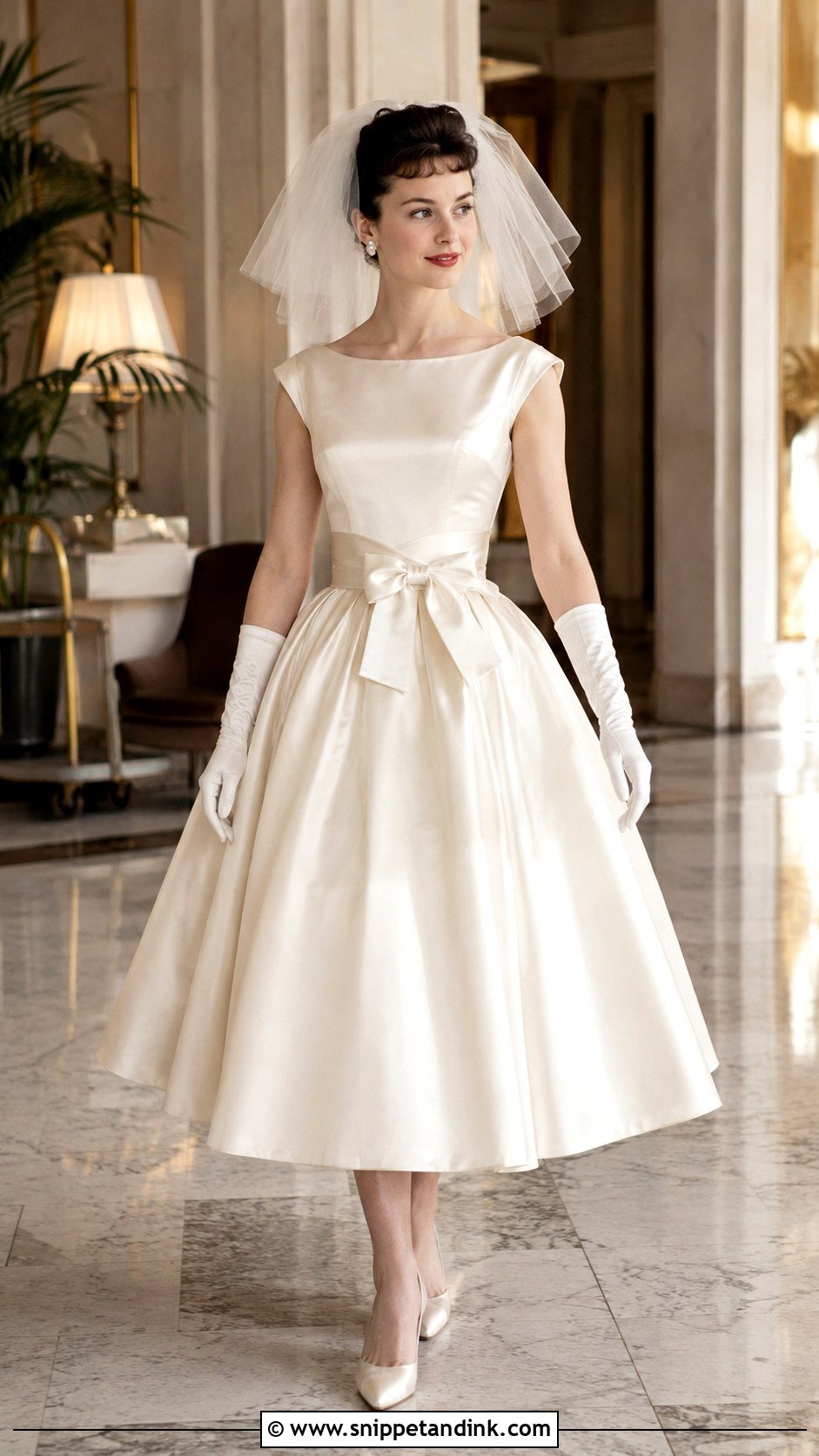
A waist bow can tip from charming to sugary very fast, so I keep everything around it plain. Start with a satin A-line or a tea-length dress with a fitted bodice and an uncluttered neckline. A flat bow at the front reads polished; a larger bow at the back gives guests something to look at as you walk away. Proportion matters too. A short torso suits a narrow ribbon bow, while a long torso can carry a wider waistband. Match pearl earrings, short gloves and pointed kitten heels in the same ivory, and stop the veil near the shoulders. Ask how the bow is built: one with interfacing or a stitched-in shape holds through dancing, and a loosely tied one wilts by the speeches.
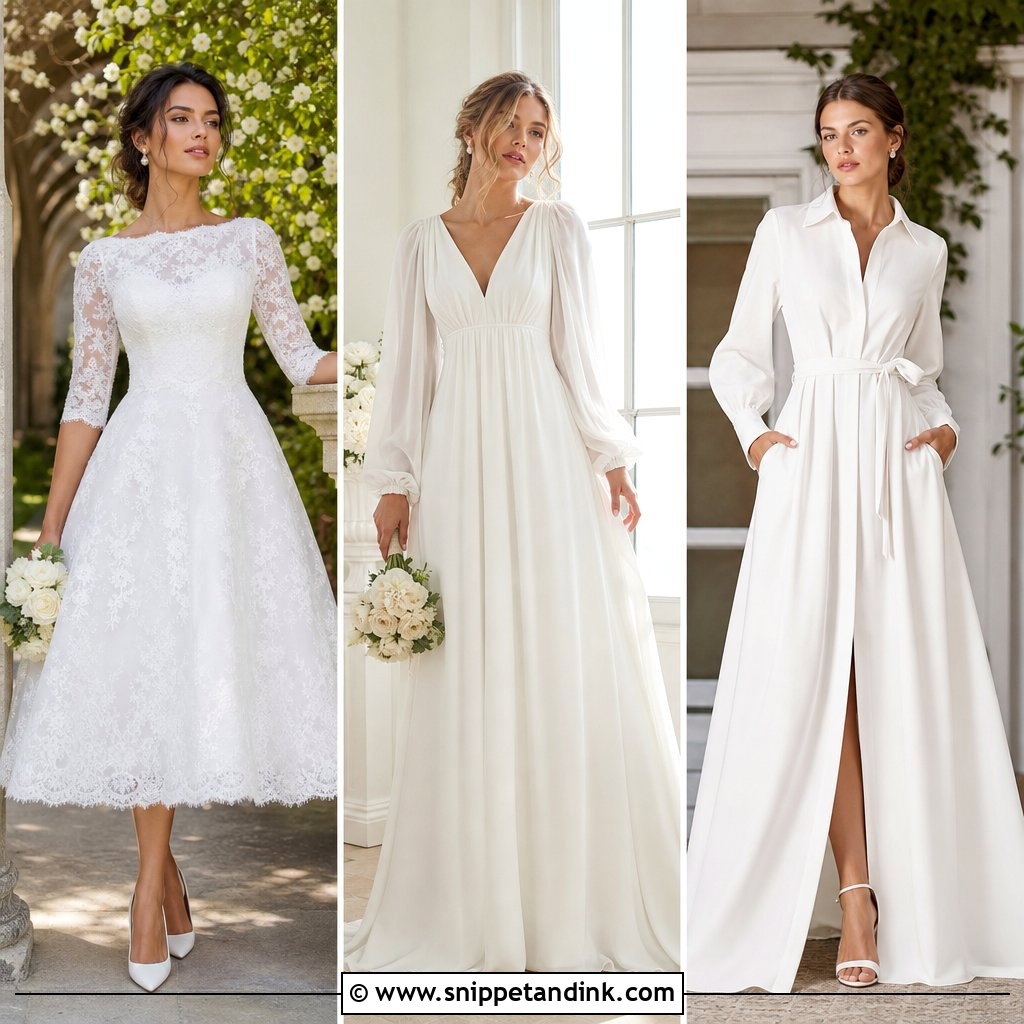
14. 1960 Wedding Dress With Bishop Sleeves
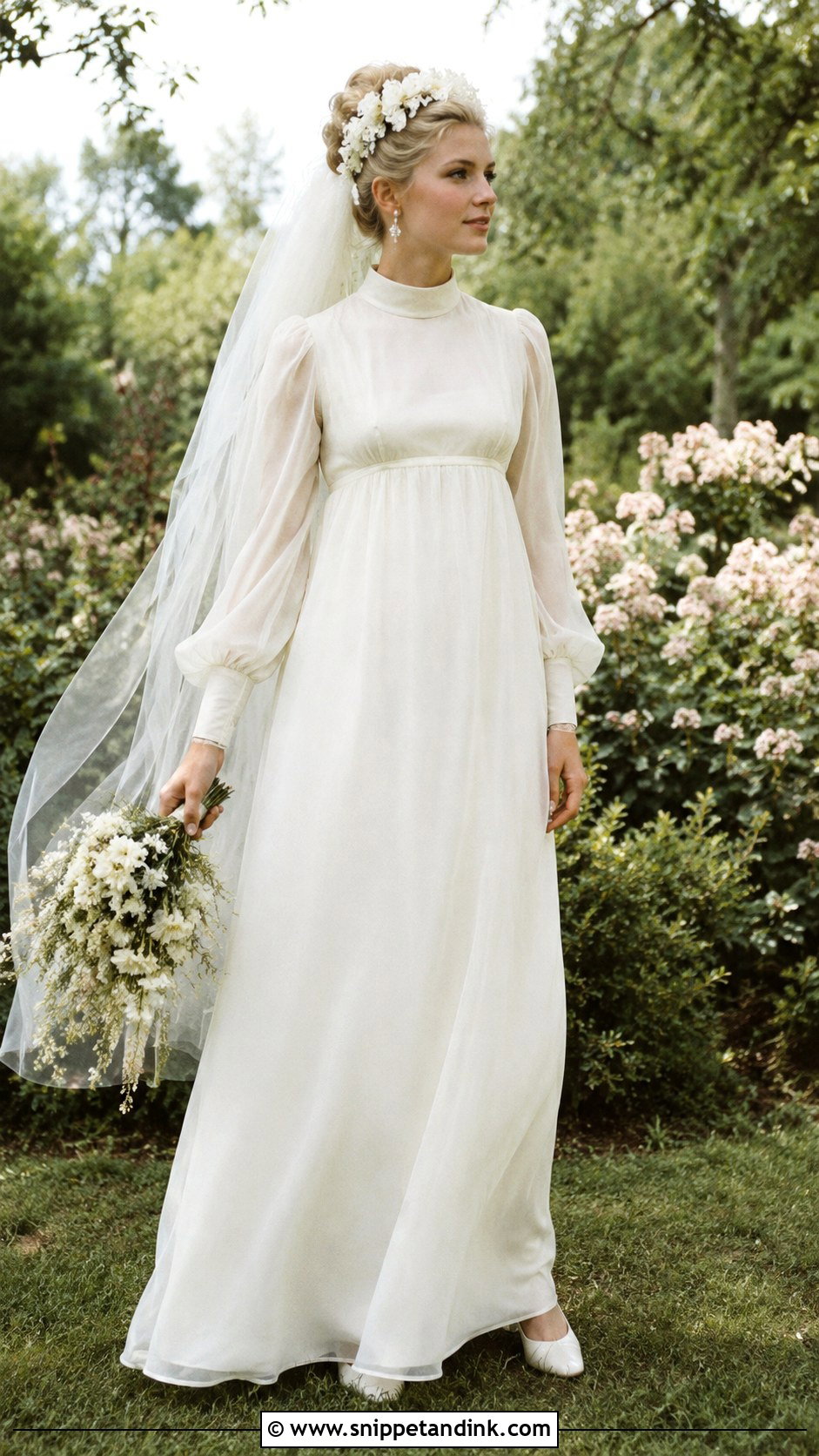
Soft bishop sleeves belong to the end of the decade, when bridal fashion started to loosen up. They gather through the arm and narrow into a cuff at the wrist, which gives you movement without a heavily layered skirt. I pair them with a high neckline, an empire waist and a flowing chiffon or lightweight crepe skirt. A simple floral headband, drop earrings and low block heels suit it, with a soft tulle veil tucked under the headband if you want more coverage. Watch the volume. On a petite frame a full bishop sleeve can bury the upper body, so ask your tailor to take some fullness out before the cuff is finished.
15. 1960 Wedding Dress With Cape
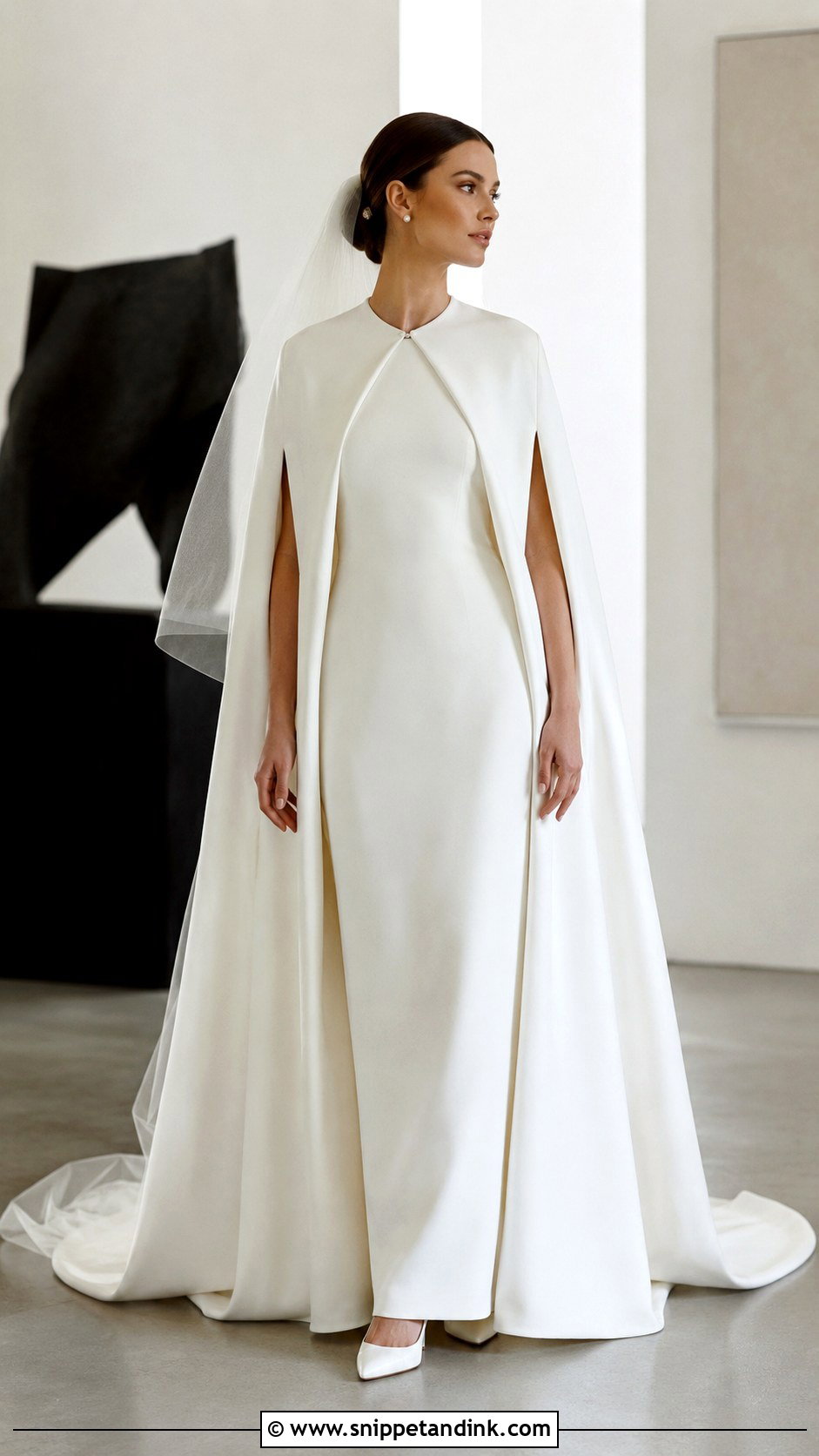
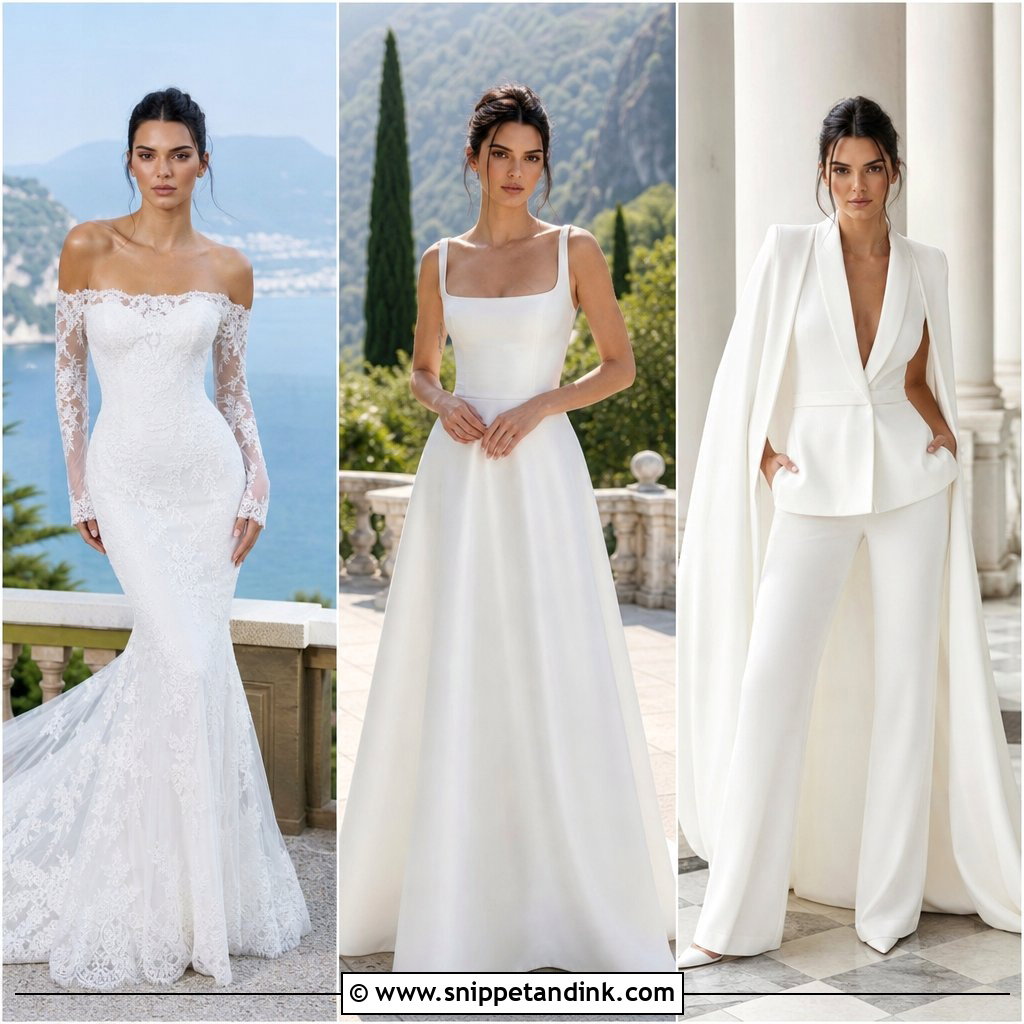
A cape is the easiest way to turn a plain sixties dress into a ceremony outfit and then hand you a simpler one for the party. Start with a sleeveless column, shift or simple A-line, and choose a cape that ends at the elbow, fingertips or floor. Structured satin feels crisp and mod; chiffon moves more softly. If the cape has a high collar, skip the necklace and set the veil under the hairstyle so the two layers don’t tangle on your shoulders. Pointed pumps, pearl earrings and a sleek bun or bob finish it. At a fitting I check two things: that the neck fastening stays put when you raise your arms, and that the cape doesn’t swallow the bouquet or hide the back of the gown.
16. 1960 Wedding Dress With Floral Lace
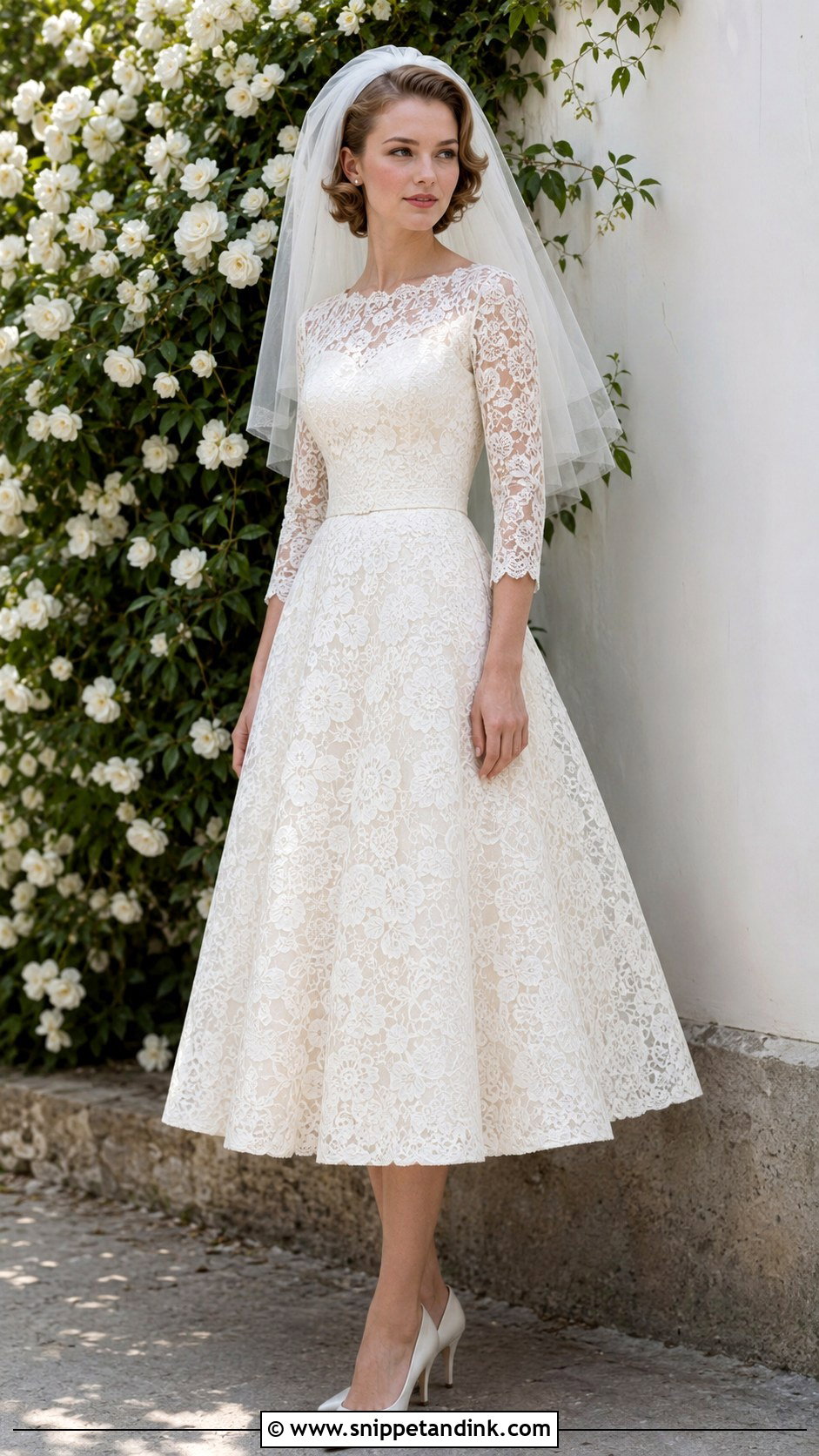
Lace motif size decides which part of the decade you land in. Large graphic flowers lean mod, while smaller, denser florals feel early sixties and traditional. Either way, a fitted bodice, natural waist and lightly flared skirt give the pattern enough structure to read. I keep the veil plain tulle with no lace edge, because two lace patterns meeting at the face look busy in photos. The lining colour changes the lace more than people expect: ivory or champagne under the motifs makes them stand out, while pure white can flatten them. For a modern update, an illusion neckline or slightly shorter hem works. During alterations, ask the seamstress to place the large motifs symmetrically around seams and darts. It takes time and is worth paying for.
17. 1960 Wedding Dress With Detachable Train
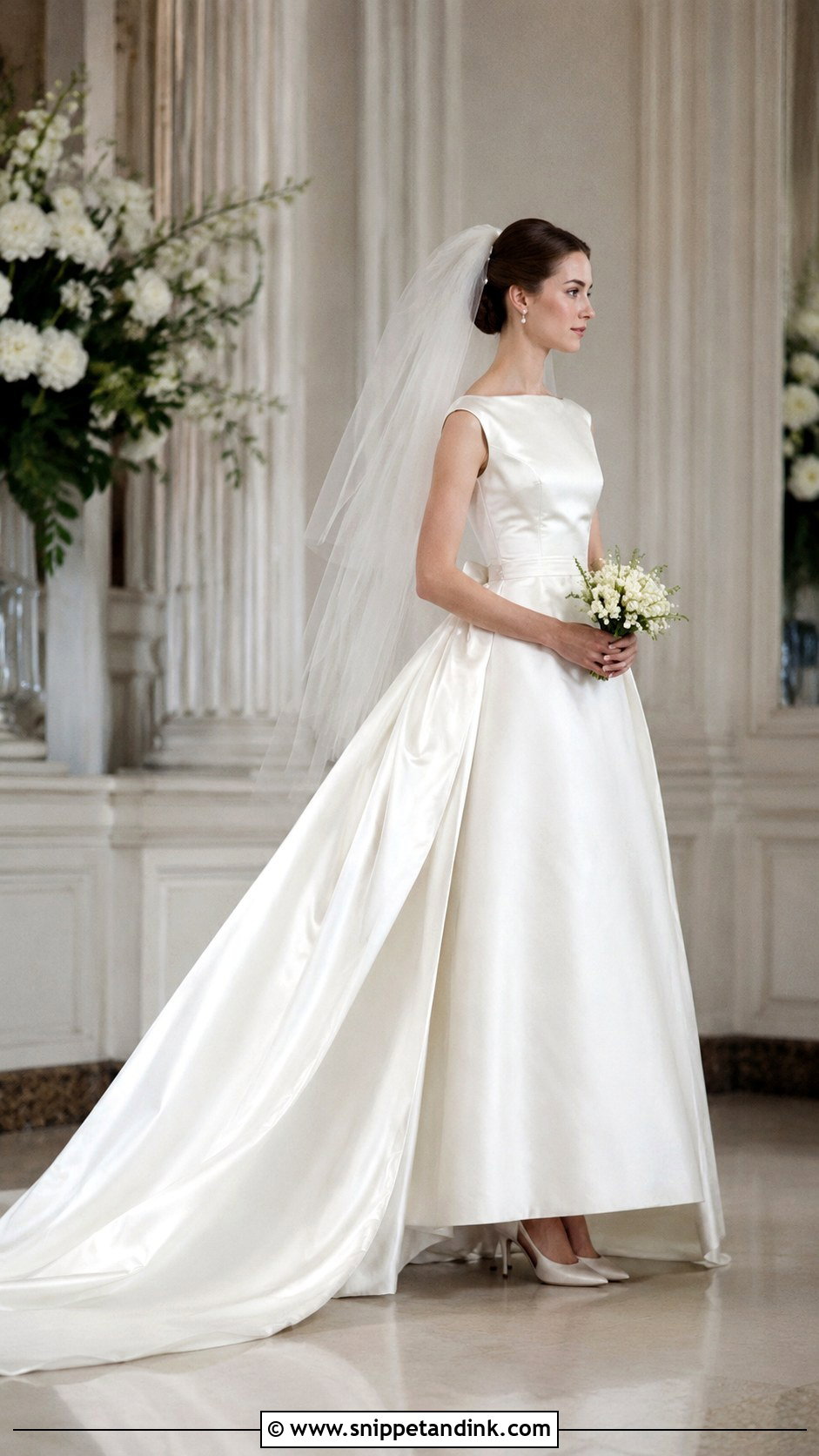
A detachable train gives you a formal aisle and a free dance floor. Start with a streamlined column or A-line in satin, crepe or textured jacquard, and attach the train at the waist with hidden hooks, snaps or a narrow bow belt. For the ceremony I’d pair it with a fingertip or chapel-length veil, pearls and pointed pumps, then take off both the train and the long veil after portraits. It works especially well over a knee-length or tea-length dress. Weight is what to watch: a heavy train hung from two hooks drags the waistband down, so ask for the load spread along the belt. Then practise the fastening with the person who will actually do it on the day.
18. 1960 Wedding Skirt Suit
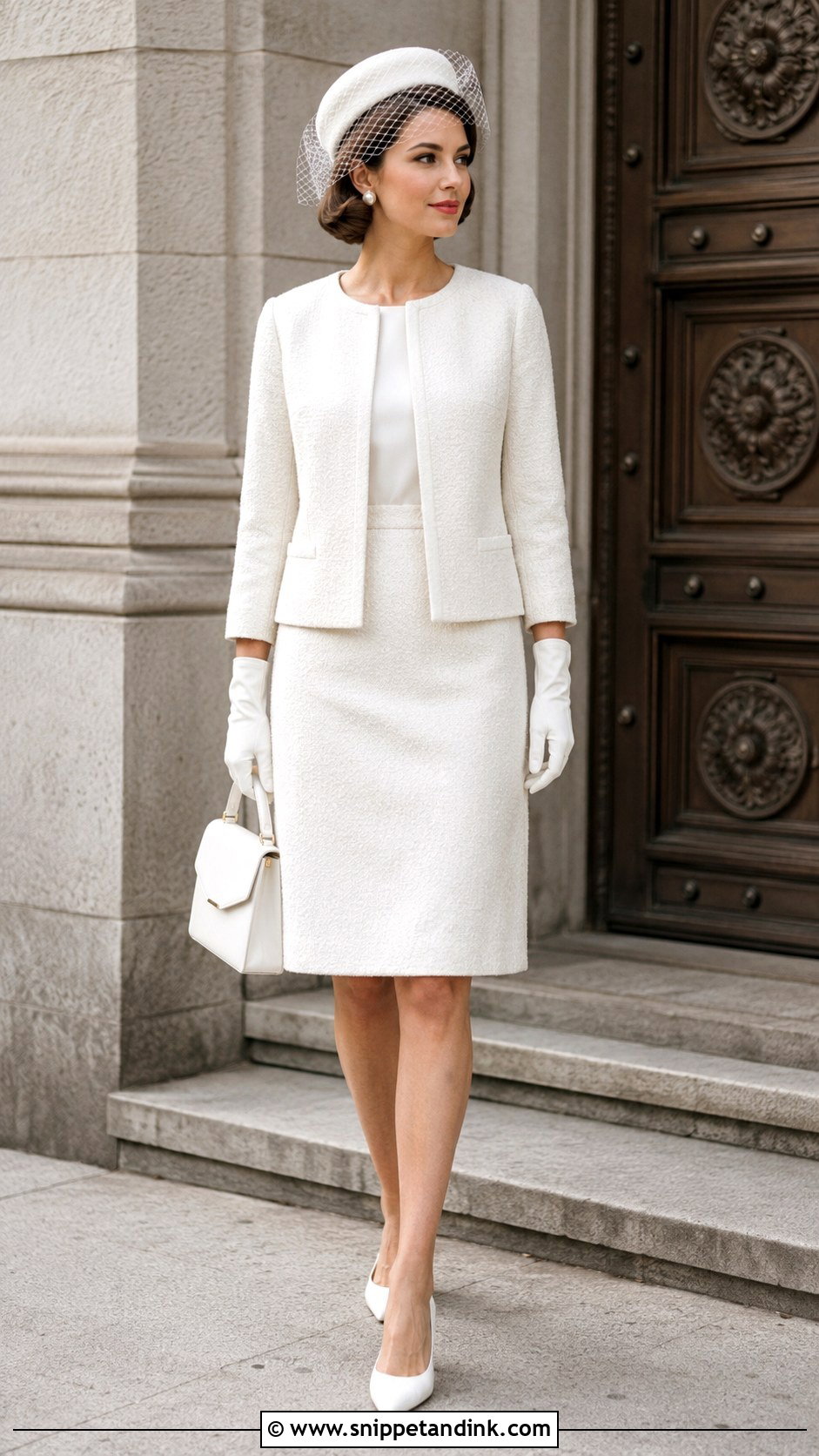
For a civil ceremony or a city wedding, a white skirt suit is about as sixties as bridal dressing gets. Choose a fitted collarless jacket with bracelet-length sleeves and a knee-length pencil or A-line skirt. Bouclé, silk shantung and structured crepe all carry the mid-century character, though bouclé snags on chunky bracelets and bouquet wire, so keep jewelry smooth. A pillbox with a short veil, pearl earrings, wrist-length gloves and pointed kitten heels complete it. Carry either a small top-handle bag or a compact bouquet, not both. The jacket should close without pulling across the bust. Wear a silk shell underneath and you have a second outfit for the reception the moment the jacket comes off.
19. 1960 Bohemian Wedding Dress
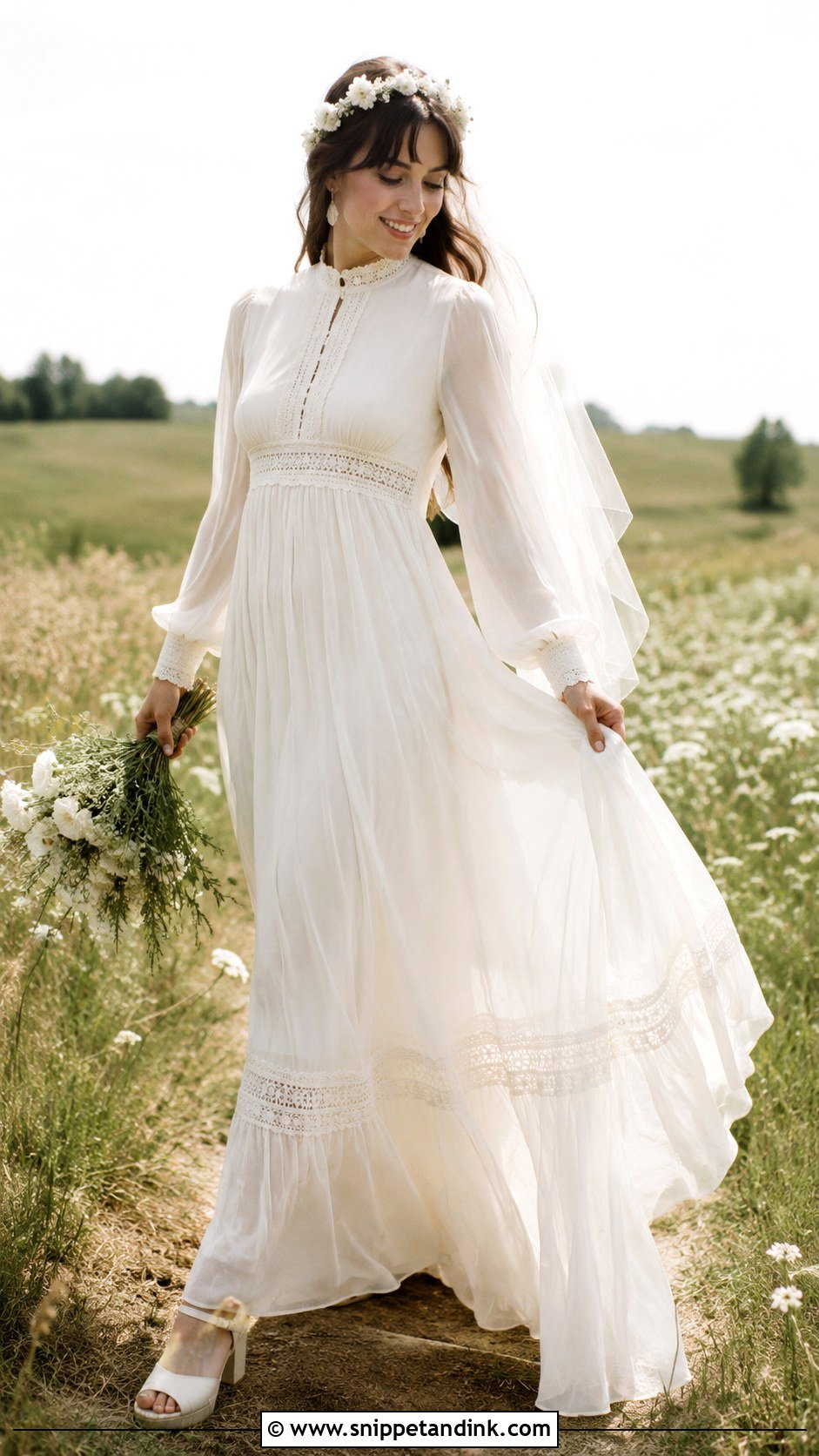
The late sixties show up in a relaxed bohemian wedding dress with flowing fabric and handmade-looking details. I’d build it from an empire waist, long bishop sleeves and a softly gathered floor-length skirt in chiffon, cotton lace or lightweight crepe. Crochet-style trim at the cuffs or neckline adds character, but keep the lining opaque, because thin boho fabric turns see-through in direct sun. A floral headband, loose veil, fine drop earrings and ivory block-heel sandals suit a garden or meadow ceremony. Keep the bouquet natural but tidy. Hem the skirt in the shoes you’ll actually wear so it clears the grass, and ask for a discreet wrist loop to lift it on uneven ground.
20. 1960 Wedding Dress With Bubble Veil
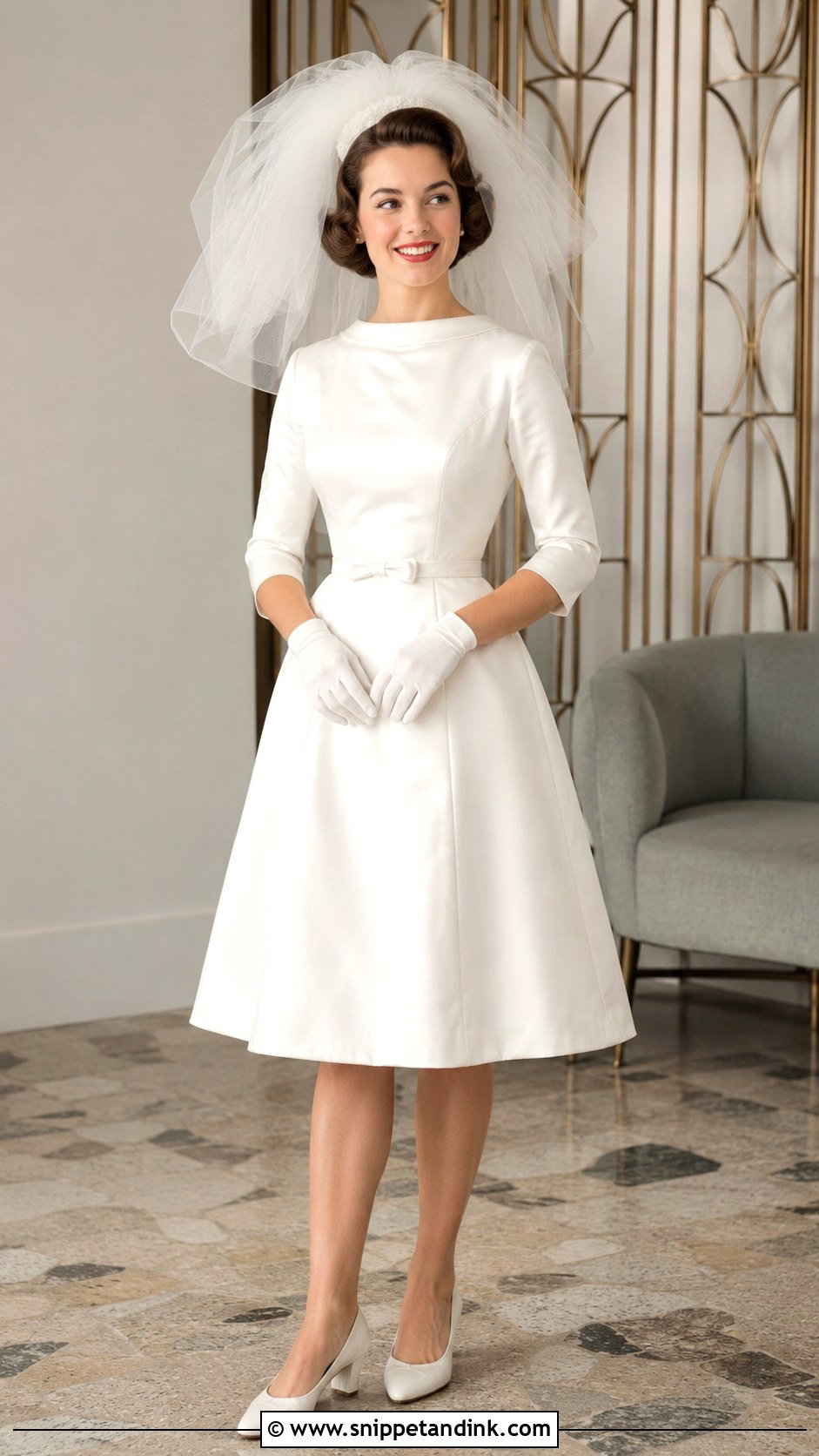
A bubble veil puffs out around the head and shoulders, so it needs a compact dress underneath or the whole outline turns round. I pair it with a knee-length A-line, fitted waist, high neckline and short or three-quarter sleeves. Smooth satin lets the tulle stand out; subtle lace is the softer option. Placement changes the effect a lot. Set at the crown it gives obvious volume, and moved further back it reads quieter, which is the version I’d suggest for a bride wearing glasses or a fringe. Pearl studs, short gloves and low block heels finish it, with a smooth bun, curled bob or lightly teased half-up style. Because the veil sits right by your face, choose soft tulle; stiff net scratches the cheeks all day.
Petticoats, Slips and the Hidden Structure of a Sixties Shape
Most of the silhouettes above depend on what’s underneath. A full early-sixties skirt needs a petticoat or crinoline to keep its rounded shape; without one, even stiff satin drops flat by the evening. Bring your underpinnings to every fitting, because the hem length changes once they’re on.
- Full skirts and tea length: a net or organza petticoat that starts below the waist seam, so it adds no bulk at the bodice.
- Shifts and columns: a smooth slip in matching ivory, so seams and underwear lines don’t show through crepe in sunlight.
- High necks and bateau necklines: a bra with a low back and straps set wide enough to stay hidden, tried at the first fitting rather than the last.
- Minis: skin-tone shorts or a slip, plus a test sit and a practice climb into a car before the hem is finalised.
Storing Ivory Satin and Lace Once the Wedding Is Over
These fabrics show their age in particular ways. Ivory satin and silk yellow when kept in plastic or near light, and sugary drink spills that look invisible on the night can turn brown months later. I tell brides to get the dress professionally cleaned within a few weeks, then store it flat or loosely folded in acid-free tissue inside a cotton bag or archival box, away from hot lofts and damp basements. Don’t leave heavy satin or beaded lace on a hanger for years, since the weight stretches the shoulders. Check it once a year and refold along new lines so creases don’t set.
One Sixties Detail, Then Tailoring for Everything Else
The sixties gave brides full skirts and lace sleeves at one end, shifts, minis, skirt suits and pillbox hats in the middle, and empire waists and bishop sleeves by the close. What makes any of them work now is fit. Choose one or two recognisable details, tailor every hem and sleeve to your own proportions, and wear shoes you’ve already broken in. Accessories should support the dress rather than repeat it. An original vintage gown and a new dress cut to the era can both look right on the day, as long as the fit is yours and not the decade’s mannequin.
You'll Like These Ideas:


Leave a Reply