
A closed gown is the hardest kind of wedding dress to fit well, and the most rewarding when it’s right. Once the neckline, back and arms are covered, there’s nowhere for a loose seam or a pulling sleeve to hide, so the cut and the lining do all the work. In my fittings the brides who choose coverage come for very different reasons: faith, a cold church, a family who will be watching closely, or simply feeling more like themselves with their shoulders covered. Illusion lace, structured satin, crepe and covered buttons all show up below, alongside softer takes on the most conservative silhouette. I’ve added notes on what I check for each one, because a modest dress that looks right on the hanger can still choke at the collar once you turn your head.
Testing Opacity Under Flash Before the Order Goes In
Modesty in a showroom and modesty in photographs are two different things. Store lighting is soft and comes from above. A photographer’s flash and the late sun at a reception hit the dress straight on, and thin linings can turn see-through in exactly the places you were trying to cover: the bodice, the upper arm under lace, and the skirt when you stand against a window.
When a bride tells me coverage matters to her, I run three quick checks before anything is ordered:
- Phone flash in a dim corner of the fitting room, photographing the bodice and the sleeves from about two metres away.
- Standing in front of a bright window or doorway to see whether the skirt lining shows the outline of your legs.
- Looking at the illusion areas from the side, where mesh often reveals more than it does face-on.
If any of those fail, ask whether the salon can order an extra lining layer or a nude underlining for the lace. Most manufacturers can add one at the order stage. Adding it after the dress arrives costs more and sometimes changes how the skirt hangs.
1. High Neck Long Sleeve Lace Wedding Dress
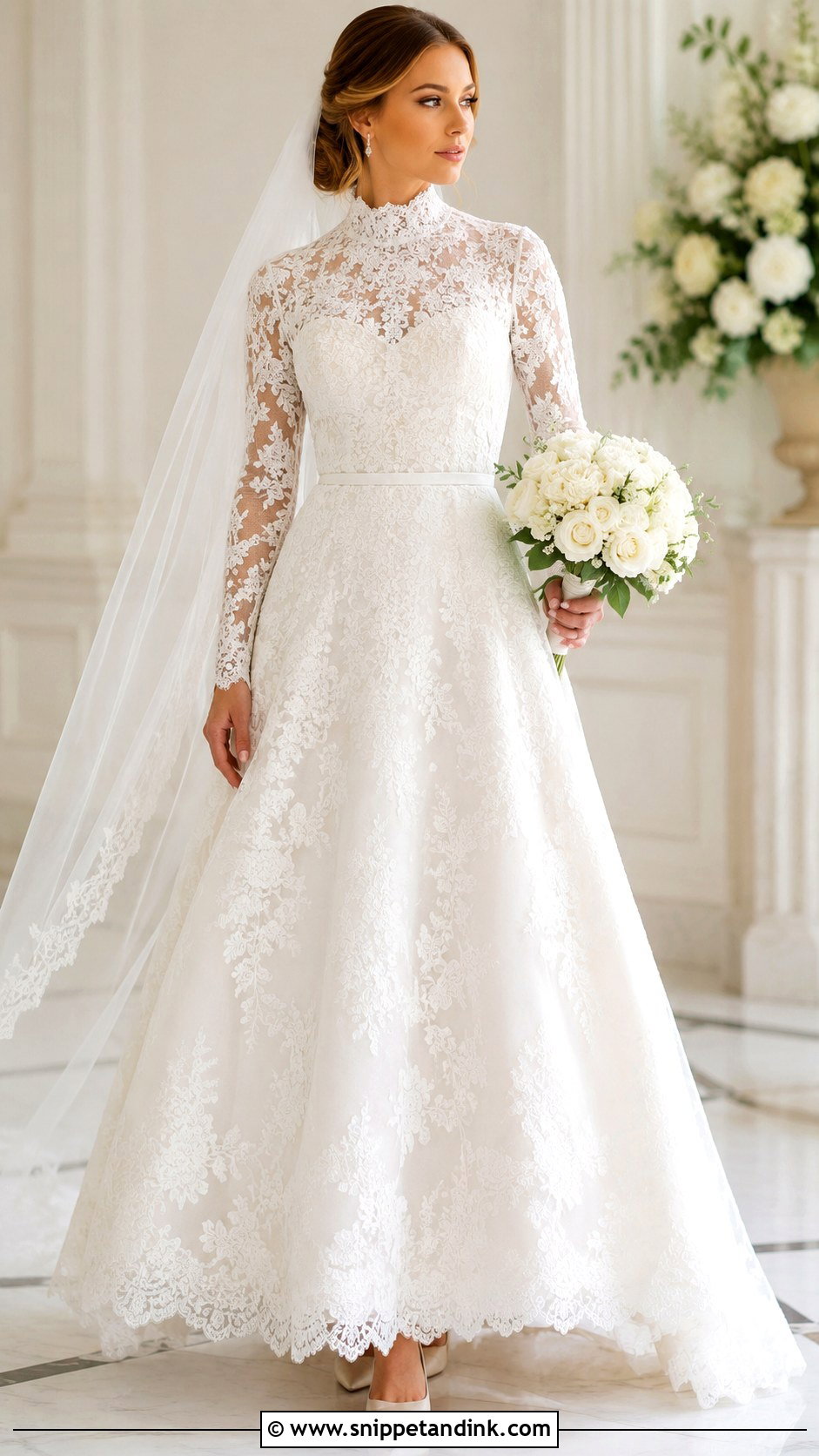
High lace necklines are where I spend the most pinning time. Collar height decides everything: a collar cut a few millimetres too tall will press into your throat every time you look down at your vows, so I always ask brides to nod and turn at the fitting before anything gets stitched. An A-line with a lined bodice and lace sleeves tapering at the wrist is the classic version here, with the floral pattern running unbroken from neck to skirt. Keep the hair in a low bun and the earrings small, since anything at the neck fights the lace. A fingertip veil moves without hiding the back, and ivory pointed pumps with a compact white rose bouquet finish it quietly.
2. Closed Back Satin Ball Gown Wedding Dress
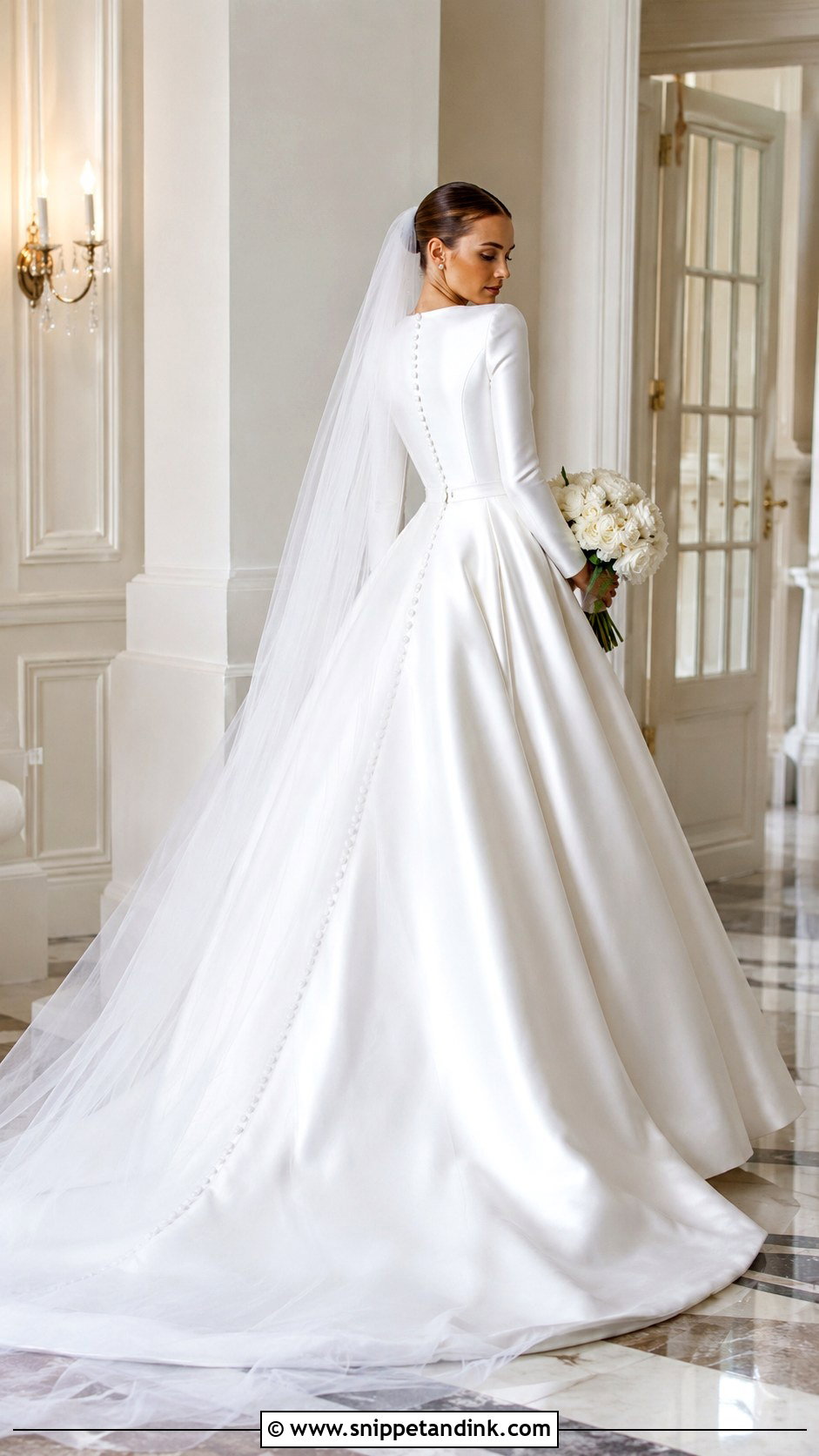
Satin is unforgiving. Every tension line across the shoulder blades shows up as a shine streak, which is why I’d only send a bride toward a closed satin ball gown if she’s prepared for two or three careful fittings. The version shown has a jewel neckline, full sleeves, a natural waist and a column of covered buttons running down to the train. With that much skirt, a cathedral veil and a chignon keep the scale right, and small crystal studs are all the jewellery it needs. Block heels are kinder than stilettos under a ball skirt, since nobody sees your feet anyway, and a structured white bouquet suits the formality.
3. Modest A-Line Wedding Dress With Bishop Sleeves
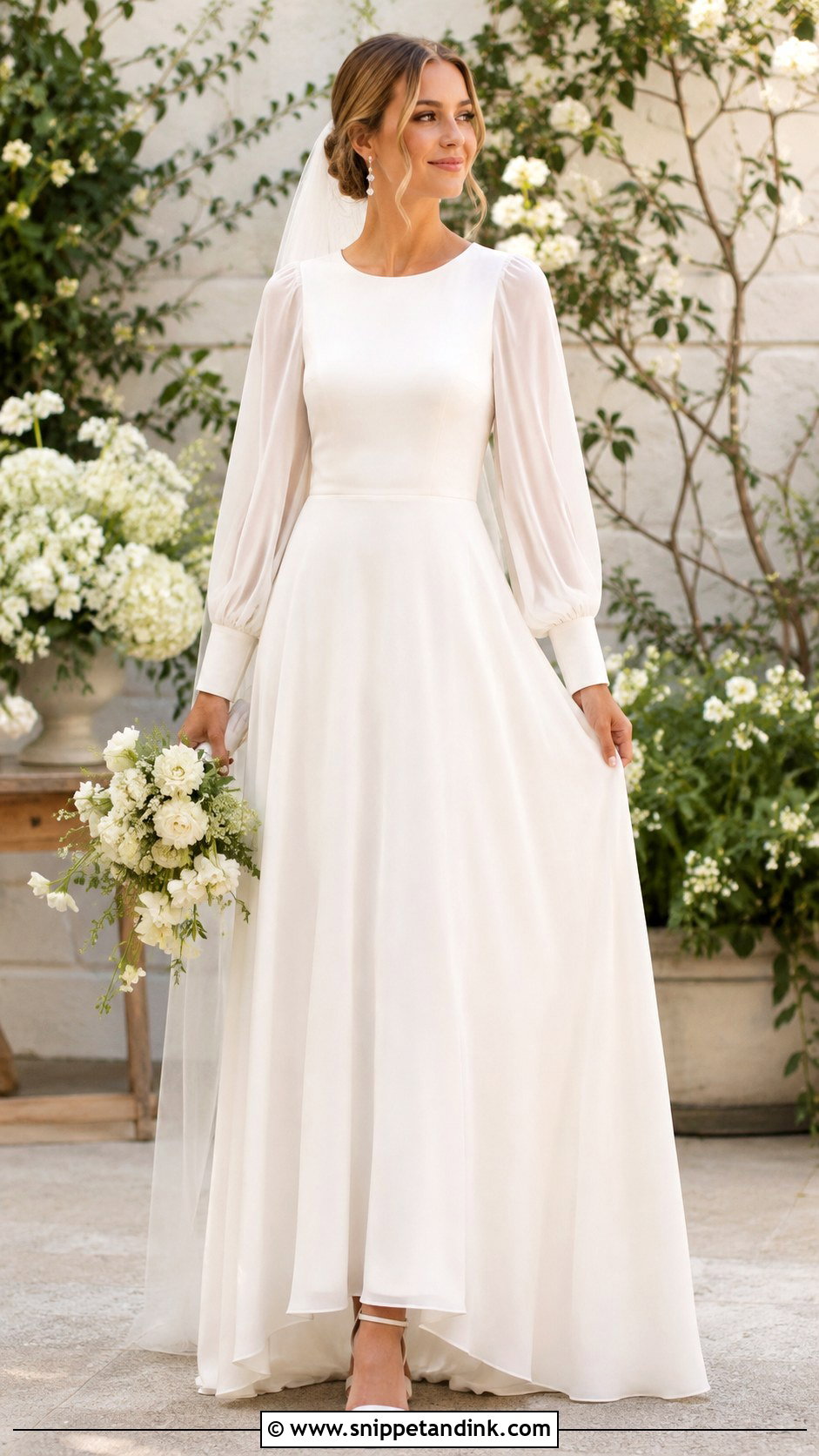
Would you like coverage that still moves when you walk? Bishop sleeves are my usual answer for brides who feel trapped in fitted lace arms. Chiffon, organza or light tulle sleeves gathered into fitted cuffs give the arm room while the opaque bodice and high scoop neck keep things covered. The catch is the cuff: too loose and the sleeve slides into your cake, too tight and you’ll feel it all evening, so I fit it with a finger’s width of ease. Keep the skirt plain so the sleeves stay the feature, and pin a chapel veil beneath a low bun.
4. Boat Neck Crepe Wedding Dress With Long Sleeves
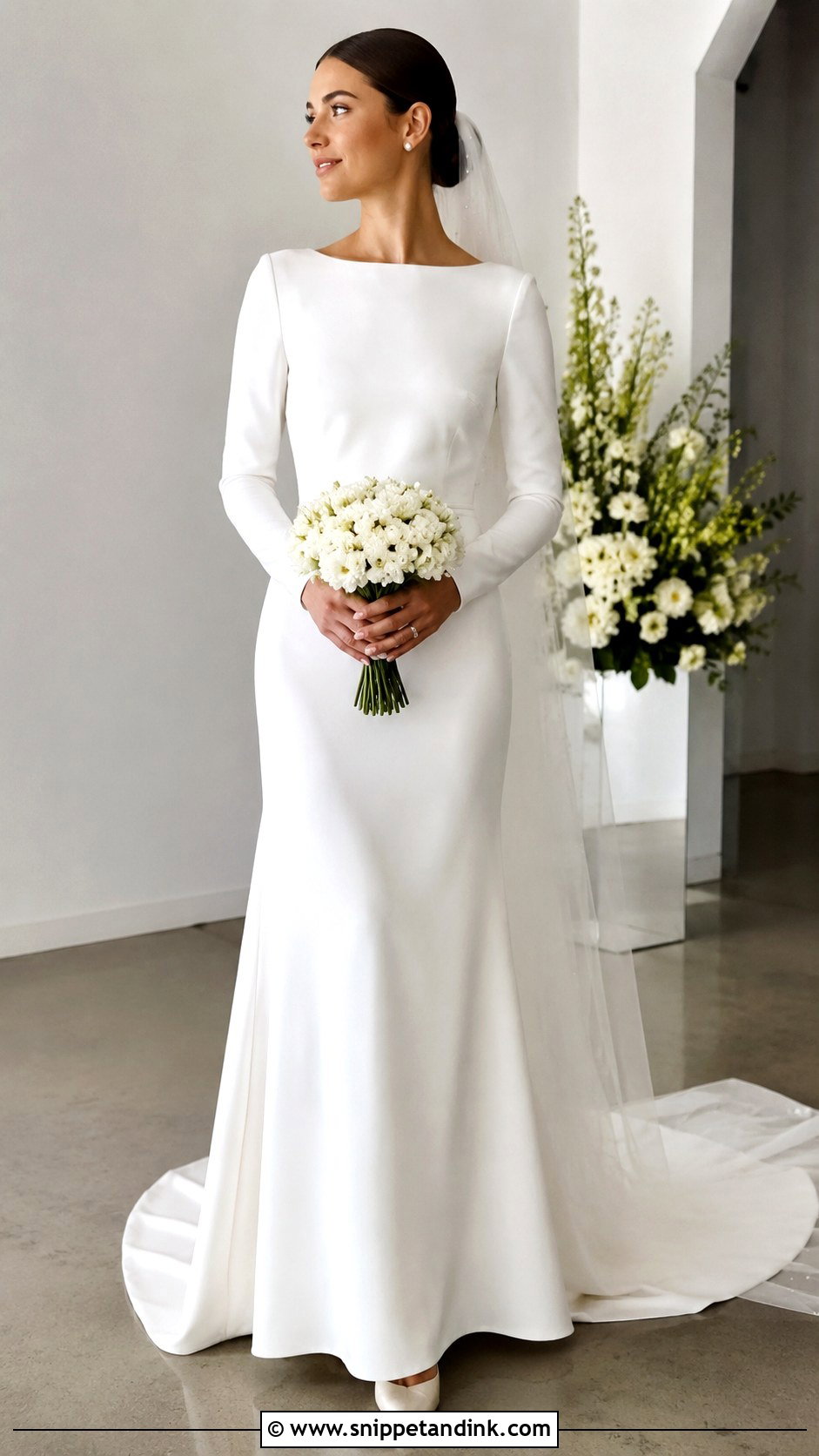
A boat neck reads clean in a way few necklines do, and it’s an easy kind of coverage because it sits on the collarbone instead of the throat. It’s also the neckline I see go wrong most often after cheap alterations. If one shoulder seam is even slightly off, the line tilts in every photo. In crepe, pair it with long fitted sleeves, a closed back and a column or soft A-line skirt. Crepe should skim rather than cling, so get the shapewear sorted before the first fitting. Pearl studs, a sleek bun and a plain narrow veil are enough.
5. Victorian High Collar Wedding Dress
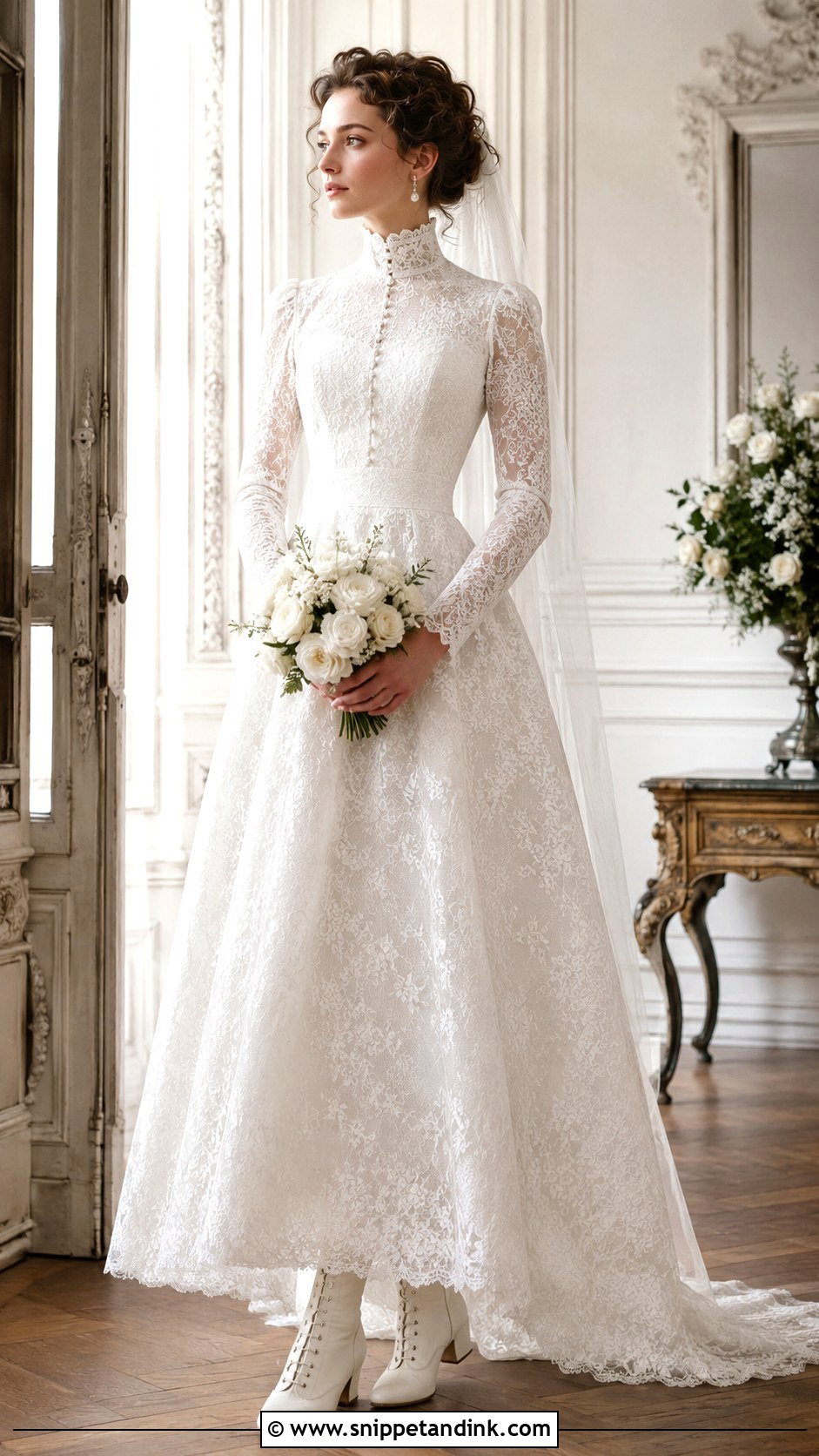
The Victorian high collar is a strong look, and the line between period-inspired and costume is thin. Floral lace over a solid lining, a stand collar and slightly puffed or lace-cuffed sleeves give you the reference without the fancy-dress feel. I keep the skirt a simple A-line with a controlled train so the bodice isn’t competing with a lot of volume below it. Pearl drops and a neat updo work, with the tulle veil anchored under the hair rather than on top. Ivory button boots are fun if your hem is long enough to hide most of them. I’d pass on this one if you have a short neck and dislike anything near your jaw.
6. Closed Neck Mermaid Wedding Dress With Lace Sleeves
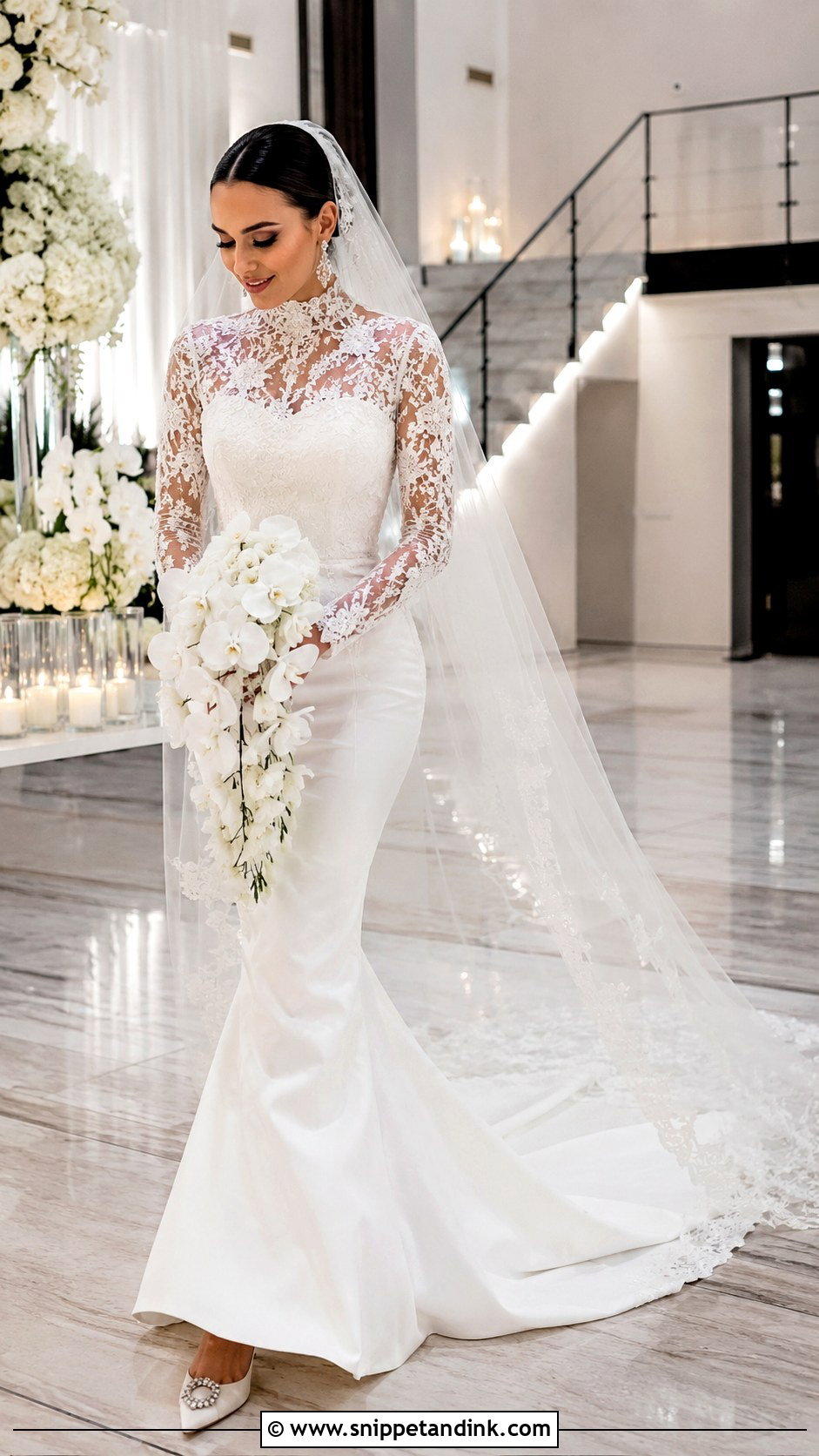
Fitted mermaid shapes take a closed neckline surprisingly well, because the coverage up top balances the drama below. This one pairs a high illusion neck over a lined sweetheart underbodice with a covered back and embroidered sleeves, and the skirt hugs to the knee before flaring. My non-negotiable at the fitting is the walk test: full strides, a staircase if the shop has one, and sitting on a hard chair. A mermaid flare set too high will shorten your steps all day. Wear a low bun or a smooth ponytail to show the neck and back, and pick heels you can actually walk in with a narrow skirt.
7. Square Neck Modest Wedding Dress With Puff Sleeves
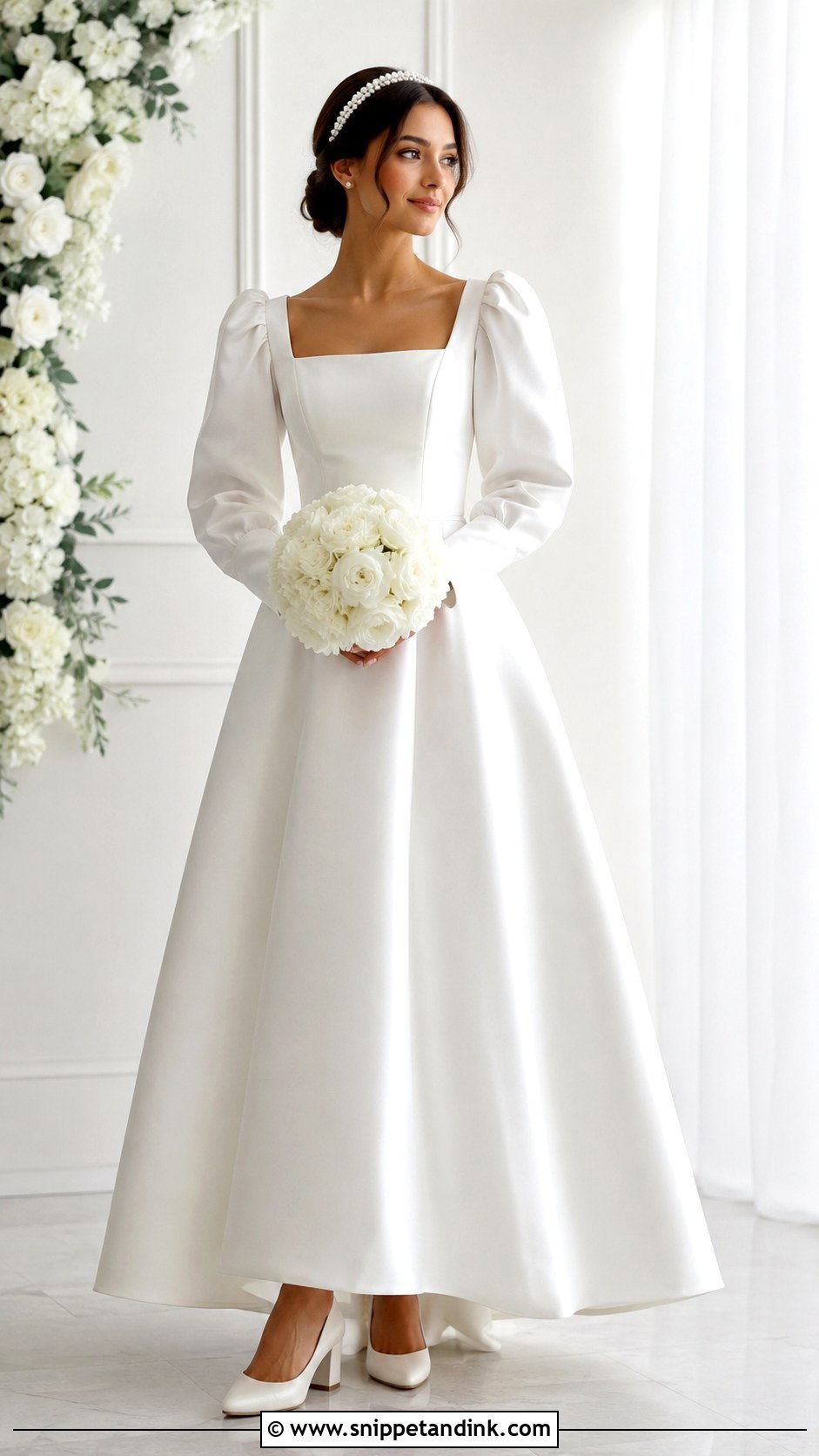
Square necklines can be modest if they’re cut high enough, which usually means asking the seamstress to raise the front edge a little from the sample. With elbow-length or full-length puff sleeves, a fitted waistband and a full A-line skirt, the shape becomes almost architectural. Mikado and heavier satin hold those corners crisply; soft lace lets them sag. Skip the necklace entirely. The neckline is already the frame, and a pearl headband with tiny studs is all I’d add.
8. Mock Neck Illusion Wedding Dress
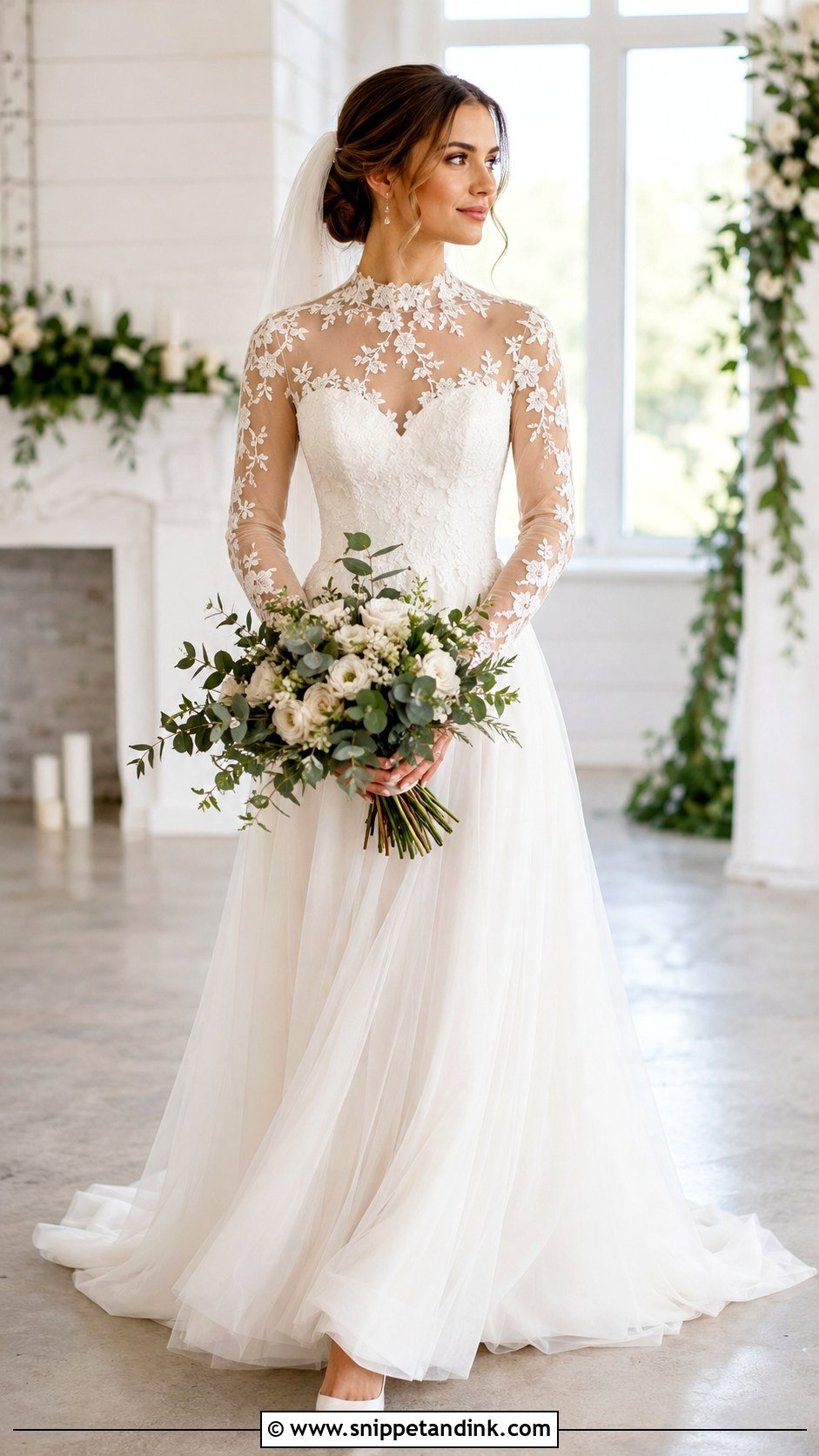
An illusion mock neck gives you the look of coverage without the weight of solid fabric at your throat. The mesh is what makes or breaks it. I hold the sample mesh against the inside of the bride’s wrist in daylight before we order, because a shade that’s off by a little turns grey or pink in photos. Lace appliqués across the shoulders and collar should be hand-placed so they cover the seam where the mesh meets the lining. A low chignon and short drops keep the collar visible, and a tulle or soft crepe skirt suits it equally well. Check it from the side, too, where mesh tends to bunch.
9. Long Sleeve Princess Wedding Dress
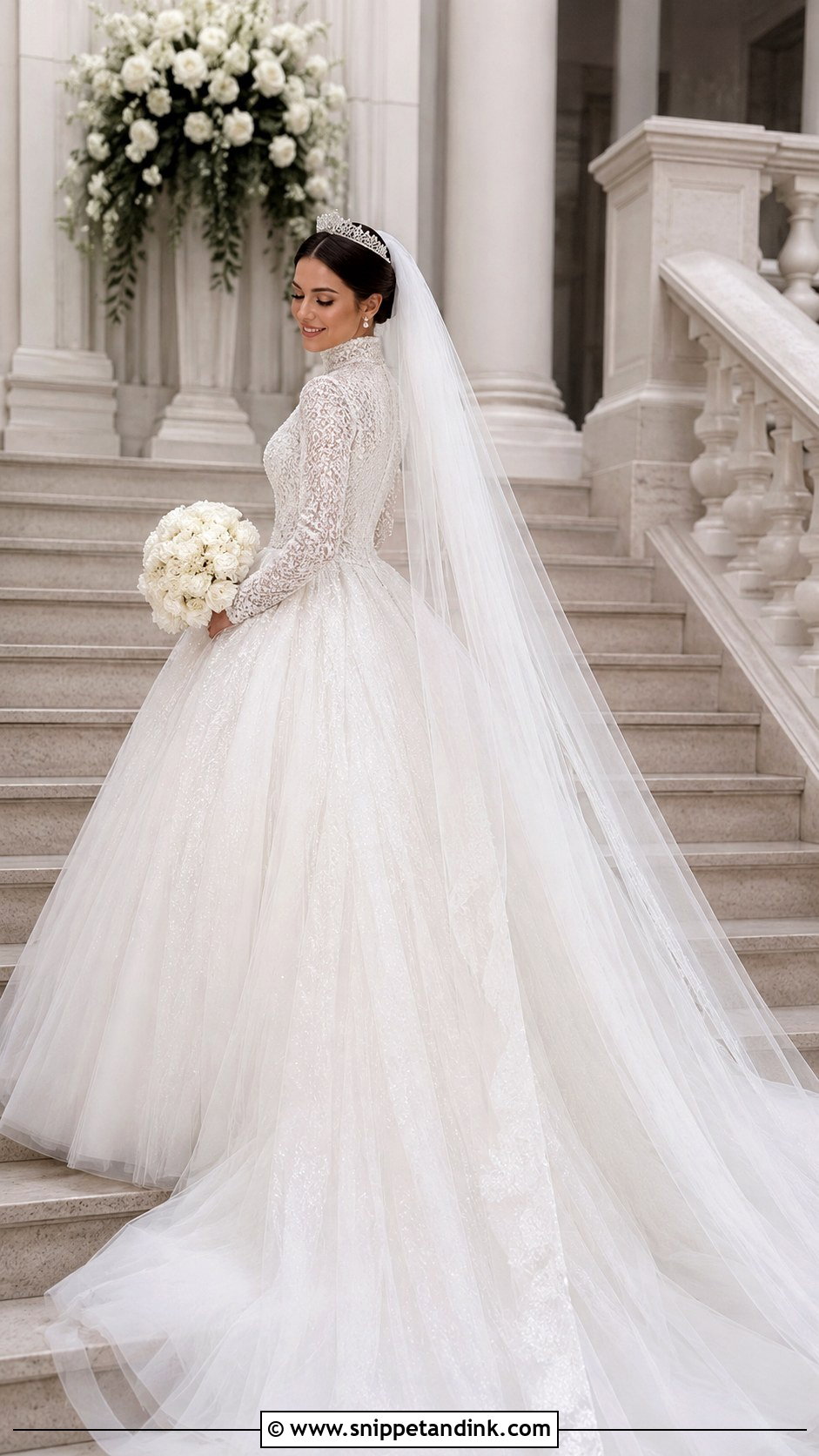
A long sleeve princess gown is the one most brides picture when they think of a covered dress: high fitted bodice, full layered skirt, cathedral veil. Lace sleeves soften the structure, while plain sleeves read more modern. Weight is the real issue. Layers of tulle over a stiff petticoat can feel heavy by the evening, so I ask whether the petticoat can be lightened or swapped for a hoop. The waist seam has to sit on your natural waist, or the proportions tip over. A small tiara or a crystal comb adds height without piling on more decoration.
10. Minimalist Closed Wedding Dress
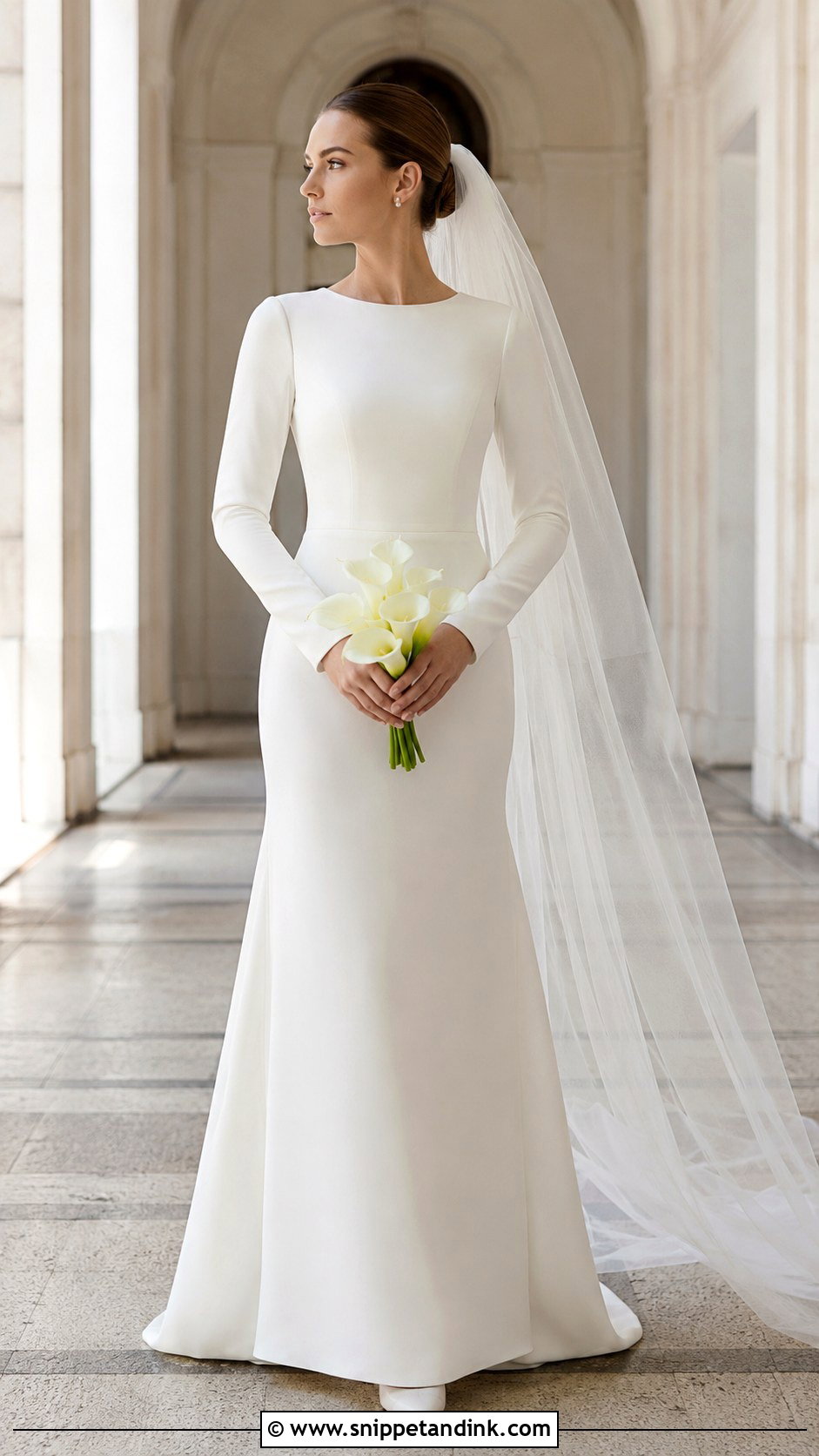
With no lace or beading to look at, a minimalist closed gown is judged entirely on its seams. That’s why I’m pickier about fit here than anywhere else in this list. Matte crepe or silk-finish fabric, a high round neck, full sleeves, a covered back and a gently flared skirt is the formula, and a row of matching buttons is the only ornament it needs. Sleeves should hang without twisting, and the skirt must fall from the hip without dragging. Sleek hair, small gold or pearl earrings and a single-layer veil keep the restraint going, with a few calla lilies to carry.
11. Closed Wedding Dress With Cape Sleeves
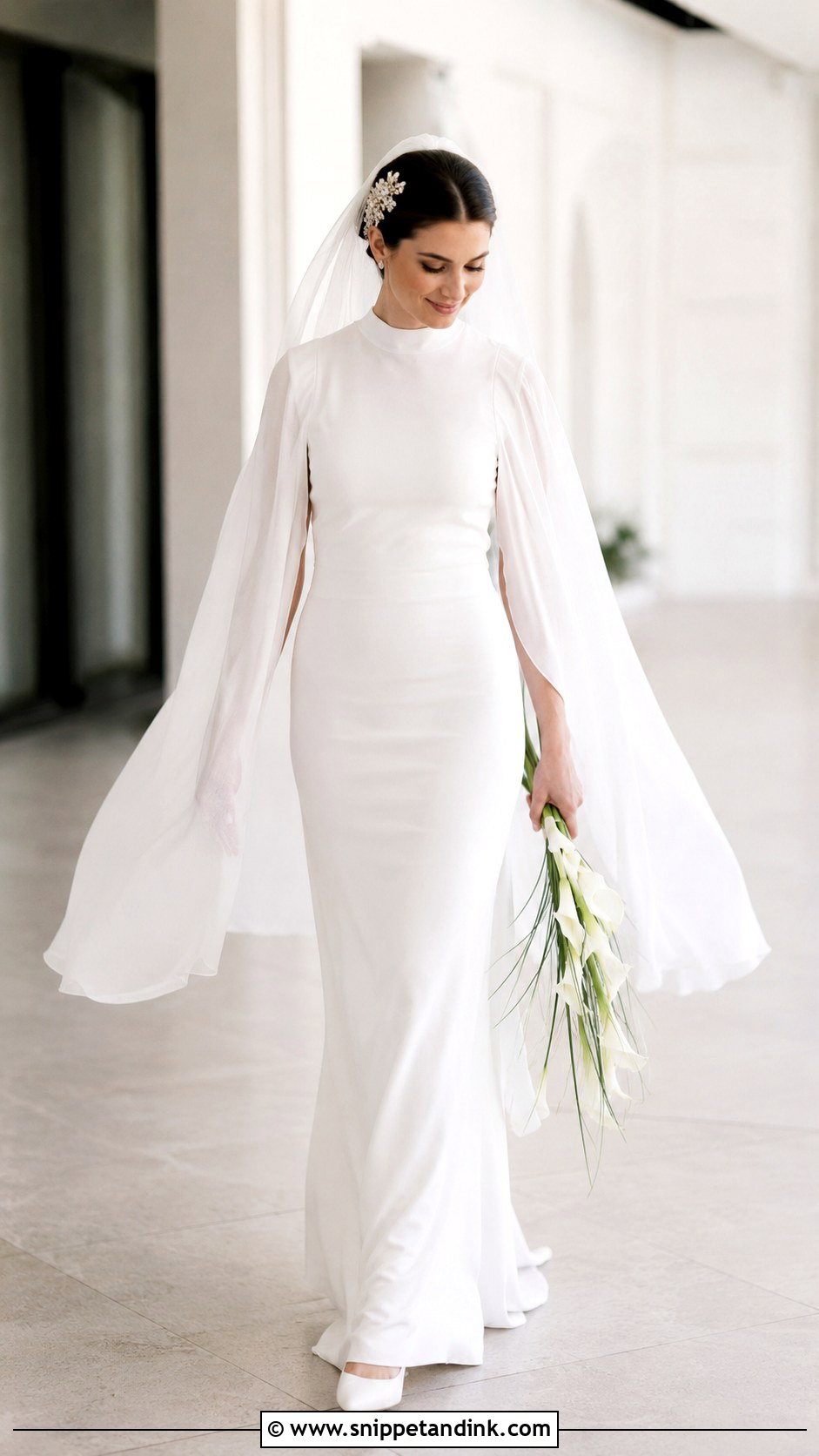
Cape sleeves are the answer for a bride who wants her arms covered but hates the feel of fabric around them. The panels hang from the shoulder and leave the arm free underneath. On a high-neck column, chiffon capes float and crepe capes hold a sharper line. Since the cape already behaves like a veil when you walk, I usually suggest a short veil or a jewelled comb instead. Bracelets snag on the floating panels, so leave them off. Turn quickly in the fitting room mirror: if the cape drags the neckline back, it needs a hidden tack at the shoulder.
12. Tea Length Closed Wedding Dress
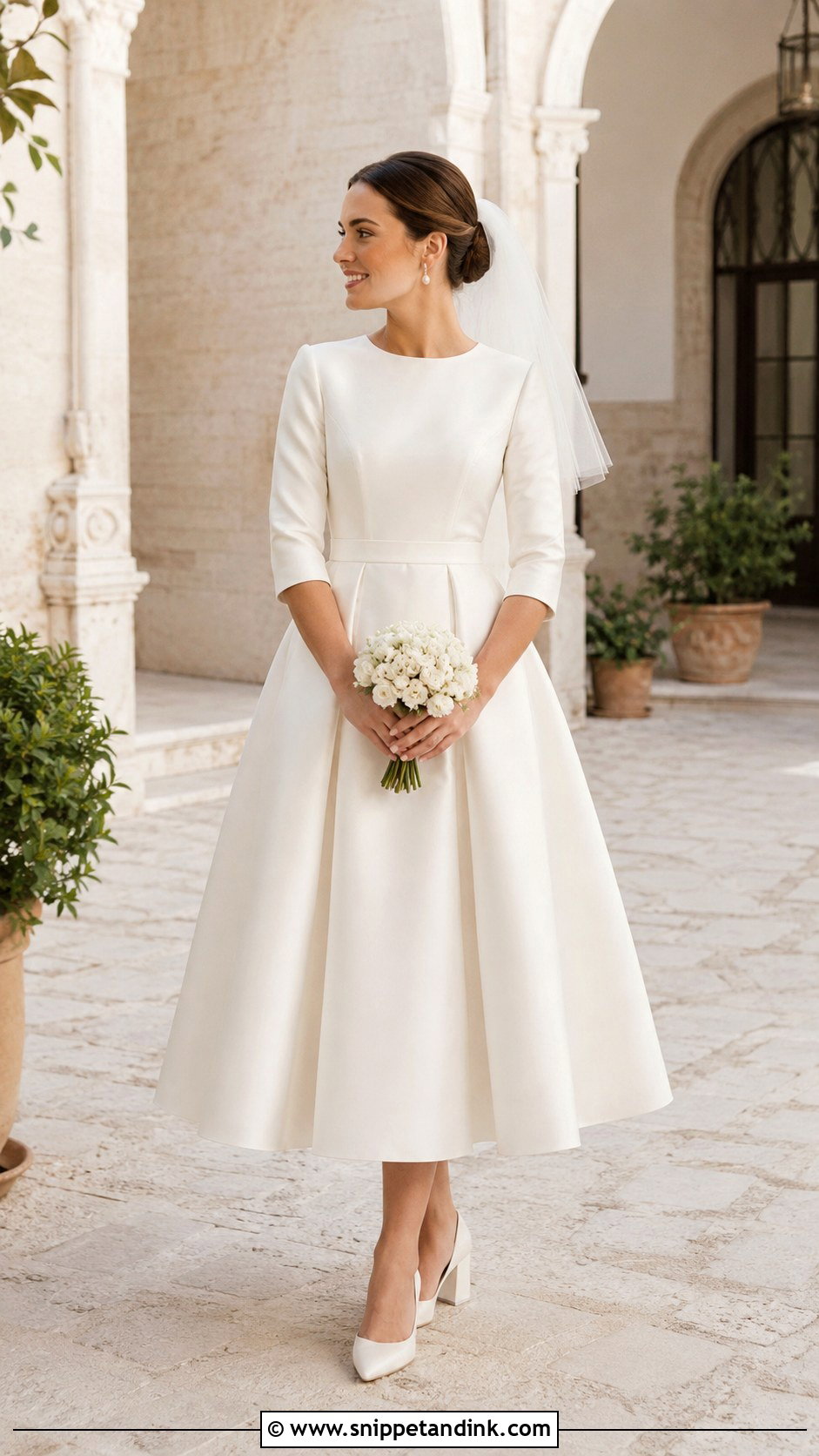
Tea length is a practical alternative for a courthouse ceremony, a garden lunch or a bride who wants to dance without a bustle. The fitted bodice, high scoop neck, three-quarter sleeves and covered back carry the modesty, and a structured skirt ending between knee and ankle gives it a vintage note. Your shoes are now part of the outfit, so choose them before the hem is cut, not after. I mark the hem with the bride standing in those exact shoes, aiming for the narrowest point of the calf. A defined waistband stops the covered bodice from going boxy.
13. Winter Velvet Closed Wedding Dress
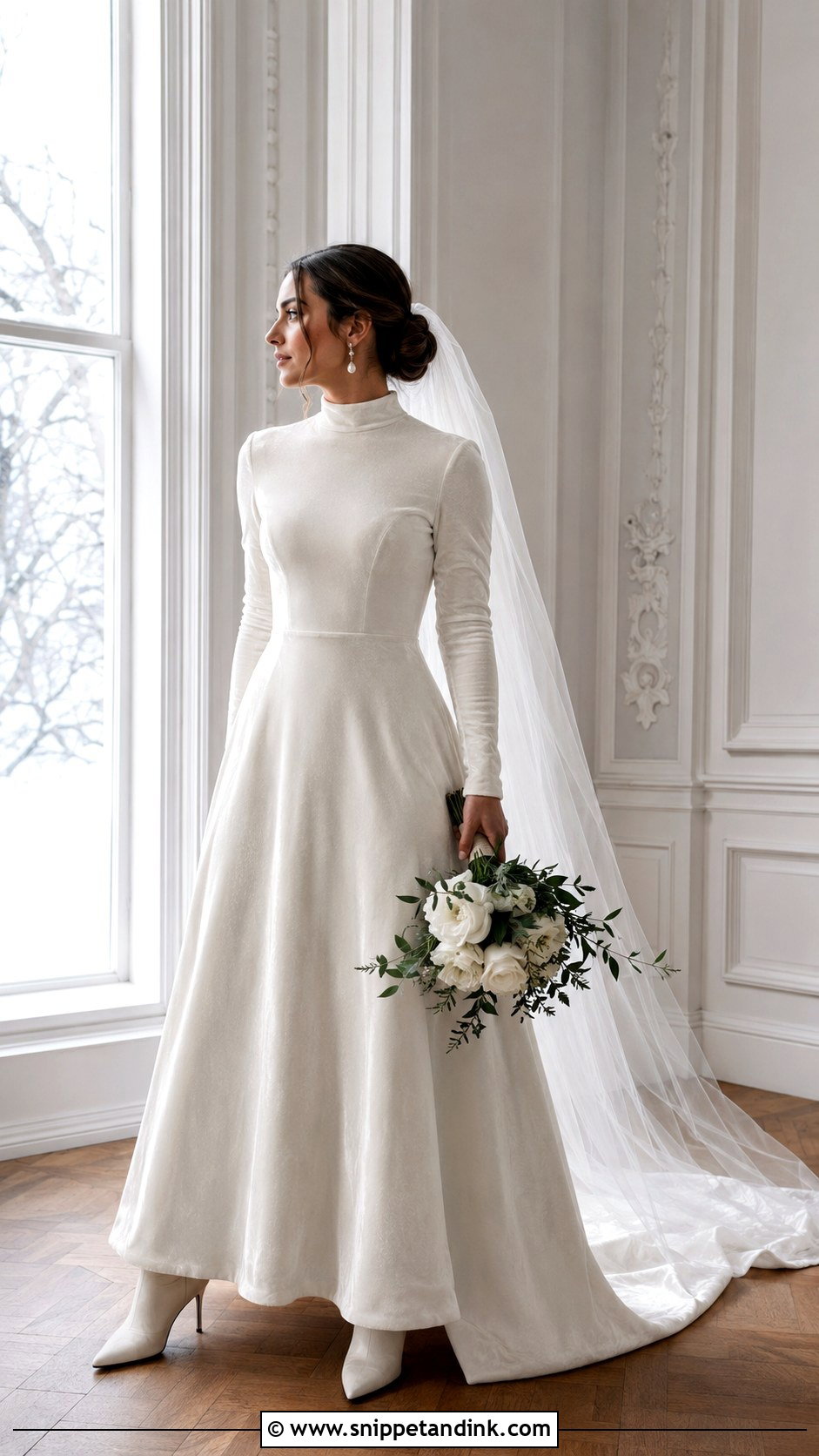
Velvet for a winter wedding sounds romantic, and it is, but full bridal velvet is heavy and warm. I only recommend it in a lighter bridal weight, in ivory, soft white or pale champagne. Keep the shape simple: high neck, fitted sleeves, closed back, gentle flare. Velvet catches and swallows light in patches depending on the direction of the pile, so take a phone photo of the fabric under lighting close to your venue’s before you commit. Pearl drops, a smooth low bun and a plain tulle veil are plenty, and bridal boots finally make sense in this season.
14. Plus Size Closed Wedding Dress With Defined Waist
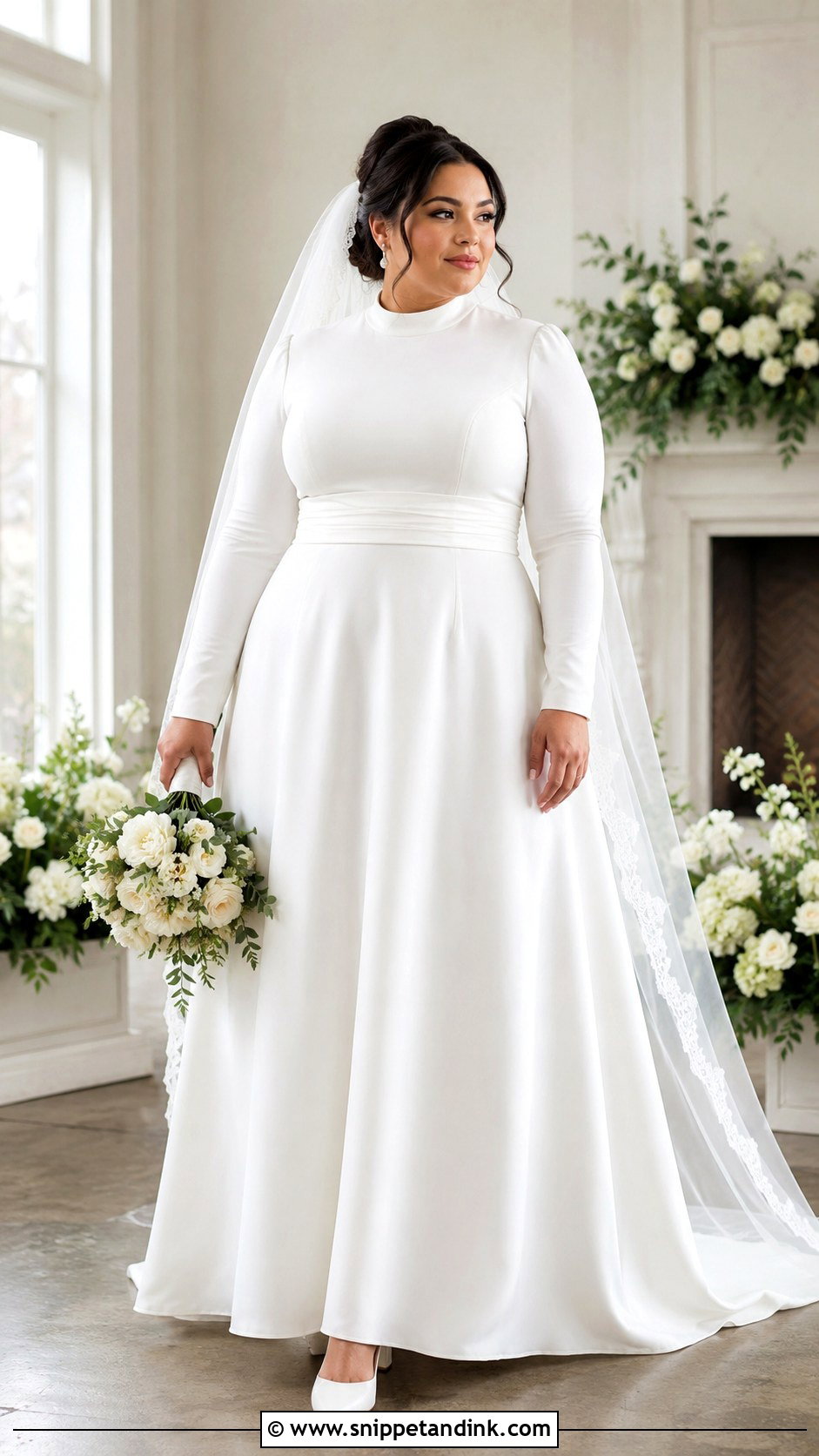
For plus-size brides, a closed gown usually works best with a defined waist rather than a straight drop, because the covered bodice otherwise reads as one block. My go-to is an A-line with a supportive lined bodice, high scoop neck, full sleeves and a wide waistband at the natural waist. Princess seams shape the body without heavy boning. Chiffon, crepe and soft satin all move well, and I’d avoid stiff mikado for long days. Always bring your actual wedding undergarments to every alteration appointment. If you can’t breathe deeply, sit and lift your arms to hug someone, the fit isn’t finished.

15. Petite Closed Wedding Dress With Column Skirt
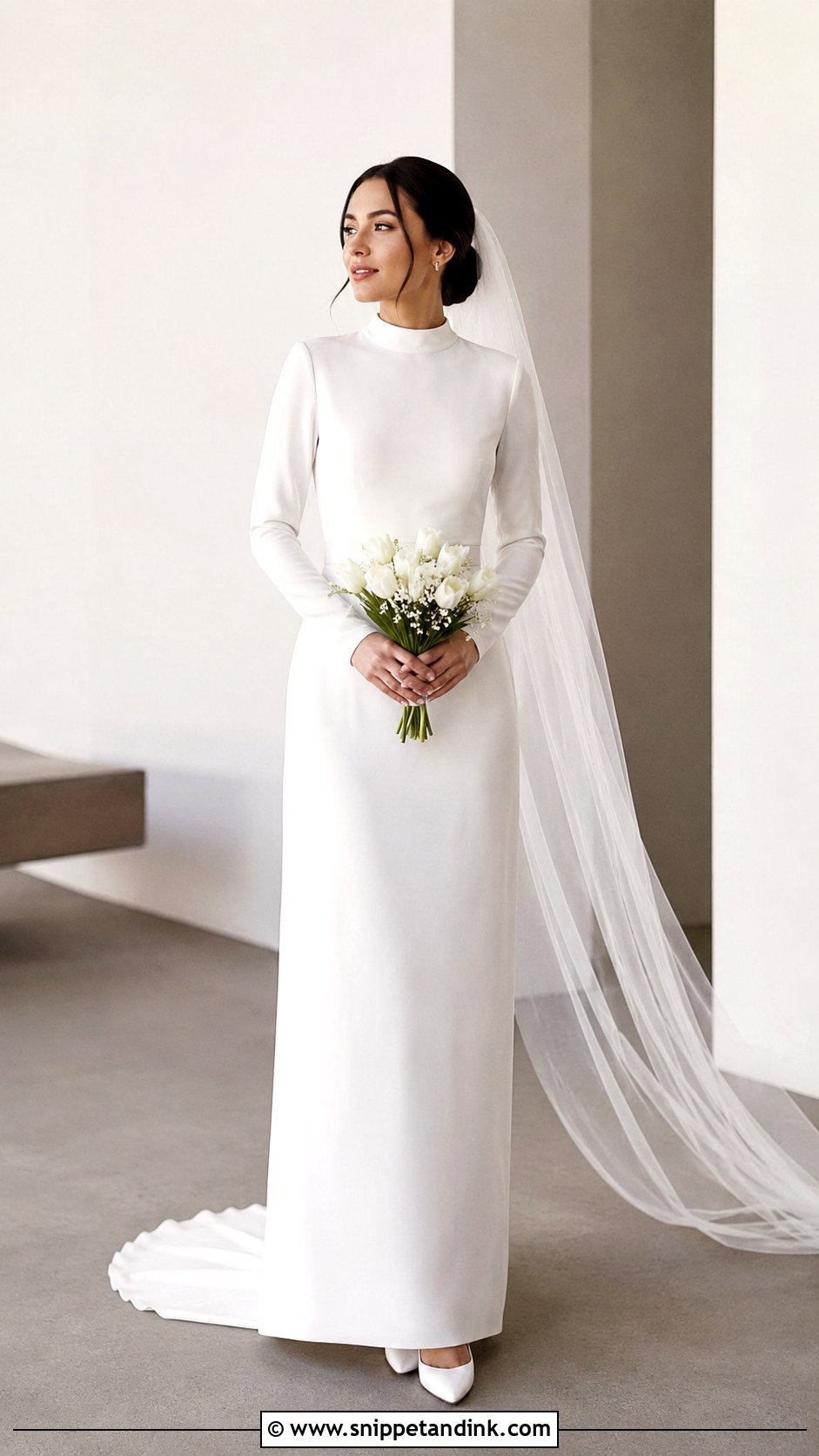
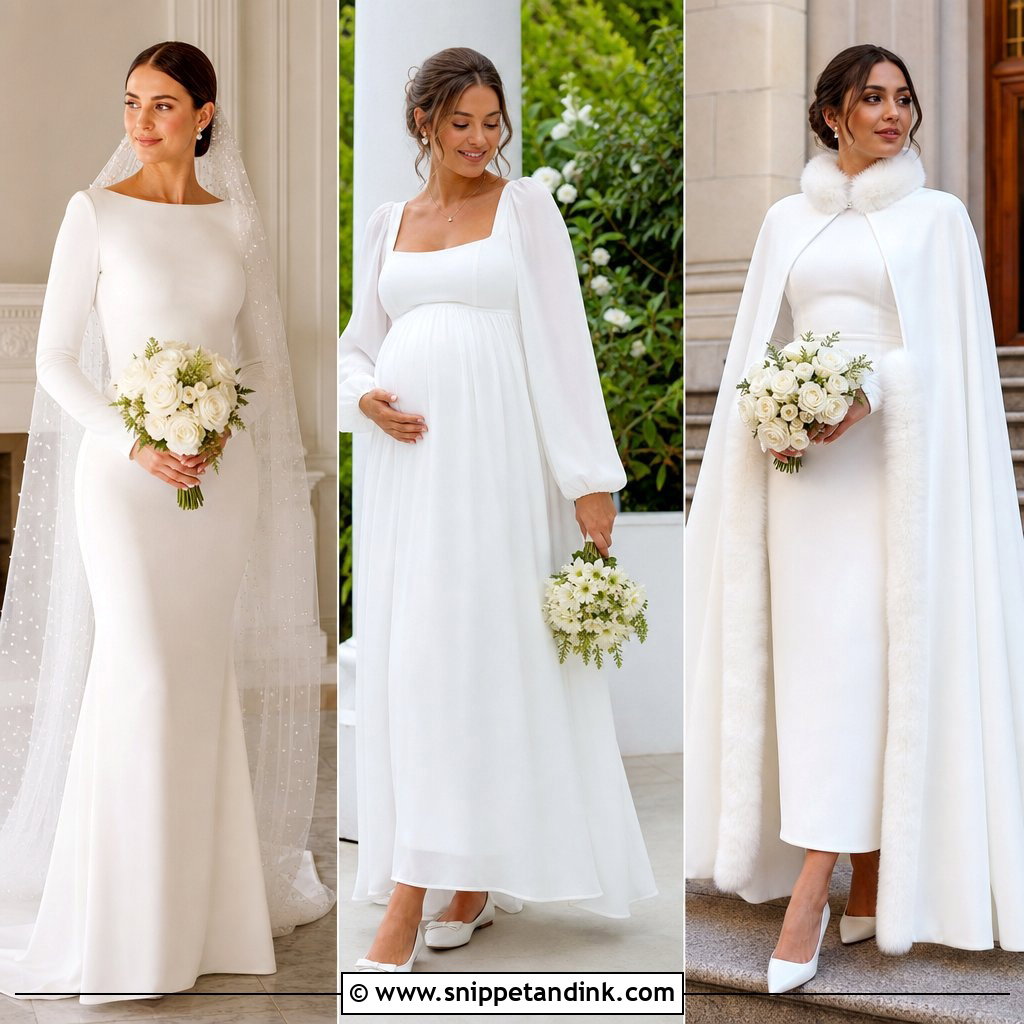
On a petite frame, the risk with full coverage is looking swallowed. A column gown solves that by keeping one long vertical line from collar to floor. I’d look for a high neck, narrow sleeves, a covered back and very little horizontal detail. Moving the waist seam slightly above the natural waist lengthens the leg, and a modest train adds presence without dragging the eye down. Oversized appliqués overpower small frames quickly. Go to every fitting in your wedding shoes, since the hem should just kiss the floor.
16. Hijab Wedding Dress With High Neck
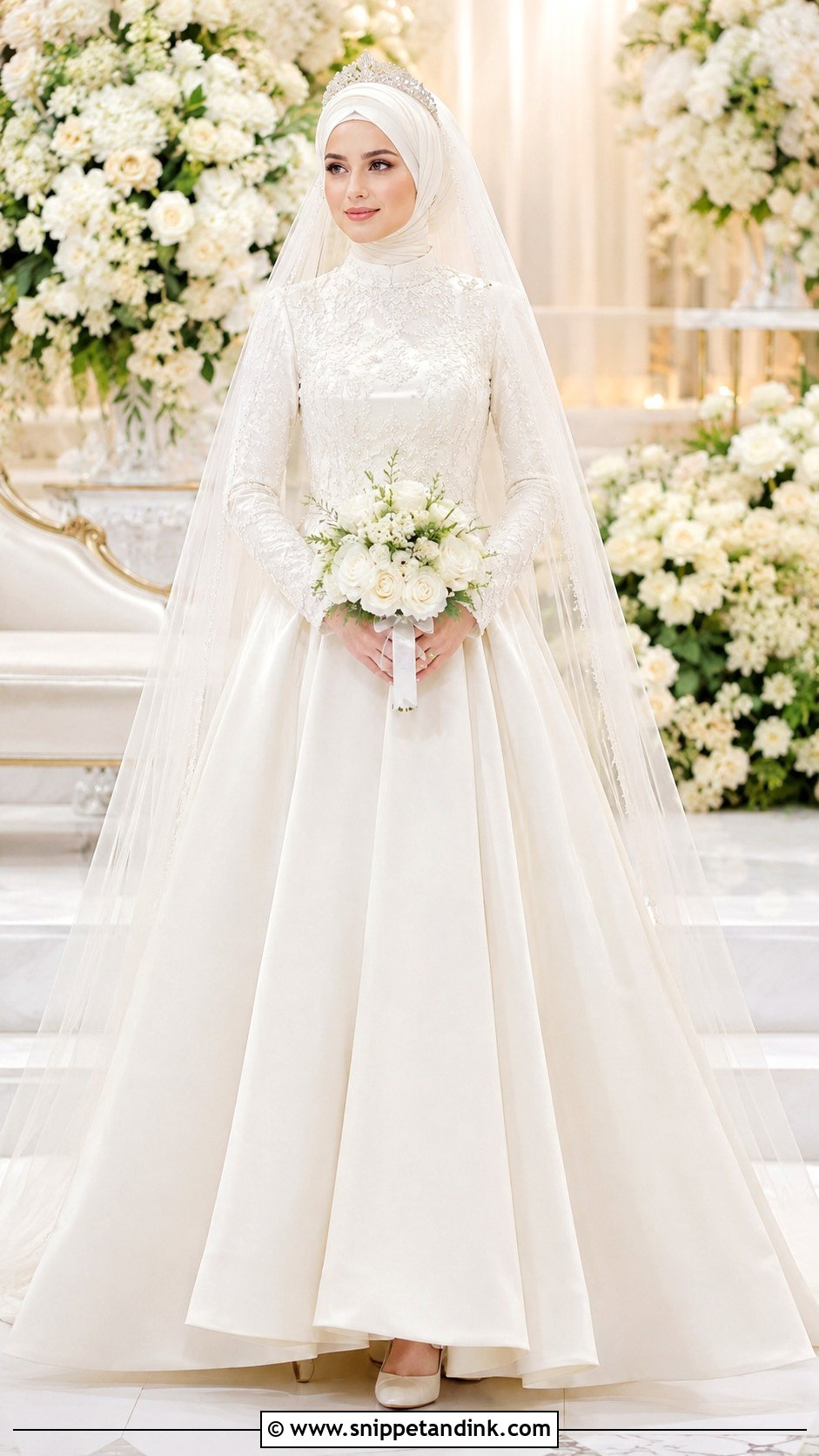
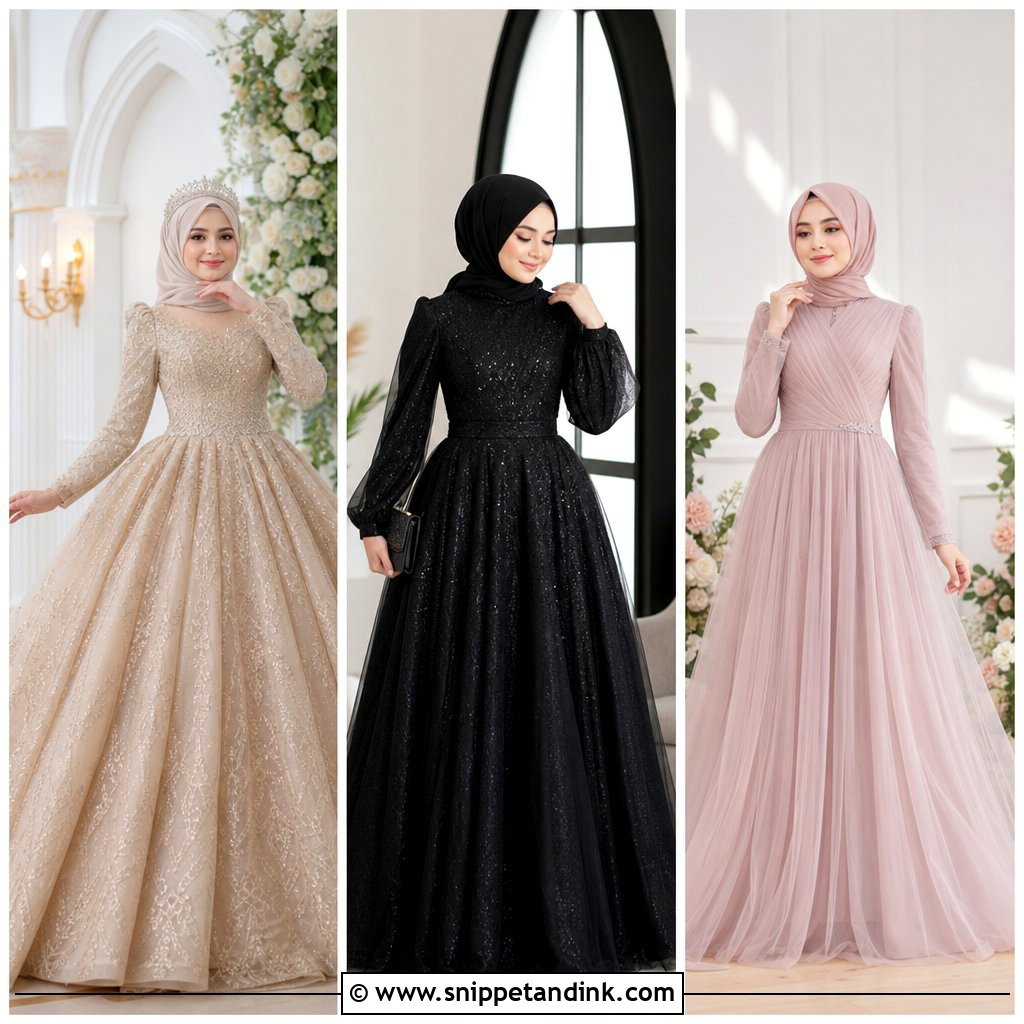
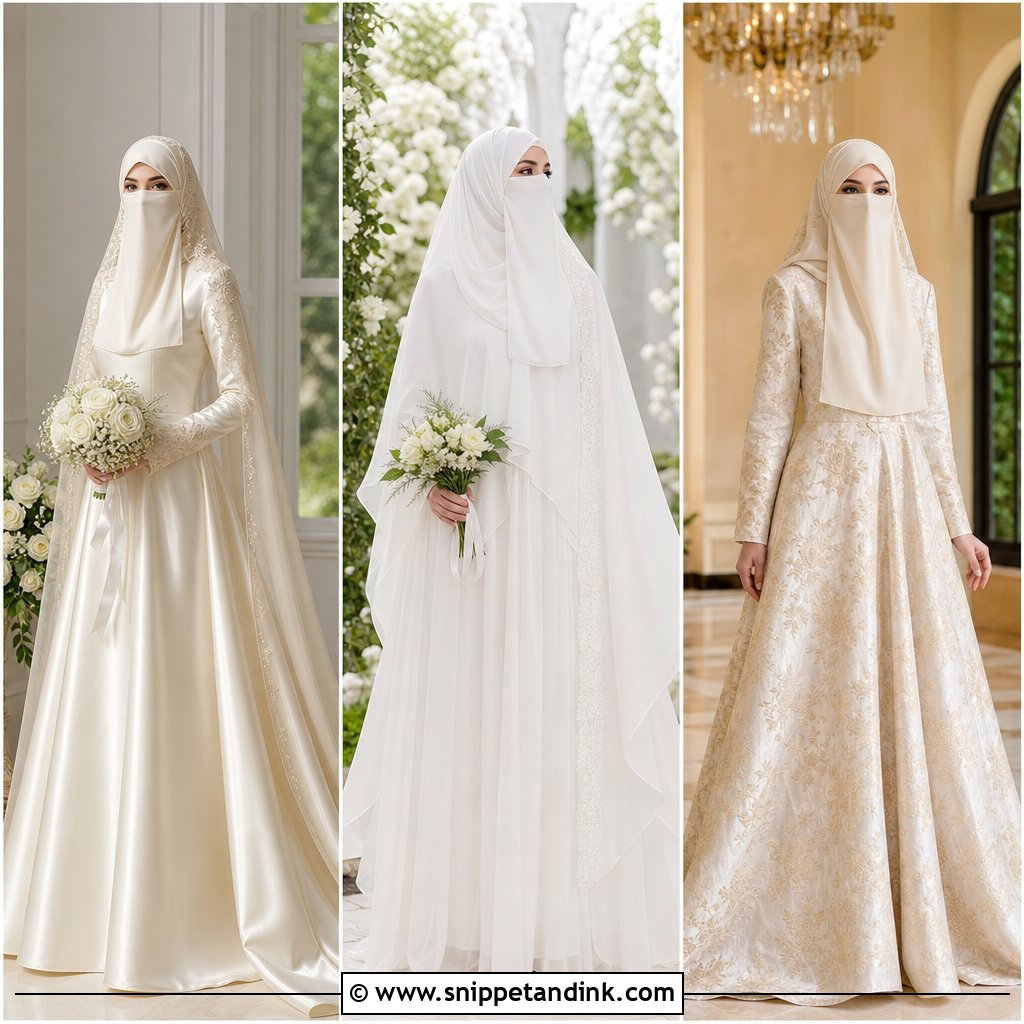
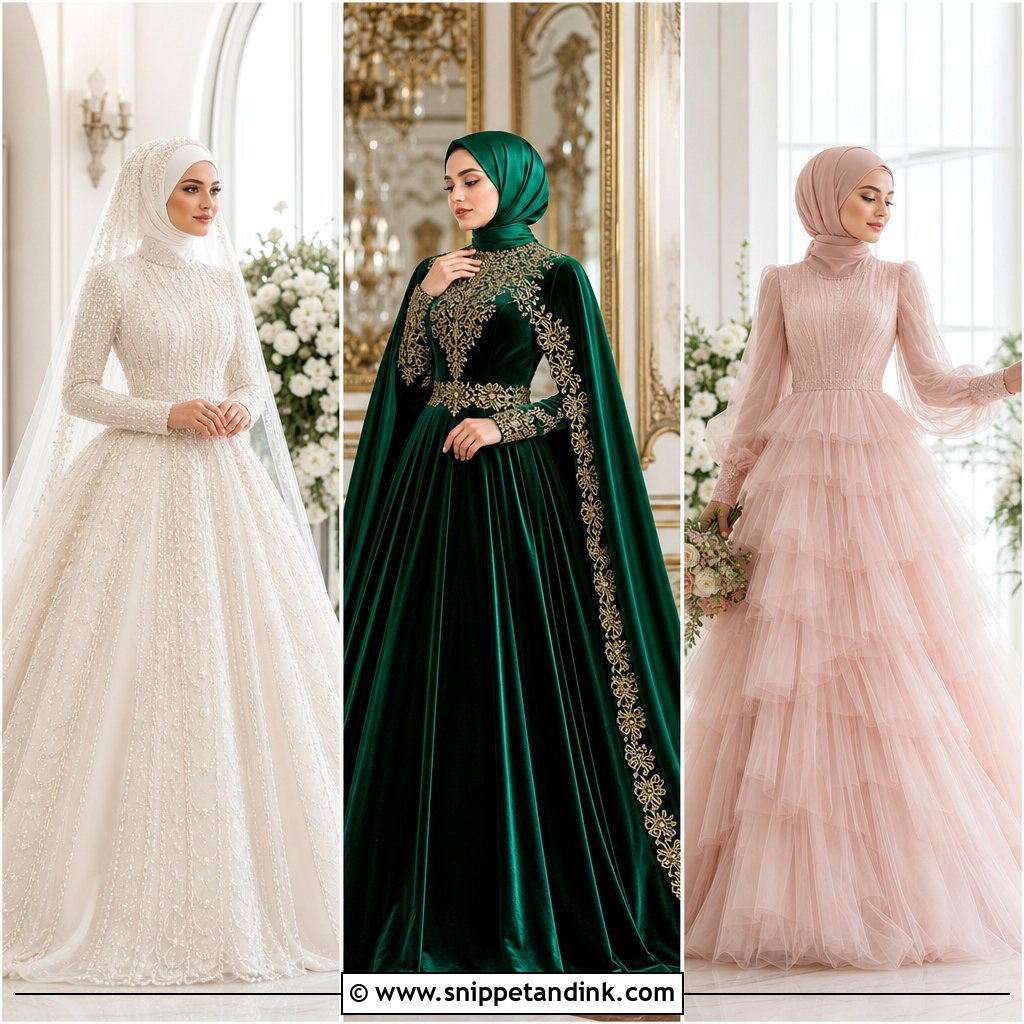
A hijab bridal look comes together when the gown and head covering are planned as one outfit rather than matched at the end. I ask brides to bring their hijab and undercap to every fitting, because collar height, neckline embellishment and fabric bulk all change once the hijab drapes over them. An opaque high-neck gown with long sleeves and a lined back gives a calm base under an A-line or ball skirt. Match the hijab to the gown’s exact ivory or white; chiffon and satin hijabs drape lighter than jersey. A tiara or veil can be secured over the top for a formal finish.
17. Beaded Closed Wedding Dress With Long Sleeves
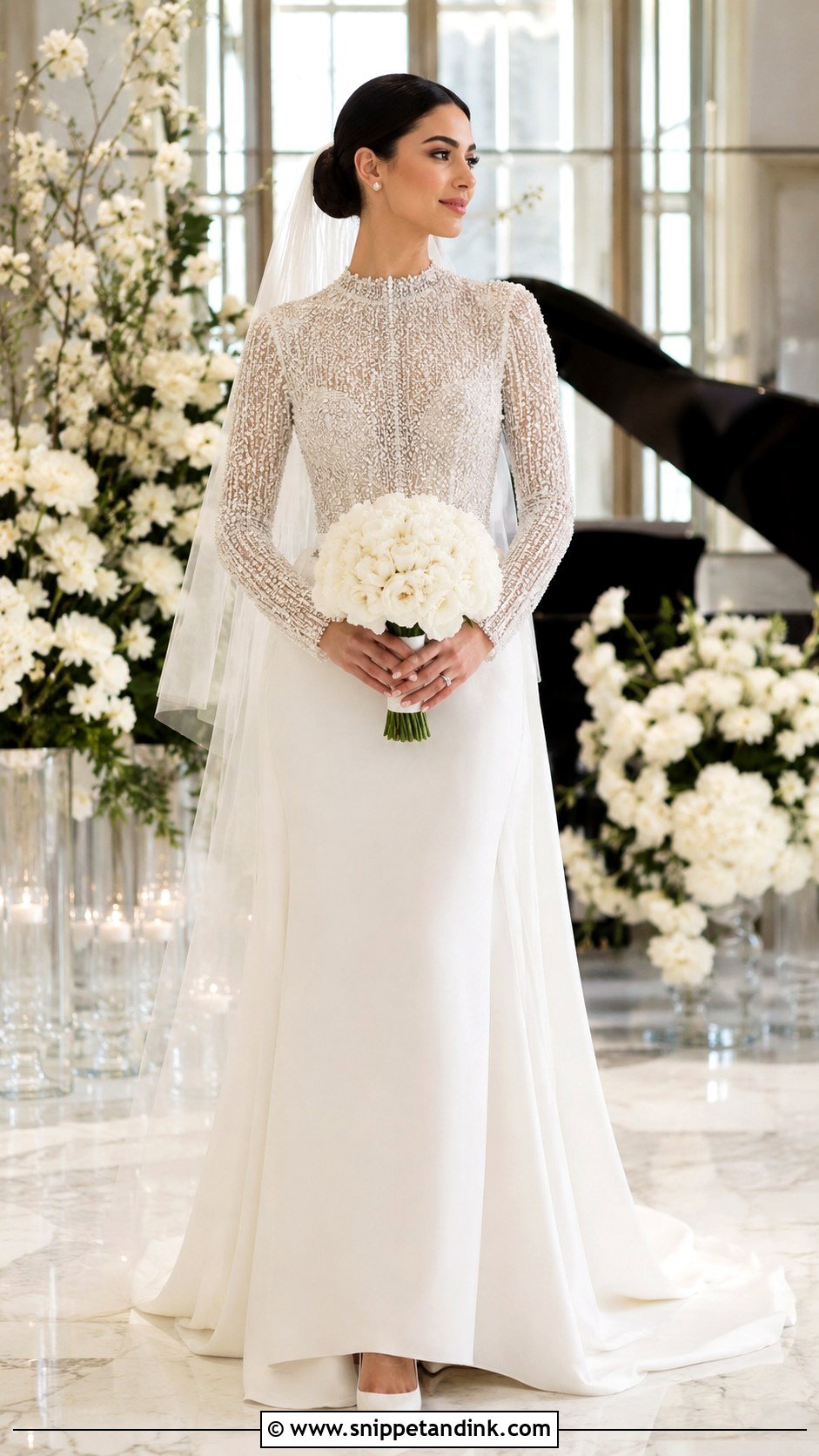
Beading near the underarm is the most common complaint I hear after weddings. It looks fine in the mirror and scratches all evening. So with a beaded closed gown, raise and lower your arms during the fitting and ask whether the inner sleeve beads can be removed. The best versions concentrate the beading at the neck, cuffs and upper bodice over a plain chiffon or crepe skirt. Check that beads are stitched individually, not on a single running thread that unravels if one snags the veil. A sleek bun and understated studs let the beadwork do the talking.
18. Floral Appliqué Closed Wedding Dress
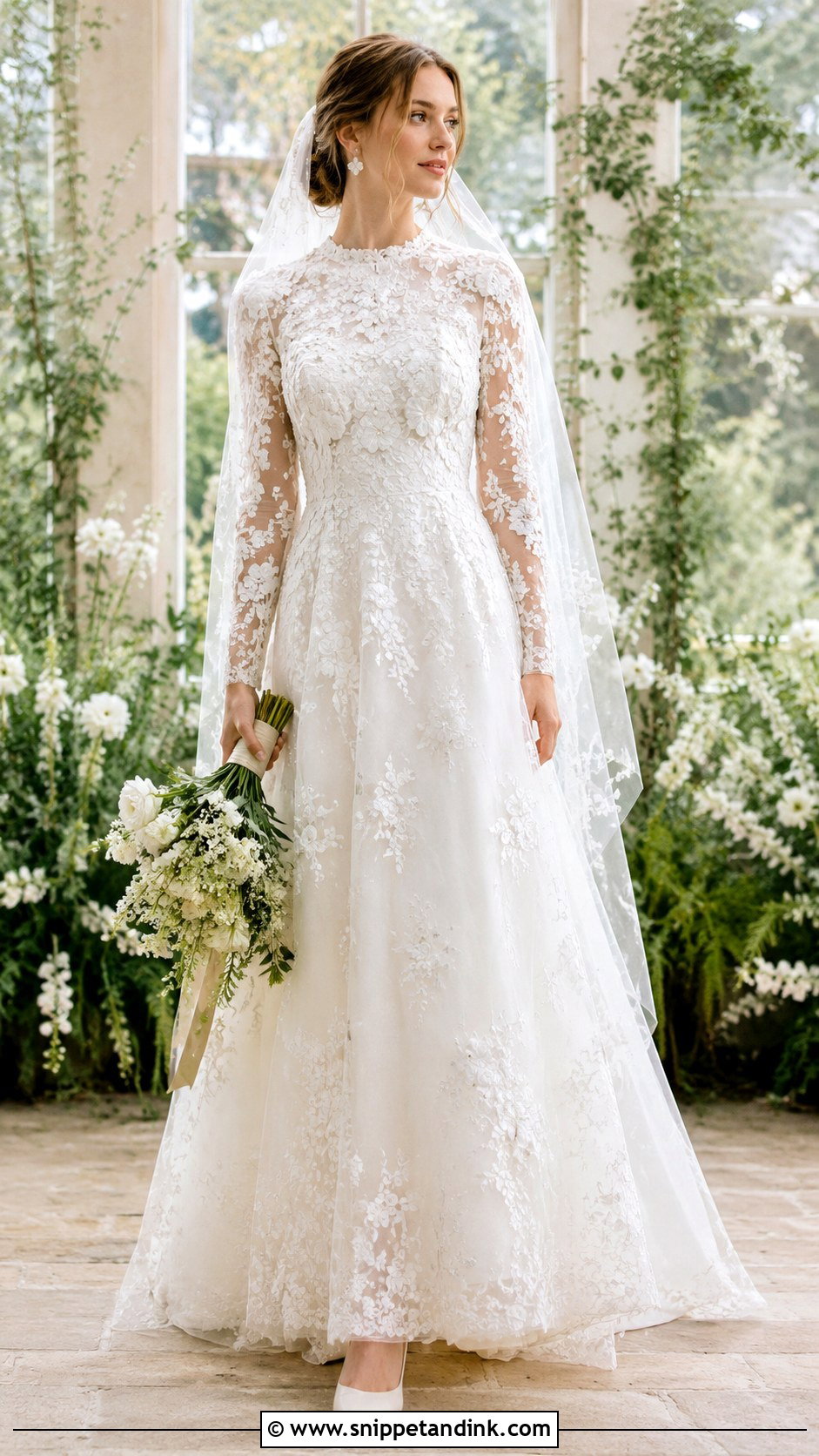
Dimensional floral appliqués soften a closed gown without needing a low neck or open back. On an A-line with a high lined bodice and long illusion sleeves, the appliqués should be thickest at the shoulders and fade toward the hem. When I compare samples, I look at how the flowers cross the zip and side seams. A well-made dress has appliqués hand-stitched over the seam after construction, so the pattern doesn’t break. Wear a low bun with a few loose face-framing pieces, and keep the bouquet loose and white so the botanical detail isn’t competing.
19. Closed Back Wedding Dress With Button Detail
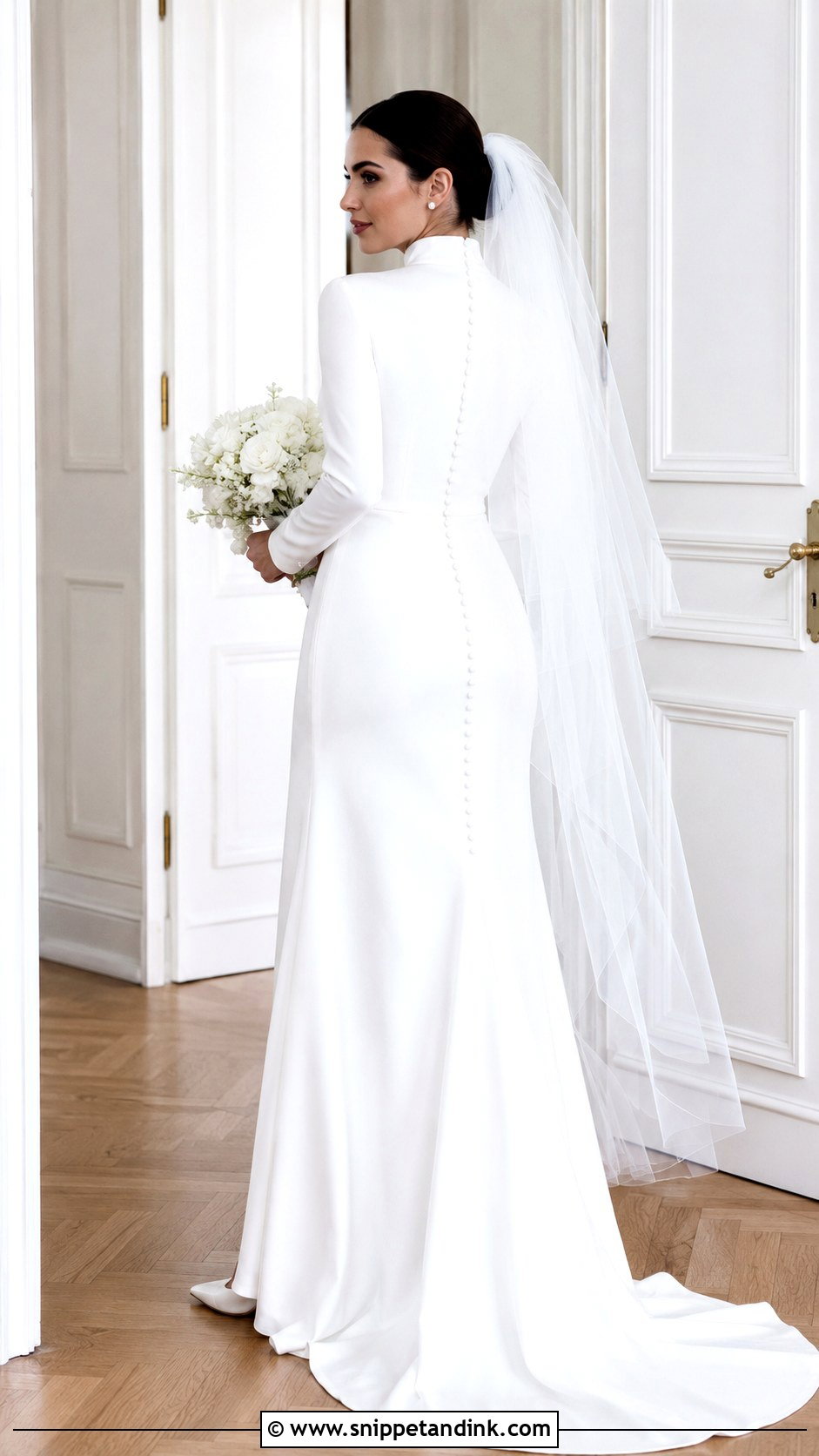
On a closed back, a column of covered buttons becomes what everyone stares at during the ceremony. Long-sleeve satin or crepe suits it best, with the buttons running to the waist or down the train. Ask early whether the buttons are functional or sewn over a hidden zip. Thirty working loops take a long time to fasten on the morning, and I’d always rather have a concealed zip with decorative buttons over it. Wear your hair up, choose a sheer veil, and sit down in the fitting so you can see whether the loops gape at the small of the back.

20. Detachable Overskirt Closed Wedding Dress
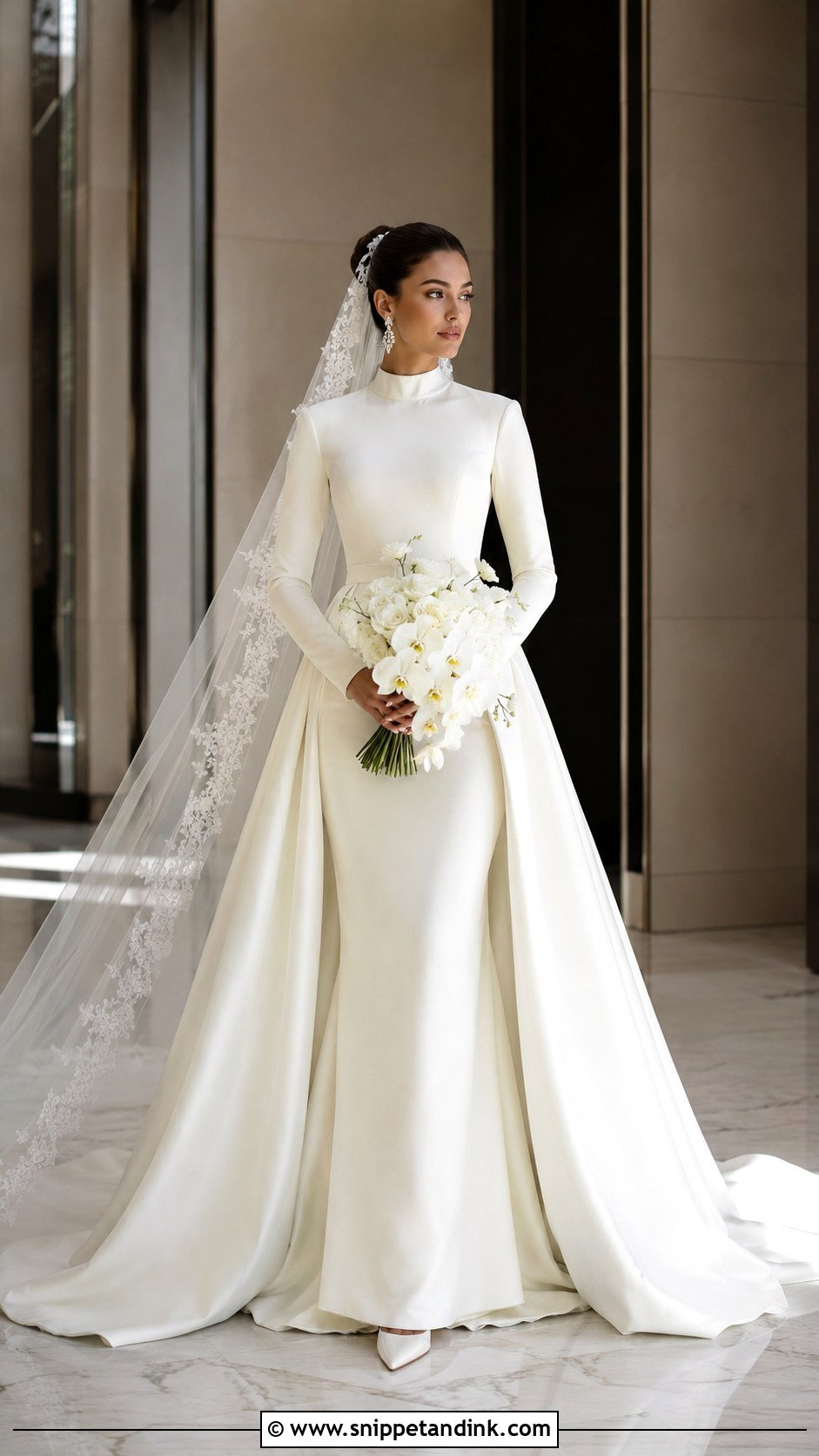
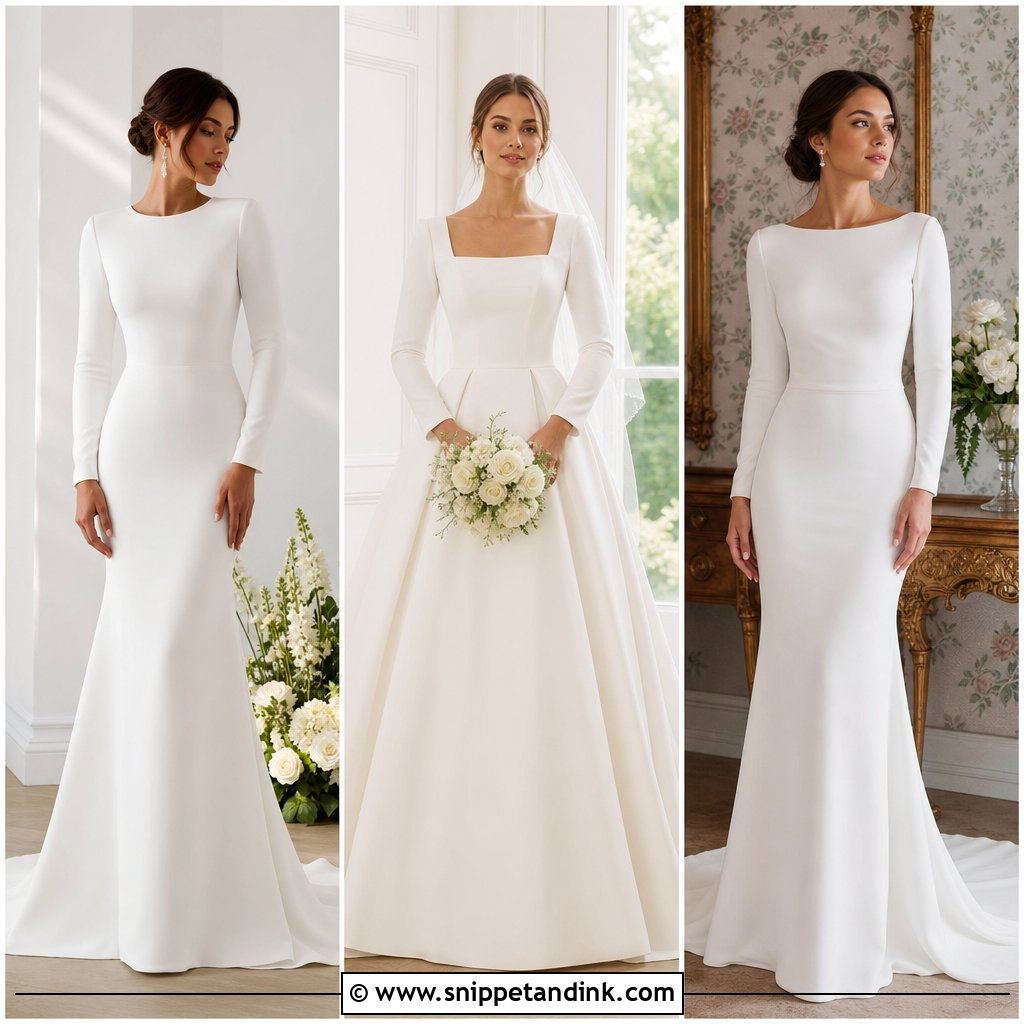
A detachable overskirt gives you two dresses: a full entrance for the aisle and a slim base for dancing. Start with a high-neck, long-sleeve column or fit-and-flare in an opaque fabric, then add a satin, tulle or organza overskirt for the ceremony. The waistband needs to be concealed, and the base gown must look finished on its own, with neat side seams and a clean back. I insist on a rehearsal. Practise fastening and removing it at home, and show one bridesmaid exactly how the hooks or snaps work so you aren’t hunting for help mid-reception.
Long Sleeves in July and Other Warm-Weather Realities
A fully covered gown in summer is very wearable, but the fabric has to be chosen for the climate rather than the photos alone. Heavy satin, velvet and lined mikado trap heat, and by the time the speeches start you’ll feel every layer. Silk crepe, chiffon, cotton lace and lighter organza breathe far better.
A few things I suggest for hot-weather brides who still want full coverage:
- Ask for a breathable lining such as cotton batiste or a light silk rather than polyester, especially in the bodice.
- Choose illusion sleeves or bishop sleeves over fully lined fitted ones; air moves through them.
- Have dress shields stitched discreetly into the underarms. They protect light fabric from marks and are invisible from outside.
- Plan a cool, shaded spot for portraits, since a high collar feels much warmer standing in direct sun.
How Many Fittings a Closed Gown Really Needs
I usually plan three alteration appointments for a covered dress, starting roughly two to three months before the wedding. The first sets the hem, sleeve length and waist. The second deals with collar and shoulder fine-tuning, which is where closed gowns take the most work. The last is a full rehearsal in your shoes, undergarments and any hijab, veil or headpiece. Timelines vary by seamstress and season, so ask yours early, but don’t let anyone squeeze the collar work into a single rushed visit.
A Covered Gown Lives or Dies at the Alterations Table
Coverage works with almost any silhouette here, from ball gowns and A-lines to mermaids and columns. What makes it look intentional is that the coverage was built into the dress, not added afterwards with a bolero or a sewn-in panel. Budget for proper alterations, because collars, shoulders, sleeves and back closures all have to lie flat for a covered gown to look right. Then keep the accessories small enough that they support the gown’s best feature instead of hiding it.
You'll Like These Ideas:








Leave a Reply