
Most brides who ask me for a modest gown expect to compromise, and they rarely need to. The A-line is the friendliest shape for coverage because the skirt releases from the waist, so a high neckline or a long sleeve never has to fight a tight hip. Below are twenty gowns styled from veil to shoes, in lace, satin, chiffon, structured Mikado, crepe and tulle, with notes for petite, plus-size and hijab-wearing brides. Read them for the fabric behaviour as much as the look, because that is what decides how covered you feel at hour eight.
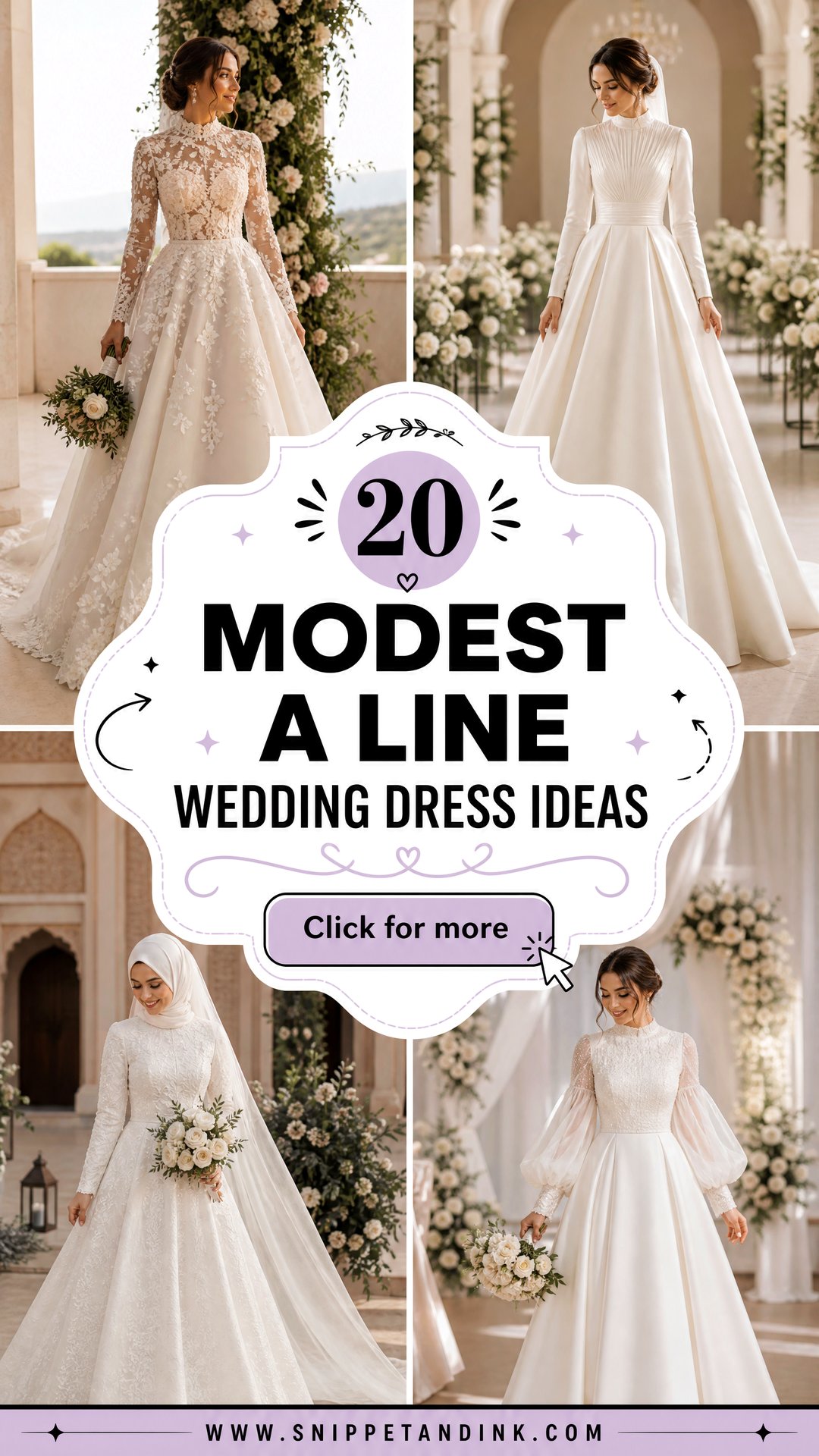
The Fitting Room Checks That Reveal Hidden Gaps in Coverage
A modest gown can look completely covered on the hanger and still let you down once you start moving. Mirrors in bridal shops are flattering, the lighting is soft, and you are usually standing still. So I ask every bride to put the dress through the positions of the day before she falls for it.
- Raise both arms as if hugging someone taller. Watch the waist and hem lift, and check whether the bodice gapes at the underarm.
- Lean forward over a table. A neckline that looks high when upright can fall open when you sign the register.
- Kneel or sit on a low chair if your ceremony includes it. Check that the skirt covers your ankles and the back stays closed.
- Ask someone to photograph you with the phone flash on. Flash is harsher than daylight and shows any lining that is too thin.
- Stand in a bright doorway with light behind you. This is the test chiffon, organza and single-layer tulle most often fail.
Do these in the shoes and undergarments you plan to wear, or at least in the same heel height. If a gown fails one test, that is not necessarily a reason to walk away. Most gaps can be closed by a skilled seamstress, but you want to know about them before the order goes in, not at the final fitting.
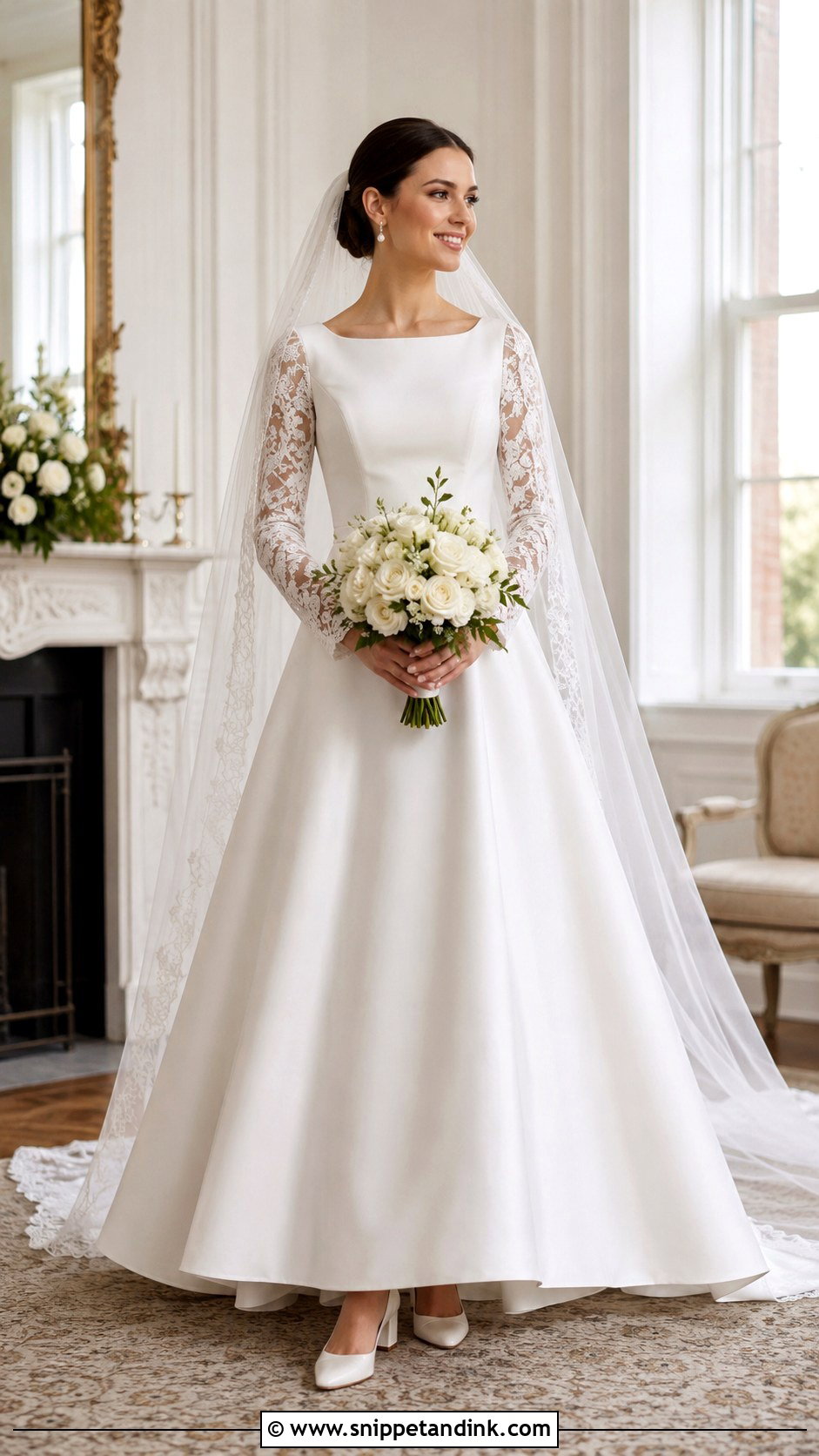
1. Long Sleeve Lace A-Line Wedding Dress
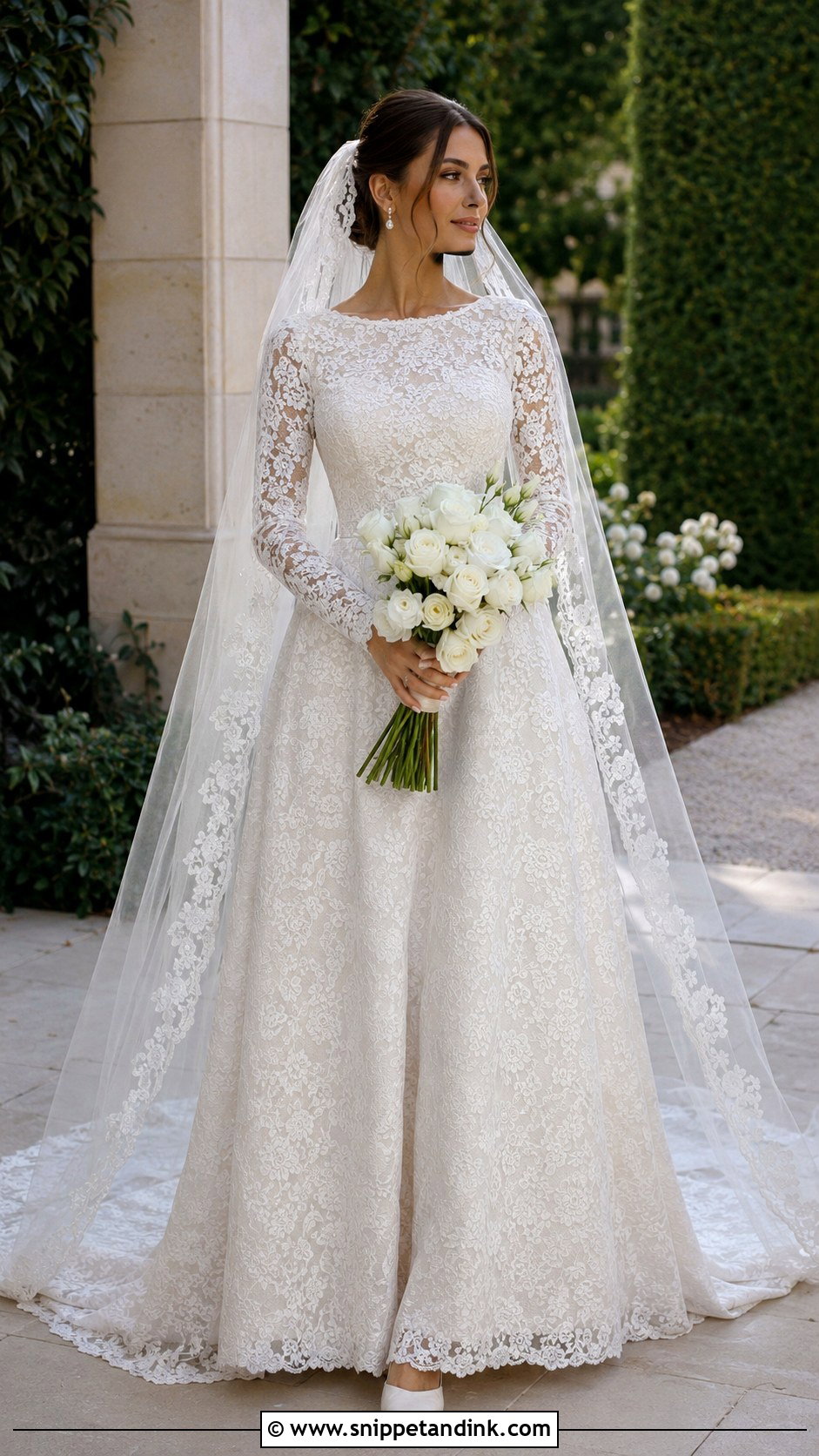
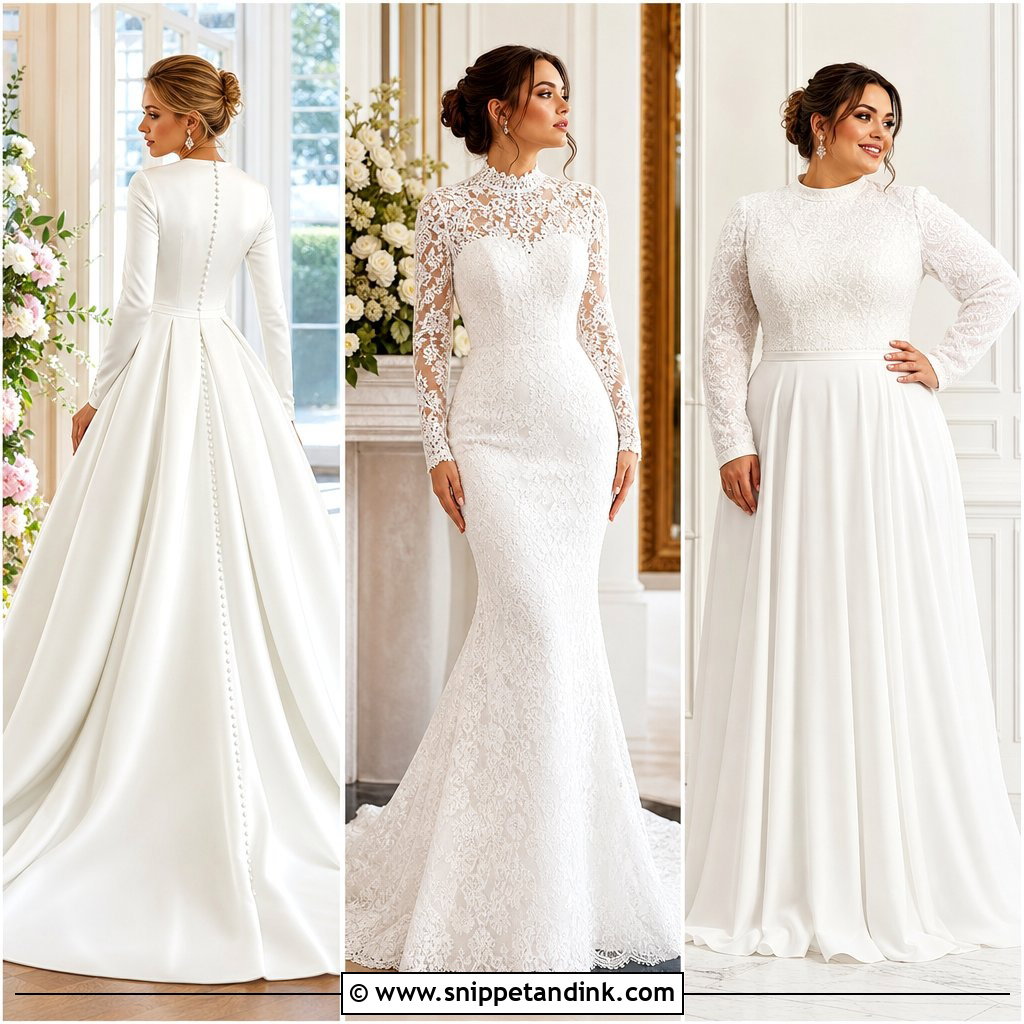
Lace is the easiest place to start if coverage worries you, since the pattern does the decorating and the neckline can stay high. Look for an ivory A-line with fitted long sleeves, a jewel neck, an opaque lining and lace that carries on into the skirt, with a natural waist and a chapel train. Pearl studs, an embroidered fingertip veil, pointed block heels and a small white rose bouquet are enough. The detail I check first is the sleeve head: lace sleeves set too narrow at the armhole pull the whole bodice up when you hug someone. Ask to see the lining under the camera flash too, because some nude linings vanish in daylight and glow through under a speedlight.
2. High Neck Satin A-Line Wedding Dress
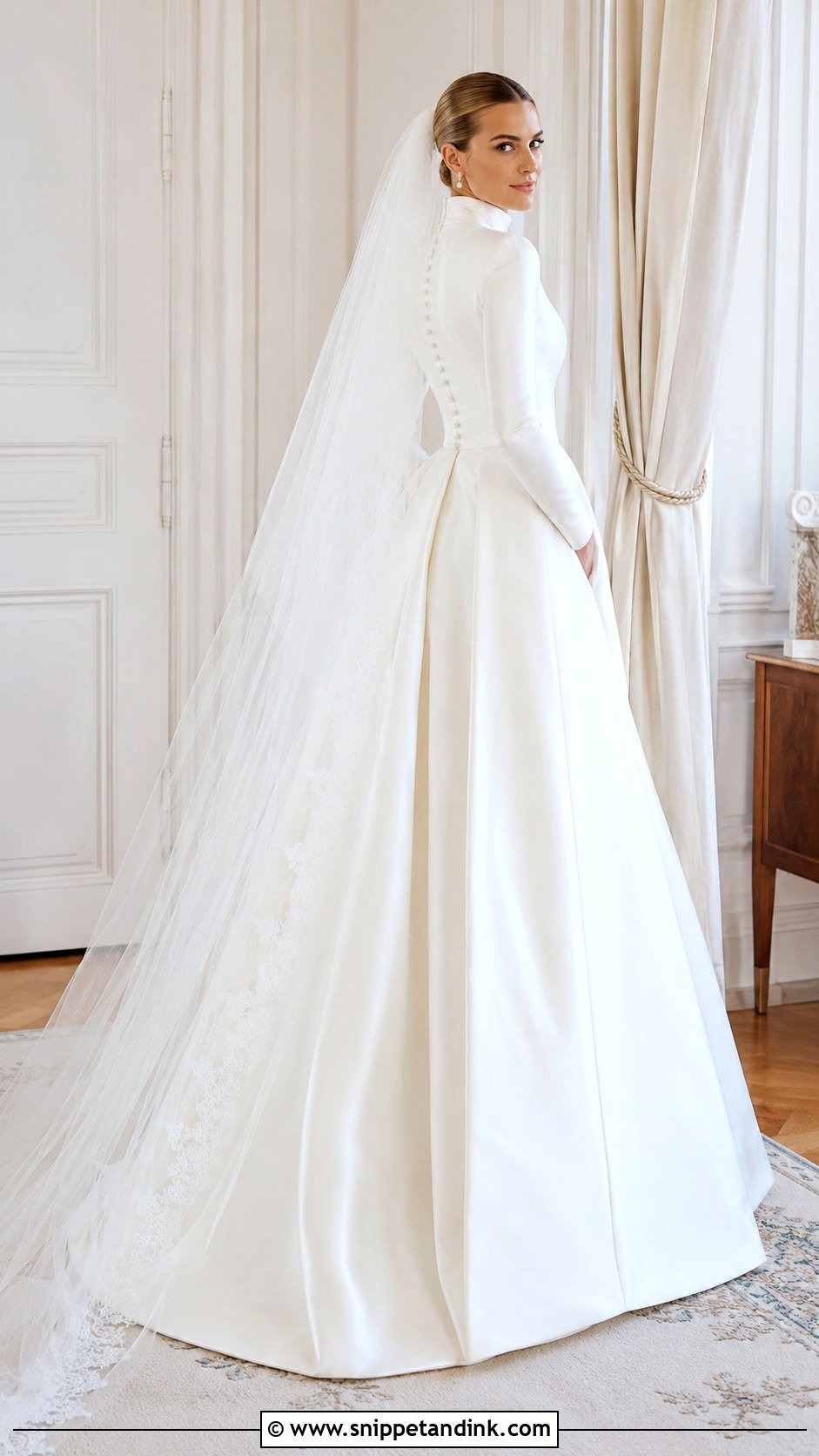
Satin with a high neck is the cleanest modest gown there is, and the least forgiving. Long fitted sleeves, a structured waistband, covered buttons down the back and a skirt that falls straight from the waist give you a crisp outline. Style it with pearl drops, a sleek low bun, a cathedral veil edged in narrow ribbon, closed ivory pumps and a structured white bouquet. Satin shows every seam allowance and crease from sitting in the car, so I’d plan smooth shapewear and a steamer at the venue rather than at home. It belongs indoors or at a formal estate, where its sheen reads as polish rather than glare.
3. Square Neck Crepe A-Line Wedding Dress
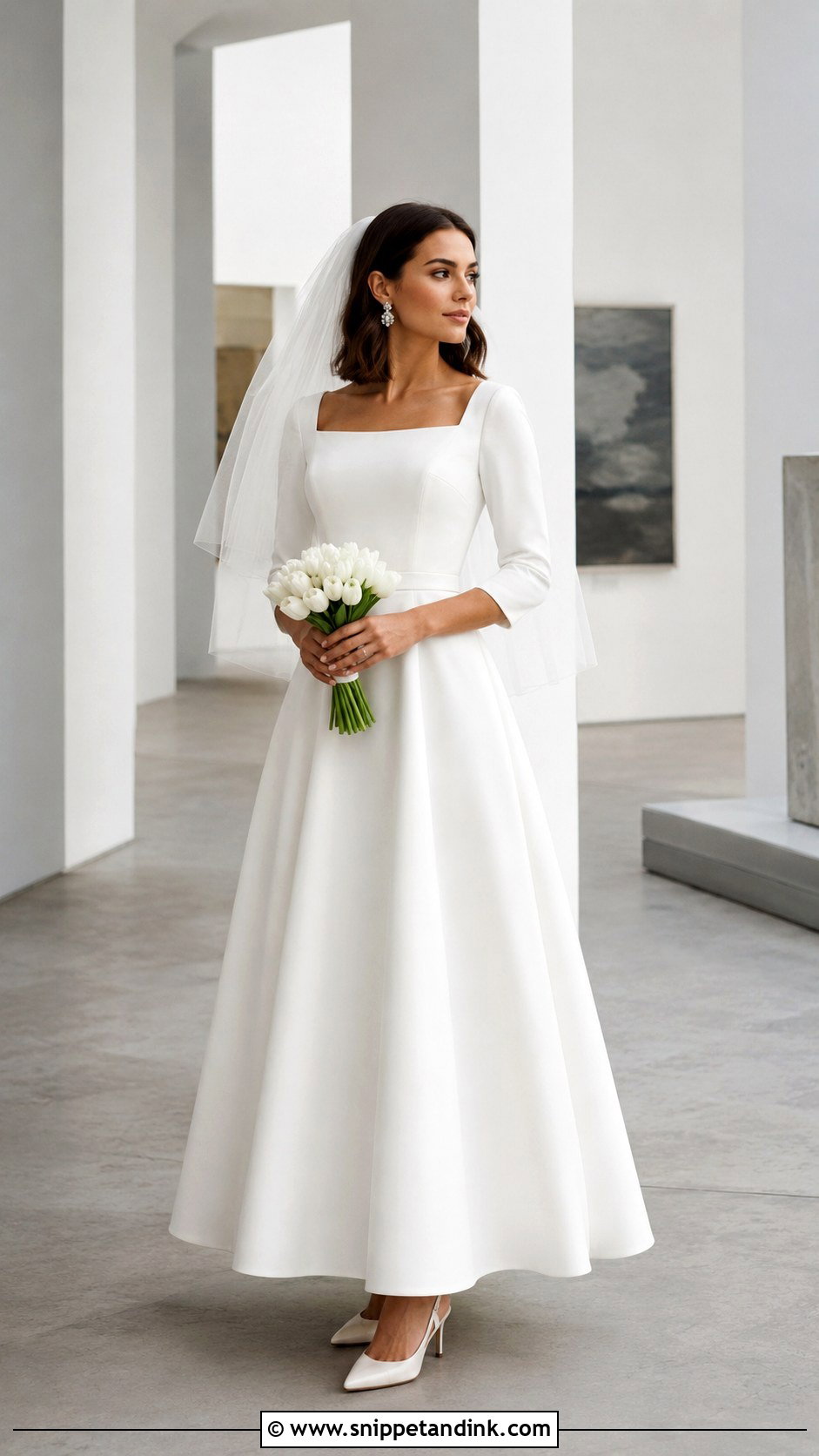
A moderately high square neck gives crepe a bit of architecture, which this plain, matte fabric needs. Pair three-quarter sleeves with a fully covered back, princess seams and a lightly tailored waist, then add a shoulder-length veil, small crystal earrings and low ivory or champagne slingbacks. White tulips or callas keep the bouquet as linear as the dress. Crepe has a little stretch, which makes it comfortable, but it also clings to anything underneath, so wear your actual undergarments to every fitting. If the neckline sits lower than you want, a seamstress can usually raise a square neck by adding a band of self-fabric at the top edge. It suits a gallery or a city venue best.
4. Bateau Neck Mikado A-Line Wedding Dress
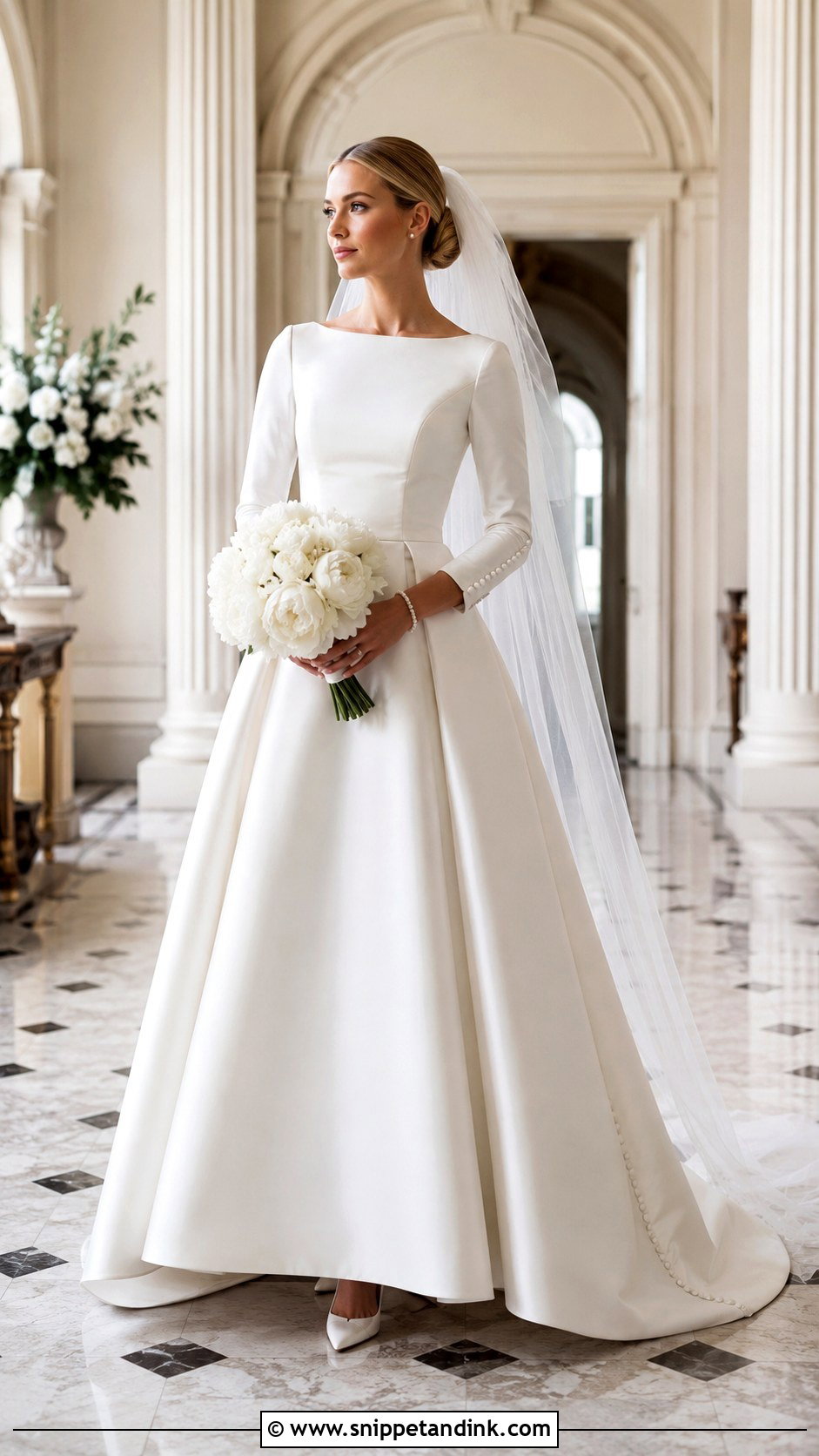
Mikado is a heavy, slightly stiff silk blend, and that weight is exactly why it handles box pleats, long sleeves and a wide skirt without collapsing. A bateau neckline sits across the collarbones and leaves the shoulders covered, and a back cut at bra level with fabric buttons keeps it traditional. Add a long plain veil, a pearl bracelet, satin closed heels and a round peony or rose bouquet. My caution with Mikado is sitting: the waistband can dig in once you are seated for dinner, so sit on a hard chair for a full five minutes at your fitting. If it bites then, it will bite all evening.
5. Three-Quarter Sleeve Chiffon A-Line Wedding Dress
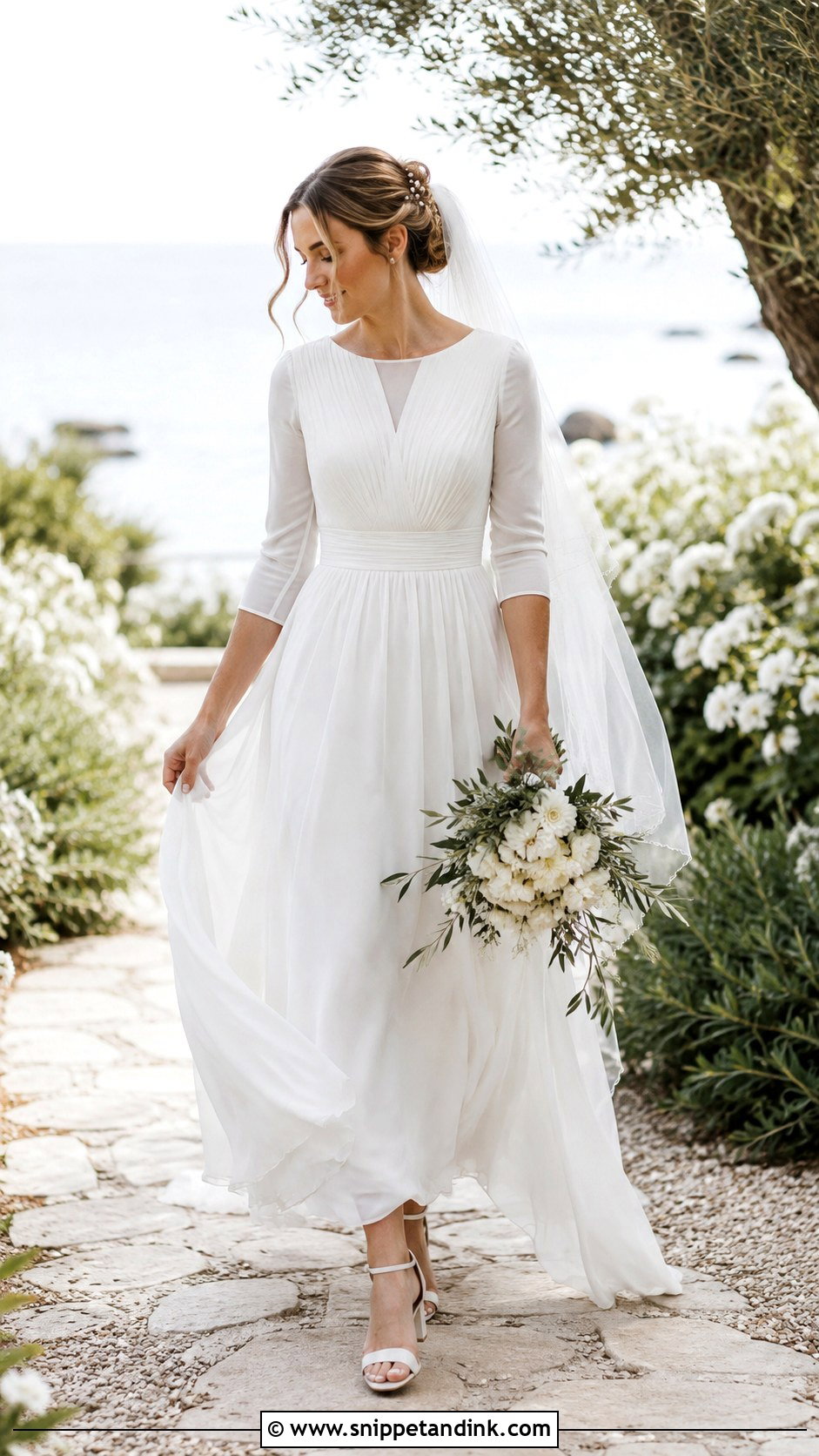
Chiffon moves the most of any fabric here, and it is my usual suggestion for warm venues. Three-quarter sleeves, a gathered bodice, a V-neck closed with an opaque inset and a layered skirt keep it covered while staying light. Finish with pearl hairpins, a fingertip veil, block-heel sandals with an ankle strap and loose garden flowers. The trap is transparency. Single-layer chiffon goes see-through in strong sun, so stand by a bright window at the boutique and have someone look at you from behind. A coastal ceremony or spring garden is where this gown makes the most sense.
6. Short Sleeve Beaded A-Line Wedding Dress
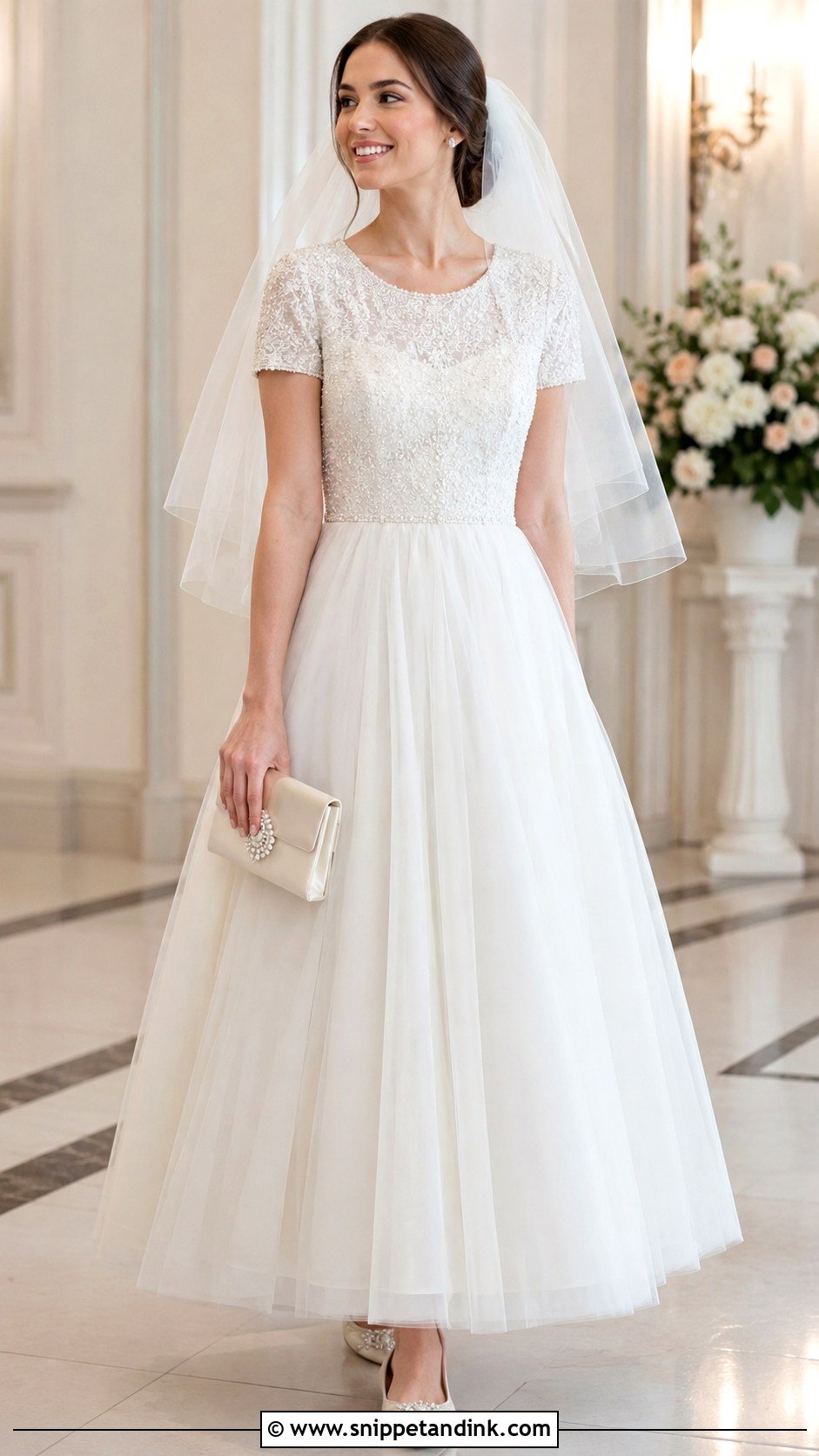
Short sleeves are a reasonable middle ground for a summer bride who still wants her shoulders and upper arms covered. Choose an opaque scoop neck, structured cap-to-short sleeves and beadwork concentrated on the bodice, with a plain tulle skirt so the sparkle stays up top. A waist-length veil, crystal studs, low heels or embellished flats and a satin clutch round it out. Run your hand along the inside of the armhole before you commit. Beading stitched close to that seam rubs raw over a long day, and a soft lining binding the sleeve edge solves it completely.
7. Bishop Sleeve Tulle A-Line Wedding Dress
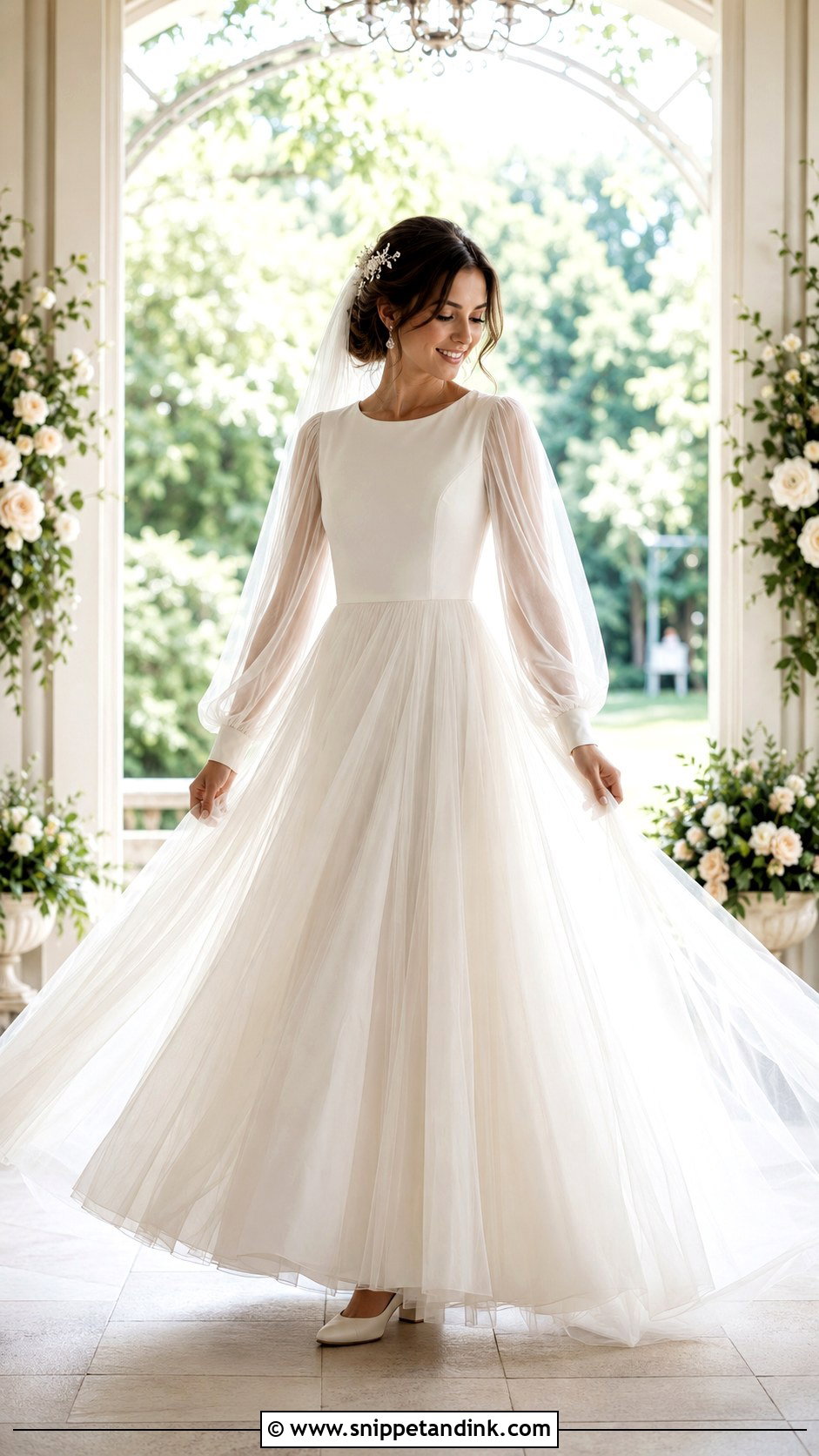
Billowing bishop sleeves add volume at the arm, so I keep everything else calm: an opaque fitted bodice, a high scoop neck and a layered tulle skirt. The sleeves can be sheer or lined from shoulder to cuff, and a narrow cuff stops them from swallowing your hands. Wear a plain tulle veil, pearl and crystal earrings, closed block heels and a floral comb in a low bun. Bishop sleeves catch on bouquet stems and veil edges more than any other style, which is why I ask brides to hold flowers at chest height and raise their arms at every fitting. A lightly structured bouquet with no trailing ribbon avoids most of the snagging.
8. Floral Appliqué A-Line Wedding Dress
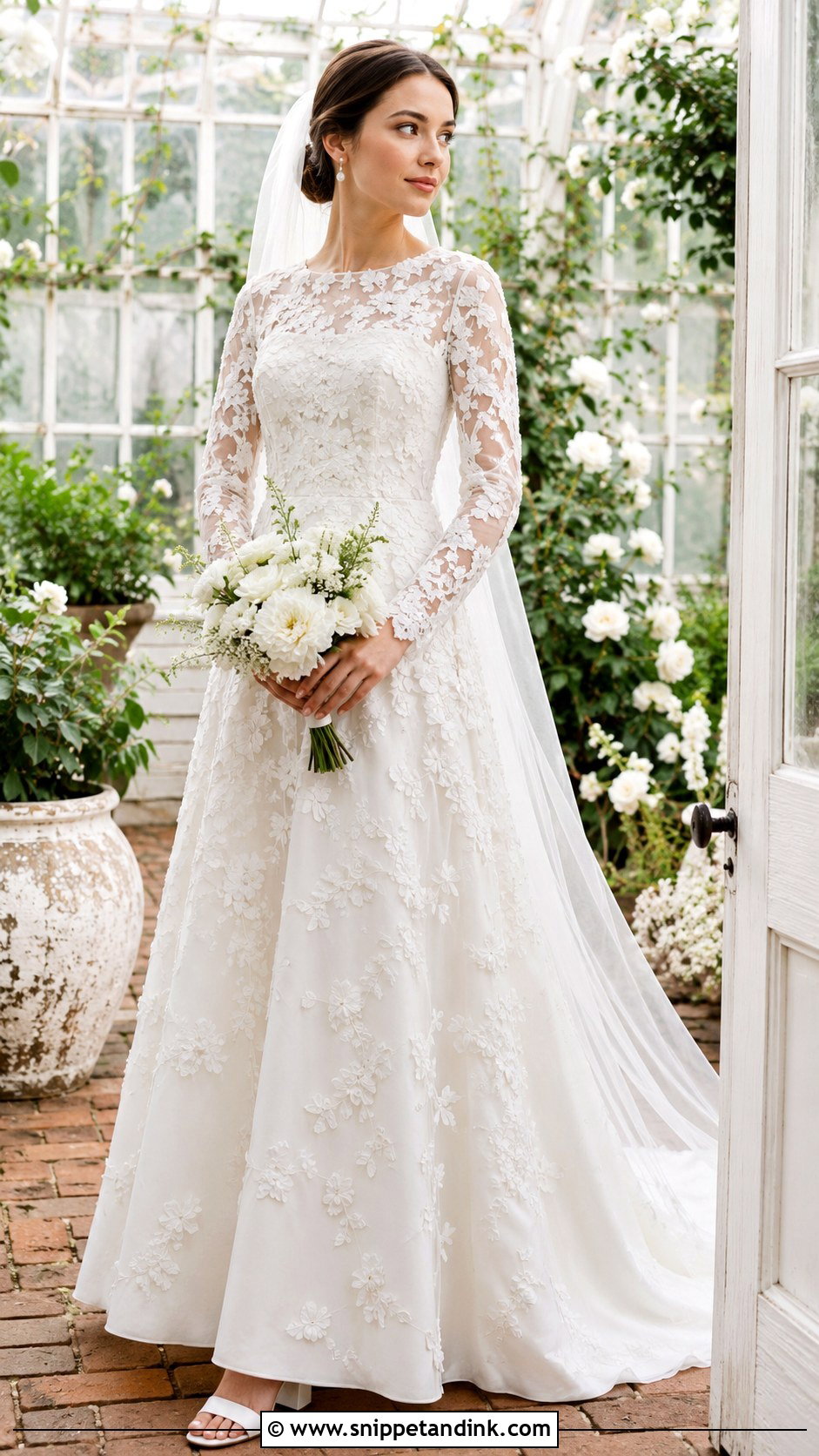
Three-dimensional appliqués let a covered gown carry real decoration. Look for a lined illusion neckline, long sleeves, a closed back and flowers that start dense on the bodice and thin out toward the hem, which keeps the skirt from looking heavy and preserves the A-line flare. A raw-edge veil, small pearl earrings, satin block heels and a bouquet in one variety let the flowers on the dress lead. Raised petals near the sleeve or shoulder will grab a lace or tulle veil every time you turn, so I’d pick a plain-edged veil with this one. It sits naturally in a garden or greenhouse.
9. Mock Neck Minimalist A-Line Wedding Dress
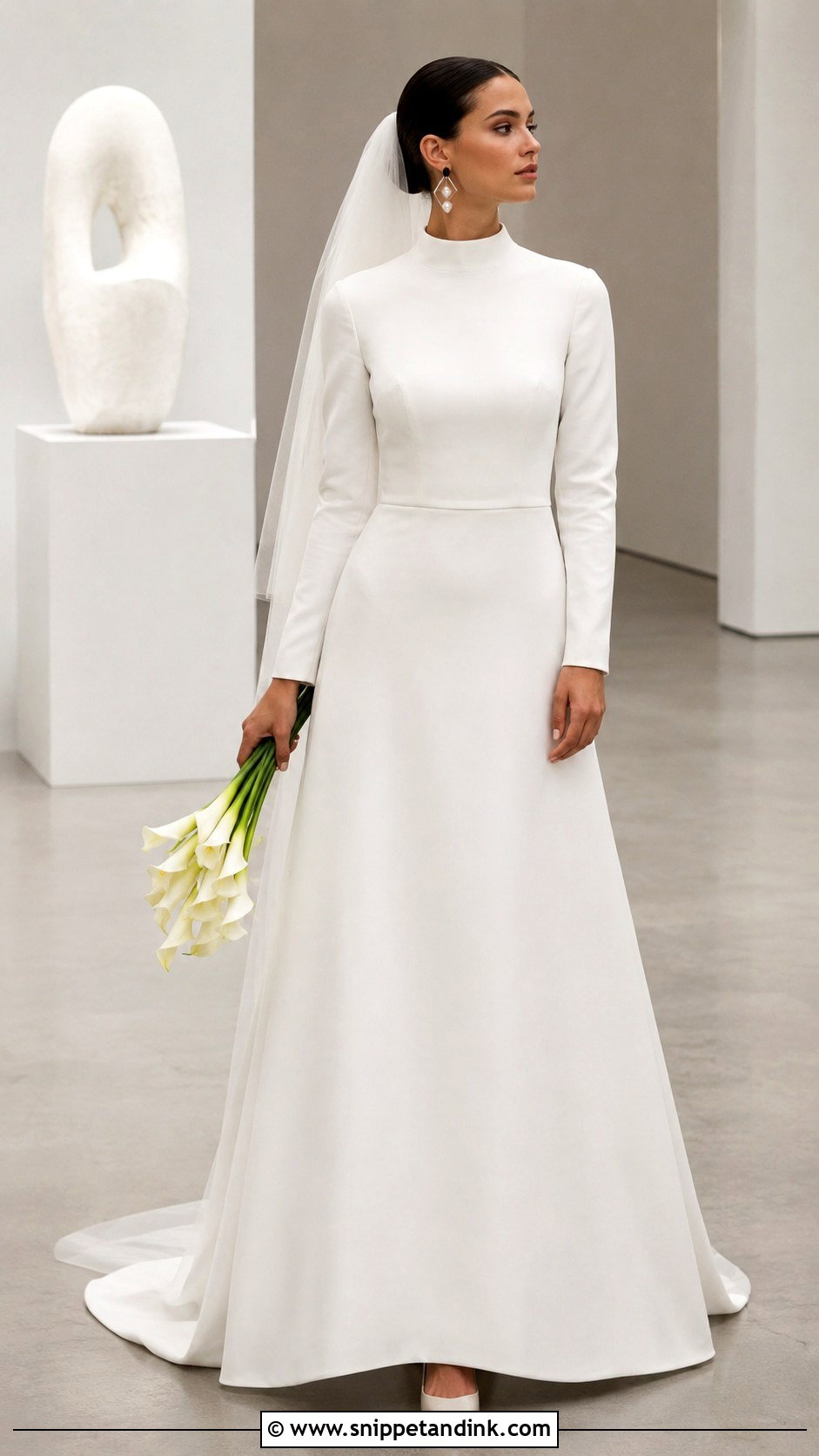
A mock neckline is the most fashion-led way to cover up, and it only works with precise tailoring. Choose smooth crepe or matte satin with long sleeves, an opaque bodice, a fitted natural waist and minimal seaming, closed with a hidden zip or small buttons. Geometric pearl earrings, a sleek low bun, pointed ivory pumps, a plain chapel veil or clean headband and a few callas finish it. Turn your head fully left and right in the fitting room. A collar cut even a little too snug feels fine standing still and starts to choke during the first dance.
10. Scoop Neck Organza A-Line Wedding Dress
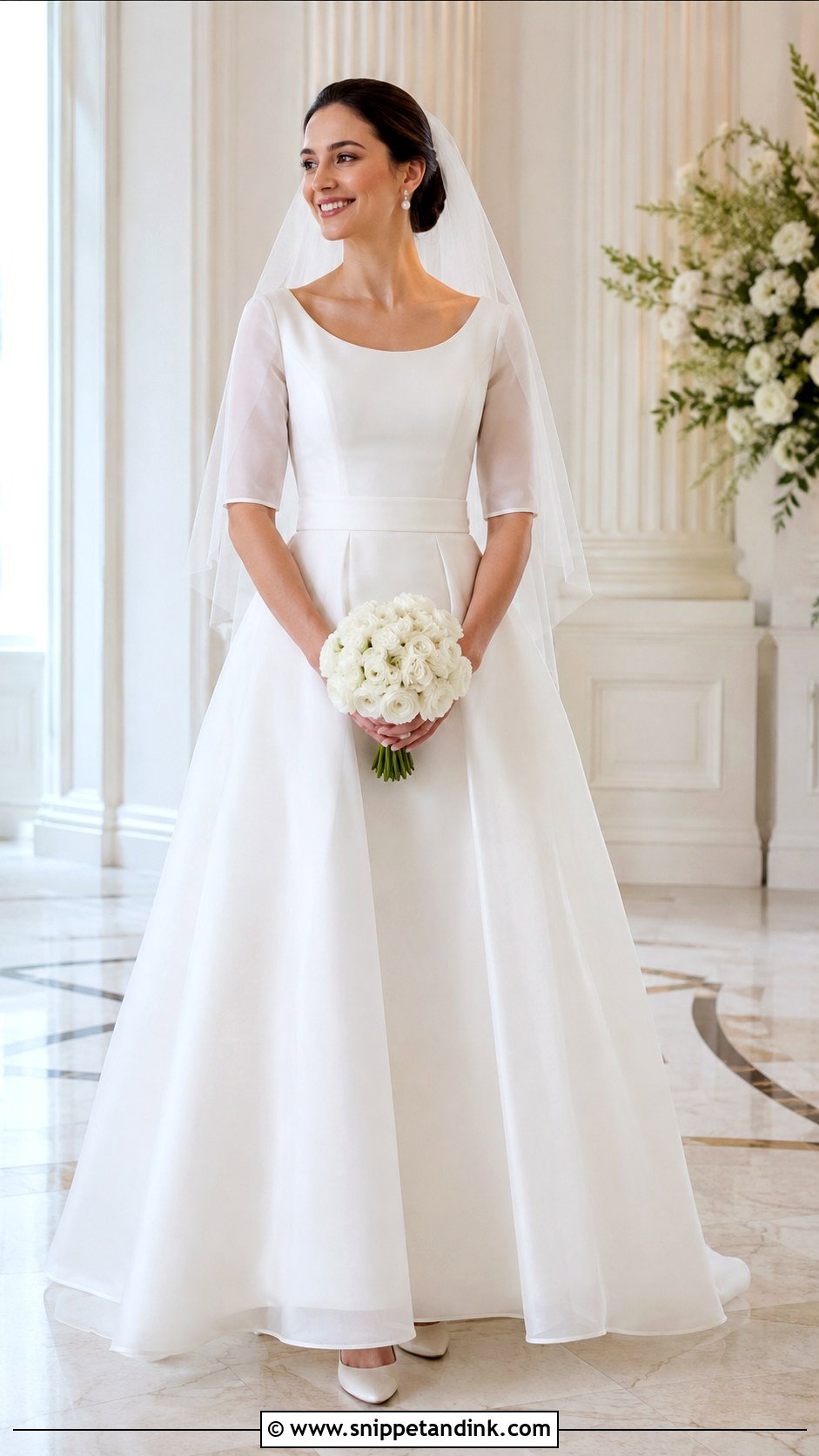
Organza gives the volume of a structured skirt at a fraction of the weight, because it is crisp rather than thick. A gown with an opaque scoop neck, elbow sleeves, a fitted waistband and a pleated skirt, finished with a horsehair hem, holds its shape without layers of petticoat. Add pearl drops, a waist-length veil, rounded satin heels and ranunculus with pale greenery. Organza is translucent by nature, so ask whether the skirt has a full lining underneath, not just a short slip. It also creases sharply when crushed, which makes a daytime ceremony on smooth ground a better match than a long night in a packed car.
11. Pleated Bodice A-Line Wedding Dress
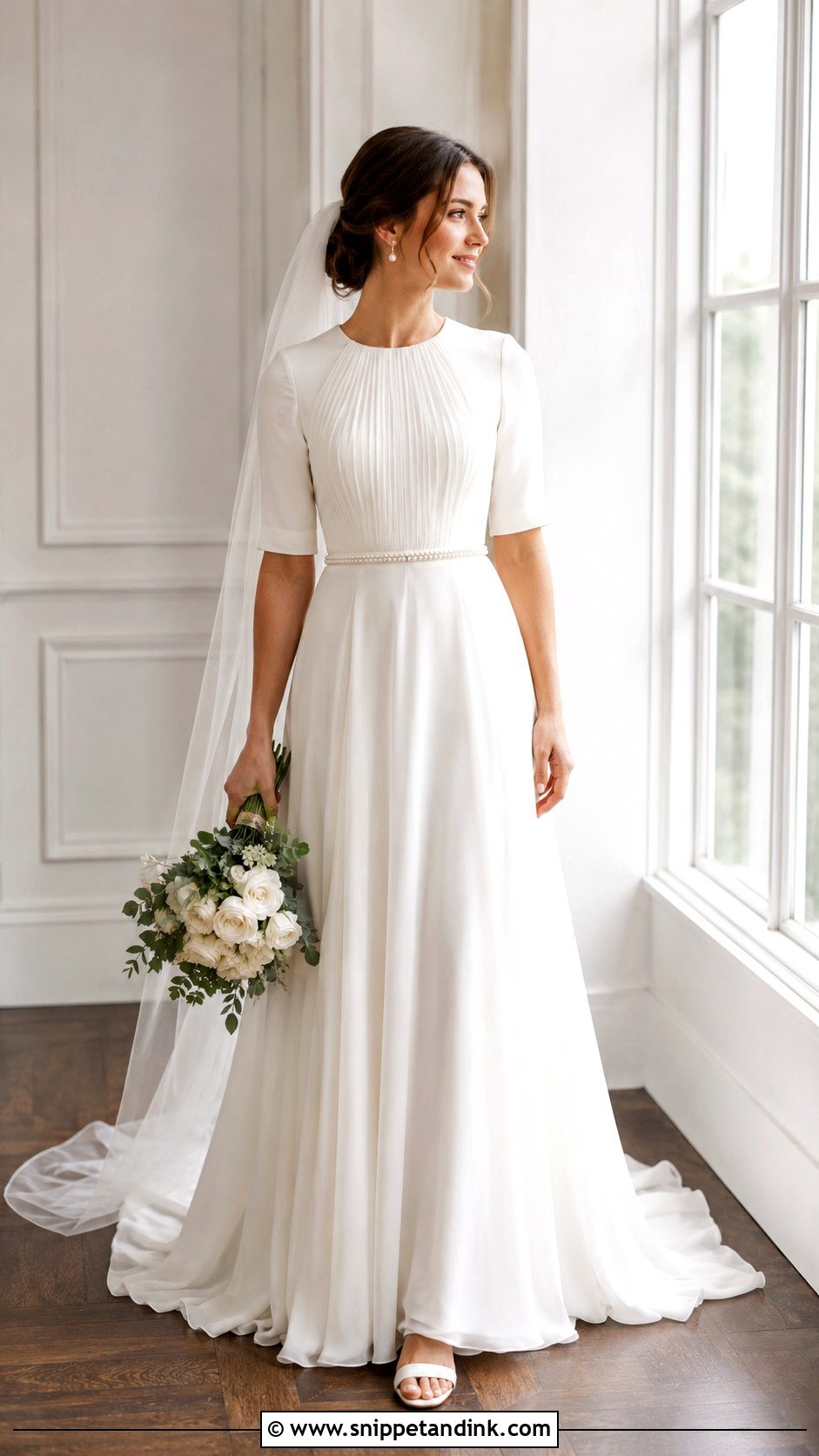
Diagonal pleats meeting at the waist shape a chiffon or soft tulle bodice without any lace or glitter at all. Pair a high scoop neck, elbow sleeves and a fully lined bodice with a flowing skirt, and add a narrow pearl belt if you want the waist marked more clearly. A fingertip veil, pearl earrings, low ivory block heels and sweet peas with roses keep the mood soft. Pleats are only as good as the fit underneath them. If the bodice is slightly too tight, they fan open across the bust, so this is a gown to fit a little relaxed rather than snug.
12. Pearl Embellished A-Line Wedding Dress
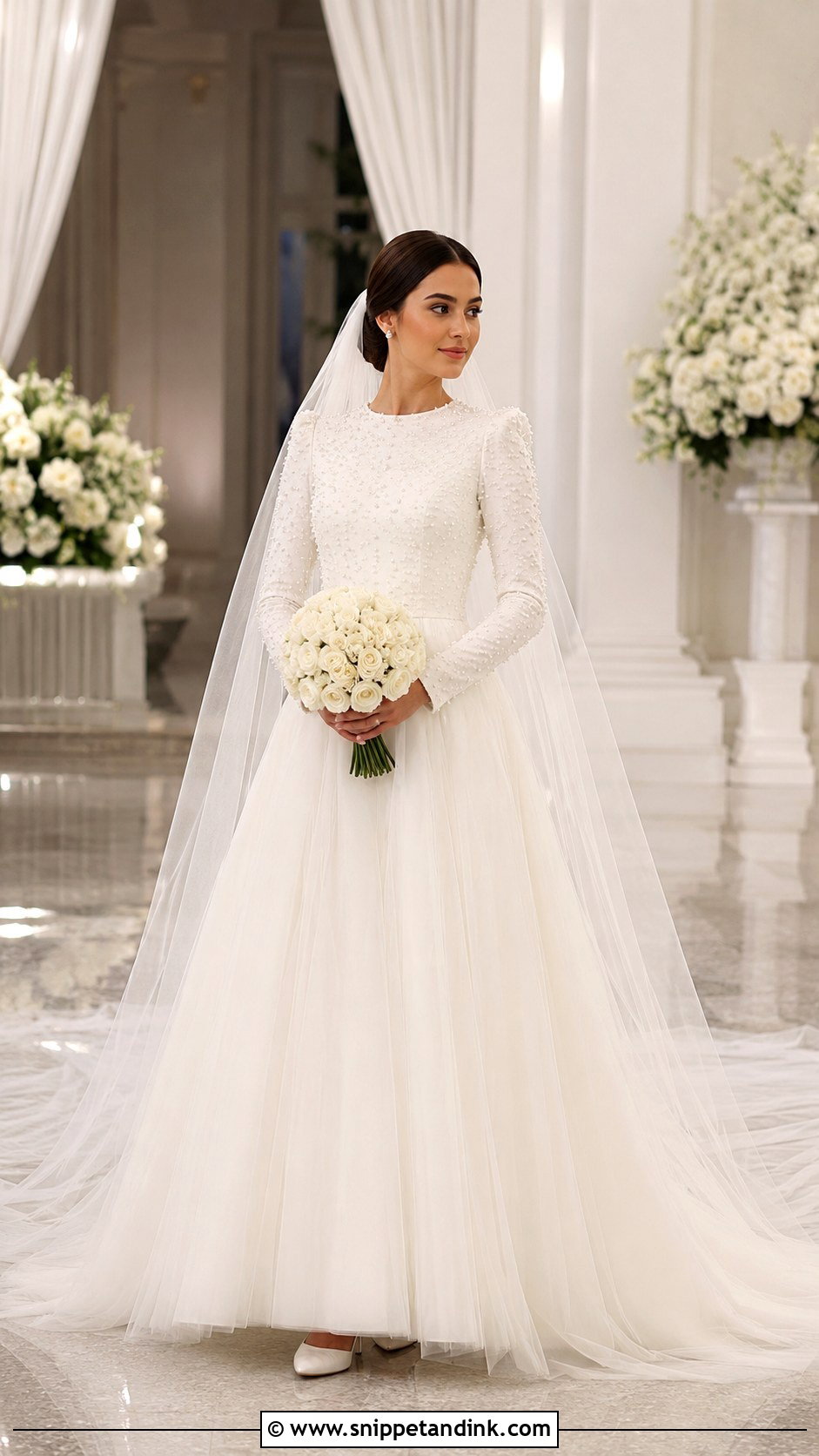
Scattered pearls give a covered gown a quiet glow rather than sparkle. A modest round neck, long fitted sleeves and an opaque lining with small pearls fading down into a plain tulle skirt is the version I’d choose. Keep to one embellishment: pearls plus heavy crystals tends to look busy. Pearl studs, a smooth cathedral veil, satin pumps and white roses tied with ivory ribbon are all it needs. Sewn pearls along the underarm and inner cuff rub and occasionally pop off, so ask the shop to remove any in those friction zones before the final fitting. Evening receptions suit it, since the pearls pick up warm light.
13. Vintage Tea-Length A-Line Wedding Dress
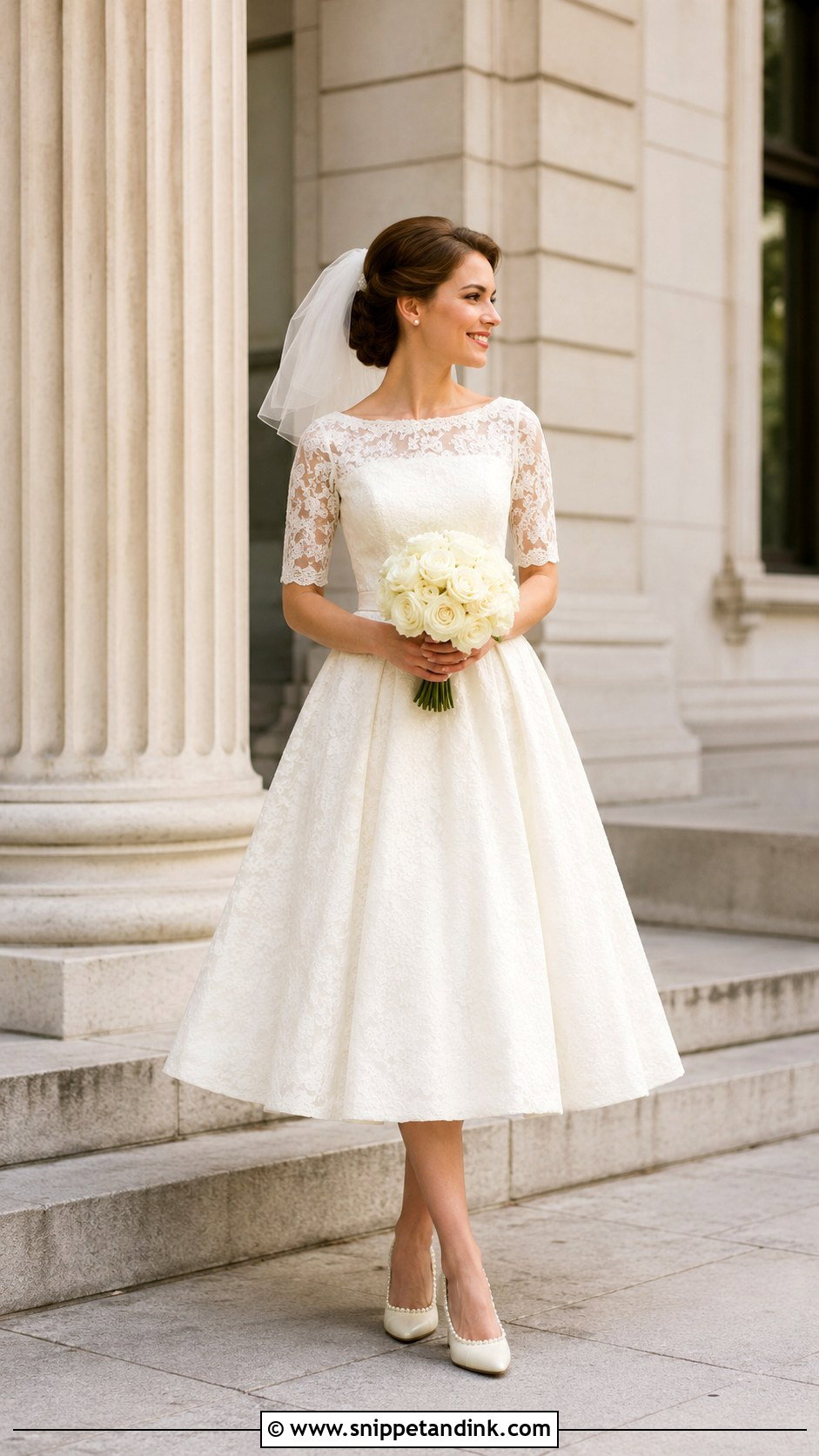
Tea length is the one modest gown that shows your shoes, which changes how you style it. An ivory dress with a bateau neck, elbow-length lace sleeves, a fitted waist, a lined bodice and a covered back, with a hem between knee and ankle, has a strong vintage feel. Choose pearl-trimmed block heels or satin pumps you love looking at, then a short veil and small studs, with structured white roses. A soft petticoat adds lift without the stiff fifties bell. I’d check the hem length while you stand on the shoes you’ll actually wear, because tea length looks awkward if it lands at the widest part of the calf.
14. Boho Embroidered A-Line Wedding Dress
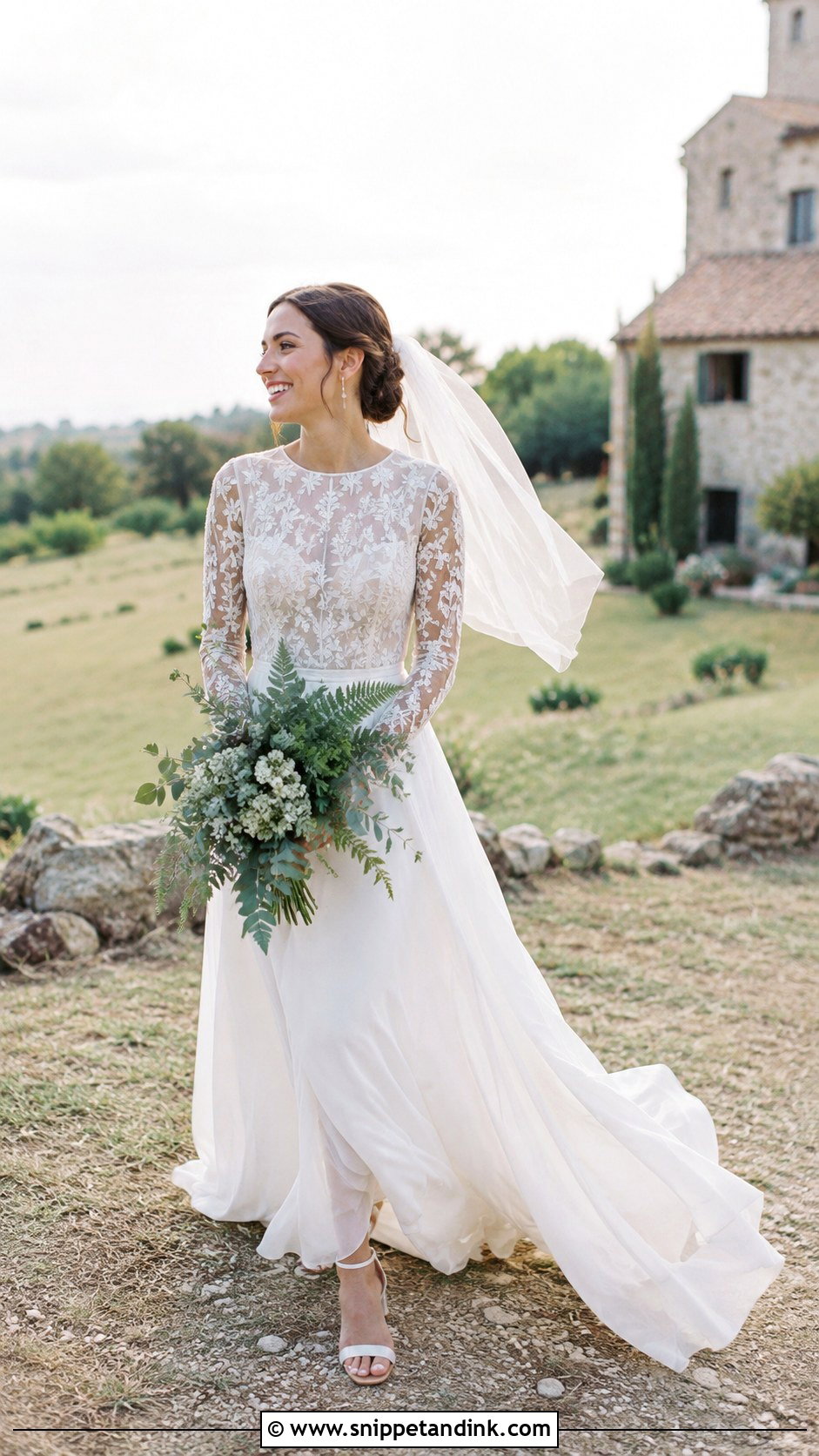
Boho and modest fit together better than people assume, because the decoration in this style lives in the embroidery, not in bare skin. Choose long embroidered sleeves, a lined high neck, a covered back and a chiffon or tulle skirt, with botanical stitching in ivory thread. Delicate drop earrings, block-heel sandals and a loose bouquet with eucalyptus suit it. Hold back on accessories or the embroidery gets lost. For a meadow or woodland ceremony, ask for a sweep train and a strong bustle, since a long train drags up grass seed and twigs within minutes.
15. Plus-Size Lace A-Line Wedding Dress
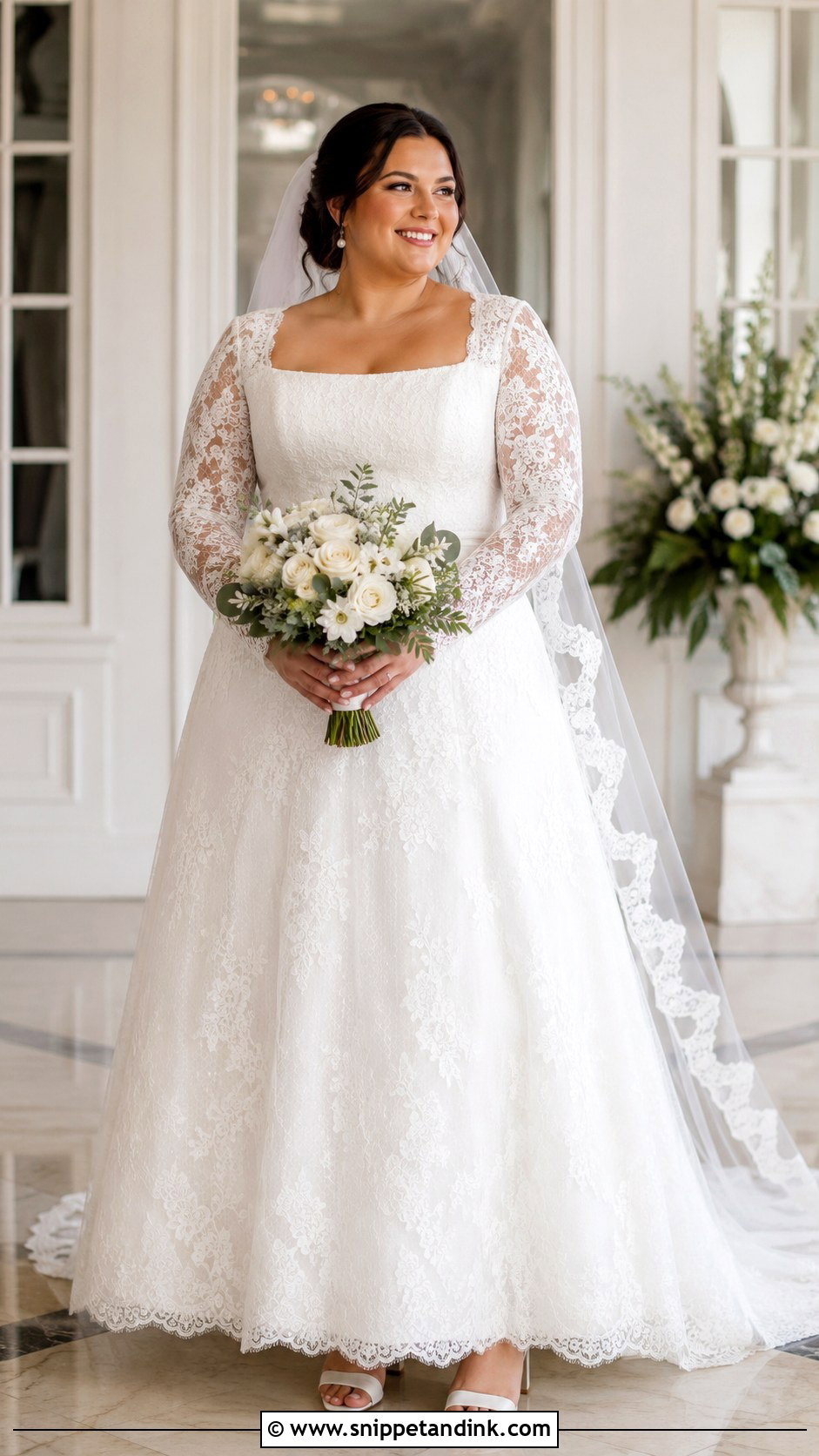
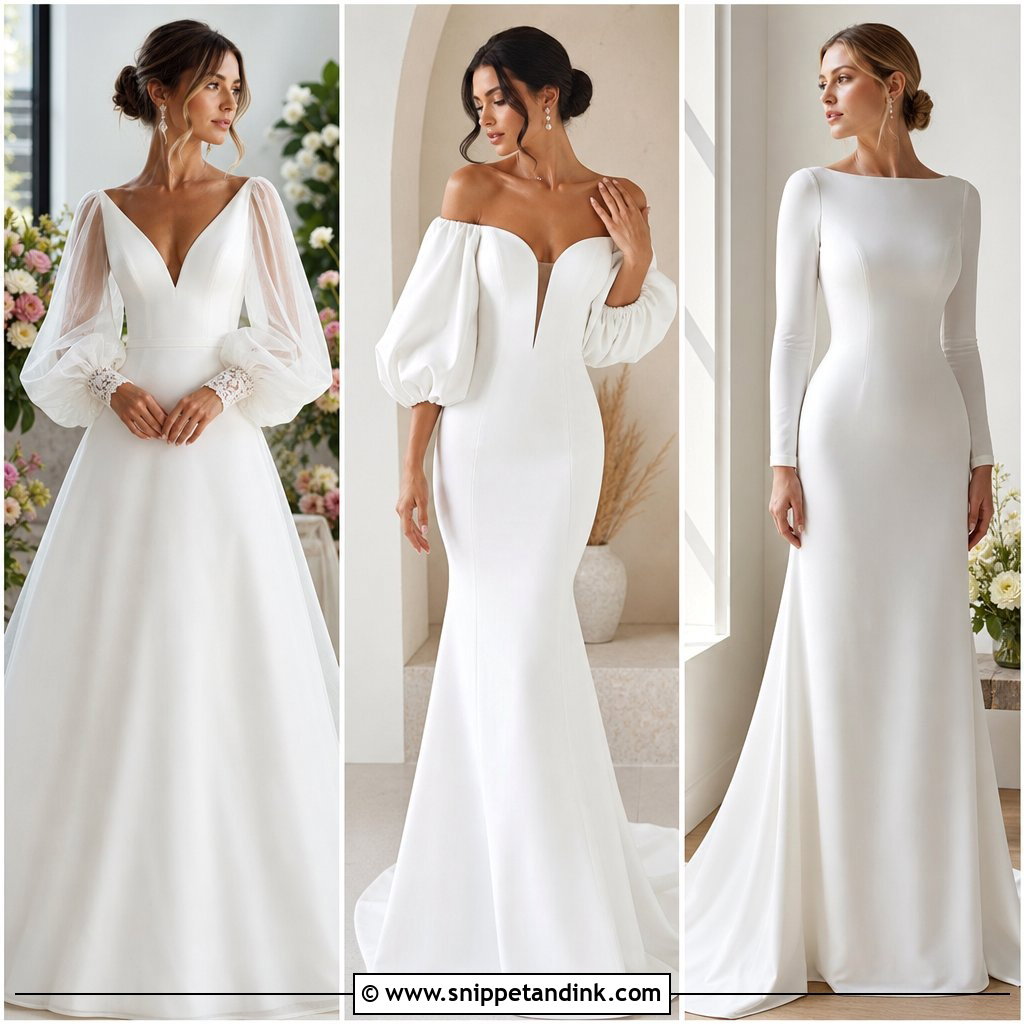
For a plus-size bride, what’s inside the gown matters more than the label size. I look for an opaque lace bodice with a scoop or square neck, long sleeves, wide internal straps and a firm waist seam, with a skirt that drops cleanly from the waist and has no bulky gathering at the hip. A fingertip veil, supportive block heels, pearl earrings and a medium bouquet keep the proportions balanced. Ask directly about built-in cups, boning and how much the seams can be let out, because alterations cost less when there is seam allowance to work with. Then sit, walk and reach up during the fitting; a well-built foundation stays put through all three.
16. Petite Satin A-Line Wedding Dress
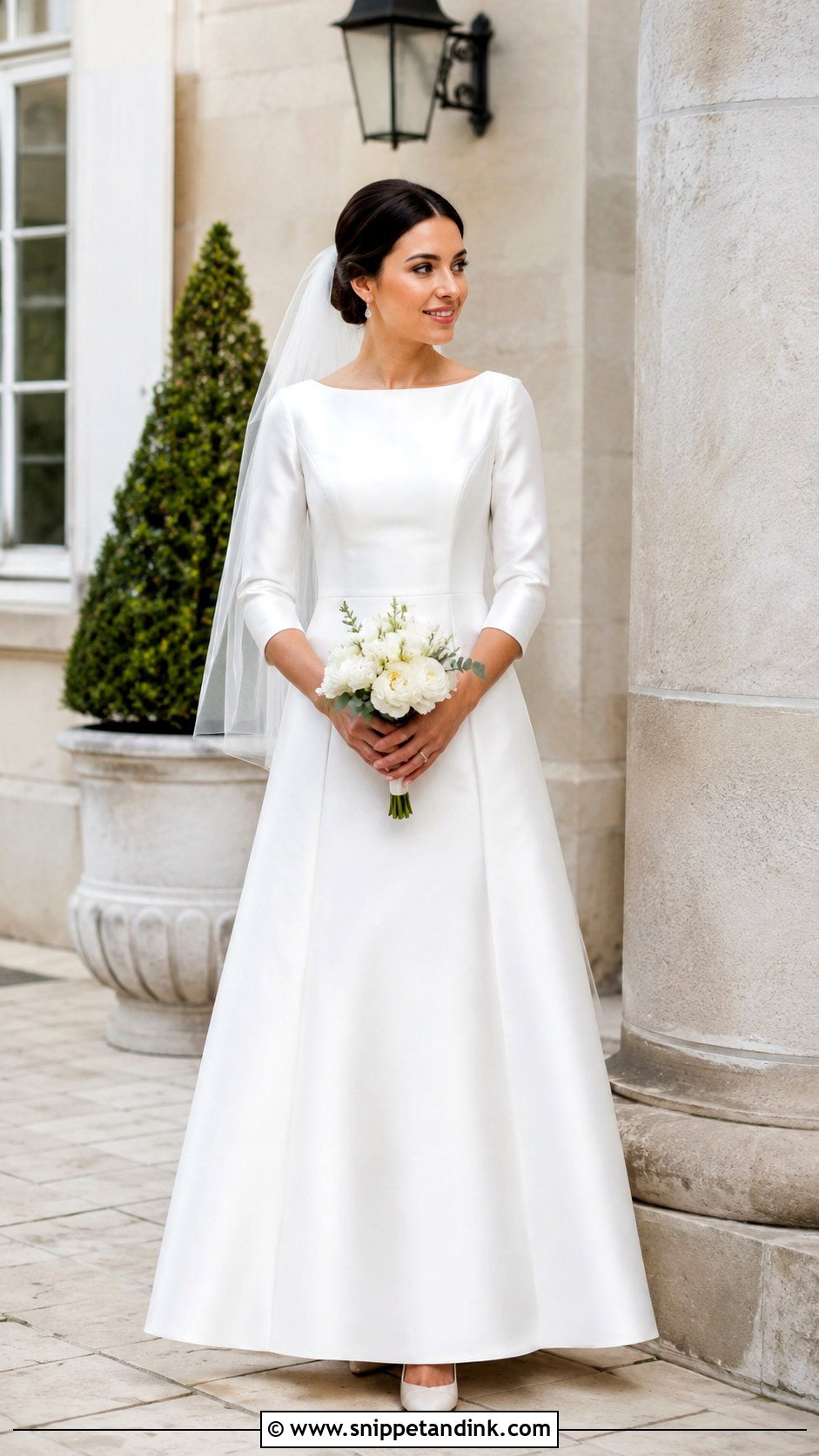
On a petite frame, the A-line works when the details stay small and the skirt volume stays controlled. Satin with a modest V-neck inset, three-quarter sleeves, a slightly raised waist and vertical princess seams draws the eye up and down rather than across. Pick a sweep or chapel train over a wide cathedral, and keep the veil narrow, the earrings delicate and the bouquet compact, with pointed heels in a matching ivory. The mistake I see most is shortening only the hem. Ask your seamstress to adjust the bodice length and the waist position first, because a waist sitting too low makes the whole gown look borrowed.
17. Hijab A-Line Wedding Dress
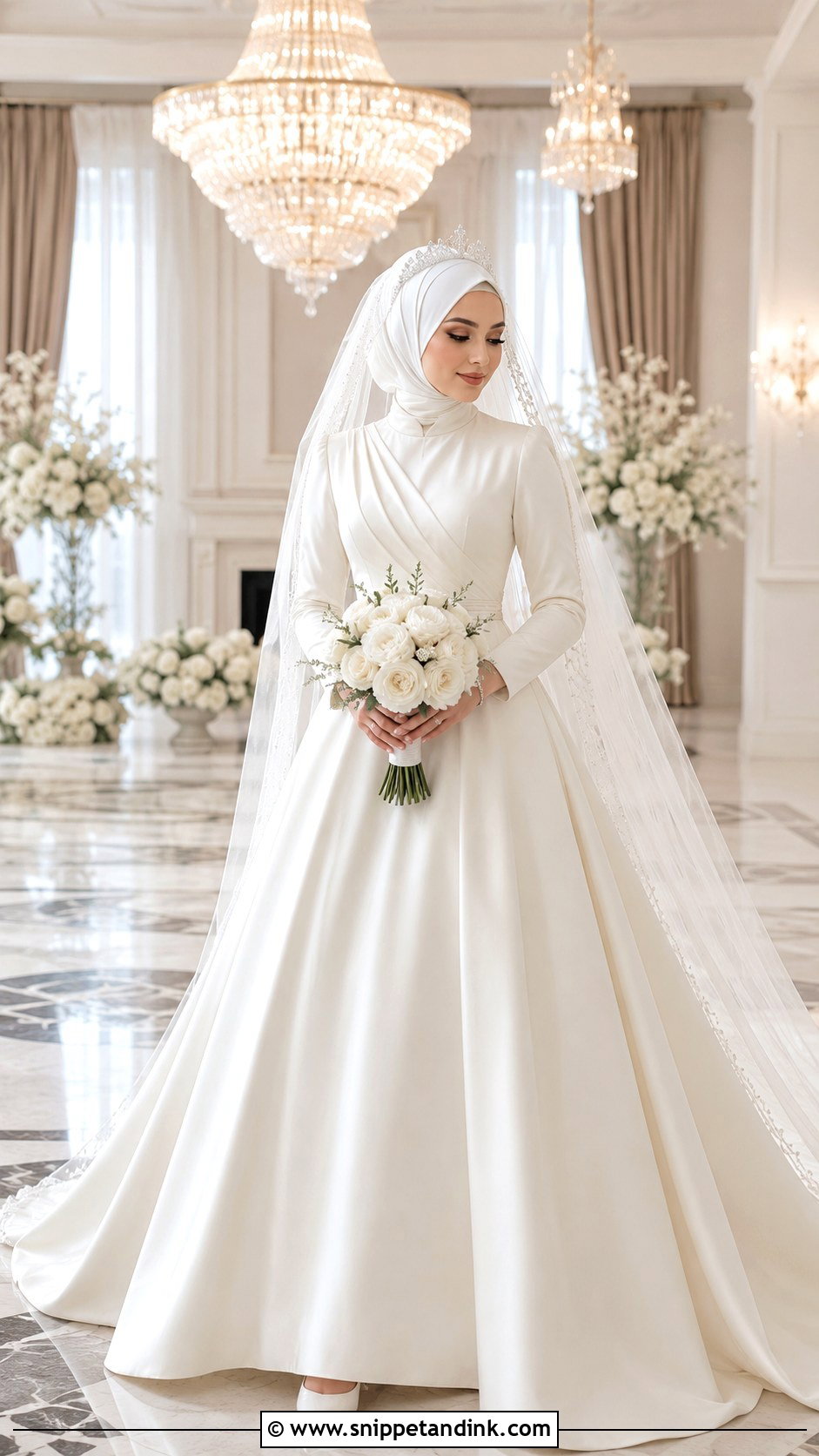
A hijab bridal outfit comes together when the gown and head covering are planned as one piece rather than matched afterwards. An opaque A-line with a high neck, full-length sleeves, a covered back and a crepe, satin or lined tulle skirt is the base, with a smooth ivory hijab pinned neatly at the face and neck. A light veil can drape from the crown or shoulders if it adds no bulk under the chin. Ivories differ more than you’d think, so bring a hijab swatch to the boutique and compare both under the same lamp and in daylight. At the final fitting, bow your head and turn as you will during the ceremony to confirm the neckline and hijab stay covered.
18. Cape Sleeve A-Line Wedding Dress
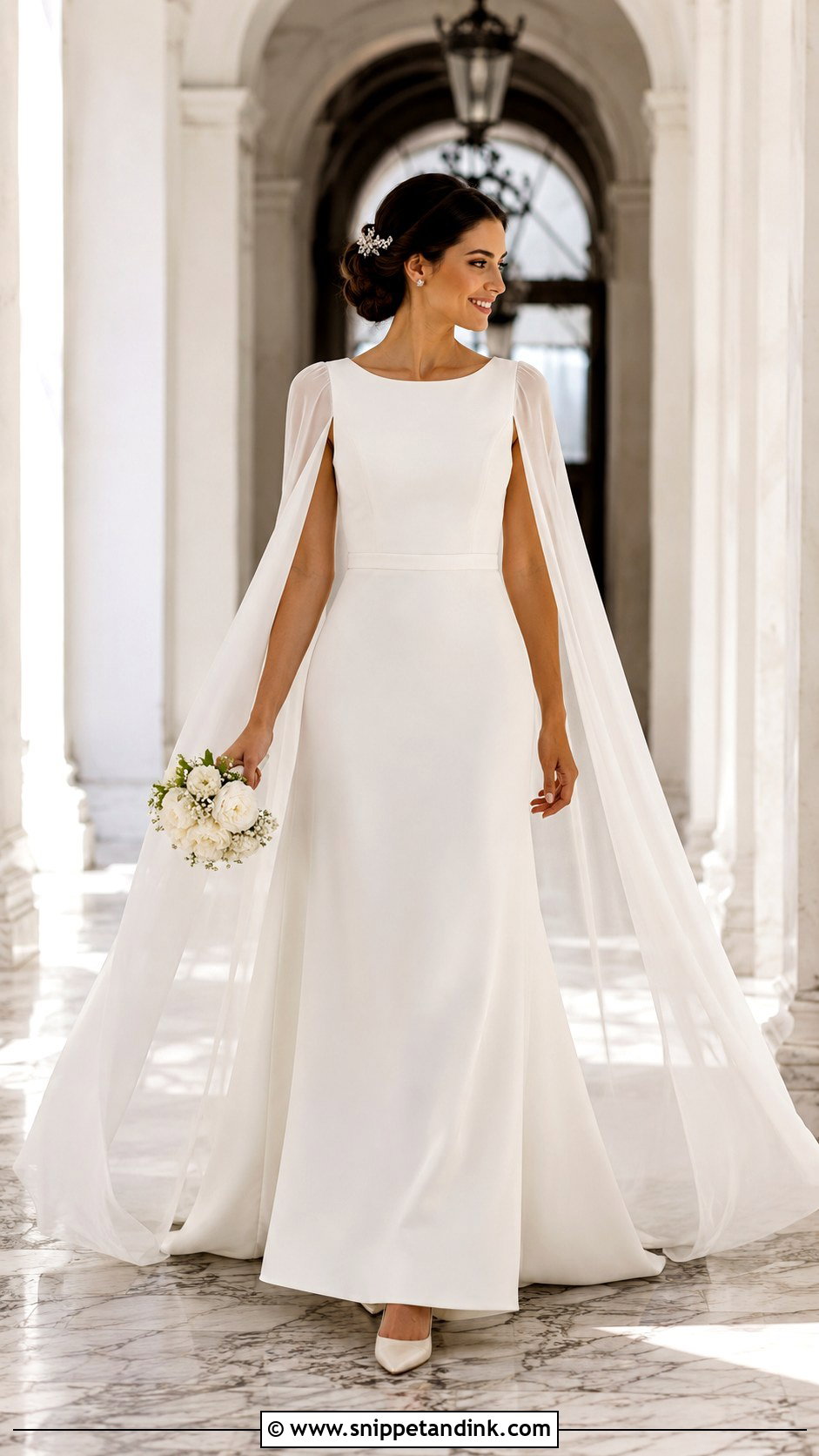
Cape sleeves give drama without any extra skin, since the fabric falls over the shoulders and arms. Start with an opaque gown with a high scoop neck, a fitted bodice and a smooth crepe or satin skirt, then attach chiffon panels at wrist or floor length. A closed back, minimal embellishment, sleek pumps, crystal studs and a compact bouquet keep the cape in charge, and a bridal comb can stand in for a veil. Wind is the issue. I’d walk outside with the cape at the fitting, flowers in hand, because chiffon panels lift and wrap around a bouquet in a breeze; a weighted hem keeps them falling straight.
19. Detachable Sleeve A-Line Wedding Dress
Detachable sleeves solve a practical problem: a covered ceremony and a cooler, freer reception from one dress. Choose a lined A-line with a raised square neck, wide straps and a covered back, with lace or satin sleeves that attach securely under the straps and can later swap for a matching bolero or short cape. Wear the full sleeves with a chapel veil, pearl earrings and block heels for the vows. Before you rely on the swap, check that the base dress alone gives the coverage you want. Snaps and hook tape are easier to manage in a restroom than tiny buttons, and whoever holds the sleeves needs a garment bag, not a tote.




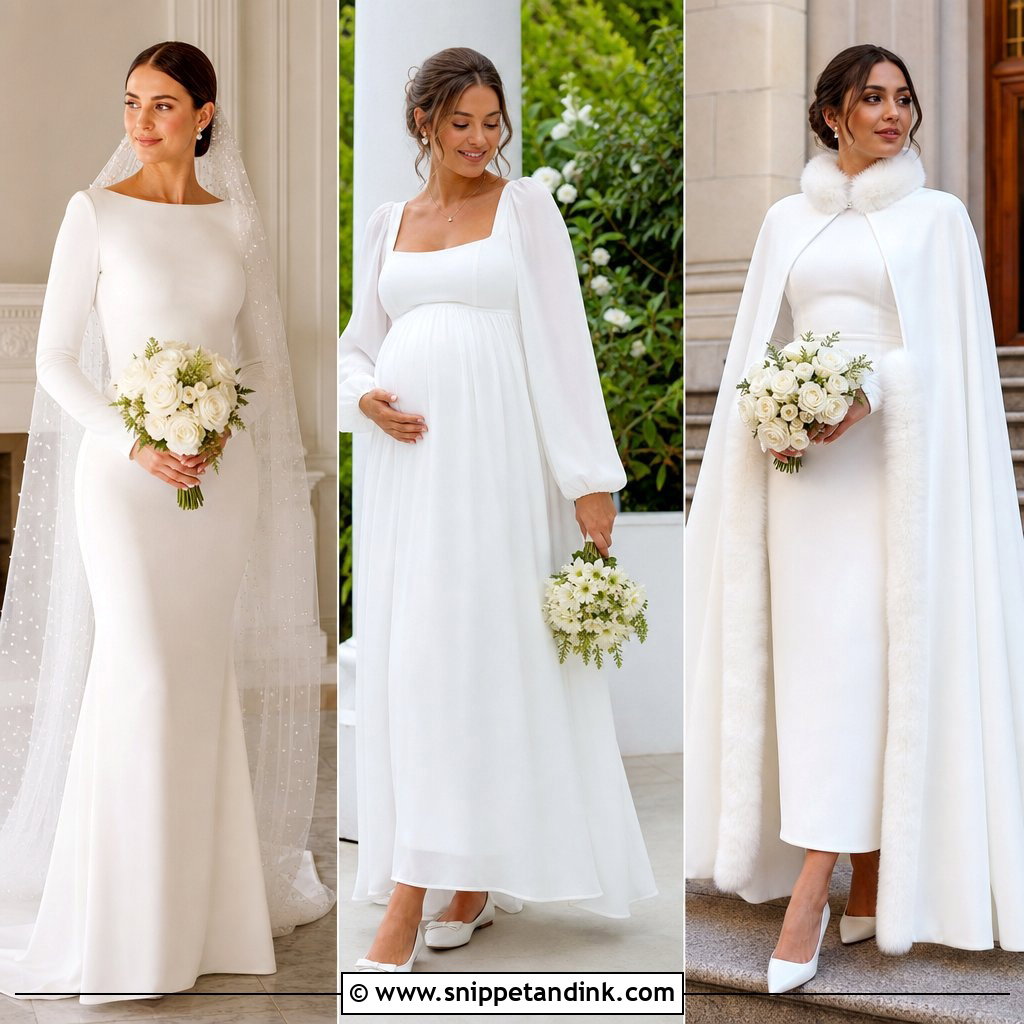
20. Blush Tulle A-Line Wedding Dress
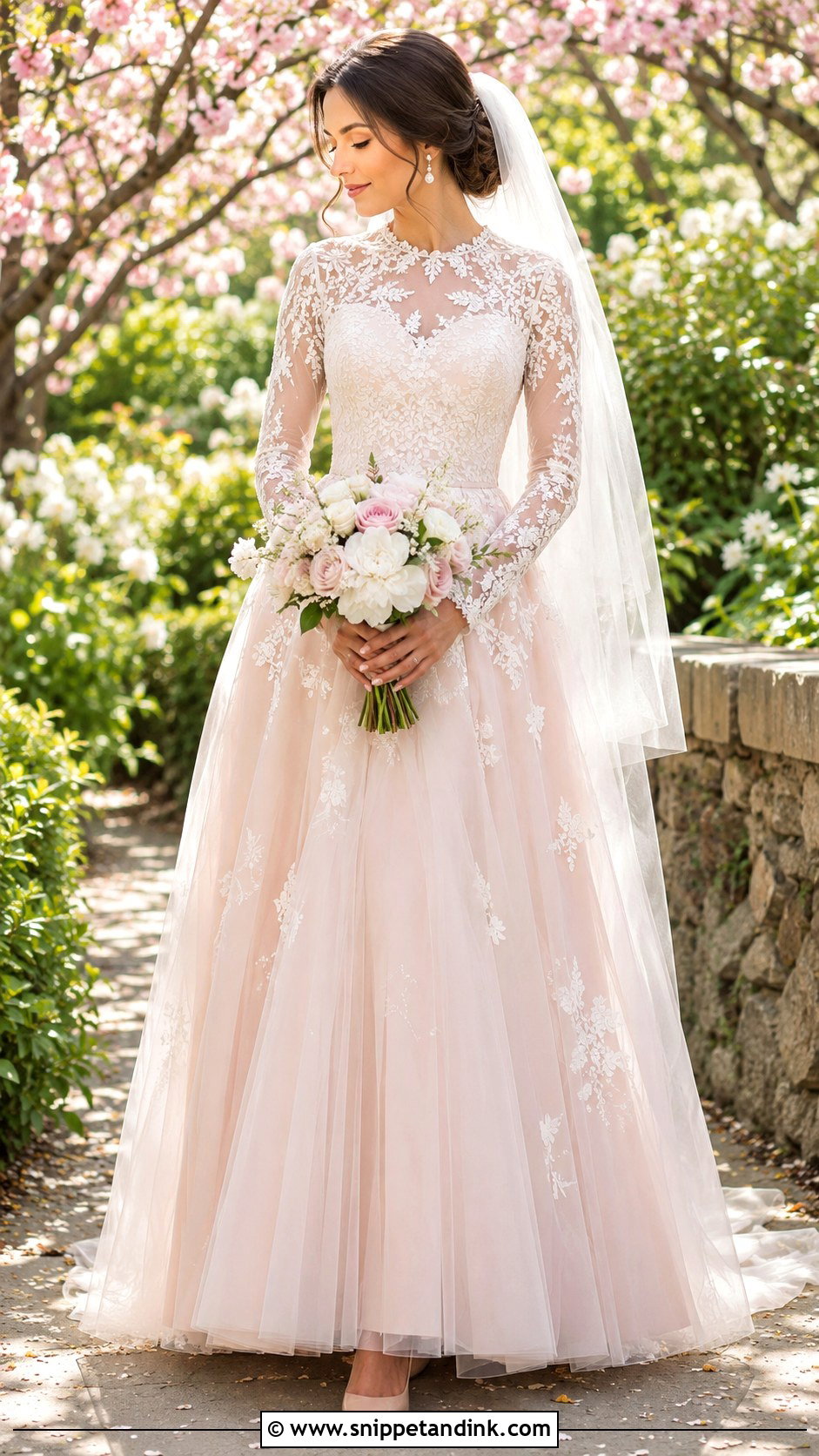
Pale blush still reads as bridal, and on many skin tones it is kinder than stark white. Look for a lined lace bodice, a high illusion neck, long sleeves and layers of blush tulle over an opaque matching skirt, with ivory appliqués at the waist and cuffs. An ivory veil, rose-gold or pearl earrings, blush closed heels and white with pale pink flowers carry the colour through. Blush tulle over a nude lining can look almost white outdoors and noticeably pink under tungsten, so view it in both lights before you order. A spring garden is where it shows its colour best.
Adding Sleeves or Raising a Neckline on a Gown You Already Love
Plenty of brides find a gown that is almost right and assume they have to keep looking. Many coverage changes are routine alteration work, as long as you plan the time and pick the right method for the fabric.
What a seamstress can usually add
- Illusion tulle or lace across an open neckline or back, which raises coverage without changing the look from a distance.
- Sleeves made from matching lace or fabric, set into the armhole or attached under the straps.
- A fuller lining or an extra underlayer in the skirt when chiffon or organza is too sheer.
- Modesty panels at a V-neck, stitched in or held with small snaps so they can be adjusted.
Ordering the gown with the changes in mind
Tell the boutique about planned changes when you order. Some designers sell matching lace by the metre or offer sleeves and higher backs as factory options, which match far better than anything sourced later. Satin and Mikado are hardest to match because shades of ivory vary between dye lots, so a design option is especially worth asking about with those fabrics.
Timing matters more than most brides expect. Made-to-order gowns often take several months to arrive, and alterations generally start around two to three months before the wedding, with two or three fittings. Adding sleeves takes longer than a hem, so mention it at the first fitting rather than the last. Costs vary widely by region and complexity, so ask for a quote before the seamstress cuts anything.
A Covered Gown Should Still Let You Dance
Coverage is a starting point, not the whole brief. Sleeves, higher necklines, opaque linings and closed backs work in lace, satin, crepe, chiffon, tulle and Mikado alike, so let fabric and comfort decide between them. Style the full outfit together, veil and shoes included, and keep testing it the way you will actually move: walking, sitting, reaching and holding flowers. Good alterations fix most small problems with neckline height, sleeve ease, waist position and train length. Pick the gown you forget you are wearing by the reception.
You'll Like These Ideas:





Leave a Reply