
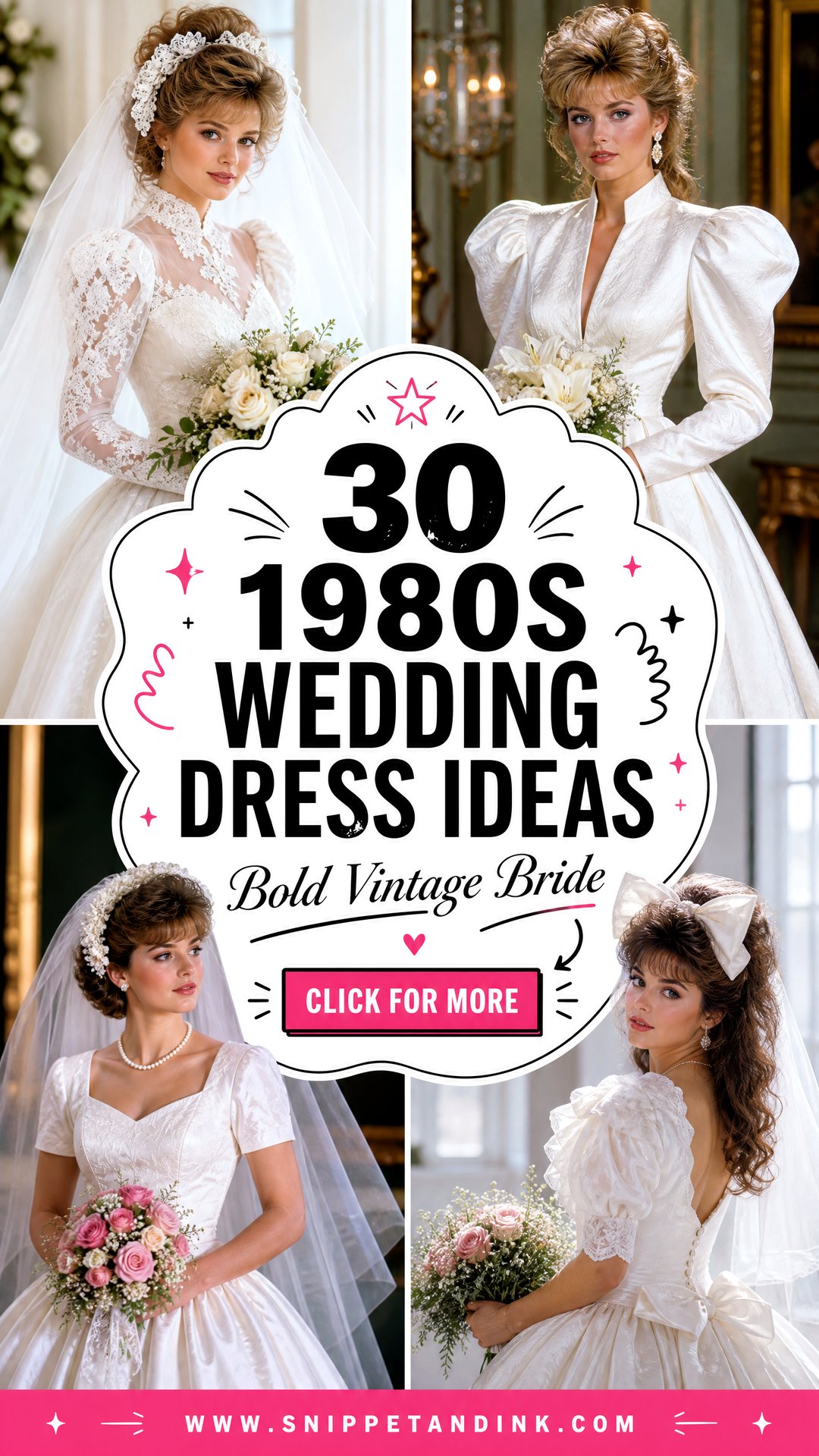
The eighties gave bridal fashion some of its most recognizable details: puff sleeves, full satin skirts, high lace collars, bows, basque waists, pearl beading and cathedral trains. Worn today, the trick is keeping one or two of them and letting the rest go, so the dress reads romantic rather than costume. You can wear a true vintage gown, rework a family dress, or buy something new with a few iconic retro details. I’ve laid out thirty directions below, from princess to modest to bold, each with the styling I’d put around it.
Sleeves, Bows or a Train? Pick Where the Drama Lives
Gowns from this decade often had everything at once: puff sleeves, a high collar, a bow, beading and a cathedral train. Worn now, that stack is exactly what makes a dress look like a costume. When I style an eighties-inspired bride, I ask her to choose one zone to carry the drama and keep the others calm.
- Shoulders and sleeves. A big puff or leg-of-mutton sleeve wants a clean neckline and a plain skirt. It also needs the hair up or swept back, or sleeve and hair fight for the same space beside your face.
- Neckline. A high lace collar or sheer yoke is detailed enough on its own. Skip necklaces and keep the sleeves slim.
- Waist. A basque or drop waist reads best when nothing else crosses the torso, so no sash and no peplum layered on top.
- Back and train. A large bow or long train is seen mostly as you walk away and in the aisle shots, which means the front can stay surprisingly plain.
Once the zone is chosen, look at yourself in a full-length mirror from the far side of the room, not up close. Volume at the shoulder makes the waist look smaller, but on a petite bride it can swallow the neck. If that happens, the sleeve head can be lowered slightly, or the net inside the puff thinned so it sits softer.
1. 1980s Puff Sleeve Wedding Dress
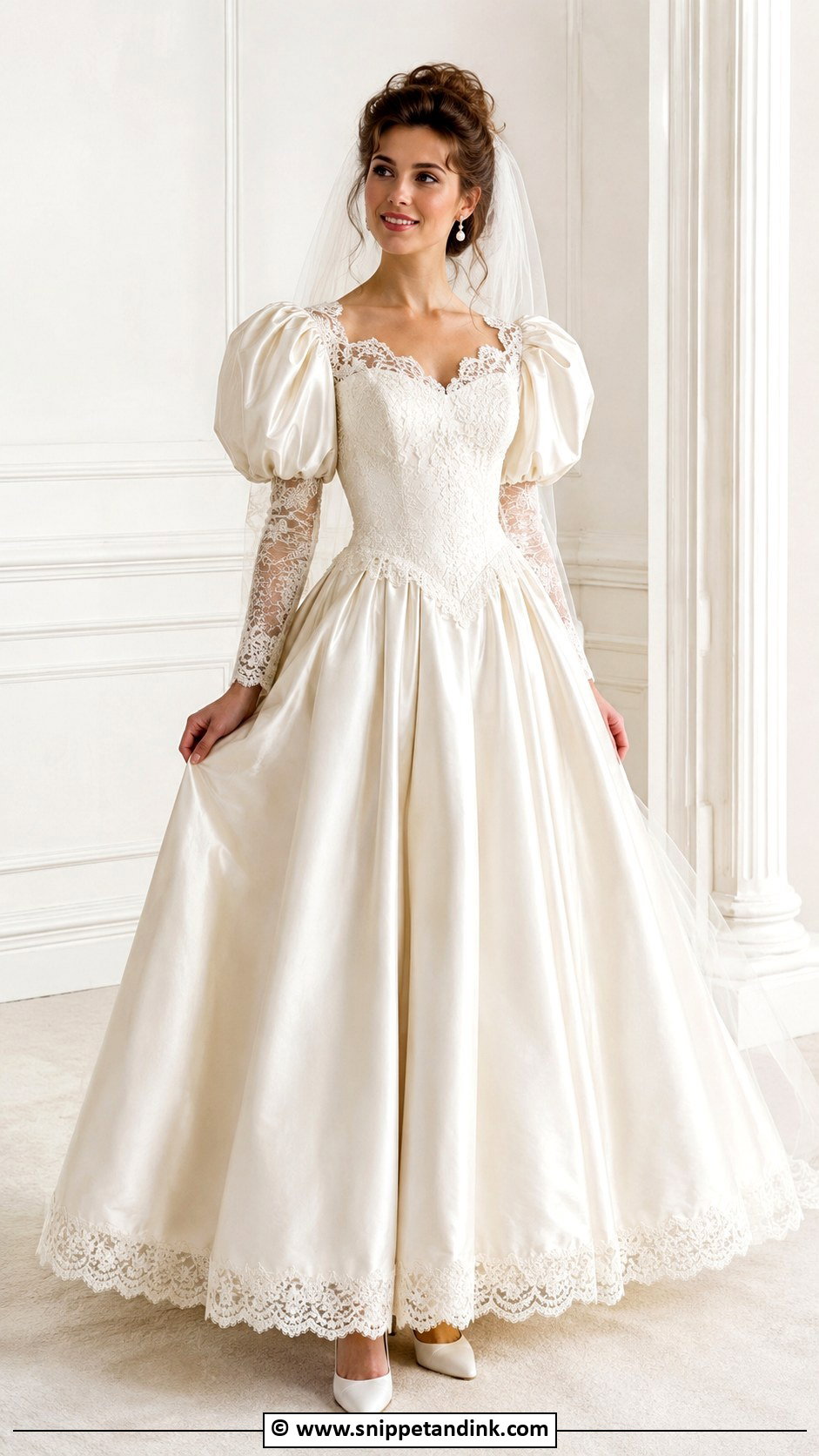
Puff sleeves are the detail people picture first when they think of the decade. They add volume up top, which makes the waist look smaller, but they also widen the shoulders, so I always judge the proportion from across the room rather than in a close mirror. For a period feel, pair a fitted bodice and full skirt with lace or satin sleeves gathered at shoulder and wrist. A cleaner version uses sheer organza puffs over a plain satin skirt. Pearl drop earrings, a soft veil, white heels and a rounded bouquet keep the rest gentle.
2. 1980s Princess Wedding Dress
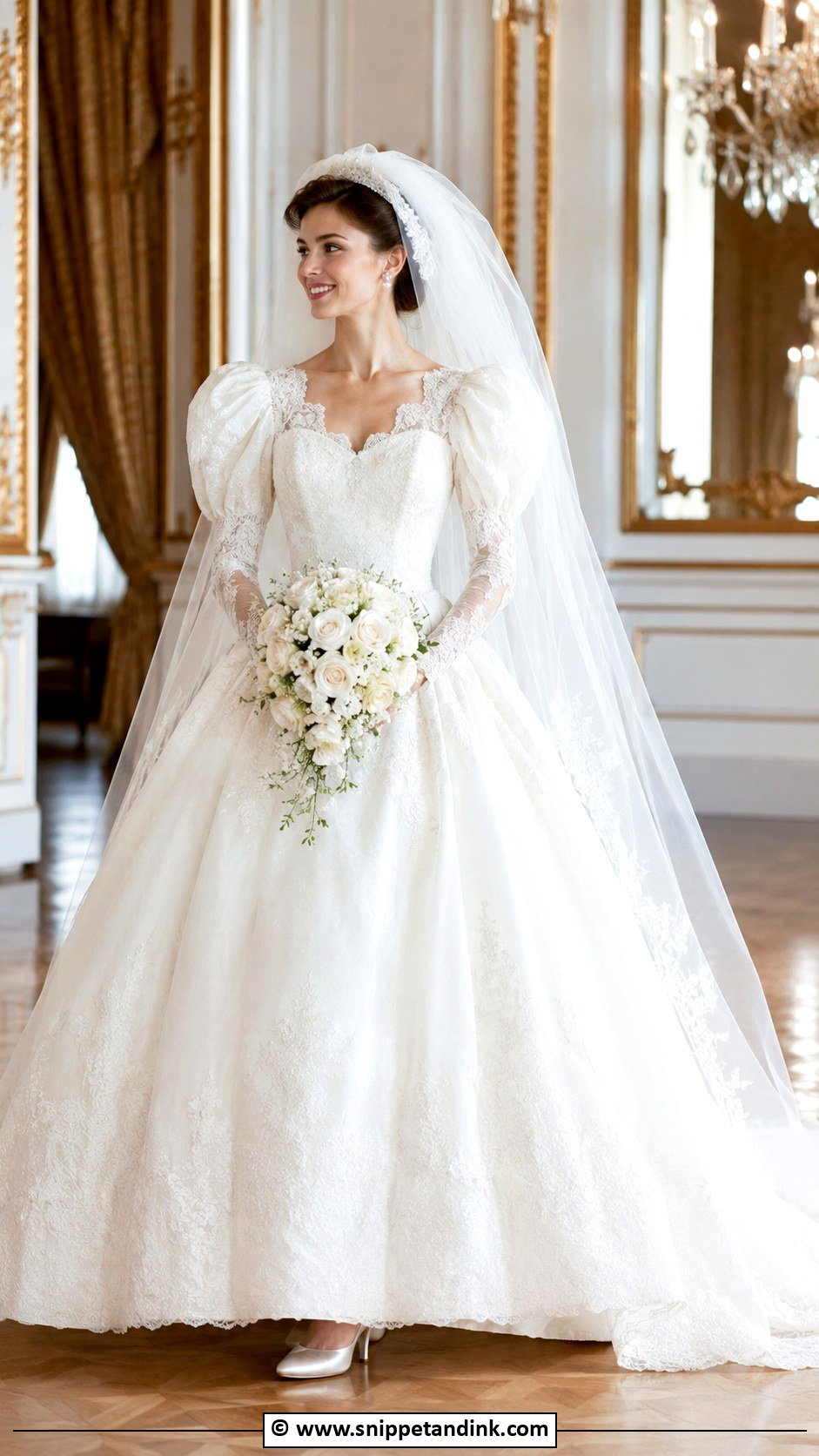
Full skirt, fitted waist, grand entrance. Ivory satin, layered tulle and lace applique make it storybook, and a basque or dropped waist makes it unmistakably eighties. Because these skirts are wide, I check that the bride can get through a doorway and into a car with help, and that the aisle at the venue has room for her. Keep accessories classic with a long veil, pearl studs, satin pumps and a structured bouquet. If the bodice is already heavy with beading or lace, add nothing more.
3. 1980s Lace High Neck Wedding Dress
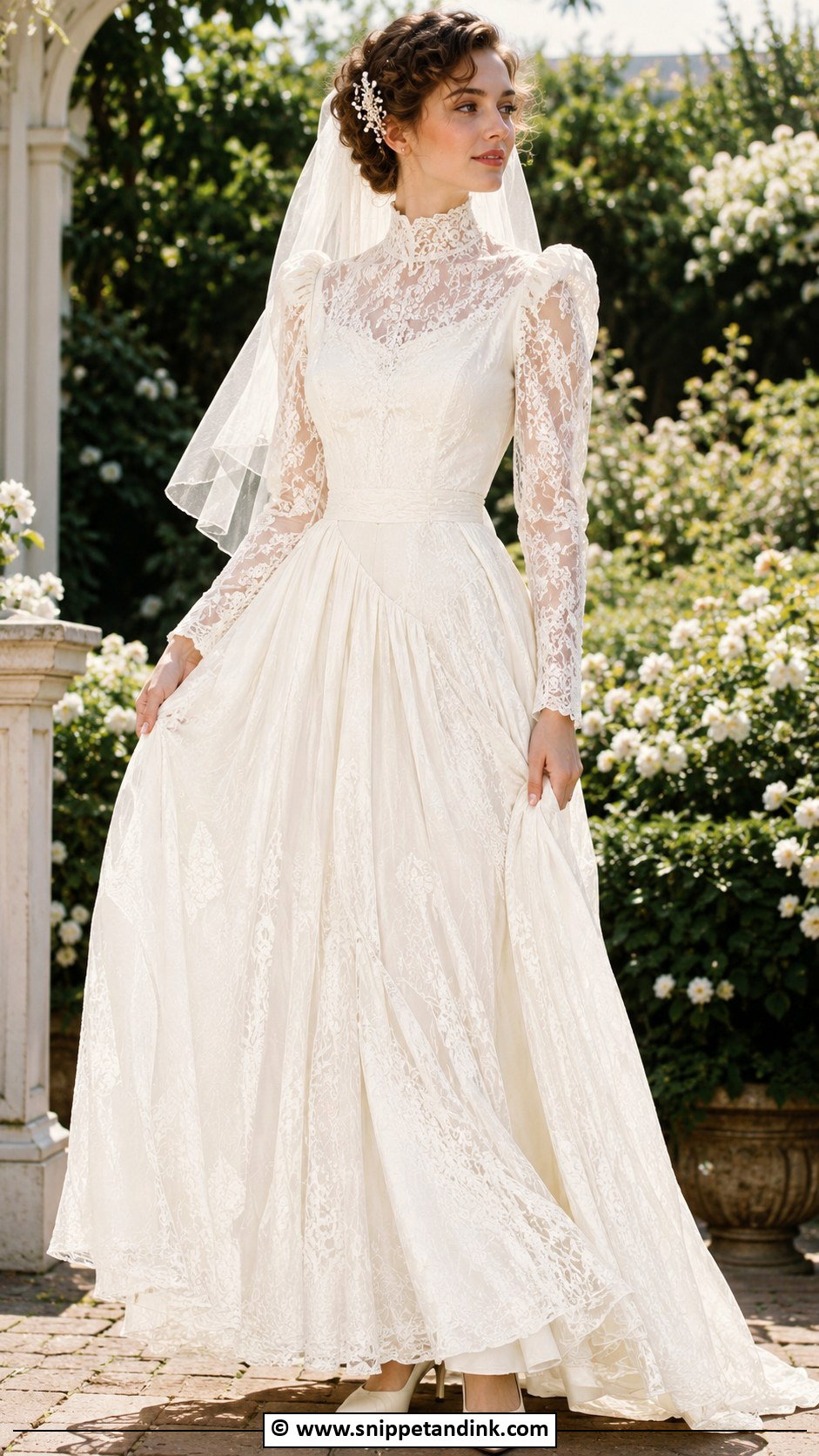
The high lace neckline was everywhere in the decade, usually with lace sleeves, a fitted bodice and a softly full skirt. What separates dated from fresh is the weight of the lace: a fine, light lace looks current, while a stiff, heavy collar feels like fancy dress. I’d put the hair in a low bun with a pearl comb so nothing covers the collar, then add a simple veil and ivory heels. One fitting check matters more than any other here. You should be able to turn your head fully without the lace scratching your jaw.
4. 1980s Satin Ball Gown Wedding Dress
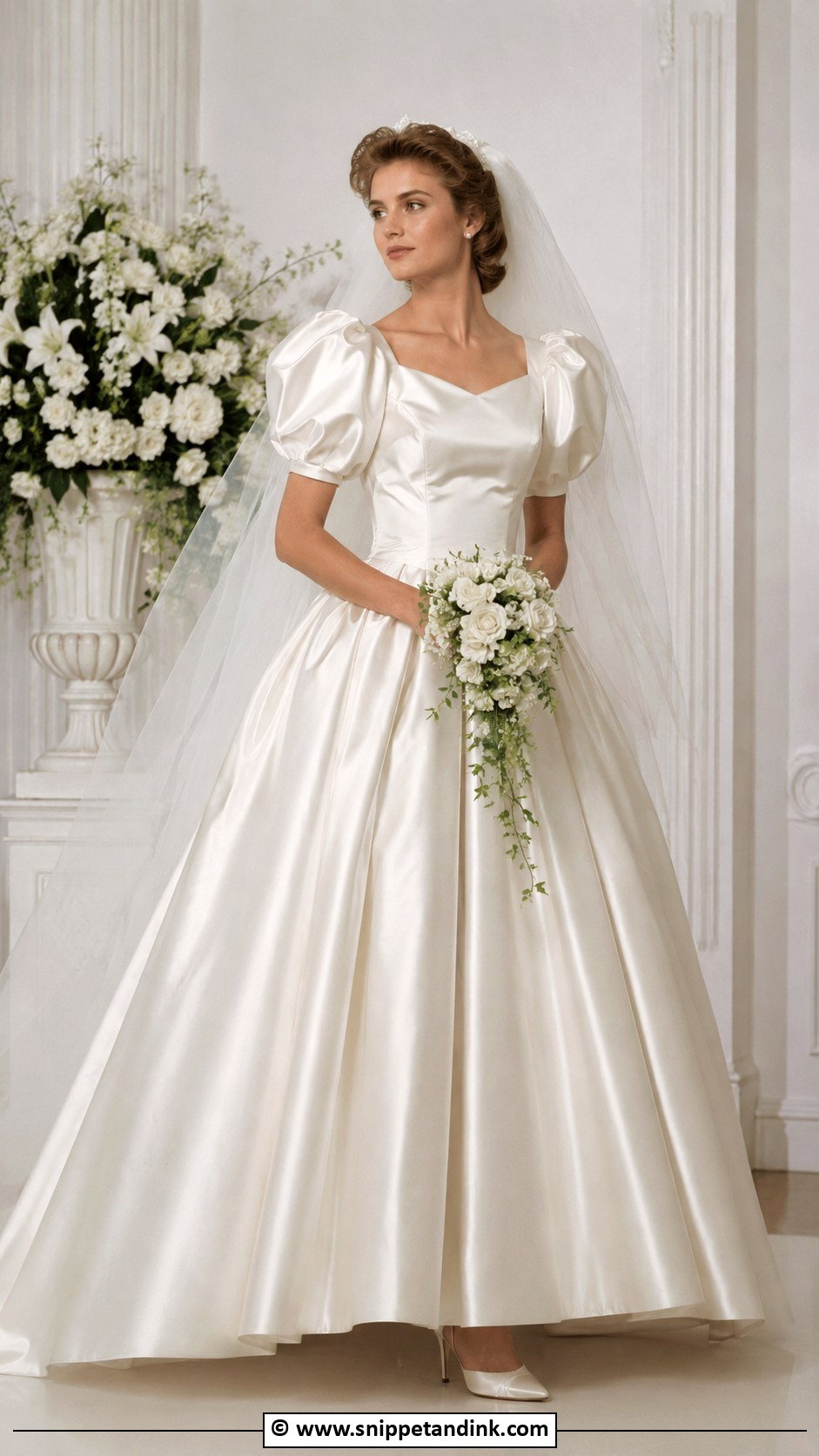
Satin is the polished side of the decade’s bridal style. It catches the light and gives a formal finish without any lace at all. Look for a fitted bodice, full skirt and soft pleating at the waist, then let puff sleeves, a bow or lace trim bring in the period. Satin heels, pearl earrings, a long veil and a neat bouquet are plenty, since the fabric already has so much shine. What I tell every satin bride: it marks easily, so dress after your makeup is set and keep hand cream off your fingers until the gown is on.
5. 1980s Basque Waist Wedding Dress
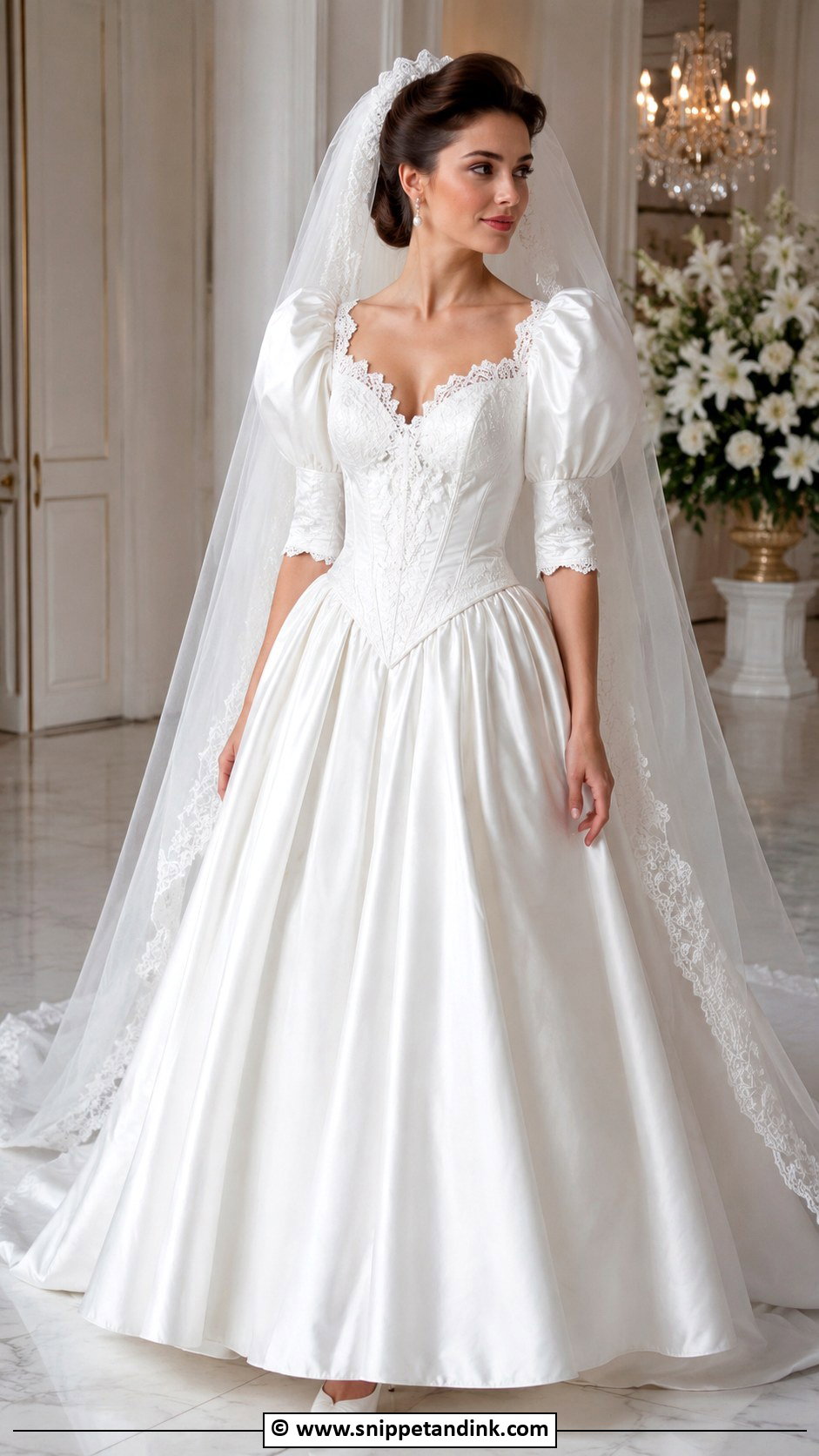
A basque waist wedding dress dips into a V below the natural waist, which lengthens the torso and gives a full skirt a firm base to hang from. The point of the V has to sit exactly on your center line. If it twists even slightly, the whole dress looks crooked, so I check it standing, sitting and walking. Satin, taffeta or lace give the classic finish, and puff sleeves, a sweetheart or a high lace collar suit it. Pointed heels, pearl earrings and a waist-length or cathedral veil complete it.
6. 1980s Taffeta Wedding Dress
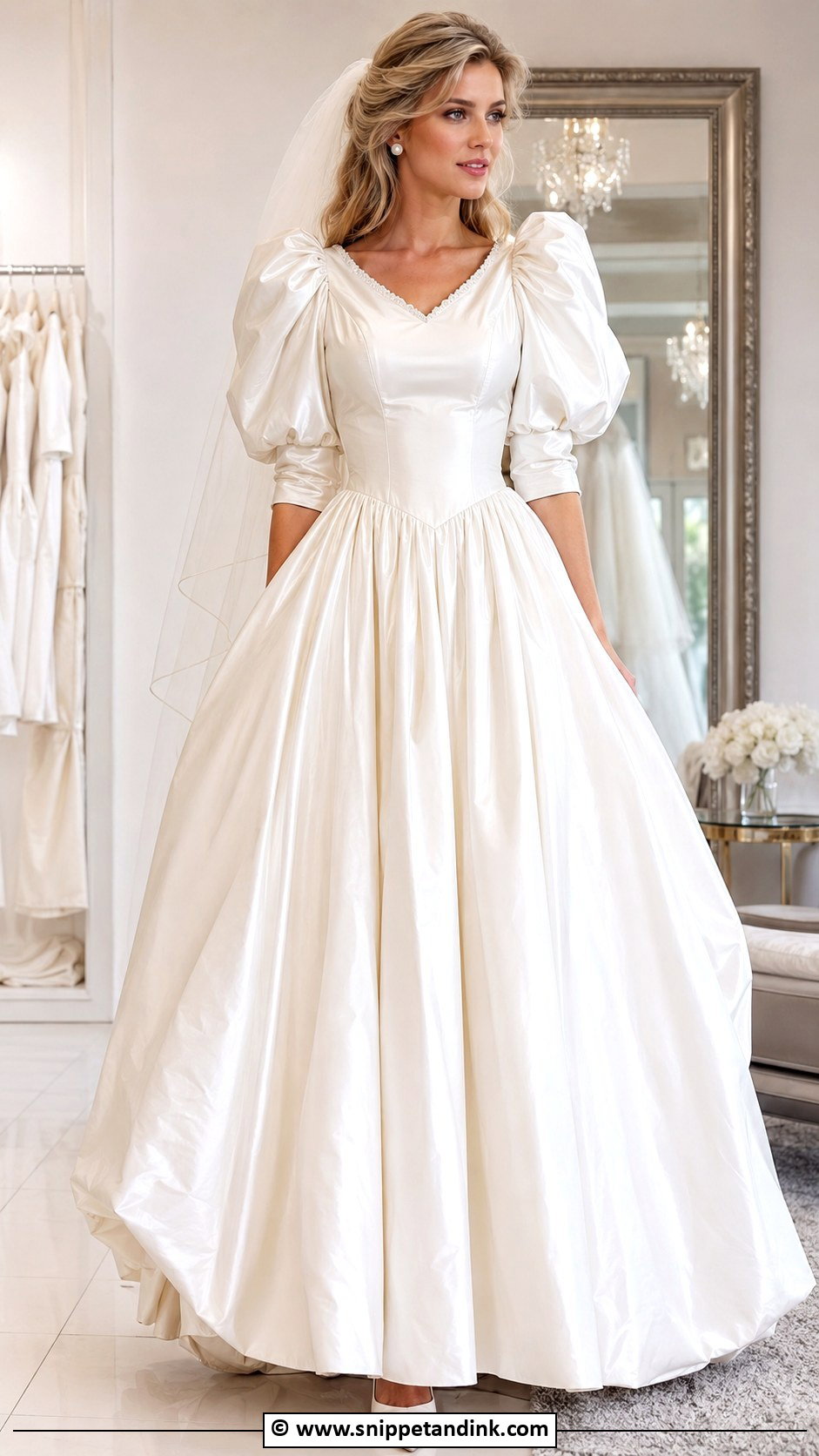
Taffeta’s crisp rustle and sculpted shape belong to this decade. It holds volume, so it carries puff sleeves, full skirts, bows and dramatic trains without collapsing. Choose ivory or soft white, a fitted bodice and a gathered skirt for the true period shape, then keep accessories smooth: pearl studs, satin pumps and a clean veil. Taffeta gives structure, not flow. It also creases sharply where you sit, so expect lines in late photos unless someone gives it a quick steam before the reception entrance.
7. 1980s Wedding Dress With Bow
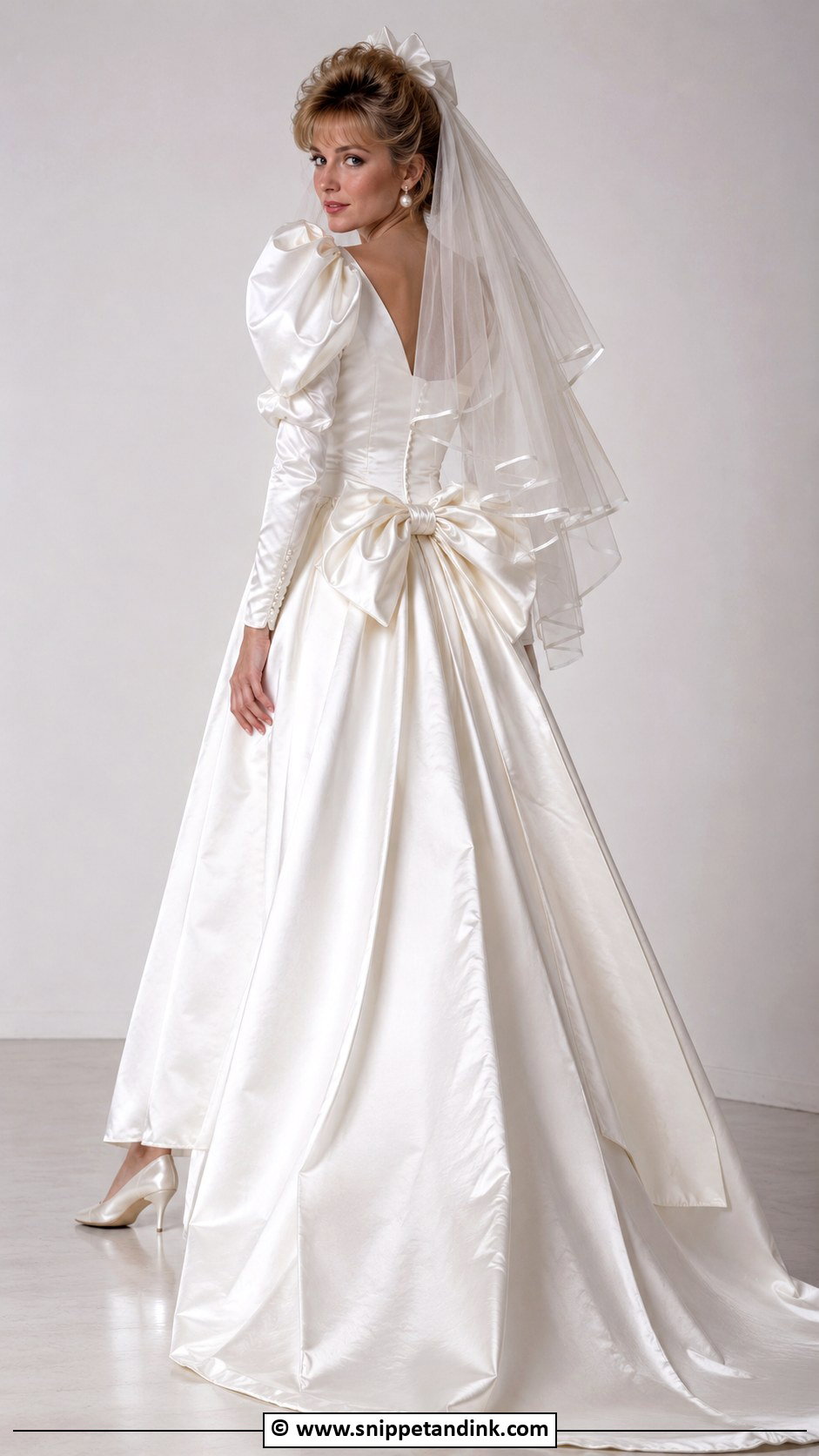
A bow is the sweet side of eighties bridal style, and it can sit at the back waist, on a shoulder, at the neckline or on the train. My rule is one bow as the main detail, with everything else arranged around it. A satin gown with a large back bow looks classic with pearl earrings, white heels and a simple veil; a lace gown with a smaller waist bow is softer. Ask how a big bow is built. Without interfacing or a stiffened lining inside, the loops droop well before the evening ends.
8. 1980s Wedding Dress With Long Train
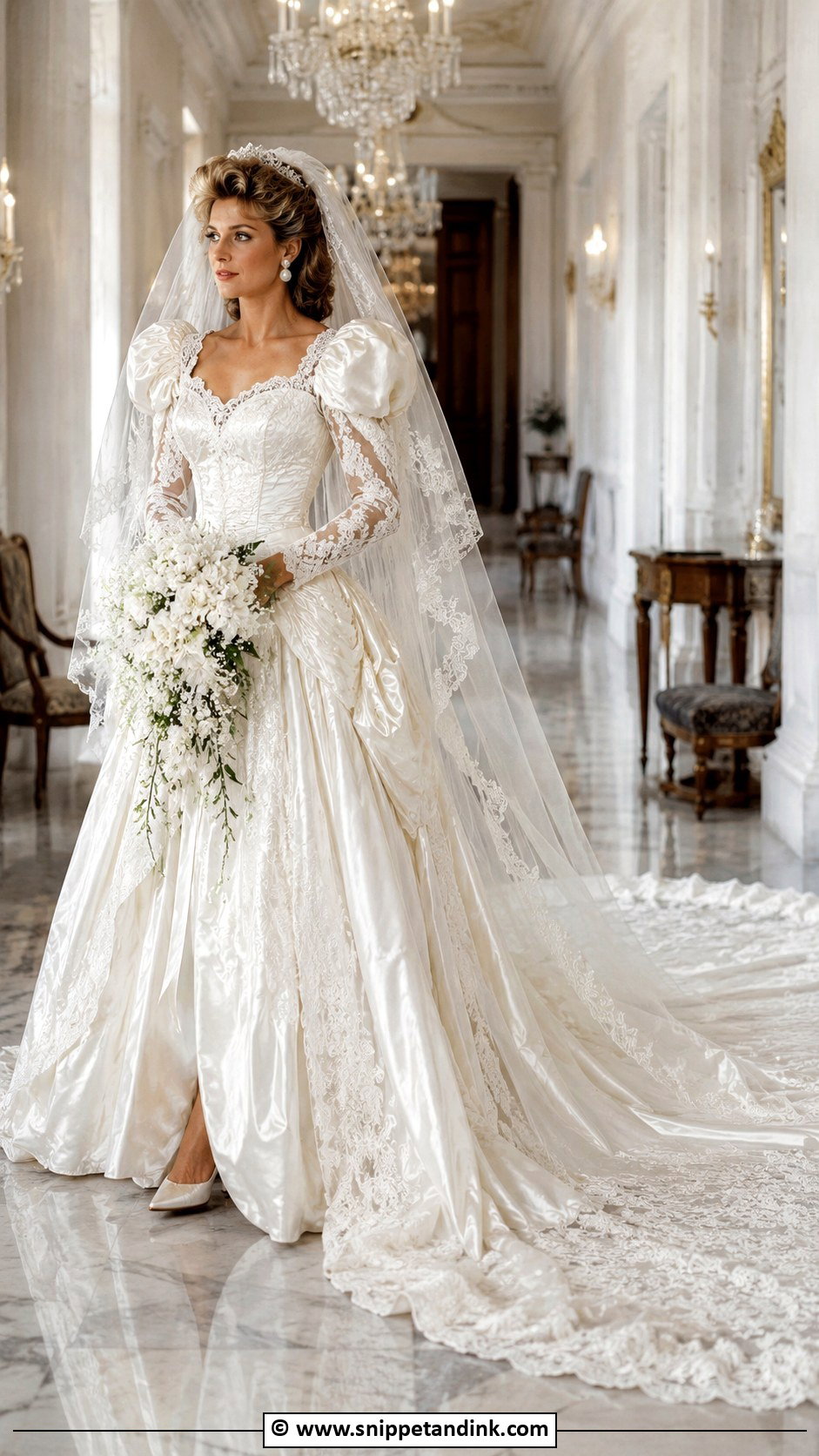
Long trains create the aisle moment, and in the eighties they usually came with full skirts, lace trim, puff sleeves and cathedral veils. The more fabric trailing behind you, the more the bodice has to hold, so it needs to fit snugly enough that the weight doesn’t drag it backward. Wear comfortable heels; the train adds real pull. I plan the bustle at the final fitting and teach one bridesmaid how to do it, because a heavy satin train usually needs several bustle points. Pearls, a soft updo and a bouquet that doesn’t compete finish it.
9. 1980s Off Shoulder Wedding Dress
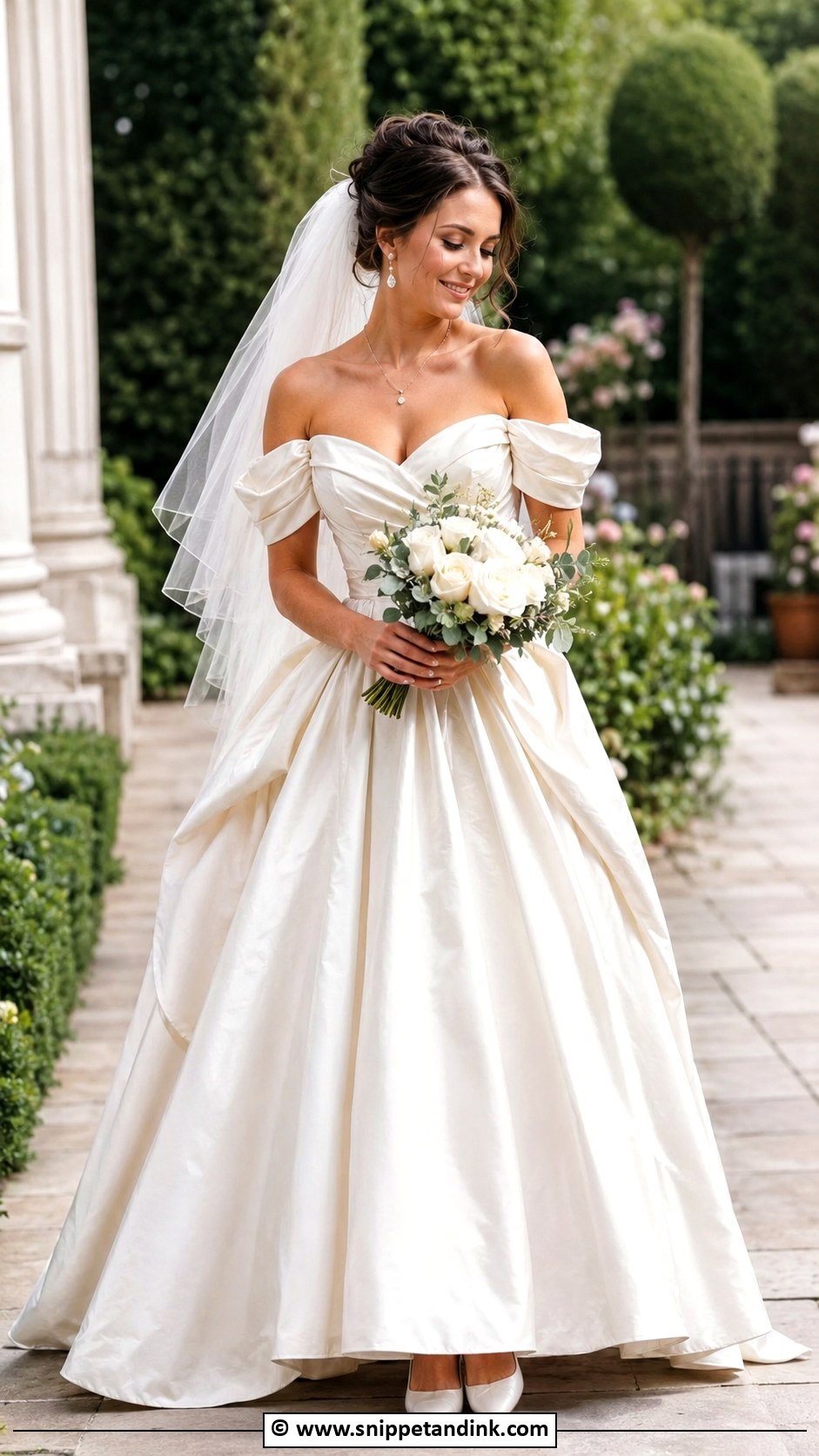
Off-the-shoulder takes the edge off the decade’s bolder shapes. The neckline frames the shoulders while a full skirt balances it, in satin, lace or taffeta. Puffed off-shoulder sleeves look openly retro; soft draped ones are more refined. Because the band rests on the upper arm, it limits how high you can lift your arms, so I test a full hug and a dance hold at the fitting before anything is finished. Pearl earrings, a delicate necklace, ivory pumps and a medium-length veil keep the neckline on view.

10. 1980s Long Sleeve Wedding Dress
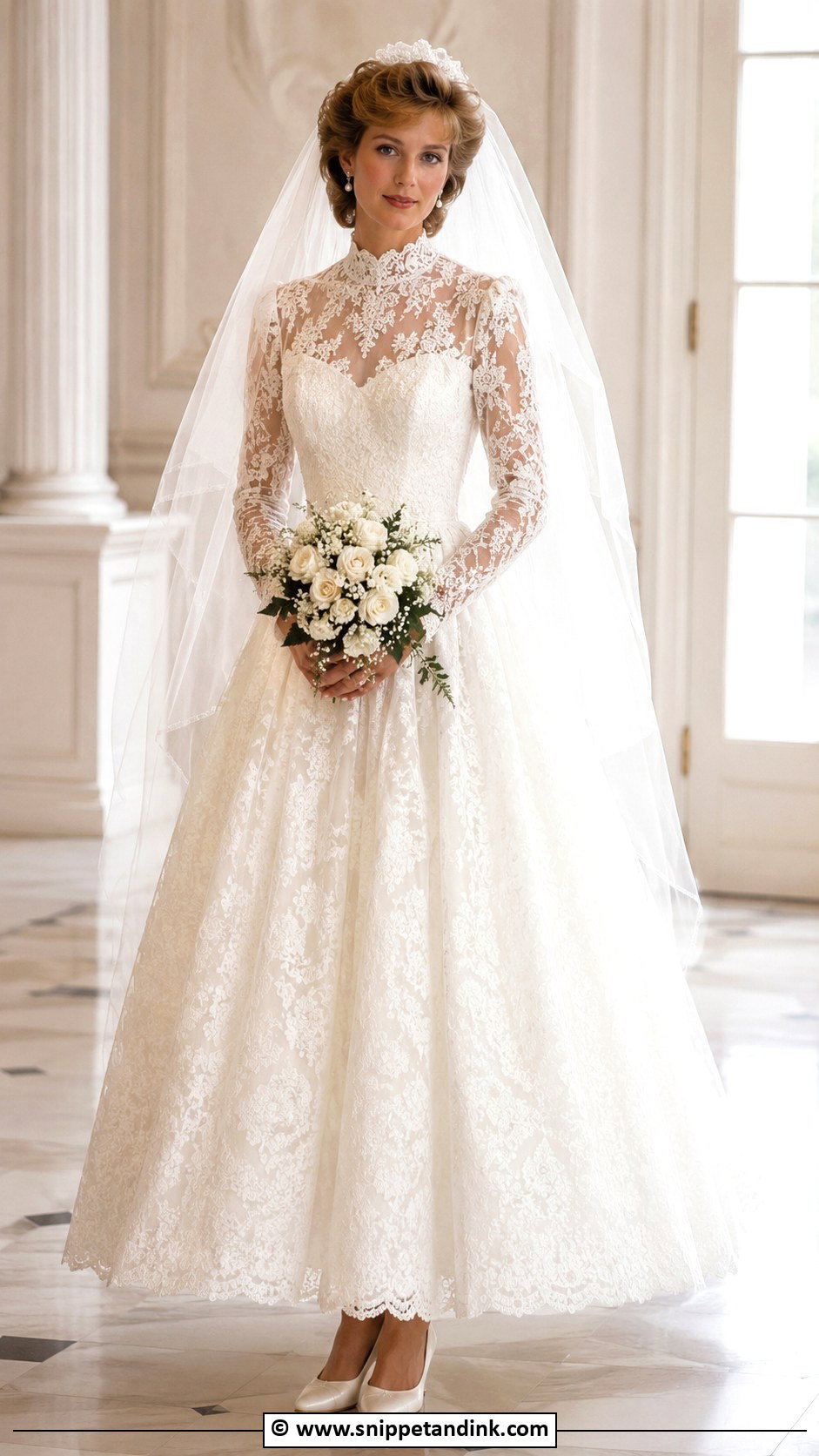
Long sleeves bring coverage and texture, and the decade used every version of them: lace, satin and sheer organza. They look best with a defined waist and a full or A-line skirt. My balancing rule is simple. Dramatic sleeves get a plain neckline; slim lace sleeves can carry a high neck or a busy bodice. Have the sleeves fitted with your arms bent, not hanging, since a sleeve cut too slim pulls at the elbow every time you hold the bouquet. Pearl studs, a veil, closed-toe heels and a soft bouquet suit fall, winter and formal weddings.
11. 1980s Beaded Wedding Dress
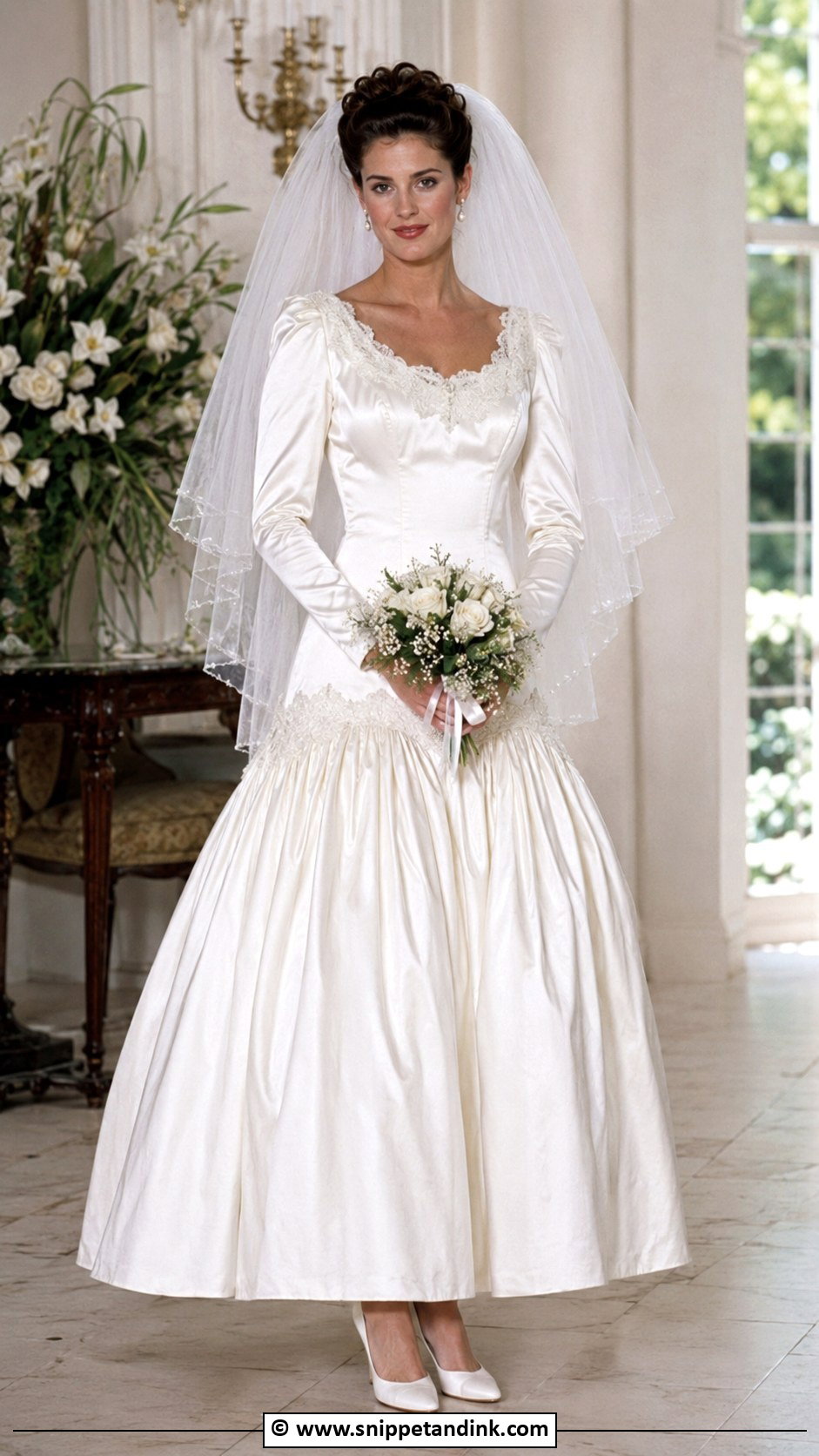
Gowns from this period were often covered in pearl beading, sequins and embroidered applique across the bodice, sleeves and hem. The version I’d aim for now uses beading to highlight the dress rather than bury it, for instance a lightly beaded lace bodice over a plain satin skirt. Keep the styling simple with pearl earrings, a smooth veil and classic heels, and skip a heavy necklace. Beads snag fine tulle, so choose a veil with a plain cut edge rather than one with its own lace border.
12. 1980s Ruffle Wedding Dress
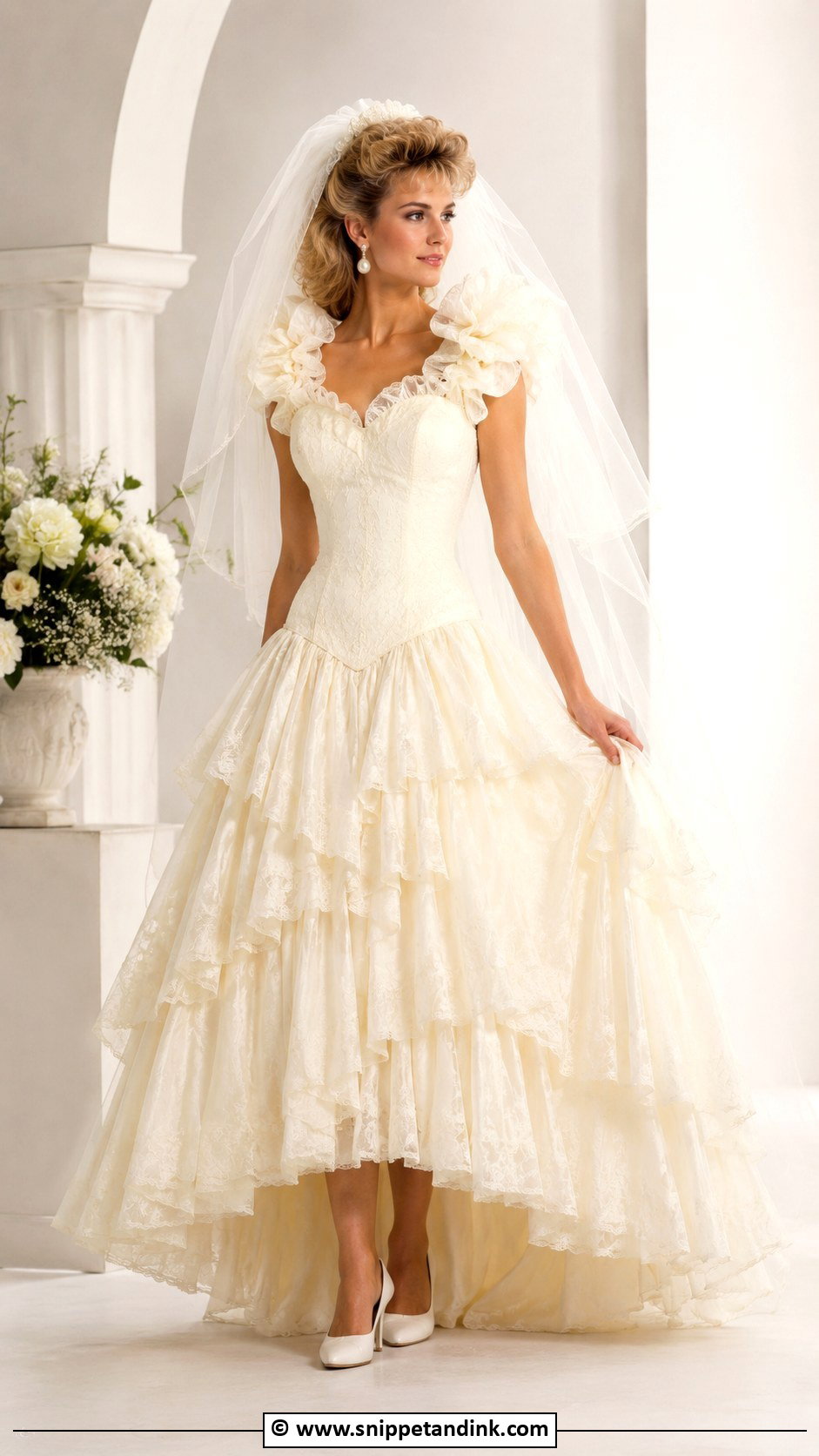
Ruffles were a bold part of the era, and they look intentional when they stay in one place. A ruffle wedding dress may have a tiered skirt, a ruffled neckline, sleeve trim or a dramatic train edge. I’d pick one of those, not all four. Fabric weight decides the result: light organza or chiffon ruffles move with you, while stiff satin ones stand away from the body and add bulk. A fitted bodice over a layered skirt, simple heels, pearl earrings and a clean veil keep it playful without clutter.
13. 1980s Drop Waist Wedding Dress
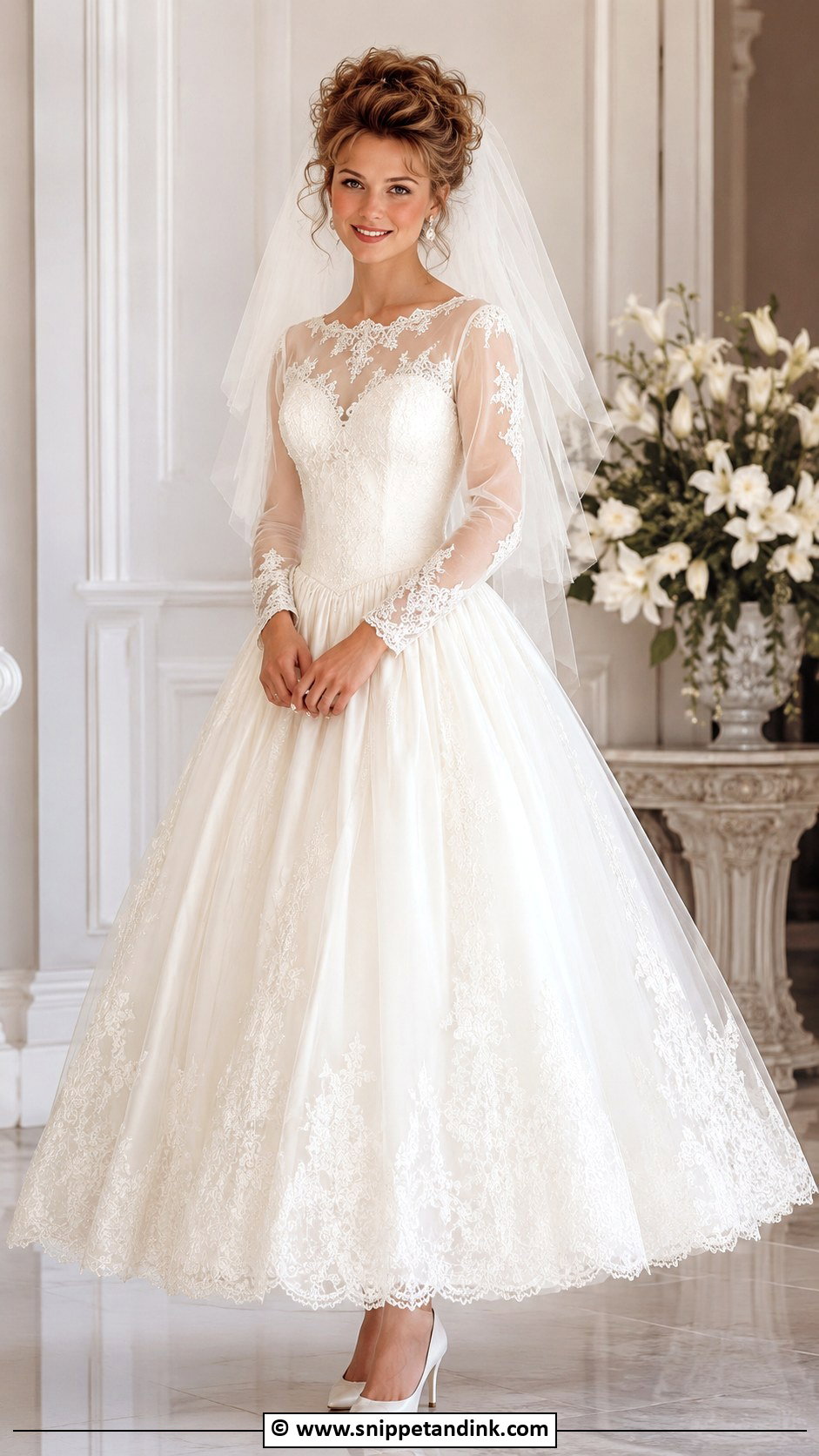
A drop waist keeps the bodice fitted past the natural waist before the skirt opens out, giving a long, structured torso and real support through the middle. Satin, taffeta and lace all hold the line. I’m cautious with petite brides here, because a low seam can make the legs look shorter; a softer, slightly higher drop fixes that. Style it with a fingertip veil, pearl earrings, white pumps and a neat bouquet for something traditional and clearly retro.
14. 1980s Tea Length Wedding Dress
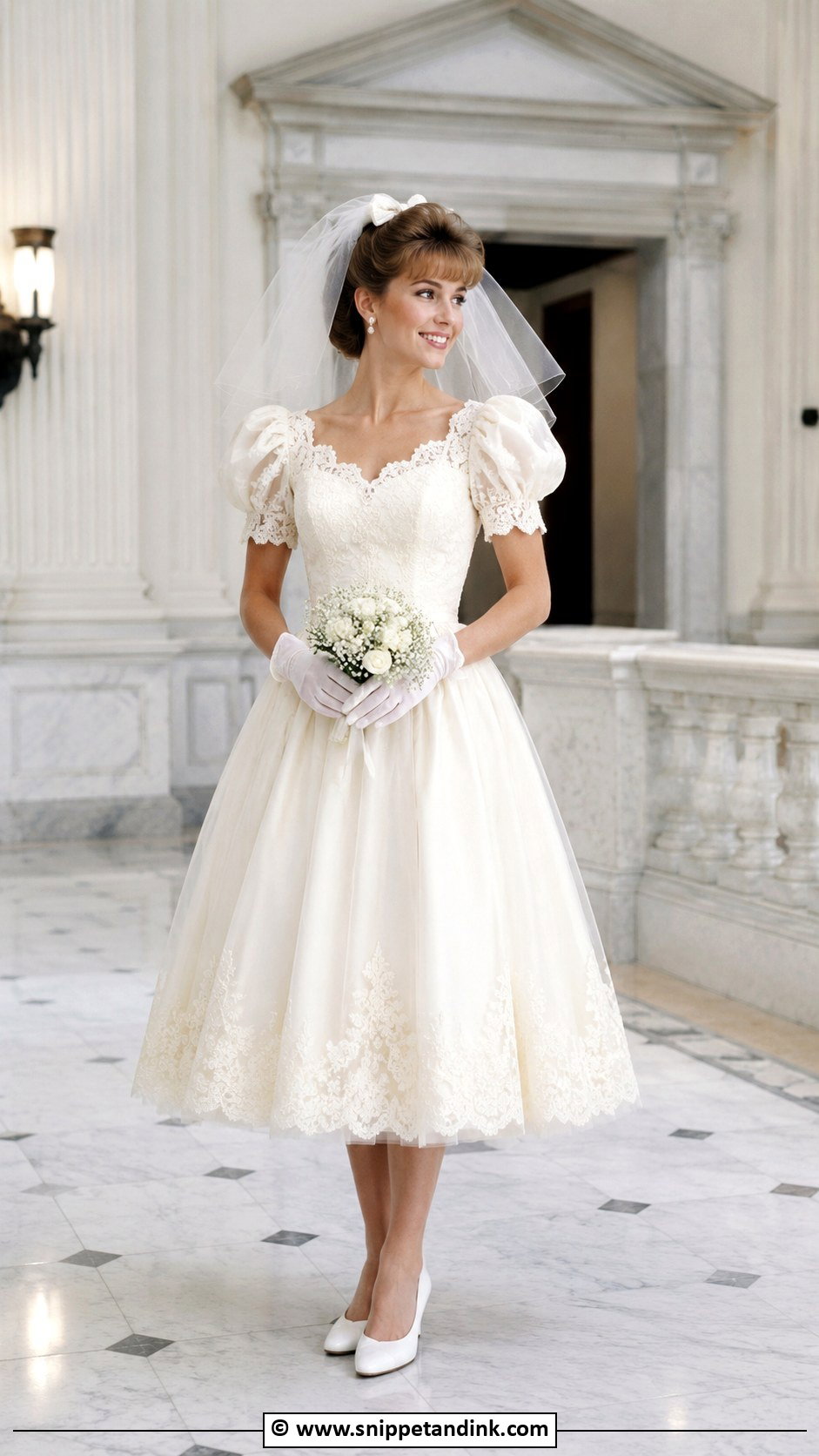
A tea length wedding dress makes the decade lighter and easier to wear. Plenty of gowns from the era were long and dramatic, but shorter dresses suit courthouse weddings, receptions and relaxed celebrations just as well. A lace bodice, puff sleeves and a full skirt below the knee keep the period character. Add white pumps, pearl earrings, short gloves and a small veil or bow. With the shoes on show, I set the hem with your actual pair on and push for heels you can dance in for hours.
15. 1980s Wedding Dress With Lace Sleeves
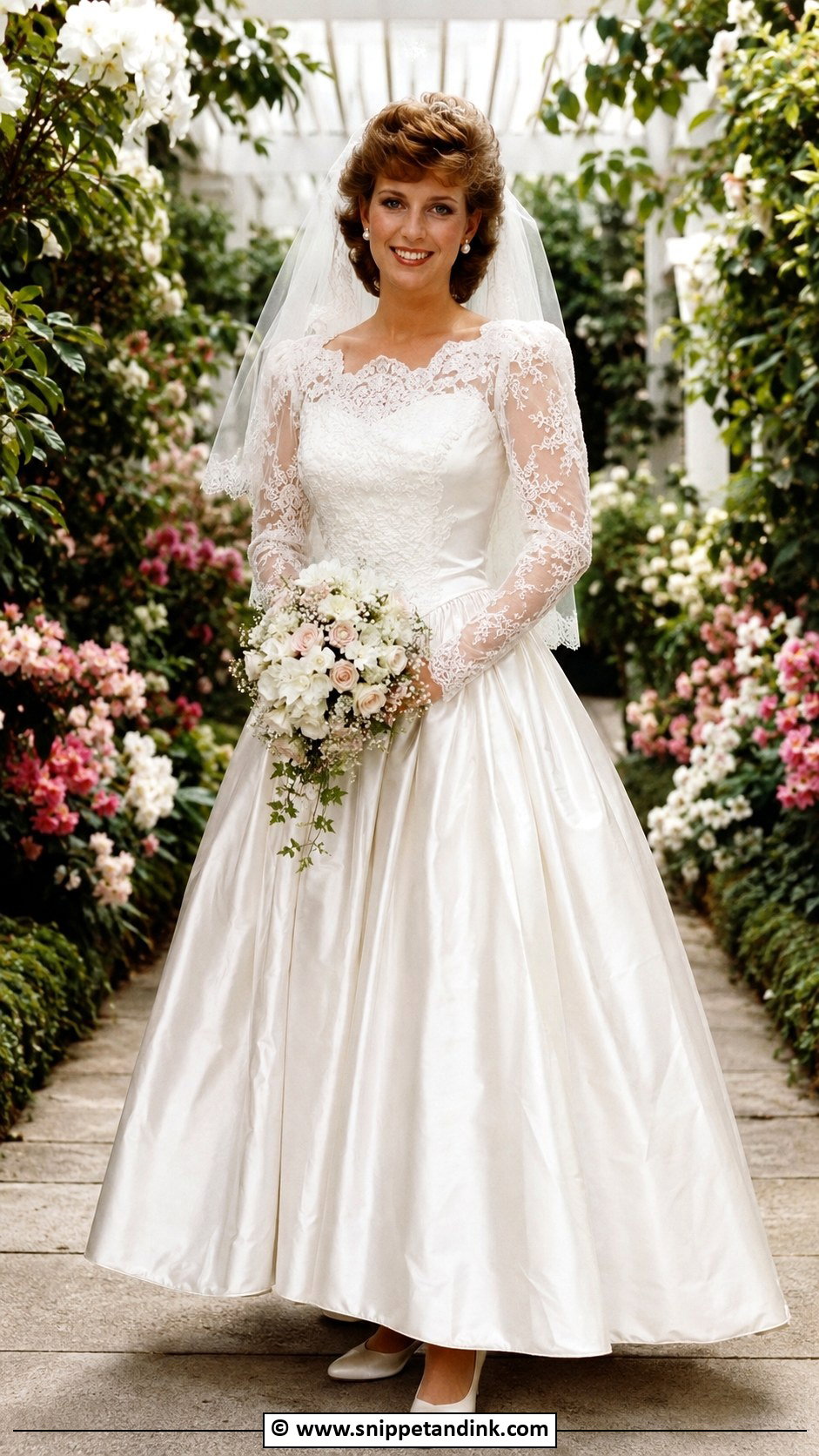
Eighties lace sleeves usually arrived with a high neckline, a fitted bodice and a full skirt. For a softer modern take, choose sheer sleeves in a fine floral lace; for the authentic version, go fuller with lace cuffs at the wrist. It’s a practical way to cover the arms without feeling bundled up. Look at where the pattern lands: on well-made sleeves the scalloped edge finishes the wrist instead of a raw cut edge. Pearl earrings, a simple veil and closed-toe heels complete it.
16. 1980s Cathedral Veil Wedding Dress
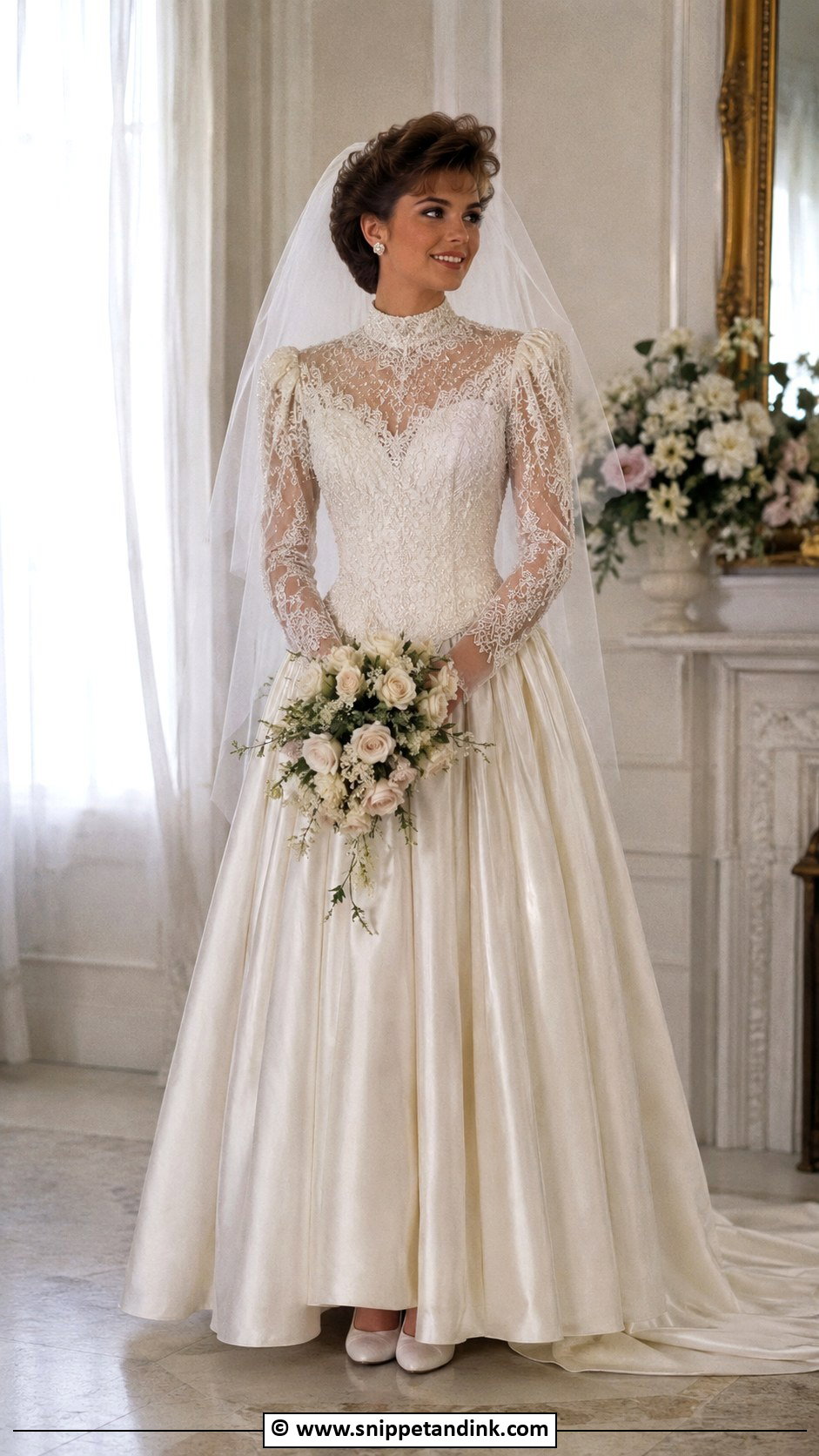
A cathedral veil can turn a simple gown into a grand, eighties-inspired outfit. It’s strongest over a satin ball gown, a lace high-neck dress or a puff-sleeve gown, and it should look connected to the dress, so match the lace trim, beading or shade of ivory where you can. A long veil is heavy. The comb needs a secure base, a low bun or classic updo with pins crossed underneath, not loose curls on their own. Pearl earrings and elegant heels are enough, and someone should be named to straighten it at the aisle and in portraits.
17. 1980s Wedding Dress With Shoulder Pads
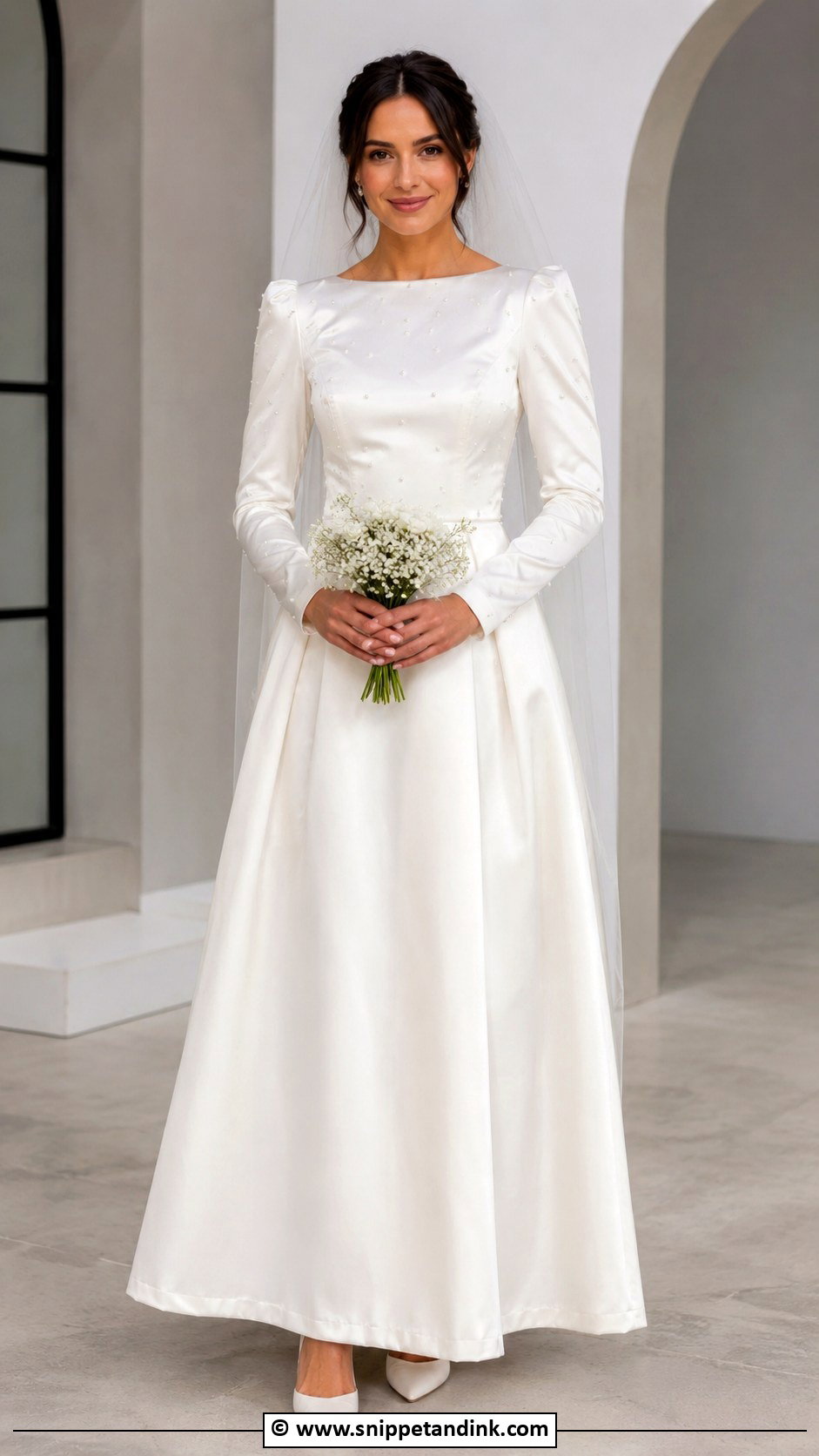
Shoulder pads defined the decade, and in a bridal gown they’re best used gently. Soft shaping at the shoulder gives the upper body a tailored line, particularly with long sleeves, satin or a fitted bodice. Extreme padding is what tips it into costume, so I’d go for a slim pad or a structured sleeve head instead. Balance it with a smooth A-line or ball gown skirt, pearl studs, a sleek veil and pointed heels. If you’re unsure, ask for removable pads; they can come out before the reception.
18. 1980s Sheer Yoke Wedding Dress
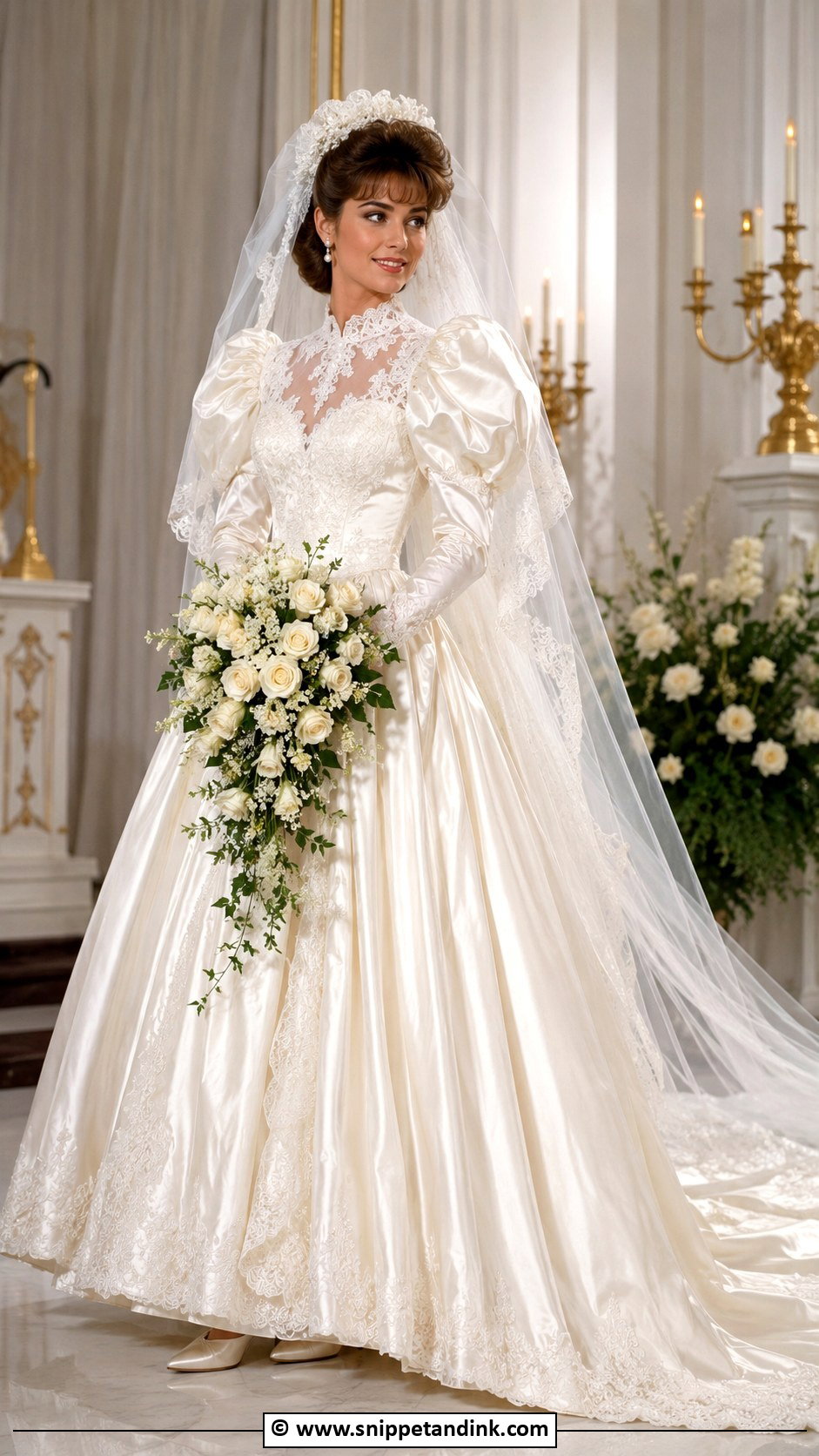
A sheer yoke gives you the decade’s covered neckline with far less weight. The sheer panel runs across the chest and shoulders, with lace applique, beading or embroidery on top. Pair it with a full satin or tulle skirt, pearl earrings and a soft veil, and keep the bouquet plain so the bodice stays the focus. Ask the shop to match the mesh to your skin tone. A mismatched yoke shows up as a visible band under flash, and it’s the first thing people notice in close photos.
19. 1980s Organza Wedding Dress
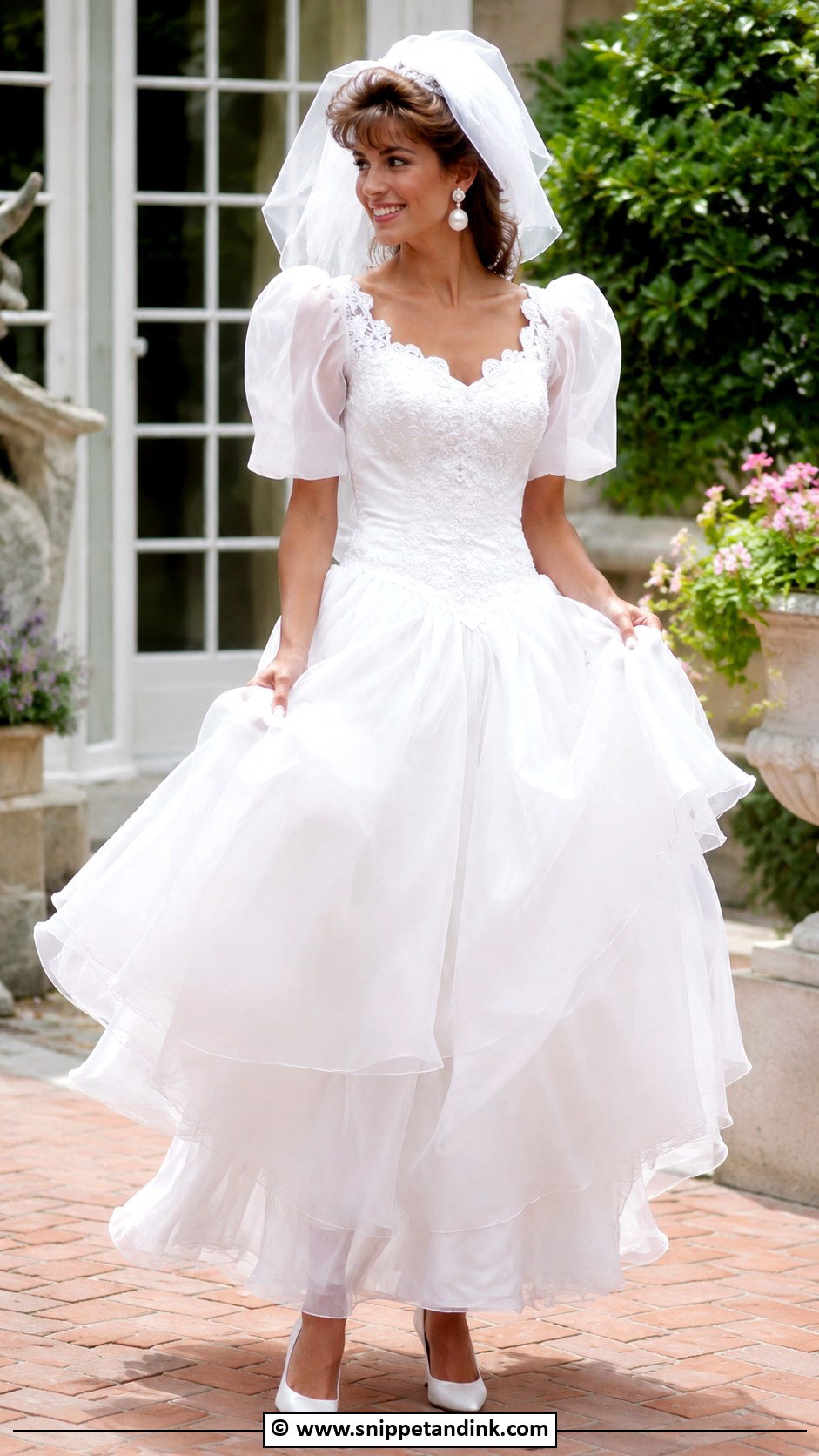
Organza floats, yet it holds enough shape for puff sleeves and full skirts. Organza gowns of the period often had sheer sleeves, layered fabric, lace trim and soft volume, so it’s a good route if you love the dramatic shapes but find satin or taffeta too heavy. Delicate pearl earrings, white heels, a veil with a clean edge and a soft updo or half-up style suit it. Organza snags and frays easily, though, so I keep beaded bags and rough bouquet wraps well away from the skirt.

20. 1980s Pearl Wedding Dress
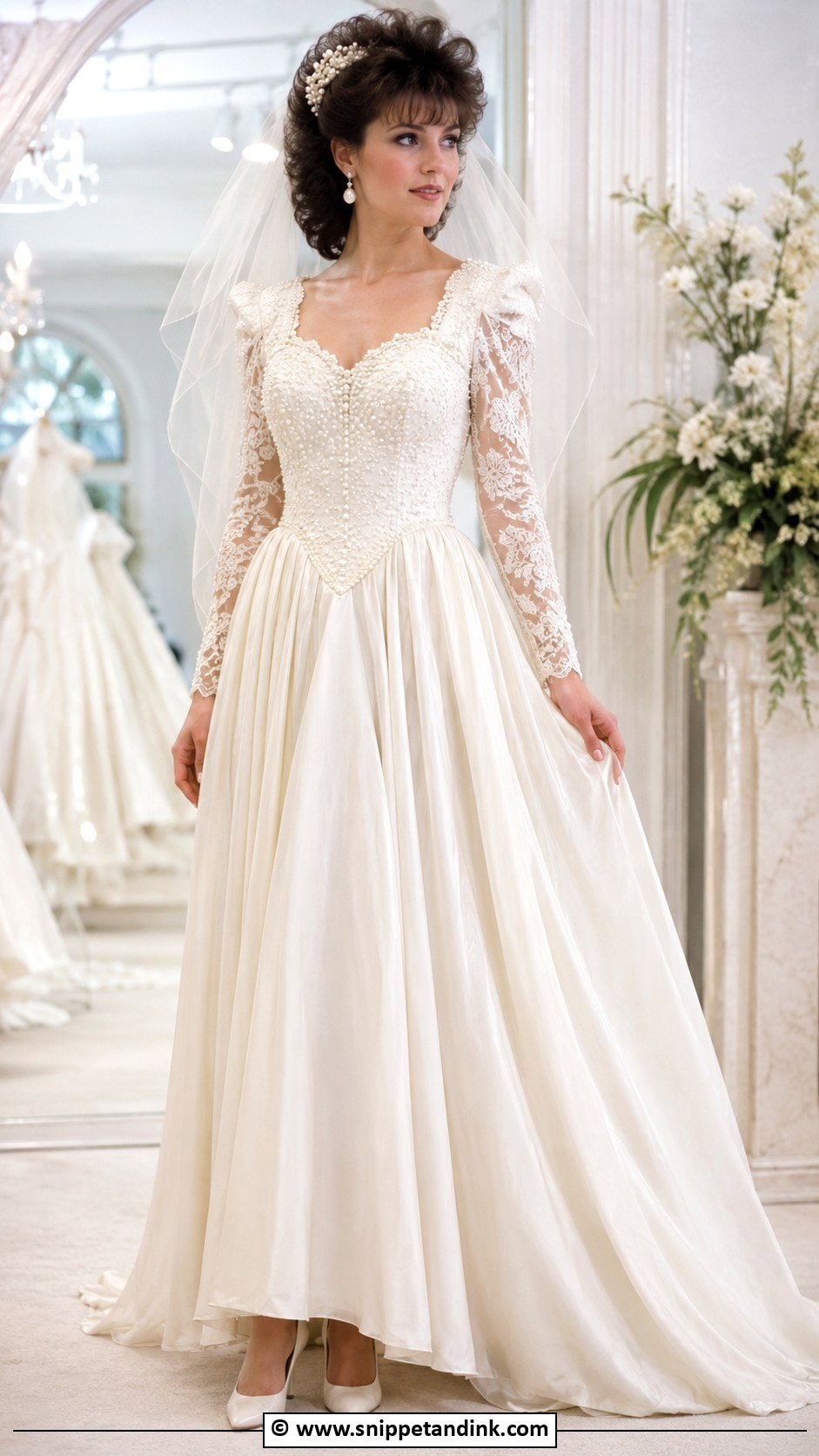
Pearls can sit across the bodice, along lace sleeves, at the neckline or scattered through the skirt, and they shine without the hard sparkle of crystals. They suit satin, tulle and lace. Once the dress itself is pearled, I keep just one pearl accessory, earrings or a comb, so the look stays coordinated rather than heavy. Ivory heels and a simple veil finish it. Match the pearl tone to the fabric, too: bright white pearls on a warm ivory gown look stark, so cream pearls usually sit better.
21. 1980s Sweetheart Neckline Wedding Dress
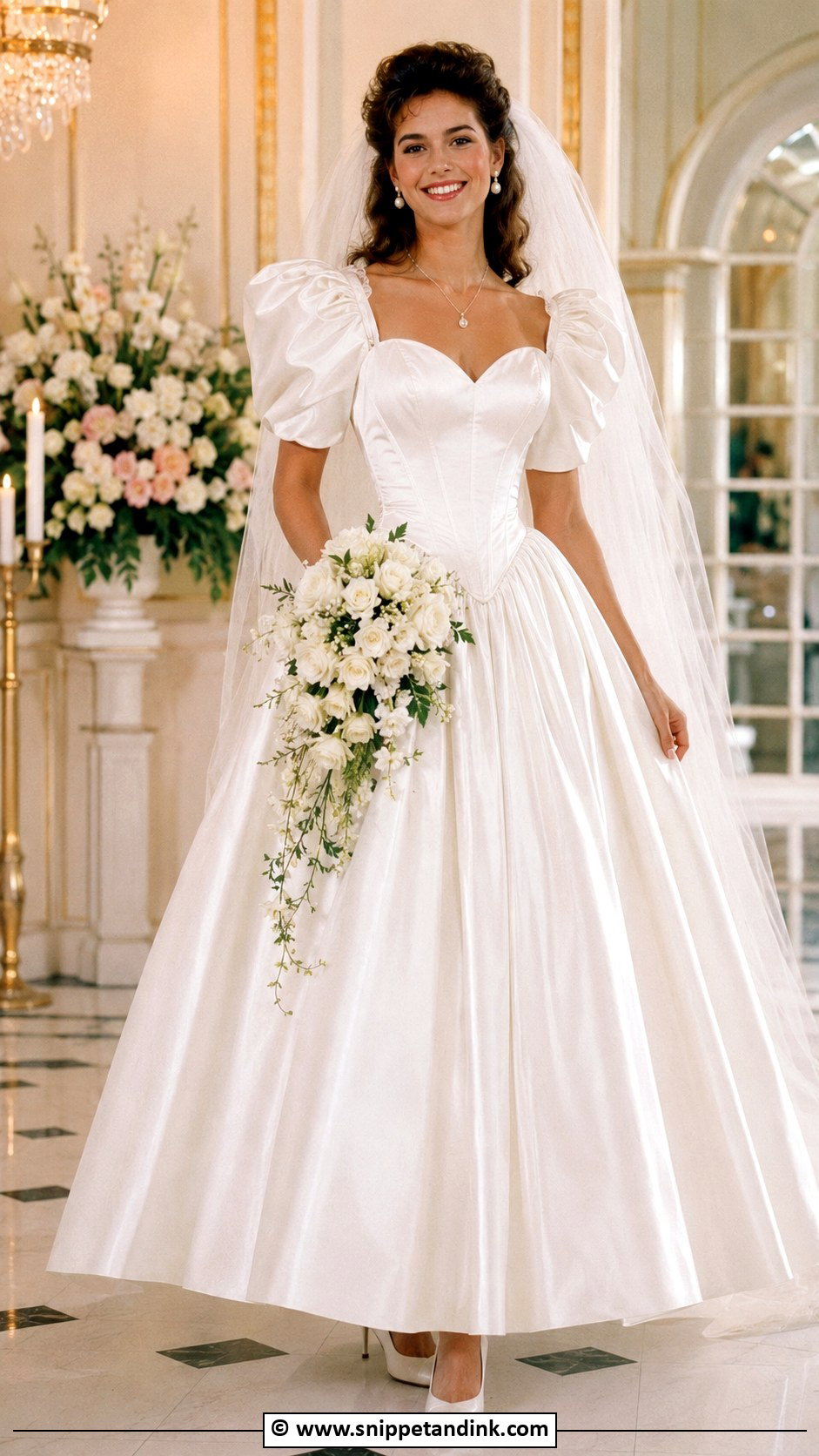
A sweetheart neckline softens the bold shapes of an eighties dress. It pairs well with puff sleeves, a basque waist or a full satin skirt, and frames the face without feeling revealing. Lace or taffeta sleeves with a full skirt give the period version, while a cleaner bodice with light beading reads modern. Have the cups fitted sitting down as well as standing, since a sweetheart edge often lifts away from the chest when you’re seated. Pearl earrings, a short necklace, white heels and a veil set behind soft curls or an updo finish it.
22. 1980s Wedding Dress With Gloves
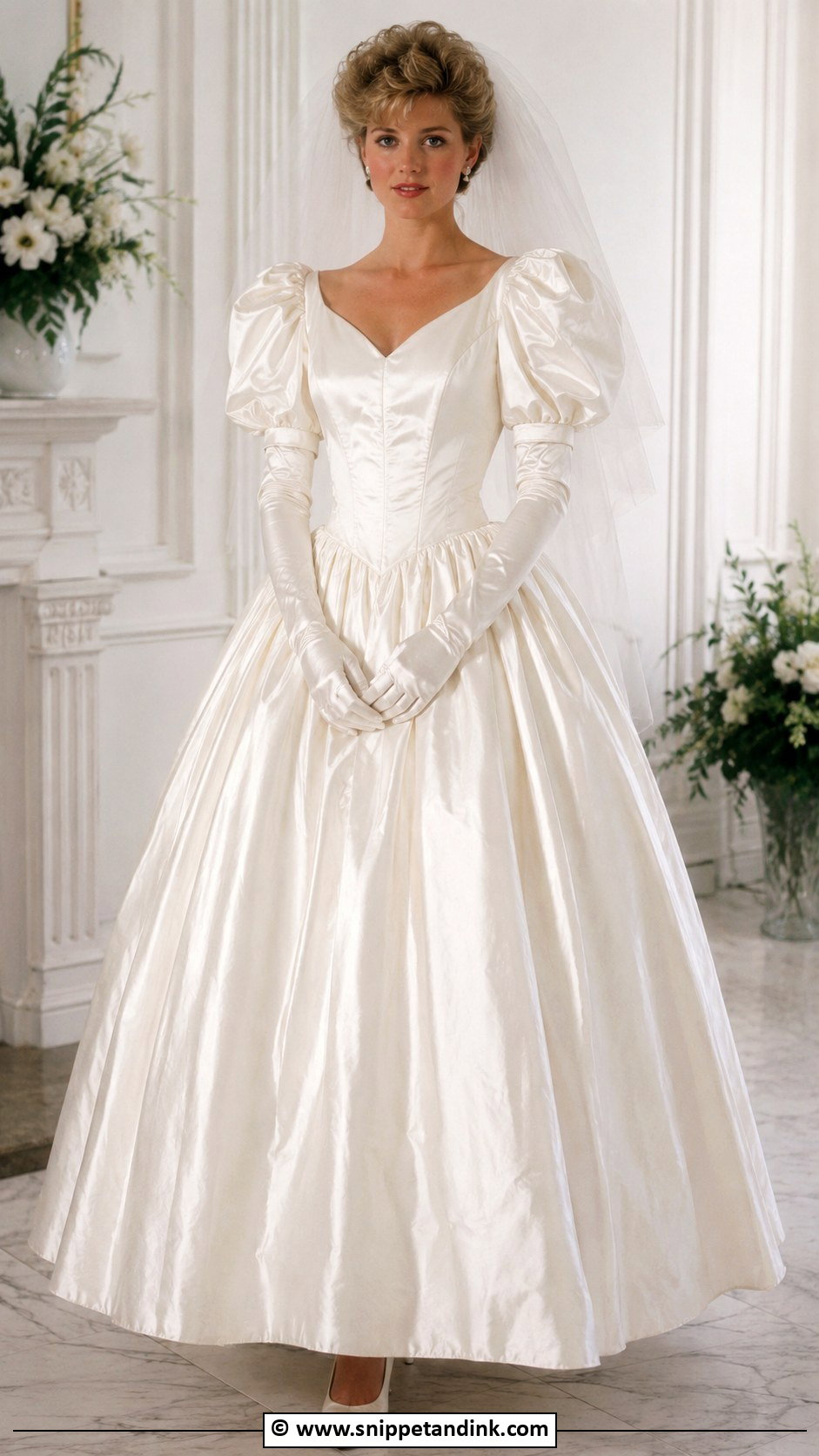
Gloves finish a dress with short sleeves, puff sleeves or a tea-length skirt. Short lace gloves are sweet; longer satin ones are formal. Match them to the dress fabric, smooth gloves with satin and fine lace gloves with lace, then add pearl earrings, a veil and classic pumps. I’d leave bracelets off altogether. Before the ceremony, decide what happens to the left glove at the ring exchange and give your maid of honor the job of holding it.
23. 1980s Floral Lace Wedding Dress
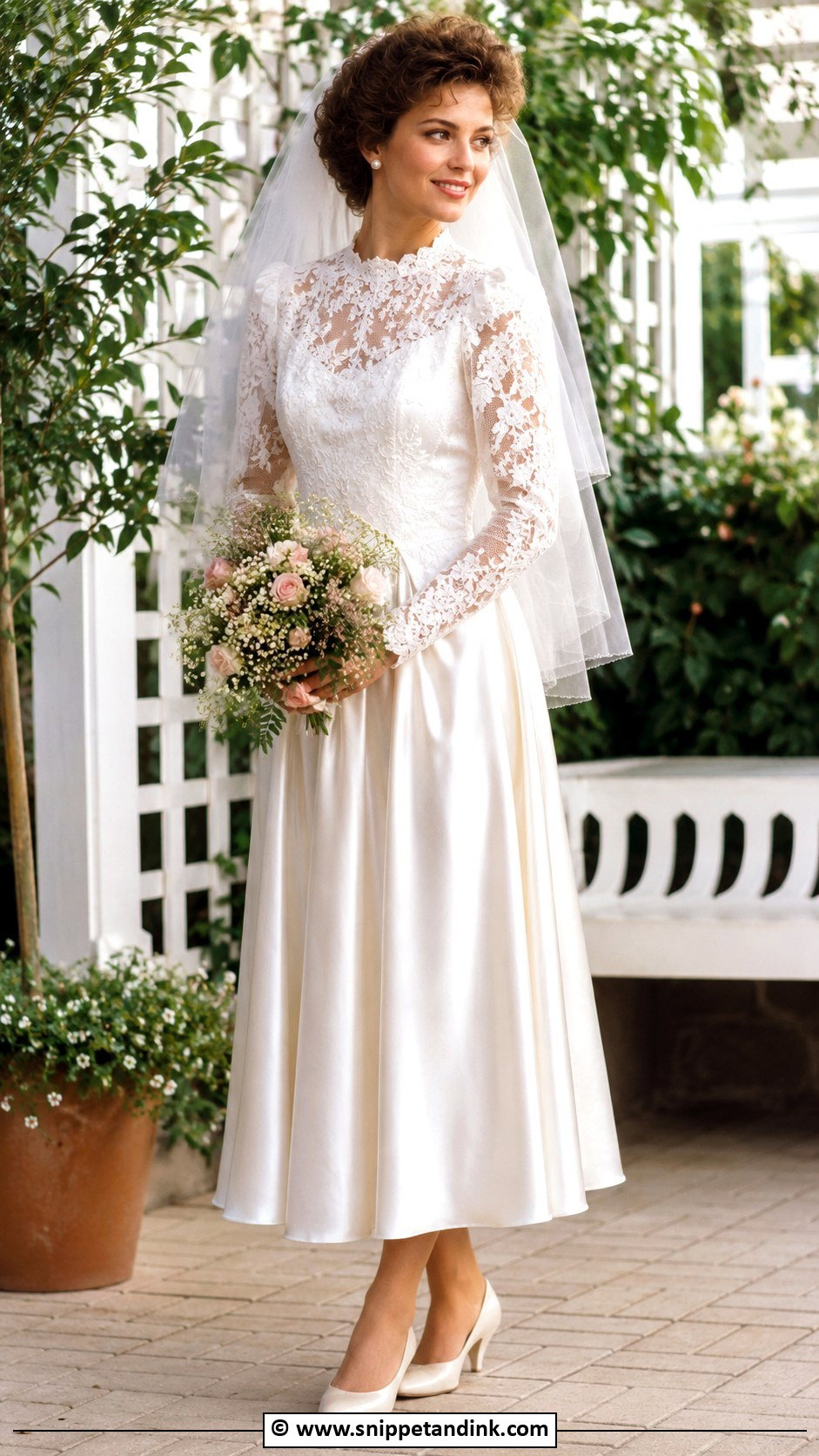
Floral lace was the romantic side of the decade, used on bodices, sleeves, hems and veils. For balance, pair a lace bodice with a satin skirt, or choose an all-lace gown with a simple shape. Where the floral motif is large, the accessories should step back: pearl earrings, a soft veil and ivory heels. Look at the lace from a few feet away as well as up close, because big motifs can read as blotches in group photos. It’s a softer alternative to high-shine satin and suits gardens and indoor ceremonies alike.
24. 1980s Wedding Dress With Peplum
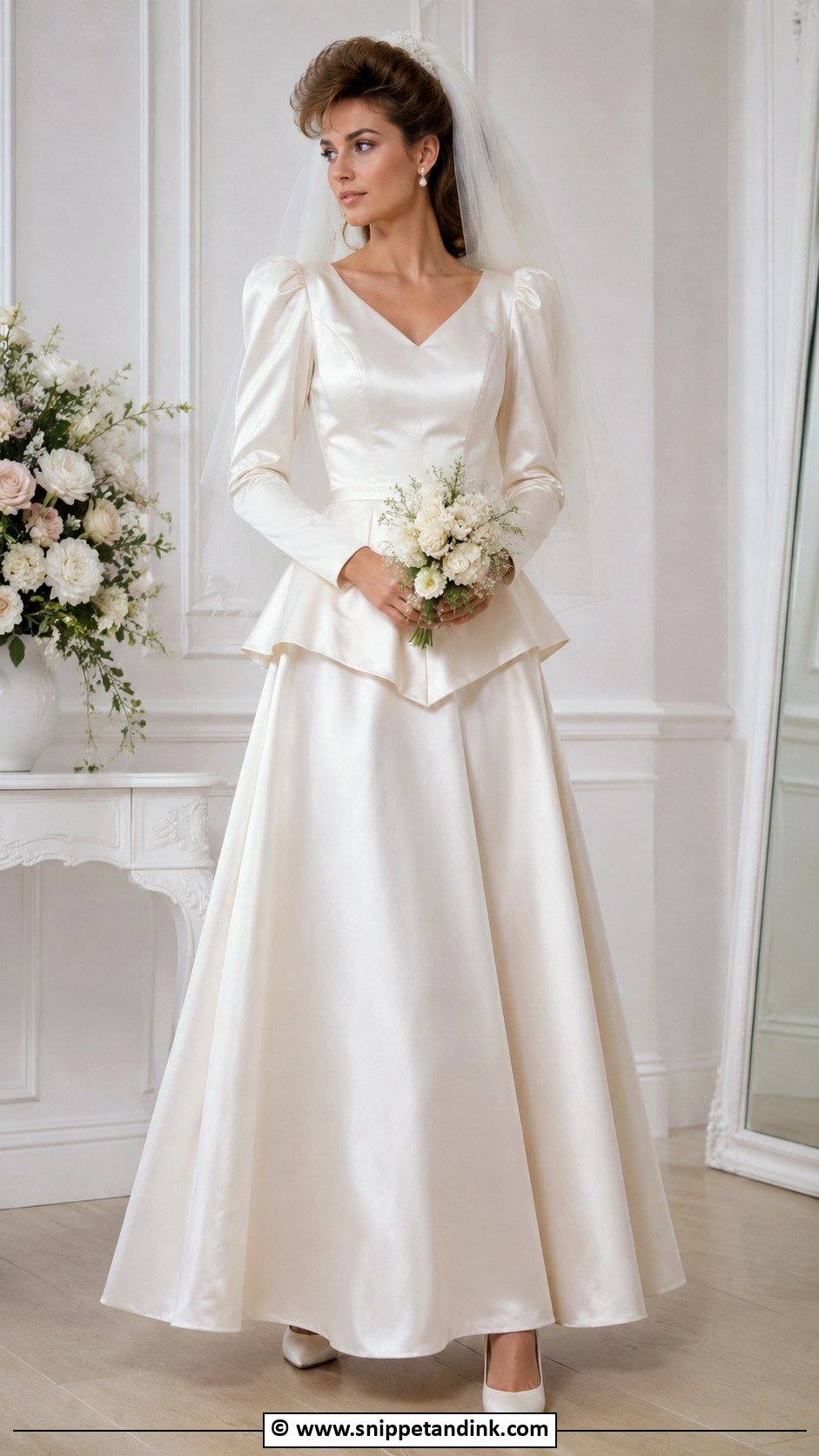
A peplum adds a short flared tier at the waist, shaping the outfit and pairing with a pencil, A-line or full skirt. For the eighties feel, choose satin, lace or taffeta with structured sleeves and a defined waist. Pearl studs, a clean veil and pointed heels are enough, because the peplum already pulls the eye. One honest caveat: a peplum adds width at the hip. On a straight figure that creates a waist; on curvier hips it can feel heavy, so I’d try a short, soft version first.
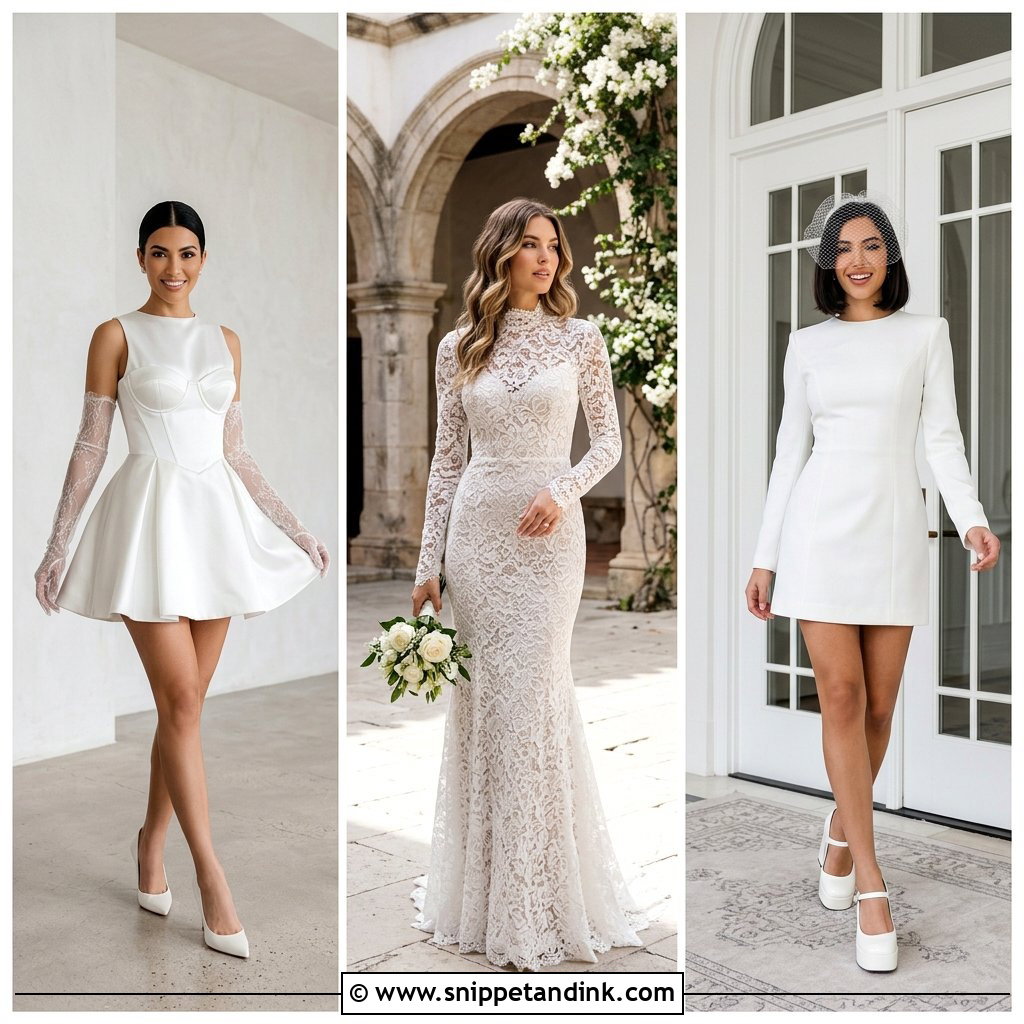
25. 1980s Two Piece Wedding Dress
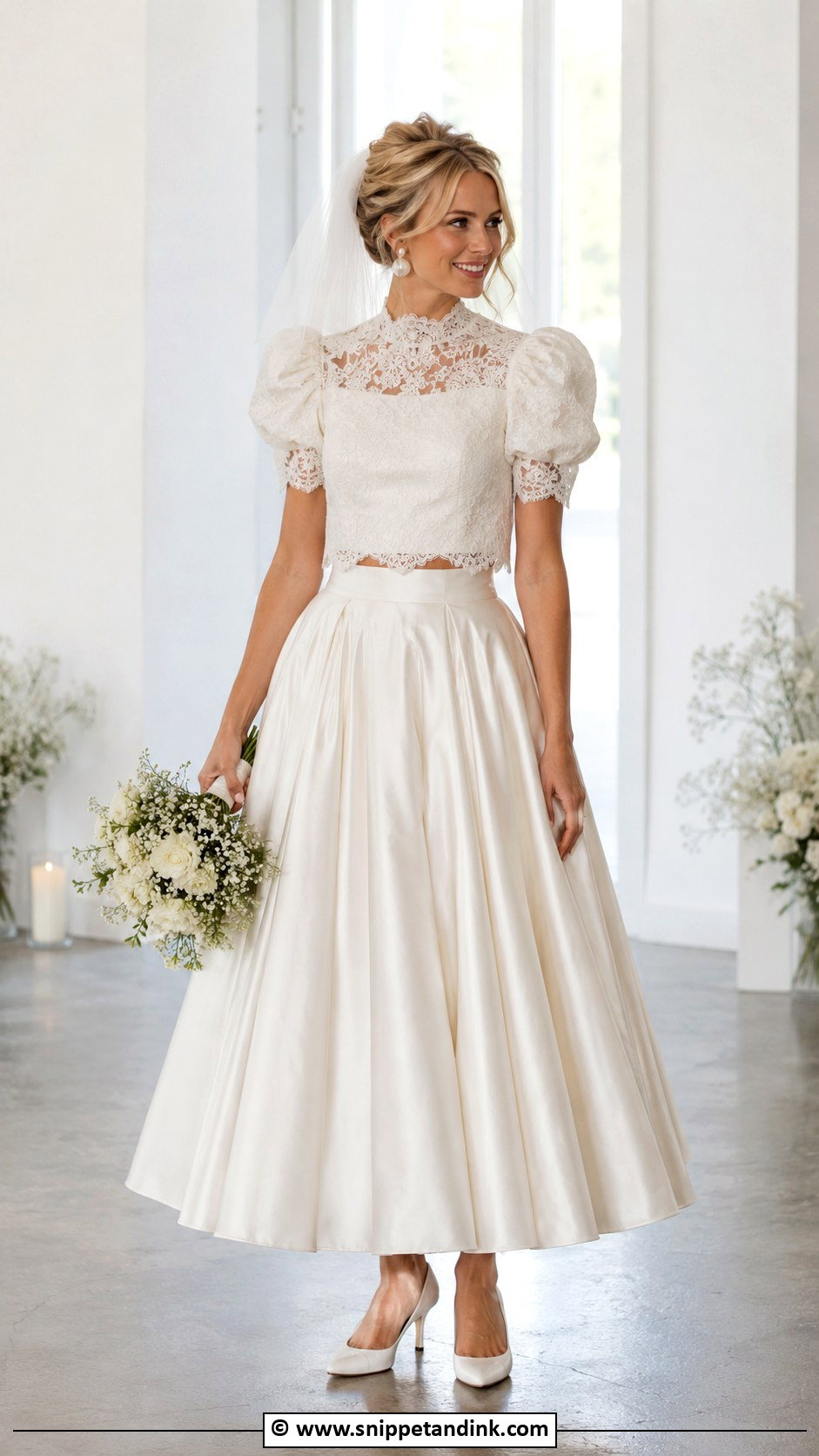
Separates give the decade a fresh twist: a lace top with a full satin skirt, a structured jacket over a dress, or a peplum blouse with an A-line skirt. They’re practical too, since a jacket can come off and a top can be loosened for dancing. Match the ivories carefully. Two slightly different shades side by side look like a mistake, so I compare the pieces in daylight by a window before anything is bought. Pearl earrings, white heels and a short veil or hair bow complete it.
26. 1980s Short Sleeve Wedding Dress
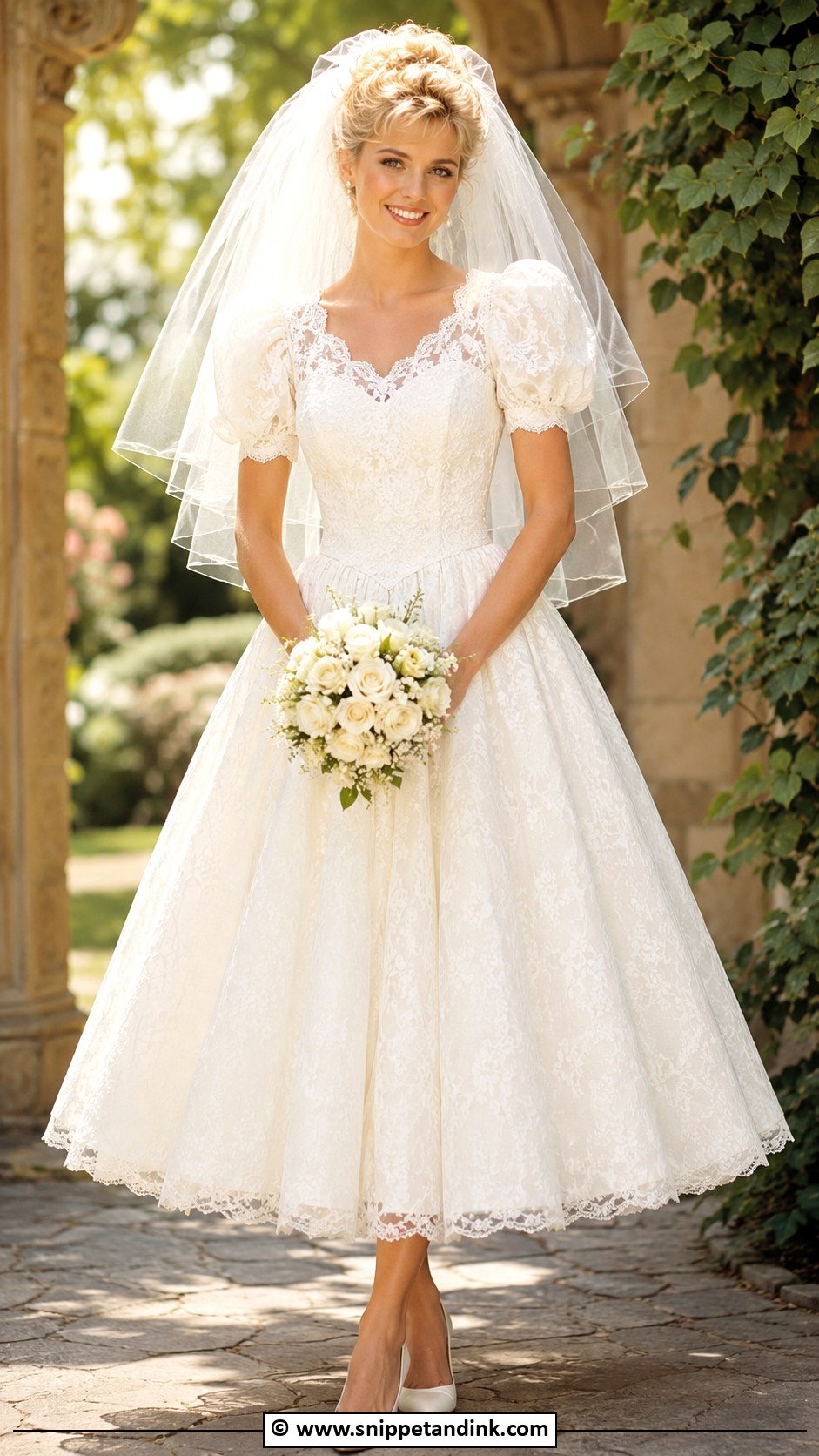
Short sleeves are the gentler way into the decade’s style. Puffed short sleeves, lace cap sleeves or structured satin sleeves over a fitted bodice and full skirt give a true period shape while leaving your arms free. With voluminous sleeves, keep the neckline clean. Pearl earrings, a fingertip veil, white pumps and a simple bouquet complete it. Warm weather suits it, and so does a long day, because you can hug and dance without a sleeve dragging at the elbow.
27. 1980s Wedding Dress With Appliqué
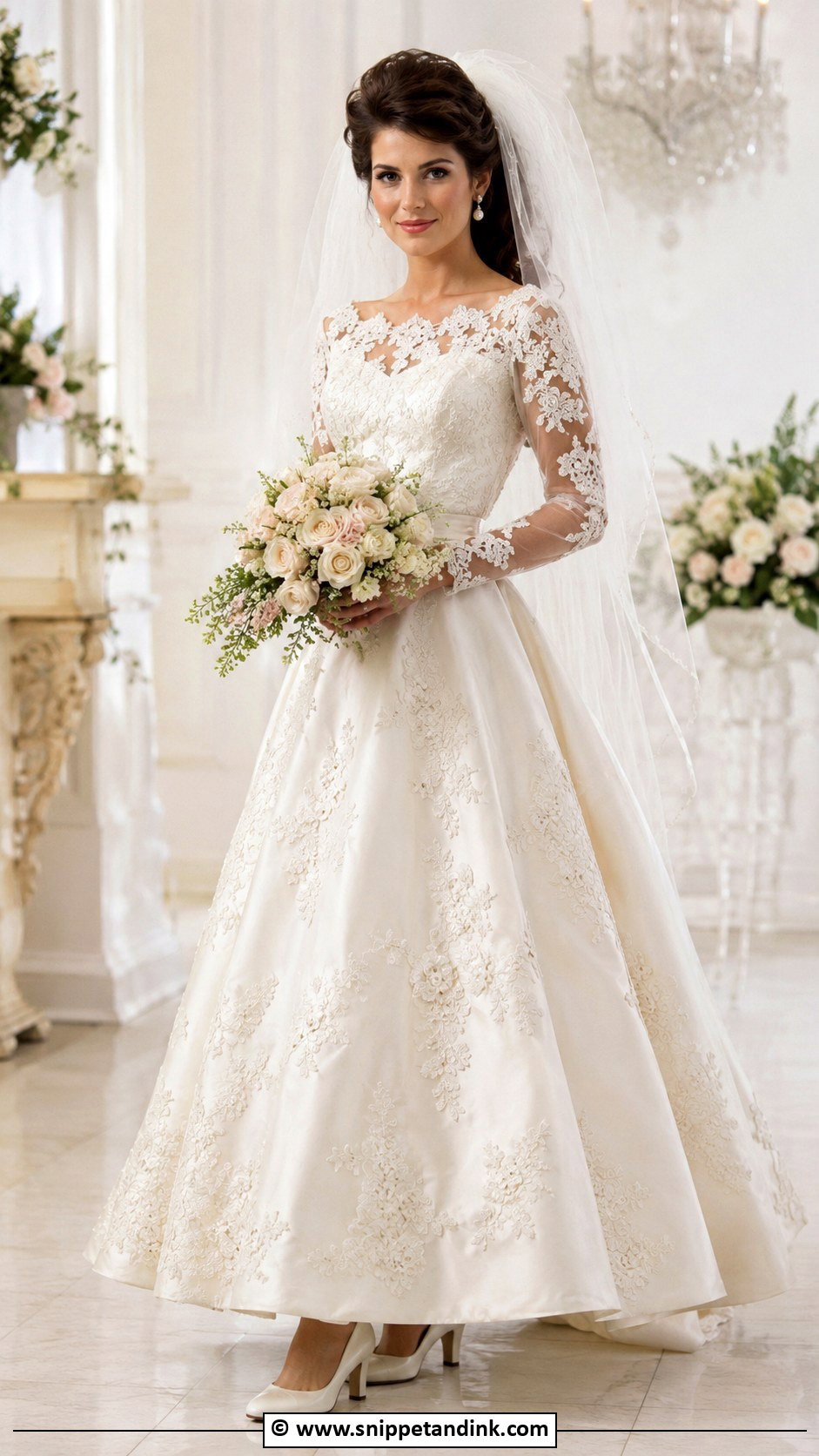
Applique brings texture and depth to a vintage gown. Eighties dresses used lace flowers, embroidered leaves, pearls and beaded patterns on the bodice, sleeves, skirt or train. I’d place the heavy work in one main area and let the rest of the dress breathe, then pair it with pearl earrings, a plain veil and simple heels. Check that every edge is stitched down firmly; loose petals catch on veils and start to lift over a long day. Tell your photographer about it, since close-ups are where applique earns its keep.
28. 1980s Minimal Satin Wedding Dress
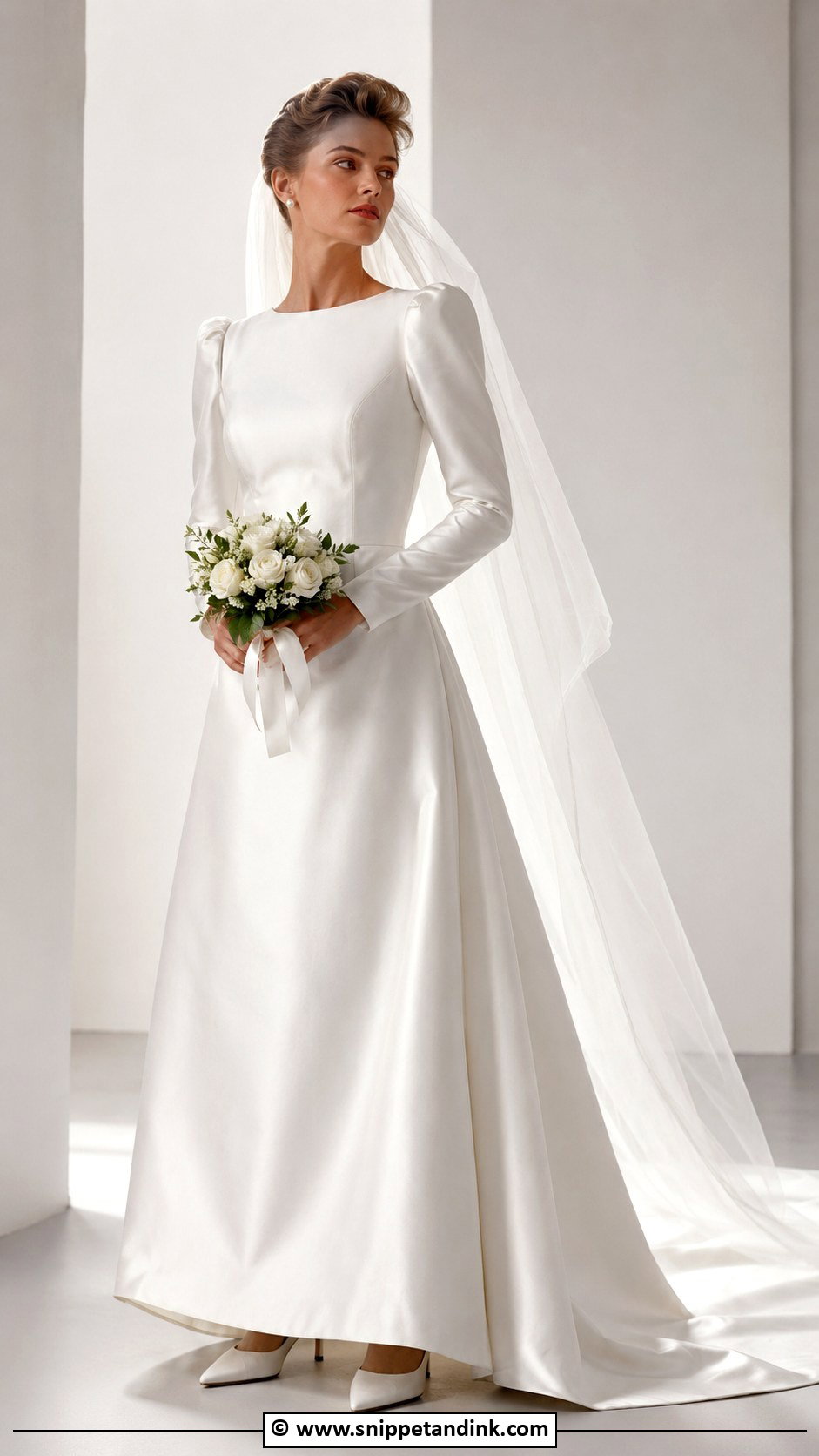
Not every eighties-inspired dress needs volume or decoration. A minimal satin gown keeps the link through fabric and subtle structure: a fitted bodice, a gentle shoulder detail, long sleeves or a clean A-line skirt. Satin supplies the glow without lace or beading. Pearl studs, a sleek veil, white pumps and a small bouquet are enough. Plain satin hides nothing, so the budget belongs in tailoring, especially at the waist and back seams.
29. 1980s Wedding Dress With Hair Bow
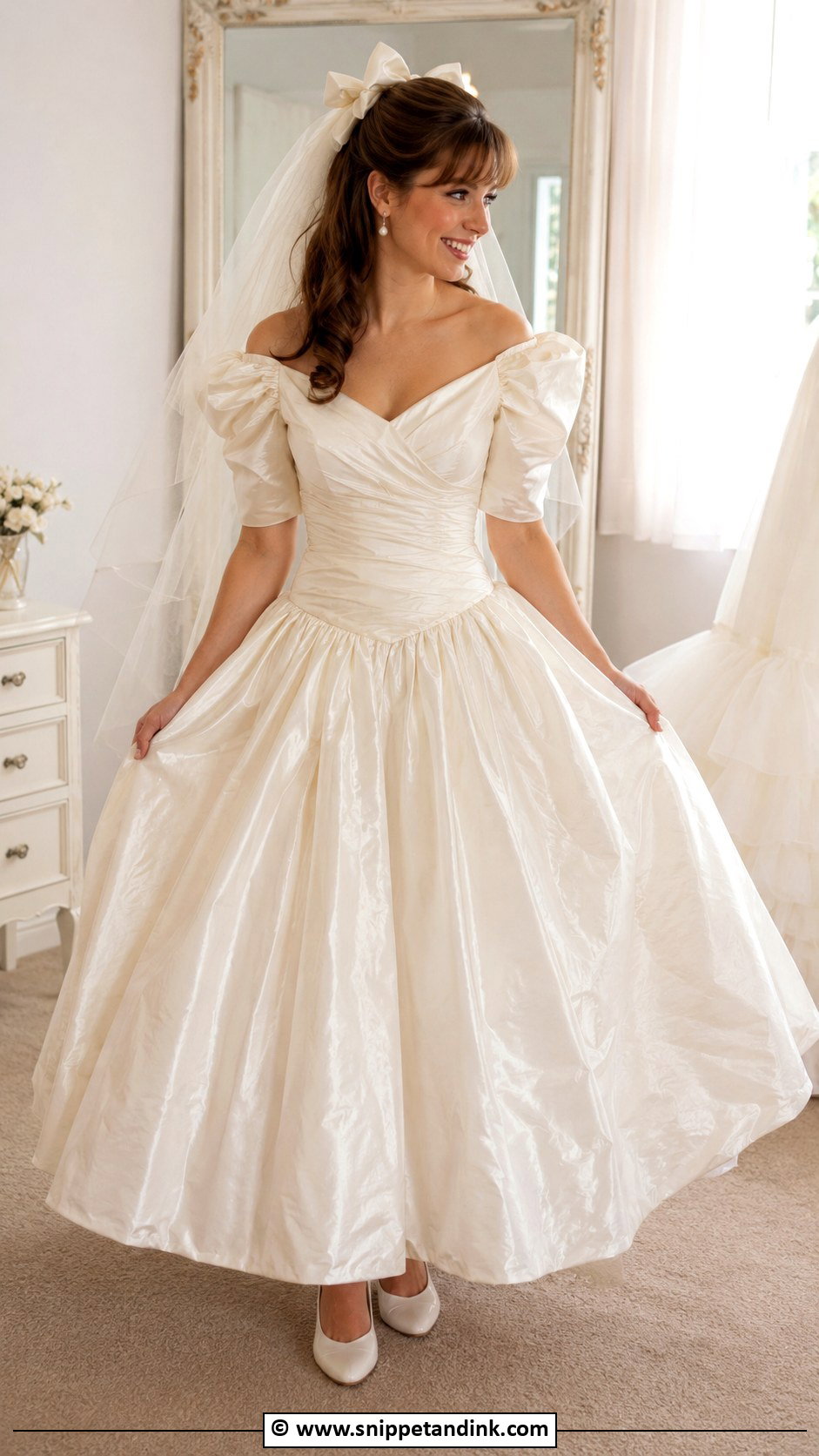
A hair bow suits puff sleeves, lace dresses, tea-length gowns and satin ball gowns alike. Choose ivory satin, organza or lace to match the dress so it looks part of the outfit, not an add-on. It sits best on a half-up style, a low ponytail or a soft bun, with pearl studs or small drops, and a fingertip veil can sit behind it for a layered effect. A satin bow needs a stiff backing and a strong clip, or it slides out of fine hair, so I’d have it pinned in place at the hair trial.
30. 1980s Vintage Family Wedding Dress
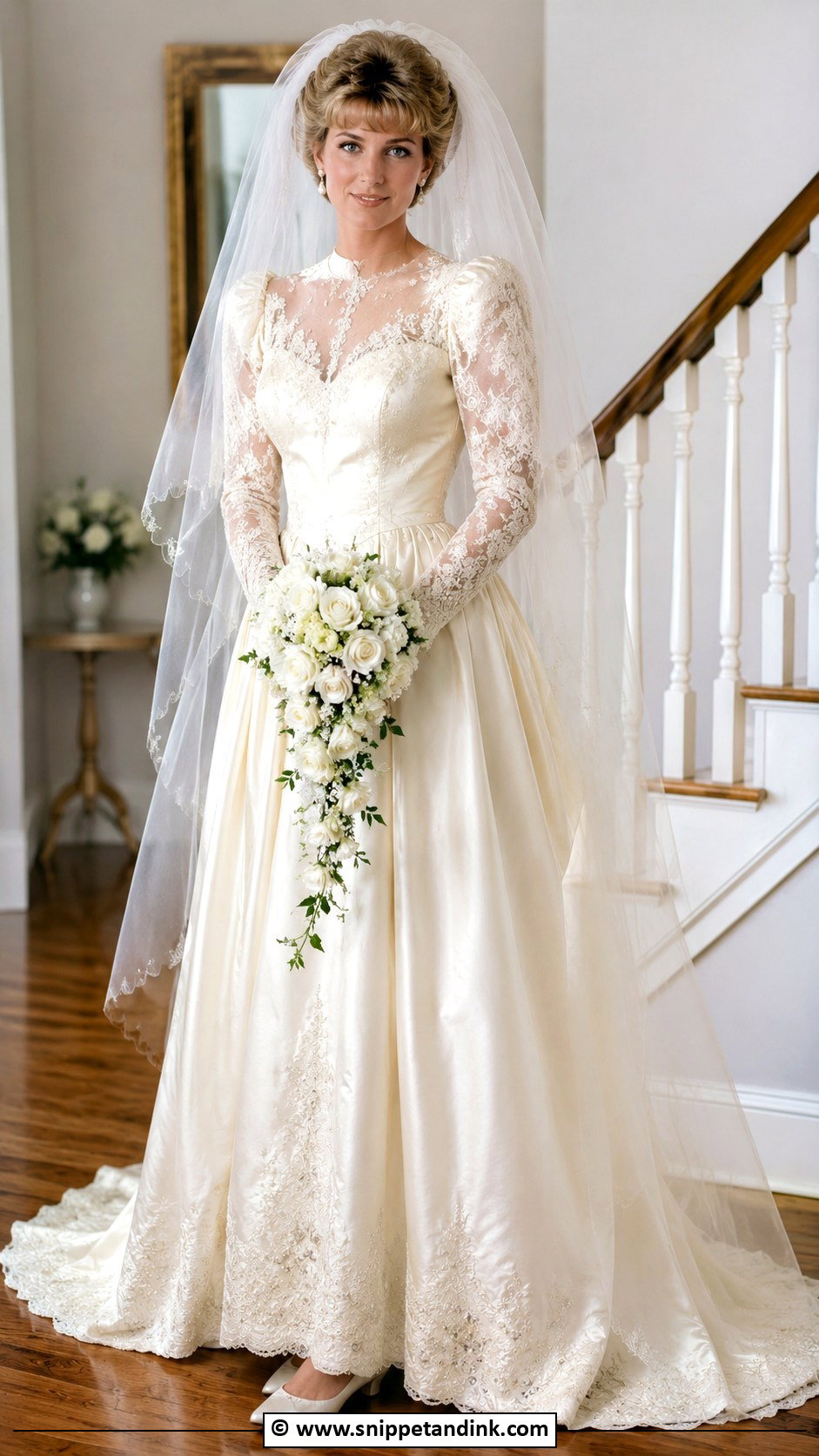
Wearing a family dress from this decade is one of the most meaningful ways to bring eighties style into your wedding. It may already have puff sleeves, lace, satin, bows, beading or a full skirt. A skilled tailor can adjust the fit, restore fragile areas or update the neckline while keeping its character, and new shoes, fresh pearls and a simple veil make it feel yours rather than dated. Fabric removed during alterations can become a bow, a sleeve detail or a veil trim. What to check before any of that starts is covered just below.
Reworking a Mother’s Eighties Gown Without Losing It
A family dress from this decade has often spent years folded in a preservation box. Open it well before you shop for anything else, because what you find decides the whole plan.
What usually turns up when the box opens
Yellowing along the folds, brown spots where an invisible spill has oxidized over time, and stiff or cracked glue behind beading are the common finds. A specialist cleaner can lift much of this, though not always all of it, and many gowns of the period are polyester or acetate satin, which behaves differently from silk. Have it cleaned first and altered second, never the other way round.
Changes a good seamstress can usually make
- Taking out shoulder pads, or the net that props up puff sleeves, which softens the silhouette at once
- Removing sleeves entirely or shortening them to a cap
- Cutting a high collar down to a sweetheart or a sheer illusion neckline
- Lifting off some beading or applique to lighten a busy bodice
- Shortening a long train to a sweep and adding a proper bustle for the reception
Letting a bodice out is the hard one. There’s rarely much seam allowance left, so a dress that’s too small may need a new side panel or a lace-up back. I’d start at least five or six months ahead. And keep every scrap that comes off: a sleeve can become your hair bow, a covered button for the groom’s lapel or a wrap for the bouquet stems.
How Much Eighties Is Too Much?
The decade is more flexible than its reputation. You can go bold with puff sleeves, a cathedral train and a satin ball gown, or keep things softer with lace sleeves, pearls and a clean A-line. What makes it work is balance: choose the vintage elements you love most, then keep the shoes, jewelry and veil supporting the dress rather than competing with it. A true vintage gown, a reworked family dress or a new design with retro details can all feel personal if one detail leads and everything else follows.
You'll Like These Ideas:





Leave a Reply