
New wedding dresses have quietly changed what I pull for brides at a first appointment. Fewer gowns rely on heavy beading now; more of them earn their look through cut, fabric weight and one considered detail. That shift is good news, because a dress built on fit tells you very quickly whether it suits you. Below are the shapes and details I see brides responding to most, with what each one asks of your body, your venue and your schedule, so you can walk into a salon already knowing which rails to skip.
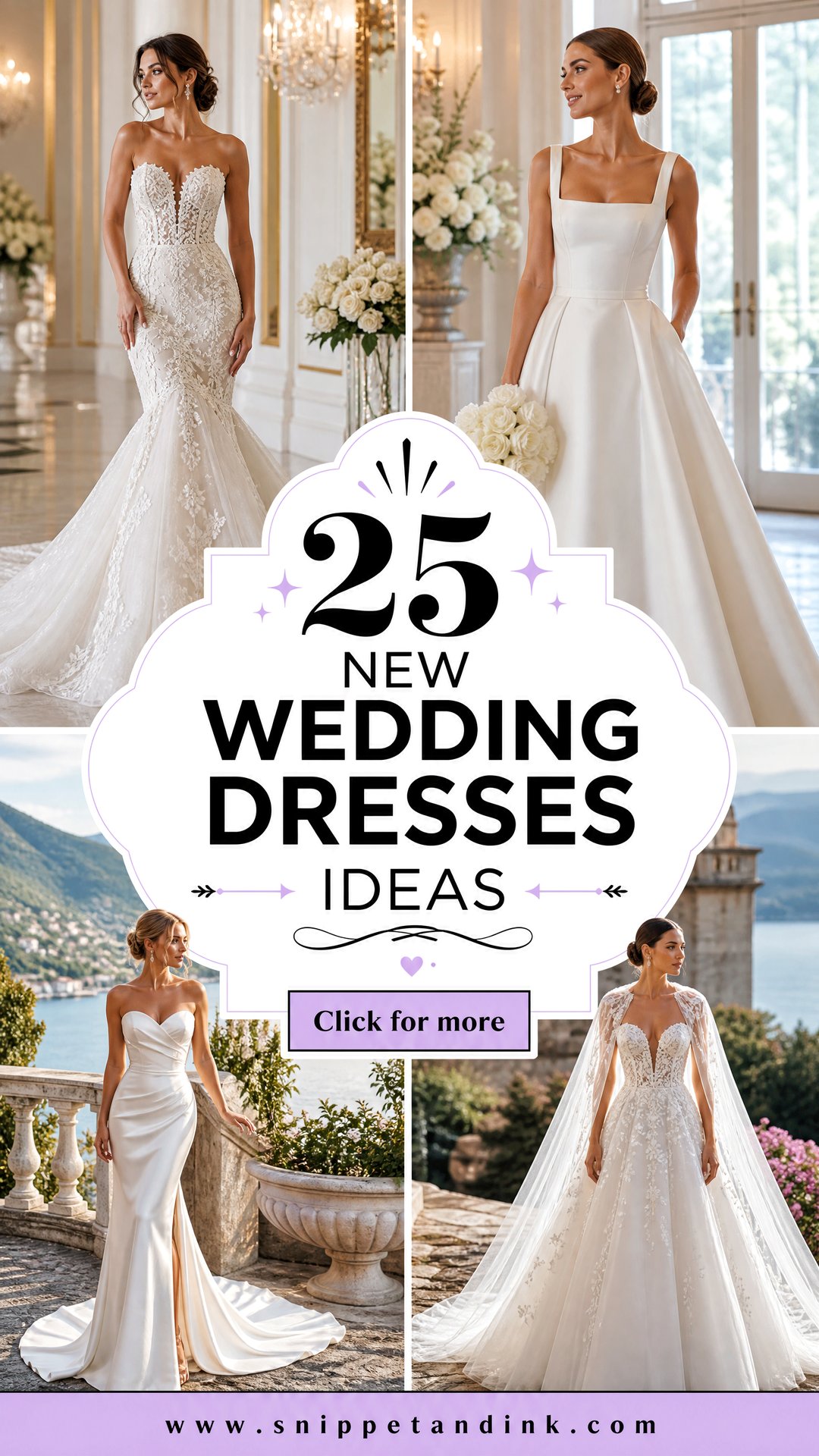
How I Run a Fitting Room Test Before Anyone Falls in Love
A gown can look right in the mirror for ten seconds and still be wrong for a twelve-hour day. So before a bride decides how she feels about a dress, I ask her to wear it the way she will on the day. It feels silly in a salon, and it saves a lot of regret.
- Sit on a hard chair for a full minute, then stand up and check whether the skirt or bodice has shifted.
- Raise both arms as if hugging someone taller than you. Sleeves and strapless tops show their limits here.
- Walk forwards, then turn and walk away, so you can see how the train and hem behave behind you.
- Bend to pick something off the floor. A neckline that gapes now will gape in candid photos.
- Ask for shoes close to your real heel height, because hem length and posture both depend on it.
I also bring the venue into the room. A cathedral train on a tiny registry office floor or a full tulle skirt on a windy cliff will fight you all day, so tell your consultant where you’re marrying before she starts pulling dresses.
1. Minimalist Wedding Dress
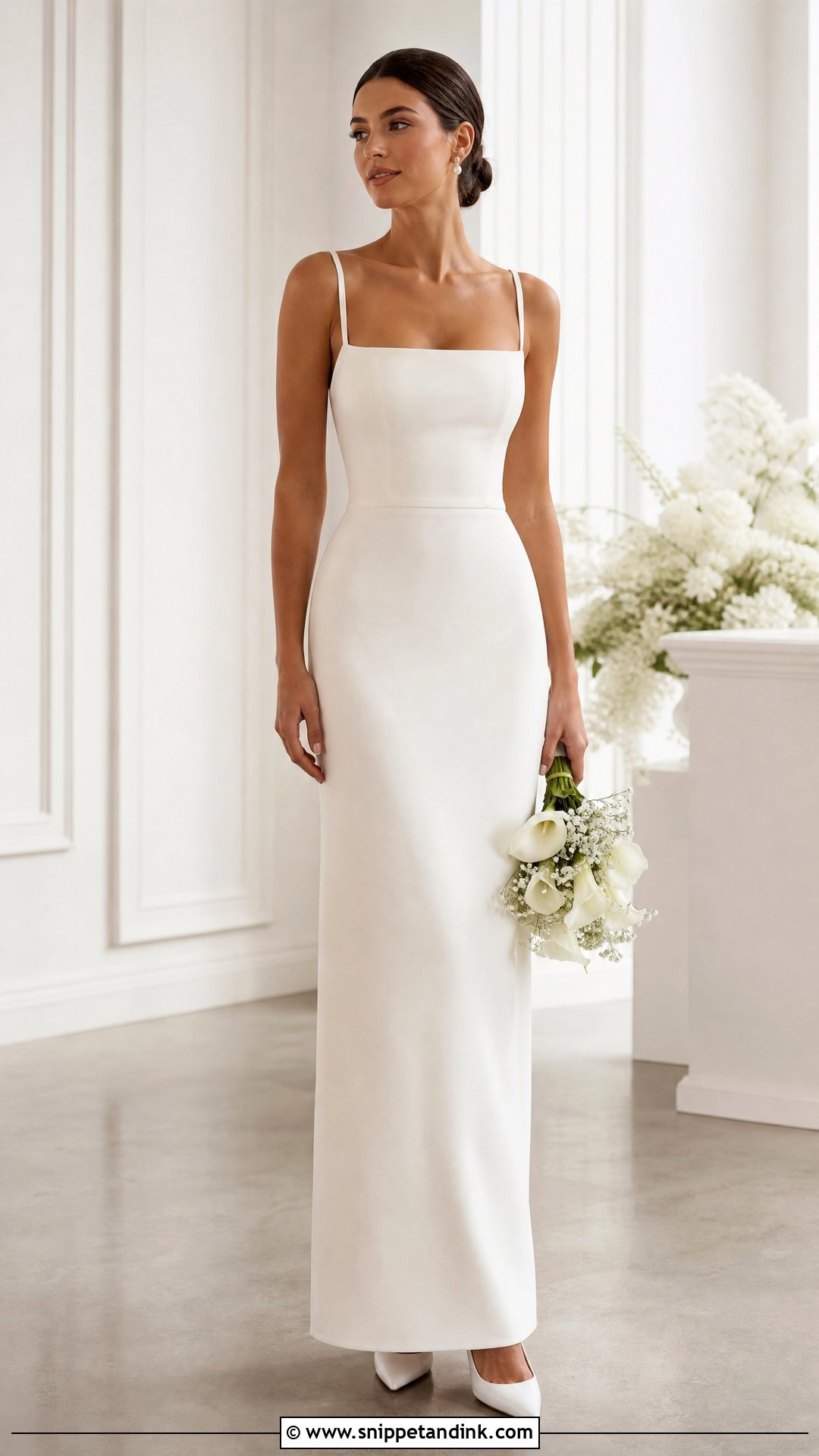
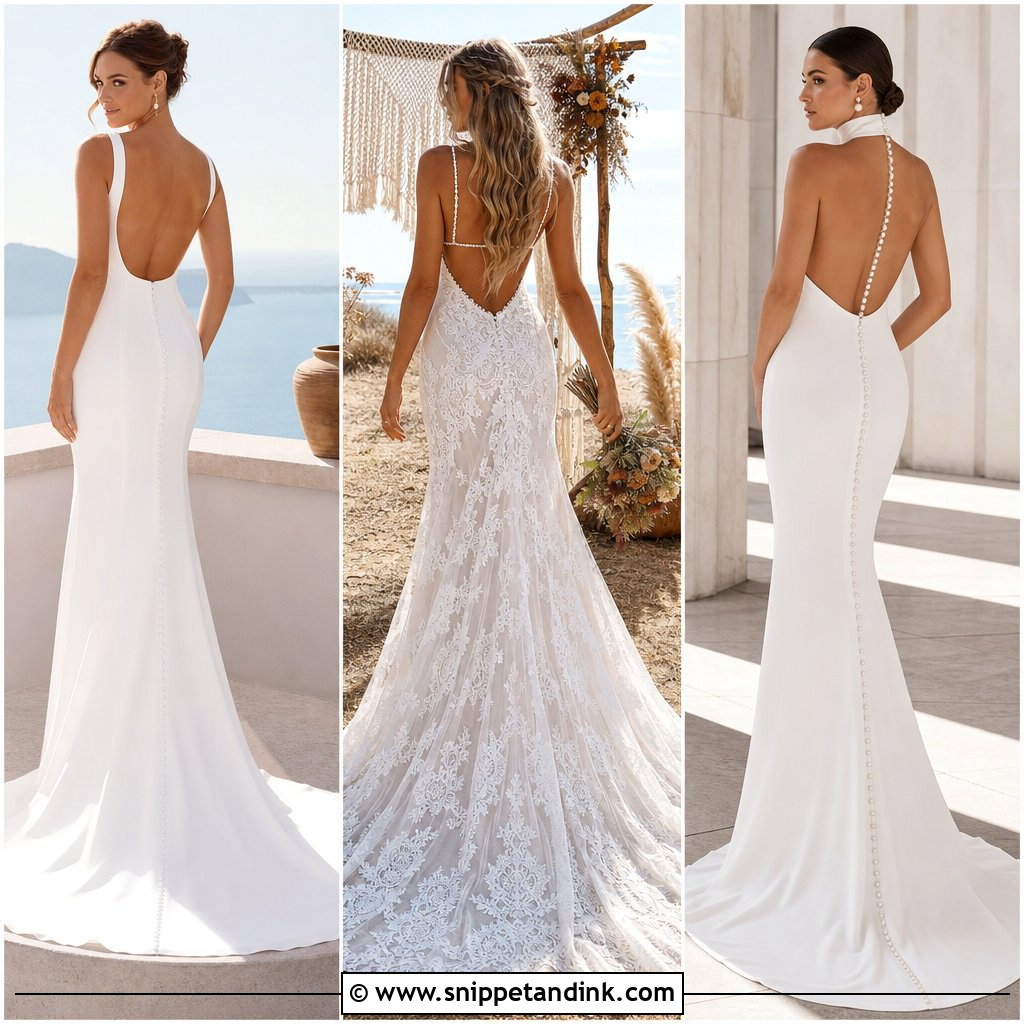
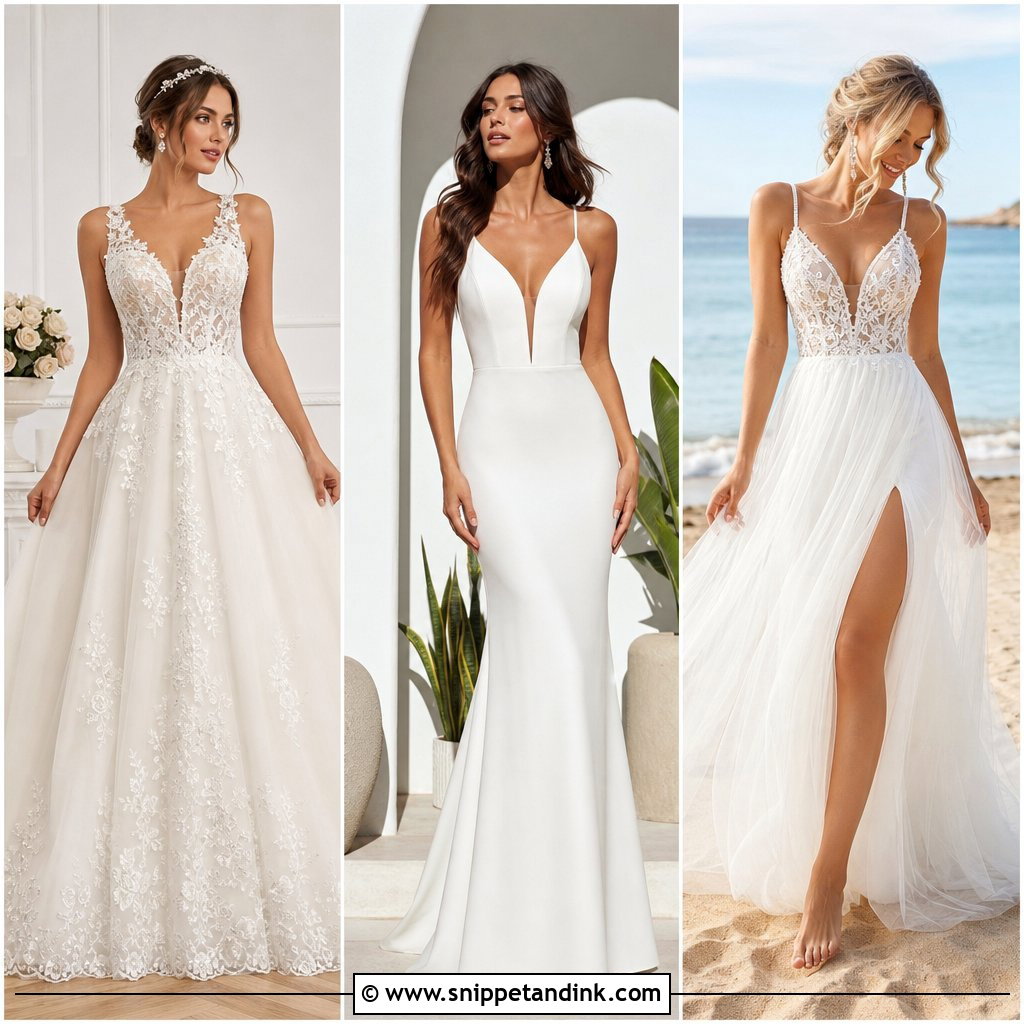
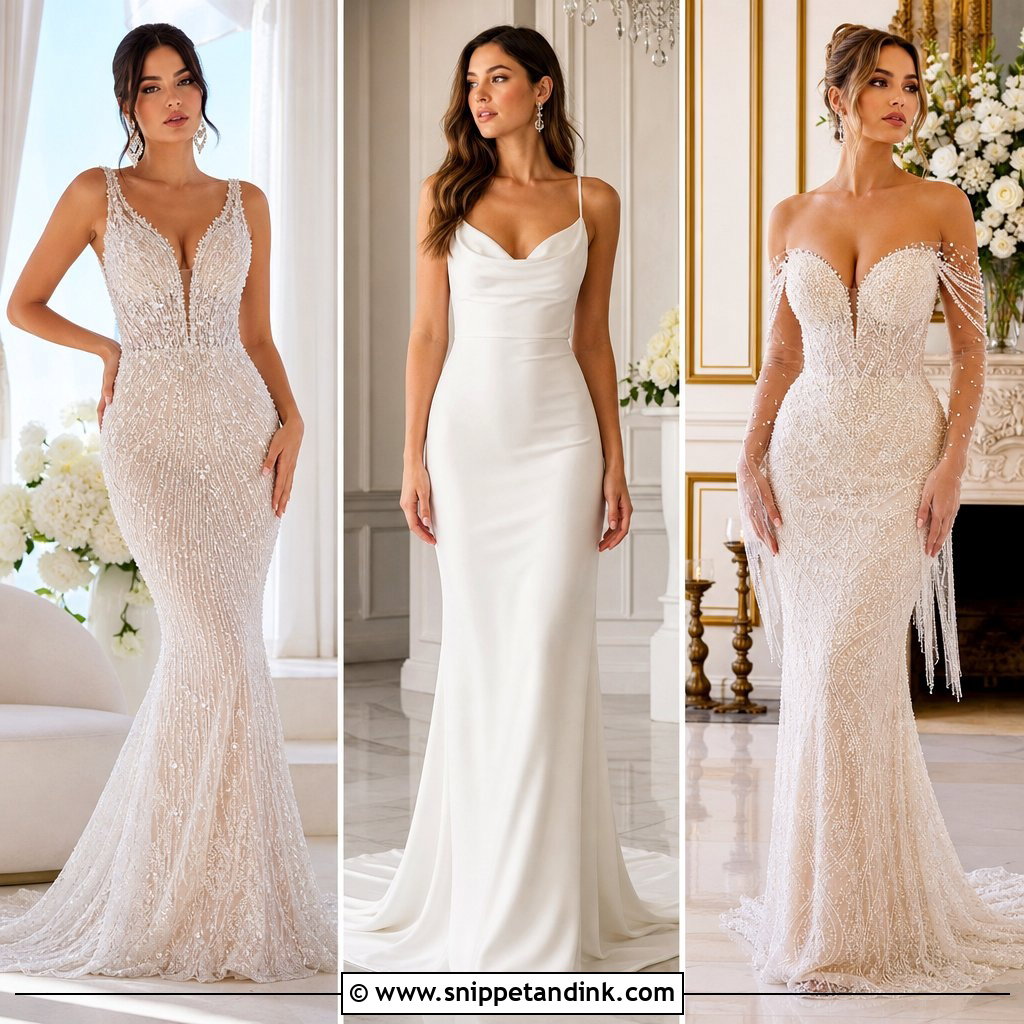
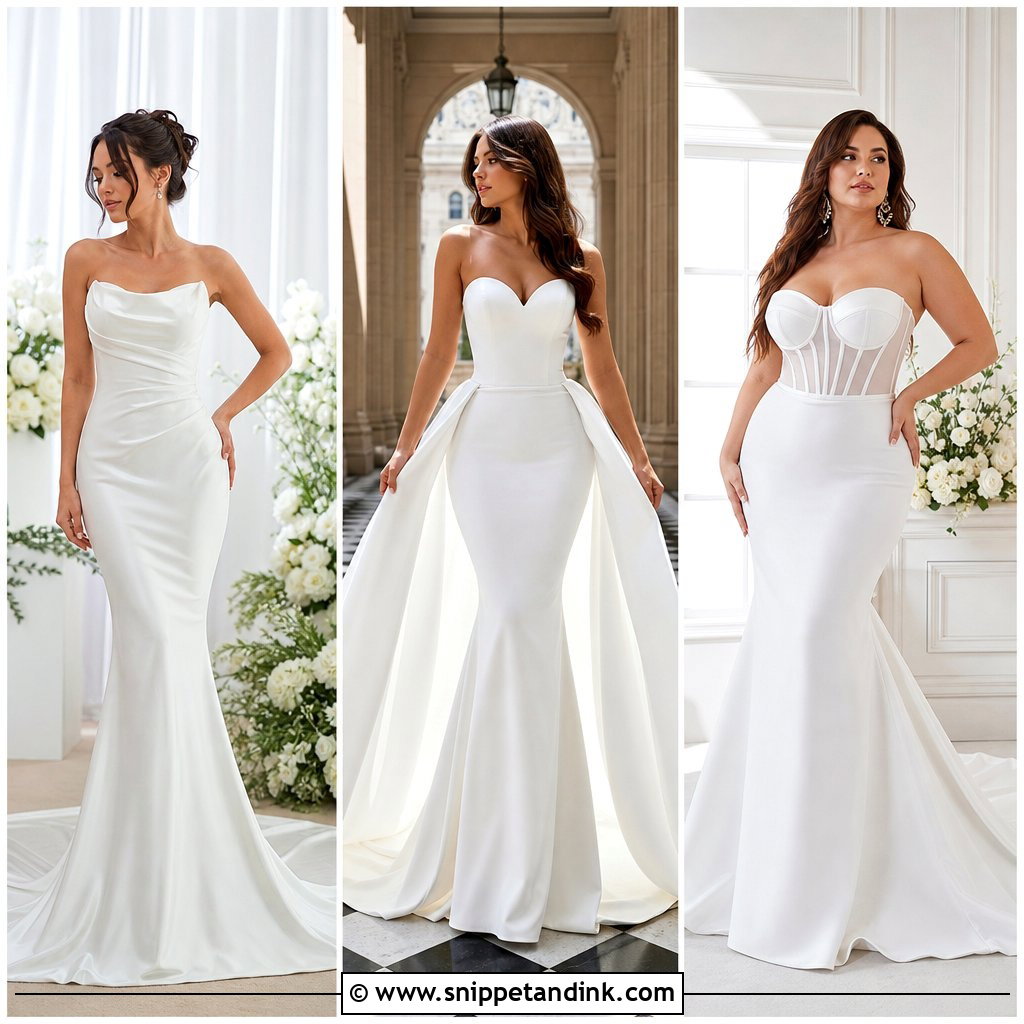
Minimal gowns are the hardest dresses in the shop to fake. With no lace or beading to hide behind, every seam and every pull line shows, so I check the fit at the bust and across the back before I look at anything else. A column in silk satin, crepe or matte mikado with slim straps needs a seamstress who presses as carefully as she sews. Give it one point of interest, maybe a low back or covered buttons running down the train, and keep the shoes and earrings plain so that detail reads.
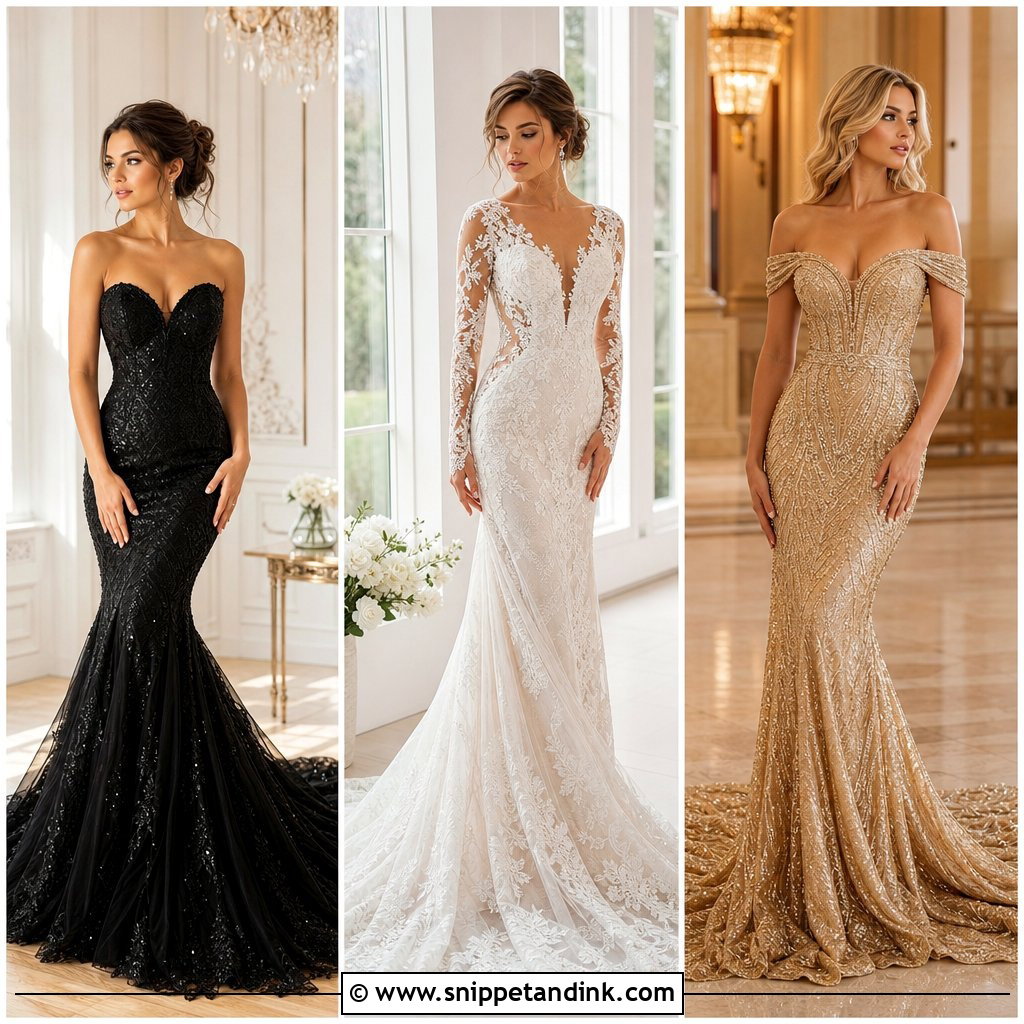
2. Lace Wedding Dress
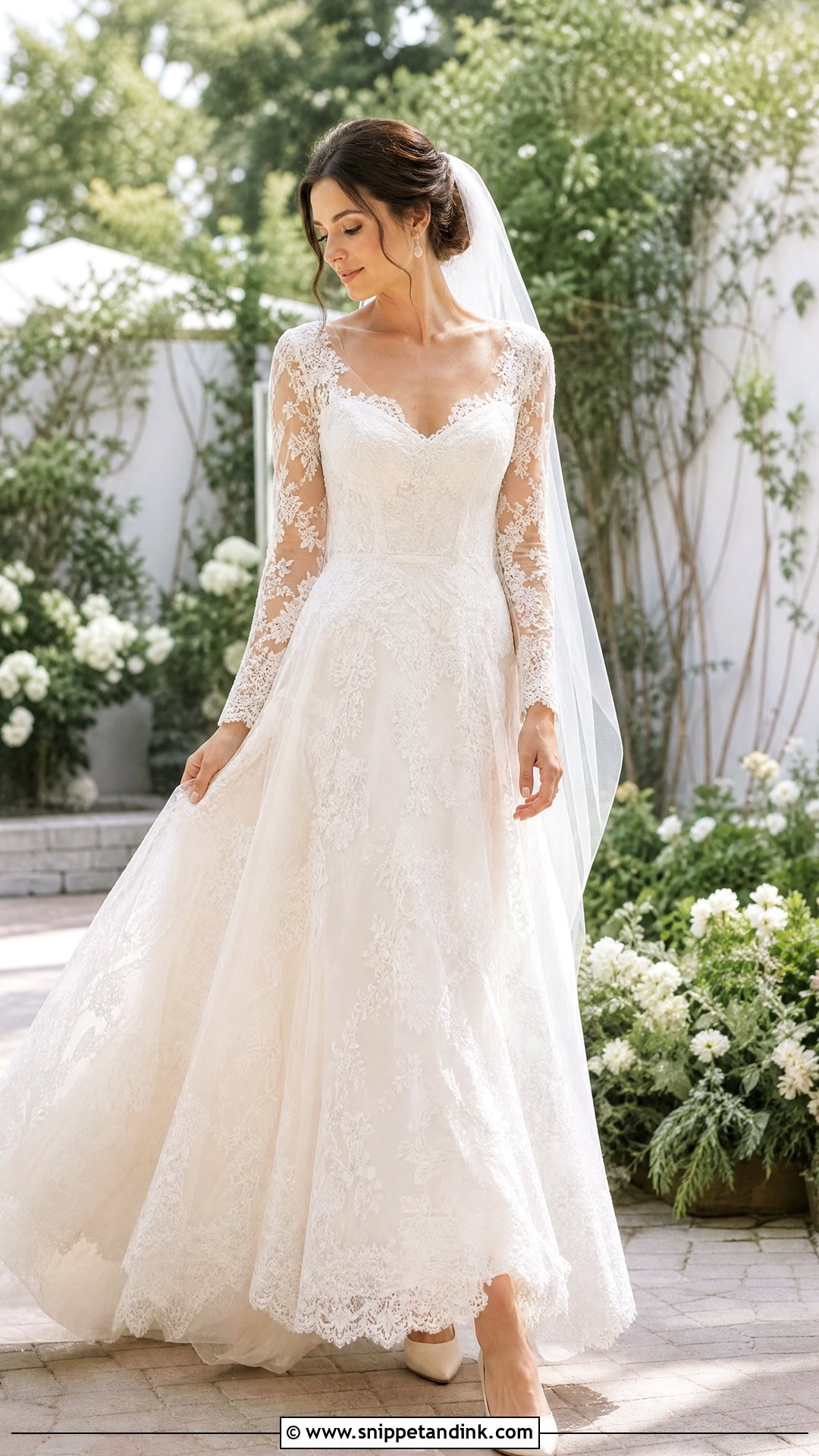
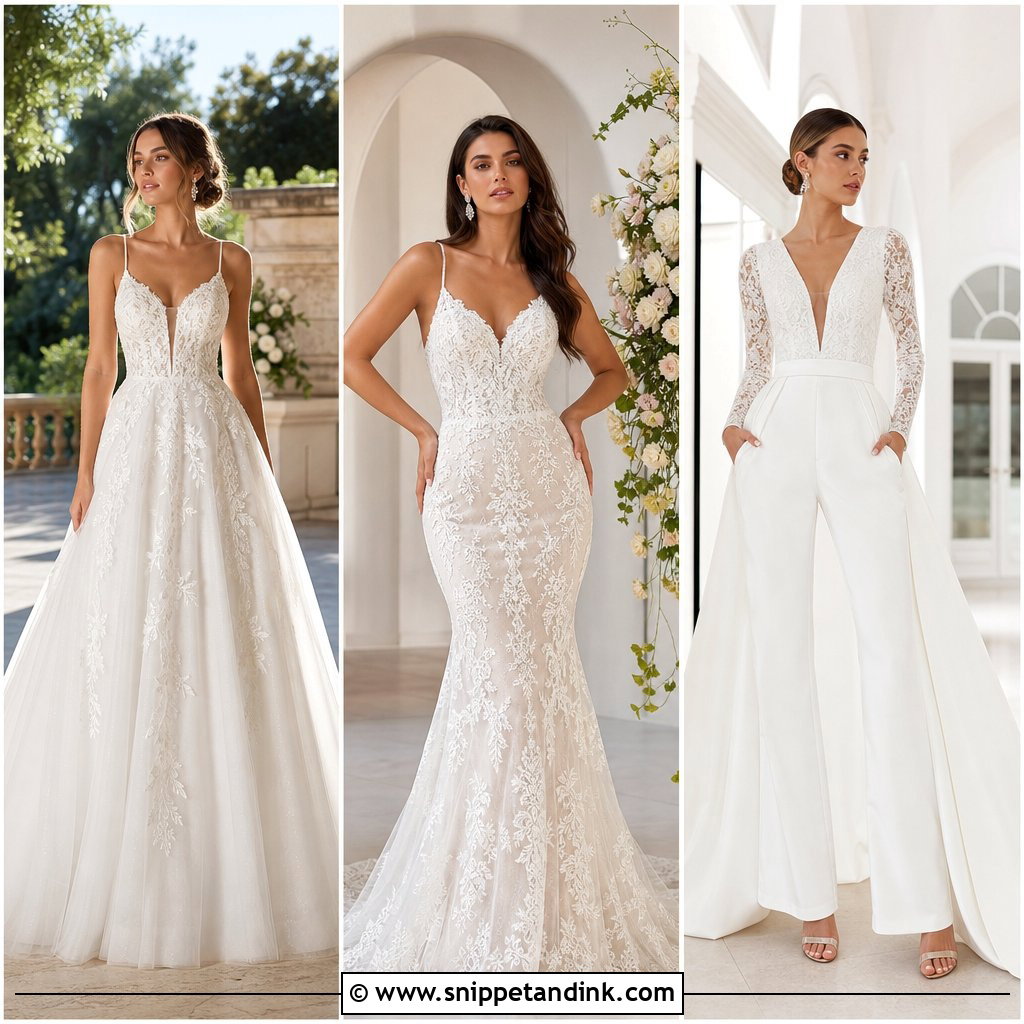
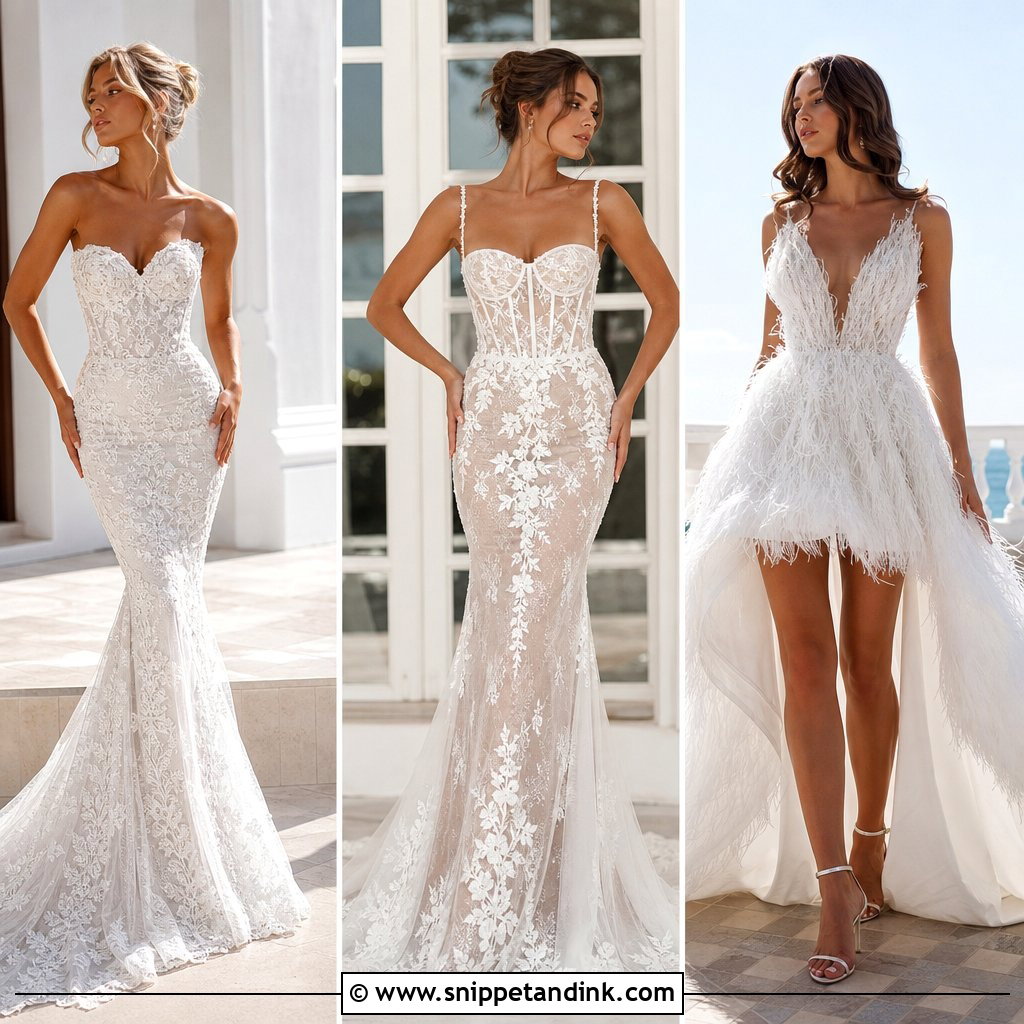
Lace has lightened up. The versions I reach for now put soft floral lace on a sheer sleeve or the bodice only, rather than wrapping the whole body in it, which keeps the gown from feeling dated. Watch the veil here: a lace-edged veil over a lace bodice turns into visual noise, so I usually pair it with plain cut-edge tulle. One practical note for outdoor brides is that open lace snags on bark, brick and bouquet wire, so ask the shop about a lining or bustle that lifts the hem off rough ground.
3. Satin Slip Wedding Dress
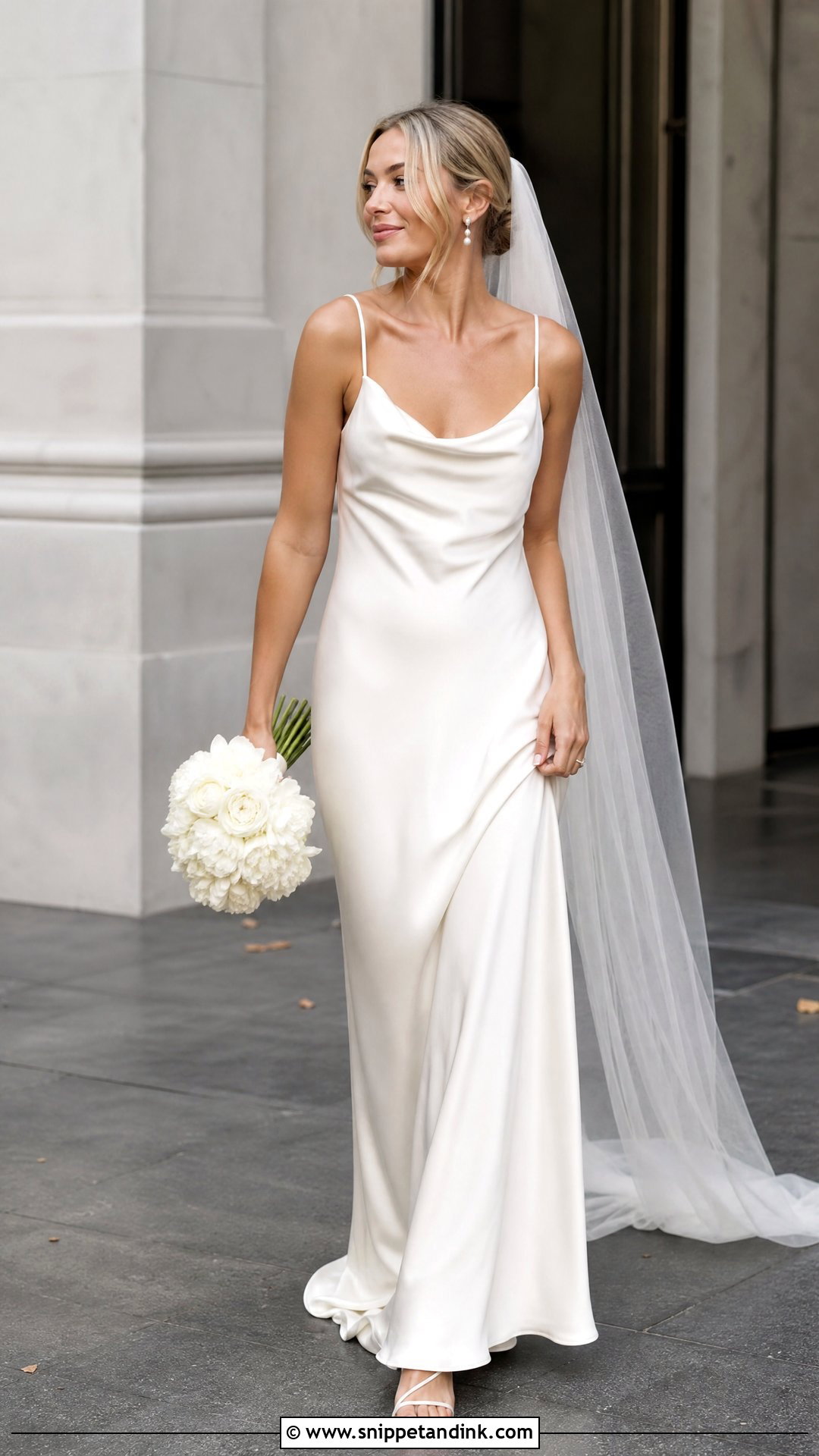
Bias-cut satin is honest fabric. It drapes beautifully over the body, and it also shows every line underneath, so the first thing I do at a slip-dress fitting is sort out no-line underwear and a bra solution before we judge the dress. The shape suits a 90s-inspired bridal look, and a long veil gives it the ceremony weight it lacks on its own. It packs small for travel, though satin creases at the hips the moment you sit, so plan a steamer at the venue and a sheer cape or tailored blazer if you want cover for the service.
4. Ball Gown Wedding Dress
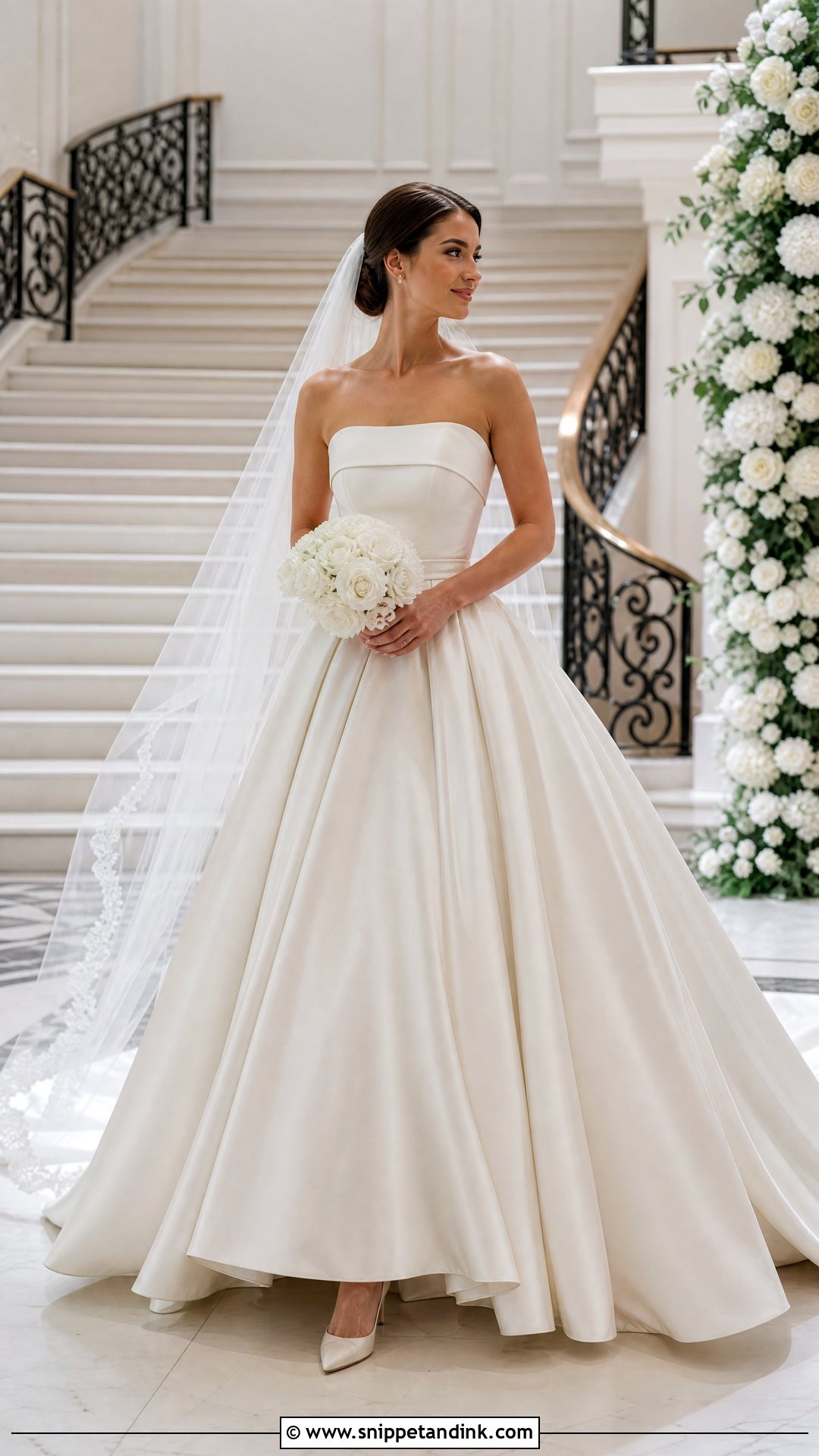
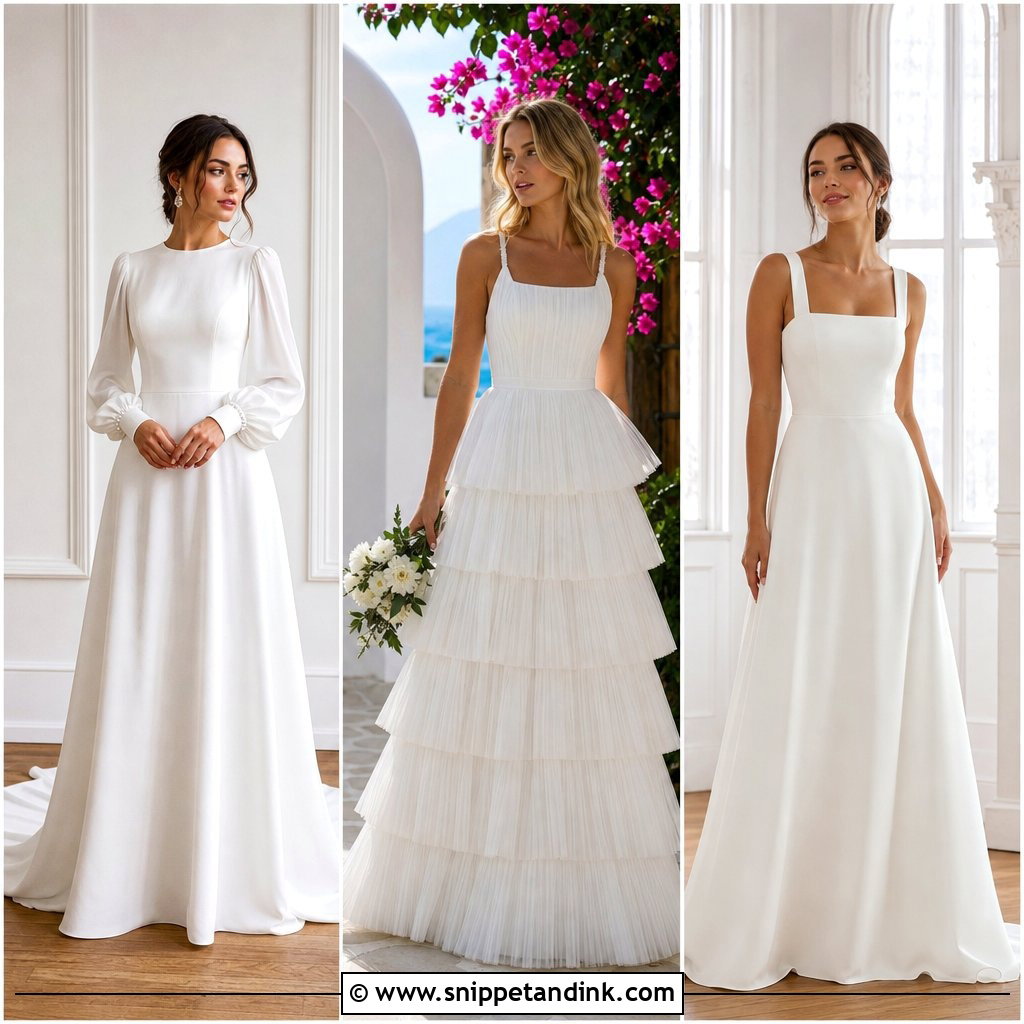
A ball gown does the work that accessories would otherwise have to do. The newer ones skip the princess frills in favour of a structured bodice and a smooth mikado or satin skirt, while tulle gives a softer version of the same outline. The thing I warn brides about is weight: a full skirt with several petticoat layers can be heavy by evening, so ask how much of the volume comes from a removable crinoline. Petite brides do best with a clearly defined waist and fewer layers, otherwise the skirt starts wearing you. Save it for wide aisles and formal rooms where it has space to move.
5. Mermaid Wedding Dress
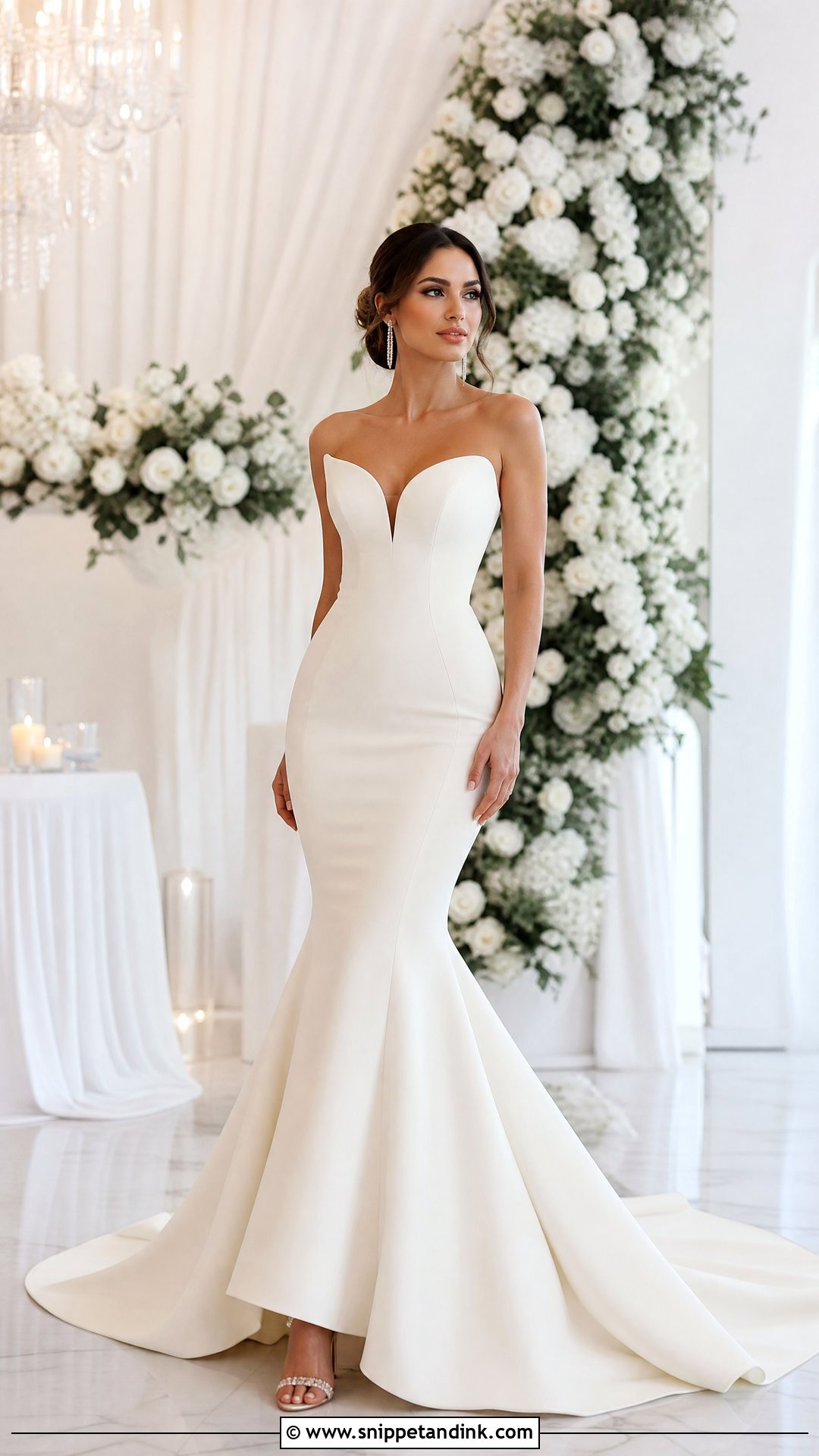
I make every mermaid bride do three things in the fitting room: sit down, climb a step and dance badly. The gown is fitted through the bodice, waist and hips and only flares around the knee, so if the flare sits too high you’ll shuffle all day. Newer cuts use stretch crepe and cleaner seaming, and a detachable train helps once dinner starts. Keep the hair polished and the earrings long, then book your evening portraits, because this is a shape that looks best standing still against a strong backdrop.
6. A Line Wedding Dress
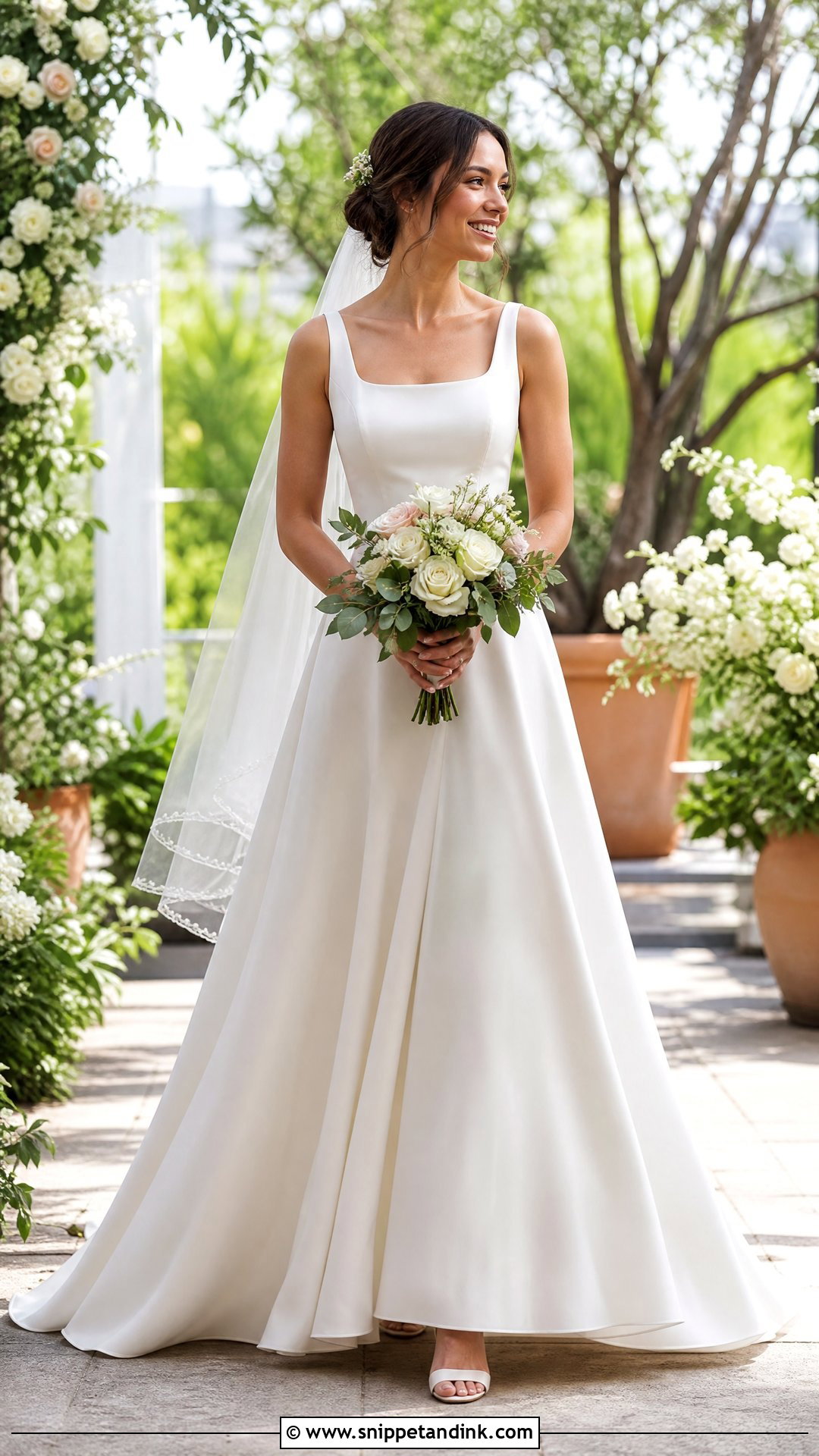
If a bride is unsure where to begin, I hand her an A-line first. It fits through the bodice and opens gradually from the waist, so it shows us her proportions without the commitment of a full skirt. Fabric changes its character completely: chiffon floats and wrinkles easily, organza holds a crisp shape, satin reads more formal. A fingertip veil and block heels suit it, and the moderate hem width makes it one of the easier gowns to walk across grass in.
7. Square Neck Wedding Dress
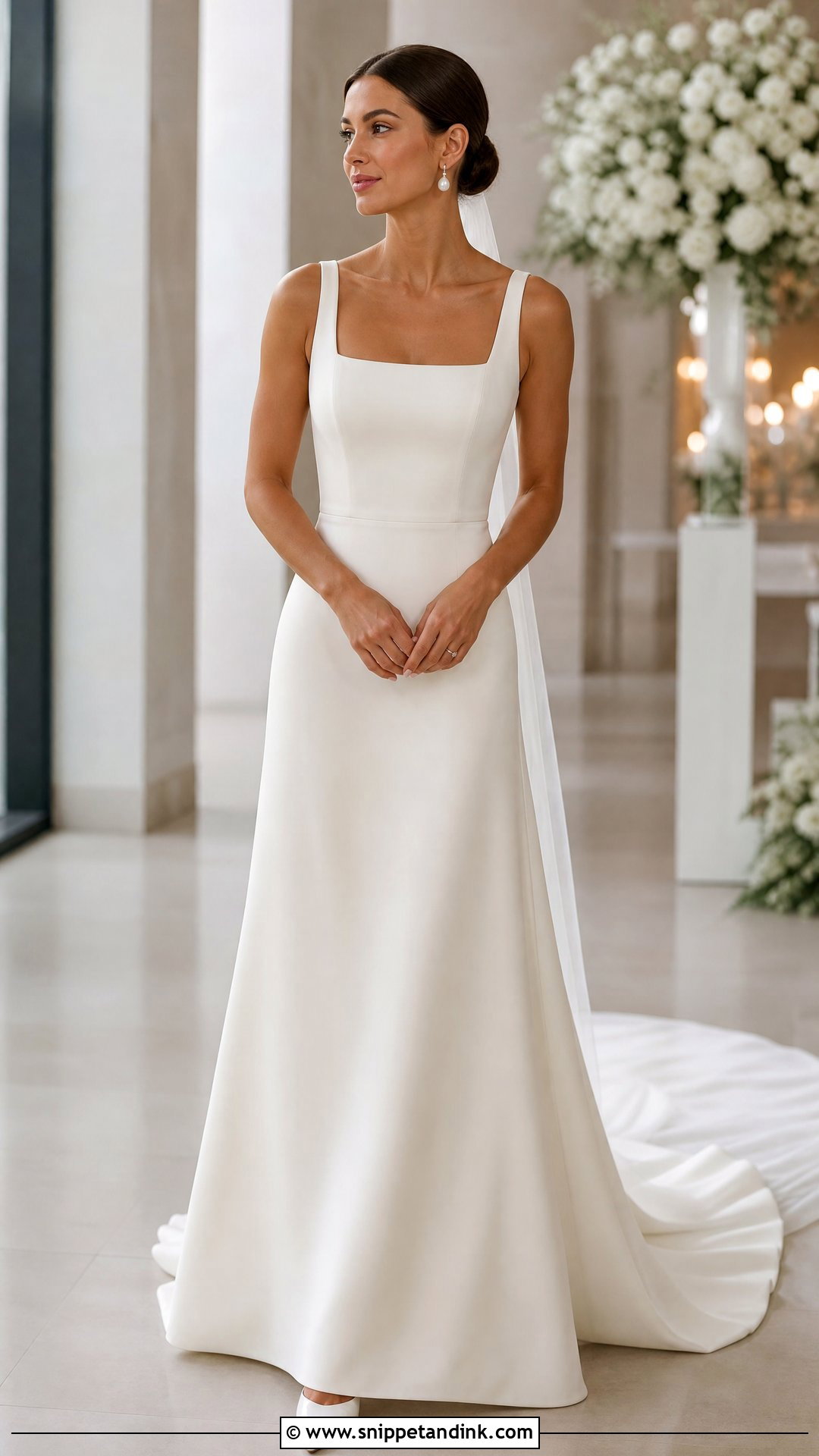
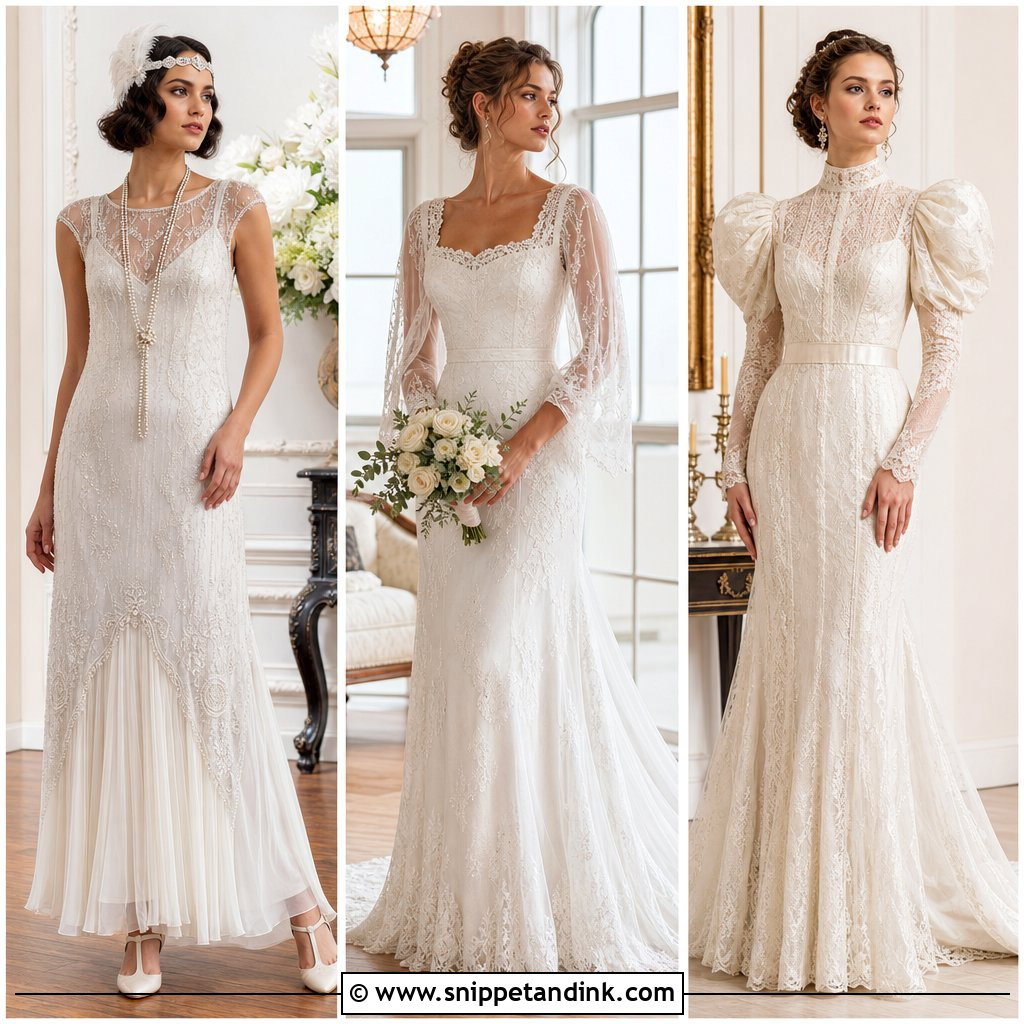
Square necklines are kind to collarbones and very forgiving of a bare neck, which is why I suggest them to brides who don’t want to wear a necklace. The straight edge needs precise boning or a well-built bodice, or it bows outward when you lean forward to hug someone, so test that in the fitting. Tulle or soft lace keeps it romantic; crepe makes it architectural. A sleek bun and pearl drops finish it without fuss.
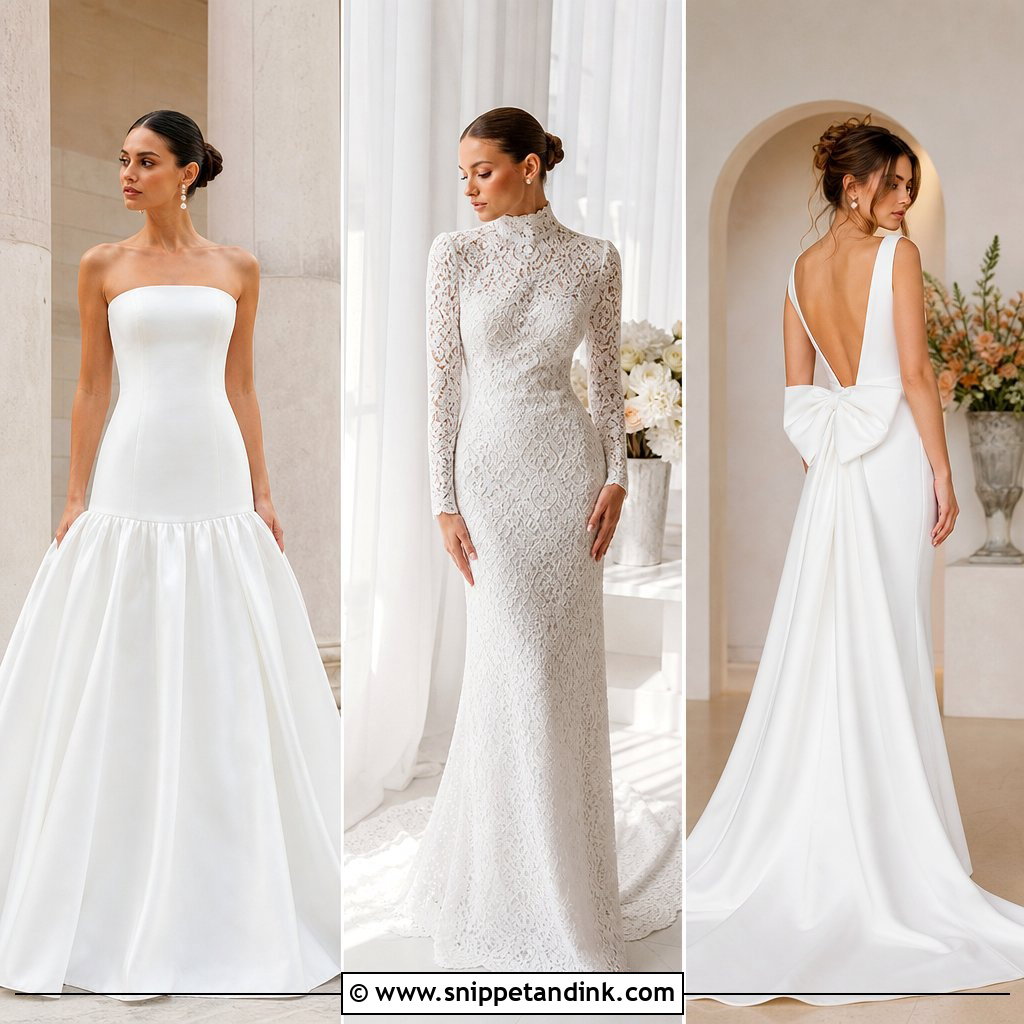
8. Strapless Wedding Dress
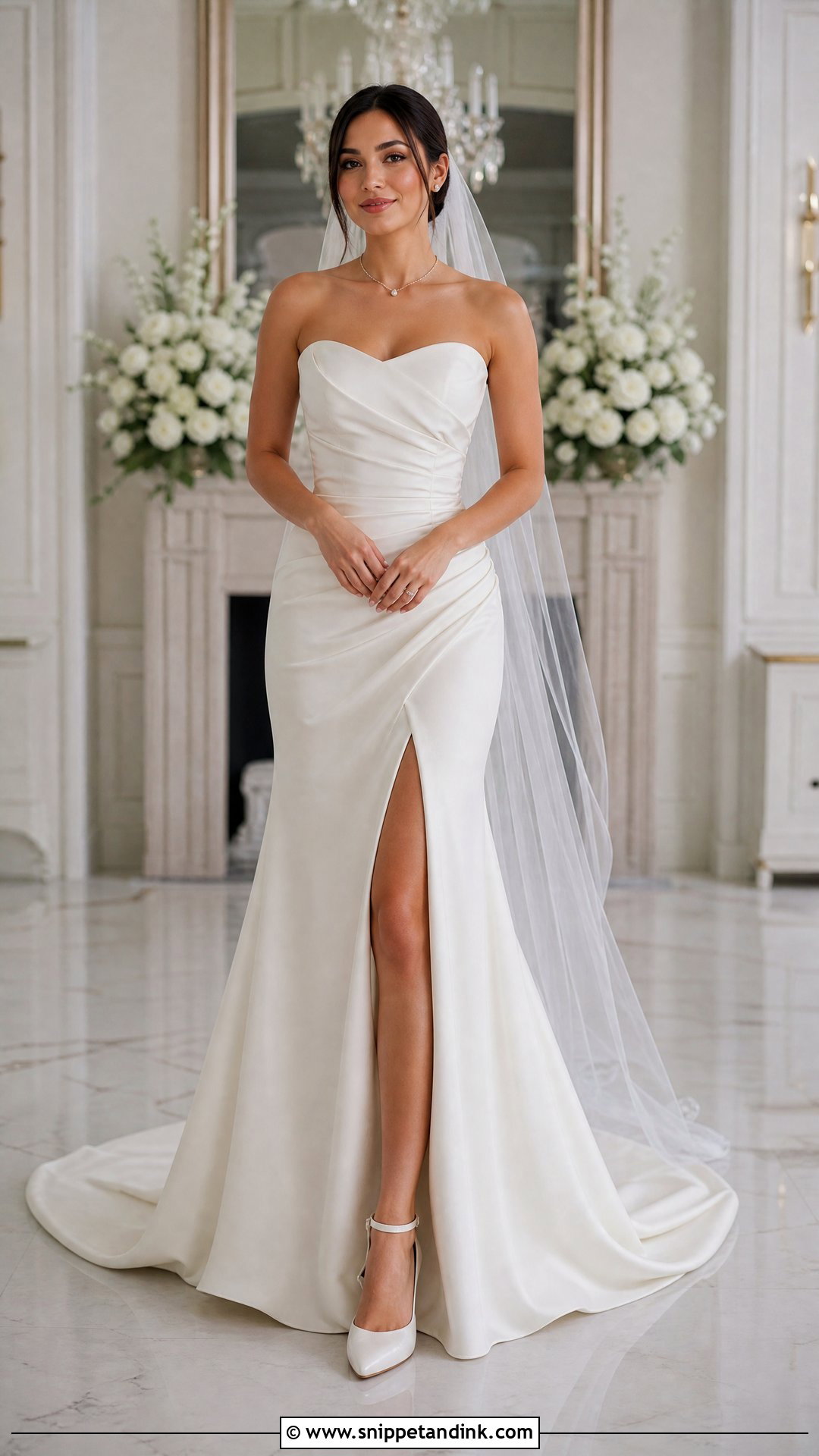
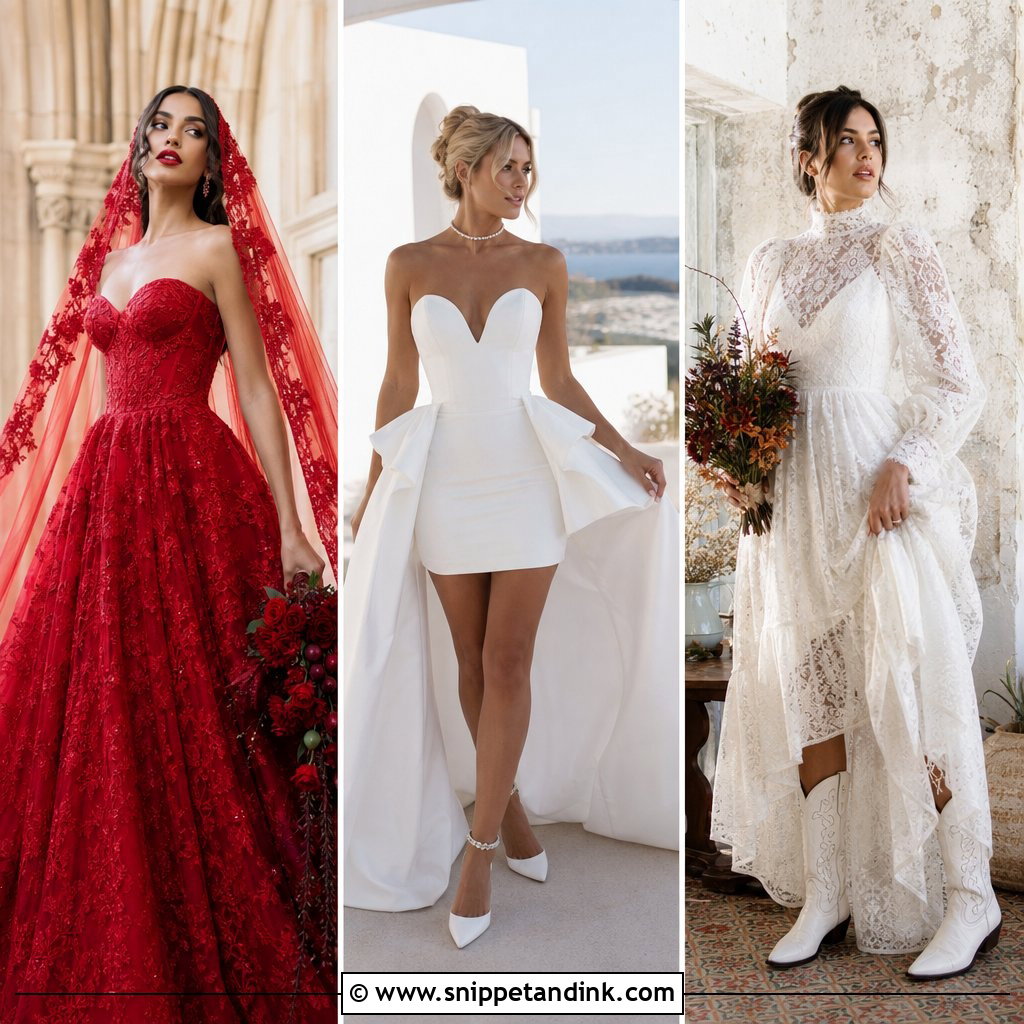
Strapless gowns stay up because of the internal corsetry and a snug fit at the ribcage, not because of the neckline. If you find yourself hitching the bodice in the mirror, the dress needs taking in, and that is a job for alterations rather than something to live with. Satin with a straight or gently curved edge looks classic, while lace softens it. An updo shows the shoulders, and opera gloves or a detachable overskirt can add ceremony weight if the room calls for it.
9. Long Sleeve Wedding Dress
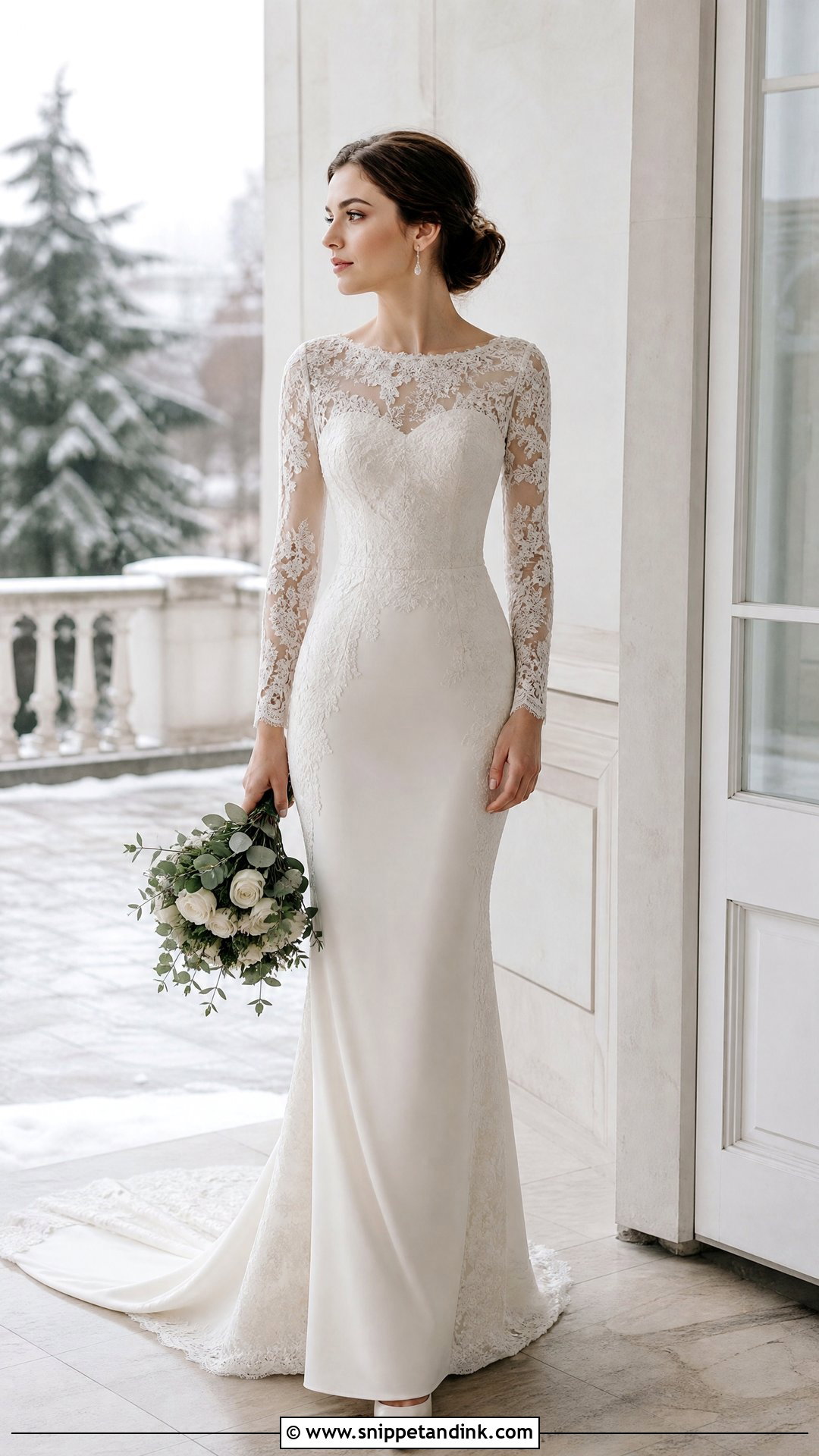
Sleeves change how a gown feels to wear more than brides expect. Sheer lace sleeves are light, crepe sleeves look clean, and fitted sleeves need enough room at the elbow that you can raise a bouquet and hug your grandmother without the seams pulling. I always ask a long-sleeve bride to lift both arms above her head at the fitting. Skip bracelets if the cuffs are detailed, wear a low bun, and expect close-up photos of your hands to look especially good with the sleeve framing them.
10. Off Shoulder Wedding Dress
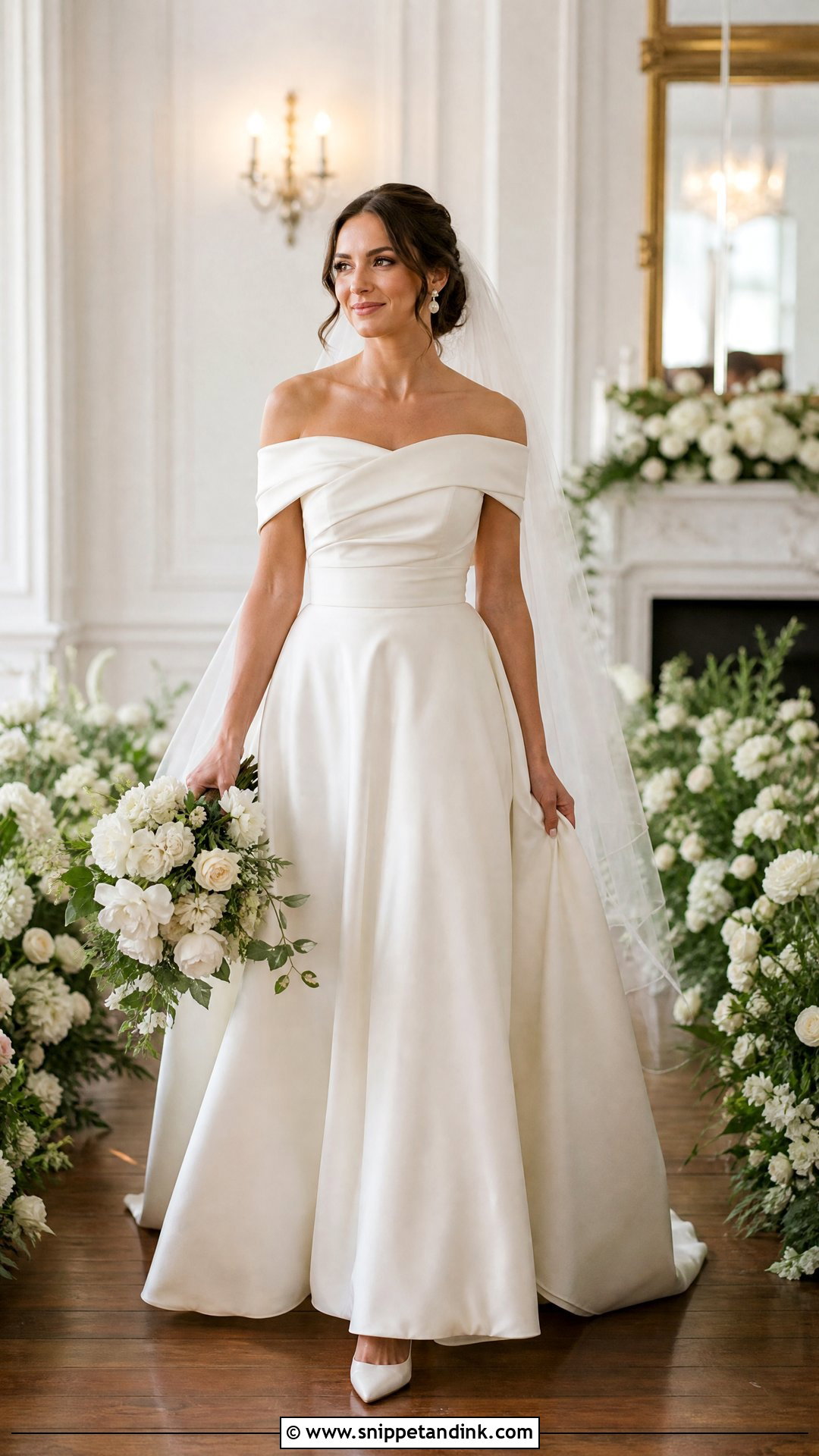
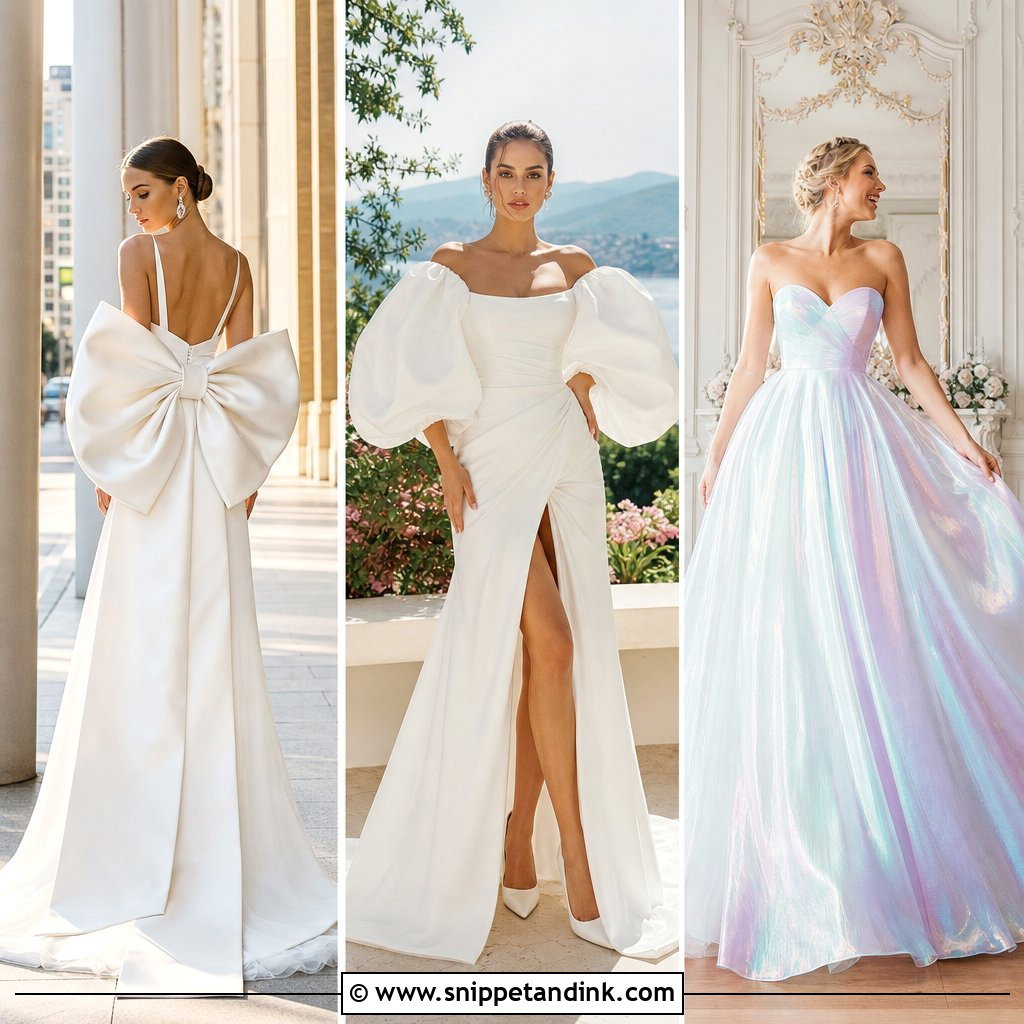
Off-shoulder necklines frame the collarbones well, but the band sitting on your upper arms limits how high you can lift them. That matters for the first dance and for anyone who talks with her hands. Make sure the band has grip tape or elastic inside, and that it sits where it can’t slide. Satin keeps the line clean and lace keeps it delicate; with either, a short necklace or none at all, plus a low chignon, leaves the shoulders to carry the look.
11. High Neck Wedding Dress
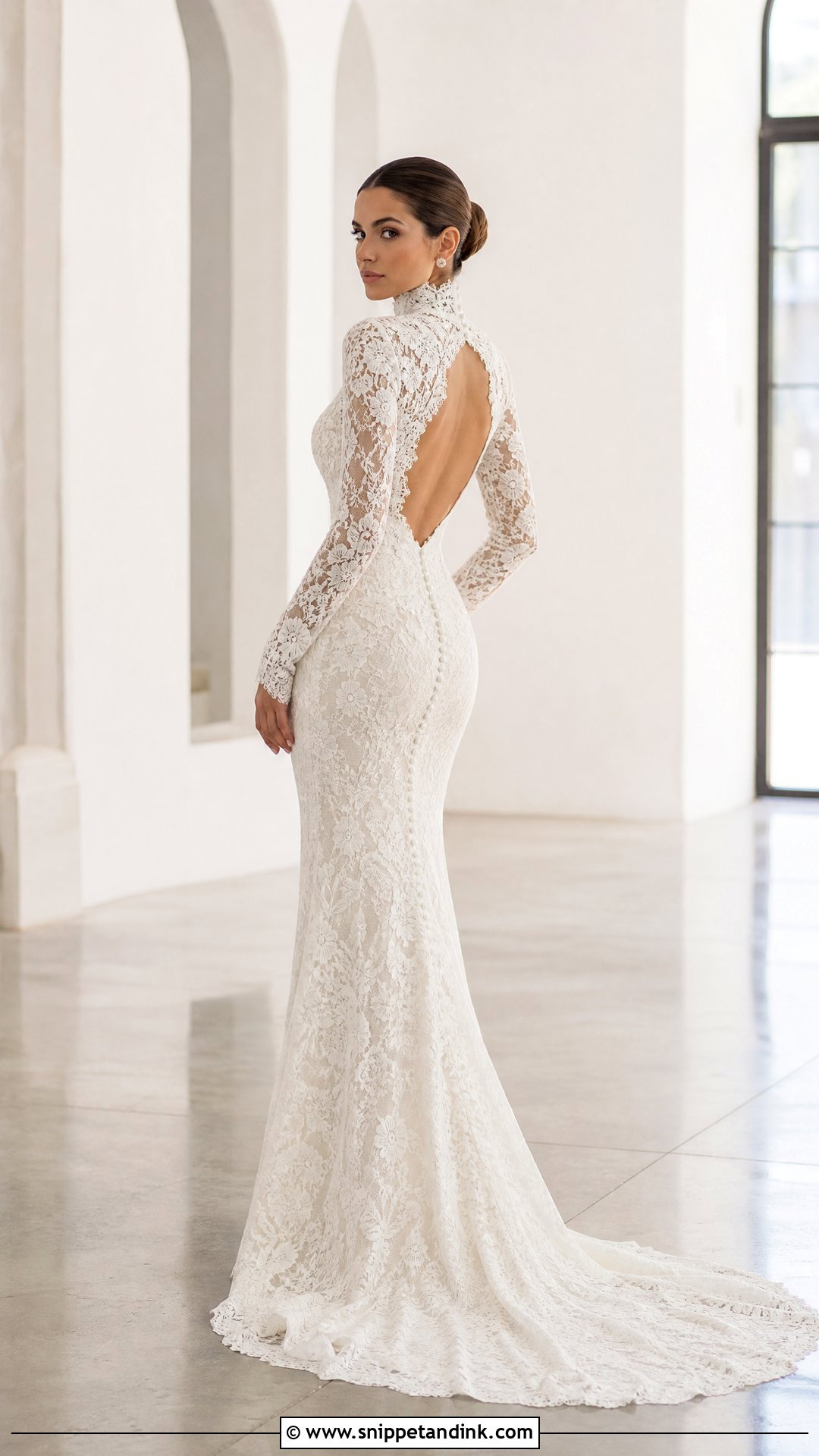
A high neck pulls every eye upward to your face, so I style it with the hair pulled back and only small earrings. In crepe it looks sleek and editorial; in sheer tulle with embroidery it becomes a showpiece. The fitted versions read modern and the A-line versions read traditional. What keeps it from feeling heavy is a release somewhere else: an open back, a keyhole or a column of tiny buttons. Check that the collar doesn’t press on your throat when you look down at your vows.
12. Basque Waist Wedding Dress
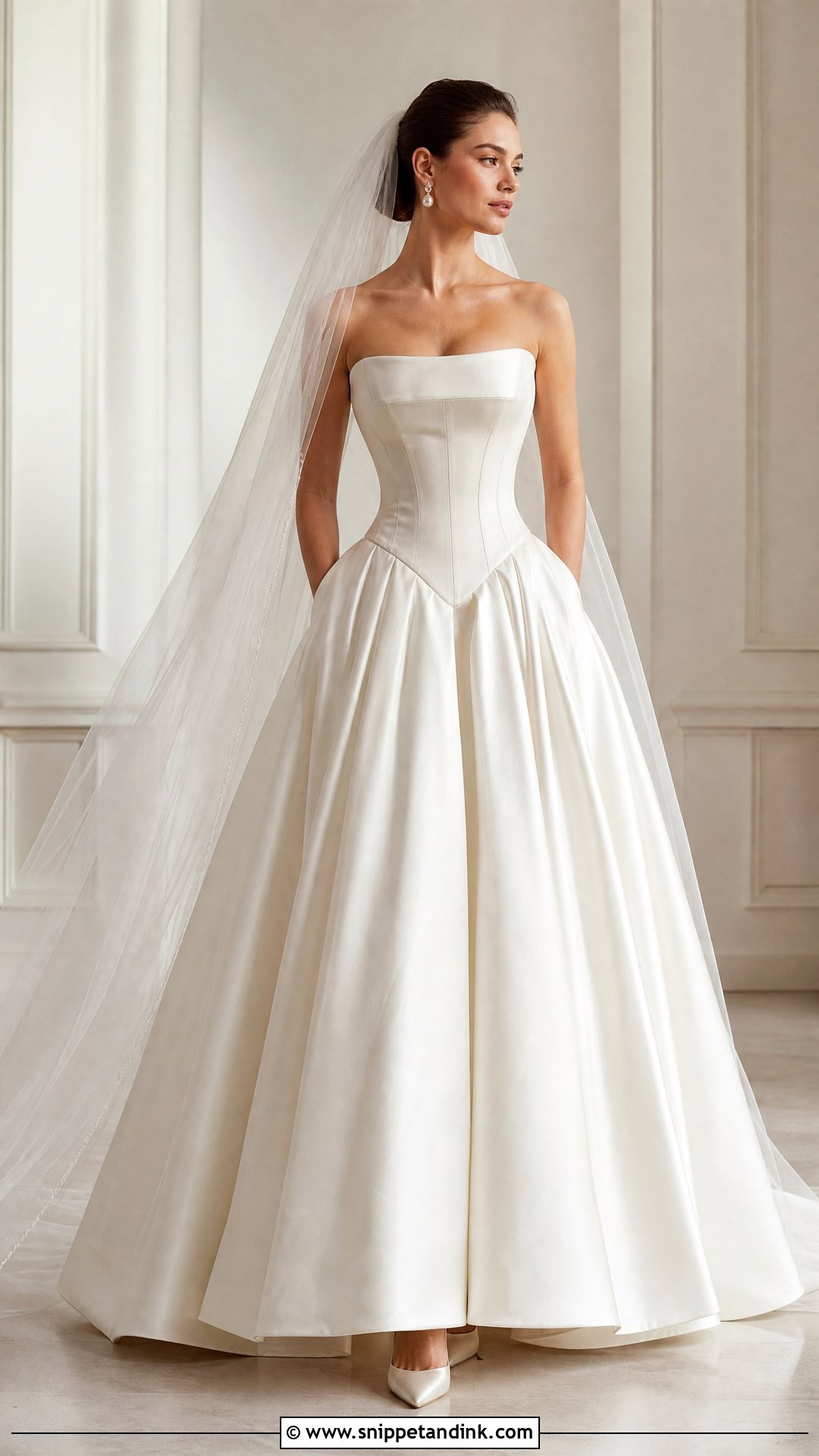
The dipped V of a basque waist wedding dress lengthens the torso and gives a full skirt a sculpted, slightly vintage line. It depends entirely on structure, so the bodice has to be boned and fitted precisely, and the point of the V needs to land where your waist actually narrows. Brides with a short torso should try it on before deciding, because a low point can shorten the legs visually. Keep the jewellery refined and let that waistline do the talking at a formal entrance.
13. Drop Waist Wedding Dress
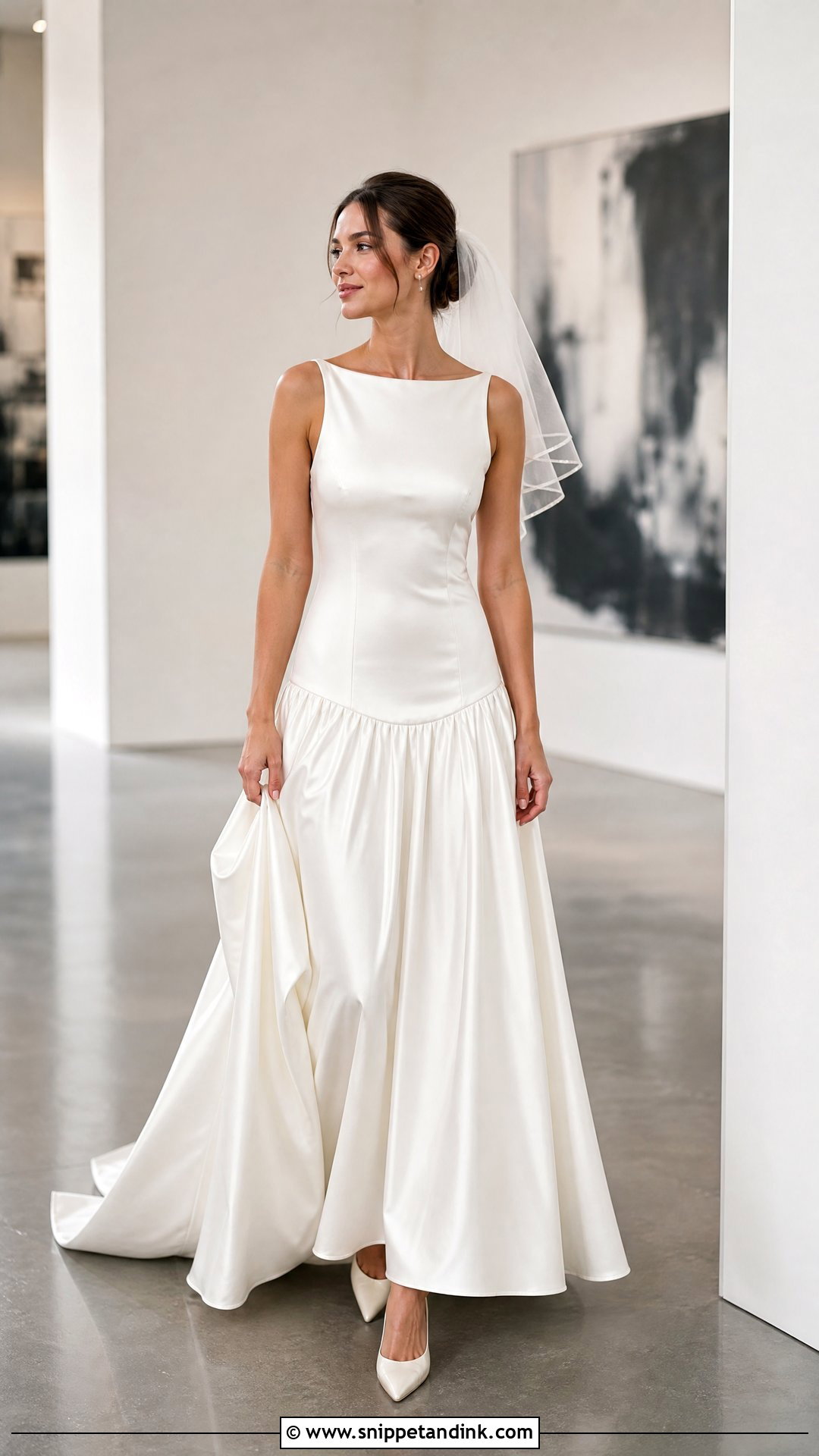
Moving the skirt seam down onto the hips gives a long, unbroken line through the body, which is why drop-waist gowns look so fresh in portraits. It’s a fussy shape to fit, though. If the seam lands in the wrong spot, it cuts across the widest part of the hip, so I watch it in a side view before anything else. Satin keeps it modern and tulle makes it softer. Skip belts entirely; the seam is already the feature.
14. Tea Length Wedding Dress
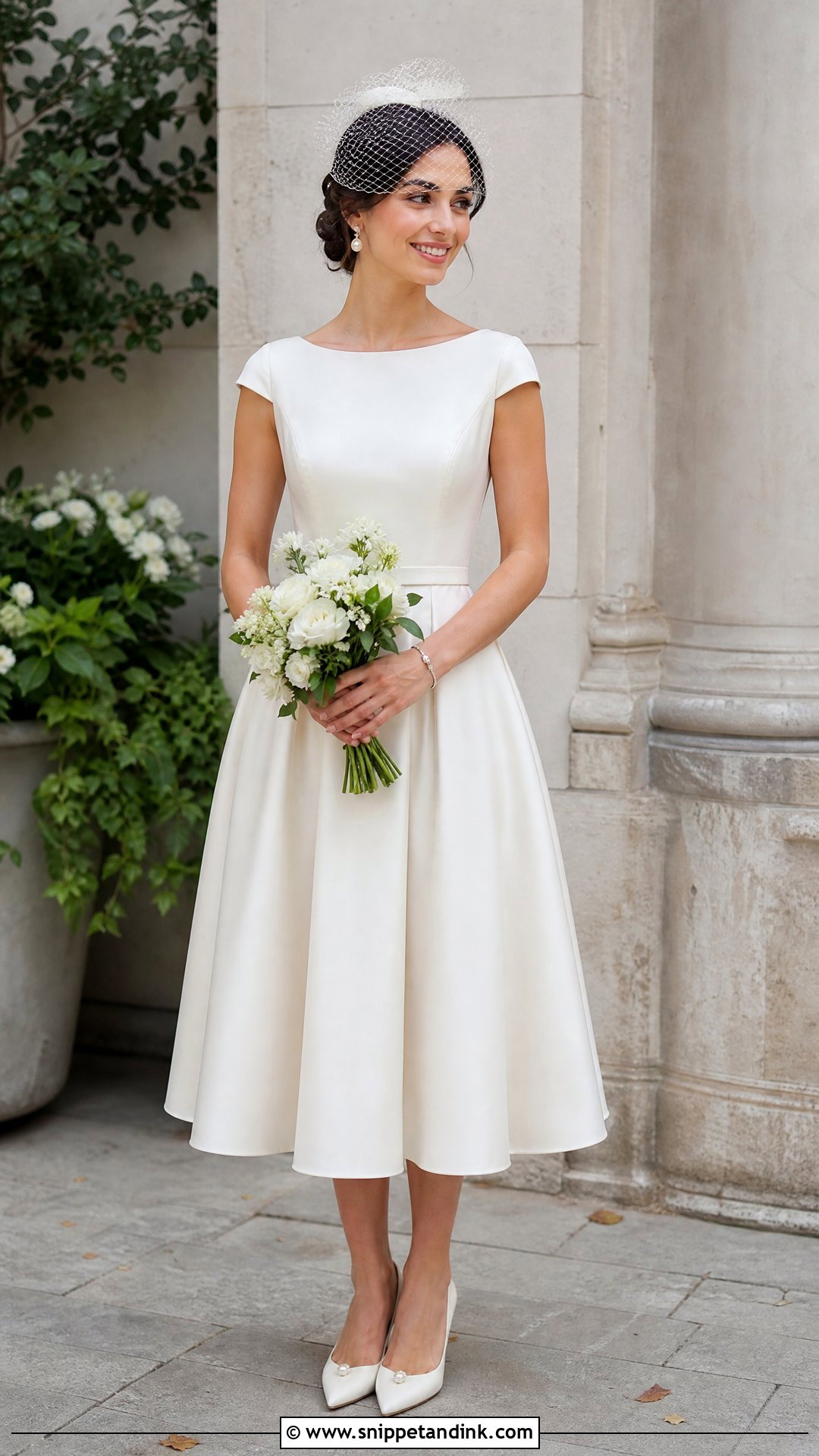
Tea length is one of my favourite answers for a courthouse ceremony or a second look. The hem lands between knee and ankle, so your shoes are on show and you can dance without a bustle. Have the hem pinned while you wear the exact shoes, because even a centimetre of heel changes where it falls. A birdcage or short tulle veil and pearl studs suit the proportion, and there’s no train for anyone to step on.
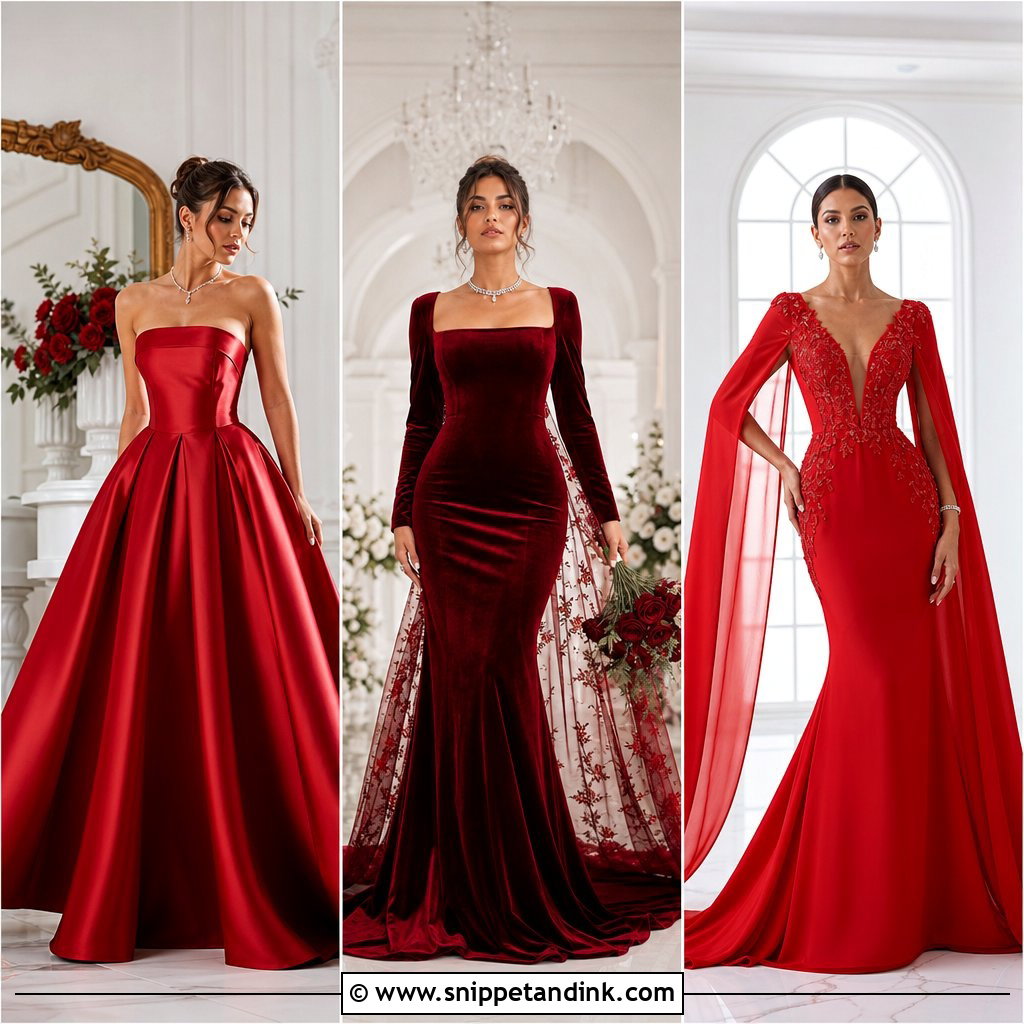
15. Mini Wedding Dress
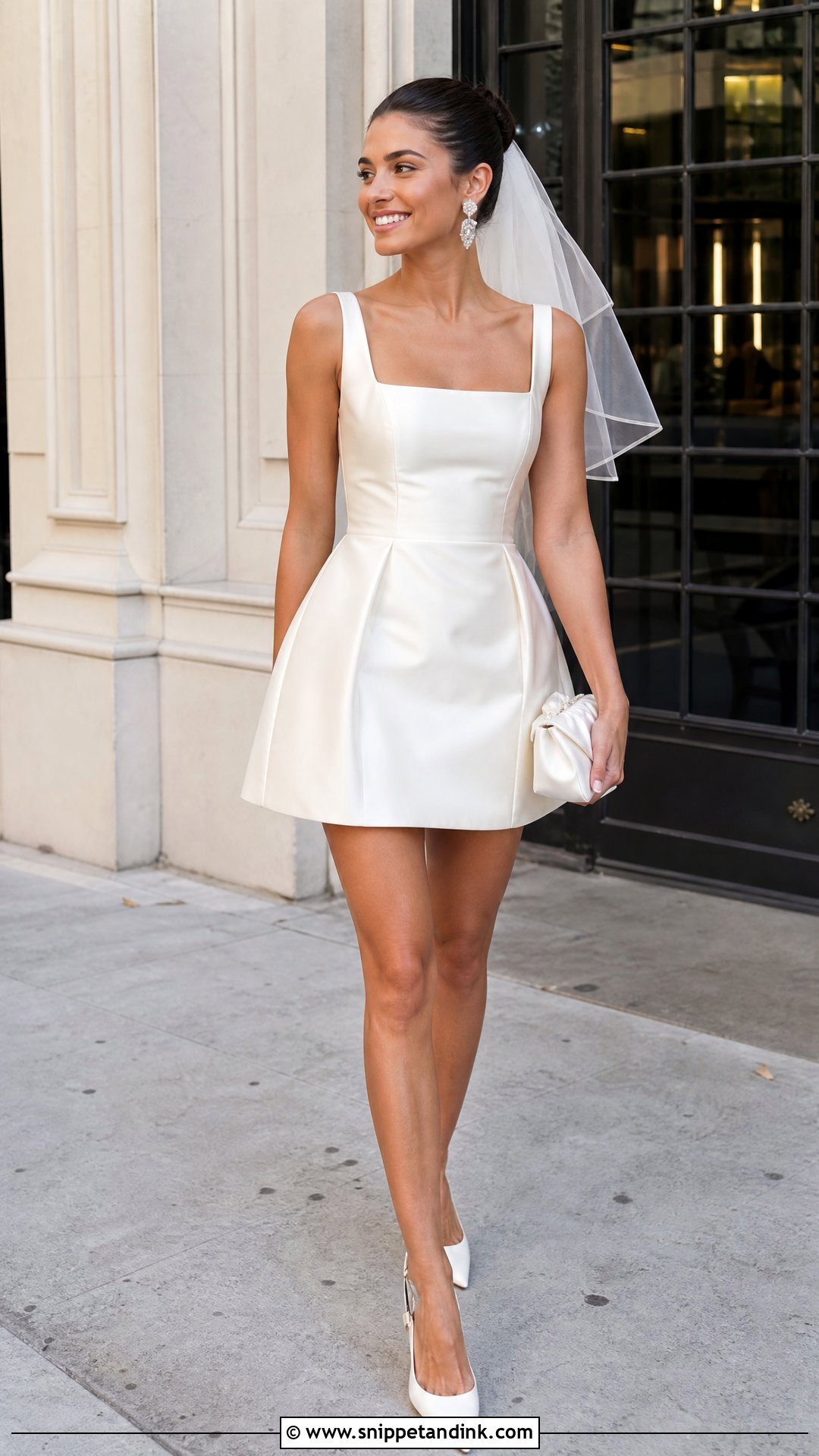
Wearing a mini means the fit has to look deliberate. I look for structured crepe or satin that holds its shape when you sit, since lightweight fabric rides up and starts to look casual. Feather trim or lace adds texture without needing jewellery. If you want the ceremony to feel weightier, a detachable overskirt or a long veil does it, then comes off for the party. Sheer tights are worth packing for a cold registry office, and slingbacks are kinder on the dance floor than a closed pump.
16. Floral Wedding Dress
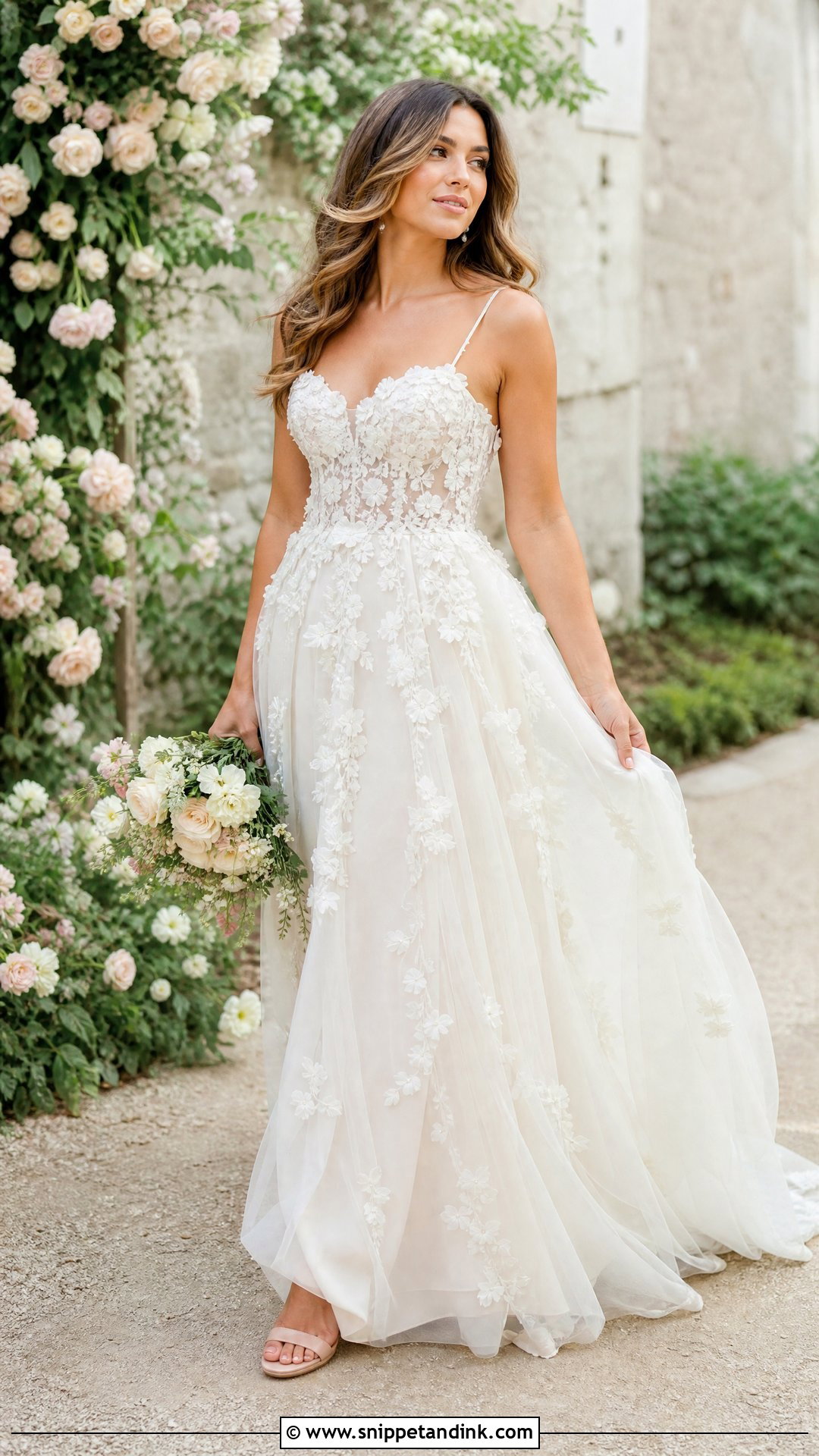
Florals on a gown come in very different strengths: white-on-white embroidery, raised 3D appliqués, or a soft pastel print. Appliqués add weight and can catch on a bouquet, so I keep the flowers in your hands smaller and looser with this dress. Choose blush, blue or pale green accents only if you’d also wear that colour outside a wedding. Nude heels and loose waves suit a garden ceremony in spring or summer, and accessories should stay quiet so the embroidery isn’t competing.
17. Blush Wedding Dress
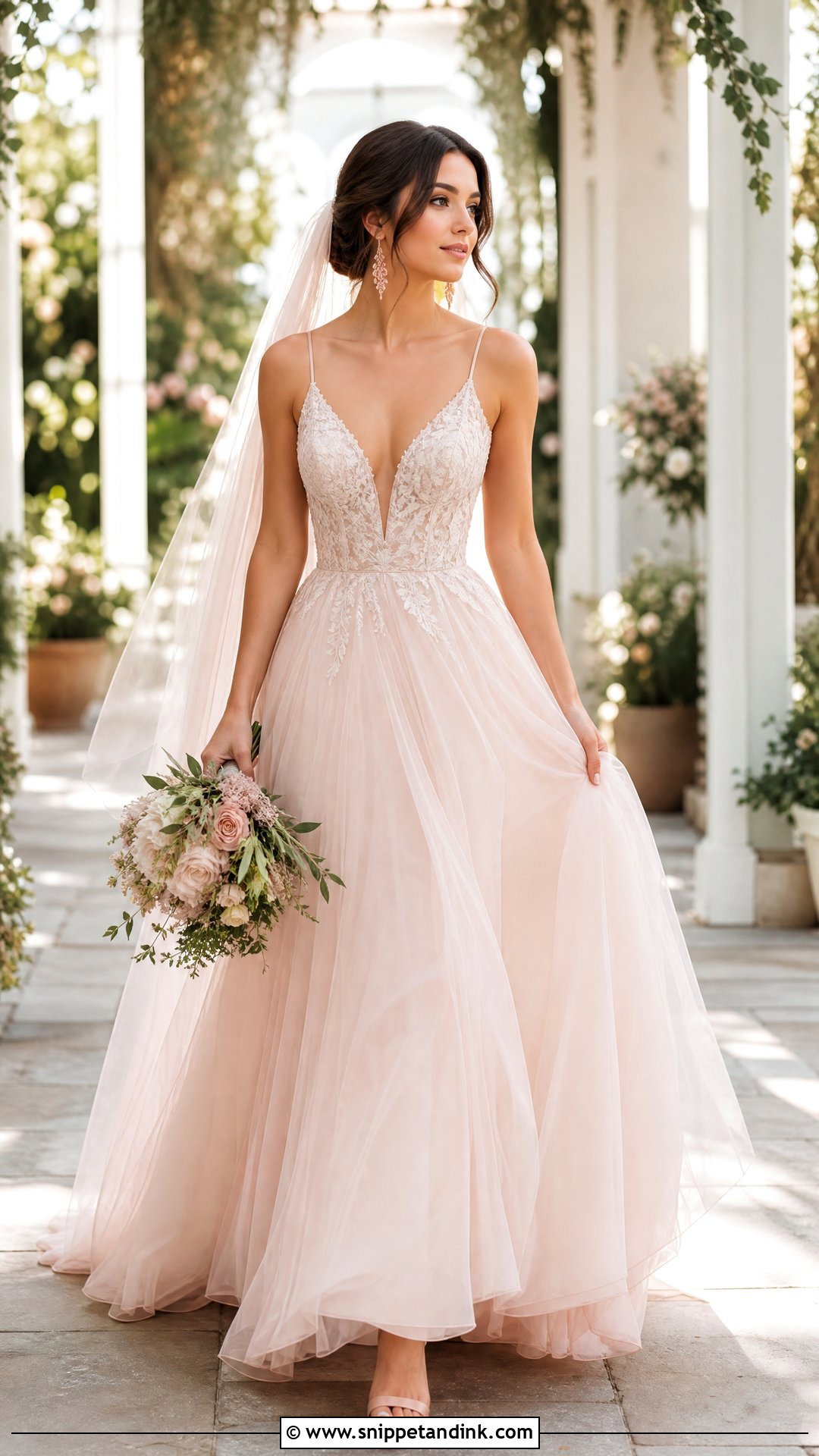
Blush is a colour I always test against the bride’s skin in daylight before she commits. Pale pink and champagne tones flatter most complexions, but some shades turn sallow under warm reception lighting, so stand by a window at the appointment. Tulle and organza carry blush softly; satin makes it look richer. Keep the veil, shoes and jewellery in one tone family, ivory or rose gold, so the gown reads as intentional rather than mismatched.
18. Blue Wedding Dress
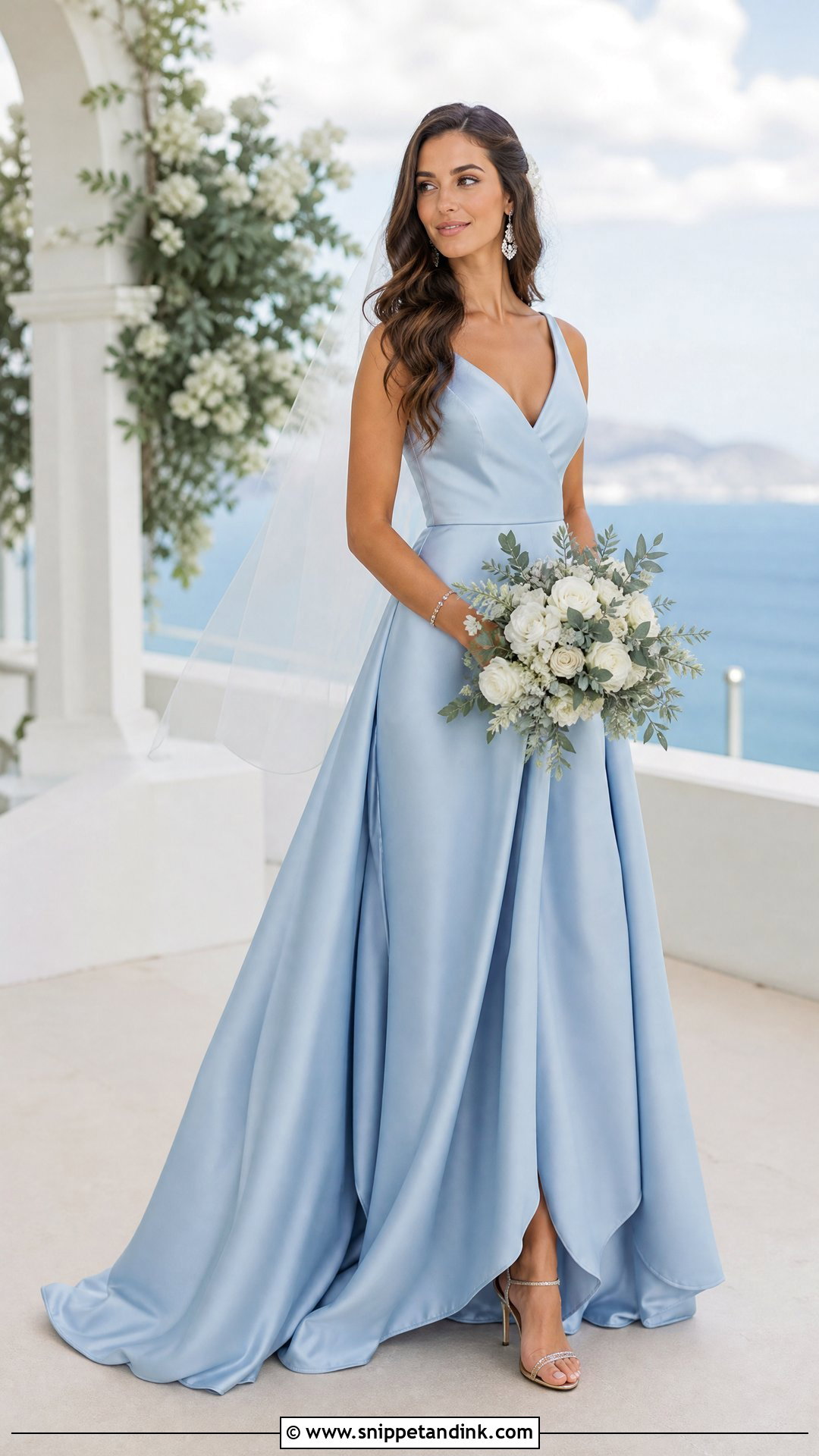
Powder blue and blue-grey still look bridal because they’re so pale, and they sit well by the sea. In photos, though, pale blue can drift toward grey or white depending on the light, so ask the shop for a swatch and take it outside. If a fully blue gown feels like too much, ivory with blue embroidery or a blue lining gives the same idea quietly. Silver heels and crystal earrings suit the cooler tone.
19. Black And White Wedding Dress
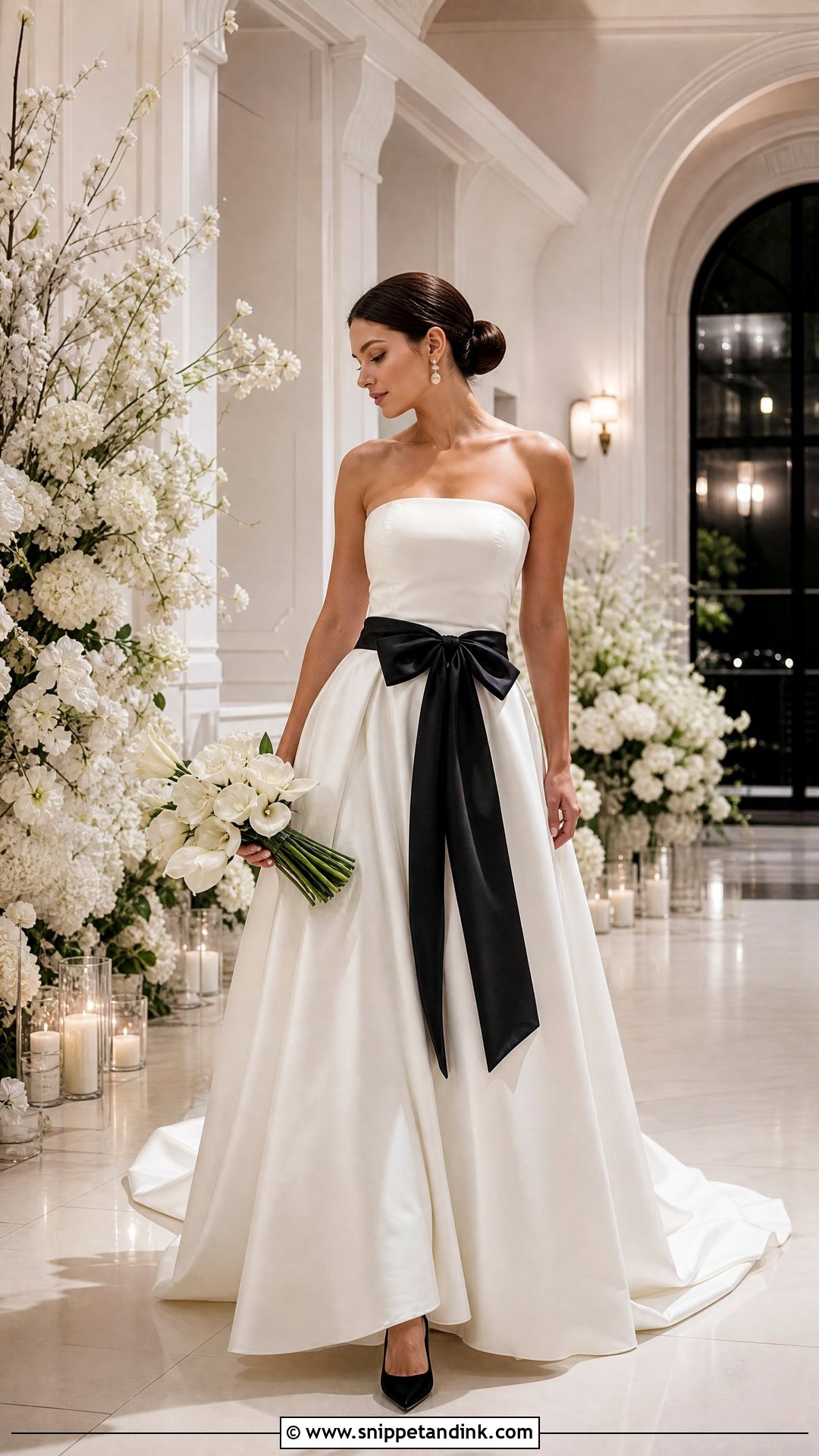
Black on a wedding gown works only when it’s placed with a reason. A black bow at the back, black gloves or a fine waist ribbon gives quiet contrast; black lace overlay or a black bodice is the full graphic version. I keep everything else simple, with sleek hair and pearl earrings, because the contrast already does the talking. Black dye can transfer onto ivory fabric if the trim gets damp, so ask whether the black elements are colourfast.
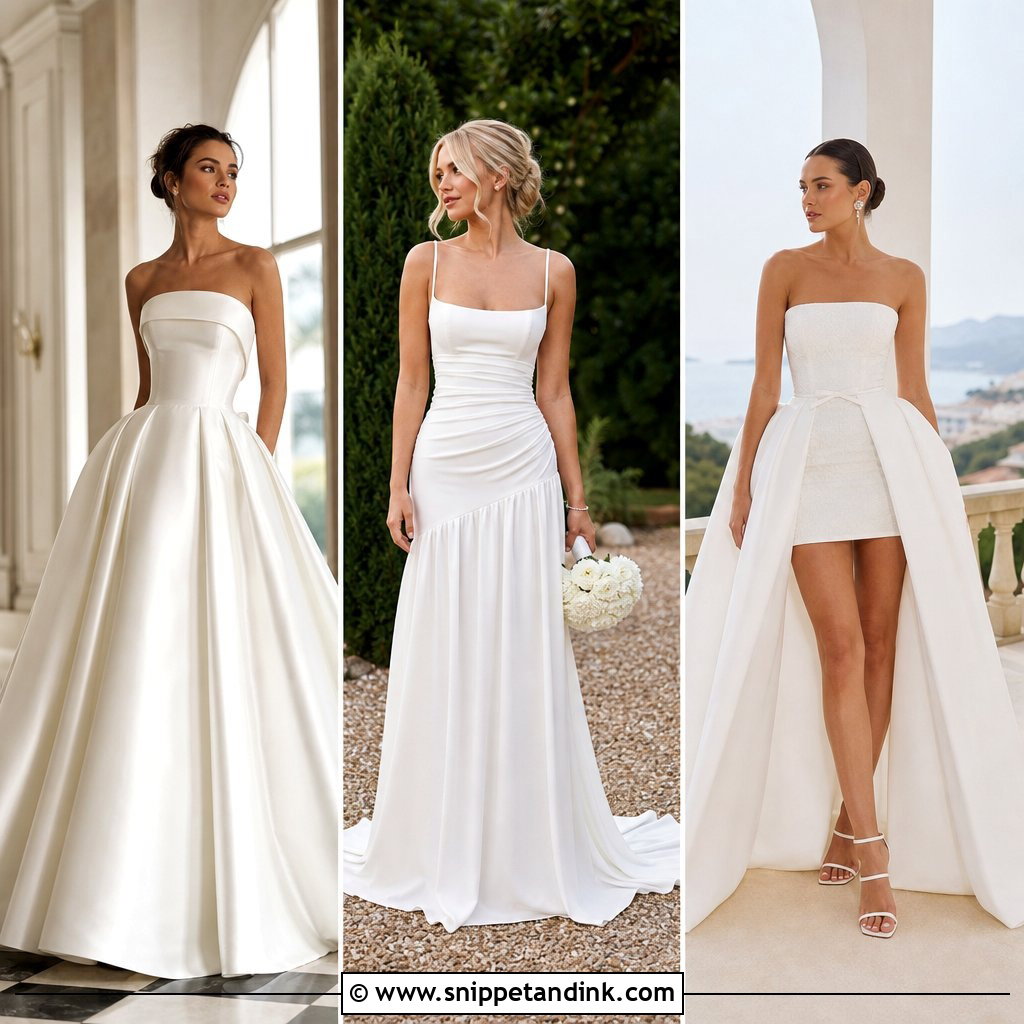
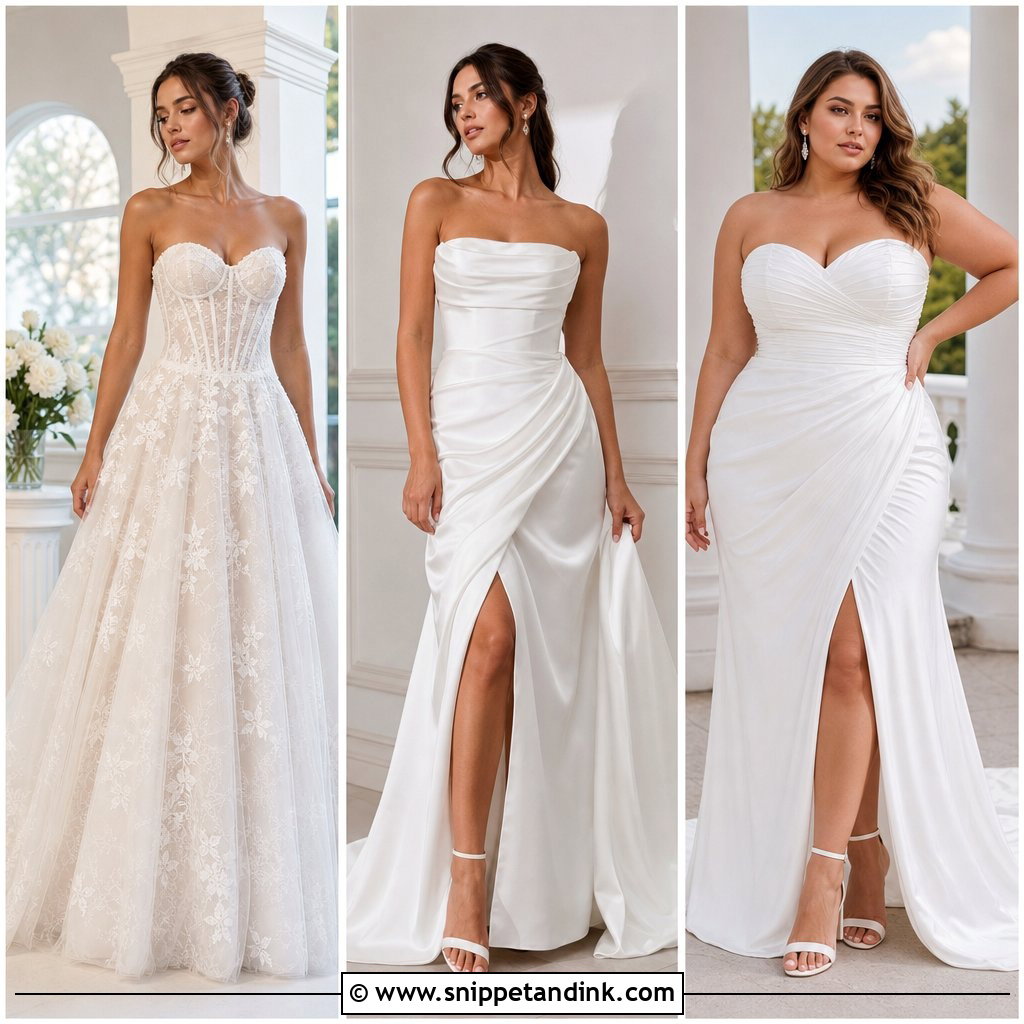
20. Convertible Wedding Dress
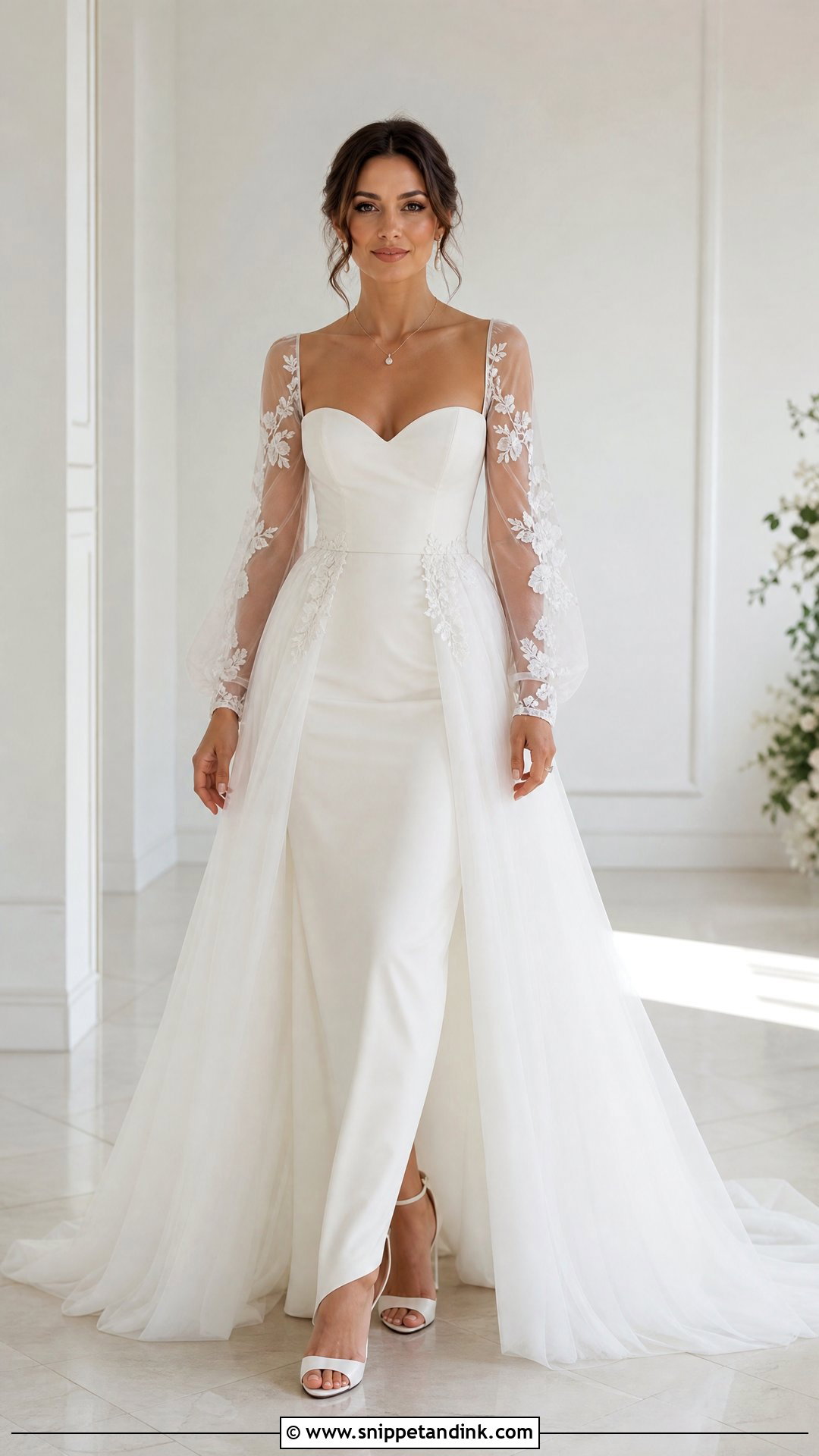
Convertible gowns give you two outfits for one fitting schedule, which is the real budget saving. Detachable sleeves, capes, boleros, trains and overskirts all come off for the reception. The part I check hardest is the fastening: hooks and poppers have to hold through a ceremony and still undo quickly in a bathroom with one helper. Make sure the base dress looks finished from every angle once the layer is gone, and pick shoes and jewellery that suit both versions.
21. Wedding Dress With Bow
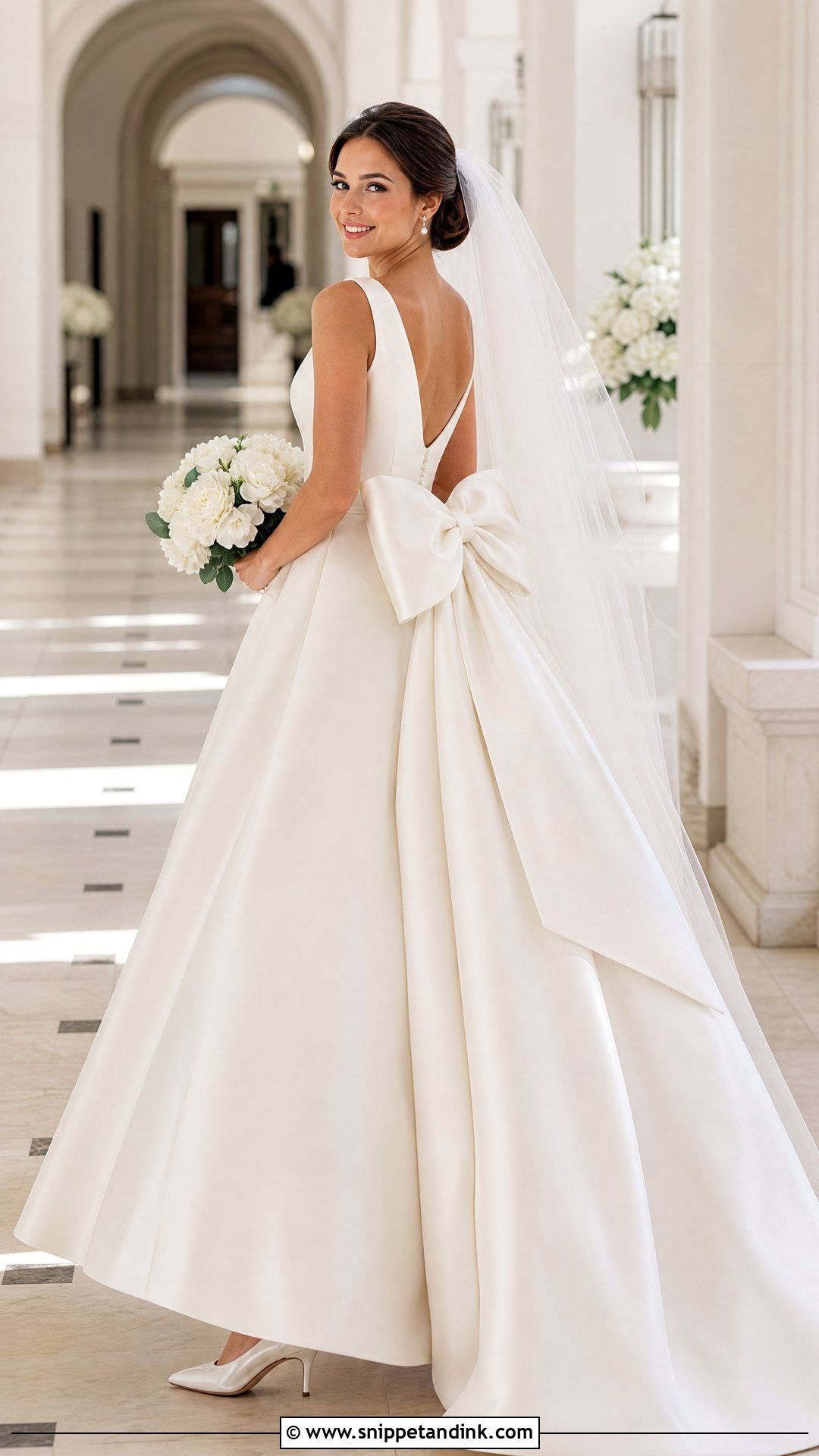
A bow lives or dies on its fabric. Satin or mikado holds a sculptural shape all day; softer fabrics wilt by the speeches. A large back bow gives a plain gown its drama, small shoulder bows read sweeter, and a waist bow helps define shape. Remember that a big back bow will be crushed every time you sit, so ask for it to be detachable or plan to fluff it before the entrance into dinner. Keep the jewellery minimal.
22. Wedding Dress With Cape
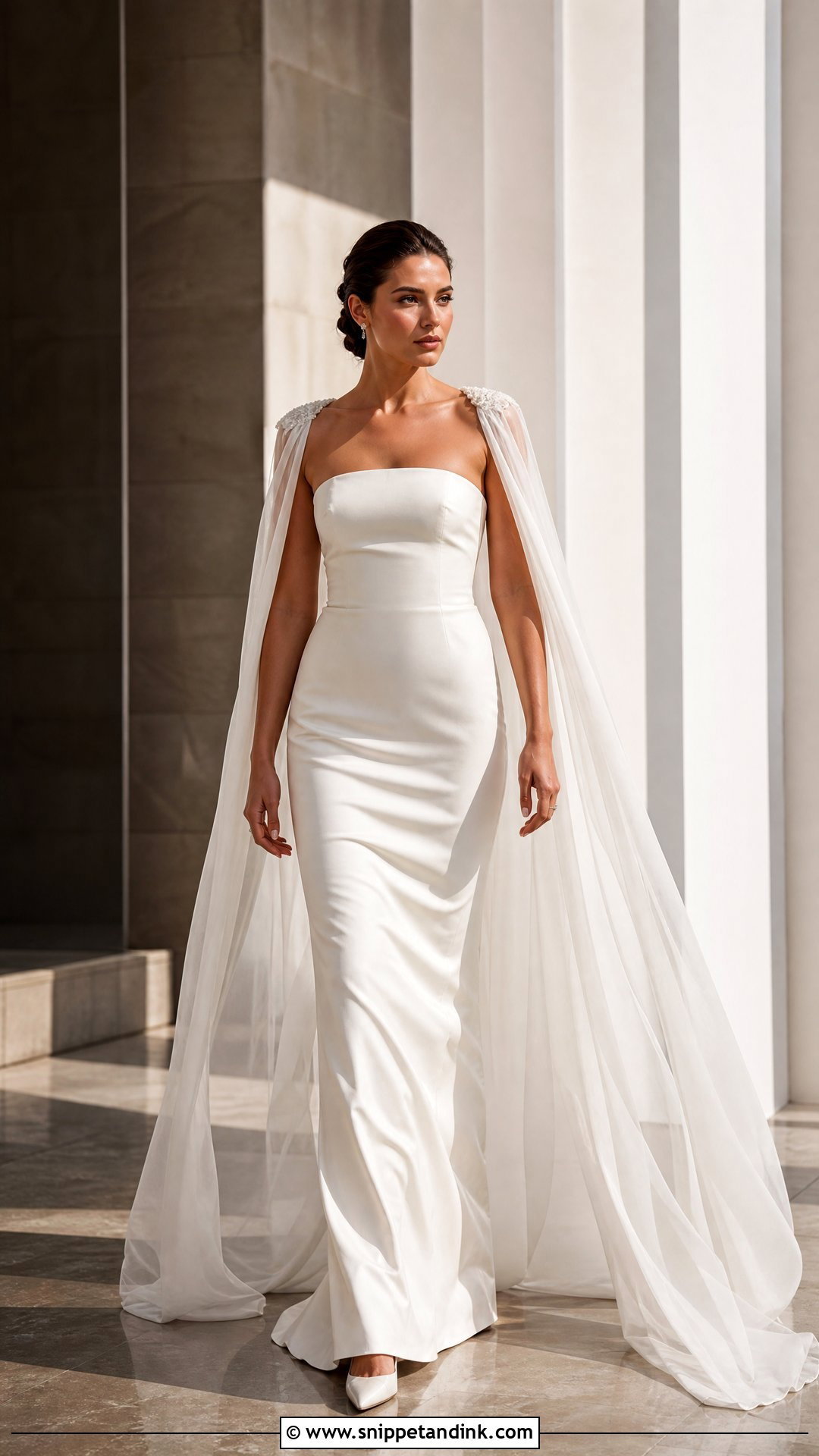
Capes are my usual suggestion for a bride who wants movement but hates the idea of anything on her head. They add coverage and drama while leaving the hairstyle completely visible. Sheer capes float, long ones trail like a veil, and structured ones square the shoulders. They suit minimal, strapless and fitted gowns best. The practical test is to walk briskly and turn around: the cape should attach firmly at the shoulder or neckline and not drag the dress backwards.
23. Wedding Dress With Overskirt
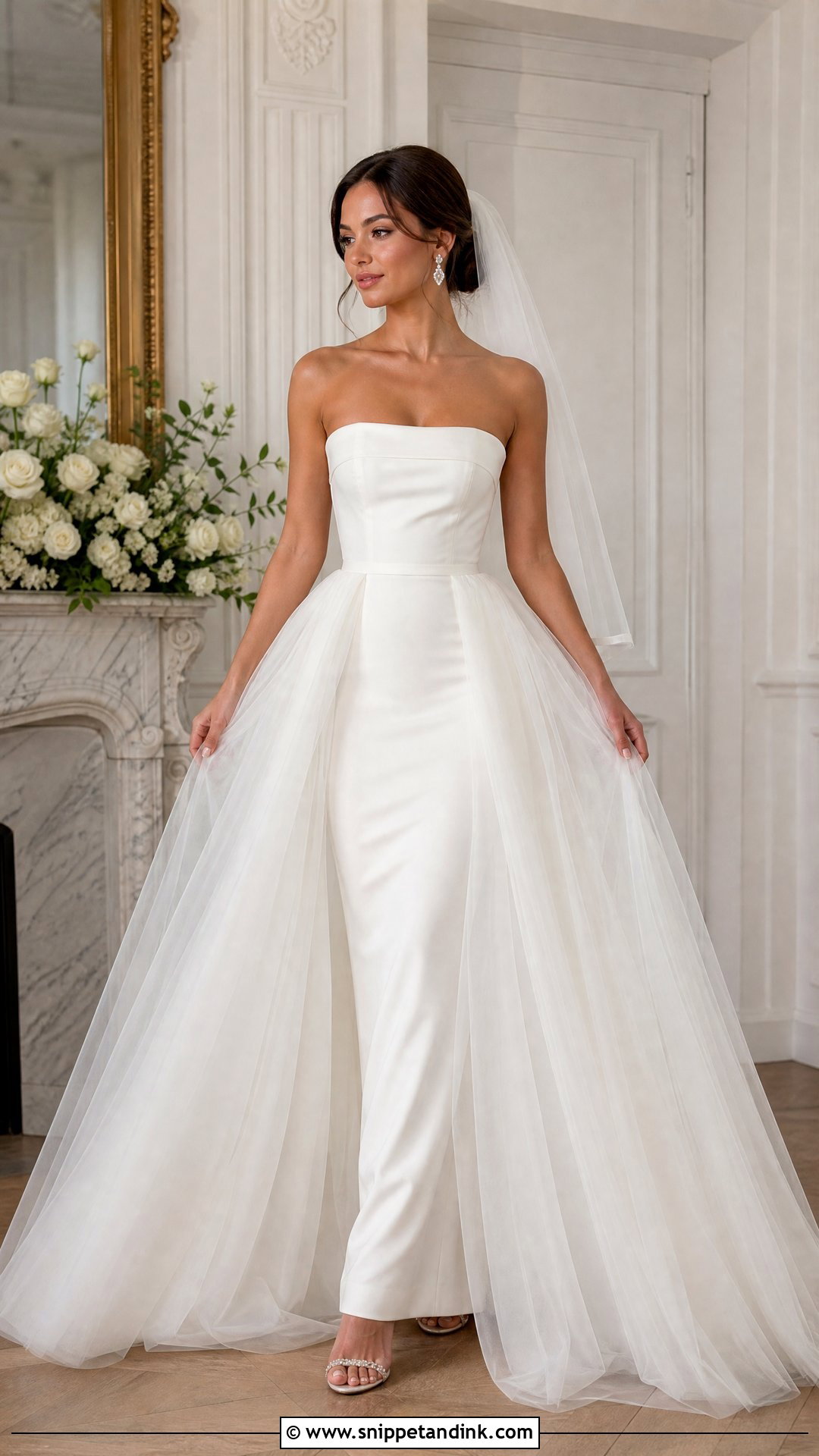
An overskirt gives you ball-gown volume for the aisle and a lighter dress the moment it comes off. Underneath might be a fitted column, a mermaid or even a mini. Matching fabric looks cohesive; sheer tulle over a sleek base gives soft contrast. Have the base dress hemmed to the shoes you’ll actually wear, because the overskirt often hides that hem during fittings and brides forget to check it. Choose accessories that suit both lengths.
24. Wedding Pantsuit Dress
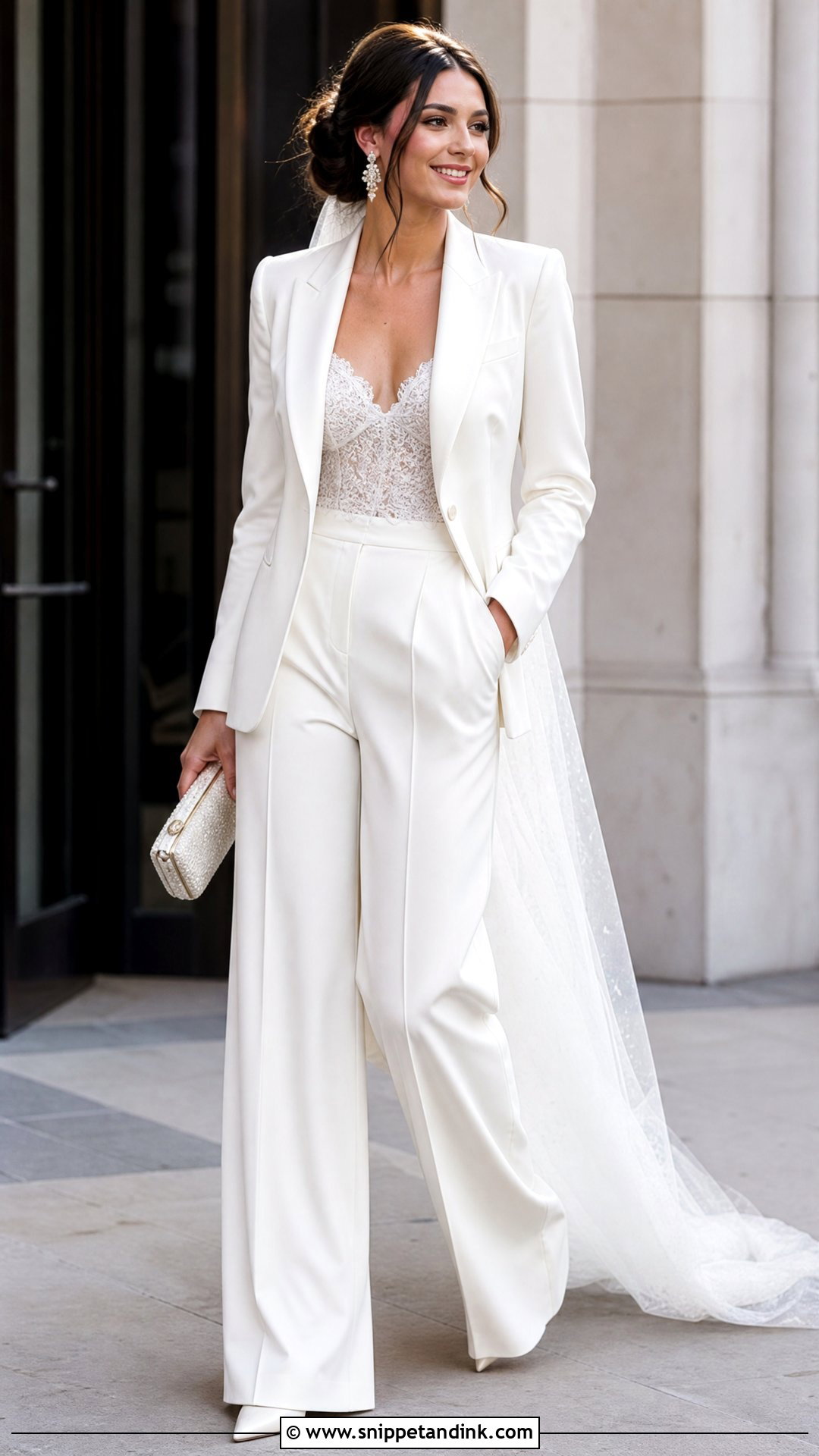
A wedding pantsuit dress depends on tailoring more than any gown on this list. Wide-leg trousers, a structured blazer and a lace camisole, or a long overskirt panel for dress-like movement, all need bridal-weight crepe, satin or silk suiting rather than office fabric. I have trousers hemmed so they just kiss the top of the shoe, since anything shorter looks borrowed. Pointed heels and statement earrings suit it, and a veil or cape adds ceremony feeling at a city venue or elopement.

25. Reception Wedding Dress
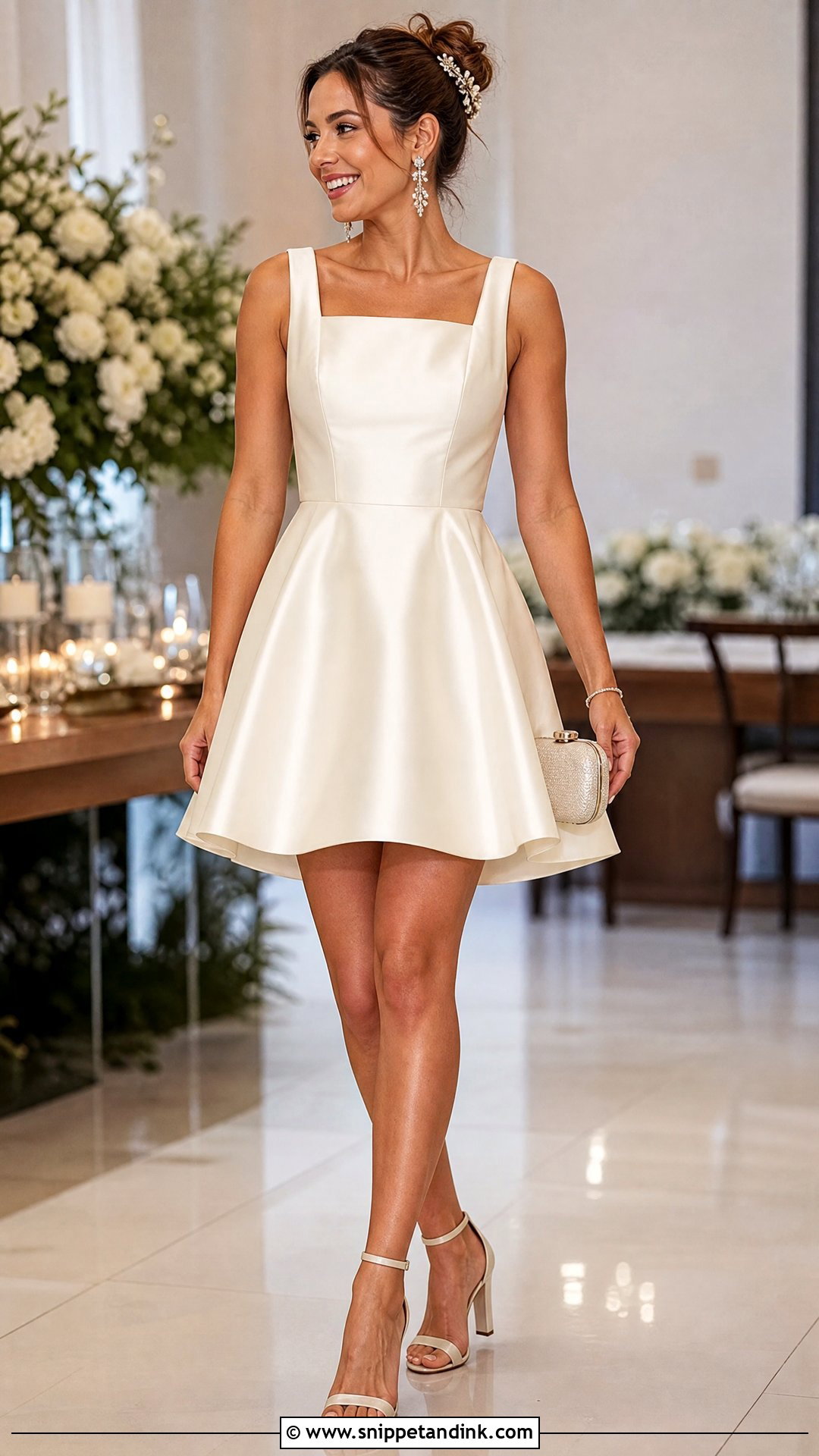
The second dress should solve the problems of the first. Brides usually pick a mini, a slip, a tea-length or a feather-trimmed dress, or a plain satin column, so they can dance and greet guests without a bustle. Get changed quickly by choosing something with a side zip you can manage alone, and buy shoes you can stand in for hours, such as block heels or platforms. It doesn’t need to match the ceremony gown, but echoing the fabric or colour keeps the photos connected.
An Order-to-Aisle Calendar for Made-to-Order Gowns
Most of these dresses are not sitting in a stockroom. Designer gowns are usually cut to order once you’ve chosen a sample size, and production commonly takes several months, though every brand and season differs. The schedule below is the one I work back from, and I add slack for anything with hand embroidery or custom colour.
- Nine to twelve months out: start appointments, especially for structured gowns or anything imported.
- Eight to ten months out: place the order and get the expected delivery date in writing.
- About three months out: first alterations fitting, with your shoes and the underwear you’ll actually wear.
- Four to six weeks out: second fitting for the hem, bustle and any strap or bodice adjustments.
- One to two weeks out: final fitting, bustle lesson for whoever will help you, then collection and pressing.
Shorter timelines are still workable
If you have less time, look at sample sales, off-the-rack collections or a simpler slip, column or separates look that a good seamstress can fit in a few weeks. Rush fees exist at many salons, so ask about them early instead of discovering them at the till.
What Each Fabric Looks Like at Midnight
The fabric you choose decides how the dress will look in the last photos of the night. Satin and silk crease where you sit and show water marks if anything is spilled, so blot rather than rub. Crepe holds its line and resists wrinkles well, which is why I like it for long days. Tulle and organza flatten in a damp garden and collect grass at the hem. Lace snags but hides small marks. Afterward, get the gown professionally cleaned within a few weeks, before sugar-based stains from drinks oxidise and yellow, then store it flat in acid-free tissue away from light rather than hanging it by the straps.
Which Shape Earns a Second Appointment?
Don’t shortlist from pictures alone. Try at least one silhouette you think you’ll hate, because the dress that surprises brides at an appointment is often the one they end up ordering. Minimal gowns, lace, colour, minis, capes, overskirts and tailored separates all have a place in modern bridal fashion, but your shortlist should come from how each one moved when you sat, walked and lifted your arms. Book the follow-up visit only for the gowns that passed that test.
You'll Like These Ideas:



Leave a Reply