
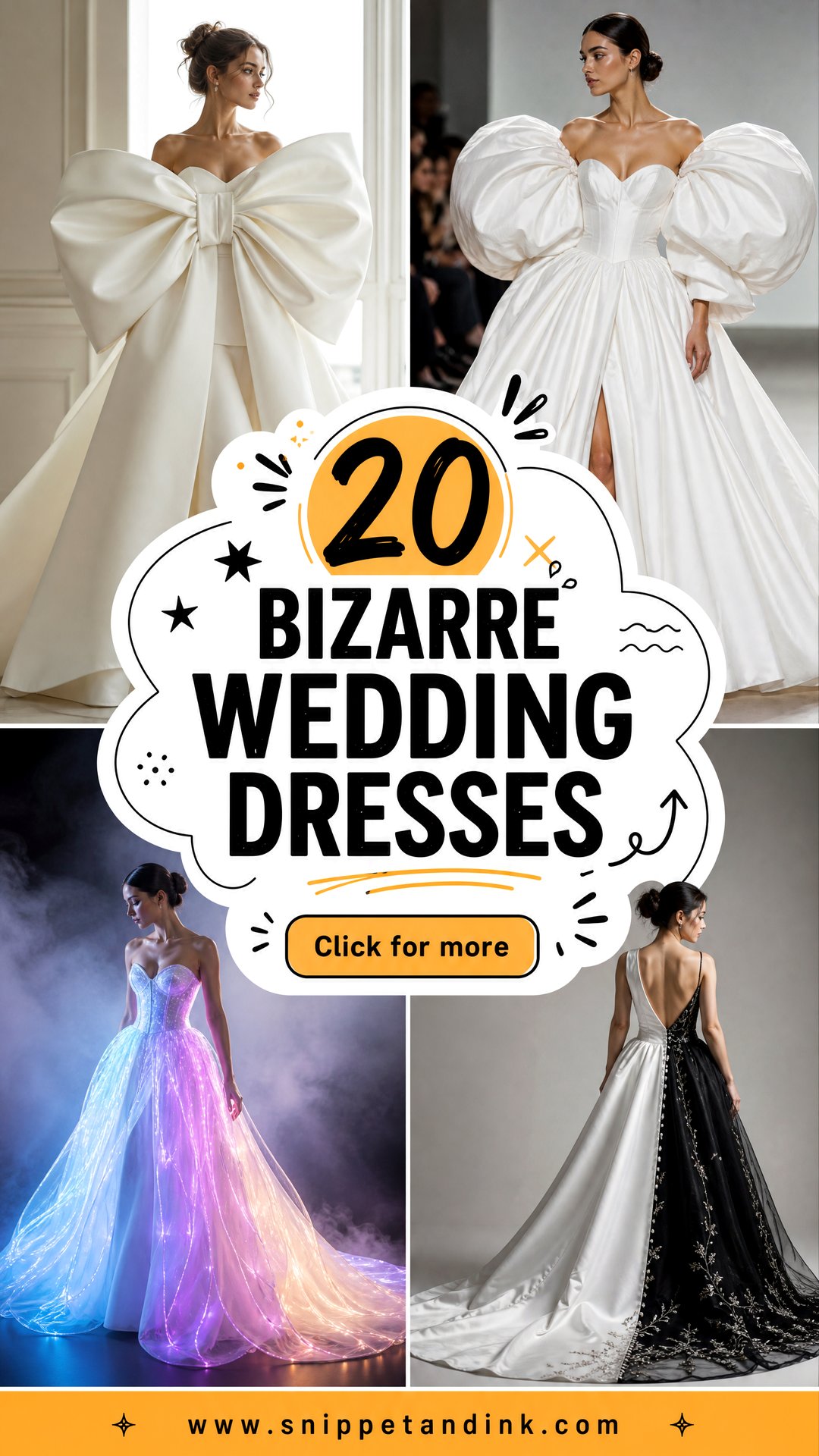
Some brides walk into a fitting and ask me for the strangest dress I can think of, and I love those appointments. The gowns below go well past convention: balloons, toilet paper, newspaper, mirrors, lights, a rainbow, a cage. A few are more art piece than wedding dress, and I’ll say so where that’s true. For each one I’ve described the full outfit, from shoes to veil, and the build or wear problem I’d sort out before the day. If you’re drawn to experimental couture, or you just want guests to talk about the dress for years, the trick is the same: one clear idea, built well enough to sit, walk and hug in.
Who Actually Builds a Dress Like This?
You won’t find most of these gowns on a bridal shop rail. They come from couture or costume makers, theatre wardrobe specialists, installation artists, and for flowers and balloons, from a florist or balloon artist working alongside a seamstress who builds the base dress.
When I help brides commission something unusual, the conversation covers a handful of points:
- Ask to see something they’ve built that a person actually wore for hours, not only pieces made for a photo shoot or a display.
- Agree on a mock-up stage. A cheap test version in calico or plain material shows whether the shape works on your body before any precious material is cut.
- Allow plenty of time. A commissioned piece with experimental materials often needs several months and more fittings than a standard gown, so starting early is the safest route.
- Settle who repairs it on the day. Fragile dresses usually need the maker or an assistant on site, or at least a kit and written instructions.
- Get the plan for sitting, toilet trips and getting into a car in writing. If the maker hasn’t thought about these, that’s a warning sign.
1. Balloon Wedding Dress
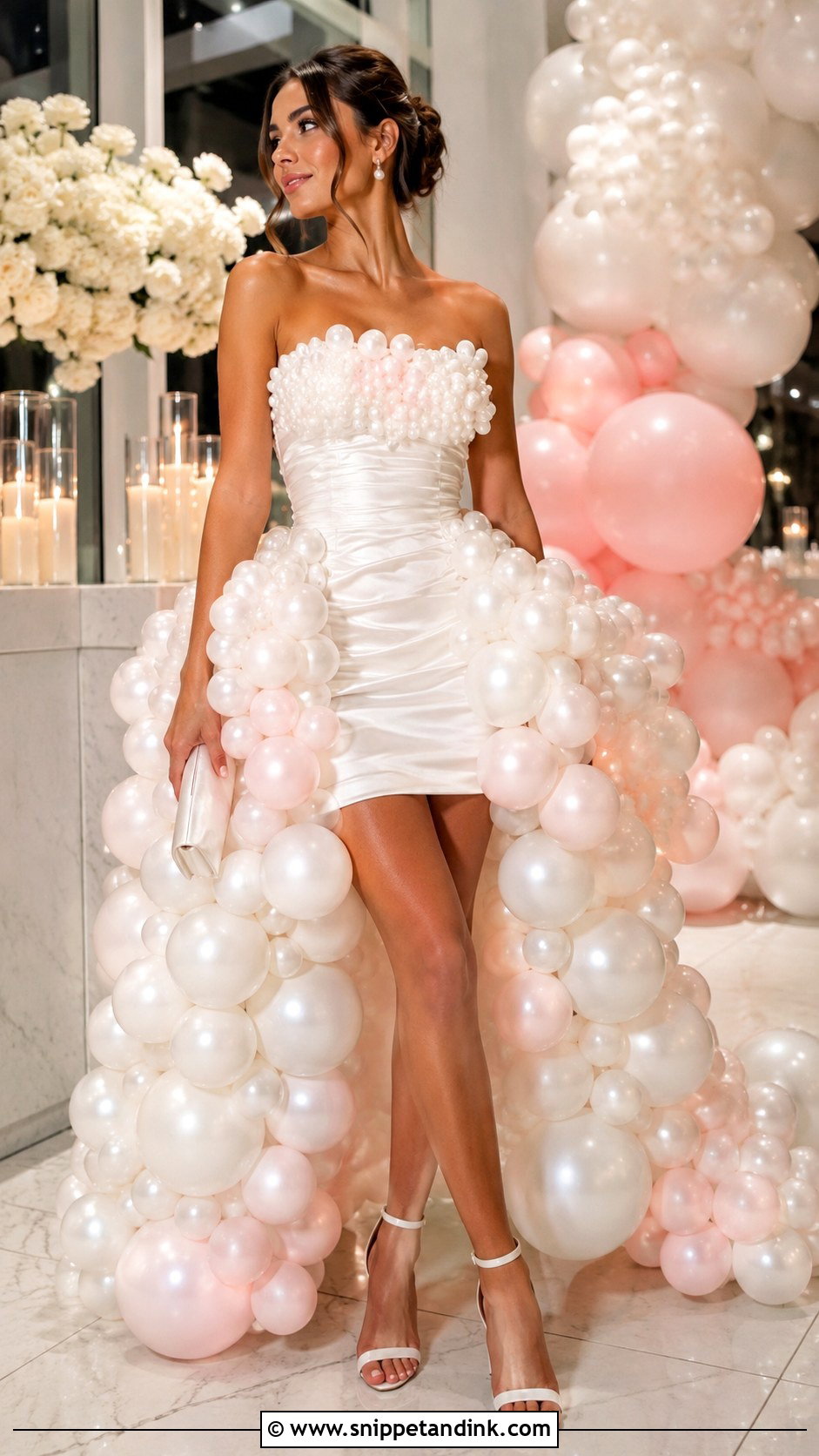
Balloons need a real dress underneath. I’d start with a fitted white mini or a light column gown for coverage, then attach clusters of pearly white, clear and pale blush balloons to a flexible mesh layer to form the skirt, sleeves or a cloud of a train. Everything else stays plain: white ankle-strap heels, pearl studs, a small satin clutch and a sleek bun. Air-filled balloons last much longer than helium ones, and smaller sizes are less likely to burst when you sit. Latex also turns cloudy in strong sun within hours, so for an outdoor ceremony, ask the maker to inflate and attach them as close to the start as possible.
2. Toilet Paper Wedding Dress
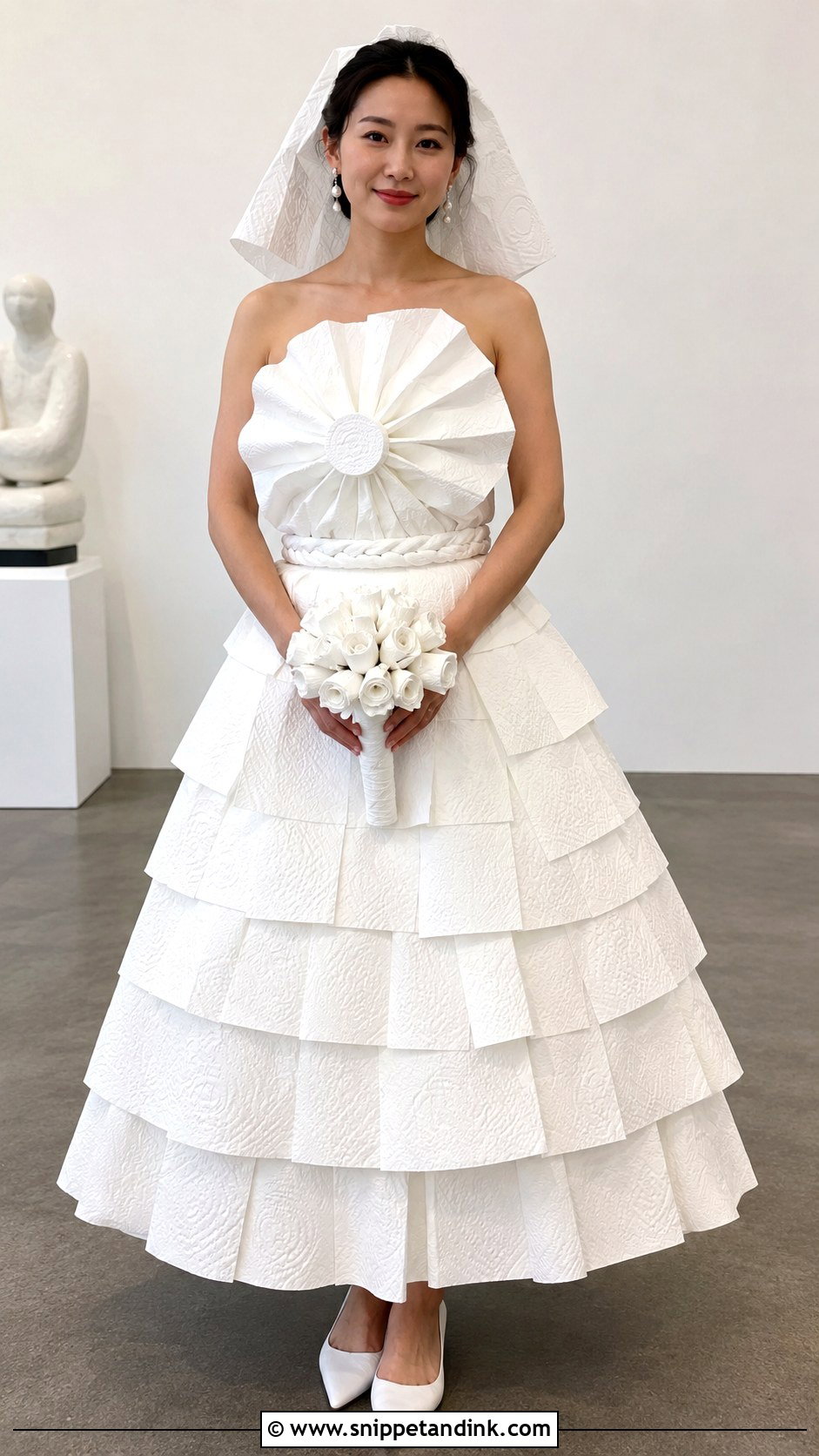
Toilet paper is surprisingly sculptural. A toilet paper wedding dress is usually built from folded rosettes across a structured bodice, layered sheets for a tiered A-line skirt and braided paper at the waist and neckline. A white slip underneath gives secure coverage. I’d style it with pointed white flats, small pearl earrings, a short paper veil and a paper flower bouquet. Be realistic about where you wear it. Humidity, a drink spill or a gust of wind can ruin it in minutes, so I treat this as a ceremony and portrait dress and plan a change for the party.
3. Newspaper Wedding Dress
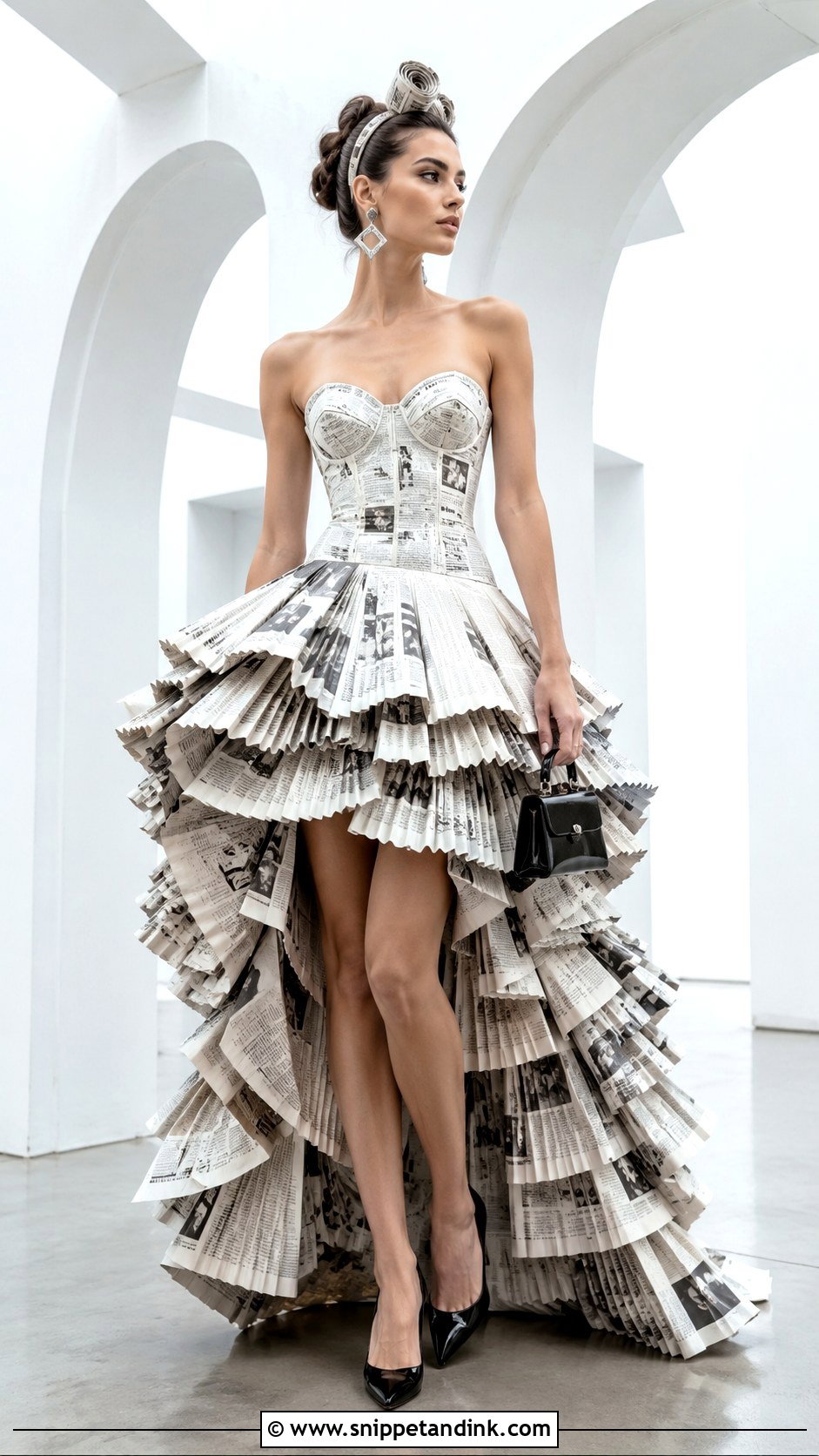
Newsprint makes its own pattern. Folded pages over a fitted corset-style base, with fanned sections building a high-low skirt, give a graphic black-and-white texture that needs no extra decoration. Black patent pumps, geometric silver earrings and a tiny black bag suit it, with a rolled-newspaper headband in place of a veil. A maker will often back the skirt with clear stiffened panels so it keeps its shape. Ink rubs off. Wear an inexpensive slip underneath and keep the dress away from your neck and arms if your skin or makeup is light, or you’ll end the night with grey smudges.
4. LED Light Wedding Dress
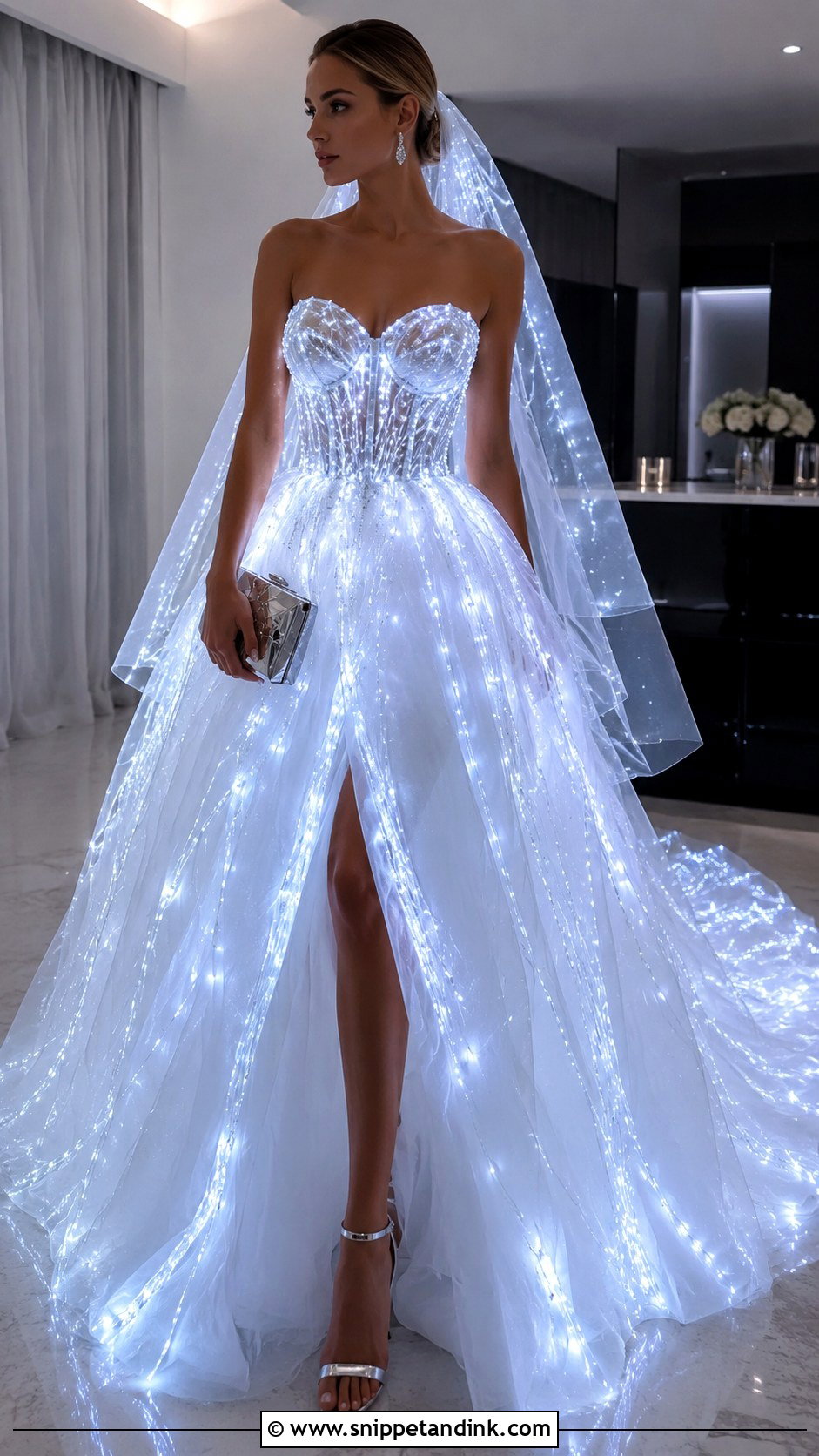
An LED light wedding dress works best in a dim room, where it becomes the light source. Tiny cool-white LEDs sewn under translucent organza make the bodice and skirt glitter, and fibre-optic threads along the train add a soft shimmer. I’d keep the styling cool and reflective: silver heels, crystal drops, a slim metallic clutch and a fingertip veil with scattered crystals. The battery is the part I fuss over. It needs an insulated pouch, a hidden pocket you can reach and a spare that’s fully charged. Run the dress for a few hours at home to see how warm the pack gets and how long it lasts.
5. Rainbow Wedding Dress
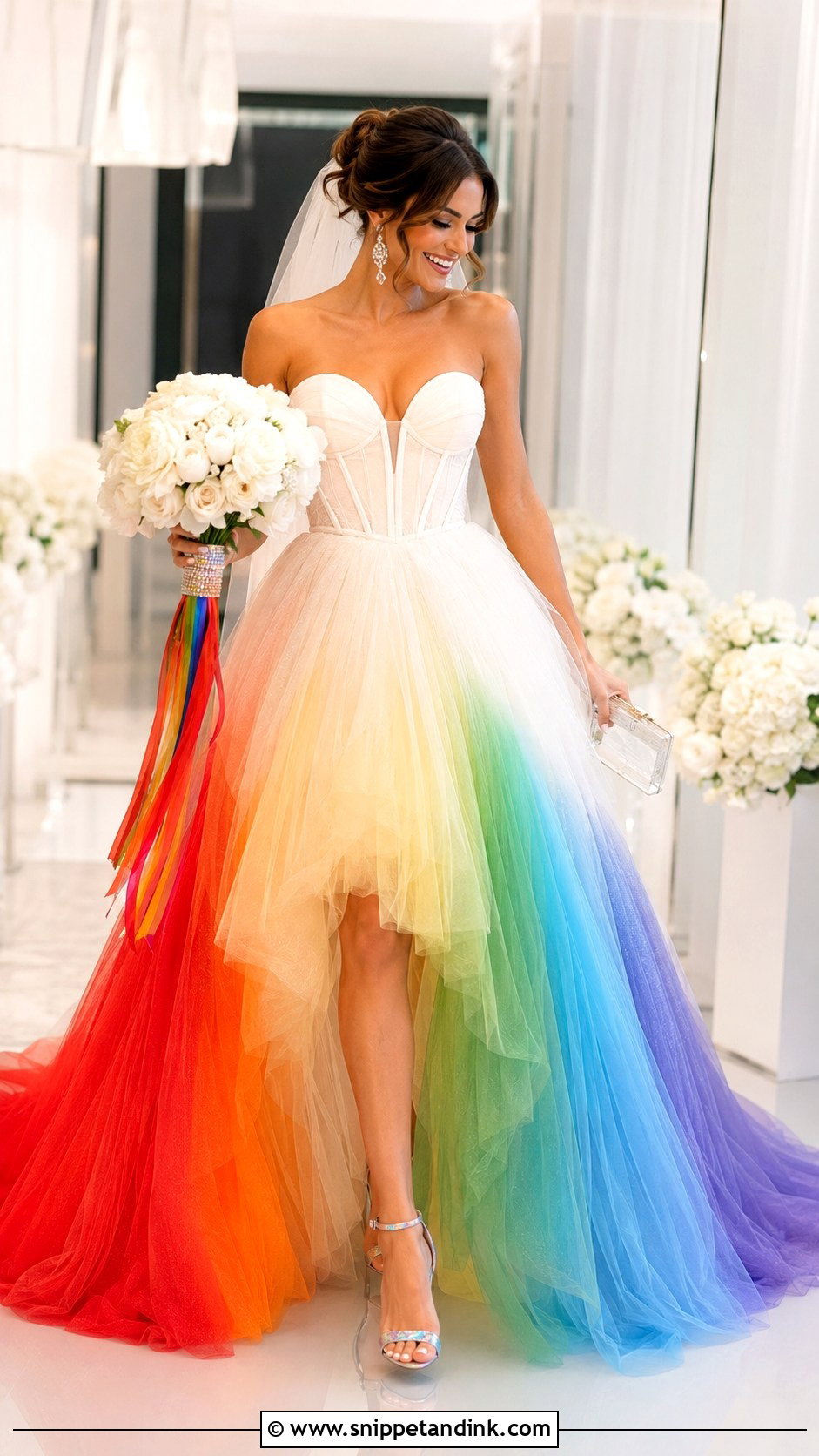
Colour is the hardest thing to get right on a rainbow wedding dress, and gradients are the answer. An ivory fitted bodice opening into tulle tiers from red through violet looks joyful when each shade blends into the next; hard bands make it look like a flag. Iridescent heels, crystal earrings and a clear clutch avoid adding yet another colour. An ivory veil and white flowers tied with a few matching ribbons keep it bridal. If you want less volume, the same colour run works on a narrow A-line skirt. I’d ask for a dyed swatch of every tier before the maker commits, since tulle dyes lighter than you expect.
6. Black Feather Wedding Dress
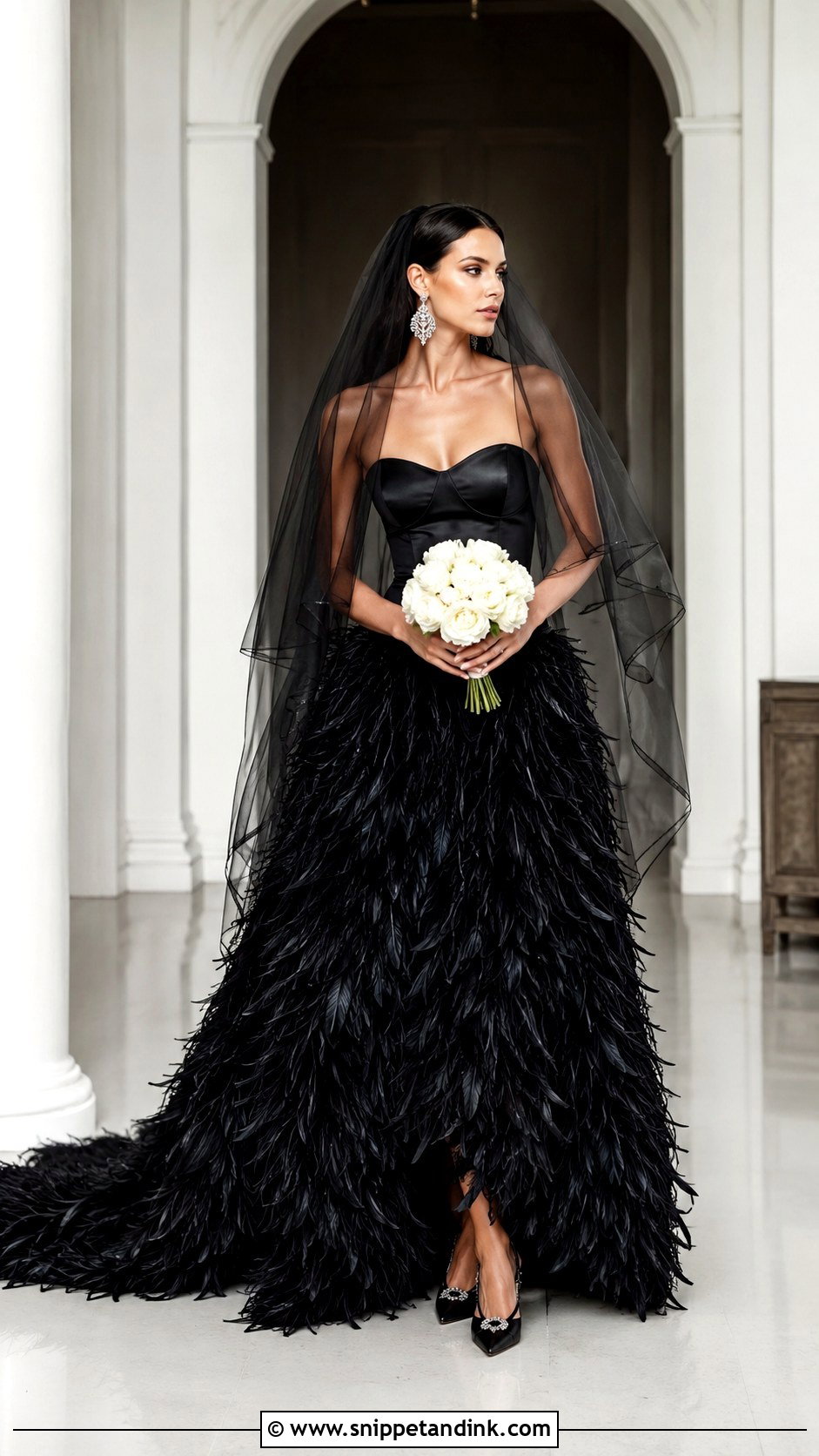
Black feathers move with every breath of air, which is half their appeal. A fitted satin bodice holds the structure while layers of light feathers cover the skirt from hip to floor, growing longer toward the back into a train. I’d add pointed black heels, silver chandelier earrings to bring light to the face, a sheer black shoulder-length veil and a small white bouquet for contrast. Feathers shed, especially in the first hours. Shake the skirt gently outdoors before you put it on, and warn whoever stands next to you in dark clothes. Anyone with a feather allergy should test a swatch against their skin first.
7. Giant Bow Wedding Dress
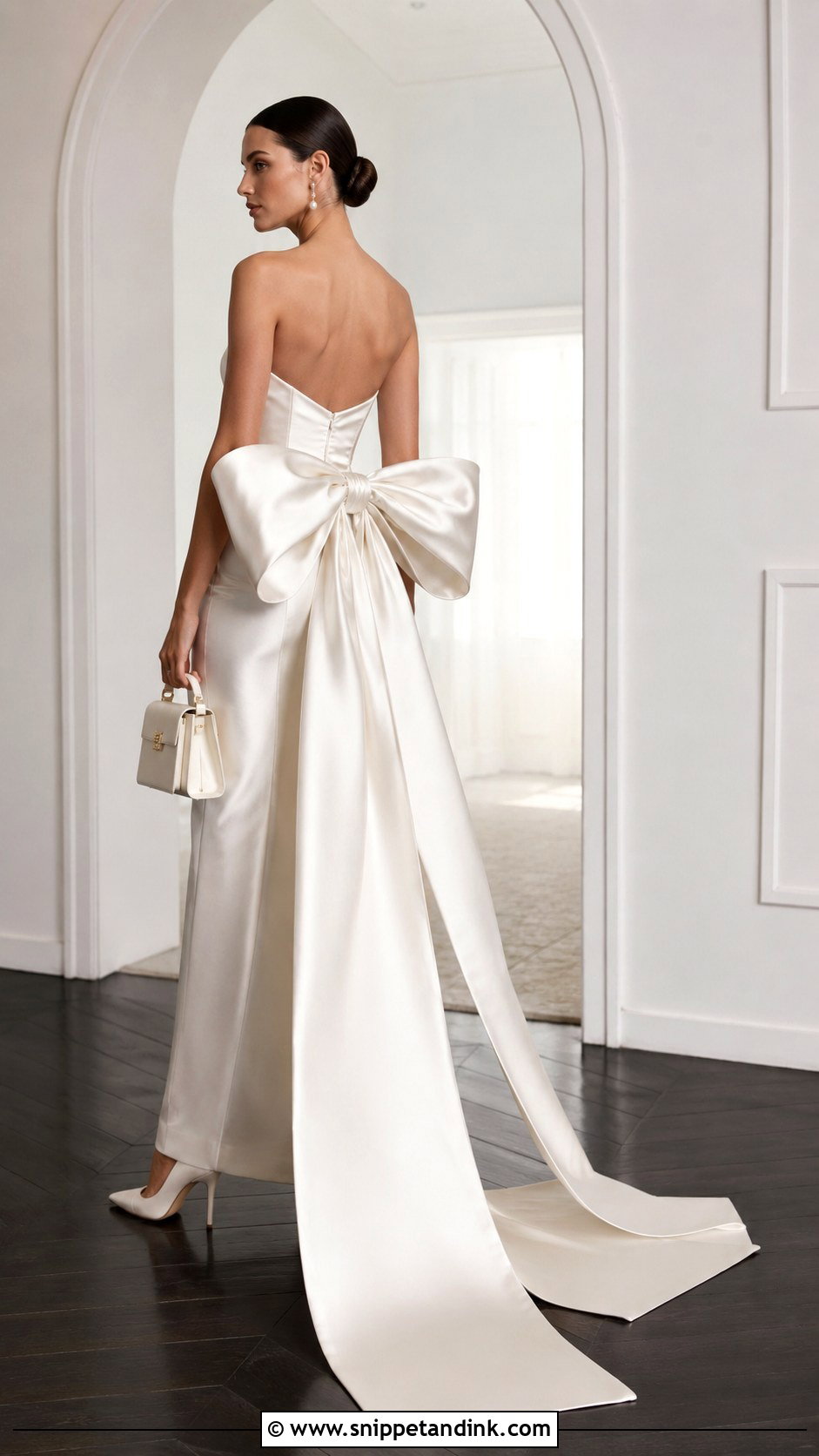
This one is about a single gesture. A clean strapless column gown is the base, and an oversized satin bow wraps the waist, rises behind the shoulders and drops into long ribbon panels down the back. Crisp ivory satin is the only fabric I’d use, because softer satin lets the loops fold within the hour. Pearl drops, pointed ivory pumps, a structured bag and a sleek low bun are plenty, and you can skip a veil entirely. Ask for the bow to be built on its own internal frame with removable tail panels, so the reception version is lighter and you can actually sit back in a chair.
8. Sculptural Flower Wedding Dress
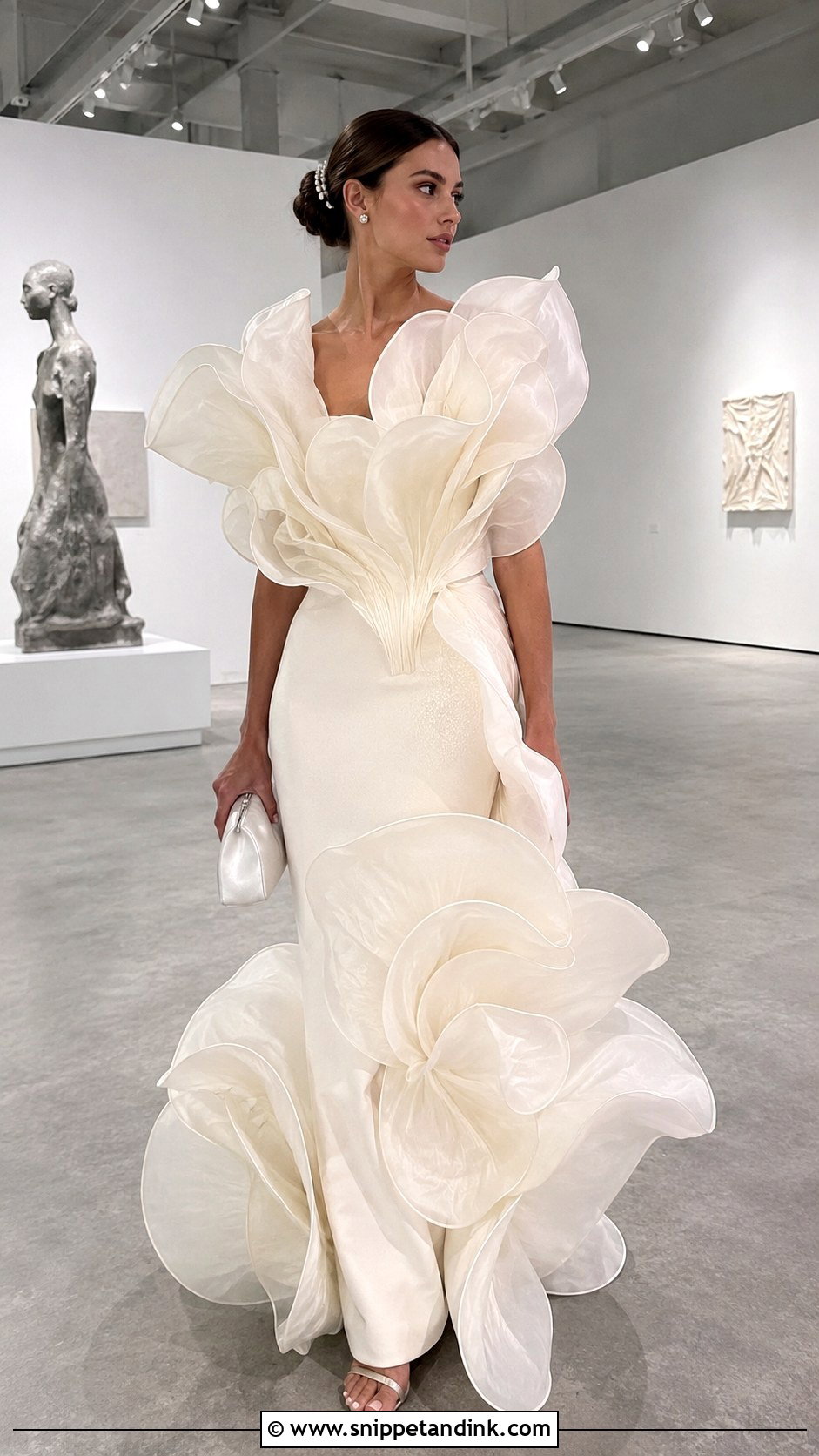
Petals the size of your torso need a hidden skeleton. Curved fabric petals in ivory organza and silk, sometimes backed with thin foam, hold away from the body to form the bodice, hips and skirt, and a fitted inner dress keeps everything secure. I’d keep the rest almost invisible: plain ivory sandals, tiny crystal studs, a smooth clutch and one pearl hairpin. You don’t need a bouquet. The petals around the knee have to bend, or you’ll walk like you’re in a barrel. When proportions are right it reads as couture; when the petals are all the same size, it starts to look like a flower costume.
9. Mirrored Disc Wedding Dress
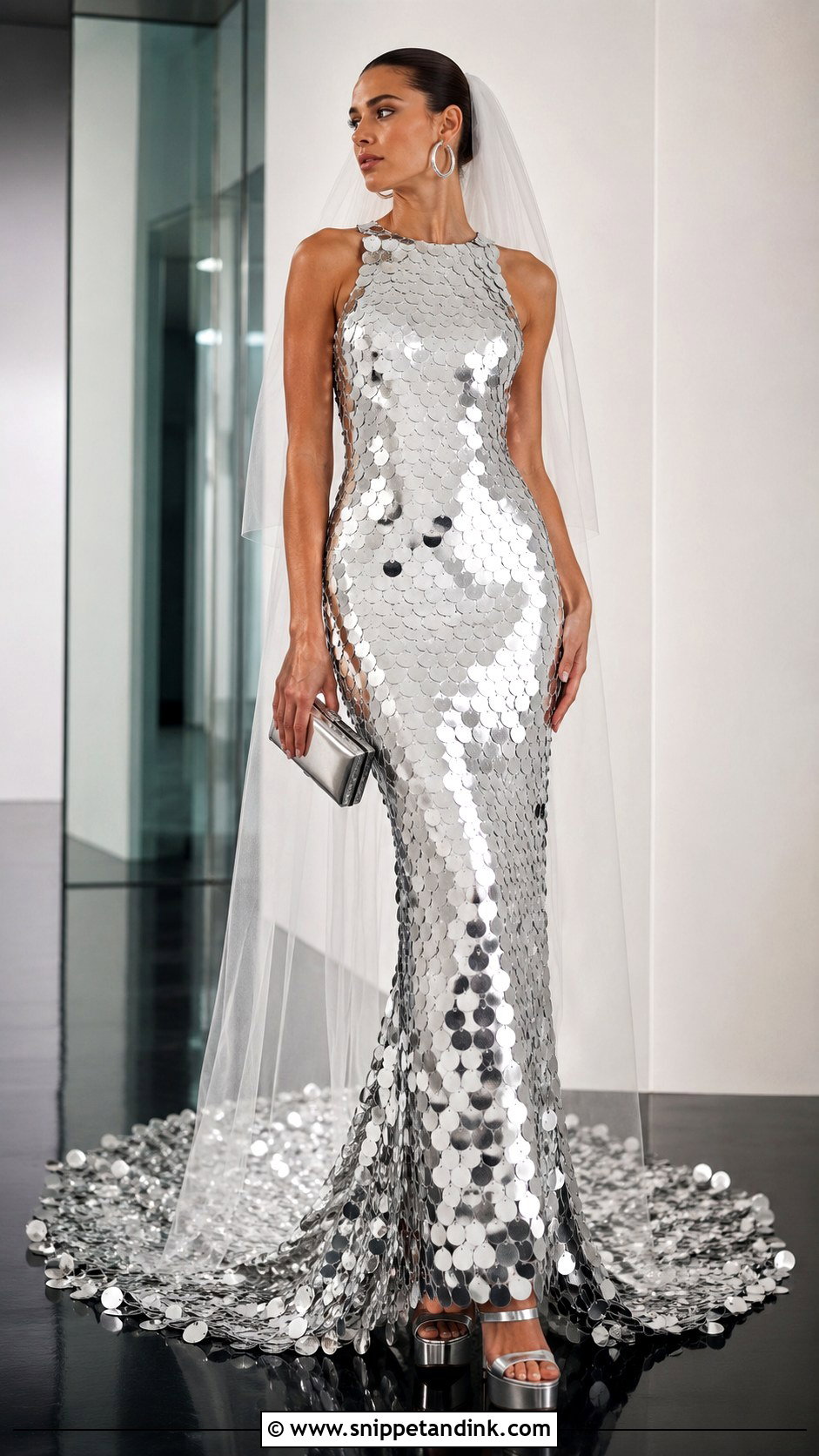
A mirrored dress is a moving disco ball, so the photographer and lighting will make or break it. Small acrylic mirror pieces overlap in rows on a fitted silver base, like scales, across the bodice and skirt, and they work best on a narrow silhouette. Silver platform sandals, polished hoops, a metallic box clutch and a plain white veil to soften all that hard shine finish it. Acrylic is much lighter and safer than glass, but I still run a hand over every edge; a sharp corner scratches skin and snags the veil. Tell the photographer early, because direct flash bounces back off the mirrors.
10. Bubble Hem Wedding Dress
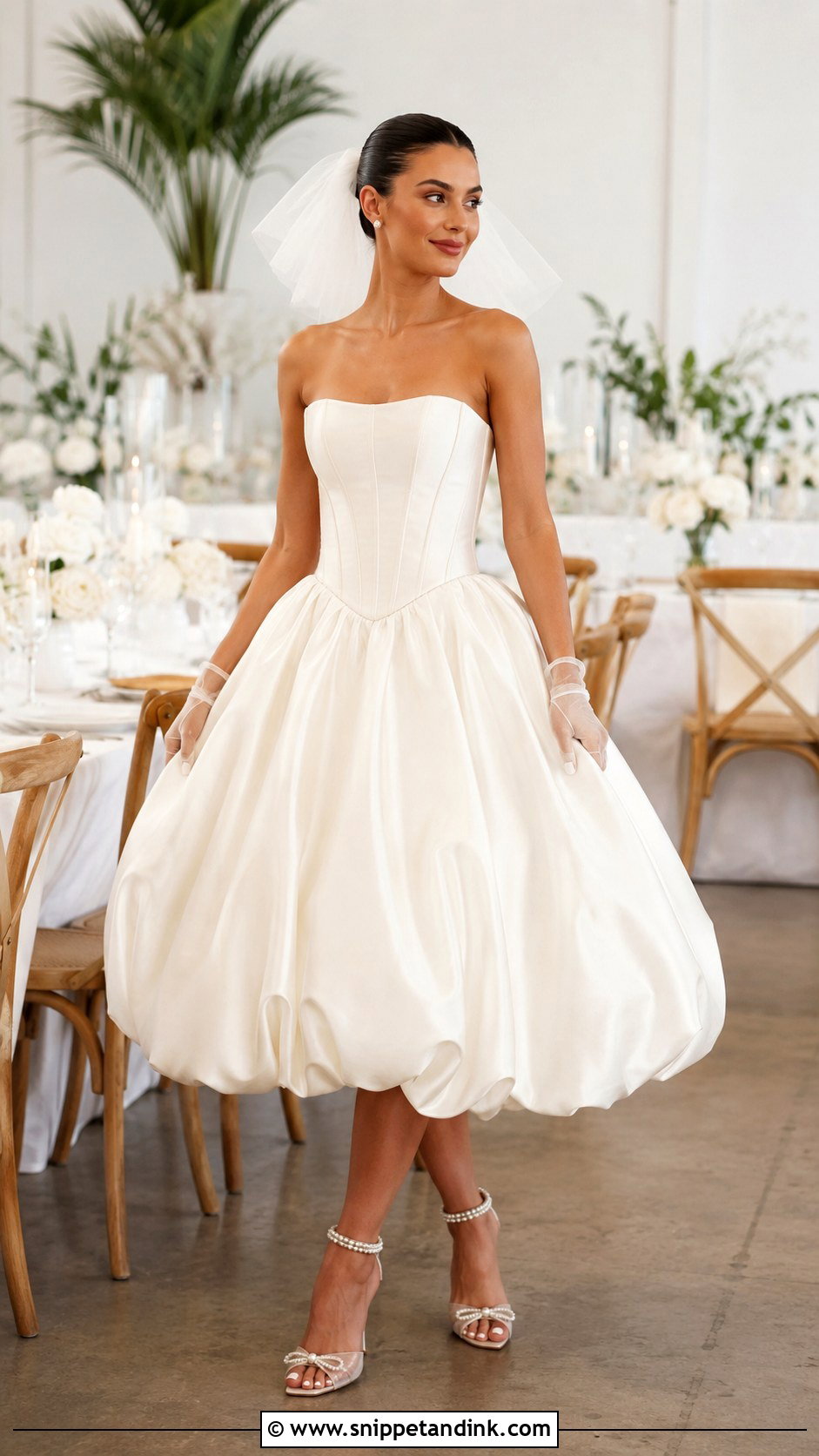
A bubble hem gets its round shape from fabric tucked under and attached to a shorter lining, which pulls the skirt inward. On a corset bodice with a full satin skirt at tea length, it looks whimsical and shows off embellished ankle-strap heels. I’d add pearl earrings, short sheer gloves and a small structured veil. Light tulle inside helps the bubble hold, and interior ties keep it from twisting. It suits a bride who wants volume without a train. It does not suit long outdoor walks, because a bubble hem fills with air and bounces in the wind.
11. Origami Wedding Dress
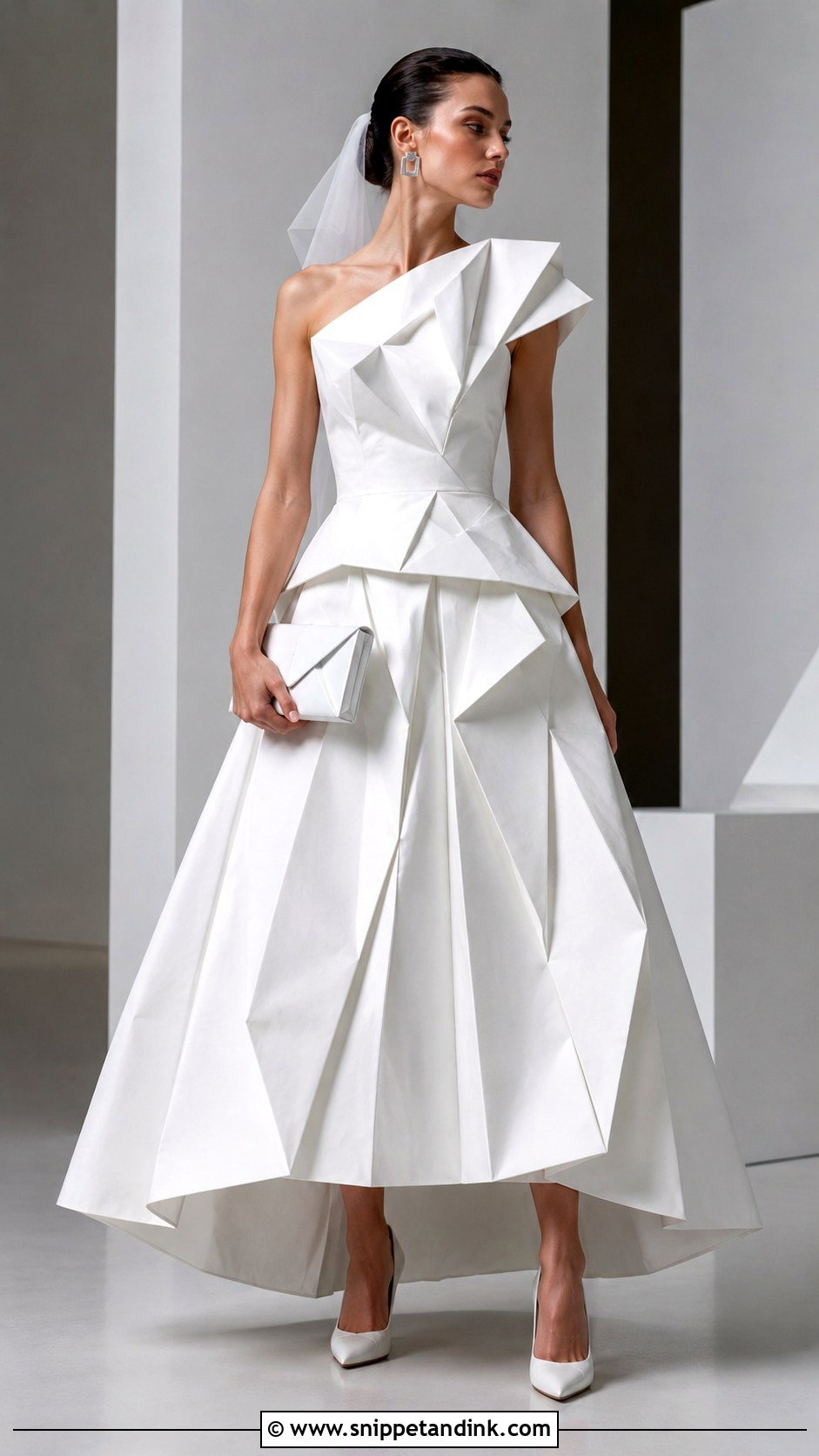
Origami gowns live on sharp folds, so the fabric choice is everything. Bonded satin, technical taffeta or reinforced organza hold triangles across a fitted bodice, an asymmetric peplum and a structured skirt, with folds sometimes rising off one shoulder. I’d pair it with simple white pumps, square silver earrings, an envelope clutch and a short plain veil to soften the angles. Keep the heavy folding away from the hips and knees. Every crease that crosses a joint gets crushed the first time you sit, and pressed paper-crisp folds don’t come back without a steamer.
12. Caged Skirt Wedding Dress
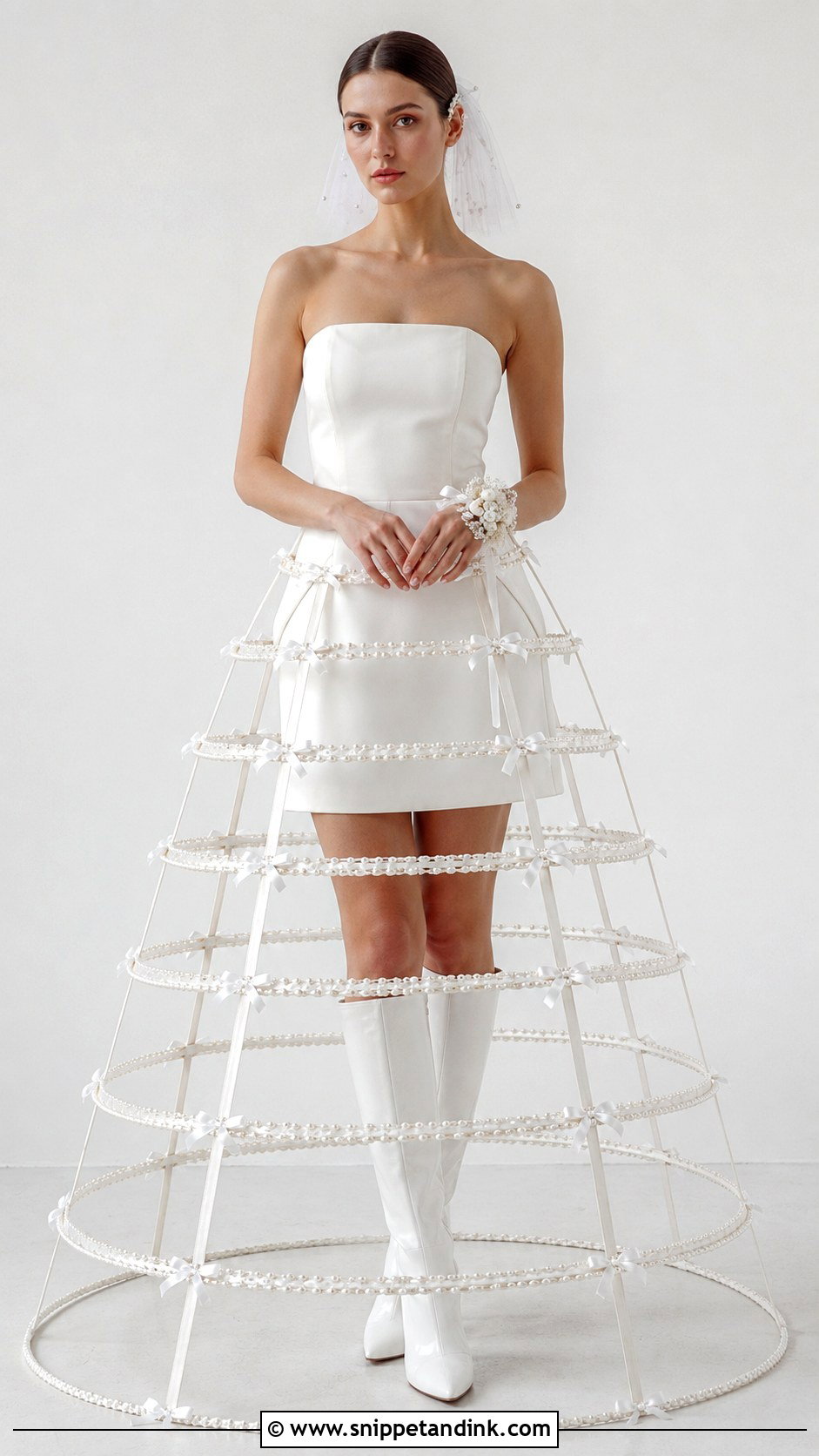
Here the underwear becomes the dress. Over a fitted white mini or tailored bodysuit, wide lightweight hoops form an open cage, decorated with narrow ribbon, pearls or a few appliqués. White knee-high boots balance the exposed framework, with pearl ear cuffs, a short tulle veil and a wrist bouquet. Measure your narrowest doorway before the cage is built, and ask for hoops that flex so they don’t snap when someone brushes past. Sitting is the real limitation; most cages need a stool or a perch, not a chair, so plan where you’ll rest.
13. Oversized Sleeve Wedding Dress
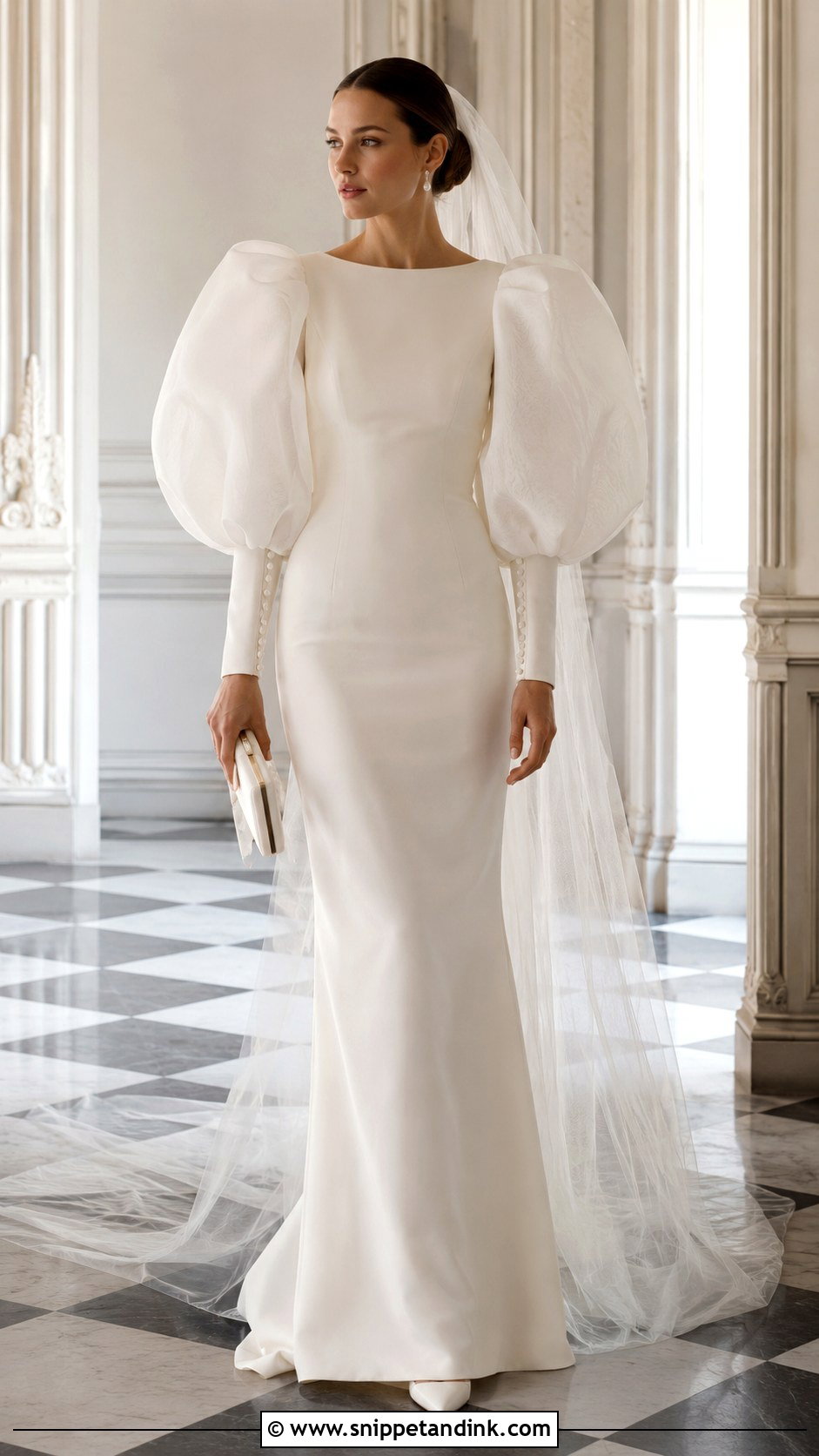
Giant sleeves on a plain dress are the gentlest way to look strange. A fitted ivory column gown with organza balloon sleeves swelling to big rounded cuffs is light enough not to drag on the arms. I keep the neckline simple and add only small pearl earrings, ivory pumps, a sleek clutch and a narrow cathedral veil so the shoulders don’t look wider still. Make the sleeves detachable. You can’t eat neatly with organza sleeves hovering over the plate, and you’ll want your arms free for dancing. Soft inner supports help the volume hold without stiffening the elbow.
14. Color-Changing Wedding Dress
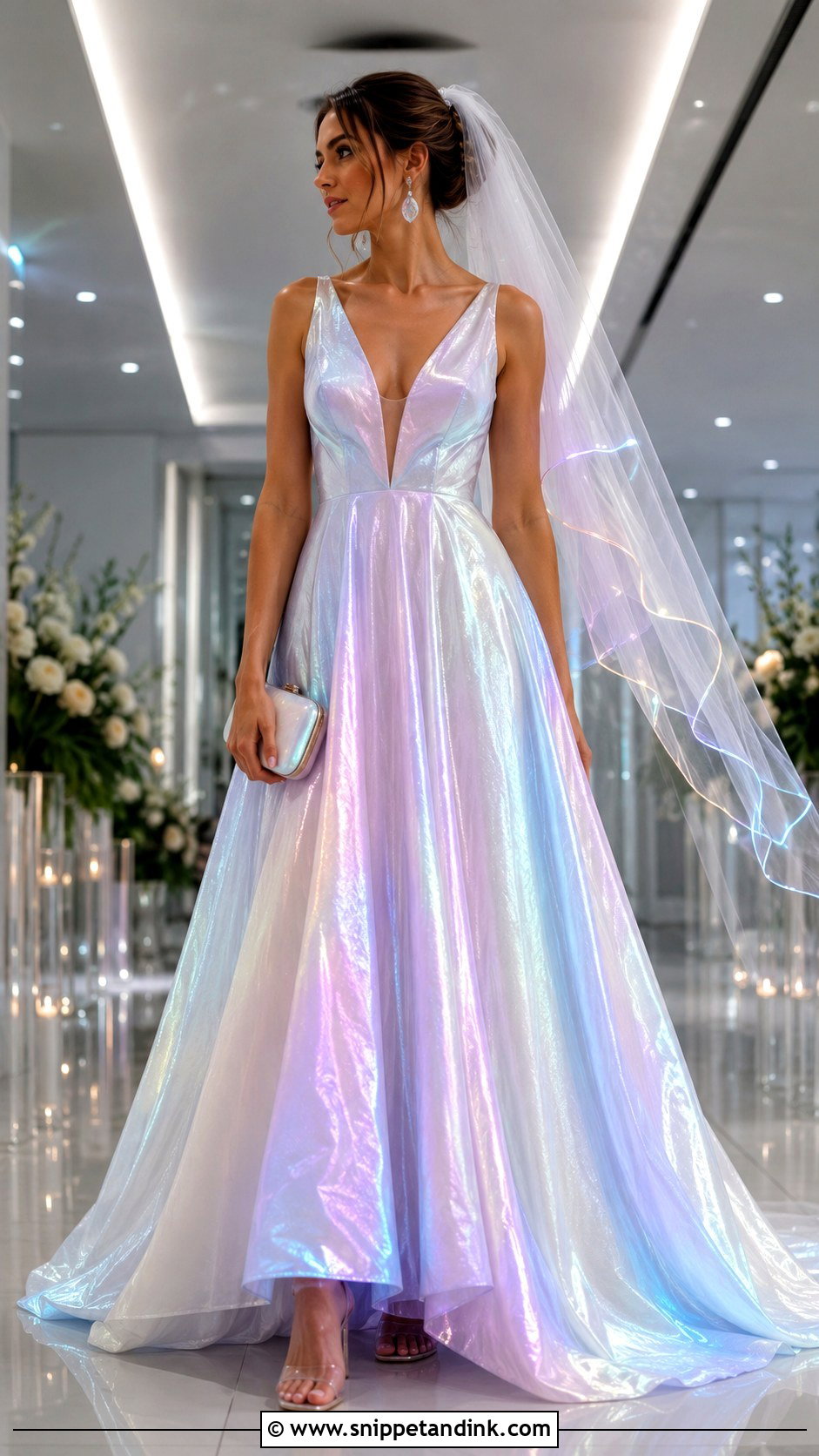
Iridescent fabric shifts from white to lavender, blue and pale pink as you move, which means it photographs differently in every room. A clean A-line silhouette keeps the surface the focus, with clear heels, opalescent earrings, a pearlized clutch and a translucent veil with a reflective edge. Reversible sequins or a coloured overskirt give a more dramatic change. Do a lighting test in the actual venue at the time of the ceremony if you can. Under warm tungsten bulbs, some iridescent fabrics lose their colour shift completely and look plain grey.
15. Hand-Painted Wedding Dress
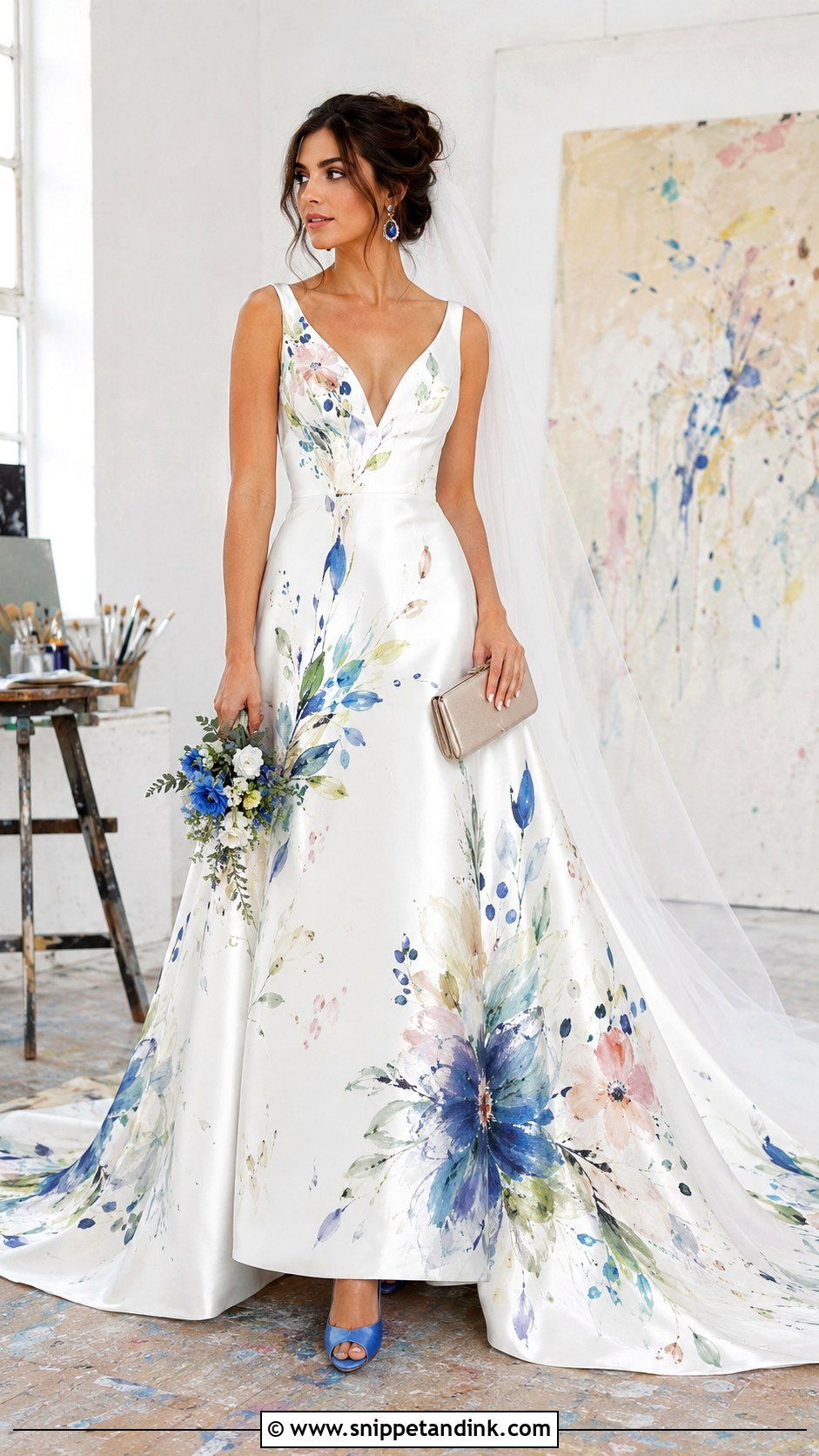
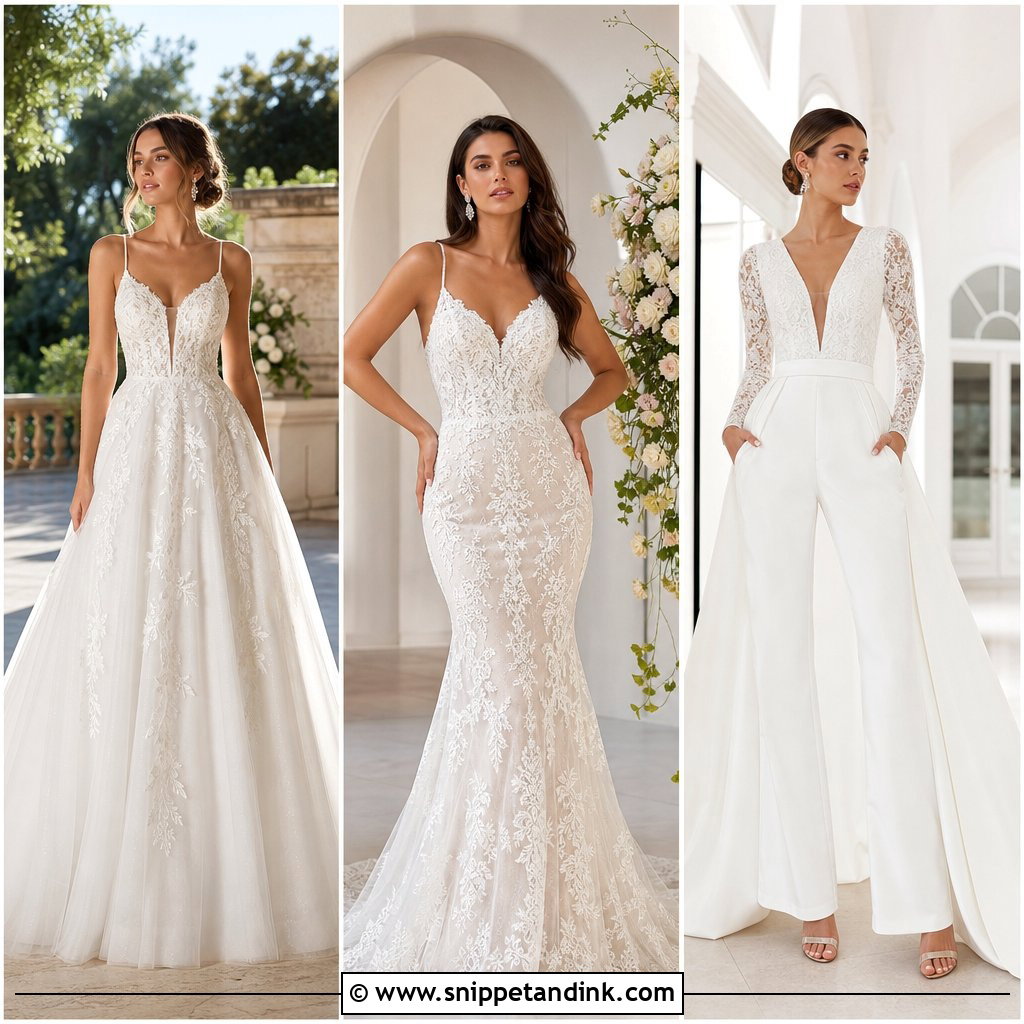
A hand-painted wedding dress is a commission, so start early. A white silk or satin A-line gown takes oversized botanicals, abstract strokes or a watercolour scene from the waist down into the train, with the bodice mostly left white. I’d pick shoes in one colour from the painting, small gemstone earrings, a neutral clutch, a plain sheer veil and just a few flowers that echo the palette. The paint must be a fabric paint set with heat as the maker directs, or it can crack where silk flexes and bleed if it gets damp. Ask the artist to paint a test swatch first.
16. Two-Sided Wedding Dress
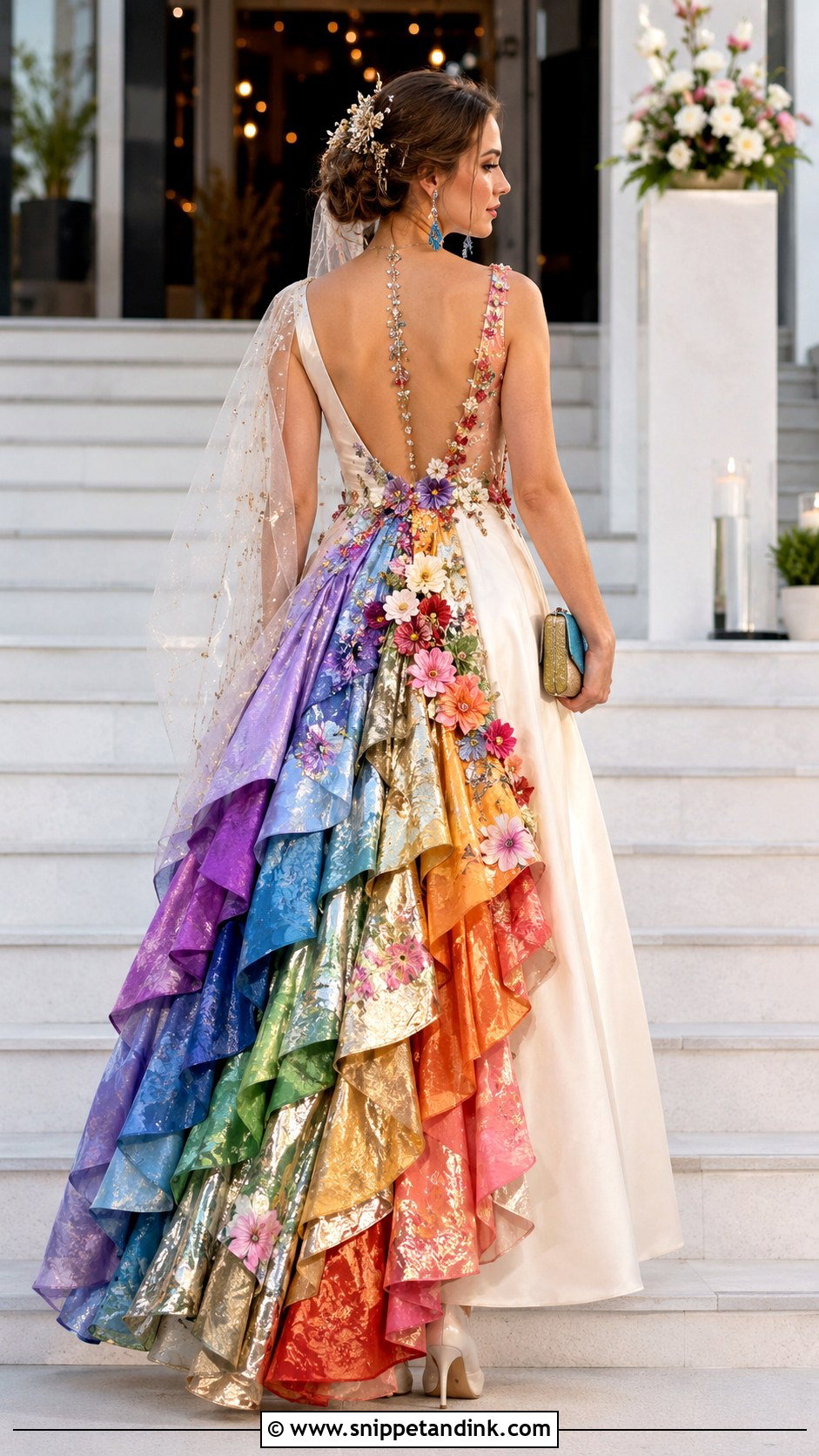
From the front, ivory satin and a smooth A-line skirt. From the back, rainbow ruffles, black tulle, metallic panels or giant appliqués. The two-sided dress is a reveal, so I time it: a detachable veil covers the back on the walk in and comes off after the ceremony. Neutral ivory heels keep the first impression classic, and mismatched earrings or a reversible clutch hint at both sides. The halves need one shared element, such as the same waistline seam or a fabric that appears on both, or the gown can look like two dresses stitched together.
17. Inflatable Wedding Dress
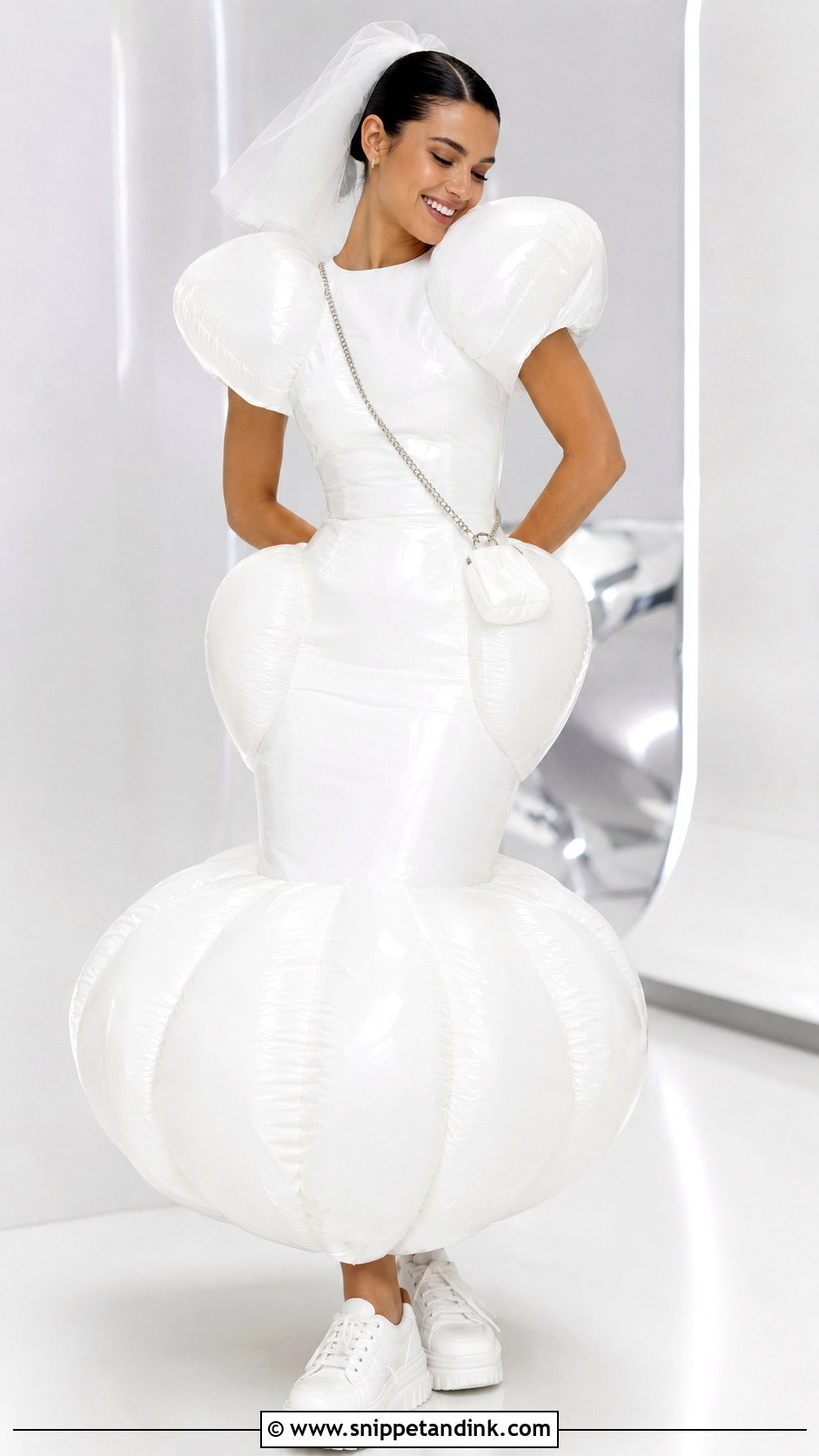
Inflatable sections give volume with almost no weight, and they’re more practical than they sound. A fitted white base dress supports air-filled panels at the hips, shoulders or hem, while the centre of the body stays slim so you still read as a bride. White platform sneakers, small silver earrings, a hands-free mini bag and a short veil that won’t tangle around the panels suit it. Ask the maker where the valves are. You need to reach them to let some air out for sitting or getting into a car, and a small pump in the getaway bag lets you refill for photos.
18. Living Flower Wedding Dress
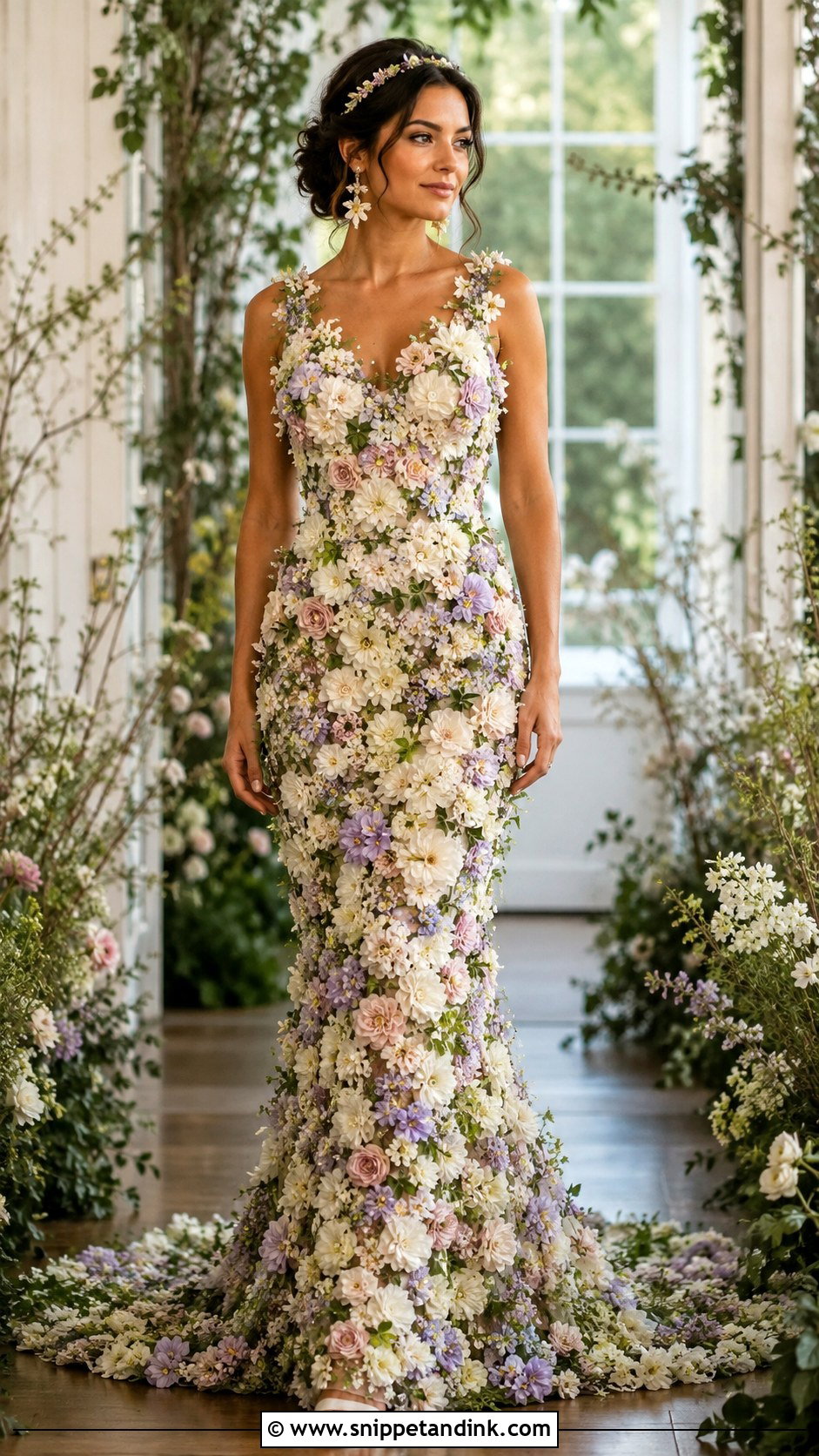
Fresh flowers on a gown give scent, texture and movement no fabric can match, but they are also the most delicate option here. A light fitted base carries small blooms, greenery and flexible garlands from neckline to train, with larger flowers kept on the skirt and away from the face. Ivory sandals, tiny botanical earrings and a narrow floral headband finish it; skip the bouquet. Out of water, most flowers start to wilt within hours, so the florist should assemble the dress shortly before you put it on, using hardy varieties and a few water tubes where it matters. Check for pollen allergies, and have a plain dress ready for the evening.
19. Hooded Wedding Dress
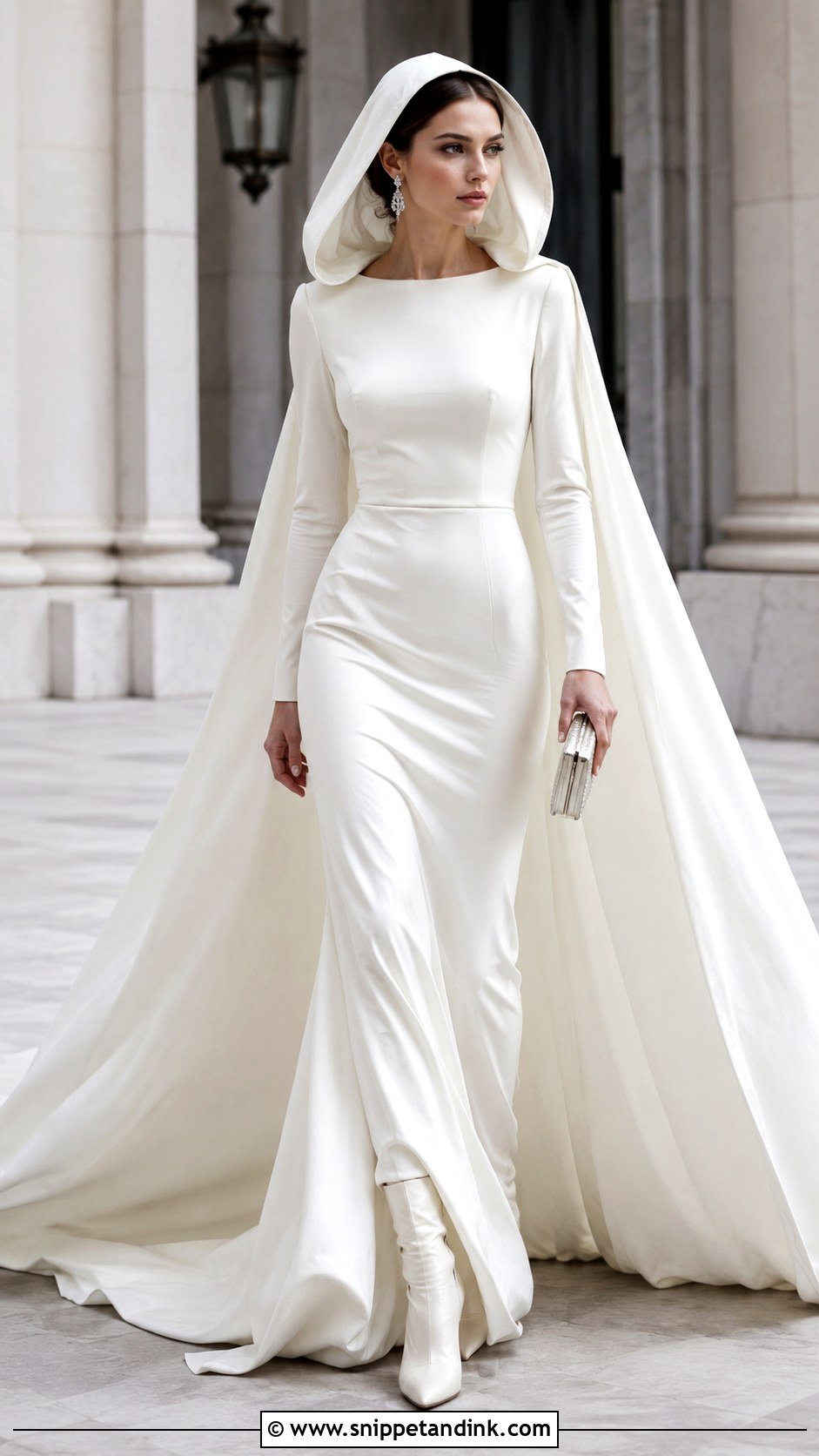
A hooded wedding dress swaps the veil for a frame of fabric around the face. A fitted long-sleeve bodice, a defined waist and a fluid floor-length skirt sit under a generous satin or chiffon hood that runs down into a cape train. Ivory pointed boots stay hidden, with crystal earrings and a small metallic clutch carried under the cape. The hood has to be built with enough structure to keep its shape yet loose enough to sit over the hair without flattening it. Plan your hairstyle with the hood on at the trial; a high bun usually fights it, a low one sits beautifully.
20. Tiered Ruffle Wedding Dress
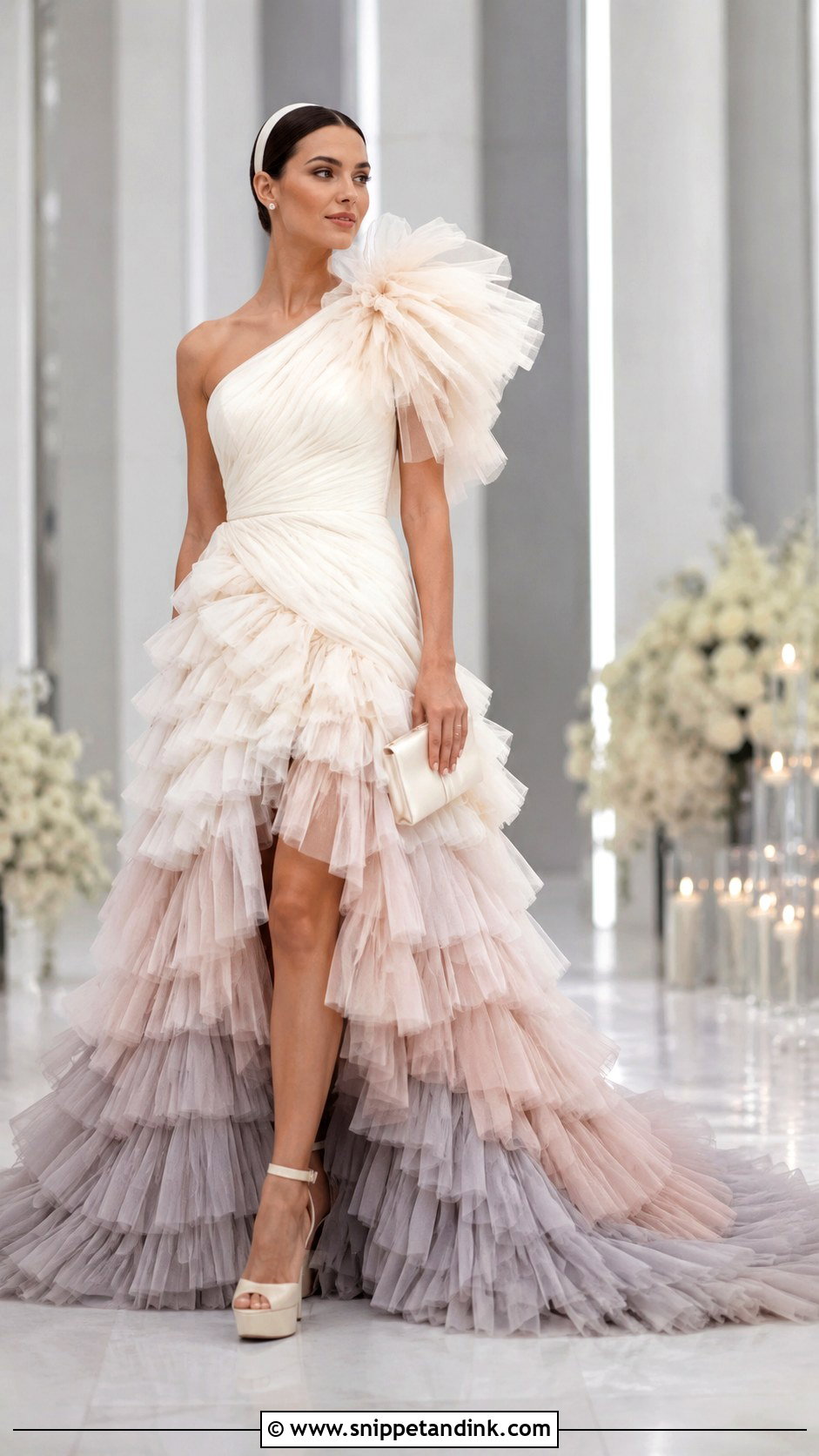
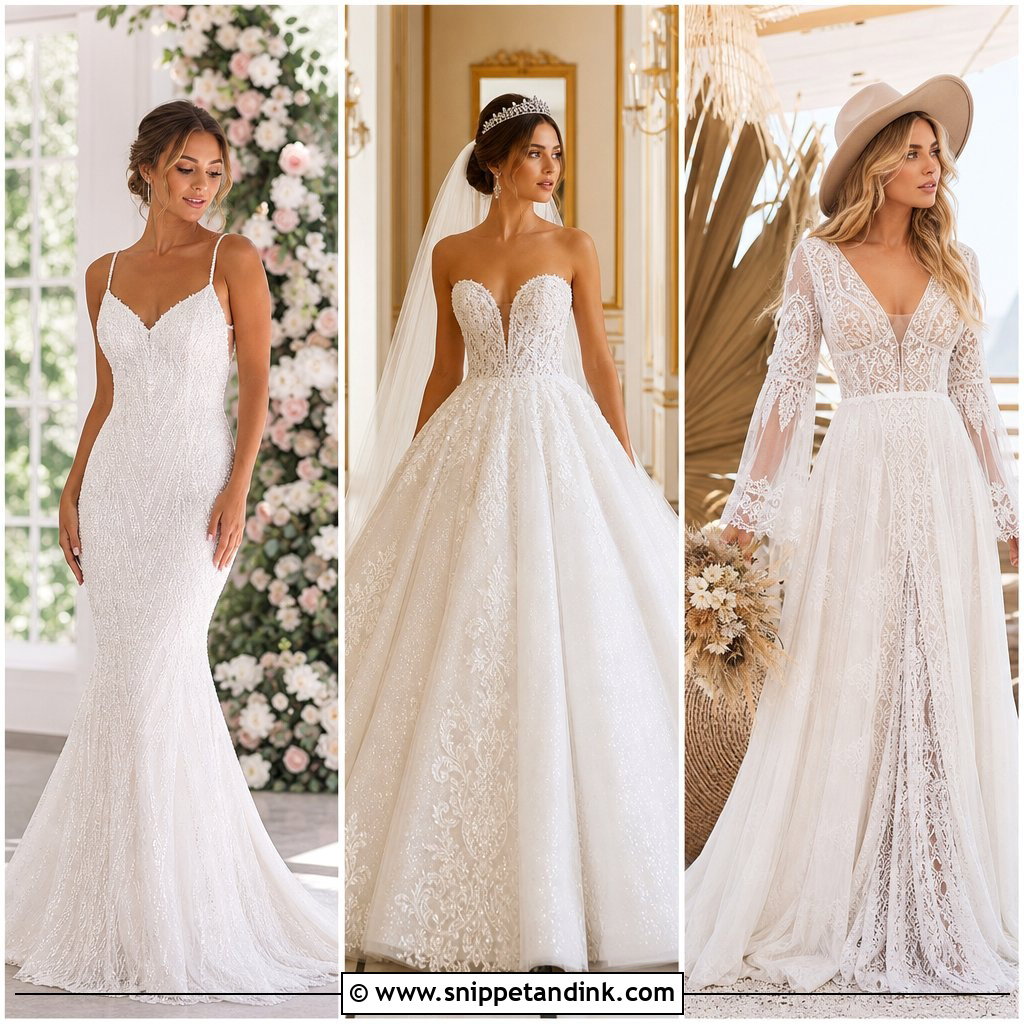
Uneven tulle ruffles in ivory, blush and pale grey can bury a bride if the waist disappears. Start with a supportive fitted bodice, then let the ruffles rise over one shoulder, sweep across the hips and spill into a wide train. Mixing soft and stiff tulle adds depth while keeping the weight down. I’d use ivory platform heels for height, small studs, a satin clutch and a narrow headband instead of a veil. Take this one for a spin around the fitting room: maximal ruffles collect static and cling to tights, so an anti-static slip underneath is a small but real fix.
Latex, Pollen and Batteries: Safety Checks for Experimental Gowns
Unusual materials bring their own risks, and they’re easy to overlook while you’re excited about the design. These are the ones I raise:
- Latex balloons can trigger allergies in the wearer and in close family hugging her. Foil or latex-free options exist if anyone is sensitive.
- Paper, feathers and dry fabrics burn quickly. Keep them well away from candle-lined aisles, sparklers and table candles, and tell the venue team in advance.
- Lithium battery packs for light-up dresses should sit in a padded pouch away from bare skin, with wiring that can’t be pinched when you sit.
- Fresh flowers can carry pollen, sap and insects. Hold a stem against your inner wrist a week before to check for irritation.
- Some venues restrict items that shed, such as feathers, loose glitter or petals, so ask before the dress is built.
Keep a second outfit hanging close by
With any dress that can pop, wilt, tear or run out of power, I hang a simple backup outfit at the venue. Most brides never touch it. The ones who do are always glad it was there, and knowing it’s waiting lets you relax and enjoy wearing the strange one.
Strange Is Fine. Unwearable Isn’t.
Take away the usual rules and a wedding dress can be made of balloons, paper, mirrors, lights, feathers, flowers or sculpted fabric. What doesn’t change is that you have to wear it for hours. Test how it moves, what it weighs, whether you can see where you’re going and how it survives heat or rain, and do it well before the wedding. Let accessories support the one idea instead of fighting it, and keep practical layers underneath for coverage and stability. A bizarre dress can be artistic, funny, elegant or deeply personal, as long as every part of it was a decision.
You'll Like These Ideas:







Leave a Reply