
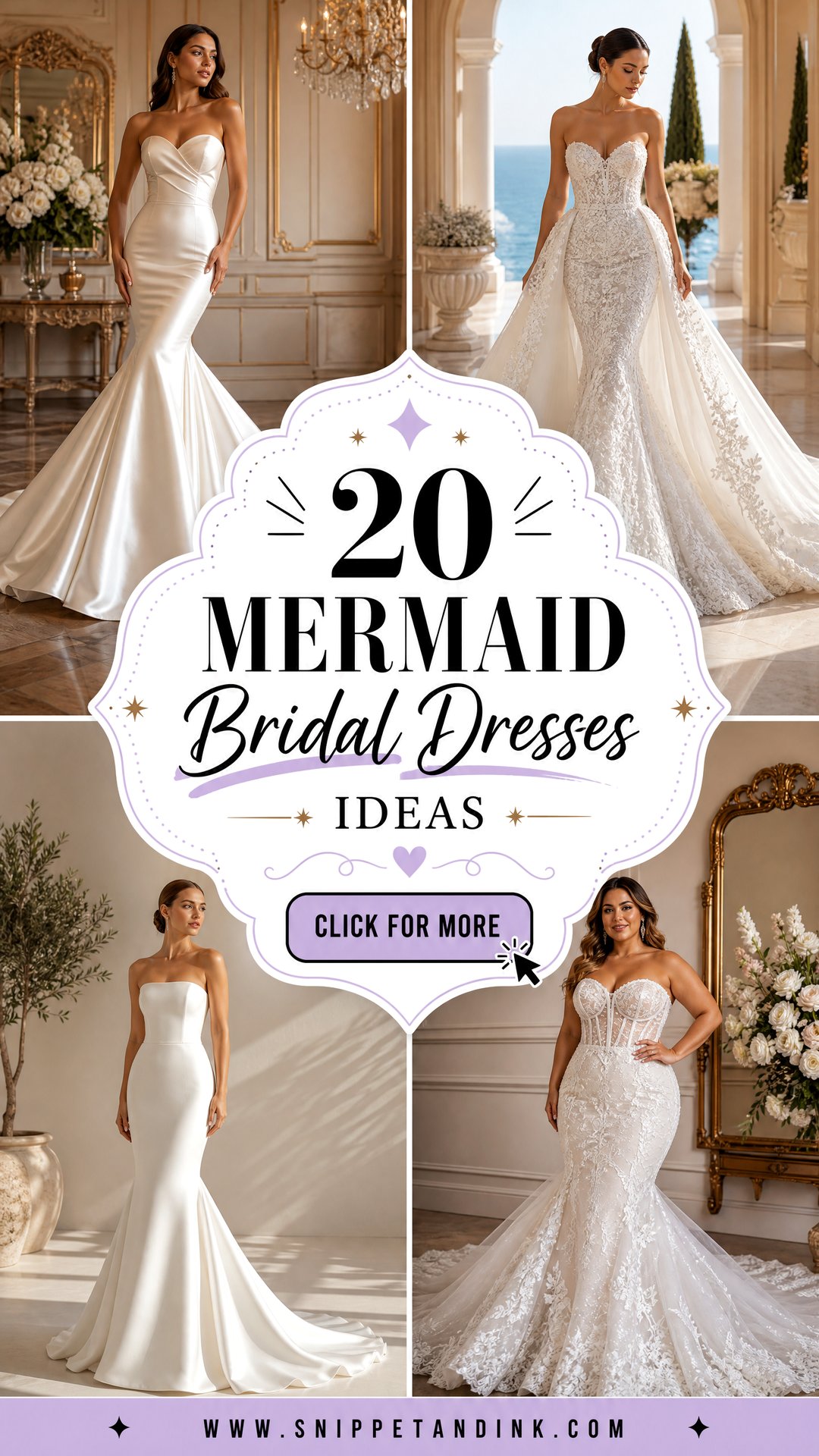
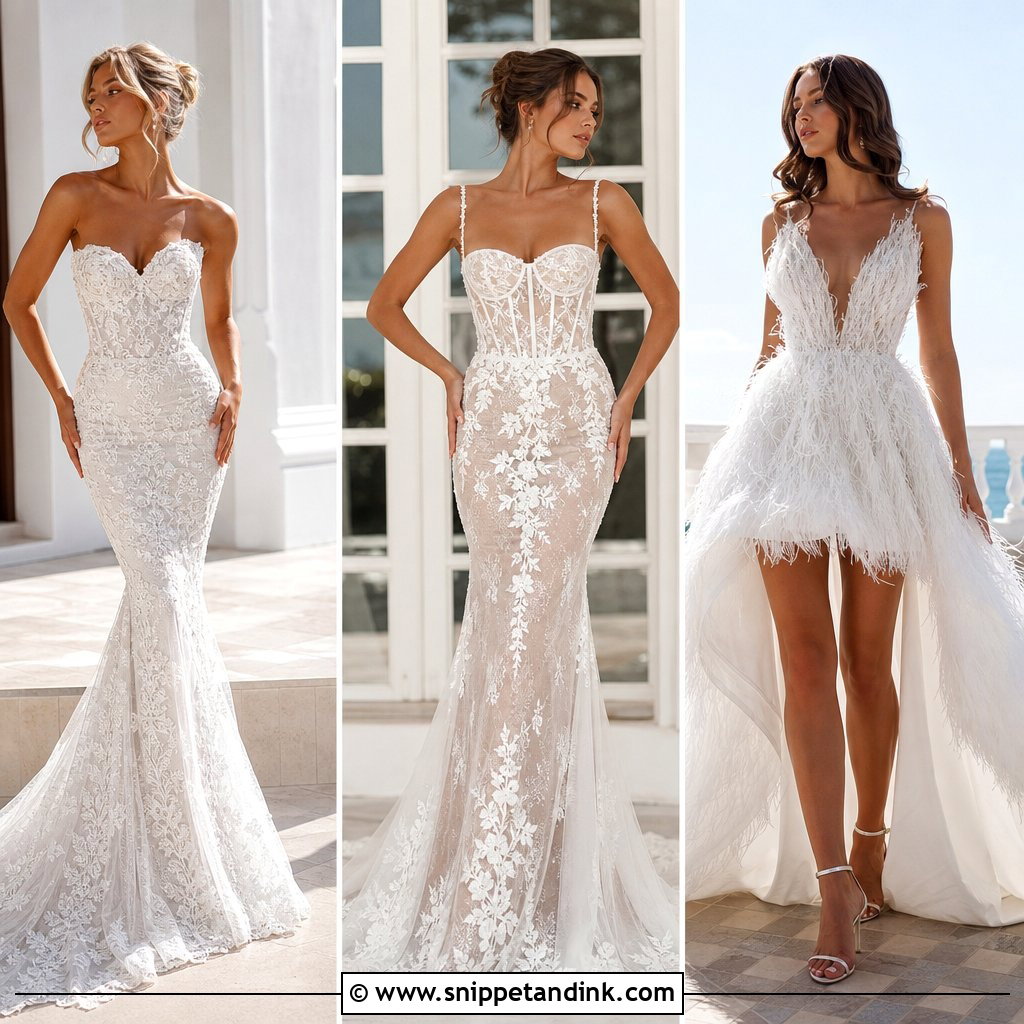
A mermaid gown fits close through the bodice, waist, hips and thighs, then opens into a flared lower skirt. That one idea now comes in far more versions than the classic strapless satin: lace, crepe, three-dimensional florals, corsetry, detachable sleeves and statement trains. Structured bodices, sculpted necklines, pearls, long sleeves and convertible pieces are everywhere in bridal right now. When I help a bride narrow it down, I ask three questions before we look at a single accessory. Which fabric do you like against your skin, where is the wedding, and how much do you want to move? The twenty gowns below are styled head to toe with those answers in mind.
Which Fabric Forgives a Body-Skimming Silhouette?
In a gown this fitted, fabric isn’t a style choice so much as a comfort and fit choice. Here’s how the main ones behave once you’re actually wearing them.
Satin
Reflects light, so it shows every pucker, seam and undergarment line. It creases at the knee where the flare starts if you sit for long. Wonderful in a cool, formal room; less kind in heat.
Crepe
Matte, heavy and drapes close to the body. Stretch crepe is the most comfortable fitted fabric I know, but it reveals lines underneath and depends entirely on perfect tailoring.
Lace
The most forgiving. The pattern hides small fit issues and seam adjustments, and it breathes better than satin or crepe. The catch is that alterations on lace often mean moving appliqués by hand, which takes longer.
Mikado and other structured weaves
Hold a sculpted shape on their own and hide what’s underneath, but they’re stiff when you sit and warm to wear. Best for winter and grand rooms.
If you run hot or the wedding is outdoors in summer, I’d lean toward lace or a lighter crepe and keep heavy satin for an air-conditioned venue.
1. Strapless Satin Mermaid Bridal Dress
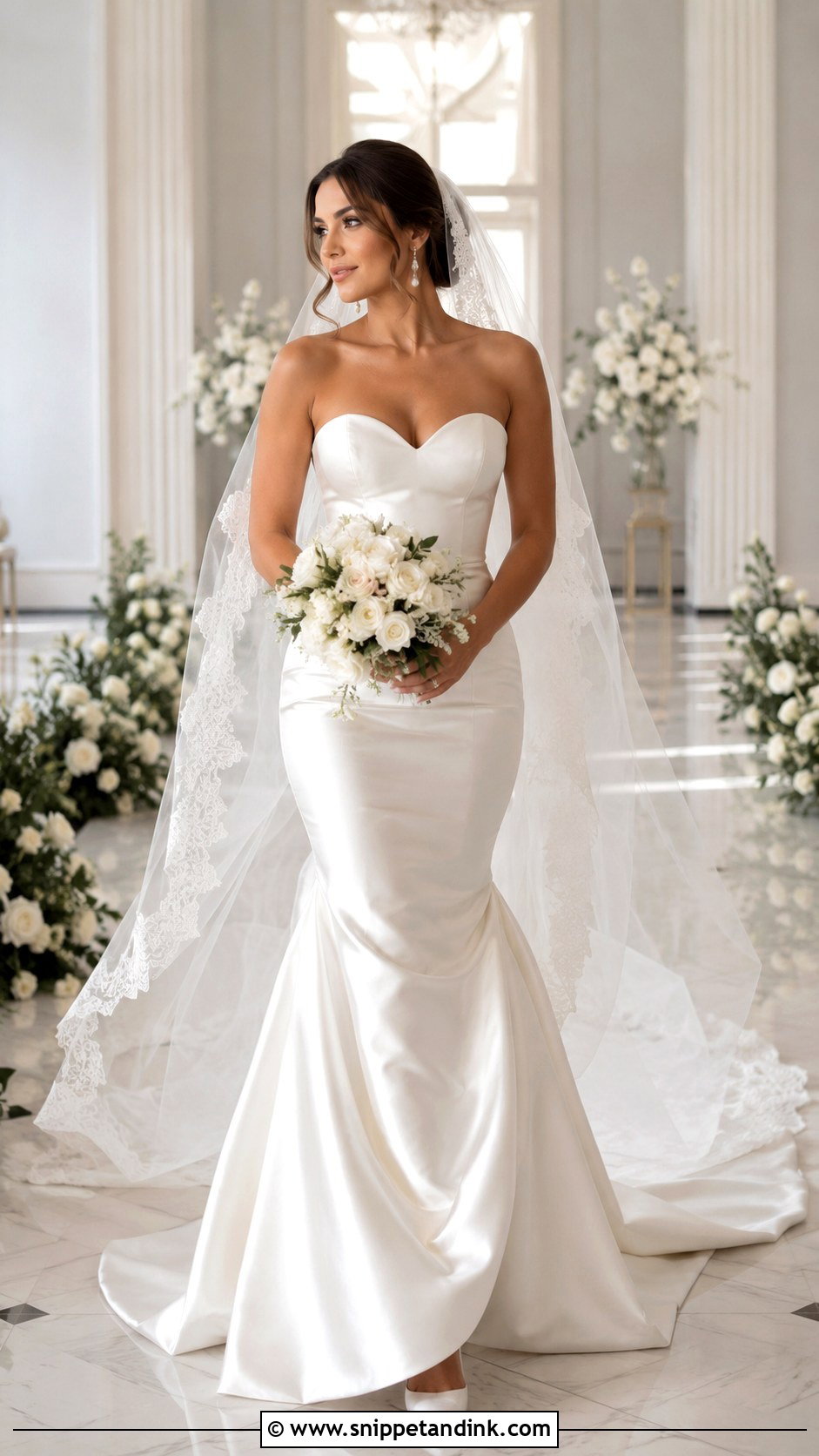
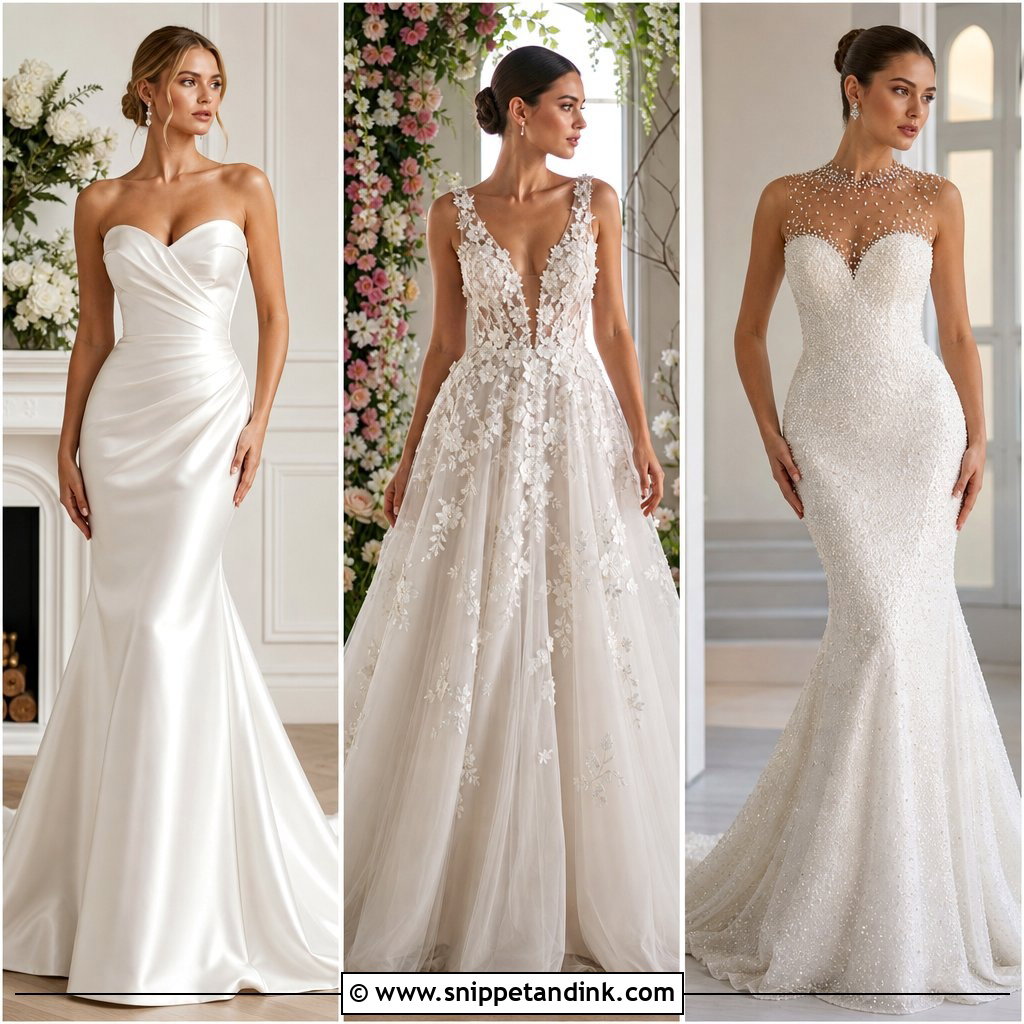
Smooth satin on a strapless mermaid is the classic, and its strength is restraint. A structured bodice with a sweetheart or softly curved neckline holds the fitted shape, and a clean skirt lets the sheen and flare do the work. Pointed ivory pumps, pearl drops and a small satin clutch tie it together; choose a cathedral veil for formality or fingertip for ease. Minimalists can drop the necklace and go with a sleek low bun. Satin creases where the flare seam folds when you sit, so at the fitting, sit for a full minute and stand up again. A good cut springs back; a poor one keeps the crease.
2. Long Sleeve Lace Mermaid Bridal Dress
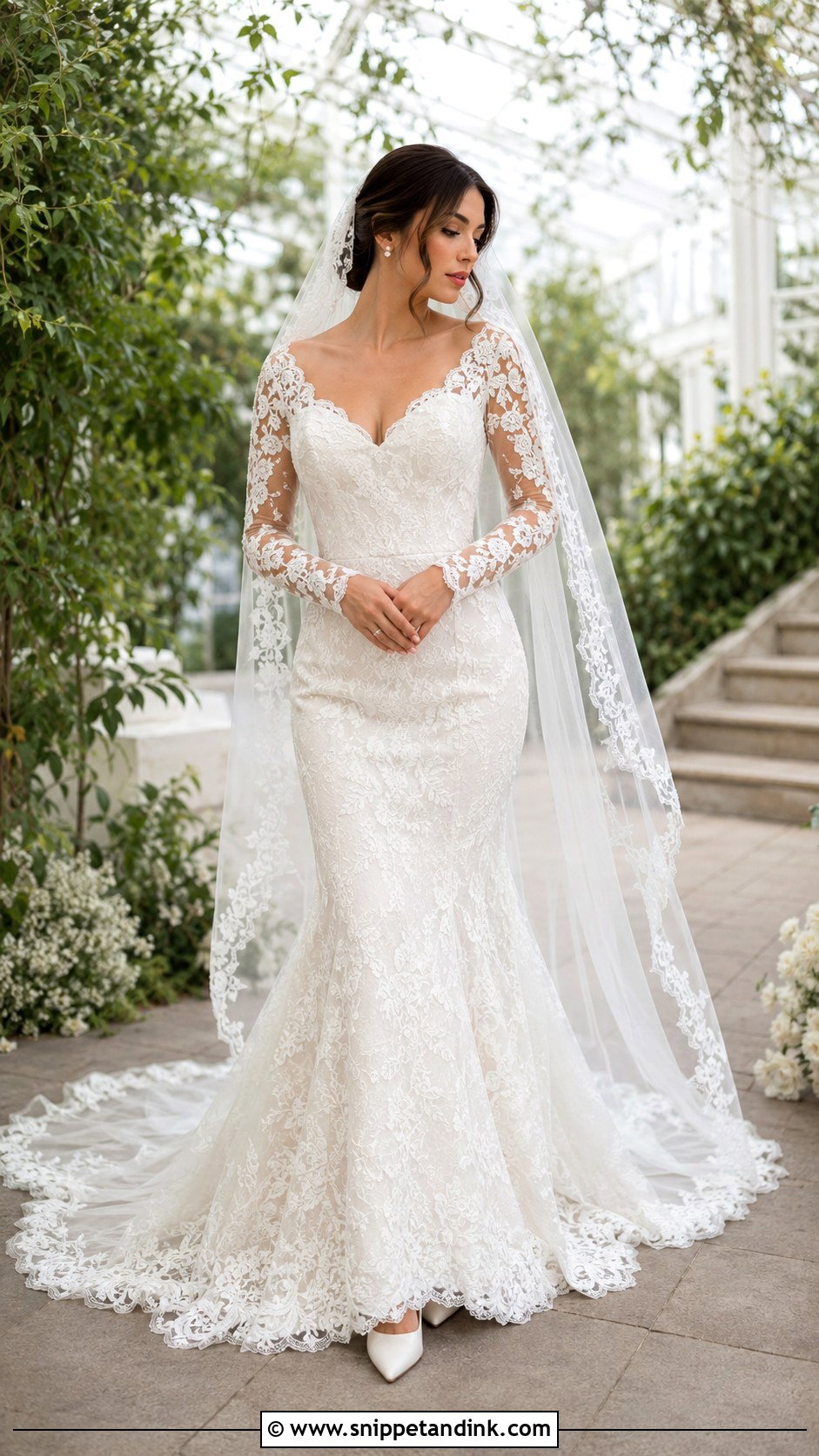
Lace sleeves turn the mermaid romantic and give real coverage. I always ask for sleeves built on soft illusion mesh beneath the lace, because unlined lace sleeves have no give at the elbow and shoulder and pull when you hug. Appliqués that carry from the bodice onto the hips and fade near the flare keep it flowing. Closed-toe ivory heels, pearl studs and a comb above a low chignon finish it, with a scalloped veil whose lace complements rather than copies the gown. In a hot climate, look at detachable sleeves or openwork lace; long sleeves plus a fitted skirt get warm by the speeches.
3. Off The Shoulder Crepe Mermaid Bridal Dress
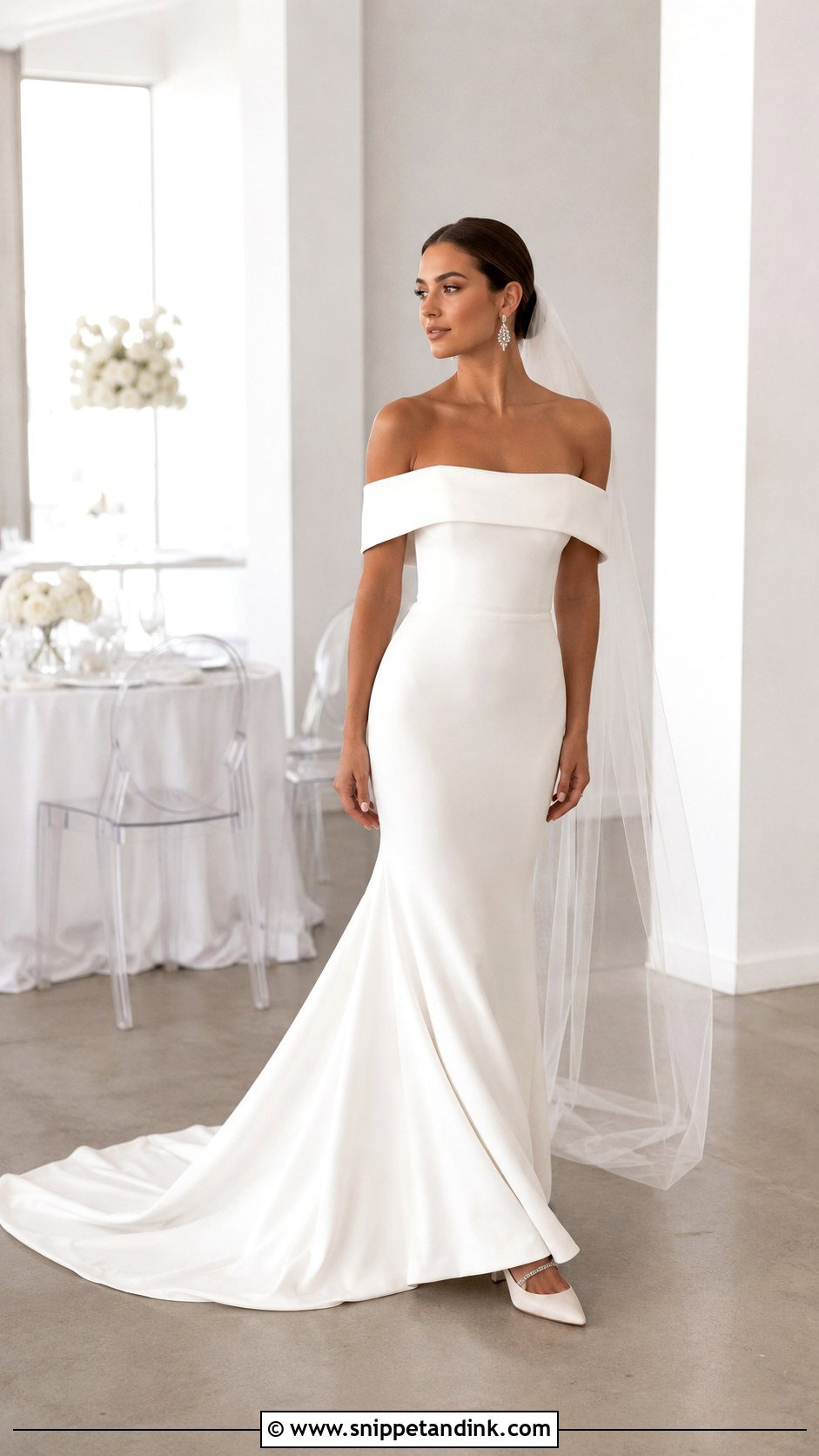
Crepe with an off-the-shoulder neckline is clean tailoring with a soft edge. The fabric should skim the body, then flare in a controlled way at or below the knee. Folded bands, draped straps or detachable sleeves frame the shoulders. Crystal earrings, pointed slingbacks, a structured mini bag, a center-parted bun and a sheer chapel veil complete it. Off-shoulder bands are where these gowns go wrong. Cut too tight, they pin your arms to your sides, and you can’t hug or dance. Ask your tailor to check you can raise your hands to your face, and make sure boning and cups hold the neckline so you aren’t hitching it up all night.
4. Corset Basque Waist Mermaid Bridal Dress
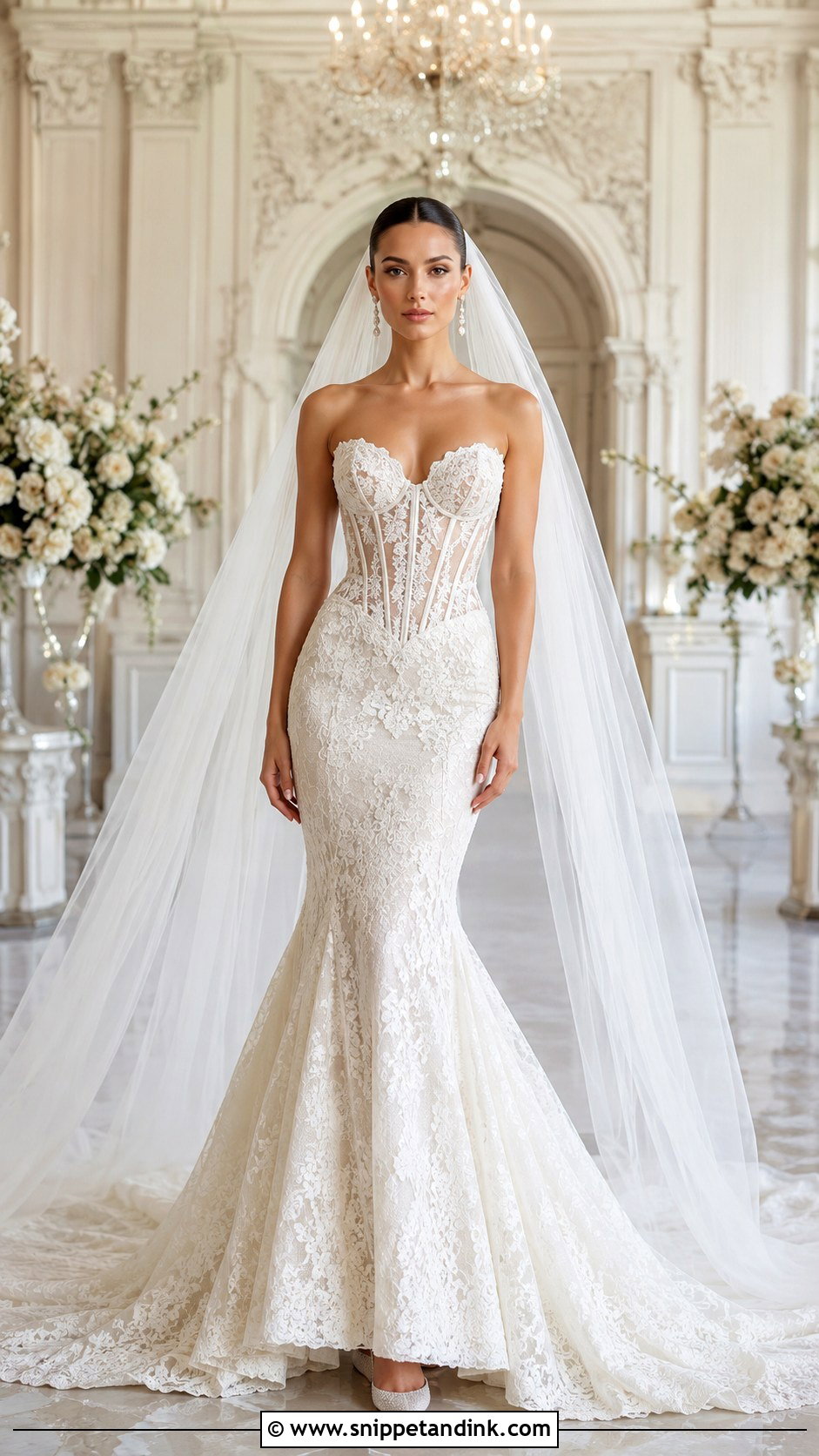
A basque waist dips into a V at the center front, and on a corset bodice it draws a long line straight into the skirt. That point flatters most torsos, especially short-waisted ones. Satin keeps it sharp; embroidered lace softens it. Delicate drops, a sleek updo and closed-toe pumps with ankle support finish the look, with a plain cathedral veil when the corsetry is busy or a narrow lace-edged veil to echo lace. Boning should follow your torso without pinching when you sit. Book the last alteration close to the date. Weight shifts in the final weeks, and a corset fitted two months early can feel very different on the day.
5. Pearl Beaded Mermaid Bridal Dress
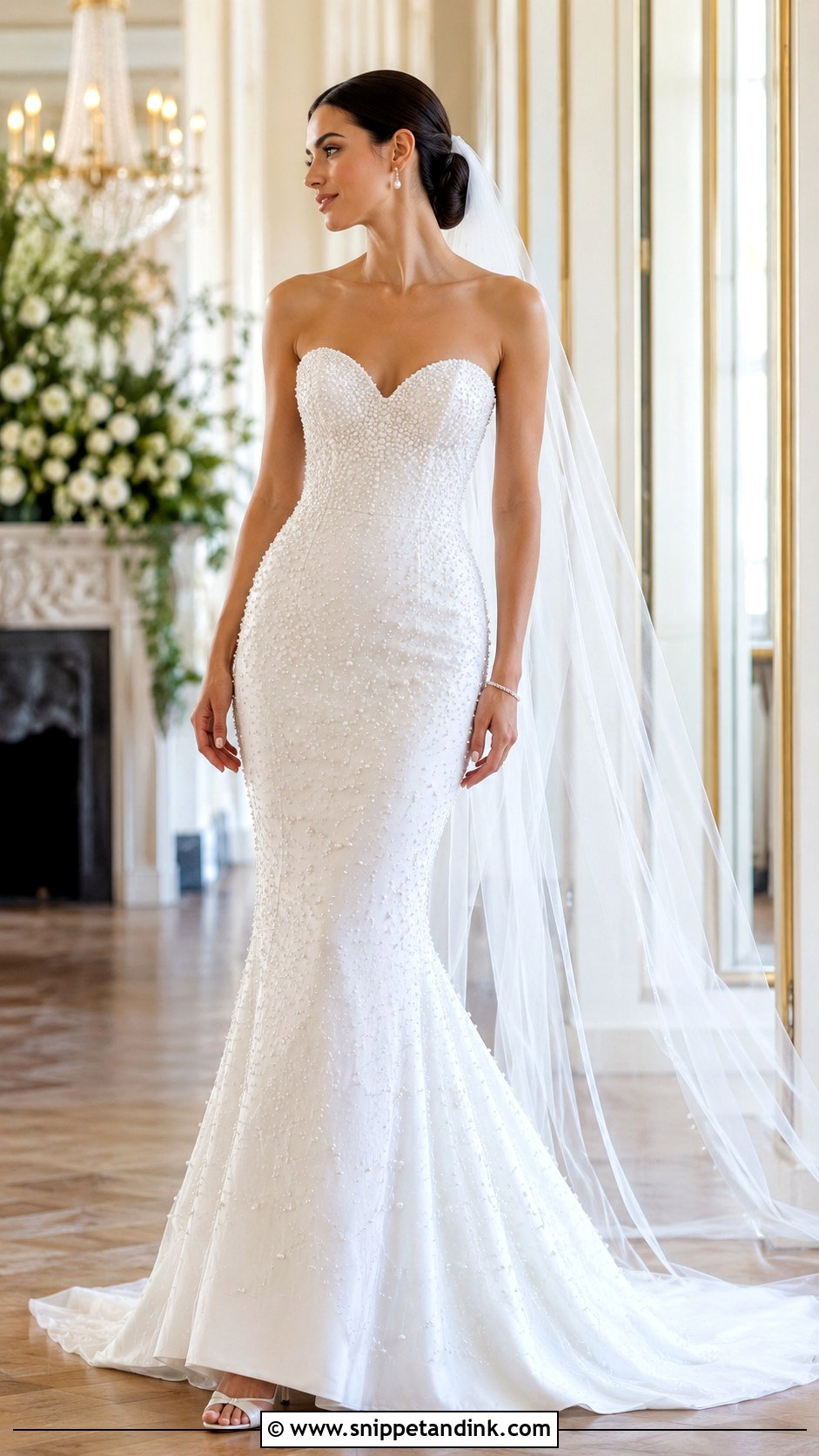
Pearls and scattered beads give a soft glow, not glitter. Where the beading sits changes the gown: concentrated at the neckline and waist, it draws the eye up to your face; all over, it’s more dramatic and noticeably heavier. Pearl earrings, a slim bracelet and simple satin heels are enough, with a plain veil and a neat bun or polished waves behind the shoulders. Run your hand inside the bodice at the try-on. If you can feel bead backs through the lining, they’ll scratch by evening. Check the beadwork in daylight and in warm indoor light, since pearls can look yellow under some bulbs.
6. Square Neck Mikado Mermaid Bridal Dress
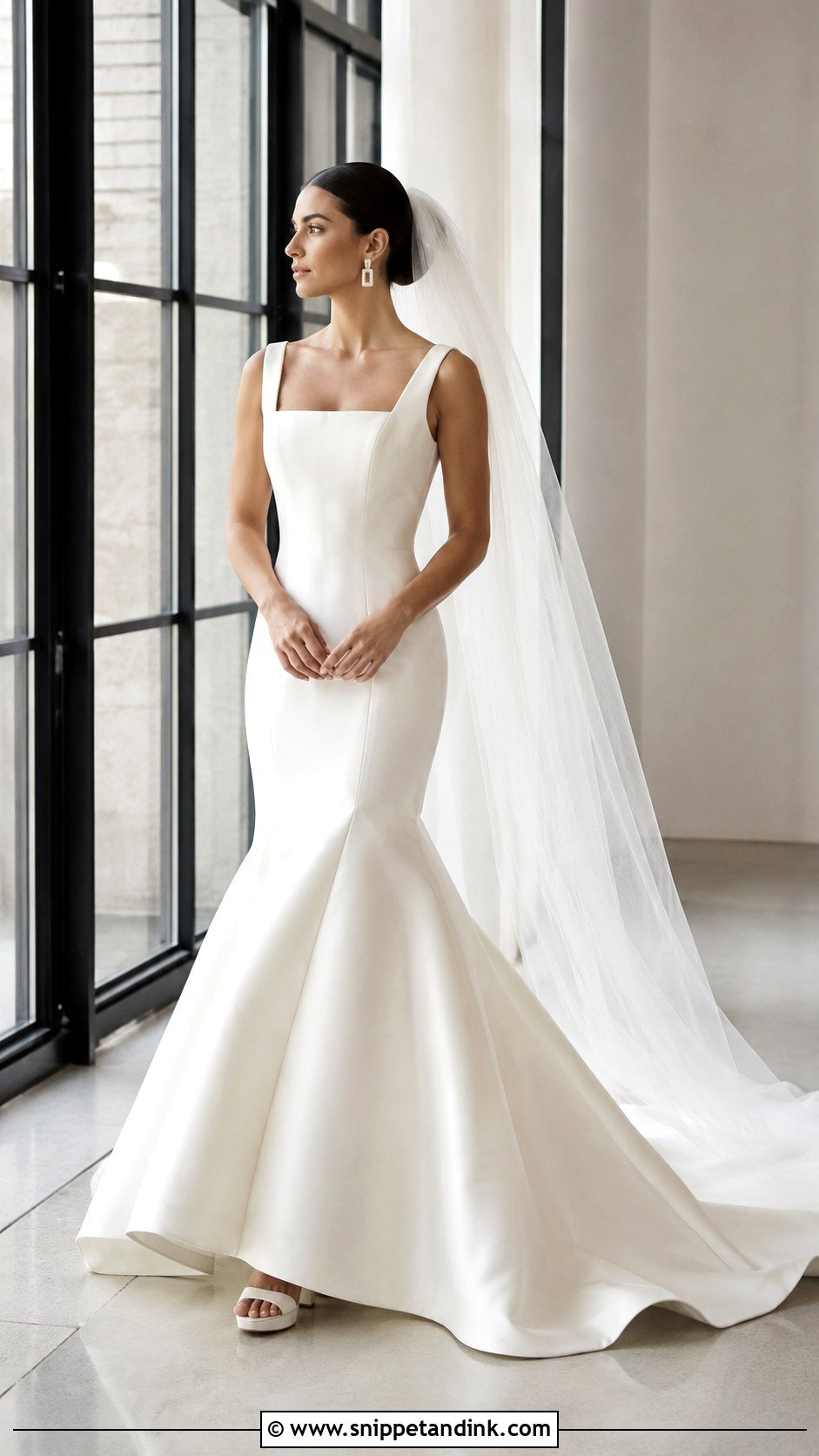
Mikado is a heavy, crisp silk-blend with real body, and it holds a square neck and a sculpted flare better than almost any fabric. It suits clean seams, wide straps and a dramatic lower skirt. Geometric earrings, ivory block heels, a smooth bun and a long plain veil keep it modern, and covered buttons down the back add a traditional note. The trade-off is that Mikado doesn’t fold softly. Sit in it at the fitting and look at how the skirt bunches at the knees; some cuts dig in. The train needs a well-placed bustle too, because stiff fabric drags rather than gliding.
7. Halter Neck Mermaid Bridal Dress
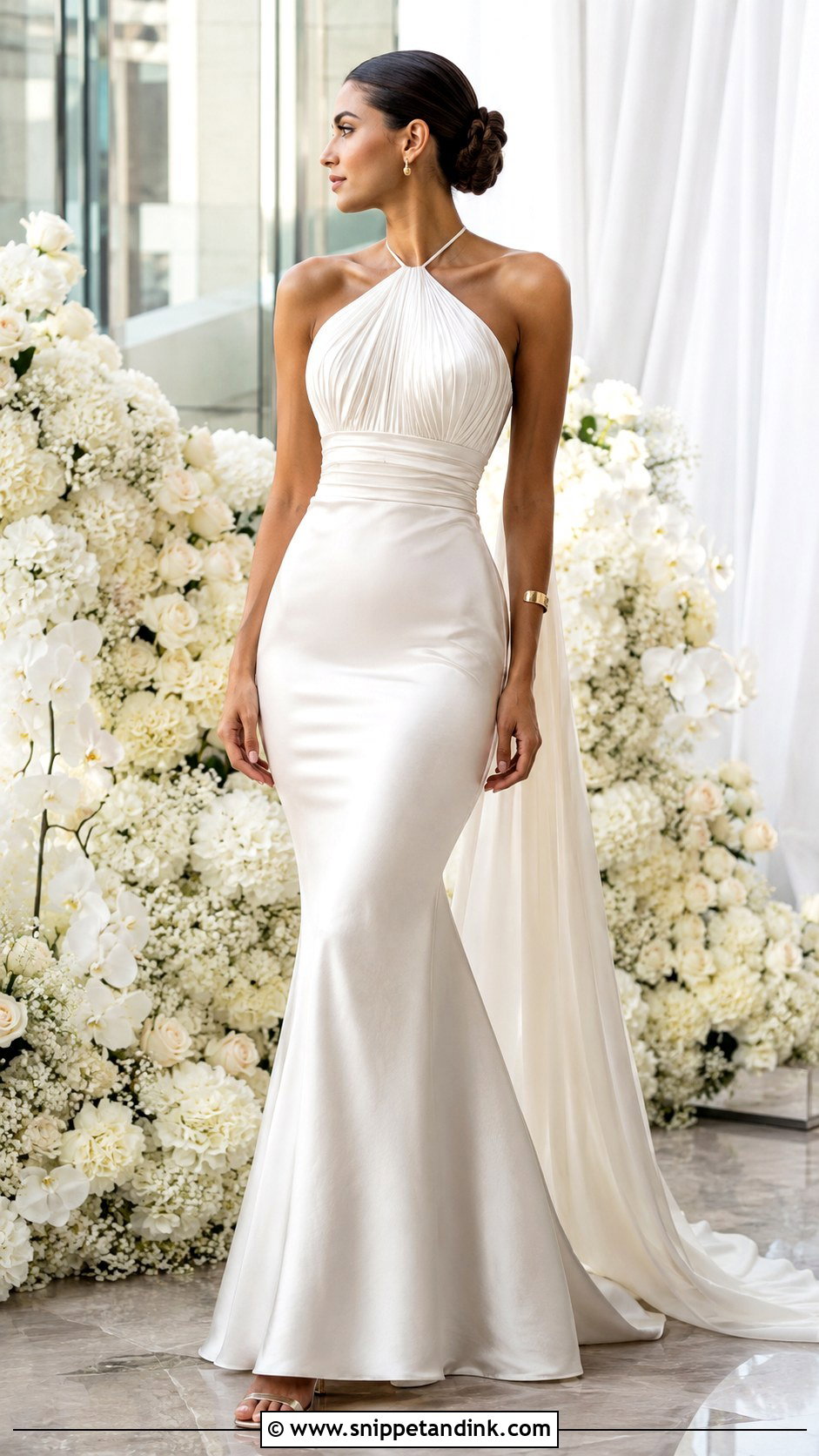
A halter neckline puts the focus on your shoulders and arms, so it suits brides who like that part of themselves. The neck can be high and gathered, a plunging center panel or a soft drape. Keep the skirt smooth so the gown stays balanced, then add small earrings, metallic ivory sandals and a slim cuff. A sleek ponytail or twisted bun keeps hair off the neckline, and a light chapel veil or a detachable back drape beats a heavy veil here. The strap shouldn’t be holding the dress up. If it pulls at your neck when you turn or lift your arms, the bodice needs more support.
8. Illusion Lace Mermaid Bridal Dress
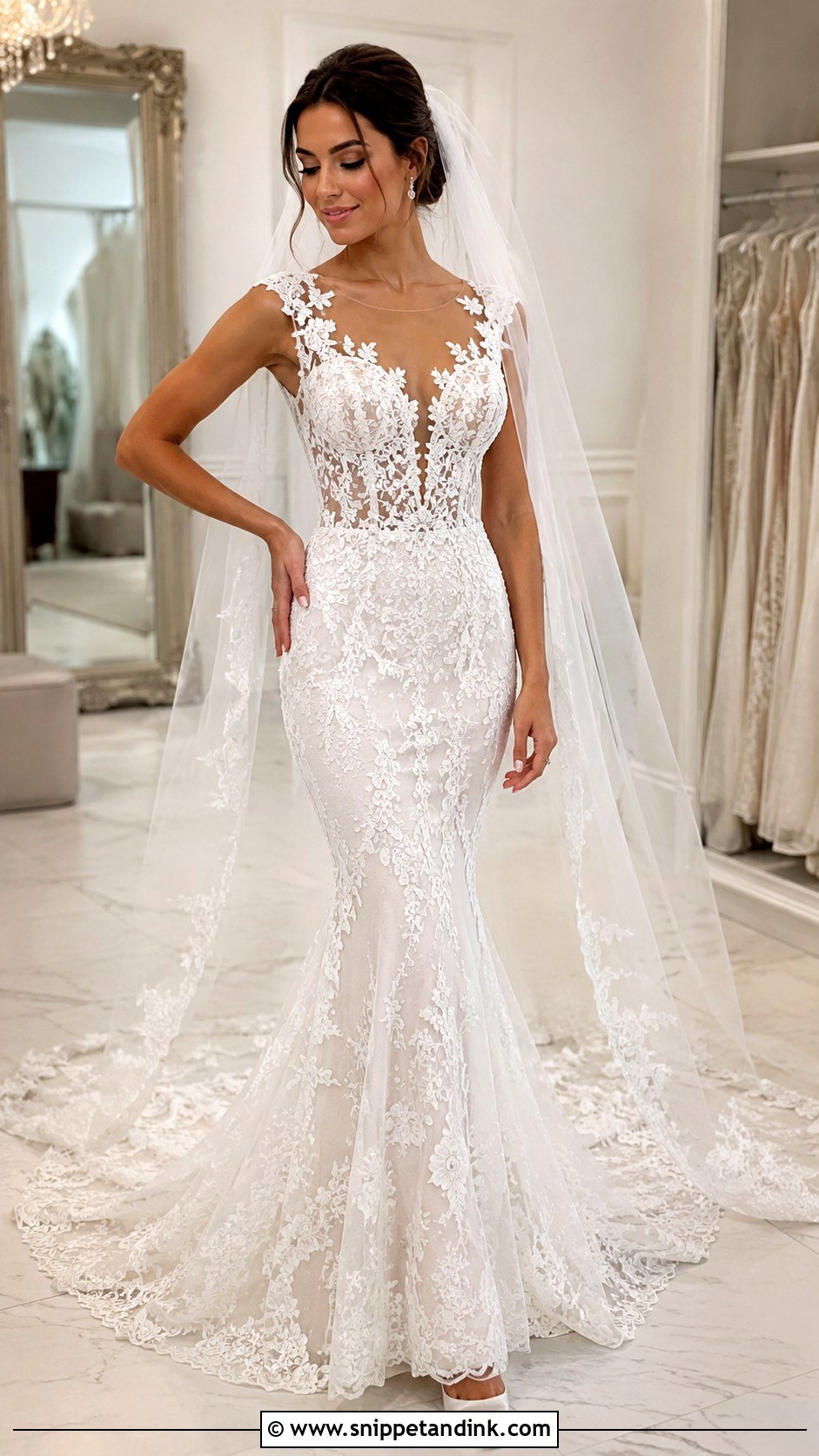
Illusion necklines make lace look as if it floats on your skin, with more support than strapless. The mesh must match your skin tone closely, and the appliqués should be placed so the edges disappear. A lined lower skirt keeps the overall gown elegant while the top stays light. Crystal studs, ivory pumps, a lace-trimmed veil and soft waves or a relaxed low bun complete it. I check two things in daylight: the mesh color at the shoulders and whether any appliqué edge is lifting. Scratchy trim at the neckline can usually be softened or moved by a good seamstress, so ask rather than suffer through it.
9. Detachable Overskirt Mermaid Bridal Dress
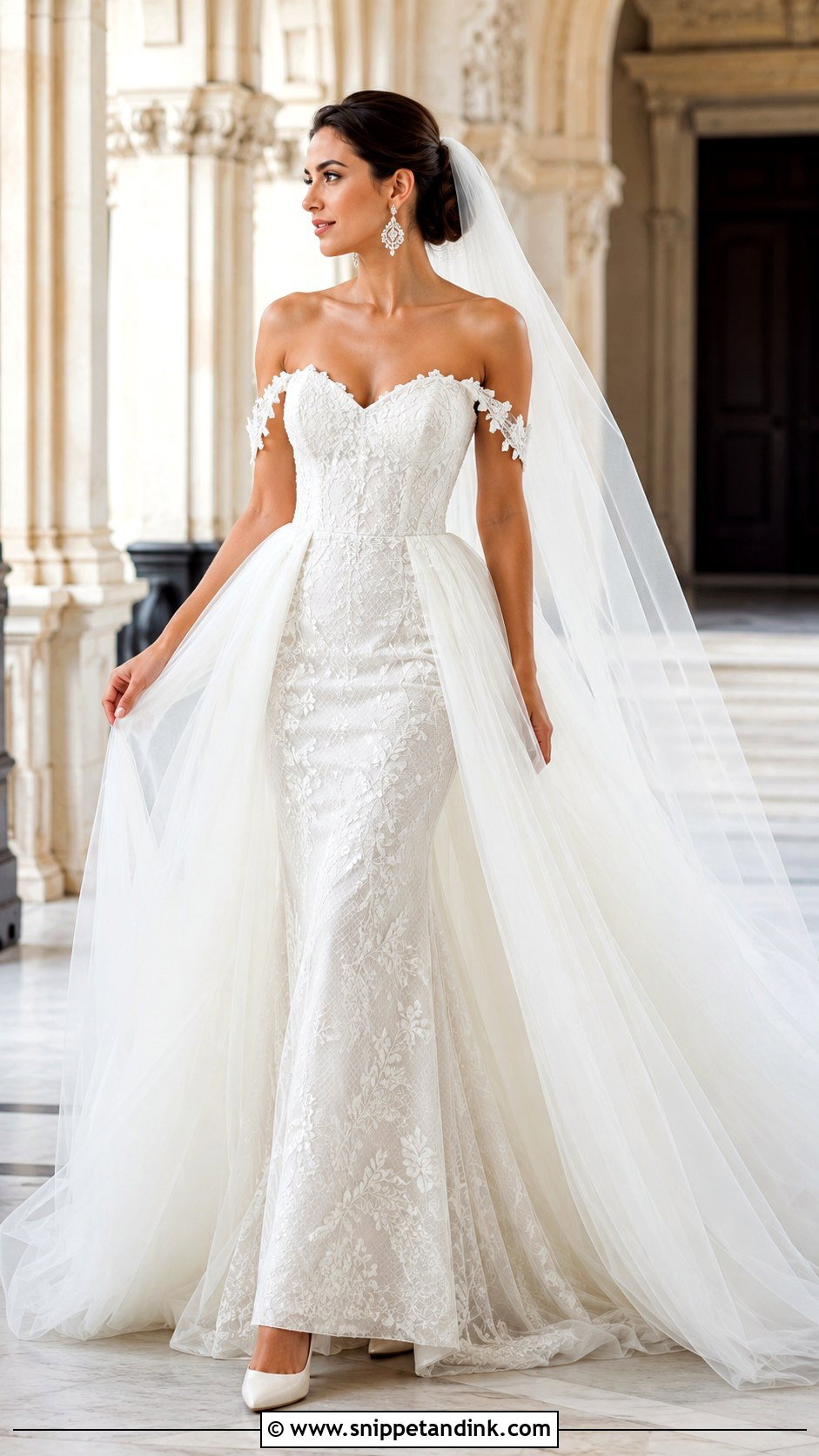
A detachable overskirt gives one gown two lives. For the ceremony, a full tulle, satin or lace overskirt adds the presence of a ball gown; take it off and the sculpted mermaid is underneath, ready for dancing. Keep the styling simple enough to suit both: comfortable heels, statement earrings, a polished updo and a plain veil. Check the waistband from the side. A thick fastening shows as a ridge under the overskirt and a mark on the gown after. Rehearse the removal with one attendant and decide where the overskirt goes once it’s off, because a heap of tulle on a chair gets sat on.
10. Detachable Train Mermaid Bridal Dress
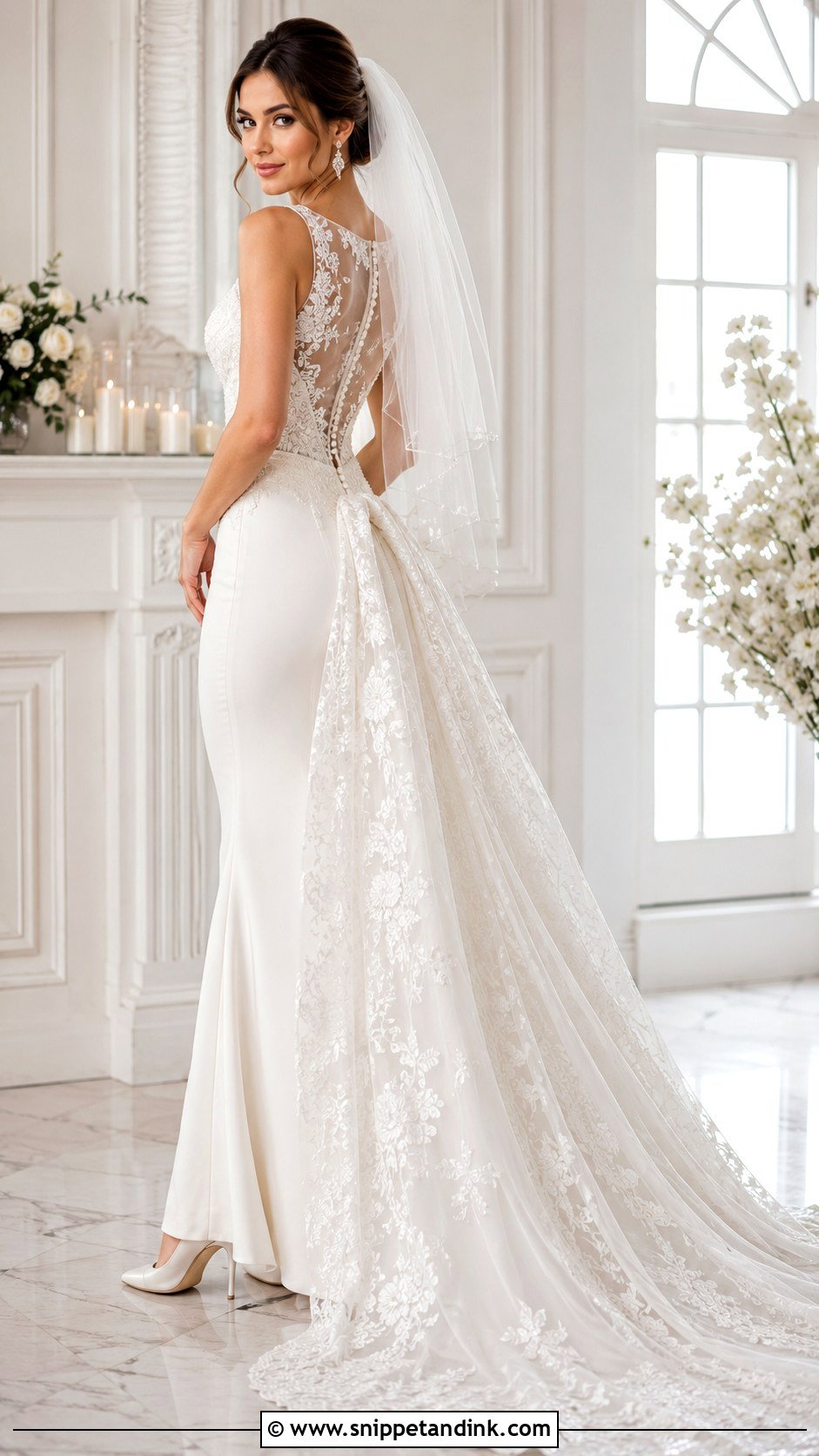
A detachable train gives you the aisle drama without hauling fabric all night. It might attach at the waist, the hips or lower on the skirt, in matching lace, satin or tulle. A simple veil, drop earrings and closed-toe heels work for the ceremony; afterward a sparkling comb or bolder earrings mark the change. The connection should be secure and quick to release, and it should be invisible. Have someone photograph your back at the fitting. Then take the train off and check the gown alone has a finished hem and an even shape.
11. Satin Bow Back Mermaid Bridal Dress
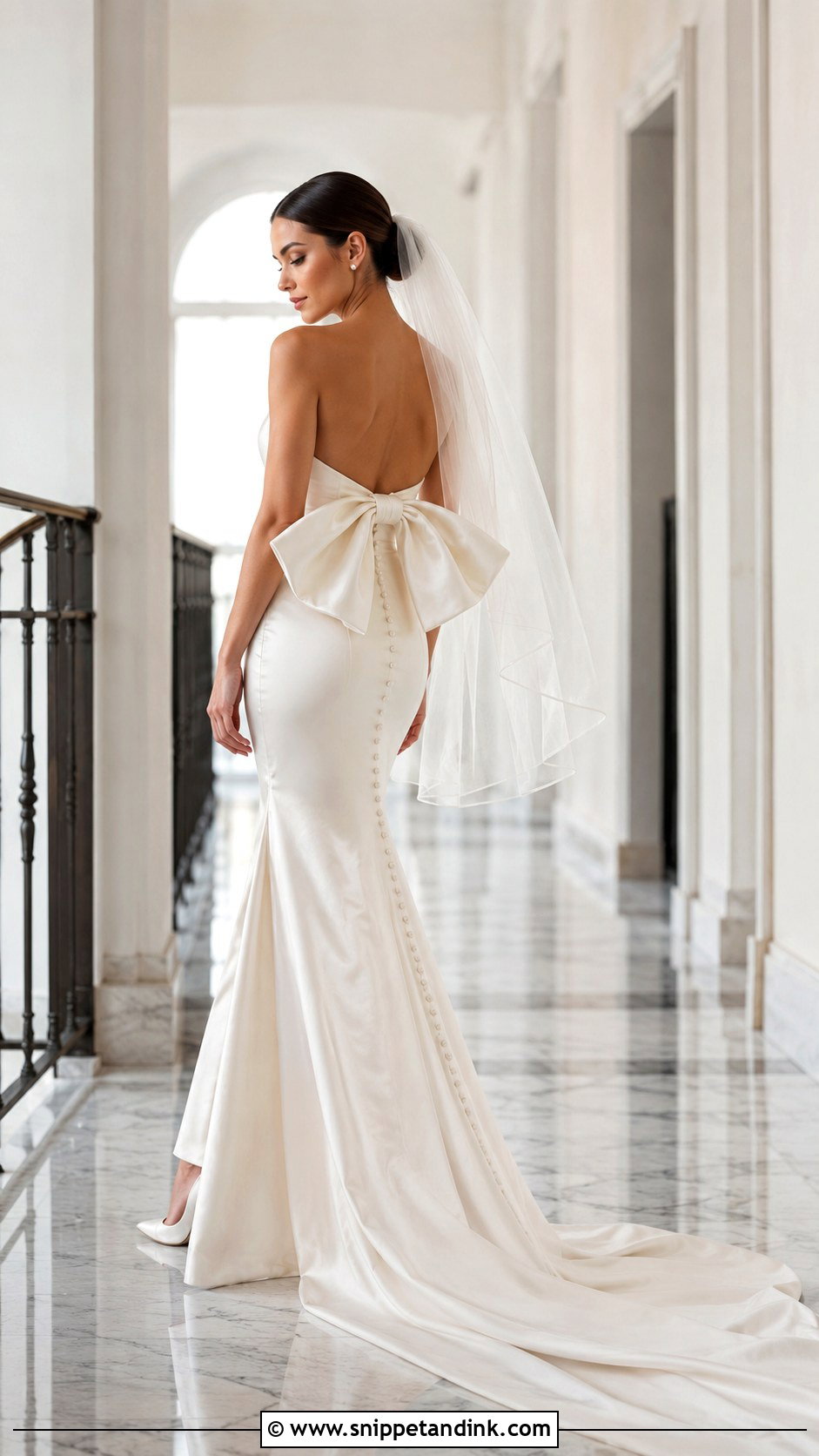
A big back bow on plain satin turns a simple gown into the one people remember from behind. Structured bows look crisp, soft trailing bows move, and either one wants a quiet front: strapless, straight or a soft scoop. Pearl studs, satin pumps and a smooth low bun that leaves the back clear finish it. If you wear a veil, set it so it falls clearly above or past the bow, never resting on it. A detachable bow can come off before dancing. Check that it sits level and doesn’t cover the buttons or the point where the train begins.
12. 3D Floral Mermaid Bridal Dress
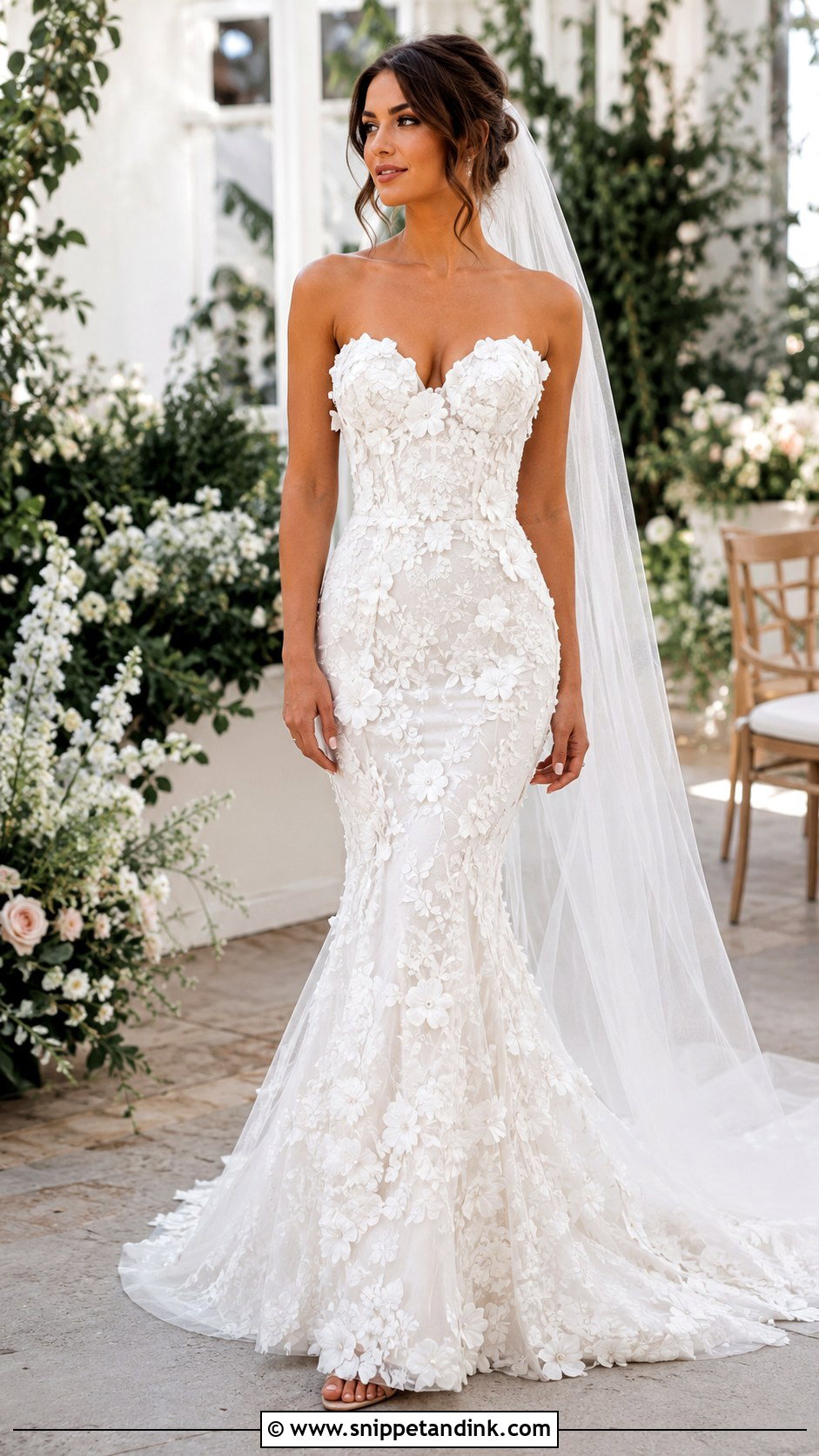
Three-dimensional flowers make the gown move: petals lift slightly as you walk, which flat lace never does. They can cover the whole gown or sit at the bodice, waist and train edge. Small flowers read delicate; large blossoms look editorial. Understated earrings, plain ivory heels, a light veil without appliqués and a loose updo keep the focus on the gown. At alterations, tug gently on the flowers near the side seams and hips. Those take the most friction when you walk and sit, and a loose one is easy to resew before the wedding and impossible to fix during it. Any beading on the gown means less jewelry.
13. Minimalist Crepe Mermaid Bridal Dress
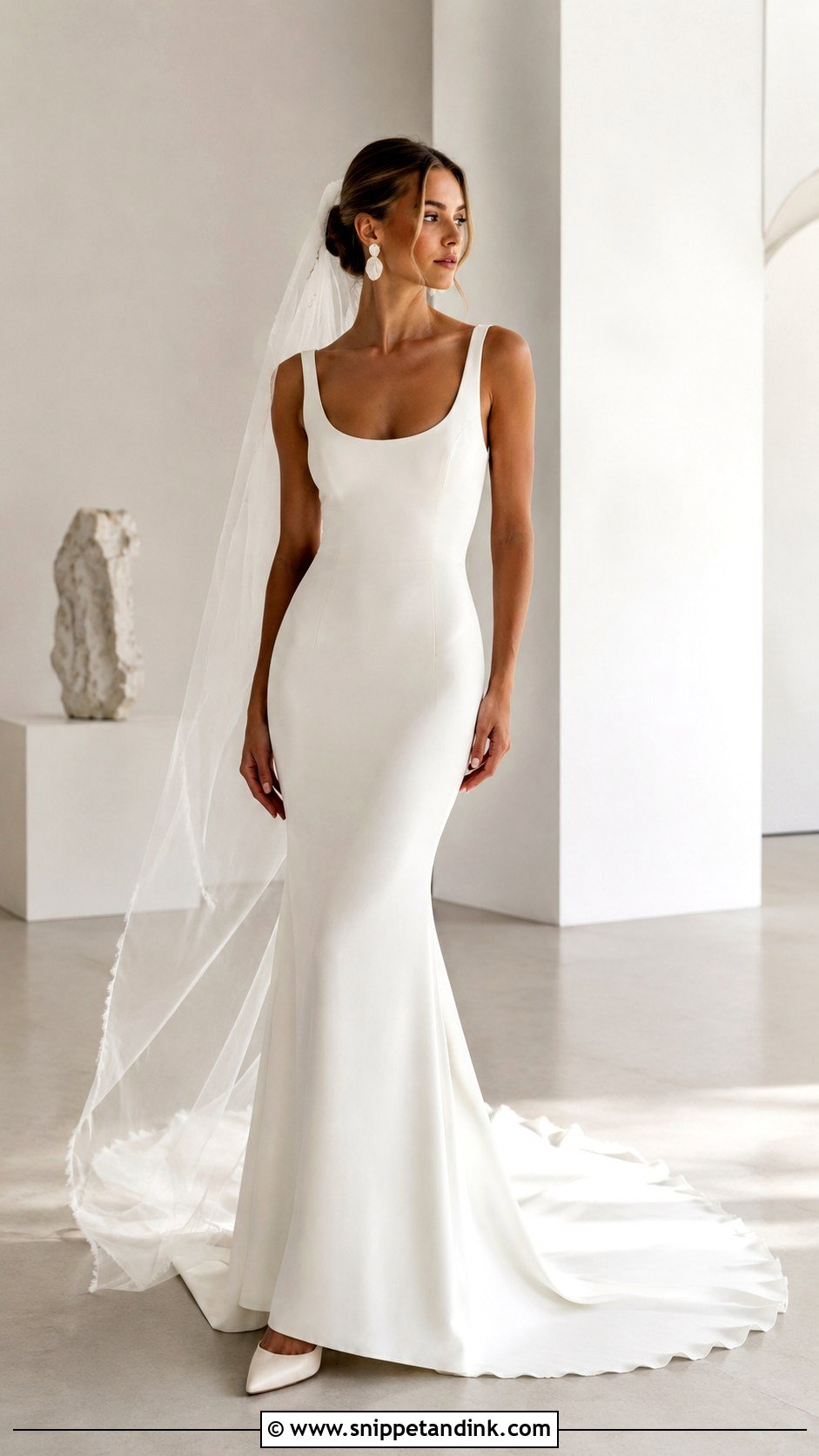
Plain crepe has nowhere to hide. Without lace or sparkle, the whole gown depends on tailoring, so I study the seams, lining and flare placement more closely than on any embellished dress. A bateau, scoop or V-neck gives it personality; sculptural earrings, pointed pumps, a sleek bun and a long raw-edge veil keep it modern. Crepe shows every line underneath, so choose smooth, supportive underwear that works with the gown’s own structure. Ask for photos from the front, side and back at each fitting. A few millimeters at a side seam shows on unembellished fabric.
14. High Neck Lace Mermaid Bridal Dress
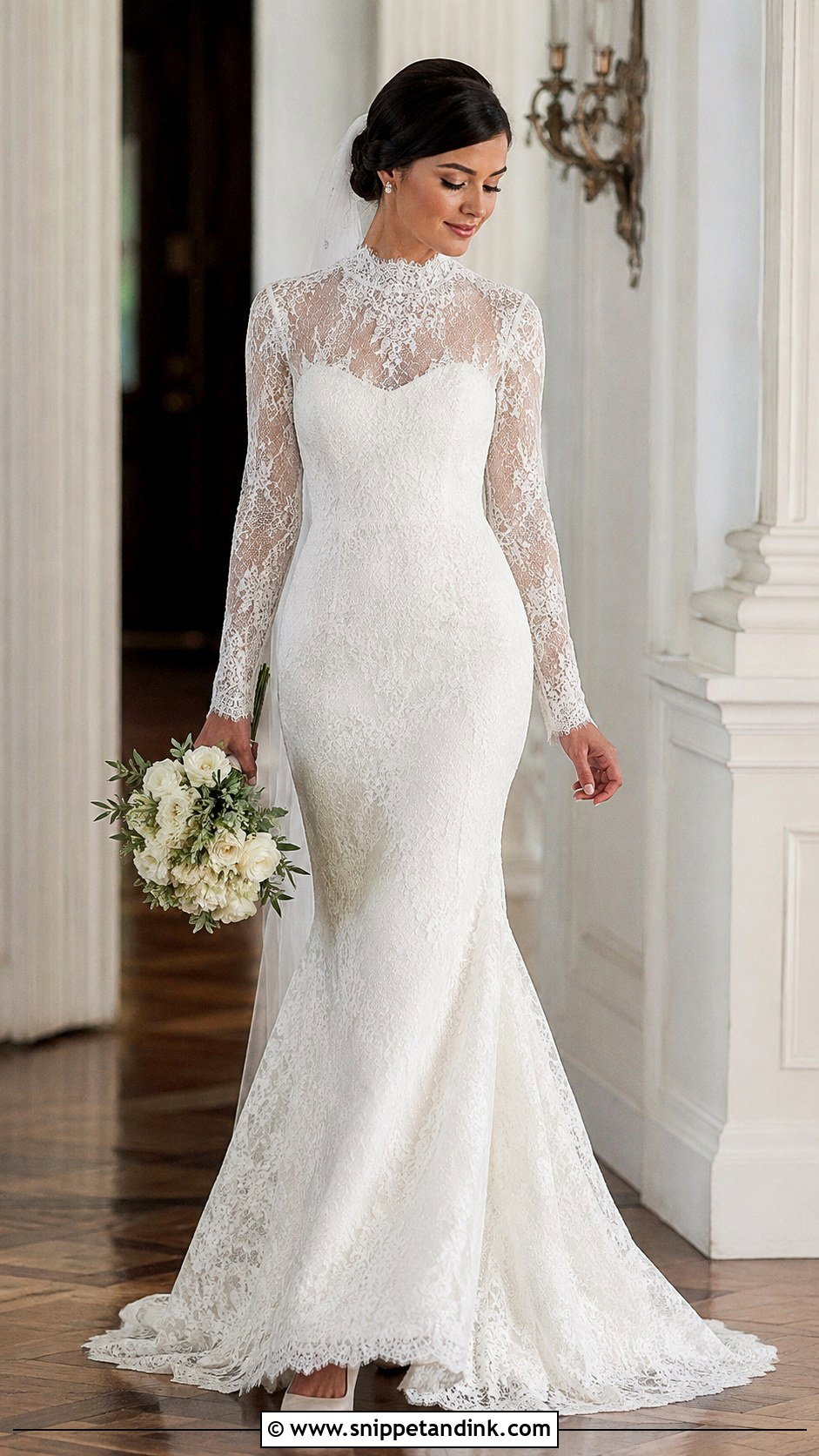
A high lace neckline covers you without making a fitted gown feel heavy, provided the lace is sheer at the collar and sleeves and lined through the bodice and skirt. Pearl studs, closed-toe heels and a neat chignon suit it; skip the necklace, the neckline is already the jewelry. Place a narrow veil beneath the bun so the collar shows from behind. Run a finger around the inside of the collar. Lace edges with stiff cord rub the neck after a few hours, so look for soft finishing. If the back is low and illusion, the mesh needs to match as closely as at the front.
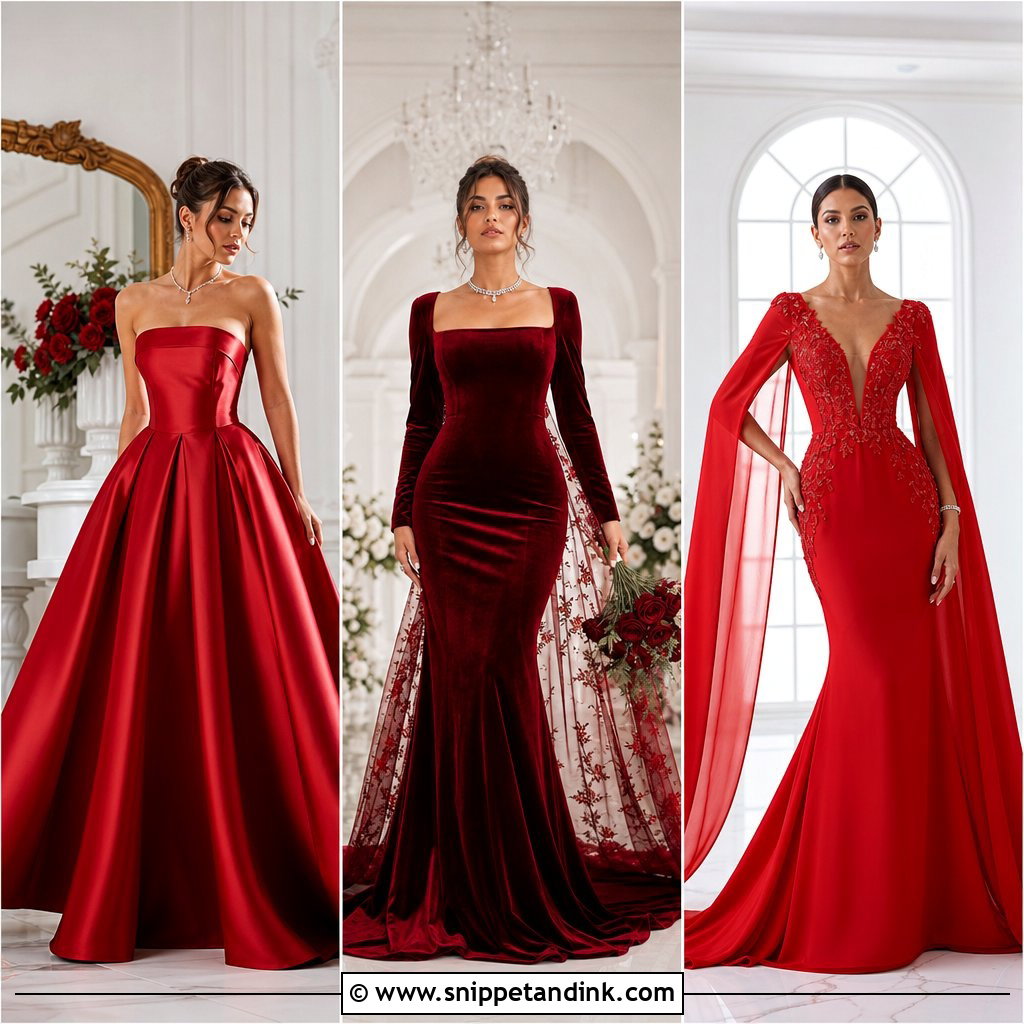
15. Cap Sleeve Mermaid Bridal Dress
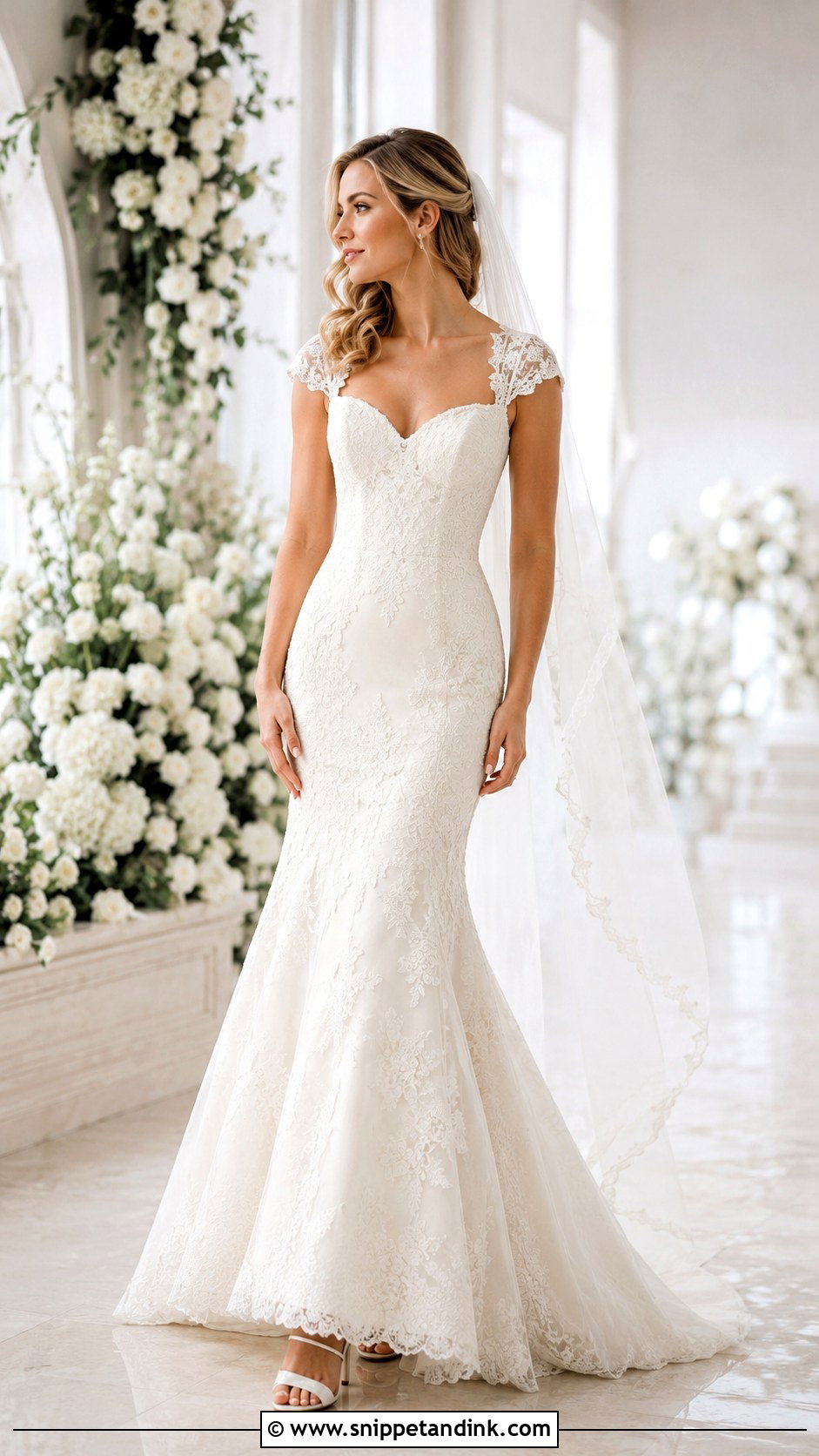
Cap sleeves cover the very top of the arm and keep the gown open and light. They can be lace appliqués, soft tulle or structured satin carried up from the bodice, and they balance best with a V-neck or sweetheart. Delicate earrings, ivory slingbacks, a fingertip veil and soft curls pinned to one side finish it. Cap sleeves are unforgiving at the armhole. Too tight and they cut into the upper arm in every photo, too loose and they flap. A tailor can adjust lace appliqués one by one so both sides match.
16. Scoop Neck Low Back Mermaid Bridal Dress
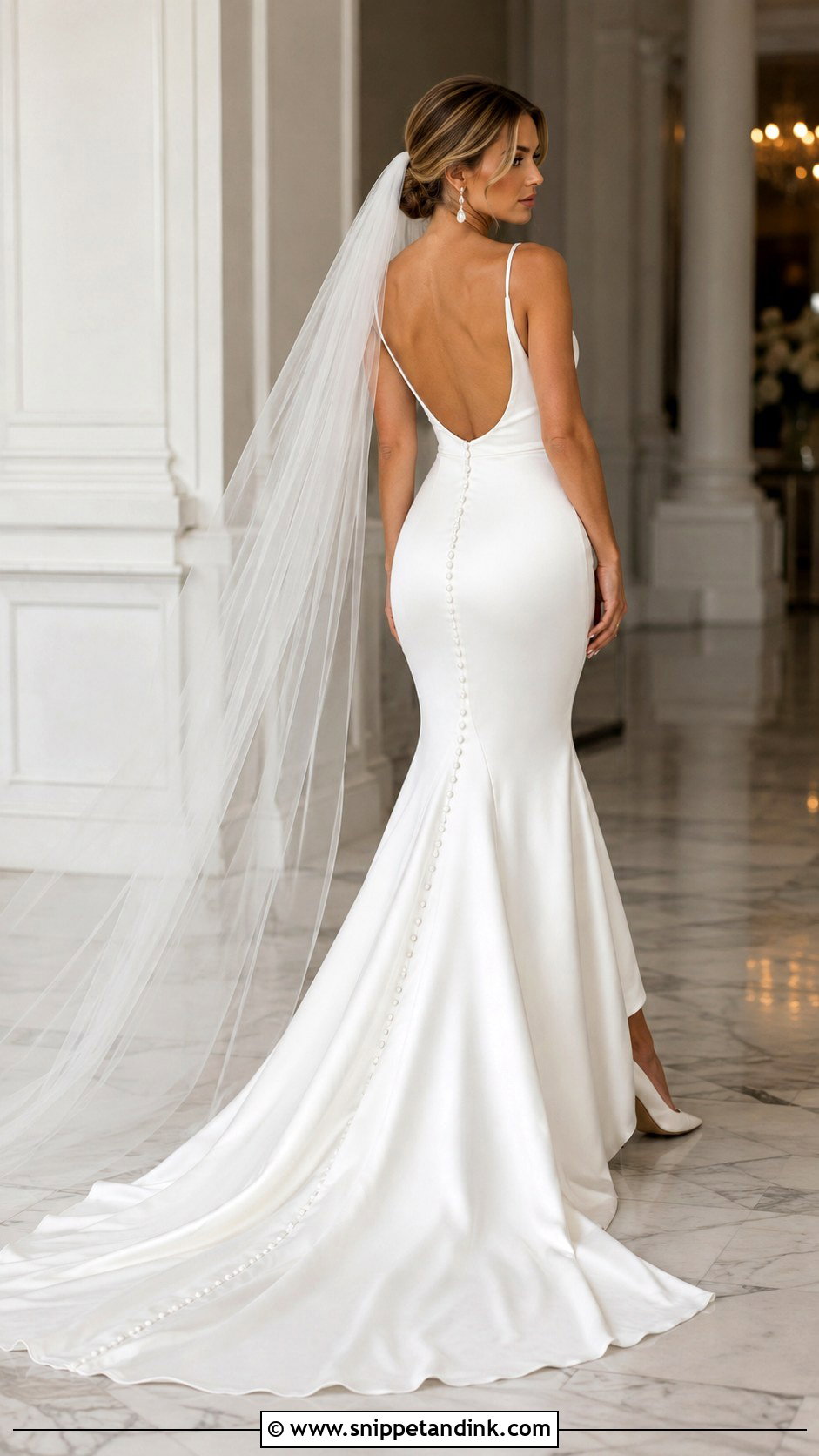
A scoop front with a low back is soft from the front and dramatic from behind. The gown needs internal support, usually sewn-in cups and boning, so no bra straps show. Covered buttons, lace edging or a satin border frame the opening. Drop earrings, pointed heels, a low side bun and a veil set below the hair keep the back visible. Delicate straps tend to slide toward the edge of the shoulder on a low back, so at the fitting walk around and lean forward slightly. The back edge should stay flat against you and the bodice should stay put without tugging.
17. One Shoulder Mermaid Bridal Dress
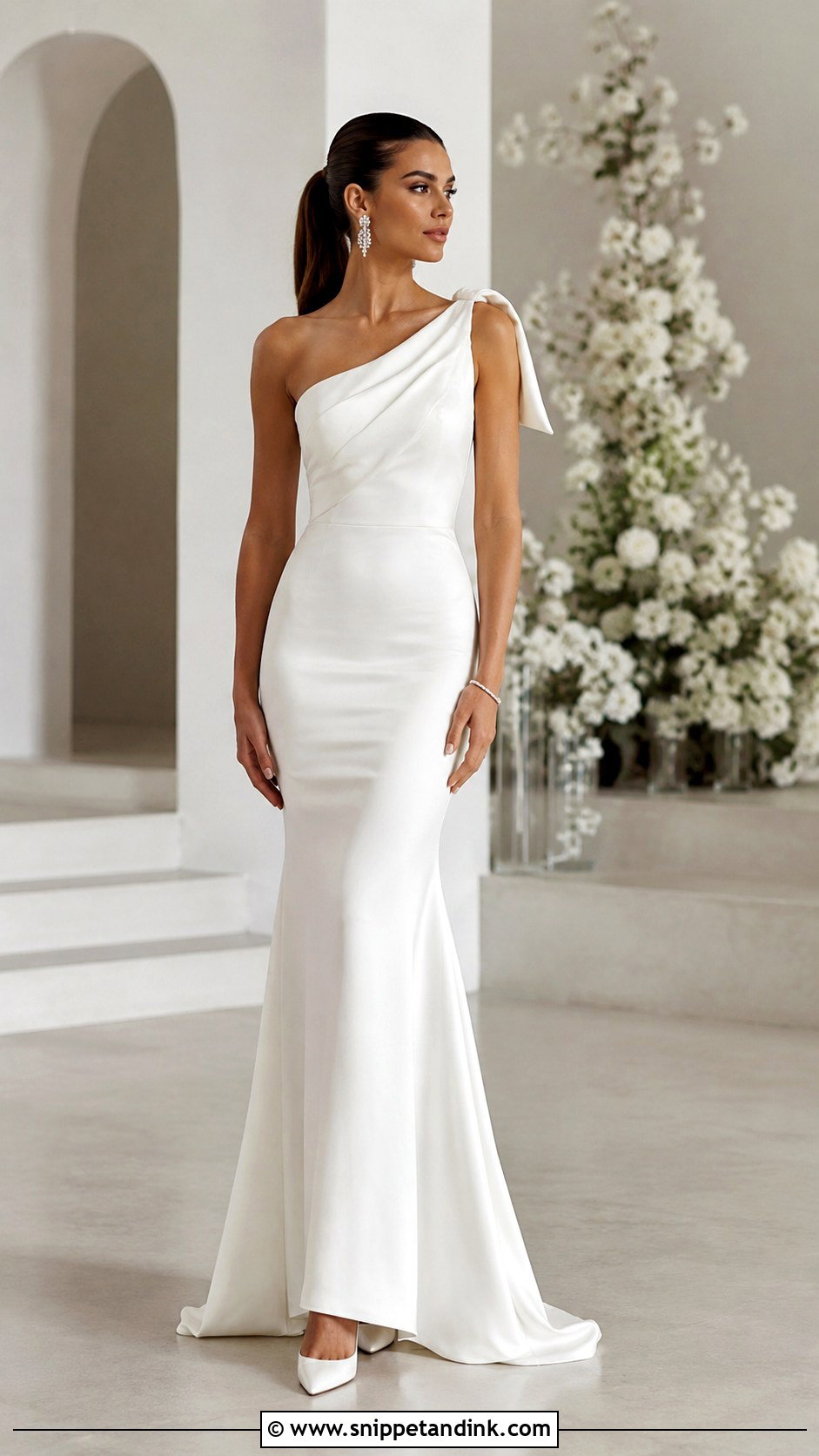
One shoulder adds asymmetry to the mermaid line. The shoulder can be a clean satin strap, soft draping or a floral appliqué sweeping across the bodice, and the rest of the gown should stay streamlined so that shoulder leads. Earrings rather than a necklace, a simple bracelet on the bare arm, pointed pumps and a sleek ponytail. A light veil is possible; a detachable shoulder drape looks more connected. Asymmetric bodices tend to twist toward the strap side over a long day, so check that the bodice sits level and that the strap isn’t doing all the holding.
18. Plus Size Corset Mermaid Bridal Dress
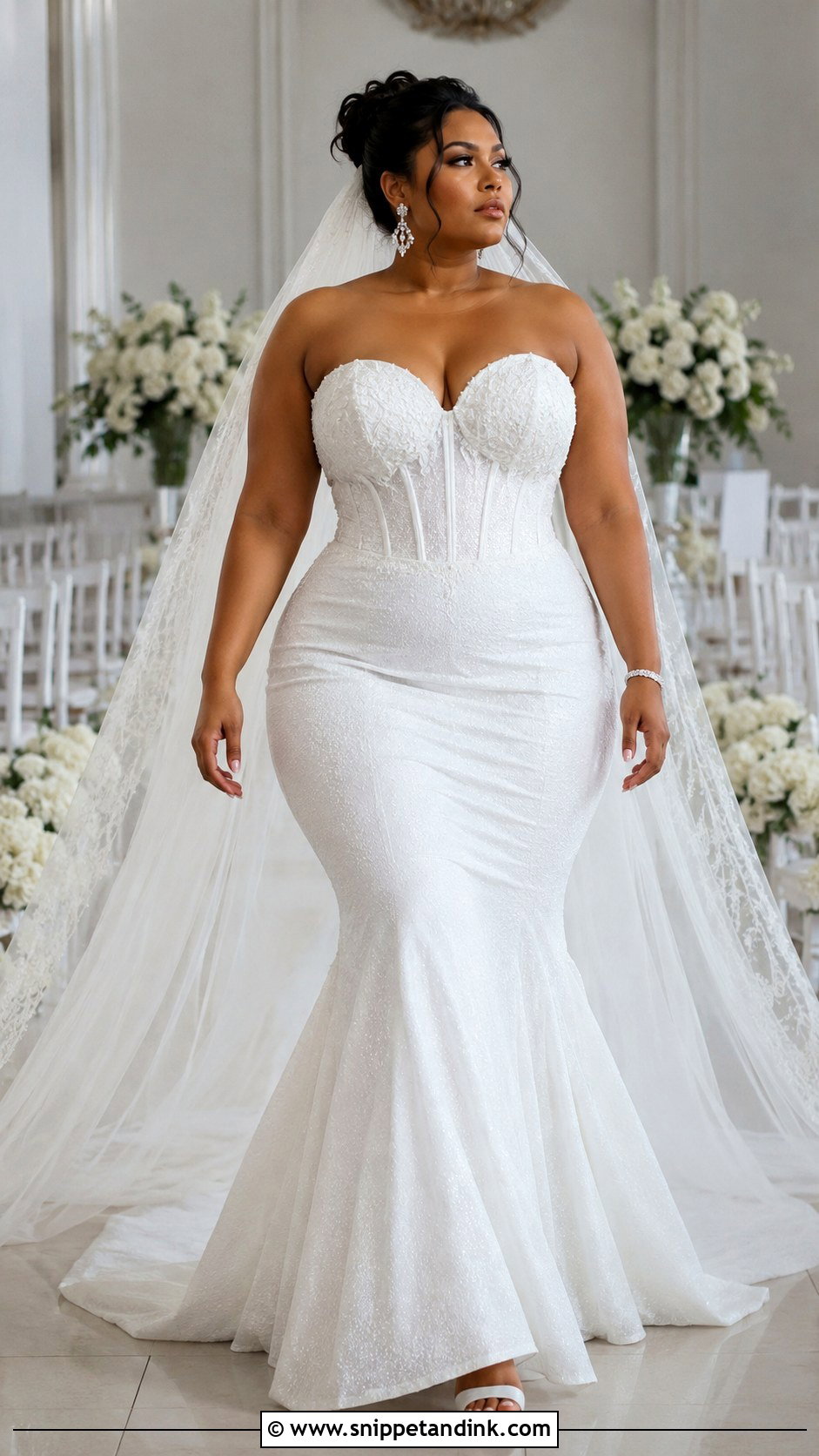
A well-built corset gives a plus-size bride real support and a defined waist in a mermaid gown. I look for firm internal boning, cups placed where your bust actually is and a skirt lining that slides over the hips instead of gripping. A sweetheart or off-shoulder neckline balances the fitted lower half. Stable block heels, statement earrings and a cathedral veil anchored to a secure updo finish it. Ignore body-shape rules and judge by fit. The flare should start where you can take natural steps and sit easily. One question for the salon: is the sample built the same way as your size? Bust, straps and appliqué placement should be graded up, not just stretched.
19. Petite Dropped Flare Mermaid Bridal Dress
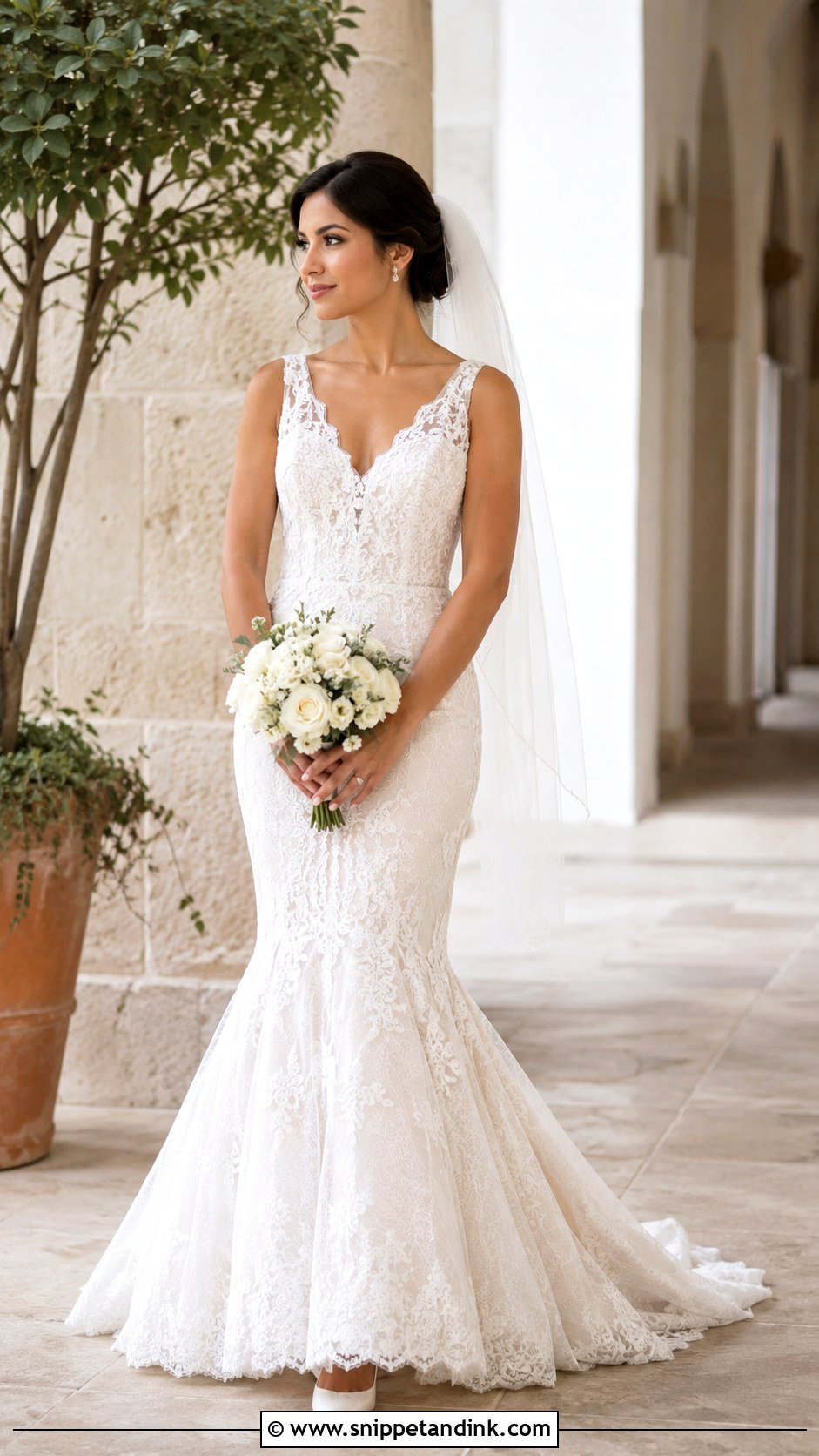
Petite brides can absolutely wear a mermaid. The trick is scale. A flare starting just above or at the knee gives movement without swallowing a shorter frame, and vertical lace, a clean V-neck or unbroken crepe adds length. Comfortable pointed heels, small earrings, a narrow veil and a compact bouquet that doesn’t hide the waist finish it. Alterations go beyond the hem: the bodice length, hip line, straps and flare position may all need moving. Bring your exact wedding shoes to every fitting, since an inch of heel changes where everything lands.
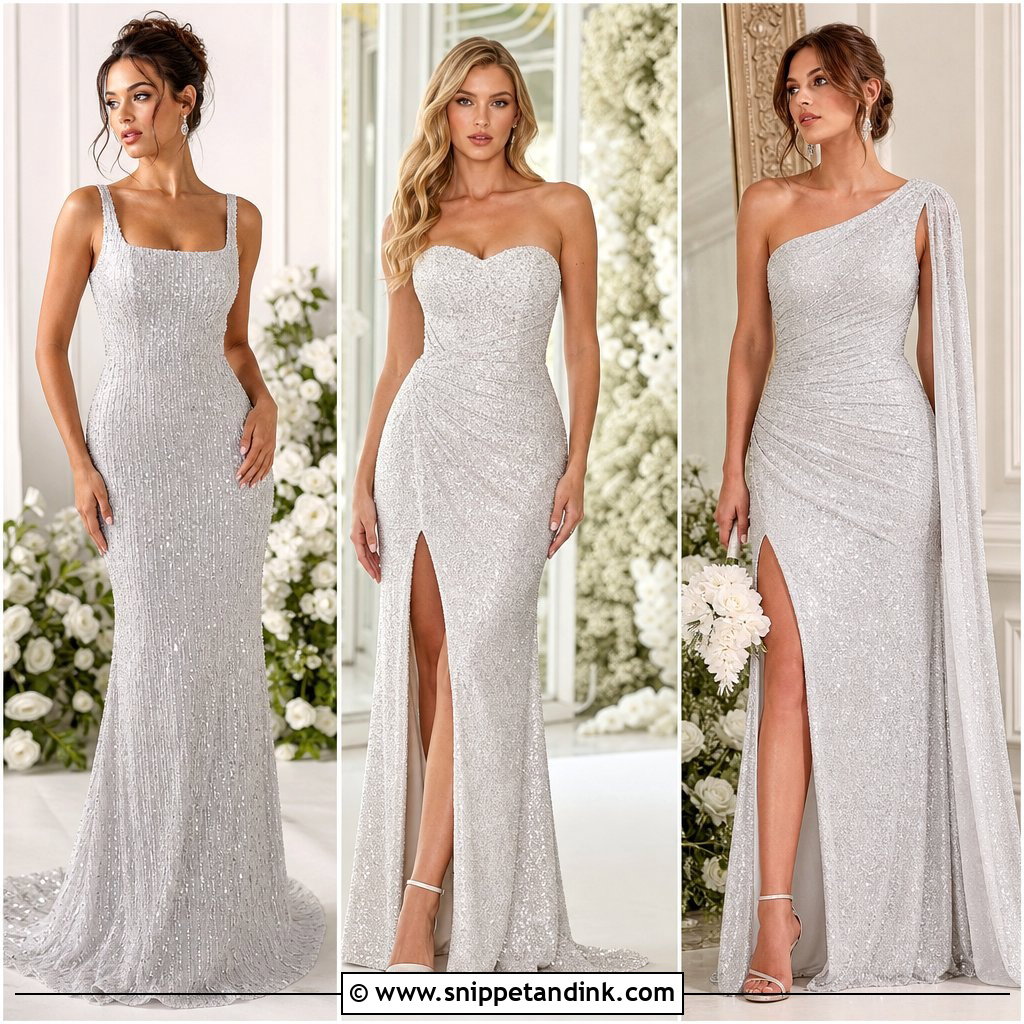
20. Cathedral Train Mermaid Bridal Dress
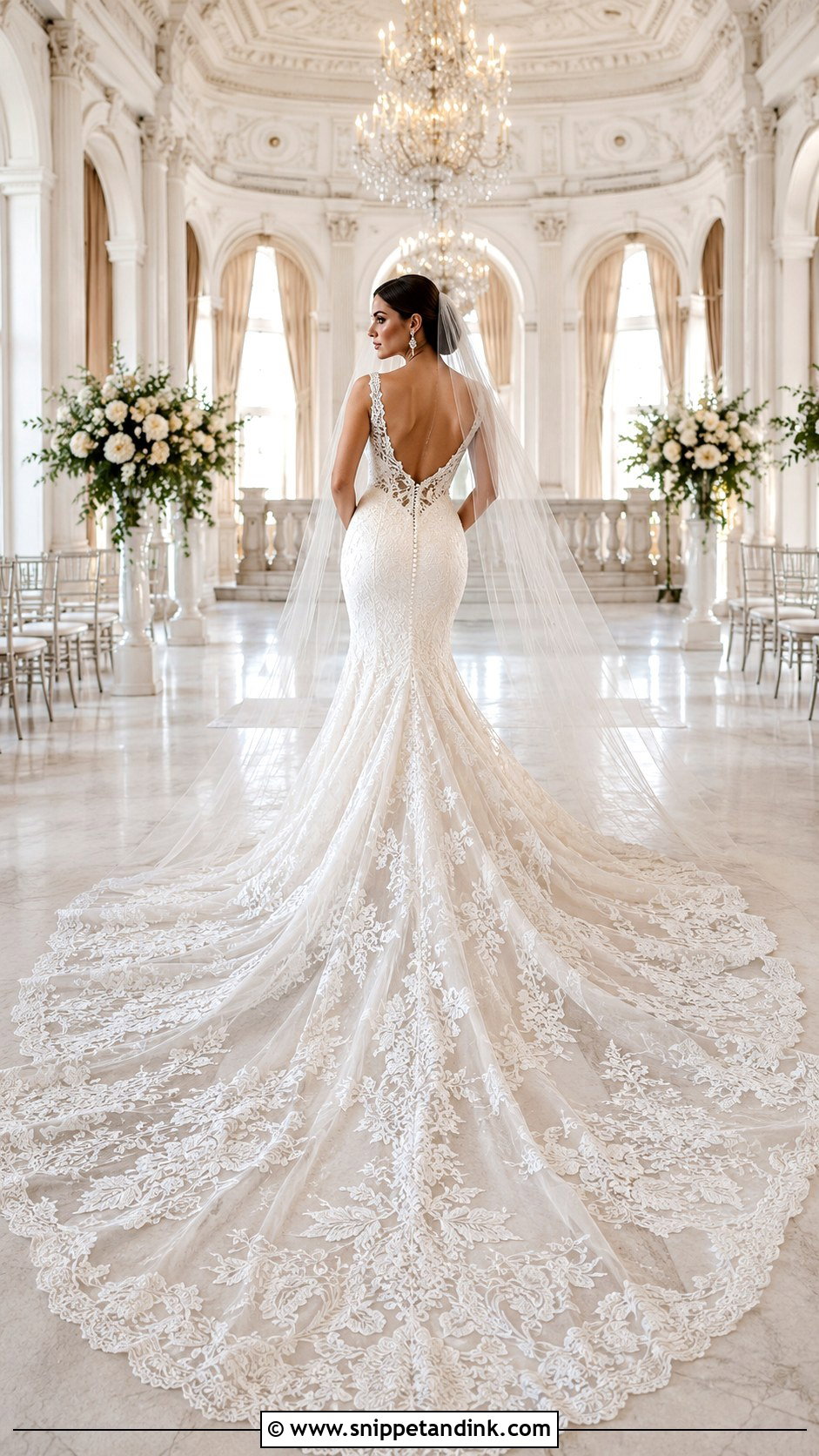
A cathedral train on a mermaid gown makes the most formal entrance on this list. Lace appliqués, button detailing or a clean satin border can make the back the star. Supportive heels and refined earrings, plus a veil that either matches the train or ends clearly above it, and a structured updo to balance all that fabric behind you. Measure the aisle and think about the floor, stairs and any outdoor ground before you commit. A long train on gravel or grass collects damage fast. The bustle is non-negotiable: have the tailor demonstrate it, film it, and let one person in the bridal party practice before the day.
Dinner, the Restroom and the Dance Floor in a Fitted Gown
Nobody shows these moments in the photos, but they’re where a mermaid gown is tested. A little planning makes them easy.
- Sitting: perch toward the front of the chair rather than sinking back. A fitted skirt pulls tight across the thighs when you lean back, and you’ll stand up with less creasing.
- The restroom: take one helper. Gather the skirt up from the hem toward your waist, and face the cistern rather than turning around. It sounds odd and it works.
- Stairs: lift the skirt at the side seams near the knee, not from the hem, so the flare clears your feet without stretching the fabric.
- Dancing: bustle the train first. A loose train under a mermaid flare is how heels go through hems.
Which bustle suits a mermaid train
There are two main types. An over bustle hooks the train up onto the back of the skirt; an under bustle, sometimes called a French bustle, tucks it underneath with ribbon ties. On a mermaid, the train starts low, so the bustle points sit lower than on an A-line, and the right style depends on the fabric’s weight and how the flare hangs. Ask your seamstress to show you both pinned before she sews either, and decide by looking at the back in a mirror.
Look Past the Fabric to the Construction
One fitted silhouette covers a lot of ground. Satin gives clean structure, lace and florals add texture, crepe keeps it minimal, and pearls or beads bring controlled sparkle. Convertible overskirts, sleeves, bows and trains let one gown change between ceremony and reception. Whatever you choose, look past the surface to the construction, the seam placement, the lining and the room you have to walk and sit. Keep accessories in support of the gown, and judge it by how freely you move in it, from the front, the side and the back.
You'll Like These Ideas:




Leave a Reply