
By 1998 the heavy drama of the ’80s had mostly gone, yet brides hadn’t given up satin, pearl buttons, fitted bodices or tulle. What arrived instead was restraint. Think Carolyn Bessette-inspired slip gowns next to big satin ball gowns, both worn with almost no jewellery. That mix is why the late ’90s translates so well now. In the fitting room I find these dresses need fewer apologies than earlier decades; they rarely read as costume. Here are 25 shapes from that year, each styled from veil to shoes, with what I’d watch for when you try one on.
Satin, Crepe or Silk Charmeuse? Fabric Decides the Late-’90s Look
Most of the 1998 shapes below are simple, which means the fabric does the work that lace and beading did in earlier decades. Before I show a bride a single silhouette from this year, I put three fabrics in her hands.
- Heavy satin holds a ball gown or A-line skirt out on its own and reflects light strongly. It also shows every crease, so it suits brides who will stand more than sit.
- Crepe is matte, drapes close to the body and forgives small creases. It’s my first suggestion for a sheath or minimalist column.
- Silk charmeuse is the slip-dress fabric: fluid, with a soft sheen. It marks easily with water and perspiration and shows every line underneath, so it needs the most careful fitting and underwear planning.
- Polyester versions of all three exist and cost far less. They are fine, but they breathe less, so on a hot day you will feel it.
Hold the fabric against your face by a window, then crush a corner in your fist for a few seconds. How quickly it recovers tells you how you’ll look after an hour of sitting through speeches.
1. 1998 Satin Ball Gown Wedding Dress
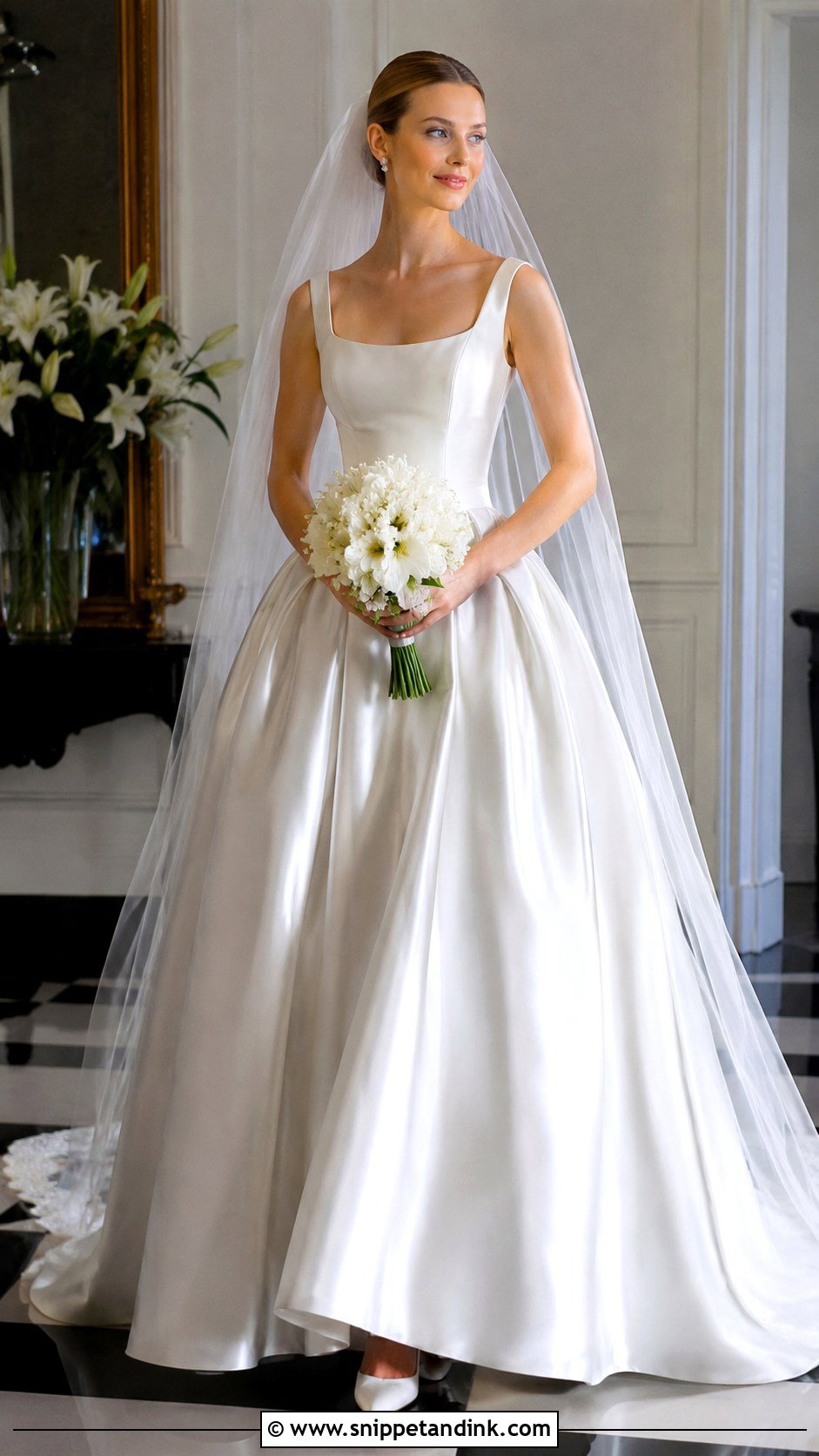
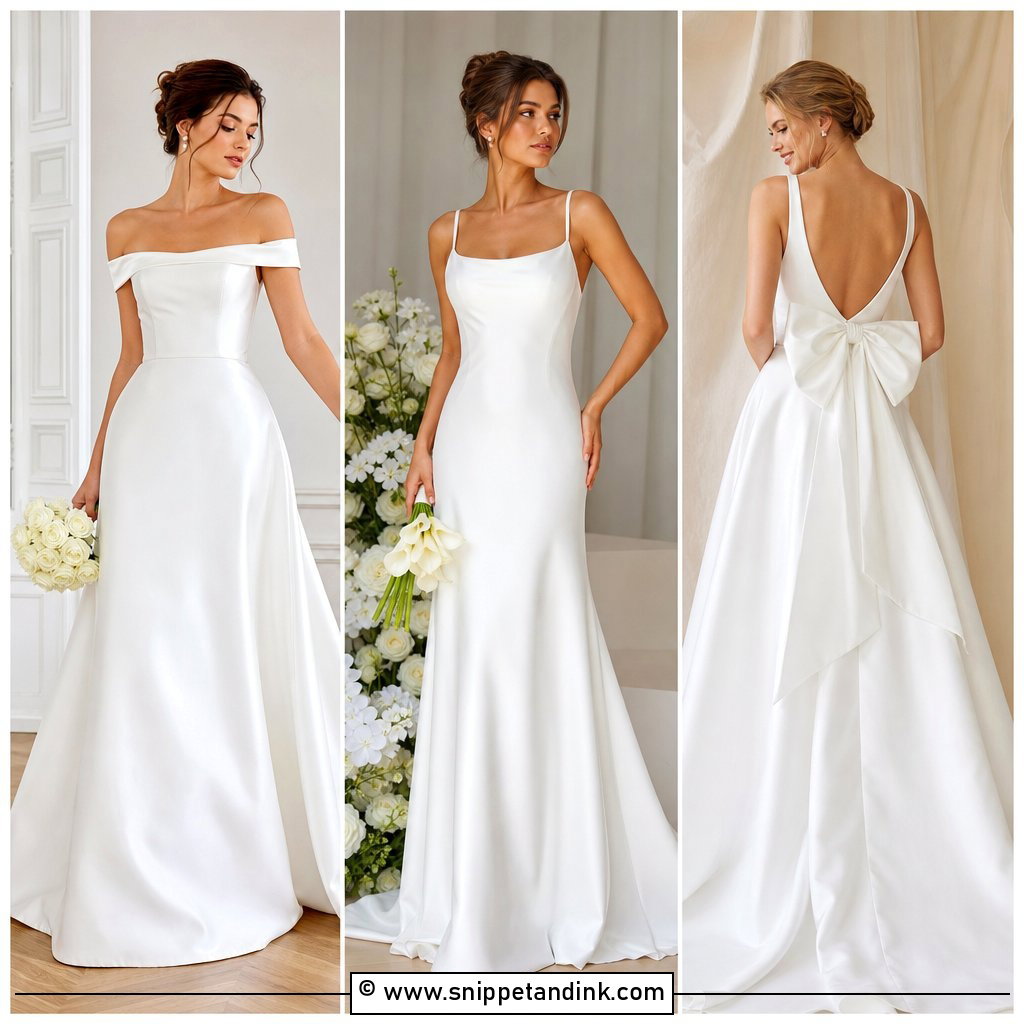
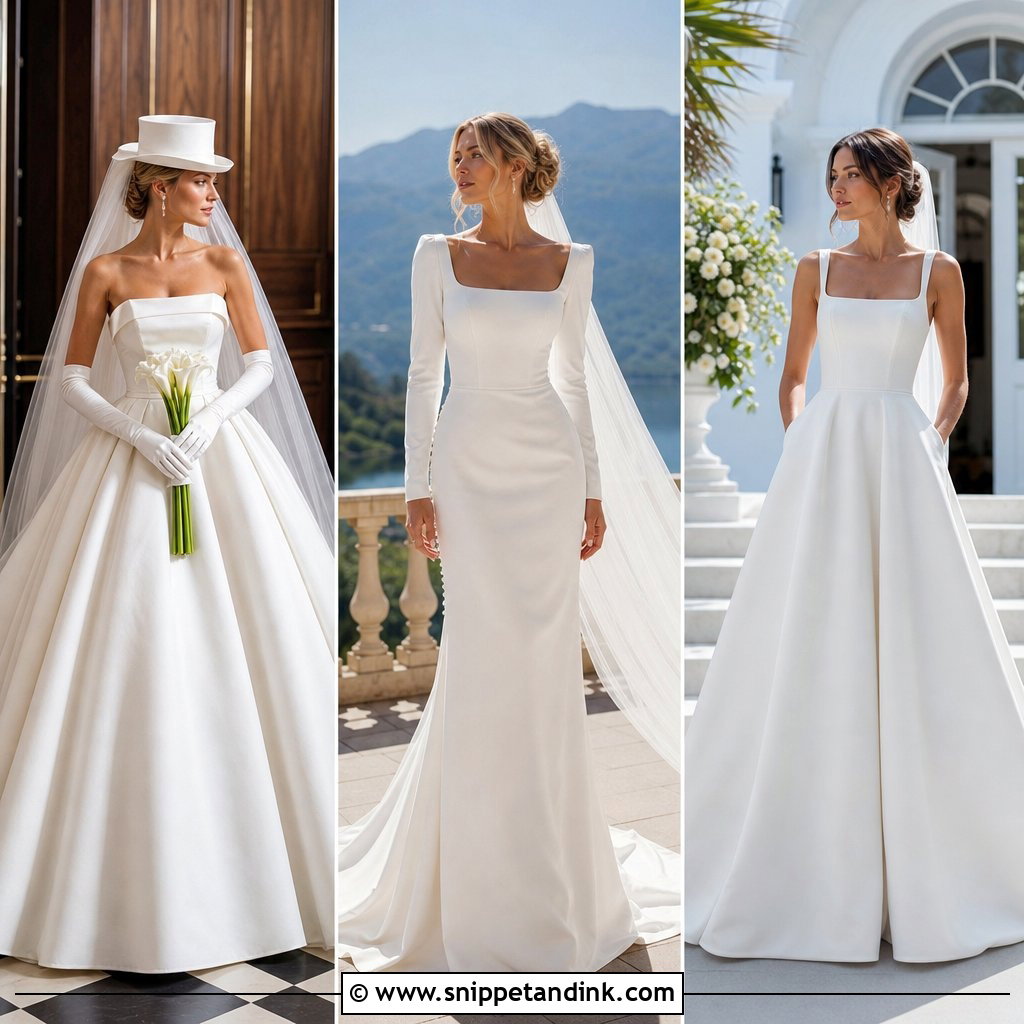
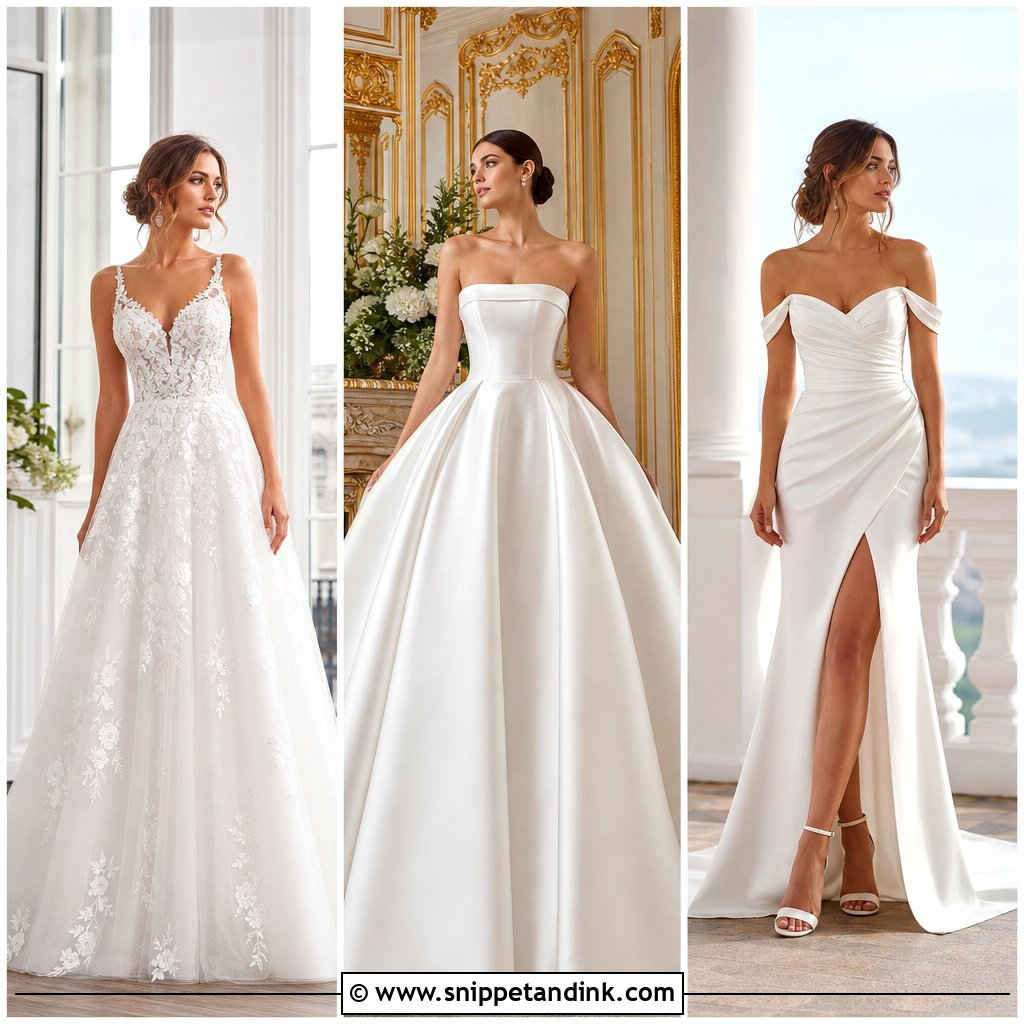
Smooth satin, a structured bodice and a full skirt: the late-’90s ball gown skipped the heavy lace of earlier years. Necklines got cleaner too, a scoop, a bateau or a soft off-the-shoulder edge. The weak point on satin is the waist seam. When a bride sits, satin creases sharply across the lap, so I ask for a heavier satin or a lined skirt that relaxes when she stands. Pearl studs, satin pumps and a plain cathedral veil keep the shine as the main event, and a low bun stops the hair from fighting the shape.
2. 1998 Slip Wedding Dress
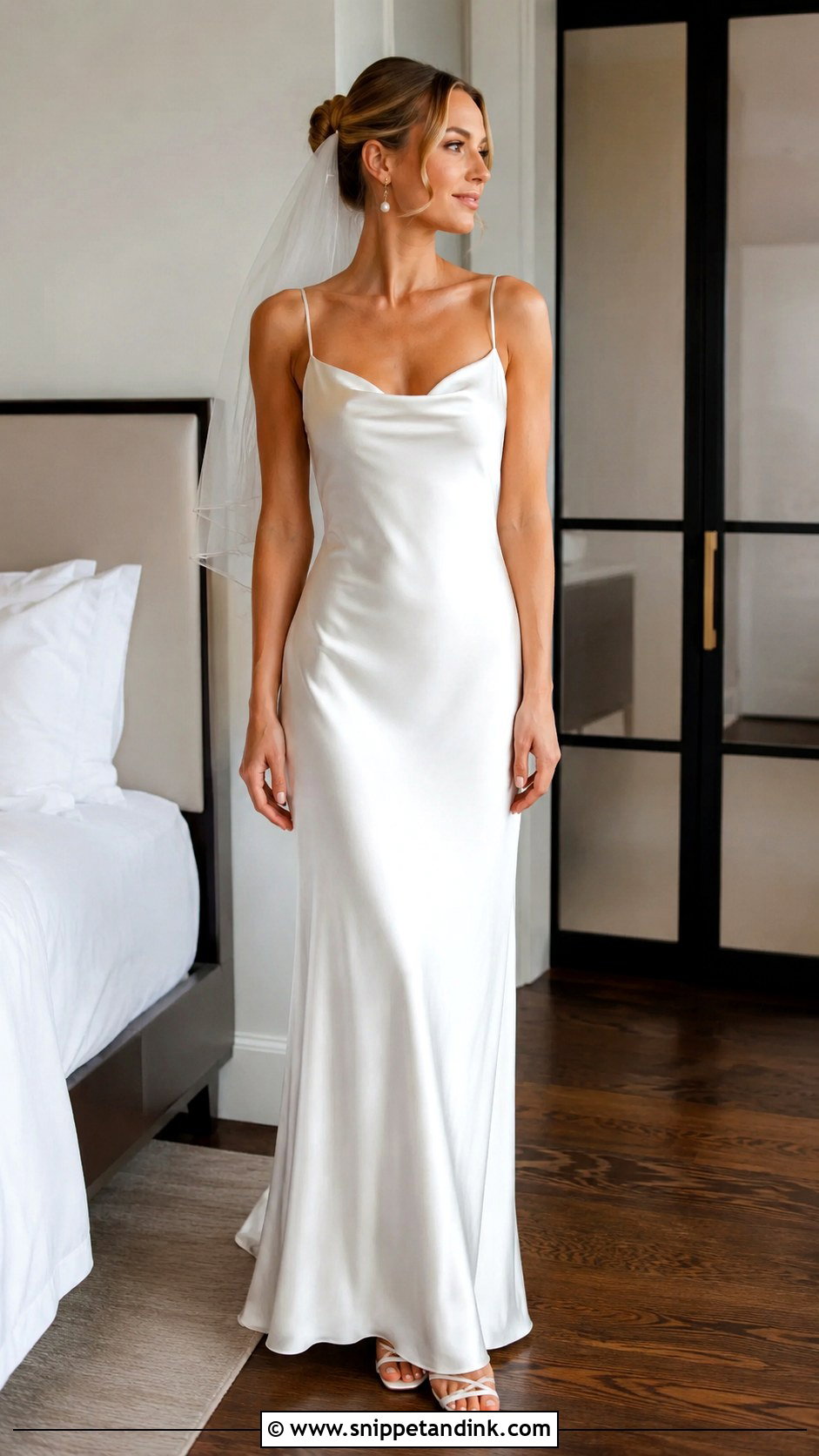
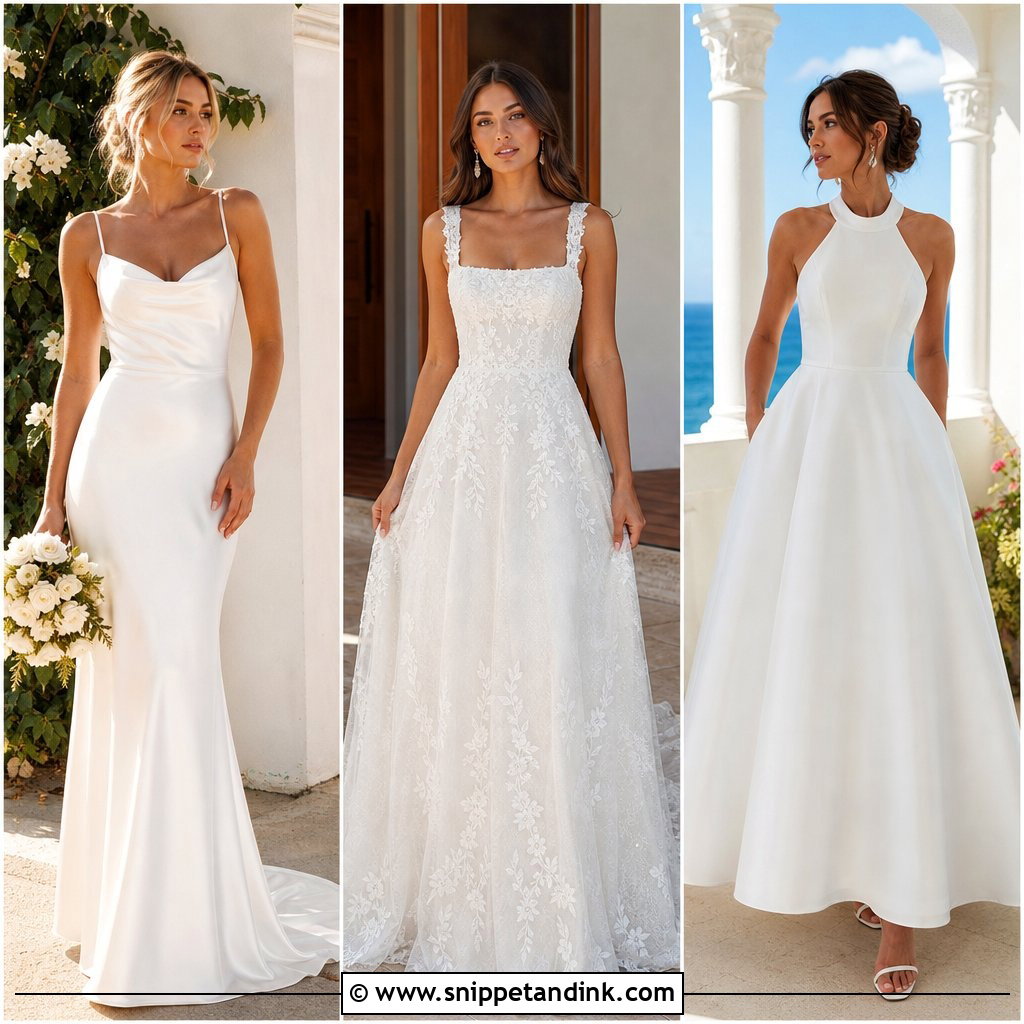
Nothing on this list is harder to fit than the slip dress. Usually it’s silk or satin, thin straps, a straight or bias-cut line and nothing else. Bias-cut fabric stretches as it hangs, so a good seamstress lets the dress hang for a day before hemming, or the hem will drop unevenly by the wedding. Add barely-there heels, a short veil or sheer scarf veil, pearl drops and a small satin clutch. Courthouse weddings and intimate hotel ceremonies suit it. Keep the hair simple: a smooth bun, soft waves or a tucked-under bob.
3. 1998 Off The Shoulder Wedding Dress
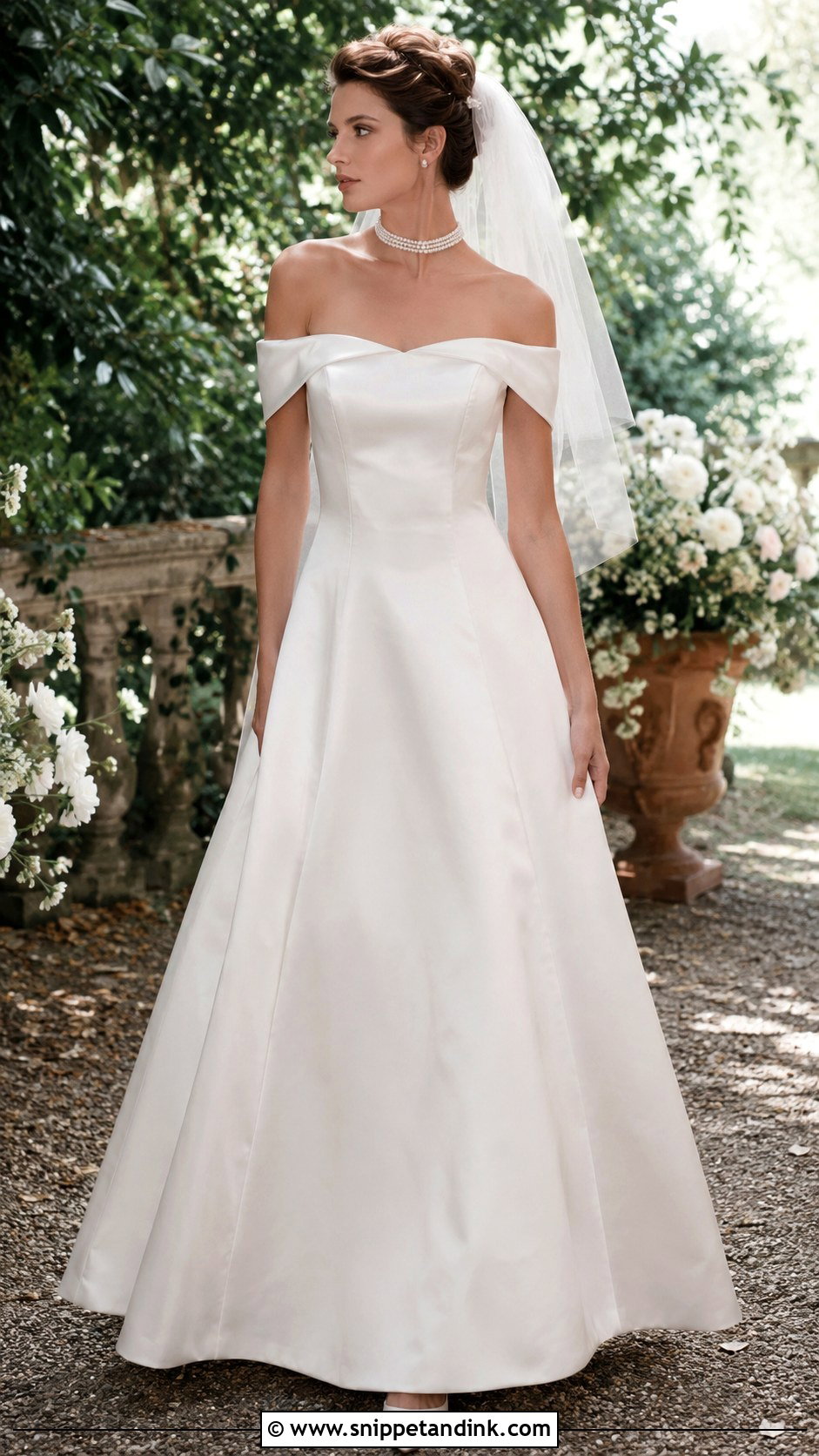
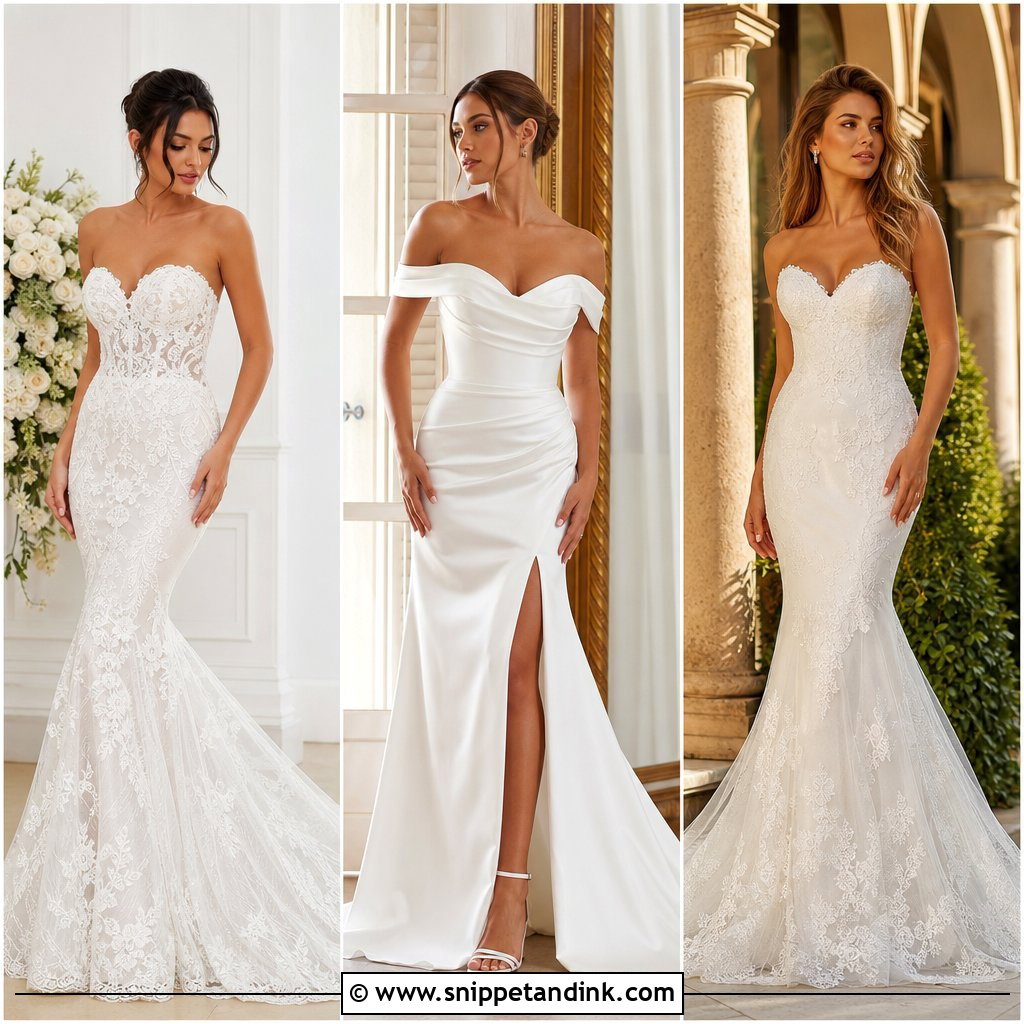
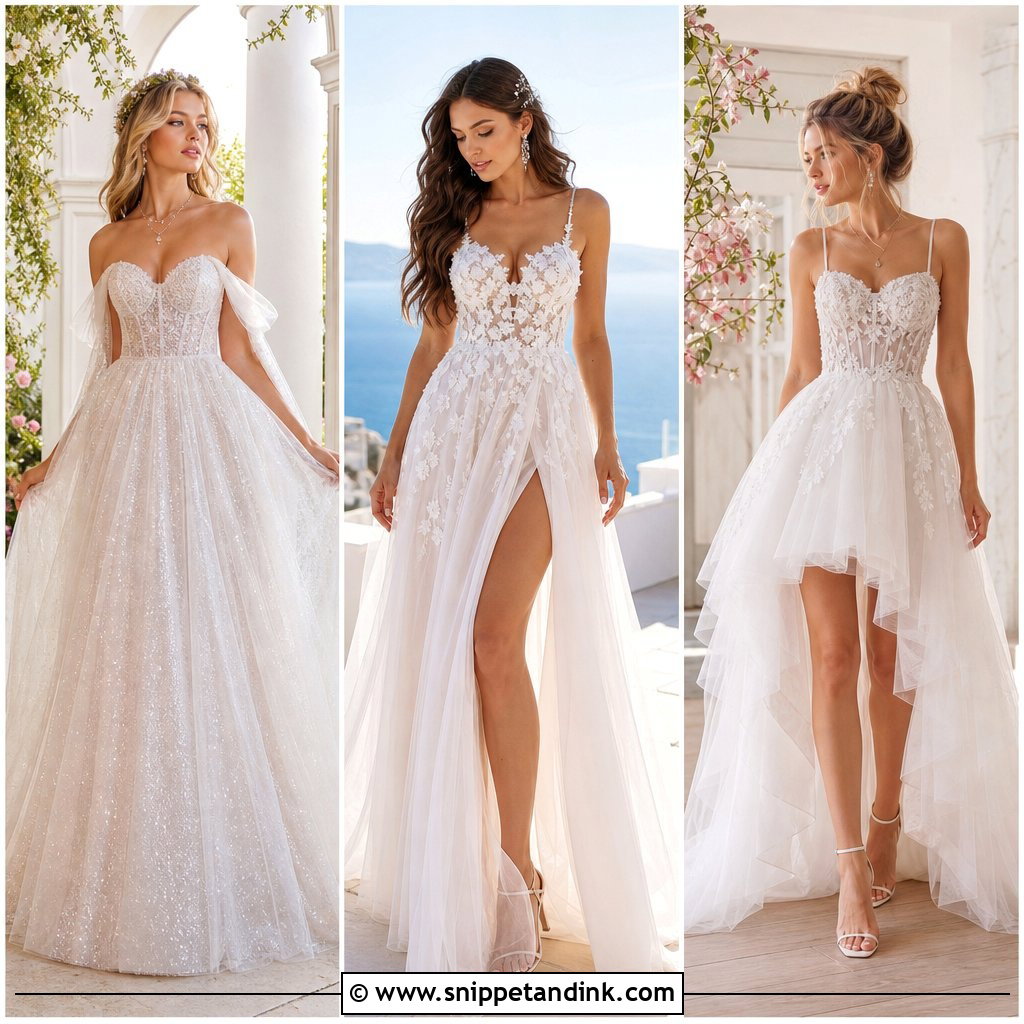
Off-the-shoulder was the romantic pick of the late ’90s, cut in satin, lace or organza over a fitted bodice. The 1998 versions often had a sleeve band across the upper arm, and that band is what I check first: when she lifts her arms to hug someone, does the bodice rise with it? If so, it needs loosening or a different band. A fine choker, pearl earrings, white satin heels and a veil set behind the crown keep the neckline clear. Wear a polished updo with it.
4. 1998 Long Sleeve Lace Wedding Dress
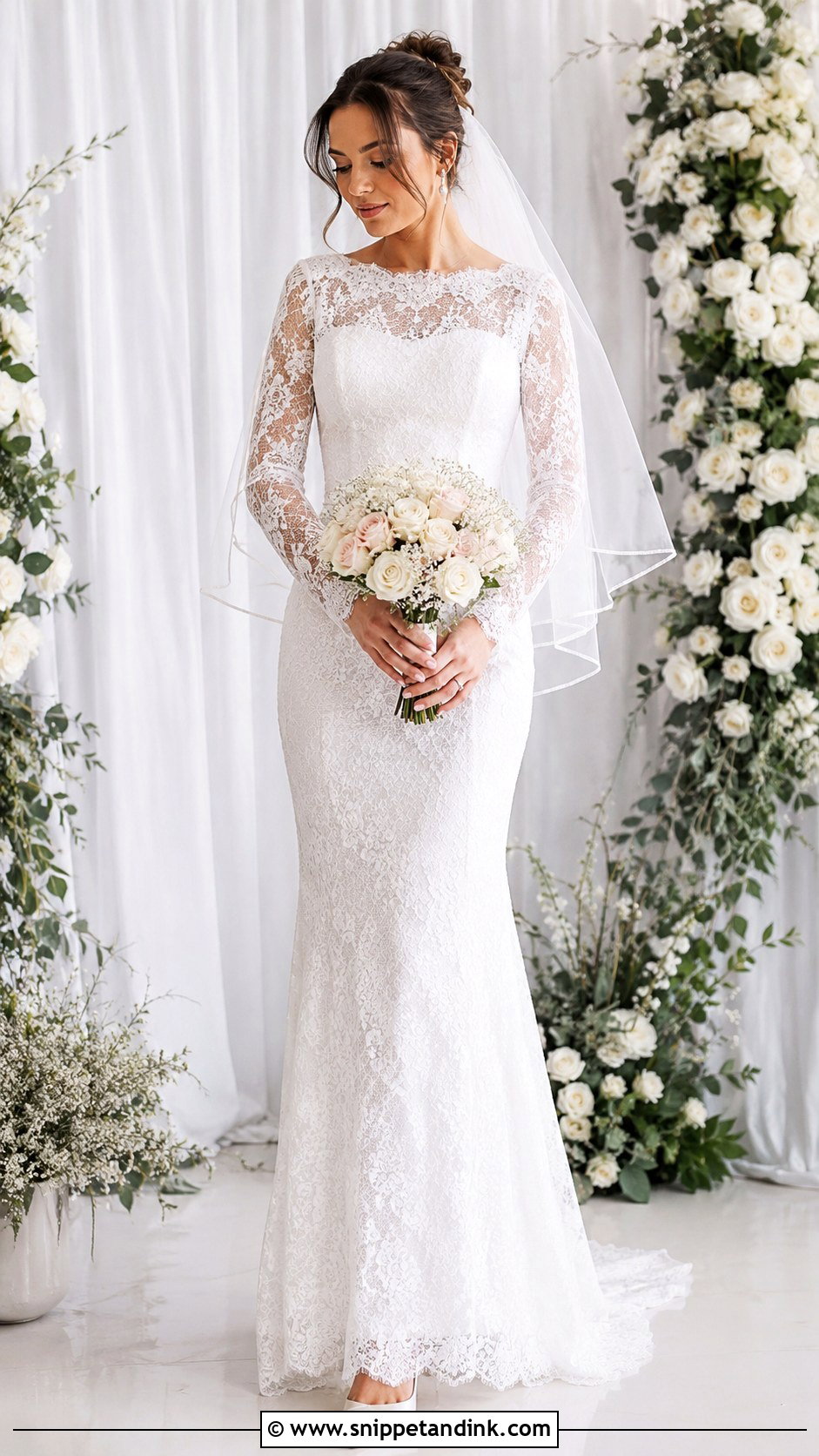
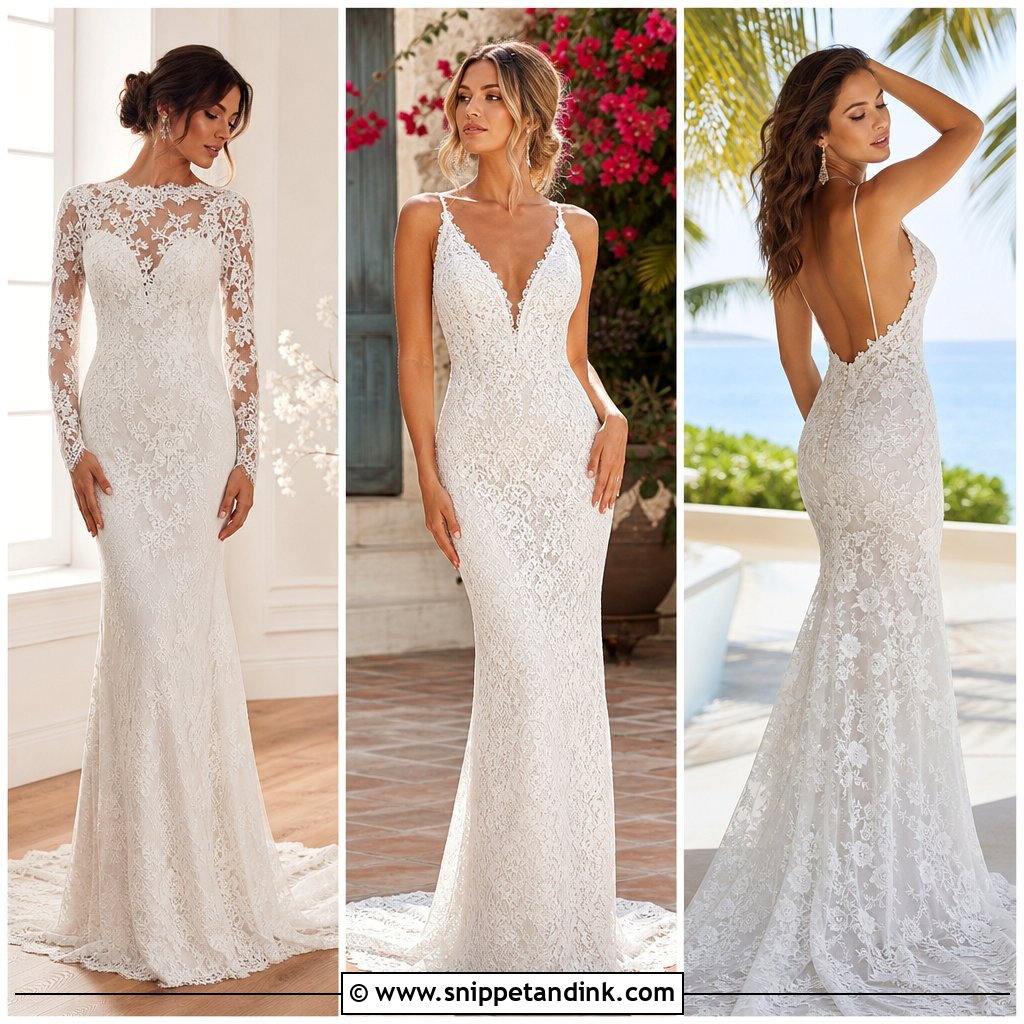
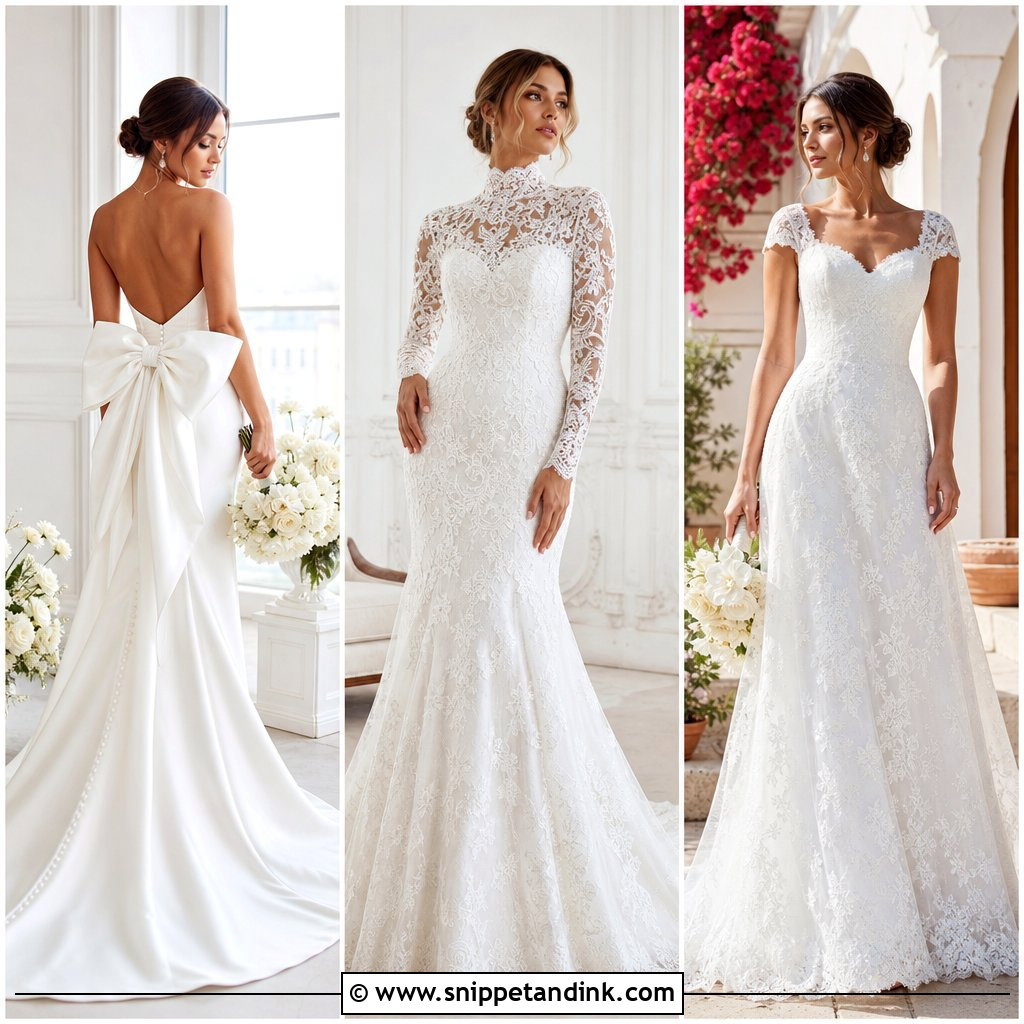
Late-’90s lace sleeves were finer than the oversized lace of earlier decades, often sheer, with a cleaner bodice beneath. Sheer lace sleeves show the arm through the gaps, so I match the lining tone to the bride’s skin rather than the dress, otherwise the sleeve looks grey in daylight. Pointed satin pumps, a fingertip veil, pearl studs and a small bouquet with plain greenery. With detailed lace, drop the heavy jewellery. Soft makeup, a natural lip, and a low chignon finish it.
5. 1998 Spaghetti Strap Wedding Dress
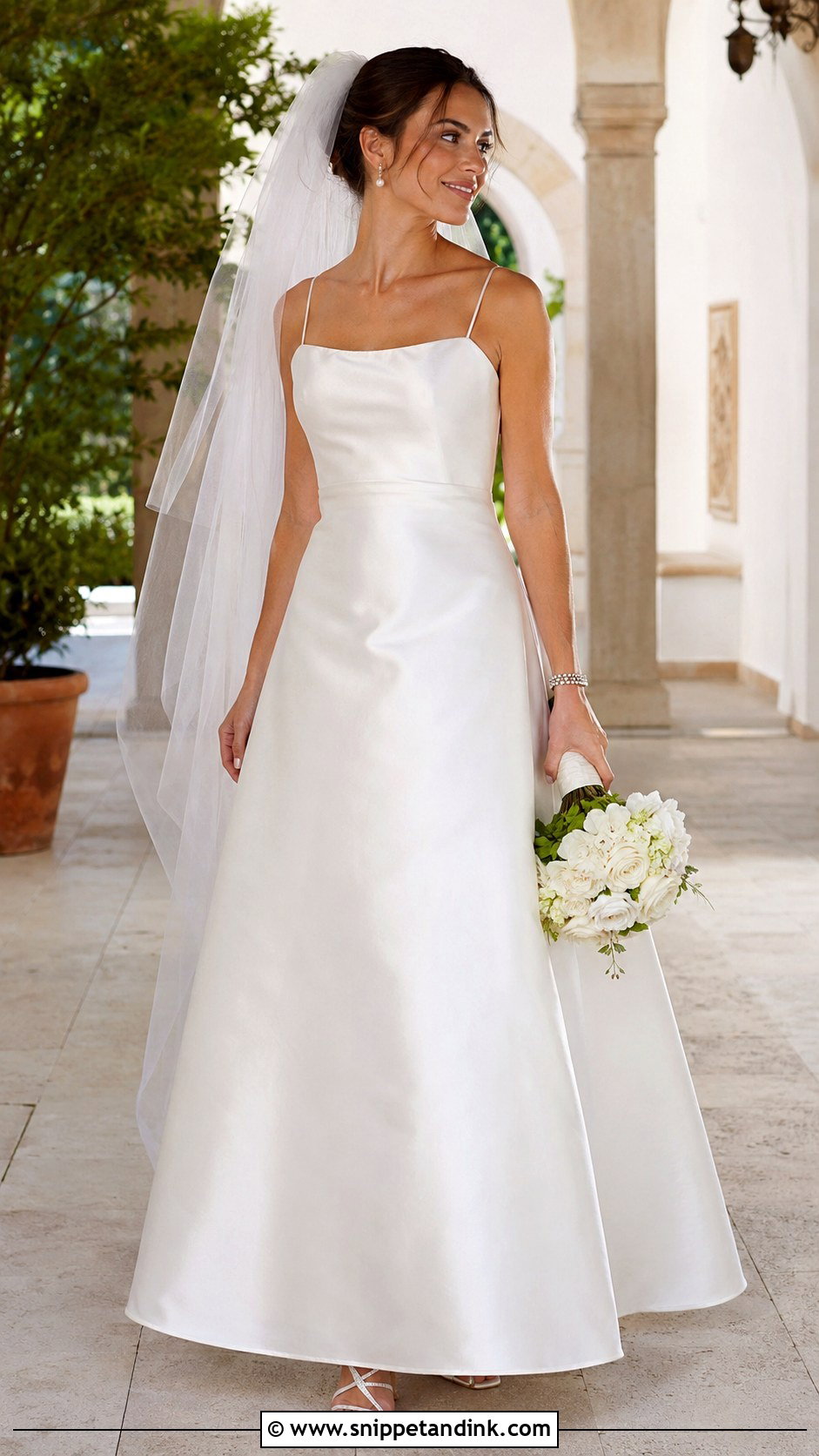
Thin straps, simple bodice, and you have the most quoted shape of the decade: the spaghetti strap wedding dress. In 1998 it came with a satin A-line skirt, a fitted bodice or a light beaded neckline. Spaghetti straps carry almost no weight, so if the skirt is heavy, the support must come from boning and a waist stay inside, not from the straps. Strappy white heels, a sheer veil, a tennis bracelet and small earrings complete it. A matching satin wrap helps in a cool church, and warm-weather venues suit it best.
6. 1998 Beaded Bodice Wedding Dress
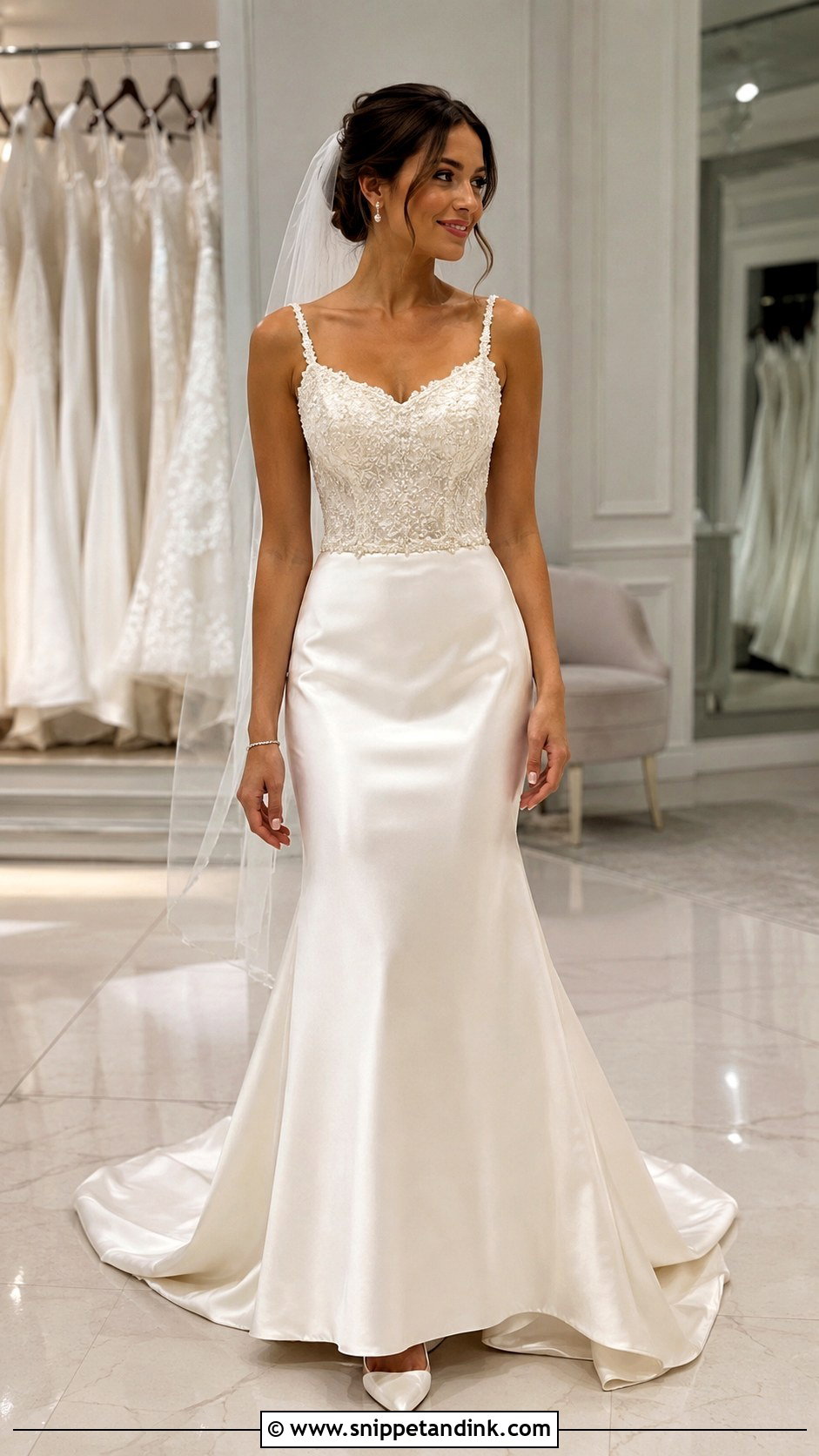
Sparkle in 1998 sat on the bodice, in pearls, crystals or floral beading, while the skirt stayed smooth satin, tulle or organza. I like this split because it puts the light near the face. Beaded fabric doesn’t give, though, so if the bride’s weight is likely to change before the wedding, I plan the last fitting closer to the date. Satin heels, a simple veil, a bracelet and neat earrings echoing the beadwork. Light boning gives support. A soft updo or half-up style finishes it.
7. 1998 A Line Wedding Dress
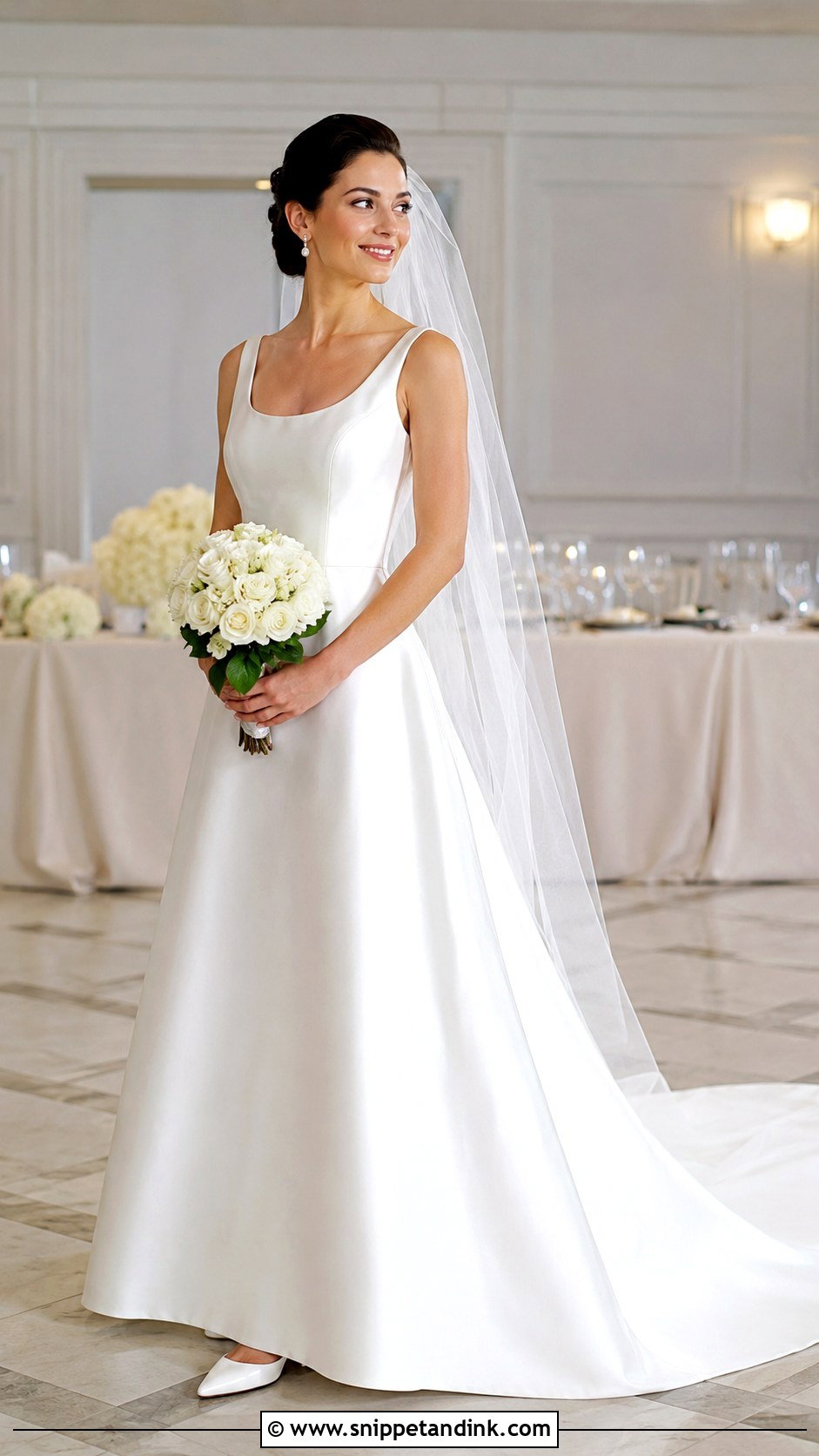
Fitted through the bodice and widening gently from the waist, the A-line is the dress I suggest when a bride doesn’t yet know her shape. It moves without the bulk of a ball gown. A 1998 version might add satin, a scoop neck, small buttons and a chapel train. Watch the train on an outdoor aisle; grass stains satin quickly, so I have the bustle tried before photos on the lawn. Closed-toe pumps, pearl earrings, a smooth veil and a neat bouquet. It travels from garden to ballroom without changing much.
8. 1998 Square Neck Wedding Dress
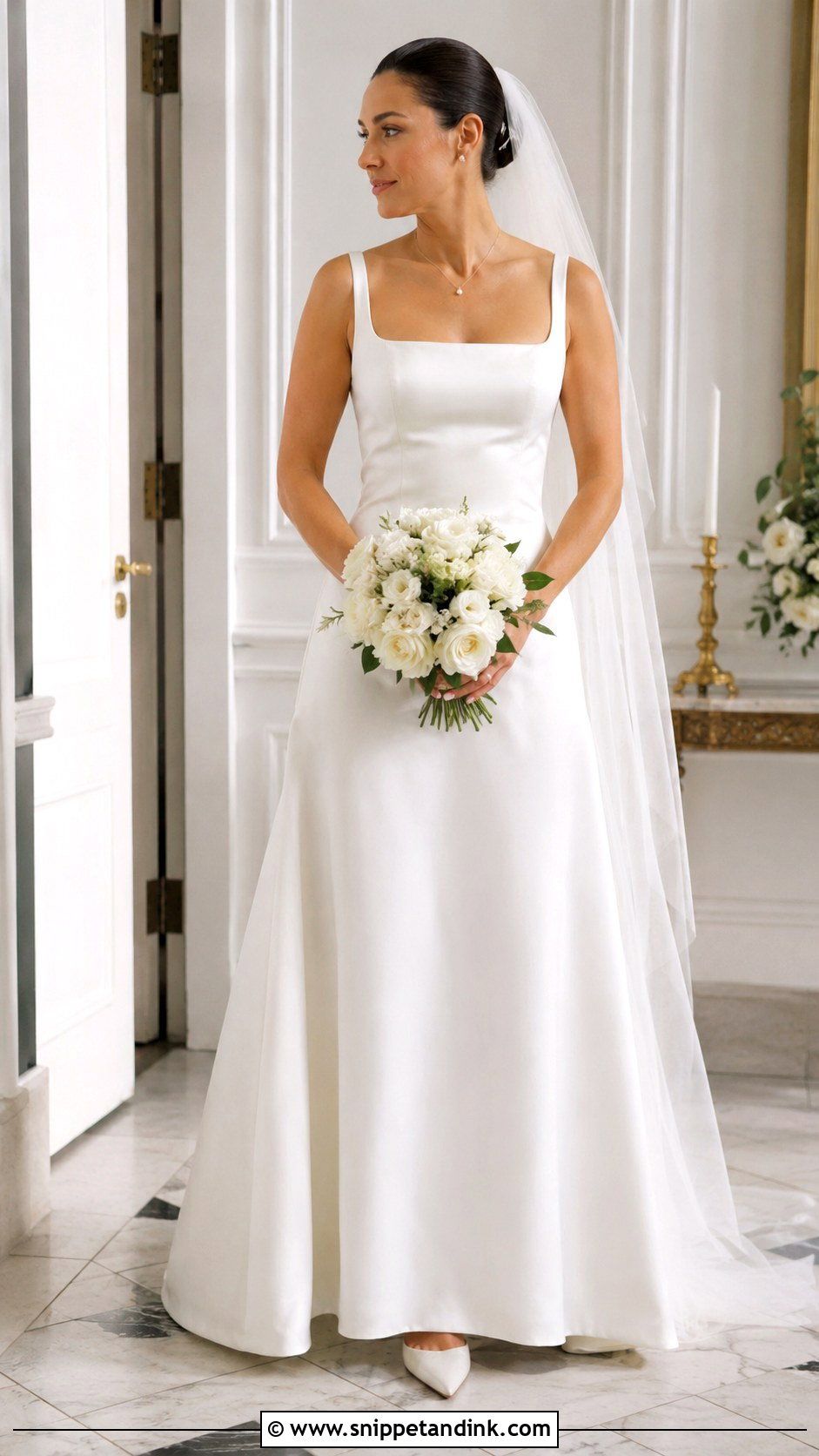
Square necklines frame the face with one straight line, structured without being severe. Satin, crepe or lace all work, with slim straps or short sleeves. The corners are where fit shows; if they curl outward, the bodice is too wide at the top edge and needs taking in there, not at the side seams. A low bun, pearl studs, pointed heels and a veil falling from the back of the head. A plain dress can take a fine pendant. For the true late-’90s mood, keep the bodice fitted and the A-line skirt smooth.
9. 1998 Basque Waist Wedding Dress
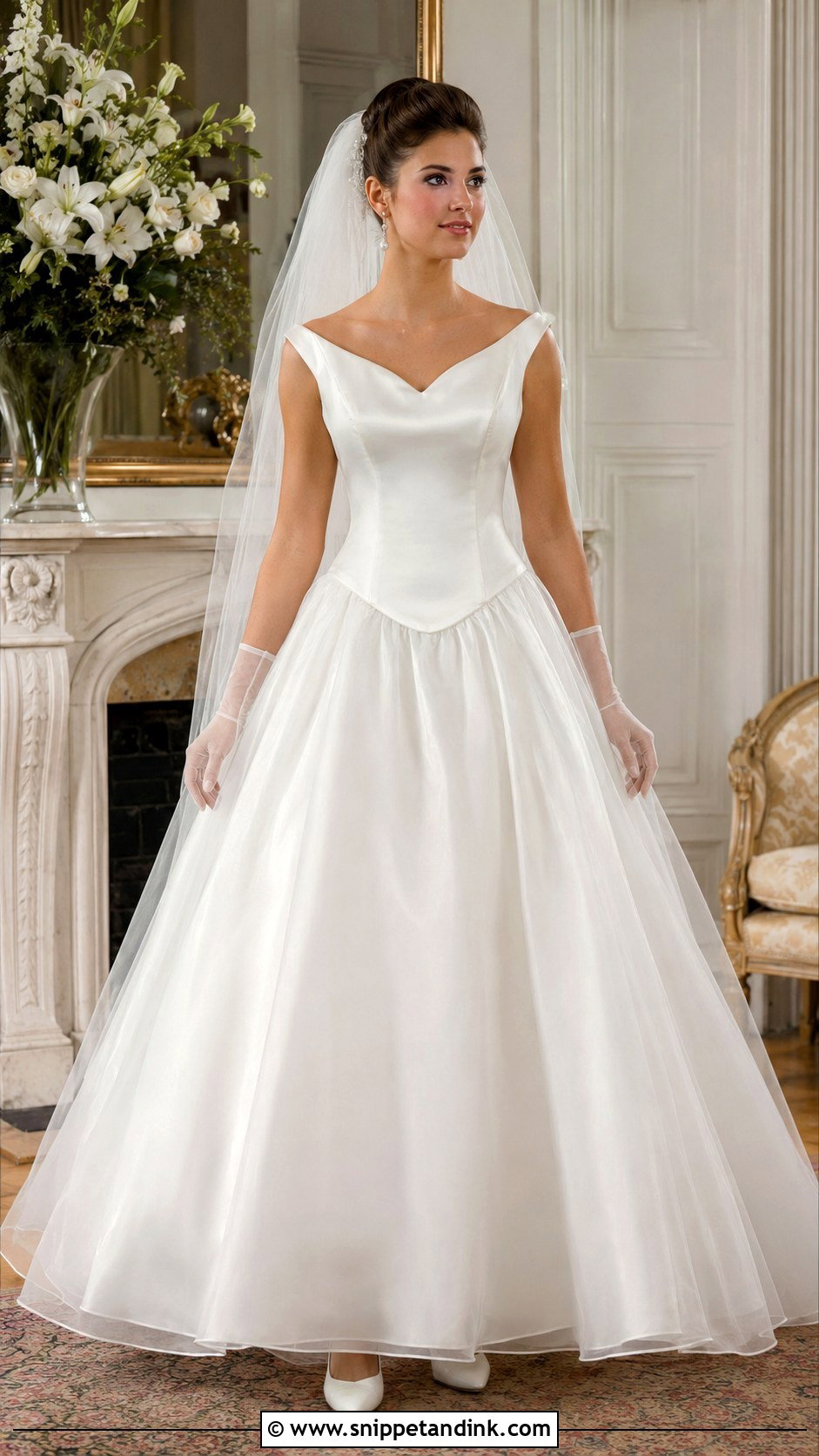
The basque waist wedding dress dips its bodice just below the natural waist, giving a long, sculpted torso line. It was older than 1998 but still turned up in softer form. That point is the first thing to buckle on a poorly boned bodice; I sit the bride down at every fitting to check it stays flat. Satin, organza and tulle skirts all open out well beneath it. Pearl earrings, classic pumps, a long veil and short gloves add a period finish. Hair lifted or swept back keeps the bodice line clear.
10. 1998 Tulle Skirt Wedding Dress
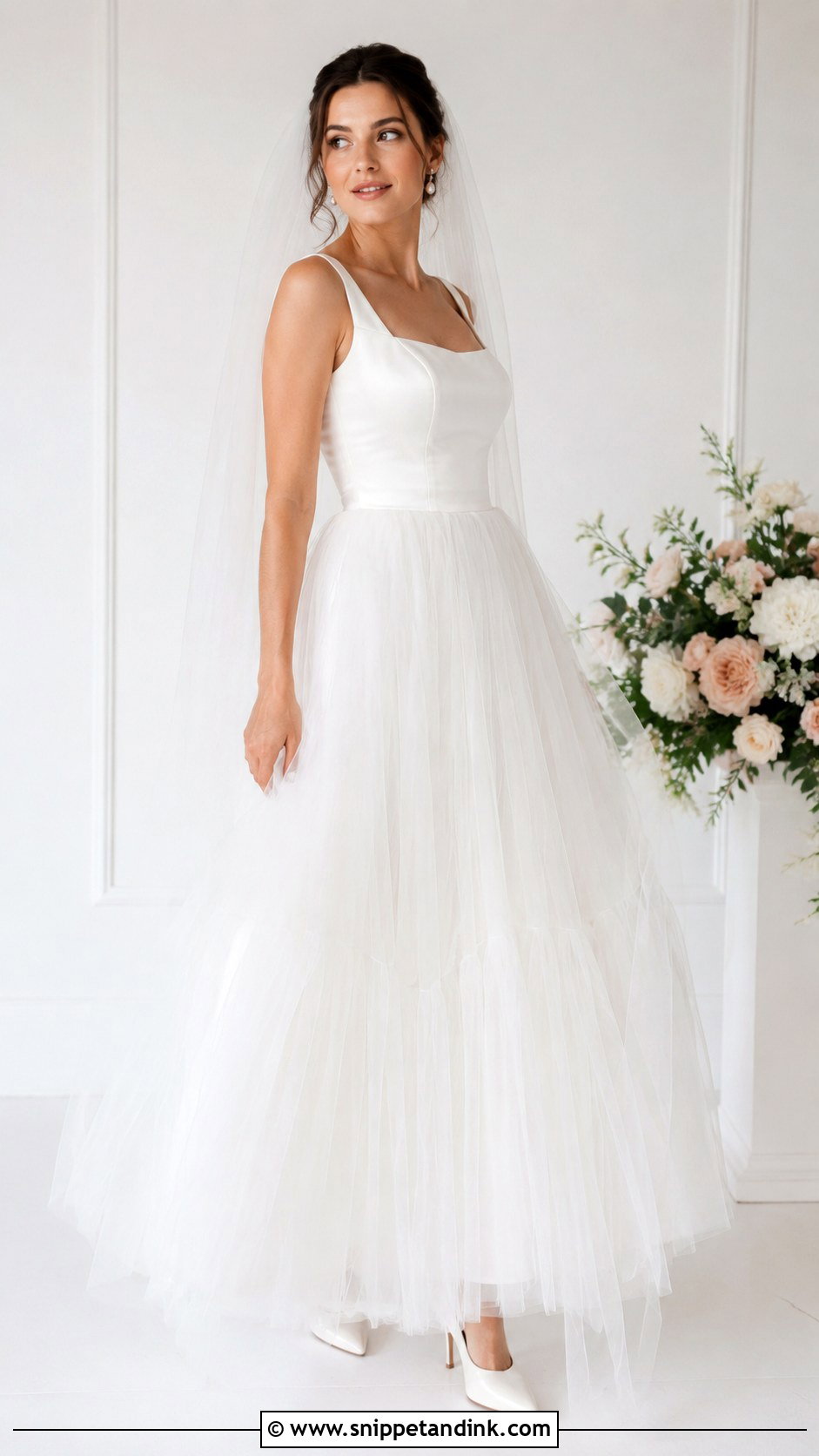
Late-’90s tulle was softer and more controlled than the ’80s version. A fitted satin or beaded bodice over airy layers is the best combination. Real question to ask: how many layers? Too few and the skirt goes limp by the evening; too many and you’re hot all day. Satin heels, a sheer veil, pearl earrings and natural makeup. Set the waistline where it’s comfortable and hem the skirt so you can walk, and dance, without lifting it.
11. 1998 Bateau Neck Wedding Dress
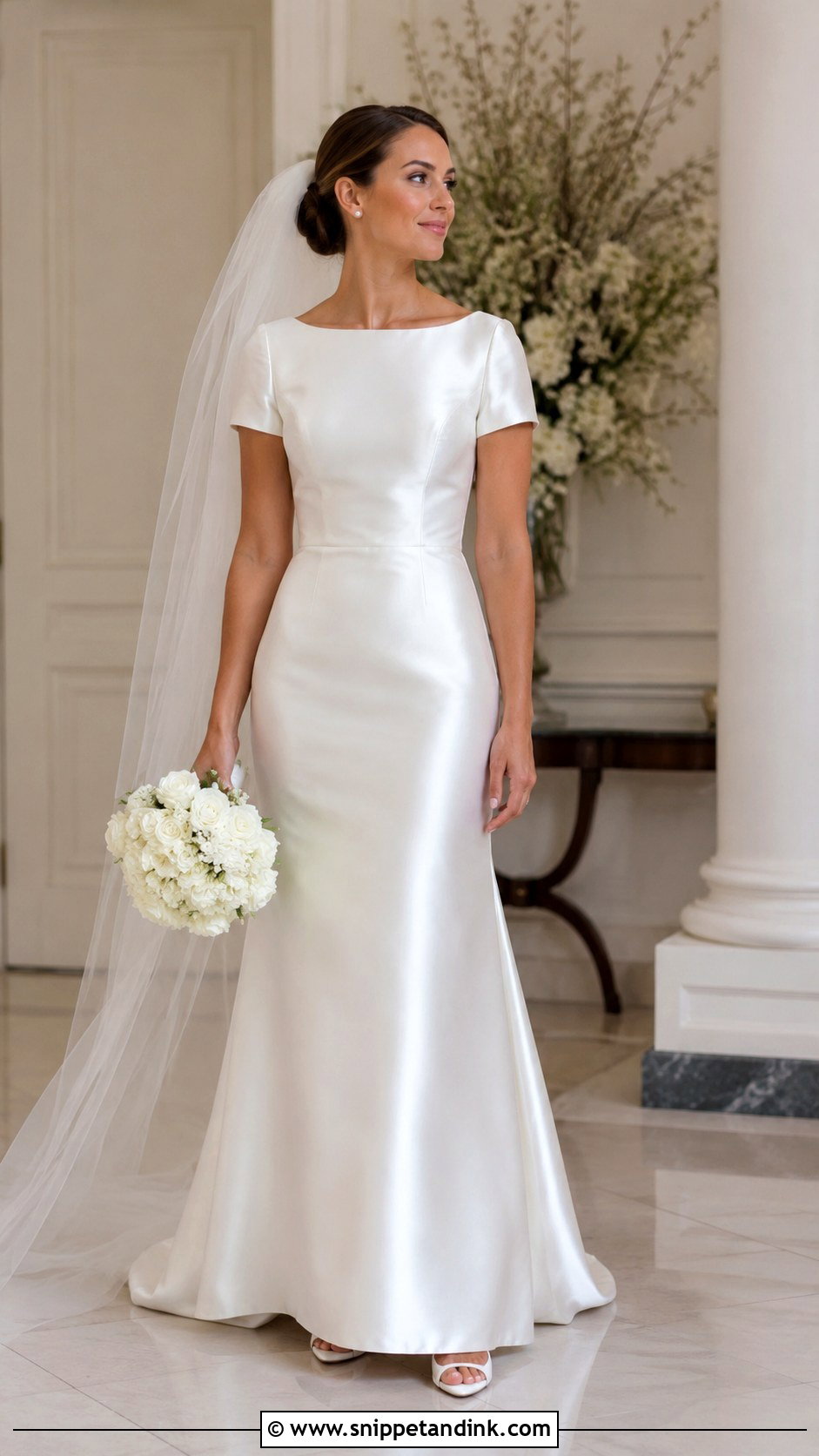
Bateau necklines run straight across the collarbone, which gives that slightly royal look. In 1998 they came with long sleeves, short sleeves or none at all. They do widen the shoulders, so on a broad-shouldered bride I sometimes lower the line at the centre a touch. Smooth satin skirt, pearl studs, low heels, a simple veil. Skip necklaces entirely. A sleek bun or French twist is my usual pairing because it keeps the neckline unbroken from every angle.
12. 1998 Tea Length Wedding Dress
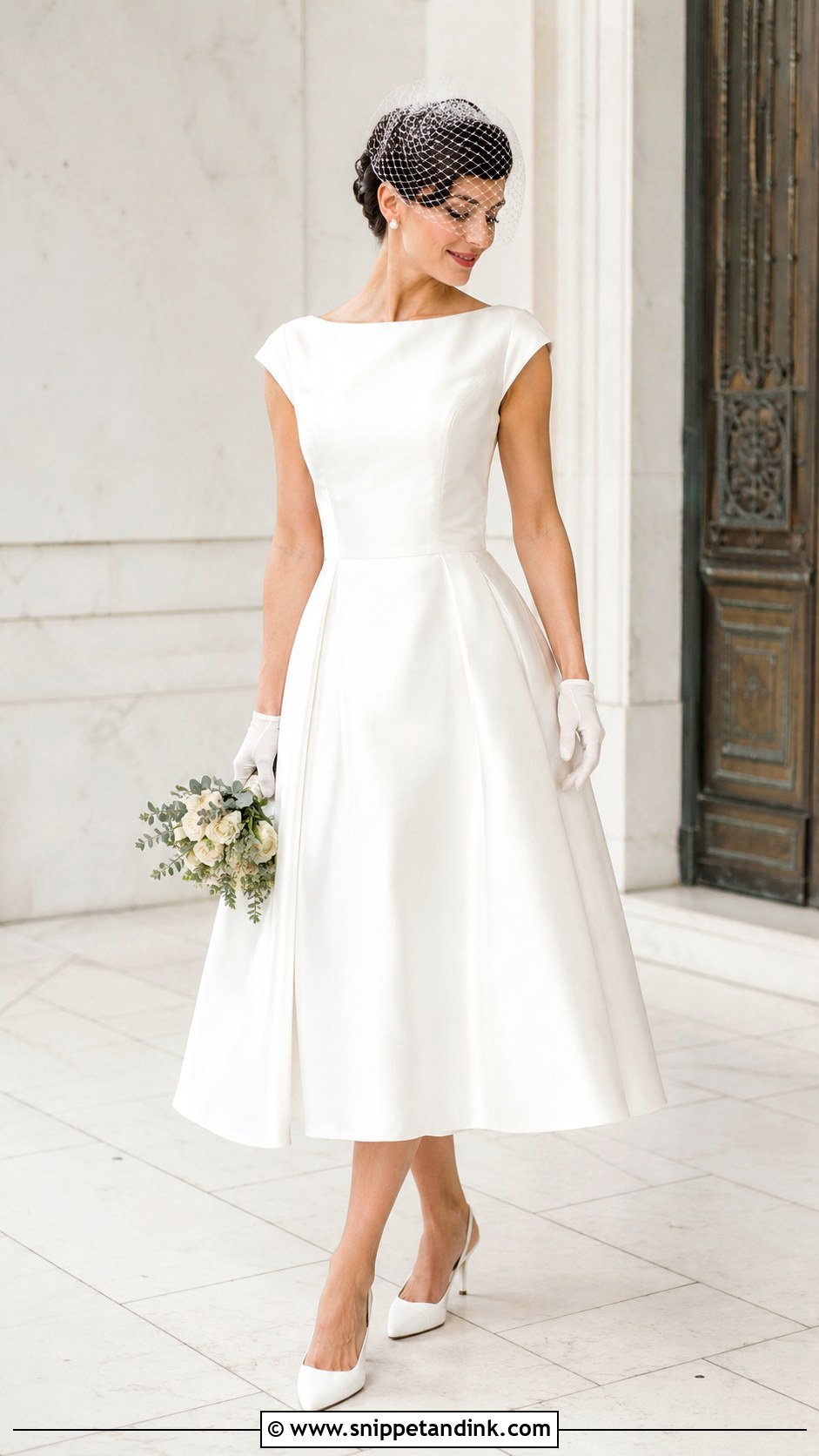
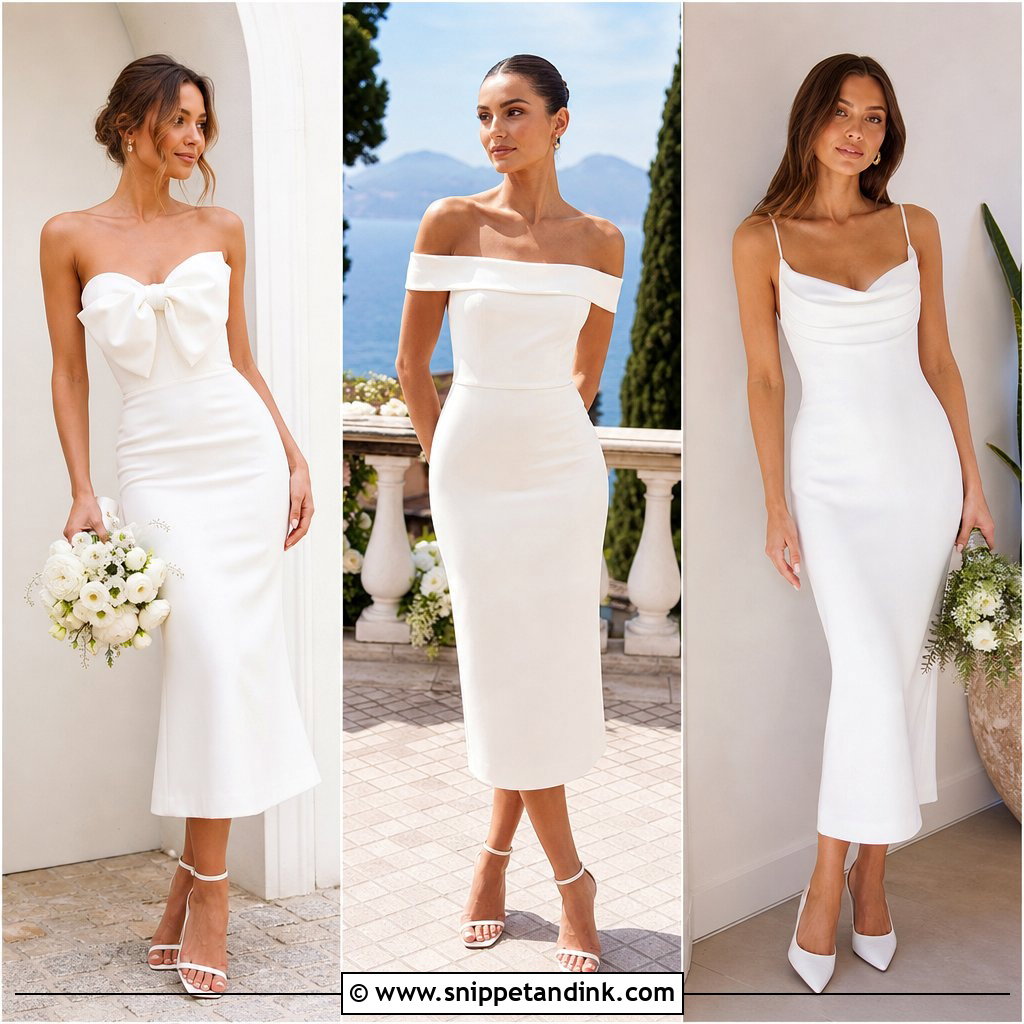
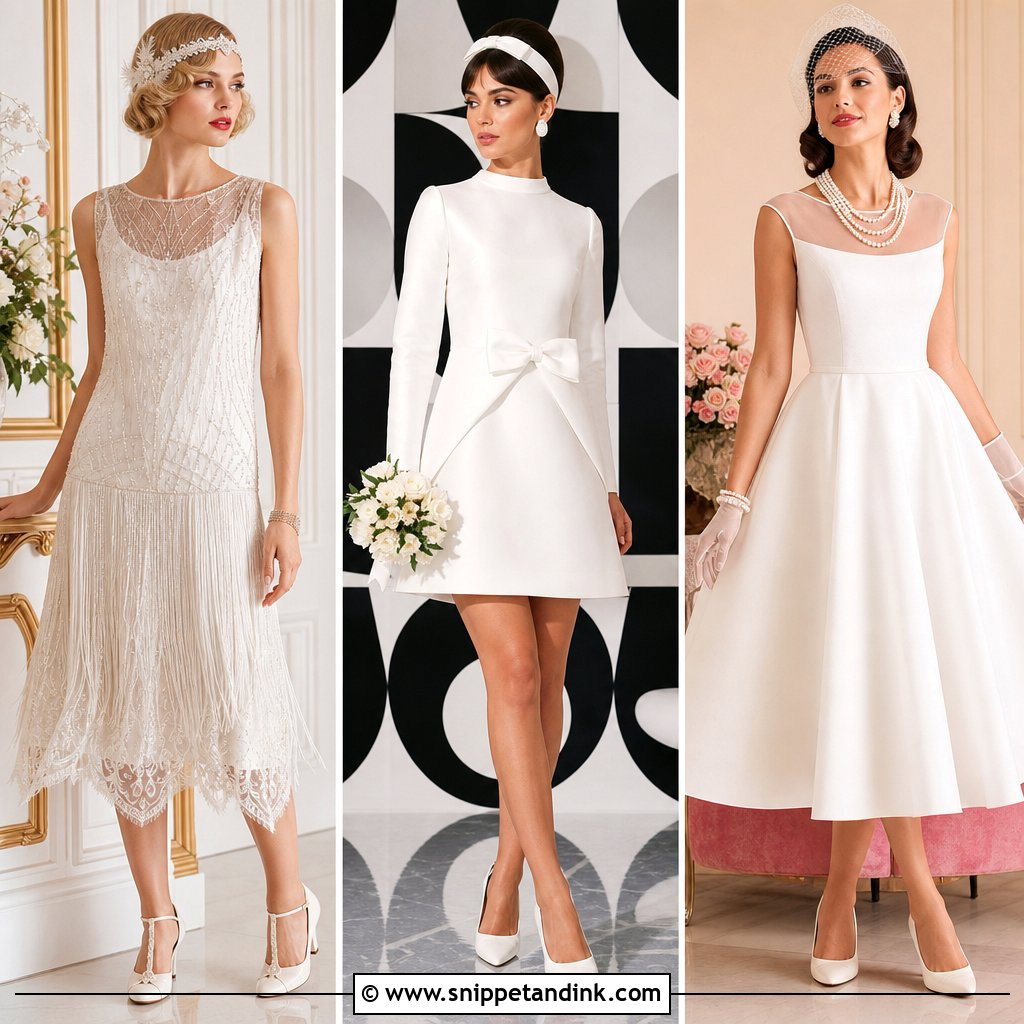
A tea-length hem falls between knee and ankle, so the shoes become half the outfit. White satin pumps, slingbacks or delicate block heels keep it vintage. A fitted bodice, scoop neck and soft A-line skirt keep it bridal. I check the hem against the actual shoes, because a hem set in flats will look short once she’s in heels. Pearl earrings, short gloves and a birdcage veil add charm. It suits courthouse weddings, daytime ceremonies and second looks, and you’ll move freely all day.
13. 1998 High Neck Wedding Dress
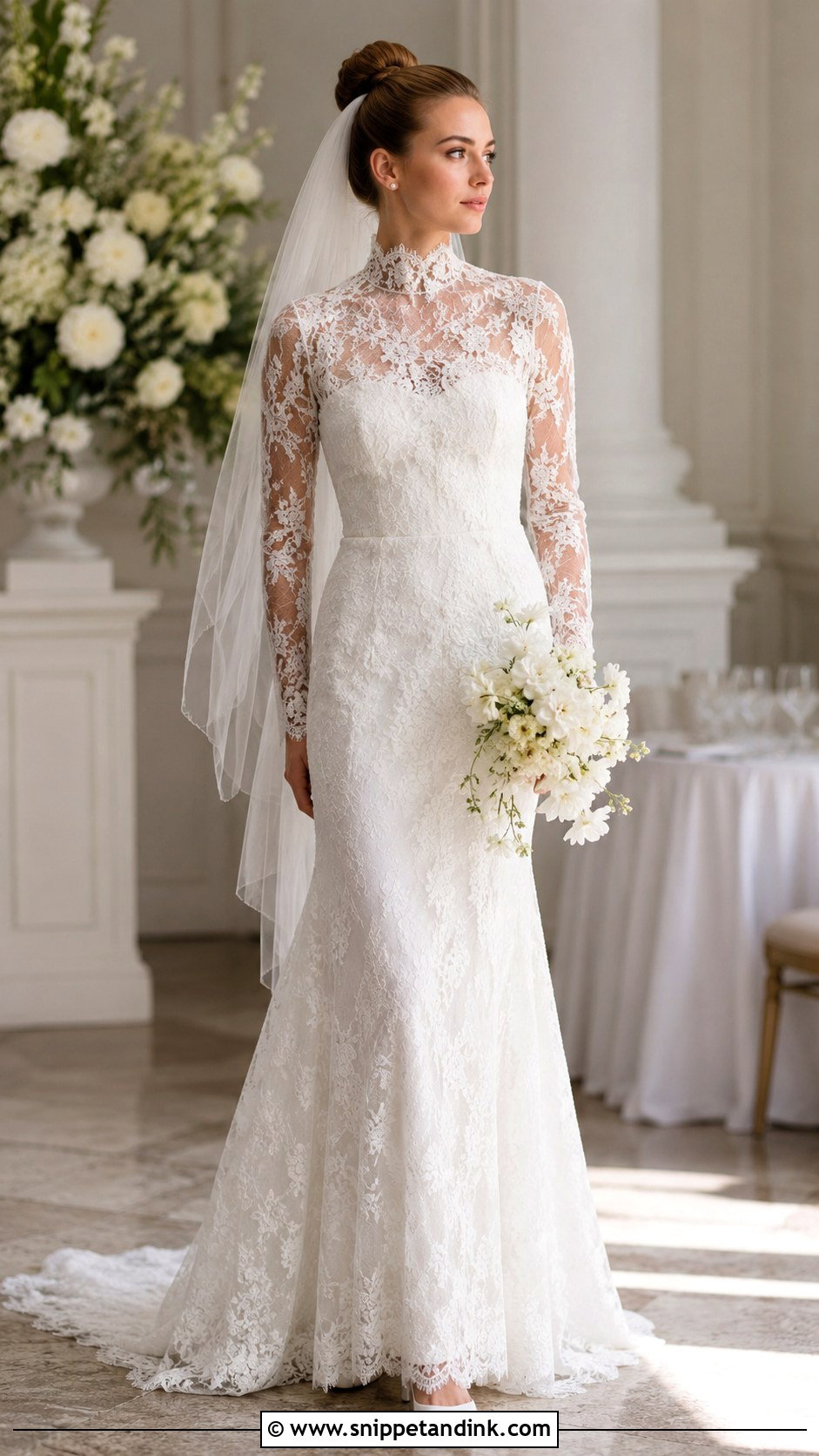
High necks bring quiet drama. Late-’90s versions softened them with lace panels, sheer mesh or satin collars. A collar that’s too tight shows as a crease under the chin in every seated photo, so I make sure two fingers fit inside it. Smooth updo, pearl or crystal studs, classic pumps, a veil attached below the bun. No necklace. Slim skirts, A-lines and long sleeves all pair well. It feels modest without sliding into ornate.
14. 1998 Strapless Wedding Dress
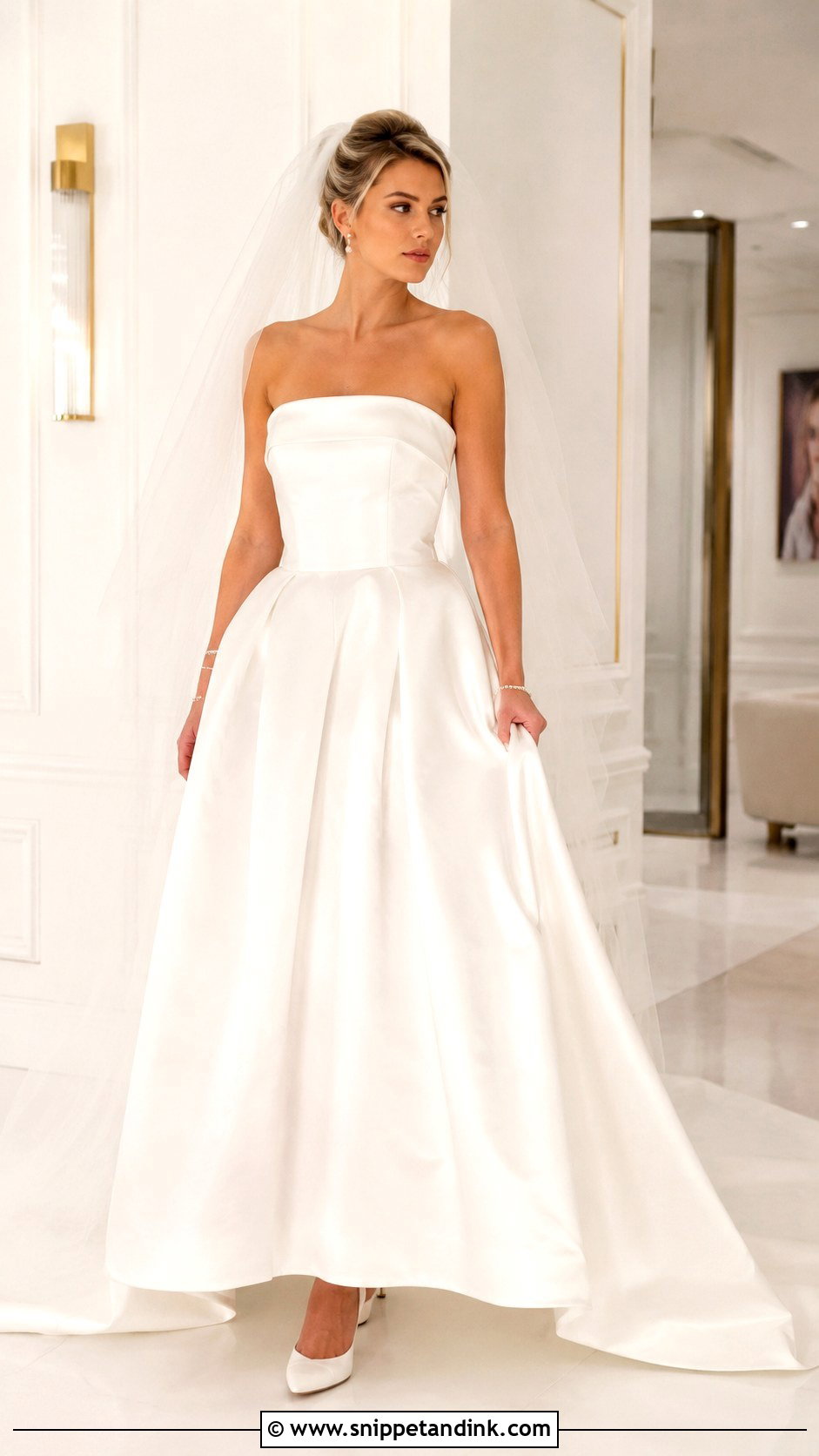
Strapless bodices took over bridalwear around the late ’90s and early 2000s. The one thing that matters is the build of the bodice: firm boning, a grip band at the top and a waist stay, so the dress is held by the torso and not by her hands hitching it up all night. Satin, taffeta or lightly beaded fabric suit it. A full skirt reads classic, a slim one modern. Add a chapel veil, pearl drops, a bracelet and white heels. With a strapless neckline, the hairstyle carries a lot of the look.

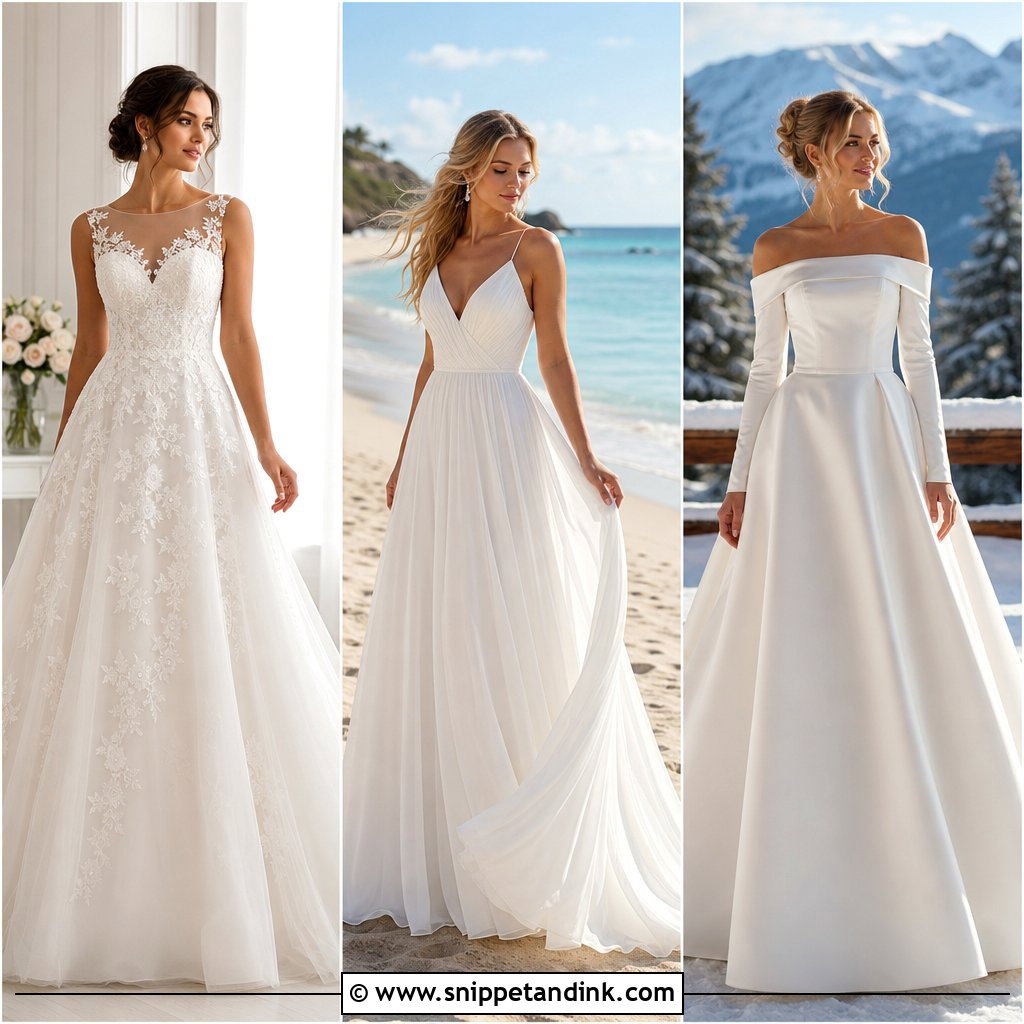
15. 1998 Floral Applique Wedding Dress
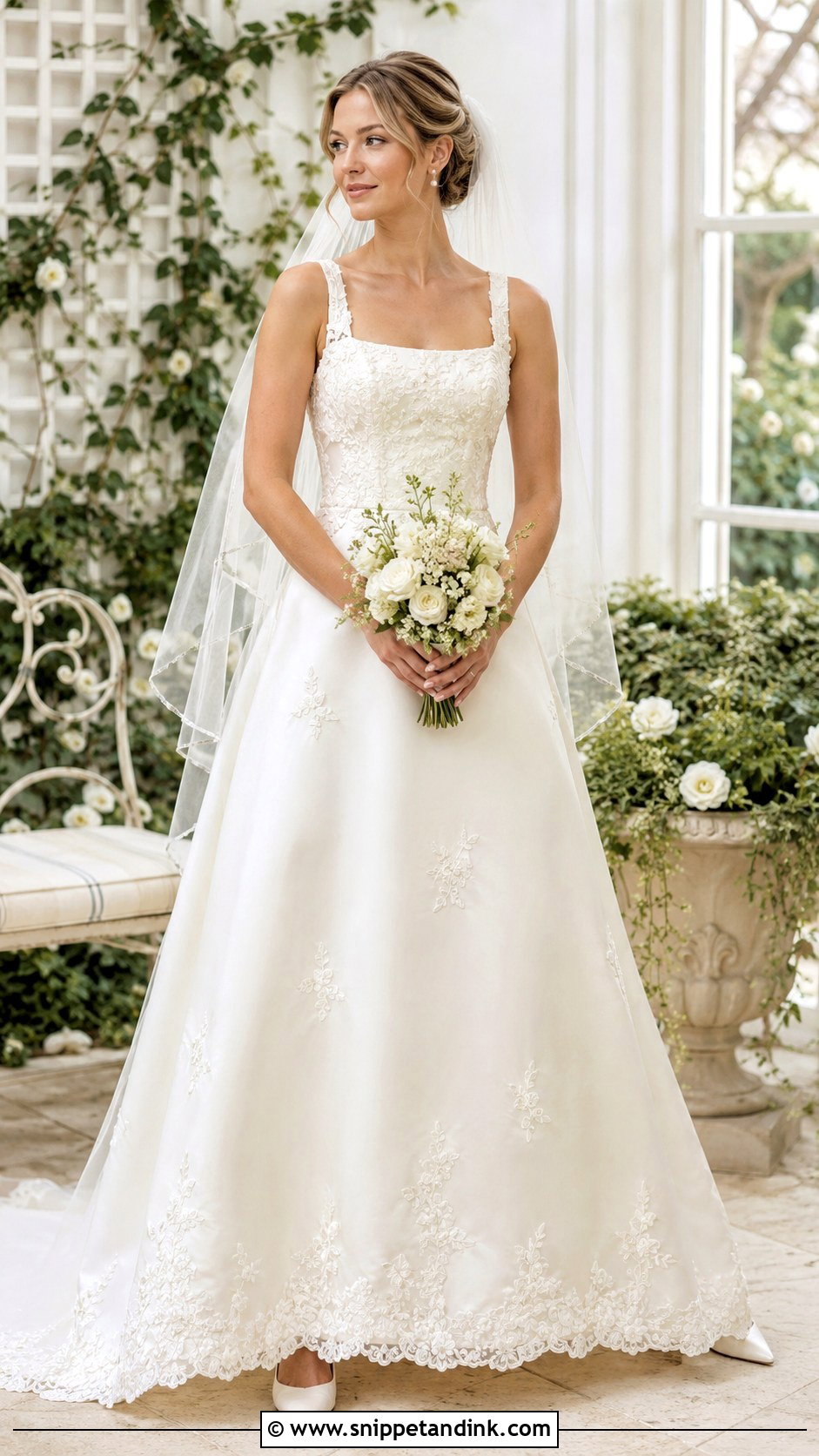
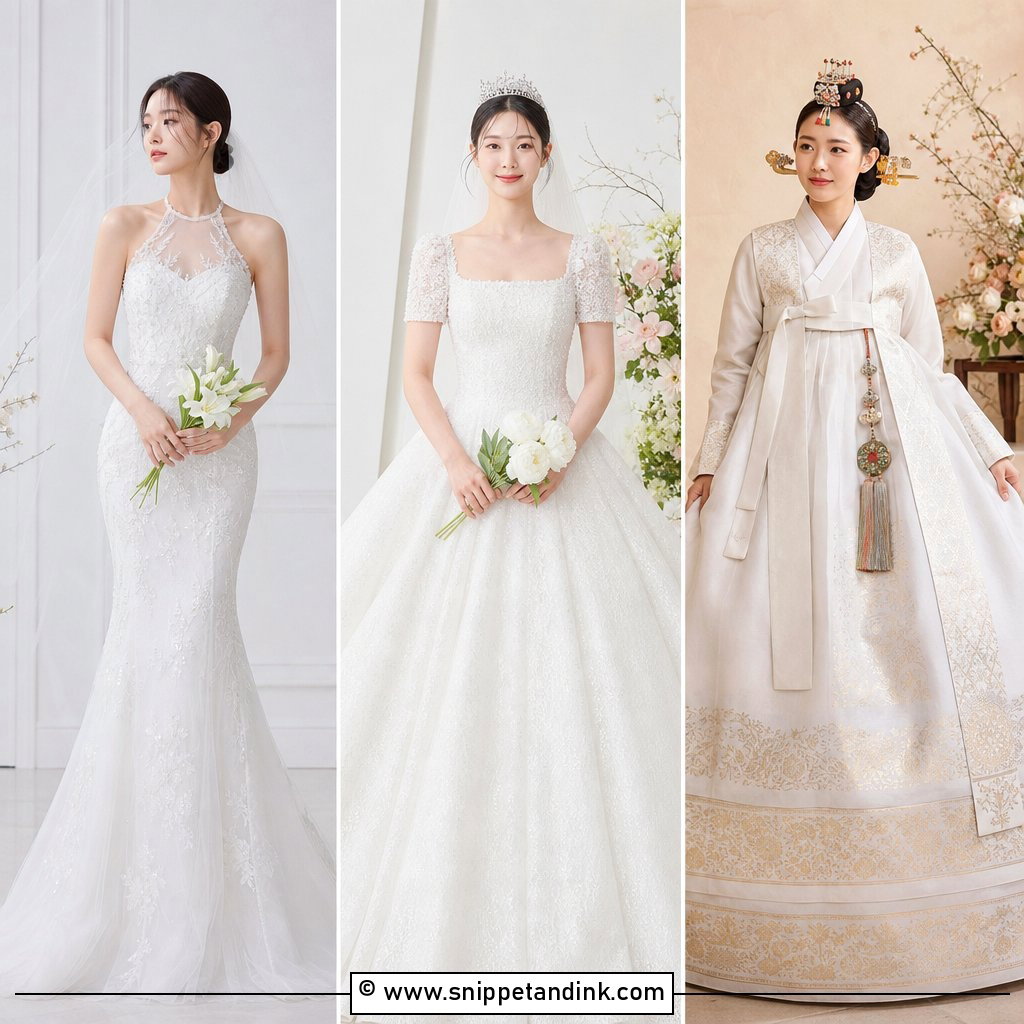
Floral appliqué on the bodice, sleeves, hem or train was the romantic detail of 1998. Soft, spaced placement beats dense decoration. Raised 3D flowers flatten when packed, so I ask the shop to send the dress with tissue padding the blooms. Simple satin shoes, a sheer veil, pearl earrings and a natural bouquet. With raised flowers, keep hair and jewellery minimal. Gardens and spring weddings suit it.
16. 1998 Pearl Button Wedding Dress
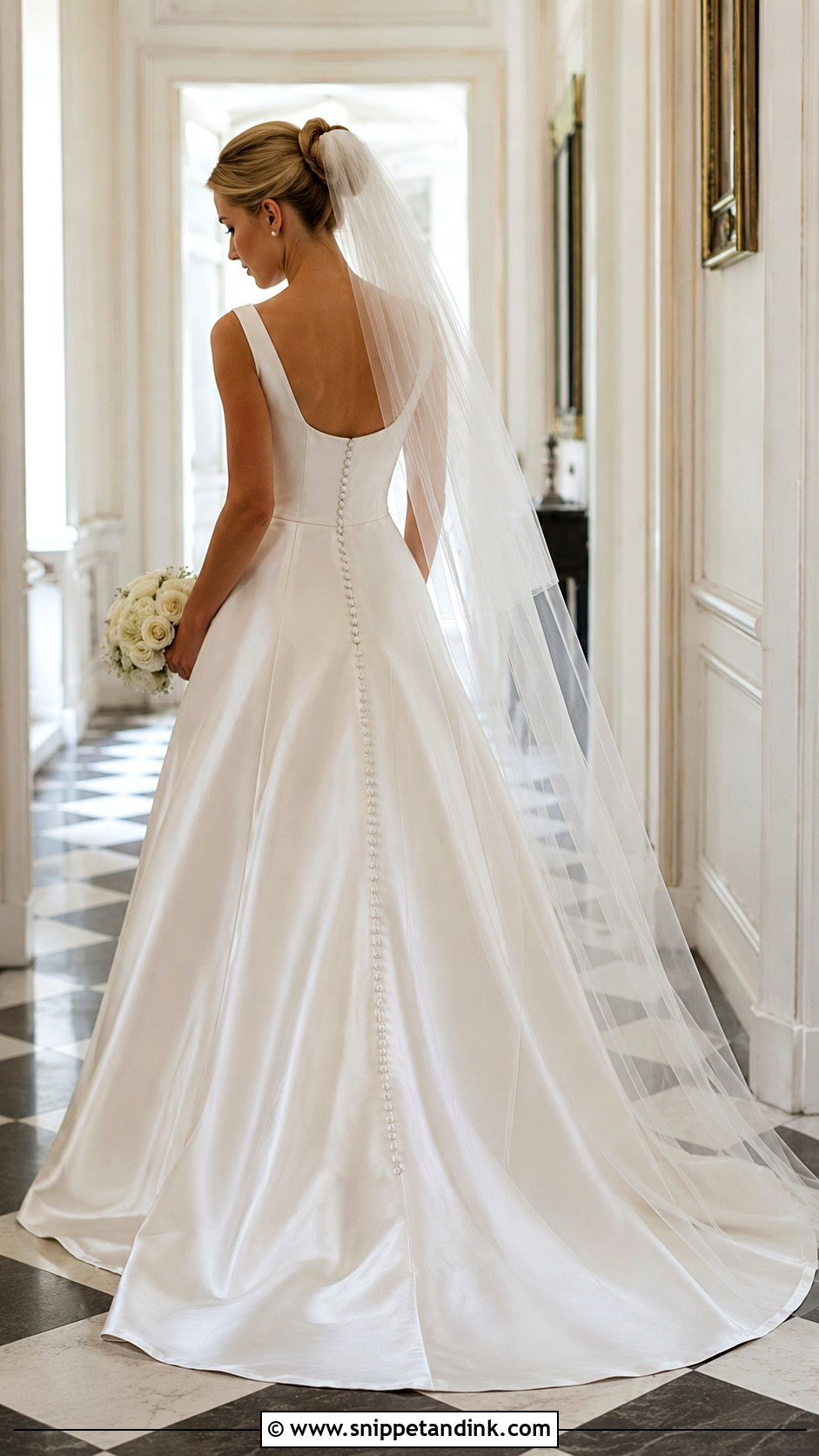
Pearl buttons down the back are among my favourite details of the period. The dress can be satin, lace or crepe, with a fitted bodice and flowing skirt. A word of warning: thirty tiny loops take a long time to fasten. I tell brides to budget fifteen minutes and a steady-handed helper, or ask for a hidden zip underneath with the buttons sewn on top. Pearl earrings, satin pumps, a long veil and a neat updo keep the back on show. Buttons running down into the train look even better.
17. 1998 Sheath Wedding Dress
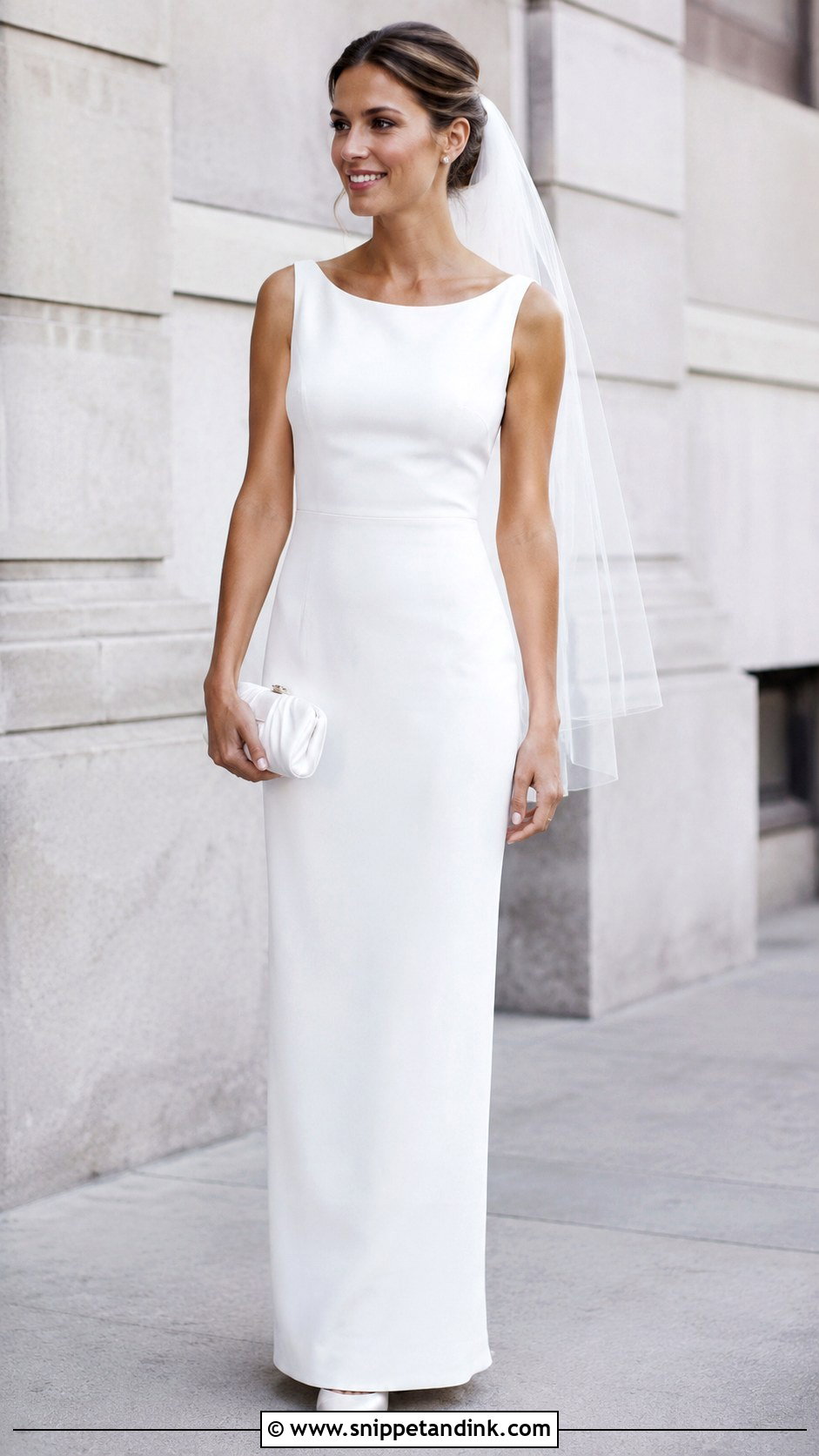
Sheaths follow the body without the fullness of an A-line or ball gown, in satin, crepe or silk with a straight skirt and few seams. Because the line is so simple, fit decides everything. The dress should skim, not cling, and I always check it walking, because a sheath cut too narrow at the knee forces tiny steps down the aisle. Pointed heels, a slim veil, pearl studs and a small clutch. Modern venues and city weddings suit it. Add a sleek bun or side-part waves.
18. 1998 Halter Wedding Dress
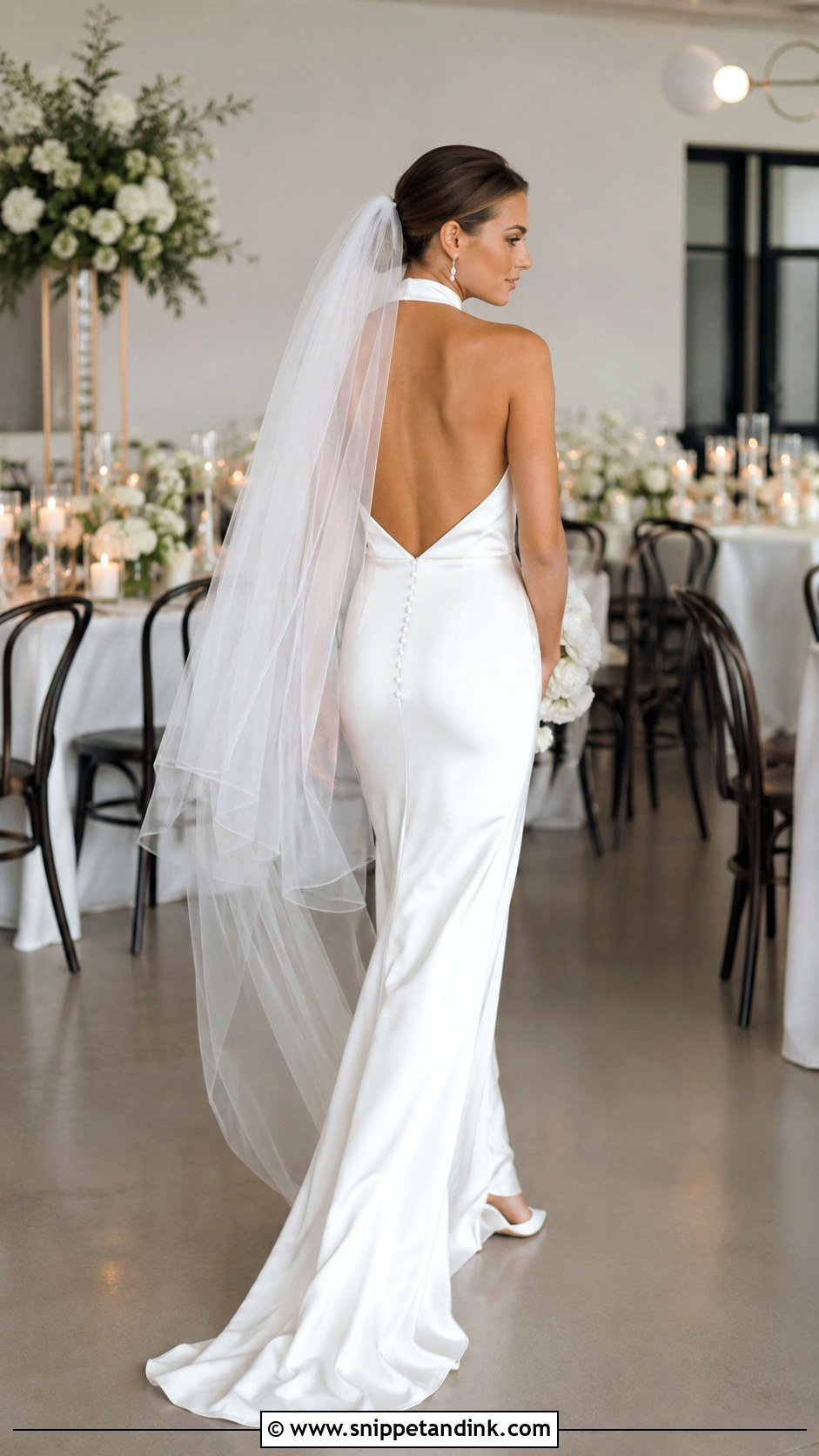
Halters show off the shoulders and upper back. In satin or crepe with a slim skirt, low back or soft train, it’s one of the sleekest late-’90s shapes. The neck strap holds weight, so on a long day it can pull; I ask for a wider strap or an internal bodice anchor if the skirt is heavy. Simple drops, white heels and a sheer veil placed low. No necklace. Warm-weather weddings and modern receptions suit it, with a smooth updo on top.
19. 1998 Short Sleeve Wedding Dress
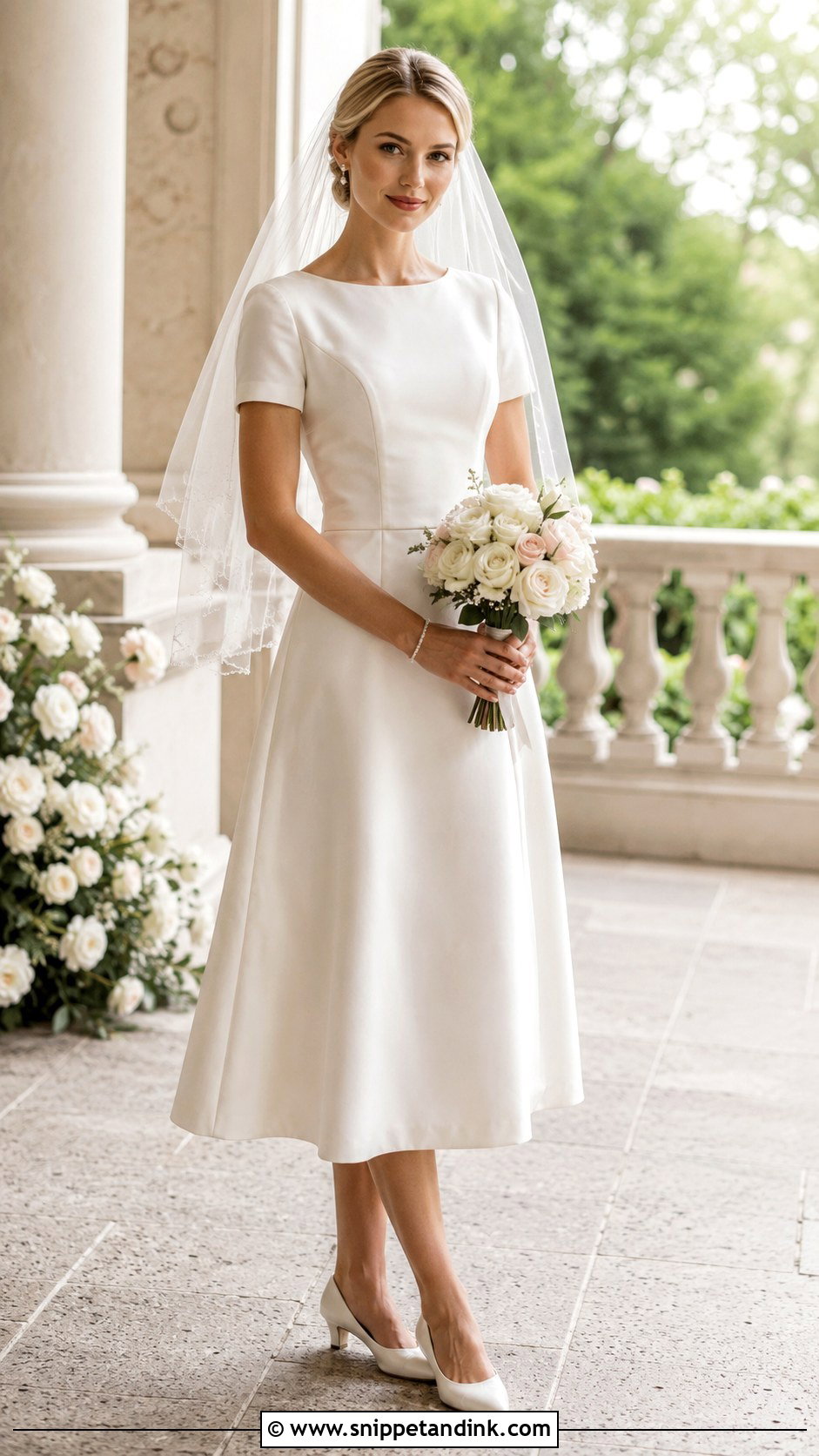
Short sleeves sit between straps and full sleeves for coverage, in smooth satin, sheer lace or a slight puff. Paired with a fitted bodice and A-line skirt, the proportions stay balanced. The sleeve hem is the thing to adjust; ending at the widest part of the arm makes it look broader, an inch above or below fixes that. Pearl studs, low satin pumps, a fingertip veil and a simple bracelet. A half-up style or low bun keeps it relaxed.


20. 1998 Organza Wedding Dress
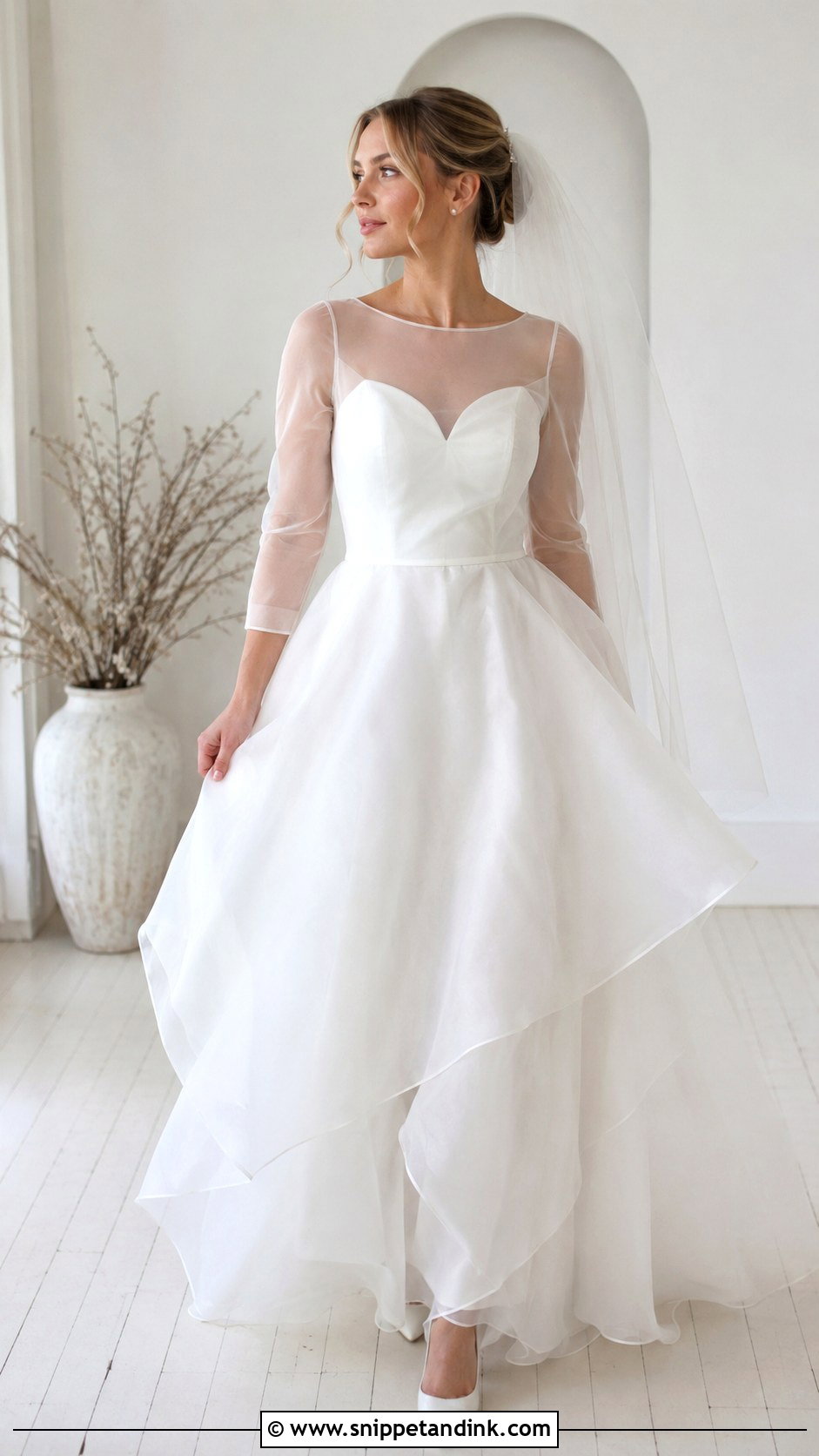
Organza is crisp and light, and in 1998 it turned up in layered skirts, soft sleeves and overlays. It gives volume without weight, which is why I suggest it for outdoor weddings in warm weather. It also creases at every fold, so a hand steamer belongs in the bridal kit. Satin heels, pearl earrings, a sheer veil and a small hair comb. Keep accessories refined so the translucent layers stay the focus, and expect the skirt to catch any breeze.
21. 1998 Empire Waist Wedding Dress
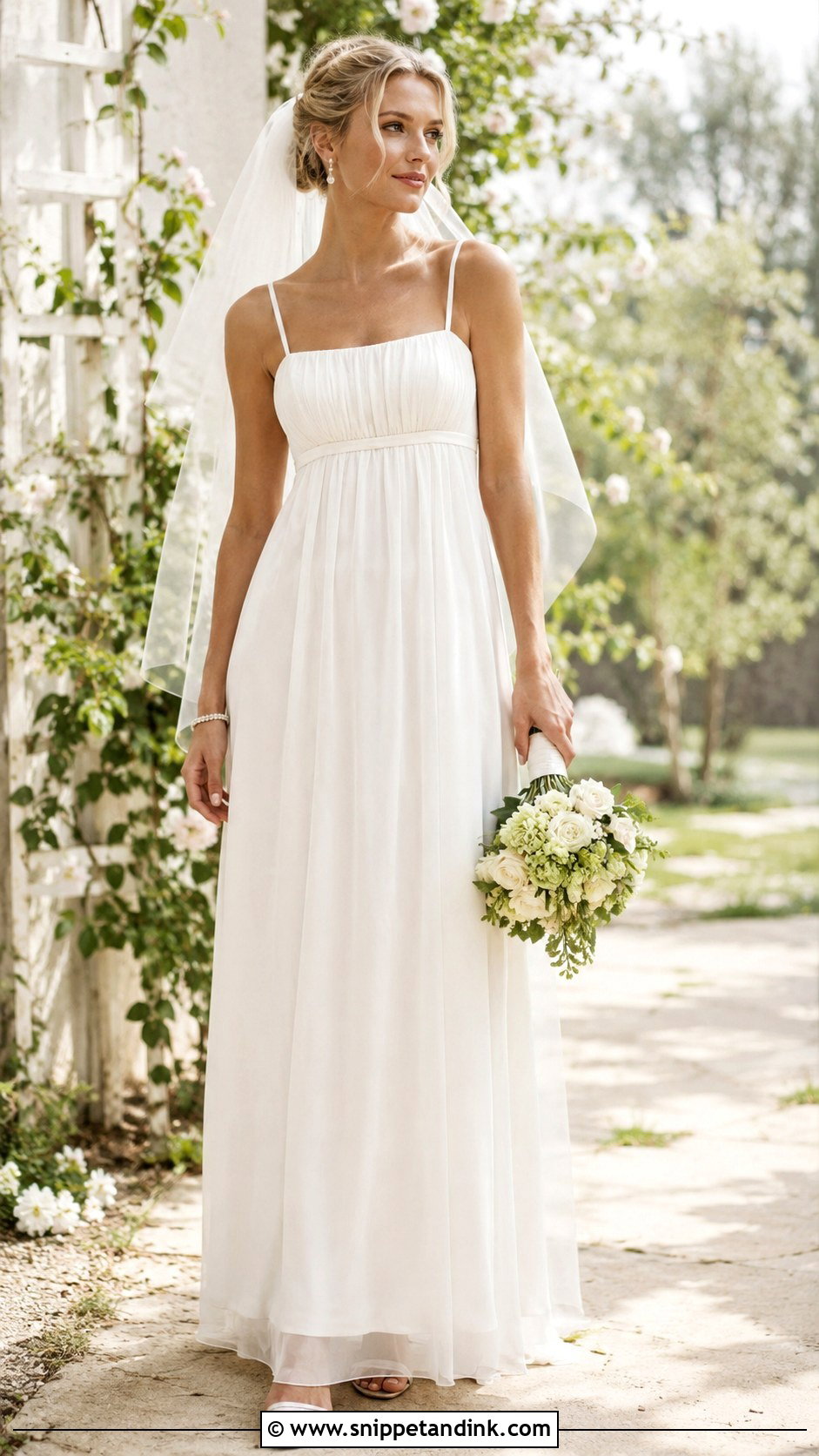
Empire waists set the seam just below the bust, giving a long, soft line and a gentler alternative to structured gowns. Chiffon, silk or light satin with slim straps or short sleeves work best. The fit is easy through waist and hips, which is why I suggest it to anyone planning a long evening. The catch is bust support, since the seam sits right under it; I usually add built-in cups. Delicate heels, pearl earrings, a fine bracelet, a plain veil. Soft waves or a loose updo finish it.
22. 1998 Corset Bodice Wedding Dress
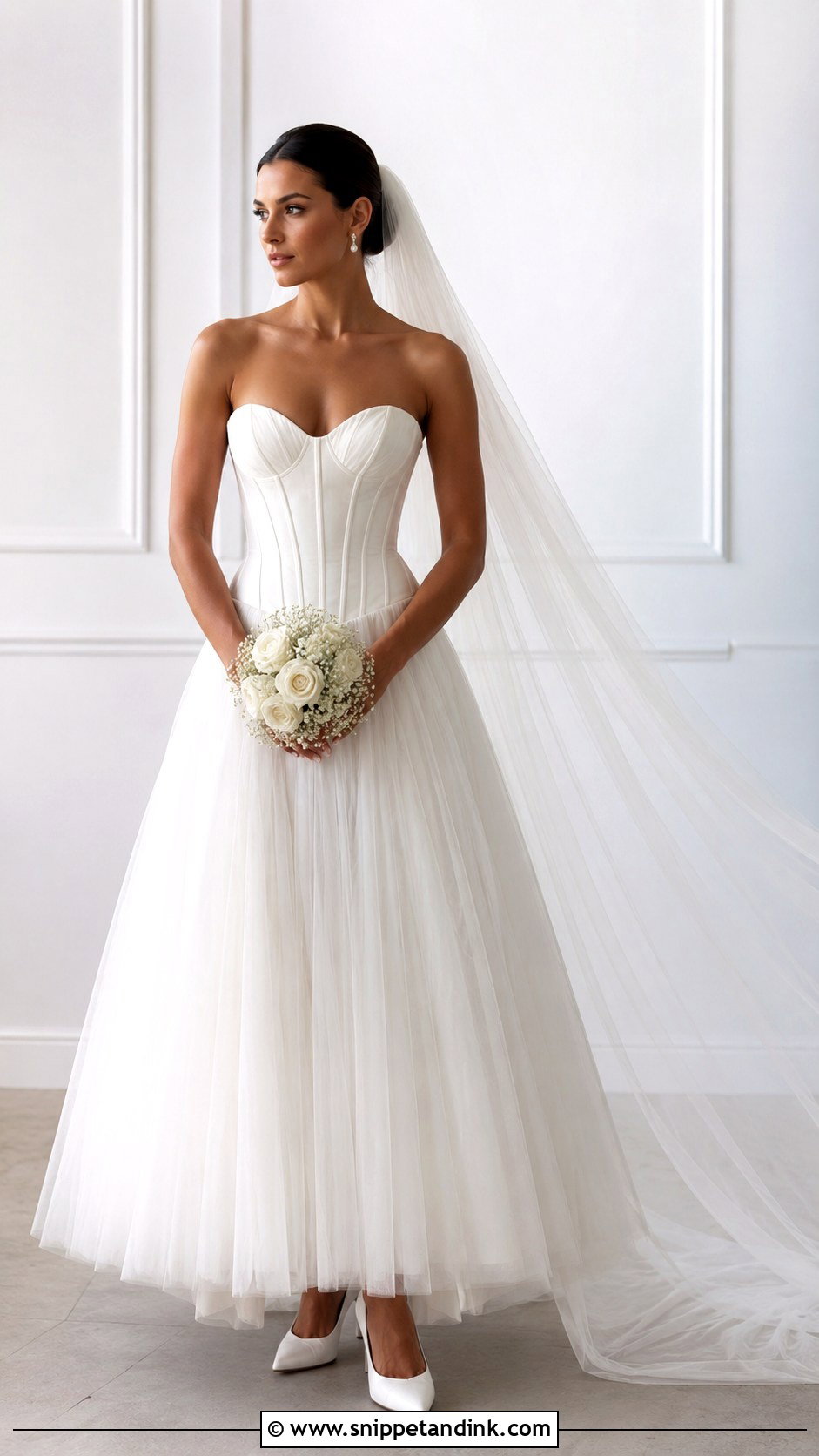
A corset bodice shapes the waist and supports the bust while the skirt stays satin, tulle or organza. The boning can sit hidden under clean fabric or show as subtle seams. I always have the bride sit, eat a few bites and breathe deeply at the fitting, because a corset laced for standing photos can be miserable by dinner. White heels, pearl earrings, a veil and a smooth hairstyle balance the fitted top. Tailored properly, it gives a secure hourglass shape with very little decoration.
23. 1998 Minimalist Wedding Dress
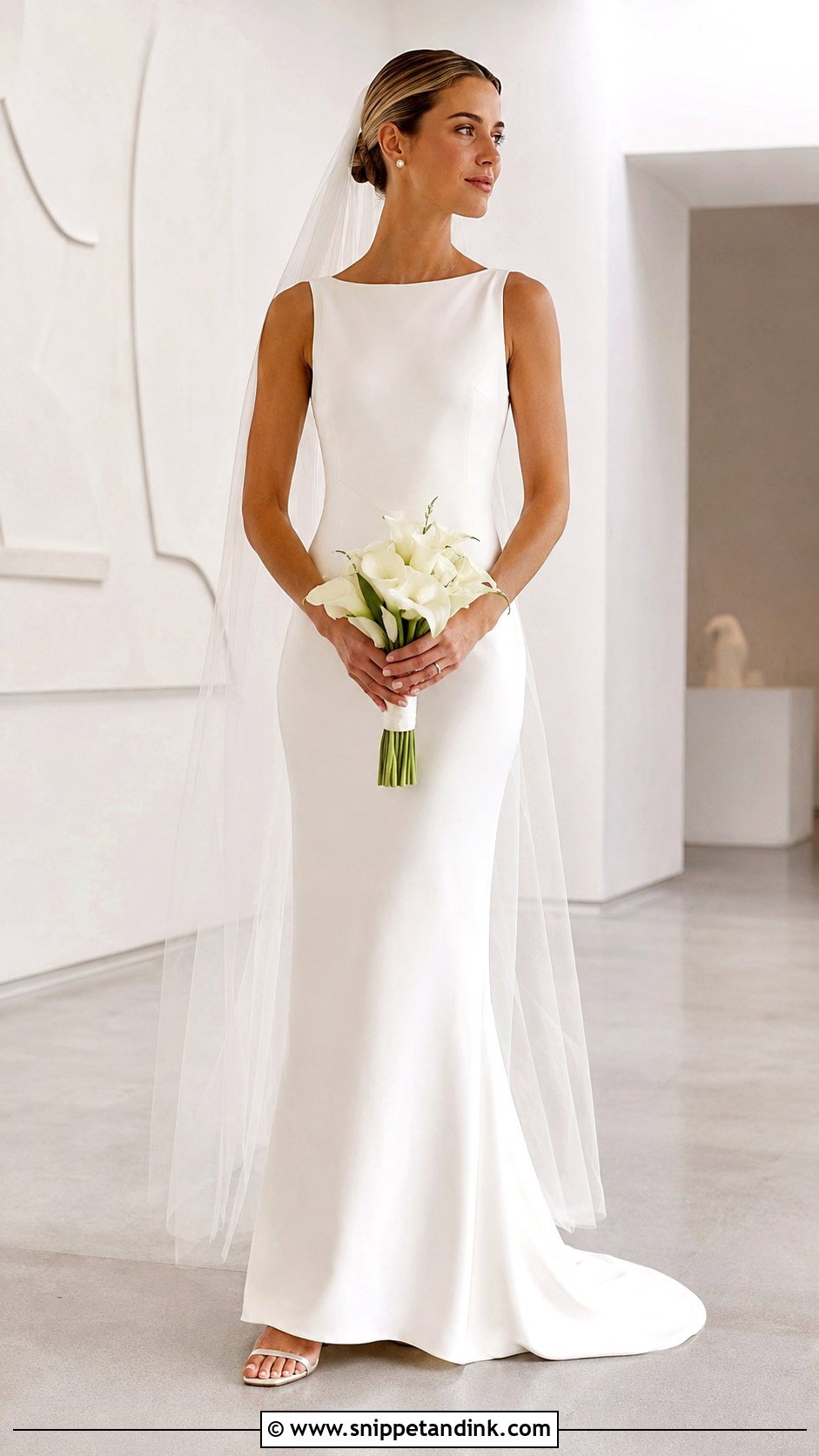
Minimalism is the late-’90s idea that has lasted longest. It’s about shape, fabric and restraint, in silk, satin or crepe with clean seams and a simple neckline. Cheap fabric has nowhere to hide here; thin satin shows every ripple, so this is the dress where I tell brides to spend on fabric over detail. Sleek heels, small pearl earrings, a plain veil and a neat bouquet. A middle-part bun, soft makeup and polished nails make it look deliberate.
24. 1998 Ruffle Wedding Dress
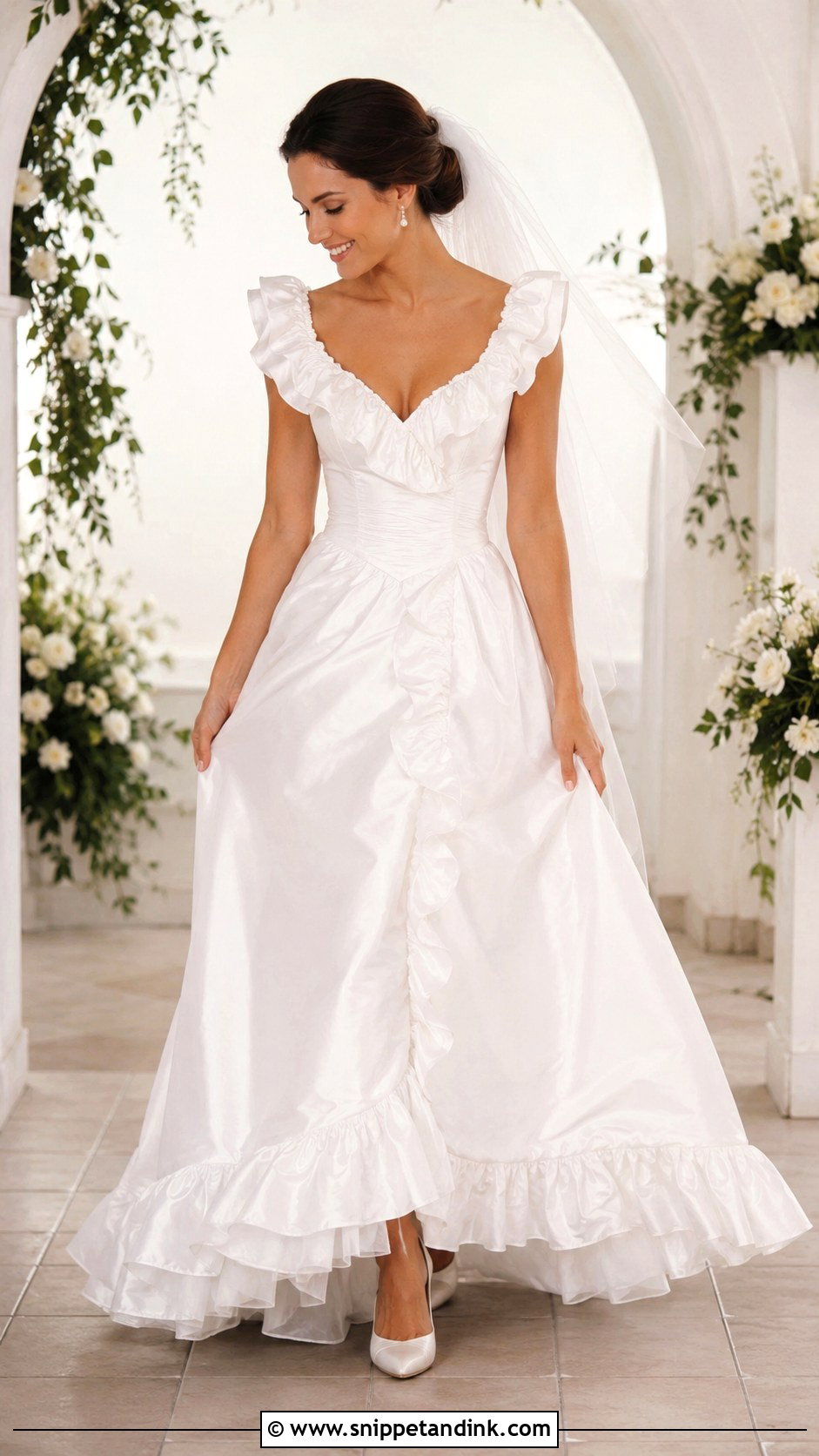
Ruffles in 1998 were soft and placed with care, along the neckline, hem, sleeves or skirt layers rather than everywhere. I’m wary of ruffles at the hip on a petite frame, since they add width exactly where the eye lands; at the hem they add movement instead. Satin pumps, a simple veil, pearl earrings and a smooth hairstyle balance the texture. Ruffles can give shape to a slim dress or soften a structured bodice. Keep the rest clean.


25. 1998 Two Piece Wedding Dress
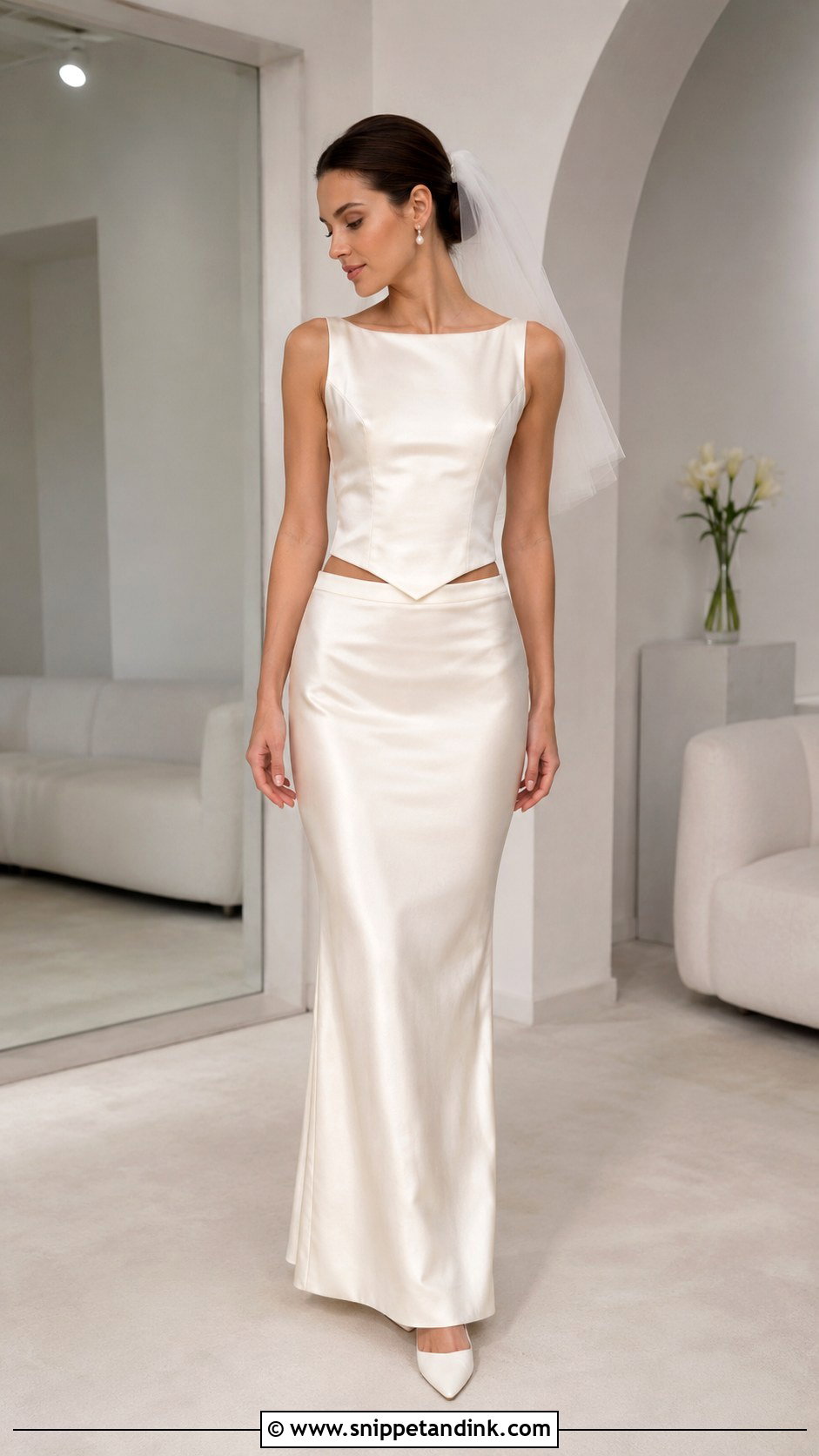
Separates were the fashion-forward bridal idea of the late ’90s: a fitted satin top with a long skirt, a lace camisole over a plain A-line, or a cropped jacket over a sleek gown. Ivory, white and soft cream must match closely, which is harder than it sounds; two whites from different mills rarely agree in daylight, so I compare them by a window. Pointed heels, pearl earrings, a small veil and a clean updo. The bonus is that the skirt or top can be worn again.
The Underpinnings a Slip or Strapless Dress Depends On
Late-’90s dresses hide very little. A slip gown, a sheath and a strapless bodice all show what is underneath far more than a lace ball gown does, so I sort the foundations before the second fitting, never after.
Bring them to every fitting
Alterations are measured over whatever you wear that day. Change your bra or shapewear later and the dress can sit an inch differently at the bust and hip. Buy the wedding-day pieces early and wear them each time.
What usually works
- For slips and sheaths, a smooth-edged brief or slip-style shapewear in a shade close to your skin, not white, which can show through ivory silk.
- For strapless and halter bodices, cups sewn directly into the dress by the seamstress. They move with the bodice and remove a whole layer.
- For bias-cut silk, a full-length nude slip so the dress floats rather than catching on anything underneath.
- Test sitting, dancing and lifting your arms in the complete set, because the dress you approved standing still is only half the test.
Why the Late ’90s Still Fit a 2026 Wedding
The range in this one year explains why late 90s bridal fashion keeps coming back: sleek slips and sheaths next to satin ball gowns, lace sleeves, floral appliqué and pearl-button backs. The dresses work today because they hold back. If the period appeals to you, put your money into fabric and tailoring, keep accessories soft, and let one clean line do the talking.
You'll Like These Ideas:


Leave a Reply