
The gowns brides asked me about most in 2025 had one thing in common: a strong, personal detail on a recognizably bridal shape. Sculpted Basque waists, long drop waists, big bows, three-dimensional flowers, plain satin and layers that come off for the party all showed up in fitting rooms again and again. More brides also wanted a dress that could carry them from a formal ceremony to a loose, late reception. A trend only helps if it suits your body, venue and season, so as I go through the twenty looks below I’ll point out the fabric weight, the underwear, the tailoring and the shoes each one needs. They range from minimalist crepe to full ball gowns, vintage tea length and dresses built for sand.
How Many Months a Made-to-Order Gown Really Needs
Most of the dresses below are made to order, which means the sample you try on is not the dress you take home. The bridal shop places an order with the designer, the gown is cut and sewn, and it arrives months later in your size, ready to be altered. Production times differ a lot between designers, so treat the outline below as a common pattern and ask your shop for their own dates.
- Start trying dresses on roughly nine to twelve months before the wedding, so you can order without paying a rush fee.
- Expect production to take somewhere around four to eight months after you order. Heavily beaded or custom gowns can take longer.
- Leave two to three months for alterations, with the first fitting about eight to twelve weeks before the date.
- Book the final fitting two to three weeks out and bring the exact shoes, bra and shapewear you’ll wear.
If you’re short on time, ask about in-stock or off-the-rack gowns. A trend-led dress like a drop waist or Basque bodice still needs its waist seam fitted carefully, so I’d never let a tight timeline squeeze the alterations below about six weeks.
1. Basque Waist Wedding Dress
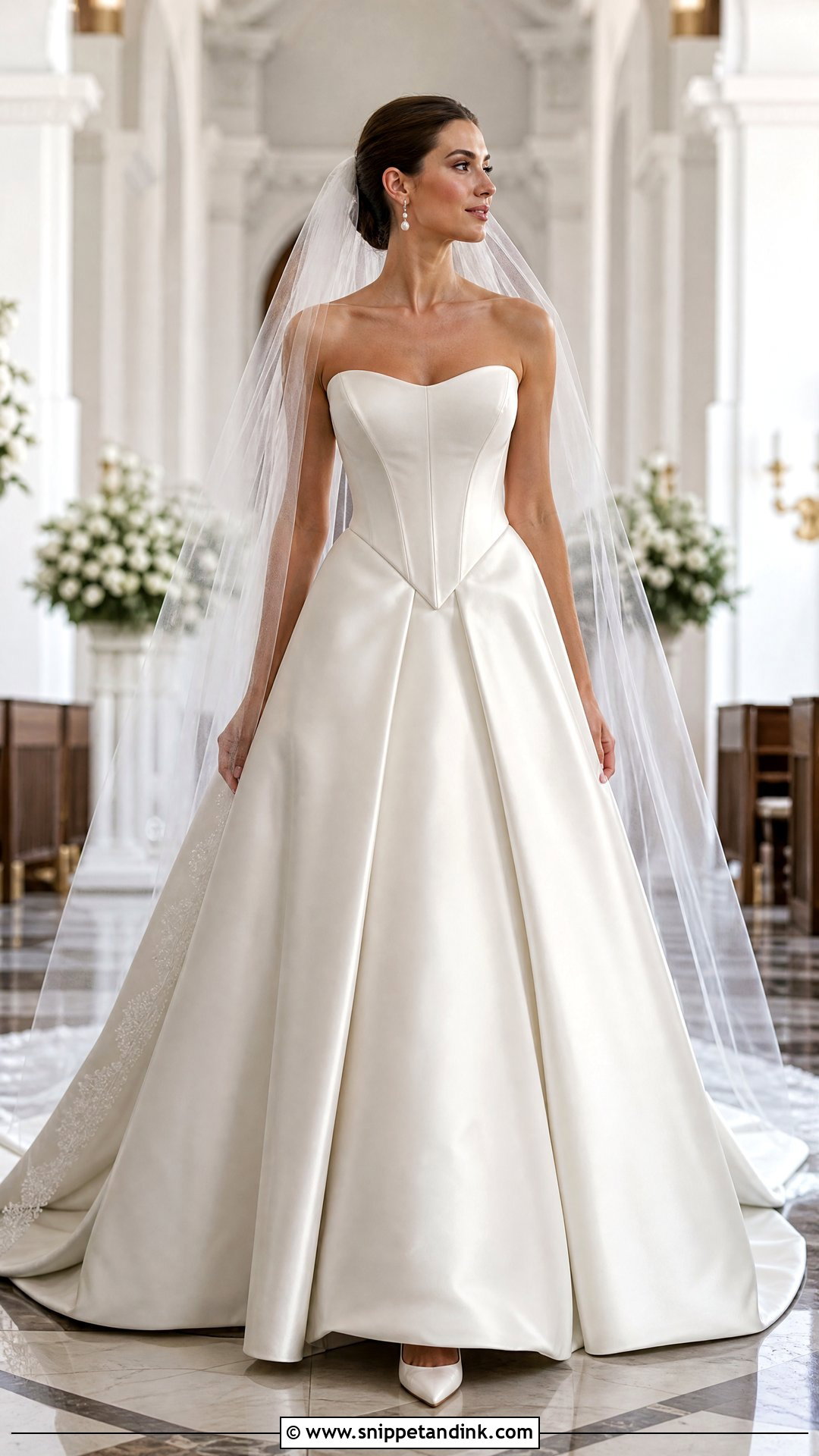
The Basque waist wedding dress was the silhouette of the year. The bodice ends in a soft V below the natural waist, which lengthens the torso and makes the waist look smaller by contrast. Structured satin gives it a regal edge; a lace-covered corset softens it. Under a full skirt and a chapel train, I’d add a sheer cathedral veil, pearl drops and pointed ivory pumps, with no necklace so the line of the bodice reads clearly. That V depends on boning. If it’s flimsy, the point folds up when you sit, so press on it at the fitting and sit down to check it holds.
2. Drop Waist Wedding Dress
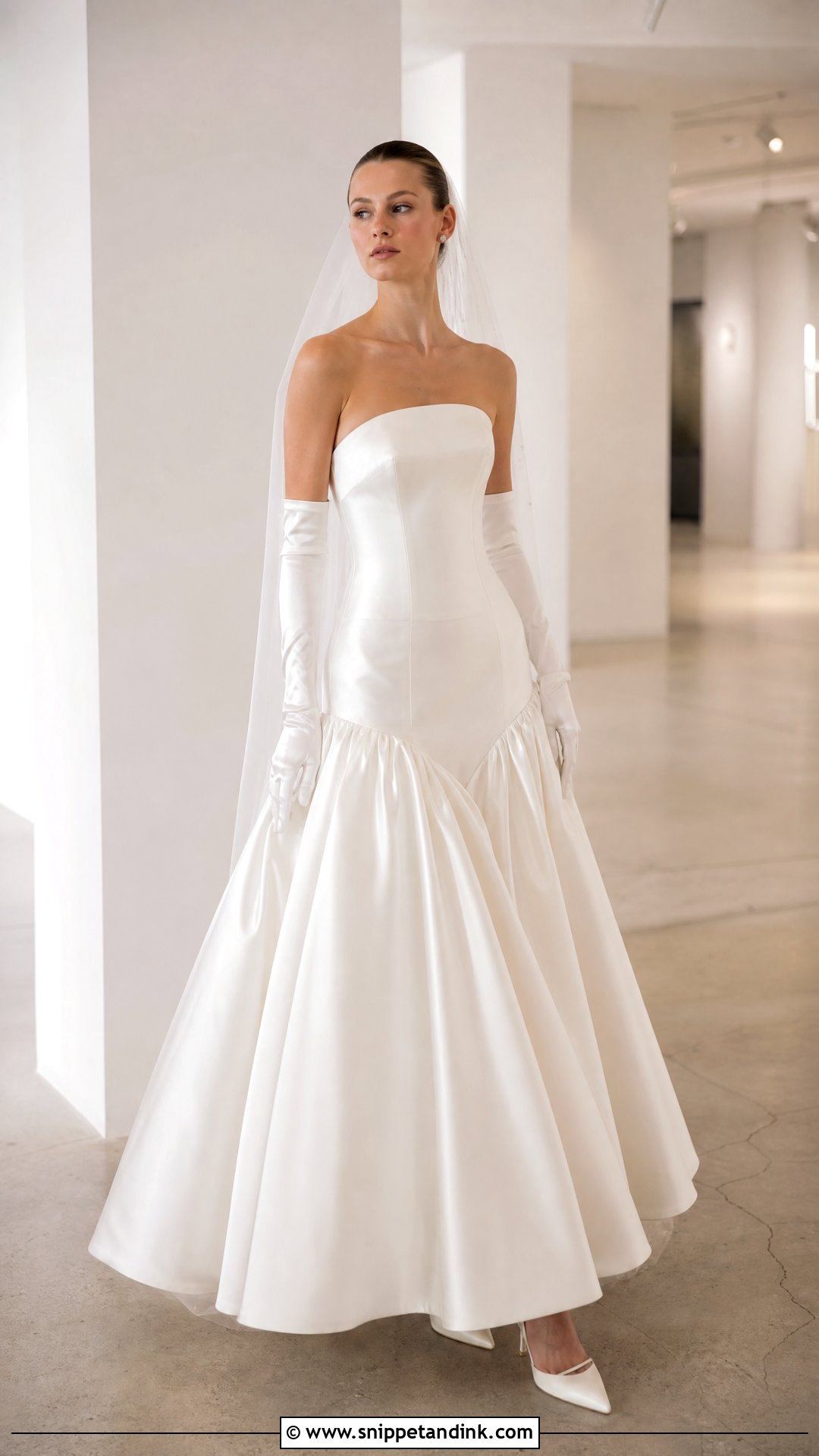
A drop waist runs the fitted bodice down over the hips before the skirt opens, so it’s the most fashion-led shape here, and also the one that most depends on your proportions. On a long torso it looks sleek. On a short torso, the same seam can make the legs look shorter, which is why I have brides try the bodice at two or three lengths before the pattern is finalized. Strapless with taffeta or satin holds the skirt’s shape. Elbow gloves, crystal studs, a smooth fingertip veil and pointed slingbacks keep the long line going. Make sure you can sit without the seam riding up into your stomach.
3. Satin A-Line Wedding Dress
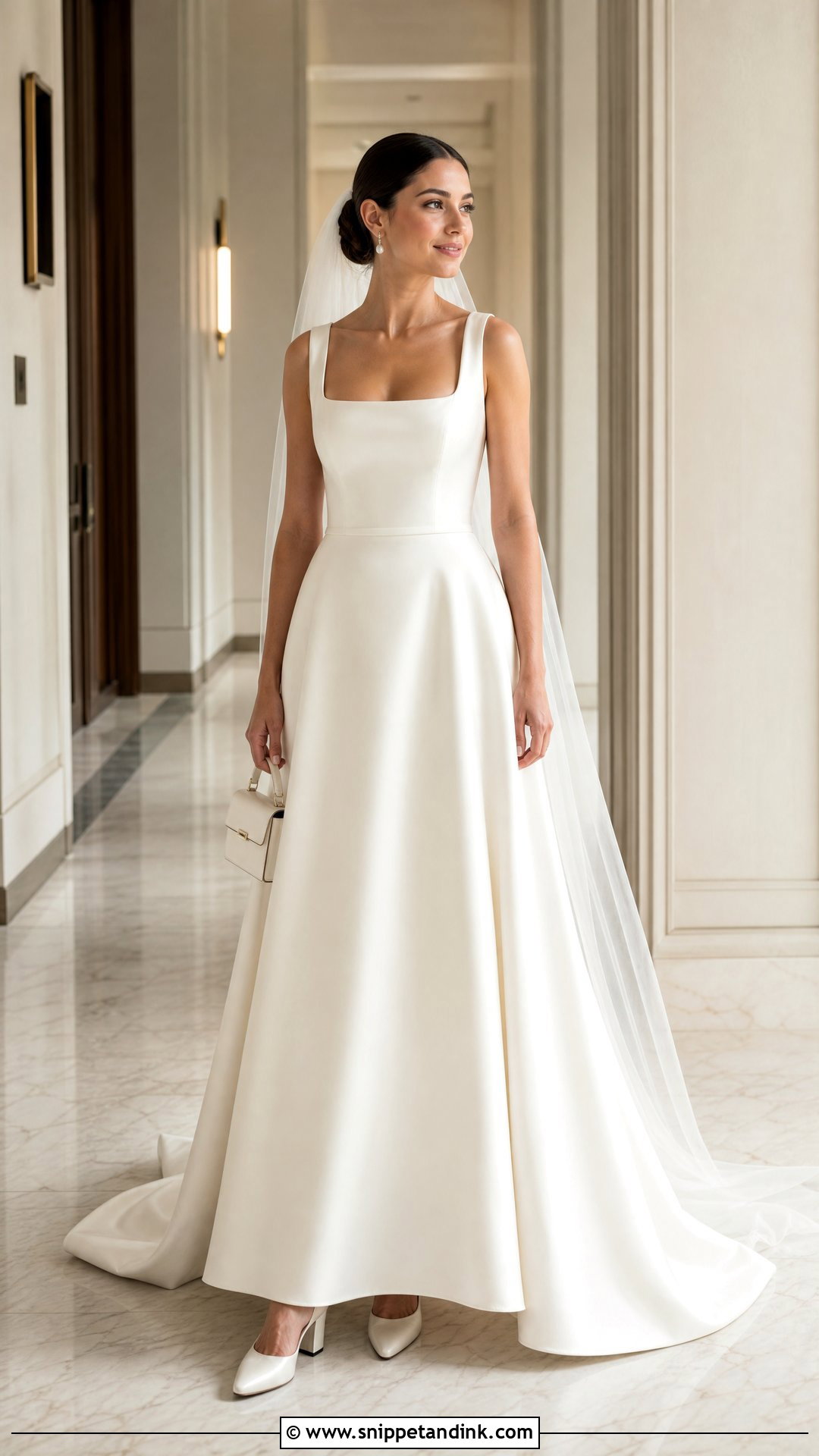
Satin A-lines keep coming back because they flatter almost everyone. The fitted bodice and gradually widening skirt balance the body without the weight of a full ball gown. I’d pick matte satin for an understated wedding and duchess satin, which has more sheen and body, for a formal one. A square neck adds structure; wide straps add support and room for a regular bra or shapewear. Pearls, a simple veil, block-heel pumps and a neat chignon finish it. Ask for a bustle that your maid of honor can do in two minutes. Satin trains are heavy, and a fiddly bustle with twenty hooks will eat into your reception.
4. Lace Long Sleeve Wedding Dress
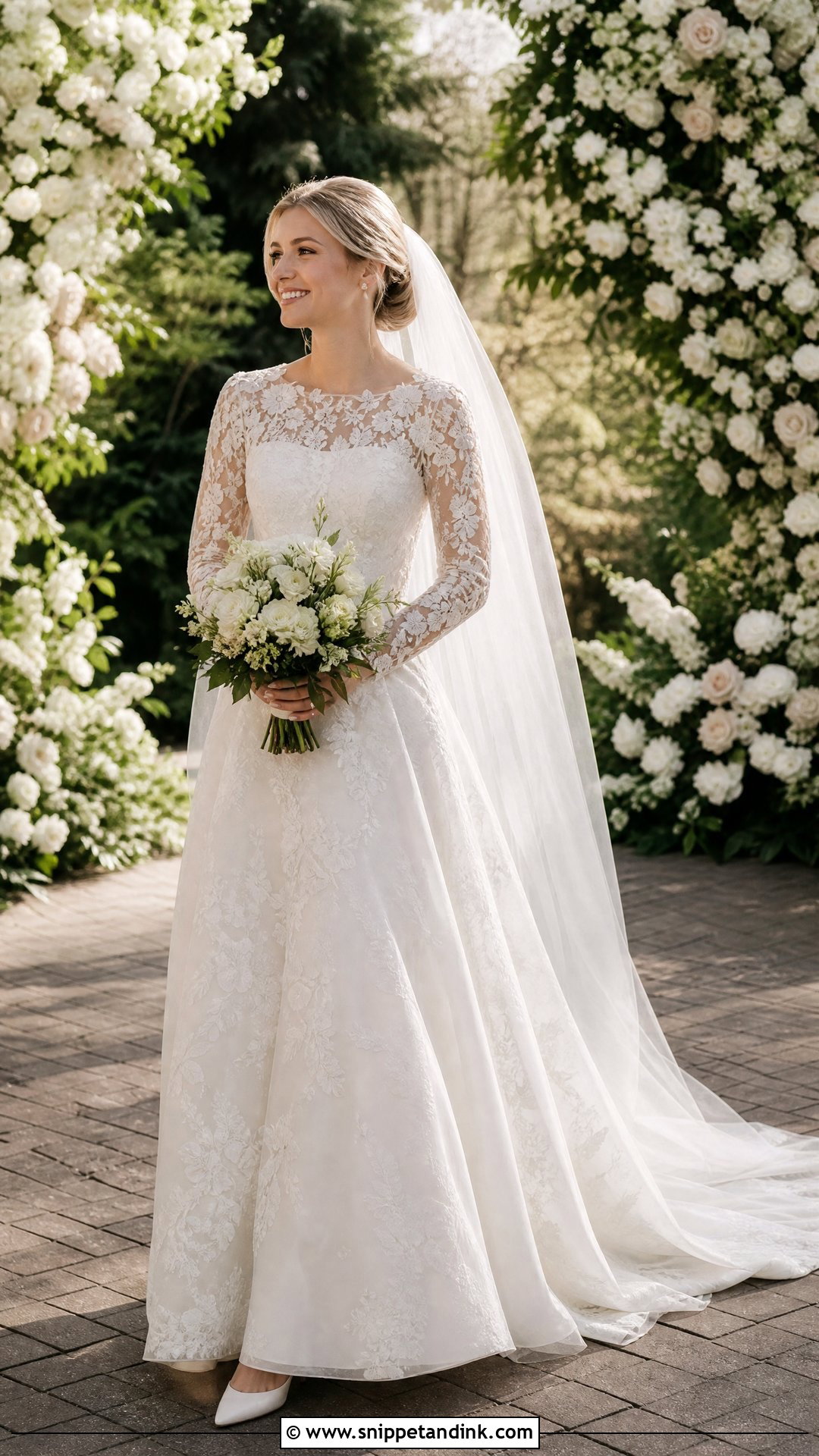
Long lace sleeves suit a garden or an old building, where daylight picks out the pattern. I look for sheer fitted sleeves, floral appliqués and a lined bodice with proper internal structure underneath, so the lace sits on a support rather than doing the work itself. An A-line or gently fitted skirt stops all that detail looking heavy. Closed-toe ivory heels, small pearls and a plain tulle veil let the lace lead, with a low bun or soft waves. For a hot day, choose lace with an open pattern and a light lining. Then check the armholes. Lace sleeves are usually the first thing to pull when you hug someone.
5. Strapless Ball Gown Wedding Dress
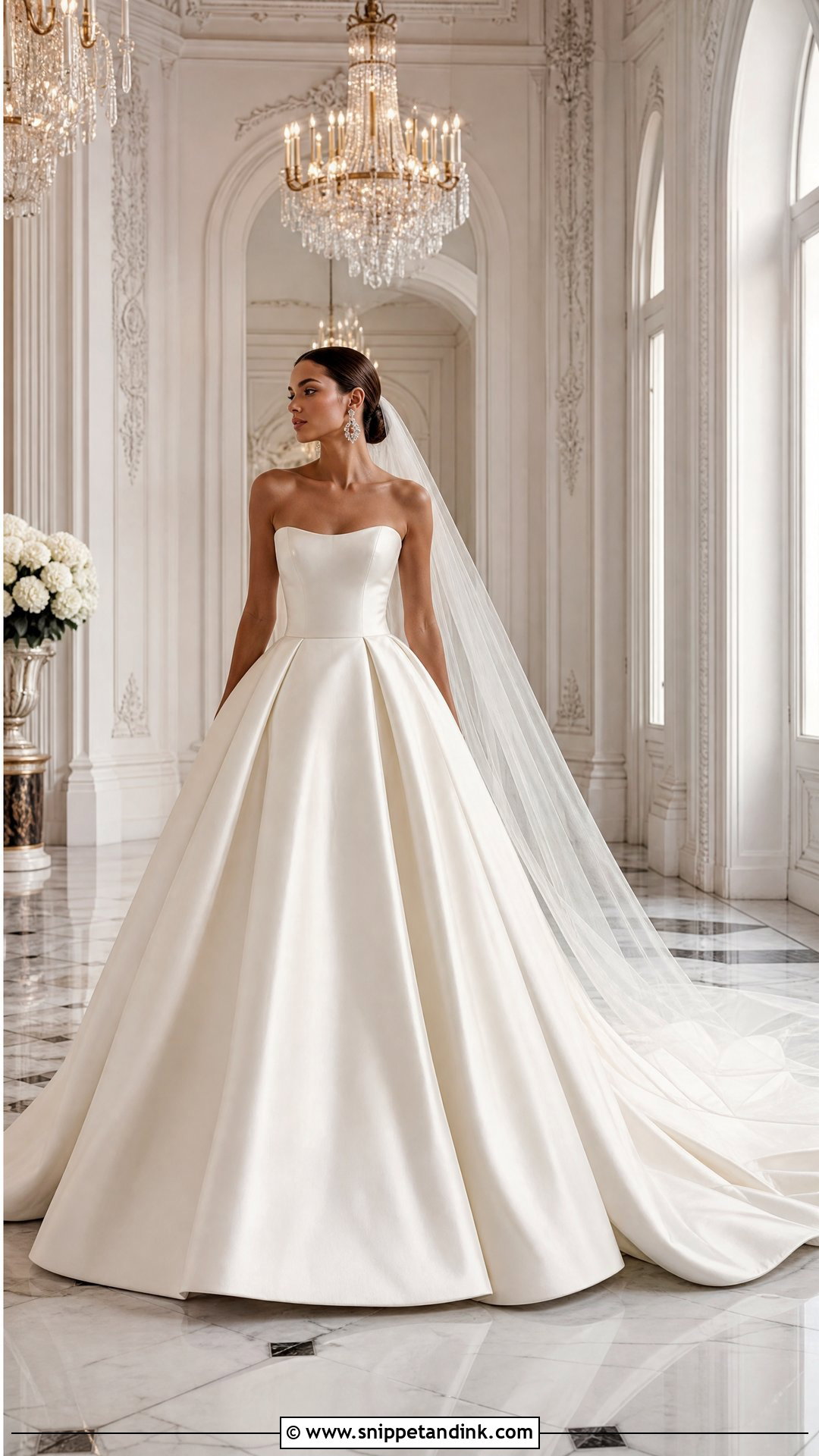
In a big ballroom, a small dress disappears. A strapless ball gown fills the space with a fitted bodice and a wide skirt, and Mikado, satin or layered tulle give volume without much decoration. Choose a curved neckline for softness or a straight one for structure. A cathedral veil, sparkling earrings and platform heels hidden under the skirt complete it, with a smooth updo to frame the shoulders. Strapless gowns stay up because of the internal corset, not the fabric. I’d ask the seamstress to build that support so you never hitch the bodice up in photos, and to add a sturdy bustle for the reception.
6. Off-Shoulder Wedding Dress
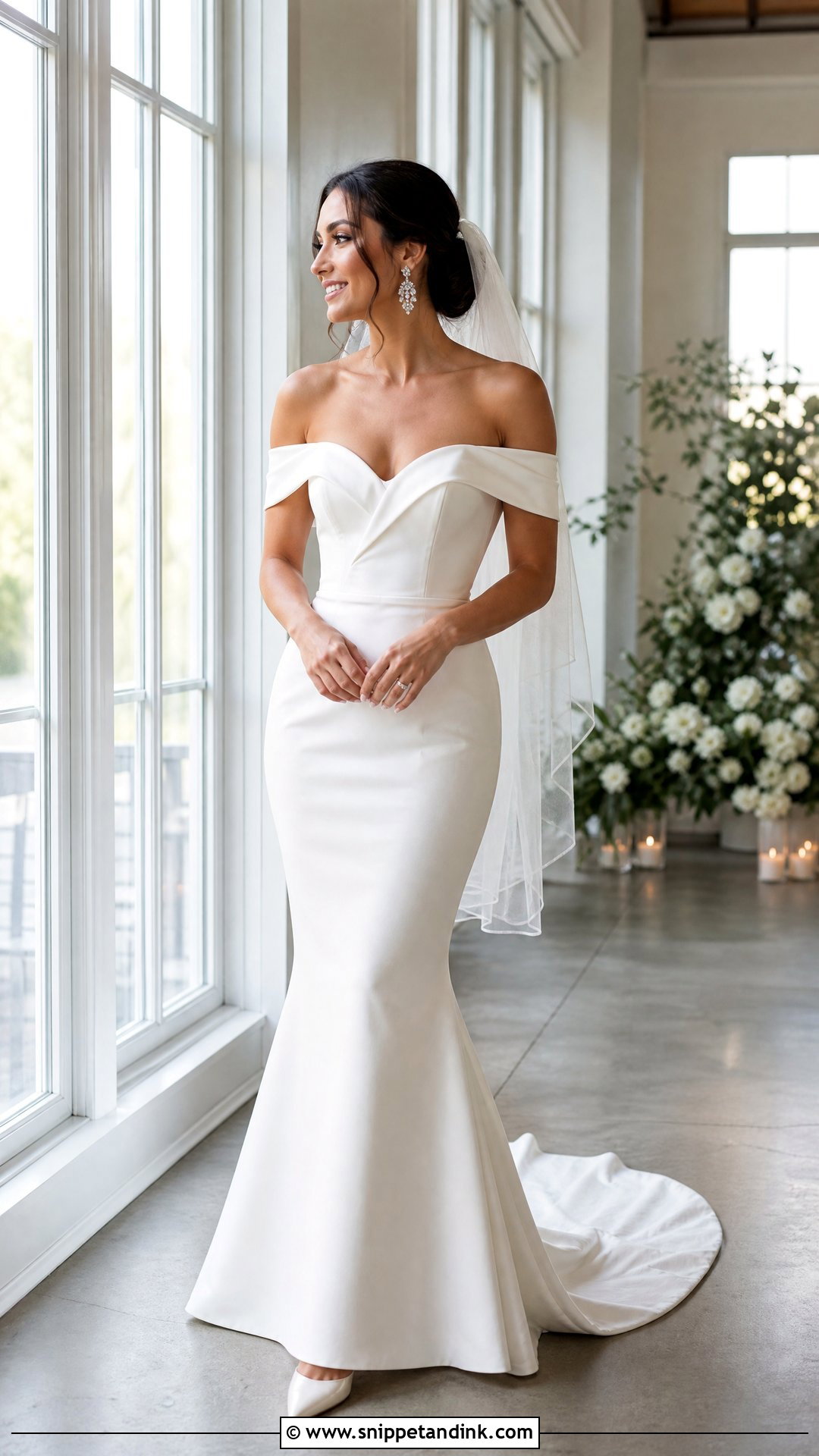
Off-shoulder necklines show the collarbone and soften a traditional gown. Draped satin bands look clean and formal; lace sleeves feel more delicate. A fitted bodice with an A-line or trumpet skirt suits it, along with a short pendant or bare neck, statement earrings and a low textured bun under a fingertip veil. The honest problem is arm movement. A band that sits low on the upper arm can stop you lifting your arms above shoulder height, so do a big wave in the fitting room. Some designs use inner elastic or detachable bands to help. Fashion tape is a backup, never the plan.
7. Square Neck Wedding Dress
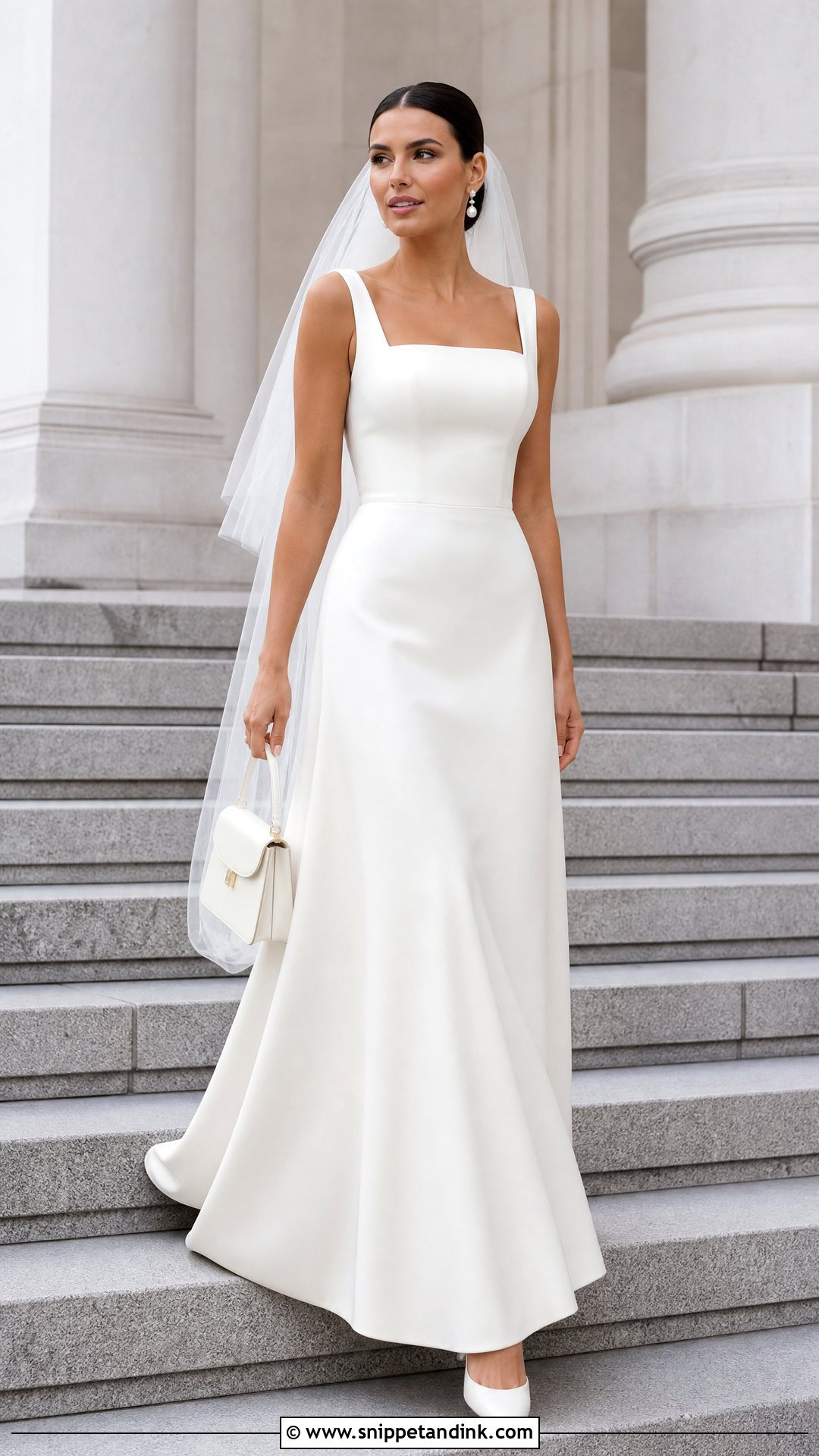
A square neck looks modern and still very bridal, and it frames the collarbone neatly. It works with wide straps or fitted long sleeves. Smooth crepe suits a minimal wedding, satin a formal one, embroidered fabric adds texture; an A-line skirt looks easy, a column looks sharper. Pearl drops, a small structured bag, sleek pumps and a simple veil under a low bun complete it, with no heavy necklace breaking the line. If you’d like more coverage, ask for the neckline cut a little higher. Square edges gape at the corners when the bust fit is off, so I check them with the bride leaning forward.
8. High Neck Wedding Dress
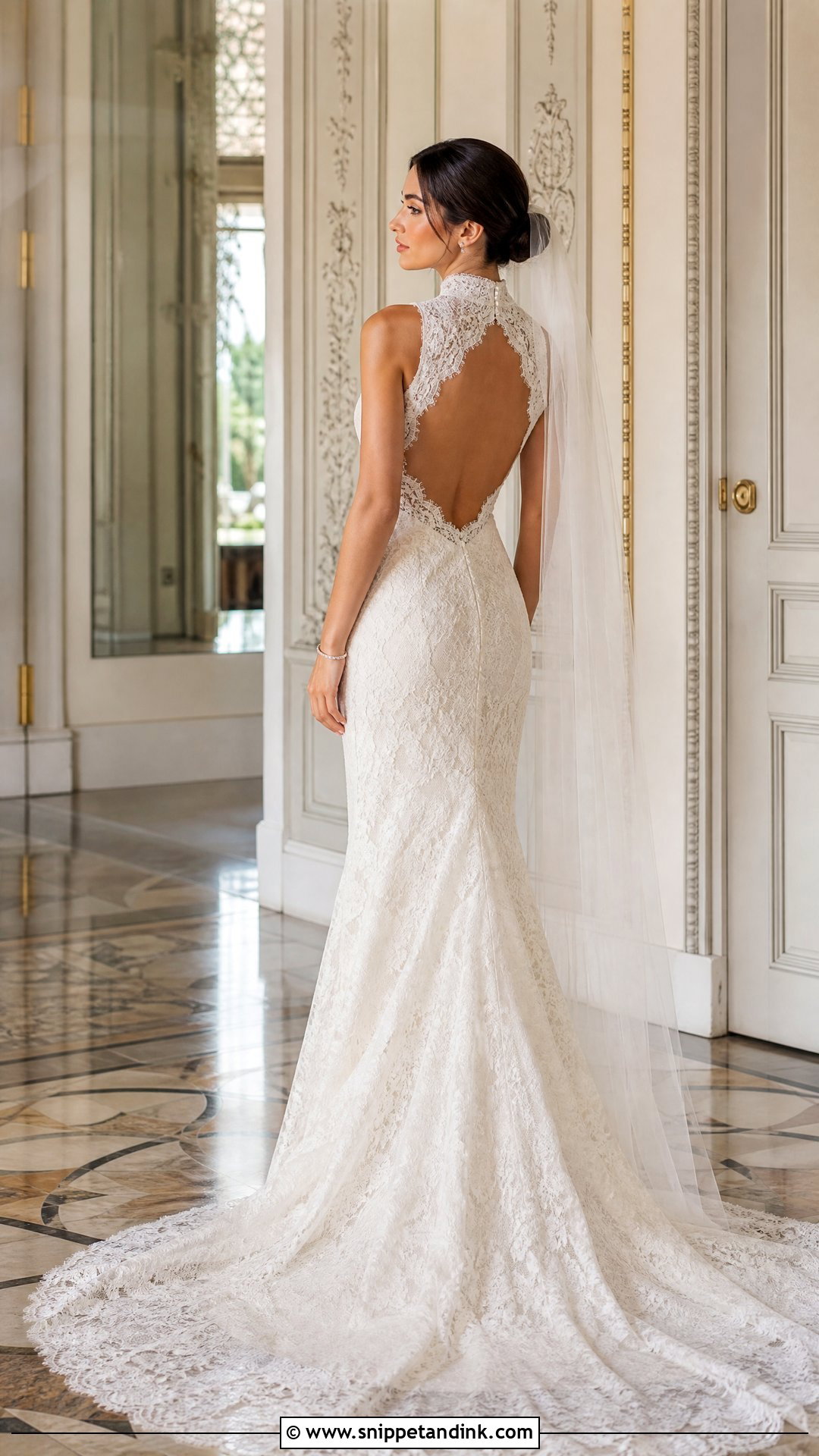
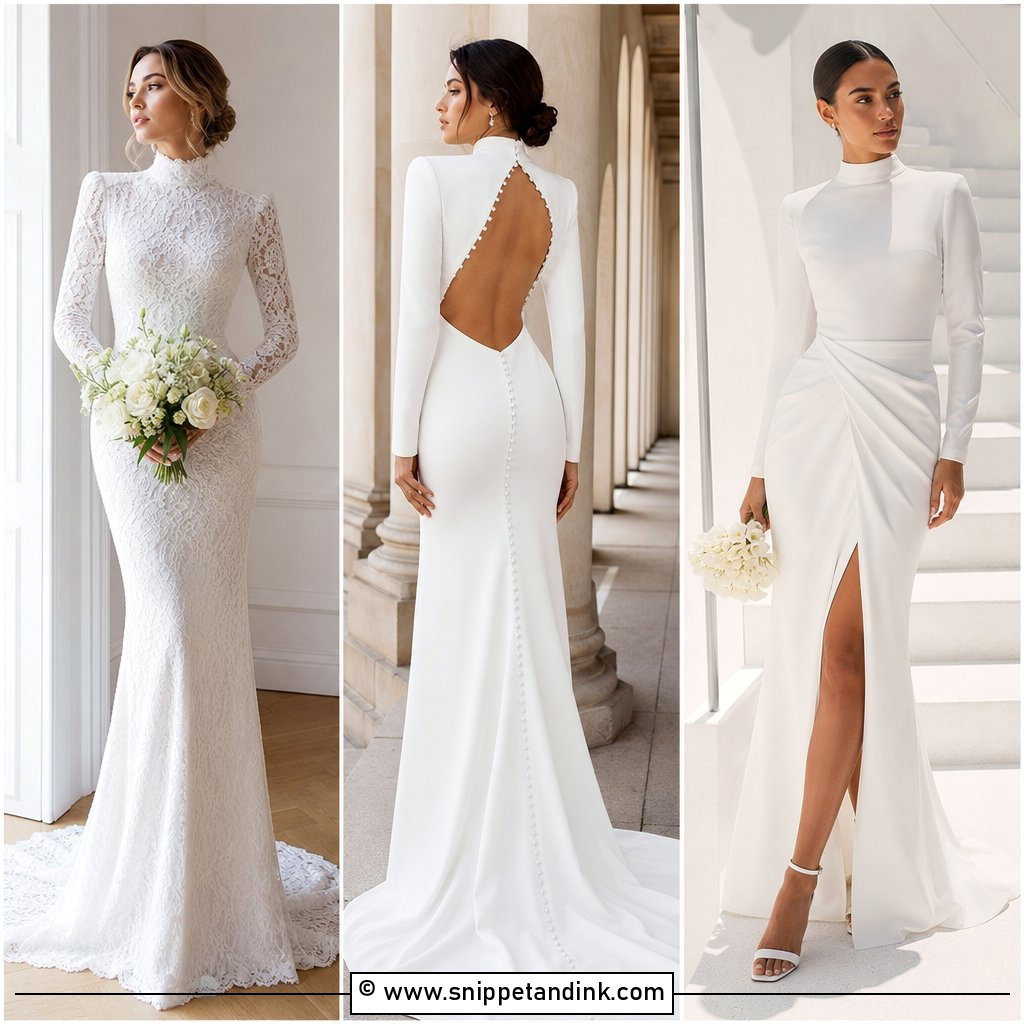
A high neck gives a gown quiet coverage. A lace bodice leans vintage, while plain crepe or satin looks sleek. Because the front is covered, I like to open something else, an open back, a sleeveless cut or a softer skirt, so the dress doesn’t feel heavy. Skip the necklace and wear a fine bracelet with small crystal studs. An elegant bun and a veil pinned beneath it keep the neckline in view. For summer, look for sheer panels and a breathable lining. A high collar that’s even slightly tight will rub every time you turn to greet someone, so test it by looking over each shoulder.
9. 3D Floral Wedding Dress
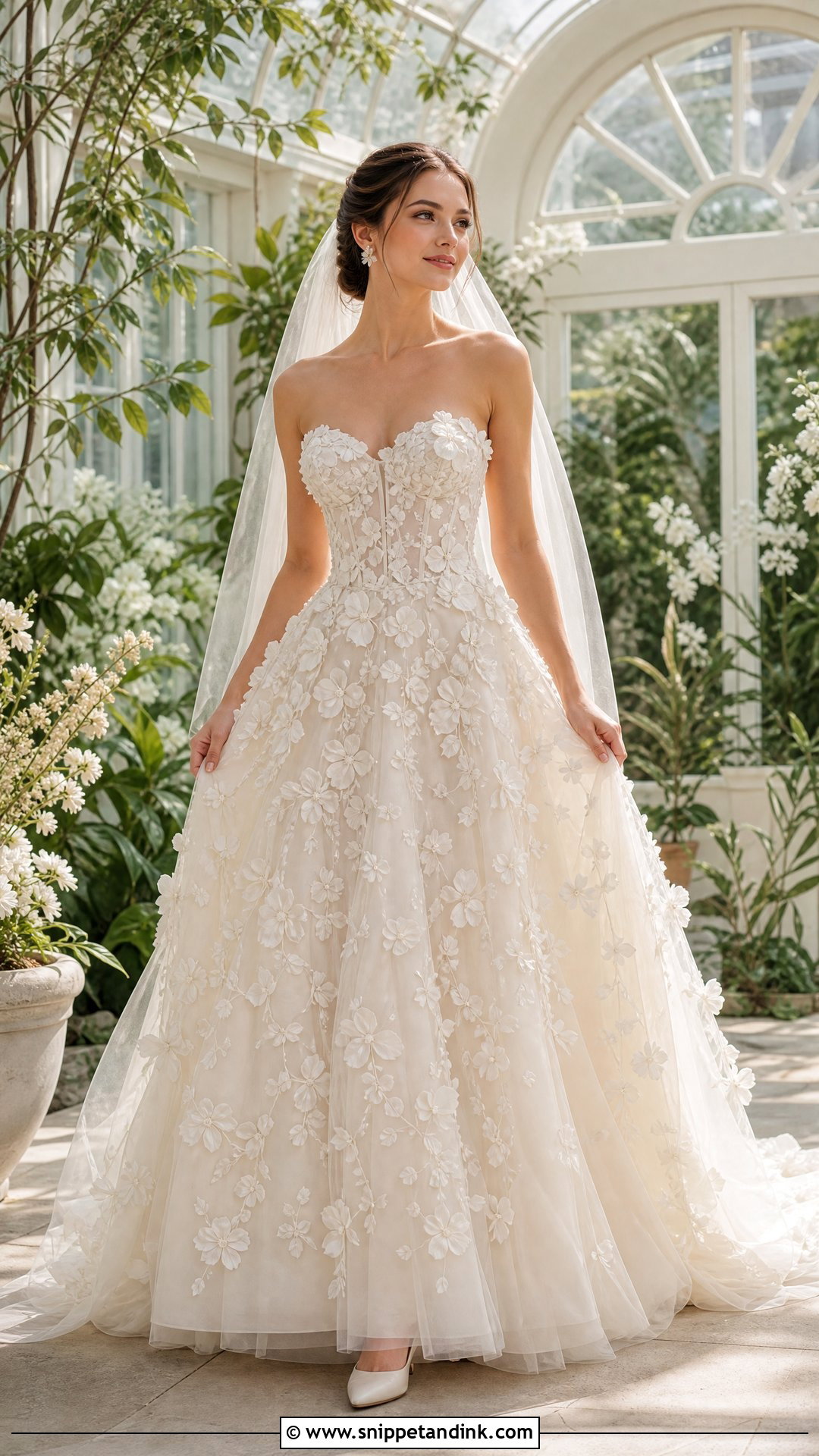
Three-dimensional flowers make a gown interesting from every angle, whether they’re petals across the bodice, blossoms scattered down the skirt or a cluster along the train. Texture and maximalist fabrics were everywhere in fittings that year. An illusion neckline or a strapless corset keeps the flowers balanced. Plain satin heels, tiny floral earrings and a raw-edge veil let the dress lead, and a loose low bun suits it. Raised petals crush easily. I ask how the dress should be stored and steamed, because a 3D floral gown packed flat in a box for a destination flight may need its petals re-fluffed one by one.
10. Corset Wedding Dress
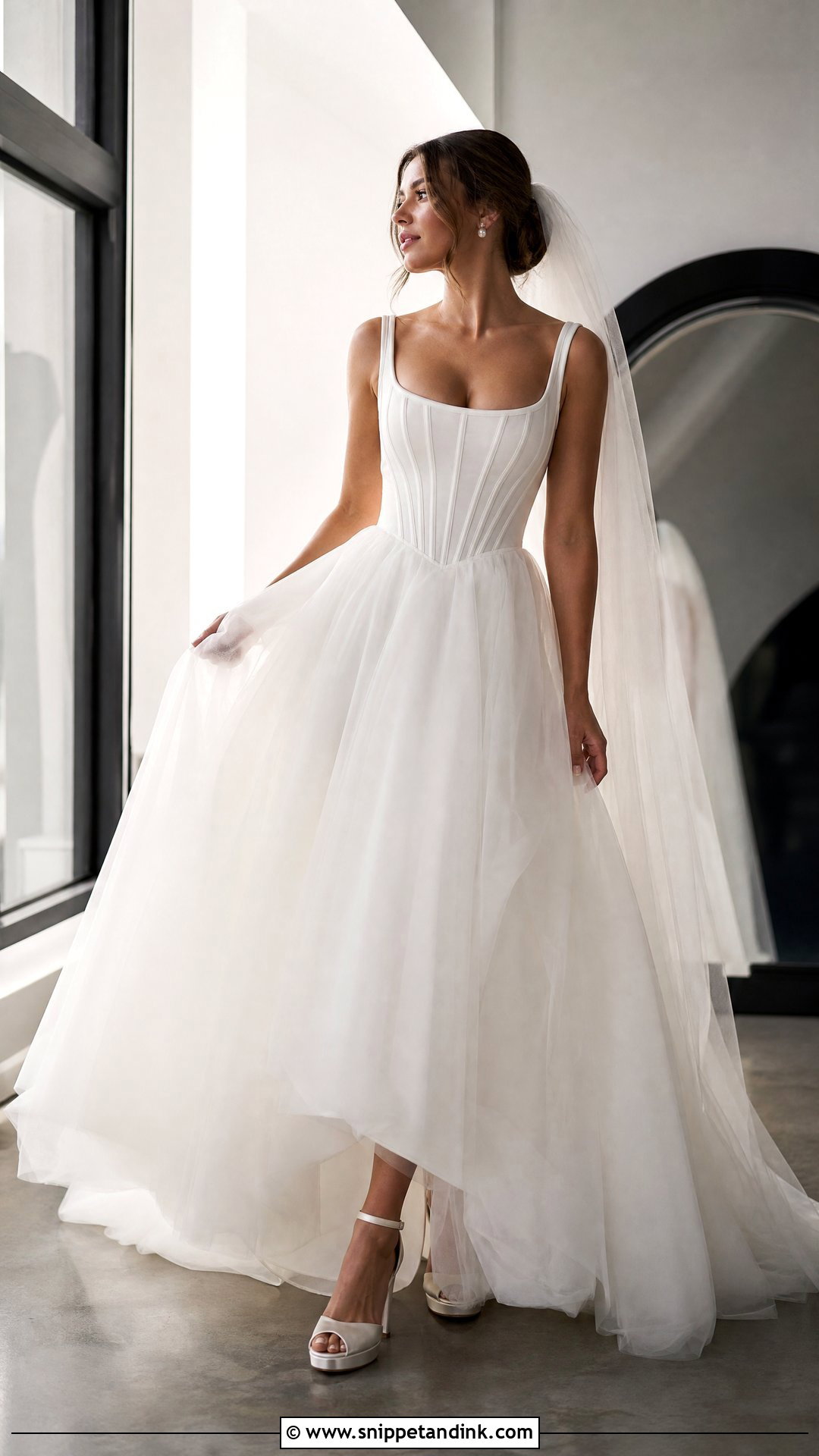
A corset bodice puts the structure on show and lets you adjust the fit with lacing. I care more about what’s inside: secure boning, lined cups and seams placed to shape the body, not a bodice that is simply tight. A scoop or sweetheart neck softens it, and a full satin or tulle skirt adds contrast. Pearl studs, a sheer chapel veil and supportive block heels are enough; if the boning shows on the outside, keep jewelry quiet. A choker can work for a fashion-led wedding if it doesn’t crowd the neckline. At the fitting, sit, bend, breathe deeply and raise your arms. Support should feel firm, never painful.
11. Bow Back Wedding Dress
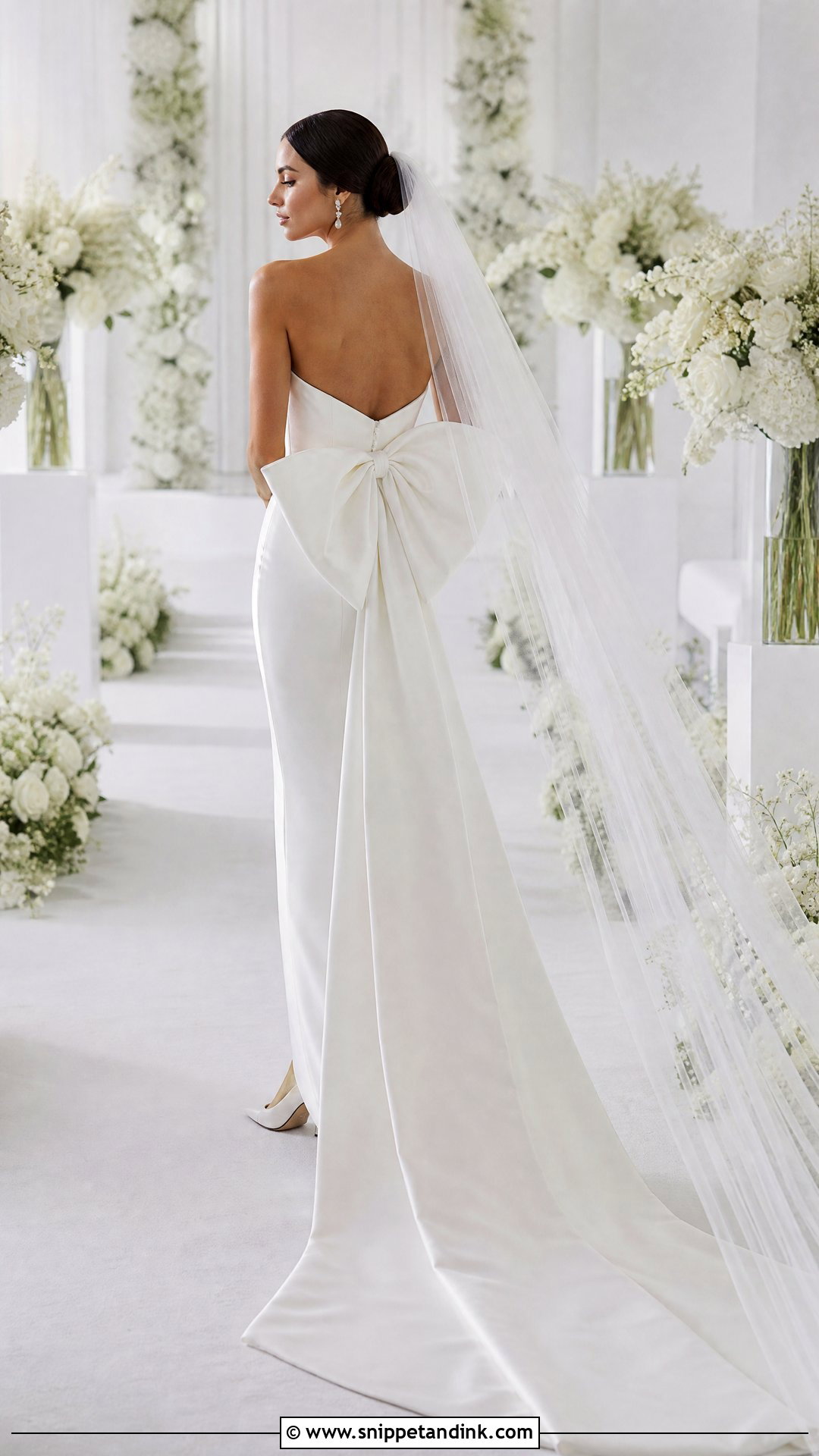
A big bow on the back gives guests something to remember as you walk away up the aisle. Oversized bows were all over bridal fashion in 2025, usually on otherwise simple dresses. Crisp satin or Mikado holds the loops upright; a soft fabric droops by evening. Keep the front plain with a straight strapless or bateau neckline, and choose a veil that ends above the bow or extends well past it. A veil that stops right on the bow squashes it. I’d ask whether the bow can be detached, since sitting against a large bow through dinner is less comfortable than it sounds.
12. Detachable Sleeve Wedding Dress
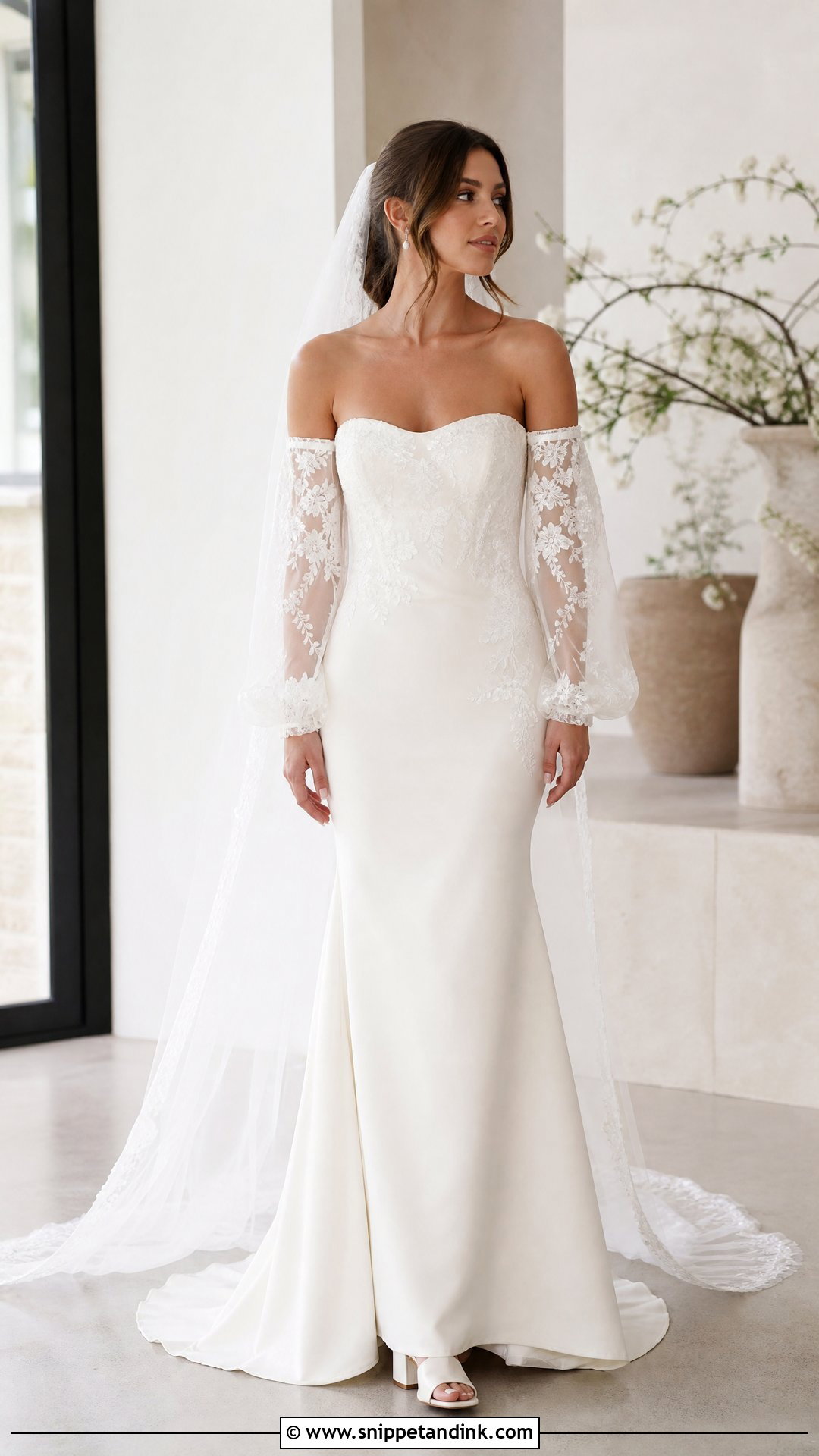
Detachable sleeves turn one dress into two looks. Start the ceremony in fitted lace, off-shoulder bands or puff sleeves, then take them off for a cleaner reception outfit. Convertible pieces were popular in 2025 because brides could customize a single gown for different parts of the day. An A-line or fitted skirt both suit it. I’d style the ceremony with a veil and pearls, then switch to statement earrings and a hair accessory, keeping the same comfortable heels or changing to flats. Have a bridesmaid practice removing the sleeves before the day, and check the snaps don’t show in photos.
13. Detachable Overskirt Wedding Dress
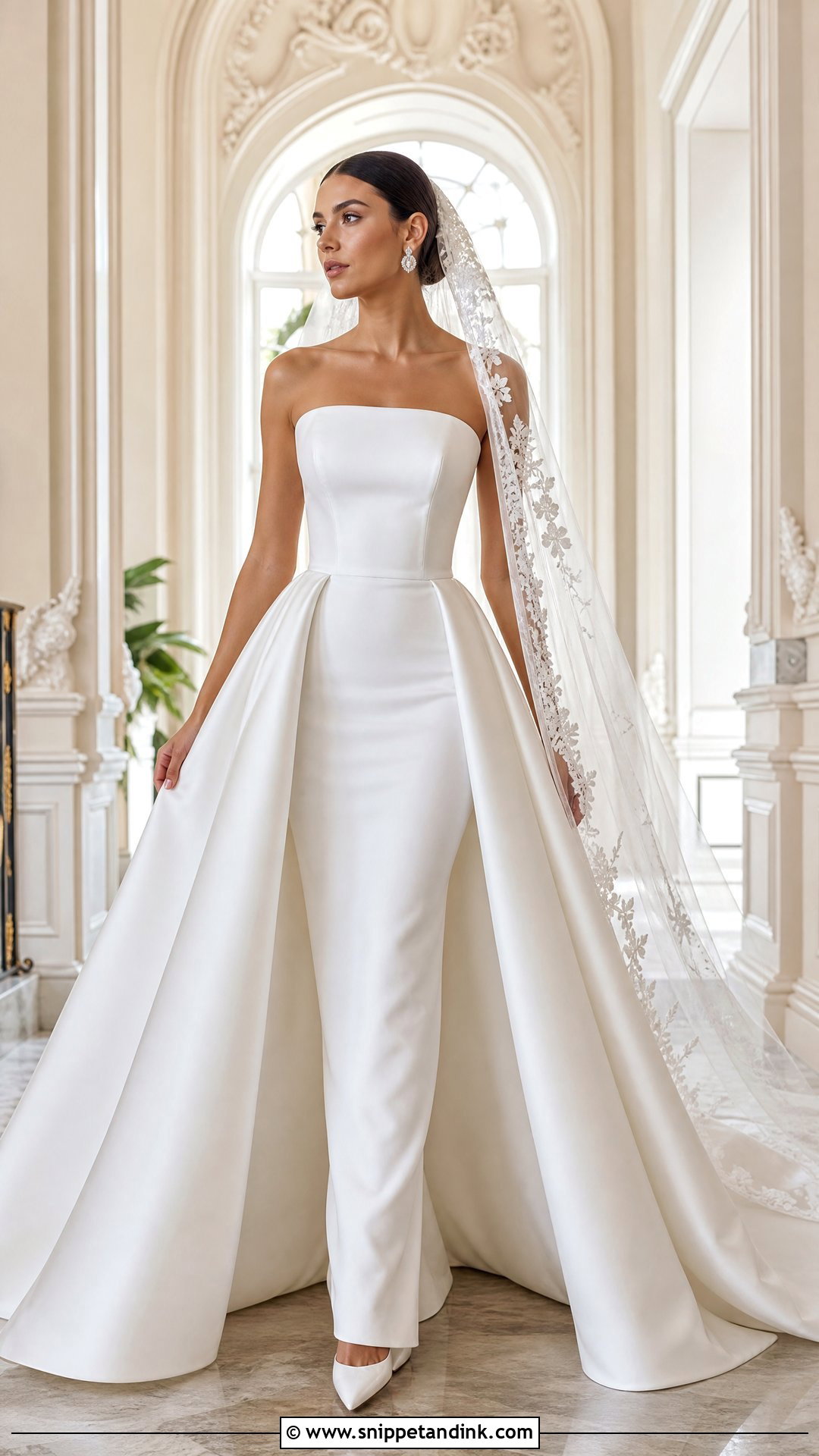
A detachable overskirt gives you ball-gown drama for the ceremony without dragging that skirt around all night. A full satin, tulle or organza layer goes over a fitted crepe or lace dress, then comes off to reveal a lighter look. Long veil, classic pumps and refined earrings first; then a crystal comb and lower heels later. Two details decide whether it works. The overskirt’s waistband must lie flat, with a closure hidden from the front and sides, and its white must match the base dress exactly, because two different whites side by side look grey in photos.
14. Minimalist Crepe Wedding Dress
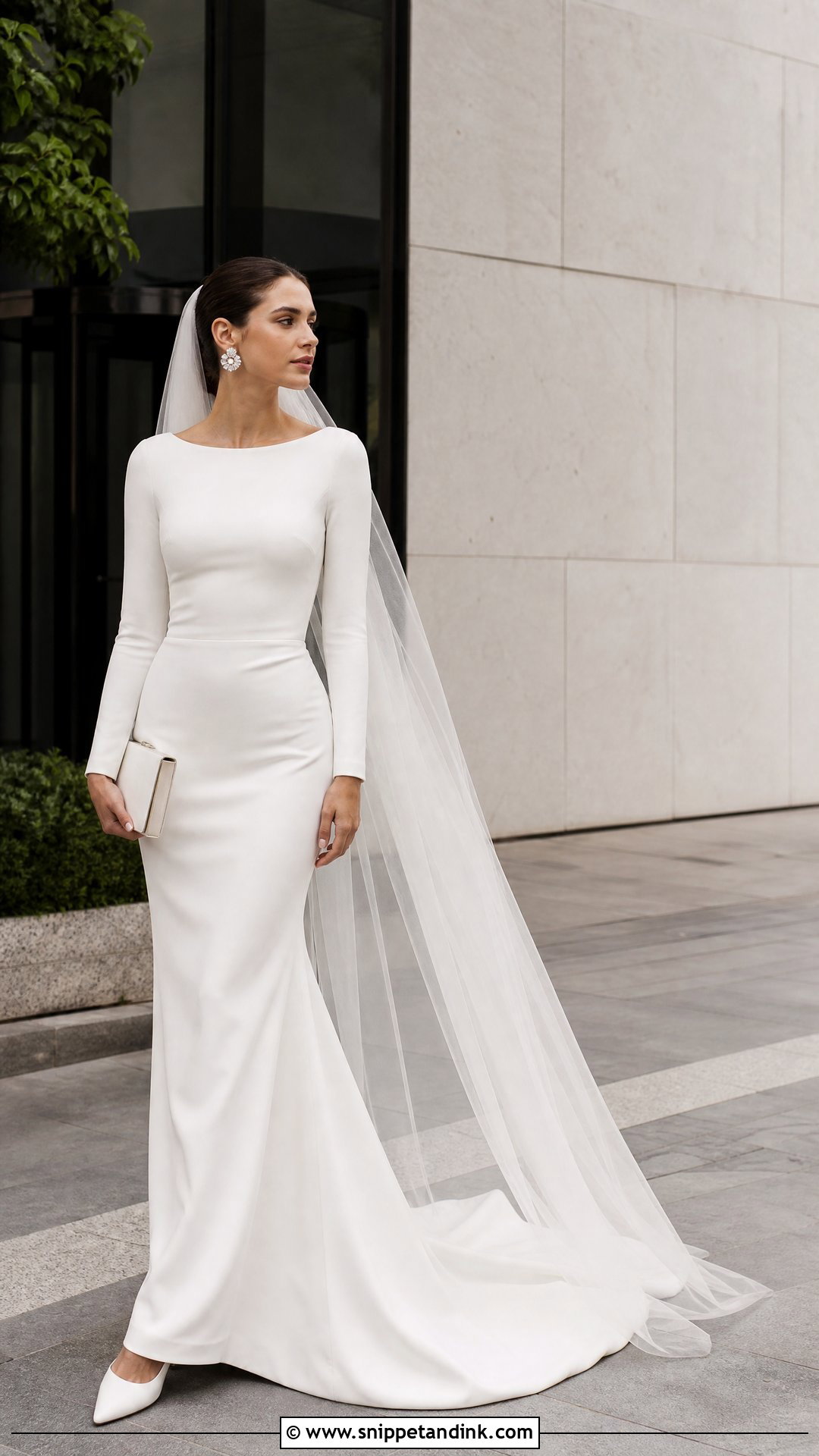
With a minimalist crepe dress, tailoring is the decoration. A column, soft A-line or clean sheath with precise seams and a good neckline suits a city wedding or a small ceremony. Sculptural earrings, a sleek low bun, pointed pumps and a plain cathedral veil keep it calm, with a small bouquet and a structured clutch. Long sleeves or a bateau neck add coverage without breaking the minimal effect. Cheap crepe shows the outline of underwear and every alteration seam, so I’d buy the heaviest crepe the budget allows and ask the tailor to explain where each new seam will sit.

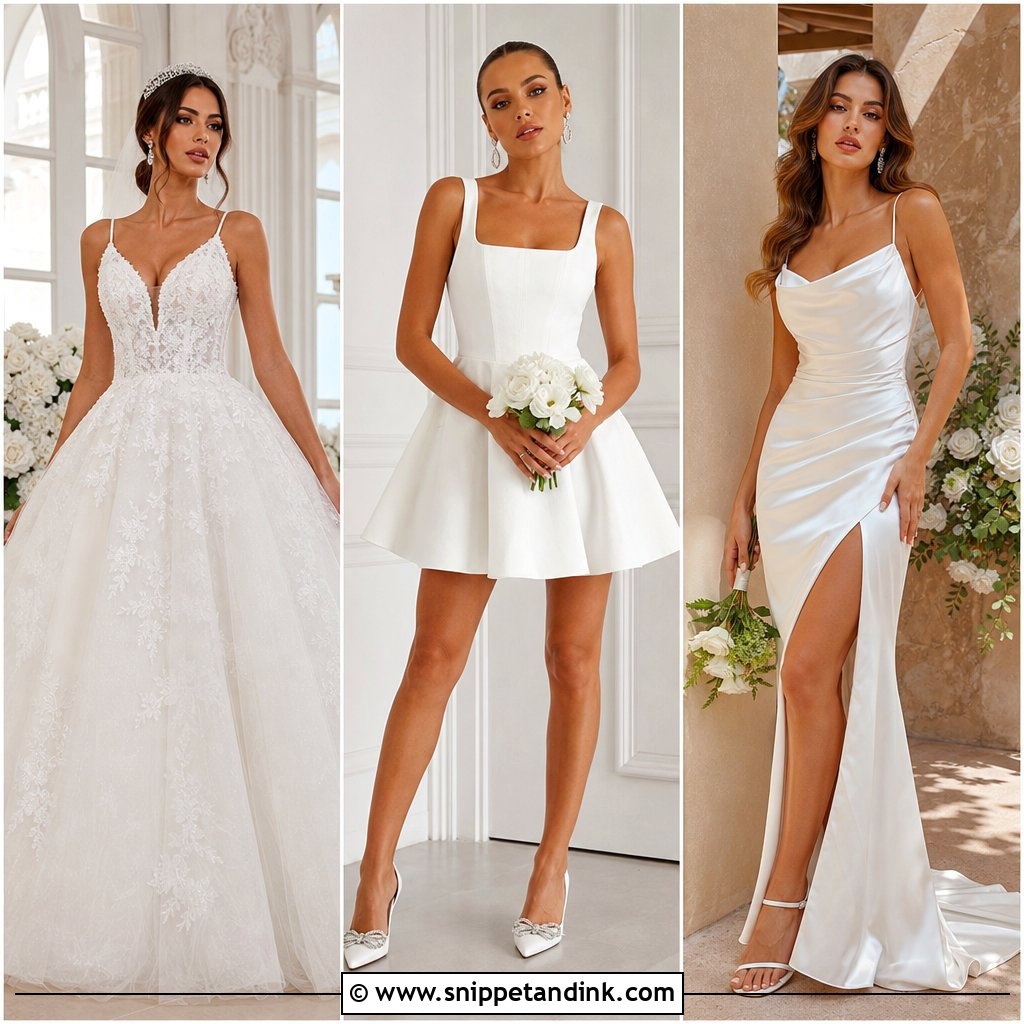
15. Vintage Tea Length Wedding Dress
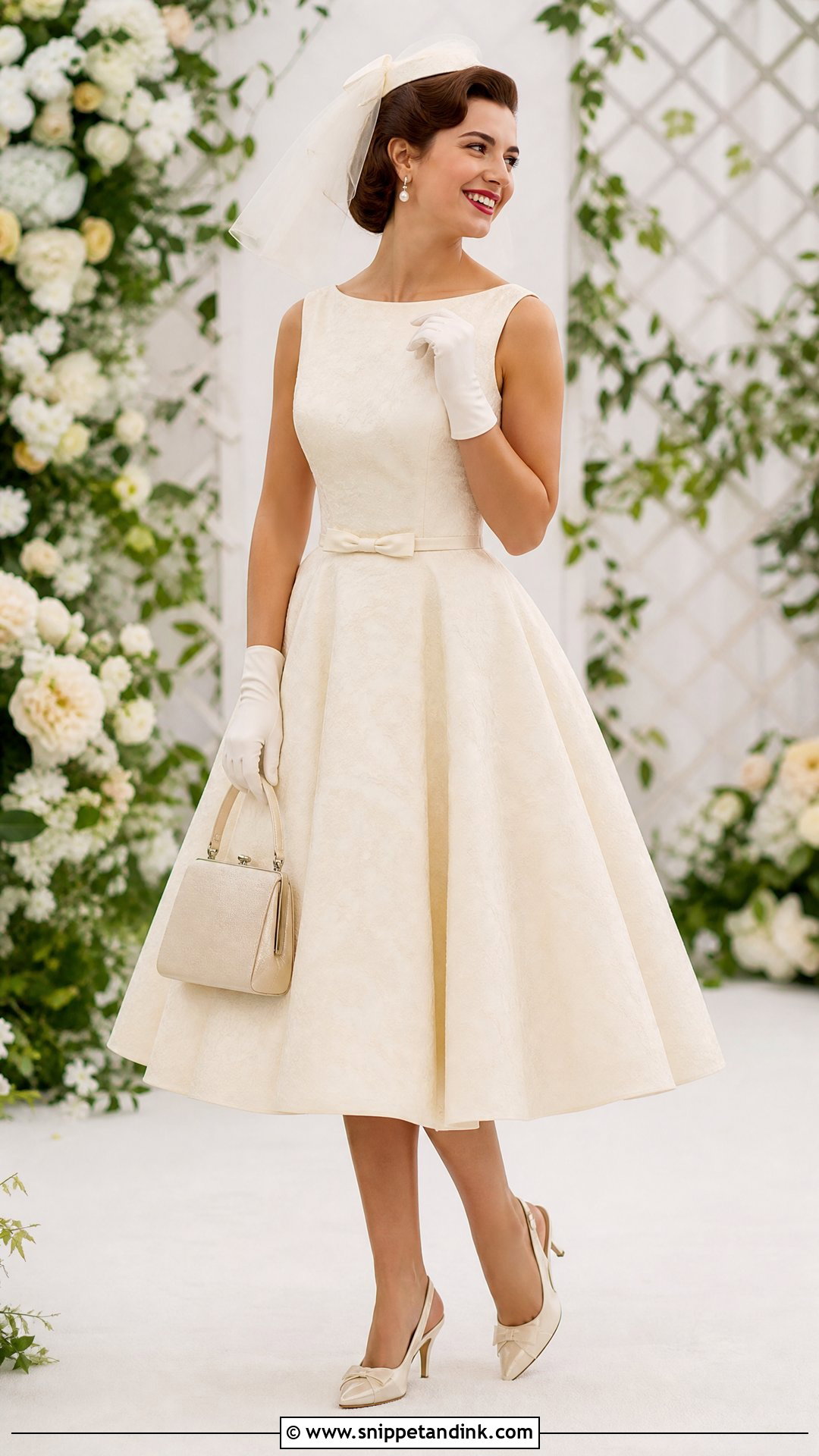
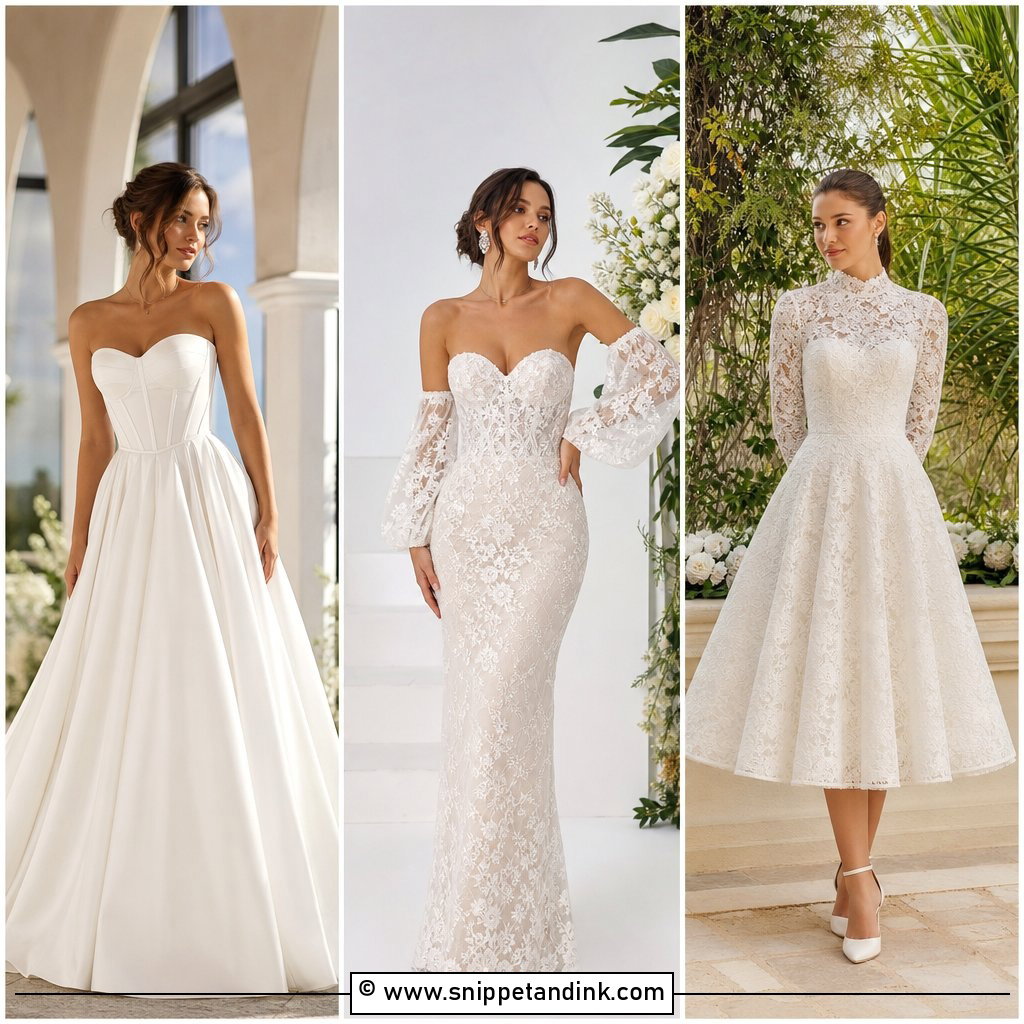
Tea length falls between knee and ankle, which brings shoes into the spotlight and suits a courthouse, a garden or a relaxed reception. A fitted bodice with a full skirt reads 1950s; a slim lace shape feels softer. Ivory slingbacks, a short veil, pearls and a small structured bag finish it, and short gloves add polish without overwhelming the shorter hem. Because the hem is so visible, it must be perfectly even, and that’s only possible if it’s set while you wear your real wedding shoes. For an evening outdoors, add a light cropped jacket or a fitted cardigan.
16. Short Reception Wedding Dress
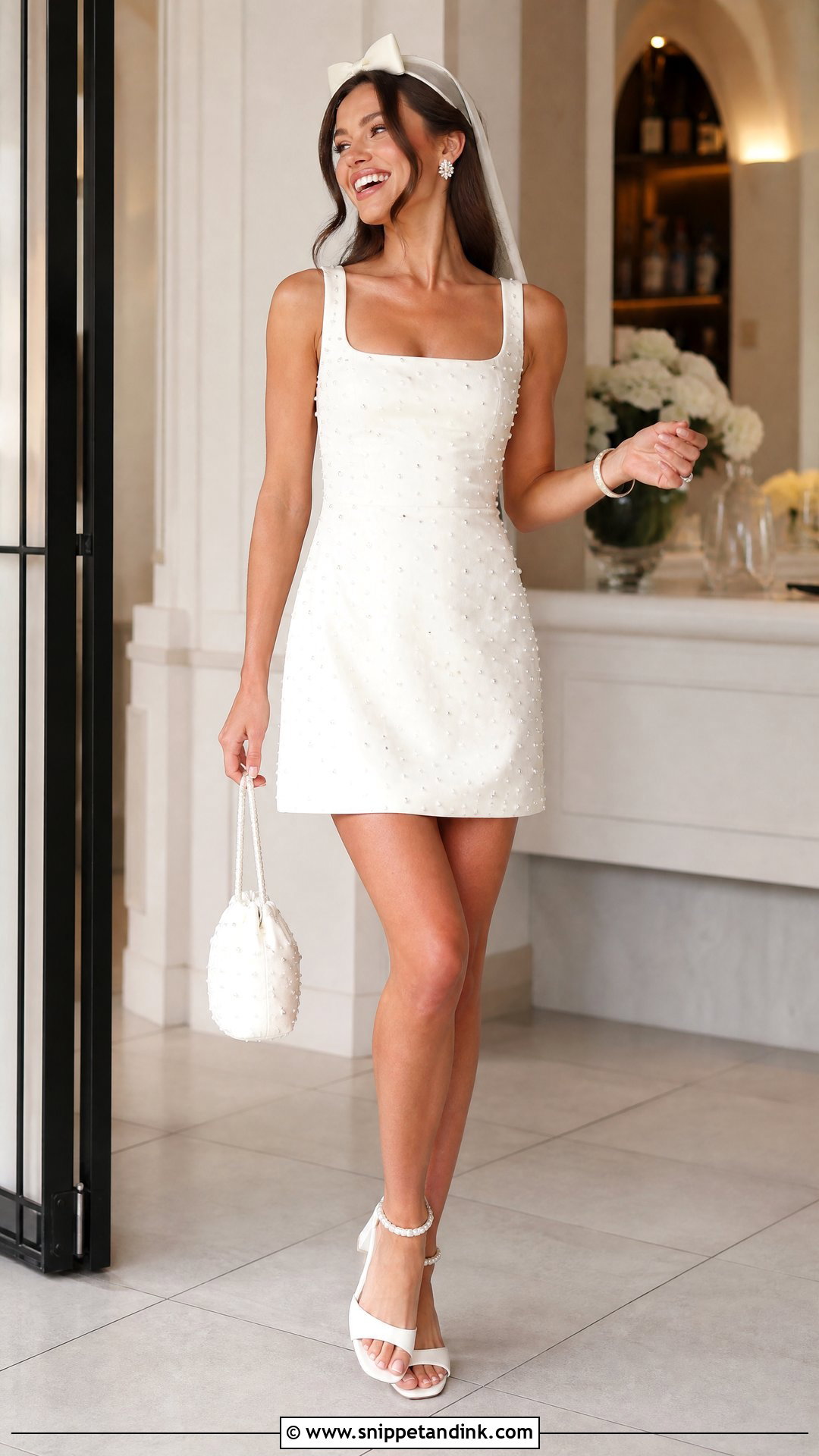
A short reception wedding dress lets you dance properly and changes the mood once the ceremony is done. A structured mini with a square neck looks modern, and a sequin shift or a lace fit-and-flare feels more festive. Short bridal dresses and a second look for the party became far more common in 2025. Block heels, crystal earrings and a small shoulder bag are practical, and a bow headband or short veil keeps it bridal. Sit, bend and dance in it at the fitting to check the hem. I always hang the reception dress in the changing room with its own underwear and shoes, so the switch takes minutes.
17. Sequin Wedding Dress
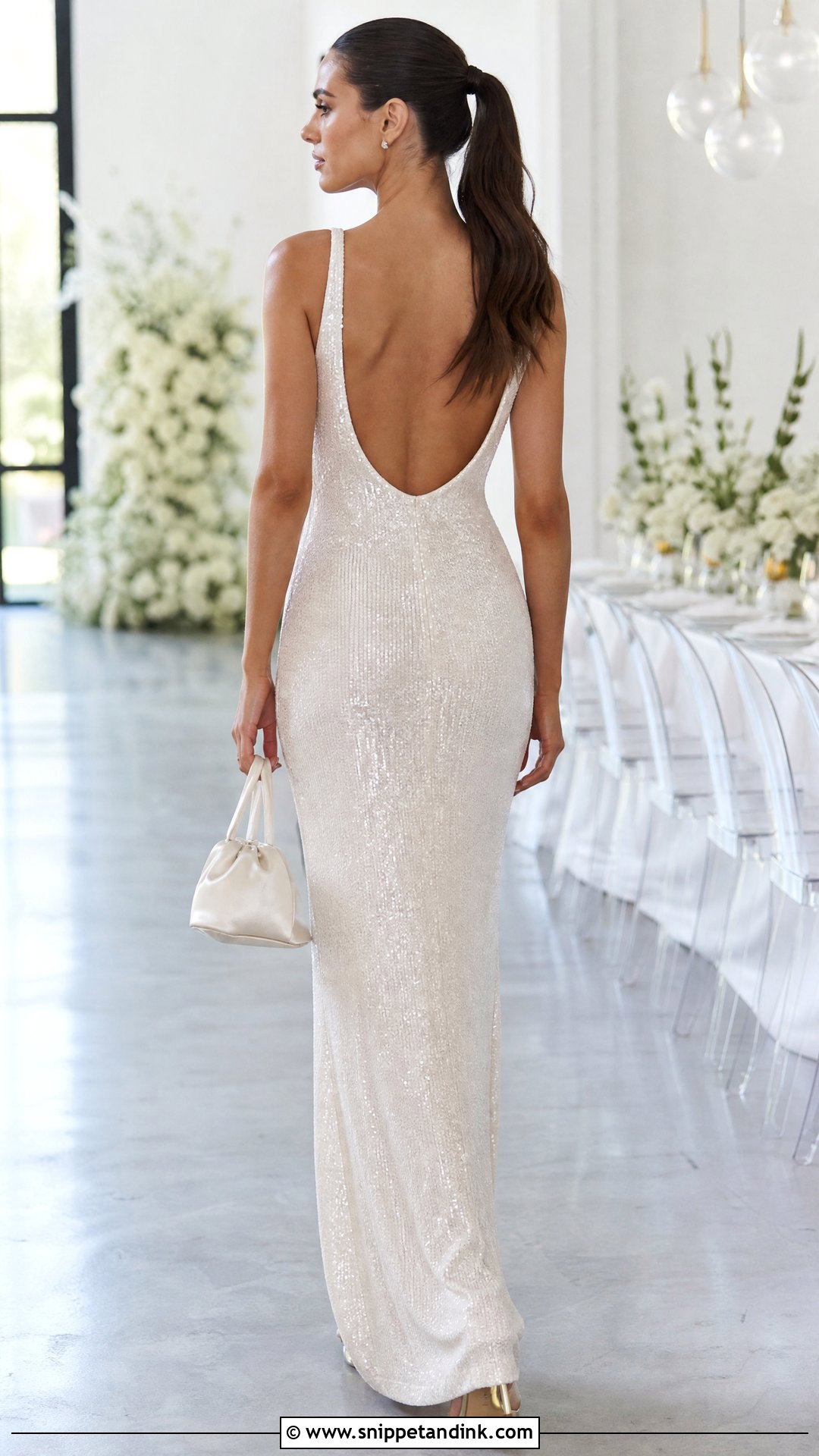
Sequins come alive under reception lights. Micro sequins give an even shimmer; beaded patterns look more intricate. A column or softly fitted shape keeps it sophisticated, and a low back adds interest without extra jewelry. Metallic or ivory heels, small studs and a sleek ponytail or bun are all it needs; for the ceremony, an unembellished veil softens the sparkle. The underarm is where I’d look first. Sequins rub against the inner arm all night and can leave it scratched, so ask for a smooth lining there and check the beadwork is secured, not just glued.
18. Boho Lace Wedding Dress
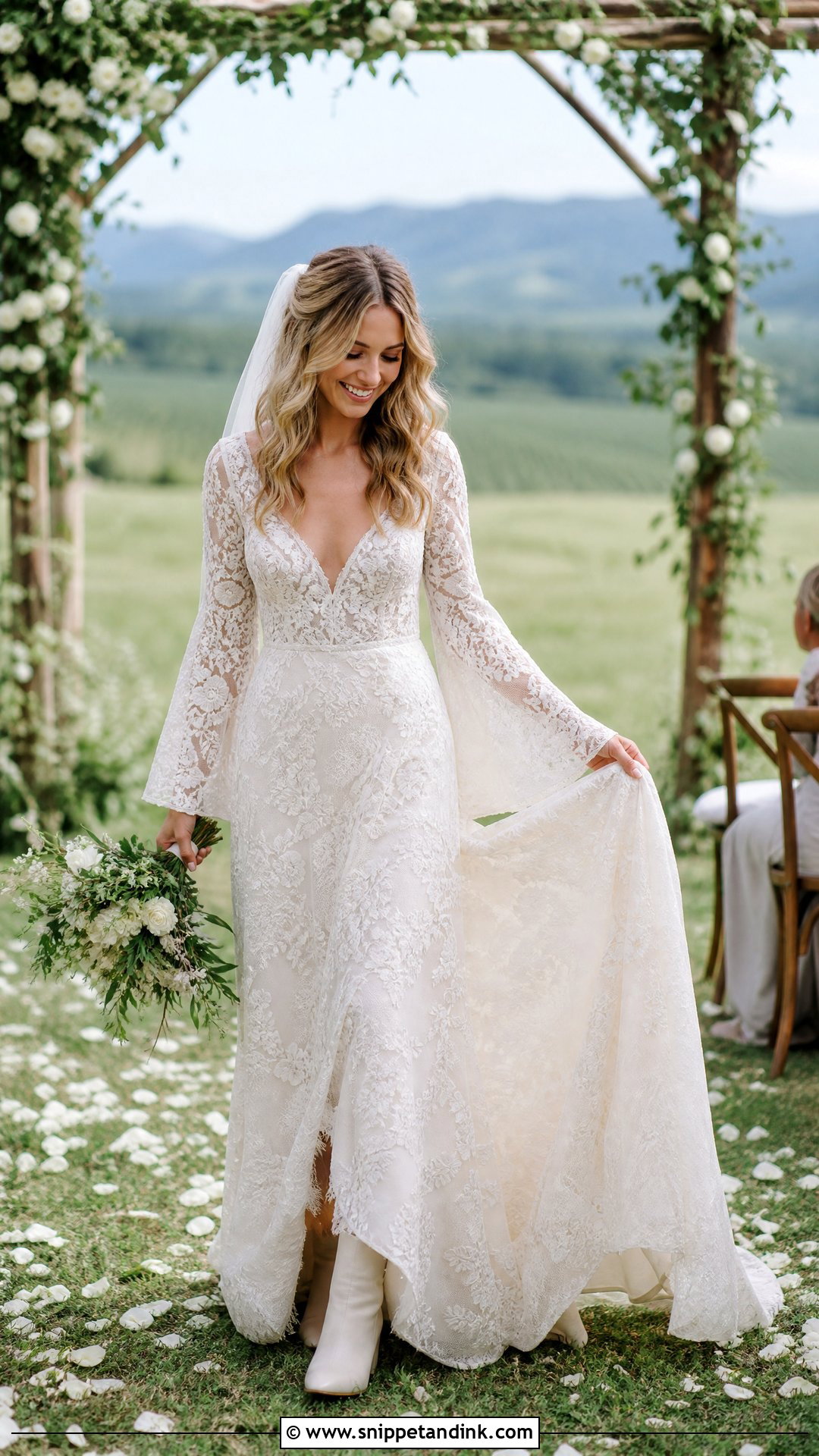
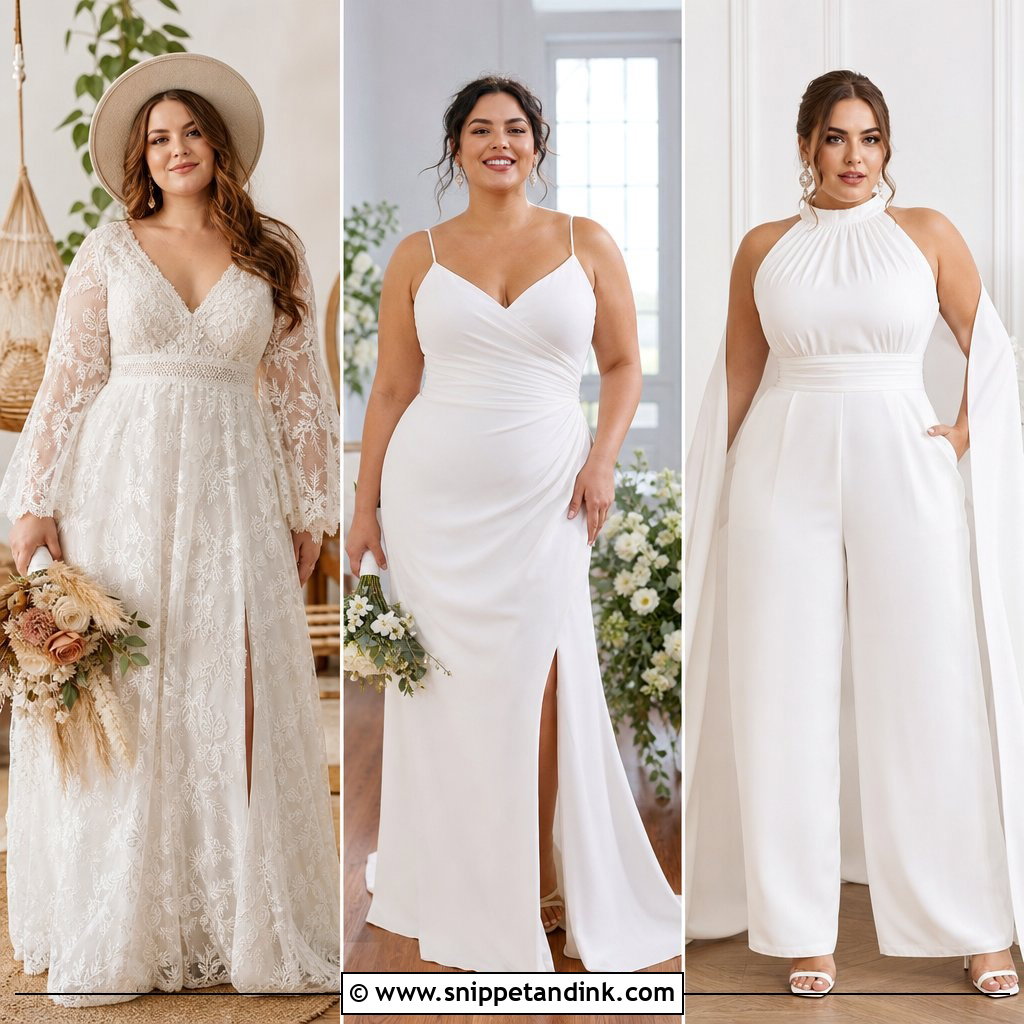
Boho lace belongs in woods, deserts, barns and on the coast. I look for botanical lace, a lined bodice that’s comfortable all day and a skirt that moves in the wind. Bell sleeves, a soft V-neck or an open back add personality without tipping into costume. Low block heels, ankle boots or embellished flats suit the ground, with small gold earrings, loose waves and a simple veil or a hair vine. Fragile lace trains shred on gravel and bark. I’d choose a sweep train or ask for a wrist loop so you can lift the hem off rough paths and wet grass.
19. Beach Wedding Dress
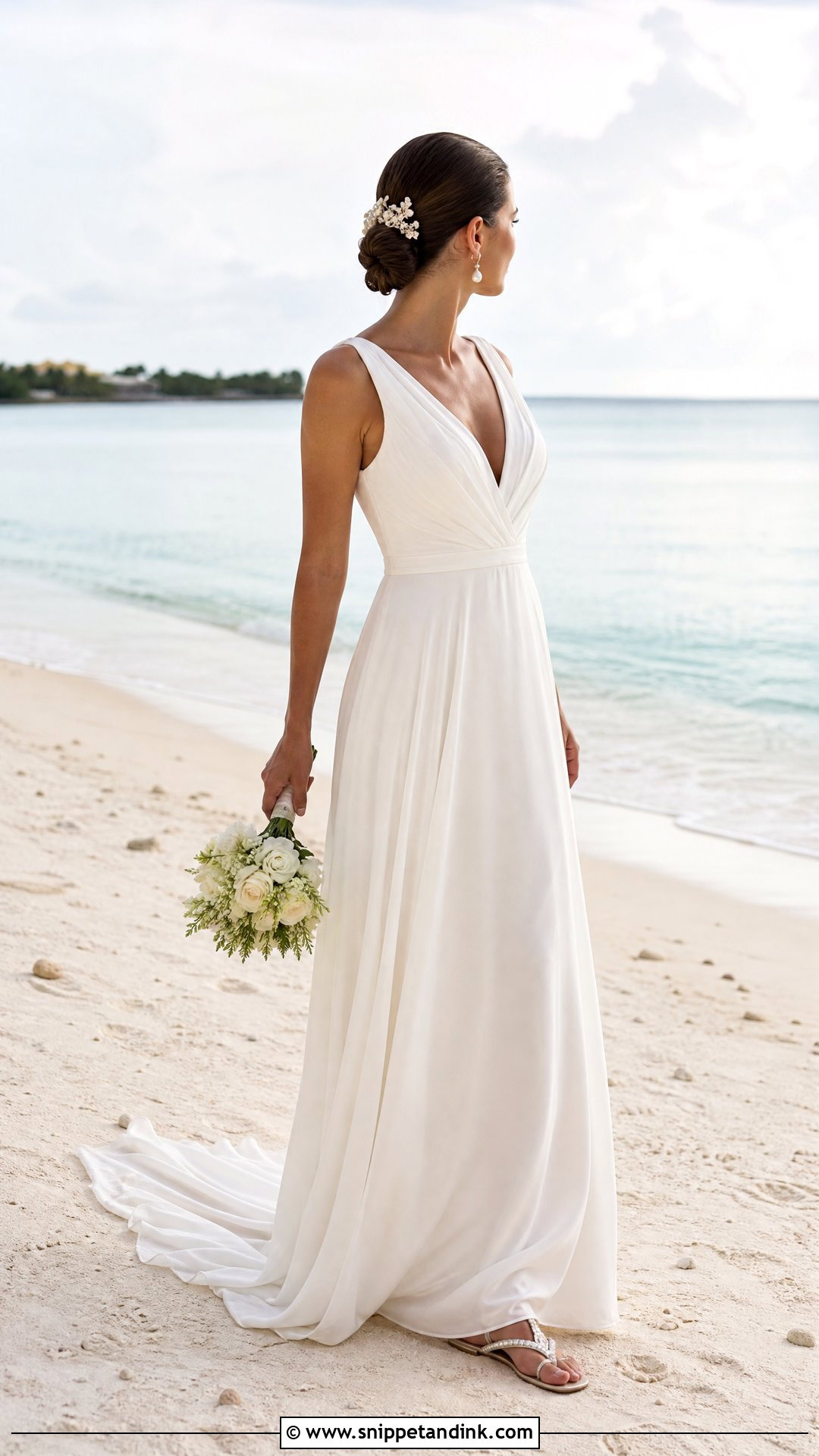
On a beach, light fabric matters more than anything. Chiffon, light crepe, soft tulle or fluid satin won’t get heavy and damp near the water, and a sheath, slip or relaxed A-line handles sand far better than a structured skirt. Flat embellished sandals, pearl drops and a short veil or secure hair piece finish it, with a low bun or braid that survives coastal wind. Strong sunlight can make thin fabric see-through, so look at the dress outside before you buy. Skip a long train unless there’s an aisle runner. Pack a clean wrap, backup flats and a garment bag to protect the dress before and after the ceremony.



20. Colored Wedding Dress
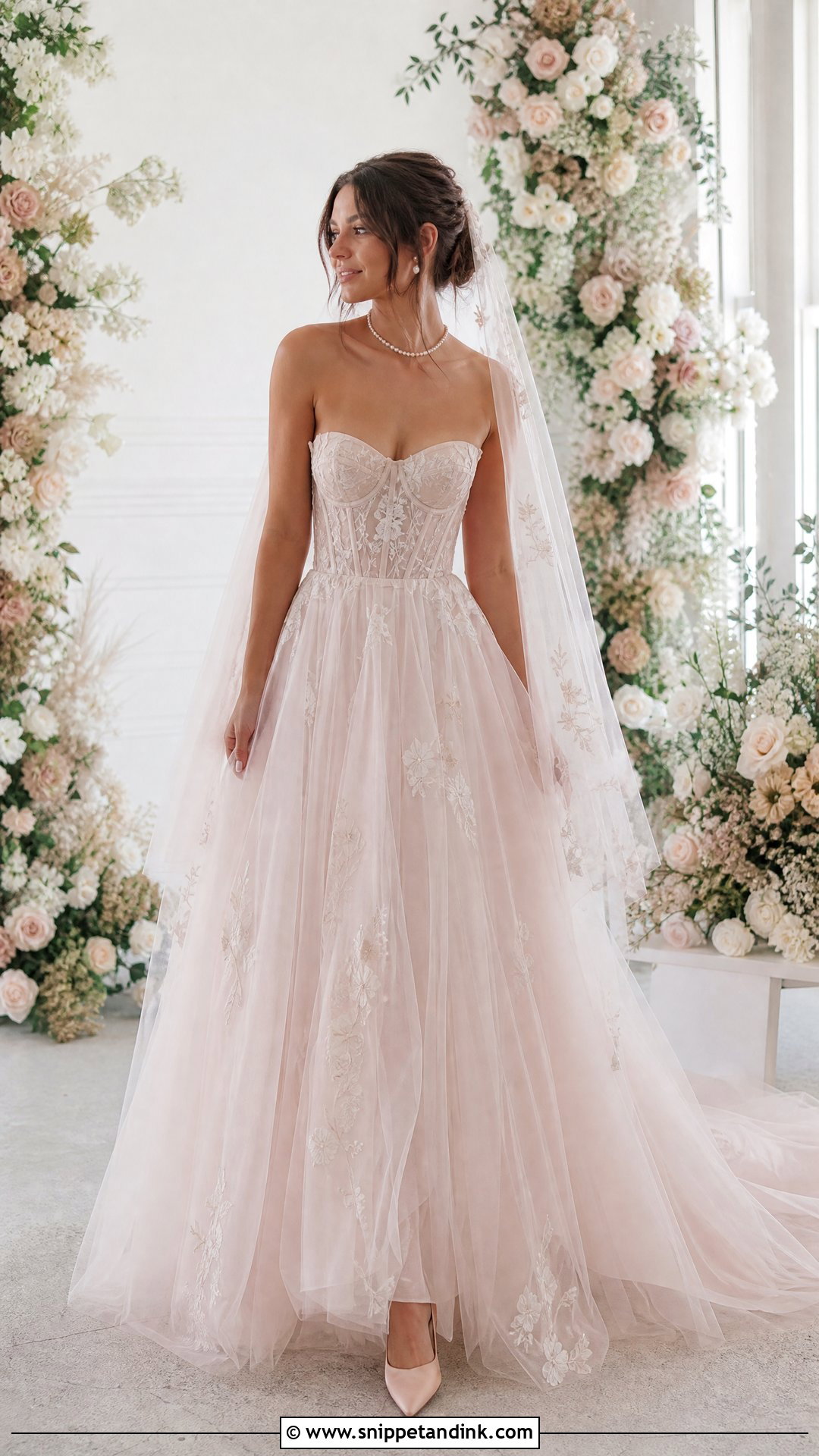
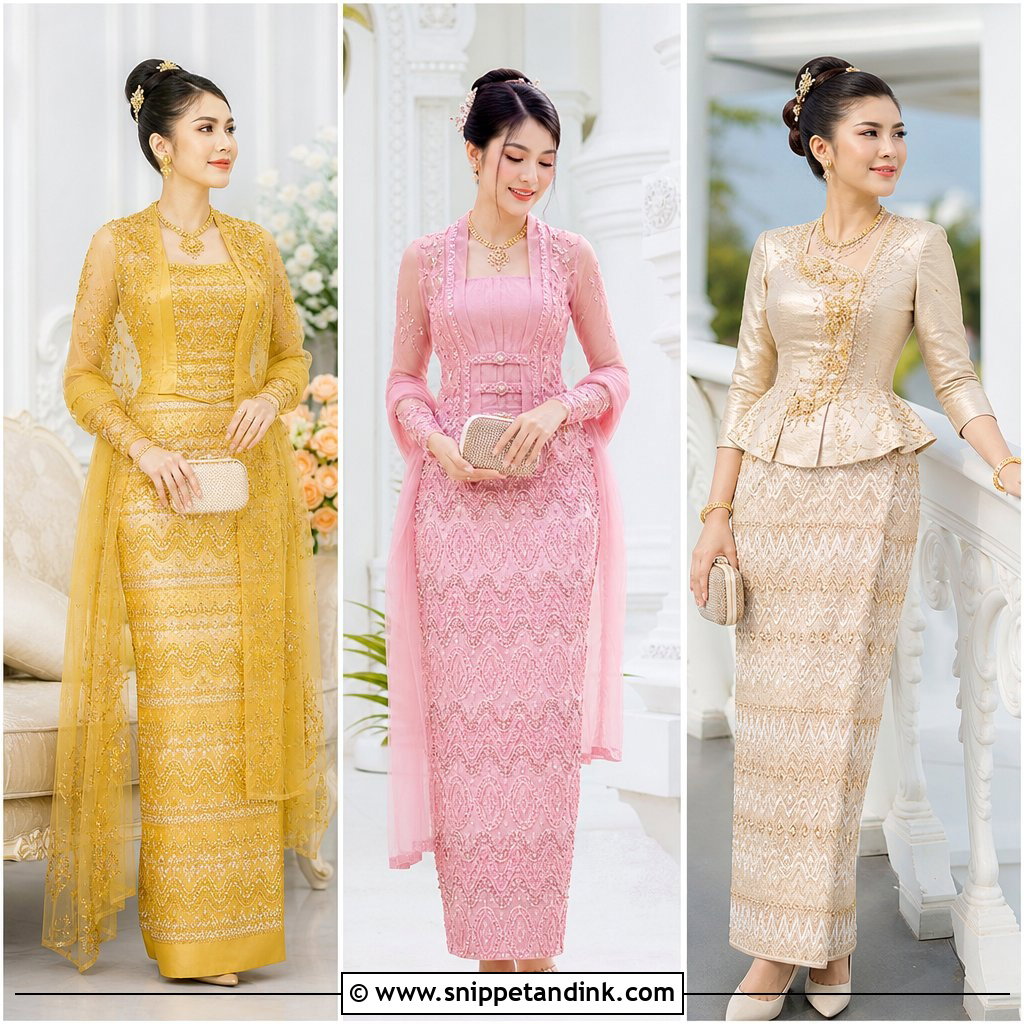
Not every bride wants white. A colored wedding dress in soft blush, pale blue, champagne, silver, or a floral print on ivory can look romantic and completely right for a ceremony. Color was one of the clearest ways brides personalized their look in 2025. Keep the shape clearly bridal, with a full skirt, a train, a corset or a traditional veil, and repeat one quiet tone from the dress in your shoes or jewelry. Pale colors shift under different lights; blush can read almost white indoors and peach in the sun. I check the swatch in daylight and under warm indoor bulbs, and make sure the veil and lining are dyed to match.
Which of These Details Will Date Fastest?
Honest answer: the biggest, newest details will place your photos in a particular year more than the shape will. Oversized bows, very low drop waists and heavy 3D florals are exciting now. Simple satin A-lines, long lace sleeves, square necks and clean crepe columns have looked right for decades and will keep doing so. That doesn’t mean you should avoid a trend you love. It means picking one strong idea and keeping everything around it classic.
Detachable pieces are a smart way to have both. A bow, an overskirt or a pair of sleeves can carry the trend for the ceremony photos, then come off to leave a dress that looks timeless in the later pictures.
Underwear for the dropped and pointed waists
Basque and drop waists sit over the hips, which is exactly where shapewear and knicker lines show. I’d fit these dresses with a smooth, no-show brief or a long-line body that extends past the waist seam, and avoid shapewear with a thick band at the waist, since it can push a ridge under a fitted bodice. Bring the underwear to every fitting, because changing it later changes how the bodice lies.
Your Venue Will Tell You Which Trend to Wear
Trends make shopping fun, but your actual wedding is a better guide than any runway. Start with the venue, the weather, the dress code, the ground you’ll walk on and how long the day runs. Then compare shapes for comfort, support and movement. A Basque waist, a plain crepe column, a floral ball gown and a short party dress can all look equally bridal once they’re fitted properly. Try every option with the right underwear, shoes and a veil. Ask someone to photograph you from the front, side and back, and practice sitting and walking. The dress worth choosing is the one that still feels secure at midnight.
You'll Like These Ideas:










Leave a Reply