
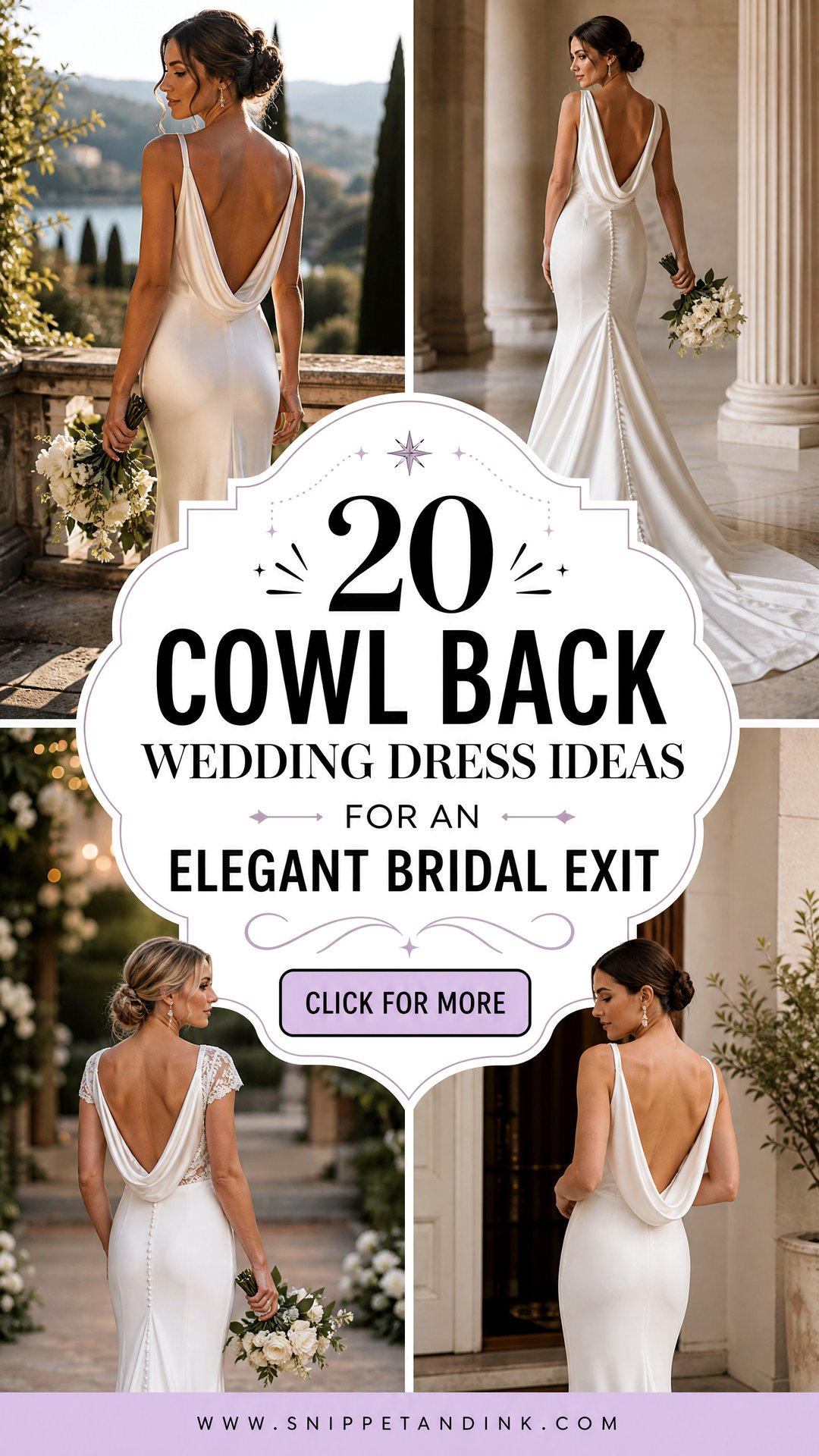
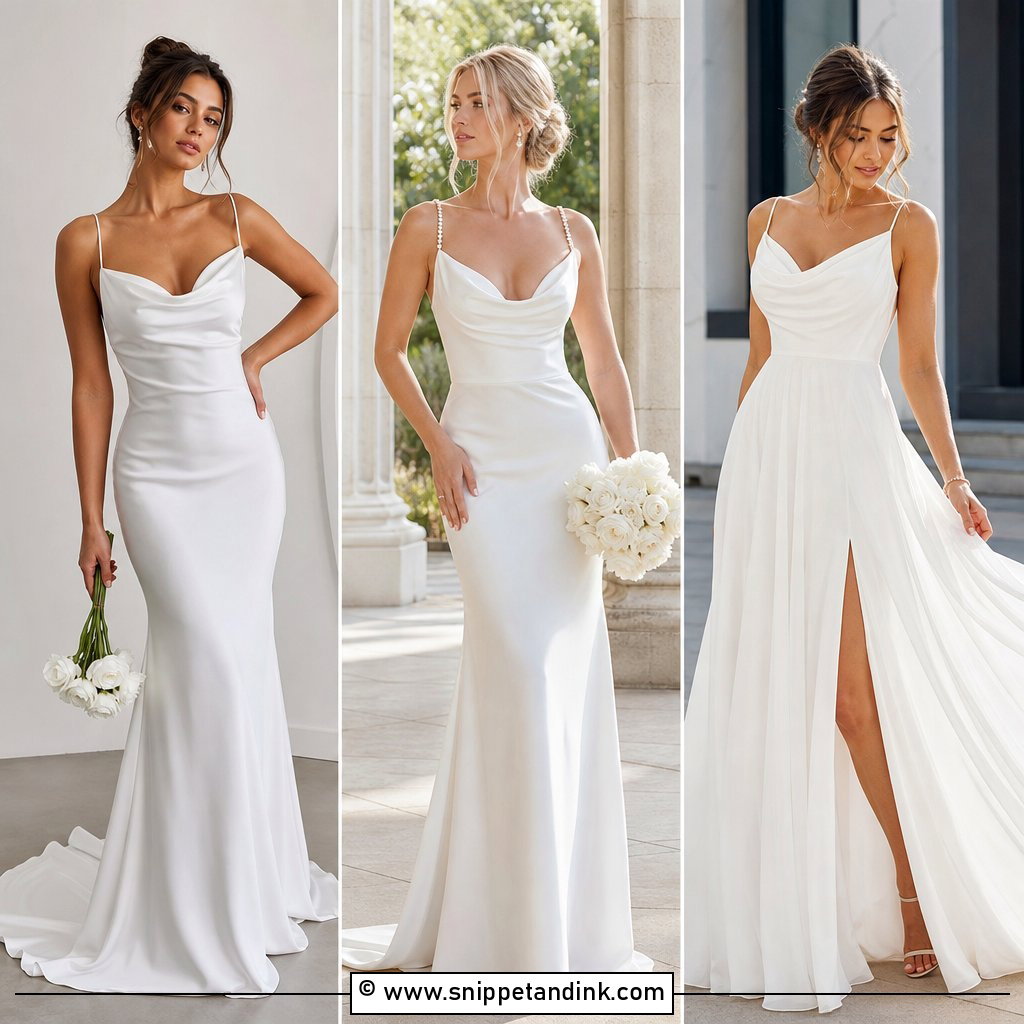
A cowl back is fabric doing the work instead of embellishment. The drape is cut on the bias, so it swings as you walk and settles into soft folds when you stand still, and that movement is what guests notice as you leave the aisle. It suits fluid satin and silk best, holds a crisper shape in crepe, and can sit under lace or alongside long sleeves. Many current gowns pair the open back with slip shapes, mermaid lines or illusion panels. The venue matters less than the fit: a cowl that sits right on a beach will sit right in a ballroom. Here are twenty versions, with the fitting notes I’d give a bride for each one.
How Low Should the Drape Fall on Your Back?
Depth is the first decision, and it’s about more than taste. A high cowl that falls to the shoulder blades leaves room for a discreet bra and suits a religious ceremony where a fully bare back isn’t welcome. A mid-back cowl ends around the bra line and usually needs sewn-in cups. A waist-deep cowl means no bra at all, so the dress itself has to do the supporting.
Why Fabric Weight Matters More Than Style
Cowls are cut on the bias so the fabric folds softly instead of buckling. Heavier silk and satin fall in deep, even folds, while thin satin or chiffon can look limp and shift as you move. Some seamstresses sew a small weight into the lowest point of the drape so it hangs centered. If yours keeps sliding to one side, it’s worth asking about.
Stand naturally while the depth is being pinned. Brides tend to pull their shoulders back in a fitting room, and a drape that looked right then sits noticeably lower once they relax at the reception.
1. Satin Slip Cowl Back Wedding Dress
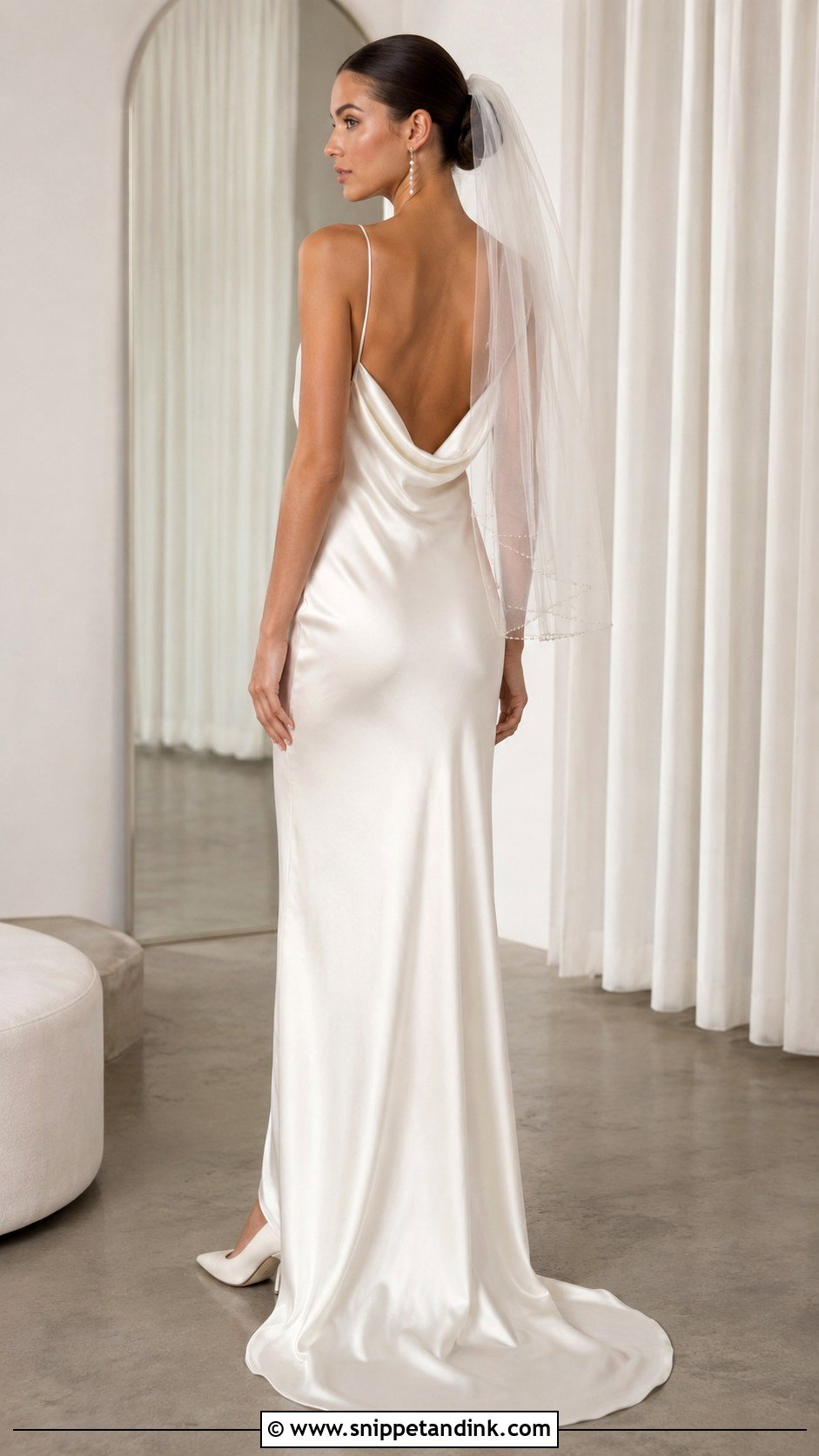
The satin slip is the purest version, and the least forgiving. Cut on the bias with slim straps and a low cowl, it relies almost entirely on strap length. A quarter inch shorter lifts the whole drape; a quarter inch longer drops it below where you wanted it. Silk satin moves more, while a heavier satin gives a little more coverage and hides what’s underneath. I pair it with pointed ivory pumps, pearl drops and a fingertip veil that ends above the deepest fold, plus a smooth low bun so nothing rests on the back.
2. Silk Bias Cut Cowl Back Wedding Dress
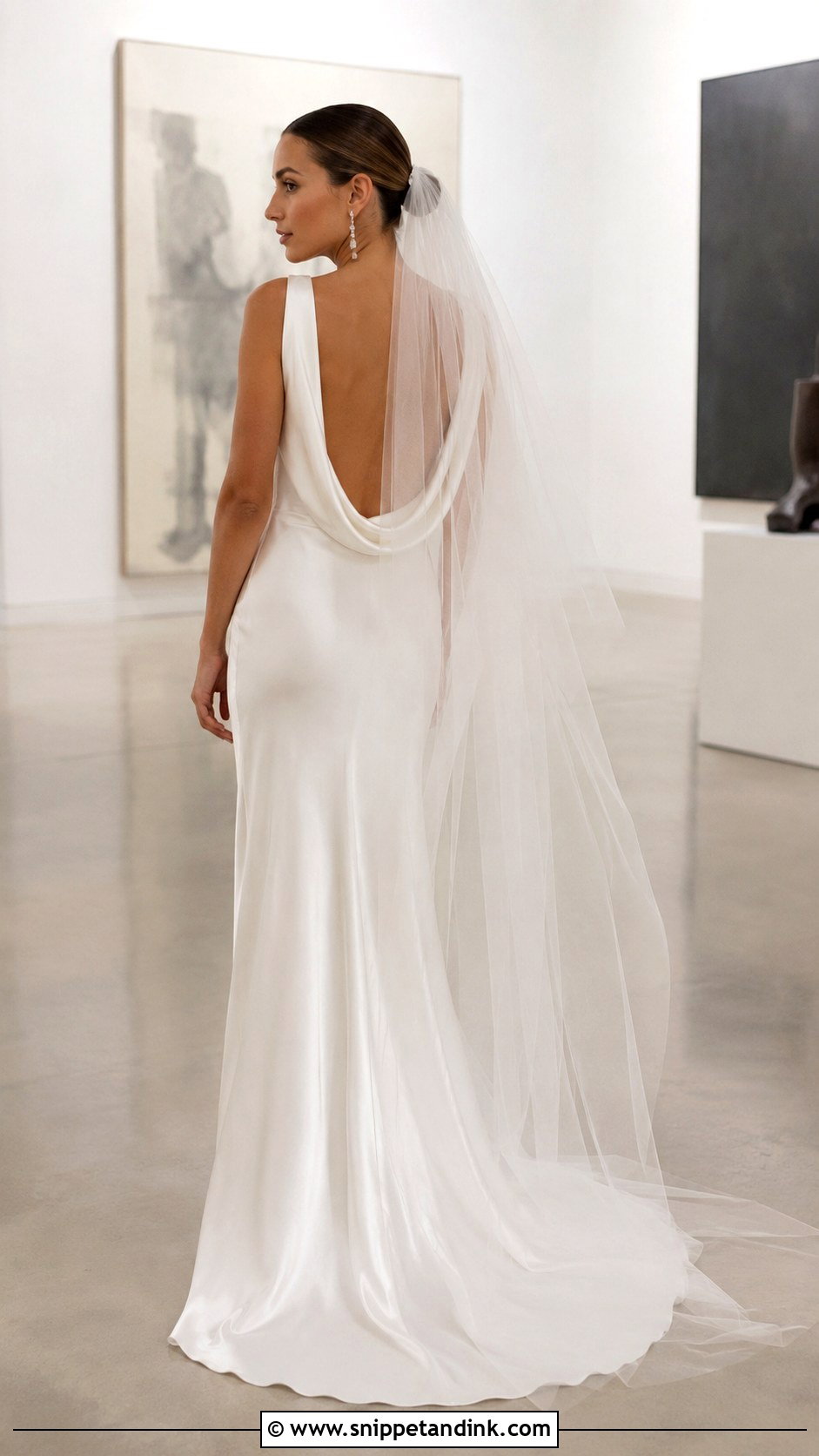
Bias-cut silk follows the body without boning, which is the appeal and also the reason fittings take longer. A bias skirt keeps relaxing after it’s cut, so a careful seamstress lets the gown hang before setting the hem. From the front, a high bateau or square neckline looks almost severe; from behind, the deep cowl does the talking. Ankle-strap sandals, a fine tennis bracelet and small crystal earrings keep it quiet, and a sheer cathedral veil works because it comes off for portraits. Silk water-spots and snags easily. Have it steamed professionally and stand on a clean white sheet while dressing, especially outdoors.
3. Crepe Fit And Flare Cowl Back Wedding Dress
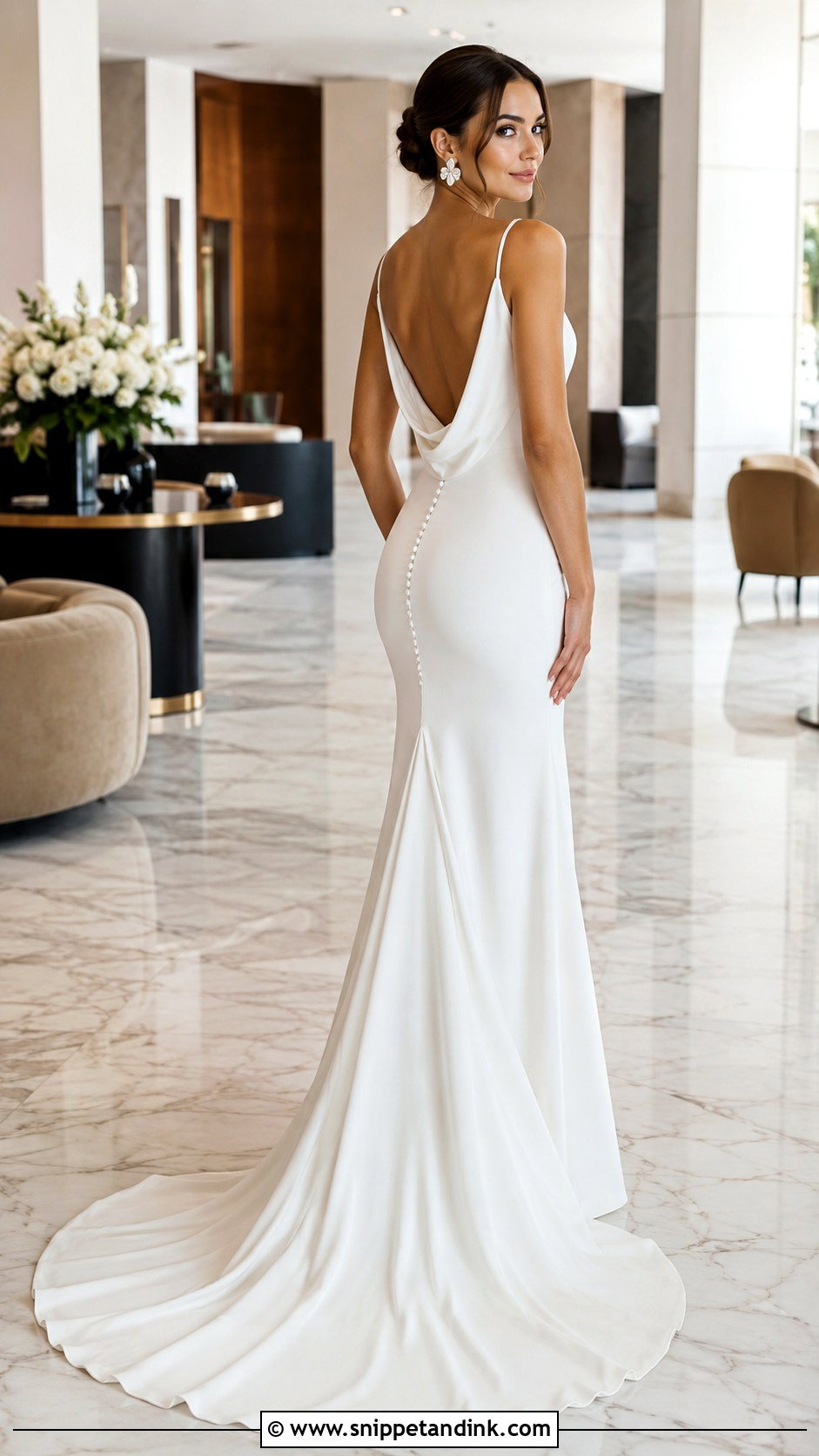
If a slip feels too exposed, crepe is where I send brides next. It holds a fitted bodice and a skirt that opens below the hip, and a moderate cowl in crepe reads sophisticated rather than revealing. Covered buttons, a chapel train and narrow straps add classic detail. Your everyday bra won’t work here, so ask for cups and waist reinforcement to be sewn in during alterations, along with a light lining if you want the surface smoother. Satin pumps, sculptural earrings and a sleek chignon finish it. It sits well in hotels, galleries and lofts.
4. Lace Applique Cowl Back Wedding Dress
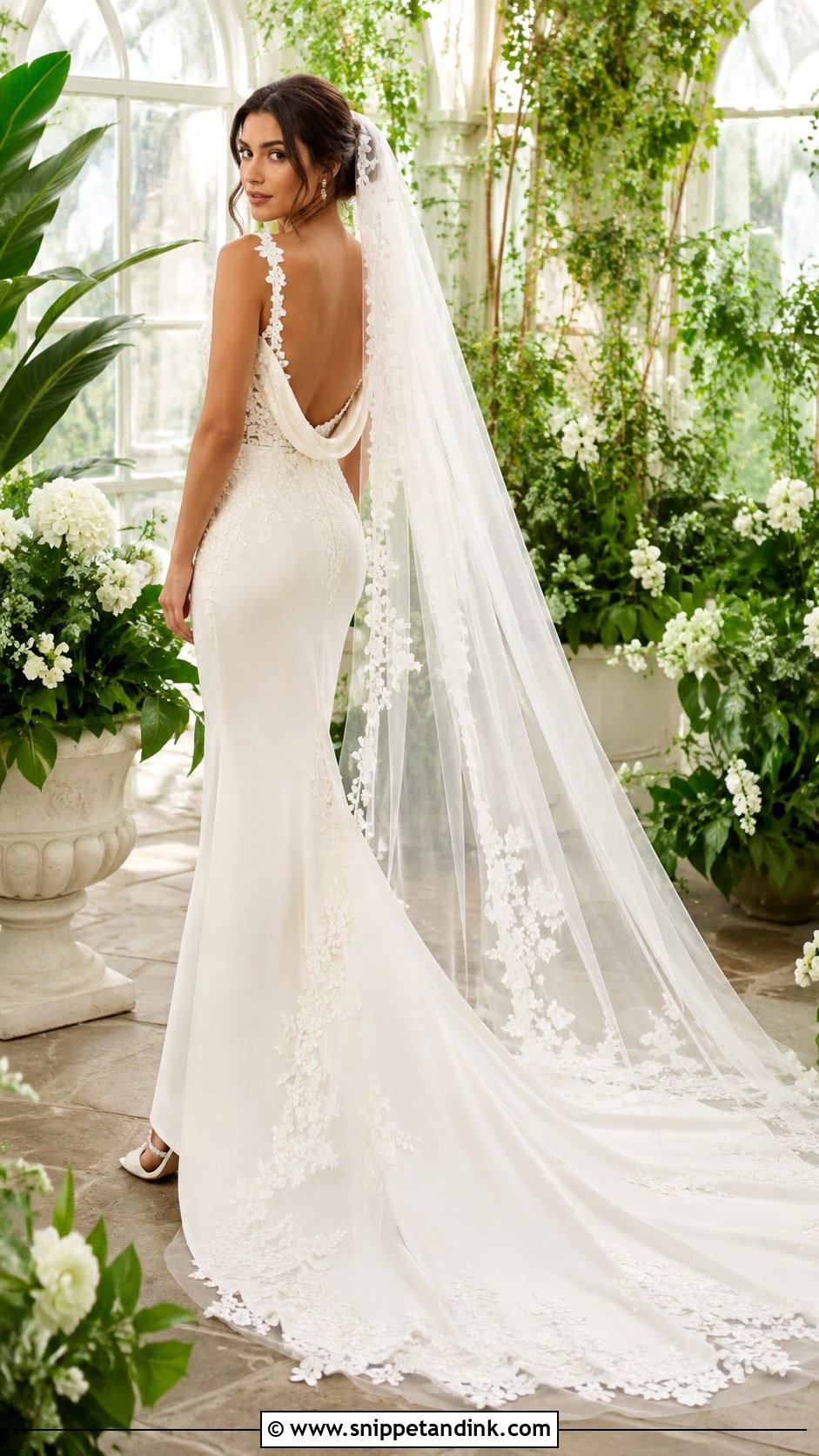
Lace and drape can fight each other. The appliqué should trace the straps, waist and edge of the cowl rather than cover it, because lace laid across the folds stops them falling. Underneath, a satin or crepe sheath gives the smooth base. At fittings, sit and walk with your back to a mirror. Appliqué edges can catch on the drape, fold inward or scratch bare skin, and that only shows in movement. Pearl-encrusted heels, botanical earrings and a tulle veil with a few appliqués near the hem tie it together, worn with loose waves or a low twisted bun.
5. Long Sleeve Cowl Back Wedding Dress
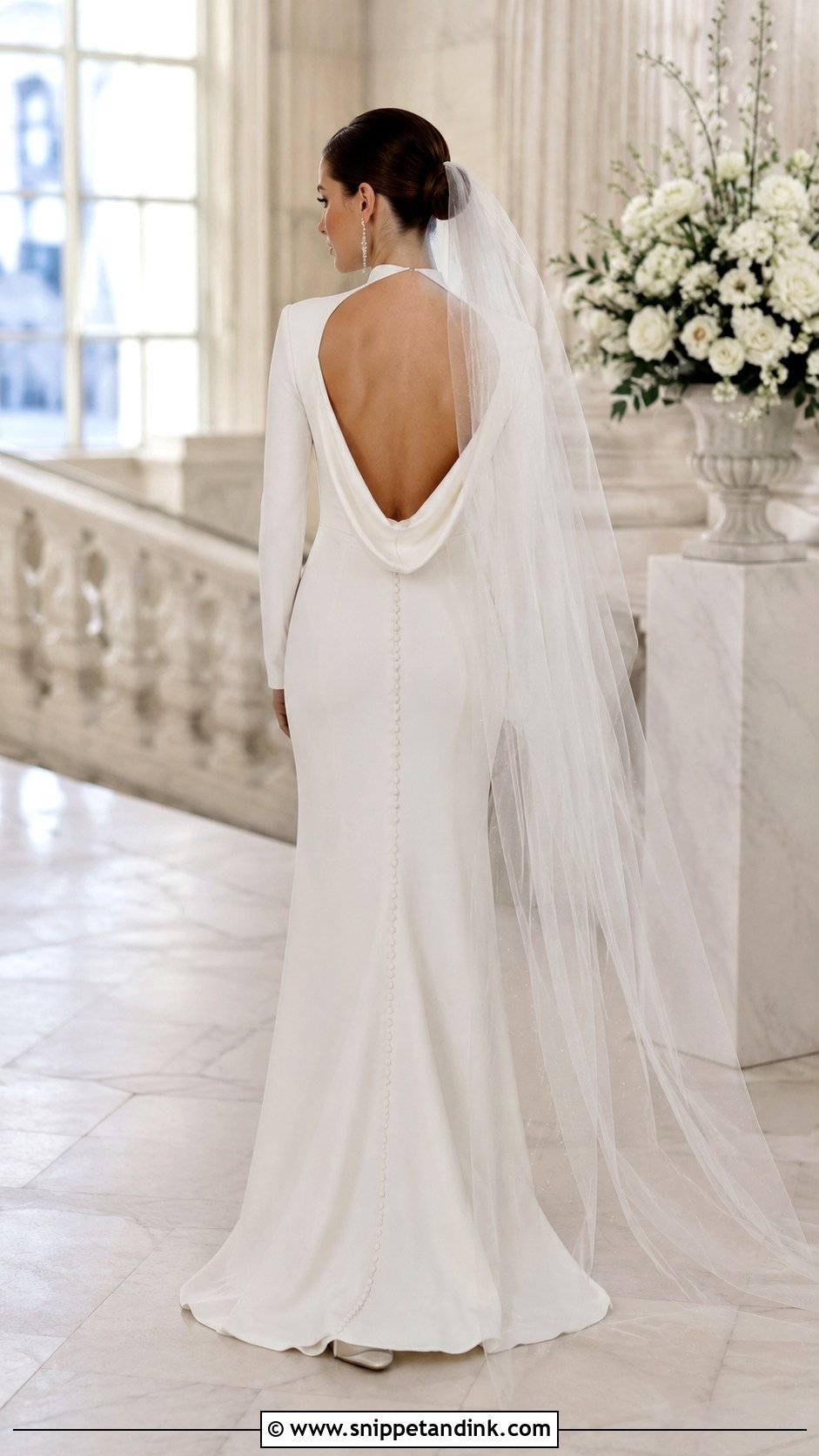
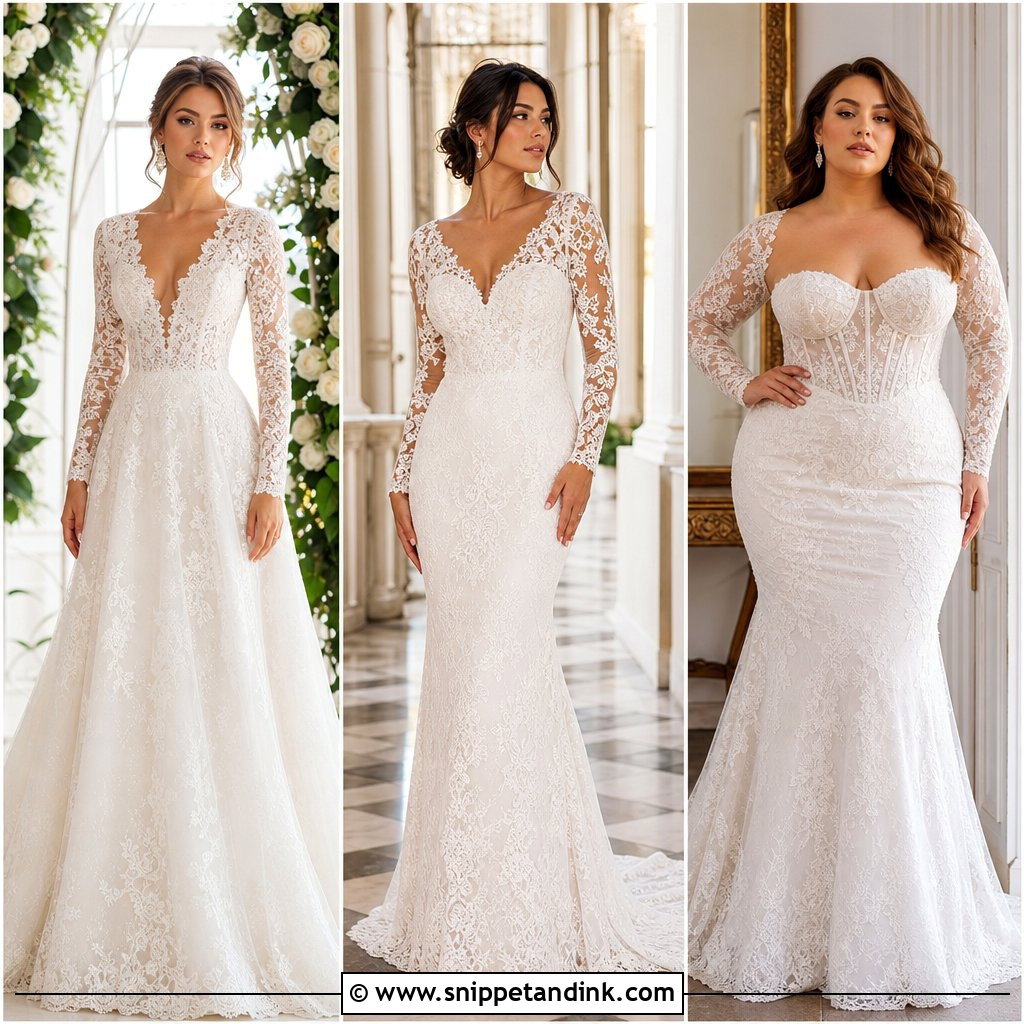
Sleeves change how a cowl hangs, which surprises a lot of brides. Raise your arms and the shoulders lift the back, so the drape rides up. That’s why I want arm mobility, back tension and shoulder placement checked together, never one at a time. A fitted crepe or silk-wool gown with a high front, slim sleeves and a deep cowl held by discreet straps or an illusion panel is a strong cold-weather choice. Closed-toe pumps, crystal drops, a cathedral veil and a smooth bun complete it. If the reception room will be warm, ask about detachable sleeves.
6. Square Neck Cowl Back Wedding Dress
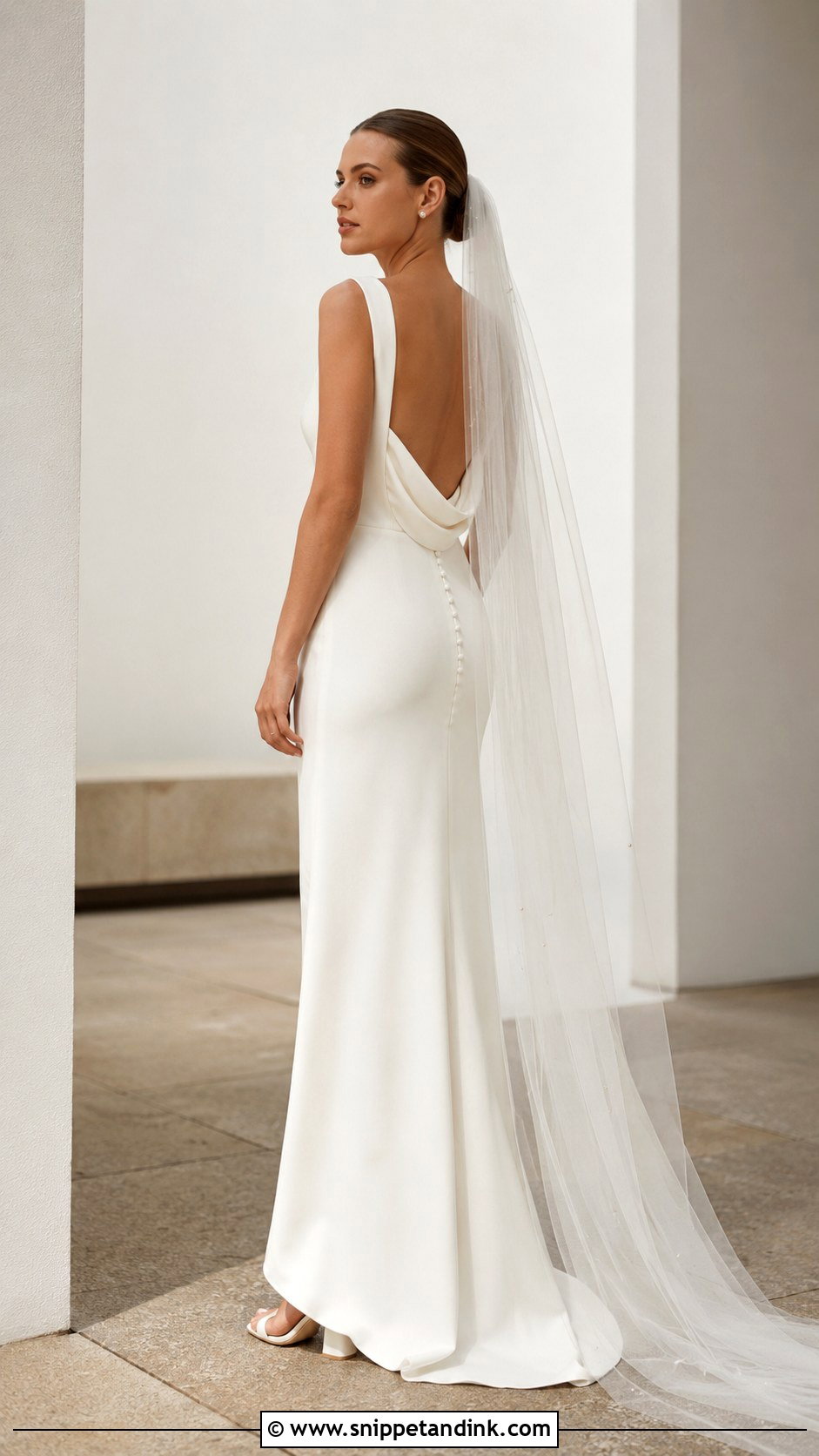
Wide straps are the practical gift of a square neckline. They carry more weight than spaghetti straps and give hidden cups something to anchor to. Choose silk satin or matte crepe in a column shape with a fitted waist and a low curved cowl. The tailoring challenge is keeping the front line straight while the back drapes, since both hang from the same straps, so check them level standing and again seated. Block-heel sandals, a small structured bag, modern pearl studs and a center-parted low bun suit the clean lines. If you want a veil, keep it chapel length and plain.
7. Spaghetti Strap Cowl Back Wedding Dress
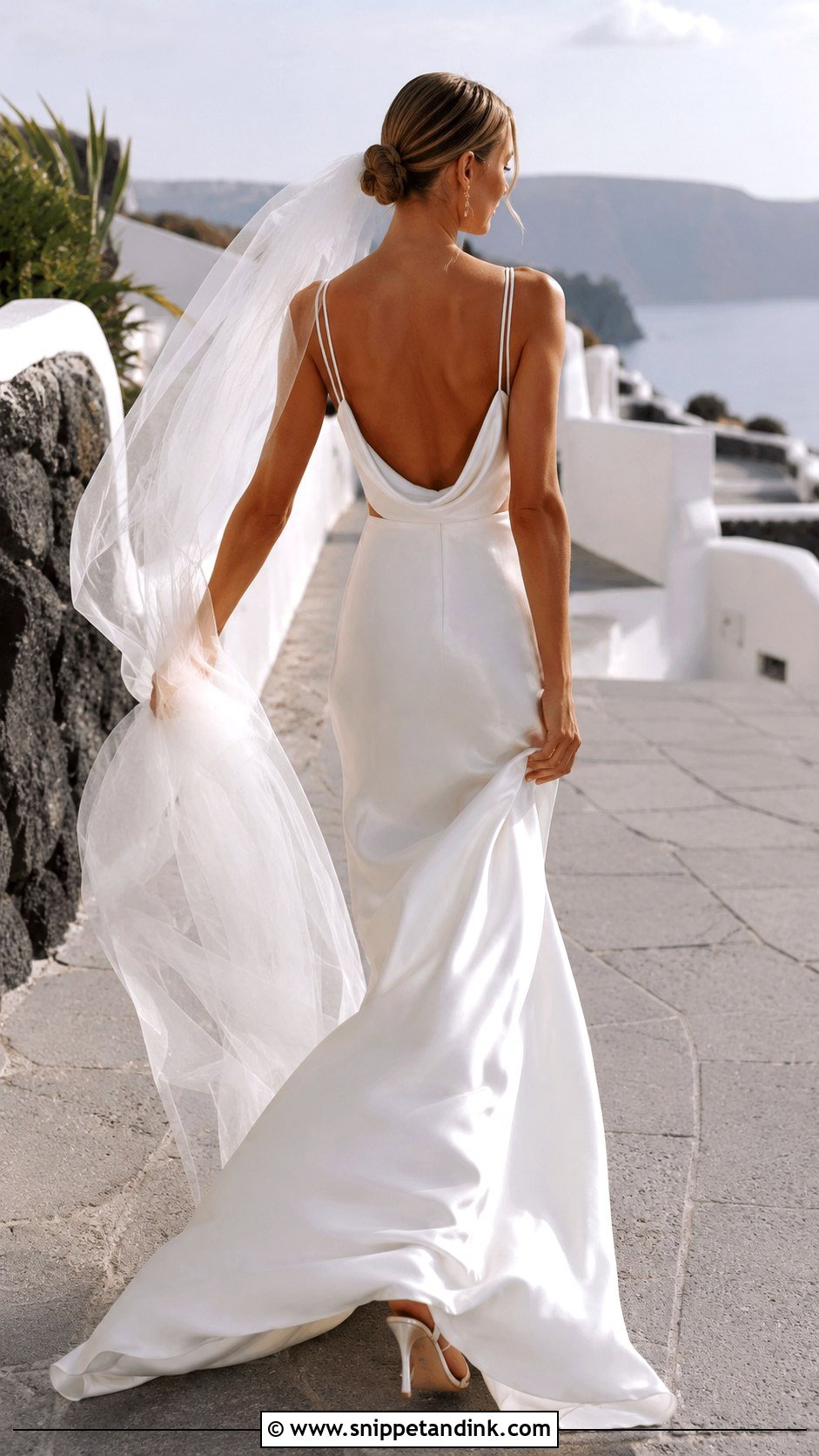
Thin straps look weightless, but they hold the whole drape, so they’re the first thing I ask the seamstress to reinforce where they join the bodice. Double or adjustable straps add security without heaviness. A fluid satin with a shaped bodice, defined waist seam and sweeping skirt suits warm-weather weddings. Slender white sandals, gold or pearl earrings and a light veil keep it airy, and an updo or ponytail keeps the back clear for photos. Fashion tape is a backup, not a fix. If the dress only stays put with tape, it needs another fitting.
8. Cowl Neck And Cowl Back Wedding Dress
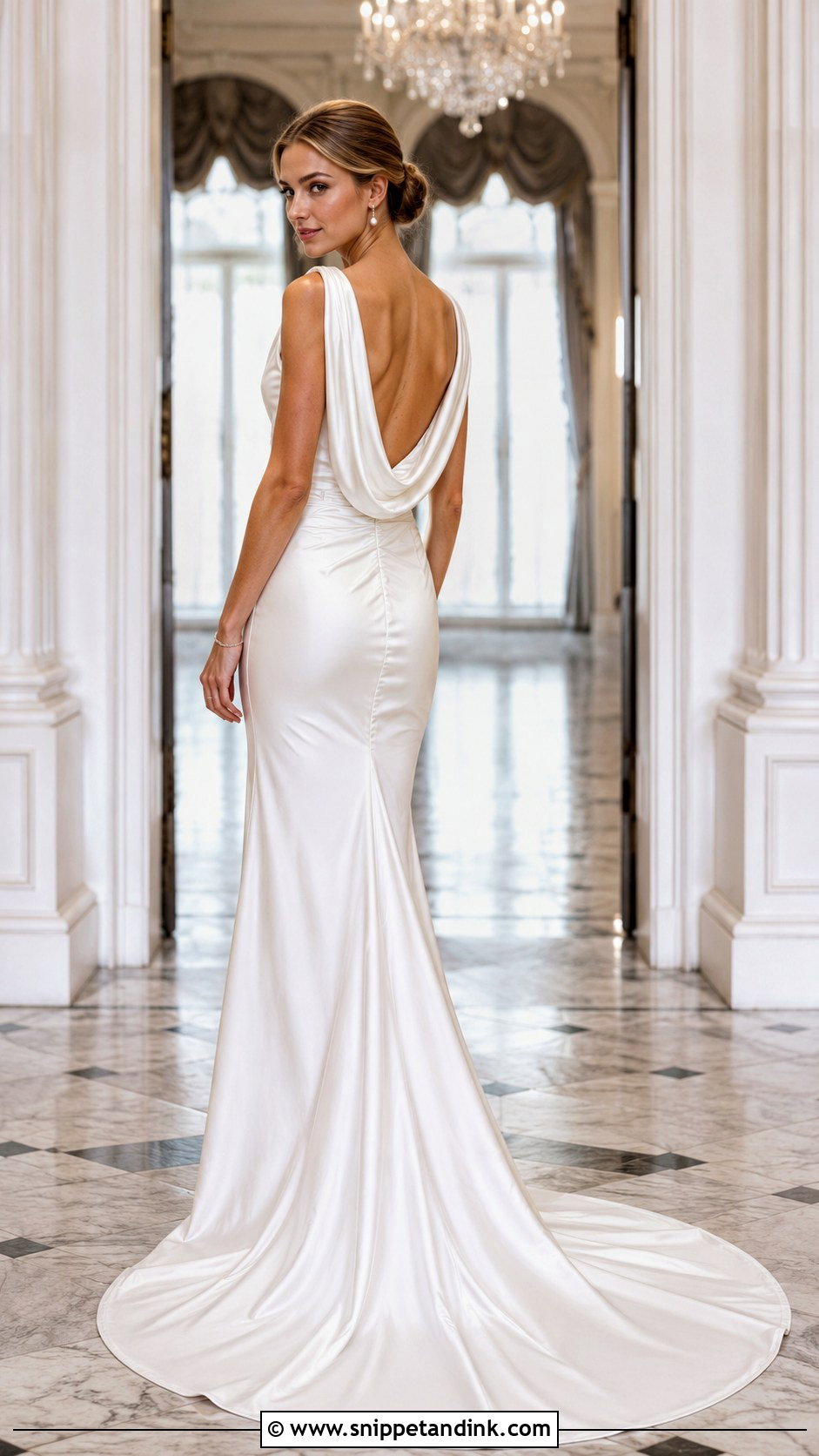
Draping on both sides doubles the fitting work. The front cowl has to stay high enough that it doesn’t gape when you lean toward the guest book, while the back can fall to the shoulder blades or lower. Thin satin collapses in a double cowl and looks limp, so I insist on substantial silk satin for this one. Skip the necklace; it competes with the front drape. Crystal sandals, a slim bracelet, pearl earrings and a low bun or sculpted waves are enough. Bring every undergarment option to your fittings, since both front and back need support with no visible straps or bulky seams.
9. Illusion Cowl Back Wedding Dress
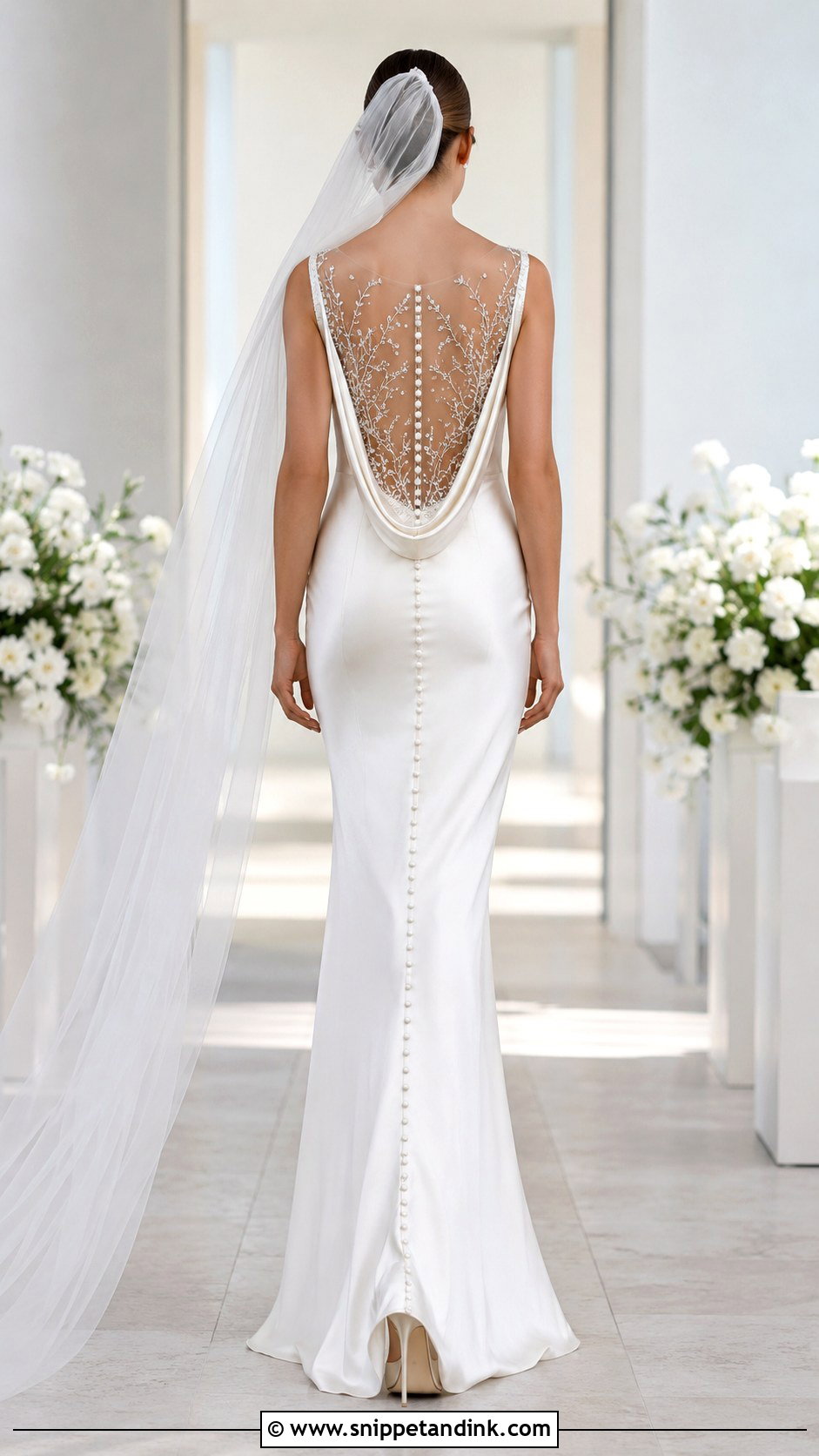
Mesh is the answer for a bride who wants a low back but worries about straps slipping. The panel holds the shoulders in place and the cowl hangs below it in satin or crepe, finished with covered buttons. The catch is color. Mesh that’s slightly off your skin tone shows as a hard line under flash, so look at it in daylight and with a camera flash before alterations are finalized. Beadwork or embroidered vines can sit on the panel itself. Pointed satin heels, small studs and a chapel veil anchored below a smooth bun keep everything else simple.
10. Pearl Beaded Cowl Back Wedding Dress
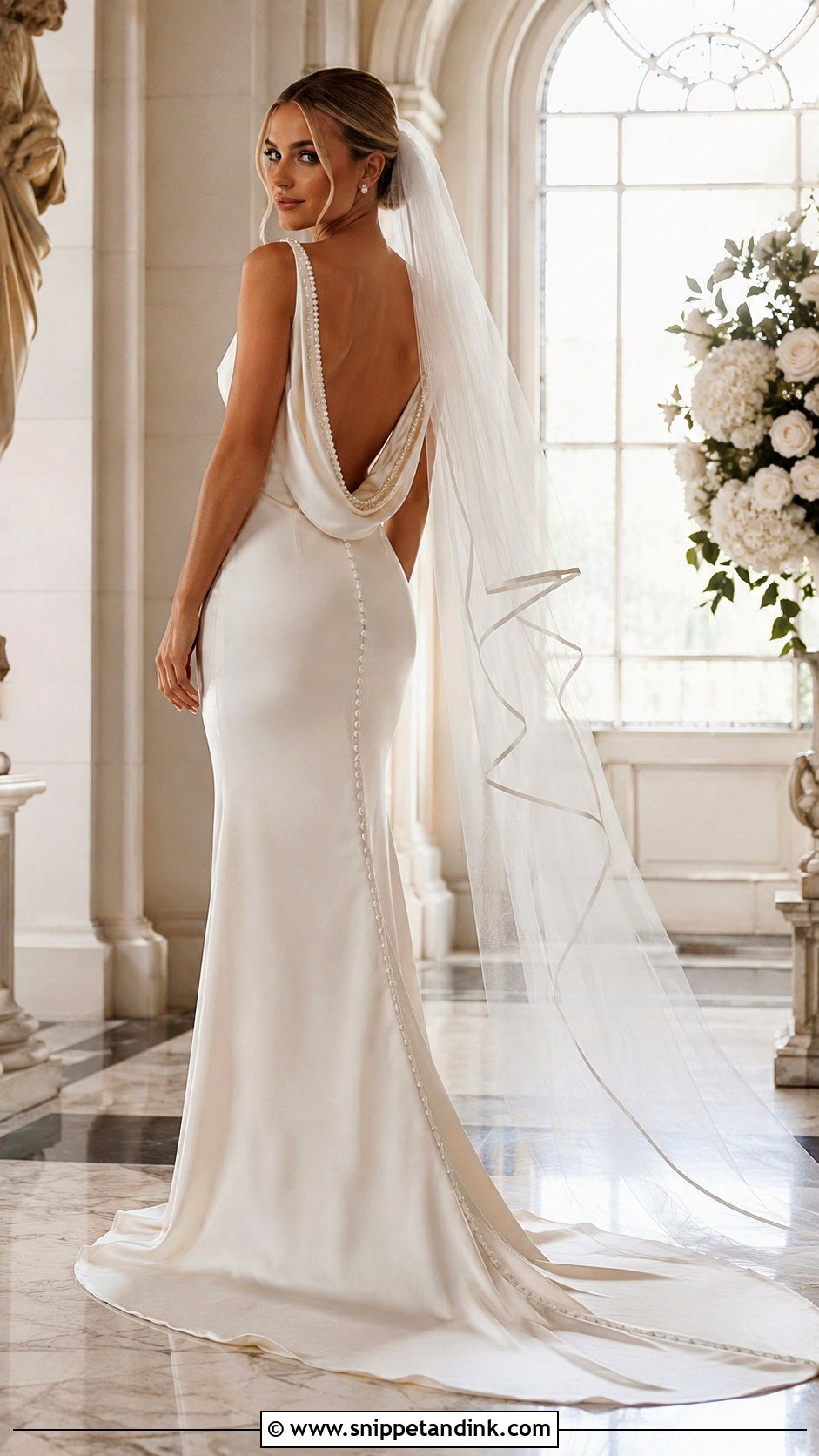
Pearls add weight, and weight changes a drape. Kept along the straps and the edge of the cowl, they help it hang cleanly; scattered across the folds, they drag them flat. Choose a satin sheath with the beading concentrated at the back. Run your hand over the work before buying to feel for rough settings or loose threads, and ask whether spare pearls come with the gown for repairs. Pearl earrings, ivory pumps, a sheer ribbon-edged veil and a sleek chignon finish it, and the chignon keeps hair from snagging on the beads.
11. Detachable Cowl Back Wedding Dress
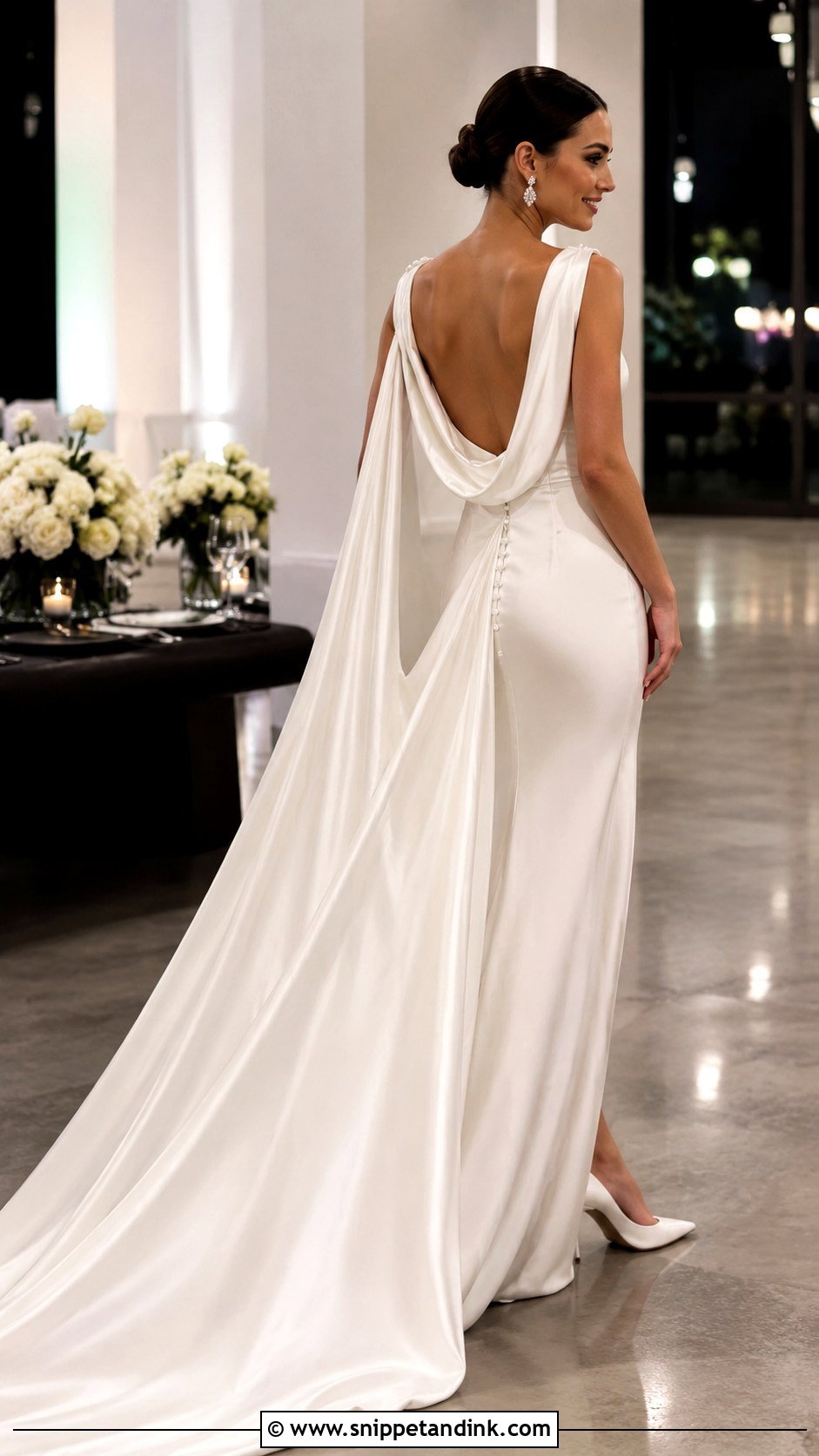
A detachable cowl gives you a dramatic ceremony back and a plain scoop for dancing without a full outfit change. The satin drape attaches at the straps and falls into a soft train, then comes off along with the long veil after the ceremony. Fastenings decide whether this works. Hooks, snaps or hidden buttons must stay invisible from every angle, including when you’re seated. Practice removing and reattaching it before the wedding, and give the job to one bridesmaid who knows how, so the fabric stays clean and the fastenings survive. Pointed pumps, statement earrings and a low bun suit both versions.
12. Mermaid Cowl Back Wedding Dress
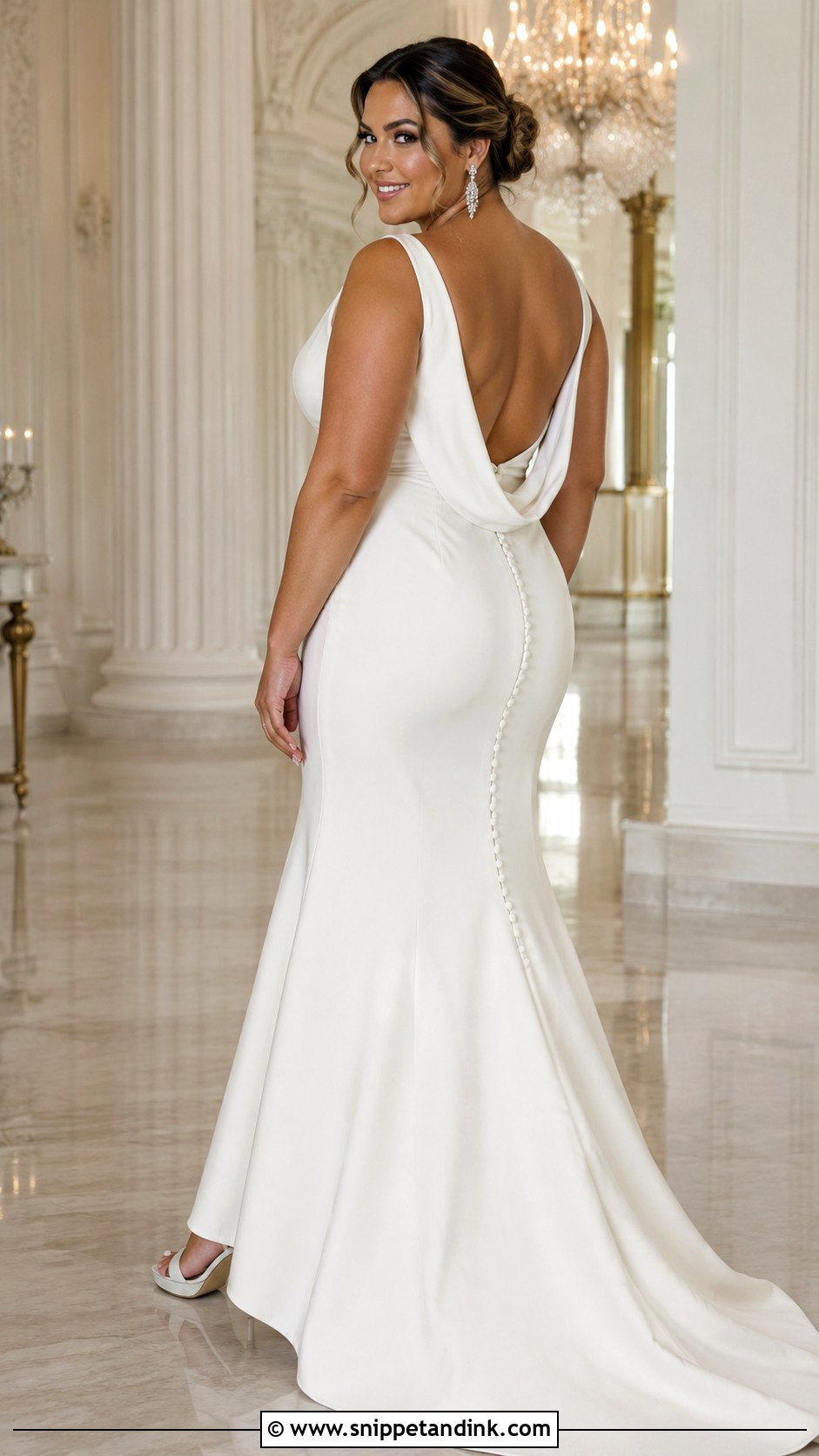
Movement is the fitting problem with any mermaid, and a cowl adds one more thing to watch. Matte crepe holds the close shape while letting the back drape softly, and a deep V with narrow straps and covered buttons down to a chapel train suits it. Before approving alterations, walk, sit, climb a few steps and dance. The skirt should let you stride, and the cowl should stay centered as your shoulders move. Supportive platform sandals help with the hem length. Hollywood waves swept over one shoulder leave the rest of the back open, with long drop earrings and a plain veil.
13. A Line Cowl Back Wedding Dress
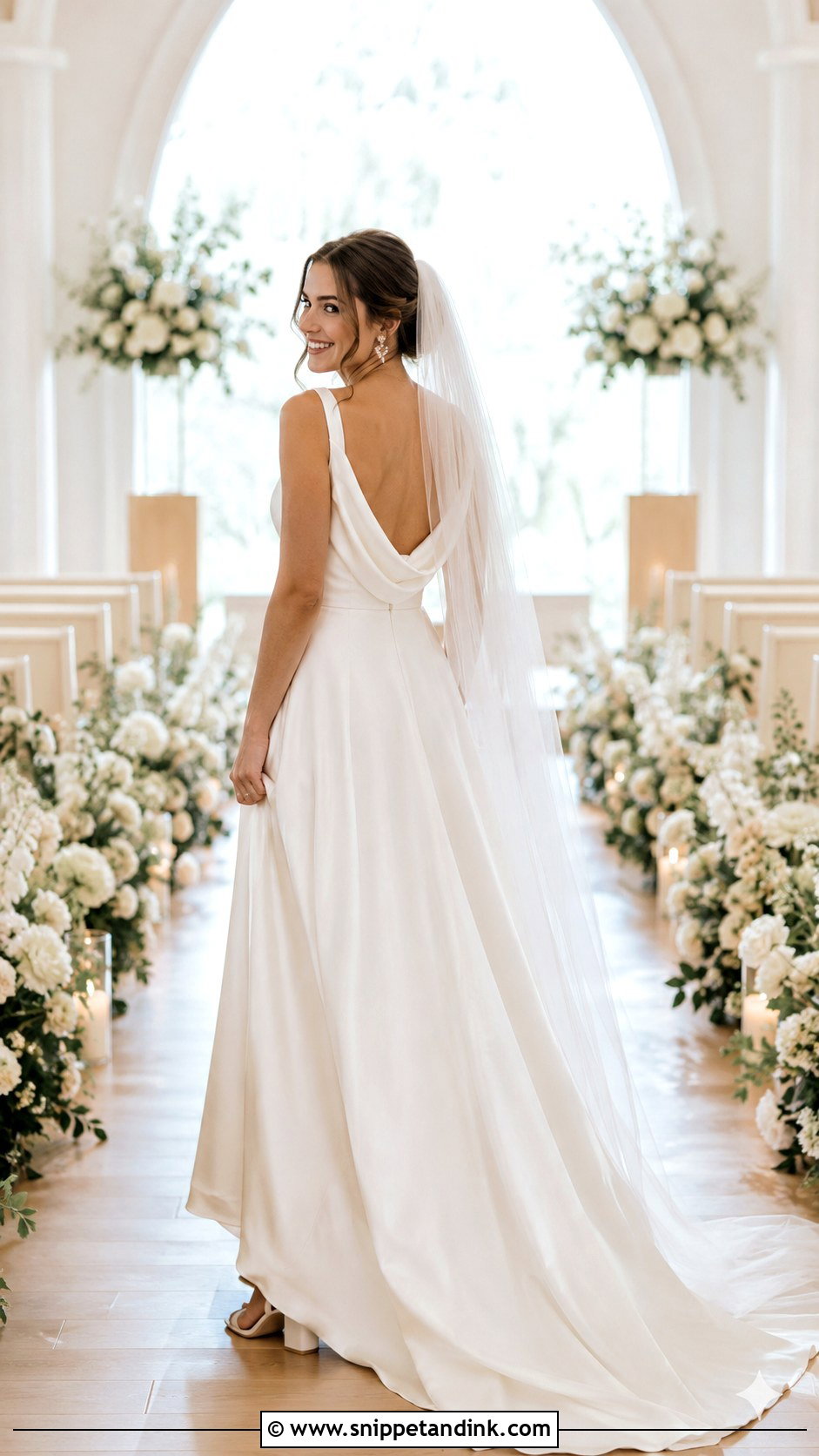
An A-line skirt has weight, and that weight pulls the bodice down, dragging the cowl lower than where it was fitted. Good internal support at the waist prevents it, so ask how the skirt is anchored. Otherwise the shape is forgiving: a fitted bodice, supportive straps and a skirt that widens gradually in silk, satin or light crepe. A modest cowl at mid-back balances it. Block heels, floral pearl earrings, a chapel veil and a softly pinned updo finish it, with a narrow satin belt if you want more waist.
14. Cap Sleeve Cowl Back Wedding Dress
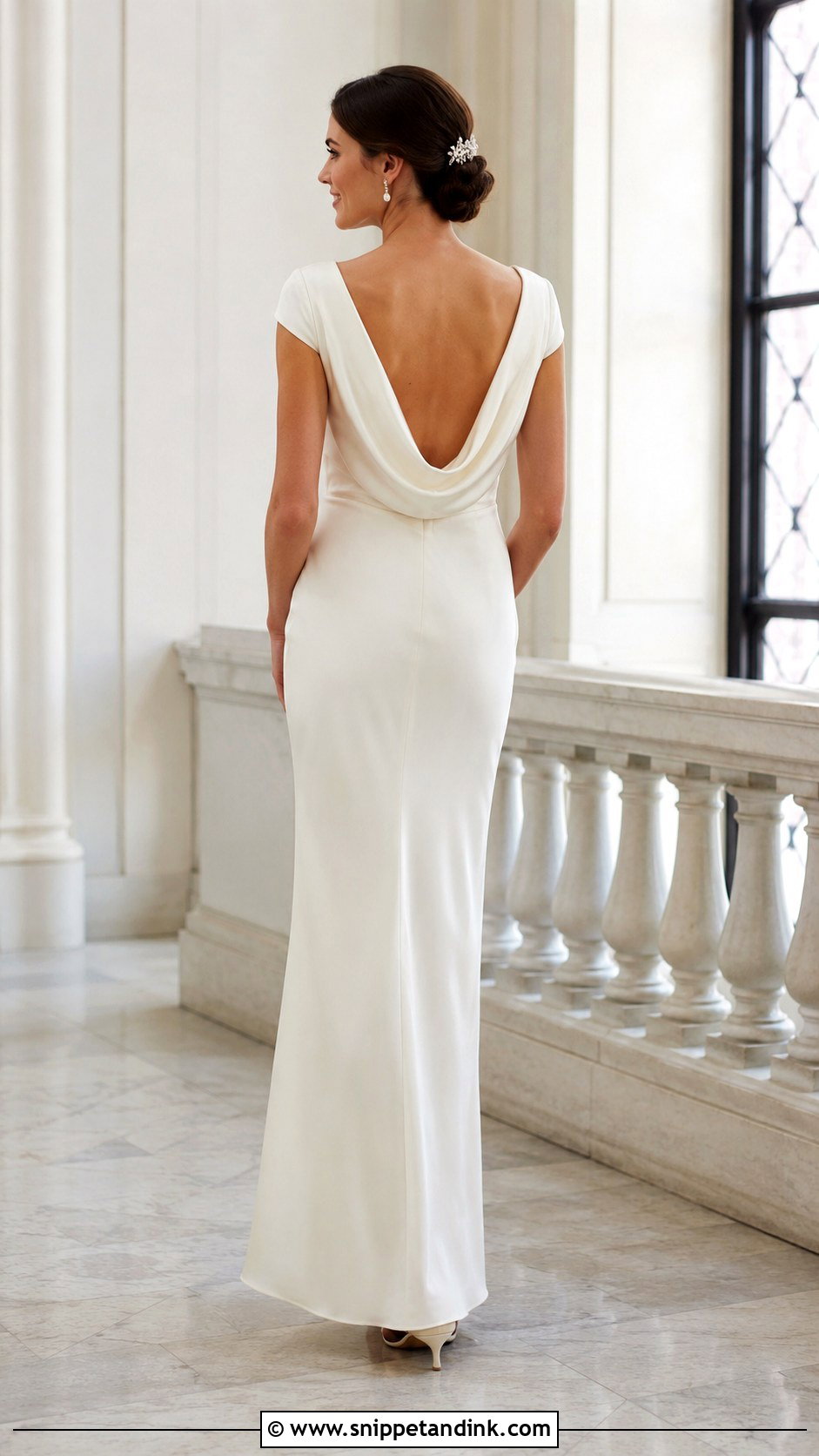
Cap sleeves cover the top of the shoulder and frame the drape below. On a satin empire waist or softly fitted column, a medium-depth cowl keeps things balanced. The sleeve has to sit without biting into the upper arm. In the fitting room, reach forward and then overhead; if the neckline pulls back or the cowl rises and twists, the sleeve needs adjusting. Pointed kitten heels, pearl studs and a vintage comb above a low roll suit it, and a short veil won’t hide the back for long. It sits as comfortably at a courthouse as at a garden reception.

15. Vintage Cowl Back Wedding Dress
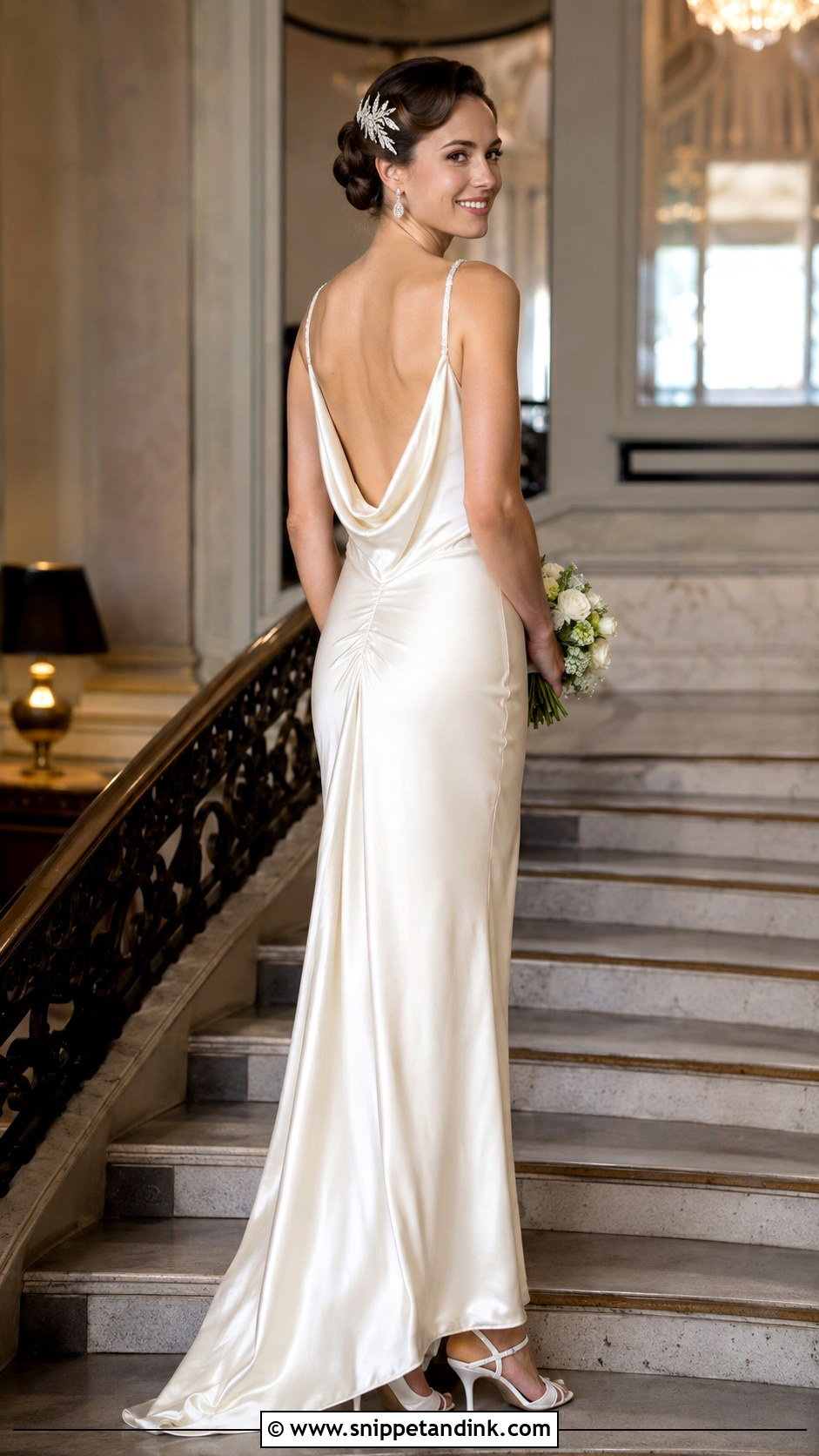
The draped back grew out of 1930s eveningwear, so a vintage take feels honest rather than borrowed. Think silk satin, a bias skirt, flutter sleeves or fine straps, a softly gathered waist and a medium cowl closed with covered buttons or a small clasp. T-strap heels, pearl drops and a crystal comb with finger waves or a low side bun carry the period without tipping into costume. Heavy shapewear fights a bias cut and shows through it, so choose light, smooth undergarments. A bridal tailor can adjust bust, straps and hem for comfort while keeping the fluid line.
16. Minimalist Cowl Back Wedding Dress
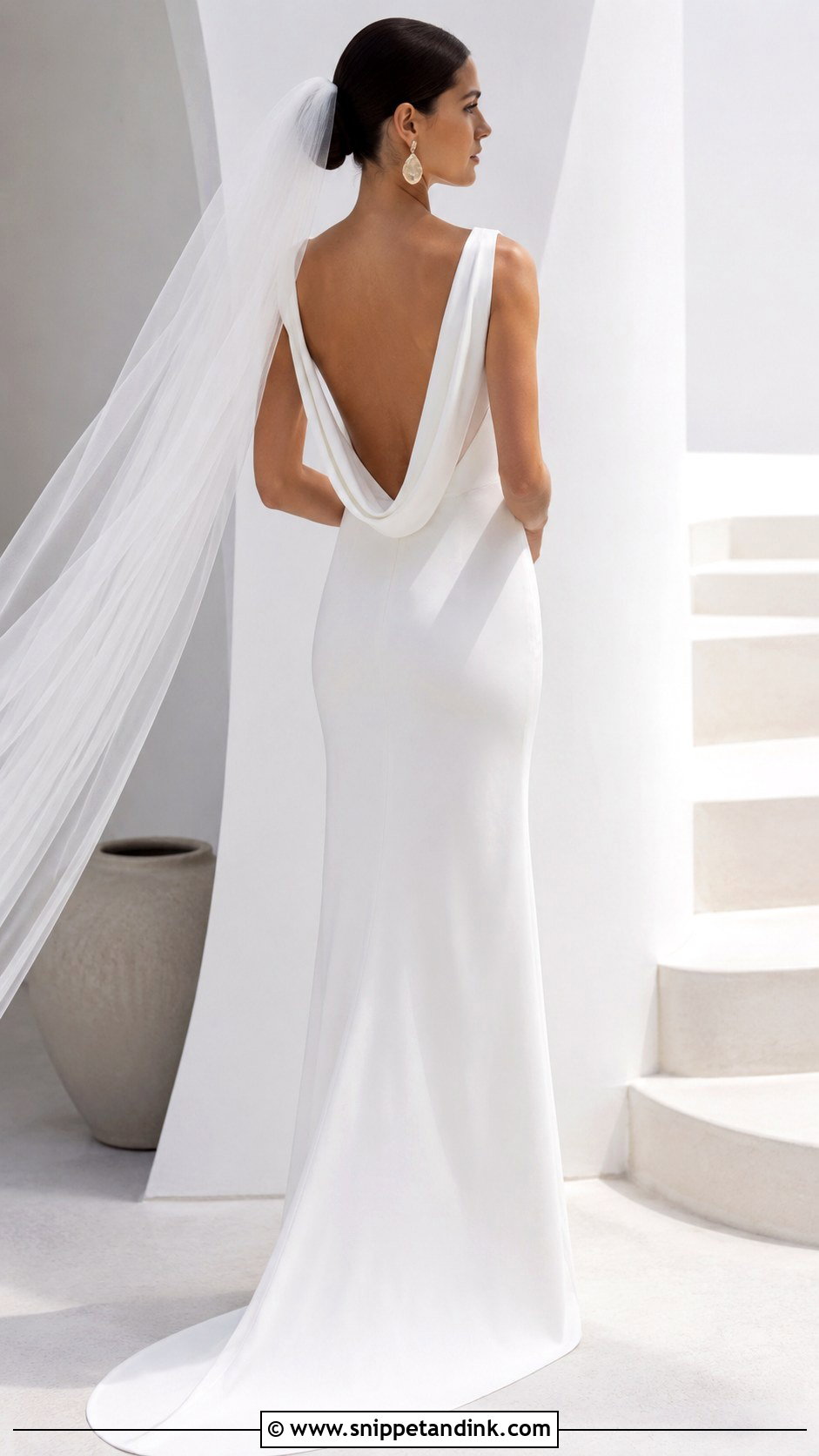
With nothing else on the dress, every seam shows. That’s my main warning about minimalist gowns: the fabric quality and the alterations are the whole design. Go for a matte crepe column or silk sheath with a high front and a deep back, and no lace or trim. Look at it under both daylight and indoor light to make sure the lining is opaque and the seams lie flat. Sculptural earrings, sleek ivory heels, a single-layer veil and a one-flower bouquet keep the look spare. A polished knot or straight hair tucked behind the ears suits it.
17. Beach Cowl Back Wedding Dress
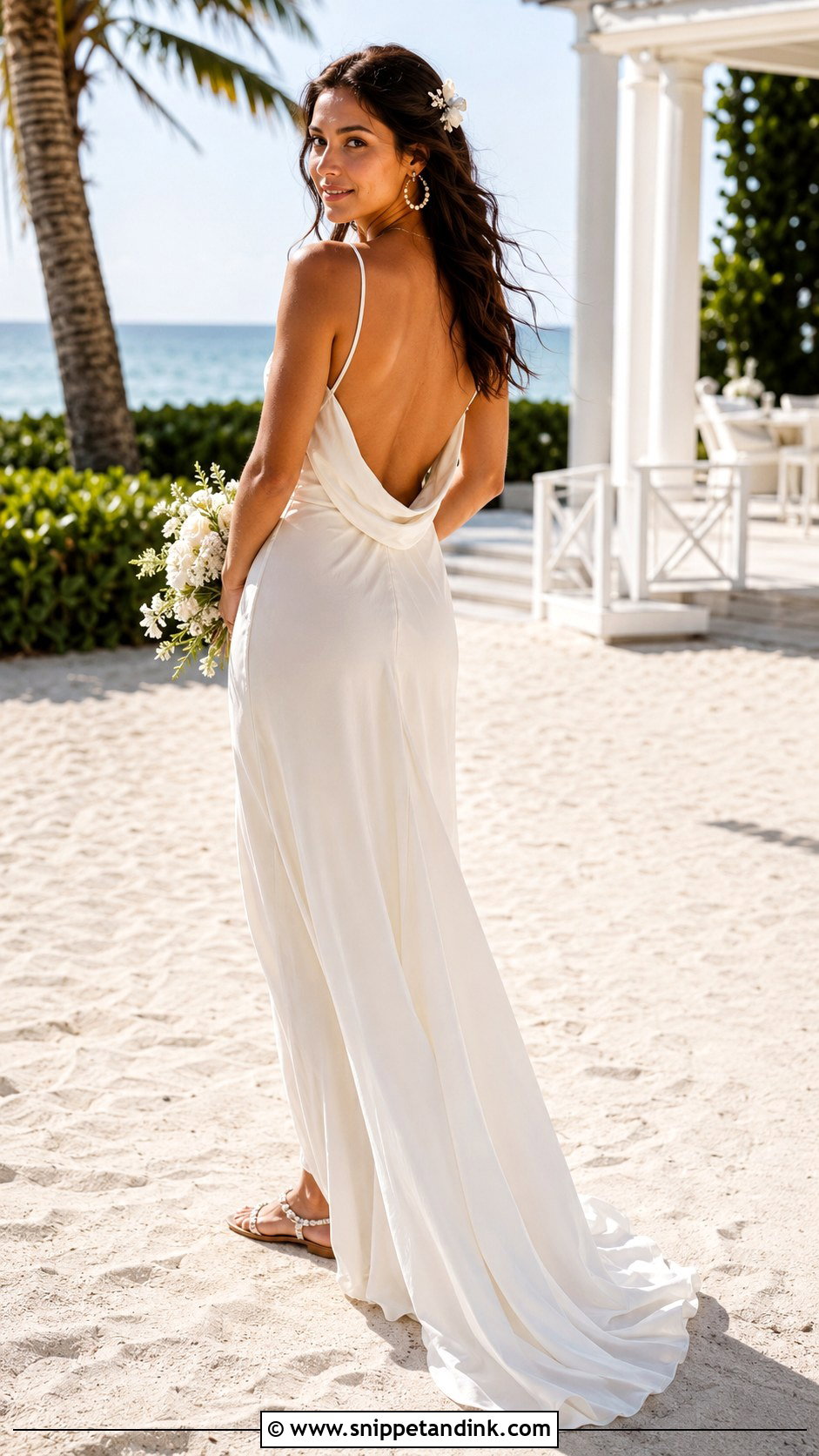
Wind is the real problem on a beach, and a cowl catches it like a sail. Choose breathable silk, satin-backed crepe or lined georgette with slender straps, an easy A-line or sheath, and a moderate drape rather than a deep one. A short sweep train handles sand far better than a long one. Have the hem cut for bare feet or the exact sandals you’ll wear. A fingertip veil you can pull out quickly is safer than a cathedral length. Flat embellished sandals, pearl hoops and a floral hairpin finish it. If you can, wear the dress outside before the day to see how the back behaves in a breeze.
18. Garden Cowl Back Wedding Dress
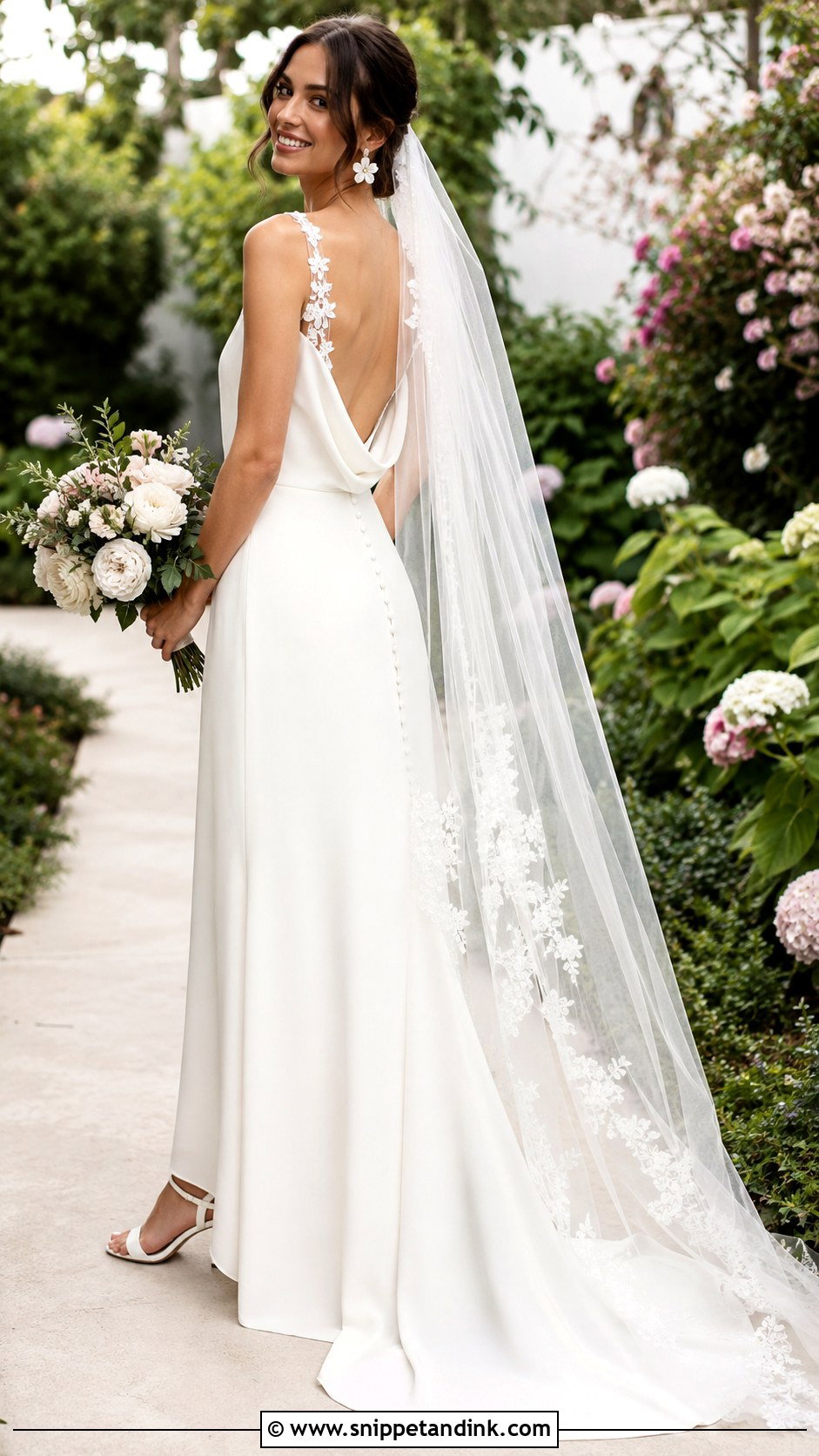
Grass, gravel and pollen are hard on draped silk, so I build garden looks around a manageable train. A crepe A-line with botanical lace tracing the straps and cowl edge, a natural waist and a chapel train moves well along paths. Block-heel sandals with heel protectors stop you sinking into the lawn. Keep accessories in pearl, ivory or soft metal, with floral earrings and a fingertip veil scattered with a few embroidered leaves, and a loose low bun that leaves the back visible. Have someone carry the train between locations, or keep it temporarily bustled until the ceremony.
19. Bow Cowl Back Wedding Dress
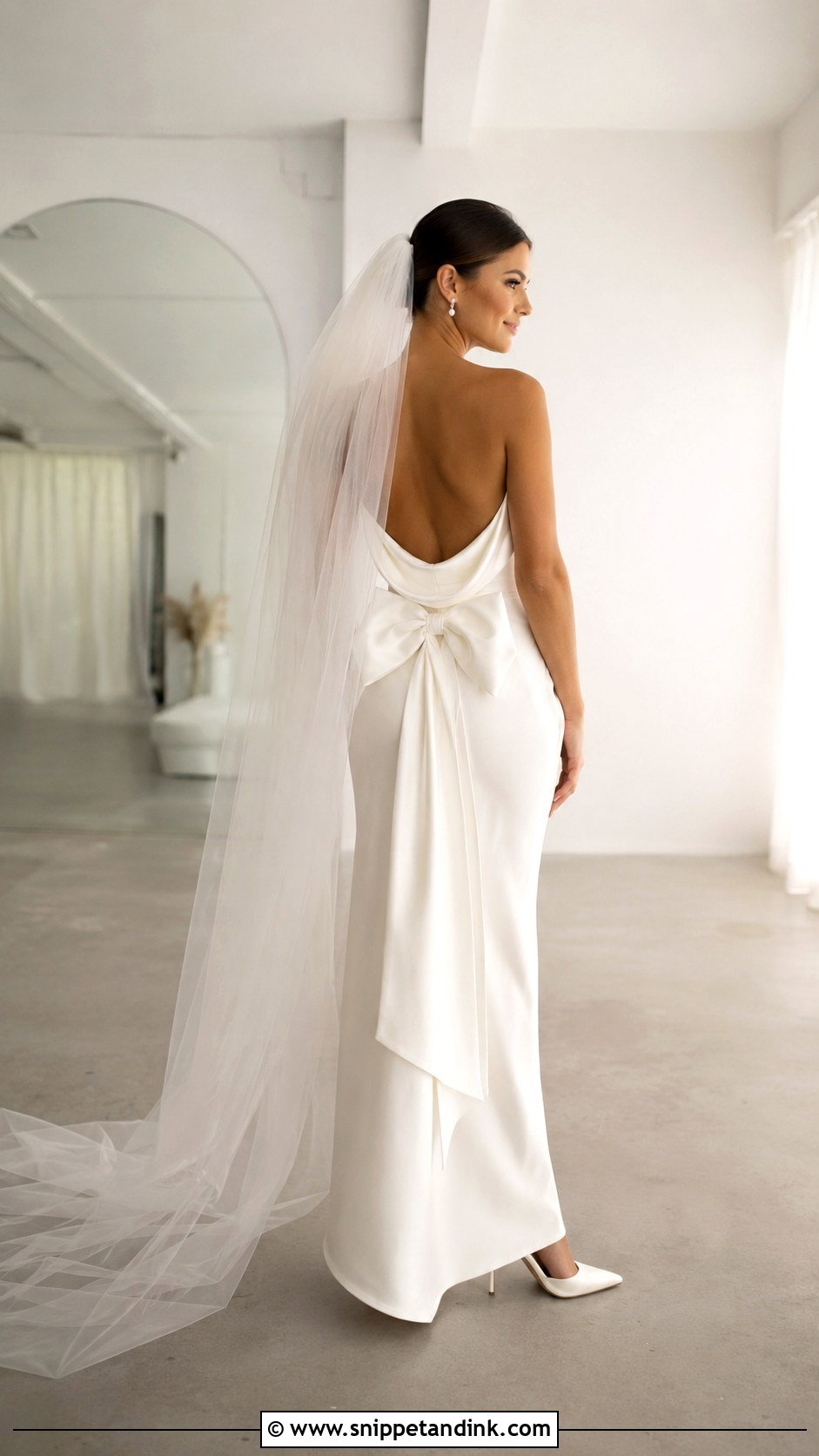
A bow gives a fluid back something structured to play against, but scale decides the mood. Small reads delicate; oversized reads fashion-forward. Whether it sits above the drape, at the waist or where the straps meet on a satin column, it must not sag the cowl or hide its shape, so check it from the side as well as the back. A detachable bow is handy if you want a simpler reception look. Pointed ivory heels, crystal studs, a clean tulle veil and a sleek bun let both features show.

20. Short Reception Cowl Back Wedding Dress
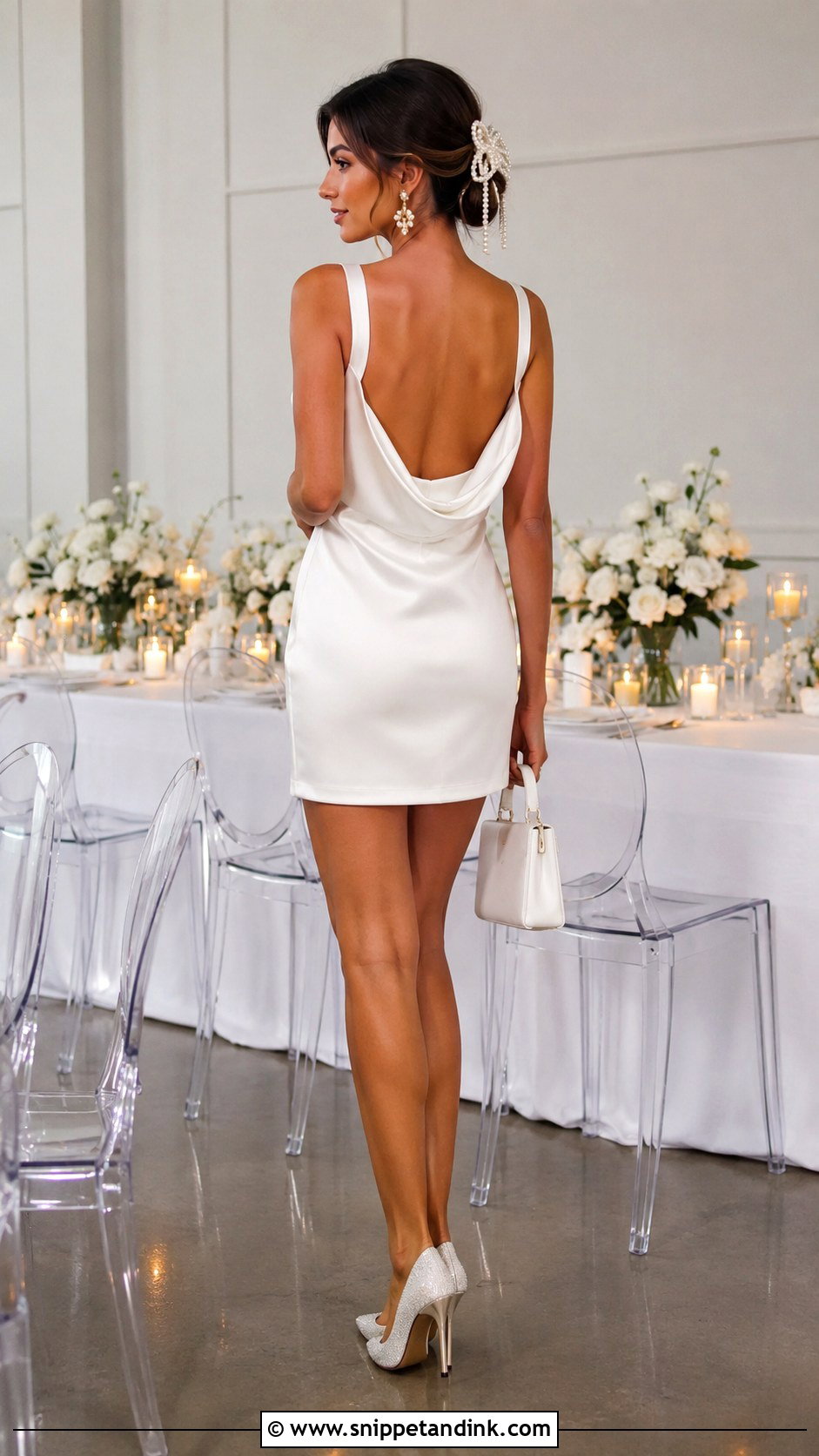
A short cowl back dress makes a fun second look, and it’s the one brides tend to under-fit because it’s only for dancing. Dancing is exactly when a drape slides. A satin mini or tea-length dress with a fitted bodice, supportive straps and a drape across the upper or middle back works; a flared skirt moves more easily, while a slim sheath looks sharper. Hidden snaps, reinforced straps and sewn-in cups are worth the extra alteration time. Crystal pumps, statement earrings and a small structured bag finish it, with a bow or pearl clips in place of the veil.
Support Under a Bare Back
This is the question I get at nearly every fitting for a draped back, and the answer depends on how deep the cowl goes.
- Sewn-in cups are the most secure option for mid-back and lower cowls. Bring them to the first fitting so the bodice is shaped around them.
- Low-back bras and strap converters only work under higher cowls. Test them while bending forward.
- Adhesive cups suit smaller busts but lose grip in heat and humidity.
- Fashion tape along the strap edges is a backup for movement, never a substitute for fit.
Check backless shapewear as well. Many styles finish just below the waist, and the top edge can show under a deep drape when you bend or sit.
Steaming the Drape on the Morning Itself
Hang the gown by its hanger loops, never by the straps, because a bias drape stretches under its own weight. Steam from inside the dress and keep the steamer moving; a still nozzle can leave water marks on silk. Once you’re dressed, ask someone to settle the folds with their hands and look at you from behind before you walk out. A twisted cowl takes seconds to fix, and nobody notices it until the photos come back.
The Back Is What Guests Watch as You Leave
A cowl back only works when the fit underneath is right. Strap length, the support nobody sees and the weight of the skirt all decide where the drape lands. Fluid satin and bias silk give the most movement, while crepe, lace, illusion mesh and sleeves add structure or coverage. Think about the venue, the temperature and how much walking and dancing the day involves. Then, at every fitting, turn around, sit down and raise your arms. That last check tells you more than the front mirror ever will.
You'll Like These Ideas:







Leave a Reply