
An acetate collar is a strip of clear food-safe plastic wrapped around a cake while it’s assembled and chilled. It gives you dead-straight sides without a single swipe of a scraper, and it lets the inside of the cake do the decorating: neat sponge stripes, fruit, mousse, chocolate, pressed blooms. That’s why I reach for it when a couple wants something that looks like a patisserie window rather than a traditional iced tier. The look can stay minimal or go dramatic with glossy tops and tall layers. It does come with rules about temperature and transport, which I’ll cover after the ideas, because a clear-sided cake shows every mistake.
How a Collared Cake Is Actually Built
Couples sometimes picture acetate as a wrapper added at the end. It’s really part of the construction. I line a cake ring or the board edge with the strip, then build the cake inside it layer by layer, so every sponge, cream and fruit layer is pushed flat against the plastic. The whole thing then chills until the fillings firm up.
- Thicker strips hold taller cakes without bowing. Thin ones are fine for a single low tier but crease under weight.
- Soft fillings such as whipped cream and mousse need several hours of chilling, often overnight, before the collar can come off cleanly.
- The collar can stay on for display and come off before slicing, or come off in the kitchen for a glossy, bare finish. Decide this early, because it changes how the sides are finished.
- A stacked acetate cake needs boards and dowels between tiers like any other tiered cake. The plastic adds no strength once it’s removed.
Knowing this helps at the tasting. If a design depends on cream sitting against the collar, it is a chilled cake, and the venue needs fridge space for it.
1. Acetate Wedding Cake With Pressed Flowers
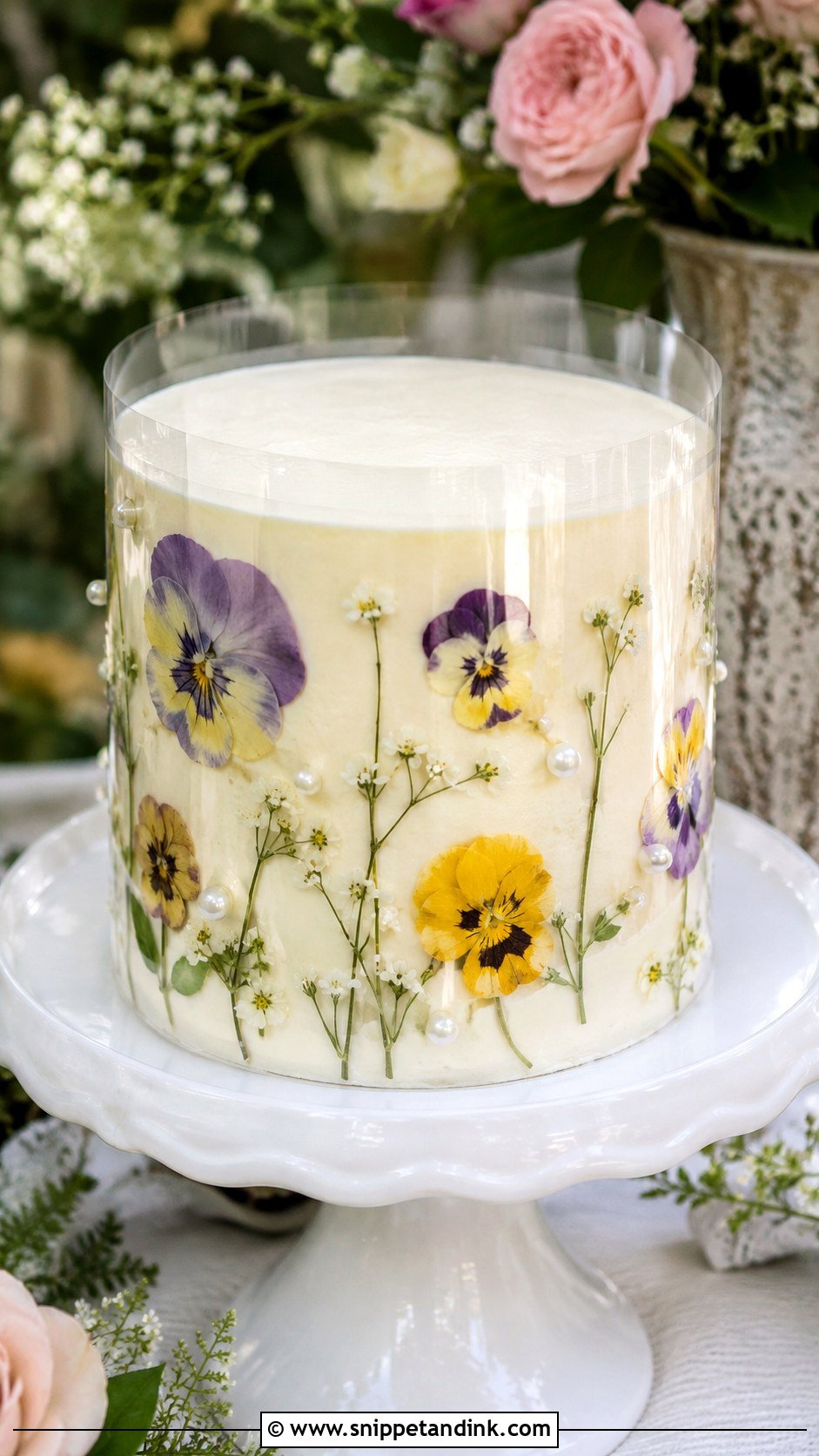
Pressed flowers are where acetate earns its keep. I lay the dried blooms face-down against the collar before piping cream in behind them, so they press flat into the side instead of sinking or sliding. Every flower has to be an edible variety grown without sprays; violas, cornflowers and pansies press well and keep their colour. Space them loosely, since a packed side looks like wallpaper. Ivory sponge and vanilla bean buttercream sit quietly behind pastel petals, and the top only needs a few fresh petals or a smooth finish. It reads best as a single tall tier or as the centrepiece of a modern dessert table.
2. Acetate Wedding Cake With Fresh Berries
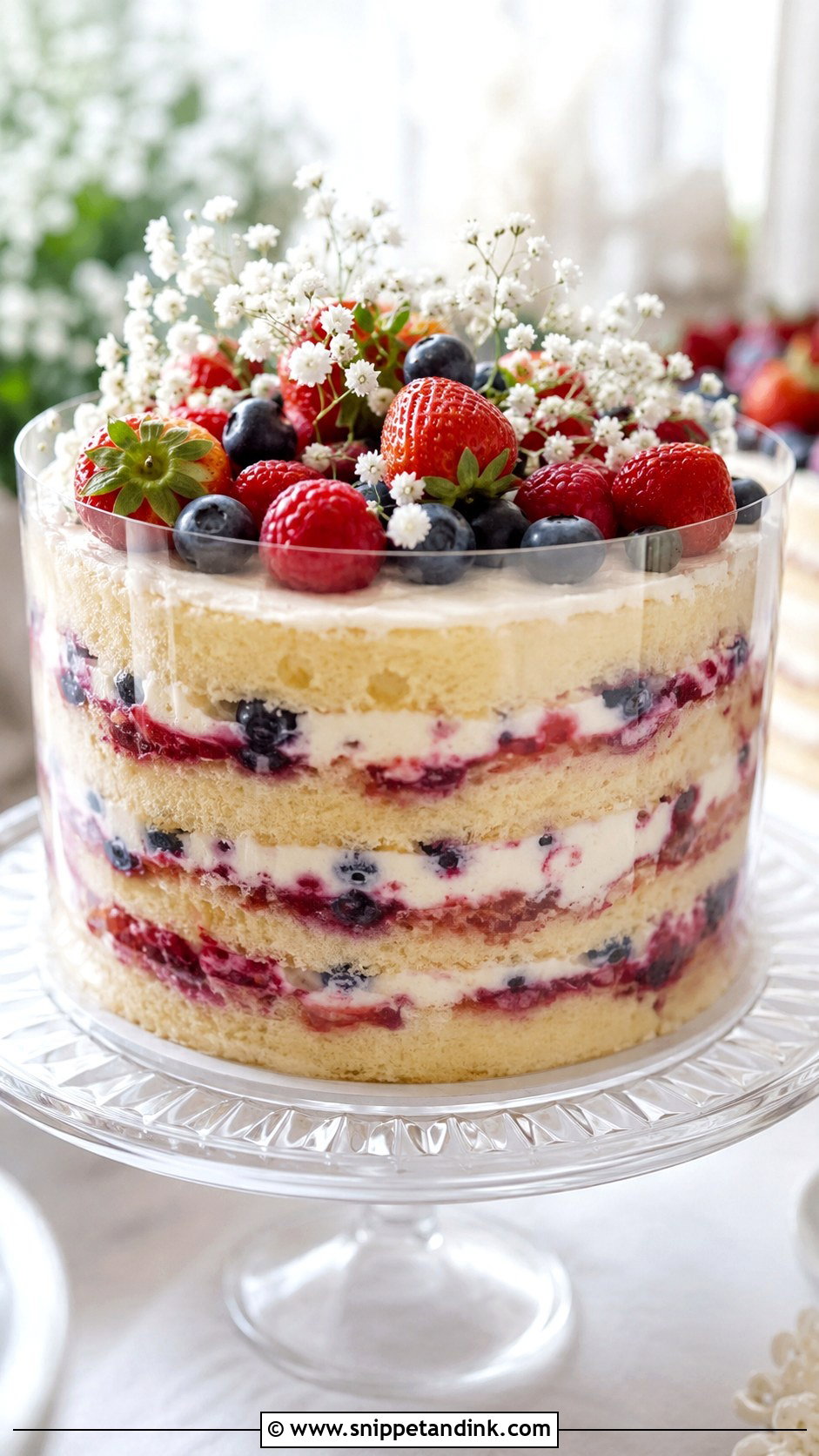
Berries stay bright behind clear plastic, which is the whole appeal here. Think vanilla sponge, whipped cream, strawberries, raspberries, blueberries and thin layers of compote. The catch is juice. Cut strawberries weep within hours, and that juice runs down the inside of the collar in pink streaks, so I place halved berries cut-side in, pat them dry, and stabilise the whipped cream so it doesn’t slump under their weight. A few whole berries and tiny white flowers on top are enough. Brunch receptions and summer garden parties suit it, as long as the cake stays cold until it’s served.
3. Acetate Wedding Mousse Cake
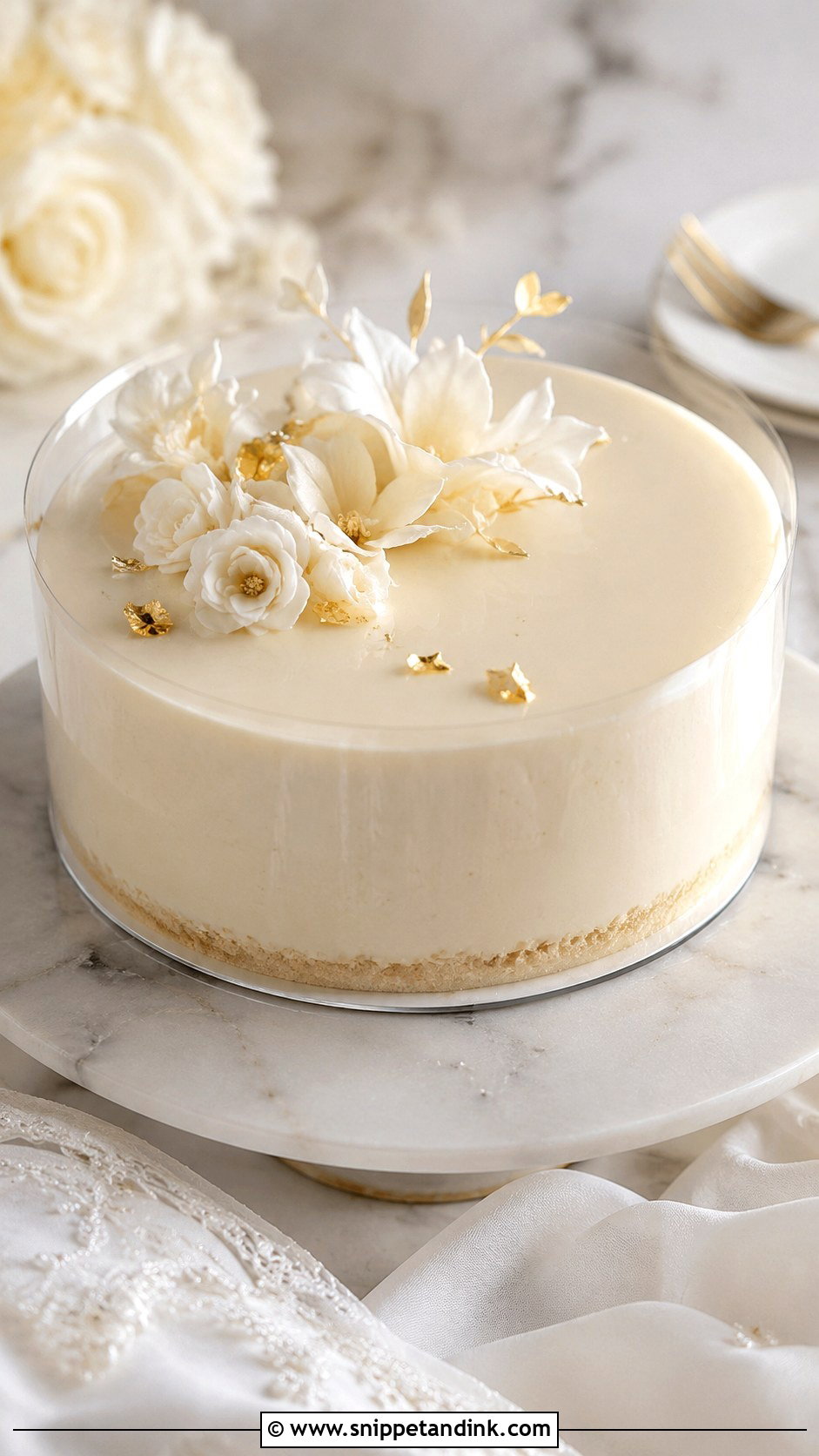
Mousse is the reason acetate was invented, in a sense. A mousse cake has no structure until it sets, so it’s poured into a collared ring and chilled until firm, and the collar is what gives those clean sides when it’s sliced. White chocolate mousse is my favourite for weddings: it sets reliably and stays ivory. A thin sponge base, a fruit insert or an almond layer gives each slice some contrast. I finish the top with a pale mirror glaze or smooth cream and a few berries or gold flakes. The honest limit is heat. Mousse softens quickly in a warm room, so it needs to come out of the fridge close to serving time.
4. Acetate Wedding Cake With Gold Leaf
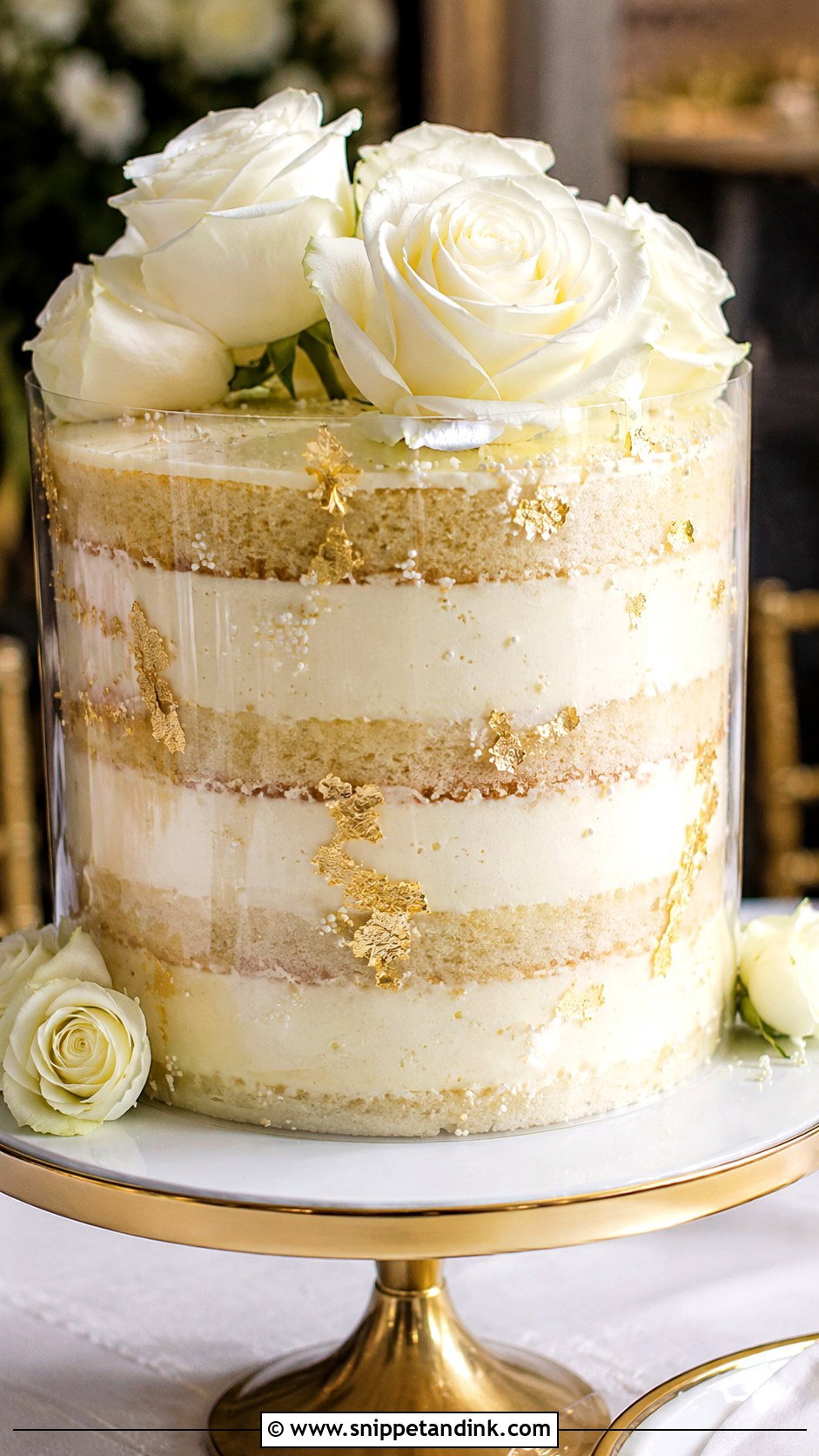
Edible gold leaf behaves best in small torn pieces, not full sheets. I press it on with a dry brush so it clings to the sides through the clear collar’s window rather than slipping, and I keep everything around it plain: ivory frosting, a smooth top, a few white roses or sugar pearls. Behind the collar you might see vanilla sponge, champagne-coloured mousse or white chocolate cream, and the gold catches light at every turn. Ballrooms and evening receptions with warm lighting show it off. Under cool daylight, gold leaf can look slightly brassy, so I’d test a sample tier at the tasting.
5. Acetate Wedding Cake With Pearl Border
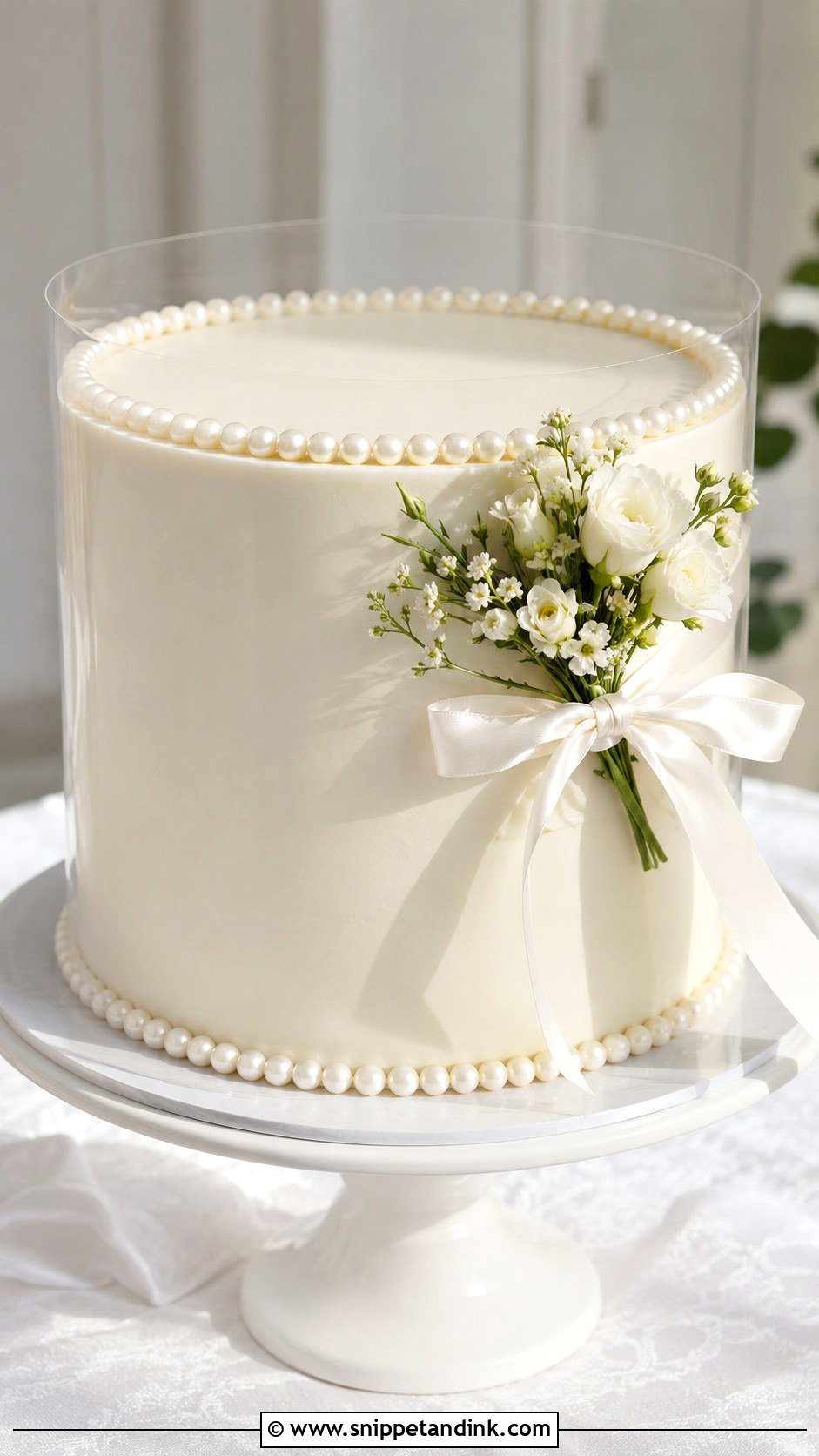
Pearls and acetate both read as clean and bridal, so they don’t fight each other. Smooth white or ivory layers go inside the clear collar, then a pearl border runs along the base or the top edge. Vanilla almond sponge with Swiss meringue buttercream is my usual pairing, partly because meringue buttercream stays smooth and pale. Sugar pearls are heavier than they look, so larger clusters go on top where there’s support, not halfway up a soft side. A satin ribbon and a few white florals complete it for an indoor reception or a traditional dessert table.
6. Acetate Wedding Cake With Fruit Layers
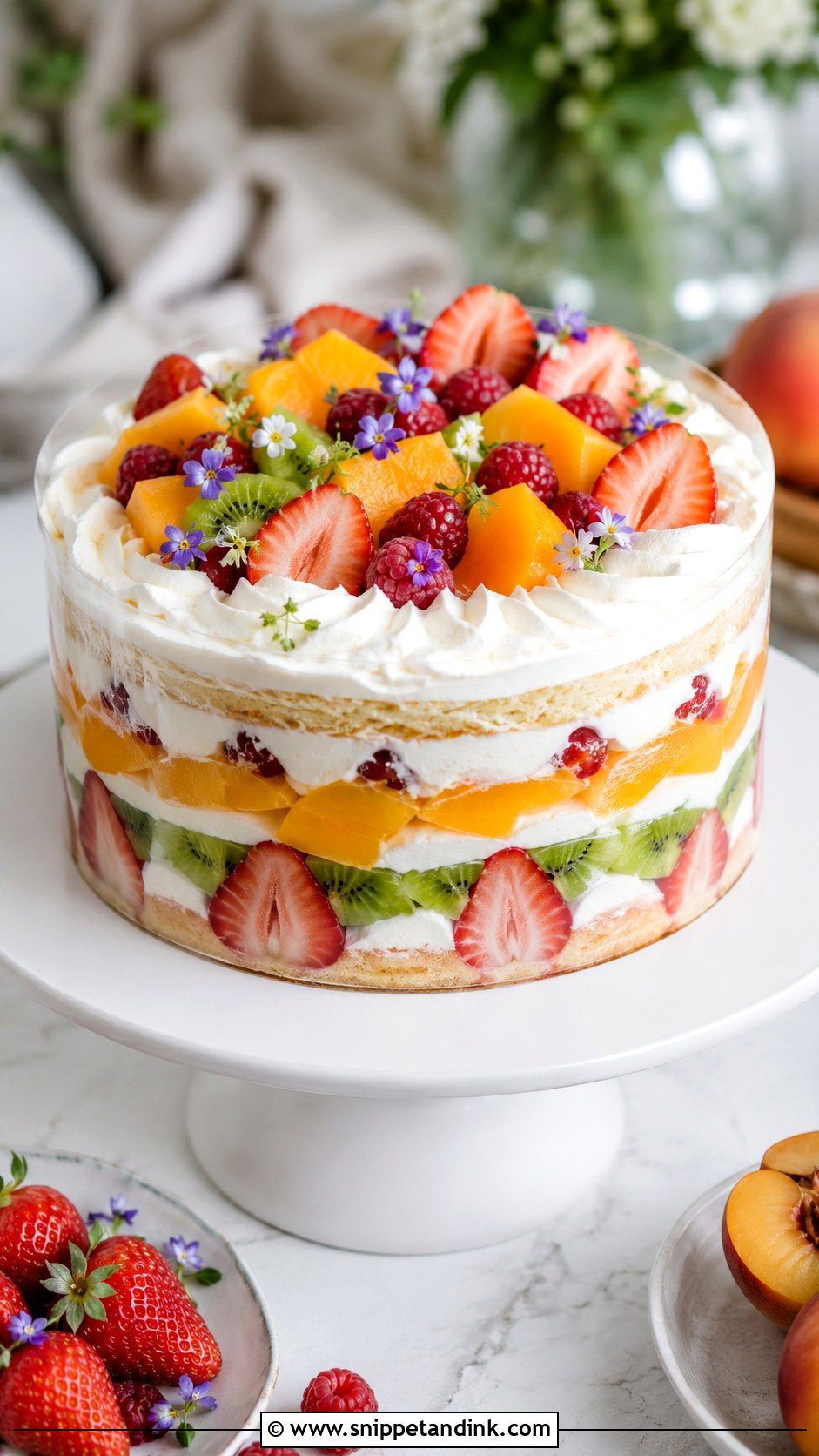
Visible fruit is the best argument for acetate on a wedding cake. Guests can see thin sponge, cream, fruit slices and filling stacked inside, almost like a cross-section. Strawberries, peaches, kiwi and raspberries all give colour against pale vanilla cake. I’d hold off on kiwi if there’s gelatin or dairy cream in contact for long, because raw kiwi breaks both down and the layer turns watery. Keep the frosting light so the fruit leads, and top with whipped cream, fresh fruit and a couple of small flowers. It has a handmade, cheerful look that suits daytime spring and summer weddings.
7. Acetate Wedding Cake With Clear Collar
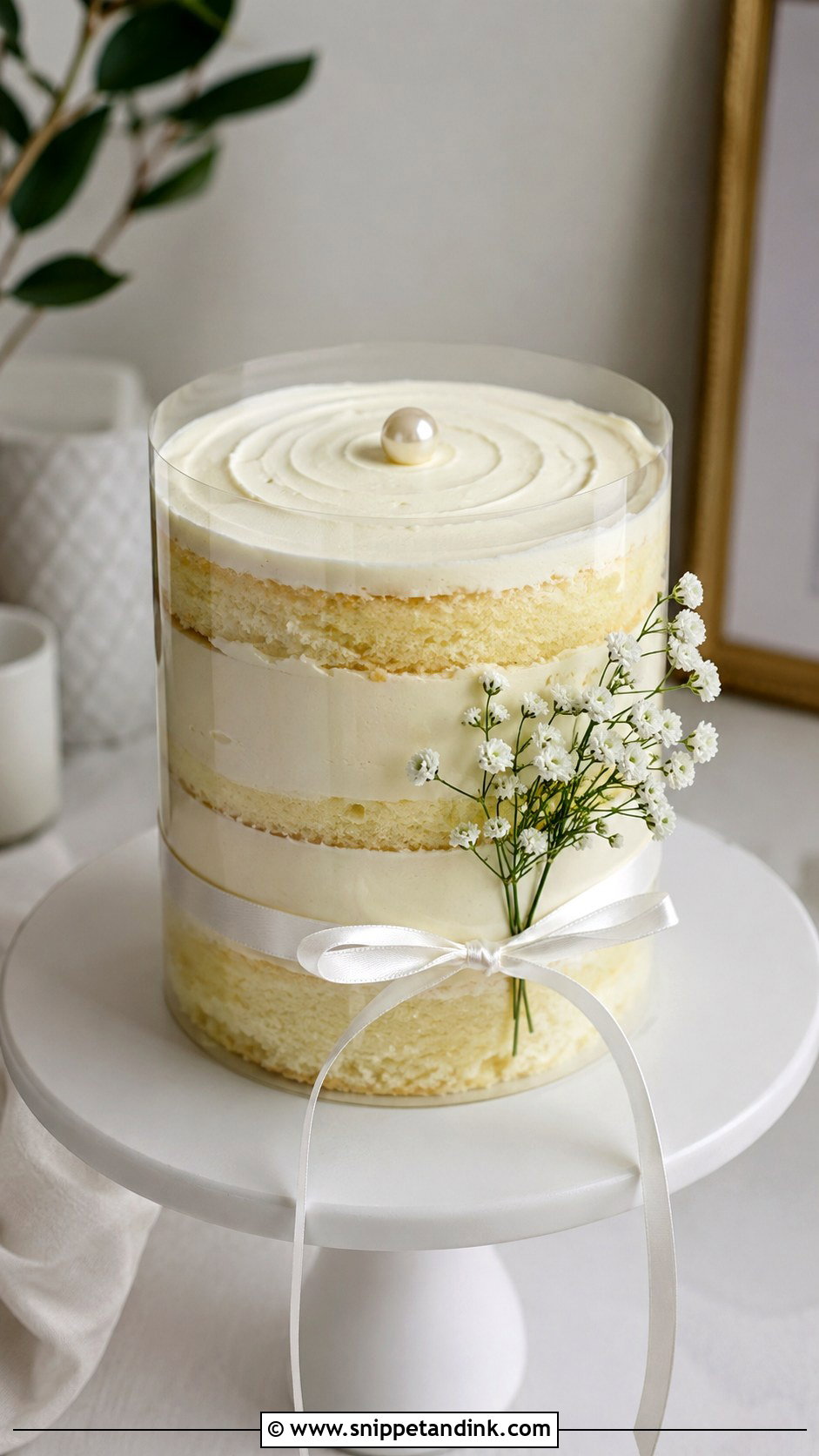
Sometimes the collar alone is the design. The clear band makes sharp sides and shows the layers in a controlled stripe, which looks right with vanilla sponge, a cream filling and a smooth white top. I’ll tie a thin ribbon around the acetate or leave it bare, and add one small floral cluster on top. The detail people miss is the seam: every collar has an overlap where the strip meets itself, and I always turn that to the back of the display. City weddings and minimalist receptions are where this sleek version belongs.
8. Acetate Wedding Cake With White Chocolate
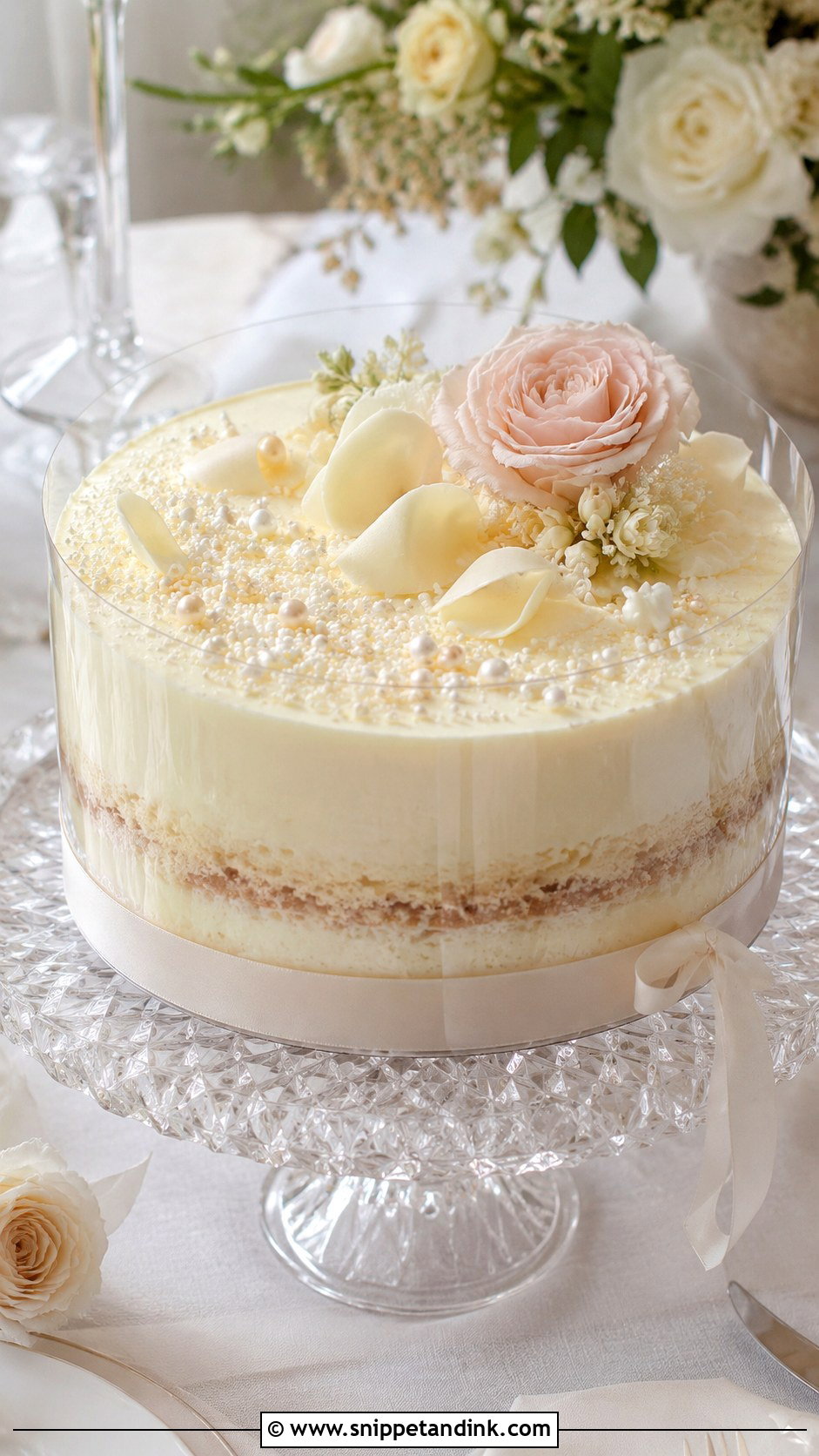
White chocolate sets cleanly against acetate, so it gives you a smooth, glassy side when the collar comes off. The cake can carry white chocolate mousse, ganache or light curls pressed against the collar. It stays soft ivory, which fits almost any wedding palette, and vanilla or almond sponge keeps the flavour gentle. White chocolate scorches easily and seizes if a drop of water gets in, so I melt it low and slow; a grainy ganache shows through clear sides in a way it never would under fondant. Decorate with white chocolate shards, sugar pearls and pale flowers for something richer than plain vanilla.
9. Acetate Wedding Cake With Mirror Glaze
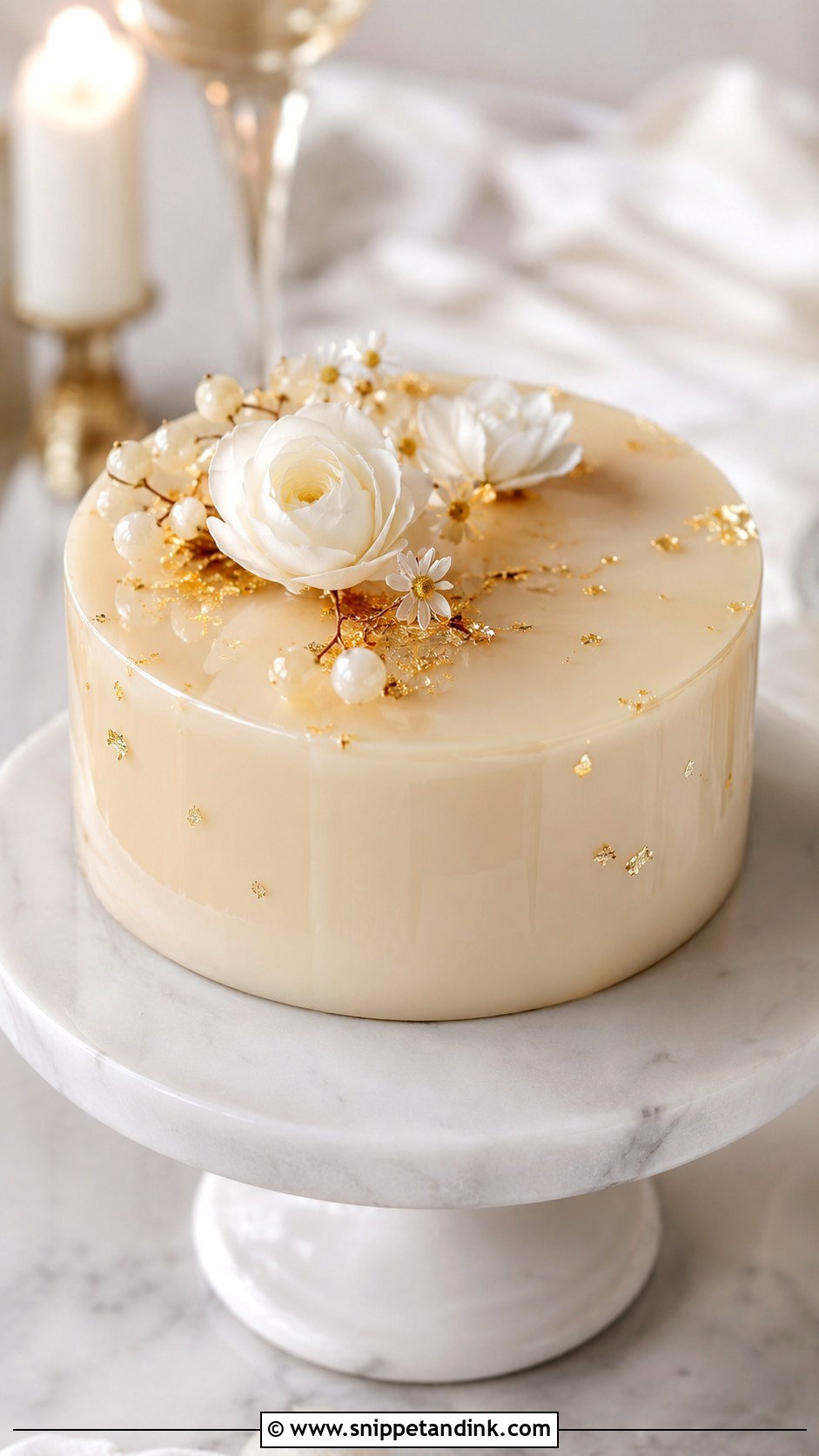
Mirror glaze is poured over a frozen cake, and that’s where the acetate comes in. I build the mousse layers in a collared ring, freeze until solid, peel the collar away, then pour the glaze at the right temperature so it sheets off the sides in one smooth coat. For a wedding I keep the colour soft: ivory, blush or champagne. A few gold flakes, sugar flowers or white berries are all it needs. Under reception lights it gleams like lacquer. The trade-off is fragility, since a fingerprint leaves a permanent mark, so it’s set on its board before glazing and never handled again.
10. Acetate Wedding Cake With Macarons
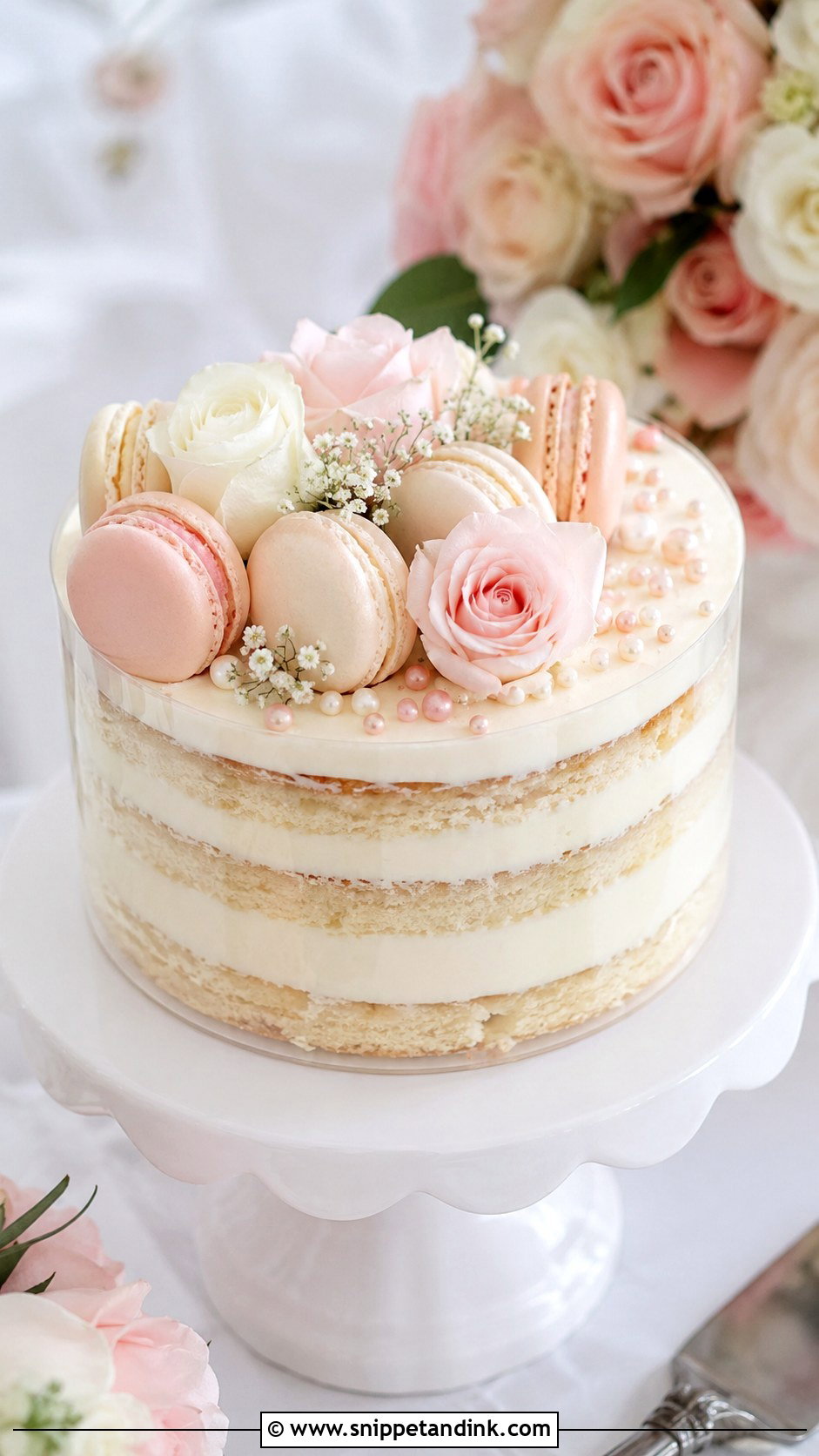
Macarons give a collared cake height and a French bakery feel. The clear sides show vanilla sponge, cream and fruit filling, while the macarons go on top or cascade down one side in blush, ivory, lavender or pale peach. Macaron shells soften once they touch cream and the fridge’s humidity, so I attach them as late as possible, ideally on site. Keep the frosting smooth so they stand out, and add just a few flowers or tiny pearls. It ties in neatly when the cake sits beside a full pastry display.
11. Acetate Wedding Cake With Edible Flowers
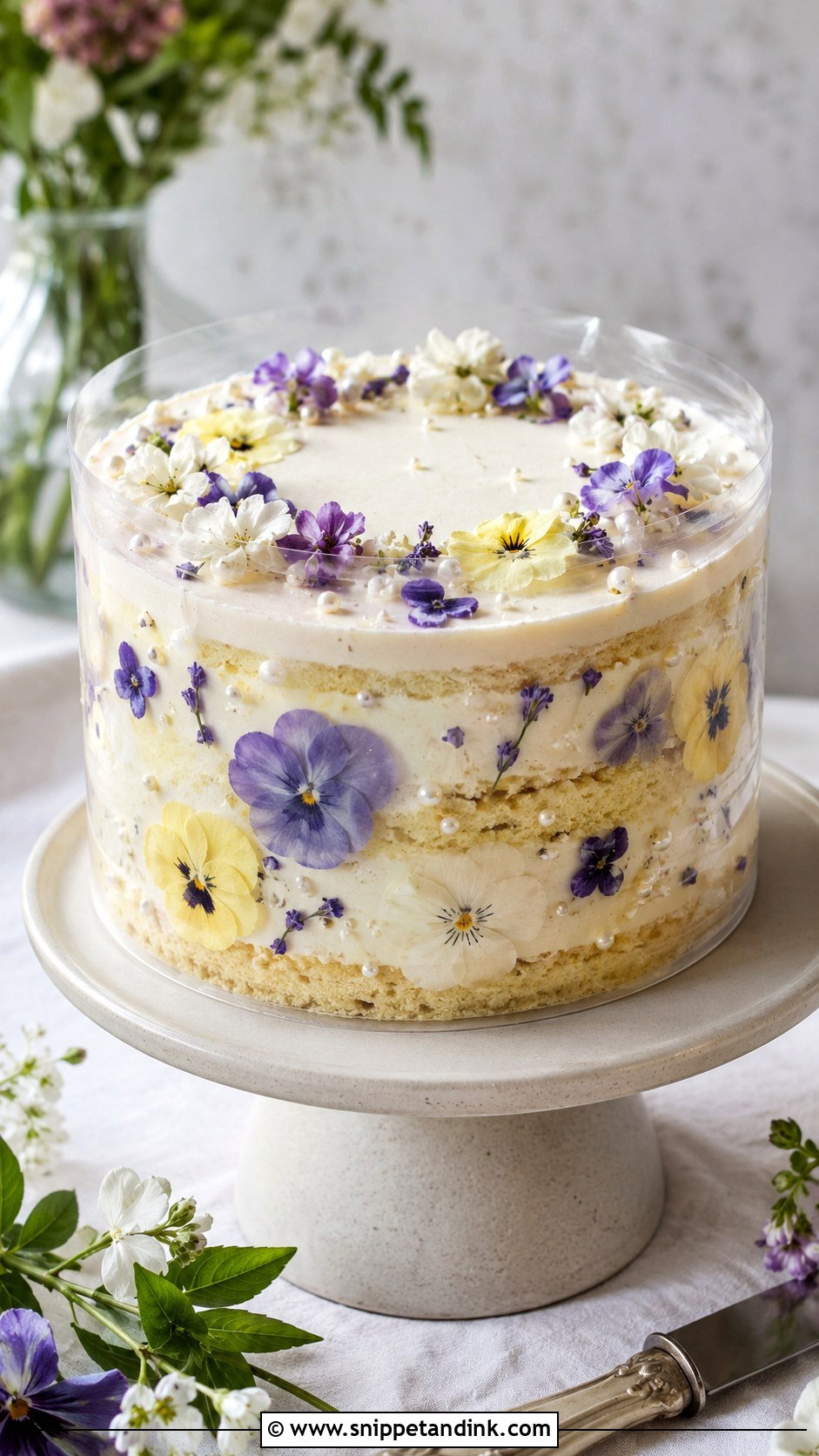
Edible flowers can go between the cake and the collar, on top, or layered into cream so they look like they’re floating. I only use blooms grown for eating; many popular wedding flowers, including hydrangea and lily of the valley, are toxic and should never touch the cake. White, pink, lavender and yellow petals suit a lemon-vanilla sponge or a honey cake. Fresh petals wilt faster than pressed ones once they meet moist cream, so I add them the day of the event. Give each flower some space. It’s a natural match for garden weddings and loose, organic styling.
12. Acetate Wedding Cake With Chocolate Collar
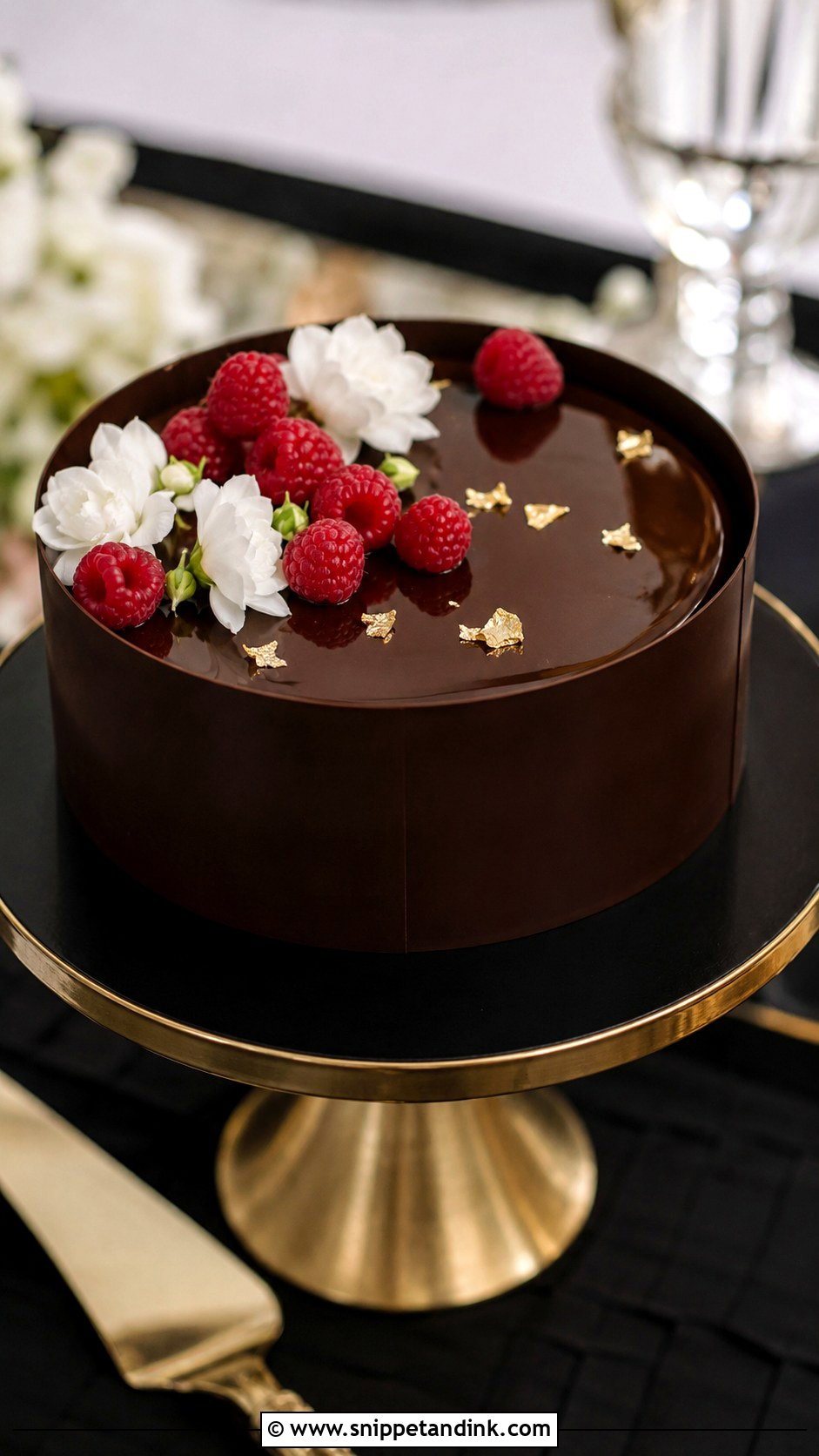
A chocolate collar is acetate used as a mould. I spread tempered chocolate onto a strip, wrap it around the chilled cake, let it set, then peel the plastic away to leave a thin shell with a glossy finish on the outside. Untempered chocolate turns streaky and grey, which is why this one gets made in a cool kitchen. Dark chocolate looks dramatic for an evening or black-tie reception; white chocolate is softer. Inside, chocolate sponge with ganache or vanilla cream both work, and berries, gold accents or white flowers on top lighten the effect. The shell adds texture and height without a single line of piping.
13. Acetate Wedding Cake With Buttercream Layers
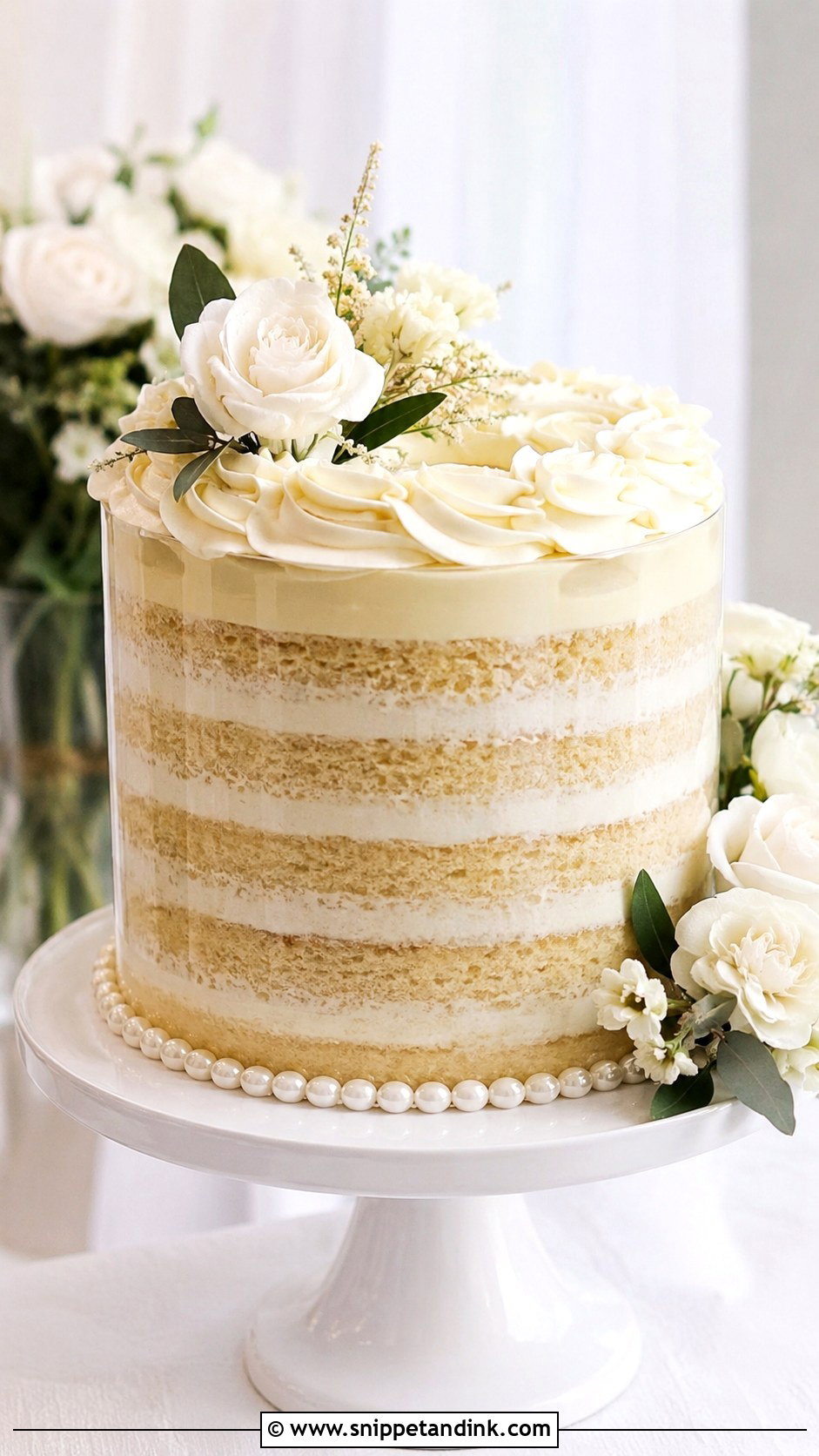
Buttercream stripes look sharper inside a collar than they ever do from scraping alone. The clear sides show even bands of sponge and frosting, which gives a classic wedding flavour a more modern face. Vanilla, almond, lemon and strawberry all keep the colours soft. I level every sponge layer before stacking, because a collar exposes uneven layers immediately. Keep the top smooth, then add a small floral arrangement, a pearl border or buttercream rosettes. It sits right between a naked cake and a fully frosted one.
14. Acetate Wedding Cake With Blush Pink Cream
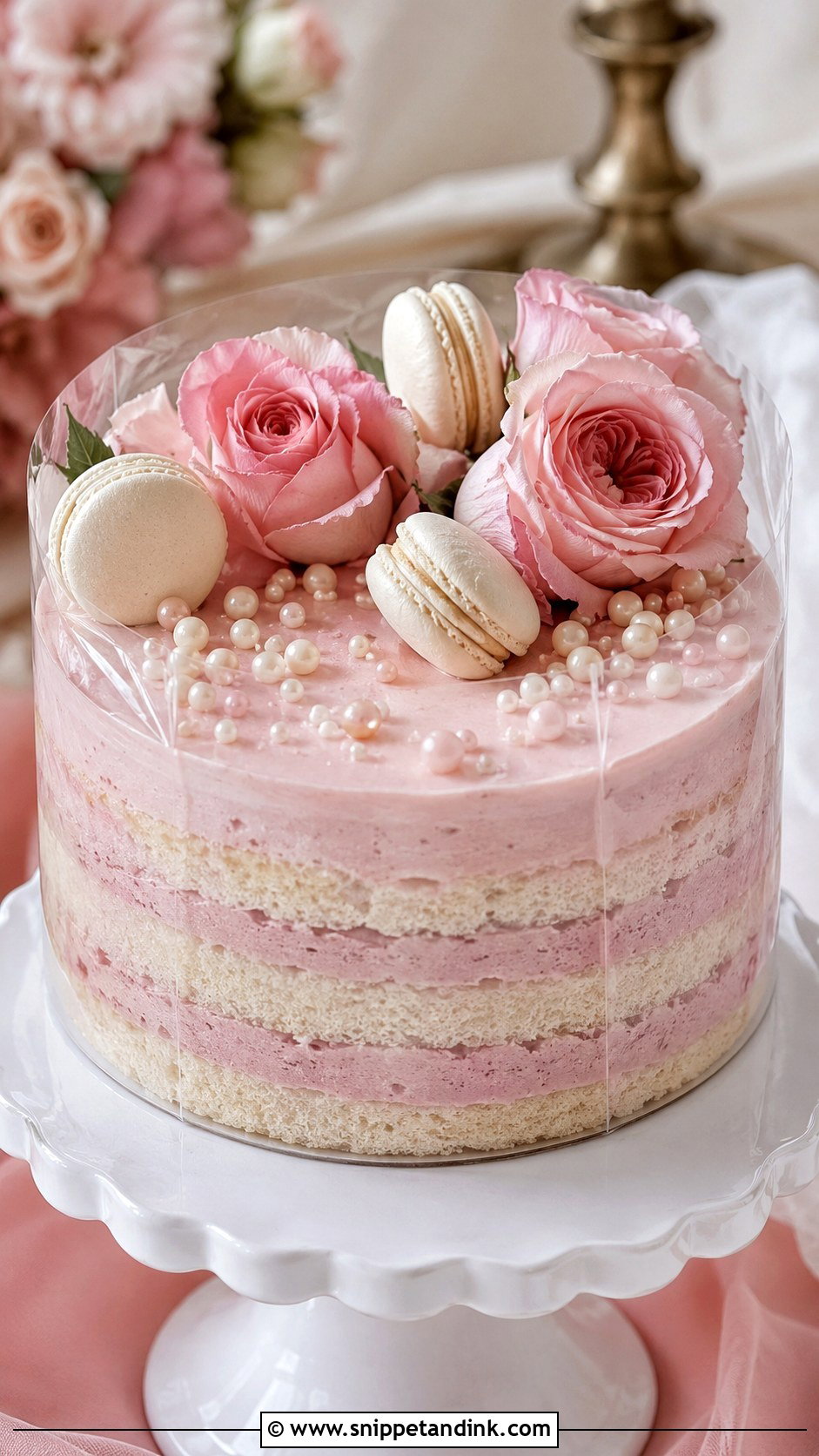
A blush band shows through the collar as a soft ring of colour around the cake. Vanilla sponge with strawberry cream, raspberry mousse or rose buttercream gives that pale pink naturally. I tint sparingly, since pink cream deepens as it sits and a shade that looks right at assembly can read candy-pink a day later. The top stays smooth with fresh roses, macarons or sugar pearls. It pairs easily with blush bridesmaid dresses and garden flowers. Keep the shade muted and let the collar give the sides their crisp edge.

15. Acetate Wedding Cake With Tall Layers
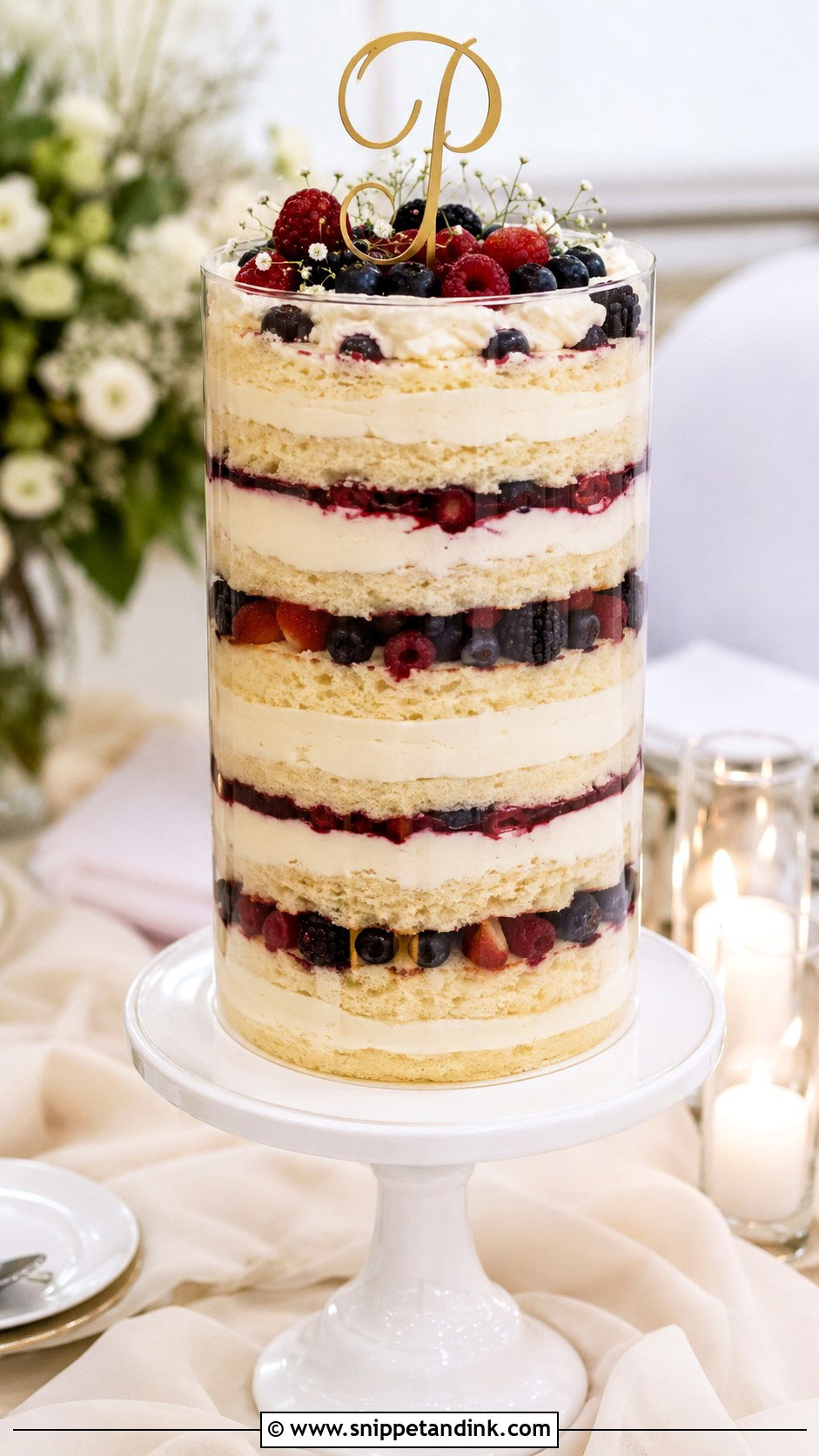
Height is where acetate is genuinely structural. A tall single tier of many thin layers would bulge and lean without support while the filling sets, and the collar holds it straight in the fridge. Built well, a tall tier looks as impressive as a small stacked cake. I like ivory vanilla sponge with alternating cream and berry filling, finished with flowers, berries or a simple gold topper. For anything above about double height, I add a central dowel and a cake board midway, because soft fillings compress under their own weight. Intimate weddings with a styled dessert table suit it.
16. Acetate Wedding Cake With Ombre Cream
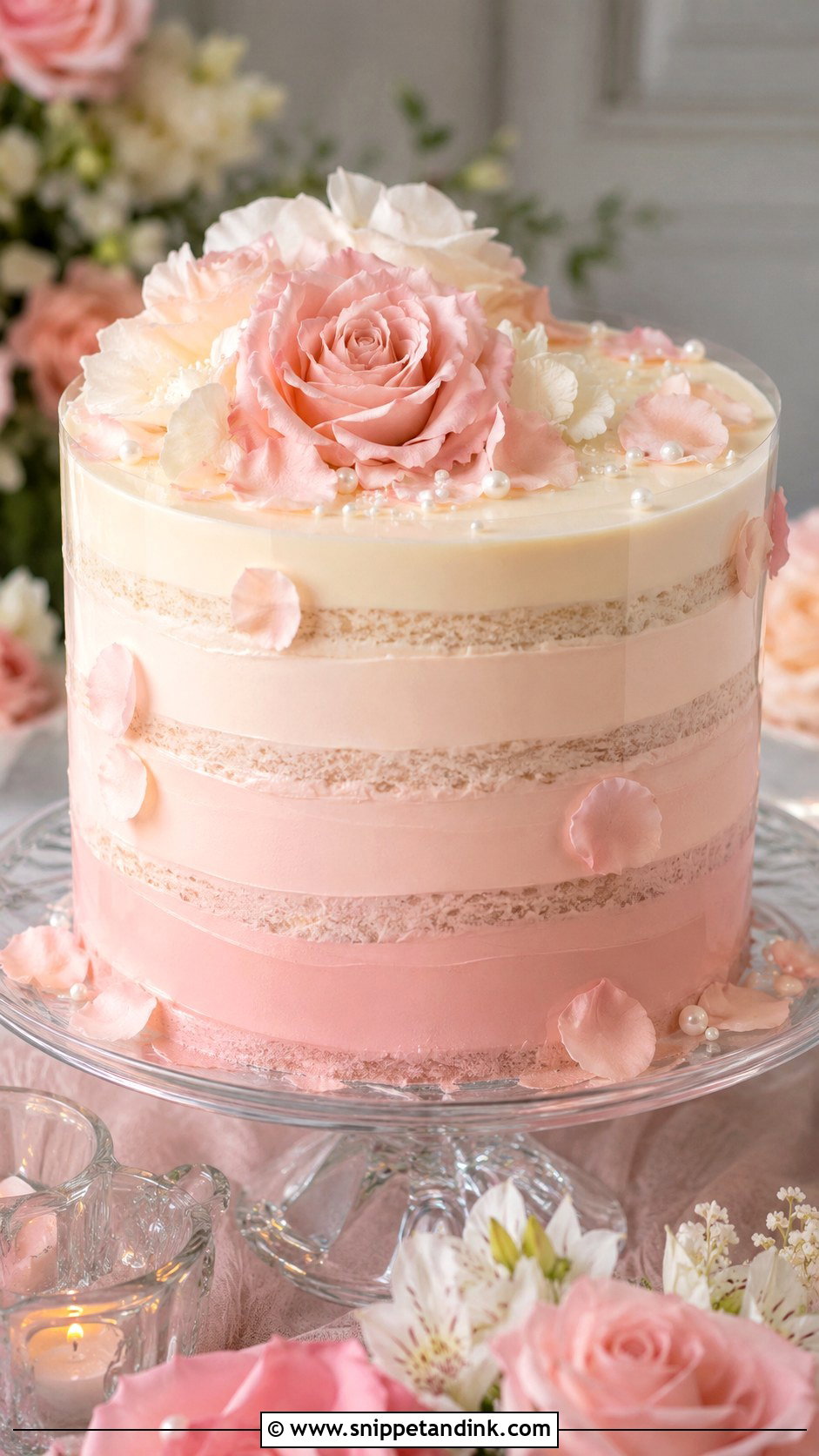
Ombre behind acetate reads as a smooth band of shifting colour. Ivory to blush, white to lavender and champagne to pale peach are the wedding-friendly ranges. I build it from tinted mousse or buttercream layers over vanilla sponge, and the collar holds each ring of cream perfectly level while the cake sets. The colour graduation is planned before mixing: I split one base batch and tint each portion a step deeper, which keeps the tones related. Decorate lightly so the ombre stays the focus, with a few matching flowers or sugar petals. It suits pastel palettes and romantic, soft-coloured weddings.
17. Acetate Wedding Cake With Floral Wrap
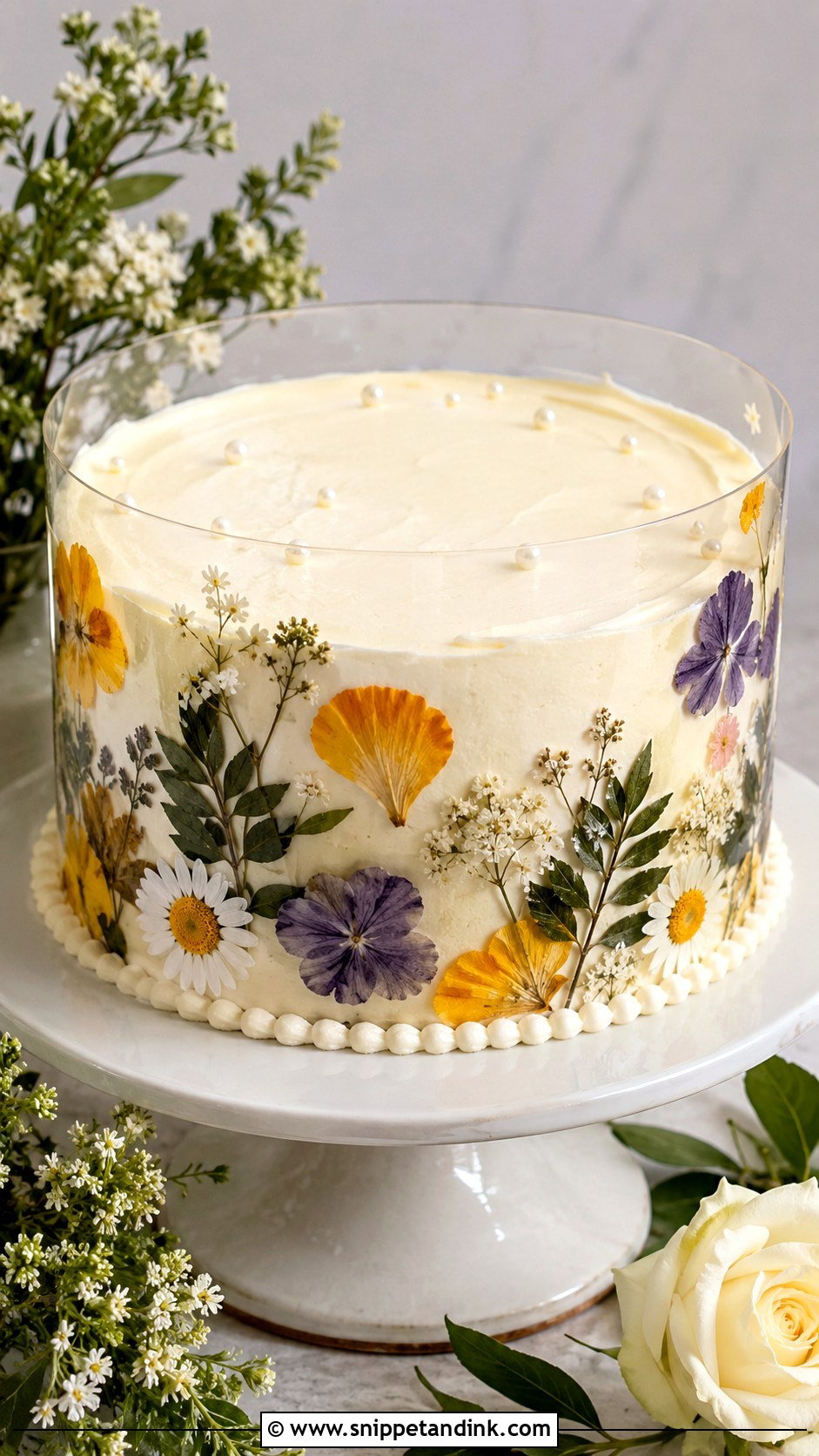
Here the collar becomes a display window. Small edible flowers, pressed petals or a thin printed floral sheet sit around the sides like a wreath. The cake underneath should be plain, vanilla sponge with ivory cream or lemon cake with whipped frosting, so the wrap doesn’t feel crowded. Printed sheets need the collar left on until serving, since they soften once exposed to the room. One matching flower cluster on top finishes it. Spring weddings and botanical receptions get the most from it.
18. Acetate Wedding Cake With Naked Layers
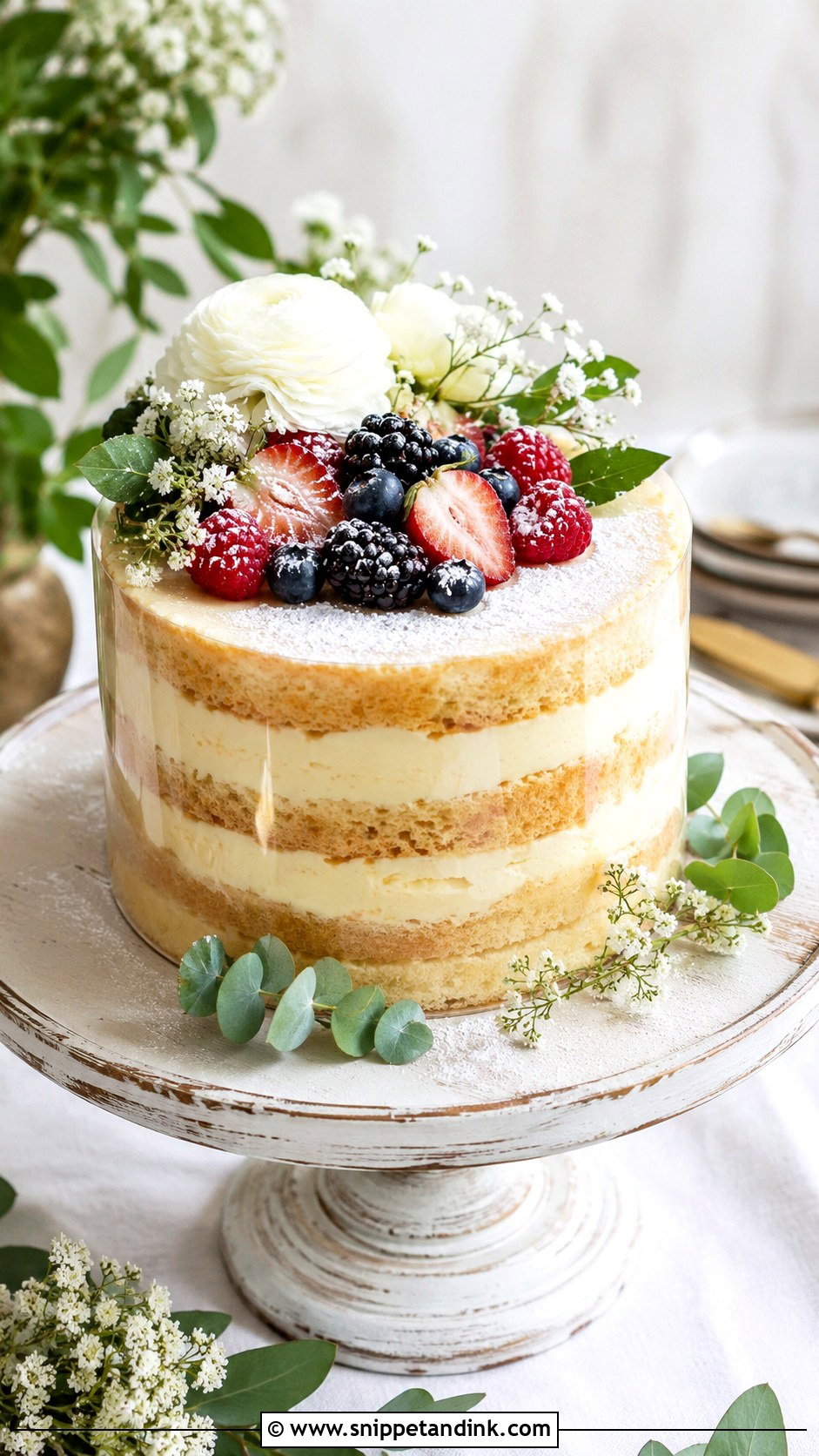
A naked cake inside a collar is the tidy version of the rustic look. Instead of scraping frosting unevenly on the outside, the acetate shows clean sponge and filling lines. The weak point of any naked cake is drying out, since exposed sponge loses moisture fast, and the collar actually protects it until it’s unveiled. Vanilla, almond or lemon sponge with soft cream and fruit filling, fresh flowers, berries and a dusting of icing sugar on top. Leave the collar on for display or take it off before serving. Barn weddings and relaxed garden receptions suit it.
19. Acetate Wedding Cake With Mini Tiers
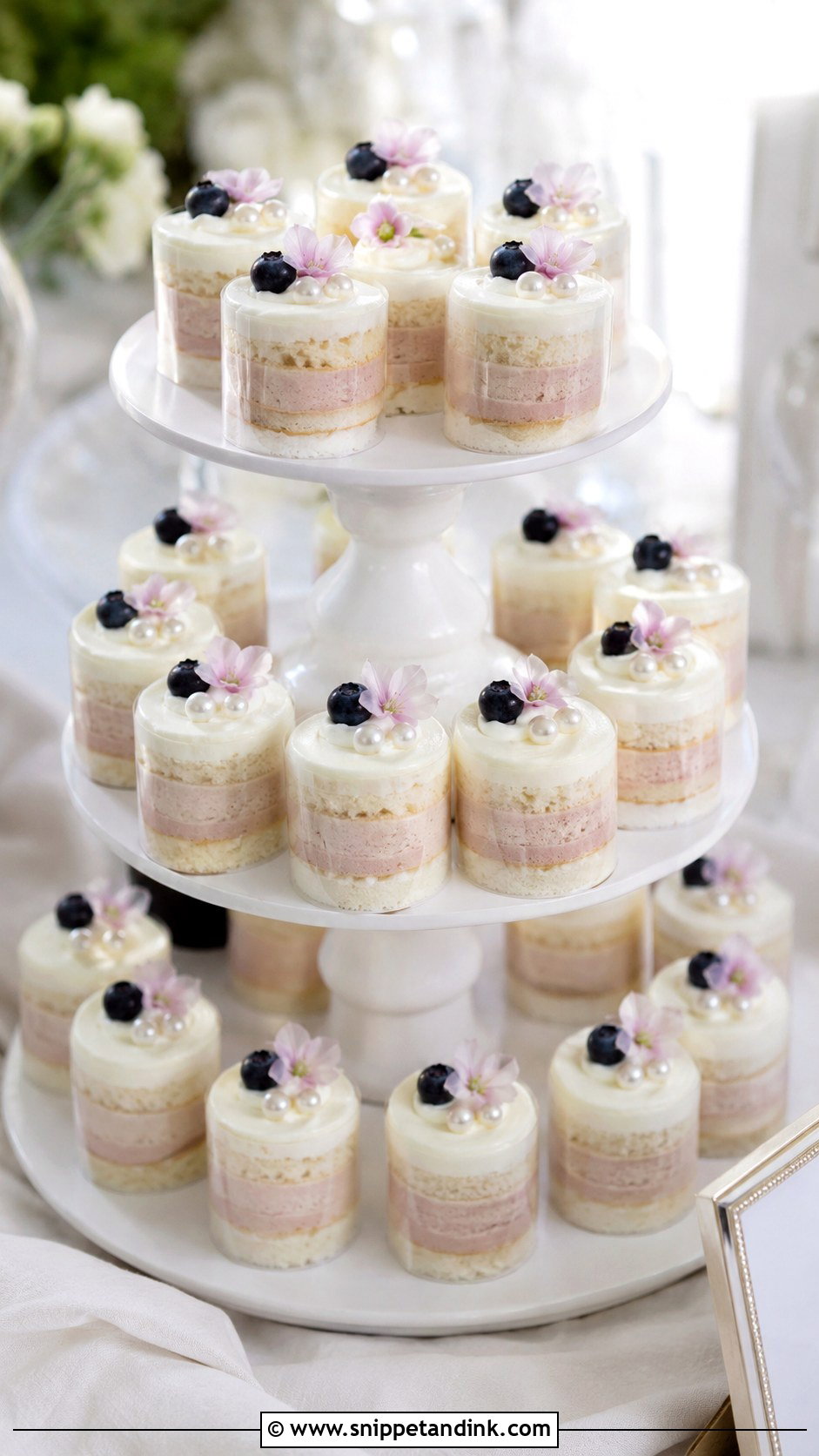
Mini tier acetate wedding cakes suit small weddings, dessert tables or a plated cake course. Each little cake gets its own collar, showing tiny layers of sponge, mousse, cream and fruit, like a plated dessert from a patisserie counter. Ivory, blush, pale yellow and champagne keep them bridal, with one berry, one flower or a tiny pearl cluster on top. Minis take far more labour per guest than slicing a large cake, which is worth knowing before you compare quotes. Serving is simpler, though, and nobody has to wait for cutting.

20. Acetate Wedding Cake With Floating Flowers
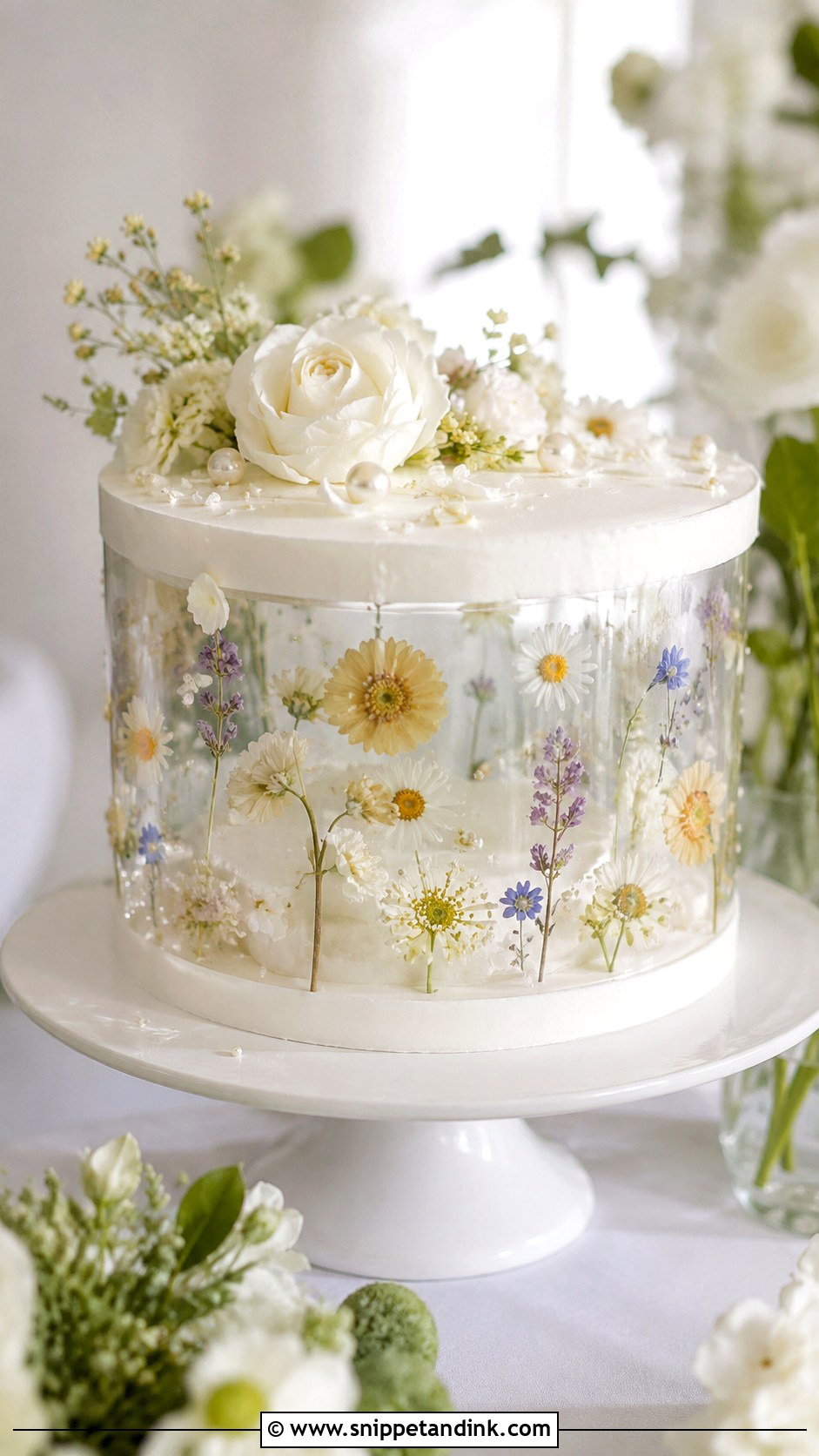
Floating flowers look suspended around the cake because they’re set into a clear or very pale layer pressed against the collar. A clear jelly or pale mousse makes the effect work; opaque buttercream hides half the bloom. For a wedding I use ivory sponge, vanilla mousse and small edible flowers in soft colours, with a few matching blooms and pearl details on top. The collar holds everything close until the layer sets. It’s the most delicate design on this list and the least forgiving in heat, so it suits a cool indoor reception better than an afternoon marquee.
Fogged Collars, Weeping Fruit and a Warm Marquee
The most common problem with an acetate cake isn’t collapse, it’s condensation. A cake straight from a cold fridge into a warm, humid room fogs up on the inside of the collar within minutes, and for a while nobody can see the layers. I deliver collared cakes in a cooled van, let them sit in the venue fridge, and bring them out a short time before guests reach the dessert table so the fog clears before anyone takes photos.
Fresh fruit adds a second risk, because cut fruit releases juice that runs down the clear side. Whole berries, dried cut faces and a thin barrier of ganache or firm cream between fruit and sponge keep it clean. For an outdoor summer wedding without reliable shade or a fridge, I’d point you to a buttercream or chocolate-collar design rather than mousse or whipped cream.
Settle These Details at the Tasting
- Will the collar be on or off when the cake is displayed, and who removes it on the day?
- Does the venue have fridge space tall enough for the cake on its board?
- How long can this particular filling sit out before it softens?
- Who cuts the cake, and do they know a mousse cake slices cleanest with a knife dipped in hot water and wiped between cuts?
A baker who answers these without hesitating has made collared cakes for events before. If the answers are vague, ask to see a past acetate wedding cake on its display stand, not just a studio photo.
Clear Sides Hide Nothing, So Plan for That
Acetate turns simple ingredients into something that looks precise. The collar can support mousse, frame fruit, shape chocolate, show buttercream stripes or hold flowers in place, and the result looks finished from every side of the table. Pick the inside you’d most like guests to see, whether that’s pressed flowers, berries, pearls, mirror glaze or blush cream, then keep the colours gentle and the decoration restrained. Most of the work is invisible: level layers, cold storage and a careful drive to the venue. Get those right and the cake will look as clean at the cutting as it did in the kitchen.
You'll Like These Ideas:






Leave a Reply