
Expensive-looking gowns rarely get that way through decoration alone. When I pull dresses for a bride who wants something grand, I look at the cut, the weight of the fabric and how cleanly the inside is finished long before I look at the beading. Right now that means sculpted bodices, basque and dropped waists, heavy satins, couture lace, bows and detachable overskirts. The most embellished dress on the rail is often not the one that wins. The one that wins suits your venue, lets you move, and still looks right from the back of the room. Below are the luxury silhouettes and details I reach for most, with what I check before recommending each.
What Separates a Couture Gown From a Pretty One Up Close
Photos flatten everything, so the details that make a gown worth its price only show in person. When a bride brings me a shortlist, I check the same things on every dress before we even talk about style.
- The inside. A well-made gown has clean seam finishes, a full lining and boning channels that lie flat. Lumpy seams inside become visible ridges outside under flash.
- Fabric weight in the hand. Real mikado and duchess satin have body; they stand away from the figure. Thin polyester satin collapses and shines in a slightly plastic way.
- How lace meets lace. On good gowns the motifs are cut out and overlapped by hand at the seams so the pattern never breaks. Where the pattern stops dead at a seam, it was cut straight off the roll.
- Hem and train finishing. A horsehair braid or faced hem keeps a skirt from flipping under. Turn the train over and look.
None of this needs to be expensive to be right. A simple crepe gown with excellent construction will look richer in the album than a heavily beaded one that is poorly put together.
1. Luxury Satin Ball Gown
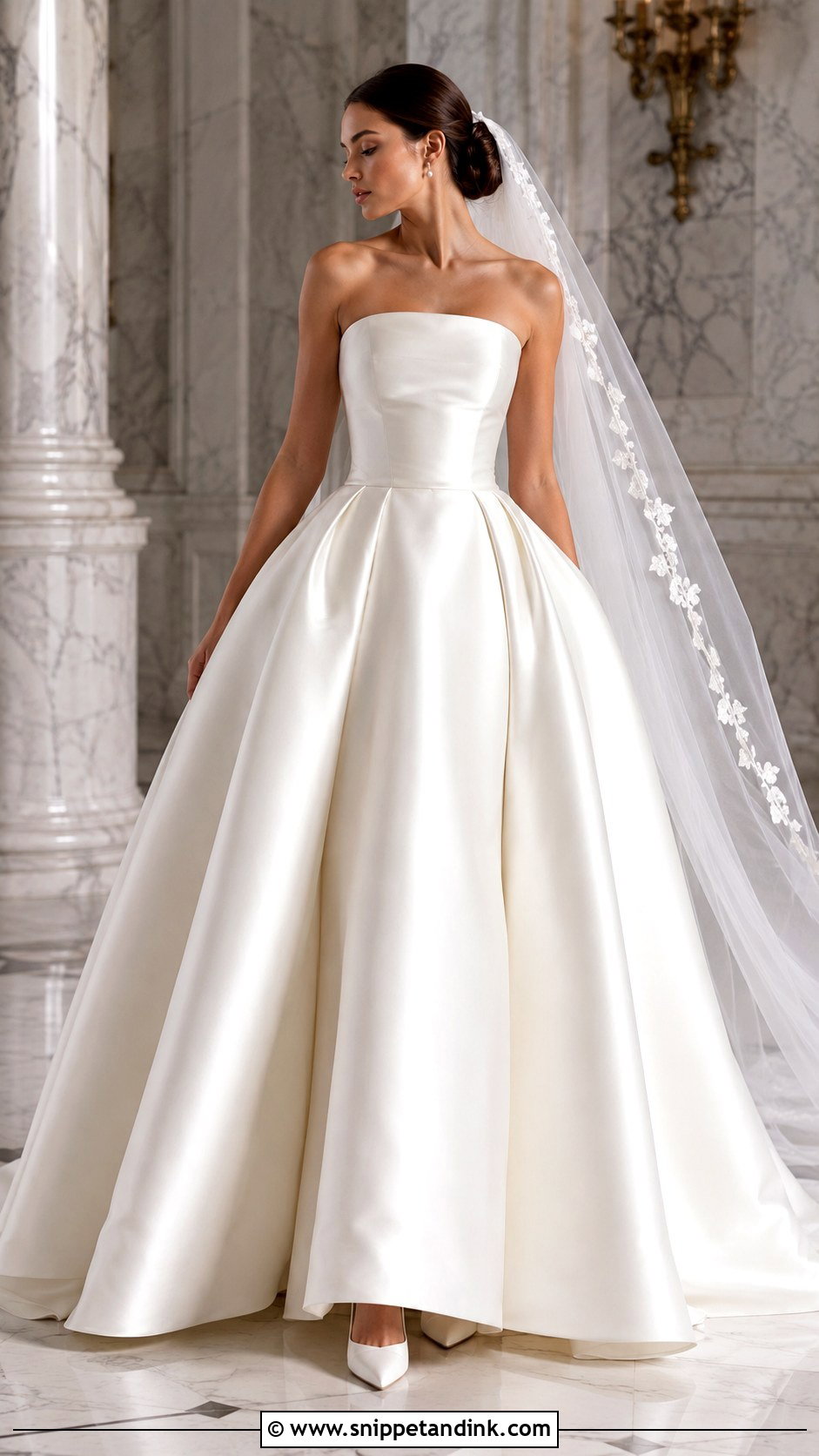
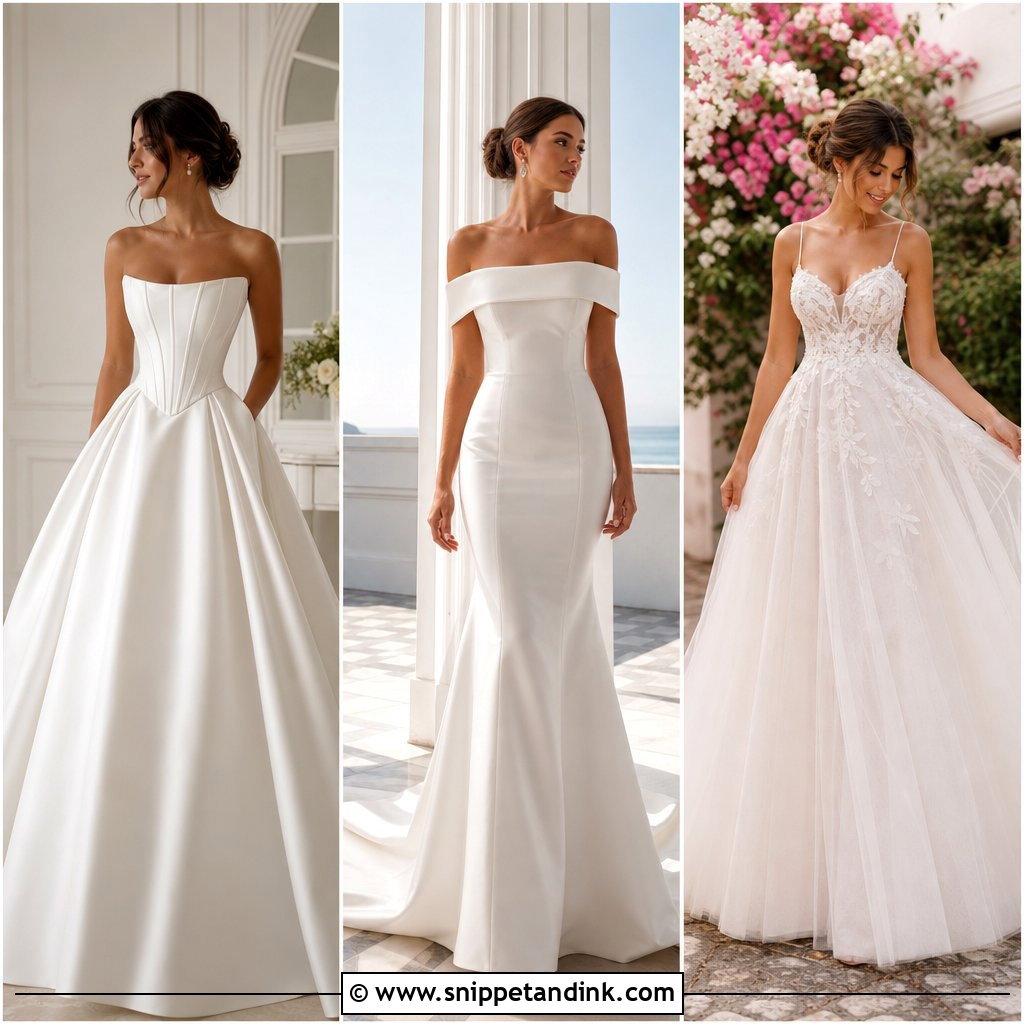
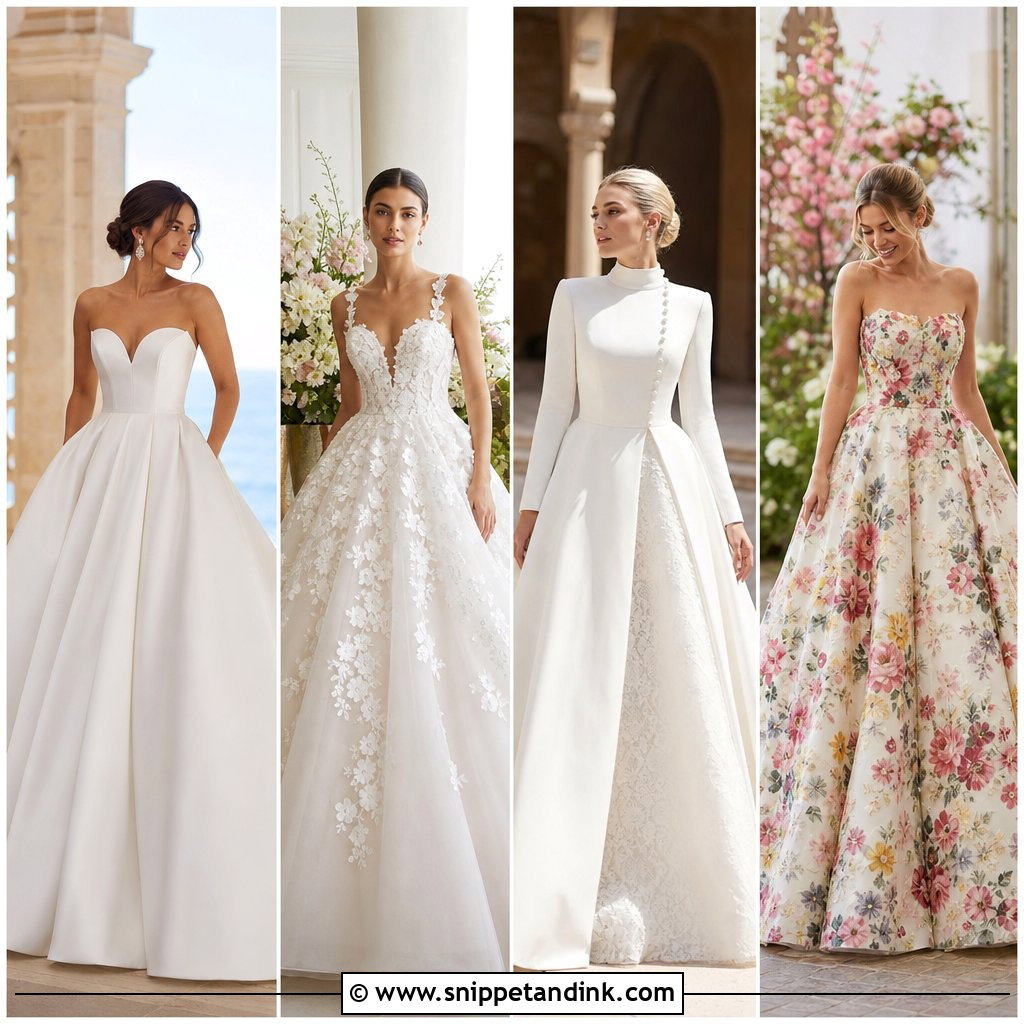
A satin ball gown makes a grand entrance with almost no sparkle, because the fabric does the work. Look for duchess satin, silk satin or a structured mikado over a fitted bodice. The first thing I do in the fitting room is ask the bride to sit: heavy satin creases across the lap, and a cheaper satin holds those creases for the rest of the evening. Strapless reads classic, a square or off-shoulder neckline reads newer. Keep the extras quiet with a cathedral veil, pearl studs and pointed satin pumps, and save it for a ballroom or a formal hotel where the skirt has space.
2. Luxury Lace Wedding Gown
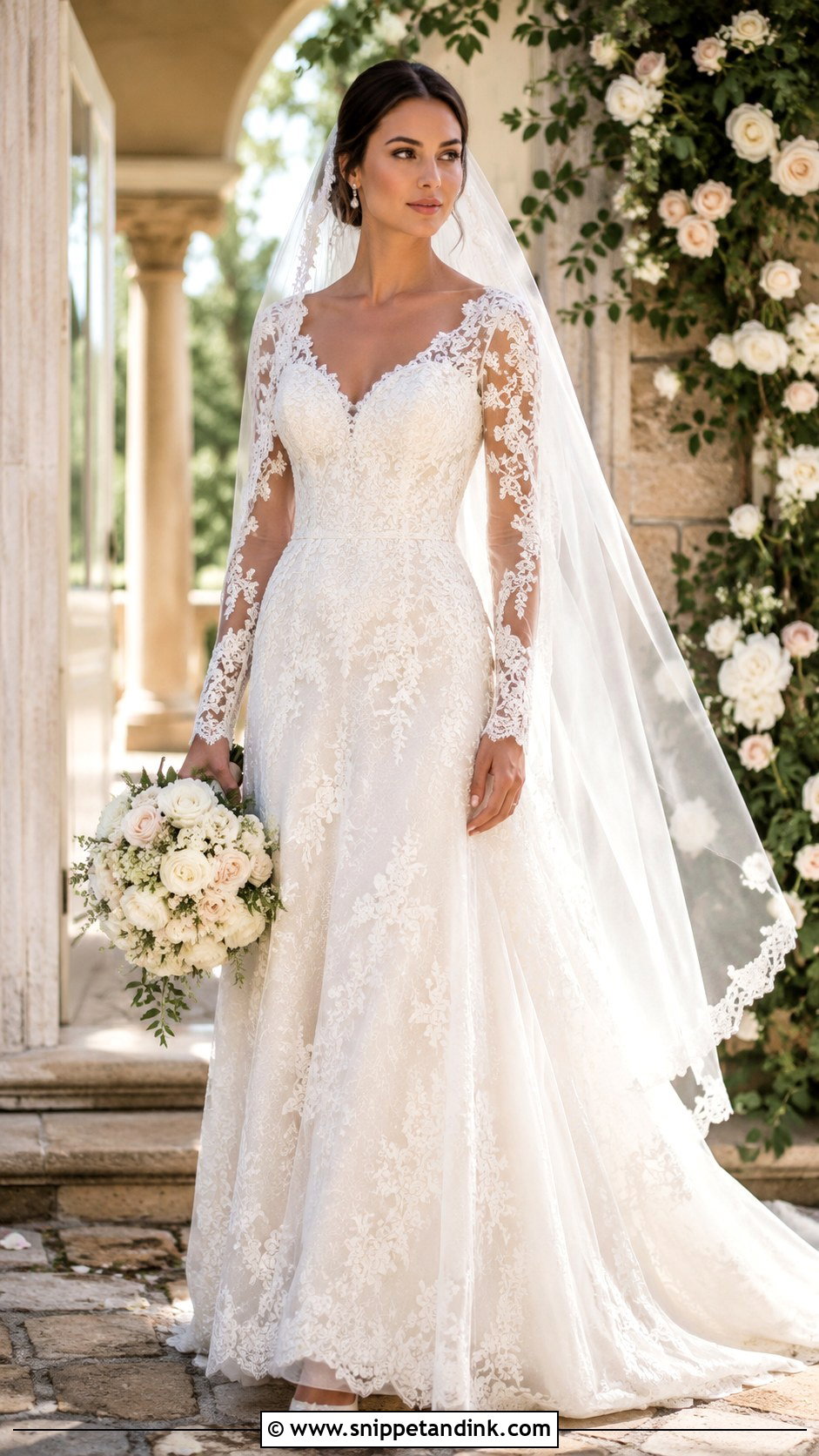
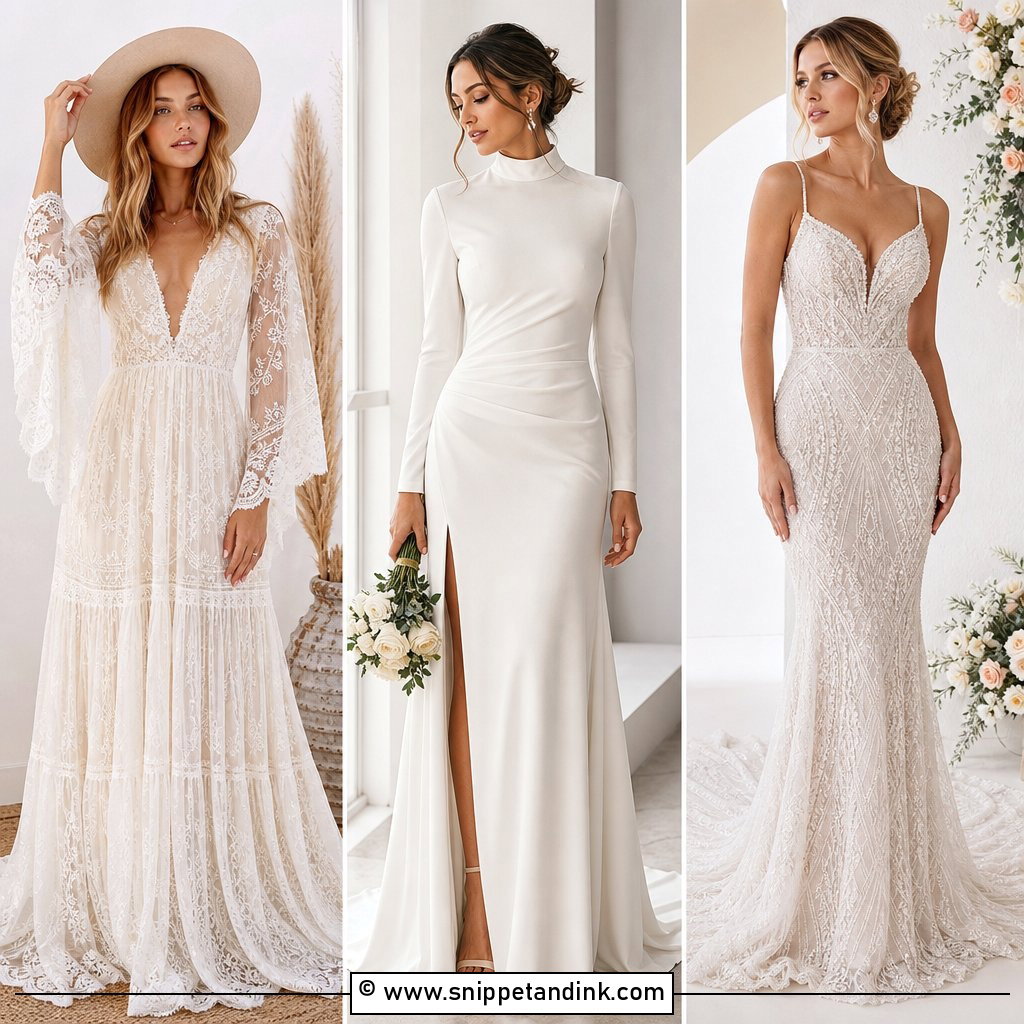
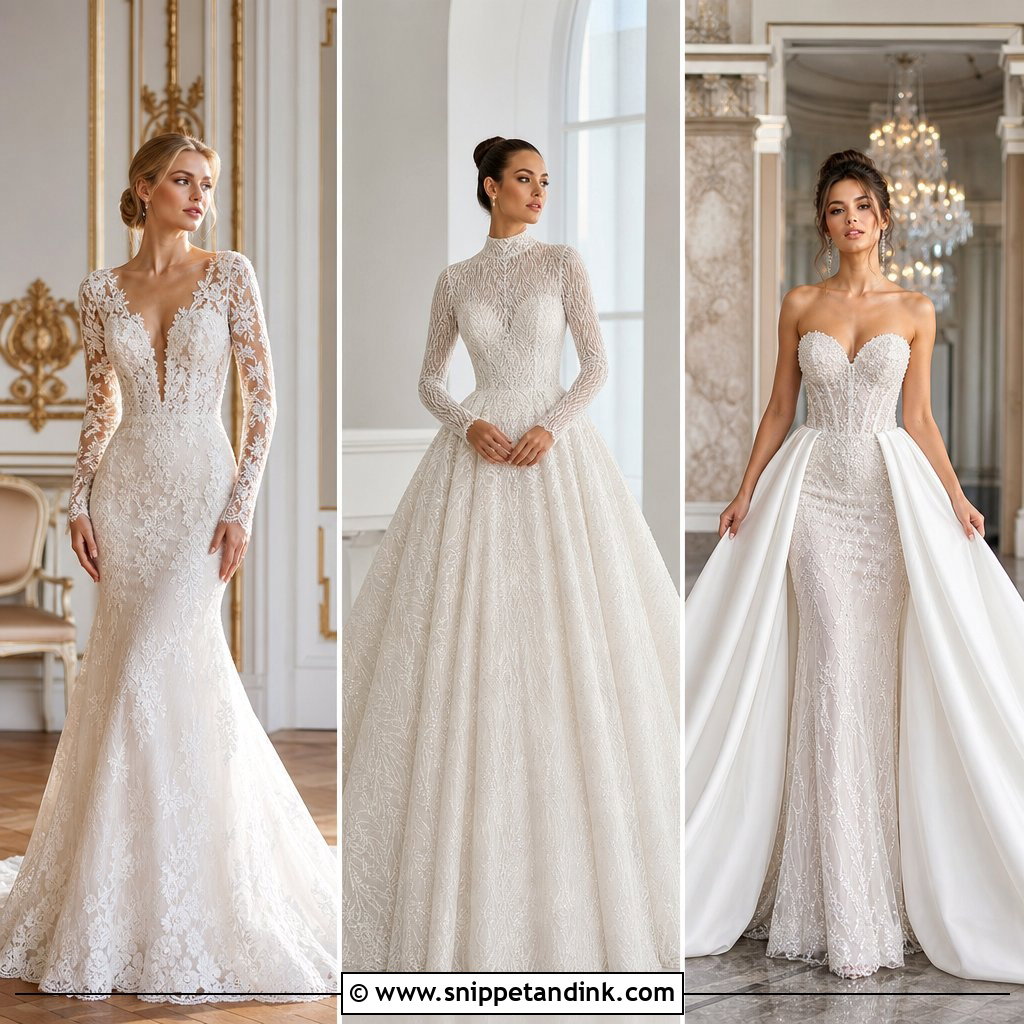
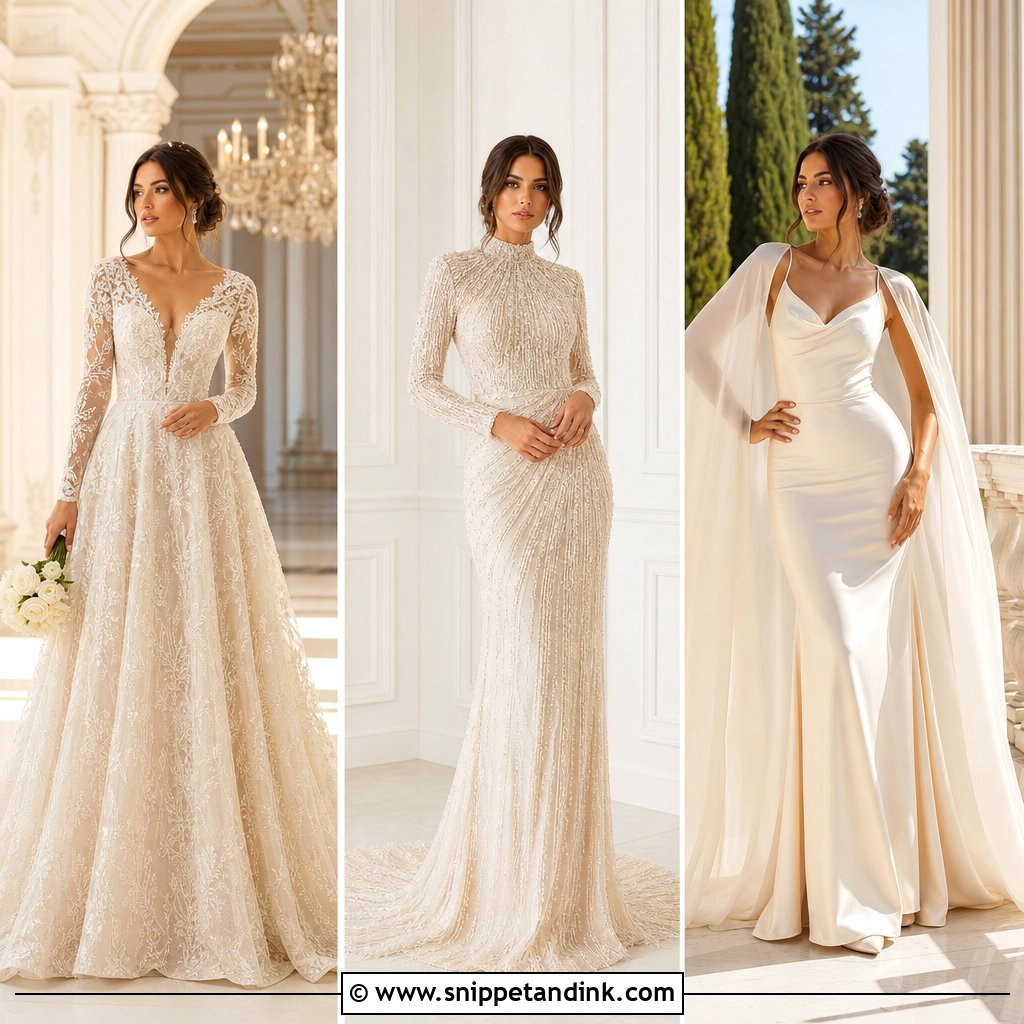
Lace is where you can actually see the money. Start with fine Chantilly lace, which is soft and flat. Alençon has a corded outline that gives motifs definition, and layered appliqué is what makes a gown look couture. I turn the bodice inside out to check whether the motifs were cut and hand-placed or simply run off the bolt. Long lace sleeves suit cooler months; a strapless lace bodice feels fresher in a garden. If the neckline is busy, skip the necklace entirely.
3. Luxury Minimalist Wedding Gown
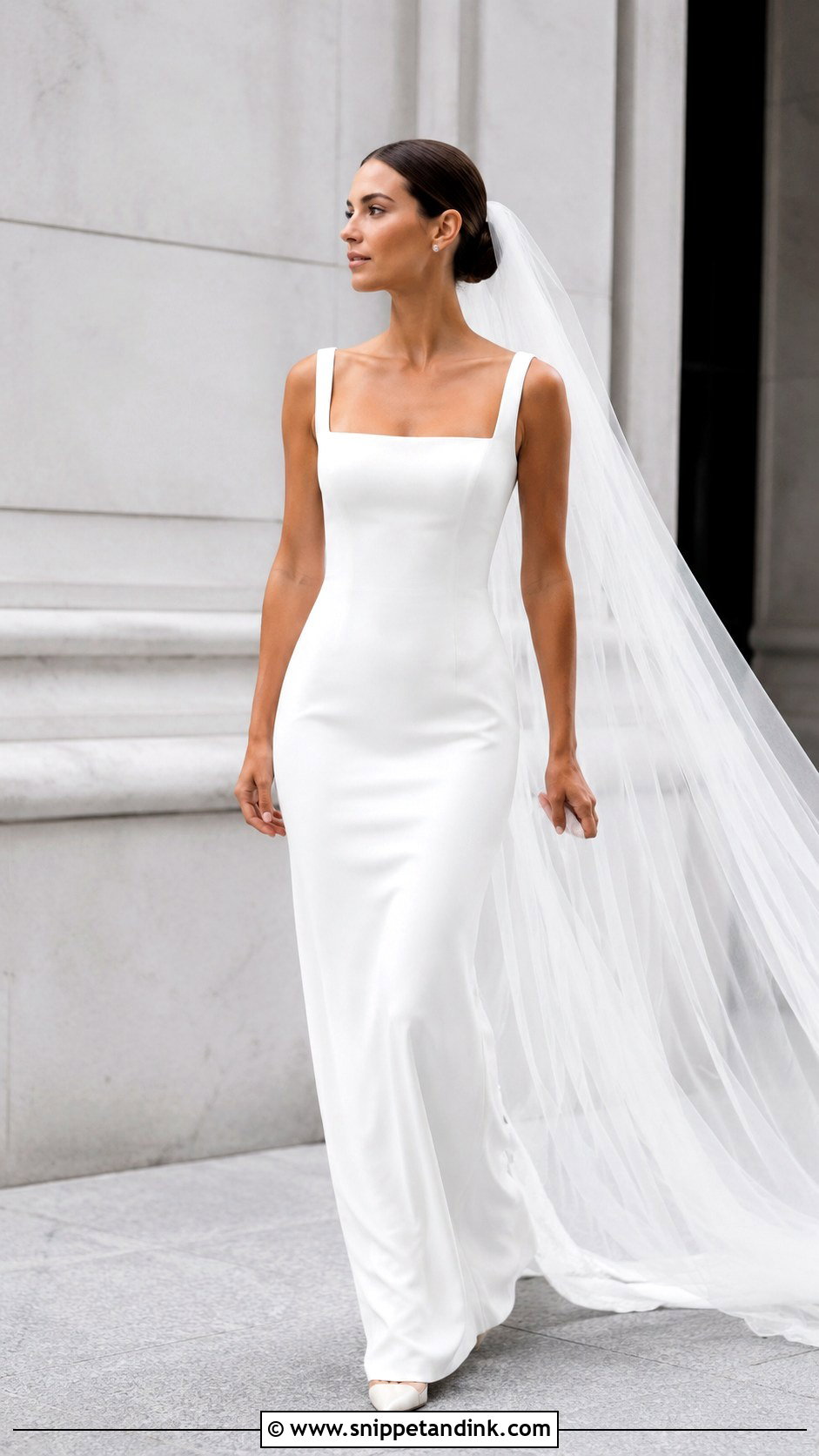
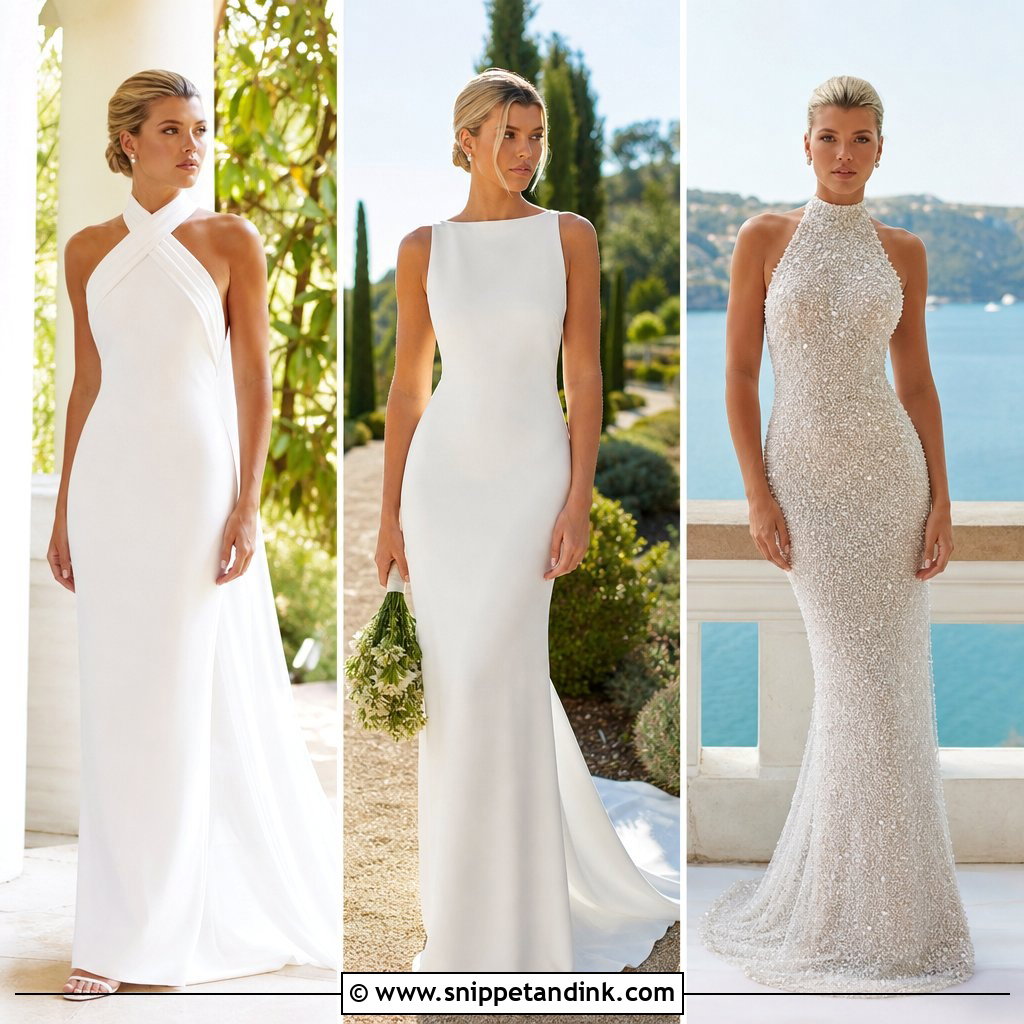
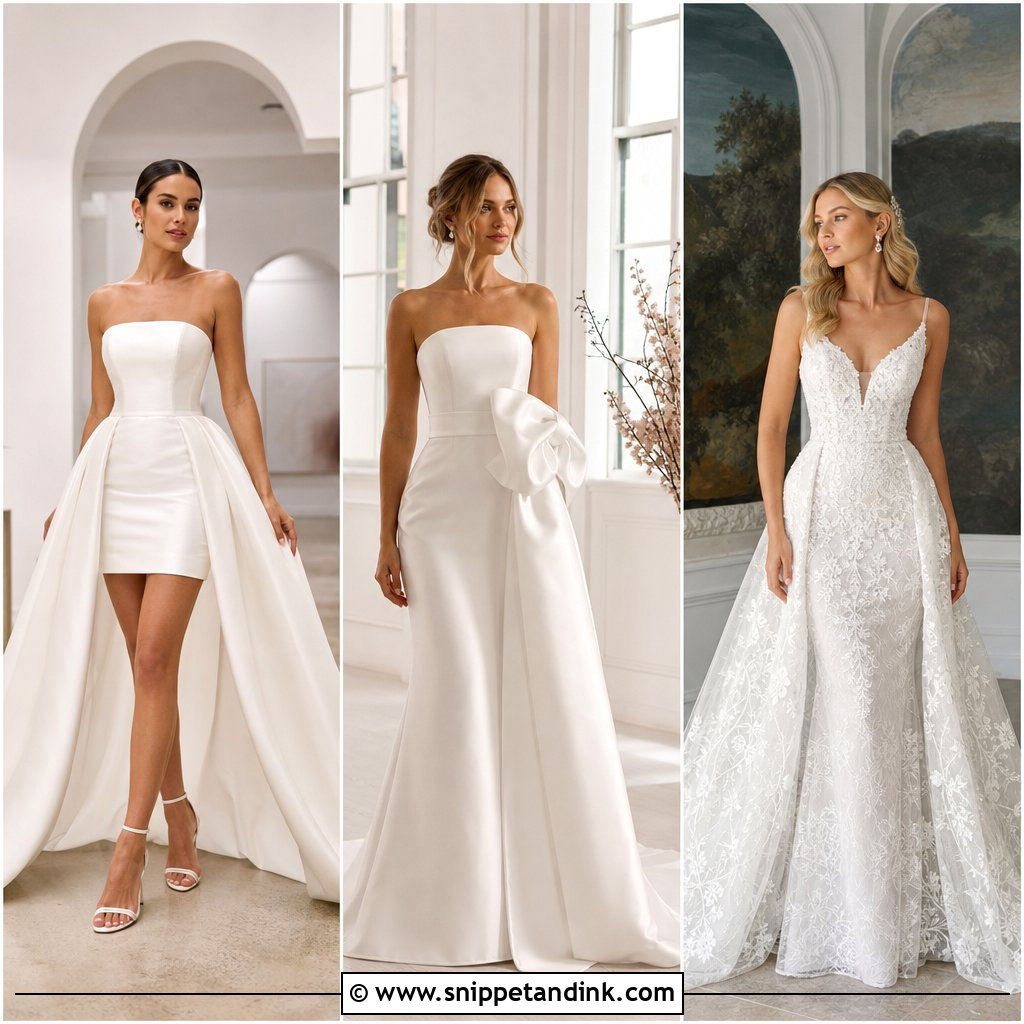
Minimal gowns are the hardest to fake. With no lace or beading to hide behind, every seam and dart is on show, so I only recommend this route when the fit can be perfect. Silk crepe, matte satin and faille all work in a column, A-line or fit-and-flare. Watch out for crepe that is too thin: it shows underwear lines and every pinch of the zip. A low bun, a plain cut-edge veil and small studs finish it, and it suits city hotels, galleries and small ceremonies. Of everything here, this is the look least likely to date your photos.
4. Luxury Off Shoulder Wedding Gown
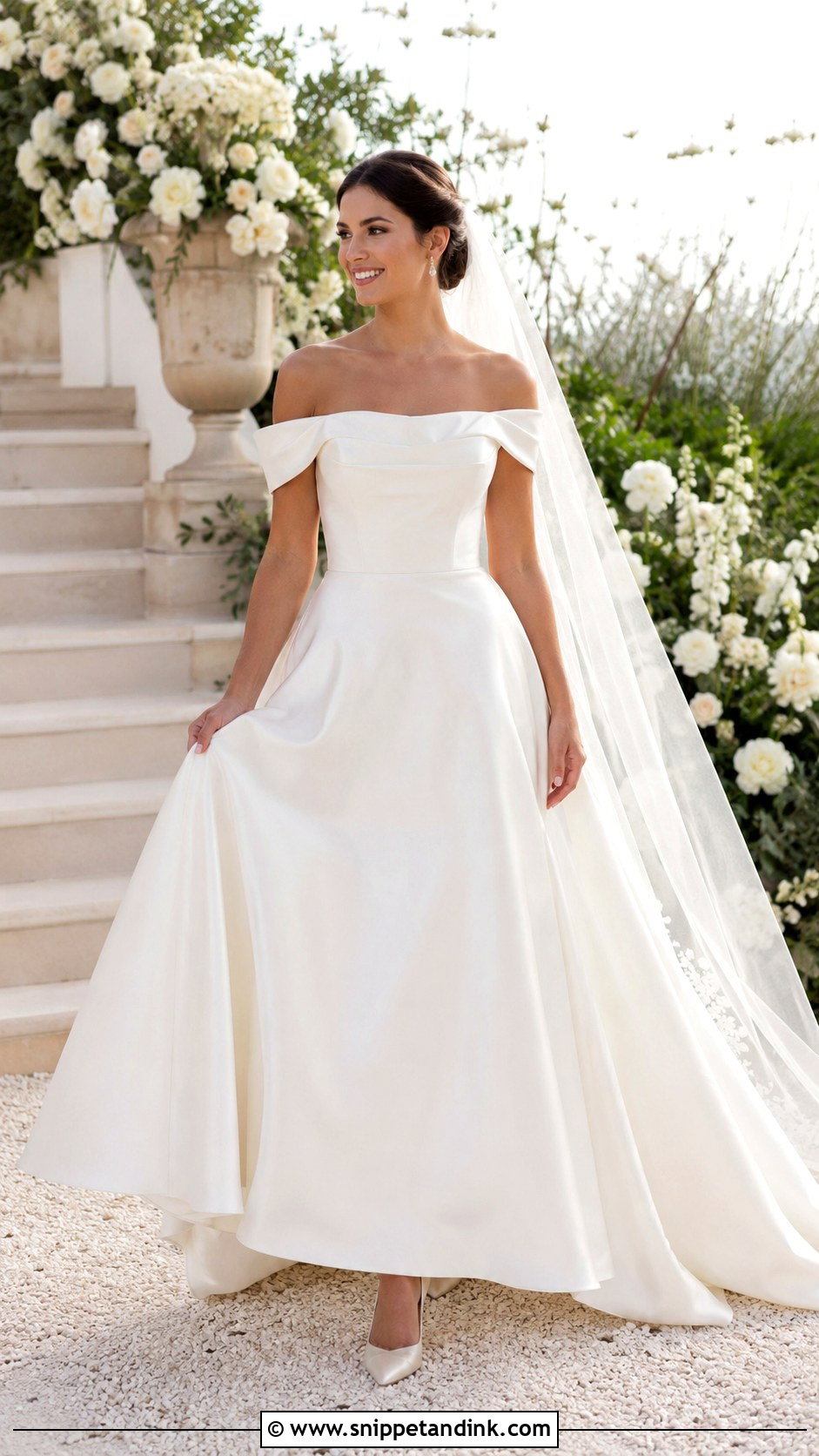
An off-shoulder neckline shows the collarbone and works on fitted, A-line or ball gown shapes. The thing I test at every fitting is arm movement. Ask the bride to hug someone and raise a glass; if the band rides up or digs into the arm, it needs internal elastic or a re-cut. Satin or mikado keeps it crisp, while lace or draped crepe softens it. A smooth updo and a chapel veil keep the neckline visible, and you rarely need any embellishment beyond that.
5. Luxury Long Sleeve Wedding Gown
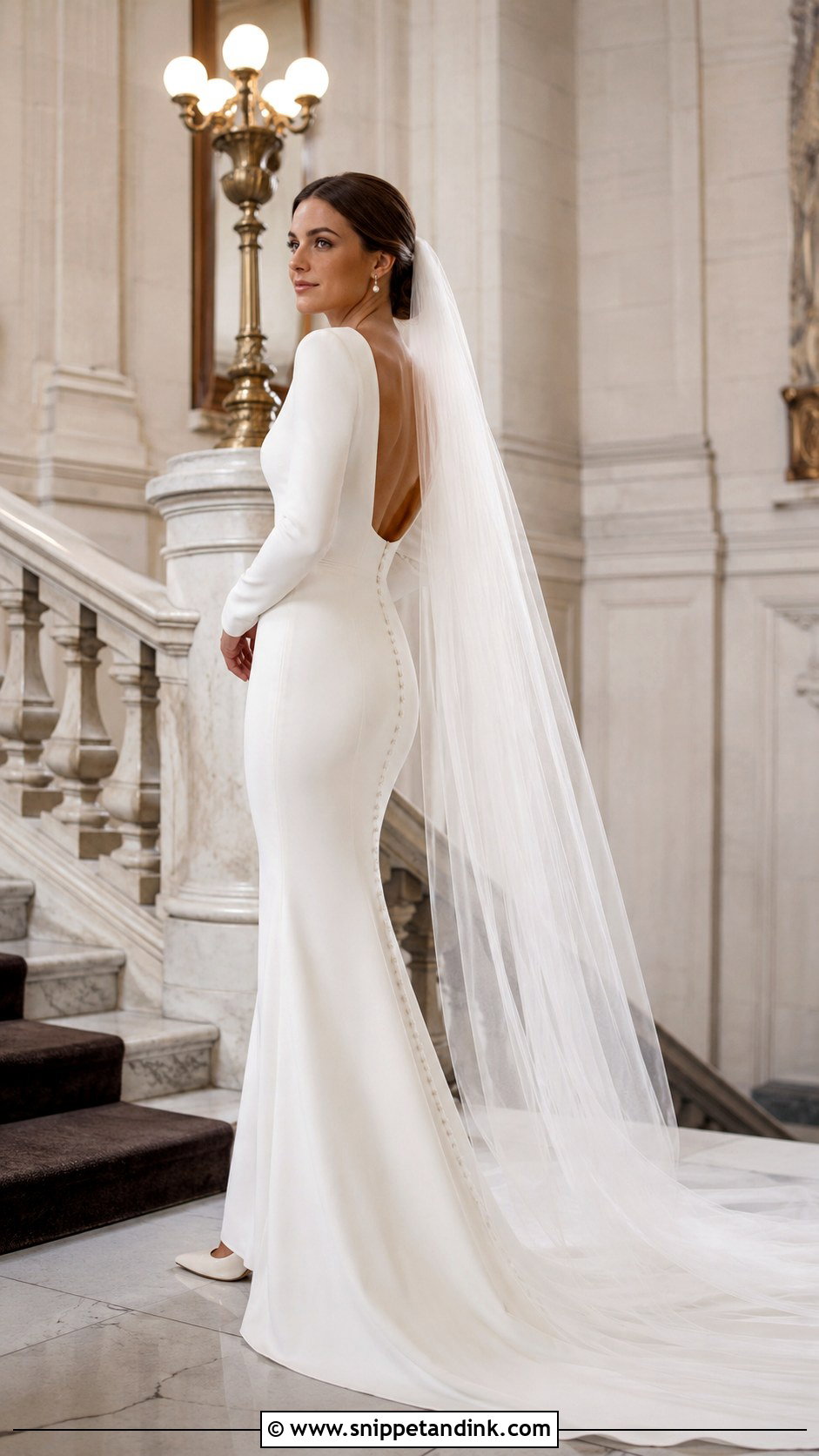
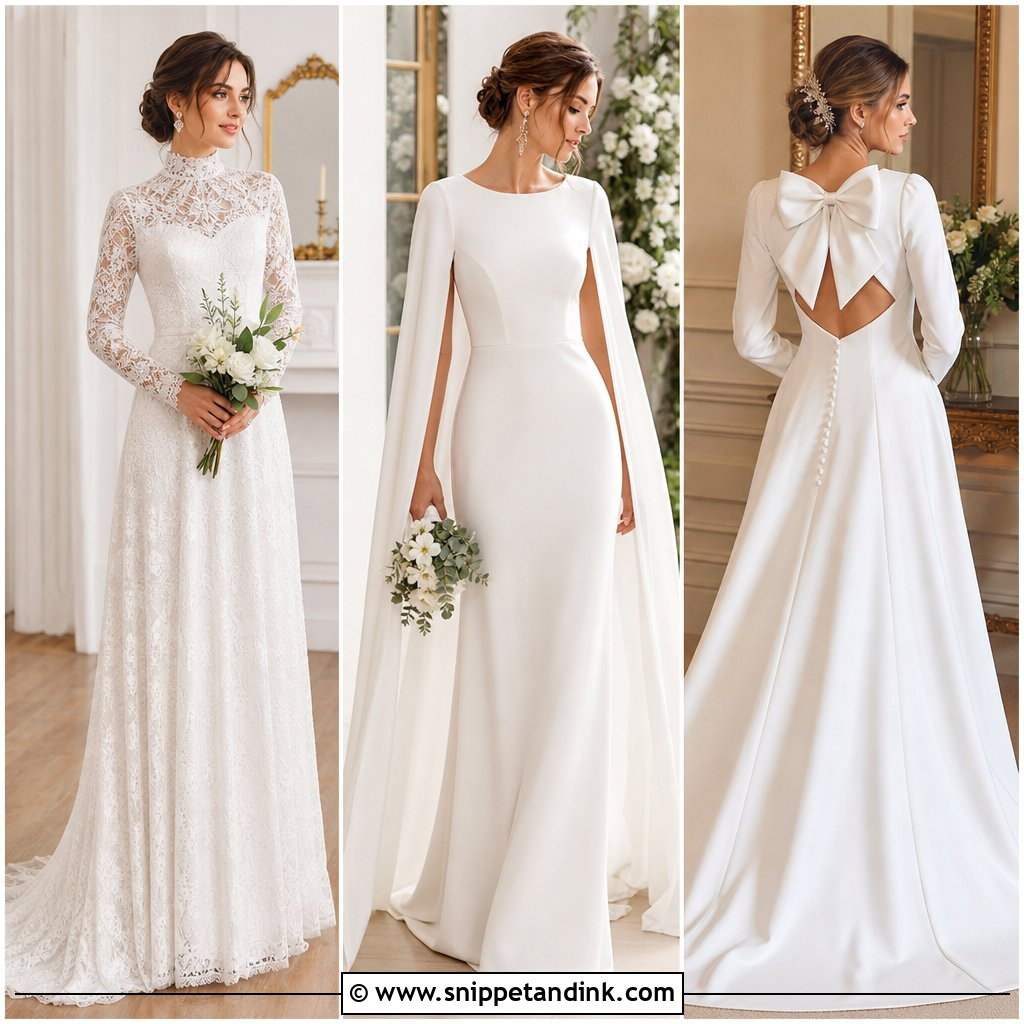
Sleeves change the mood of a gown more than any other detail. Fitted lace sleeves read romantic, sheer embroidered ones read couture, and plain crepe sleeves give that clean royal finish. Sleeves are also the first place a bad fit shows: too tight at the bicep and the bride can’t lift her arms for the first dance. I balance the coverage with an open back or a defined waist. For autumn, winter, evening ceremonies and historic venues this is my first suggestion, and the cuff detail gives close-up portraits something to hold onto.
6. Luxury Mermaid Wedding Gown
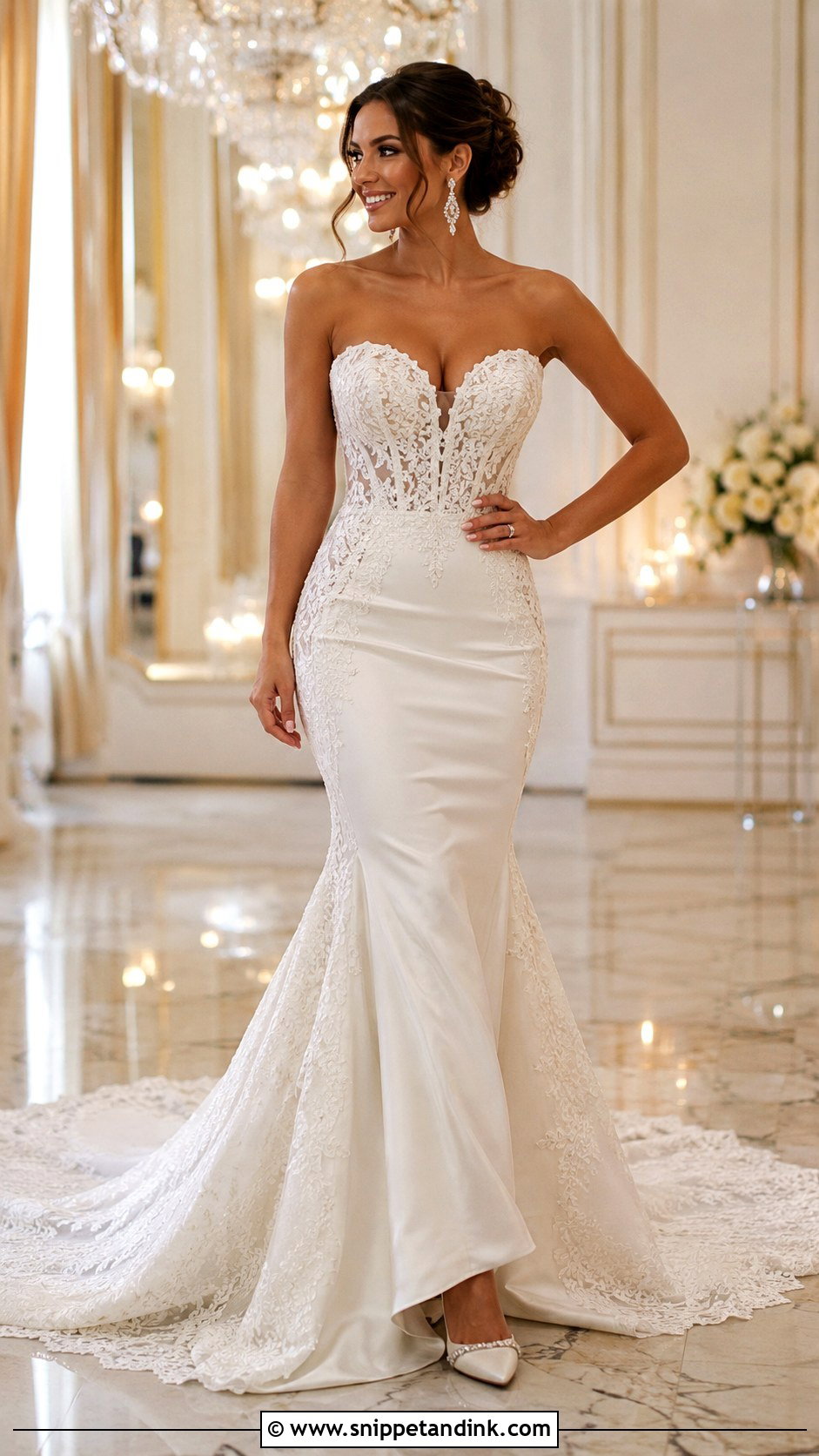
Mermaid shapes hug through the bodice and hips, then flare at the knee or lower thigh. That flare point matters more than anything else: I mark it while the bride stands in her actual shoes, because a flare set too low makes walking a shuffle and sitting nearly impossible. Satin, crepe, lace and beaded fabric all take the shape. A corset bodice adds support and a sweetheart neckline softens it. Keep the shoes sleek and the veil long, and save it for a black-tie reception or a ballroom.
7. Luxury A Line Wedding Gown
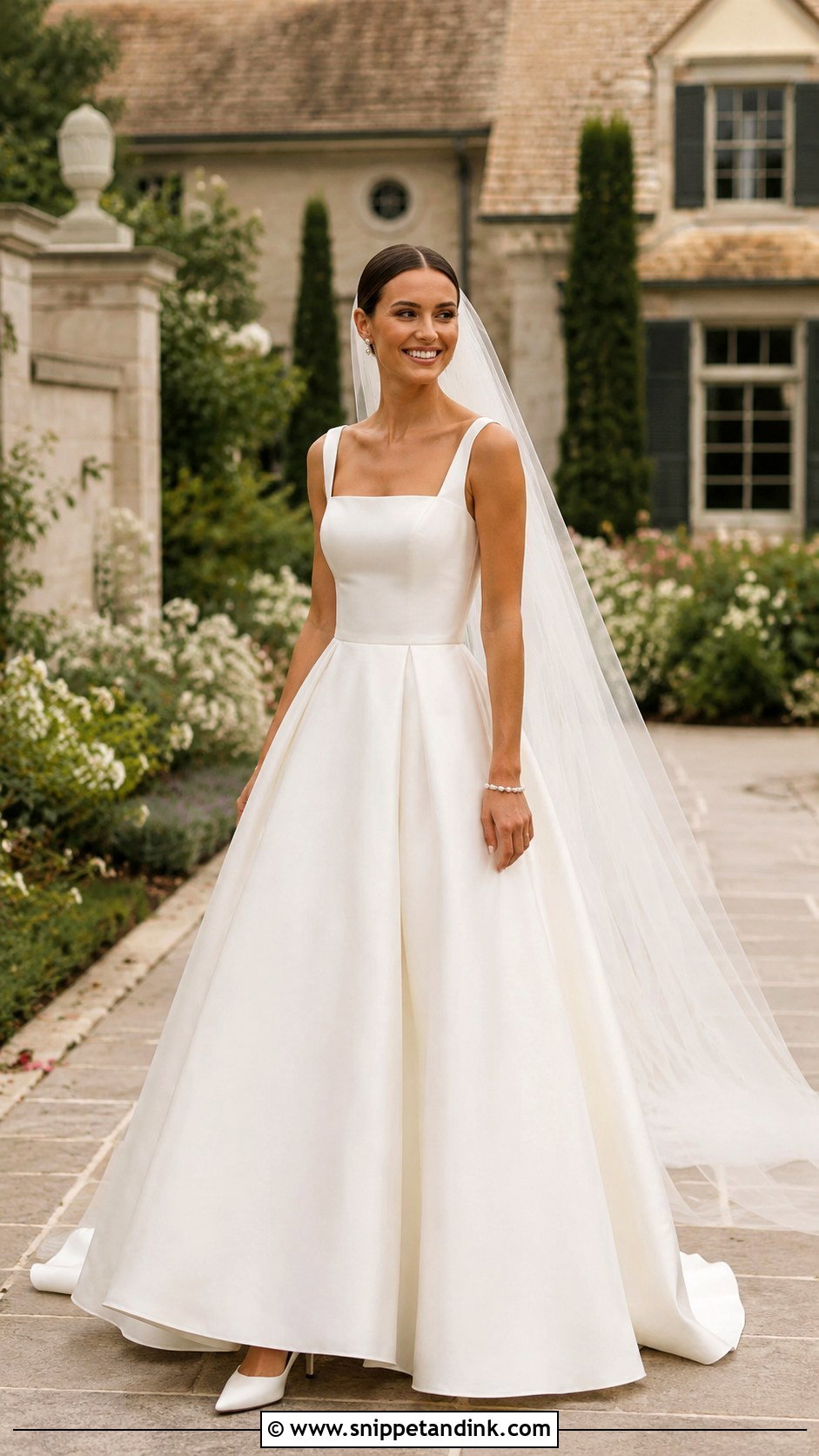
If a bride walks in unsure, I usually start with an A-line. It defines the waist, skims the hips and gives you a full skirt without a ball gown’s weight. Silk organza keeps it airy, mikado gives structure and appliquéd lace softens it. The detail that makes it personal is up top: a corset bodice, a square neck or fine straps. From gardens to resorts to formal halls, I struggle to think of a venue where it looks out of place, and you can dance in it.
8. Luxury Corset Wedding Gown
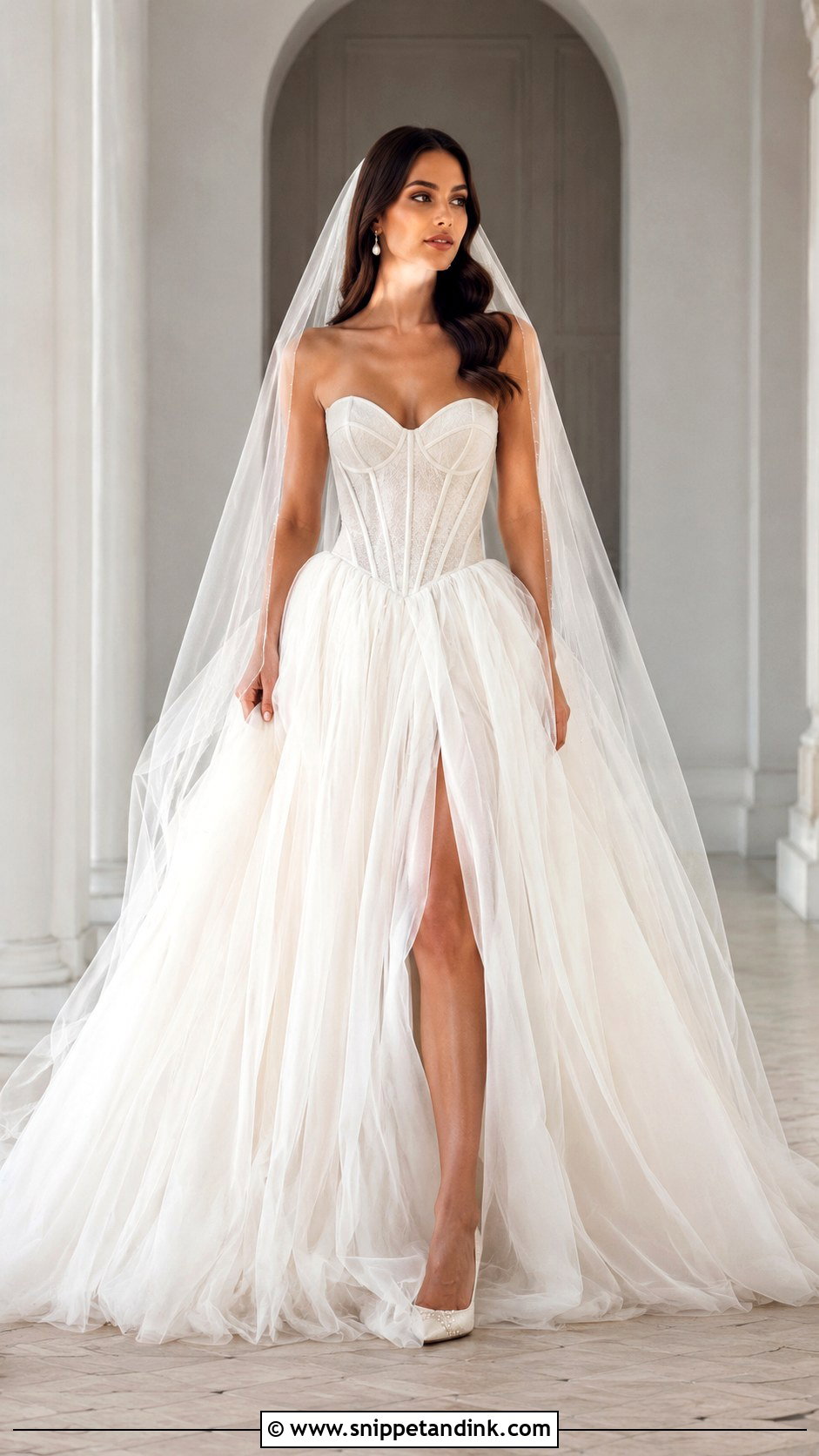
Corsetry is where you feel the craftsmanship as much as see it. Exposed boning gives a fashion edge, hidden boning gives a smooth sculpted line, and good boning is spiral steel rather than plastic, which kinks after a few hours of sitting. Pair the bodice with full tulle, satin or a slim crepe skirt depending on the drama you want. I have the bride breathe deeply and bend at the fitting, because a corset laced for the mirror is often laced too tight for a ten-hour day. Keep the earrings and veil simple so the bodice shape carries the portraits.
9. Luxury Pearl Wedding Gown
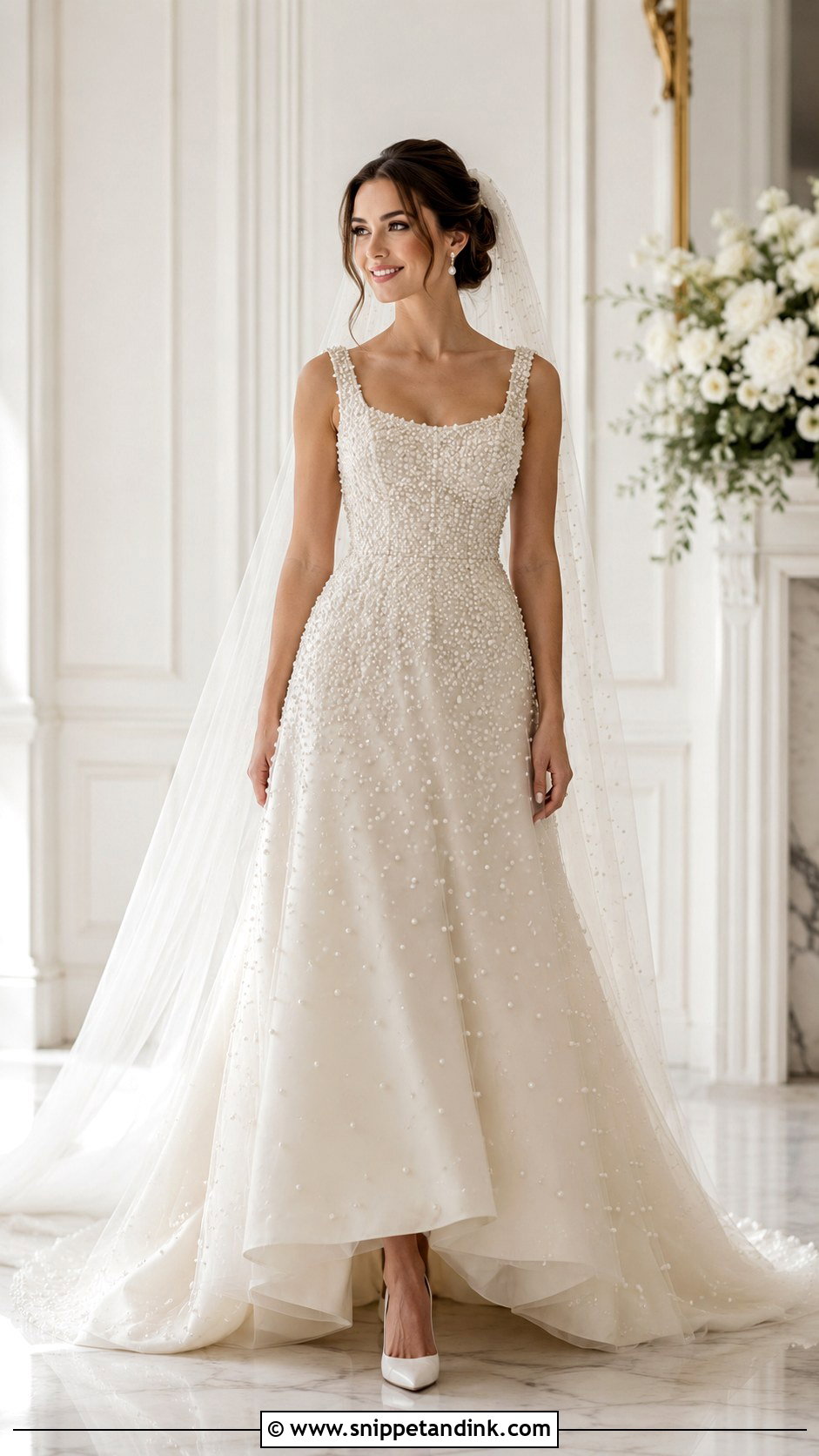
Pearls give off a soft glow instead of a flash, which is why they read so refined against ivory, champagne or soft white. They show up as scattered beading, pearl straps, embroidered sleeves or an allover finish. Hand-sewn pearls are secured one by one; glued pearls pop off on a dance floor, so I always run a fingertip along the seams and check. A slim silhouette makes it modern, a tulle ball gown makes it storybook. Since the dress already carries the detail, stop at pearl earrings and a plain veil.
10. Luxury Beaded Wedding Gown
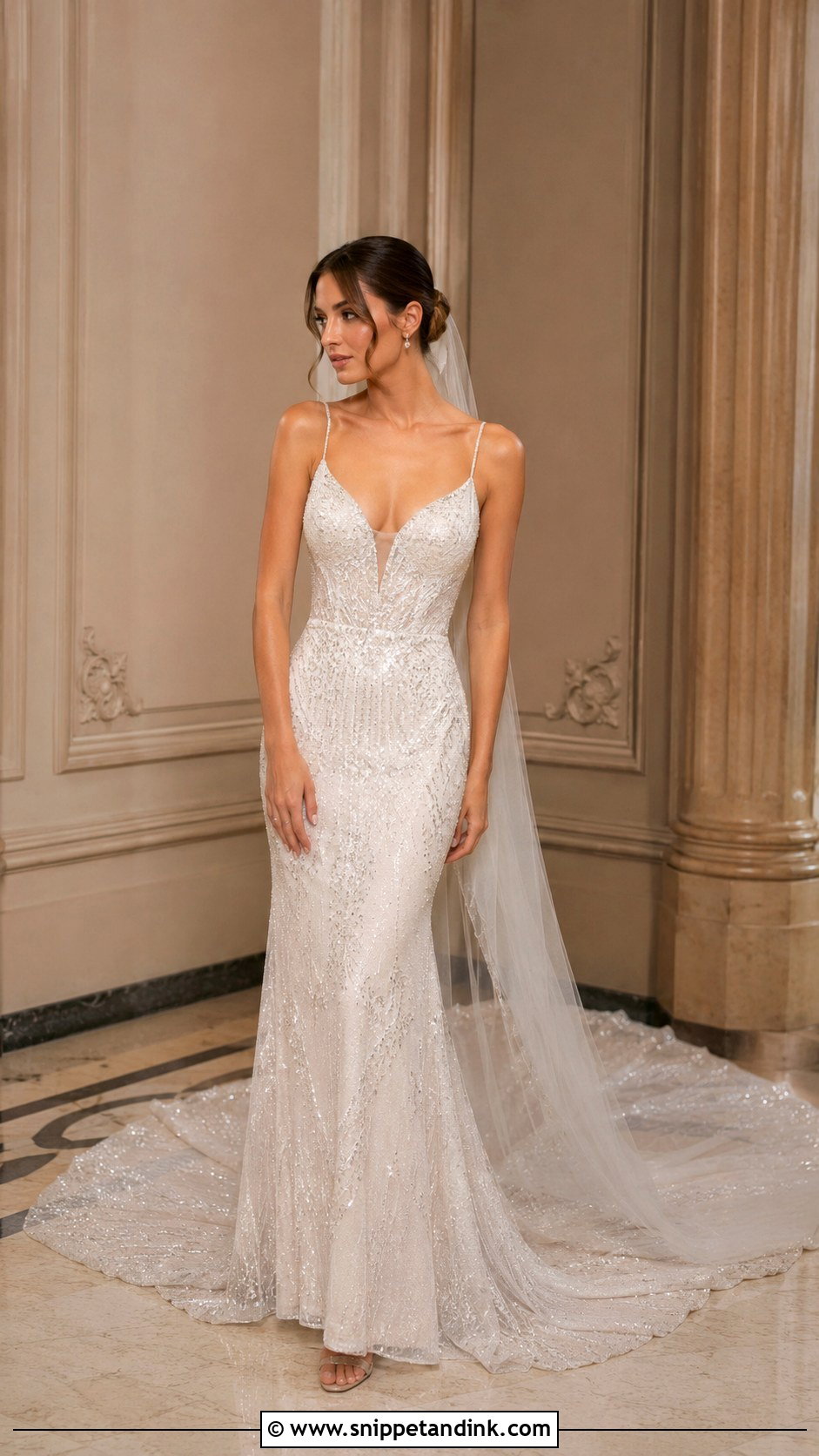
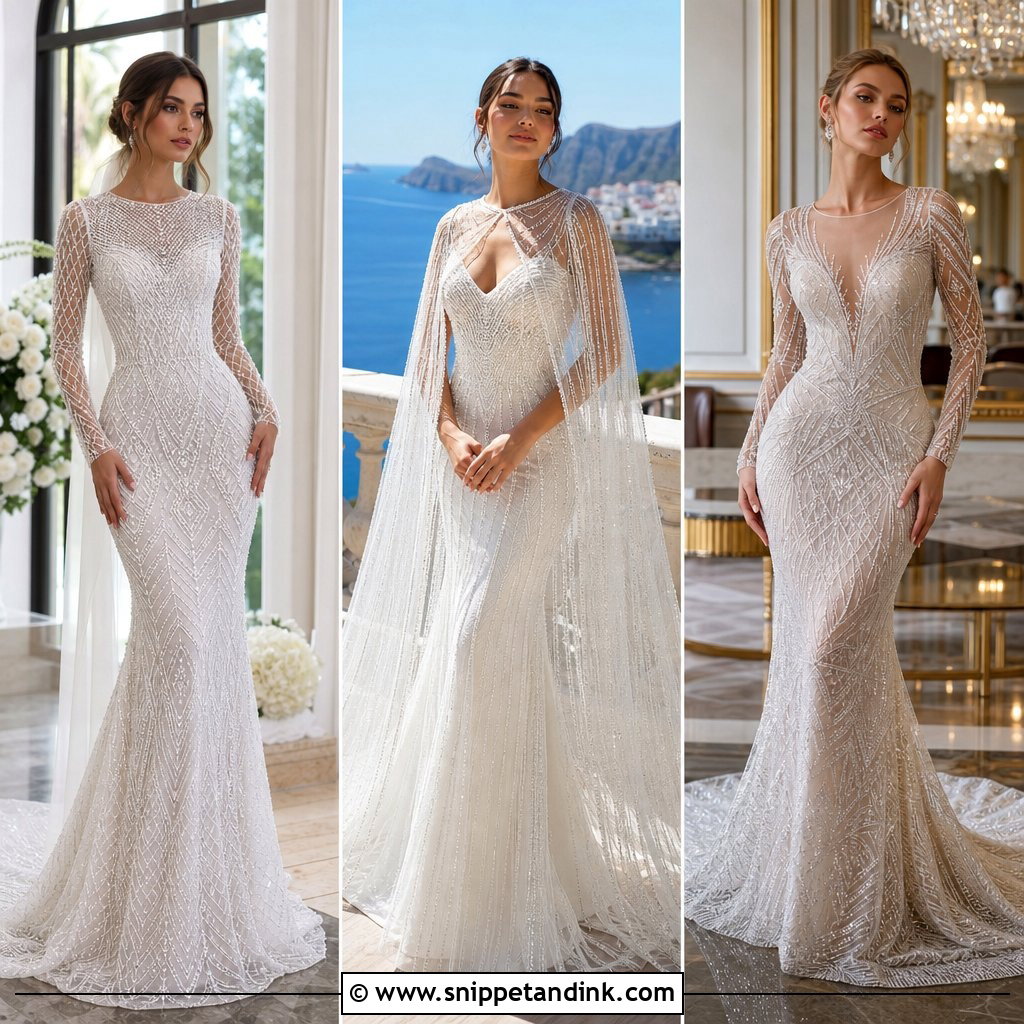
Beadwork is built for evening light. Hand-beading, crystal embroidery, sequins or art-deco patterns all catch candles and uplighting in a way daylight never quite does. The trade-off is weight: an allover beaded gown can be surprisingly heavy, so I ask brides to wear it for a full twenty minutes at the fitting, not two. A fitted cut looks sleek, a beaded A-line moves more softly. Minimal jewelry and a simple veil let the beading lead, and the texture gives every photo depth.
11. Luxury Floral Applique Wedding Gown
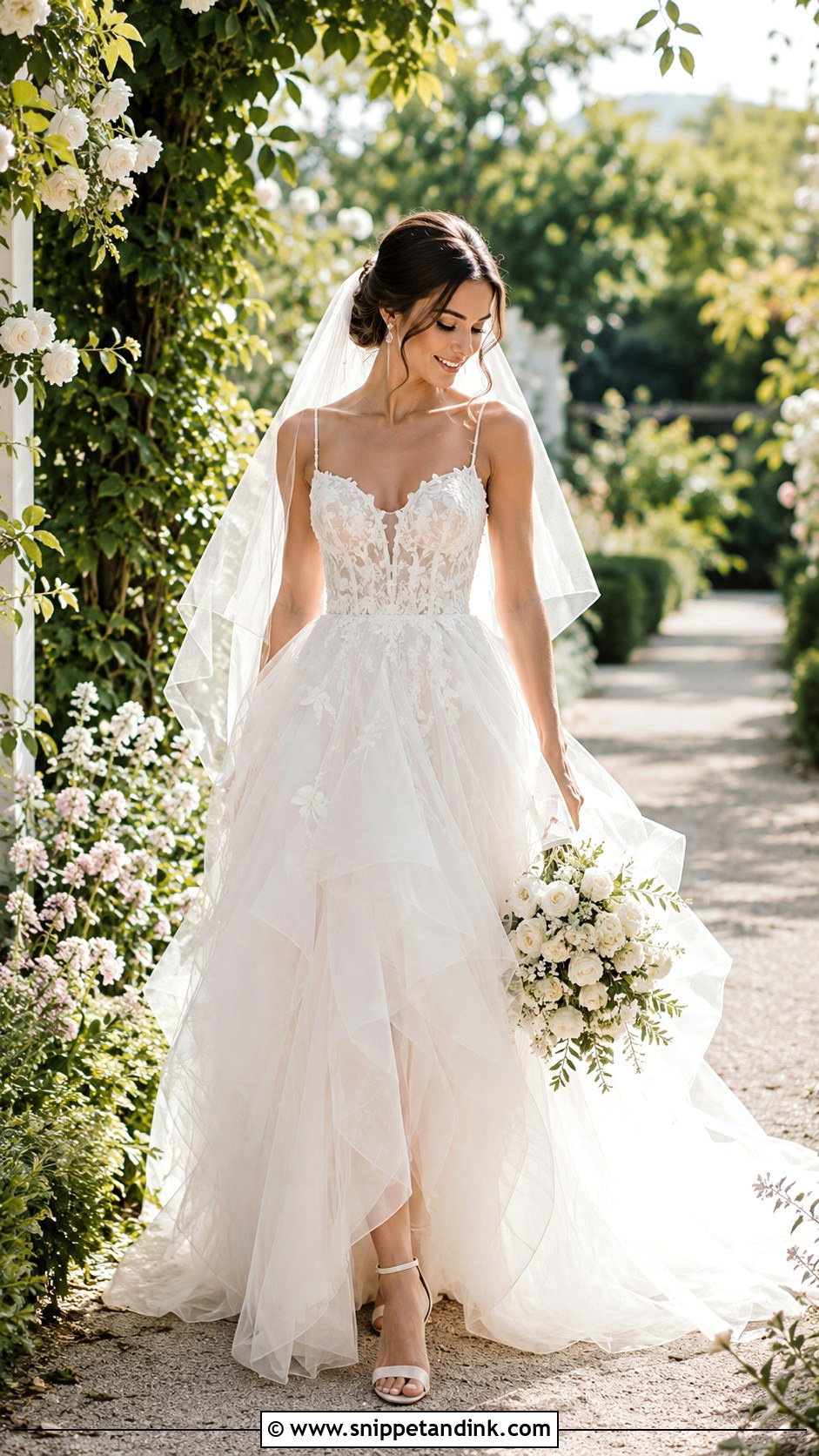
Three-dimensional flowers, embroidered vines and loose petal details give a gown real depth, especially on tulle, organza or lace where the appliqué seems to float. Placement is what I care about. Flowers clustered at the hip make the eye stop there, so I prefer them climbing from the neckline or scattered down toward the train. Pair a fitted bodice with a flowing skirt, add a sheer veil, and it belongs in a garden or estate in spring and summer. Ask how the petals are attached; loose ones snag on lace veils.
12. Luxury Drop Waist Wedding Gown
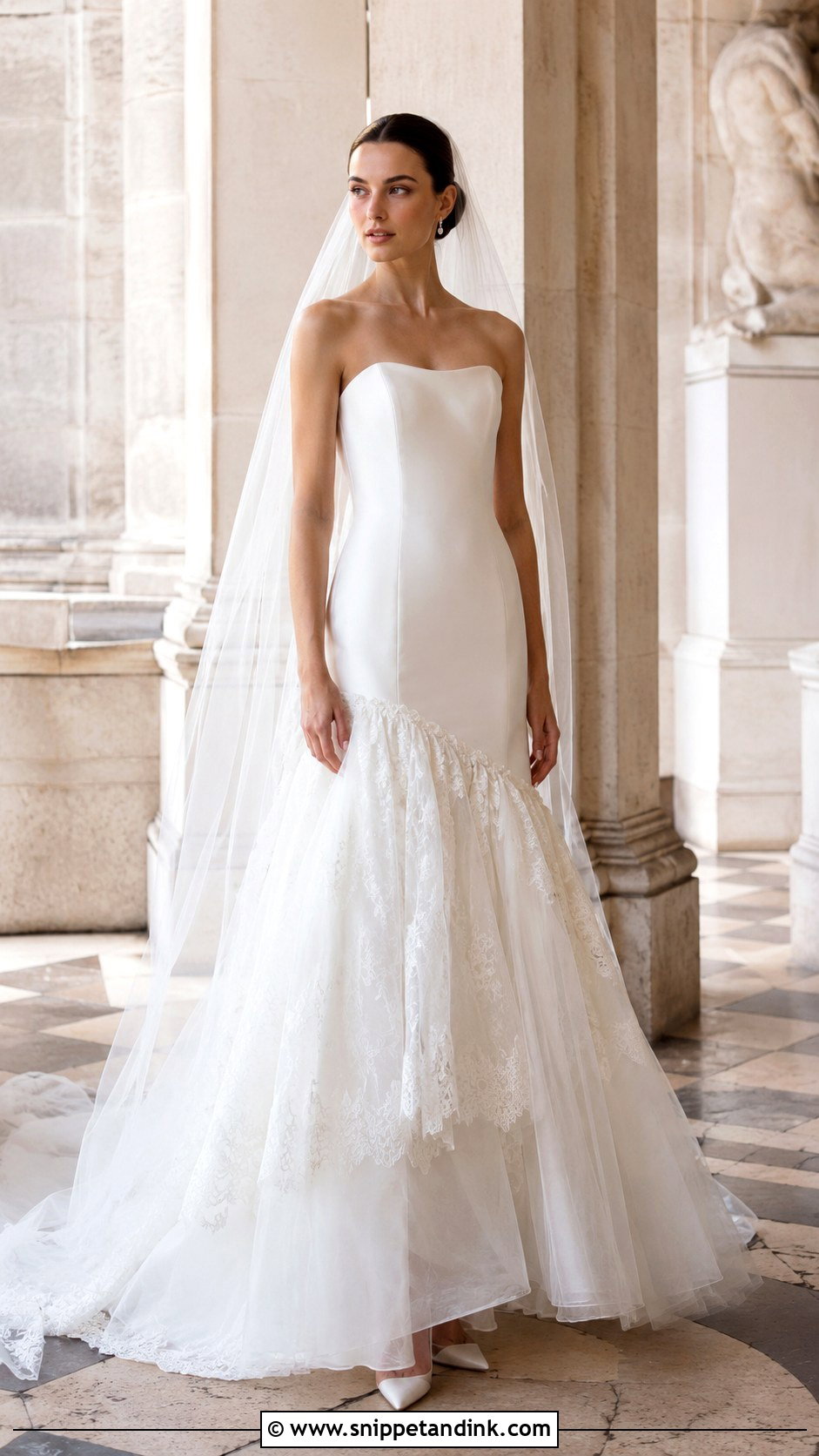
A dropped waist pulls a long line through the torso before the skirt opens, which feels vintage and very current at once. It suits lace, satin, tulle and structured mikado. A basque or pointed waist sharpens the shape, while a soft dropped waist keeps it romantic. Honest caution: on a short torso the drop can swallow the body, so I check the seam position against the hip bone, not the dress size. Keep the styling clean and full-length photos will show off that line.
13. Luxury Basque Waist Wedding Gown
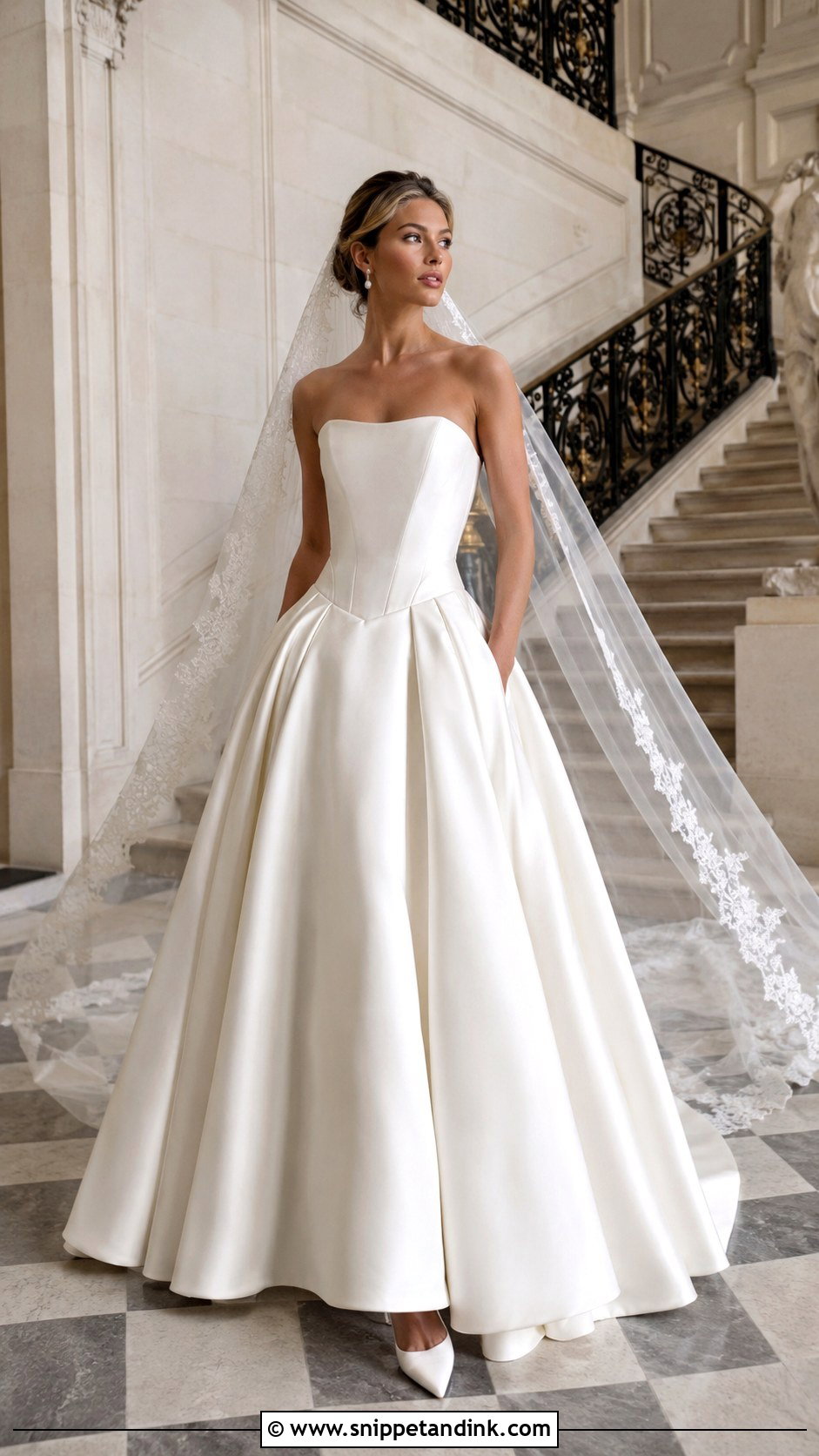
The basque waist dips into a V or U at the front, and that point visually lengthens the torso more than any straight waistline can. It carries a historic, couture note. I pair it with a full satin or tulle skirt for drama, or lace if the bride wants it softer, and strapless or off-shoulder necklines sit best above it. The point has to land exactly at center front; a few millimetres off and it pulls the whole skirt crooked, so it is the first thing I check in the mirror. A cathedral veil and pointed heels suit the estate or ballroom this shape was made for.
14. Luxury High Neck Wedding Gown
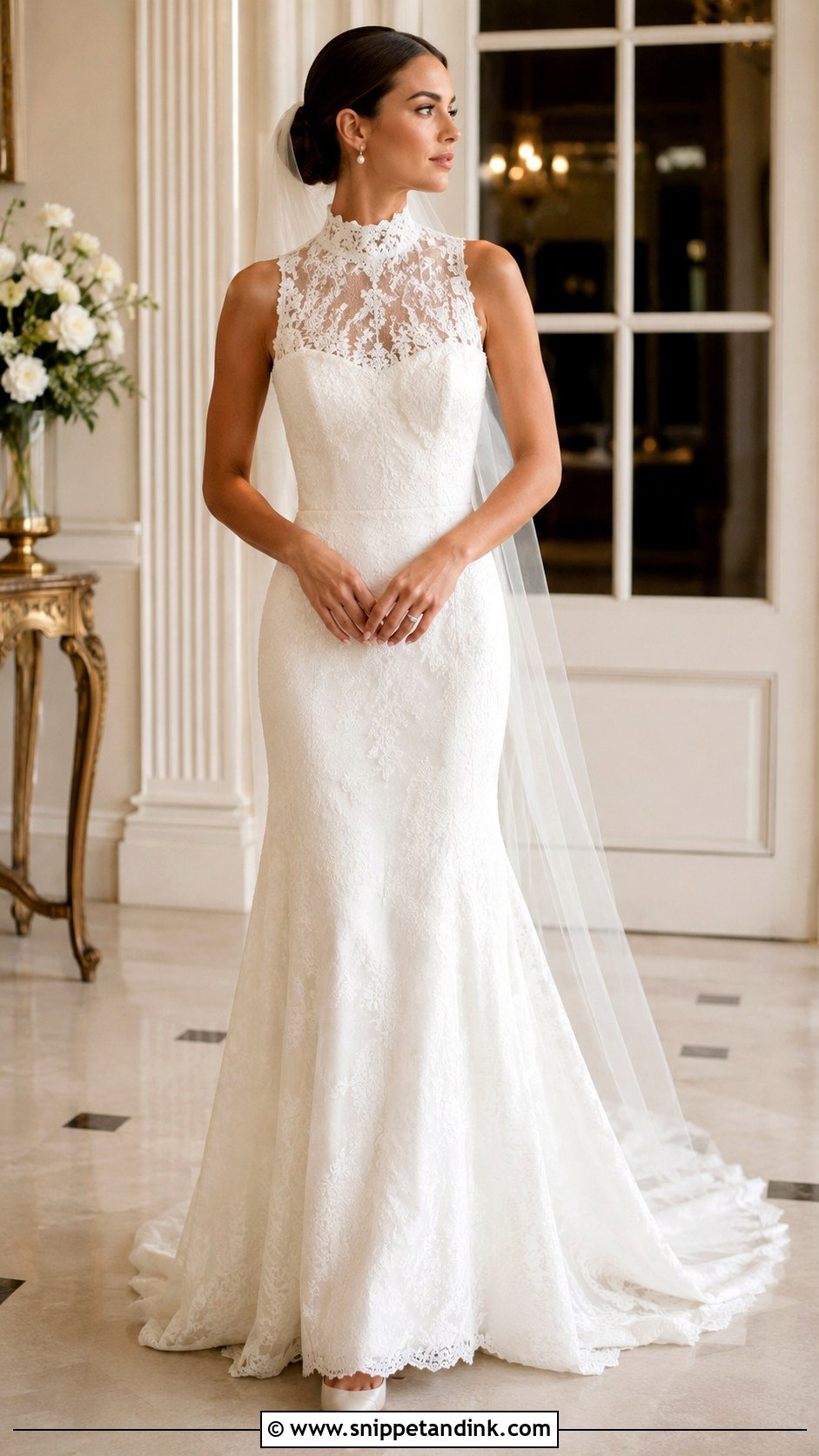
High necklines give coverage and still look modern. Sheer lace versions read romantic; clean satin or crepe ones look sleek and architectural. My trick for balancing them is to open something else up, usually the back, or cinch the waist so the bodice doesn’t read as one solid block. Hair should go up into a neat updo with small earrings, and I attach the veil low at the back of the head so it doesn’t fight the collar. Formal ceremonies and cooler months suit it best.

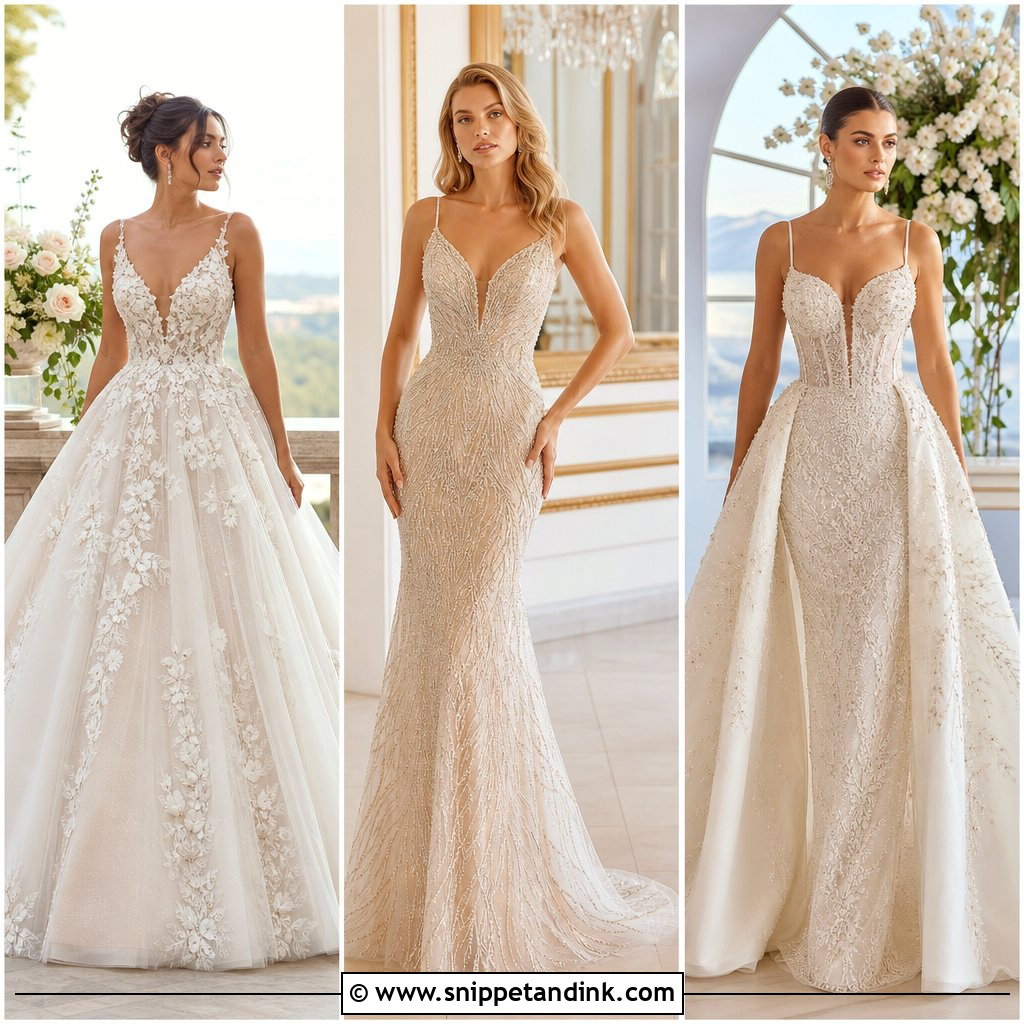
15. Luxury Square Neck Wedding Gown
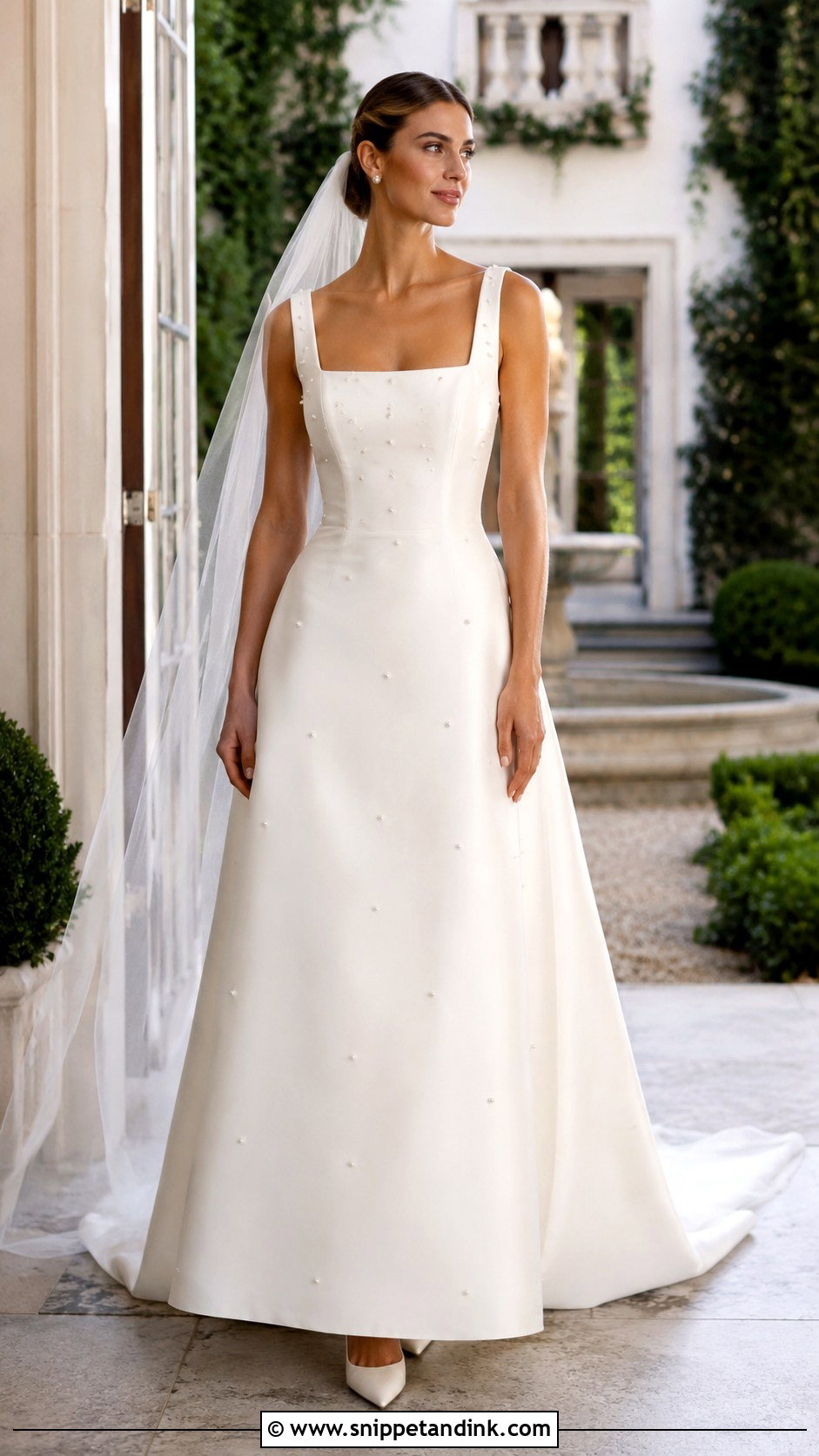
A square neck frames the shoulders and collarbone without showing much, and it flatters a wide range of figures. It translates into plain satin, romantic lace or crisp mikado. Strap width does more than you’d think: wide straps hide a bra and support a fuller bust, slim straps look delicate but often need a built-in cup. I check that the corners of the square sit level when the bride’s arms are down, since they tend to gape on a small frame. Pearl studs and a smooth veil are all it needs.
16. Luxury Strapless Wedding Gown
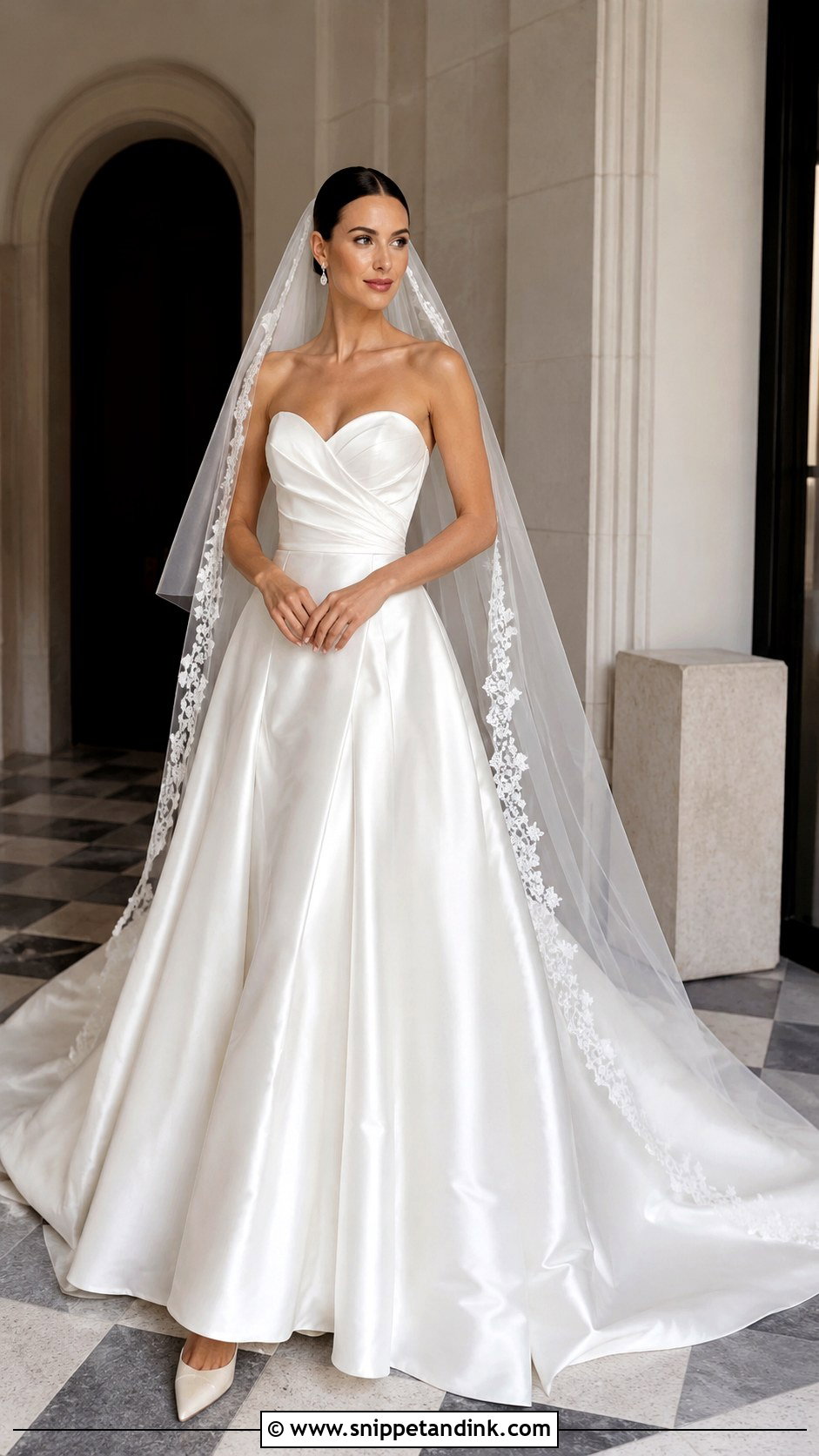
Strapless bodices are a classic for a reason: they show off the neckline and leave the shape of the gown to speak. But the bodice has to be engineered properly, with boning and a waist stay, especially under a heavy or full skirt. If a bride is tugging it up in the fitting room, she’ll be tugging it all night. A sweetheart neck softens, a straight one modernises, a curved one balances. It pairs with ball gown, A-line, mermaid and column shapes, and you can accessorize it any way you like.
17. Luxury Bow Wedding Gown
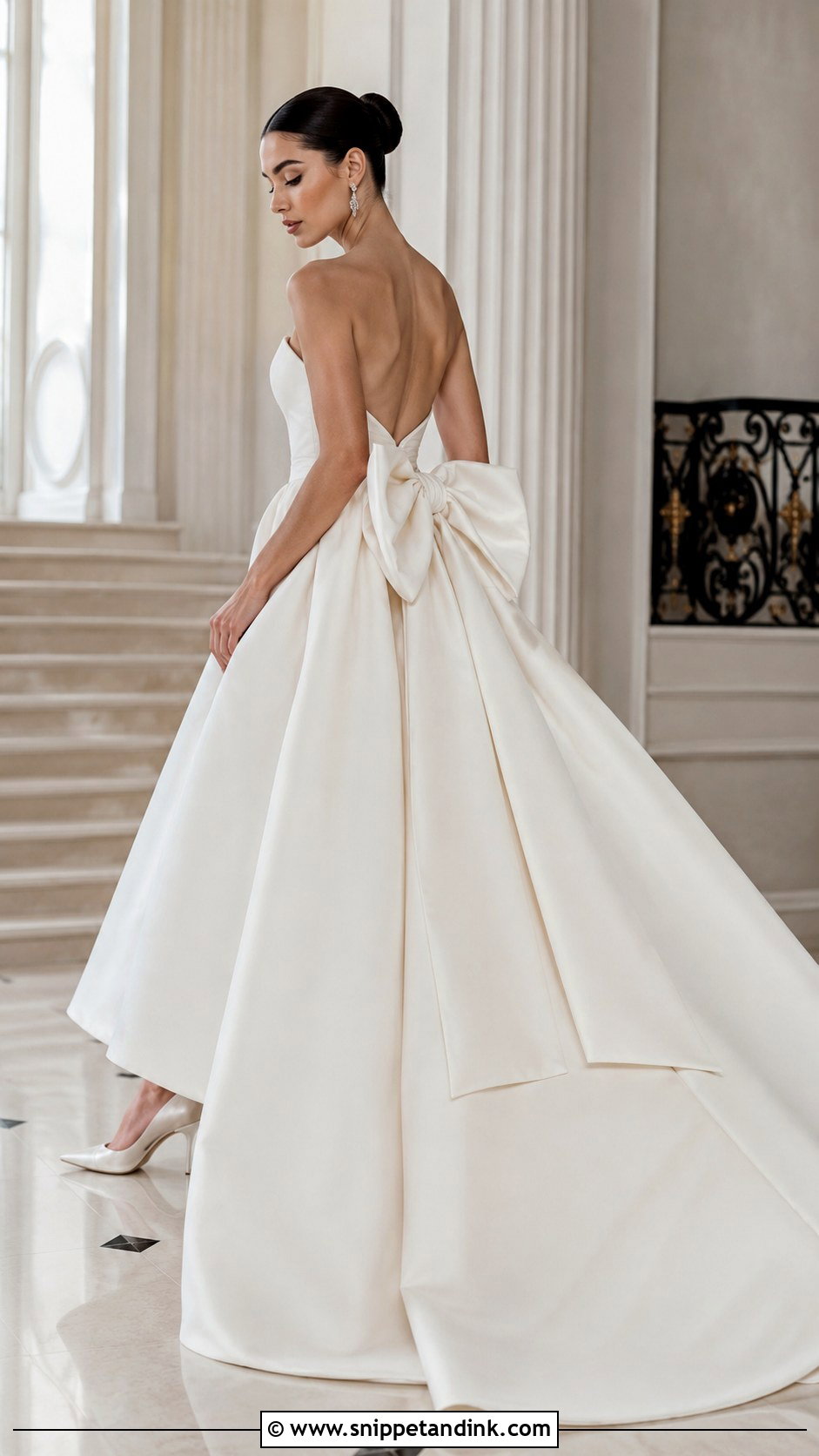
A bow lets one detail do all the talking, whether it sits at the back waist, on one shoulder, along the neckline or trailing into the train. Only crisp fabric holds a bow upright through a full day: mikado, structured satin or organza. Soft satin bows wilt by the reception. If the bow is oversized, keep the rest of the gown plain and the hair smooth. I like this for a bride after one memorable feature rather than lots of small ones, and it suits editorial-style portraits.
18. Luxury Overskirt Wedding Gown
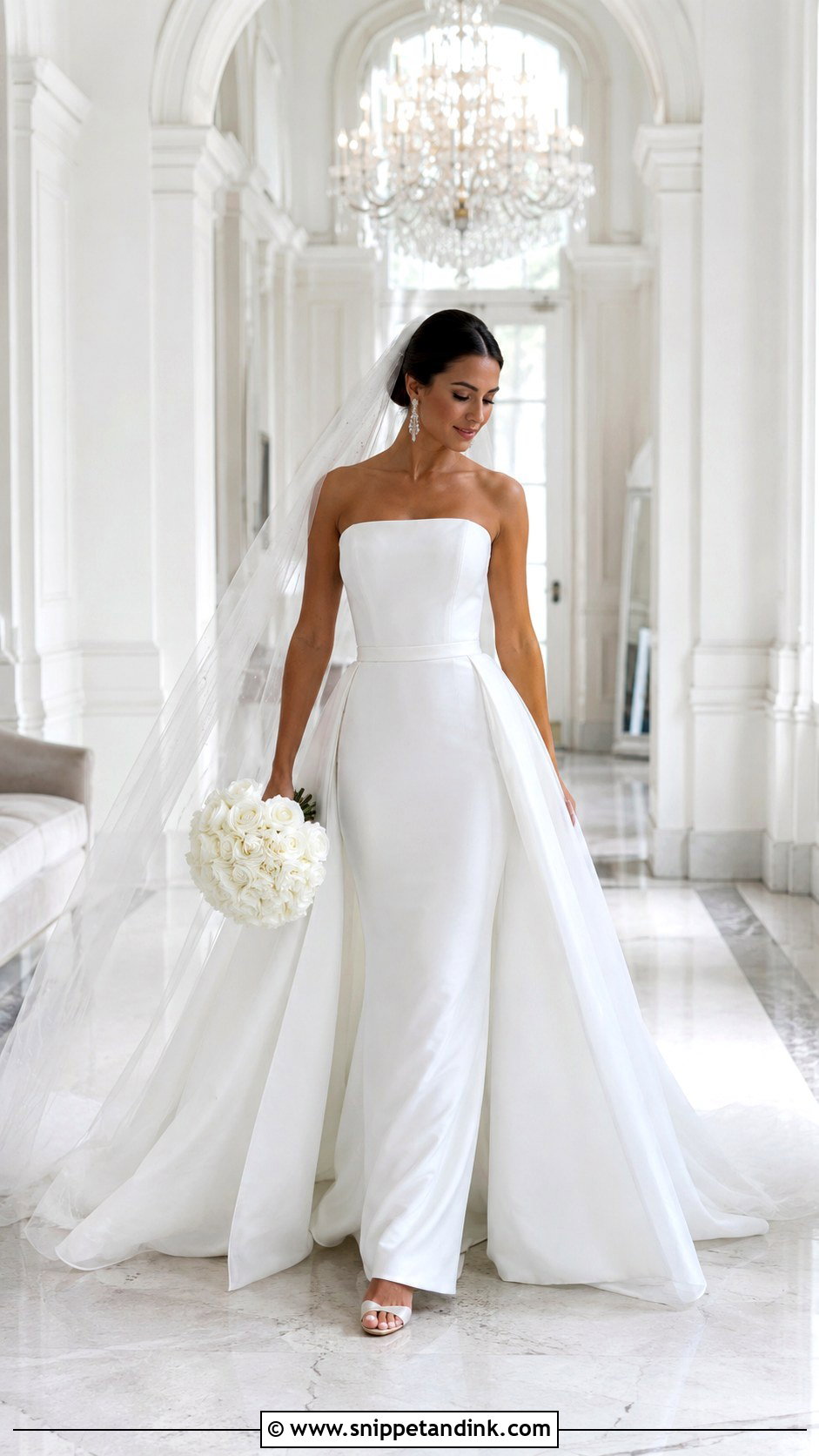
A detachable overskirt gives you a grand ceremony entrance and a slimmer gown for the party. It sits over a fitted crepe, lace mermaid or satin column dress, in tulle, organza or mikado depending on how much volume you want. My advice is to practise taking it off before the day. Ask whoever is helping to learn the hooks or snaps at the final fitting, because fumbling with it in a hallway eats into the reception. Swap the long veil for statement earrings once it’s off.
19. Luxury Cape Wedding Gown
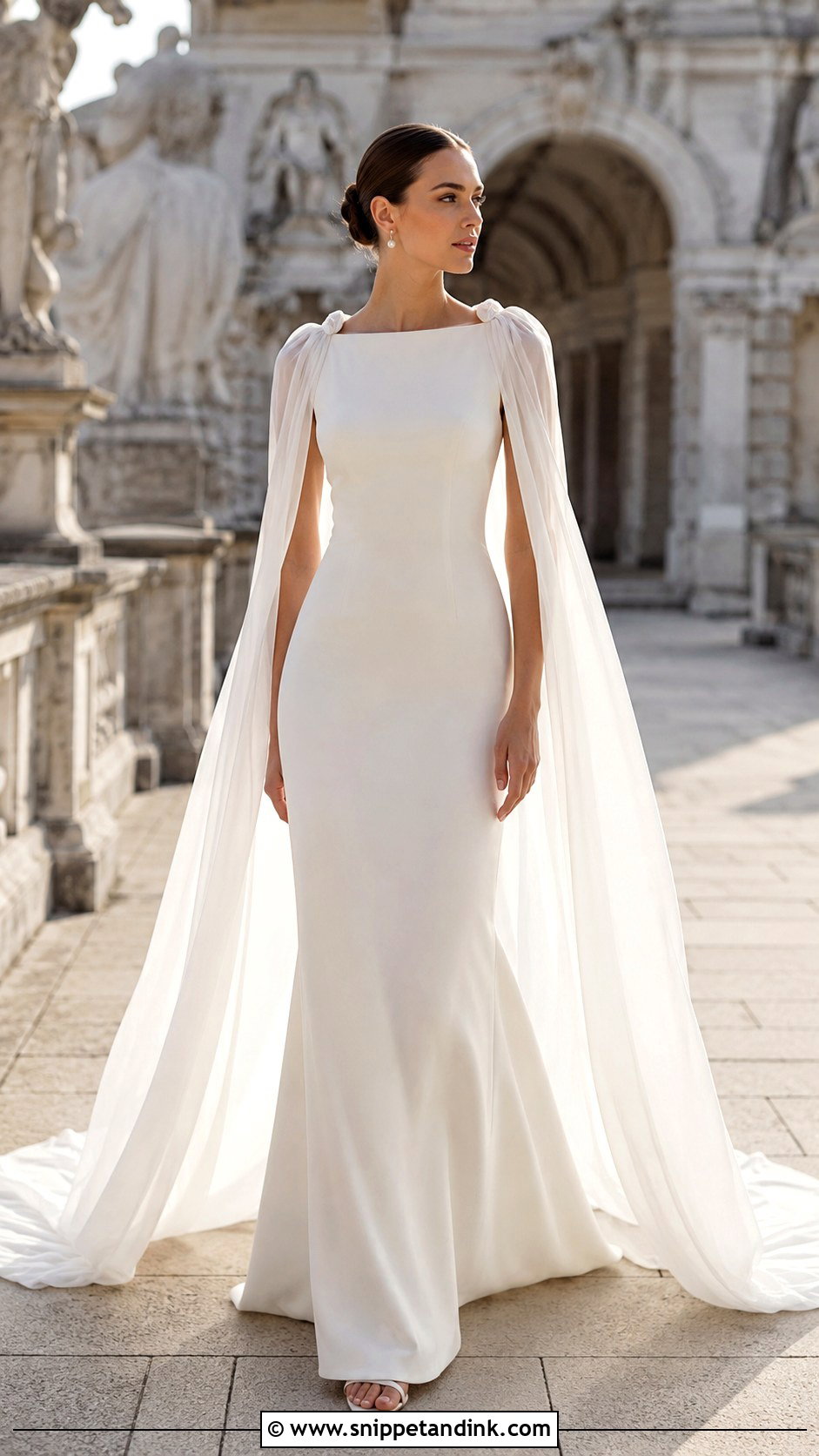
A cape replaces the veil and still feels regal. It can be sheer, lace-edged, pearl-embellished or flowing chiffon, attached at the shoulders, neckline or back. Before committing, I have the bride walk outside or near a fan. Long chiffon capes catch wind like a sail, which looks wonderful on a staircase and less so when it wraps around your face during vows. A cape on a column gown reads modern; on lace it reads romantic. Keep the earrings simple and let the cape move.


20. Luxury Tulle Wedding Gown
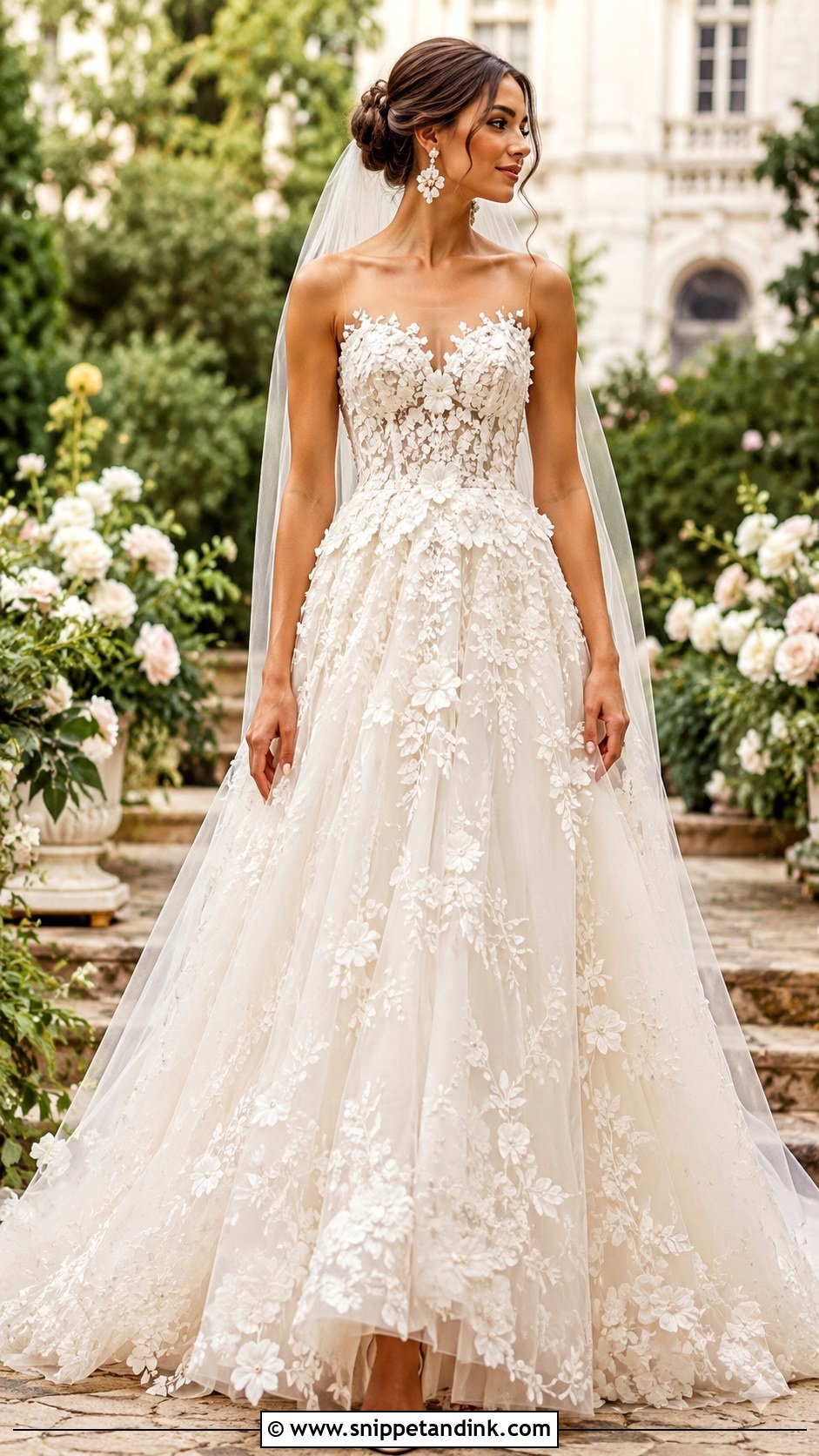
Layered tulle gives volume without satin’s weight. Fine layers can float as an A-line, build into a full ball gown or work as a soft overskirt. Tulle snags on rough stone, bramble and some bracelet clasps, so I mention it to every bride heading to a rustic or outdoor venue and suggest a soft-tulle top layer if she’s worried. Add a corset bodice or a little sparkle for dimension. In natural light the skirt goes almost translucent at the hem, which is half its charm.
21. Luxury Silk Slip Wedding Gown
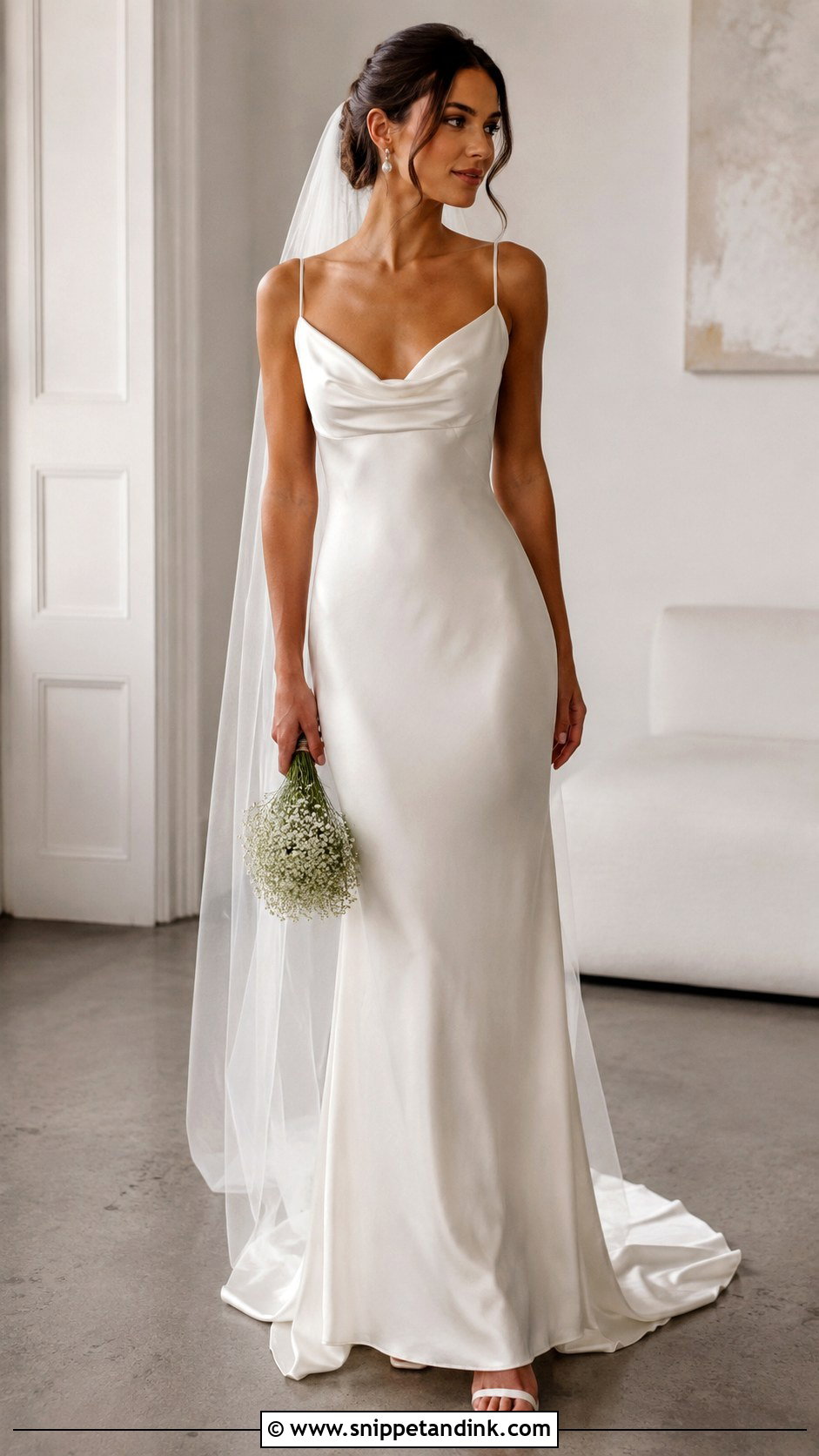
A bias-cut silk slip skims the body and moves with you, and it looks expensive because there’s nothing hiding the cut. A cowl neckline, thin straps or a low back keep it soft and modern. I’m candid with brides here: bias silk shows every line underneath and creases if you sit for long, so smooth, unseamed shapewear in a matching tone and a steamer on standby are part of the outfit. It suits small weddings, city ceremonies and the coast, or it can be the second dress after the ceremony.
22. Luxury Tea Length Wedding Gown
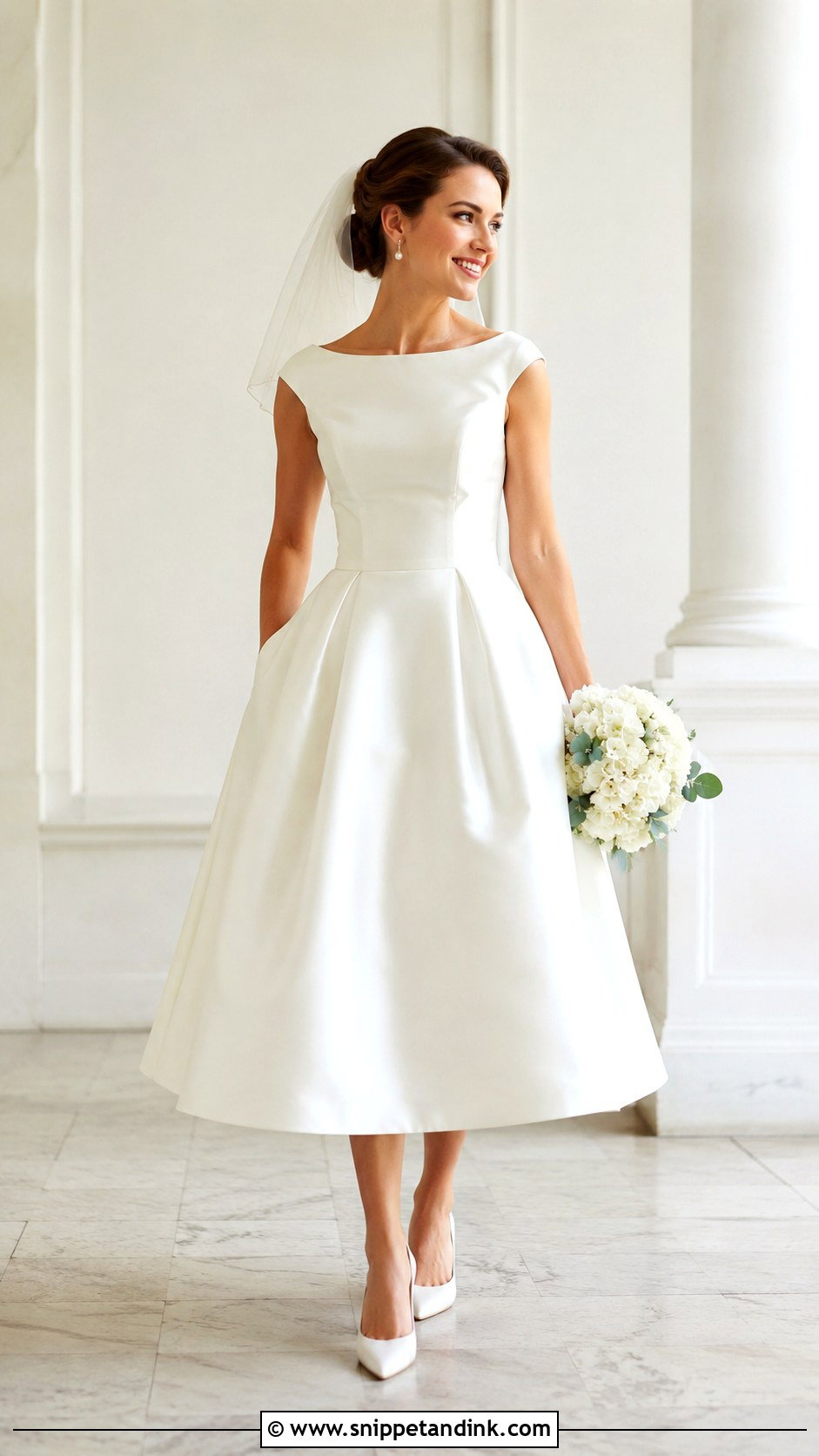
Tea length lands between the knee and the ankle, so you can walk, dance and actually show off your shoes. Structured satin gives it a vintage shape, lace keeps it romantic and organza adds light volume. Because the shoes are on display, I tell brides to choose them at the same time as the dress, not later. A short veil or a hair bow suits the proportion. Courthouse weddings, garden ceremonies, rehearsal dinners and relaxed receptions are where this length shines.
23. Luxury Reception Wedding Gown
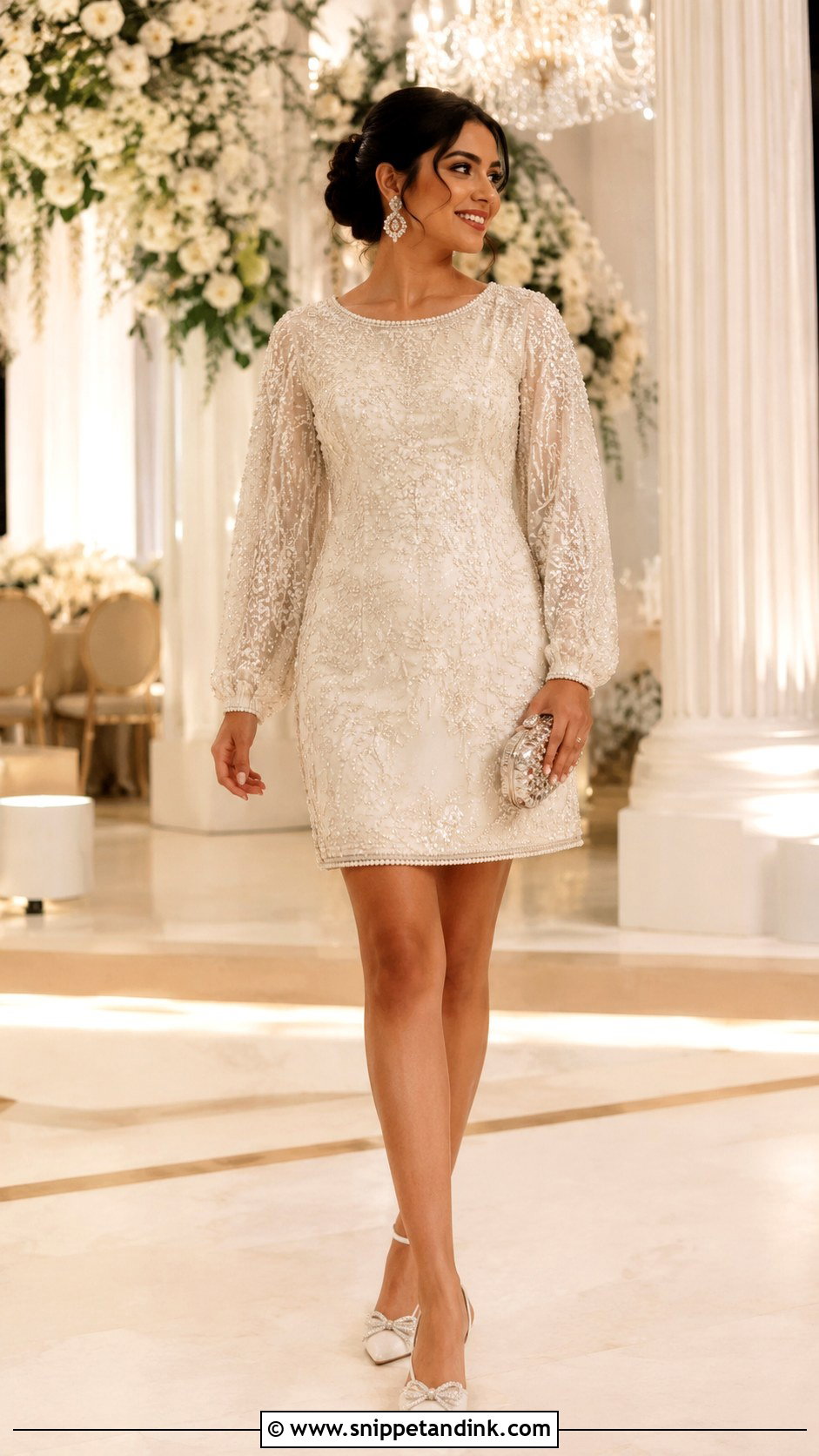
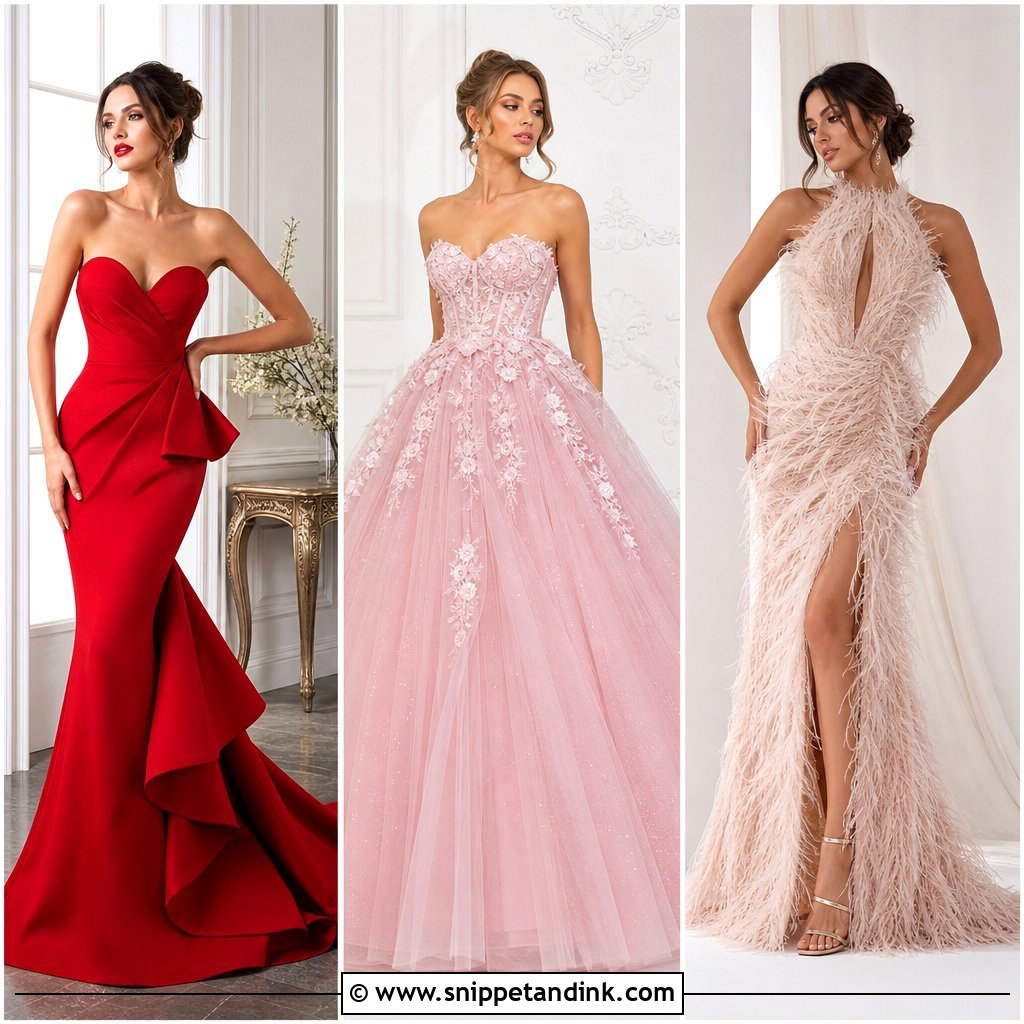
Your second look should be lighter and easier, but still recognisably bridal. That might be a beaded mini, a silk slip, a feather-trimmed dress, a fitted crepe gown or a short structured dress with dramatic earrings. I try to echo one element from the ceremony gown, maybe the fabric, the neckline or the color of the beading, so the two looks feel connected in the album. Comfortable heels matter more than you expect after the change. It frees you to dance and greet guests without a train, and it gives you a fresh party-ready change.
24. Luxury Embroidered Wedding Gown
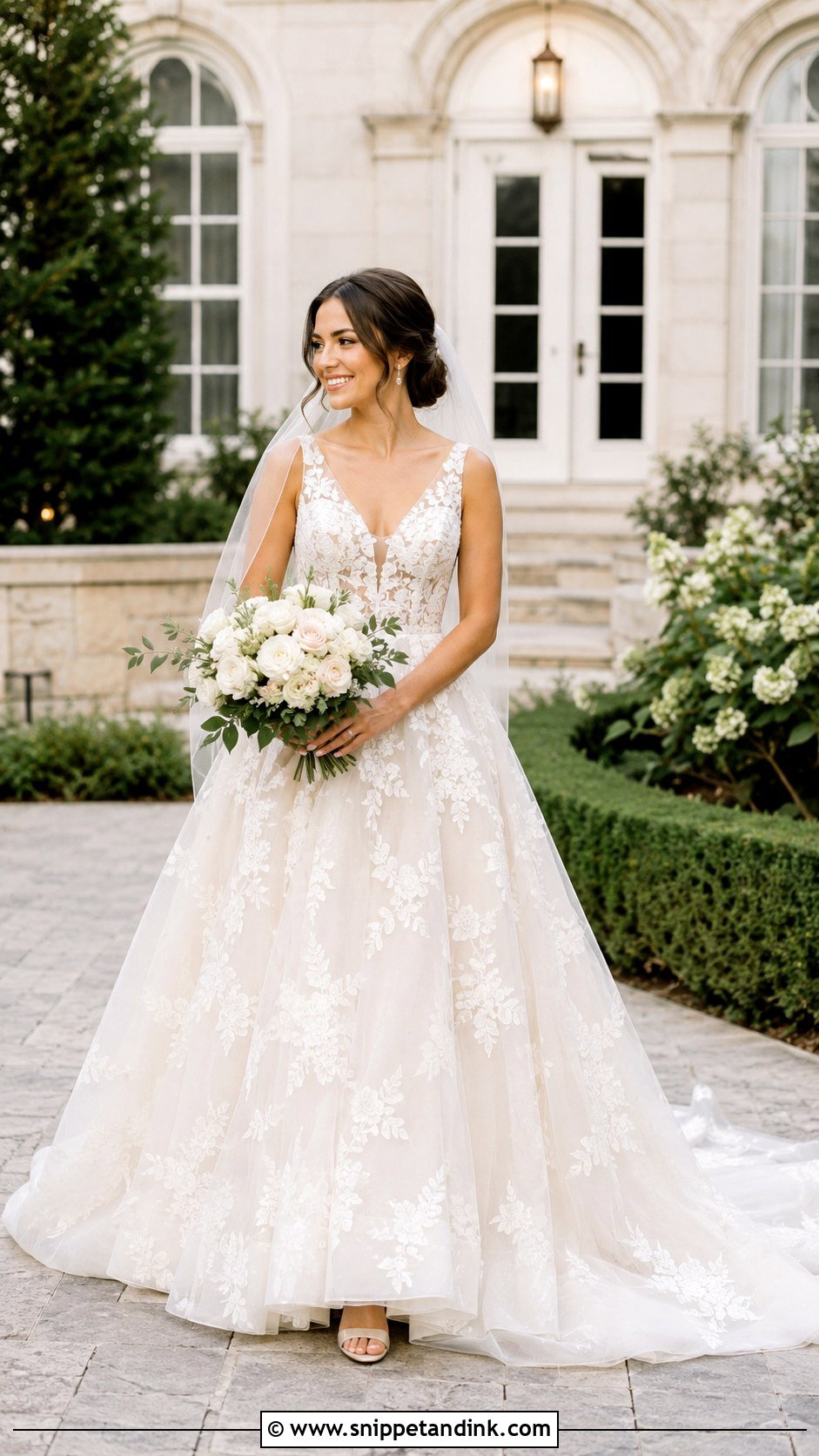
Embroidery makes a gown feel personal: floral vines, leaves, pearl thread or motifs that mean something to you, placed across the bodice, sleeves, skirt or train. It gives texture without heavy sparkle and sits well on sheer tulle, organza, lace or satin. When a bride asks about custom motifs, I tell her to bring the idea early, because hand embroidery adds weeks to production. A veil with a plain edge keeps the two from competing. Tie the motif to your flowers or venue and the whole day feels connected.



25. Luxury Black Wedding Gown
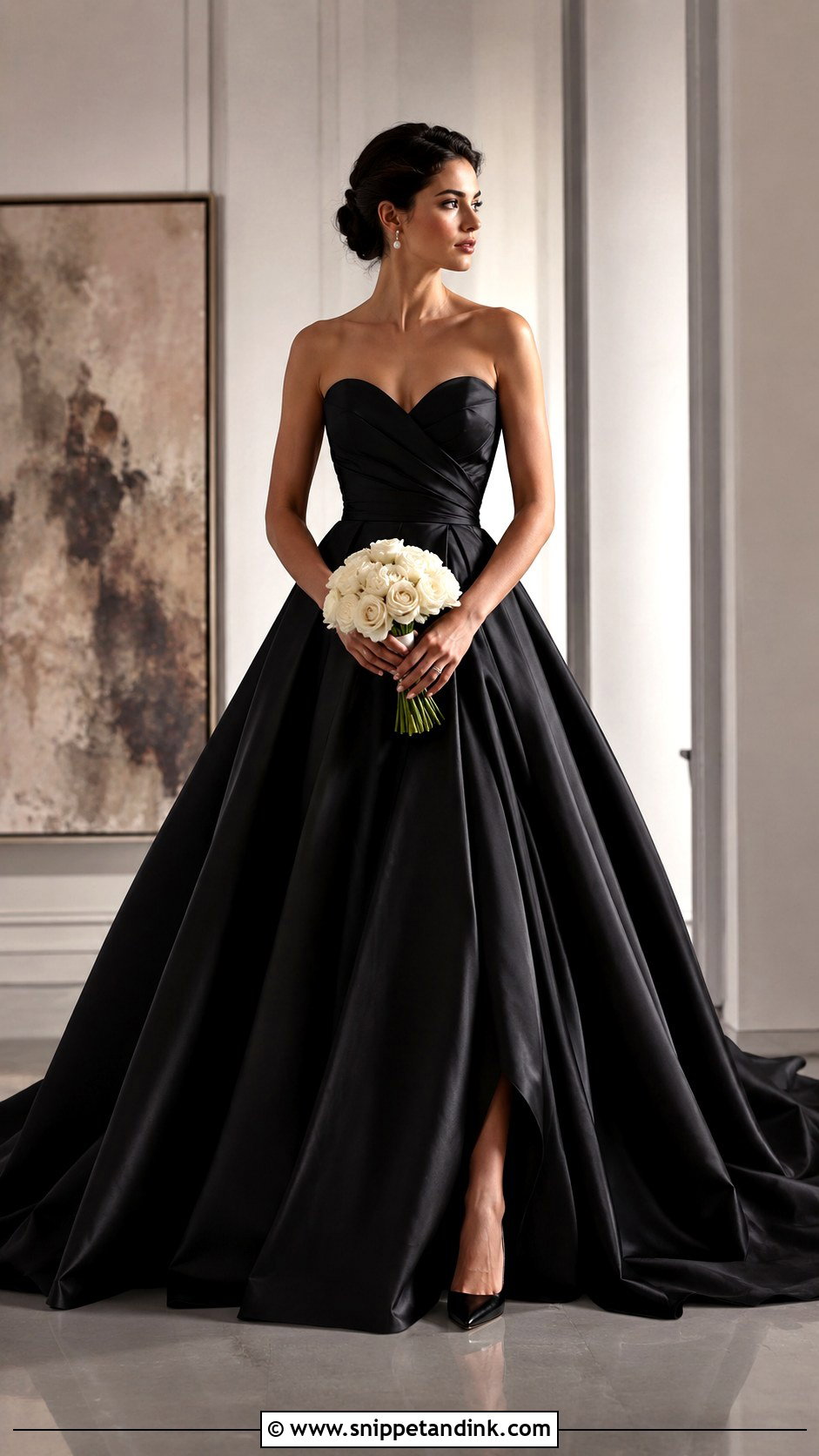
Black is the most nontraditional pick here, and it needs the most refined handling. Black satin reads sleek, black lace romantic and black tulle soft and moving. Fabric quality shows more in black than in ivory: cheap black satin looks grey under flash and lint shows everywhere, so I keep a lint roller in the kit. A fitted bodice with a full skirt feels formal, a black mermaid glamorous. Diamond or pearl earrings and a contrasting bouquet keep it bridal rather than costume, and evening weddings in modern spaces suit it best.
Ordering, Fittings and Bustling a Heavy Train
Structured luxury gowns take time. Most made-to-order bridal gowns need several months to arrive, and anything with custom embroidery or hand-beading can take longer, so I tell brides to start shopping roughly nine months to a year out if they can. Lead times vary a lot by designer, so ask at the appointment rather than assuming.
The fittings
Plan on two or three fittings, with the first about two to three months before the wedding. Bring your actual shoes and undergarments to every one. A hem set in different heels will be wrong on the day, and a bodice fitted over the wrong bra will pull.
The bustle
A cathedral train has to be bustled for the reception, and the style matters. An over bustle hooks the train up onto the back of the skirt; a French or under bustle tucks it beneath with ribbon ties. Heavy satin usually needs more pick-up points than tulle. Have whoever will do it on the day come to the last fitting and practise twice. I’ve watched plenty of bustles get rushed in dim light, and a missed tie means a trailing hem on the dance floor.
After the Wedding: Getting a Satin or Beaded Gown Into Storage
Get the gown to a specialist cleaner within a few weeks. Spilled champagne and sugar dry clear but oxidise to brown stains over months, and they’re far harder to lift once set. Ask the cleaner whether beading and pearls are tested before solvent goes near them.
For storage I prefer an acid-free box with acid-free tissue in the folds, or a breathable cotton garment bag, never the plastic bag it came home in, which traps moisture and yellows ivory. Keep it somewhere cool and dark, not an attic or a basement. Heavily beaded gowns should be stored flat, because hanging them stretches the seams under their own weight.
Fit, Fabric and the Way You Move Decide It
Luxury in a wedding gown comes down to fabric, fit, proportion and how comfortable you feel wearing it, and price is only part of that. Some brides glow in plain satin; others light up in lace, pearls, corsetry or volume. Think about your venue, the season, how much you’ll be moving and what you want to see in the photos. Try at least one silhouette you’re sure you’ll hate. In my fitting room, the dress a bride rules out on the hanger is surprisingly often the one she chooses.
You'll Like These Ideas:







Leave a Reply