
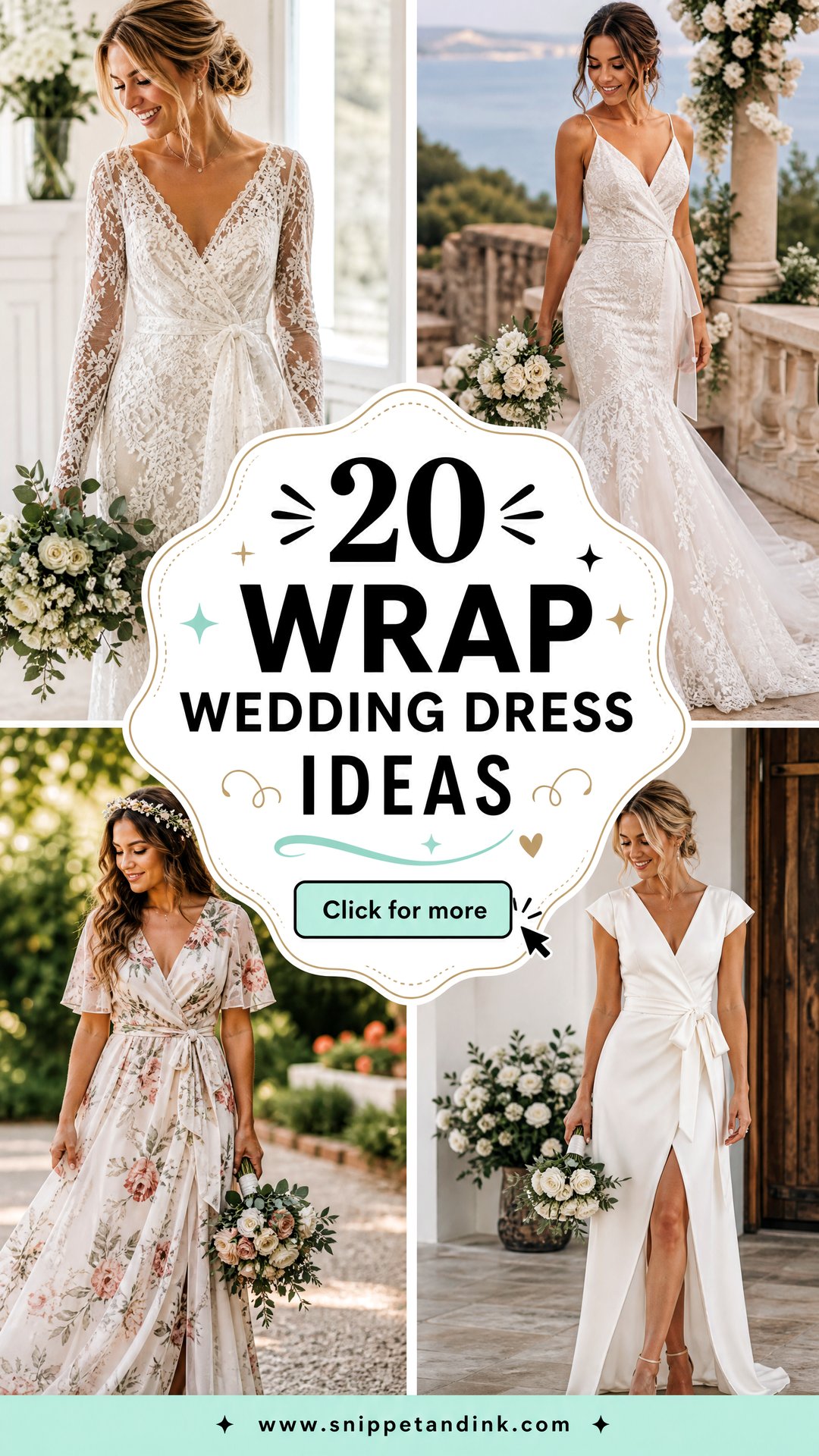
A wrap gown is one of the few bridal shapes you can adjust on your own body. The bodice crosses over itself to form a V, and a tie or hidden closure decides how snug the waist sits, which is why it suits so many figures and so many venues. Below are twenty versions, from plain satin to beachy chiffon and lace for a city hall ceremony. The trade-off every bride should know: a true wrap can loosen as you move, so support and closure matter more here than with a zip-up gown. I’ve noted, look by look, where I would add a snap, change a tie or rethink the fabric.
What Goes Under a Deep Crossover Neckline
The V on a wrap is usually deeper than a standard bridal neckline, and the overlap moves when you lean. That rules out most everyday bras. Here is what I try with brides, in order of preference:
- Cups sewn into the bodice by your seamstress. They move with the dress, so nothing shows when the crossover shifts.
- A low-plunge bra with a centre that sits below the point of the V. Bring it to every fitting so the neckline is set to it.
- Adhesive cups for smaller busts, tested for a full day beforehand, since some lose grip in heat.
- A skin-tone modesty panel stitched across the base of the V if you want the shape but not the depth.
Whatever you choose, wear it to the final fitting. Changing undergarments after the bodice is taken in is the quickest way to undo good tailoring.
1. Satin Wrap Wedding Dress
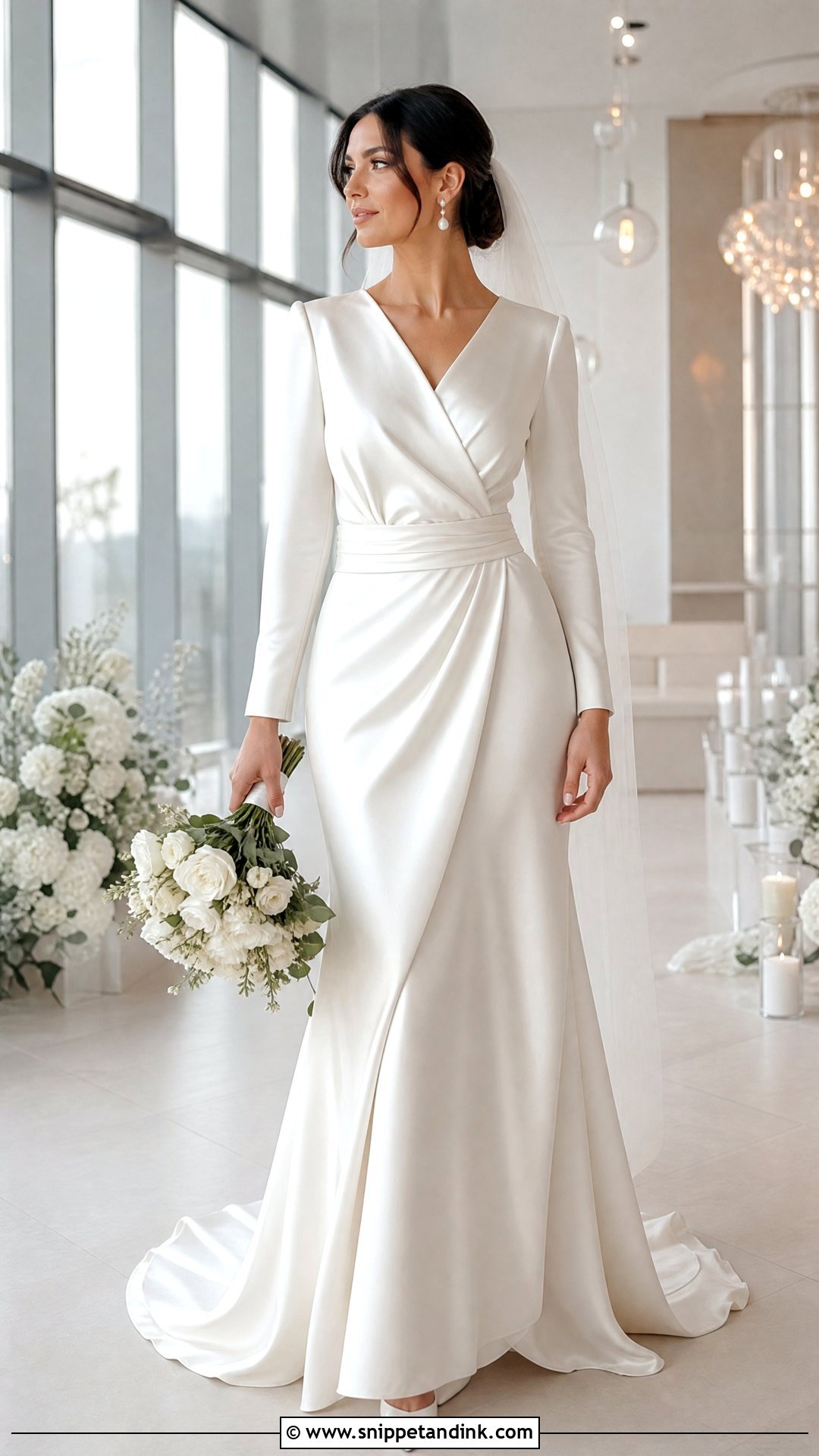
Medium-weight satin is the sweet spot for a wrap. Lighter satin wrinkles at every fold of the crossover, and heavier duchess satin makes the overlap look bulky at the waist. Ask for a concealed interior tie under the visible sash; I’ve never met a bride who regretted having that second anchor. Let the skirt fall into a fluid A-line or column, then add pointed ivory pumps, pearl drops, a structured mini bag and a fingertip veil. A sleek low bun keeps the neckline clear. Satin throws its own light, so I keep the jewelry modest for a ballroom or evening ceremony.
2. Lace Wrap Wedding Dress
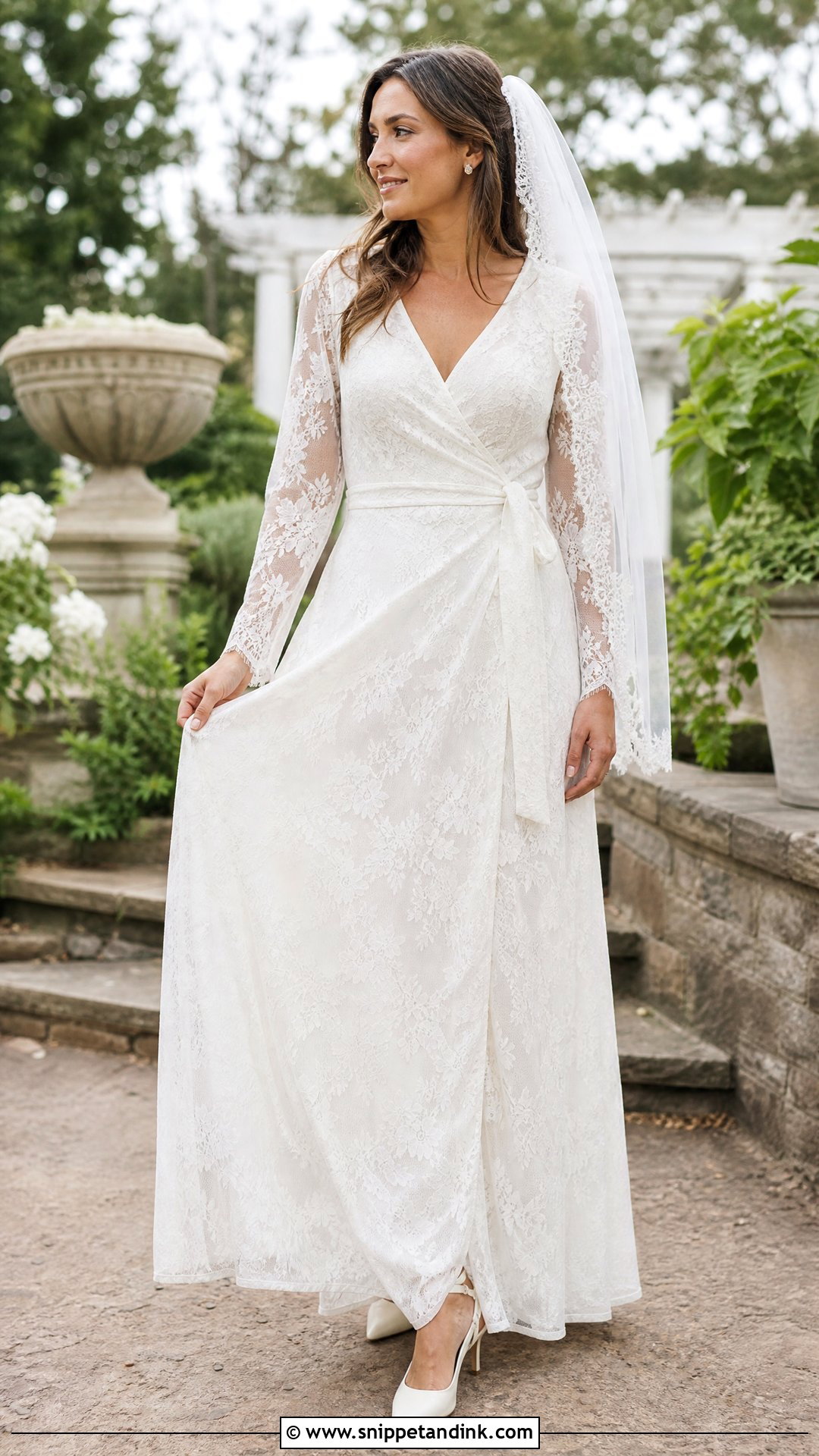
Lace softens the crossover and hides the small shifts a wrap makes during the day, which is a practical bonus. The bodice should be fully lined so the lace does not scratch and the V sits flat. Floral motifs read classic; geometric lace looks cleaner and more modern. If the neckline dips lower than you like, ask for a single hand-stitch at the crossover point; it takes minutes and saves you from checking the mirror all night. Ivory slingbacks, pearl studs, a tulle veil edged in matching lace and a loose chignon complete it for a garden, historic or intimate indoor wedding.
3. Long Sleeve Wrap Wedding Dress
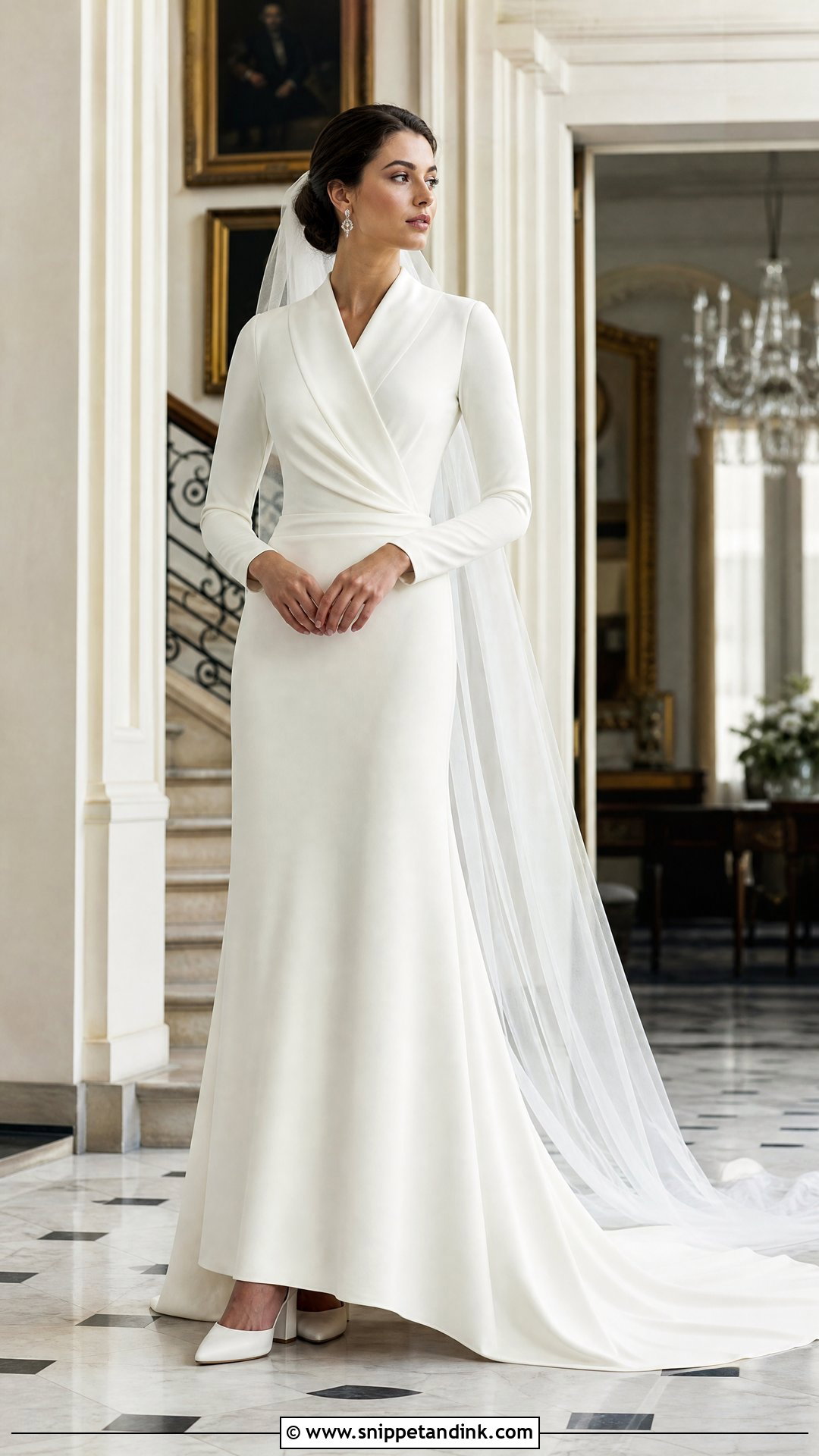
Sleeves change how a wrap moves. With fitted lace or smooth crepe running to the wrist, every arm movement pulls slightly on the crossover, so I make sure there is enough ease across the upper back before the bodice is finished. A gently flared skirt keeps you mobile. Closed-toe block heels, a chapel veil, small crystal earrings, a structured bouquet and a neat low bun keep it polished. In winter, choose a tailored white coat over a bulky shawl, which would bury the waist that makes a wrap worth wearing. It looks right at an estate, courthouse or museum.
4. Boho Wrap Wedding Dress
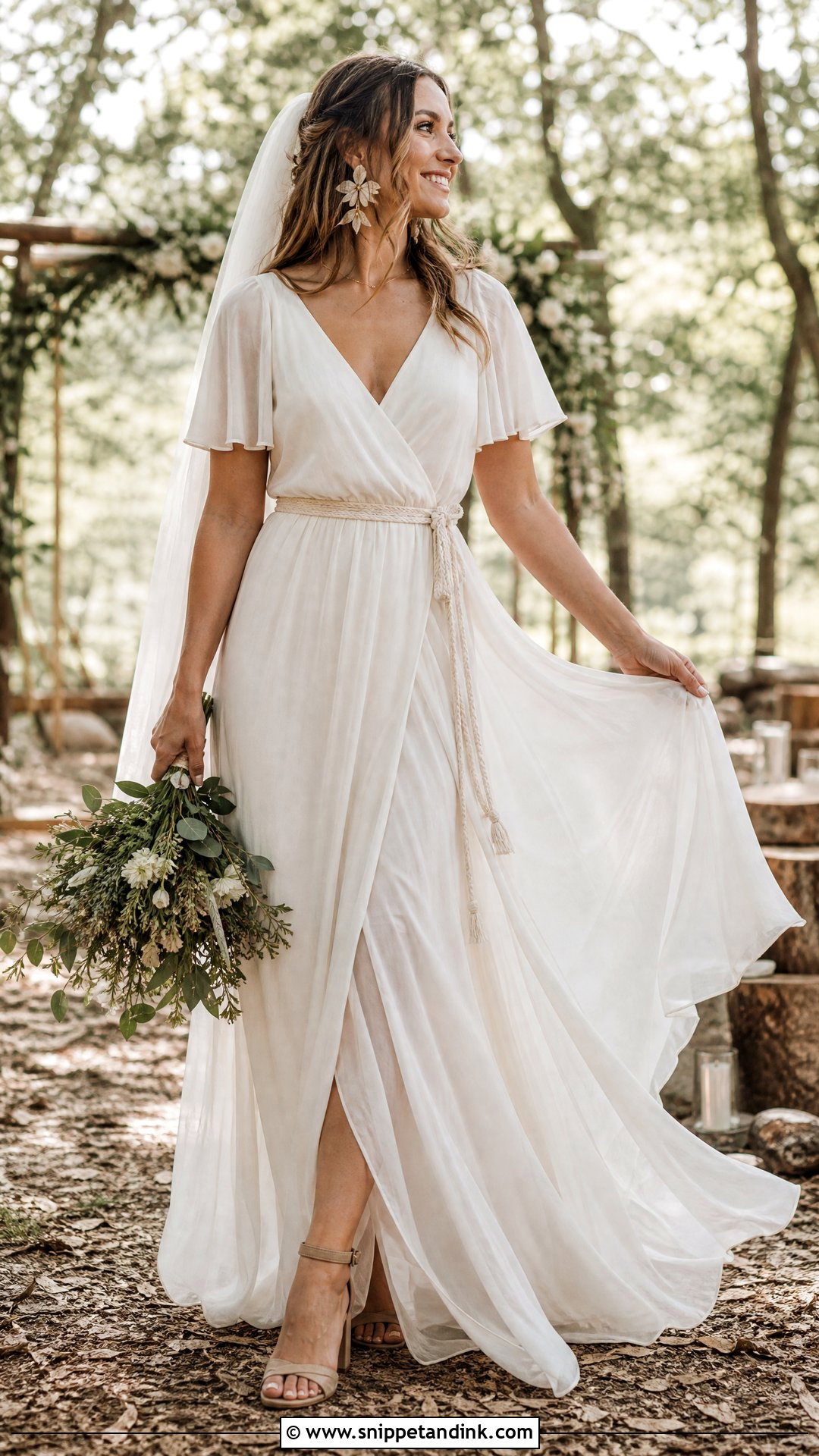
Boho styling is easy to get wrong in a wrap: too many soft layers and the dress looks unfinished. Chiffon, cotton lace or lightweight crepe with flutter sleeves is the right base, and a textured tie keeps the waist visible. Neutral block-heel sandals, small botanical earrings and loose waves or a low braid suit it. I’d choose a veil that clips out quickly, because outdoor wind and a fingertip veil are not good friends. Carry greenery and loosely gathered seasonal flowers. Woodland and rustic estate venues are its natural home.
5. Beach Wrap Wedding Dress
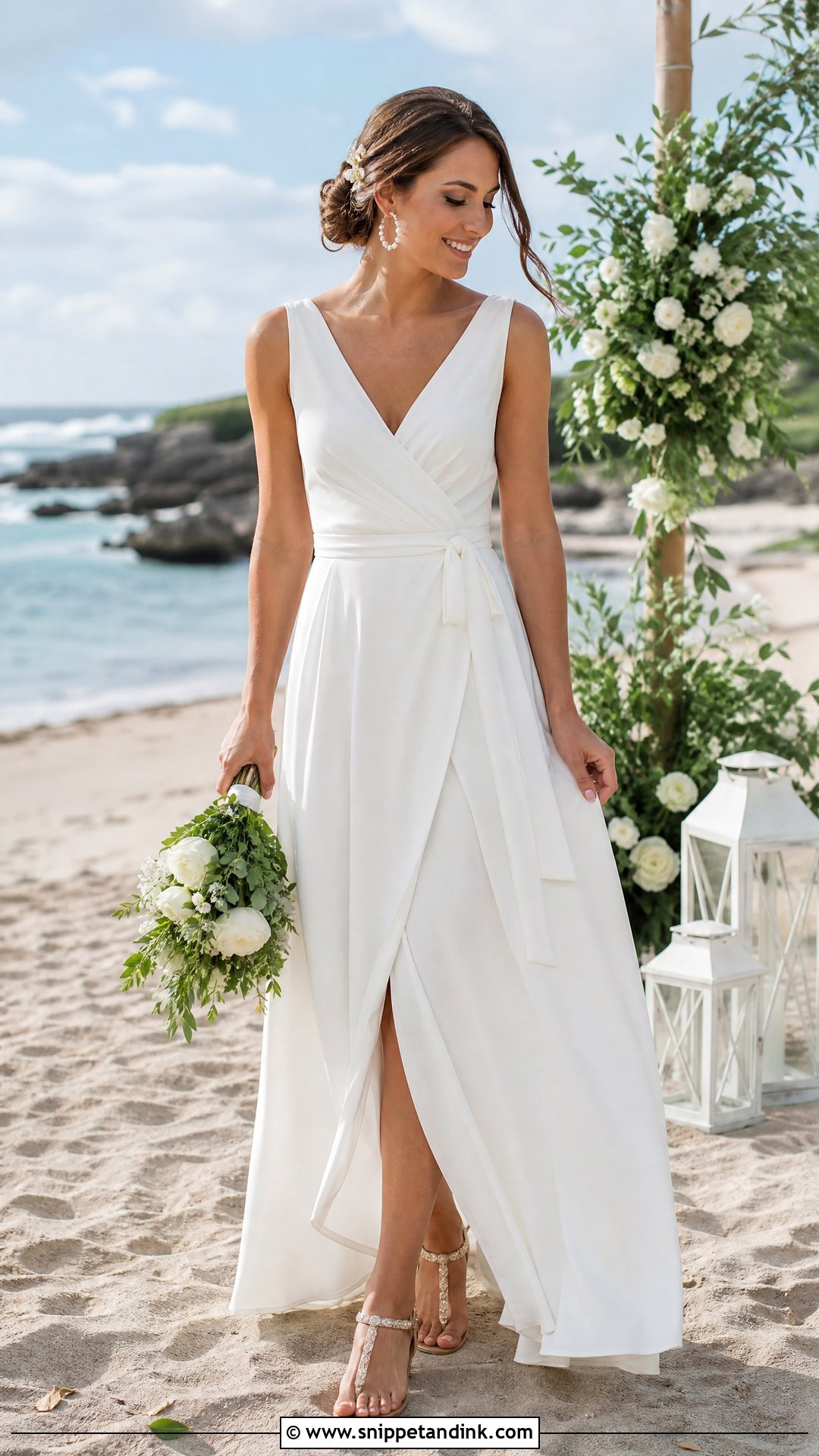
Wind is the beach bride’s biggest problem, and wraps catch it at the overlap. Skip heavy satin and long trains; chiffon or soft crepe with an interior snap at the crossover stays put far better than a tie alone. Keep the skirt fluid but not too full, since you may be walking on soft sand or uneven boards. Flat embellished sandals, pearl hoops and either a short veil or a hair comb finish it. A smooth low ponytail stops hair from whipping across the neckline in photos. It suits a shoreline ceremony or a relaxed reception by the water.
6. Plus Size Wrap Wedding Dress
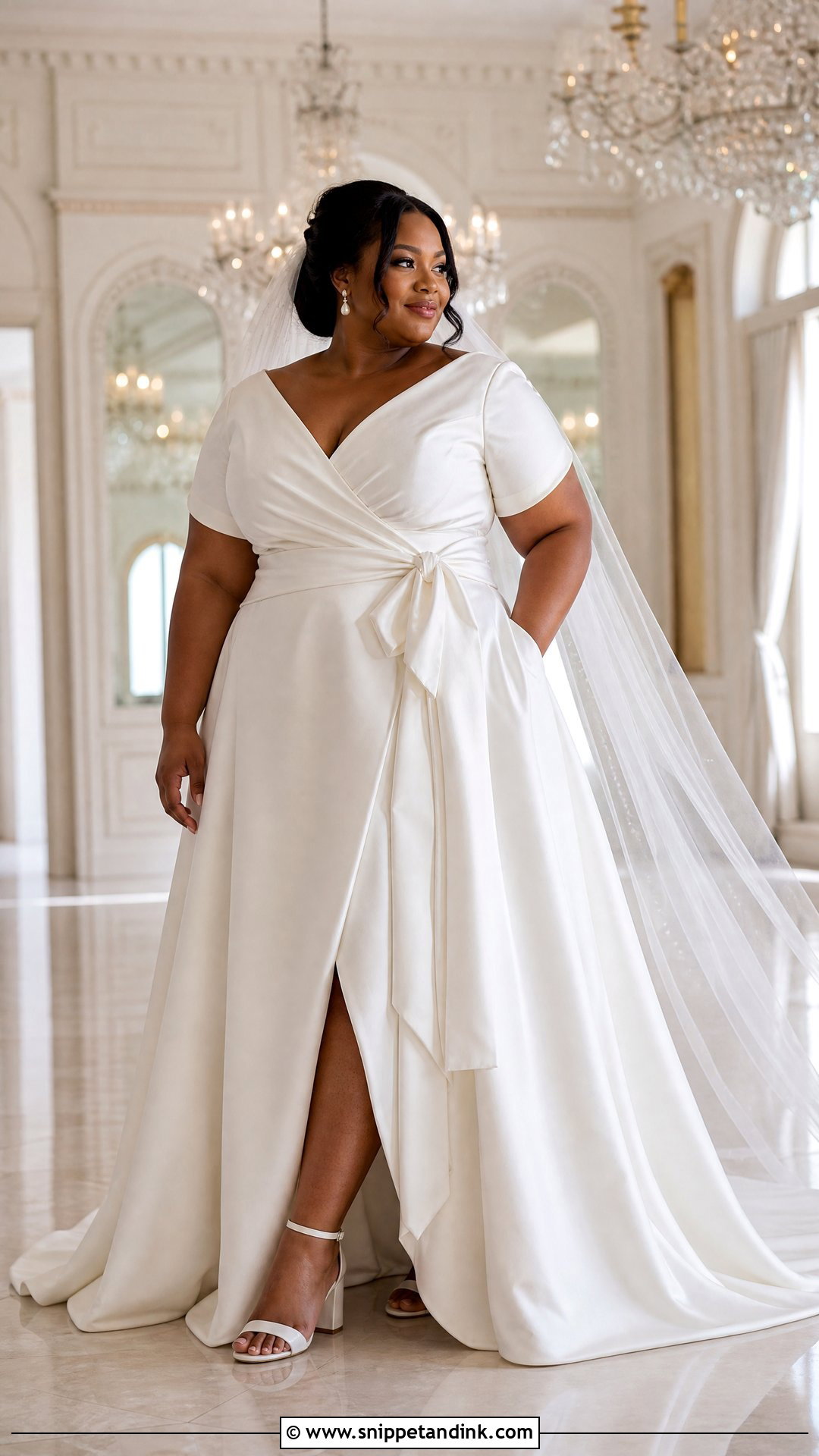
Plus size brides often get told a wrap fits automatically because it adjusts. It adjusts, but it still needs a real foundation. I look for a structured lining, wide ties that do not dig in, and straps or sleeves wide enough to cover a supportive bra. A seamstress can change the depth of the crossover and move the tie point so the gown stays secure when you sit and dance. Please do not size down because the ties make it possible; the fabric will pull and gape. A full A-line skirt, block heels, a soft cathedral veil and medium earrings keep everything in proportion.
7. Petite Wrap Wedding Dress
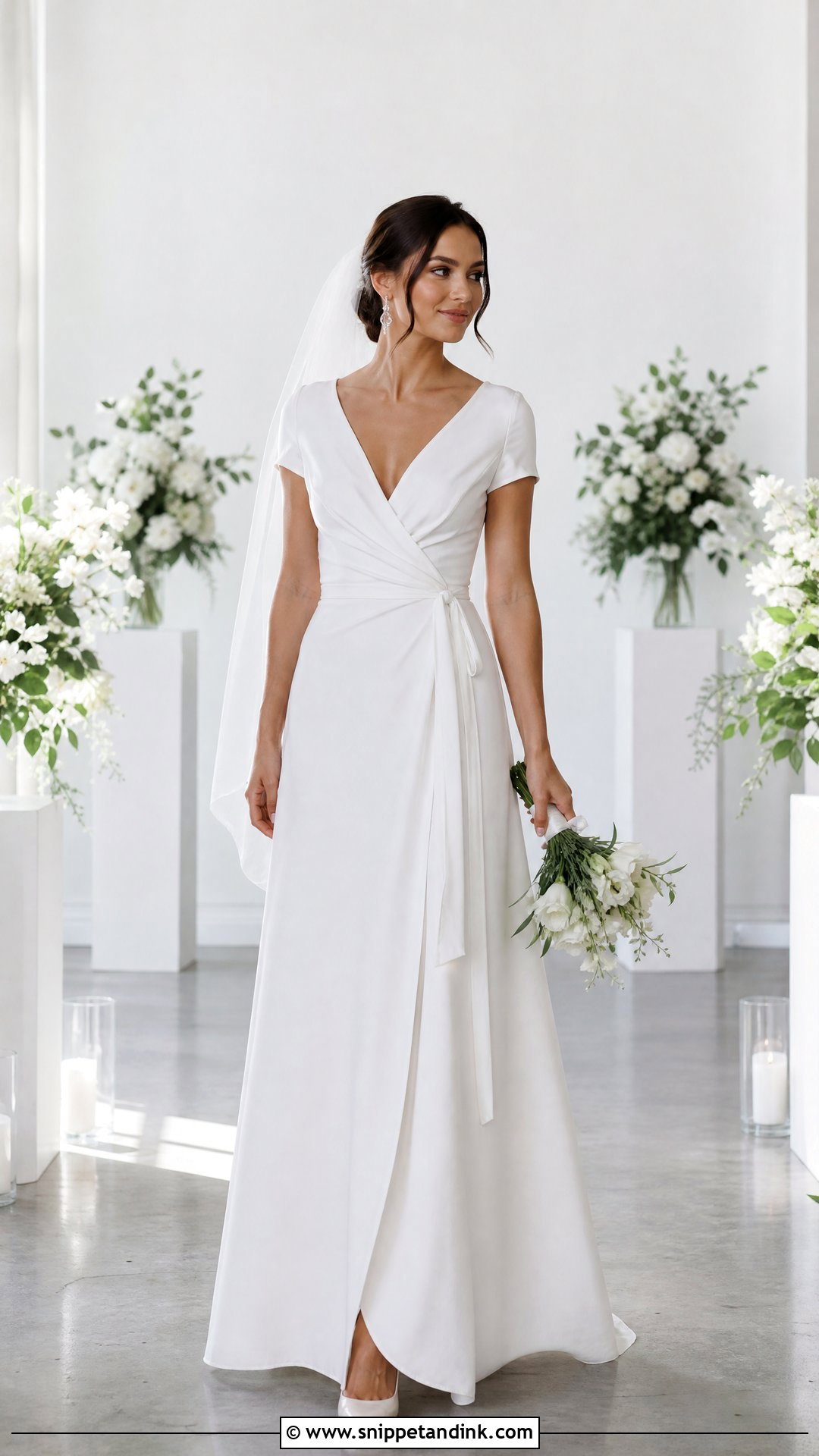
On a petite frame, the wrap’s diagonal line does real work: it draws the eye up and makes the torso look longer. Keep the waist at its natural point, the ties narrow and the skirt moderately full. Floor length with pointed toes adds height. A narrow bouquet, fine earrings and a fingertip veil that ends close to the hem keep proportions tidy. I steer petite brides away from big bows and wide sashes, which chop the body in half. The bigger point is alterations: the bodice, sleeves and skirt should all be scaled down, not just the hem, or the crossover lands in the wrong place.
8. Minimalist Wrap Wedding Dress
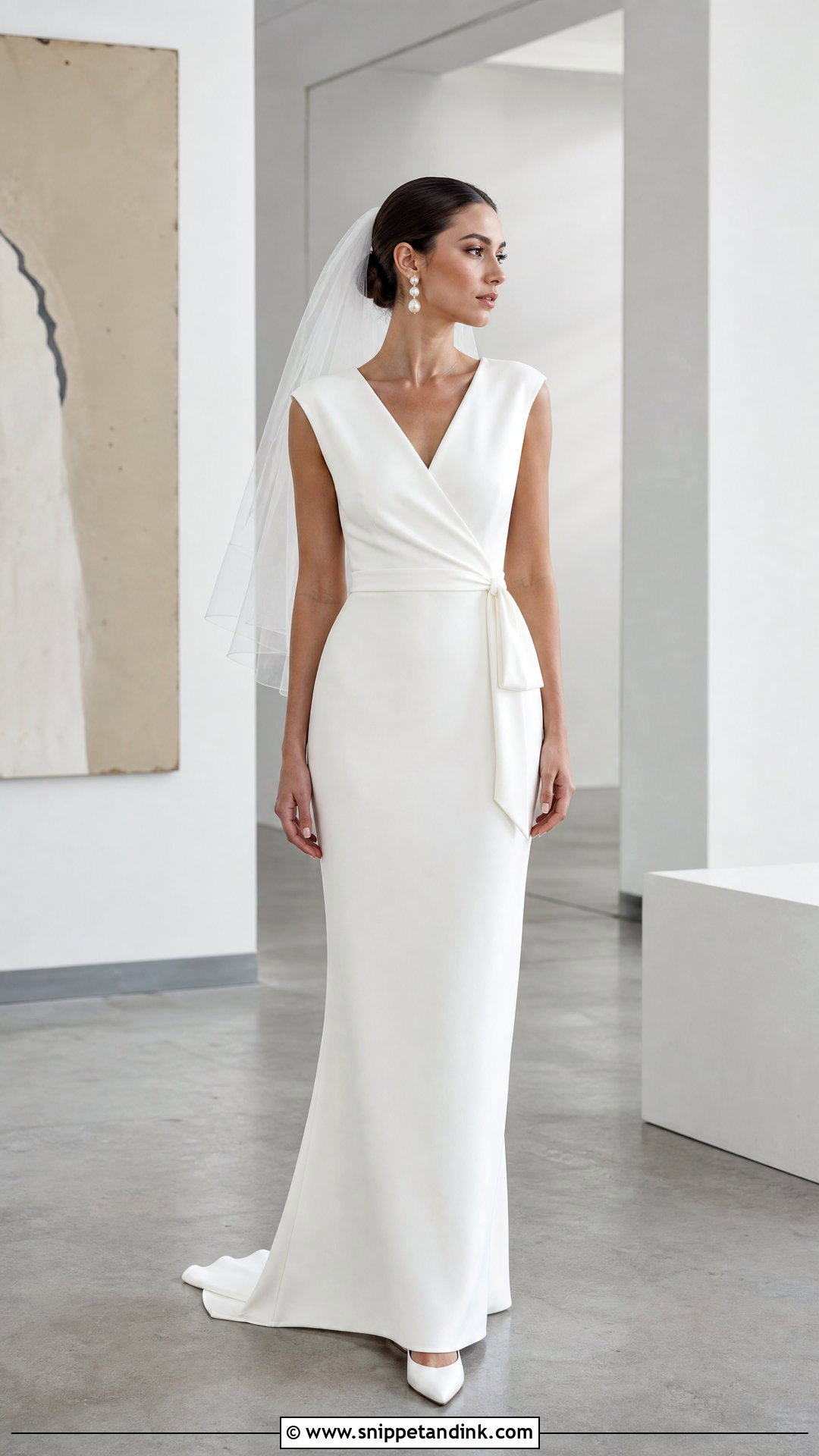
Matte crepe or smooth silk, minimal seams and no beading: a minimalist wrap relies entirely on cut. The tie should be narrow so the waist reads without bulk, and the skirt straight or barely flared. I let one detail lead, a dramatic back, a small train or a structured cuff, and keep everything else quiet: sculptural pearl earrings, pointed pumps and a single-layer veil. A centre-parted low bun puts the neckline front and centre. Crepe is forgiving to sit in but shows any lumpy undergarment, so I check the hipline from the side. It belongs at a courthouse, rooftop or gallery.
9. Chiffon Wrap Wedding Dress
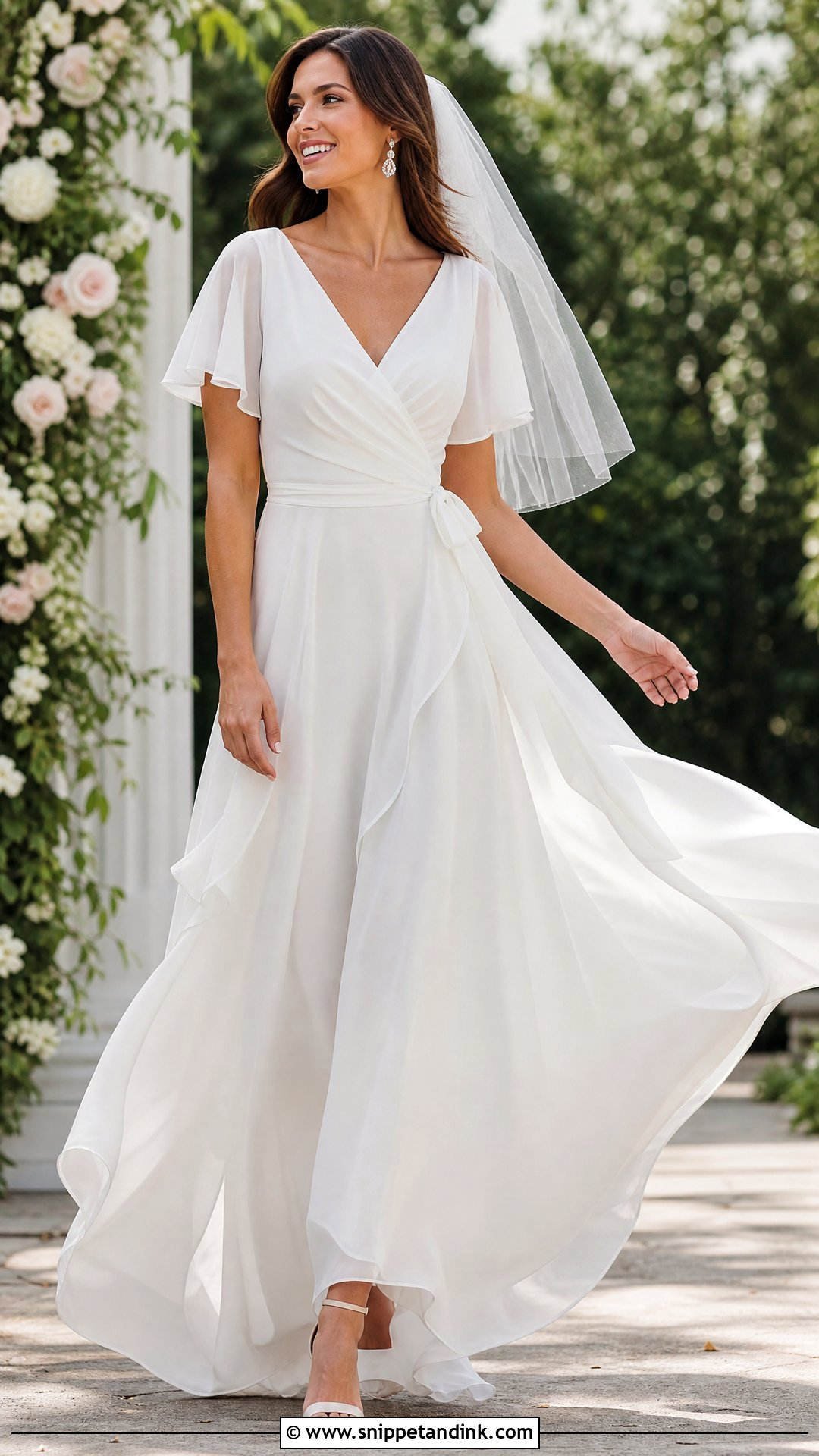
Chiffon is weightless, which is the appeal and the risk. Unlined chiffon goes see-through in bright sun, so I insist on a full lining in the bodice and skirt before anything else. A reinforced waist seam keeps the wrap from sagging as the day goes on, and flutter sleeves or slim straps suit the softness. Low block-heel sandals, crystal drops and a light fingertip veil keep it outdoorsy without looking casual, especially with a softly pinned style. Skip a very high slit if your ceremony is outside; a gust lifts chiffon more than you would like.
10. Ruffle Wrap Wedding Dress
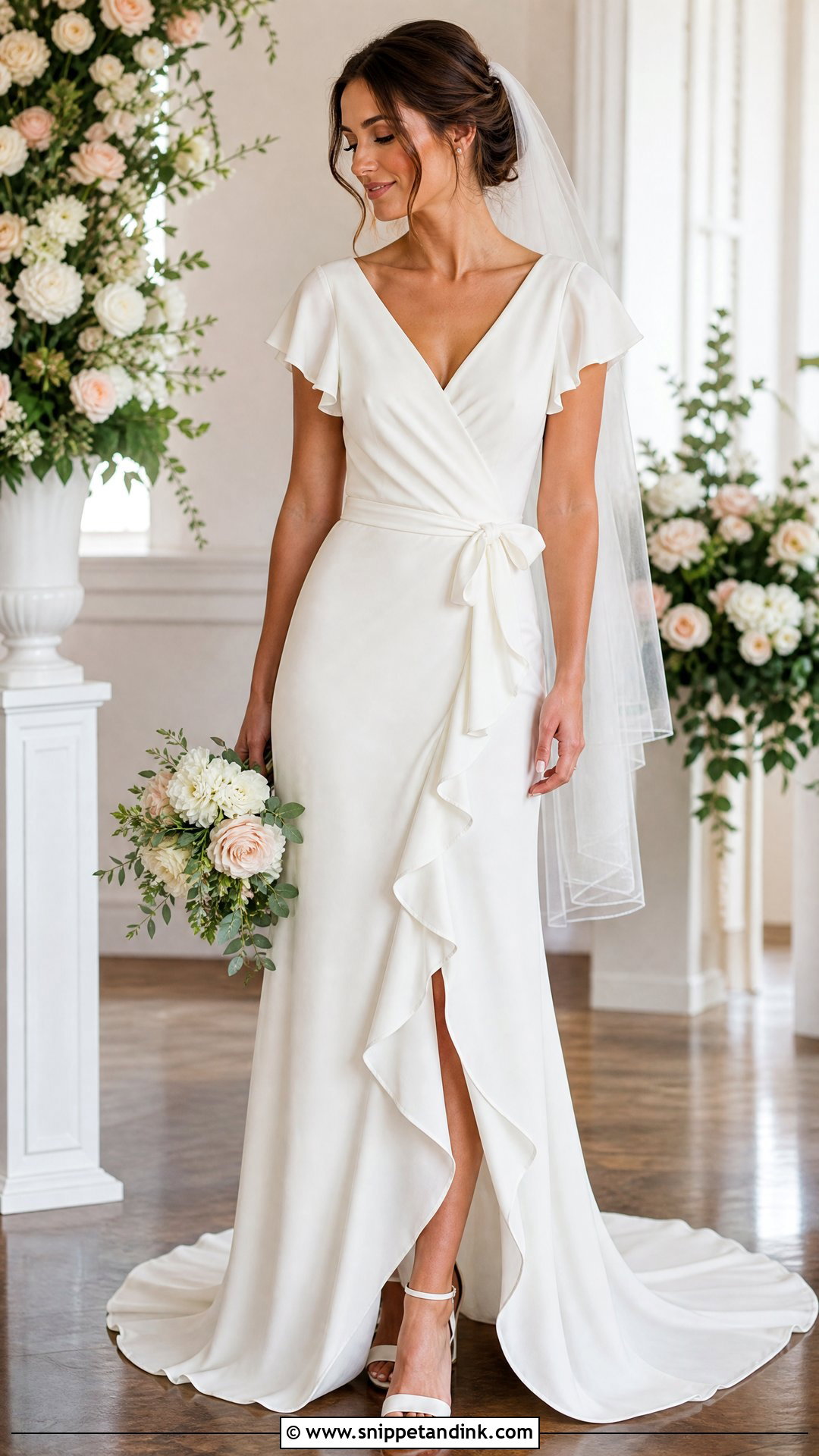
One ruffle detail is plenty on a ruffle wrap wedding dress: a flutter sleeve, a trim at the neckline or a cascade down the skirt opening. Stack all three and the waist vanishes. I like the ruffle to follow the diagonal opening of the skirt, because it moves as you walk while still covering the leg when you sit. Organza or structured crepe ruffles hold their shape for a formal ceremony; chiffon ruffles go limp faster but suit a garden. Clean ivory sandals, small studs, a plain tulle veil and a sleek bun stop it from turning sugary.
11. Tea Length Wrap Wedding Dress
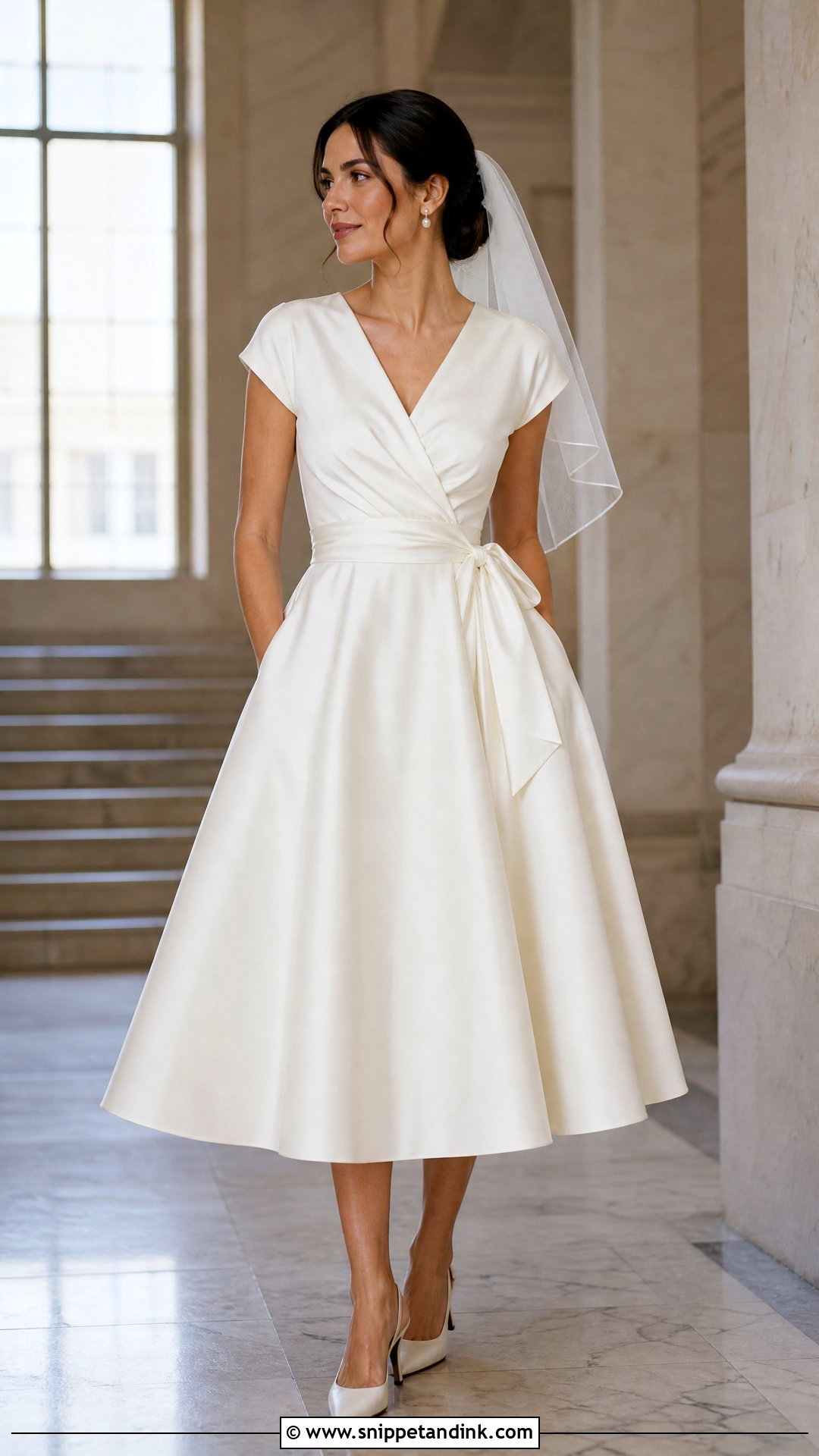
Tea length sits between lower calf and ankle, so your shoes are part of the outfit, not an afterthought. A structured wrap bodice with a softly full skirt looks classic; fluid crepe feels more modern. Pointed slingbacks, pearl earrings and a short veil or birdcage-inspired headpiece suit the shorter proportion, as do a neat bun, soft waves or a chin-length cut. The detail I watch is the waist tie. A chunky knot looks twice as heavy on a shorter dress, so I ask for a flat tie or a hidden hook. Courthouses and daytime receptions suit it best.
12. A Line Wrap Wedding Dress
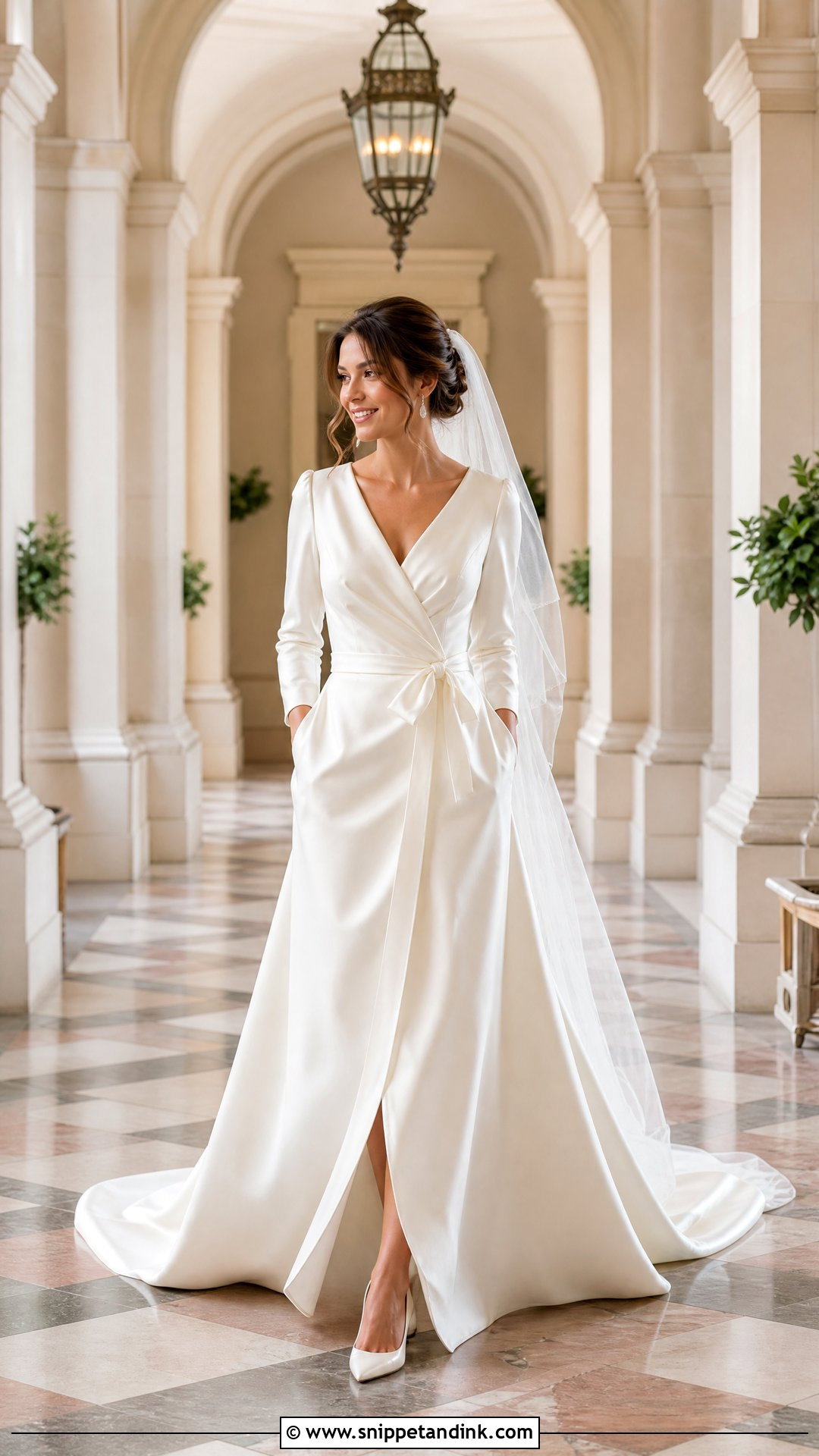
The A-line is the most forgiving skirt to pair with a wrap, since it widens gradually from the waist without adding bulk. Satin reads formal, chiffon suits outdoors and crepe keeps it simple. The question I ask first: is it a true wrap or does it just look like one? A true wrap needs hidden hooks or snaps added by your tailor, otherwise it shifts during the ceremony. Comfortable pointed pumps, a chapel veil, delicate drops and a low chignon finish it. It also takes sleeves, pockets, a train or light beading without losing its shape, which makes it easy to personalise.
13. Mermaid Wrap Wedding Dress
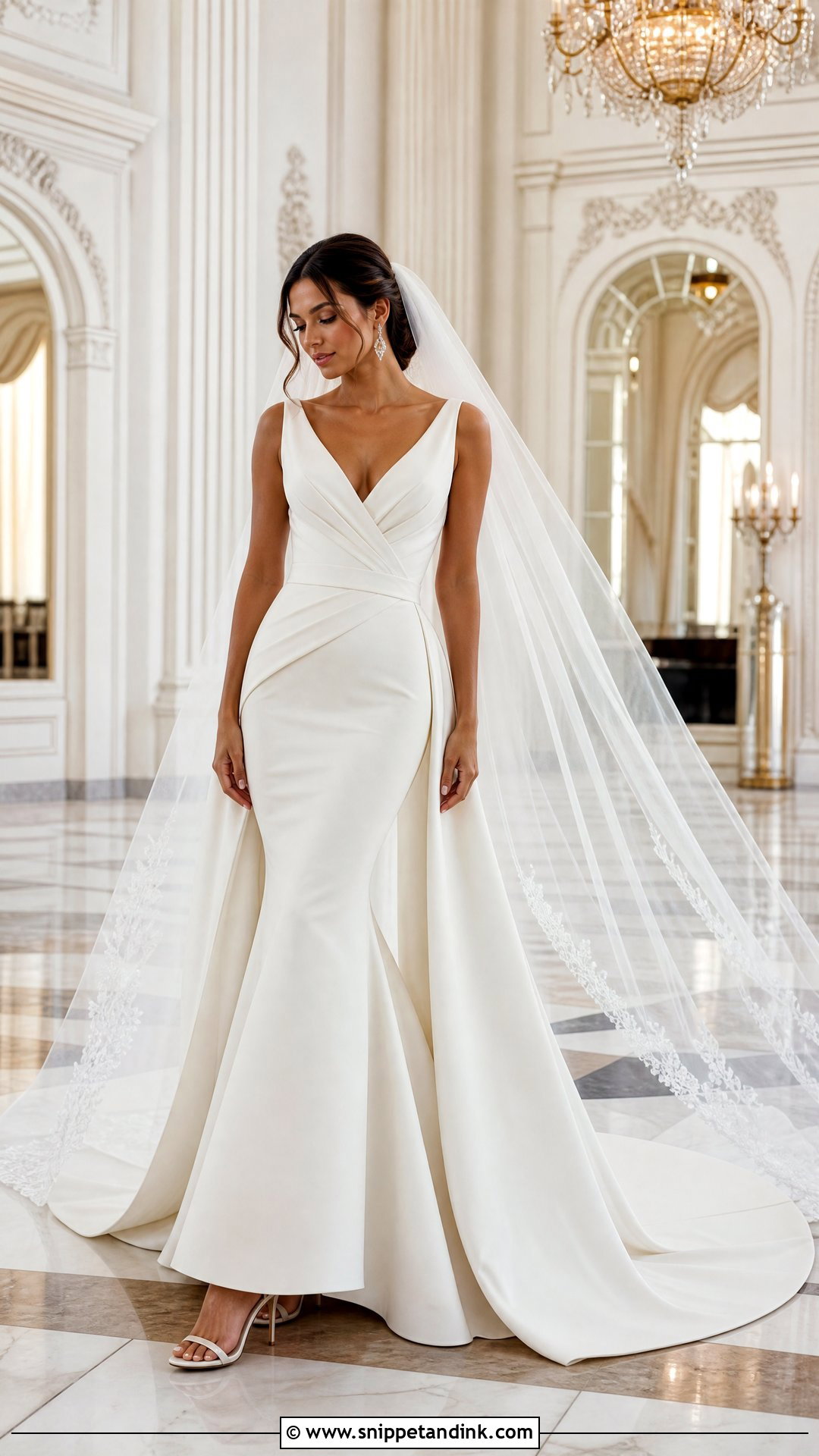
Pairing a crossover bodice with a mermaid skirt is ambitious, because the fitted hips pull against the diagonal closure. That is why the fabric needs some heft, substantial crepe, Mikado or lined satin, and why a wide waistband helps tie the V to the structured skirt. During fittings, I ask brides to sit, climb a step and dance a little; if the wrap gapes when you sit, the skirt is too tight. High but stable heels, crystal earrings, a sleek cathedral veil and smooth waves fit the glamour. A detachable train or bustle makes the reception easier. Ballrooms and grand hotels suit it.
14. Wrap Bodice Wedding Dress With Tulle Skirt
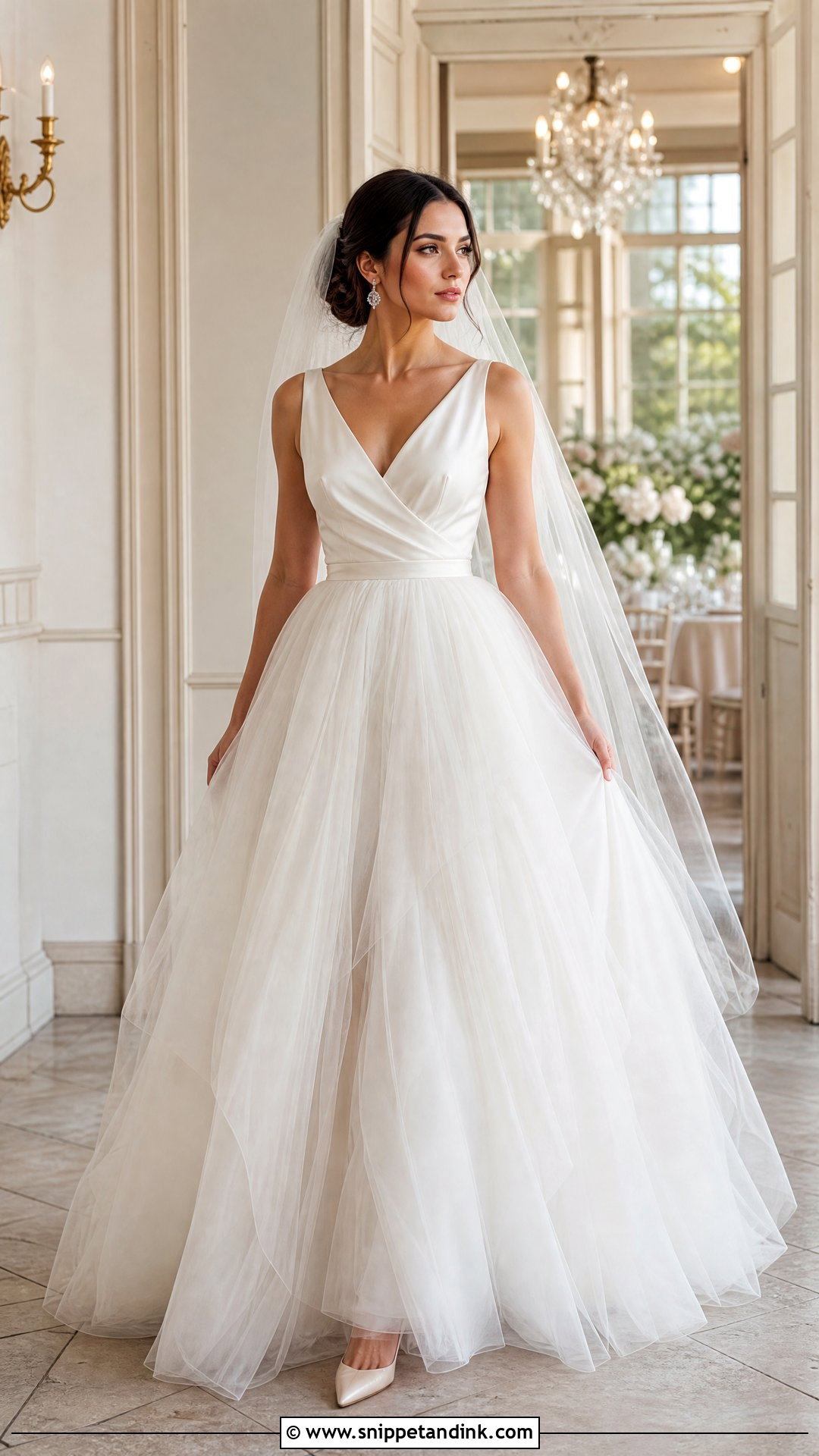
A wrap bodice on a tulle skirt gives you princess volume without a heavy corset. The secret is the join: a satin-edged tie or fitted waistband should sit evenly under the crossover panels, and I check it from the side as well as the front because a tilted waist seam is easy to miss in the mirror. Skip a big sash bow, which competes with the skirt. Ivory pumps, pearl-and-crystal earrings and a fine tulle veil that repeats the skirt keep it cohesive, and a low bun or half-up style suits the airy shape for a ballroom or an outdoor estate.
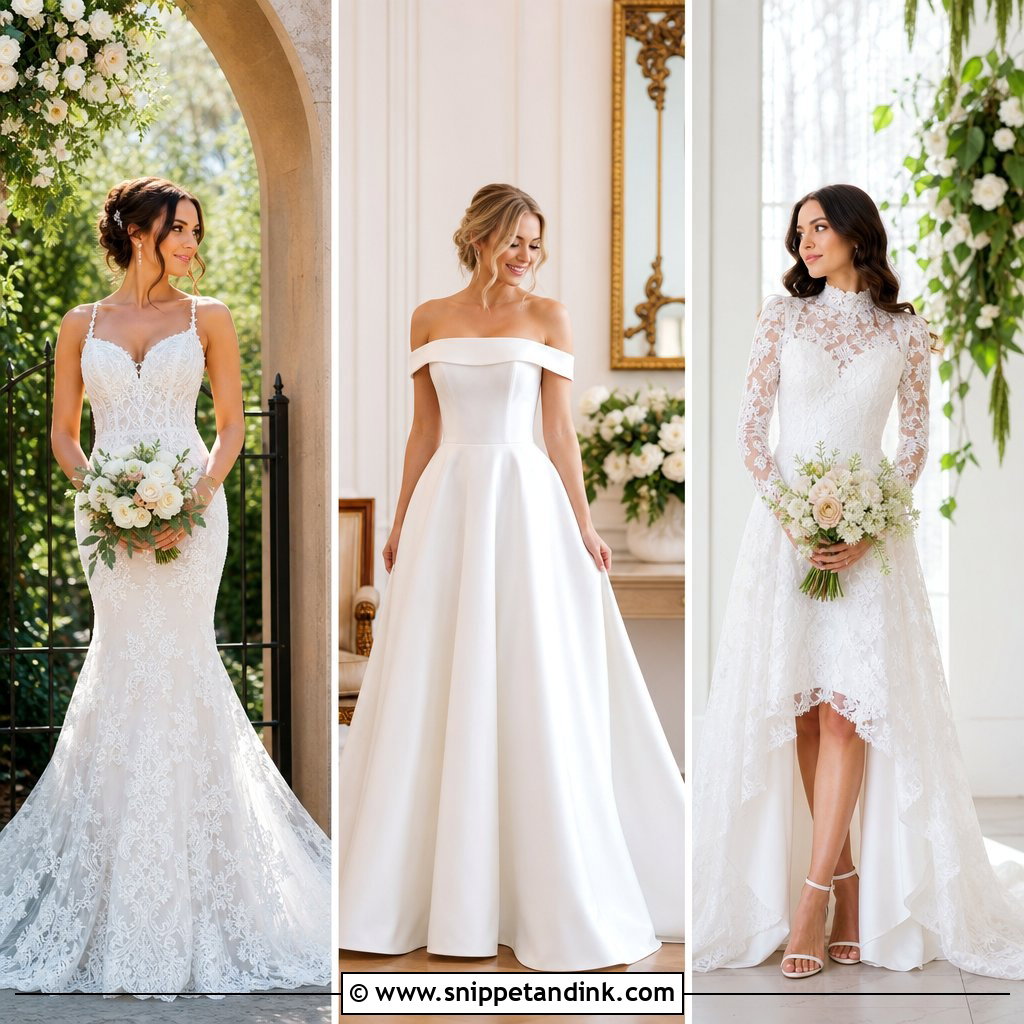
15. Off Shoulder Wrap Wedding Dress
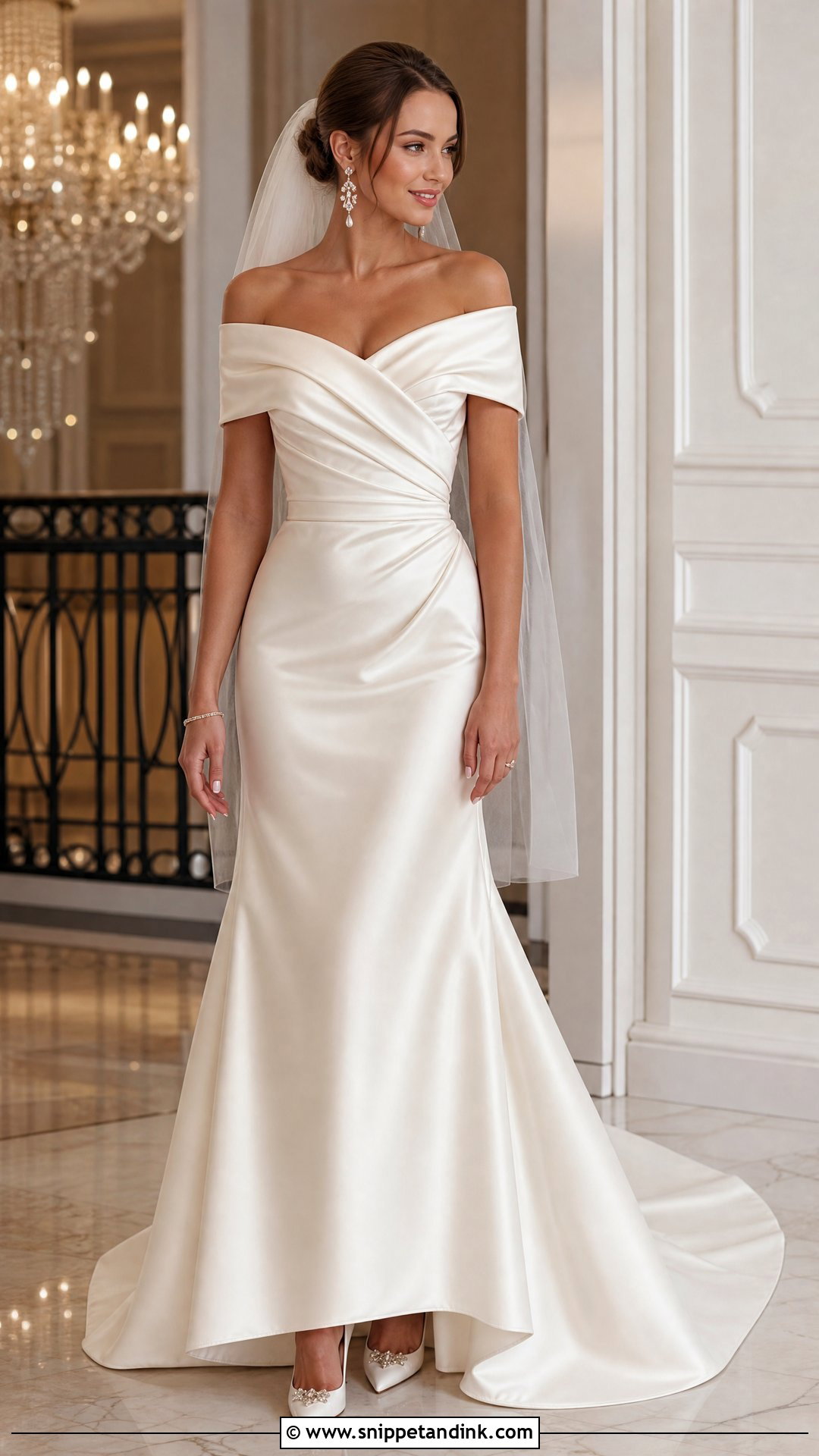
Off-the-shoulder and wrap together means two things that like to slip. Built-in structure along the neckline is non-negotiable, so the bodice stays where it should without pinning your arms down. Draped sleeves read soft, a folded satin edge reads architectural. Pick either a necklace at the collarbone or bold earrings, not both. Fashion tape helps on the day, but I would never rely on it alone; tailoring and an internal band do the real holding. Add pointed pumps and a veil set under a low bun for a formal indoor ceremony or an evening reception.
16. Short Sleeve Wrap Wedding Dress
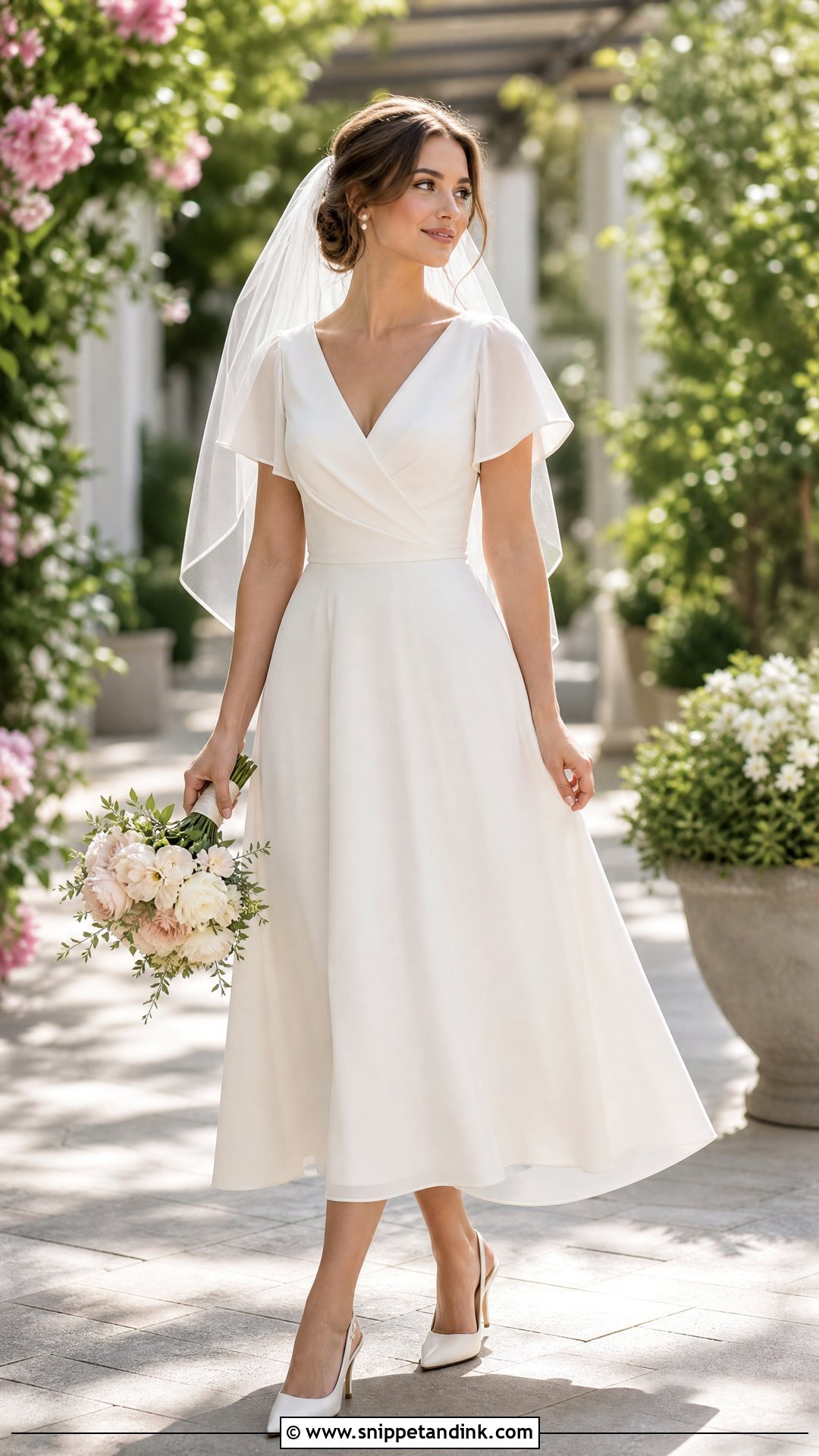
Short sleeves are the most practical coverage on a wrap: cap sleeves look delicate, flutter sleeves move, and elbow length feels more formal. With a short sleeve wrap wedding dress, I check the armhole by having the bride hug me in the fitting room, since a tight sleeve pulls the whole crossover open. Keep the A-line skirt fluid. Slingback heels, pearl studs, a fingertip veil and soft waves or a twisted bun suit spring and daytime weddings. In lace, keep the shoes and jewelry plain so the texture is the only pattern.
17. Embellished Wrap Wedding Dress
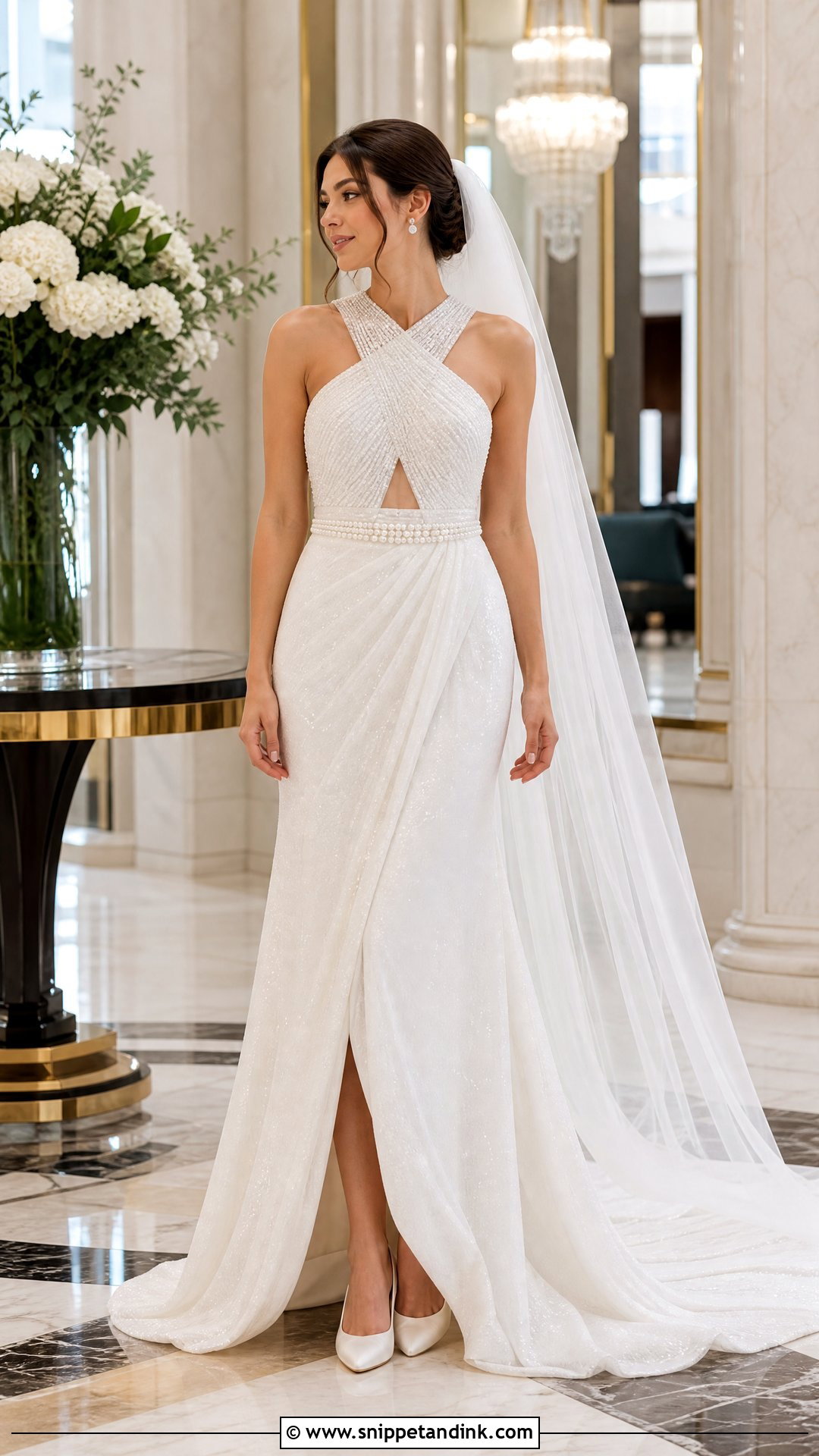
Beading on a wrap should live in one area, the neckline, the waist or the skirt, not everywhere. A softly beaded waistband can replace a fabric tie and define the shape without adding a knot. Before buying, run your hand along the inside of the arm and the waist: rough sequins or beads there will chafe after hours of hugging guests. I also choose an updo for this gown, because loose hair snags on beading. Plain satin pumps, small earrings and an unembellished veil keep it glamorous rather than heavy for an evening ceremony or a formal hotel.
18. Floral Wrap Wedding Dress
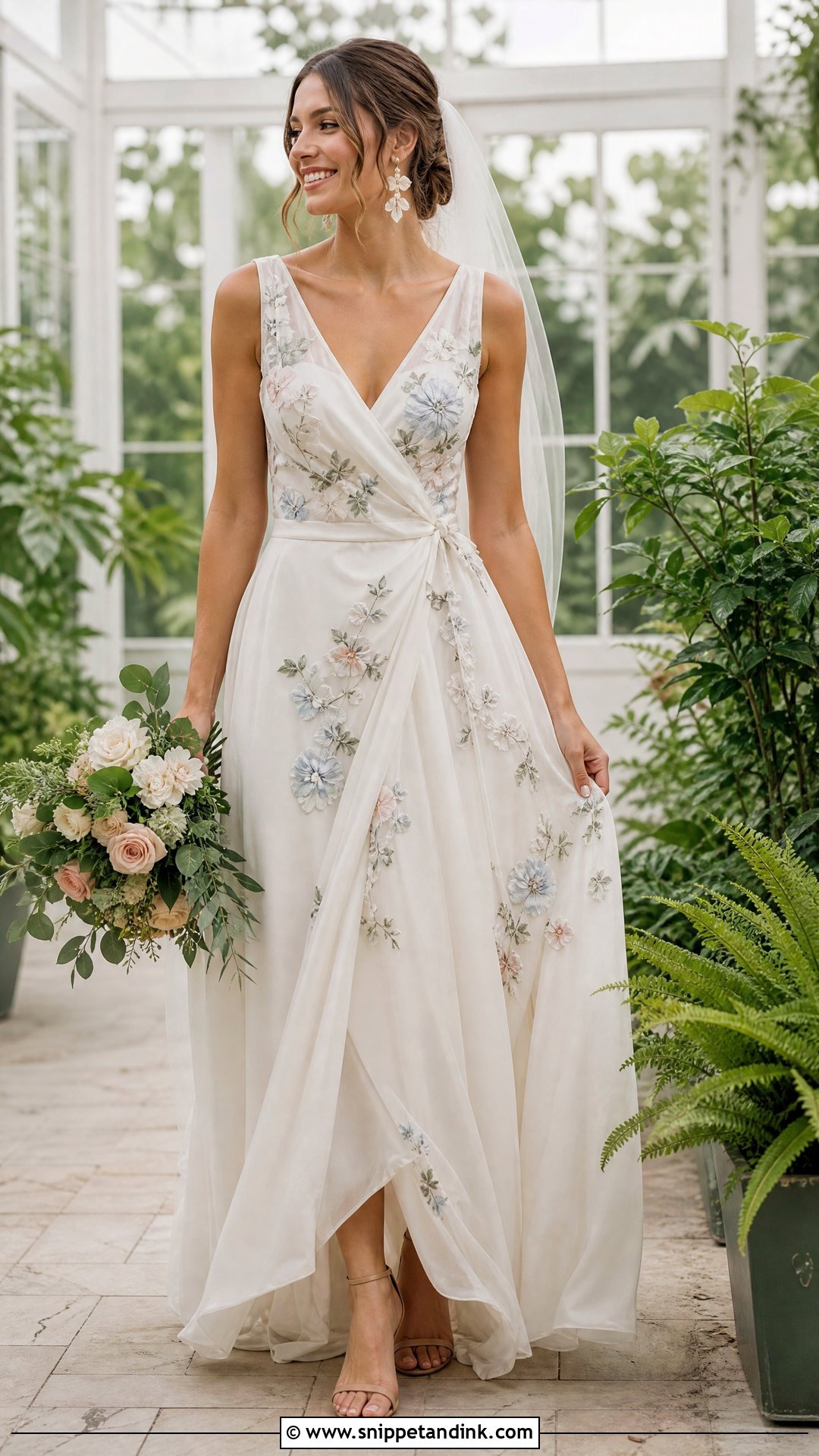
Floral embroidery adds colour without leaving the bridal palette behind. Tonal ivory is subtle; blush, pale blue or soft green accents make it personal. I prefer larger blooms around the skirt or waist and a cleaner crossover neckline, so the face is not competing with the flowers. Neutral heels, small botanical earrings, a plain veil and a relaxed low bun or gentle waves let the pattern show. Echo a few dress colours in the bouquet without matching every one. For outdoor weddings, check that the appliqués are stitched flat; raised petals snag on branches and chair backs.
19. Wrap Wedding Dress With Train
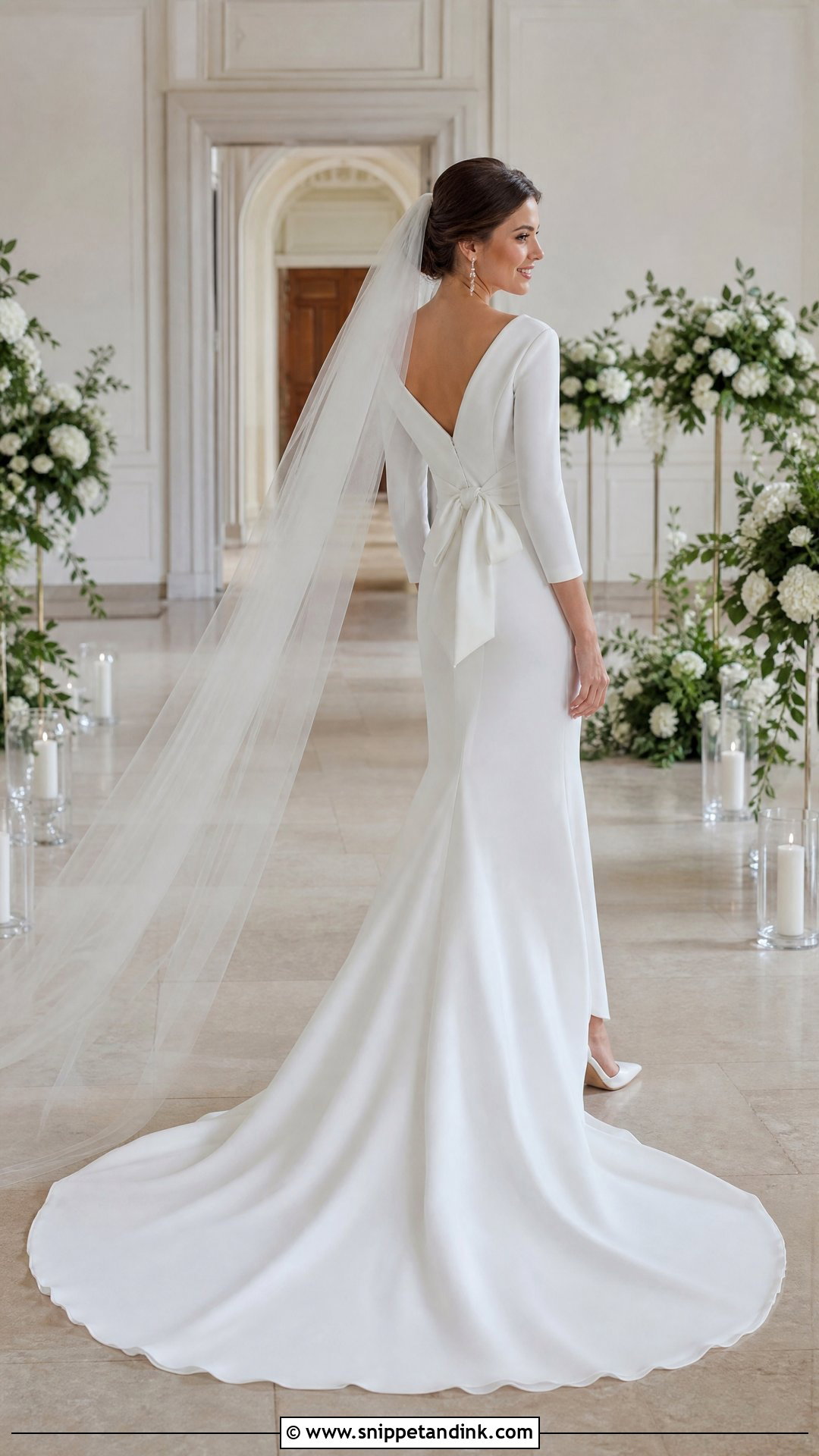
A train adds a back view to a dress that is otherwise all about the front. A sweep train is easy for an informal ceremony, while chapel and cathedral lengths bring drama. The problem is weight: a long train pulls the skirt backward, and on a wrap that drags the crossover open. I ask for a firm waist stay and a sturdy bustle, then have the bride practise bustling before the day. Keep the waist bow compact, the earrings simple and the veil either clearly longer or clearly shorter than the train. Long aisles and estate lawns show it off.



20. Faux Wrap Wedding Dress
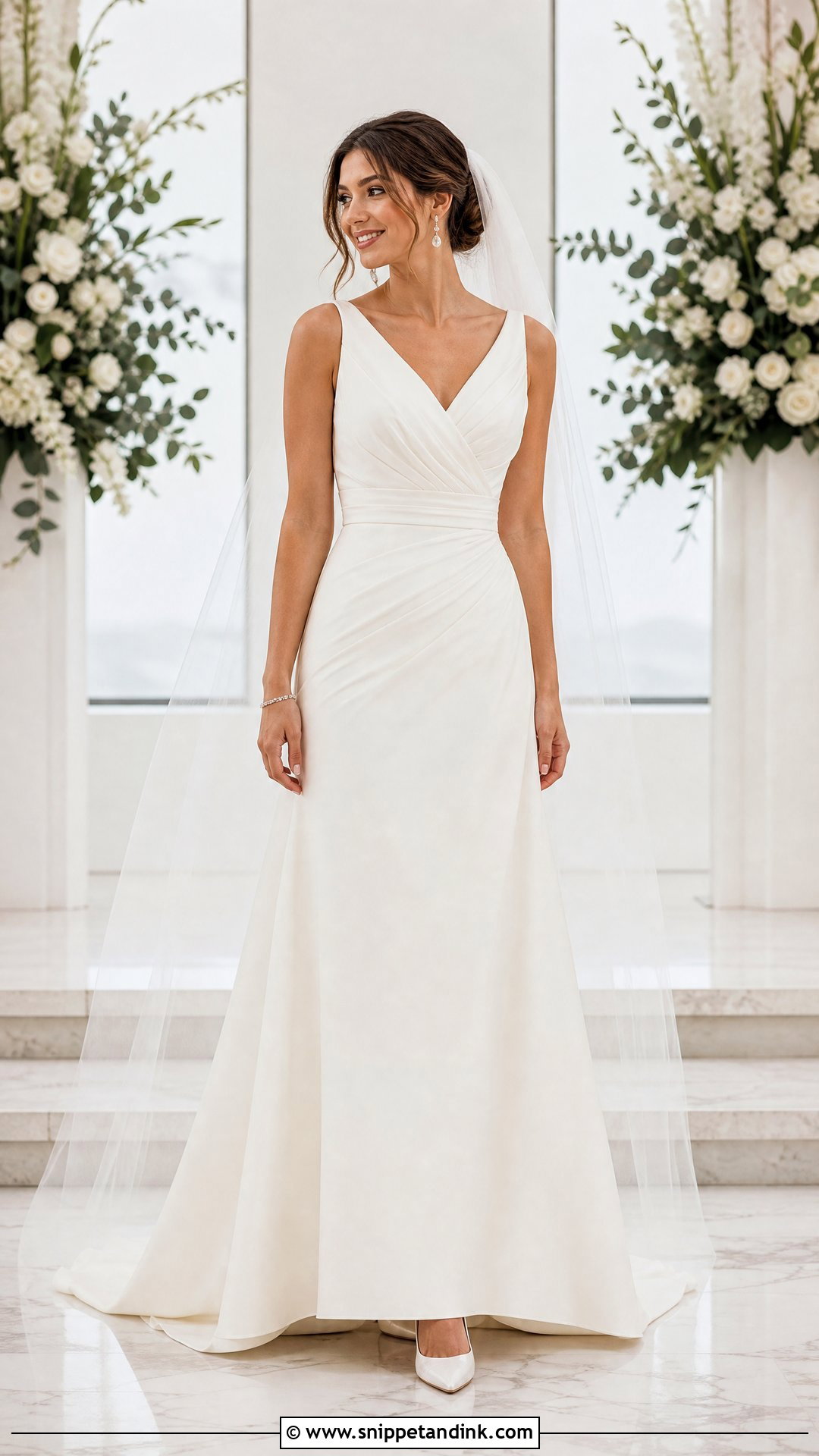
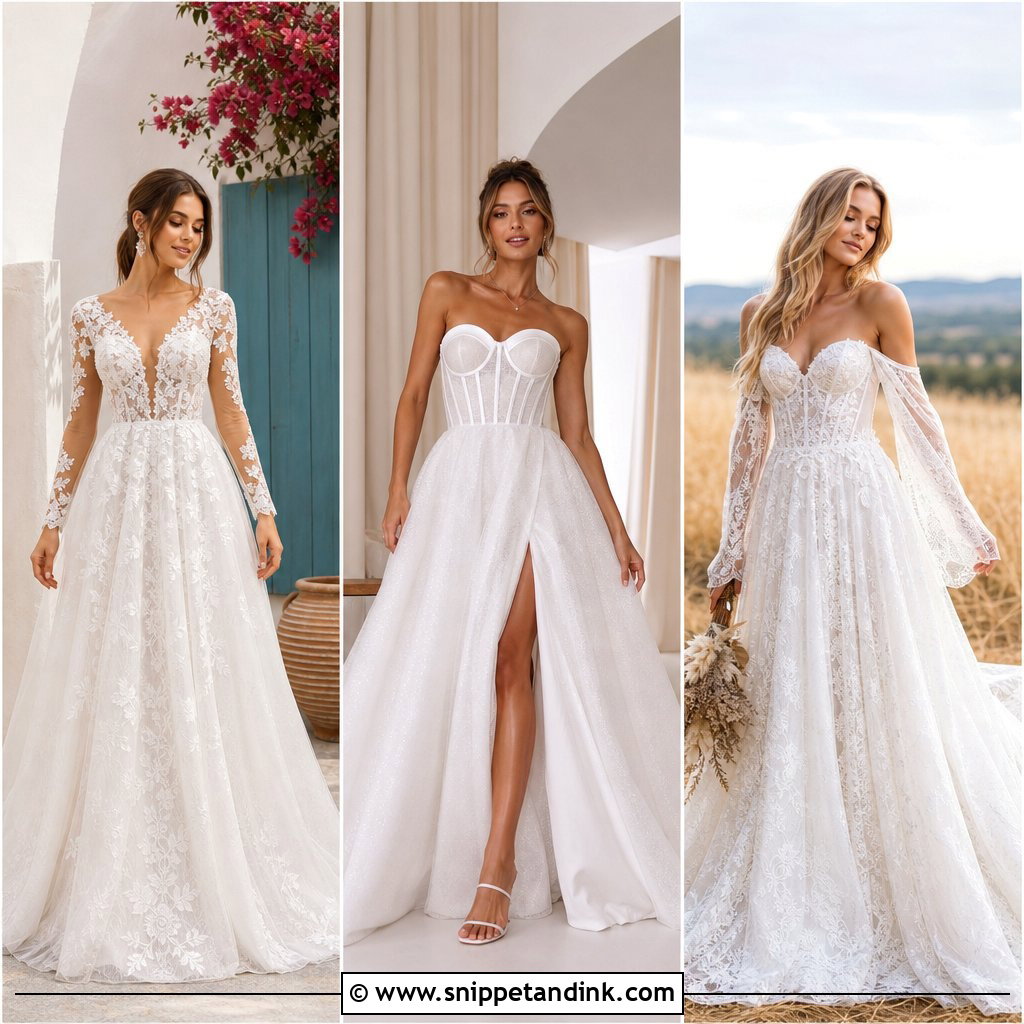
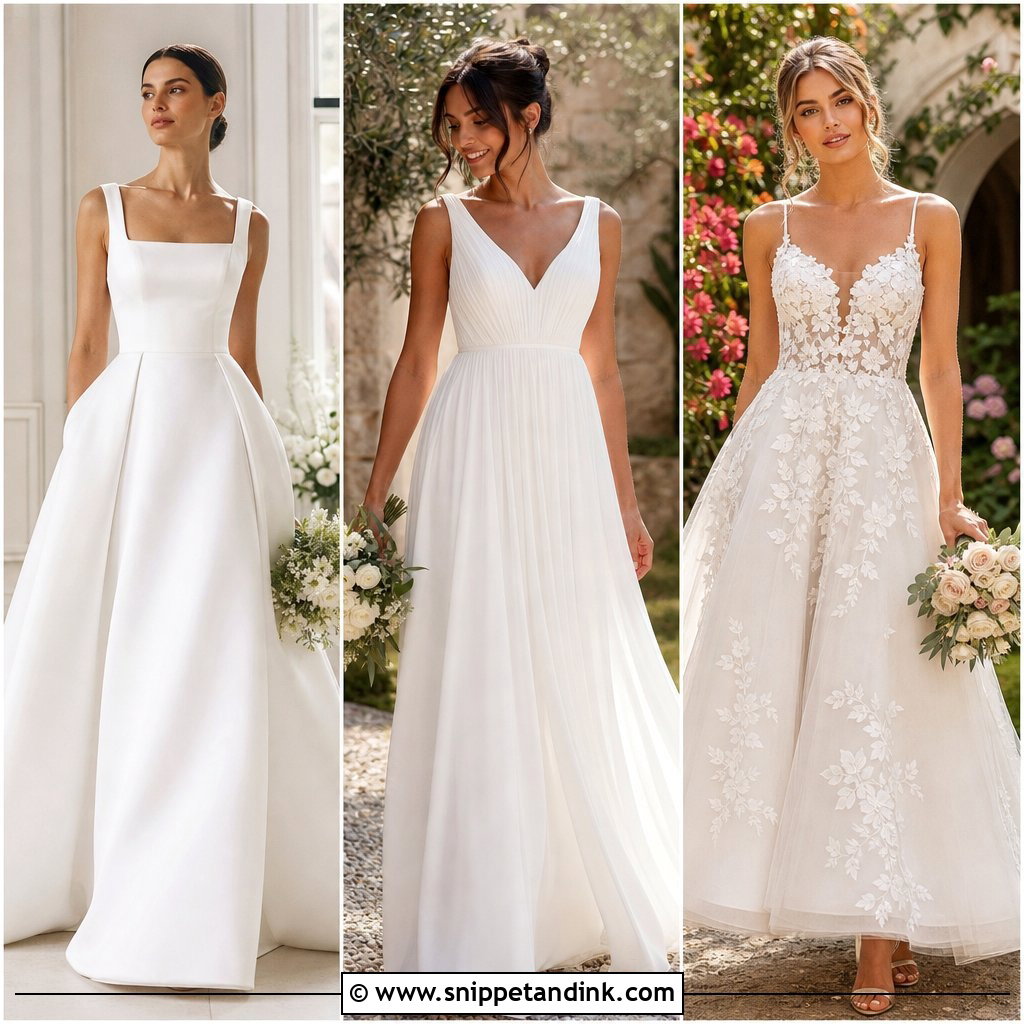
A faux wrap gives you the overlapping look with none of the shifting, because the front is stitched closed. That fixed construction can hold boning, cups or a structured waistband, which a true wrap rarely can. Diagonal pleats imitate the soft drape of a tie. If you are nervous about a gown moving during a long day, this is the version I would point you to first. Classic pumps, drop earrings, a chapel veil and a low bun finish it neatly. It pairs with fitted, A-line or full skirts, making it the most adaptable dress on this list.
Knot, Bow or Hidden Hook at the Waist
How the tie is finished changes the whole dress. A knot at the side hip is the most flattering on most figures and stays flat under a bouquet. A bow reads sweeter but adds bulk, so I keep the loops small and short. A hidden hook under a decorative tie is the most secure option for dancing, and it is what I ask for on chiffon, which tends to loosen as the knot slides.
Have someone tie it for you on the morning, with the dress on, and mark the spot with a small stitch or a safety pin on the inside so it goes back the same way after photos.
If your measurements may change before the wedding
Wraps are a good option for brides who are pregnant, recovering or losing weight, because the overlap can absorb a small change. Ask your seamstress to leave extra seam allowance at the side and to set the final tie point at the last fitting rather than early on. I would still keep that final appointment close to the wedding date, since a wrap that is too loose sags at the chest long before it slips at the waist.
A Crossover That Holds Through the Last Song
A wrap works when it stays where you put it from the first look to the last song. Across these twenty dresses, the crossover adjusts to a minimalist ceremony, a garden, a ballroom or a beach. Judge the fabric, internal support, neckline depth and waist position first, then let shoes, jewelry, veil and hair follow the mood. Alterations make more difference here than with almost any other silhouette. In every fitting, walk, sit and reach up. If the crossover holds through all three, you have found your dress.
You'll Like These Ideas:







Leave a Reply