
Ankara wedding dresses let a bride wear her heritage in the cut of a bridal gown: corseted waists, dramatic sleeves, detachable skirts and sculpted ruffles, all in wax print. The harder part is not falling for a print but finding the shape that carries it, suits your venue and lets you move. In my fittings, the print almost always decides the accessories rather than the other way round, so metallic sandals, plain jewelry and a coordinated headwrap tend to do more than anything showy. Below are the silhouettes I see work best, from ball gowns to soft wrap dresses, with what each one asks of you.
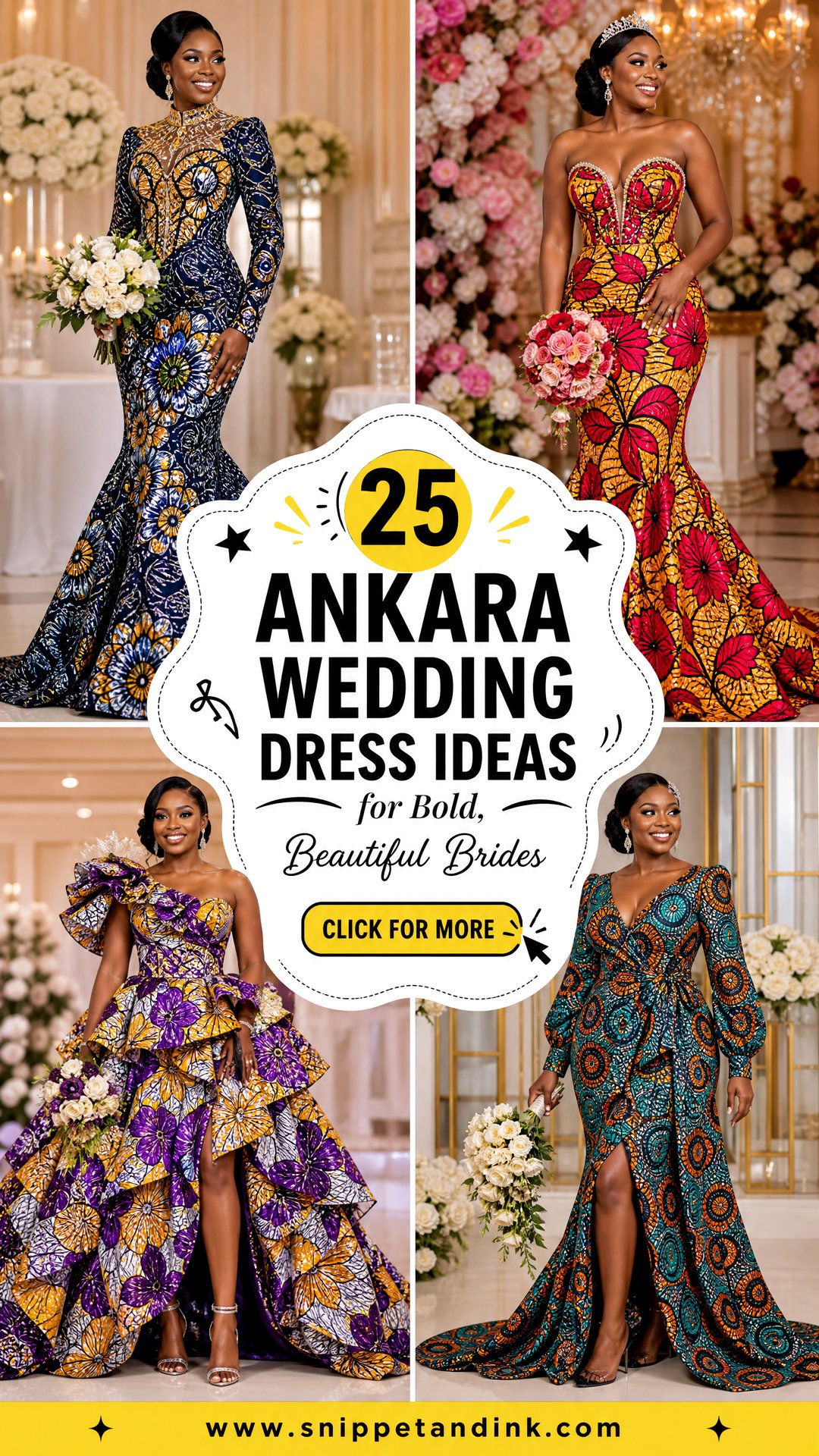
Reading a Wax Print Before It Becomes a Bridal Gown
Before I talk silhouettes with a bride, I ask her to bring the fabric, or several options, and we drape it over her in front of a full-length mirror. Ten minutes of that tells you more than any picture, because the same print can flatter one body and fight another.
Scale
Large motifs need large areas of fabric: ball skirts, trains, capes. On a fitted bodice they get cut up by darts and seams. Small and medium motifs suit fitted cuts, pleats and gathers. If you love a big print but want a fitted gown, use it on the skirt and keep the bodice in a smaller coordinating print or a solid.
Direction
Many wax prints run in stripes, diagonals or repeating rows. Vertical lines lengthen. Strong horizontal bands widen wherever they cross the body. Check which way the design runs before you choose a silhouette, and tell the tailor which way it should hang.
Distance
Step back three or four meters from the mirror, or have someone photograph you from across the room. Fine detail disappears at that distance and only the main colors and shapes remain. That is how your guests, and most of your photos, will see the dress.
1. Ankara Mermaid Wedding Dress
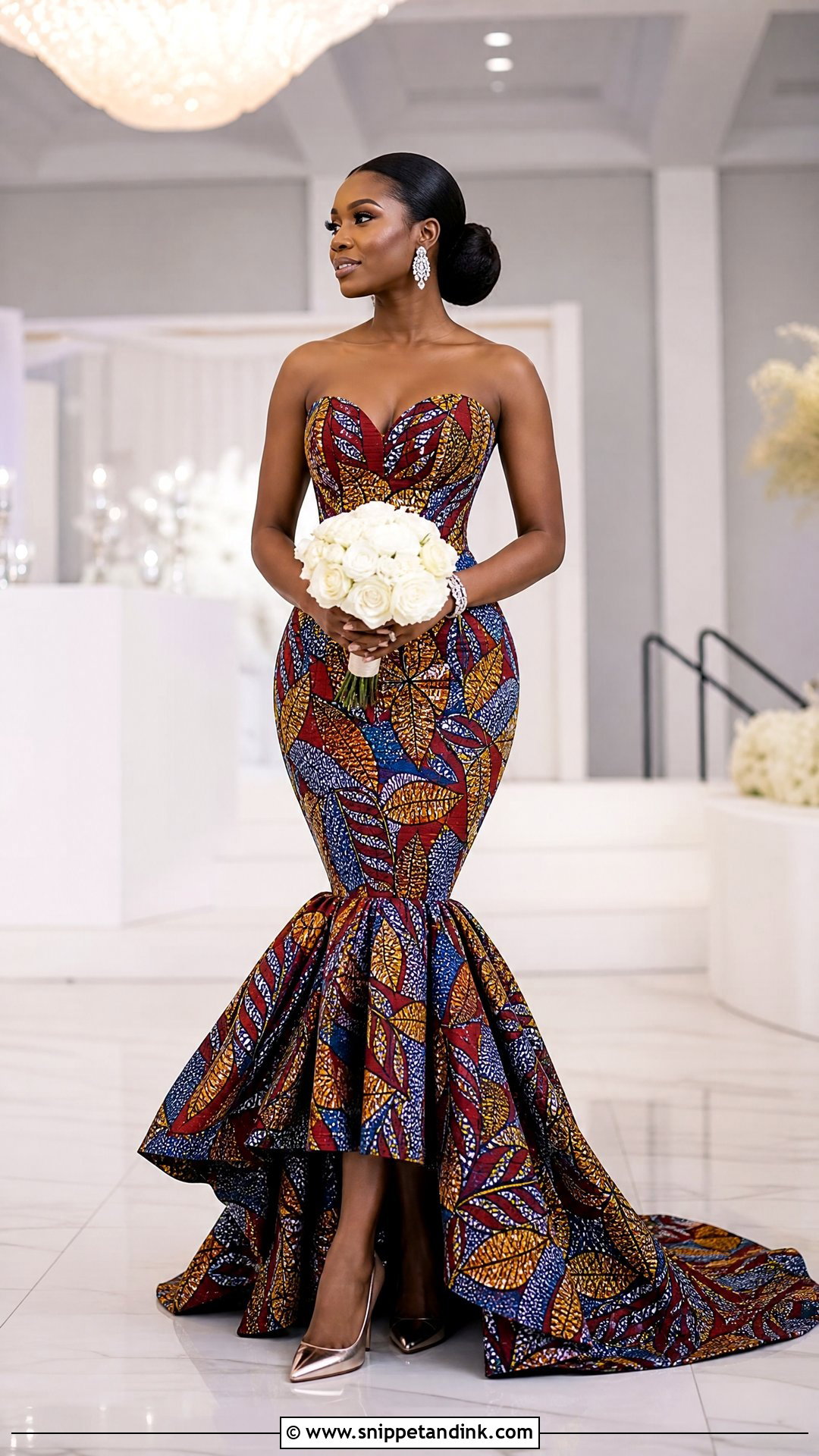
Vertical or diagonal motifs are the secret to a mermaid in Ankara. They draw the eye down the length of the body, while a print with big horizontal bands cuts you across the hips exactly where the dress is tightest. I pair this cut with a structured sweetheart bodice for support and keep the train moderate, since a long one on a fitted skirt is hard to manage. Pointed metallic pumps, crystal drops and a small satin clutch in a color lifted from the fabric finish it. With a loud print, skip the necklace and wear one slim bracelet; a smooth low bun keeps the neckline clear for a ballroom or hotel reception.
2. Ankara Ball Gown Wedding Dress
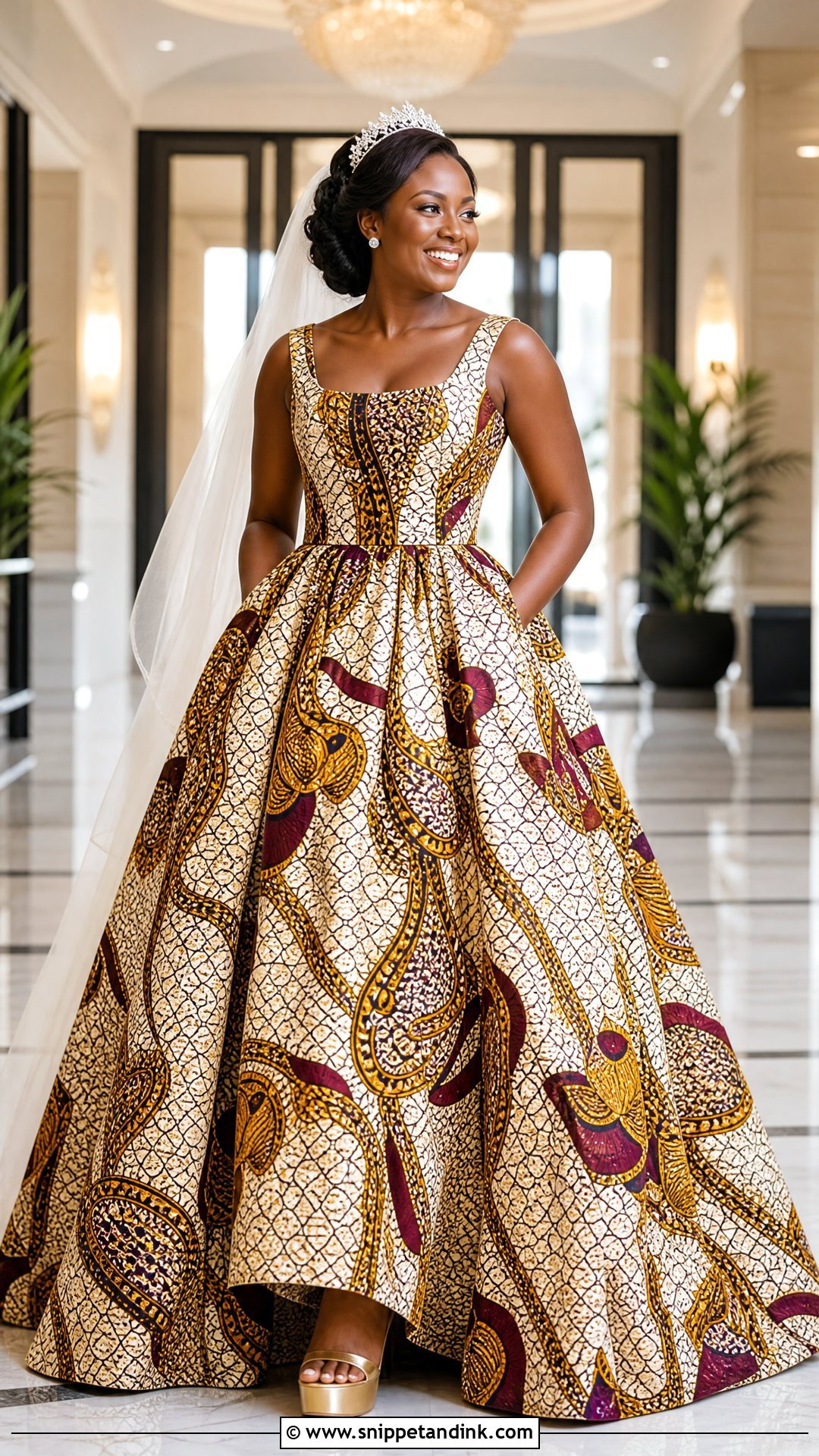
A ball gown needs a large-scale print. On a skirt that wide, big motifs have room to show, while a tiny pattern just reads as texture from the back of the room. I like a corseted top with wide straps for support, and I always ask for hidden pockets in the skirt, which brides thank me for by the evening. Gold platform sandals give height without wobbling under the hem. A delicate tiara, small studs and a veil pinned below a polished bun keep the bridal note without hiding the print. Petite brides should ask for fewer skirt layers; a taller frame can carry more volume and a chapel-length train.
3. Ankara A-Line Wedding Dress
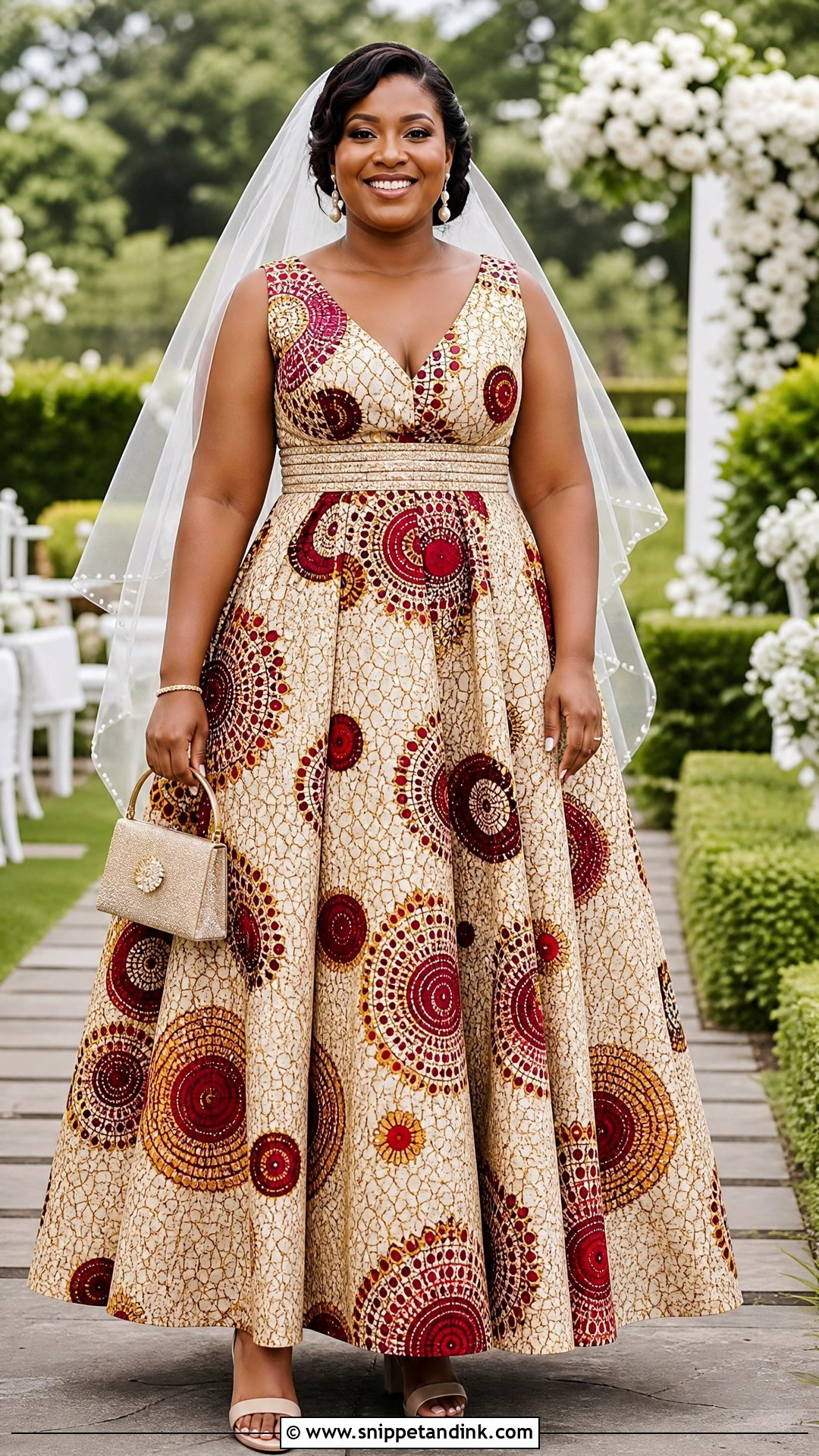
The A line is the shape I suggest when a bride is torn, because it gives room to walk, sit and dance while still looking unmistakably bridal. Medium-scale motifs in two or three related colors read as refined rather than busy. A V-neck lengthens the upper body, and a wide waistband makes a clean break into the skirt. Block heels and pearl drops keep it grounded. For an outdoor ceremony, I shorten the train slightly and add a discreet bustle so you are not dragging grass and gravel behind you all afternoon.
4. Off-Shoulder Ankara Wedding Dress
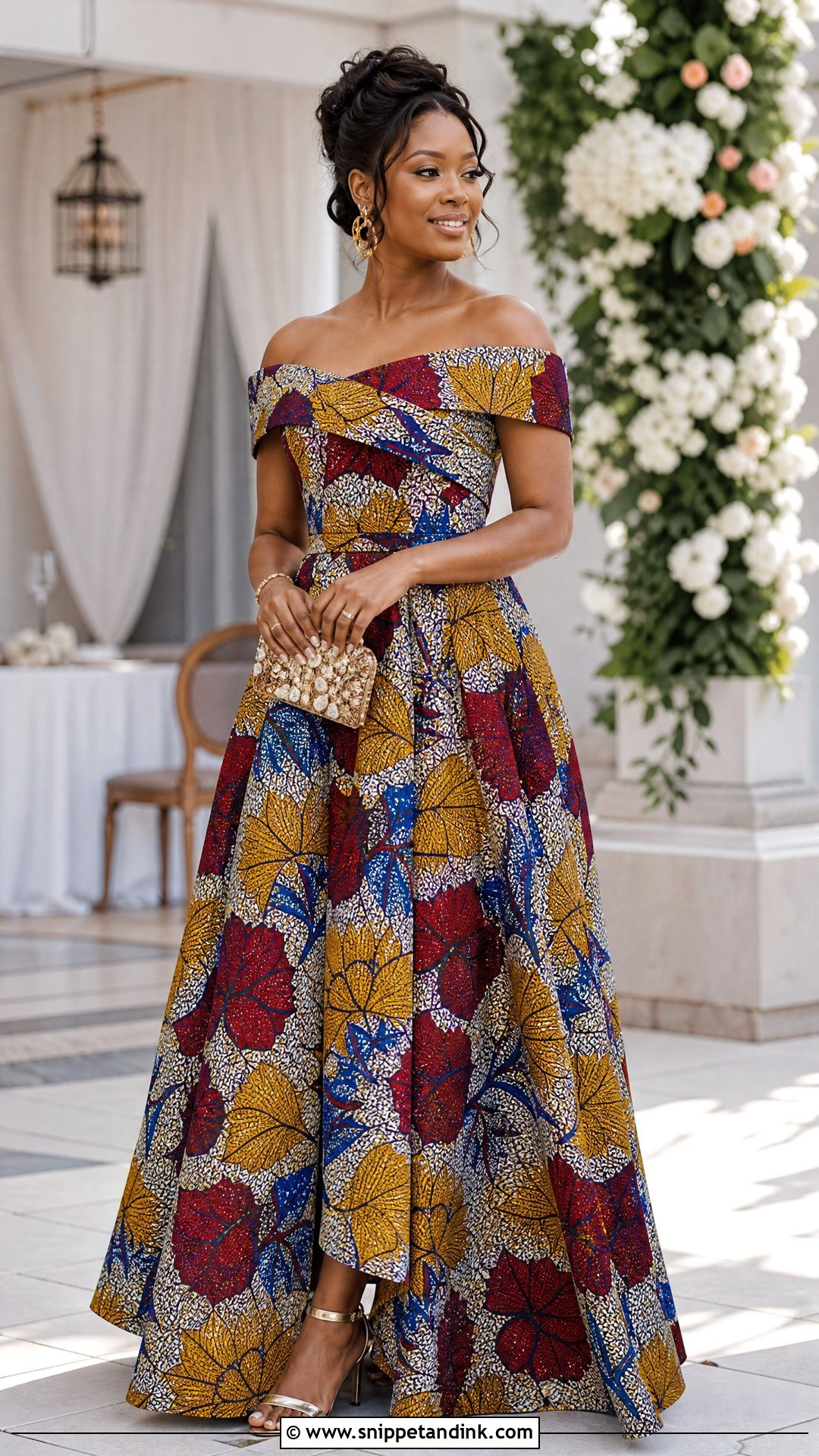
A folded off-shoulder band holds its shape far better in wax cotton than a loose ruffle, which tends to droop by the speeches. I fit it with a firm waist and a floor-length skirt that flows, and if the bodice has several bright colors, gold hoops are enough jewelry. Brides who worry about the band slipping can add an illusion tulle panel or hidden straps. It suits warm weather, but receptions are often heavily air-conditioned, so I suggest a detachable shawl cut from the leftover fabric.
5. Long-Sleeve Ankara Wedding Dress
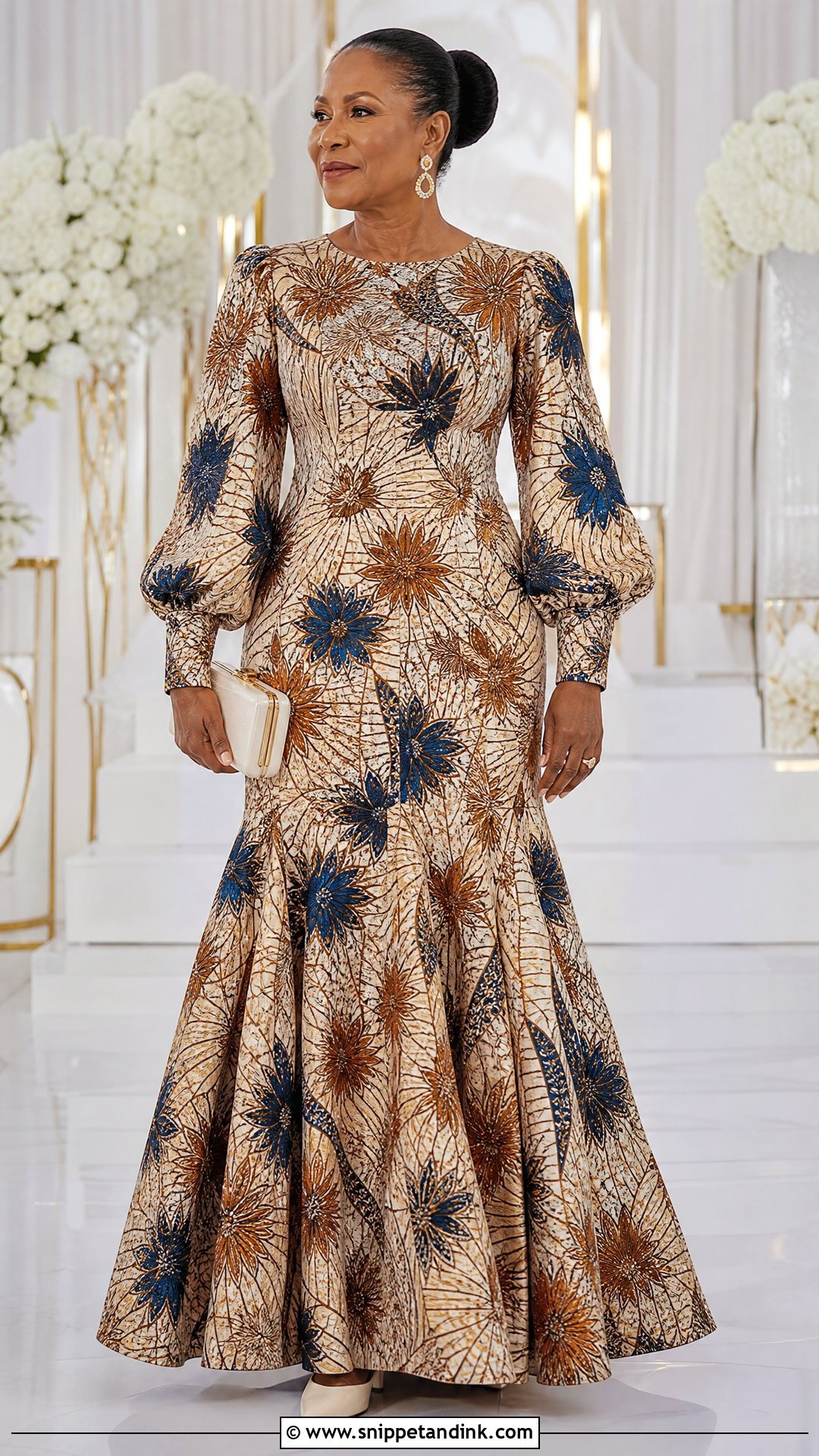
Long sleeves in Ankara look dramatic and covered, though they need careful fitting, since woven cotton has no give. I let the sleeves carry the statement through gentle volume, buttoned cuffs or matched print placement, and keep the bodice fitted and the skirt softly flared so the whole thing does not look stern. Ask for a light sleeve lining so your arms do not stick, and a back vent if the skirt is narrow. Ivory pumps and a cream clutch lighten a deep print. Save this one for cooler seasons, evening weddings and formal indoor venues.
6. Strapless Corset Ankara Wedding Dress
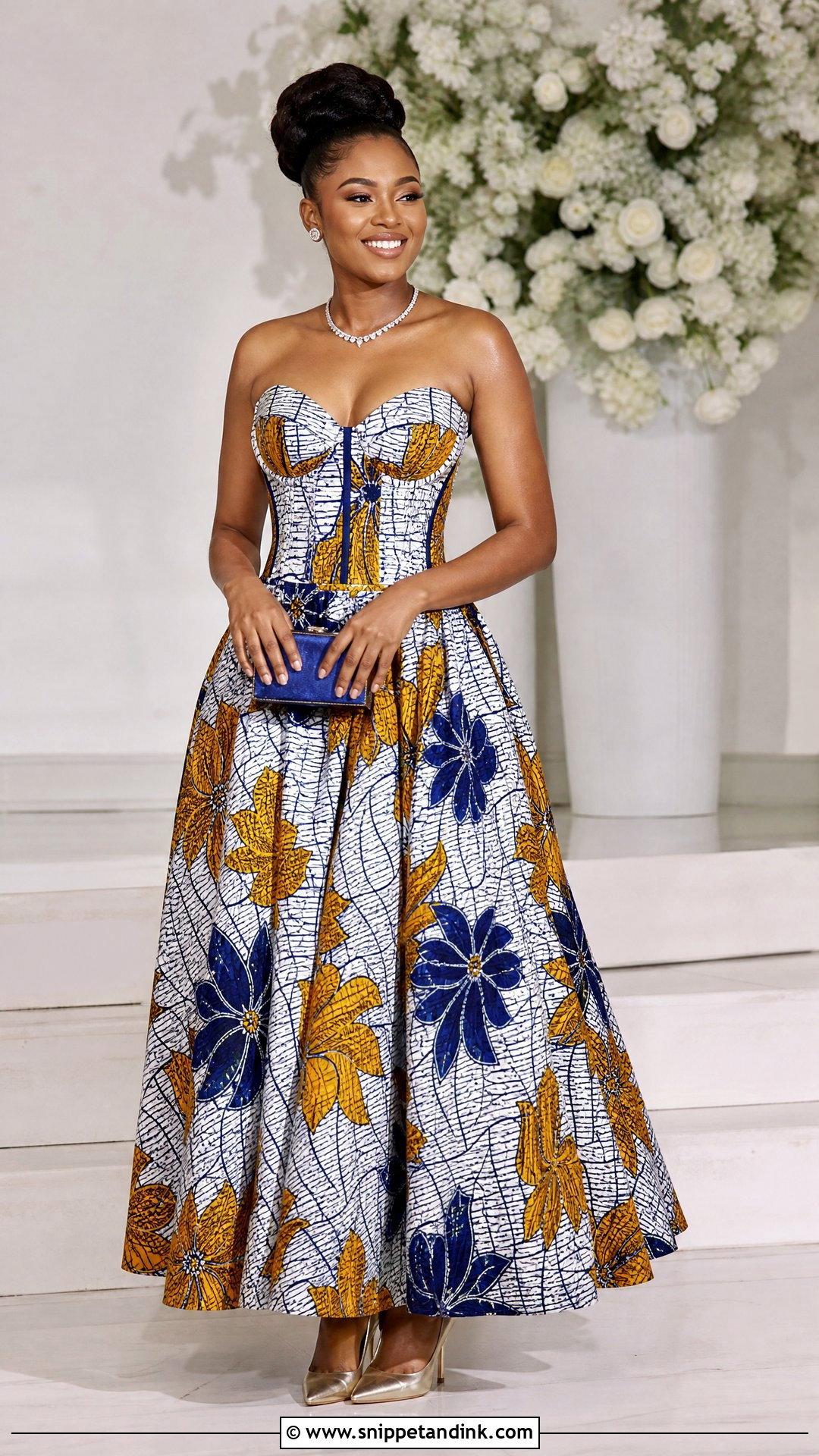
Everything about a strapless corset Ankara wedding dress depends on what is inside it. Proper boning, a waist stay and a firm interior lining are what keep the neckline in place without you hitching it up every few minutes, and I test that by having the bride lift her arms and bend to pick something up. A straight or softly curved neckline over a full skirt feels sophisticated. Use a matching Ankara clutch only when its print lines up with the gown; otherwise a solid bag looks cleaner. A detachable tulle wrap adds cover for a religious ceremony. The fit should feel secure, never tight enough to make breathing a chore.
7. One-Shoulder Ankara Wedding Dress
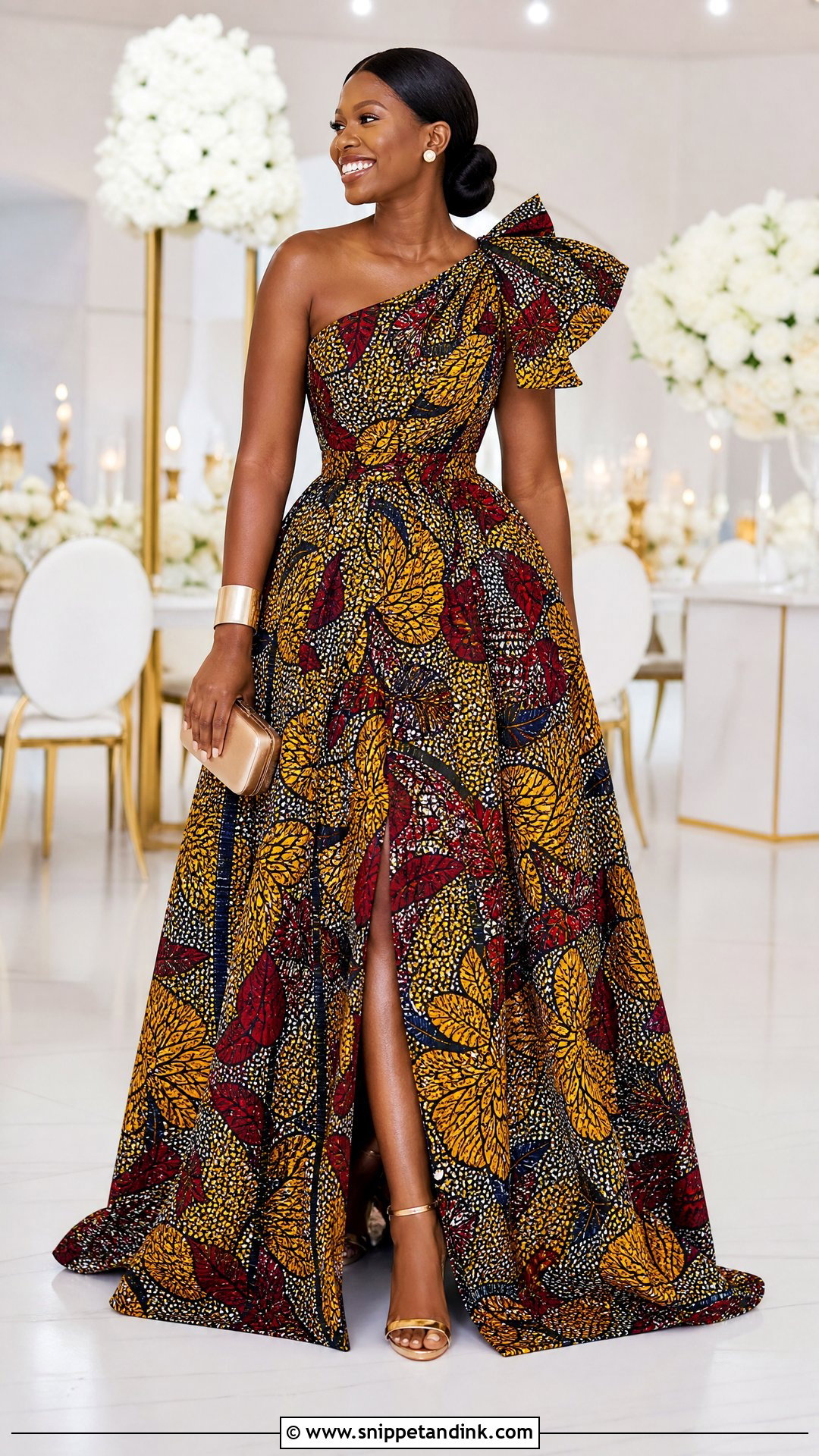
The single shoulder can take a structured bow, a gathered drape or a slim strap, depending on how much drama you want. Balance it with a fitted waist and an A line or column skirt. I would skip a necklace and choose one cuff bracelet with small studs. A low side bun placed opposite the shoulder detail evens out the line. If the print has large motifs, ask the dressmaker to center them across the bodice and skirt; an off-center flower on an asymmetric neckline looks like an accident.
8. High-Neck Ankara Wedding Dress
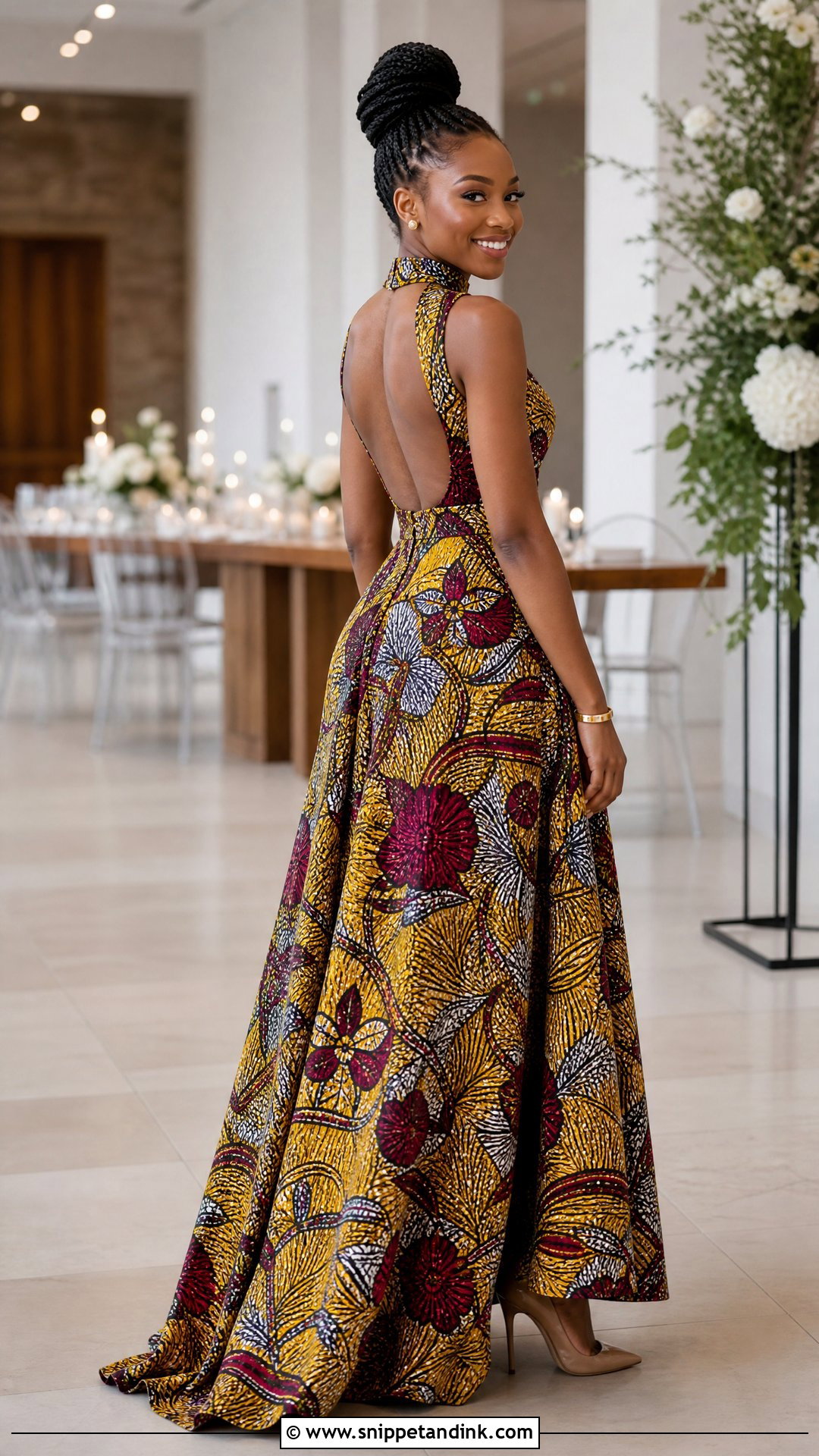
High necks are less forgiving than they look. The collar must be cut close but not tight, because a stiff cotton collar that grazes the throat becomes irritating within an hour. I keep the bodice sleeveless and fitted, with a narrow collar over a soft skirt, and an open or keyhole back stops the design from feeling buttoned up. Small gold earrings and a smooth bracelet are plenty. A high bun or braided updo keeps the long line of the neck visible from the back as well as the front.
9. Sweetheart Ankara Wedding Dress
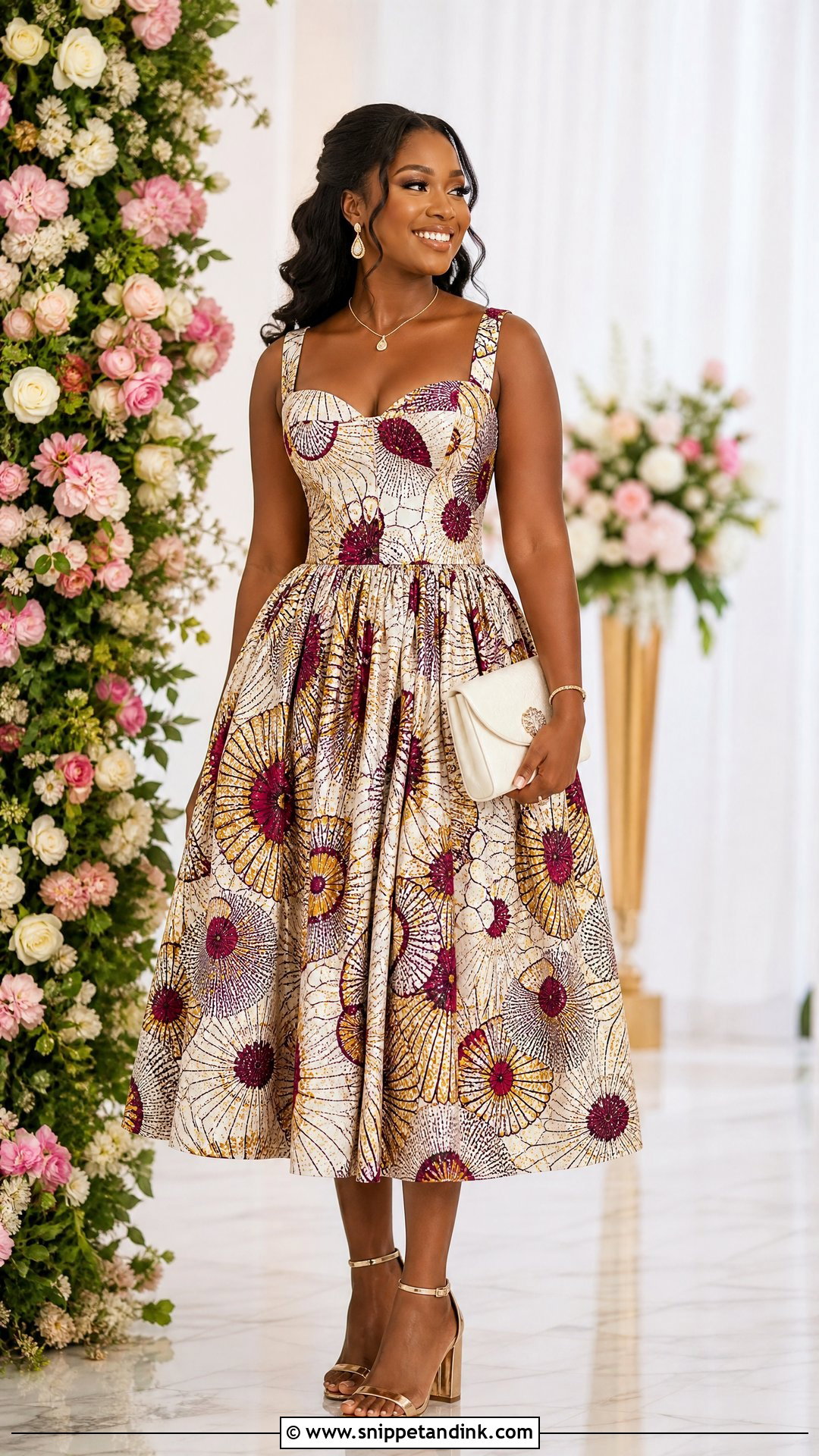
Sweetheart necklines rely on support. I build them on a structured bodice with wide straps, cap sleeves or concealed inner boning, because a sweetheart without structure gapes at the center the moment you lean forward to sign the register. A natural waist and a gently gathered skirt suit the curve. Choose a delicate pendant, block heels and a clutch in champagne or one of the quieter colors in the print. If you add a veil, choose plain tulle so the Ankara stays the main event.
10. Peplum Ankara Wedding Dress
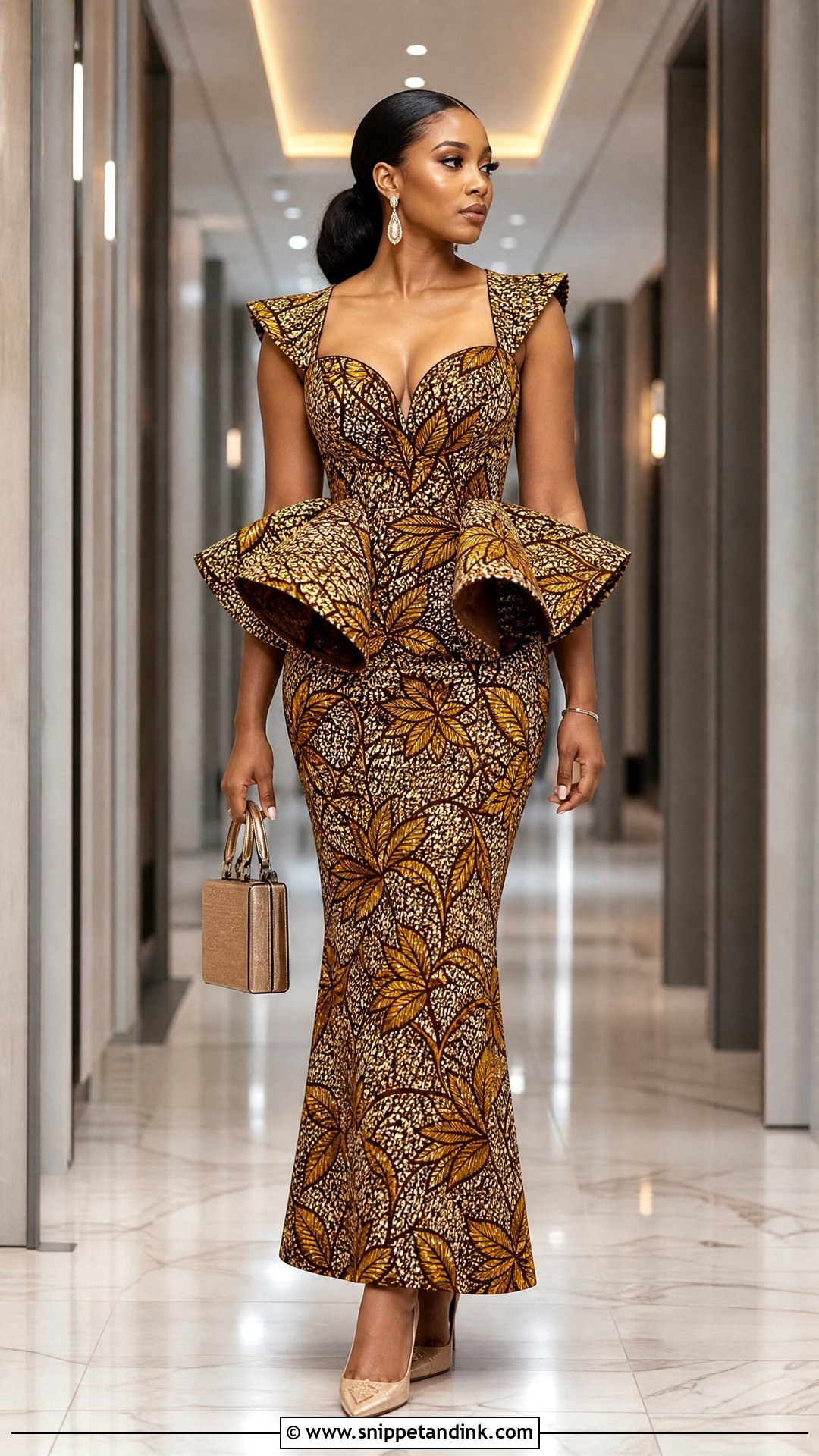
Keep the peplum moderate. An extremely wide one adds bulk over the hips, while a neat flare over a fitted trumpet or column skirt gives shape and still looks streamlined. A solid-color bodice with only the peplum and skirt in Ankara is a smart contrast if you find an all-over print too much. The seam must sit at your natural waist and lie flat when you sit, and I check that seated at every fitting. A sleek ponytail or low bun keeps it modern; pointed pumps and drop earrings finish it.
11. Tiered Ankara Wedding Dress
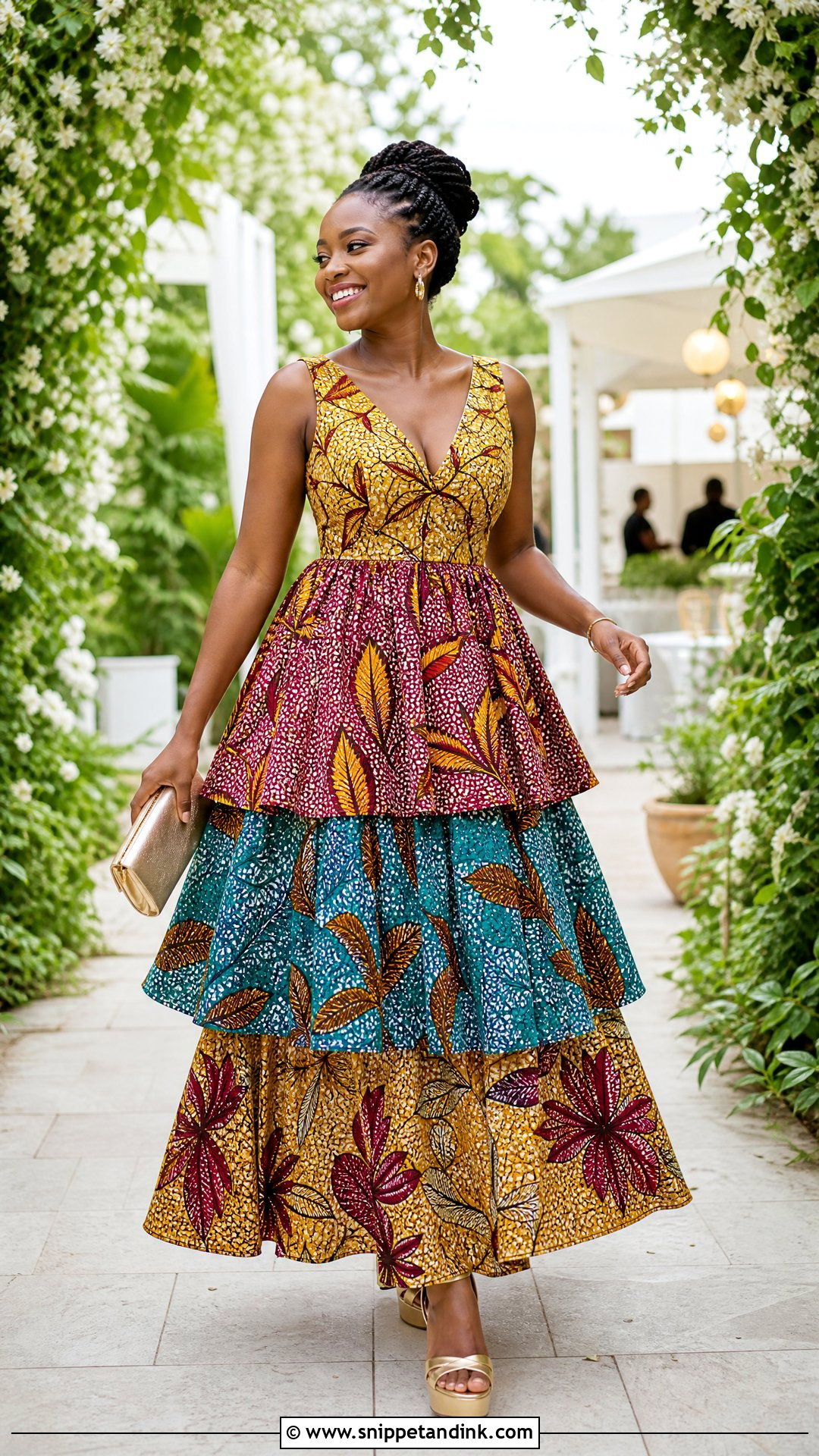
Layers give a tiered Ankara wedding dress a joyful swing, but each tier adds weight, and wax cotton is heavier than the chiffon these dresses are usually cut from. That is why I recommend three wide tiers over many narrow ones, especially with a detailed print. Keep the bodice plain with a square, scoop or V neck. Choose platform sandals or stable block heels that will not snag inside the skirt. A braided updo balances the volume. It is well suited to a garden or destination wedding where the skirt can move freely.
12. Ruffled Ankara Wedding Dress
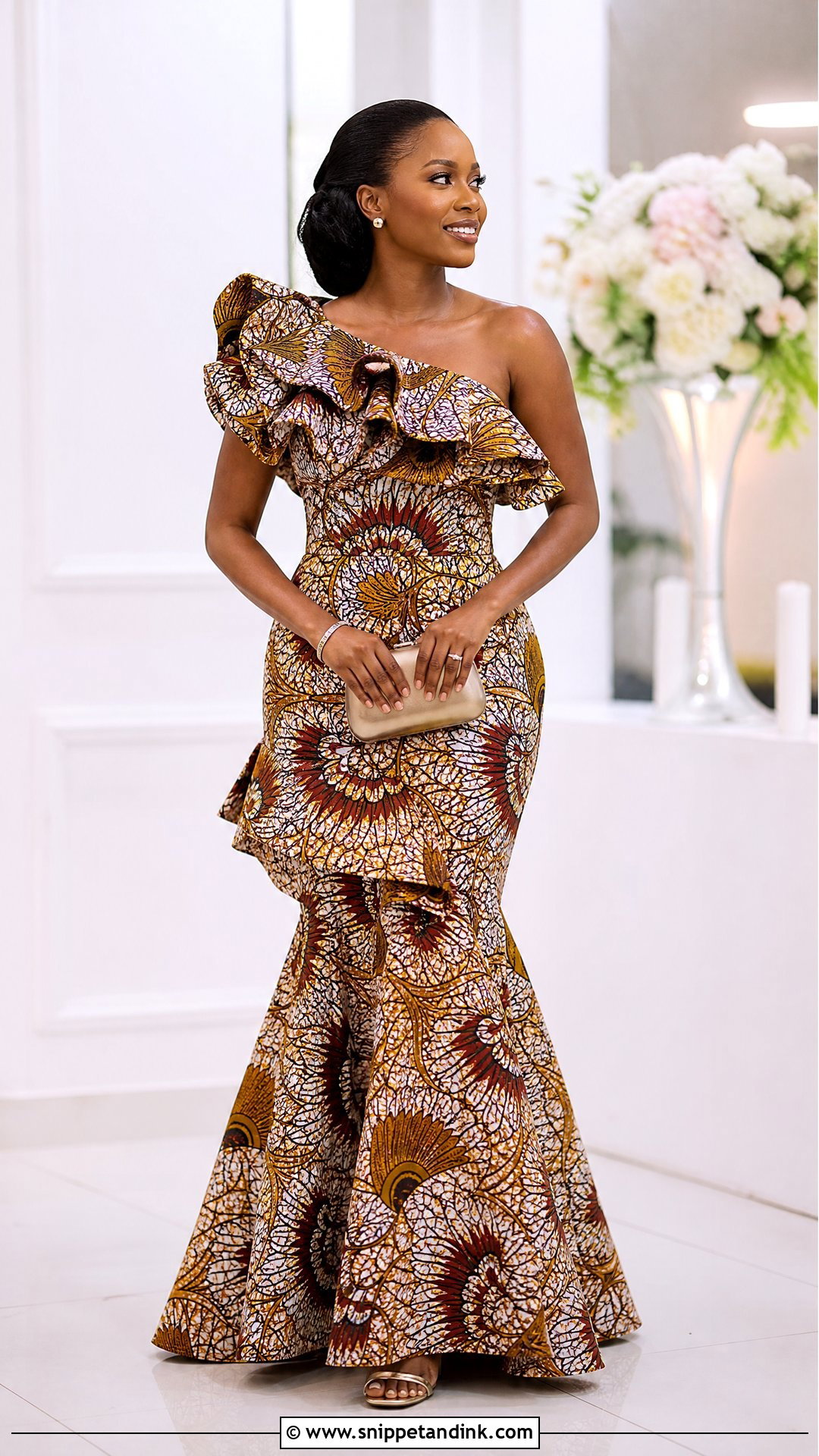
A ruffled Ankara wedding dress gets its impact from texture as well as color, so placement matters more than quantity. I put ruffles along one shoulder, across the neckline or down one side of the skirt, never all over, which keeps the outline clear and the print readable. Ask for lightweight interfacing inside so the ruffles hold their shape without stiffening the gown. Petite brides tend to look best in narrower ruffles; taller brides can carry broad sculptural ones. Plain metallic sandals and a smooth clutch let the fabric do the talking.
13. Cape-Sleeve Ankara Wedding Dress
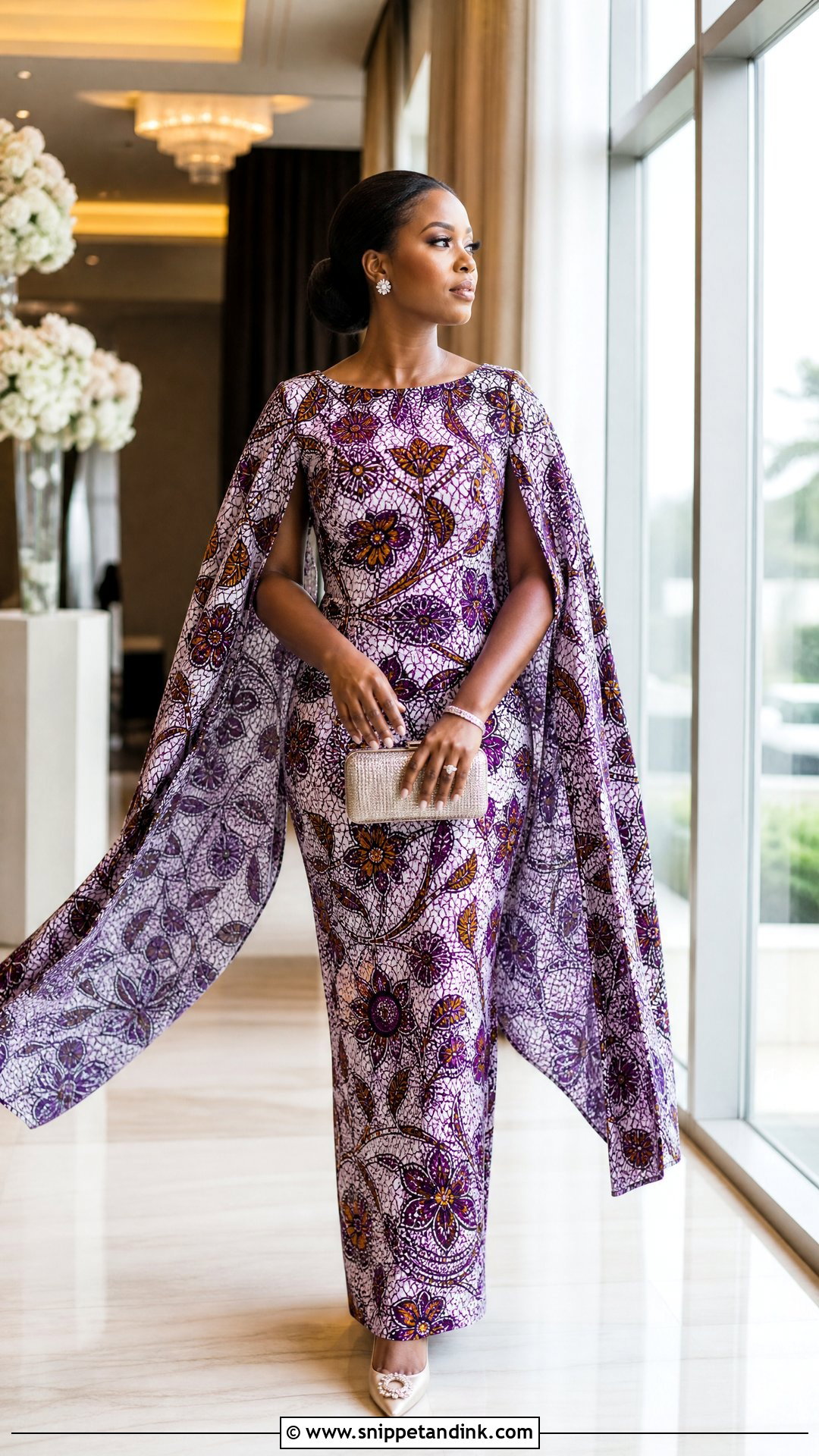
A cape sleeve gives coverage with movement, falling from the shoulders or flowing from a fitted bodice into elbow-length panels. Underneath, I keep the skirt to a column or gentle flare so the whole silhouette does not balloon. The practical check is your hands: make sure the cape length leaves them free and does not tangle with your bouquet. Detachable sleeves give you a second look for the reception. A plain bodice with a coordinated print cape is another polished option, finished with a low bun.
14. Ankara Wedding Dress With Detachable Overskirt
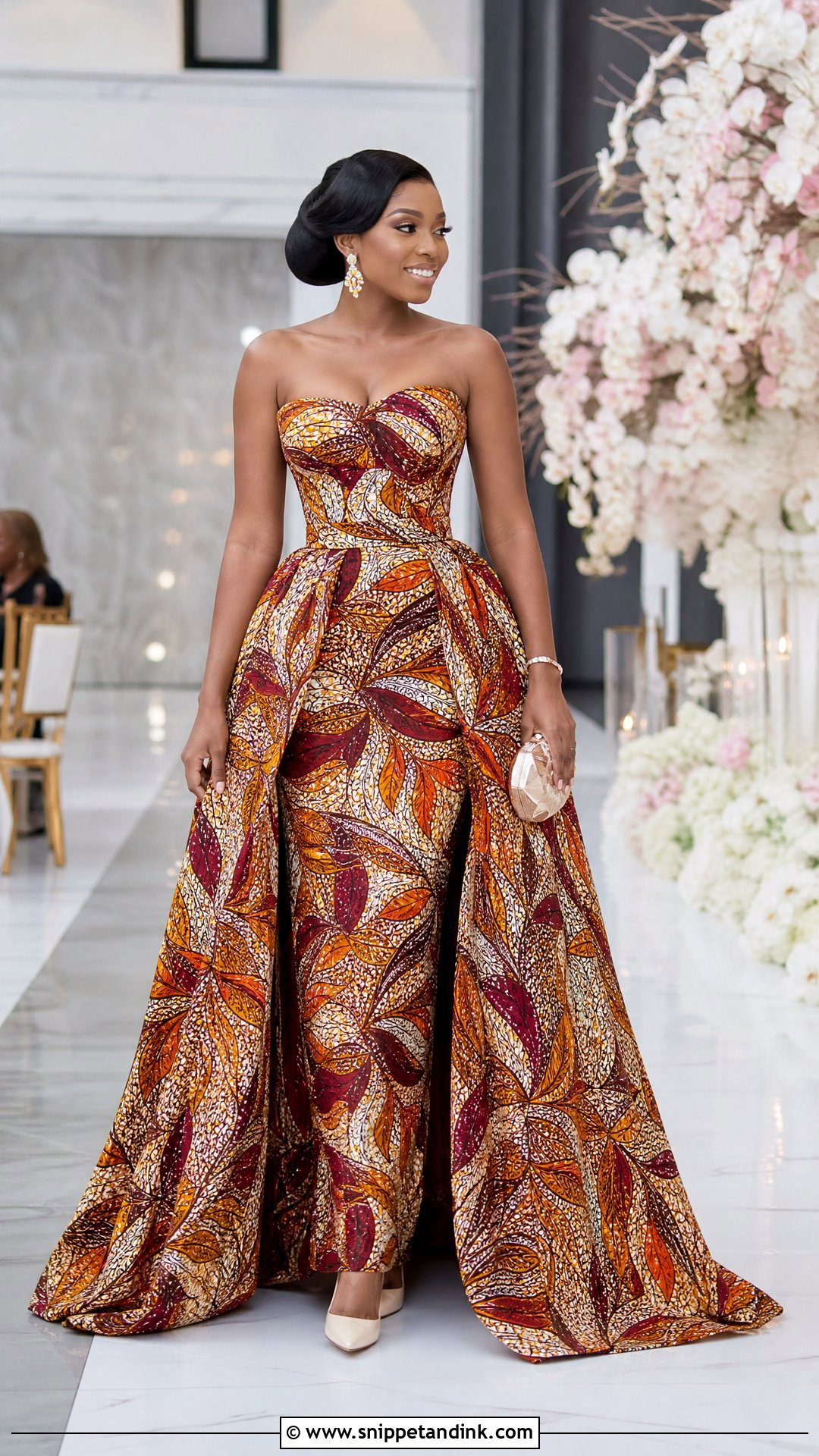
One gown, two looks. Start with a fitted mini, midi, column or mermaid dress, then add a full floor-length overskirt in the same print or in solid organza edged with Ankara for the ceremony. After the formal photos, it comes off for dancing. The detail I fuss over is the closure: the waistband should fasten with hooks and a hidden button so it stays put through the aisle and lies flat once the skirt is removed. Coordinate the clutch with the base dress, since that is what you will wear longest.
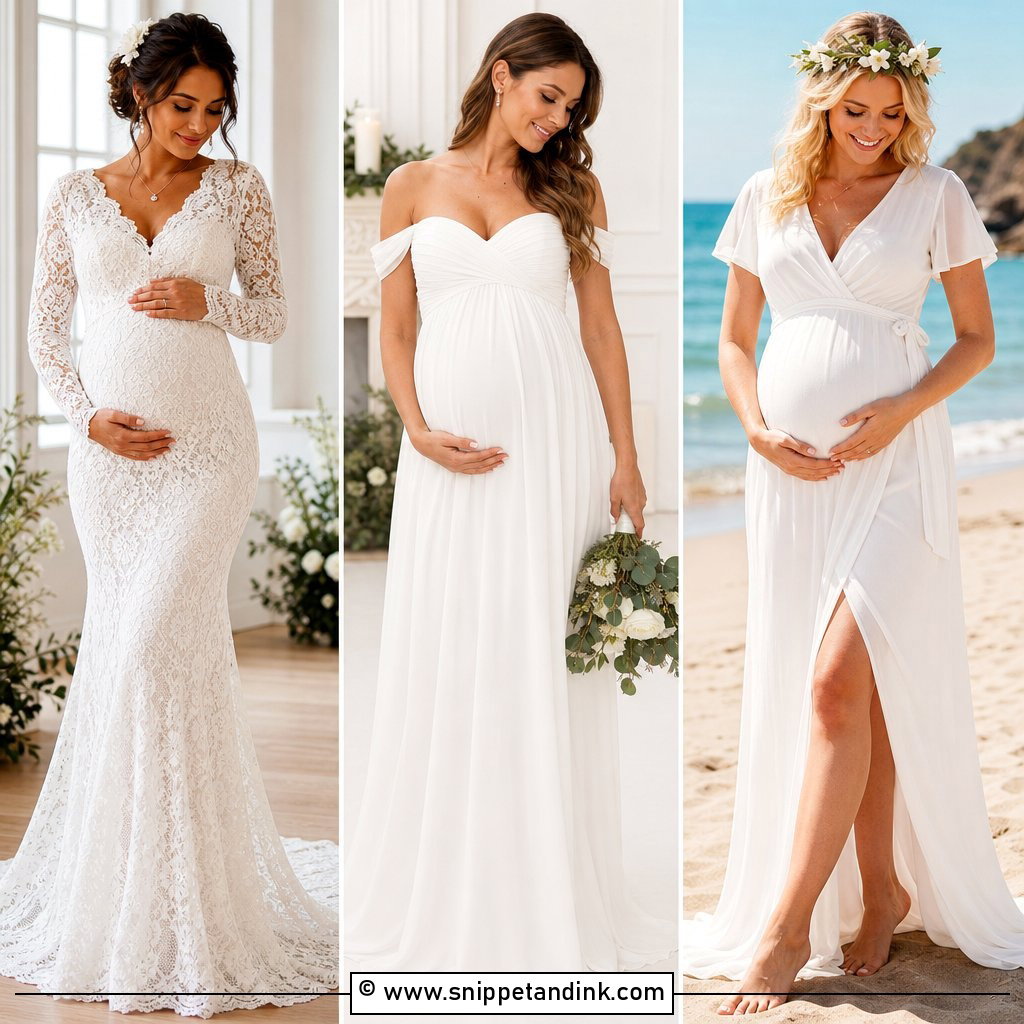
15. High-Low Ankara Wedding Dress
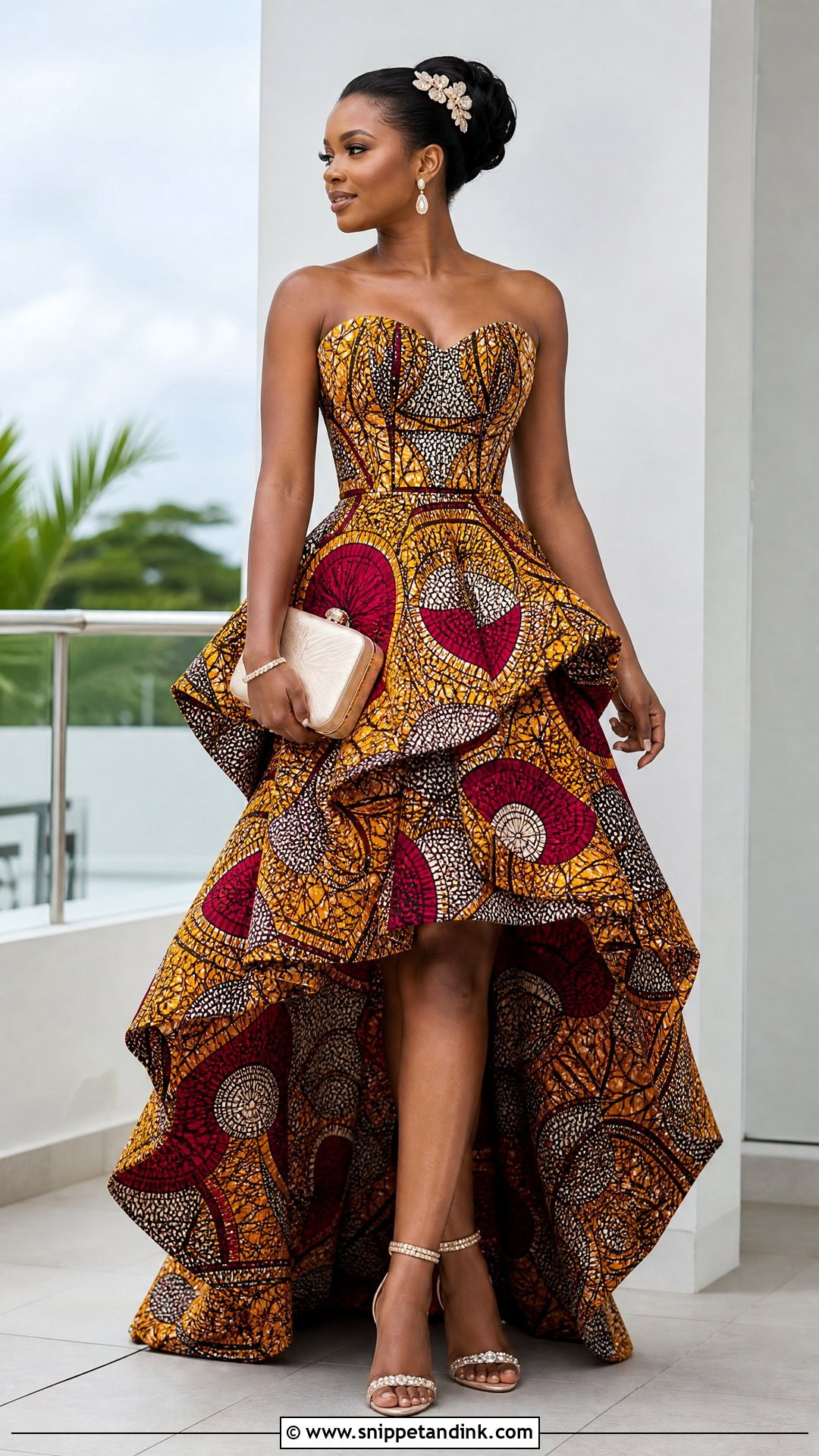
Shoes become part of the outfit with a high-low hem, so choose them early and bring them to every fitting. A gentle slope from front to back looks elegant; a sharper drop feels more fashion-led. A fitted bodice and a structured skirt help the uneven hem hold its curve. A short veil or floral comb sits better than a long veil that fights the hemline. During fittings, walk and climb a step, so you know the front length shows the shoes and not more leg than you intended.
16. Tea-Length Ankara Wedding Dress
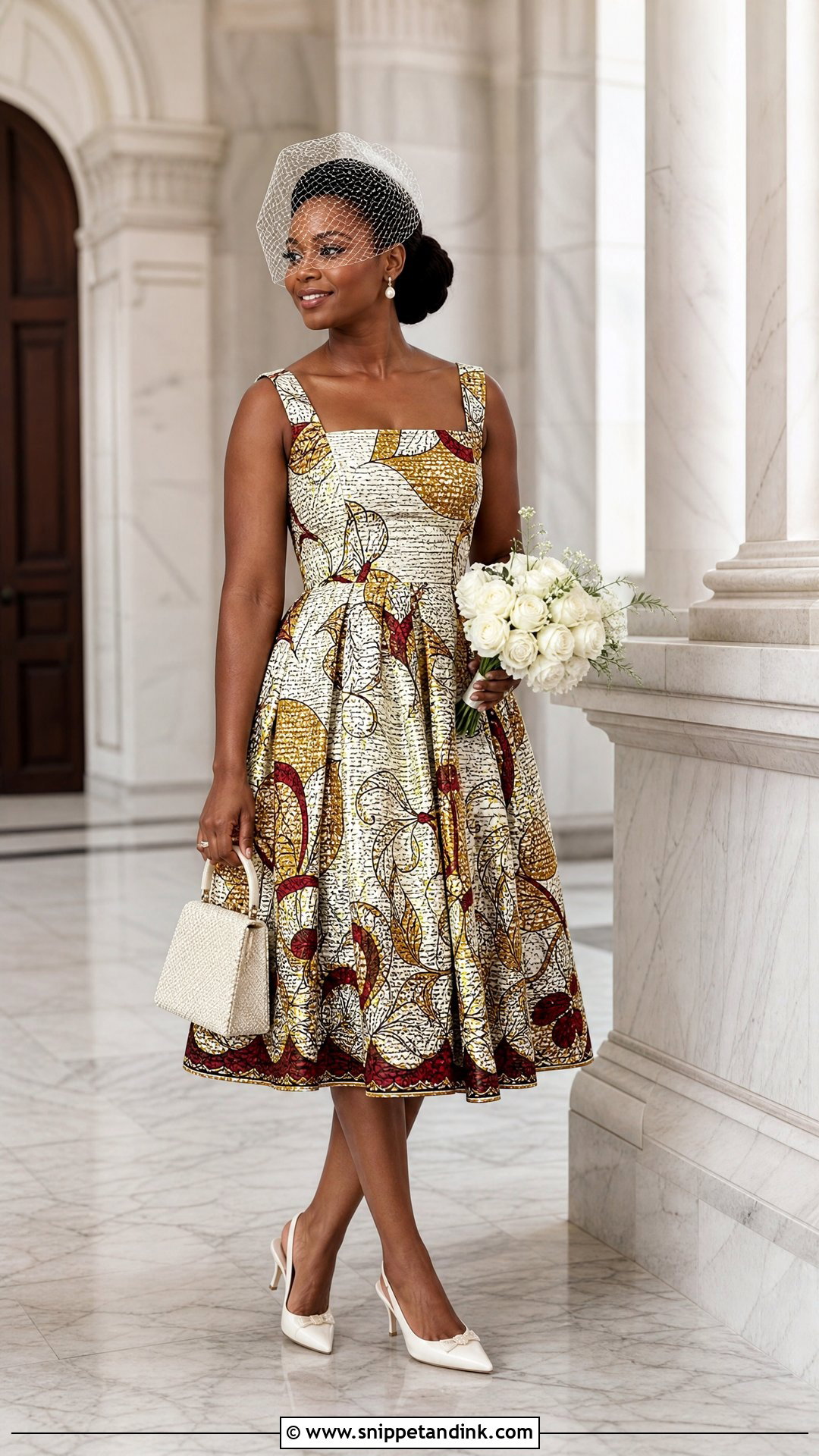
Tea length, falling between the knee and the ankle, has a vintage feel and is far easier on stairs, patios and uneven garden paths than a floor-length gown. The skirt should have enough body to move without swamping your frame, which a firm wax print does naturally. Pointed pumps, slingbacks or block-heel sandals all suit it. Pair it with pearl earrings and a birdcage veil, or go modern with a square neckline and no veil. I suggest it most for civil ceremonies, smaller weddings and daytime receptions.
17. Ankara Wrap Wedding Dress
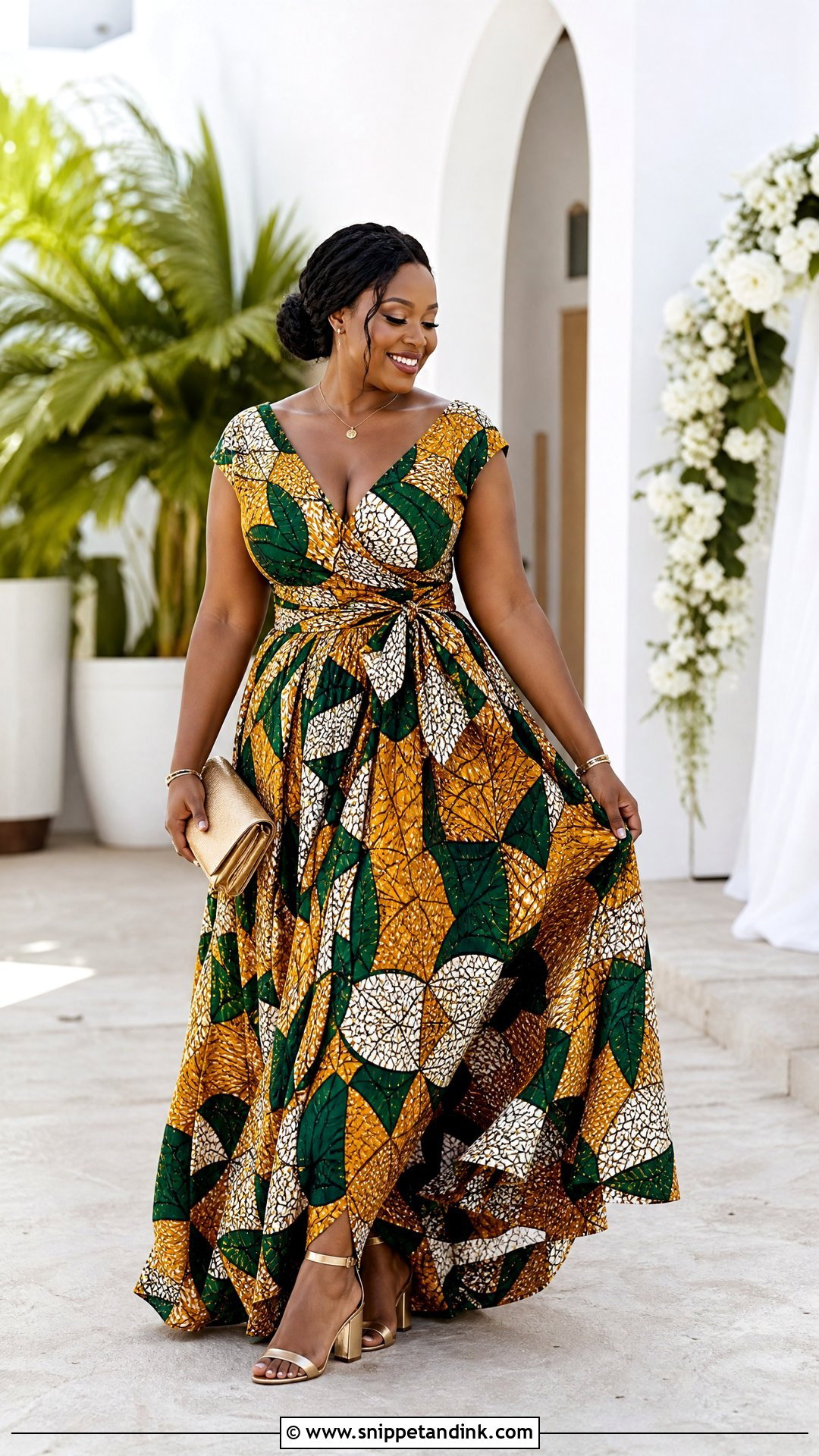
Wrap bodices are the most comfortable cut on this list for a long day of sitting and dancing, because the waist adjusts as you go. In wax cotton I prefer a faux wrap or a true wrap with an internal tie and a secure outer fastening; an open wrap in a stiff fabric can gape at the chest. A flowing maxi skirt keeps it bridal. If the V feels too open, a hidden snap or modesty panel fixes it in minutes. Gold block heels and a delicate pendant that follows the neckline finish the look.
18. Ankara Column Wedding Dress
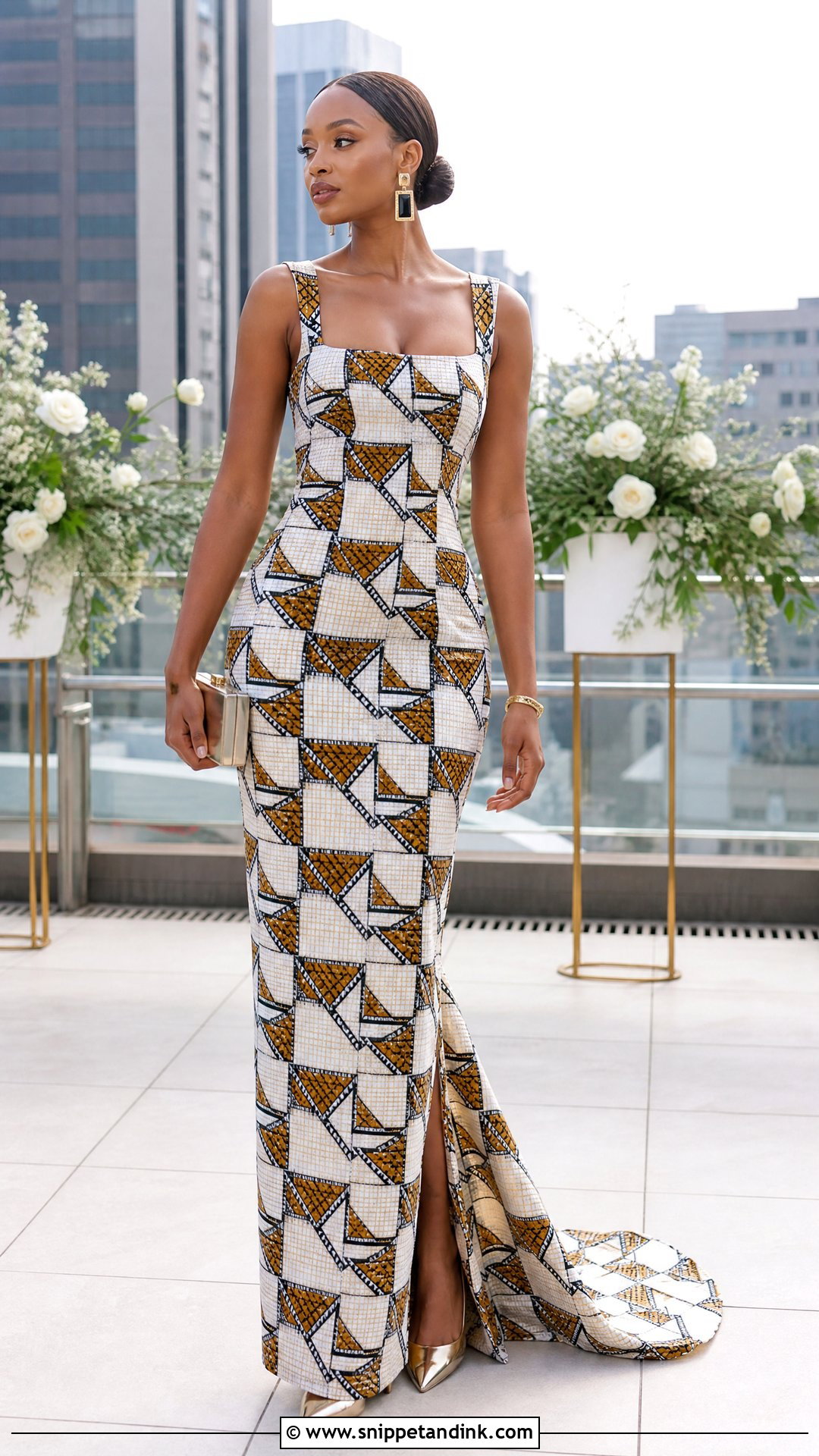
Clean lines put the print center stage in an Ankara column wedding dress, and that is exactly why the tailoring has nowhere to hide. I choose a thicker wax print so the gown skims the body without clinging, and I insist on a back slit, since a straight column with no slit forces tiny steps. A square neckline or narrow straps keep it modern. A small detachable train can add drama for the ceremony. Geometric earrings and a sleek ponytail suit a rooftop or a minimalist indoor venue.
19. Empire-Waist Ankara Wedding Dress
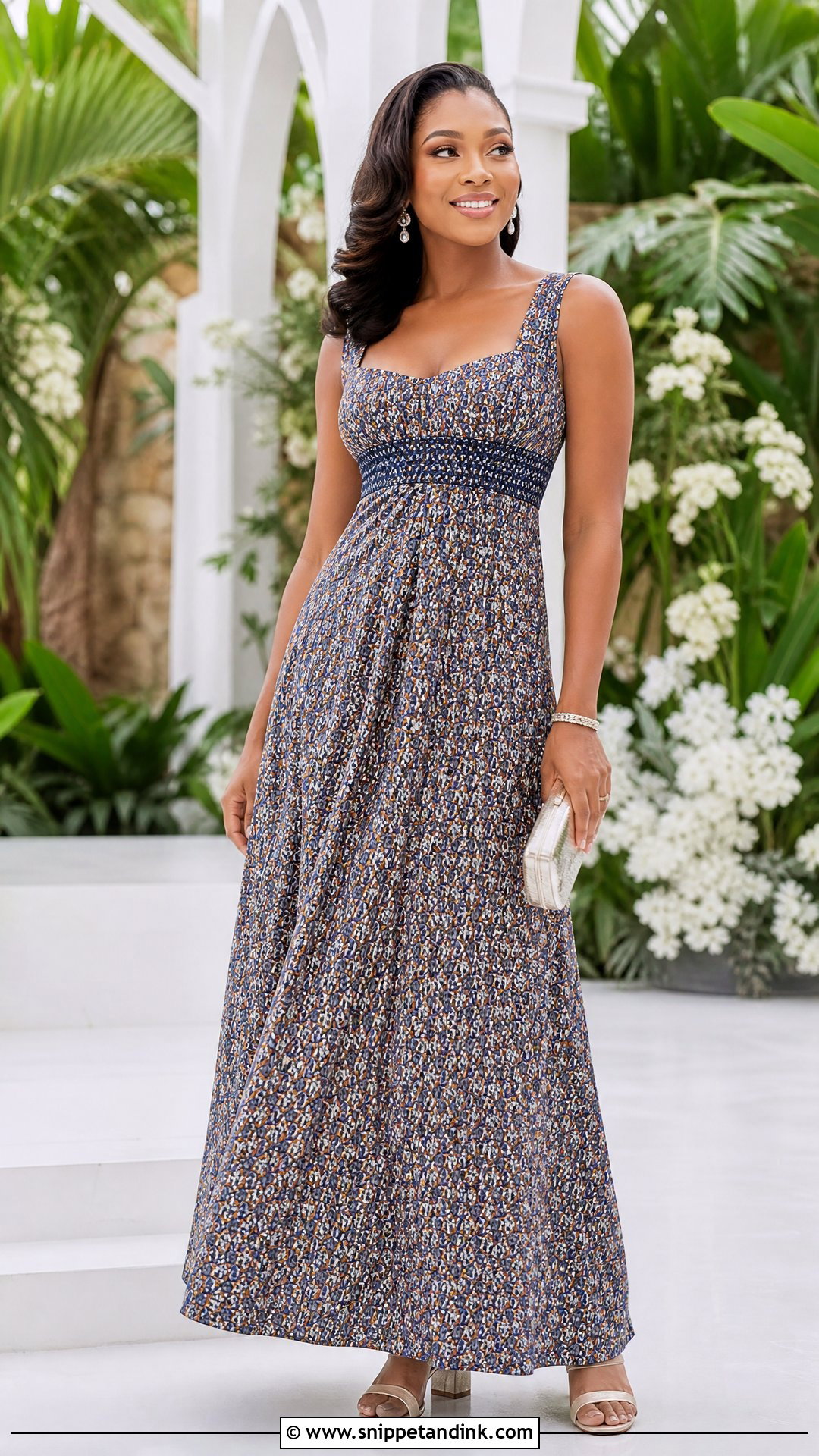
An empire waist sits just below the bust and lets the skirt fall long and loose, which is comfortable and lengthening. The danger is bulk: too much gathering directly under the bust adds volume where most brides do not want it, so I ask for fewer gathers and a smooth front panel. Small-scale prints suit this shape because gathered fabric breaks up big motifs. A contrasting waistband adds definition. Choose a light lining so the skirt drapes well in warm weather, and wear low block heels.
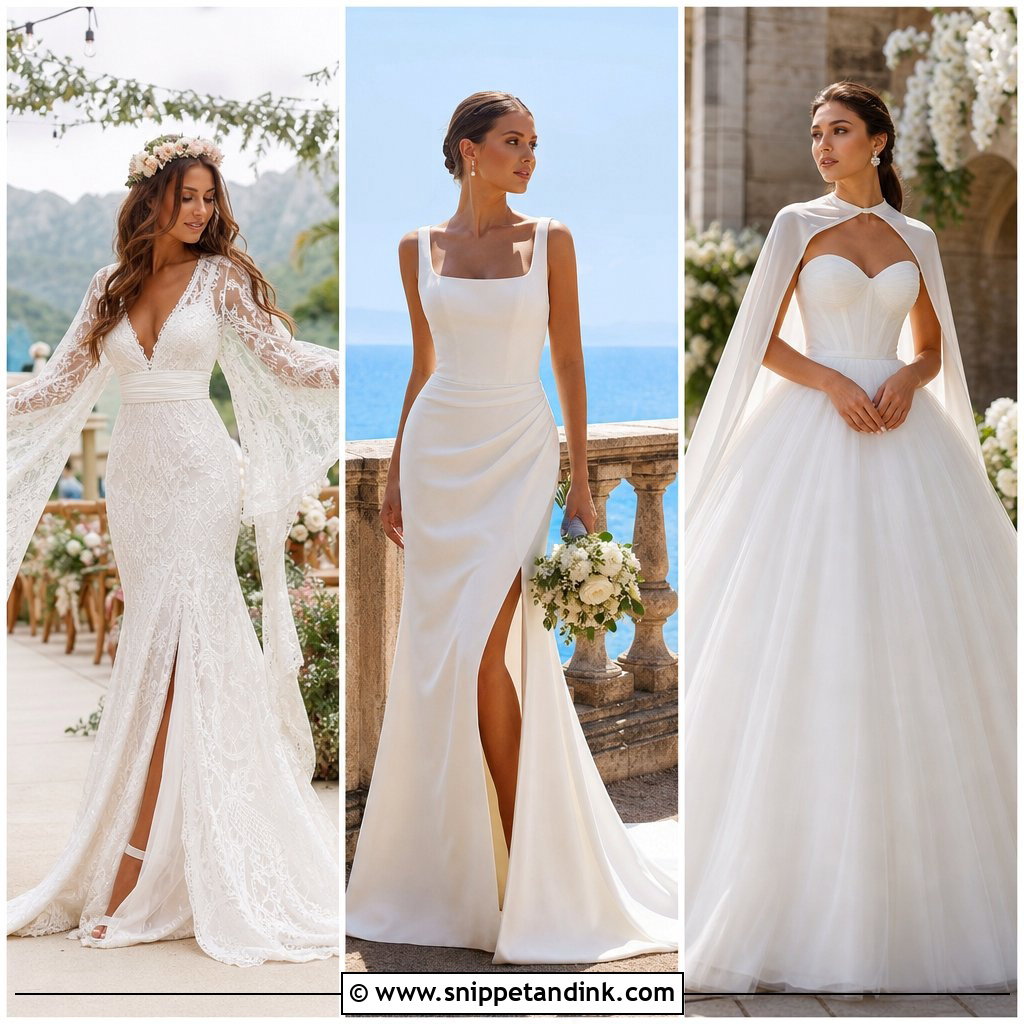
20. Trumpet Ankara Wedding Dress
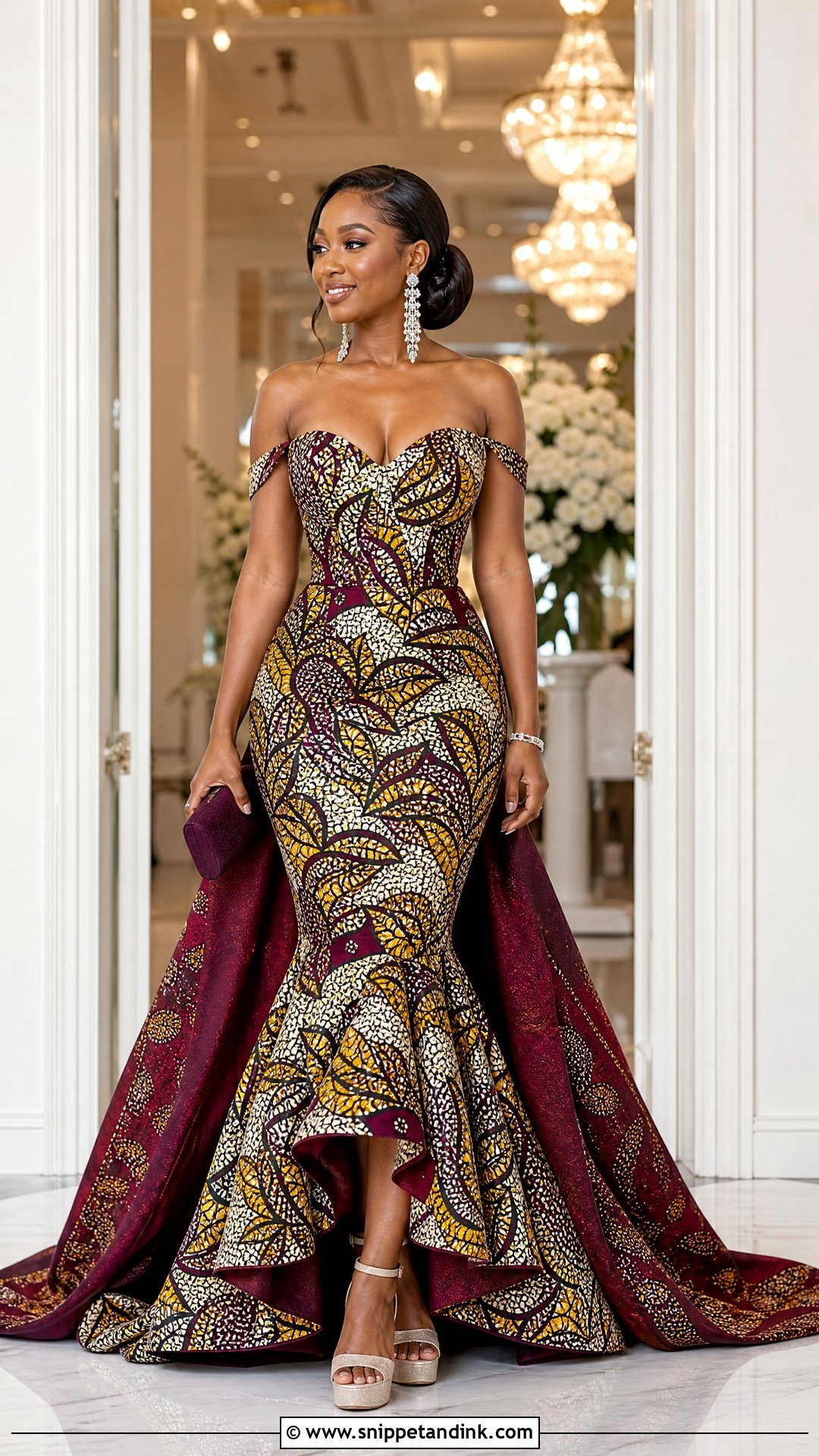
The trumpet’s flare starts higher than a mermaid’s, around mid-thigh, so you can walk and still keep the curve. I would pair it with a scoop, sweetheart or off-shoulder neck over a carefully boned bodice. Place the print so it draws attention to the waist and flows down the skirt without a break at the seam. At fittings I ask brides to sit and take full strides, because that is when a trumpet that looked fine standing turns out too tight. A detachable train gives ceremony drama and comes off for the dancing.
21. Pleated Ankara Wedding Dress
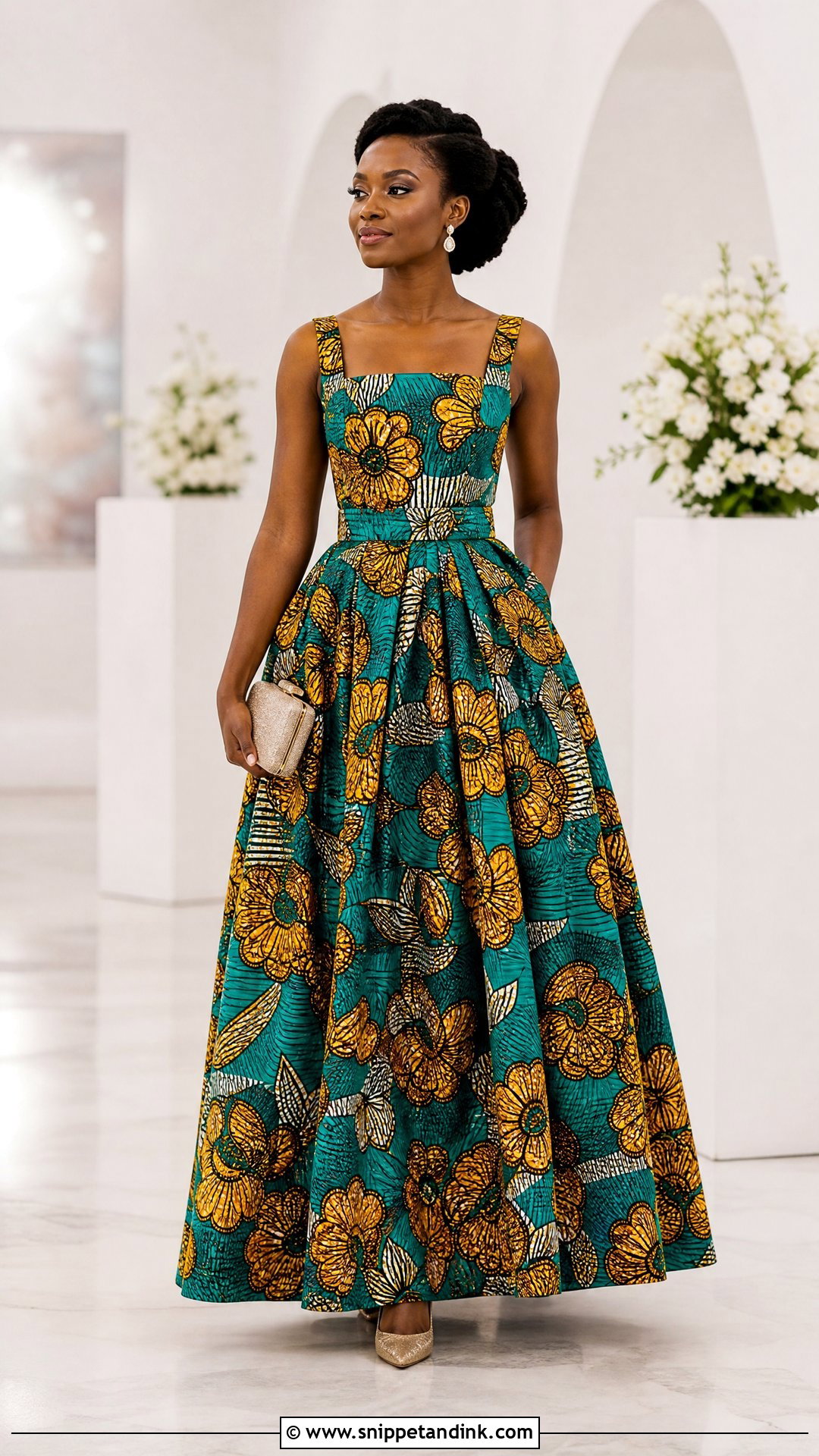
Pleats give controlled fullness without layers of heavy fabric. Box pleats make a structured skirt; knife pleats move more softly. Here is the step many dressmakers skip: align the main motifs before forming the pleats, because once folded, a badly placed print looks uneven and cannot be fixed. Keep the bodice fitted and plain, with a square or wide V neckline, so the folds stay the focus. Pockets can sit in the side seams without breaking the symmetry.
22. Puff-Sleeve Ankara Wedding Dress
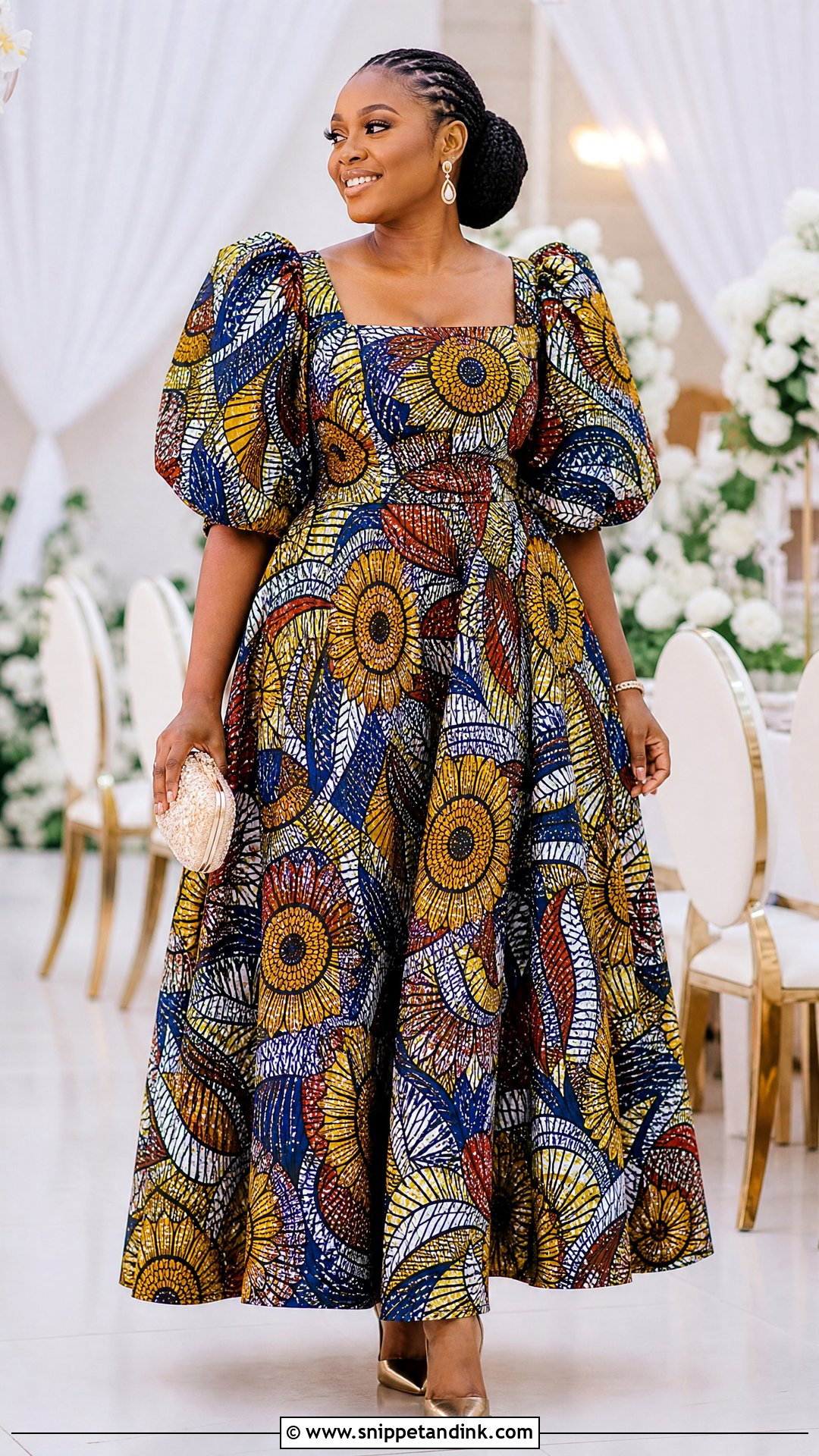
Size the puff to your shoulders and arm movement. Short rounded sleeves feel playful; longer gathered ones are more formal. I always raise my arms with the bride at the fitting, since a puff set too tight under the arm limits hugging and dancing. Balance the volume with a fitted bodice and an A line, column or softly flared skirt, and a square neckline gives structure between the two shoulder details. Light sleeve lining and soft elastic at the cuffs keep the shape comfortable through the day.
23. Asymmetrical Ankara Wedding Dress
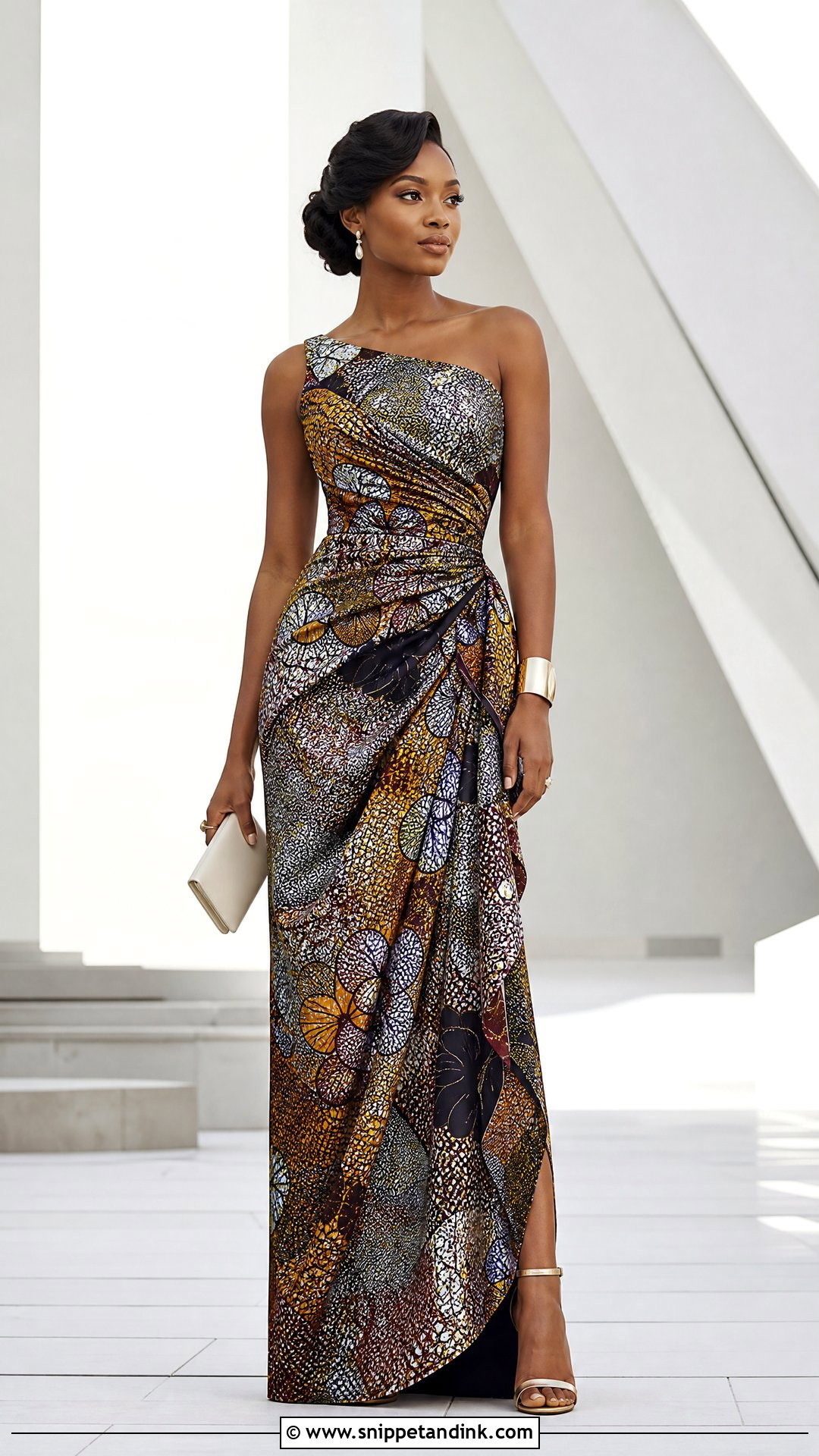
Asymmetry brings movement, but choose one feature: a diagonal neckline, an angled waist, a side drape or an uneven ruffled hem. Combine several and a bold print just looks confused. A fitted bodice and clean skirt give the detail a solid base. Carry a plain clutch in a shade from the pattern, and consider a side-parted updo that echoes the line. I check asymmetric gowns from the front, side and back, because the cut has to look intentional from every angle a photographer will catch.
24. White Lace And Ankara Wedding Dress
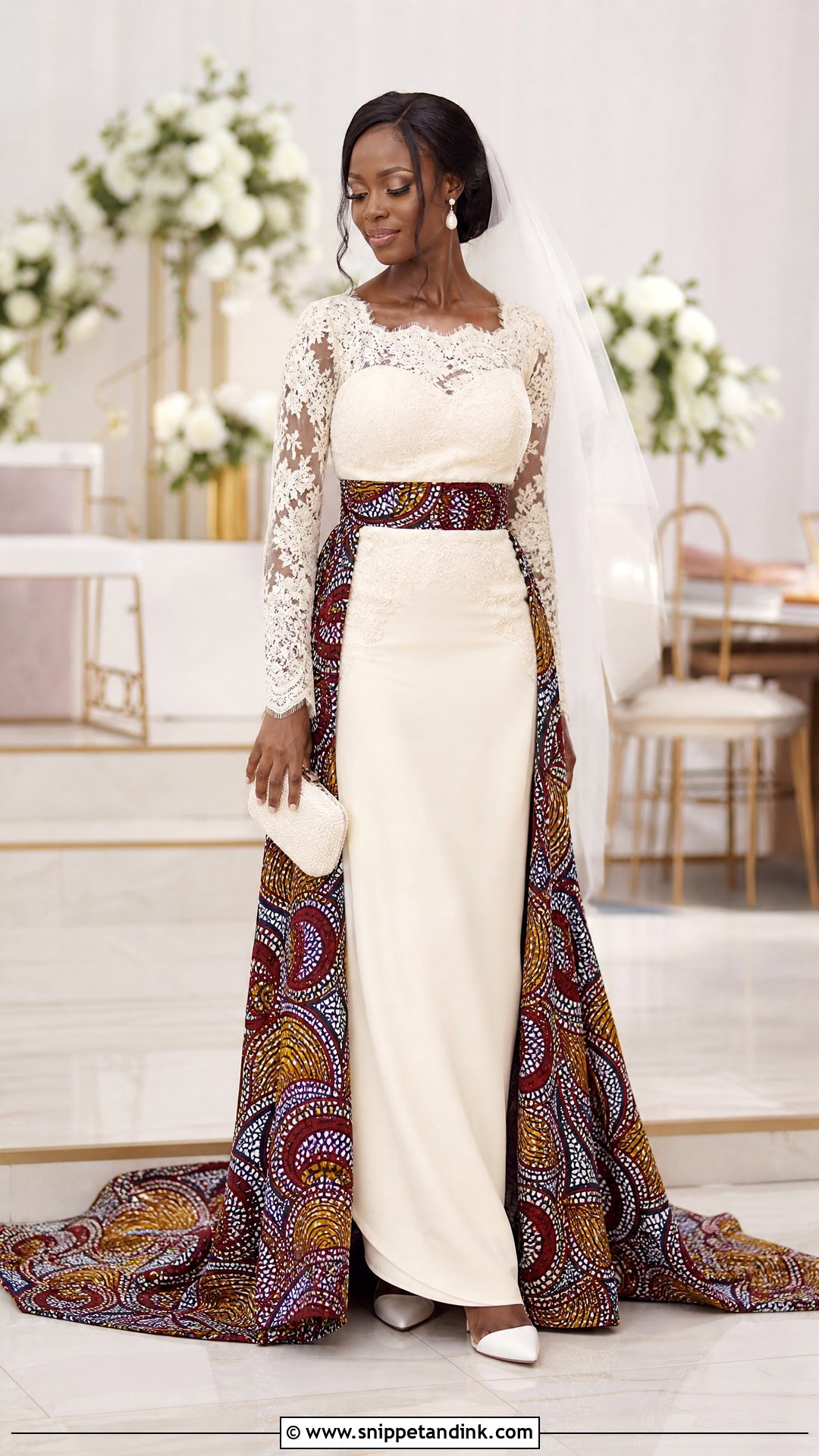
White lace with Ankara is instantly recognizable as bridal while keeping your colors. Lace can cover the bodice, sleeves or upper skirt, with the print entering through side panels, the waistband, the train or the lower skirt. The two must meet at clean, well-finished seams. My most important step happens before cutting: I hold the lace against the print in daylight, because bright white and cream lace look very different next to warm wax colors. Ivory pumps, pearl earrings and a plain tulle veil tie the bridal section together.
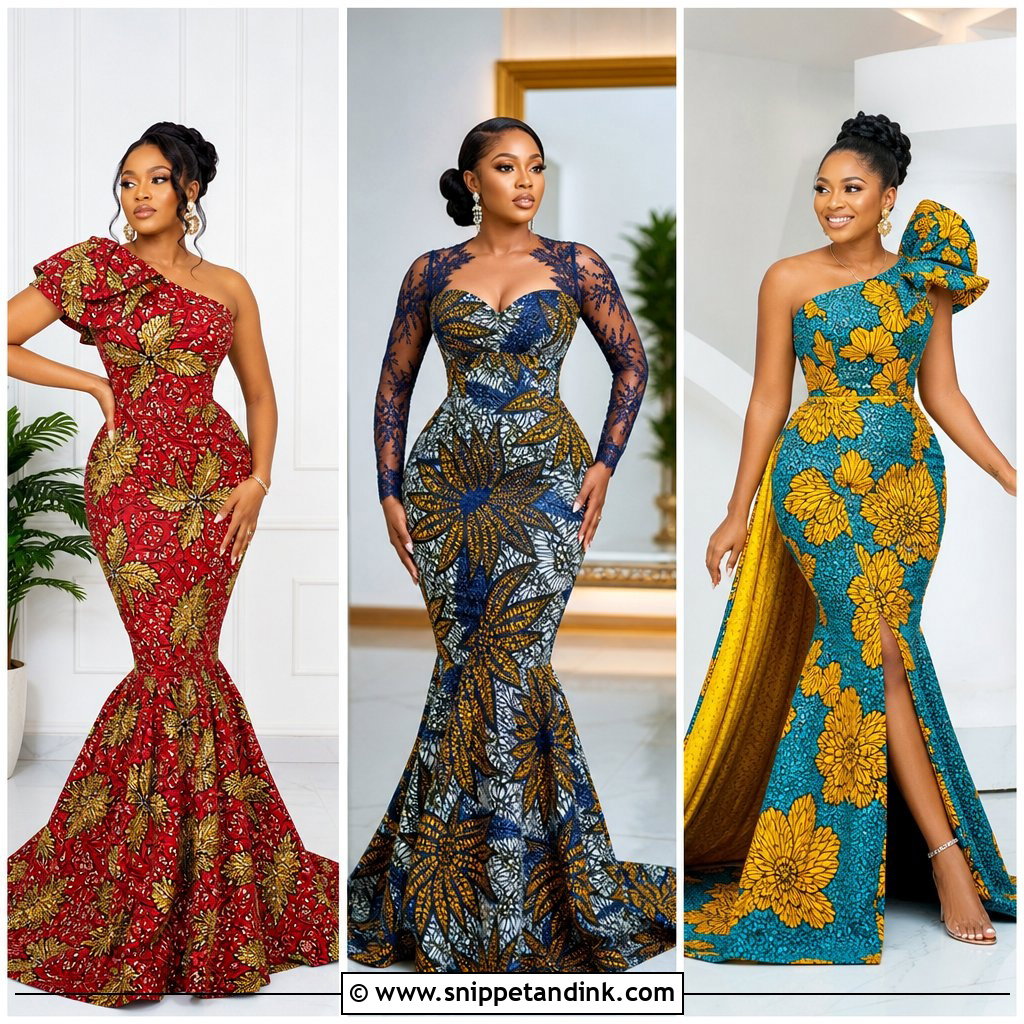

25. Plus-Size Ankara Wrap Wedding Dress
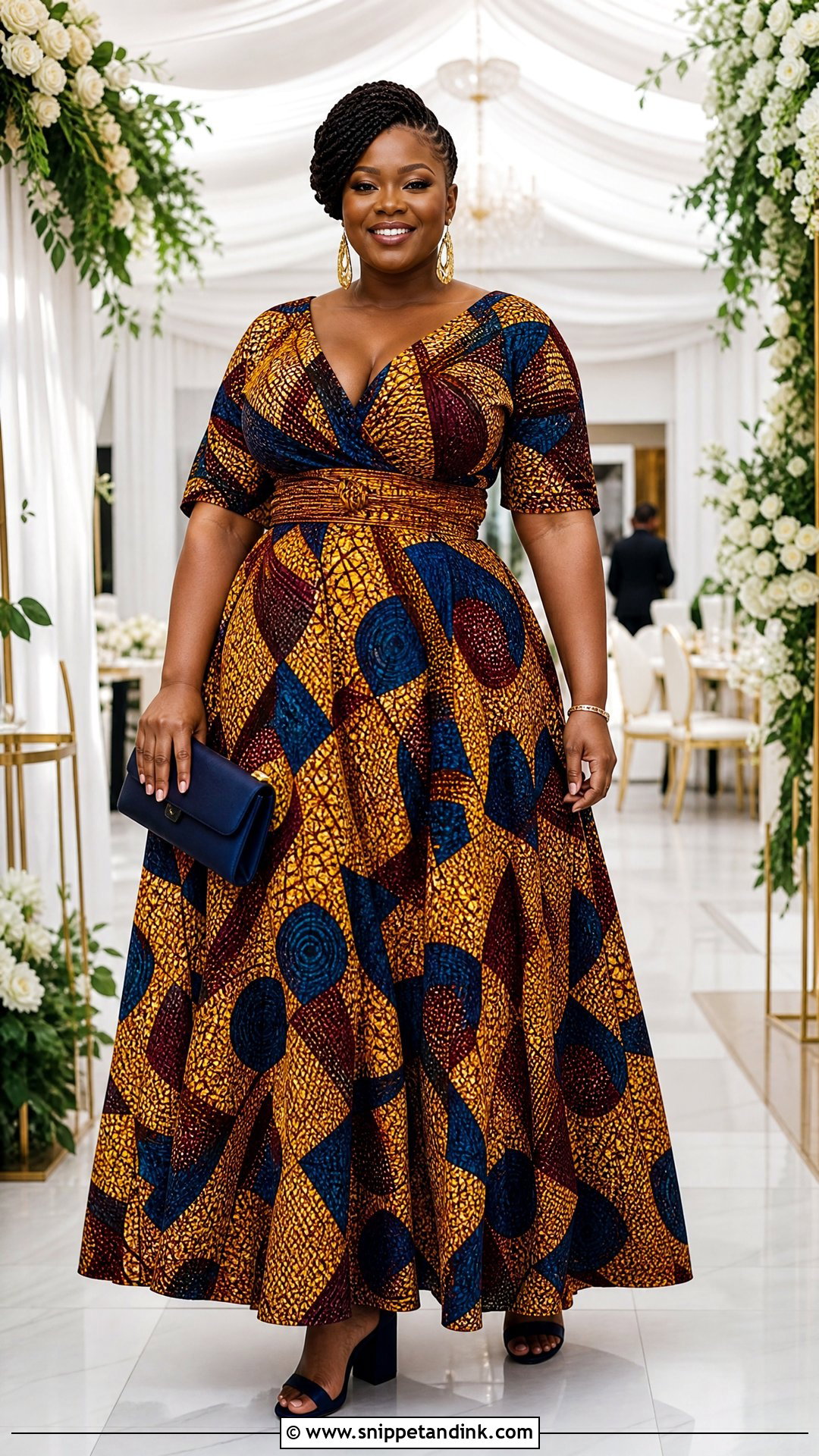
For a plus-size bride, I build support into the structure instead of relying on squeezing. A faux-wrap bodice with hidden boning, a secure V neckline and a wide waistband at the natural waist give definition, and an A line maxi skirt flows over the hips with room to dance. Medium-scale motifs usually look balanced over a full gown. I always ask for a muslin fitting before the real fabric is cut, particularly when sleeves or bust support are involved. Supportive block heels and bold earrings complete it.
A Fitting Calendar for a Custom Ankara Bridal Gown
Wax print is unforgiving to alter once it has been cut and stitched, because unpicked seams leave needle holes and pressed lines in crisp cotton. So I front-load the work and plan on these stages for a custom gown, starting about four to six months before the wedding if the design is structured or embellished.
- Design and measurements. Bring photos, the fabric, and the undergarments you plan to wear, because a different bra changes the bodice fit.
- Muslin toile. The tailor makes the gown in cheap calico first. This is where you fix the neckline, waist height and skirt shape without risking your print.
- First fitting in the real fabric. Check print placement, seam matching and how the bodice sits when you sit down.
- Second fitting with shoes, headwrap and jewelry. Walk, climb a step, lift your arms, dance for a minute.
- Final collection about two weeks out. Try it on again at home, then store it hanging, covered, away from sunlight.
On the morning, steam the gown rather than ironing it directly, especially over beading or lace, and give the bride’s lap a final steam just before she leaves. A cotton gown is cooler than polyester in a hot venue, but it creases, so I keep a travel steamer and a small sewing kit with thread in the main print color for any last-minute fix.
What the Print Asks of the Rest of Your Outfit
Whichever silhouette you settle on, plan it around the day you will actually have. Think about the venue, weather, fabric weight, neckline support and how much you will sit, walk and dance before committing. On printed fabric, seams and motif placement show far more than they do on plain satin, so tailoring is where the money matters. Wear shoes you can walk in, jewelry that leaves the print alone and a hairstyle that shows off the neckline. A ball gown, a fitted mermaid, a clean column or a soft wrap can all be the right Ankara bridal gown if it is cut for you.
You'll Like These Ideas:


Leave a Reply