
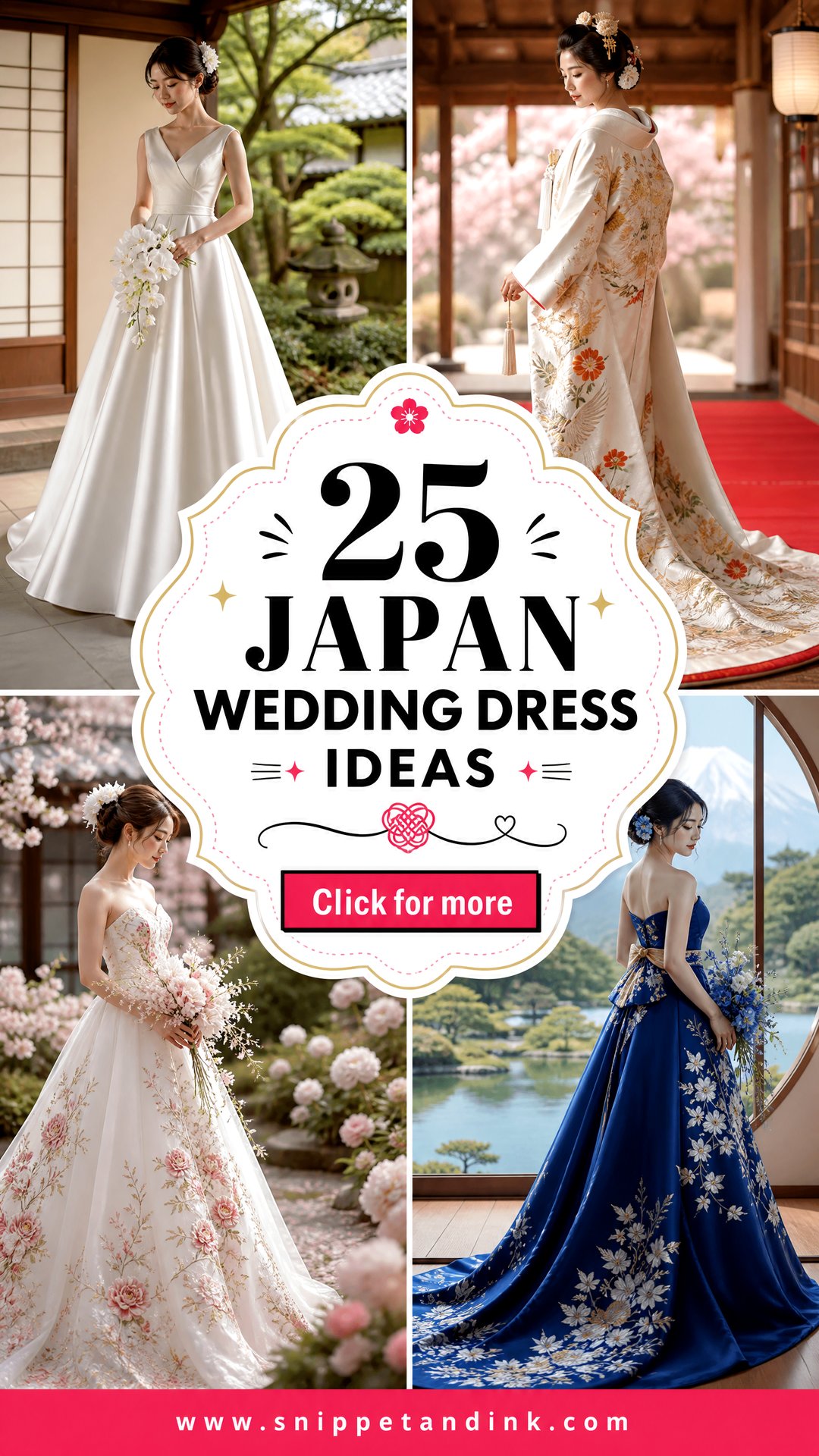
Bridal dressing in Japan moves between two wardrobes. On one side sit the pure white shiromuku, the richly embroidered iro uchikake and the long-sleeved hikifurisode; on the other, Western gowns worn for the ceremony, the reception or a portrait session. Many brides wear both in one day. Which way you lean depends on the venue, the season, how formal the ceremony is and how much tradition you want to carry. Some want a quiet, sacred kimono moment at a shrine. Others prefer a lace gown, a plain satin dress or a reception look with Japanese embroidery. Below are complete outfits from both sides, with the practical details I’d want a bride to know before she commits.
Renting a Bridal Kimono and the Dresser Who Puts It On
Very few brides in Japan buy a shiromuku or uchikake. They rent, usually through the wedding venue, a costume partner linked to the shrine, or a photo studio offering a package with dressing, hair and makeup. Rental keeps the cost manageable and gives you access to robes that would be wildly expensive to own.
- Go to the first selection appointment several months ahead. Popular designs for spring and autumn dates are reserved early.
- Try on the complete set, not just the outer robe. Ask to see the inner kimono, obi and headpiece together, because the colors of each layer change the overall effect.
- Confirm who does the dressing. Putting on a bridal kimono properly, called kitsuke, is a skilled job, and a good dresser shapes the obi so it supports you rather than squeezes. Allow at least an hour for dressing, separate from hair and makeup.
- Ask about the hair plan. A traditional wig is still offered, but many brides now have their own hair styled into an updo that holds kanzashi or a wataboshi. Each needs a different prep, so decide before your trial.
If you’re not Japanese and you’d like to wear a kimono for your wedding, use a professional dresser rather than dressing yourself from a video, and wear the full traditional set. It shows care for what the garment means, and it’s the difference between looking dressed and looking wrapped.
1. Shiromuku Japan Wedding Dress
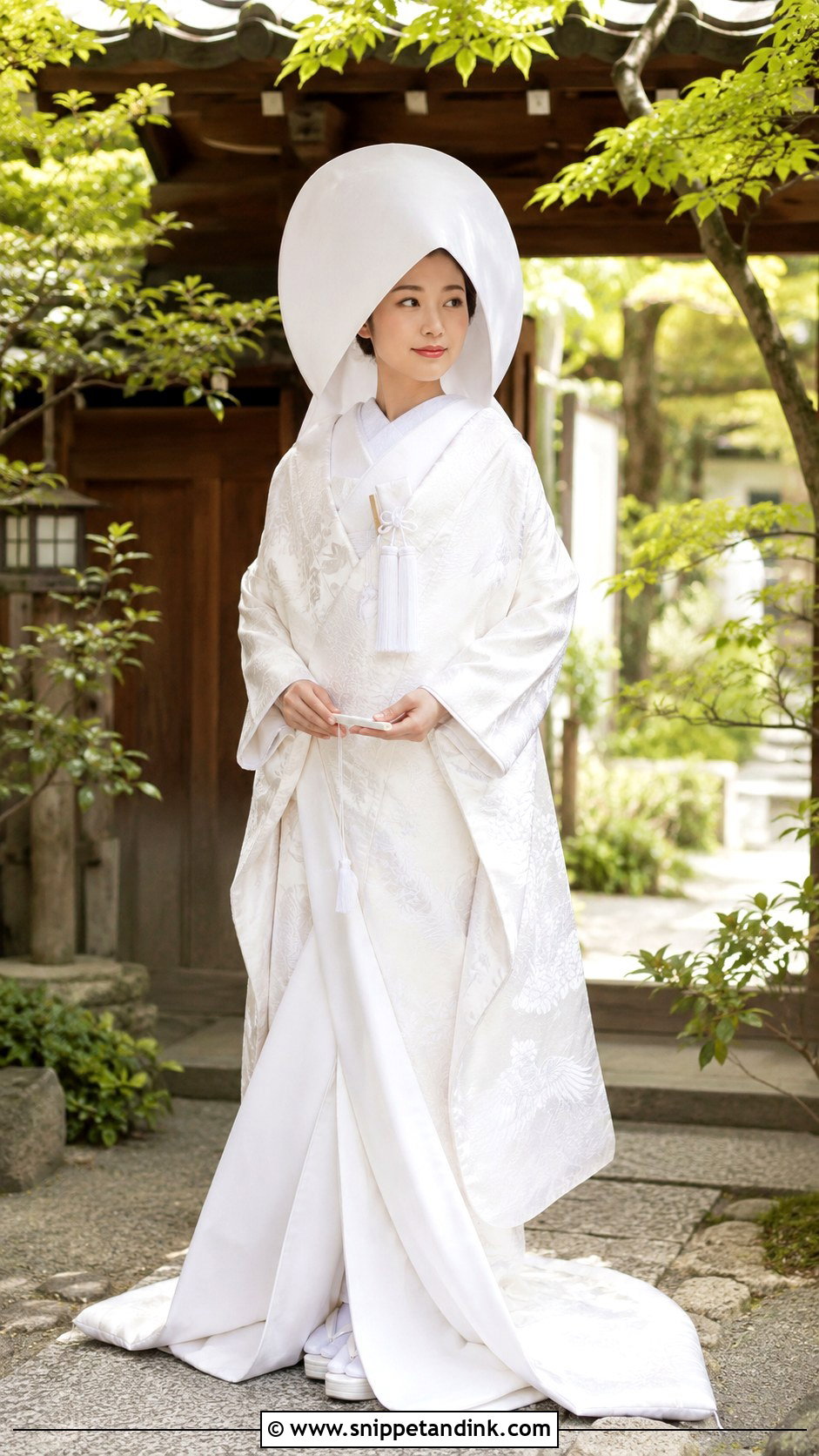
The shiromuku is the most formal bridal kimono there is, and the white is meant to be total: outer robe, inner kakeshita, obi, tabi socks and zori all match. This all-white bridal kimono relies on woven texture rather than color, so look closely at the fabric; cranes and pine woven white-on-white only show when light rakes across them. For the head, the wataboshi hood is soft and modest and usually worn for the ceremony itself, while the tsunokakushi gives a sharper outline that suits portraits. Makeup should be clean with defined brows and a red lip. Shrine ceremonies and garden portraits are where it belongs.
2. Iro Uchikake Japan Wedding Dress
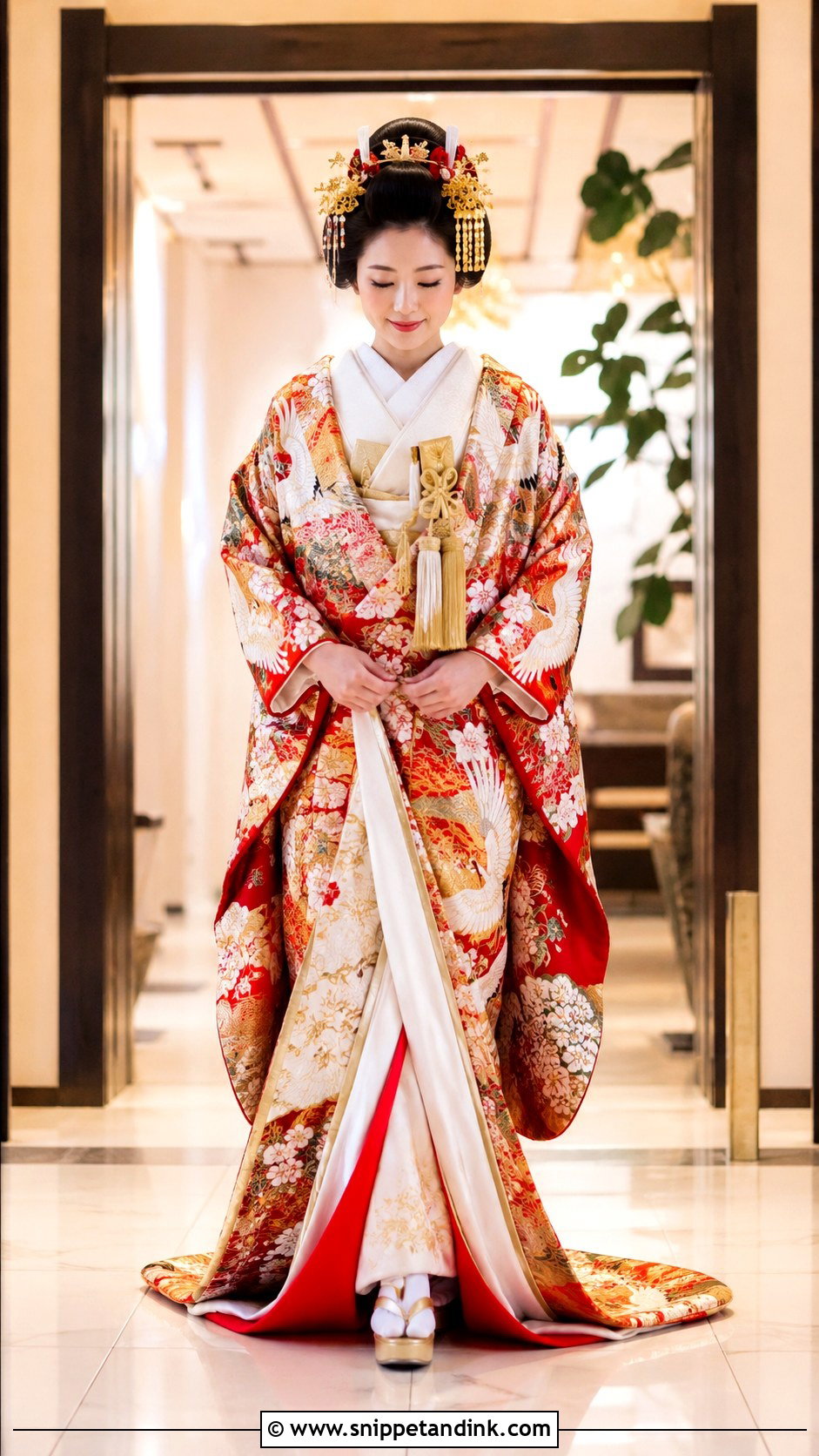
Color arrives with the iro uchikake, the embroidered outer robe traditionally worn after the white ceremony look or for the reception entrance. Cranes, flowers, waves, fans and gold thread are the usual motifs, and red, gold, white, blue or green each set a different mood. It goes over a pale inner kimono with a coordinating obi, white tabi and zori. Uchikake are heavily padded at the hem so they trail and hold their shape, which also means they’re warm; in summer I’d plan shorter time in it. A polished updo with kanzashi hair ornaments finishes it for a reception entrance or a second outfit.
3. Red Uchikake Japan Wedding Dress
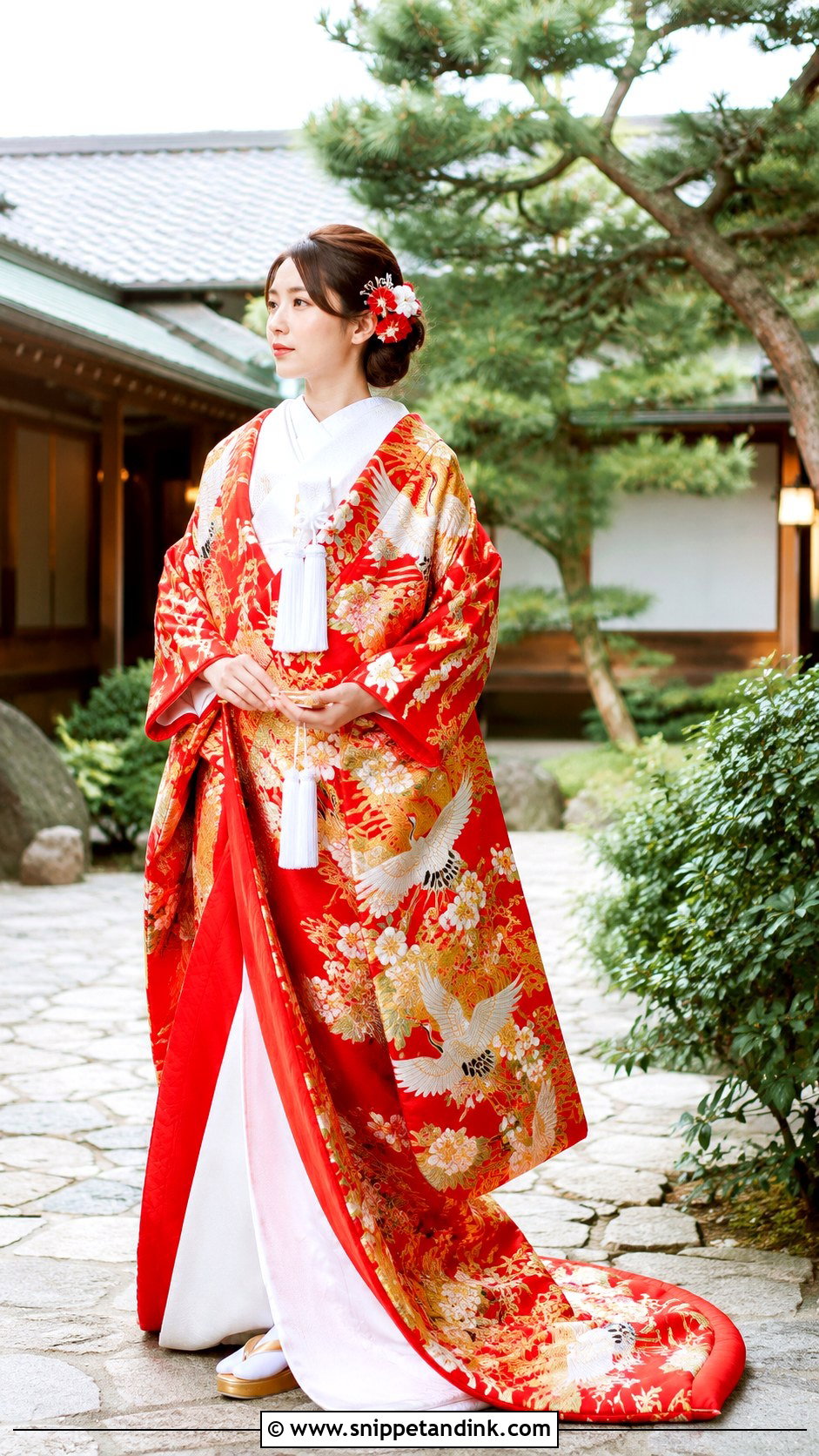
Red is the uchikake color most people picture, and for good reason: it’s festive and photographs warm in almost any light. Look for gold cranes, peonies or maple leaves embroidered over a red ground, layered over a white or ivory inner kimono with a structured obi, white tabi and gold-accented zori. With this much color, the hair should be neat and deliberate, a low bun or smooth traditional updo with kanzashi pins. Loose waves can look unfinished against such a formal robe. It stands out beautifully against plain timber, autumn foliage and garden stone.
4. Gold Uchikake Japan Wedding Dress
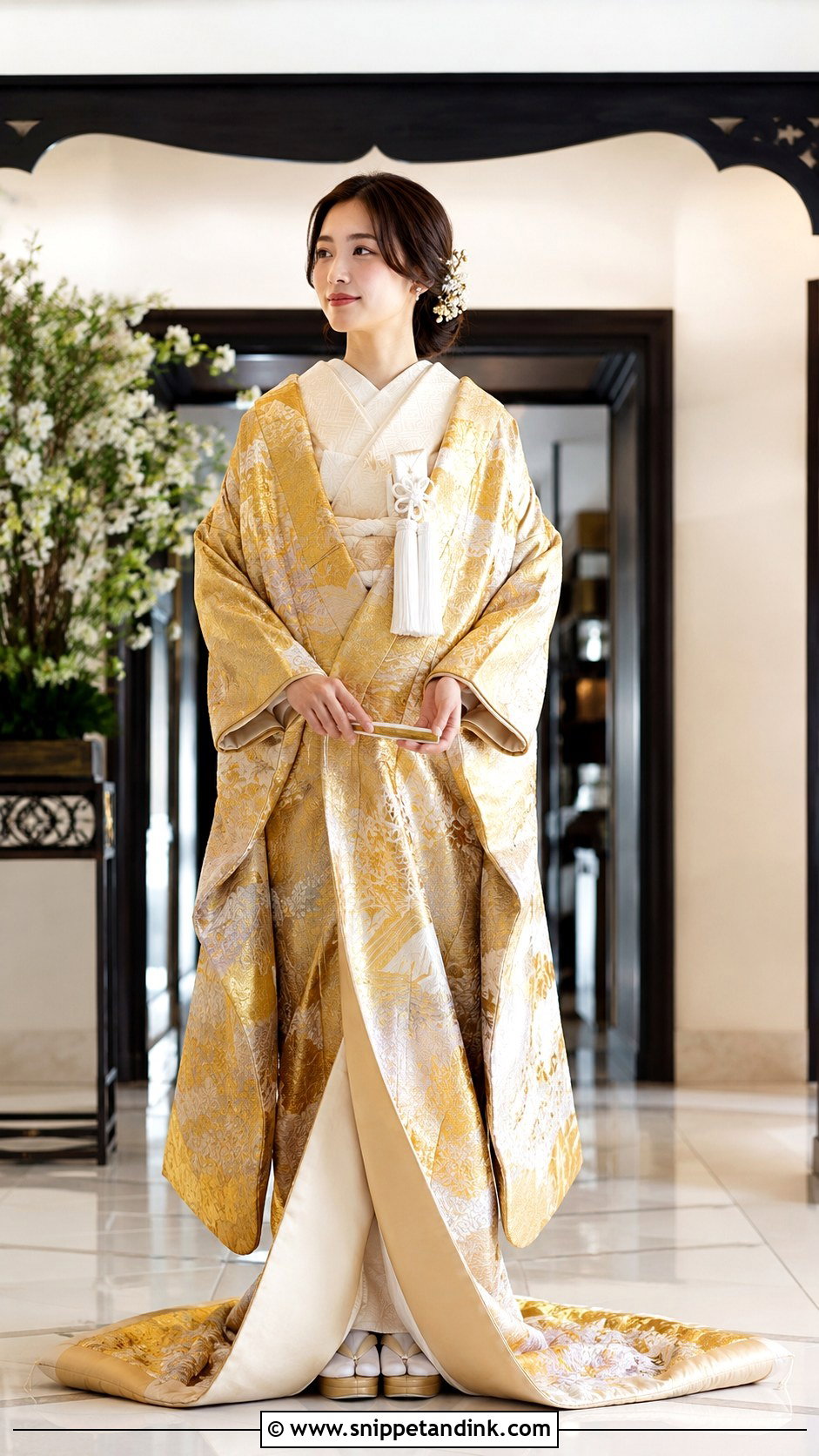
Gold uchikake are woven, not just embroidered, and the weave catches light in a way flat silk can’t. That’s why I keep jewelry almost absent here. Layer the gold outer robe over a white or cream under-kimono, choose an obi with only subtle metallic detail, and add white tabi and soft gold zori. Pearl earrings, a simple comb or a few small kanzashi are plenty; anything more competes with the fabric. Indoor venues with warm lighting suit it best, since harsh daylight can flatten the shine.
5. White Lace Japan Wedding Dress
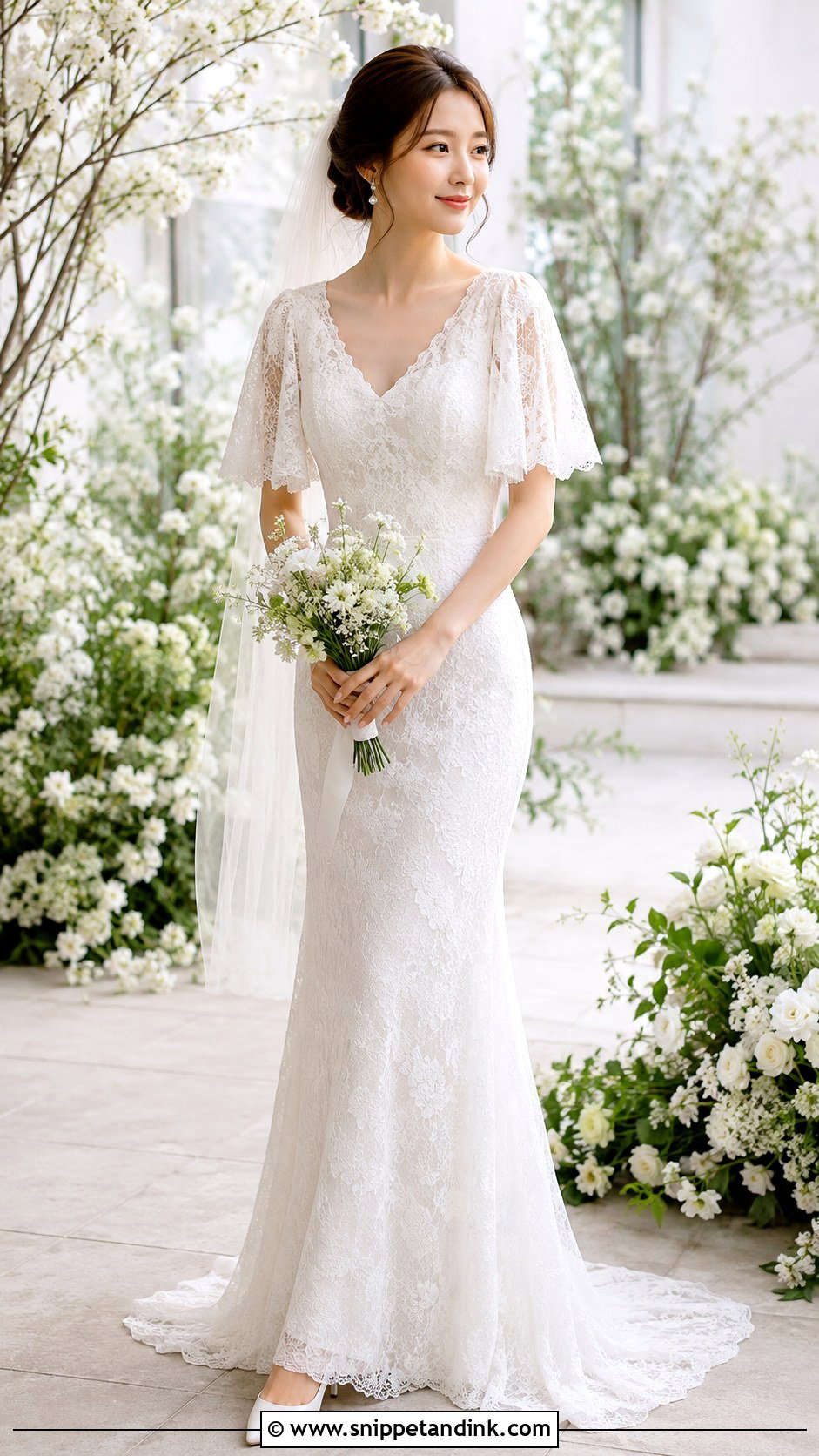
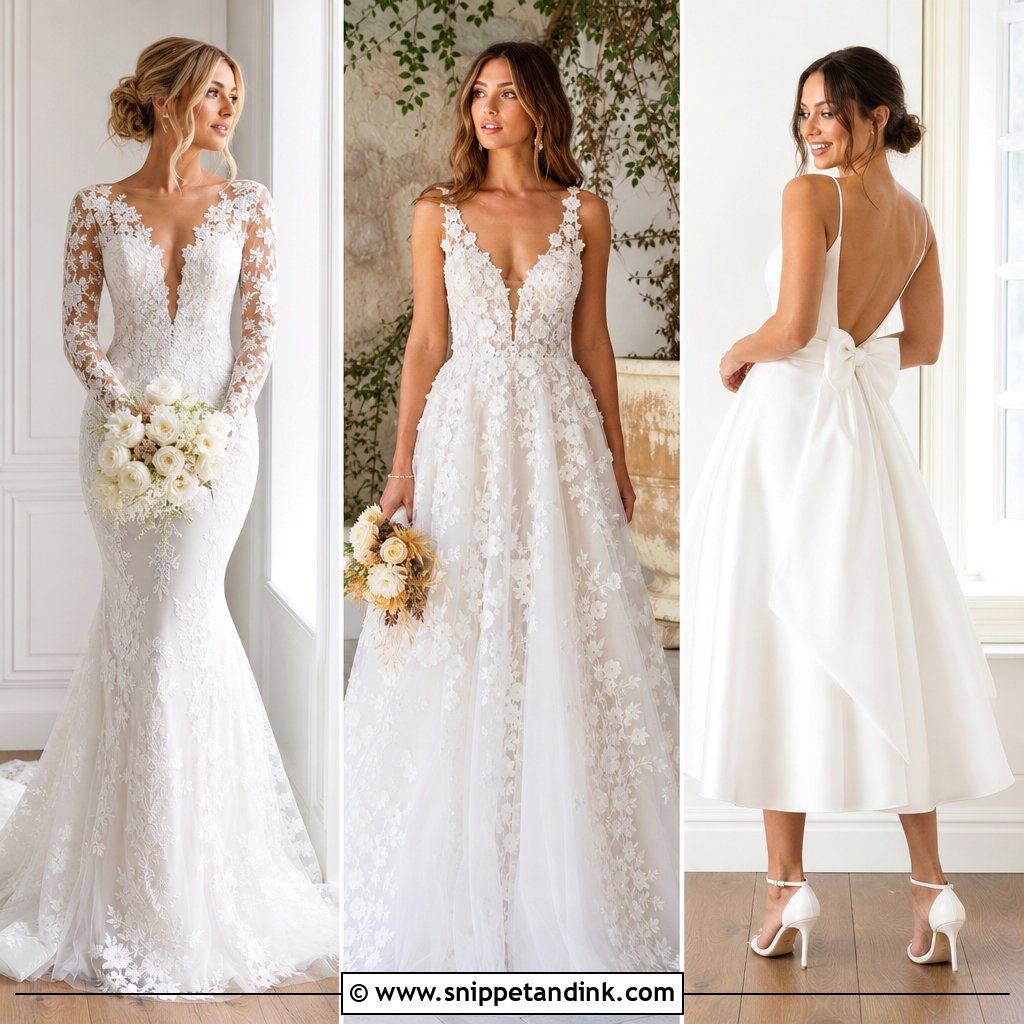
Lace is where the Western side of the list begins. Look for a full-length gown with a fitted bodice, light sleeves and a skirt that moves when you walk through a garden. Pointed ivory heels, pearl earrings and a simple veil or hair ribbon keep it understated. To tie it to a Japanese setting, carry seasonal flowers like peonies, camellias or soft blossom tones. Before you book outdoor portraits at a temple or traditional courtyard, check the photo rules; many sites restrict professional shoots or require a permit, and a long lace train picks up a lot of gravel.
6. Satin A Line Japan Wedding Dress
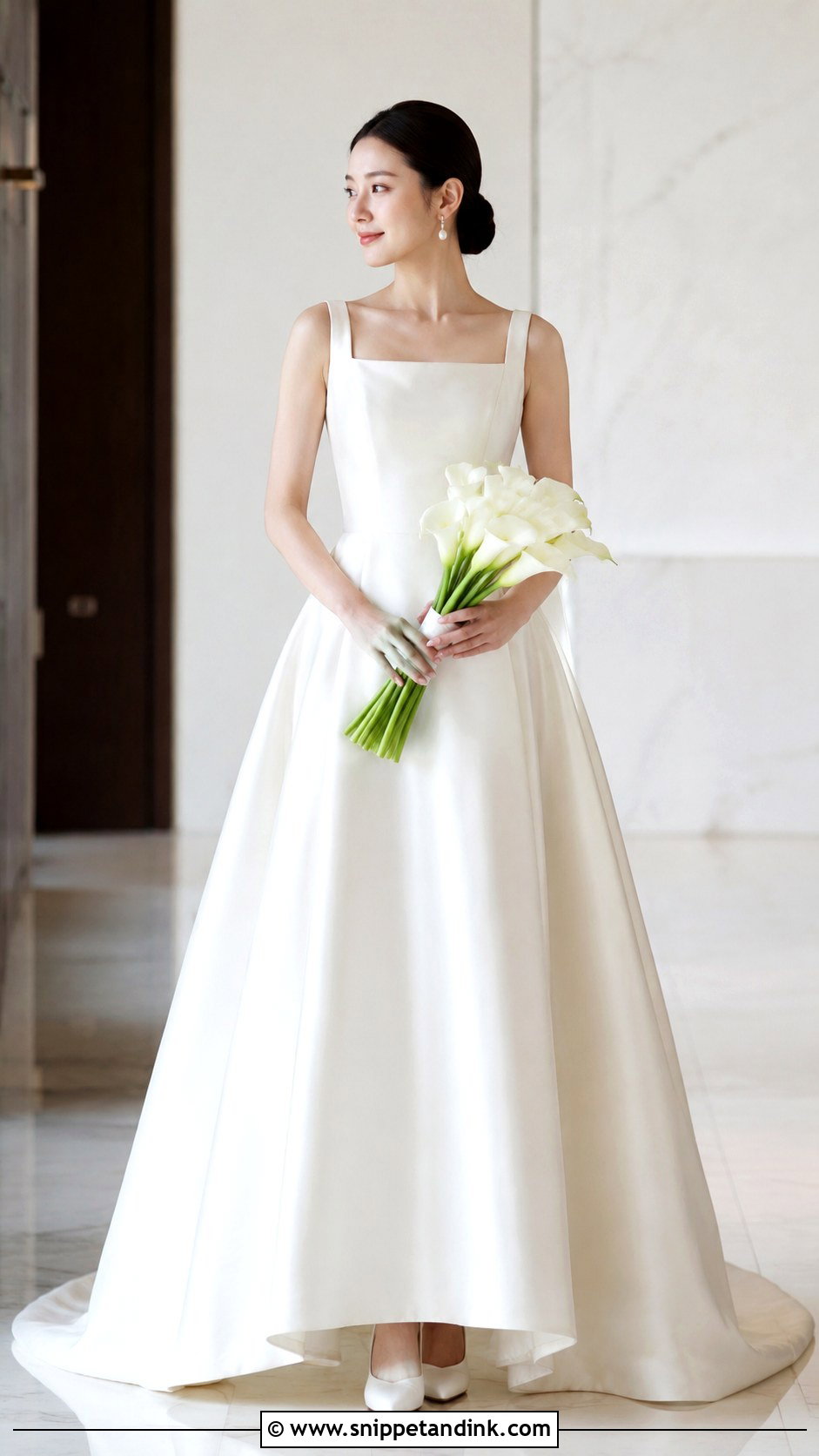
Satin A-lines are the dress I’d suggest for a bride who wants one gown to carry her through the ceremony and reception without a change. The fabric has a soft sheen, and the shape moves without weight. A square, bateau or gentle off-shoulder neckline suits it. Ivory heels, pearl drops and a structured bouquet keep it polished, and a low bun or sleek half-up style keeps it modern. Satin creases where you sit, so ask your photographer to take the full-length shots before the meal. Minimalist venues and bright hotel spaces suit it.
7. Kimono Sleeve Japan Wedding Dress
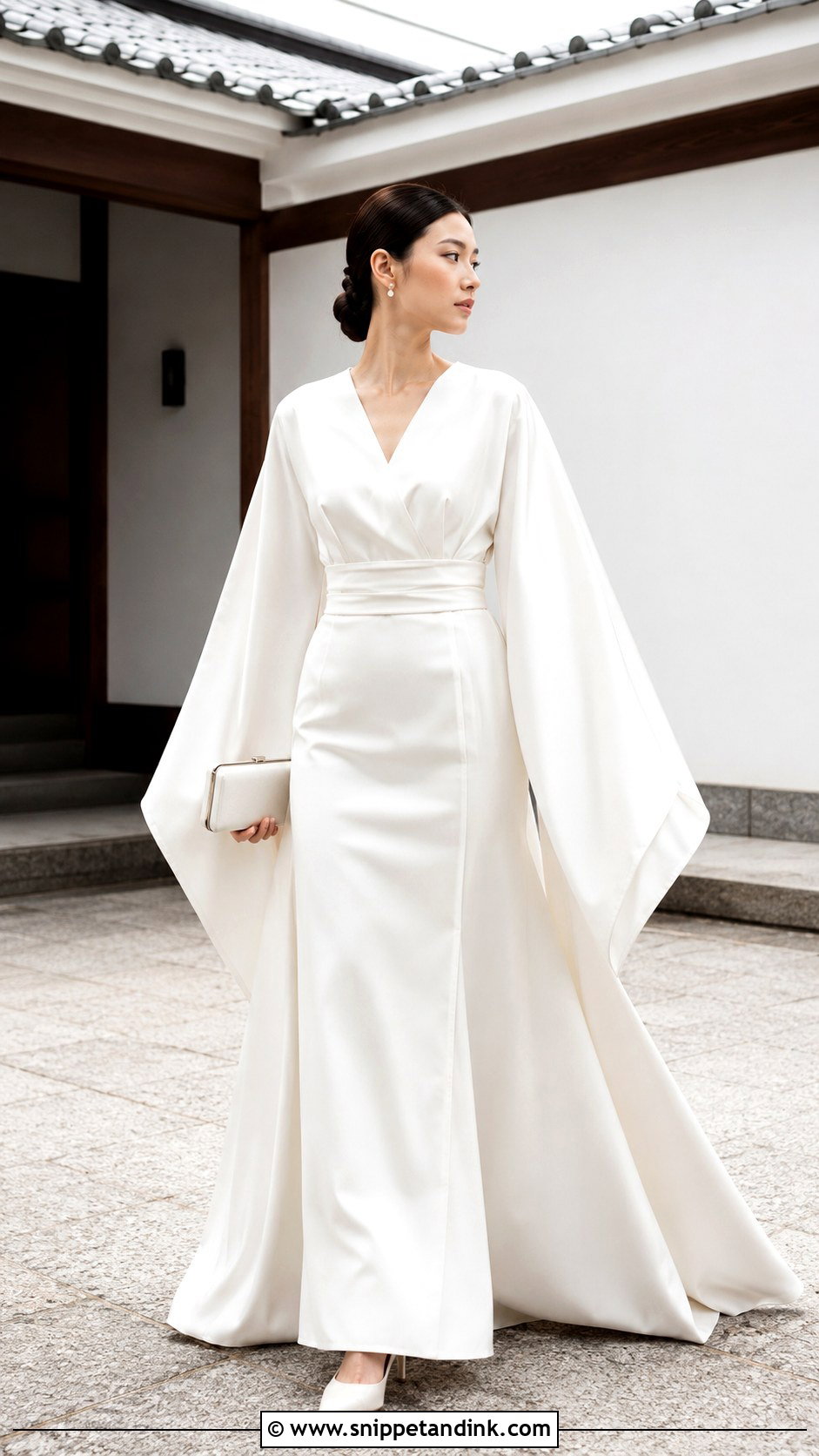
Wide, flowing sleeves are the most wearable way to borrow from kimono design without wearing one. Silk or crepe works best because the sleeve needs to drape rather than stand out. Pair it with a defined waist and a straight or softly flared skirt, plus simple heels, pearl studs and a sleek clutch. The sleeves already bring movement, so keep hair to a smooth bun, soft waves or a low ponytail. Check the sleeve length at the fitting by reaching for a glass and signing a register; long drops can trail through food and ink.
8. Modern Kimono Japan Wedding Dress
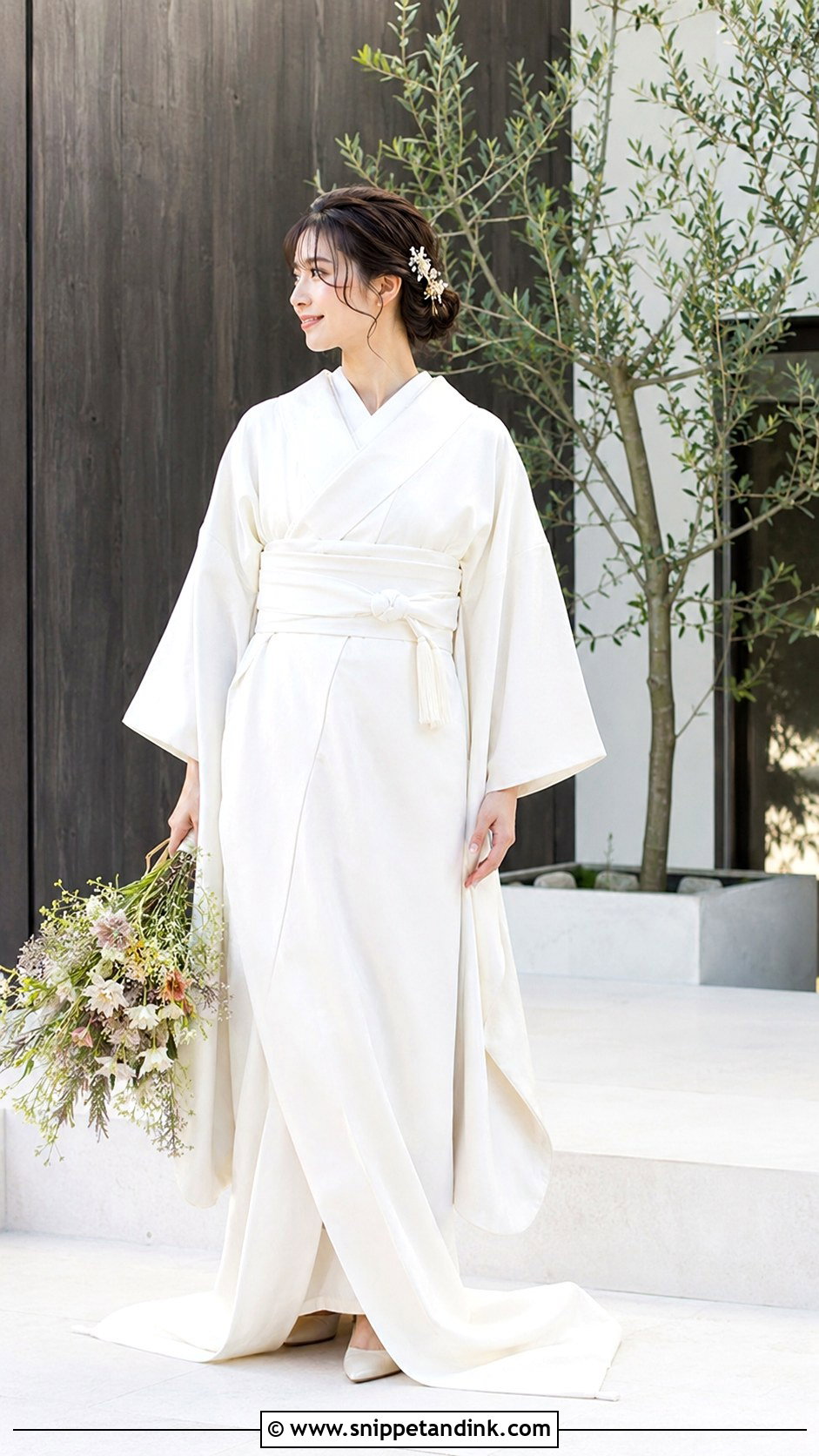
A wrap gown with kimono-style sleeves and a wide sash takes the structure of a kimono without copying it. Make sure it wraps left over right, the way a living person wears a kimono; right over left is reserved for dressing the dead, and Japanese guests will notice. White or ivory heels, delicate hair pins and a small seasonal bouquet keep the lines clean. I treat this one carefully: refined fabric and restrained accessories keep it from looking like a costume. It makes a good reception change after a formal kimono ceremony, or a registry-office look.
9. Hikifurisode Japan Wedding Dress
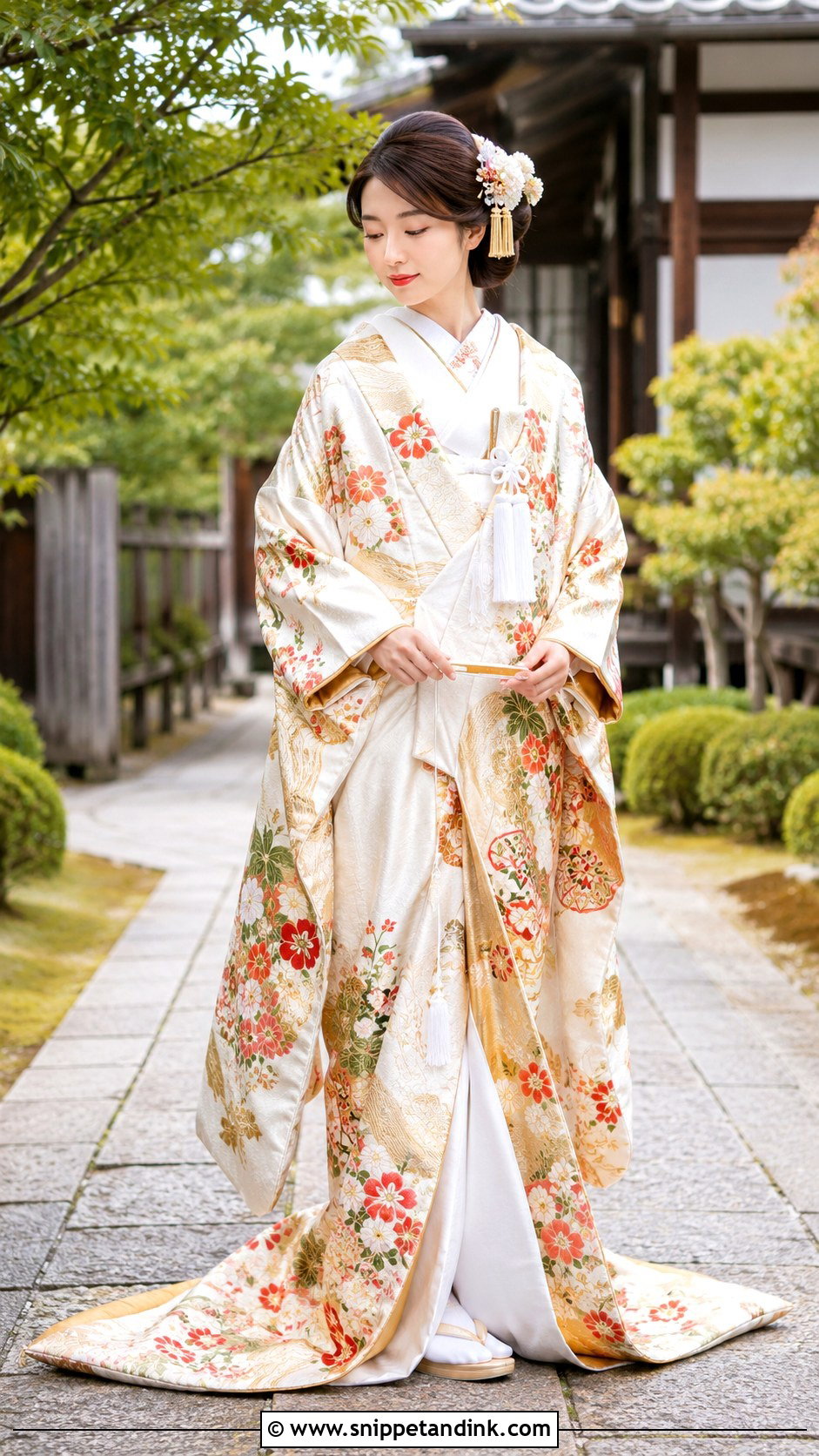
A hikifurisode Japan wedding dress is a long-sleeved formal kimono with a trailing hem, lighter than an uchikake because there’s no padded outer robe over it. The obi is visible, so it becomes a main feature, tied in an elaborate bow at the back. Black, red and multicolor grounds with detailed patterns are all traditional, worn with white tabi and zori. Choose an obi with gold, cream or patterned accents that pick up the kimono’s motifs. A traditional updo or refined modern bun finishes it. Brides who want to show the waist and move a little more freely tend to prefer it.
10. Black Hikifurisode Japan Wedding Dress
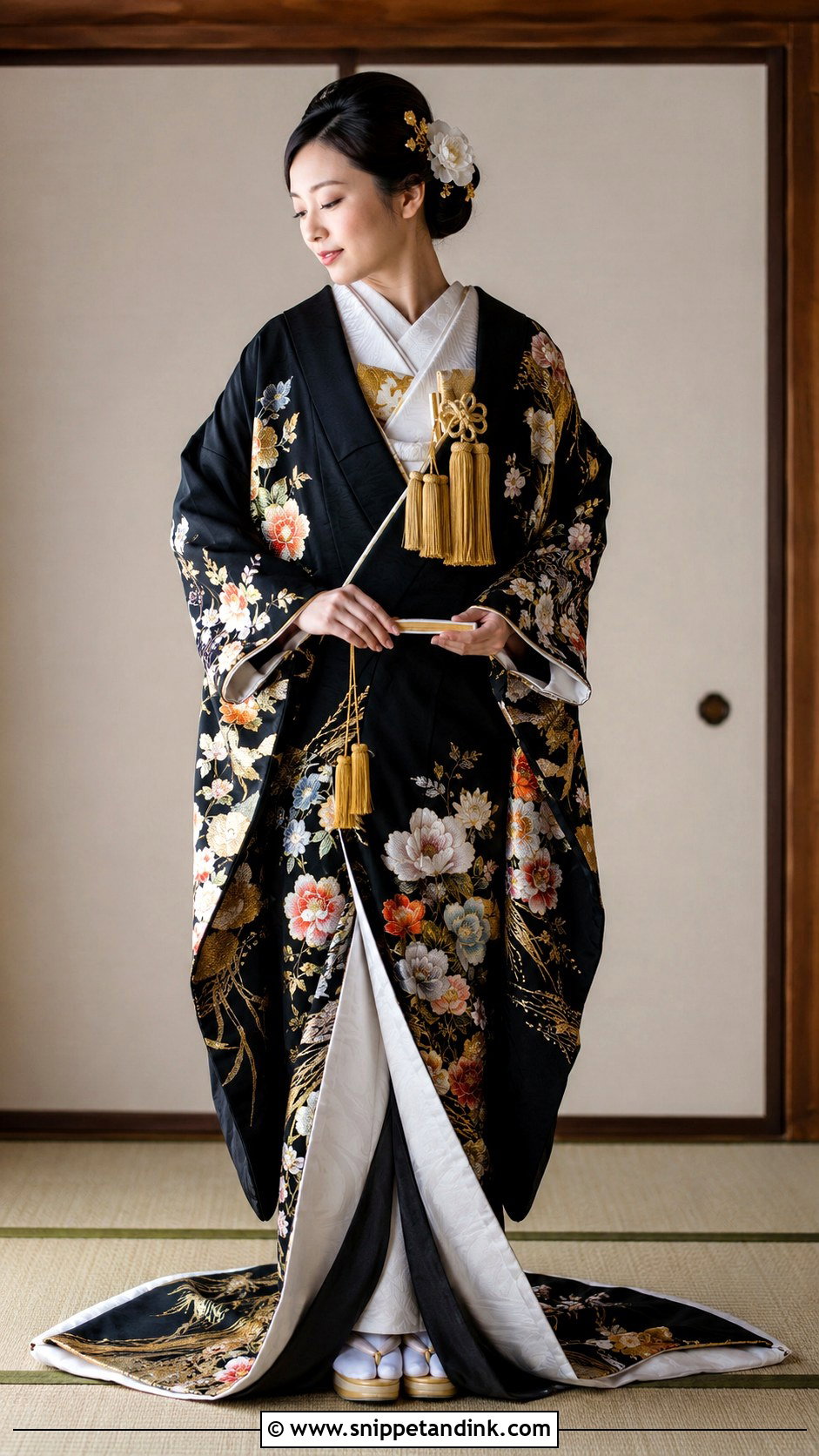
Black was once the standard bridal hikifurisode color, and it still looks dramatic. The dark ground pushes embroidered florals, cranes, fans and gold work forward, so even a busy pattern reads as controlled. Style it with a rich obi, white tabi, zori and polished hair ornaments, and use a red lip or soft rose makeup for warmth. Black absorbs light, so it needs good lighting; indoor portraits with a lit backdrop work better than dim evening corners. It suits a bride who wants tradition with a strong edge.
11. Floral Embroidered Japan Wedding Dress
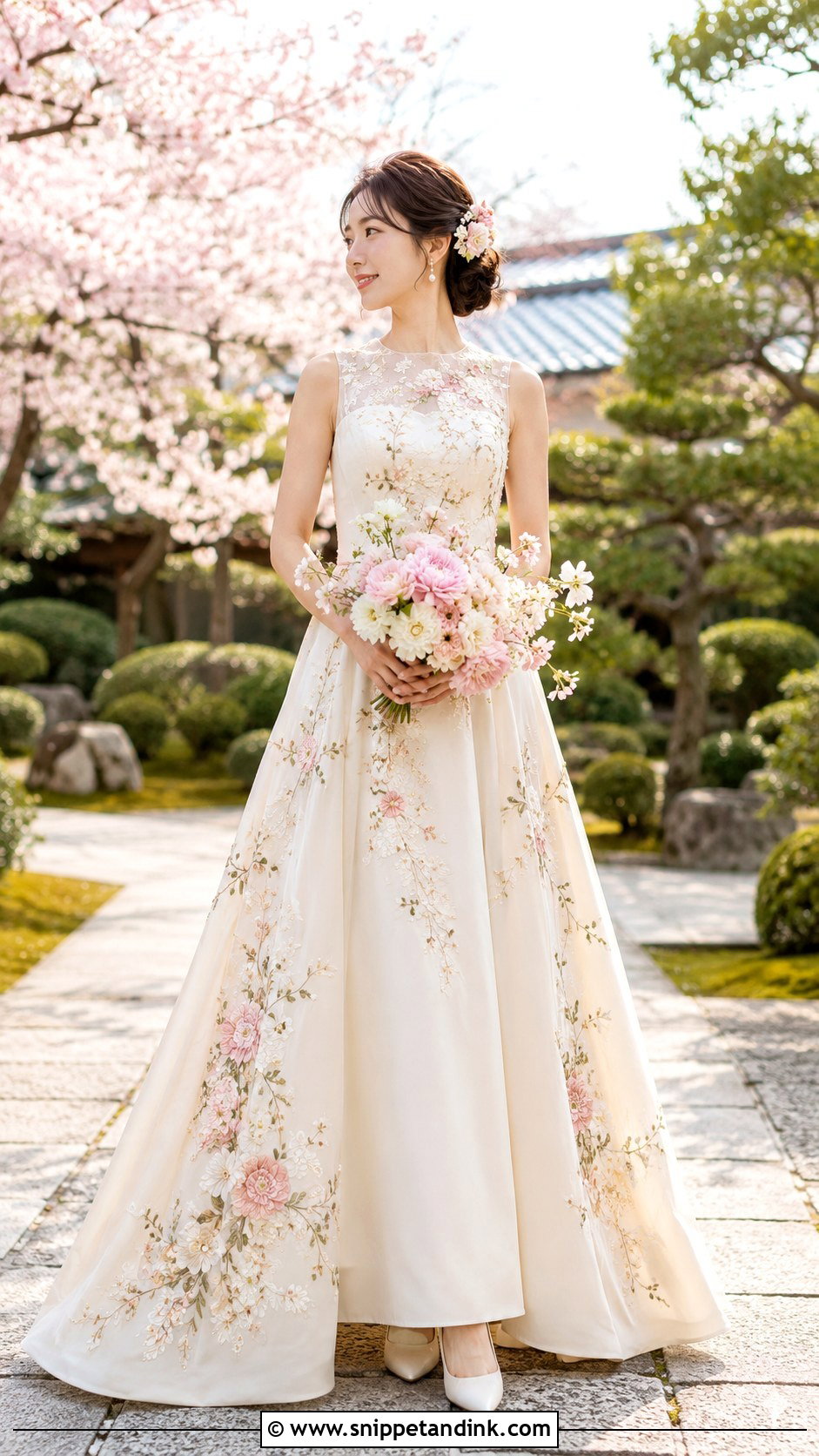
Embroidery is the easiest way to put Japanese motifs on a Western gown. Cherry blossoms, peonies, chrysanthemums or vines in white, ivory or blush thread work on an A-line, sheath or ball gown. I like the bouquet to repeat one of the embroidery tones, not all of them. Soft heels, pearl earrings and a low bun with small floral pins or loose waves with a veil keep it gentle. Check that the stitching is backed with a soft lining; dense embroidery on a bodice can scratch over a long day. It’s especially fresh for spring weddings and garden portraits.
12. Cherry Blossom Japan Wedding Dress
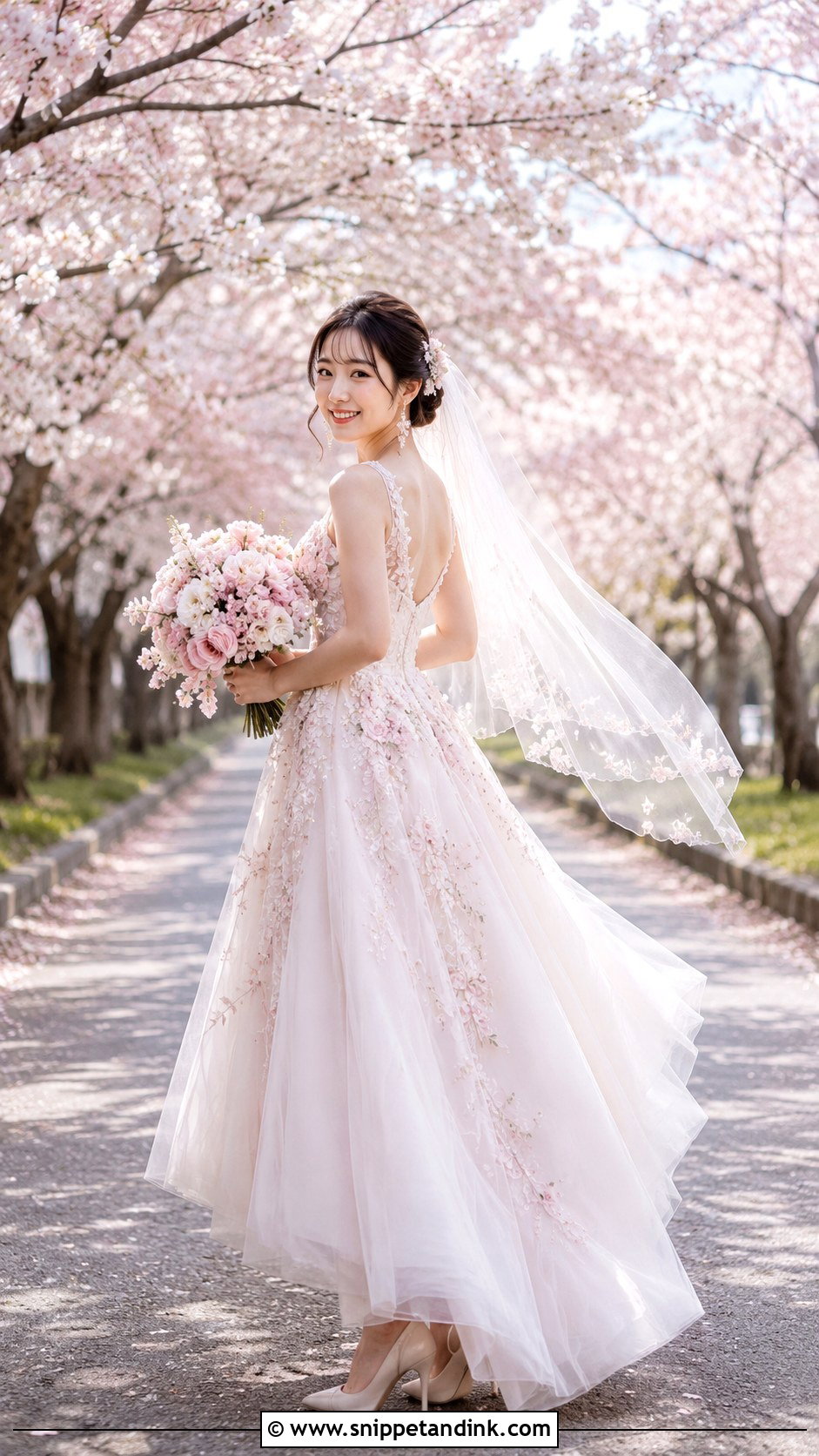
Blossom season is short and hard to predict, often just a week or two of full bloom, so a cherry blossom Japan wedding dress is a gamble if you plan the photos around real trees. A pale pink or ivory gown with subtle blossom embroidery, a light tulle skirt and delicate straps or sleeves will still look seasonal without them. Ivory heels, blush earrings and a bouquet of pale pink, white and green flowers suit it, with a sheer veil carrying tiny floral accents. Keep the styling light so it doesn’t tip into sugary.
13. Minimalist Japan Wedding Dress
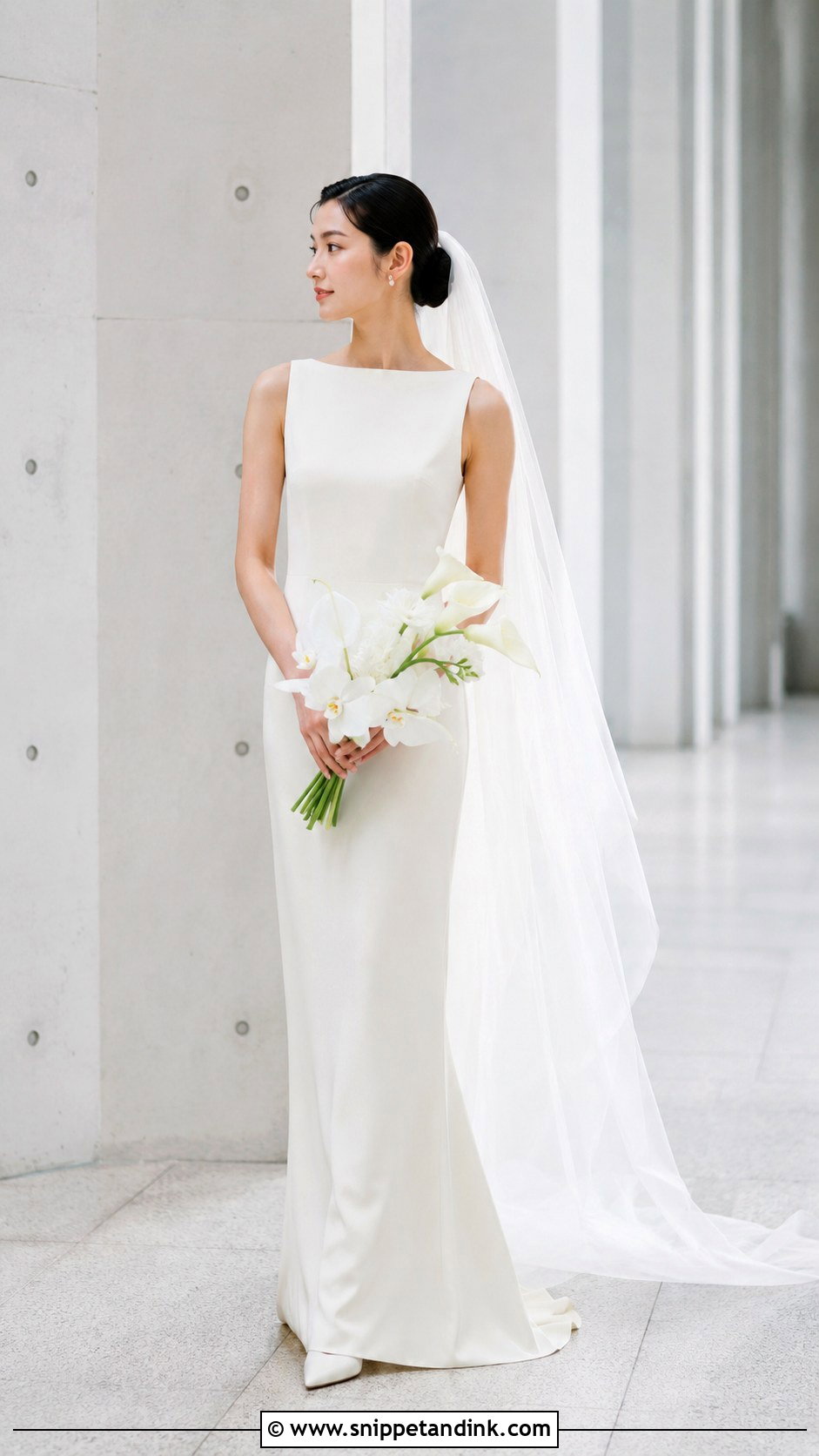
Minimal dresses work well in Japan because so much of the architecture is spare. Choose a silk, satin or crepe gown with clean lines, a long skirt and almost no embellishment, in a column, sheath or structured A-line shape. Pointed heels, pearl or diamond-style studs and a smooth veil complete it, with one sculptural bouquet instead of a mixed bunch. Plain fabric shows the cut, so alterations need to be precise; a wrinkle across the hips is very visible. A sleek bun keeps it modern in city venues and contemporary hotels.
14. Tea Length Japan Wedding Dress
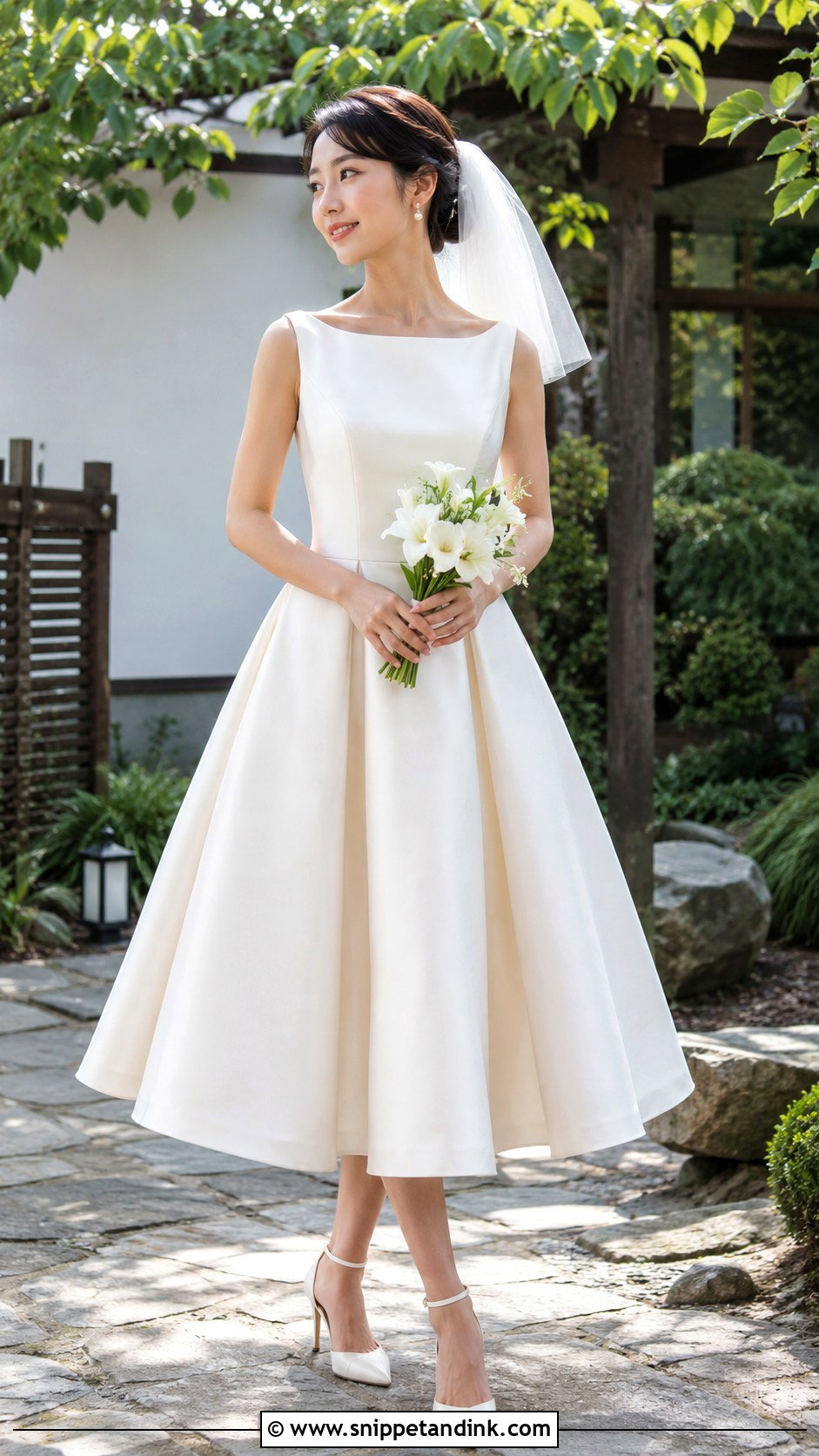
Tea length shows your shoes, so they become part of the outfit: elegant heels, satin pumps or ankle-strap sandals. A structured bodice with a flared skirt gives the classic shape, and lace or jacquard adds texture. Pearl earrings, a small bouquet and a short veil or bow complete it. It’s practical for a smaller civil wedding, garden photos and casual receptions, and it’s far easier on stairs and stone paths than a floor-length hem. It looks lighter and more playful than a full gown while still clearly bridal.

15. High Neck Japan Wedding Dress
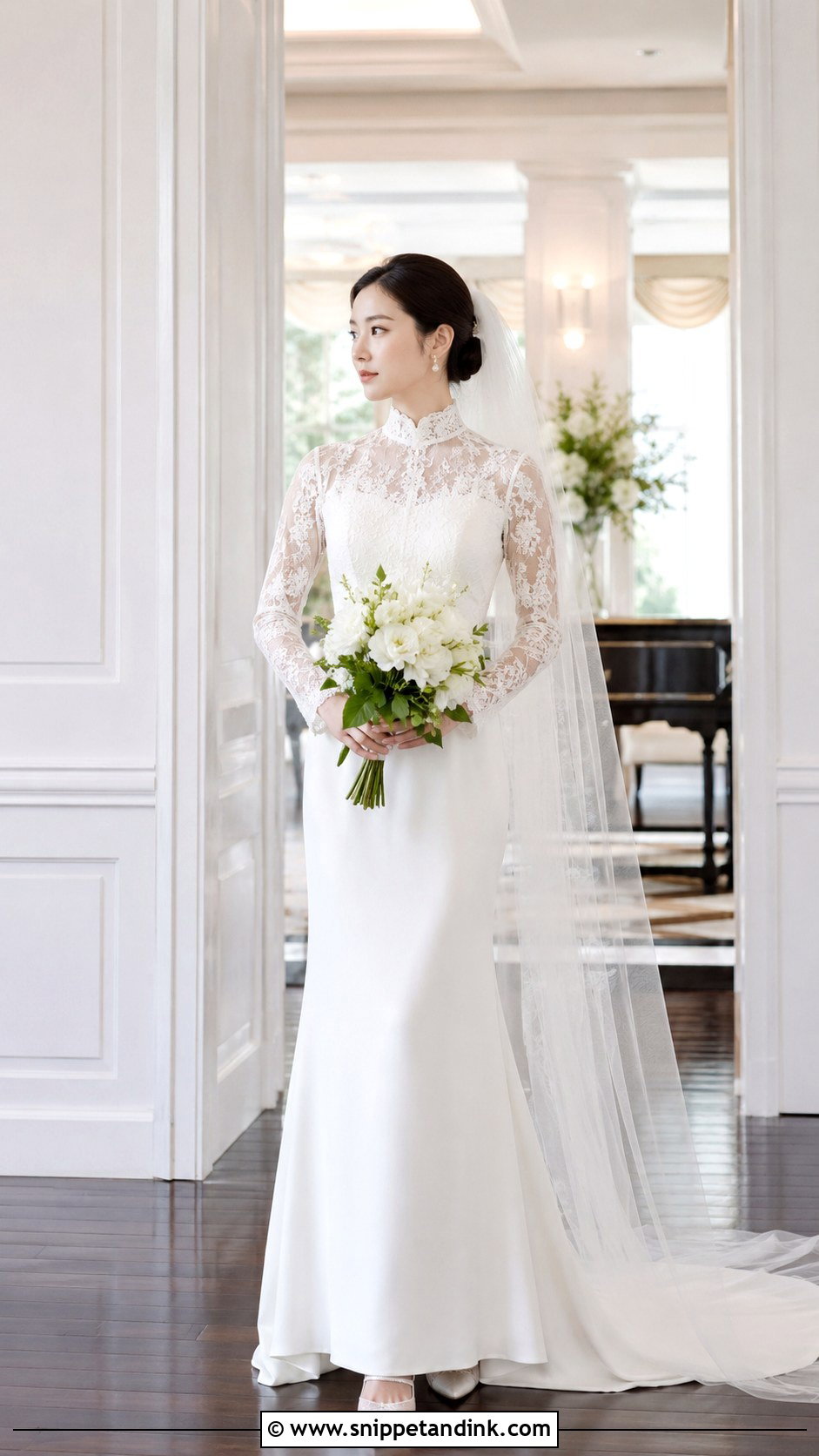
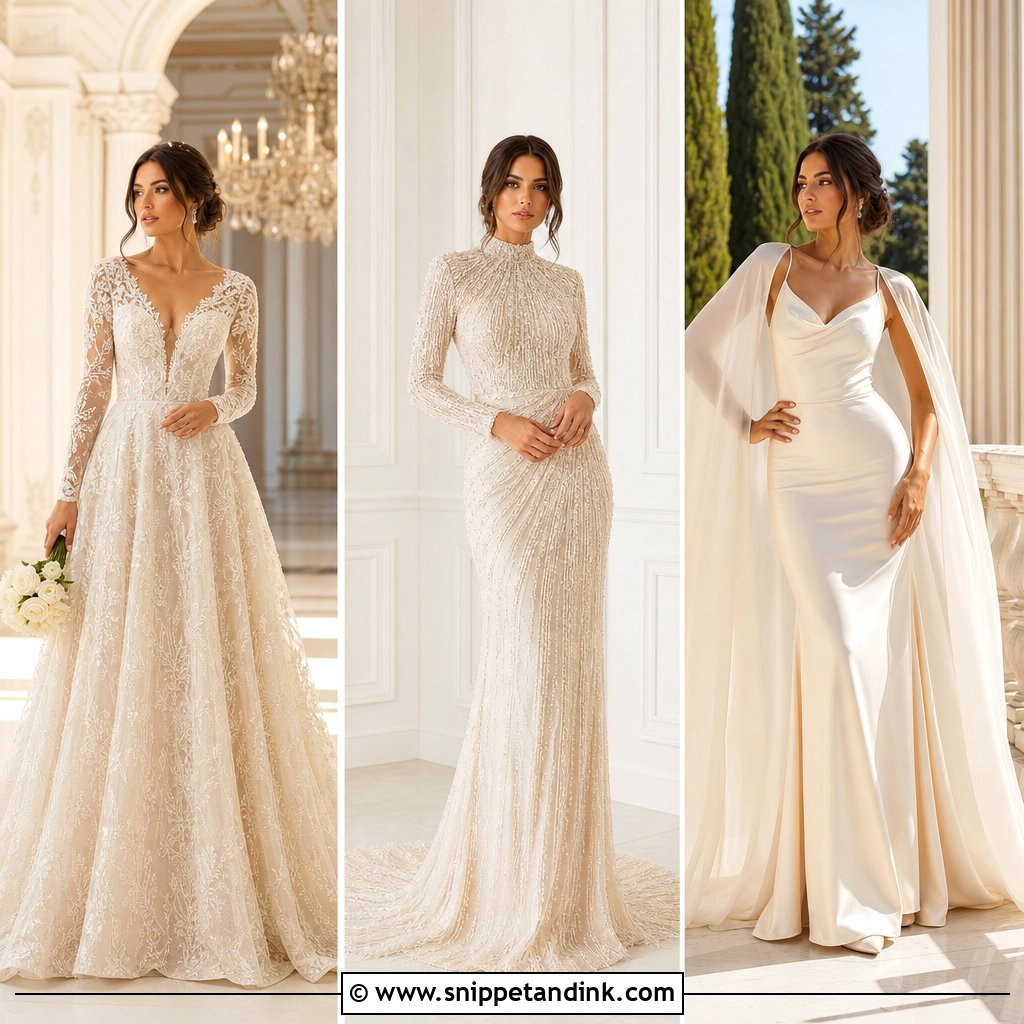
A high neck frames the face and suits lace, satin or crepe, with long sleeves or a clean sleeveless cut. Keep the neckline bare of necklaces and let the collar do its job. Sleek heels, pearl earrings and a smooth low bun complete it, and a long veil softens a very structured gown. On a closed collar, I check that a finger fits comfortably inside the neck opening, because heat and a long day make a snug collar uncomfortable. It’s a natural pick for formal venues, cooler seasons and brides who want coverage.
16. Long Sleeve Japan Wedding Dress
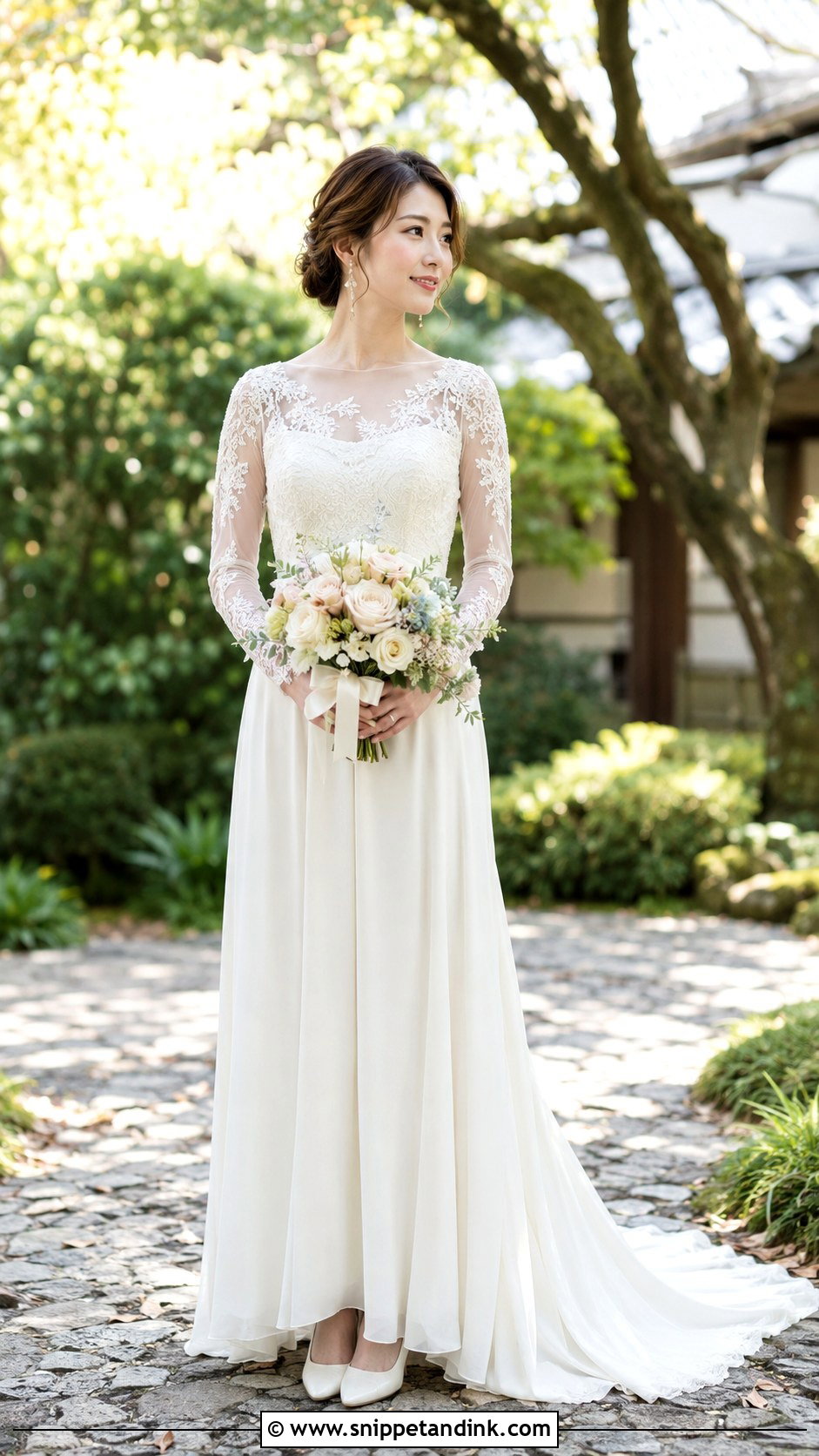
Lace sleeves read romantic, satin reads formal, and sheer sleeves add softness without weight. Long sleeves make sense for autumn, winter and early spring weddings, when Japanese evenings can be cold. Closed-toe heels, delicate earrings and a bouquet in ivory, blush or seasonal greenery complete it, with a low bun, side-parted waves or soft updo. The fitting point is the armhole: cut too low, the sleeve lifts the bodice every time you raise your arm to bow or wave. Sleeves add detail to the upper body in formal portraits.
17. Ball Gown Japan Wedding Dress
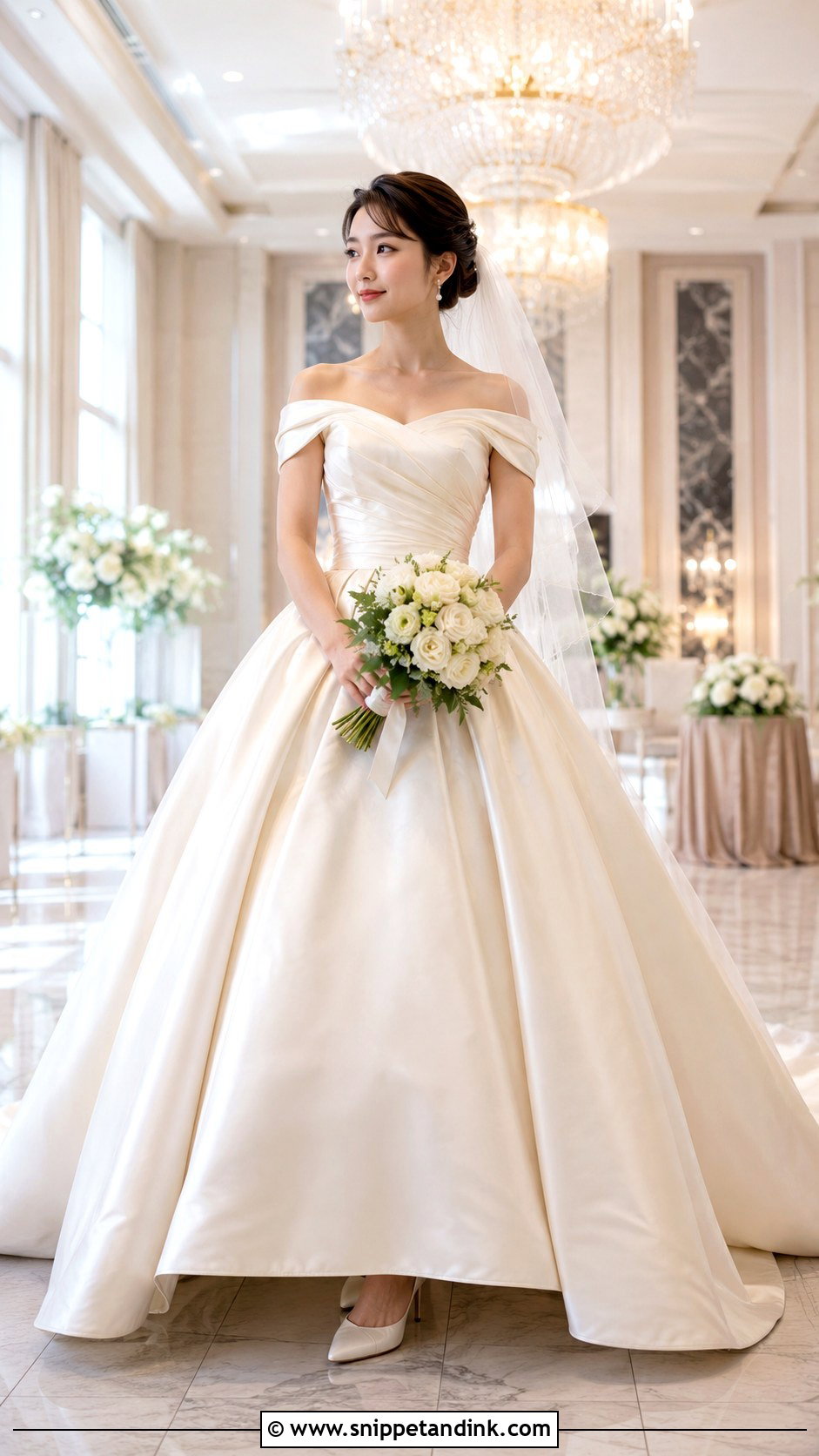
A full skirt makes an entrance, which is why ball gowns are often chosen for the reception change after a kimono ceremony. Clean satin, delicate lace or subtle floral embroidery all work, with a strapless, off-shoulder, square or high neckline. Pearl earrings, a soft veil and classic heels hidden under the skirt balance the volume. Keep the bouquet medium-sized. Before you commit, check the venue: many Japanese wedding halls run tight timings with narrow corridors and lifts, and a wide skirt slows every transition.
18. Slip Dress Japan Wedding Dress
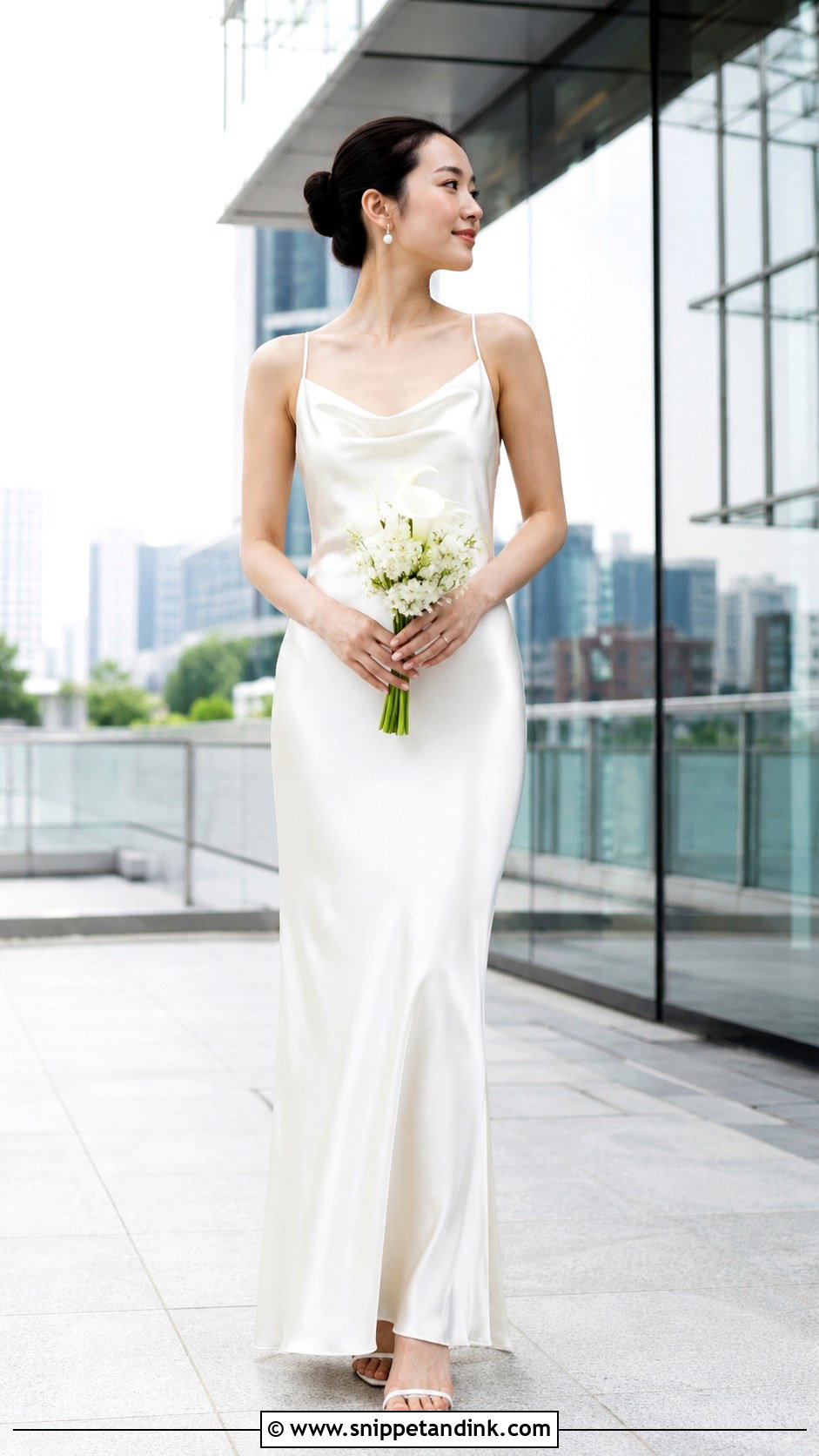
Slip dresses are the easiest bridal outfit to travel with, which makes them popular for destination couples flying into Japan. Choose silk or satin with a bias cut, thin straps and a floor-length hem. Strappy ivory heels, pearl earrings and a small bouquet keep it clean, and a sheer cape, shawl or structured jacket adds coverage for a shrine visit or a cool evening. Bias-cut satin reveals underwear lines and clings in humid weather, so try it on in heat if you can. A sleek bun or smooth waves keeps it polished for city weddings and summer receptions.
19. Tulle Skirt Japan Wedding Dress
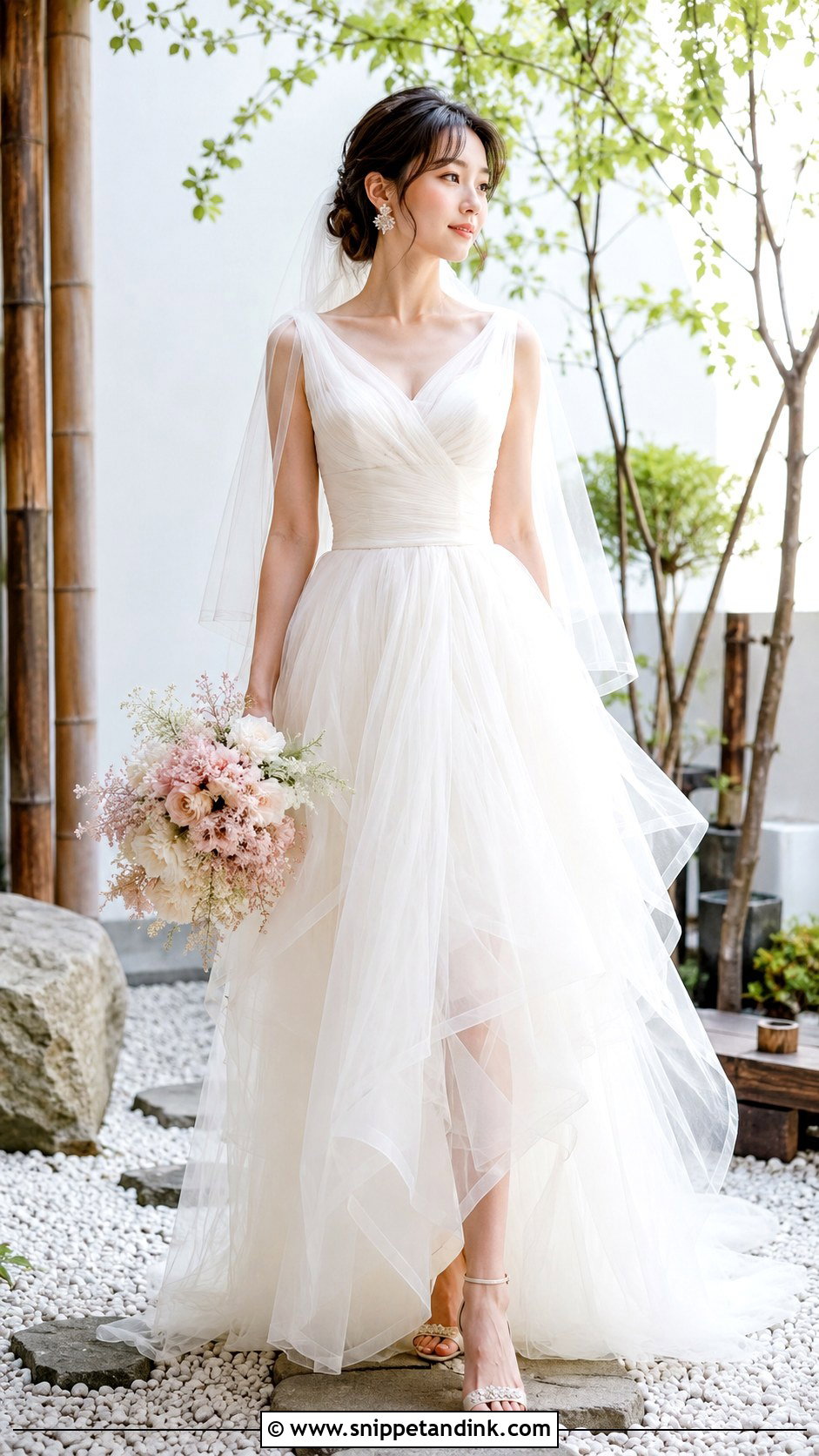
Layered tulle gives volume without much weight, which helps if you’ll be standing for long photo sessions. A fitted bodice over a full tulle skirt, ivory heels, delicate earrings and a light veil make the outfit. For a Japanese touch, choose subtle floral embroidery, a pale blush lining or a sash in a soft seasonal shade. Tulle snags on garden plants and stone edges, so the hem needs watching outdoors. Keep the hair gentle with a low bun, soft curls or a half-up style, and let the skirt carry the volume.

20. Reception Japan Wedding Dress
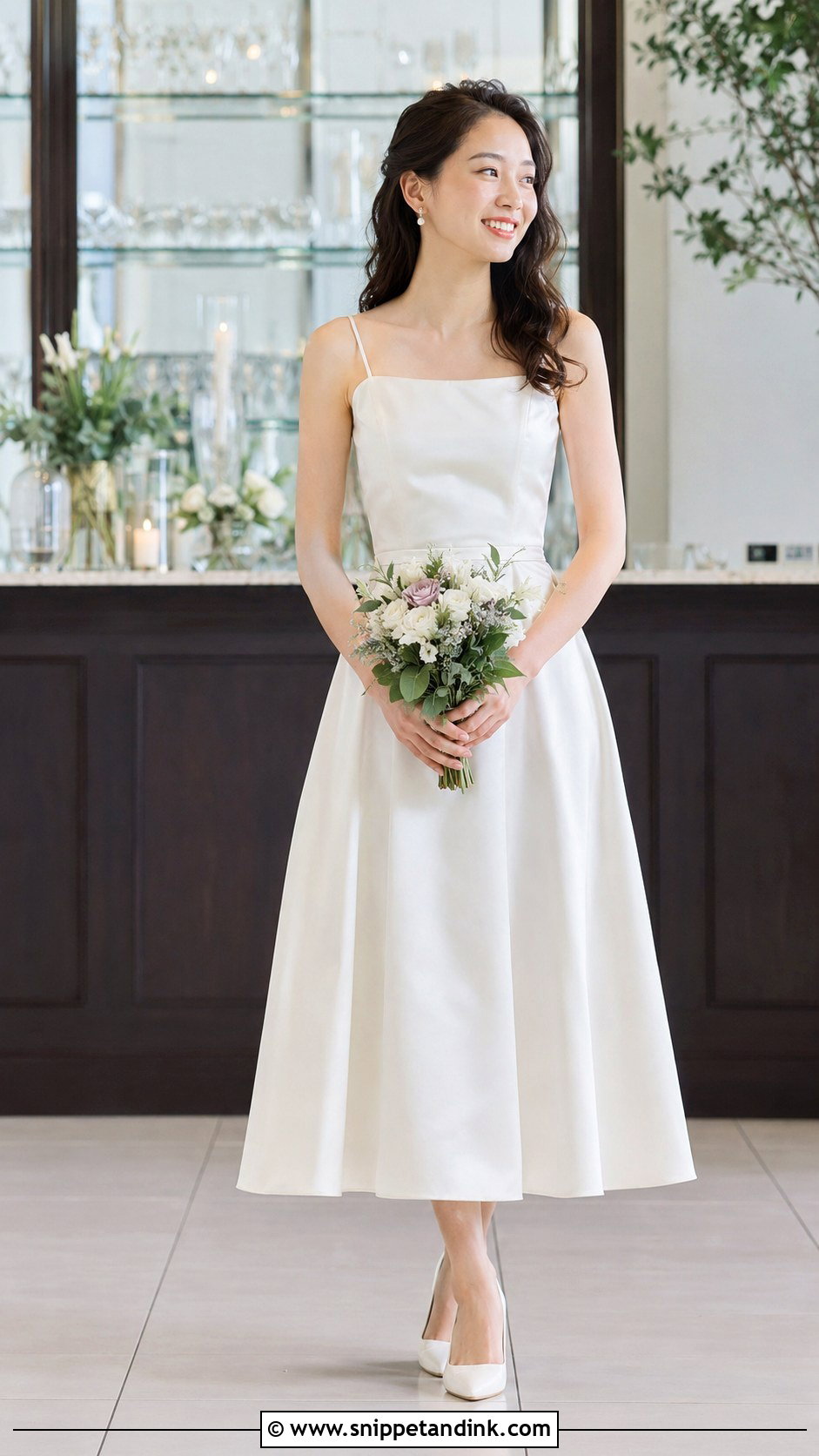
The reception outfit change, oironaoshi, is a fixed part of many Japanese weddings, so the second look should be planned as carefully as the first. It needs to be comfortable for greeting tables, walking and sitting, and quick to get into. A satin midi, embroidered gown, colorful evening dress or kimono-inspired dress can all work. Comfortable heels, small earrings and a clutch or compact bouquet finish it. After a shiromuku, a soft colored gown makes a clear contrast; after a simple ceremony gown, add sparkle or brighter color. Ask the venue how long the change slot is before you choose anything with complicated fastenings.
21. Blue Japan Wedding Dress
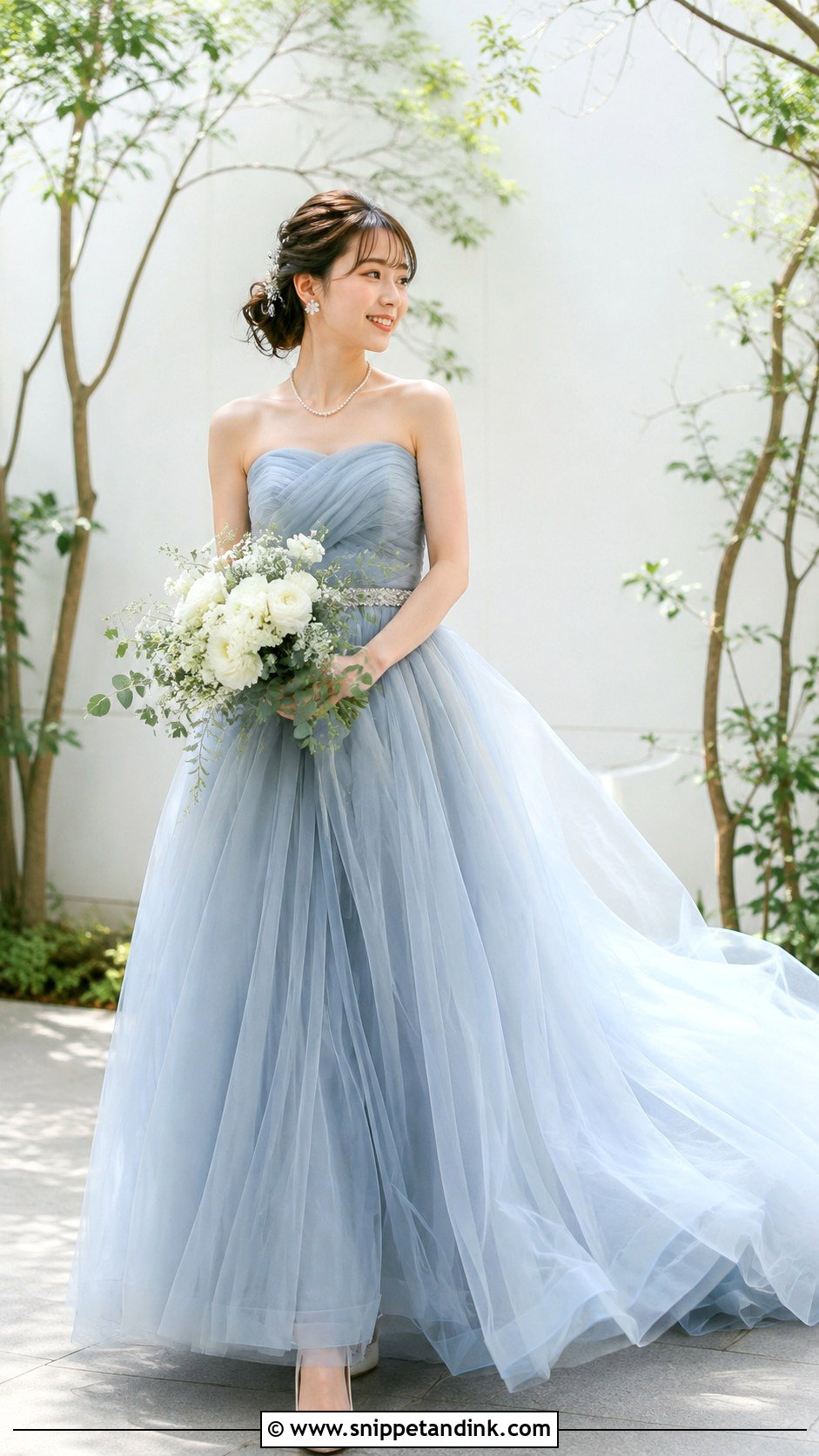
Blue is calm rather than bold, and it’s a popular reception change color. Pale blue satin, powder blue tulle or an ivory gown with blue embroidery are the gentle routes. Silver or pearl accessories, ivory heels and a bouquet of white flowers with cool greenery suit it, with a clean bun, soft waves or a delicate comb. Cool blues can make warm skin tones look slightly grey under white lighting, so I test the exact shade against the bride’s face before ordering. It feels fresh in spring and crisp in winter.
22. Pink Japan Wedding Dress
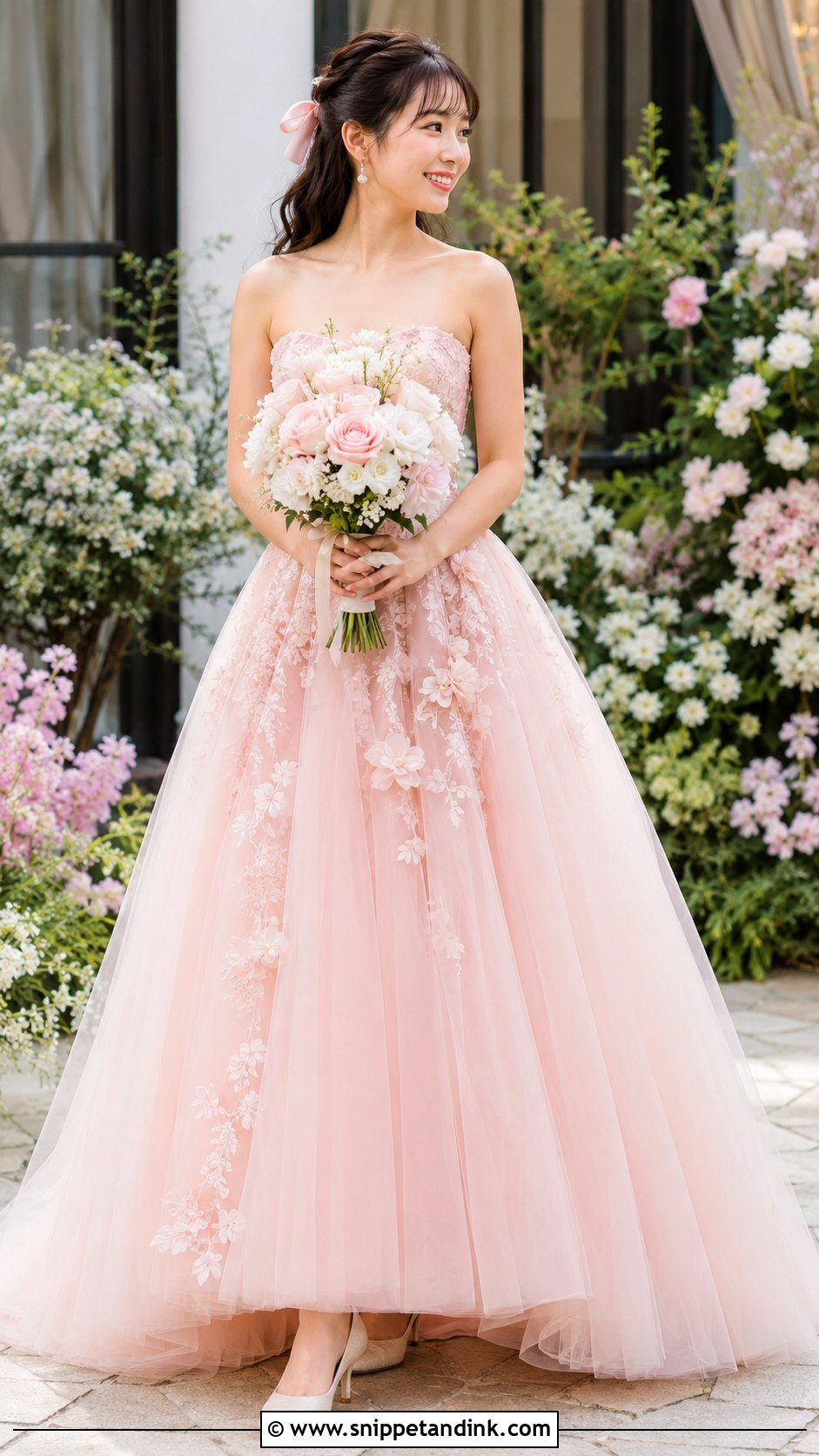
Blush, rose and dusty pink are softer than bright pink and easier to wear for portraits or a reception. A pink tulle gown, floral embroidered dress or satin A-line all work with ivory heels, pearl earrings, a small bouquet and a gentle veil or hair ribbon. Keep makeup in the same family, rosy cheeks and soft lips, so the face and dress agree. Pink is especially handy as a second outfit after a white ceremony look, and it sits naturally among garden settings and spring flowers.
23. Champagne Japan Wedding Dress
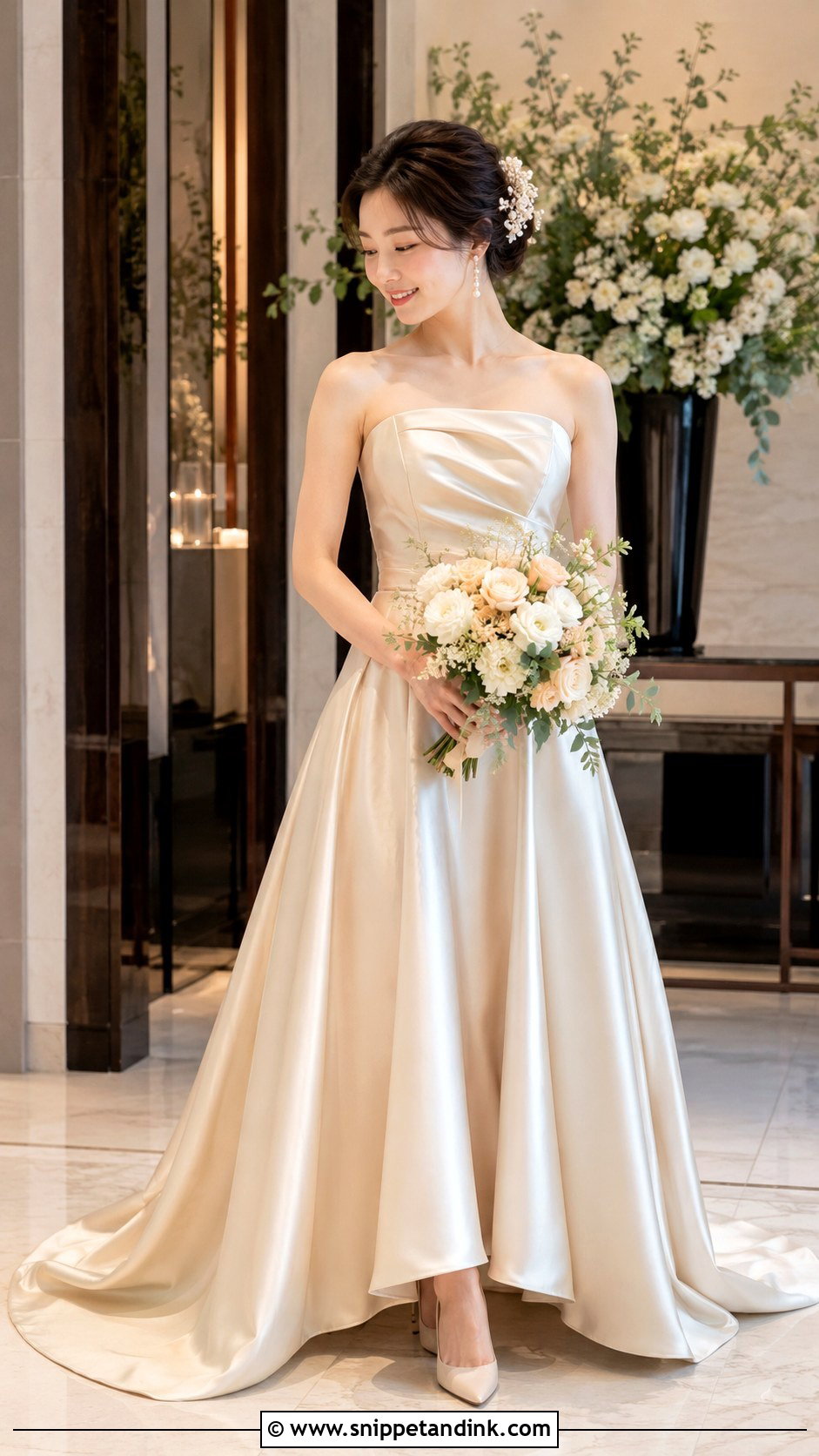
Champagne sits between ivory, gold and beige, and it flatters a wide range of skin tones. It also links nicely to the gold threads of a bridal kimono, which makes it a good modern companion if you’re wearing both. Satin, lace or beaded fabric work depending on the venue. Nude or ivory heels, pearl earrings and a bouquet in cream, peach or pale pink complete it, with a low bun and delicate comb. Check the shade against your skin in daylight; some champagnes lean pink, others grey, and the difference shows strongly on camera.
24. Two Piece Japan Wedding Dress
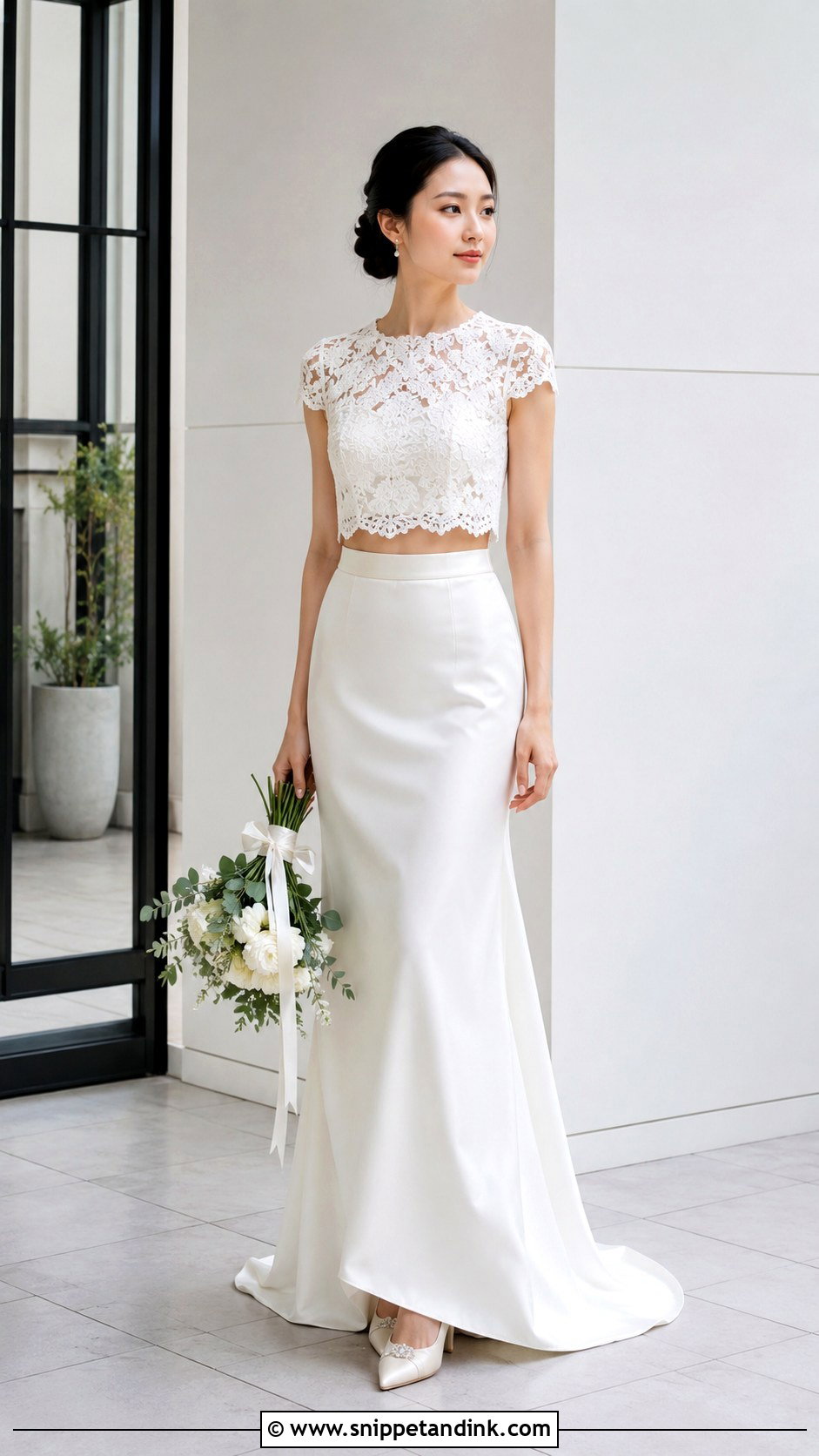
Separates are practical because each piece is tailored on its own. Options include a cropped lace top with a high-waisted satin skirt, a structured blouse with a flowing skirt, or a kimono-inspired wrap top with a simple bridal skirt. Elegant heels, small earrings and a clean hairstyle keep it bridal. It suits civil ceremonies and receptions, and brides who want something less expected than a gown. Keep the fabrics refined and the gap between top and skirt small for the ceremony itself.
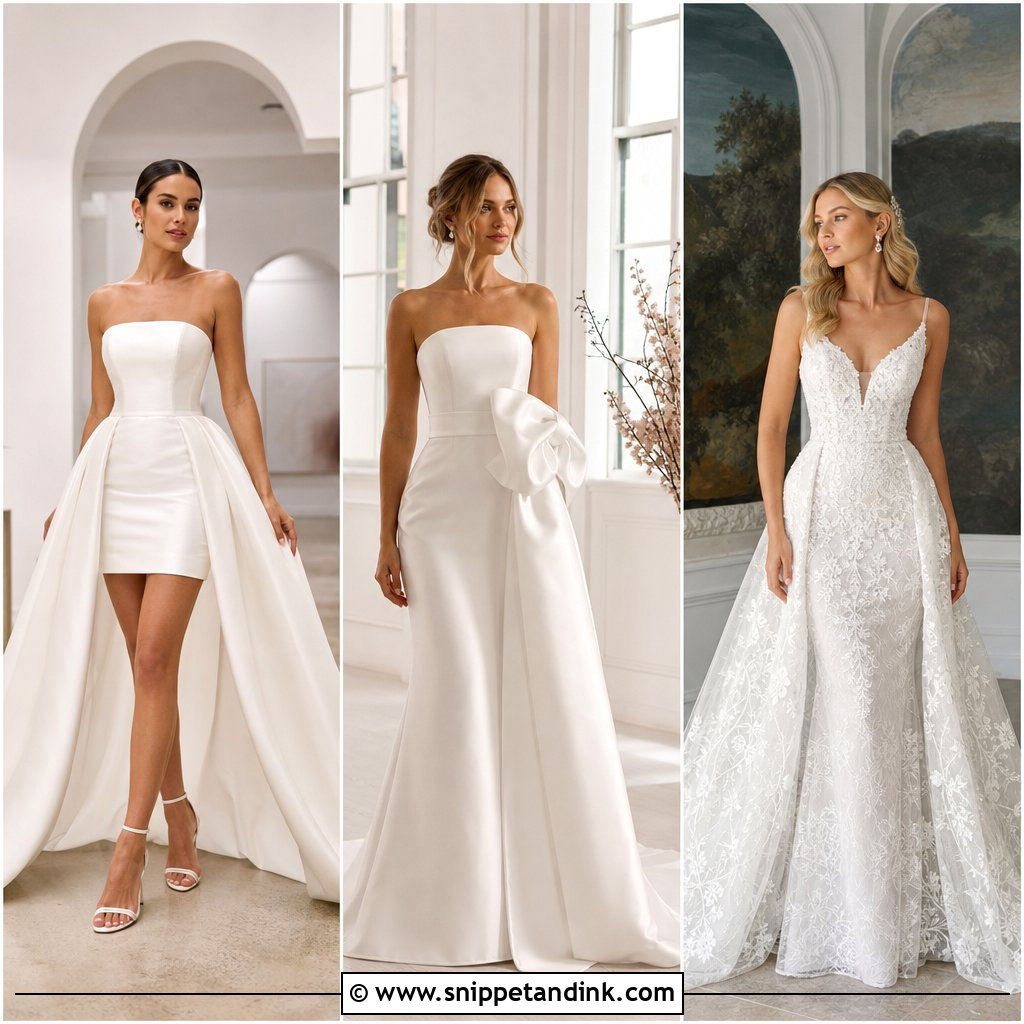




25. Kimono And Gown Japan Wedding Dress
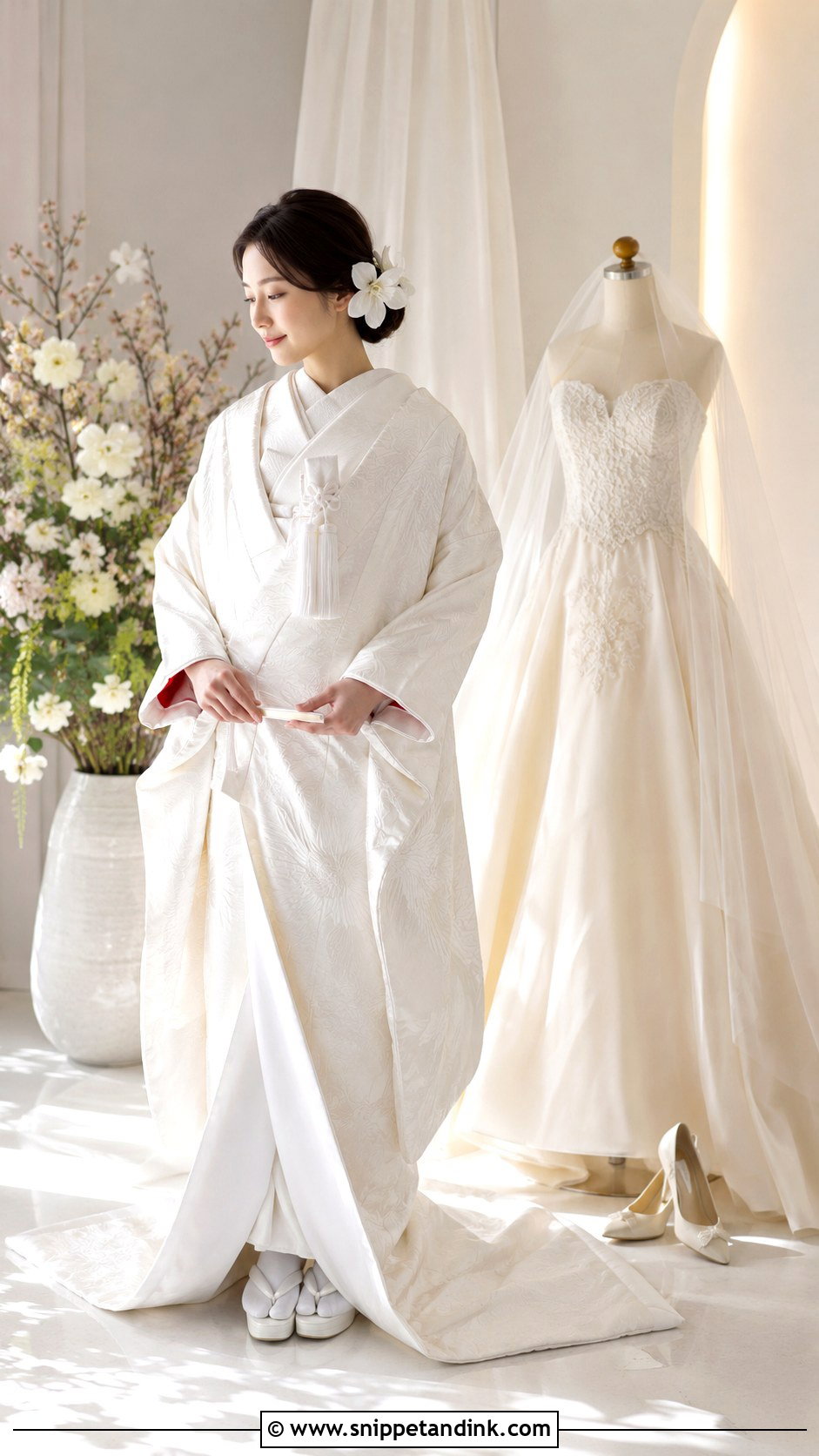
Wearing both a kimono and a gown is the most common plan I see for weddings in Japan. Start with a shiromuku or iro uchikake for the ceremony or formal portraits, then change into a Western gown for the reception: lace, satin A-line, slip dress or a colored gown. Keep each set of accessories packed separately so nothing gets mixed. Zori and hair ornaments belong with the kimono; heels, a veil and jewelry go with the gown. The hair is the tricky part, since a traditional style may need to be taken down and reset, so ask your stylist to plan both looks together.
Walking, Sitting and Bowing in Layers of Silk
An uchikake trails, is padded at the hem and sits over several layers, so moving in it is a skill you learn on the day. A few things make it easier.
Steps and stairs
Take small steps in zori with the toes turned very slightly inward, and hold the front edges of the uchikake together at about waist height. On steps, an attendant usually lifts the trailing hem behind you. Shrine paths are often gravel, which is slow going, so build extra minutes into the procession.
Seats and bowing
The obi is tied at the back, so you sit forward on the edge of the chair and never lean back into it. Bow from the hips with a straight back rather than curling the shoulders, which crumples the collar. On hot days some brides wear the uchikake in the koshimaki style for part of the reception, with the upper half lowered and tied at the waist, which is cooler and still traditional.
Food, water and breaks
Eat something light before dressing; a full meal under a firmly tied obi is uncomfortable. Sip water through a straw to protect your lipstick. Restroom visits need help with the layers, so arrange a moment with your attendant before the ceremony and again before the reception entrance rather than waiting until it’s urgent.
A Ceremony Kimono, a Reception Gown, or Both?
Most decisions come down to formality and how many looks you want. A shiromuku or iro uchikake gives you a powerful traditional moment, while lace gowns, satin dresses, colored reception looks and kimono-inspired silhouettes offer flexibility. Think about the venue, the season, the photos and the time you’ll have for changes before you commit. Then plan the whole outfit from the head down, including shoes, hair, accessories and bouquet. A white kimono, a red uchikake or a clean minimal gown can each be right; the one that suits you is the one you can wear with ease for the whole day.
You'll Like These Ideas:







Leave a Reply