
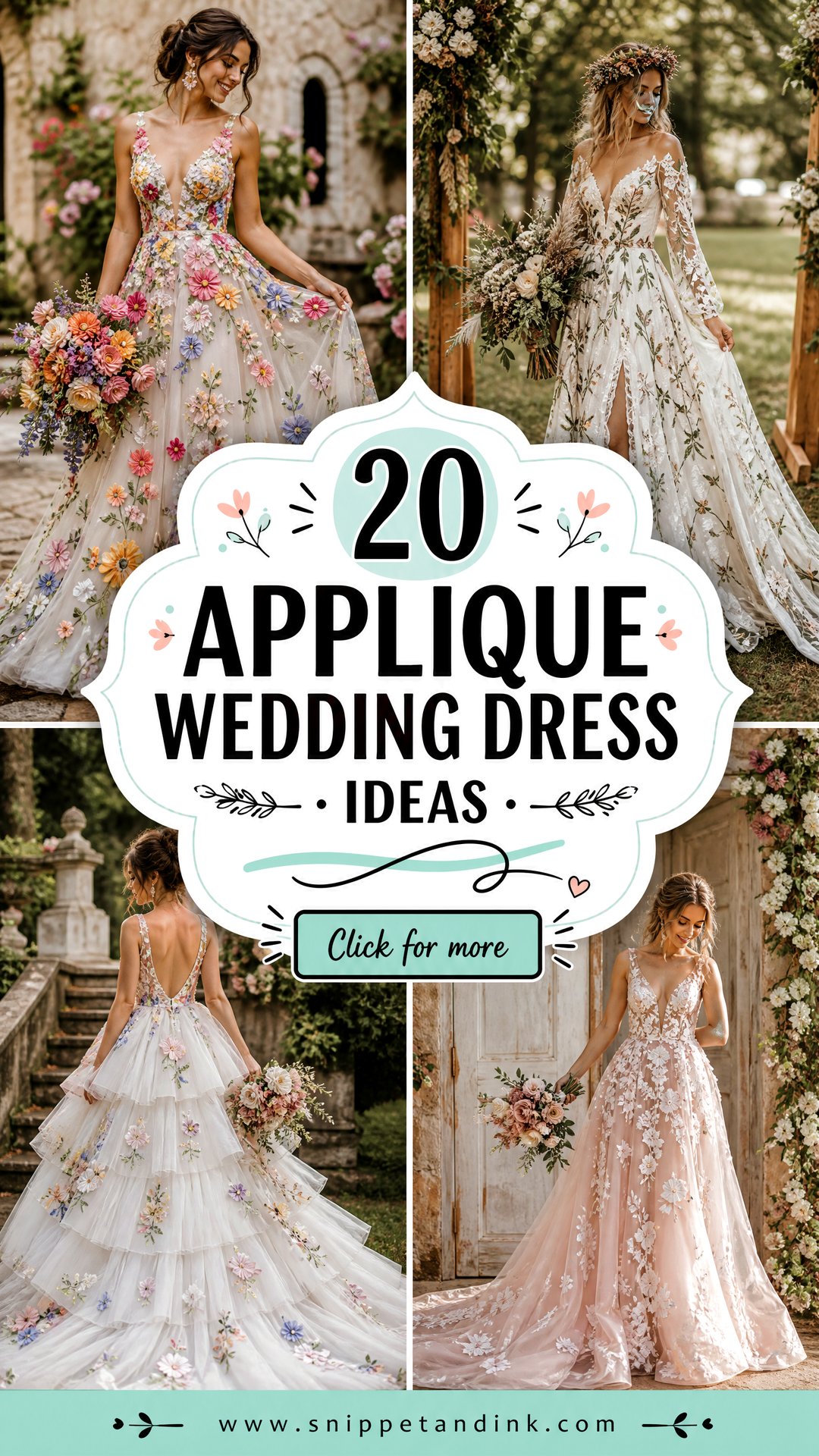
Appliqué is lace or fabric cut into motifs and stitched onto a gown, which is why it can go almost anywhere: raised organza petals, delicate lace vines and pearl-beaded blossoms, laid over tulle, satin, crepe or illusion mesh. Some gowns are covered in it; others carry a handful of flowers at the neckline, waist, sleeves or train. Dimensional florals and carefully placed lace are everywhere in bridal at the moment. Because the texture already does so much, I keep accessories plain. The twenty dresses below range from garden ceremonies to ballrooms, each with the shoes, veil and hair that suit it.
Lace, Guipure or Organza Petals? What the Flowers Are Made Of
Appliqué is a technique, not a material, and the material decides how the dress feels and how much care it needs. These are the main kinds I explain when a bride is comparing gowns.
- Re-embroidered lace, often in the Alençon style, has a corded outline that gives each flower a crisp edge. It’s sturdy and lies flat.
- Chantilly is fine and soft with delicate outlines. It drapes well on sleeves but snags more easily.
- Guipure has no net background; its motifs connect through thicker bars. It is heavier and more textured, and it stands away from very soft fabrics.
- Three-dimensional petals in organza or chiffon are cut and stacked so they lift off the gown. They give the most texture and crush the most easily.
- Beaded appliqué adds pearls, sequins or crystals to any of the above, which means extra weight and edges that catch on veils.
None of these is better than the rest. A light Chantilly suits a summer garden, and guipure holds up on a structured winter gown. Feel each one in your hand and ask which is used on the dress you’re considering, because photos rarely show the difference.
1. 3D Floral Applique A-Line Wedding Dress
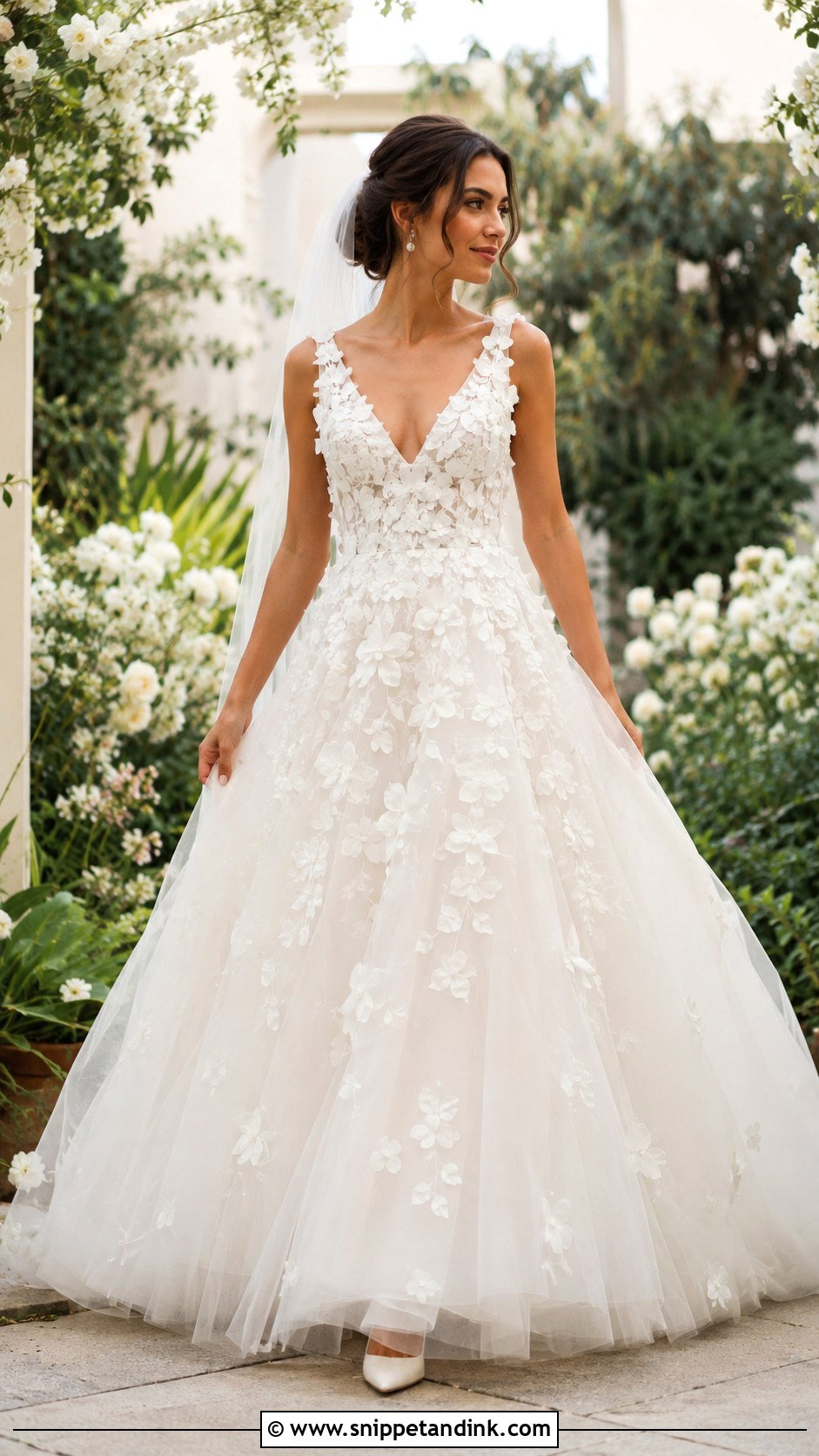
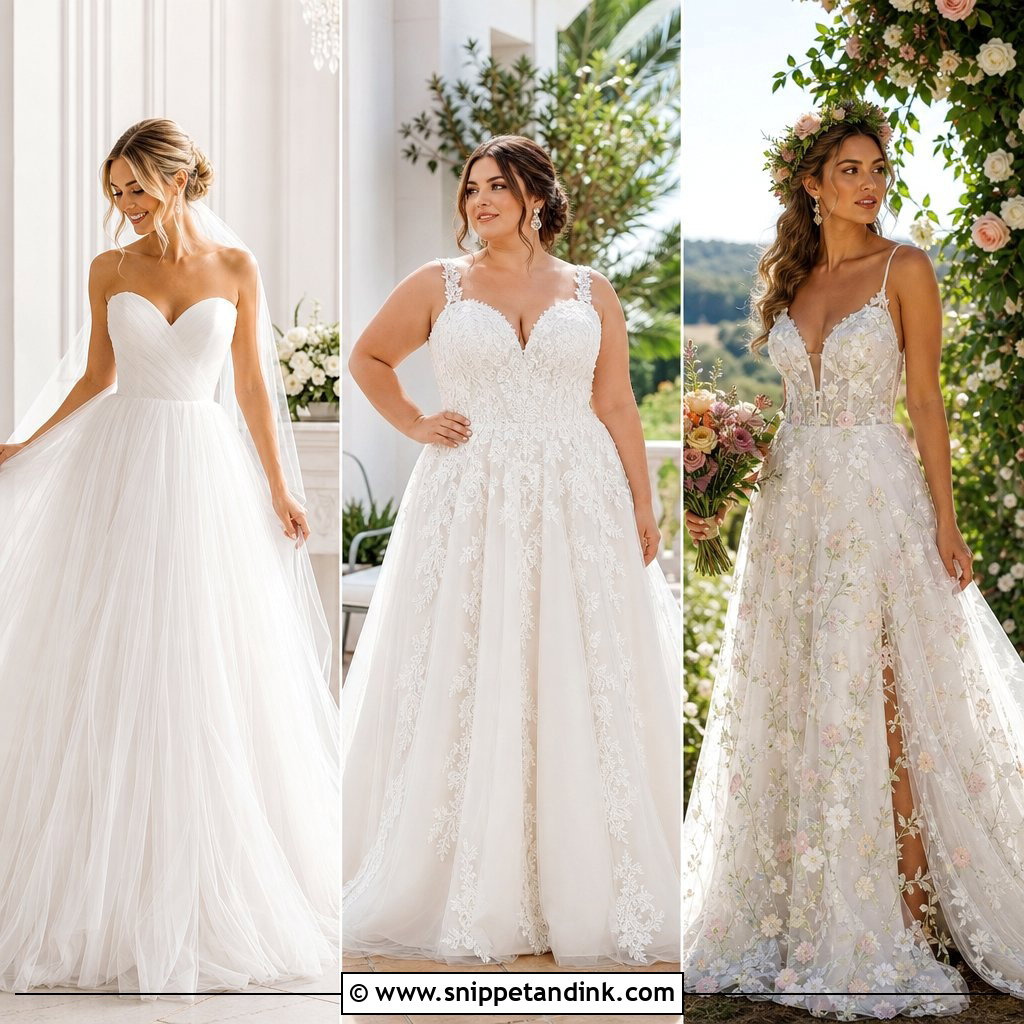
Three-dimensional flowers are the most fragile appliqué on this list, and also among the easiest to wear. Organza or chiffon petals catch light and shadow, so even a plain A-line reads rich. I like them dense on the bodice and spacing out across the skirt, which defines the waist and keeps the hem light over airy tulle. The trade-off is that raised petals crush when you sit in a car, so fluff them by hand once you arrive. Pointed ivory pumps, pearl drop earrings and a plain tulle veil finish it, with a loose low bun and a modest bouquet of white flowers.
2. Lace Applique Ball Gown Wedding Dress
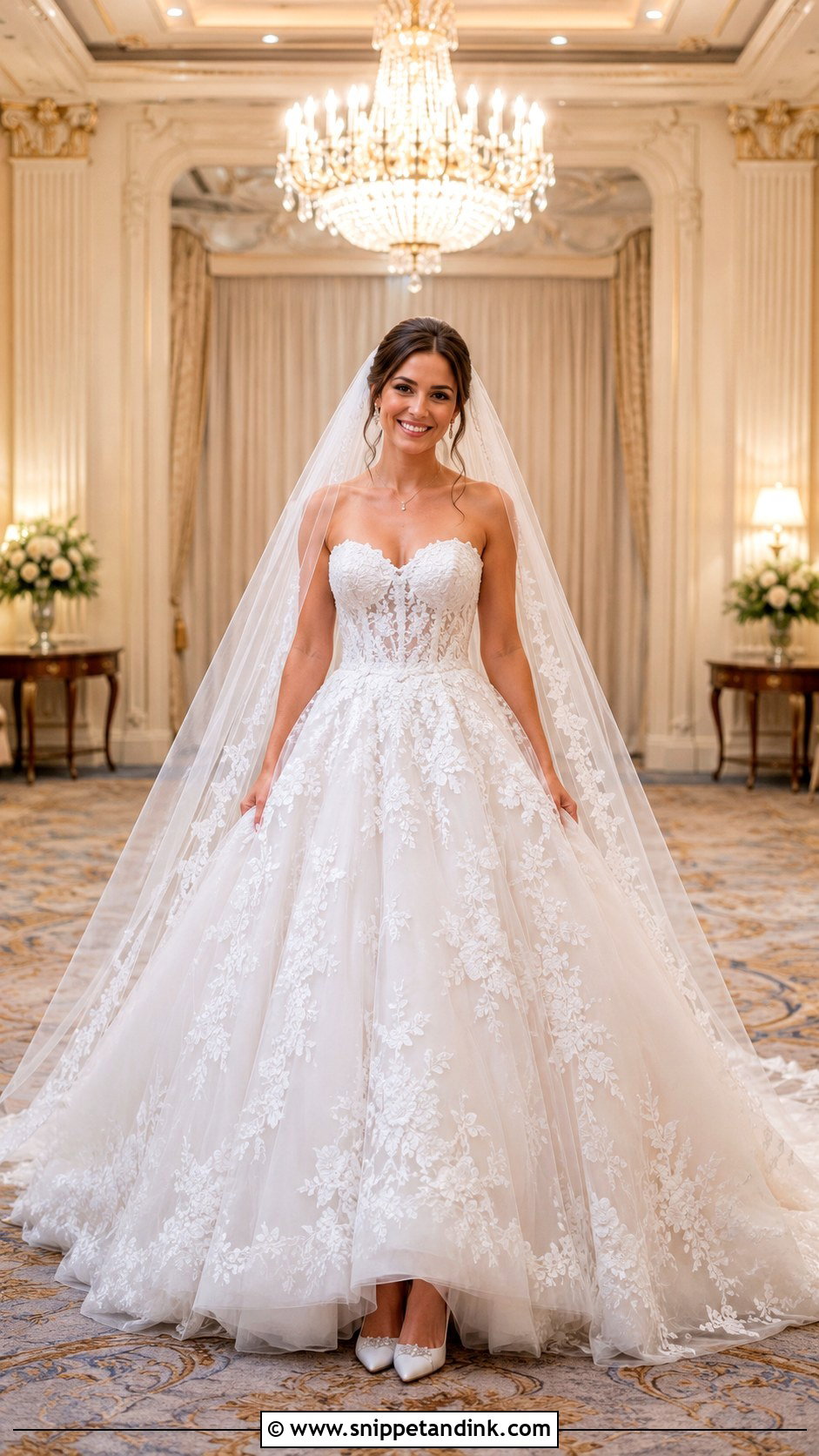
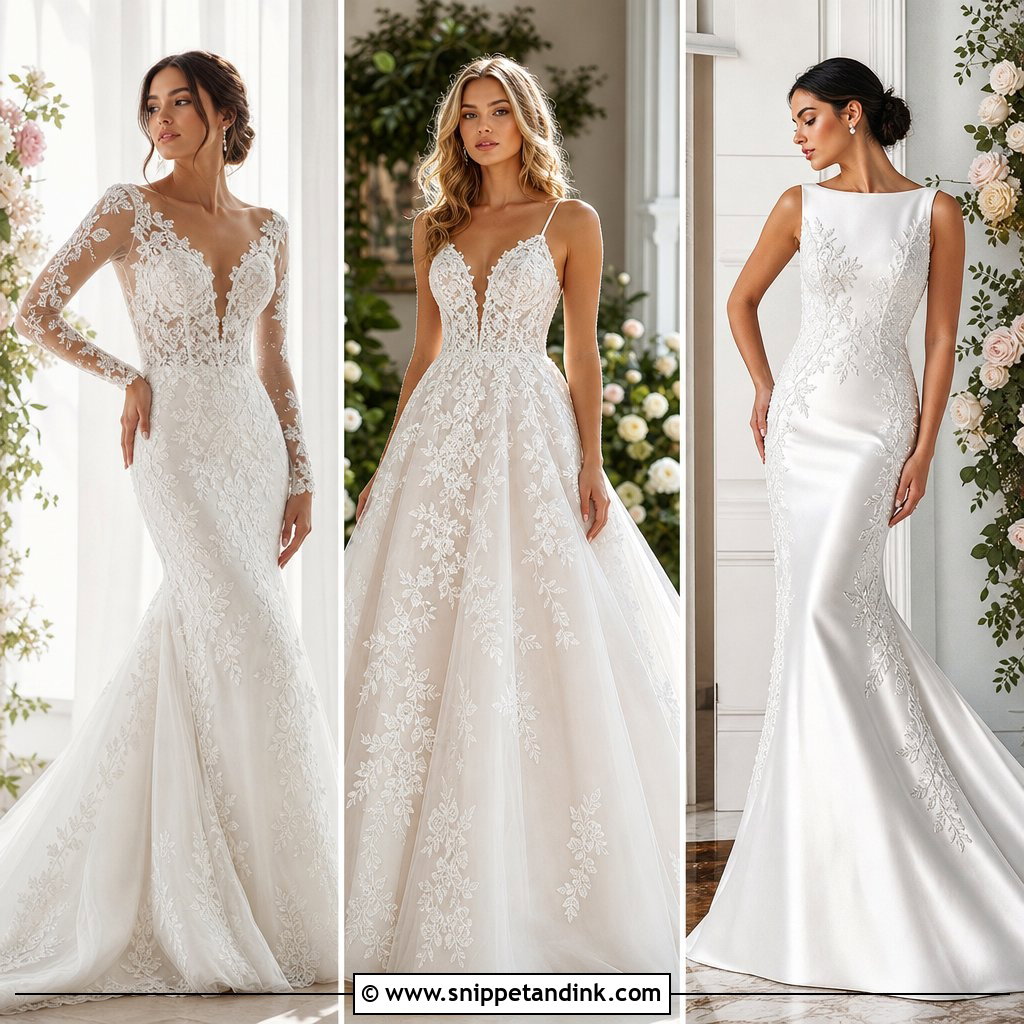
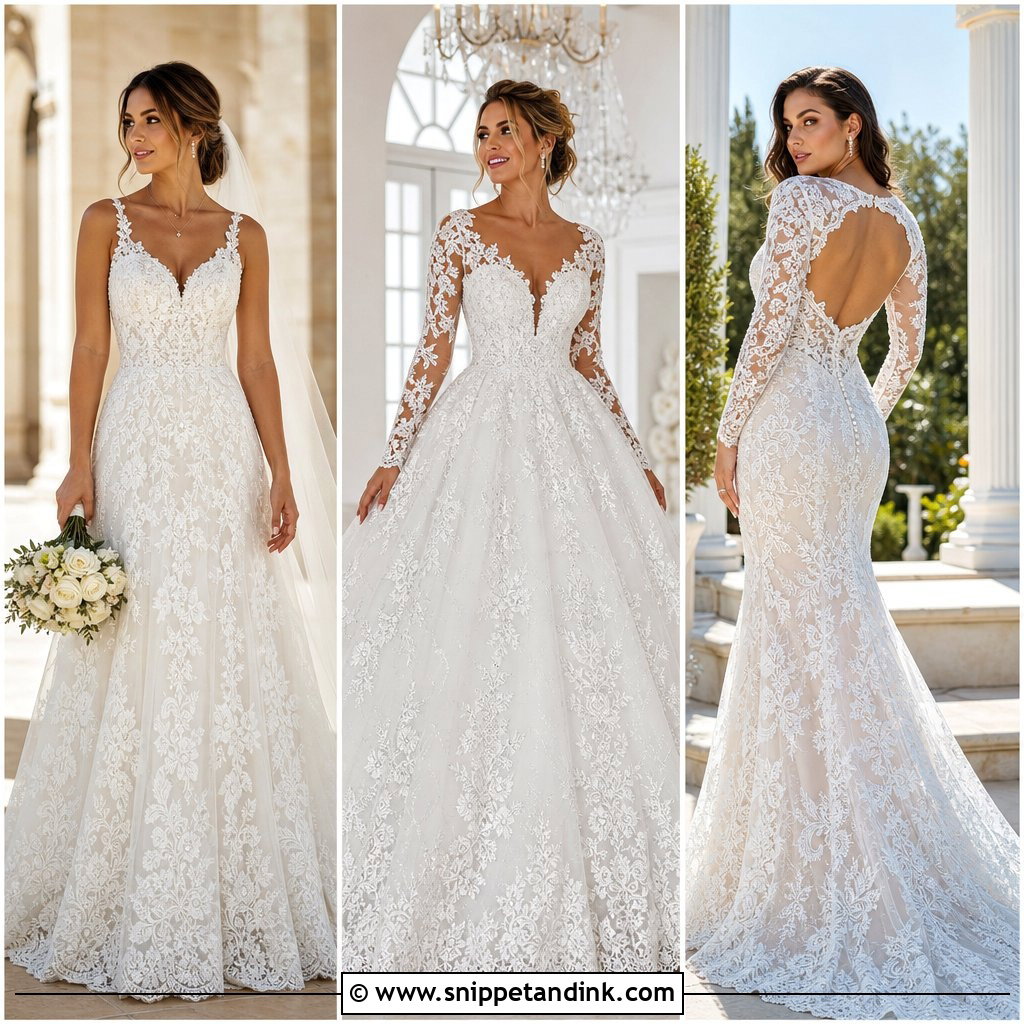
On a ball gown, lace appliqué disguises seams as much as it decorates. Motifs placed across the waist hide where the fitted bodice meets the full skirt, so the transition reads as one piece. Look for a structured bodice with defined seams and floral lace running naturally down onto the skirt, under a scoop, sweetheart or softly curved neckline. Crystal studs, an understated bracelet and satin closed-toe heels are enough. A cathedral veil with a plain edge adds drama without a second pattern fighting the first. Wear a polished updo, and pick a venue where that skirt can actually move.
3. Vine Applique Mermaid Wedding Dress
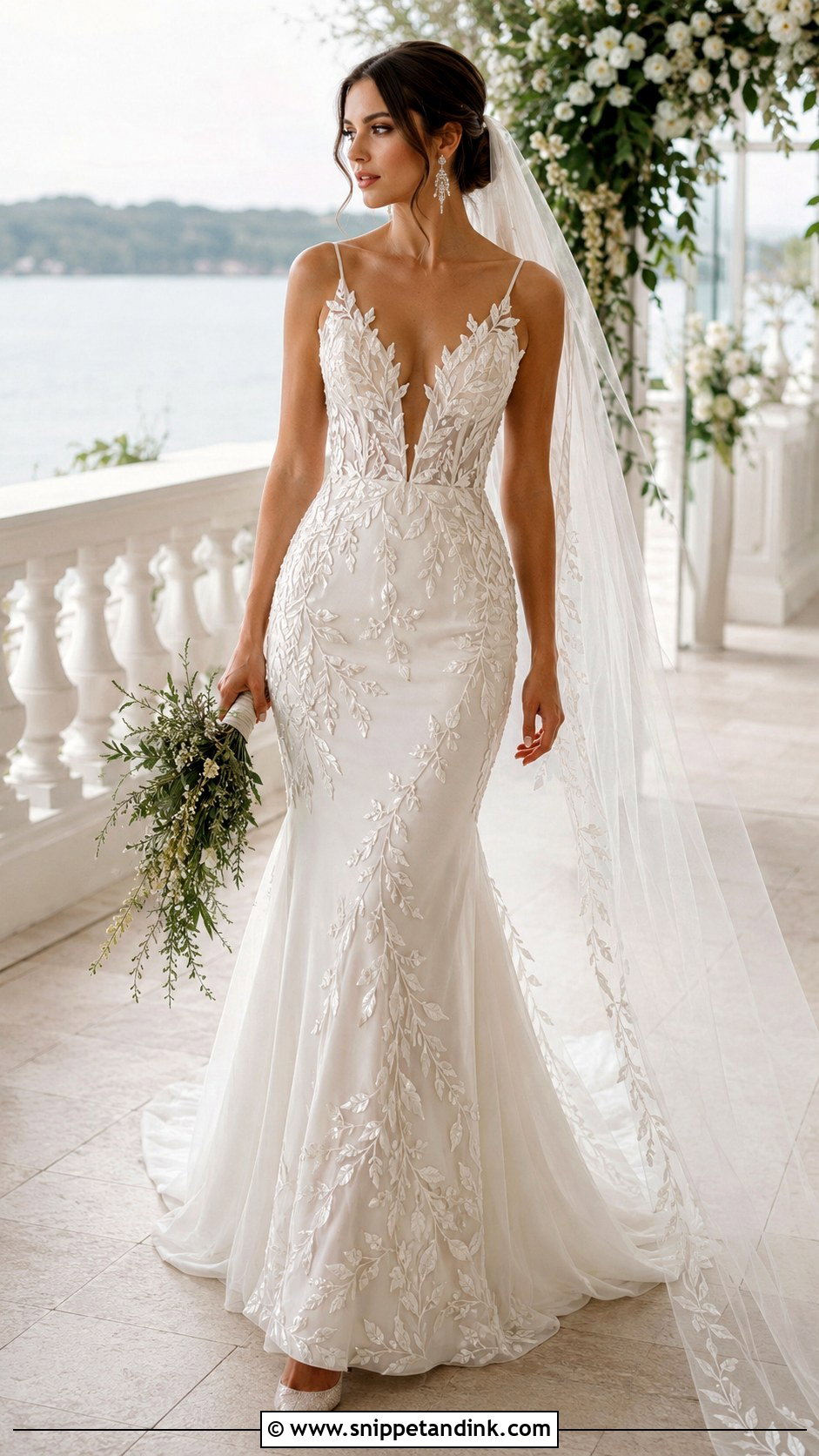
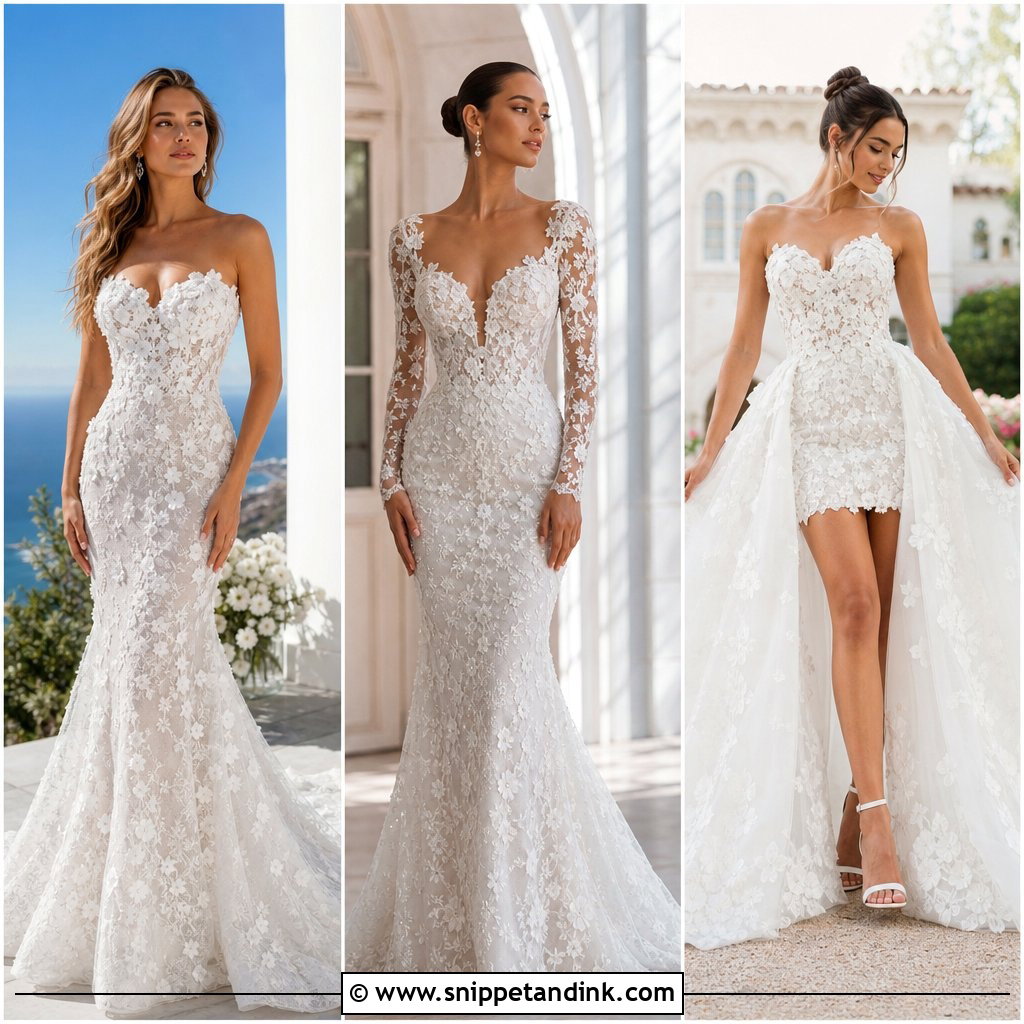
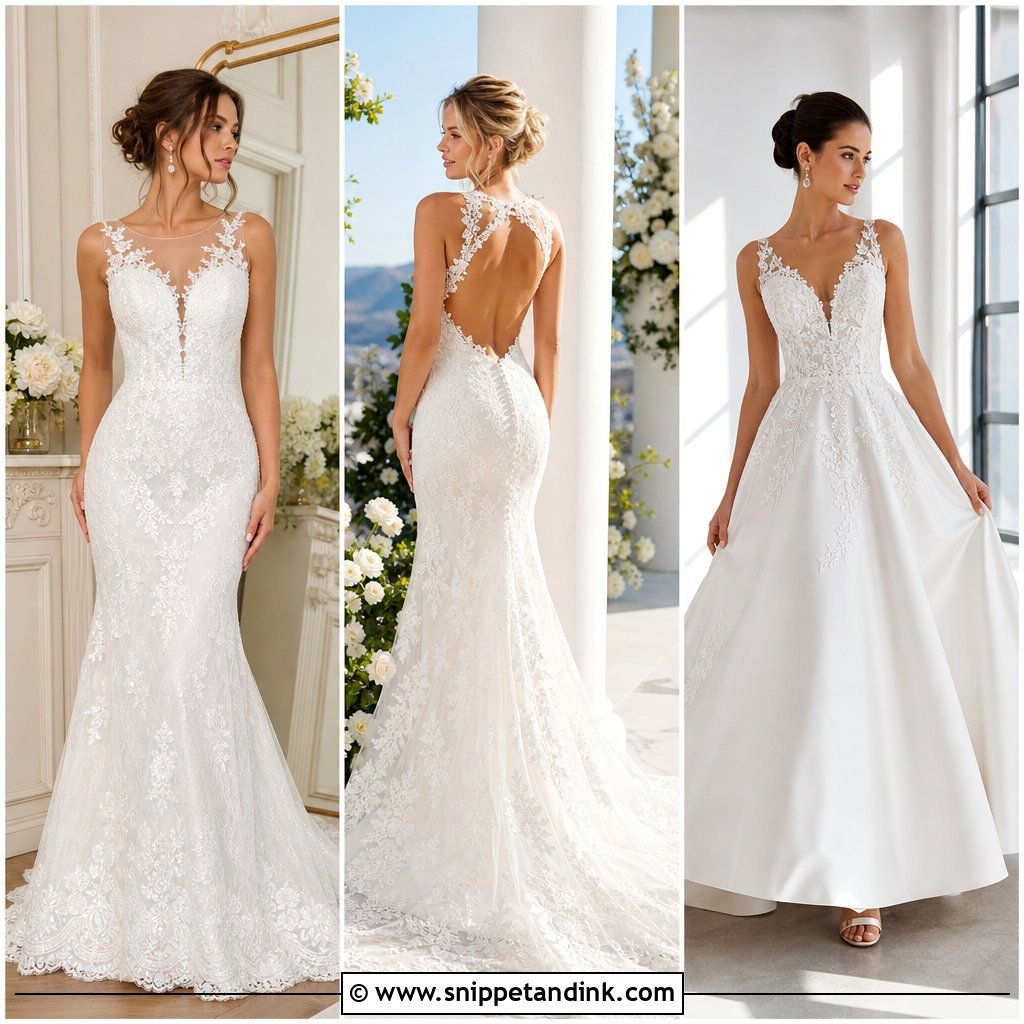
Vines suit a mermaid because they can curve with the body, travelling from the bodice across the hips and fading out where the skirt flares. Straight motifs on a curved silhouette look stuck on; trailing leaves look grown. A corset interior holds the shape underneath so the appliqué lies flat rather than rippling over the hips. I always check vine placement with the bride walking, since motifs on the hip shift with each step. Delicate drop earrings, a fingertip veil and pointed pumps with a comfortable heel finish it. A sleek bun or side-parted waves and a narrow bouquet with trailing greenery suit the line.
4. Minimal Applique Sheath Wedding Dress
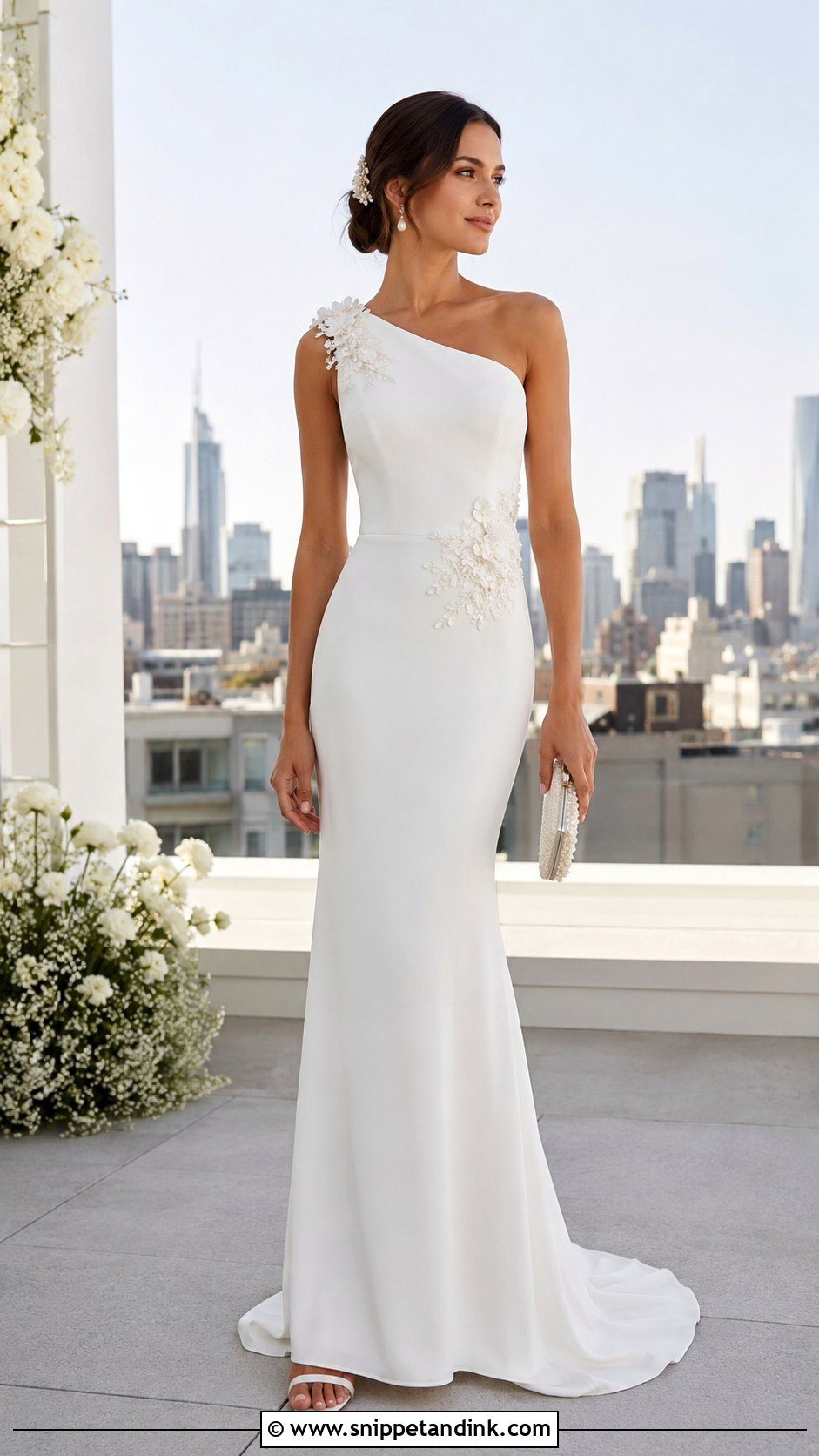
Not every appliqué gown needs all-over decoration. A clean crepe or smooth satin sheath with a few motifs at one shoulder, along the waist or near the hem lets each one count. The fewer motifs there are, the more their placement matters, so I pin each one while the bride stands at a mirror and we move them until they land where they flatter her. Minimal slingbacks, small pearl earrings and a structured ivory clutch complete it. A low ponytail or neat chignon suits the shape, with a plain veil or just a single hairpin. It sits naturally in a courthouse, on a rooftop or in a gallery.
5. Off-Shoulder Applique Wedding Dress
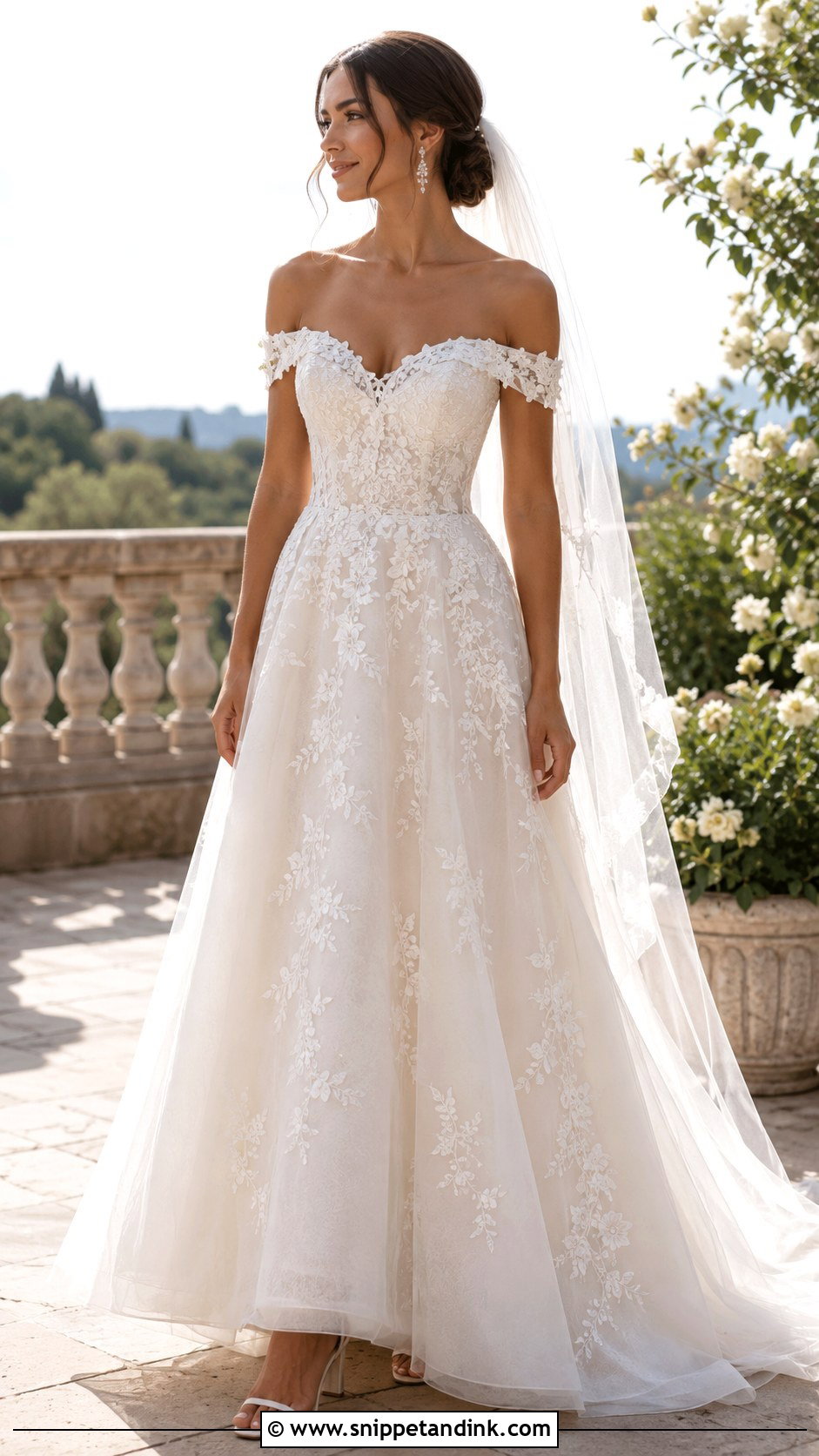
Appliqués along an off-shoulder neckline have to bend with the fold, so soft lace flowers behave better here than stiff guipure, which stands away from the arm. Choose a gown with firm internal construction so the neckline stays put through the evening, with the lace continuing onto a fitted bodice and a flowing A-line skirt. Leave the neck bare. Crystal drop earrings, a slim bracelet and a low textured bun do enough, and ivory block-heel sandals keep you steady. Pin the veil below the hairstyle so it falls cleanly behind the appliqué instead of catching on it.
6. Long Sleeve Applique Wedding Dress
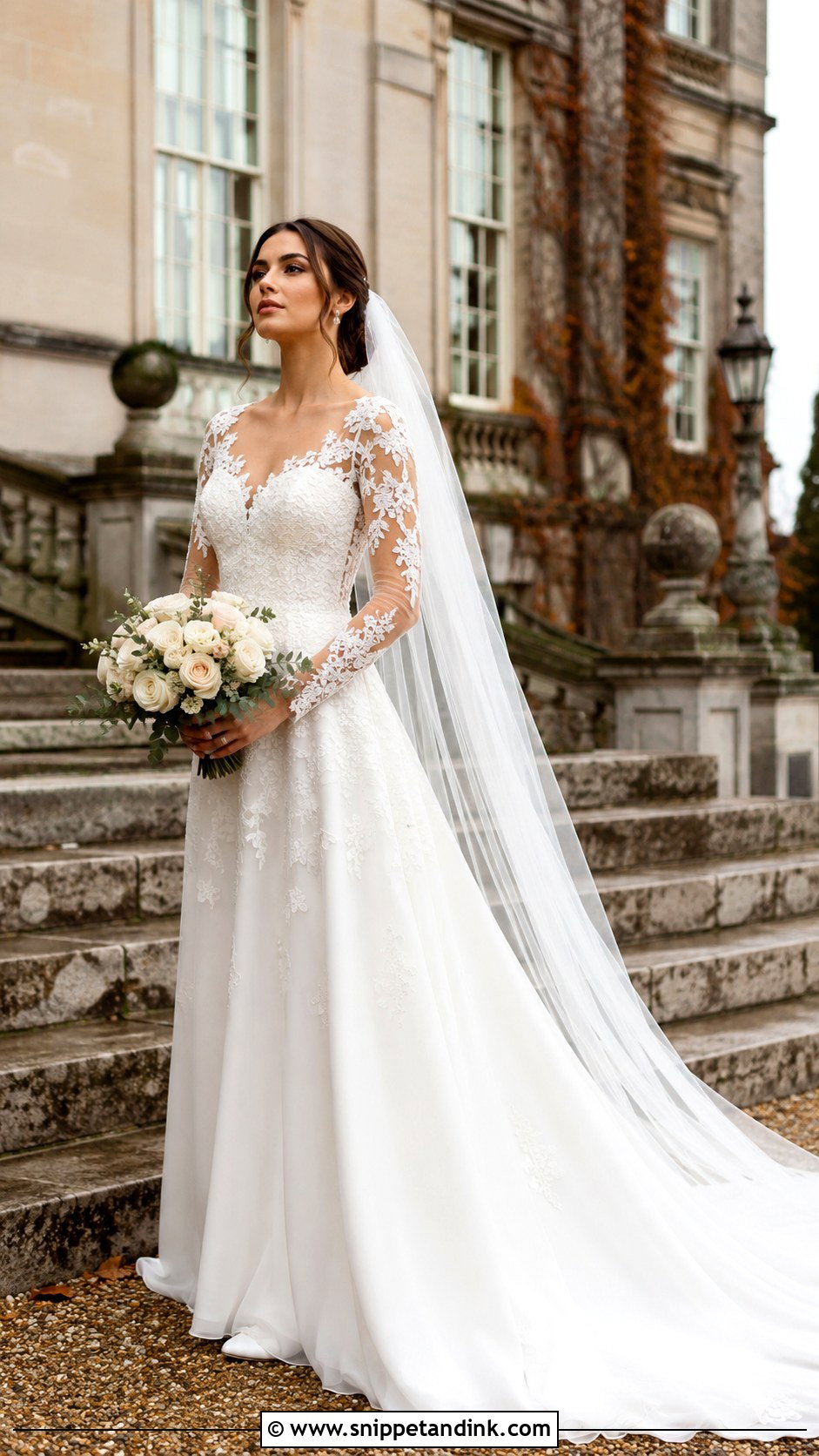
Sleeves are where appliqué either looks connected or pieced together. The motifs should continue from the bodice onto the arms, ideally with one flower bridging the shoulder seam. Illusion sleeves decorated with lace flowers look light, while lined sleeves feel more traditional and a little warmer. I check sleeve motifs at the elbow, because a stiff flower sitting right on the bend digs in every time you lift a glass. A gently fitted A-line or column skirt keeps the sleeves as the main feature. Pearl studs, closed-toe heels, a plain chapel veil and a soft updo finish it. Skip the necklace if the bodice is dense.
7. Square Neck Applique Wedding Dress
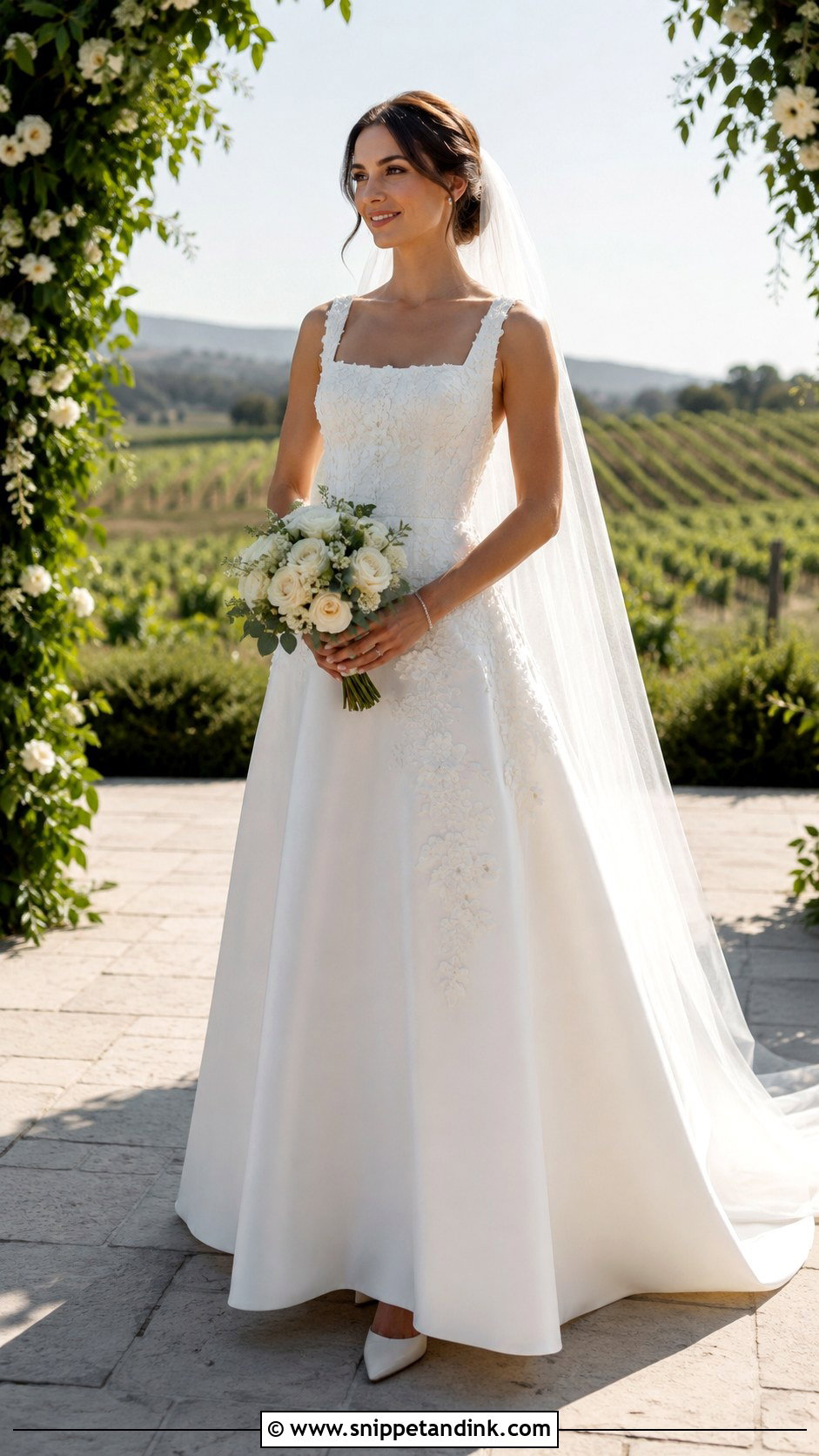
The straight edge of a square neckline sets off the curves of petals and leaves, which is why this pairing looks modern without losing its romance. Look for small blossoms around the neckline and straps of a structured bodice, over a softly gathered or A-line skirt. A fine pendant only works when the appliqué is light and widely spaced; otherwise I’d choose pearl studs, a narrow bracelet and pointed satin shoes. A smooth low bun with a centre part echoes the clean lines. Pick a sheer veil with no lace border, so you aren’t introducing a second lace.
8. Strapless Corset Applique Wedding Dress
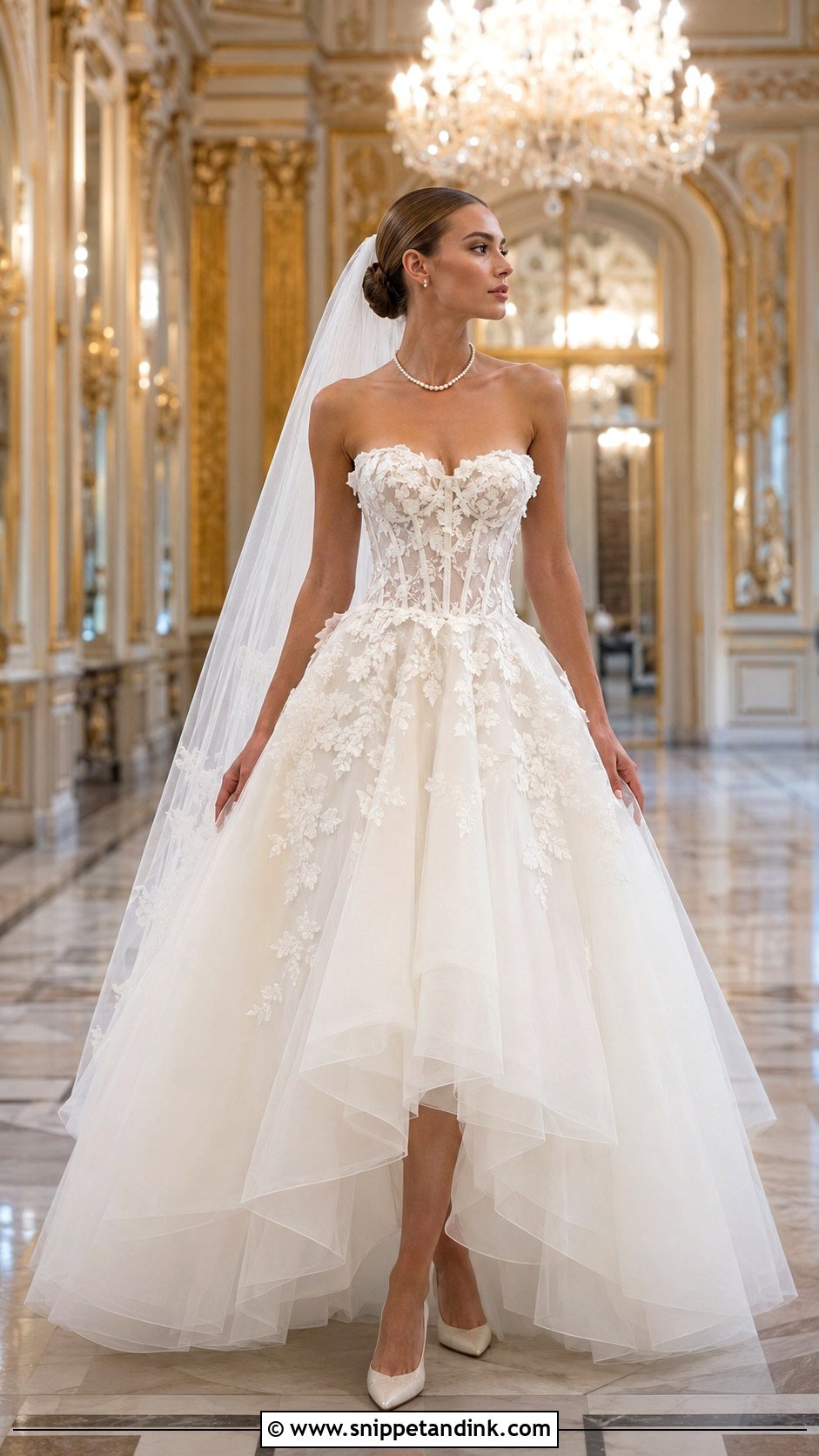
Visible boning gives appliqué something firm to sit on. On a strapless corset gown, I like embroidered flowers or fabric petals softening the boning, then scattering below the waist across a layered tulle skirt. The open neckline leaves room for a short pearl necklace or refined drop earrings. Pointed ivory heels and a chapel veil under a polished bun complete it. Strapless bodices slip when they’re fitted at the bust, so make sure yours is fitted snugly at the ribcage, which is what actually holds it up. A removable wrap helps during an outdoor ceremony or between photographs.
9. Colorful Floral Applique Wedding Dress
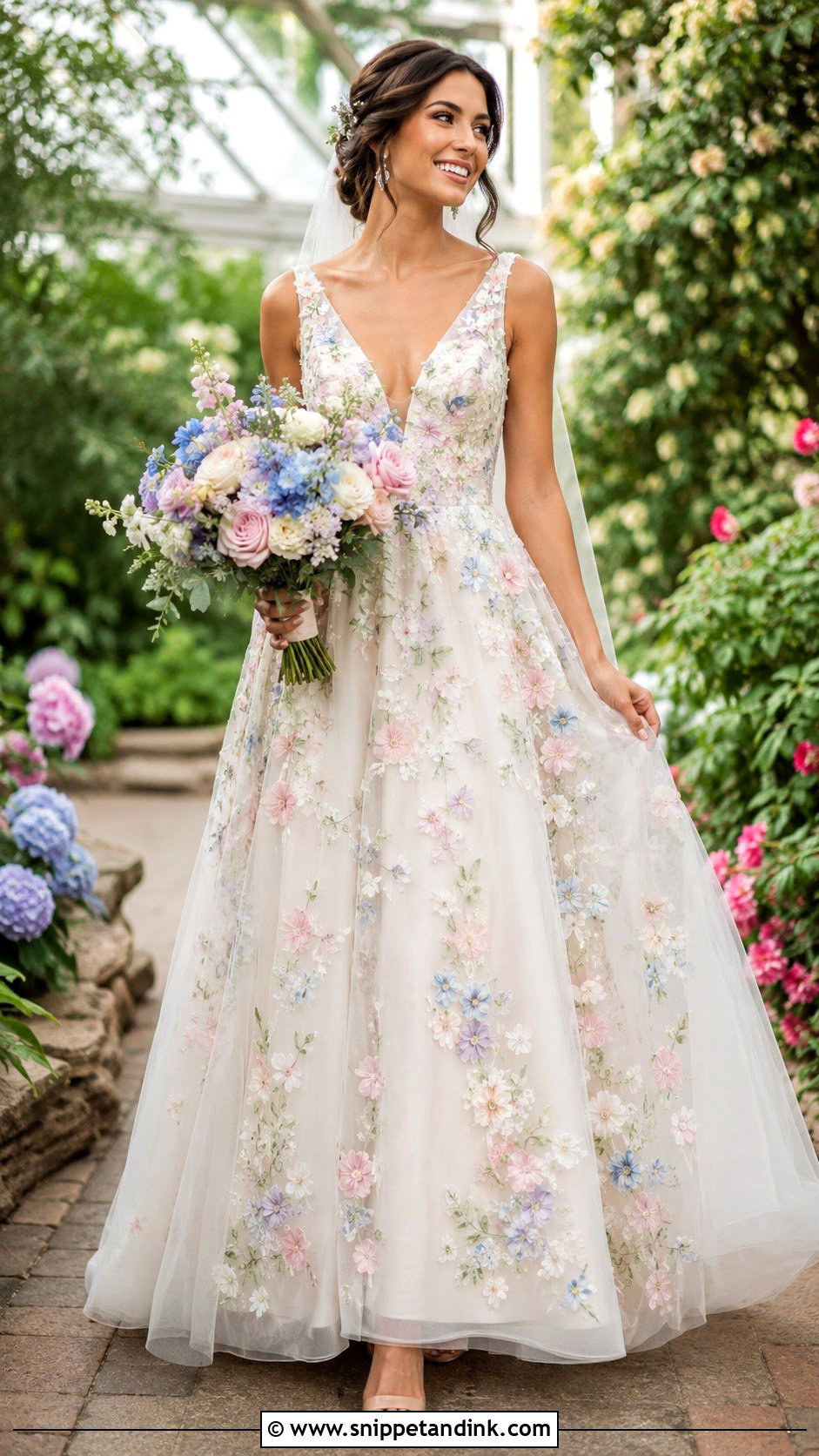
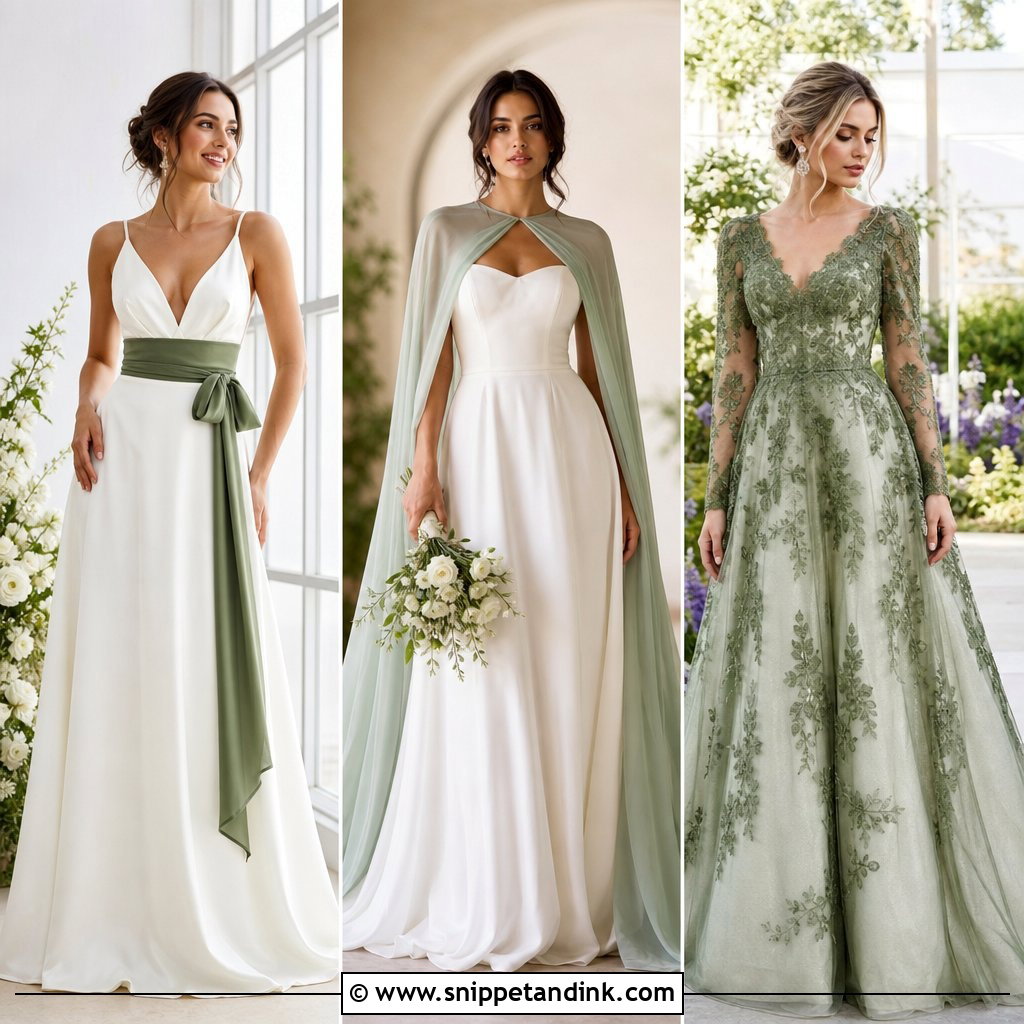
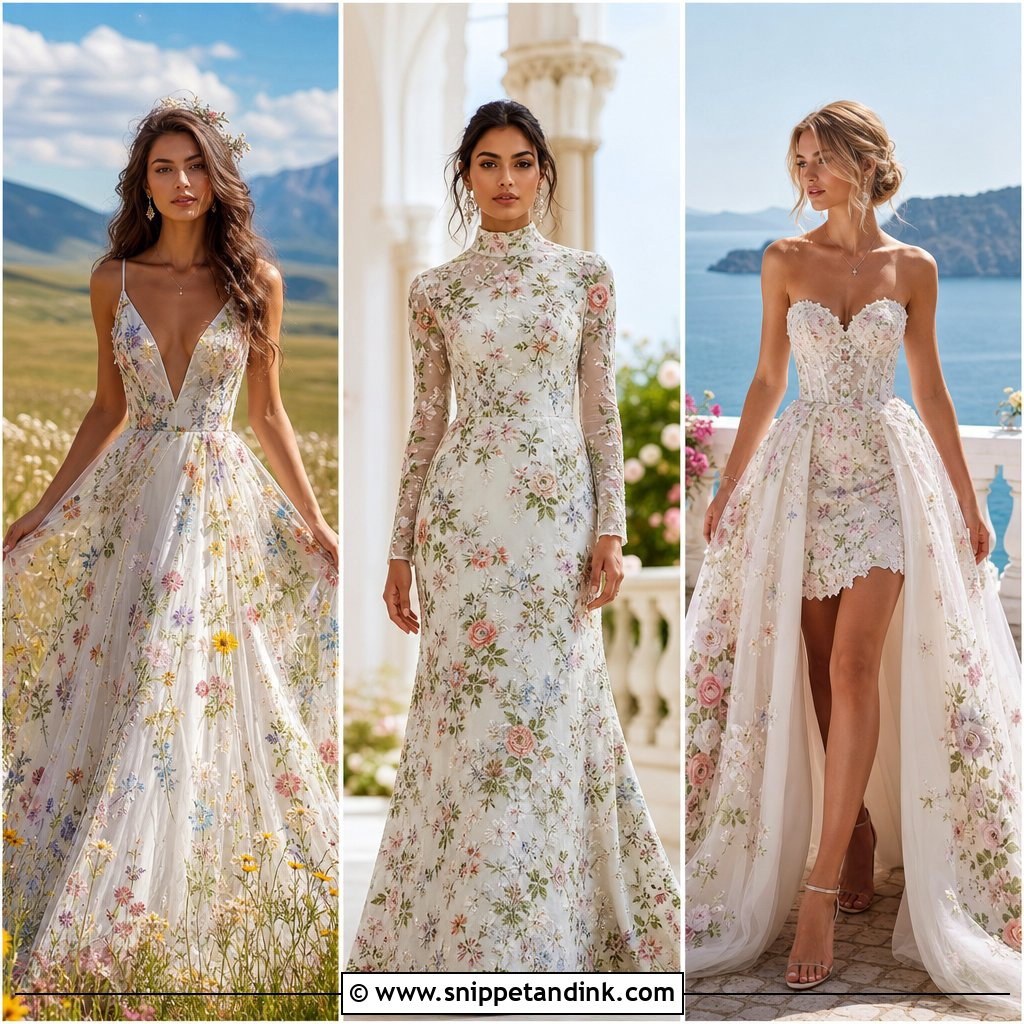
Coloured appliqués let you bring the garden onto the dress. Soft pink, blue, lavender or green embroidery over ivory tulle still reads bridal, especially in muted shades, and a fitted bodice with a flowing A-line gives the flowers room to spread. When I plan the bouquet, I take only one or two shades from the gown; matching every colour makes dress and flowers blur together. Nude or ivory heels, small gemstone earrings and a simple veil keep attention on the embroidery. Relaxed waves or a loose bun with one floral pin suit it. See the dress in daylight before ordering, since thread colours shift under shop lighting.
10. Botanical Applique Boho Wedding Dress
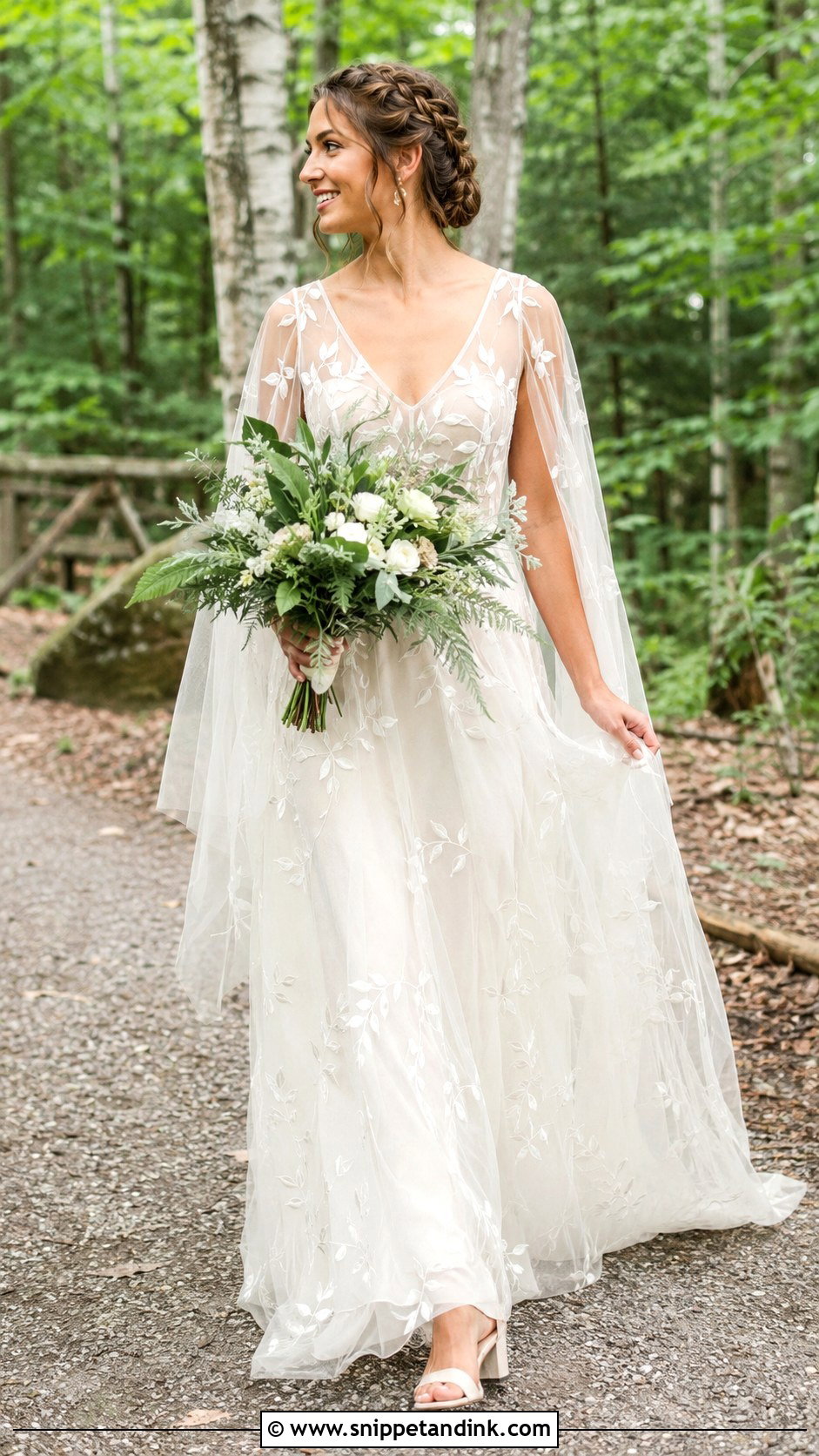
Leafy botanical appliqués give a relaxed boho gown dimension without stiffening it. On lightweight tulle, chiffon or lace, the branches should wander loosely across bodice and skirt instead of forming a heavy symmetrical pattern. I’d keep the hem fairly bare, because a boho dress usually meets grass and dust, and heavily decorated hems are the hardest part of any gown to clean. Block-heel sandals, small gold earrings and a loose braided updo suit it, and a sheer cape veil can replace a standard one. Leave out sparkly belts and heavy jewellery. Airy greenery with simple white blooms completes it.
11. Pearl Beaded Applique Wedding Dress
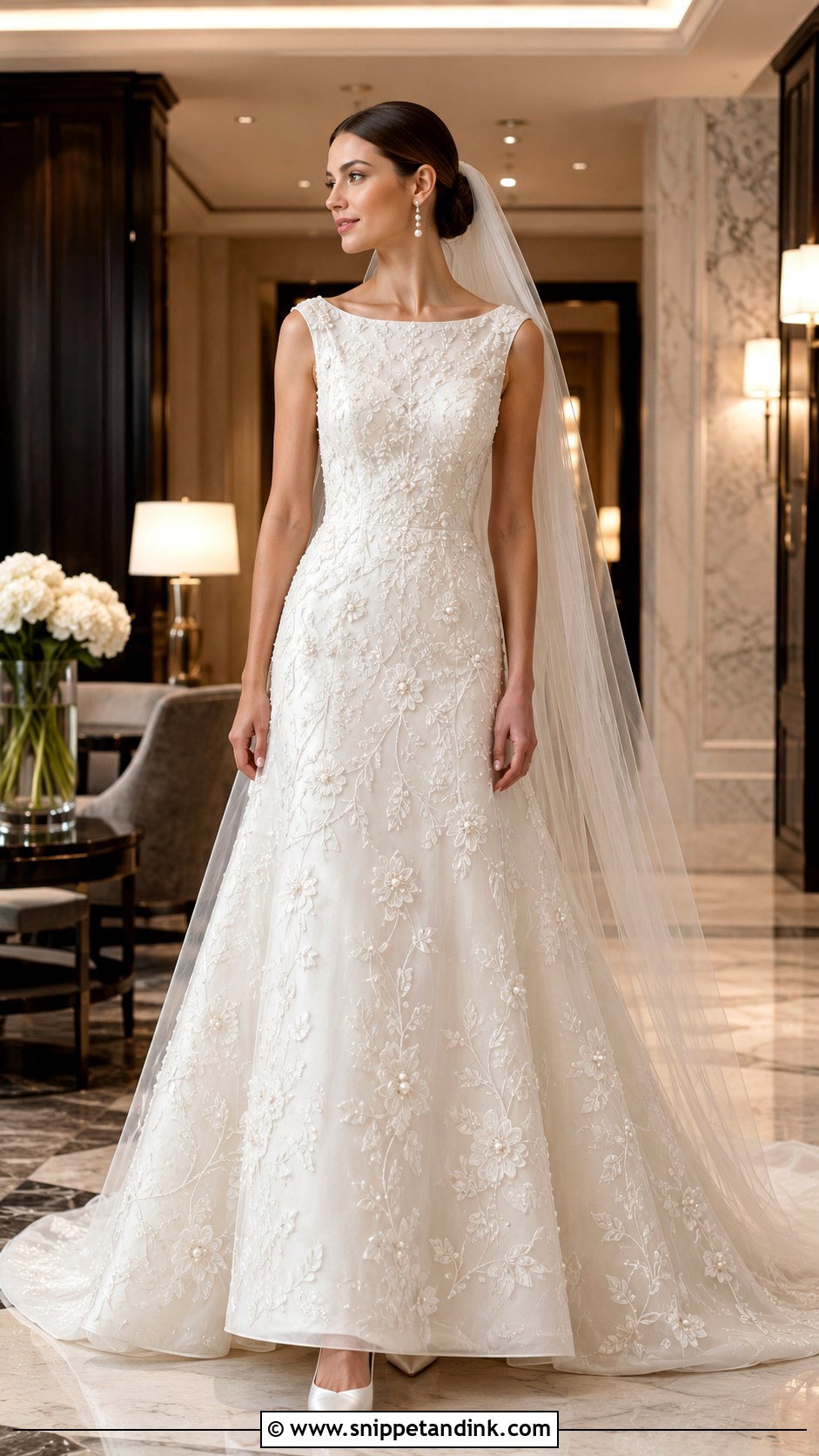
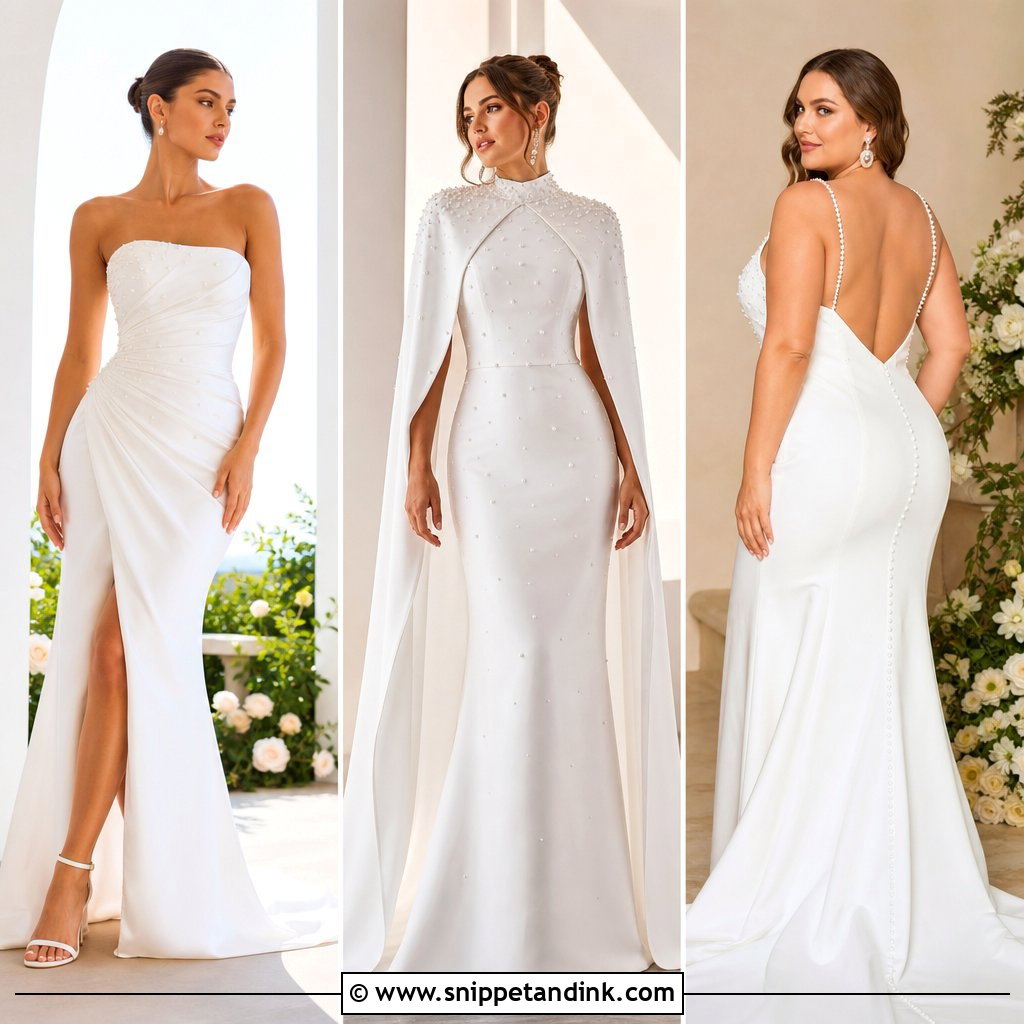
Pearls give appliqué a soft glow instead of sparkle, which looks especially good by candlelight. Small pearls sewn into flower centres or scattered along embroidered vines suit a fitted bodice over an A-line or column skirt. Each pearl adds weight, so on a light tulle gown I check that heavily beaded motifs aren’t dragging the shoulders or straps down. Pearl drop earrings, satin pumps and a plain veil repeat the finish without overdoing it. A sleek low bun gives a smooth contrast to the textured surface. Keep any other jewellery to a minimum.
12. Satin Wedding Dress With Applique Flowers
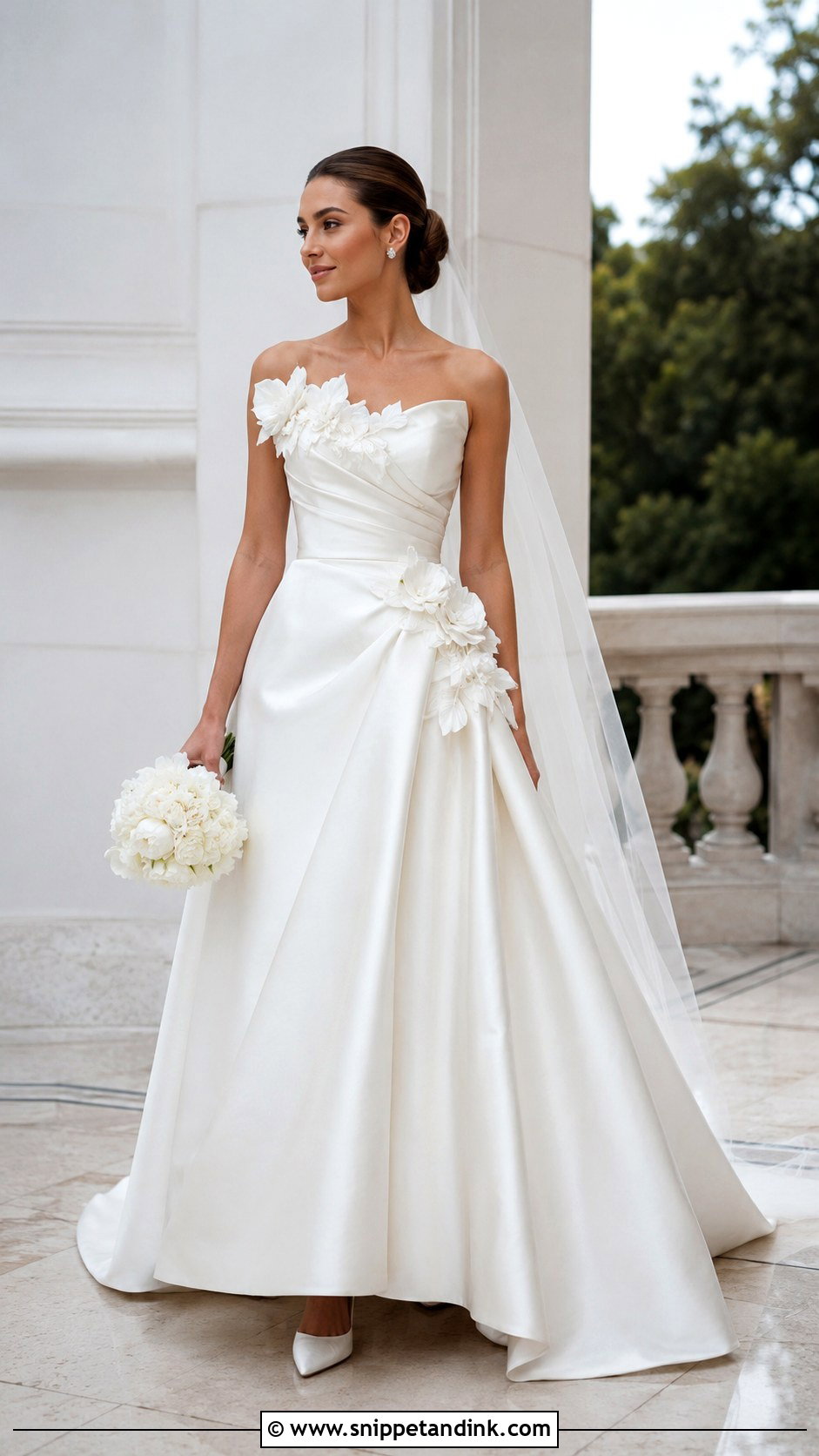
Against smooth satin, every raised petal stands out, so a few appliqué flowers go further than you’d expect. Choose a ball gown or A-line with blossoms gathered at the neckline, the hip or the train, rather than scattered everywhere. Satin also puckers easily around a motif, so ask how the flowers are attached; hand-stitched appliqué generally sits flatter than machine-applied. Satin pointed pumps, diamond or crystal studs and a simple veil finish it, with a polished chignon. If flowers sit near the shoulder, skip the necklace and keep the bouquet small.
13. Tiered Tulle Applique Wedding Dress
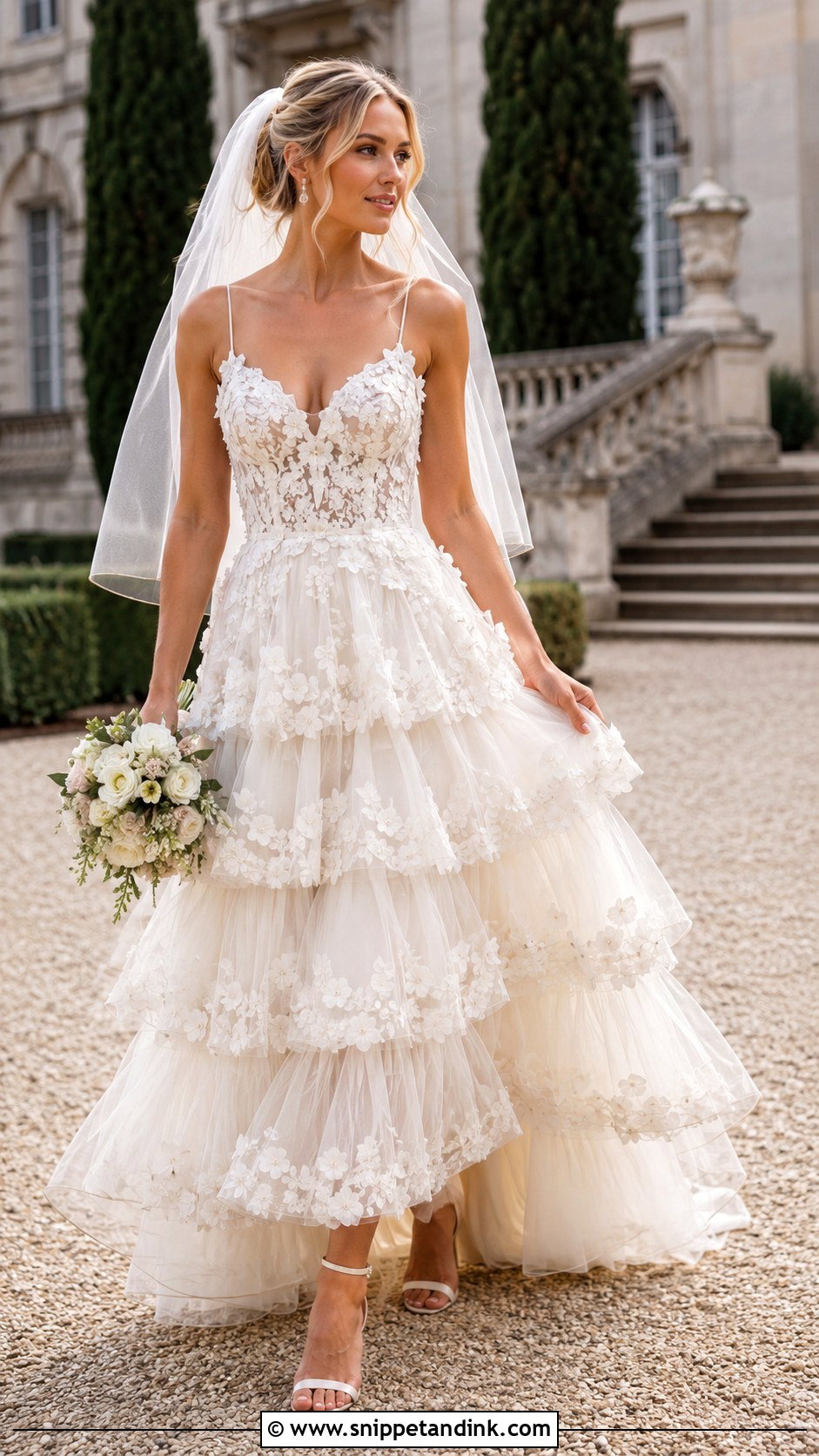
Appliqués along the edge of each tier move every time the tulle does, and that movement is the whole charm. A fitted bodice with a clean neckline keeps the skirt as the focus, with small blossoms starting near the waist and growing more noticeable on each tier. Layered tulle also catches on heels, so I set the front hem slightly higher than I would on a plain skirt. Delicate ankle-strap heels, simple earrings and a light fingertip veil complete it, with soft waves or a loose updo. Keep the bouquet compact so it doesn’t cover the skirt in photos.
14. Applique Wedding Dress With Floral Cape
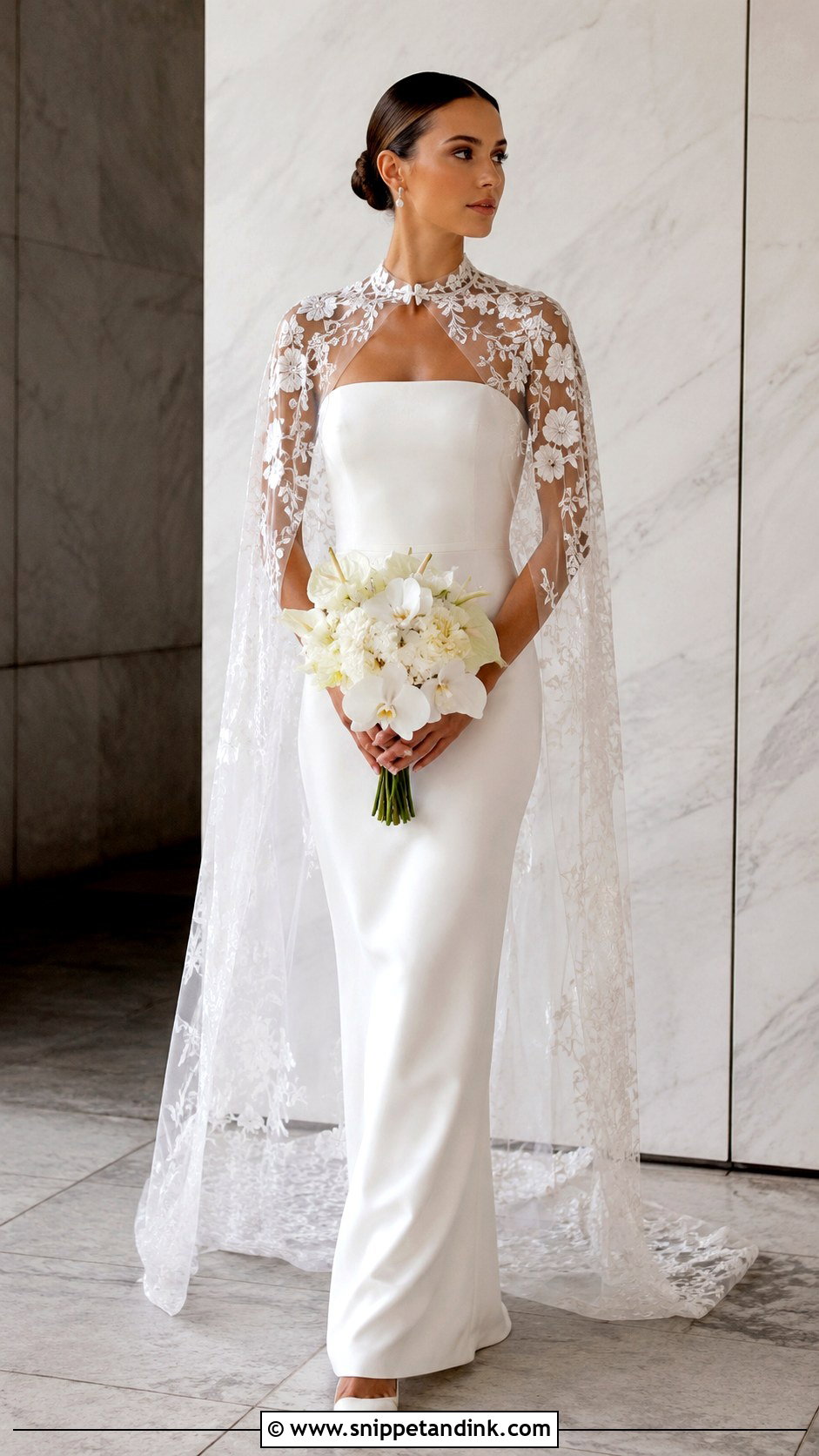
A floral appliqué cape turns a simple dress into a ceremony outfit and then comes off for the party. Start with a clean crepe sheath, satin A-line or strapless column, and layer a sheer shoulder cape scattered with embroidered vines or dimensional petals. I’d leave out the veil unless it can sit flat beneath the cape; two sheer layers with appliqué on top tangle easily. Understated earrings, pointed pumps and a sleek bun keep the cape fully visible, and a small structured bouquet finishes it. Ask for the neck fastening to be tucked under a motif so the join disappears.
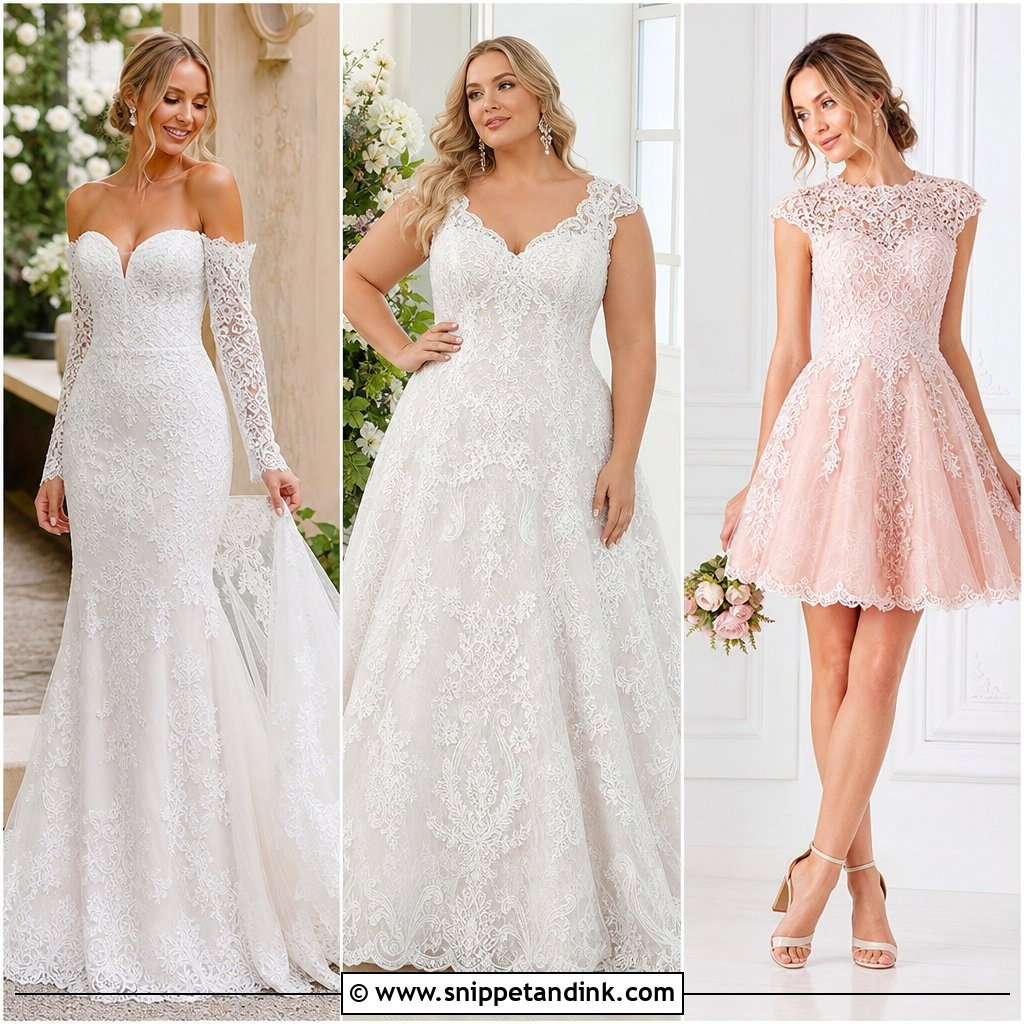

15. Applique Wedding Dress With Detachable Sleeves
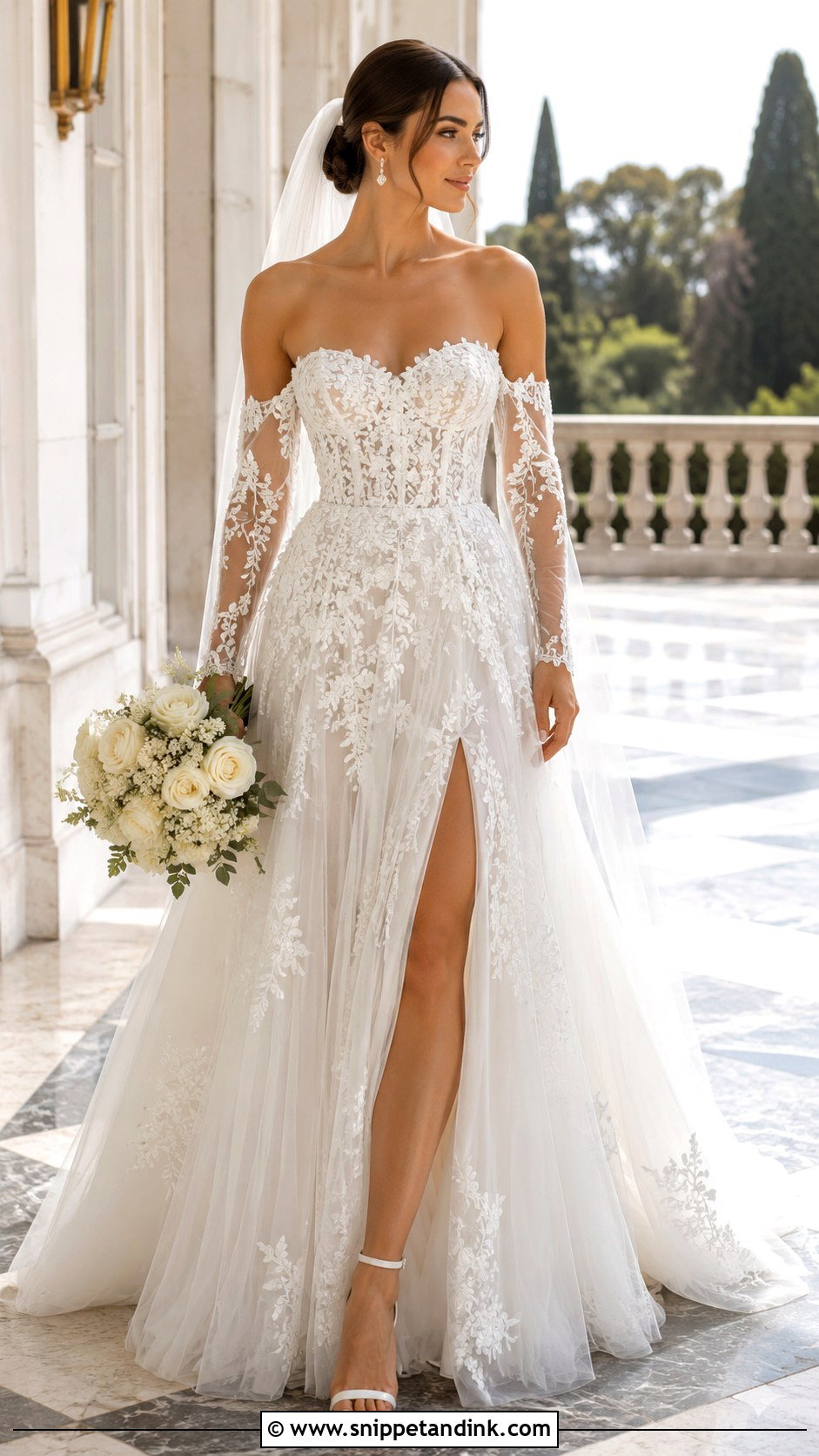
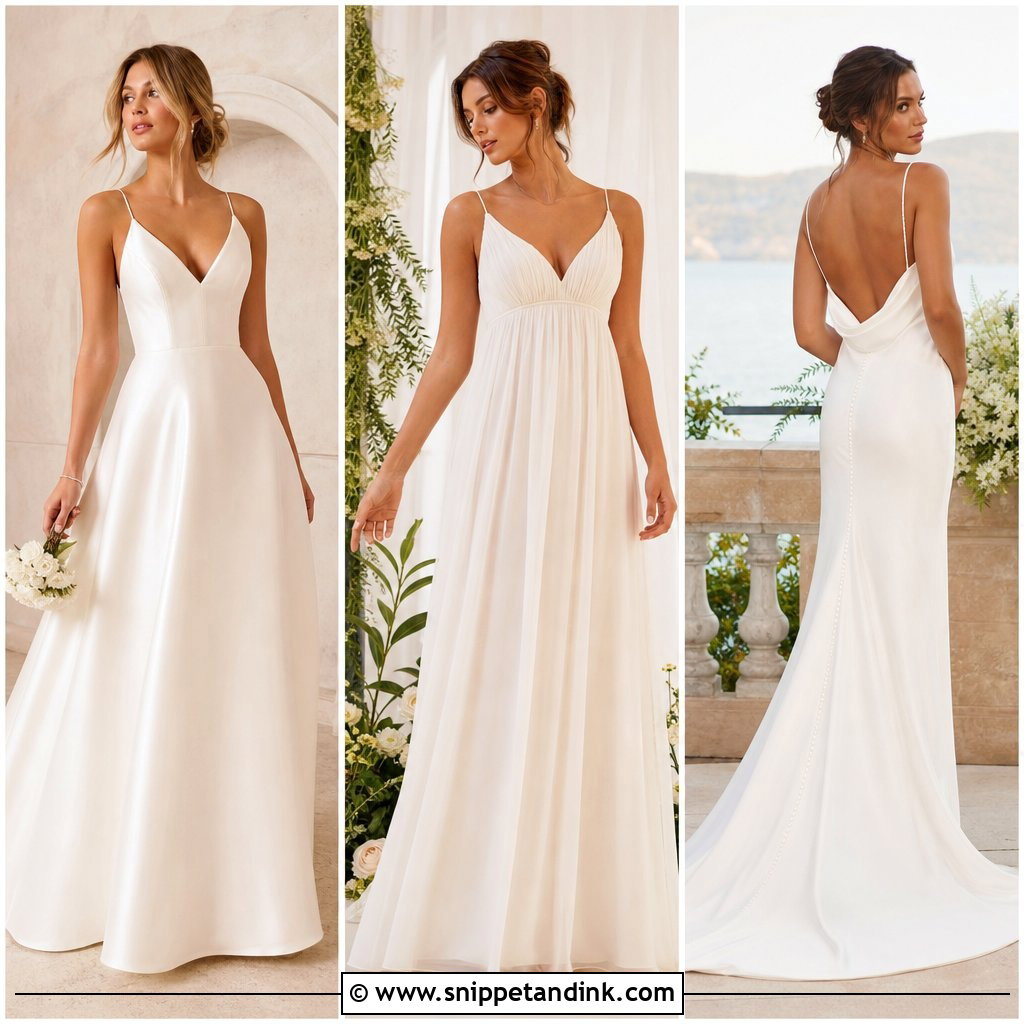
Detachable sleeves only look right if their motifs match the bodice exactly, so order them with the dress instead of adding them later from a different lace. Choose a strapless or sleeveless gown with floral appliqué across the bodice, and illusion sleeves worn for the ceremony and photos, then removed for dancing. The base can be a soft A-line, a fitted trumpet or a structured ball gown, depending on how formal you want to go. Drop earrings, satin heels and a plain veil that leaves the sleeves visible complete it. A low bun keeps the shoulders clear.
16. Tea-Length Applique Wedding Dress
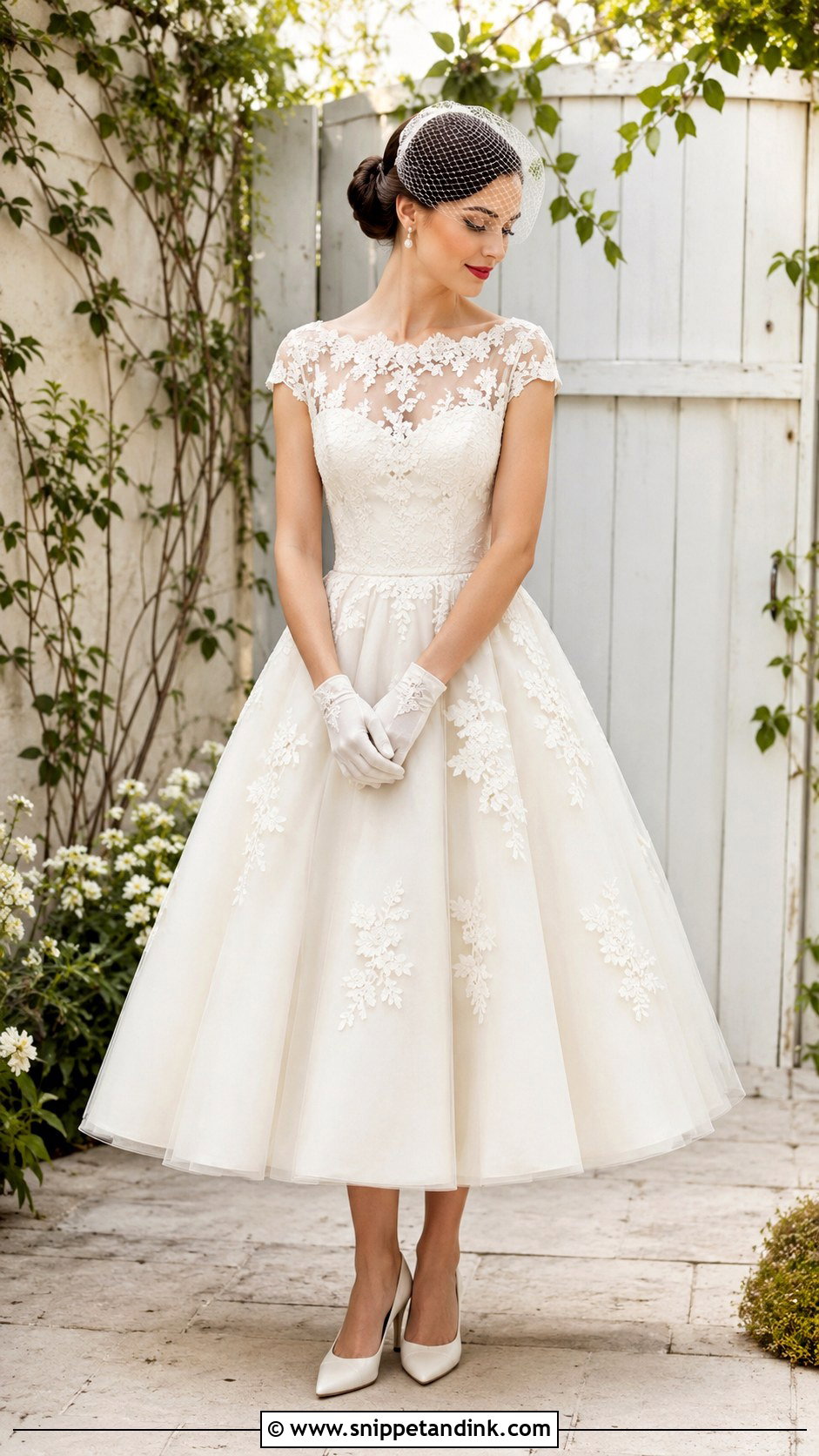
A tea-length appliqué dress puts your shoes in the picture. A fitted bodice and full skirt finishing between knee and ankle work best with floral lace or petals dense on the bodice and scattered toward the hem. Pointed pumps, embellished flats or low ivory block heels all suit it. Short gloves, pearl earrings or a birdcage veil add a vintage note; choose one, not all three, or it tips into costume. A polished bun or a softly curled bob suits the shorter shape. It’s an easy dress for a courthouse, a restaurant or a daytime garden.
17. High Neck Applique Wedding Dress
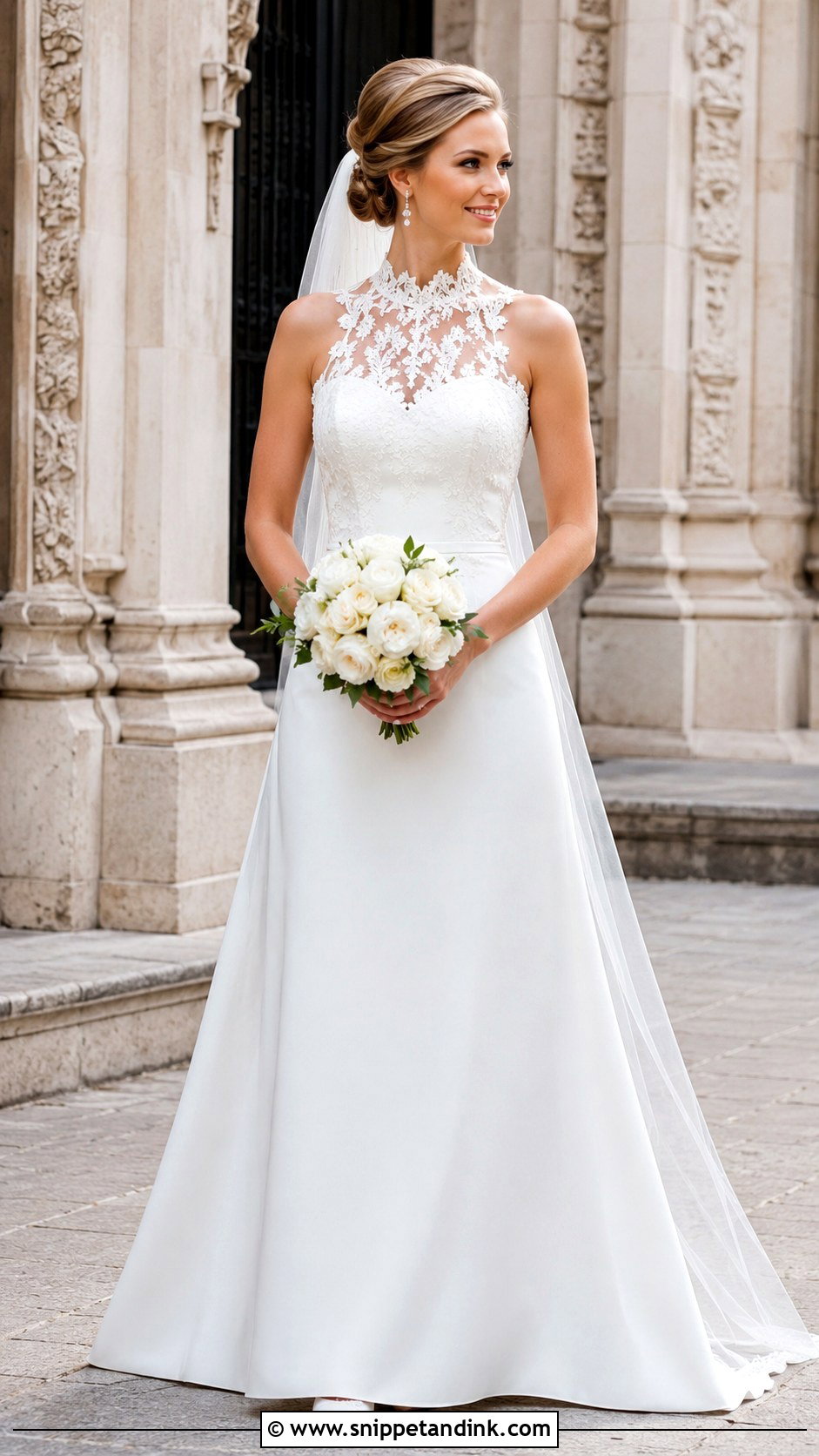
Illusion tulle at a high neck lets lace flowers look as though they float across the collar and shoulders. I fit the collar loosely enough for you to turn your head fully, because appliqué is stiffer than the tulle it sits on and scratches when the collar is snug. Pair it with a fitted bodice over a flowing A-line or a smooth column. Skip the necklace and wear studs or slim drops. Closed-toe pumps and a simple veil keep it formal. A low bun, French twist or sleek ponytail keeps every detail on show.
18. Blush Applique Wedding Dress
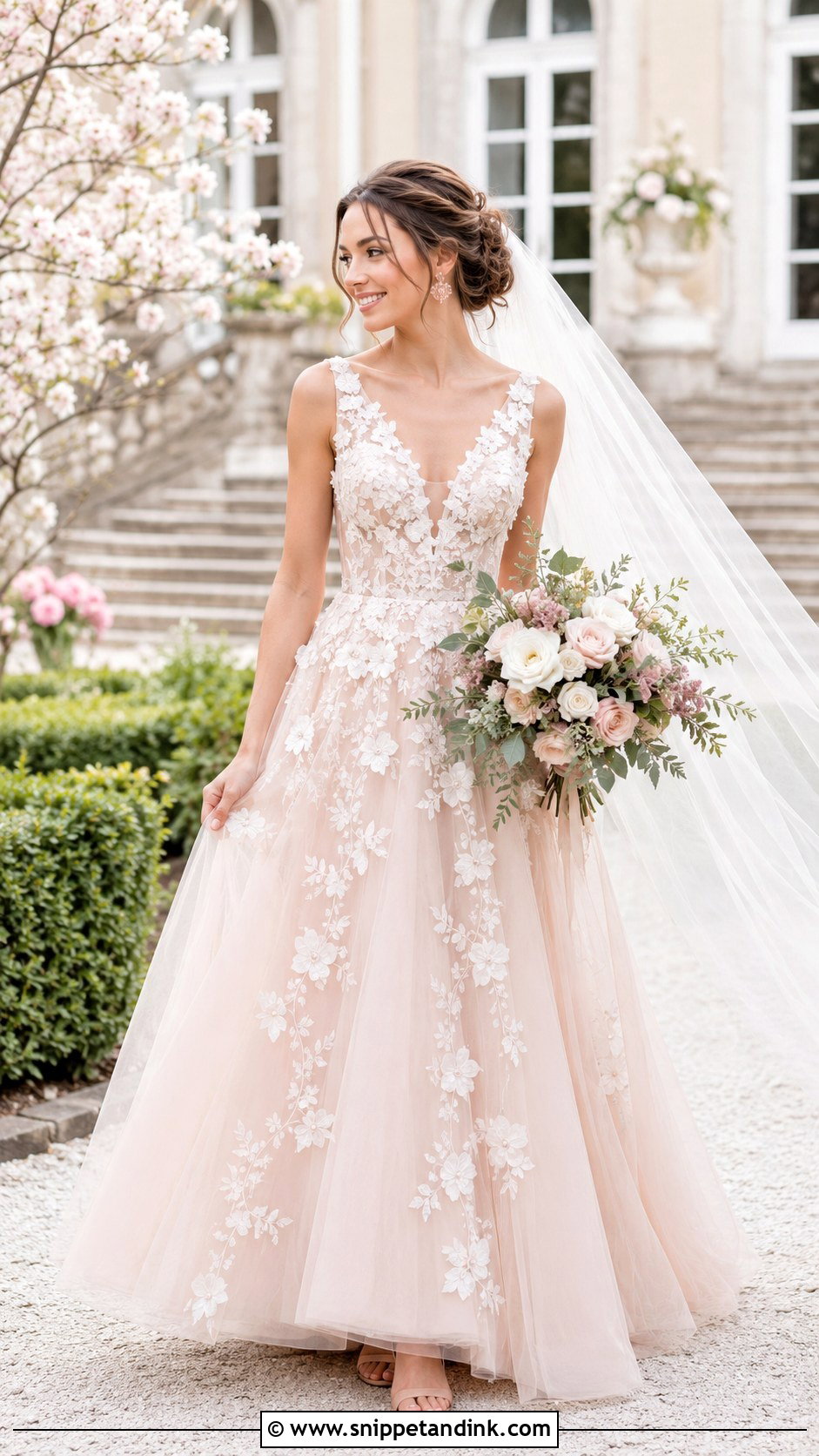
A blush lining under ivory or white appliqués gives the flowers more depth. Put the soft pink beneath the tulle layers, then add floral motifs across the bodice and skirt. Keep the contrast gentle: too strong a pink and the dress starts to read as a coloured gown rather than a bridal one, so I compare a few lining swatches under the actual lace. Nude or pale blush heels, rose-toned earrings and a sheer ivory veil suit it, with a softly twisted updo. Keep the bouquet within cream, pale pink and greenery, and avoid bright accessories.
19. Plus Size Applique A-Line Wedding Dress
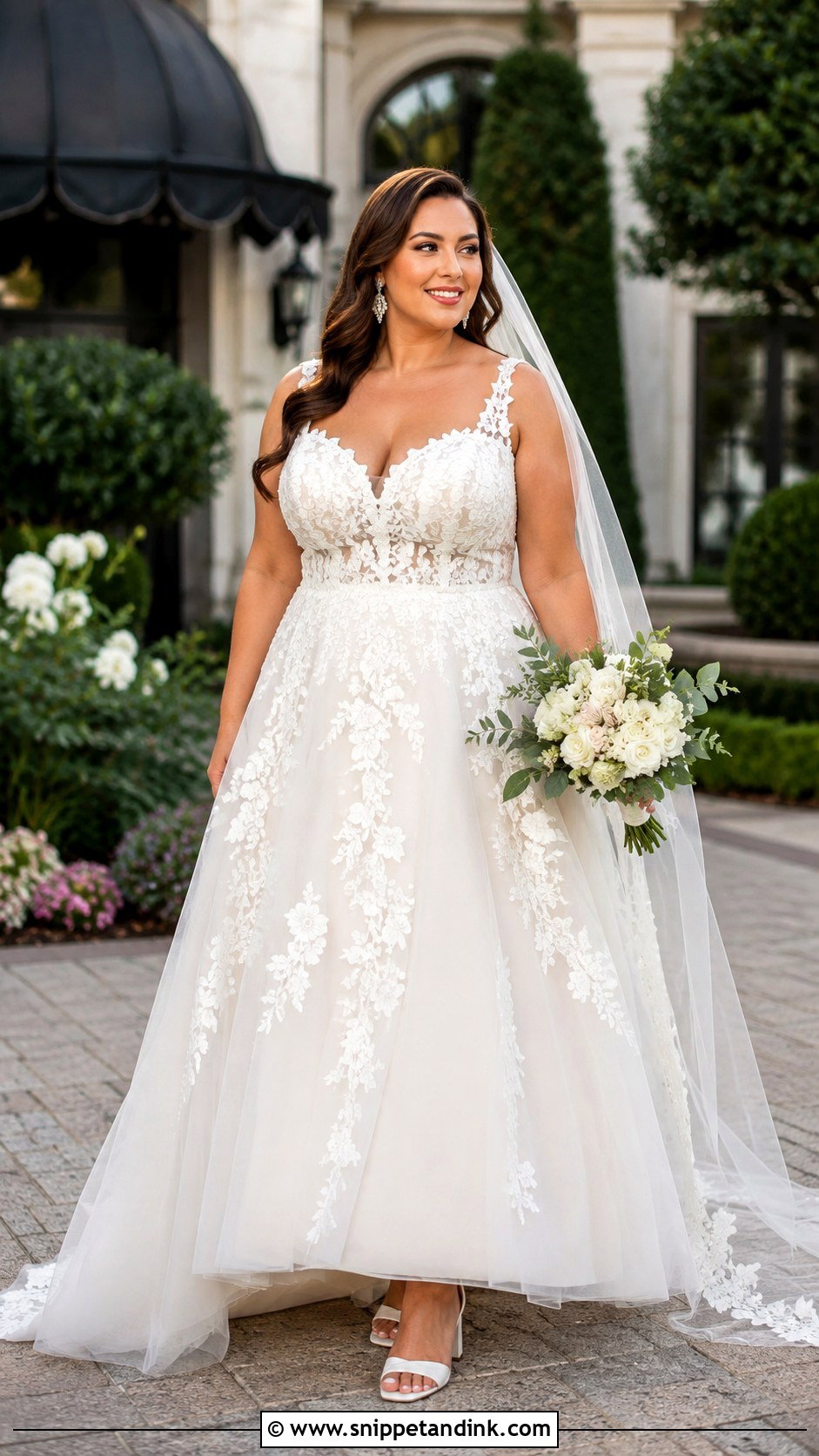
Continuous appliqué from neckline to skirt avoids the horizontal breaks that cut across a curvy figure, and on an A-line it flows over the whole silhouette. Look for a supportive bodice, comfortable straps or sleeves and a waist that sits securely without pinching. Decide how much coverage you want under any illusion panels; a nude lining can make a sheer area opaque without changing how it looks. Block heels, statement earrings and a plain chapel veil complete it, with a structured updo or soft side-swept waves. Then sit, walk and dance in it at your fitting before anything is finalised.
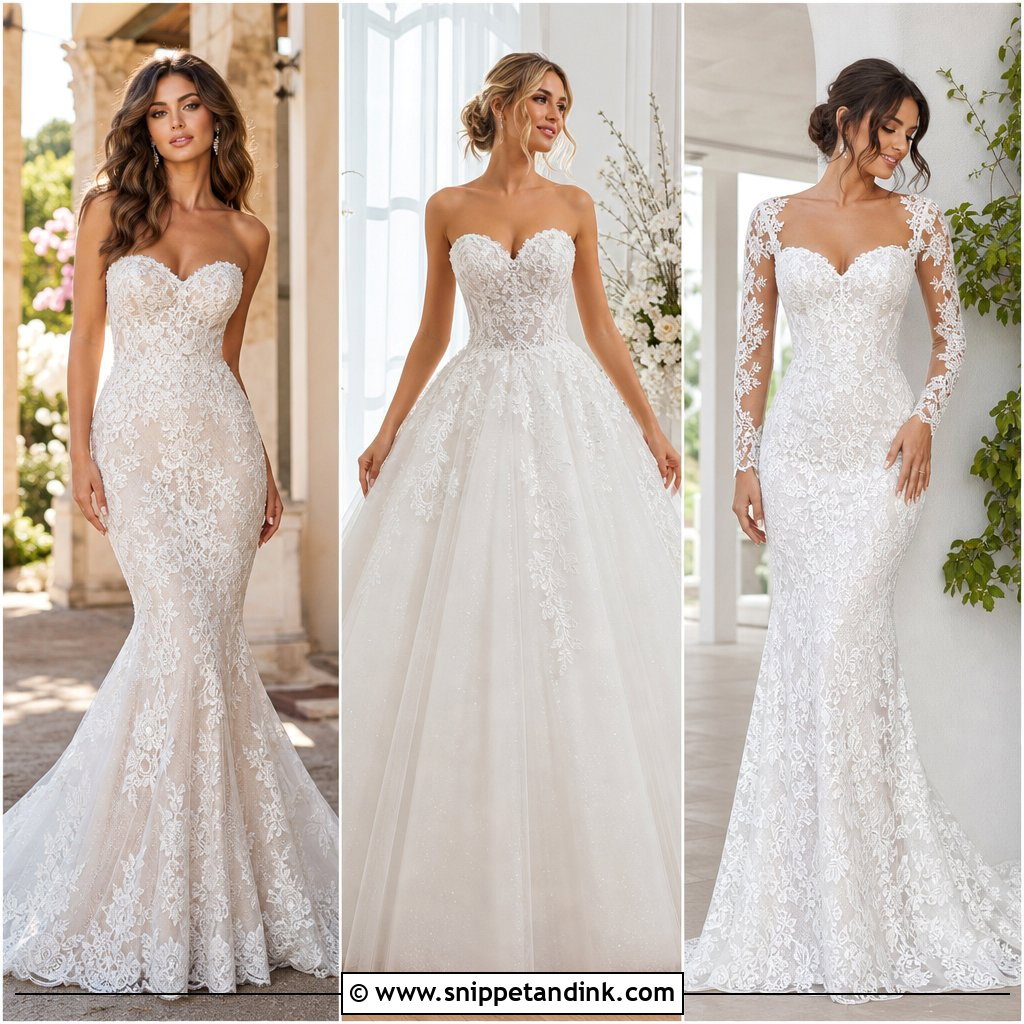

20. Applique Wedding Dress With Cathedral Train
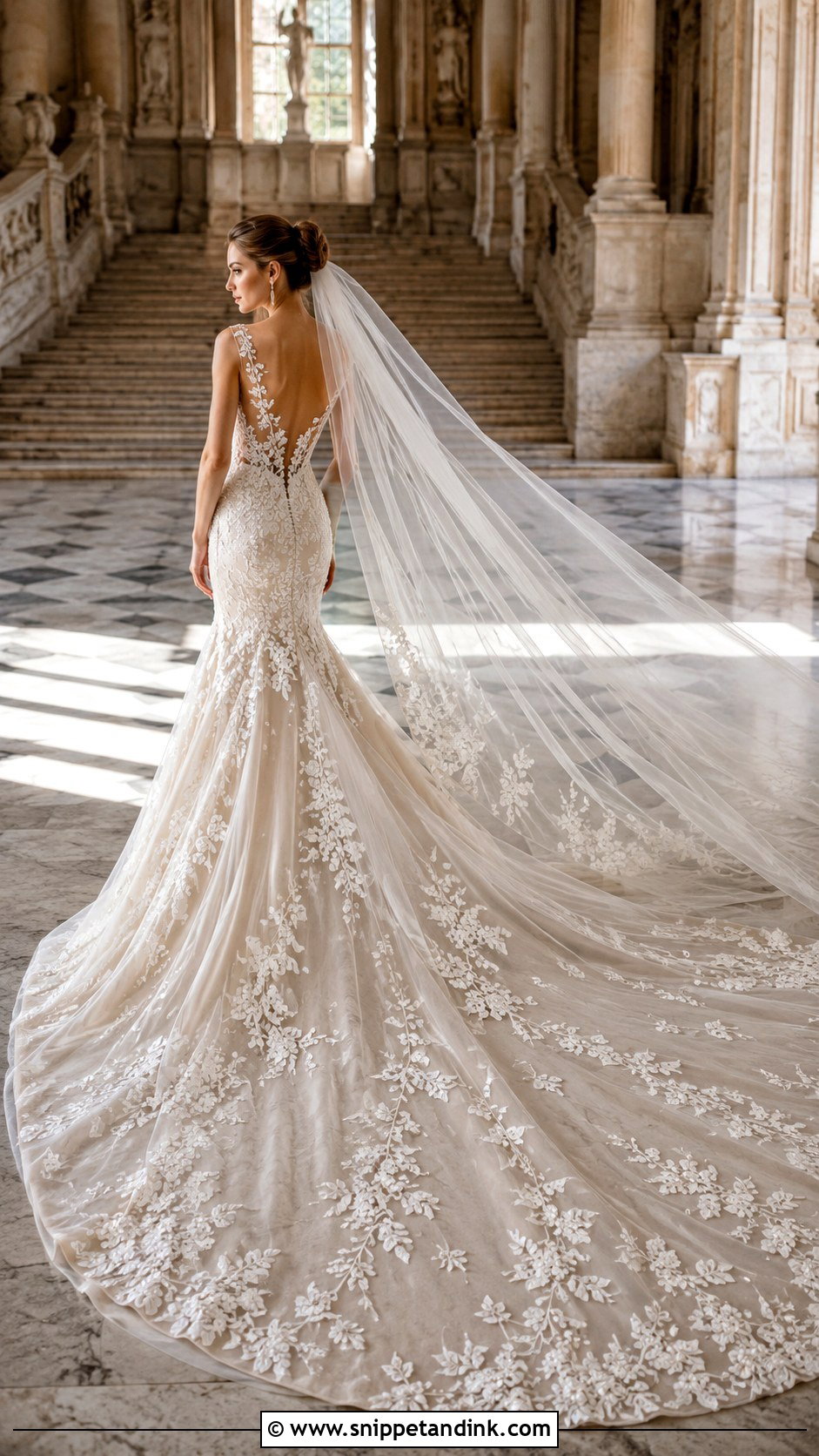
A long train gives appliqué a whole back view to work with. Flowers or vines should start at the bodice and travel toward the edge, growing sparser so the train never looks heavy. A trumpet, classic A-line or structured ball gown can all carry it. Pair the dress with simple earrings, secure heels and a plain veil that is either shorter than the train or long enough to pass it. Wear your hair up to show any back detail. Appliqué adds real weight to a train, so ask for a strong bustle with reinforced pick-up points.
Getting Appliqué Through Hugs, Car Seats and the Dance Floor
Raised decoration takes more wear on the day than any other part of a dress. A little planning keeps it intact until the last song.
- If your gown is heavily beaded, choose a veil without a lace edge and place its comb so the tulle doesn’t drag over the motifs. Sequins and beads catch fine tulle.
- Ask your hairstylist to turn pin ends away from any shoulder or back appliqué, because a loose hairpin hooks straight into lace.
- Have a bridesmaid carry a tiny sewing kit with ivory thread and a fine needle. A loose petal can be tacked back in a minute.
- In the car, sit forward and spread the skirt out behind you rather than sitting on it, which flattens dimensional petals.
Moving Motifs Around After the Dress Arrives
Appliqué is one of the easiest things for a seamstress to customise, since each motif is a separate piece stitched on top. If a dress is right except for its decoration, it can usually be changed. Flowers can be lifted from the hem or train and moved to an illusion back, a sleeve or a neckline. Extra motifs can cover an alteration seam so no join shows.
Some designers sell matching lace by the piece, which saves hunting for a close match. Mention any plans before the hem is shortened, too. The lace removed when a hem comes up is often exactly where the spare flowers come from.
Petals, Placement and the View From the Back
Decorative flowers, vines, pearls, and lace can sit on almost any bridal silhouette. A raised floral A-line feels soft, a vine-covered mermaid looks sculpted, a few motifs refresh plain satin or crepe, and coloured embroidery offers a change from all-ivory. Judge each gown by the placement, scale and texture of its appliqué from the front, side and back, since the back is what guests watch through the ceremony. Keep shoes, veil, jewellery, hair and bouquet in support of the dress. Then choose the one you can move in comfortably all day.
You'll Like These Ideas:






Leave a Reply