
Your guests spend most of the ceremony looking at your back. They see it as you walk up the aisle, through the vows, in the portraits and again on the dance floor, so I treat the back of a gown with the same care as the neckline. The details below run from covered buttons and keyholes to open backs, lacing, bows and removable trains, with the accessories I’d style around each. Lace, visible corsetry, oversized bows and buttons are all very much in bridal collections right now, which gives you plenty to try on. Before you fall for one, think about support, what you’ll wear underneath, where the veil attaches and how much alteration the detail can take. Those four things decide whether a back looks good at hour one or still looks good at hour nine.
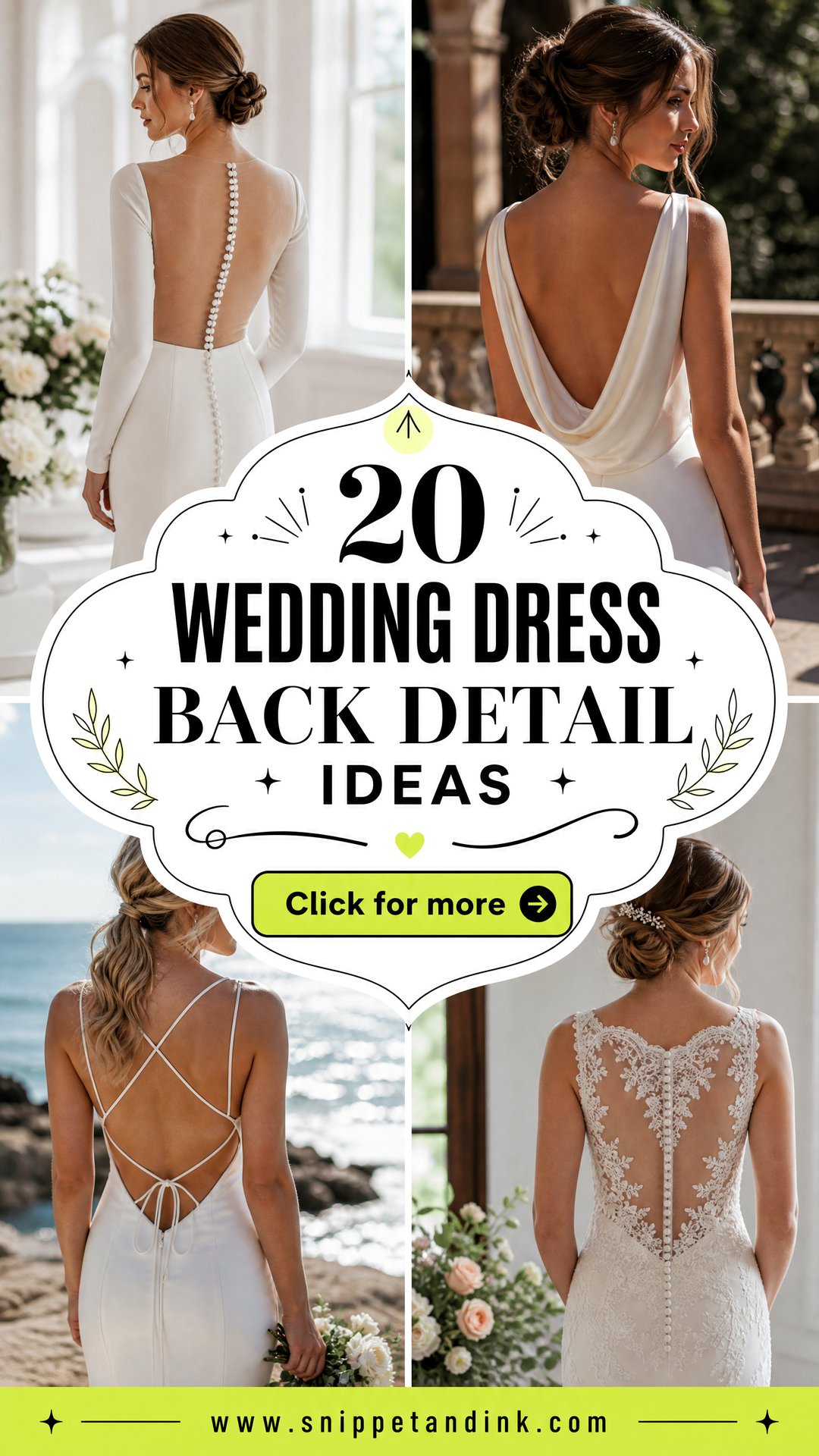
Bras, Cups and Body Tape for a Low or Bare Back
The back detail you choose decides your underwear, and I’d sort that before the first fitting, not after. A bodice is altered around whatever you’re wearing underneath, so changing it later changes the fit.
- Buttons, lace, keyholes and square backs: most of these sit high enough for a low-back strapless bra. Check the band sits below the opening when you lift your arms.
- Low V, cowl and deep open backs: there’s no room for a band. Ask for cups sewn into the bodice, or a plunge backless bra with adhesive wings, tried with the actual gown.
- Illusion backs: anything you wear shows through the mesh. Built-in cups are the clean answer; a skin-tone bra in the right shade is the fallback.
- Straps and crisscross backs: the straps themselves give support, but they also leave marks if they’re tight. Sew-in cups plus correctly tensioned straps usually beat any separate bra.
Adhesive cups and body tape lose grip on skin that has had moisturiser or body oil on it, and they loosen in heat. On the morning, skip lotion on the chest and back, and keep a spare set in the emergency kit. If you sweat easily or the wedding is in summer, sewn-in support is the more reliable choice.
1. Open Back Wedding Dress
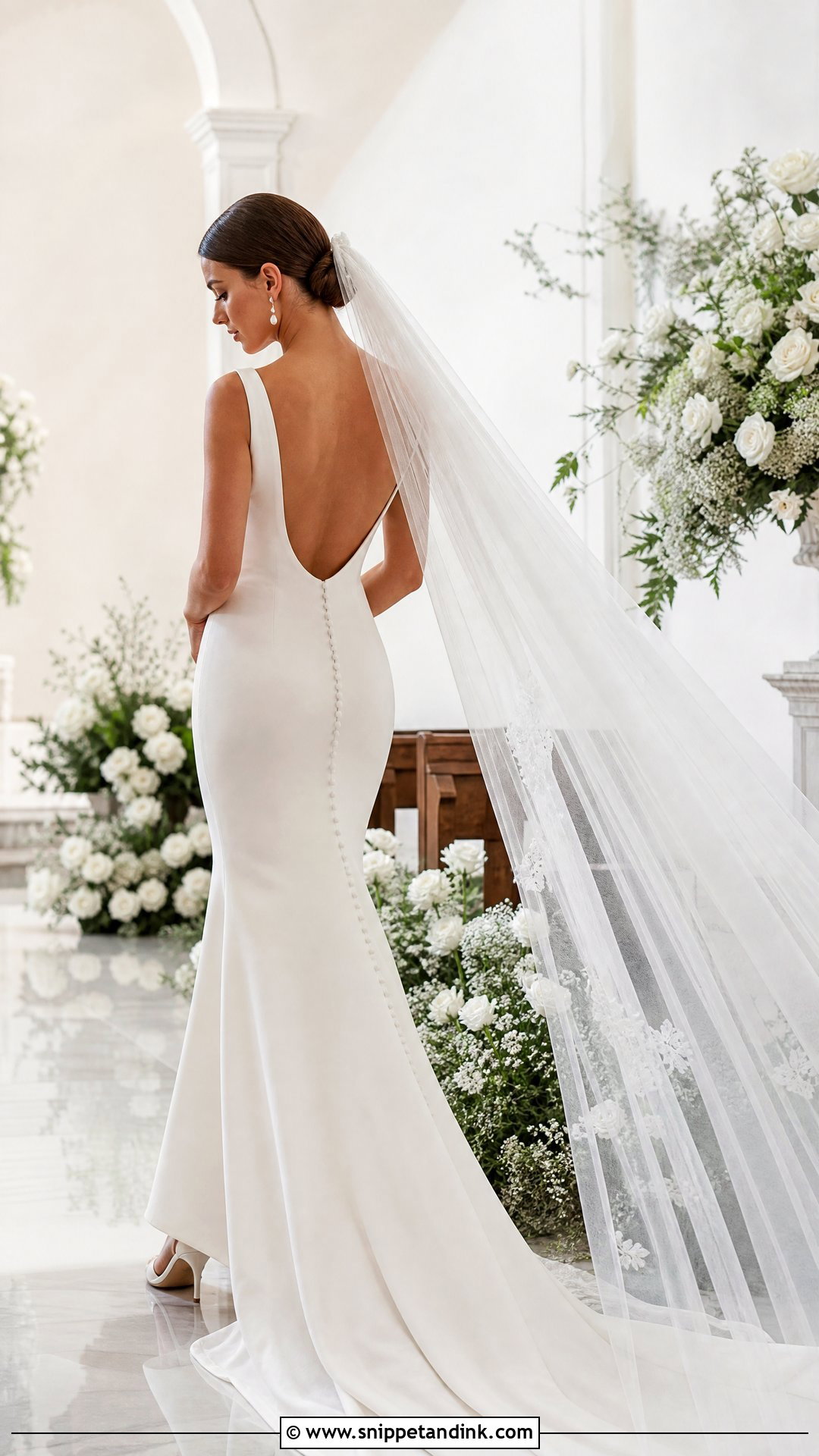
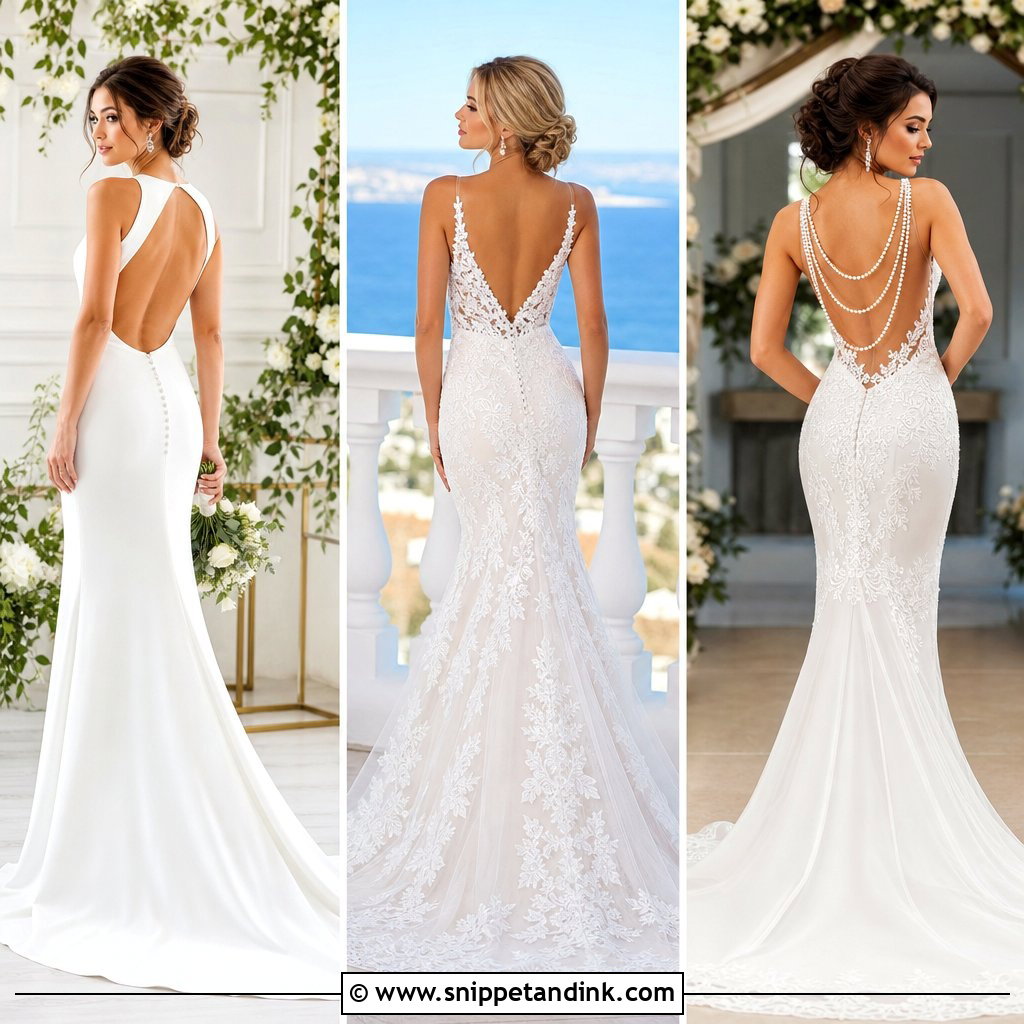
An open back needs no decoration, which is exactly why the fit has to be perfect. Any gaping at the edge of the opening shows from the back row. Fitted crepe gives a crisp modern line, while flowing chiffon feels softer for an outdoor ceremony. A gentle curve reads romantic; a deep V is bolder. I always ask for built-in cups and firm side panels on this cut, because there’s nowhere for a bra to hide. Pearl drops, a low bun and pointed ivory heels are enough. Choose a sheer veil so the opening still shows through, and in warm weather skip the necklace altogether.
2. Lace Back Wedding Dress
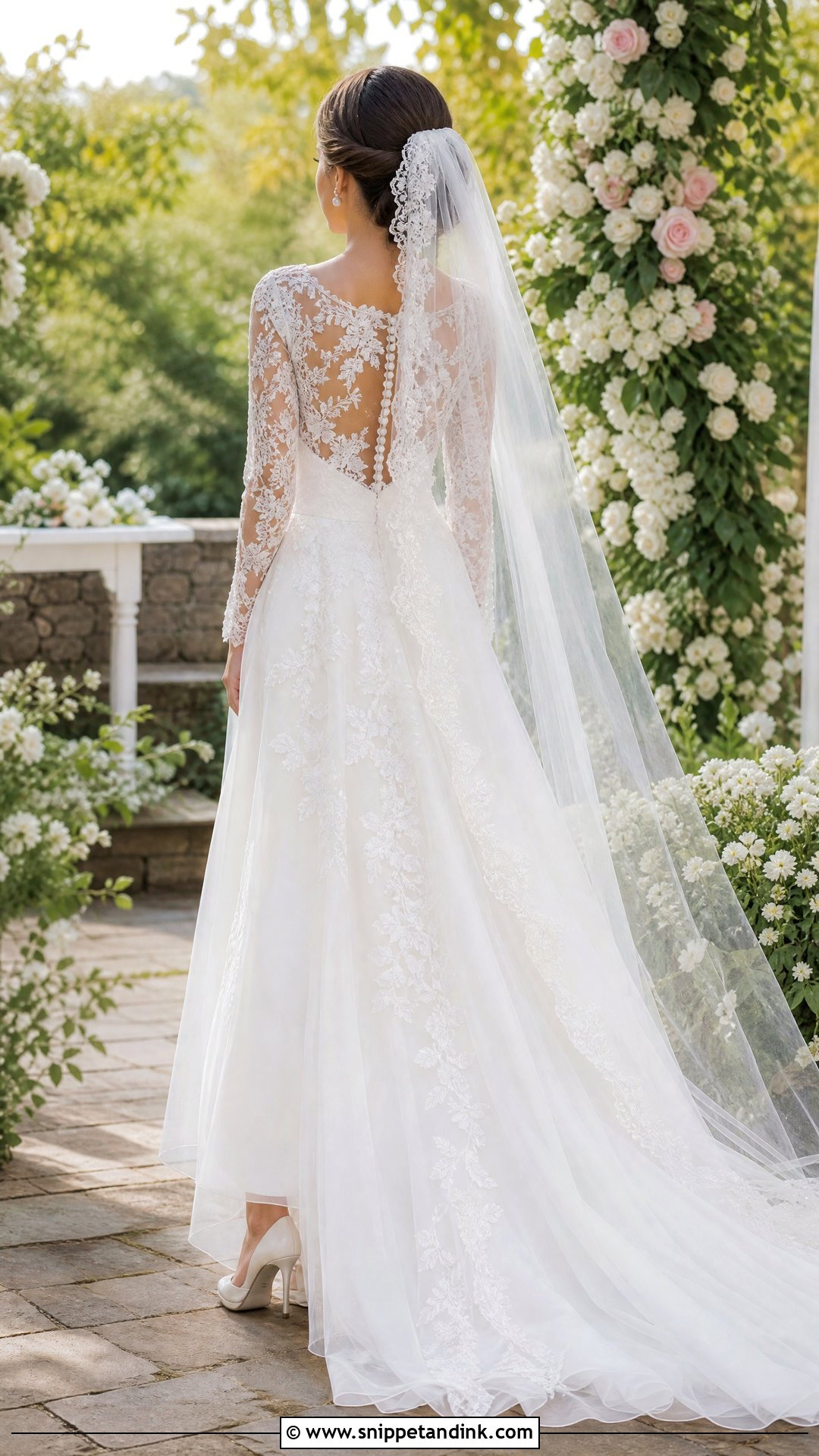
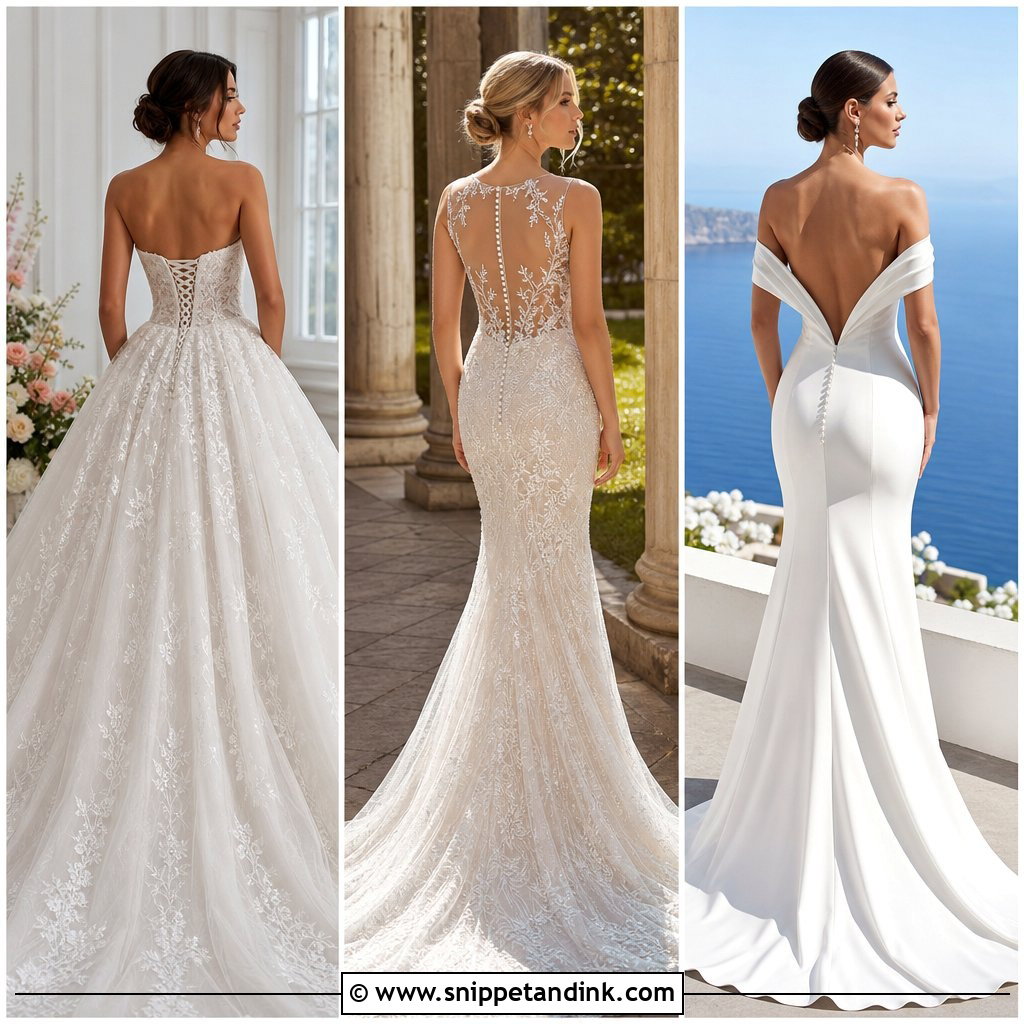
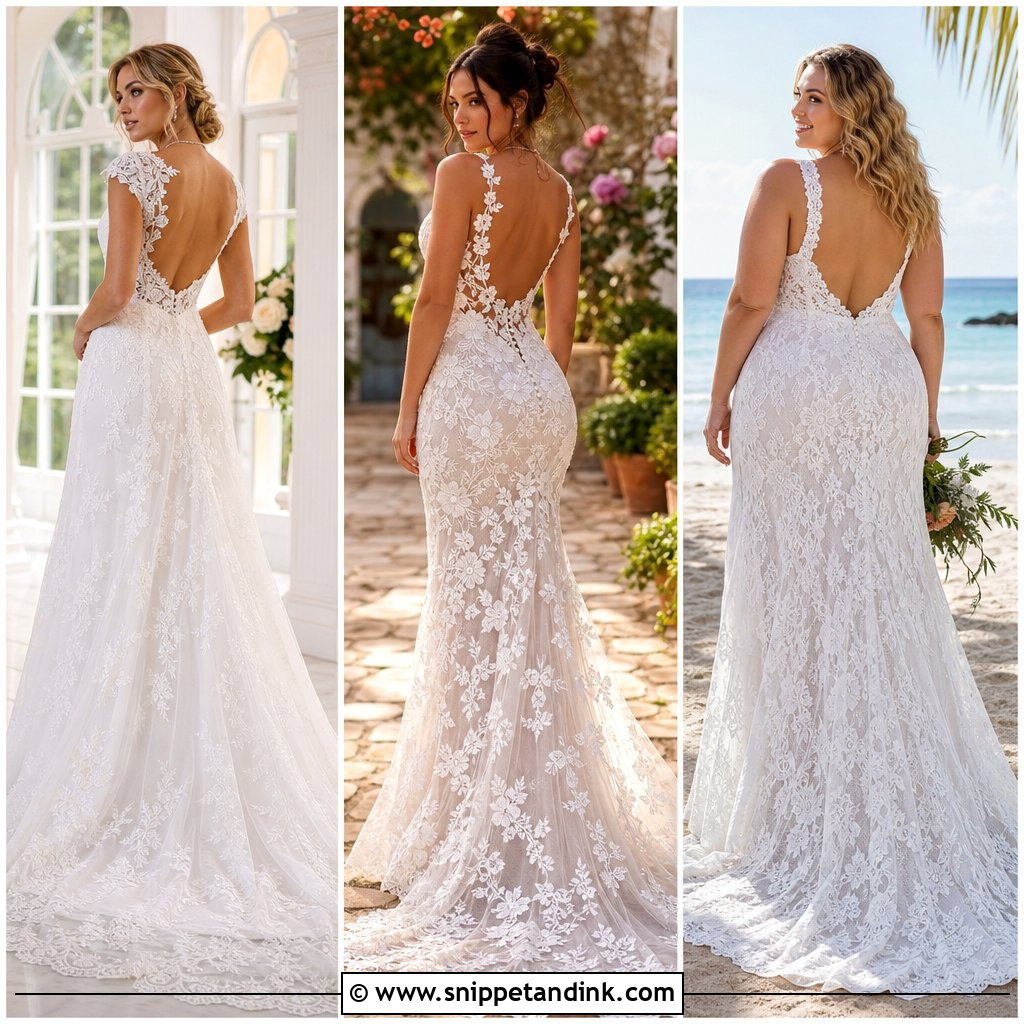
Lace on the back gives the eye something to follow as you walk away, and it looks most natural when the pattern runs on from the bodice into the skirt instead of stopping at a seam. Floral motifs sit well on an A-line or a fitted mermaid. Lace sleeves add coverage; a sleeveless cut keeps it light. A fingertip veil edged in a similar lace ties it together, with pearl studs and satin pumps. The thing I check at fittings is motif placement: when the bodice is taken in, a good seamstress moves the lace by hand so the flowers still meet in the middle. A smooth low chignon keeps the hair off the pattern. Placed, defined lace like this is one of the strongest looks in bridal right now, and it doesn’t feel dated.
3. Button Back Wedding Dress
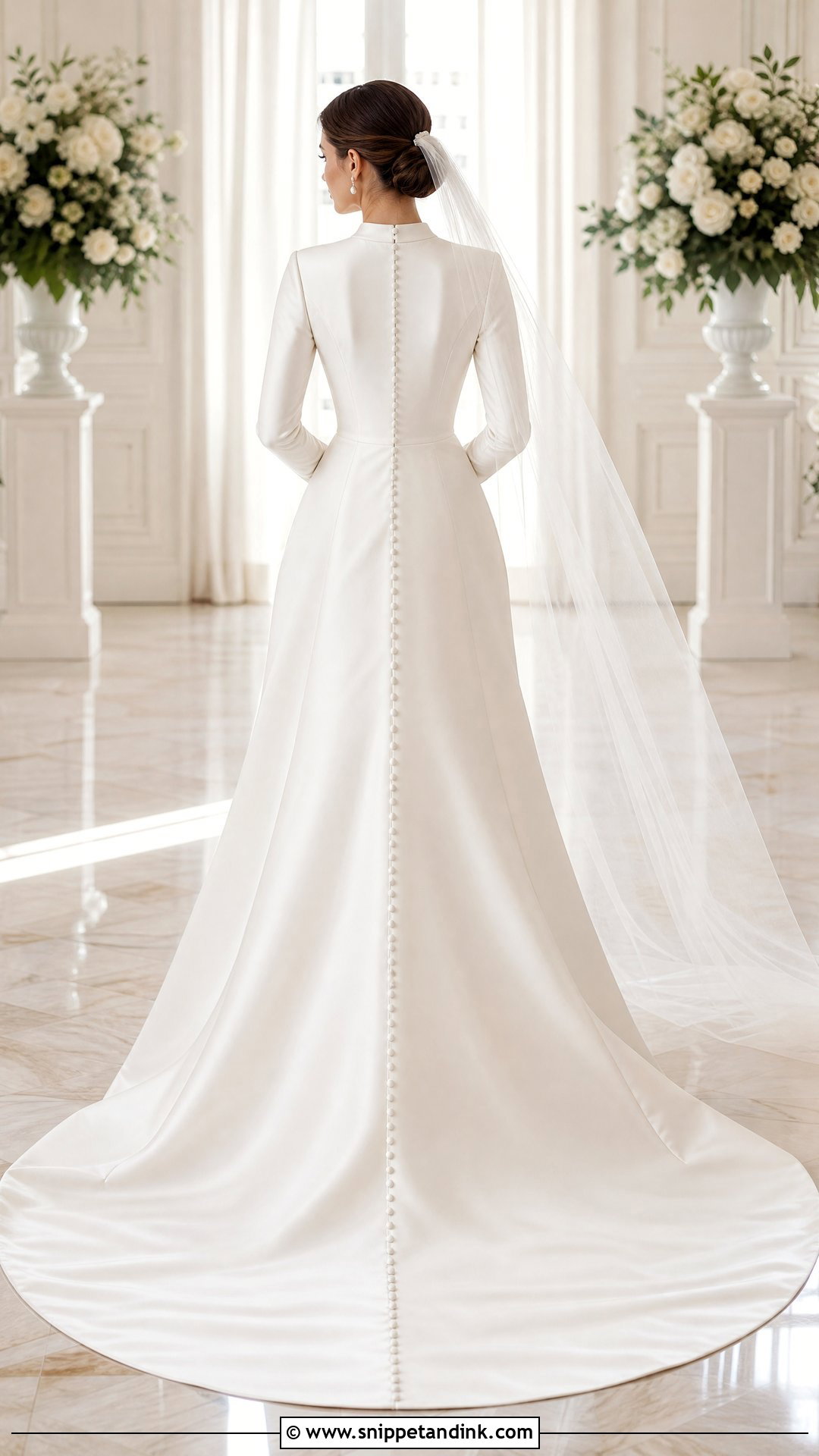
A row of buttons gives the aisle shot a clean vertical line. Fabric-covered buttons may stop at the waist or carry on down the whole train. On satin, mikado and crepe they stand out sharply; covered in lace, they soften. Ask early whether yours are functional or decorative. Real buttons with loops take a long time to fasten, and many gowns hide a zip underneath for that reason, which I’d honestly recommend. Choose a veil that ends above the lowest buttons or one sheer enough to show them. Pearl earrings, a structured bouquet and closed-toe pumps finish the outfit.
4. Corset Back Wedding Dress
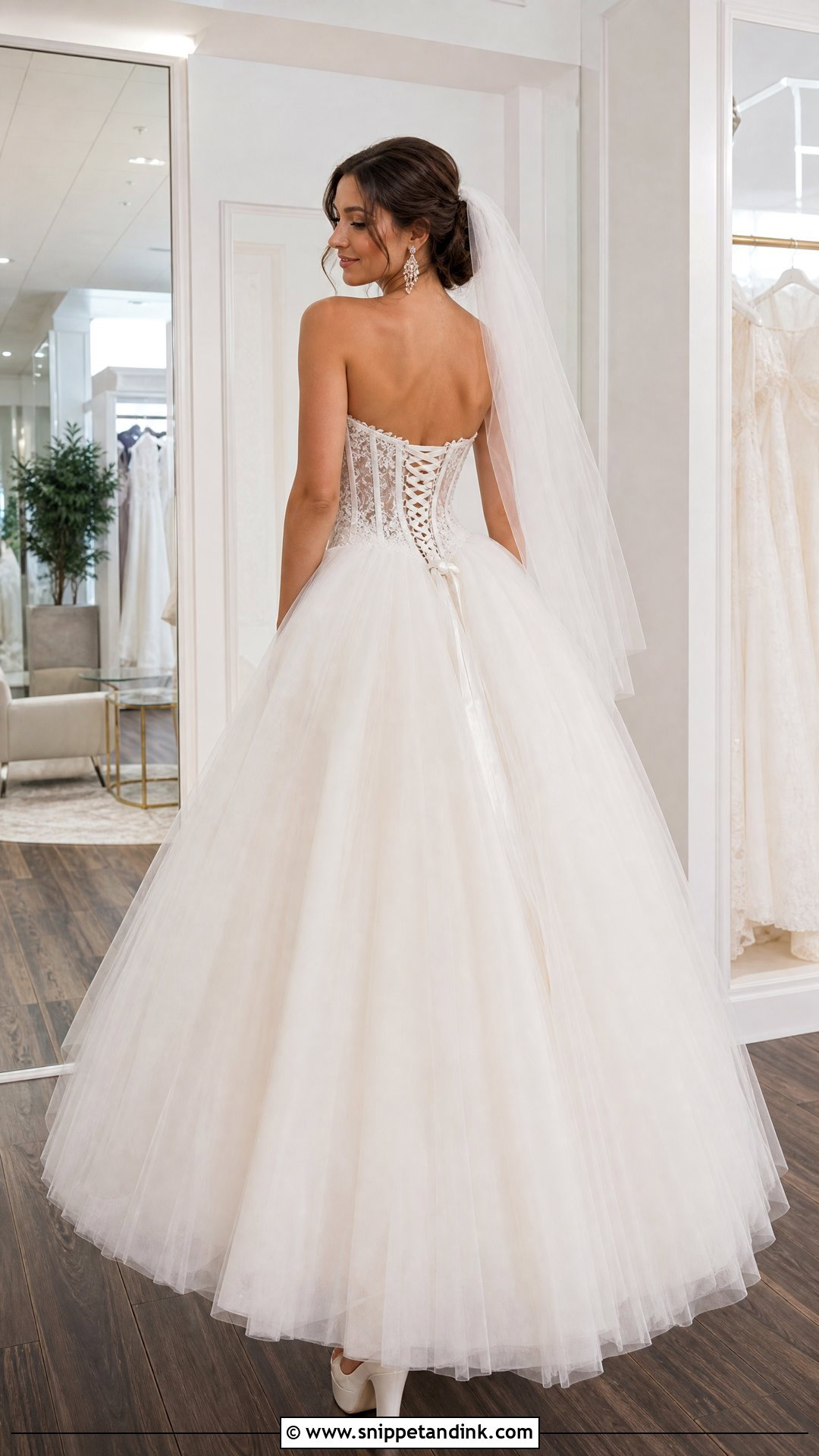
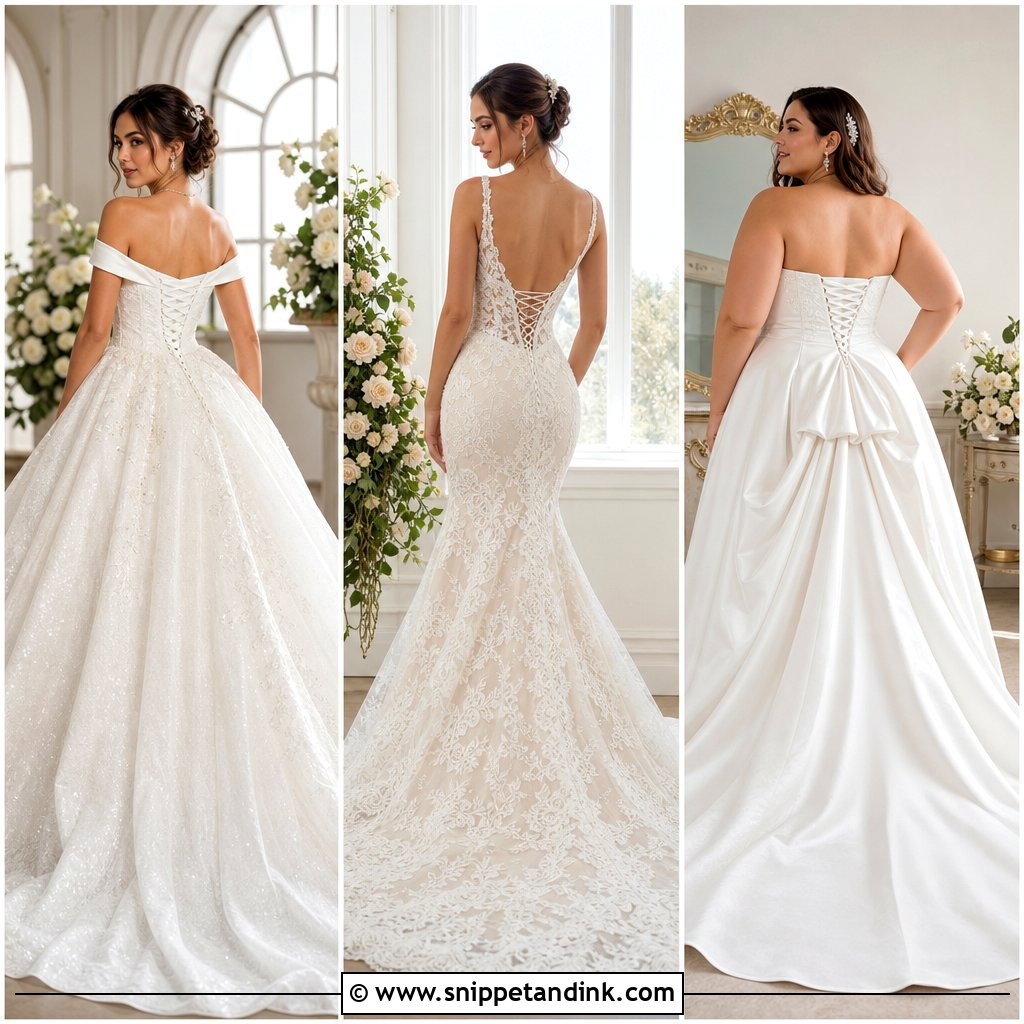
Lacing is the most adjustable closure a gown can have, which is why I like it for brides whose weight may shift before the wedding. It suits ball gowns, basque waists and fitted shapes. Wide satin ribbon is bold; narrow cord through small loops is quieter. The back should relate to the front, so look for boning, embroidery or appliqué that carries round. Lacing pulls tighter as you tie it, so the person dressing you needs to stop when you can still breathe and sit comfortably. A soft updo, crystal earrings and platform satin heels hidden under the skirt suit it, and a medium-length veil leaves the ribbons on show.
5. Illusion Back Wedding Dress
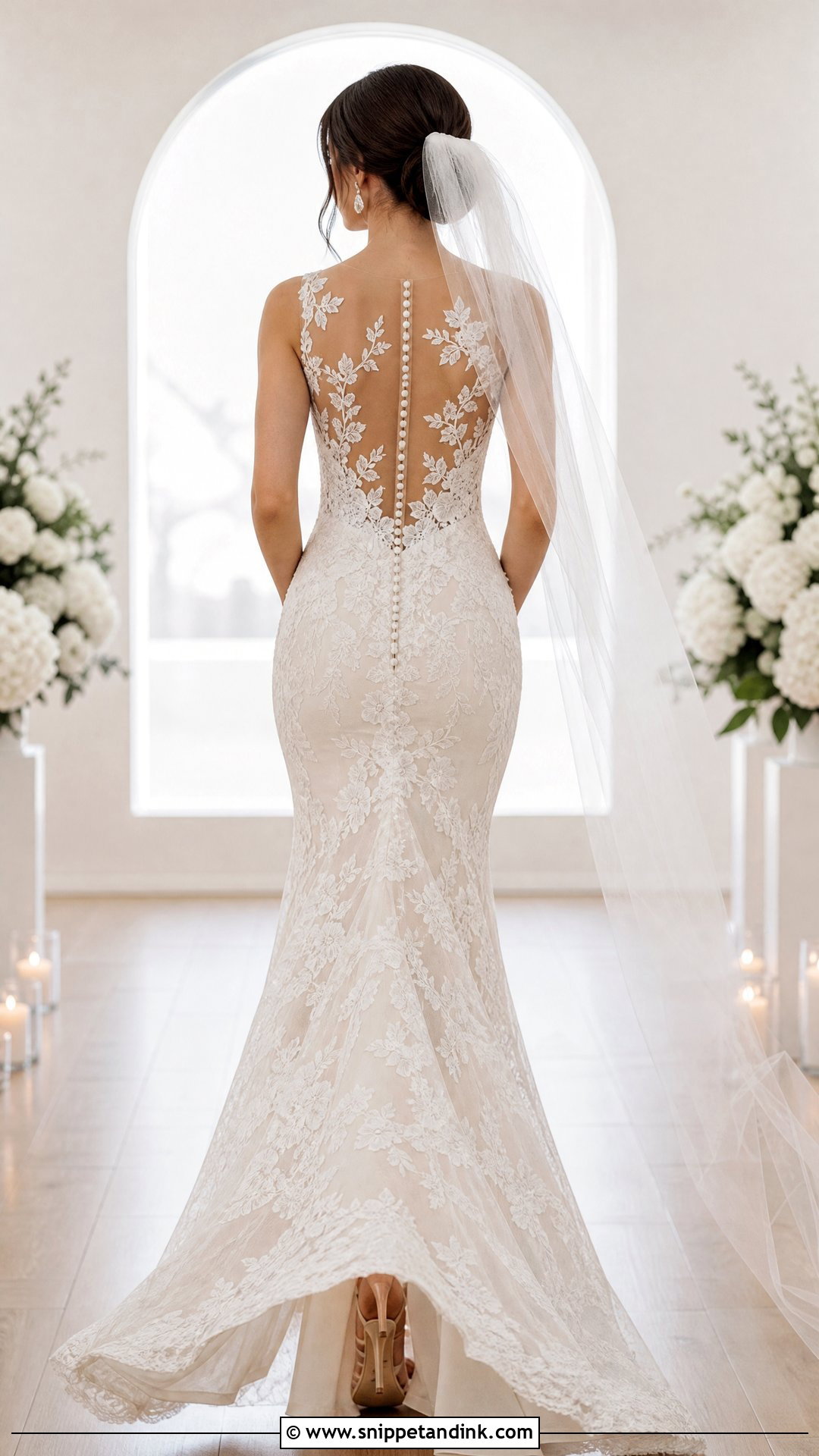
Sheer tulle holds lace, beads or buttons in place on an illusion-back wedding dress, so it reads as open while giving more coverage. Mesh colour is where these go wrong. Tulle that’s too pale or too pink against your skin shows up as a visible panel in photos, so hold the edge against your back in daylight, not shop lighting. A fitted lace gown looks intricate; an A-line feels airier. Delicate drops, a neat bun and simple ivory sandals suit it. Skip a heavily embellished veil. A plain tulle one or a floral comb lets the appliqué do the talking.
6. Oversized Bow Back Wedding Dress
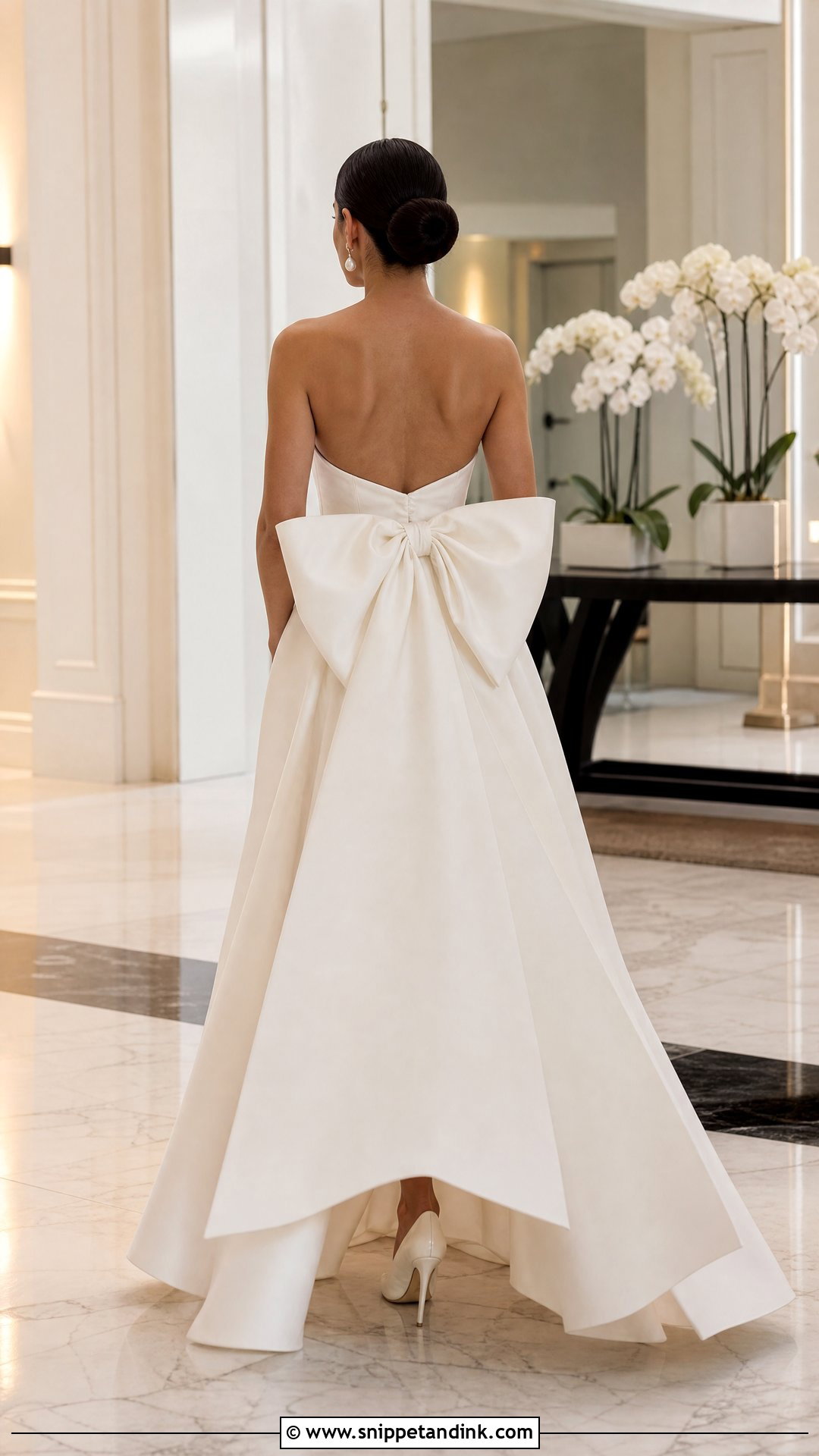
Bows sit very firmly in current bridal collections, and a big one changes the whole outline of a gown from behind. Set at the waist, it marks the silhouette; set lower, it leads the eye into the train. Mikado holds a sculpted, upright bow, while satin gives softer loops and tails that move. My caution is weight: a large mikado bow drags a light skirt down at the back, so the gown underneath needs some structure. A strapless column or clean A-line keeps the balance. Pearl earrings, a smooth bun and pointed pumps are plenty, with a short veil or none at all.
7. Keyhole Back Wedding Dress
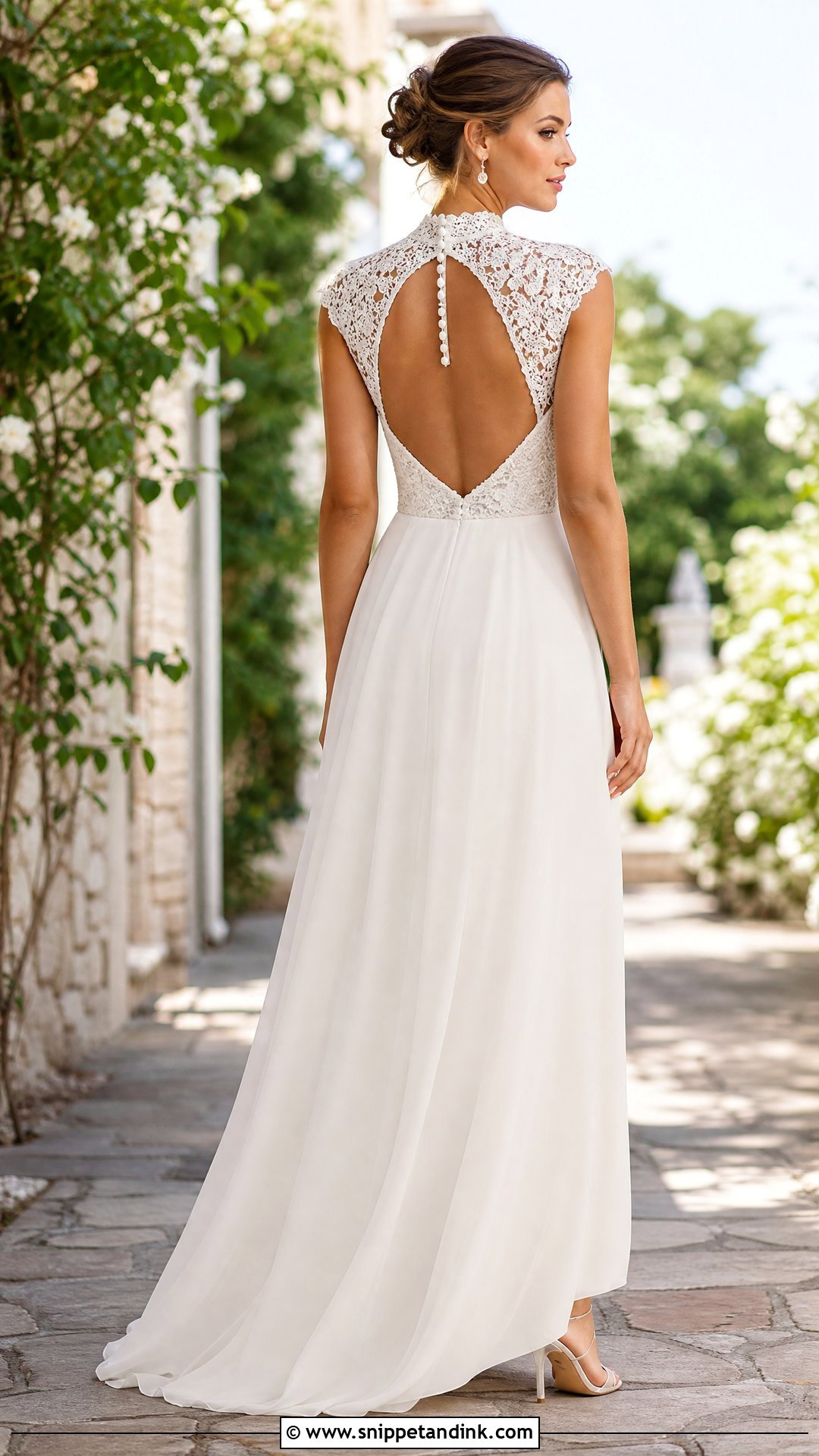
A keyhole gives you a small opening while the shoulders and upper back stay supported, so it’s my usual suggestion when a bride wants a little skin on show but still needs a regular bra strap line. Round, oval, teardrop or a slim vertical slit all change the mood. Lace edging softens it and smooth crepe sharpens it. It pairs well with a high neckline or cap sleeves. A polished updo, small gemstone earrings and slingbacks finish it, and a ribbon tie or single button at the top is a neat detail. Let the veil fall behind the opening, not across it.
8. Low V Back Wedding Dress
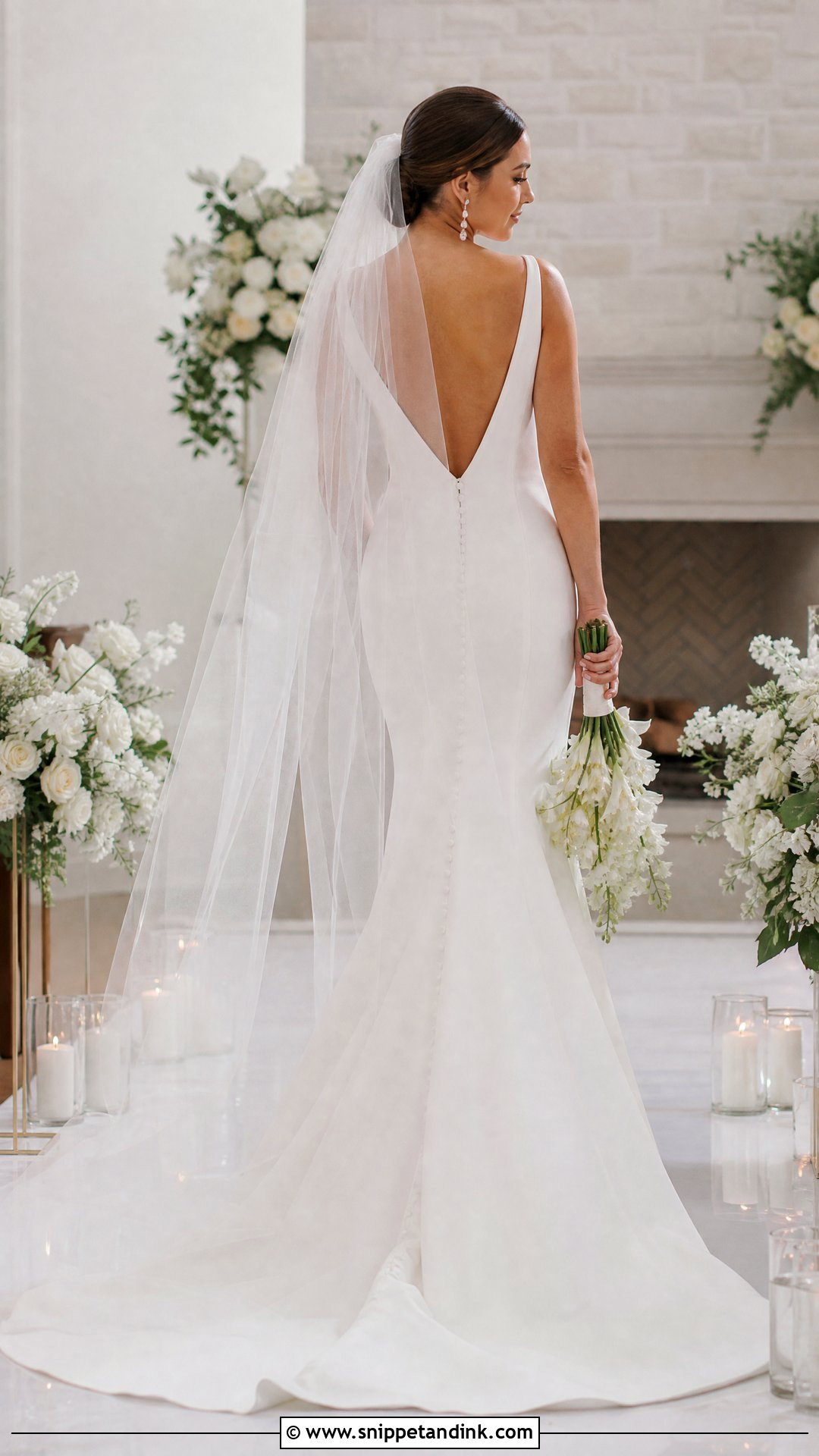
A low V draws a long line down the spine, and it suits sheaths, mermaids and flowing A-lines. Narrow Vs look refined; wider ones are more daring. Crepe stays smooth, while lace softens the depth. Support comes from side seams, built-in cups or clear straps. Here’s the test I make every bride do: sit, walk and lift your arms in the dress. A V that looks right standing can slide off the shoulder blades when you reach for a hug. Pair it with a low chignon, long earrings, a narrow bouquet and minimal ivory heels, and attach the veil under the bun so it frames the V.
9. Square Back Wedding Dress
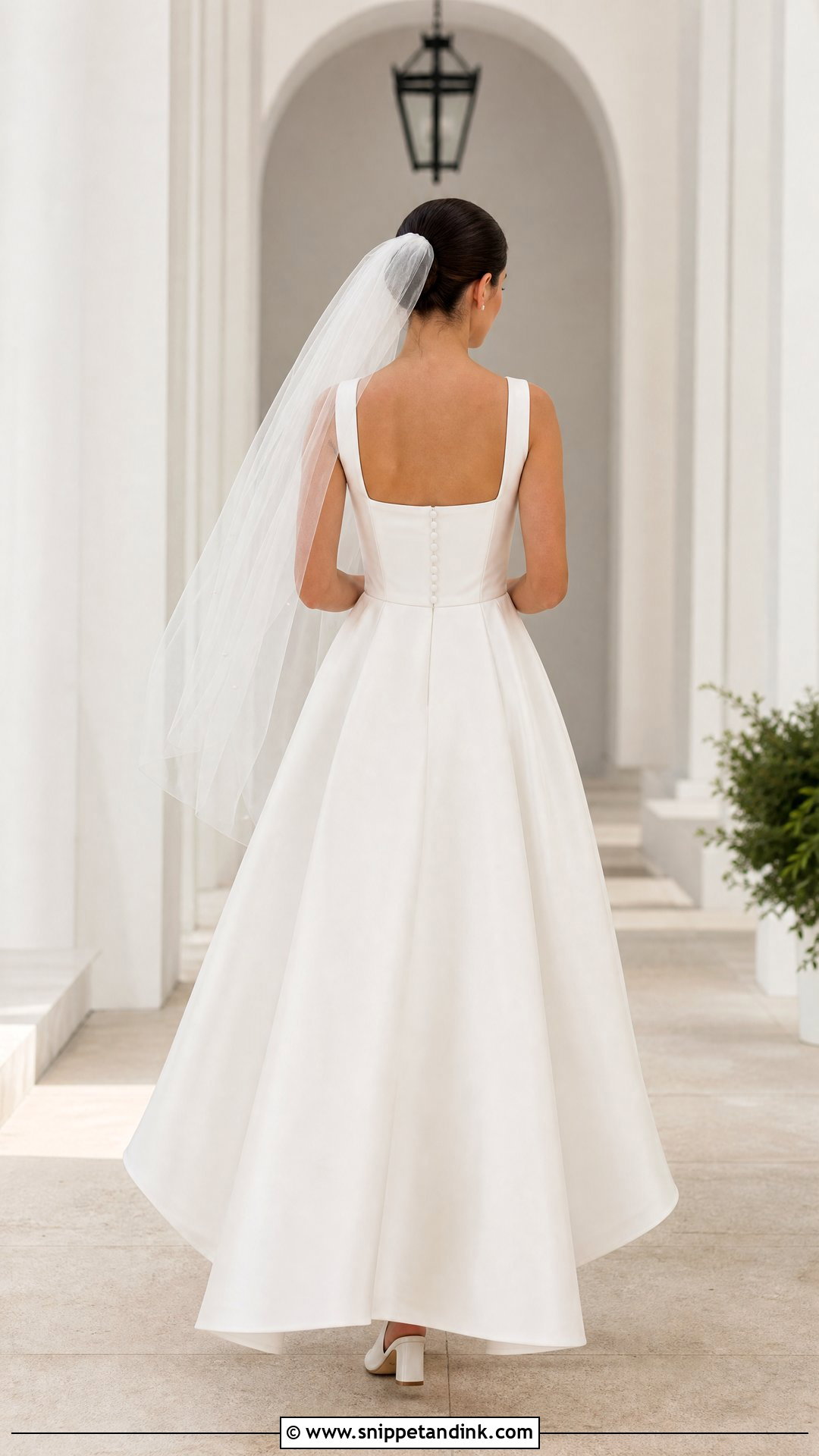
The straight edge of a square back looks architectural and sits very well with wide straps, short sleeves or a matching square front. Satin and mikado keep the corners crisp, while lace softens them toward a vintage feel. A full A-line skirt is classic; a fitted column feels current. The corners are where I look closely, because a poorly finished square back puckers at each angle. Pearl studs, a sleek bun and block-heel pumps keep the look tidy. A small waist bow or covered buttons add interest without changing the shape, and the veil should attach below the hair.
10. Cowl Back Wedding Dress
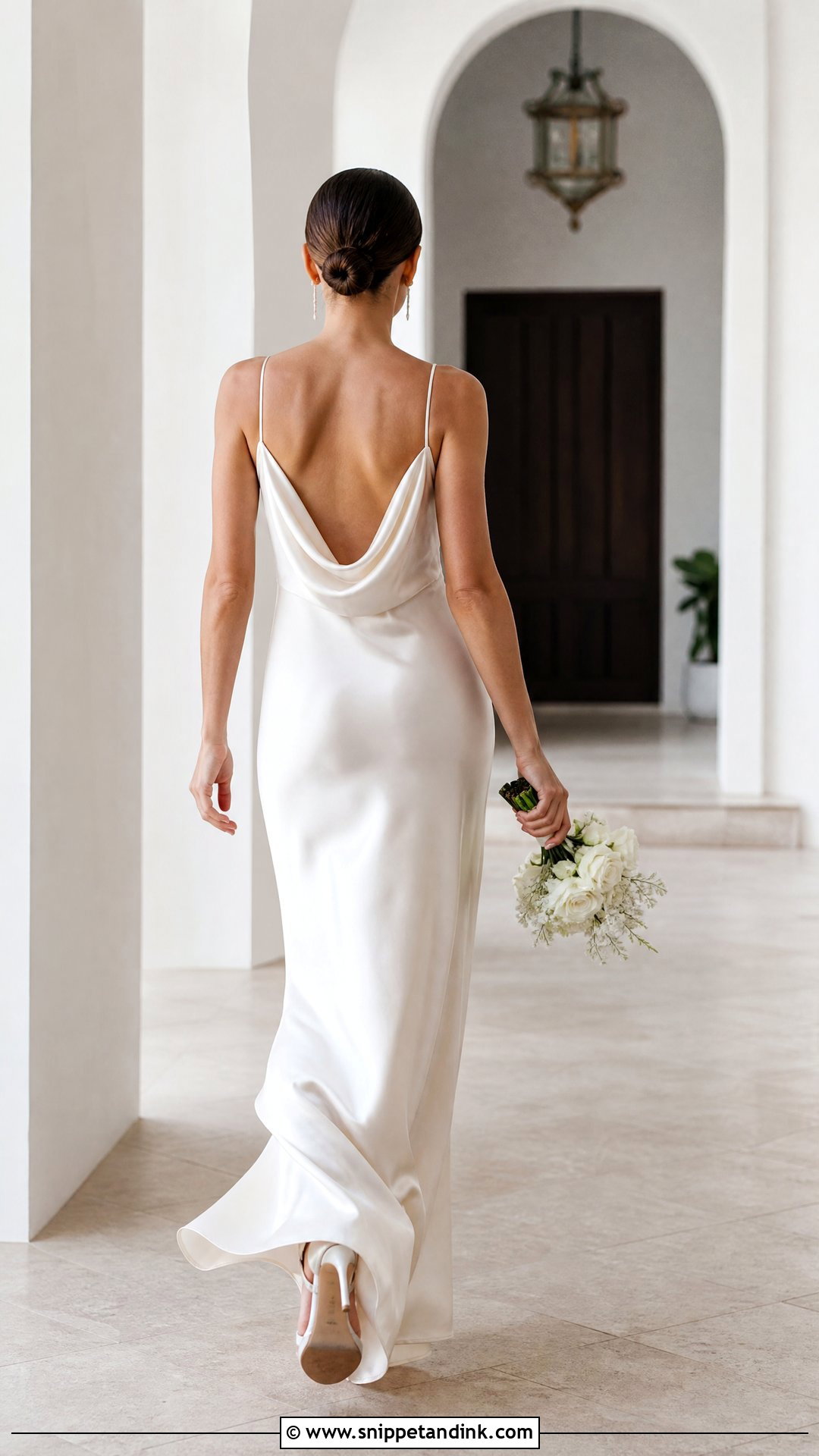
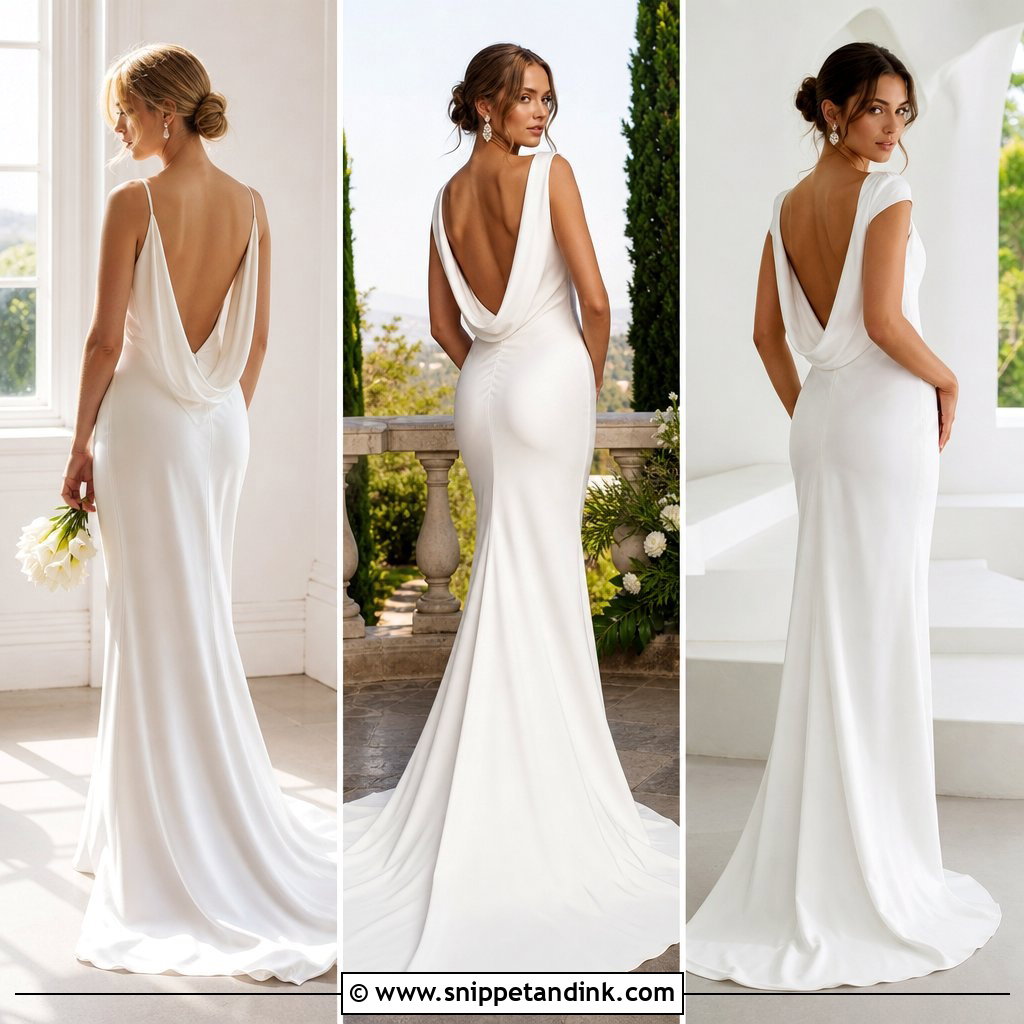
Folds that hang loosely between the shoulder blades are what make a cowl-back wedding dress so graceful, and they only fall well in fluid fabric such as silk satin or a soft crepe. A bias-cut slip is the classic shape. The cowl’s depth moves as you move, so I check it standing, sitting and dancing; a cowl that sits right at rest can swing too low on a turn. A hidden inner strap or a small weight sewn into the fold fixes that. A smooth bun, slim drops, satin sandals and a small white bouquet suit it. Take a long veil off after the ceremony so the drape shows.
11. Pearl Back Wedding Dress
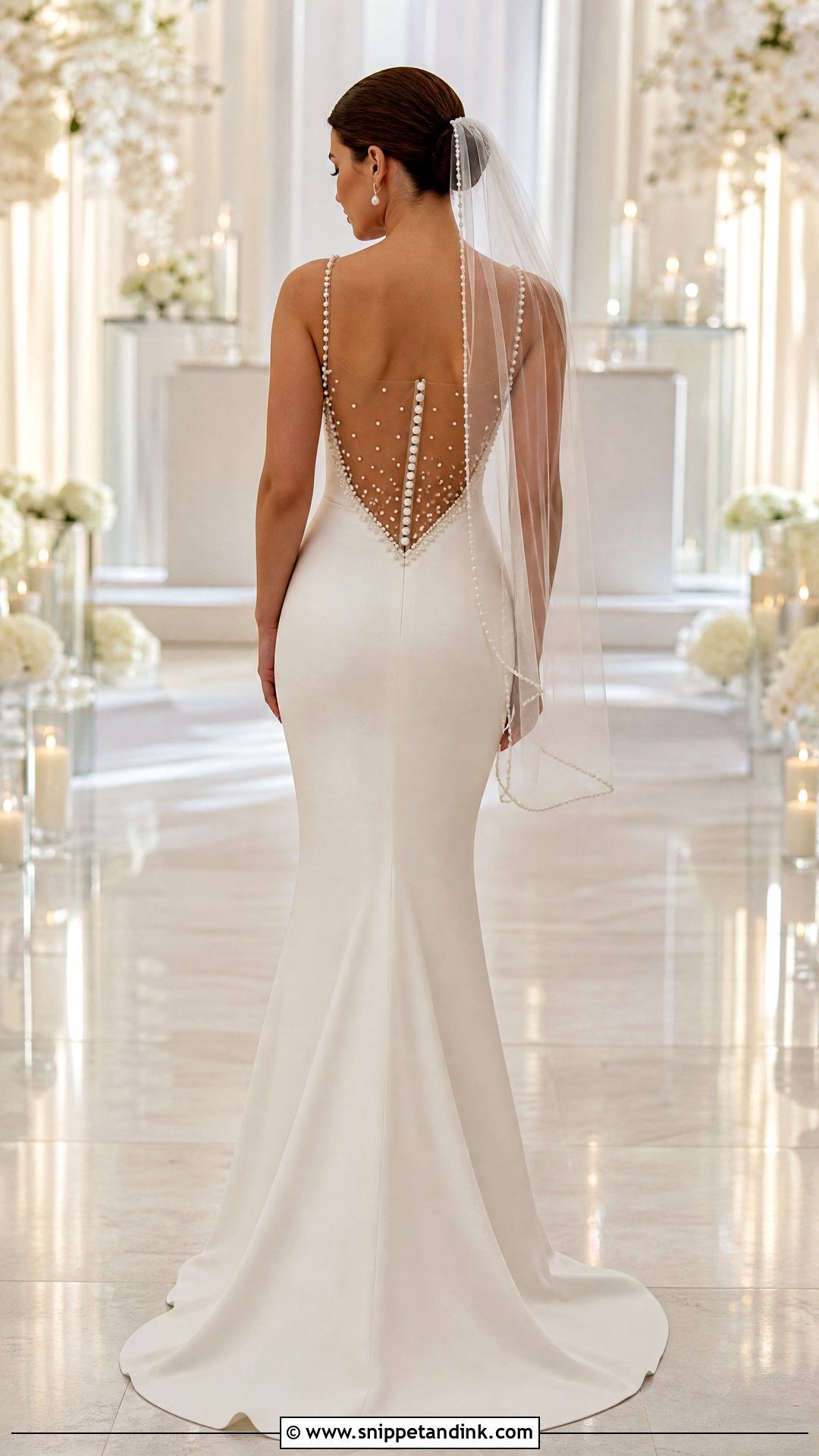
Pearls add soft shine to a back without the glare of crystal. Scattered over illusion tulle they seem to float; trimmed along straps they suit a minimal gown; clustered they read glamorous. Keep the skirt fairly plain so the pearls look deliberate. Pearls rub against chair backs all evening, so I’d check every one is stitched on firmly, not glued, especially at the lower back and waist. Pearl earrings, a neat updo and ivory satin pumps complete it. Choose a plain veil or one with a narrow pearl edge.
12. Beaded Back Wedding Dress
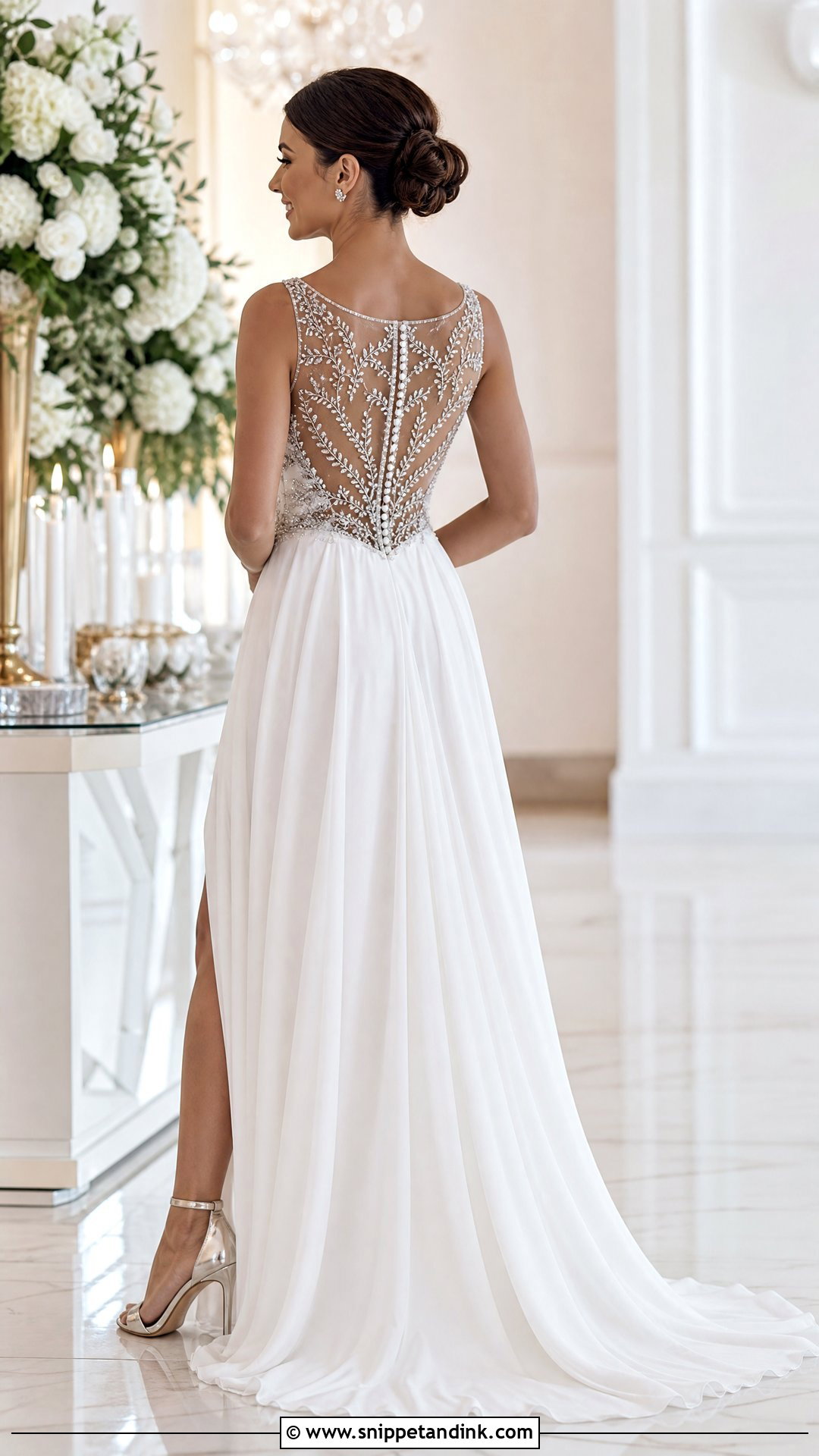
Crystal vines, geometric patterns and Art Deco shapes on mesh catch light every time you turn. The trick is balance: an intricately beaded back sits best above a plain crepe or chiffon skirt. If the gown already sparkles, keep the earrings small and the bouquet simple, with metallic ivory heels. A sleek bun keeps the beadwork in view. Wear a light, plain veil for the ceremony and take it off after. During alterations I run a hand along the underarm and waist seams, because rough bead edges can scratch skin and catch fine tulle over a long day.
13. Floral Appliqué Back Wedding Dress
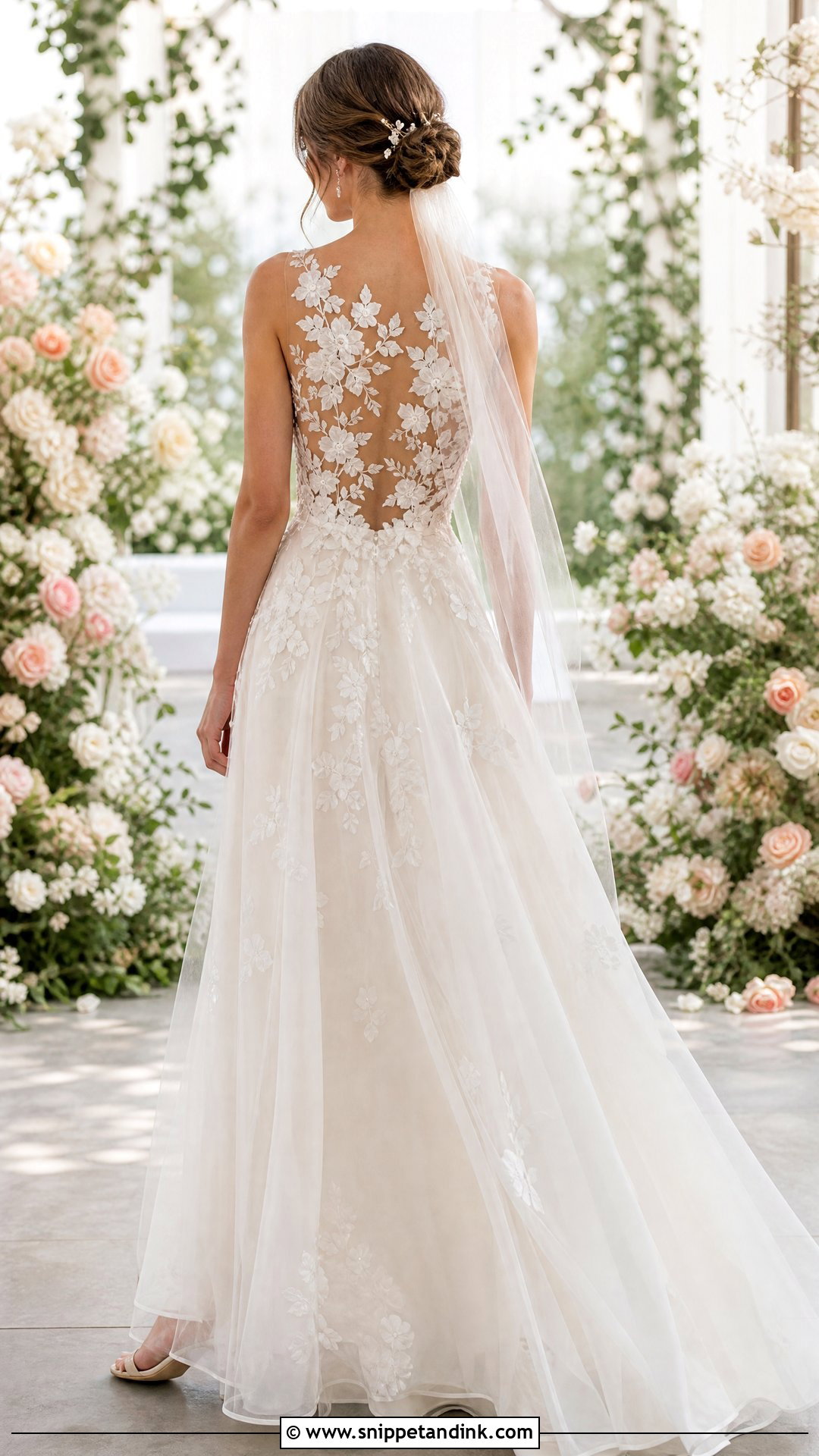
Appliqué flowers can climb from the waist up to the shoulders, frame an open V or scatter loosely over illusion mesh. Small motifs look delicate; large blossoms are more sculptural. A tulle A-line keeps it soft; a fitted gown makes the placement bolder. Raised petals are fragile, so keep the veil plain, because a lace or beaded veil edge hooks onto them. Once the fit is final, ask the seamstress to tack down the edges of each appliqué so they don’t lift. Floral hairpins, small earrings, ivory sandals and a loose but controlled updo finish the look.
14. Draped Back Wedding Dress
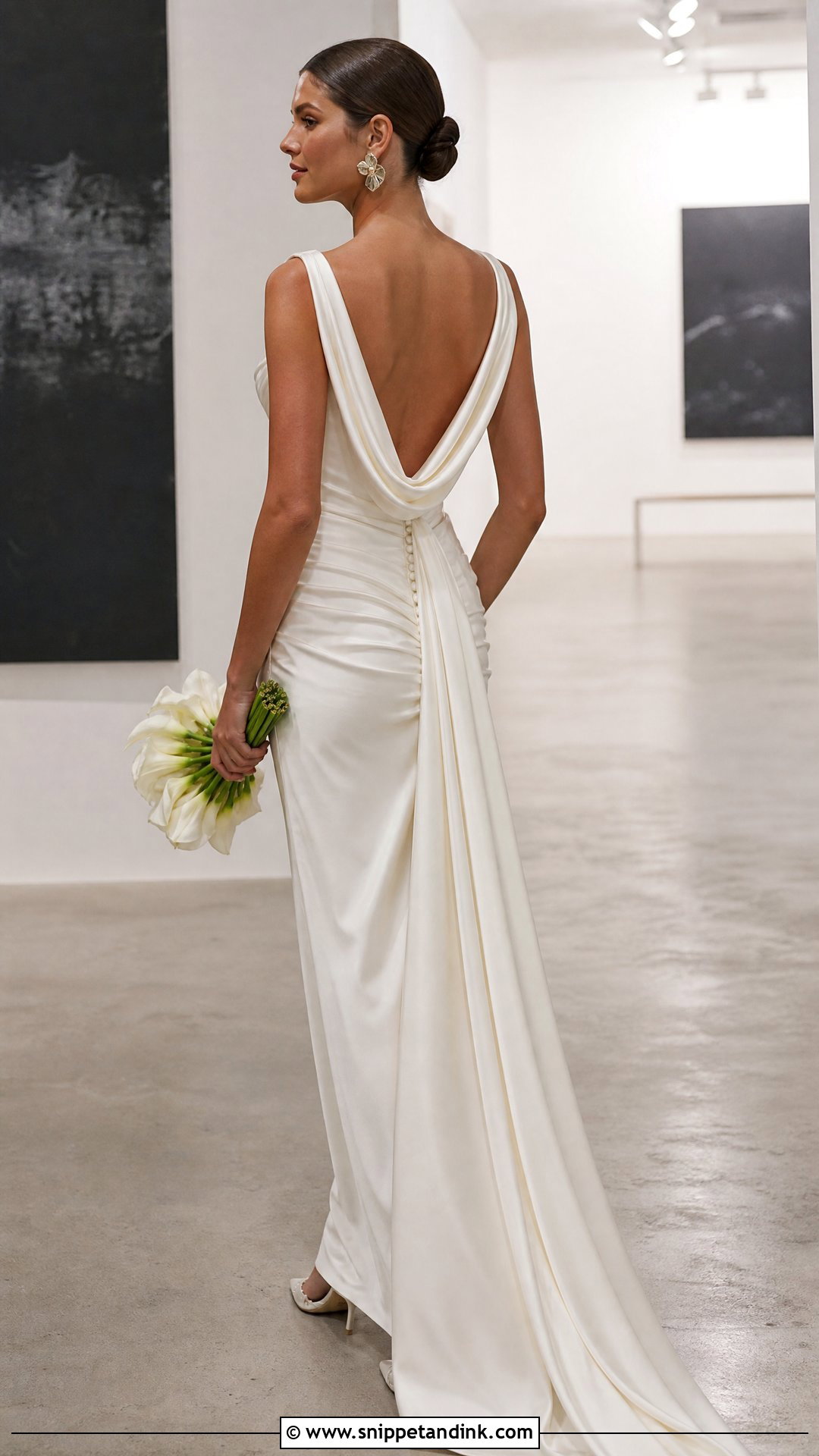
Draping suits a bride who wants texture without lace, crystal or embroidery. Gathered satin may sweep across the waist on a diagonal, or chiffon may fall from the shoulders in a soft cascade. A column keeps it modern; an A-line adds movement. My main concern with drape is bulk: too many folds near the waist thicken the line in side photos, so I view the dress from every angle, including from behind and seated. A detachable draped panel gives you a second look for the reception. Sculptural earrings, a low bun, pointed heels and a slim bouquet suit it.

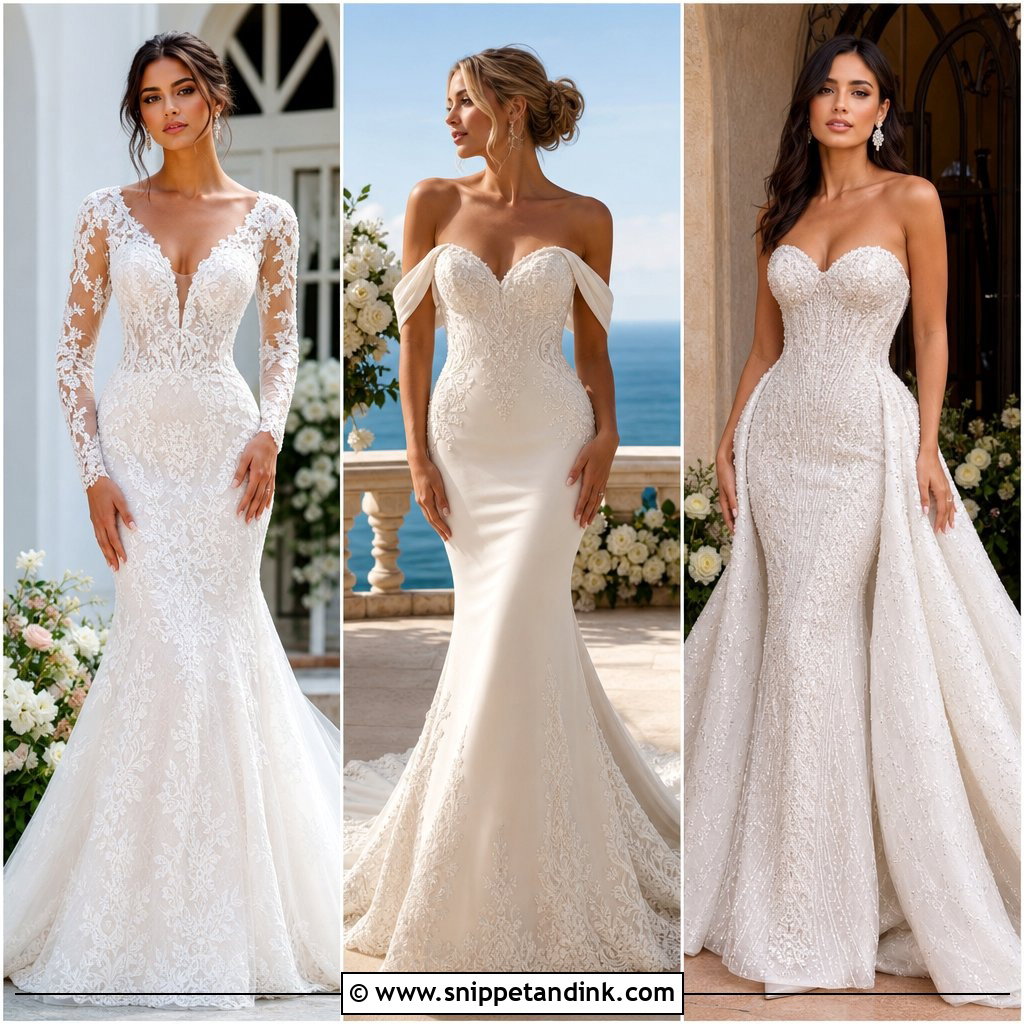
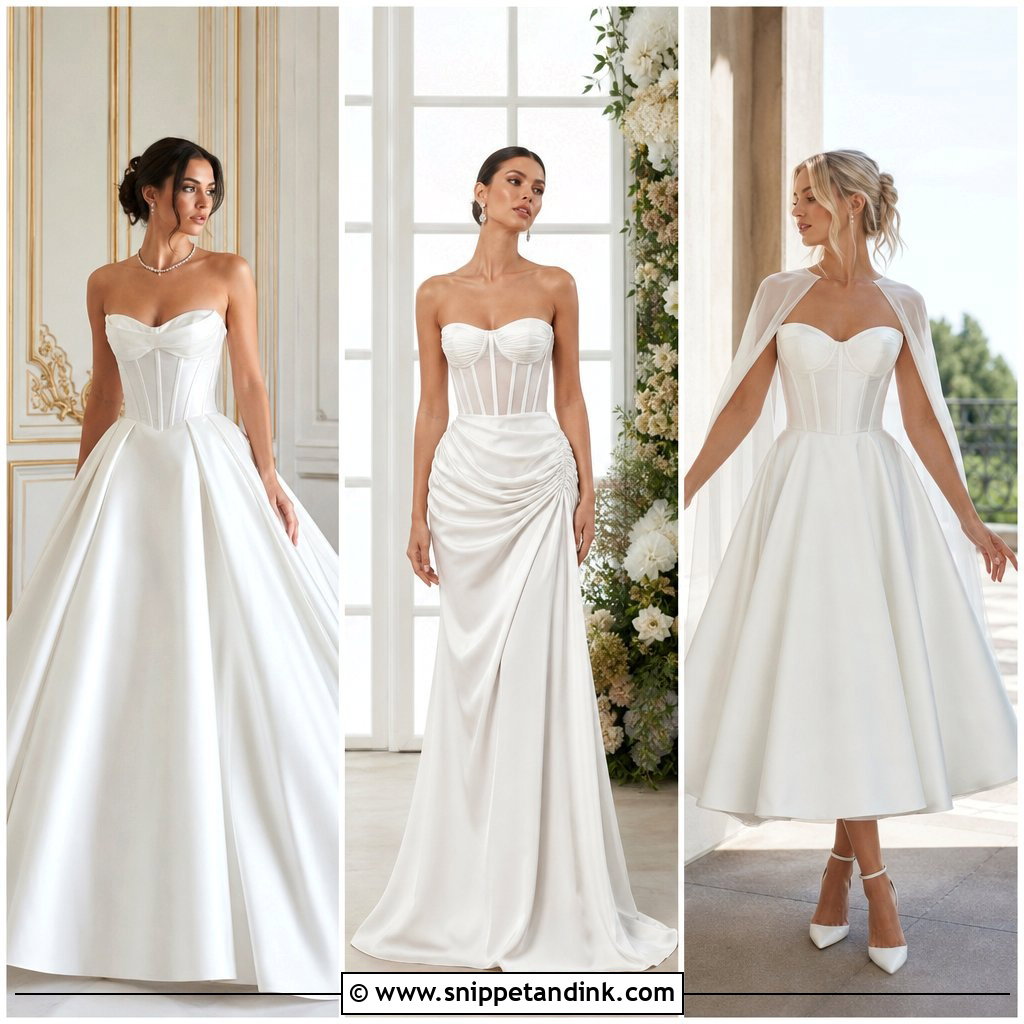
15. Backless Wedding Dress With Straps
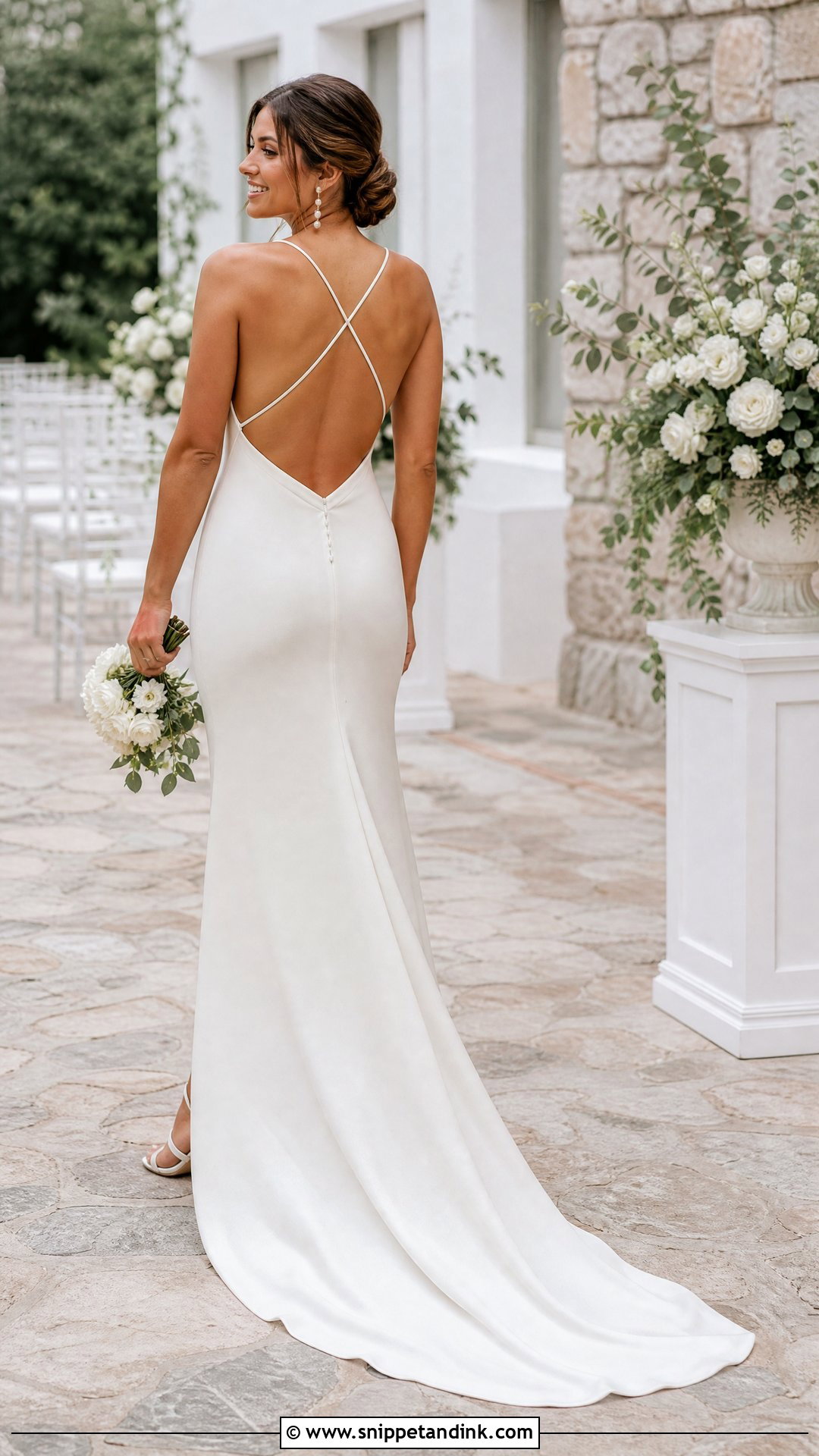
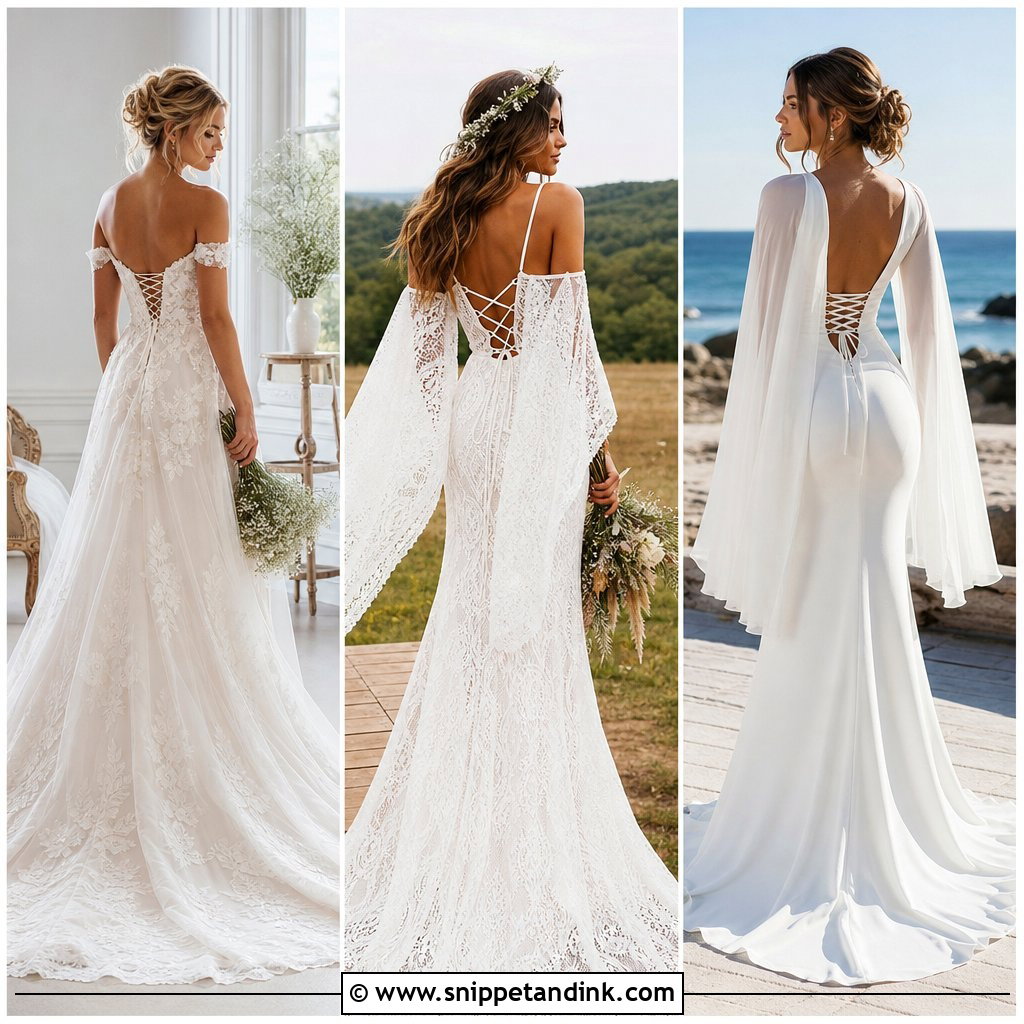
Straps across a bare back do two jobs: they add a graphic line and they stop the bodice slipping forward. Thin spaghetti straps are delicate, crossed straps more structured, and pearl or beaded straps decorative. Fitted crepe, satin slips and light chiffon all carry them. Have the tailor adjust each strap separately, with you standing naturally, because one strap too tight pulls the whole bodice off centre. The right tension keeps the open-back shape smooth and even. A low bun or braided updo, drop earrings and sleek sandals finish it, and the veil should attach under the hair.
16. Backless Wedding Dress With Lace Sleeves
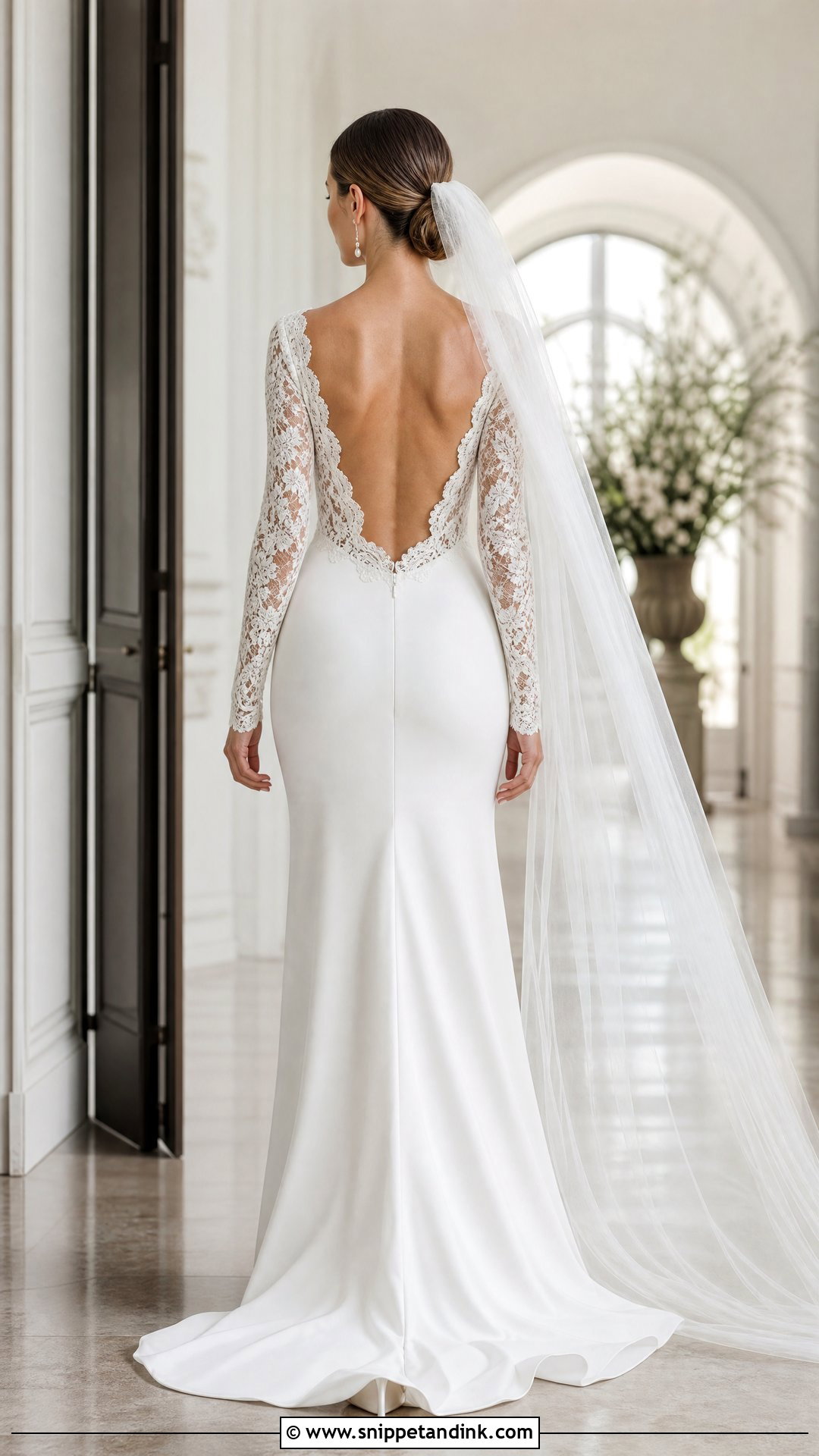
Covered arms and a bare back make a striking contrast, and the combination keeps the gown feeling formal. The lace on the sleeves should connect to the bodice motif without an obvious seam. Built-in support matters even more here, since a full sleeve rules out halter or convertible bras. Movement is what I test: reach forward, hug someone, sit down. Long sleeves pull on the back edge when you reach, and if the opening lifts away from your skin, the sleeve needs more room at the underarm. A slim crepe skirt looks polished, and layered tulle reads romantic. Pearl drops, a low chignon, closed-toe heels and a plain cathedral veil suit it.
17. Scalloped Lace Back Wedding Dress
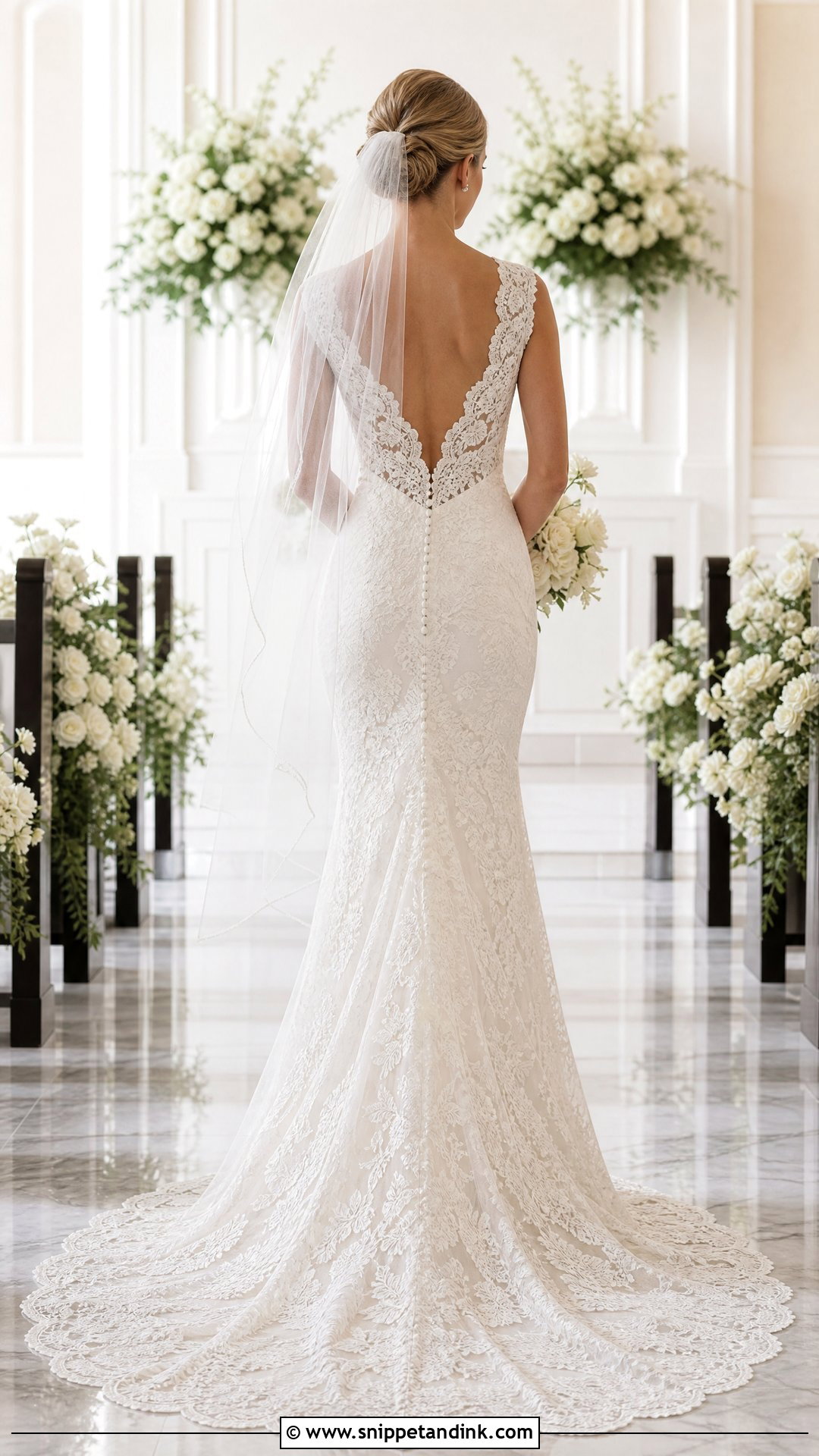
A scalloped border gives the back neckline a clear, decorative edge. It can frame a deep V, follow a low scoop or finish an illusion panel. Repeating the same scallop on the sleeves, train or veil makes the whole look hang together. An A-line lace gown feels traditional, while a fitted one is more dramatic. Because scallops are cut around each curve, alterations here have to be hand finished, otherwise one side ends up with half a scallop. Pearl studs, a smooth updo and ivory pumps finish it. If the scallops are busy, keep the veil plain.
18. Crisscross Strap Back Wedding Dress
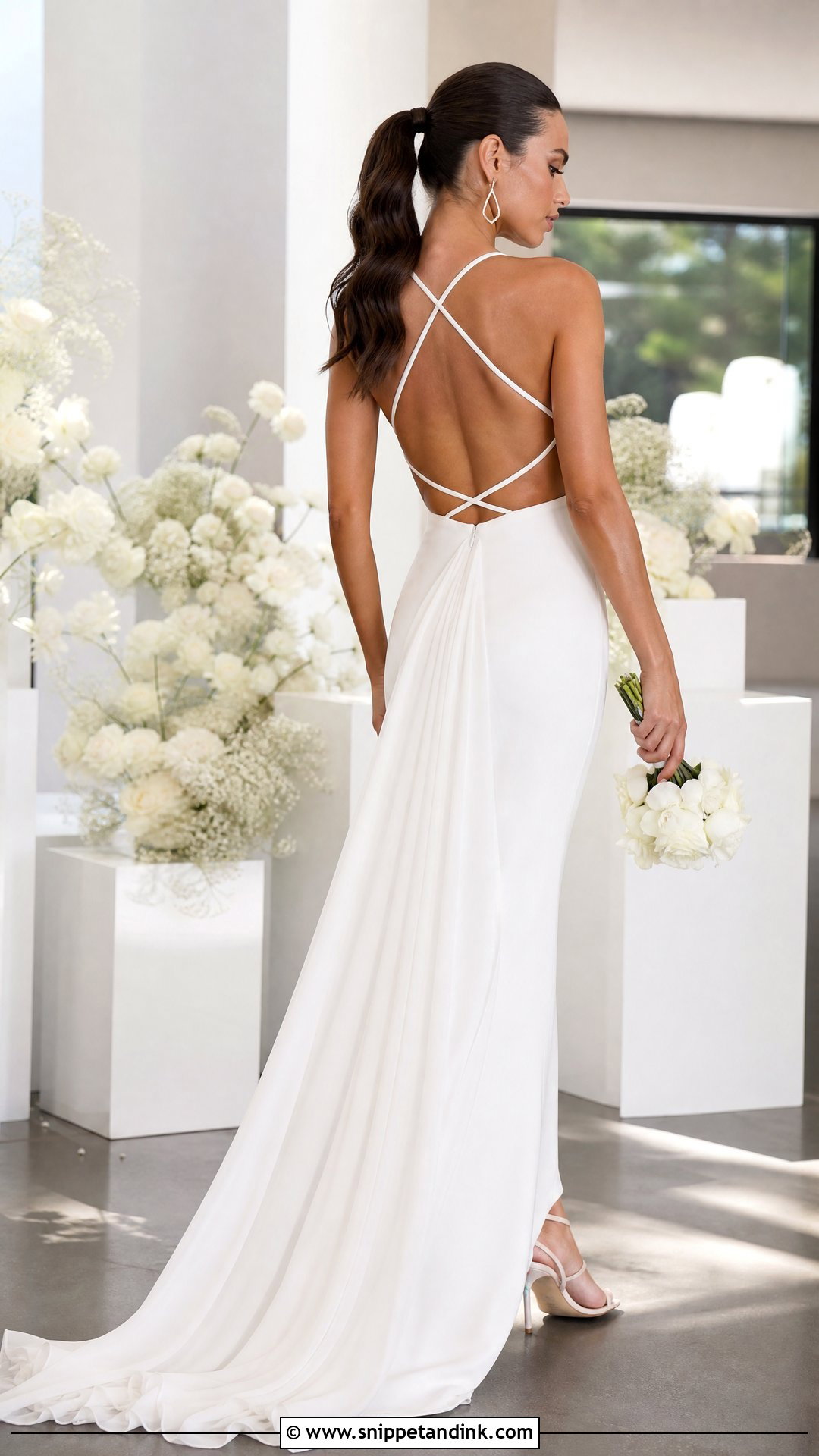
Crisscross straps add a graphic finish and help anchor the bodice. One simple X, several narrow lines or straps joined through small rings each give a different feel. A clean crepe sheath shows the structure best; a chiffon skirt softens it. Ask the tailor to set every strap while you stand naturally, since uneven tension shifts both the back and the front fit. A sleek ponytail or bun, geometric earrings, minimal sandals and a compact bouquet keep it uncluttered, so skip the statement necklace. A short or very sheer veil keeps the lines visible.
19. Cape Back Wedding Dress
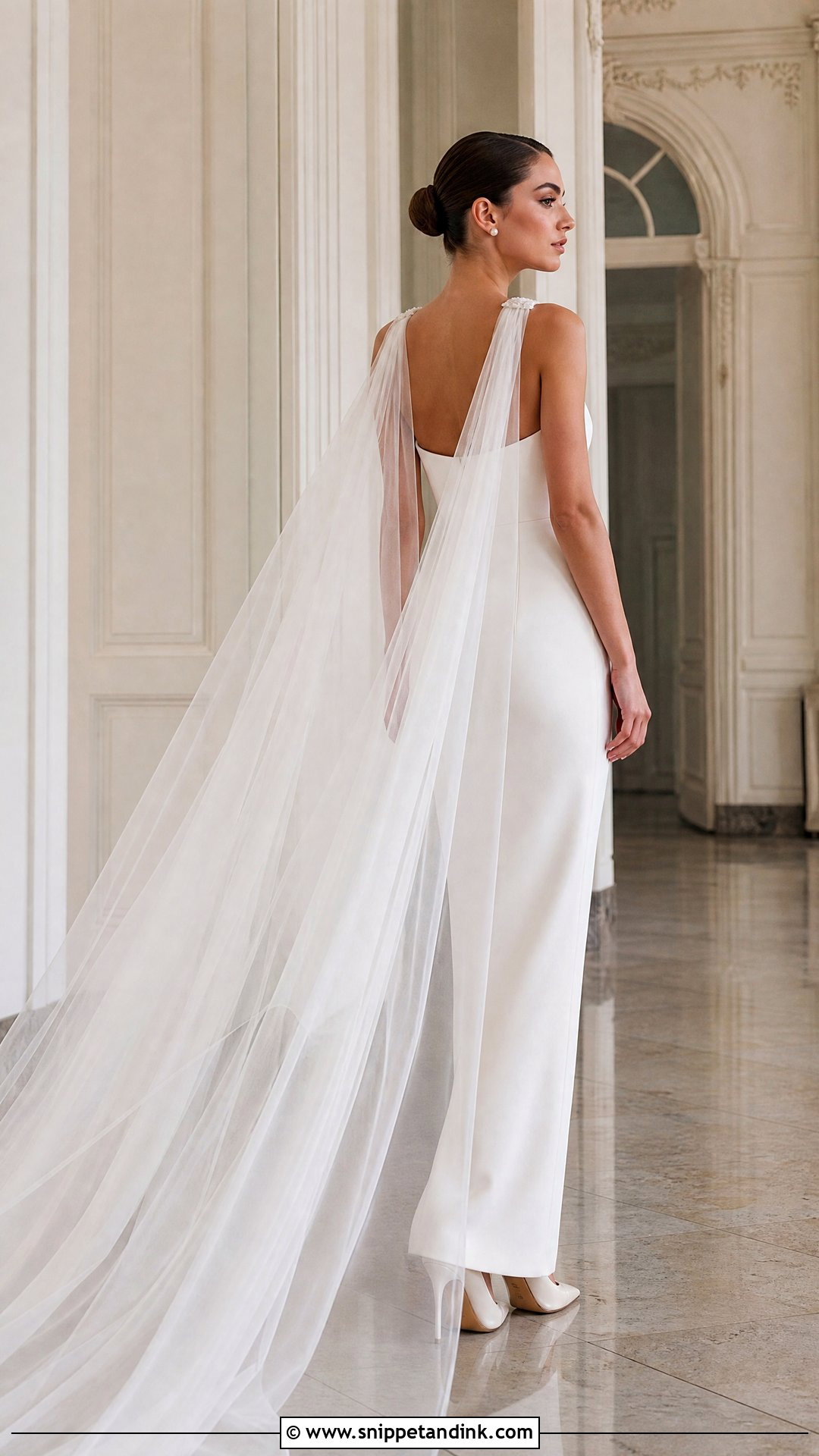
A cape can give a plain gown a sweeping back view and come off later for the reception. Sheer tulle is airy, lace adds texture and crepe holds a crisp shape. It may hook at the shoulders, neckline or upper back. A fitted column or clean strapless A-line underneath keeps things simple, with a polished bun, small earrings and pointed ivory pumps. I wouldn’t pair a long cape with a heavy veil; the two layers fight and tangle. Check that the fastenings hold firmly yet come off without tugging the gown’s fabric, because hooks sewn straight into fine silk can tear it.
20. Detachable Train Back Wedding Dress
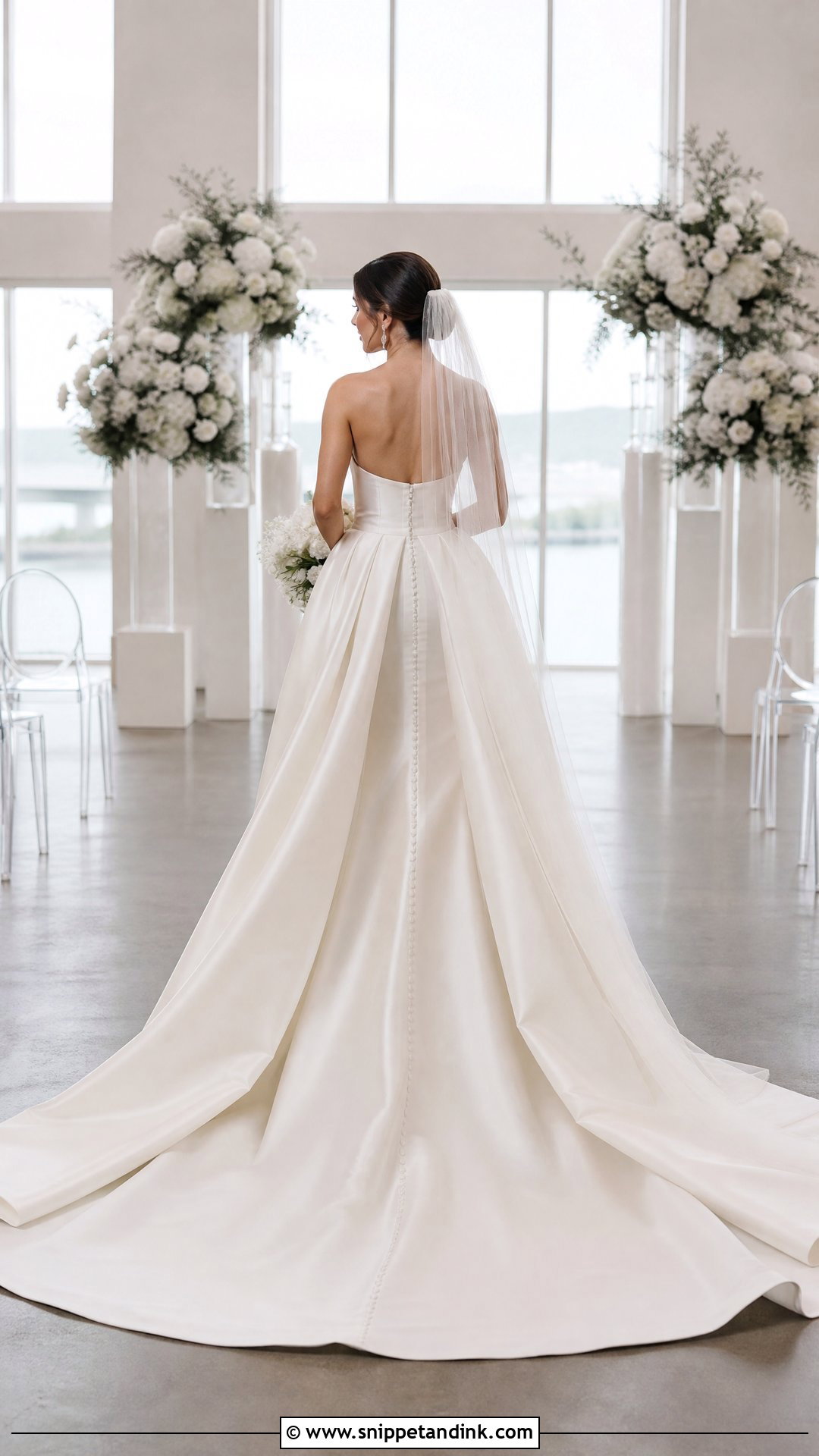
A removable train gives you the full ceremony sweep and a practical shape for dancing, which is why overskirts and detachable trains keep turning up in bridal collections. A big satin train over a fitted dress makes a strong contrast; a layered tulle train softens a simple A-line. Covered buttons, a bow or appliqué flowers can hide the fastening points. For the ceremony, wear a low bun, drop earrings, ivory pumps and a sheer veil. I’d have a bridesmaid practise taking the train off and putting it back on at the final fitting, so it takes two minutes on the day instead of twenty.
Getting Laced, Buttoned and Bustled on the Morning
Back details are the slowest part of getting dressed, and they’re done by someone other than you. The calmest mornings I see are the ones where that person has practised at a fitting. Here’s how I’d plan it:
- Choose one dresser, and bring them to the last fitting. A long row of loop buttons takes a while, and a crochet hook or button hook makes it far quicker.
- For lacing, start at the top and work down in even passes, leaving the final tightening until you’re standing straight. Tuck the loose ribbon ends inside, not into a bow that drags.
- Get into the gown last, after hair and makeup. Step in from the floor rather than pulling it over your head, with a light scarf over your face to keep foundation off the bodice.
- Have the bustle shown on video at the final fitting. Bustle points are often colour coded with thread or ribbon, and they’re hard to find under a full skirt in a dim room.
- Pack a small kit: a needle threaded in ivory, two spare buttons if the shop has them, safety pins, clear tape and a stain pen.
If a button pops or a loop snaps mid-evening, don’t panic. A safety pin fastened from the inside holds most closures until the end of the night, and nobody in the room will see it.
The Back Is the View Your Guests See Longest
A well-chosen back detail makes a gown feel personal from every angle. You can go quiet with a square back or covered buttons, or go bold with an open back, a big bow, illusion lace or a removable train. Decide how much coverage and support you want first, then look at how the detail works with your fabric, silhouette, veil, hair and jewellery. At every fitting, walk, sit and move with a mirror behind you, and ask someone to photograph your back in daylight to check mesh colour, embellishment and proportion. The best choice is the one you forget you’re wearing by the evening, because it fits and stays put.
You'll Like These Ideas:



Leave a Reply