
An Indian wedding asks a girl to dress for several very different events: a mehendi on the lawn, a sangeet with choreographed dances, the pheras, a reception under chandeliers. The outfit that’s right for one is usually wrong for another. I’ve put together 25 looks, from lehenga cholis and Banarasi sarees to shararas, Anarkalis, gowns and fusion sets, each with the styling notes I’d give a client at a fitting: what to wear with it, what it’s hard to do in, and where it belongs on the wedding calendar.
Sangeet, Pheras or Reception? Let the Function Choose the Silhouette
Most outfit regrets I hear about come from wearing the right dress to the wrong function. Before shopping, I’d write down each event you’re attending, its time of day, and whether it’s indoors or out. Then assign silhouettes.
- Mehendi and haldi: cotton, kurta skirt sets, light lehengas. You’ll sit on the floor and may get stained.
- Sangeet: shararas, Punjabi suits, crop top sets. Anything you can dance in.
- Ceremony: sarees, silk suits, traditional lehengas. Covered shoulders are often expected.
- Reception: gowns, saree gowns, sequins, velvet in winter.
Two colours to ask about rather than assume: red, which can look like you’re competing with the bride, and black or white, which some families avoid at ceremonies. A quick message to the family saves an awkward evening.
1. Lehenga Choli For Indian Wedding
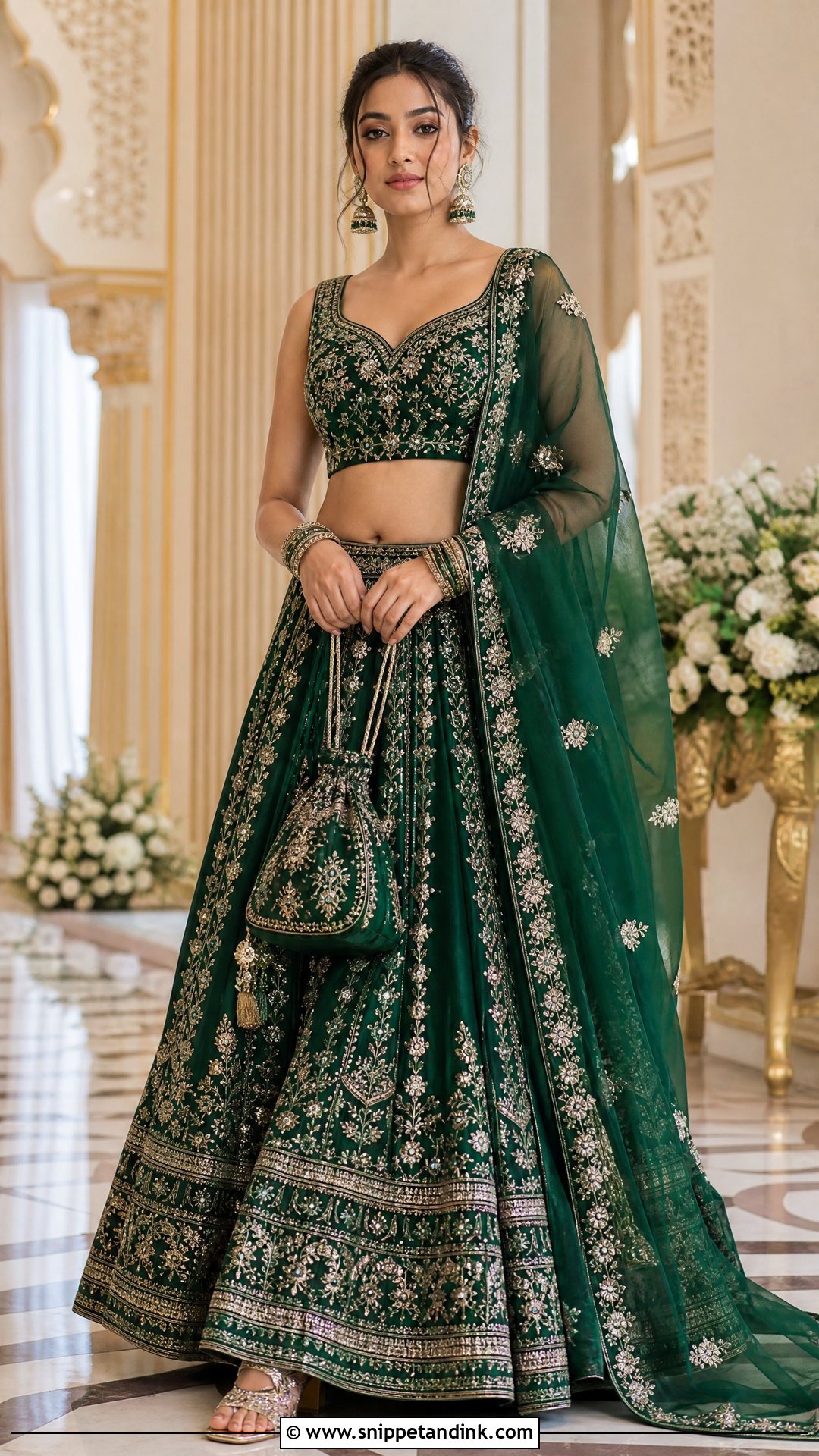
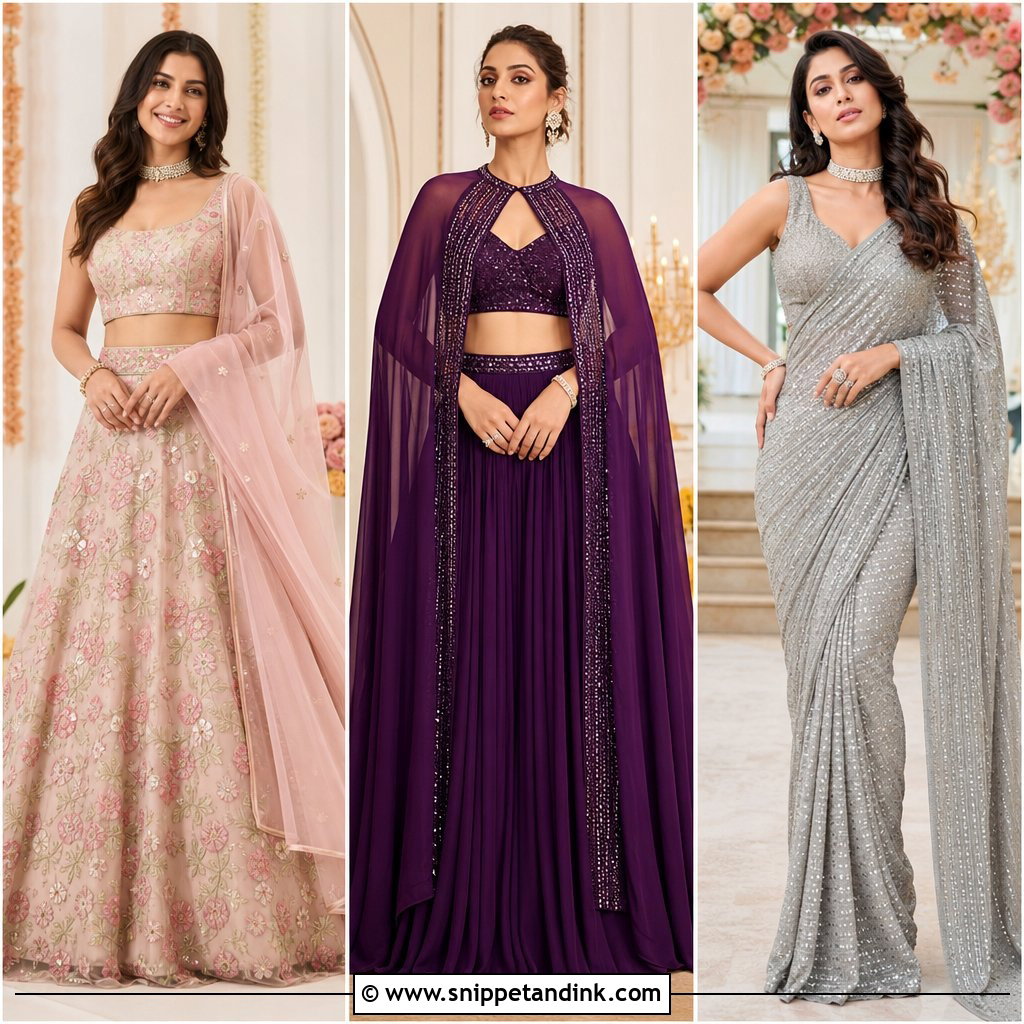
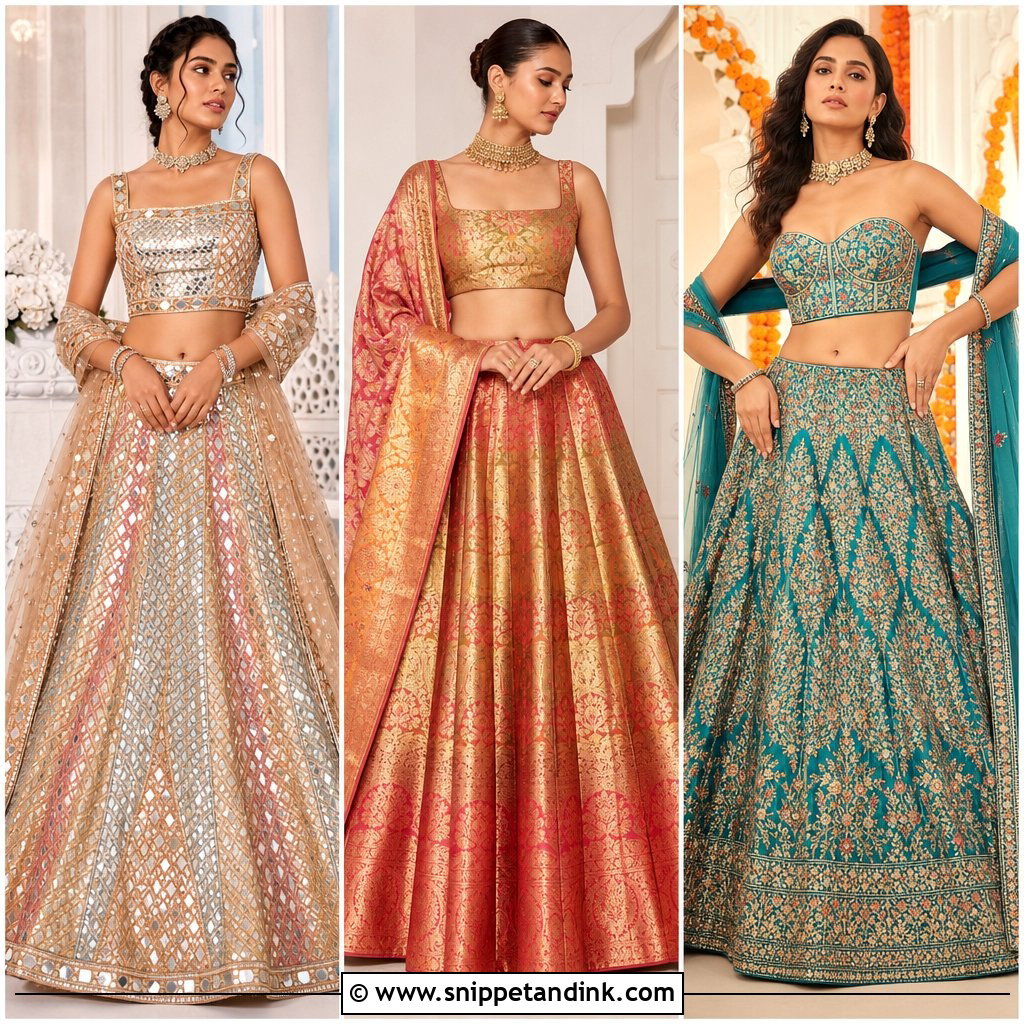
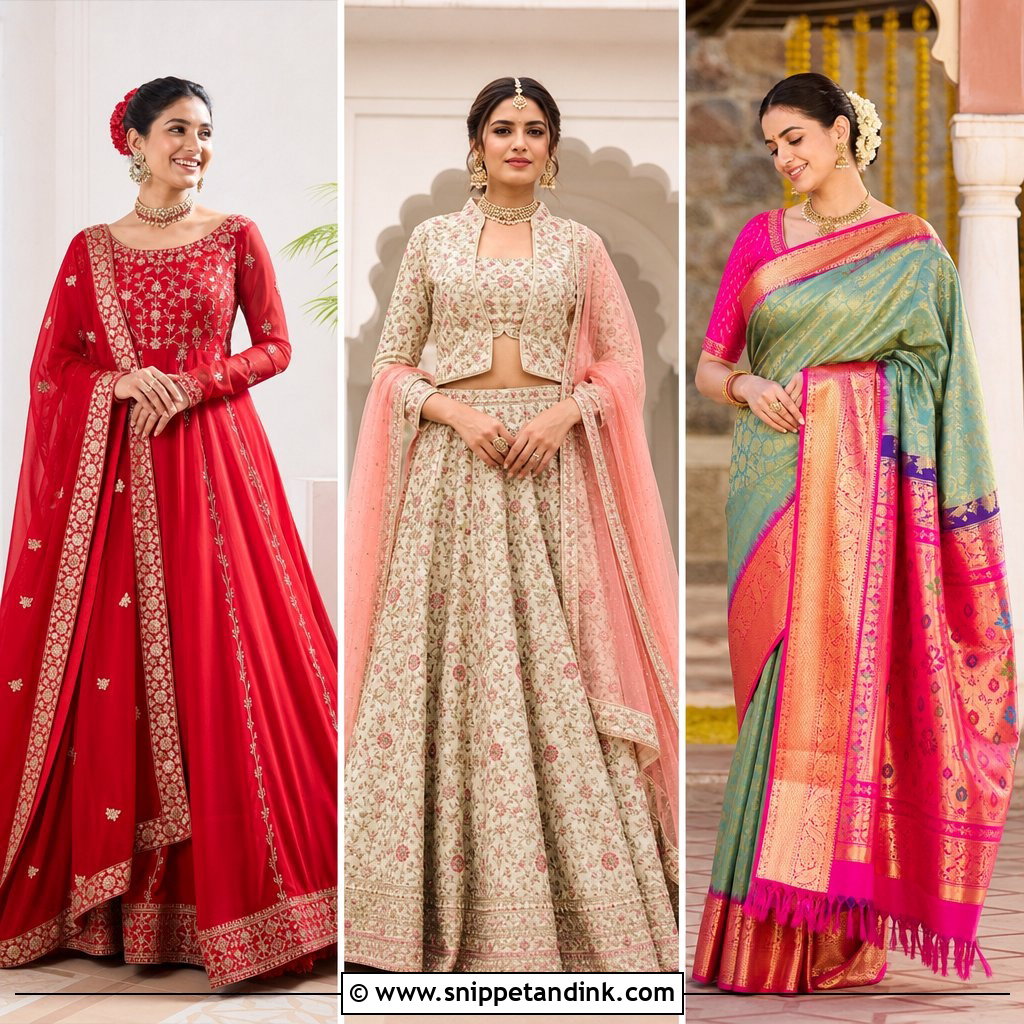
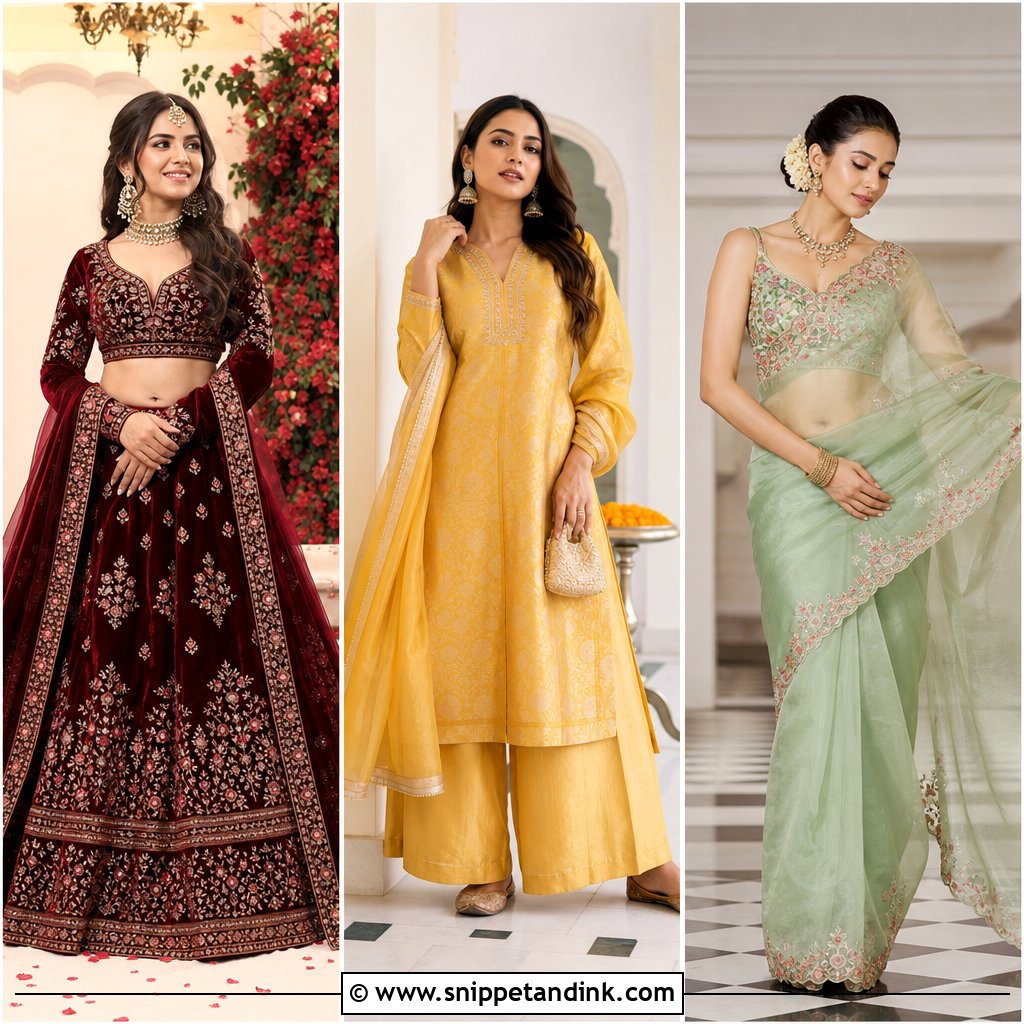
The lehenga choli is still the default, and for good reason: it works at almost every function. The thing I check is skirt weight. A heavy lehenga is fine for an hour of photos and exhausting for a four-hour ceremony. For younger girls, georgette, organza or a silk blend in emerald, magenta or marigold is plenty festive. Pin the dupatta at the shoulder and the waist so it stays put during the rituals.
2. Banarasi Saree For Indian Wedding
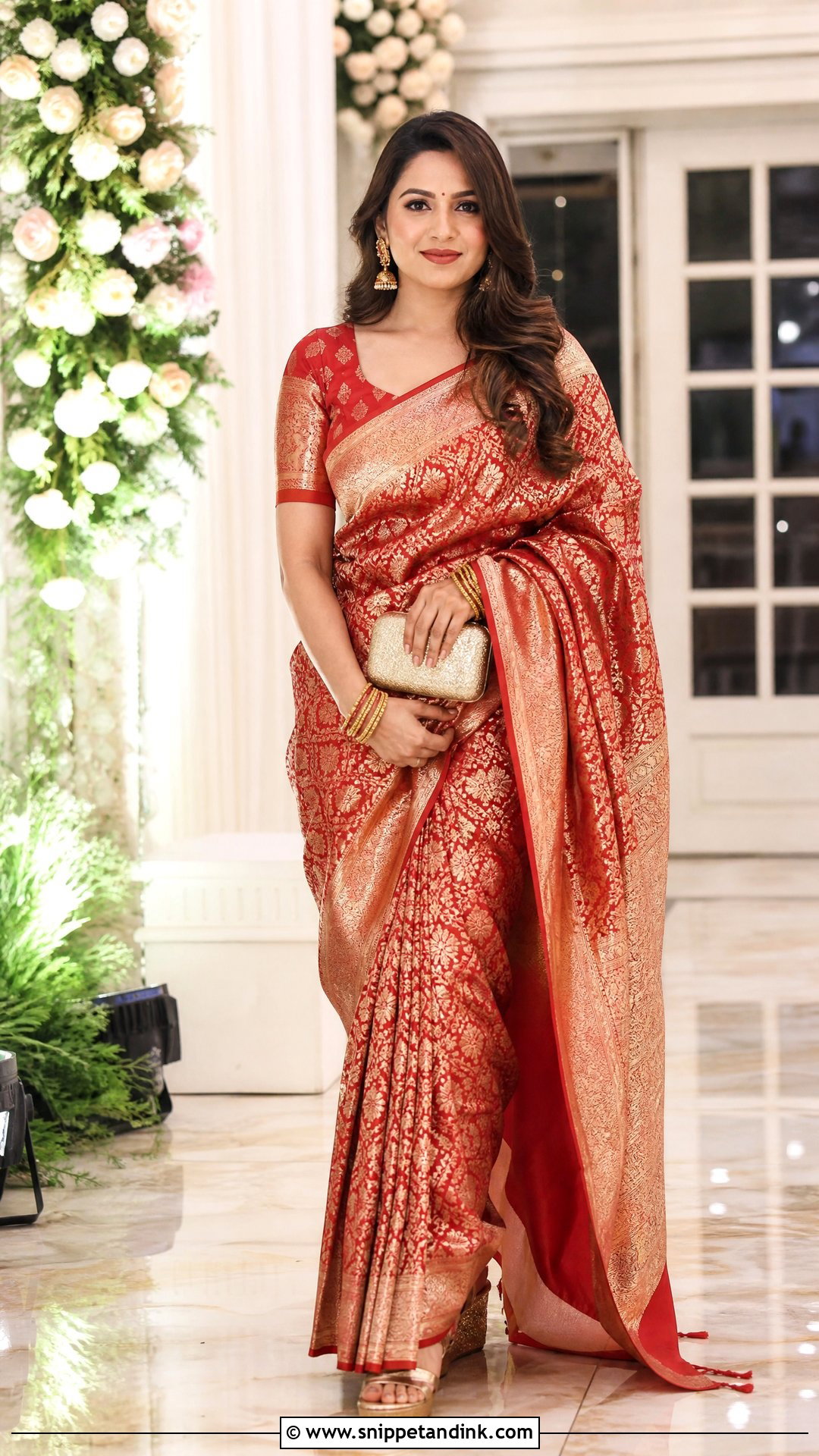
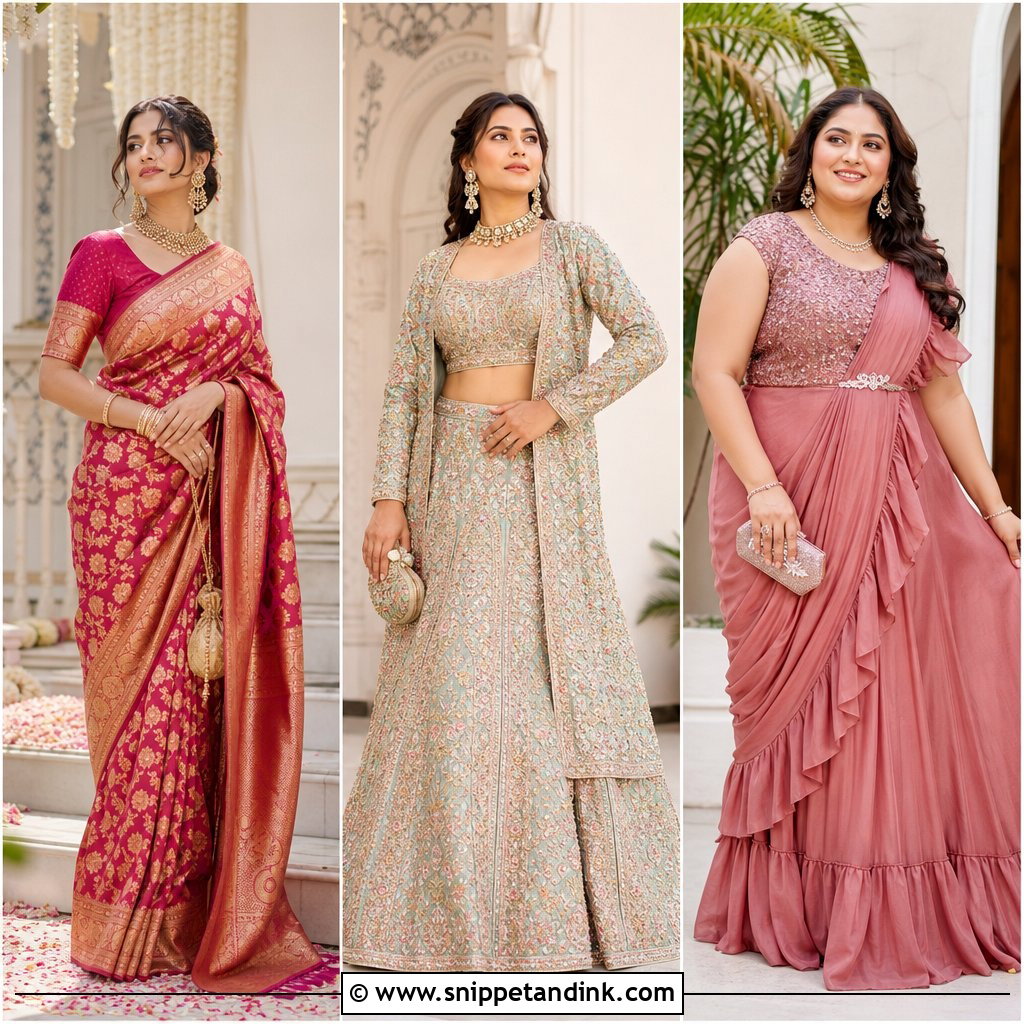
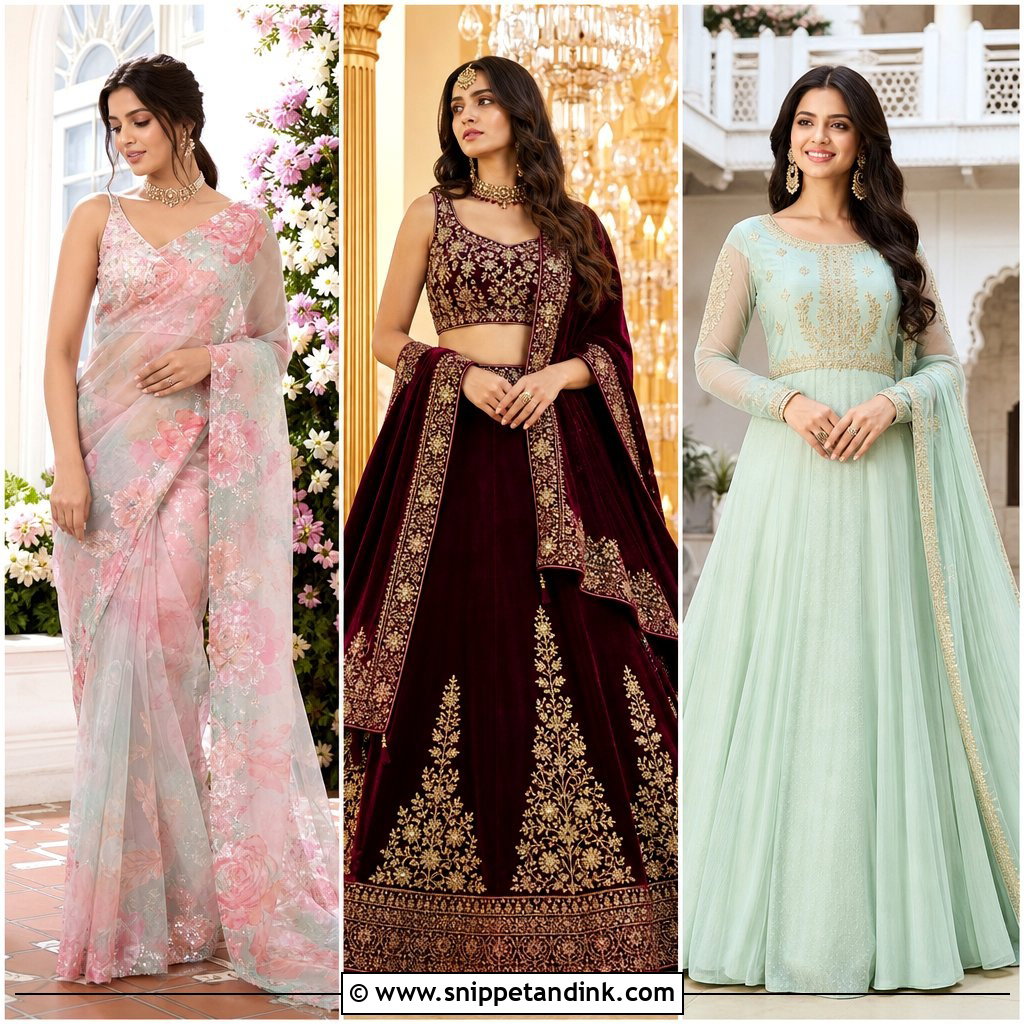
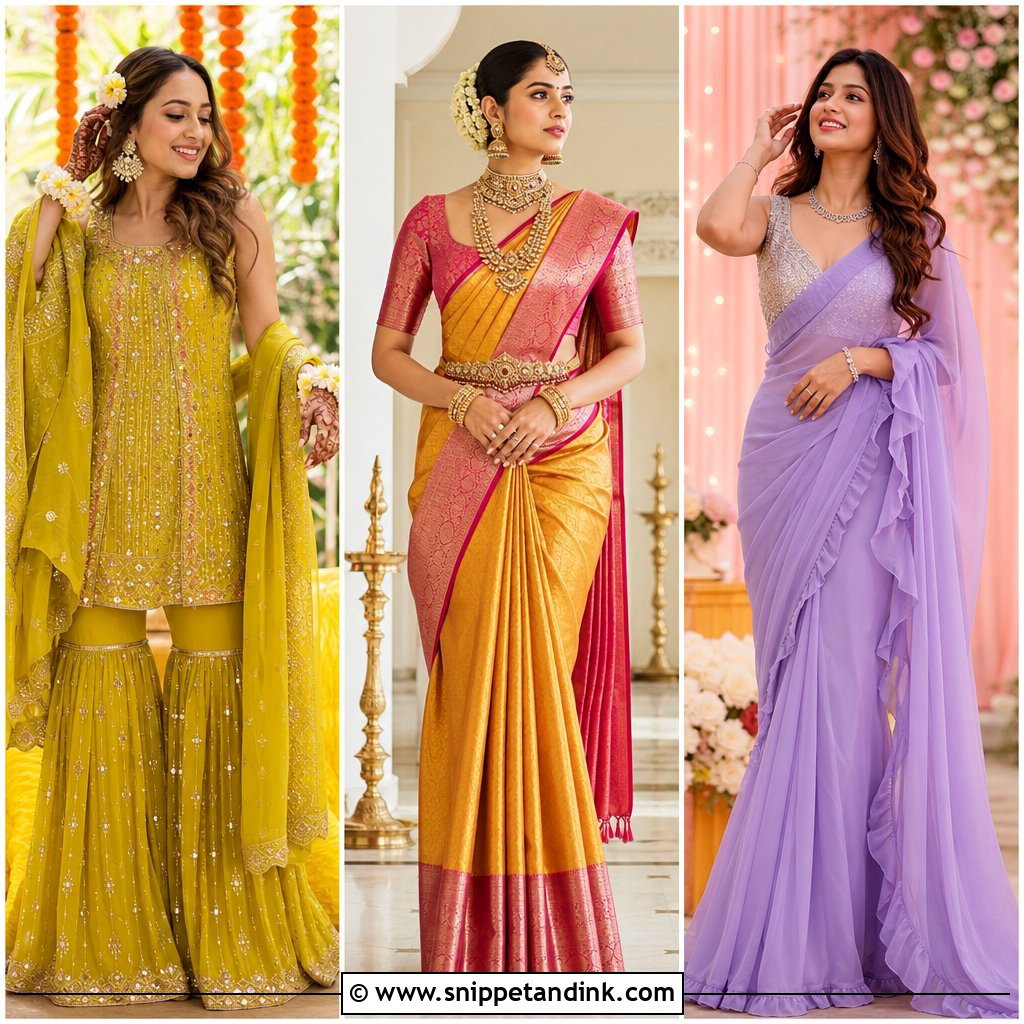
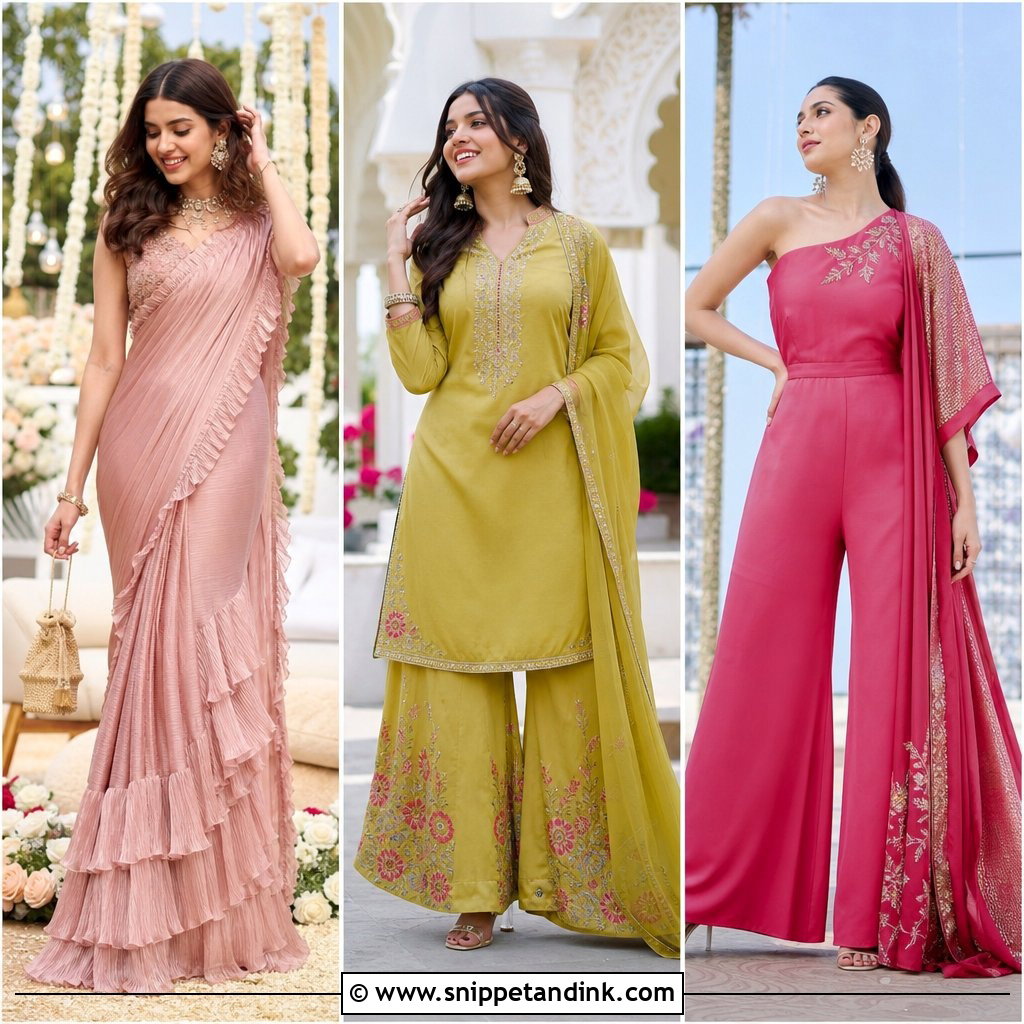
A Banarasi saree is the most formal thing a guest can wear, and it suits the main ceremony. If you’ve never worn a saree for a full day, I’d recommend a lighter silk blend or a pre-stitched version over pure heavy silk. A contrast blouse lifts it: gold with red, pink with green. Wedges or flat sandals, gold jhumkas and a bindi. Have someone who drapes well help you; a saree draped in a hurry starts slipping by the second hour.
3. Anarkali Suit For Indian Wedding
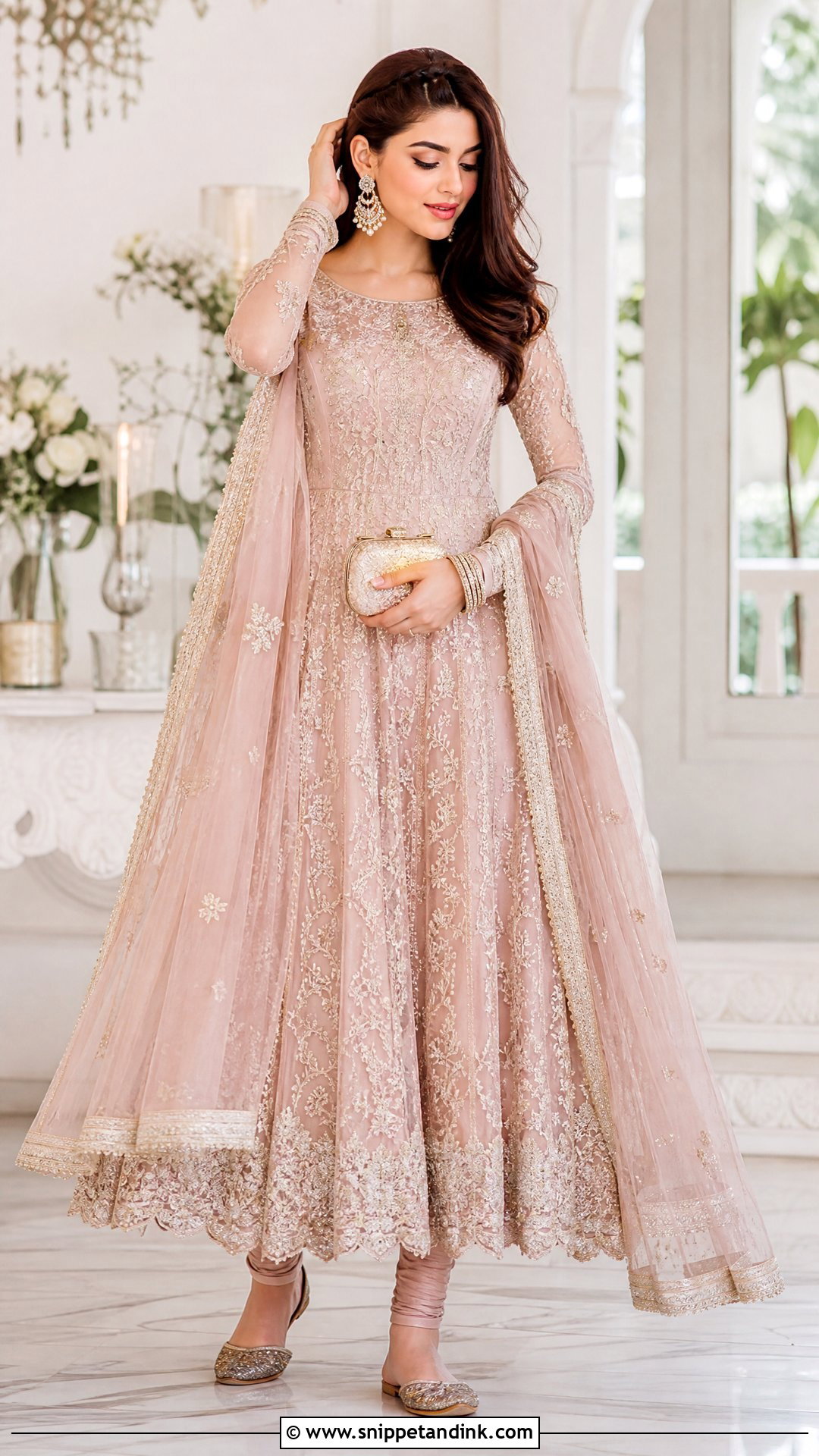
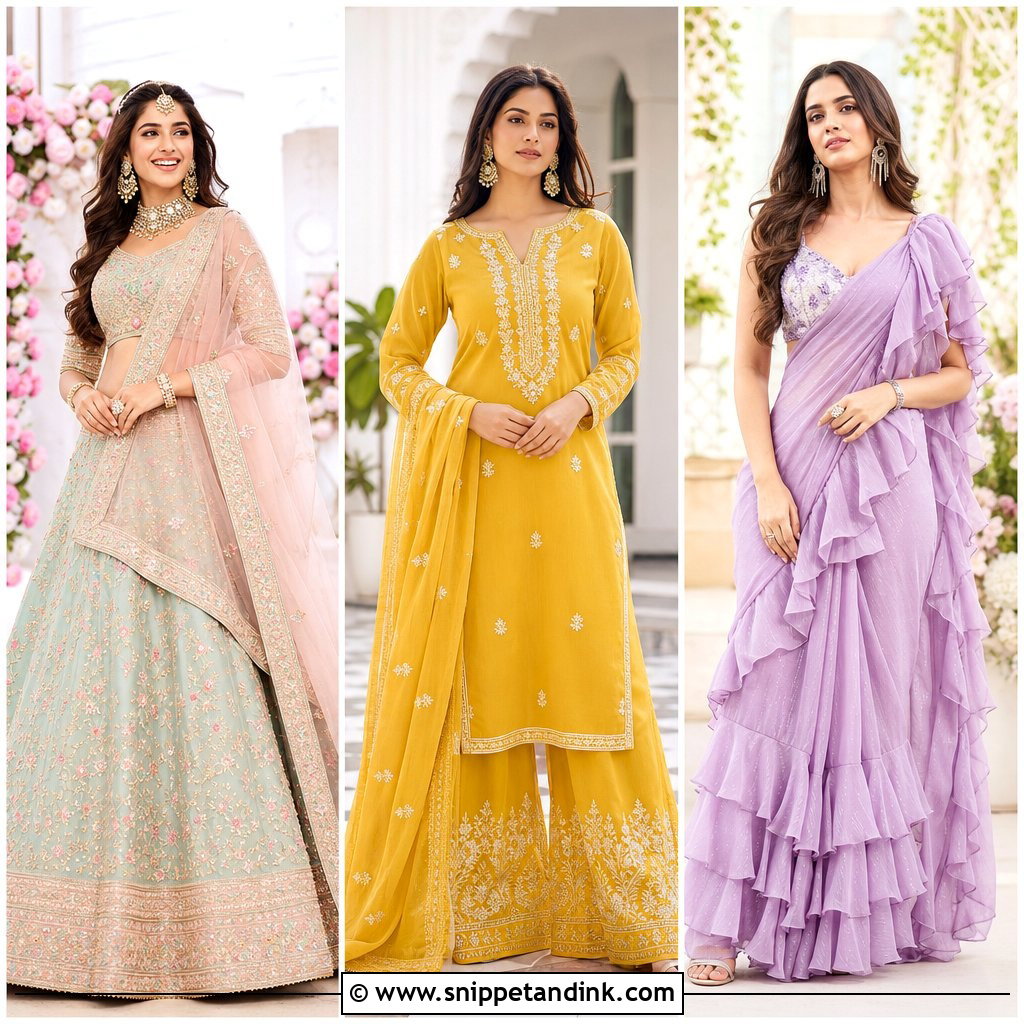
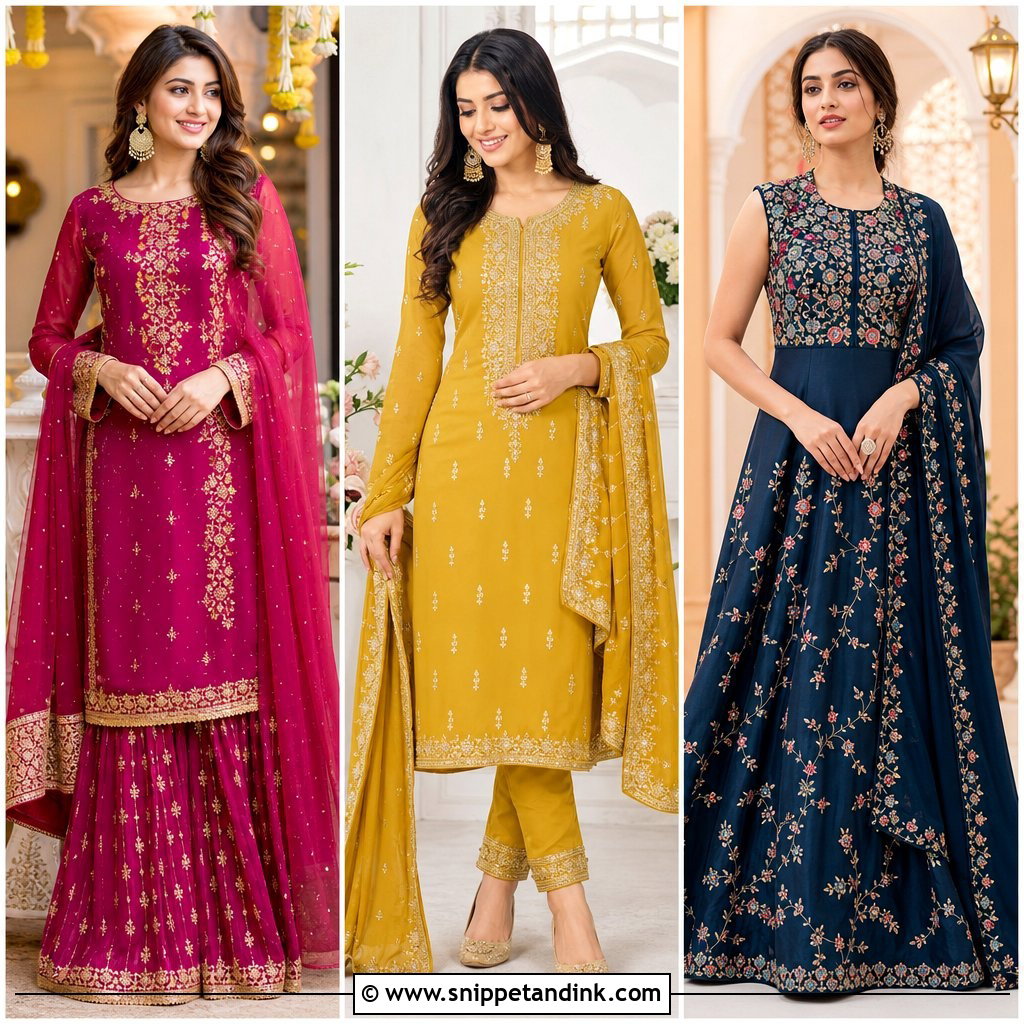
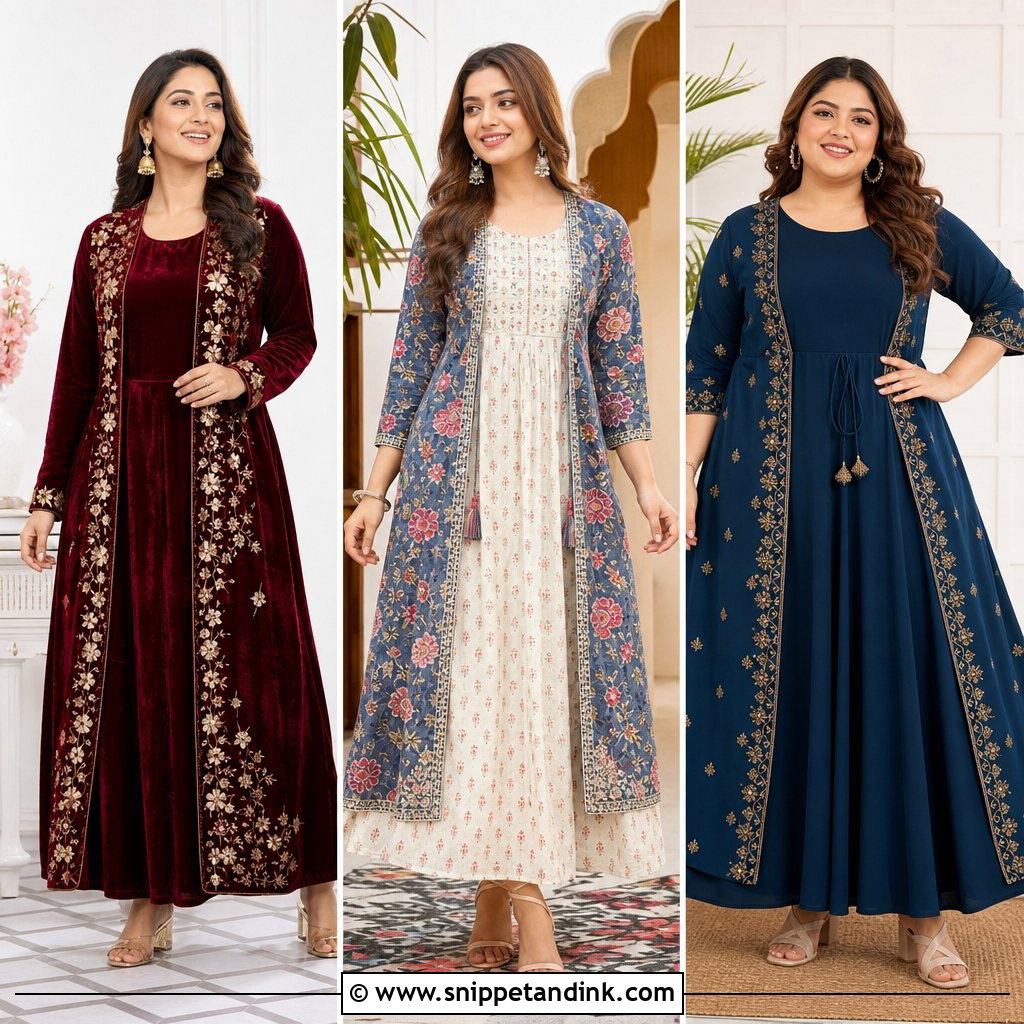
Anarkalis give a dress-like flare with full coverage, and they’re the outfit I suggest most to girls who find lehengas uncomfortable at the waist. Daytime calls for blush, mint or peach; evening, for deep green, burgundy or navy. Check the flare length: it should clear the floor by an inch in your shoes, or you’ll be stepping on it all night. Chandbalis and juttis finish it well.
4. Sharara Suit For Indian Wedding
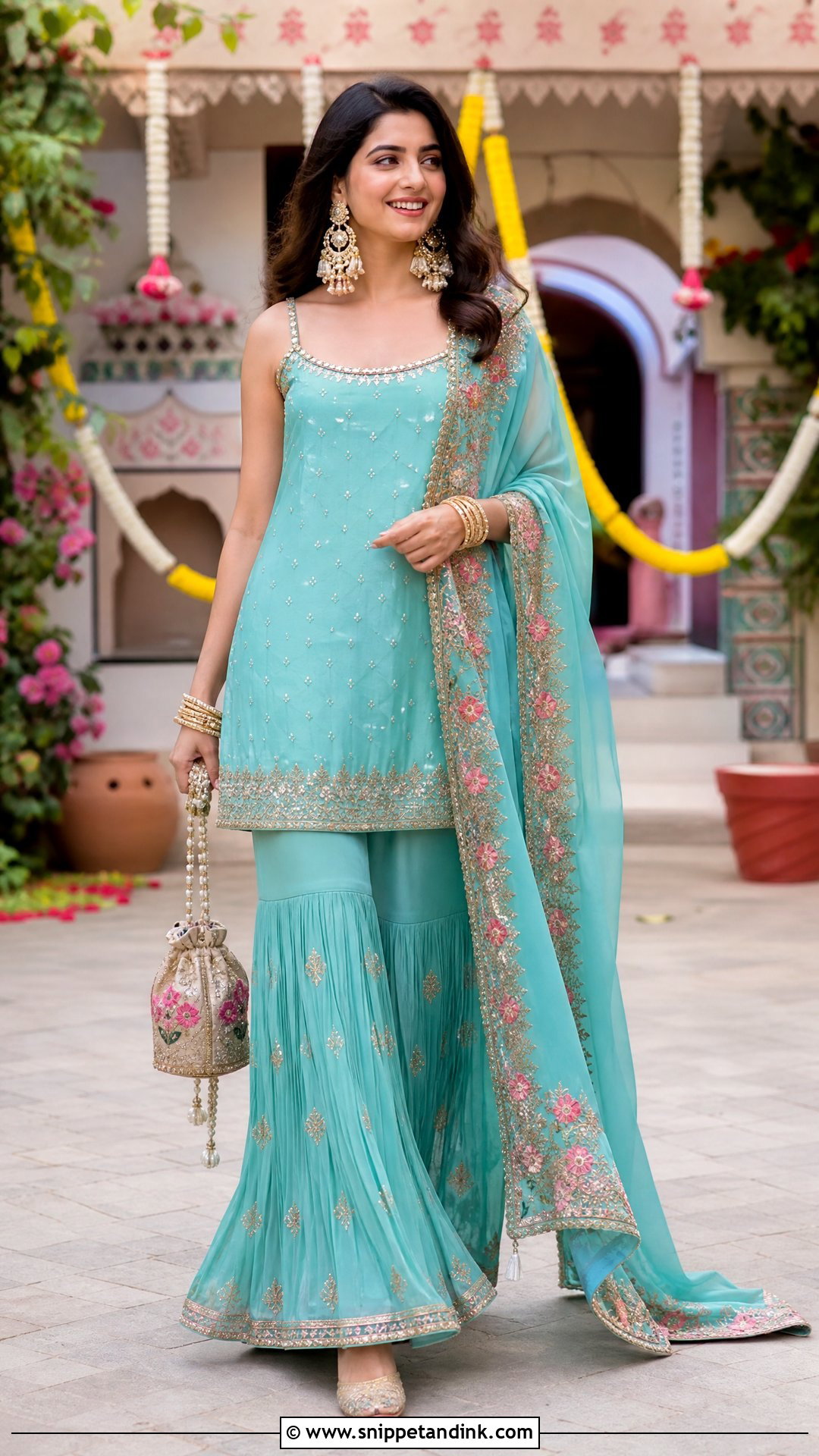
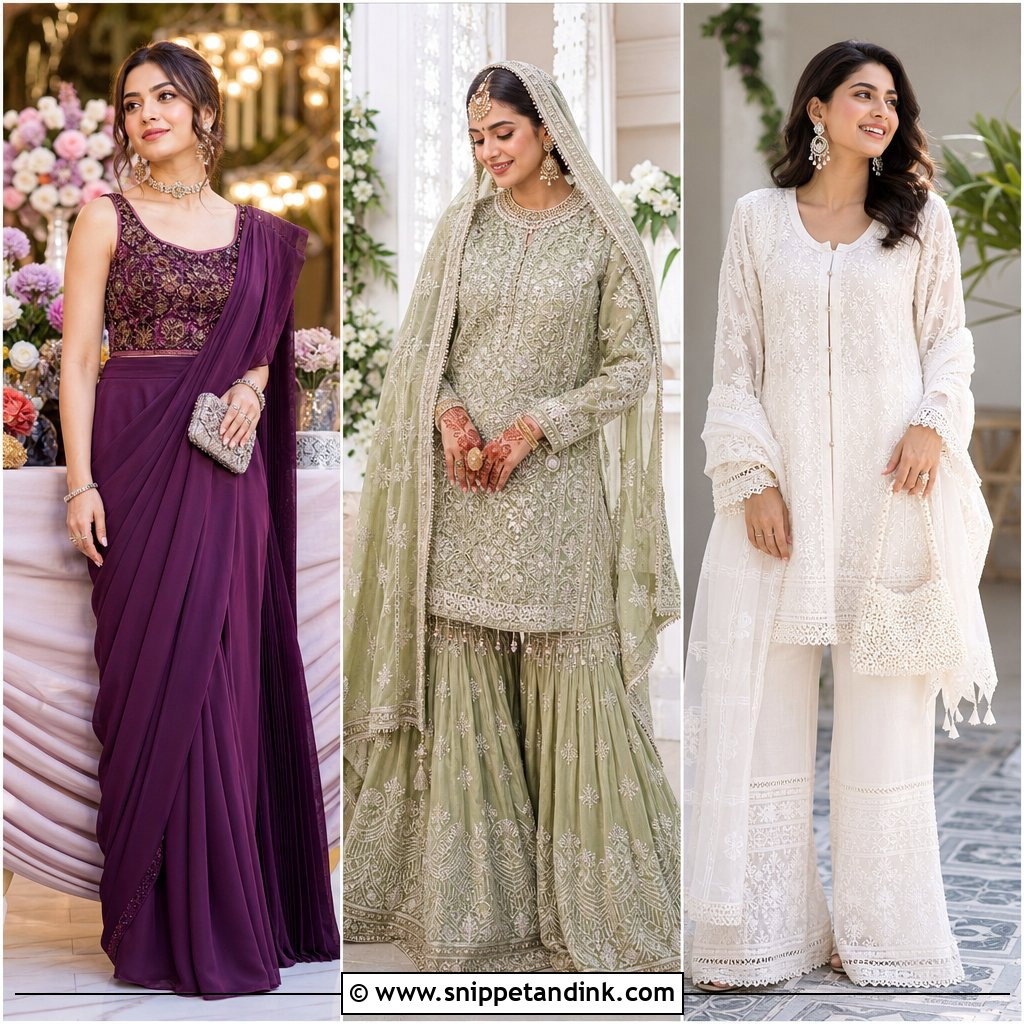
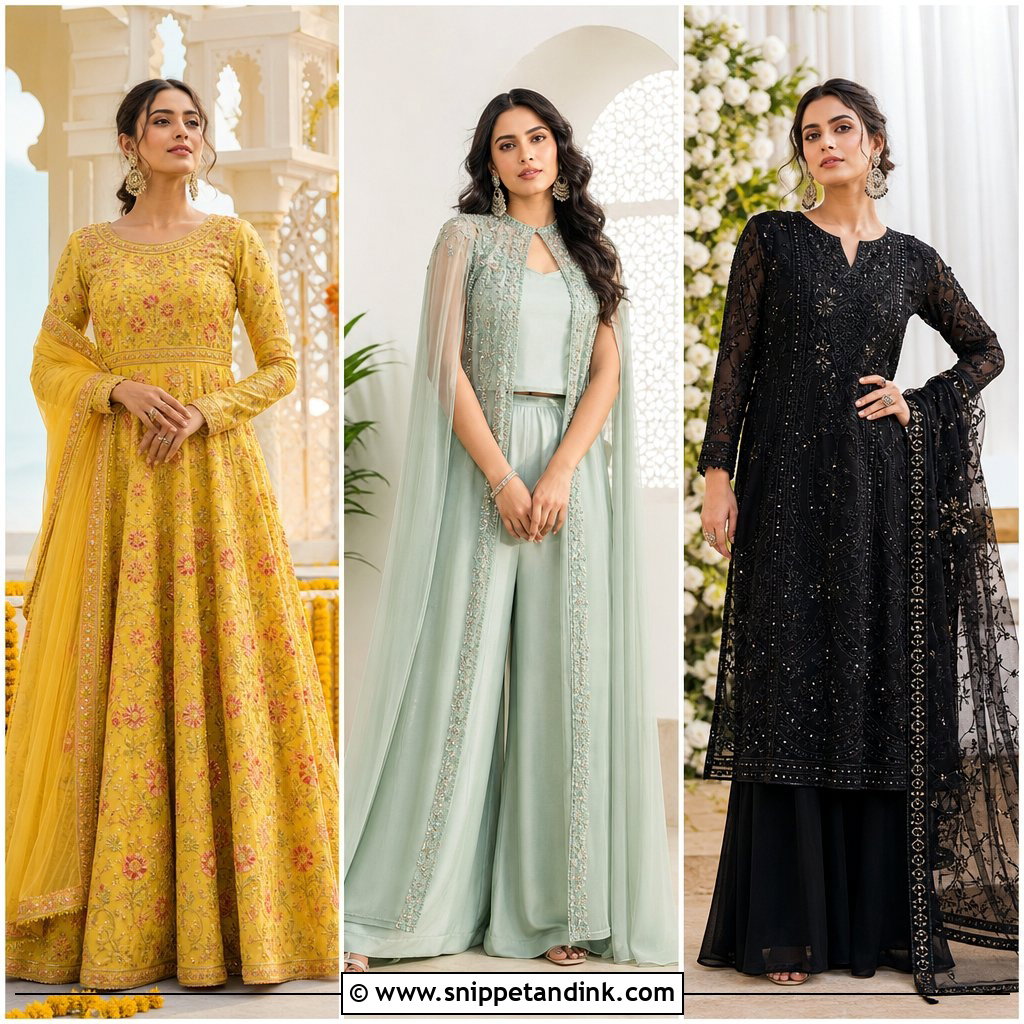
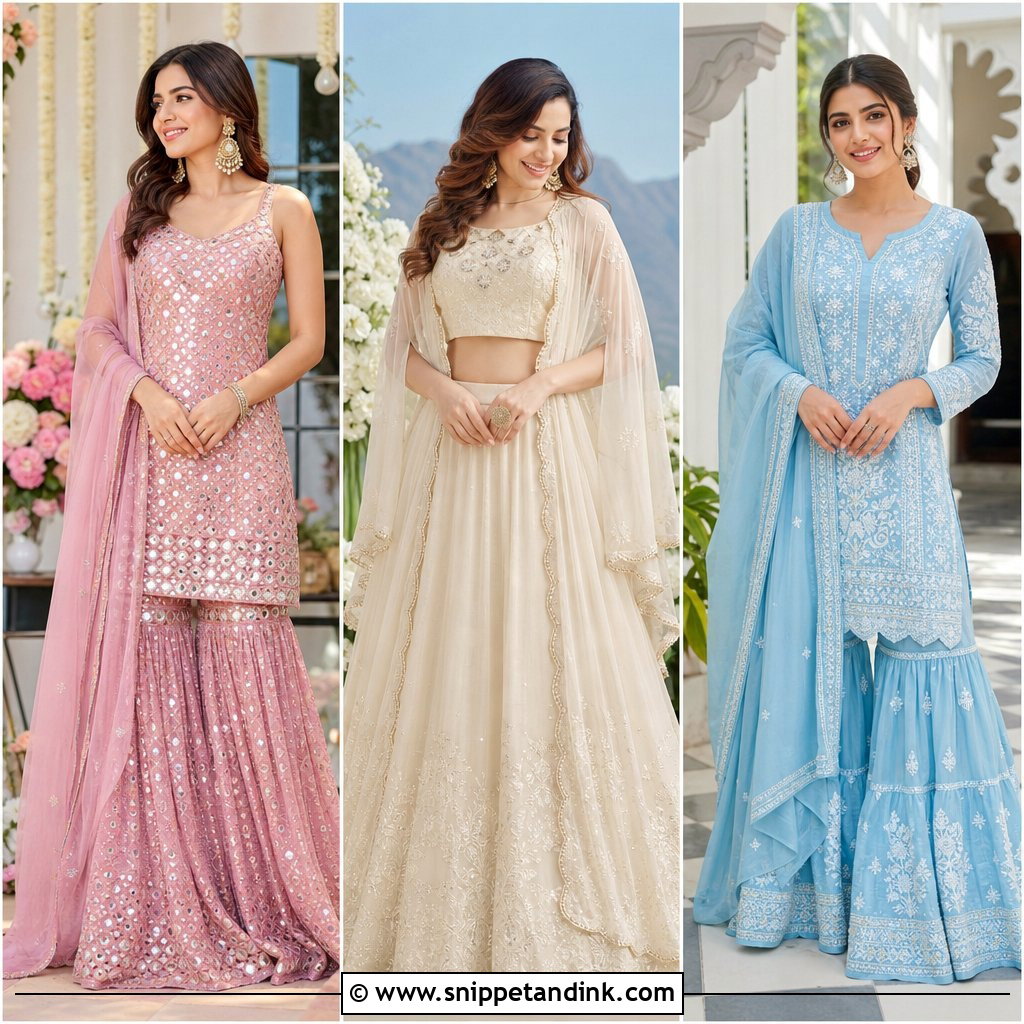
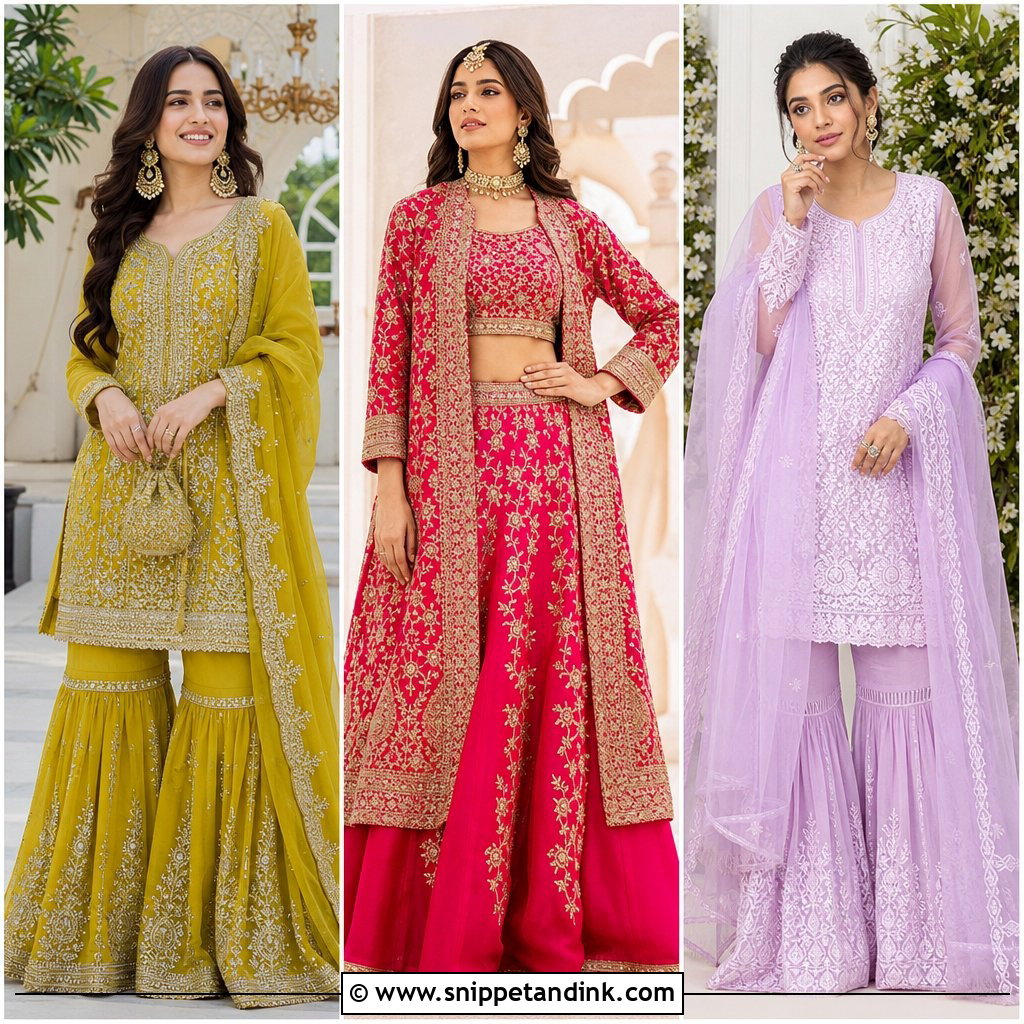
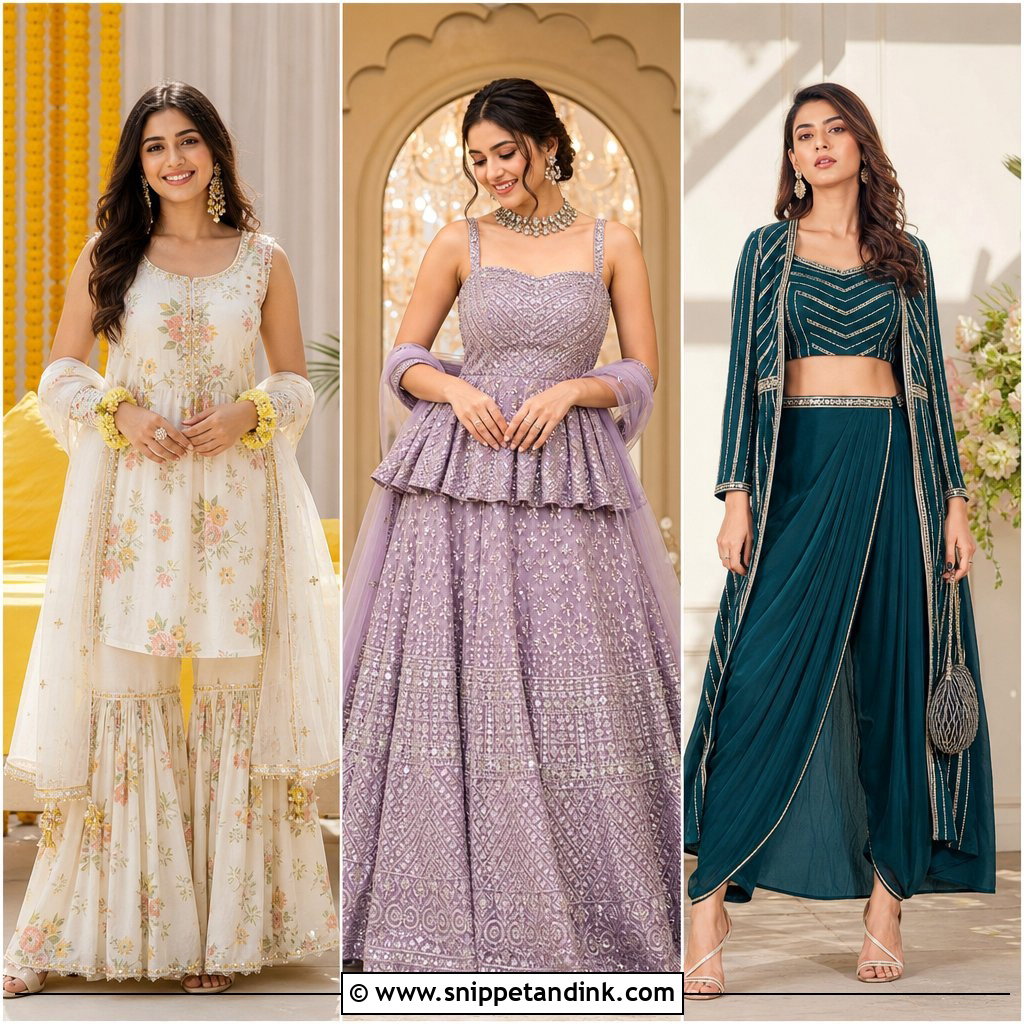
A sharara suit is my first pick for a sangeet. The wide legs move with you through a dance number and let you sit on the floor without fuss. A short kurti or peplum top keeps it youthful. Rani pink, turquoise and lime for daytime; champagne, teal or plum with metallic work for night. Wear low heels or juttis you’ve already danced in.
5. Gharara Suit For Indian Wedding
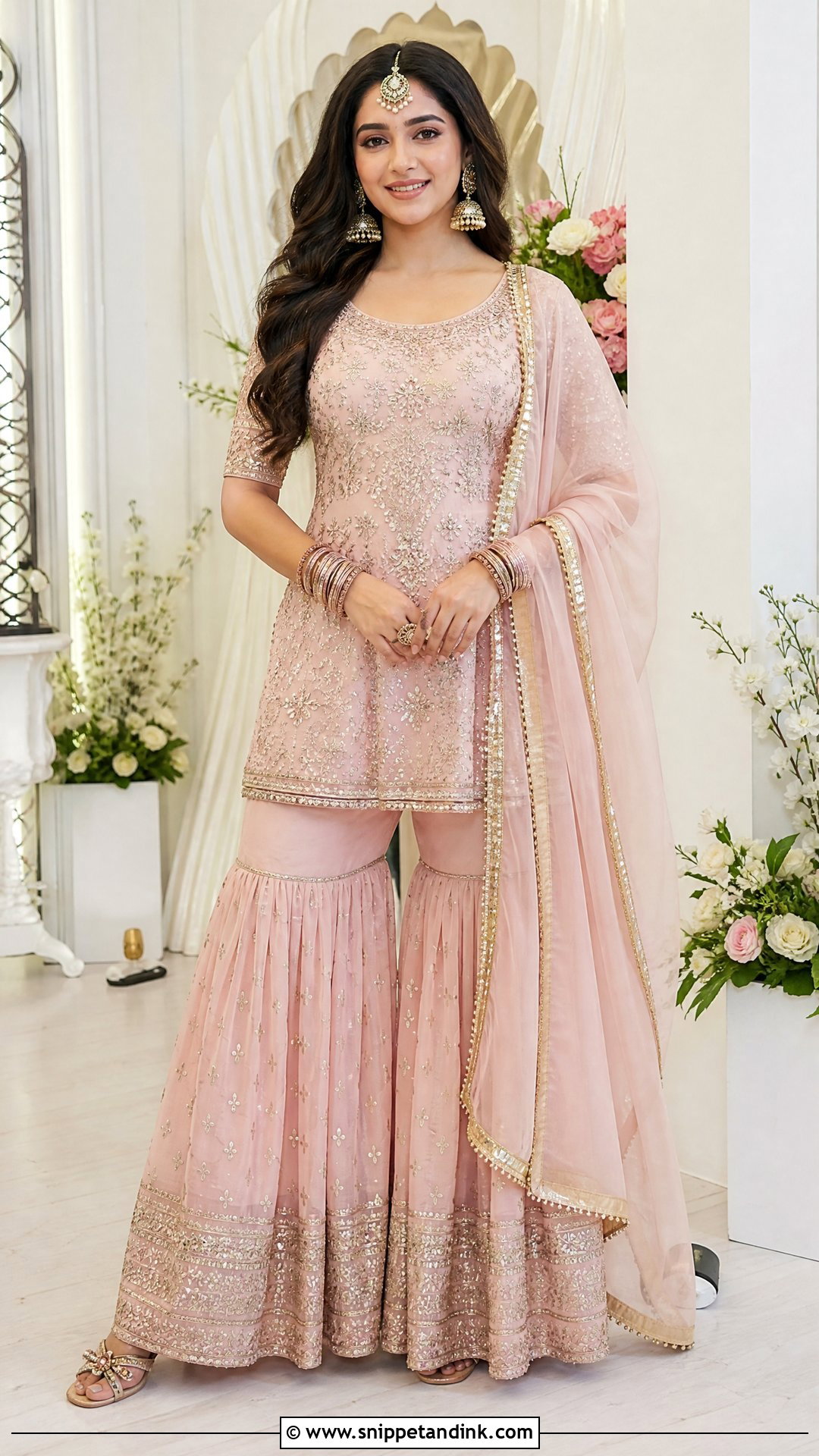
Ghararas are often confused with shararas, but the cut is different. A gharara fits closely to the knee, where a decorative band joins it to a fuller flare below, while a sharara flares from the waist. That joint at the knee is what makes the gharara look more formal and regal. Pastel ghararas with pearl work feel soft; deep shades with zari feel grand. They suit nikah-inspired functions and family dinners. A maang tikka and a long dupatta draped over one shoulder complete it.
6. Saree Gown For Indian Wedding
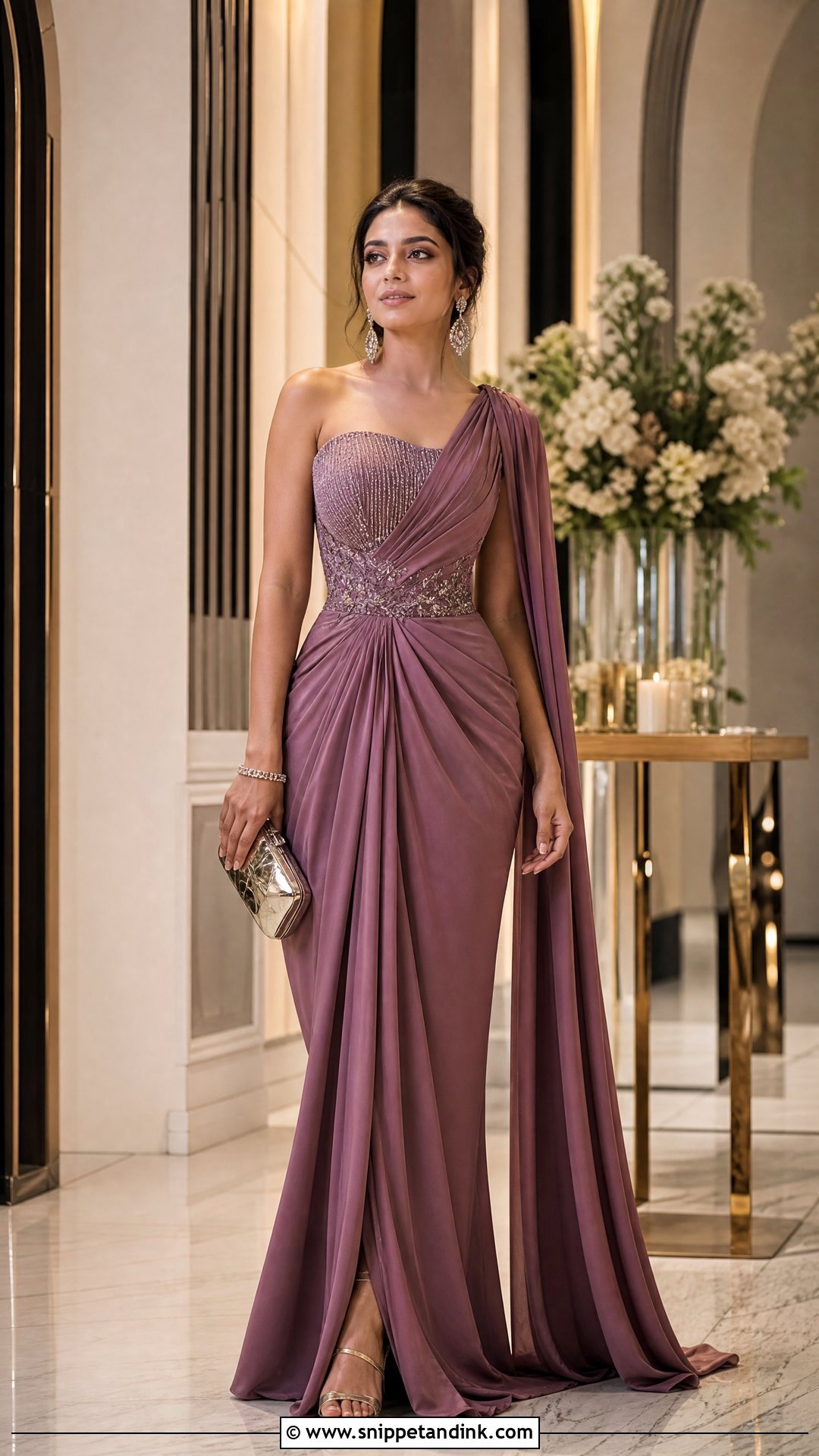
A saree gown has the pleats and pallu stitched in, so you get the saree line without managing it all evening. That makes it my practical choice for a reception or cocktail night. Look for a structured bodice and a drape that’s tacked at the shoulder. Metallics, pastels, navy and mauve all suit it. Sleek heels and drop earrings are enough.
7. Indo Western Gown For Indian Wedding
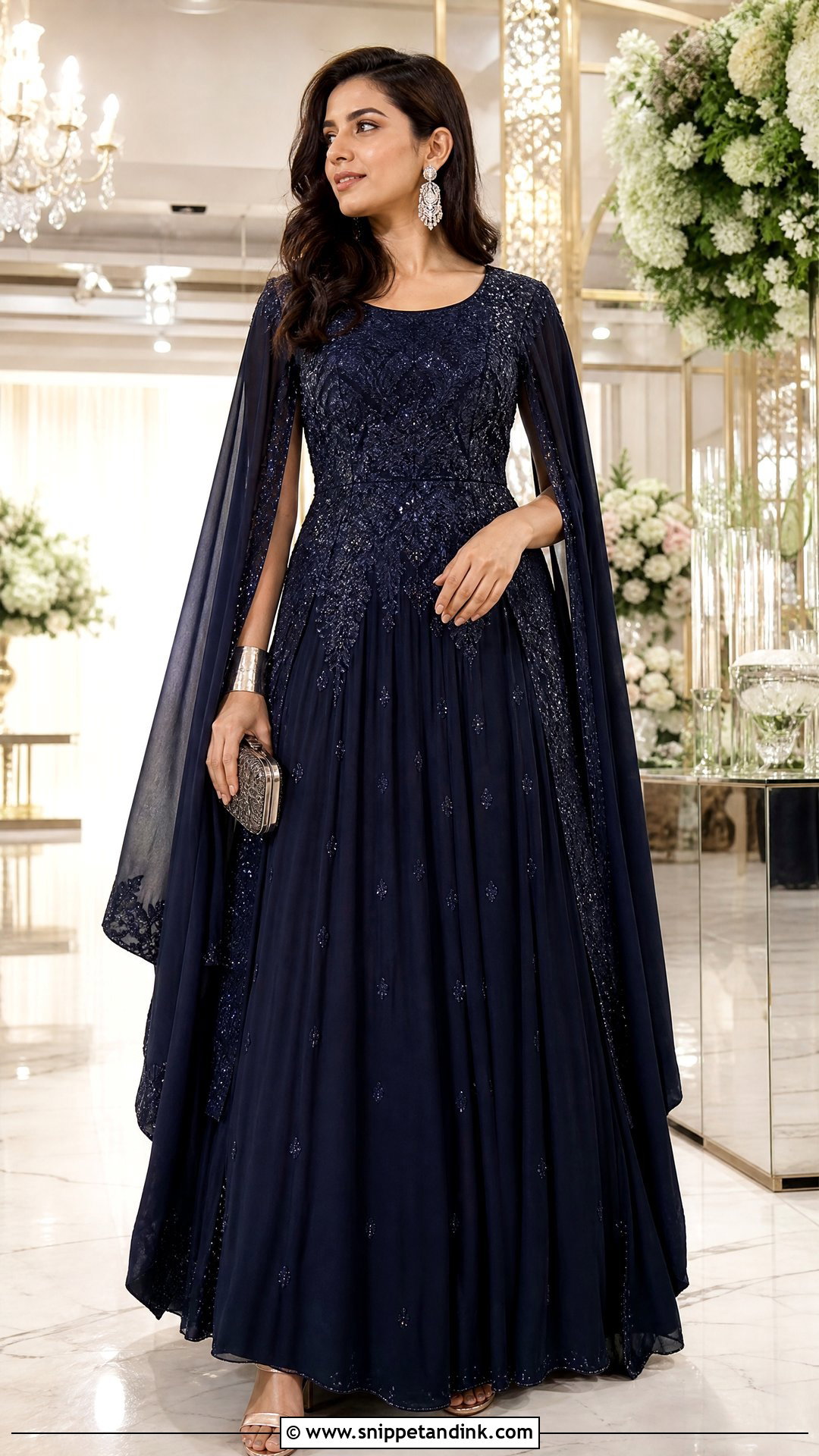
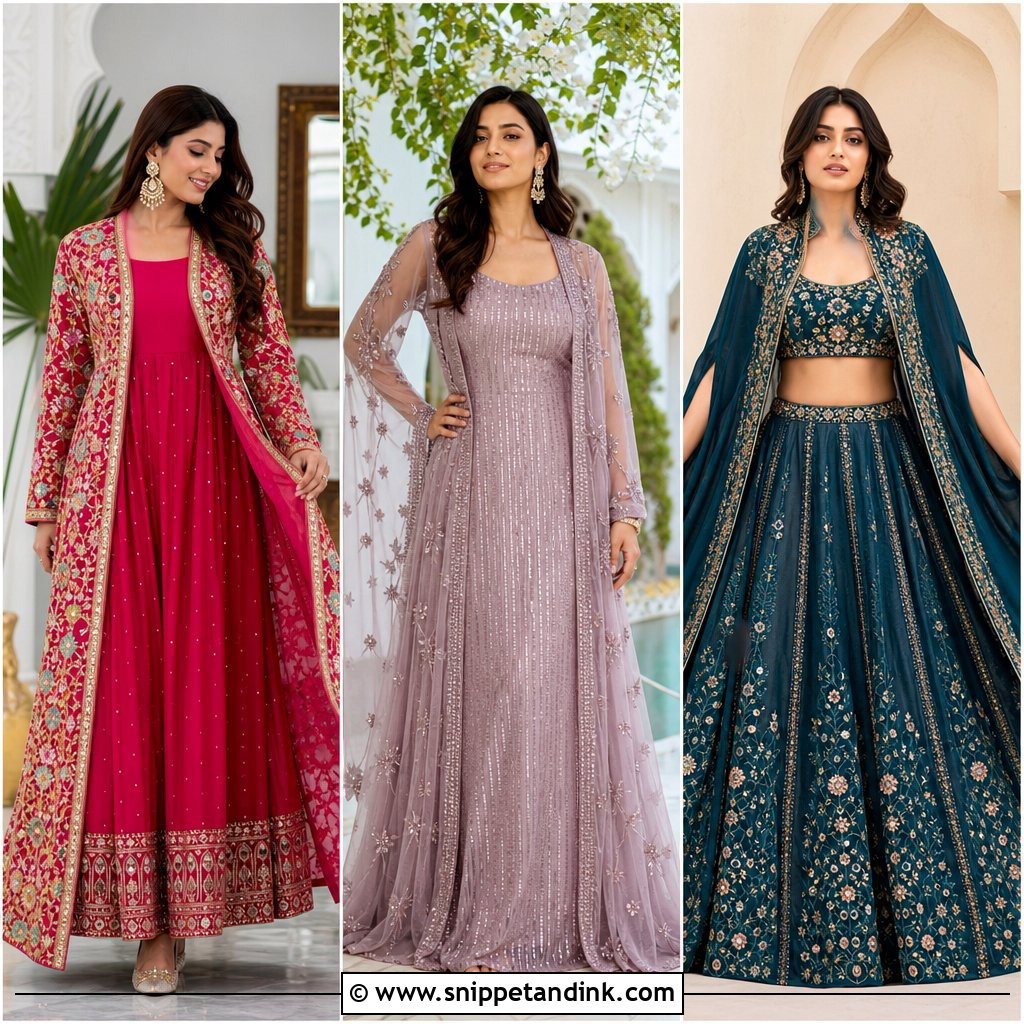
Indo western gowns with cape sleeves, draped panels or a dupatta-style overlay give you Indian detail with a modern line. They belong at receptions and engagement parties. Champagne, dusty rose and midnight blue are the colours I see work best under evening lights. Choose a fabric with some structure, satin or heavy georgette; thin net gowns can look limp by the end of the night.
8. Jacket Lehenga For Indian Wedding
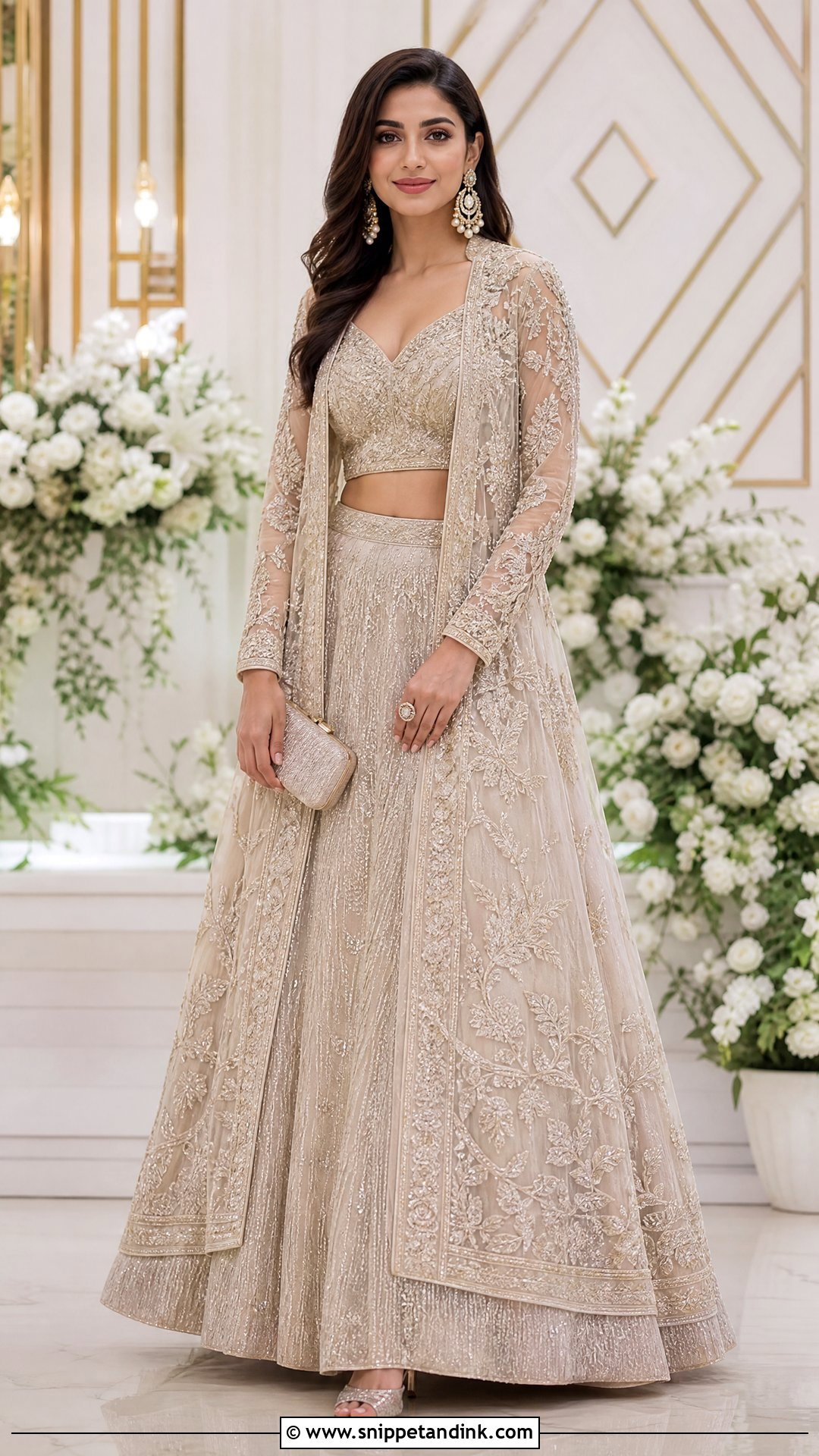
A jacket lehenga replaces the dupatta with a long embroidered jacket, which means nothing slips off your shoulder while you dance or pose. A sheer jacket looks softer, a silk one looks royal. It’s especially useful at a winter wedding, since the jacket adds warmth. With that much going on above the waist, skip the necklace.
9. Palazzo Suit For Indian Wedding
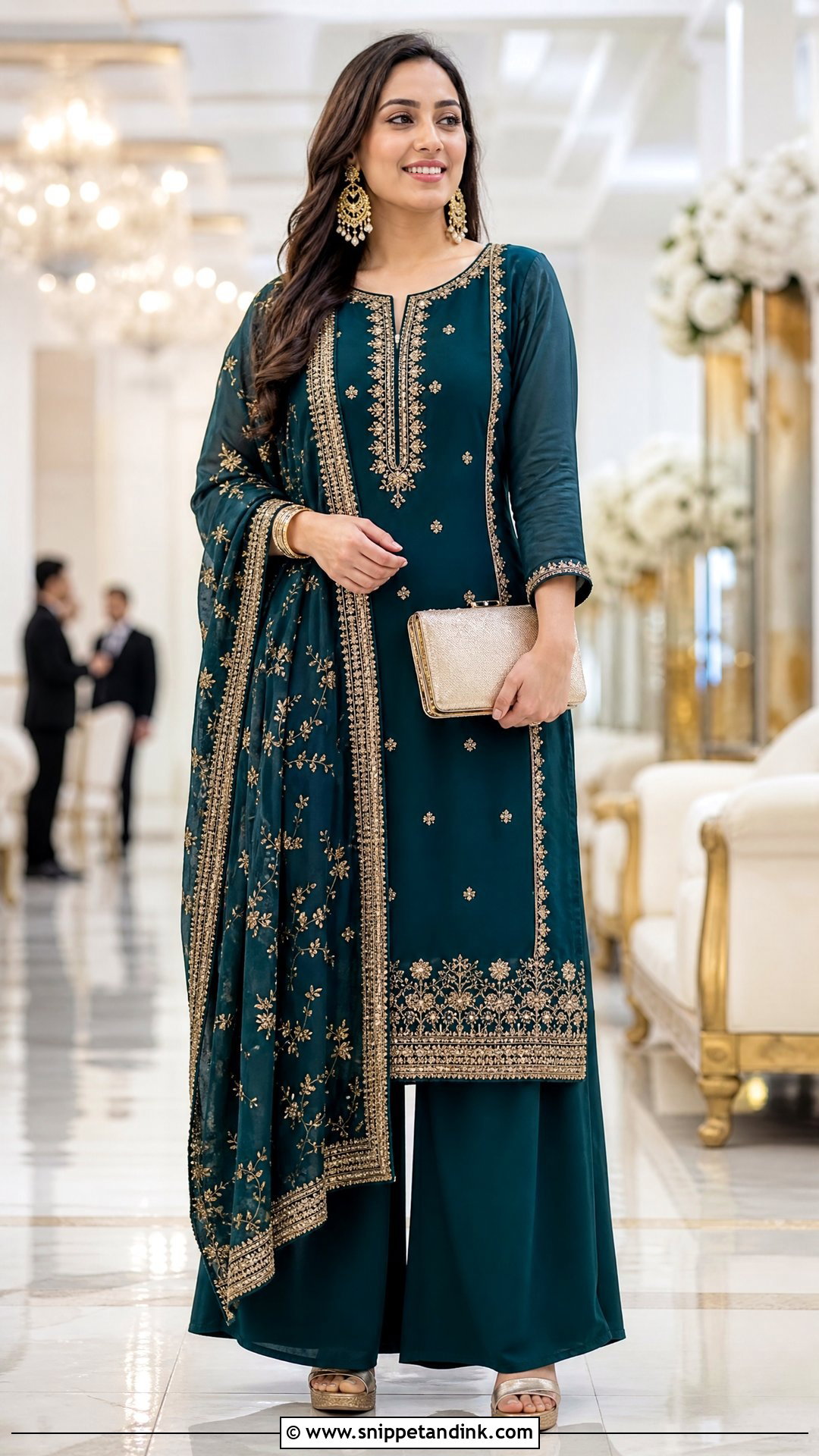
Palazzo suits are comfortable, but the fabric decides whether they look wedding-ready or office-casual. Plain cotton reads too everyday. I’d choose a silk blend, brocade or embellished georgette with zari or sequin borders. Pastels with pearls suit daytime; jewel tones with gold suit evening. Block heels or juttis keep the wide hem off the floor.
10. Kurta Skirt Set For Indian Wedding
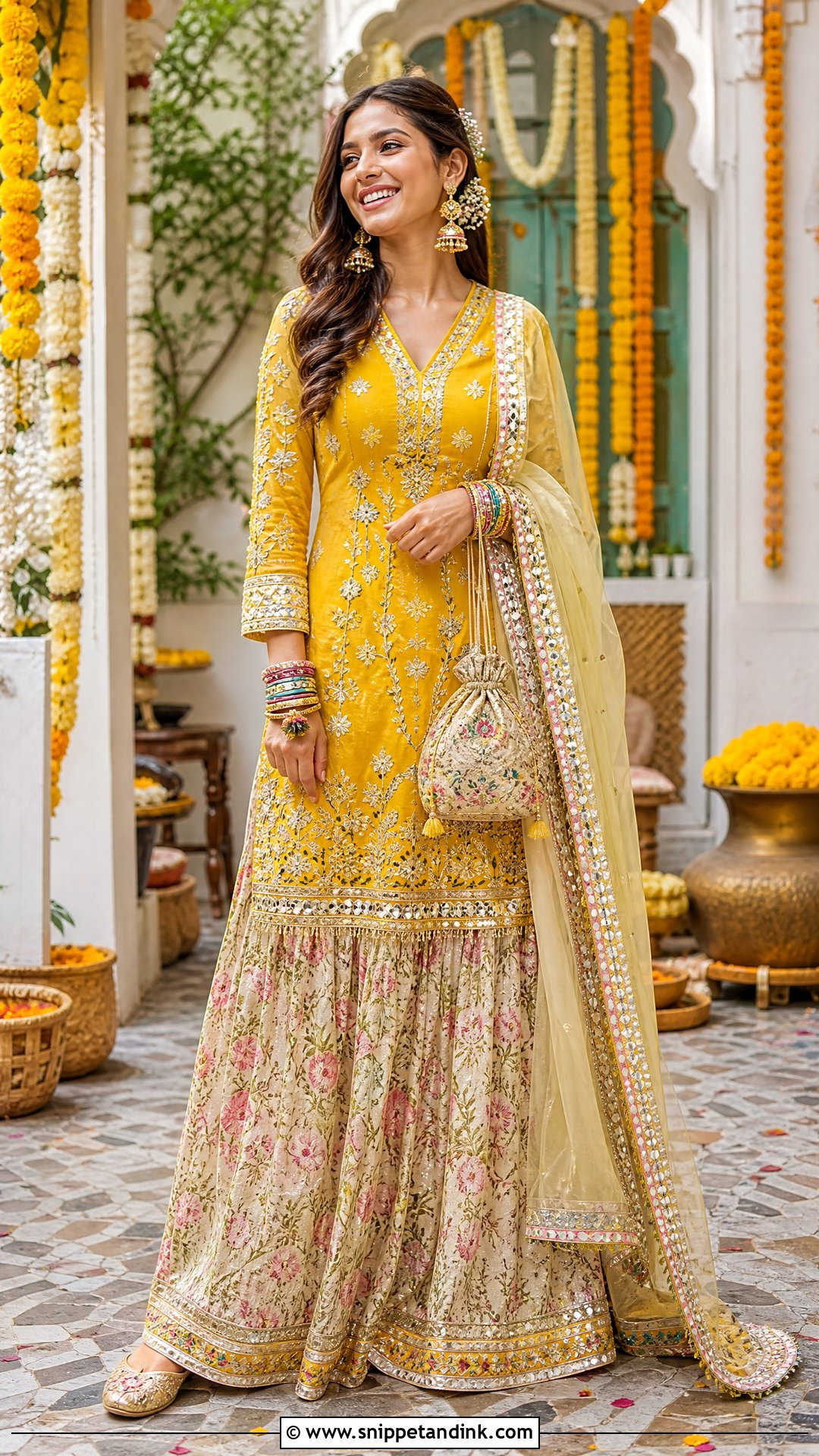
A kurta skirt set sits between a lehenga and a kurta in formality, which makes it right for mehendi, haldi and family lunches. A printed skirt under a solid embroidered kurta is easy to pull off. Yellow, orange and green feel festive in daylight. I like these for girls who’ll be helping out at the event, since they’re easy to move in and don’t need constant adjusting.
11. Silk Salwar Kameez For Indian Wedding
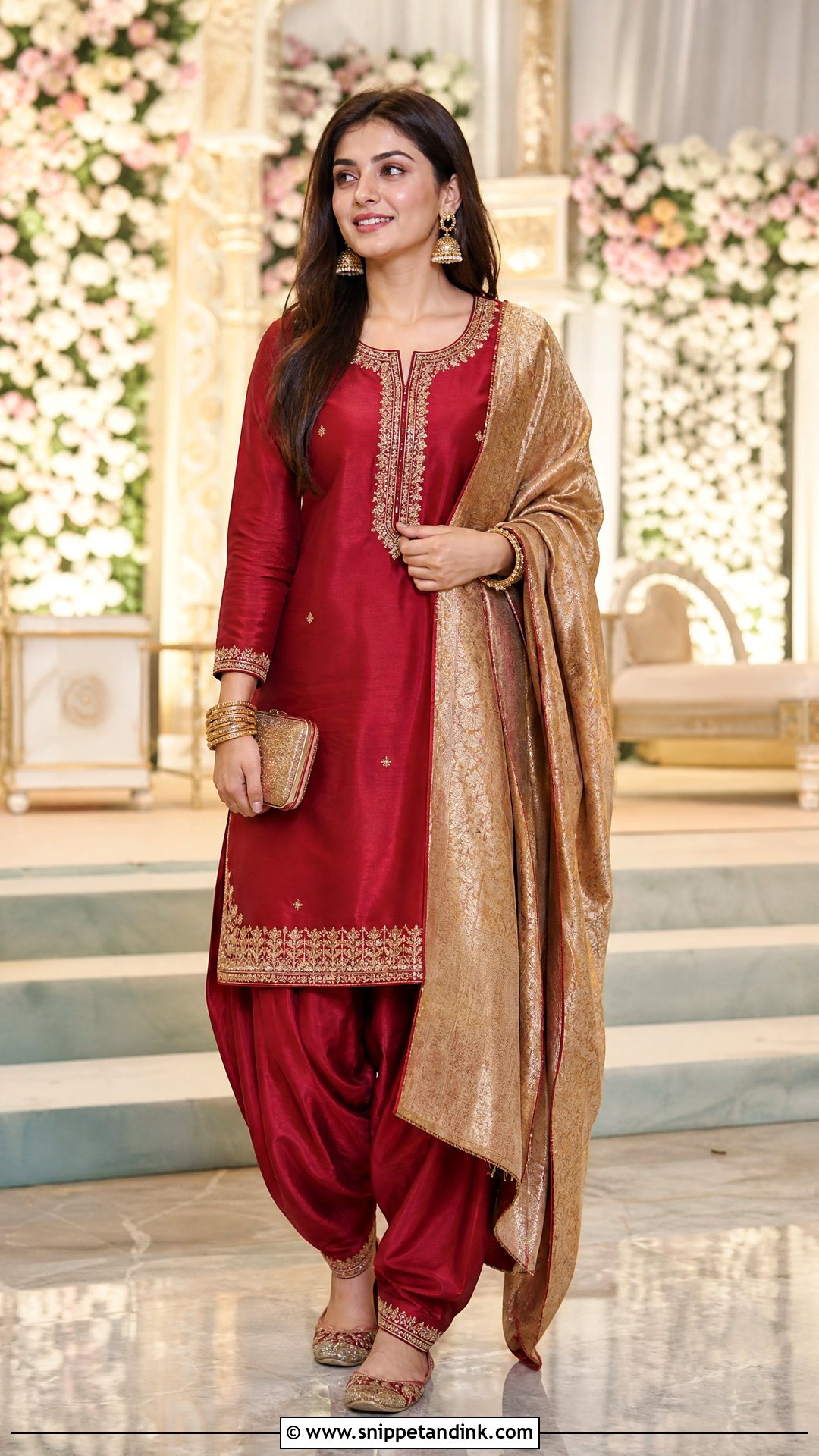
A silk salwar kameez is the dependable choice for a girl who likes classic dressing. Silk carries its own shine, so even modest embroidery looks festive. Ruby, mustard, teal and deep pink work well. The dupatta does most of the dressing up here: a zari border or woven motif makes it wedding-appropriate. It’s comfortable for long rituals, and the kurta can be worn again on its own.
12. Pre Draped Saree For Indian Wedding
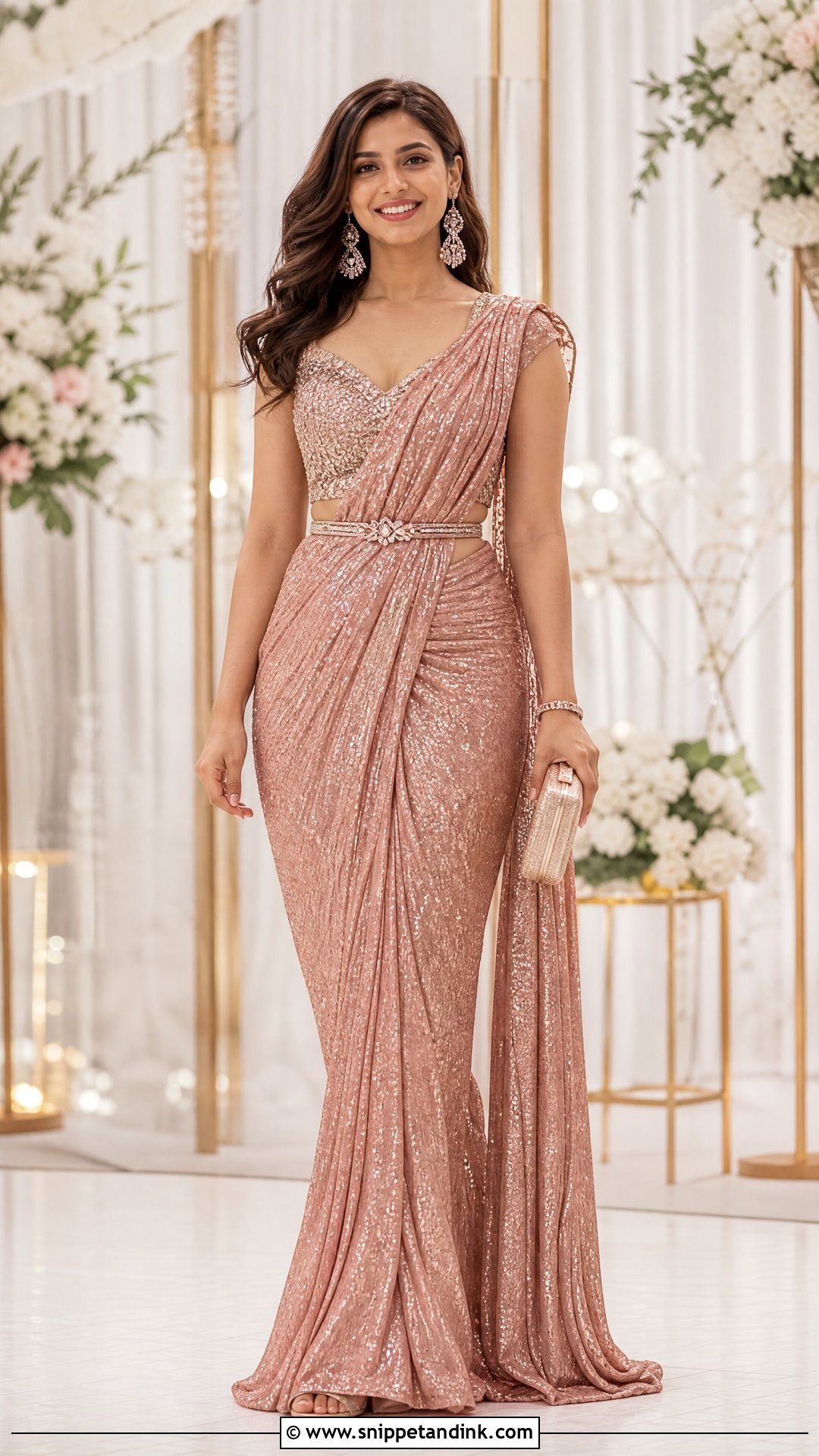
With a pre-draped saree, the pleats and pallu are already set, so it wears like a skirt. That makes it a good first saree for a girl who’s nervous about draping. Georgette, crepe and chiffon versions are light. A waist belt holds the drape in place through dancing and photos. It suits receptions, sangeets and destination weddings.
13. Mirror Work Lehenga For Indian Wedding
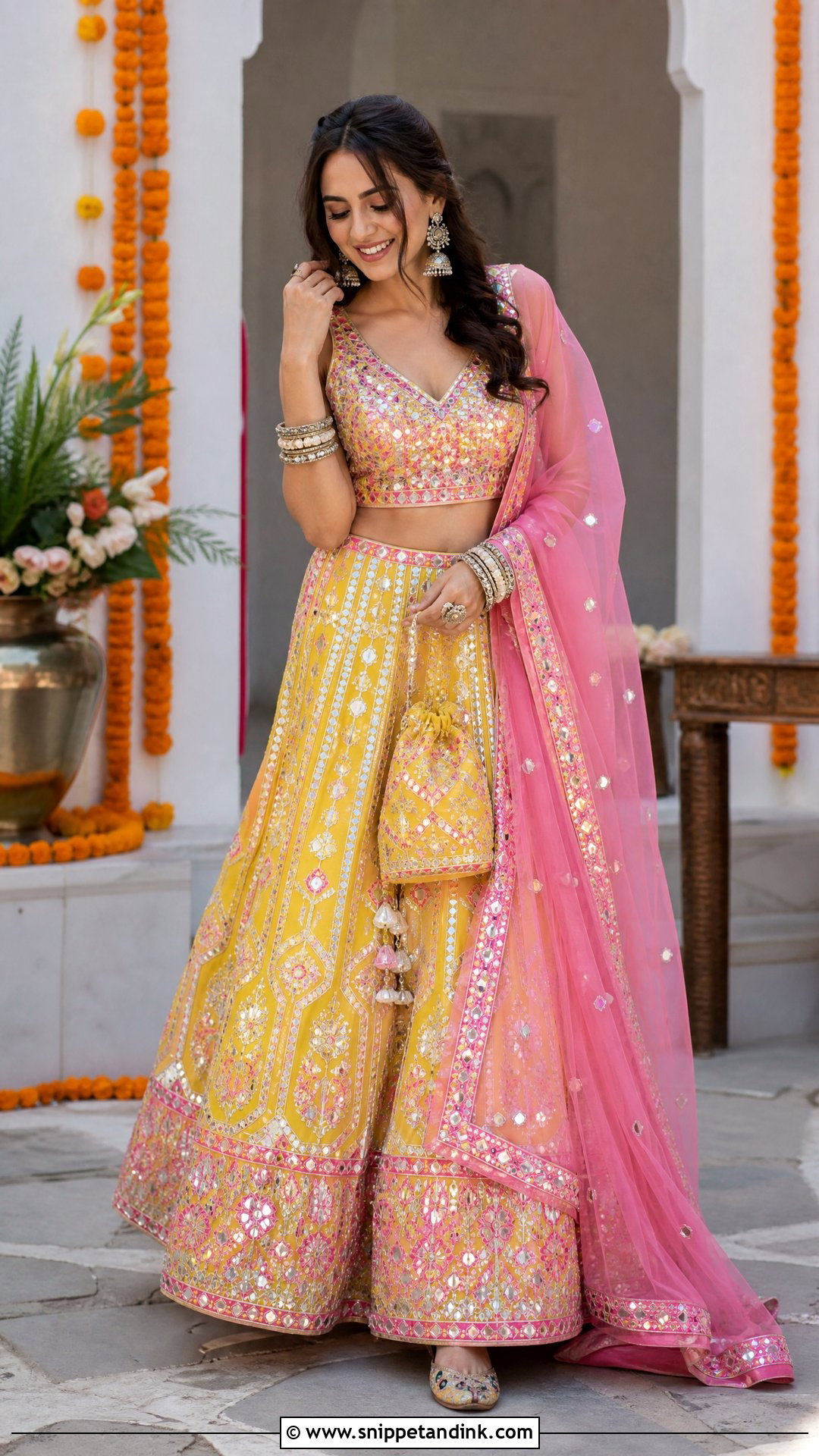
Mirror work lehengas belong to mehendi and sangeet, where the mirrors catch daylight or dance lights. Yellow with pink, turquoise with silver, or ivory with multicolour all work. The mirrors add weight, so I’d choose one with the work on the blouse and border, leaving the skirt light. Oxidized jewellery suits it better than gold. Skip the heavy necklace.
14. Floral Lehenga For Indian Wedding
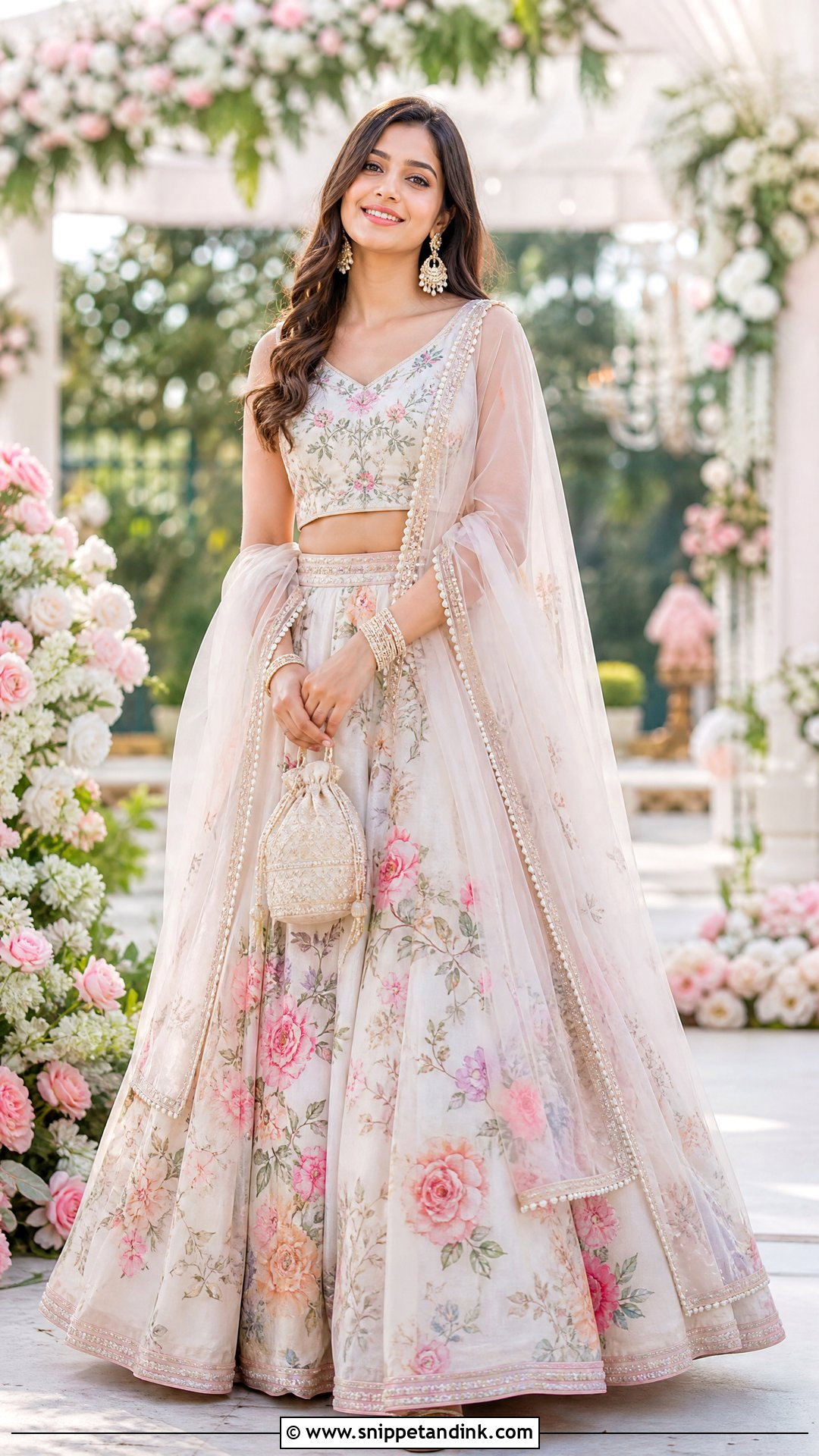
Floral lehengas suit garden weddings and daytime functions. Printed florals are lighter; embroidered florals are more formal. Pastel pink, powder blue and mint are the shades I see most. Keep the blouse plain and the dupatta sheer, or the pattern gets busy. Pearl earrings and a braid with flowers suit the softness.
15. Sequin Saree For Indian Wedding
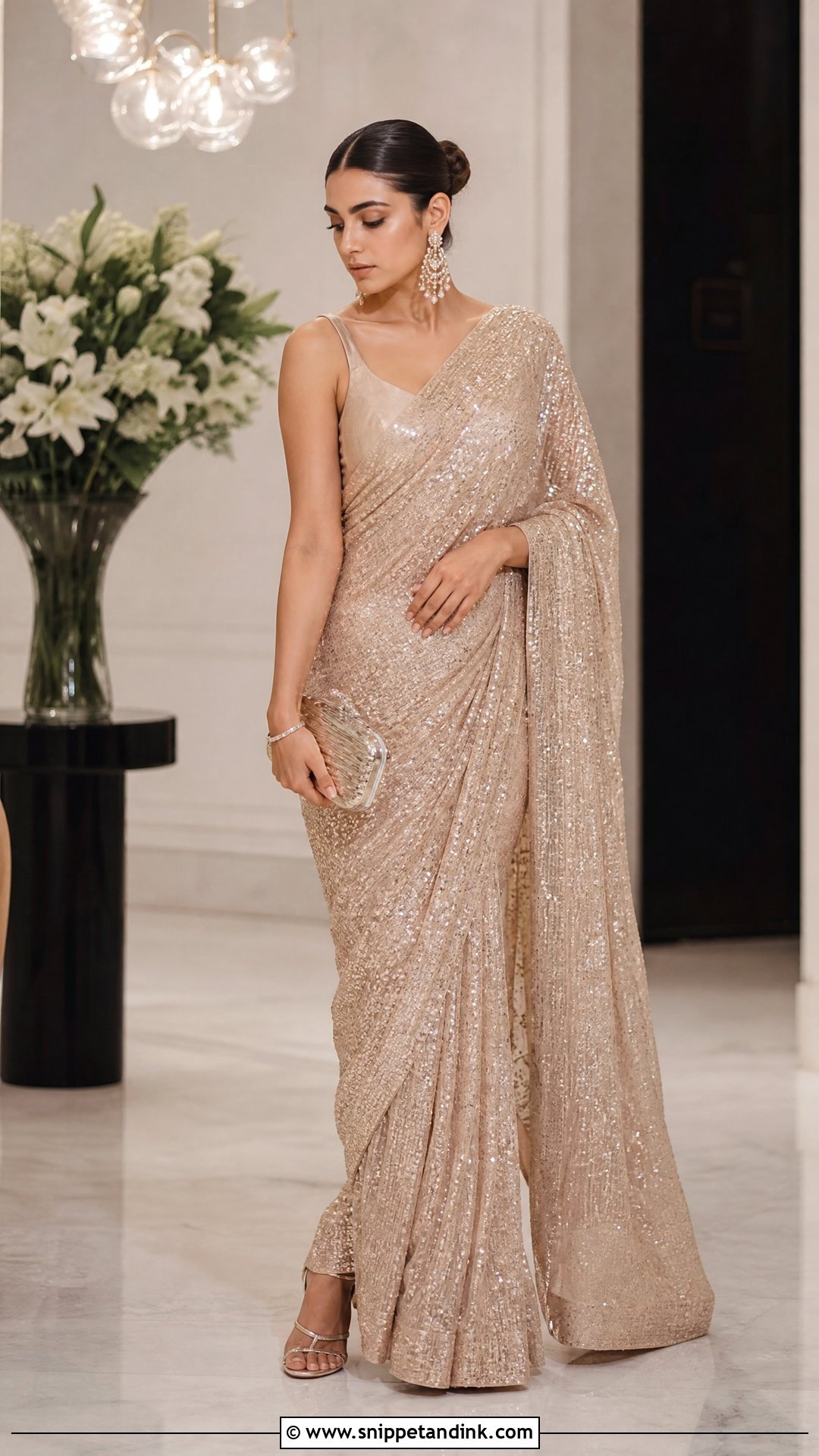
Sequin sarees are for evening only. Under daylight at a ceremony they look out of place. Champagne, rose gold, emerald and navy are the colours that look richest. Sequins scratch the inner arm, so a soft lined blouse with sleeves is worth considering. Keep the necklace minimal and the drape tightly pinned; sequinned fabric is slippery.
16. Chikankari Lehenga For Indian Wedding
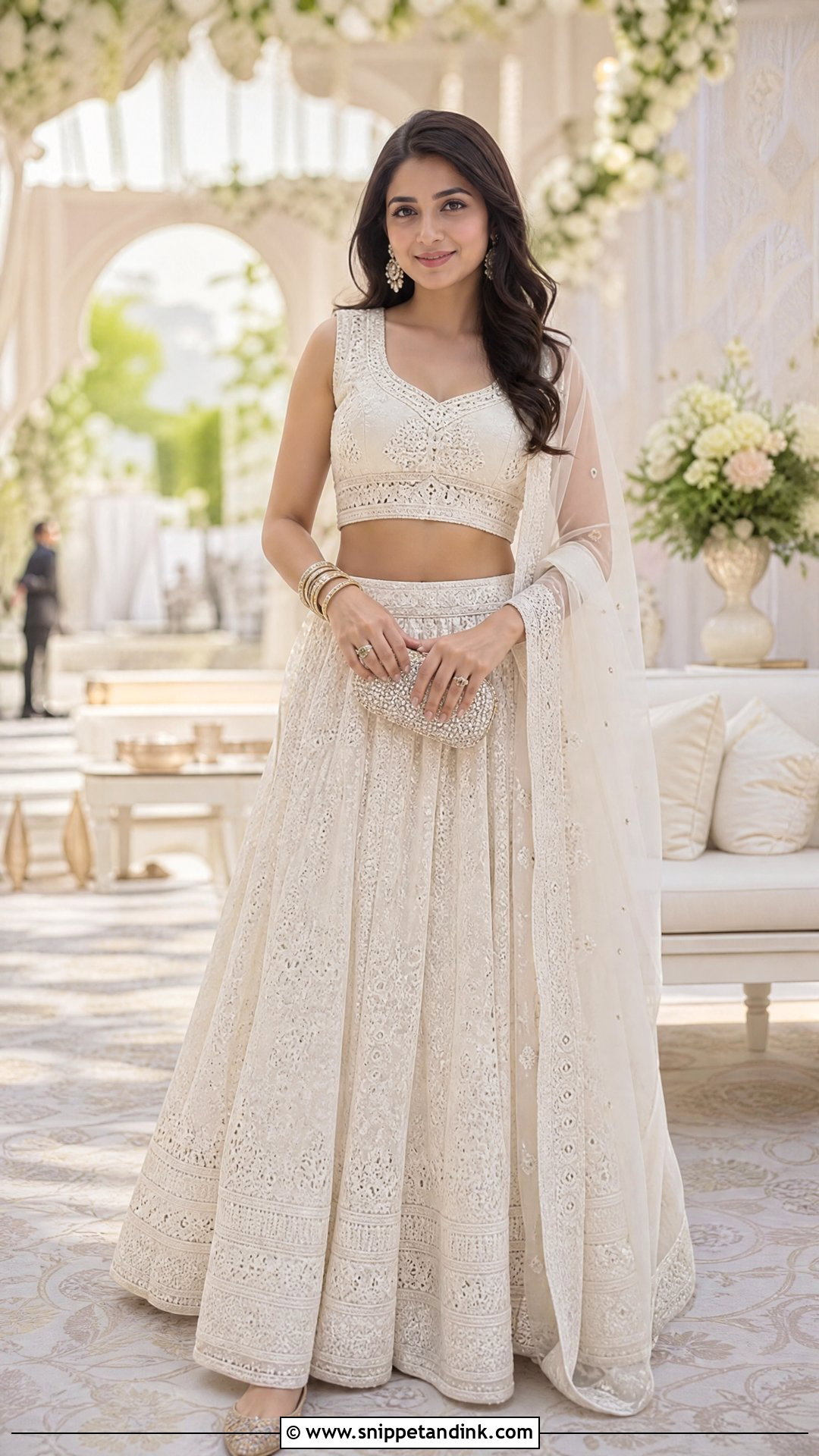
Chikankari is fine hand embroidery traditionally from Lucknow, and it gives a delicate texture without weight. Ivory, blush, sage and powder blue suit daytime ceremonies. For a more festive version, look for mukaish or light zari worked into the chikan. It’s one of the easiest outfits to restyle later for a festival or family function. Hand-wash or dry-clean, because the threads can pull.
17. Velvet Lehenga For Indian Wedding
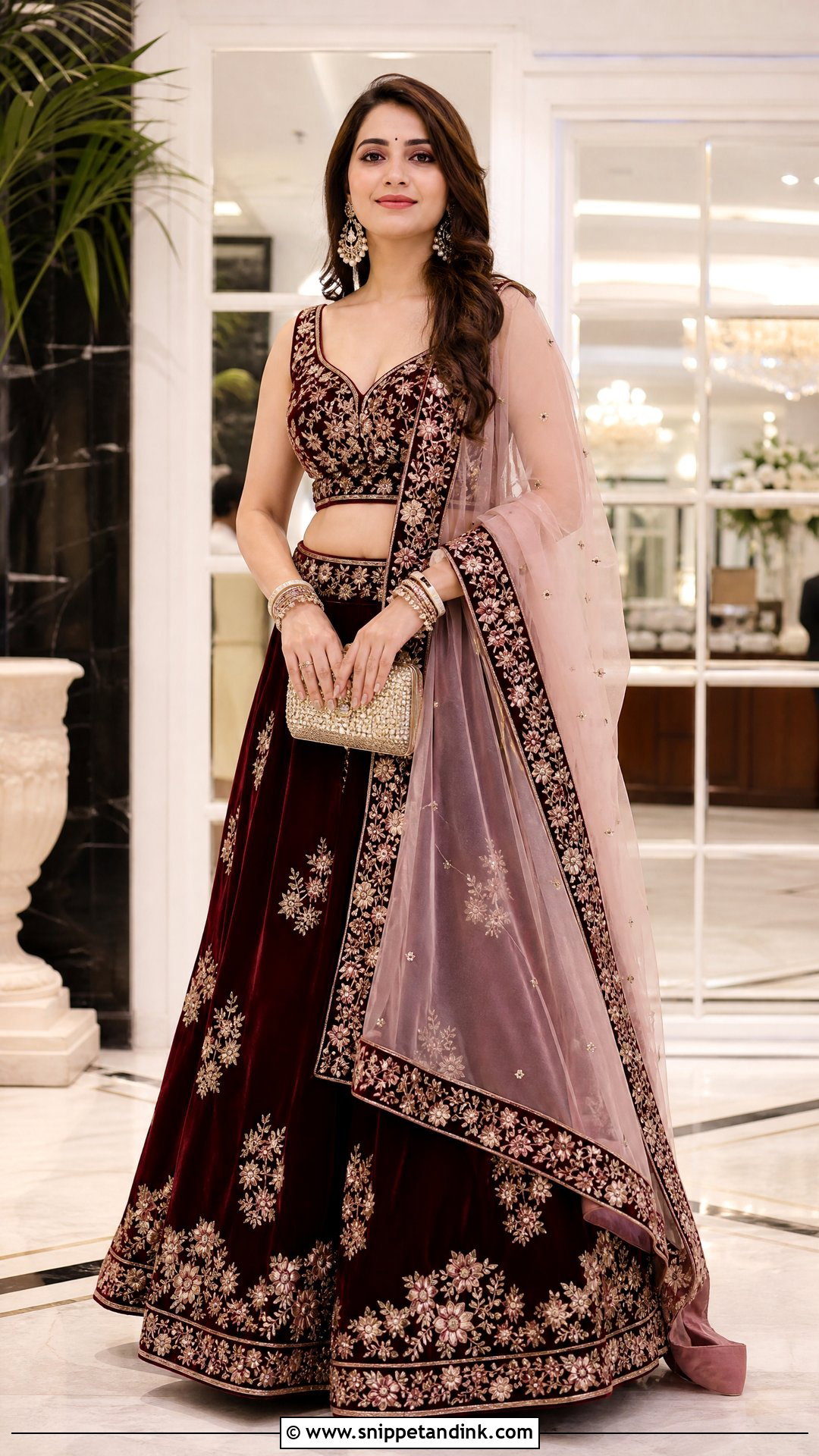
Velvet is heavy and warm, so I only recommend it for winter evenings and indoor venues. Maroon, emerald and navy look deepest. Keep the embroidery to the border and blouse, and pair it with a lighter net or organza dupatta, since a velvet dupatta on top of a velvet skirt is too much bulk. Kundan earrings and block heels finish it.
18. Organza Saree For Indian Wedding
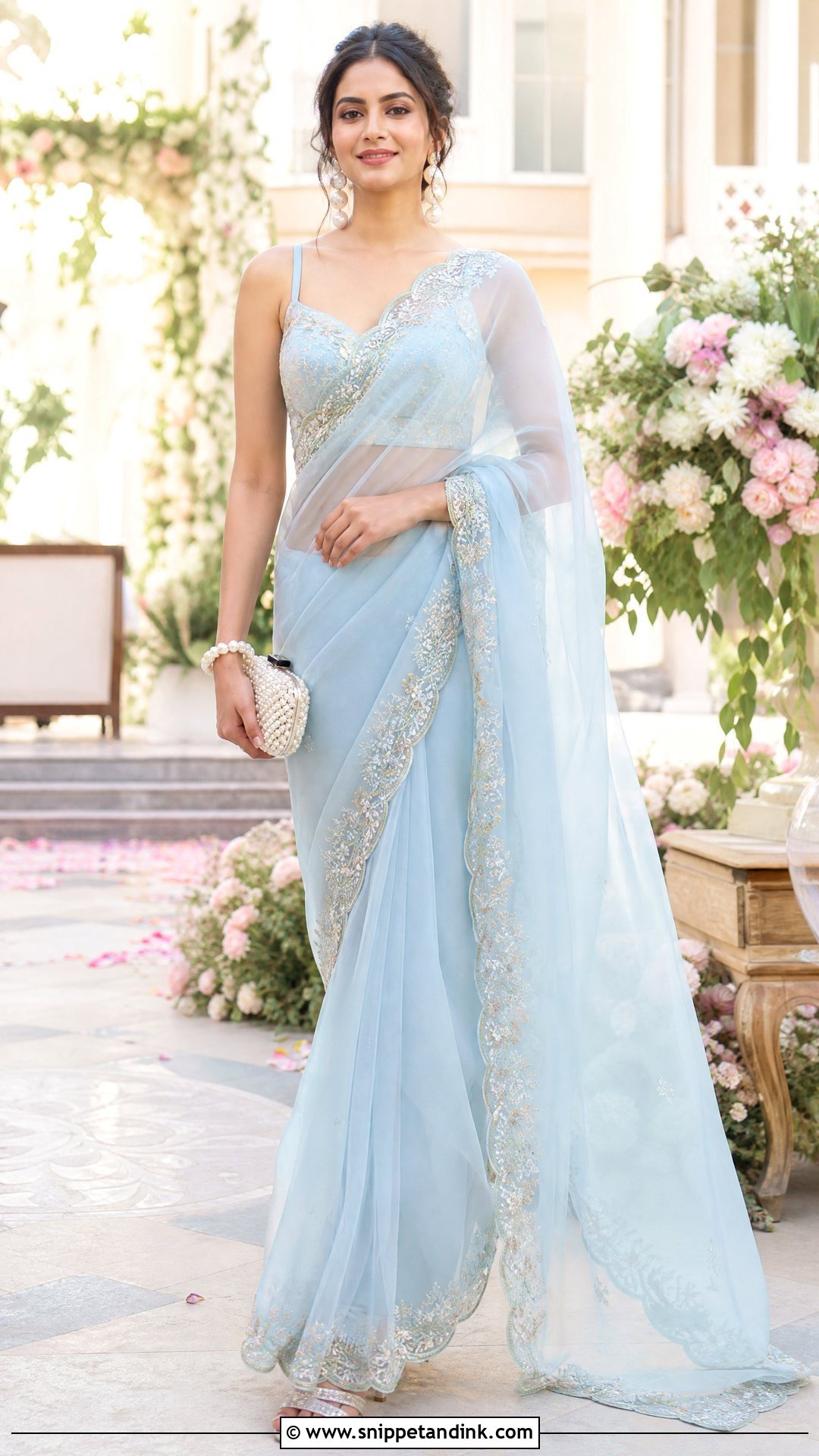
Organza is crisp, so it holds volume without weight, which suits a daytime function. Pastels, ivory, lemon and sky blue all look fresh in it. The catch is that organza is stiff and doesn’t fall into soft pleats; I’d pin the pleats and pallu firmly and choose a structured blouse to balance it. Pearl earrings and a neat bun complete it.
19. Cape Lehenga For Indian Wedding
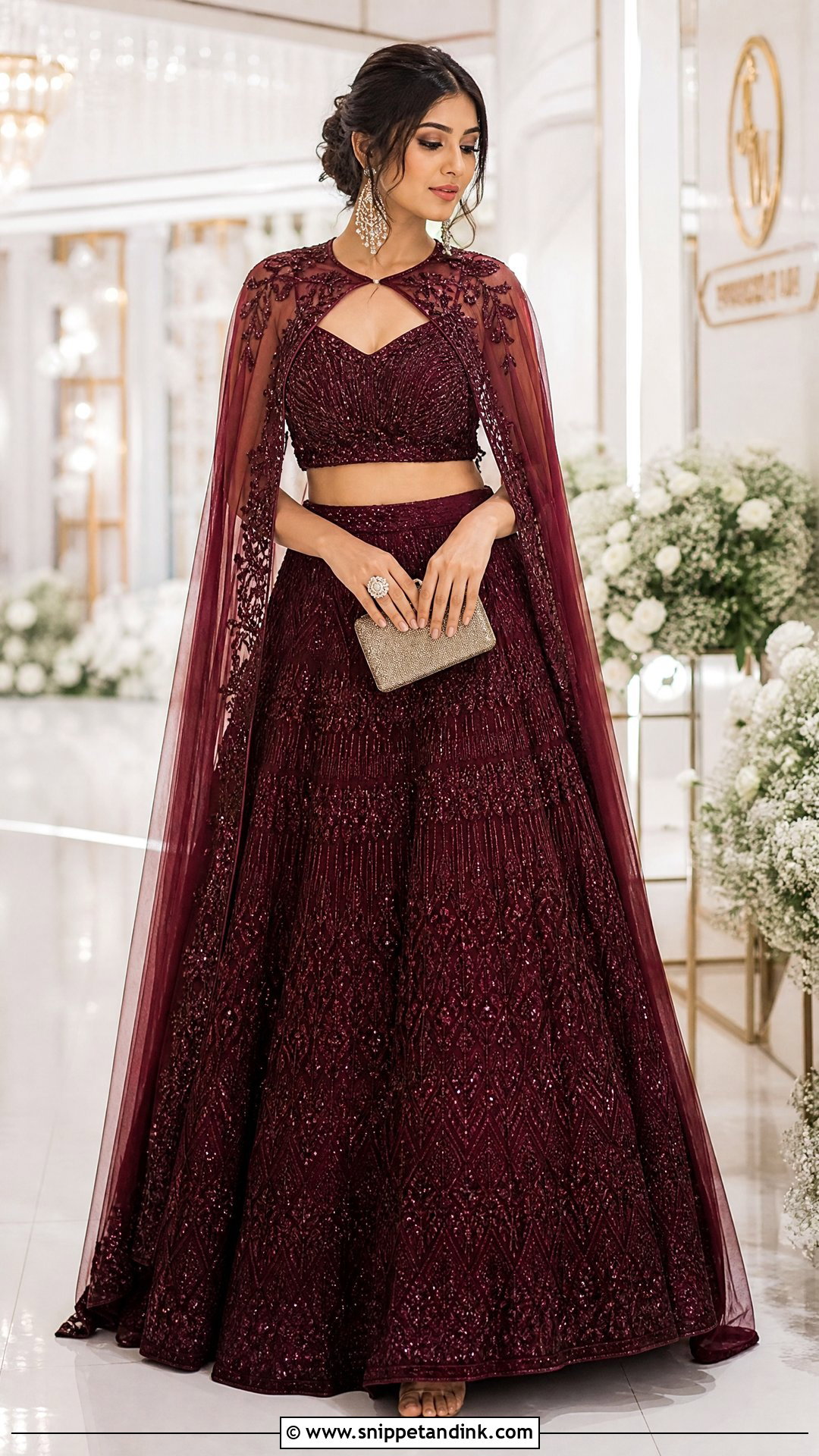
A cape lehenga swaps the dupatta for a cape, so your hands are free and nothing slides. It’s a good choice for receptions, engagements and sangeets. Embroidered, sequinned or sheer net capes over a coordinated blouse and skirt. Soft metallics, wine and teal are easy colours. Skip the necklace and let the cape frame your shoulders.
20. Dhoti Pant Set For Indian Wedding
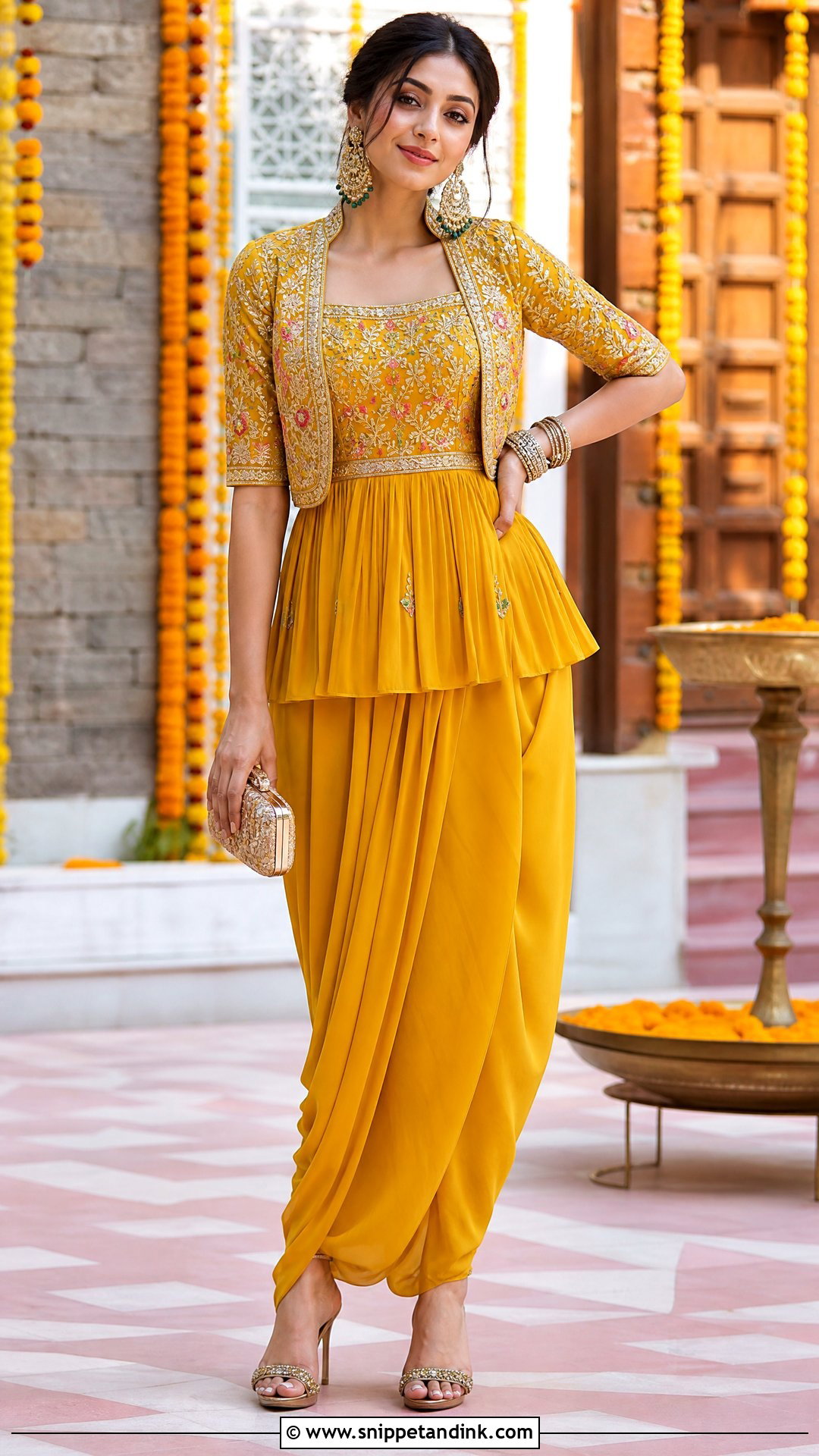
A dhoti pant set is for the girl who wants something different from lehengas and sarees. The draped pants pair with a crop top, peplum or short jacket. It’s at its best at a mehendi or sangeet. Fuchsia, teal and coral feel fun; ivory and gold feel refined. Sleek hair balances the volume at the hips.
21. Crop Top And Skirt For Indian Wedding
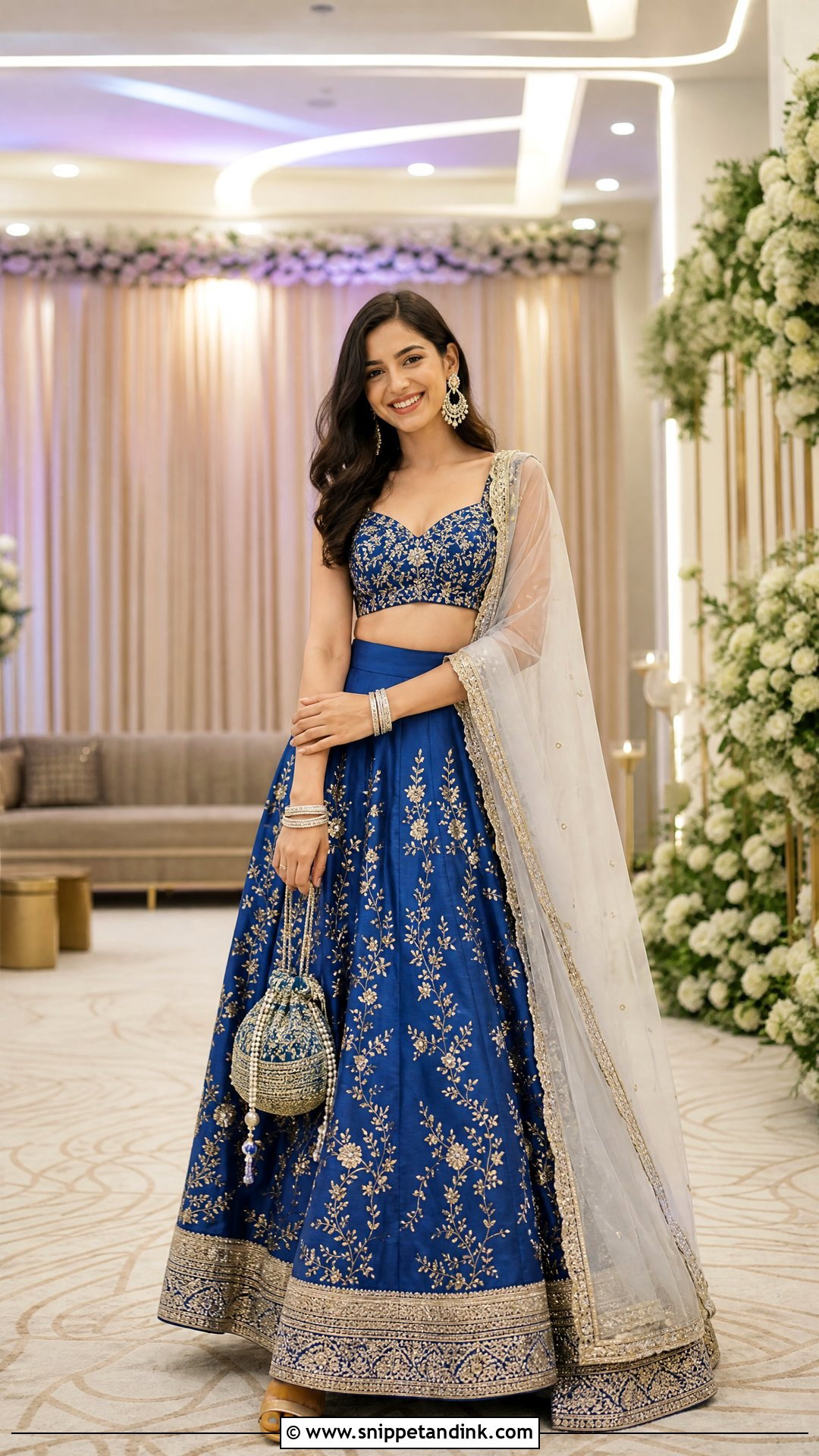
A crop top and skirt looks like a lehenga but is lighter and easier to wear. A high-waisted skirt with a comfortable crop top suits sangeet and mehendi. Add a dupatta if the event is traditional. I’d always check how much midriff shows when you sit and lift your arms; with older relatives present, a slightly longer crop is often the more comfortable choice.
22. Ruffle Saree For Indian Wedding
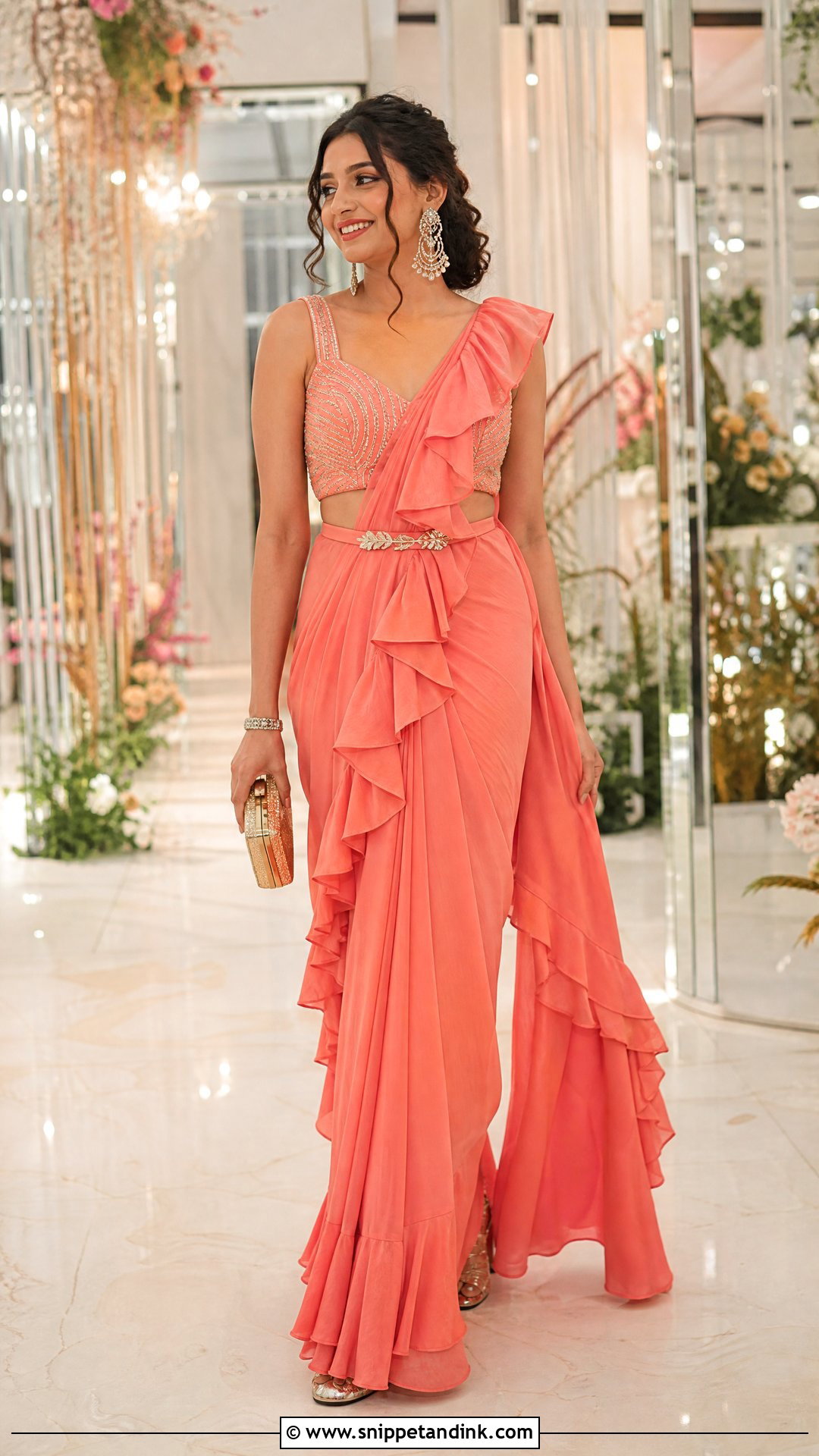
Ruffle sarees are playful and suit sangeet nights and pre-wedding parties. Georgette or chiffon lets the ruffles fall softly; crepe holds them more crisply. Solid or ombré shades look cleaner than prints with ruffles. A belt defines the waist and holds the drape. Keep jewellery simple, since the ruffles already give movement.
23. Brocade Lehenga For Indian Wedding
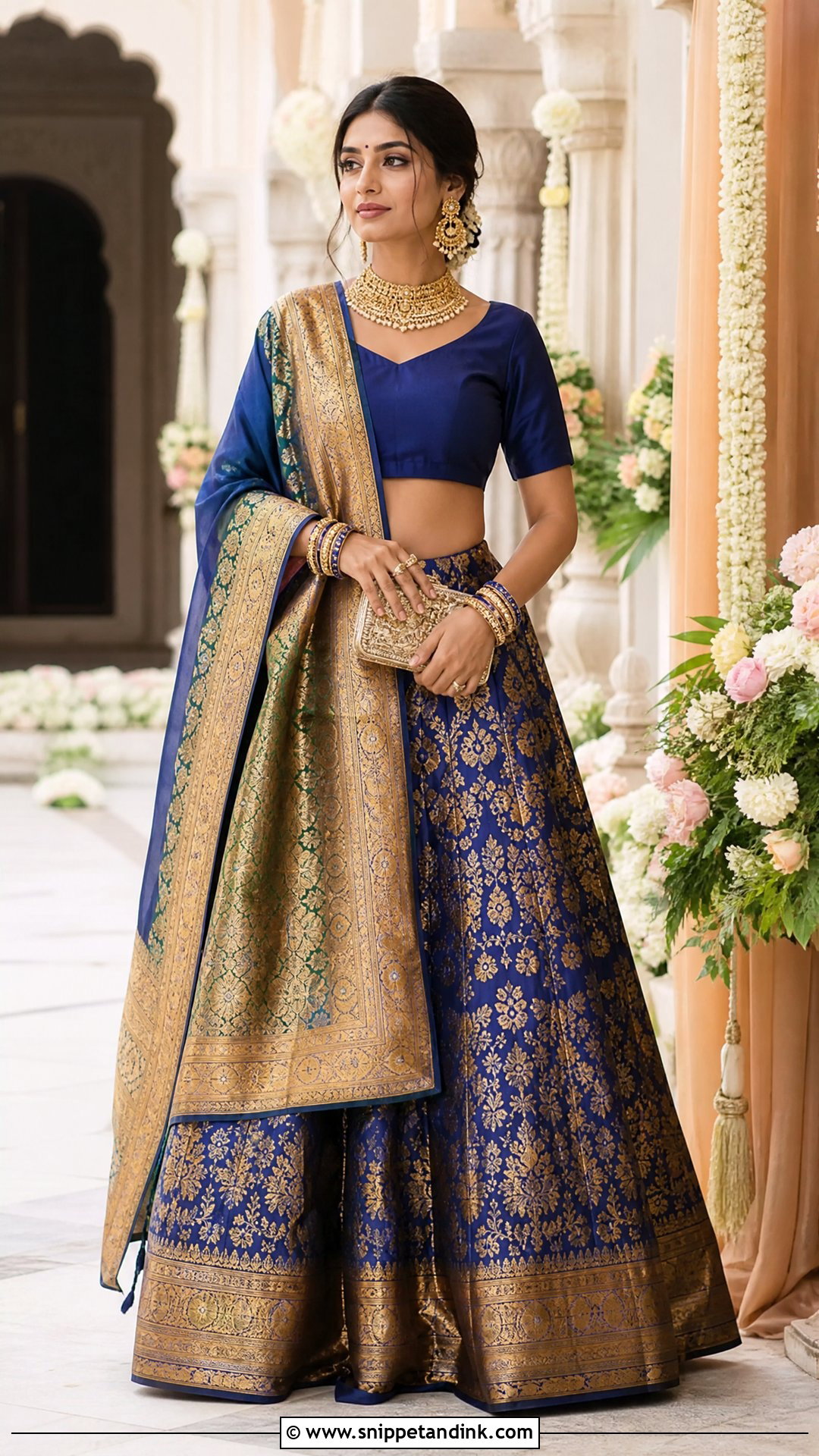
Brocade is woven with the pattern in the fabric, floral, paisley or geometric, so the skirt looks festive without embroidery. It’s right for ceremonies and formal receptions. Red, gold, green and royal blue are classic. A plain silk blouse balances a busy brocade skirt; a matching brocade choli makes it bolder. Brocade is stiff, so the waistband needs to fit well.
24. Punjabi Suit For Indian Wedding
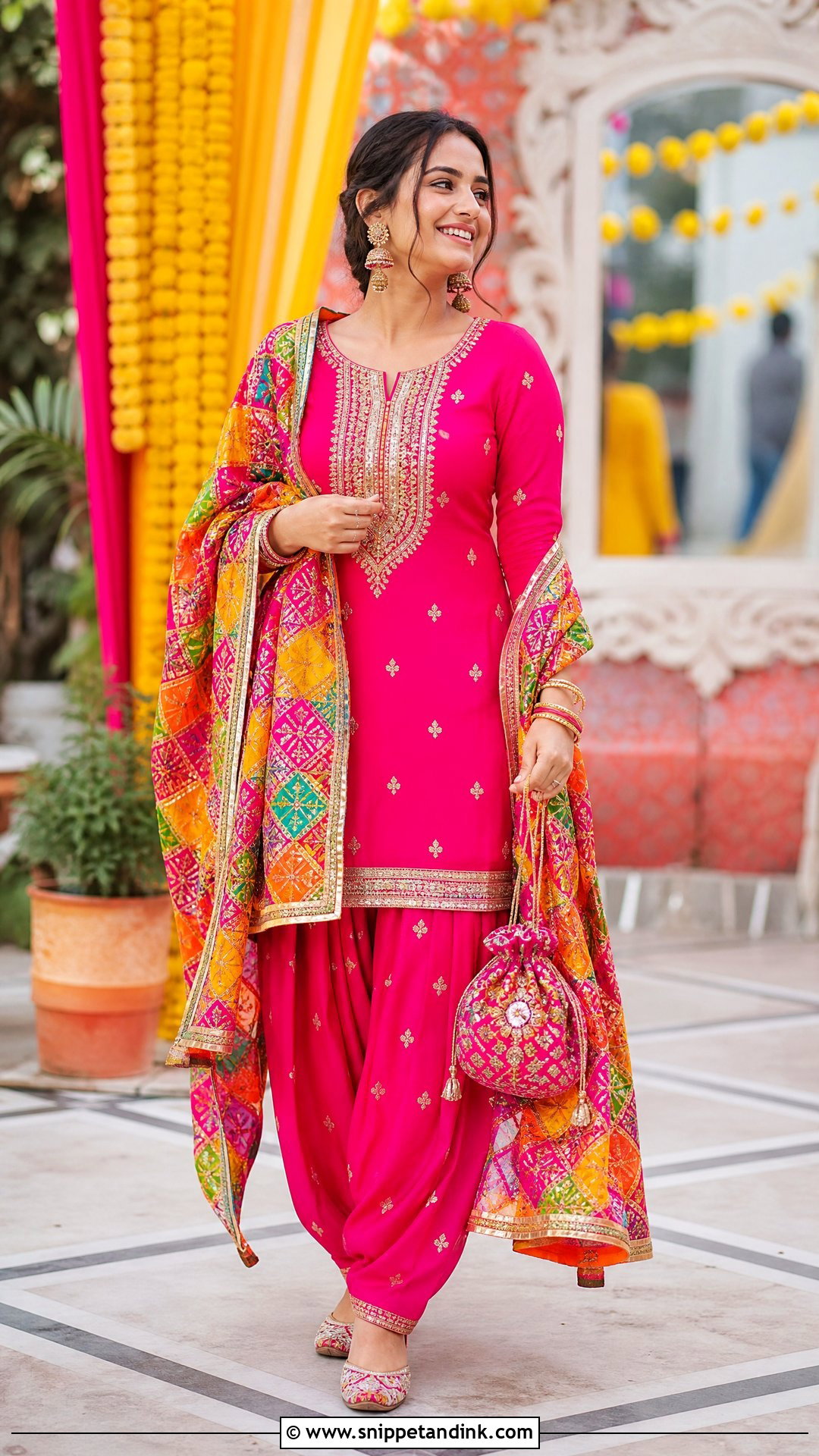
A Punjabi suit with Patiala salwar is made for dancing. Choose silk blend, georgette or embroidered fabric over casual cotton for a wedding. Yellow, hot pink and turquoise look festive. A phulkari dupatta makes it instantly traditional. A paranda in a braid finishes it. It’s comfortable for long events and family celebrations.
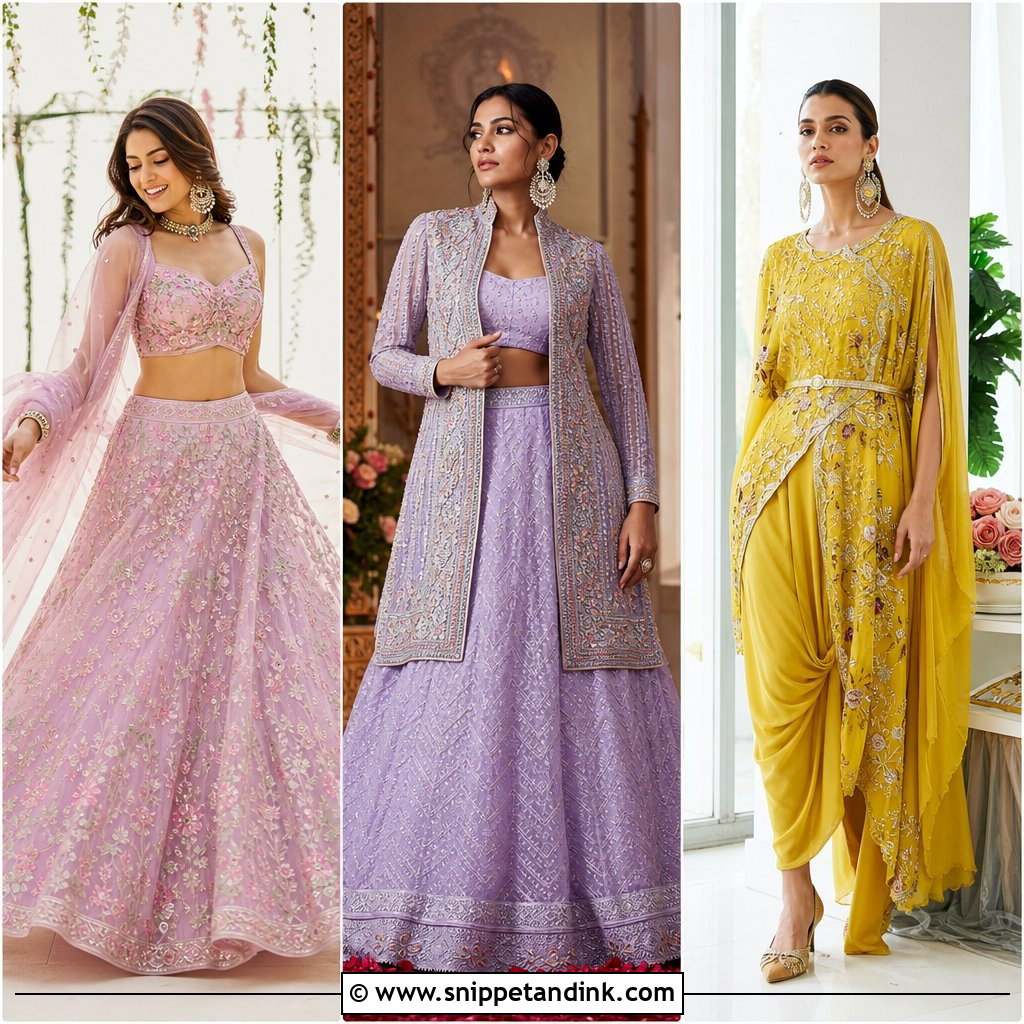
25. Reception Gown For Indian Wedding
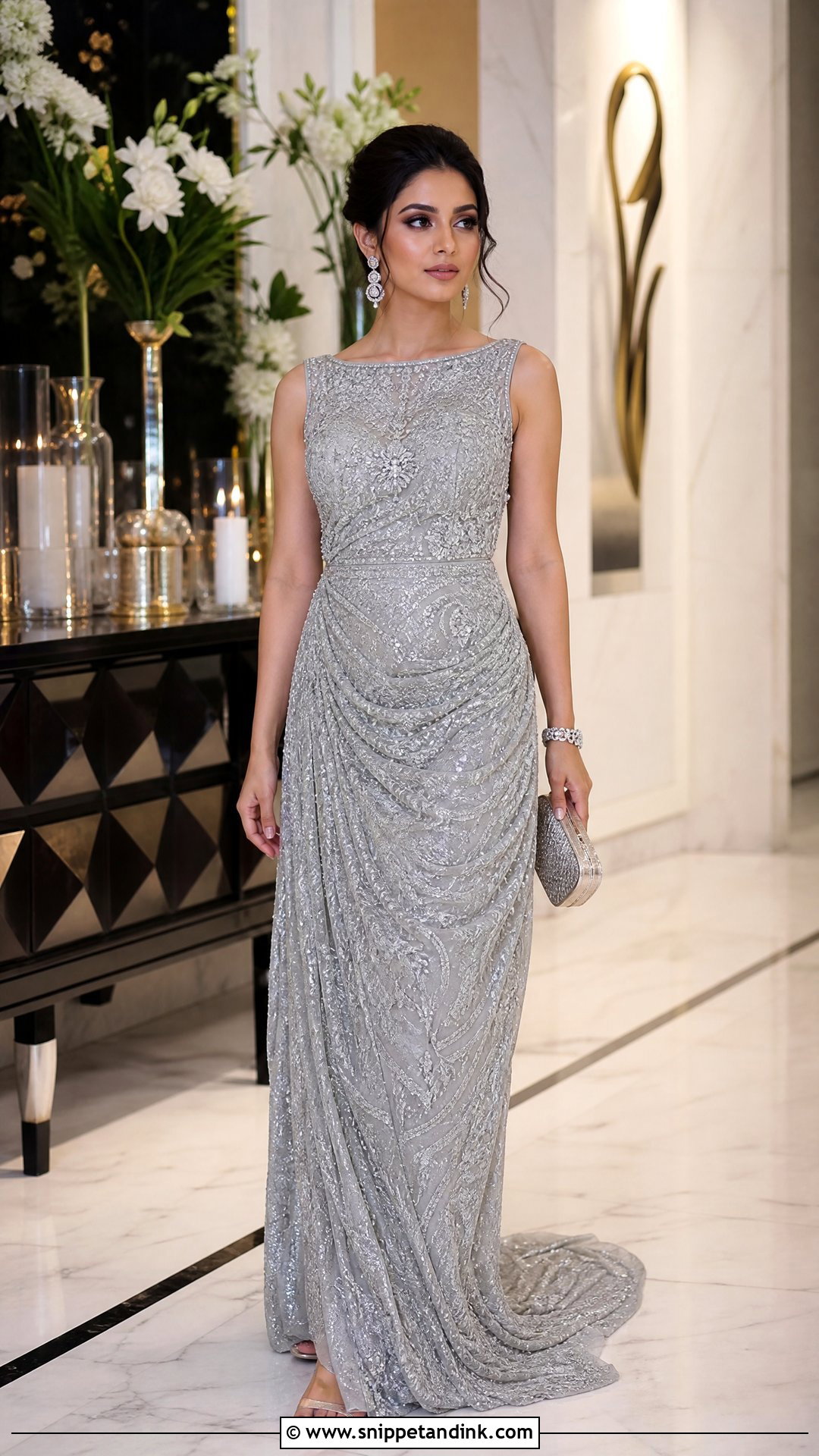
Reception gowns need lining. Satin, net, silk or georgette with sequins or beadwork can scratch, and a good lining is what lets you wear it for hours. Silver, champagne, navy and emerald look elegant under venue lights. If the gown is heavily worked, keep accessories minimal. A sleek bun or side waves suits it.
Dressing a Young Girl or Teen So She Lasts Until the Vidaai
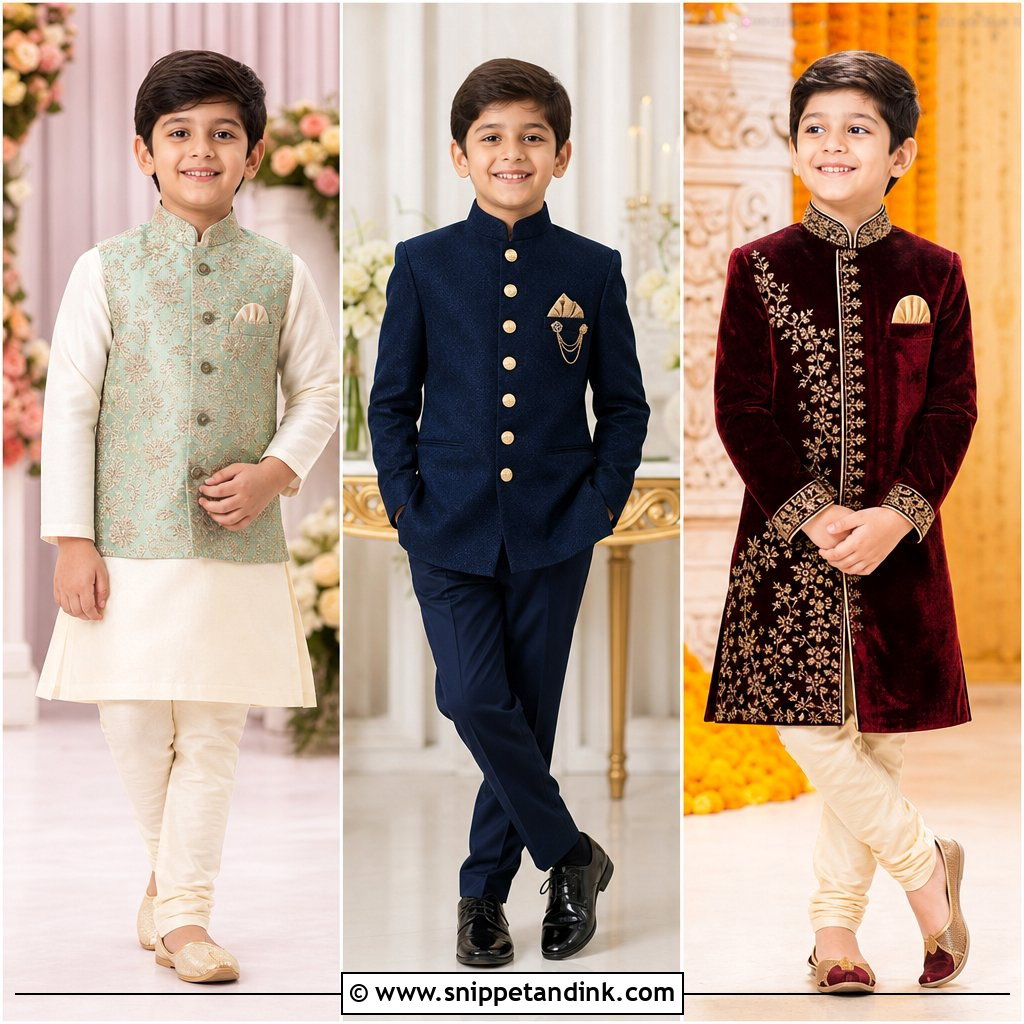
Children and teenagers feel discomfort faster than adults and complain louder, so I treat their outfits differently. The first thing I check is the inside of the blouse or kurta: zari and sequins scratch, and a soft cotton lining stops the itching that makes kids want to change by dinner.
- Hem: a little shorter than an adult’s, so she can run without tripping.
- Shoes: flat juttis or soft sandals. Heels on a young girl rarely survive past the baraat.
- Bathroom trips: a lehenga with an elastic or drawstring waist is far easier to manage alone.
- A spare outfit in the car, because food, mehendi and dance floors all happen to children.
Rent, Borrow or Buy for a Season of Weddings
If you have several weddings in one season, buy the outfit you’ll rewear and rent or borrow the one-time showpieces. A silk suit, a chikankari lehenga or a Banarasi saree can be restyled for years. Heavy reception gowns and full sequin sarees are often worn once. Rentals save money but rarely fit perfectly, so book early enough to have the blouse altered, and confirm what the rental shop allows.
Let the Event, Not the Trend, Pick the Outfit
The easiest way to plan wedding outfits is to start with the event, then comfort, season and family dress code. Lehengas, sarees, Anarkalis, shararas, gowns and fusion outfits each have a natural place. I’d keep breathable fabrics for daytime and richer textures for evening, and choose accessories that support the outfit without weighing you down. Get the length right for your shoes, pin anything that slides, and you’ll spend the wedding dancing instead of adjusting.
You'll Like These Ideas:


Leave a Reply