
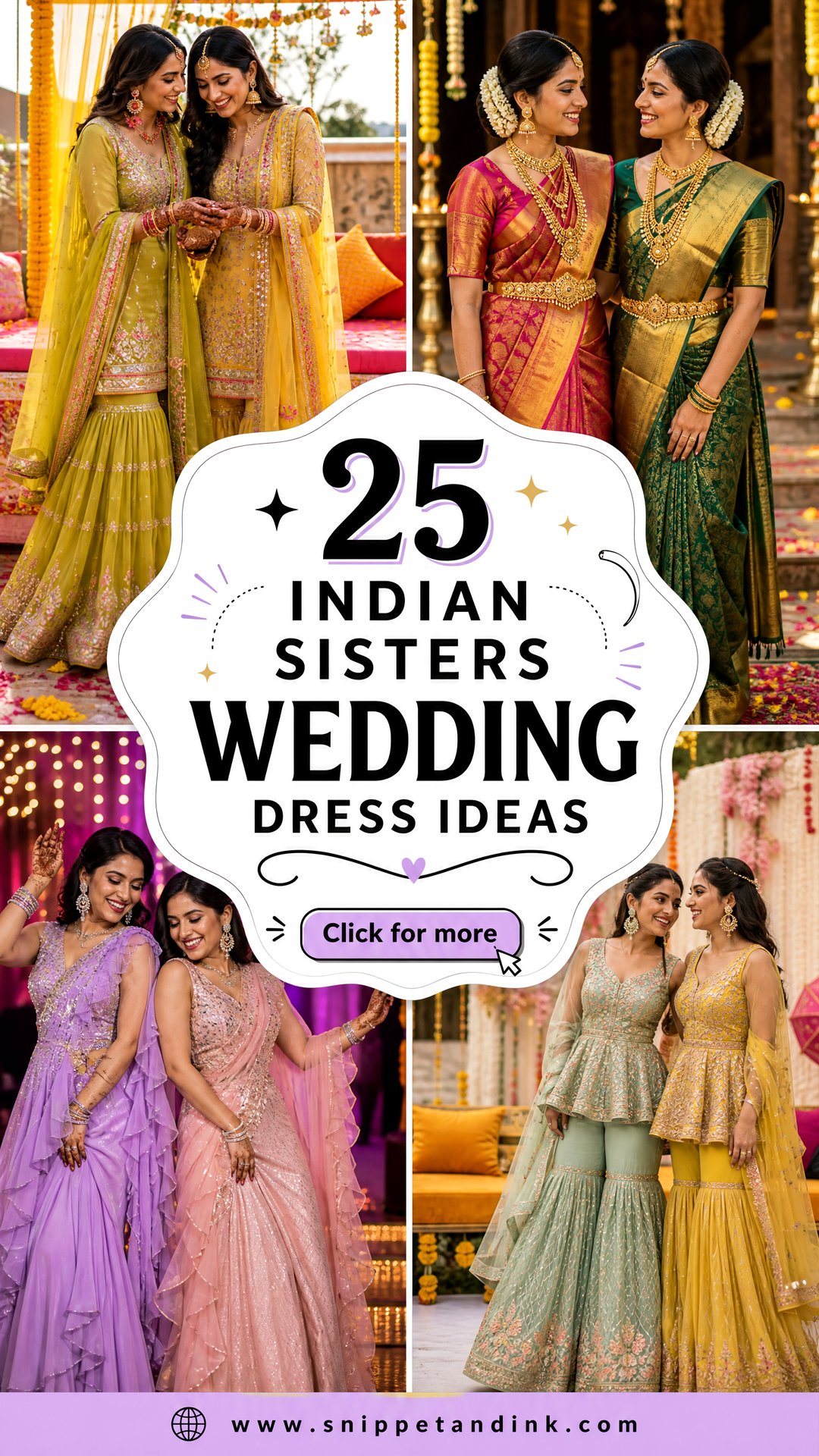
Laying Out a Sister’s Wardrobe Function by Function
Before we look at a single outfit, I sit down with the sister and write out the events in order: haldi, mehndi, sangeet, ceremony, reception, plus any welcome lunch. Next to each one goes the time of day, whether it’s indoors or out, and what she’ll actually be doing. A sister who is dancing in the sangeet and carrying the haldi bowl needs different clothes from one who is mostly greeting guests.
Then I ask the bride for her colours for every function. Not to match them, but to stay out of them. Red, deep maroon and the main ceremony colour are hers. I aim for a shade that sits next to hers in photos without echoing it, so a sister in emerald or gold beside a bride in red reads as family, not as a second bride.
- Wear the heaviest outfit only once, usually to the ceremony or reception.
- Pick fabrics that forgive stains for haldi and mehndi, and save silk for the evening.
- Let one blouse work twice: a plain gold or ivory blouse can go under two different sarees.
- Count the dupattas. Three functions in a row with a heavy dupatta is tiring by day two.
Blouse Tailoring Takes Longer Than Buying the Lehenga
The outfit itself is rarely the hold-up. The blouse is. Most lehengas and sarees come with unstitched blouse fabric, and a good tailor near wedding season is booked well ahead. I’d buy the main pieces at least two months out and hand the blouse over with a reference blouse that already fits you well.
Plan on two fittings. At the first, check the armholes by raising your arms as if you’re hugging someone, and sit down to see if the waist digs. At the second, wear the actual bra and heels you’ll use on the day. Saree falls and edging, the strip stitched inside the hem so it drapes and doesn’t fray, take a day or two at most, but they’re easy to forget until the last minute.
1. Pastel Lehenga For Sister Wedding
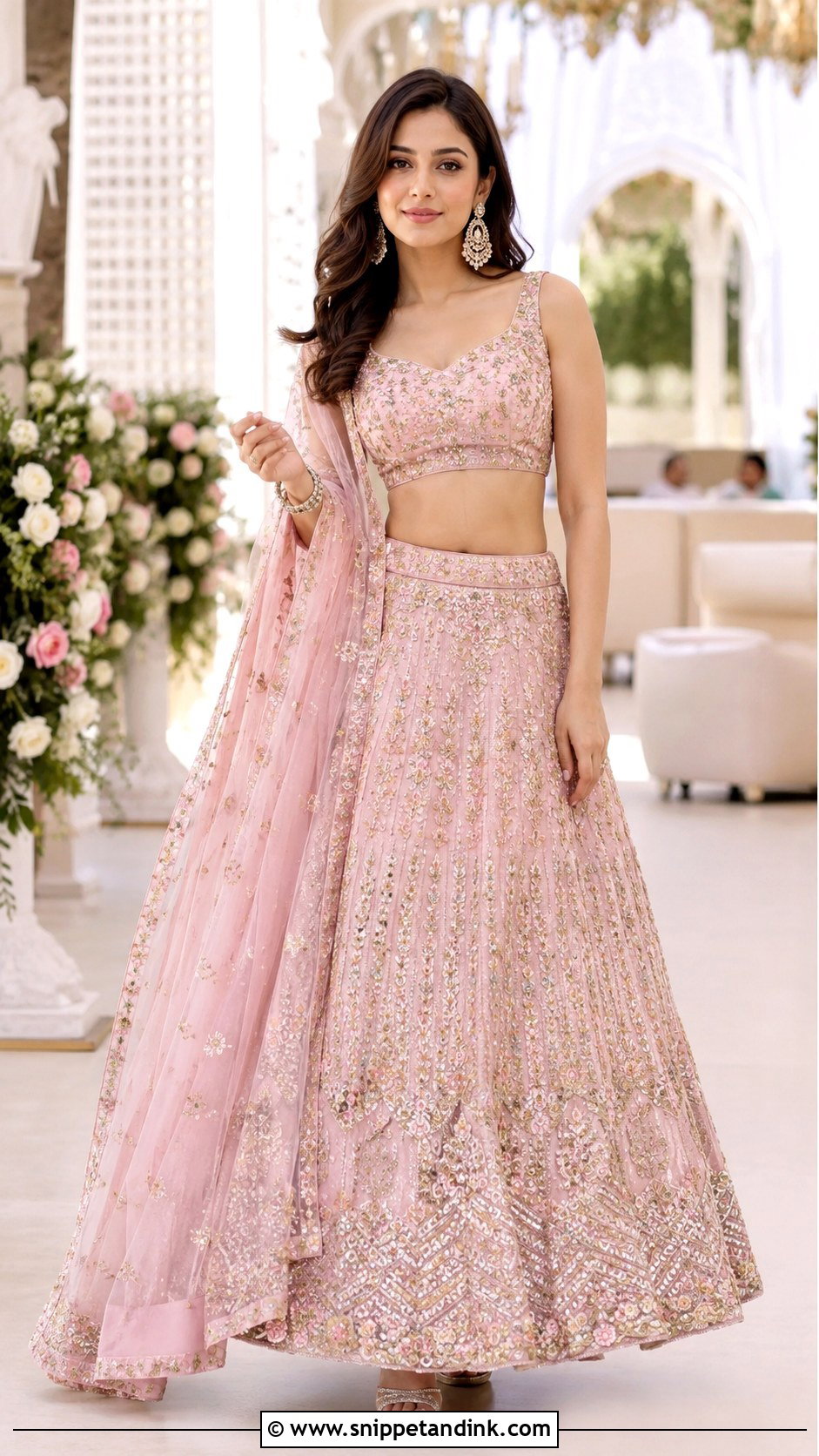
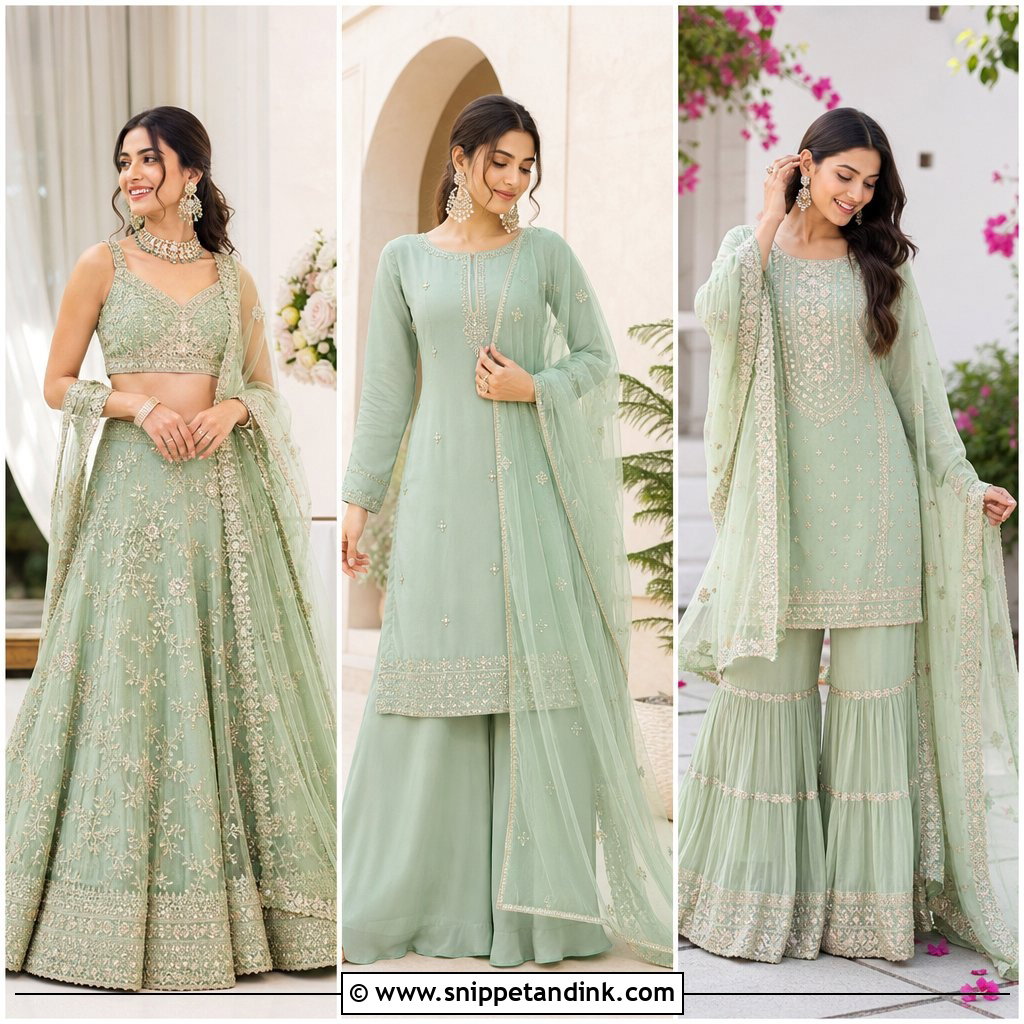
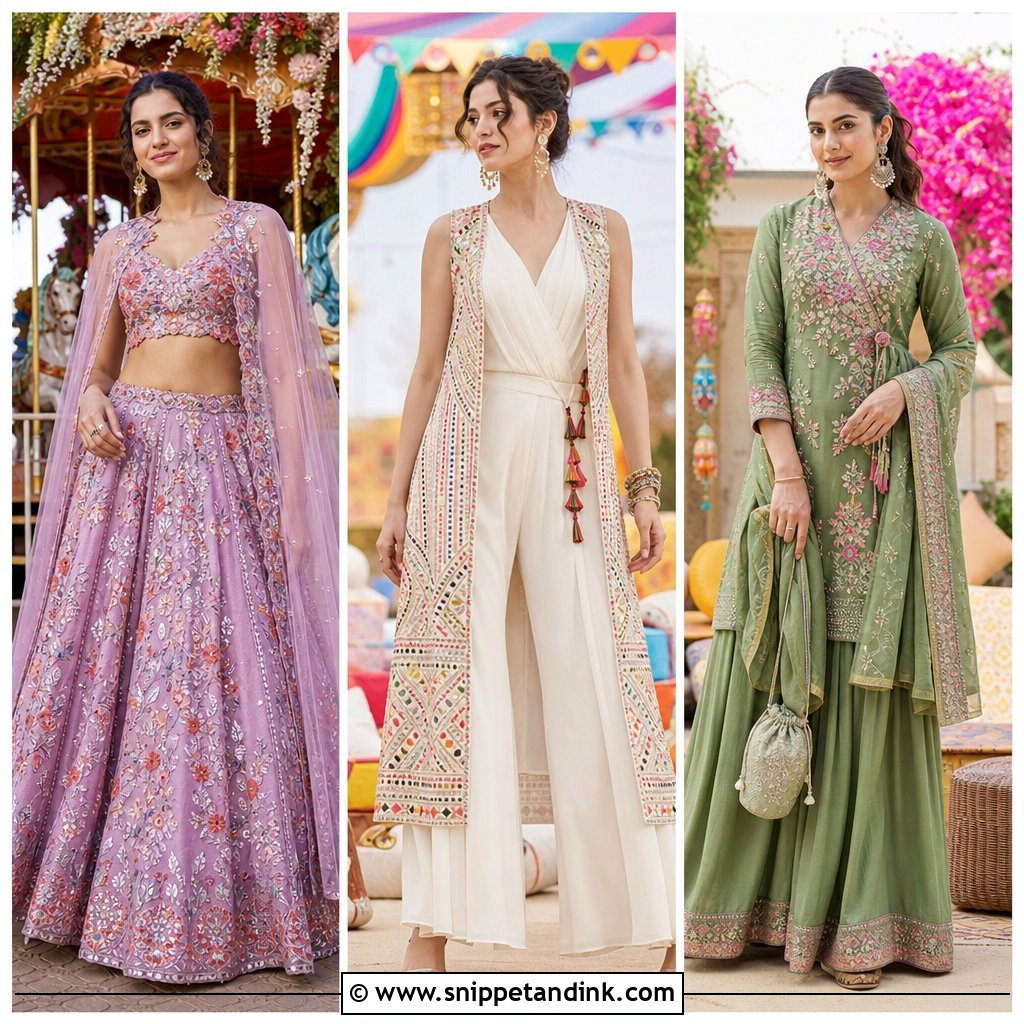
Pastel is where I start most sisters who want to look dressed up at the engagement or the wedding morning without drifting into bridal territory. Blush, powder blue, sage, lavender and peach all hold up in both daylight and warm evening light, though sage and lavender can go flat under yellow banquet bulbs, so I always check a swatch indoors as well as by a window. Light zari, pearl or threadwork keeps the skirt moving instead of standing stiff. A sheer dupatta pinned over one shoulder with a fitted blouse keeps the line clean. I’d keep the earrings as the only big piece of jewelry; pastel looks fresh until you pile gold on it.
2. Mirror Work Lehenga For Sangeet
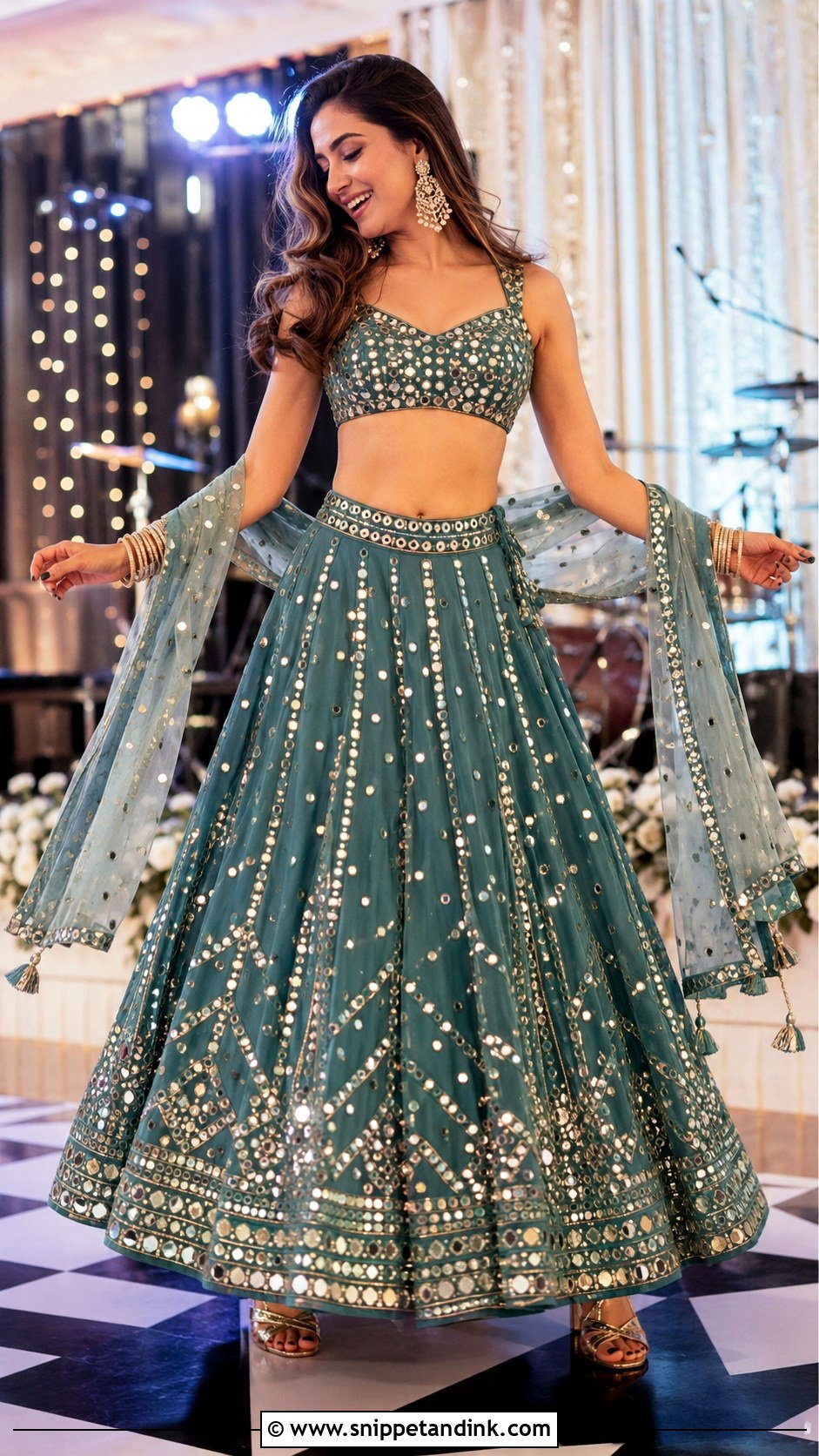
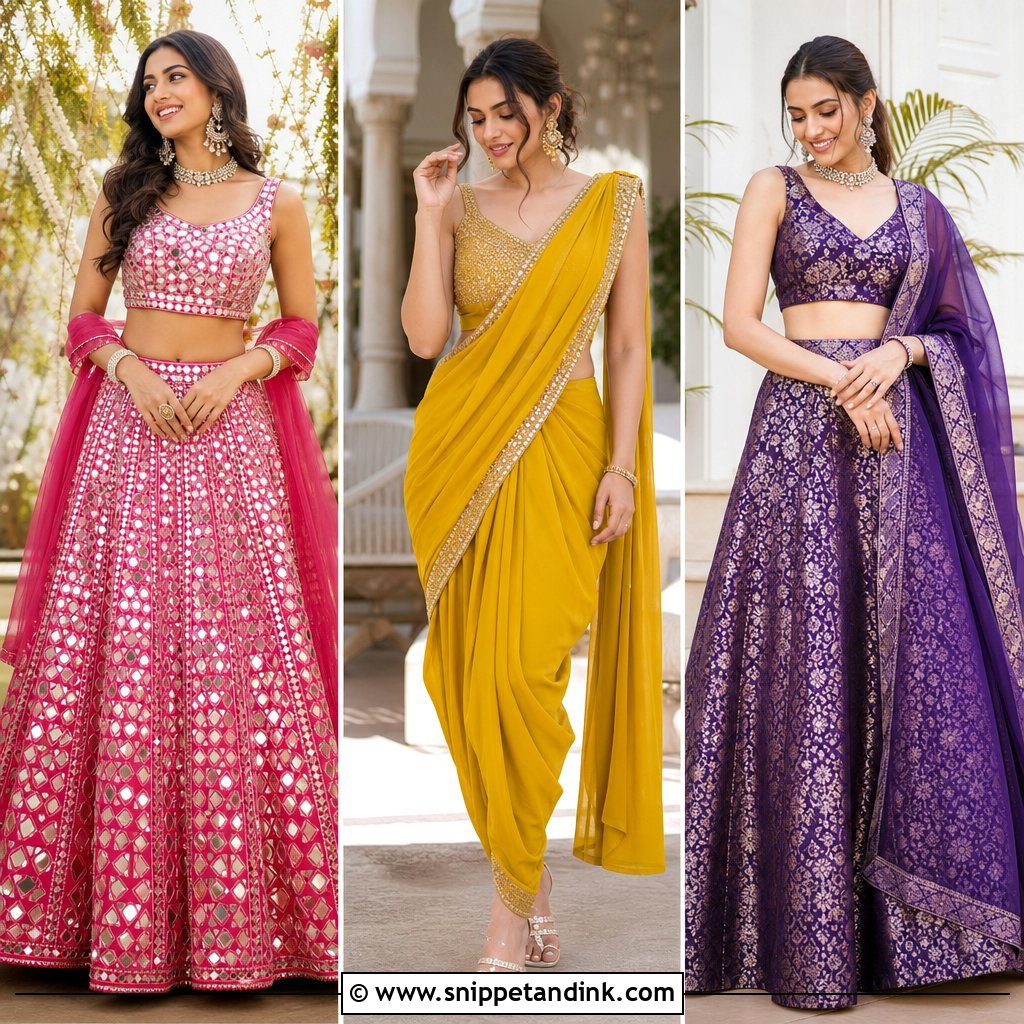
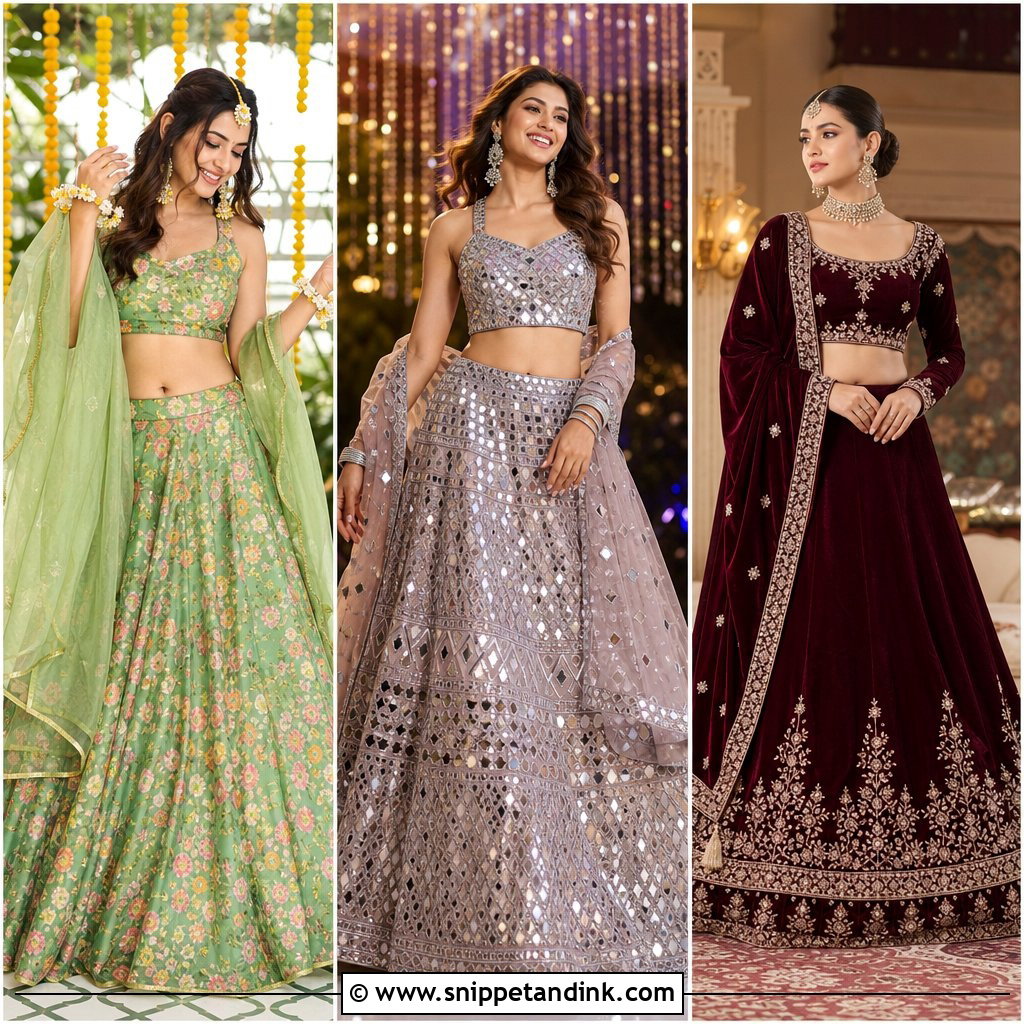
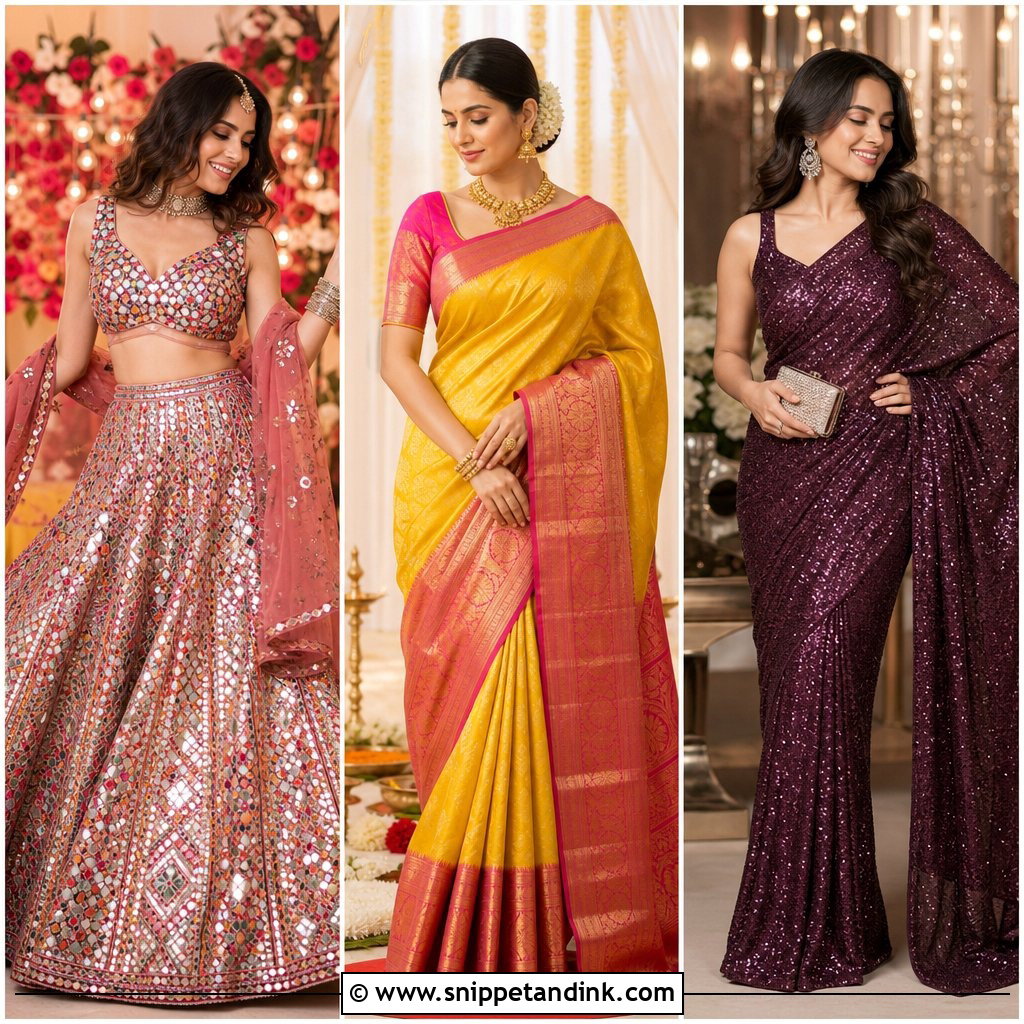
Sangeet is the night you dance, and a mirror work lehenga throws light back every time you turn. Teal, hot pink, emerald, mustard and royal blue carry mirror work best. Before you buy, sit down in it. Mirror pieces are stitched on with a raised edge, and a heavily mirrored waistband digs in after an hour of sitting through performances. I ask for a slightly cropped blouse and a softer waist, and a dupatta light enough to tuck in while you dance. Stacked bangles and a sleek ponytail suit the energy; stage lights will do the rest.
3. Banarasi Saree For Wedding Ceremony
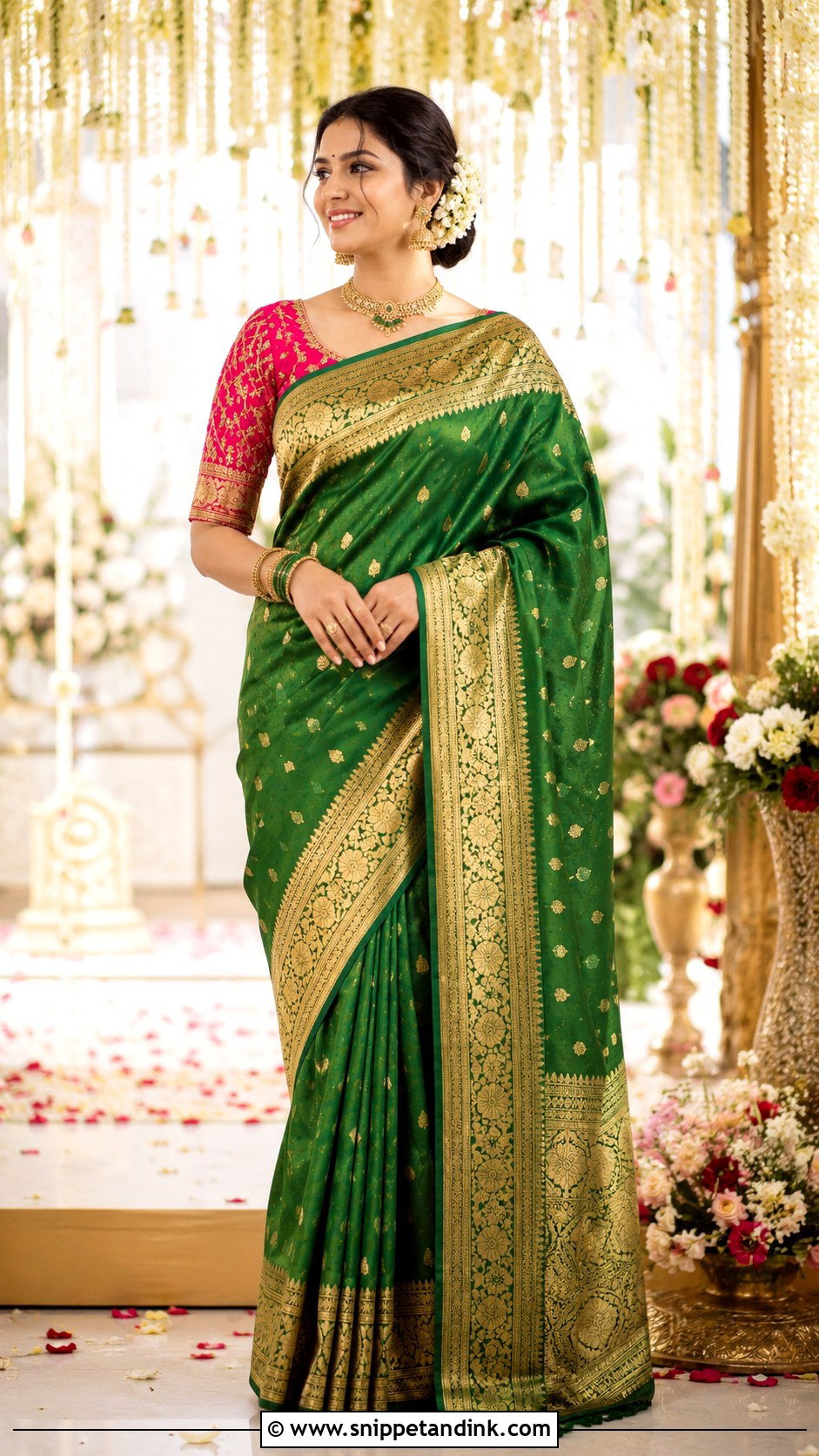
A Banarasi saree carries the weight of a family ceremony on its own, so it needs very little help. The woven motifs and border do the styling. My one firm rule is to check what the bride is wearing first: rani pink, emerald, royal purple, gold and deep red are all classic Banarasi colours, and two of them side by side in the mandap photos is the clash everyone remembers. Real Banarasi silk is heavy and slippery, so I have the pleats pinned at the waist and again at the shoulder. Jhumkas, bangles, a small bindi and a low bun with fresh flowers finish it, and you’ll wear this saree again at every festival for years.
4. Sharara Set For Mehndi
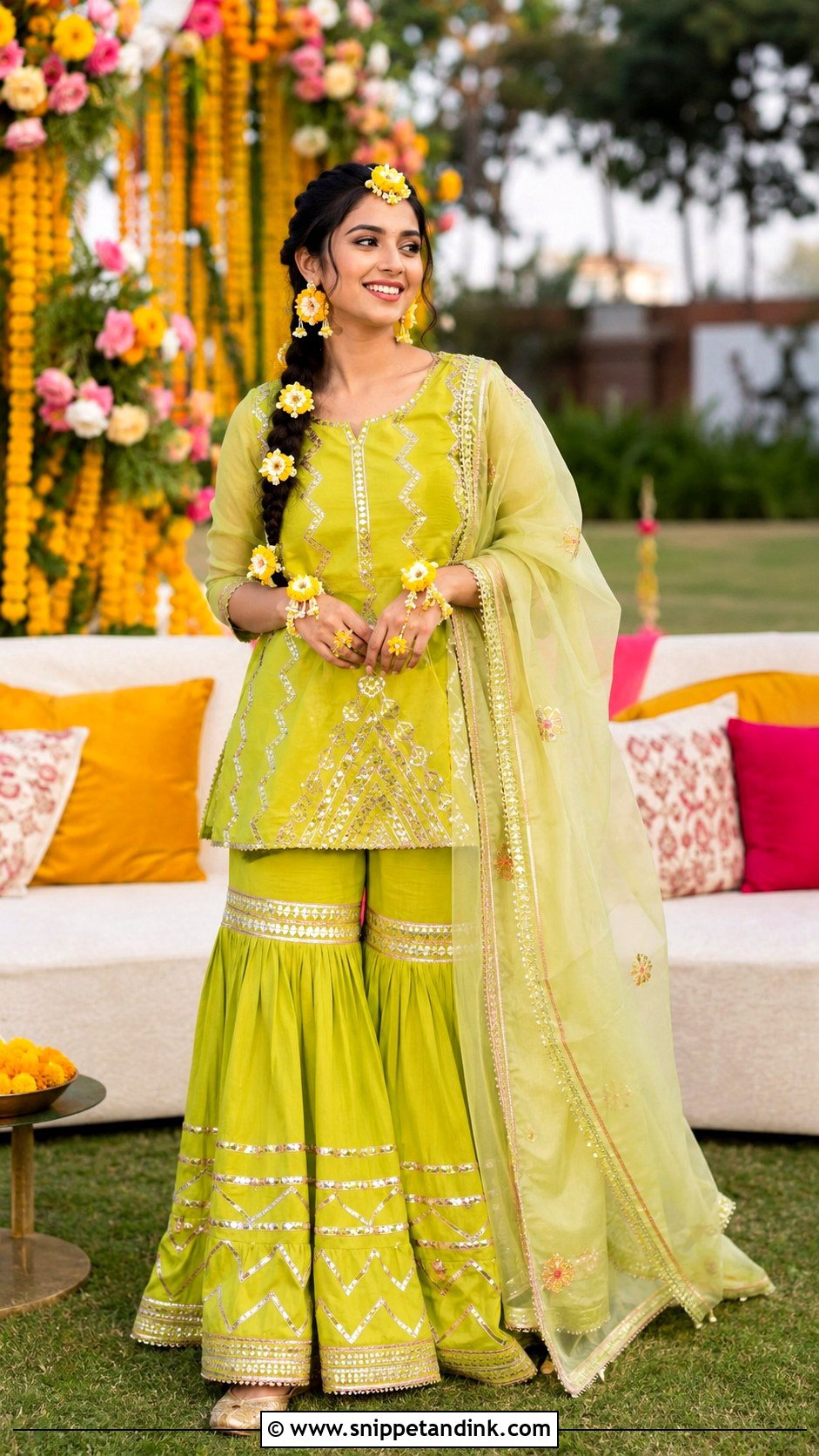
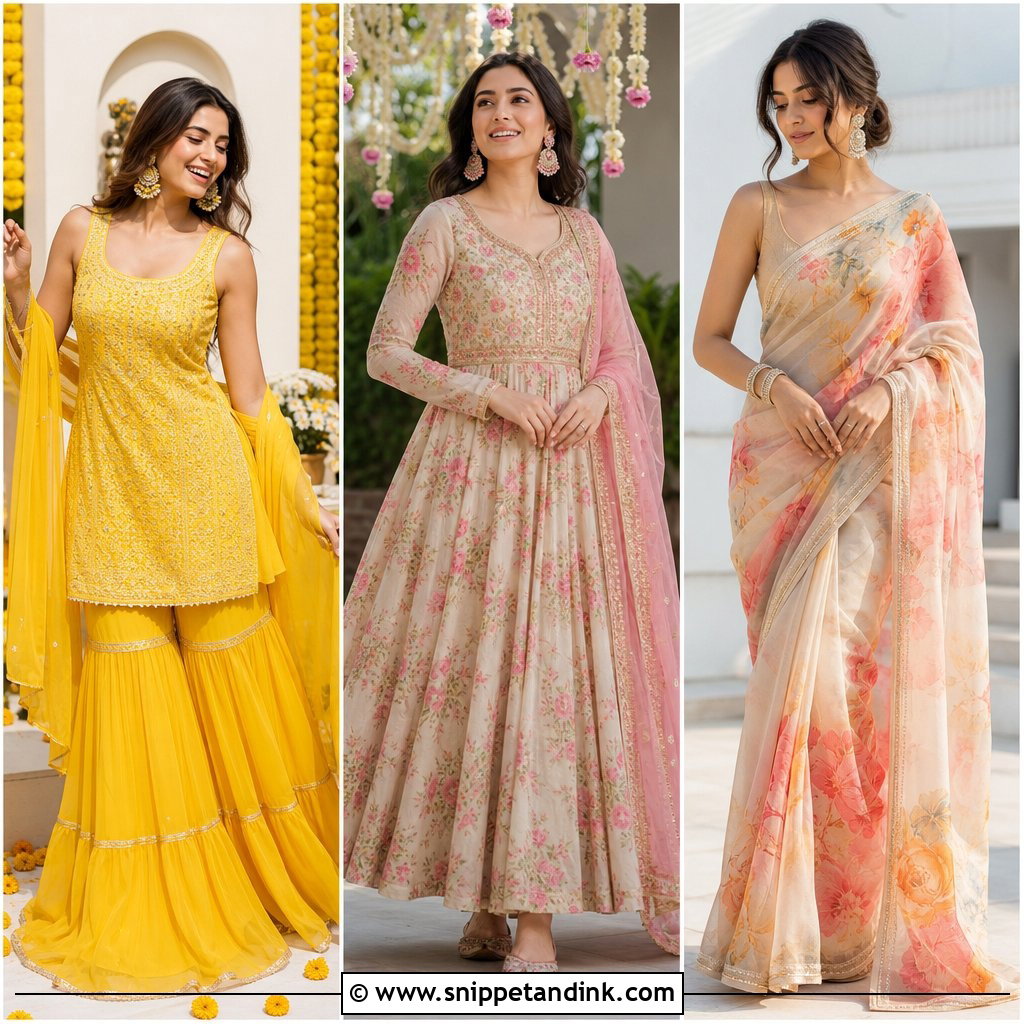
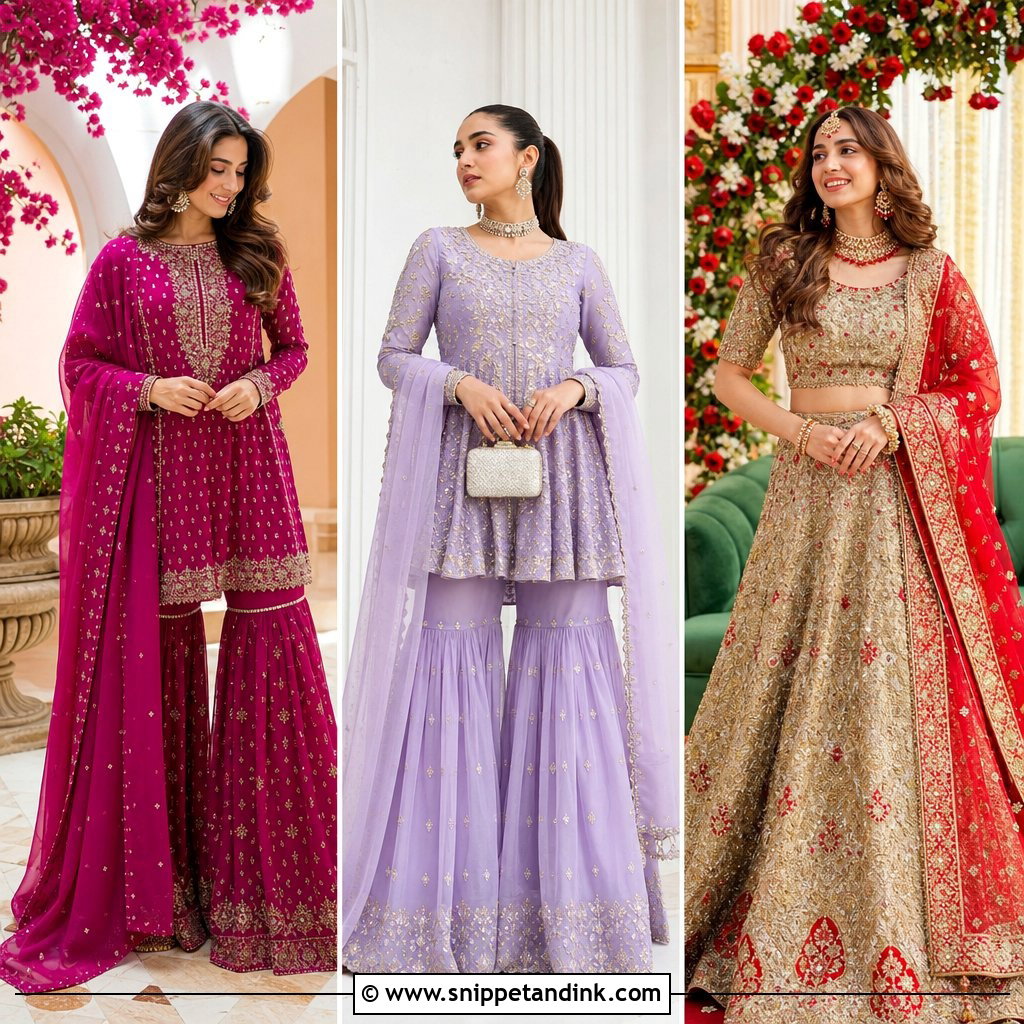
Mehndi means sitting on cushions for hours with your palms out, and a sharara set handles that better than anything with a full skirt. Yellow, lime, coral, mint and fuchsia with gota patti or mirror work suit the mood. I pair a short kurti with wide-legged sharara pants because the shorter top stops the hem from sitting in wet henna. Keep the dupatta light or skip it while your own hands are drying. Floral jewelry, juttis and a soft braid are all you need.
5. Anarkali Gown For Reception
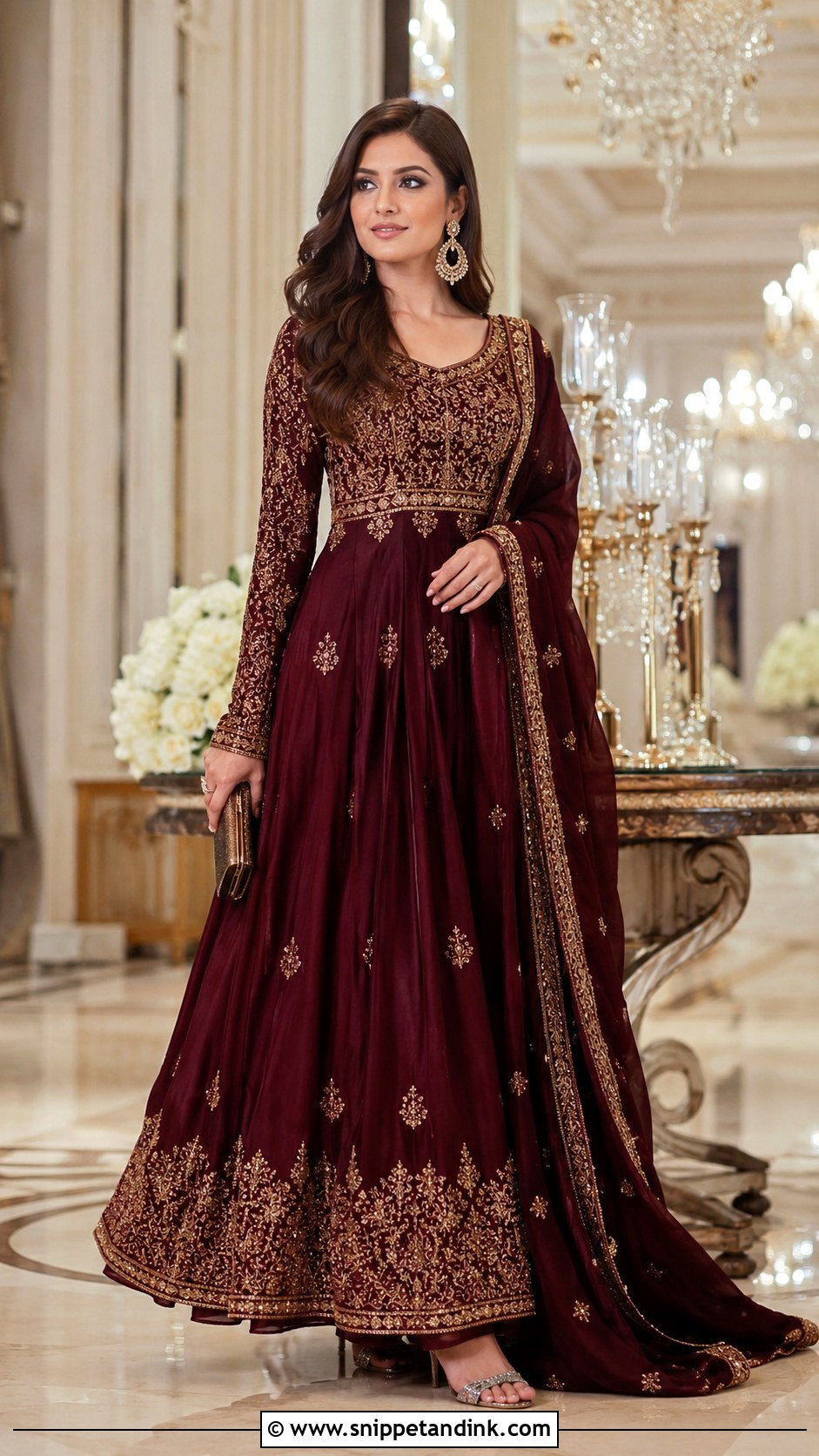
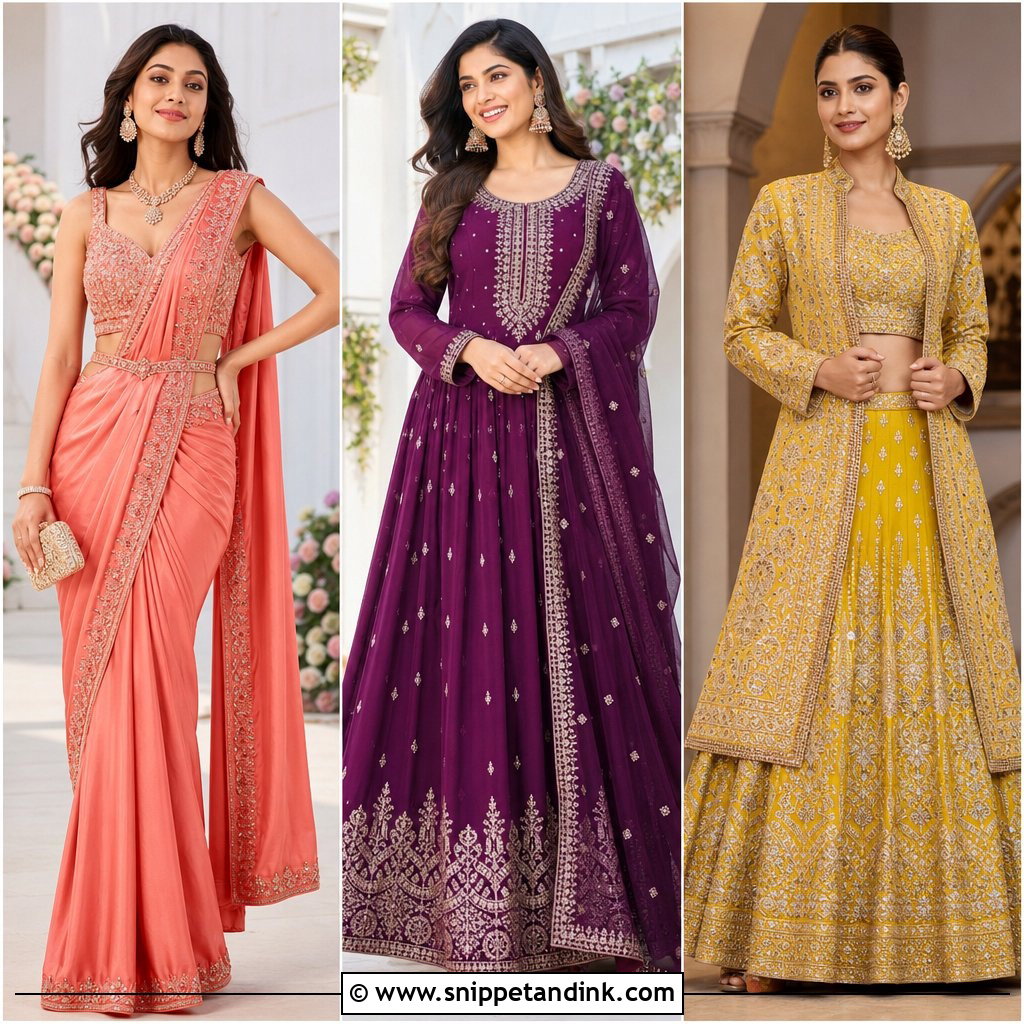
An Anarkali gives you the drama of a lehenga without a dupatta to manage while you greet two hundred guests. The flare comes from panels, and the more panels, the better it swirls, so I count them at the fitting rather than trusting the photo. Georgette, silk, organza and net all work; georgette falls softest. For an evening reception, navy, wine, emerald, charcoal or champagne read as properly formal. Embroidery at the neckline, sleeves and hem keeps the eye moving. A centre-part bun or Hollywood waves makes it feel like a gown rather than a festive kurta.
6. Pre Draped Saree For Cocktail
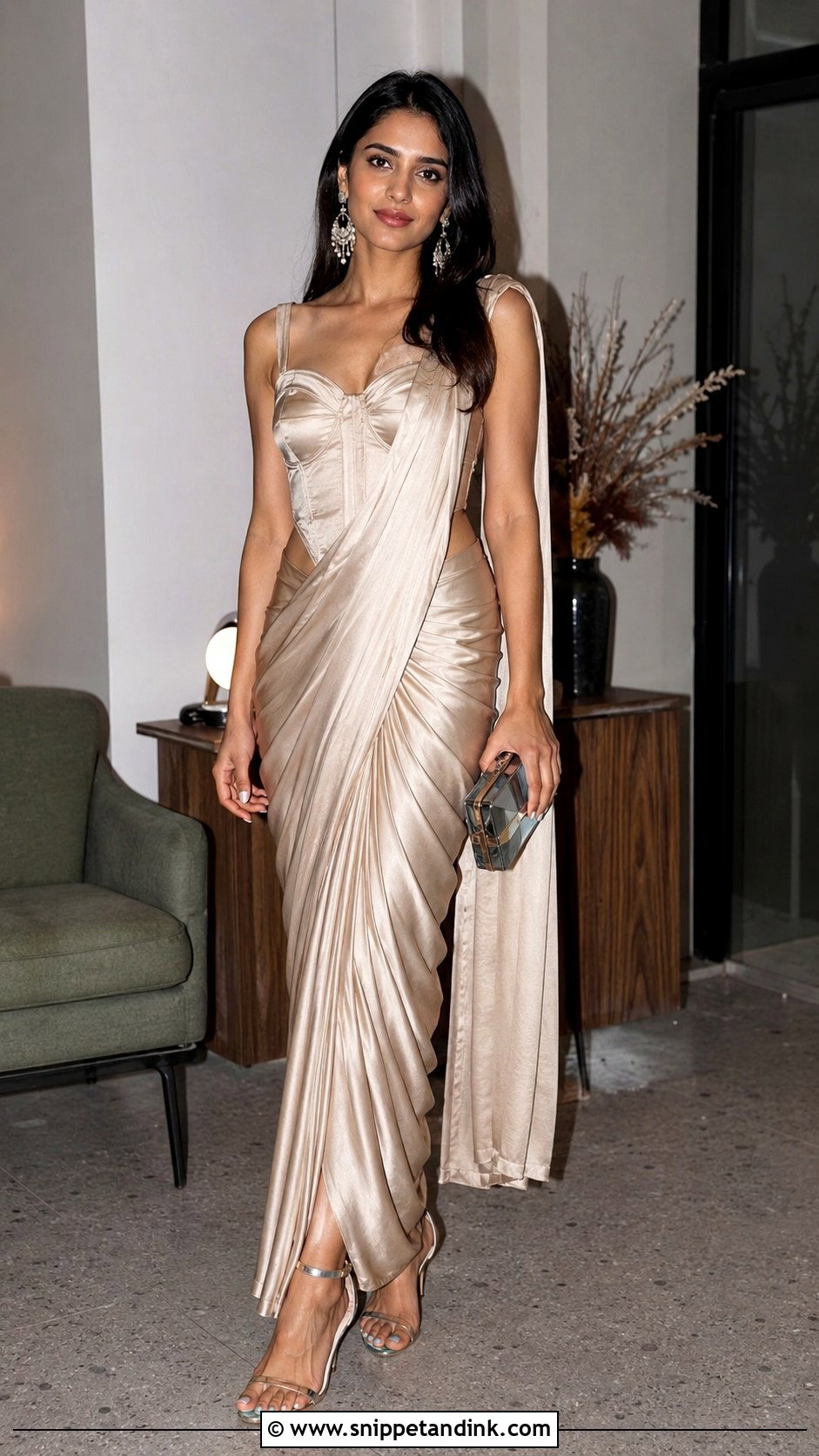
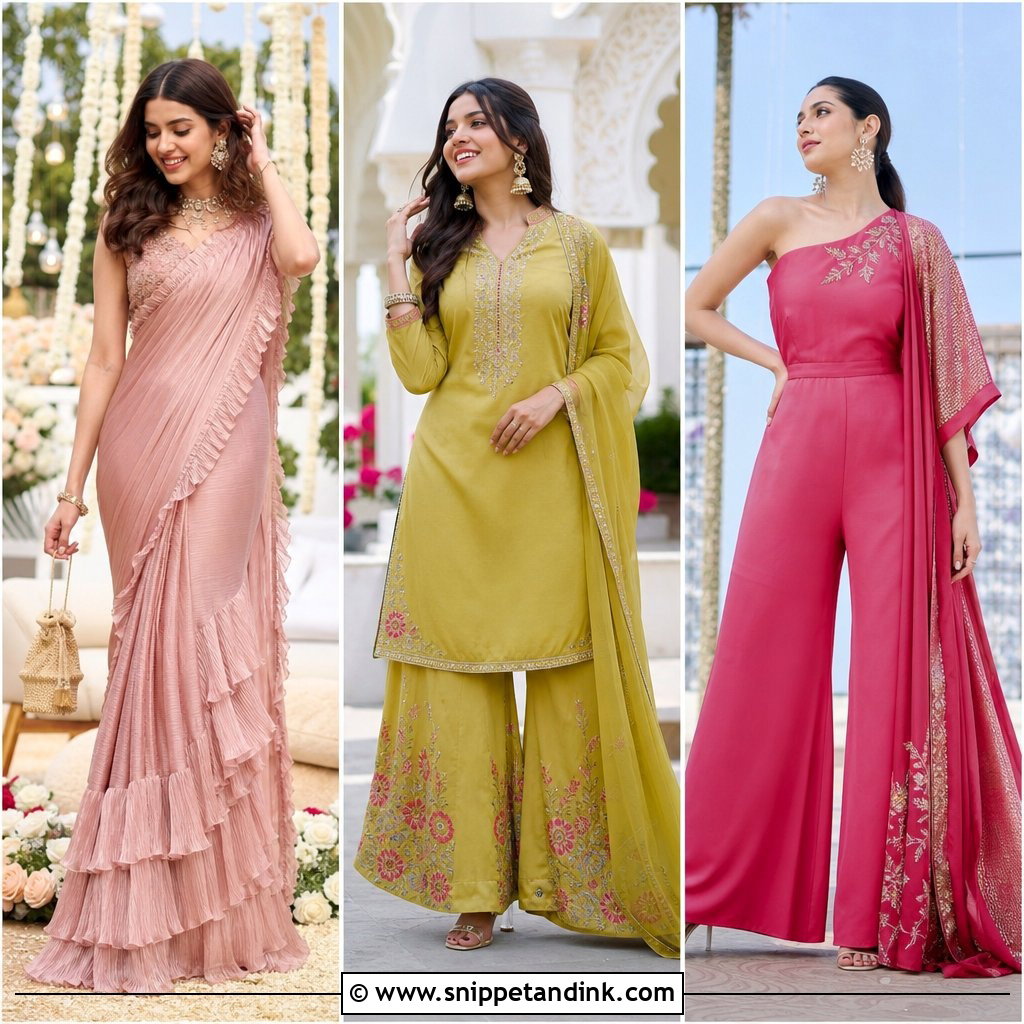
Pre-draped sarees exist for cocktail nights. The pleats are stitched in, so you zip it on in two minutes and nothing slips while you hold a drink. Satin, crepe, chiffon and shimmer georgette all suit the format. Corset and cape blouses give it an evening shape, and black, silver, champagne, rose gold, emerald and midnight blue all work. One honest warning: stitched pleats are fixed to the length you were measured at, so wear your actual heels to the fitting or the hem will sit wrong. Statement earrings and sleek hair are enough.
7. Floral Organza Saree For Day Wedding
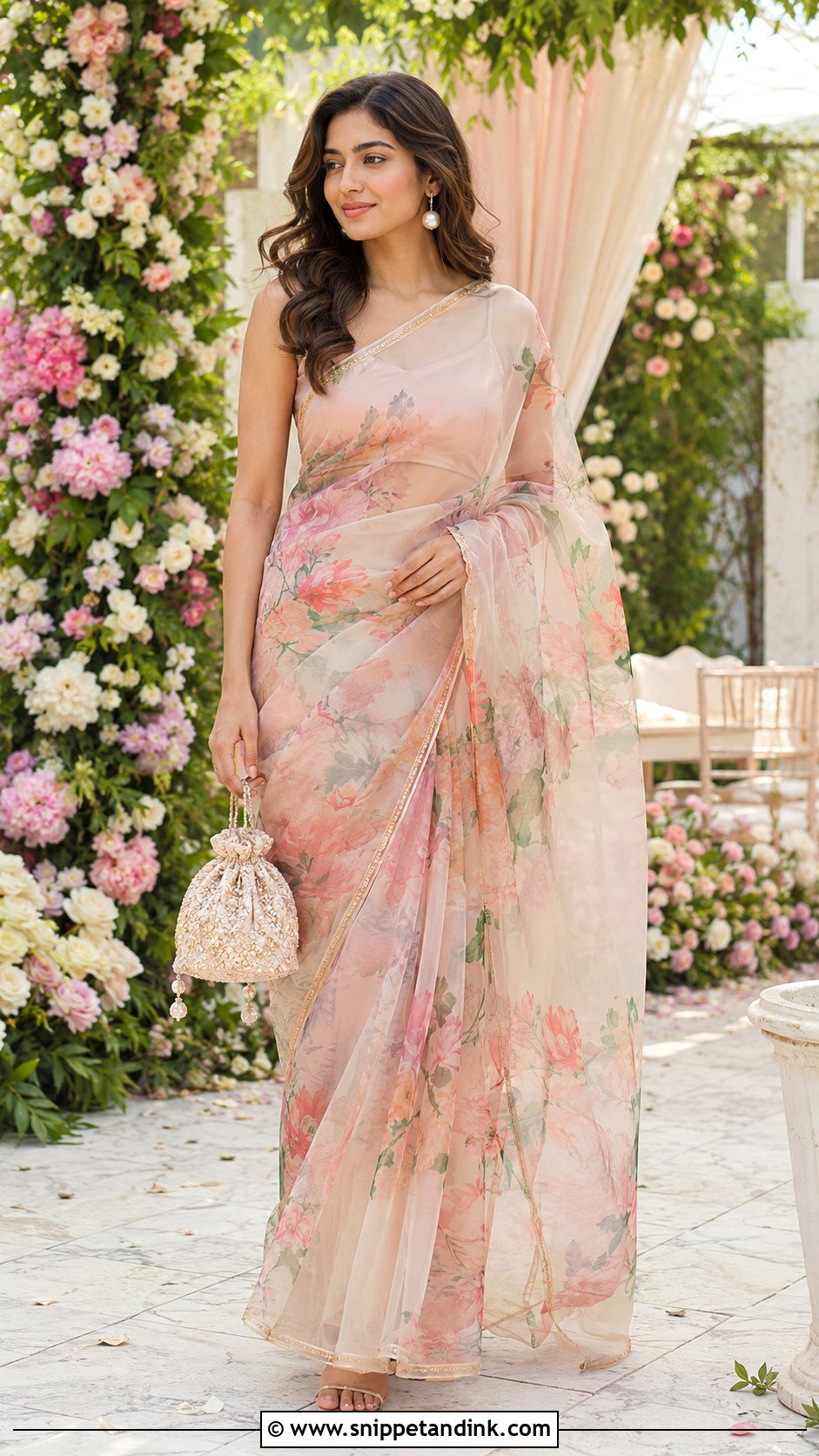
Organza is the fabric I reach for when the ceremony is outdoors before noon. It’s crisp and almost weightless, so a printed or floral-embroidered drape holds a soft shape without clinging in the heat. Ivory with pastel florals, blush, pistachio, sky blue and soft yellow all read well in natural light. The catch is that organza creases where it’s folded and doesn’t fall back flat, so I steam it on the morning, never iron it. Blouse cut is your call: sleeveless, elbow-length or boat neck. Pearl earrings, a small potli and soft waves keep it light enough for a garden or a morning pheras.
8. Velvet Lehenga For Winter Wedding
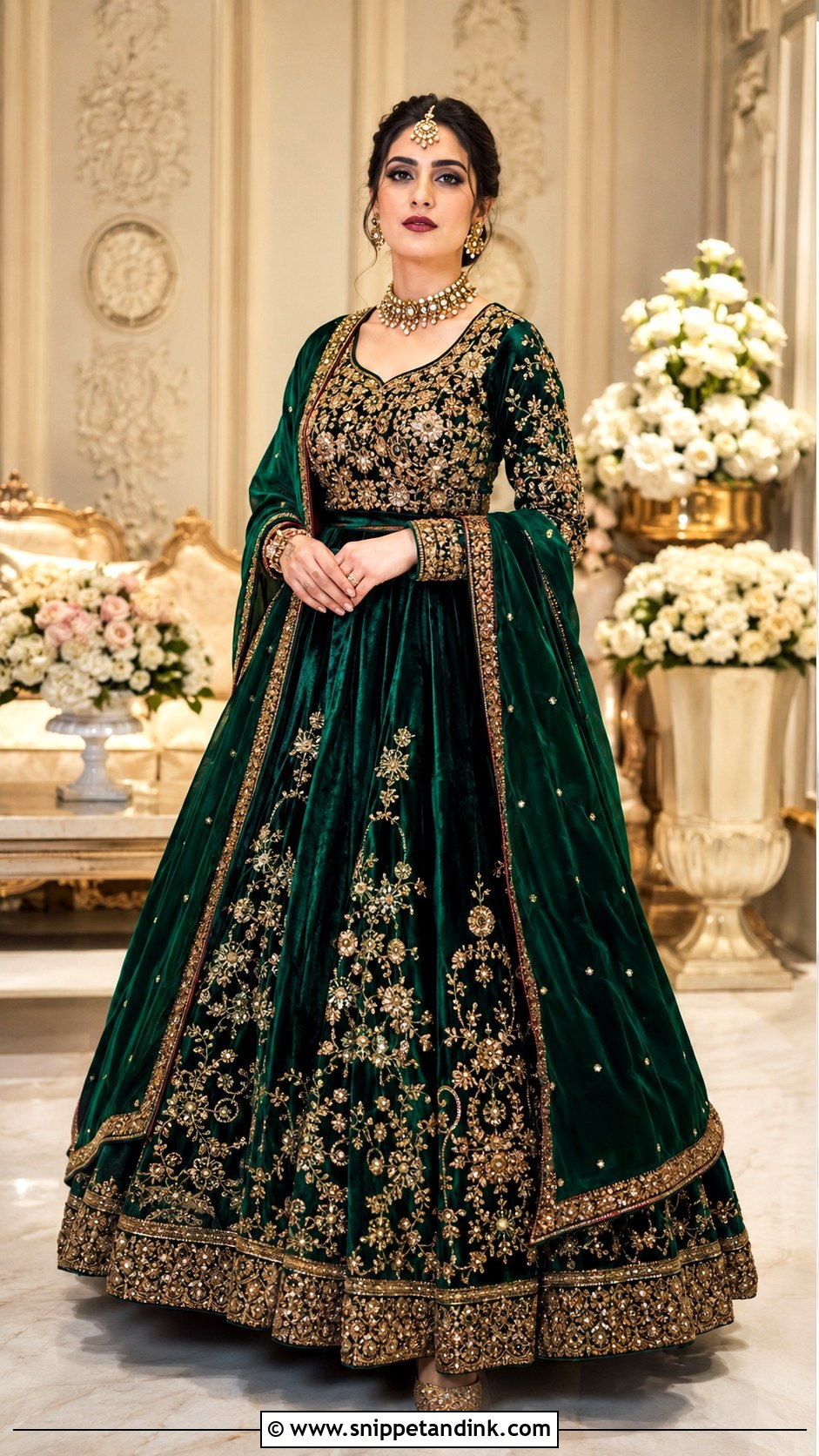
For a December wedding, a velvet lehenga is warm in a way silk never is. Maroon, emerald, navy, plum and bottle green take zari, dabka and sequin work richly. A full-sleeve or high-neck blouse does double duty as a layer. Velvet has a pile, which is why it looks lighter or darker depending on which way it’s brushed, and crushed spots don’t recover well; I hang it in a garment bag rather than folding it in a suitcase. Polki-style jewelry and a structured dupatta suit the weight. Go slightly deeper on the lip so your face holds up against the dark fabric.
9. Chikankari Lehenga For Haldi
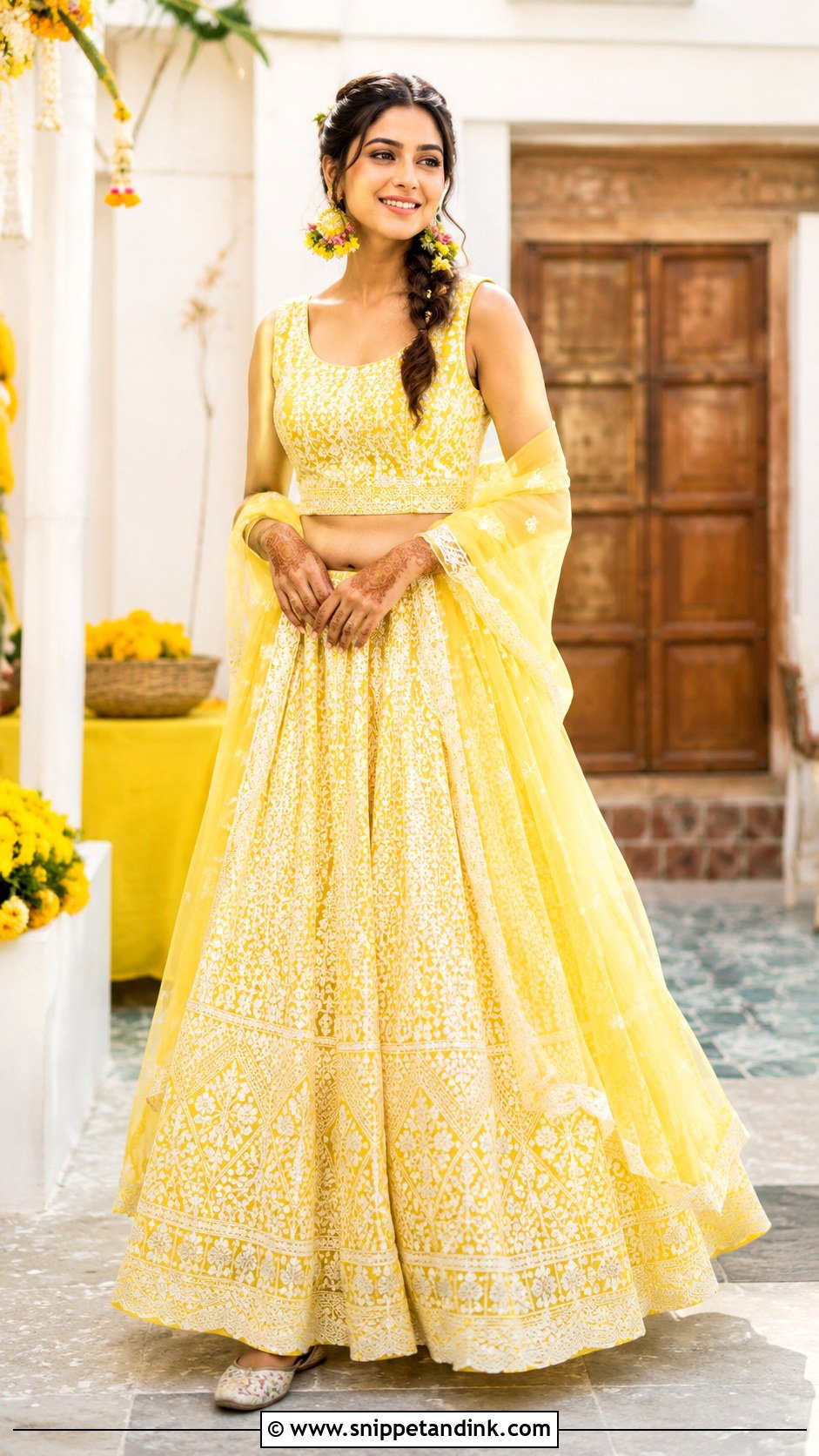
Haldi is the one function where your outfit will get stained, and that changes what I’d buy. Chikankari is cool and breathable, which helps on a hot afternoon, but white chikankari will hold turmeric if it isn’t washed out quickly. Lemon yellow, mint, peach and pastel green hide splashes better than pure white. Skip anything with expensive hand embellishment for this one. A light blouse, a matching or contrast dupatta, floral earrings and a simple braid are all you need.
10. Gharara Set For Nikah Wedding
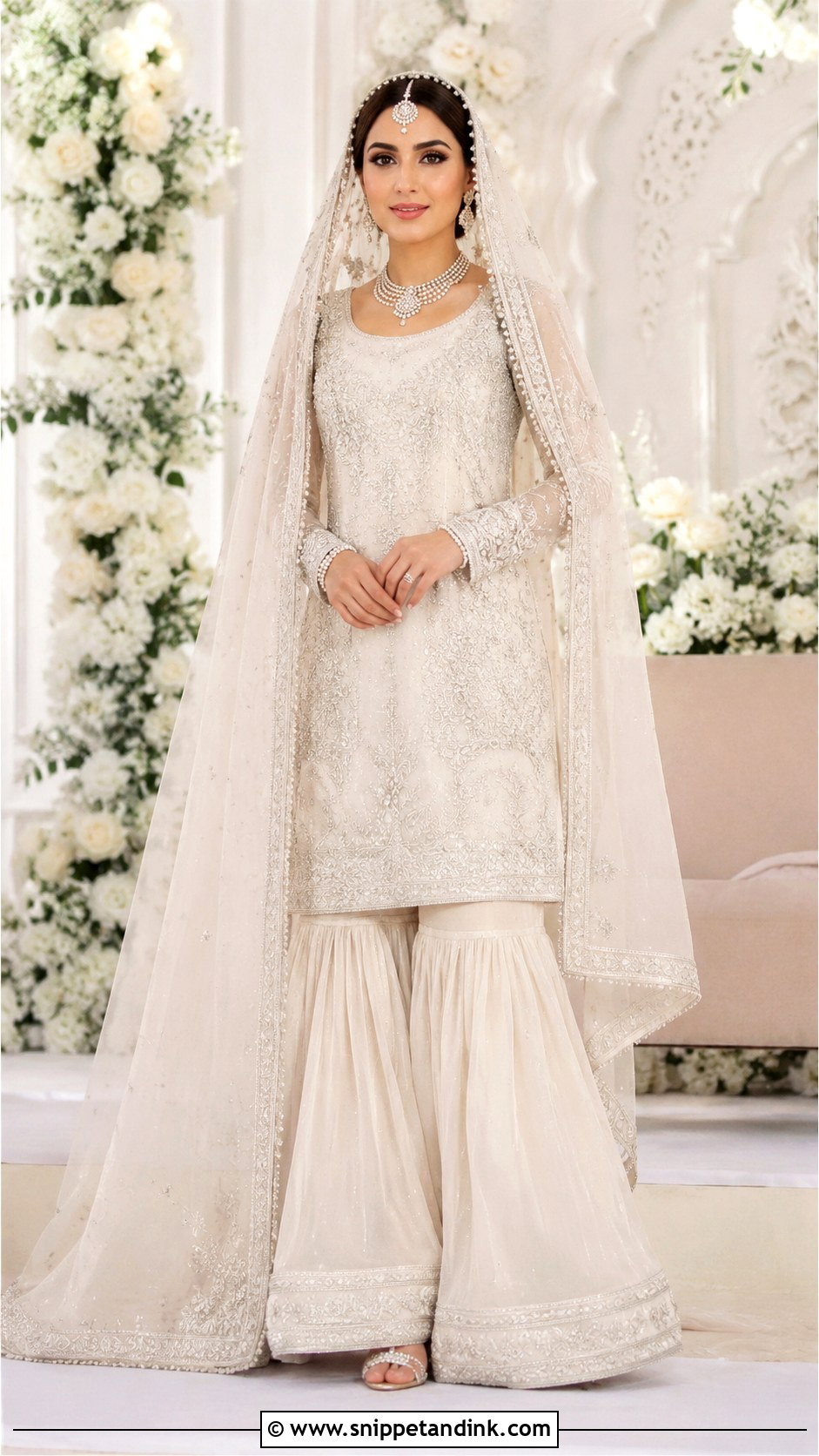
A gharara set is my first suggestion for a sister at a Nikah. Its shape comes from the fitted knee joint, the gota or lace band where the flare begins, so I check that it sits at the actual knee and not a few inches below, where it makes walking awkward. Silk, brocade, georgette and tissue all work. Ivory, blush, sage and champagne keep it soft; emerald, ruby and navy feel more formal. A long kurti, a delicate dupatta and a jhumar on the side of the head finish it with full modesty.
11. Indo Western Lehenga With Jacket
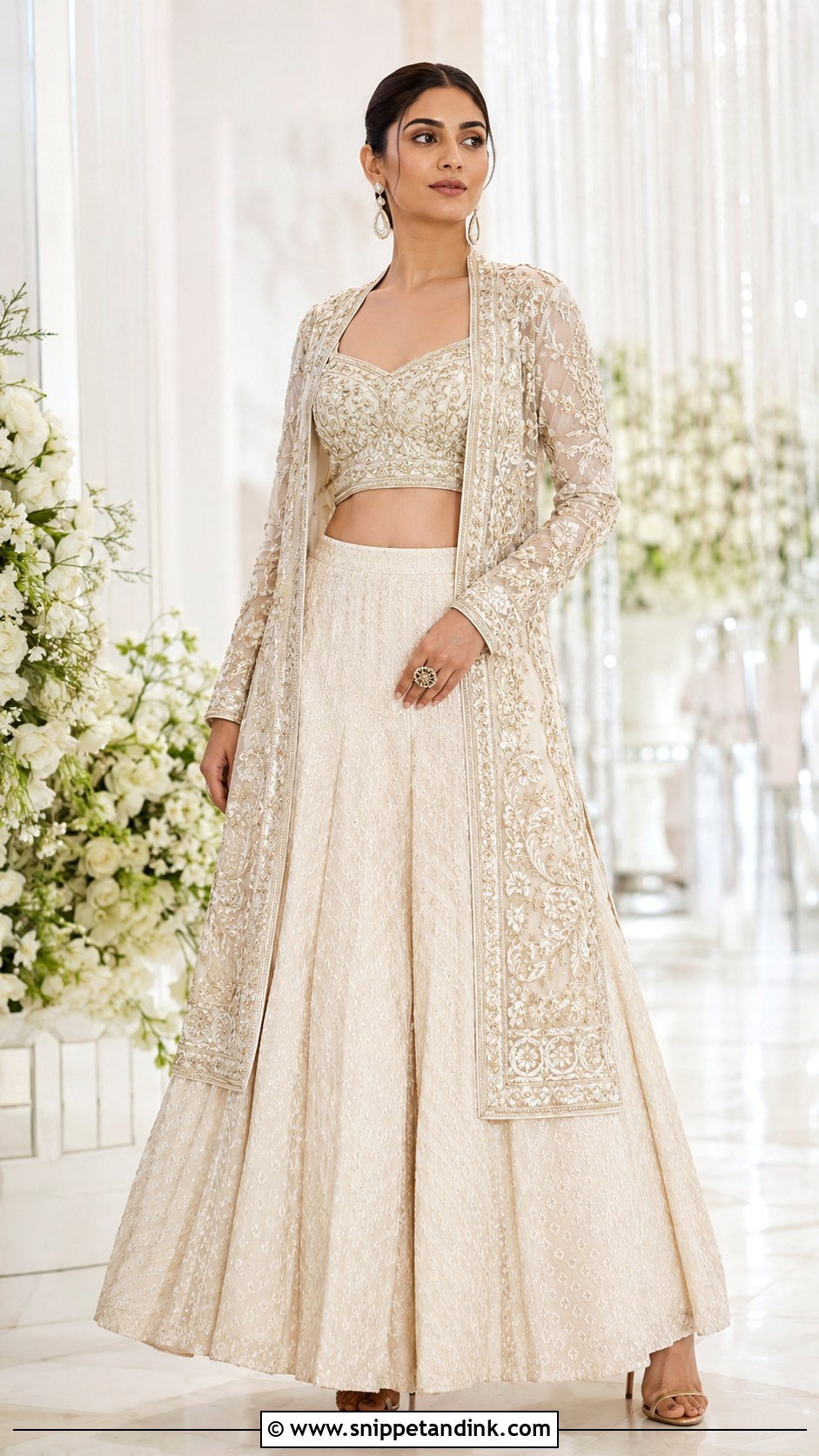
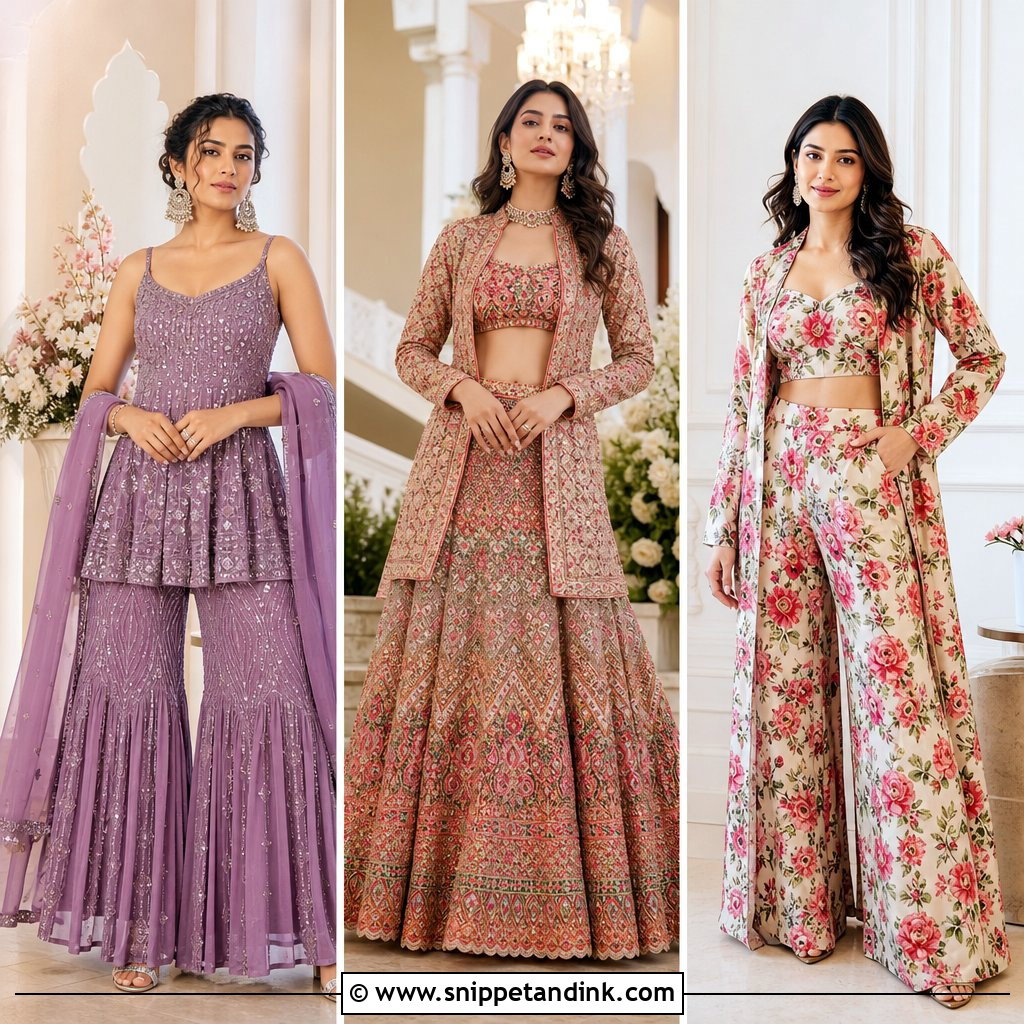
Swapping the dupatta for a long embroidered jacket solves the most common complaint I hear from sisters: there’s nowhere to put your hands while the dupatta keeps sliding off. A cape or structured shrug over the lehenga gives clean lines and stays put. Go subtle on the embroidery for daytime and heavier with sequins at night. Ivory, gold, mauve, teal and rust all suit the structure. Check the jacket length against the skirt; it should end either well above the hem or at it, not hovering halfway. Sharp earrings and a statement ring keep it modern.
12. Kanjivaram Saree For South Indian Wedding
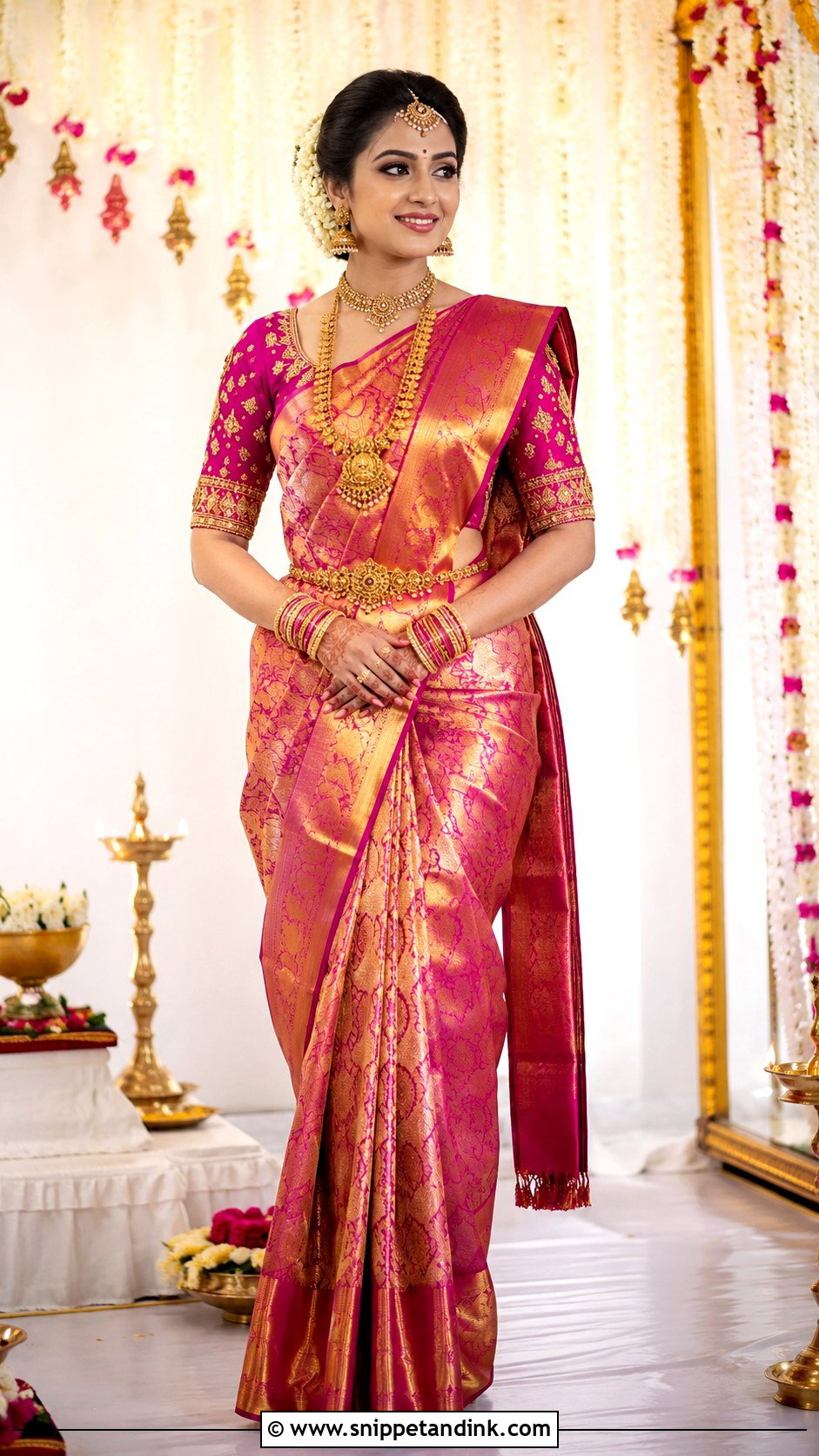
For a South Indian ceremony, a Kanjivaram saree is the respectful choice and every aunt will notice the weave. The temple border and pure silk give it real body, which means it holds pleats well but feels warm by midday. Mustard, magenta, green, orange, purple and gold all sit within tradition; I’d coordinate with the wedding palette and the bride’s own saree before deciding. A contrast blouse, gold jewelry and a bun wrapped with jasmine finish it. A waist belt (vaddanam) is worth wearing, because it actually holds the pleats in place through a long muhurtham, not just for decoration.
13. Sequin Saree For Evening Reception
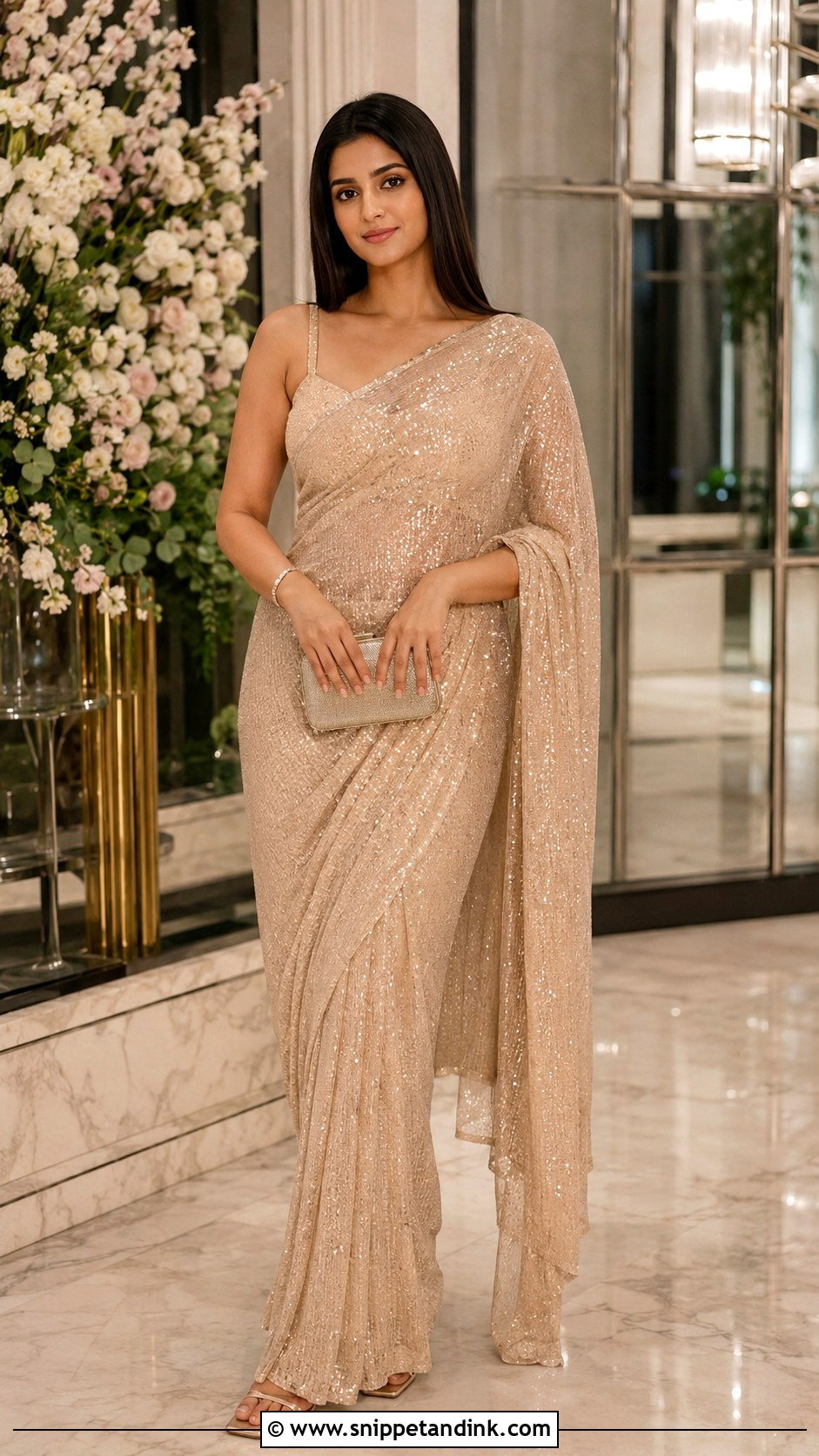
Sequins do the work jewelry normally does, so I keep everything else quiet. Champagne, silver, blush, bronze, navy and emerald all look expensive under evening lighting. Choose a plain blouse and small studs. The detail that trips people up is weight: a fully sequinned saree drapes heavily and the pallu can drag the shoulder seam, so I pin it at two points. Heels matter here more than with silk, because the extra height lets the drape fall straight instead of puddling. Sleek hair works best; curls catch on the sequins.
14. Printed Lehenga For Destination Wedding
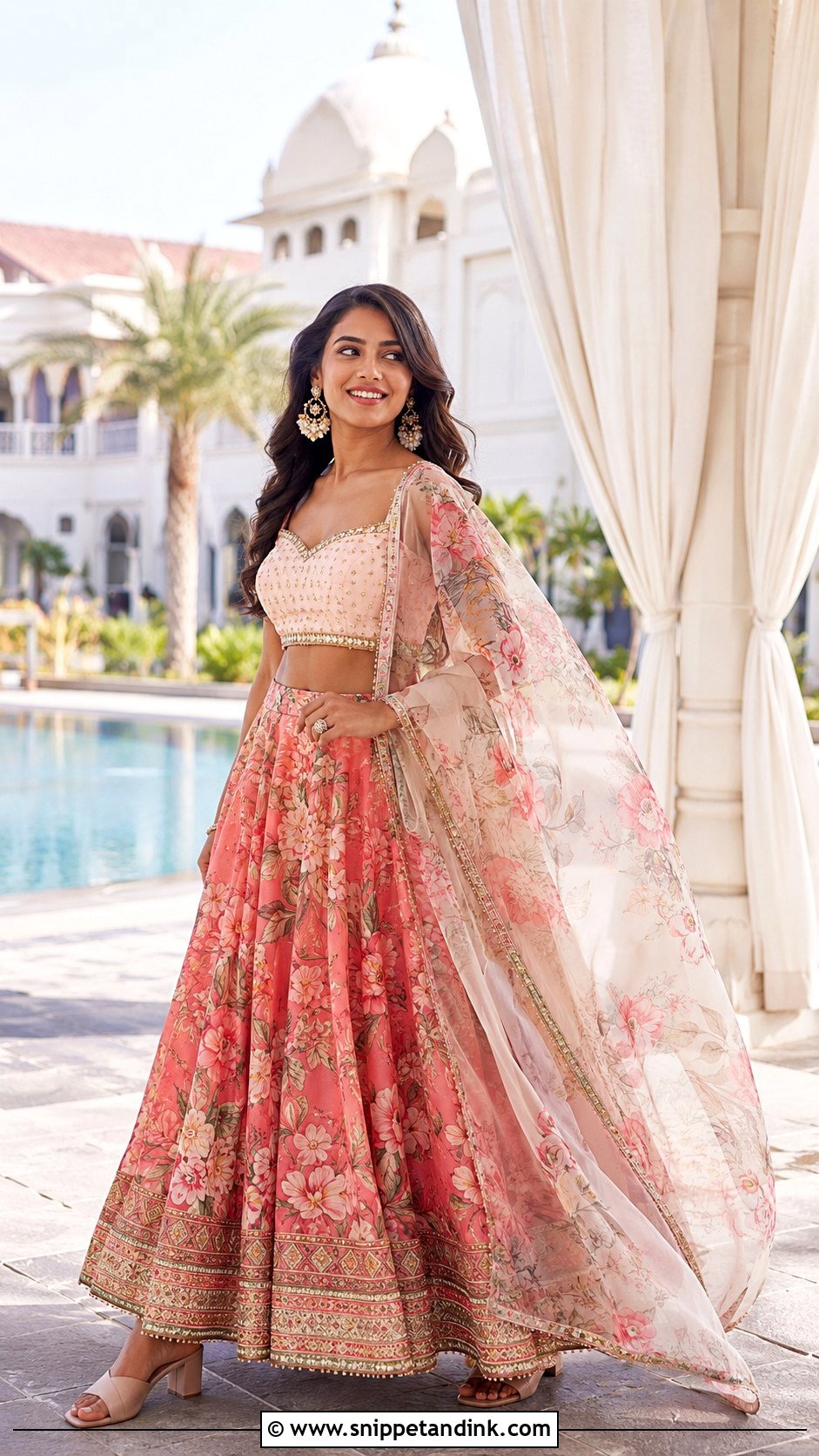
For a destination wedding, packing decides half the outfit. A printed lehenga in cotton silk, georgette or chiffon folds small and doesn’t crush the way heavy embroidery does. Floral, block, tropical and soft foil prints all look festive in outdoor light, and coral, turquoise, yellow, lavender and mint suit a beach or a garden. I’d avoid organza here unless you can steam on site. Pair it with a plain blouse, juttis or block heels for sand and grass, and fun earrings. It works for the welcome lunch, the mehndi or a daytime ceremony.
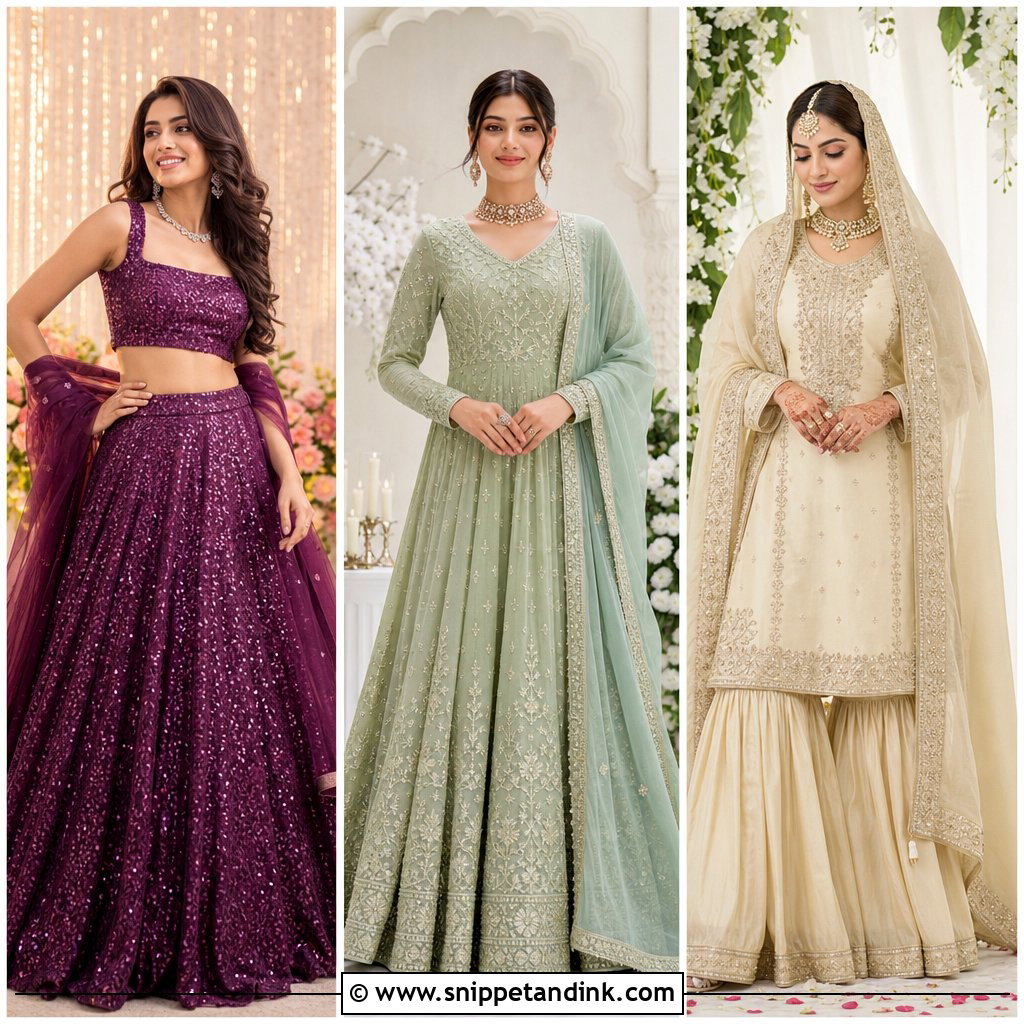
15. Cape Lehenga For Engagement
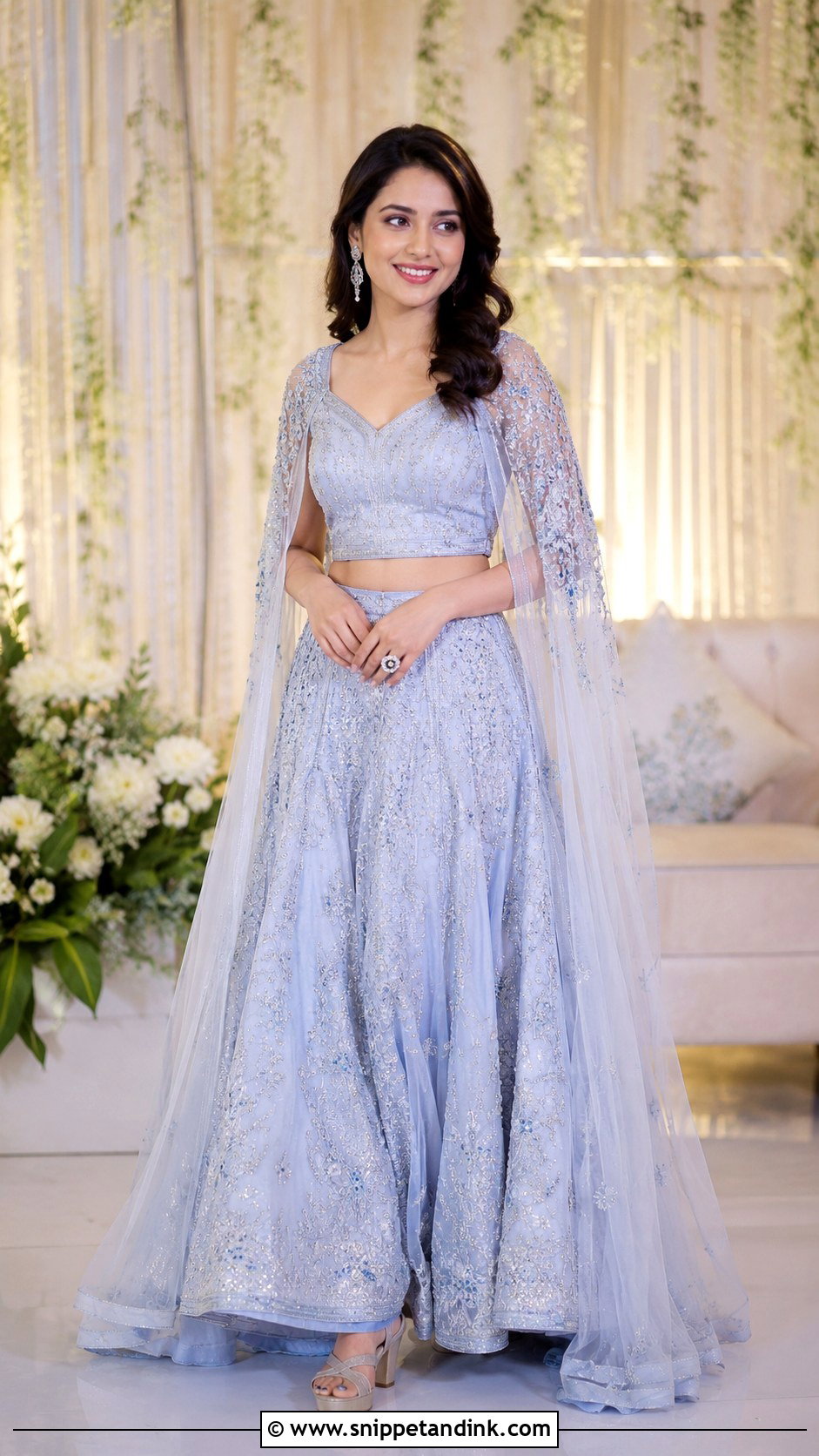
A cape lehenga reads modern in engagement photos because the shoulder line stays clean from every angle. The cape takes the dupatta’s place, so nothing slips while you’re exchanging rings and greeting families. Champagne, blush, powder blue, lilac and silver with light sequins all suit it. Sheer capes look airiest; embellished ones add weight at the shoulders, so try them sitting down as well. Keep hair sleek or up so the cape isn’t hidden. A cocktail ring and fine earrings are plenty.
16. Ruffle Saree For Sangeet
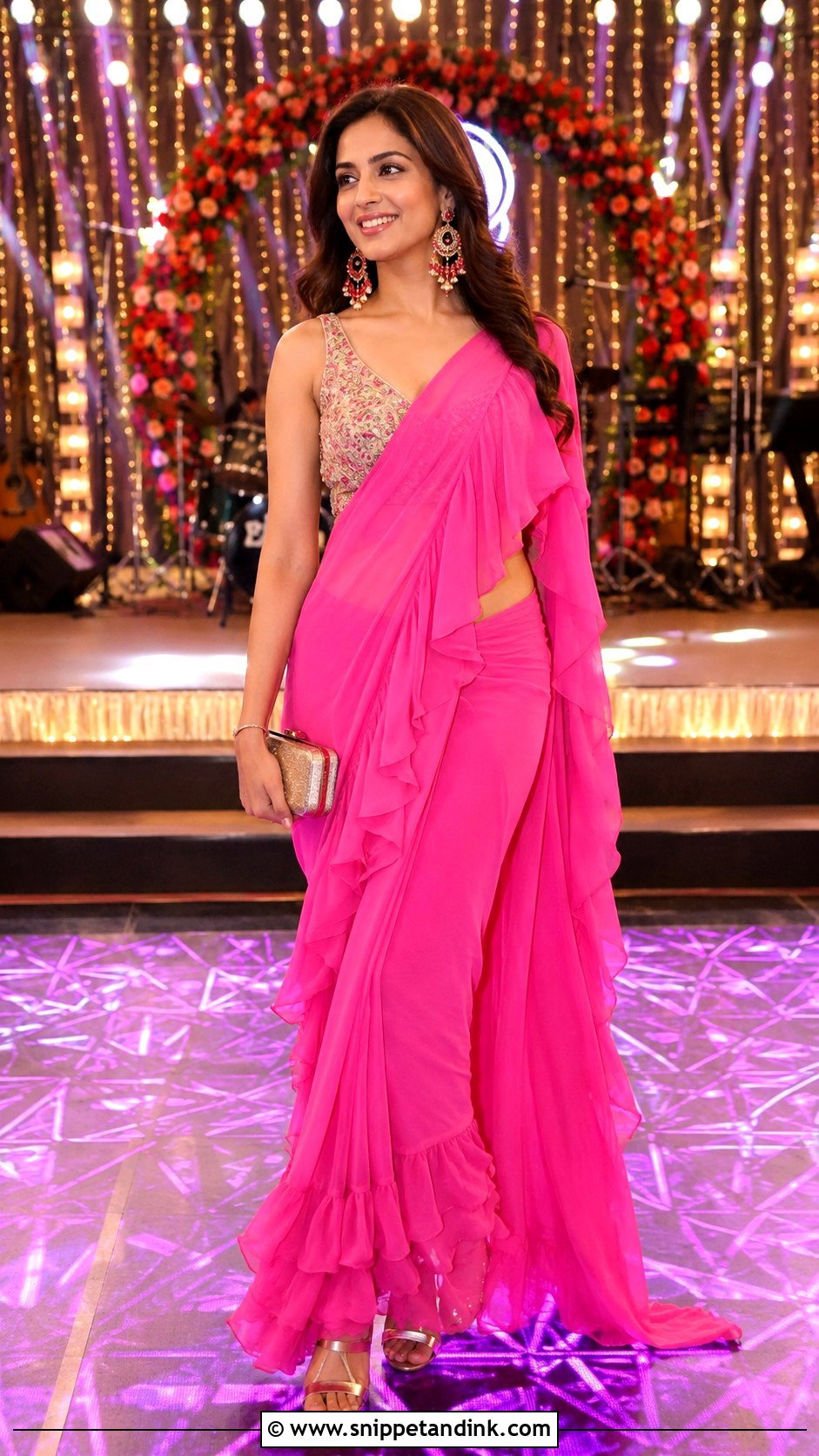
A ruffle saree is mostly pre-stitched, so it’s the easiest saree to dance in. The layered edge moves with you, which looks great on video. Georgette, chiffon and crepe keep it light; hot pink, teal, yellow, red-orange and metallic silver suit a sangeet. Halter, one-shoulder or embroidered blouses all pair well. I check one thing every time: ruffles at the hem add volume exactly where heels catch, so walk the stairs to the stage in it before the night. Bold earrings and a small clutch, and keep the makeup defined rather than heavy.
17. Kurta Palazzo Set For Haldi
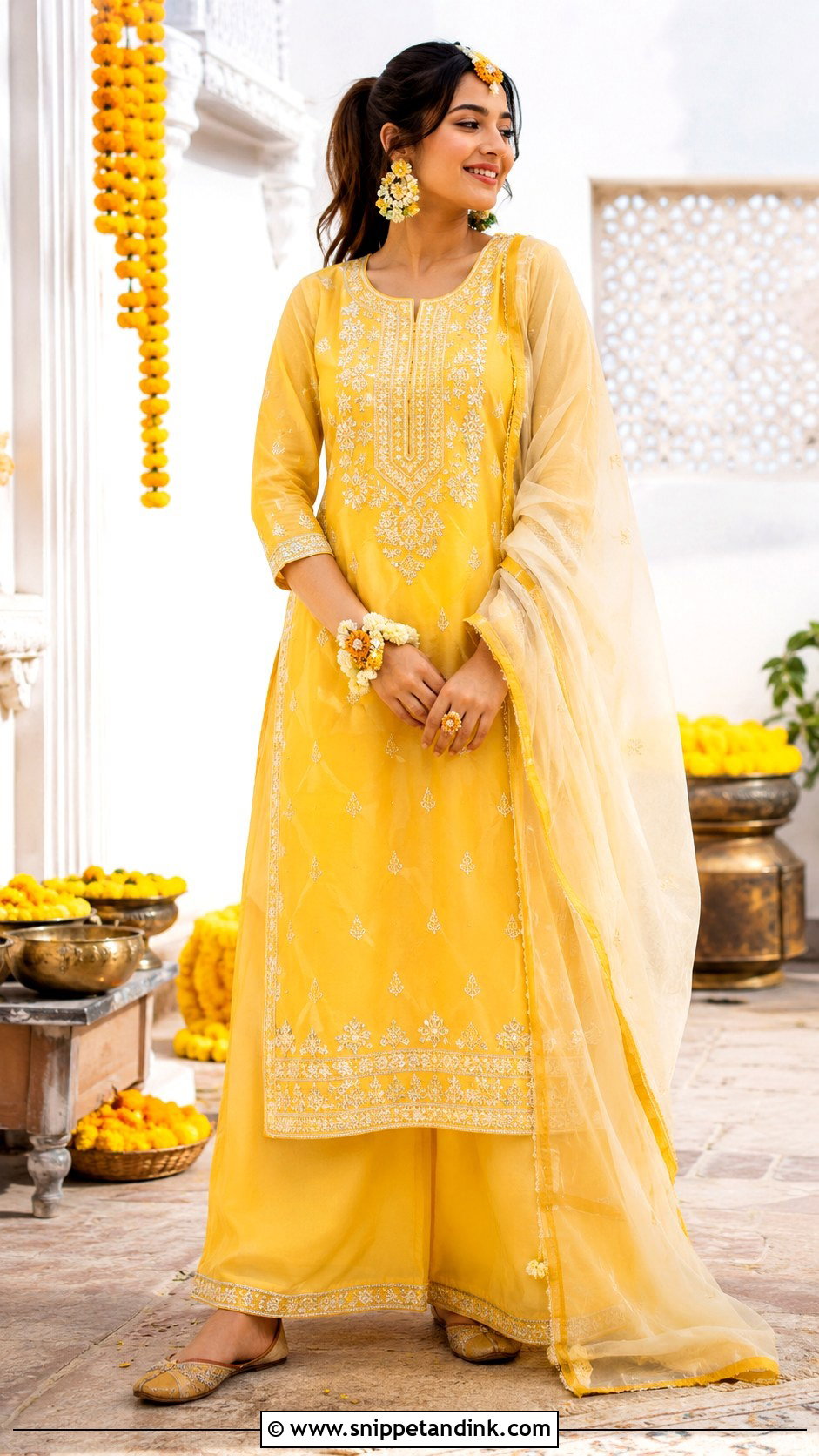
If you’re the sister running between rituals, carrying thalis and helping the elders, a kurta palazzo set lets you do it. Cotton silk, muslin, chanderi and georgette breathe well. Marigold, yellow, white, mint and peach suit haldi, though I’d still keep white for those who aren’t going to be in the turmeric line. Gota lace or mirror borders make it festive without weight. Wide palazzos can trail on the floor; have them hemmed to your flat juttis, not to heels. A loose braid and floral jewelry keep it easy.
18. Jacket Anarkali For Wedding Function
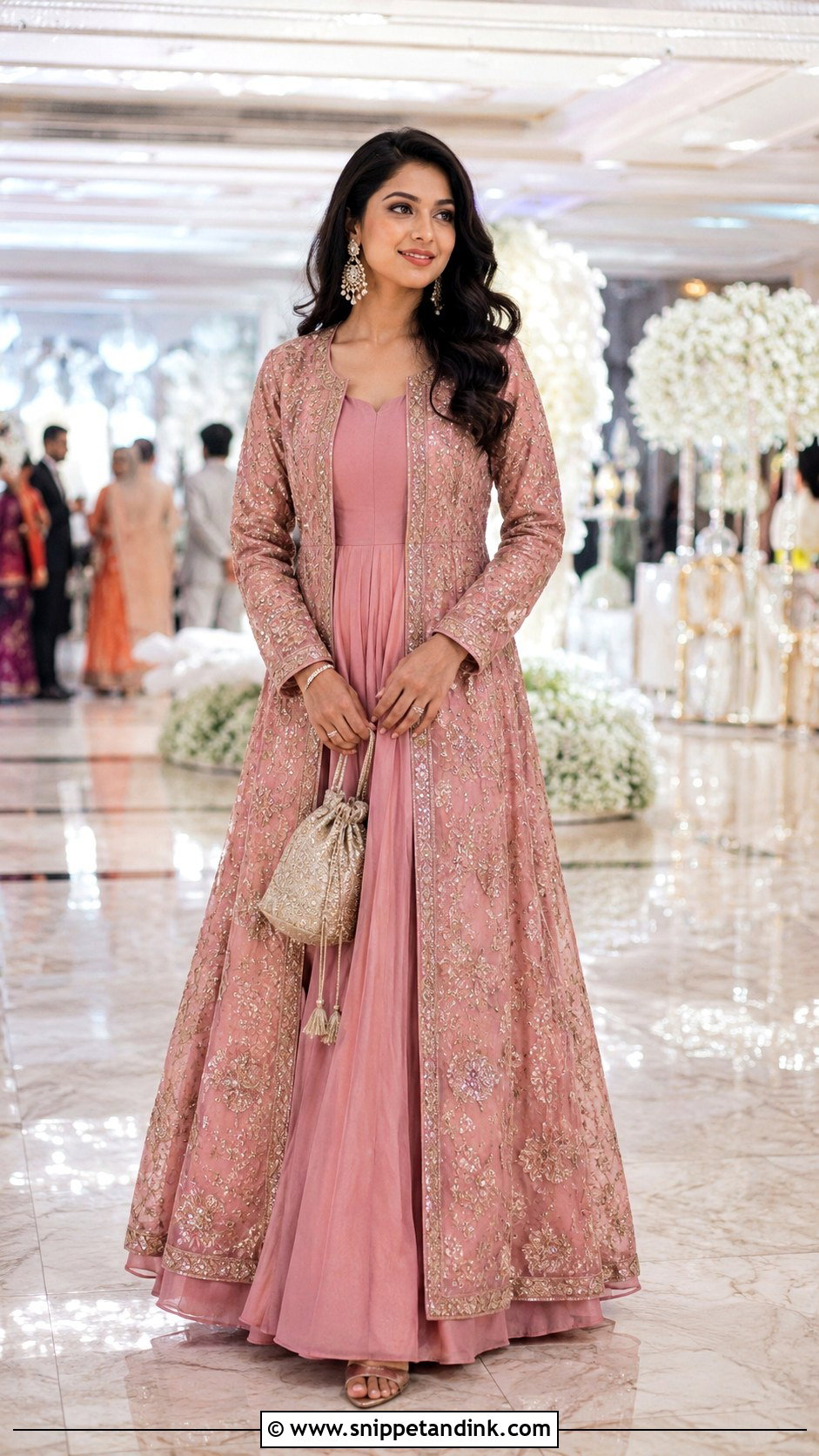
A jacket Anarkali gives coverage and structure, which is why I suggest it to sisters who don’t want a lehenga but need to look grand next to close family. The long Anarkali flows; the jacket adds richness and hides the waist seam. Tone-on-tone is sleeker, a contrast jacket more dramatic. Silk, brocade and organza jackets hold their shape best. Ivory, rust, emerald, navy and rose pink feel festive. Make sure the jacket armholes are cut generously; layered sleeves get tight fast when you raise your arms for photos.
19. Tissue Saree For Reception
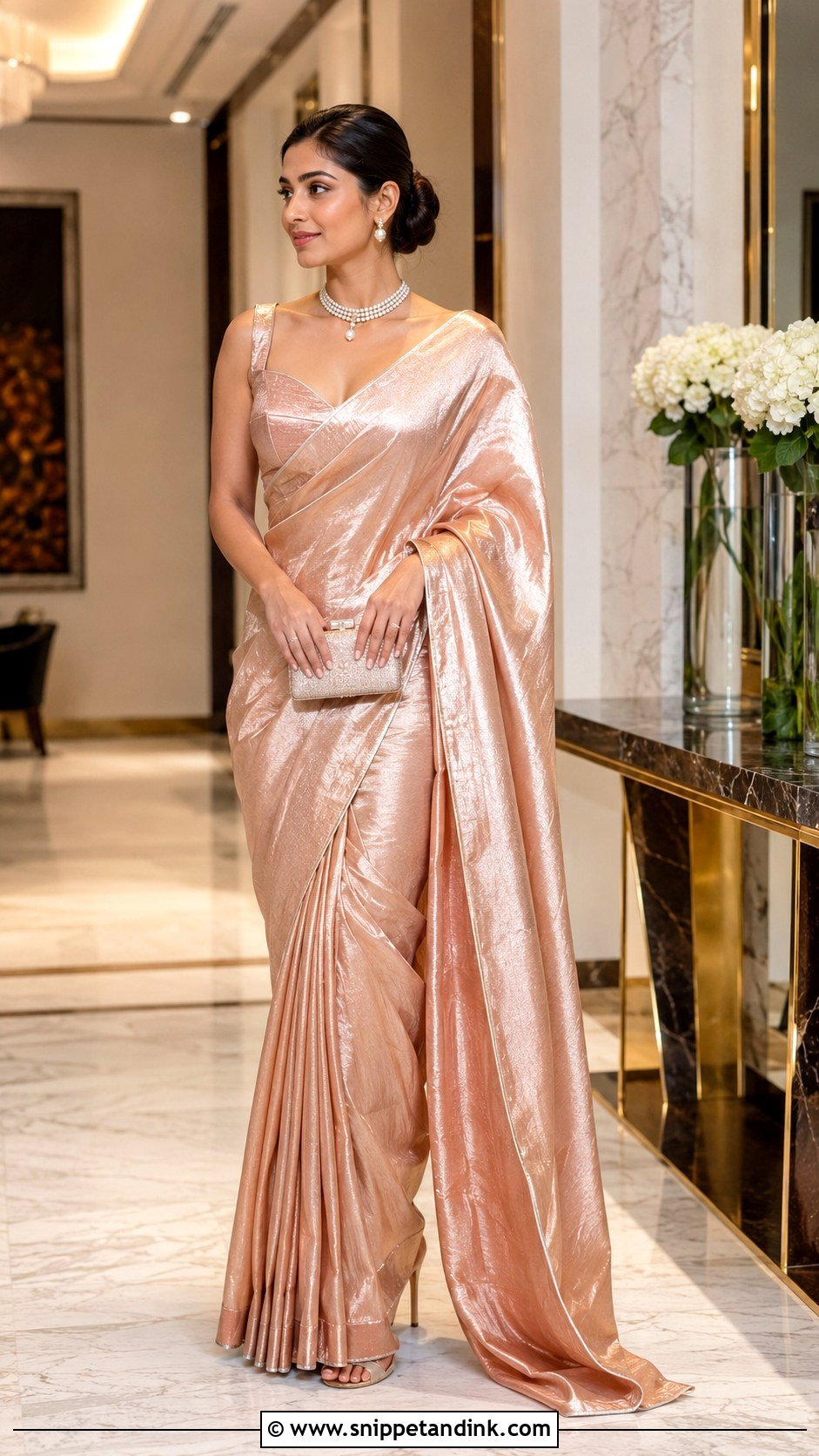
Tissue has a metallic thread running through the weave, which gives it a soft glow rather than a hard shine. Gold, silver, champagne, rose gold, copper and pastel tissues all work; I hold a few against the face in daylight, since cool silvers and warm golds suit different skin. It’s light and a little stiff, so the pleats stand crisp. A silk, velvet or brocade blouse gives it weight. Pearls, kundan or fine gold, a neat bun and a small clutch are enough for a reception. Fold it with tissue paper afterwards or the metallic threads mark where they crease.
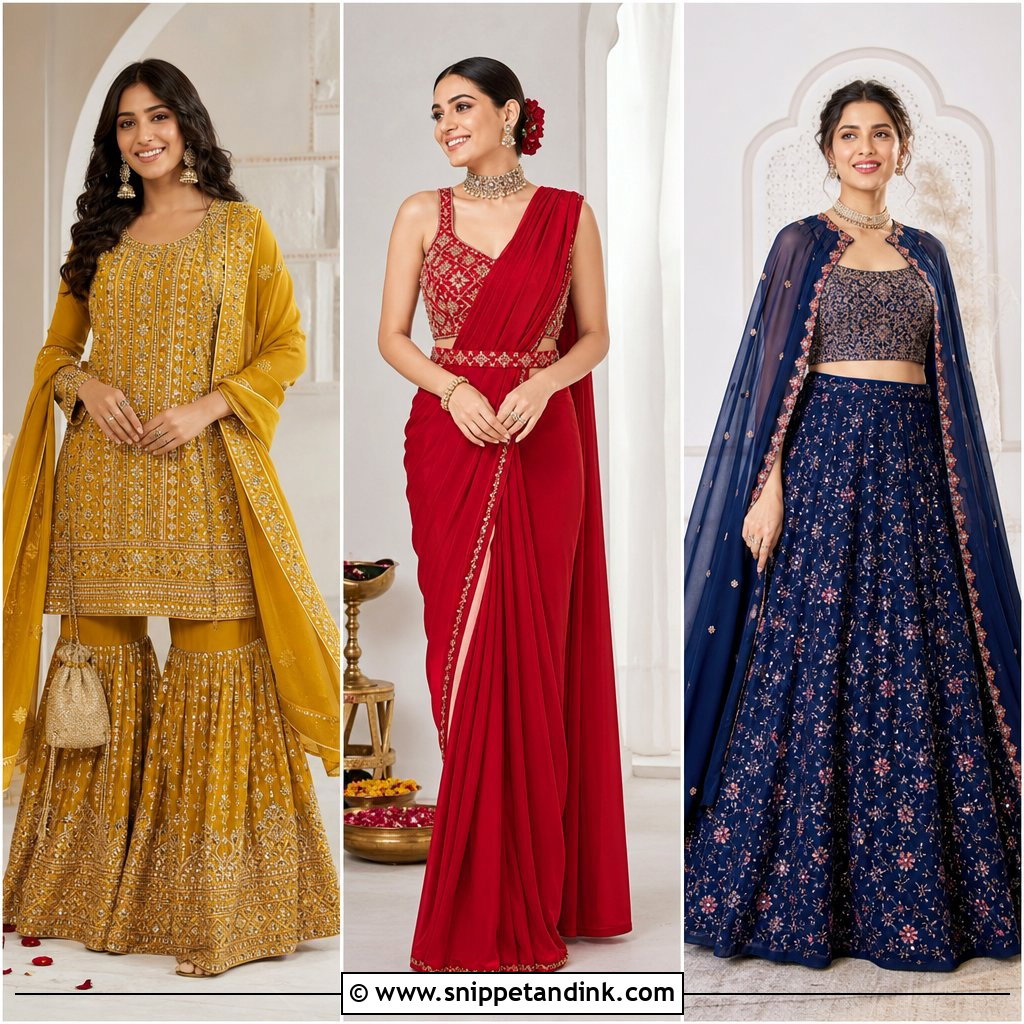
20. Peplum Sharara For Mehndi
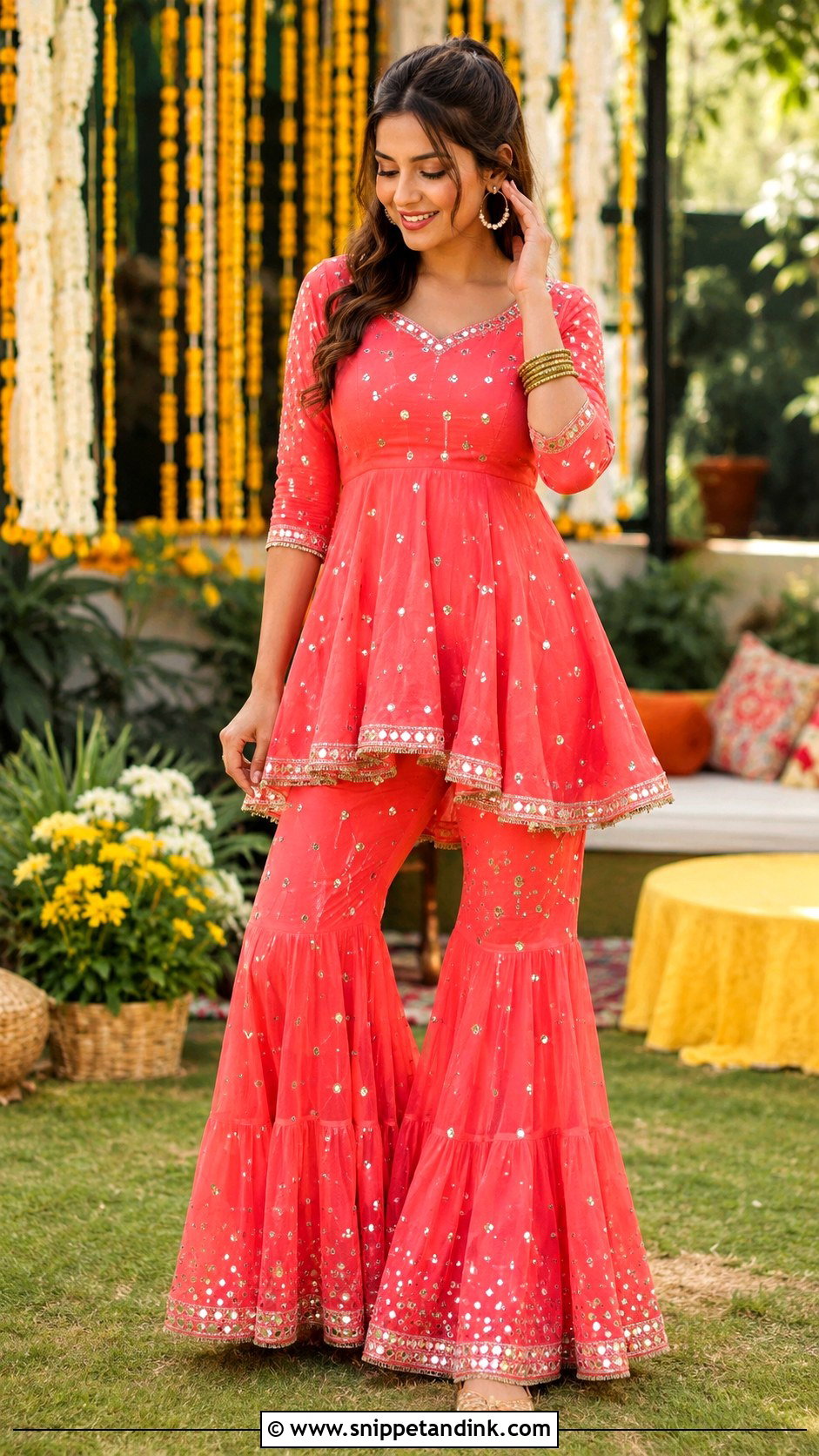
The peplum top shapes the waist, which flatters most figures and means you don’t need a dupatta to define the line. Lime, coral, yellow, aqua and pink with mirror or gota work suit an outdoor mehndi. A short dupatta or none at all keeps your hands free. Peplum flares sit at the hip, so if you’re shorter, I’d ask for a slightly shorter peplum so the sharara doesn’t swallow your legs. Juttis, hoops, bangles and a half-up style keep it youthful.
21. Ombre Lehenga For Sangeet
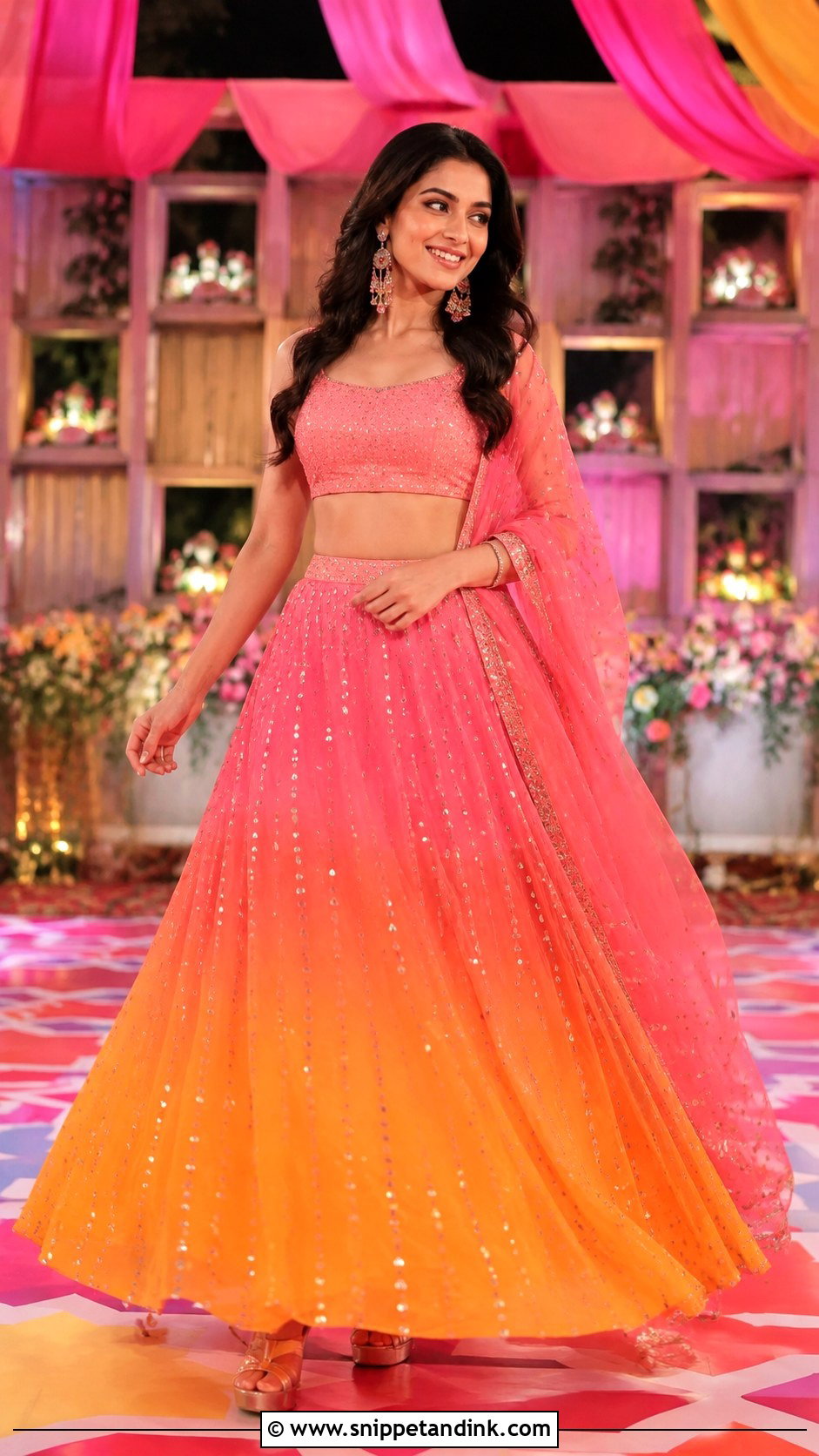
An ombre lehenga lets the colour do the decorating. Pink into orange, blue into purple, mint into teal and peach into coral are the classic fades. The dye gradient should run smoothly across every panel; I check the seams in daylight, because a mismatched panel shows up clearly once you start spinning on stage. Light sequins or mirror work catch the lights without fighting the colour. A plain blouse and matching dupatta keep the gradient the focus, and metallic heels and danglers finish it for a sangeet performance.
22. Co Ord Set For Wedding Welcome Lunch
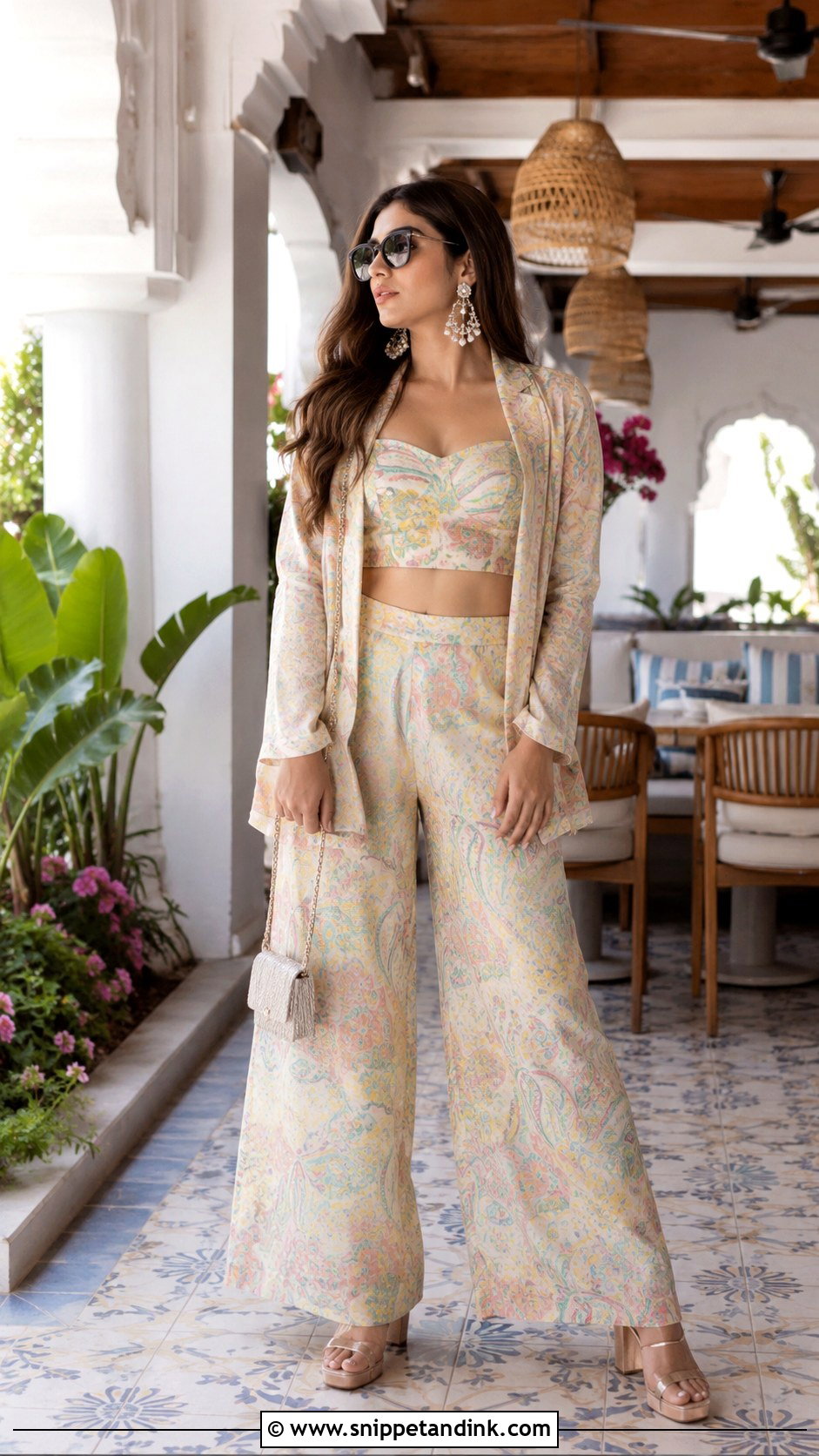
The welcome lunch sets the tone, and a co ord set lets you look put-together without being more dressed than the bride’s family. An embroidered crop top with wide-leg pants, a short kurta with straight pants or a printed tunic set all work. Linen silk and cotton silk breathe; crepe holds a smart line. Linen creases within the hour, though, and I’d only pick it if you’re comfortable with that relaxed look. Soft colours and floral prints feel fresh for daytime. Block heels, statement earrings and sunglasses outdoors are all you need.
23. Heavy Dupatta Suit For Wedding Ceremony
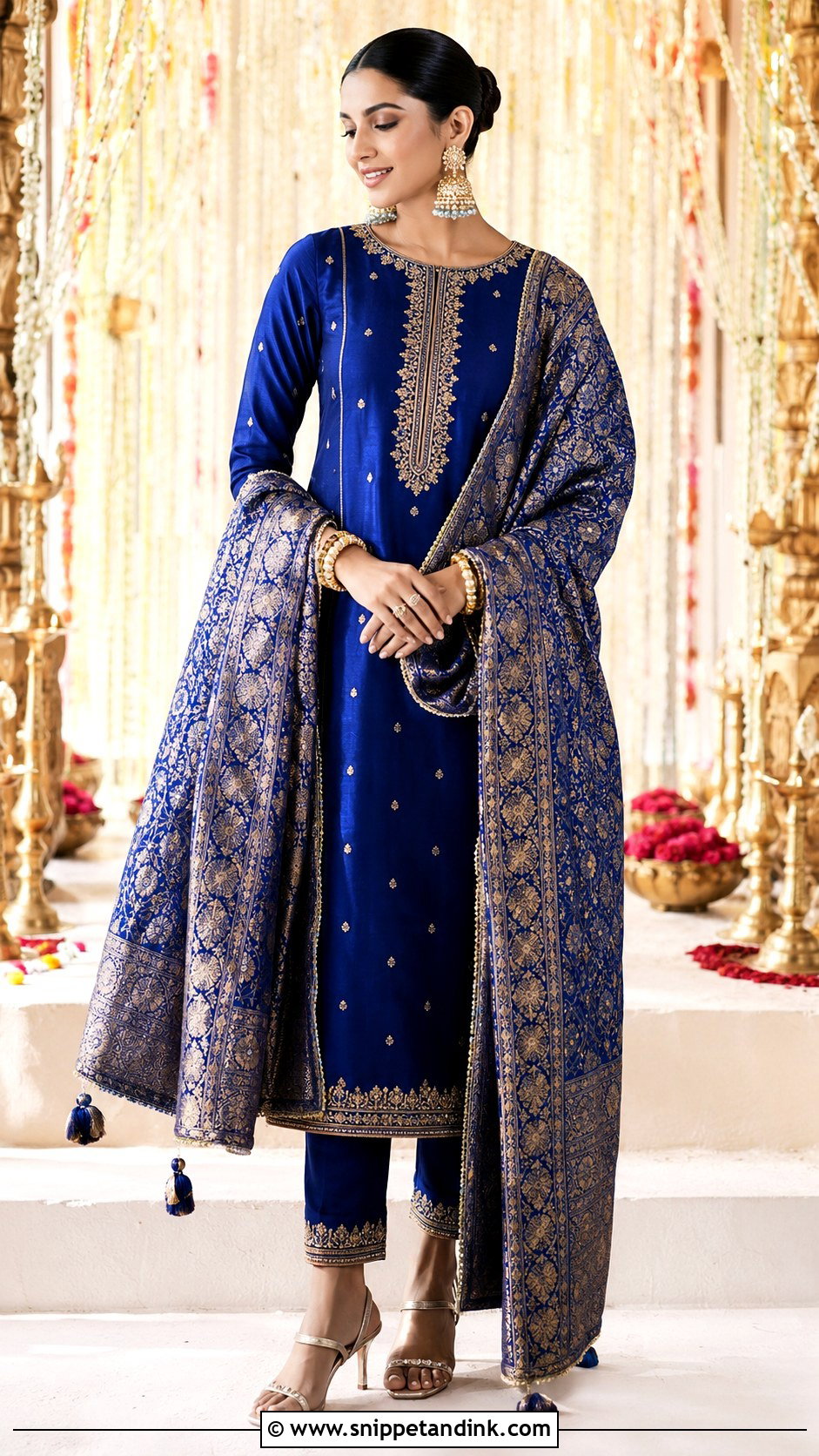
A heavy dupatta suit puts all the drama into one piece you can drape, which makes the rest of the outfit easy. A well-tailored kurta with straight pants or churidar is the base. Zari, phulkari, gota, bandhani and Banarasi dupattas all give wedding-level impact; magenta, green, mustard, ivory and royal blue are strong choices. A heavy dupatta pulls down on one side, so I pin it at the shoulder from the inside and again at the waist. Drape it over both shoulders for the ceremony if you’ll be sitting near elders.
24. Saree Gown For Cocktail
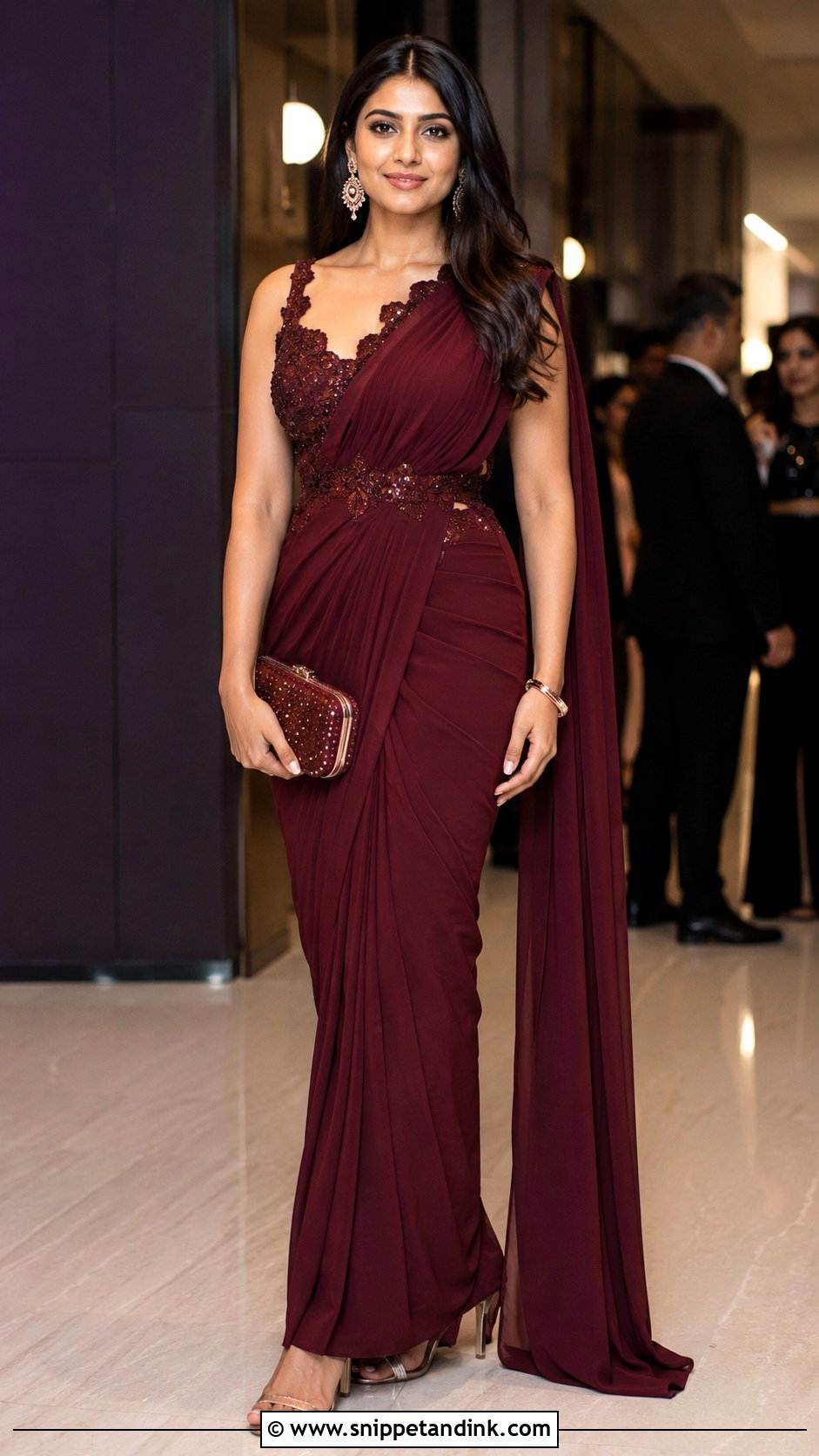
A saree gown has the pallu stitched into the bodice, so you get the drape of a saree with the ease of a dress. That makes it practical for a long cocktail evening. Satin, crepe, shimmer fabric and embellished georgette suit it; black, wine, silver, emerald and champagne read evening-ready. A defined waist and structured bodice give the shape. Because it’s essentially a gown, it relies on correct fit at the bust and waist more than a draped saree does, so I’d have alterations done rather than buying off the rack. Smooth hair and clean makeup finish it.
25. Handloom Saree For Intimate Wedding
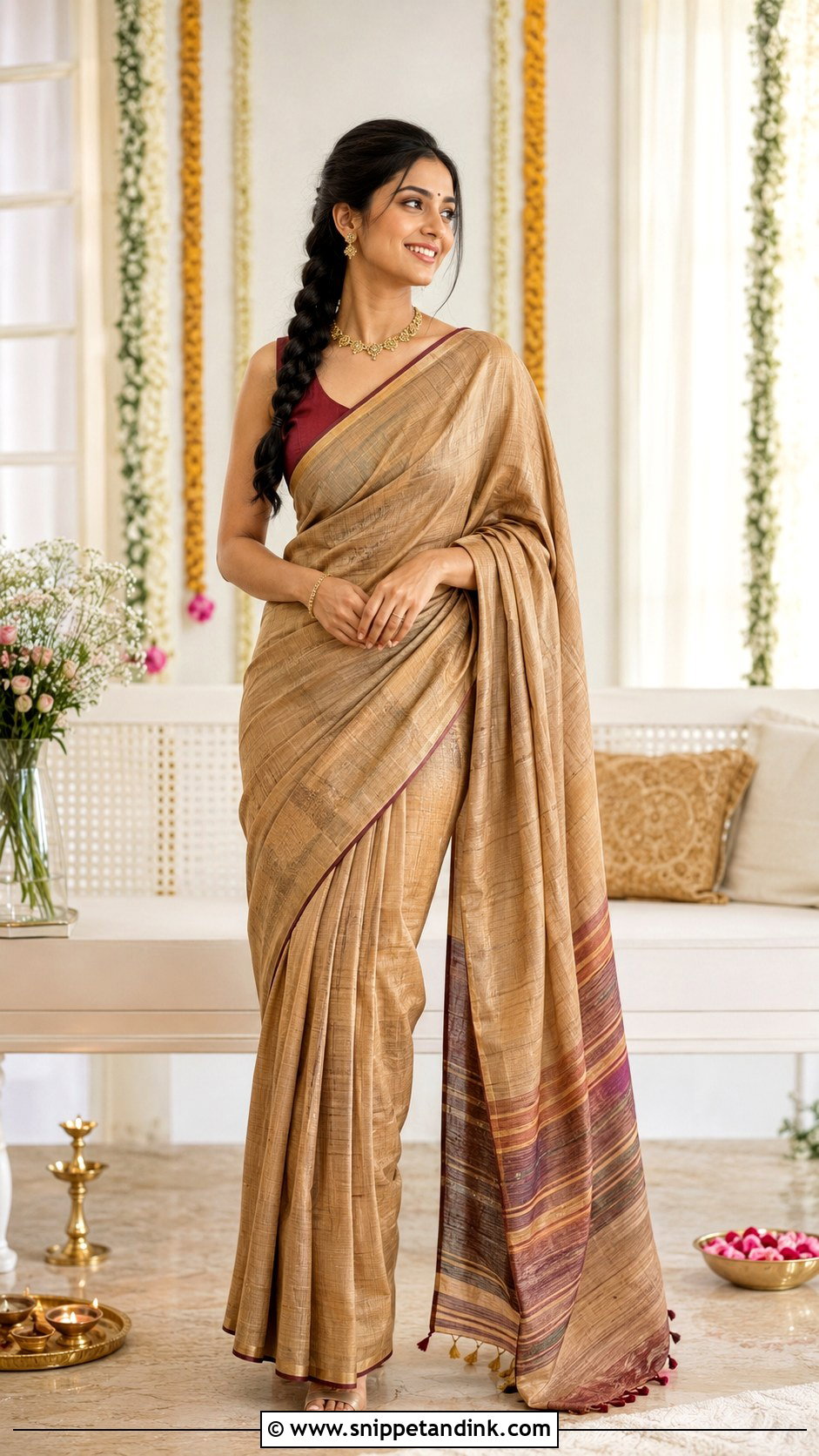
For a small family wedding, a handloom saree says more than sparkle. Linen silk, Chanderi, Maheshwari, Tussar and cotton silk all have a hand-woven texture you can see up close. Earthy shades, jewel tones and soft pastels all suit, depending on the ceremony mood. Handloom can have small slubs and irregularities; that’s the weave, not a flaw. A contrast blouse, handmade jewelry, a small bindi and a neat bun or braid keep it understated. It’s the saree you’ll keep wearing long after the wedding.
A Small Repair Pouch for Long Wedding Days
Sisters end up fixing everyone’s outfits, so I always tell them to carry a small pouch of their own. Something always slips: a pleat, a dupatta, a blouse hook that gives way during a dance.
- Safety pins in two sizes, plus a few U-pins for the dupatta on your hair.
- Double-sided fashion tape for a sliding neckline or a cape that won’t sit.
- A needle threaded with a neutral colour and a few spare hooks.
- Blotting papers and a stain pen for turmeric or food splashes.
- Flat foldable shoes for the walk between venues.
After the wedding, air silk and velvet for a day before you put them away, and store them in cotton or muslin bags rather than plastic, which traps moisture. Refold zari sarees along different lines every few months so the metallic thread doesn’t crack at the same crease.
Dressing as the Bride’s Sister Without Upstaging Her
A sister’s outfit has two jobs: look festive in every photo and still let you work through a long day of rituals, hosting and dancing. It should never compete with the bride. Lehengas, sarees, shararas, Anarkalis, ghararas, co ord sets and Indo-western pieces each suit a different function, so I plan by event: timing, venue, weather, colour palette and how much you’ll be on your feet. Get the fit right and even a simple outfit carries the day. Use these ideas to build a wardrobe for the whole wedding that feels like you.
You'll Like These Ideas:


Leave a Reply