
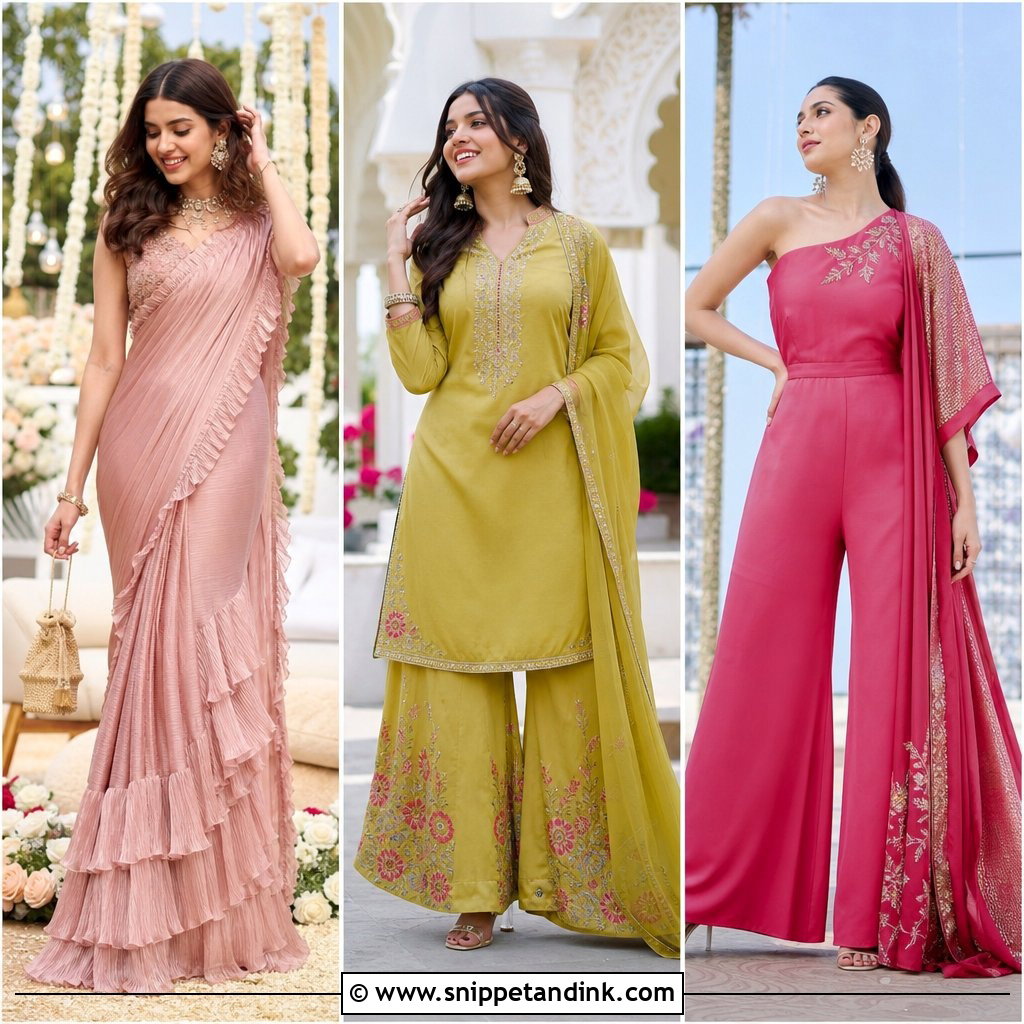
A sister at a Pakistani wedding has a harder styling brief than the bride. She’s in every family photo across three or four functions, she’s running errands in her outfit, and she has to look properly dressed without stepping into bridal territory. When I plan a sister’s wardrobe, I start from the events, not the clothes. Mehndi wants colour, mirror work, gota and something you can dance in. Nikkah and walima suit pastels, ivory, organza and finer embroidery. Barat is where heavier lehengas, ghararas, sarees or pishwas outfits come in, as long as the bride still owns the room. The 25 looks below each come with the jewellery, shoes and dupatta setting I’d pair with them.
Mapping Four Functions Onto One Sister’s Wardrobe
Most sisters I dress need three to five looks, and very few want to buy five new outfits. So I plan them as a set. One bright, easy outfit for dholki and mehndi. One soft, refined outfit for nikkah. One heavy, formal outfit for barat. A lighter, elegant one for walima. Then I look for what can be repeated.
- A plain sharara or gharara can appear twice with a different shirt and dupatta.
- A heavily embroidered dupatta can lift a simple outfit for a second function.
- Jewellery and shoes can stay the same across two events if the colours are planned together.
Talk to the bride before you finalise colours. A sister in the same red as the barat lehenga is the one mistake I see repeatedly, and it’s an awkward thing to fix in the photos. Ask what she’s wearing for every function, then pick shades that sit next to hers without matching. If both sides’ sisters are coordinating, agree a palette rather than identical outfits; identical sets look like a uniform in group shots.
1. Pakistani Wedding Lehenga For Sister
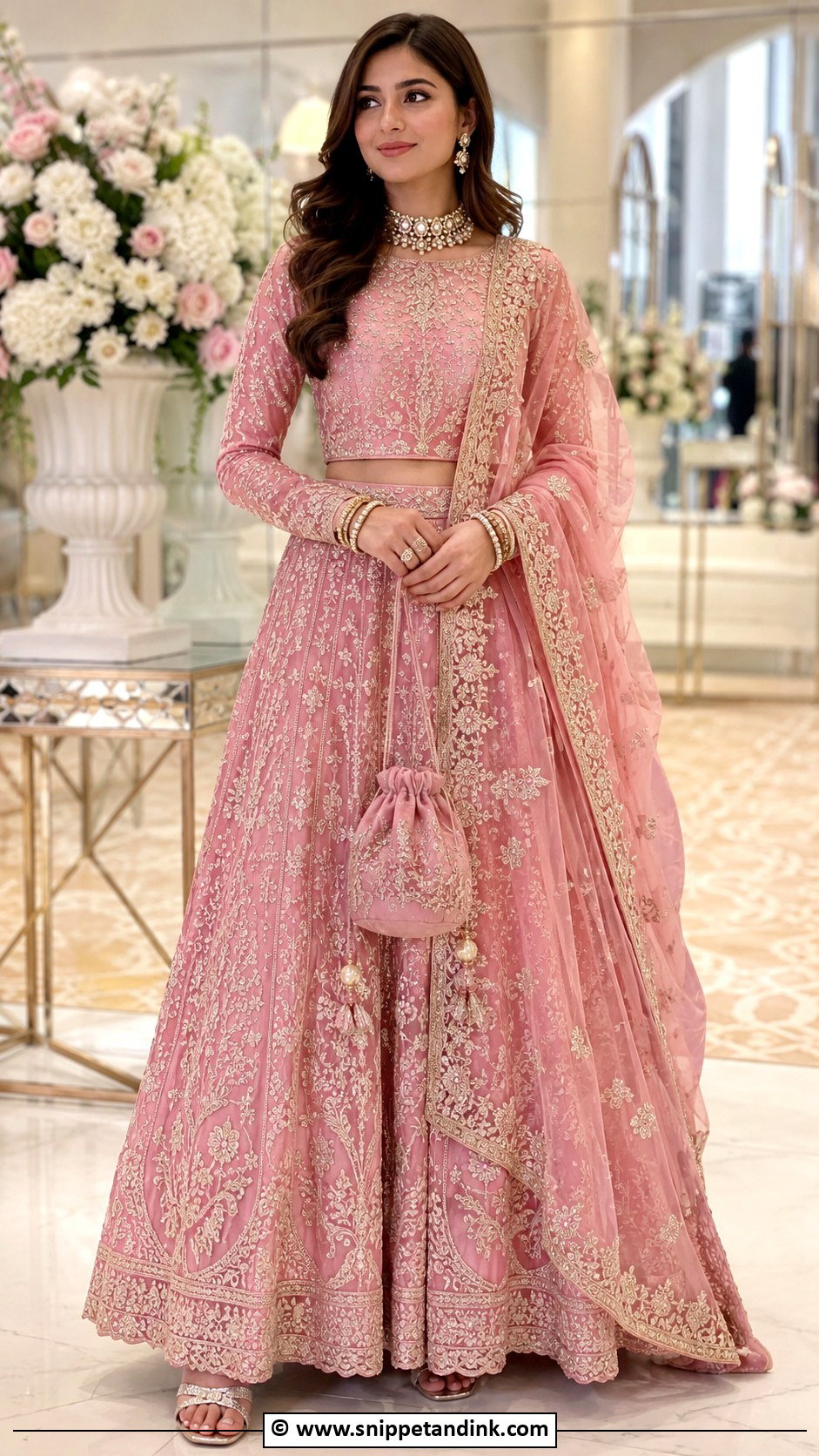
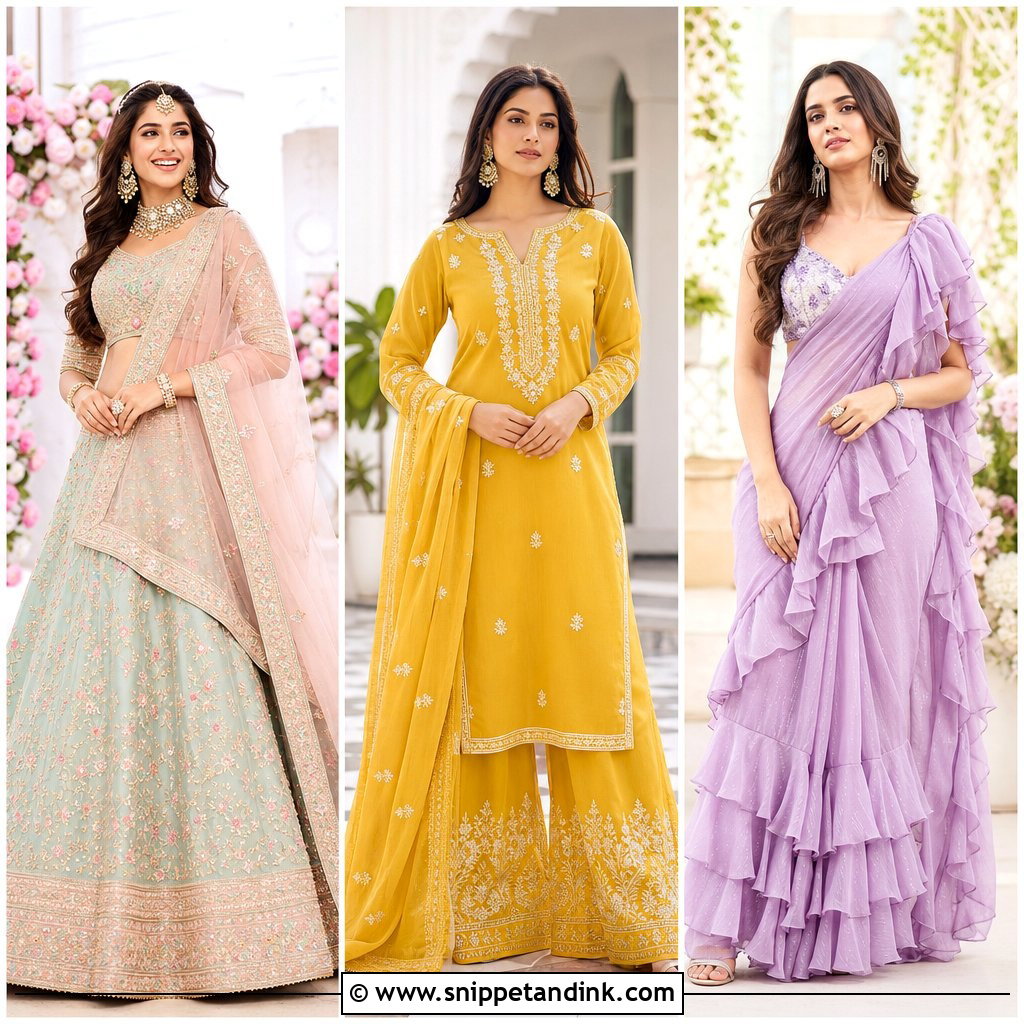
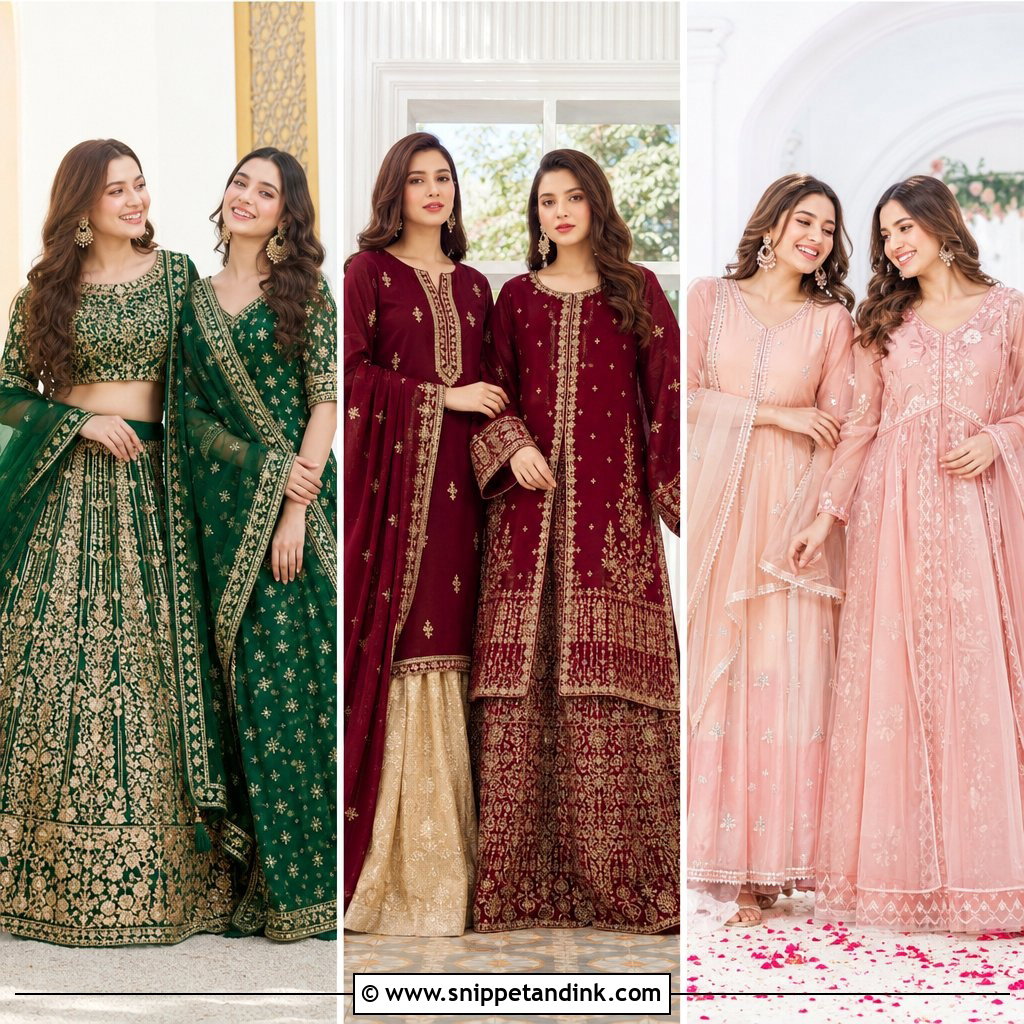
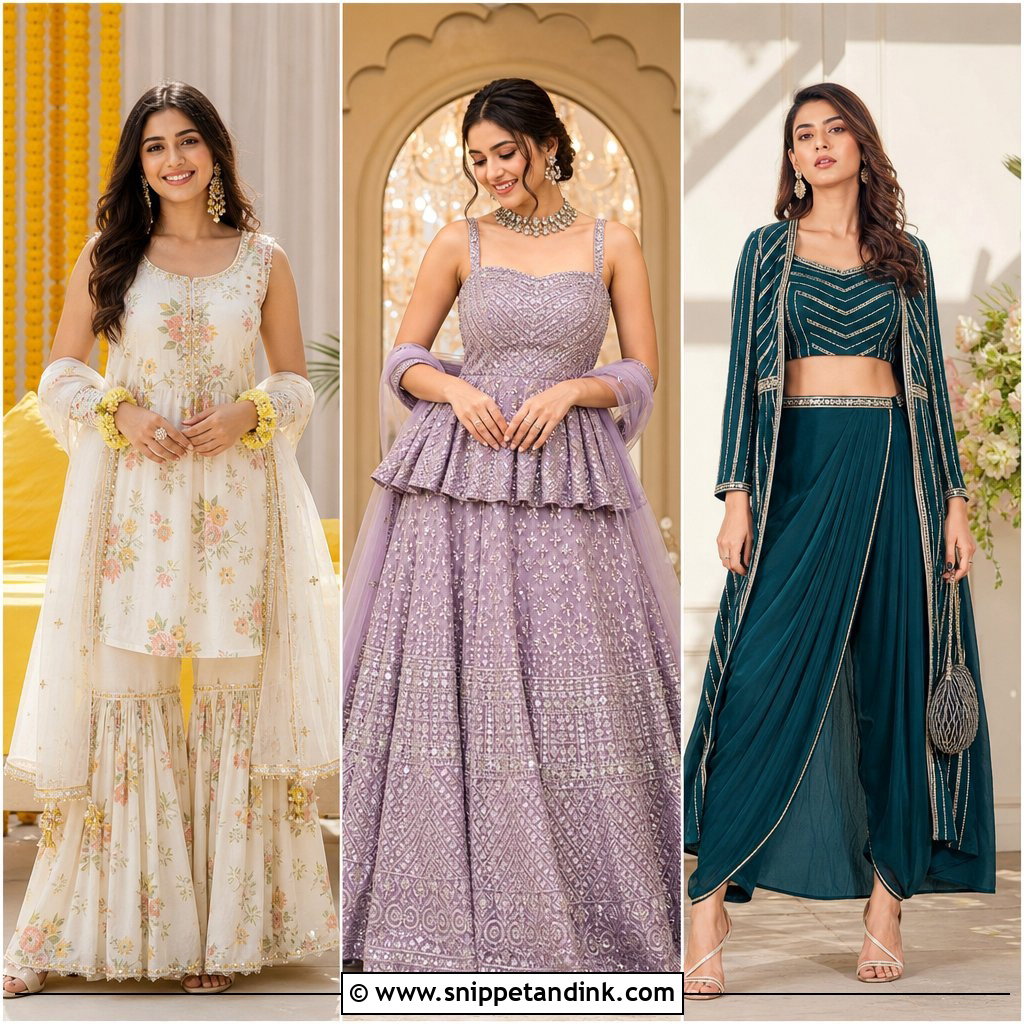
The lehenga is the safe classic for either side’s sister, and the colour does most of the work. Rose pink, teal, emerald, rust or champagne read festive without echoing the bride’s red. A short choli or a longer modest blouse both work; I let comfort decide. The detail I fuss over is the dupatta: a soft net or organza one with a border, set on one shoulder, so your arms are free to carry trays and hold the bride’s train. Keep jewellery to a choker, jhumkas, bangles and a potli. Block heels or embellished sandals will outlast stilettos on a long night of standing.
2. Pakistani Mehndi Sharara For Sister
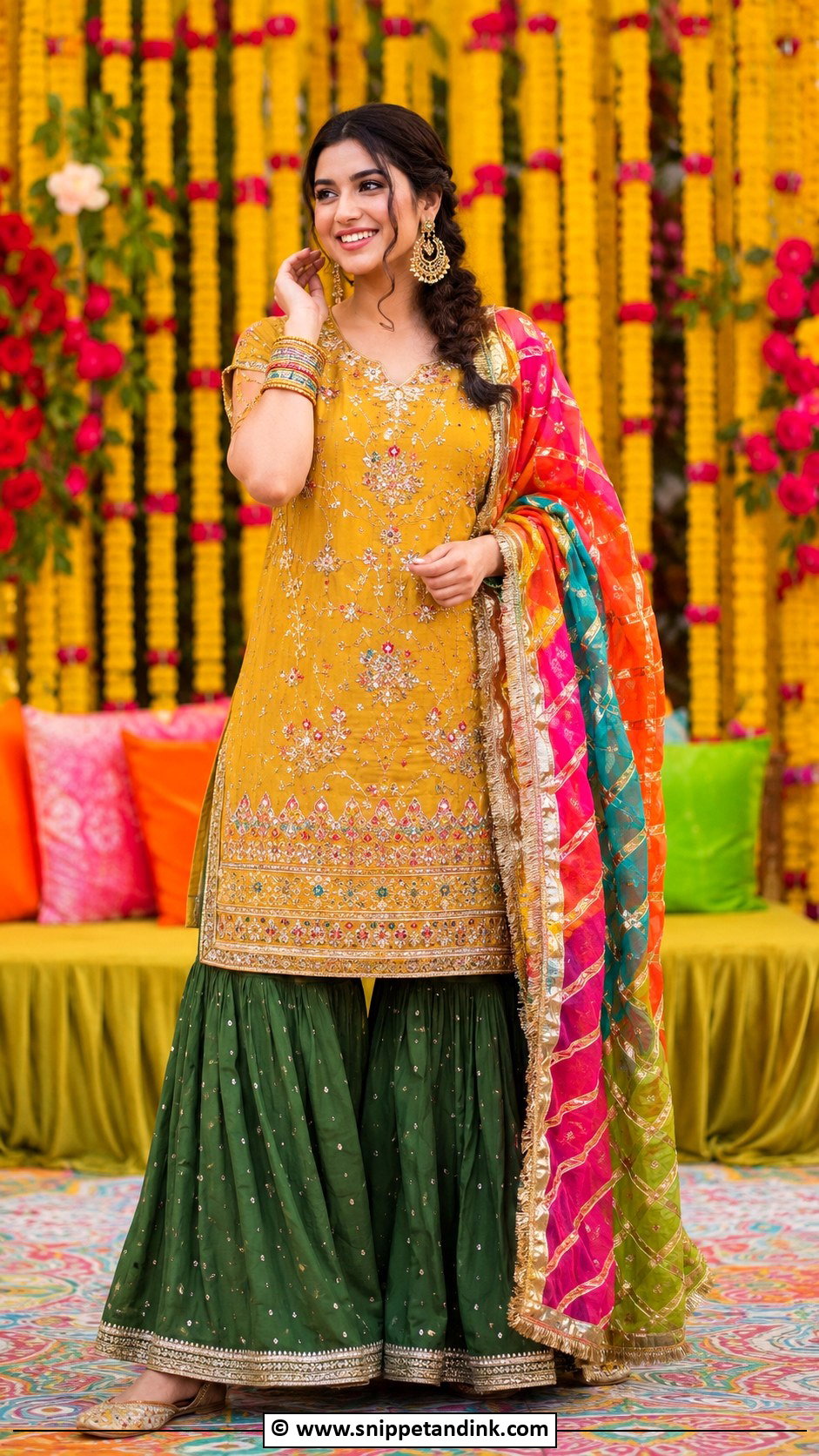
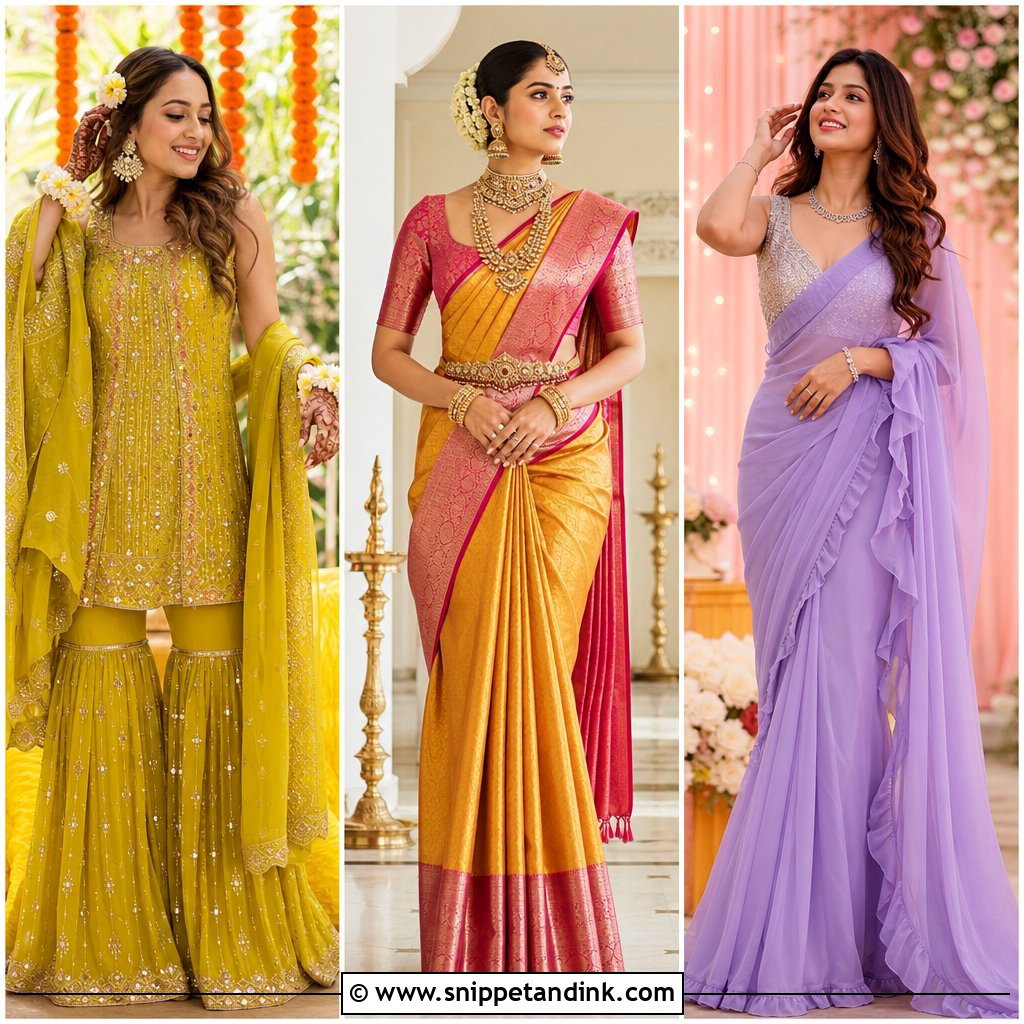
Mehndi is the night for the bright sharara. Mustard, mehndi green, orange, fuchsia or turquoise, cut as a short embroidered kameez over wide flared pants, with a dupatta edged in gota, mirrors or tassels. Shararas move well, which matters when you’re in the dance line and also handing out the thaals. The catch is the hem: wide sharara legs catch on khussa toes on stairs, so I have them hemmed to just brush the floor with your shoes on. A paranda, chaandbalis and stacked bangles finish it. With this much colour, keep makeup to glowing skin and one strong feature.
3. Pakistani Gharara For Sister Wedding
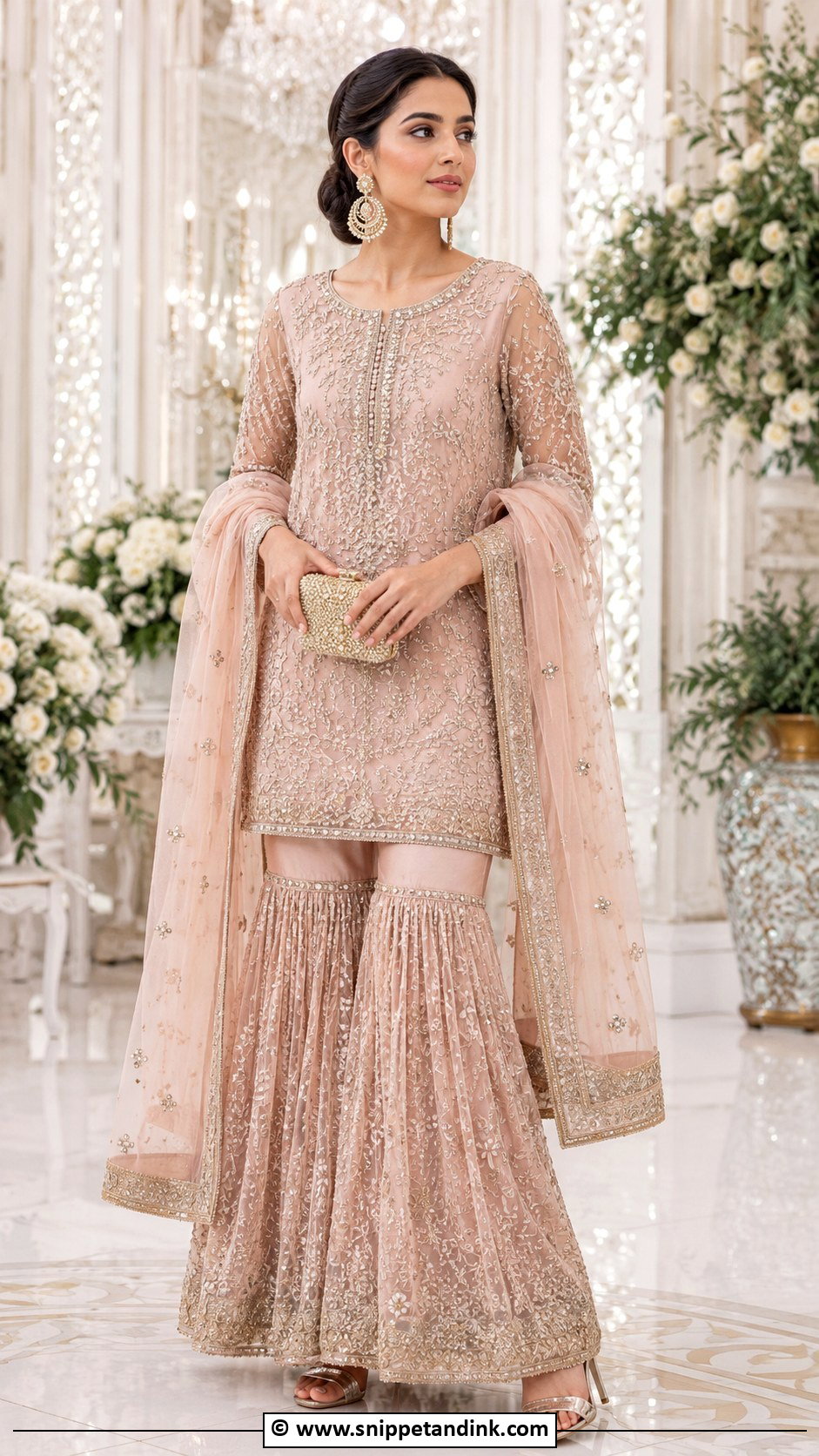
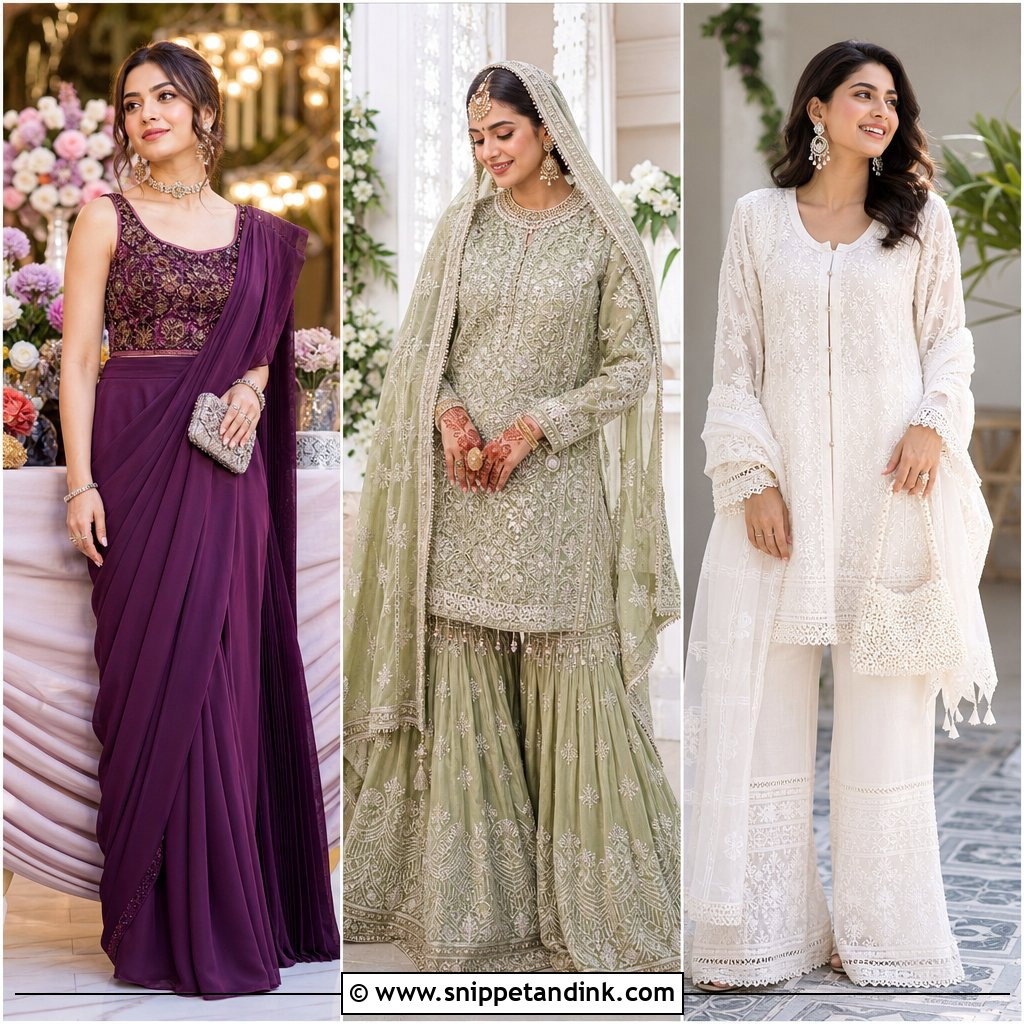
Few things look as traditionally Pakistani as a gharara on a close family member. The fitted upper leg and flared panel below the knee give that distinctive shape, and the joint at the knee is where the fit lives or dies. If the gota band sits above or below your actual knee, the whole line looks off when you walk. Choose blush, ivory, sage, gold, plum or powder blue with zari, dabka or gota work, under a short or mid-length kameez with the dupatta on one shoulder or across both arms. Kundan jewellery, soft curls, a clutch and comfortable heels complete it. Fabric decides the event: lighter for nikkah, heavier work for barat.
4. Pakistani Pishwas For Sister Wedding
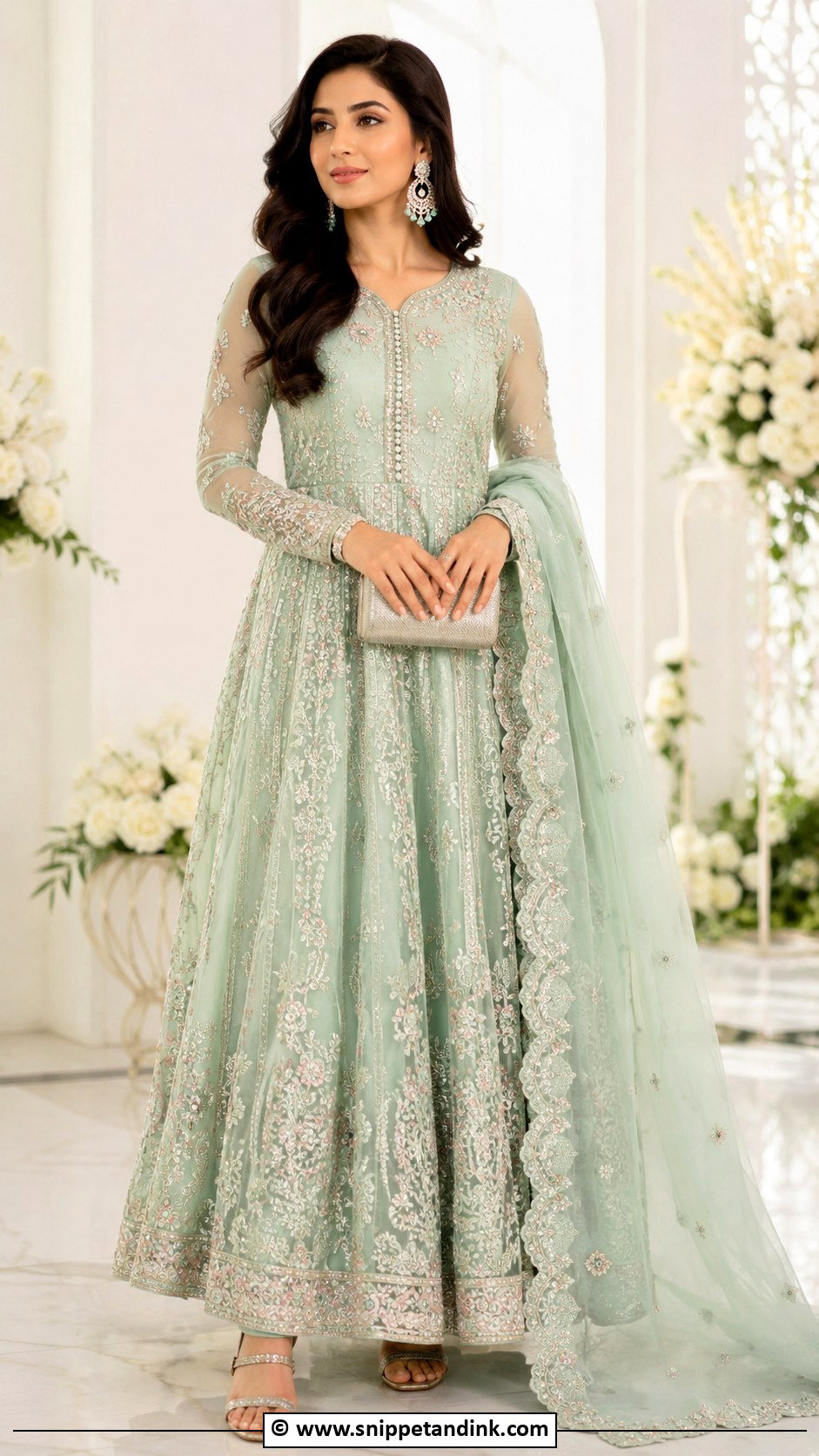
A pishwas gives you a regal line with almost no fuss. The fitted bodice and long flared skirt flow from the shoulders, which is why it flatters so many shapes. Mint, peach, champagne or lavender suit nikkah and walima; deep maroon carries an evening. For mehndi, swap to a version with gota or mirror detailing. I always check the armholes on a pishwas, because a tight armhole pulls the whole bodice up when you lift your arms for the dholki. Statement earrings, a sleek clutch, embellished heels and a hairstyle that leaves the neckline clear.
5. Pakistani Saree For Sister Wedding
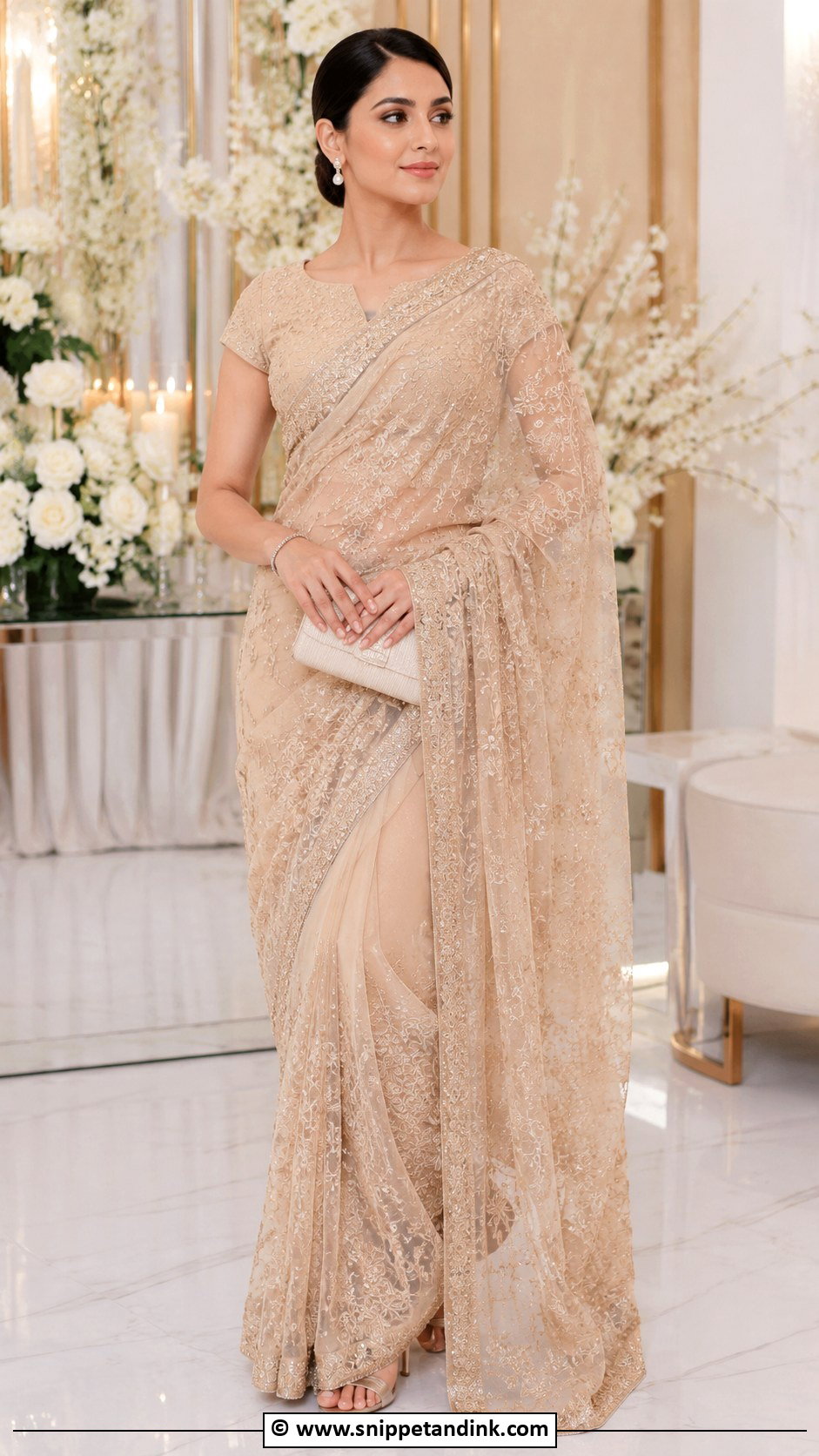
Sarees suit sisters who want polish without volume. Organza, chiffon, silk and tissue all drape well for wedding events, with a modest blouse and fine embroidery keeping it refined. Pastels sit well at nikkah and walima; jewel tones hold their own at barat. A belt is more than a modern touch: it anchors the pallu so you aren’t re-pinning it every time you bend to greet an elder. Heels, a small clutch, statement earrings and soft waves or a bun. I find sarees sit most easily on tall or lean frames, though a skilled draper can adapt the pleats for any figure.
6. Pakistani Anarkali For Sister Wedding
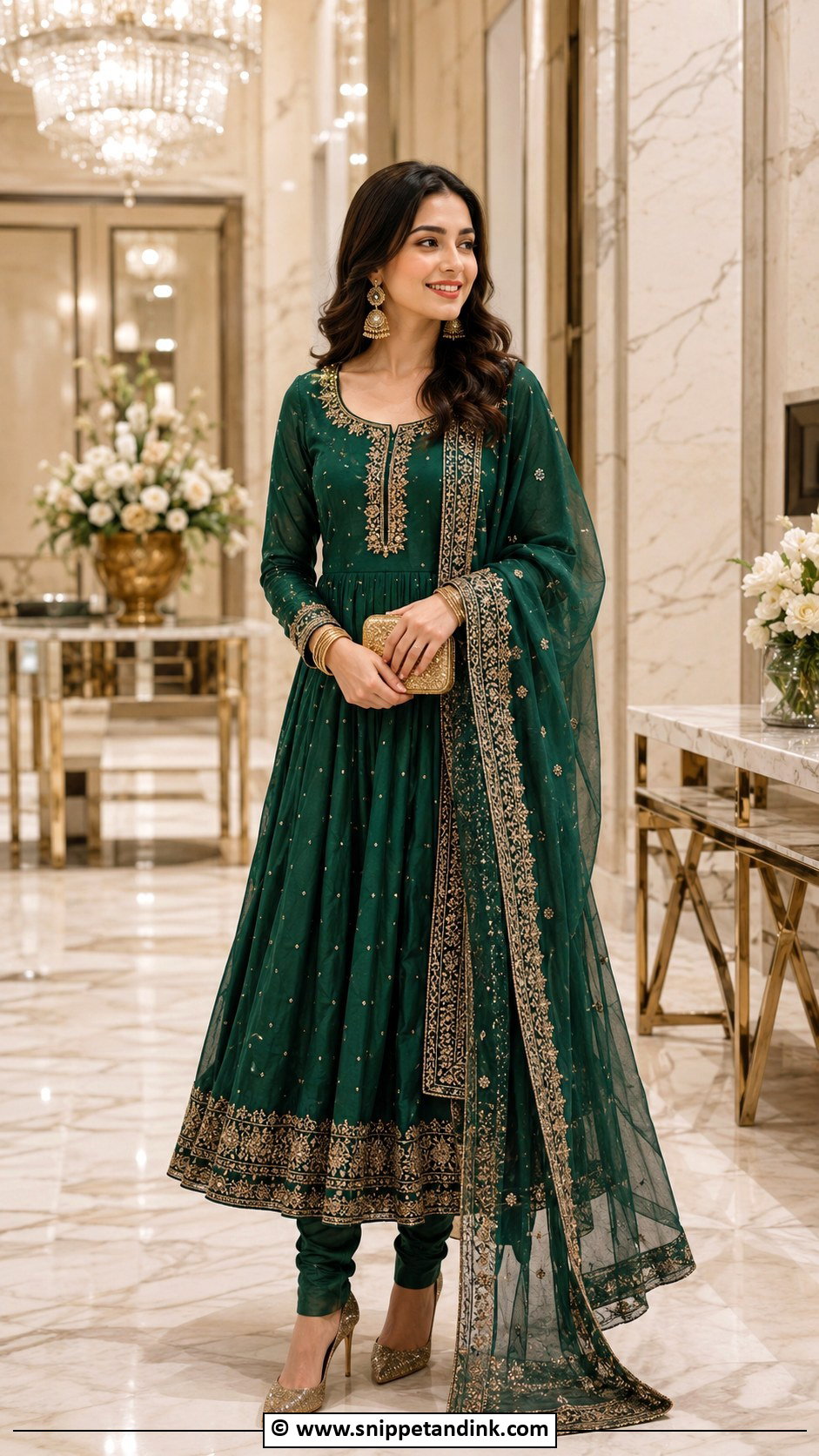
An anarkali outfit is my answer for sisters who want coverage and comfort through a long function. A flared anarkali in chiffon, silk, net or organza gives a soft royal look without the weight of a lehenga. Daytime calls for powder pink, pistachio, ivory or sky blue; evenings for navy, emerald, burgundy or bronze. Count the panels when you buy: a cheap anarkali skimps on kalis, and the flare collapses when you sit. Churidar or straight trousers, a light embroidered dupatta, jhumkas, bangles, a fine ring and pointed heels.
7. Pakistani Maxi Dress For Sister Wedding
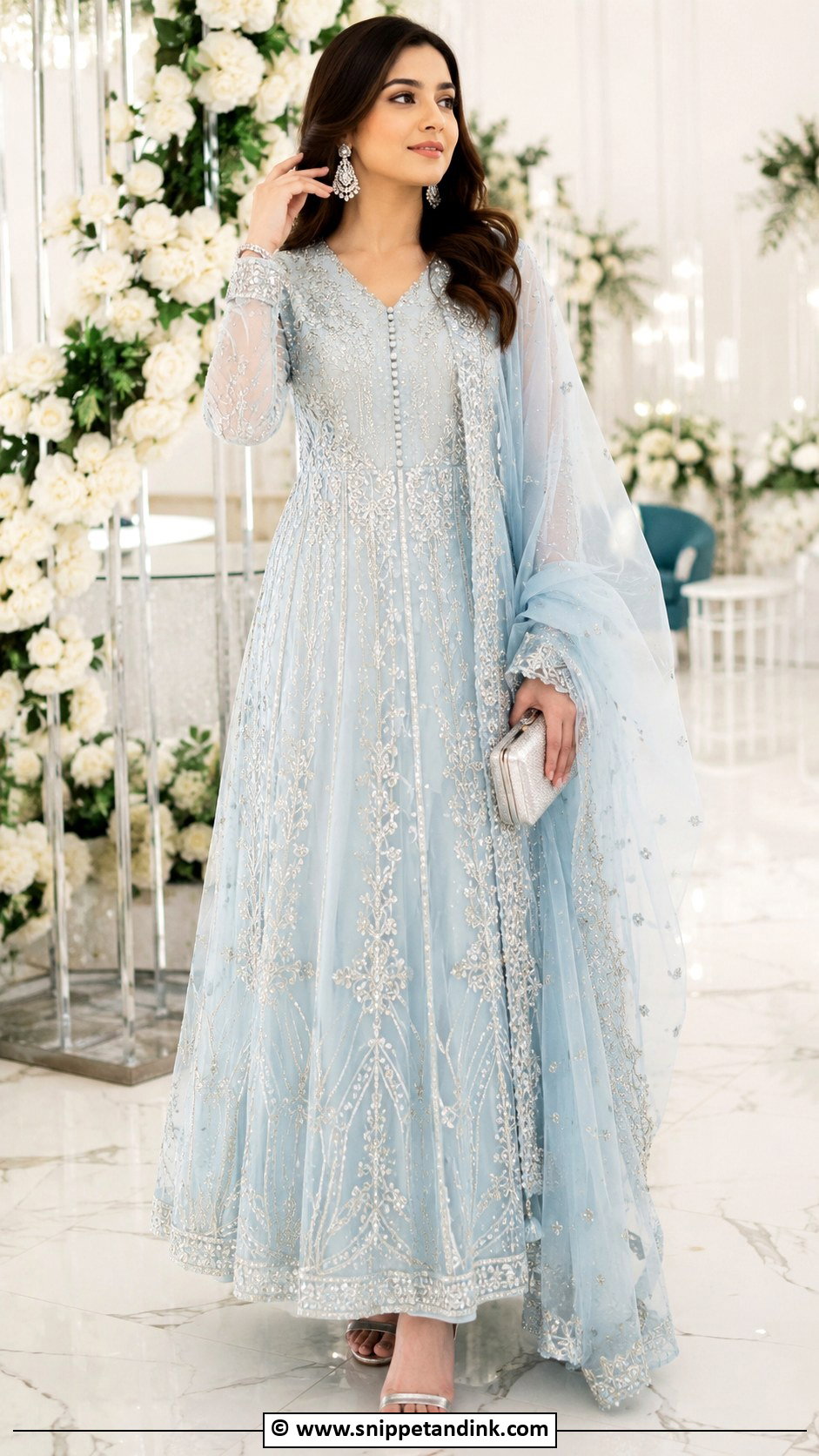
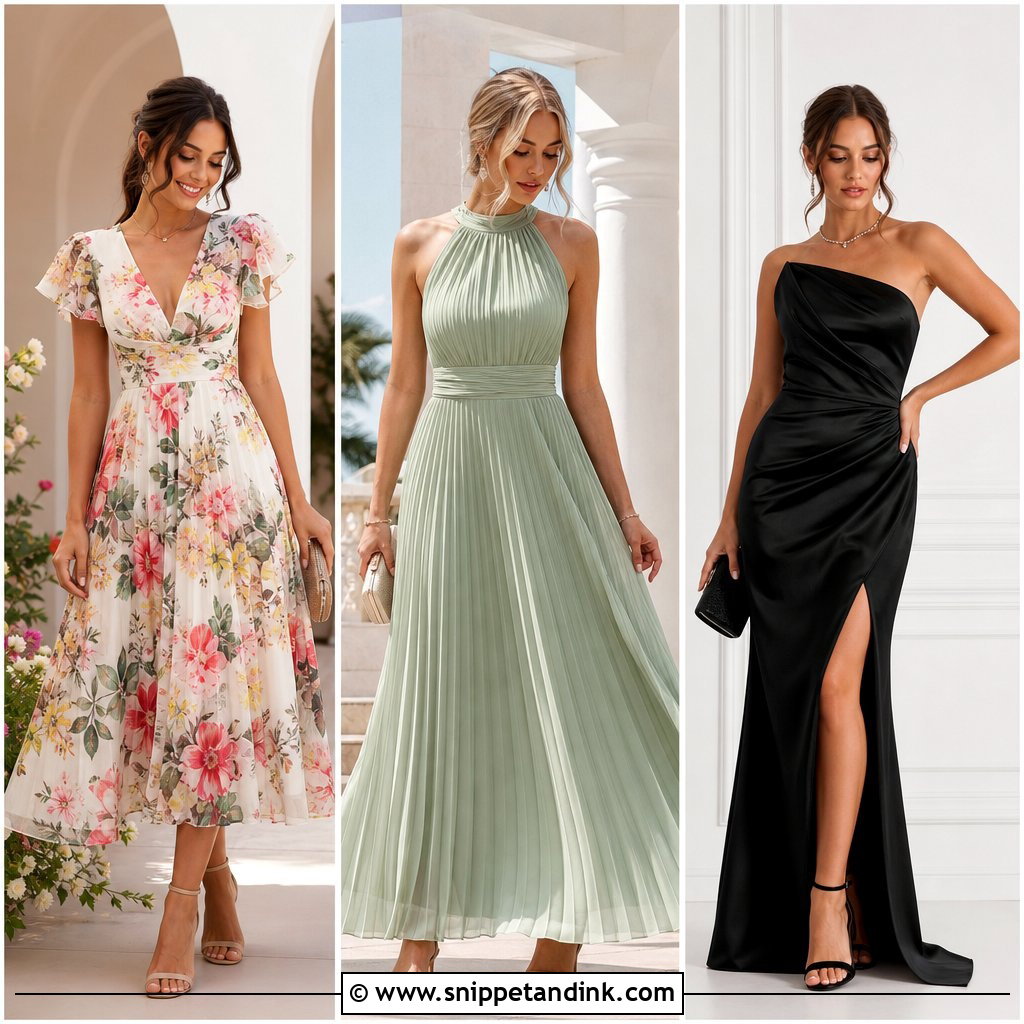
For walima or a formal dinner, a maxi gives gown-level drama while the embroidery and dupatta keep it South Asian. Look for soft net, chiffon, silk or organza with threadwork, sequins or pearls. Champagne, ice blue, blush, lilac and silver are the walima colours I reach for most. Net maxis with heavy embellishment can weigh more than you’d expect, so I’d try one on and stand in it for ten minutes before deciding. Refined drop earrings, a bracelet and a clutch, with sleek heels and a clean hairstyle since the skirt already has volume.
8. Pakistani Angrakha For Sister Wedding
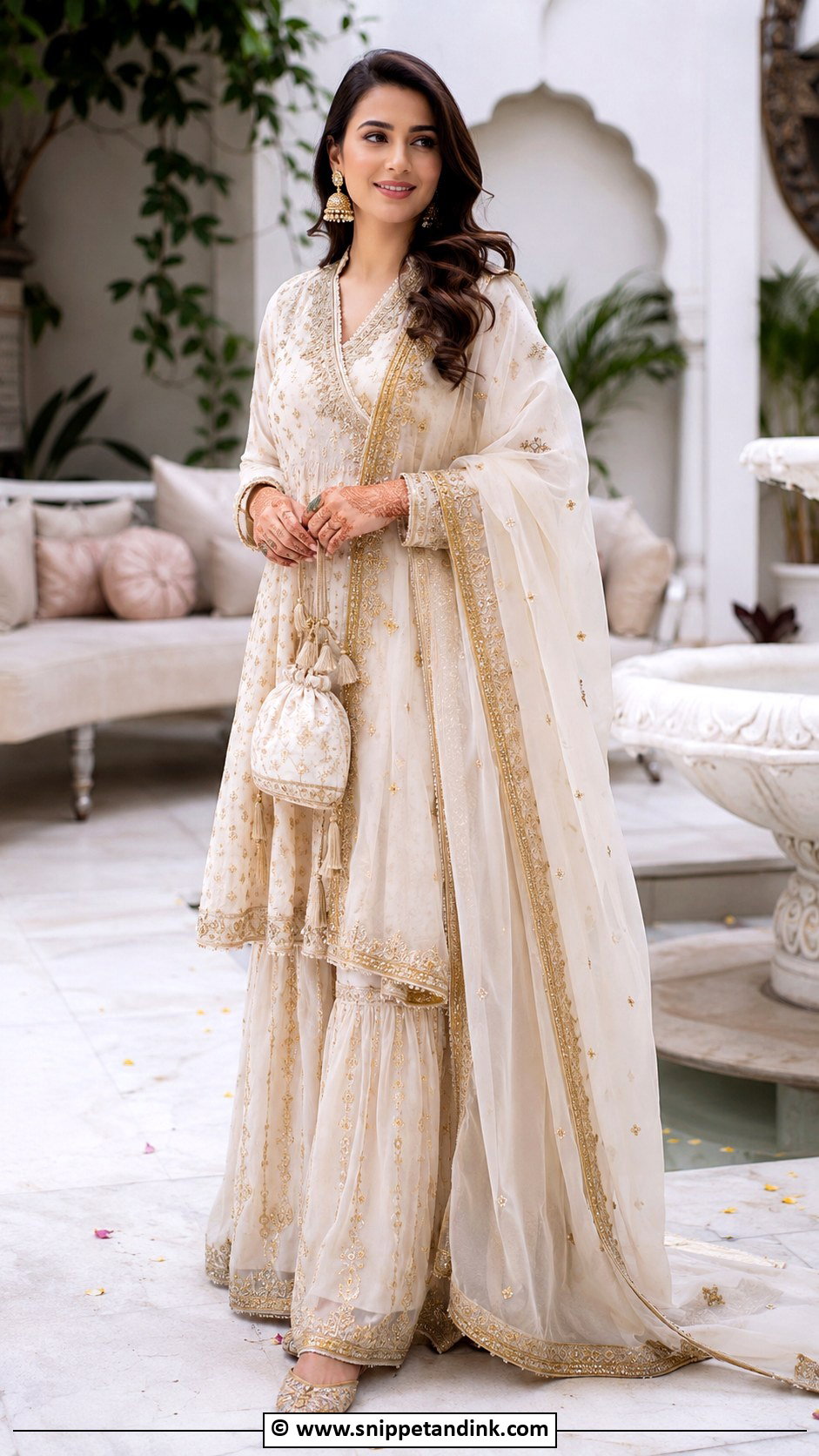
The angrakha’s overlapping front shapes the waist while staying modest and comfortable, and it’s a good way out of the lehenga default. Pair the angrakha frock with gharara, sharara or straight trousers. Bright colours with gota suit mehndi; ivory, blush or pastel green suit nikkah. The wrap needs a secure inner tie as well as the outer bow, otherwise the overlap gapes open once you start moving. Finish with a bordered dupatta, traditional jhumkas, khussas and a potli.
9. Pakistani Farshi Shalwar For Sister
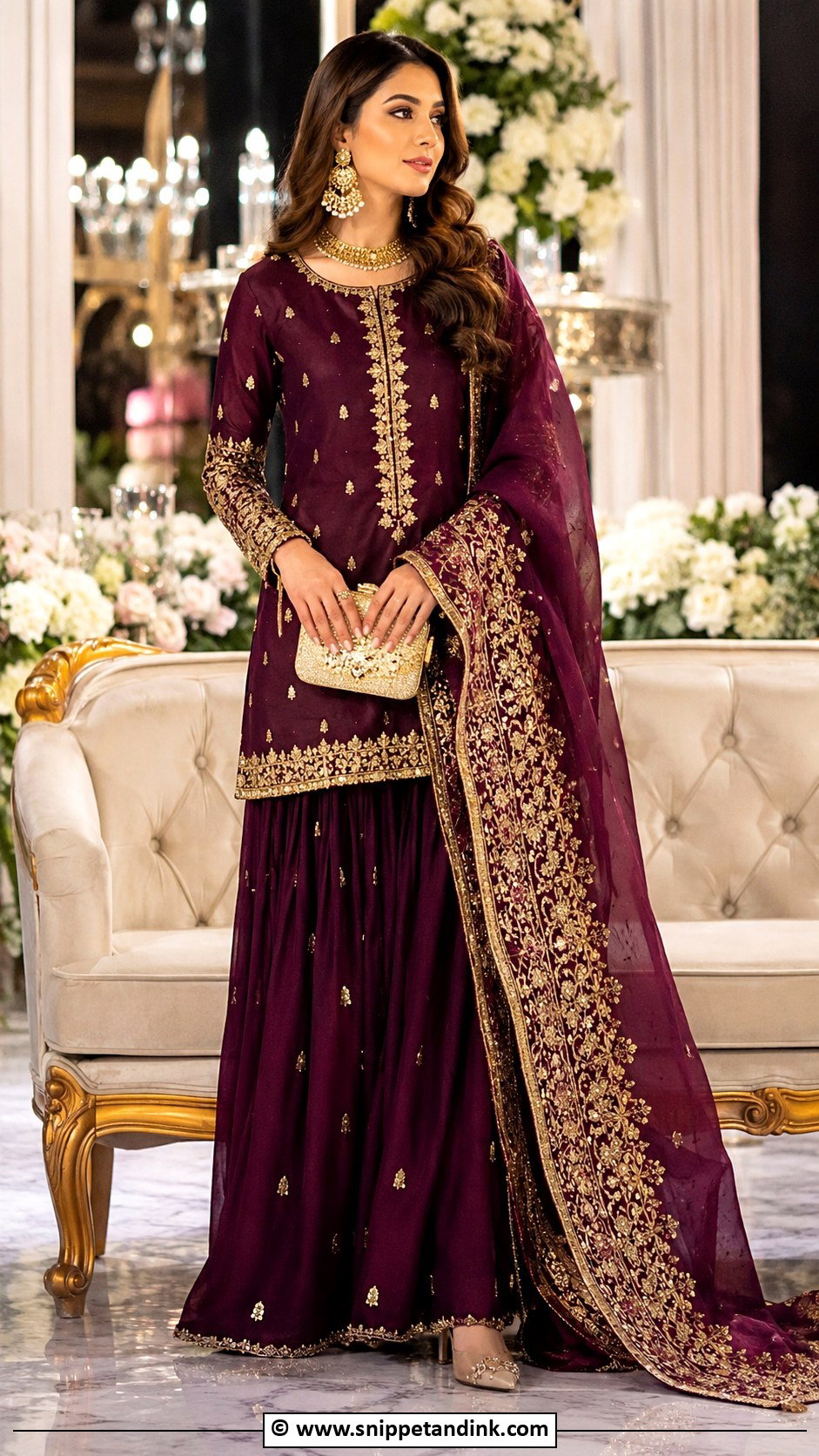
Farshi shalwar is old Lucknowi and Hyderabadi elegance, and it looks dramatic under a short embroidered shirt. It’s a good fit for sisters who want a traditional look that isn’t a lehenga. Deep green, maroon, plum, mustard or antique gold for night; soft peach, ivory or mint for day. Be honest with yourself about stairs and stages, though. A farshi trails on the floor by design, and you’ll be lifting it every time you climb onto the stage for photos. Keep the shirt structured so the proportions hold, then add a heavy-bordered dupatta, traditional jewellery and pointed heels or khussas.
10. Pakistani Short Shirt With Lehenga For Sister
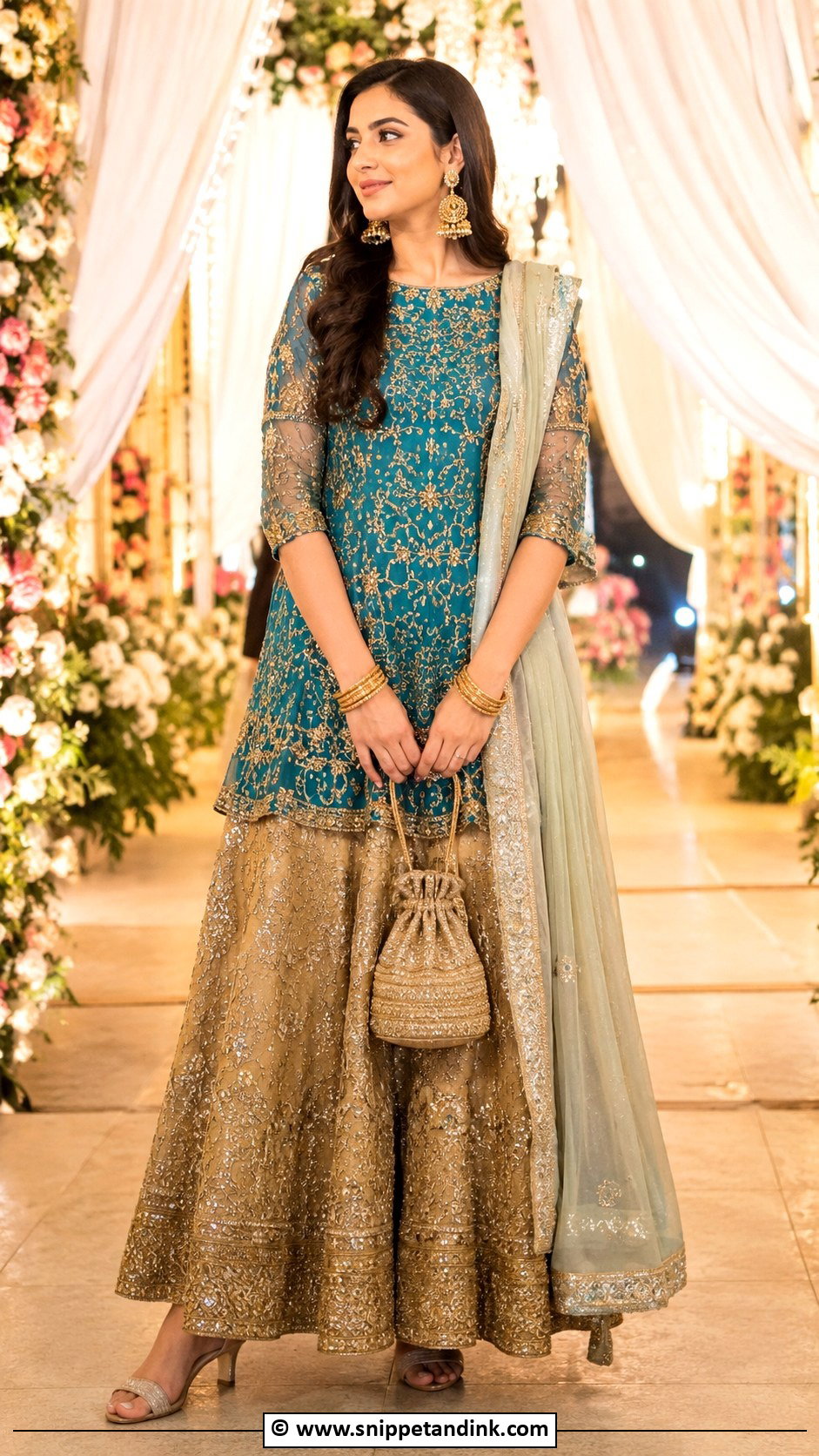
Short shirt over lehenga is a Pakistani favourite because it gives more coverage than a choli and still shows off the flare. Choose a heavily bordered lehenga with a short embroidered kameez in a matching or contrasting colour. Yellow with pink or green with orange suit mehndi. At barat, red is risky for a sister; I’d go deep gold, teal or plum, and keep the work lighter than the bride’s so nobody confuses the two in a group shot. Pin the dupatta lightly on one shoulder, and add bold earrings, bangles and heels you can stand in all evening.
11. Pakistani Long Shirt With Gharara For Sister
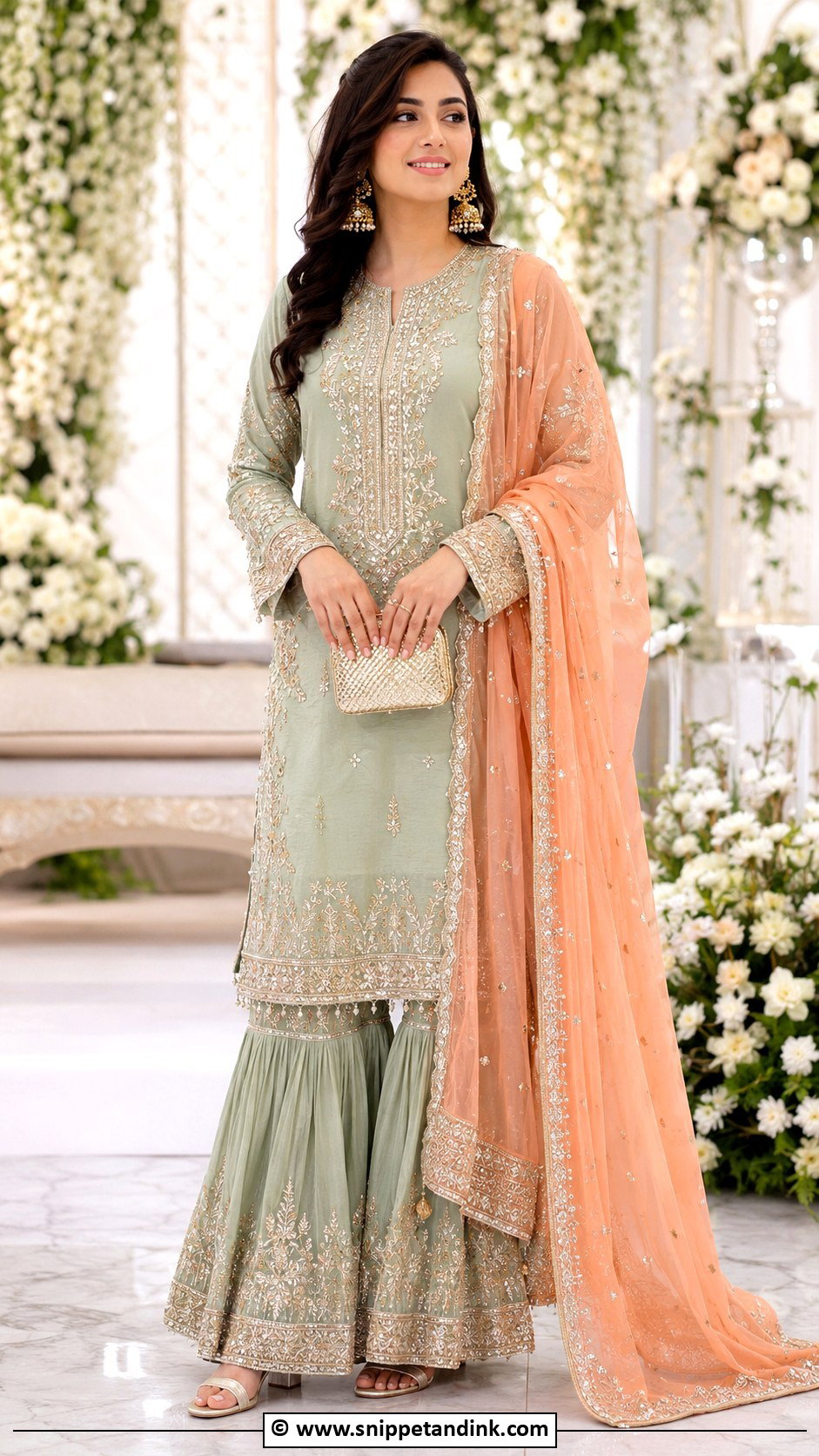
Prefer a covered silhouette? The long shirt over gharara gives a strong vertical line with traditional volume at the hem. Raw silk, organza and jamawar all carry it well. Embroidery should sit at the neckline, sleeves and hem so it reads as wedding wear. Watch the shirt length relative to the gharara joint: if the kameez hides the knee band completely, the gharara loses its shape and looks like wide trousers. A contrasting dupatta adds interest at mehndi or dholki, with a neat bun, jhumkas, a clutch and block heels.
12. Pakistani Peplum With Sharara For Sister
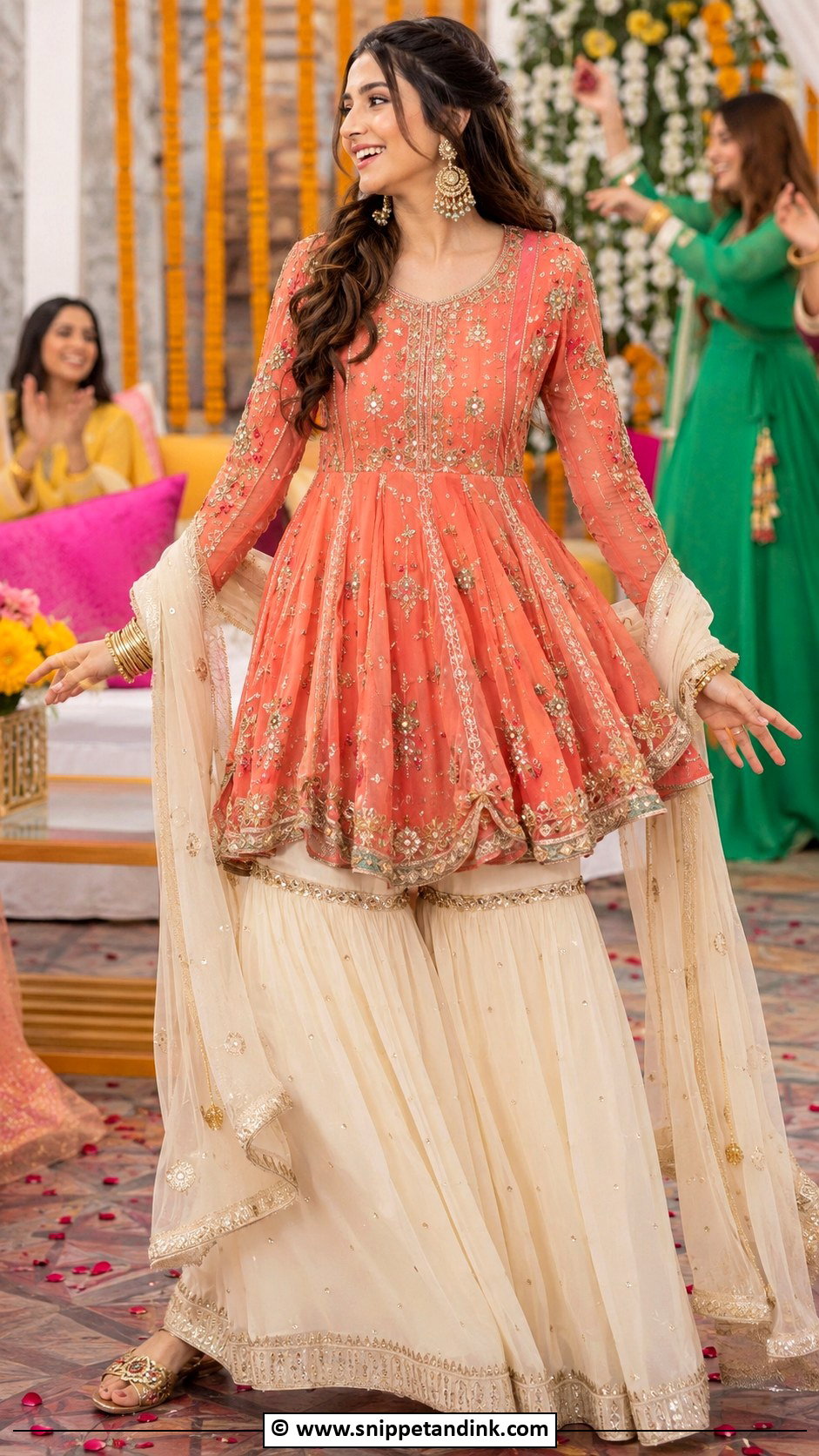
Peplum and sharara is the modern combination that still looks festive. The peplum marks the waist and the sharara gives movement, so it suits most shapes. Pair a heavily embroidered peplum with plain sharara, or a plain peplum with a statement dupatta. I find coral, emerald, cobalt, gold and rose pink all suit sisters well. One fitting tip: the peplum flare should start at your natural waist, not lower, or it shortens your legs. Statement earrings, bangles, strappy heels or embellished khussas, and you’re ready for mehndi or a family dance.
13. Pakistani Jacket Lehenga For Sister
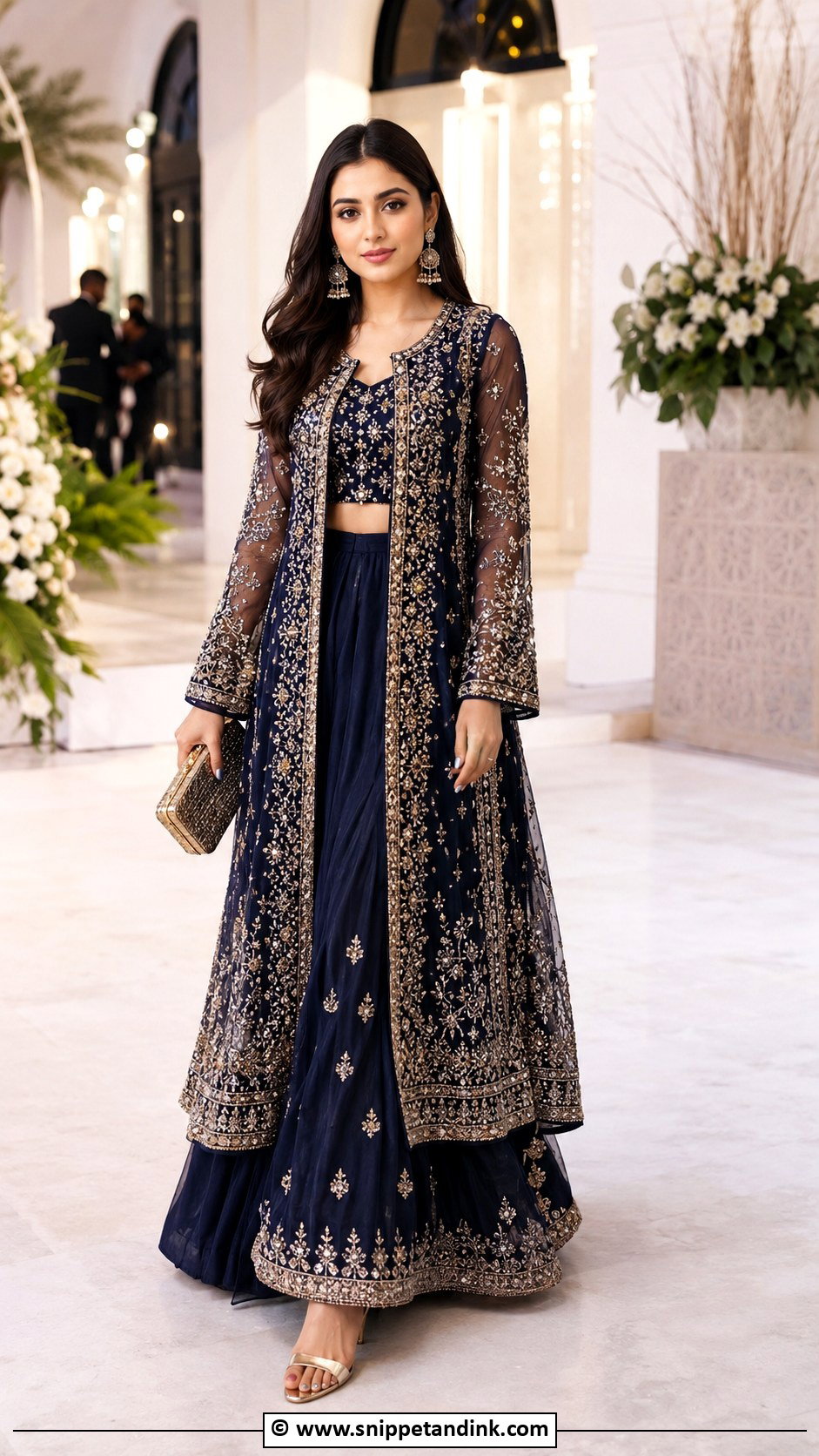
A jacket lehenga is the fashion-forward choice. The jacket can be long, cropped, sheer or heavily embroidered, layered over a blouse and lehenga skirt. A long organza or net jacket replaces the need for a heavy dupatta, which many sisters are glad to be rid of. Winter weddings are where velvet or raw silk jackets earn their place. Try champagne, navy, maroon, black, emerald or antique gold. The jacket is your statement, so keep the rest sleek: heels, a box clutch and earrings that frame the face. Check the jacket’s sleeve width over the blouse sleeve before stitching; the two often fight.
14. Pakistani Cape Lehenga For Sister
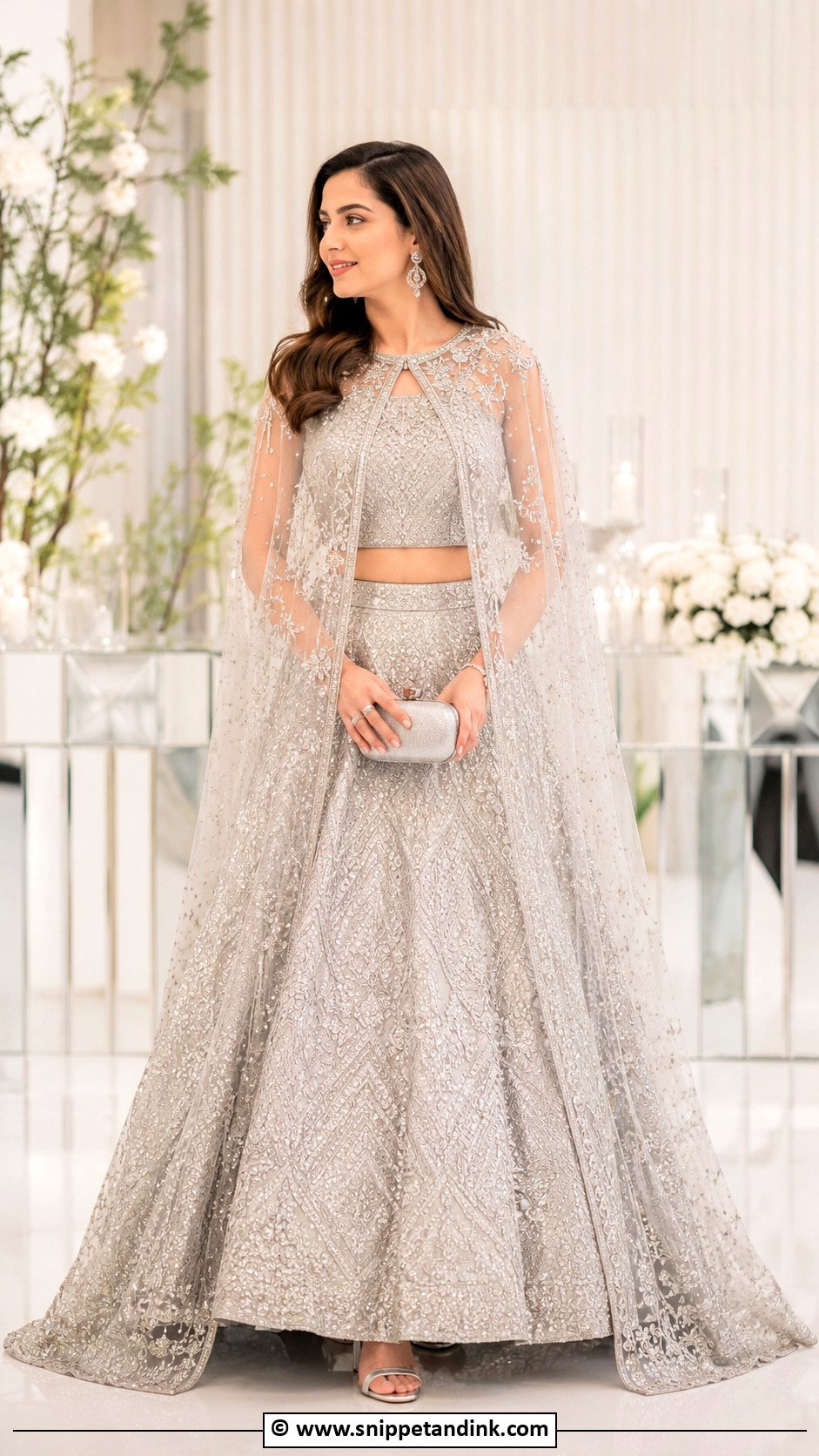
The cape lehenga solves the dupatta problem. A sheer embroidered cape falling over the shoulders replaces or supports the dupatta, so there’s no constant pinning. Pair it with a fitted blouse and lehenga skirt for walima, reception or evening events, in pastels, metallics or jewel tones. Capes are cut to a fixed shoulder width, and if it’s even slightly wide it slides off one side all night, so I have a small hook stitched at each shoulder. Minimal earrings and a bracelet, heels, a clutch and smooth hair.
15. Pakistani Organza Suit For Sister Wedding
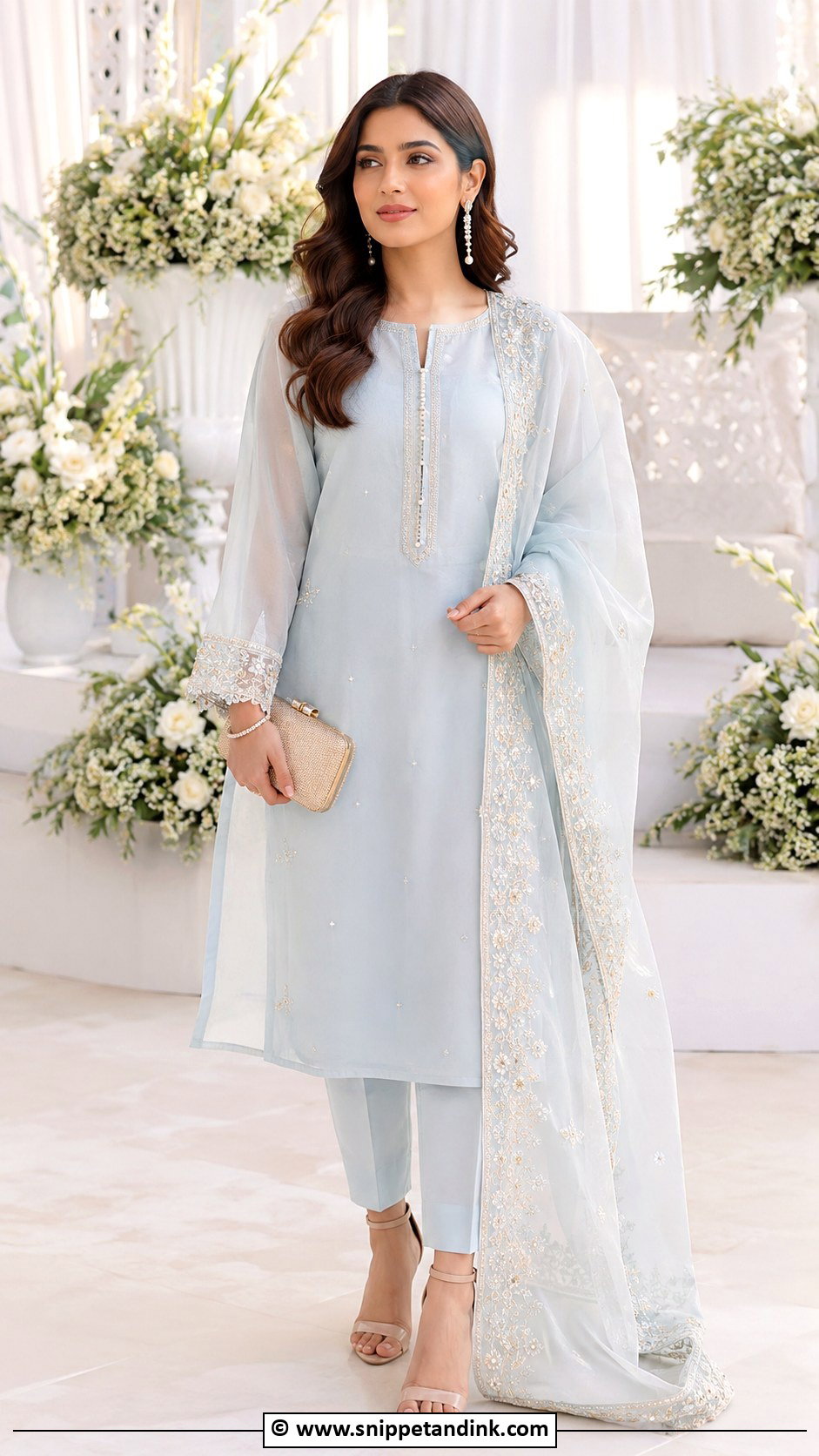
Organza gives a delicate wedding feel without much weight, especially with embroidery, pearls, sequins or lace borders. A straight shirt works with trousers, culottes, sharara or gharara. Ivory, blush, mint, powder blue and champagne suit nikkah and walima; brighter organza with coloured embroidery suits mehndi. Organza is crisp, and its seams can scratch the inner arm through a long evening, so ask for a soft lining in the sleeves. Finish with a matching dupatta, pearl earrings, a small clutch and heels.
16. Pakistani Velvet Outfit For Sister Wedding
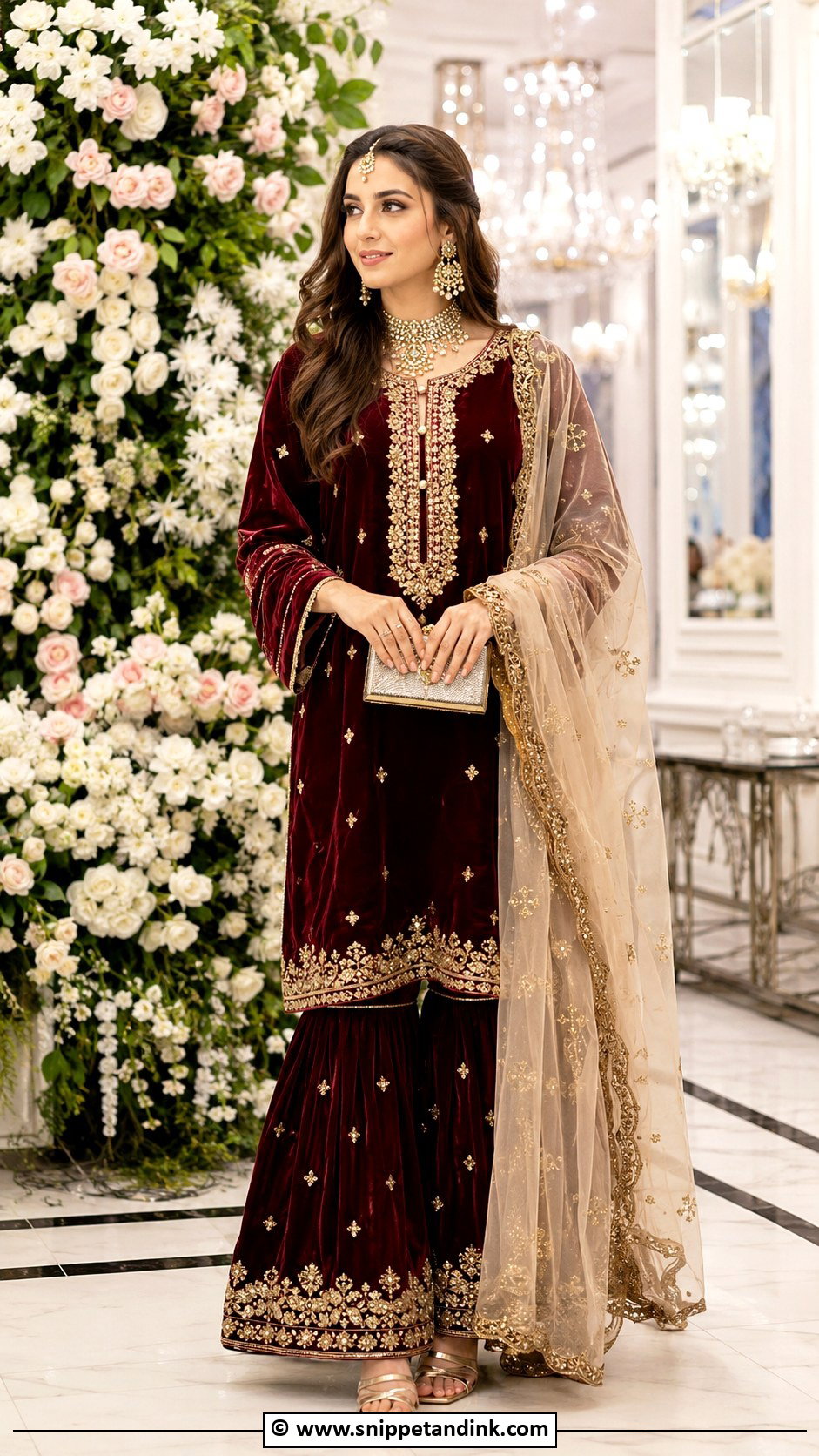
Velvet is the winter fabric. It has depth, so even simple gold embroidery looks formal: a velvet long shirt with gharara, a velvet shawl over a lehenga, or a velvet peplum with sharara. Deep green, royal blue, maroon, plum, chocolate and black all hold gold work well. Two practical notes from fittings: velvet marks if it’s pressed flat, so it should be steamed from the back, and it gets hot fast in a packed, heated hall. Keep the dupatta lighter to compensate. Kundan jewellery, a structured clutch and heels suit evening barat or reception events.
17. Pakistani Pastel Outfit For Sister Wedding
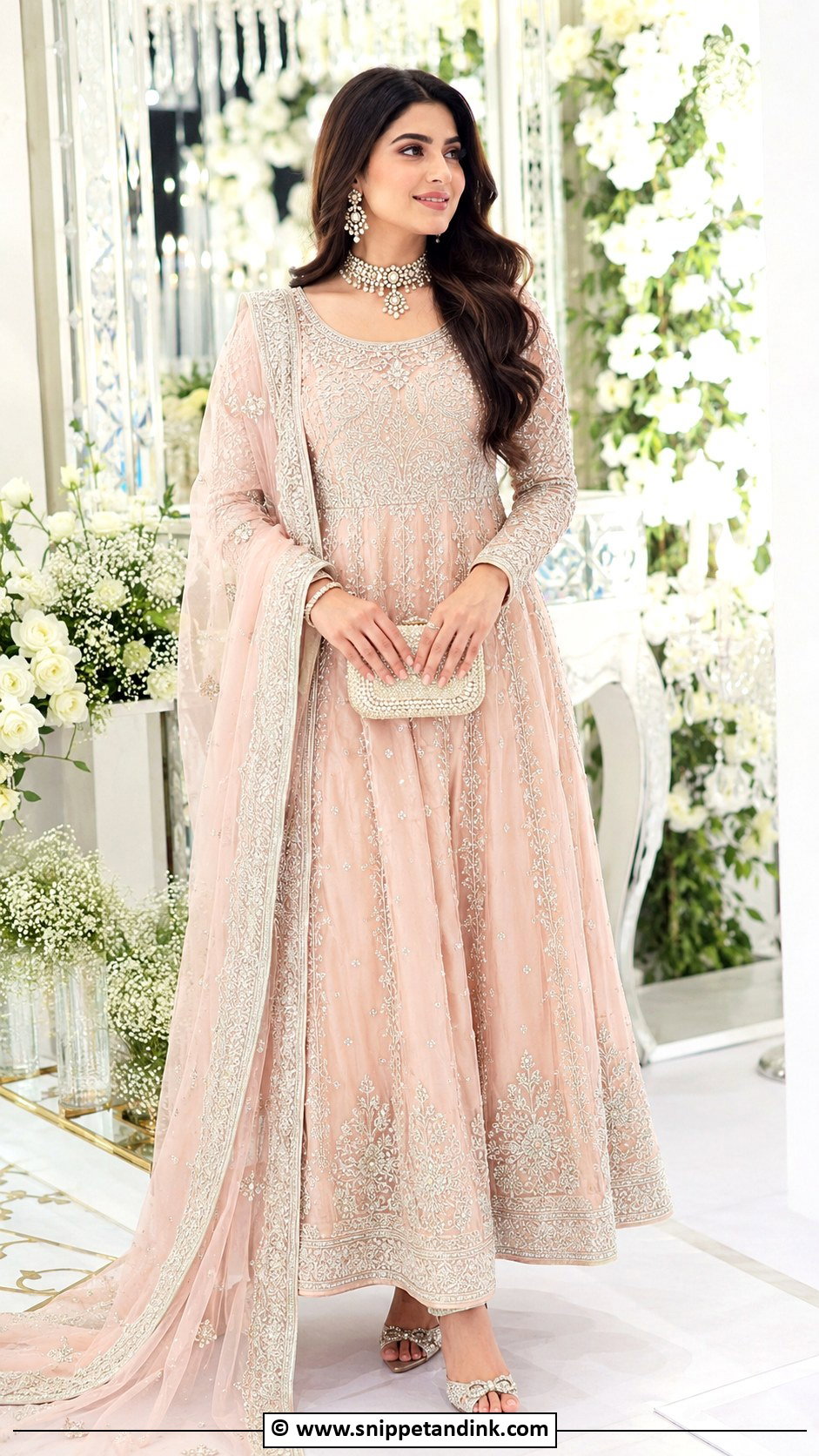
Pastels belong to nikkah, walima and daytime events. Blush, mint, lavender, powder blue, peach, ivory and champagne all look fresh in photos, in a lehenga, pishwas, saree or sharara with delicate work rather than heavy embroidery. Here’s a detail I always mention: silver, pearl or champagne embellishment sits softer on pastels than dark antique gold, which can look muddy against a pale base. Pearl jewellery, light makeup and a clean hairstyle. A pastel also keeps you from competing when the bride is in a deep colour.
18. Pakistani Mirror Work Outfit For Sister
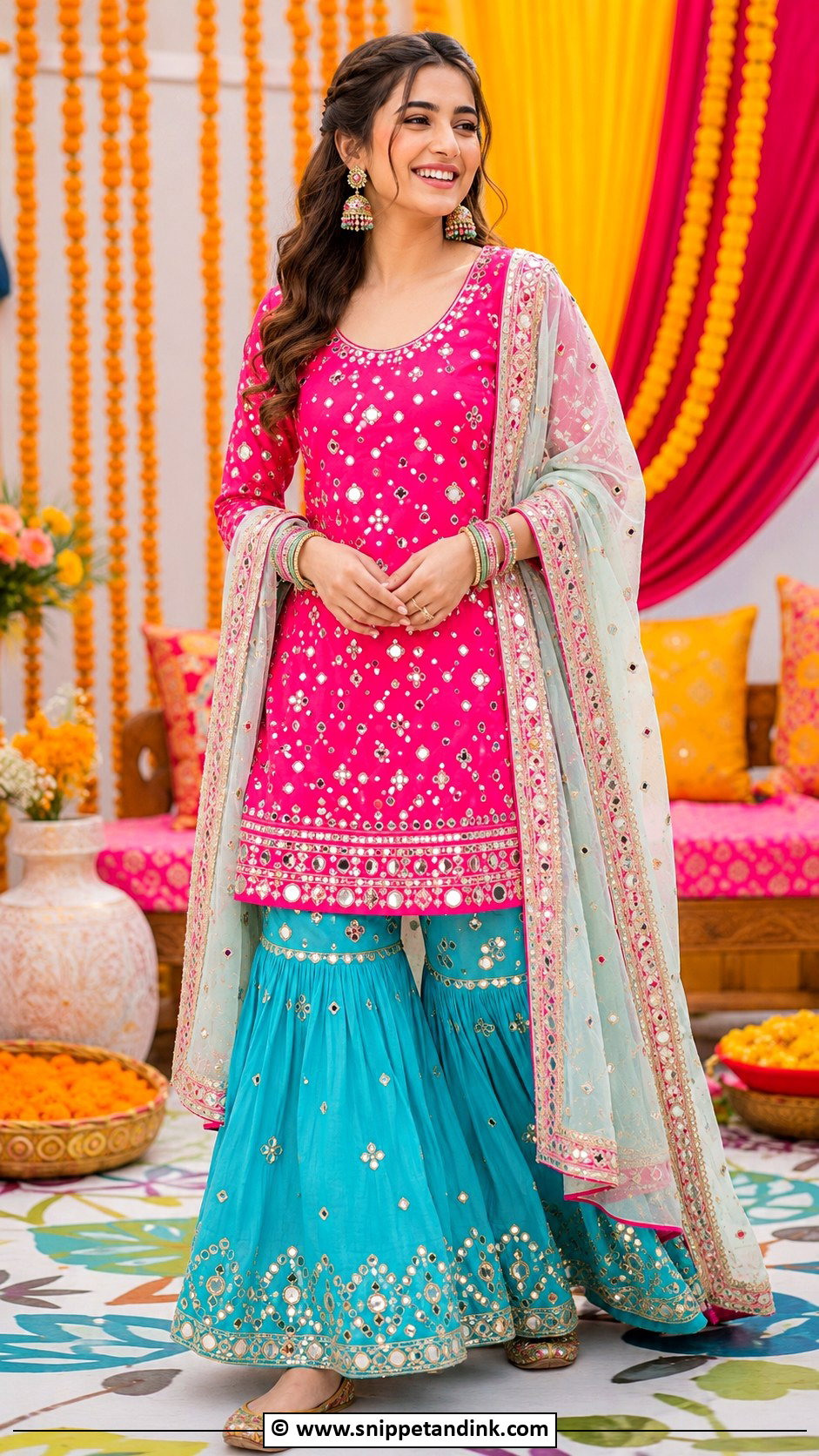
Mirror work gives a mehndi or dholki outfit instant energy, catching light on every turn of the dance. A mirror work sharara, lehenga choli or short shirt with flared pants in yellow, orange, rani pink, parrot green or turquoise is the classic. Real mirrors are stitched in with a ring of thread, and the edges can catch fine dupattas and hair, so keep the dupatta light and skip heavy necklaces if the neckline is already worked. Bangles, jhumkas and khussas finish it.
19. Pakistani Gota Work Outfit For Sister
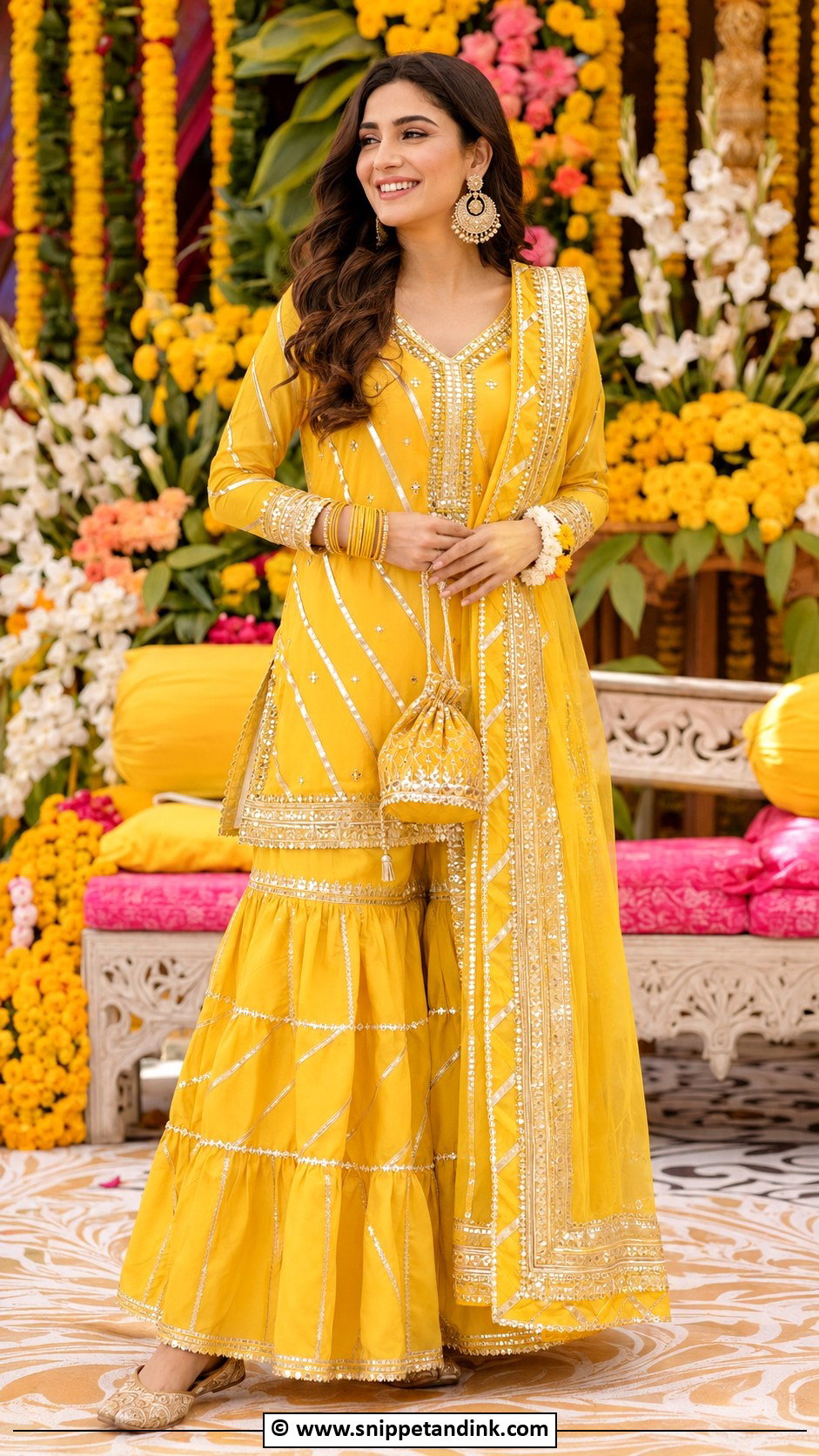
Gota is the most festive embellishment that isn’t necessarily heavy. A gota patti gharara, sharara, pishwas or lehenga suits mehndi, mayoun and family events. Yellow, green, pink, orange and gold are traditional; ivory or peach with gota looks more refined. Metallic gota can dull if it’s stored damp, so the outfit should go into a cotton cloth, never plastic, between functions. A gota-bordered dupatta, khussas, chaandbalis, bangles and a soft braid complete it. It photographs best in daylight.
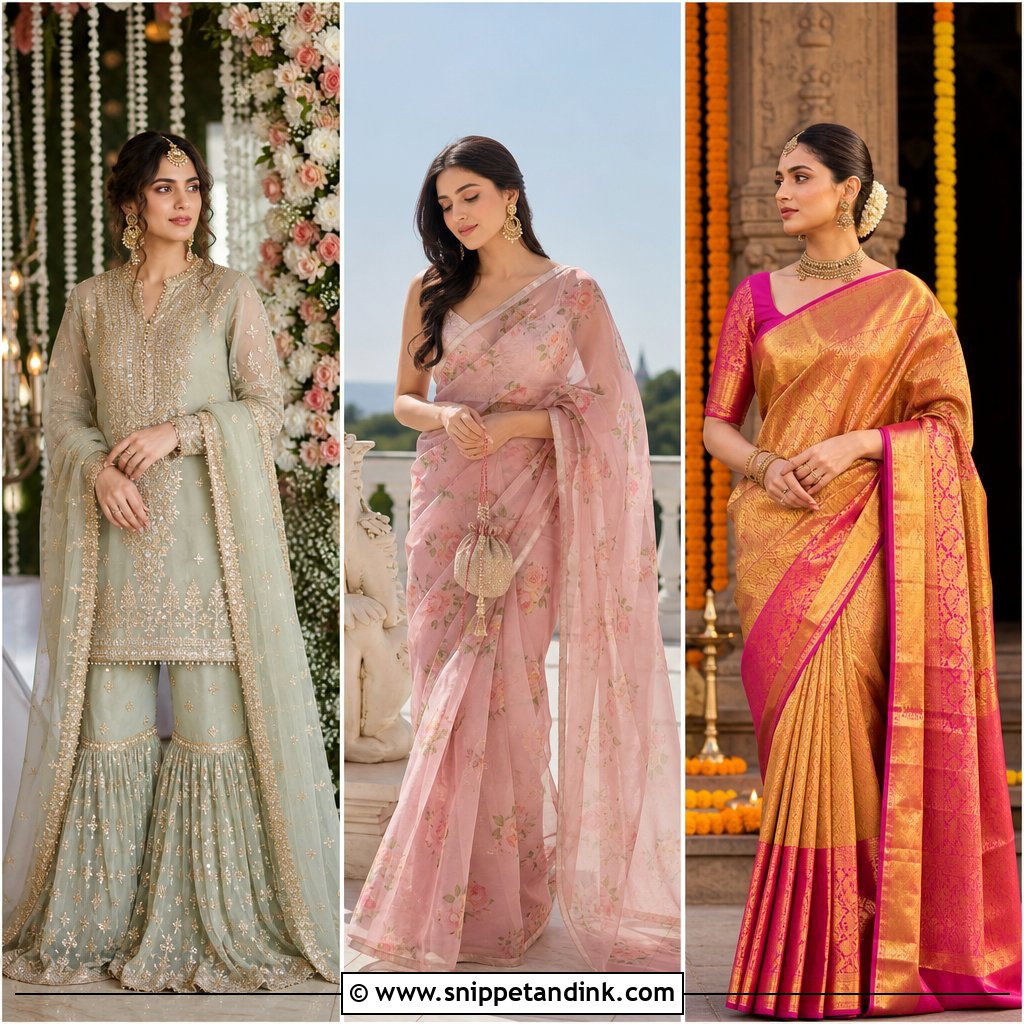
20. Pakistani Chiffon Saree For Sister
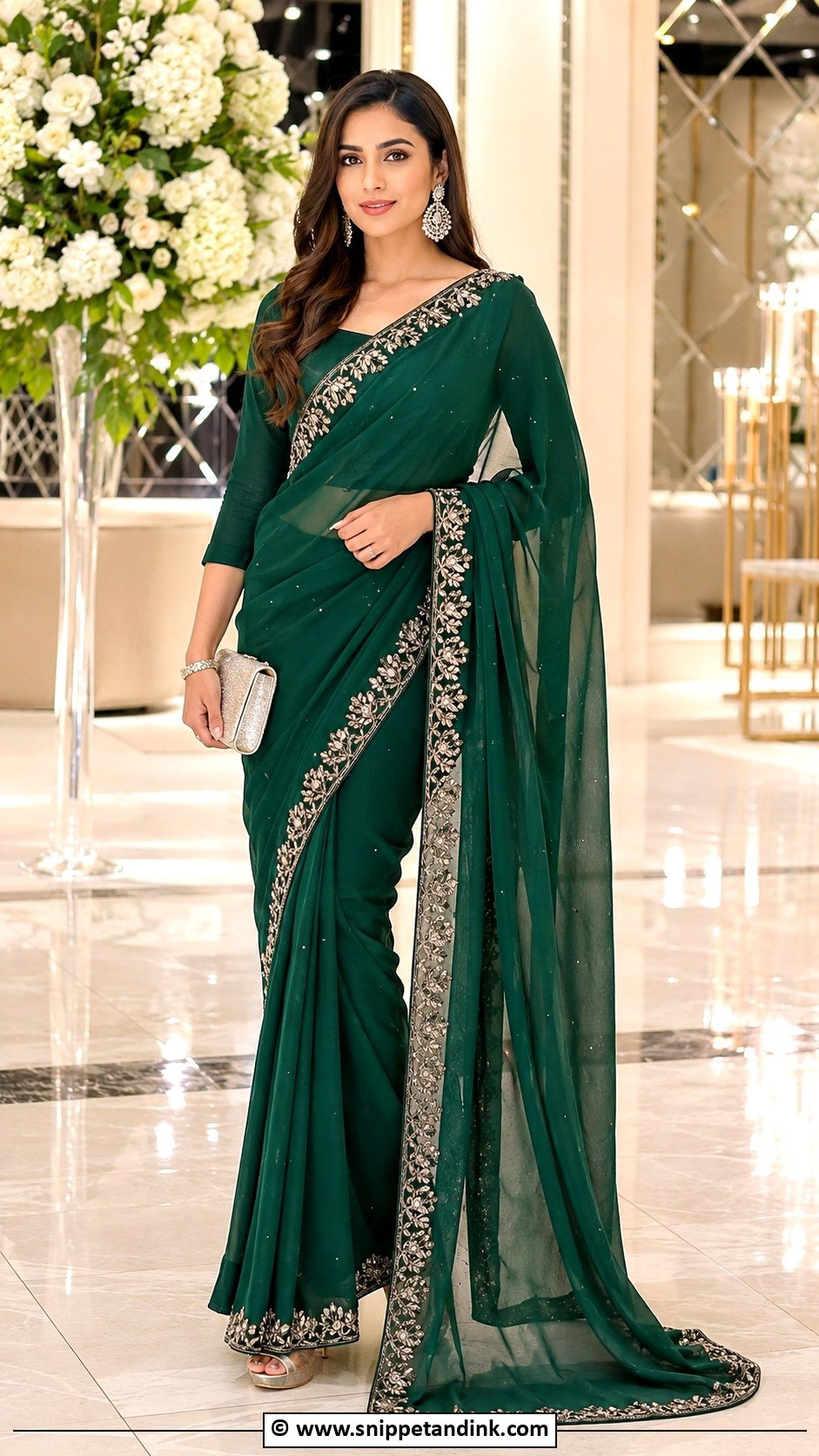
Chiffon sarees are light, drape softly and stay comfortable through a long function. Pick one with embroidered borders, sequins or fine threadwork. Emerald, ruby, navy and plum carry an evening; soft pink, silver, ivory or mint suit walima and nikkah. Chiffon is slippery, so I pin the pleats at the waist and the pallu at the shoulder with small safety pins hidden under the fold. A modest blouse, heels, statement earrings, a clutch and a clean bun or soft waves. Understated, and very easy to wear.
21. Pakistani Silk Suit For Sister Wedding
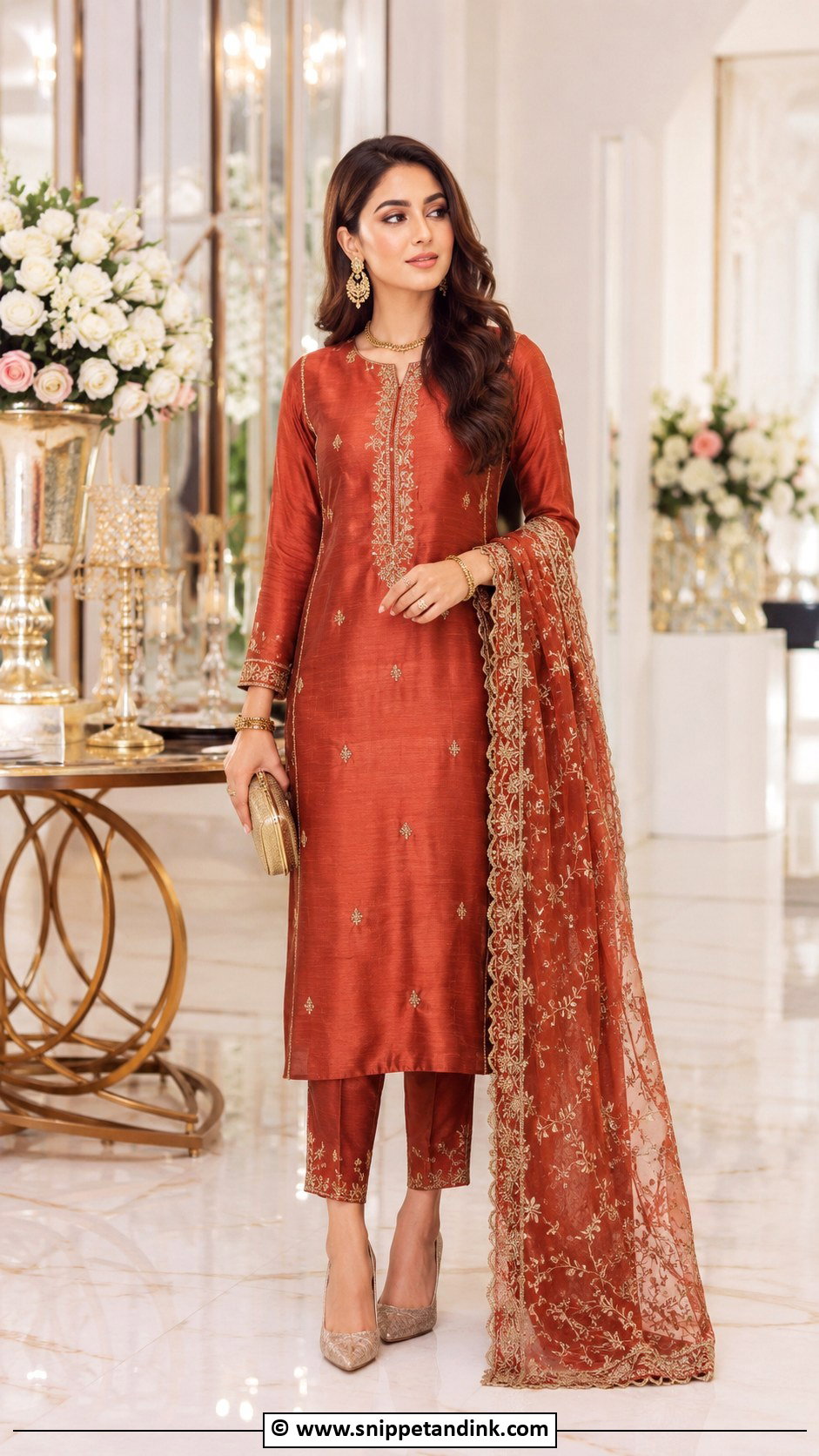
Silk suits give clean structure and shine without needing heavy embroidery. Raw silk, Korean silk and banarsi silk all work. Cut it as a straight shirt with cigarette pants, a long shirt with gharara, or a short kameez with farshi shalwar. Emerald, rust, magenta, teal and gold are festive; champagne or ivory is graceful for nikkah. Raw silk creases where you sit, so expect lines across the lap by the end of the evening and choose a print or embroidery that hides them. A heavy dupatta lifts a plain suit; a detailed shirt wants a plain one. Gold jewellery, heels and a neat clutch.
22. Pakistani Banarsi Lehenga For Sister
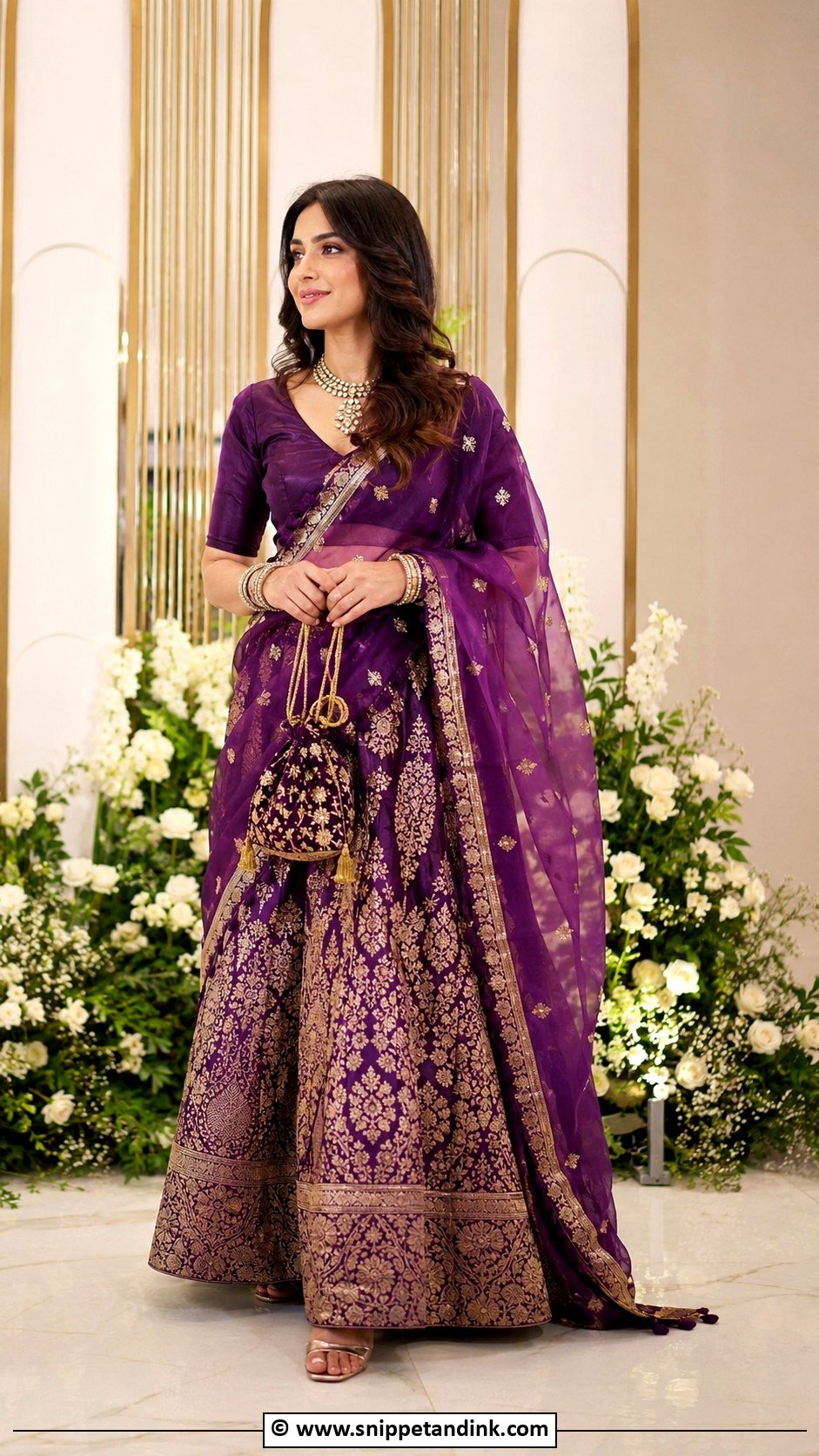
Banarsi brings woven texture and shine on its own, so the design doesn’t need extra embroidery piled on. Pair the lehenga with a plain silk blouse, short kameez or peplum. Maroon, purple, emerald, mustard and navy look regal; pastel banarsi is fresher for daytime. Woven banarsi is heavy, and a full skirt can pull at the waistband by midnight, so I ask for a wider, interfaced waistband and a hook rather than a drawstring alone. An organza dupatta softens it, with kundan jewellery, bangles and a potli.
23. Pakistani Dupatta Draping Outfit For Sister
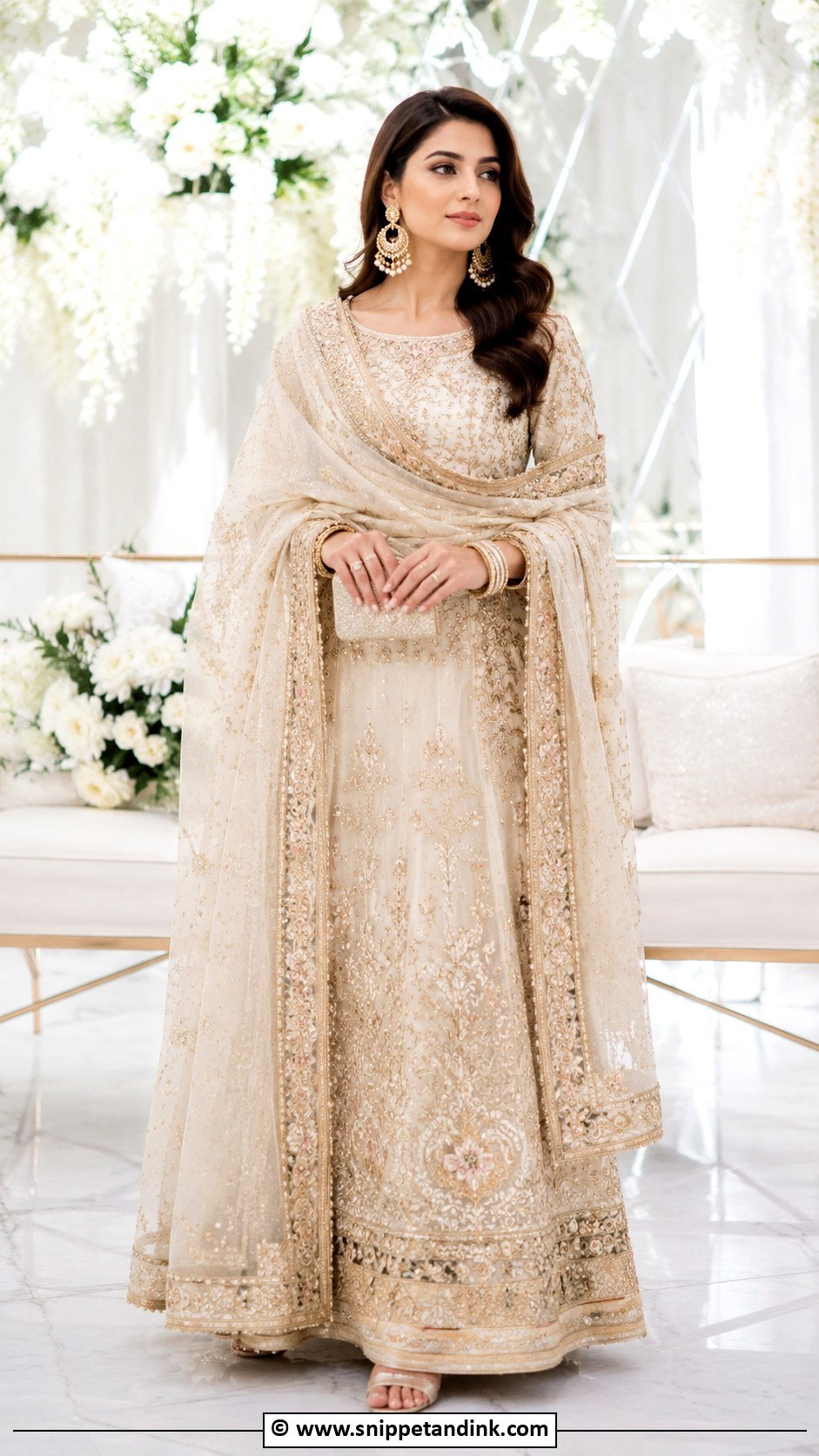
The drape can completely change an outfit, which is useful when you’re re-wearing one across events. A simple lehenga, sharara, gharara or pishwas looks more formal with the right setting. Both shoulders feels graceful for nikkah; one shoulder keeps you mobile; belted looks modern. Use an embroidered, organza, net or tissue dupatta that complements the base, and let it be the statement when the outfit is plain. Practise the drape at home with the pins you’ll actually use. A drape that looked perfect on the day of the fitting rarely survives a sister’s first hour of hugging relatives.
24. Pakistani Modest Wedding Outfit For Sister
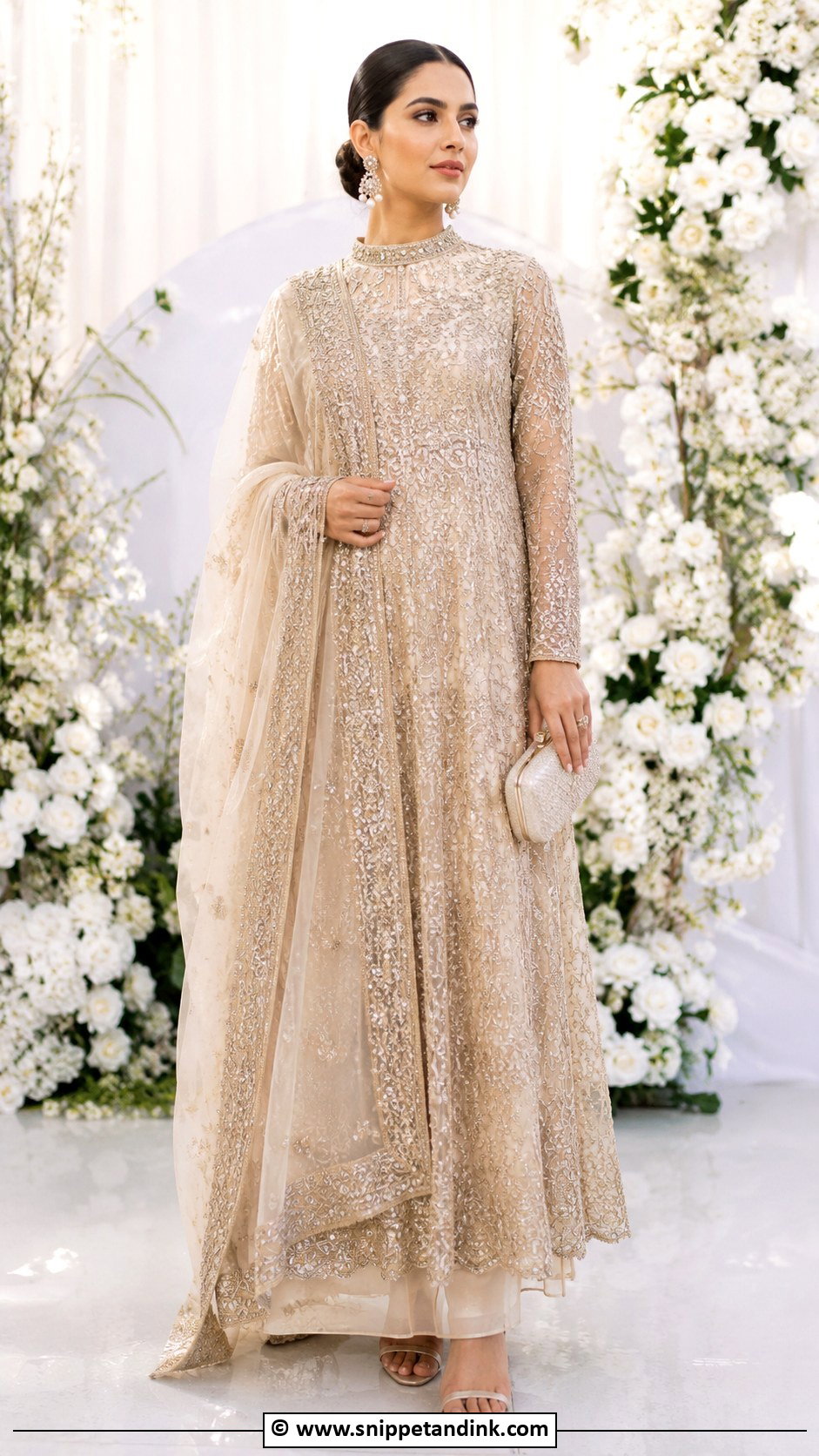
Modest dressing at a Pakistani wedding is easy to make stylish. Long sleeves, higher necklines, longer shirts, full-length pishwas, maxis or sarees with extended blouses all give coverage. Ghararas and shararas stay festive while covering fully. Organza dupattas, embroidered shawls and layered jackets add interest without exposure. Sheer sleeves are the thing I check most carefully; if you need real coverage, ask for a skin-toned lining rather than assuming net reads as covered in flash photos. Pastels and ivory for nikkah, richer colour and embroidery for barat, with statement earrings, a ring, a clutch and heels.


25. Pakistani Plus Size Wedding Outfit For Sister
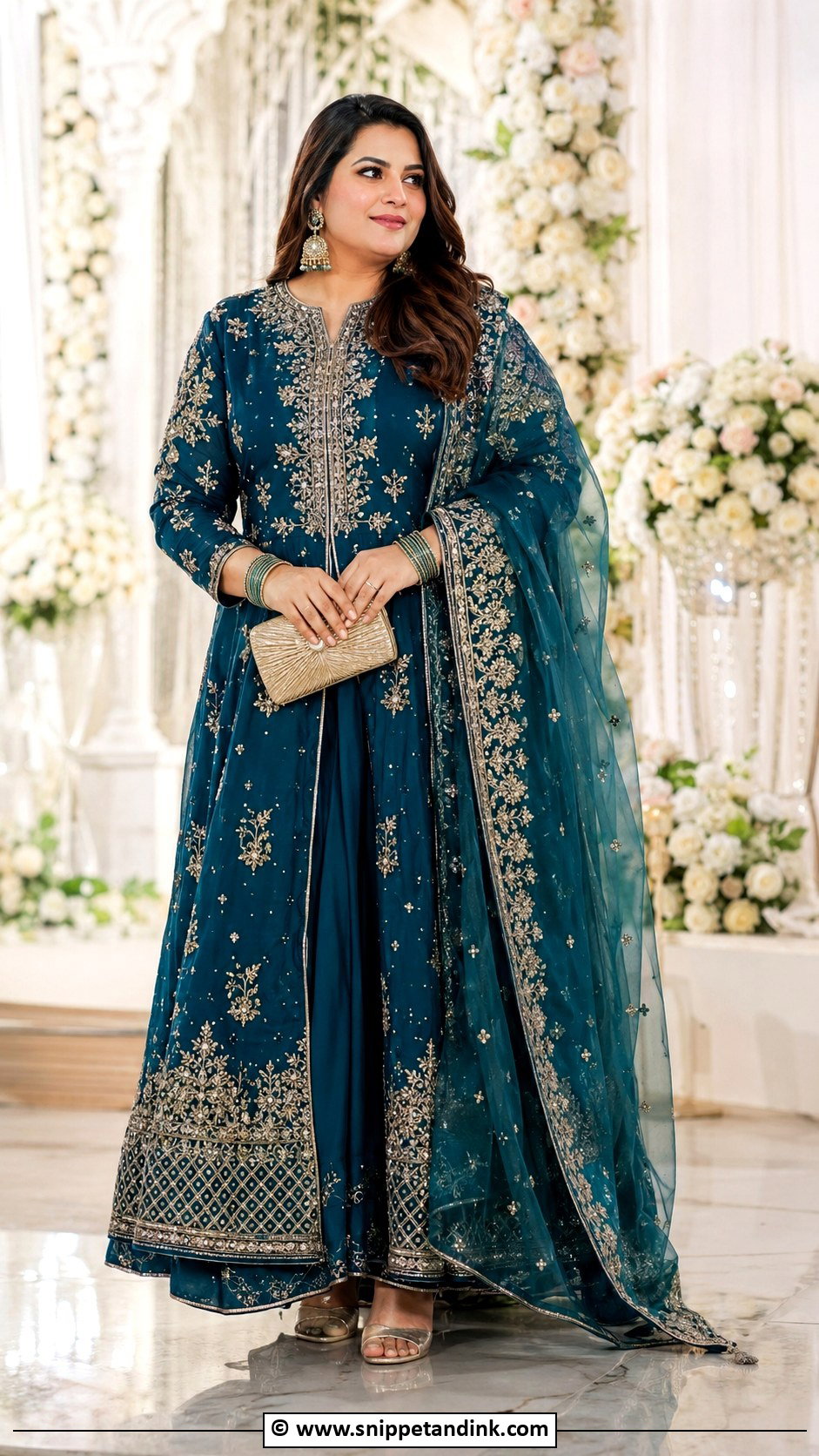
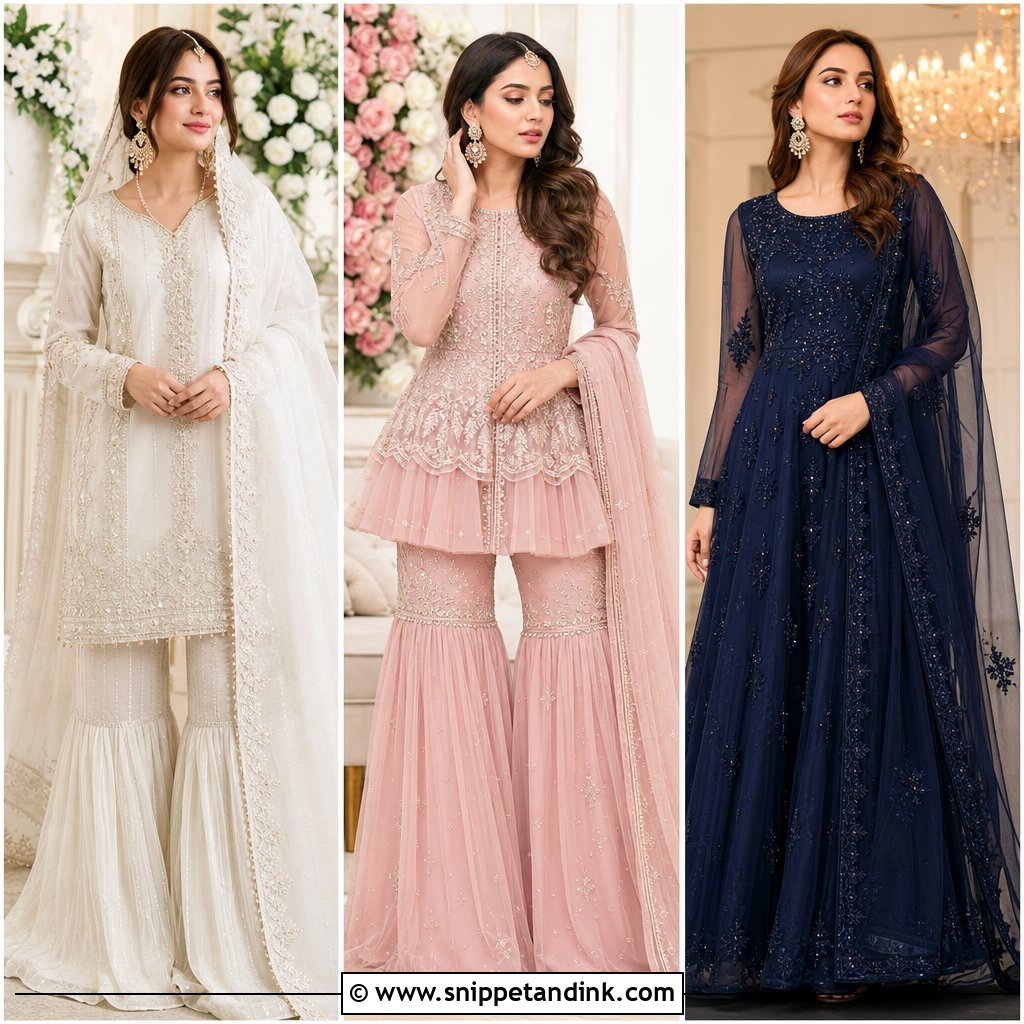
For plus-size sisters, structure and fabric decide the outcome far more than colour does. A-line lehengas, long shirts with gharara, pishwas and flowing maxis all work. Choose fabrics that skim rather than cling: chiffon, raw silk, organza overlays or soft net. Vertical embroidery, a defined waist and a balanced dupatta drape help the shape. Wear the colours you love. What I always ask a tailor for is extra seam allowance at the side seams, because weight changes in the weeks before a wedding are normal and it’s far easier to let out than to start again. Supportive heels, shapewear if you want it, and jewellery that frames the face.
How Long Stitching and Embroidery Really Take
Wedding season puts every tailor and boutique under pressure, and that’s where sister outfits go wrong. A ready-to-wear piece still needs altering. An unstitched suit needs cutting and stitching. A custom embroidered lehenga needs the embroidery done by hand before stitching even begins, and that can take many weeks on its own.
As a working rule, I’d have hand-embroidered and custom pieces ordered a few months before the wedding, and plain stitching handed in at least a month ahead, more in peak season. Ask the tailor for a trial fitting with enough time to make corrections. Timelines vary a lot between cities and workshops, so confirm dates in writing rather than relying on a promise at the counter.
What to check at the trial fitting
- Sit down, raise both arms and turn your head. Armholes and necklines show their problems in movement.
- Wear the shoes you’ll actually wear so hems are set to the right length.
- Bring the dupatta and pins, and set the drape there.
- Look at the inside finishing; rough embroidery backs scratch through a long night unless they’re lined.
A Sister’s Kit for the Day Itself
You’ll be the person the bride turns to when something slips. Carry a small pouch with safety pins in two sizes, bobby pins, a thread and needle in your outfit colour, blotting papers, a spare pair of flat khussas and a small pair of scissors for loose threads. Pin your own dupatta well before the photos start, because once the stage session begins there’s rarely a chance to fix it.
Dress for Your Role, Not Just the Event
A sister’s wardrobe has to work harder than anyone else’s at the wedding. You’ll be dancing, hosting, standing on the stage for an hour of photos and helping the bride in and out of her dupatta. Match each outfit to the event, the season and the venue, but also to what you’ll be doing that day. Lehengas, ghararas, sarees, pishwas, shararas and modest maxis all have a place. Get the fit right, settle the dupatta drape before the day, and keep the jewellery and shoes practical enough to last until the rukhsati.
You'll Like These Ideas:


Leave a Reply