
Corsets used to be the hidden scaffolding inside a gown. Now brides ask for the boning to show, and the bodice has become the detail they build the whole outfit around. A corset shapes the waist and works with full skirts, slim skirts, trousers, capes and short reception dresses. You might wear a lace corset gown, a clean satin dress, a detachable corset top over tulle or a corset with a suit at city hall. Modern bridal corsets are built to be worn for a day, not endured, so I fit for comfort as carefully as for shape. Below are the outfits I put together most often, with what I check at the fitting for each.
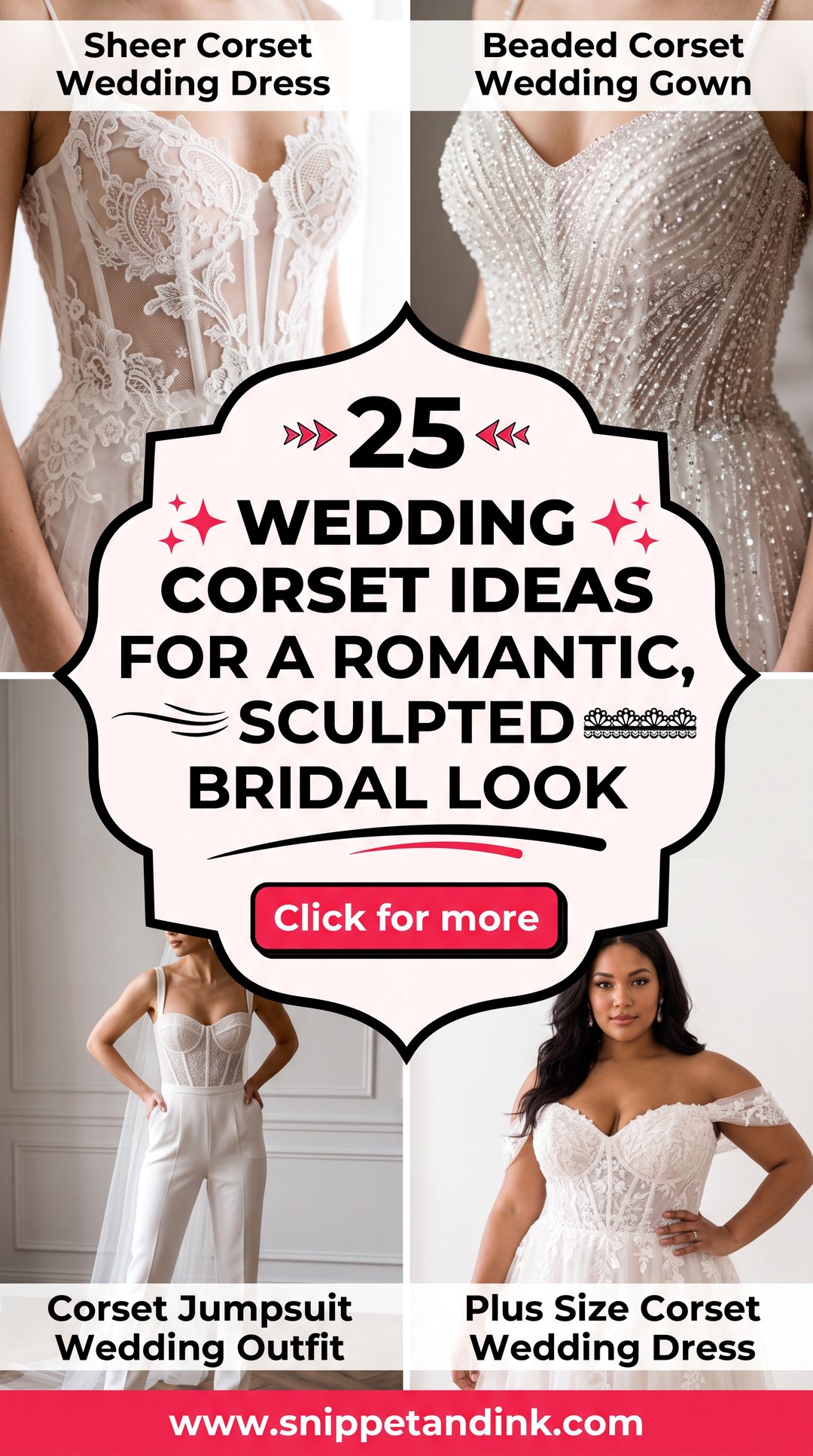
Inside the Bodice: Boning, Lacing and the Fittings It Needs
Two corsets can look the same on a hanger and feel completely different on the body. The difference is almost always inside, so I ask about construction before style.
Boning
Spiral steel bones bend with you when you sit and turn, and keep their shape all day. Flat plastic boning is lighter and cheaper but can warp with body heat and leave the bodice wavy by evening. Most modern bridal bodices use a mix, with firmer bones at the front and sides.
Lace-up or zip
A lace-up back adjusts on the day, which helps if your weight shifts in the final weeks. Look for a modesty panel behind the lacing so skin doesn’t show through the gaps. A zip gives a smoother line but no margin, so the final fitting has to be close to the wedding.
- Plan for at least three fittings, the last one a couple of weeks before the wedding.
- Wear the exact underwear and shoes you’ll wear on the day to every fitting.
- Sit down at every fitting. Standing fit means very little in a corset.
1. Strapless Corset Wedding Dress
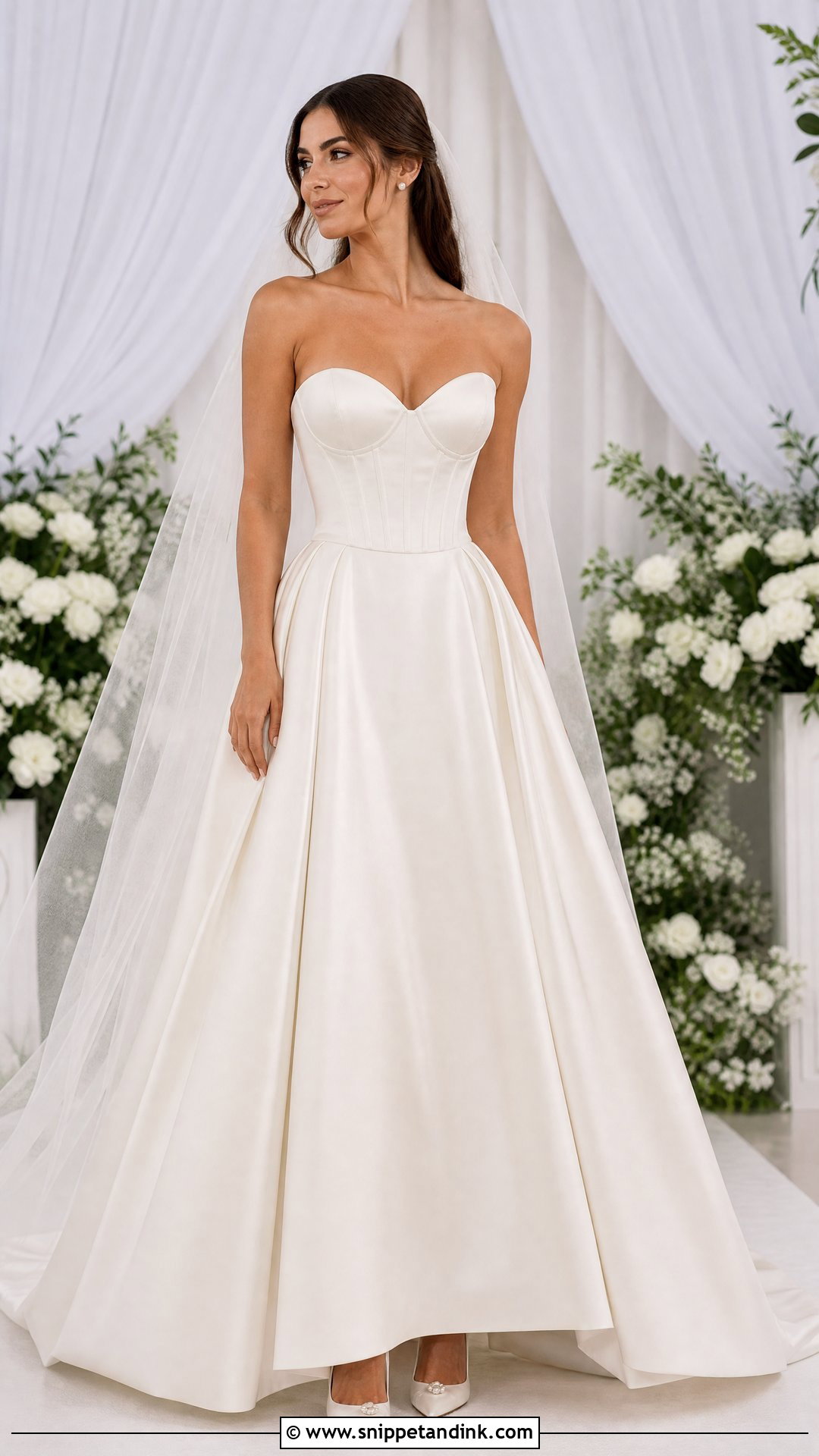
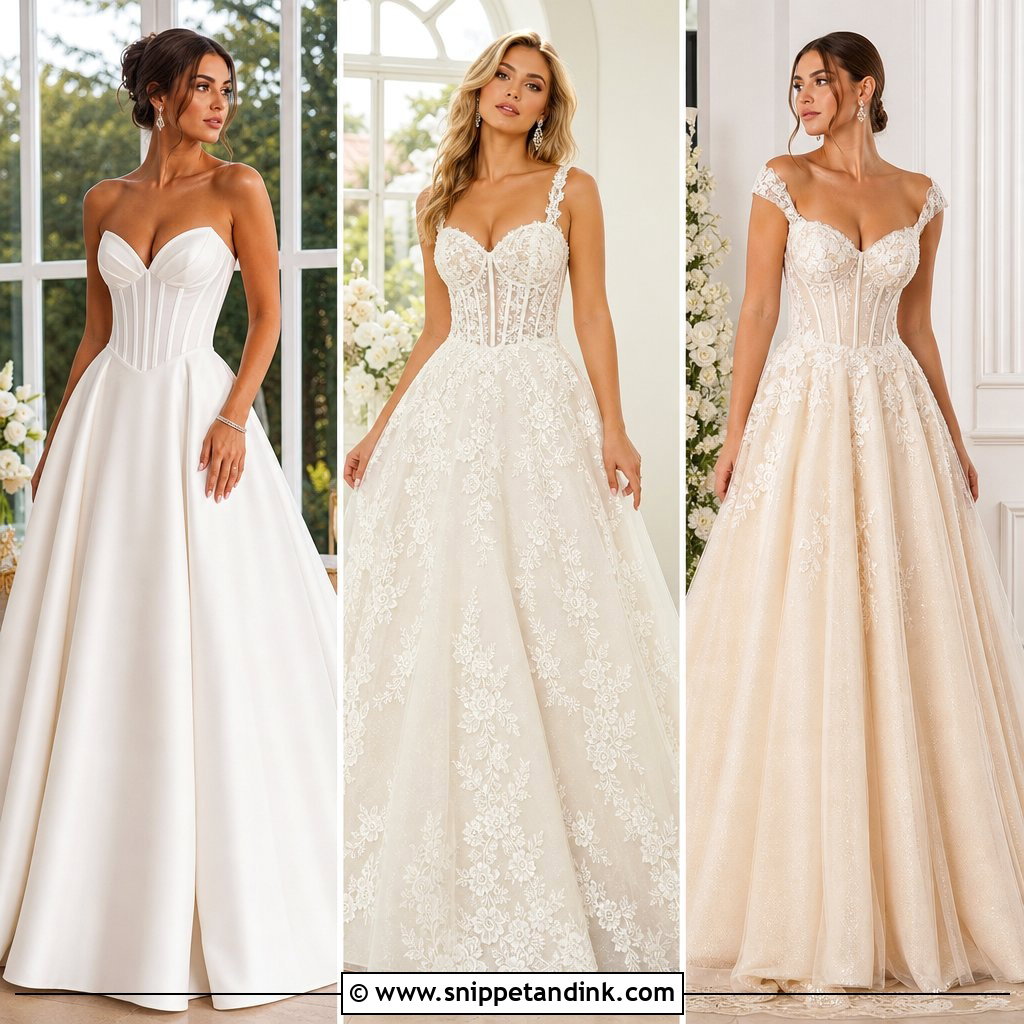
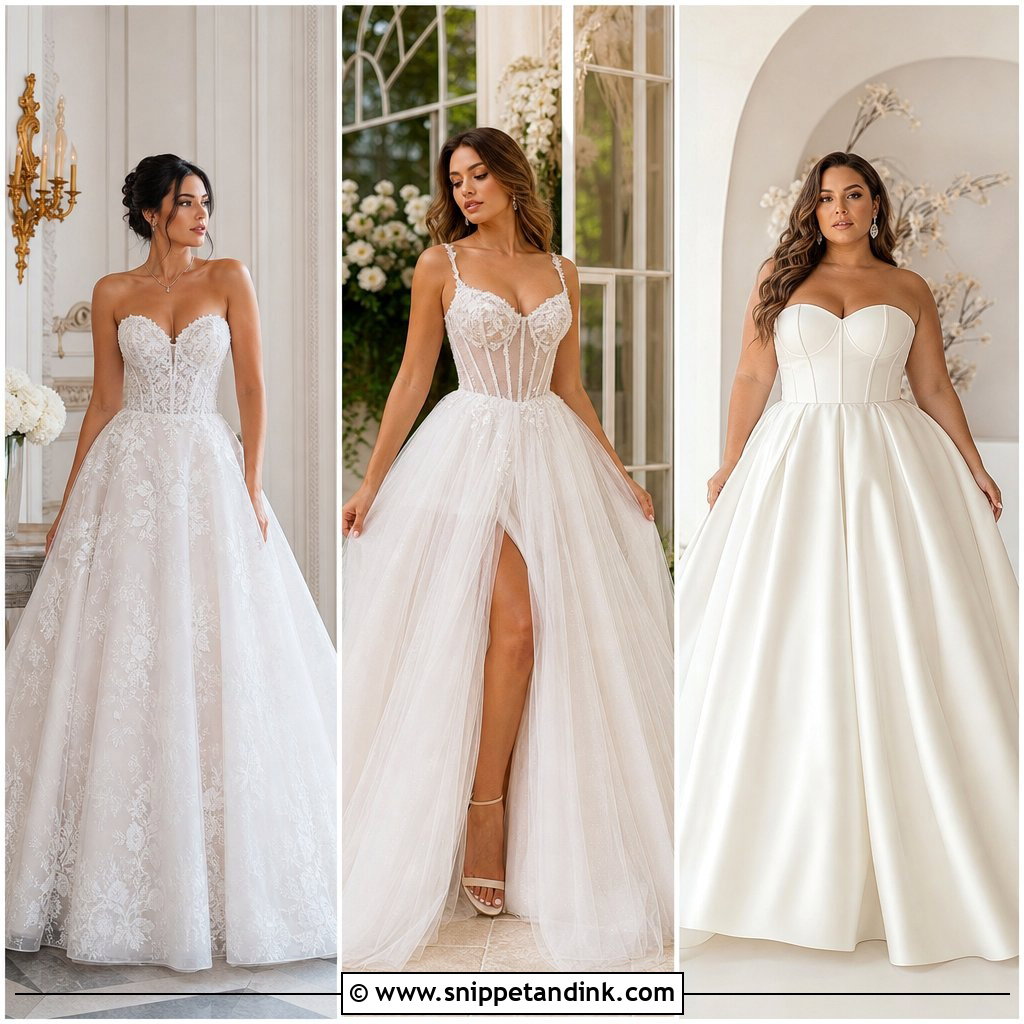
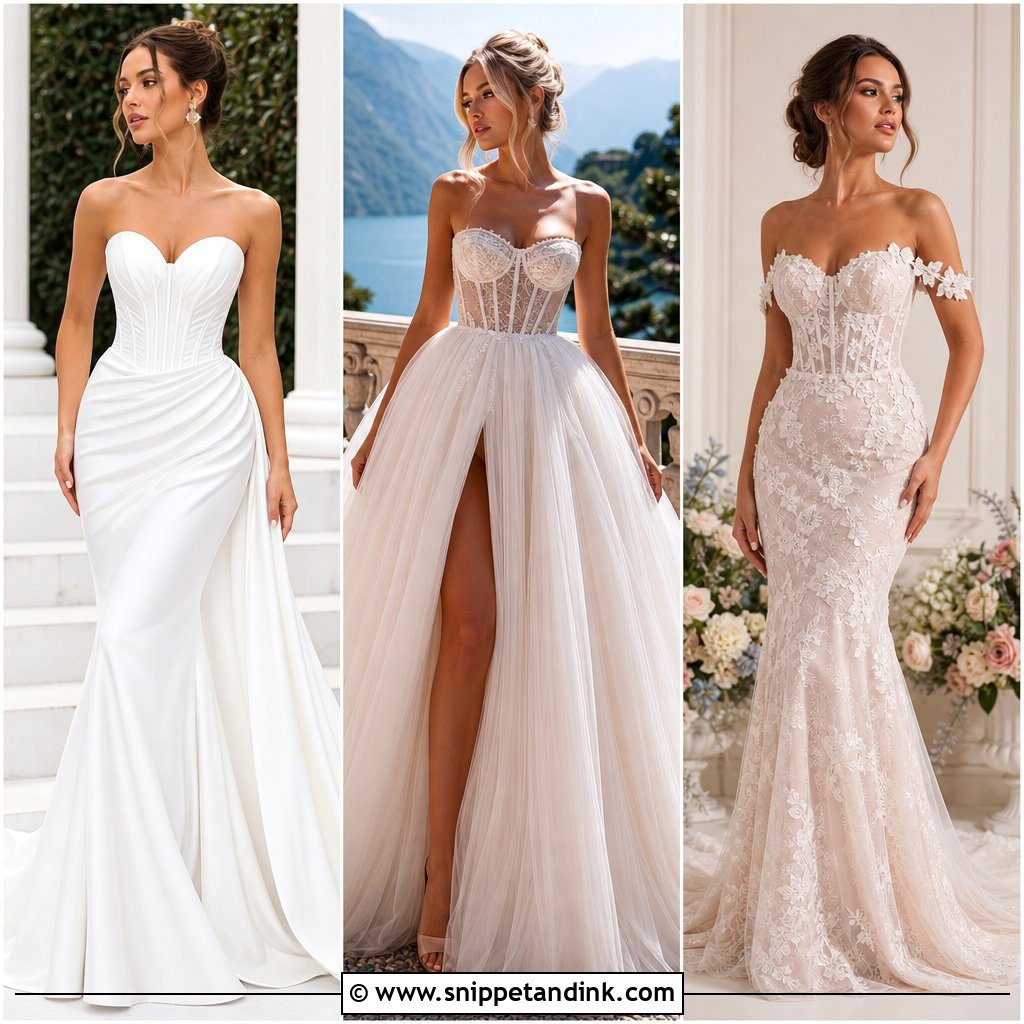
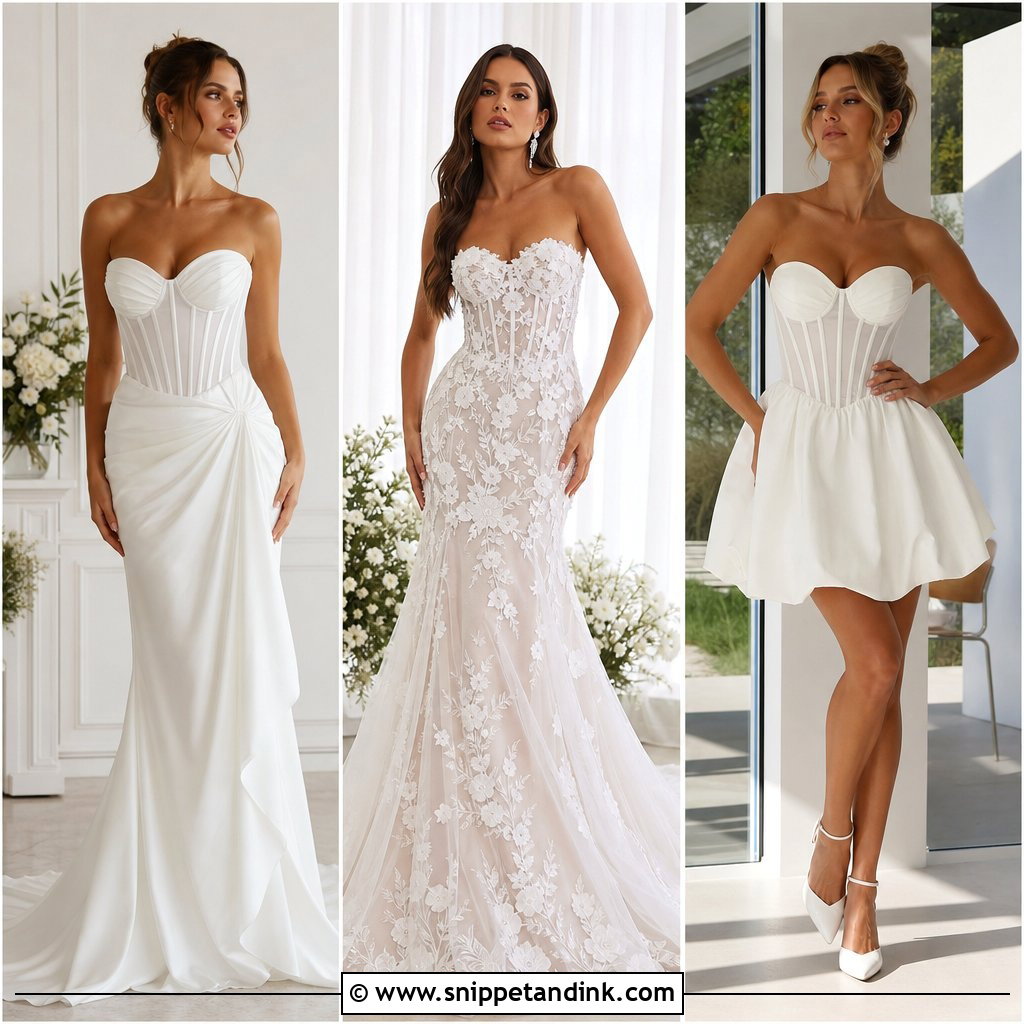
The strapless corset is where most brides start, and for good reason: the bodice holds itself up, so there are no straps to slip and the neckline stays clean. Ivory satin, mikado or crepe give a smooth modern finish; a full A-line skirt reads traditional, a fitted skirt reads city. What I check first is the top edge. If it gaps when you bend forward or digs in when you sit, the fit isn’t finished. With bare shoulders, a soft veil, pearl studs and a fine bracelet balance the look, and pointed pumps or satin block heels keep attention on the bodice.
2. Lace Corset Wedding Gown
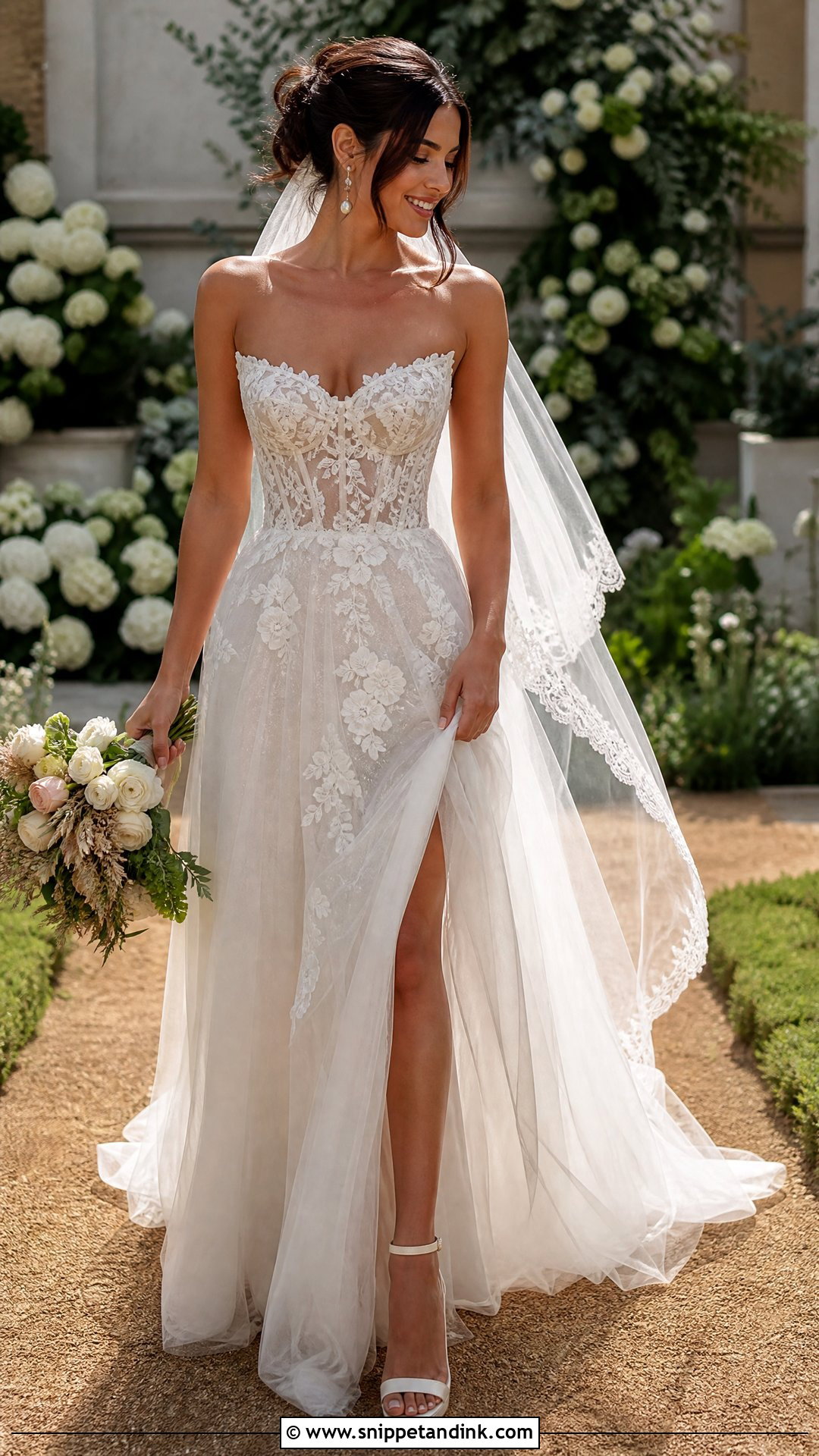
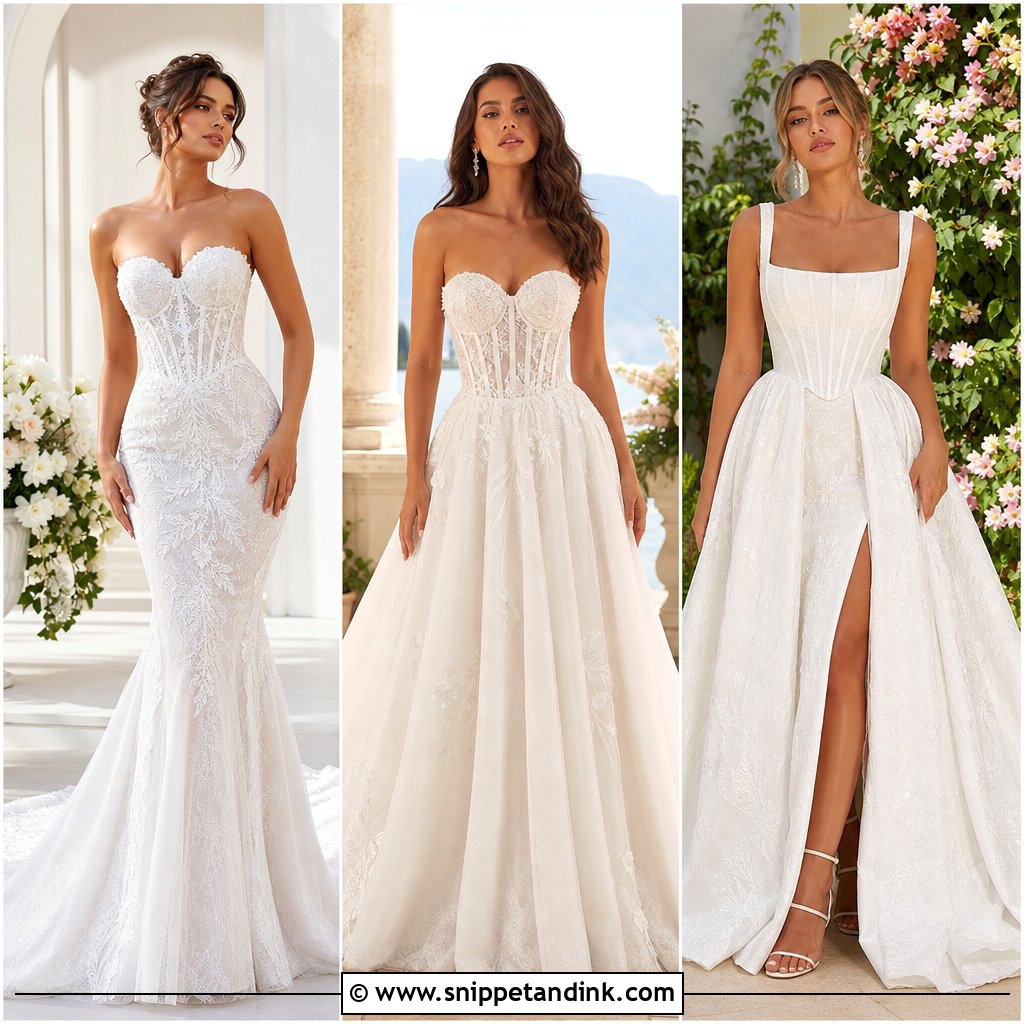
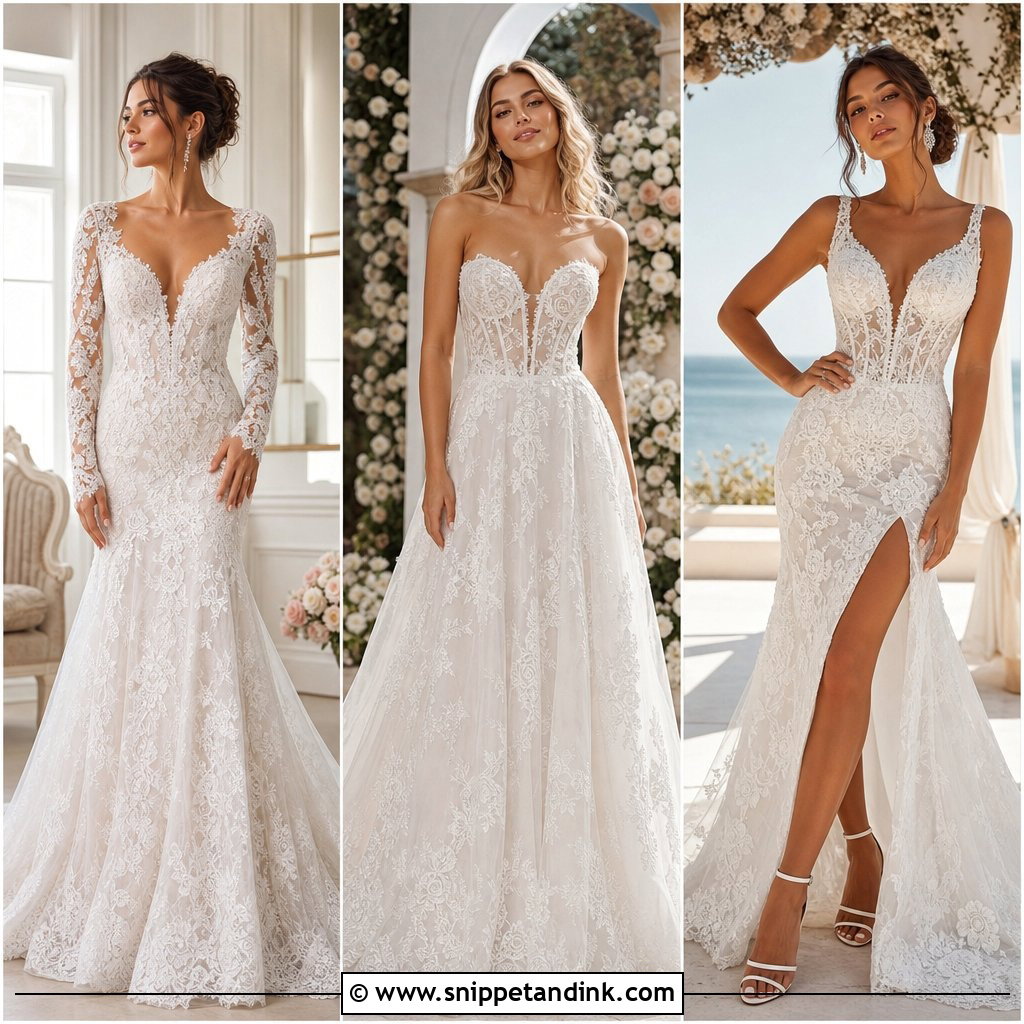
Lace over boning can look heavy if both are busy, so I pair a fitted lace bodice with a plain tulle, chiffon or organza skirt. Floral lace suits gardens, estates and spring ceremonies. Look at where the bones sit under the lace: well-made bodices run boning along seams so it doesn’t show as ridges through thin lace. A sheer veil with a narrow lace edge, pearl drop earrings and ivory ankle-strap heels finish it. If the back laces up, wear a loose updo so the construction shows as you walk away.
3. Satin Corset Bridal Dress
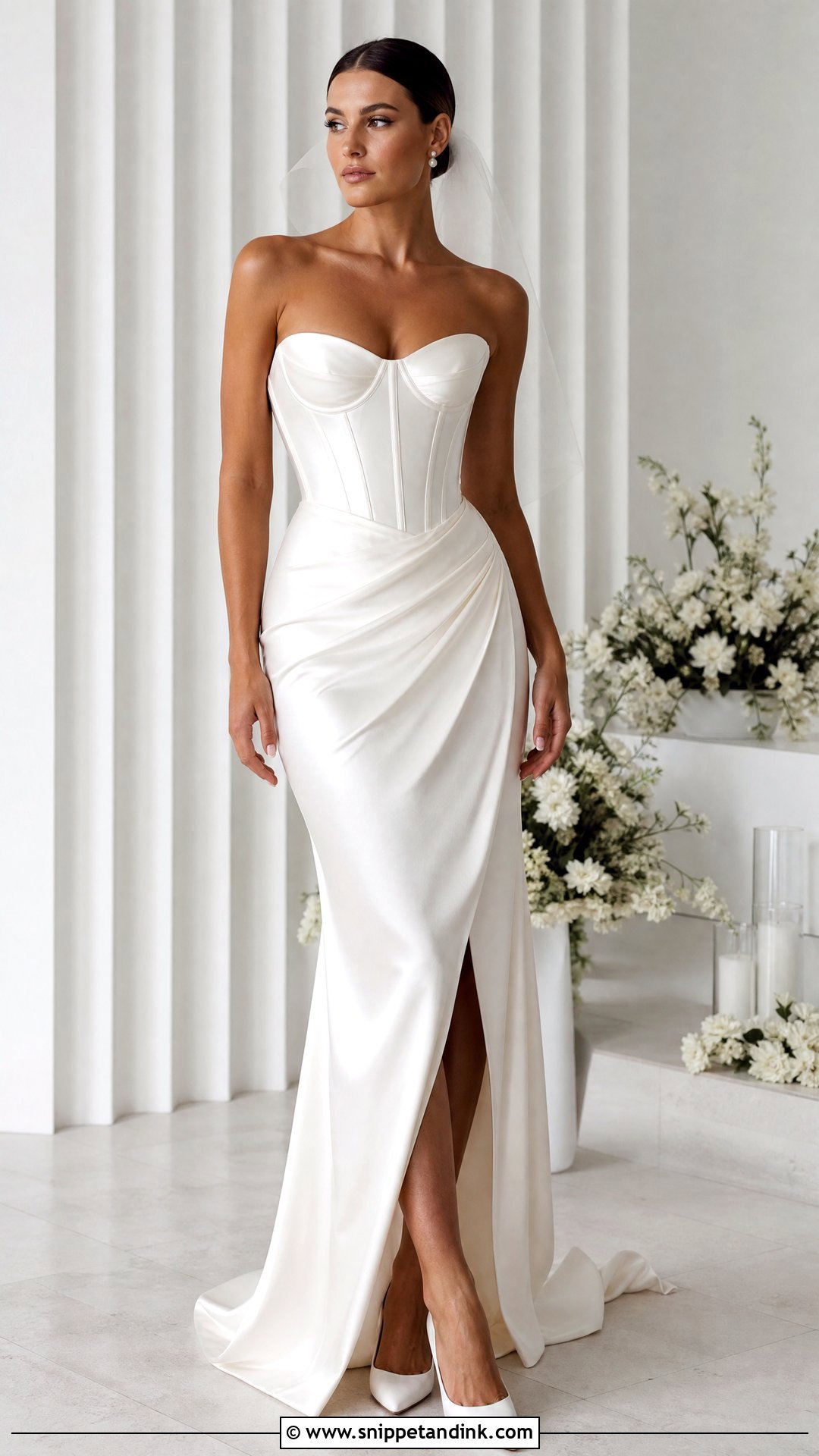
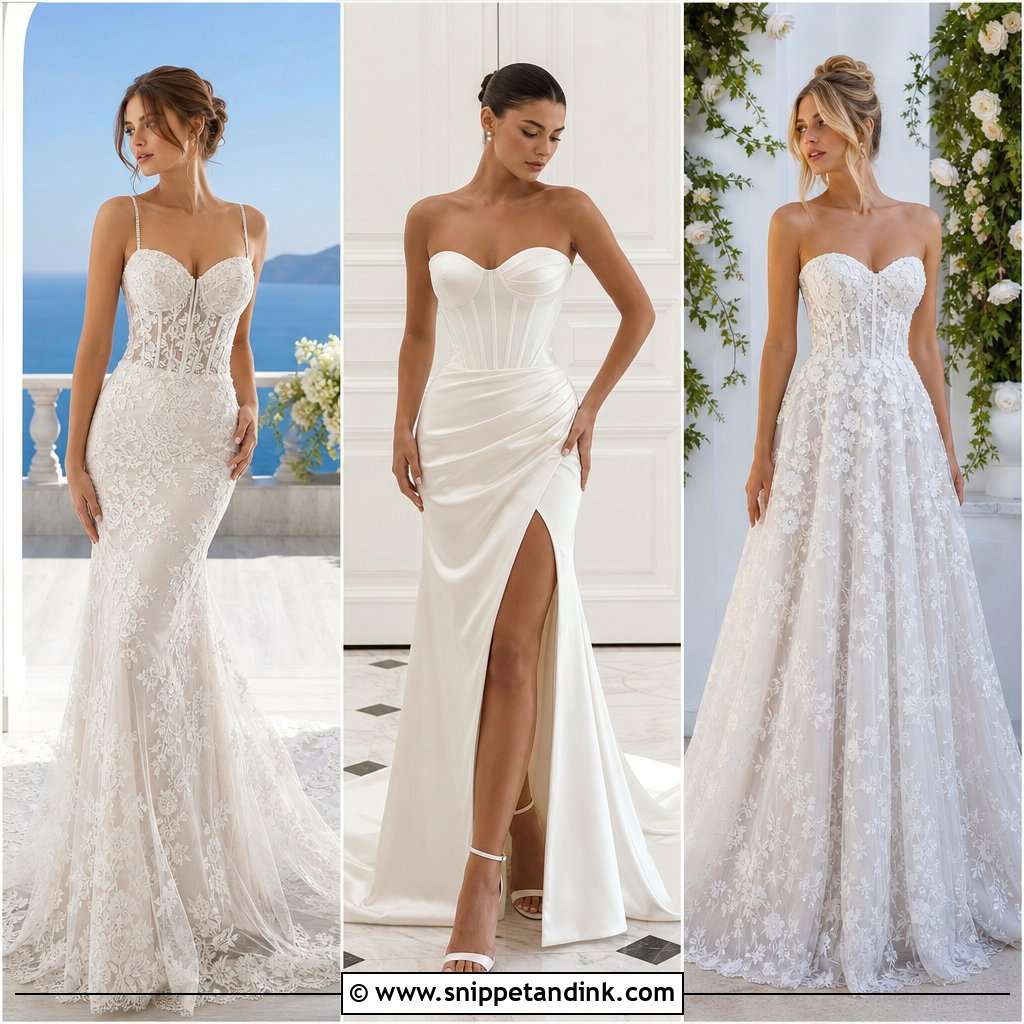
Satin shows every ripple, which makes a satin corset bridal dress the hardest kind to fit and the most rewarding when it’s right. A straight or sweetheart neckline, a fitted waist and a soft draped skirt keep it clean. Any wrinkling across the waist means the bodice is too tight or too short in the torso. Keep styling minimal: sleek pumps, pearl studs, a short veil. For more drama at the ceremony, add a detachable overskirt or long gloves and remove them for the reception.
4. Corset Top And Tulle Skirt
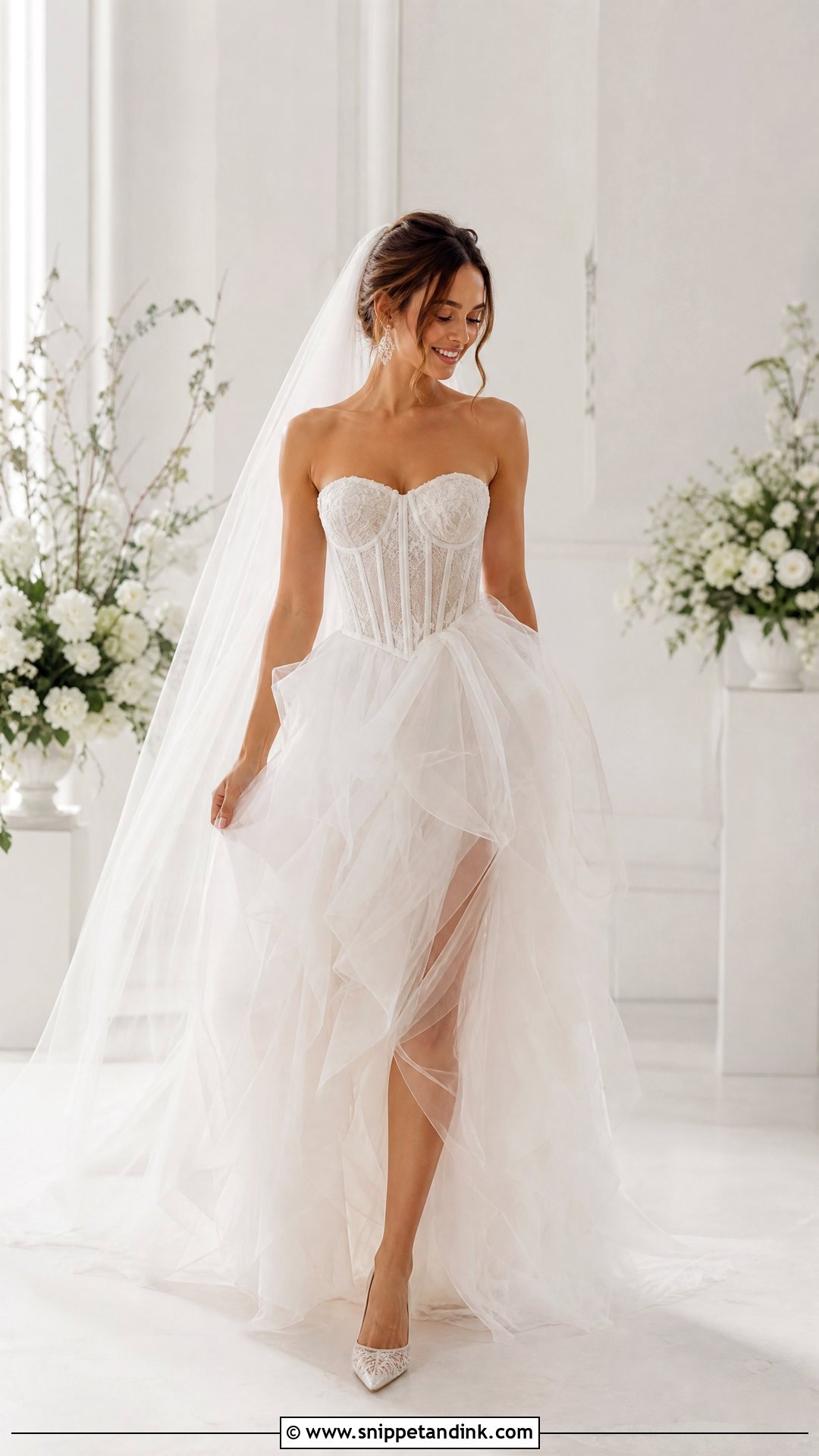
Separates let you build the bodice and skirt independently, which helps if your top and bottom halves are different sizes. An ivory corset with light boning over a layered tulle skirt in white, ivory, blush or champagne gives movement and shape. The join is the weak point: make sure the corset sits over the skirt’s waistband by a few centimetres so no gap opens when you raise your arms. Pointed heels, a cathedral veil and small crystal earrings finish it. Later, the same corset works over a shorter skirt or tailored trousers.
5. Corset Top And Satin Skirt
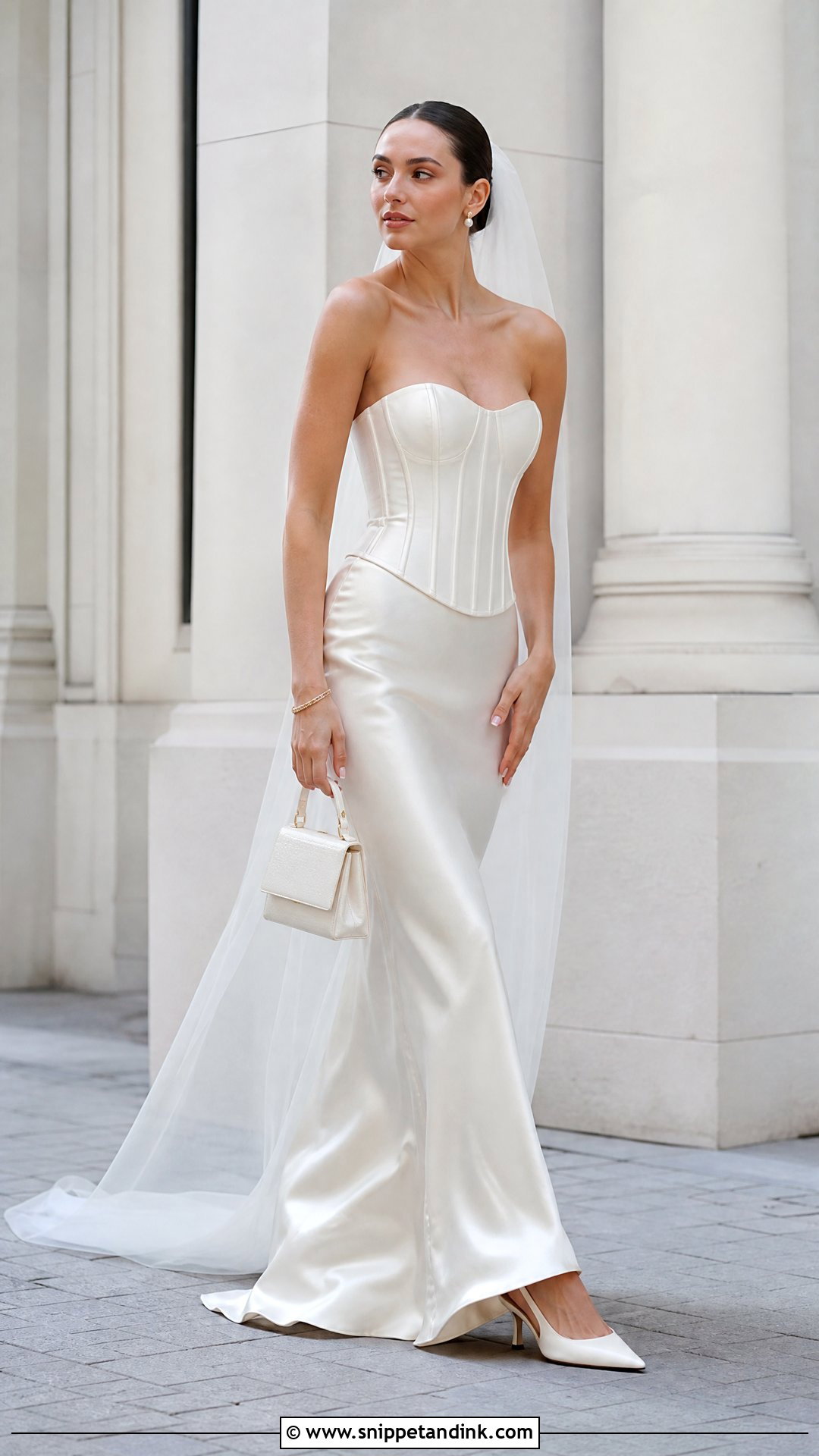
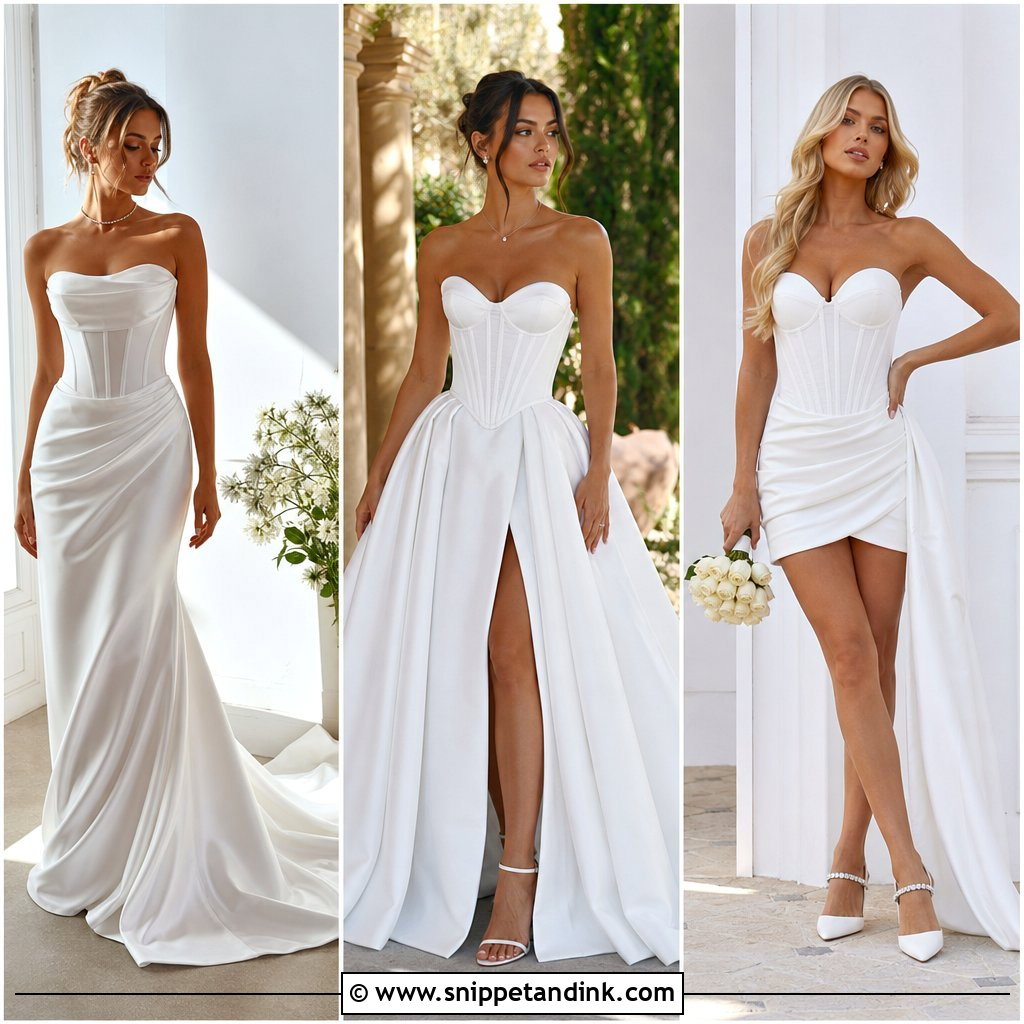
A satin skirt under a corset gives cleaner lines than tulle. A column skirt is sleek and minimal; a bias-cut skirt is softer but clings, so check it in daylight for any lines showing underneath. Matching ivory pieces read as a gown, while a champagne skirt with a white corset creates subtle contrast. Slingback heels, a structured mini bag and a long veil suit courthouse weddings, rooftops and modern venues. It photographs with a clear outline because neither piece adds much volume.
6. Basque Waist Corset Wedding Dress
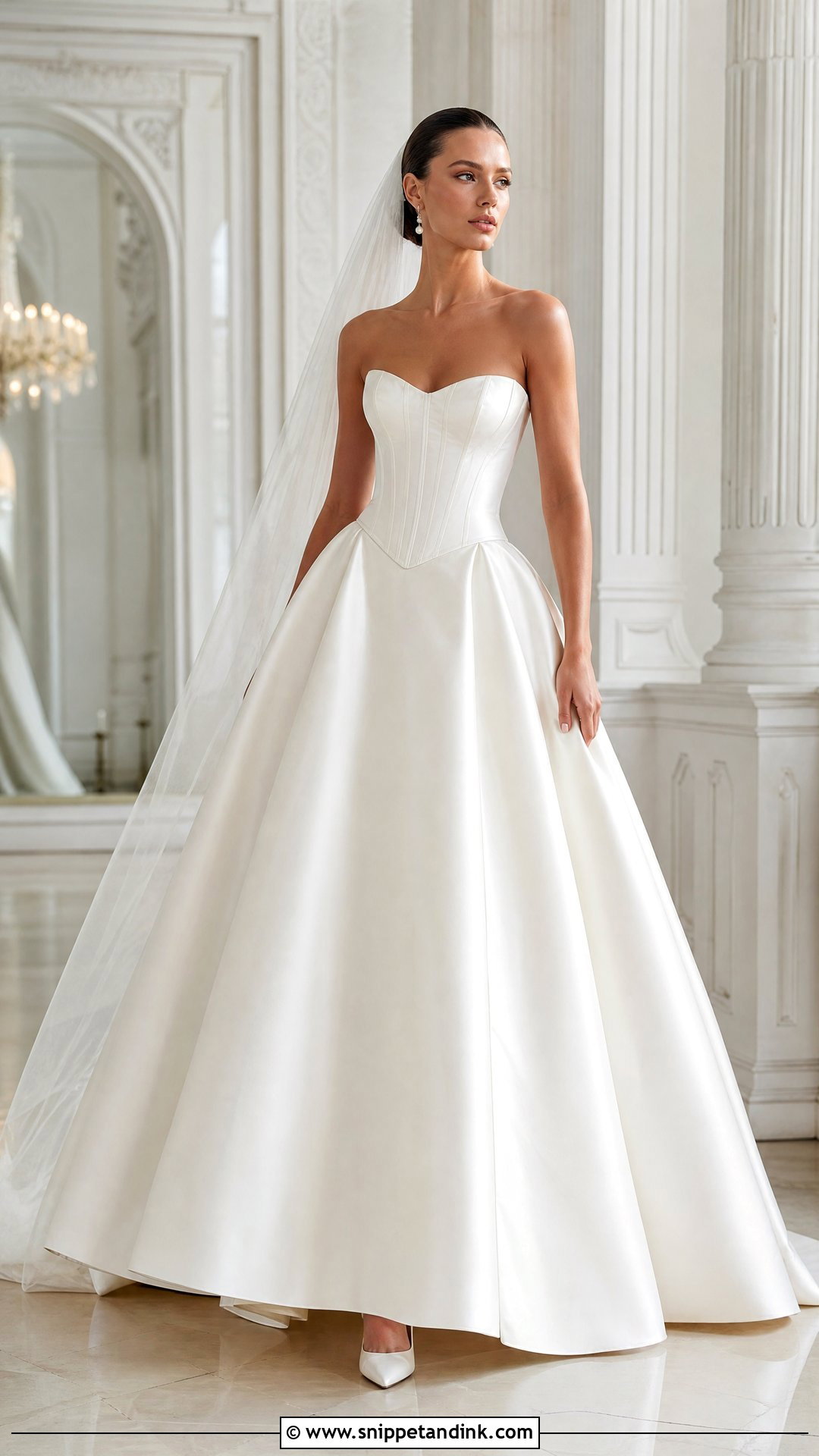
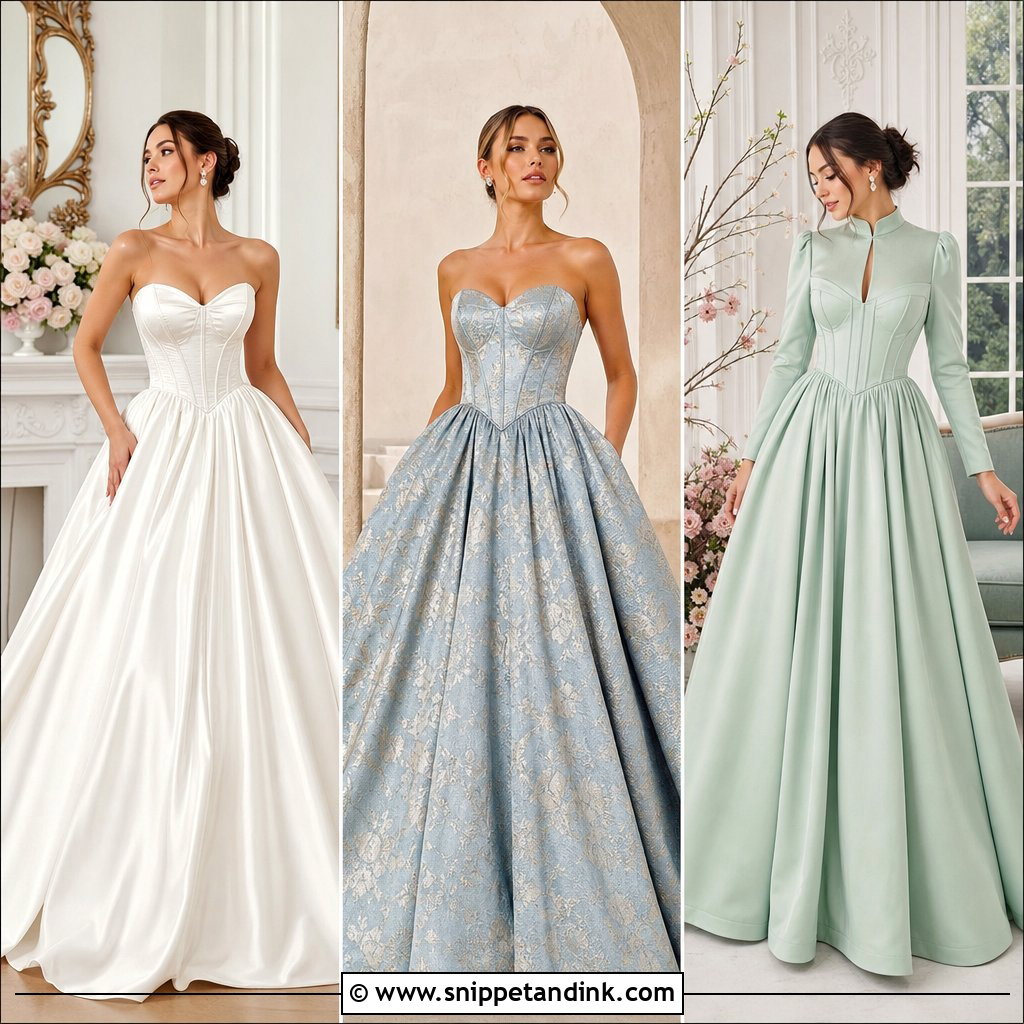
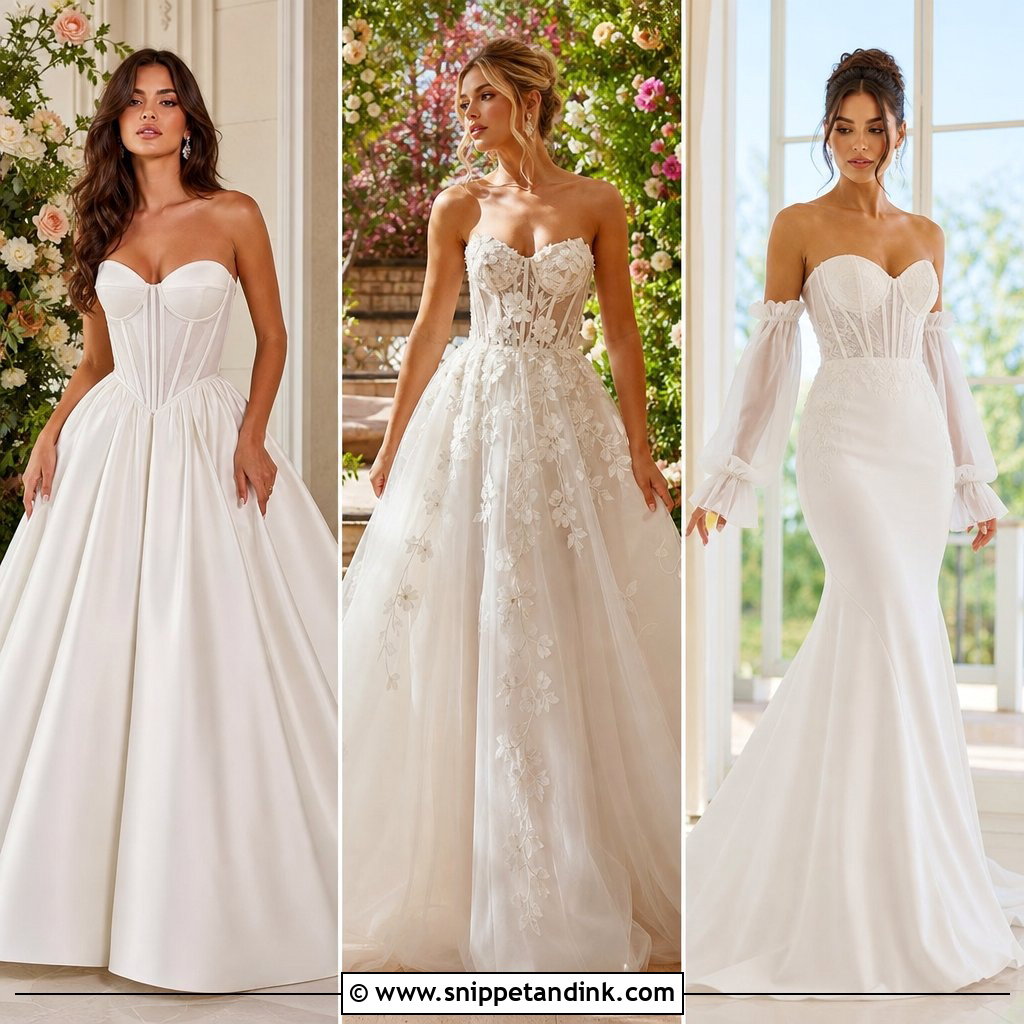
A basque waist corset wedding dress dips into a V below the natural waist, which lengthens the torso and makes a full skirt look even fuller by contrast. The point of the V needs to land exactly right; too low and it digs in when you sit. Satin, brocade, lace or mikado all work depending on season. Keep jewellery modest when the seams and boning are visible, and let a long veil, pearl earrings and ivory pumps carry it into a ballroom or a grand entrance.
7. Off Shoulder Corset Wedding Dress
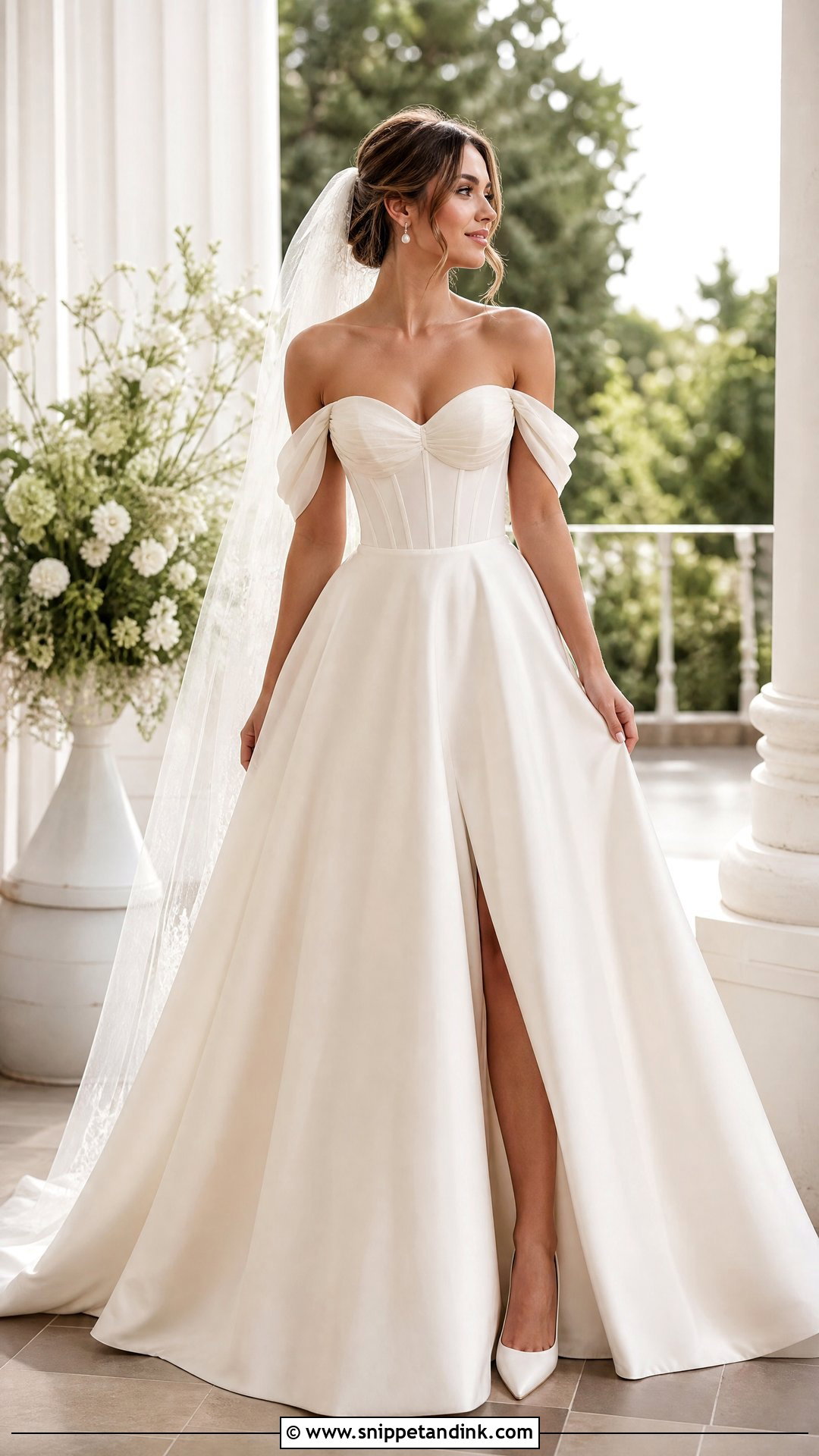
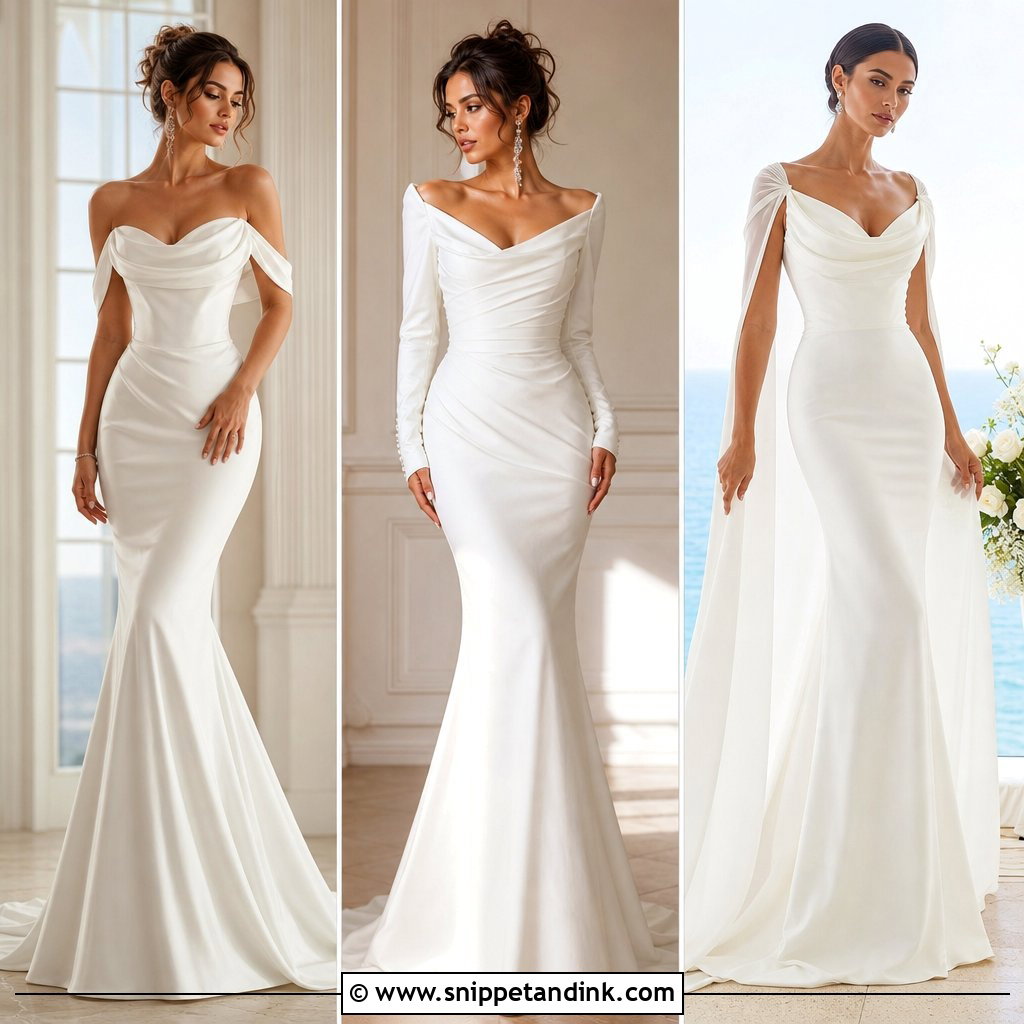
Off-shoulder necklines frame the collarbone, and a corset underneath is what stops them sliding down. Draped sleeves feel relaxed; structured bands give more hold. The test I make every bride do is lifting her arms to shoulder height, because off-shoulder bands restrict movement and hugs are part of the day. A fitted skirt looks modern, an A-line more classic. Wear a low bun, pearl earrings and pointed heels, and pick a sheer veil so the neckline still shows.
8. Long Sleeve Corset Wedding Dress
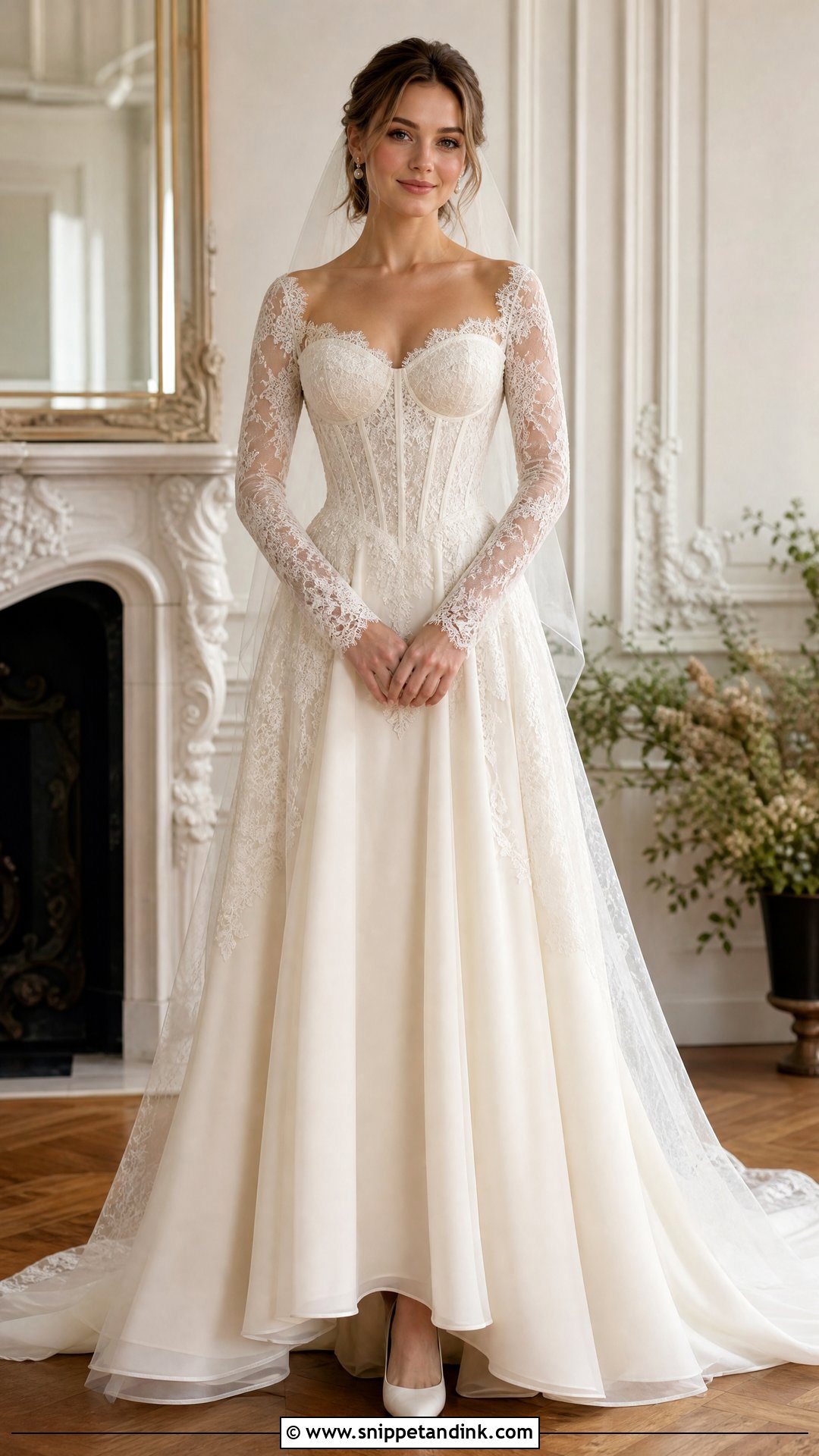
Long sleeves add coverage without losing shape, because the corset keeps the waist defined underneath. Sheer lace sleeves feel romantic; crepe or satin look cleaner. They suit autumn, winter and formal evening weddings. Sleeves change how the bodice moves, though: a tight sleeve set into a rigid corset can pull the whole bodice up when you reach. Check that at your fitting. Closed-toe heels, small studs and a soft veil finish it, and skip bracelets if the sleeves are lace or beaded.
9. Sheer Corset Wedding Dress
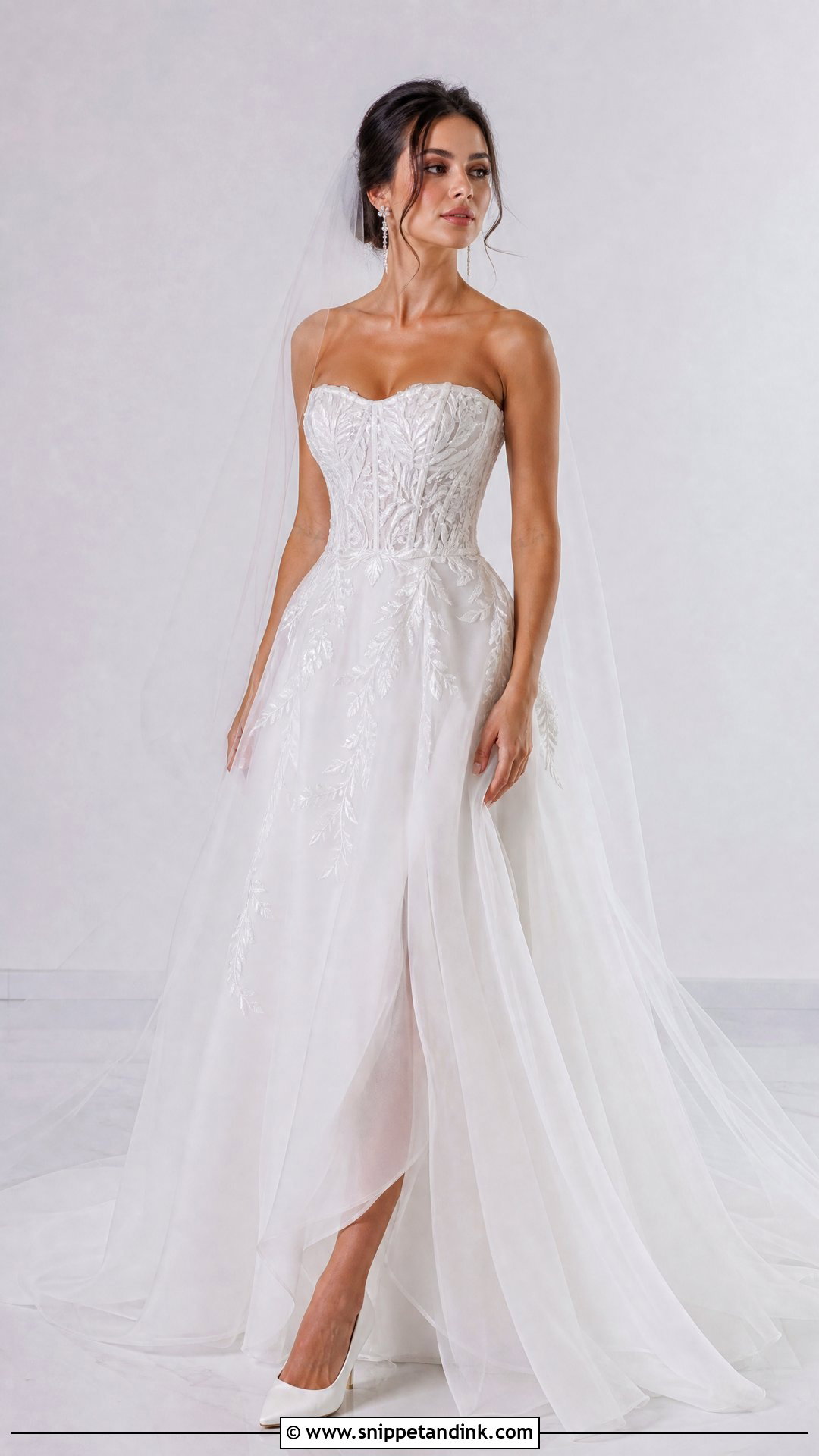
Sheer bodices rely completely on their construction. Look for illusion tulle, lined cups, visible boning and embroidery placed to give coverage where you want it. The lining colour matters more than anything: it should match your skin or the dress closely, because a mismatched lining shows as a patch in photos, especially under flash. A full, soft mermaid or layered organza skirt works underneath, with a long veil, delicate earrings and satin heels.
10. Pearl Corset Wedding Dress
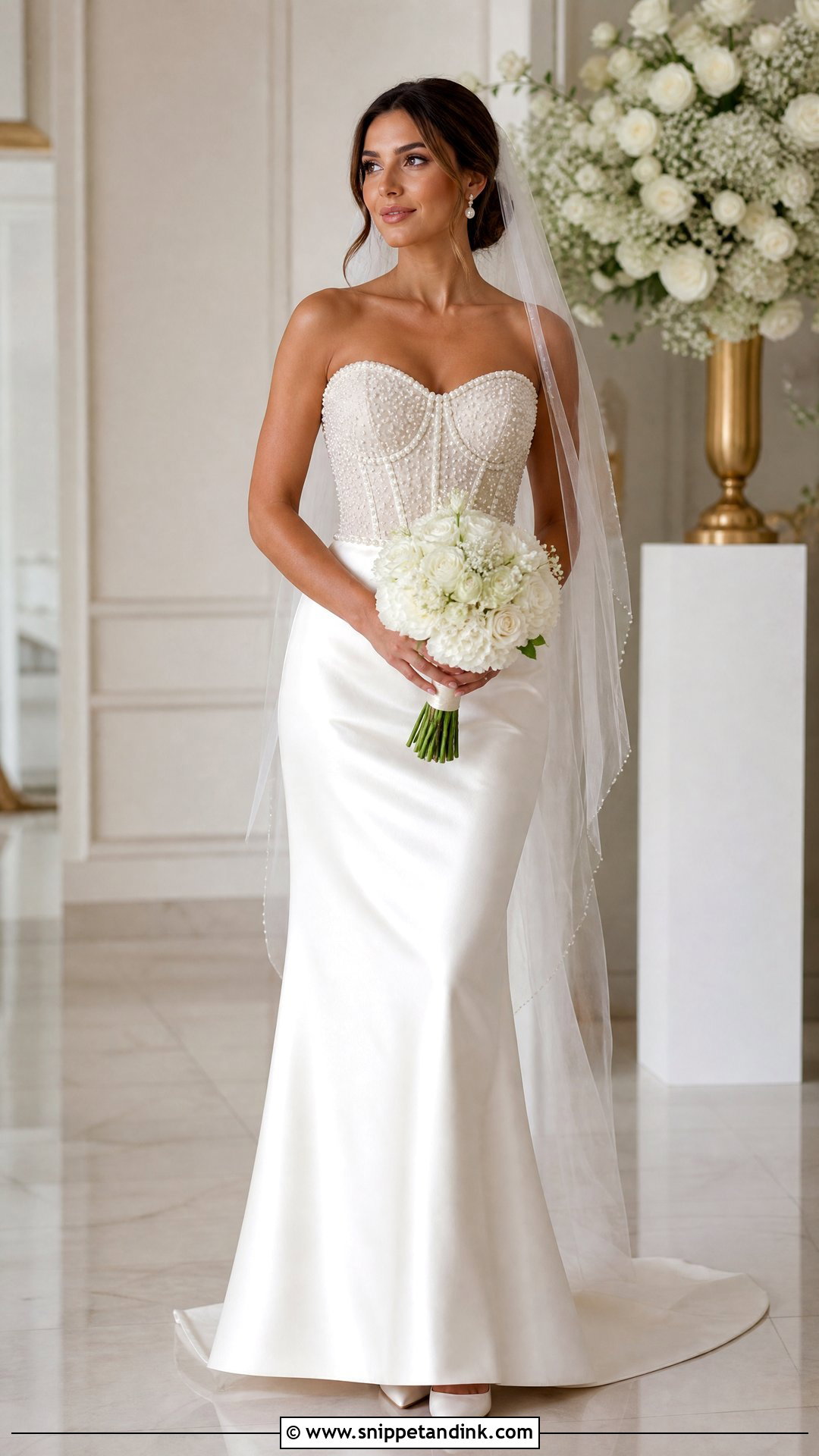
Pearls soften the hard lines of a corset and give texture without glitter. Scattered pearls look delicate; a pearl-covered bodice is a statement and adds real weight, which you’ll feel by evening. Pair it with a plain skirt so the bodice stays the focus. If there are pearl straps or a pearl neckline, skip the necklace. Satin heels, pearl earrings and a soft veil are enough for indoor weddings, museum venues and evening celebrations.
11. Beaded Corset Wedding Gown
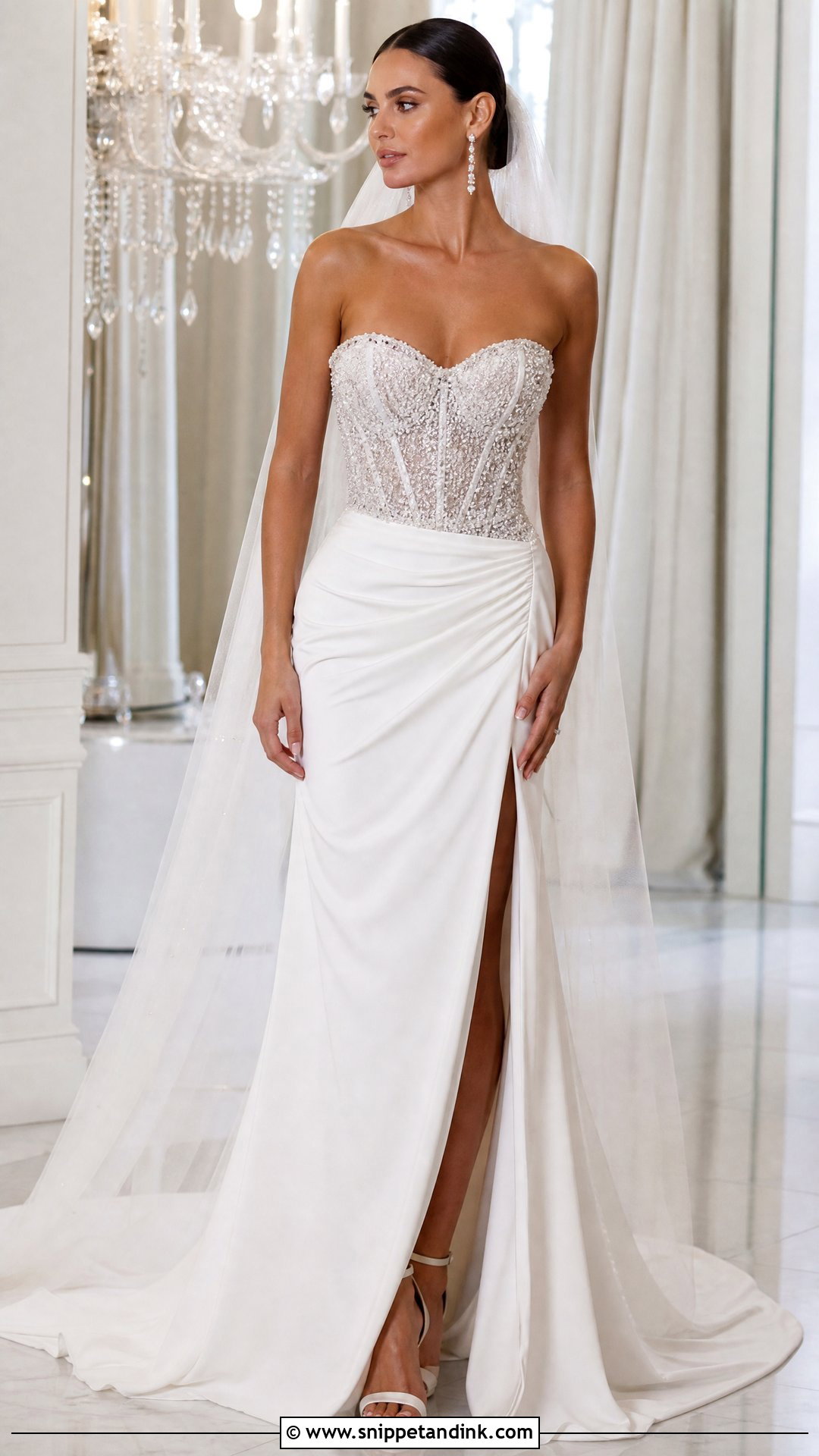
Beadwork can enhance the bodice or swallow it. A beaded corset with a plain crepe skirt feels modern; allover beading is full glamour. Silver, pearl, crystal and clear beads go with the widest range of accessories. Heavy beading on boning can rub the inside of your arms, so walk around in it with your arms down before you commit. Metallic or ivory heels, small drop earrings, a sleek veil and a soft updo keep it balanced for evening weddings and ballrooms.
12. Floral Corset Wedding Dress
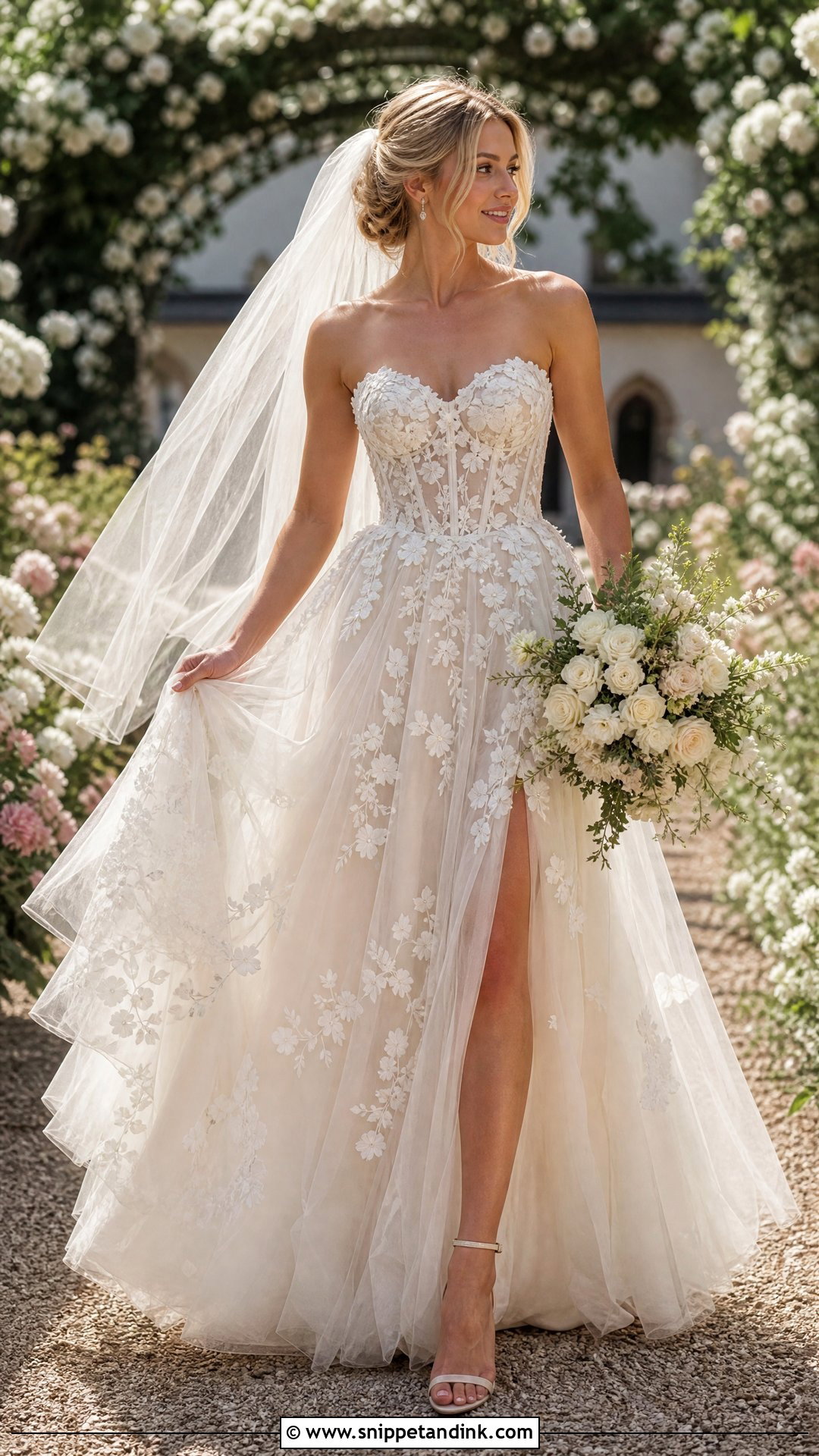
Florals on a corset can come through lace, embroidery, appliqué or a soft printed fabric. For spring and summer, I choose light organza, tulle or chiffon over a structured bodice; for autumn, ivory floral lace on a champagne lining adds depth. Keep the bouquet soft and coordinated. A bright, mixed bouquet held at the waist sits right against the floral bodice and the two start to compete. A loose updo or half-up style suits the texture, with simple heels and delicate earrings.
13. Corset Ball Gown Wedding Dress
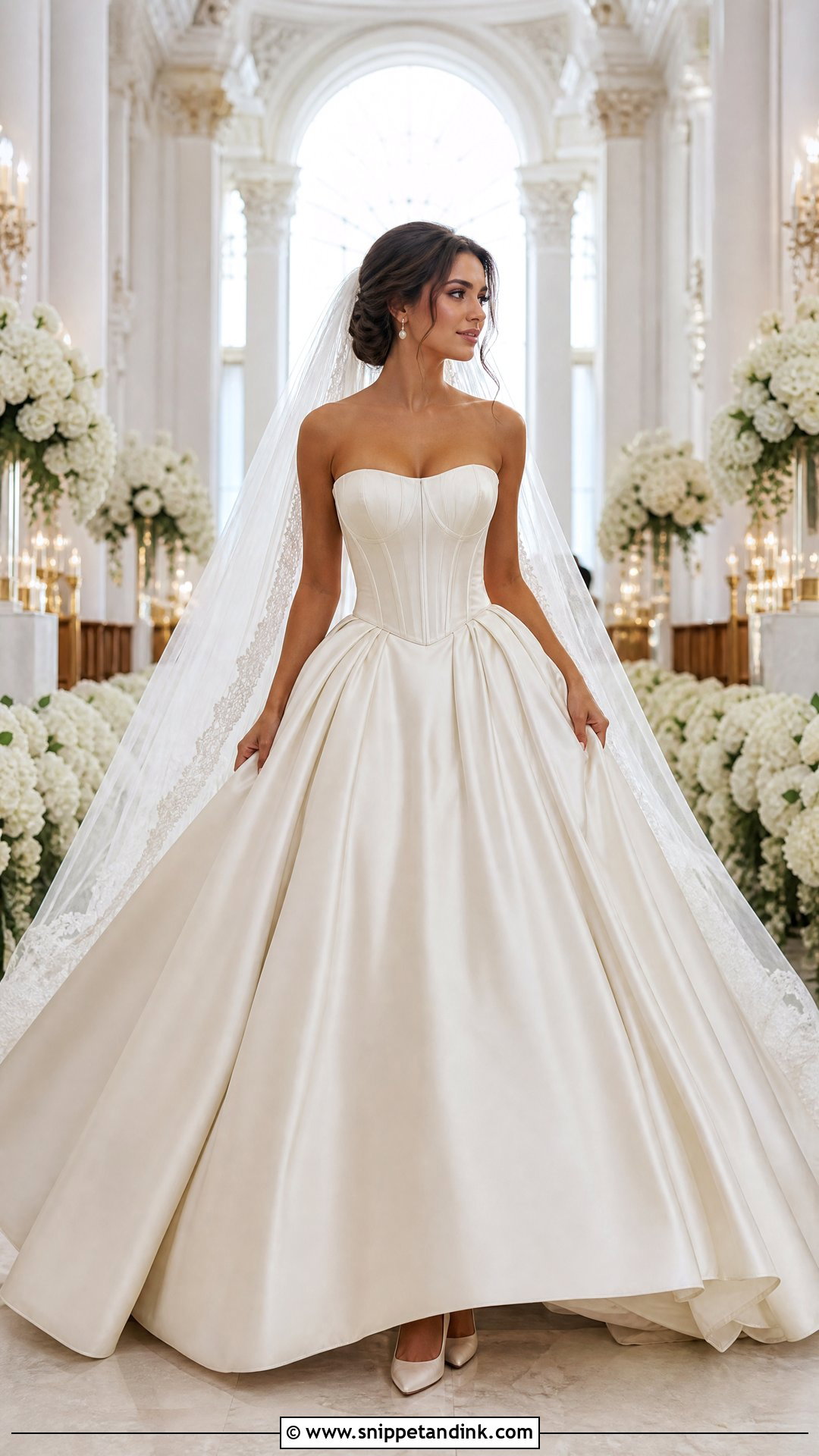
A corset ball gown gives you the full bridal moment, and the corset is what makes it wearable. A big skirt is heavy, and a well-built bodice carries that weight from the waist rather than the shoulders. Satin or mikado gives a clean princess shape; lace and tulle are softer. A cathedral veil, pearl earrings and classic pumps are plenty. Ask for proper internal support and a skirt that can be bustled easily, because you’ll want to dance without a train under your feet.
14. Mermaid Corset Wedding Dress
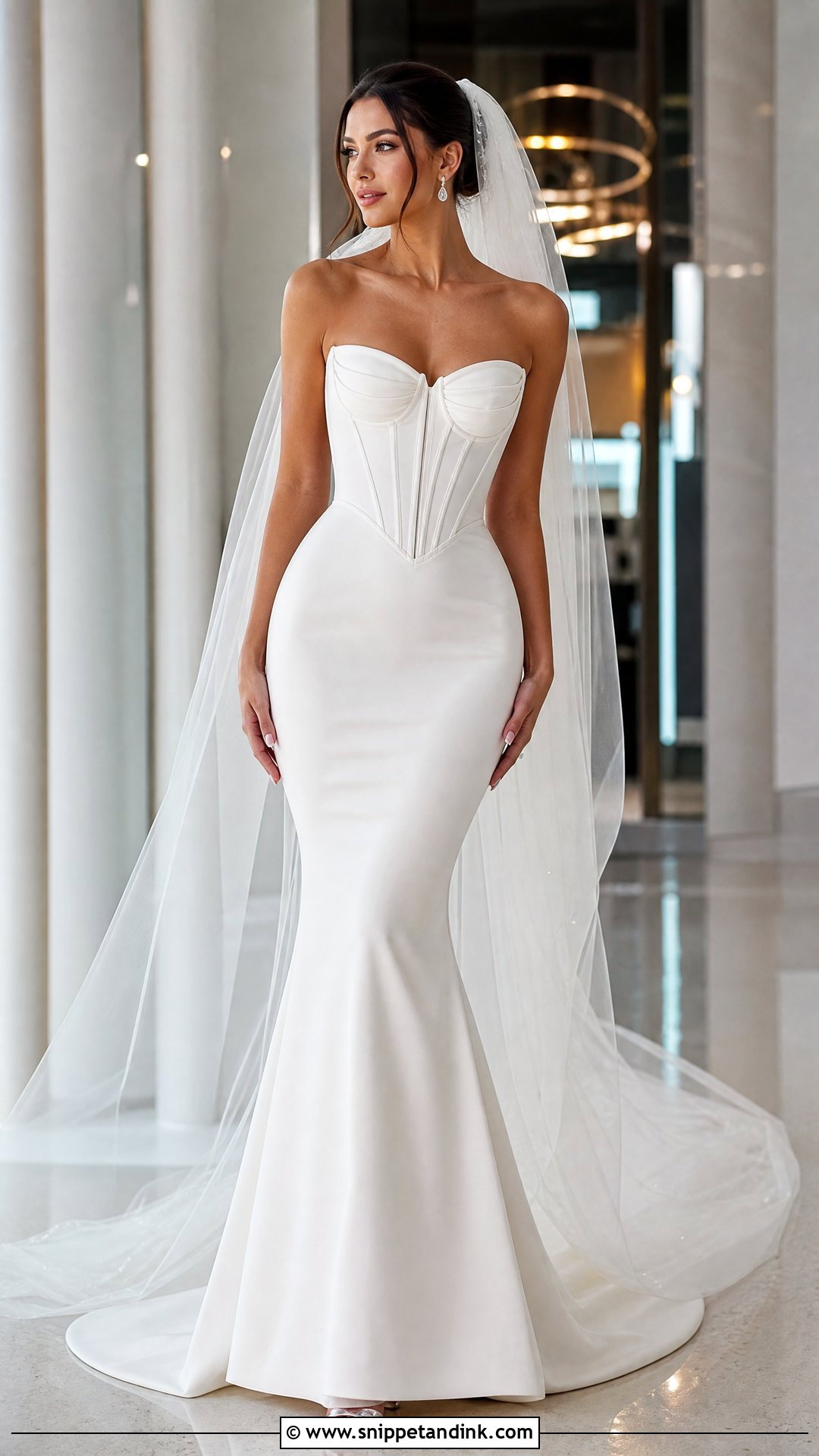
The mermaid shape hugs the hips before flaring near the knee or lower thigh, so the corset and skirt together create a strong hourglass. Crepe looks clean, lace romantic and satin glamorous. This is the silhouette where fittings matter most: sit, walk briskly and try a dance step in it, because a flare set too low makes stairs a struggle. Sleek heels, a long veil, simple earrings and a low bun or soft waves suit formal and evening venues.


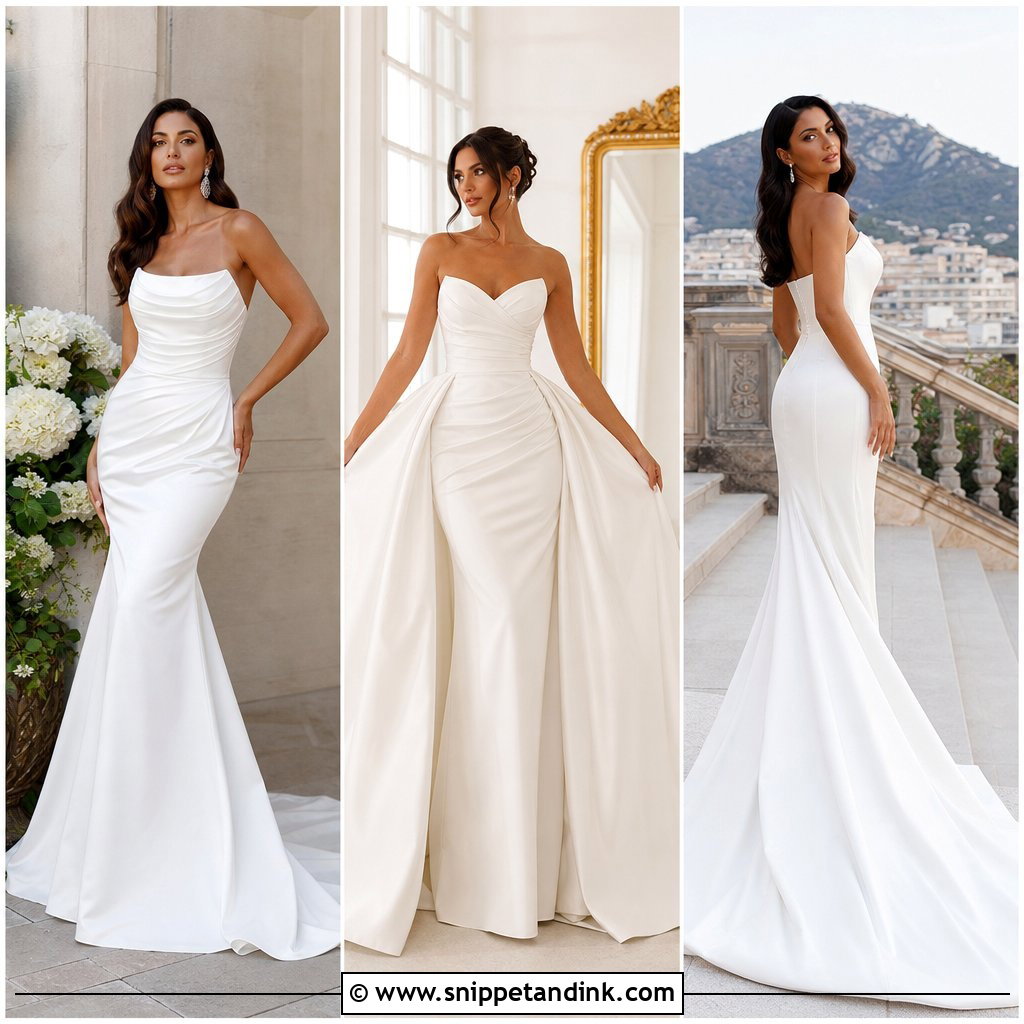
15. Corset Mini Wedding Dress
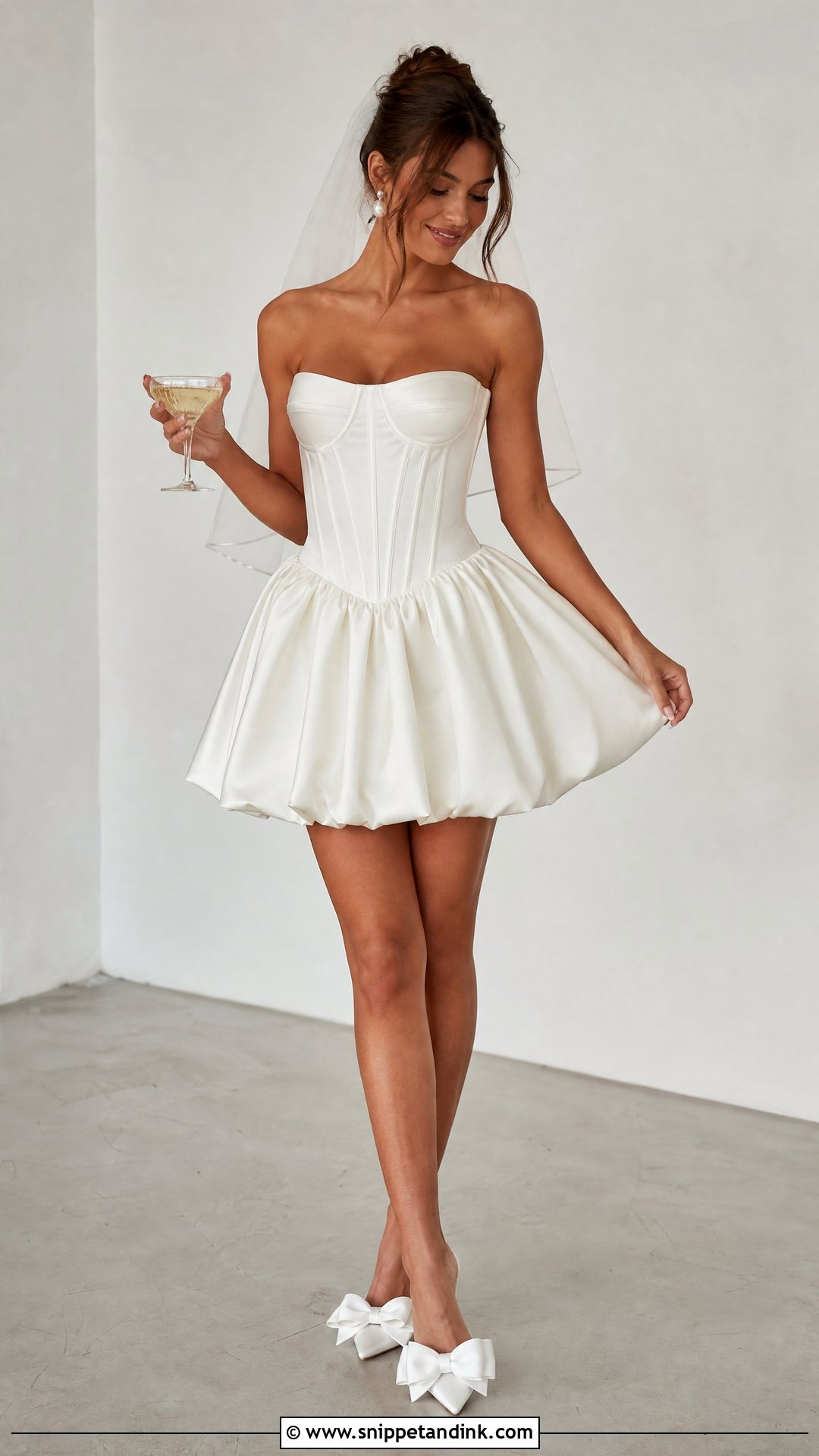
A short corset dress is the one you’ll actually dance in. It suits a reception, a courthouse ceremony, a shower or the after-party. Structured satin, lace or a tulle-skirted mini all work. With a short hem, shoes become a main part of the outfit, so choose white slingbacks, bow heels or platform sandals with care. A short corset can ride up when you sit, so look for one cut a little longer at the hip. Pearl earrings, a short veil or a statement hair bow complete it.
16. Corset Jumpsuit Wedding Outfit
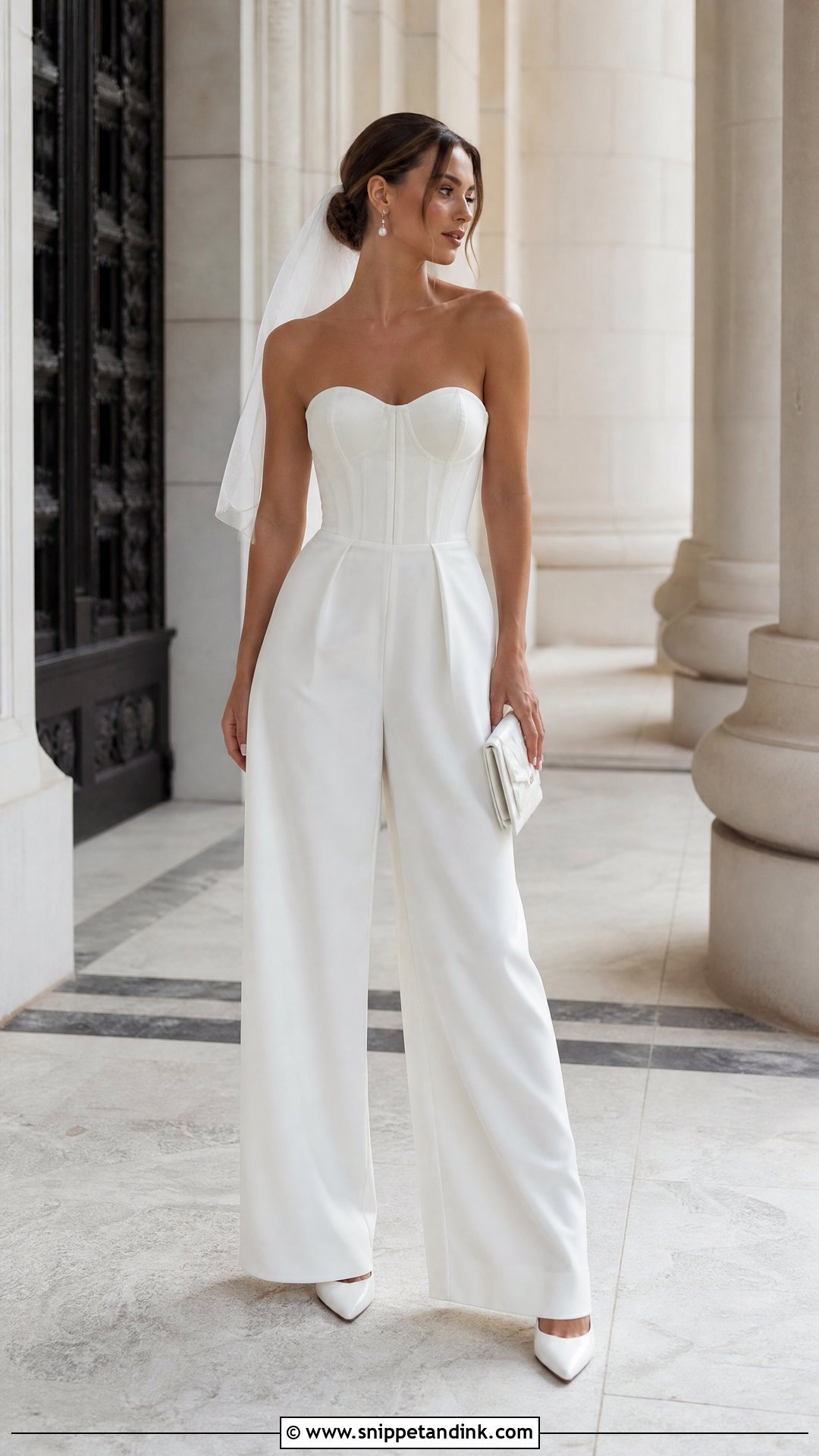
A corset jumpsuit gives waist shape with the freedom of trousers. Look for white or ivory with a structured bodice and wide legs, which balance the fitted top and lengthen the line. Pointed heels, a sleek clutch and pearl or crystal earrings finish it; a short veil, cape veil or headband adds ceremony. One practical note: the bathroom means undoing the whole bodice, so choose a side zip you can manage alone. It suits courthouse weddings, city elopements, rehearsal dinners and receptions.
17. Corset Blazer Wedding Suit
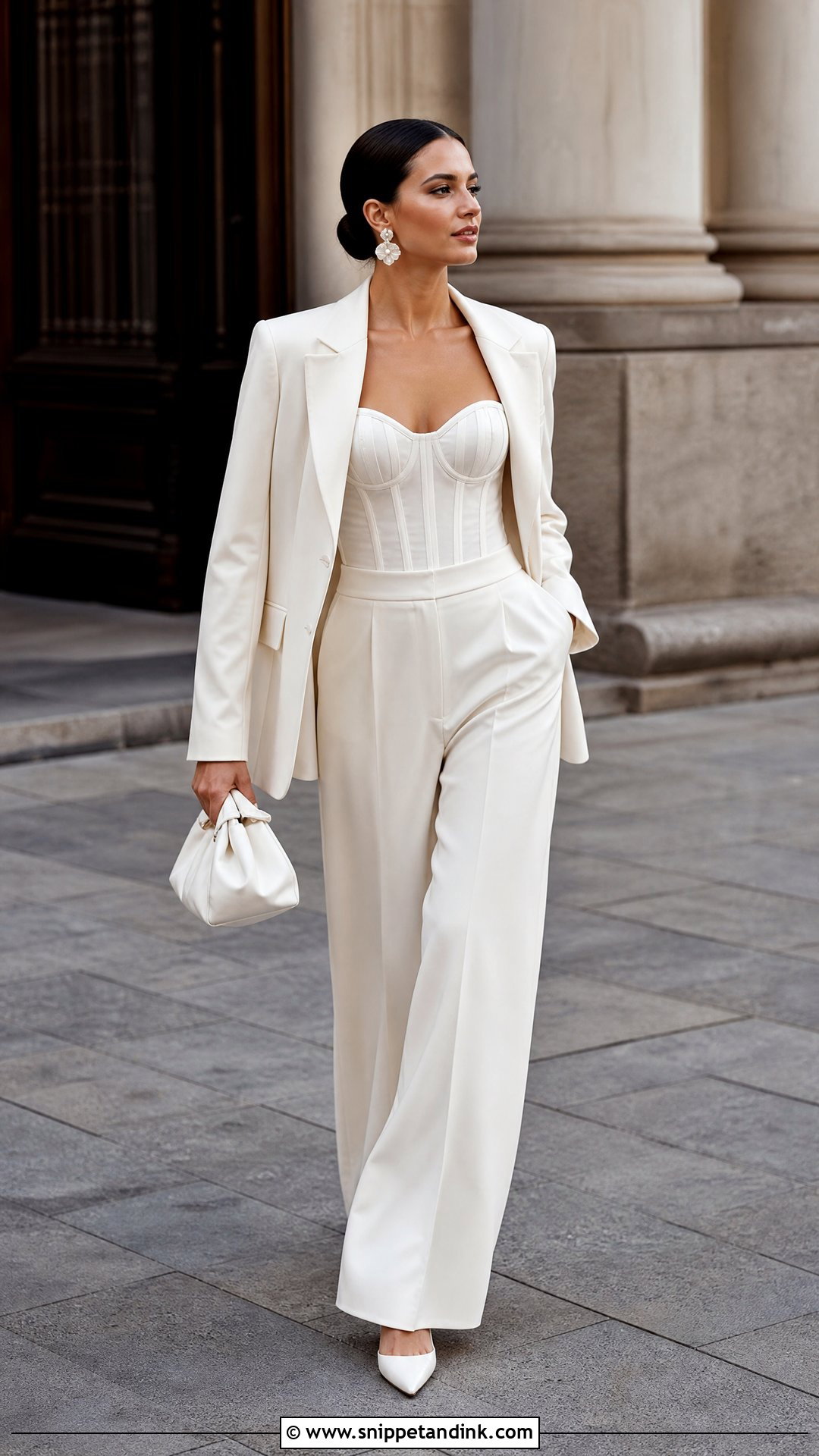
Tailoring and corsetry combine well. Wear a white corset top under an ivory blazer with matching wide-leg trousers, or choose a blazer with corset seams built in for a smoother line. The blazer’s button point should land at or just above the corset’s waist, otherwise the two shapes fight. Pointed pumps, a sleek clutch and sculptural earrings suit it; skip heavy necklaces if the corset neckline is strongly shaped. A birdcage veil or modern hair bow adds bridal charm for courthouse weddings, city ceremonies and outfit changes.
18. Corset Dress With Detachable Skirt
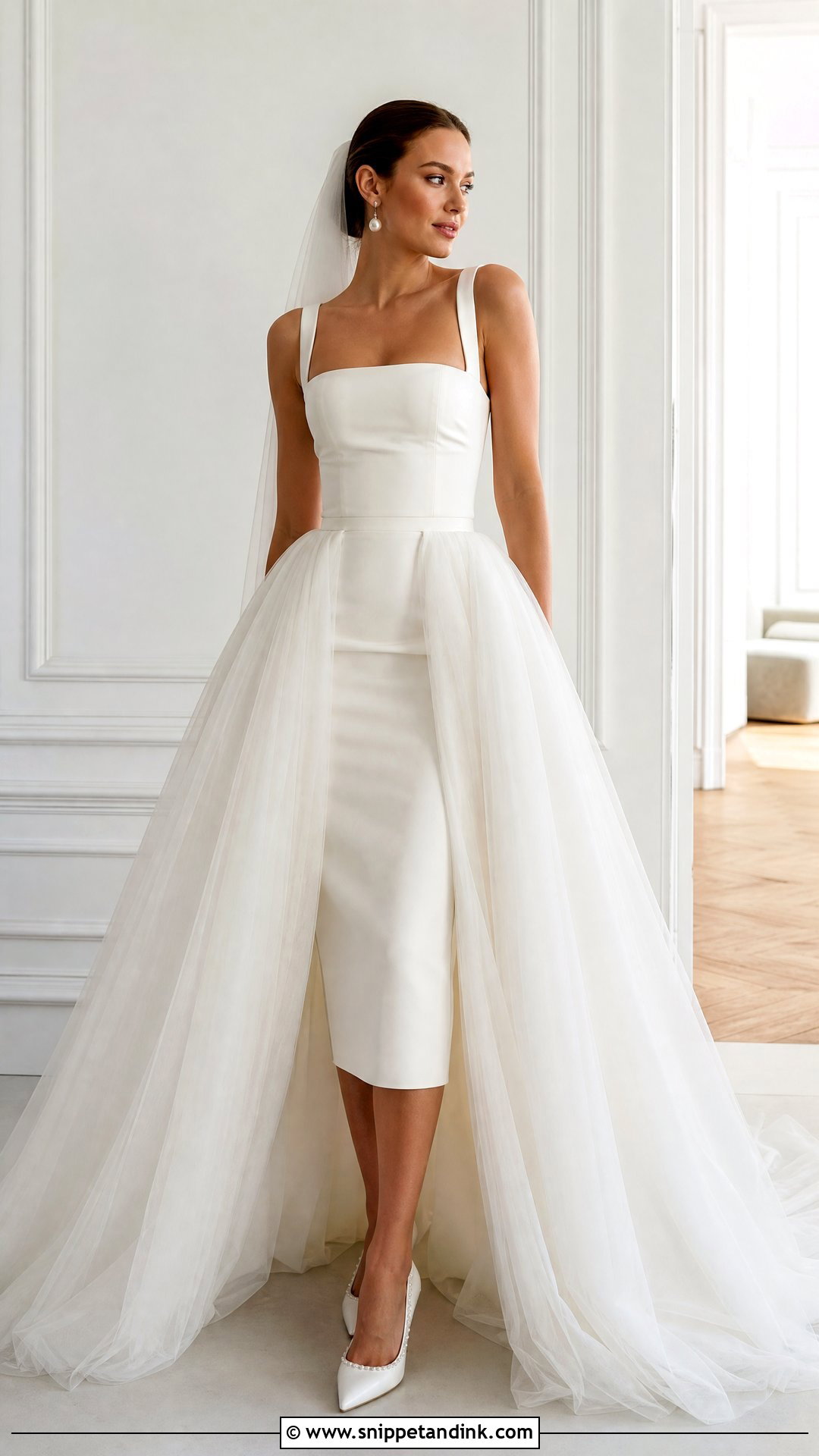
Two looks from one dress: wear the corset dress with a dramatic overskirt, train or layered tulle for the ceremony, then remove it to reveal a fitted, mini or column dress for the reception. The bodice has to look finished both ways, so check the waist seam isn’t visible once the overskirt is off. Practise taking it off with whoever will help you; hooks and snaps at the back of the waist are fiddly under pressure. Swap the long veil and classic heels for statement earrings or a shorter veil later.
19. Corset Wedding Dress With Cape
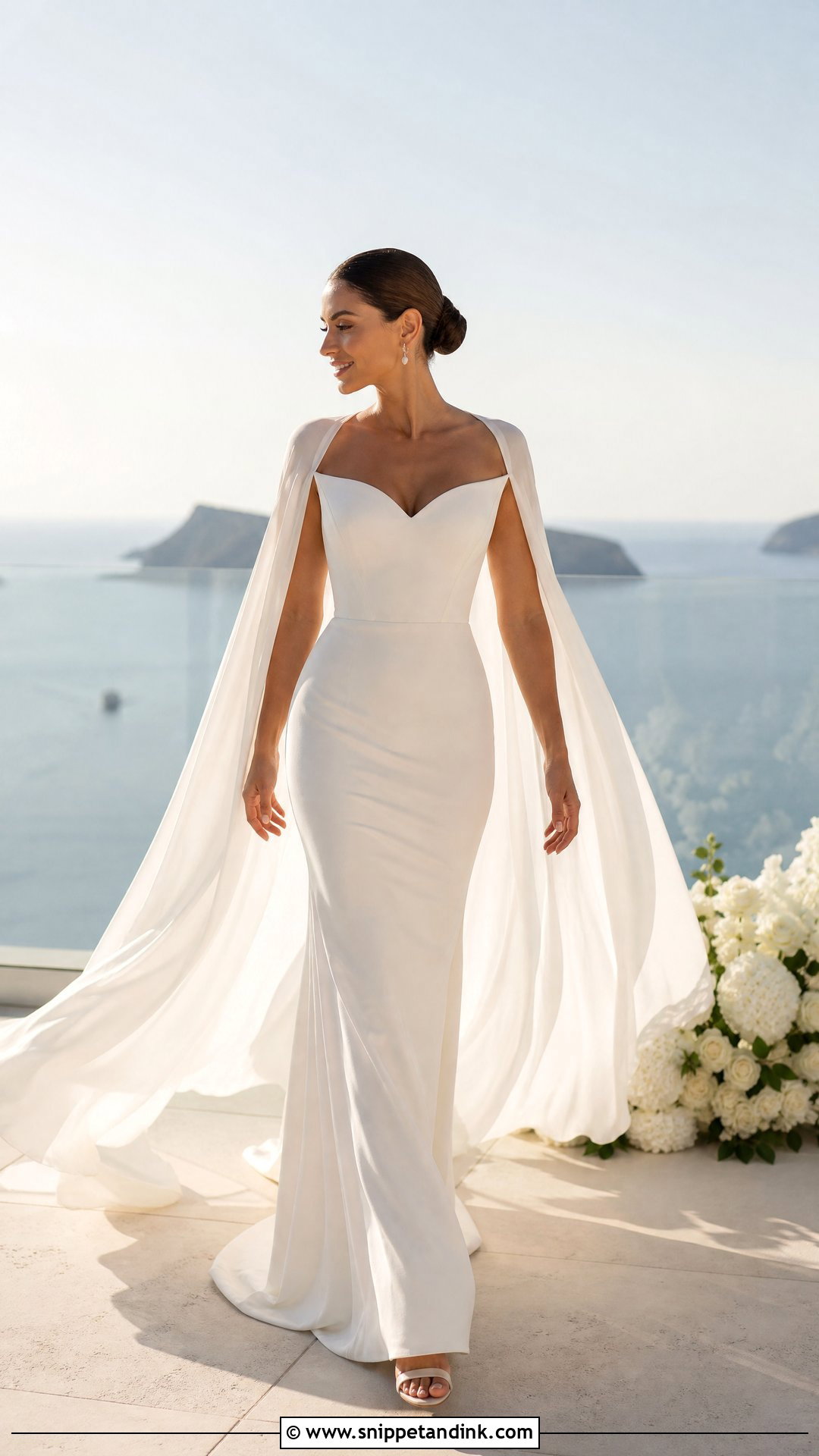
A cape replaces the veil and adds movement while the corset gives shape. Sheer tulle suits a simple corset gown; pearl or lace capes bring more detail. A fitted or A-line dress lets the cape fall clearly behind you. Watch where the cape attaches: fastened at the shoulders, it can drag a strapless bodice backward, so many brides do better with one that hooks to the corset itself. Minimal earrings, sleek heels and a clean hairstyle complete it, and outdoors the cape catches the wind in every photo.



20. Corset Wedding Dress With Gloves
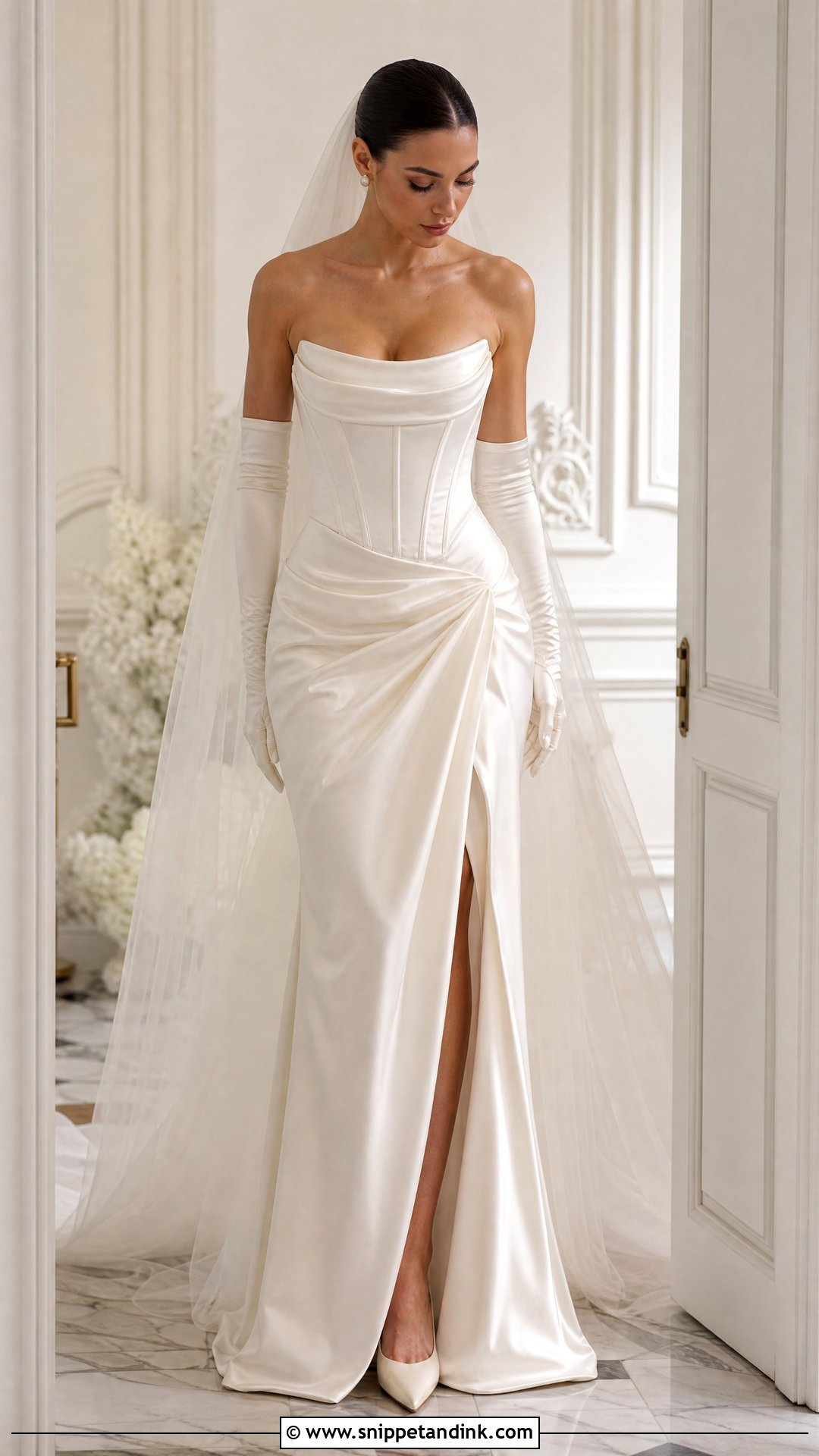
Gloves give a corset gown a vintage note. Long satin gloves balance bare shoulders on strapless and off-shoulder bodices; sheer gloves feel softer with lace or tulle. If the gloves are dramatic, keep the gown plain, and if the bodice is beaded, keep the gloves plain. Satin gloves need a seam allowance at the fingers for the ring exchange, or ask your stylist about a finger-loop style. Pointed pumps, pearl studs and a sleek veil finish it, and removing the gloves later makes the dress feel instantly more relaxed.
21. Vintage Corset Wedding Dress
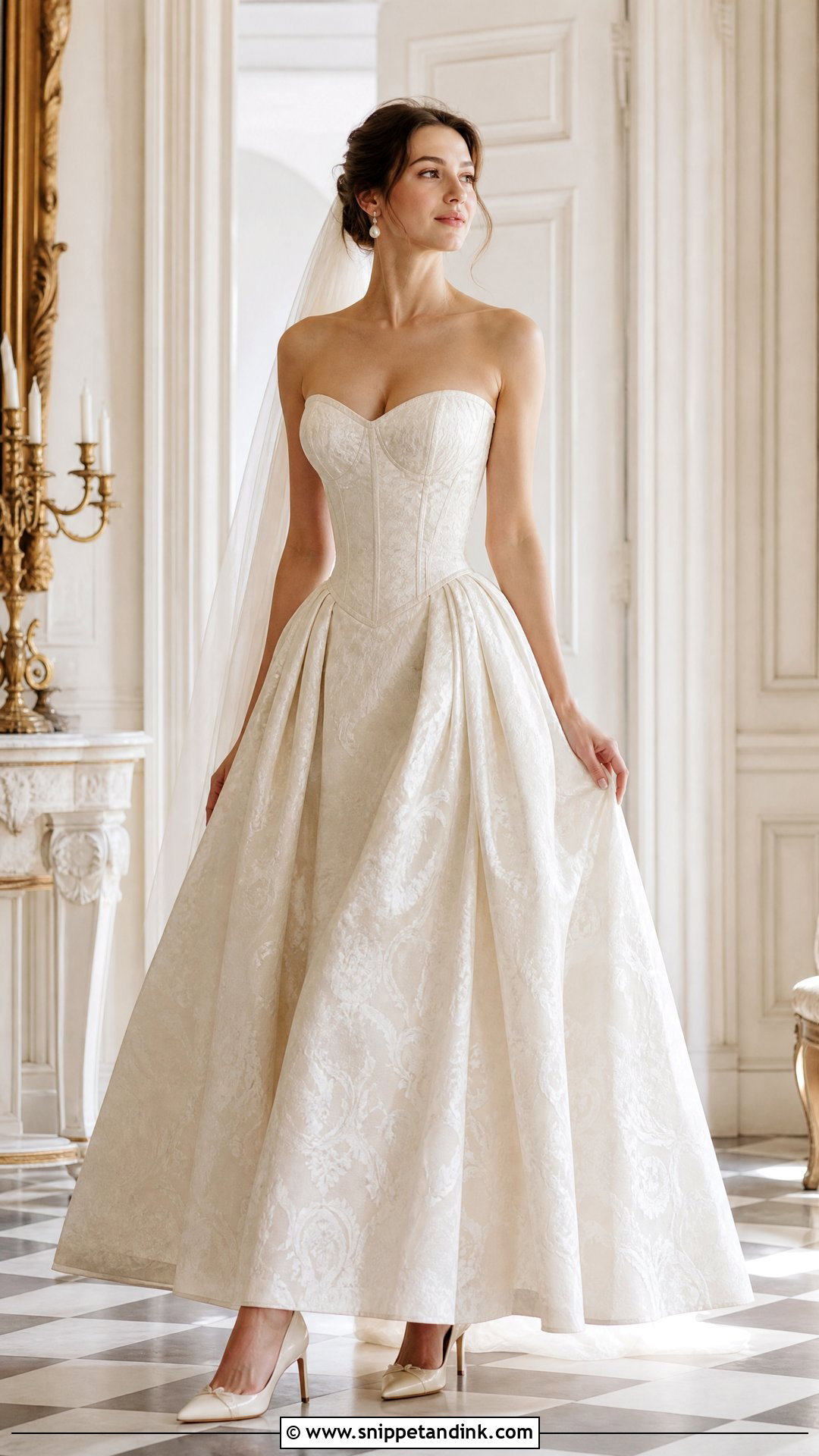
Vintage corsetry has to borrow details, not recreate a costume. Brocade, lace, basque waists, button backs, puff sleeves and softly structured bodices bring the period feel; a modern fit and lighter boning keep it wearable. Real antique corsets are rarely sized for modern bodies and can be fragile, so I usually suggest a new piece built in an old style. Ivory heels, pearl earrings, a simple veil and a soft updo or brushed waves suit it. With heavy texture, keep the bouquet plain.
22. Modern Minimal Corset Wedding Dress
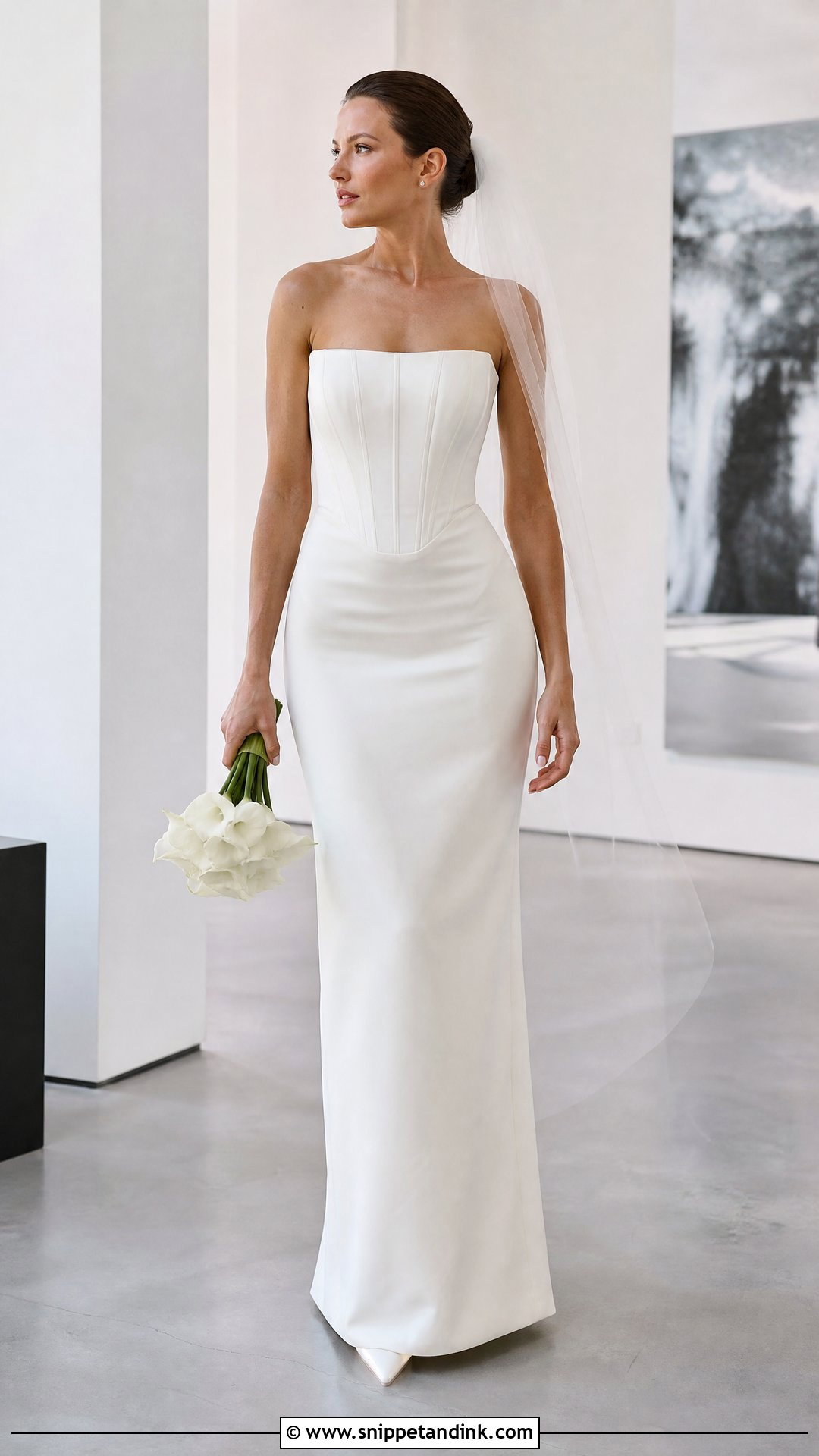
Minimal corsetry lets the construction do the work. Smooth crepe, satin or mikado with a structured bodice, a simple skirt and almost no embellishment is enough. A square, straight or subtle sweetheart neckline keeps it architectural. Because nothing distracts the eye, fit flaws show immediately, so I spend extra time on minimal gowns at fittings. Sleek pumps, small earrings, a plain veil and a low bun or smooth blowout suit city weddings, galleries and rooftop ceremonies.
23. Corset Reception Dress
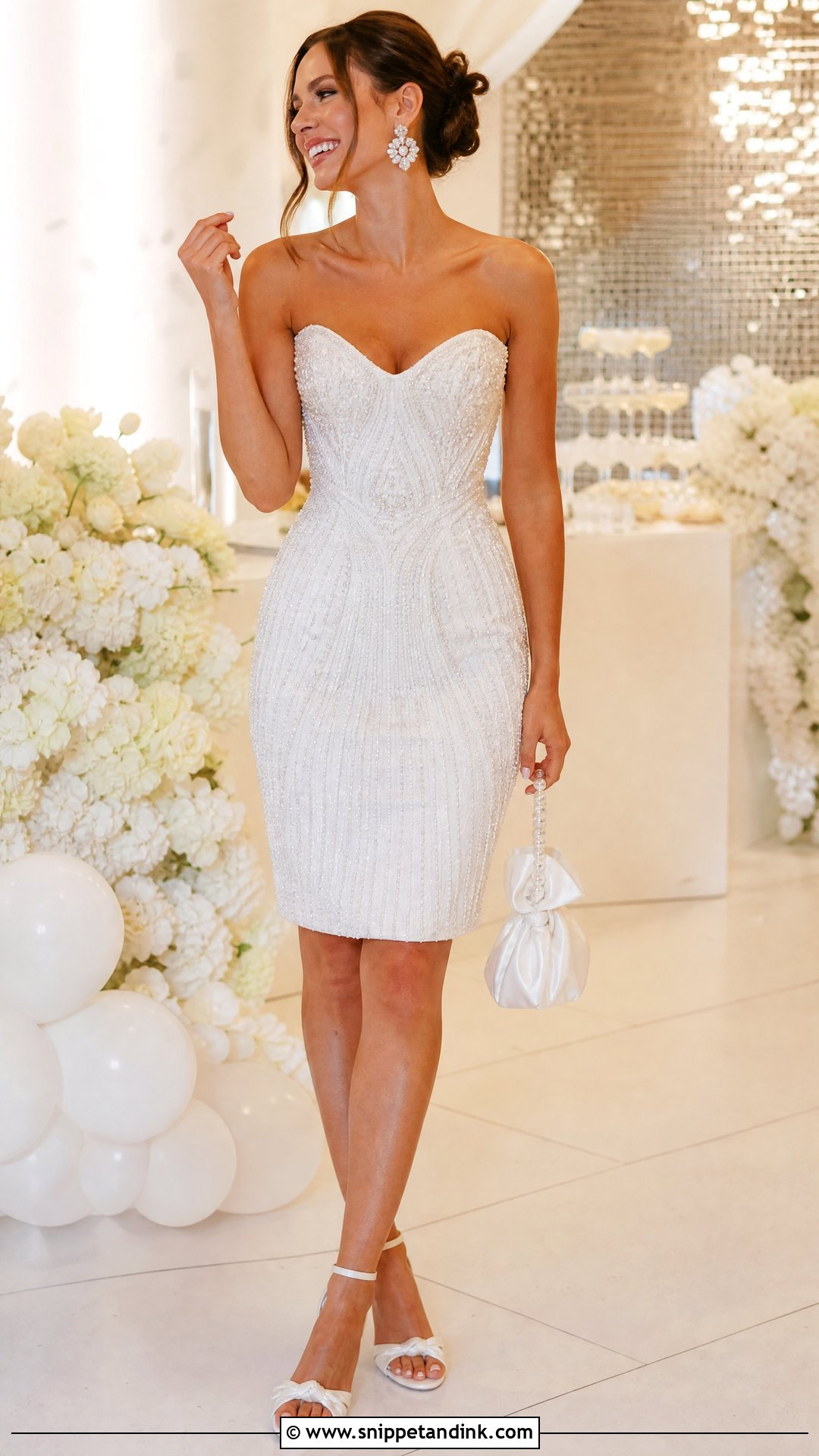
Your reception dress should let you breathe, eat and dance, so the corset can be lighter here. A shorter hem, lighter fabric, sparkle, feathers or a fitted column all work. A corset mini with bow heels is playful; a beaded corset midi feels elegant. Link it to the ceremony look through colour or accessories. Before buying, sit down, hug a friend and do a twist in the fitting room. If the bodice moves or pinches, it will be worse after dinner. Comfortable heels, statement earrings and a small bag finish it.
24. Courthouse Corset Wedding Outfit
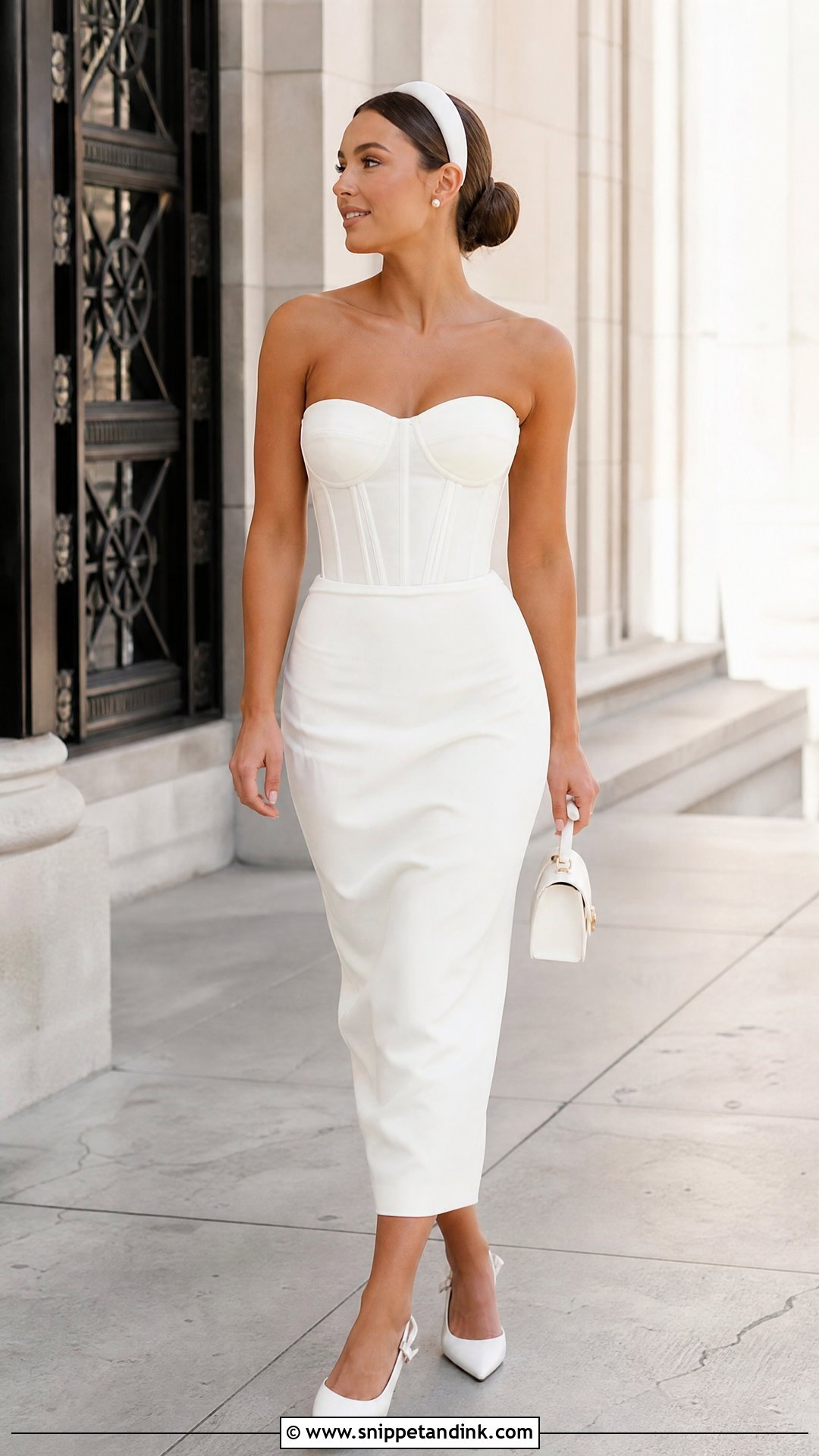
You don’t need a big gown to look bridal at the courthouse. A white corset top with tailored trousers, a midi skirt or a sleek blazer is enough; a structured corset midi with slingback heels and a small bouquet works as a dress option. Pearl studs, a short veil or a satin headband add the bridal note, and a mini top-handle bag holds essentials. For city hall weddings and intimate ceremonies, every piece can be worn again later, which is a big part of the appeal.

25. Plus Size Corset Wedding Dress
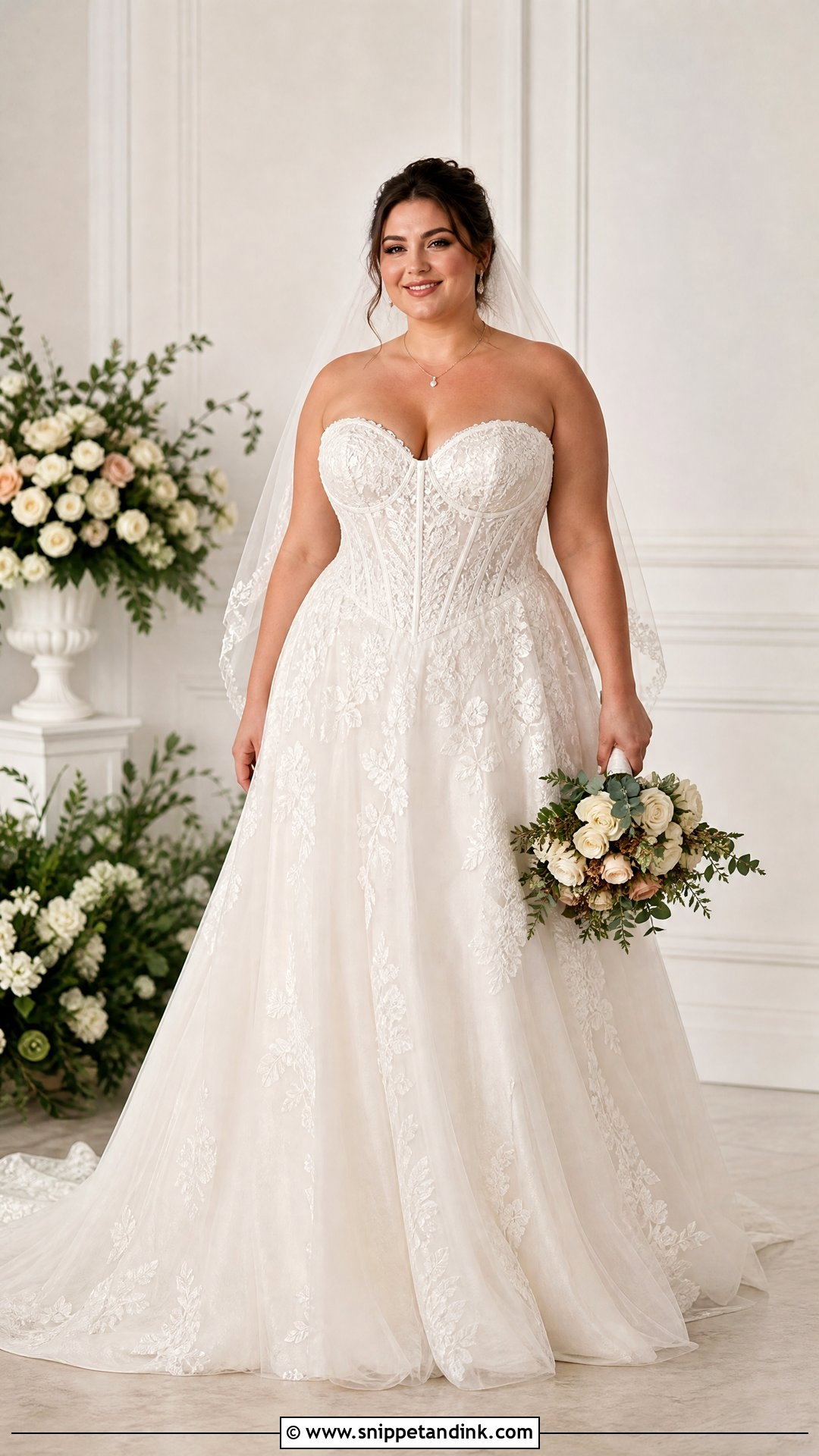
Fit makes or breaks a corset at any size, and for plus size brides support comes first. Look for quality boning, smooth lining and real cup support, so you feel secure without pulling or pinching. A lace-up back gives you flexibility on the day; a zip back sits cleaner under delicate fabrics. A-line, ball gown, mermaid and fit-and-flare skirts can all work. At fittings, sit, walk, breathe deeply and raise your arms. A well-built corset gown shapes the body while still letting you enjoy the whole day. Stable heels, a soft veil and jewellery that matches the neckline finish it.
Who Laces You In, and What Happens After Dinner?
Teach one person how your corset closes, and have them practise at the final fitting. Lacing usually starts from the top and bottom and works toward the waist, where loops are left to pull it snug. Tighten gradually over a few minutes rather than in one hard pull; the bodice settles as it warms to your body.
Expect to want it a little looser after the meal. A lace-up back makes that easy if your helper knows how; with a zip, there is no adjustment, so a lighter dinner or a few bites at a time helps. Keep a small pack with a crochet hook for snagged laces, safety pins and a spare ribbon in case a lace snaps.
A corset isn’t right for everyone. If you have back trouble or simply hate anything firm around your ribs, a softly boned bodice or a dress with built-in cups gives some shape without the structure.
A Corset Should Let You Forget It
Corsets give shape, support and style to almost any bridal outfit. Satin keeps it classic, lace makes it romantic, a ball gown skirt adds drama and trousers or a blazer make it modern. Venue, season, comfort and personal style all decide which one suits you. Think about the whole outfit, from shoes to veil to hair, and about how it will move from ceremony to dance floor. A corset that fits properly is one you forget you’re wearing.
You'll Like These Ideas:







Leave a Reply