
A real princess gown is a commitment. Full ball-gown skirts, fitted bodices, long trains and heavy fabric make the shape, and they also make the dress wider, warmer and heavier than anything else you’ll try on. I’ve found that the brides who love these gowns most are the ones who get the volume right for their frame and their venue, so the skirt feels grand rather than in charge. Satin gives structure; tulle, lace, organza and floral appliqué soften it. Below are 20 versions, each with the veil, jewelry, shoes and hair I’d put with it, and the fitting checks that matter for a skirt this size.
Measuring the Aisle, the Doorways and the Car Before the Skirt
I ask princess-gown brides for numbers before I pull a single dress. A full ball gown skirt can be wider than a standard doorway at the hem, and the aisle between chairs at many venues is narrower than people assume once guests’ bags and coats spill into it.
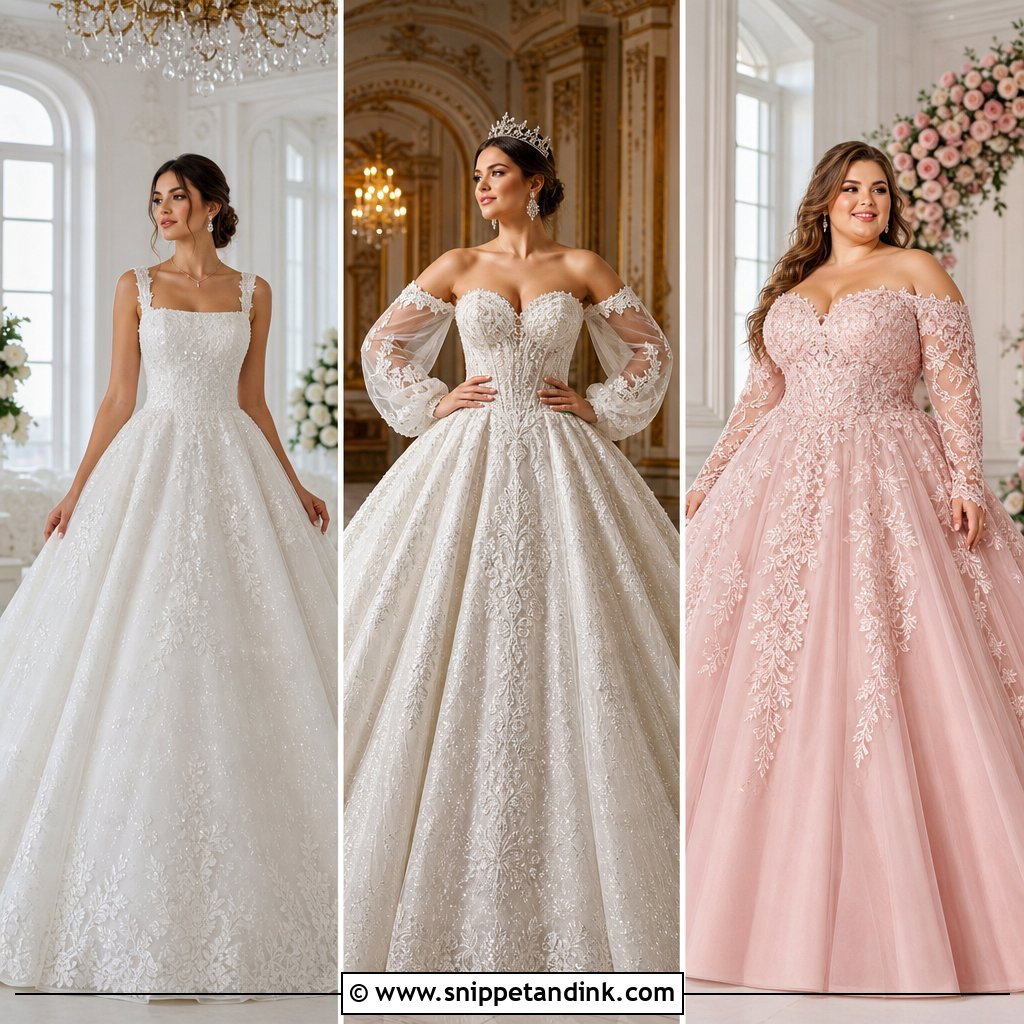
- Aisle width: if guests will be brushing the skirt, ask the venue to widen it or choose a slightly smaller skirt.
- Doors, stairs and any spiral staircase you plan to use for photos.
- The car: a full skirt needs a vehicle with a wide door and a roomy back seat, and someone to tuck the hem in.
- Table spacing at the reception, so you can actually reach your chair.
Volume can also be tuned. Many gowns are built over a separate petticoat or crinoline, and swapping a fuller one for a softer one changes the width noticeably without altering the dress itself. Ask the shop what’s underneath before you rule a gown out.
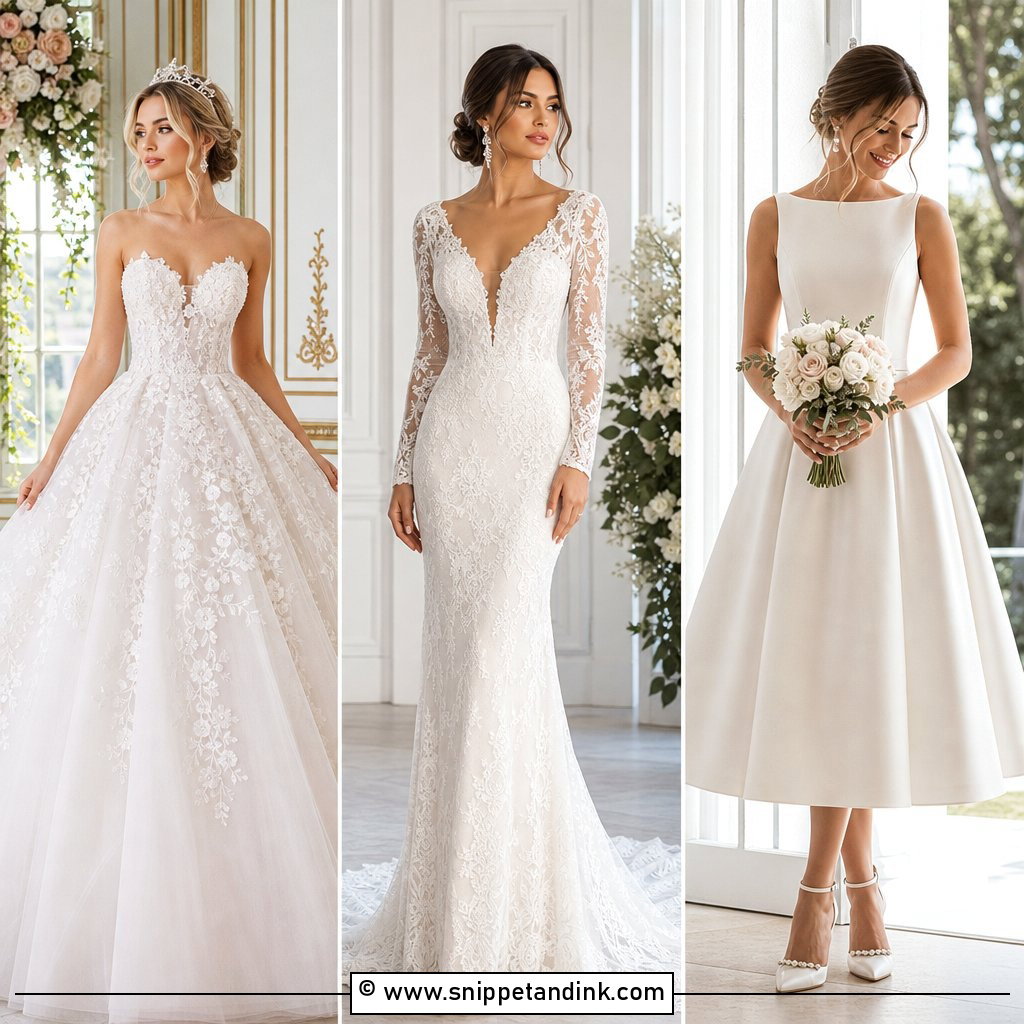
1. Strapless Satin Princess Wedding Dress
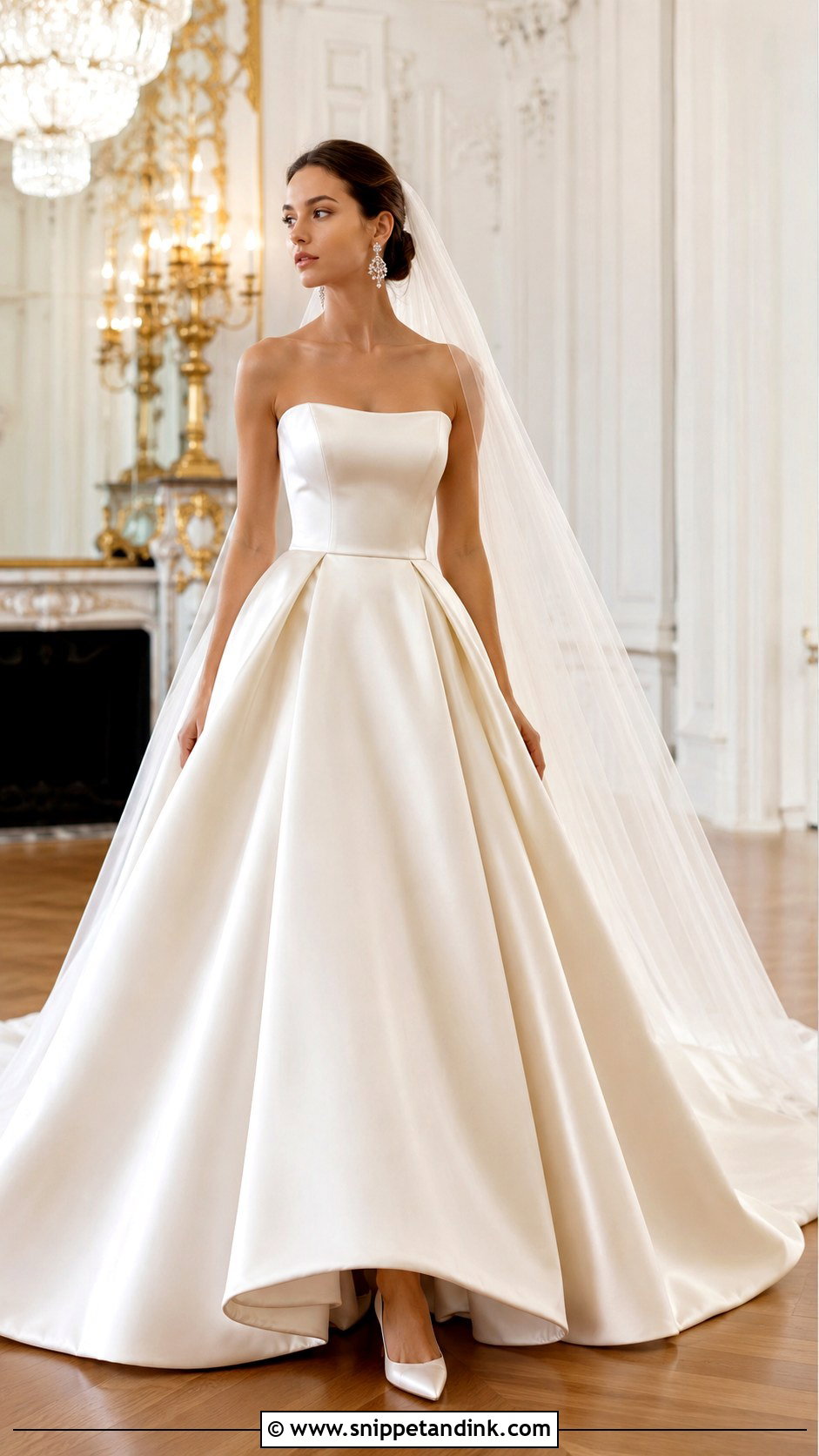
When most brides picture a princess wedding dress, this is it: strapless satin, a boned bodice, a soft curved neckline and a defined natural waist. I prefer the skirt to fall in a few wide, smooth folds rather than stacked layers, since satin looks richest when it has room to catch light. A long train suits a ballroom. Pointed ivory pumps, crystal drops, a satin clutch and a polished bun finish it, with a cathedral veil for movement. Ask for hidden pockets and a strong bustle. A satin train is heavy, and weak bustle points tear.
2. Long Sleeve Lace Princess Wedding Dress
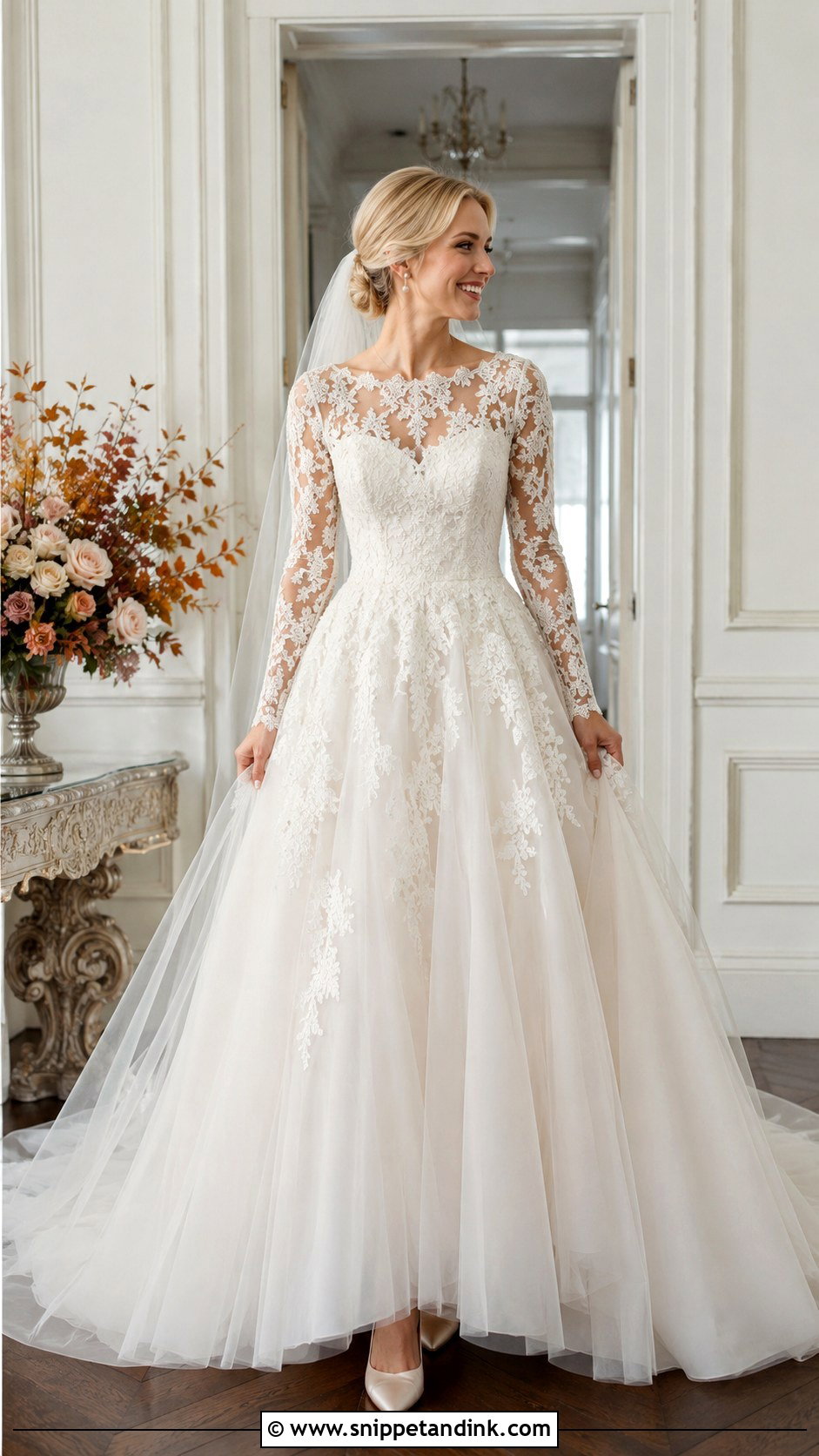
Lace sleeves calm down a huge skirt. Look for a lined, supportive bodice, an illusion neckline and lace that flows naturally from sleeve to waist rather than stopping abruptly at the shoulder. A layered tulle skirt keeps it airy so the sleeves don’t make the whole gown heavy. Pearl earrings, a fingertip or chapel veil and low satin heels work, since you’ll be standing in this for hours. A loose chignon or smooth low bun shows off the lace. It’s natural for fall and winter, and lighter lace makes it work in spring too.
3. Off The Shoulder Princess Wedding Dress
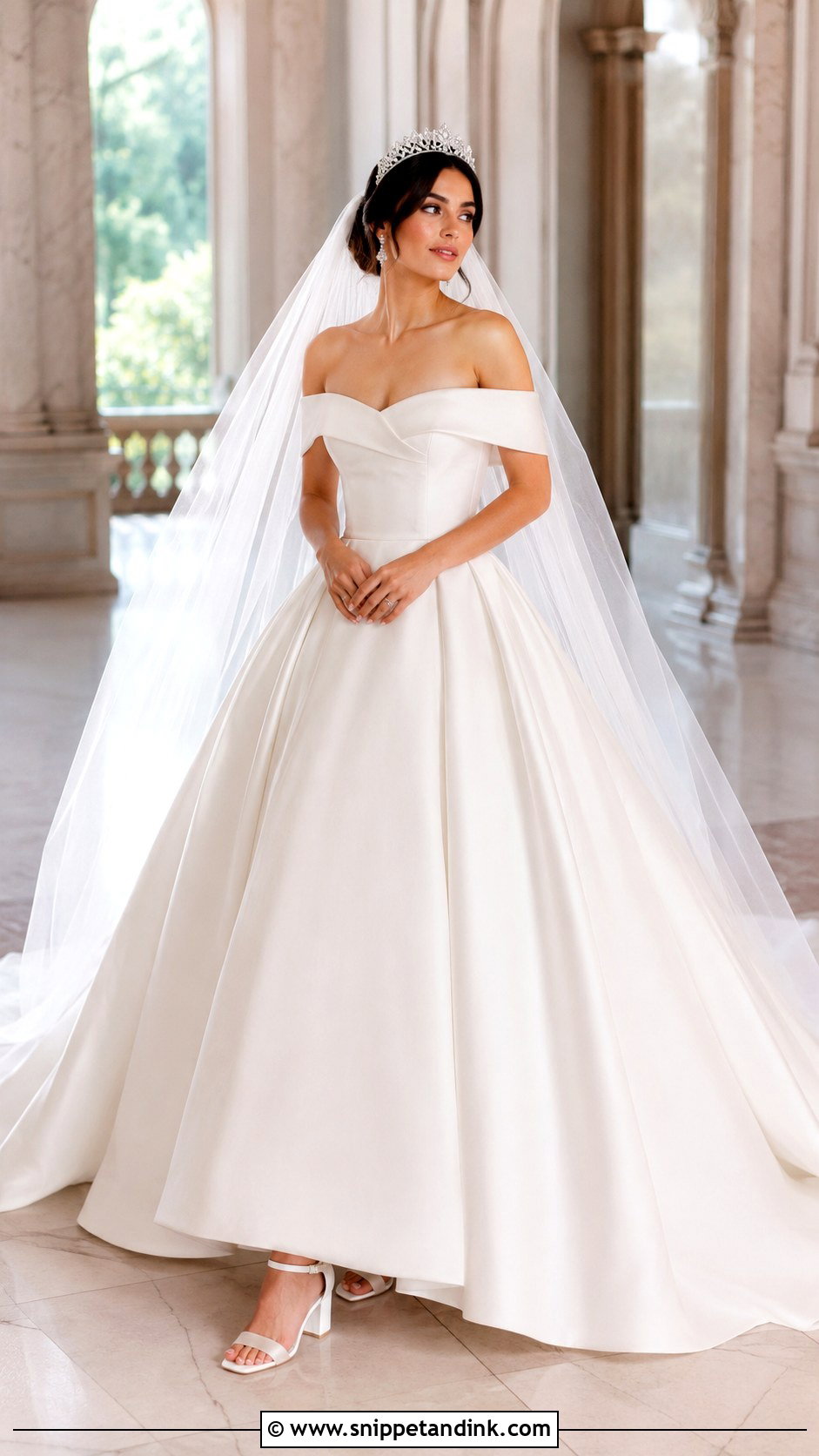
With an off-the-shoulder neckline over a corseted bodice and a full satin or Mikado skirt, you get a balanced, storybook silhouette. The thing I test hardest is the sleeve band. Raise your arms, sit, hug someone; if it digs in or slides, it needs adjusting. A fine crystal necklace only works if the neckline leaves space; otherwise statement earrings are enough. A tiara, smooth updo and cathedral veil push it fully regal. Under a heavy skirt I’d wear block heels, since stability matters more than height when the hem hides your feet.
4. Sweetheart Sparkle Princess Wedding Dress
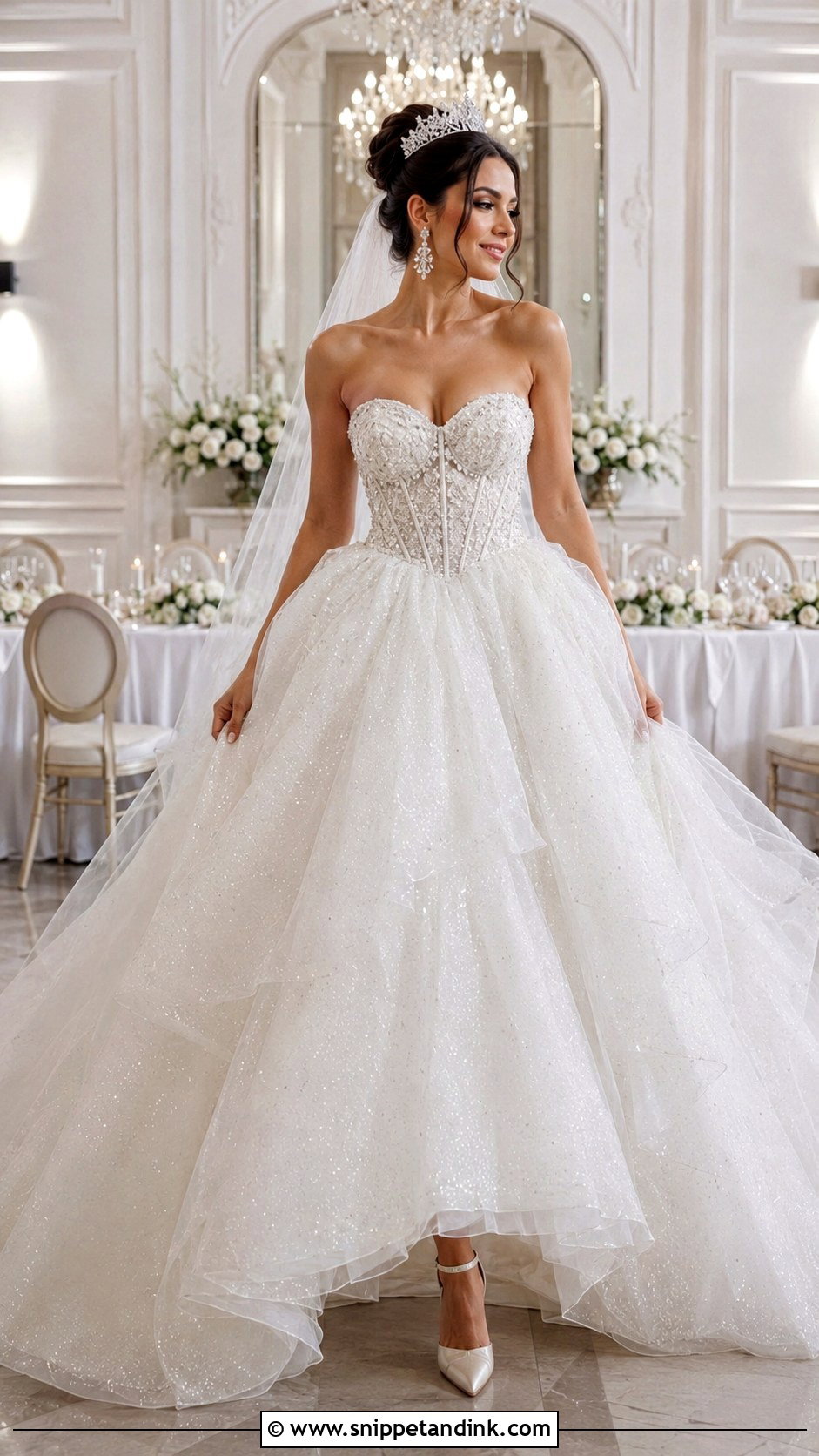
Sparkle on a sweetheart ball gown should fade as it travels down. I like beading or sequins concentrated on the bodice and thinning out through the skirt, which pins the eye at the waist instead of making the whole gown glitter. A corset back or structured inner bodice is worth having, especially under several skirt layers. Crystal earrings, a delicate tiara and simple ivory heels complete it, and keep the veil lightly embellished so the two don’t compete. Soft waves or a half-up style feel romantic. Rub the beading against your inner arm at the fitting; some can feel rough after a few hours.
5. Square Neck Mikado Princess Wedding Dress
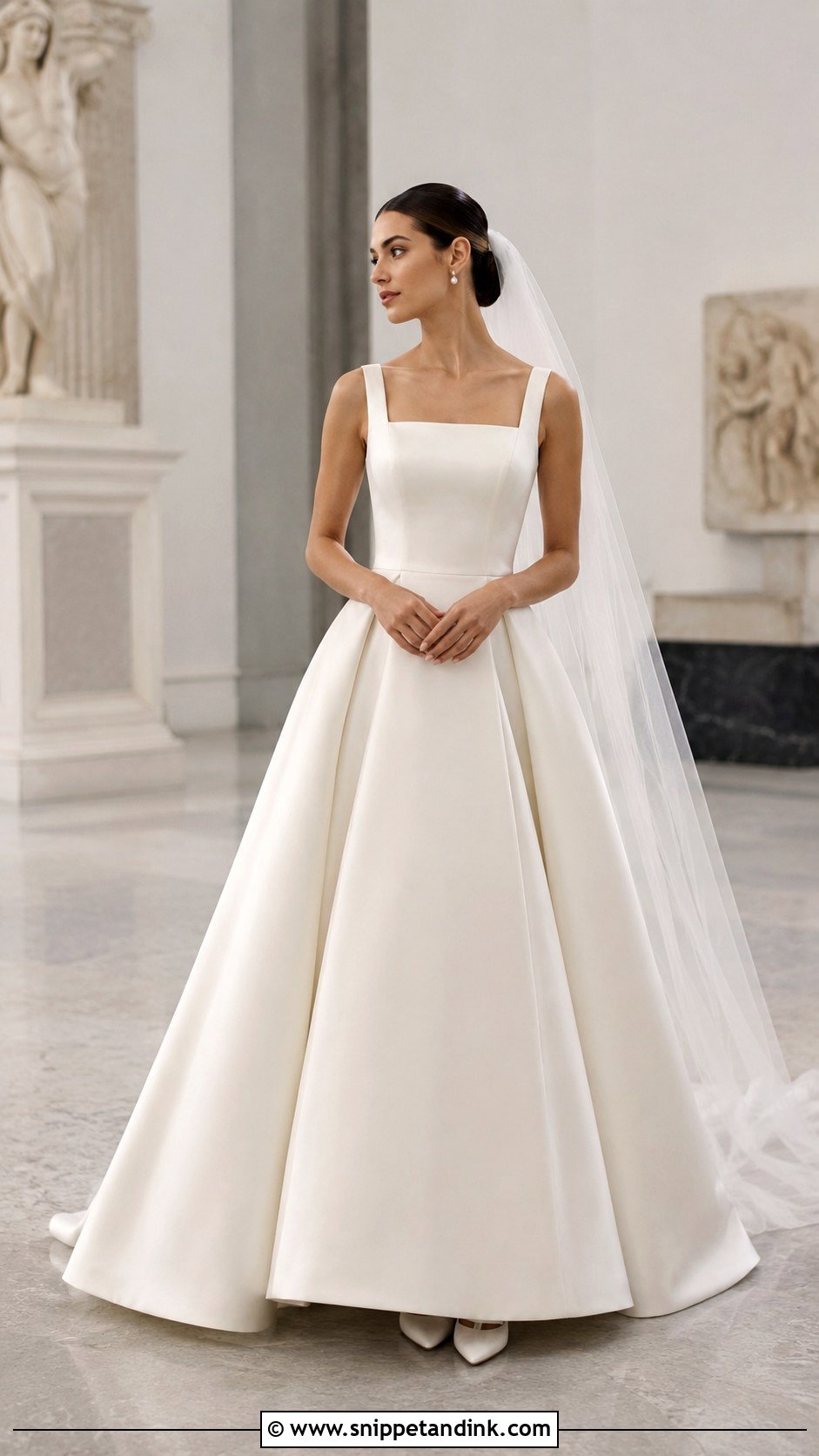
Mikado is a stiff, slightly heavy silk-blend weave, and it’s my favorite fabric for a square neck princess gown because it holds the corners of the neckline and builds architectural volume in the skirt. Wide straps add support and give more coverage than strapless. A sleek bun, pearl-and-crystal earrings, pointed pumps and a simple cathedral veil keep it clean. Skip the belt if the seaming is precise; it adds nothing. Pockets are an easy add here. It looks right in hotels, museums and plain modern ceremony rooms.
6. Corset Bodice Organza Princess Wedding Dress
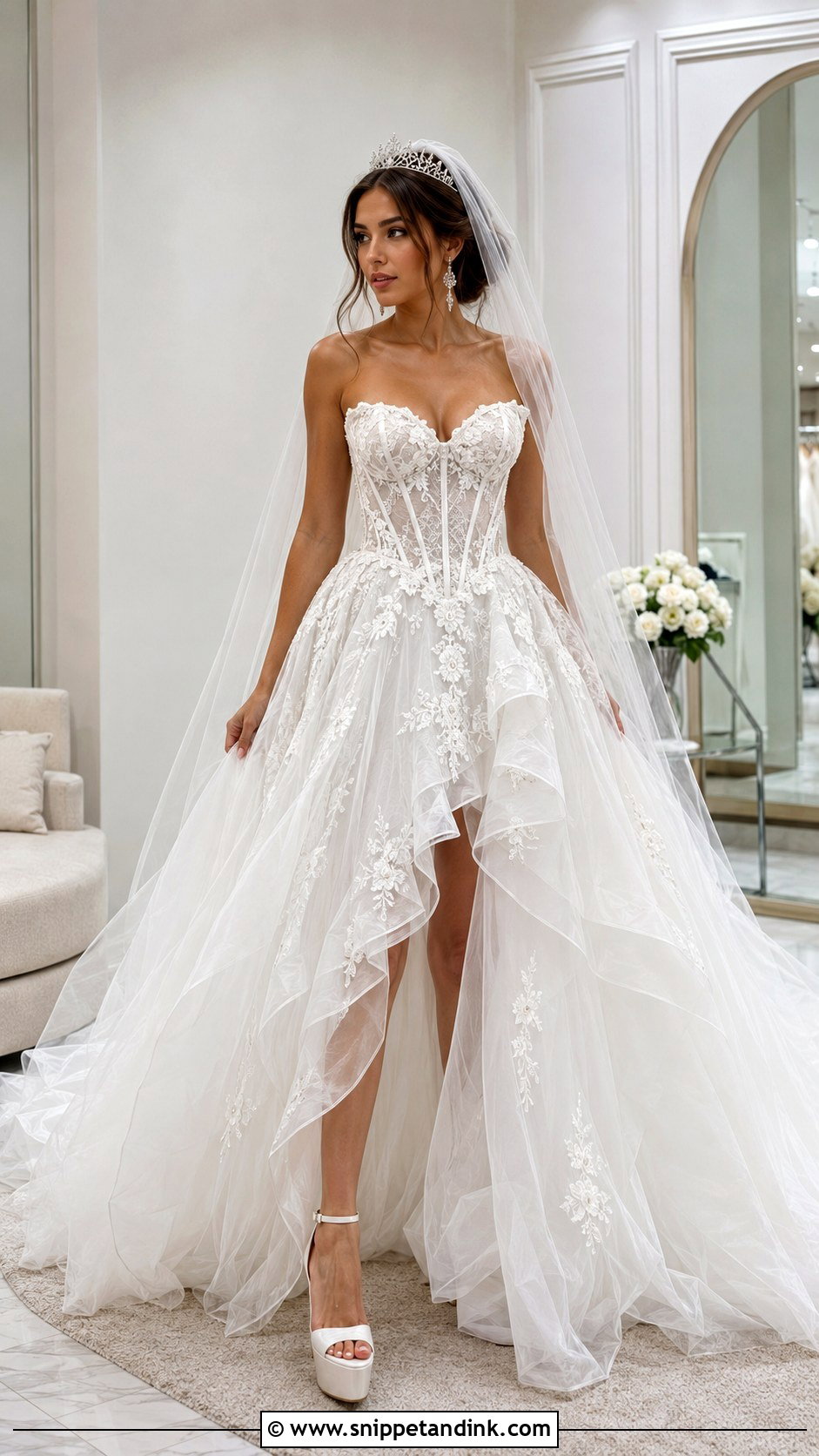
Organza gives volume without weight, so it’s the fabric I suggest when a bride wants the big skirt but dreads carrying it. Paired with a visible corset bodice, it feels younger and more fashion-led. Fit the corset to your actual body: boning should follow your shape and the cups should match your proportions, not the size on the label. Floral lace on the bodice softens the visible structure, and a plain organza skirt keeps it balanced. Add a narrow headband or small tiara, drop earrings and platforms hidden under the hem, plus a sheer cathedral veil. Ask the seamstress to reinforce the waist and plan a bustle for dancing.
7. Beaded Cathedral Train Princess Wedding Dress
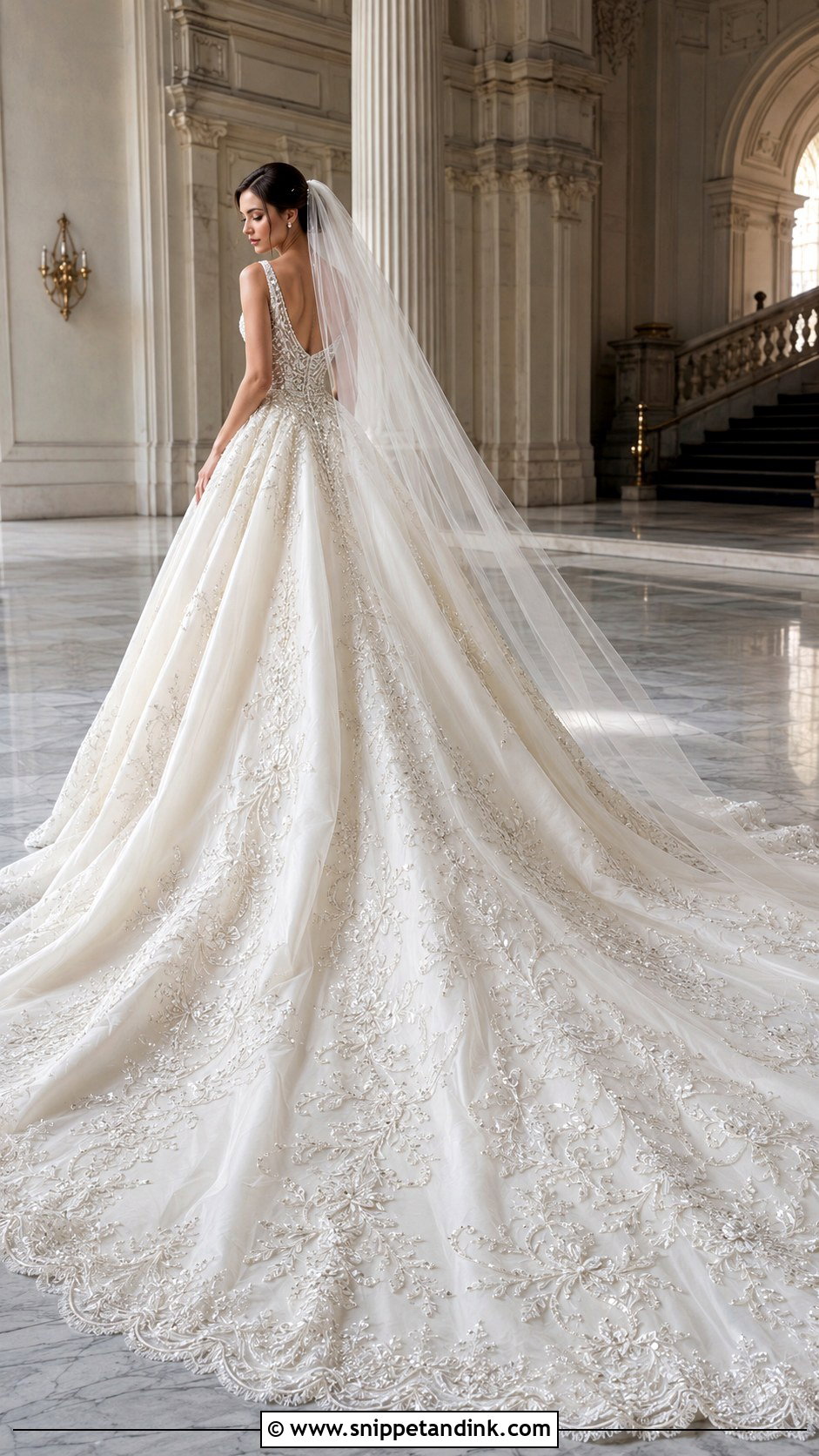
Here the train is the showpiece. The front stays moderately embellished, and the heaviest beadwork runs down a cathedral train that guests watch for the whole ceremony. A fitted bodice and clear waist balance the volume. Keep the rest quiet: stud earrings, satin pumps and an updo that leaves the back clear. The veil should either end past the train or stop at fingertip; anywhere in between and it lies on the beading. Beaded trains are heavy, so check that the bustle can hold the weight. A removable overskirt is the other route to a lighter reception.
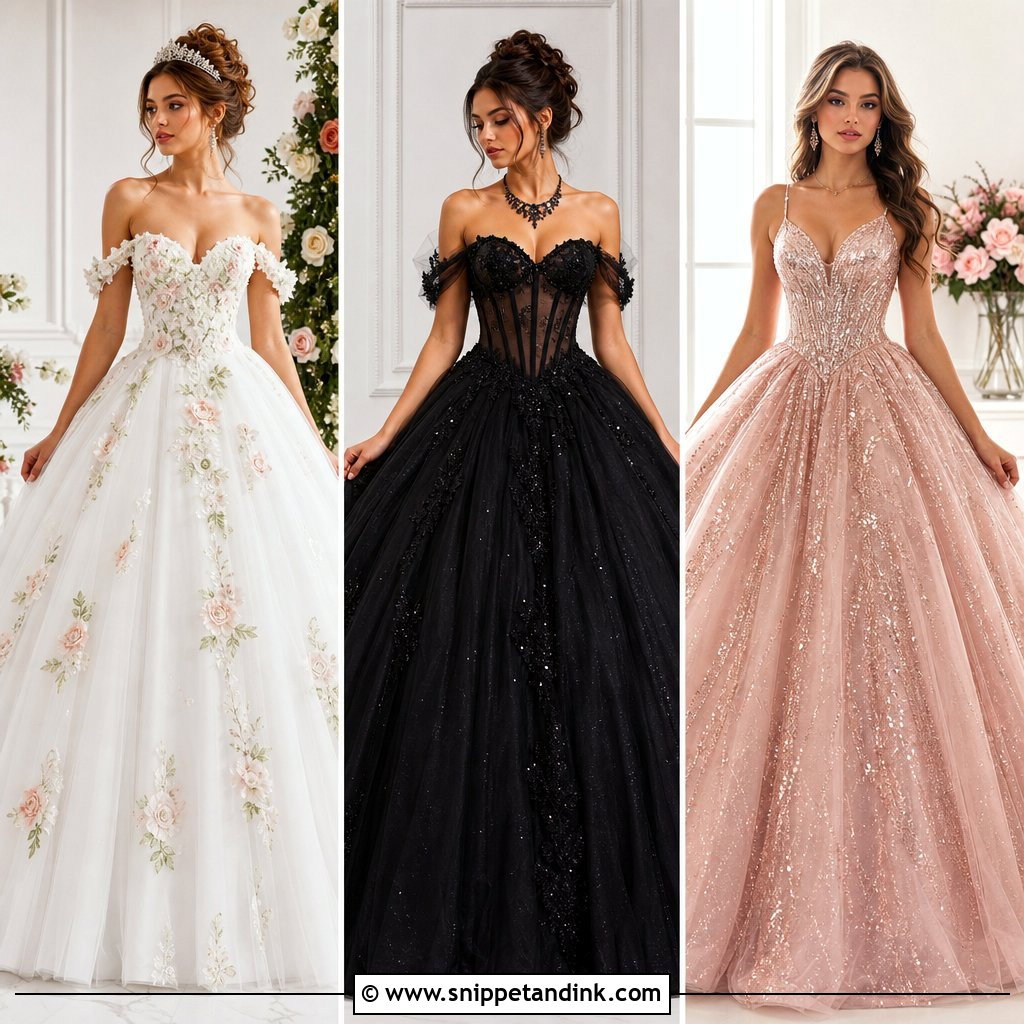
8. Floral Applique Princess Wedding Dress
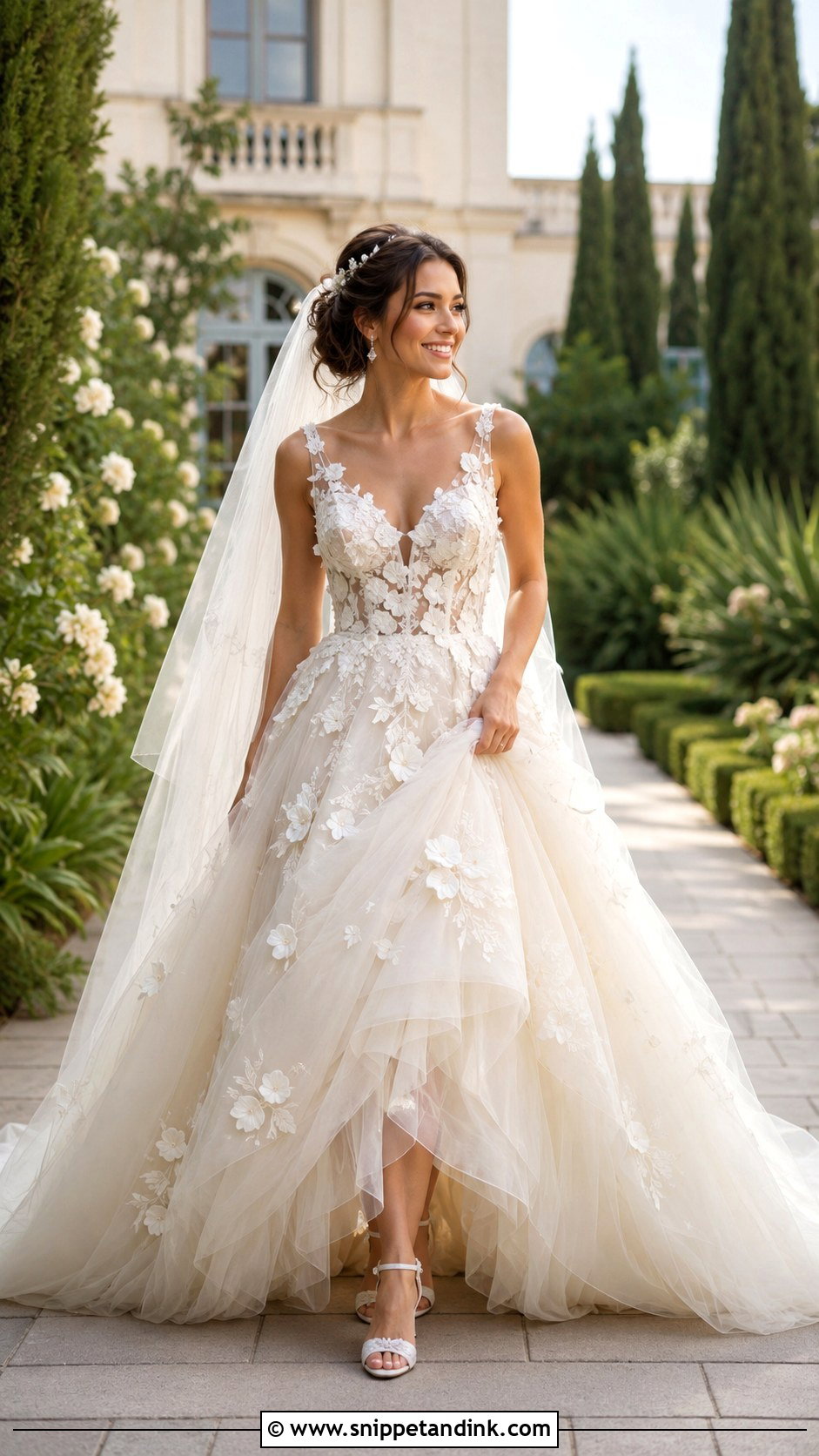
Three-dimensional flowers turn a ball gown into a garden look. I like them clustered around the bodice and waist, then scattered lightly down the tulle, so the skirt still reads as a shape. Pearl or crystal centers catch daylight. Floral hairpins, understated earrings, ivory sandals and a plain veil edged with matching appliqués finish it, with a low textured bun. Check that every flower is stitched down rather than tacked, and look at the back too, because appliqués on a train get crushed as you sit and walk. It belongs in a spring garden or conservatory.
9. Pearl Embellished Princess Wedding Dress
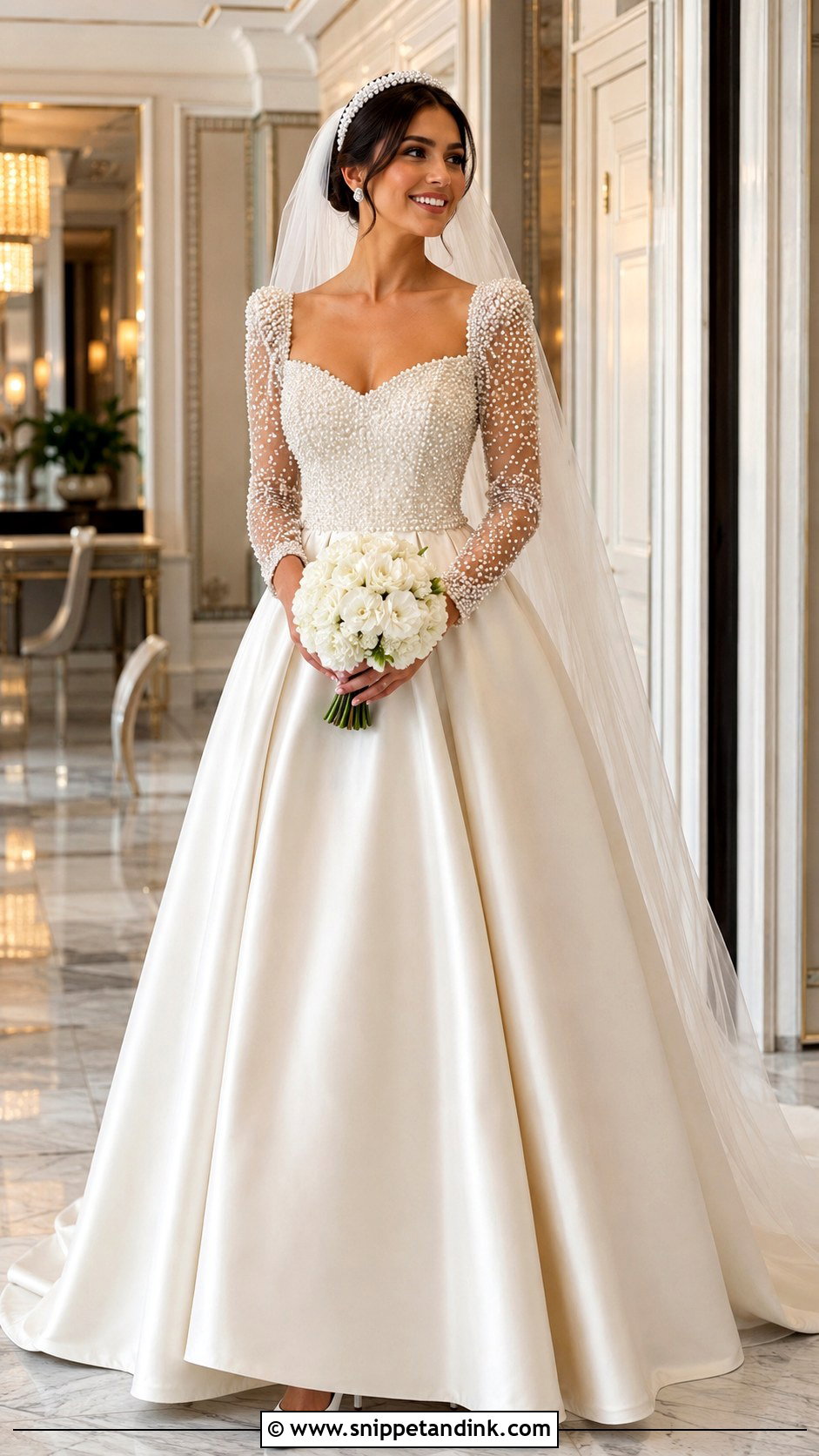
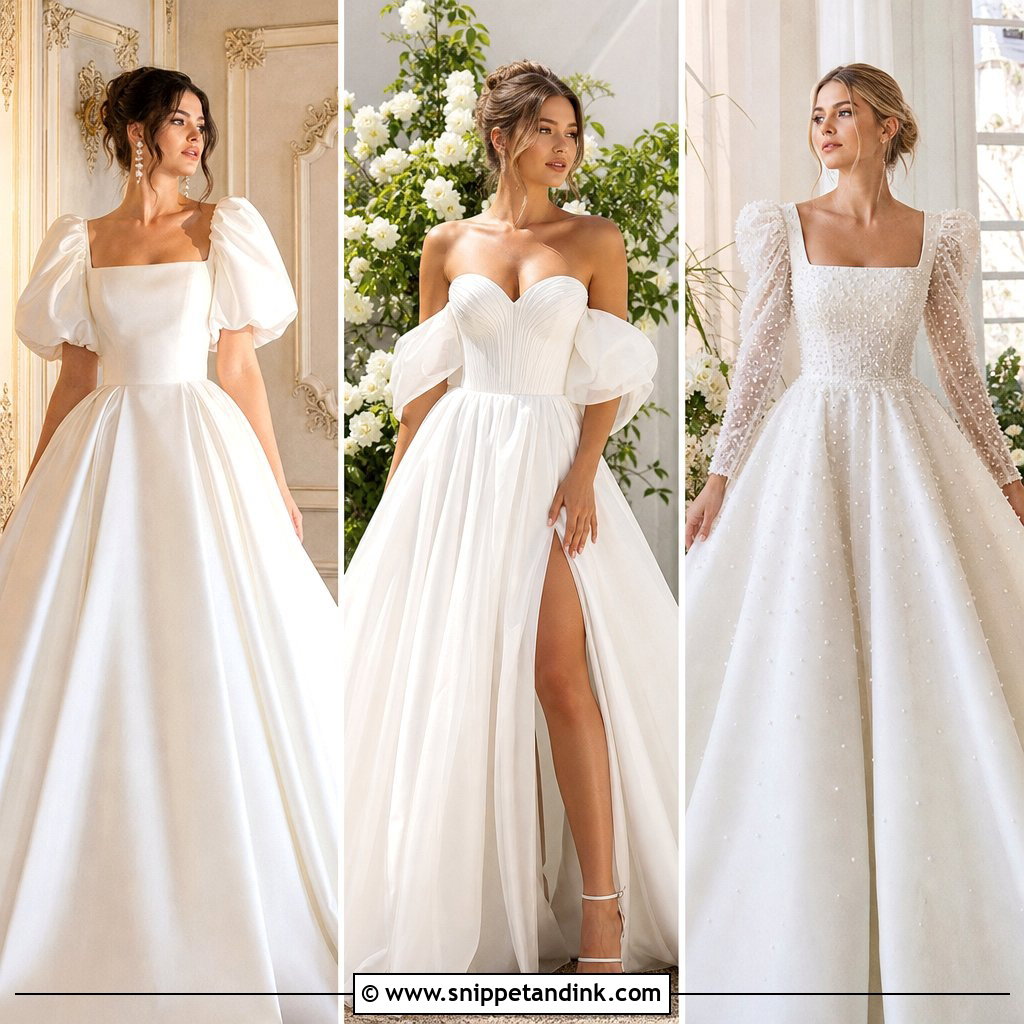
Pearls glow rather than glitter, which I find kinder in close-up photos than rows of crystals. A pearl-covered bodice over smooth satin or layered tulle looks rich without sparkling at every flash. Look for varied pearl sizes, securely sewn along the neckline, waist and upper skirt. Keep the extras on theme: pearl studs, a slim pearl headband and closed-toe ivory heels, with a plain chapel veil and neat low bun. Detachable pearl-dotted sleeves add coverage. Sit and move in it at the fitting; raised pearls at the waist can press when you’re seated for dinner.
10. Ruffle Skirt Princess Wedding Dress
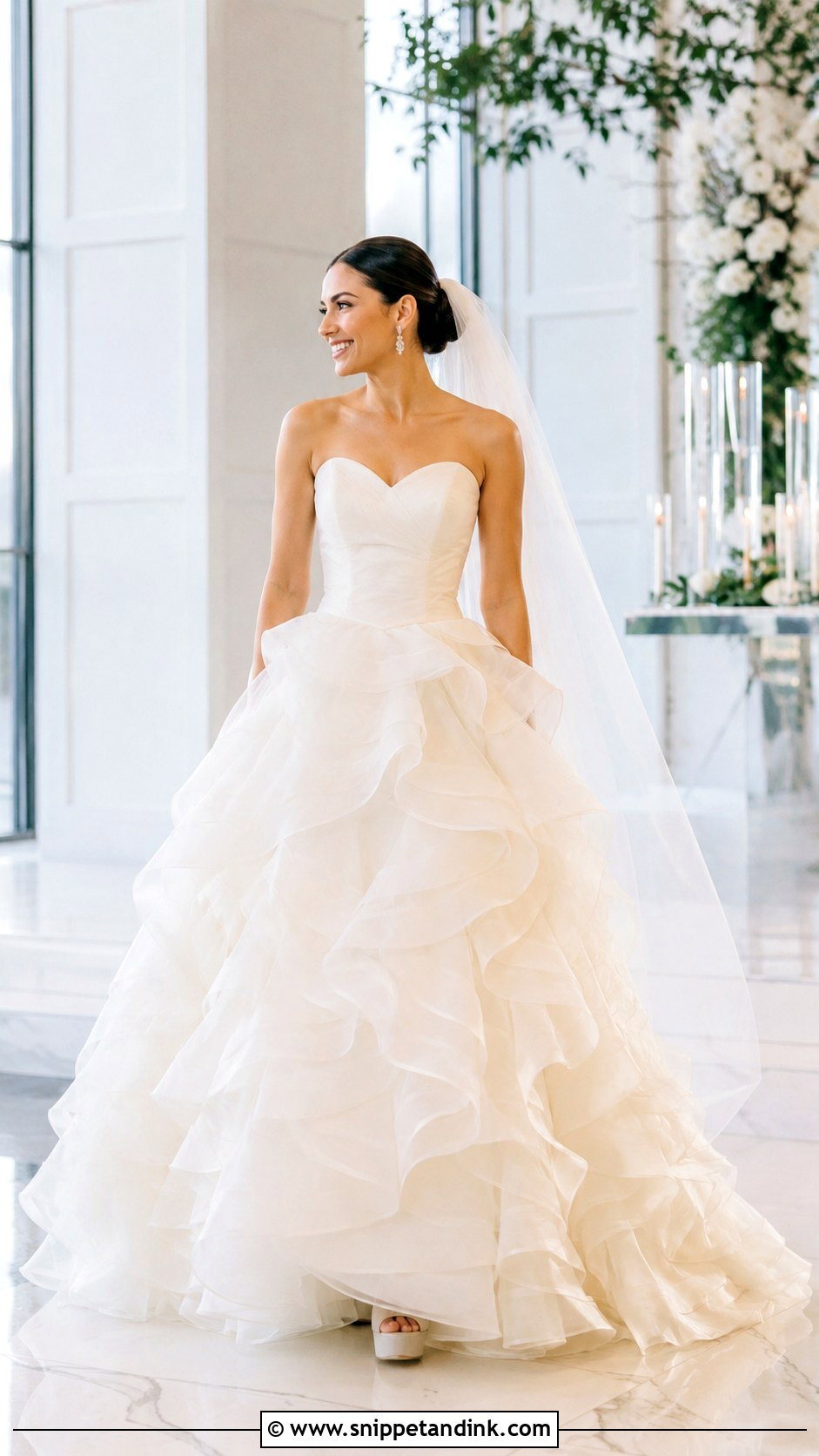
Ruffles are maximum volume. Since the skirt does so much, keep the bodice plain with a straight, sweetheart or soft V-neck. Organza ruffles look crisp; tulle ruffles look like cloud. A sleek updo, small crystal earrings and platform heels for height and stability under the layers complete it, with a simple veil. For petite brides I’d choose narrower ruffles that run vertically, which keeps the eye moving up and down. The most common problem I see is a hem left too long. Ruffled layers that touch the floor catch under your toes on every step, so have the lowest tier lifted clear.
11. Basque Waist Princess Wedding Dress
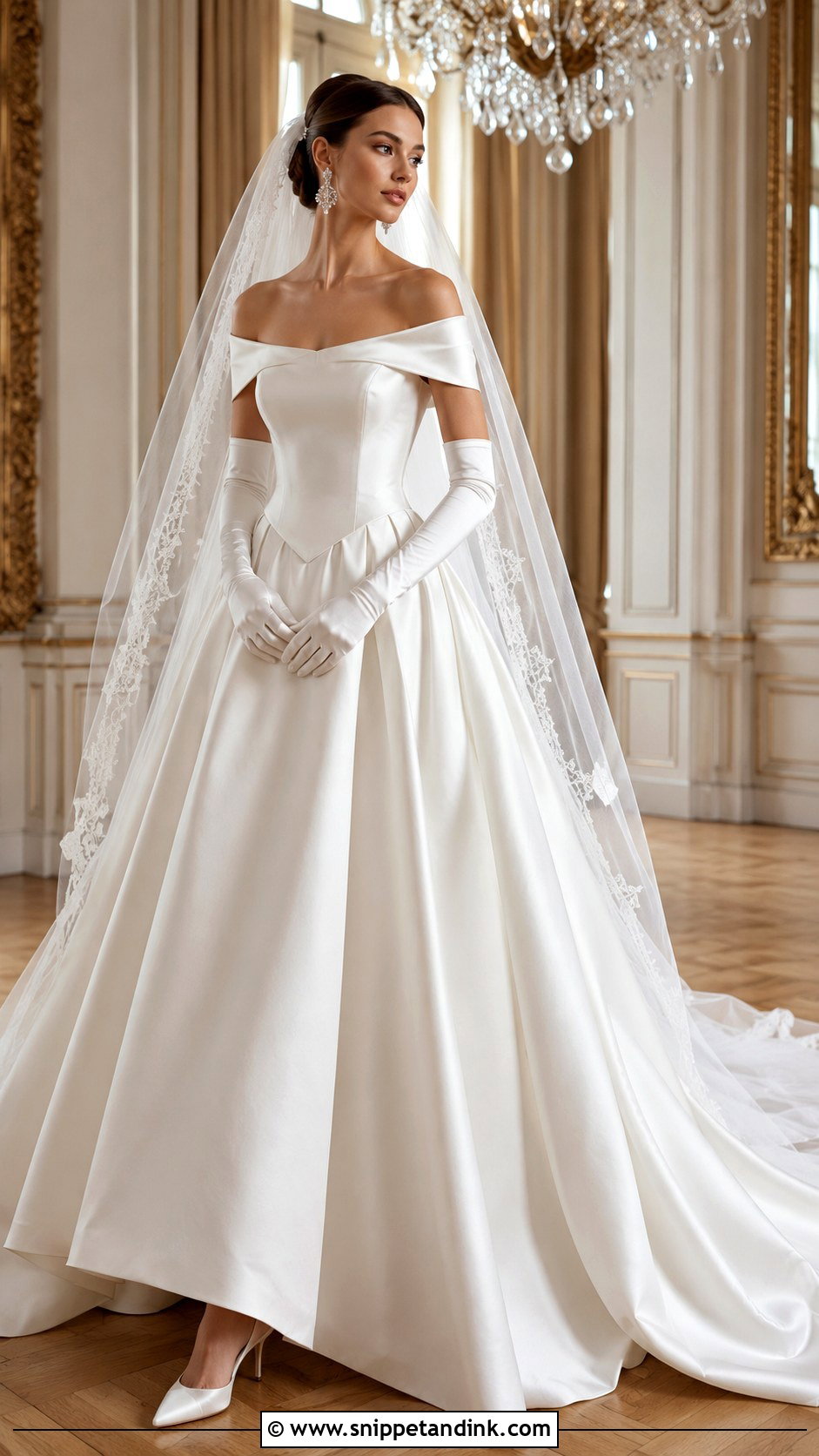
A basque waist dips into a soft V at the front, lengthening the torso and making the skirt look even wider. It’s most regal in structured satin, Mikado or draped taffeta. Pick a scoop, square or off-the-shoulder neckline by how much coverage and support you want. Elbow-length gloves, crystal earrings, pointed pumps and a cathedral veil under a smooth bun complete it. Never belt it. The point needs careful alteration so it lies flat without pressing into the hips when you sit, which is where I spend most of the fitting time on this style.
12. High Neck Princess Wedding Dress
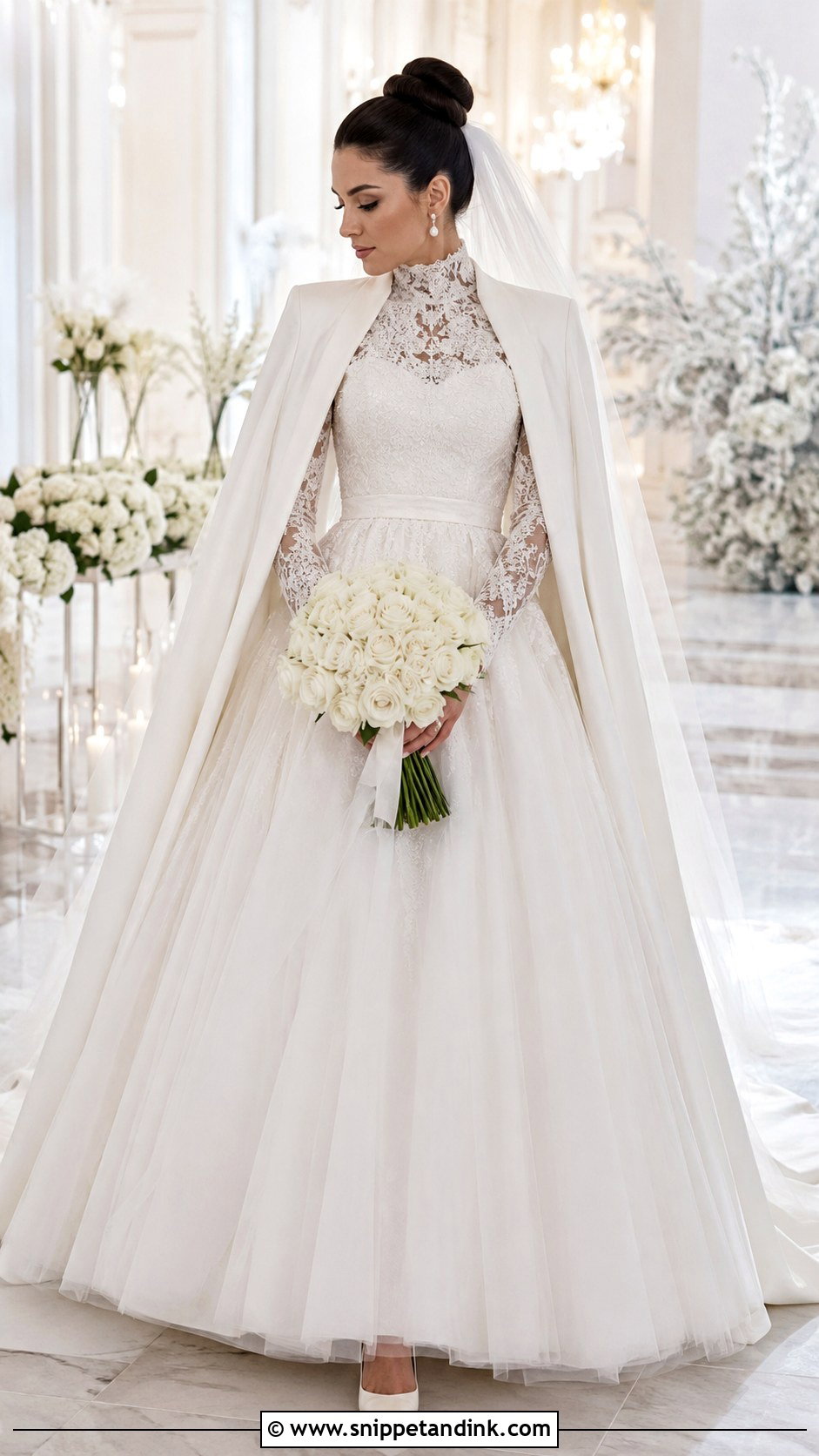
A high neckline on a huge gown gives coverage and calm. Sheer lace looks light; opaque satin looks clean and formal. Fitted sleeves or a sleeveless cut keep the top from competing with the skirt. A neat bun, small pearl earrings and ivory pumps are plenty, and no necklace, so the embroidery, buttons or lace edging can stand alone. Place the veil under the bun to keep back details on view. For a cold-season wedding, a tailored cape for outdoor photos does the job of a coat without hiding the gown.
13. Plus Size Princess Wedding Dress
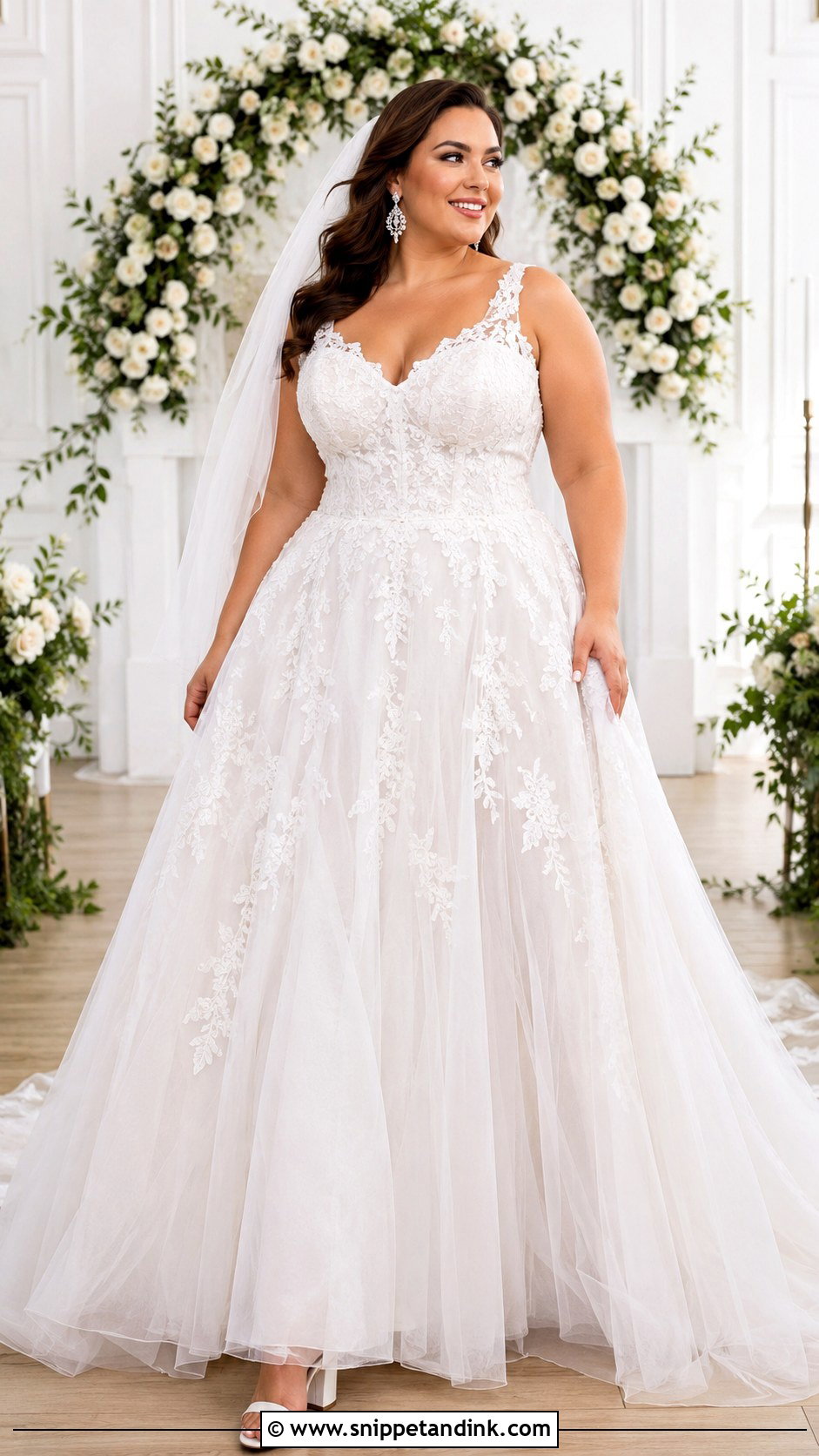
A well-built princess gown can look striking at any size, and I don’t follow rules about which bodies should wear which shapes. Fit and construction decide it. Supportive boning, wider straps, a stable neckline and a correctly placed waist make a full ball gown secure and comfortable. A smooth lining under lace or tulle stops itching, and lighter skirt layers make it easier to move. Supportive block heels, statement earrings and a veil length to suit the venue complete it, with a half-up style. Shop where samples come in a real range of sizes, and don’t judge a gown until it’s clipped properly. Good alterations change balance, support and confidence more than anything else.
14. Petite Princess Wedding Dress
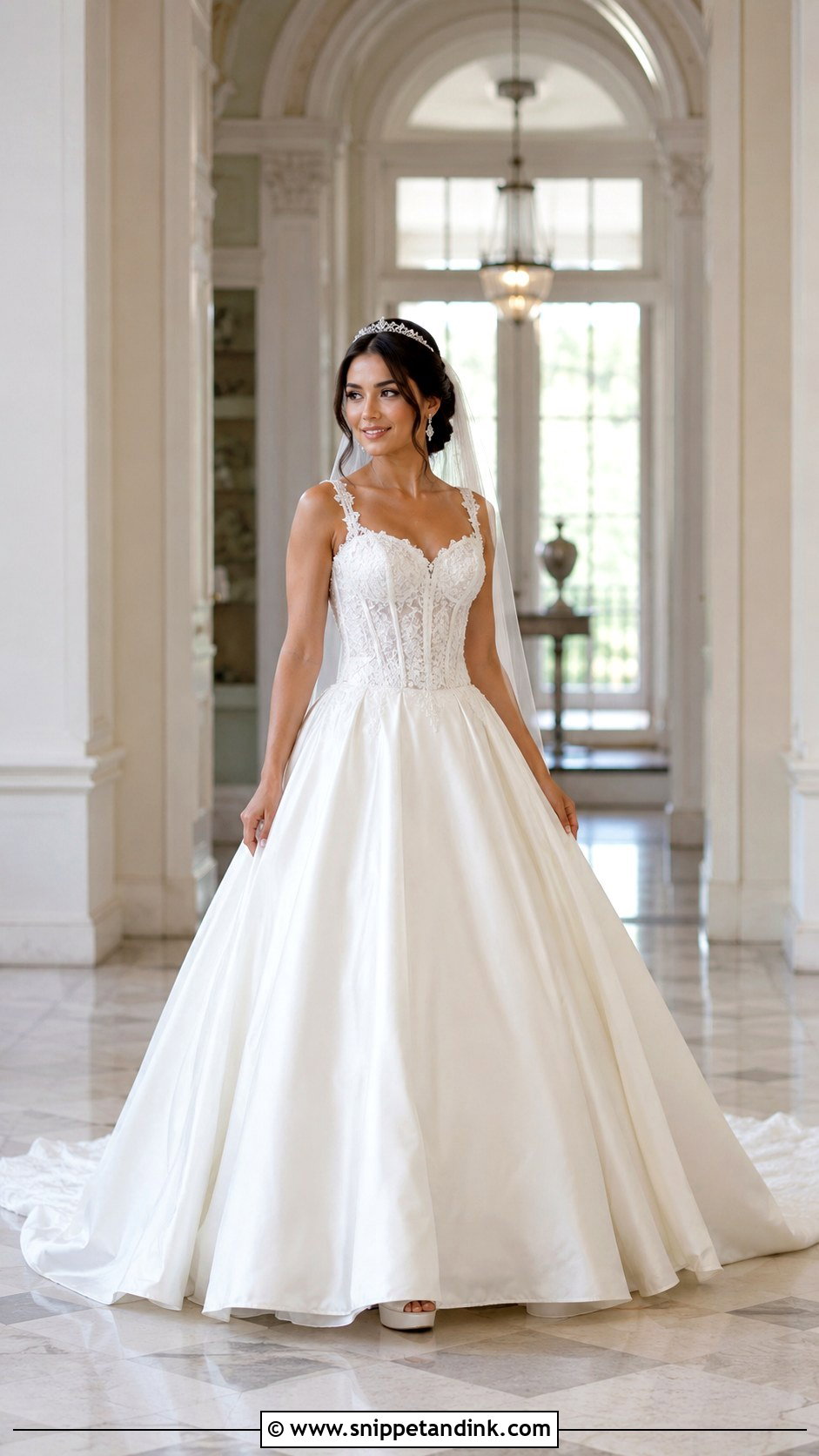
Petite brides can carry a big gown; it’s the proportions that need managing. I look for a fitted bodice with the waist placed at or just above the natural line, and a skirt that widens gradually instead of jutting out from the hip. Vertical lace, unbroken satin panels and a moderate train help lengthen the figure. Platforms, delicate earrings and a narrow tiara finish it without clutter, with a chapel veil that’s easier to manage than an extra-long one. Keep the bouquet moderate so it doesn’t hide the waist. Most important: have the gown shortened from the right points, often the waist rather than the hem, so lace borders and ruffles stay where they were designed to sit.
15. Blush Princess Wedding Dress
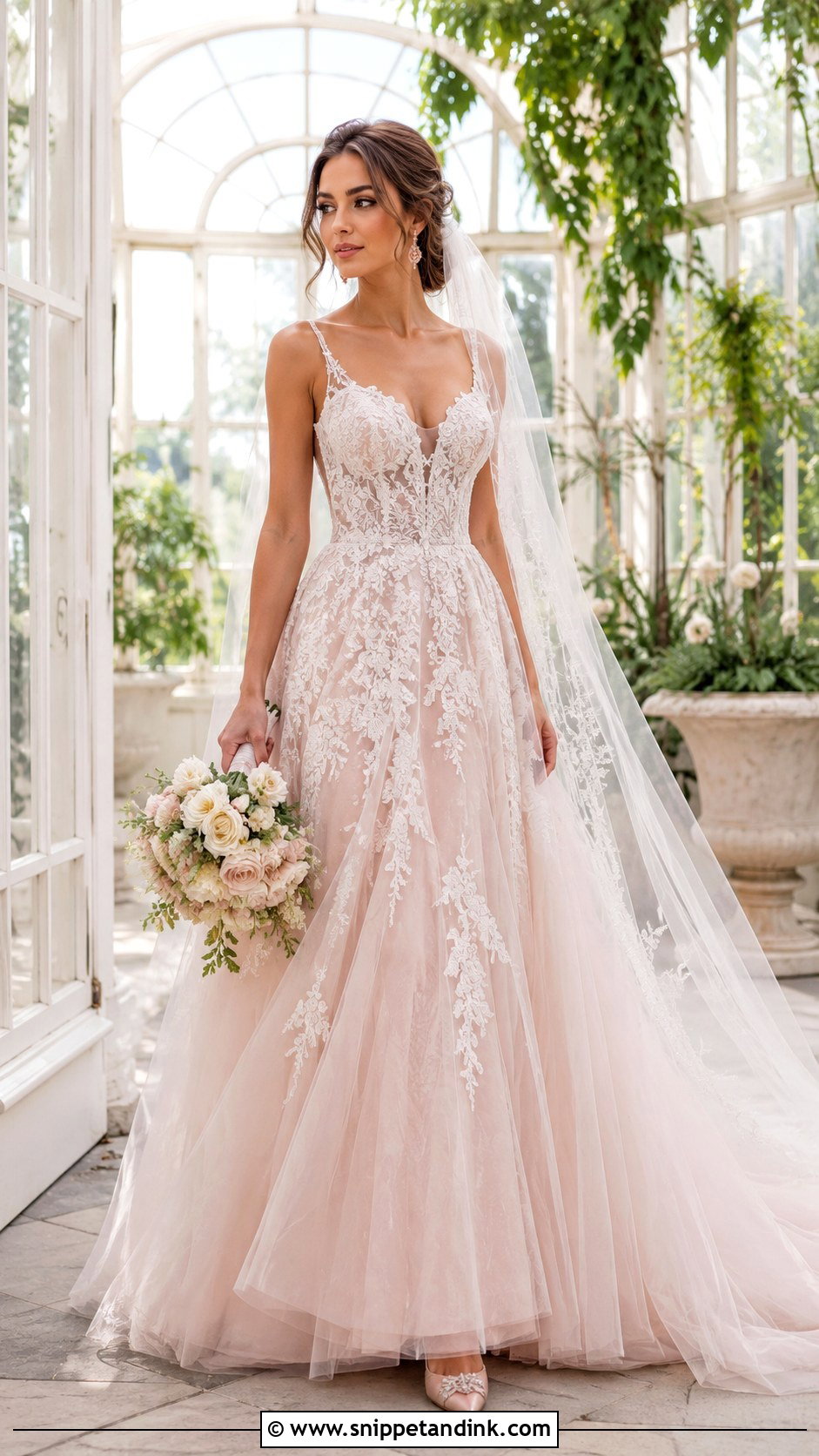
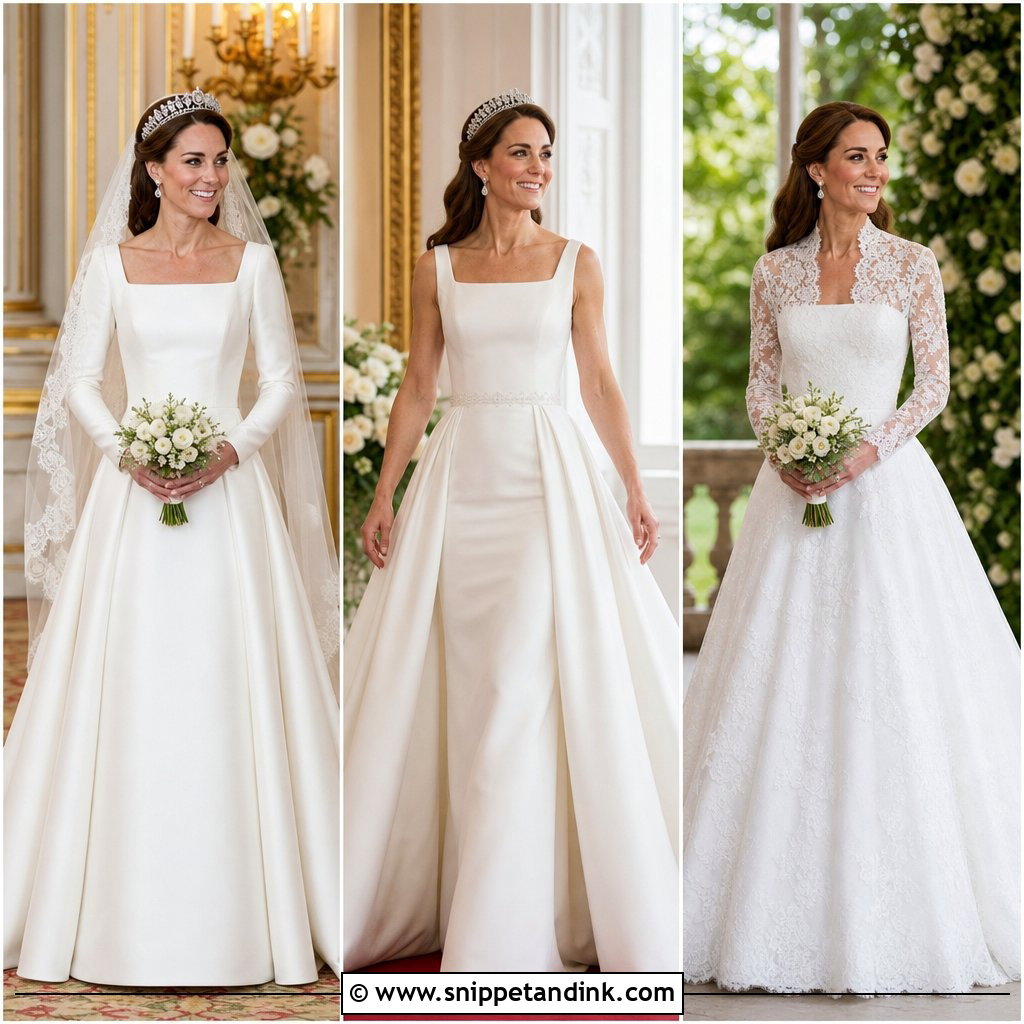
Blush can be a lining behind ivory lace, a fully pink tulle skirt or a barely-there rosy tone. Try it under daylight and under indoor bulbs, because the same blush can look peach on one skin tone and nearly white on another. Champagne or ivory shoes, rose-gold earrings and a sheer ivory veil that lets the color show through all work. Soft waves, a half-up style or a low bun suit the palette. Keep the bouquet ivory, pale pink or fresh green so it doesn’t clash. It reads as color while staying clearly bridal.
16. Ivory Brocade Princess Wedding Dress
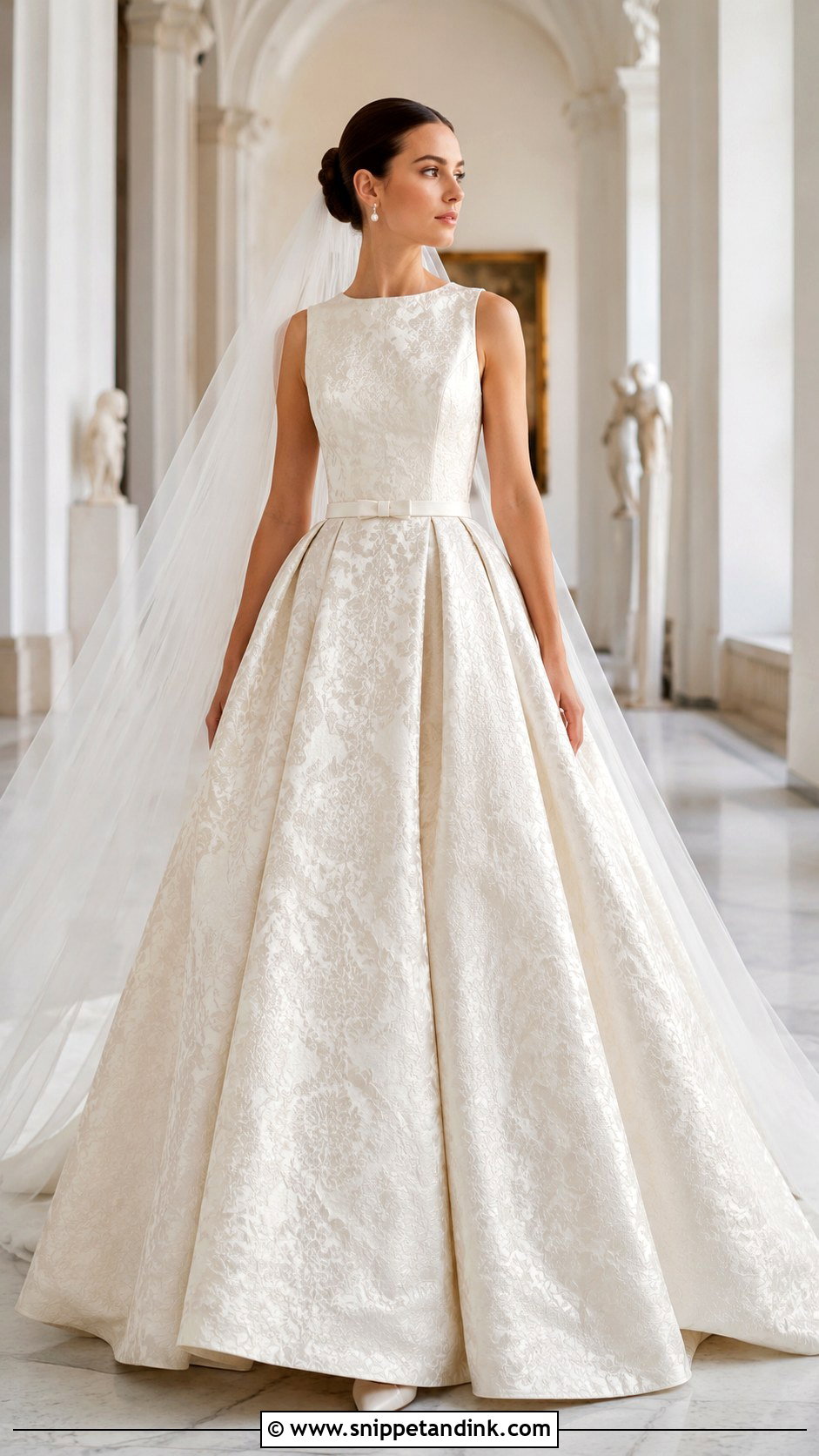
Brocade has its pattern woven into the cloth, so the texture shows as light shifts across the skirt, no beads needed. Choose a clean neckline and few seams so the fabric stays the feature. A smooth bun, gold or pearl earrings, pointed satin shoes and a plain cathedral veil keep it regal, and a narrow matching ivory belt adds definition if you want it. Brocade is often heavier than tulle, so walk, sit and turn in it before deciding. A supportive petticoat spreads the weight, and a solid bustle makes the evening manageable.
17. Bow Back Princess Wedding Dress
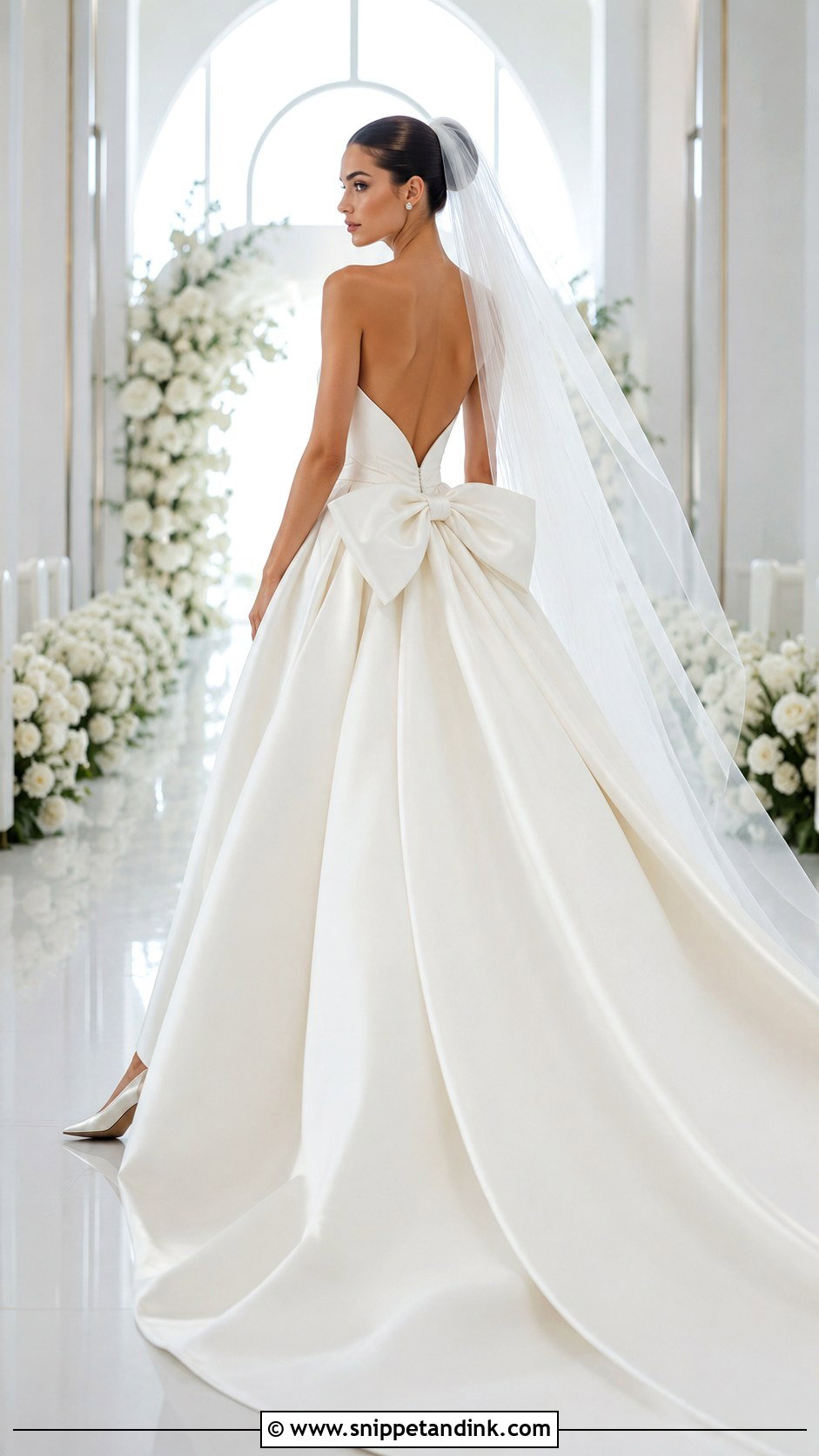
An oversized bow at the back gives one big moment instead of embellishment everywhere. It’s best on a clean satin or Mikado ball gown with a long structured train. I recommend a detachable bow, both for a simpler reception look and so whoever bustles the train can reach the hooks. A sleek bun, crystal studs and pointed ivory pumps finish it; place the veil above or below the bow depending on its size. Keep the front minimal. During alterations, check the bow sits level and holds its loops. Large bows collapse without interfacing or strong internal fastenings.
18. Detachable Sleeve Princess Wedding Dress
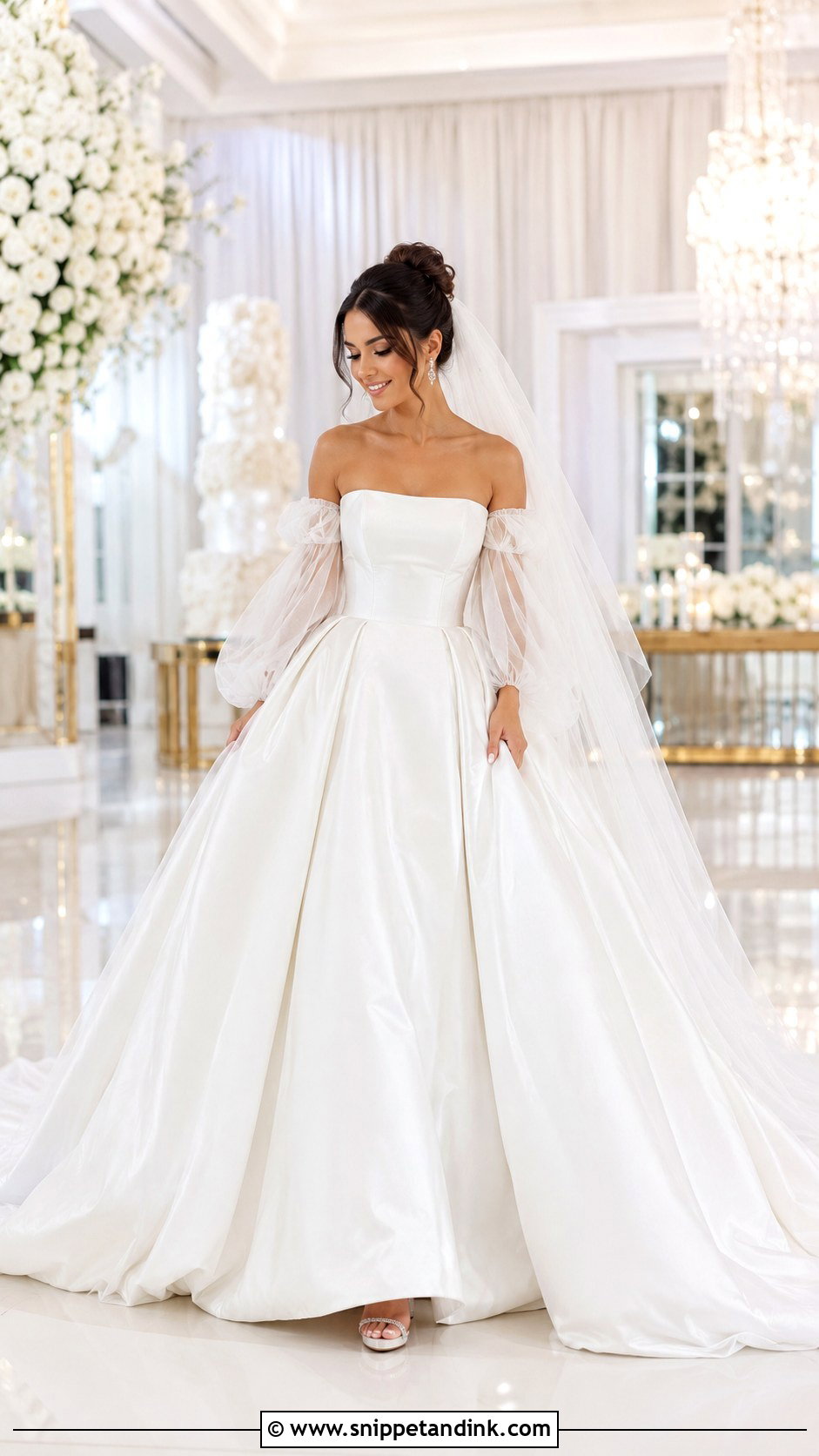
Detachable sleeves give you two necklines. Start the ceremony in fitted lace sleeves, soft puff sleeves or off-the-shoulder drapes on a structured bodice, then remove them for a strapless or sleeveless look on the dance floor. Drop earrings, a polished updo and heels that suit both versions, plus a long veil you can also remove. Ask exactly how the sleeves attach. Hidden snaps or concealed buttons sit flatter than visible elastic. Practice taking them off once before the day so it’s quick and doesn’t disturb your hair and makeup.
19. Bridal Cape Princess Wedding Dress
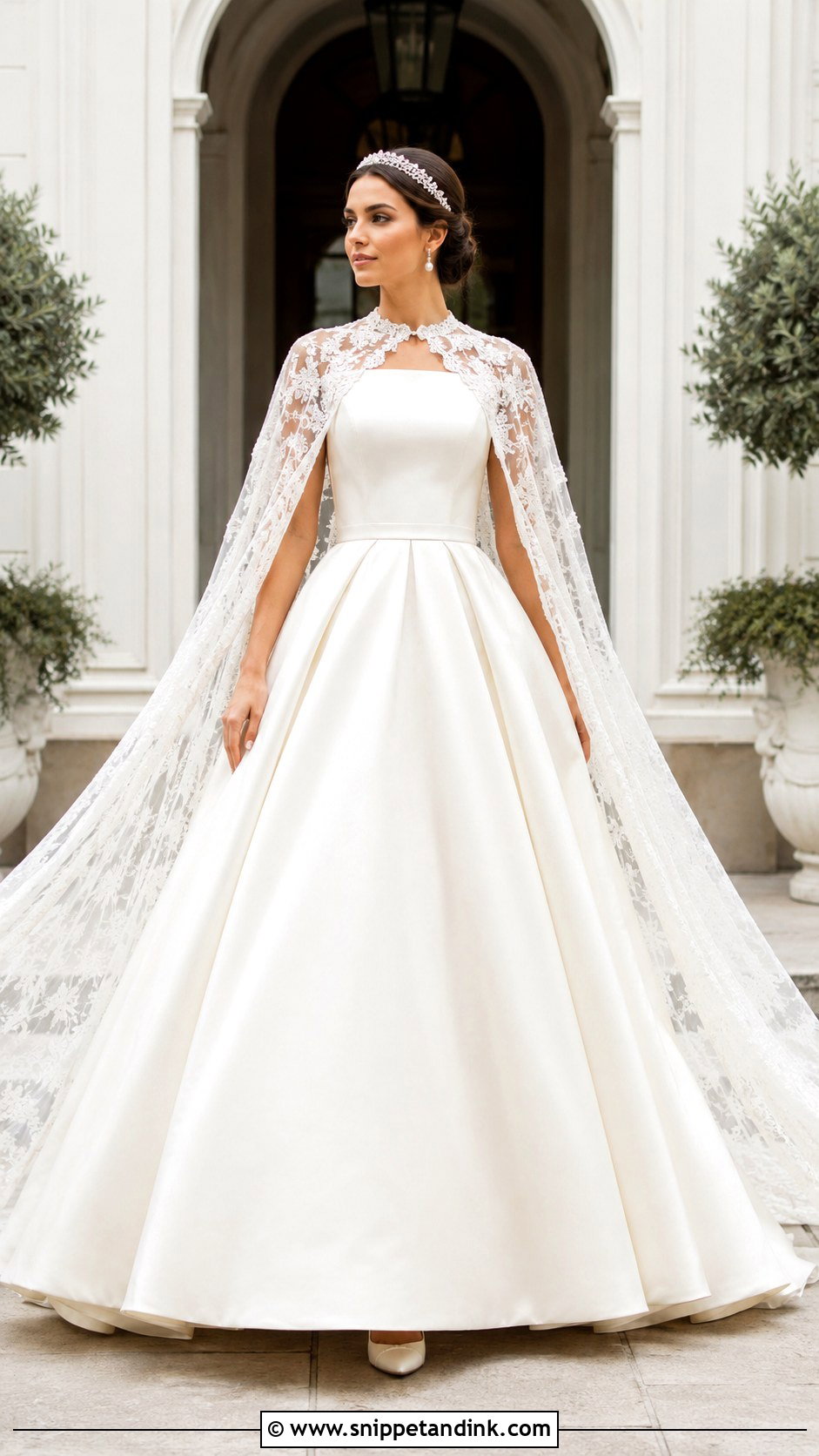
A cape adds grandeur and covers the arms without sleeves. Sheer tulle with fine lace is soft; structured satin is more royal. Keep the gown underneath simple, with a defined waist, so the cape’s movement reads clearly. An elegant bun, a jeweled headband, pearl earrings and closed-toe pumps complete it. Usually I’d let the cape replace the veil, since both together crowd the back. Check the fastening at the neck: a heavy cape pulls backward, and if the closure isn’t comfortable you’ll feel it every minute. Detachable versions come off when you want to move freely.
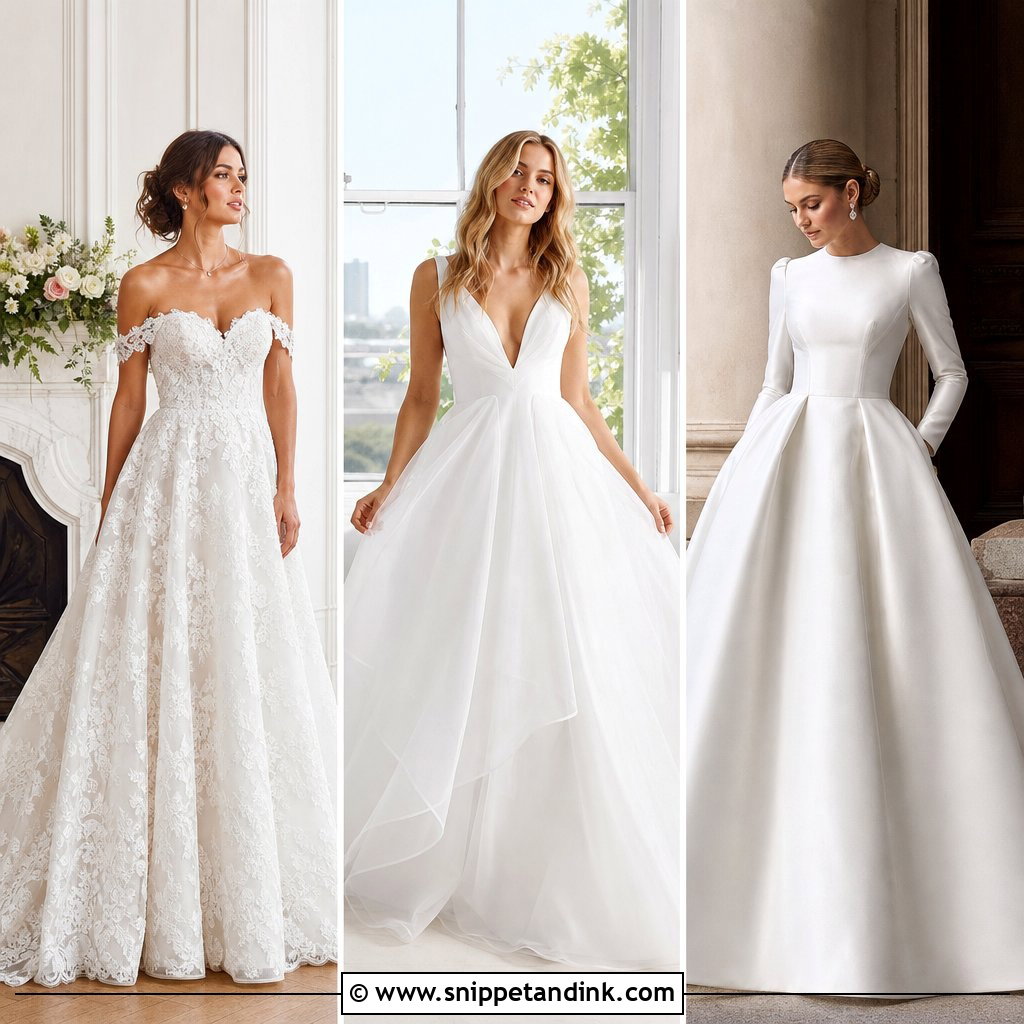


20. Minimalist Modern Princess Wedding Dress
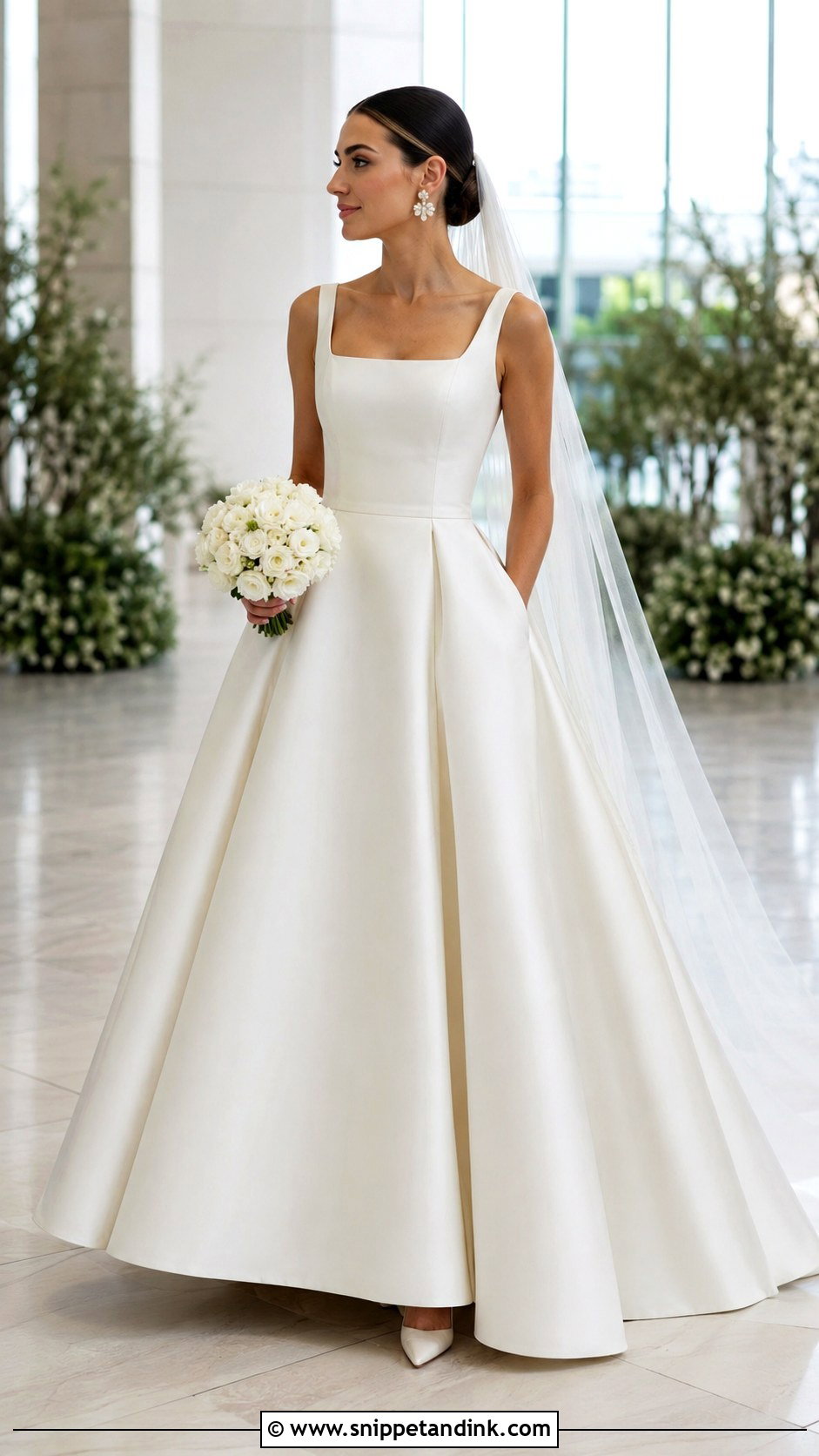
A big silhouette doesn’t need decoration to make an impact. Smooth satin or Mikado, precise seams and a wide sculpted skirt carry it. Look for a straight, scoop or square neckline on an expertly fitted bodice; hidden pockets and covered back buttons add detail without clutter. A sleek bun, architectural earrings, pointed pumps and a plain cathedral veil finish it, with a compact, controlled bouquet. Tailoring matters more than in any other gown here, because plain fabric shows every pucker and fold. Done well, it looks intentional and dramatic rather than stiff.
Stairs, Bathroom Breaks and Dinner in a Ball Gown
The practical side of a big skirt is where brides need coaching, so I walk them through it at the last fitting.
- Going up stairs, lift the front of the skirt a few inches with both hands and step into the space; going down, hold the front just clear and take it slowly.
- For the bathroom, one bridesmaid gathers the whole skirt from behind and lifts it up and forward. Facing the cistern often makes this easier. A dedicated undergarment slip that bunches the layers is worth considering.
- At the table, sit toward the front edge of the chair and spread the back of the skirt so you’re not sitting on a hoop or a fold of satin.
- Bustle before dinner, not after, so the train isn’t trodden on as guests move around.
Getting a Large Gown to the Venue Without Creases
Ask the shop for a garment bag with a wide gusset, and never fold the skirt in half to fit a smaller bag. For a long drive, lay the gown flat across a back seat or hang it from the highest hook with the train loosely gathered beside it. Hang it up as soon as you arrive, ideally from a high door frame so the hem doesn’t touch the floor.
Steam it the day before or that morning, working from the inside of the skirt outward. Satin and Mikado take a handheld steamer well, held a little away from the surface. Never iron tulle or organza directly; they can scorch or melt. If a bridal shop offers a steaming service close to the date, I’d book it.
Volume Is Only Half of a Princess Gown
A princess gown works when the volume is matched by fit, support and accessories that feel personal. Start with the fabric family you like: satin, tulle, lace, brocade or beadwork. Then sort out the neckline, waist placement, train and skirt weight, which affect comfort as much as looks. Try each gown while walking, sitting, turning and raising your arms, and bring shoes close to the heel height you’ll wear. Ask about the bustle before you order. Appliqués, sleeves, a cape or nothing at all, the complete look should leave you confident and able to enjoy the whole celebration.
You'll Like These Ideas:








Leave a Reply