
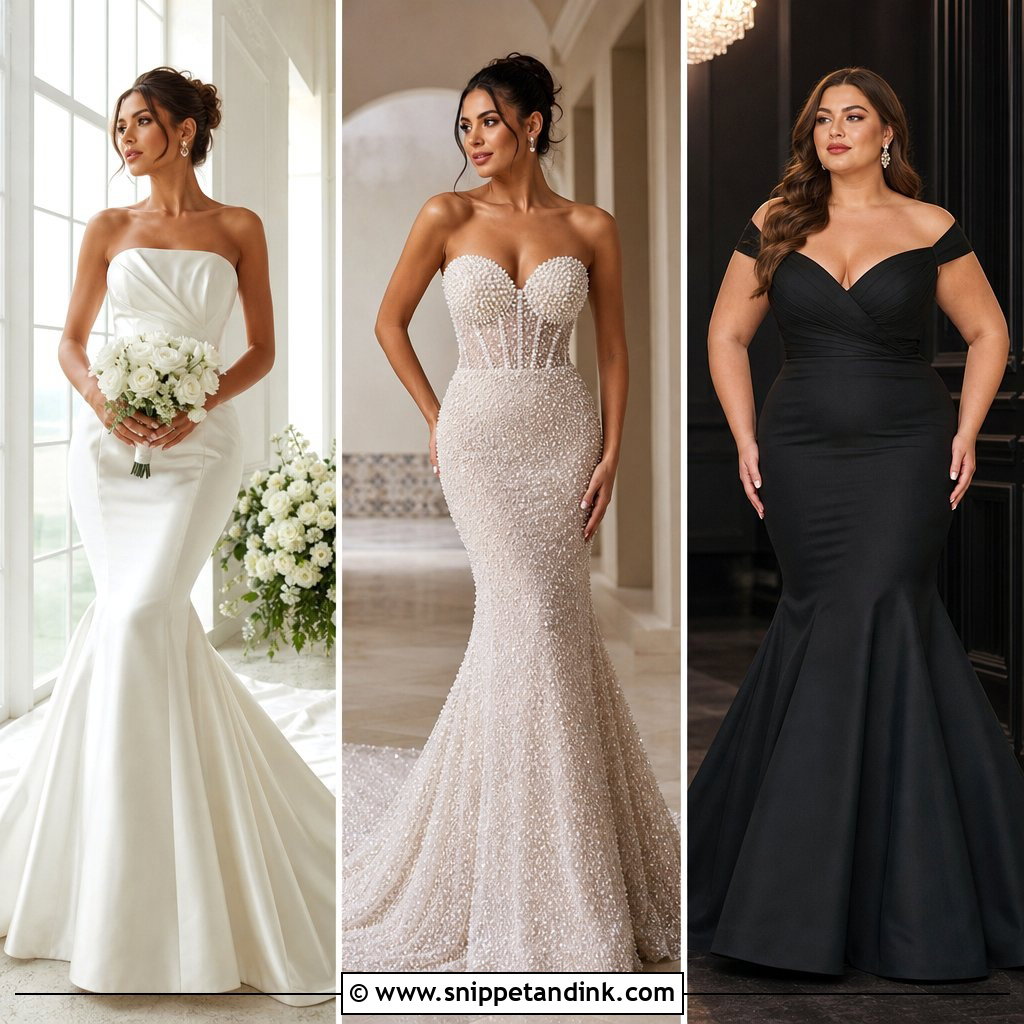
Most brides arrive at their first appointment with a picture of one dress and leave in something completely different. That isn’t indecision. A gown looks one way on a model and another way once you sit, walk and breathe in it, and the venue, season and the hours you’ll wear it all push the choice in a particular direction. Ball gowns, satin slips, romantic lace, corsets, drop and basque waists, bows, detachable skirts, tea lengths and simple courthouse dresses are all on the rails right now. Below are thirty of the shapes I pull most often in fittings, with what each one does well and where it can let you down.
What to Bring to Your First Appointment, and Who to Leave at Home
A first appointment usually lasts around an hour to ninety minutes, and you’ll try on more dresses than you expect. A little preparation makes that time far more useful.
- Wear smooth, skin-toned underwear and bring a strapless bra if you have one, so you can see how each neckline really sits.
- Bring shoes with roughly the heel height you plan to wear. Dress length looks completely different in flats and in heels.
- Keep the group small. Two or three people whose taste you trust is plenty; a big group tends to pull you toward their favourites.
- Save five or six photos of dresses you like and be ready to say what you like about each one. The neckline? The skirt? The fabric? That helps the stylist far more than the photo itself.
Try at least one shape you’d never choose. Plenty of brides end up in a silhouette they had ruled out from pictures.
1. Satin A Line Wedding Dress
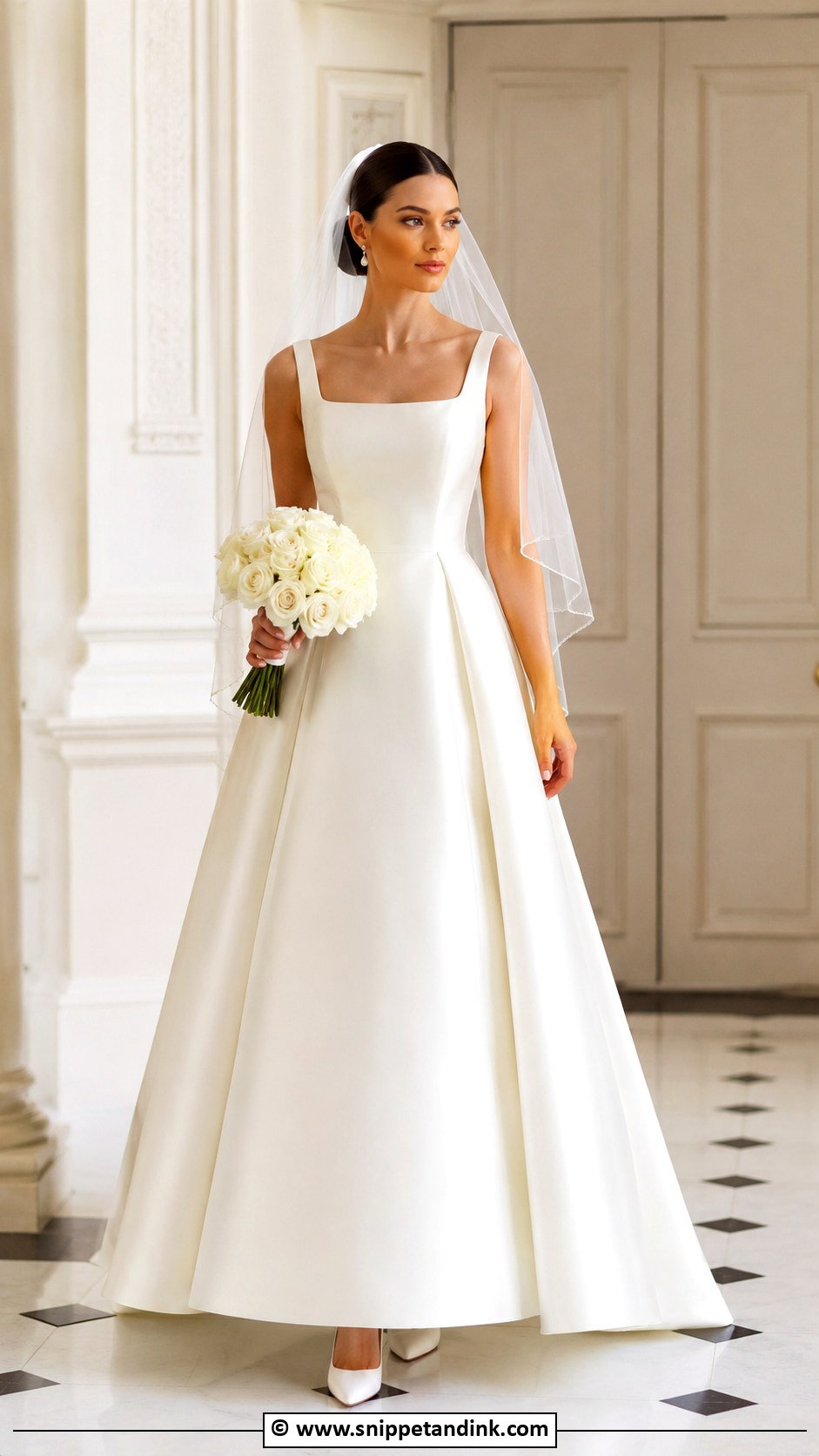
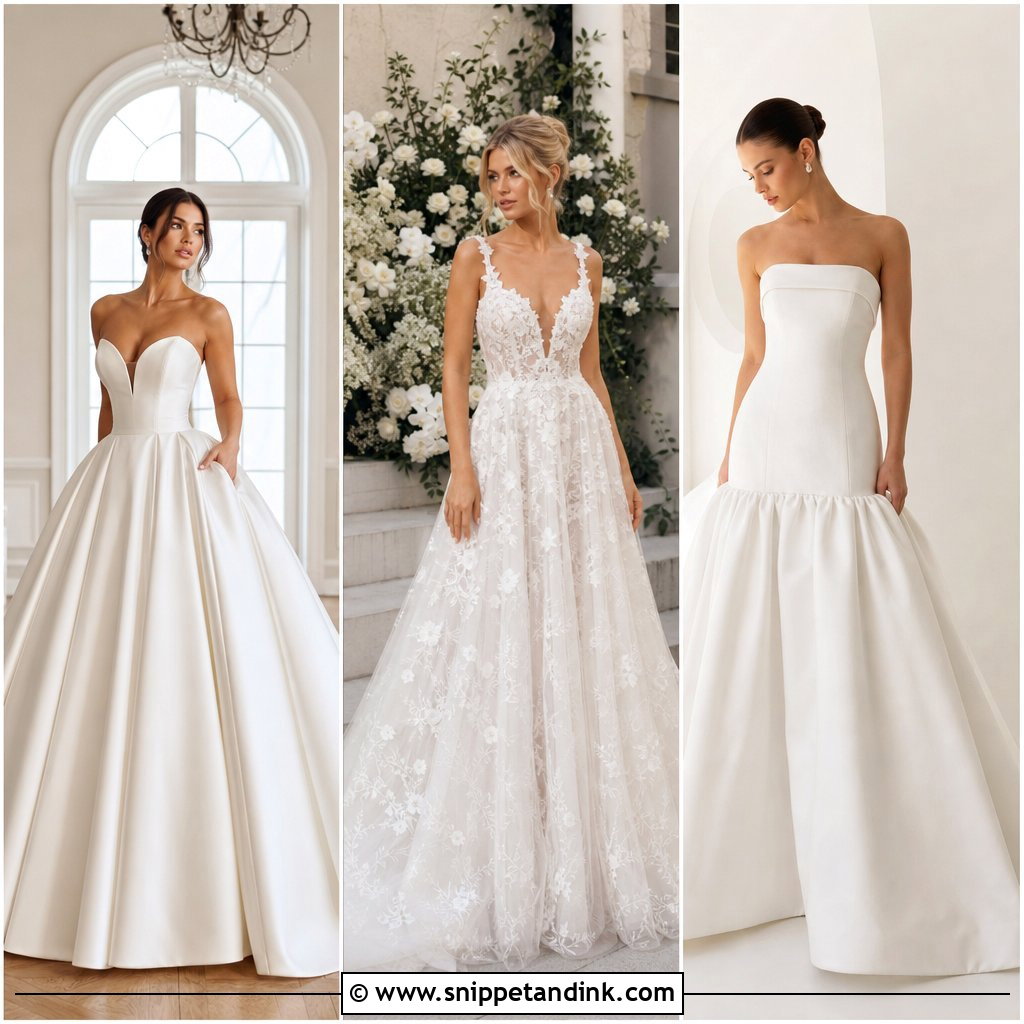
Satin and an A-line skirt are a forgiving pair: the fitted bodice marks the waist and the skirt falls clear of the hips without much volume. Satin’s sheen shows every pull, though, so the bodice fit needs to be exact or you’ll see creases radiating from the seams. Pearl earrings, a fingertip veil, ivory pumps and a low bun are enough on such a rich fabric. It suits ballrooms, gardens and city venues alike, and a small rose or orchid bouquet keeps the outline clean.
2. Lace Mermaid Wedding Dress
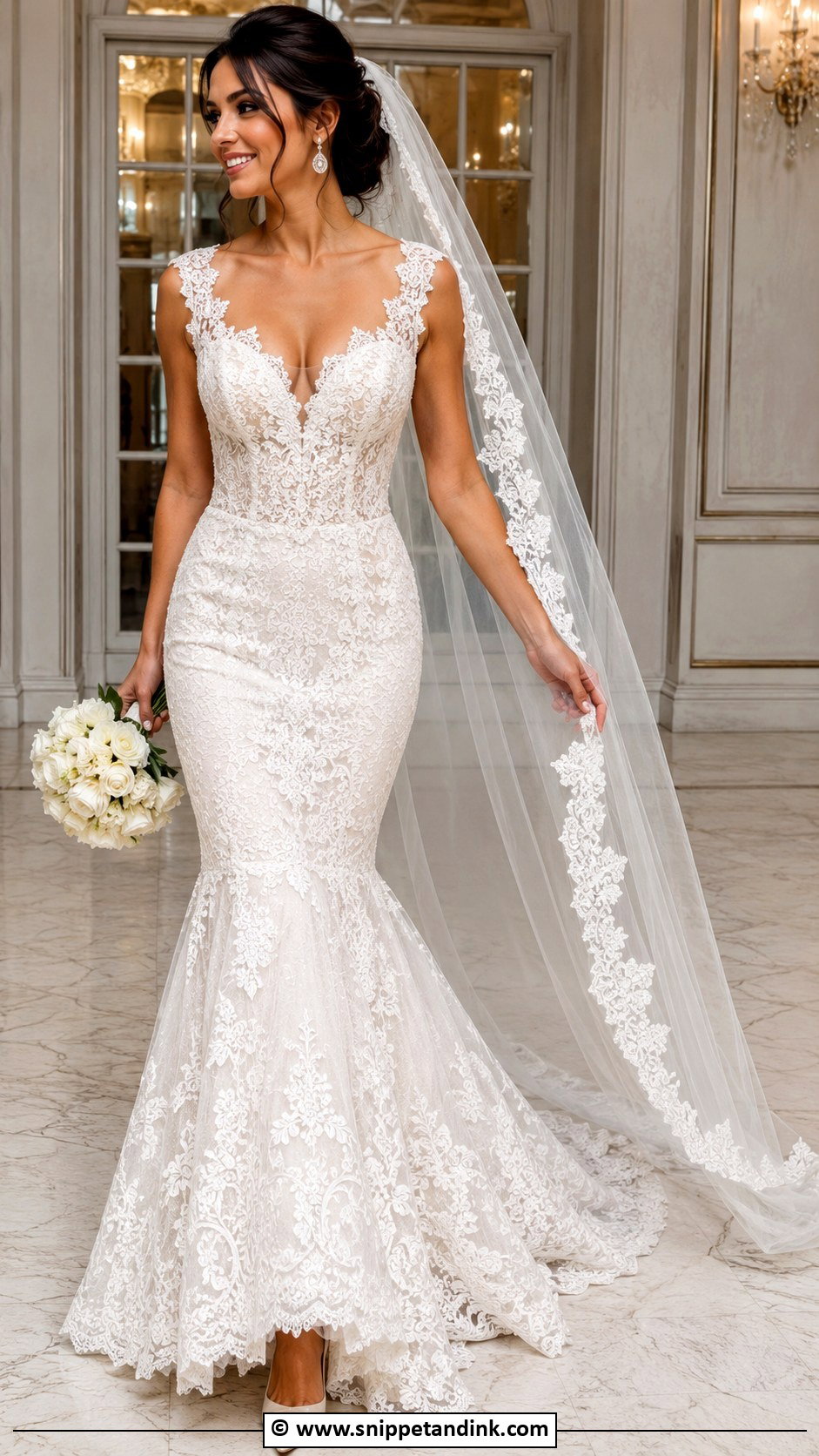
A mermaid hugs the bodice, waist and hips and flares near the knee, which gives the clearest hourglass of any shape here. With lace appliqué, illusion sleeves or a scalloped hem, it’s romantic as well as dramatic. Where the flare starts decides whether you can walk: at the knee it’s striking but restrictive, a few inches higher it’s far easier, especially on stairs. Pointed heels and a veil longer than the train suit an evening ceremony in a grand room.
3. Off Shoulder Wedding Dress
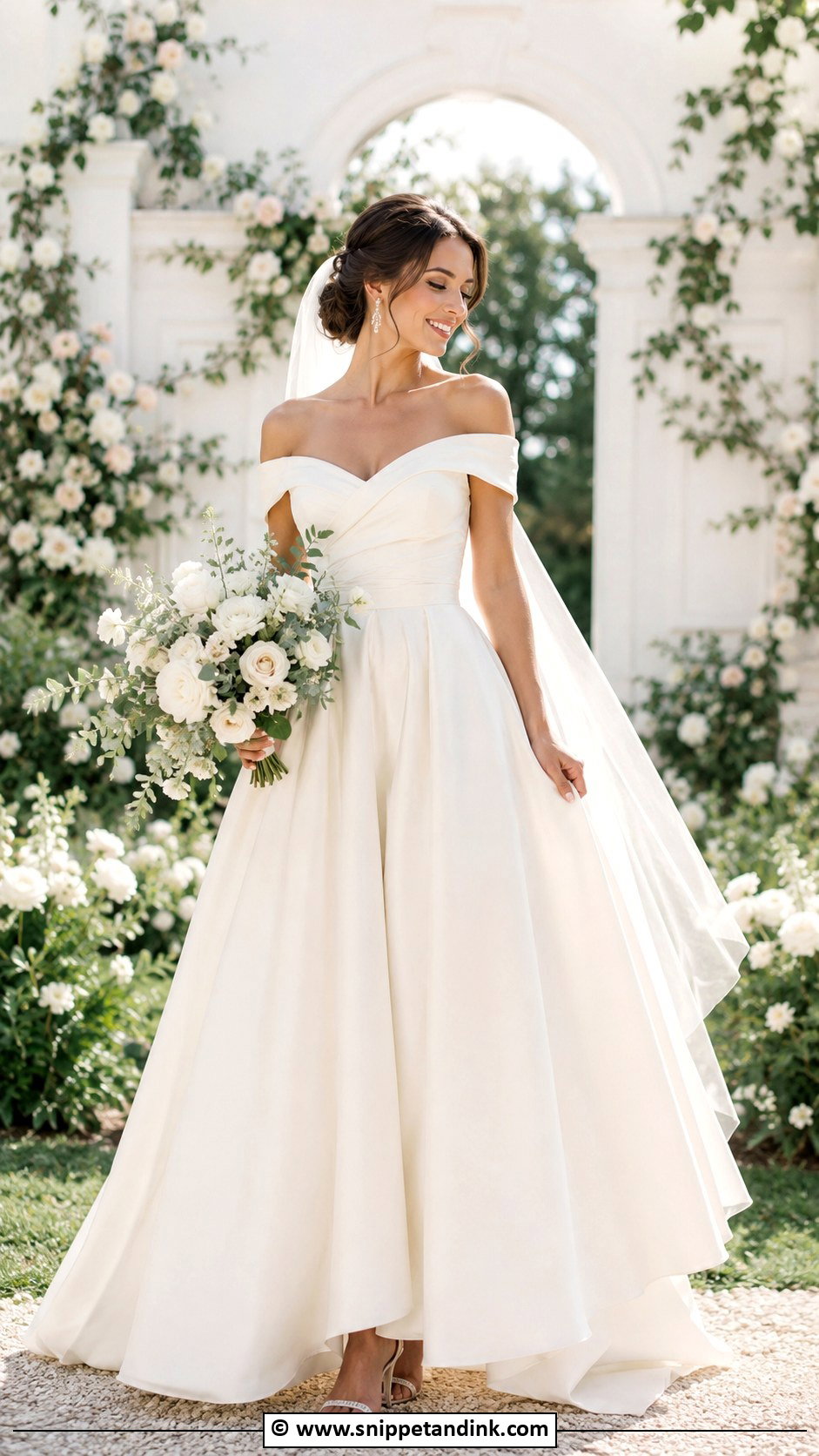
Off-shoulder necklines frame the collarbone and soften almost any skirt, from ball gowns to fitted shapes. The comfort question is the arms: with the sleeves sitting low on the upper arm, lifting your hands above shoulder height is limited, so try hugging and raising a glass at the fitting. Choose either a delicate necklace or statement earrings, not both. A cathedral veil suits a formal ceremony, and soft waves, a low chignon or a half-up style all work.
4. Long Sleeve Wedding Dress
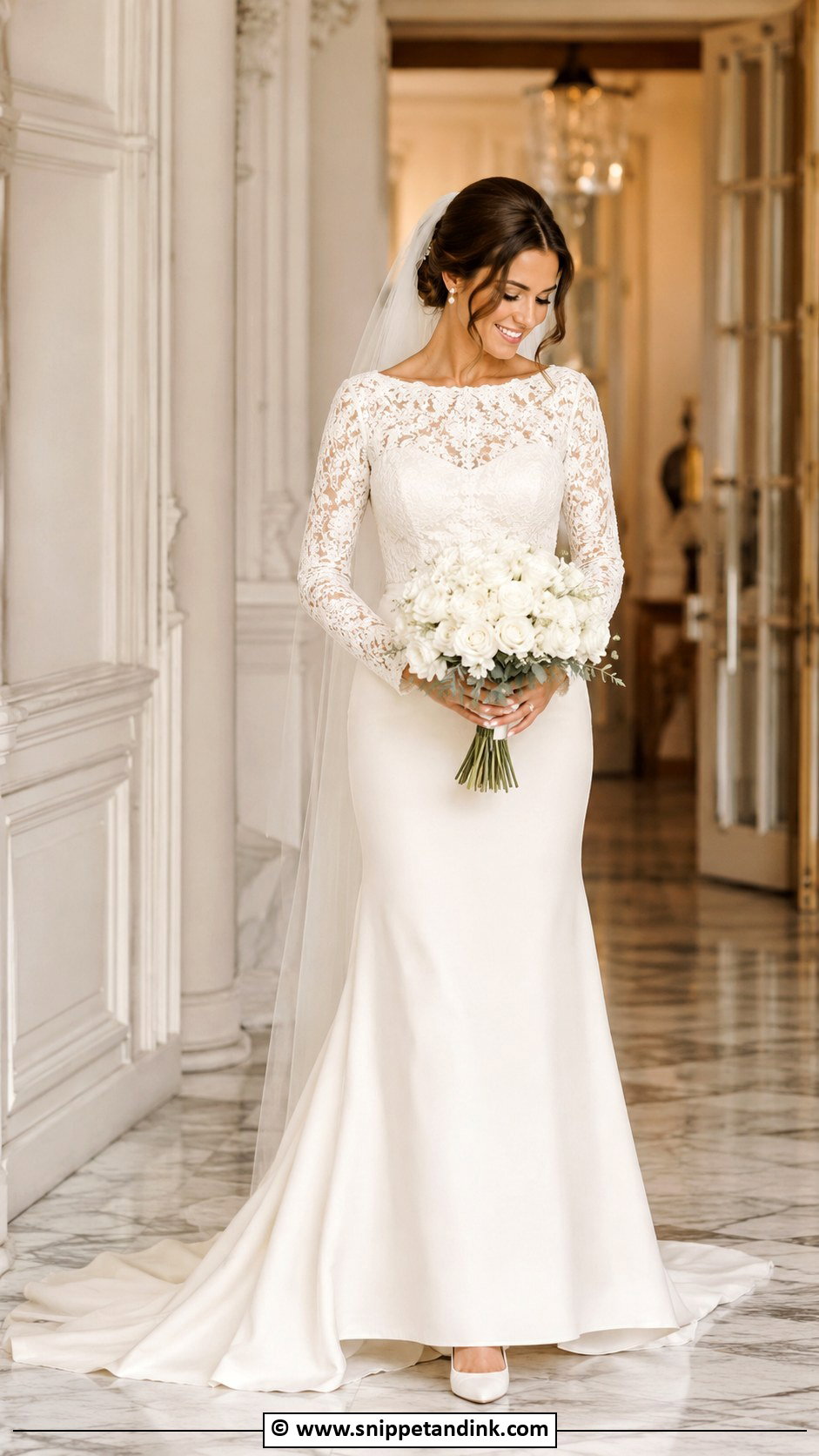
Long sleeves are what I suggest for autumn and winter, and in light lace or tulle they can work in spring too. Sheer lace, fitted crepe, satin and appliquéd tulle all make good sleeves. Check that you can bend your elbow fully and lift your arms; tight sleeves cut in when you hold a bouquet for an hour. An updo shows off the sleeve detail, and closed-toe heels with pearl studs keep the look consistent. Candlelit and historic venues suit it well.
5. Minimalist Crepe Wedding Dress
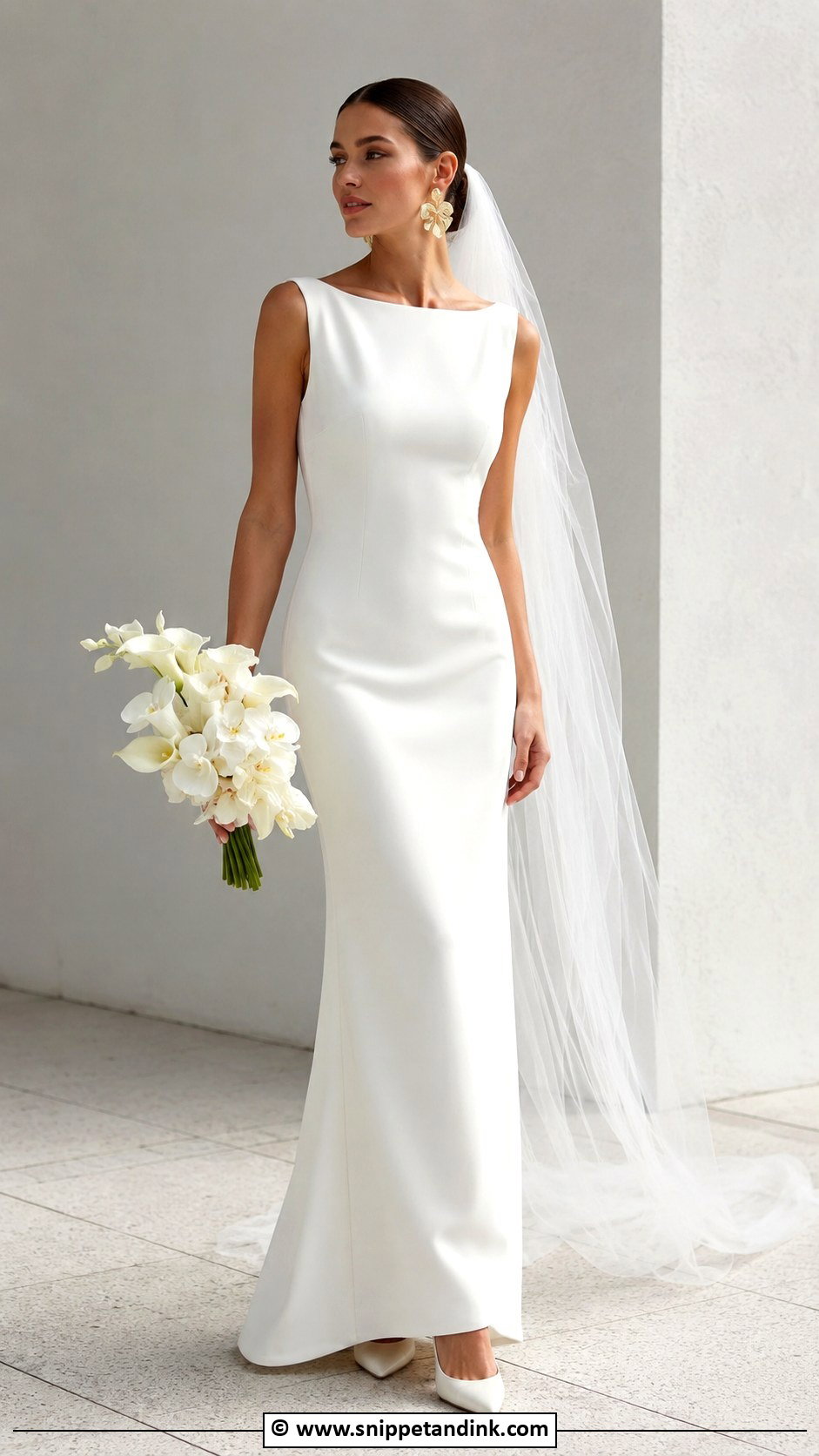
Crepe has a matte surface that shows off a clean cut, and that’s exactly why tailoring decides everything with a minimalist dress. With no lace or beading to distract the eye, a loose seam at the bust or waist is obvious. Square, high or strapless necklines and simple long sleeves are typical. Sculptural earrings, pointed pumps, a smooth bun and a long plain veil suit modern venues, galleries and courthouse ceremonies.
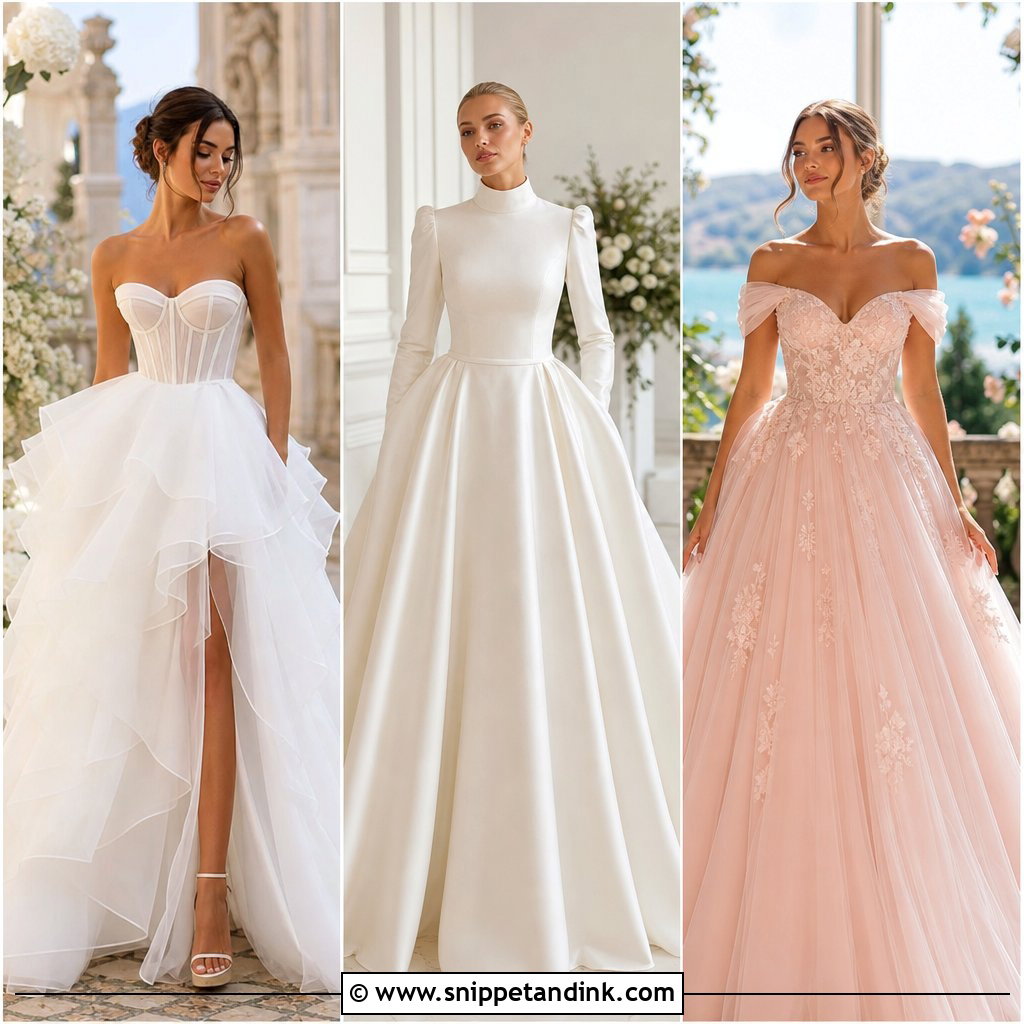
6. Strapless Ball Gown Wedding Dress
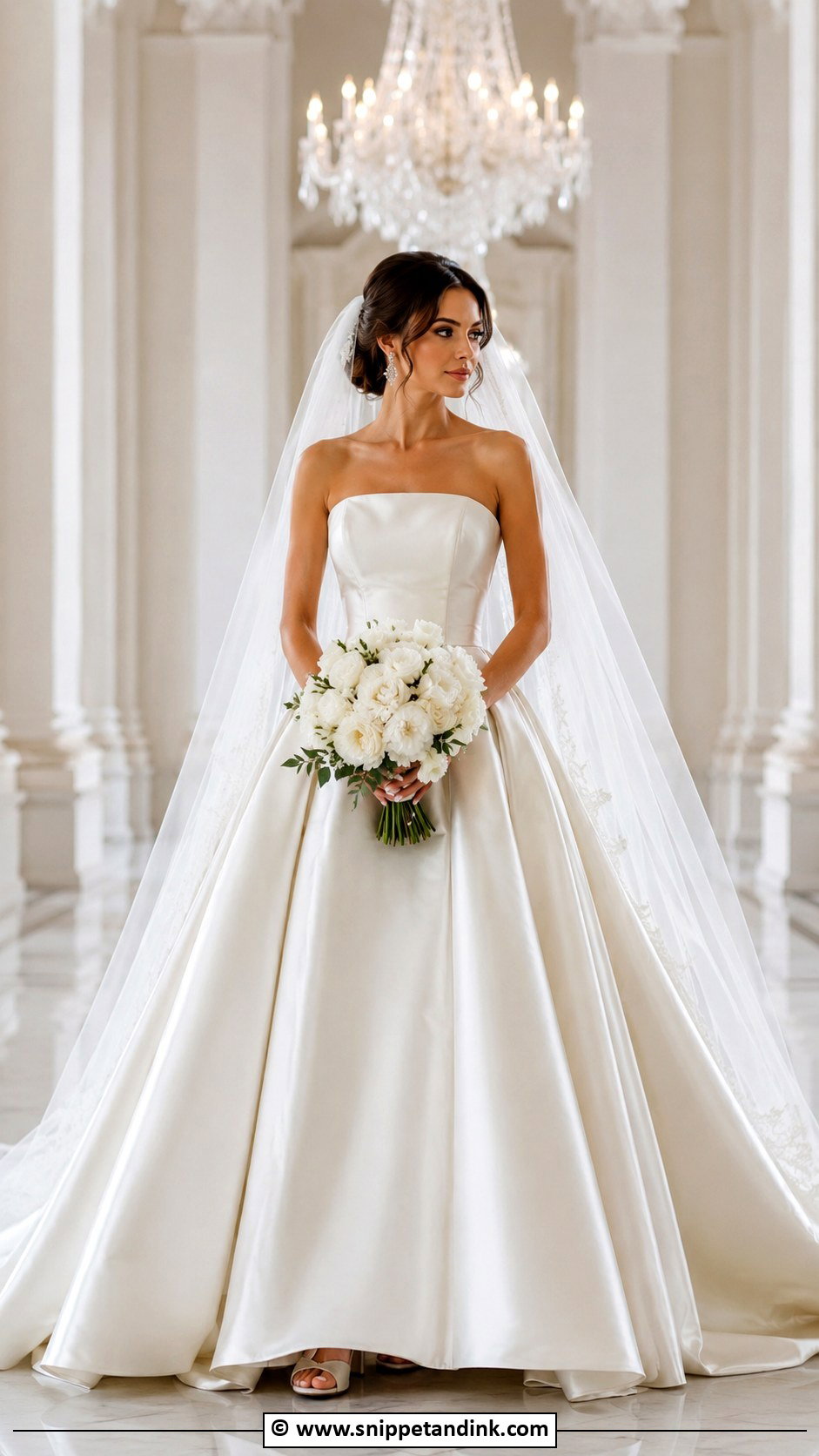
A strapless ball gown wedding dress is the grand entrance shape, with a fitted bodice and full skirt in satin, mikado, organza or layered tulle. A strapless bodice relies entirely on its internal structure, so it should feel snug at the fitting, with no gap when you lean forward. With that much skirt, a medium bouquet keeps the proportions right. Crystal earrings, a long veil and soft curls or a polished bun suit it.
7. Square Neck Wedding Dress
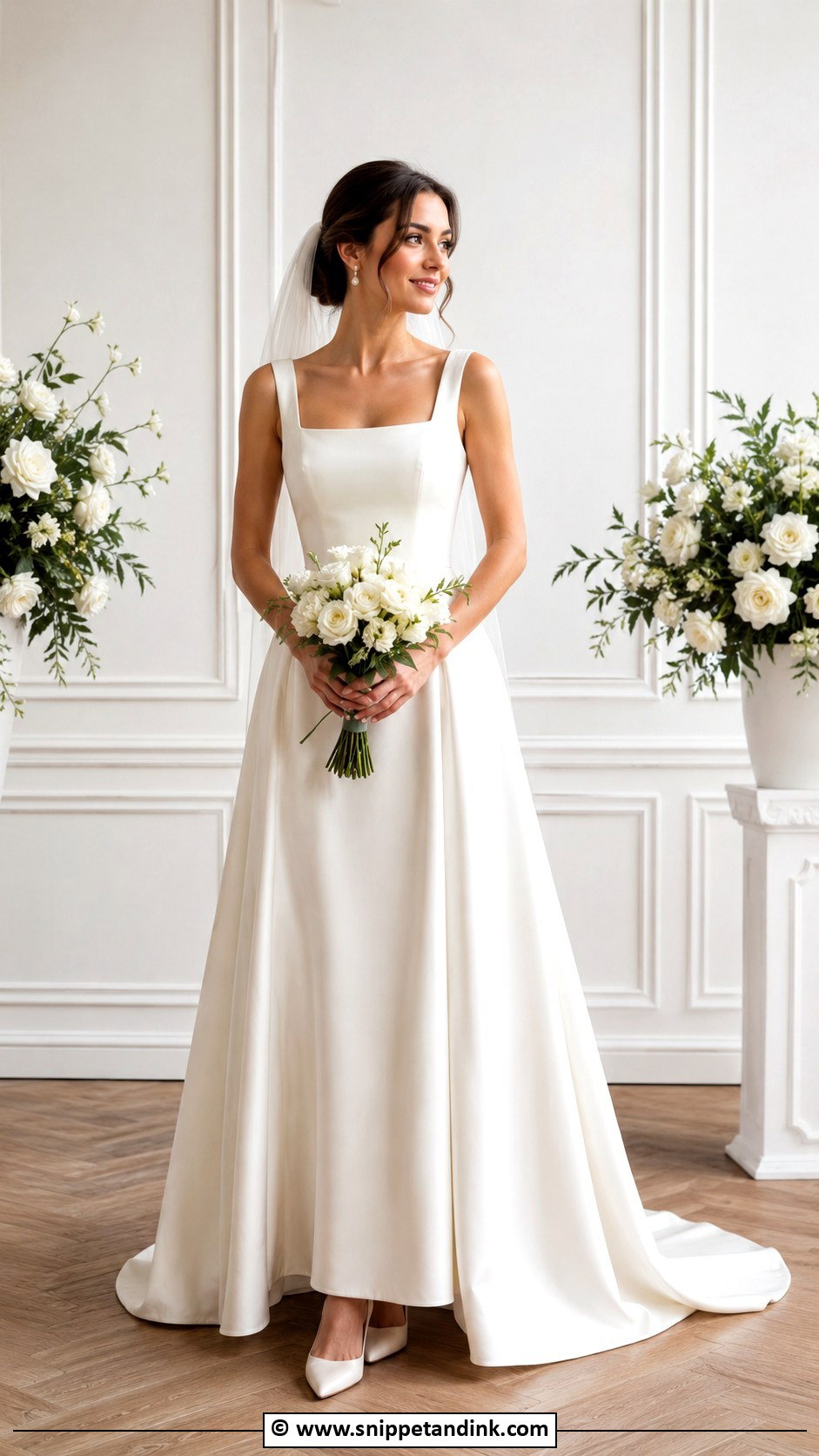
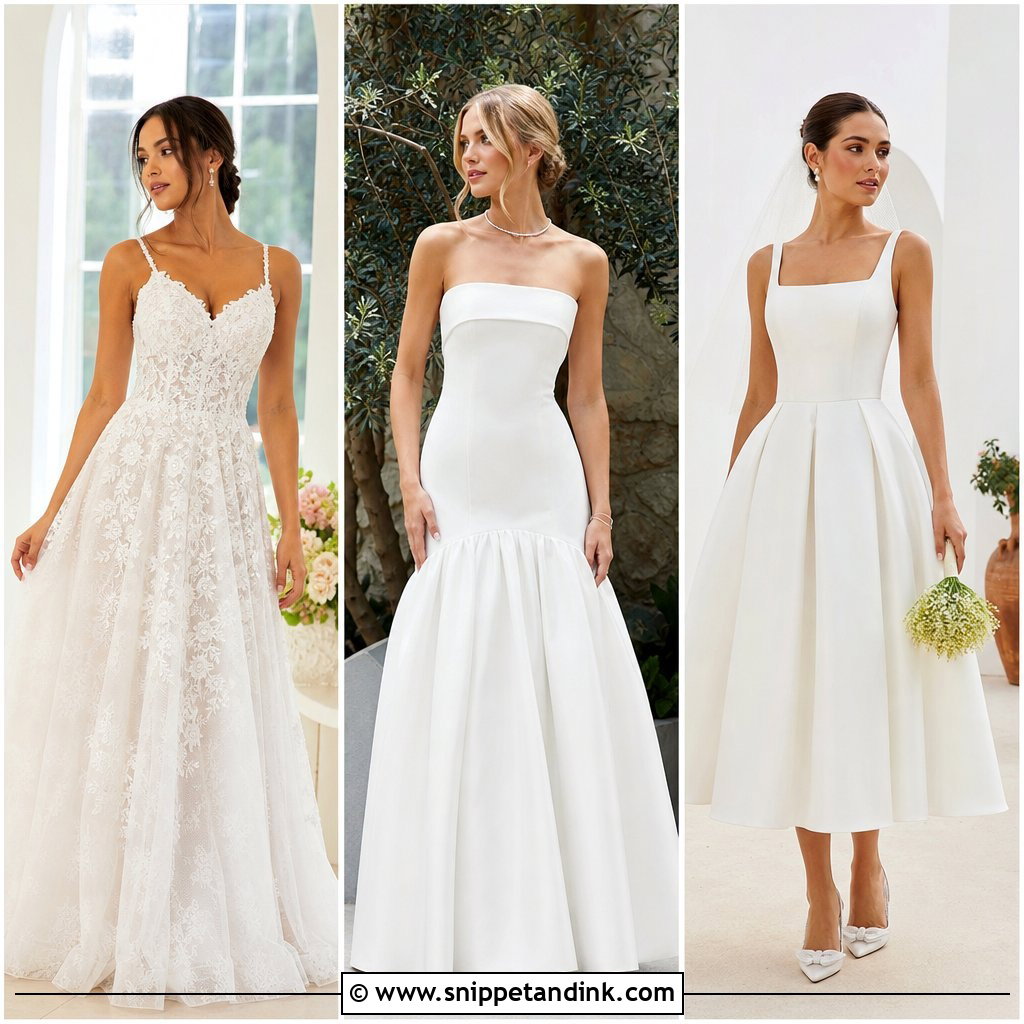
The straight lines of a square neck frame the chest and give support without a high neckline. Wide straps, cap sleeves or long sleeves all pair with it. In satin or crepe it feels minimal; in lace or organza it turns romantic. A simple veil, pearl earrings and a neat bun or soft waves keep the focus on the neckline.
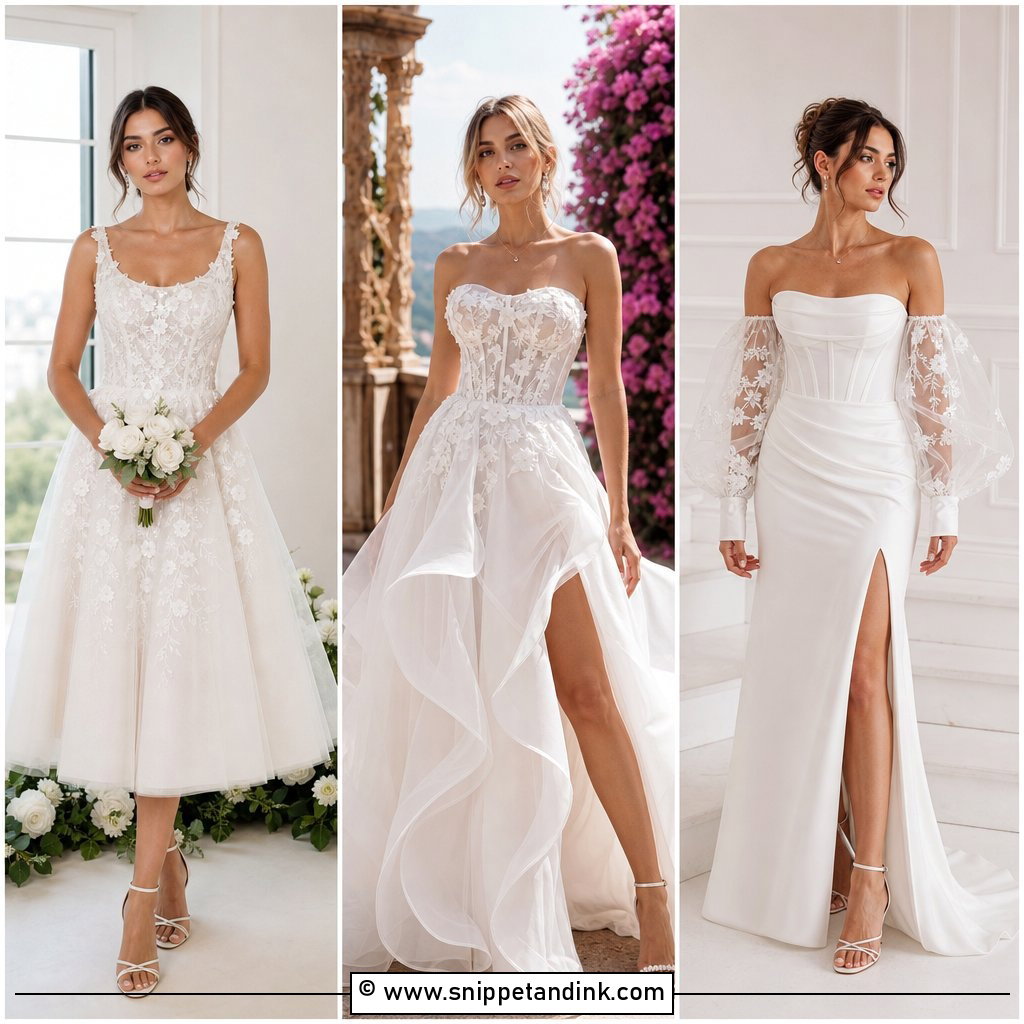
8. Floral Applique Wedding Dress
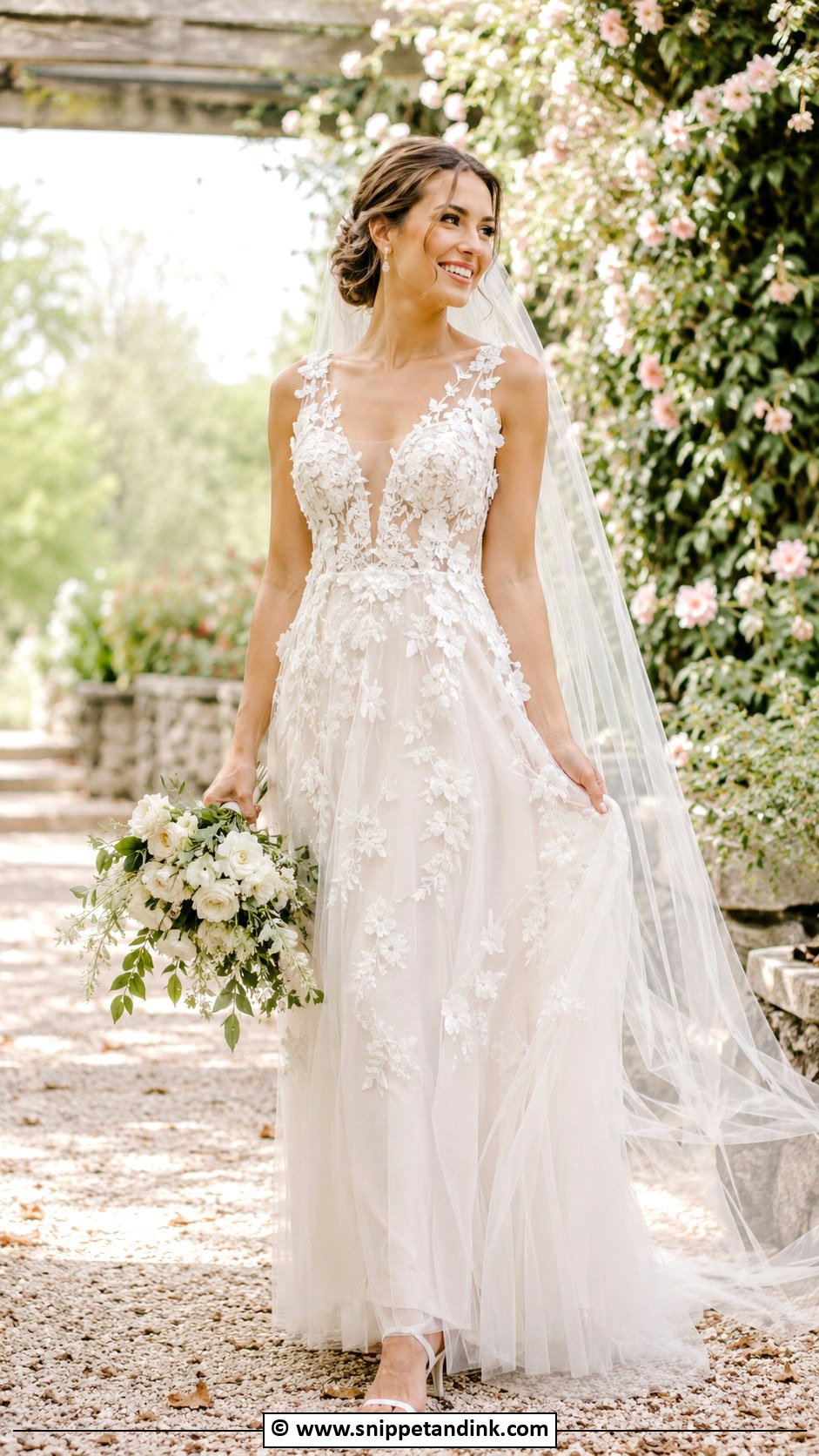
Appliqués can be scattered lightly across sheer tulle or layered thickly over the bodice and skirt. They echo flowers in a garden or a spring ceremony. 3D flowers are the detail to inspect closely: if they’re only tacked on at one point, they flop and catch on the veil. Keep jewelry small, choose strappy ivory heels and a veil with minimal trim, and let the dress carry the texture.
9. Drop Waist Wedding Dress
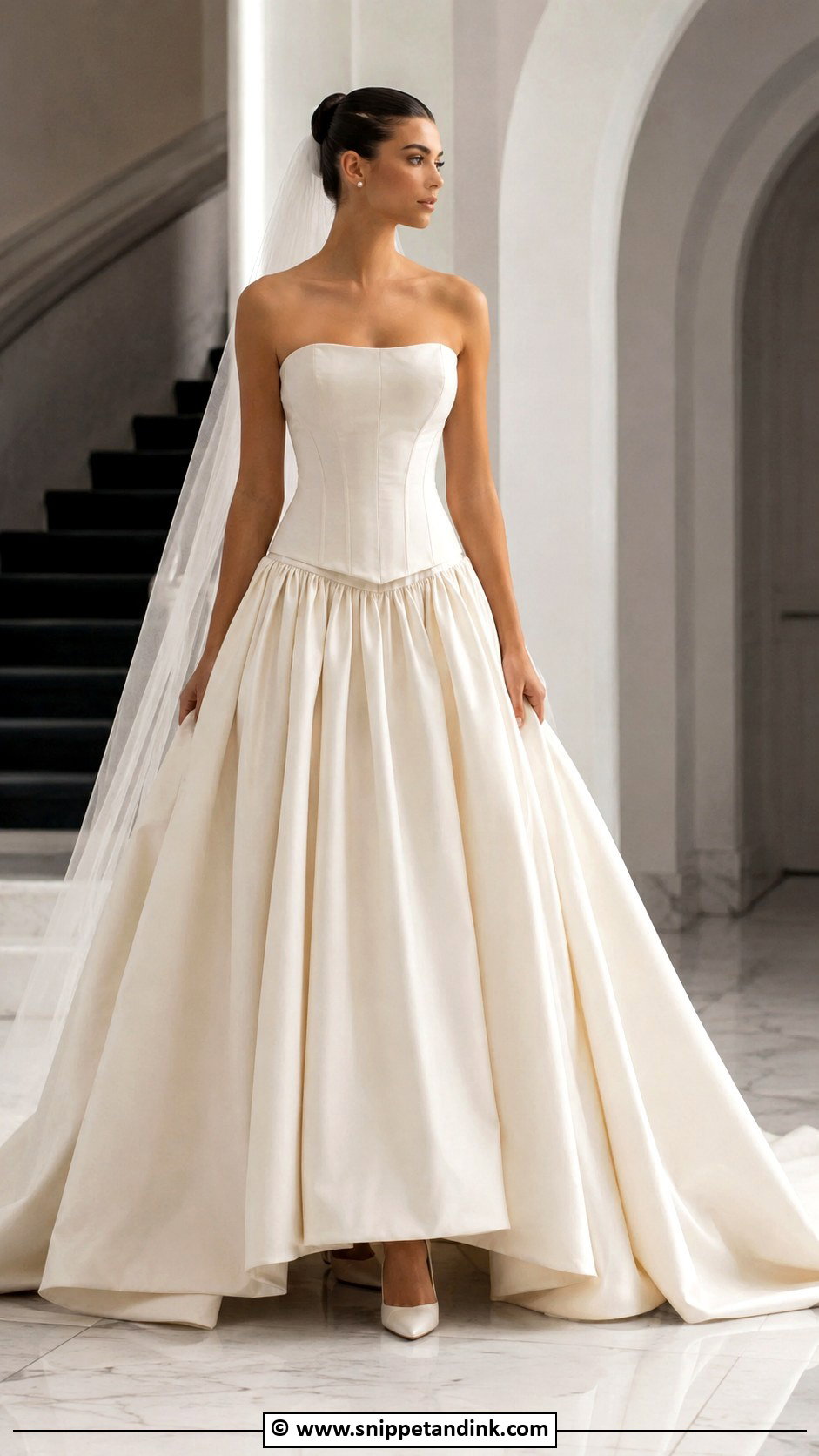
A drop waist extends the bodice below your natural waist before the skirt begins, so it lengthens the torso and changes the whole proportion. That’s also why it needs careful fitting: if the seam sits even an inch too low on a shorter body, the legs look short. It’s especially current with a full skirt or a corset-style bodice. Sleek heels, a simple veil and minimal jewelry let the silhouette stand out.
10. Basque Waist Wedding Dress
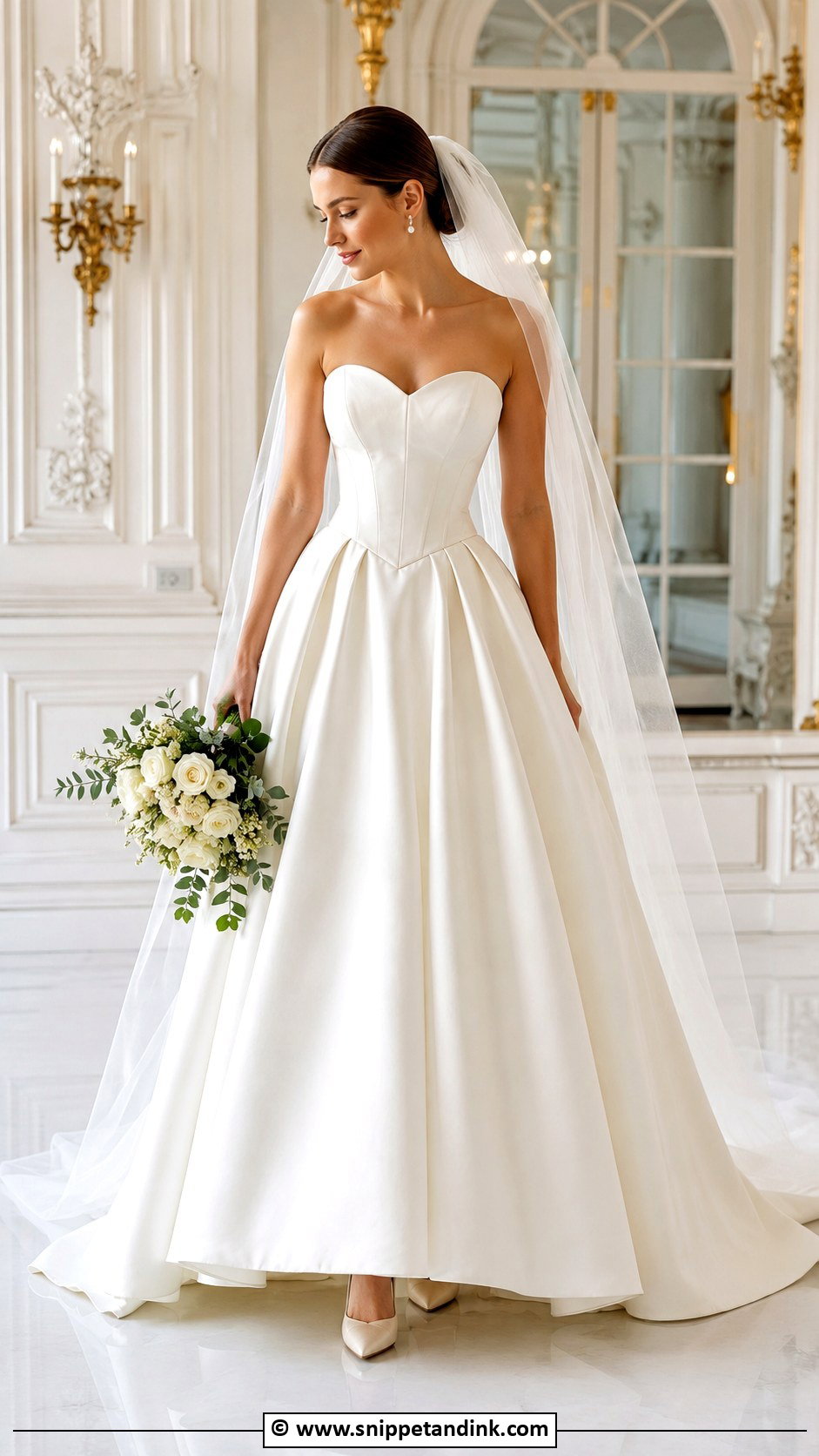
A basque waist dips into a V at the centre front, which draws the eye down and makes the waist look smaller. It has a regal quality on ball gowns and structured A-lines. Because the waistline is the detail, skip belts and sashes. Mikado, satin, lace and tulle all hold the point crisply. A long veil, pearl drops and satin heels suit a formal ceremony.
11. Tea Length Wedding Dress
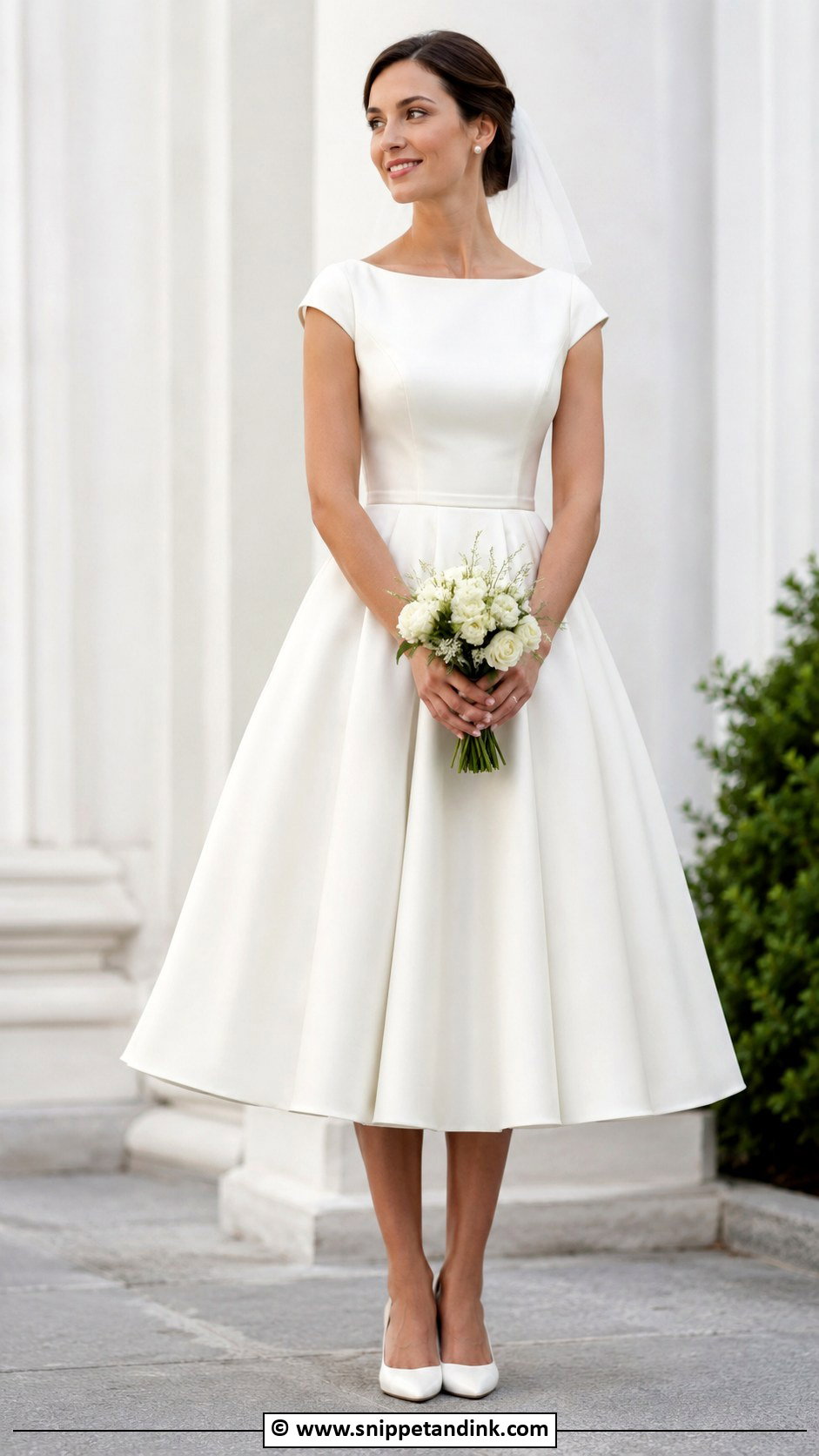
A tea length wedding dress falls between knee and ankle, so it moves freely and your shoes become part of the look. Pointed pumps, slingbacks or embellished flats each change the mood. It suits courthouse weddings, gardens, warm weather and vintage-minded brides. One fitting tip: get the hem length right with the exact shoes you’ll wear, because a few centimetres change the proportions noticeably on a shorter skirt.
12. High Neck Wedding Dress
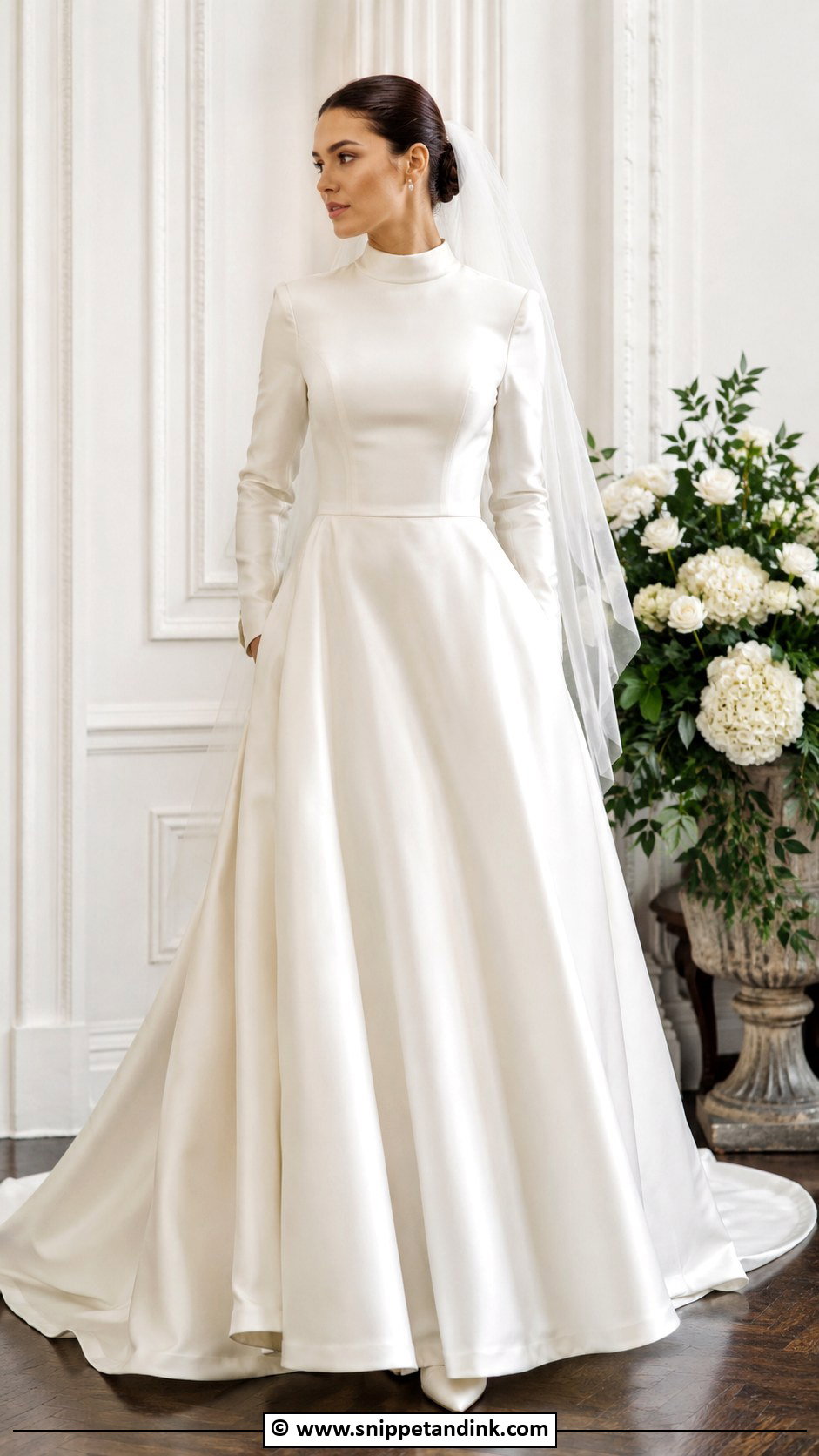
High necklines in lace, crepe, satin or embroidered tulle draw the eye up to the face, which is why I usually pull the hair back. No necklace needed; small earrings and a sleek bun are enough. This is my go-to for winter ceremonies and for brides after a sophisticated look with coverage. An open back, fitted waist or flowing skirt keeps it from looking severe.
13. Backless Wedding Dress
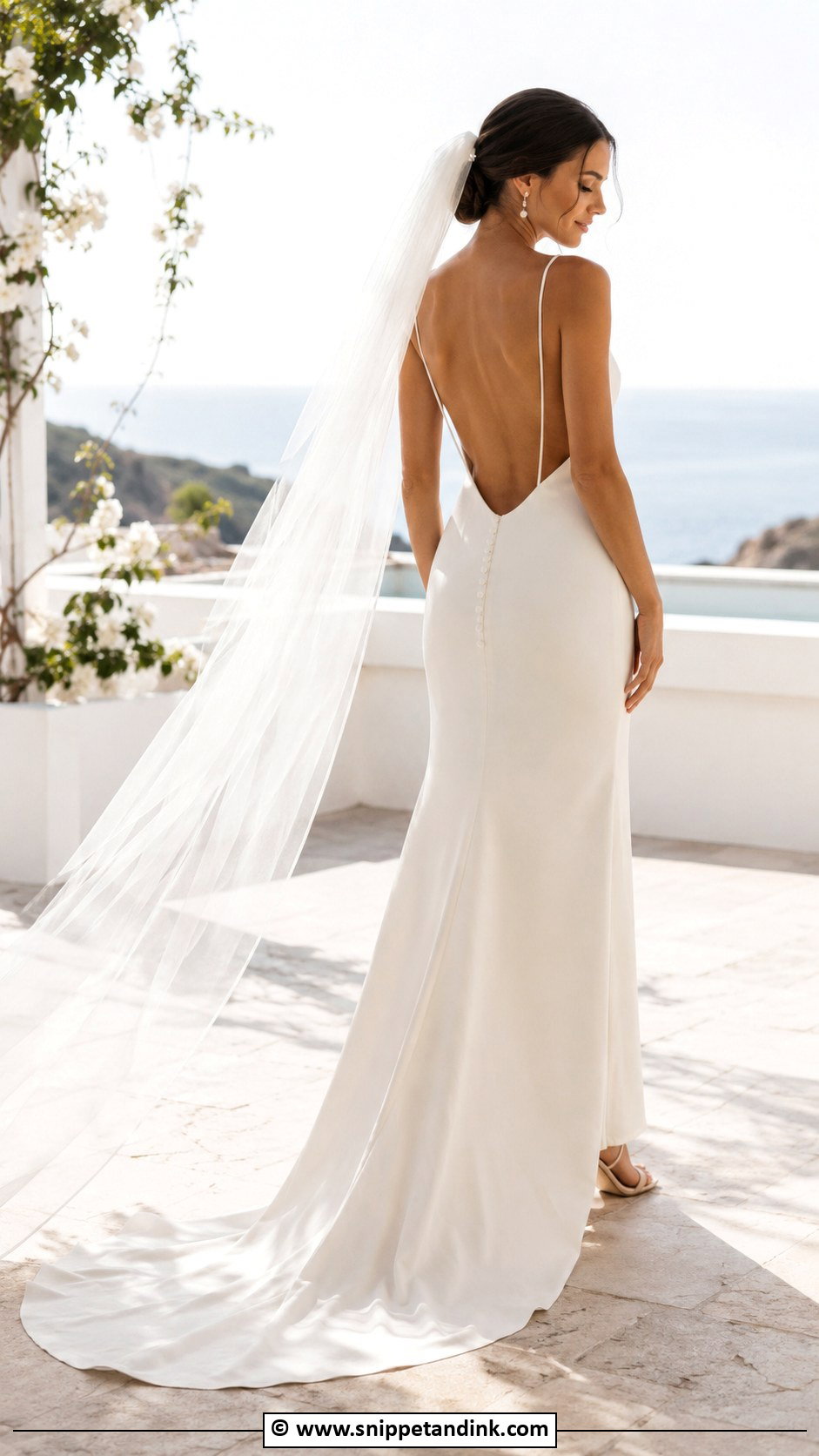
An open back gives you a second neckline, and since guests watch your back for most of the ceremony, it’s well spent. It works in satin slips, lace, crepe sheaths and fitted mermaids. Support is the real issue: you can’t wear a normal bra, so ask your seamstress to sew cups into the bodice. A removable veil reveals the back after the vows, and a low bun keeps it clear.
14. Tulle Ball Gown Wedding Dress
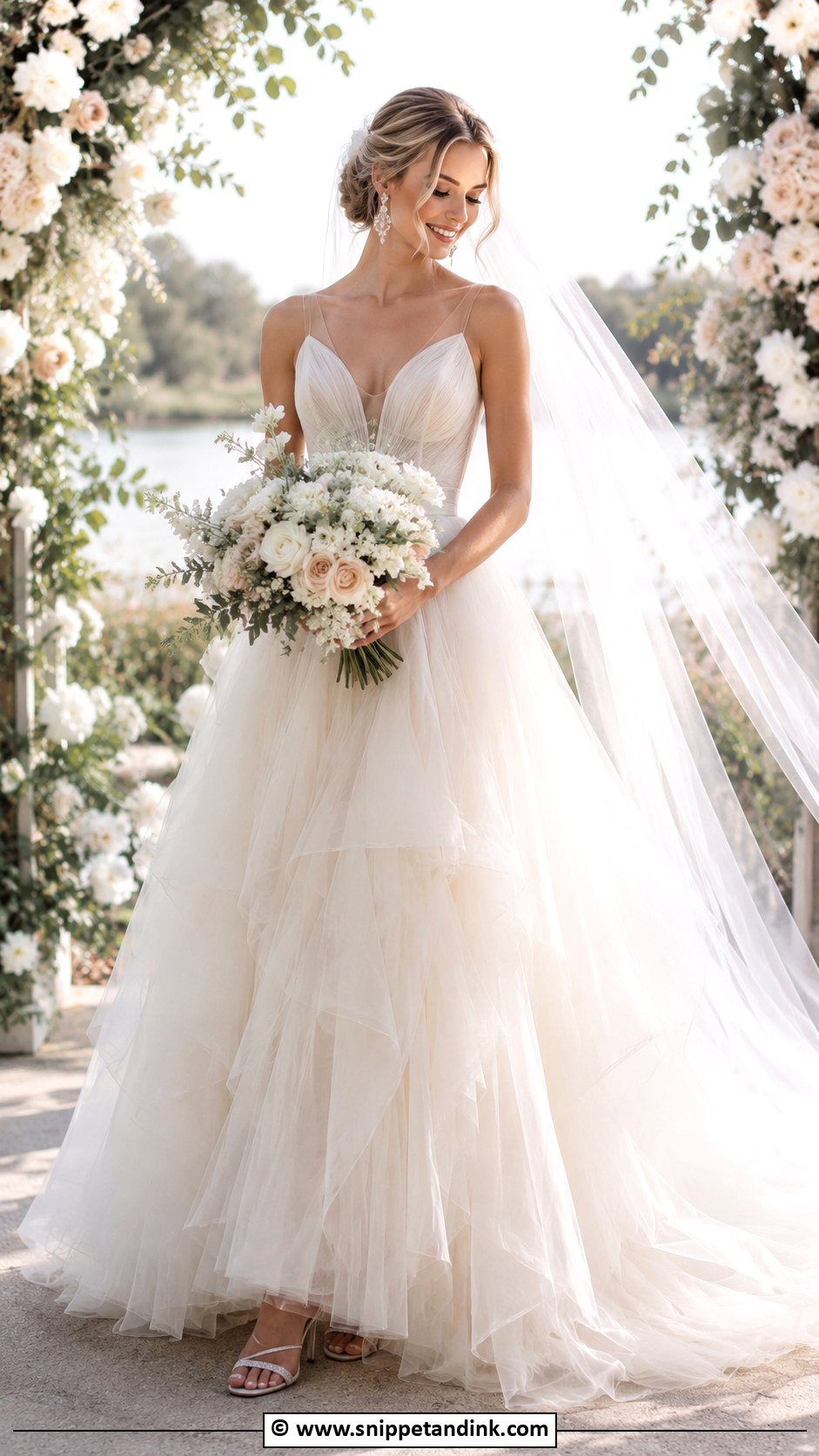
Tulle builds volume without the weight of satin or mikado, so a tulle ball gown is lighter than it looks. It can be classic with a strapless bodice or whimsical with appliqué and sheer sleeves. On a petite frame, the bodice needs to fit closely or the skirt overwhelms. Tulle catches on jewelry and rough surfaces, so watch bracelets and stone steps. Delicate heels and a long veil suit it.
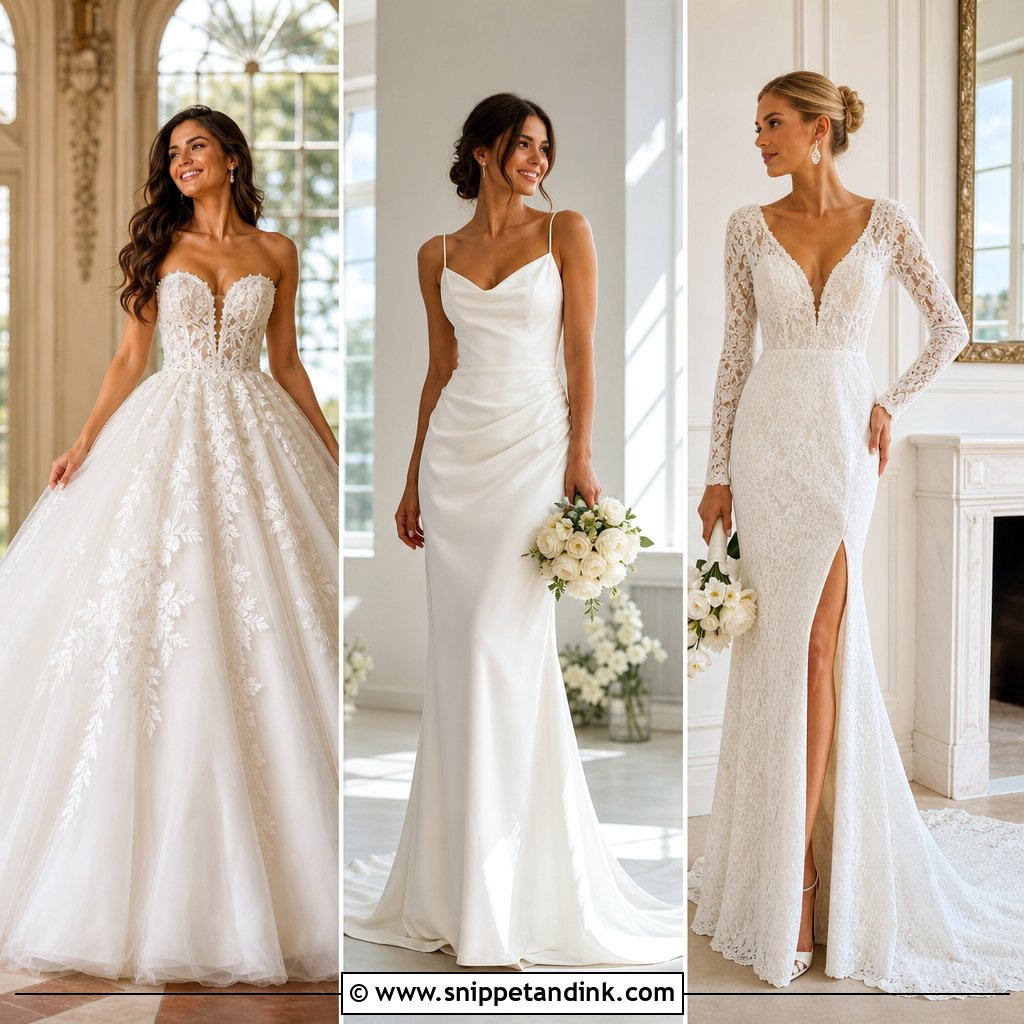

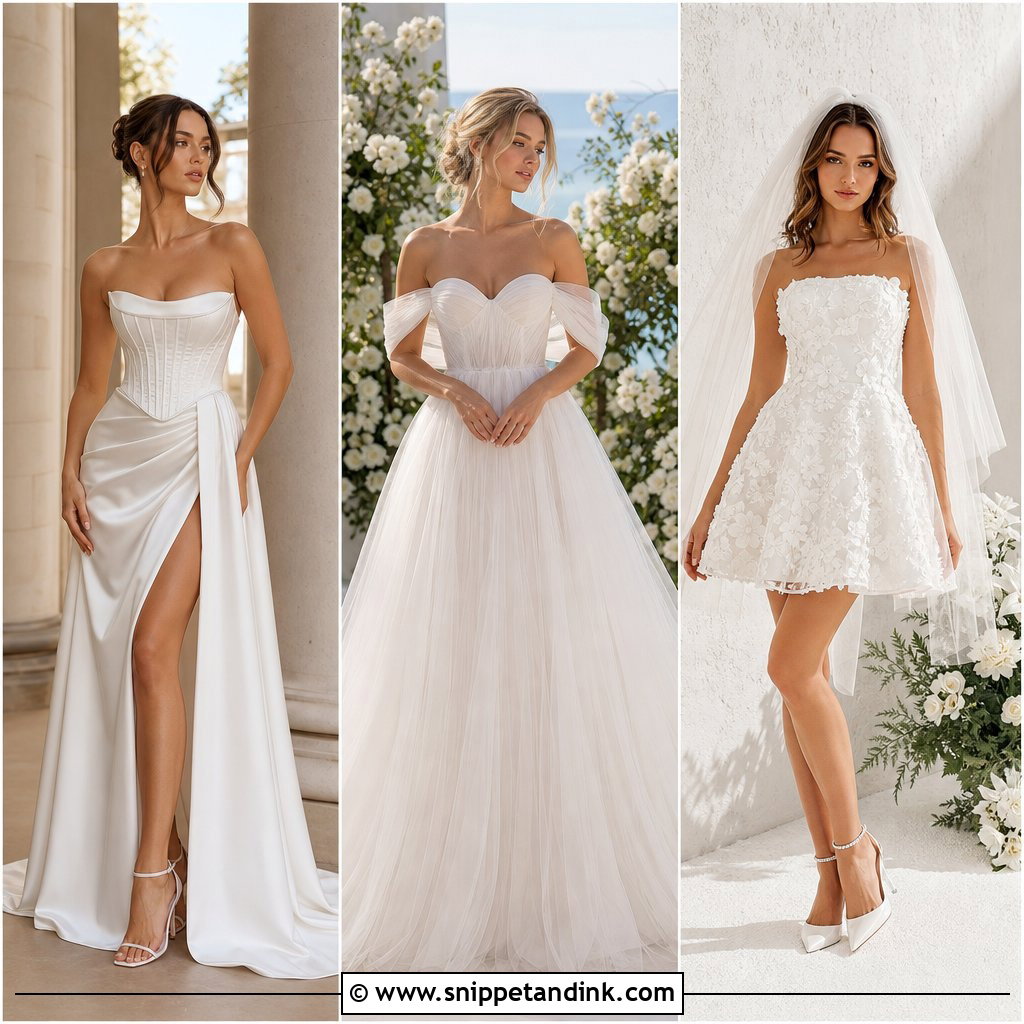
15. Simple Slip Wedding Dress
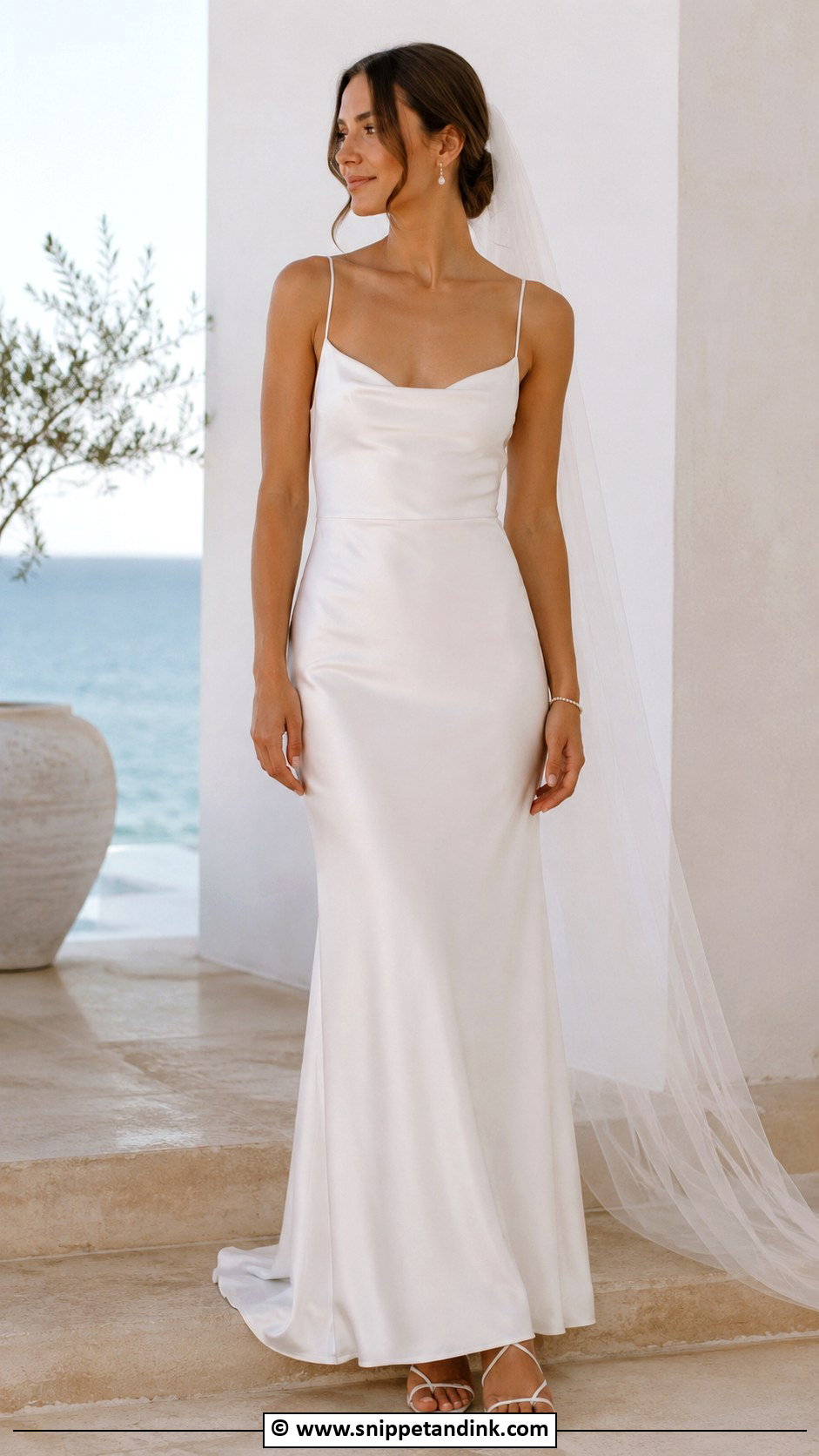
A slip in satin, silk or charmeuse hangs close to the body with very little structure, so it shows both the quality of the fabric and the fit. Cheap satin in a slip looks shiny and clingy; a heavier silk or a good crepe-backed satin drapes properly. It suits intimate weddings, beaches and destination ceremonies. Strappy heels, a fine bracelet and soft waves fit its simplicity, and a cape or overskirt adds coverage for the ceremony.
16. Corset Wedding Dress
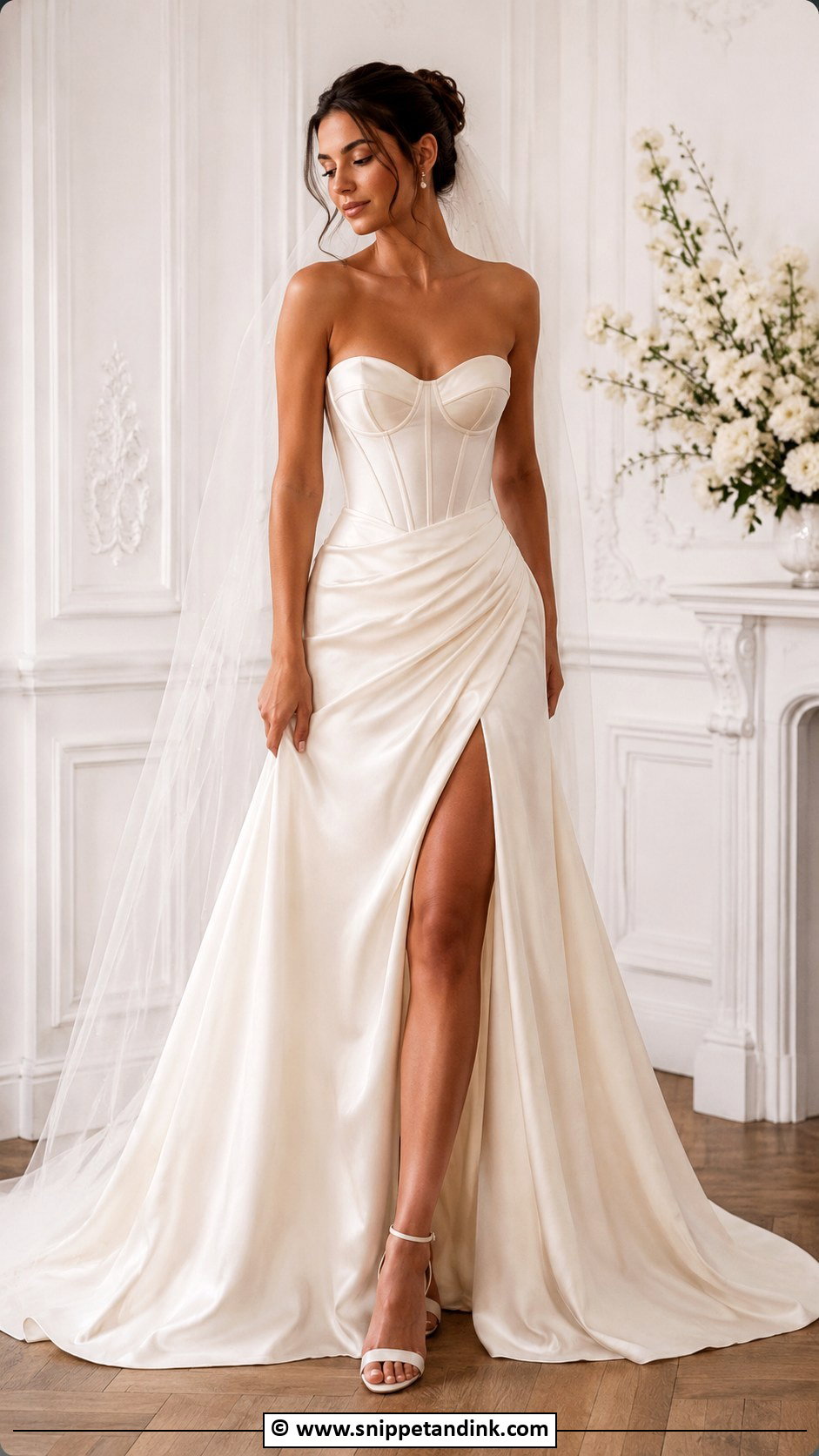
A corset gives support and a defined waist, and the boning can be visible, laced or hidden under a smooth surface. It pairs with full skirts, mermaids and columns. The comfort test is sitting: a corset should hold you, not stop you breathing when you sit down to eat. Ask for the boning to be flexible spiral steel rather than rigid plastic if you’re unsure. Keep accessories clean so the bodice stays the focus.
17. Detachable Overskirt Wedding Dress
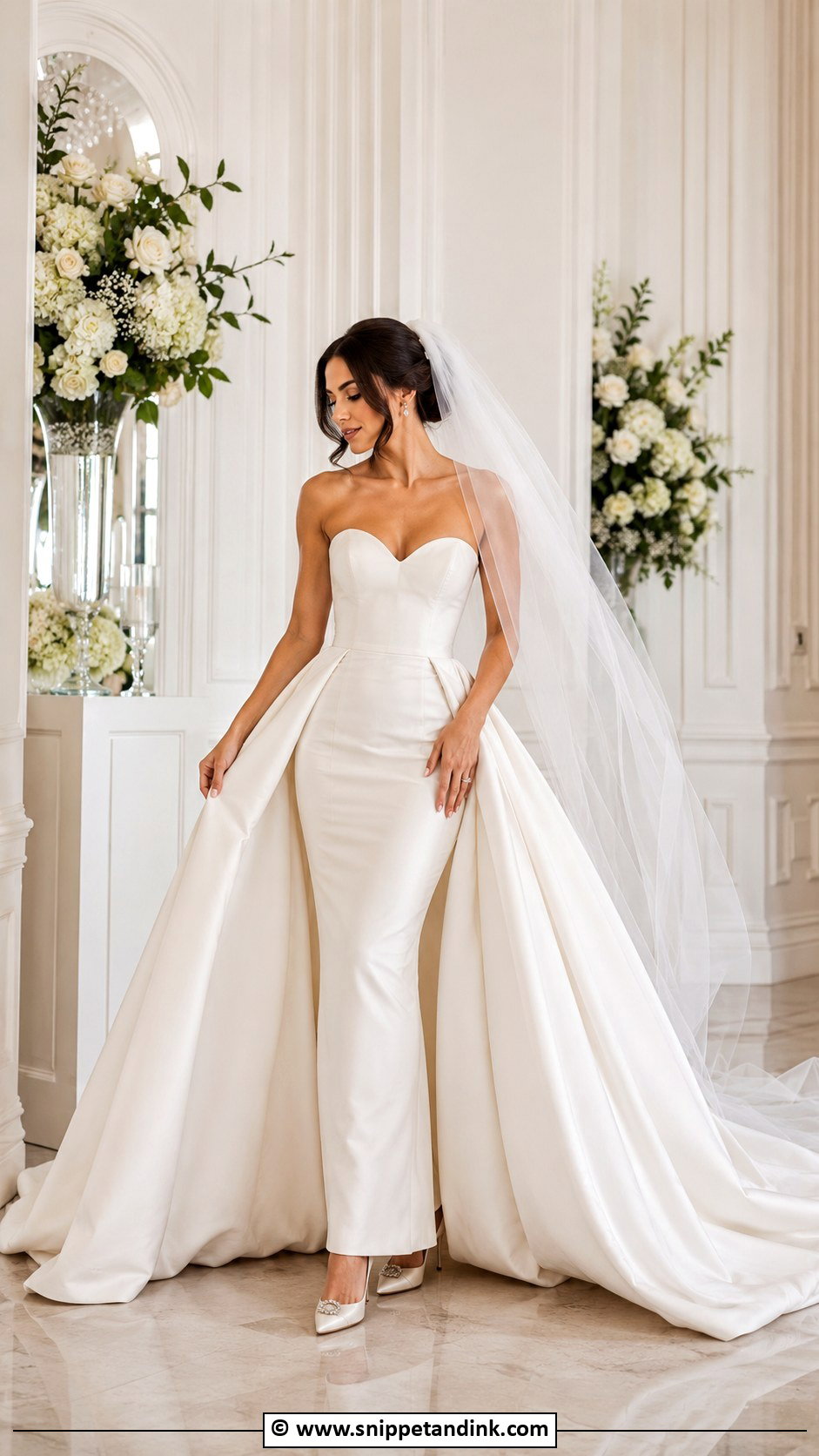
An overskirt is the easiest way to get two looks from one dress. Clip or button it on for a formal entrance and remove it for a fitted gown, mini or column underneath. Practise with whoever will help you, because the fastenings can be fiddly. Check that it doesn’t twist when you walk. A statement veil and simple jewelry suit the ceremony version.
18. Bow Detail Wedding Dress
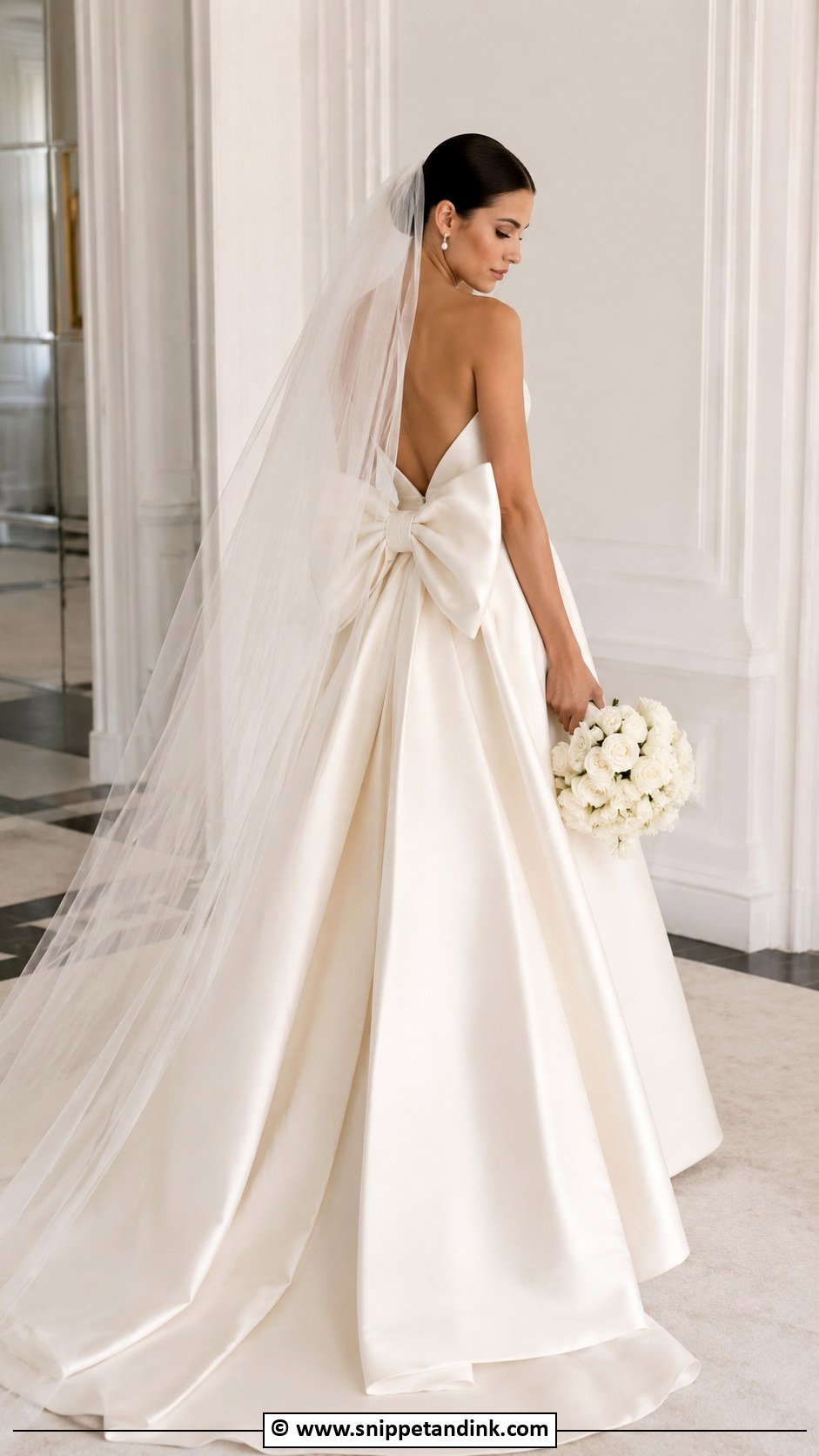
Bows add personality without sparkle, at the back of the waist, on a shoulder, at the neckline or on a detachable train. Structured fabrics like satin, mikado or crepe hold a bow’s shape; in soft fabric it collapses by the evening. If the bow is large, let it be the only statement. A small one can sit alongside a pearl veil or subtle jewelry.
19. Pearl Embellished Wedding Dress
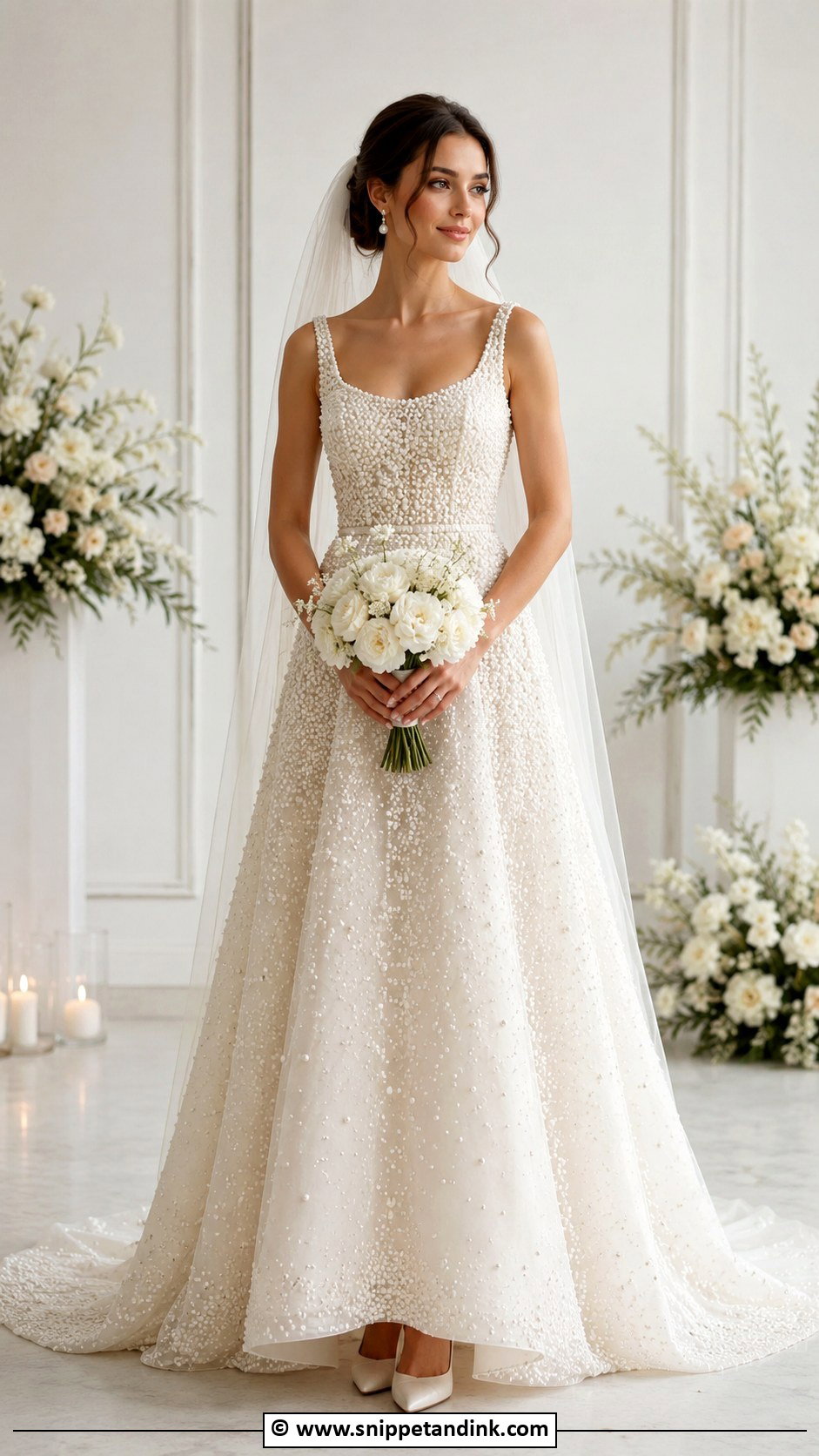
Pearls glow rather than sparkle, so they suit daylight as well as evening. They can sit on the bodice, sleeves, veil or across the whole gown. A pearl veil works with a lightly beaded dress, but with a heavily pearled gown I always choose a plain one. Ivory heels, pearl earrings and a simple bouquet complete it.

20. Sheer Sleeve Wedding Dress
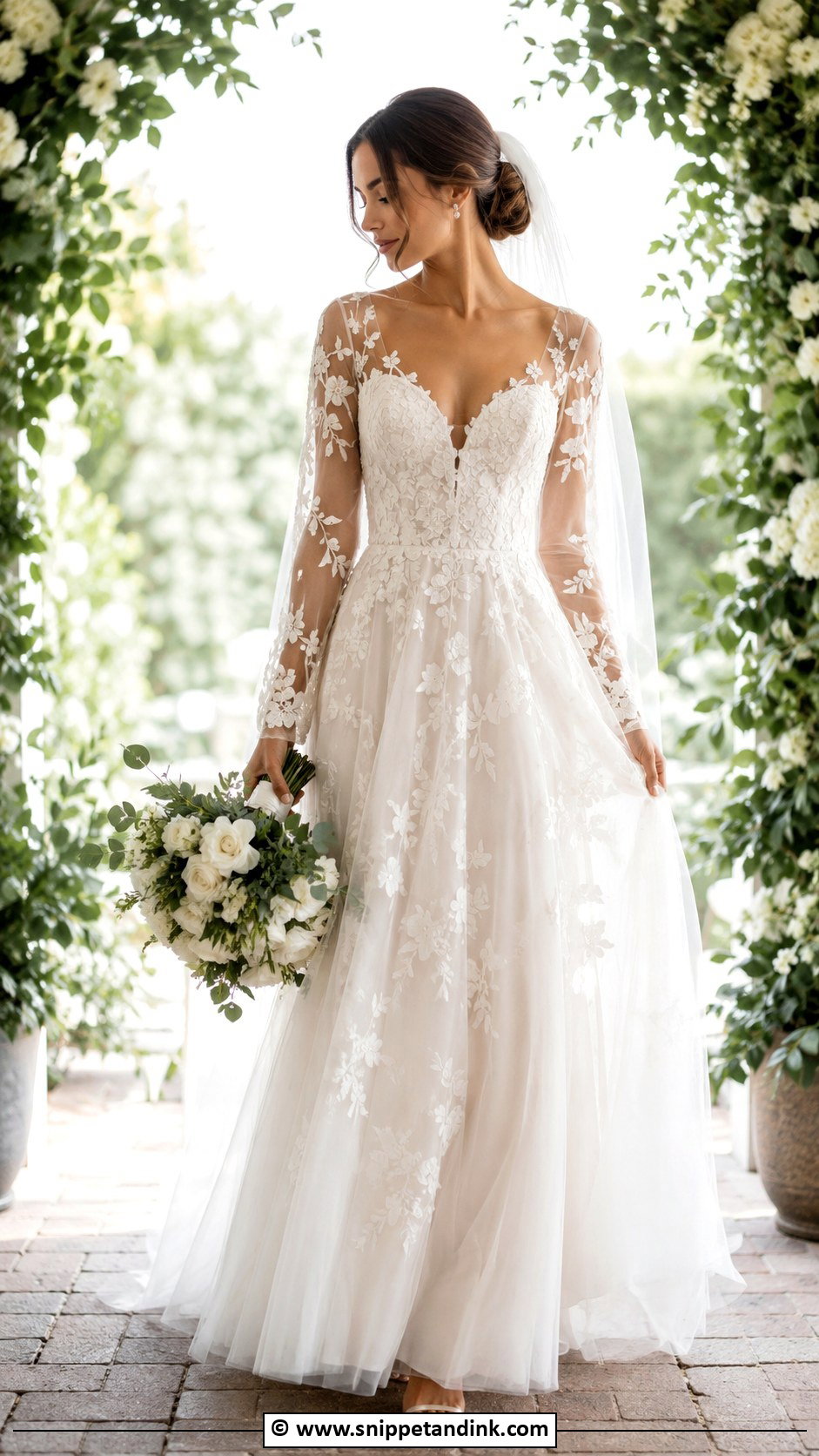
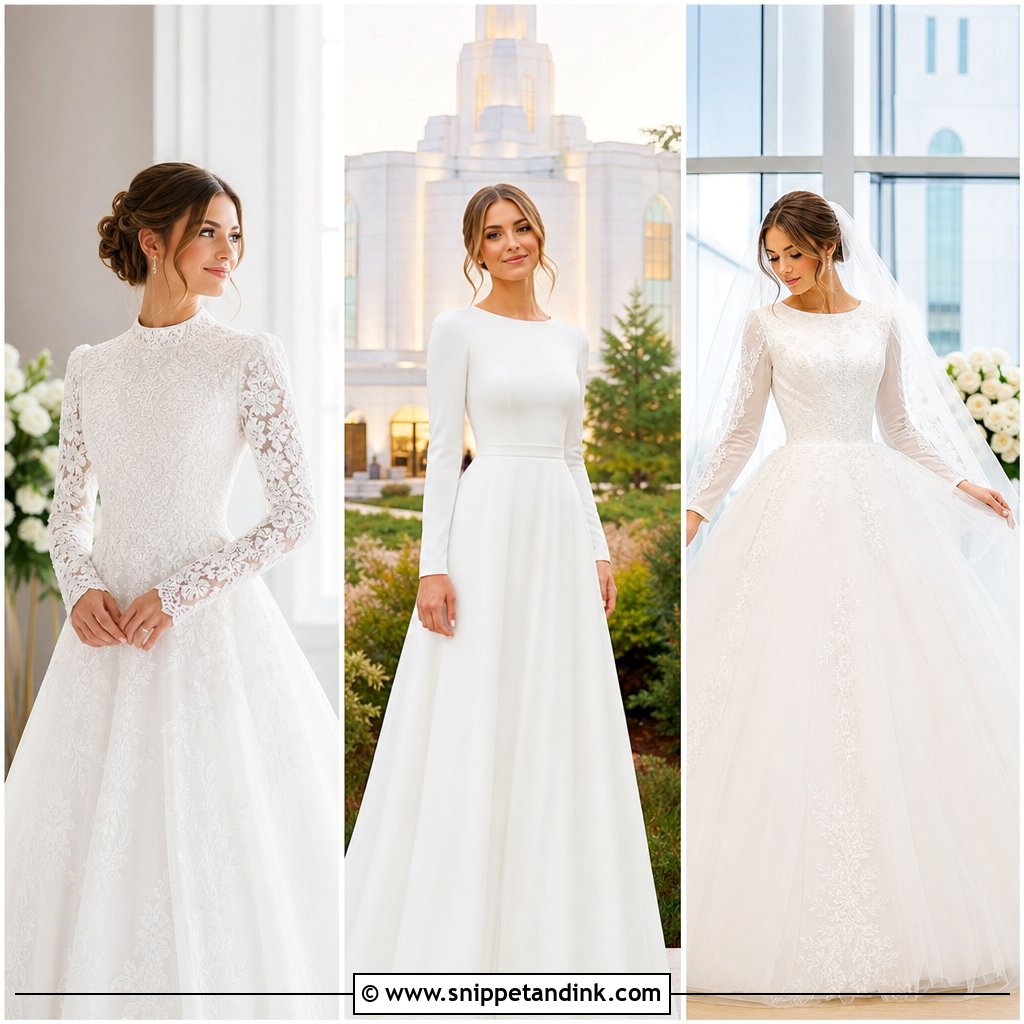
Sheer sleeves give arm coverage without the weight of solid fabric. Tulle, lace, organza or embroidered mesh can be fitted, puffed, detachable or softly draped. Match the mesh to your skin tone, as a mismatch shows clearly in photos. With appliquéd sleeves, choose a simple veil. A low bun and small earrings keep it soft for gardens and in-between seasons.
21. Plunging Neckline Wedding Dress
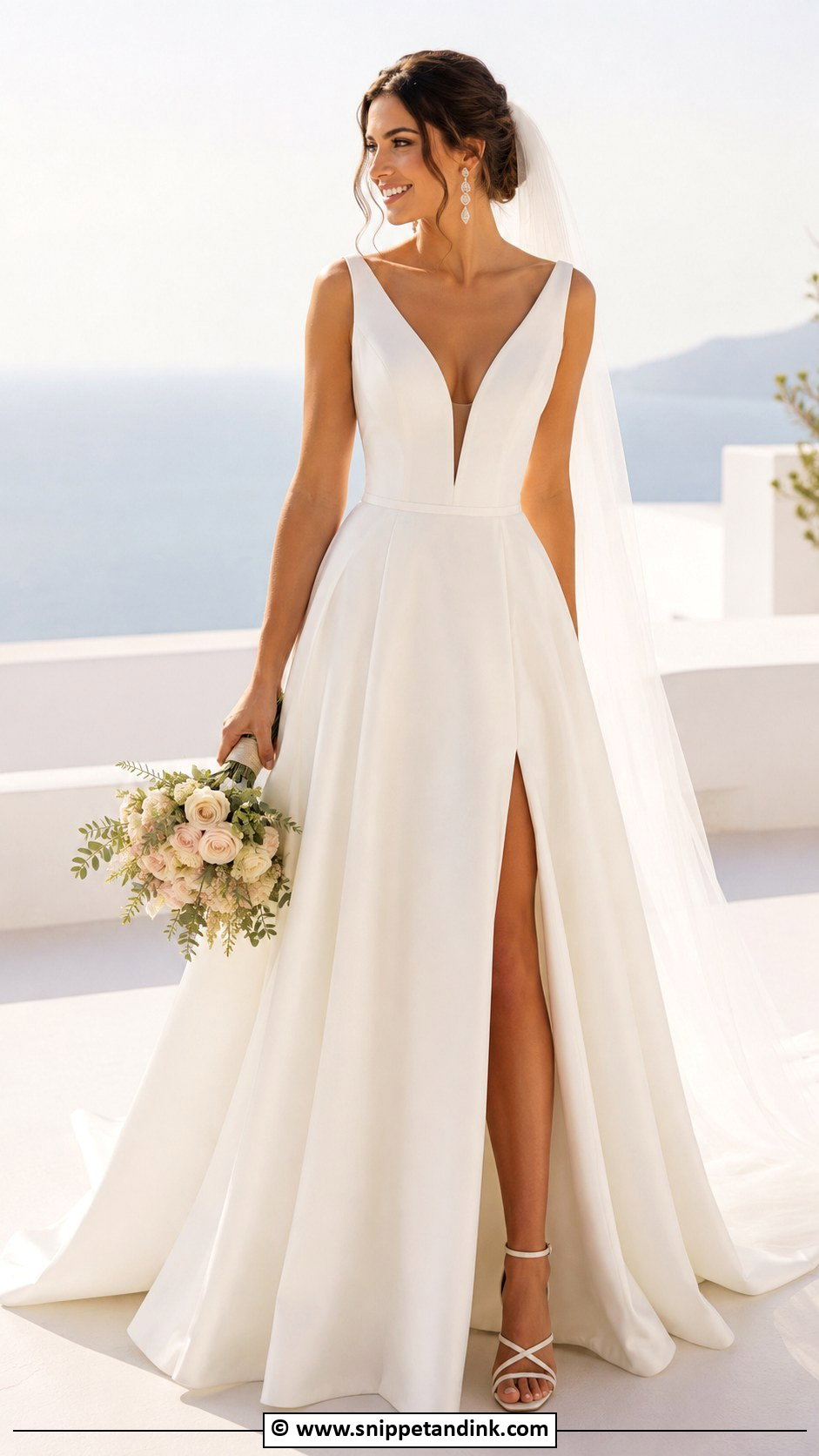
A plunging neckline needs structure to work. Most gowns use illusion mesh down the centre, which holds the neckline in place and gives coverage. It suits A-line skirts, fitted gowns and flowing chiffon. Fashion tape is a sensible backup on the day. Long earrings and a hairstyle that keeps the neckline clear suit it, and long sleeves or a fuller skirt balance the depth.
22. Vintage Inspired Wedding Dress
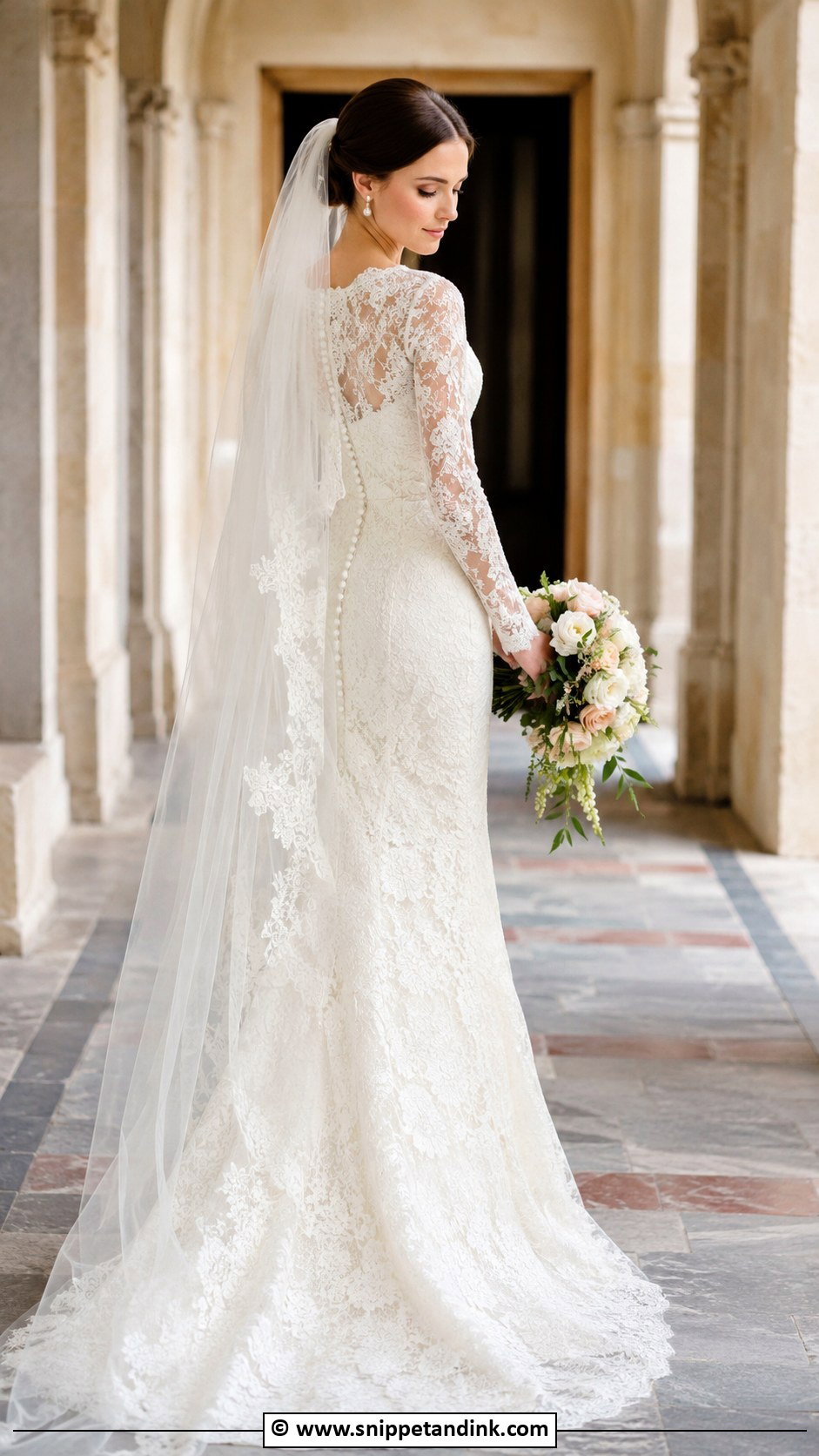
Vintage inspiration works best in small doses: lace sleeves, covered buttons, a tea length hem, a basque waist or delicate embroidery. Choose one or two details, or the outfit tips into costume. Pearl earrings, classic pumps and a soft veil suit it, and a red lip or soft neutrals both work. Historic venues and family heirloom jewelry fit naturally with this look.
23. Beach Wedding Dress
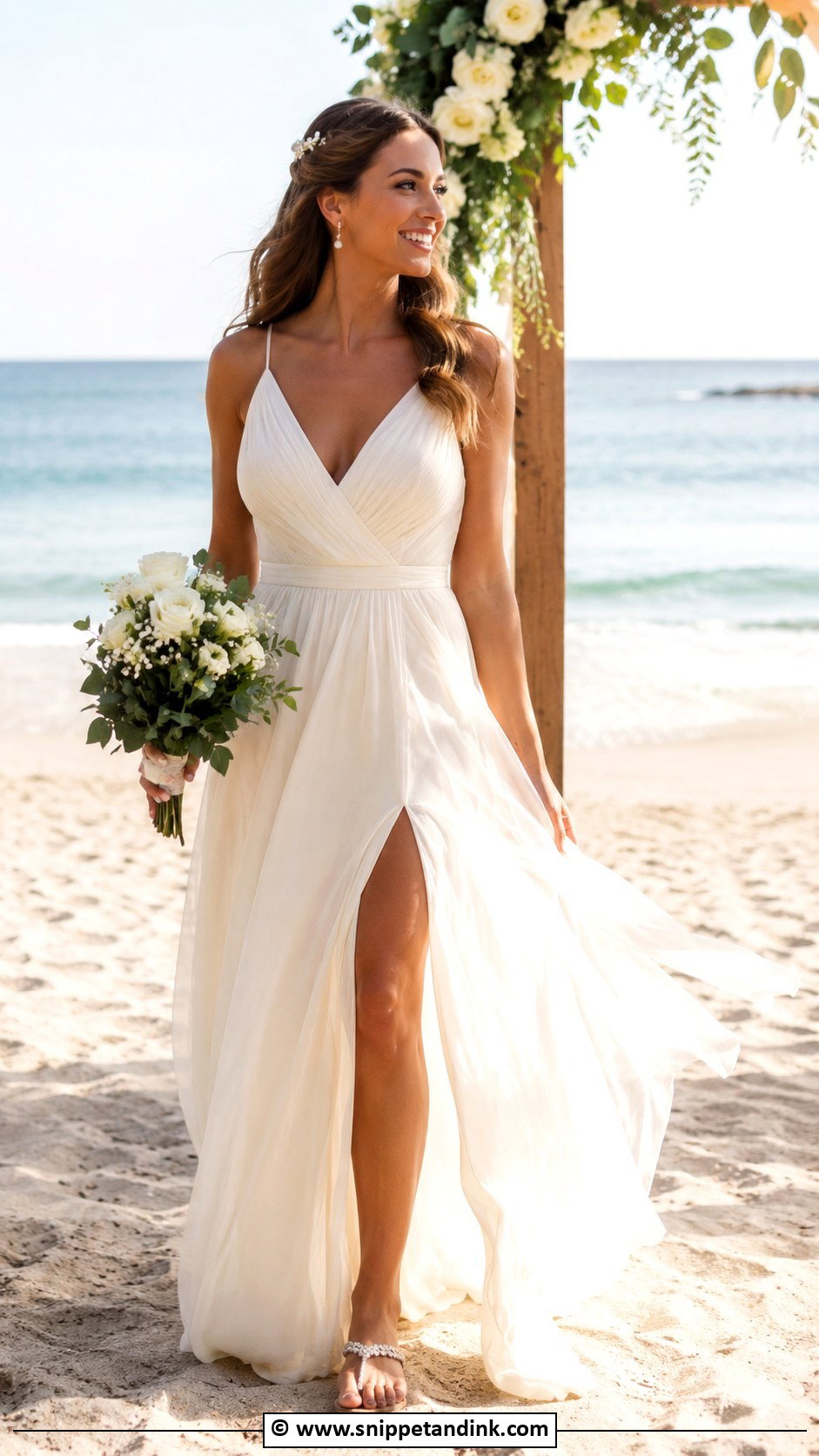
On sand, I want fabric that flows and a hem that clears the ground. Chiffon, crepe, silk and soft lace all move naturally in a breeze, while heavy trains drag. A simple A-line, slip, sheath or relaxed off-shoulder dress works. Flat sandals, pearl earrings, loose waves and a lightweight veil complete it, with a white and greenery bouquet.
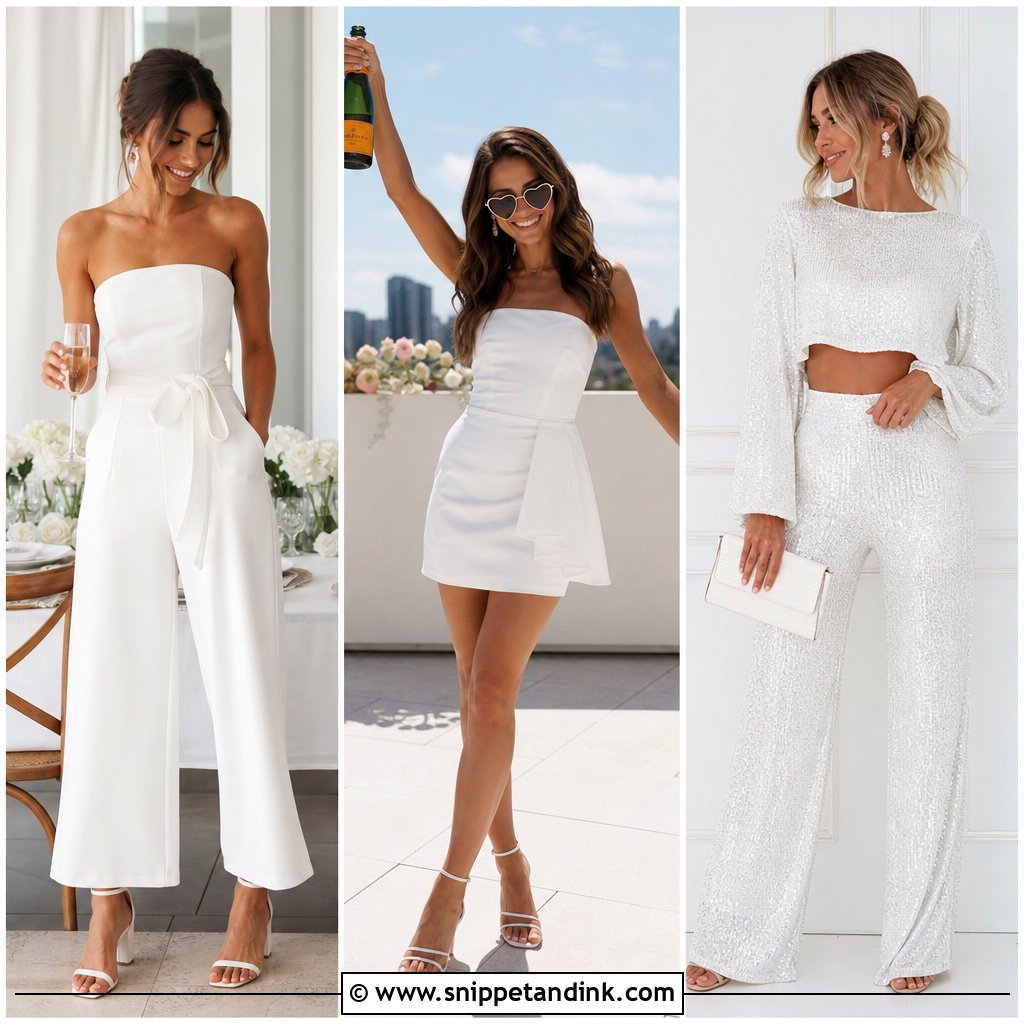
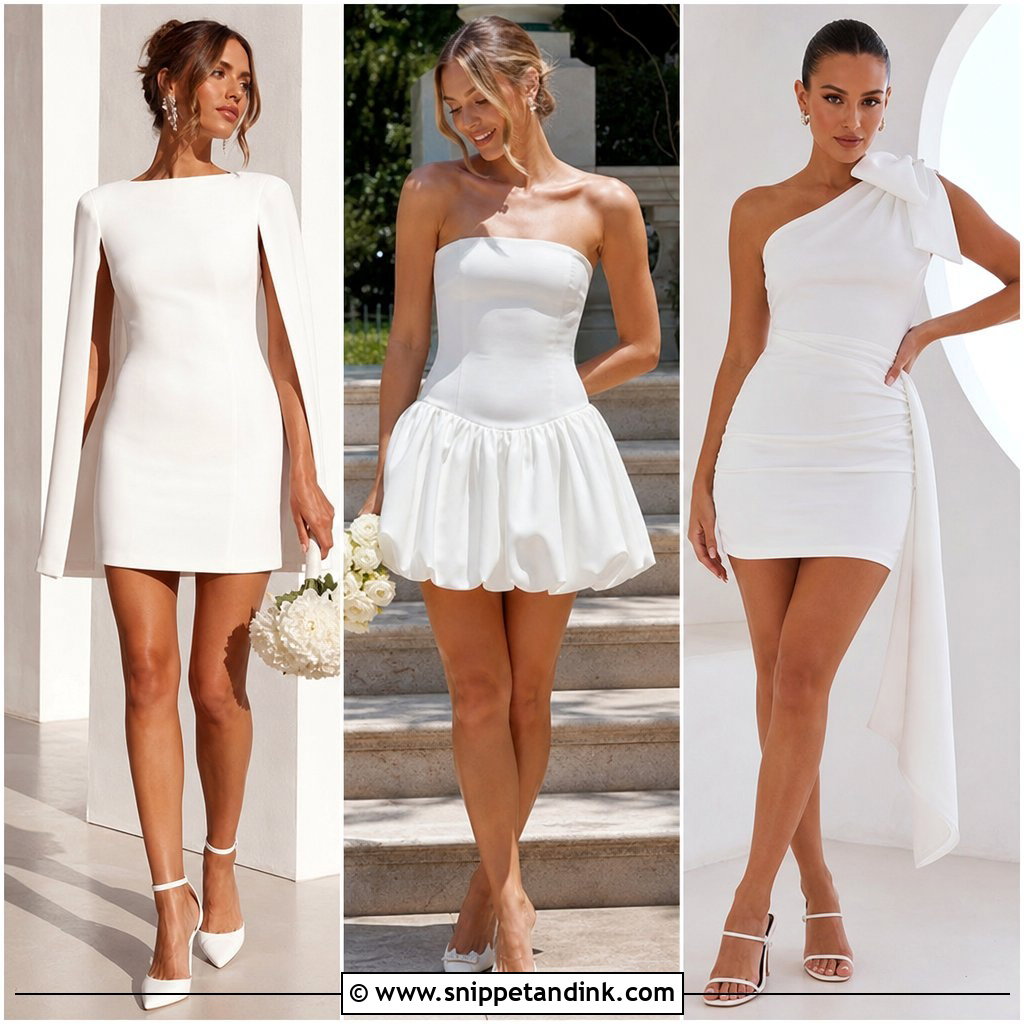
24. Courthouse Wedding Dress
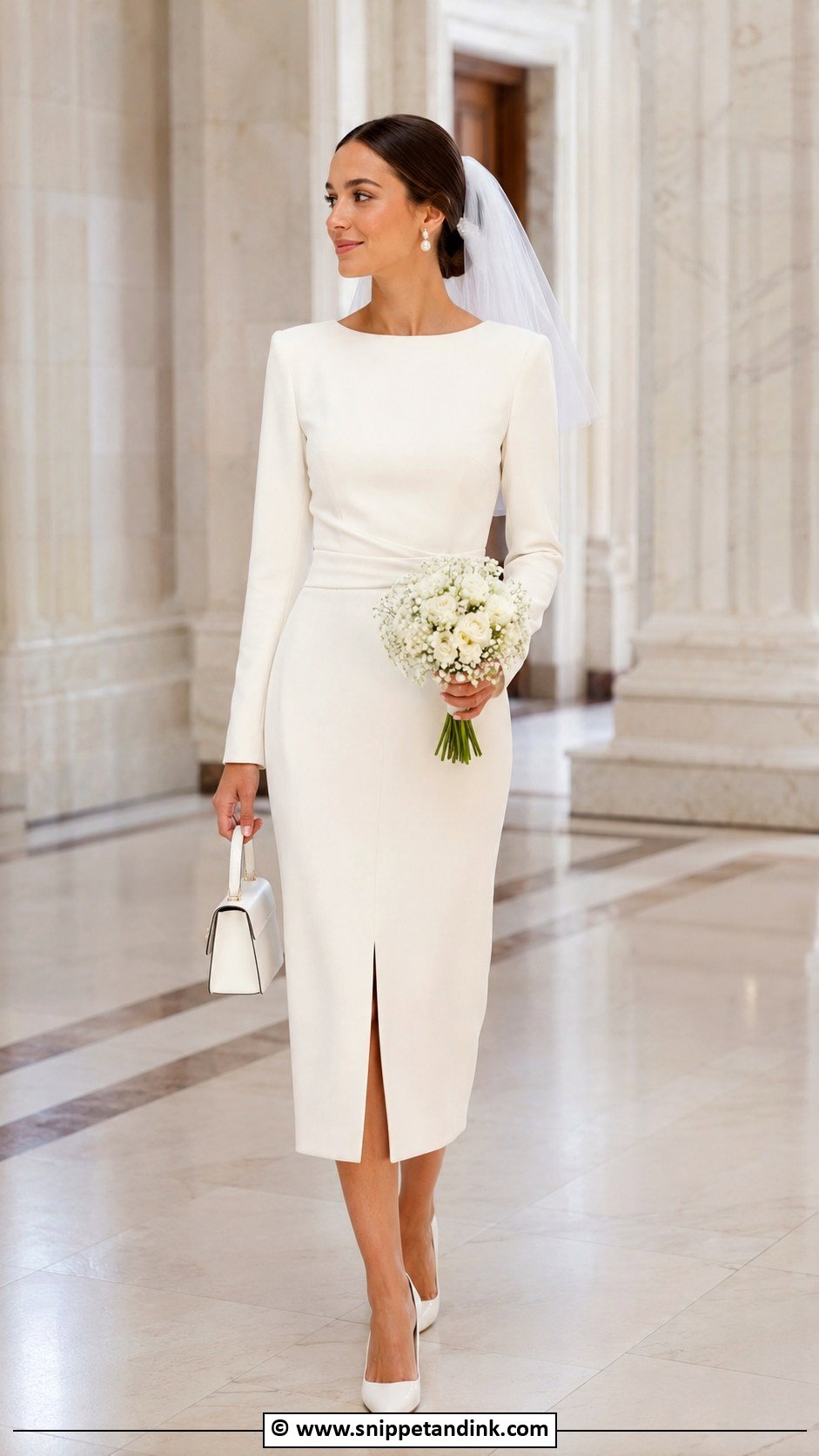
A courthouse dress can be a tailored mini, tea length, satin midi, a sleek suit dress or a minimalist column. It should look polished in photos but suit a short ceremony and maybe lunch afterwards. Pointed pumps, a structured handbag, pearl earrings and a short veil or headband make it bridal. Clean tailoring does most of the work here.


25. Plus Size Wedding Dress
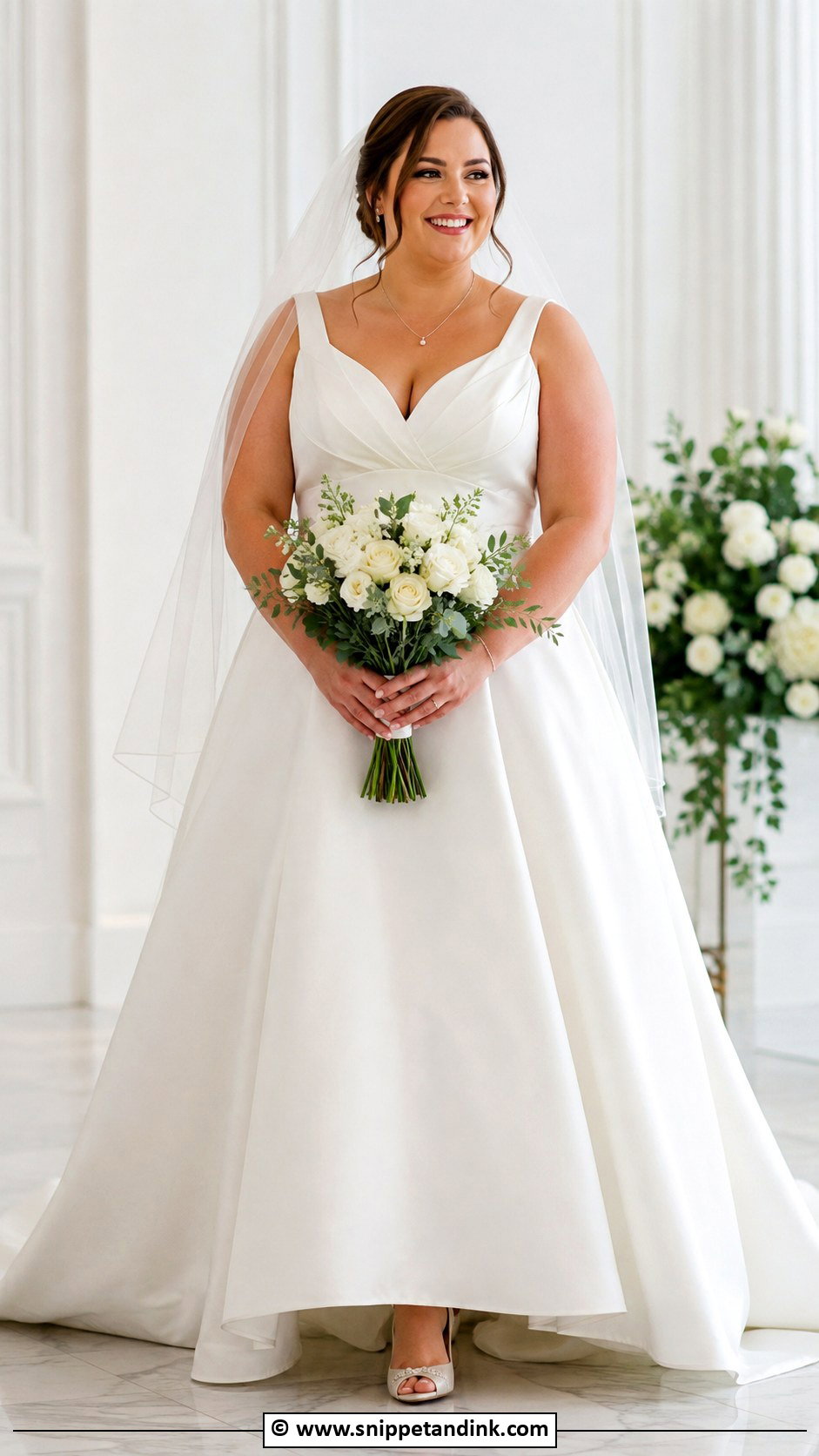
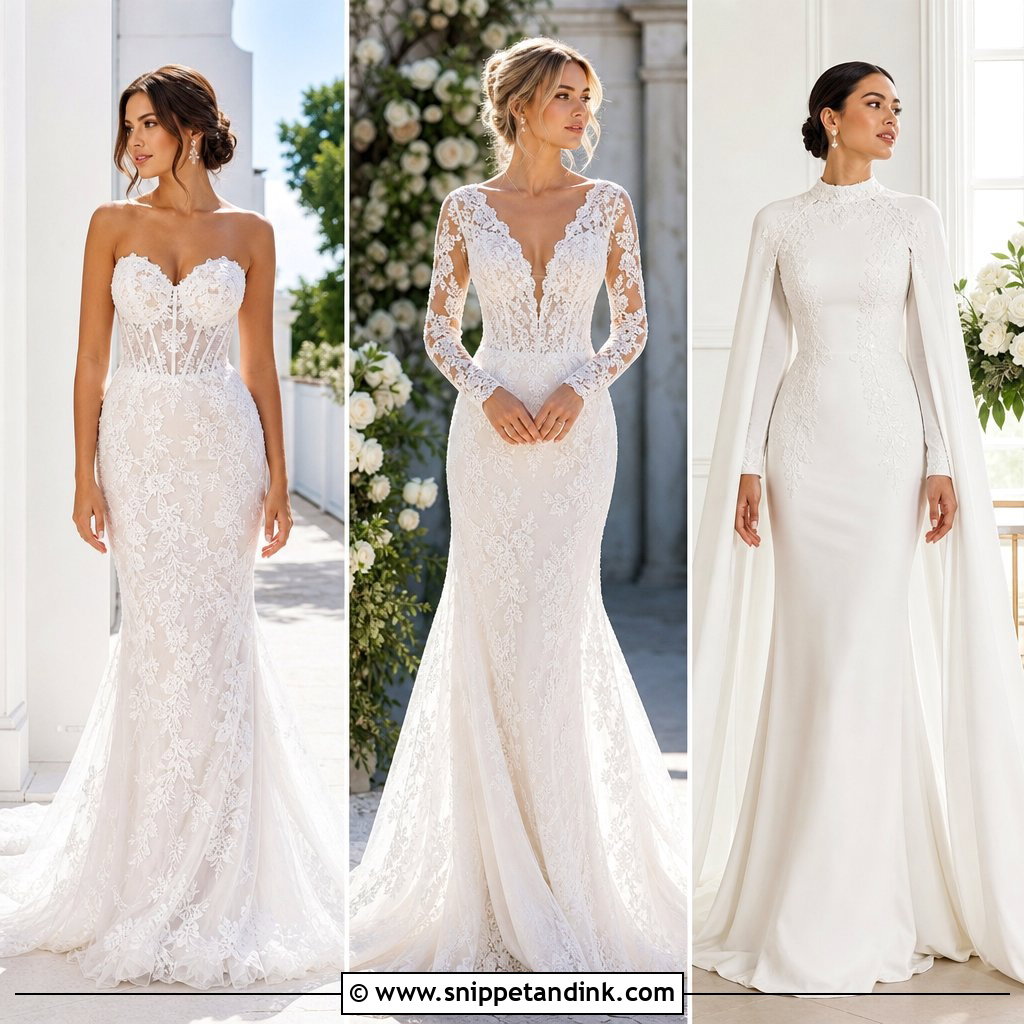
Fit and support matter more than any rule about which shapes to wear. A plus size wedding dress can be an A-line, a corset bodice, a basque waist, a wrap bodice or a structured ball gown. The bust support is what I check first, since a bodice that supports properly changes everything above the waist. Try fitted gowns, off-shoulder styles, lace sleeves and satin too. A well-tailored dress makes the biggest difference.
26. Petite Wedding Dress
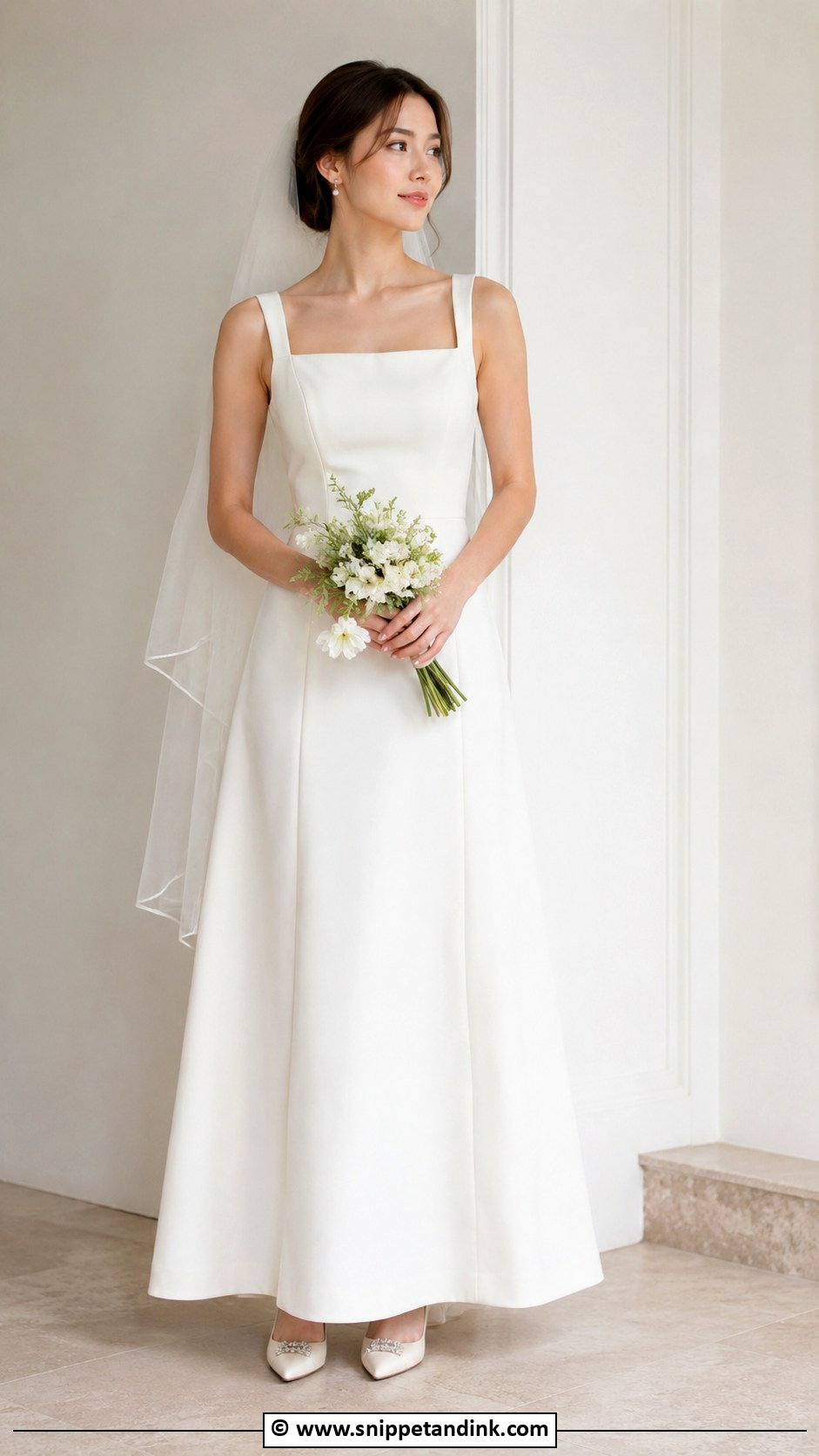
On a petite frame, proportion is everything. A-lines, sheaths, slim ball gowns and high-waist shapes usually work, and vertical seams and clean necklines add height. Huge skirts can overwhelm unless the bodice fits very closely. Petite brides can absolutely wear drama, but the hem, waist placement, strap length and bodice all need careful adjustment. A light veil and pointed heels help.
27. Maternity Wedding Dress
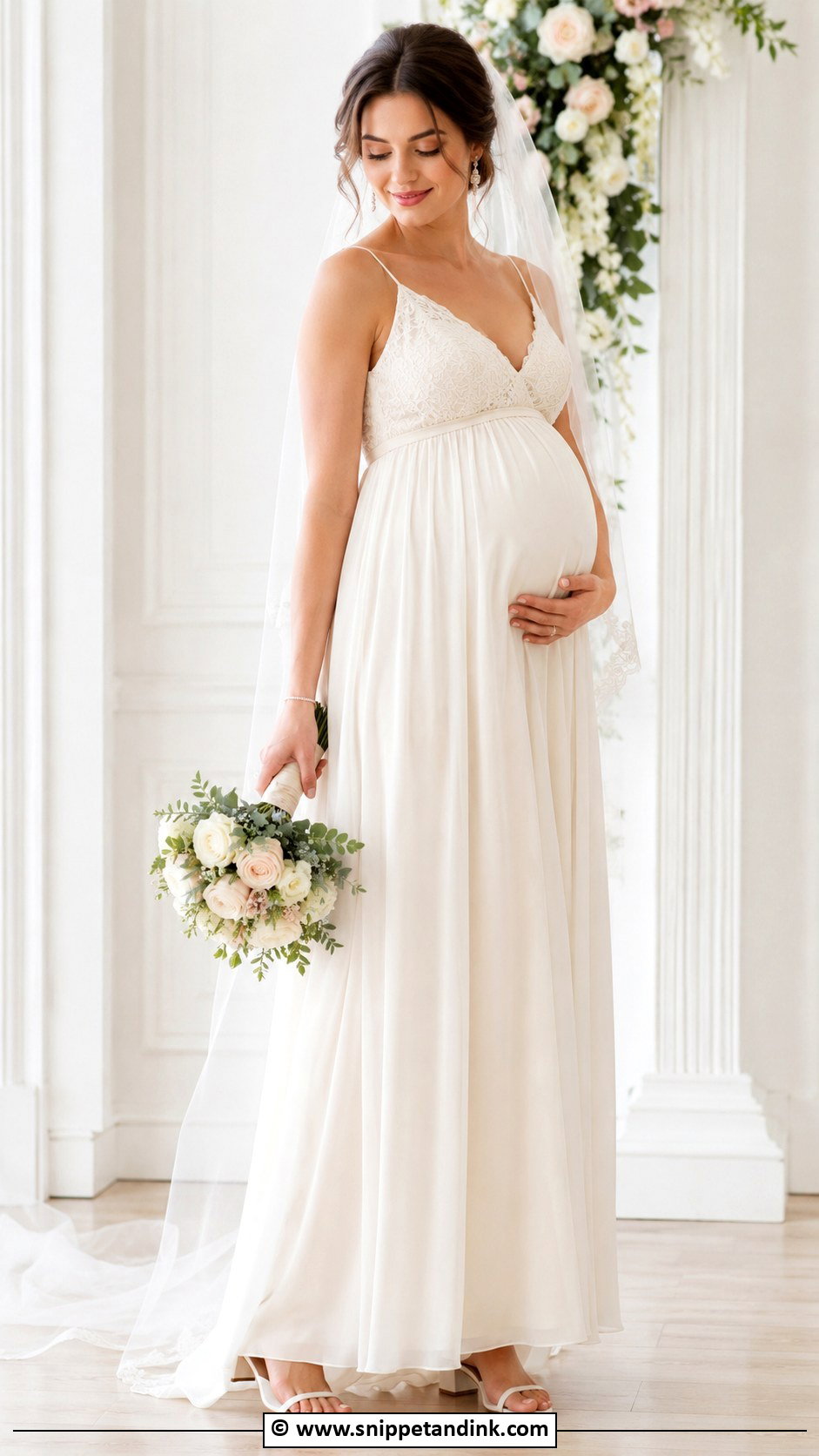
For a pregnant bride, comfort comes first. Empire waists, soft A-lines, stretch crepe, chiffon and wrap bodices all give room through the waist and hips. Leave the final fitting as late as your seamstress allows, because the body can change a lot in a few weeks. Low block heels, a soft veil and delicate earrings suit it, and breathable fabric matters for a long day.
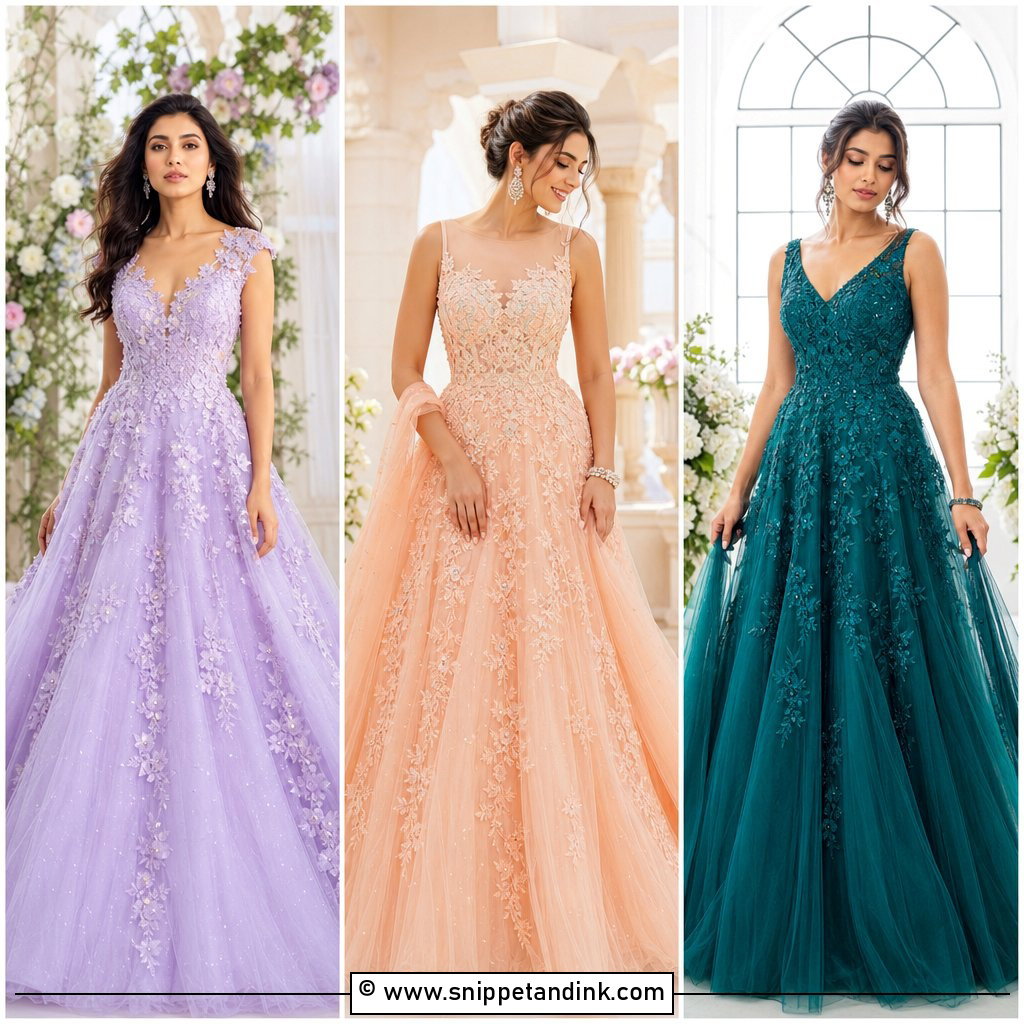
28. Colored Wedding Dress
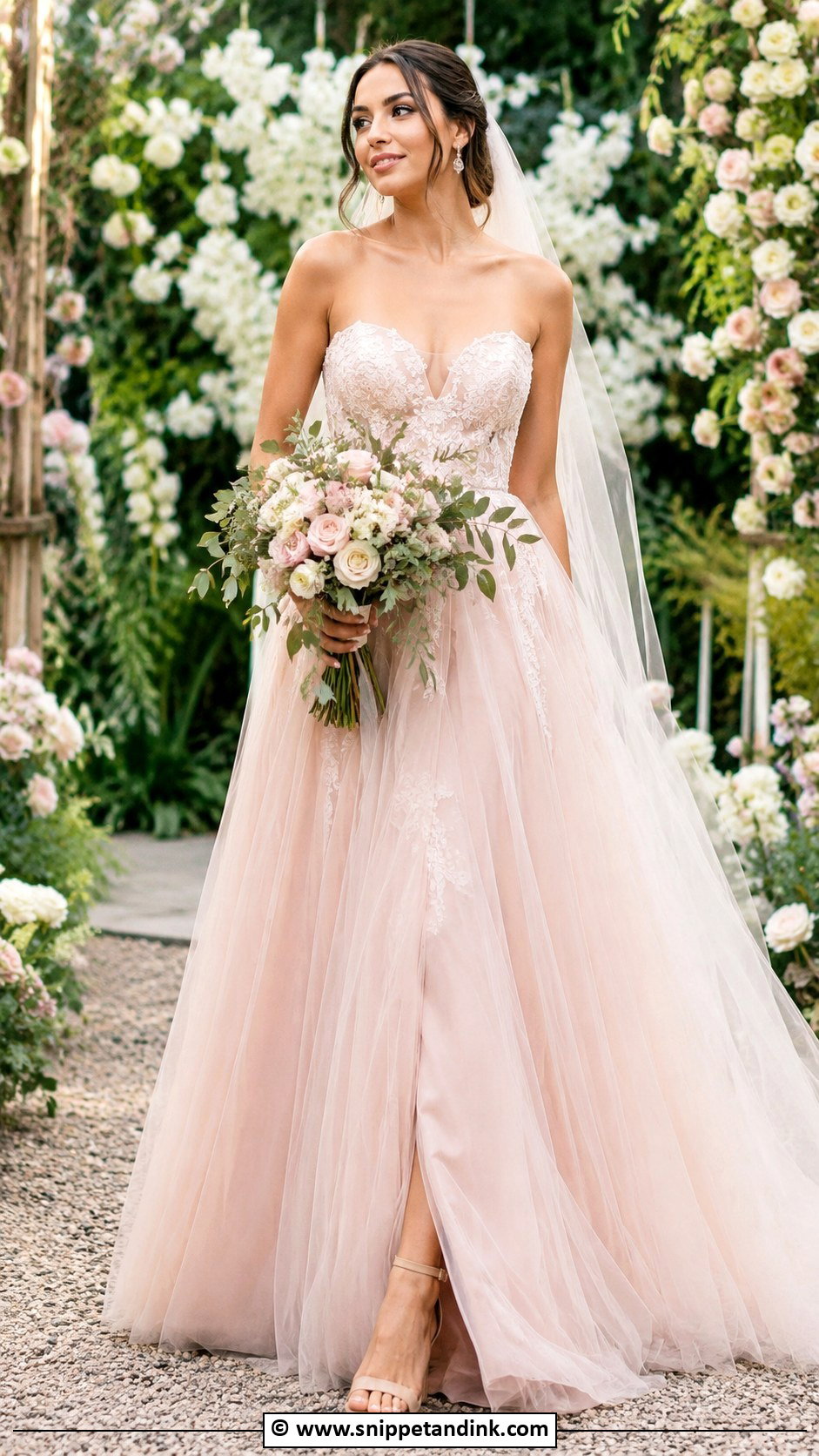
Colour is personal, and soft shades like blush, champagne, pale blue, ivory with floral colour or light gold can look softer than bright white on some skin tones. Test the colour against your face in daylight before deciding. With blush or champagne, warm-toned pearls and soft makeup work well; pale blue looks fresh with silver. Neutral heels and a bouquet that picks up the dress colour finish it.
29. Reception Mini Wedding Dress
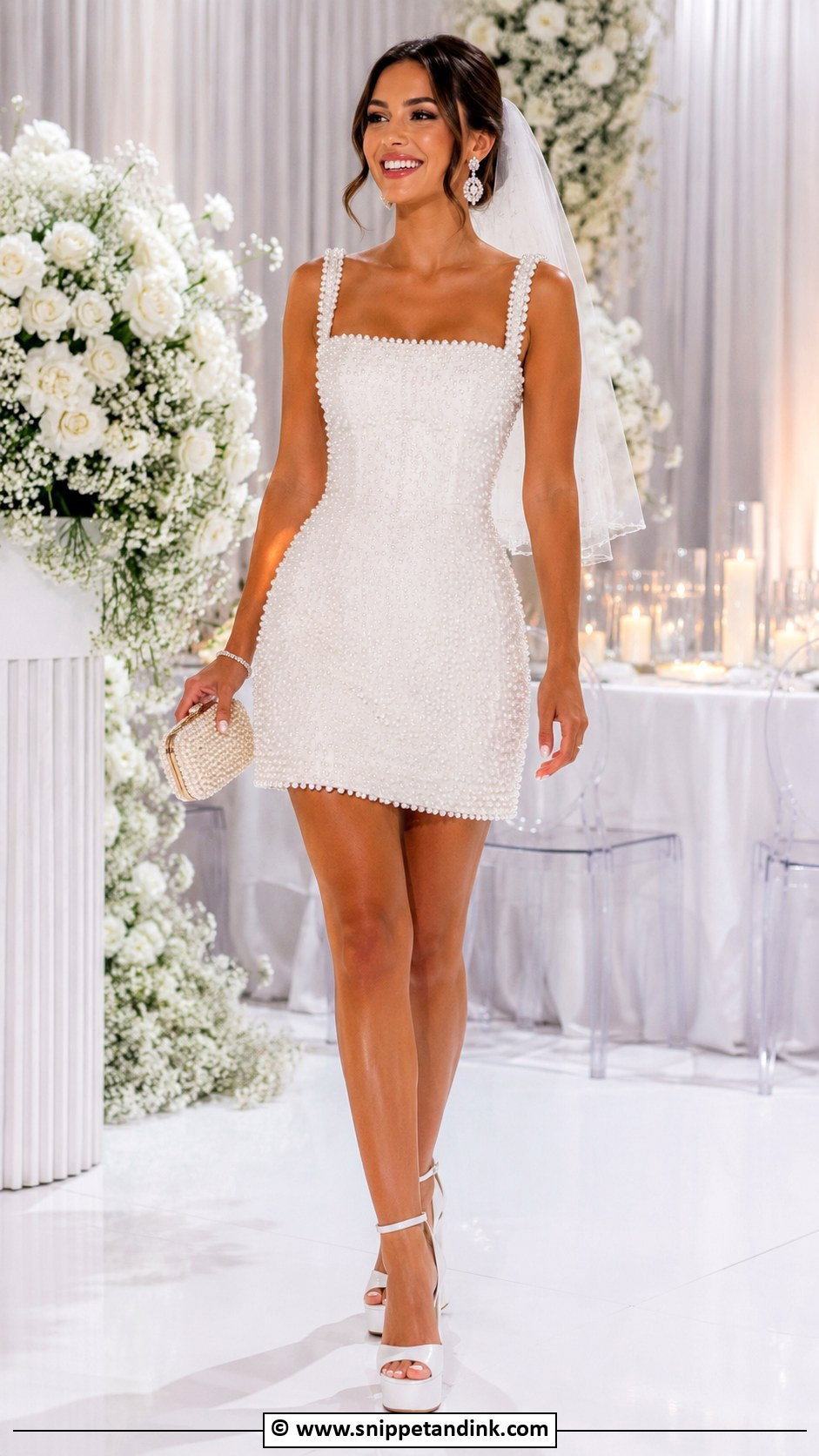
A reception mini is all about movement. It might be pearl-covered, satin, feather-trimmed, corseted or long-sleeved. Statement heels, sparkly earrings and a small clutch suit it. Make sure you can sit comfortably in it, since short hems ride up more than you’d expect. A short veil, bow or pearl headband keeps it bridal for the after-party.
30. Black And White Wedding Dress
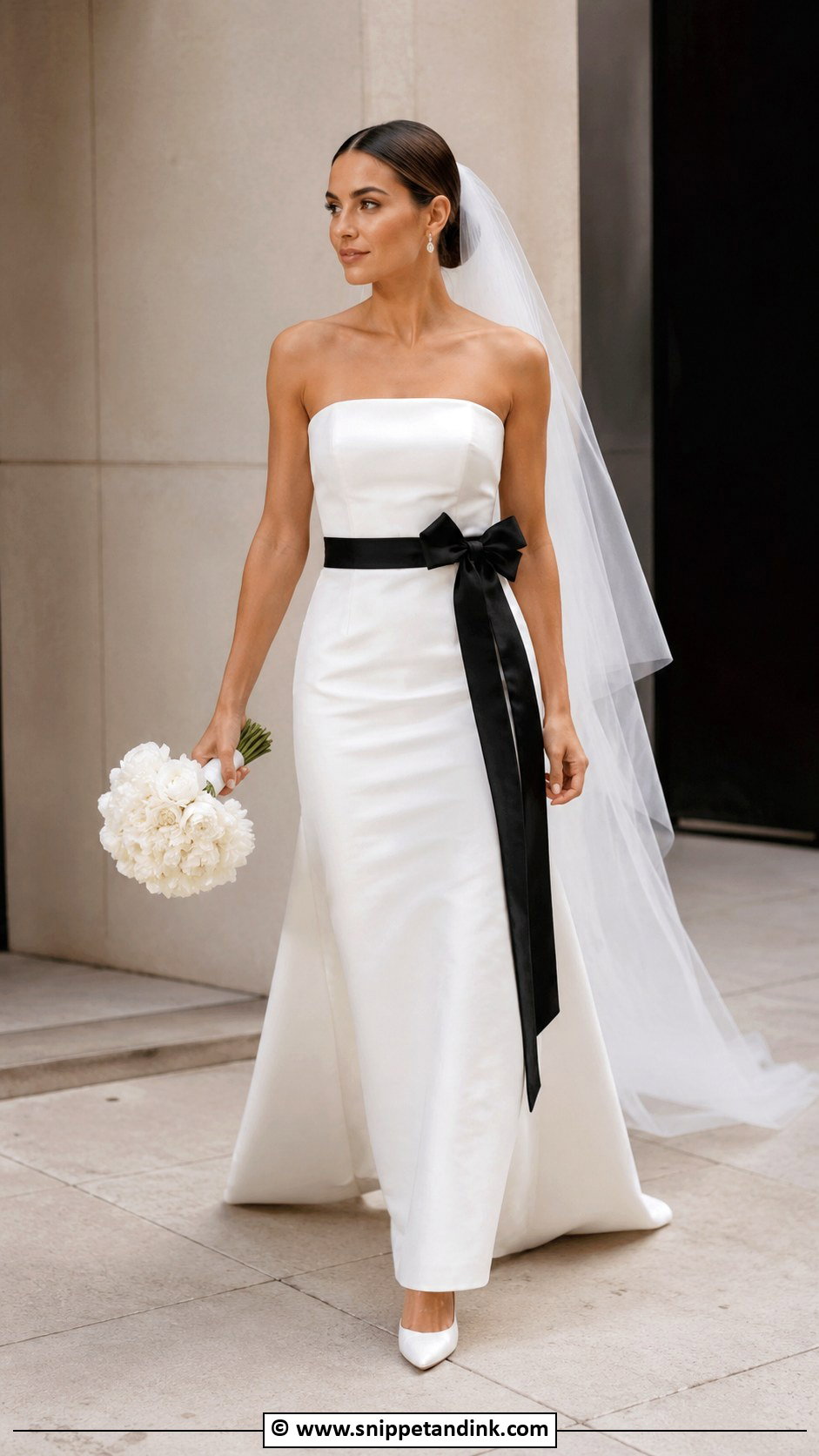
Black details on a white gown look intentional when there’s one clear focus: a black bow, gloves, a sash, floral embroidery or black trim. Too many black accents and it starts to look like a costume. Simple heels, refined earrings and a plain veil keep it bridal. Modern venues, city weddings and evening celebrations suit it best.
Sample Gowns Are Clipped, Not Fitted
The dress you try on is a shop sample, usually in one size and held in place with clips at the back. It won’t fit like your finished gown, so judge the shape, fabric and neckline rather than the exact fit. Bridal size charts also run differently from everyday clothing sizes, so don’t be thrown by the number. Your gown is ordered from your measurements, then adjusted at fittings.
Nine Months Out to the Last Fitting
Timings vary by designer and season, so always ask the shop for their current lead times. As a general plan, this is what I give clients:
- Start trying on around nine to twelve months before the wedding. Many made-to-order gowns take several months to arrive.
- Order the dress once you’re sure, and ask for the expected delivery date in writing.
- Book alterations to start roughly two to three months before the day, with two or three fittings planned.
- Bring your shoes, underwear and any jewelry to every fitting so the hem and neckline are set correctly.
- Have the final fitting a couple of weeks before the wedding, and collect the dress pressed and ready.
If your date is closer than that, ask about buying a sample or an off-the-rack gown. It narrows your choice, but it avoids rush fees and a stressful wait.
Which Dress Will You Forget You’re Wearing?
The gown alone doesn’t make the choice; the venue, season, comfort, movement and photos all play a part. A satin A-line suits a classic bride, while a corset gown, a drop waist or a detachable overskirt suits someone who wants more of a fashion statement. Lace, pearls, bows, colour, sleeves and plain crepe each set a different mood. The most beautiful dress is the one that supports your body and lets you stop thinking about it once the day begins.
You'll Like These Ideas:








Leave a Reply