
Lace on a big gown is a question of scale. Fine lace disappears on a wide skirt from the back of a church, while bold guipure patterns or oversized floral appliqué can be read from across the room. Designers are putting lace on corset bodices, full ball gowns, sheer overlays and sculpted shapes, and each one asks for different handling. The styling rule I follow is simple: the more lace the gown carries, the quieter the veil, shoes and bouquet should be. Below are twenty full looks, from cathedral trains to detachable overskirts, with the fabric and fitting notes I’d give a bride trying each one.
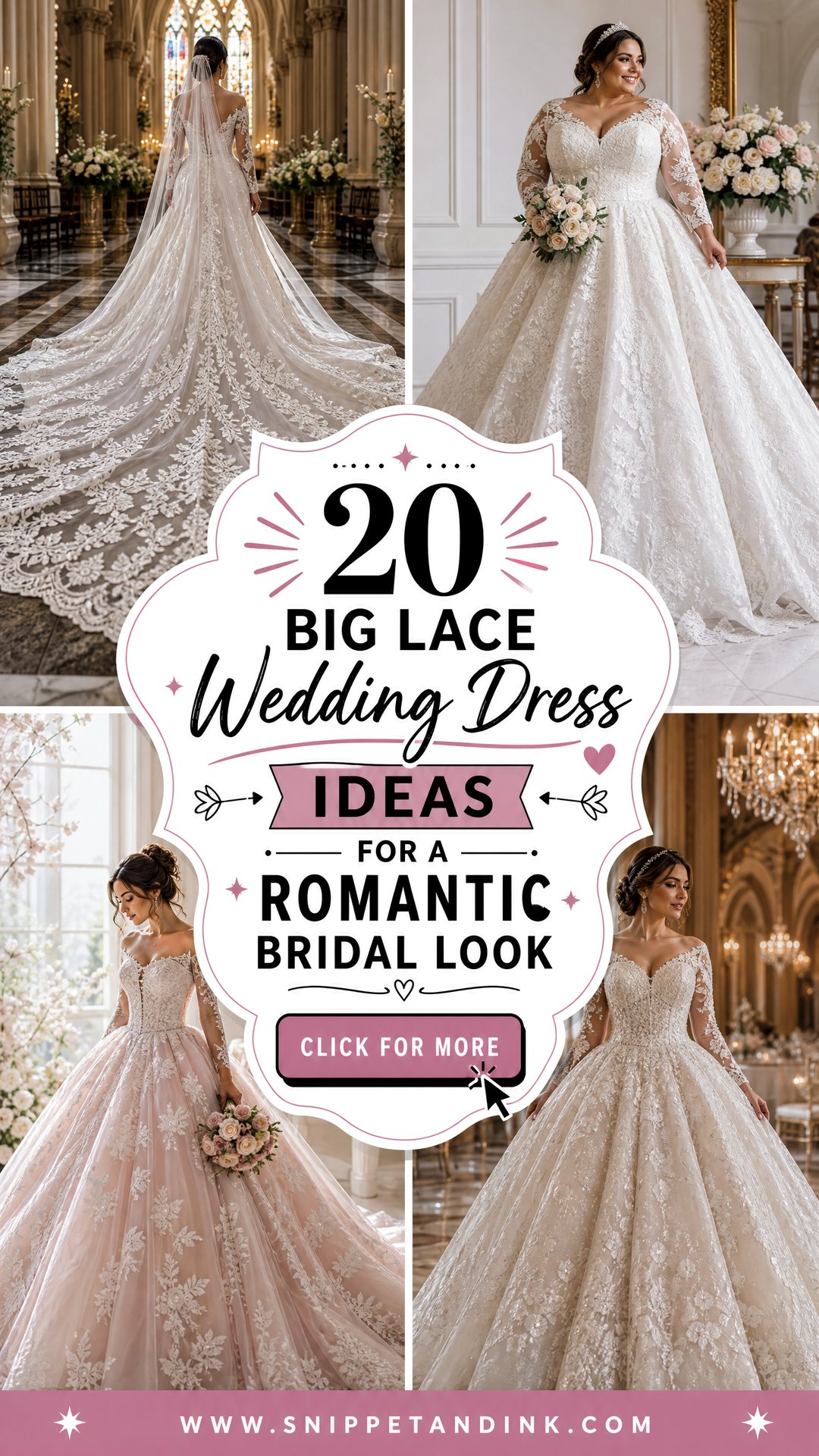
Reading a Lace Swatch Before the Gown Wins You Over
Bridal lace comes in a few main types, and each one behaves differently on a large skirt. Before I let a bride decide on a gown, I ask her to hold the lace up to the light and run it between her fingers.
- Chantilly: very fine, flat and soft, with a delicate outlined pattern. It drapes well, but it can look plain from a distance on a huge skirt and snags easily.
- Alençon: outlined with a raised cord, so the pattern has more definition. It holds up better to wear and shows from further away.
- Guipure: heavy motifs joined without a net background. Bold and modern, but stiffer and warm to wear.
- Embroidered tulle and 3D appliqué: pattern stitched onto tulle or flowers layered on top. Lightweight, though raised pieces can catch on veils.
Rub the lace against your inner arm. If it feels scratchy there, it will feel worse under the arms after hours of hugging. Also ask what the lace sits on. Lace over a skin-tone base looks like it floats on you, while lace over ivory looks more traditional and covered.
1. Big Lace Ball Gown Wedding Dress
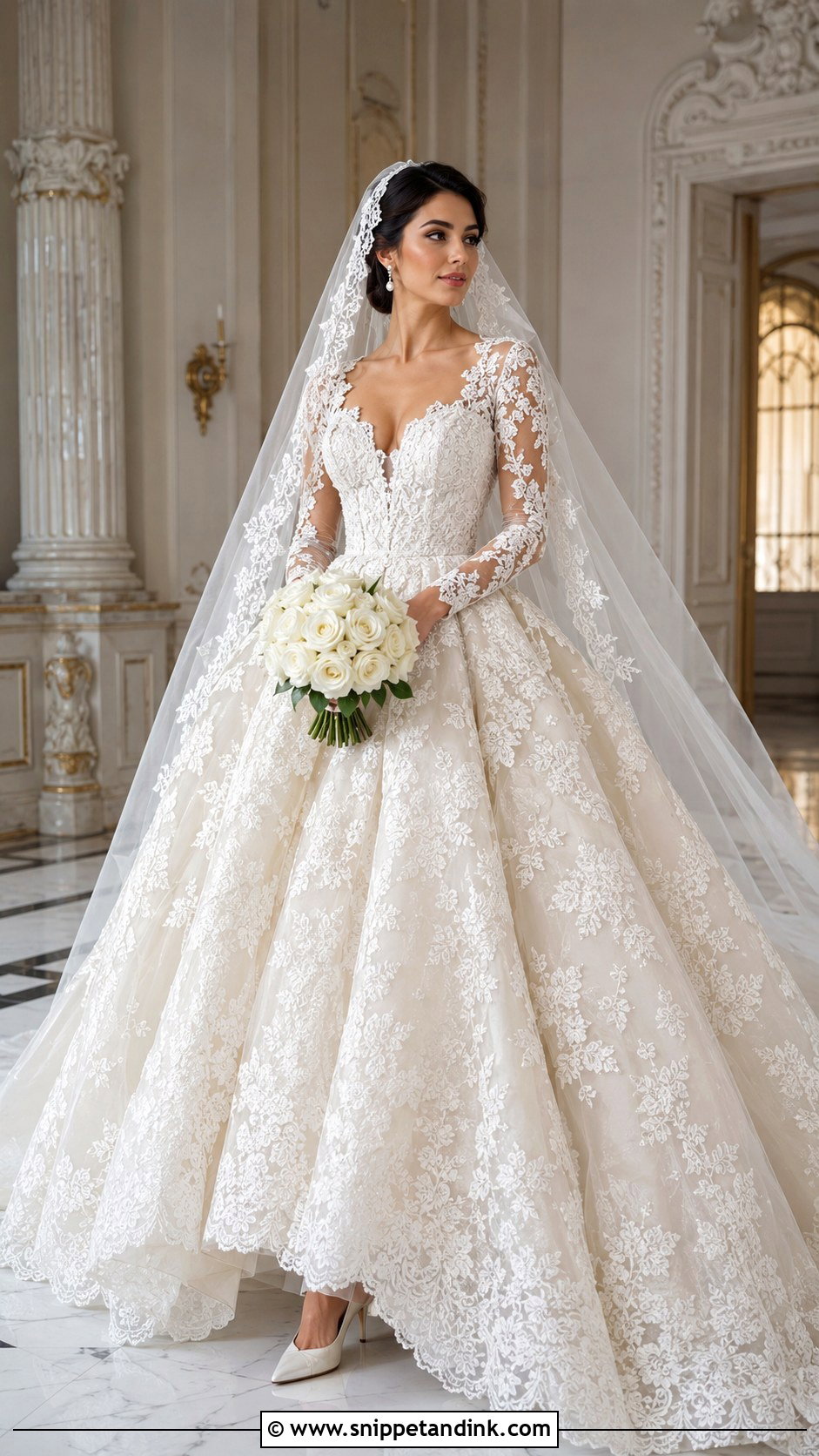
For a classic lace ball gown, I look for medium-scale floral lace. Too fine and it reads as plain white from the aisle; too bold and it can overwhelm a smaller frame. A structured corset or firm inner bodice defines the waist and holds up the weight of a lace-covered skirt, which is heavier than tulle alone. Ivory pointed pumps, pearl drops and a cathedral veil with a plain edge keep the styling calm, with a compact bouquet of white roses and greenery. Wear your hair smooth and lifted so the neckline lace is visible. Ballrooms and historic estates suit it.
2. Oversized Floral Lace Wedding Dress
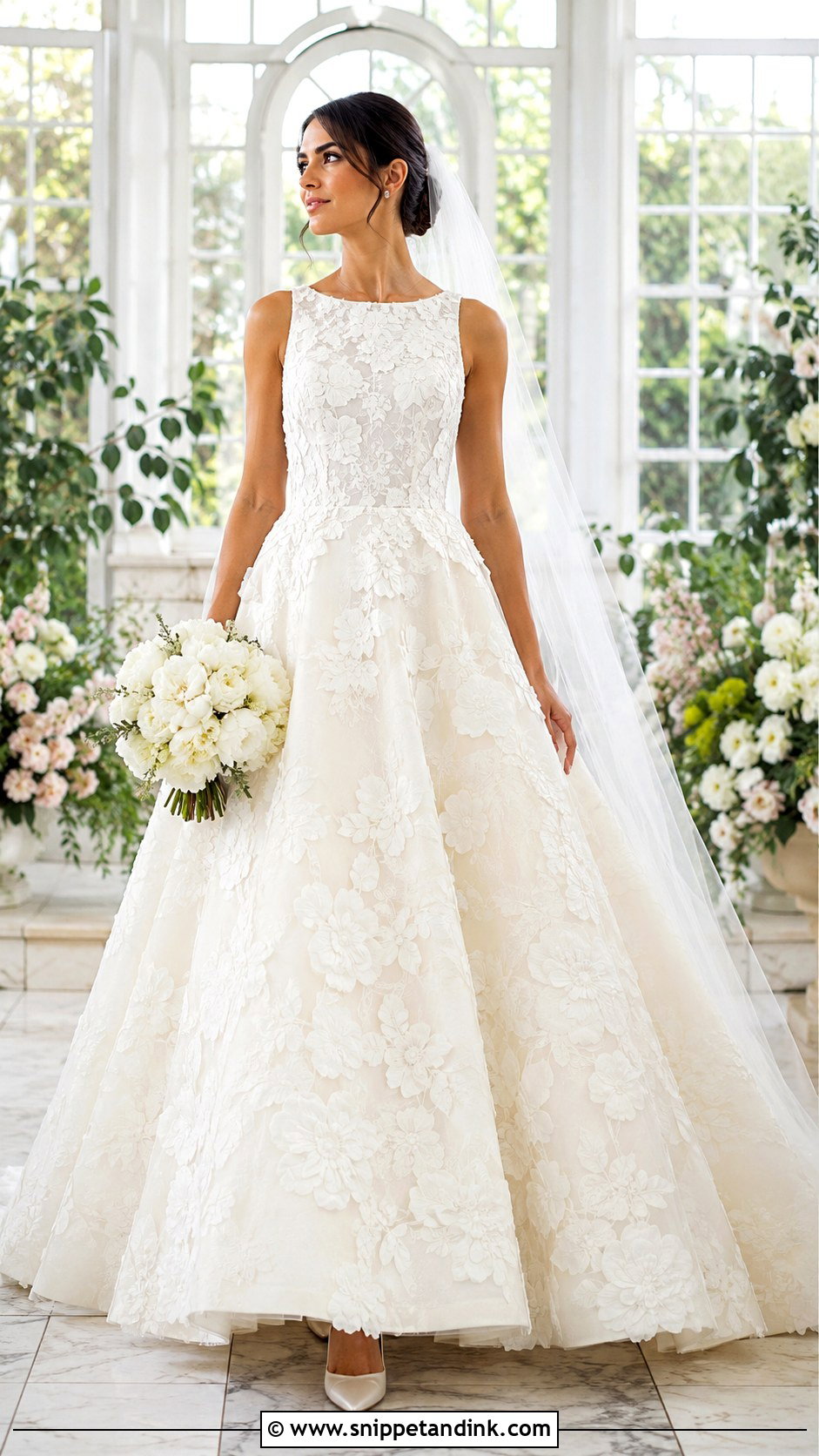
Oversized flowers make lace look modern rather than traditional. The appliqués should start on the bodice and spread loosely over a wide A-line skirt, with gaps of plain tulle between them so each flower can be seen. A soft ivory lining shows the pattern without harsh contrast. I keep the shoes sleek and the earrings to small studs, with a fingertip veil you take off soon after the ceremony. Peonies, ranunculus and a little greenery echo the lace without copying it. A low bun or waved ponytail leaves the neckline open. Gardens and conservatories suit it, especially in spring.
3. Cathedral Train Lace Wedding Dress
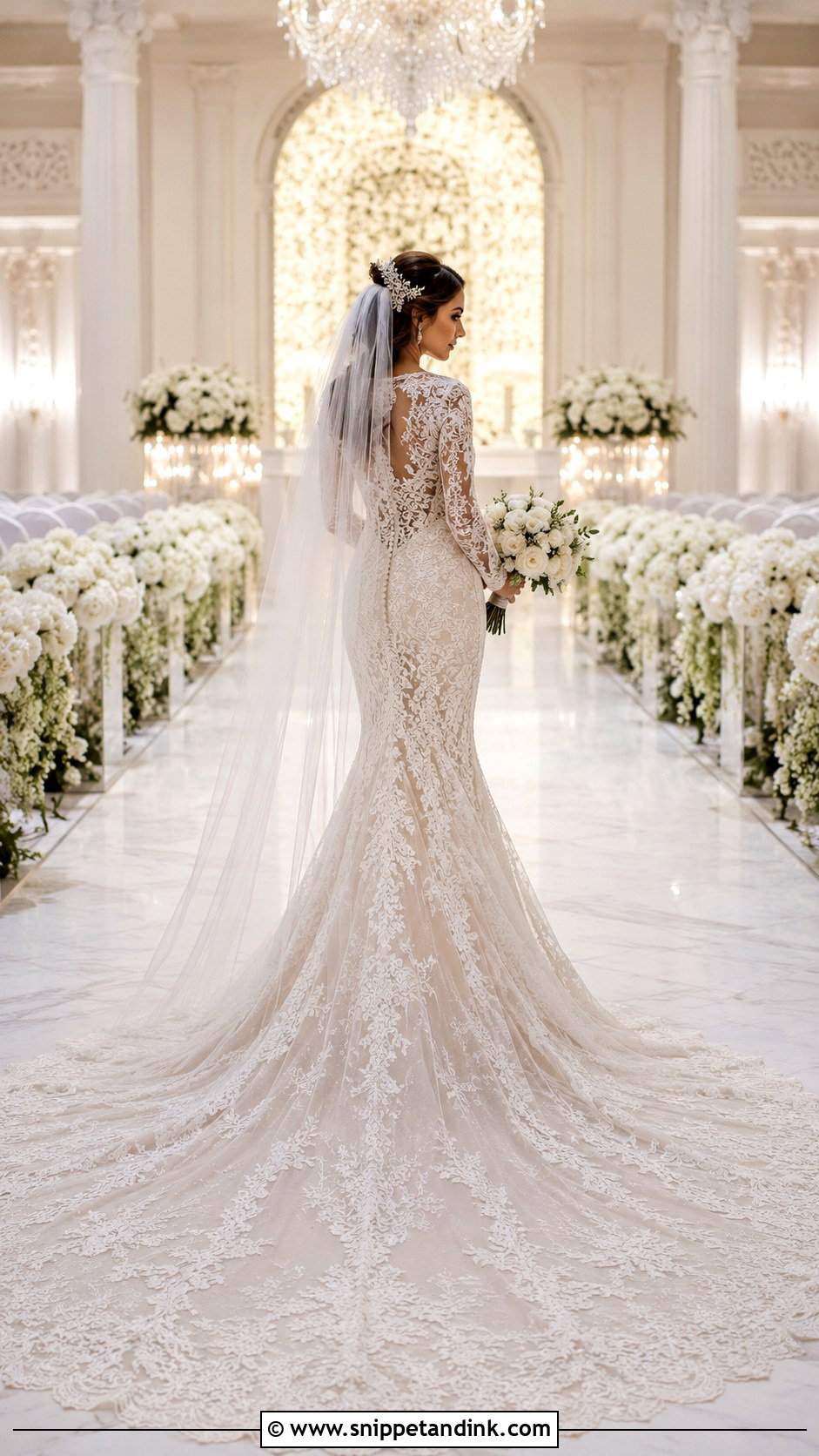
Picture a long aisle with a lace cathedral train following you down it. On this gown the train is the statement, so the bodice and skirt should stay fitted and gently flared. Check that the lace motifs continue consistently from waist to hem; a train where the pattern suddenly changes size looks pieced together. Closed ivory heels, a crystal comb and a plain tulle veil a little longer than the train are all it needs, with a structured white bouquet. Lace trains are heavy, so ask early about a bustle with enough pickup points to carry it. A grand hotel or estate with a long, clean aisle shows it best.
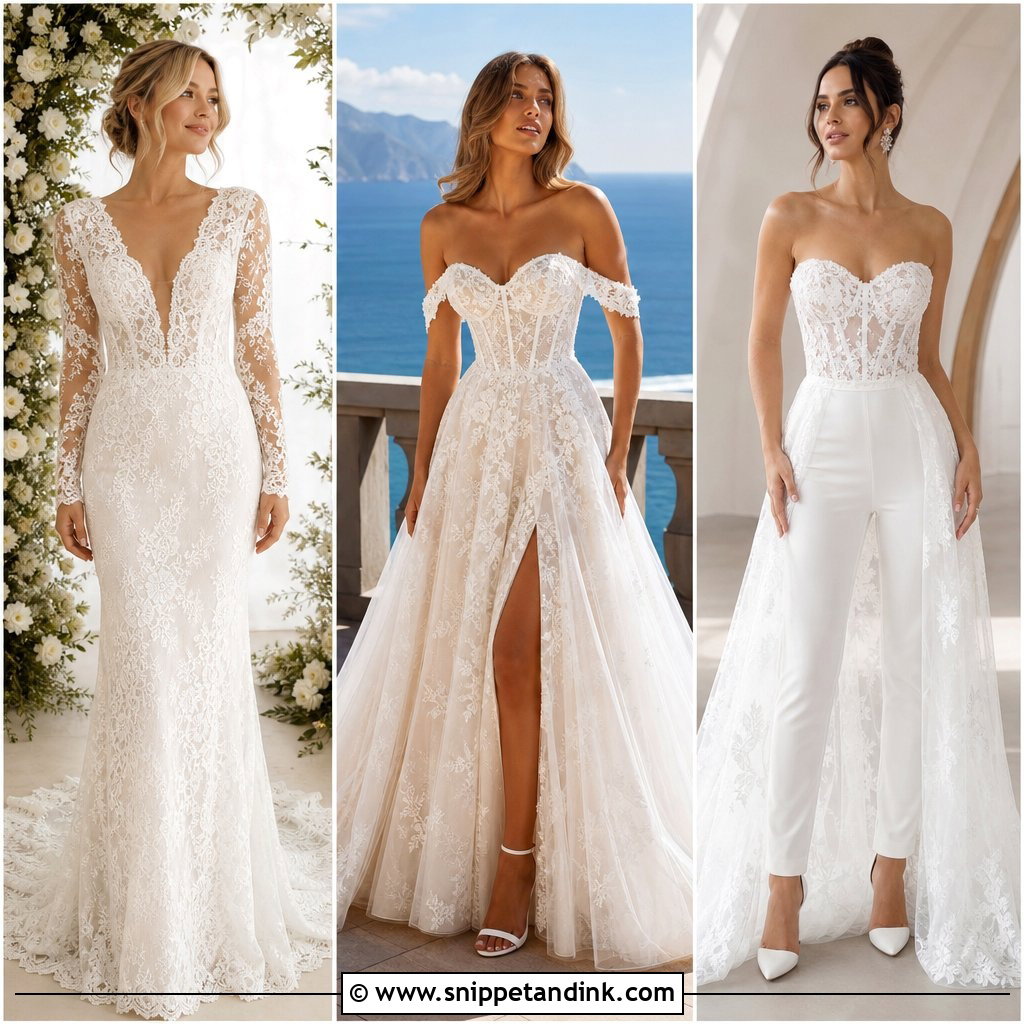
4. Long Sleeve Big Lace Wedding Dress
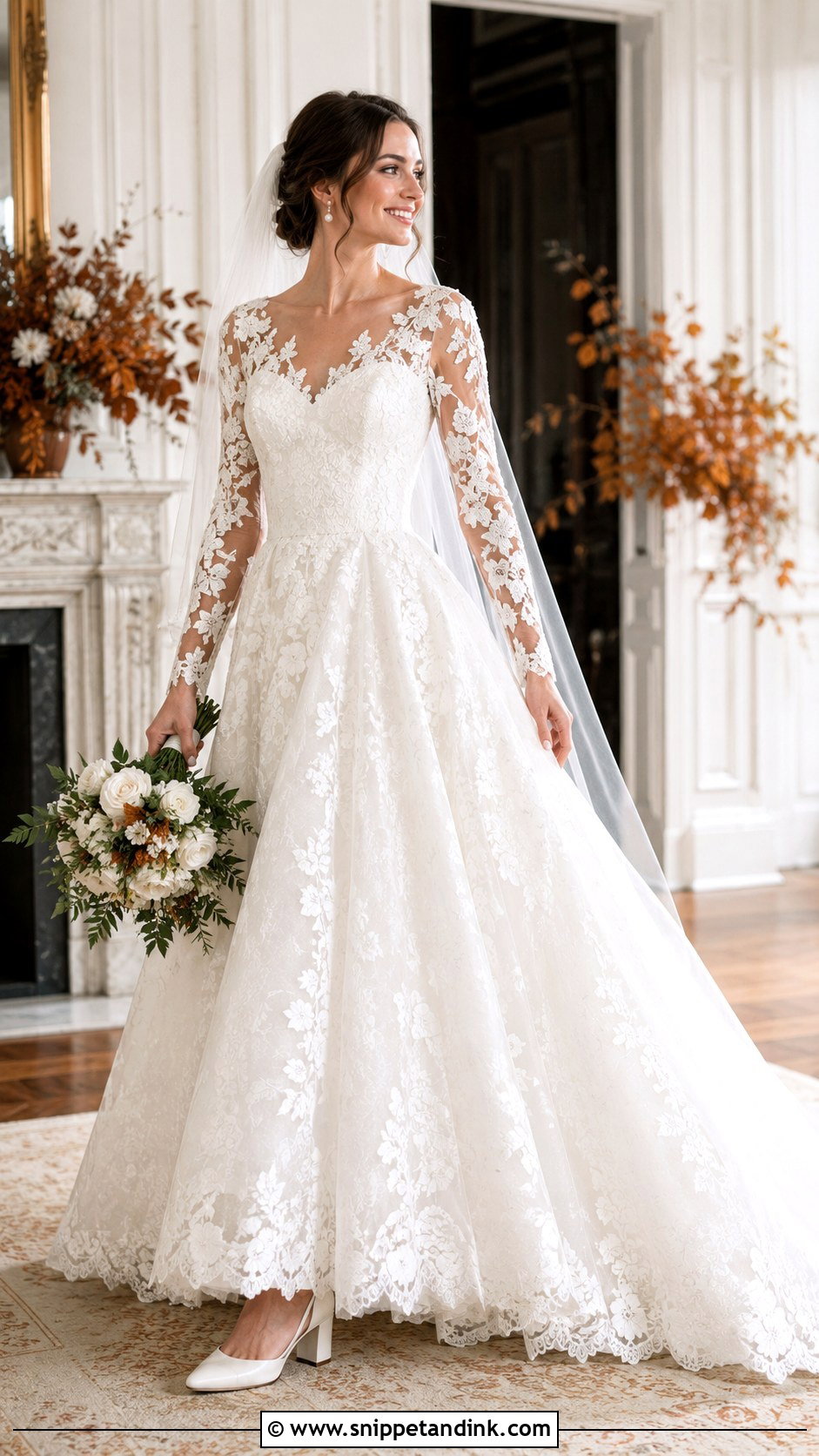
Lace sleeves offer coverage while still feeling light, especially as fitted illusion sleeves finished with appliqué and covered buttons at the wrist. A full skirt with a defined natural waist keeps the shape from looking heavy. I pair it with pearl earrings, block heels and a chapel veil set beneath a neat low bun, with white flowers and cool green leaves. It suits autumn, winter or air-conditioned ceremonies, but even then I want a breathable lining, since lace sleeves trap heat during dancing. Add an opaque bodice panel for more coverage. Lift your arms at the fitting before the sleeves are taken in.
5. Off Shoulder Lace Ball Gown Wedding Dress
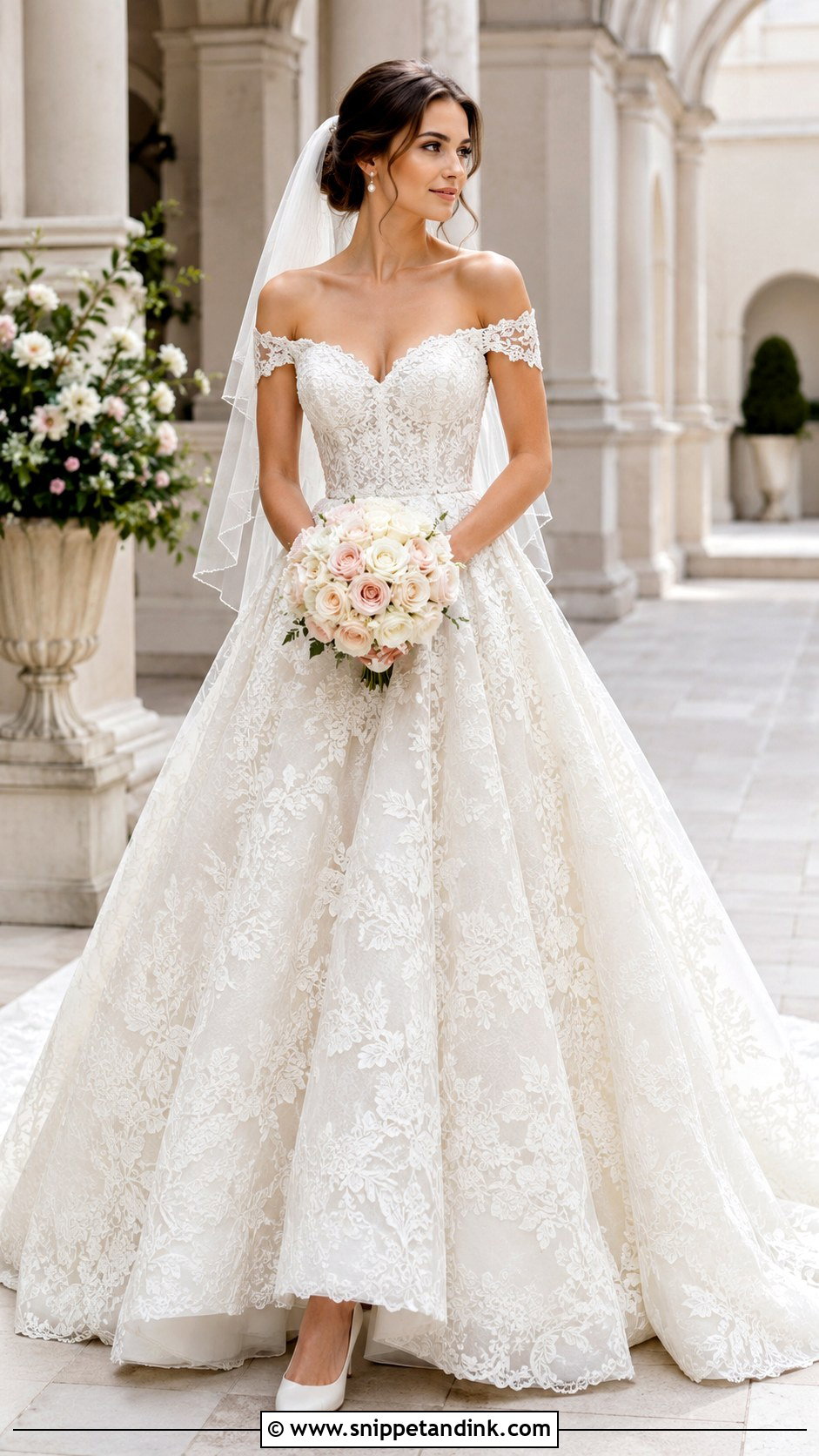
Off-the-shoulder lace straps frame the neckline, but they’re the first thing to slip if the bodice is loose. I look for straps that grip without pinning your arms, over a structured bodice that holds the dress by itself. Floral lace over a smooth ivory base gives depth across the full skirt. A delicate necklace works here, unlike most lace gowns, with pearl earrings, ivory pumps and a mid-length veil set below waves or a low chignon. White garden roses repeat the shape. Practise sitting and raising your arms, and let the seamstress make small strap adjustments if they creep.
6. Strapless Corset Lace Wedding Dress
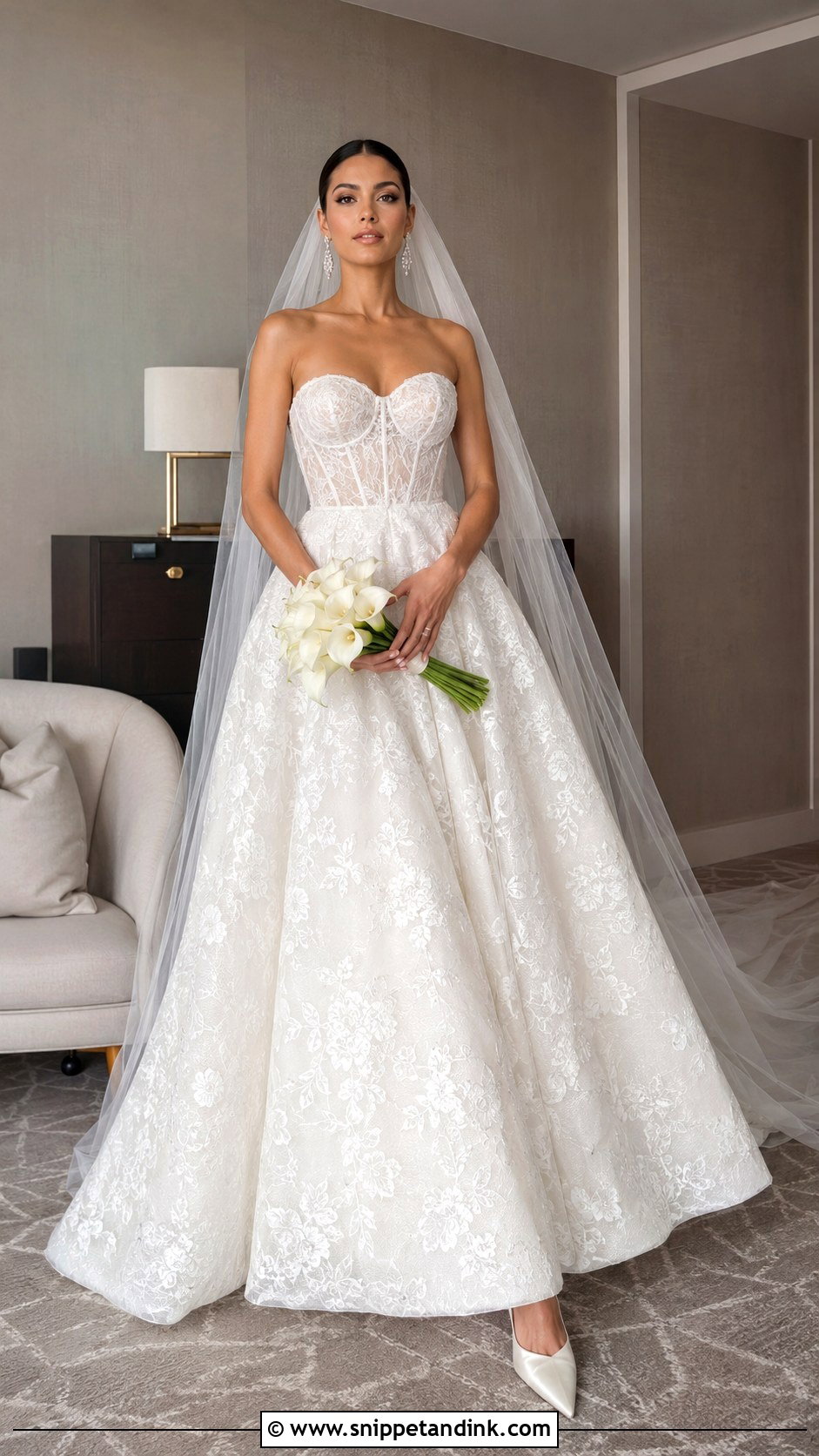
A lace-covered strapless corset gives structure and softness at once. A straight or gently curved neckline feels modern, and visible corset seams shape the bodice and help carry the full skirt. Choose a lined bodice if you want the lace without a sheer effect. Keep accessories minimal: drop earrings, pointed ivory heels, a smooth cathedral veil and a small structured bag. A clean bun contrasts with the busy fabric, and white calla lilies or roses finish it. Lace stretches slightly with body heat over a long day, which is one reason I want the bodice fitted firmly by a professional.
7. Basque Waist Lace Wedding Dress
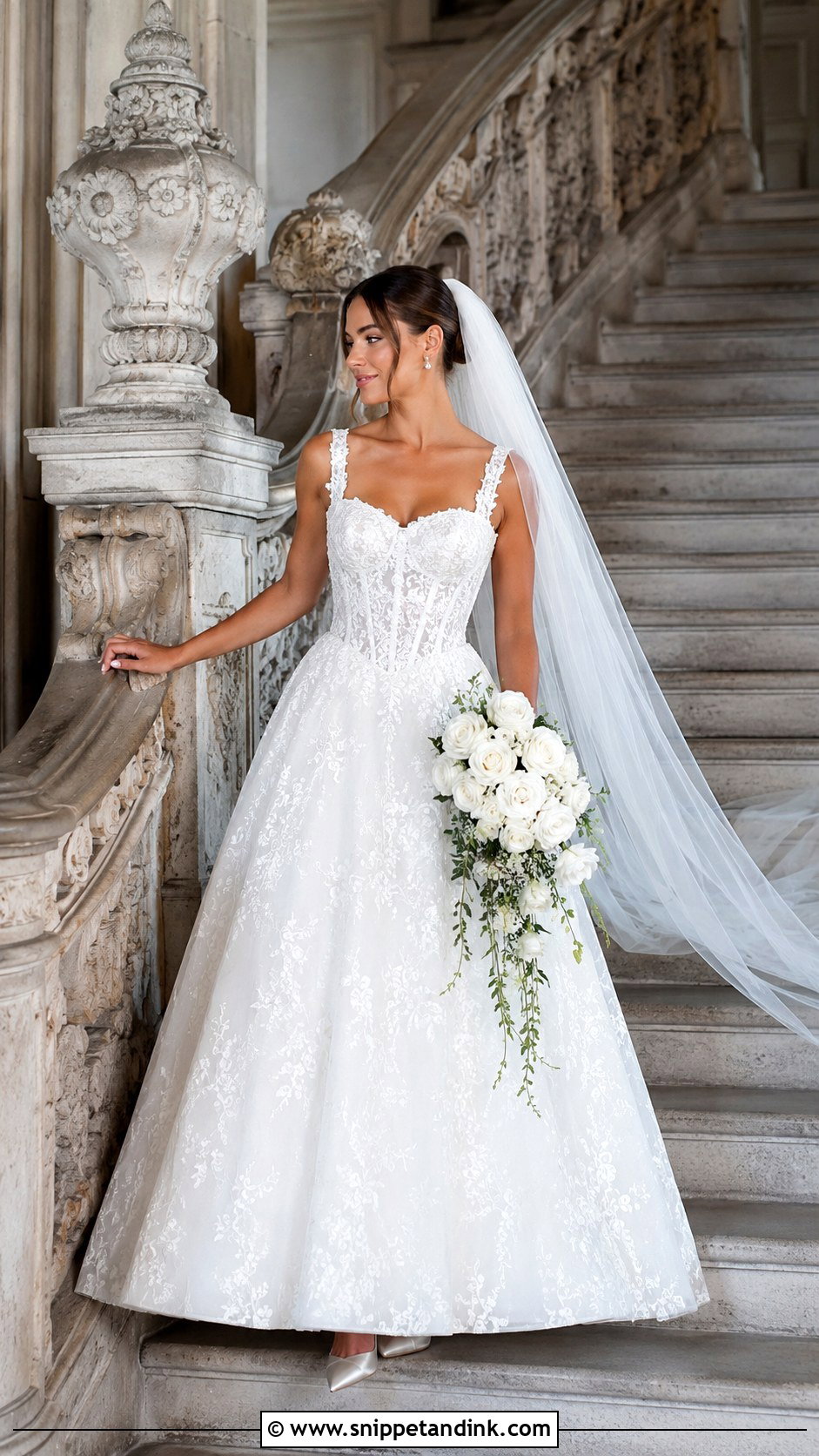
A basque waist lace wedding dress dips below the natural waist into a point or curve, lengthening the bodice before a wide skirt opens out. The detail I check first is how the lace meets that seam. Good lace follows the pointed waistline, with motifs cut around the edge, instead of ending in a straight line across it. Satin pumps, small pearl earrings and a long plain veil suit it, with a tight low bun and a cascading bouquet that extends the long line. Castles, ballrooms and historic venues suit it. Sit down at the fitting: the point should bend with you, not stab into your stomach.
8. Princess Lace Wedding Dress
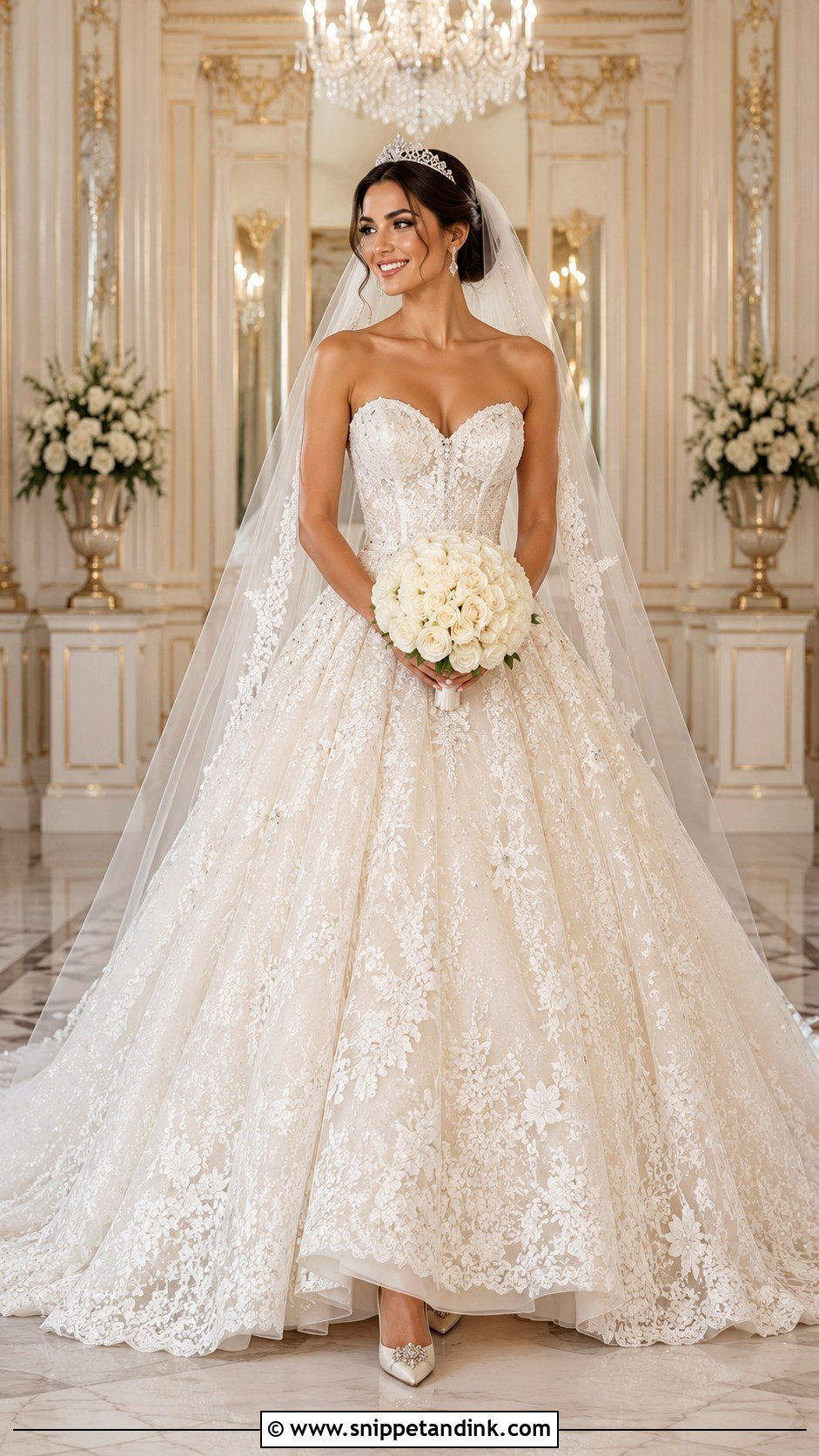
A princess lace wedding dress is the full, romantic silhouette many brides picture first. A fitted bodice, defined waist and layered skirt with evenly spaced appliqué give it that storybook shape. A sweetheart neckline softens it, and detachable straps add security. This is one look where a delicate tiara or crystal headband fits, with sparkling studs, ivory heels and a chapel veil. Round white roses suit the proportions. Hold back on other jewellery, or it tips into costume. Ask for a light underskirt and a sensible bustle, as layered lace skirts are heavy by evening.
9. Vintage Big Lace Wedding Dress
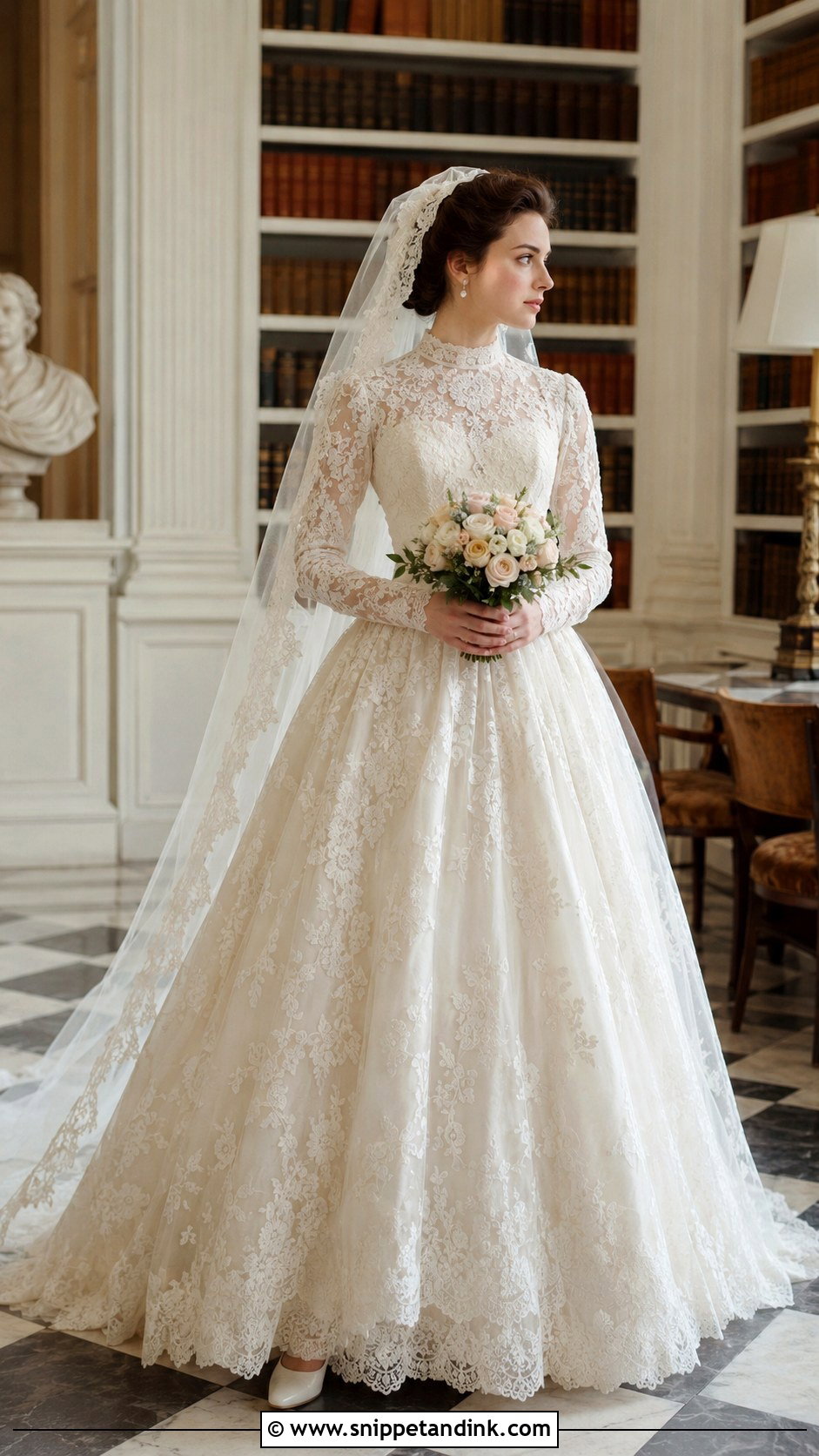
Vintage-style lace looks most authentic on a gown with a high neck, fitted sleeves, covered buttons and a full skirt. Look for soft Chantilly-style patterns or botanical motifs rather than glittery appliqué. An ivory or light cream lining gives the fabric a gentle heirloom tone. I pair it with low satin pumps, pearl earrings, a lace-edged fingertip veil and a small bouquet of white roses. A rolled updo suits the period without tipping into costume. Historic homes, libraries and traditional hotels fit it. Fine Chantilly is delicate, so ask for light skirt layers and good undergarments to keep it comfortable for hours.
10. Boho Lace Ball Gown Wedding Dress
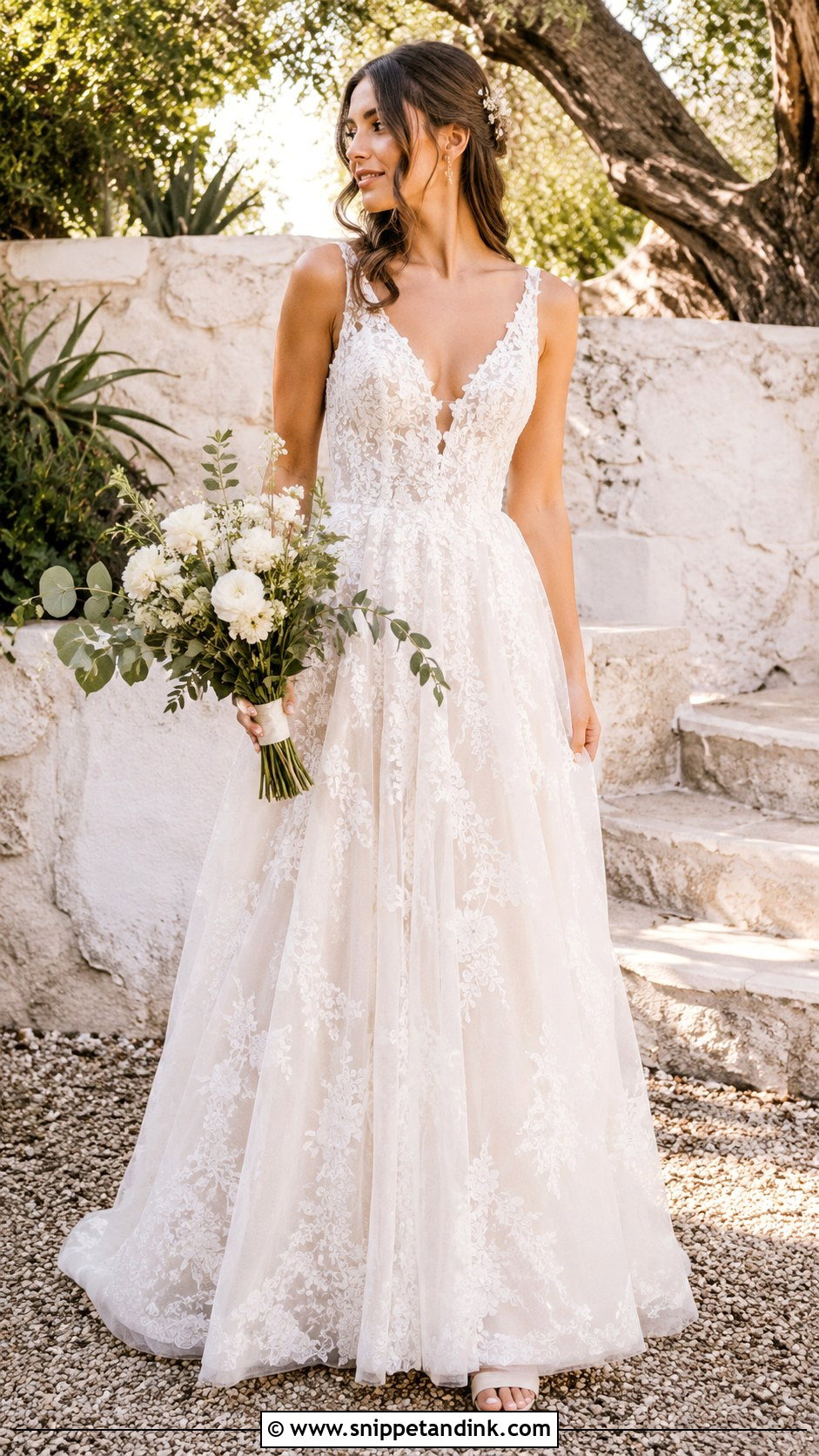
Can a lace ball gown feel relaxed enough for a field or forest? Yes, if you soften everything about it. An unstructured or lightly boned bodice with comfortable straps, a flowing A-line rather than a rigid hooped skirt, and botanical lace make the shape easier. Block-heel sandals, small gold earrings and a simple veil or flower comb suit it, with soft waves or a braided low bun. A loose bouquet of white blooms, eucalyptus and textured greenery fits gardens, ranches and any woodland-inspired venue. Choose soft lace over stiff lace, which bends badly on grass and stone paths.
11. High Neck Lace Wedding Dress
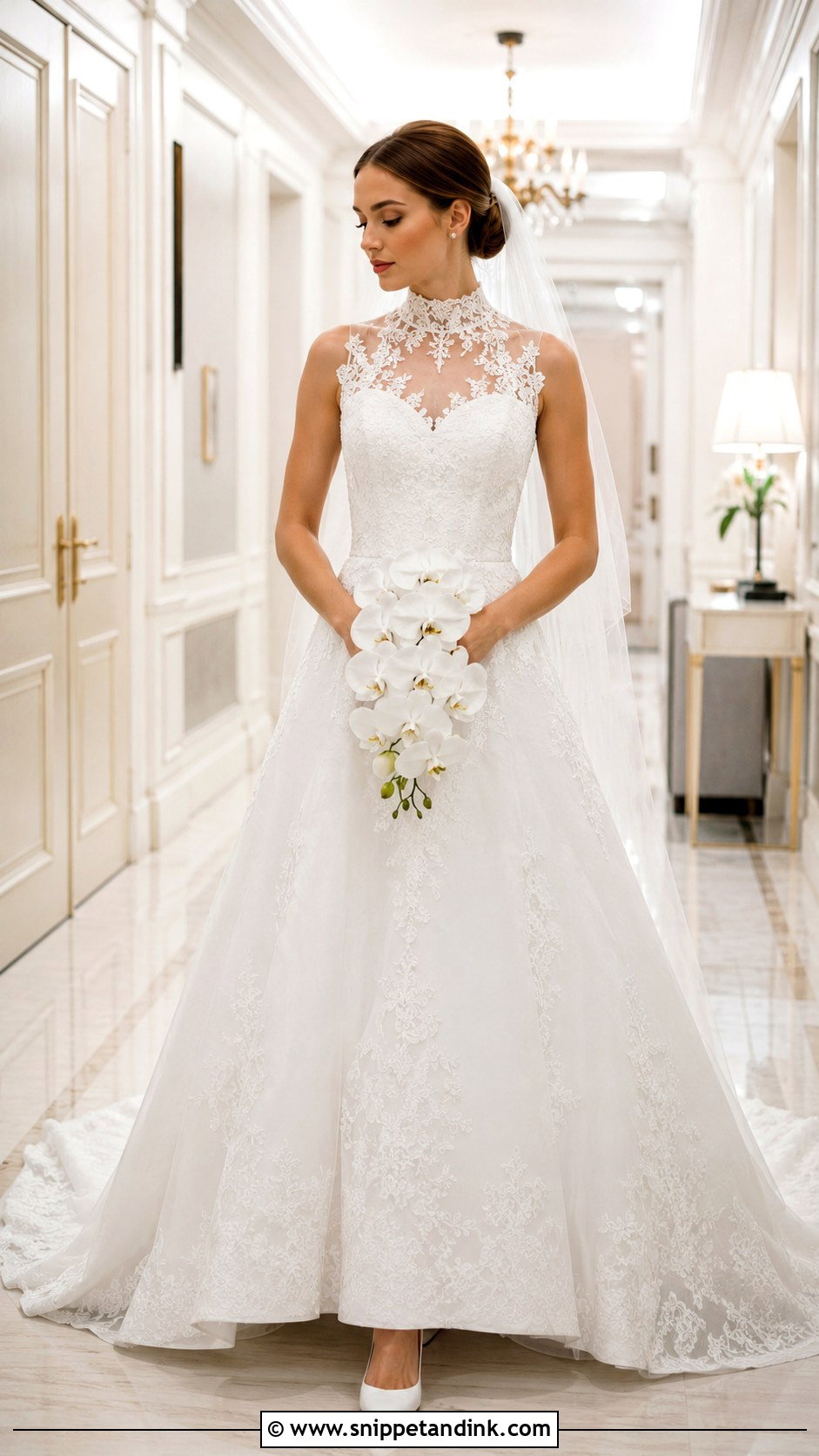
A high neck puts lace right next to your face, which makes it the most photographed lace on the dress. Balance it with a fitted bodice and a full A-line or ball gown skirt. Illusion lace looks lighter; a lined neckline gives more coverage and structure. No necklace, just pearl studs, satin pumps and a clean veil under a polished bun, with narrow orchids or callas for a vertical line. It suits formal daytime ceremonies. Cut lace edges at the collar can scratch, so ask for a soft binding inside, and check the collar doesn’t bunch when you look down.
12. Square Neck Lace Wedding Dress
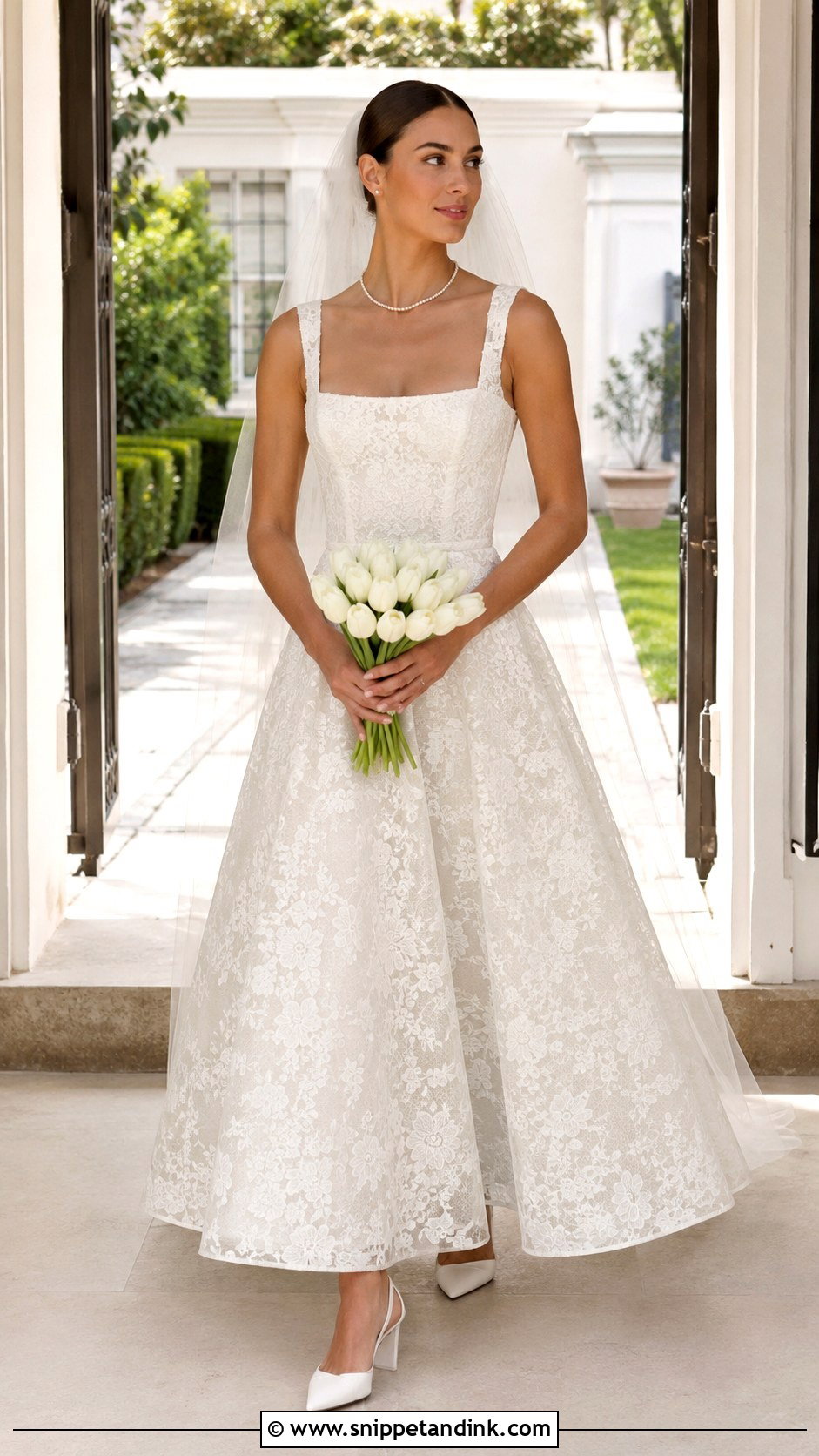
Square necklines bring clean lines to a soft lace gown, and they’re one of the few lace necklines where I’m happy to add a pendant or short pearl strand. Wide straps or short lace sleeves give support, with a defined waist and botanical appliqué on a full skirt. Ivory slingbacks, a smooth tulle veil and a centre-parted low bun finish it, with a compact bouquet of white tulips or roses. It moves easily from a garden ceremony to a formal reception. Strap placement and bodice depth decide how well it holds the bust, so have the neckline fitted to you individually. The edge should lie flat as you move.
13. Sweetheart Lace Wedding Dress
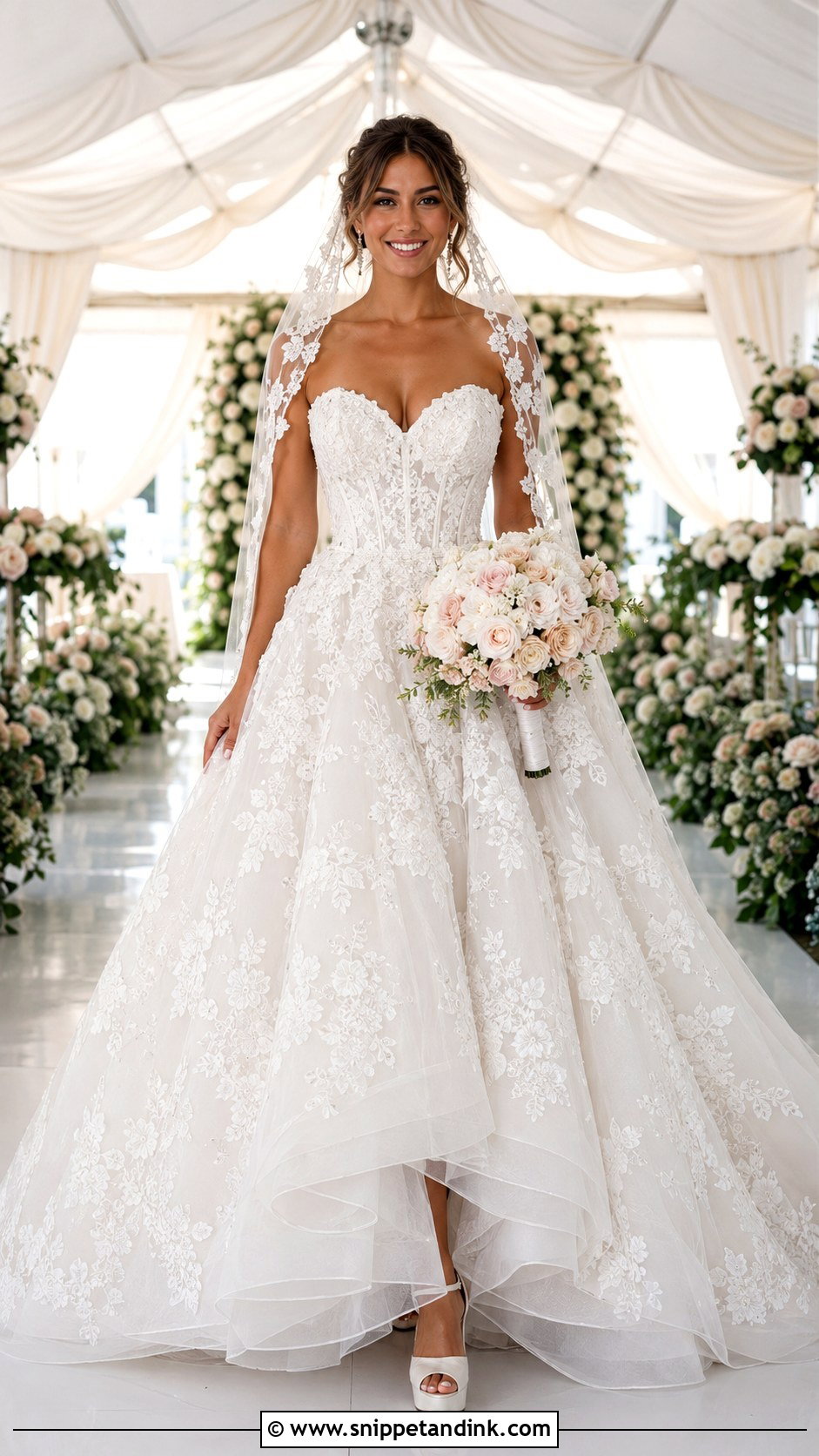
Sweetheart necklines and full lace skirts are a natural pairing. I want enough structure at the neckline that it supports without sitting low. The lace should be dense on the bodice and spread out on the skirt, which gives a light, gradual change from top to hem. Crystal drops, ivory platform heels and a fingertip veil with minimal trim suit it, with a half-up style that leaves the neckline open. White and pale blush flowers finish it for ballrooms, garden estates and tented weddings. Ask for detachable lace straps if you might want extra support later in the evening.
14. Plus Size Lace Ball Gown Wedding Dress
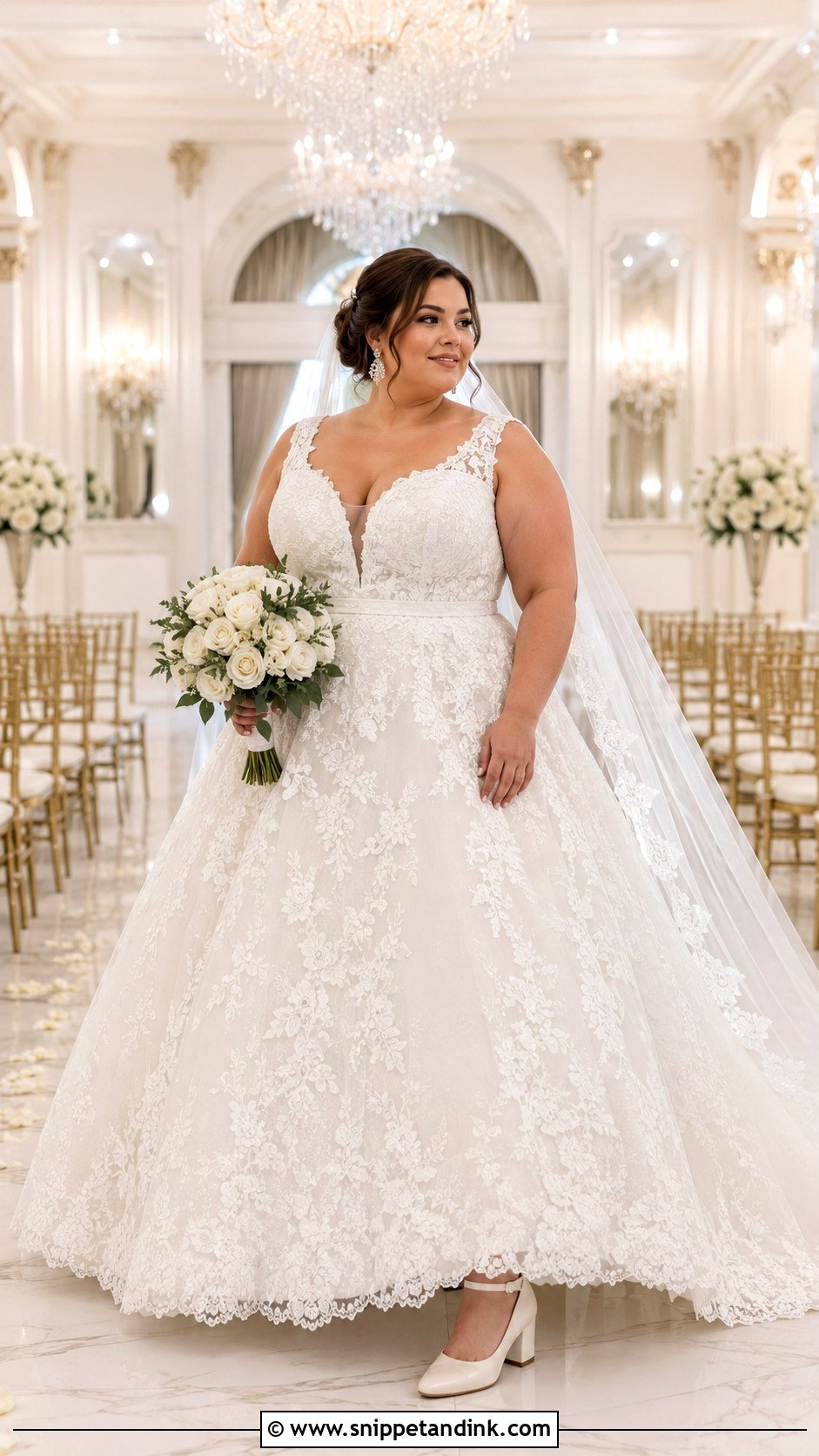
On a plus-size lace ball gown, I pay close attention to how the lace crosses the seams. Well-made gowns match the pattern over side seams and the back, so the bodice looks like one piece. Look for a structured bodice with flexible boning, a laced or adjustable back, and a skirt that creates shape without bulky layers. Cushioned block heels, statement earrings and a light chapel veil suit it, with a low bun or side-swept waves. Choose a medium bouquet. Scale matters too: larger lace motifs usually look more balanced on a fuller figure than tiny ones. Try samples near your size whenever the salon has them.
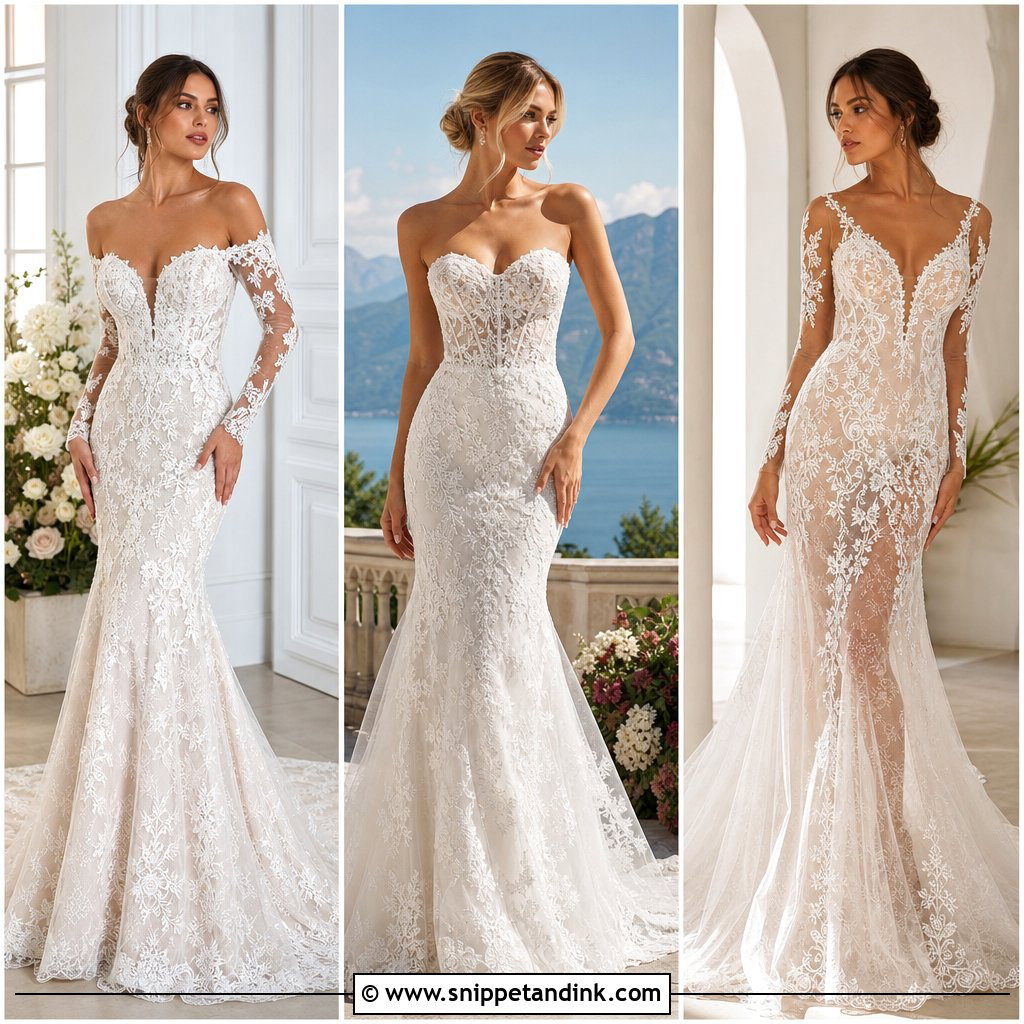
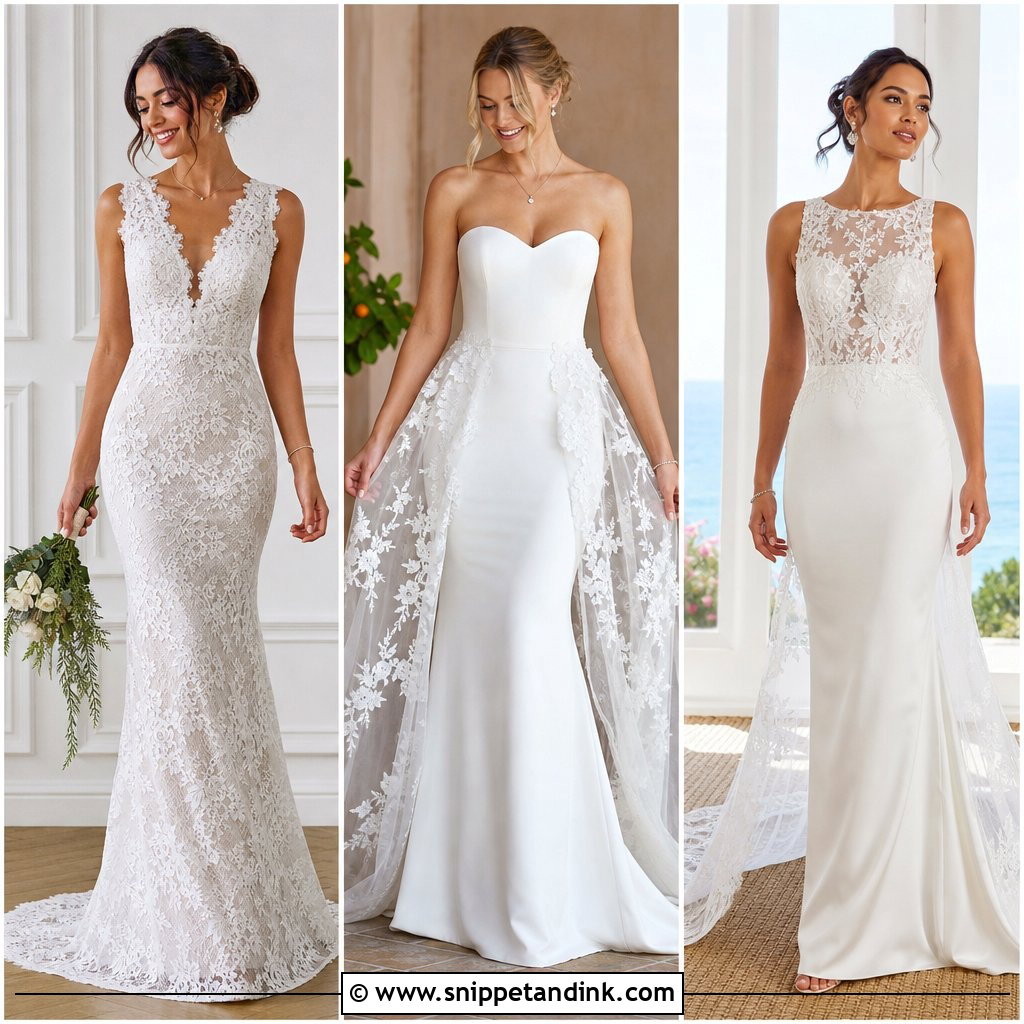
15. Mermaid Lace Wedding Dress With Overskirt
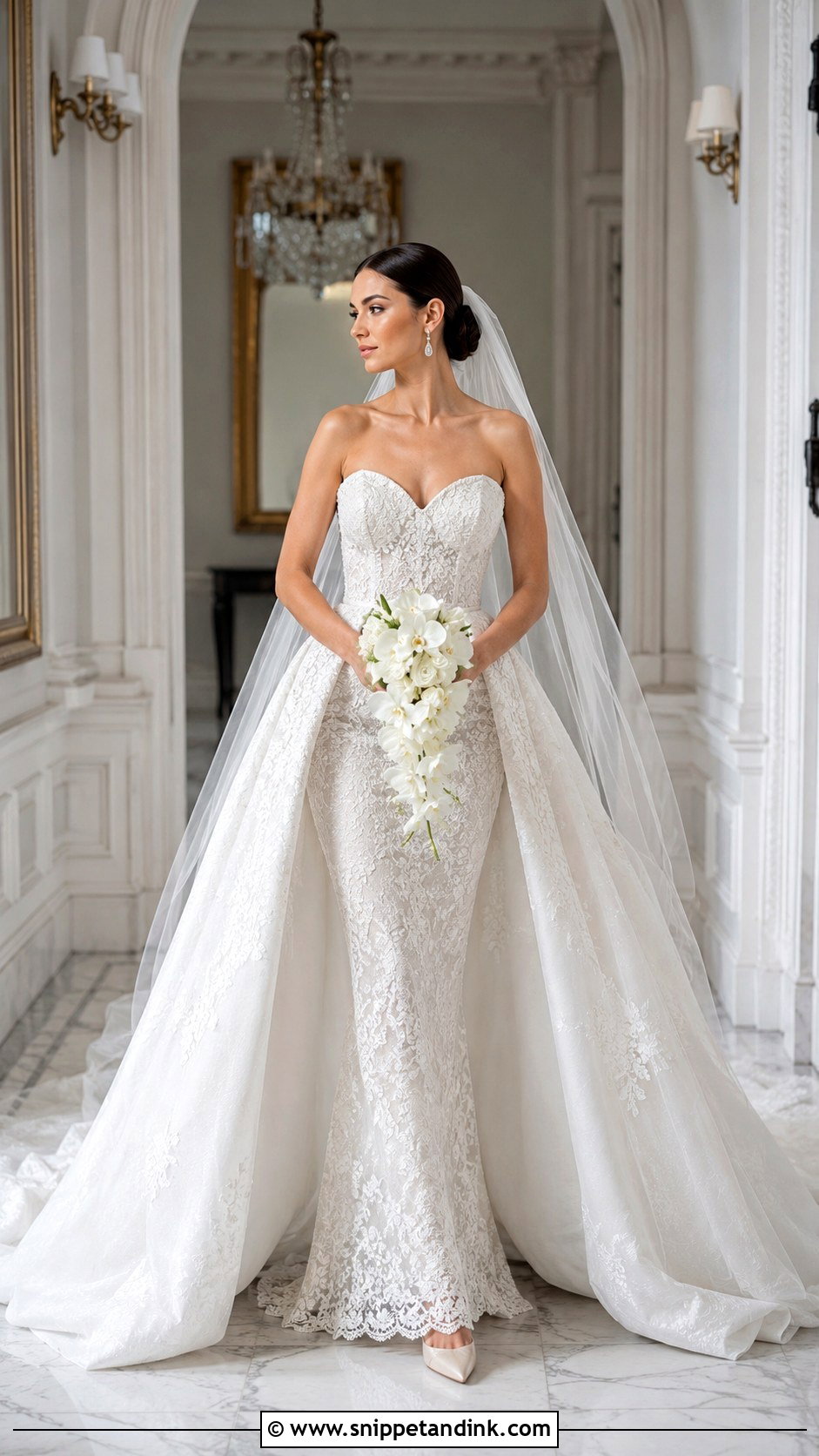
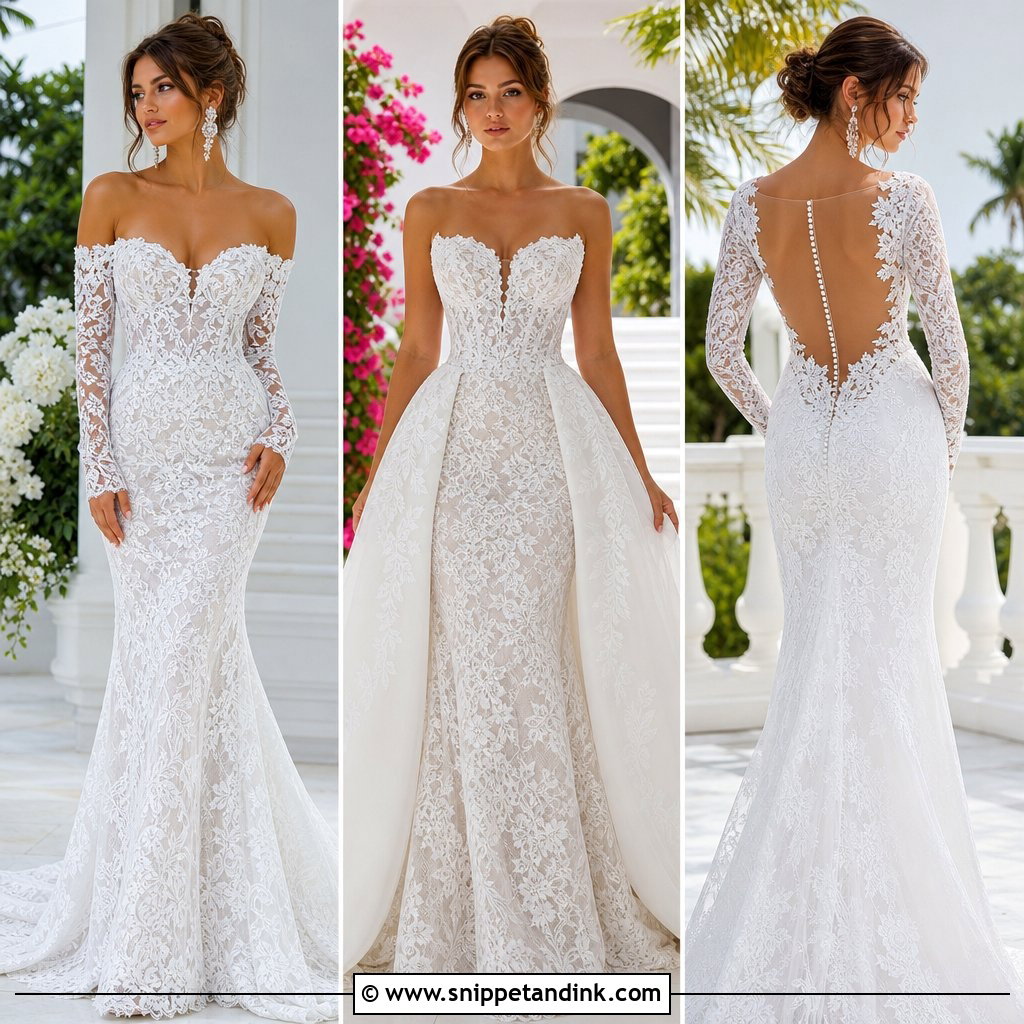
A removable lace overskirt gives a fitted mermaid gown ceremony-sized presence. The base dress follows your body and flares near the knee; the overskirt adds width from the waist. The two pieces must use matching lace, or the difference shows clearly when the overskirt comes off. Pointed ivory heels, drop earrings and a long plain veil suit it, with a sleek updo and narrow bouquet. After the ceremony, the overskirt comes off and walking gets easier. Check that the waistband attachment lies flat under the overskirt and releases cleanly. Practise taking it off with whoever will help you.
16. Blush Lace Ball Gown Wedding Dress
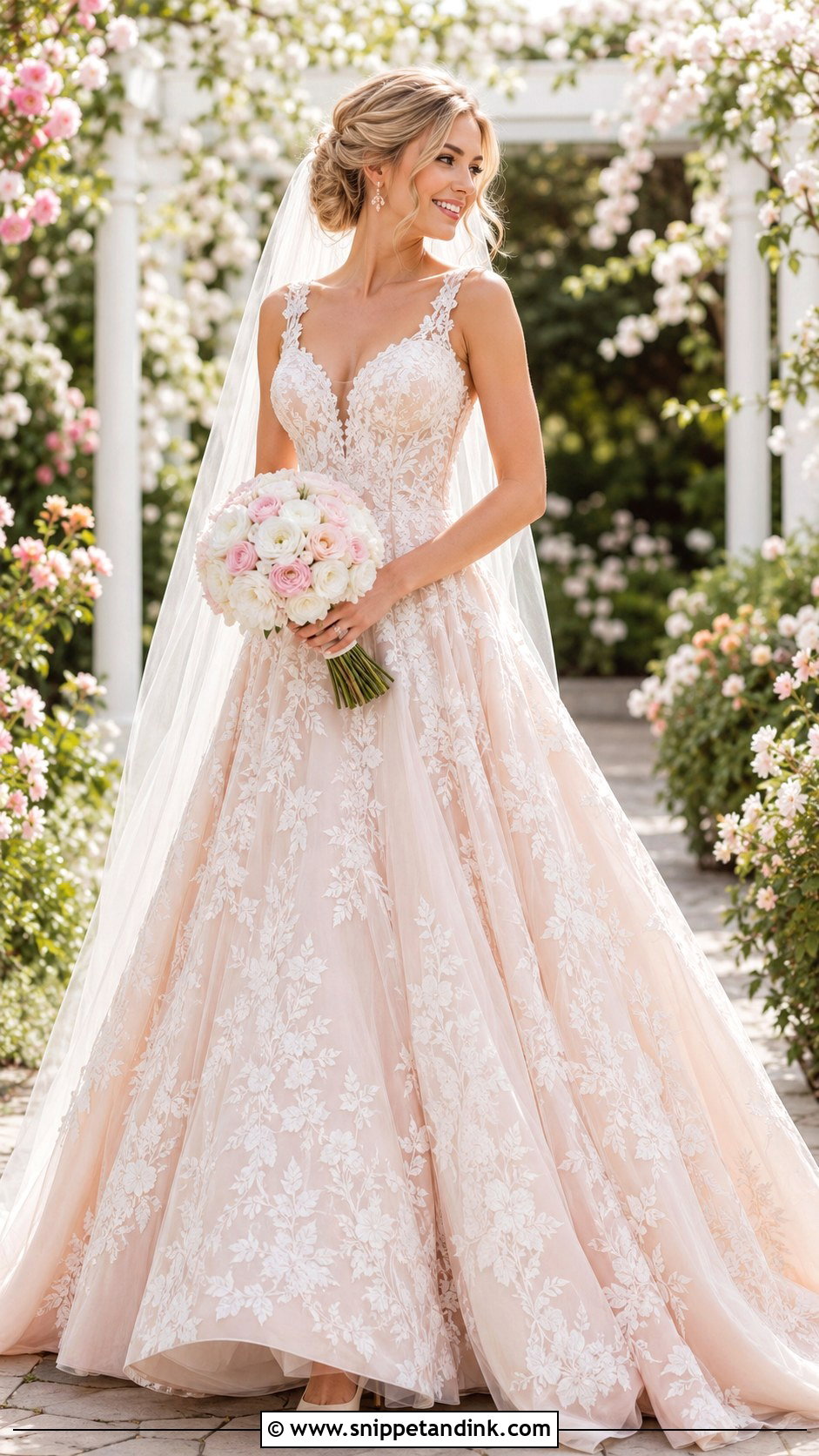
A blush lining under ivory lace makes the pattern look deeper and more dimensional, while keeping the gown clearly bridal. I prefer a soft pink-beige to a strong pink. Add a structured bodice and sweeping ball gown skirt, then neutral ivory pumps, rose-gold earrings and a plain ivory veil. White, cream and pale pink flowers tie the lining to the bouquet without matching too closely. Soft waves or a loose bun suit it. View the swatch in daylight before ordering, because a blush lining can look nude, peach or pink depending on your skin tone and the venue lighting.
17. Beaded Lace Ball Gown Wedding Dress
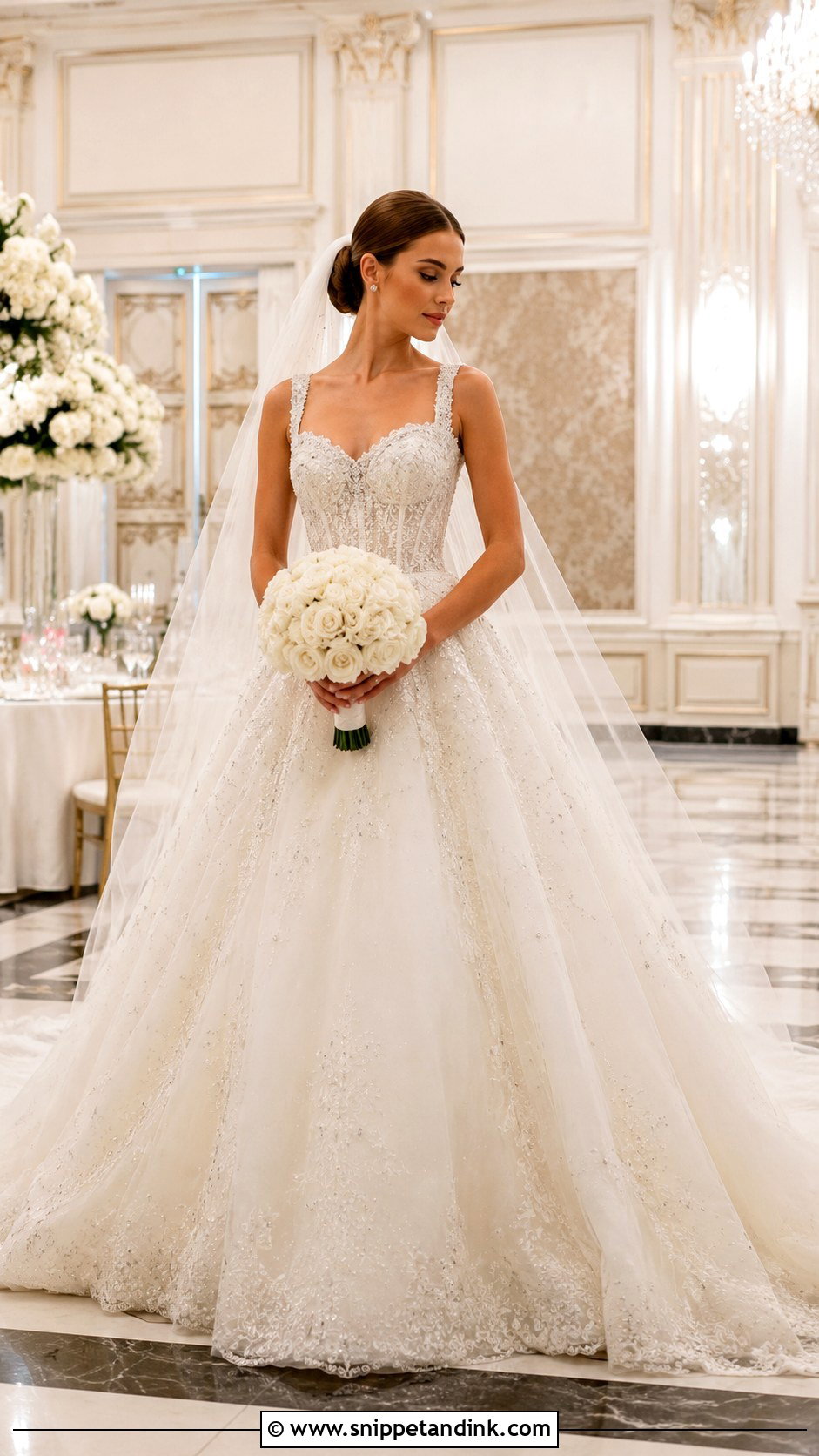
Beads stitched into lace catch light softly as you move, so you won’t need much jewellery. I like clear beads, pearls or subtle crystals worked into the lace, not dense beading over every layer. A lined corset bodice and full skirt carry the weight. Simple studs, satin heels and a plain tulle veil are enough; a beaded veil would compete and add weight. A smooth bun and white roses frame the gown for an evening ballroom or hotel. Run your hand over the lace near the underarms before buying. Rough bead edges there rub skin and snag the veil.
18. 3D Floral Lace Wedding Dress
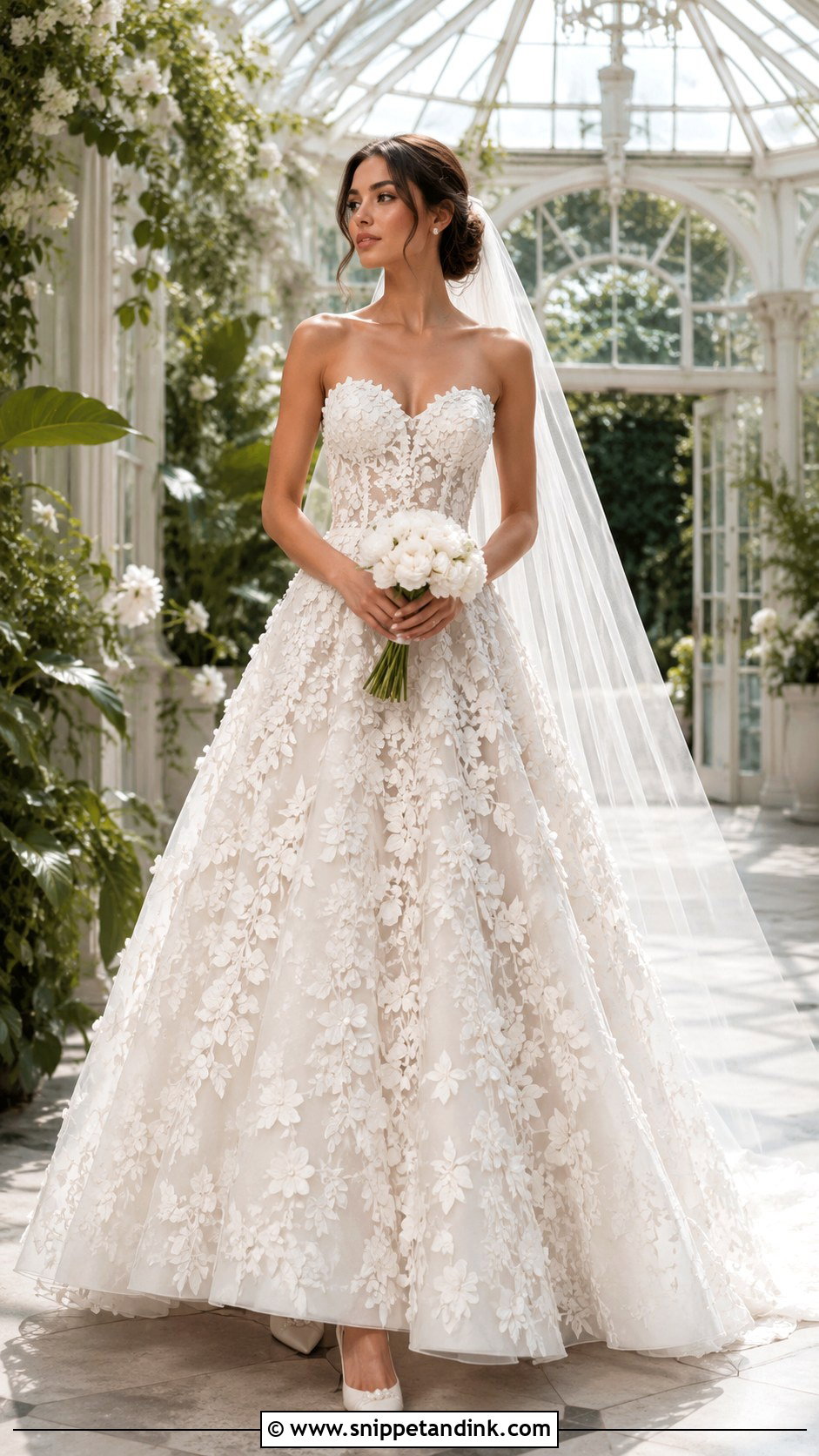
Three-dimensional flowers lift off the flat lace, giving depth and movement across a big gown. I look for them concentrated around the bodice and upper skirt, thinning toward the hem so the dress doesn’t look bottom-heavy. Understated ivory heels, pearl studs and a sheer veil with no lace trim let the petals lead. A neat ponytail or low bun keeps them visible. Carry smooth white flowers, not ruffled ones that copy the dress. Botanical gardens and conservatories suit it. Check that the flowers are stitched firmly and kept away from the underarms and side seams, where they get crushed.
19. Cape Sleeve Lace Wedding Dress
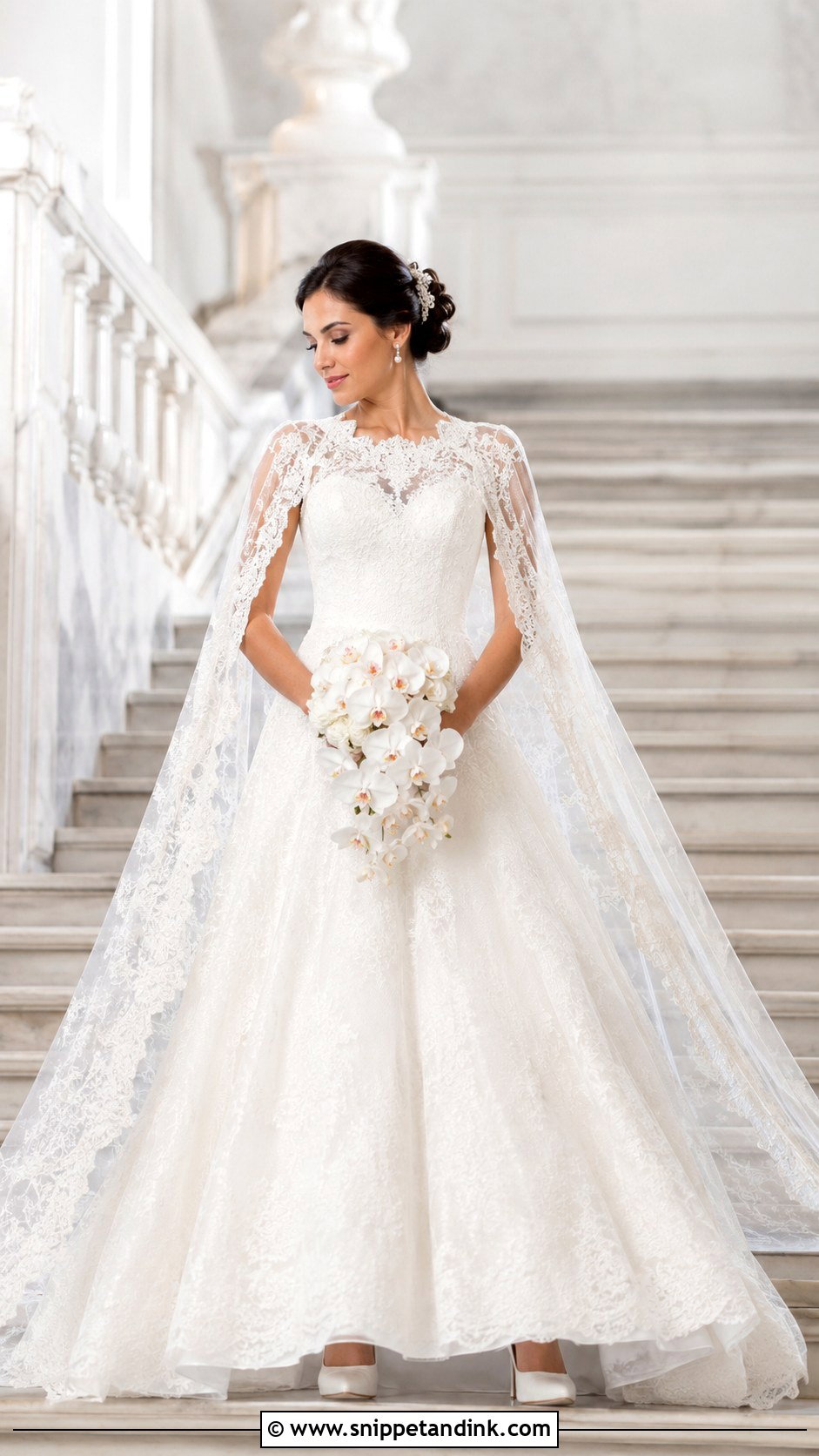
Cape sleeves add movement behind you and light coverage at the shoulders. A fitted lace bodice and full A-line skirt make the base, with a detachable cape in matching lace or sheer tulle with appliqué edges. Keep the rest refined: pearl earrings, closed pumps and a crystal comb. You may not need a veil at all, since the cape already flows behind you. A structured white bouquet balances the soft fabric. It suits staircase entrances and outdoor ceremonies with a light breeze. Make sure the cape fastens securely and doesn’t drag the neckline backward when you turn your head.

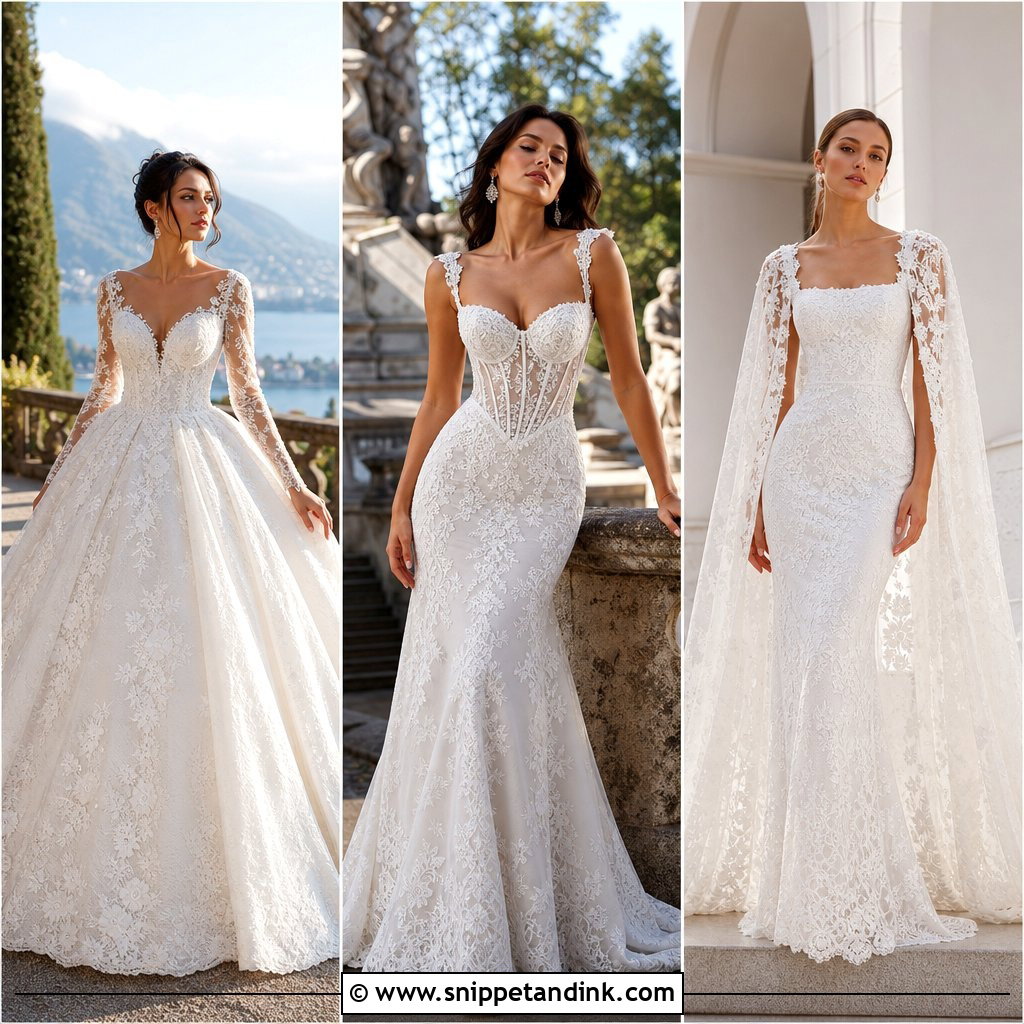



20. Detachable Train Lace Wedding Dress
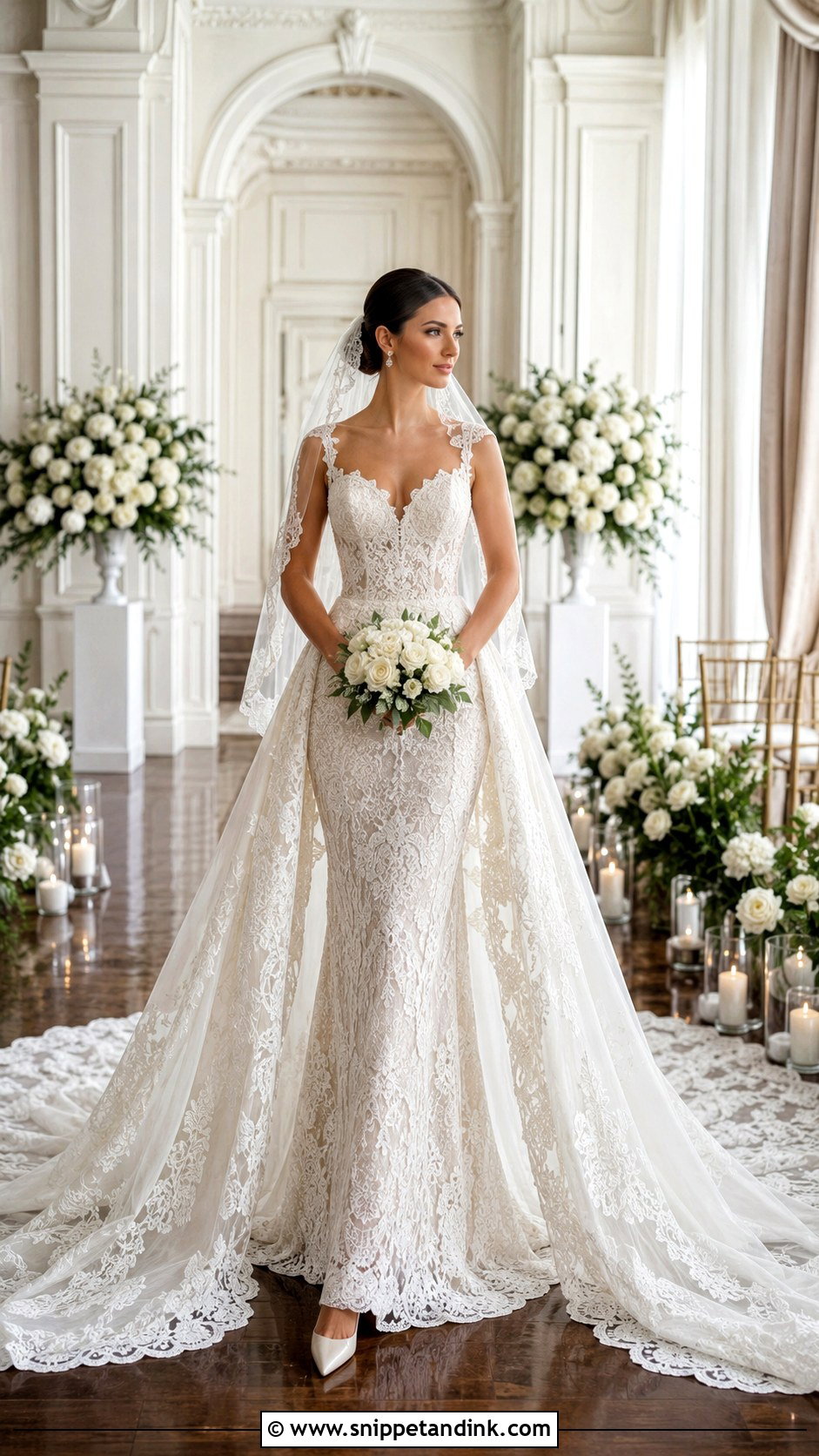
A detachable lace train gives you the full ceremony moment without dragging fabric through the reception. It attaches at the waist of a fitted or A-line lace gown with hidden hooks or snaps. Ask for the lace to be matched closely to the dress so the join is hard to spot. Ivory pumps, small earrings, a sleek bun and a fingertip veil that also comes off later suit it. A medium white bouquet keeps proportions balanced. Take formal portraits with the train spread out, then remove it before dancing. Test every attachment point at the fittings and practise the removal.
Snags, Lifting Appliqué and Grass Stains on the Hem
Lace is the fabric that suffers most on the day, mostly from small accidents. Most can be handled quietly if someone in your party knows what to do.
- A snag: never cut a pulled thread. Ease it back through to the wrong side with a needle, or leave it for a professional repair after the wedding.
- An appliqué lifting at the edge: a few small stitches in matching thread hold it until the dress is cleaned. Pack a needle pre-threaded in ivory or white.
- A dirty hem: lace hems pick up grass, dust and wine. Don’t scrub. Blot lightly with a clean white cloth and leave the rest for a specialist cleaner.
- Veil caught on lace: separate it slowly by hand. Pulling breaks the lace threads, not the veil.
After the wedding, tell the cleaner which parts are beaded or appliquéd. Delicate lace is usually cleaned by hand, and heavy appliqué can need extra time.
Let the Lace Do the Talking
A big lace gown works when the detail and the fit agree. Look at the pattern, skirt volume, neckline and train together rather than choosing each one separately. Keep accessories supportive: simple heels, restrained jewellery and a plain veil rarely fail with heavy lace. Walk, sit and move in every fitting, especially with full skirts or detachable pieces. Oversized flowers, vintage sleeves, a sculpted corset and a cathedral train can all be right. Pick the one where the lace still looks crisp to you after you’ve moved around in it for half an hour.
You'll Like These Ideas:





Leave a Reply