
Classy, in a wedding dress, mostly means restraint: one strong idea, a fabric that behaves, and a fit that looks as if the gown grew around you. Right now I’m seeing brides ask for clean silhouettes, soft lace, basque and drop waists, sculpted sleeves, heavy satin, pearl details and dresses that change between ceremony and reception. Those can all look refined, or all look overdone, depending on how they’re combined. The 25 gowns below run from grand ball gowns to plain columns and tea-length dresses, and for each one I’ve noted what I watch for when a bride steps out of the fitting room.
Reading a Bridal Fabric Before You Fall for a Shape
Brides tend to fall for a silhouette first, but the fabric decides whether that silhouette will work on your day. When I pull dresses for an appointment, I’m thinking about season and venue as much as style.
Fabrics that hold a shape
Mikado, heavy satin and faille are firm enough to make a ball gown or a crisp A-line without much help. They’re warm, they look rich in large rooms and they suit autumn and winter. They also crease sharply if crushed, so travel the dress hanging.
Fabrics that move
Crepe, chiffon, silk slip fabrics and fine tulle drape and float. They’re cooler, easier to pack and better for beaches, gardens and summer. The catch is that they’re less forgiving: crepe and slip satin show lines from underwear, and chiffon clings in wind.
Fabrics that add texture
Lace and organza sit between the two. Lace weight varies hugely, from almost weightless Chantilly to heavy beaded guipure, so feel it in your hand. Organza gives volume with very little weight but marks easily with water.
1. Satin Ball Gown Wedding Dress
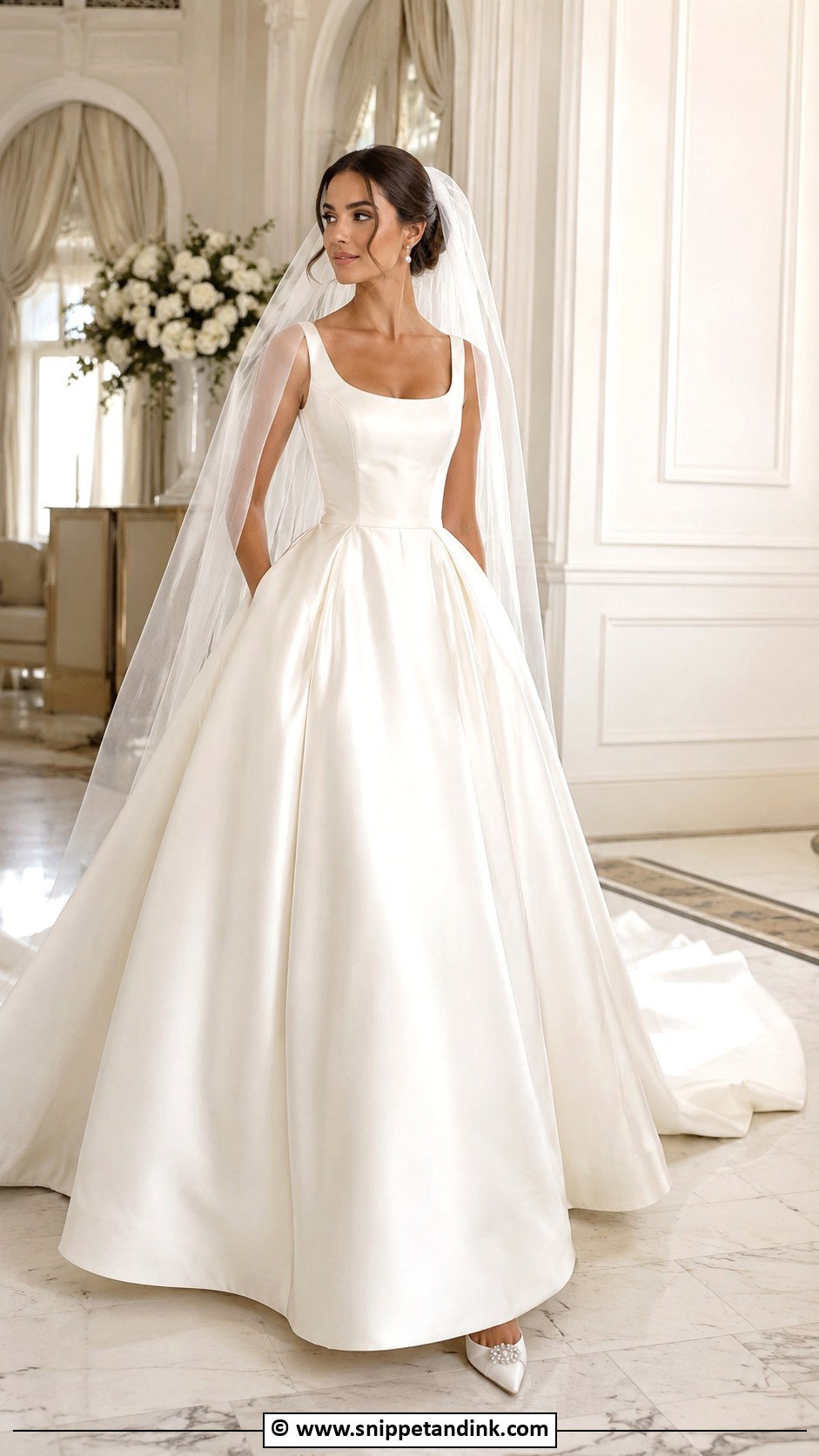
Satin ball gowns earn their reputation in big rooms. The fabric reflects light in long, smooth planes, so a gown with few seams across the skirt looks far more expensive than one pieced together from panels. A structured bodice sets the waist; scoop, straight or off-shoulder necklines keep it calm. The weight is real, though. A full satin skirt with petticoats is heavy by the end of the night, so I make sure the waist sits on the hip bones rather than hanging from the shoulders. Cathedral veil, pearl earrings and pointed satin pumps suit a ballroom, historic venue or evening wedding.
2. Lace Long Sleeve Wedding Dress
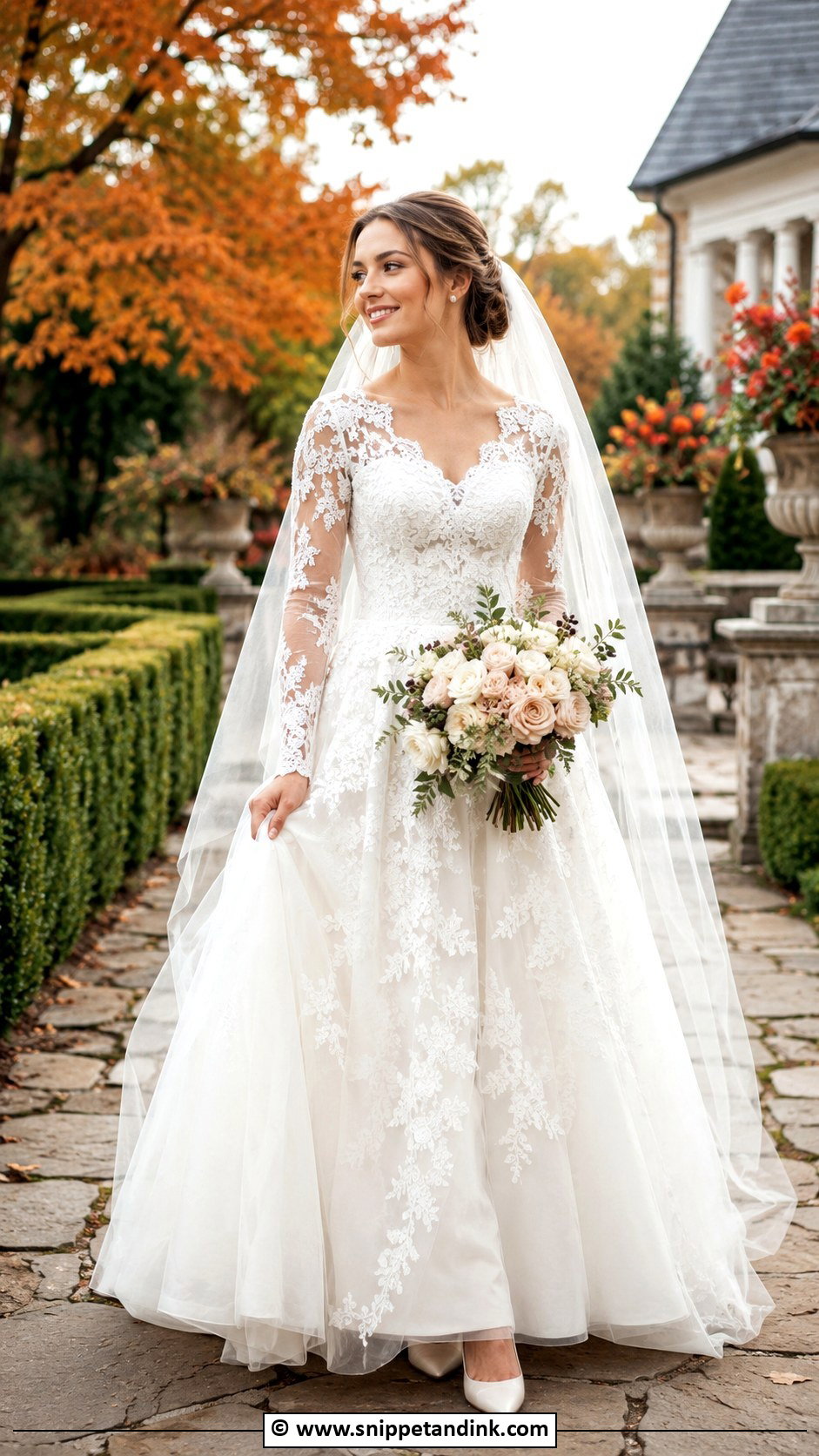
Coverage without heaviness is what a lace long sleeve wedding dress does best, provided the lace and the beading don’t fight. Pick one texture. Delicate floral lace on illusion sleeves, with a fitted bodice flowing into an A-line or sheath, needs nothing more than pearl studs, a thin bracelet and a sheer veil. Watch the sleeve cuff: lace that ends exactly at the wrist bone lets you see a watch or a bracelet, while lace that runs over the hand can catch on the bouquet stems. Autumn, winter and estate weddings suit it best.
3. Simple Crepe Wedding Dress
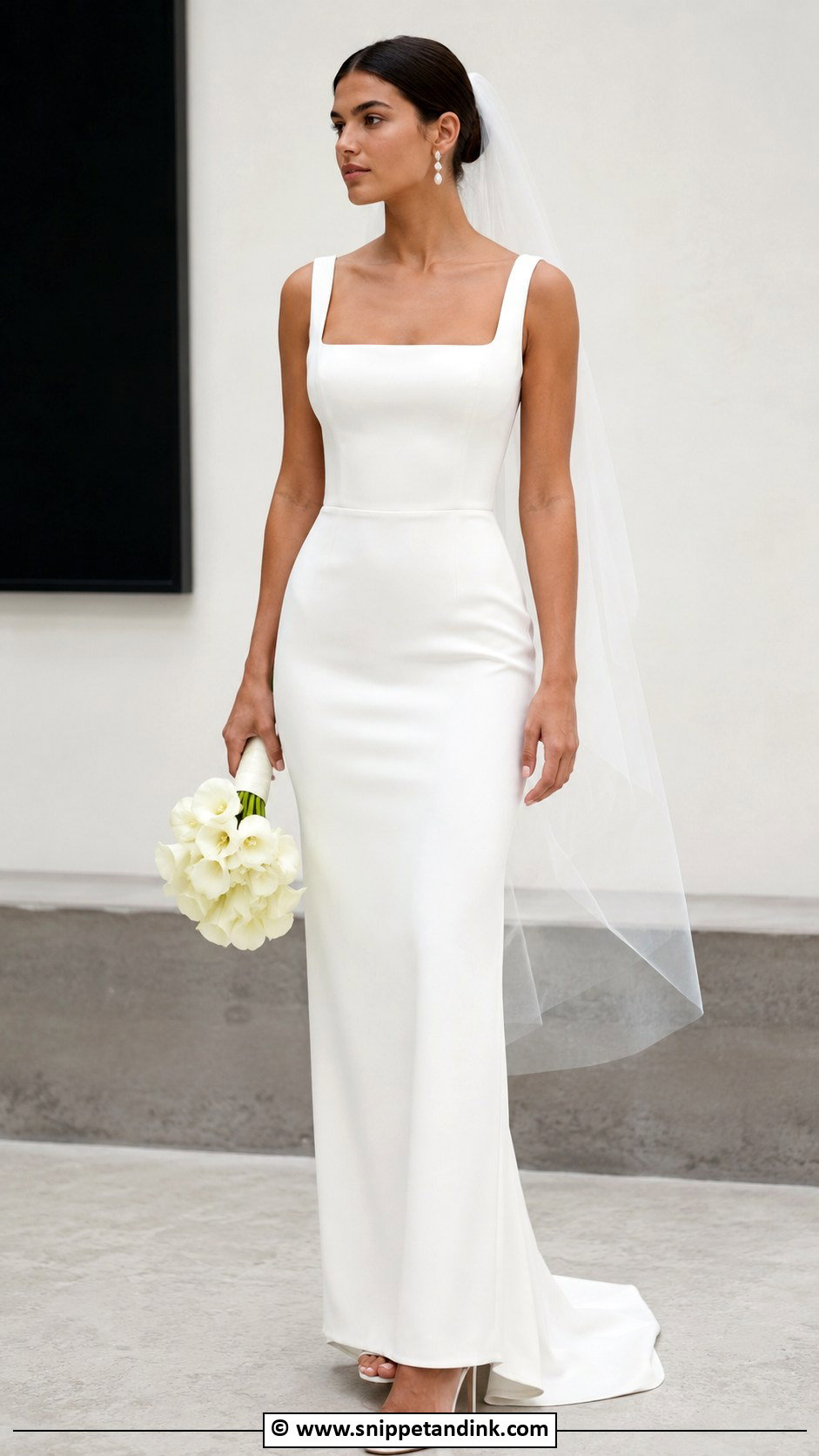
Crepe has a matte surface, so it never fights the camera flash. A simple crepe wedding dress in a slim column or fit-and-flare relies on its seams lying perfectly flat; any ripple shows. Square necklines, covered buttons or a low back give interest without clutter. With a low back, sort out the bra question at the first fitting rather than the last. Sleek hair, drop earrings and white or ivory heels suit a city venue or intimate celebration.
4. Off Shoulder Wedding Dress
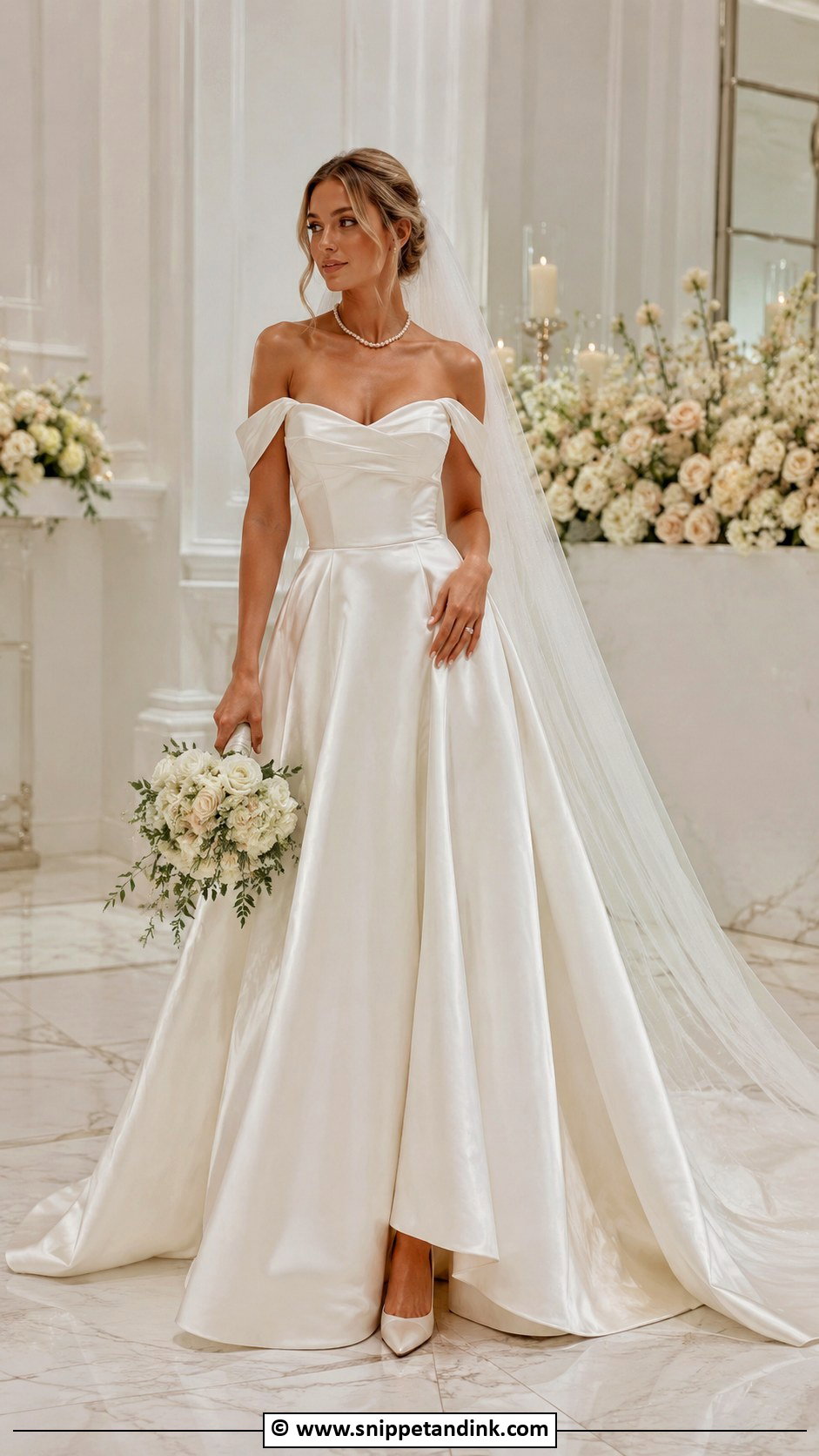
Off-shoulder necklines frame the collarbone and soften the whole top half of the gown, on anything from a fitted mermaid to a full ball gown. The fabric needs enough body to hold the neckline in place, which is why I prefer mikado, satin or crepe here over soft chiffon. A strapless bra or built-in cups are a must, so plan undergarments with the tailor. Add a simple veil and either a pearl necklace or statement earrings, never both. Indoor ceremonies, gardens and evening receptions all suit it.
5. A Line Wedding Dress
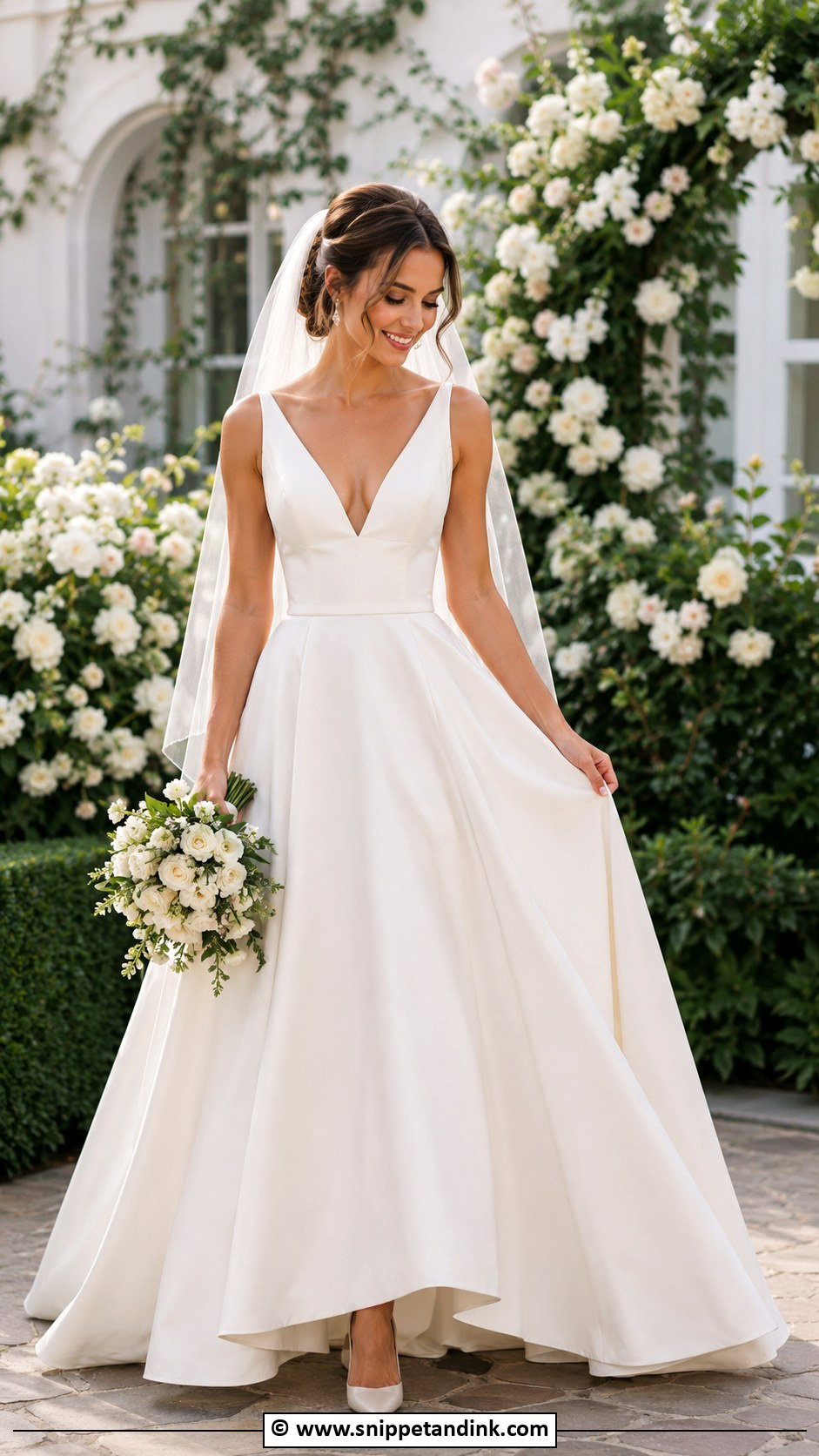
A-lines flatter a wide range of figures because the bodice fits to the waist and the skirt opens without clinging to the hips. Fabric changes the whole effect: satin goes formal, chiffon floats, lace softens. V-neck, square or bateau necklines all suit it. I’d keep a waist-length veil so the skirt shape isn’t hidden, plus delicate earrings and classic heels. It’s comfortable through a long day, and it fits almost any venue, gardens, hotels and coastal ceremonies included.
6. Square Neck Wedding Dress
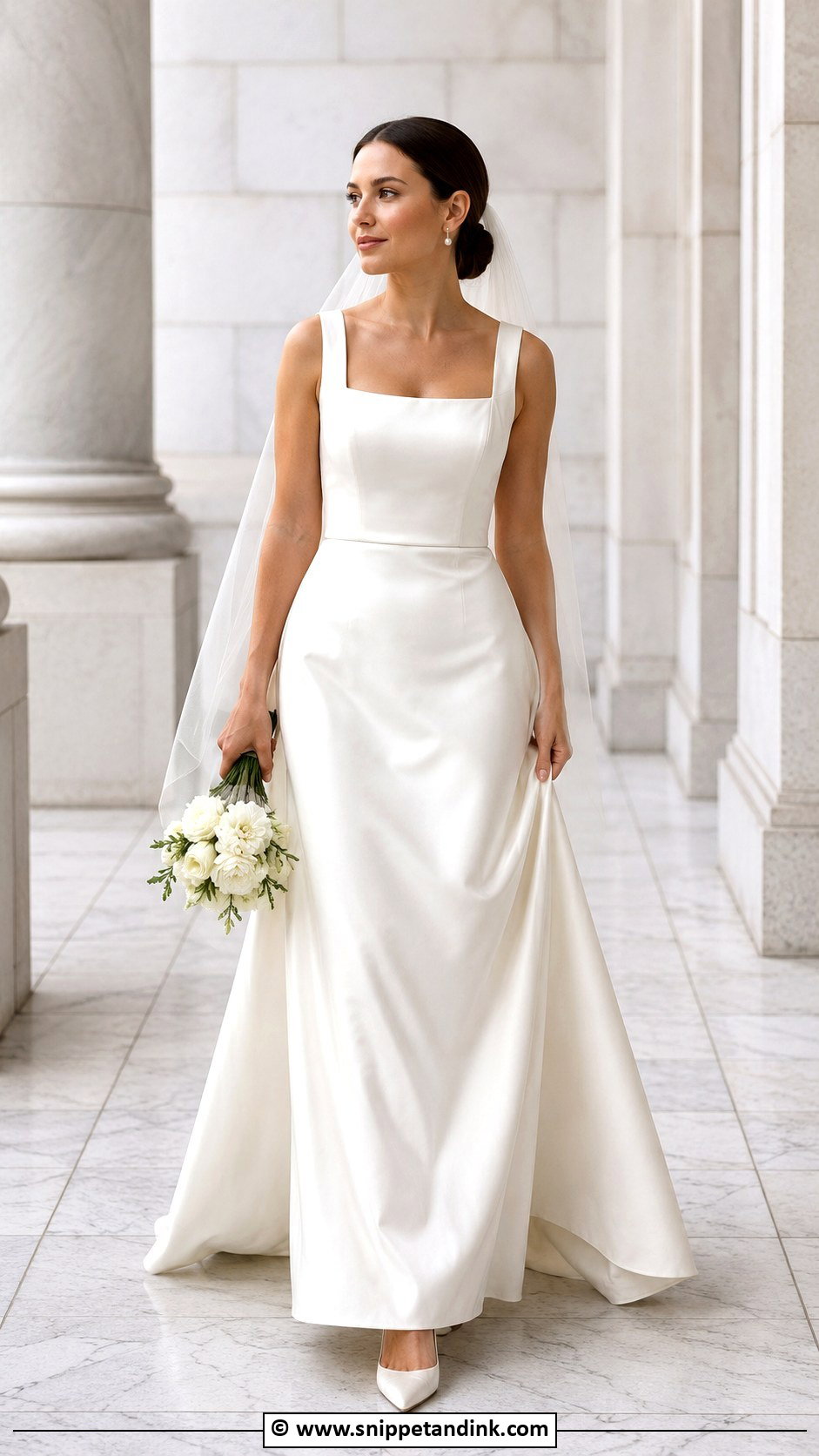
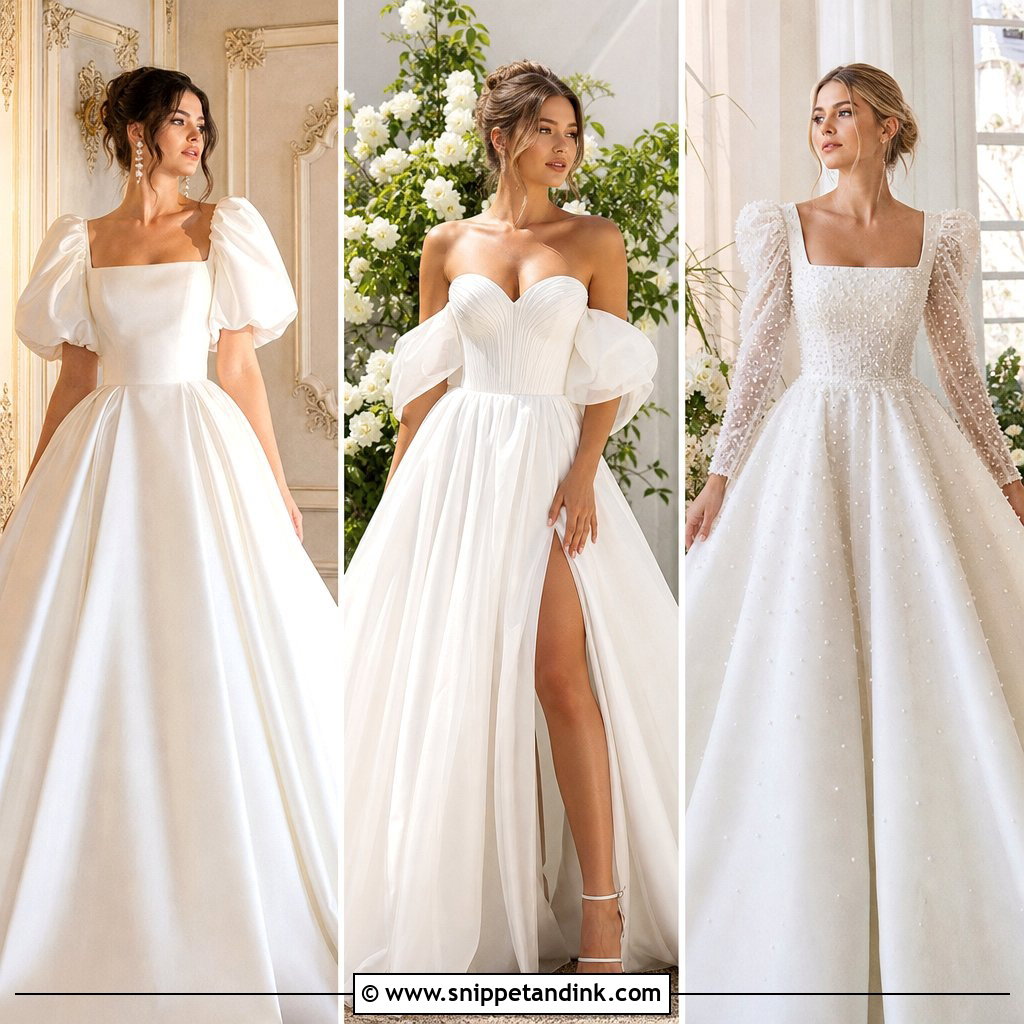
Straight lines across the chest give structure, and the square neck pairs well with straps or sleeves. For a modest gown that still feels current, it’s a reliable choice. The neckline should sit level when you sit down; on some off-the-rack dresses it tilts forward at the centre, which a tailor can fix with a small dart. Satin, crepe or lace all let the shape show. A low bun, pearl drops, a veil tucked at the crown and classic pumps or sleek sandals finish it.
7. High Neck Wedding Dress
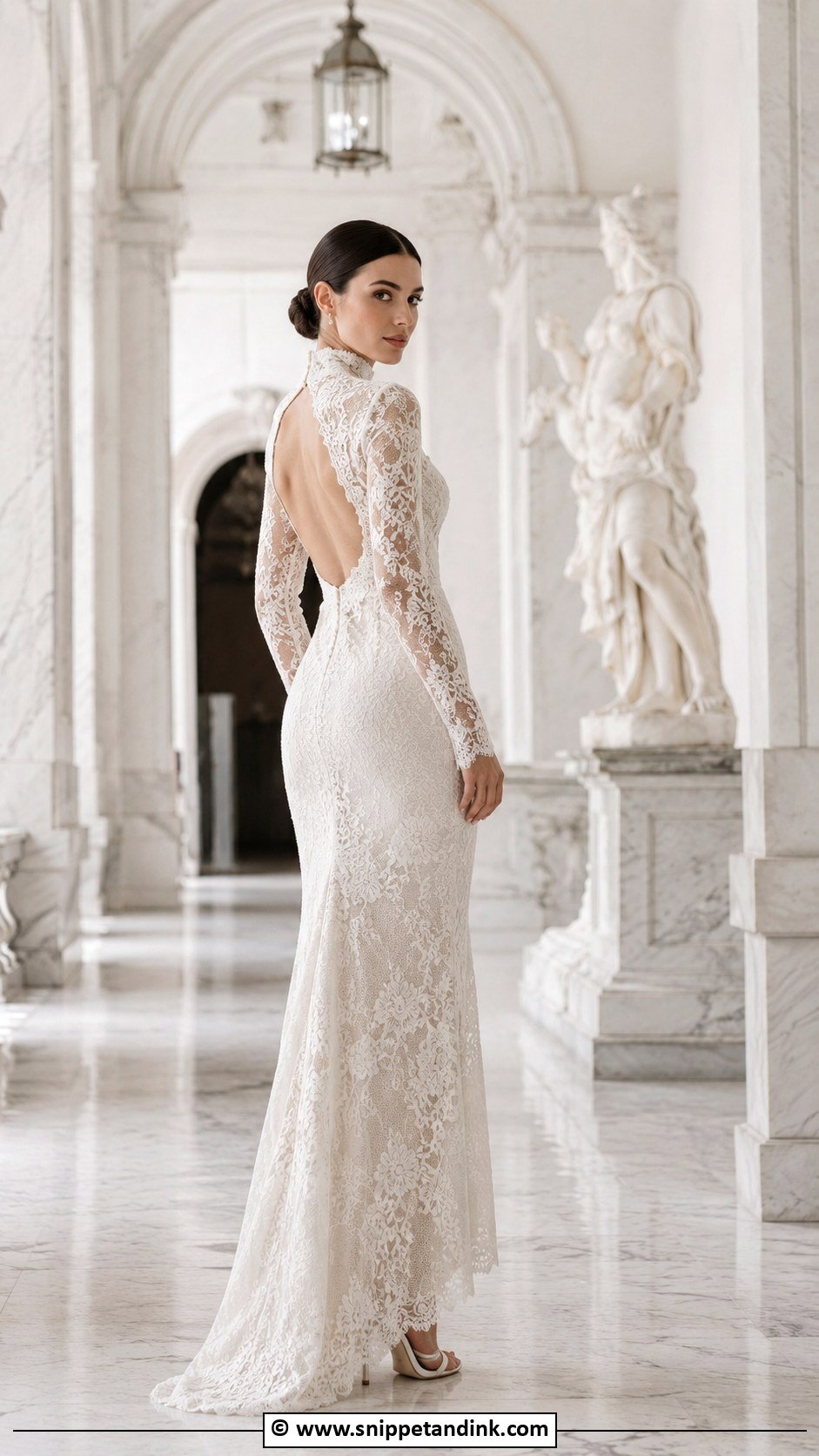
High necks look regal and need no sparkle. Lace softens one, crepe makes it sleek, satin adds drama. If it feels heavy, balance the covered front with an open back, sheer sleeves or a slimmer skirt. Comfort around the throat is the deciding factor, so wear it for ten minutes in the shop, turning your head and talking. Small earrings and a neat updo are all you need. Museum venues, winter weddings and formal estates suit it.
8. Drop Waist Wedding Dress
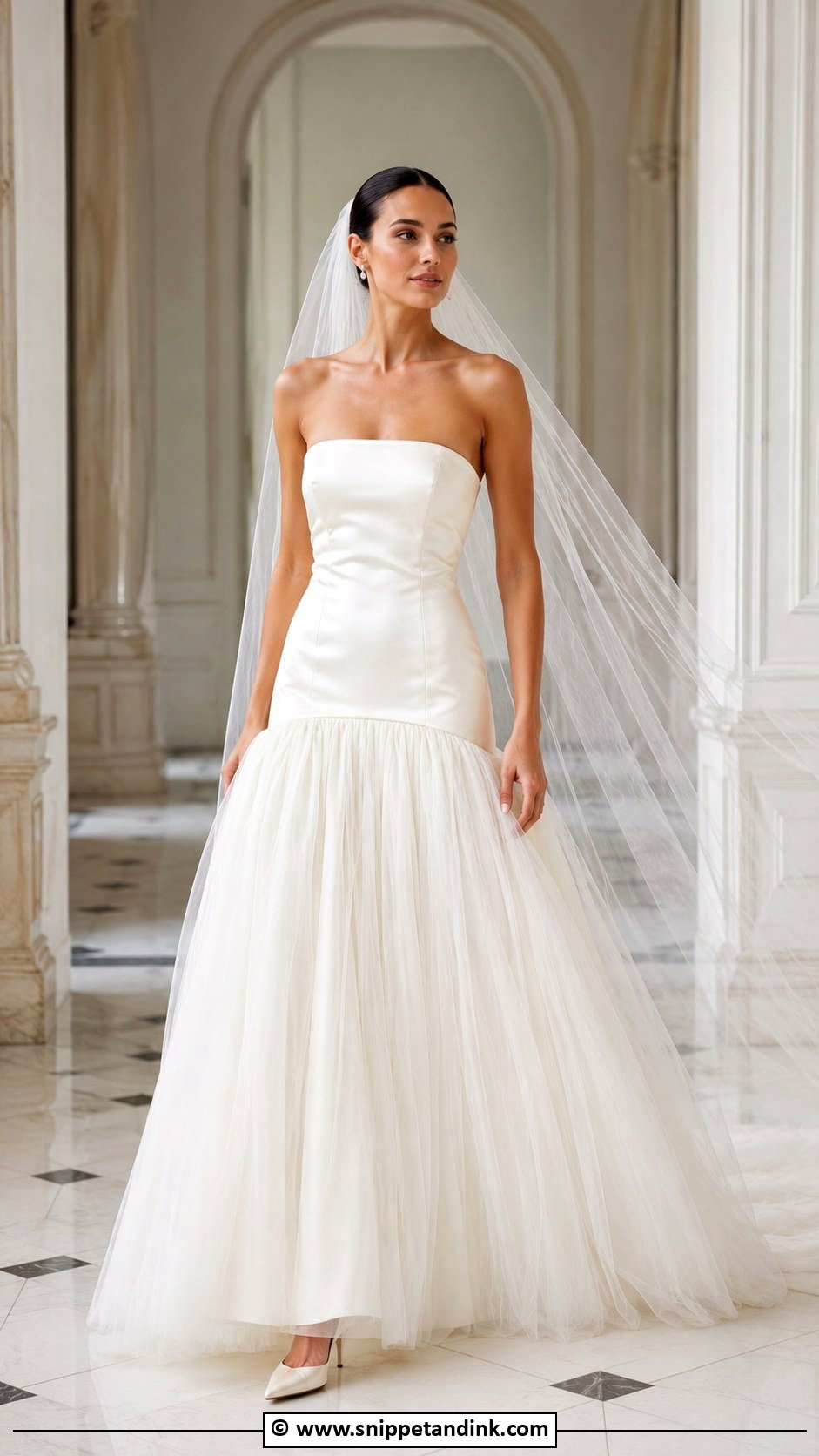
A lower waistline lengthens the torso and gives a sculpted shape, which is why a drop waist wedding dress looks so current. It works best on a longer torso. On a shorter one, the drop can make the legs look short, so I’d look at a gentler drop or a basque point instead. Pair it with a full skirt in smooth satin or soft tulle, or a lace corset bodice. Keep the long veil, pearl earrings and pointed heels simple. It’s striking in formal indoor venues and editorial-style photos.
9. Basque Waist Wedding Dress
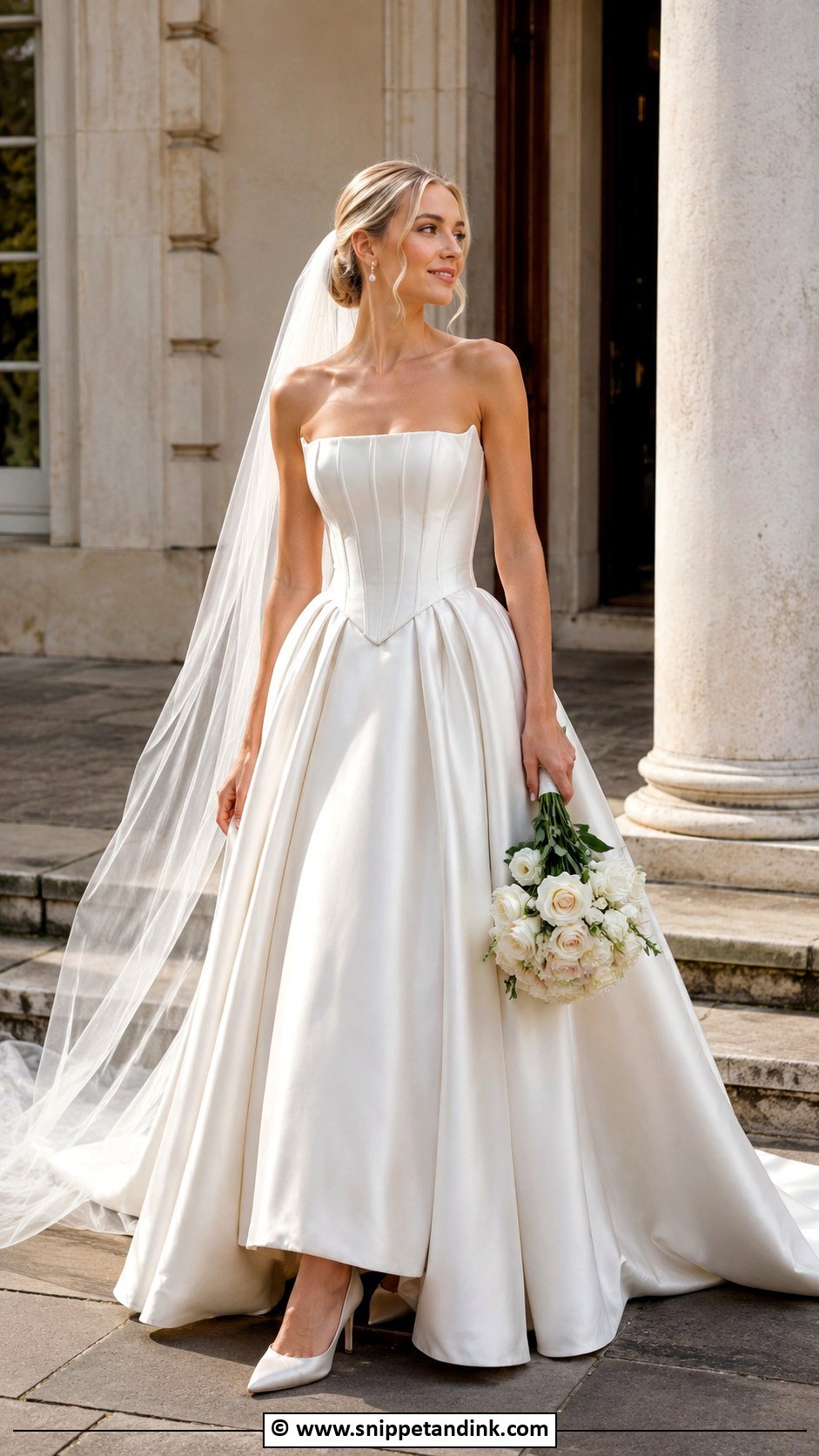
The pointed basque waist dips into a V at the centre front, drawing the eye downward and narrowing the waist. With a structured bodice and full skirt, the hourglass effect is strong. The point should sit right at the centre; if it twists to one side when you walk, the bodice is too loose. Soft satin, lace or organza give a graceful finish. Skip heavy embellishment to keep it modern, and pair it with a clean veil, simple earrings and soft waves or a polished bun for an estate or grand ceremony.
10. Mikado Wedding Dress
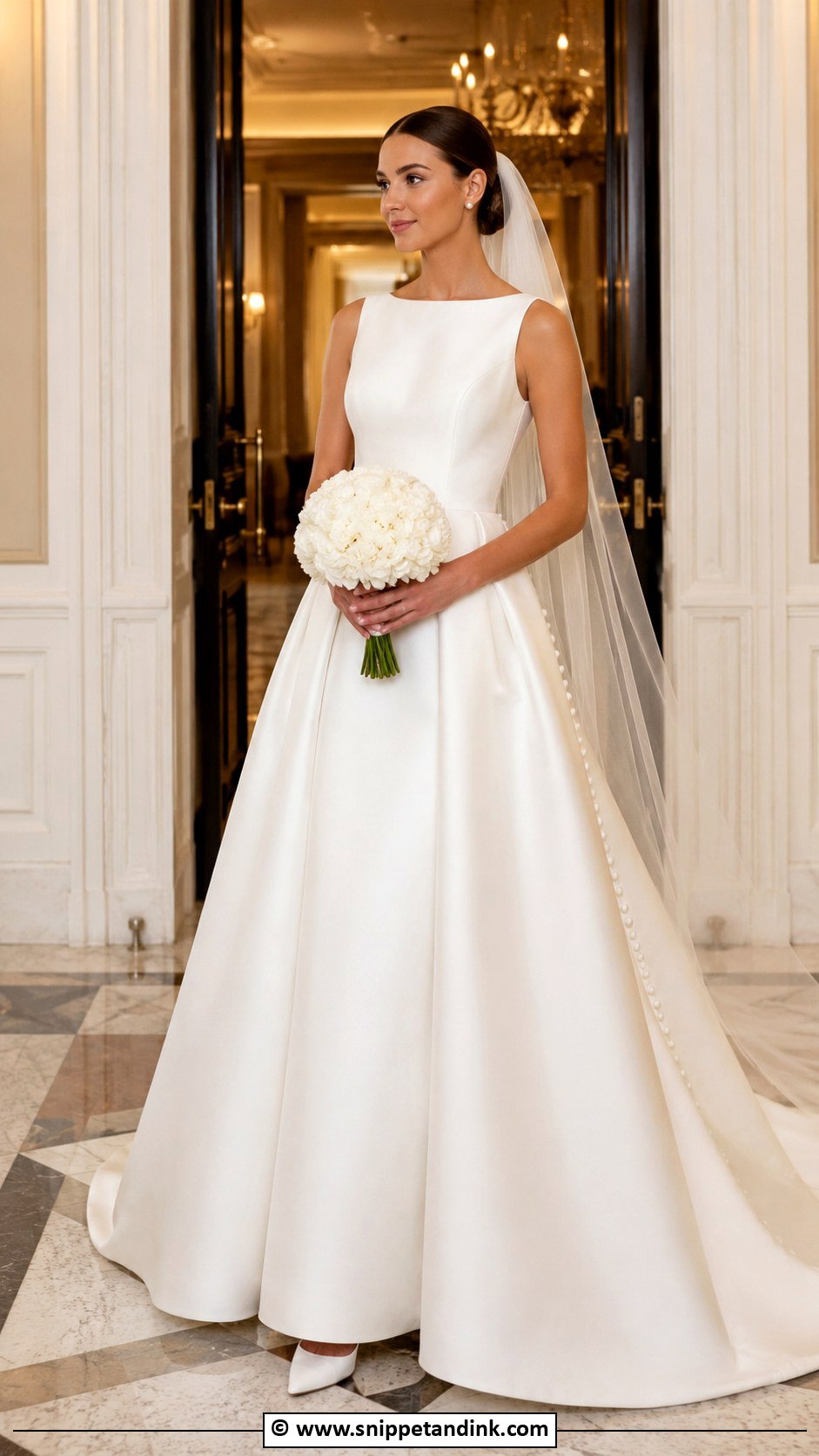
Mikado is the fabric I reach for when a bride wants structure without boning everywhere. Its weight and slight sheen let a ball gown, A-line or fit-and-flare hold its shape on its own. The trade-off is warmth; it’s a cool-weather fabric more than a midsummer one. Because it looks rich, a single detail is enough: a bow, covered buttons or pleats. Sleek veil, pearl studs and satin heels suit hotel ballrooms and formal ceremonies.
11. Pearl Wedding Dress
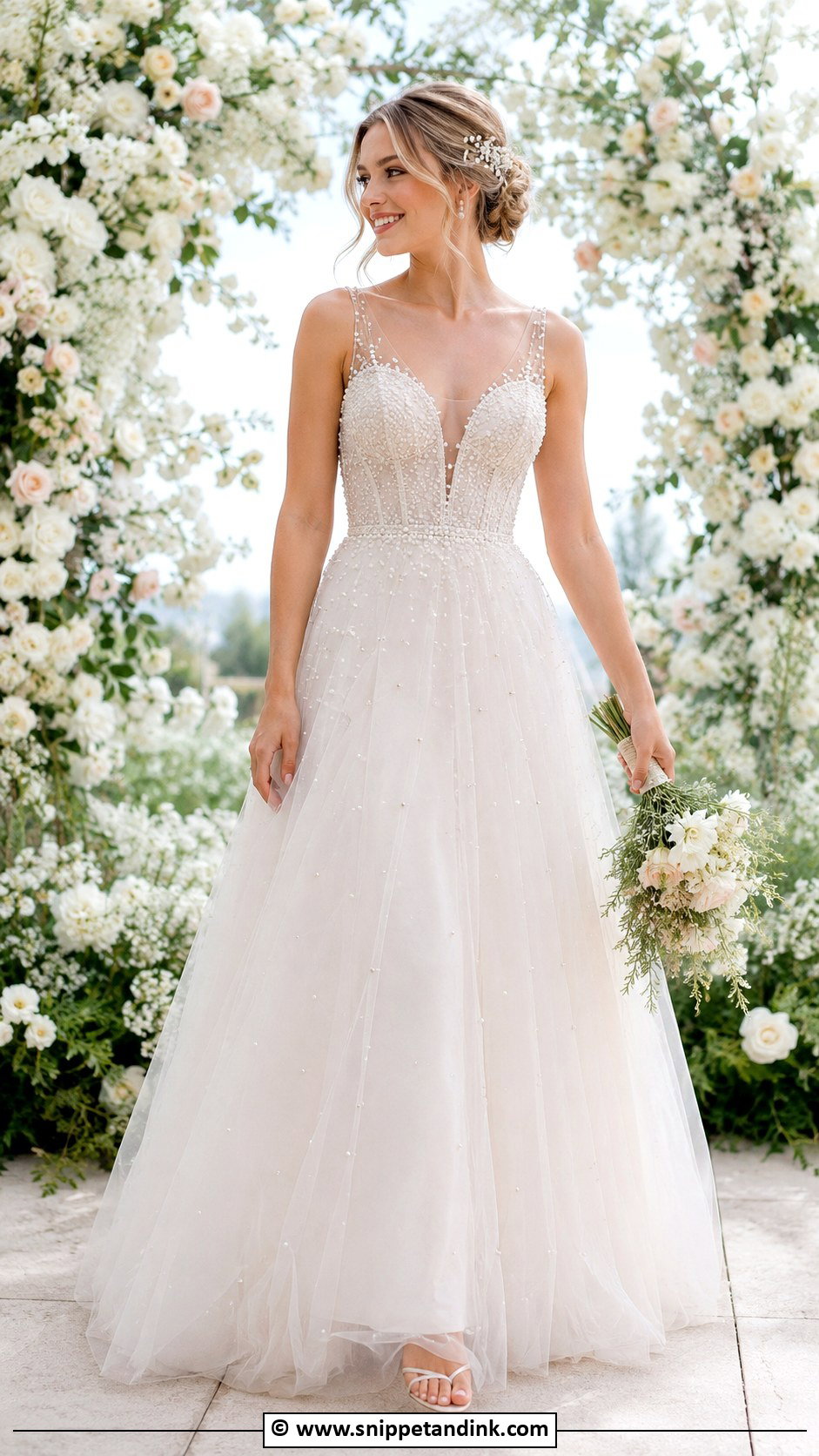
Small pearls on tulle, lace or sheer sleeves look delicate; larger ones work as accents on a plain gown. If the dress carries the pearls, the jewelry should step back to studs and maybe a pearl hair pin. Check the backs of pearl-studded sleeves and skirts, where they can snag on lace or knit clothes when you hug guests. Simple heels finish it. It suits romantic venues, gardens and elegant indoor weddings where plain fabric would feel too bare.
12. Strapless Wedding Dress
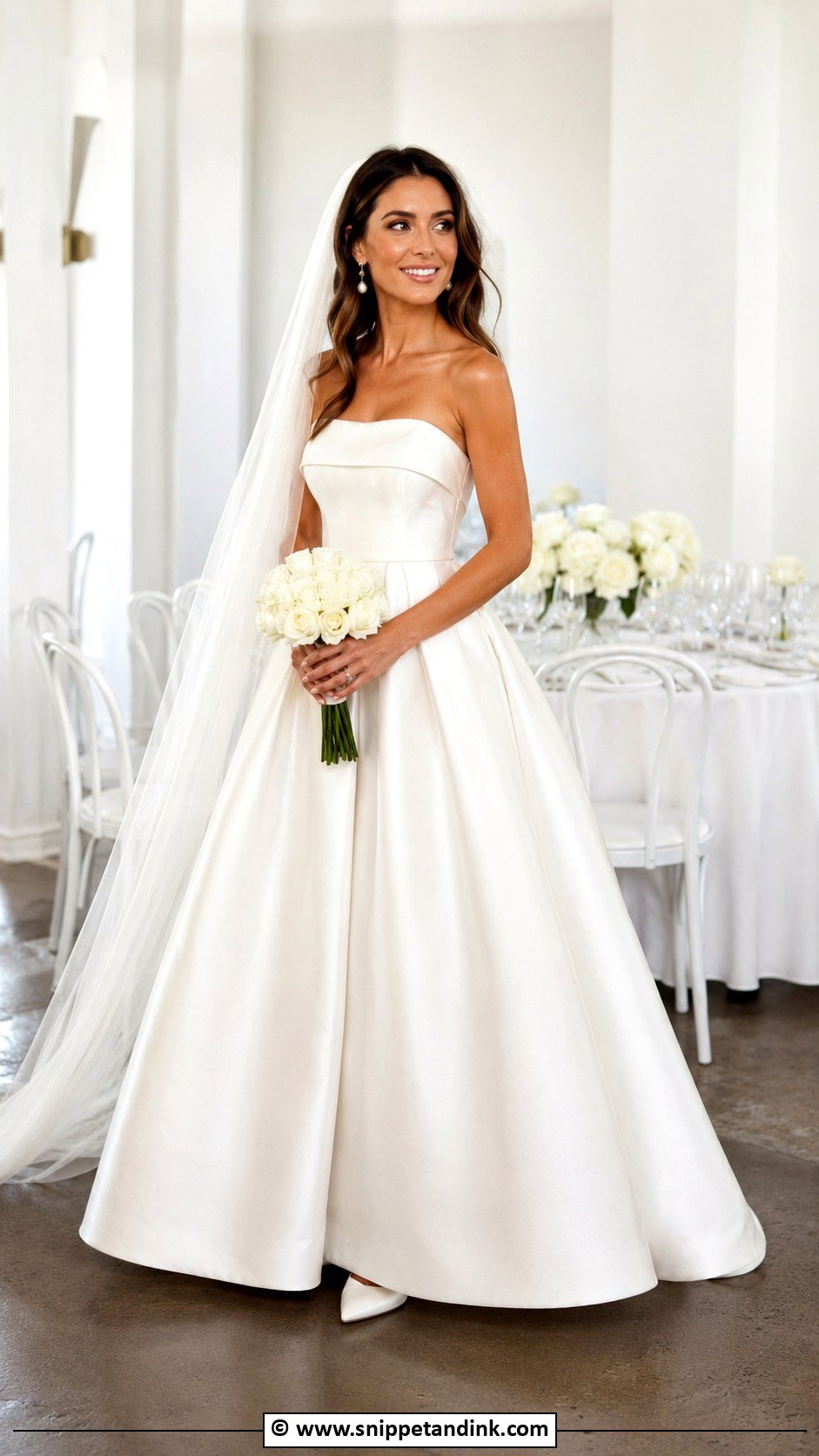
The fit is everything with strapless. The bodice should stay put through a full day of hugging, dancing and sitting, held up by boning and a waist stay rather than by pressure at the top edge. Satin, mikado, crepe and lace all work. A long veil, soft waves and elegant earrings suit it. For a ceremony that calls for coverage, a removable bolero, wrap, or lace topper can come off for the reception. Summer weddings and formal receptions suit it well.
13. Tea Length Wedding Dress
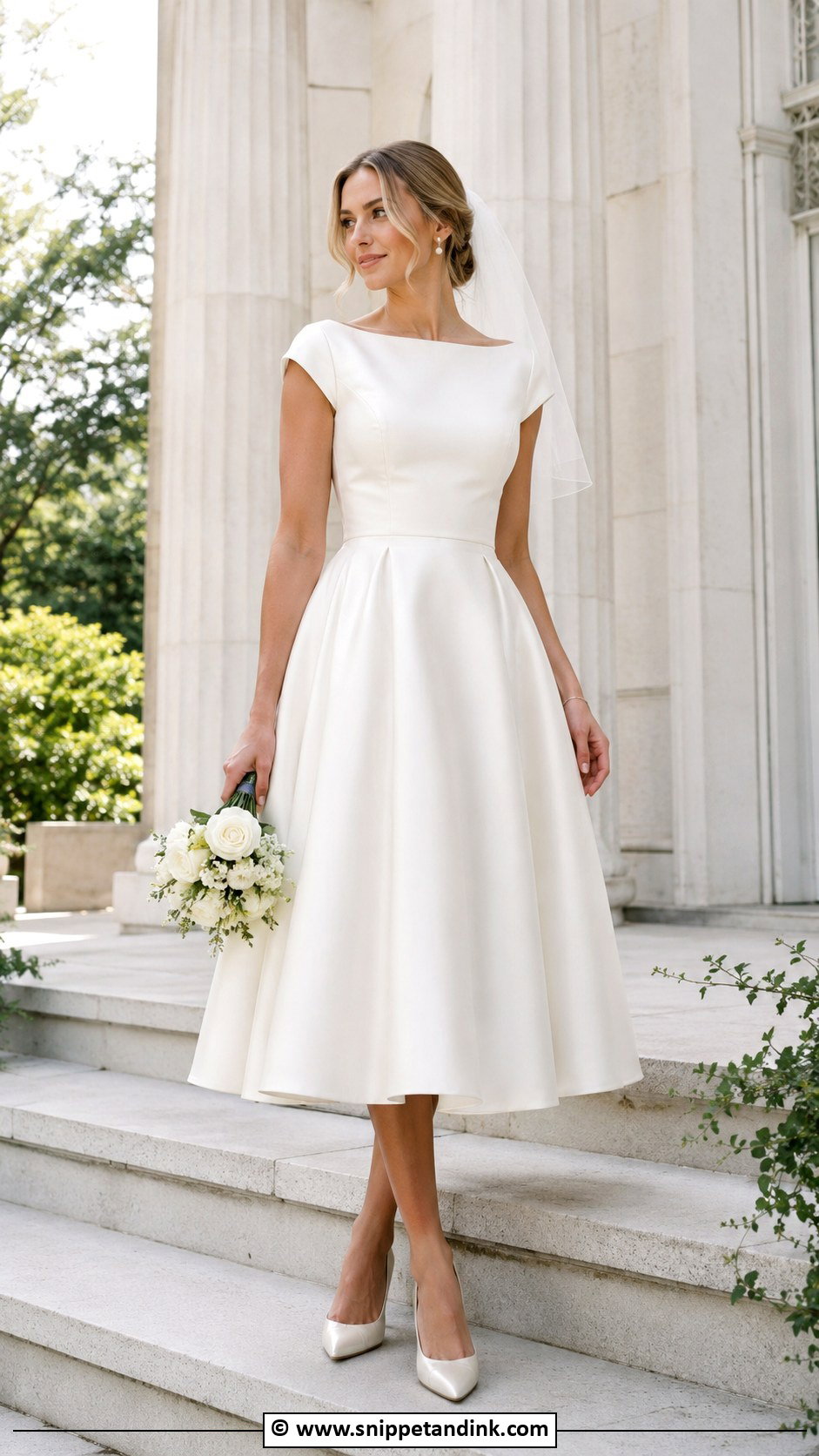
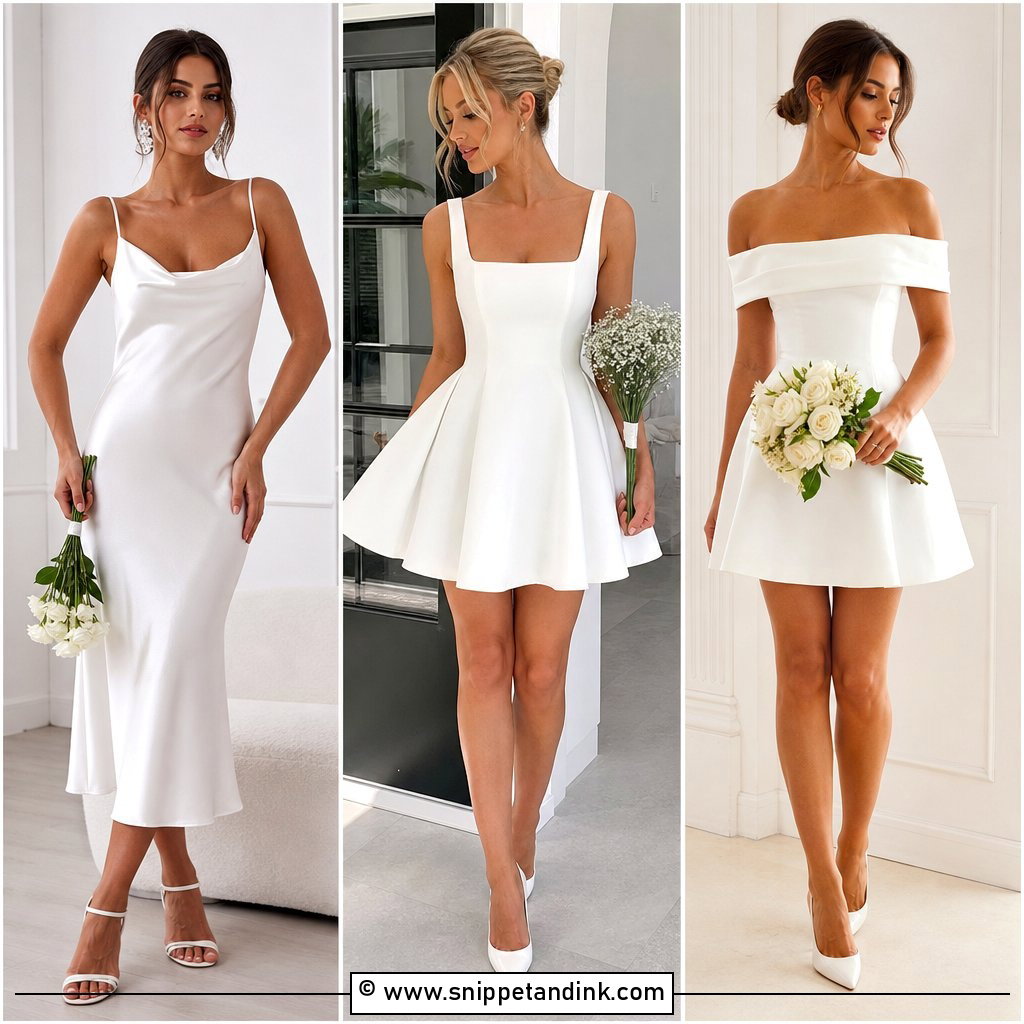
Tea length is the most relaxed of the classic lengths, falling between knee and ankle so your shoes show. Courthouses, gardens, brunch receptions and smaller celebrations suit it. A fitted bodice with a soft full skirt looks classic, while a sleek tea-length cut feels modern. The full version needs a petticoat or crinoline, or the skirt wilts by afternoon. Pointed pumps, pearl earrings and a short veil or bow make it bridal. You’ll move freely all day.
14. Column Wedding Dress
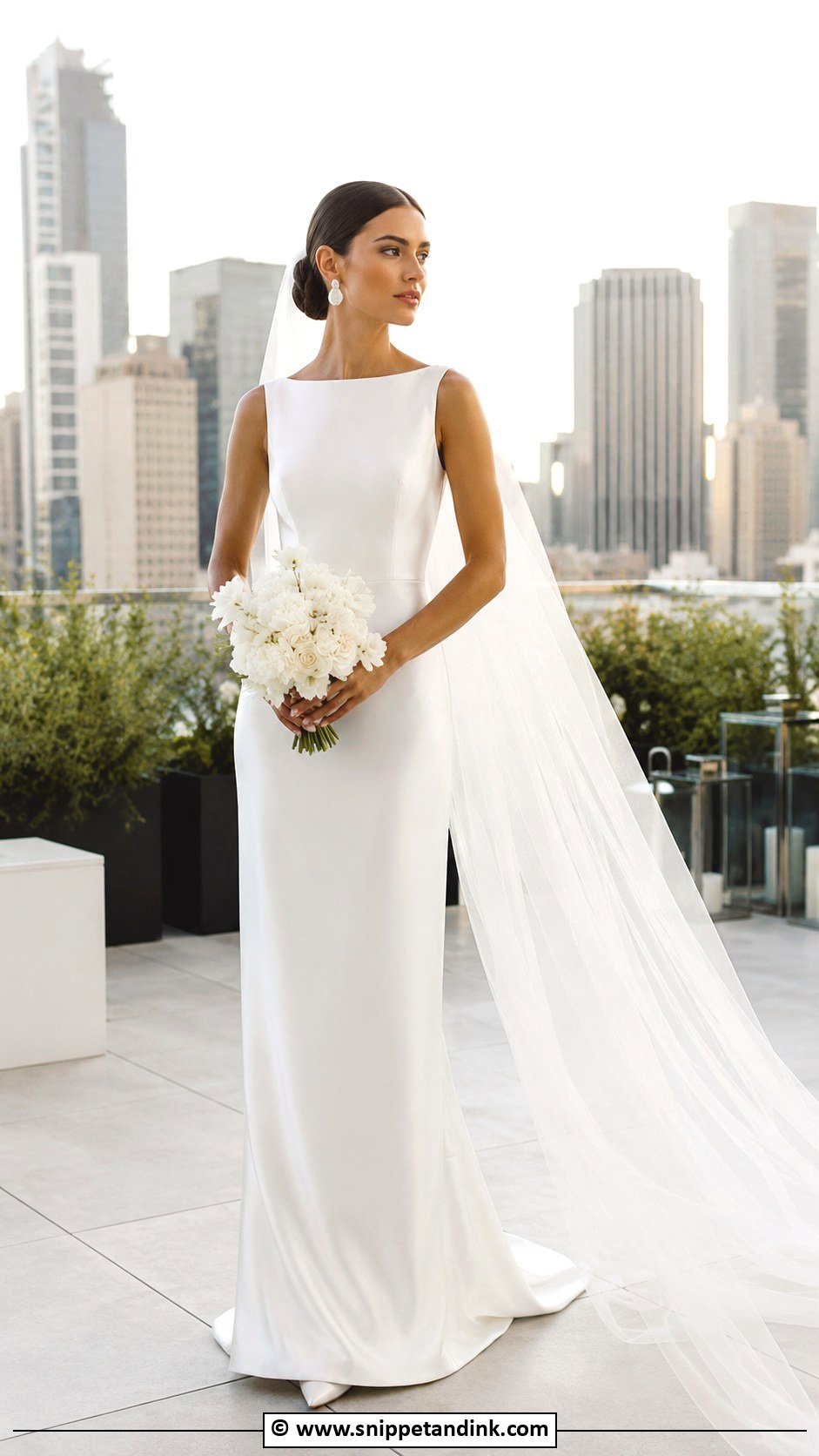
A column drops straight from neckline to hem, so fit, fabric and proportion are everything. Crepe, satin and silk blends suit it. My usual concern is stride length: a straight skirt that’s narrow at the ankle may need a back slit or kick pleat so you can manage steps without shuffling. A floor-length veil, sculptural earrings and slim heels give a modern finish. Rooftops, galleries, beach ceremonies and intimate weddings all suit it.


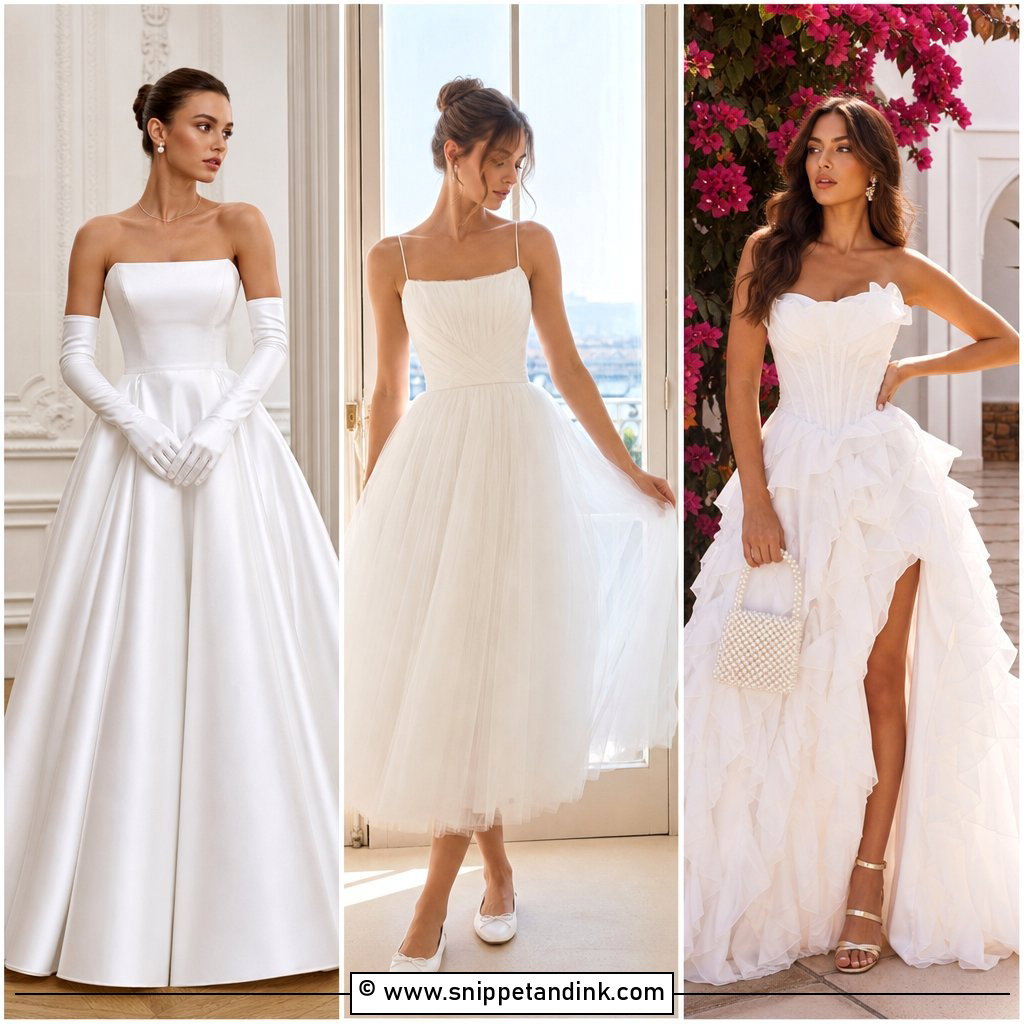
15. Floral Lace Wedding Dress
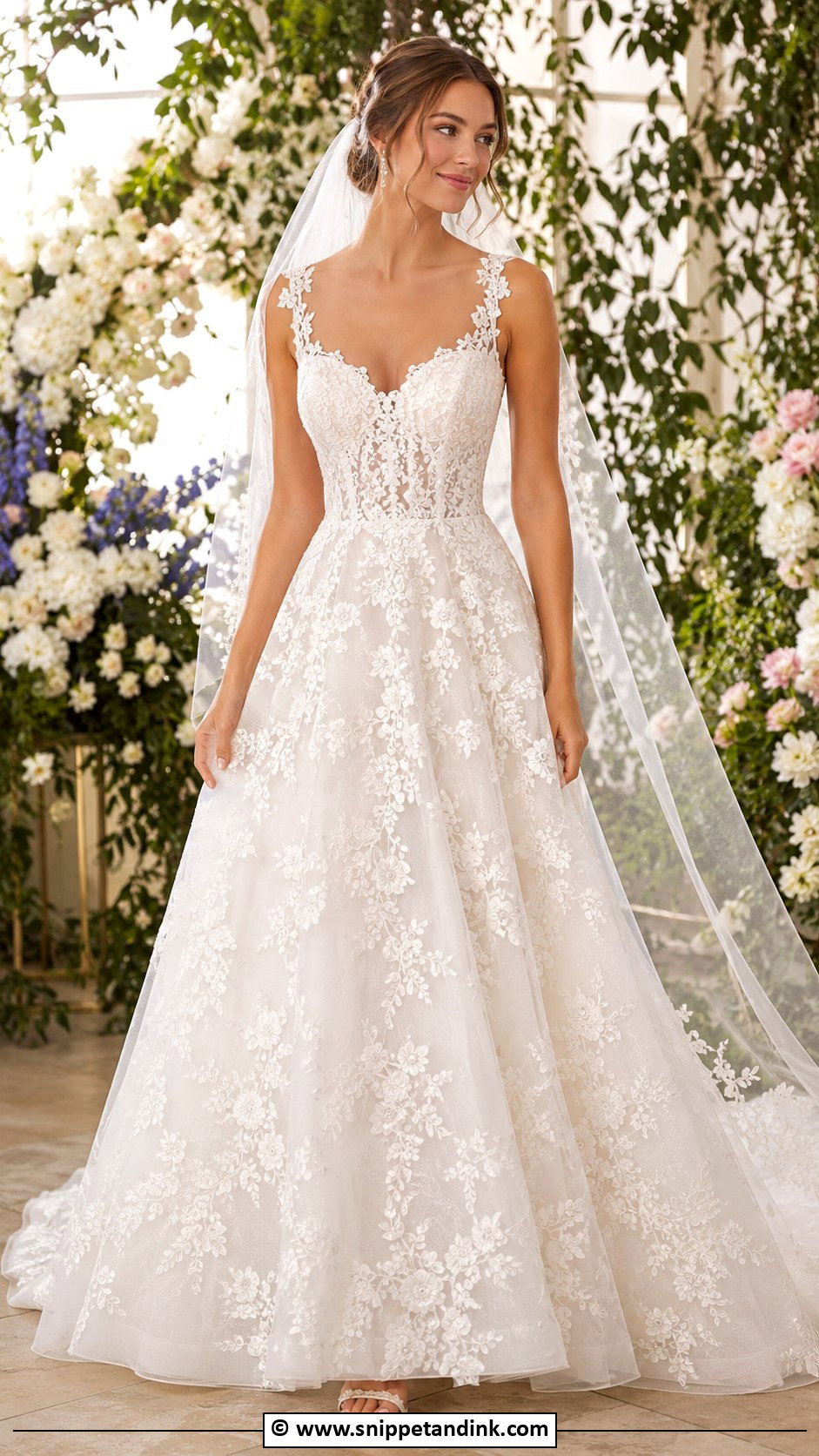
Floral lace can be soft and flat or raised and dimensional; the raised kind photographs with real shadow and depth. The placement matters most. Lace concentrated on the bodice and fading down the skirt looks refined, while lace scattered evenly everywhere can look busy. An A-line skirt, fitted bodice and light train balance it. Keep the veil sheer, the earrings simple and the makeup soft. Gardens, outdoor ceremonies and spring celebrations suit it well.
16. Bow Back Wedding Dress
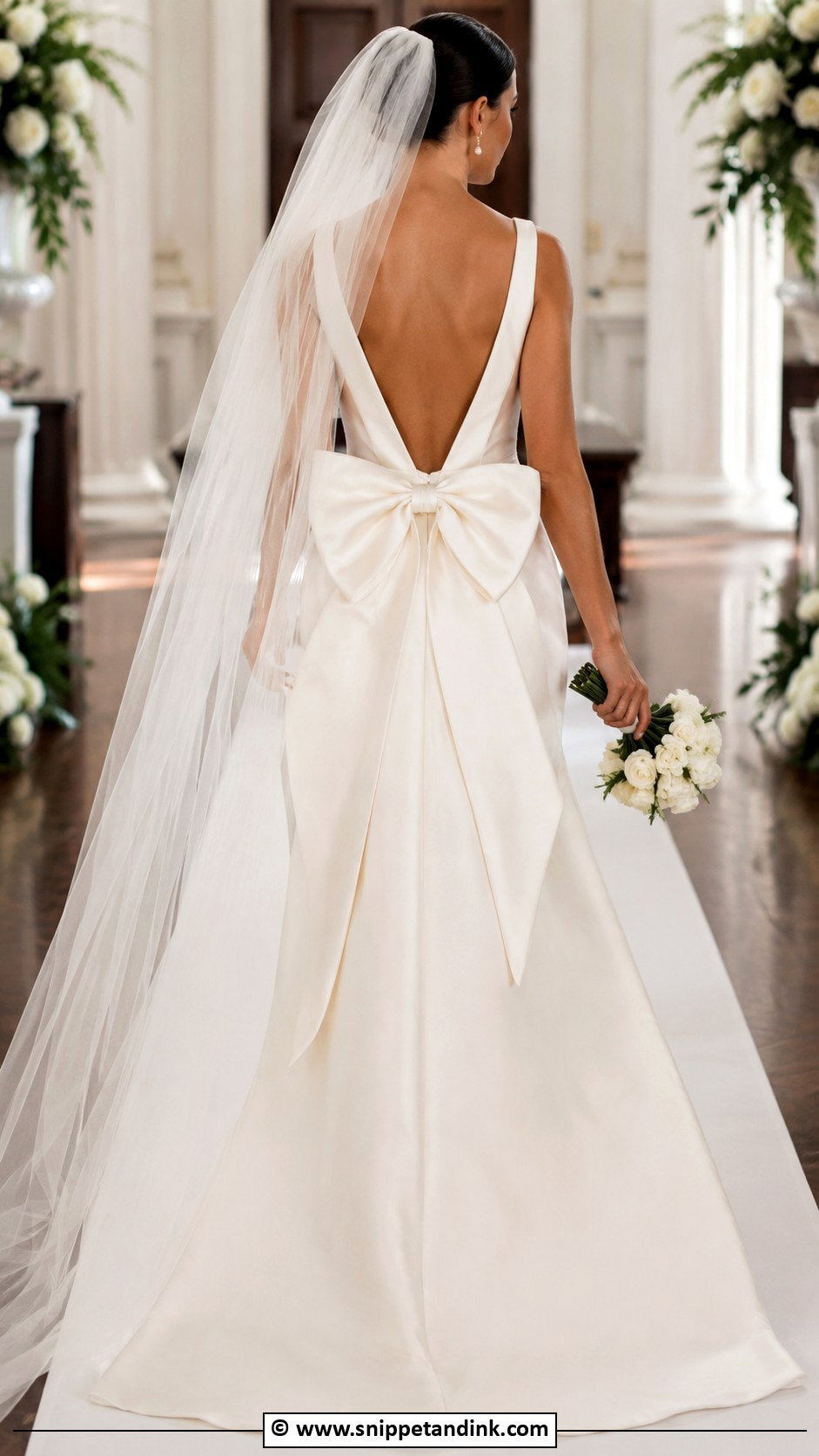
A bow gives the back of the gown a focal point, and your guests see the back for the whole ceremony. Small and delicate or large and dramatic, it looks best on plain satin, mikado or crepe. If you love a long veil too, decide which matters more: a long veil covers a back bow during the ceremony, so many brides wear it only for the aisle and remove it for photos. Simple earrings and classic heels finish it.
17. Cap Sleeve Wedding Dress
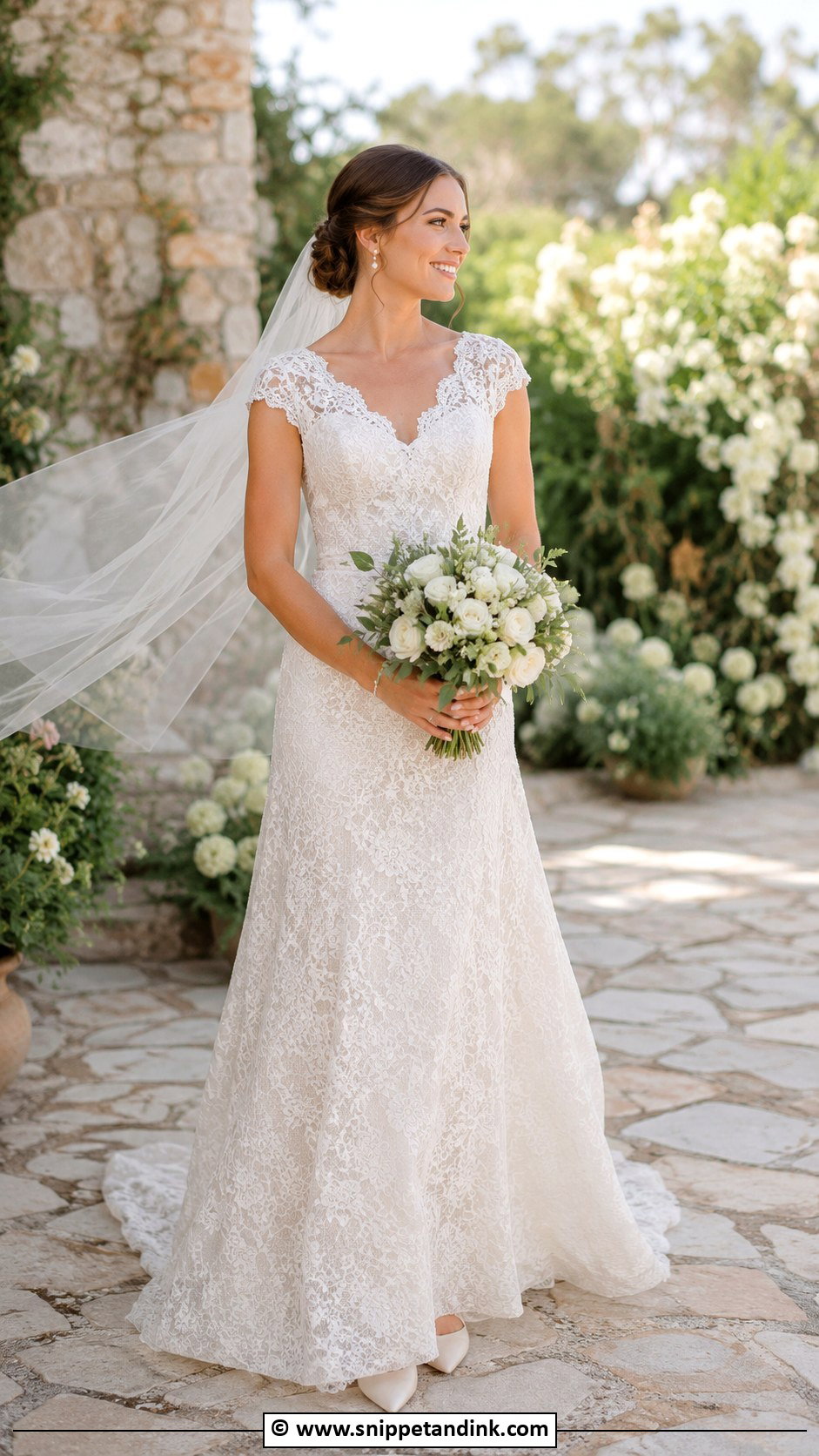
Cap sleeves give a little shoulder coverage while keeping the gown light. In lace, satin or crepe, with an A-line skirt, it’s a graceful classic. Before buying, check the sleeve opening against your arm; a cap that’s cut too snug digs in by the evening. A low bun, pearl earrings and a soft veil finish a cap sleeve wedding dress for a daytime wedding, garden or historic space when long sleeves would be too warm.
18. Sheath Wedding Dress
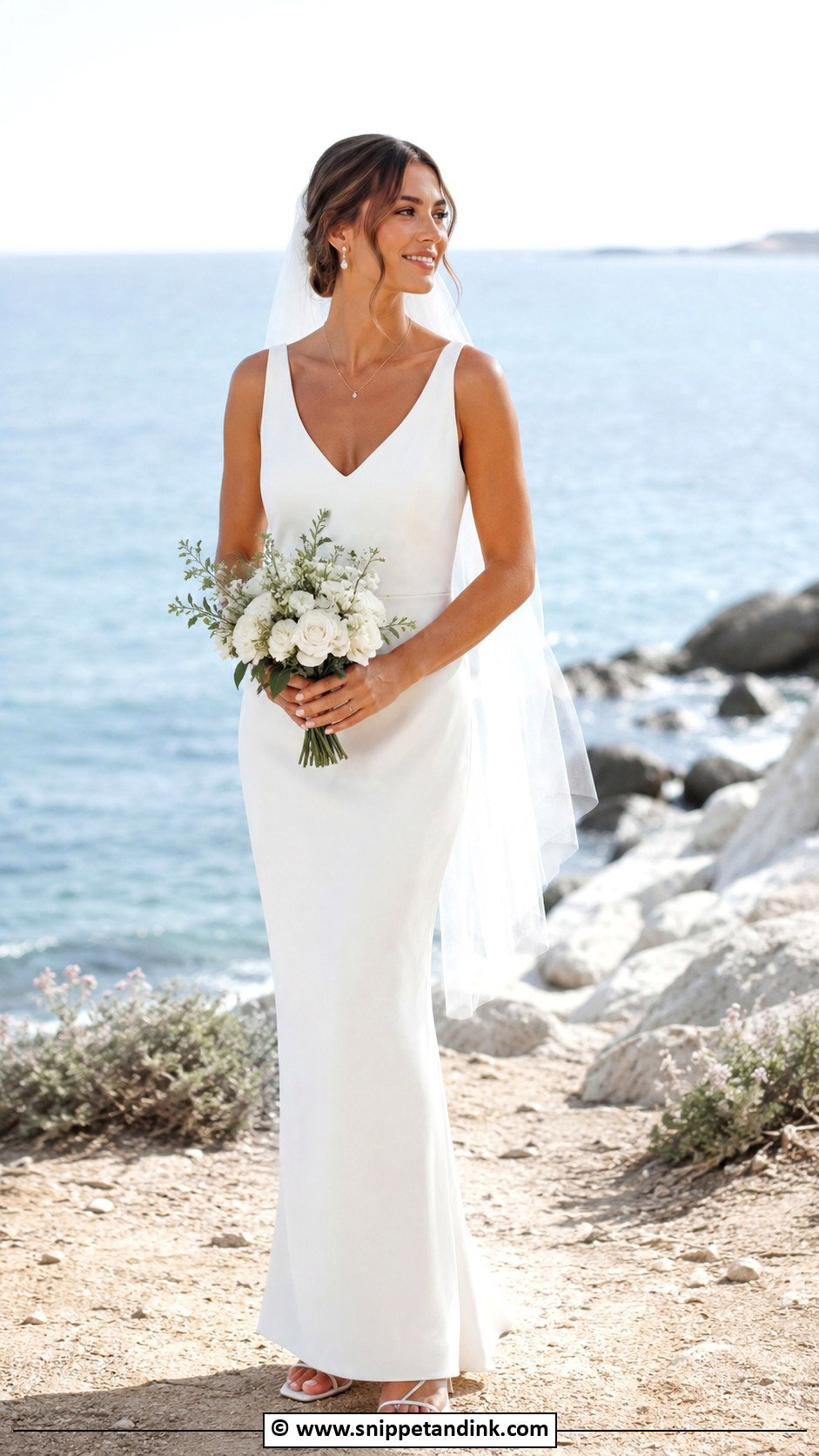
A sheath follows the body more loosely than a mermaid but more closely than an A-line. It’s easy to wear, which is why I suggest it for destination ceremonies where you’ll travel with the dress: it packs more easily than a full skirt. Crepe looks modern, lace romantic, satin softly shiny. Clean tailoring and good fabric matter more than embellishment. A simple veil, strappy heels and delicate jewelry suit beach weddings and intimate venues.
19. Organza Wedding Dress
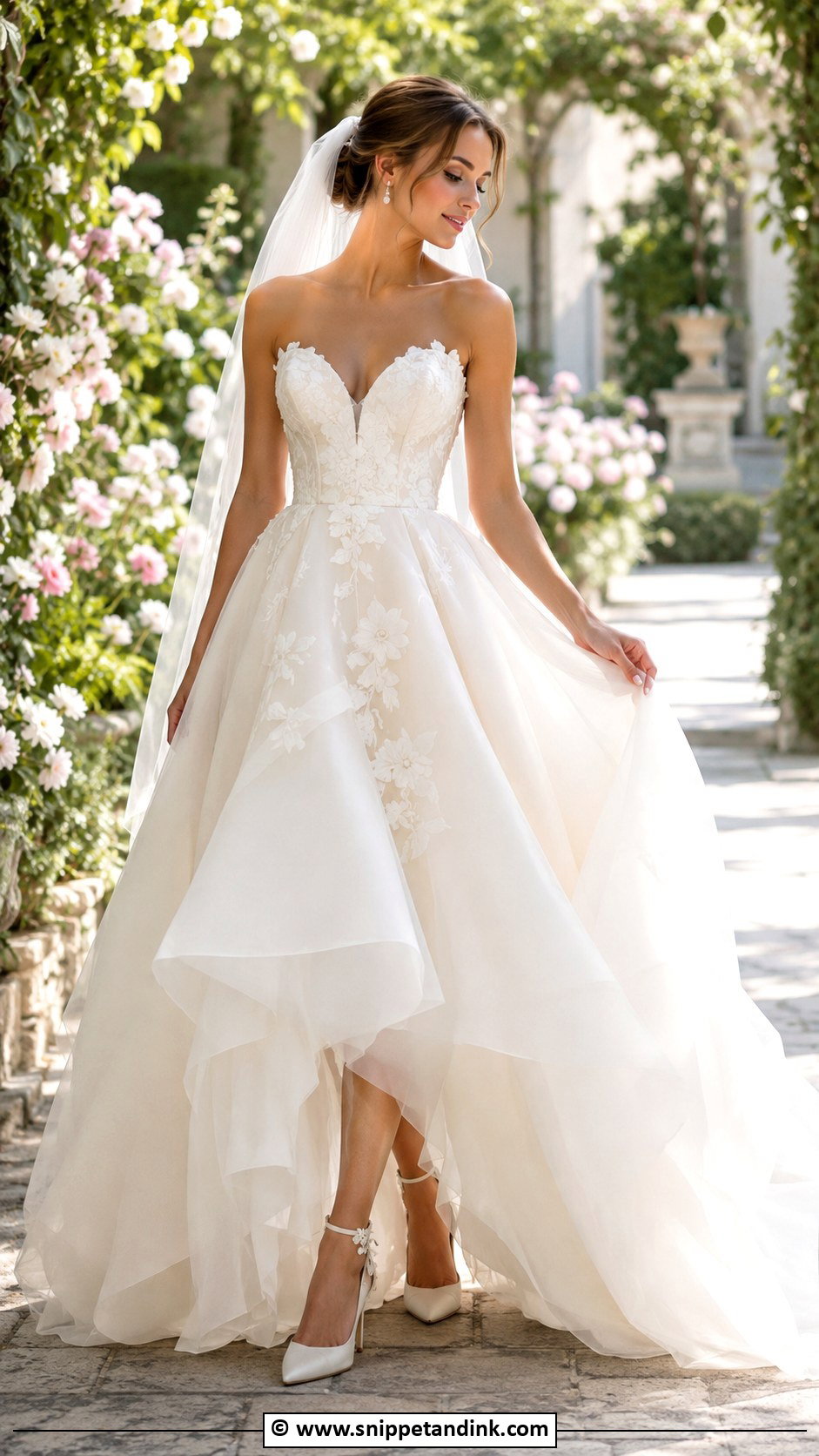
Organza is crisp and sheer, so it creates volume without the weight of satin layers. That makes it a good choice for a full skirt in warm months. It does crease when crushed and can show water spots, so keep it away from wet grass and steam it carefully. It works with simple bodices, light floral appliqué or subtle pleating. A sheer veil, dainty earrings and elegant heels suit spring, summer and garden weddings, and the skirt moves well in outdoor photos.




20. Bateau Neck Wedding Dress
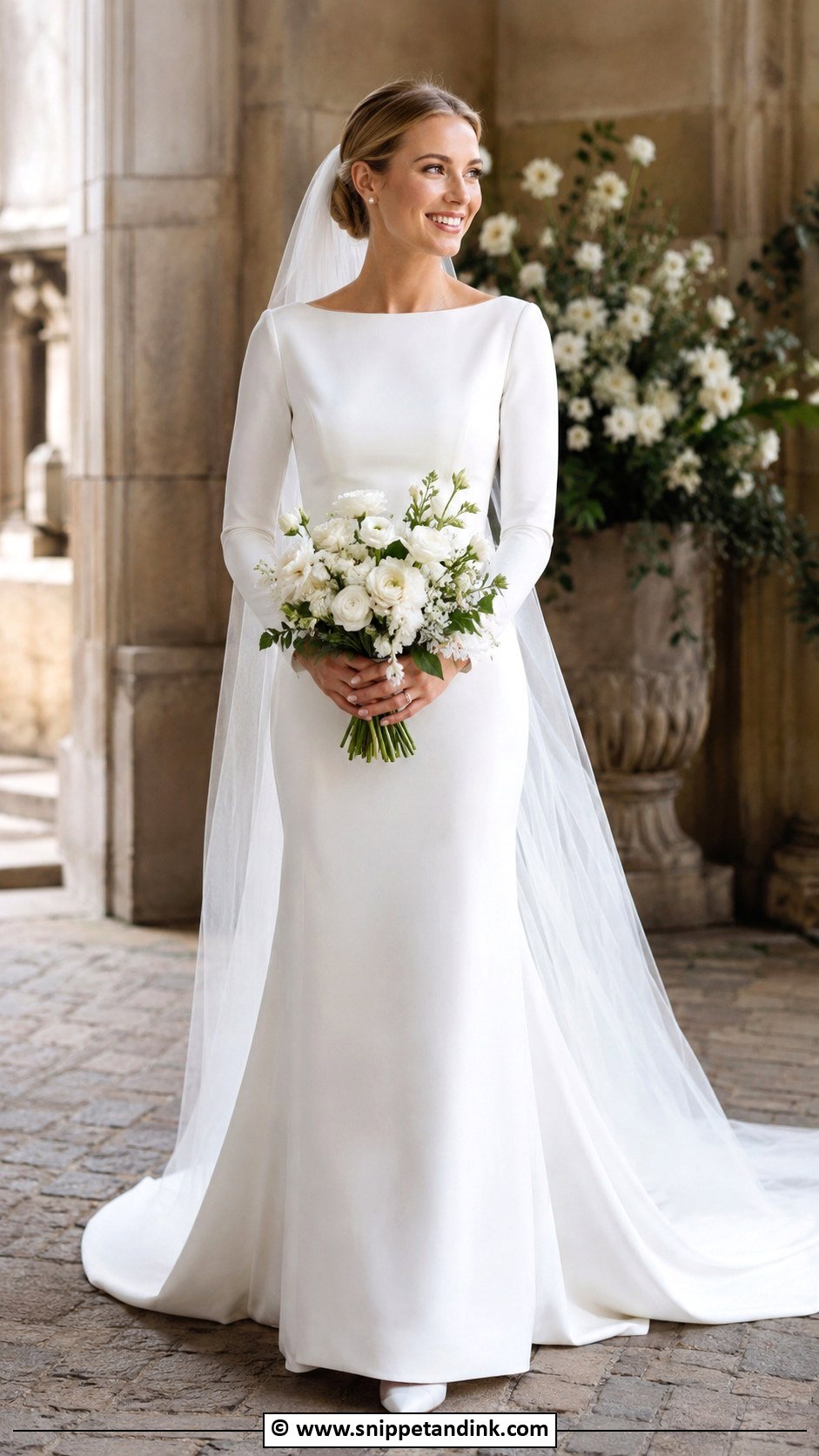
The bateau neckline runs almost straight across, collarbone to collarbone, and frames the face without showing much. It’s long been tied to classic bridal icons for that reason. It suits sleeveless, cap sleeve and long sleeve bodices in crepe, satin or lace. I’d steer a very petite bride toward a slightly lower boat neck, since a high, wide line can make the shoulders look broad. A neat updo, pearl studs and a long veil suit formal ceremonies and estate venues.
21. Mermaid Wedding Dress
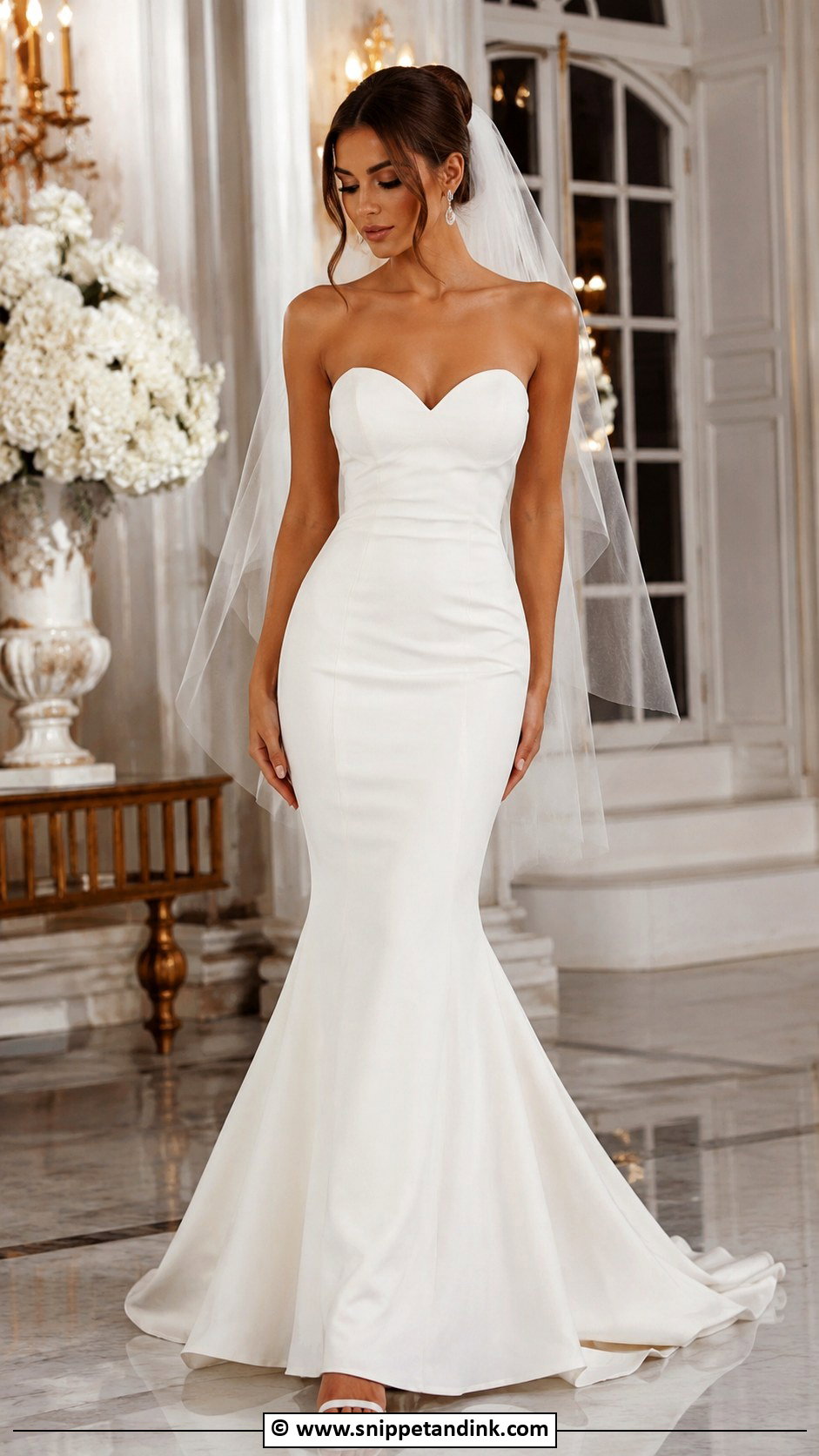
Mermaid gowns fit through the bodice, waist and hips, then flare near the knee or lower thigh. For a classy result, choose refined fabric, soft seams and little embellishment. Lace, crepe and satin all work, and a sweetheart, off-shoulder or high neck changes the mood. Heel height matters more here than in most shapes, because the flare is set for a particular height; wear the actual shoes at every fitting. Sleek hair and simple jewelry suit formal receptions.
22. Tulle Wedding Dress
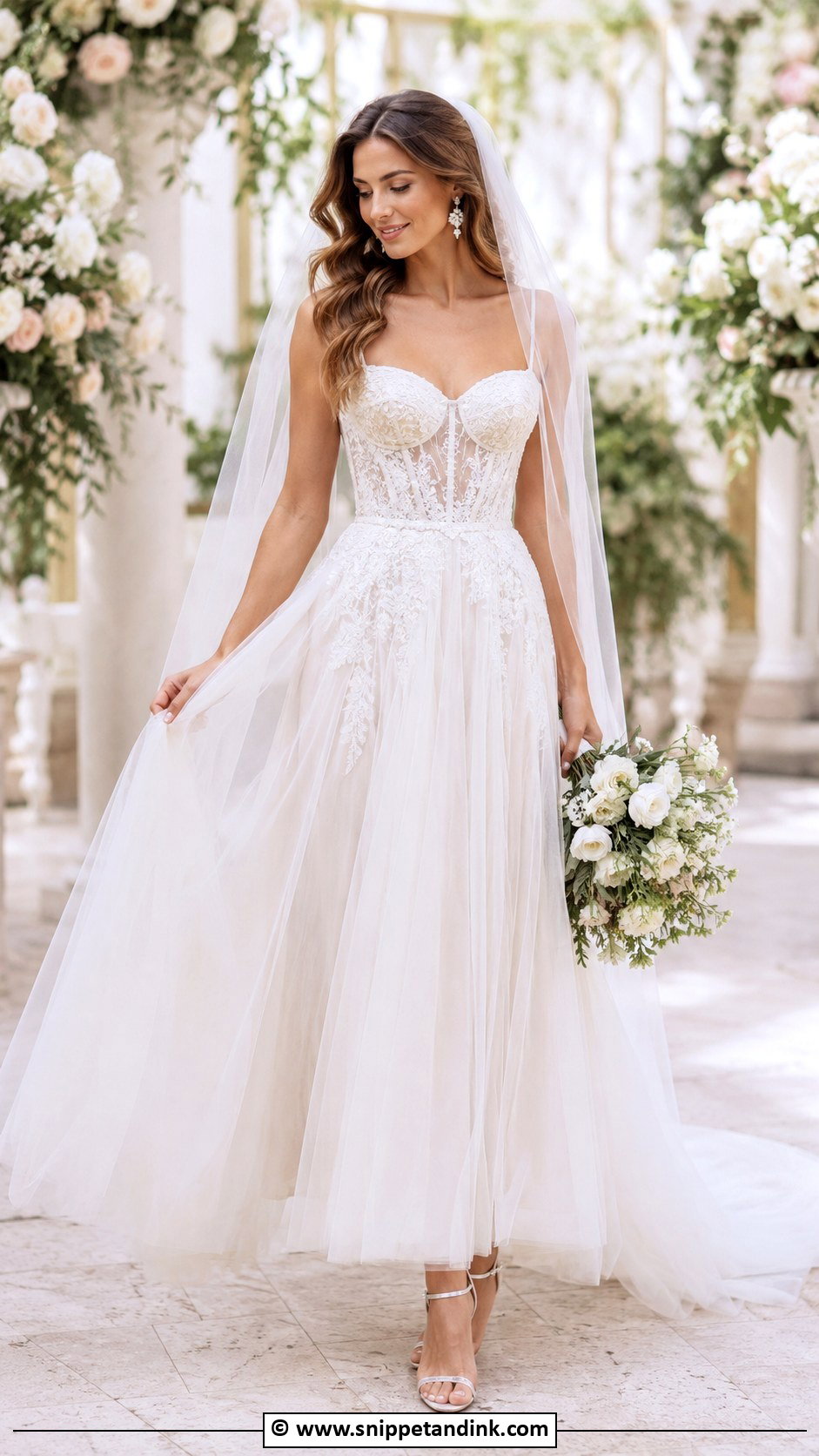
Tulle looks classy when the layers float rather than puff. More fine layers create depth; fewer stiff ones look like a costume. A fitted bodice over an A-line tulle skirt suits many brides. Plain tulle is clean, subtle appliqué adds texture. Tulle catches on everything from rough stone to bracelets, so check the venue’s floors and your jewelry. Delicate earrings, a sheer veil and simple heels suit outdoor venues, gardens and romantic ballrooms.
23. Corset Wedding Dress
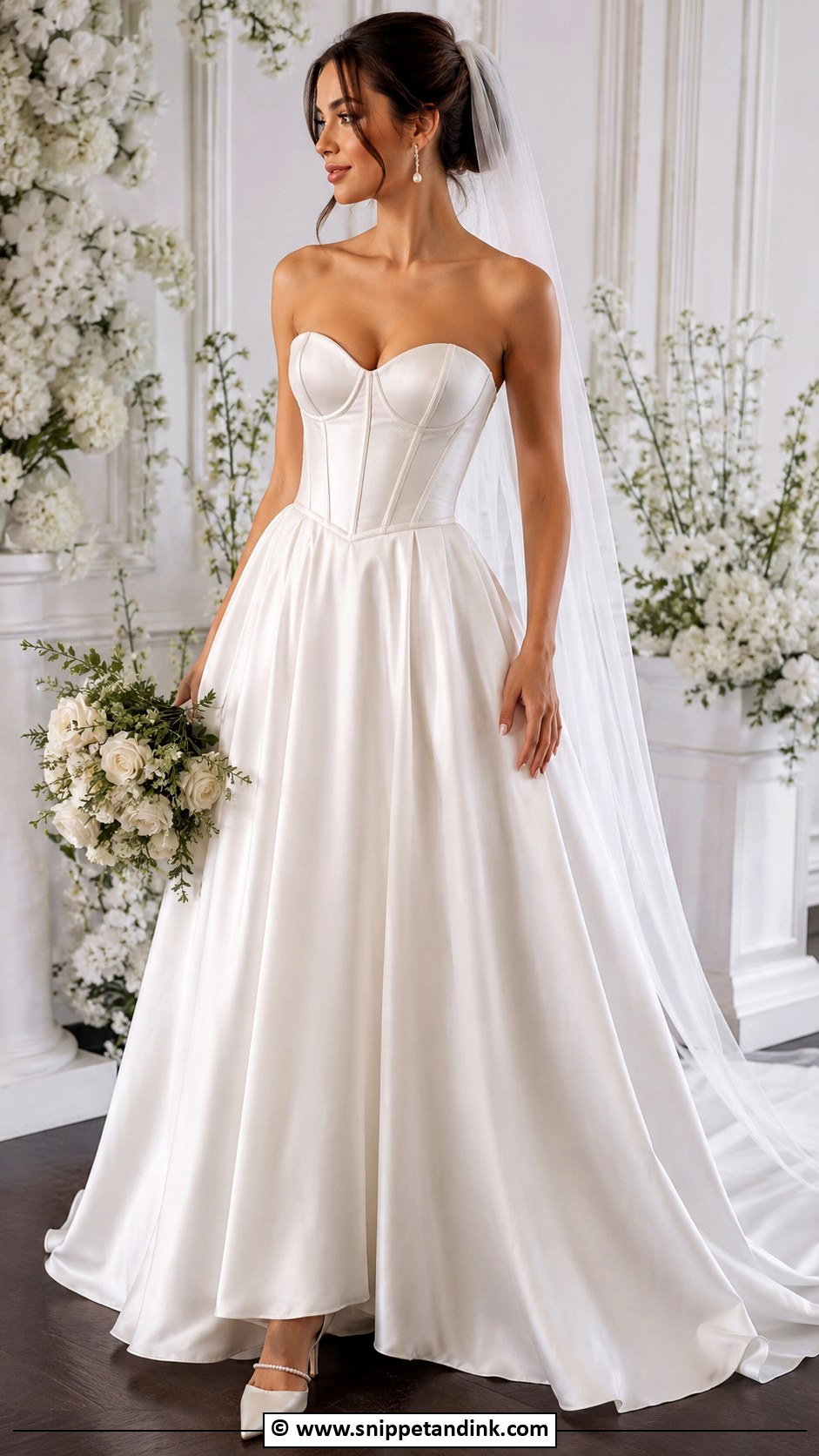
A well-made corset wedding dress supports you so you’re not hauling the bodice up all night. Look for smooth fabric over the boning, with no ridges showing through, and a skirt that balances the fitted top, whether A-line, ball gown or drop waist. Steel boning holds shape better than plastic over a long day. A long veil, pearl earrings and simple heels finish it. Quality construction is the thing to pay for here.
24. Detachable Sleeve Wedding Dress
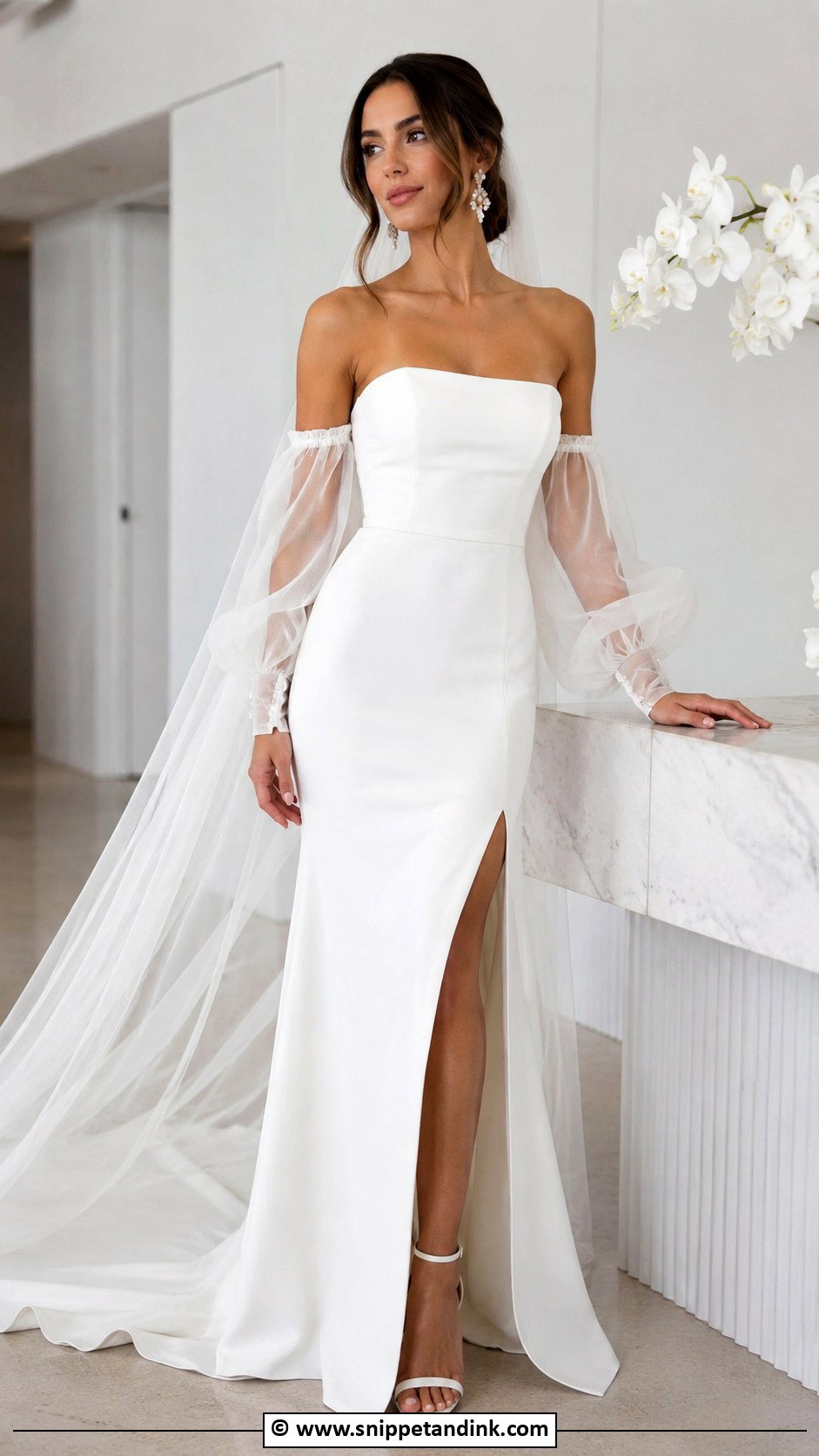
Detachable sleeves give you a ceremony look and a reception look from one dress. Long lace sleeves feel romantic, puffs feel fashion-forward, sheer organza feels light. Practise taking them off and putting them back on before the day; some attach with hidden snaps, others with buttons that need a second pair of hands. Keep the base gown simple so the change looks deliberate. Classic heels, elegant earrings and a veil that suits both versions work for changing weather and long days.
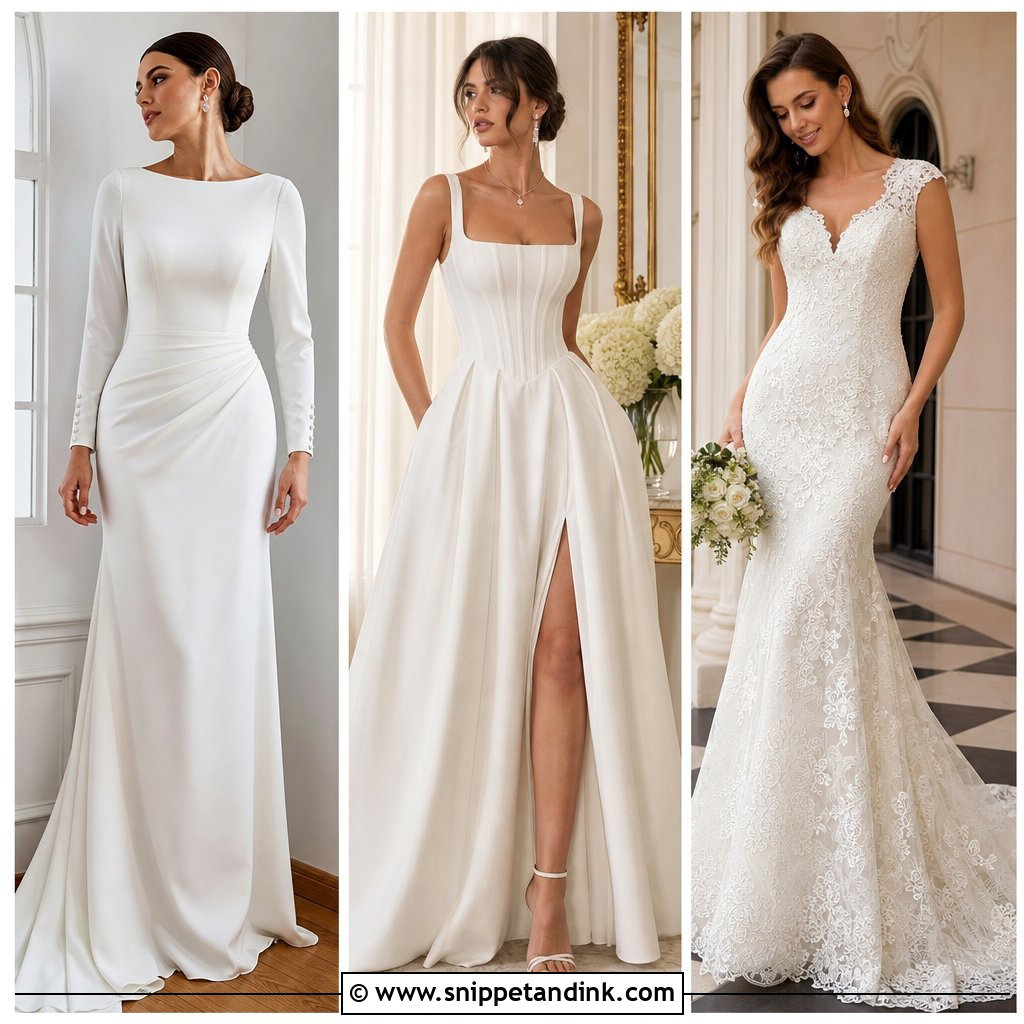

25. Minimal Slip Wedding Dress
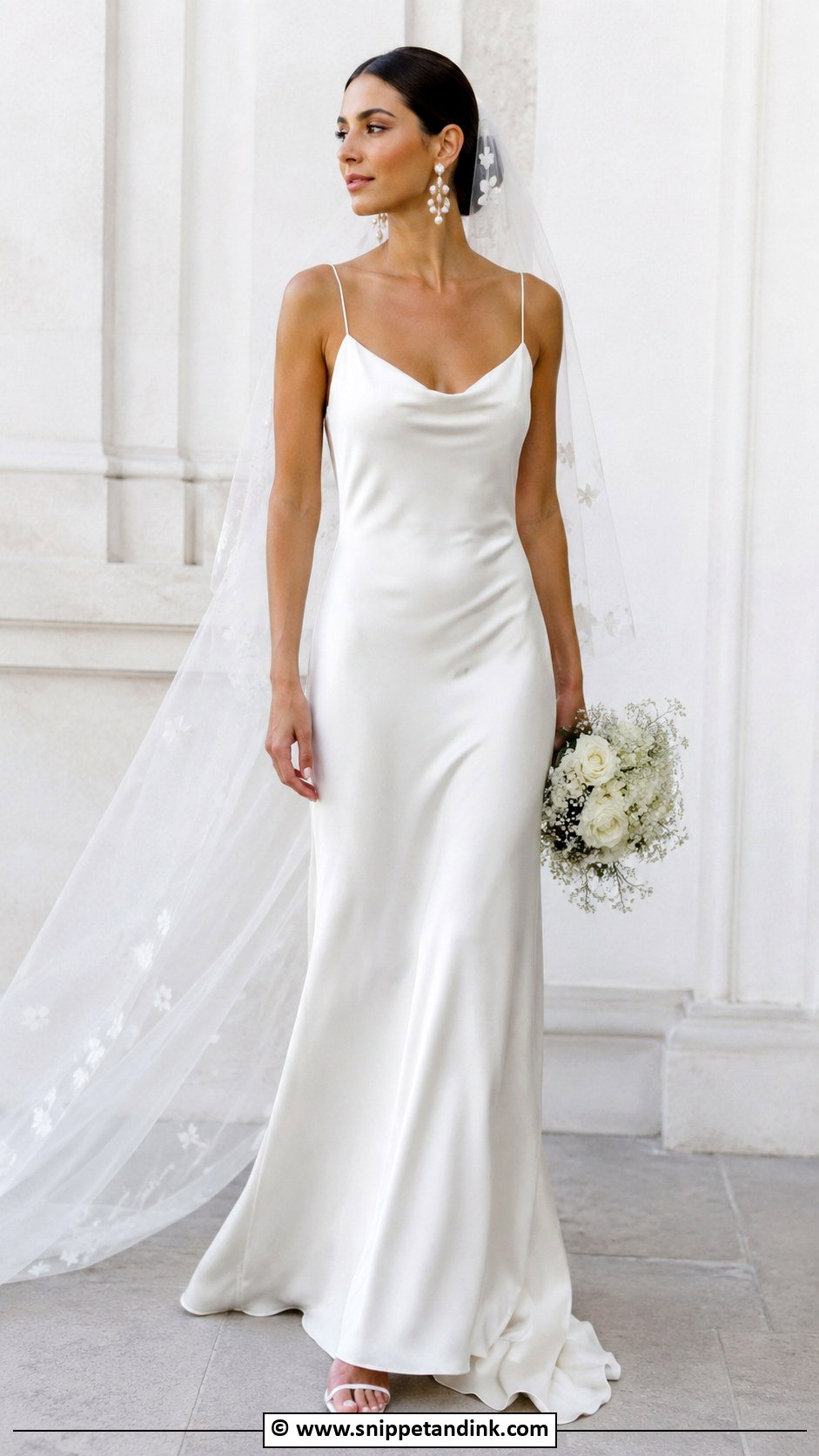
Slips are simple, and that’s their strength. Soft satin or a silk-like fabric, slim straps and a gentle drape look chic only when the fit is right, since a slip shows every pull. A long veil for the ceremony, then statement earrings or a sleek hair accessory for the reception, gives you two moods without a change. Simple heels and a small bouquet suit city weddings and destination ceremonies. A classy dress doesn’t need heavy detail.
The Dress Shopping Clock Starts Earlier Than You Think
The most common stress I see isn’t about which dress; it’s about time. Many gowns are made to order after you buy them, and that production can take several months. Alterations then need their own window. Exact timings vary between shops and designers, so ask at your first appointment, but this is the rough shape I plan around.
- Start trying on around nine months to a year before the wedding if you want a made-to-order gown. Off-the-rack and sample dresses can be bought much later.
- Order with time to spare. Many bridal shops quote somewhere around four to six months for production, and some designers take longer.
- Begin alterations roughly two to three months before the date. Most dresses need two or three fittings.
- Hold the final fitting a couple of weeks out, wearing your shoes, undergarments and any jewelry, and have whoever will bustle the train learn how it works.
- Collect the dress pressed, and keep it hanging in a breathable bag until the morning.
If you’re shopping late, tell the consultant straight away. Sample gowns, off-the-rack collections and rush orders exist precisely for that situation.
The Gown That Disappears Into You
The right gown makes you feel comfortable and like yourself, not like you’re following a trend. The silhouettes here range from a satin ball gown for a grand celebration to a crepe column for a quiet city ceremony, with lace, pearls, bows and detachable sleeves in between. Weigh fit, fabric and comfort first, then the details that match your style. When those agree, the dress stops being the thing you think about and becomes part of how you look in every photo.
You'll Like These Ideas:








Leave a Reply