
A wide skirt changes how you walk, how you sit and how a room reacts when you enter it. Bridal designers have leaned hard into volume lately, with timeless ball gowns sitting alongside modern corsetry, Basque and dropped waists, bubble hems, heavy florals and removable overskirts. Bigger isn’t automatically better, though. The right amount of skirt depends on your height, your venue and how much of the day you’ll spend on the move. Below are twenty big-skirt styles, each with what I’d look at in the fitting room and the few accessories I’d actually pair with it.
Stairs, Car Doors and the Loo in a Wide Skirt
Nobody shows you how to live in a ball gown, so here’s what I teach brides at the final fitting. It takes ten minutes to learn and saves a lot of stress.
Stairs
Going up, lift the front of the skirt with both hands, just enough to see your toes, and let the back trail. Going down, lift the front a little higher and take each step slowly, with someone behind you holding the train clear. Never lift only one side; the hem tips and you’ll step on the other.
Getting into a car
Sit first, bottom onto the seat, then swing your legs in while a helper gathers the skirt and tucks it in around you. Getting out is the reverse: legs out, then stand. The front of the skirt will crush if it’s sat on, so pull it forward before you sit.
The bathroom
Many brides face the toilet backwards so the skirt can be gathered up in front of them. A friend helps hold the layers. Some people use a slip-style ‘bridal buddy’ that gathers the skirt into a bag you step into. Either way, practise once at home in the dress.
1. Satin Big Skirt Wedding Dress
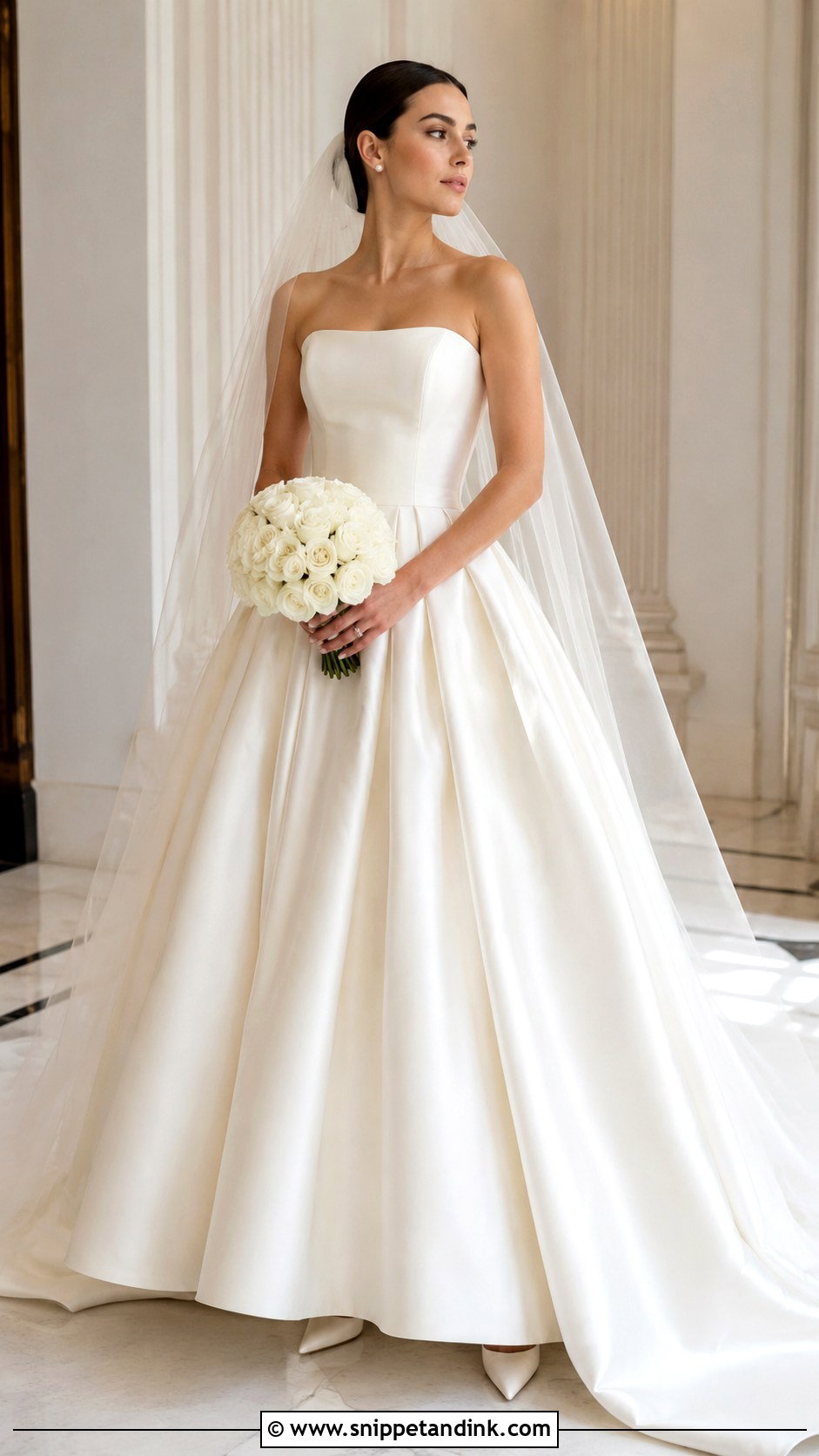
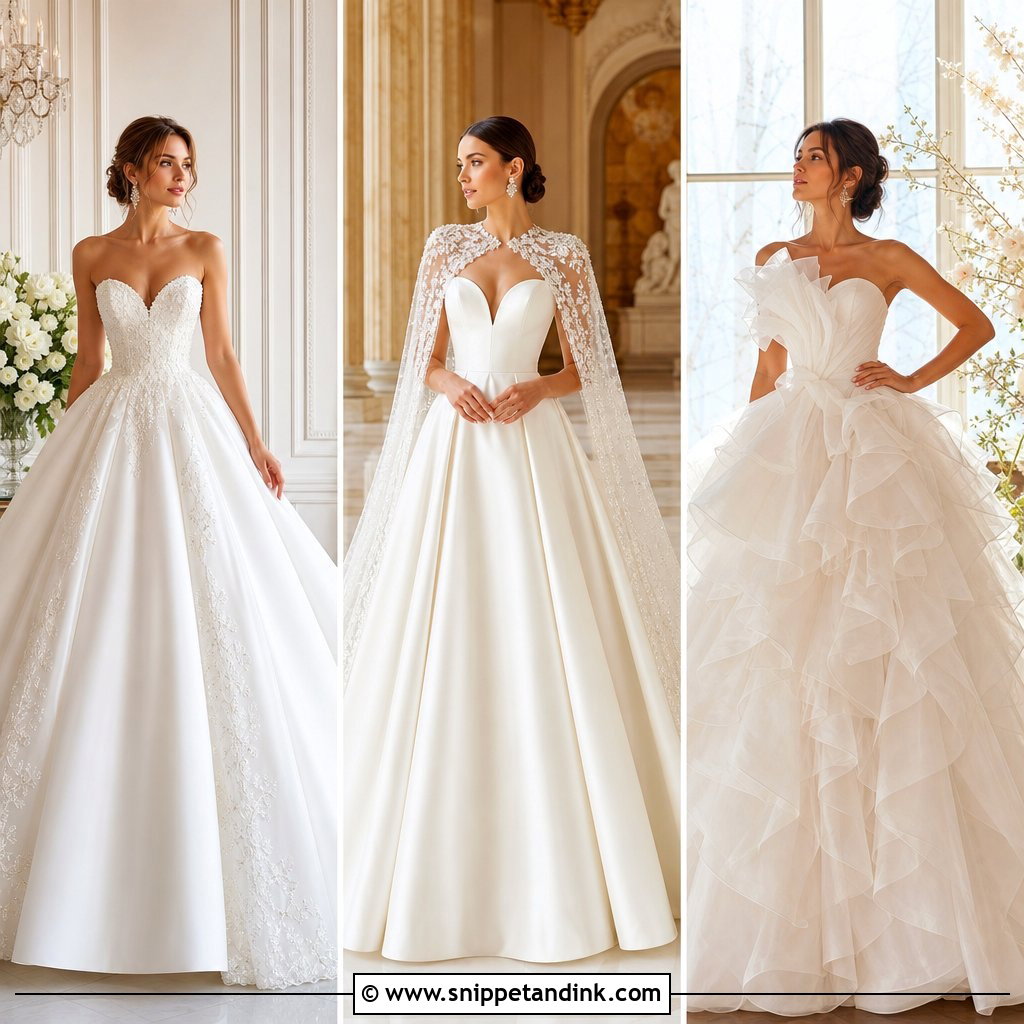
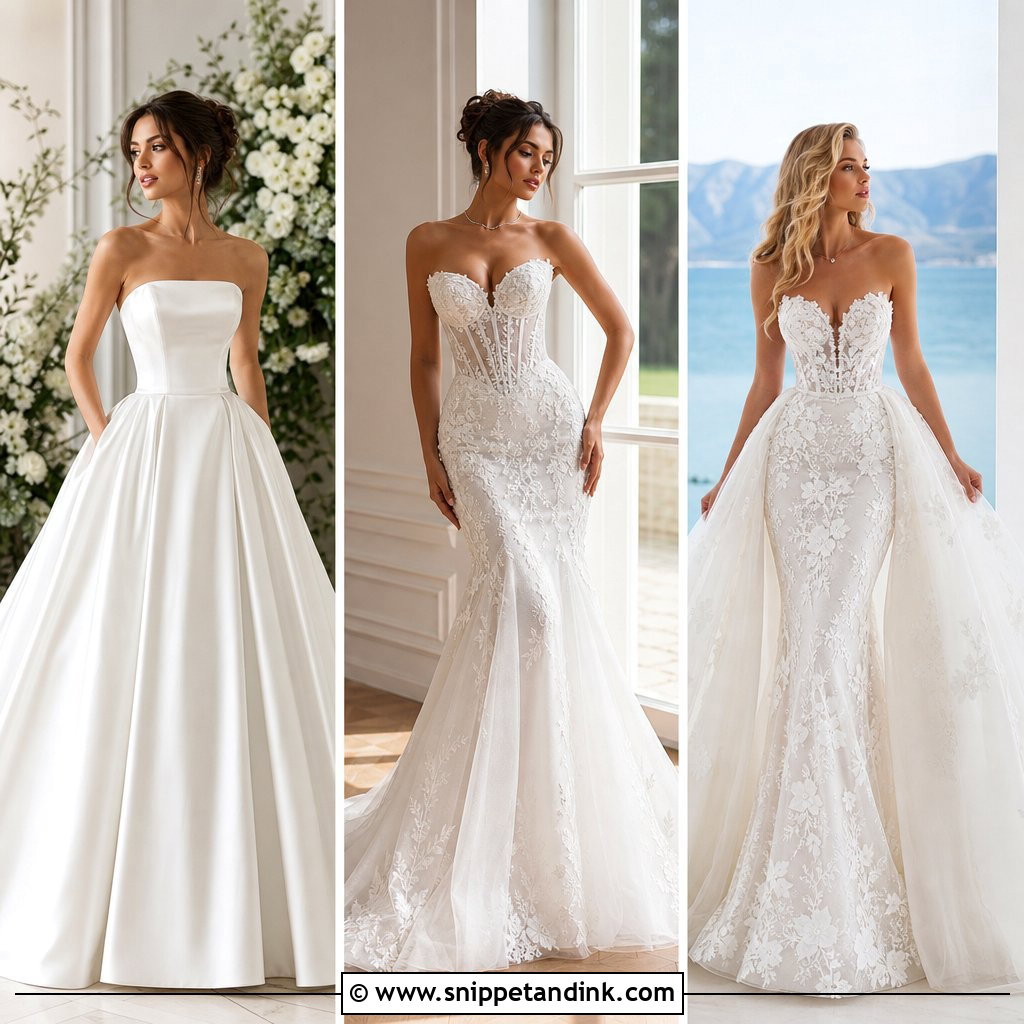
Satin is the cleanest canvas for a big skirt: no lace, no sparkle, just shape and sheen. A fitted bodice, a defined natural waist and wide pleats at the hip let the skirt open out evenly. Hidden pockets are a small luxury most satin gowns can take. Because satin shows everything underneath, the hem must be set while you’re wearing your wedding shoes and the actual petticoat. Swap either one later and the skirt will either drag or hover. Pointed pumps, pearl studs, a plain cathedral veil and a tight bouquet of roses or callas.
2. Basque Waist Big Skirt Wedding Dress
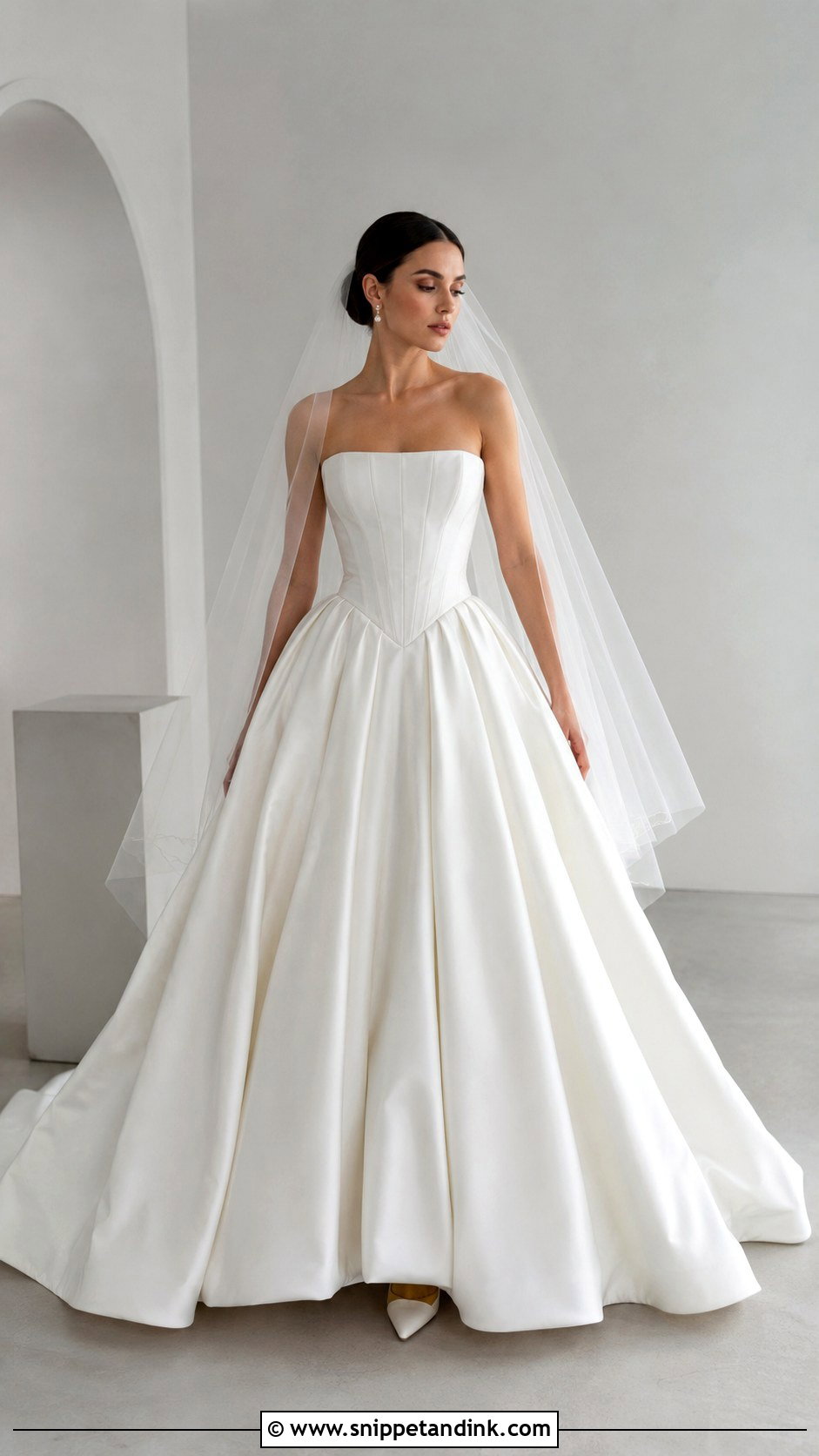
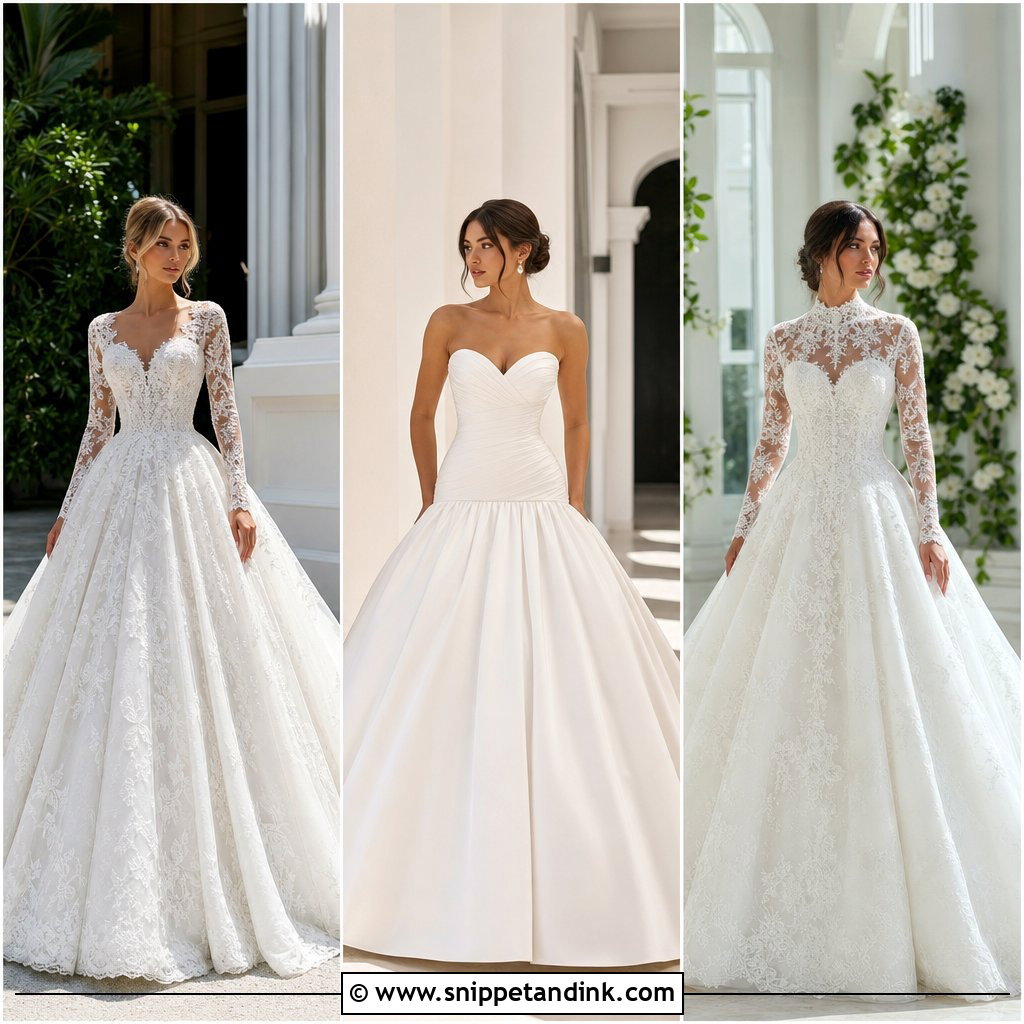
Taffeta and matte Mikado keep a Basque point crisp; softer fabrics let it wilt. The V dips below the natural waist and makes the torso look long before the skirt expands. If the bodice has exposed boning, leave off extra embellishment. I’d keep the styling simple: fingertip veil, delicate drops, closed-toe heels, low bun. At alterations, stand, then sit. The point should lie flat in both positions and never press into the tops of your thighs.
3. Lace Big Skirt Wedding Dress
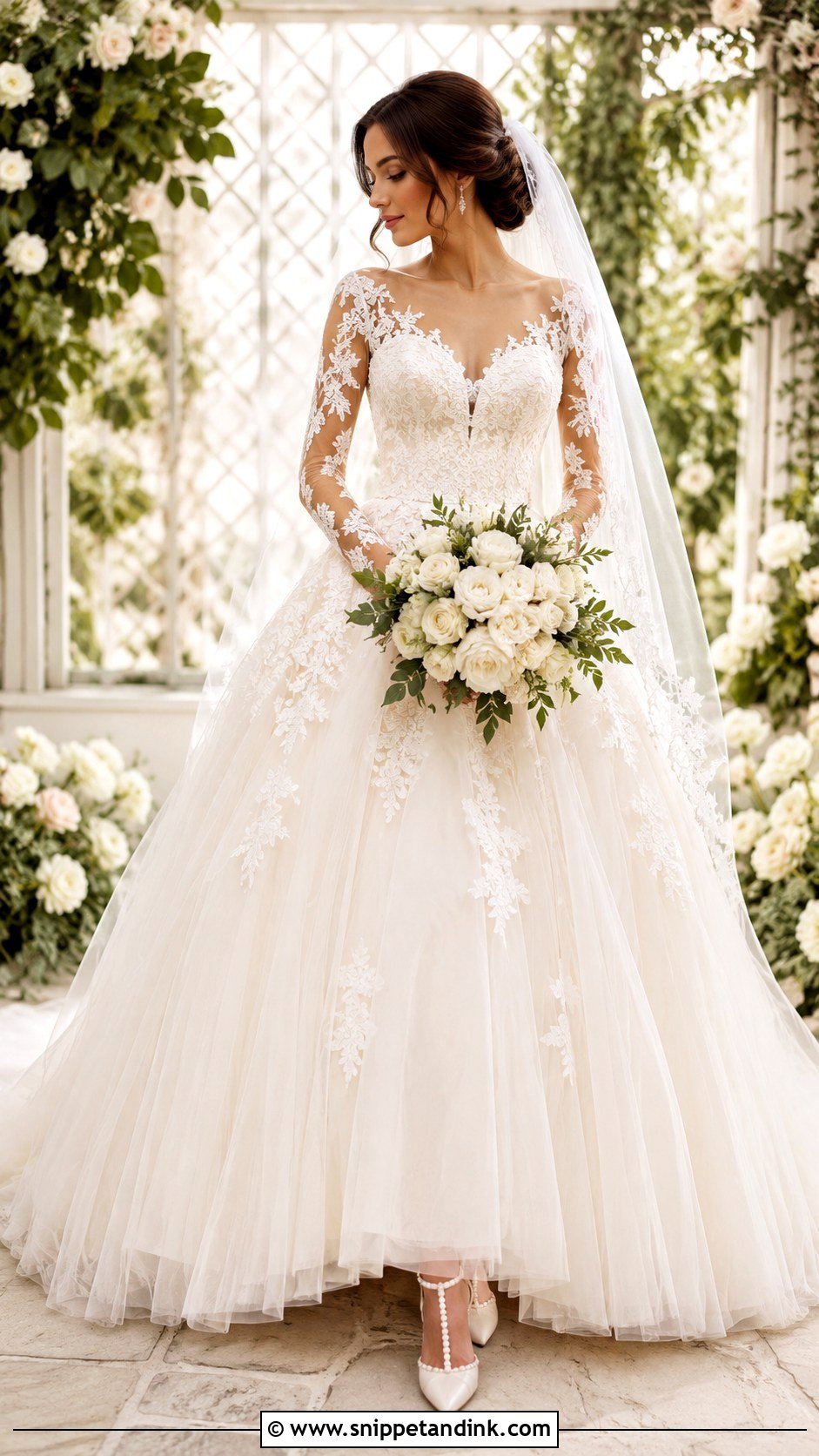
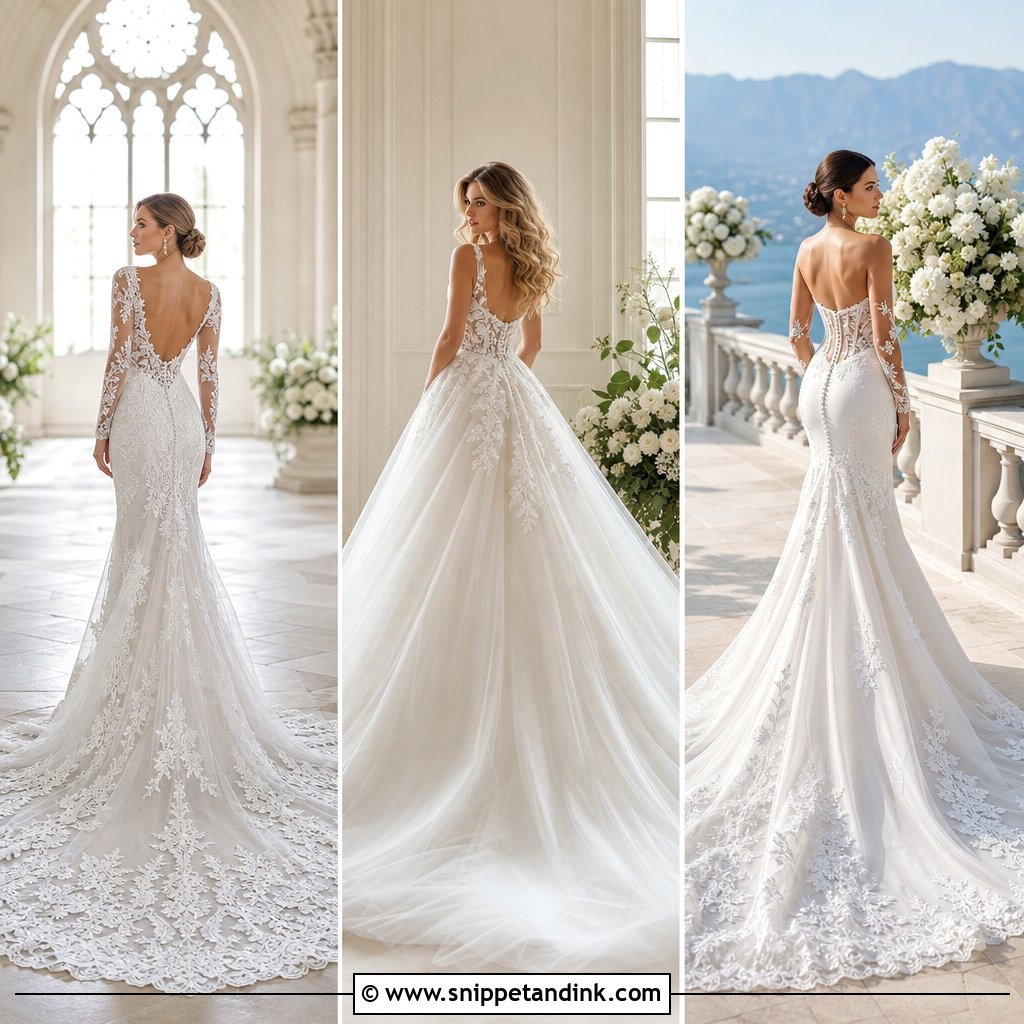
Lace and volume work together when the lace travels. A lace bodice that stops dead at the waist makes the gown look like two pieces; appliqués that drift down into the tulle tie it together. Illusion sleeves suit cooler months, lace straps suit warm ones. Look at lace gowns by a window, not just under the shop spotlights, because lining colour and the depth of the pattern can shift a lot in daylight. A loose chignon, small floral earrings, pearl-accented heels and a veil with only a narrow lace border.
4. Strapless Big Skirt Wedding Dress
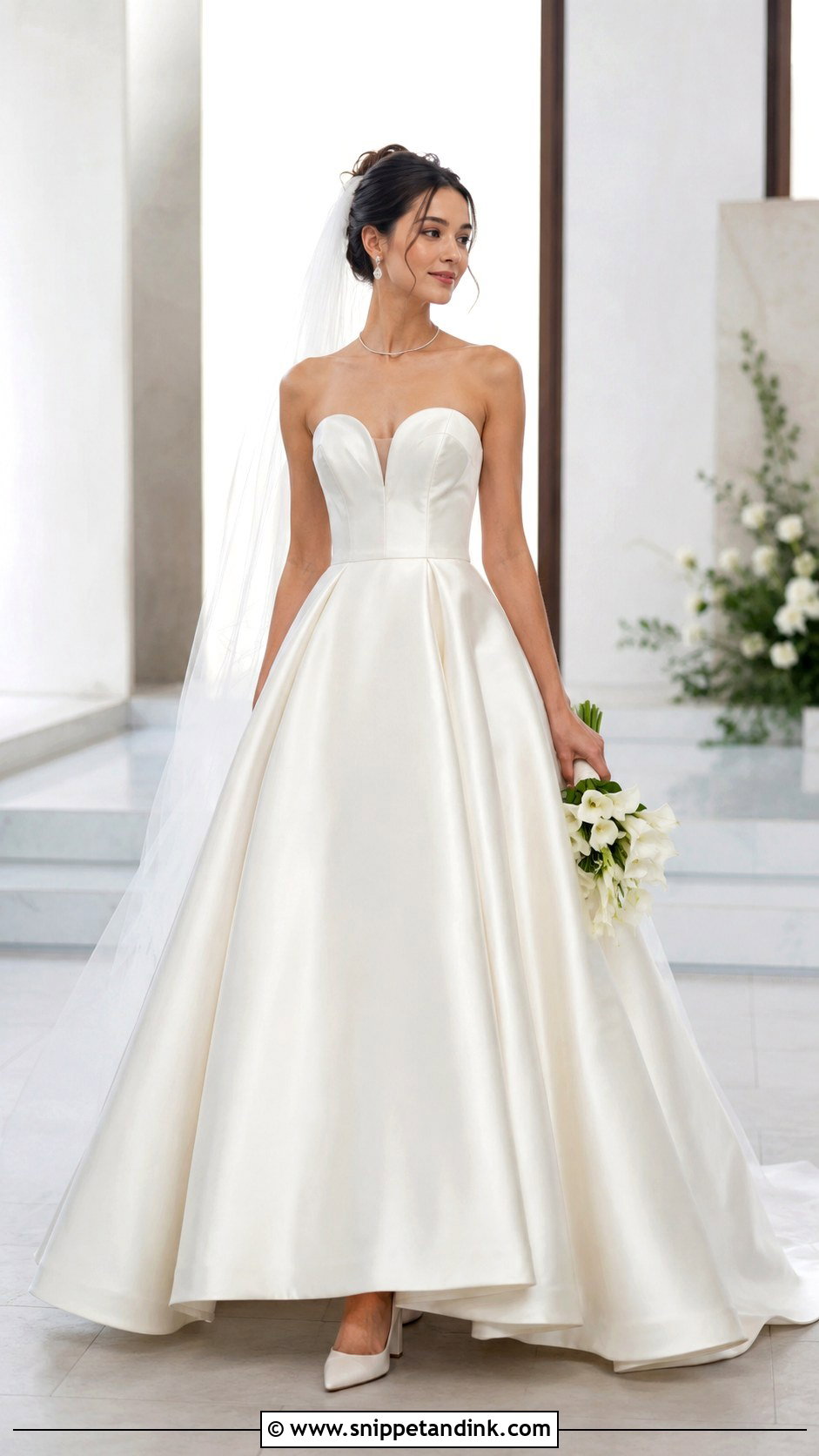
Strapless bodices are tested by movement, not by mirrors. Before deciding, I have brides raise their arms, sit down and take a quick few steps. If the neckline slides even slightly, it’ll be sliding all evening. Internal boning and secure cups do the holding. A straight neckline is modern; a sweetheart is softer. A slim tennis necklace or short pearl strand works, but nothing oversized. Polished updo, drop earrings, sheer chapel veil and block-heel pumps for stable footing under the skirt.
5. Off Shoulder Big Skirt Wedding Dress
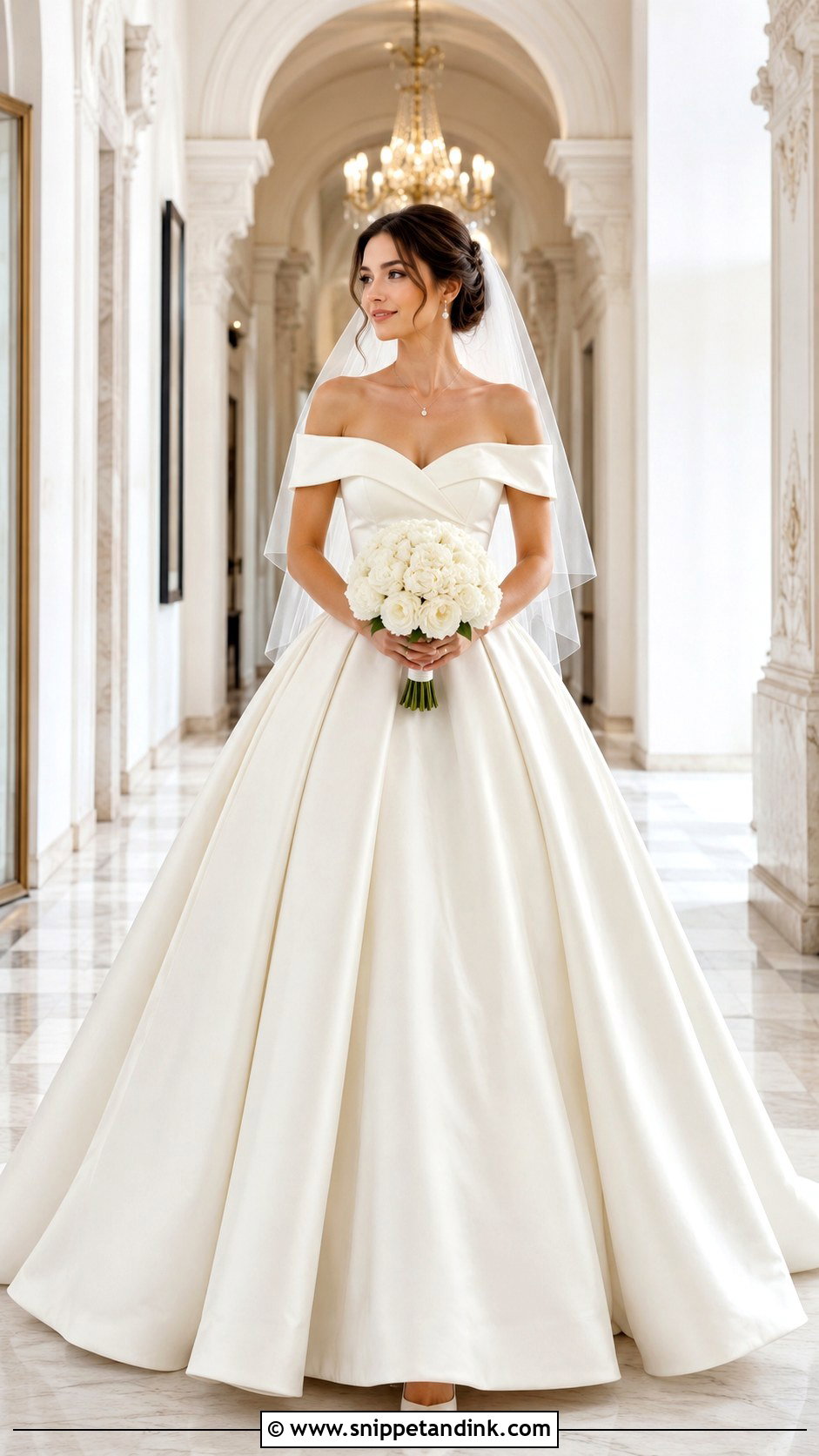
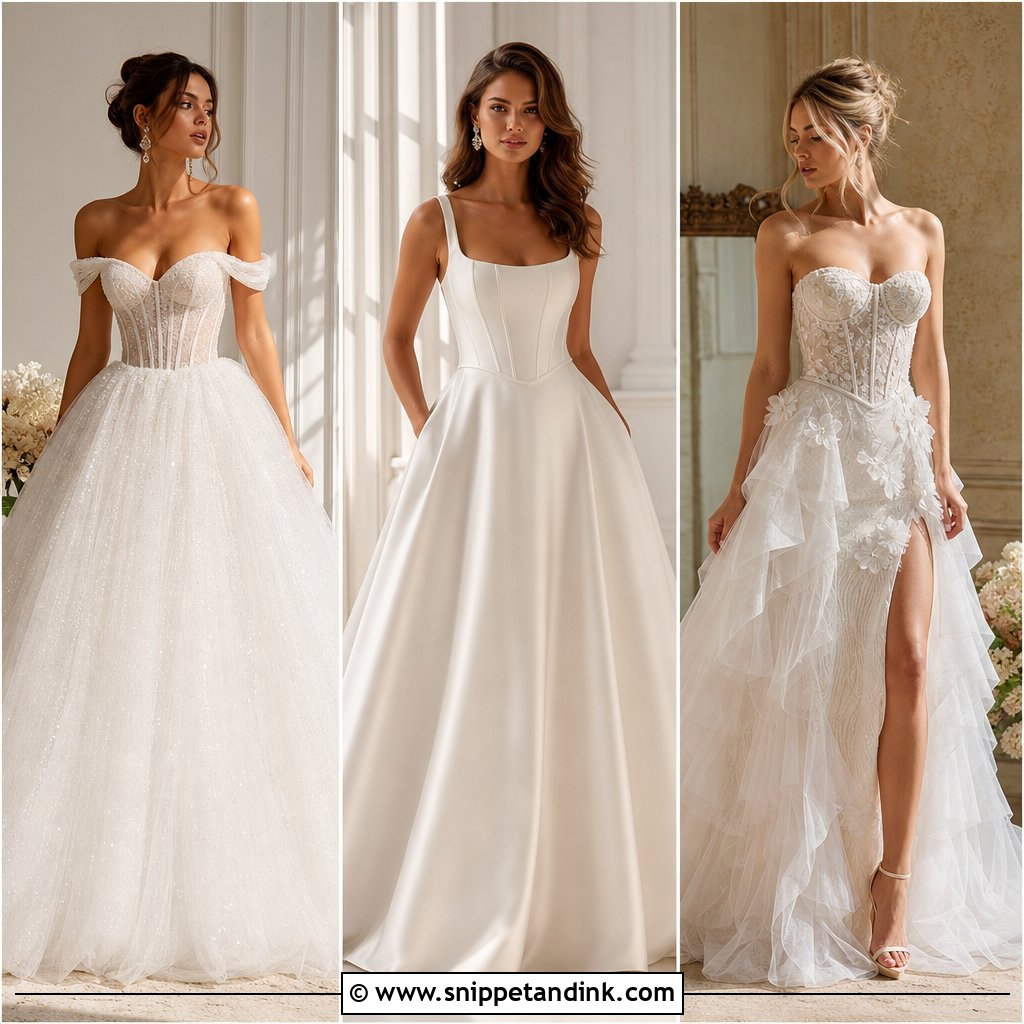
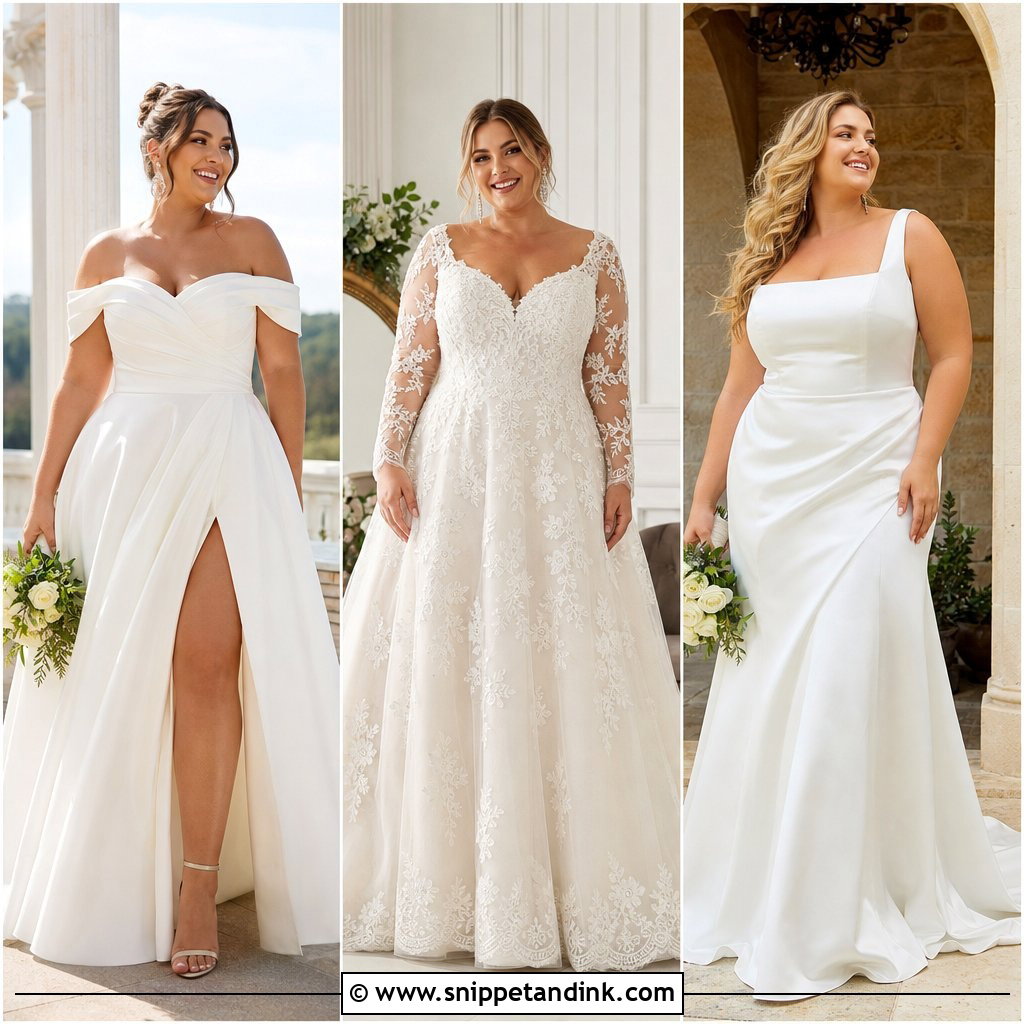
The off-shoulder line widens the shoulders slightly, which is exactly what balances a full skirt. Structured satin makes it regal; gathered tulle or lace sleeves make it softer. Fit is the issue. Many off-shoulder bands need a hidden elastic, snaps or an inner corselet to stay put once you start hugging people, so ask what your gown has. A fine pendant, pearl earrings and a medium veil pinned under a low bun. Pointed heels or flat embellished slippers, since the skirt hides your feet either way.
6. Square Neck Big Skirt Wedding Dress
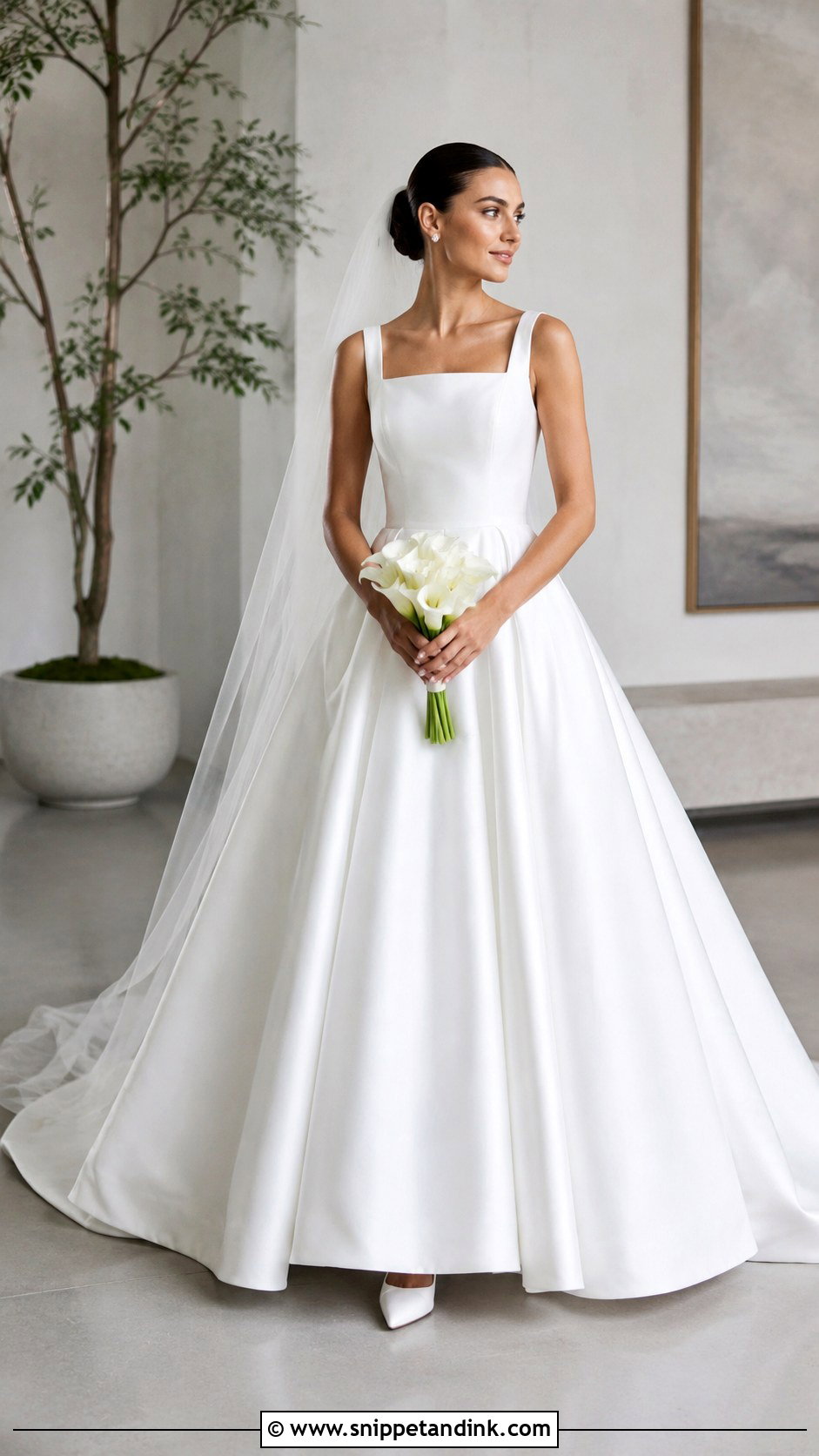
Square necklines give a voluminous gown a crisp, architectural top. Wide straps, a seamed bodice and a structured satin or Mikado skirt suit it best. Strap placement is the fitting detail I watch: set too wide, they slip off the shoulder or stop you lifting your arms; set too narrow, they look like a camisole. The neckline must lie flat to the chest with no gap at the corners. Sheer long sleeves can be added for coverage. A sleek bun, crystal studs, a plain veil and a compact bouquet. A necklace is optional.
7. Corset Big Skirt Wedding Dress
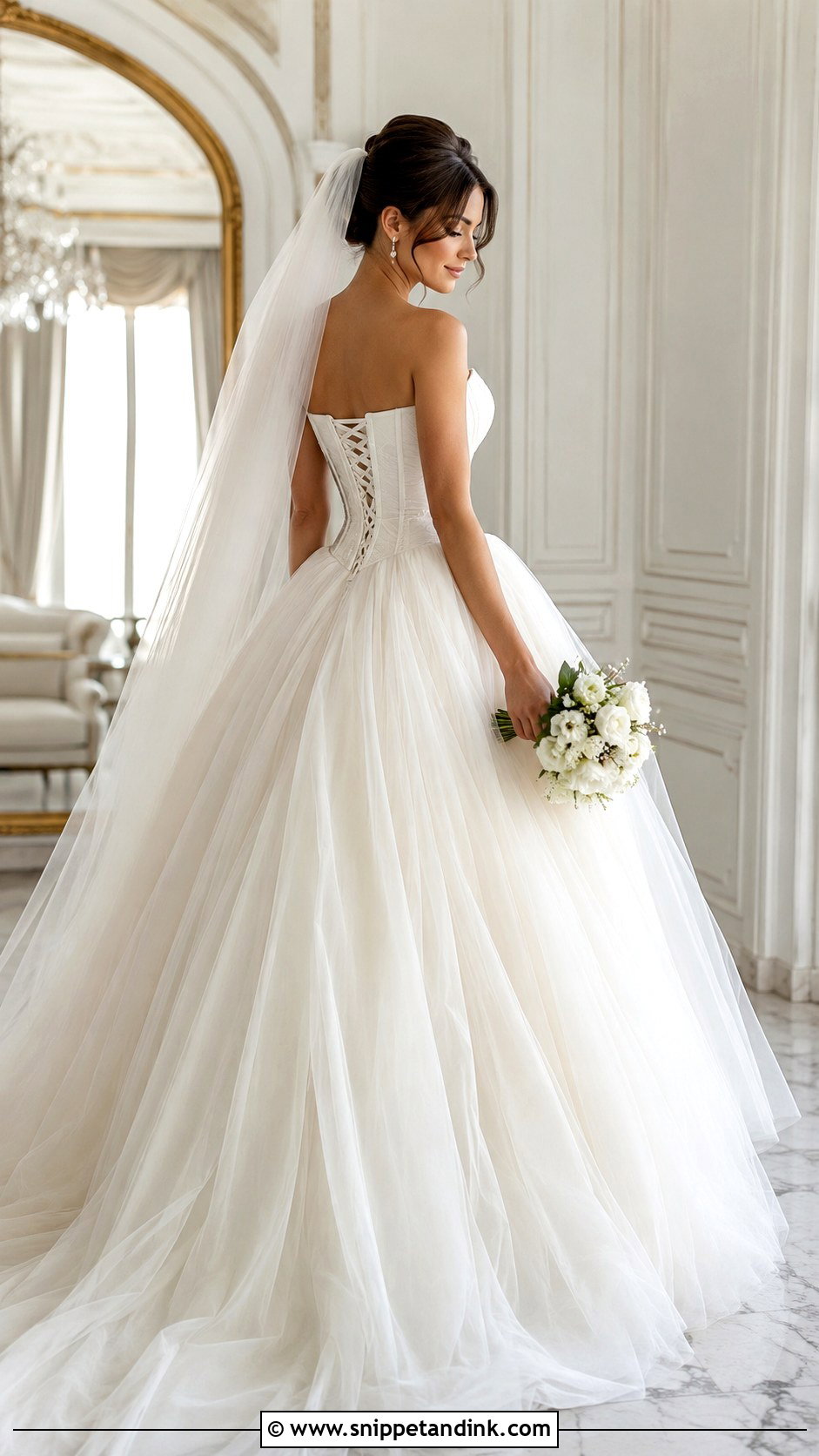
Visible corsetry looks modern because the structure is the decoration. The comfortable versions pair boning with a full lining and proper cups, so the corset shapes you instead of compressing you. A lace-up back adjusts on the day; covered buttons look cleaner but don’t flex. Ask your seamstress whether individual bones and cup placement can be altered. Many can, and it changes everything. Layered tulle softens the effect; satin makes it sharper. A soft updo keeps the whole look from turning severe. Cushioned insoles in closed-toe heels help through a long reception.
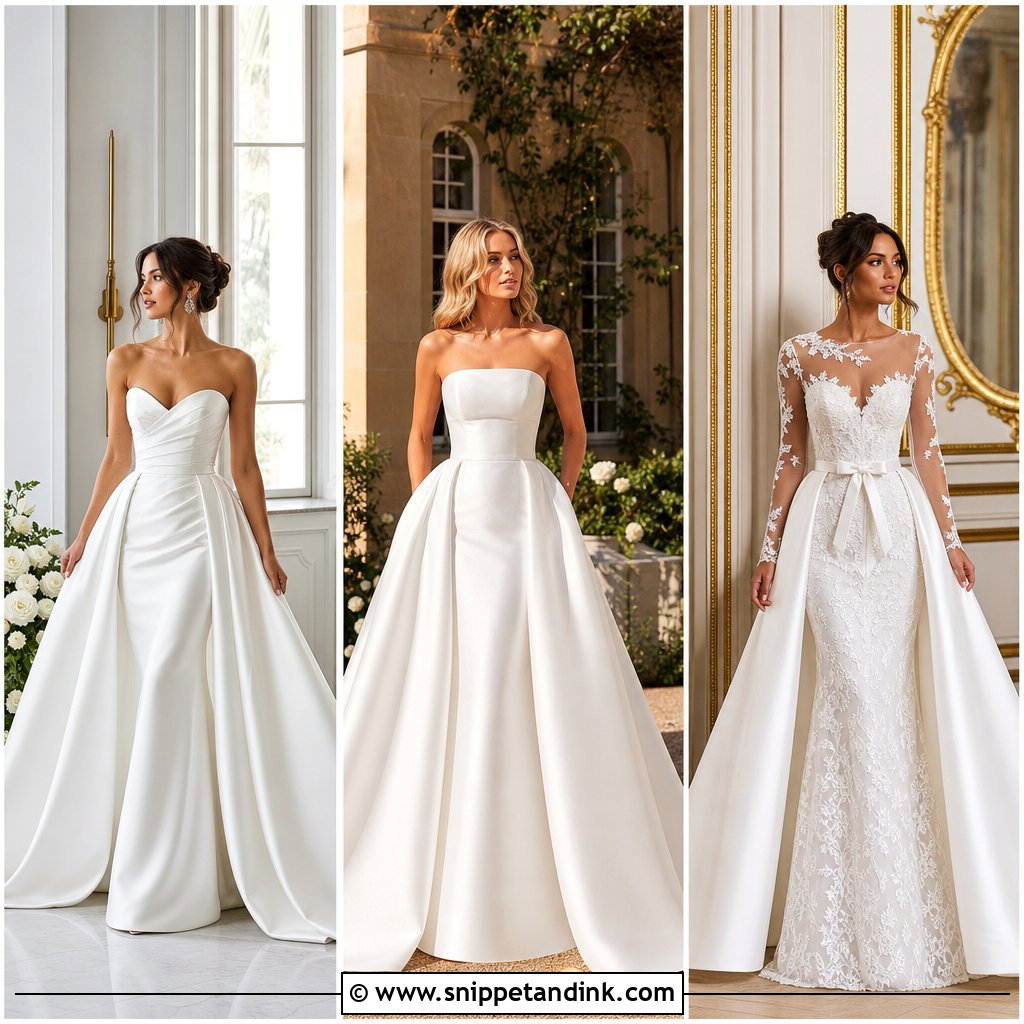
8. Detachable Overskirt Wedding Dress
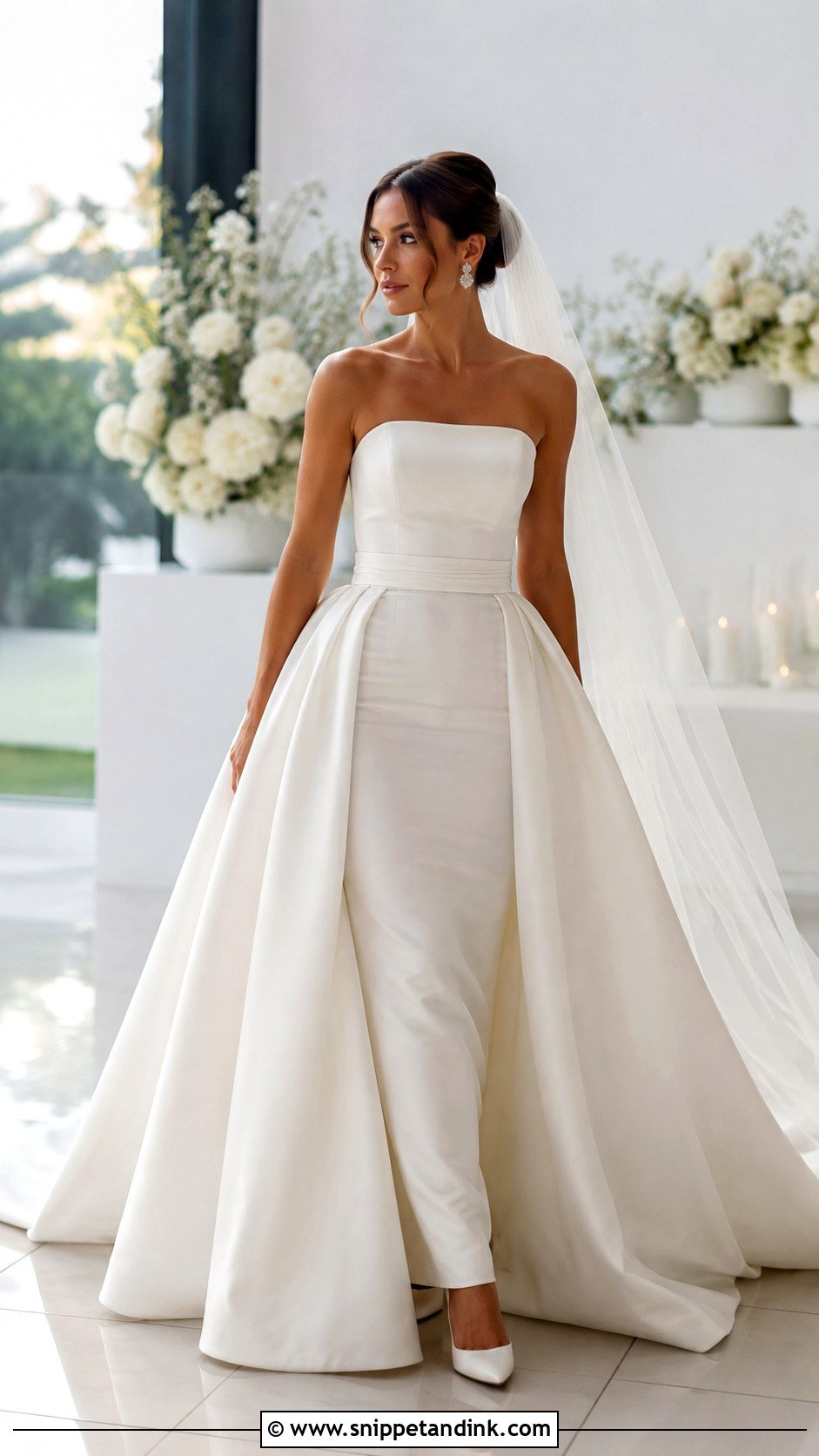
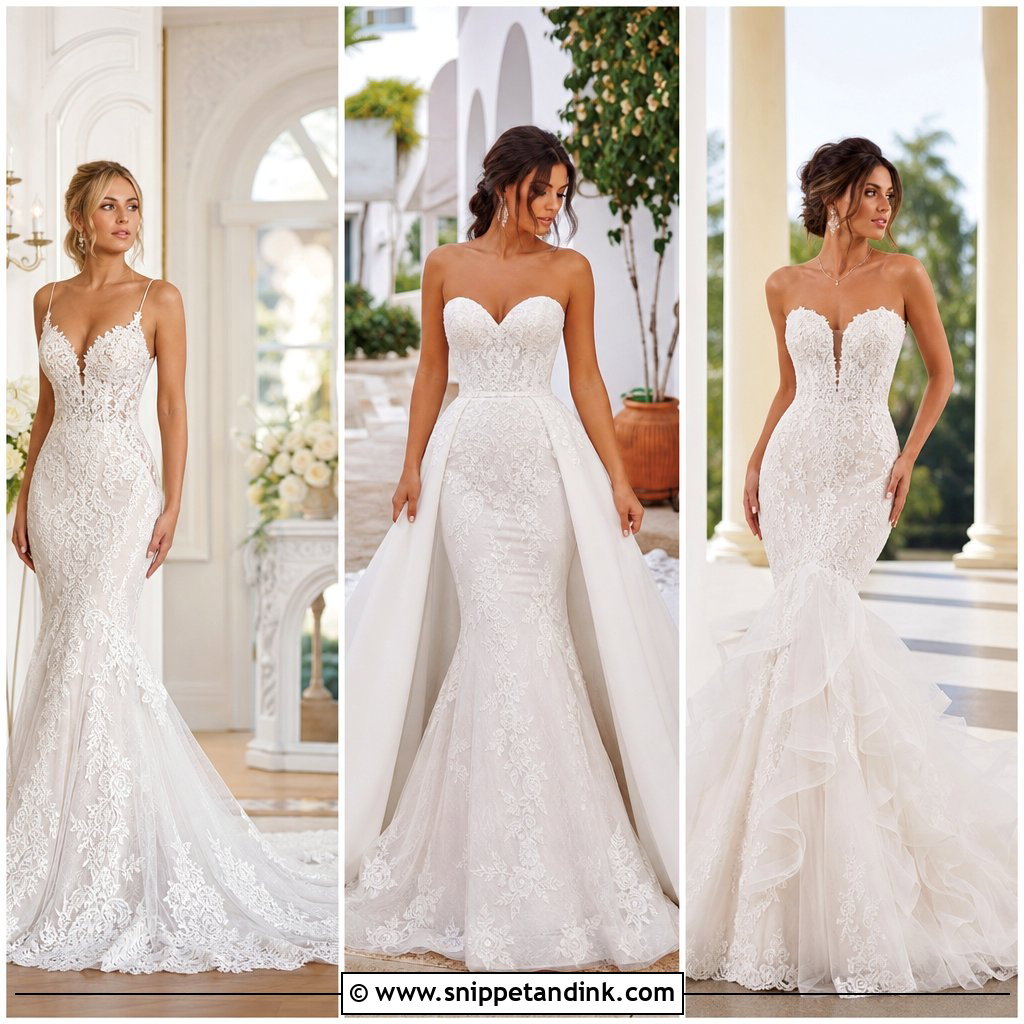
An overskirt is how I solve the ceremony-entrance versus dance-floor problem. A full satin, organza or tulle layer fastens over a fitted column, sheath, or trumpet gown, then comes off after the formal part. Check the base dress on its own at fittings: its waistline and back need to look finished, not like an underlayer. A long veil and statement earrings for the ceremony; smaller earrings and a shorter veil afterward, if you like. Practise the removal with your helper beforehand.
9. Tiered Tulle Big Skirt Wedding Dress
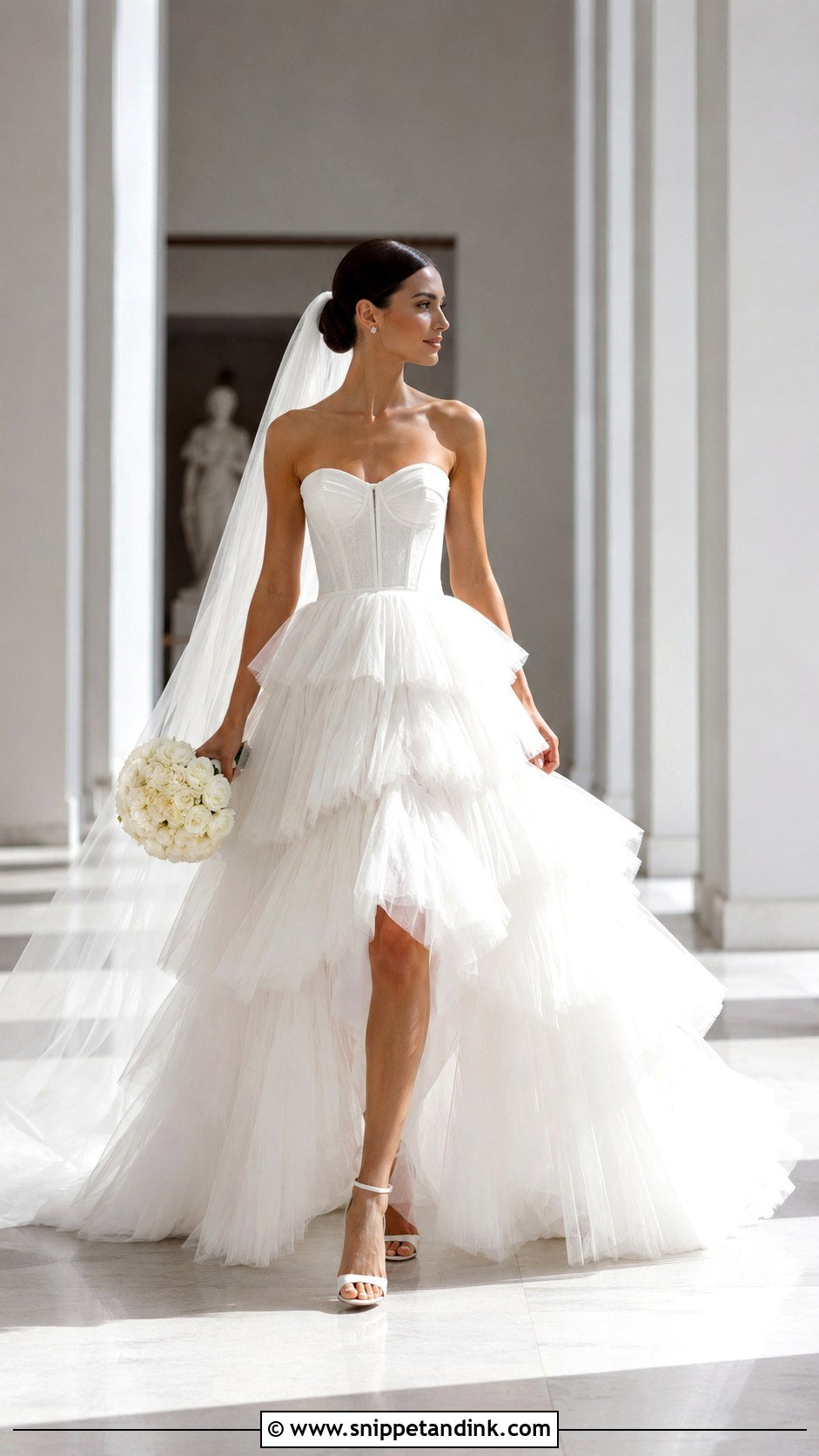
Tiered tulle gets its volume from layers rather than a heavy structure, so it moves more and weighs less. Tiers that start below a fitted bodice keep your waist visible. Soft cascading tiers read romantic; sharply cut horizontal ones read bold. Tulle snags easily on rough floors, nails and stone paths, so check your venue’s surfaces. A plain veil avoids catching on the skirt’s top layers. Satin heels, crystal studs and a smooth bun or half-up style. A wrist loop or bustle will save the hem after the ceremony.
10. Floral Big Skirt Wedding Dress
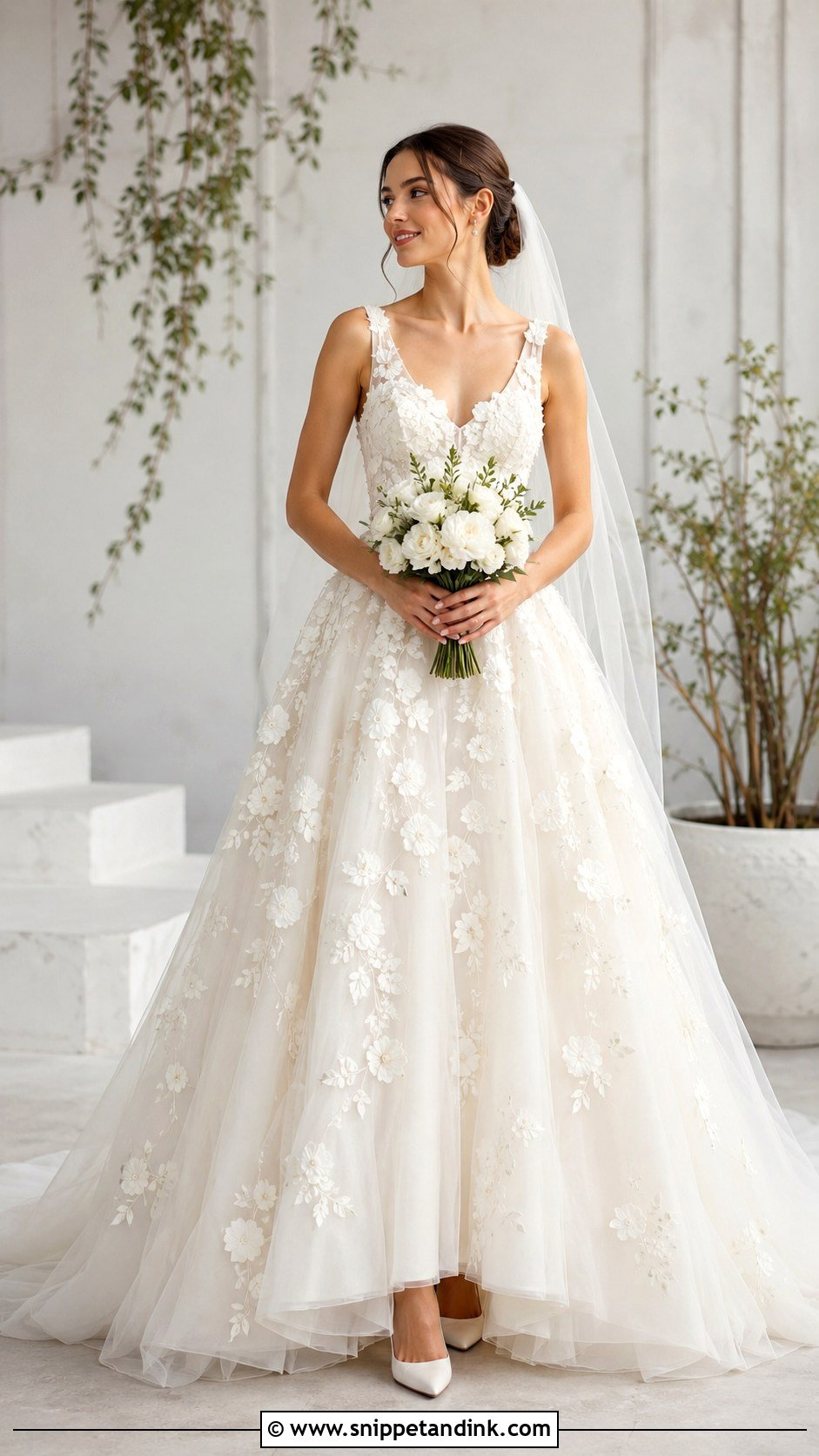
Raised flowers make a big skirt look rich, and they read best when clustered at the bodice and scattered toward the hem. Ivory-on-ivory is quiet; pale blush or blue petals give gentle colour. Before buying, ask how the appliqués will be handled during alterations. When a side seam or hem is taken in, the seamstress often has to lift and resew flowers, which adds time and cost. Plain heels, tiny studs, a sheer veil, hair up if flowers sit on the shoulders, and a simple bouquet that doesn’t copy every bloom on the dress.
11. Pearl Big Skirt Wedding Dress
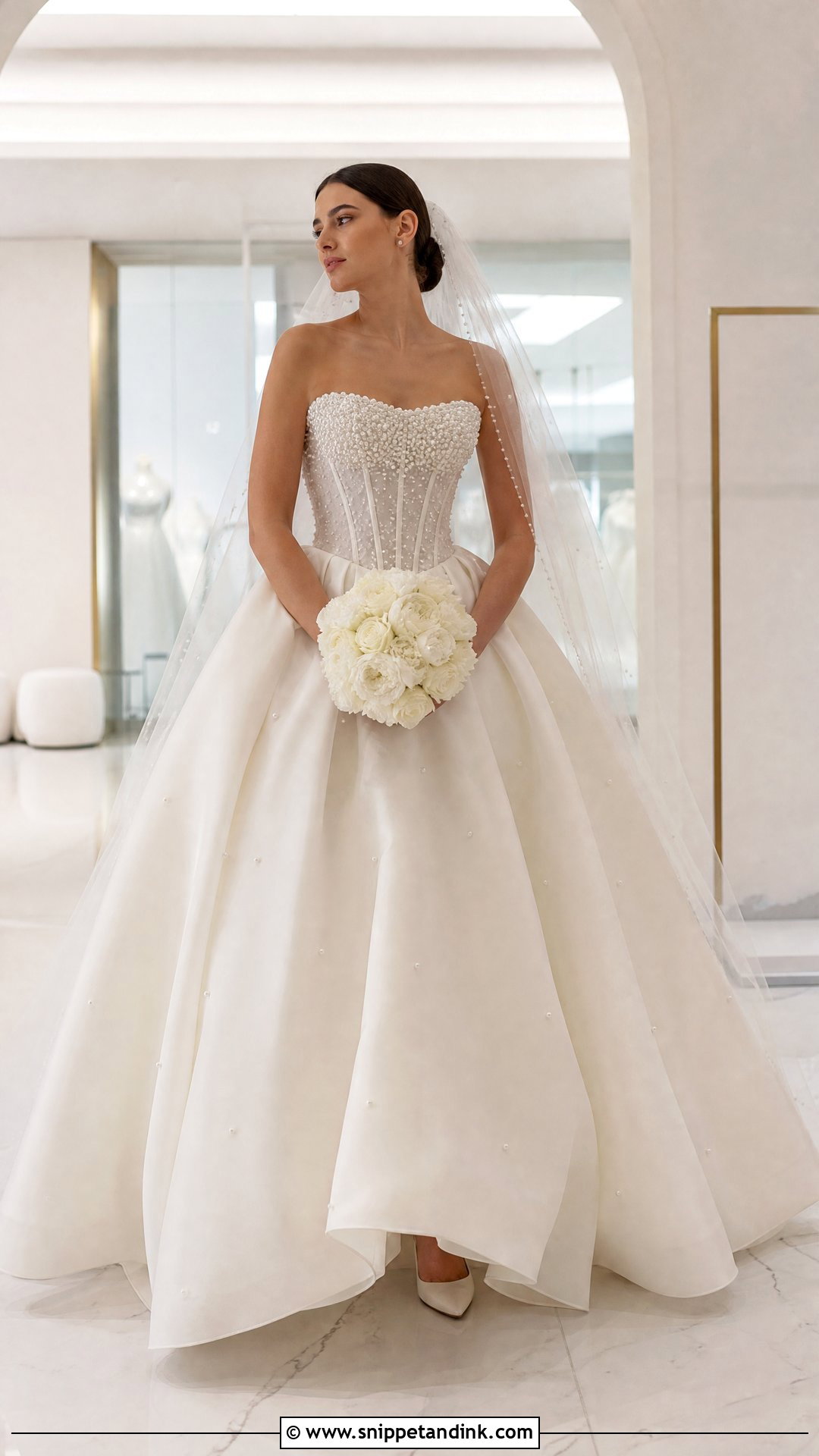
Pearls give a soft gleam that suits a big classic skirt. A corseted bodice with pearls scattered down onto tulle or organza keeps the weight at the top and the skirt light. Inspect the pearls at the waist and underarms closely; those are high-friction spots, and loose threads there are how pearls end up on the dance floor. Ask for a reinforcement stitch. Pearl studs, satin pumps and a veil with just a few pearl accents. One or two pearl accessories is plenty. A sleek low bun keeps everything tidy.
12. Ruffle Big Skirt Wedding Dress
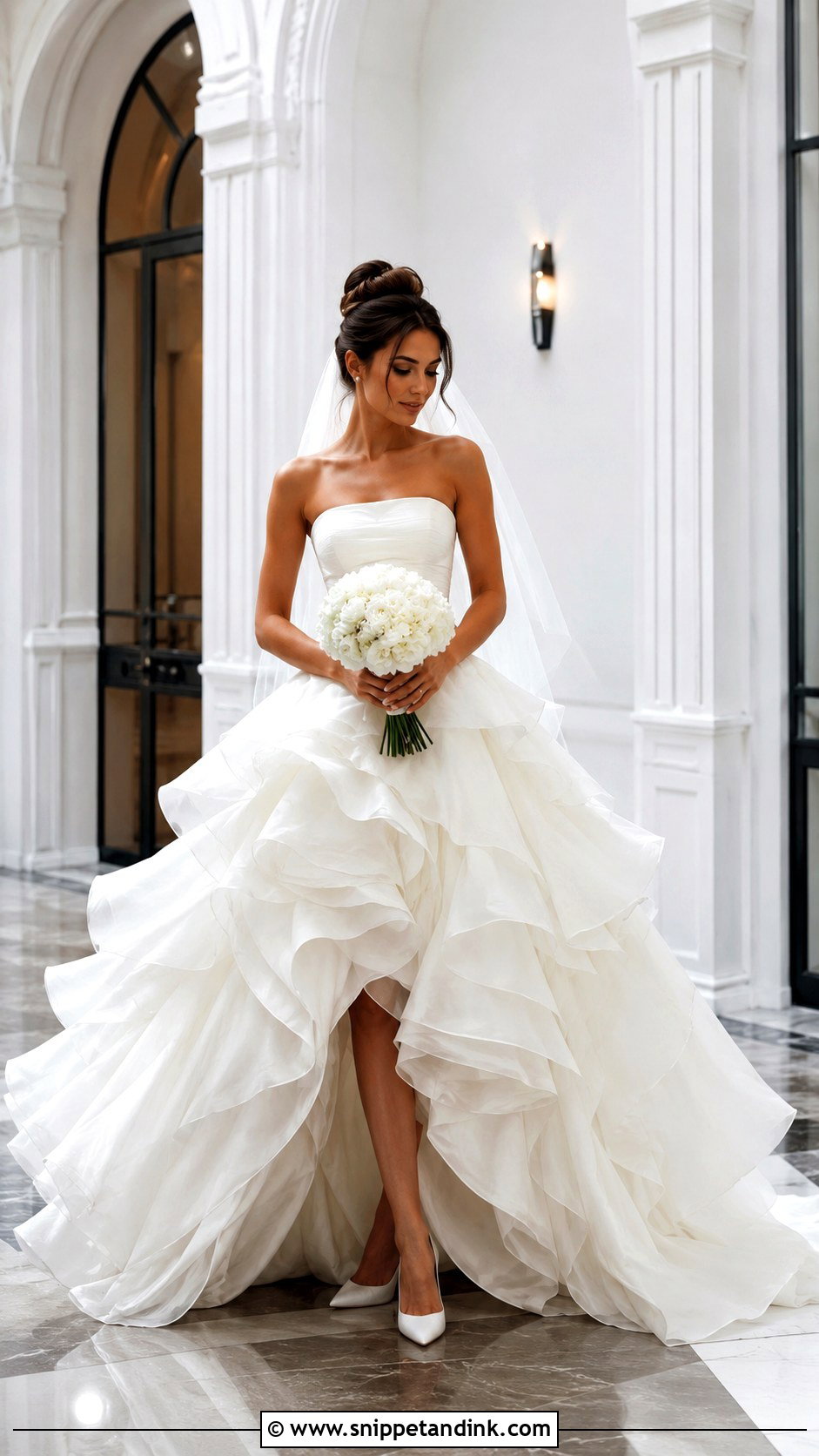
Ruffles come alive when you move, which is the whole point. Organza gives crisp sculptural waves; tulle gives softer clouds. Keep the top plain, a strapless corset or simple V. The veil should end above the fullest ruffles, or it will catch on them. Here’s the practical bit: layered ruffles add weight and width, so walk in the gown, turn in it and measure it against your doorways and car before ordering. Understated earrings, ivory heels, a neat bun and a small structured bouquet.
13. Bow Back Big Skirt Wedding Dress
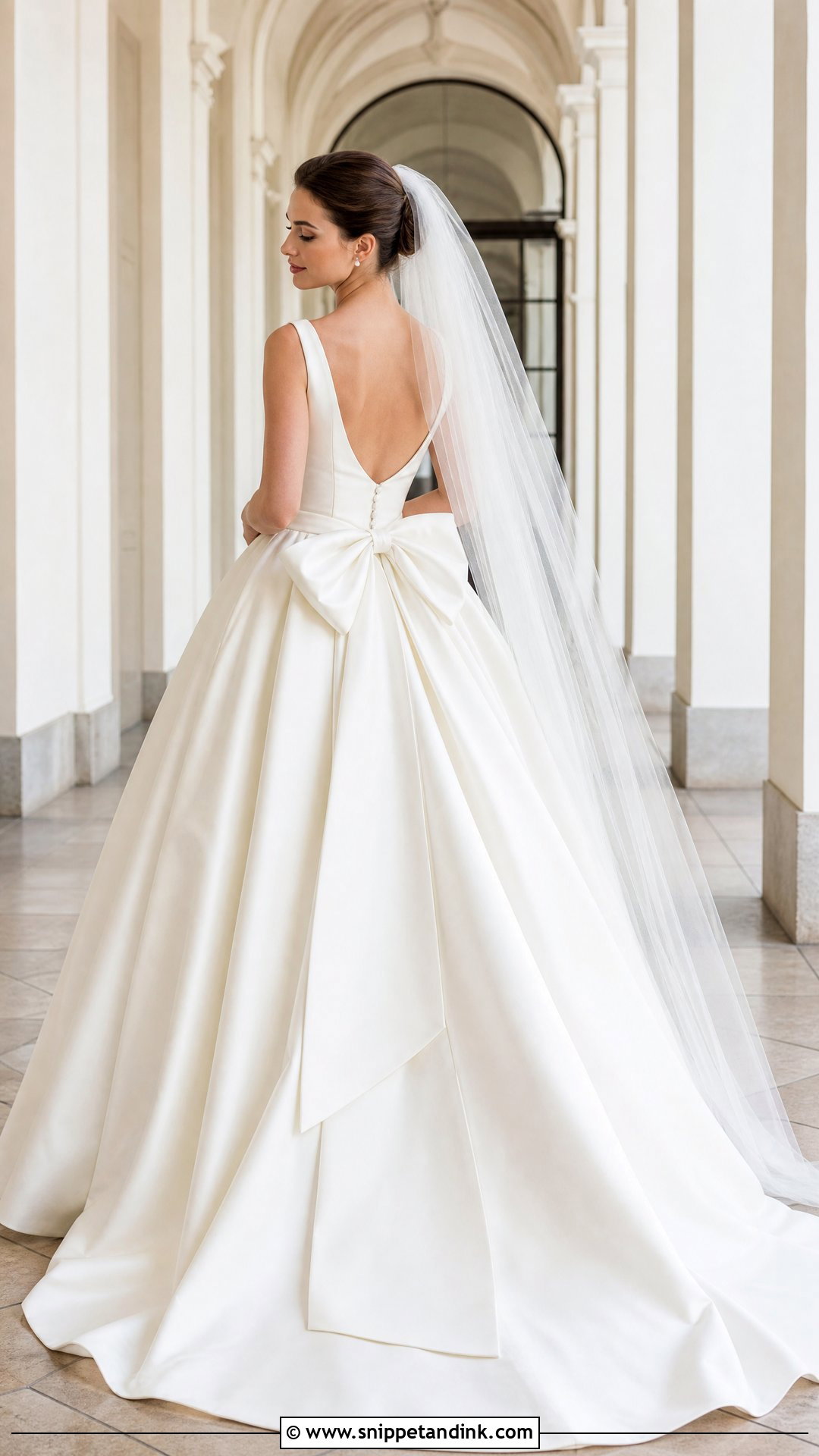
A bow sets the back of the dress up as its own moment. Structured satin at the waist with long tails emphasises the skirt; organza or tulle blends softly into the train. Keep the front streamlined with a square, scoop or strapless neckline. Position the veil so it frames the bow rather than flattening it. Ask whether the bow detaches, especially if you’ll bustle, since some bustle points sit right where the bow attaches. A neat updo keeps the back visible in portraits. The attachment shouldn’t drag the waistline down.
14. Long Sleeve Big Skirt Wedding Dress
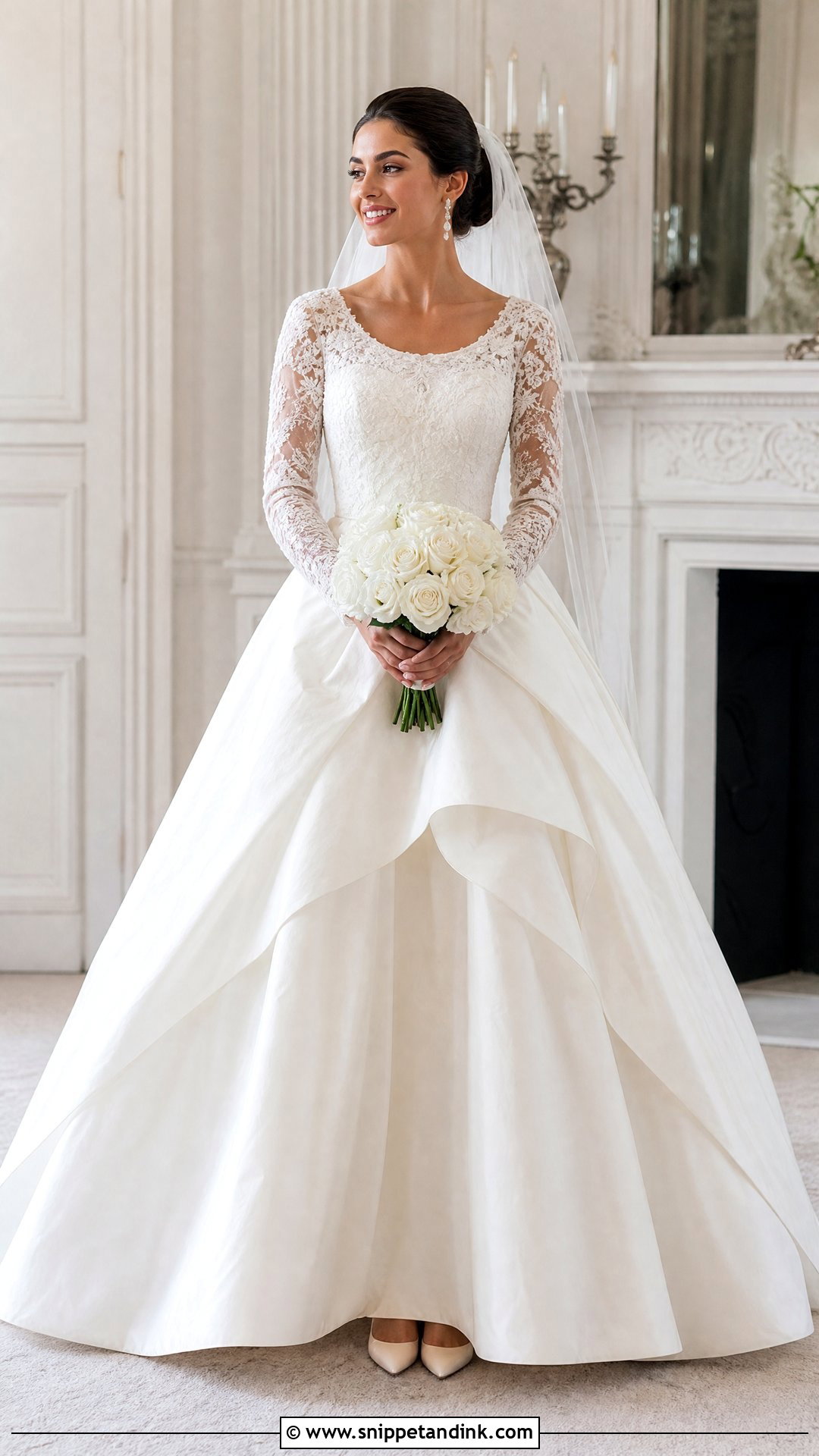
Sleeves change how a full gown feels to wear. Lace illusion sleeves stay delicate; fitted crepe or satin sleeves look contemporary but have less give. At fittings, bend your elbows, reach forward and lift your arms. If the sleeve pulls across the shoulder blades, it needs more room in the back. A scoop, bateau or V-neck keeps the top half from looking closed in. Drop earrings, a smooth updo, closed-toe pumps and a light veil. Skip stacked bracelets over detailed cuffs; they snag lace.
15. Scoop Neck Big Skirt Wedding Dress
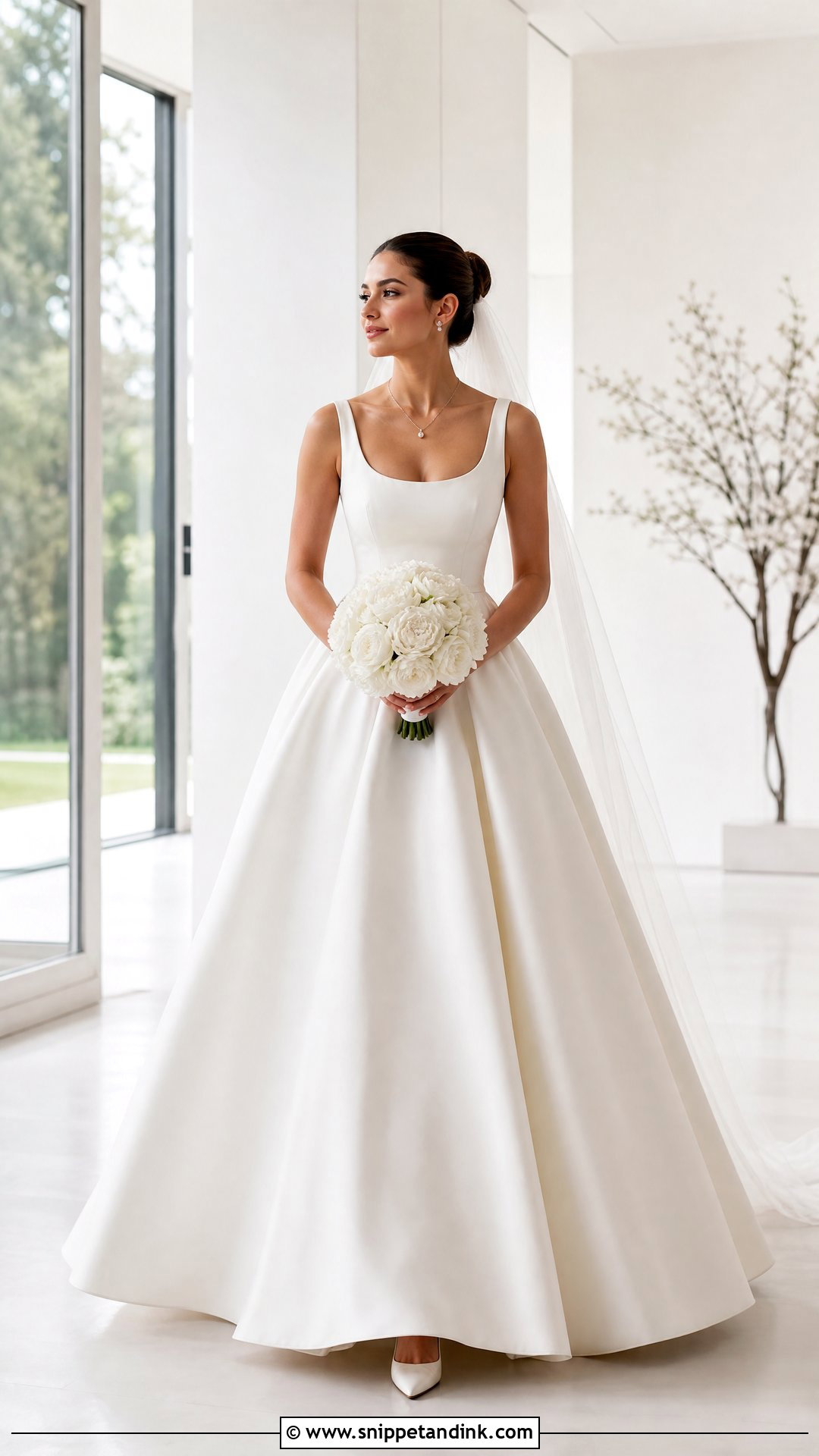
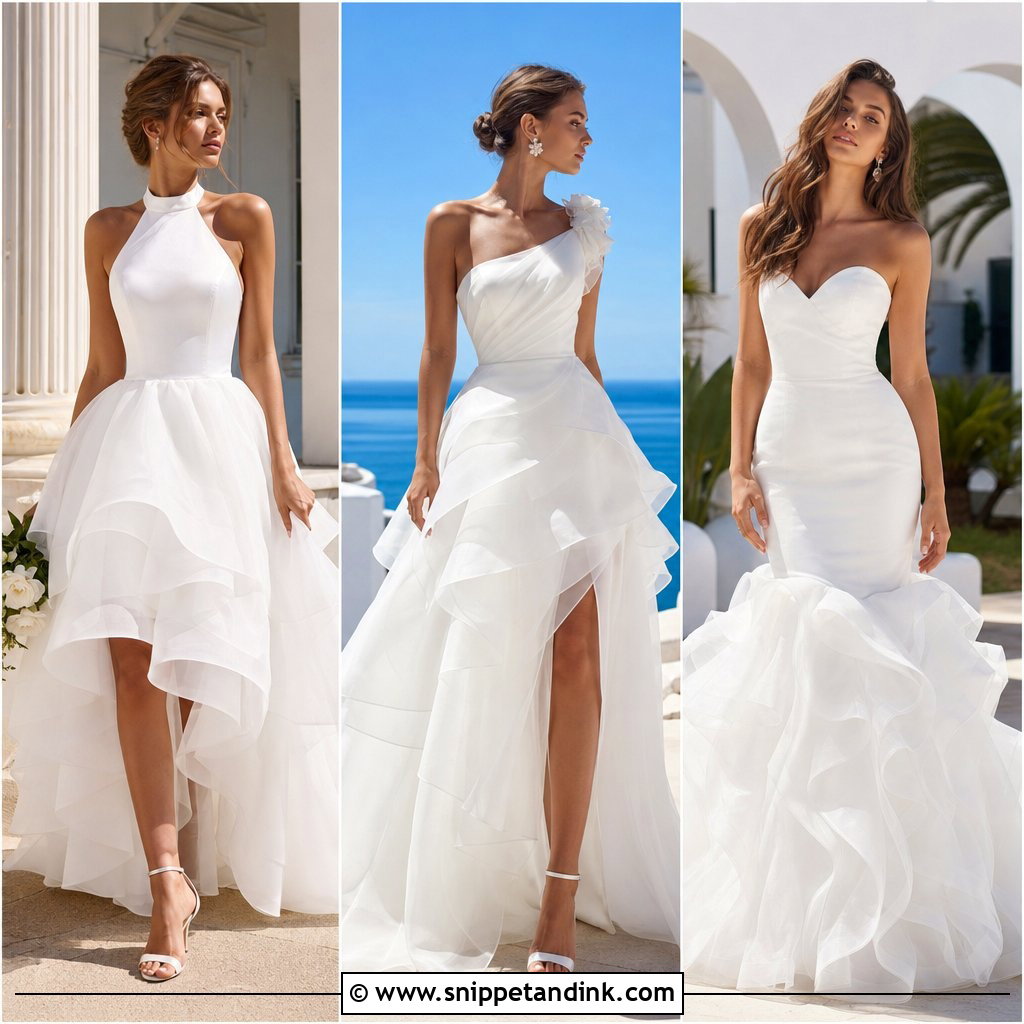
Scoop necks soften a big structured gown and frame the face. With wide straps and a corseted waist it feels relaxed rather than formal. A lower scoop looks modern, a higher curve gives coverage. If there’s open space at the neckline, add a short pendant or a delicate pearl strand. Check the neckline in profile at fittings: scoops are prone to gaping when you lean forward and rolling at the underarm, and both are easy fixes for a good seamstress. Studs, pointed heels and a veil under a polished bun.
16. Halter Big Skirt Wedding Dress
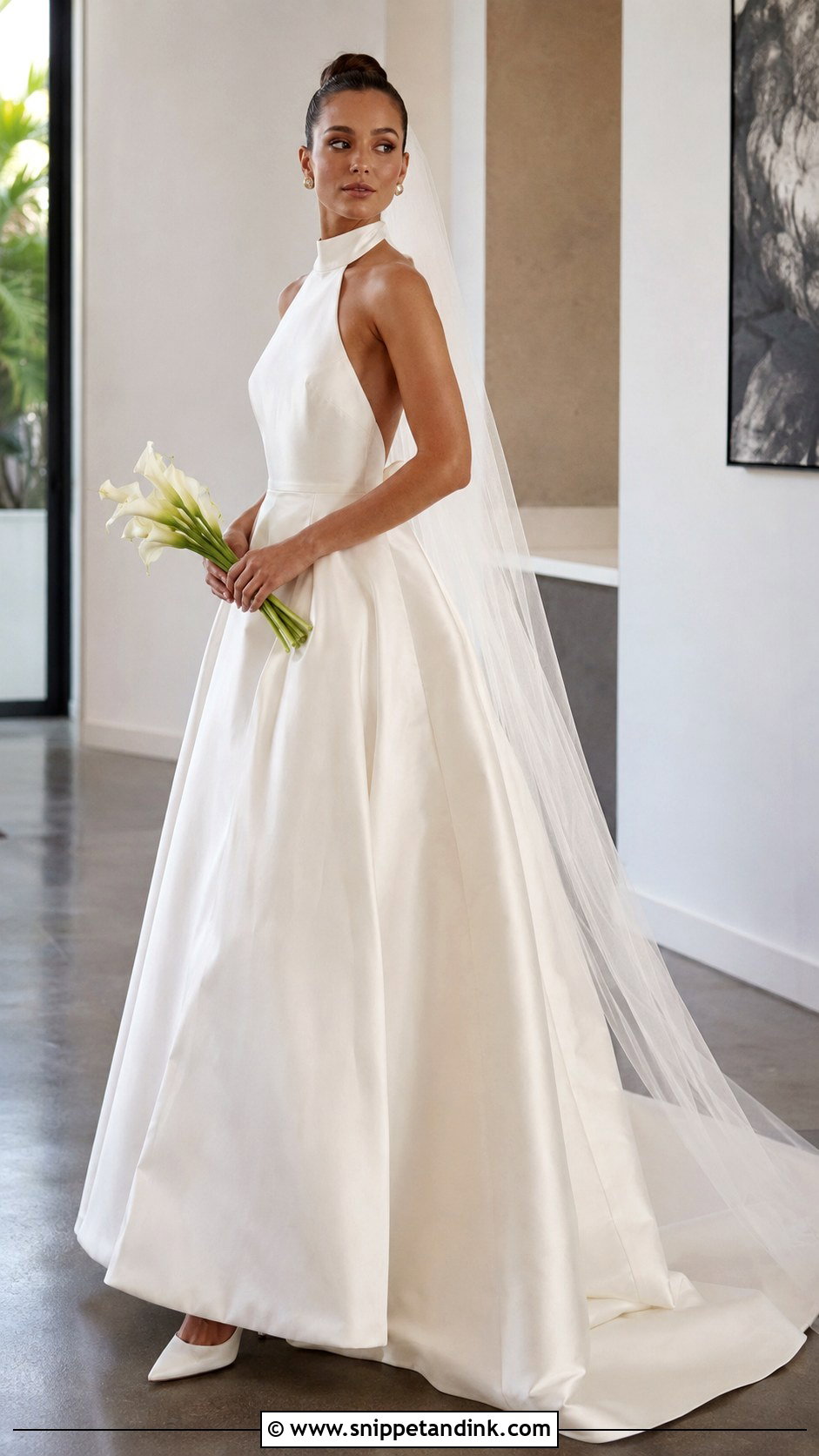
Halters make a big skirt look fashion-forward. A high satin halter is minimal; a draped one has more movement. An open back balances the front, especially over structured Mikado or layered organza. The construction question I always ask: what is carrying the weight? The neck strap should only hold the neckline in place. If the skirt’s weight hangs from your neck, you’ll have a headache by dinner. The bodice and waist must do the supporting. No necklace, statement studs, a high bun and either a narrow veil or none.
17. Blush Big Skirt Wedding Dress
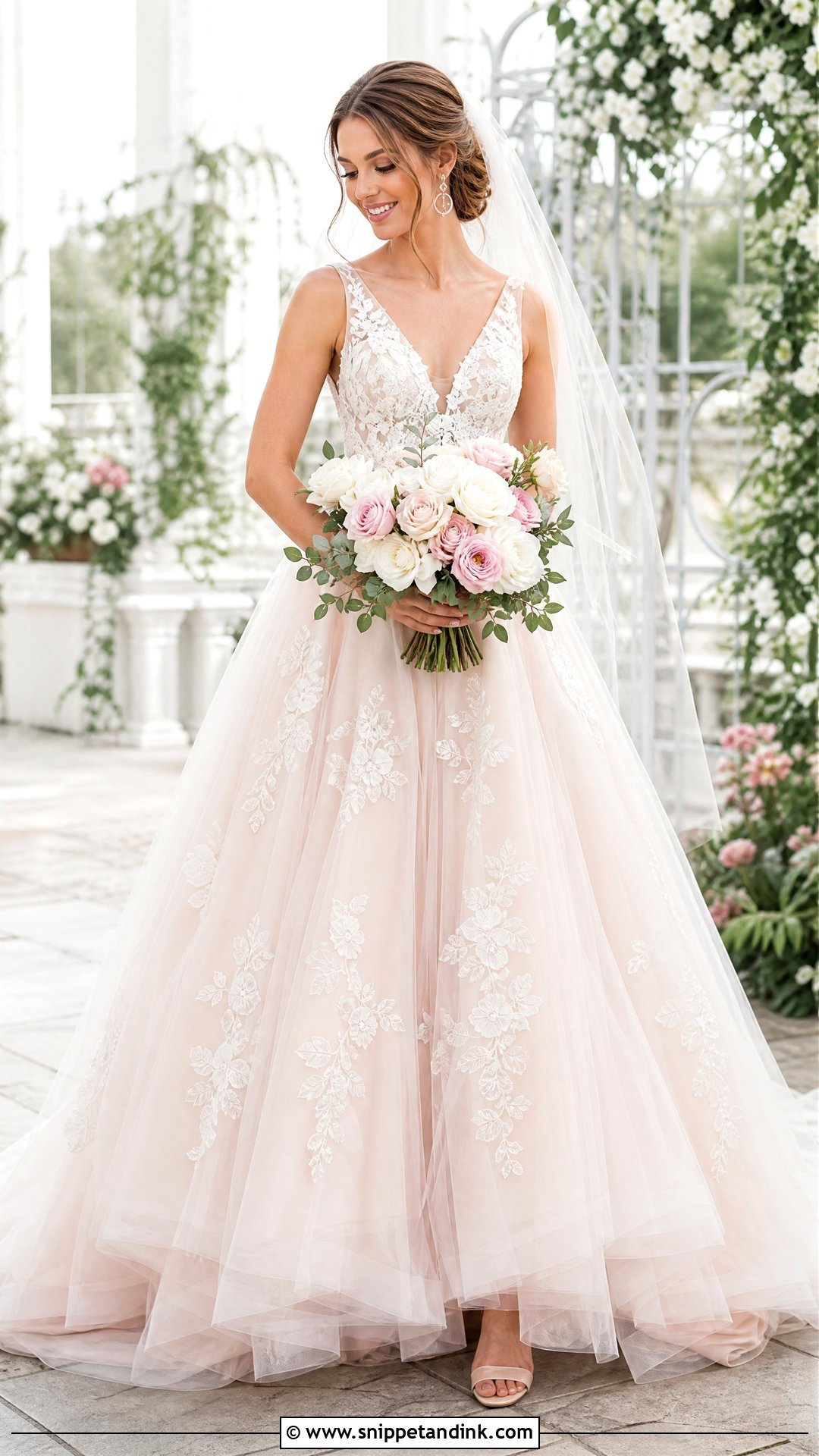
Blush on a ball gown is usually created by a pale rose, champagne or nude-pink lining under ivory tulle and lace. That layering adds depth and keeps light appliqués visible in photos. Compare swatches in daylight before choosing accessories, as blush can read peach, pink or beige. Your veil, lining, shoes and jewellery don’t need to match. Their undertones just need to agree. Ivory heels, rose-gold or pearl earrings, a veil that matches the outer fabric and a bouquet of white and pale pink flowers.
18. Black And White Big Skirt Wedding Dress
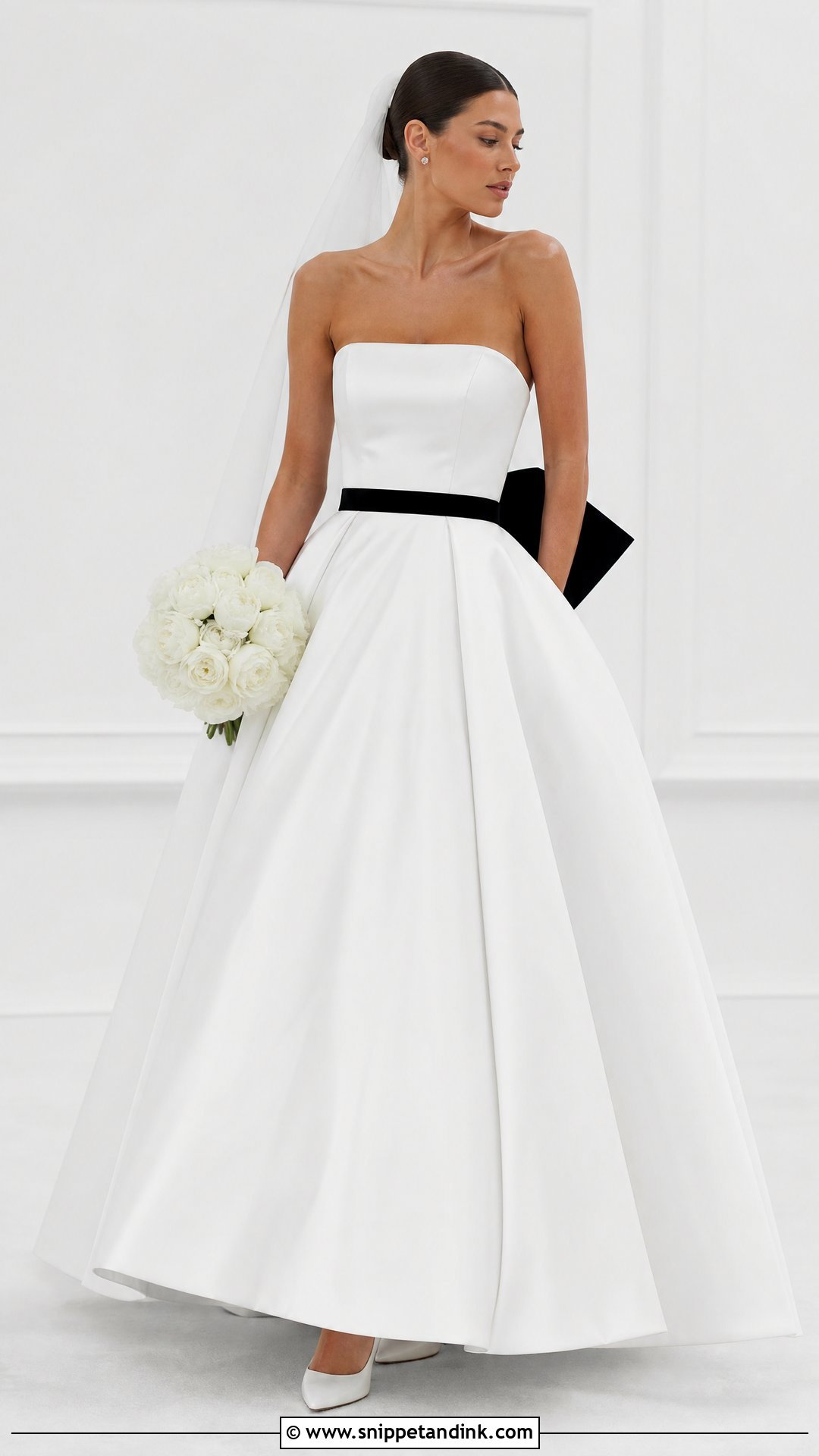
Black on a white gown is graphic, and it pulls the eye straight to wherever it’s placed. That’s why I insist on one dominant black detail: a narrow velvet waist ribbon, black floral appliqués, a dark bow or contrast piping, never several. If it’s a waistband, check it doesn’t cut your torso short. Contrast also exposes uneven placement far more than tonal detail does, so look at it from every angle. White pumps, simple studs, a plain veil, a sleek bun and an all-white bouquet keep it sharp.
19. Plus Size Big Skirt Wedding Dress
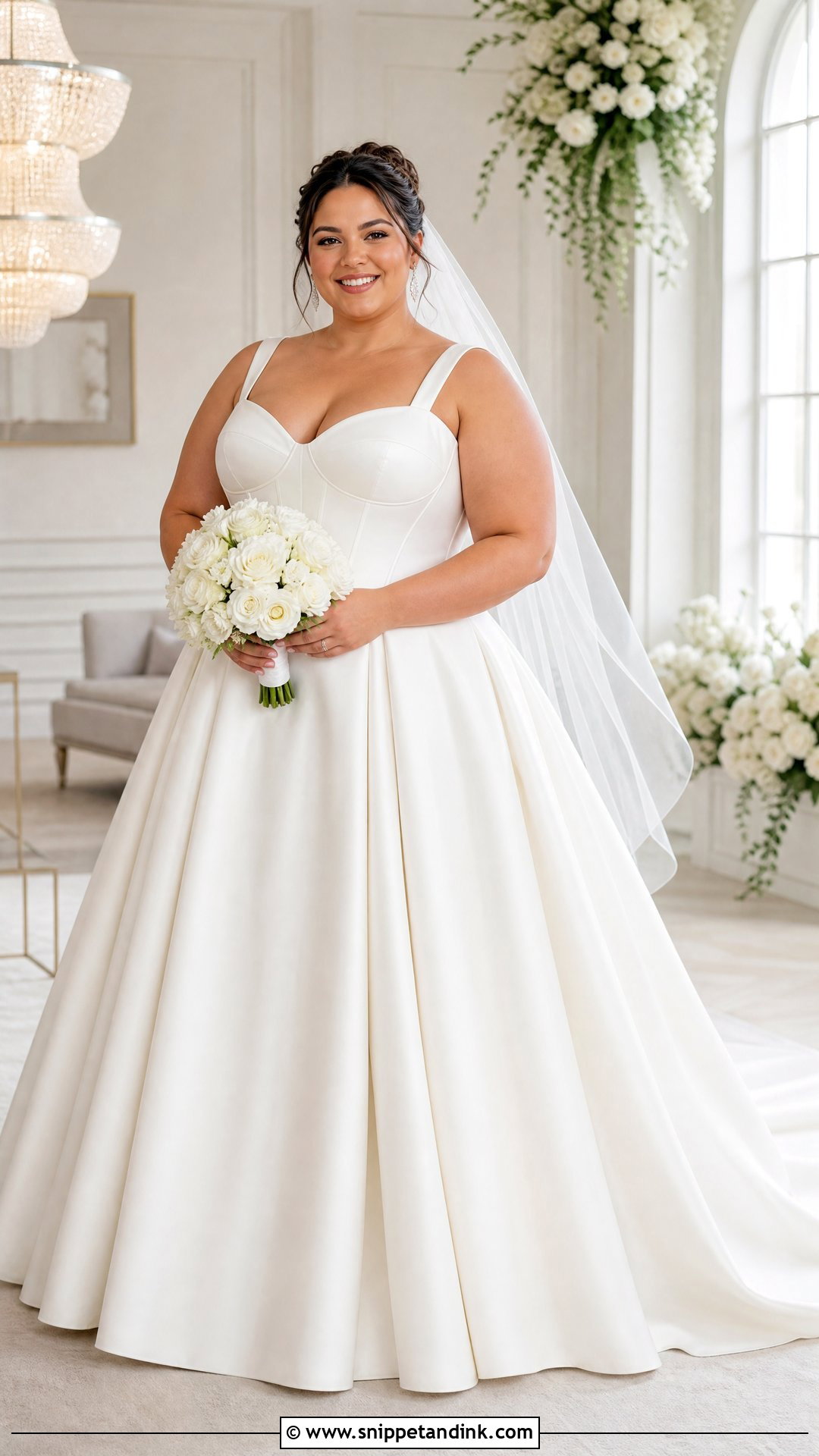
For a curvy bride, a big skirt needs to be engineered rather than just made larger. Dependable boning, properly placed cups and straps or sleeves that sit smoothly without digging carry the bodice. Box pleats and layered tulle spread volume evenly so it doesn’t bunch at the front. A Basque or natural waist both work. Ask whether the shop has a sample close to your size; judging a neckline on a dress clipped open at the back is guesswork. Stable block heels, comfortable earrings and a light veil. Prioritise skilled alterations at the bust, back, straps and hem.
20. Vintage Big Skirt Wedding Dress
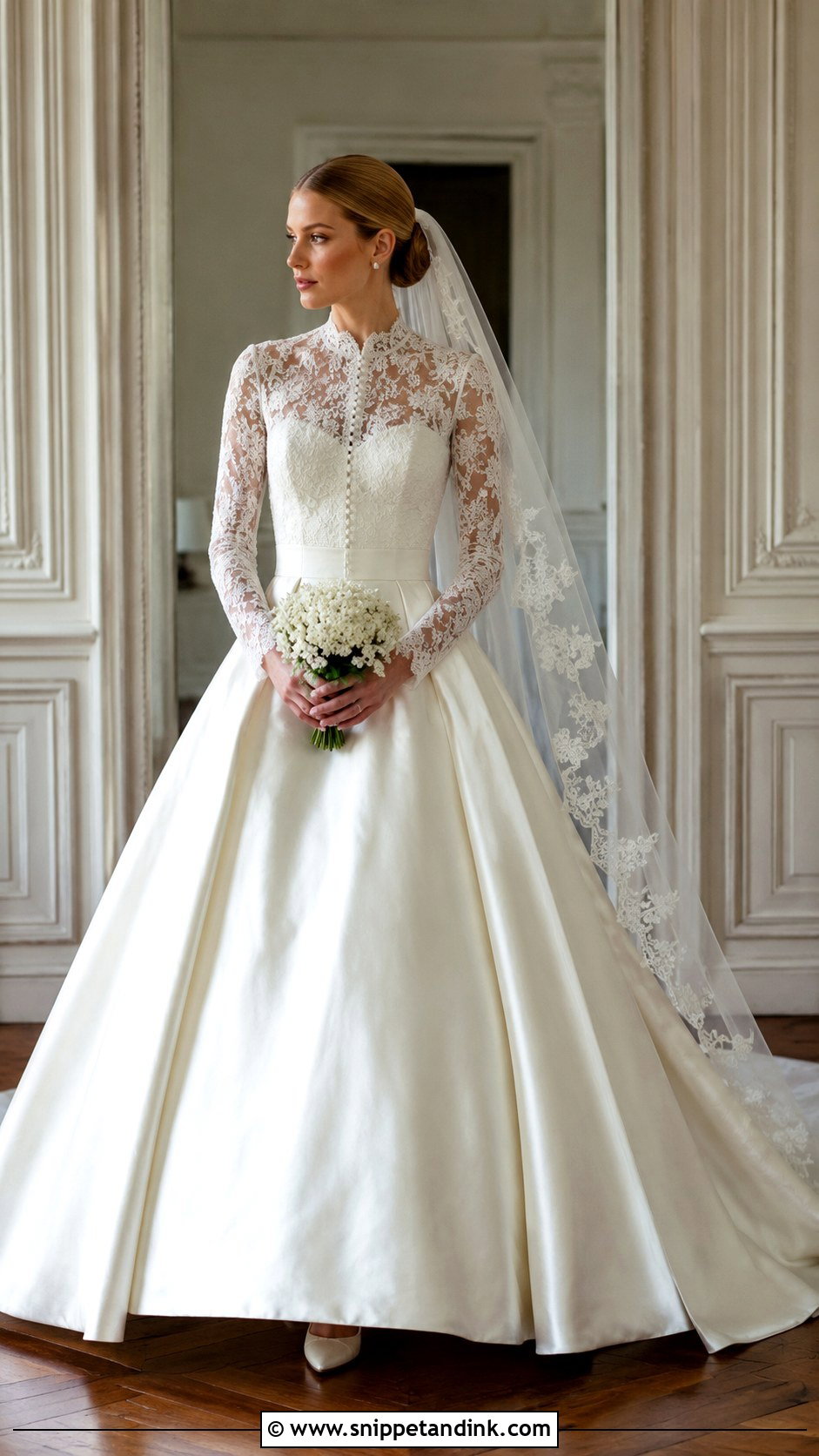
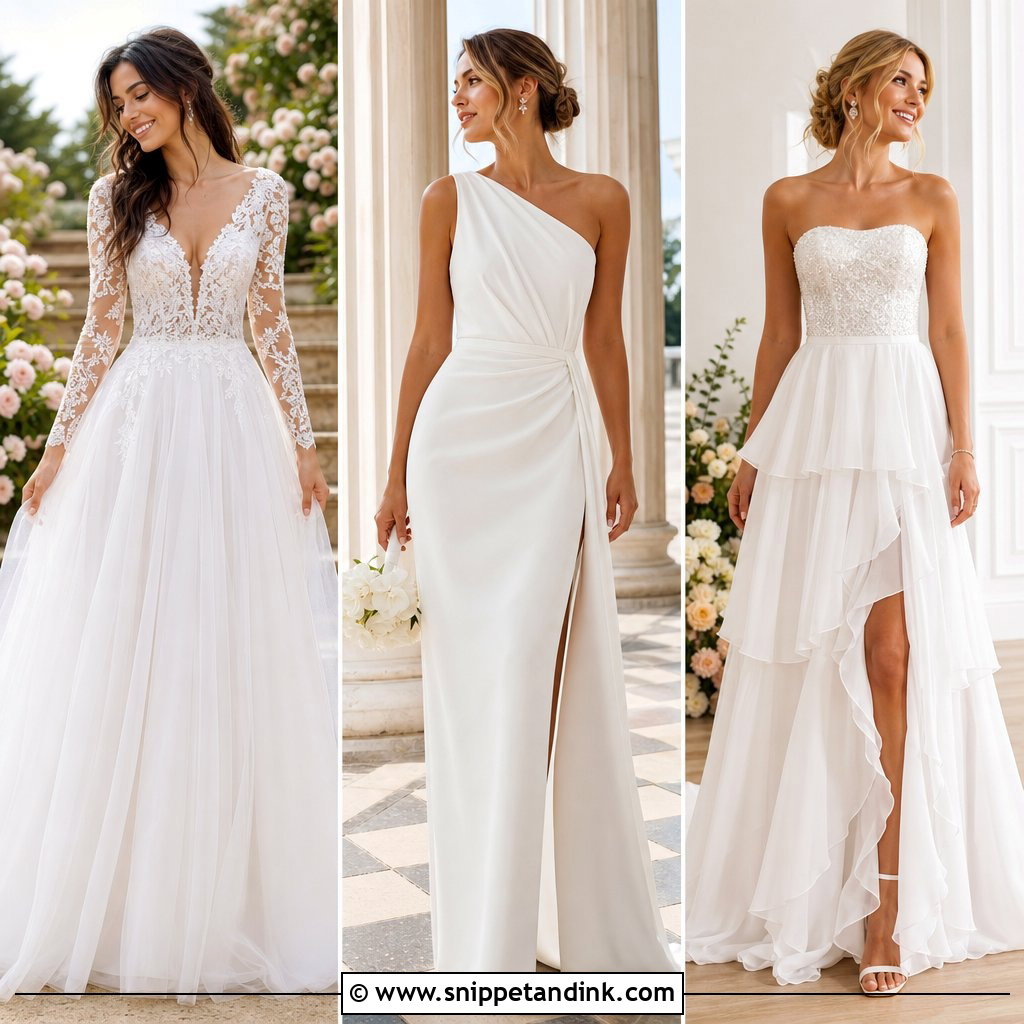
Vintage done well is mostly about restraint. A pointed waist, covered buttons, fitted sleeves and a wide skirt made from satin, brocade or lace already say a lot. A bateau neckline or soft sweetheart keeps it classic without looking like costume. Stick to one period. Modern support inside, lighter skirt layers and discreet pockets make it wearable for a full day. If you’re wearing heirloom jewellery, check the clasps and match its metal to any beading. Pearl earrings, low satin pumps, a neat chignon and a small bouquet.
Fluffing and Arranging the Skirt for Portraits
Big skirts look their best in photos when someone has spent thirty seconds arranging them. Ask your maid of honour or the photographer’s assistant to take this job.
- For standing shots, lift the hem and let it drop so the layers settle evenly, then pull the train straight out behind you.
- For seated shots, sit slightly forward and have the skirt spread round the seat, not tucked under you. It looks fuller and stays less creased.
- For walking shots, kick the hem forward with each step rather than shuffling. It keeps the skirt swinging and stops you tripping.
- Turn the train before a back-of-dress portrait so the bustle points and any bow face the camera neatly.
Bring a small travel steamer in the car for satin and Mikado, which crease at the lap after sitting. Tulle mostly recovers on its own after a gentle shake.
Walk, Sit and Turn Before You Say Yes
A big skirt earns its place when the proportions suit you, the support is real and the accessories stay in the background. Satin gives clean drama; lace, pearls, flowers, tiers and ruffles add texture; corsets and Basque waists shape the torso; overskirts buy flexibility. Whichever direction you lean, test the dress walking, sitting, turning and with your arms up. Wear your real shoes and underlayers to every key fitting. Choose the gown that sounds like you, not simply the widest one in the shop.
You'll Like These Ideas:





Leave a Reply