
Tulle is the fabric I’m asked about most at fittings, and it’s also the most misunderstood. The same netting can float like smoke or stand out like a meringue, and the difference comes down to how many layers there are, what the mesh is made of and what sits underneath it. Bridal collections right now lean toward fuller skirts, basque waists, shorter hemlines and second looks, so tulle has plenty of new shapes to take. Below are twenty complete looks, each with the shoes, jewelry, veil and flowers I’d put with it, because nobody sees a tulle gown on its own. Read them with your venue, your season and your comfort in mind, not just the photo.
Why Two Tulle Skirts Can Look Nothing Alike
Brides often fall for a tulle skirt in one shop, try something that looks identical elsewhere and wonder why it feels like a different dress. Usually it is. Tulle is a fine net, and the fiber, the mesh and the layering under it change everything about how it hangs and how it photographs.
- Nylon tulle is what most bridal skirts are made of. It’s crisp, holds volume well and survives a long day, but it can feel scratchy against bare legs and builds static in dry, air-conditioned rooms.
- Silk tulle is softer, more matte and drapes close to the body. It costs considerably more, creases more easily and goes limp in humidity, which is why you see it more often on veils and slim skirts than on ball gowns.
- English net has a rounder, hexagonal mesh and a softer hand than standard tulle. It reads almost like fine lace ground and suits vintage and minimalist styles.
Layer count matters as much as fiber. A skirt with many thin layers floats, while a few layers over a stiff petticoat stand out more rigidly. Then check the lining length: if it stops well above the hem, strong sunlight or a backlit doorway will show your legs through the tulle. Ask to stand in front of a window at the shop and look at a phone photo taken from the front. It takes thirty seconds and saves a surprise in your ceremony photos.
1. A-Line Tulle Wedding Dress
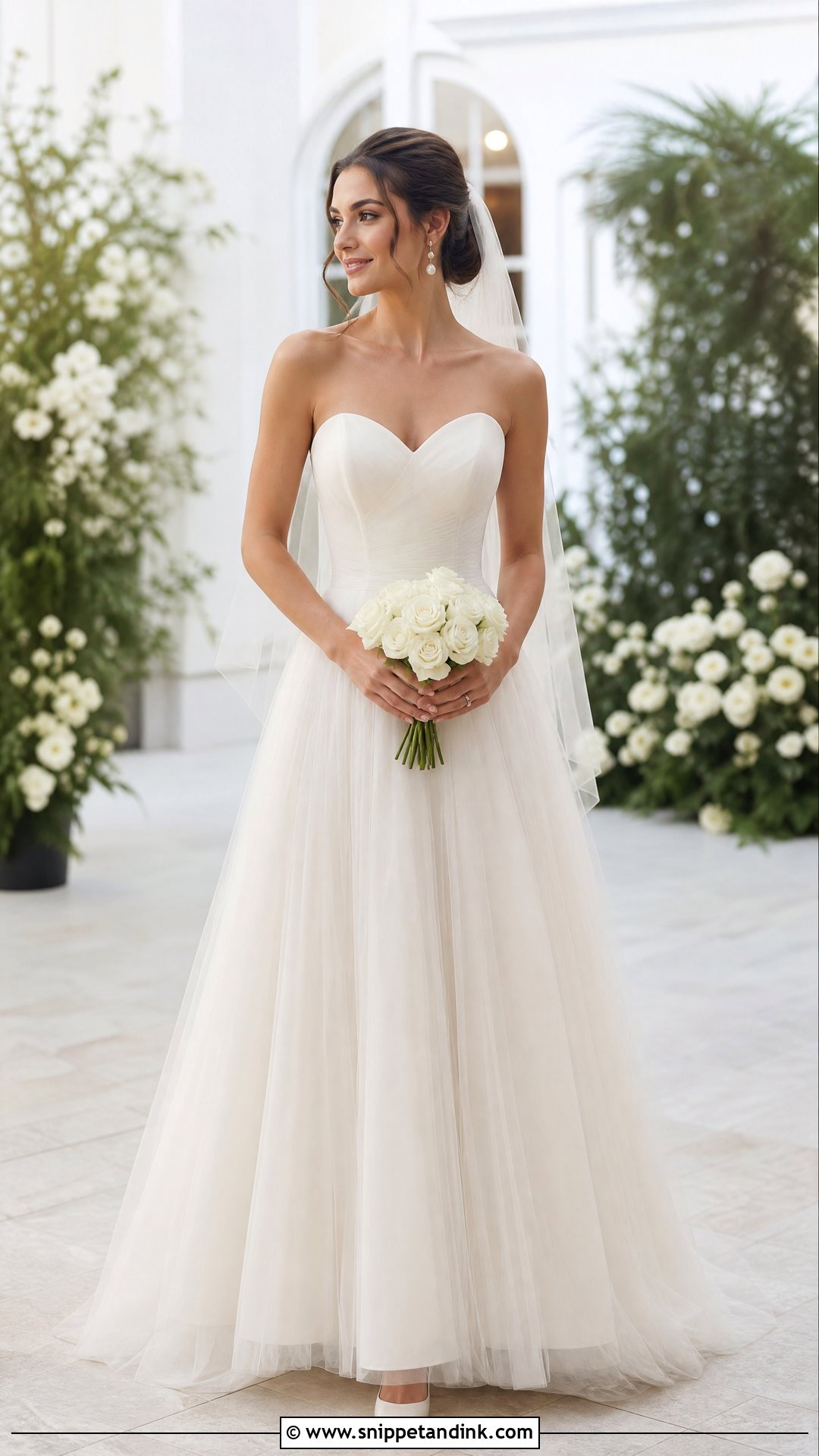
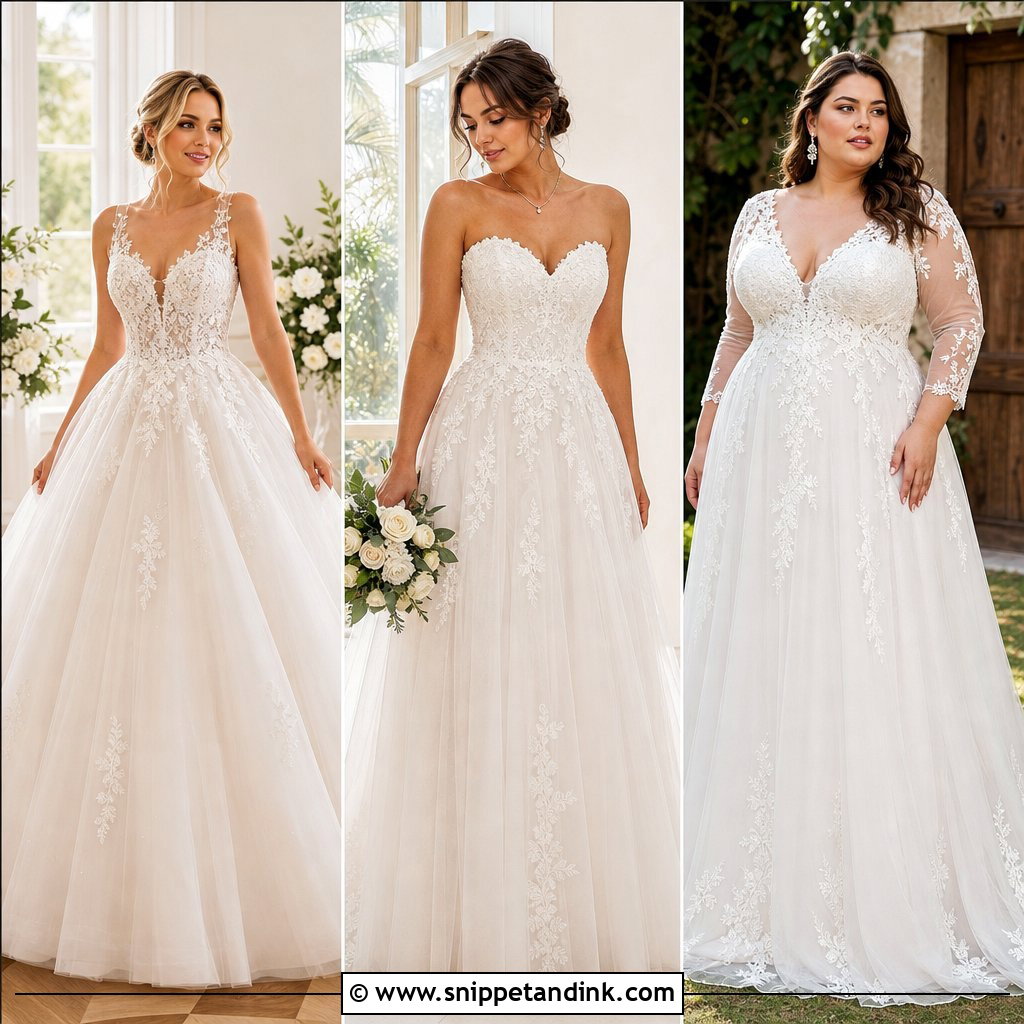
When a bride isn’t sure what suits her, this is the shape I pull first. An A-line tulle wedding dress gives you volume without the width of a ball gown: a fitted bodice at the natural waist, then a skirt that widens gradually so the tulle falls away from the body. That’s why it flatters petite, tall, straight and curvy frames alike. What I check is the layer count, since two or three layers can look flat on camera while five or six give a soft cloud without real weight. Pointed ivory pumps, pearl drops and a fingertip veil with a narrow edge finish it, and a small bouquet of white roses or greenery keeps things tidy. If the bodice carries lace appliqués, pare the jewelry right back.
2. Tulle Ball Gown Wedding Dress
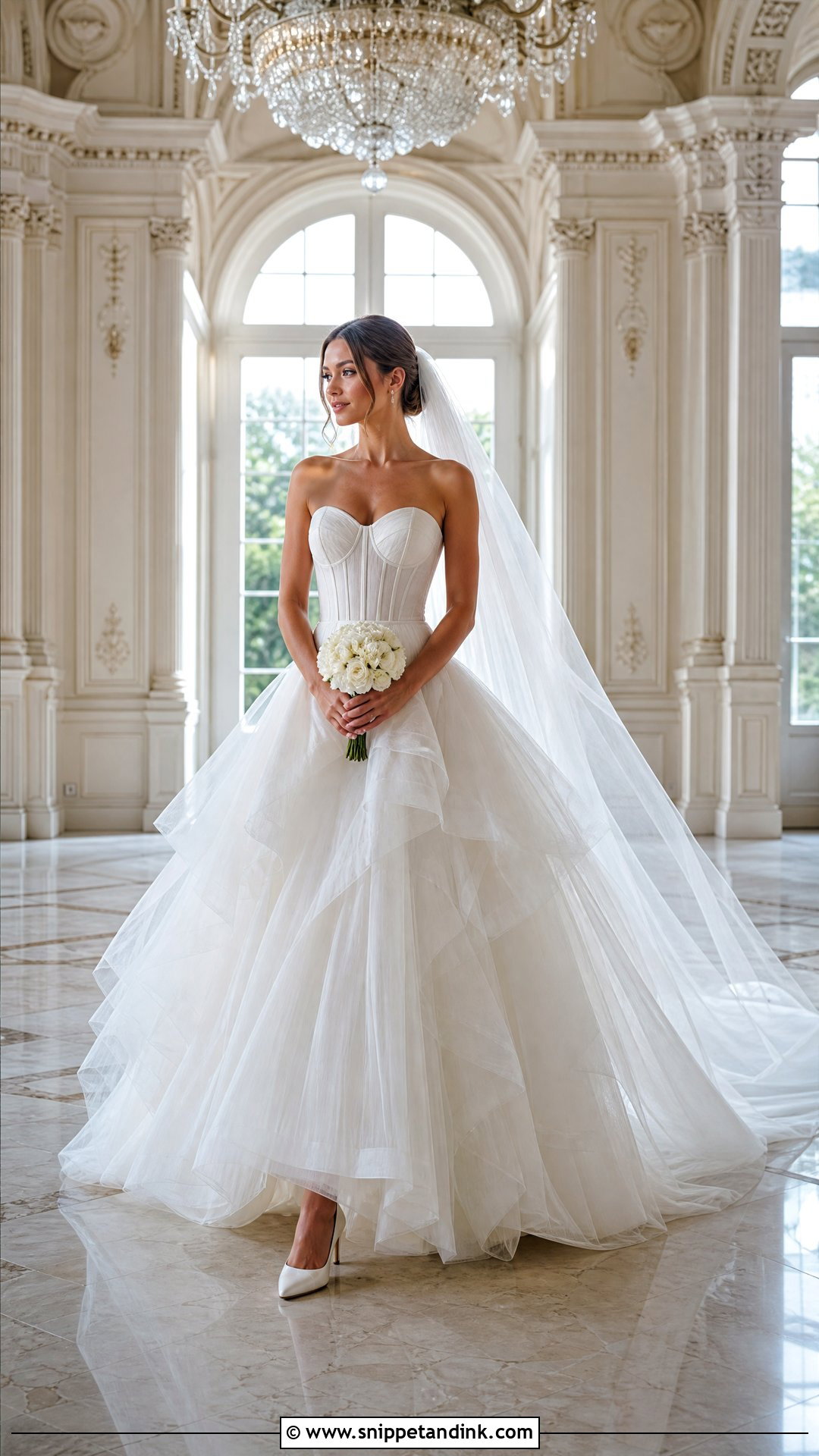
Nothing reads as formal quite like a full tulle ball gown, but the volume comes with logistics. Look for a structured bodice, a defined waist and many light skirt layers rather than a few stiff ones; stiff crinoline under thin tulle gives a lampshade outline I try to talk brides out of. A cathedral veil matches the scale, and a low bun keeps the shoulders clear. Crystal studs, a fine bracelet and closed-toe satin heels you feel steady in are plenty. Skip the oversized bouquet, because the skirt already supplies the drama. At alterations, walk, sit and turn in the full outfit, and ask about the petticoat: a well-fitted one is what gets you through doorways and bathroom trips without three helpers.
3. Strapless Corset Tulle Wedding Dress
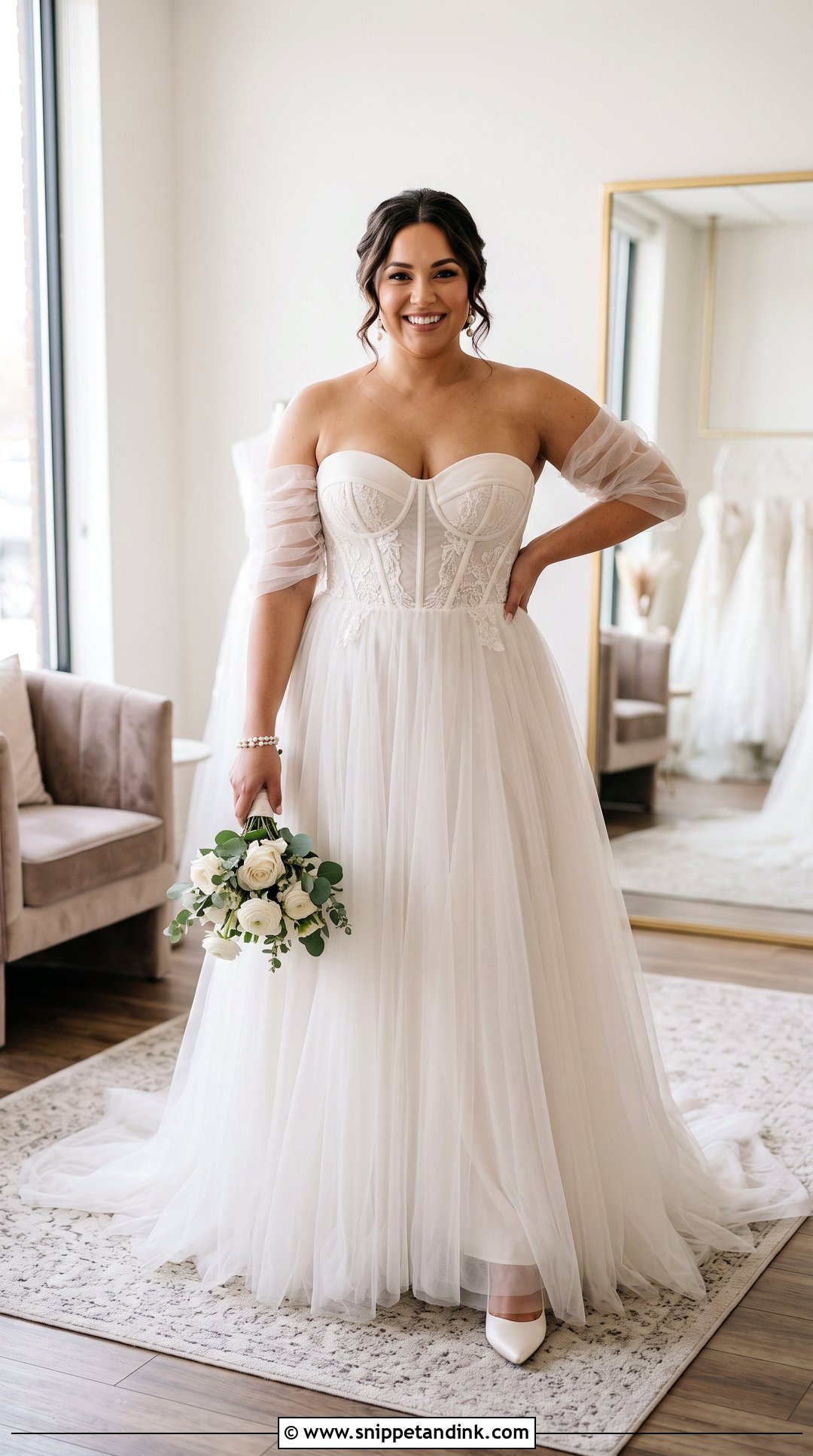
A strapless corset bodice either holds you or it doesn’t, and you’ll know within ten minutes of dancing. I’d much rather see a bride in her true size with proper boning and a waist stay than in a smaller size laced tight, because the tight one is usually the bodice that slides down. Pair the airy skirt with a straight or softly curved neckline, a sheer fingertip veil that leaves the corset seams visible, pearl earrings, a slim tennis bracelet and pointed satin pumps. Detachable tulle sleeves give ceremony coverage you can unhook later. Before the last fitting is signed off, raise both arms over your head and then sit down on a hard chair. If the top edge gaps or digs, it goes back to the tailor.
4. Long Sleeve Lace Tulle Wedding Dress
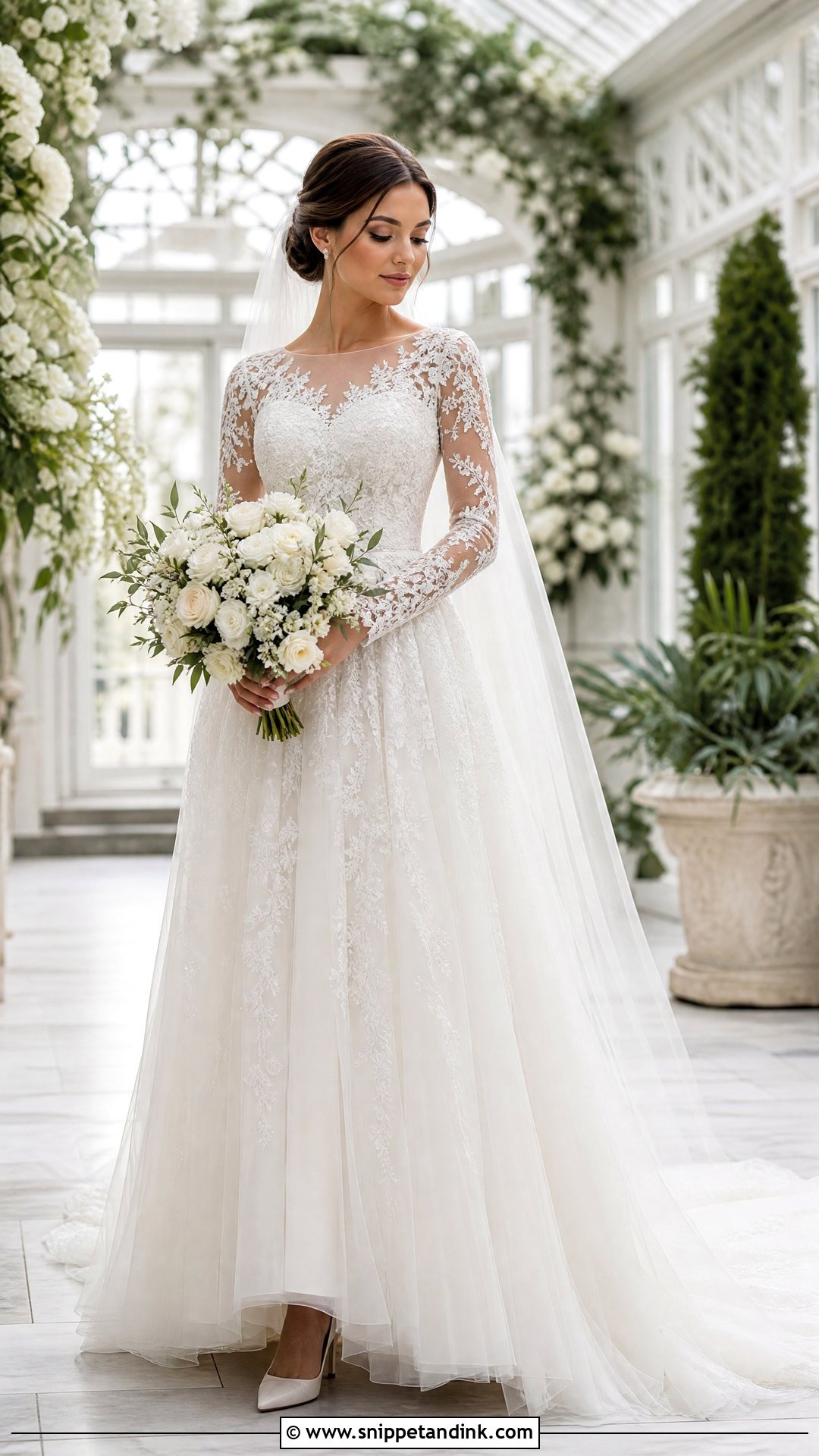
Lace sleeves on tulle are where a cheap gown and a well-made one part ways. On a good dress the illusion bodice with lace motifs carries on down the sleeves and spills into the skirt, so the top and bottom read as one piece rather than two halves joined at the waist. It belongs to cooler months; in high summer the sleeves trap heat. Keep the rest quiet with pearl or diamond studs, a smooth low chignon and a plain veil, plus closed-toe ivory heels and a structured white bouquet. At the fitting, bend your elbow and reach forward, since fitted lace sleeves often pull across the back of the armhole. For an outdoor autumn or winter ceremony, a tailored ivory cape keeps you warm without crushing the skirt.
5. Basque Waist Tulle Wedding Dress
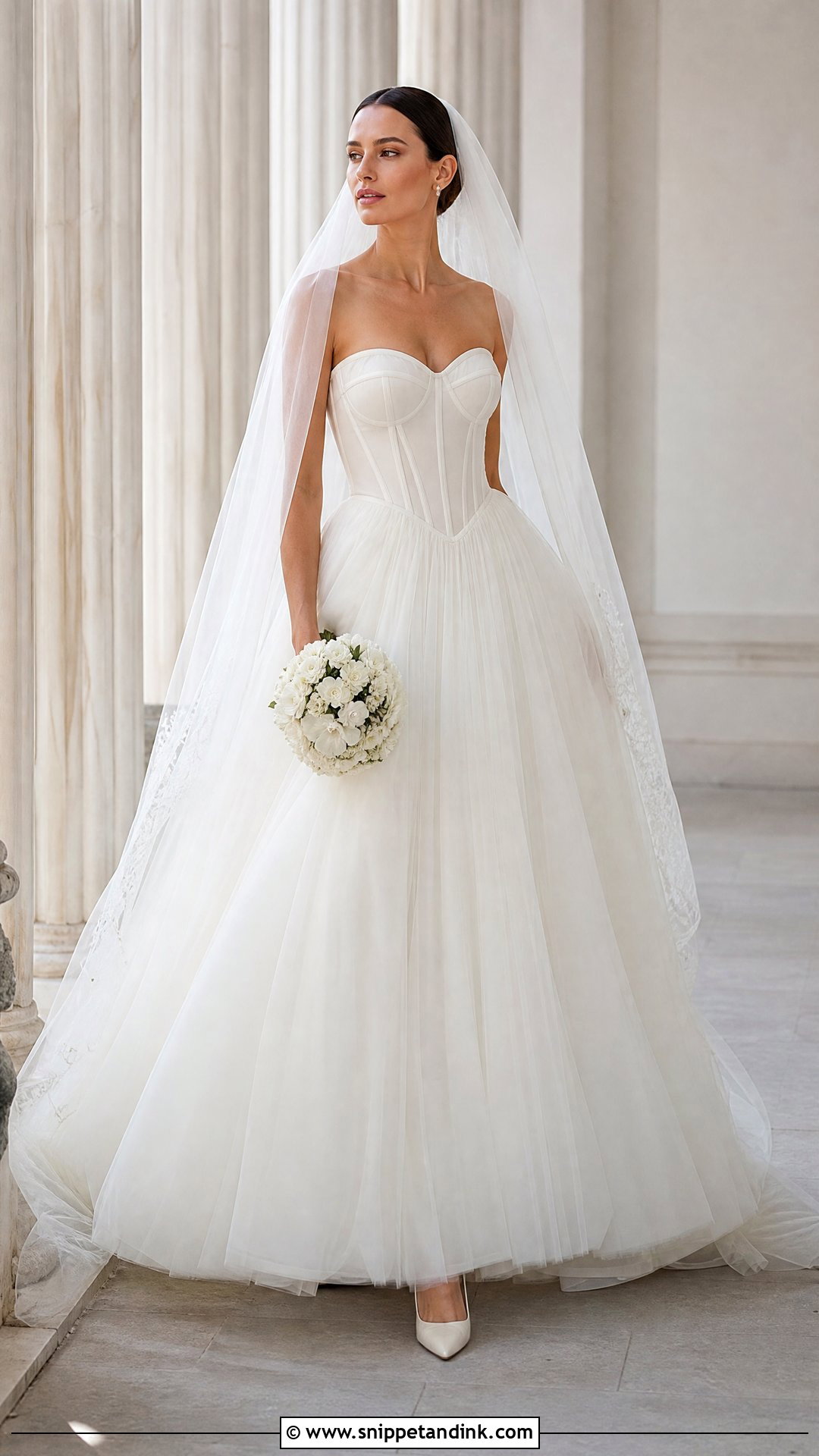
The point of a basque waist dips below the natural waistline in a V, and it is surprisingly kind to anyone who wants a longer-looking torso. Where the tulle joins that point is the detail to inspect: on a basque waist tulle wedding dress the gathers should be spread evenly around the V, not bunched over the hips. Balance it with a chapel-length veil, small drop earrings and pointed pumps. I prefer an updo here, partly to show the bodice and partly because loose hair tangles in button loops and appliqués at the back. A compact, rounded bouquet won’t hide the waistline the way a long cascade does. Look at yourself side-on at every fitting, because that’s where a twisting point shows first.
6. Off Shoulder Tulle Wedding Dress
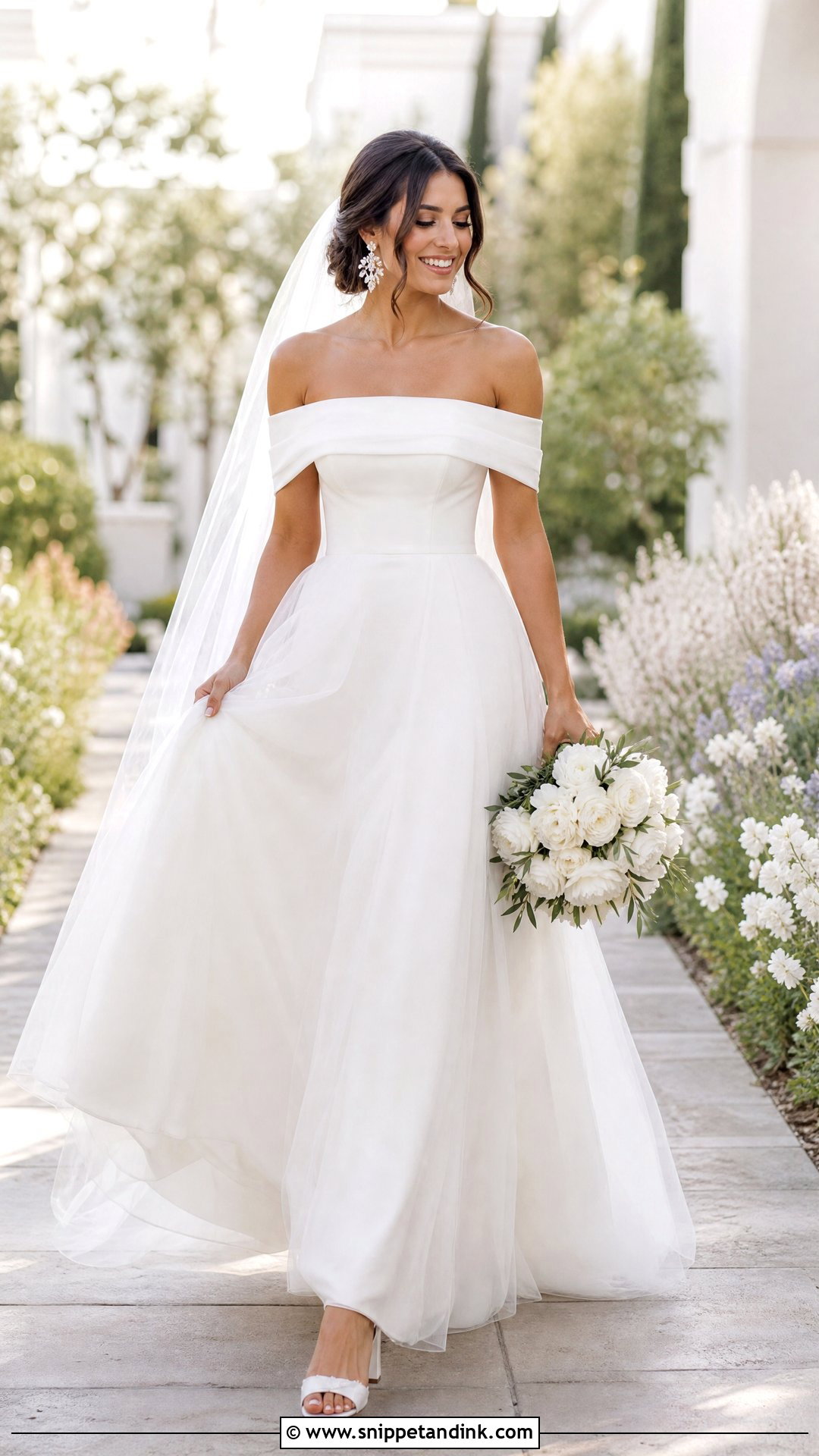
Off-shoulder sleeves have one job, which is to stay put, and plenty of them don’t. The neckline should sit firmly enough that you can lift your arms without the straps creeping up toward your ears. With the collarbone on show, choose between a collarbone-length necklace and statement earrings rather than wearing both. A low bun, chapel veil and rounded bouquet keep the neckline in view. On grass or gravel, block-heel bridal shoes stop you sinking. Detachable off-shoulder straps work when they were designed with the gown; added as an afterthought they rarely sit right. At alterations, reach forward and hug someone, since that’s the movement you’ll repeat all day.
7. Square Neck Tulle Wedding Dress
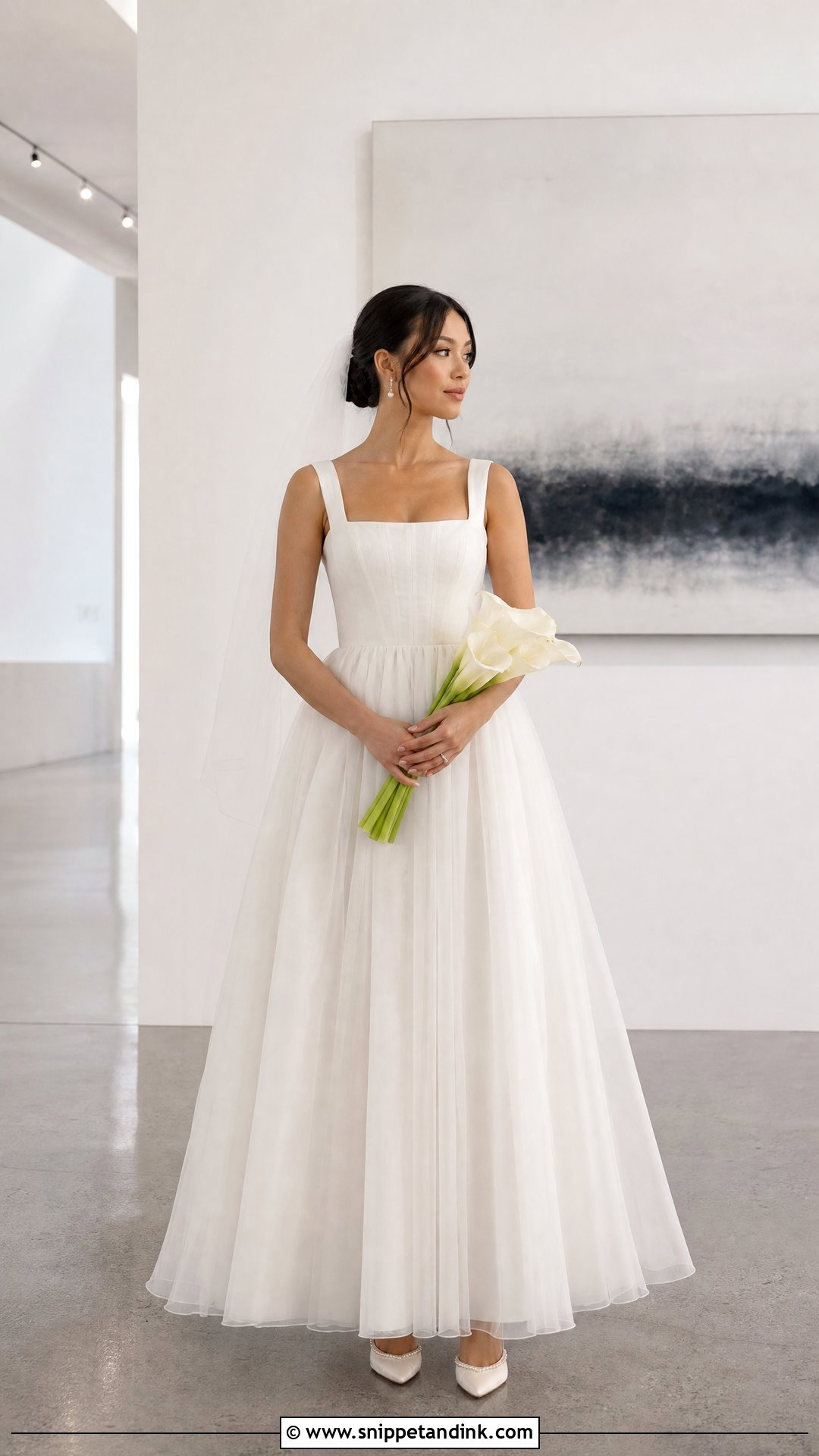
A square neckline gives tulle a crisp edge, which is why I suggest it to brides who find full skirts a little too sweet. It suits wide straps, a fitted bodice and a gathered A-line skirt. Small pearl drops, a sleek bun and a single-layer veil set below the hairstyle keep the lines clean, and pointed slingbacks echo the angles. Calla lilies or tightly arranged white blooms give the bouquet some structure. Leave the big necklace at home; it fills the open square and crowds everything. If the back is cut low and square as well, check the bra cups and internal support carefully, because the corners of a square neck gape the moment the bodice is even slightly loose.
8. Sweetheart Neck Tulle Wedding Dress
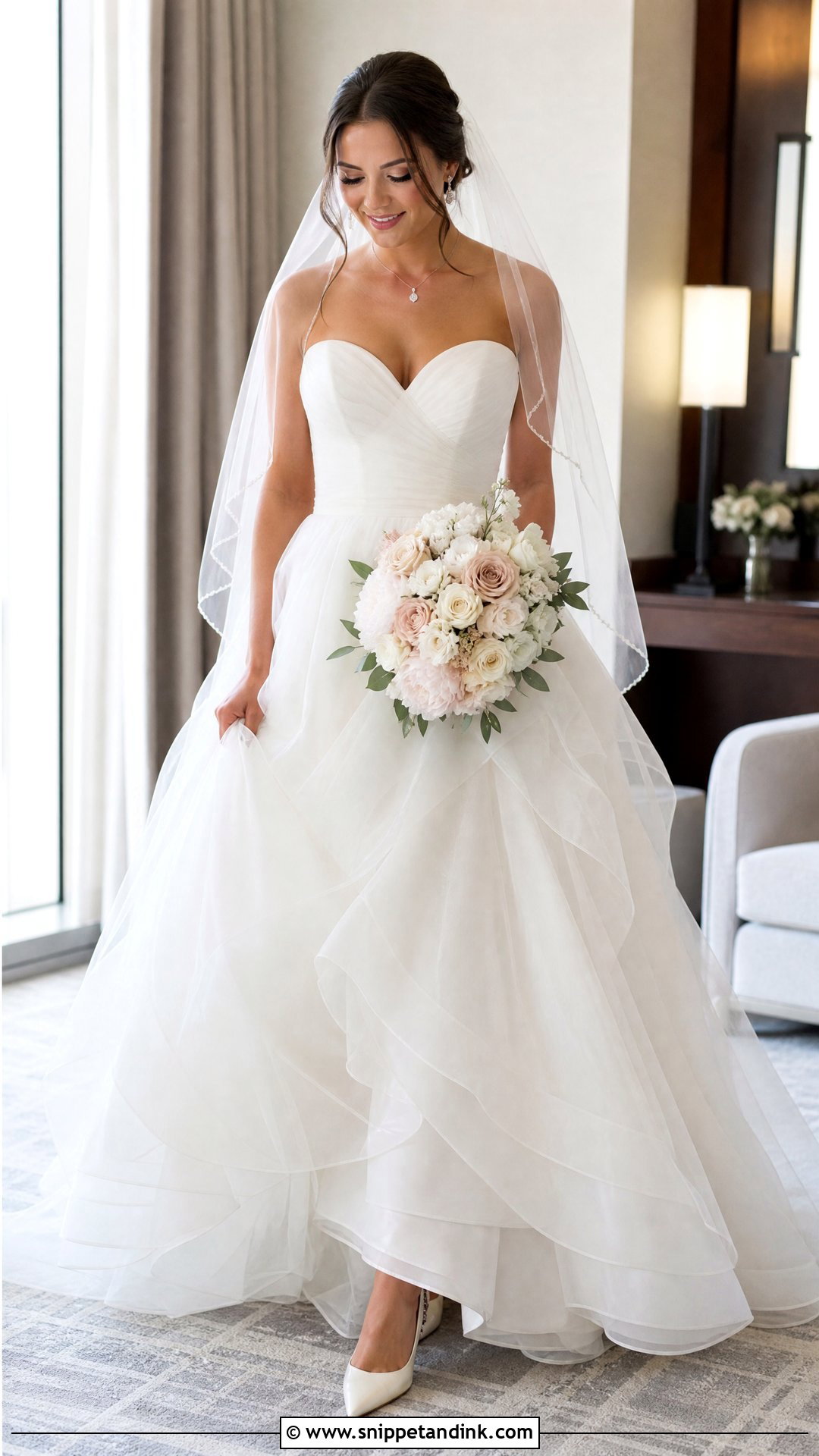
The curve of a sweetheart neckline softens the bust, and over a layered A-line or ball gown skirt it gives a clear waist. Because a sweetheart neck tulle wedding dress is held up by the bodice alone, the support inside matters more than the shape of the edge. Wear a fine pendant that follows the curve, or leave the neck bare with crystal drops. A waved half-up style and a light fingertip veil suit it, with ivory pumps and loose white and pale pink flowers. If the neckline has illusion mesh, hold it against your skin by a window; mesh in the wrong shade shows up as a greyish band in flash photos. The top edge should never press a line into your skin or stop you taking a full breath.
9. High Neck Tulle Wedding Dress
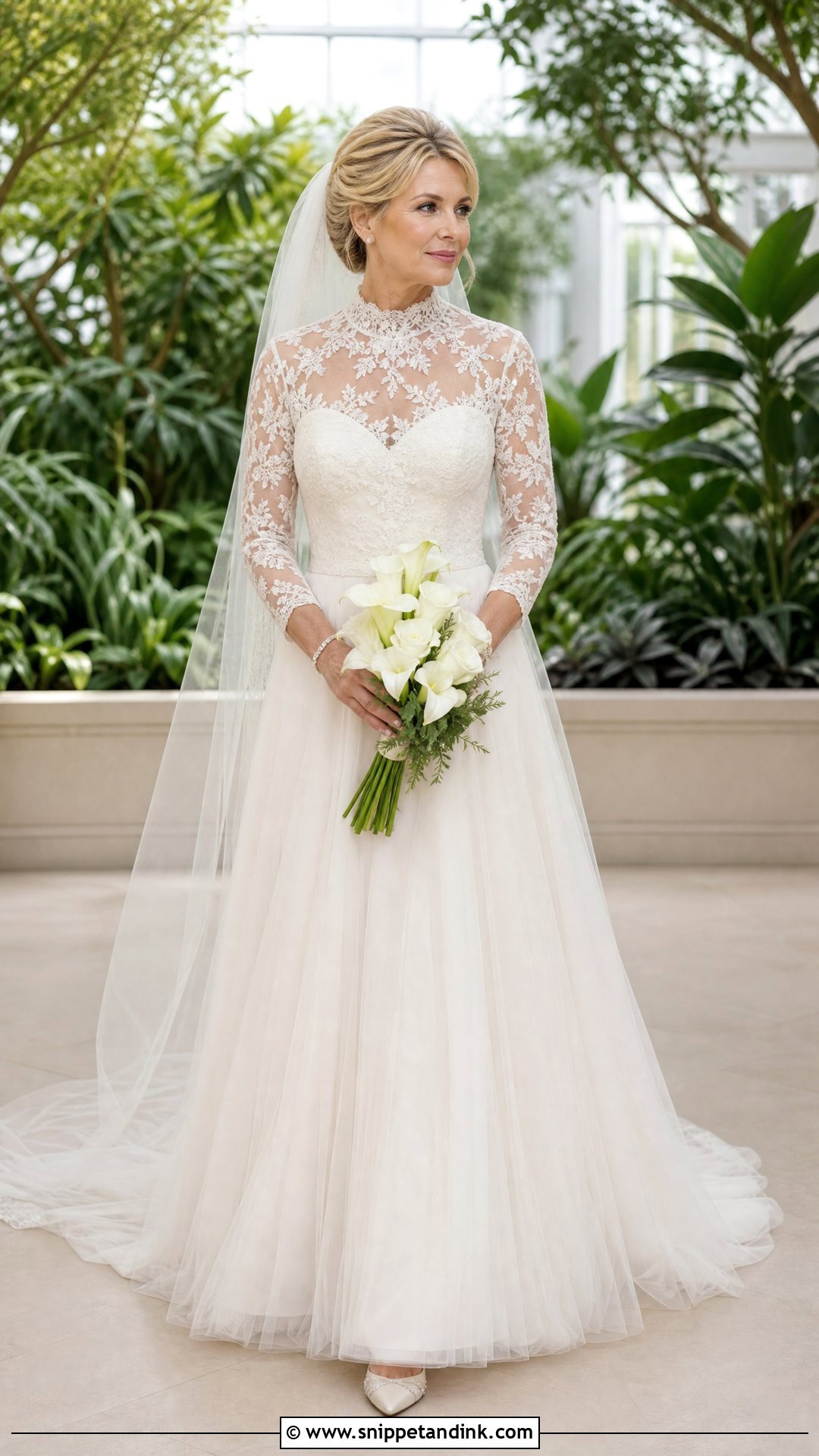
High necks frame the face, and in tulle they stay light enough to wear from morning to midnight. Sheer tulle, lace appliqués or fine beading at the collar stop it feeling heavy. With the neck covered, skip the necklace and wear studs or a slim bracelet. Hair goes up in a bun, twist or sleek ponytail so the collar is seen, and a chapel veil, closed-toe heels and a slim bouquet complete it. My main check is the collar seam. Turn your head side to side for a full minute in the fitting room; if it scratches now, it will leave a red mark by the speeches. A soft lining and properly finished seams fix most of that.
10. Minimalist Tulle Wedding Dress
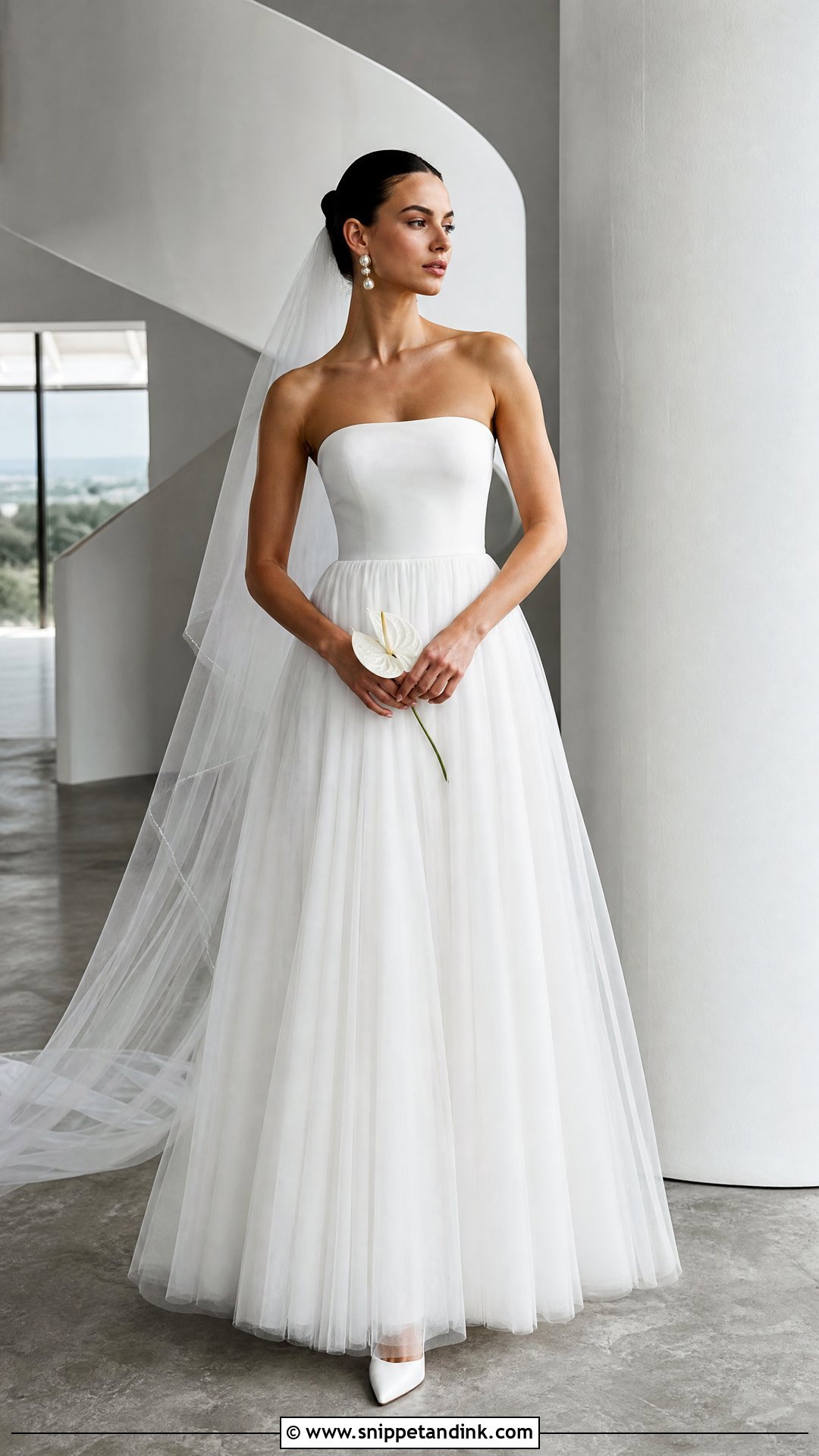
A plain tulle gown hides nothing. Without lace or beading to distract the eye, every seam, every uneven gather and every lining that shows through is on display, so construction quality matters more here than anywhere else in this list. Look for a smooth fitted bodice, a clean waist seam and several finely gathered layers. Sculptural pearl earrings, a sleek low bun and simple white pumps keep the styling as considered as the dress, and a raw-edge veil melts into the skirt. One flower variety in a compact bouquet looks modern. Before you buy, lift the skirt and look at the hem and the gathering from the inside.
11. Floral Appliqué Tulle Wedding Dress
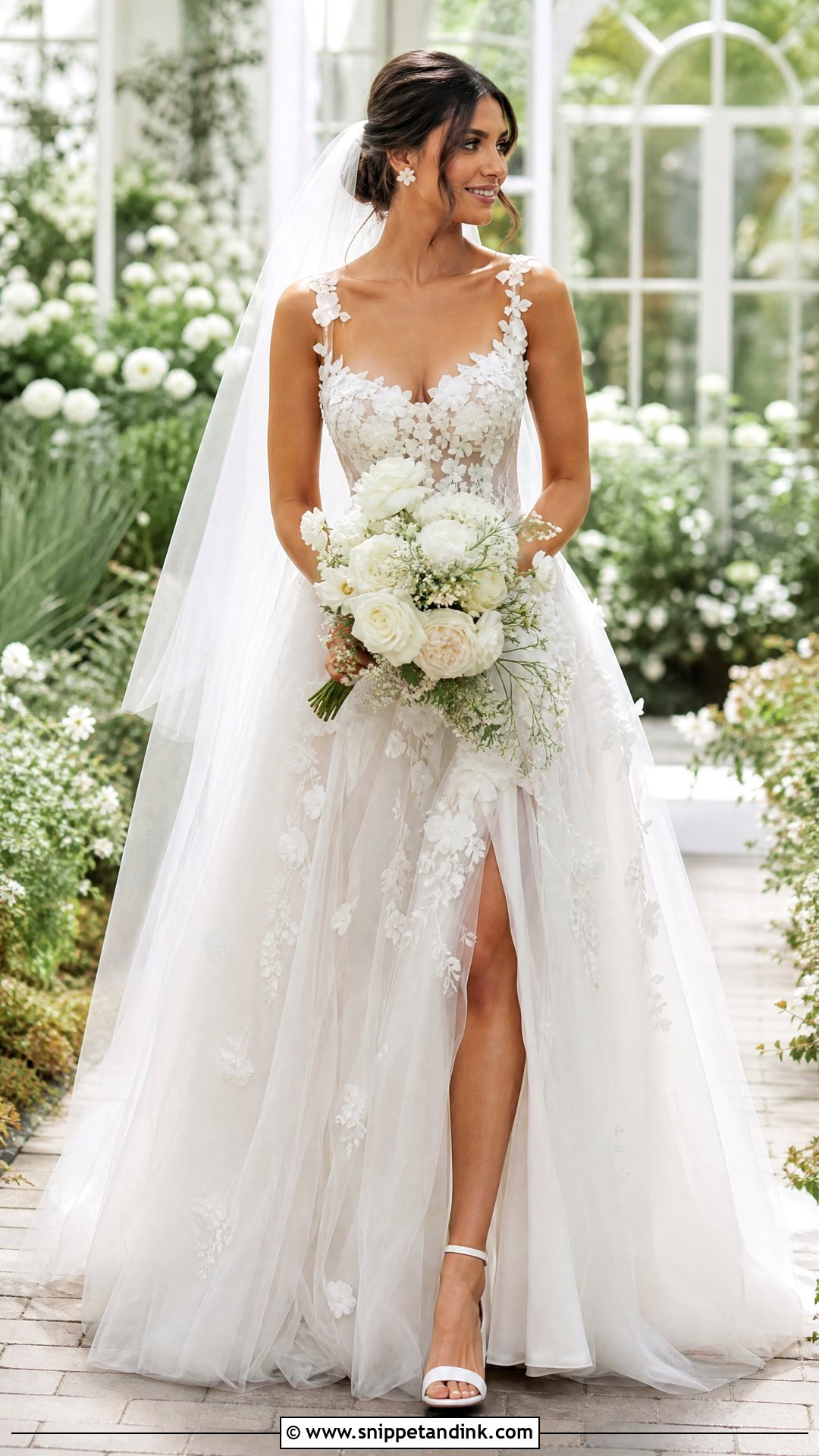
Appliqués give tulle texture without shine, and they look most natural when they gather on the bodice and thin out as they travel down the skirt. Keep the accessories small: floral studs, ivory heels and a sheer veil with minimal edging, with a relaxed updo so the details lead. I like a bouquet that borrows one or two flower shapes from the dress instead of copying every motif. The practical warning is about three-dimensional petals. They snag veils, bracelet clasps and gloves, so wear every accessory together at least once before the wedding. If the appliqués cluster thickly at the waist, ask whether a few can be moved, since they add bulk exactly where most people don’t want it.
12. Beaded Tulle Wedding Dress
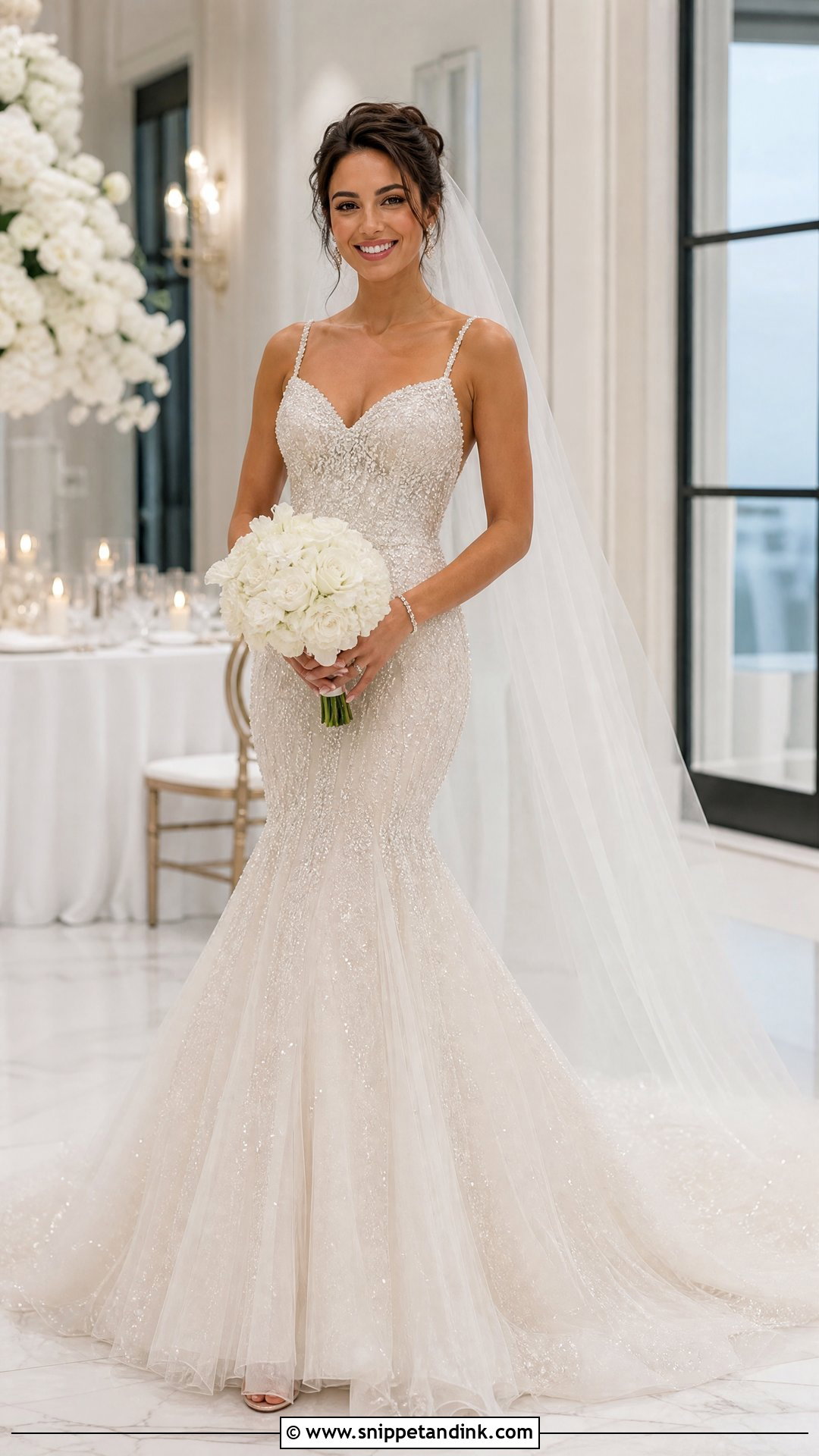
Beads on tulle catch the light as the skirt moves, which is lovely by candlelight and a little busy under flat midday sun. Run your hand over the bodice, waist and train in the shop; beads hanging on long, loose stitches are the ones that drop on the day. Style it with crystal studs, metallic or ivory heels and a plain single-layer veil, because extra sparkle only clutters it. A smooth updo and neutral makeup give it a quiet frame. Beaded tulle catches on rough chair legs, wicker and stone walls, so look at the venue seating if you can. Check the inner arm at fittings too, where beads rub, and ask the tailor about lining that section.
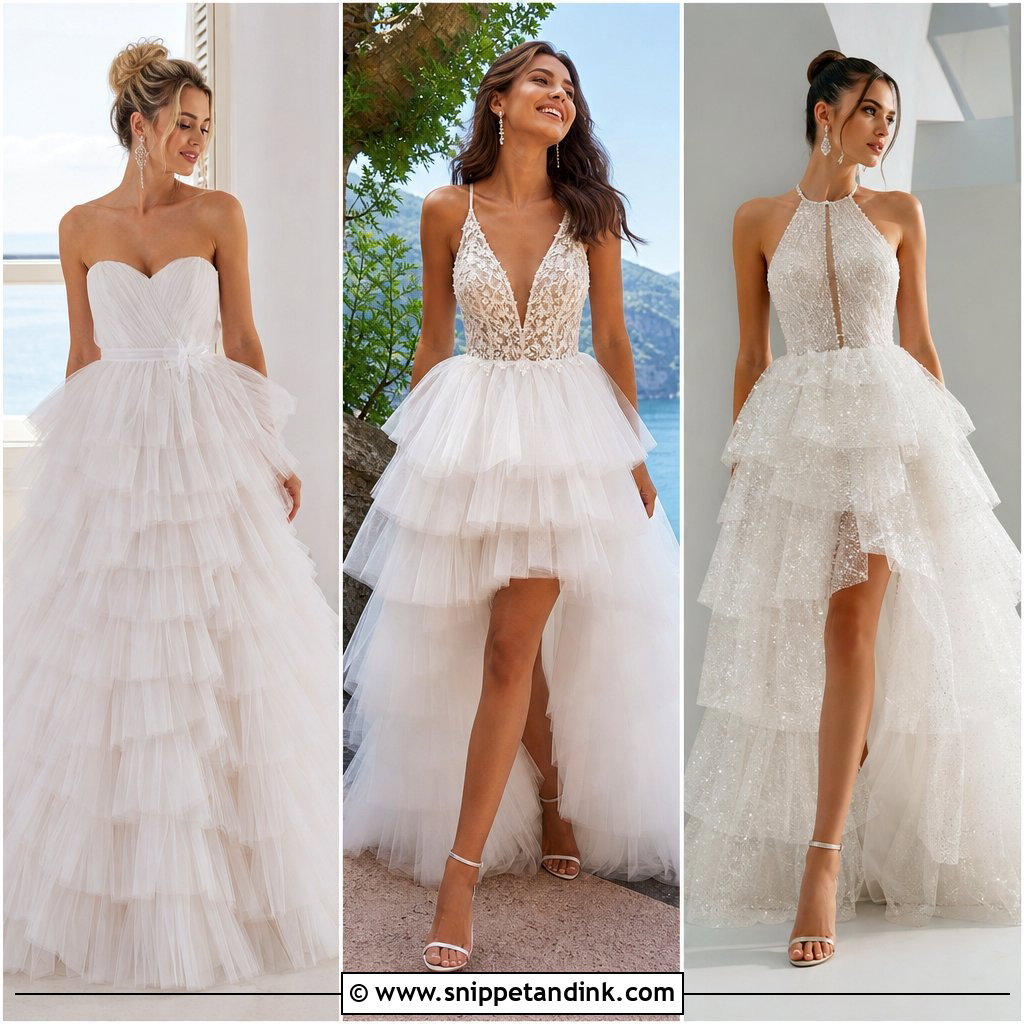
13. Tiered Tulle Wedding Dress
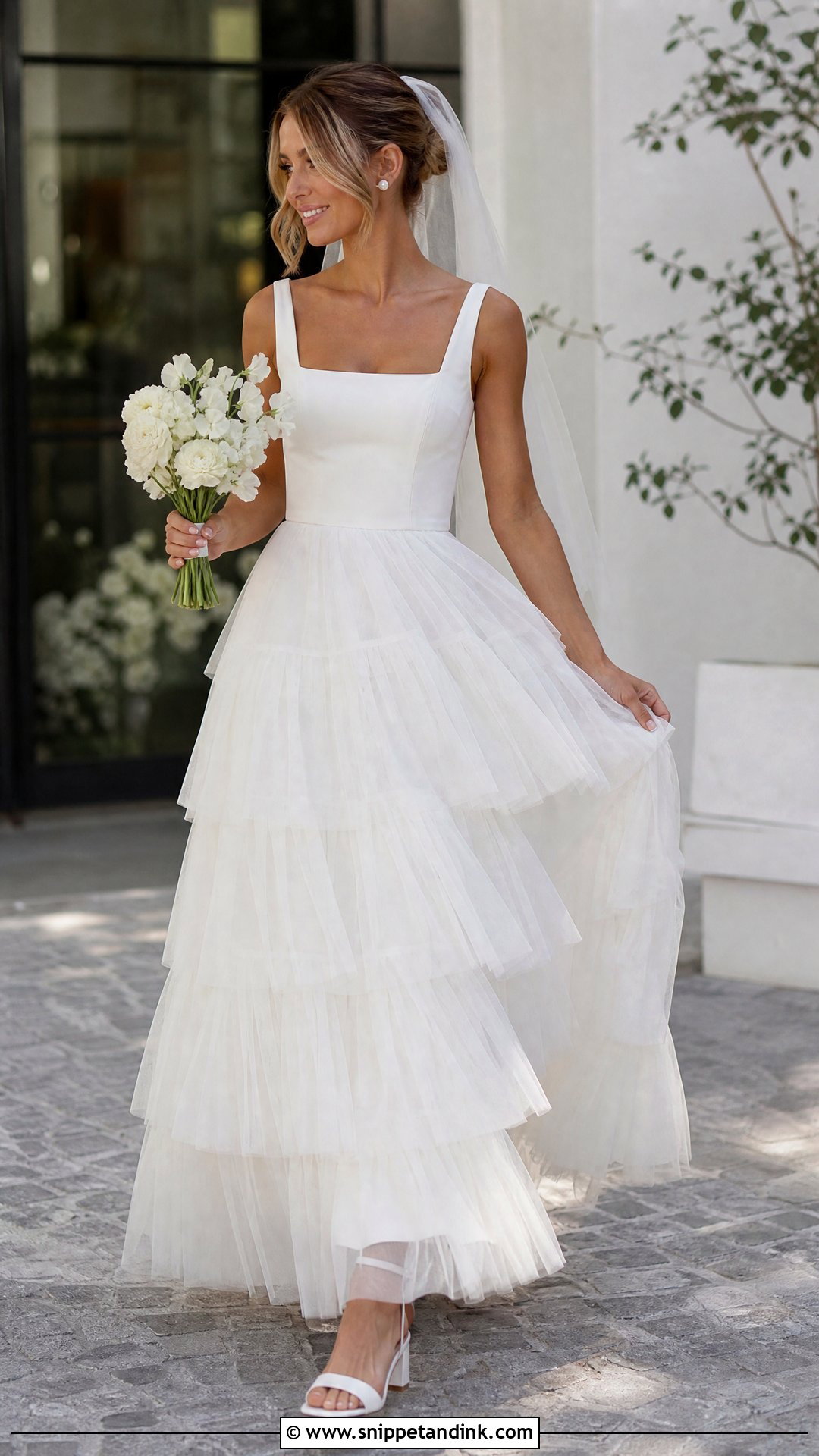
Tiers move every time you do, and their width decides whether they read soft or sculptural. Balance them with a fitted, uncomplicated bodice. Pearl studs, a short plain veil and satin heels with a block or low stiletto finish it, with a neat bouquet that doesn’t add more volume. On petite brides I usually go for narrower tiers; tall brides can carry broad ones. During alterations, make sure each tier hangs level and none folds under. Stairs are the real test.
14. Blush Tulle Wedding Dress
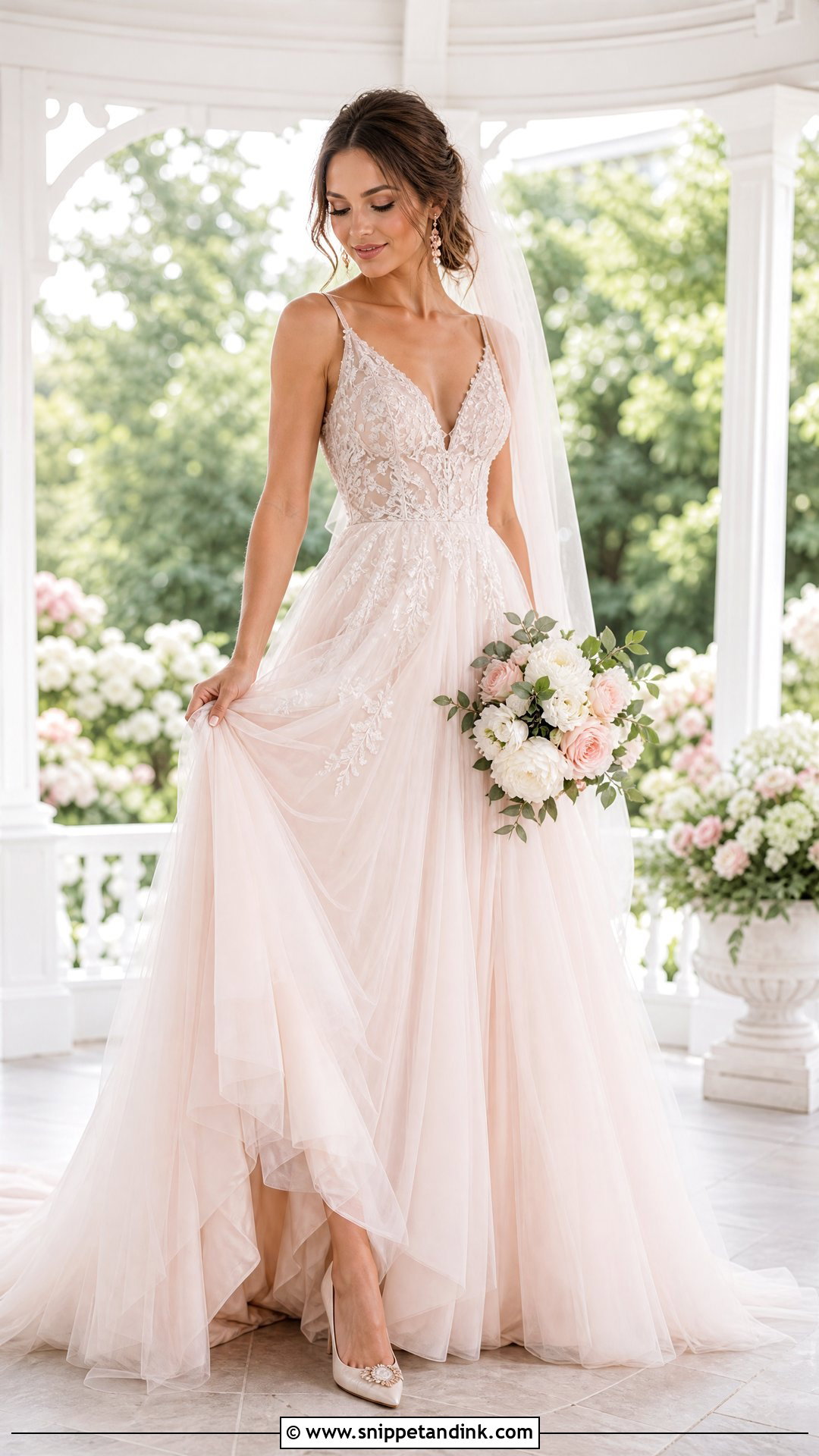
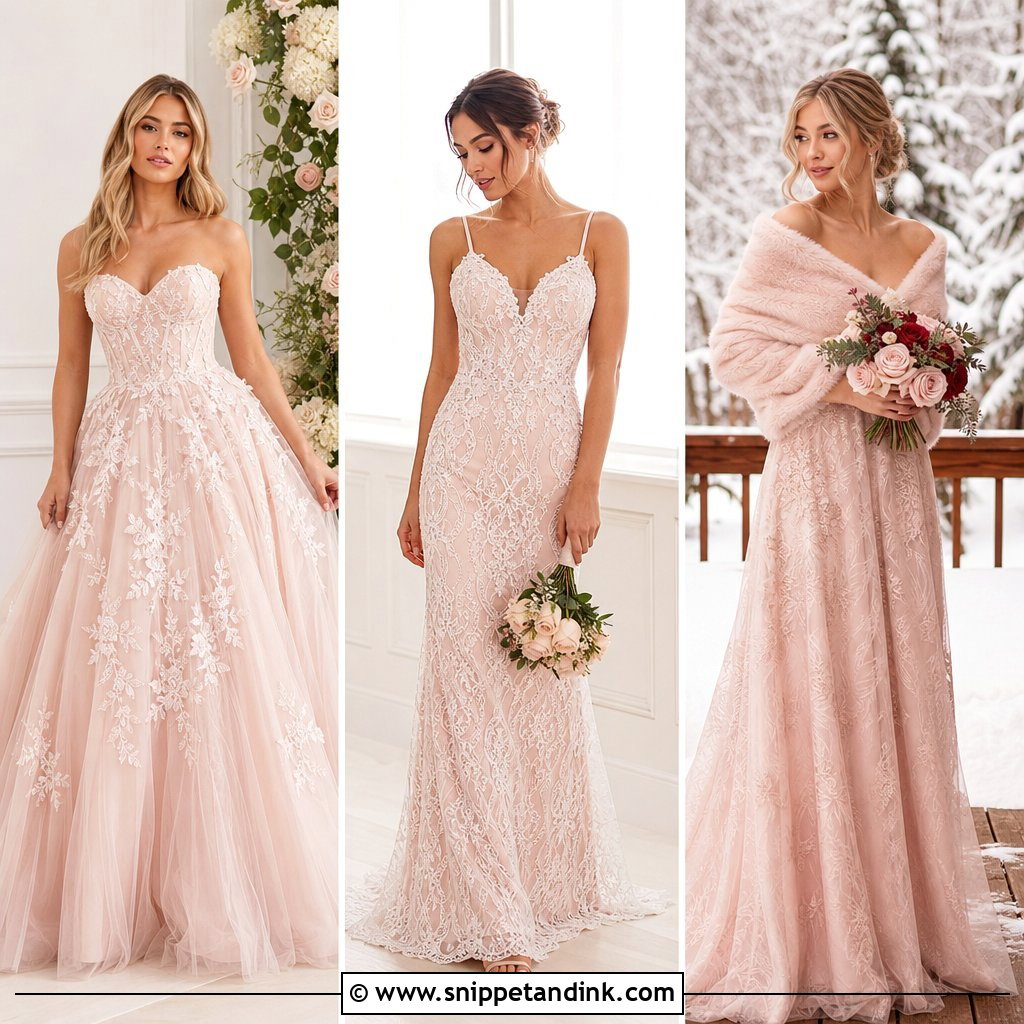
Blush tulle runs from barely pink to a warm rose beige, and boutique lighting often makes it look paler than it will in sunshine, so view it by a window before deciding. The lining shifts it as well: champagne underneath deepens the color, pale ivory keeps it soft. Ivory shoes, rose gold or pearl jewelry and a veil matched to the skirt’s undertone work best. A stark white veil beside blush can make the dress look faded, which is the mistake I see most. White, blush and muted greenery in the bouquet tie the palette together without tipping it too pink. Bring all the accessories to one fitting and photograph them together in daylight.

15. Black And White Tulle Wedding Dress
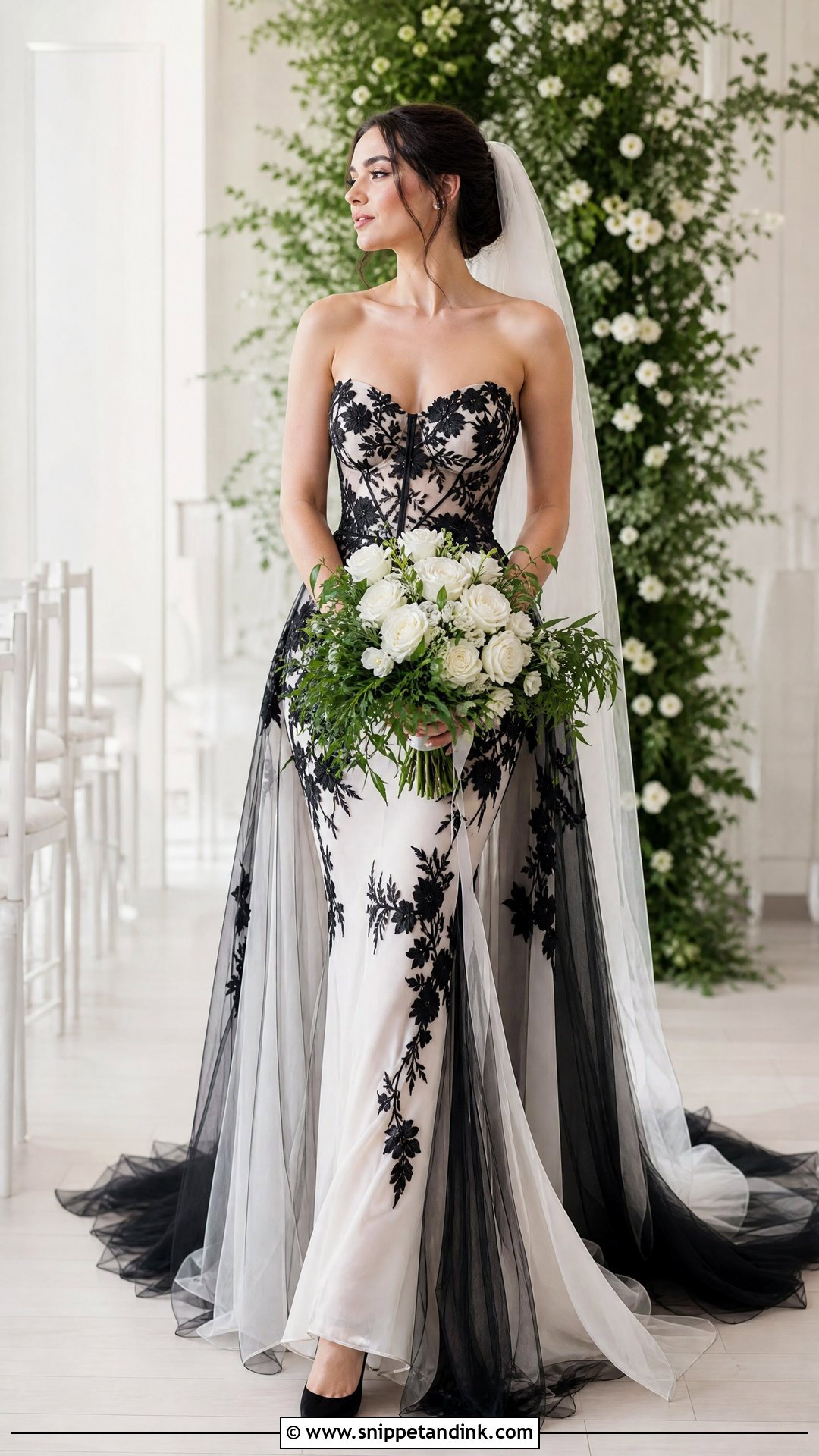
Black detail on a bridal gown needs a light hand, or it drifts into costume. A white or ivory dress might carry black floral appliqués, a black ribbon waist, dark embroidery or a removable black tulle overlay. Black pointed pumps, small diamond studs and a plain ivory veil keep the rest restrained, and white flowers with deep green foliage support the scheme. Watch where the black lands on your body. A ribbon or band should follow the construction and never cut you across the widest part of the hips. Strong contrast also makes exposure tricky for the camera, so photograph the dress at a fitting, close up and full length, before you commit.
16. Tea Length Tulle Wedding Dress
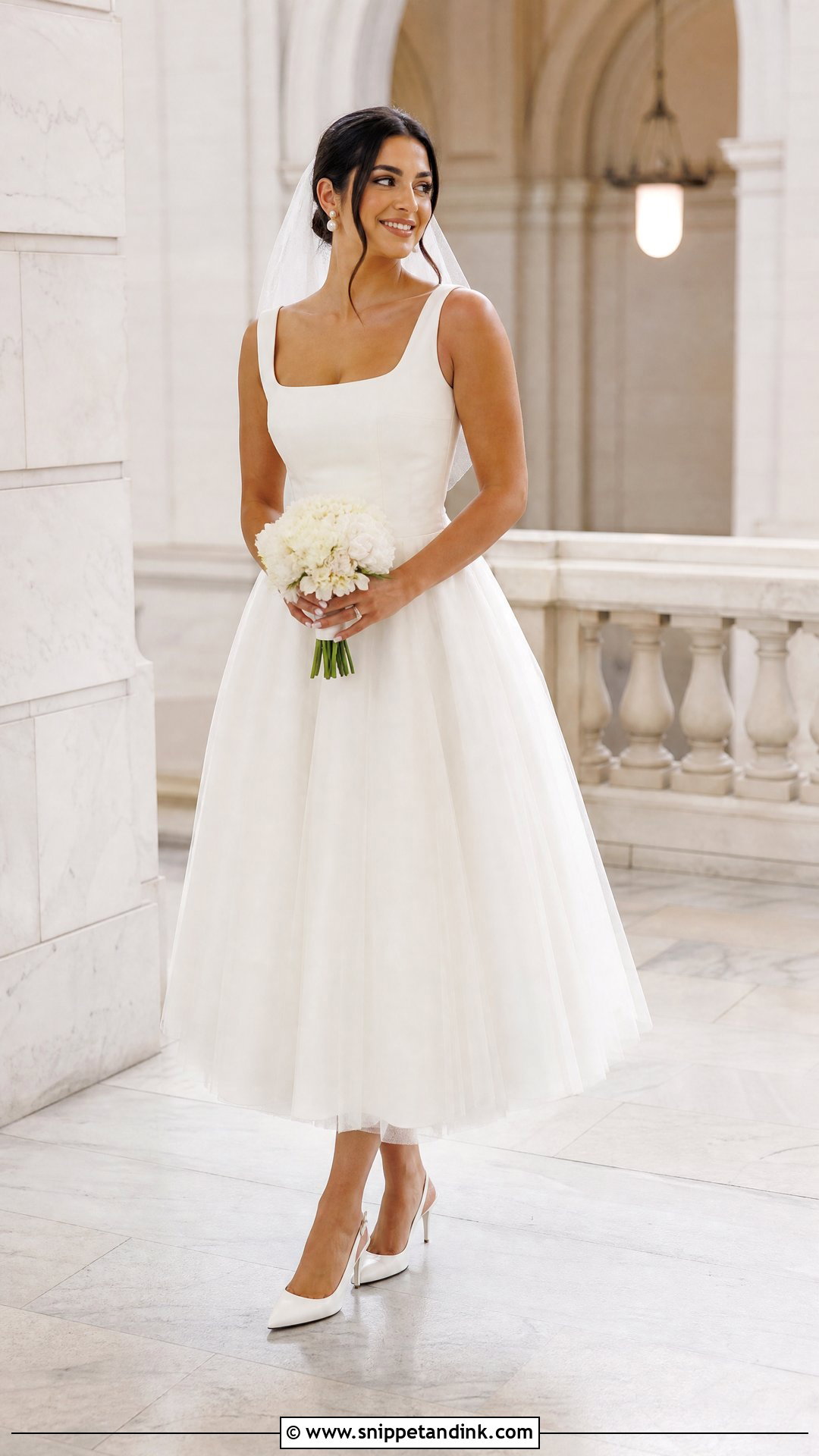
A tea-length hem lands between knee and ankle, which puts your shoes on show all day, so I treat them as part of the dress. The skirt needs enough structure to keep its shape when you walk. Pointed pumps, bow-detailed heels or slingbacks give a finished point below the hem; add a short veil, pearl earrings and a compact bouquet. It suits courthouse ceremonies, daytime parties and reception changes. Gloves bring a vintage note, but keep them plain or the outfit starts to look like fancy dress. Have the hem set while you wear the exact shoes, since even half an inch of heel moves a tea-length line noticeably.
17. Tulle Mini Wedding Dress
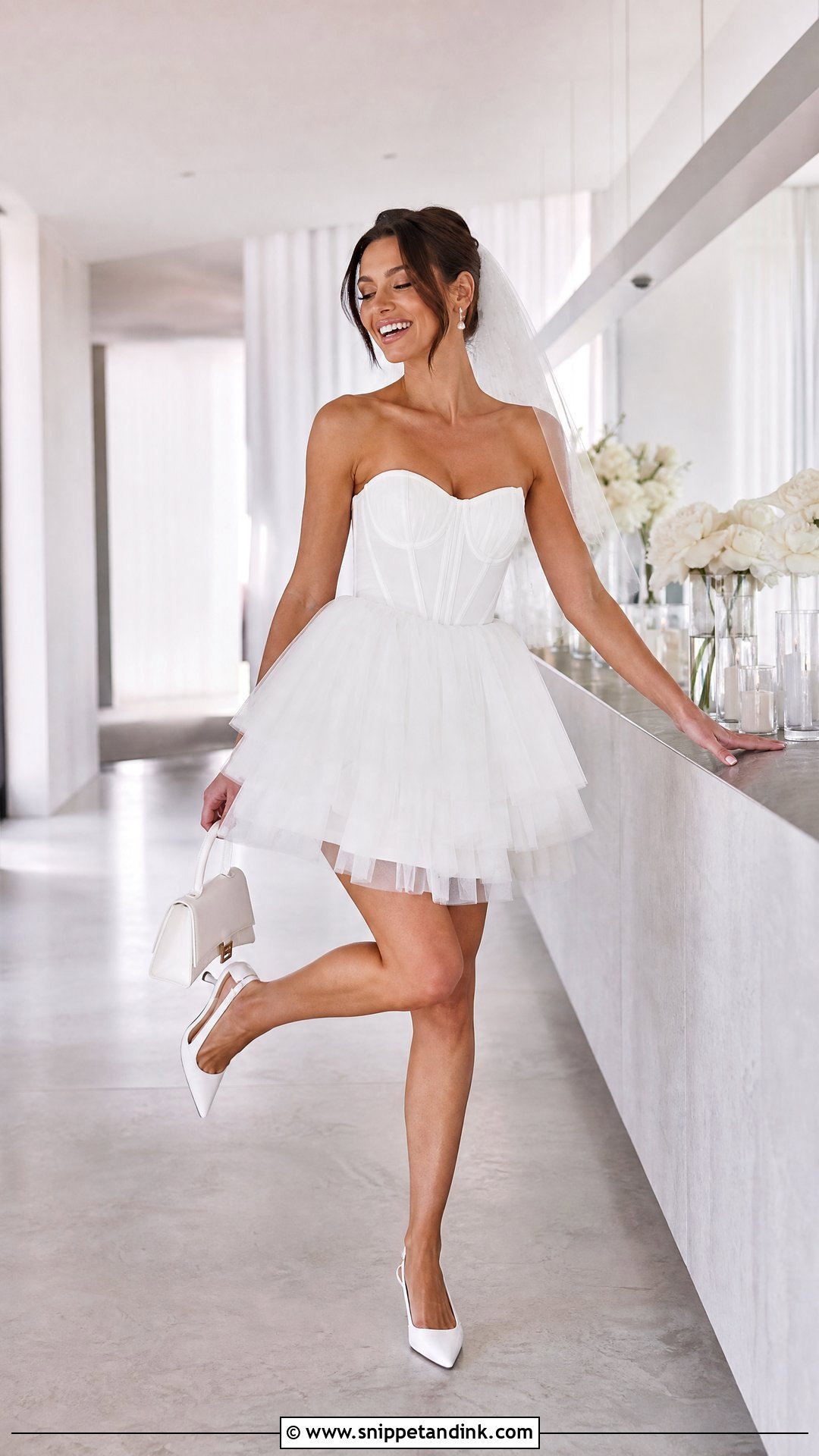
As a reception change, a short tulle dress is pure fun, and it works for a civil ceremony or a relaxed party too. Internal support matters more on a short dress than people expect, because you’ll be dancing in it. Pointed slingbacks, pearl drops and a small structured bag suit it, and a short veil or hair bow keeps it bridal. A very full skirt needs a fitted bodice or the outline turns boxy. Smooth shorts underneath are worth wearing if they help you move freely. Before alterations are finished, walk, sit, turn and raise your arms, then check the hem from behind in a mirror. Full tulle minis lift higher at the back than you’d guess.
18. Mermaid Tulle Wedding Dress
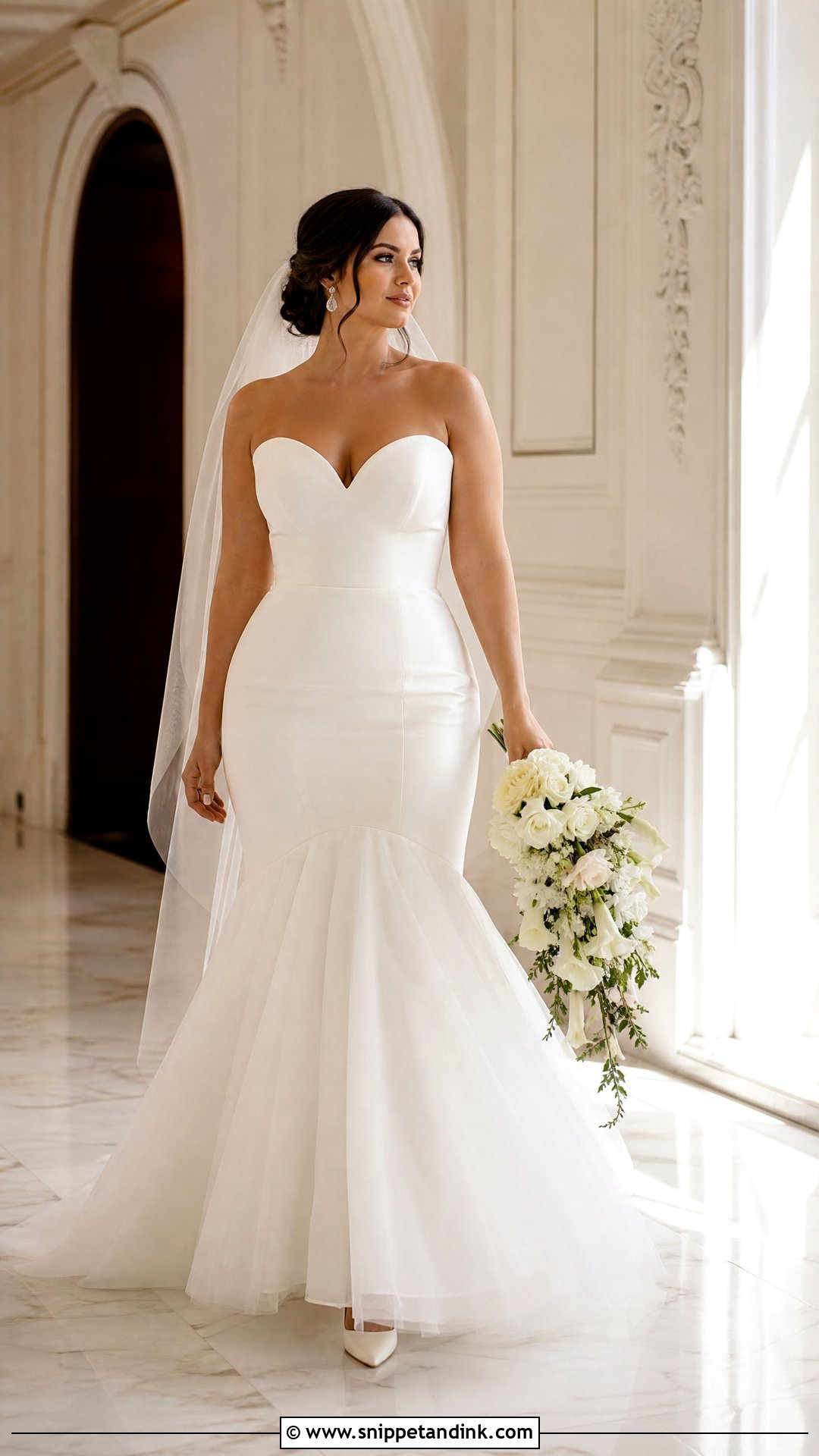
This is the least forgiving shape you can cut in tulle, and the most dramatic. The gown fits through the bodice and hips, then flares at the knee or lower thigh, and soft tulle over a supportive lining keeps that flare airy instead of rigid. Where the flare starts is the whole fit: too high and it shortens your legs, too low and you’ll shuffle. A plain veil, drop earrings and pointed heels suit it, with a long narrow bouquet that echoes the vertical line. Test your stride and sit down in it. Small fit problems at the hip ripple all the way down the skirt, so this isn’t a dress to order online and hope for the best.
19. Empire Waist Tulle Wedding Dress
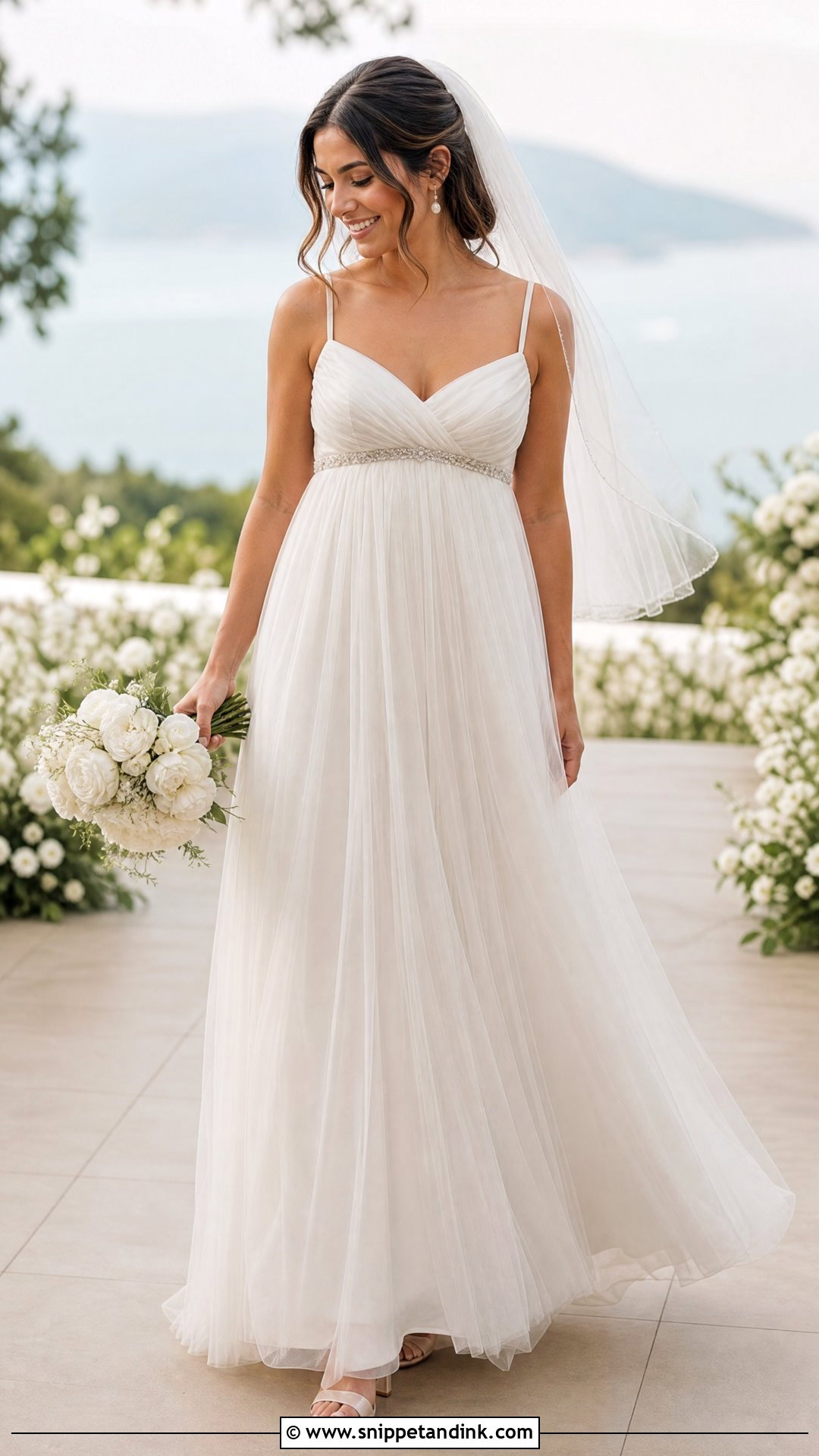
The seam on this one sits just under the bust and the skirt falls loose from there, which makes an empire waist tulle wedding dress comfortable for outdoor summer ceremonies and for anyone who hates feeling squeezed at the waist. Delicate earrings, low block heels and a narrow fingertip veil suit it, along with a relaxed half-up style and a loosely gathered bouquet. Don’t put a wide belt on the empire seam, because it chops the long line in two; fine beading or a slim satin trim gives definition instead. All the support has to come from the bodice, so check that the bust still sits where it should after an hour of wear, and that the lining moves freely under the tulle rather than clinging.



20. Detachable Tulle Overskirt Wedding Dress
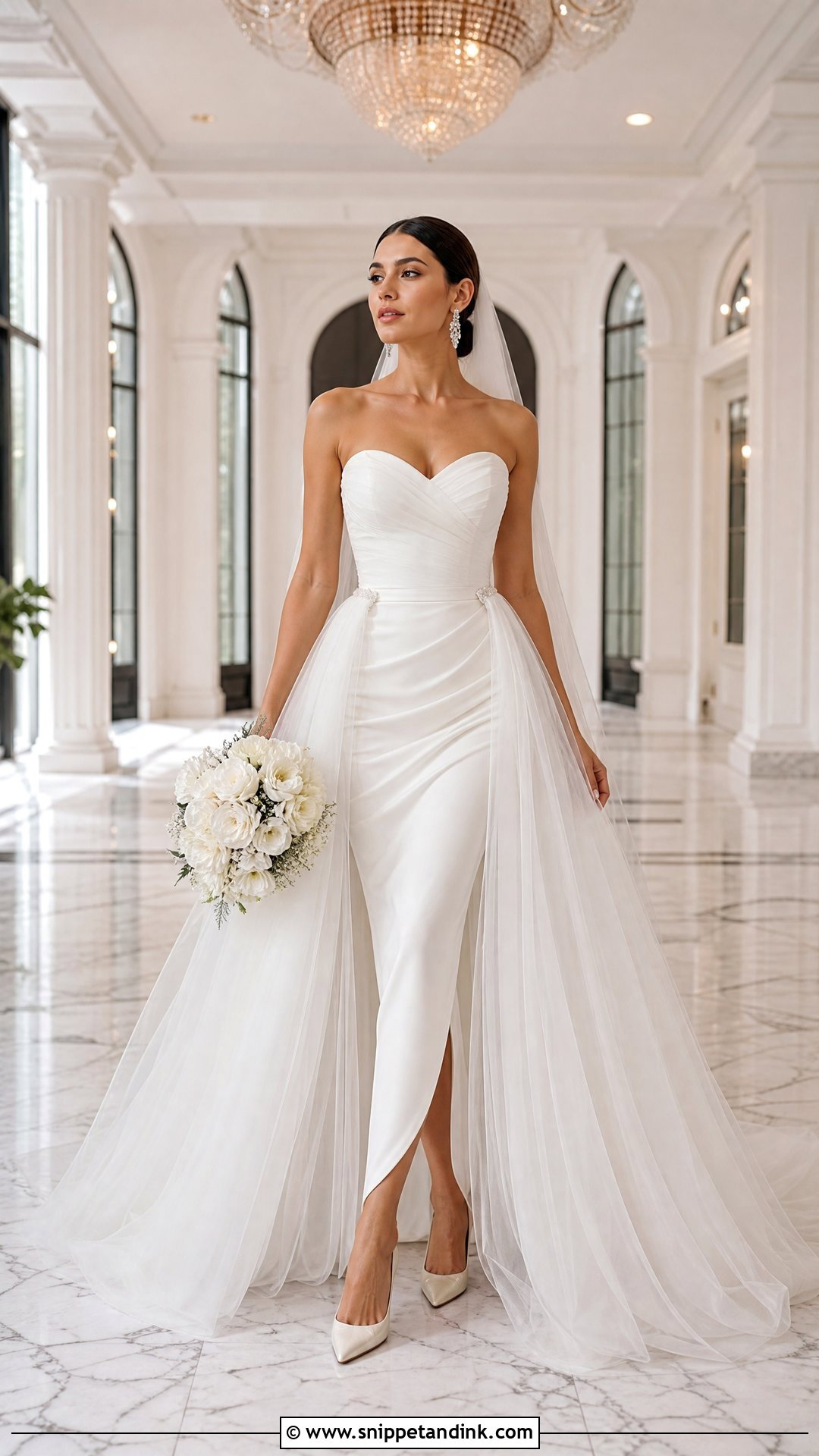
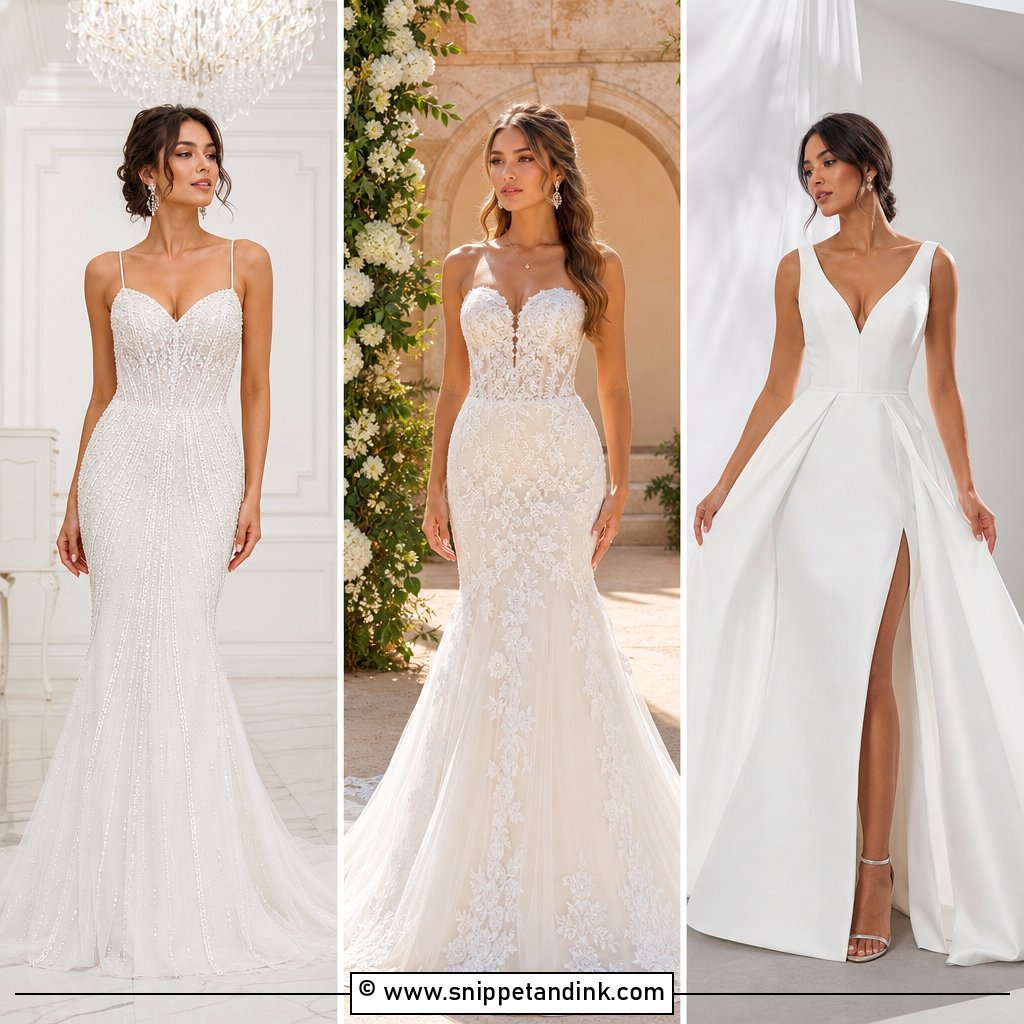
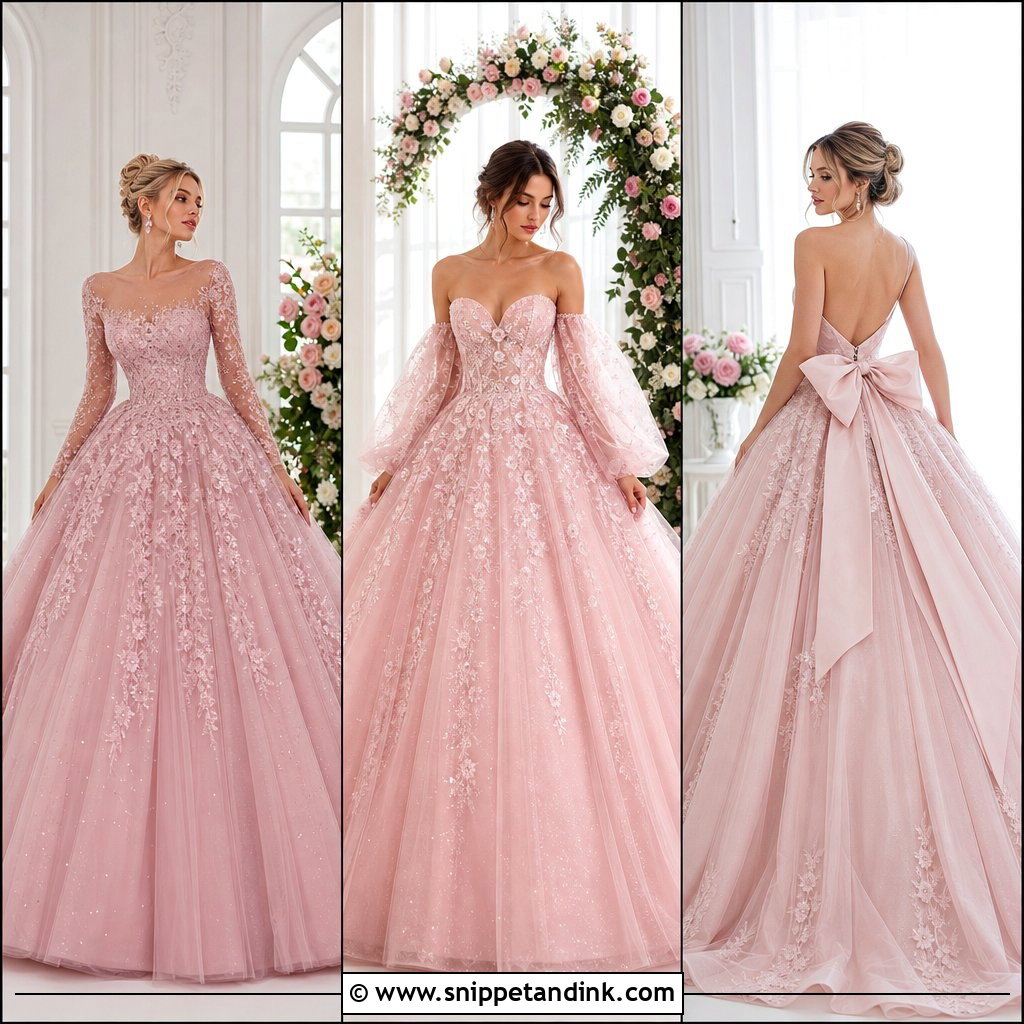
Two looks, one dress and no full change: that’s the appeal. A detachable tulle overskirt wedding dress layers a full tulle skirt over a fitted crepe, lace or satin gown for the ceremony, then comes off to reveal a slim reception dress. Style the first version with a chapel veil, crystal earrings and pointed ivory heels; afterwards, switch to statement earrings or a shorter veil. I look hard at the waistband. It should lie flat and stay hidden from the front, sides and back, with hooks or snaps you can’t feel through the fabric. Have a bridesmaid practise taking it off and putting it back on twice before the wedding, because a nervous first attempt in a corridor is how overskirts get torn.
Steam, Static and Snags on the Morning Itself
Tulle arrives creased from the garment bag almost every time, and the worst thing anyone can do is reach for an iron. Nylon net melts at iron temperatures and leaves a shiny, stiff patch that can’t be undone. A handheld steamer, held a few inches away and worked from the underside of each layer, relaxes the creases in a few minutes. Hang the dress by its inner loops, not the shoulders, so the bodice doesn’t stretch while the skirt drops.
A small kit worth handing to a bridesmaid
- Small sharp scissors for snipping a pulled thread rather than tugging it.
- Anti-static spray for the lining and slip, never sprayed straight onto beading.
- Double-sided fashion tape for necklines and straps.
- Safety pins in ivory or gold, for a bustle loop that gives way.
A snag in tulle can’t be darned invisibly the way a knit can. If one happens, trim any loose thread and leave it; on a layered skirt it disappears among the other layers. Expect the bottom few inches of the hem to pick up grass and dust outdoors, too. That’s normal, and it never shows in photos taken from the waist up.
Tulle trains are usually bustled with an under-bustle, where ribbons tie the train up beneath the skirt, because hooks on the outside drag the net. Ask your seamstress to color-code the ribbons and walk your bridesmaid through it at the final fitting. After the wedding, get the gown cleaned within a few weeks, since spilled champagne and sugar dry clear and then yellow over months. Store it in a breathable cotton bag with acid-free tissue, never in plastic.
Tulle Should Still Feel Light at the Last Dance
The right tulle gown is the one you stop thinking about an hour after the ceremony. Compare silhouettes, necklines, skirt volume, lining color and embellishment, then judge the whole outfit with the veil, shoes, jewelry, hair and flowers you’ll actually wear on the day. At every fitting, walk, sit, turn and lift your arms. A dress that moves well in a cramped fitting room will move well on a dance floor, and that ease is what your guests notice.
You'll Like These Ideas:






Leave a Reply