
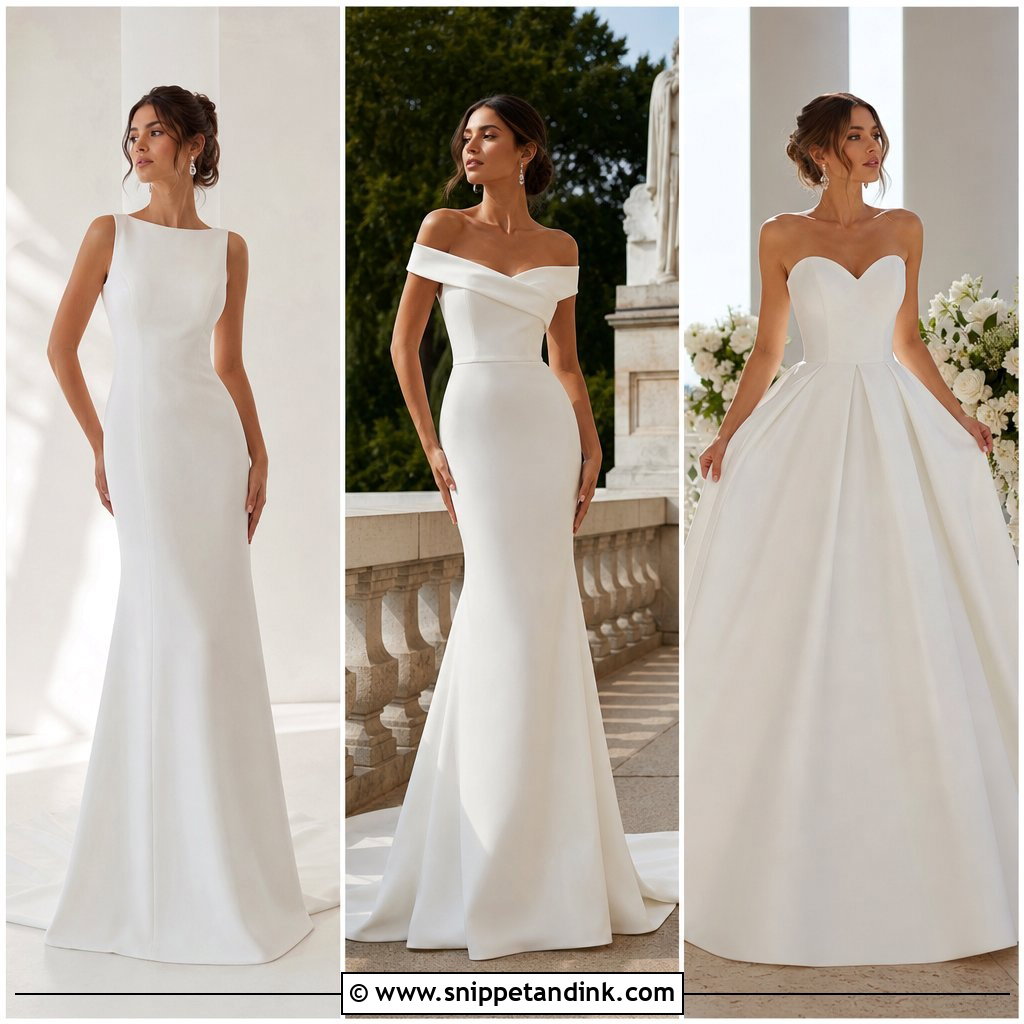
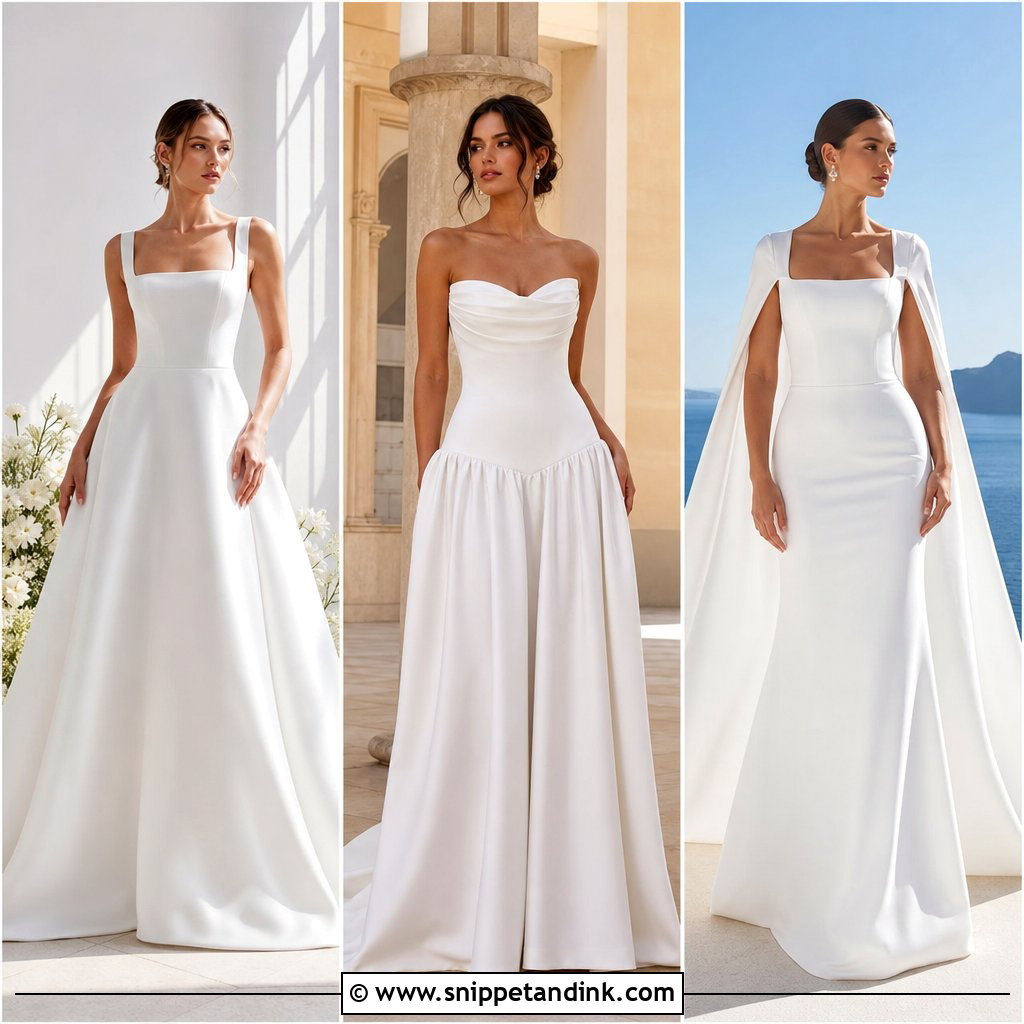
Straight gowns, also sold as sheath or column dresses, sit between the drama of a mermaid and the volume of a ball gown. I find they suit far more brides than expect them to, as long as the tailoring is careful, because the gown follows your shape instead of building a new one around you. That’s the trade: nothing to hide behind, but nothing to carry either. Satin, crepe, lace, chiffon and beading each give the same outline a different character, and the neckline, sleeves and train do the rest. Here are twenty versions, with the shoes, veil and jewelry I’d style with each.
Bridal Sizing Runs Small, and a Narrow Gown Shows It
The size on a wedding dress label rarely matches the size you wear every day. Bridal sizing usually runs smaller than high-street sizing, so many brides order one or two sizes up from their normal size. It’s not a judgment on your body, just how the industry cuts.
With a full skirt, the bust and waist are what count. With a straight gown, the hip matters just as much, because the skirt hangs from it. I order to the largest of your three measurements and let the tailor take in the rest. Taking in is easy. Letting out a column gown is often impossible, since there’s little seam allowance in the skirt.
Shop samples complicate things. They’re usually one size, clipped to fit you, and a clipped satin column looks smoother than it will once it’s actually yours. Ask the consultant to unclip the back for a moment so you can see how much is being held in.
Timing matters too. Made-to-order gowns often take several months to arrive, and alterations on a fitted silhouette usually need two or three appointments. Ask the shop for its current delivery estimate before you sign anything.
1. Satin Straight Wedding Gown
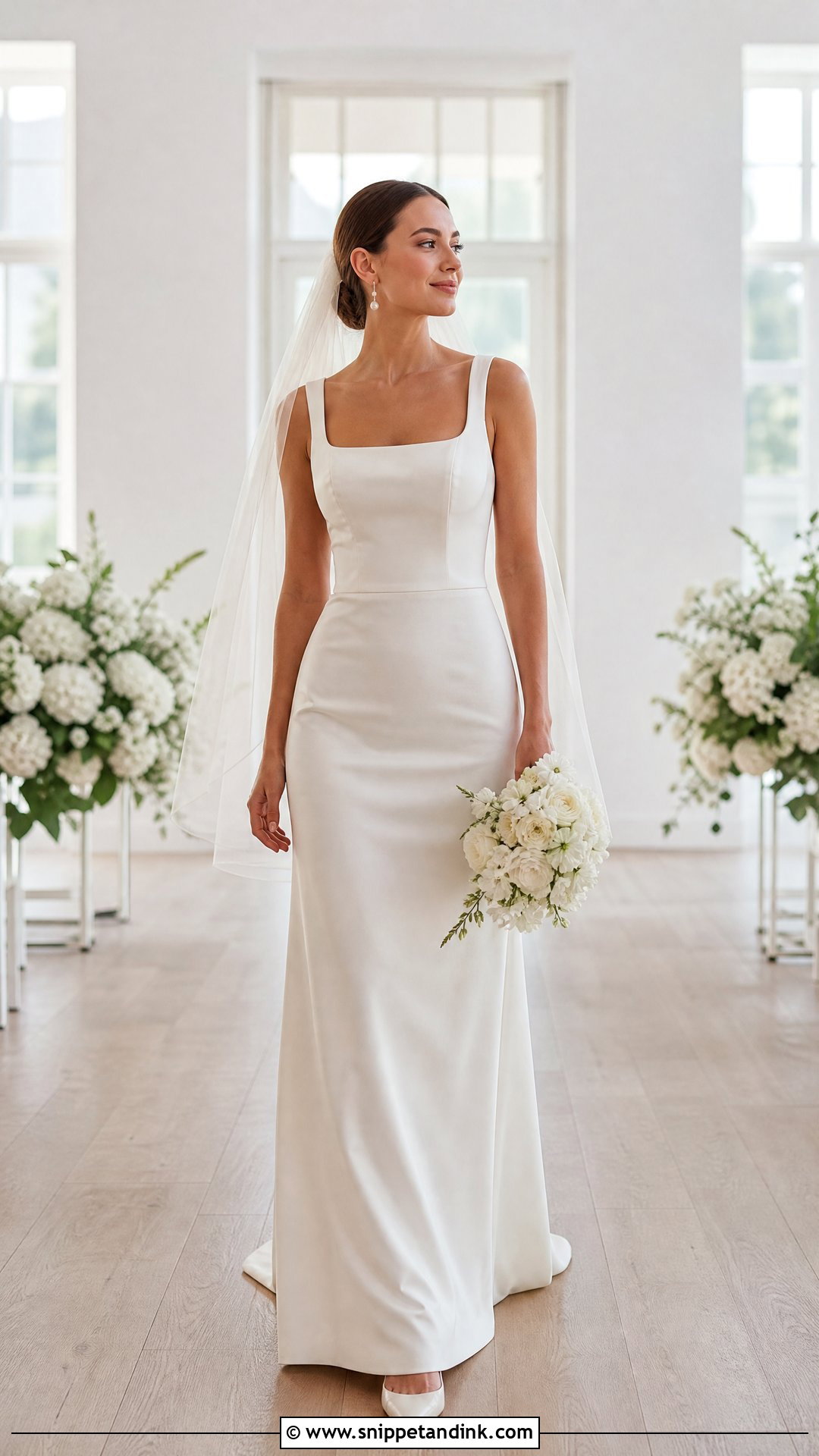
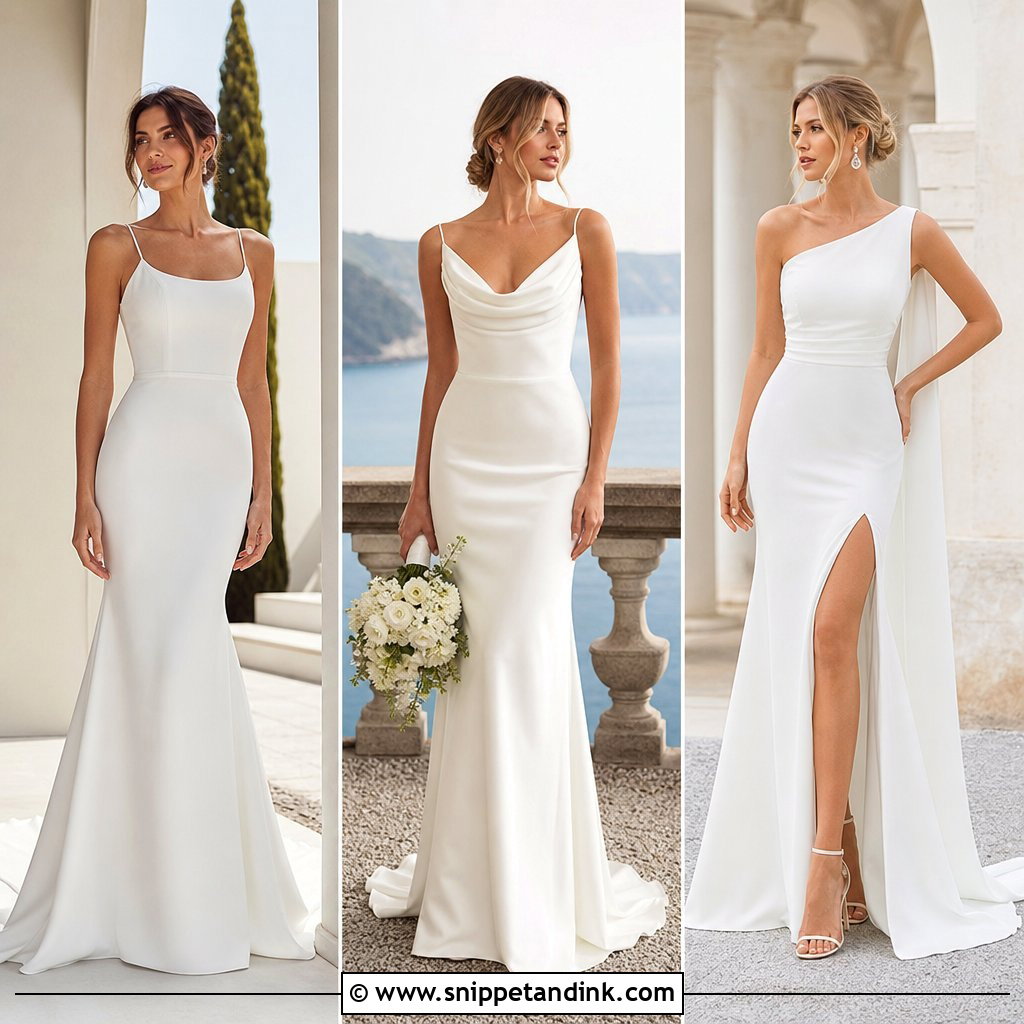
With a satin column, I always check the fit while the bride is moving, because satin shows a pull at the hip only when you take a step. Wide straps and a square neck balance the proportions, and a waist seam gives definition without breaking the long line. Pointed ivory pumps, pearl drops and a small structured bag are all it needs. A low chignon keeps the neckline clear, and a fingertip veil adds movement without hiding the narrow skirt. Have the tailor check hip ease, hem length and any visible underwear lines while you walk, sit and turn.
2. Long Sleeve Straight Wedding Gown
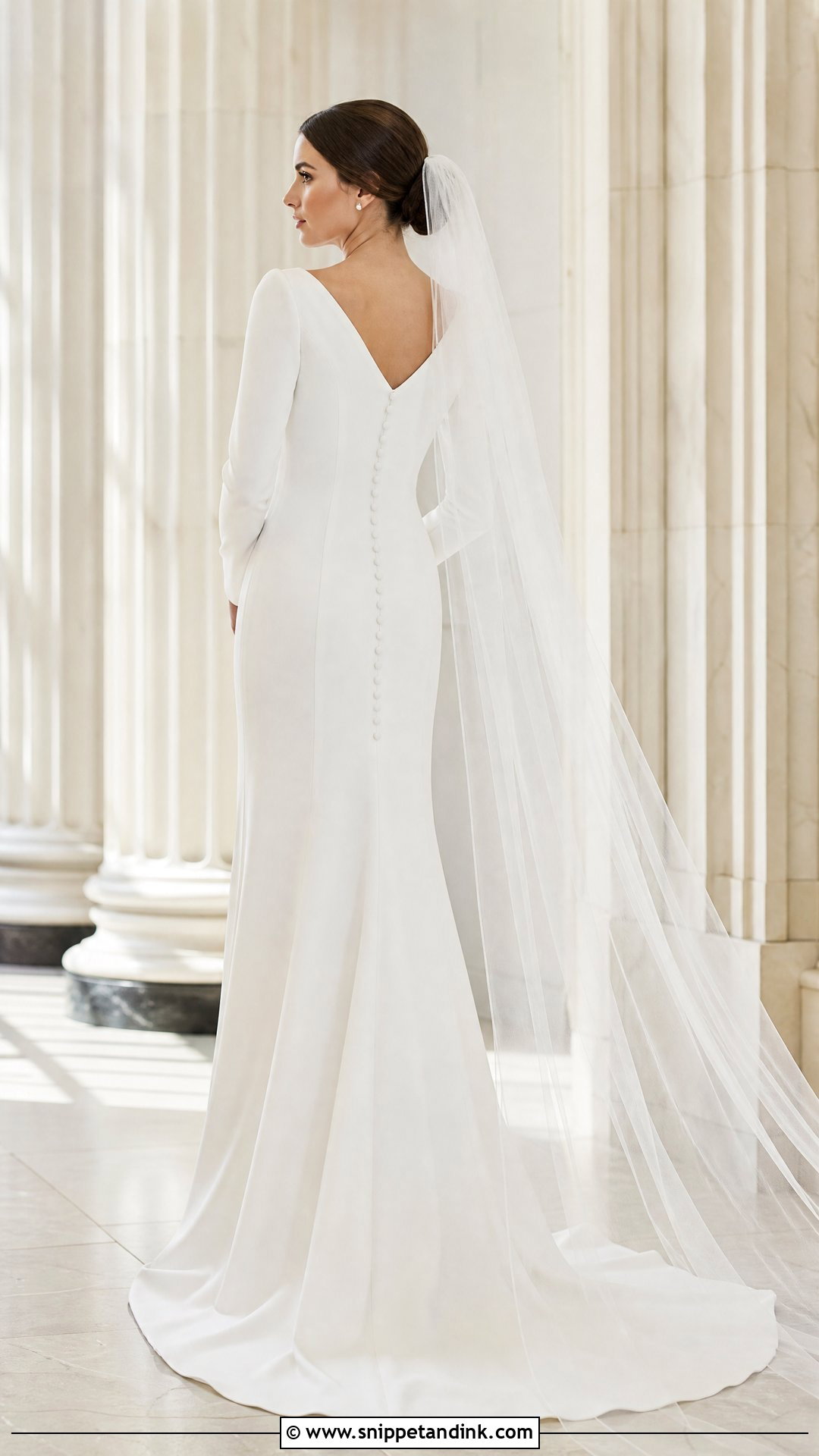
Sleeves add coverage, and with a narrow gown they also add the risk of restricted arms. Practise raising your arms at every fitting; a sleeve set too tight at the armhole tears or lifts the whole bodice when you wave. Fitted crepe or lined lace sleeves with a bateau, scoop or modest V-neck suit a column, and a covered-button back adds quiet detail. Closed-toe heels, stud earrings and a narrow cathedral veil keep it formal. A removable cape covers a cold season, and a short sweep train keeps it practical.
3. Lace Straight Wedding Gown
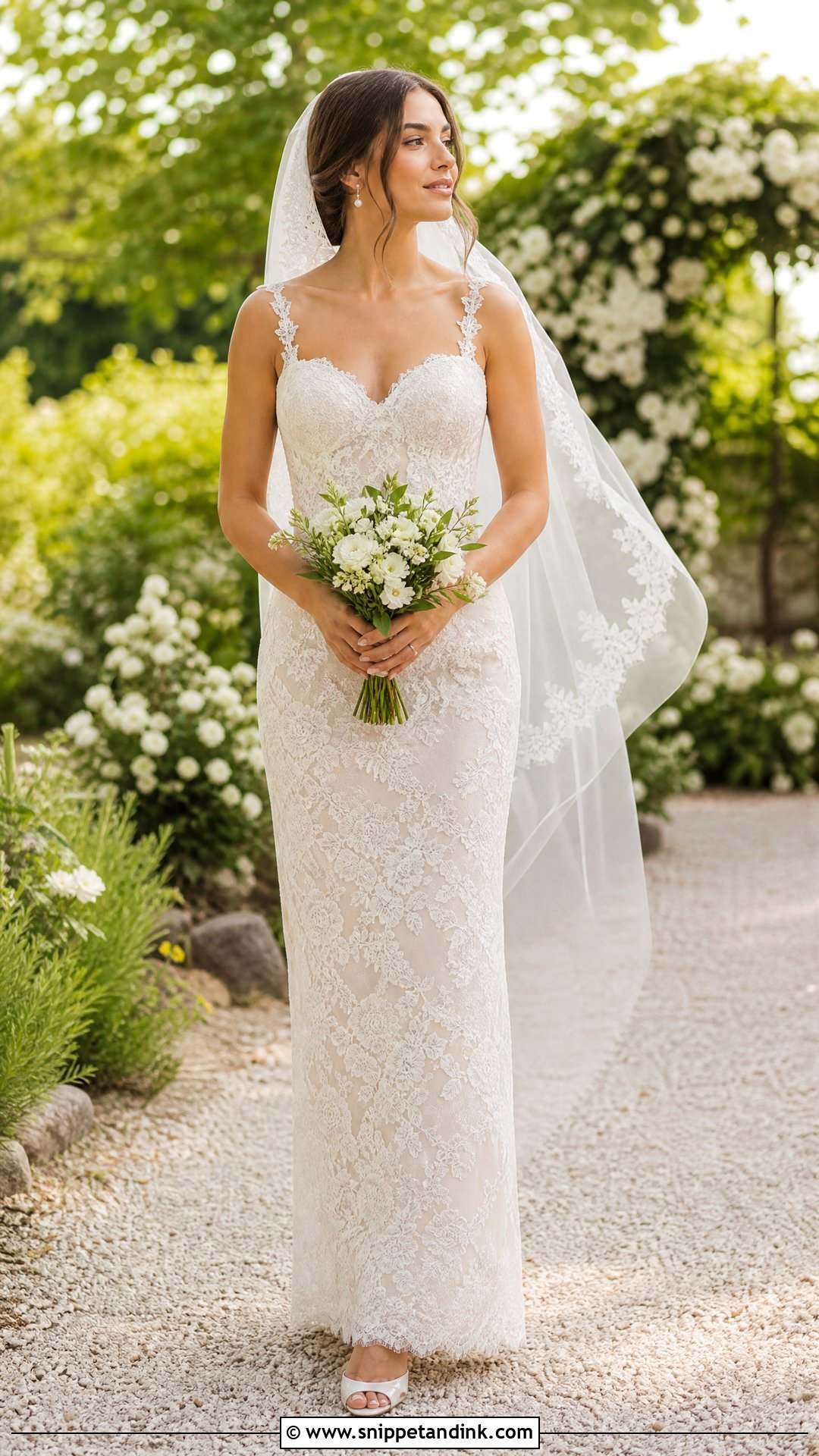
Lace on a straight gown reads longest when the motifs run vertically along the bodice and skirt. Horizontal bands of lace cut you into sections. A lined sweetheart bodice with sheer lace straps shows the neckline but keeps you covered. Heavy appliqués need checking around the waist and hip, where a large flower sitting off-center can make one side look wider. Ivory slingbacks, a lace-edged veil and small pearl earrings suit it, and a bouquet of white flowers and greenery stays out of the lace’s way. A subtle train adds movement for the ceremony.
4. Strapless Straight Wedding Gown
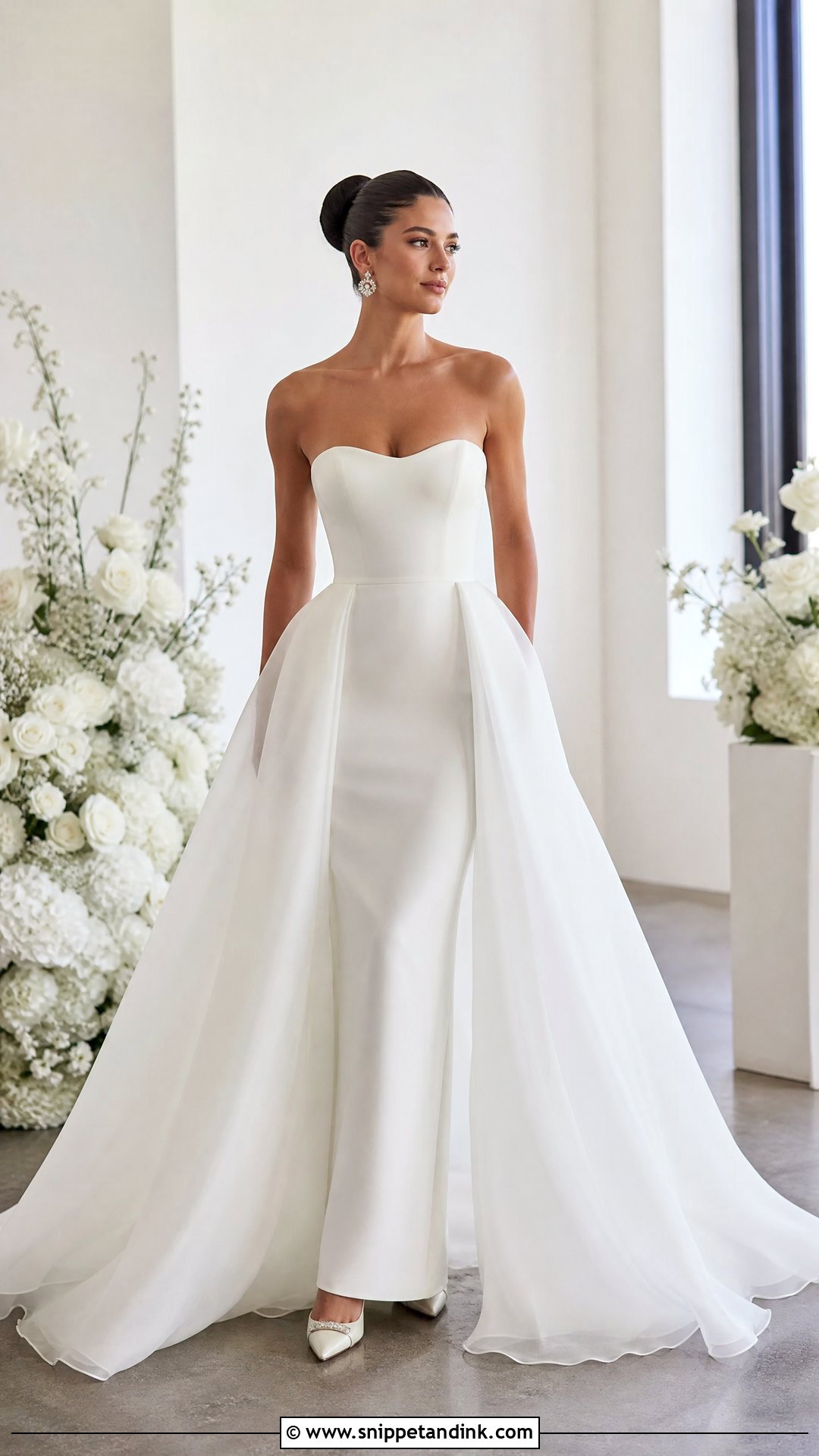
Strapless works when the internal corset does all the holding. A straight-across or softly curved neckline with a structured bodice frees the shoulders and lets statement earrings take the place of a necklace. Matte crepe is minimal, satin more luminous. At alterations, the test is simple: hold your arms up, bend to pick something off the floor and sit down. If the top edge gapes, pinches or slips, it isn’t finished. A detachable overskirt or cape can add ceremony presence, then come off for a sleek reception look.
5. Square Neck Straight Wedding Gown
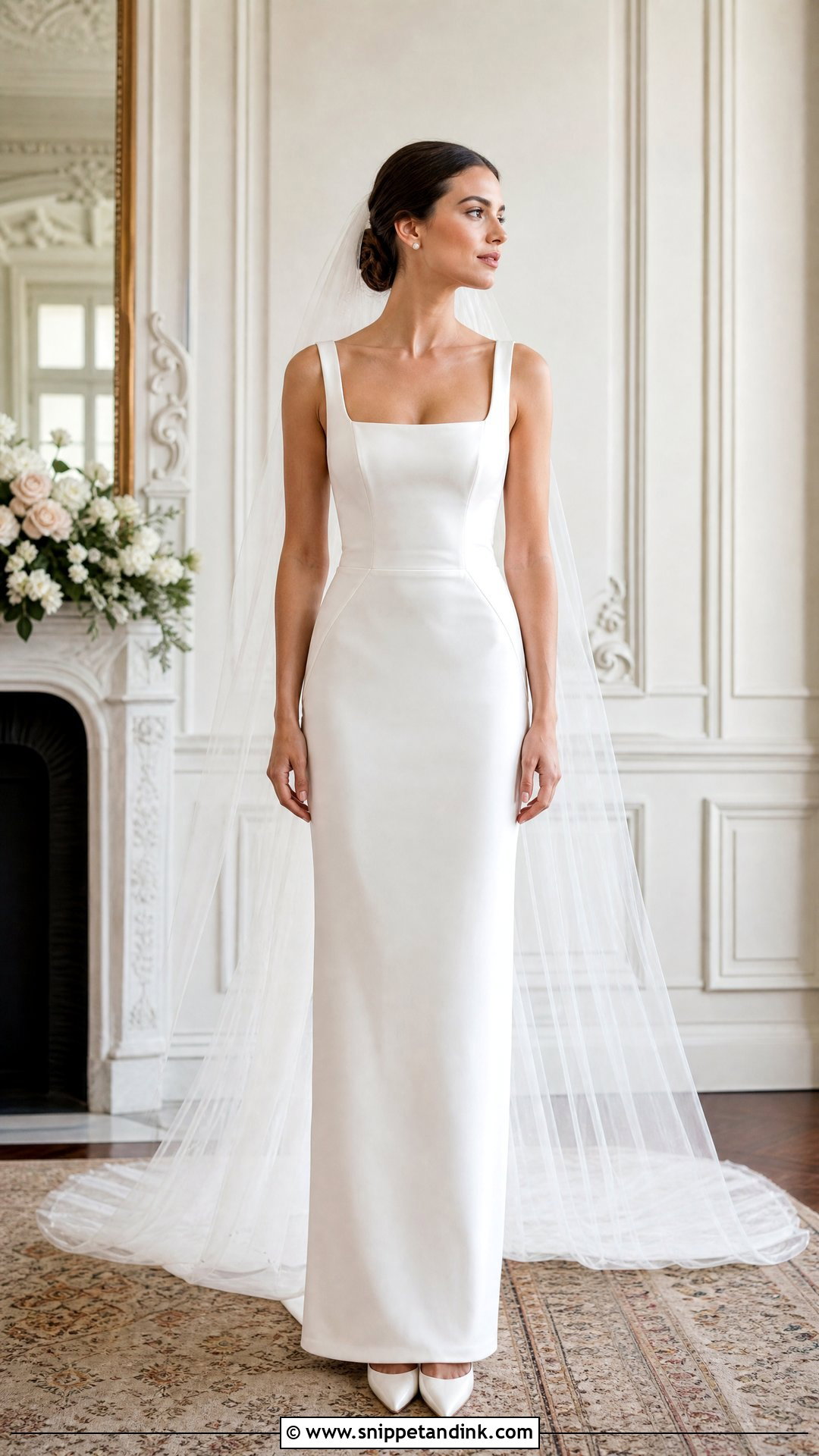
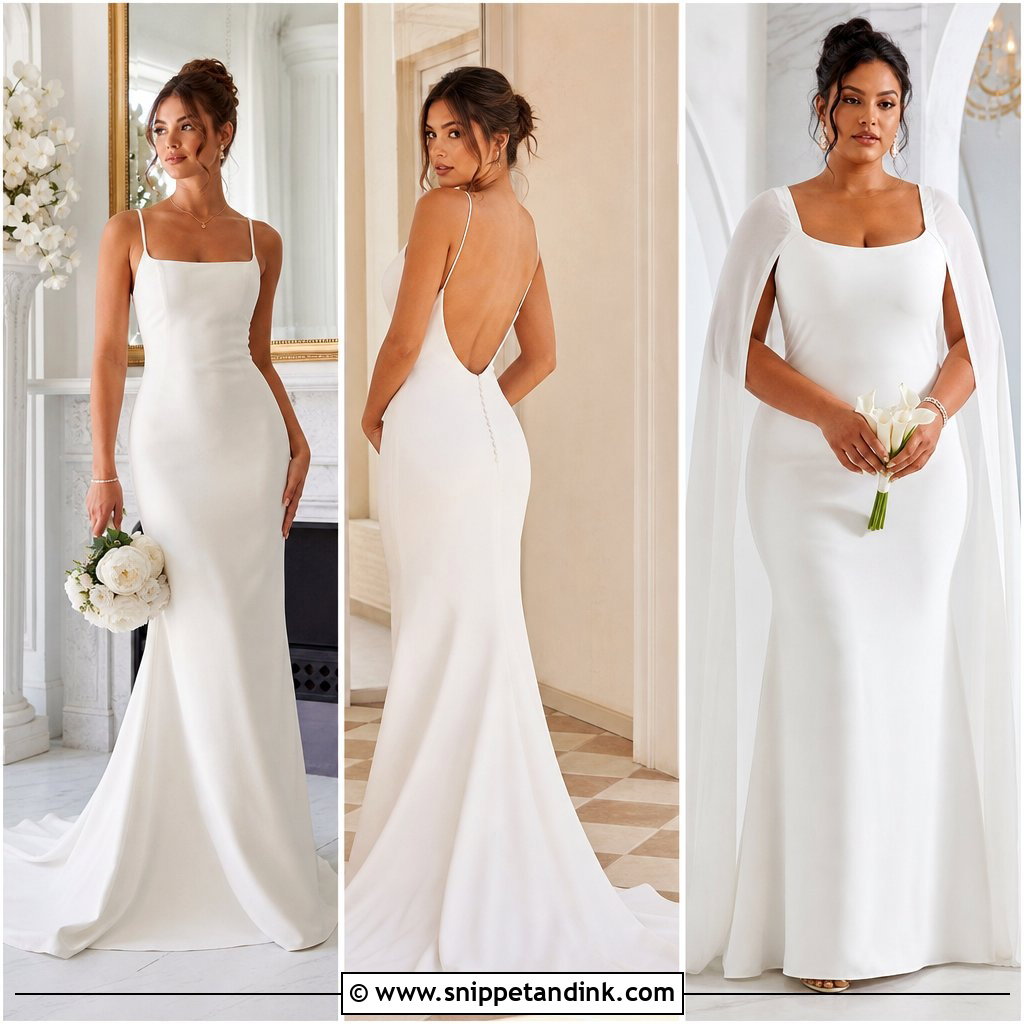
The detail I watch on a square neck is whether it lies flat when you move. If the bodice isn’t shaped to your chest, the top edge stands away from the skin as you lean forward, and that gap shows from above in every seated photo. Substantial crepe or satin with wide straps or fitted sleeves keeps it crisp. Curved waist seams or a narrow band give definition without volume. Pearl studs, a low bun, pointed heels and a sheer chapel veil suit it. Short gloves add a vintage note.
6. Off Shoulder Straight Wedding Gown
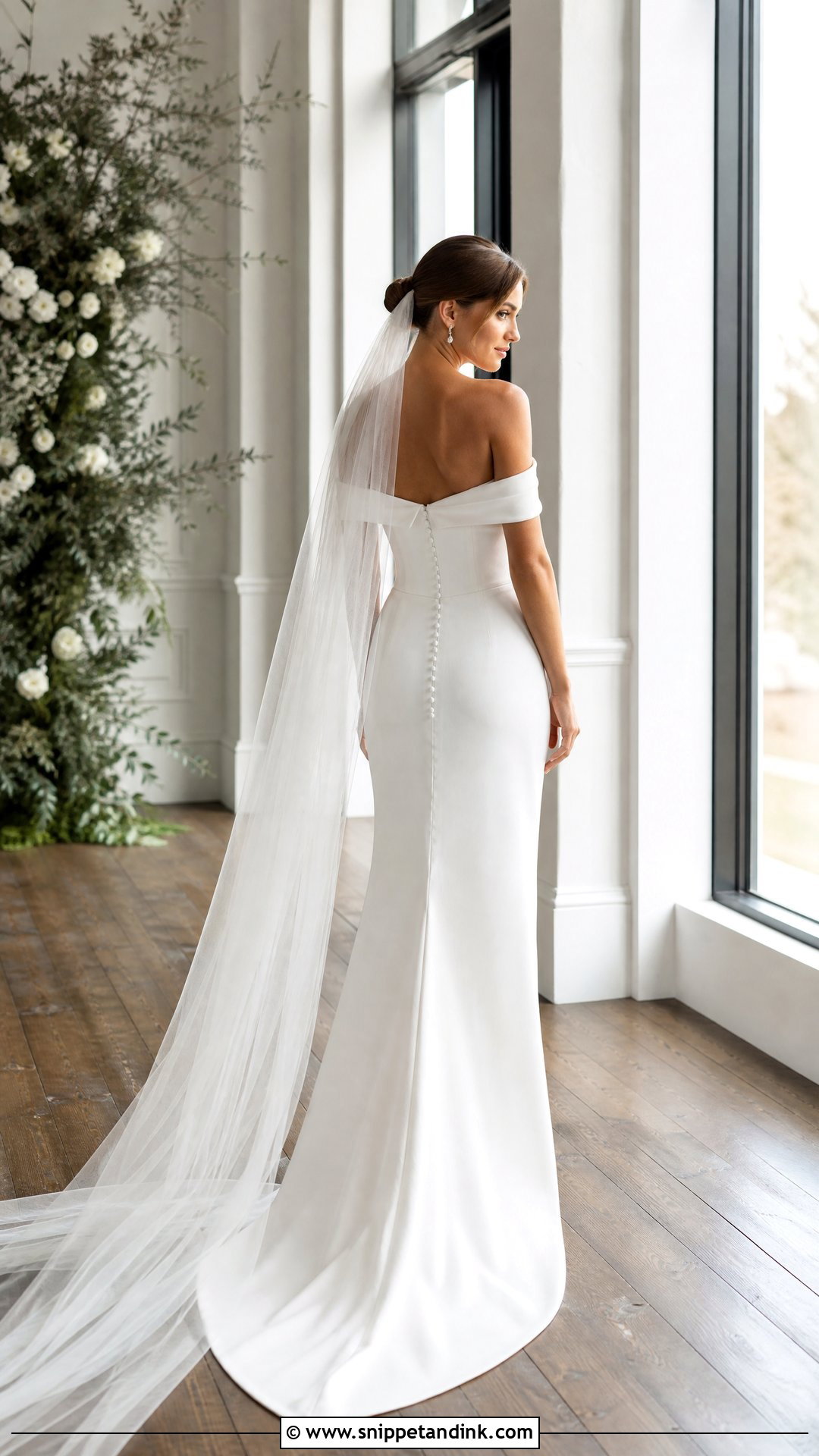
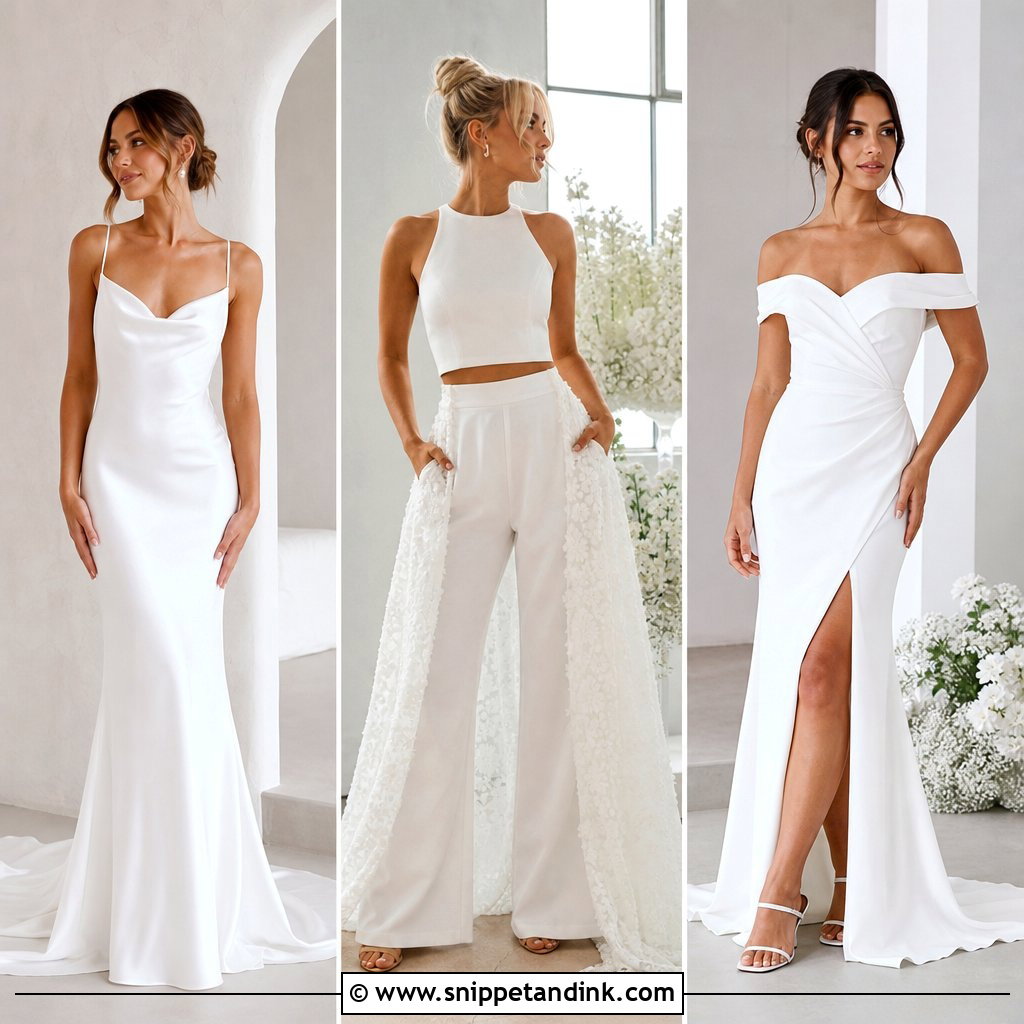
Off-shoulder necklines need hidden support so the bands don’t slide down your arms or creep up your neck. Draped satin bands are sleek; lace sleeves are more delicate. The skirt can drop straight from the waist or follow the hip first, which is the more flattering choice if you’re curvy. Understated drops and a smooth updo let the neckline lead. Set a comb veil below the bun so the shoulders show in photos. Covered buttons and a modest train give the back equal interest.
7. V Neck Straight Wedding Gown
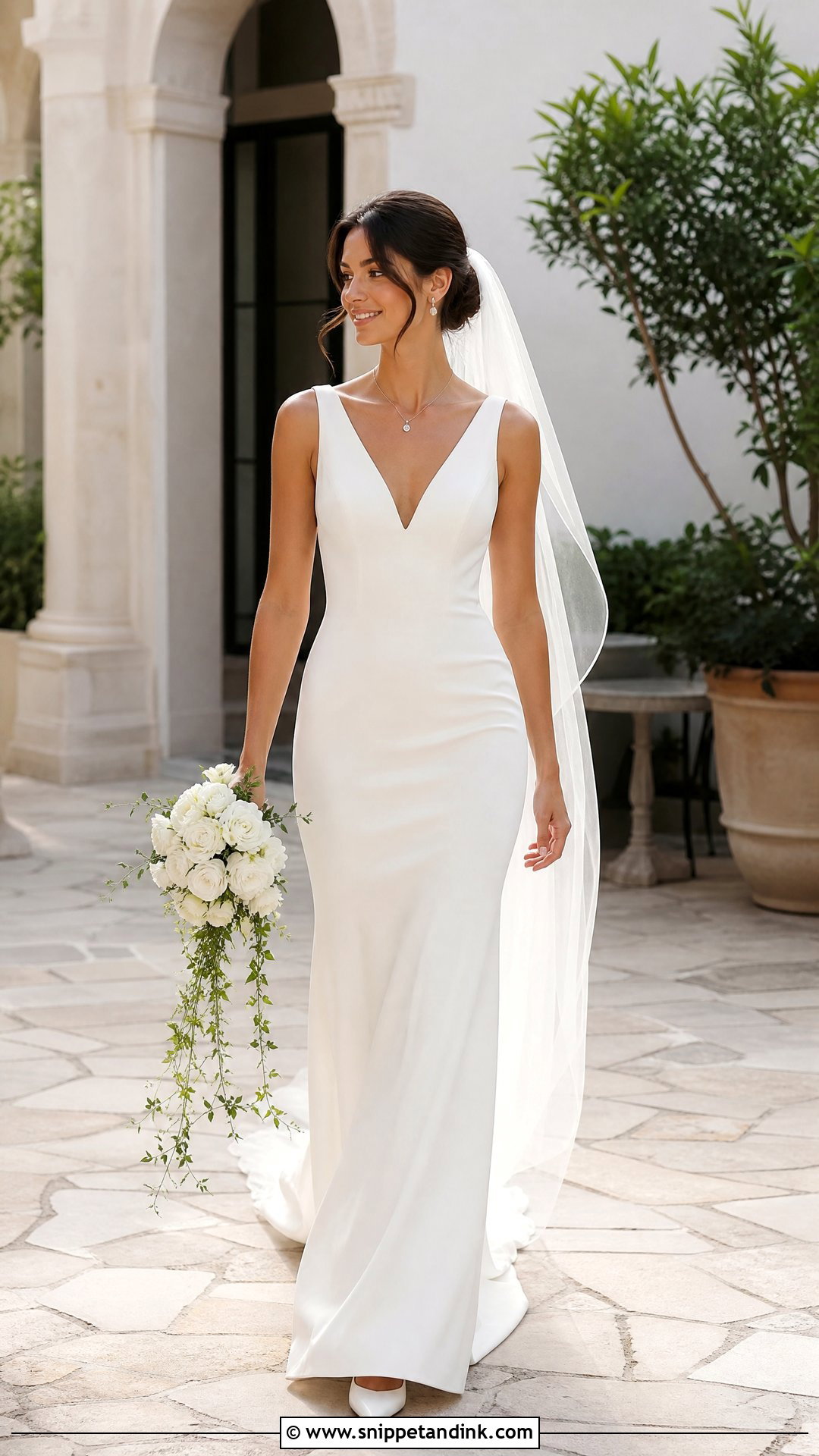
A V-neck pulls the eye downward and makes a column look longer still. Shallow is classic; deeper needs an illusion panel or a well-shaped bodice. Sit down and lean forward in front of the mirror during your fitting, because a low V on a gown that isn’t fitted to your bust will gape the moment you bend. Crepe and satin give structure, lined chiffon more movement. A fine pendant fills the neckline nicely here. Pointed heels, small earrings and a bouquet with trailing greenery repeat the vertical flow.
8. High Neck Straight Wedding Gown
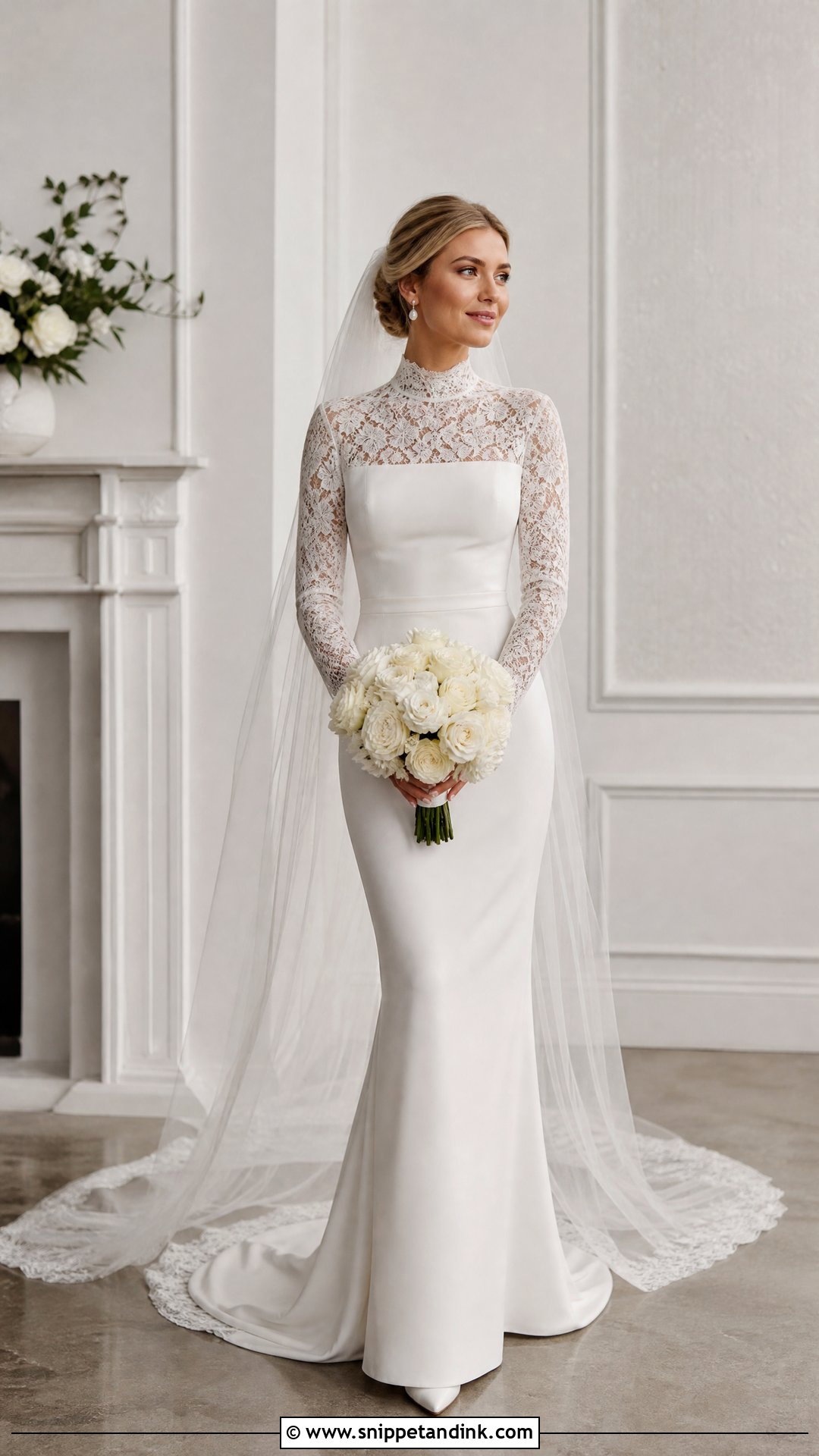
A high neck shifts all the interest above the shoulders, so the rest should stay simple. A halter-style neckline feels modern, and a lace mock neck leans vintage. I’d balance it with a sleeveless bodice, an open back or slim sleeves. Light boning and precise shoulder work keep the collar sitting where it should all day. Wear your hair up so it isn’t hidden, skip the necklace and set the veil under the bun. A center-back slit helps with walking.
9. Cowl Neck Straight Wedding Gown
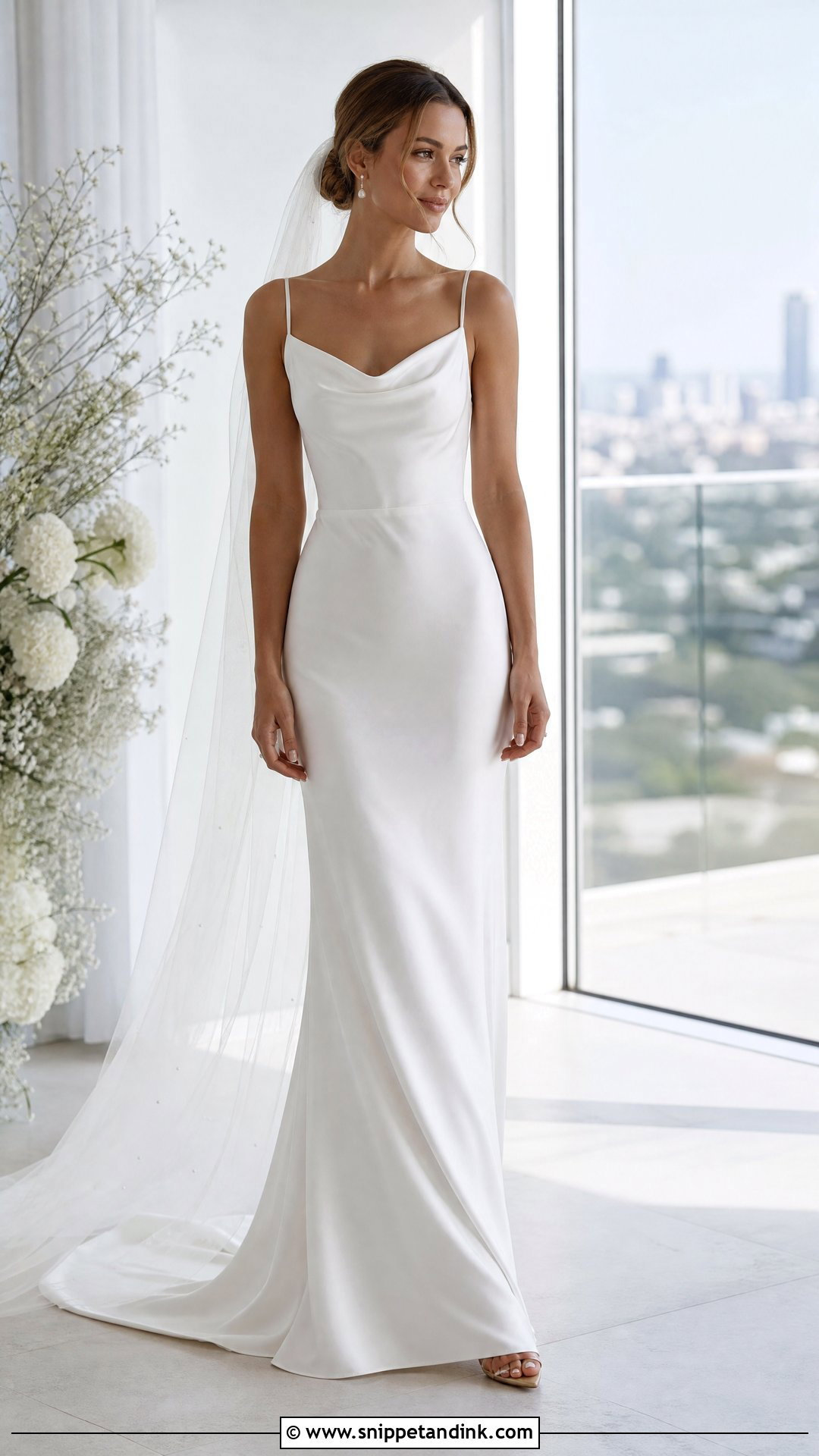
Cowl necklines only drape properly in fabric soft enough to fold, so this one belongs in silk satin or a light satin blend. A heavy satin cowl just sticks out. Narrow straps and a bias-cut skirt give the understated 1990s bridal fashion feel. Bias silk is thin, so choose underwear that leaves no edges and check it walking in daylight, not in the shop. Barely-there ivory sandals, pearl drops, a twisted low bun and a sheer chapel veil complete it.
10. One Shoulder Straight Wedding Gown
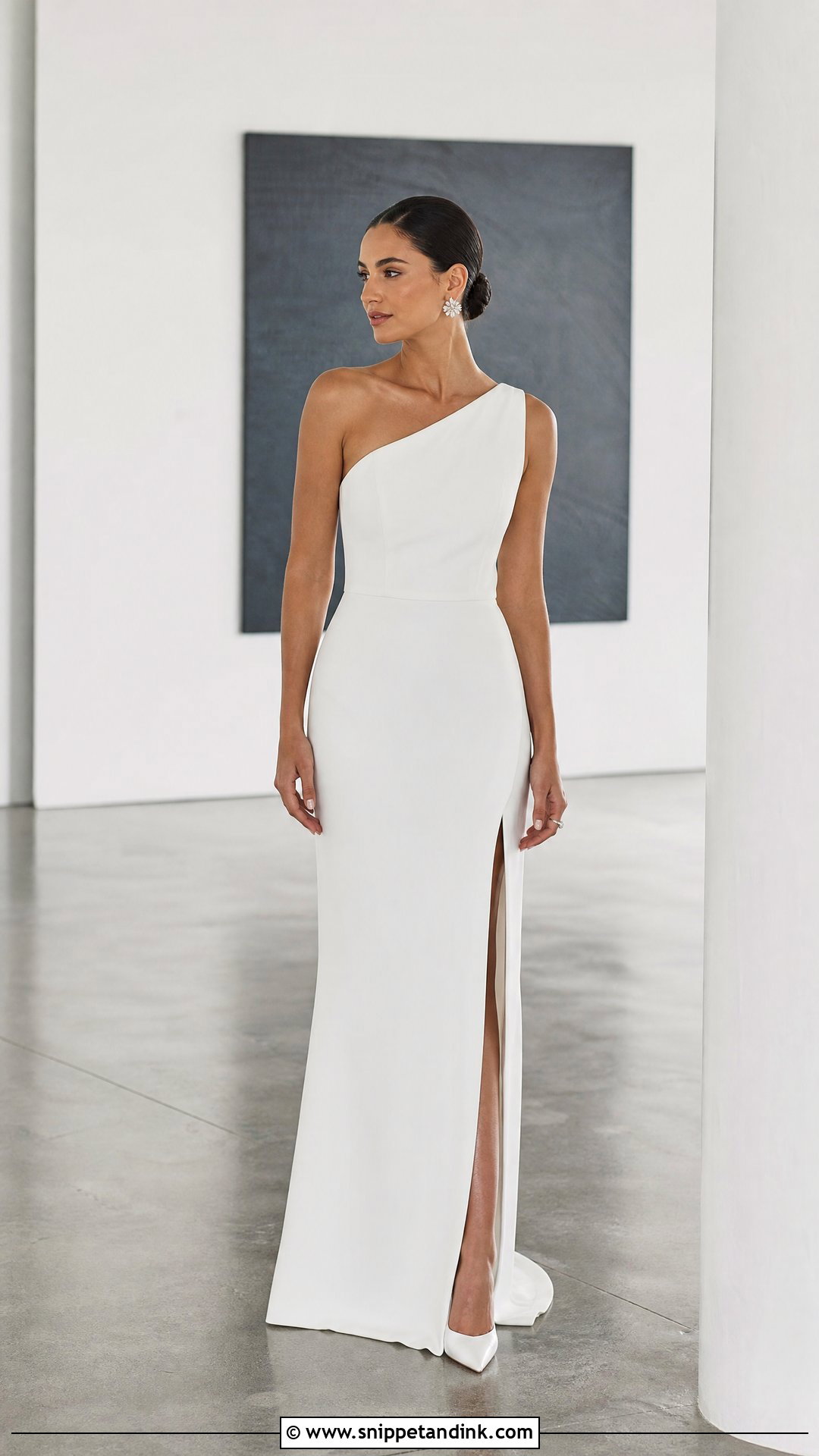
Asymmetry carries this look, so I put all the fitting effort into the shoulder. A one-shoulder gown wants to tip toward the strap side, and only a firm bodice and a stay at the waist keep it level. Structured crepe gives a sharp diagonal; draped satin is softer and more Grecian. Add a back or side slit for walking, a sleek updo and one statement earring on the bare side. A wrist-length veil or detachable drape adds movement. Ask the tailor to balance the intentionally asymmetrical construction on your body, not on a mannequin.
11. Backless Straight Wedding Gown
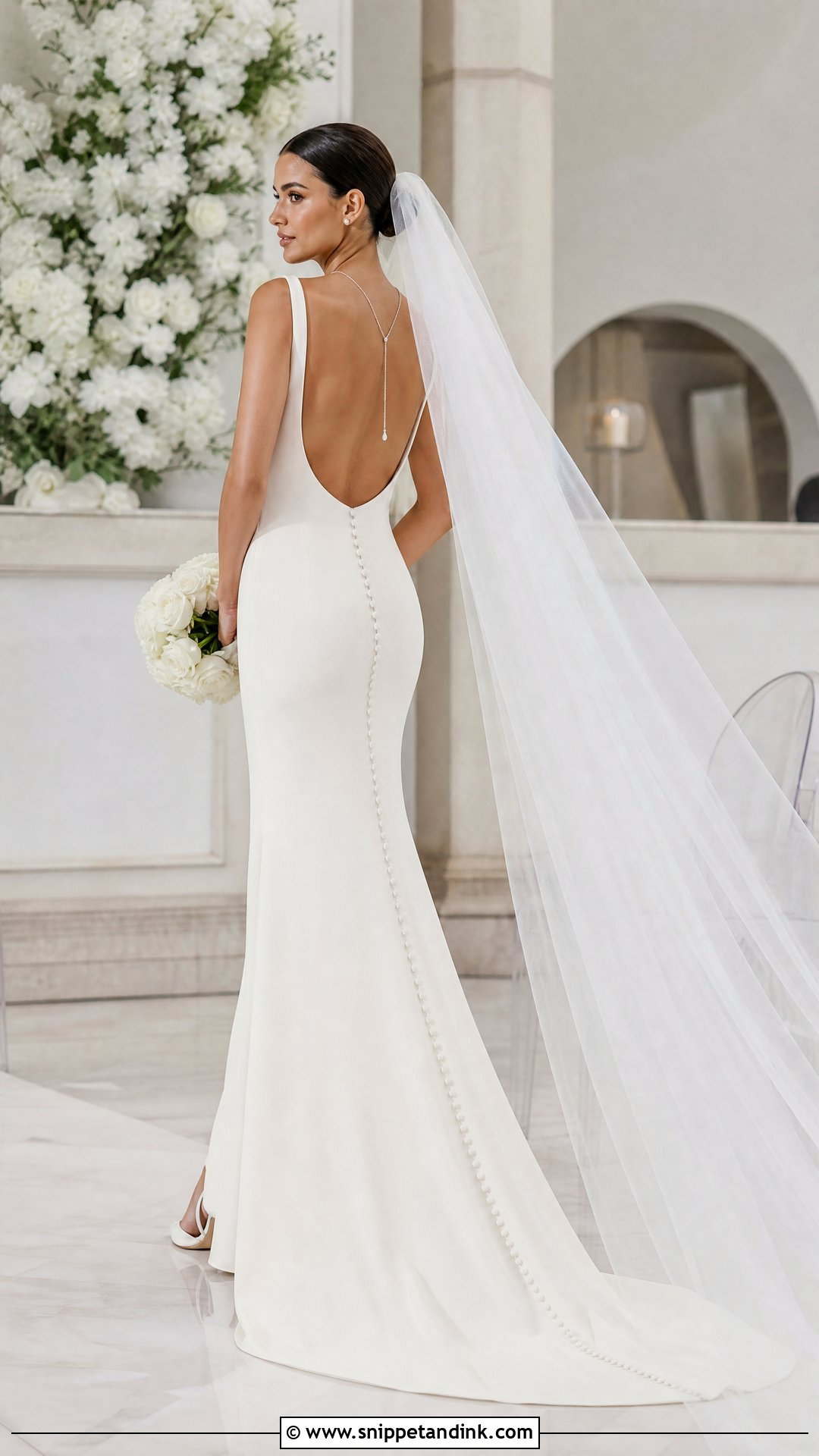
Most guests see you from behind during the vows, which is why a backless straight wedding gown earns its place. Keep the front plain with a bateau, scoop or high neck. Double-lined satin or substantial crepe holds the shape so the opening doesn’t sag. You probably can’t wear a normal bra, so plan built-in cups or tape from the first fitting. A back necklace, a low bun and a veil set below the hair keep the back on show. Covered buttons below the opening can lead into a sweep train.
12. Beaded Straight Wedding Gown
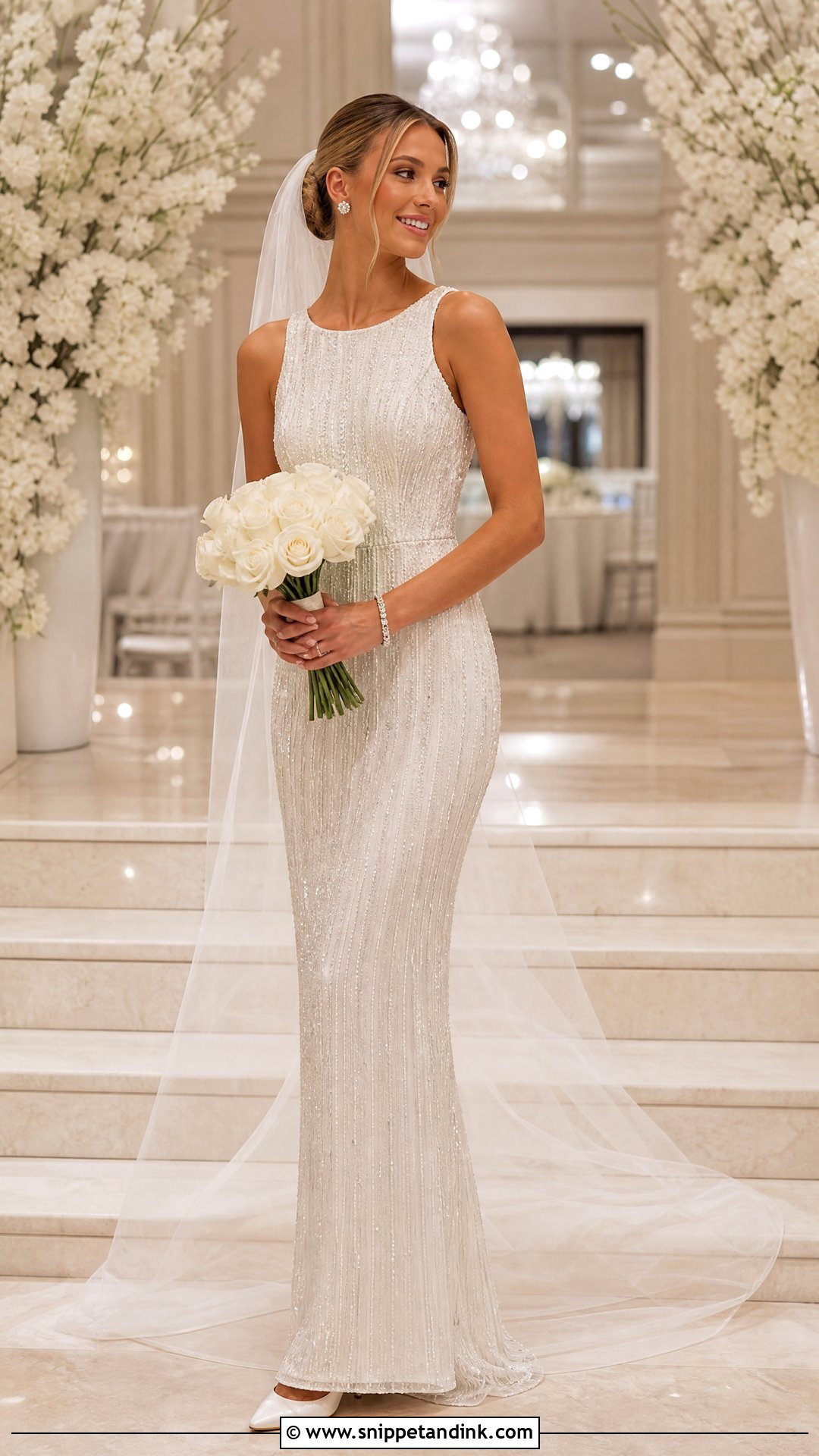
Beads come alive under evening lighting, so I steer beaded columns toward ballrooms, hotels and indoor receptions, where the shimmer picks up candles and uplighting. Vertical beadwork or Art Deco patterns lengthen the shape; scattered crystals soften it. Beaded fabric weighs more than plain crepe, so check that the shoulders carry it and the skirt still swings. A smooth lining protects your skin and a small back slit helps you dance. Satin pumps, crystal studs and a plain veil keep it from getting busy.
13. Pearl Straight Wedding Gown
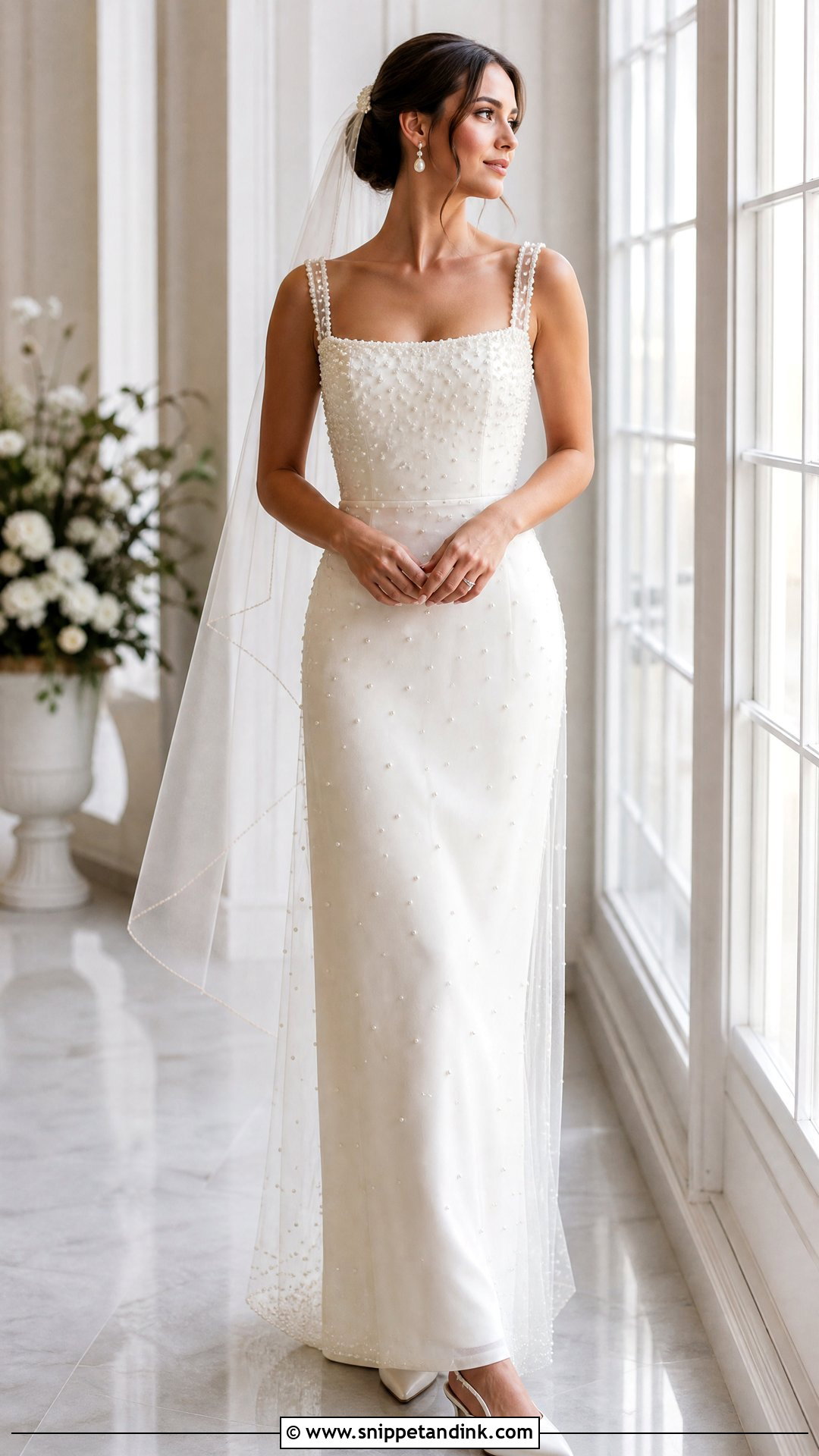
Pearls are firmly attached on a well-made gown and loose on a poorly made one, so give each section a gentle tug at your fitting. A loose pearl now becomes a missing pearl by the reception. Scattered pearls on a sheer overlay, pearl-trimmed straps or a pearl bodice over a plain skirt each give texture without changing the outline. Pearl earrings, satin slingbacks and a plain tulle veil coordinate; skip other sparkle. Make sure there’s room through the thighs to walk at a normal pace, and that pearls don’t snag the veil or bouquet wrap.
14. Corset Straight Wedding Gown
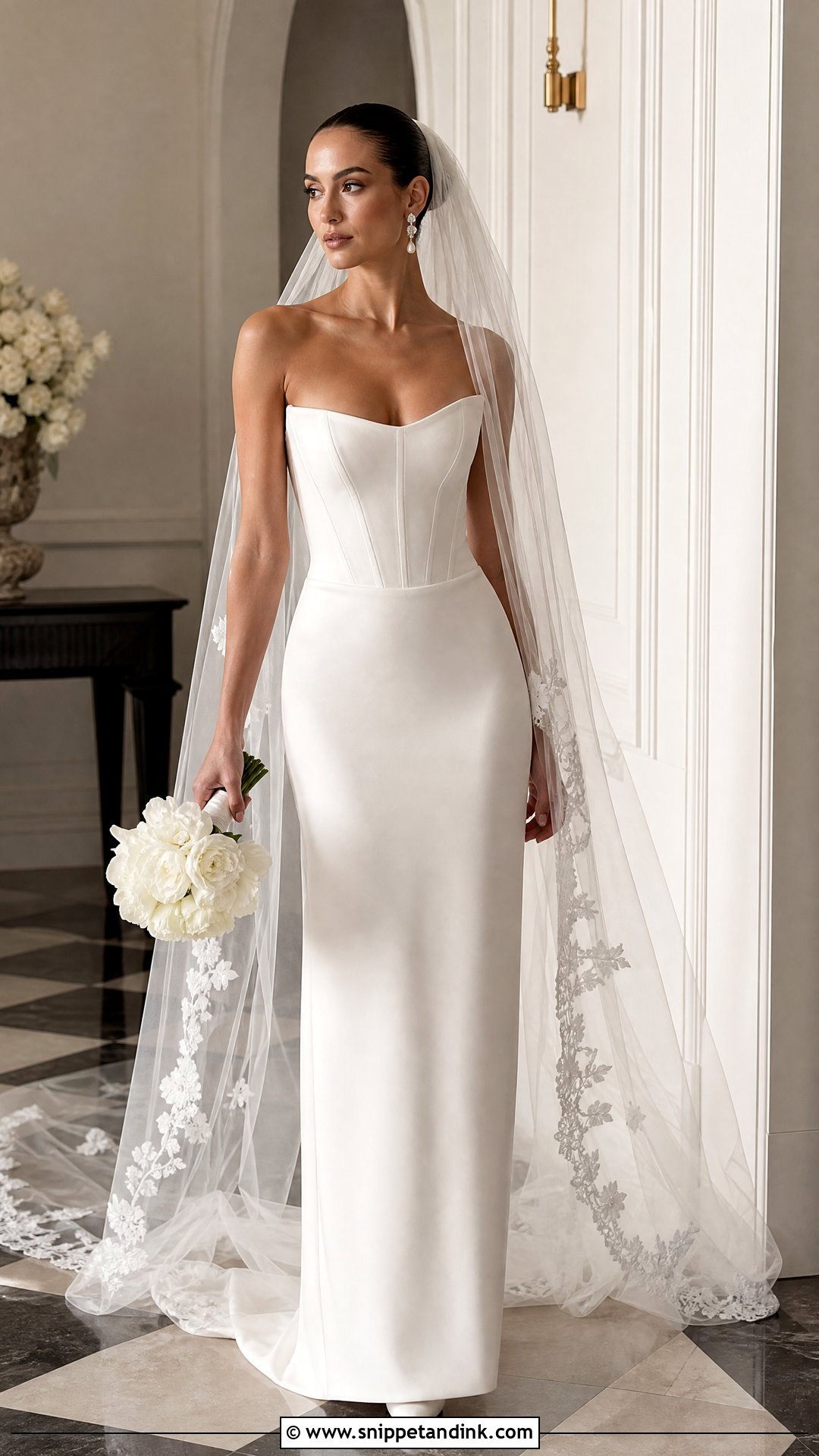
A corset bodice over a slim skirt gives shape at the top and calm below. Exposed boning reads modern, covered boning traditional. I fit the corset so you can take a full breath, sit and eat a meal; if you can’t, it’s too tight, however good it looks standing. A lace-up back allows adjustment on the day, and internal hooks and cups add support. Scoop, sweetheart or a softly pointed neckline suit the construction. A chapel veil, drop earrings and a compact bouquet complete it.
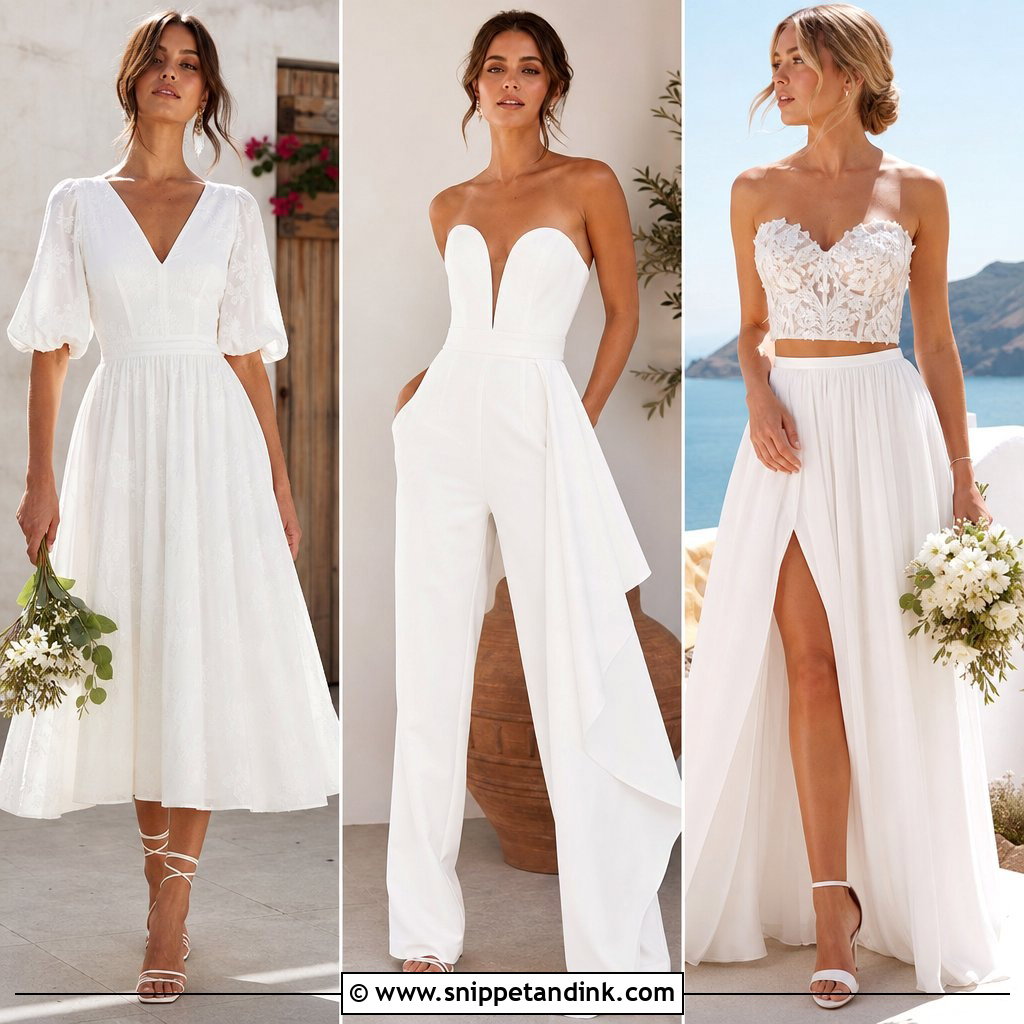
15. Slit Straight Wedding Gown
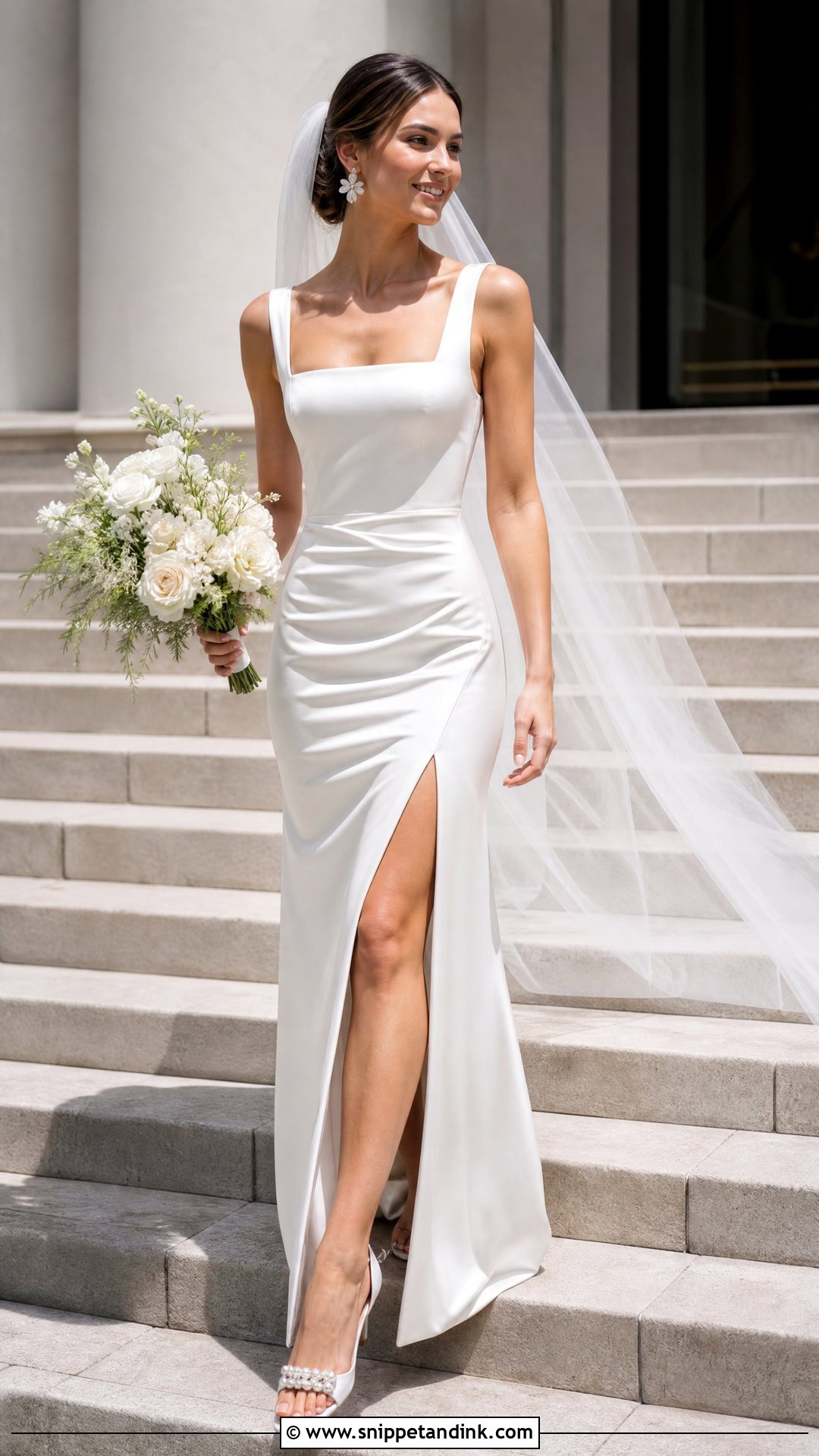
A slit is functional first. A center-back slit lets you walk; a side or front slit shows off your shoes too, so pick shoes worth seeing and comfortable enough for hours. The top of any slit should be reinforced with a bar tack or it tends to split higher the first time you climb steps. Balance it with a square, one-shoulder or strapless neckline, sculptural earrings and a light veil. Climb steps and sit before final alterations. If you want more coverage, a sheer insert keeps movement while closing the gap.
16. Cape Straight Wedding Gown
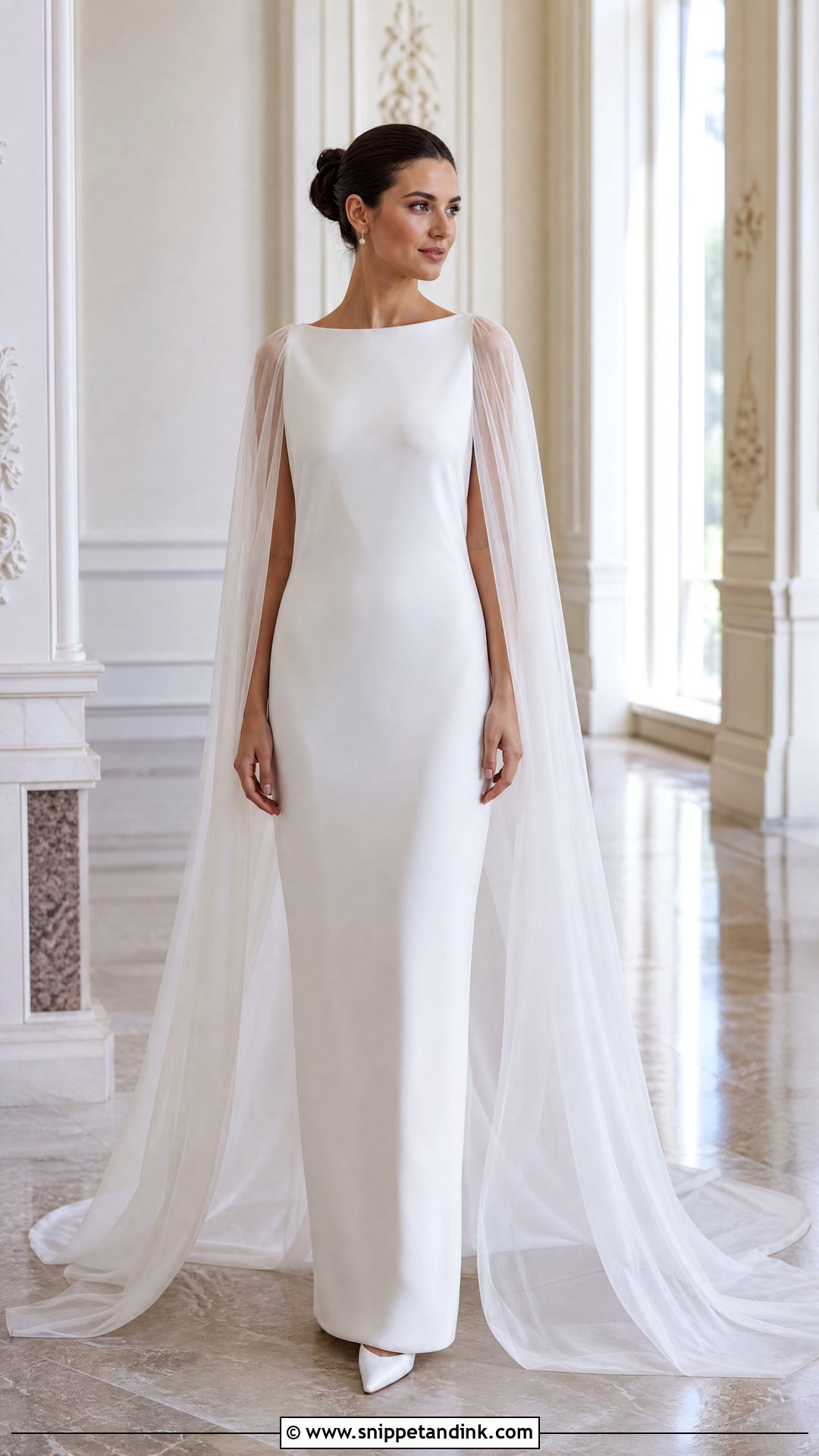
A cape gives you the drama of a veil without adding fabric around a narrow skirt. Pair a plain crepe gown with a sheer tulle cape, or satin with a soft chiffon drape. The fastening has to sit flat; a heavy cape hooked to a light neckline drags it backward. Match the cape length to the train so they finish together. Pointed heels, small earrings and a neat updo leave the shoulders clear, and a detachable cape reveals a cleaner reception look later.
17. Detachable Overskirt Straight Wedding Gown
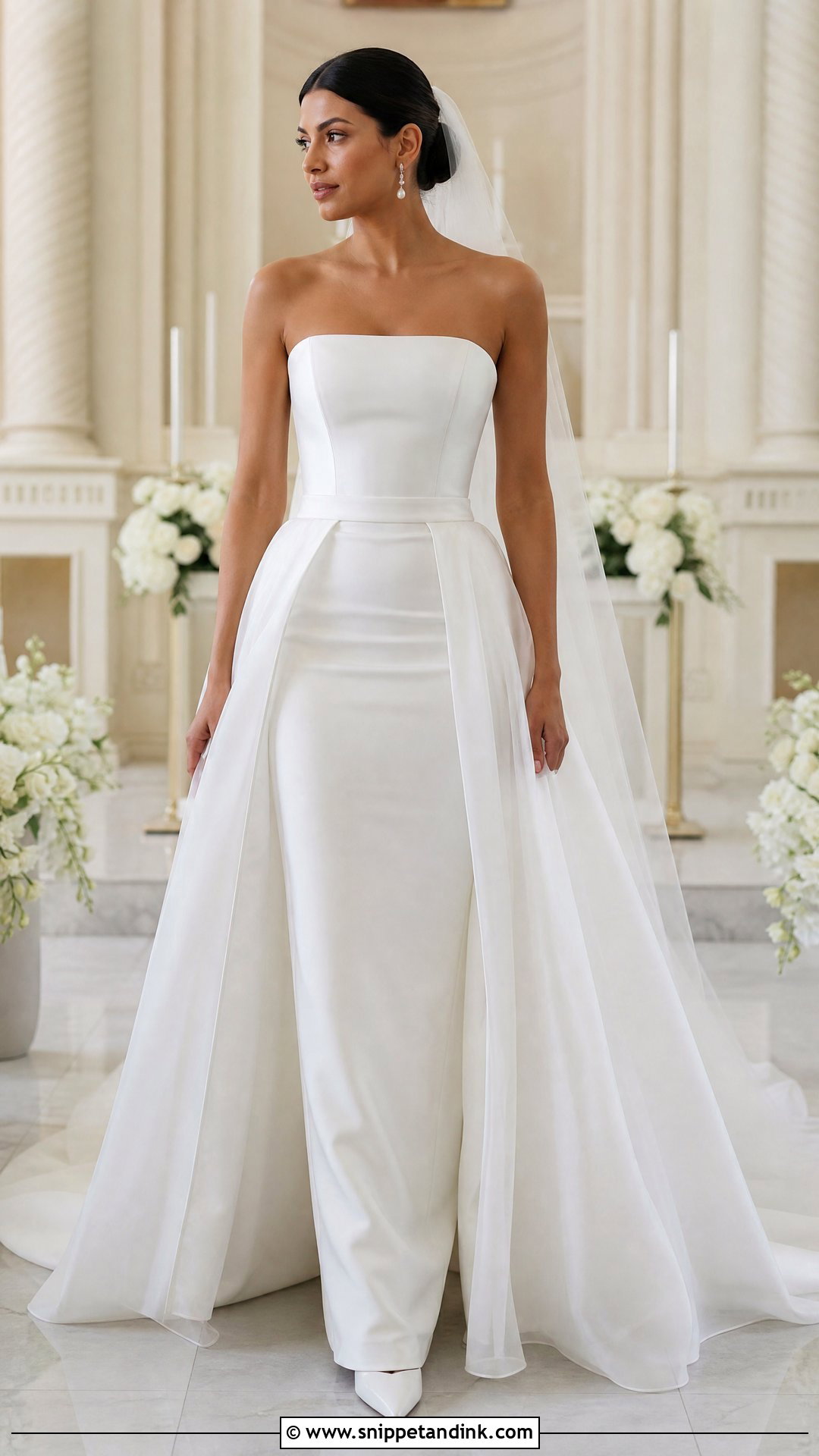
An overskirt gives you ceremony volume and a sleek dance-floor dress in one. A satin base under a sheer tulle overskirt, or crepe under structured organza, both work. The join should sit at the natural waist, hidden under a belt, bow or clean band. Pointed pumps, drop earrings and a chapel veil suit the ceremony. Practise taking it off several times with the bridesmaid who’ll help you. Unhooking it in a hurry crumples the gown underneath, and you won’t have a steamer at the reception.
18. Bow Back Straight Wedding Gown
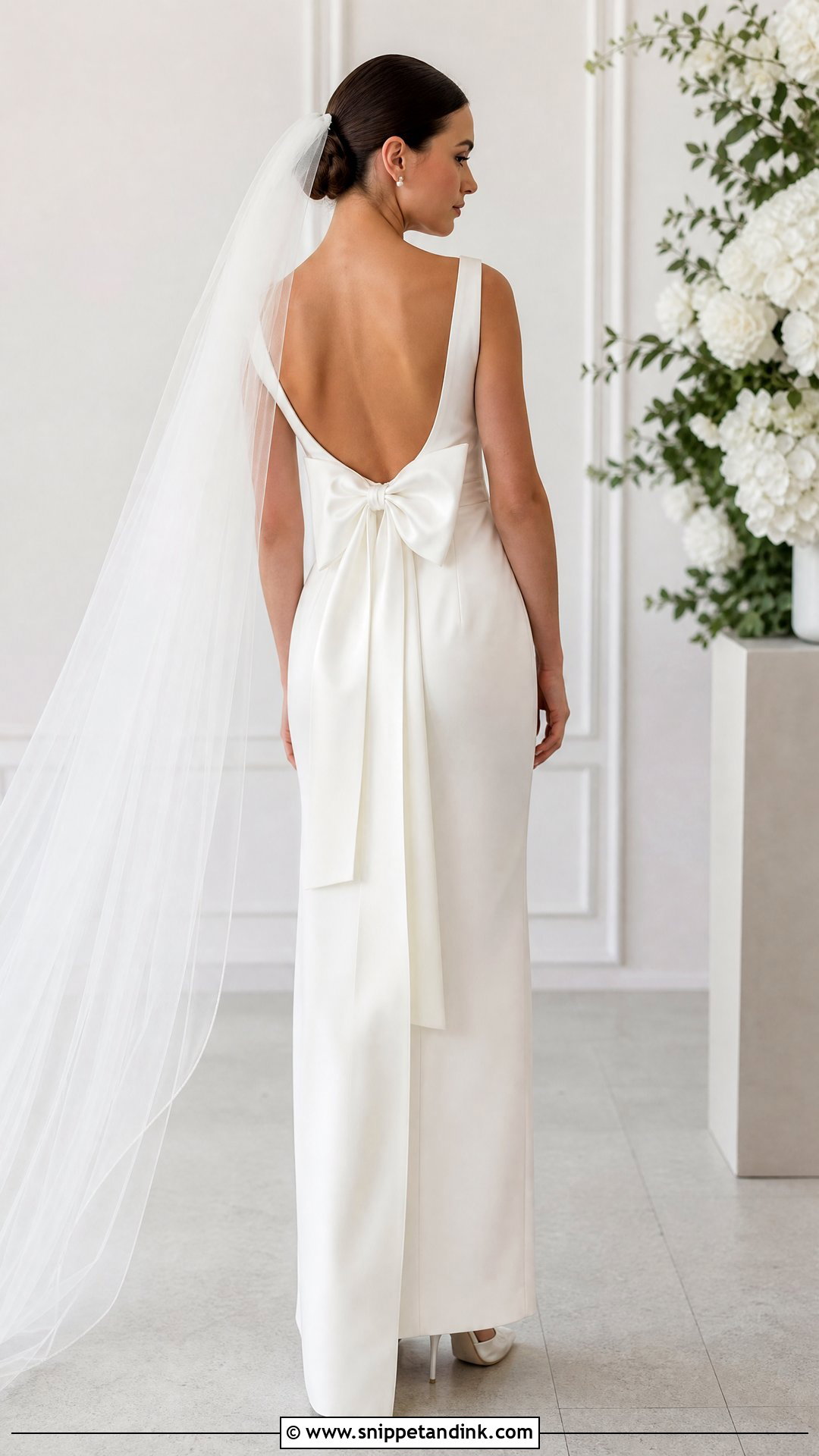
A bow lets you add something playful while keeping the gown clean. Satin or crepe bows hold their shape; soft fabric bows droop by evening unless they’re interlined. Place it at the waist, upper back or base of an open neckline. Long tails can merge into the train; a compact bow is quieter. On a petite frame, a big bow can swamp the back, so look at it in a three-way mirror. A smooth bun, pearl studs and a removable veil keep the bow visible after the ceremony.
19. Floral Applique Straight Wedding Gown
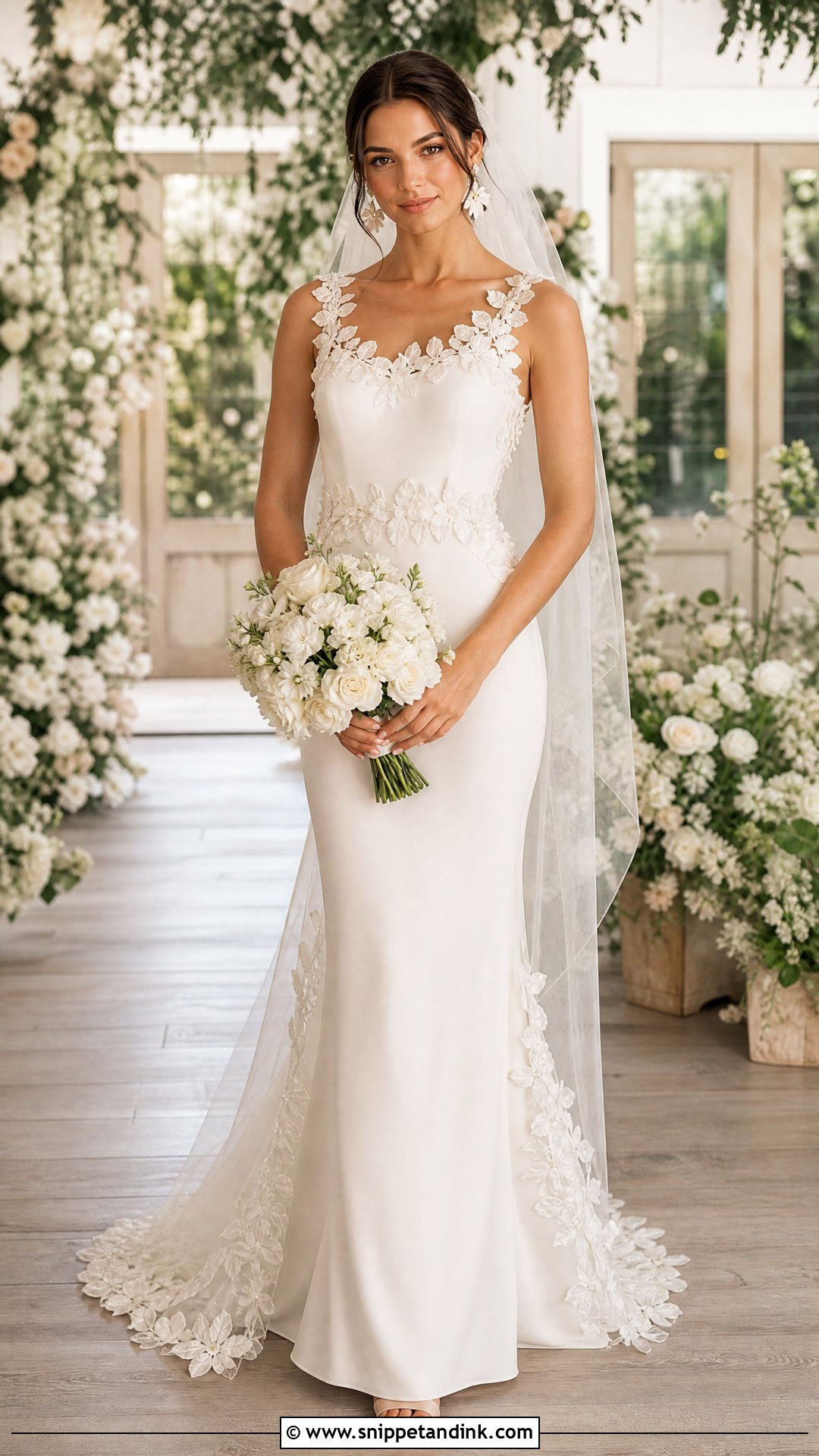
Floral appliqués give the gown a focal point without covering it. I’d place them at the neckline, waist, shoulder or train and leave the skirt clear so the straight line survives. A sheer overlay makes the flowers look like they’re floating. During fittings, look closely at how they sit over seams and curves; an appliqué stitched flat across a seam can pucker when you sit. Plain ivory heels, floral earrings and an unembellished veil suit it, with a neat bouquet.
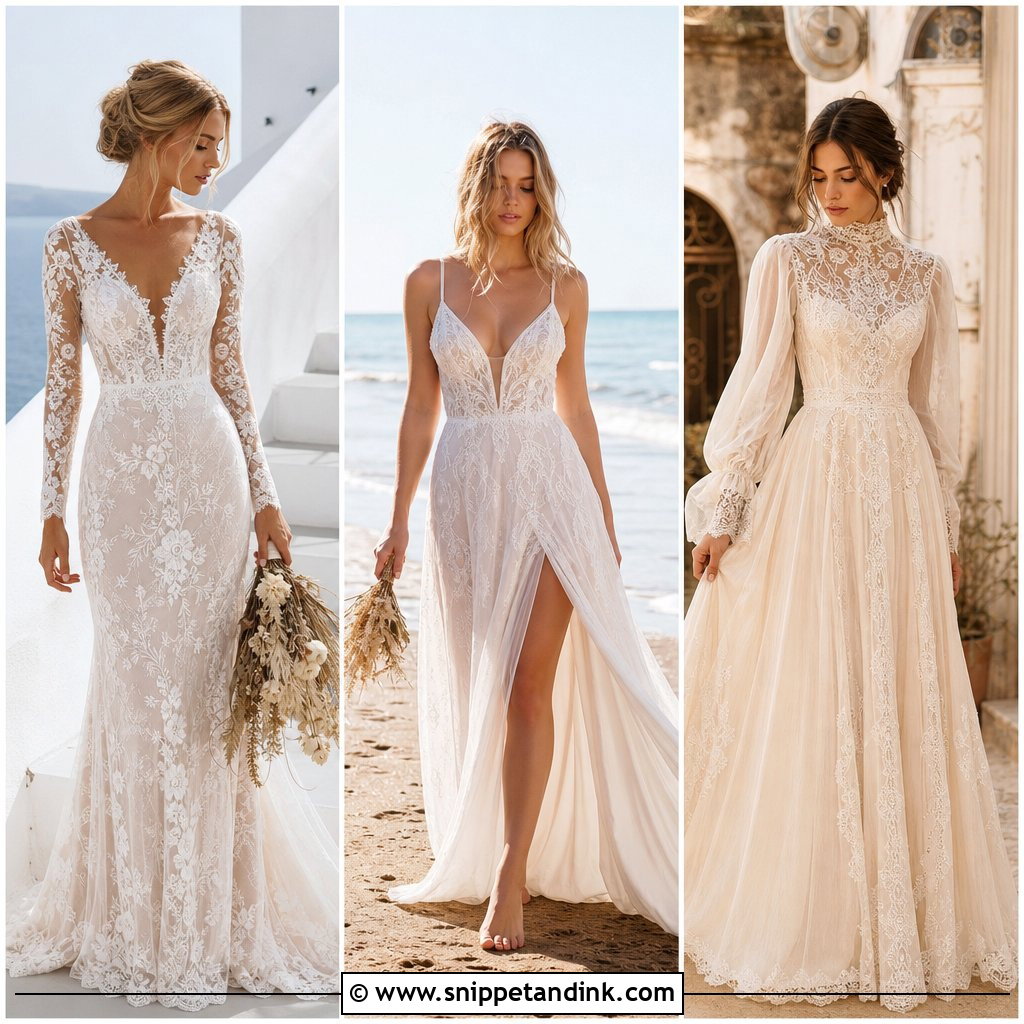
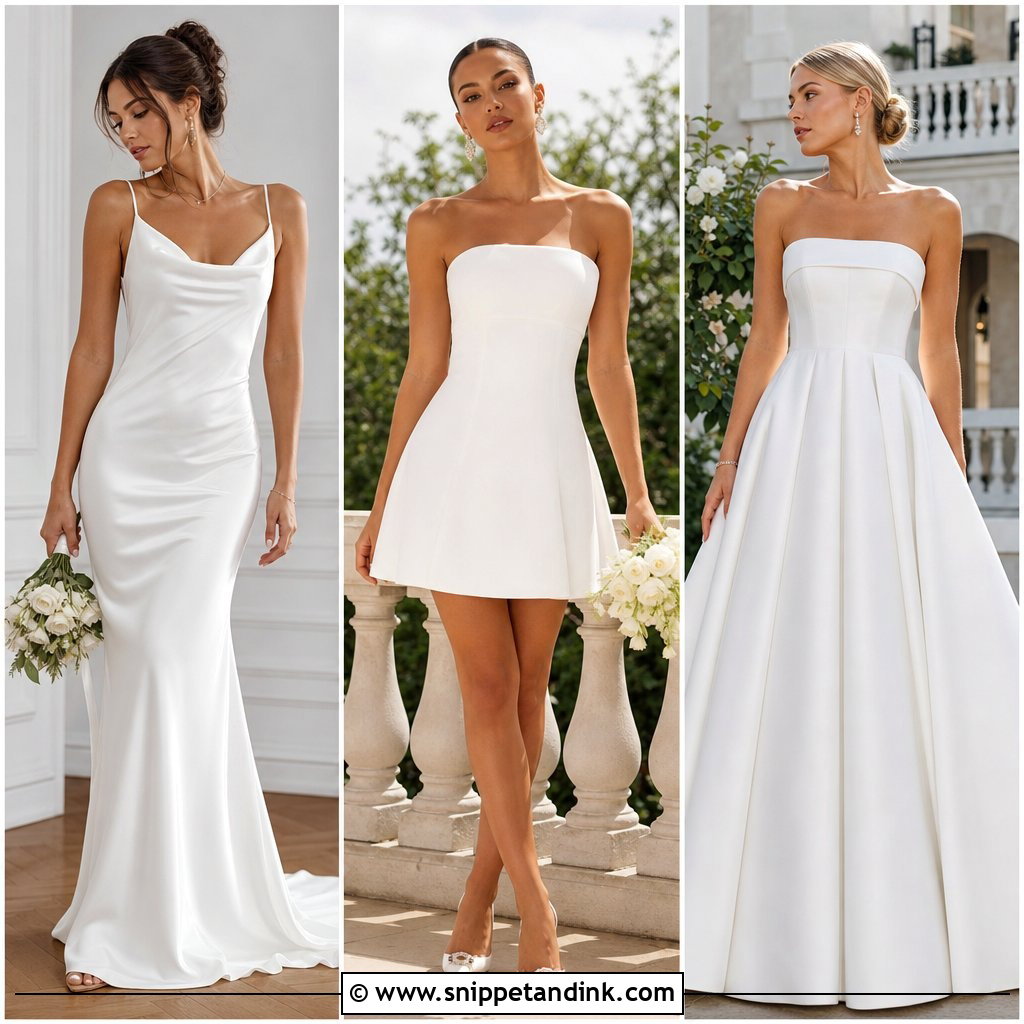
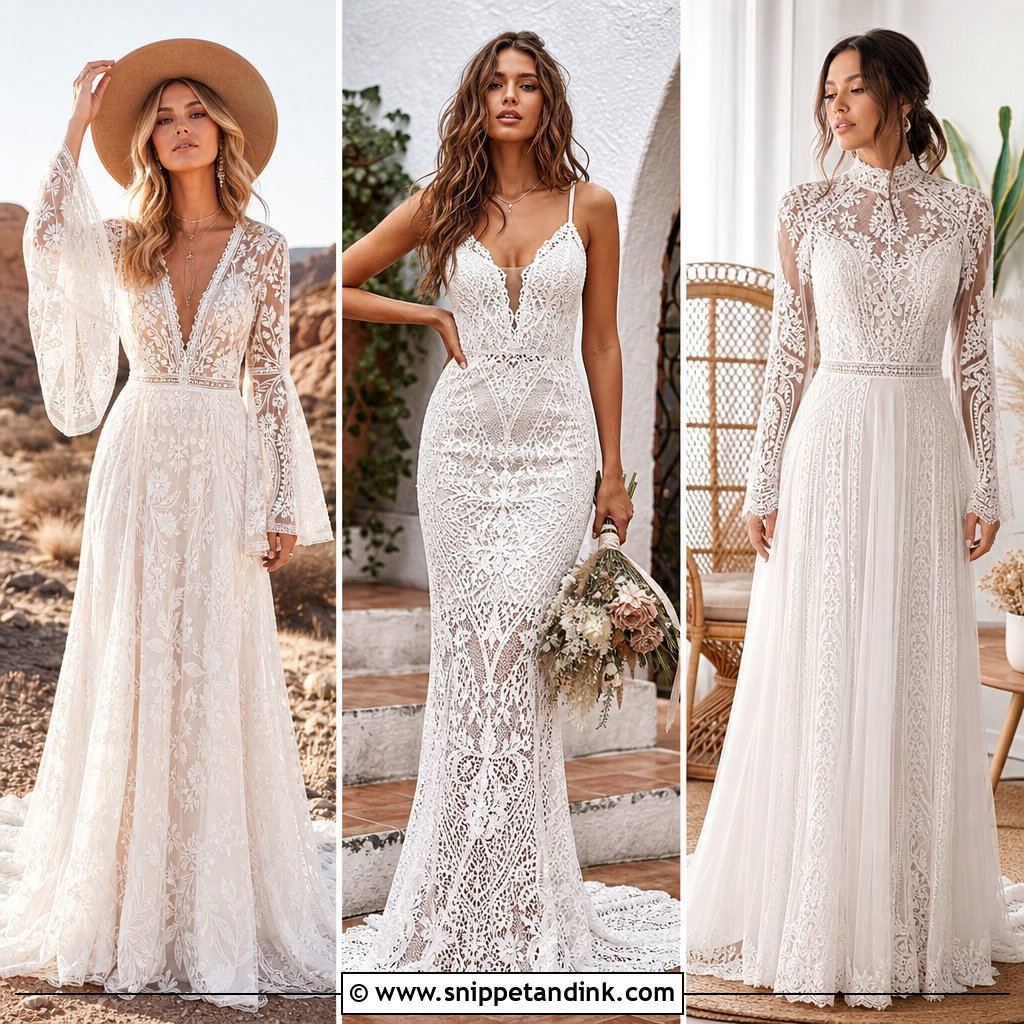

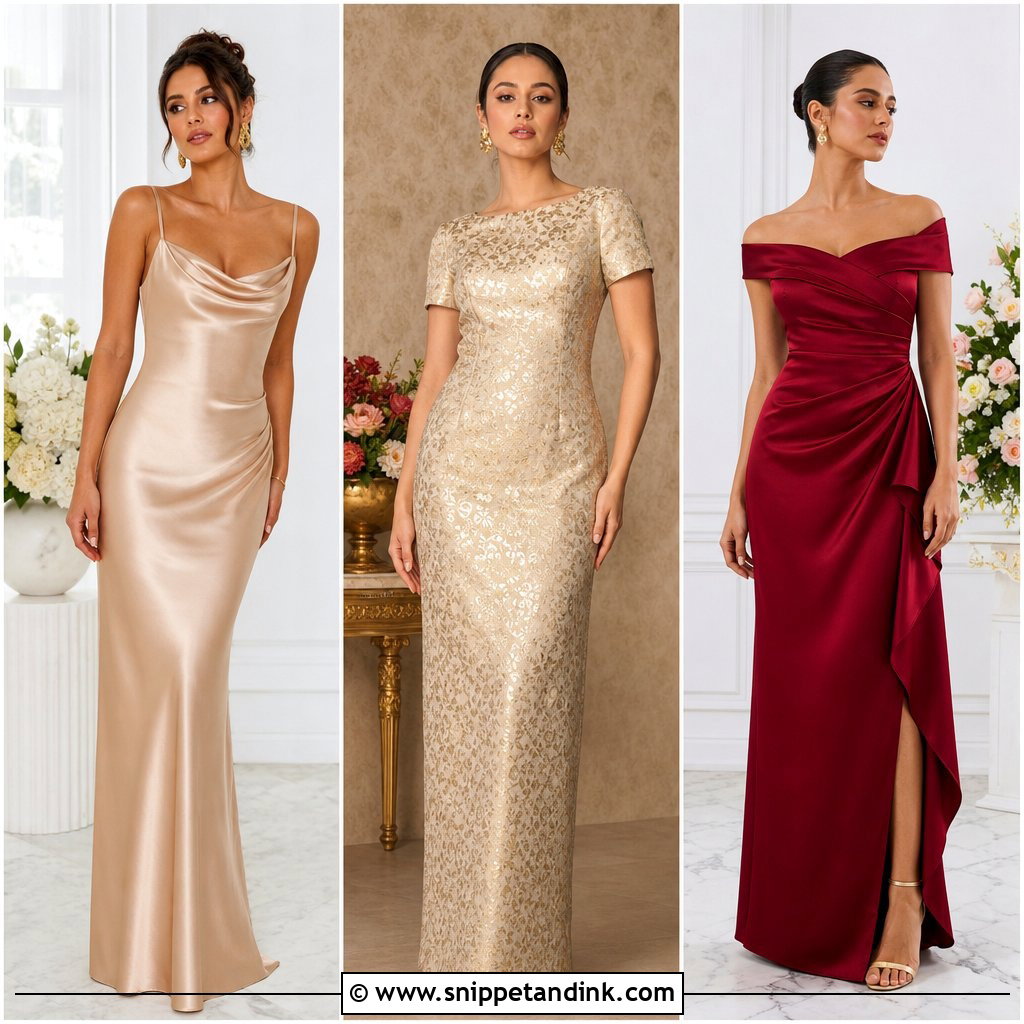
20. Chiffon Straight Wedding Gown
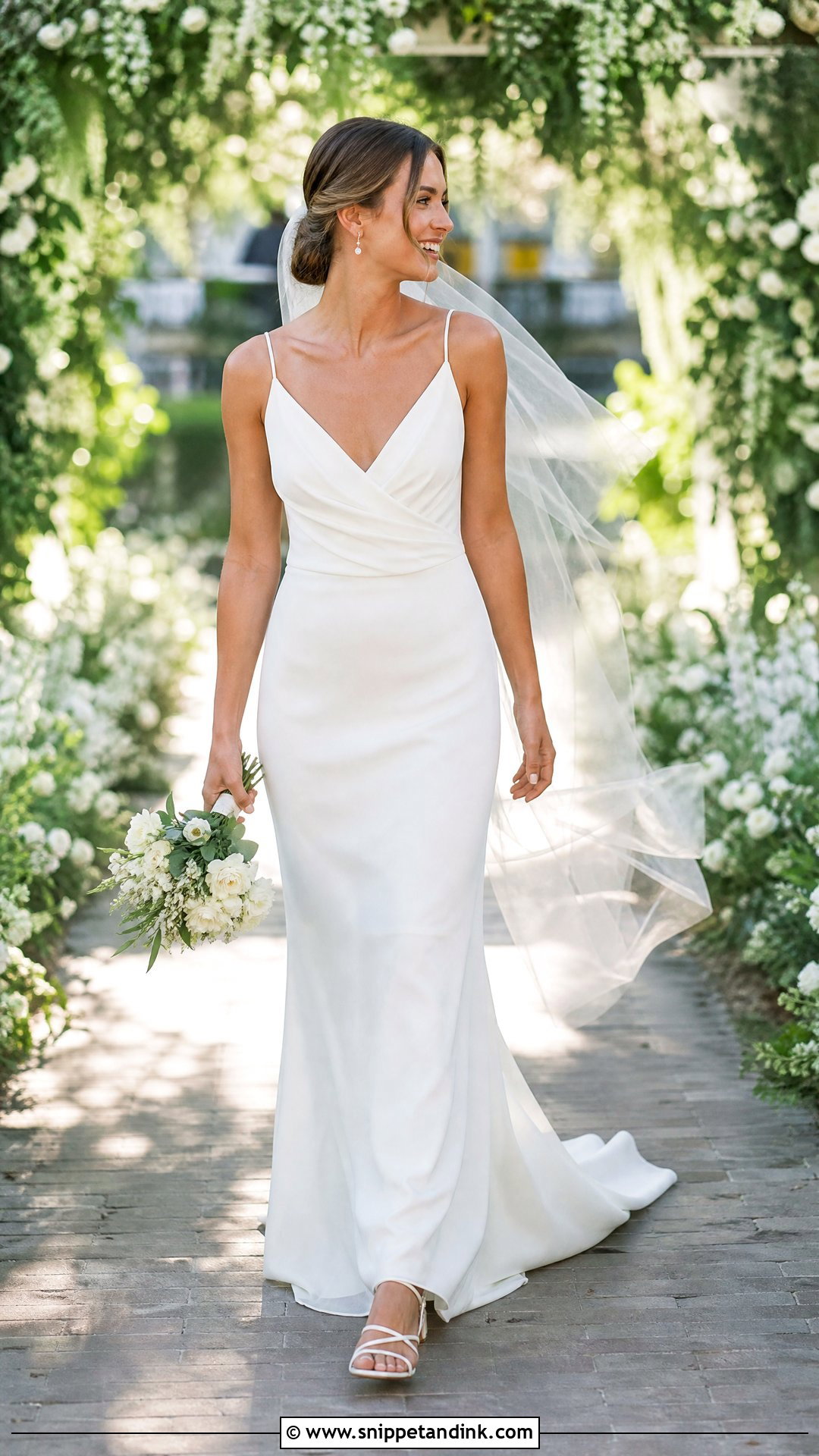
Chiffon is the column for a beach, garden or relaxed outdoor ceremony. A lined gown with a draped bodice, narrow straps and a skirt that drops rather than flares keeps the shape, and a V or cowl neck suits the fabric. Chiffon can be a little sheer, so check the lining in full daylight and with a camera flash. Keep the train short enough to manage on grass or sand. Block-heel sandals, delicate earrings, a loose low bun and a light veil finish it; an open or draped back keeps it airy.
Three Ways to Bustle a Train on a Straight Skirt
A train on a column gown is usually short, but even a sweep gets stepped on during the first dance. Bustling lifts it off the floor, and the right method depends on the fabric.
Over bustle
The train is lifted and hooked to buttons or loops on the outside of the gown. It’s quick and suits satin and crepe, where the gathered fabric drapes neatly. It does add a little volume at the back.
Under bustle
The train is tucked under and tied inside the skirt with numbered ribbons. It keeps the outline flatter, which suits the narrow silhouette, but it takes longer to do, so teach the ribbons to someone before the day.
Wrist loop
A small loop sewn to the end of a short train goes over your wrist. It costs almost nothing and suits chiffon and silk, which don’t gather neatly. The downside is having one hand occupied all evening.
Bring your reception shoes to the bustle fitting. Changing to flats drops the hem, and a bustle set for heels will drag once you’re dancing in them.
A Column Gown Lives or Dies at the Fitting
The straight gown should feel supportive and natural when you move. Satin, lace, crepe, beading and chiffon all give the same silhouette a different voice. What makes any of them work is a secure bodice, enough room through the hips, the right underwear and a hem set to your actual shoes. Keep accessories in proportion to the narrow shape. View the gown from every side and practise walking and sitting at each alteration. Get those right, and the dress looks made for you, whether your taste runs minimalist, traditional, glamorous or romantic.
You'll Like These Ideas:



Leave a Reply