
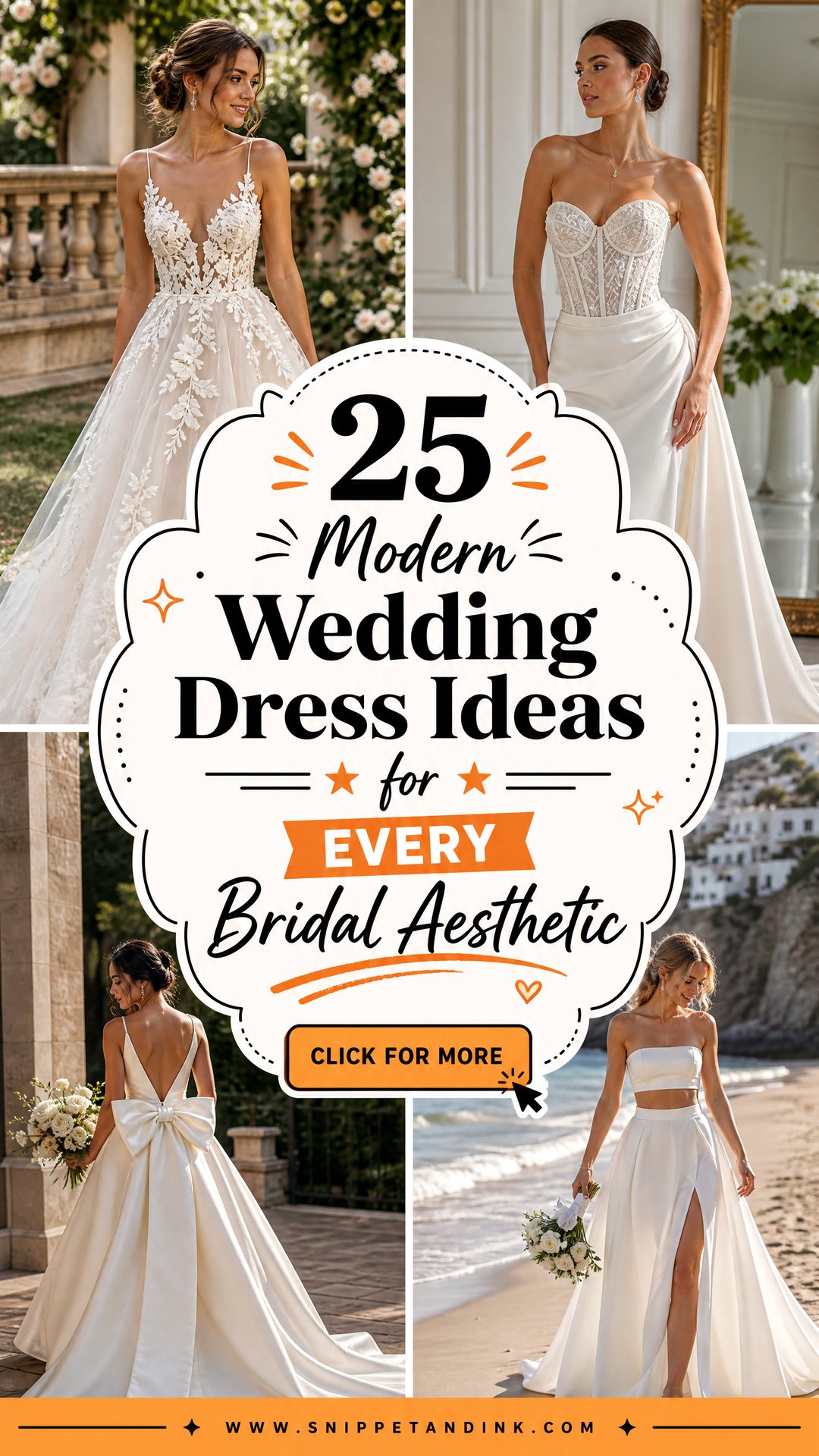
Reading Your Saved Photos Before the First Appointment
Most brides arrive with dozens of saved images and feel they like everything. Spend twenty quiet minutes with them first. Ignore the backgrounds and models and look only at the necklines, the skirt shapes and the fabric finish. Patterns appear fast: maybe almost every photo has a matte fabric, or a bare shoulder, or a narrow skirt. That pattern is your aesthetic, and it’s far more useful to a stylist than a single favorite picture.
Then add the practical filters, which rule things out quickly:
- Season: heavy mikado and long lace sleeves are hard work in summer heat; a slip dress needs a plan for a cold evening.
- Ground: grass, sand and gravel snag tulle and swallow thin heels.
- Ceremony type: some religious venues expect covered shoulders.
- How long you’ll be in it: a ten-hour wedding asks more of a corset than a two-hour elopement.
Timing matters too. Many designer gowns are made to order and take several months to arrive, before alterations even begin, so start shopping well ahead of the date. Bring the shoes and undergarments you’re leaning toward, and limit the group to one or two people whose taste you trust.
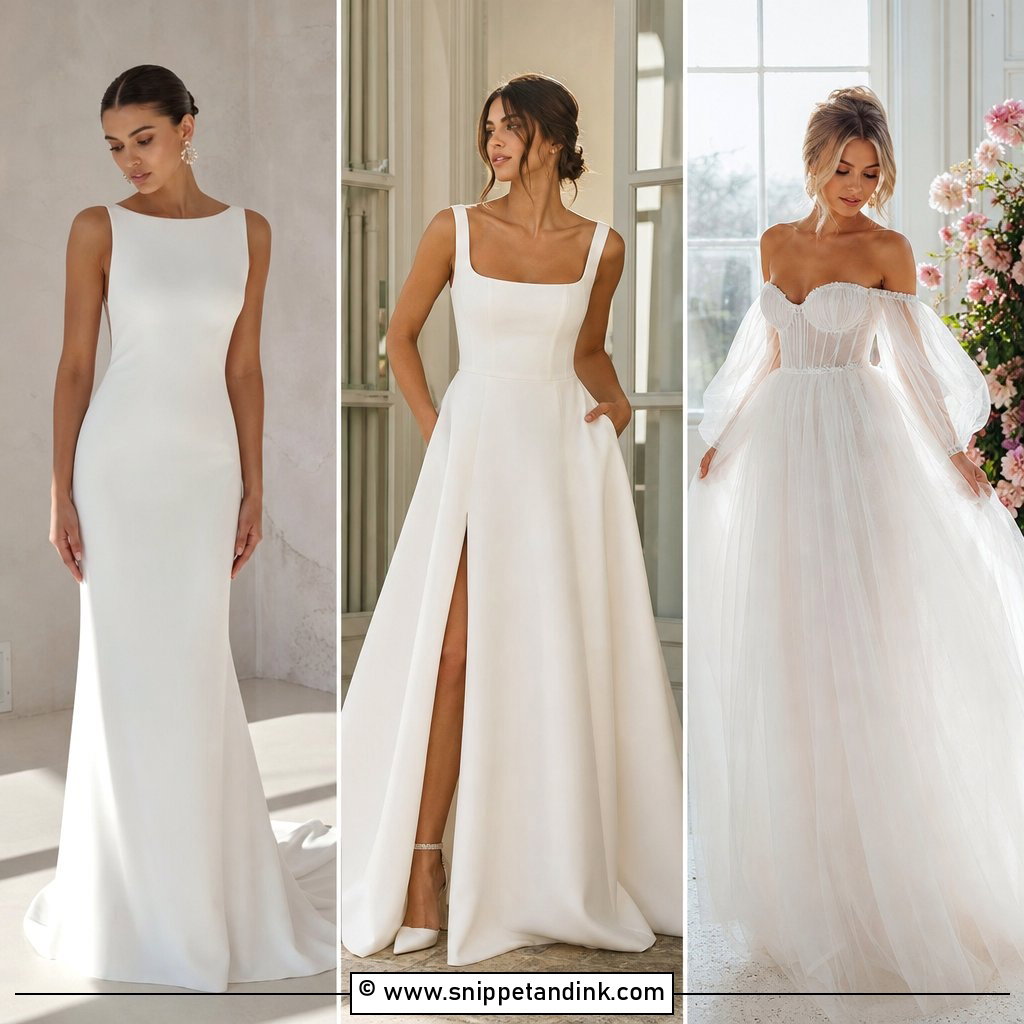
1. Minimalist Satin Wedding Dress
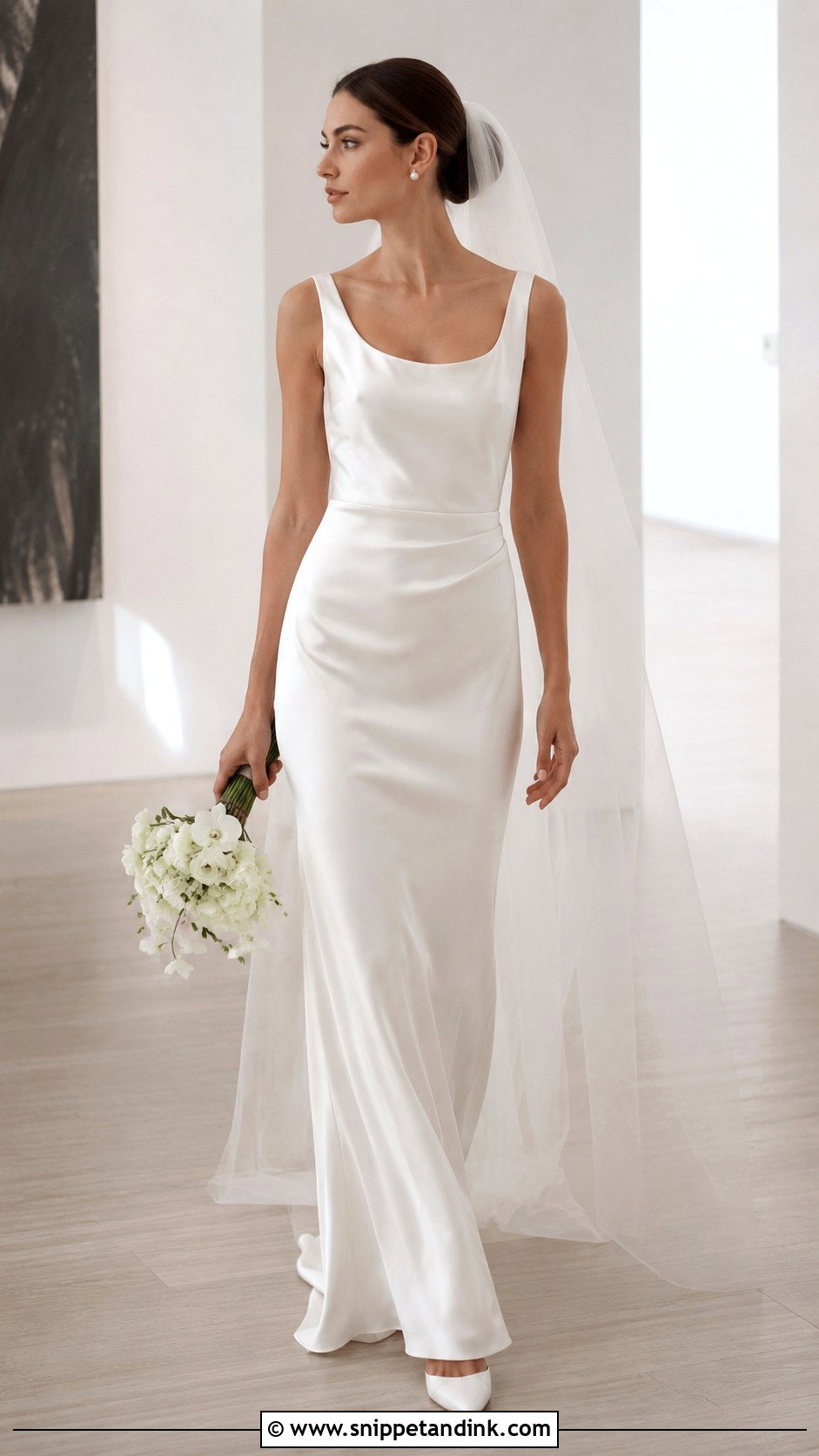
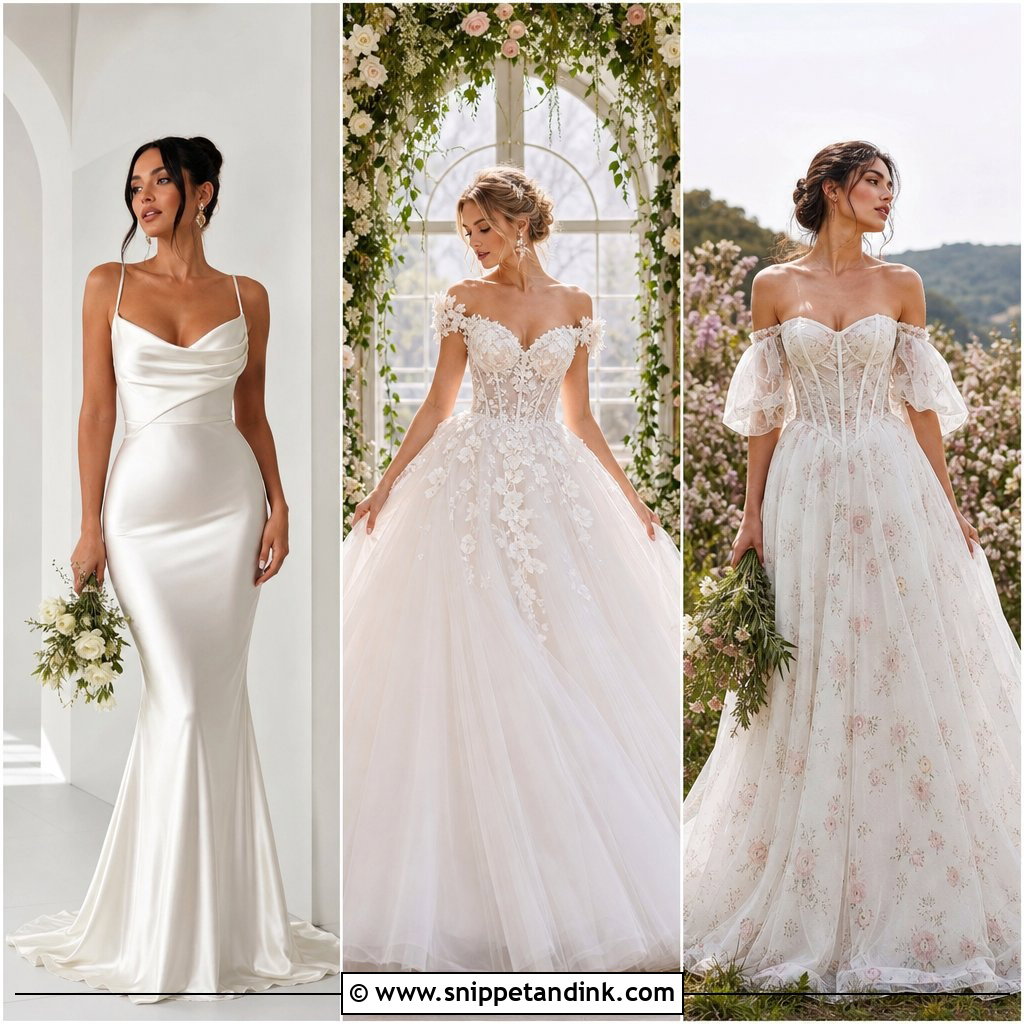
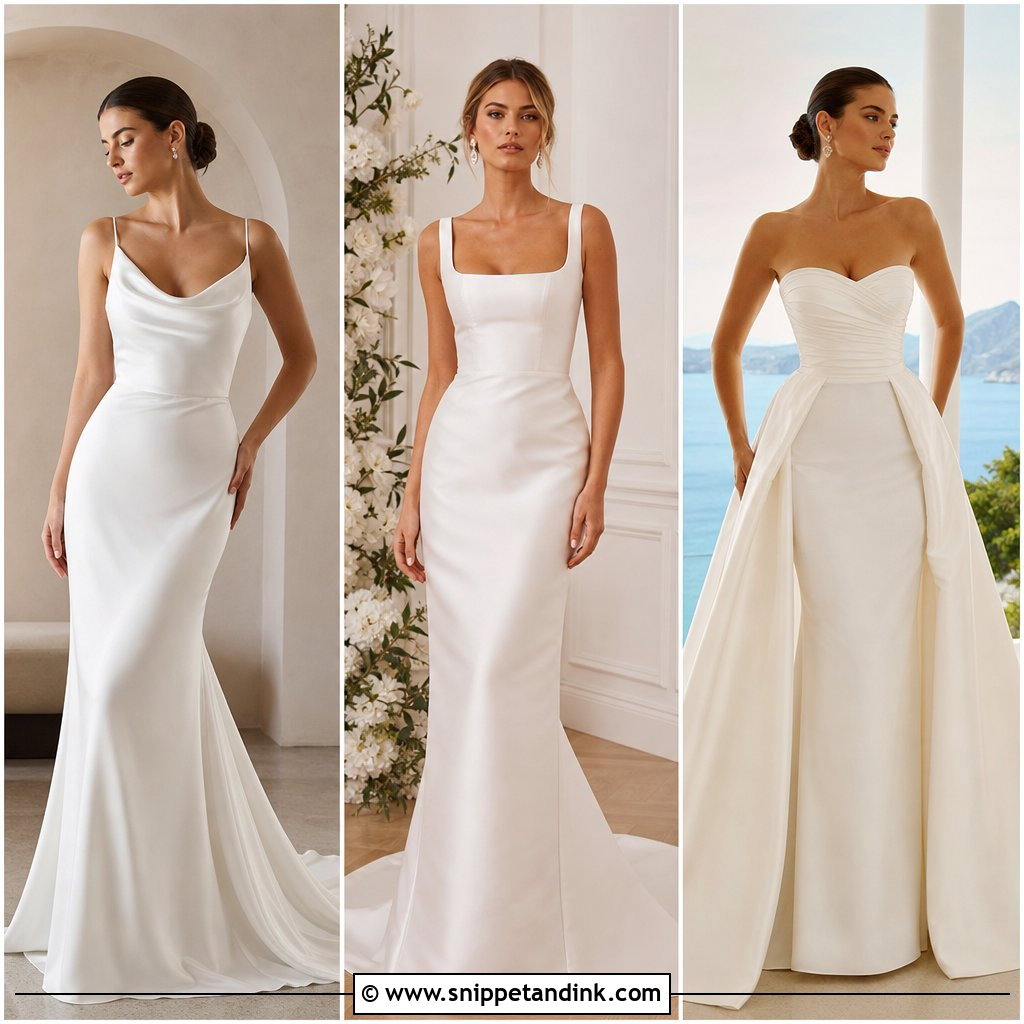
Minimal satin works because nothing distracts from the cut. A bias-cut or column silhouette with a soft scoop, square or cowl neck is all the design it needs. What I warn brides about is the surface itself. Shiny satin can flare white under a camera flash, while a matte or duchess finish photographs softer, and any satin spots if a drink splashes it, so keep a clean white cloth in the emergency kit and blot rather than rub. Pointed pumps, pearl studs, a low bun and a plain veil keep it calm for a gallery, rooftop or small city wedding.
2. Strapless Ball Gown Wedding Dress
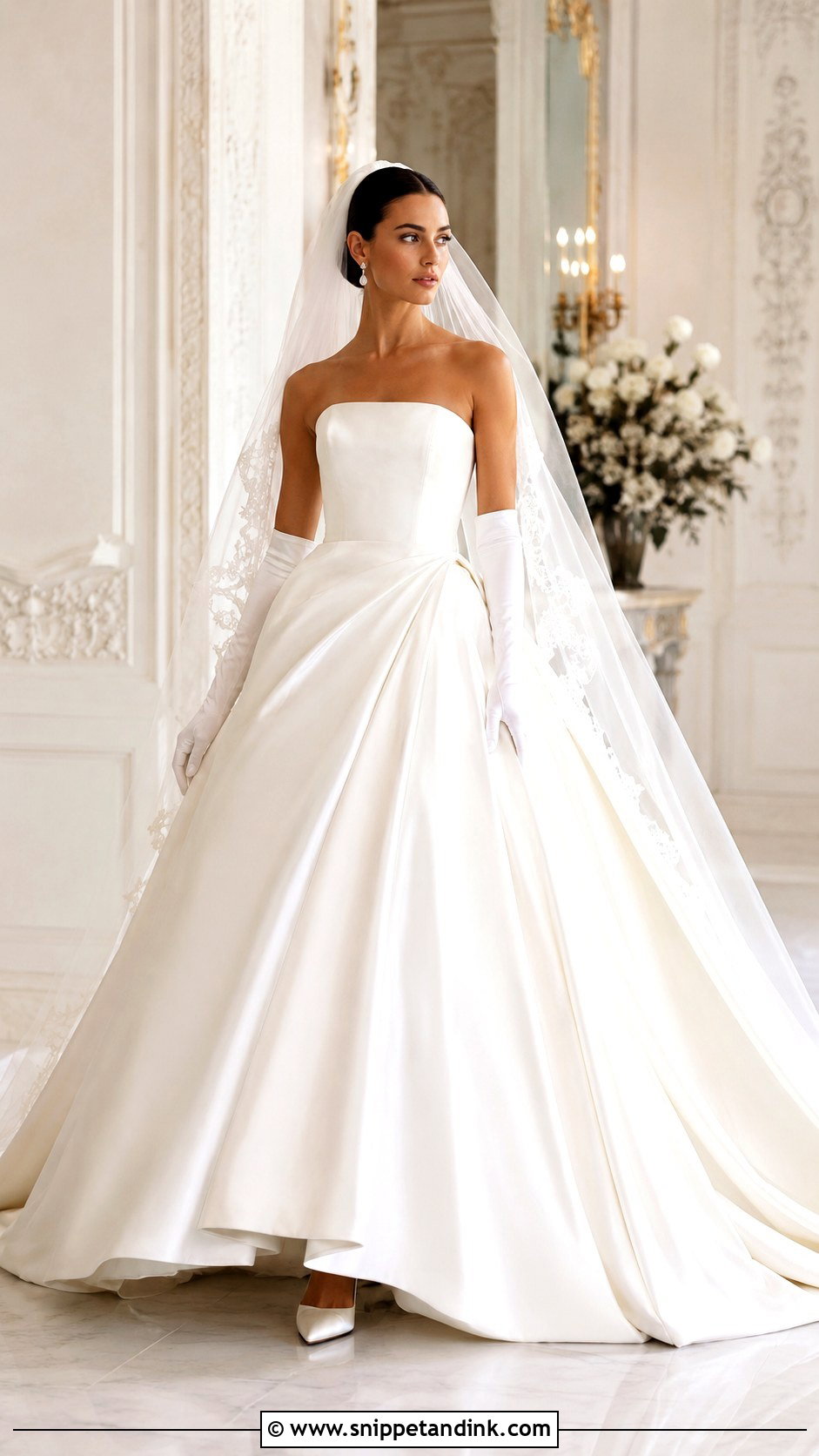
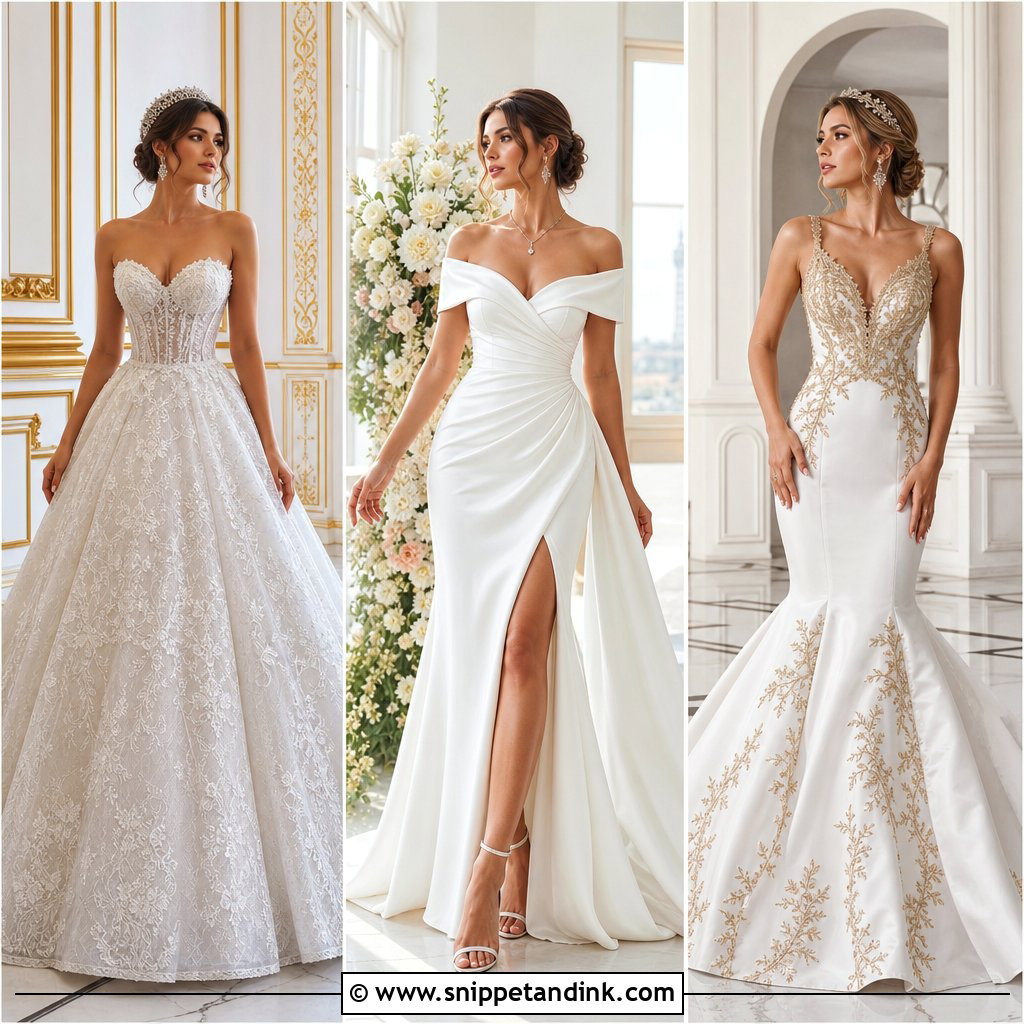
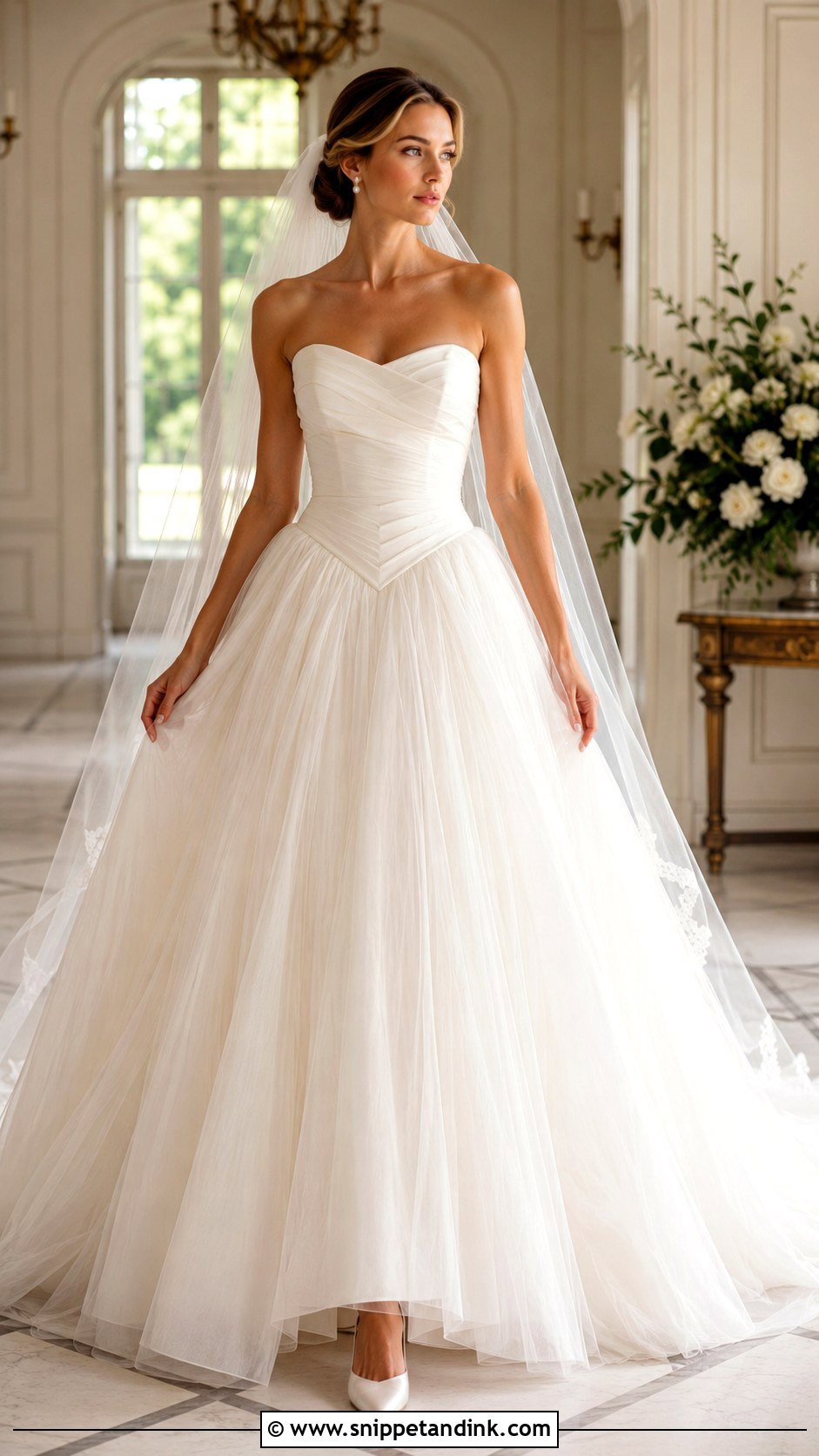
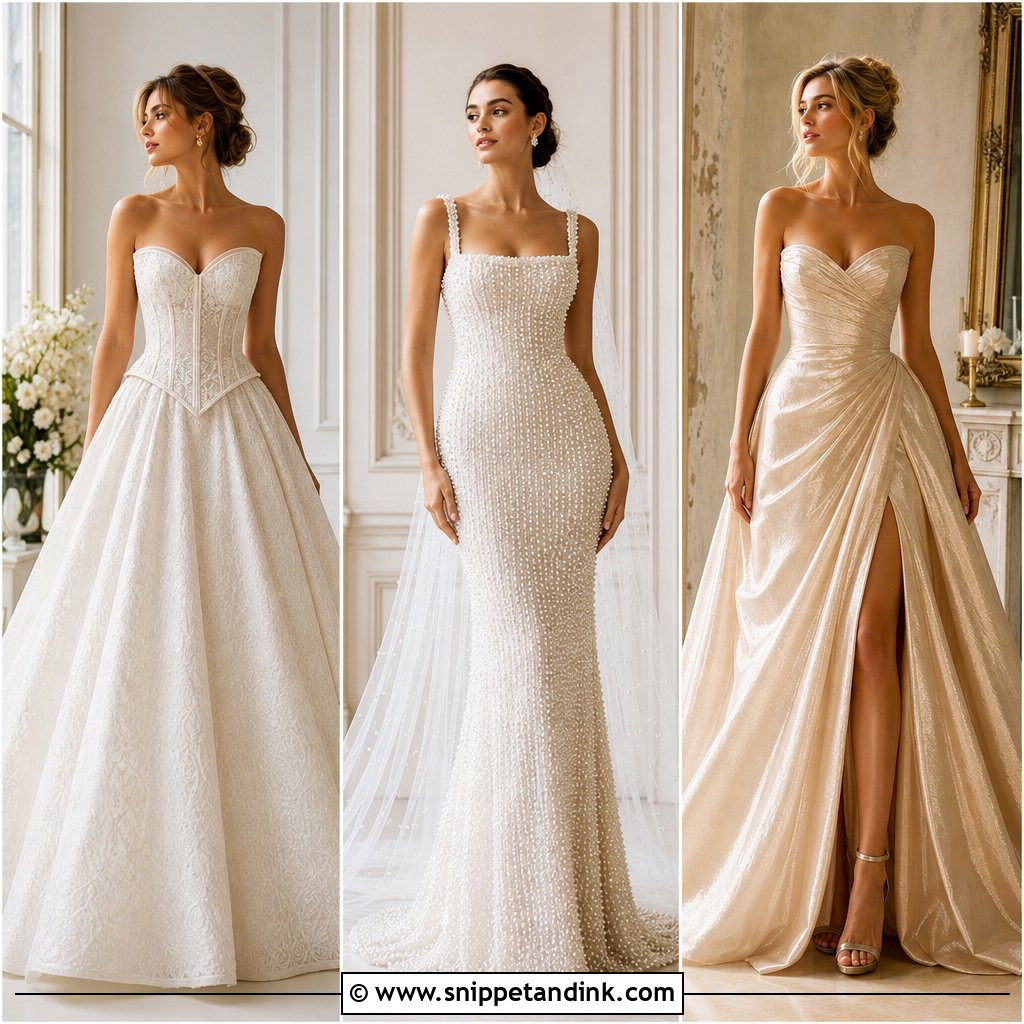
The modern strapless ball gown keeps the full skirt but drops the heavy beading, relying on satin, organza or mikado to hold its shape. Measure before you fall in love. A wide skirt needs a wide aisle, and some older venues have narrow doorways and staircases that a big gown has to squeeze through. Sleek gloves look sharp, but you’ll need to slip one off for the ring, so practice that. A neat updo keeps the neckline clear, and a cathedral veil suits a grand room.
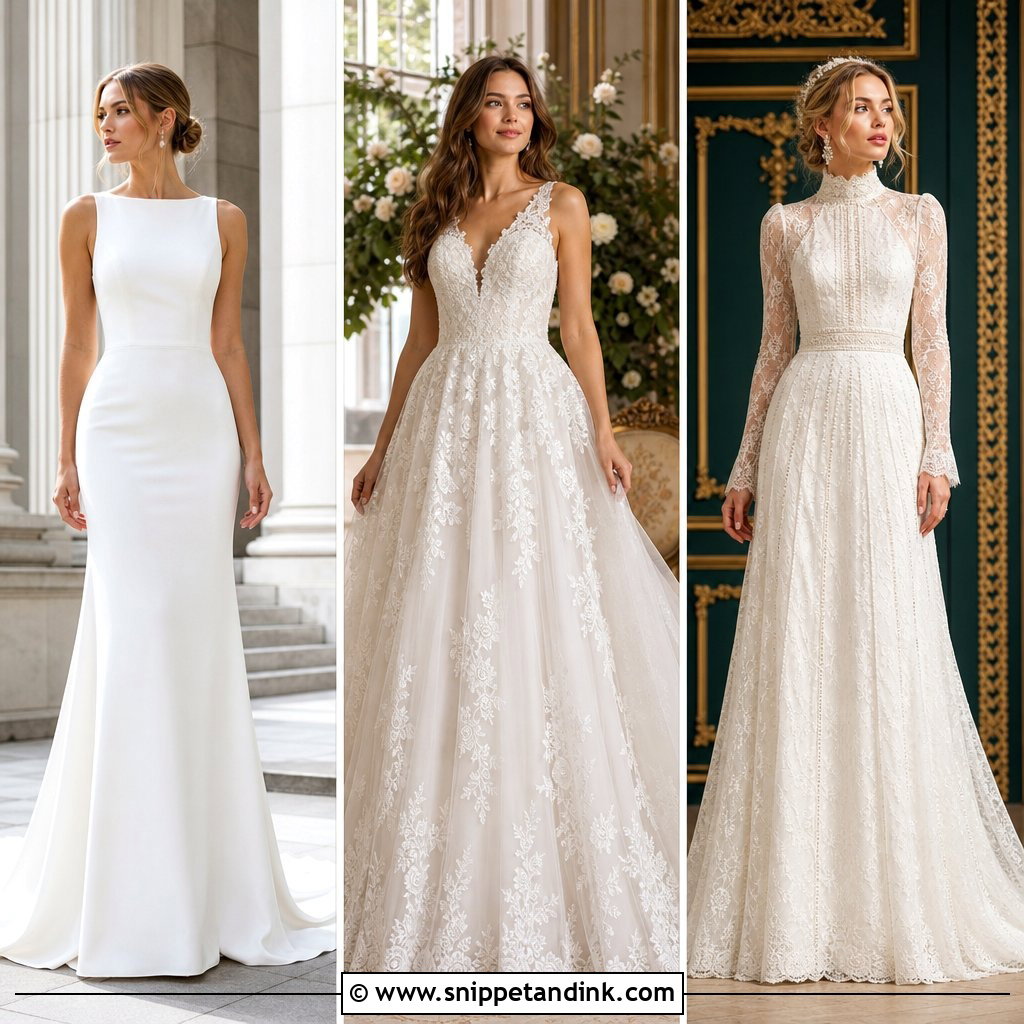
3. Long Sleeve Lace Wedding Dress
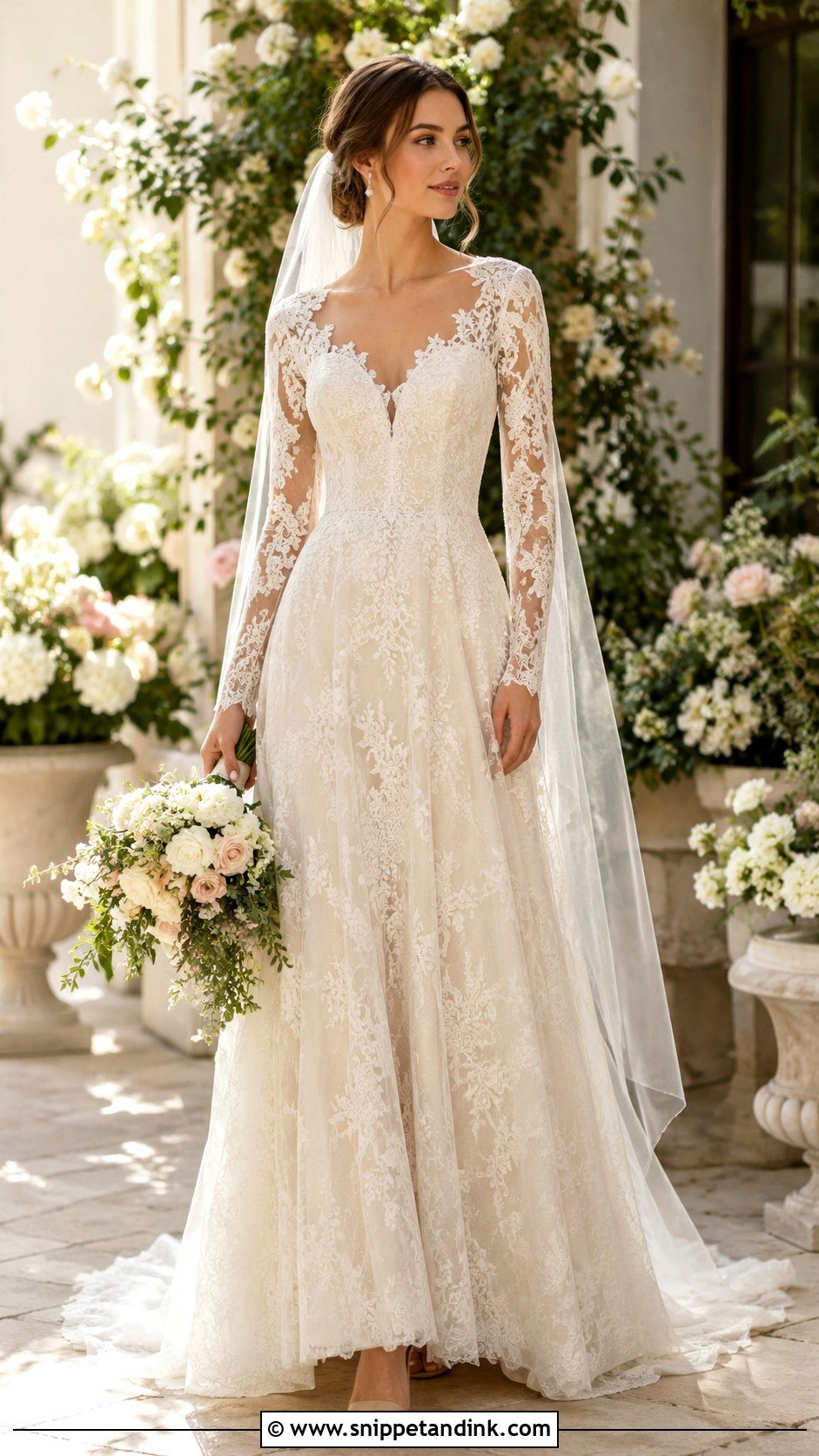
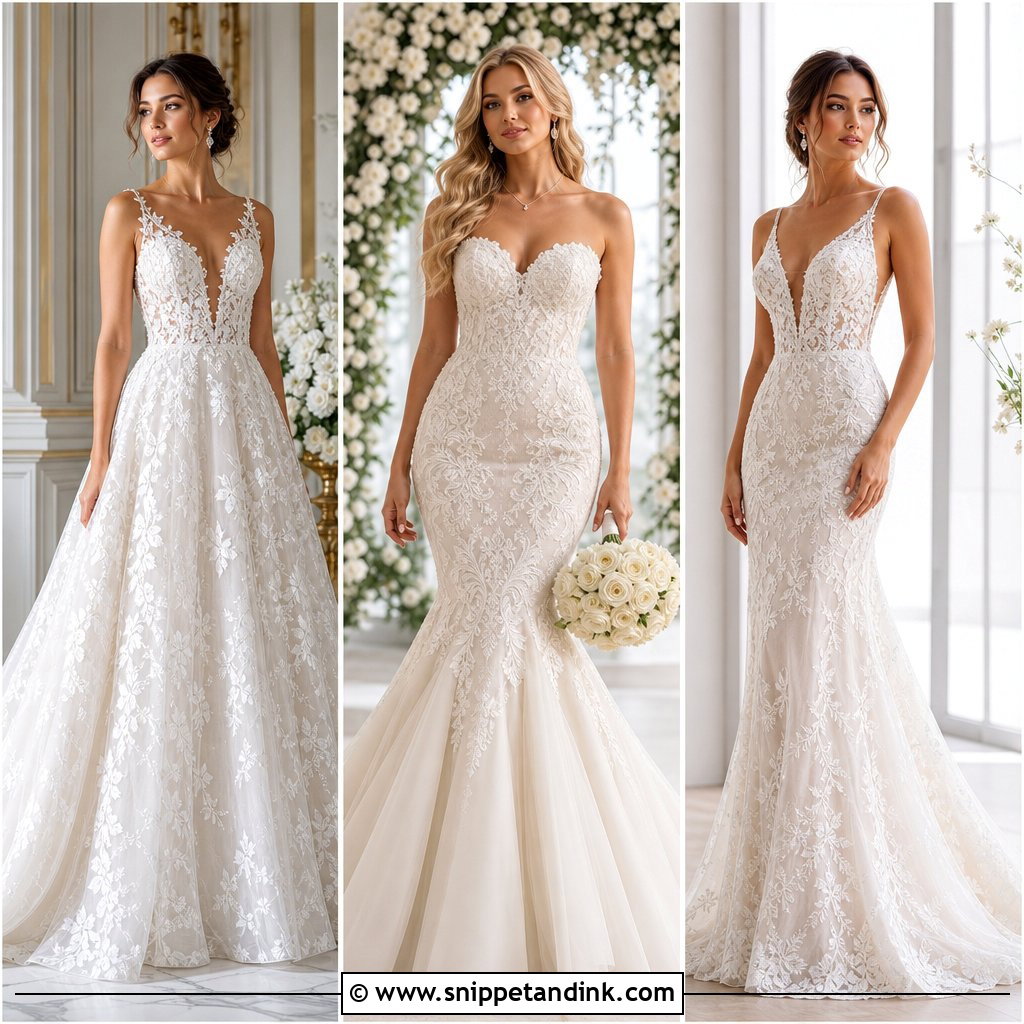
Floral lace on a light lining, sheer sleeves and a fitted bodice into an A-line skirt keep long sleeves feeling delicate. The sleeves add warmth, which you’ll welcome in winter and regret at a summer outdoor ceremony, so think hard about the season. One detail people miss: a raised engagement ring snags open lace at the cuff, so ask for a smooth edging at the wrist. Pearl earrings, a fingertip veil and soft waves or a low chignon suit it, with nude or ivory heels.
4. Square Neck Wedding Dress
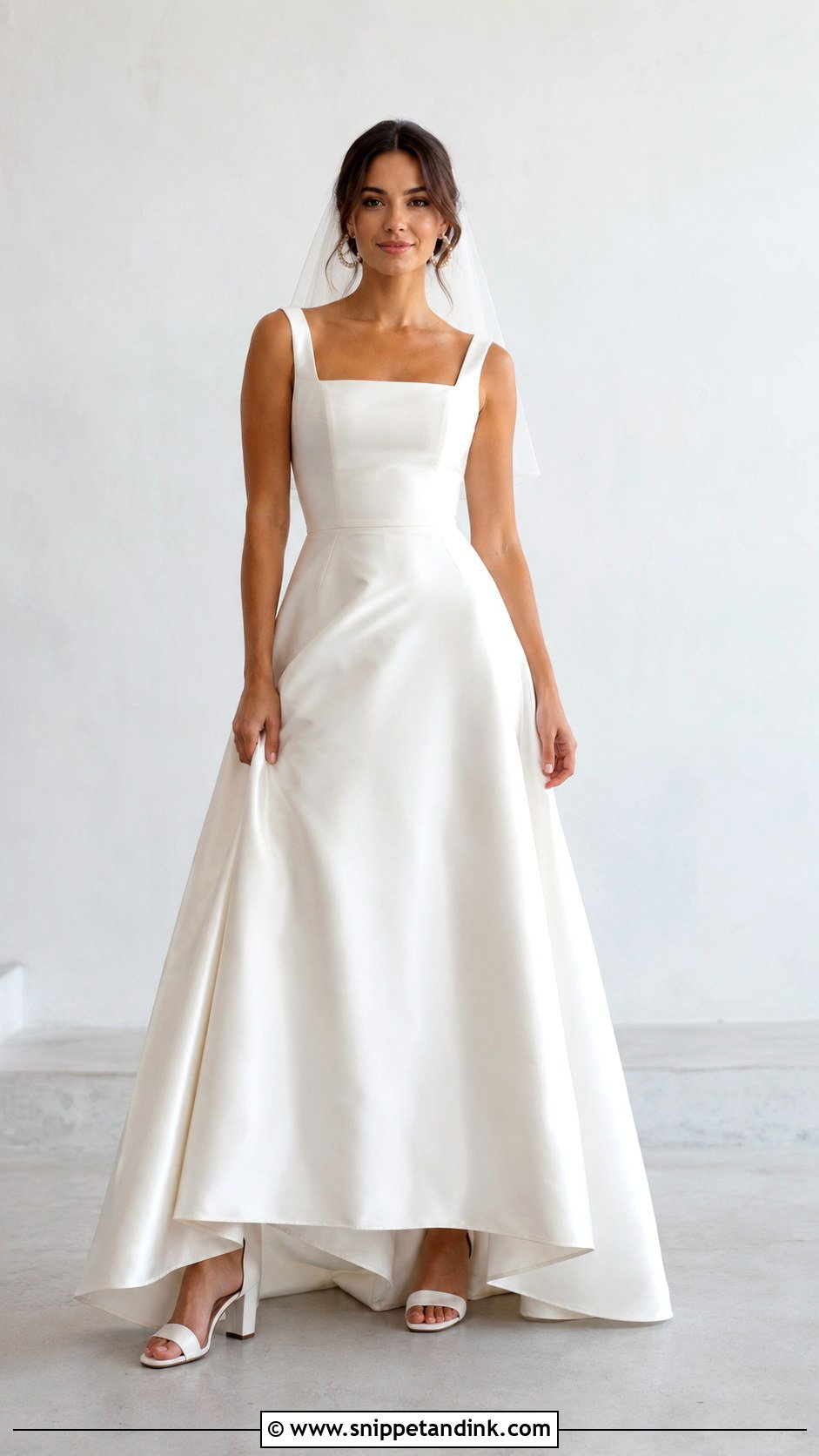
The square neck suits a lot of figures, and it’s especially kind to petite brides, because the straight line widens the shoulders slightly and gives the upper body structure. Thick straps give support; slim ones feel lighter. Strap width should look in proportion to your shoulders, which is easier to judge in a full-length mirror than up close. A short veil, small pearl hoops and a smooth bun or half-up style finish it, and block heels keep you comfortable.
5. Off Shoulder Wedding Dress
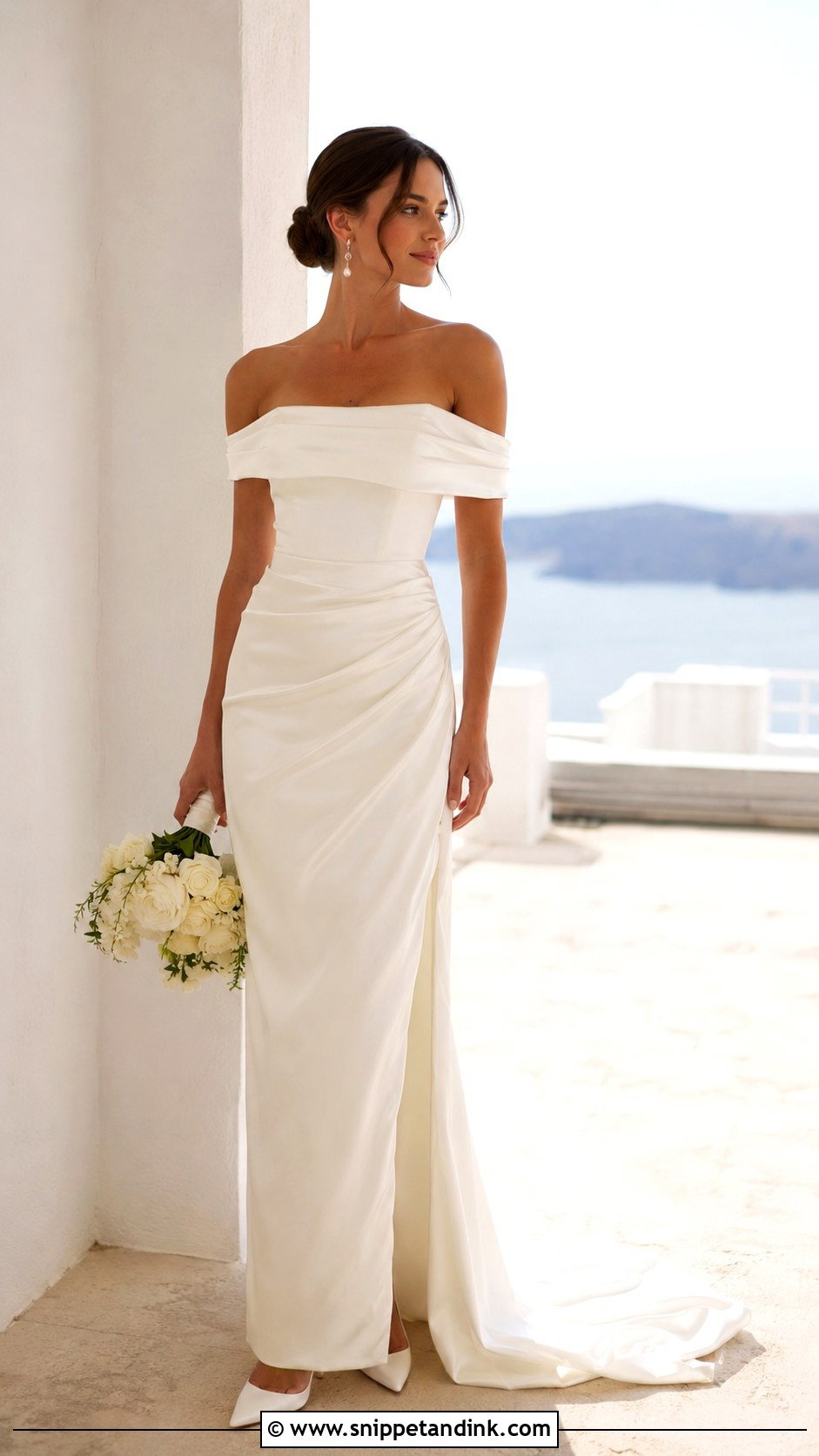
An off-shoulder neckline in satin, crepe or tulle shows the collarbone without much else, so the dress has to stay put on its own. On a breezy coastal ceremony, I’d choose a structured folded band over loose draping, which lifts and flaps in the wind. It pairs with a mermaid, A-line or column skirt. Statement earrings usually beat a necklace here. A low bun or soft curls and ivory heels complete it, and detachable sleeves or a wrap help when the evening cools.
6. Sheer Sleeve Wedding Dress
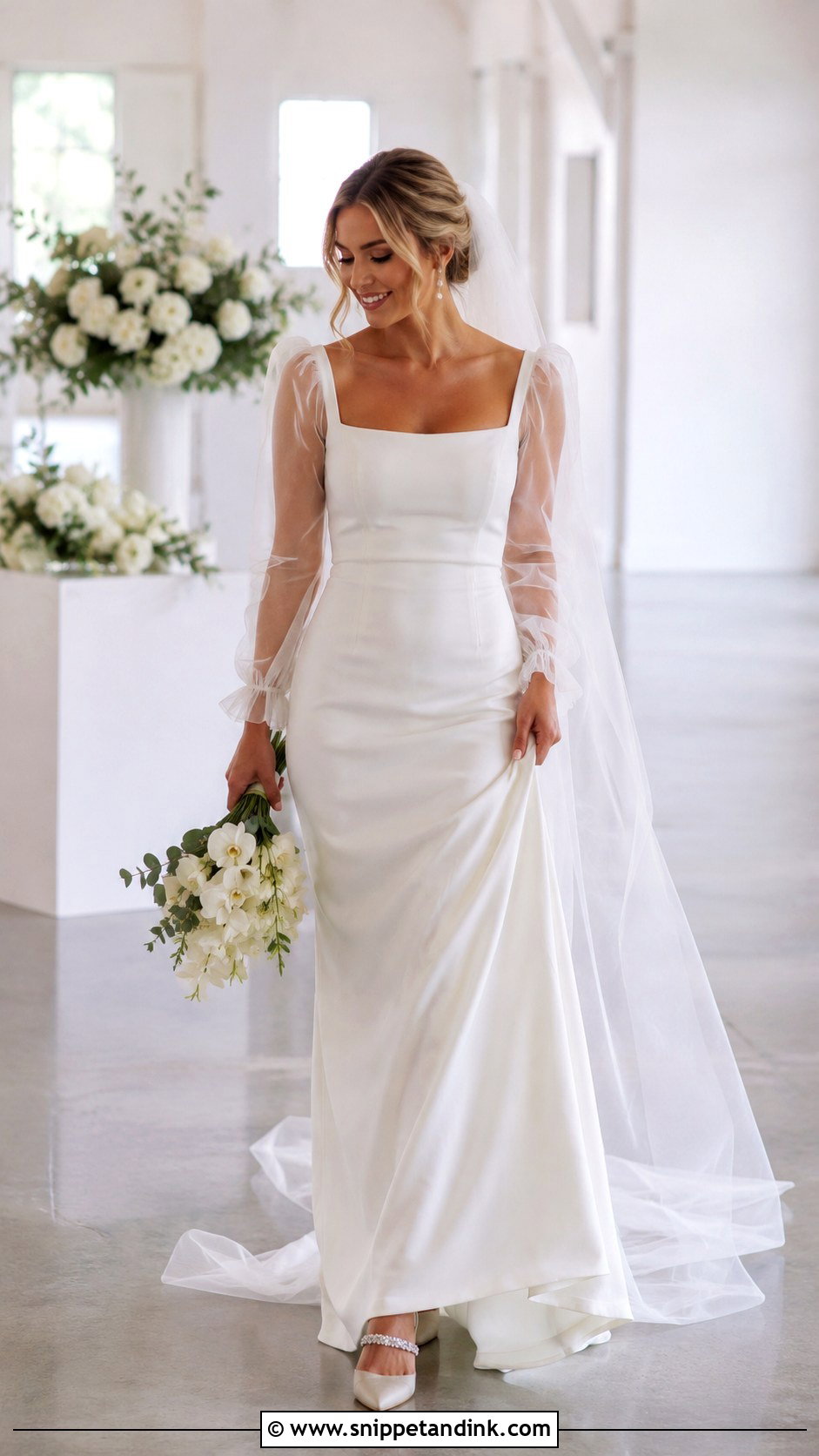
Sheer sleeves give coverage without weight. Fitted, puffed, bishop-shaped or detachable, they suit a plain crepe or satin gown best. Bishop sleeves gather at the wrist and dangle near your plate, so pin the cuff back for dinner. Tulle and organza sleeves crease in transit, so hang the dress as soon as you arrive and steam the sleeves lightly. If the sleeves carry pearls or lace, keep everything else minimal: pointed heels, a soft veil, delicate earrings.
7. Pearl Embellished Wedding Dress
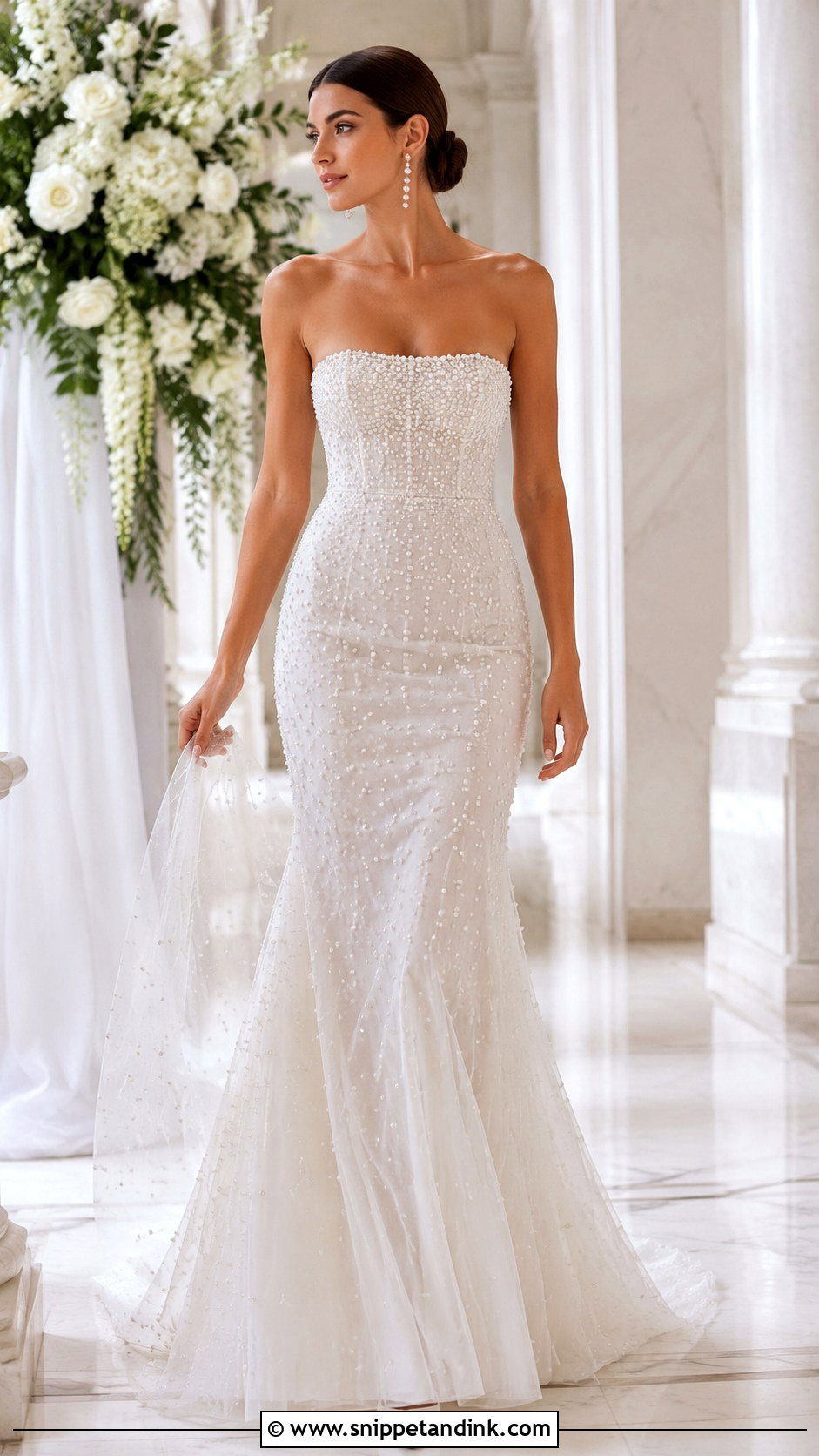
Pearls give quiet detail, from a scattering on tulle to pearl straps, a beaded bodice or a pearl veil. A clean column, slip or A-line underneath keeps them from looking fussy. Pearl veils are heavier than they look, and the weight pulls on the comb as the day goes on, so your hairstylist needs to anchor it into a firm base. Pearl drops, white heels and smooth hair are enough; leave the rest of the jewelry box closed.
8. Floral Applique Wedding Dress
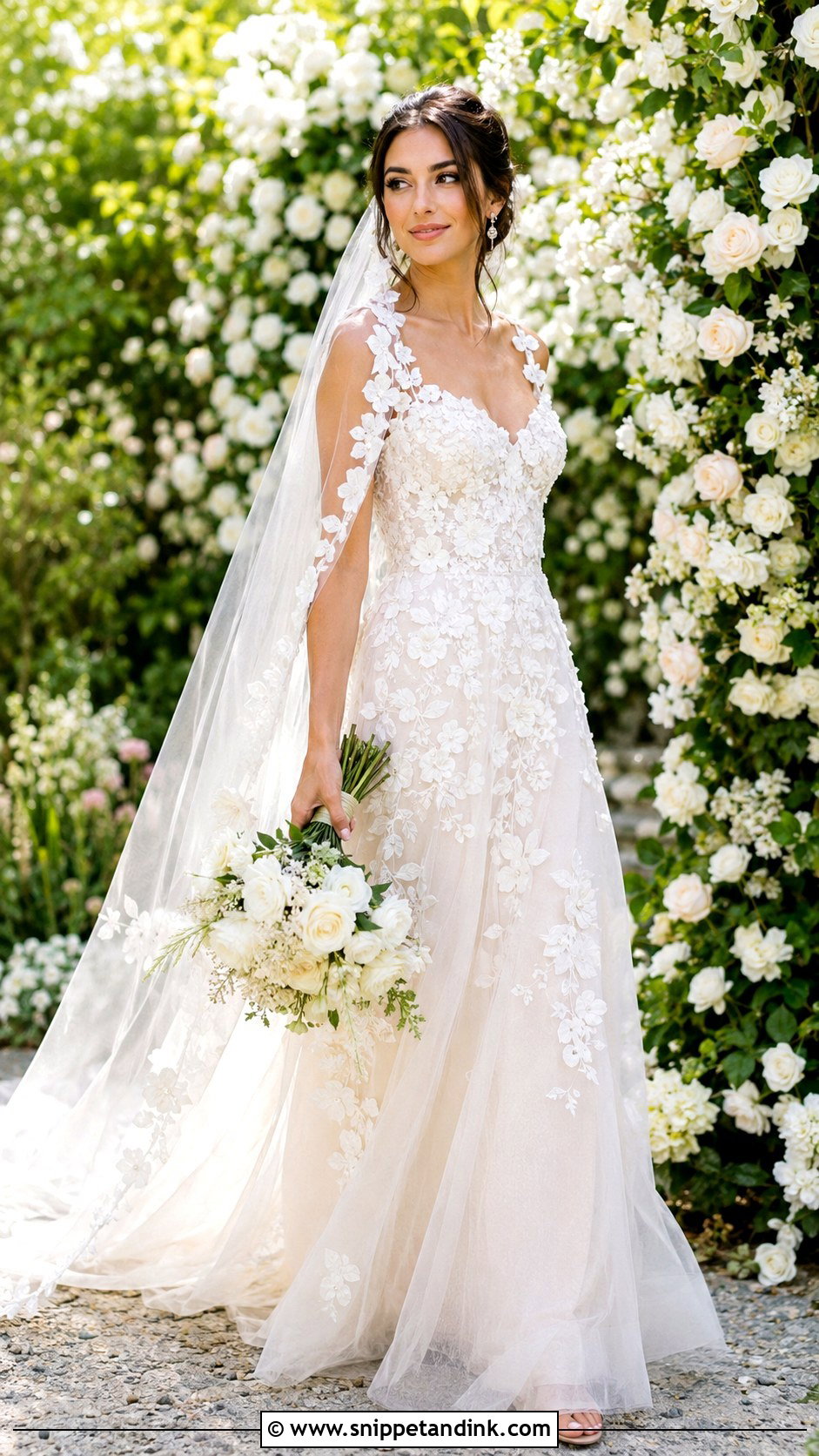
Floral applique adds dimension that shows up best in side light. Oversized, scattered or embroidered motifs can sit along the bodice and skirt, or fade out into a plain skirt for a cleaner effect. A sheer overlay on a nude or ivory lining gives depth. If you want a veil edged with matching flowers, order it from the same maker, since bridal whites vary and a veil from elsewhere can look a shade off right next to the dress. Barely-there heels and simple earrings suit an outdoor spring wedding.
9. Corset Bodice Wedding Dress
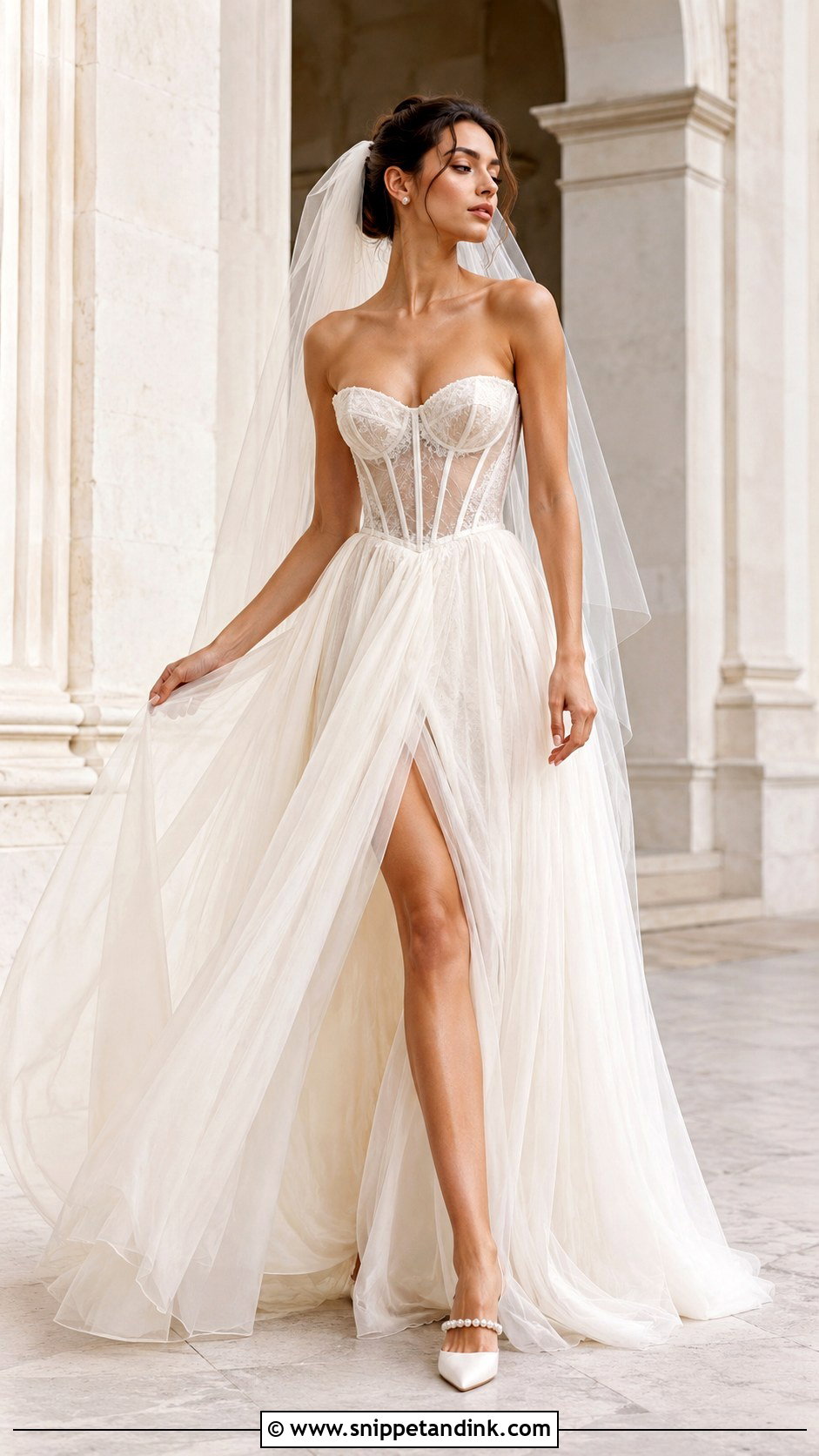
A corset bodice gives support and a defined waist. Exposed boning, soft cups or a basque point make the bodice the feature; a tulle, satin or fitted crepe skirt sets the mood. Exposed boning shows every channel in close-up photos, which looks deliberate when it’s straight and messy when it bends, so check the lines are even at your fittings. Pearl studs, pointed heels, a clean veil and a soft updo balance the structure. Candlelight suits it well.
10. Drop Waist Wedding Dress
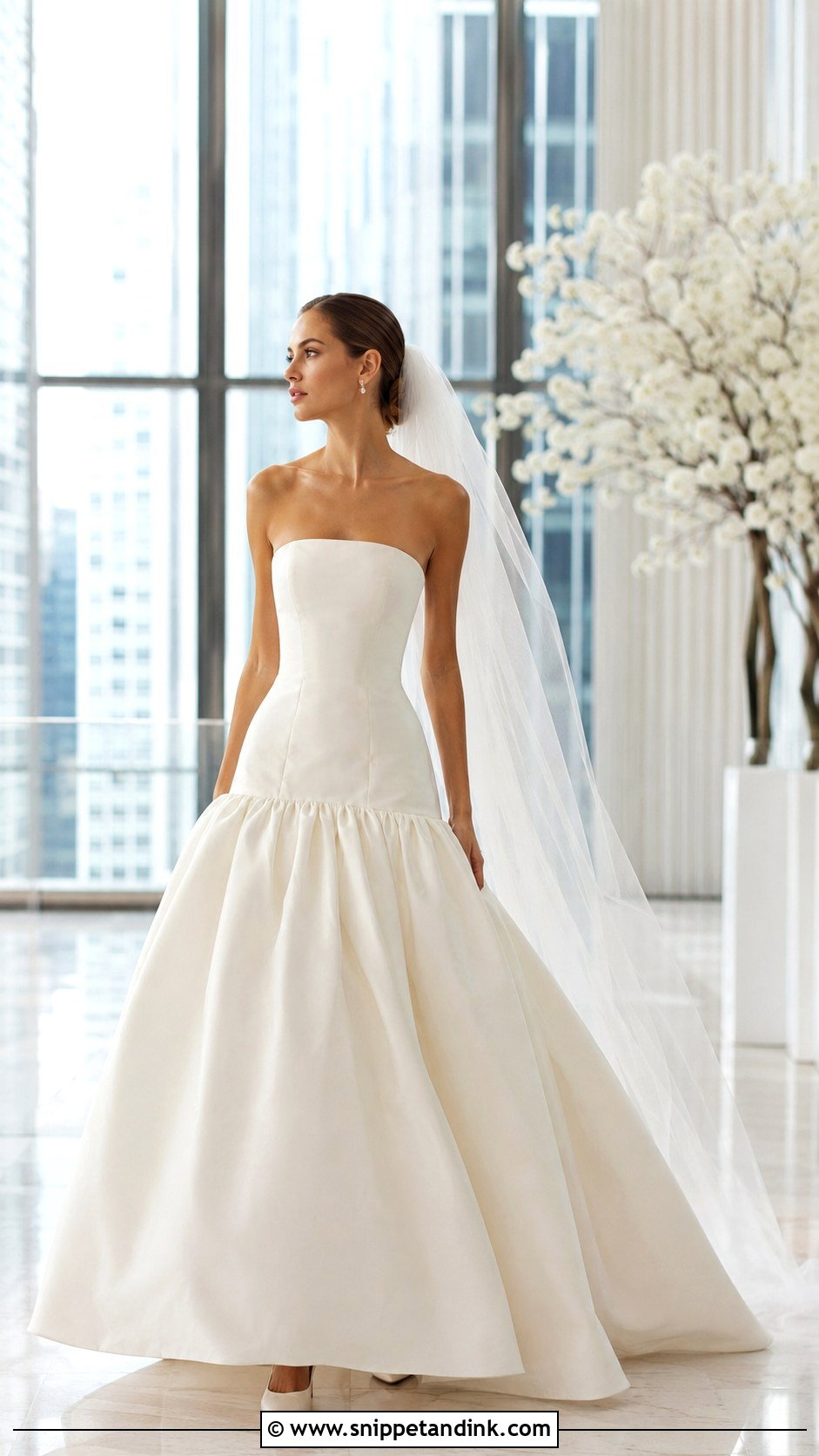
A drop waist lengthens the torso before flowing into a fuller skirt. Satin, taffeta or mikado hold the shape best. The proportions are what I study most. On a long torso it looks effortless, but on a shorter torso the low seam can make the legs look shorter, so I’d try it before ruling it in. Clean pumps, a long veil and minimal jewelry let the silhouette speak in a modern ballroom or city venue.
11. Basque Waist Wedding Dress
A basque waist wedding dress points below the natural waist, drawing the eye down into a full skirt of tulle or crisp satin. Keep the bodice clean, with subtle boning or a strapless neckline, so it looks current rather than historical. Opera gloves add drama but change how you hold the bouquet, so practice gripping the stems in gloves. Pearl earrings, satin pumps and a long veil complete it. It gives a princess shape with sharper lines.
12. High Neck Wedding Dress
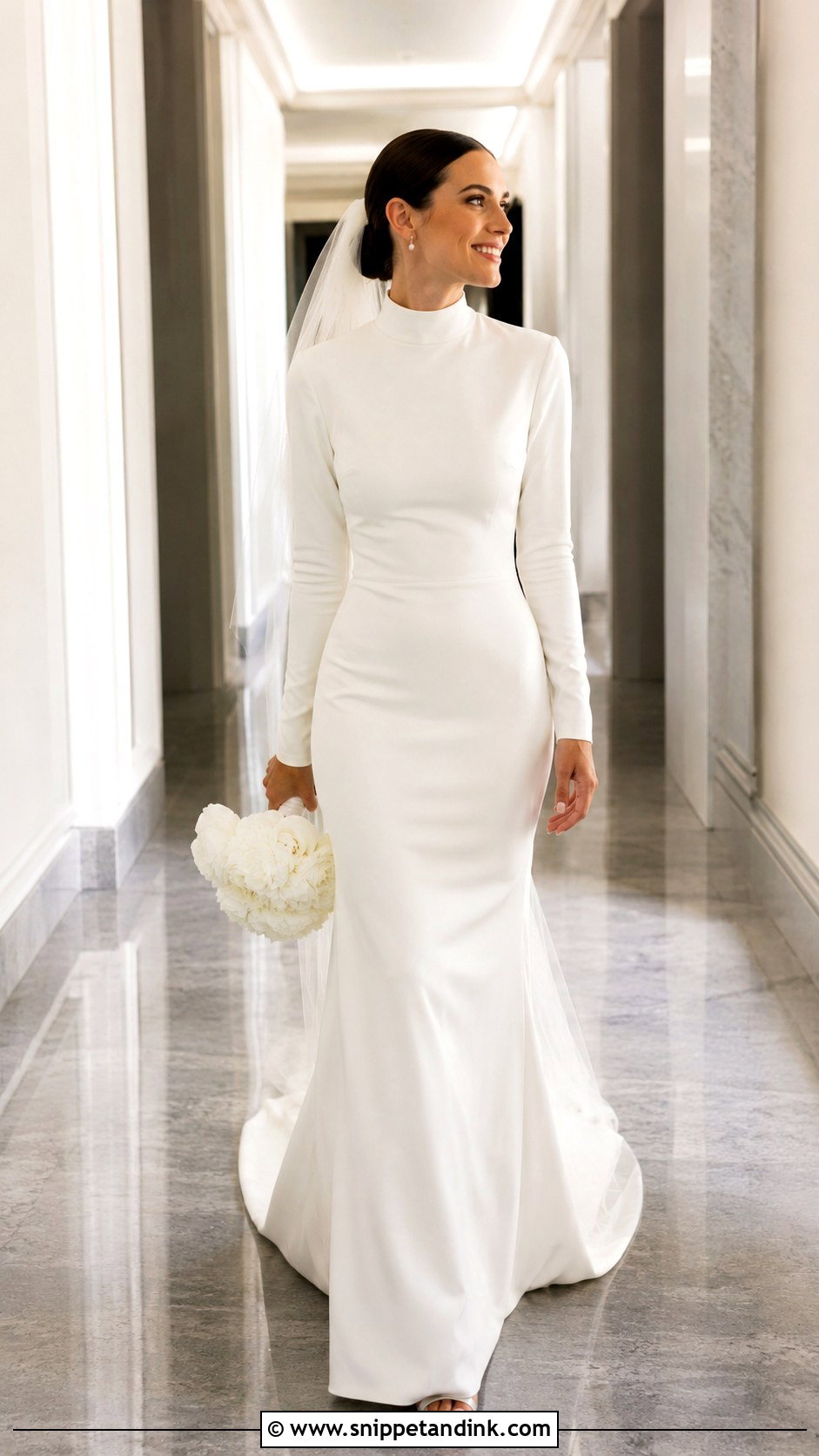
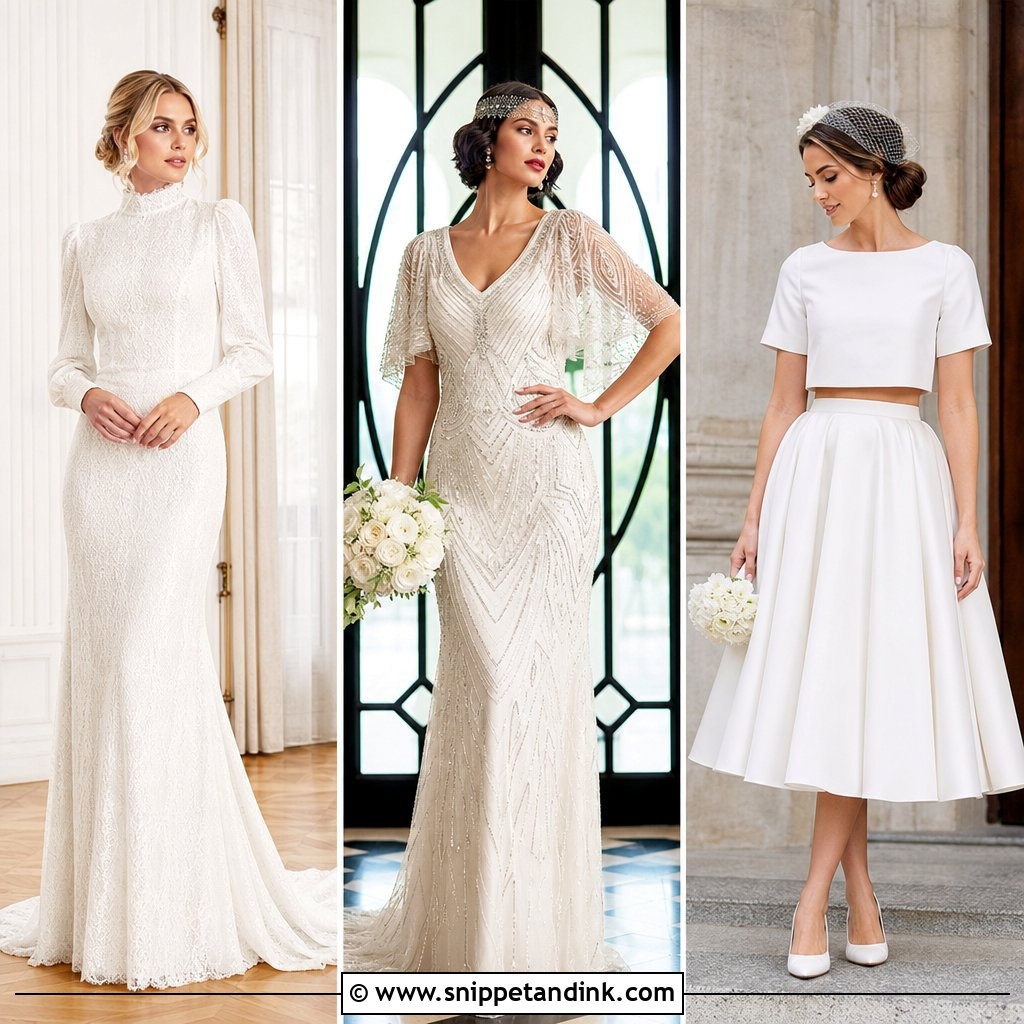
A high neck in lace, crepe, satin or sheer tulle covers more and still looks fashion-led. With long sleeves it reads formal; sleeveless, it looks architectural. Pull the hair back so the neckline stays clean, and wear small earrings. I’d anchor the veil low, underneath the bun, so it falls straight from behind the collar instead of bunching against it. It suits winter weddings and elegant indoor ceremonies.
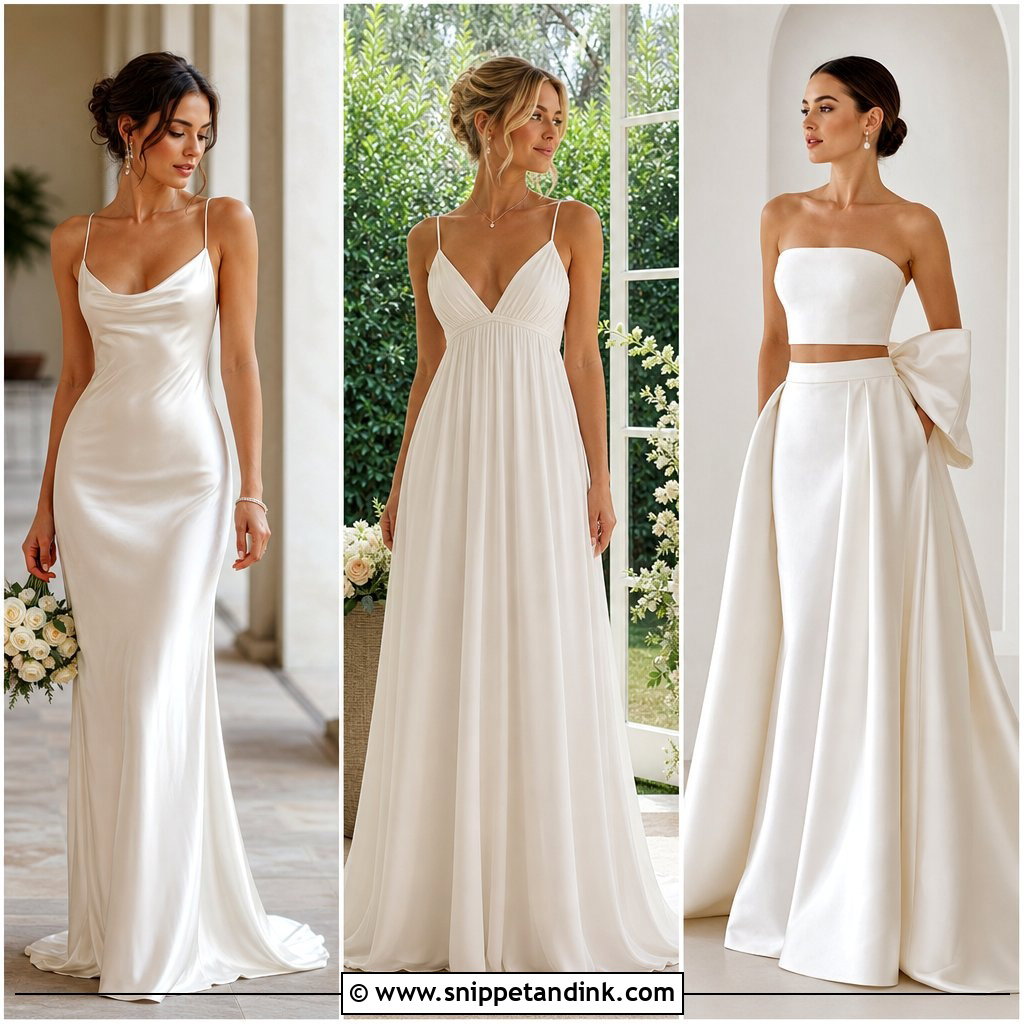
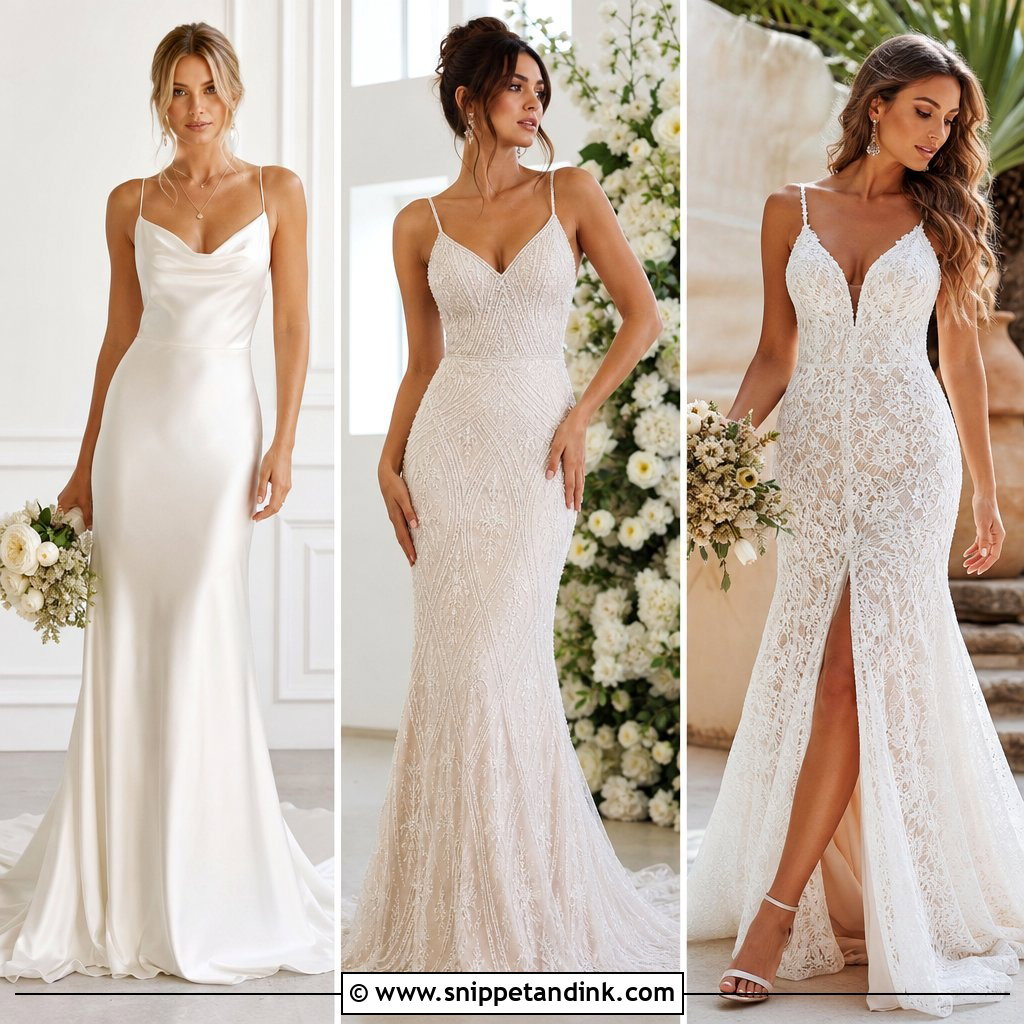
13. Modern Slip Wedding Dress
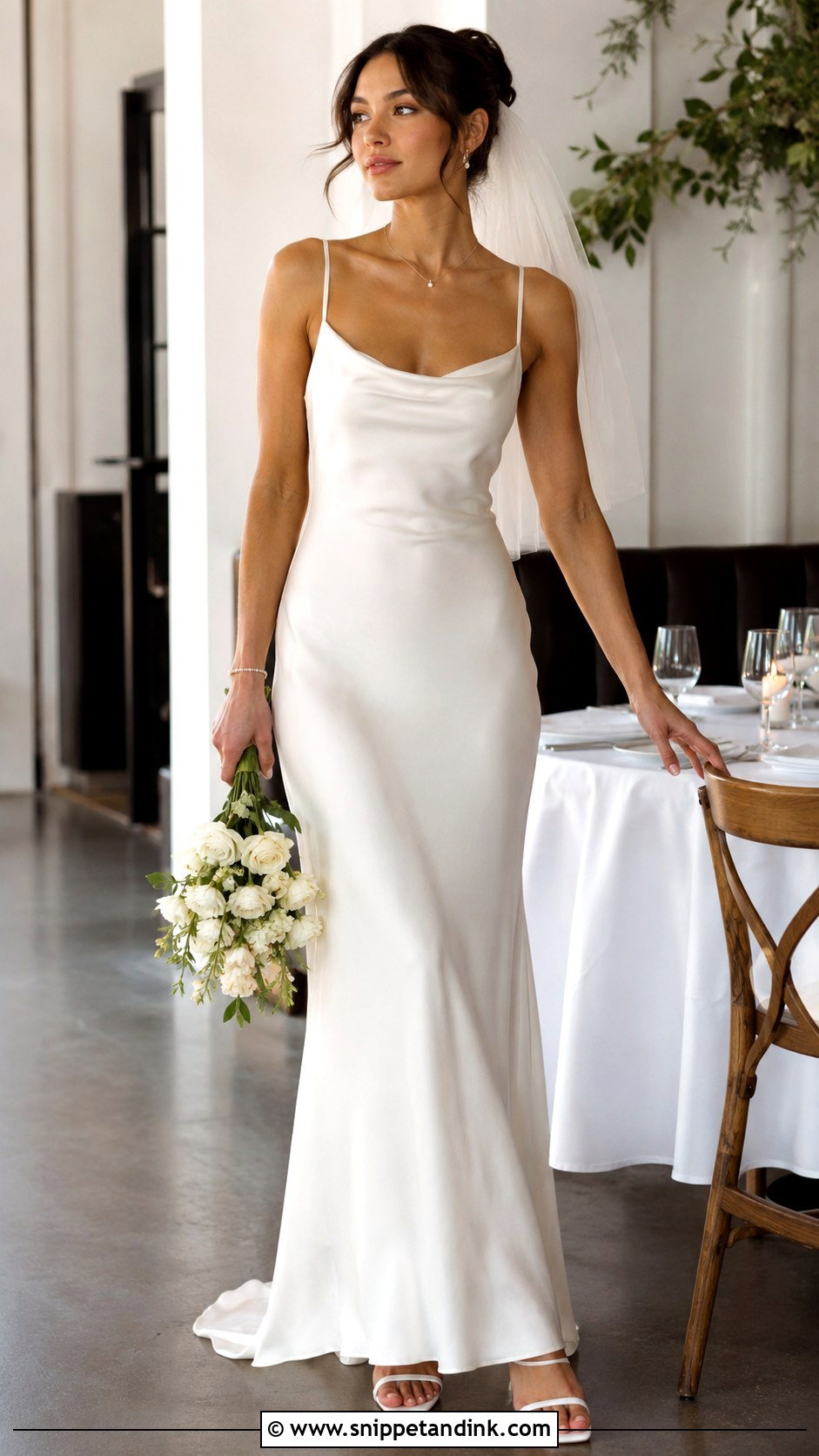
A slip in silk, satin or crepe is the dress you’ll move in most easily. A cowl neck, thin straps or a low back keep it soft. For a beach wedding, have the hem taken up a touch so it skims the sand instead of dragging through it, since wet sand stains silk fast. Strappy white heels or flat sandals, a short veil and refined jewelry suit it, and a tailored blazer or sheer wrap covers you for a cool ceremony. I reach for it at courthouse and restaurant weddings most often.
14. Short Wedding Dress
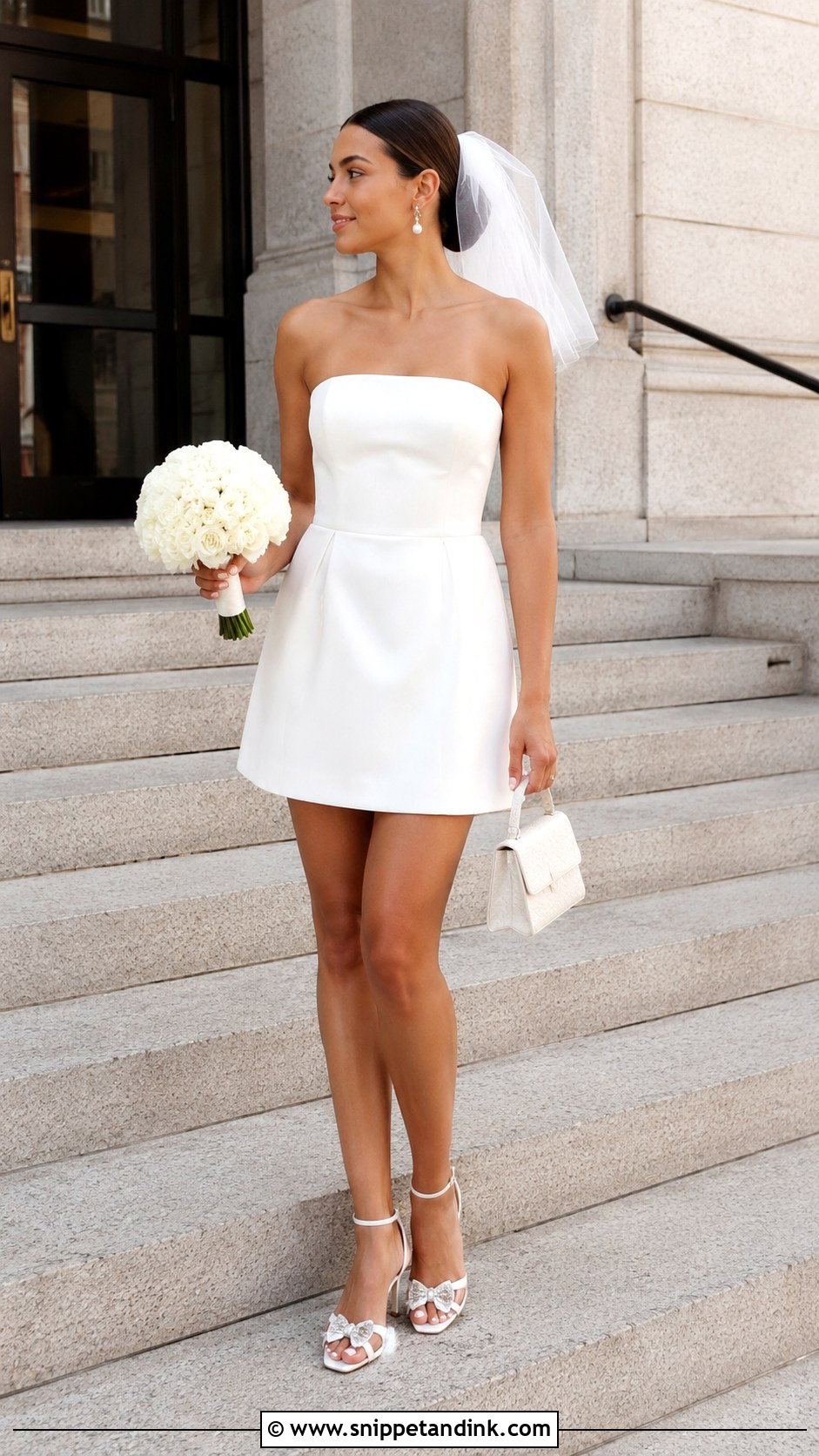
A short dress is all about lightness: a structured mini, lace shift, satin A-line or a feather-trimmed hem. Style it as a bridal look with statement heels, pearl earrings, a mini veil and polished hair, otherwise it reads as a cocktail outfit. Sit in it before buying, because short structured skirts ride up when seated. White sunglasses or a small top-handle bag add a city-bride touch. It suits civil ceremonies, elopements and after-parties.
15. Tea Length Wedding Dress
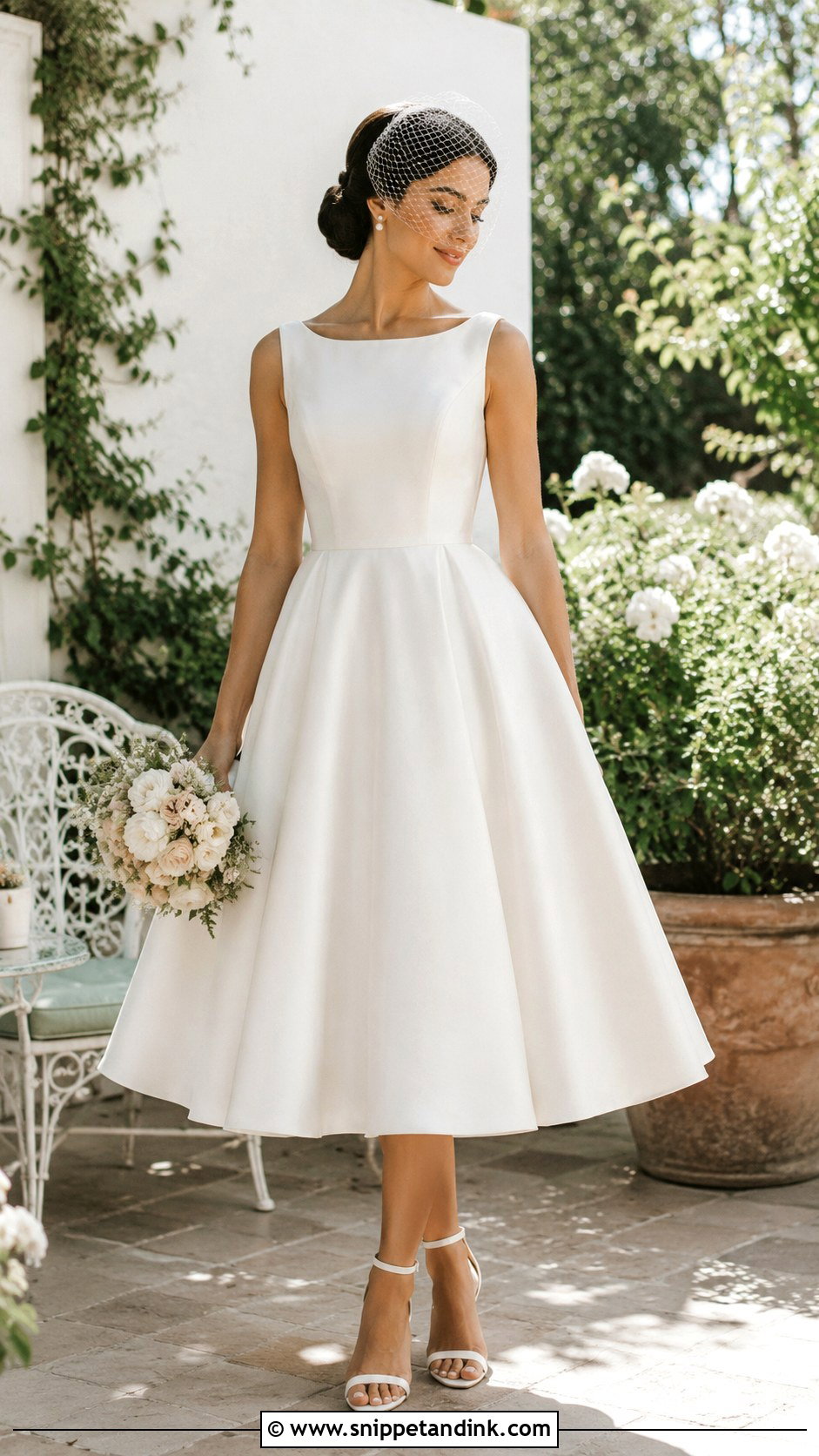
Tea length lands between knee and ankle, so walking and dancing are easy and your shoes are on show. Satin, lace, organza or tulle each suit different venues. Since the shoes will be seen all day, I’d pick ones you can stand in for hours: ankle-strap heels hold the foot better than slip-on pumps, and bridal flats are a sensible choice. A birdcage veil, pearl studs and soft waves keep it from looking like a costume at a garden, courthouse or daytime wedding.
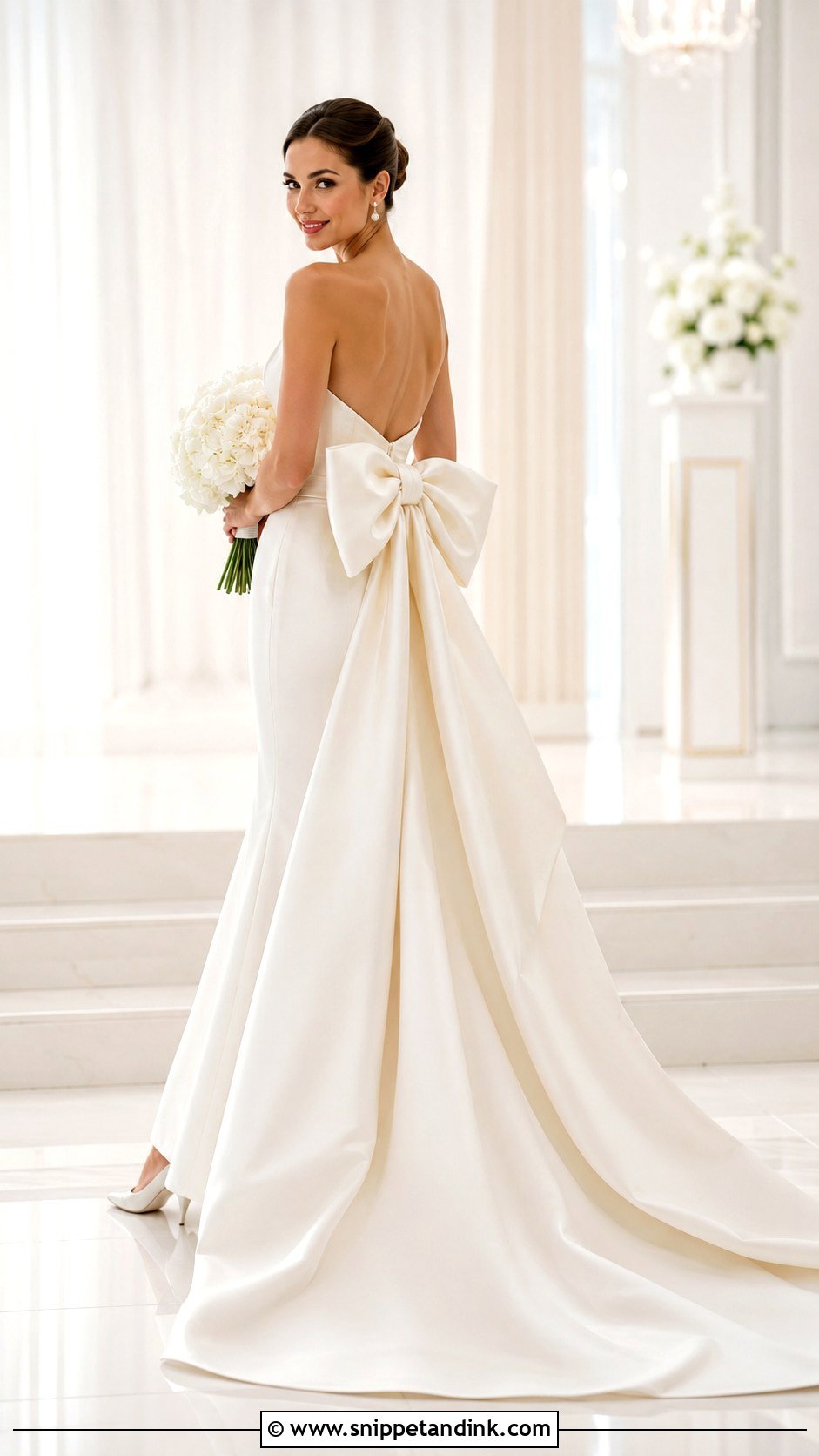
16. Wedding Dress With Bow
One bold bow looks modern; many small ones look sugary. It can sit at the back waist, shoulder, neckline or train, and a clean satin gown with an oversized back bow gives you a strong photo from behind. A bow at the back waist gets crushed every time you sit, so ask whether it can be detached and reattached, or stiffened with interfacing. Simple earrings, a smooth updo and classic pumps keep the bow the main event.
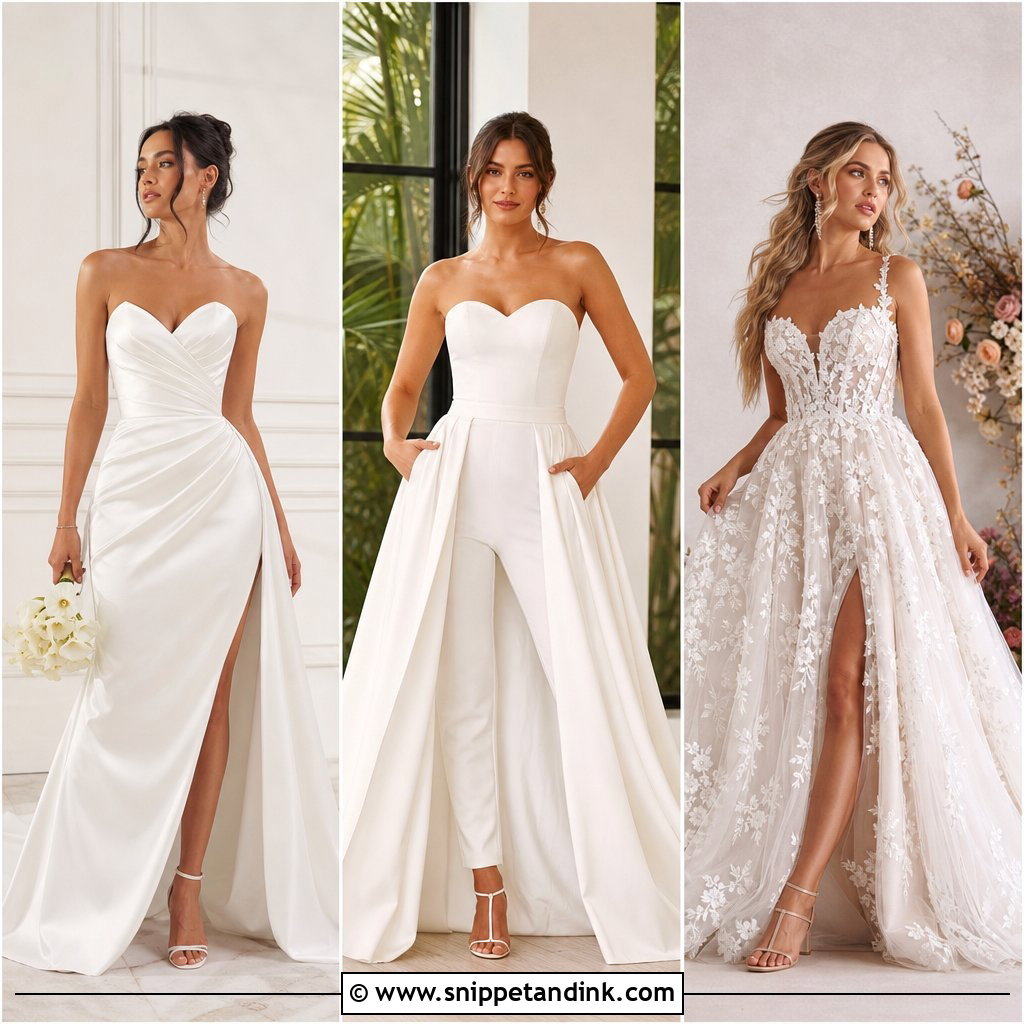
17. Detachable Skirt Wedding Dress
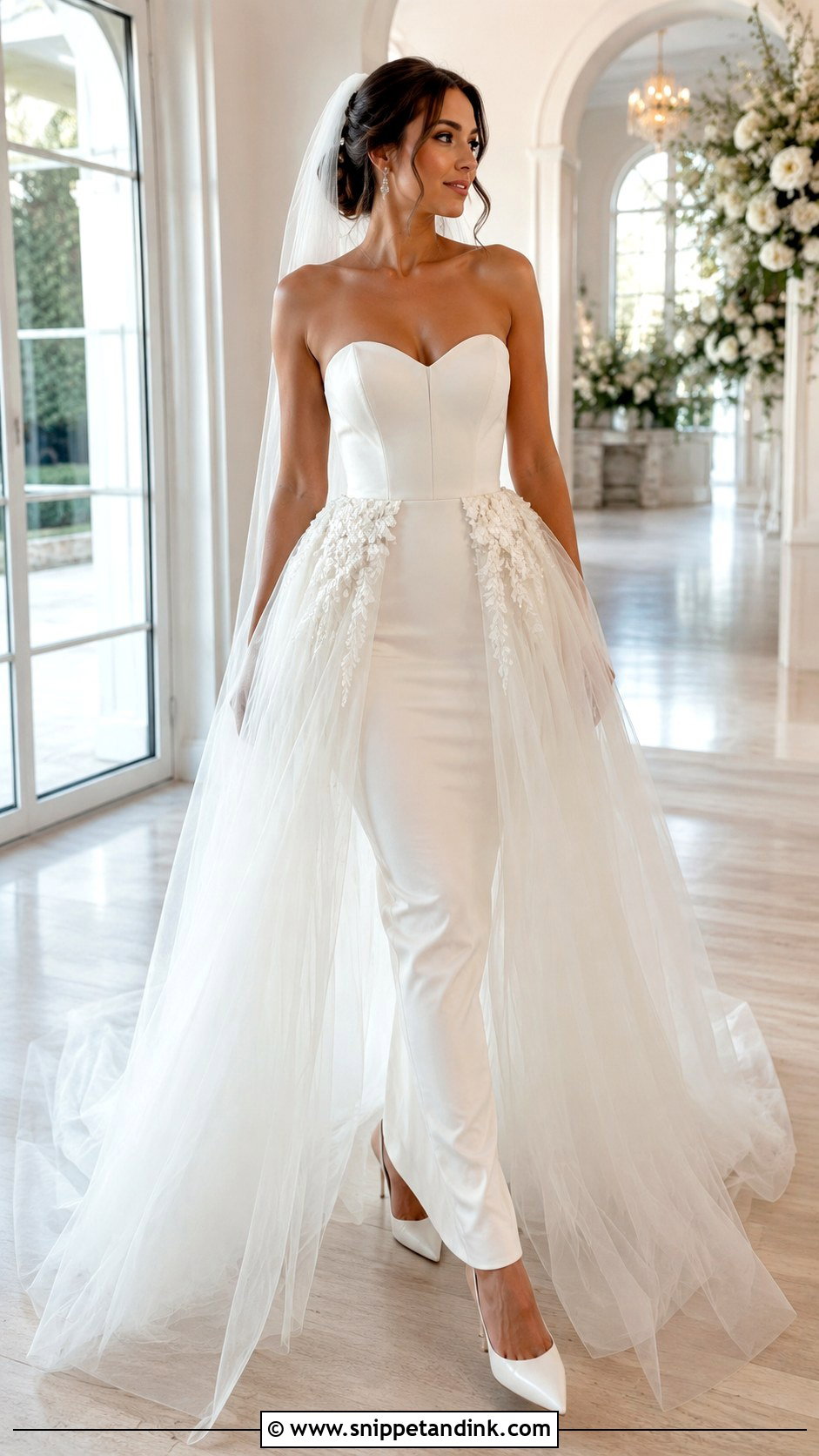
A detachable skirt gives you two looks from one purchase: a dramatic overskirt with volume, train or tulle for the ceremony, and a fitted column, mini, mermaid or simple satin base for the reception. I always ask how it fastens. Hidden snaps or hooks along a waistband are much faster than buttons, and the person helping you change should practice beforehand. Swap to bolder earrings or a shorter veil for the second look to mark the change.
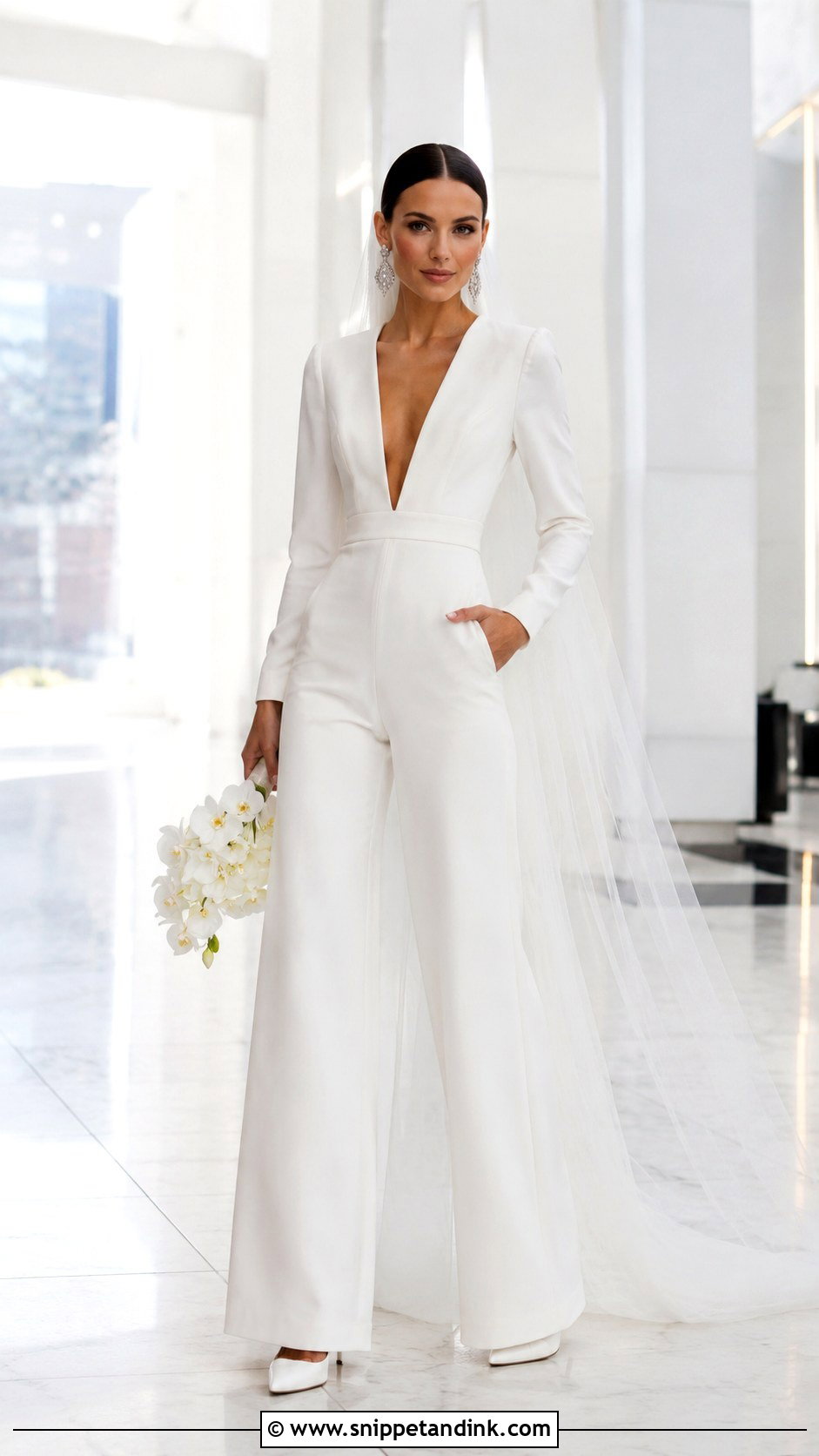
18. Bridal Jumpsuit Wedding Outfit
A bridal jumpsuit in white crepe, satin or structured tailoring is comfortable for moving and dancing, with a wide leg, fitted bodice or cape detail. The practical issue nobody mentions is the bathroom. Most jumpsuits zip at the back and come off almost completely, so pick one with a side zip or plan to have help. Hem wide legs for your exact heels so they don’t drag. Pointed heels, statement earrings and a veil or hair bow keep it ceremonial, and a tailored blazer sharpens it for a city ceremony.
19. Bridal Suit Wedding Outfit
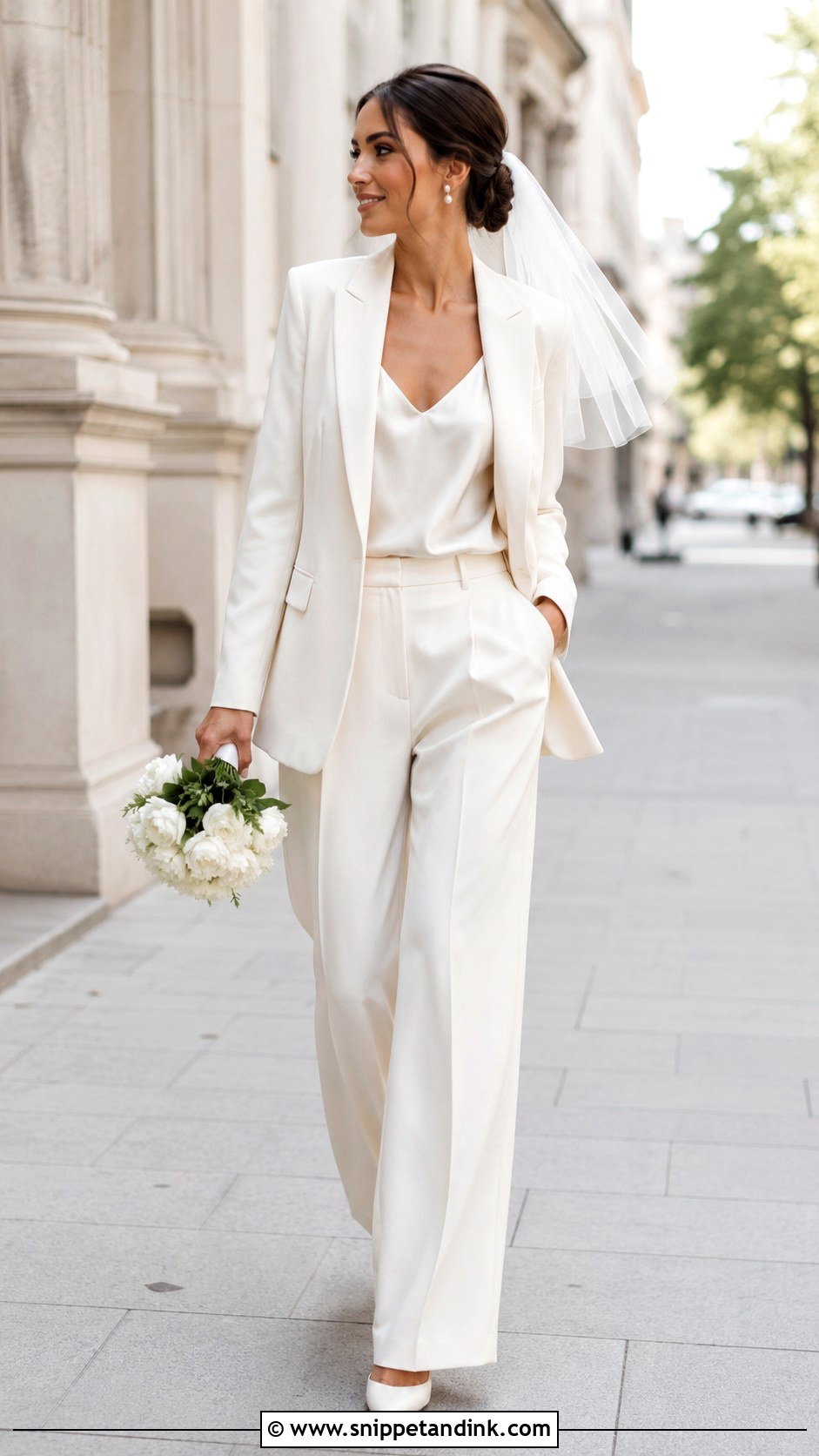
A bridal suit is all about tailoring. Choose a white or ivory tailored blazer with matching trousers and a silk camisole, lace bodysuit or vest underneath. The jacket shoulders should end exactly at your shoulder bone, and the trousers should break just over the heel you’ll wear; both need a tailor, not a bridal seamstress who mostly hems gowns. Wide-leg trousers feel elegant, slim ones crisp. Pointed heels, pearl earrings and a short veil or sculptural hair piece complete it, and the pieces can be worn again separately.




20. Two Piece Wedding Dress
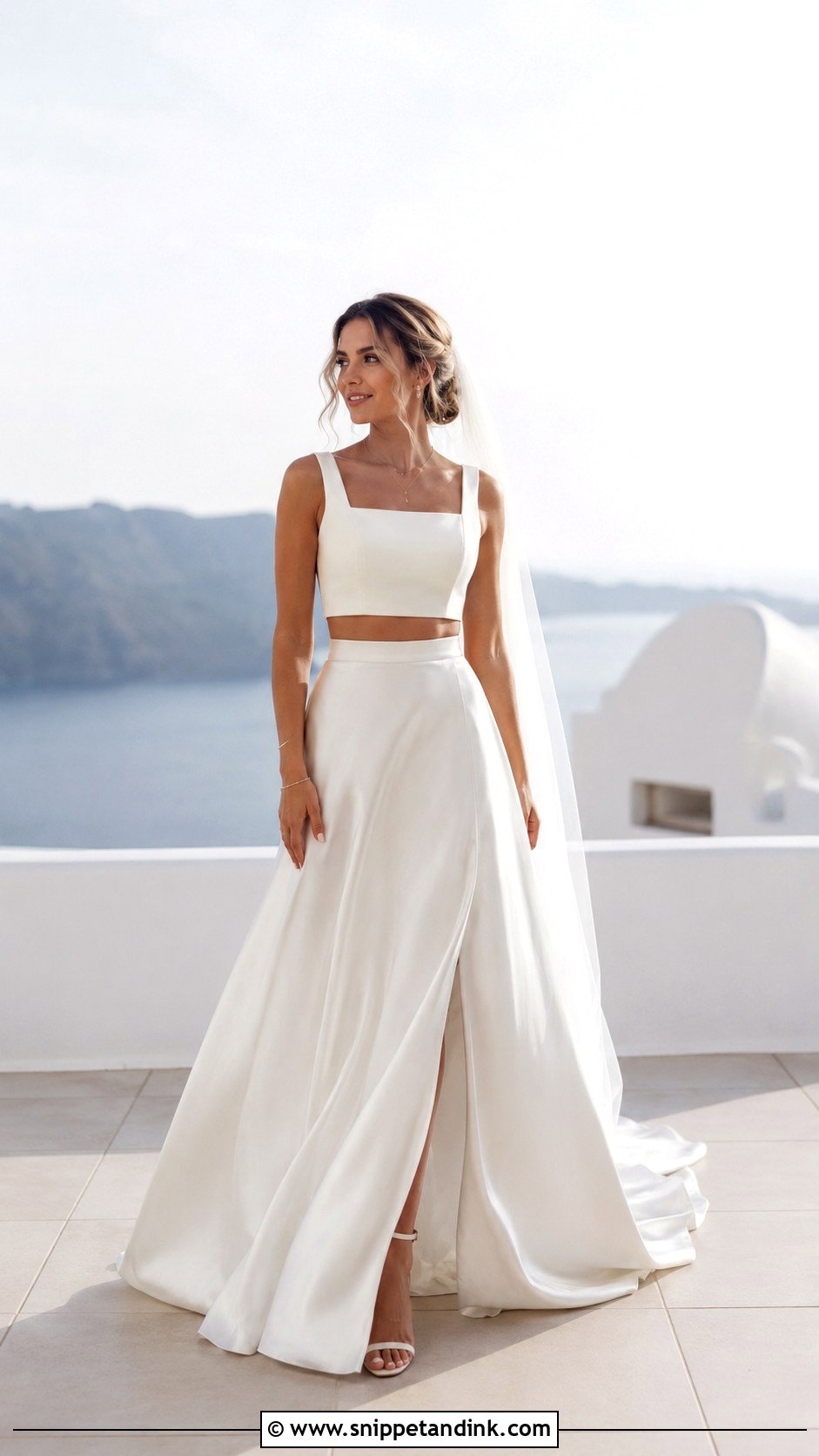
Separates give a custom feel and make it easier to fit different sizes top and bottom. A structured crop top with a full skirt, a lace bodice with a satin skirt or a camisole with a column skirt all work. Lift your arms above your head at the fitting to see how much midriff shows; a gap that looks small standing can grow during the first dance. Simple heels, soft jewelry and a veil that ties both pieces together suit a destination or outdoor wedding.
21. Cape Wedding Dress
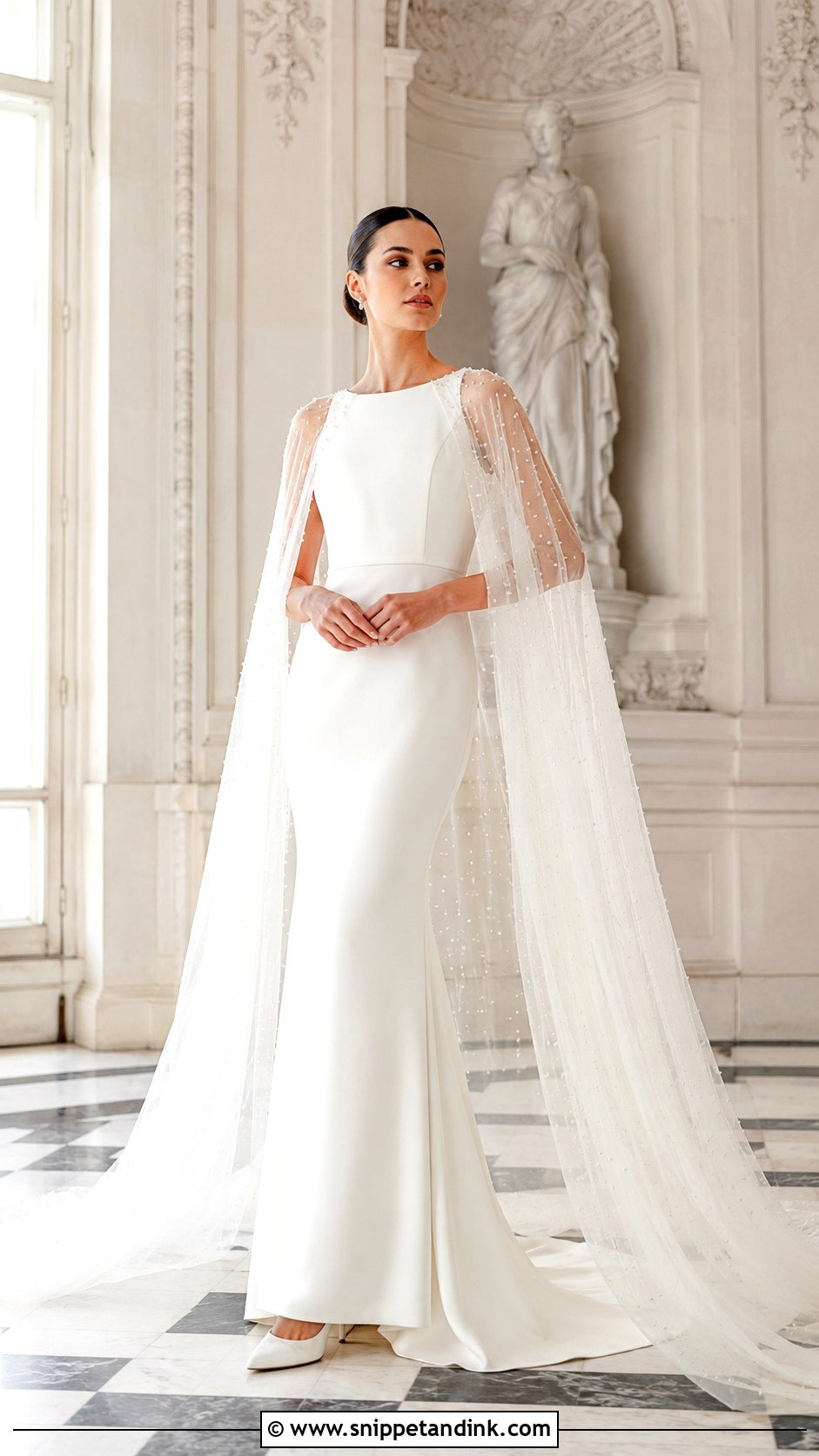
A cape gives drama with very little effort. It can be sheer, lace-trimmed, pearl-dotted or smooth crepe, replacing a veil or layering over a fitted gown so it has room to move. It covers the shoulders without sleeves, though a sheer cape adds no real warmth, so for a winter wedding plan a proper coat or faux-fur wrap for outdoor photos. Minimal earrings, simple heels and hair pulled back keep the neckline clear.
22. Feather Trim Wedding Dress
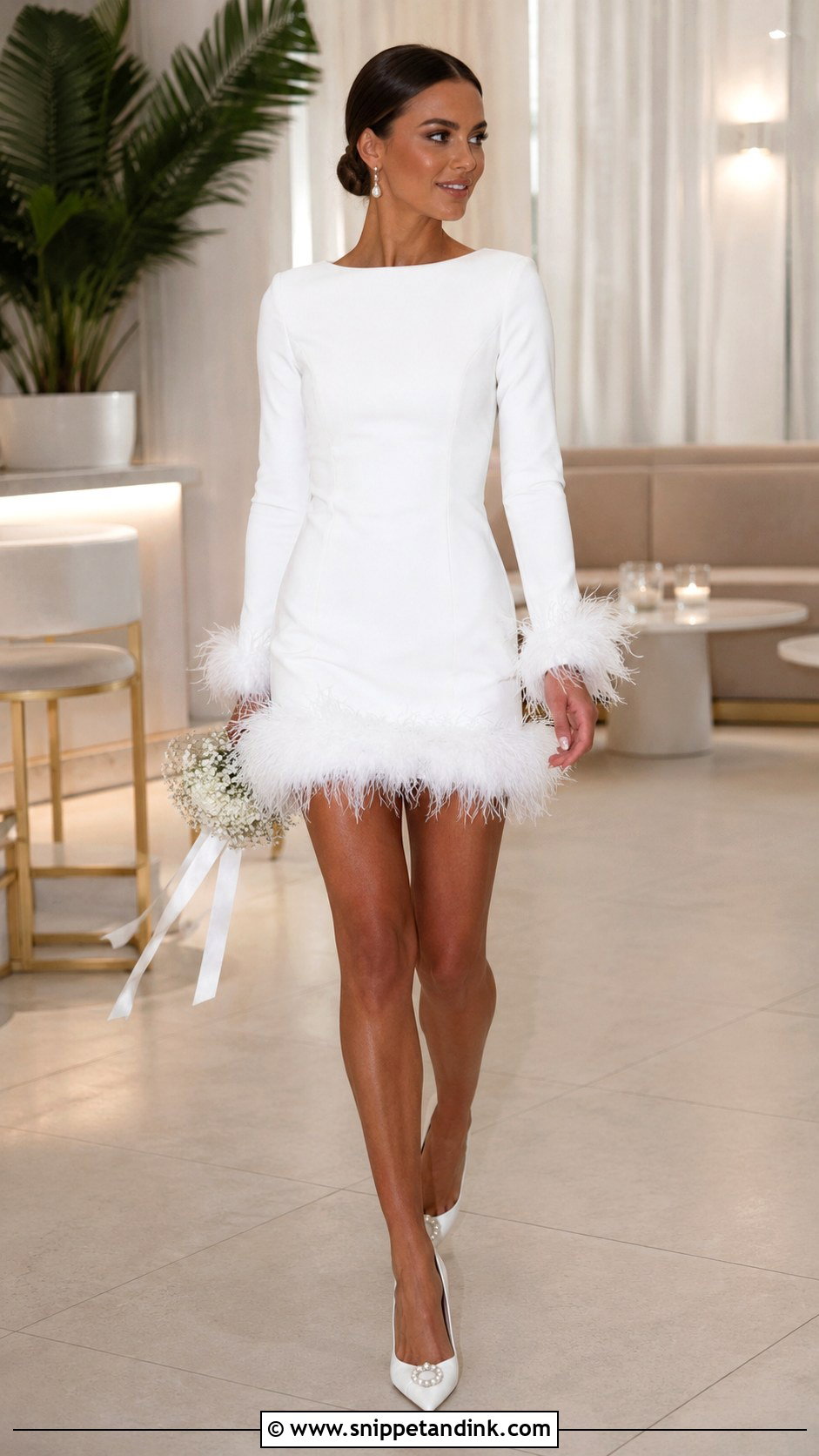
Feather trim brings movement at the hem, cuffs, neckline or on detachable sleeves. Use it in one place, not all over. Feathers shed, catch lipstick and go limp in rain or humidity, so I keep them away from the face and suggest them for an indoor reception or after-party rather than an outdoor ceremony. A mini with feather cuffs feels playful; a long satin gown with feather trim more formal. Clean heels, pearl earrings and sleek hair keep it balanced.
23. Colored Wedding Dress
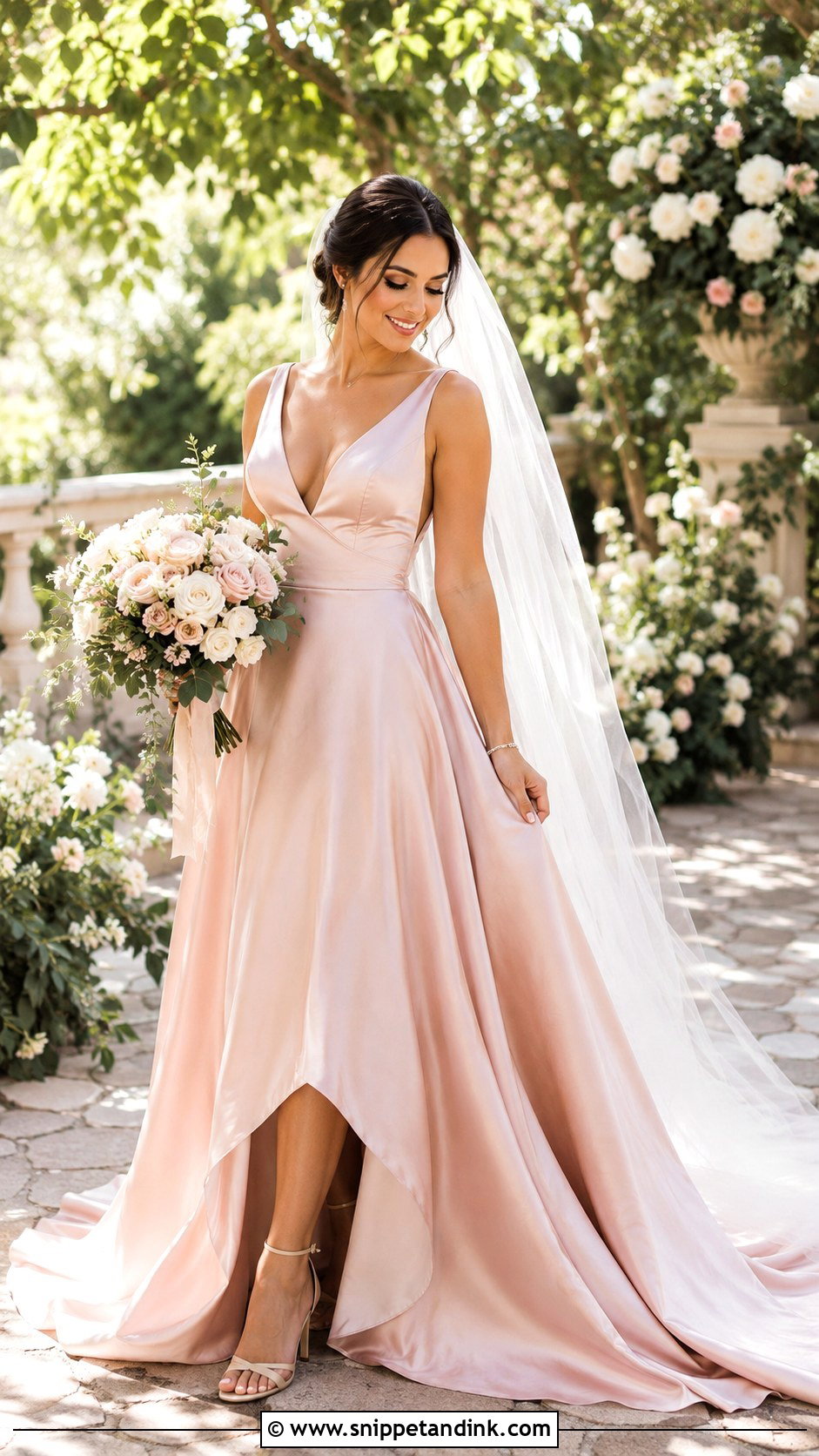
A colored gown suits brides who feel washed out or simply not themselves in white. Blush, champagne, pale blue, buttercream, silver and light lavender all read bridal. Test the color in daylight and in photos, though. Very pale blues and lavenders can look almost white in bright sun and greyer indoors. A simple silhouette lets the color lead. Neutral heels, delicate jewelry and an ivory or tonal veil complete it.
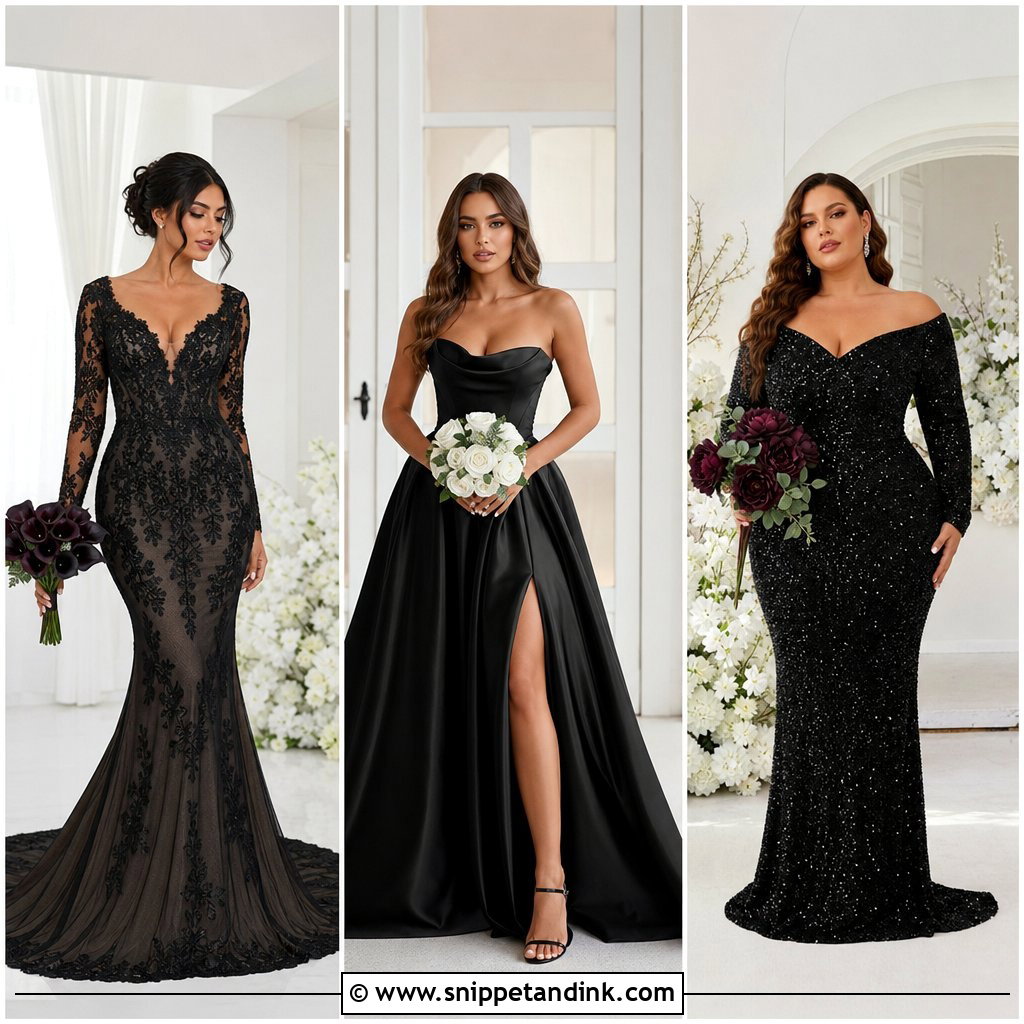
24. Black And White Wedding Dress
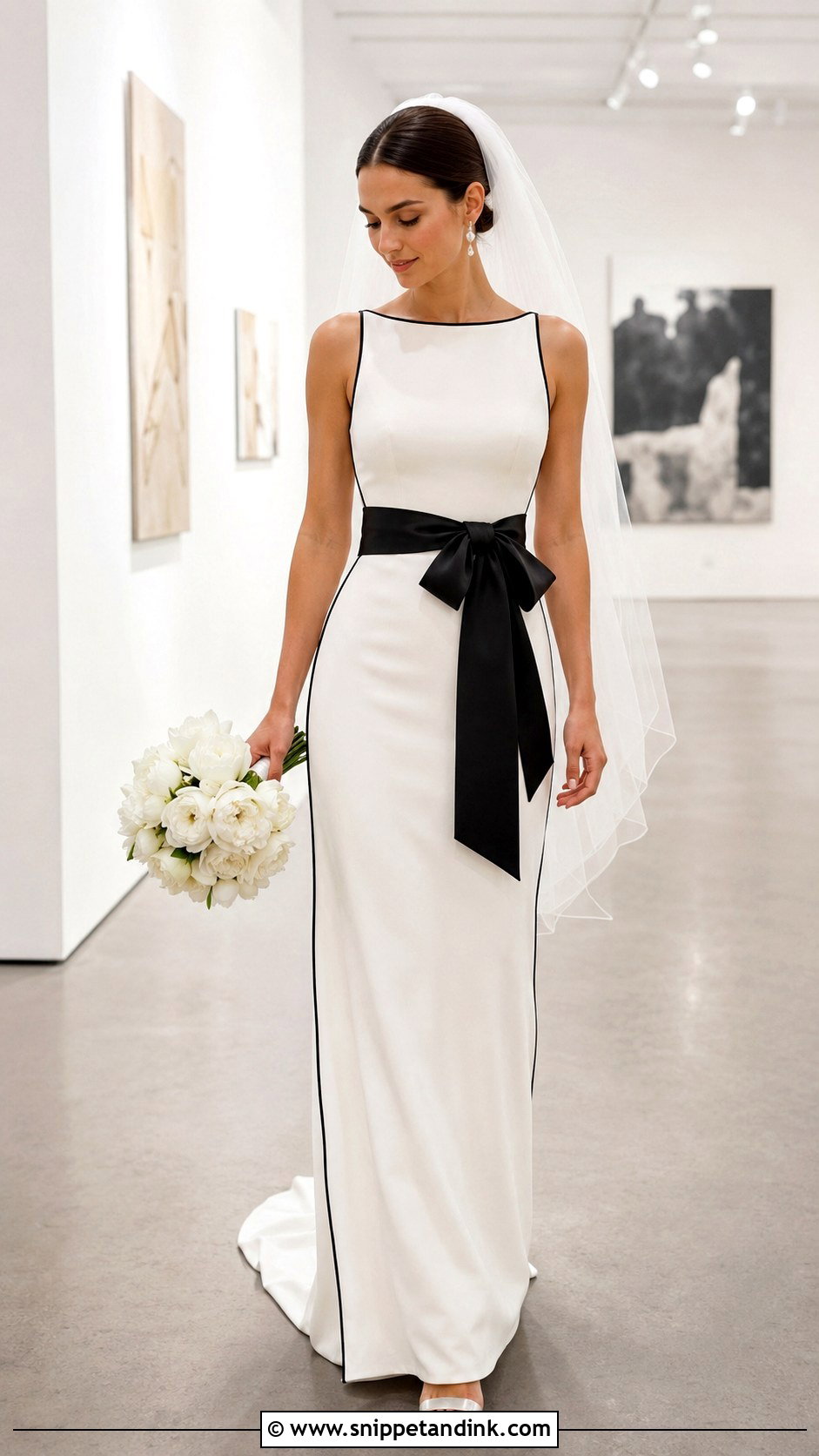
Black and white works when the black is a detail: bows, piping, a waist sash or floral embroidery on an ivory gown. A simple column or A-line keeps the contrast clean. Ask whether the black trim is colorfast. A spilled drink or rain can make poorly dyed trim bleed into the ivory, and that stain is almost impossible to remove. Black or ivory heels, pearl earrings and a black hair ribbon pull it together for a city or evening wedding.



25. Sustainable Wedding Dress
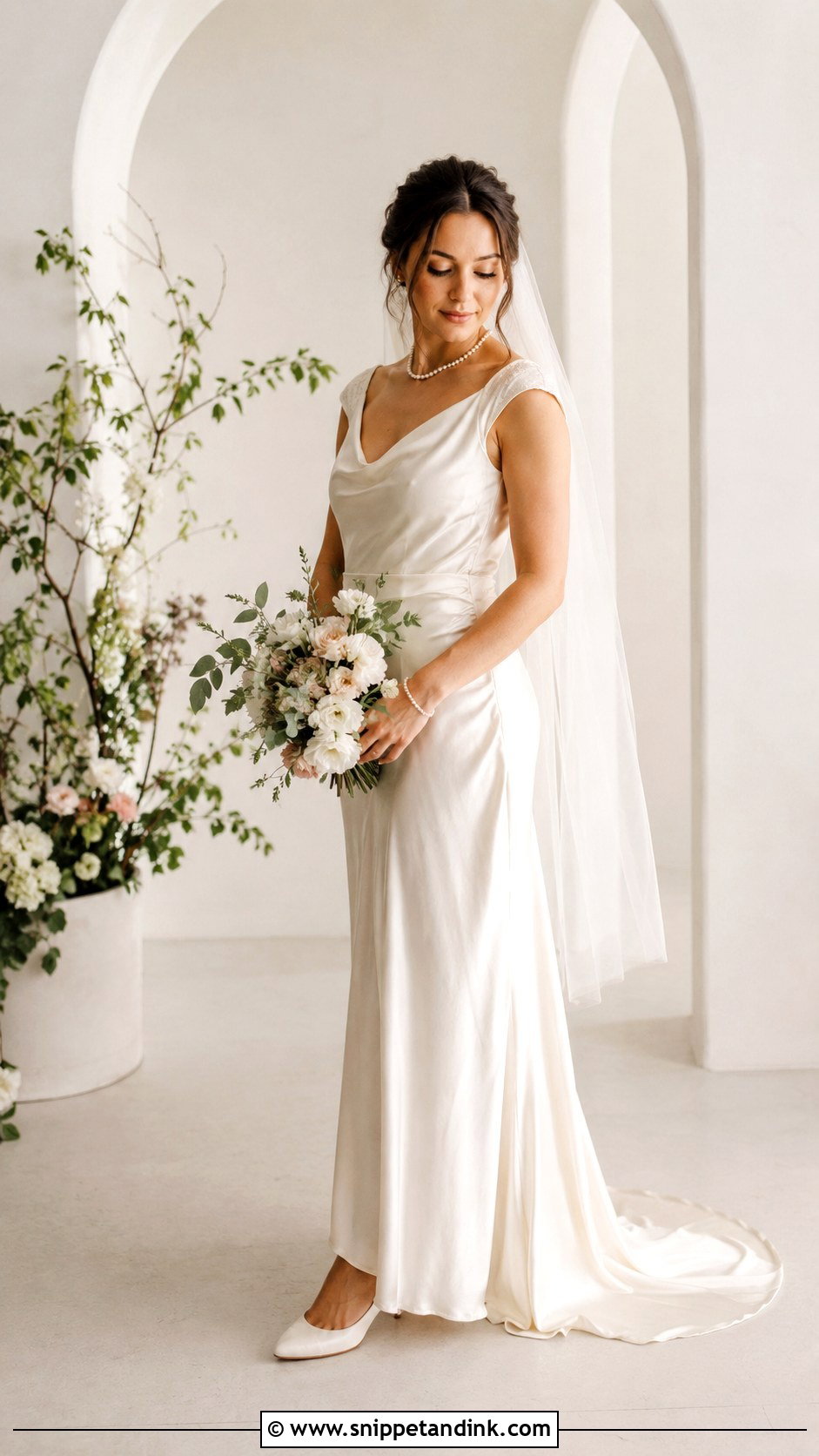
A sustainable wedding dress can be pre-loved, rented, vintage or new in deadstock, organic or locally made fabric. With a pre-loved gown, check what was already altered, especially the hem, because fabric cut away can’t be put back. Rentals usually limit alterations, so confirm what’s allowed before you choose. Shoes you’ll wear again and heirloom jewelry fit the same thinking. Good tailoring makes a second-hand dress look made for you.
Jumpsuits, Suits and Colored Gowns Need Different Planning
The non-traditional options on this list are wonderful, but they don’t go through the bridal process the same way a gown does. A few things I tell brides who choose them:
- Suits and jumpsuits are often bought ready-to-wear, so the fit comes from a good tailor. Book that tailor early.
- White trousers show everything, from grass to a dropped canape. Carry a stain pen.
- Colored gowns can vary between dye lots, so order the dress and any matching veil or accessories together.
- If family expect white, show them the outfit before the day. It’s kinder than a surprise at the ceremony.
What happens to the outfit afterward
Decide early whether you’ll keep, sell or rewear it, because that changes what you buy. Suits, minis and separates are easy to wear again. A gown you plan to sell should be cleaned soon after the wedding, before hidden sugar stains yellow. One you plan to keep should be professionally cleaned and stored flat in acid-free tissue, away from light and damp.
An Outfit That Looks Like Your Best Day, Not a Trend
Bridal style is no longer one traditional shape. A satin column, lace sleeves, a structured ball gown, a jumpsuit, a suit, a mini or a pre-loved find can all look completely bridal. Start from fit and comfort, then think about your venue and the details that make you feel confident. Use the looks above as a starting point and adjust the neckline, fabric, accessories and shoes until the outfit feels like the way you dress on your best day.
You'll Like These Ideas:




Leave a Reply