
Every decade of bridal fashion has a mood you can borrow. The 1920s glitter, the 1950s swing, the 1970s drift and the 1990s keep things very quiet. Lace sleeves, satin slips, tea-length skirts, Art Deco beading, corset bodices and pearl veils all come from somewhere specific, and knowing where helps you style them so they look current rather than costumed. What keeps a vintage aesthetic fresh is modern tailoring and restraint in the extras. The twenty-five looks below run roughly in order of era, and I’ve added what I’d check or change on each one before a bride walks out of the fitting room.
Turning a Mood Board Into a Useful Shop Appointment
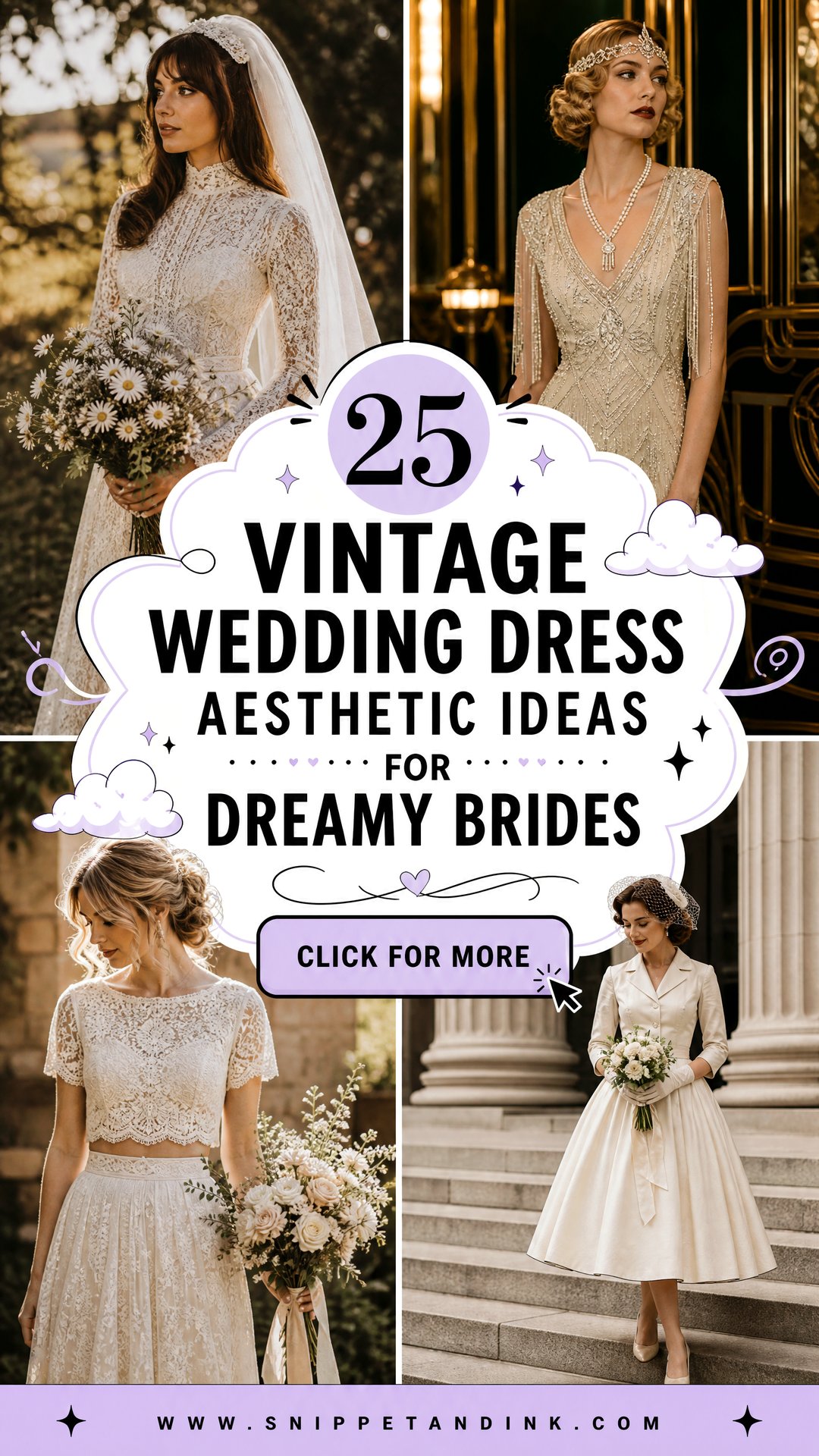
Most brides arrive at a vintage appointment with a phone full of pictures. That helps, but only if the pictures are sorted. When I work with a new bride, I ask her to go through her saved images and note what she likes in each one, because it is rarely the whole dress.
- Pick ten or so images you keep coming back to. More than that and the pattern gets lost.
- Under each, write the one detail that drew you in: the sleeve, the neckline, the fabric, the length.
- Look for repeats. If six images have a high neck, that’s your answer, whatever decade they come from.
- Add two or three images you dislike. Knowing what you don’t want saves a lot of time in the fitting room.
- Try at least one silhouette from outside your favorite era. Brides who love the 1950s often find a 1930s bias cut suits them better, and the only way to know is to put it on.
Bring the shoes you’re likely to wear and the right underwear, since both change how a dress hangs.
1. 1920s Beaded Wedding Dress
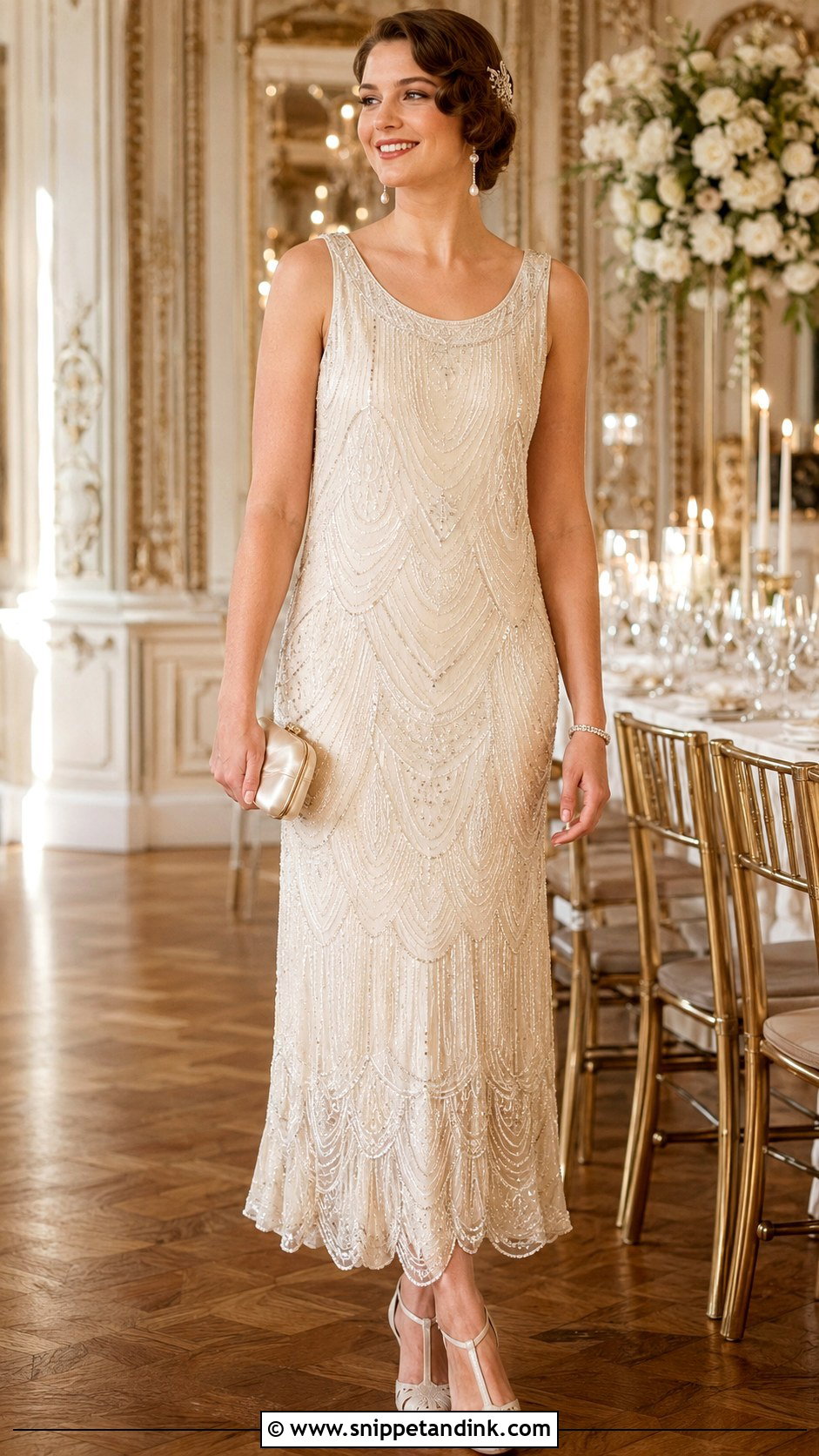
Real 1920s dresses hung straight from the shoulder, which flattered a narrow frame and nothing else. For curvier brides I ask for the same beaded look over a bias-cut underlayer, so the dress follows the body instead of boxing it. Hand-beaded details, scalloped edges and champagne, ivory or pearl tones carry the era. T-strap heels, a small satin clutch, a delicate comb and soft waves tucked behind one ear finish it. Keep the bouquet to white blooms and trailing greenery. Ballrooms and old hotels suit it, because the beading catches the light as you move.
2. 1930s Satin Bias Cut Wedding Dress
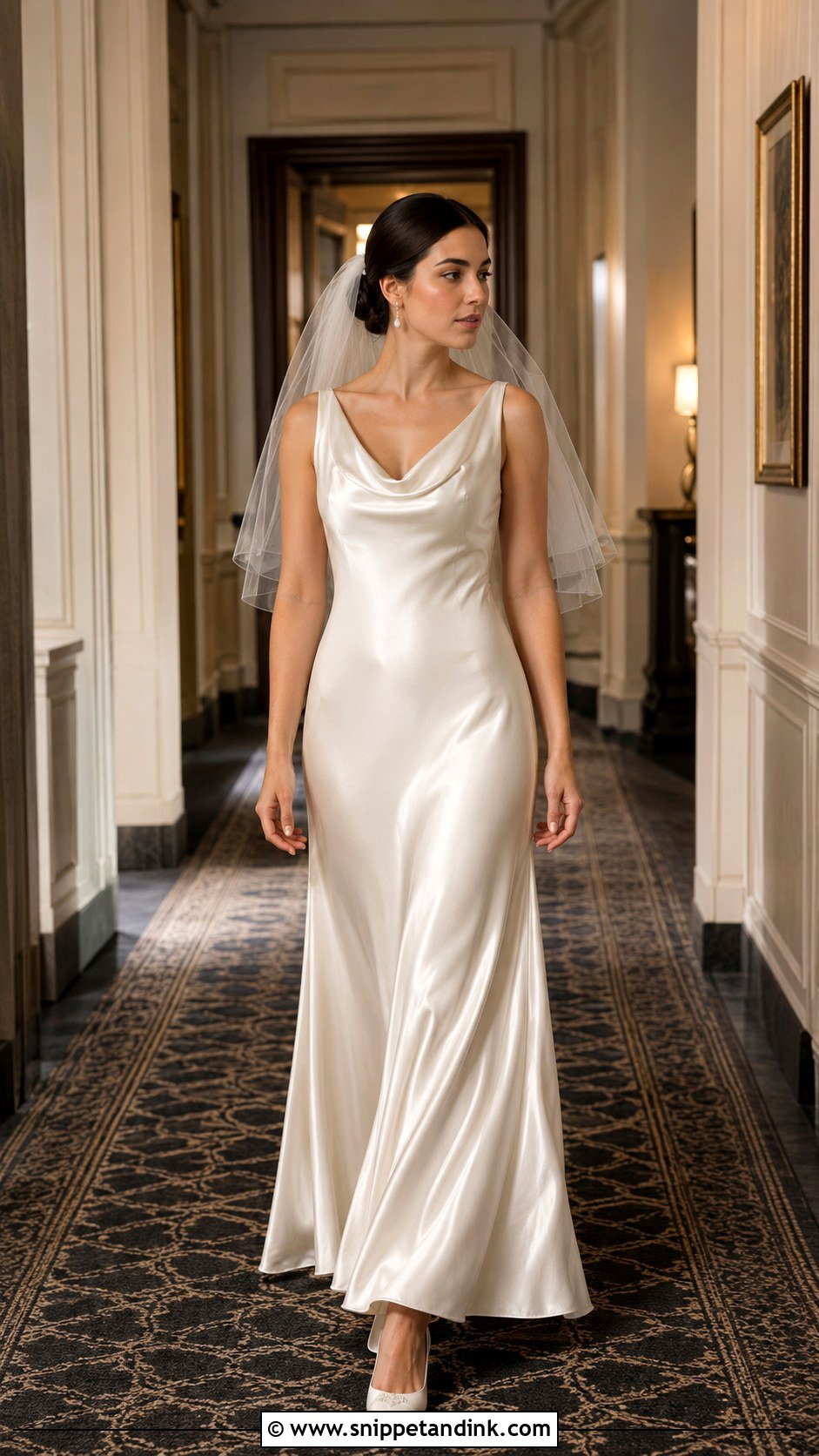
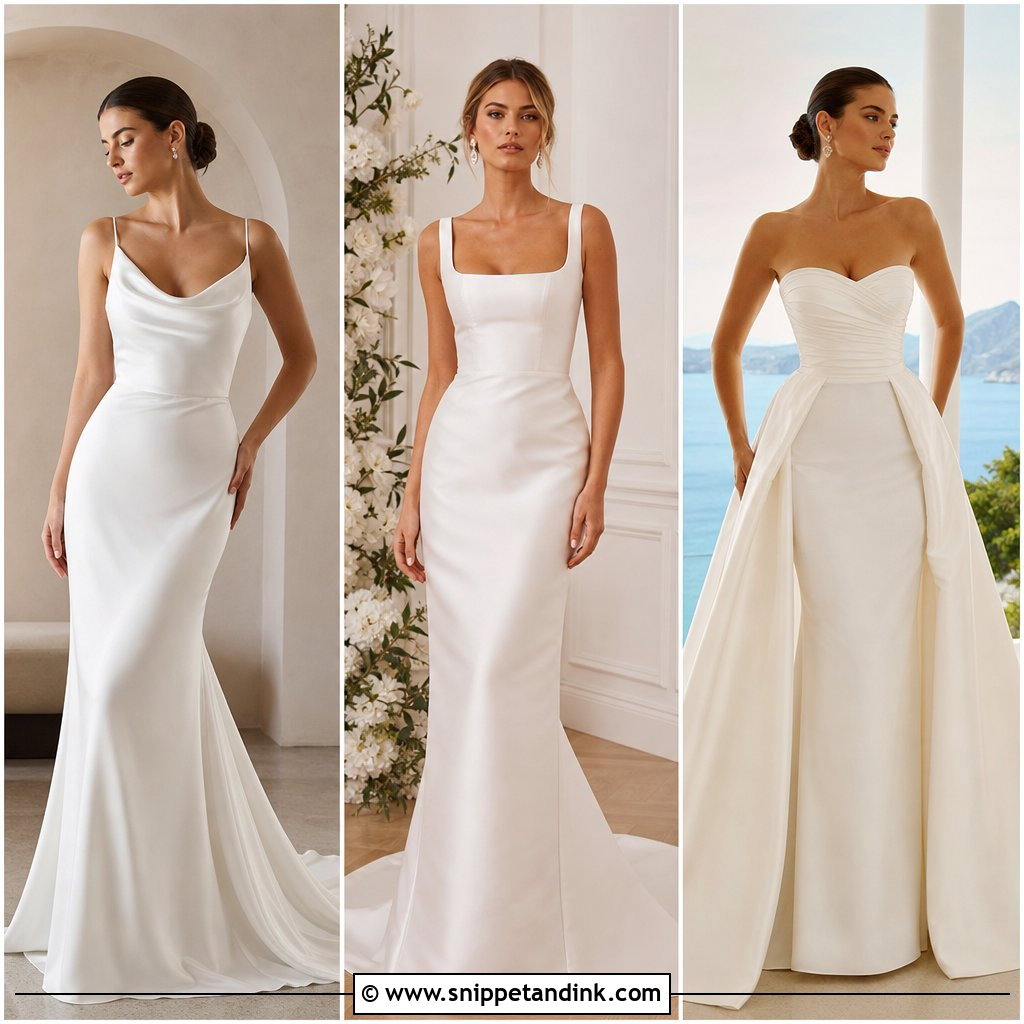
Bias-cut fabric stretches as it hangs, so a 1930s satin bias cut wedding dress should be left on a hanger for a day before the hem is marked. Skip that step and the hem can drop unevenly by the wedding. Silk satin, charmeuse or crepe with a cowl neck, a low back or tiny covered buttons give the fluid shape. Pointed satin heels, pearl drops and a fingertip veil keep it polished, with a sleek low bun or brushed-out waves. Evening and rooftop weddings suit it. A sheer capelet or long satin gloves add coverage.
3. 1940s Long Sleeve Wedding Dress
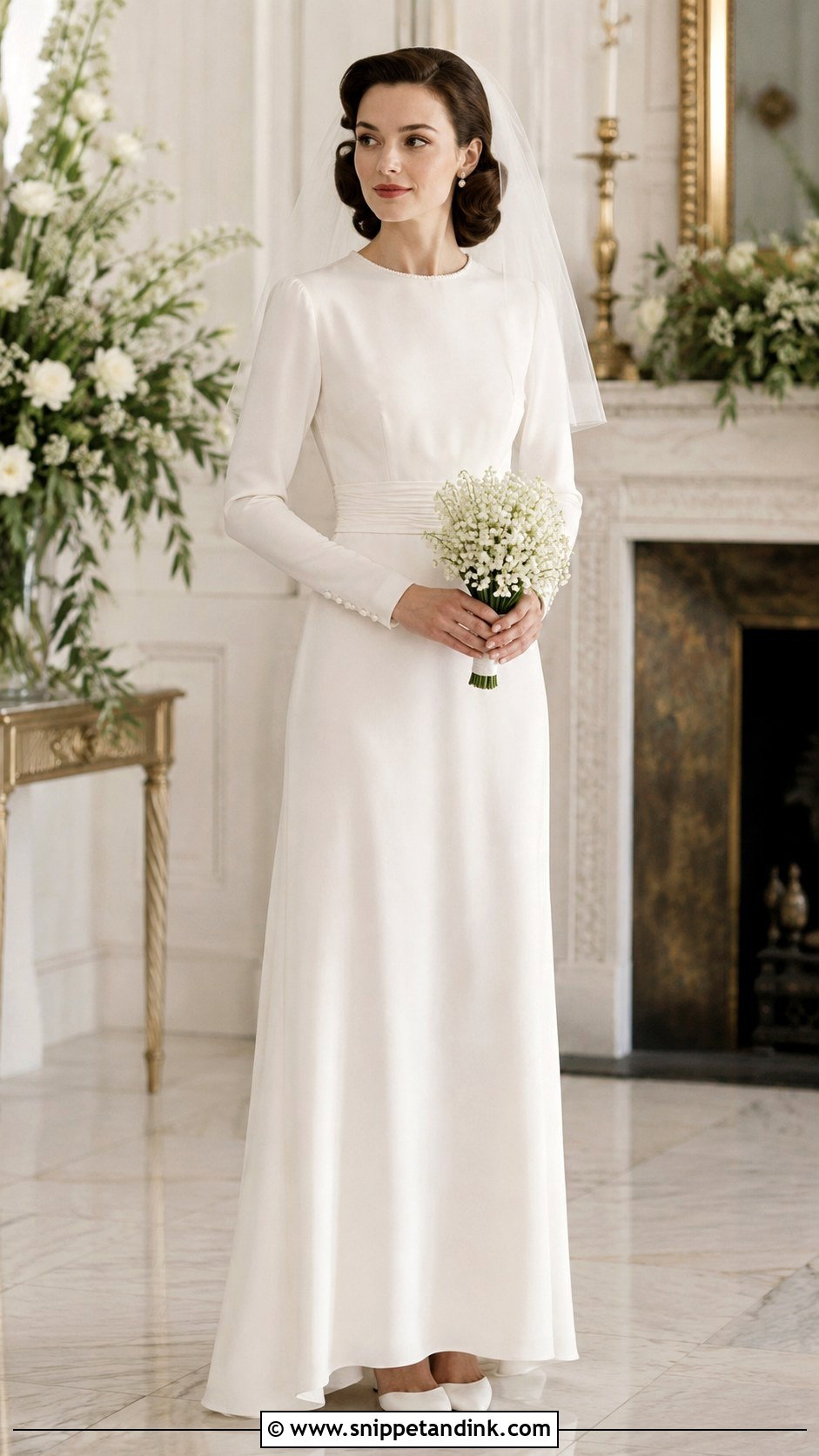
Wartime brides married in practical, tailored dresses, and that’s still the spirit of the 1940s: a defined waist, a little structure at the shoulder, a skirt that moves. If the gown has light shoulder pads, I check them with the veil on, because a padded shoulder can lift the veil away from the back. Crepe, satin or lace with a modest neckline and buttons down the back work well. Almond-toe pumps, pearl studs, a soft veil and a compact bouquet suit it, and side-parted rolled curls bring out the era without going theatrical.
4. 1950s Tea Length Wedding Dress
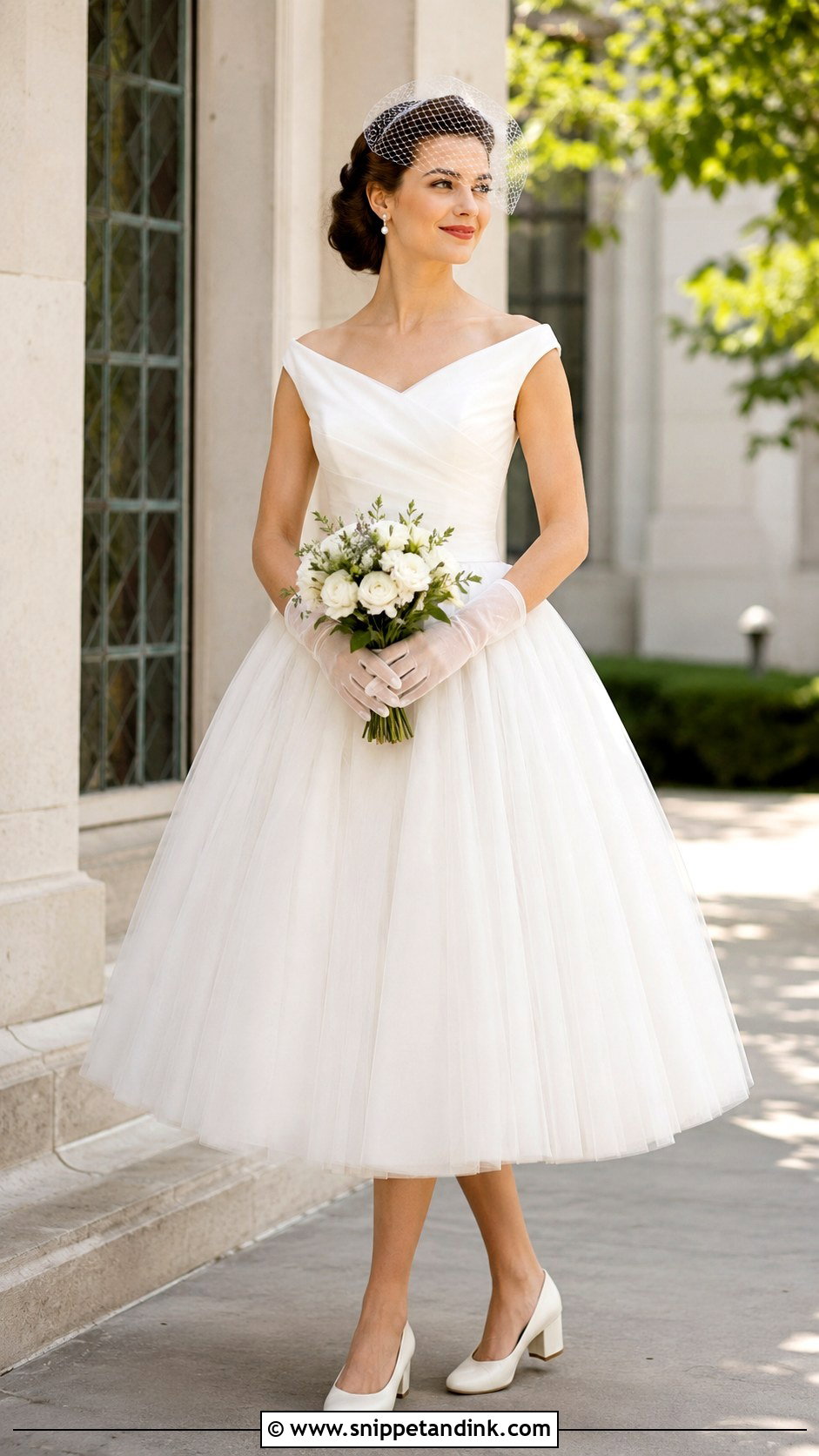
Full tulle skirts crush in a car. On the morning of a 1950s tea length wedding dress, I have the bride sit in the back seat with the skirt spread around her rather than tucked under. The fitted bodice, full tulle or organza skirt and sweetheart or bateau neckline give the classic shape, and the shorter hem shows off the shoes. Low block heels, short gloves, pearl earrings and a birdcage veil complete it. Petite brides often look especially balanced in this length. A soft red lip or rosy blush finishes the retro mood.
5. 1950s Lace Ball Gown Wedding Dress
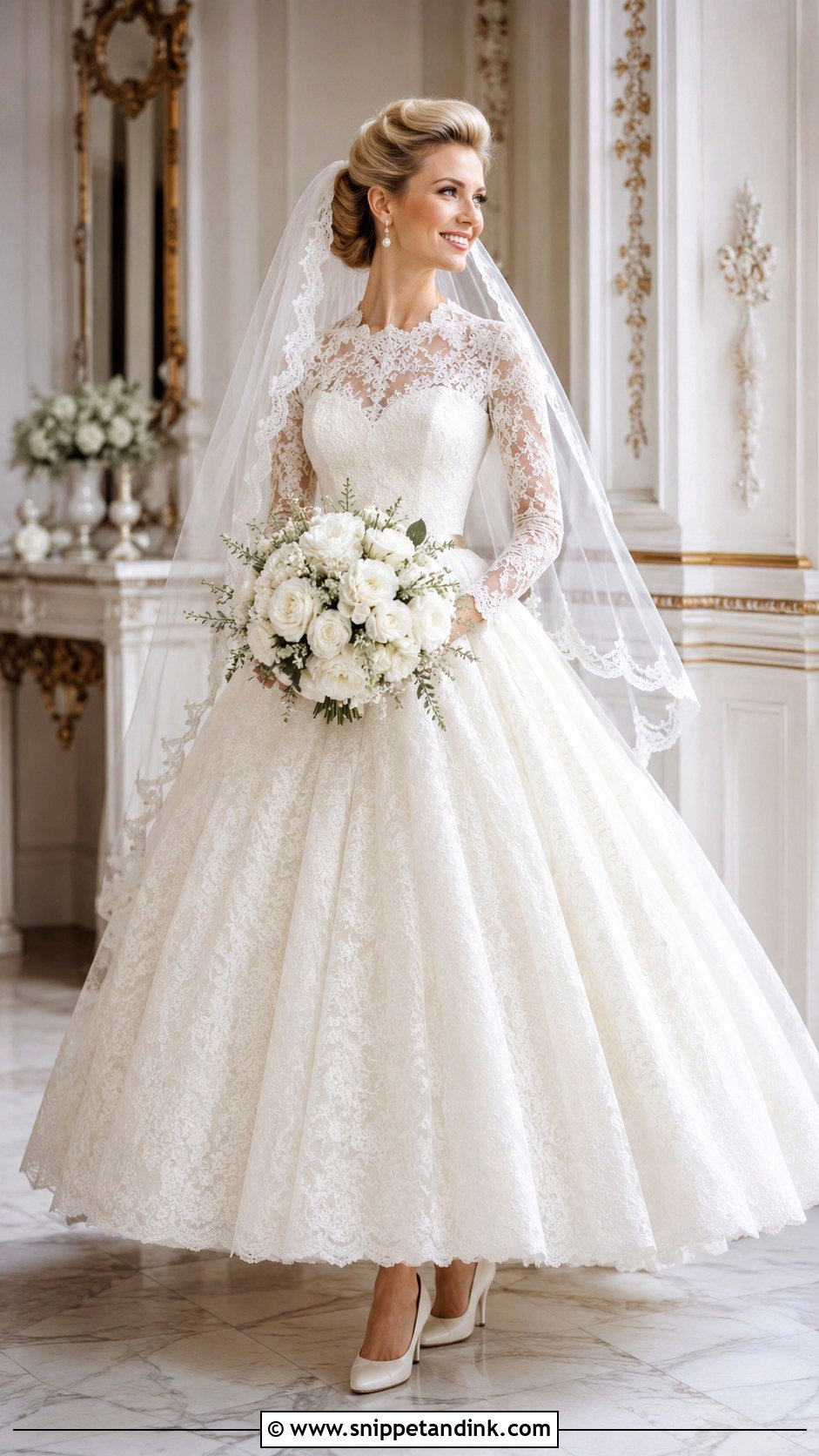
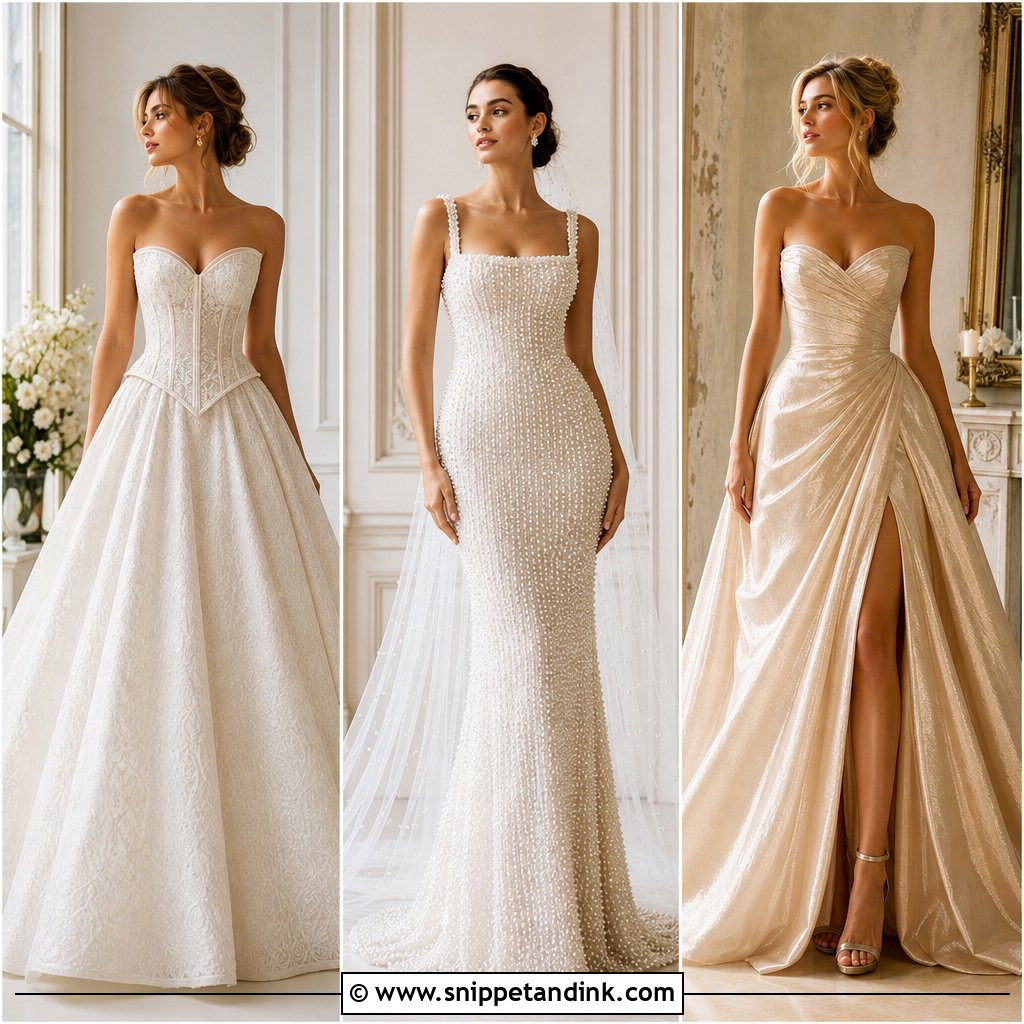
Lace overlay on a full skirt adds weight at the hem, and over a long day it can make the skirt droop. I ask for a horsehair braid stitched into the hem, a stiff band that keeps the skirt’s shape without a heavy petticoat. A fitted bodice, narrow waist and bateau or soft V-neck frame the upper body. Pearl drops, a long veil, closed-toe heels and a structured bouquet finish it. Hold back on accessories and let the lace and the skirt do the work, with a clean bun or half-up style. Formal venues give the skirt the aisle it deserves.
6. 1960s Mod Mini Wedding Dress
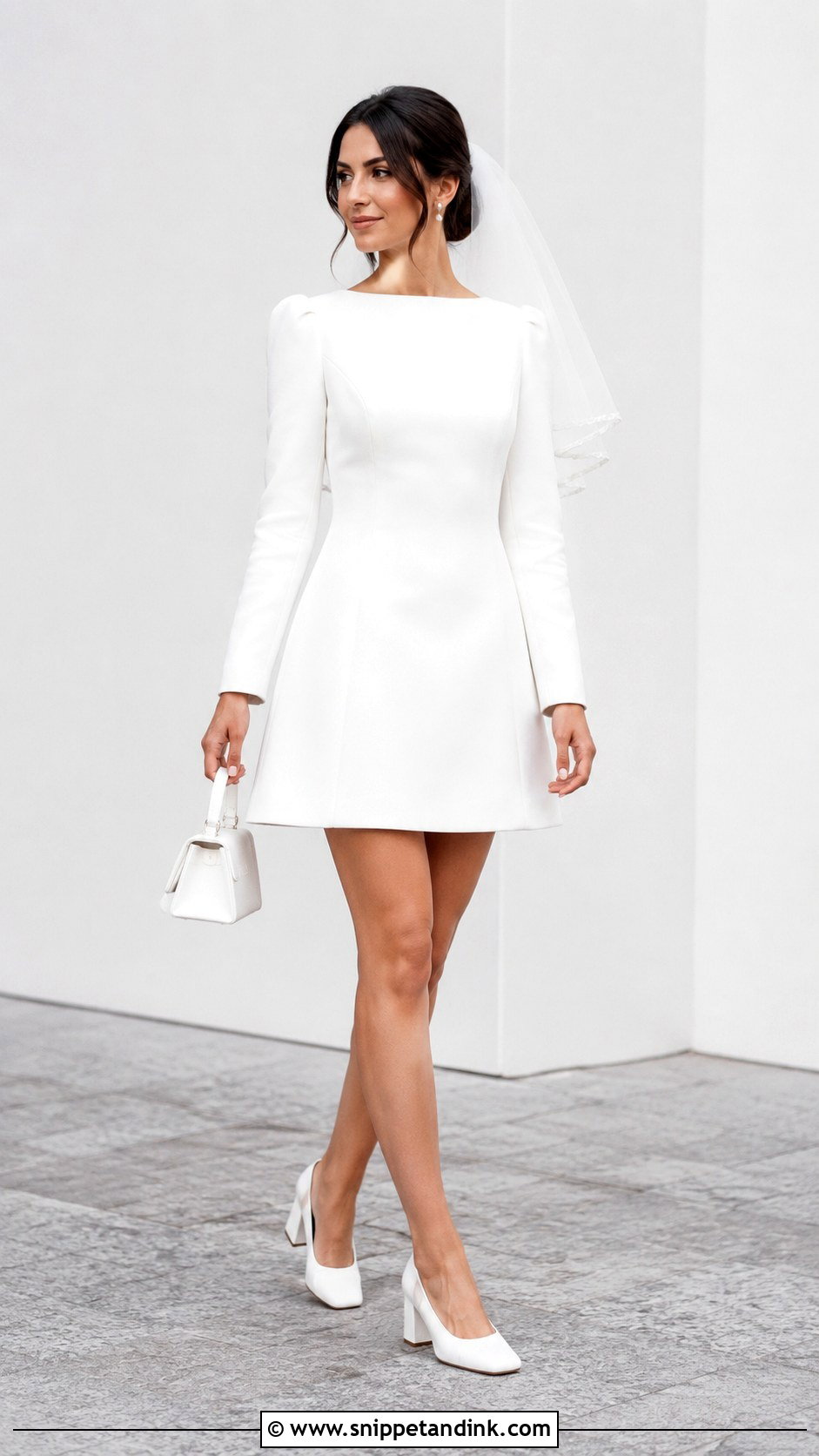
Padded headbands sit exactly where a veil comb usually goes, so with a 1960s mod mini wedding dress I anchor a short veil just behind the band, in the hair underneath it. An A-line mini with long sleeves, a high neck or a simple bow, in crisp crepe, satin or jacquard, gives the shape. White block heels, pearl studs and a small top-handle bag suit it. If you wear tights, sheer ivory looks more bridal than nude in photos. Winged liner and a soft lip complete the decade.
7. 1960s Empire Waist Wedding Dress
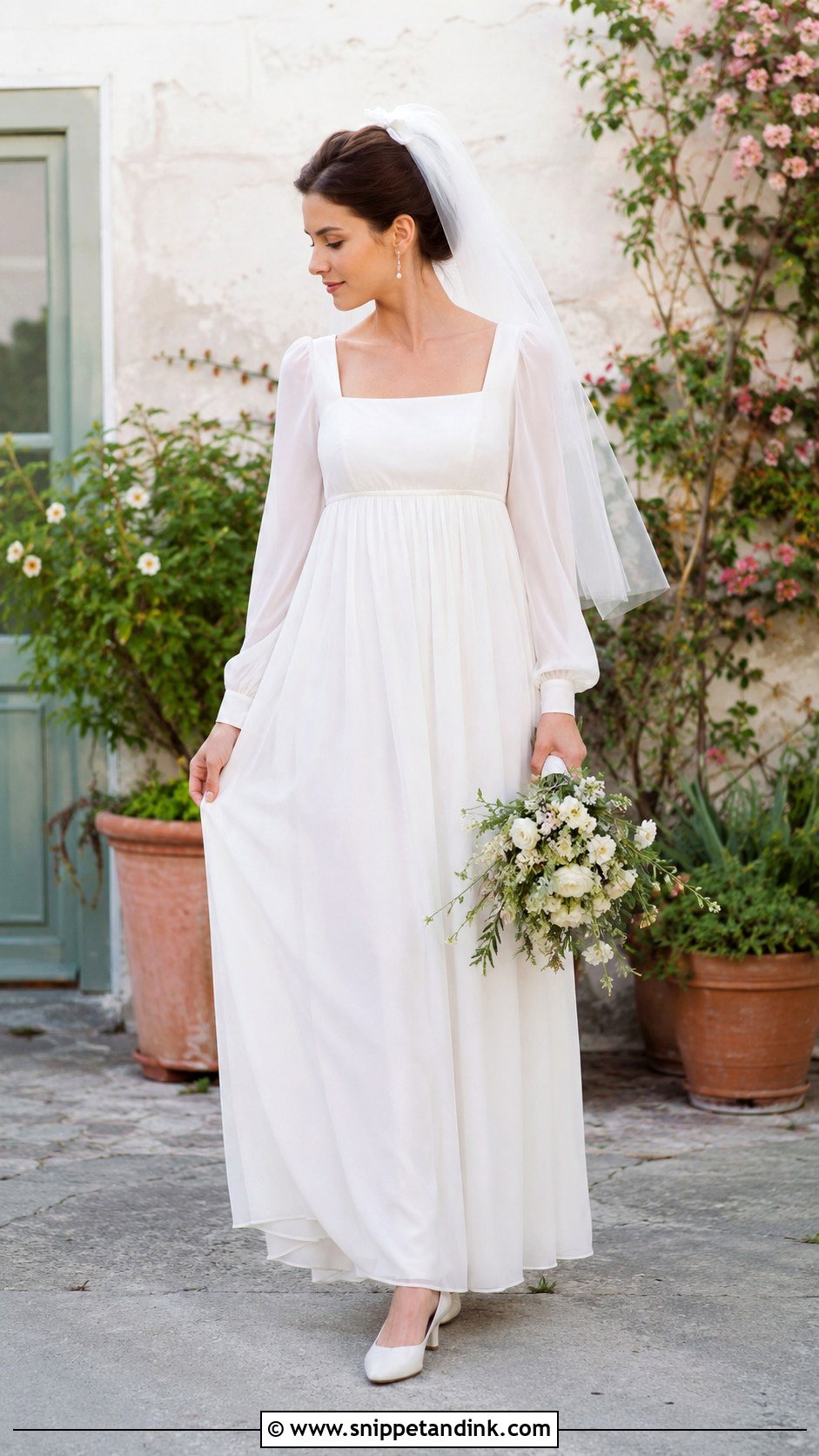
The empire waist is one of the few vintage shapes I recommend without hesitation to a bride who is pregnant, because the seam sits above the bump and the skirt falls freely. The same ease suits anyone who dislikes fitted waists. Chiffon, organza or light crepe with sheer sleeves, lace trim or a square neckline moves well outdoors. Low heels, a ribbon veil, dainty earrings and a loose bouquet keep it sweet, with loose waves or a low ponytail. If your shape may change before the date, schedule the final fitting as late as the seamstress allows.
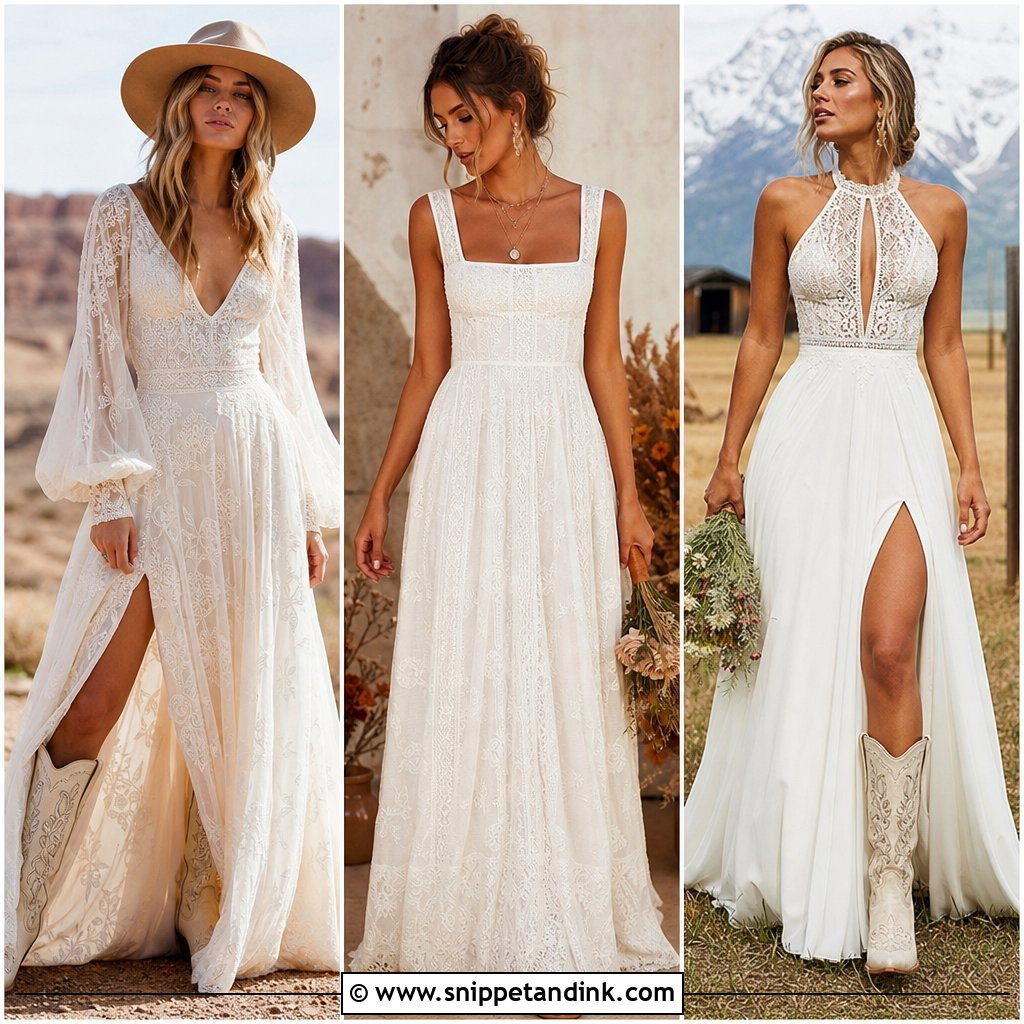
8. 1970s Boho Lace Wedding Dress
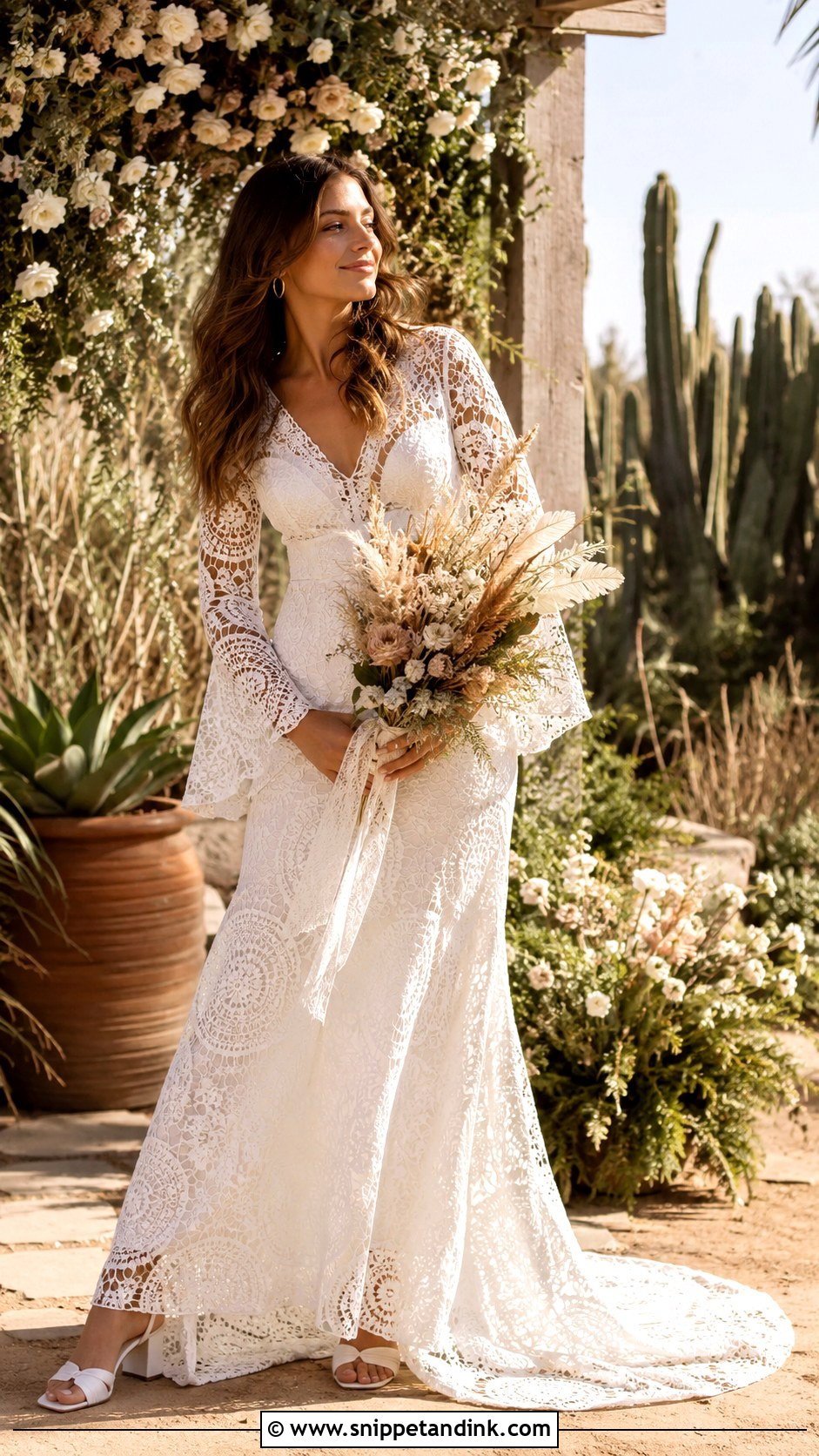
The lining color changes crochet lace more than people realize. A nude lining makes a 1970s boho lace wedding dress look airy and a little daring, while an ivory lining reads more traditional. I show brides both before ordering. Crochet lace, bell sleeves, an easy A-line and soft ivory are the base. Suede or leather block heels, loose waves, small hoops and a textured bouquet suit it, with a hair comb, thin belt or simple veil to keep it bridal. Gardens, deserts and backyards are its home, and it should look relaxed rather than unfinished.
9. 1970s High Neck Wedding Dress
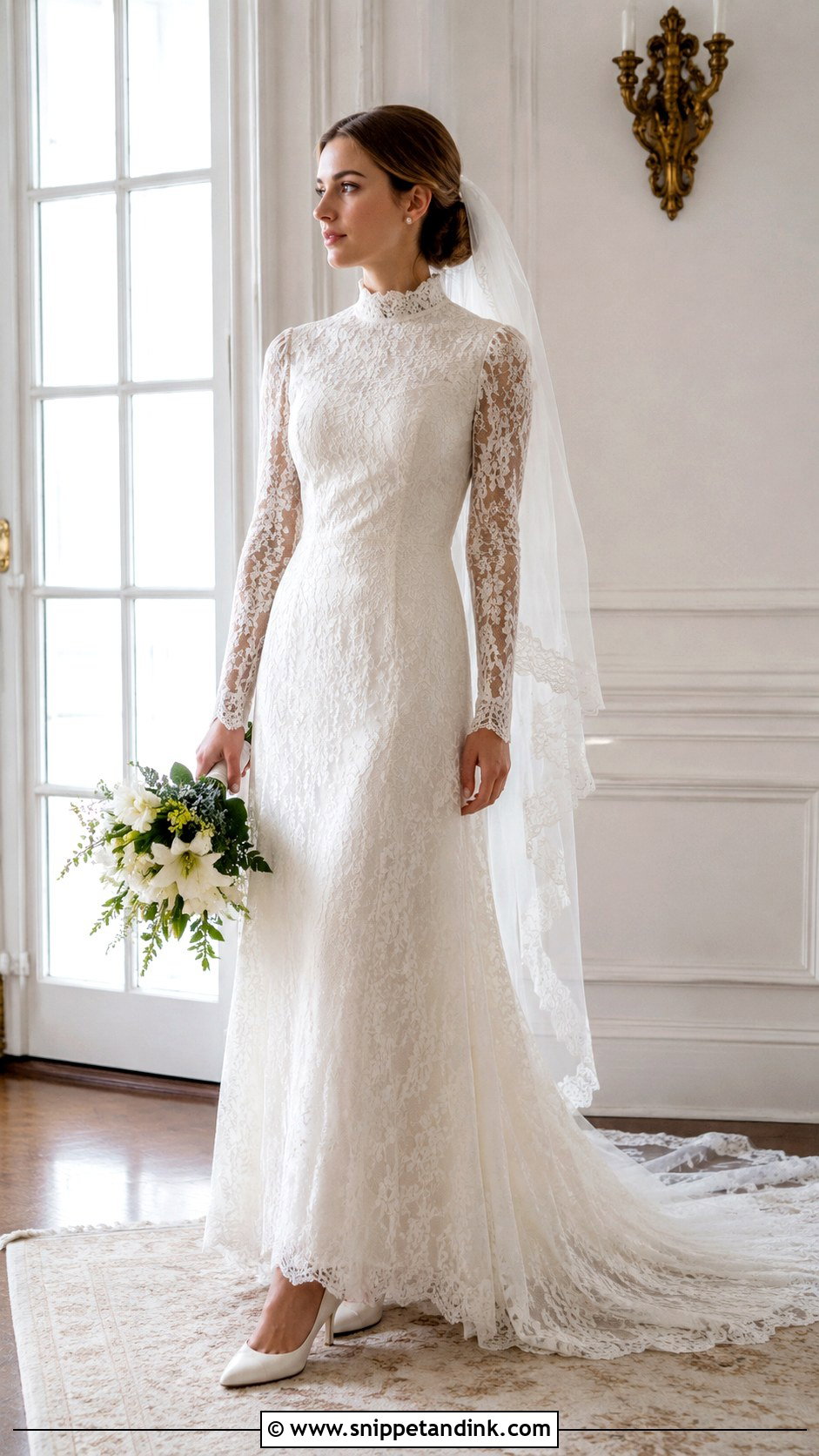
Chiffon collars are soft, which is part of their charm, but they can collapse by evening. I ask for a light interfacing inside a high chiffon collar so it holds its shape through the day. Lace, chiffon or crepe with a high collar, long sleeves and a gentle skirt give the 1970s look. The neckline already draws the eye, so pearl studs, slim heels and a sheer veil are enough. A low bun or loose braided updo shows the collar. It suits most seasons, since the sleeves give coverage without weight.
10. 1980s Puff Sleeve Wedding Dress
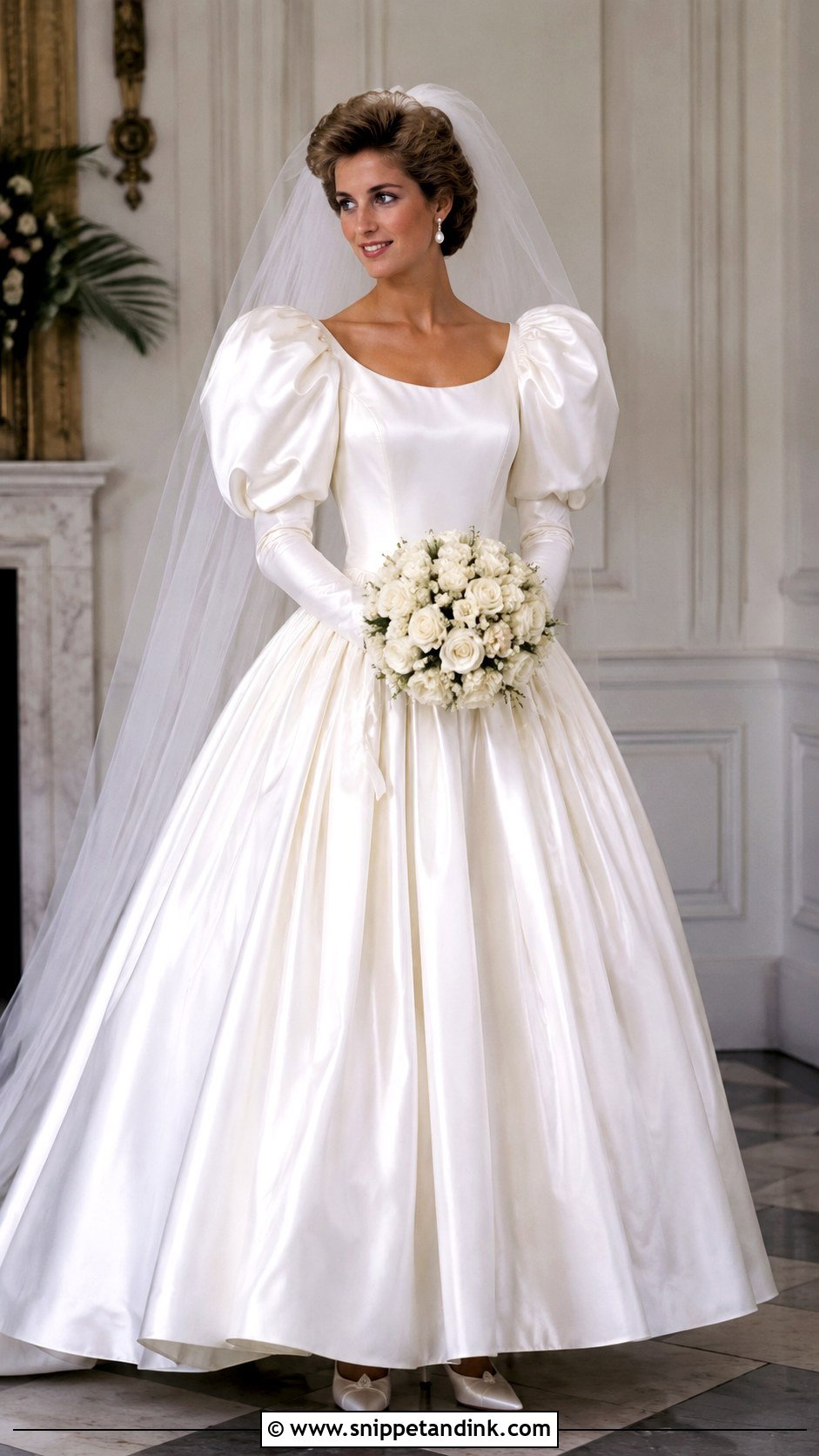
Big puff sleeves are often held up by netting stitched inside the sleeve head, and that netting can crush under a hug or a heavy veil. On an 1980s puff sleeve wedding dress I check the sleeves after the bride has put her arms around someone. Choose one strong feature, the sleeves, and keep the rest clean: satin, taffeta or organza, a fitted bodice and a full skirt. Simple pumps, pearl earrings, a smooth veil and a rounded bouquet suit it. Tailoring matters, since sleeve and waist placement must look deliberate. Modern hair and makeup keep it from looking dated.
11. 1980s Satin Bow Wedding Dress
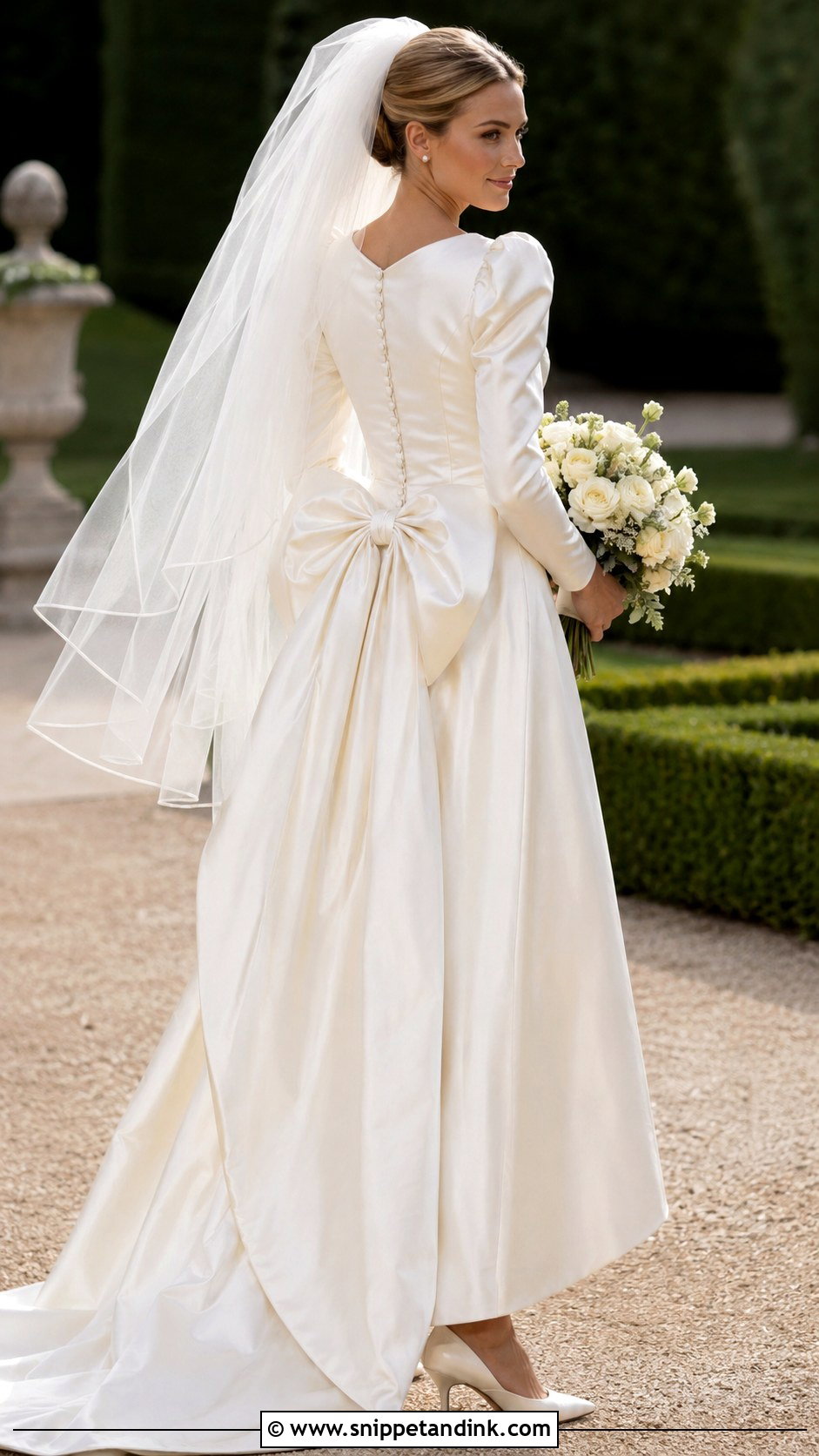
A big bow at the back waist sits exactly where you lean against a chair, and it will be flattened by dinner. I often suggest making a large bow detachable so it can come off for the reception. On a satin or taffeta gown with a clean bodice, a bow at the shoulder, neckline, hip or back looks chic rather than busy. Pointed pumps, pearl studs, a smooth low bun and a simple veil suit it, and a structured bouquet echoes the polish. Under a large bow, keep the veil light and sheer.
12. 1990s Minimal Slip Wedding Dress
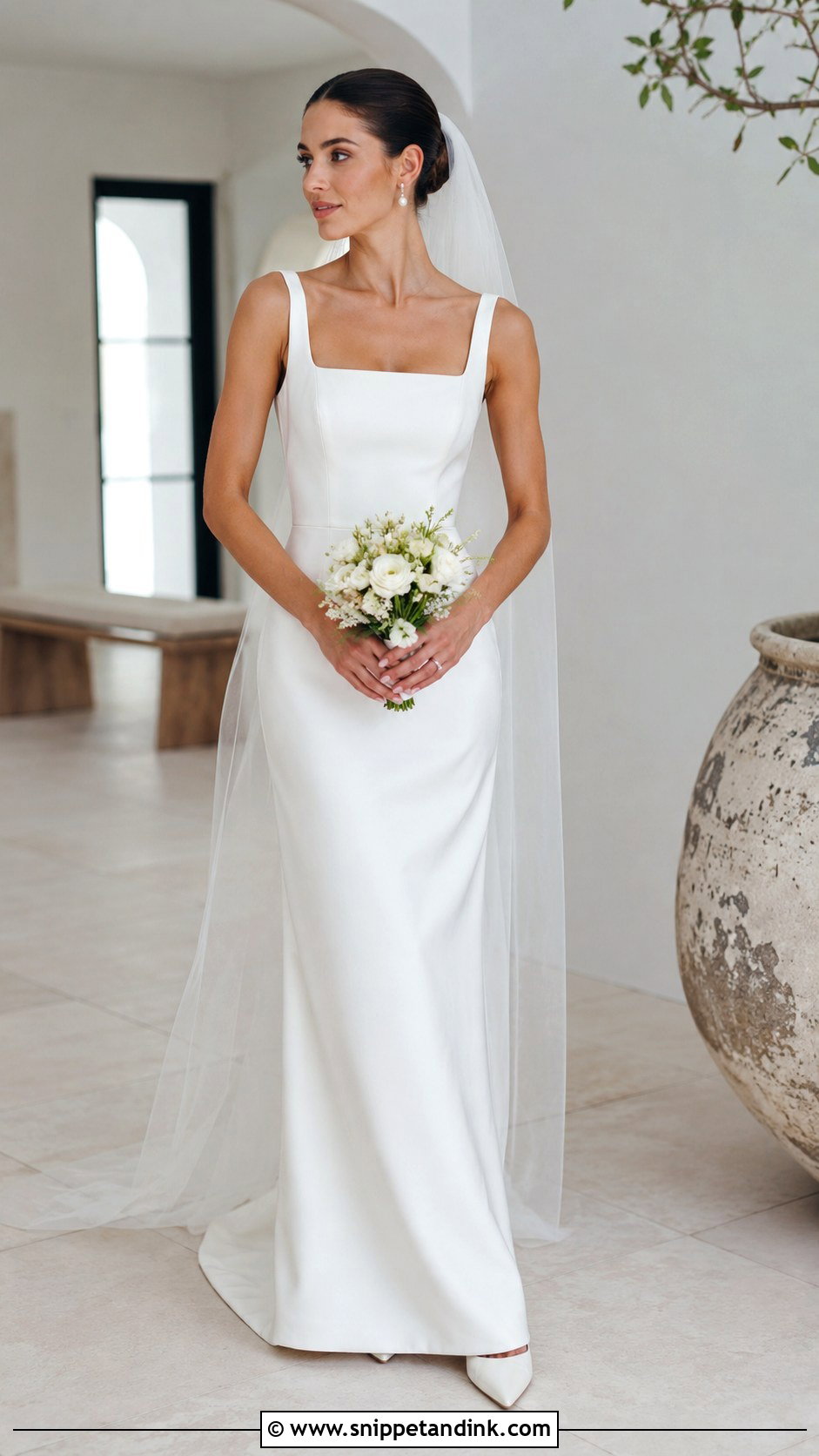
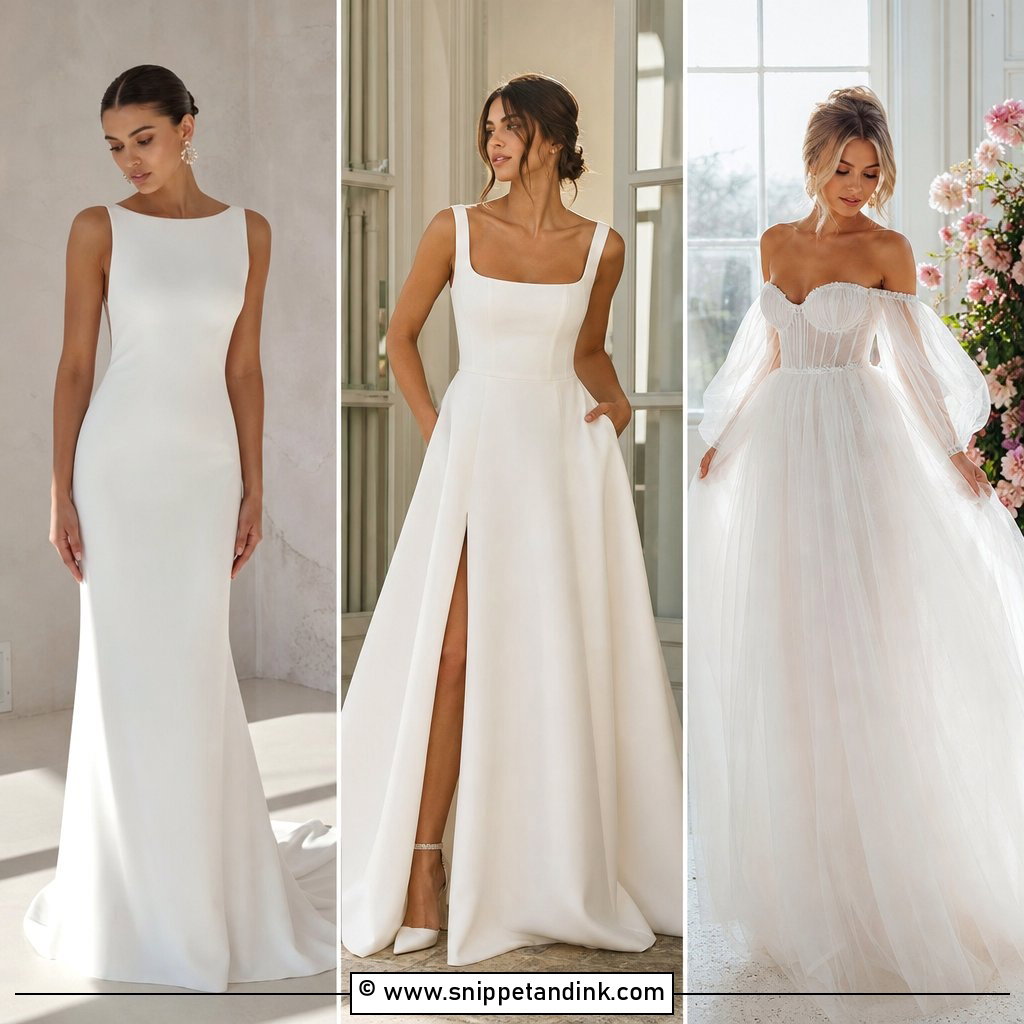
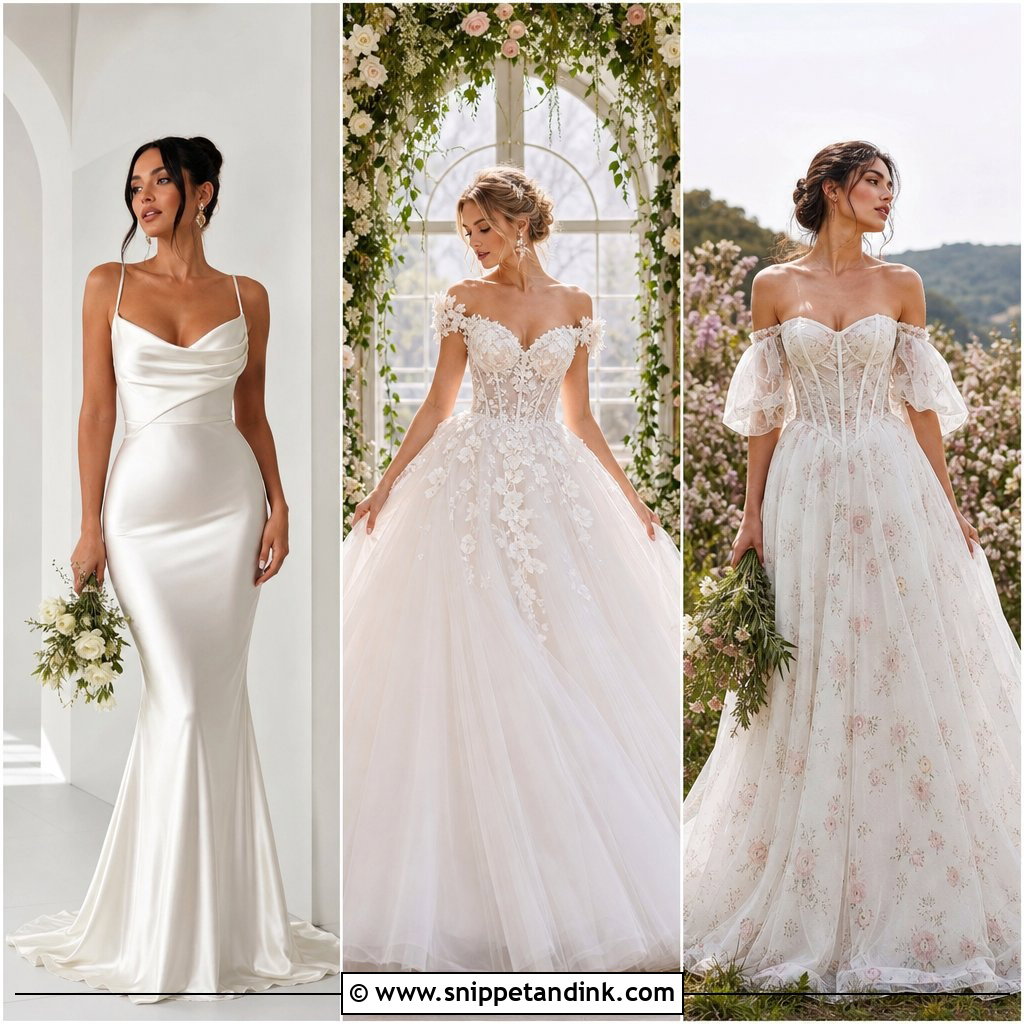
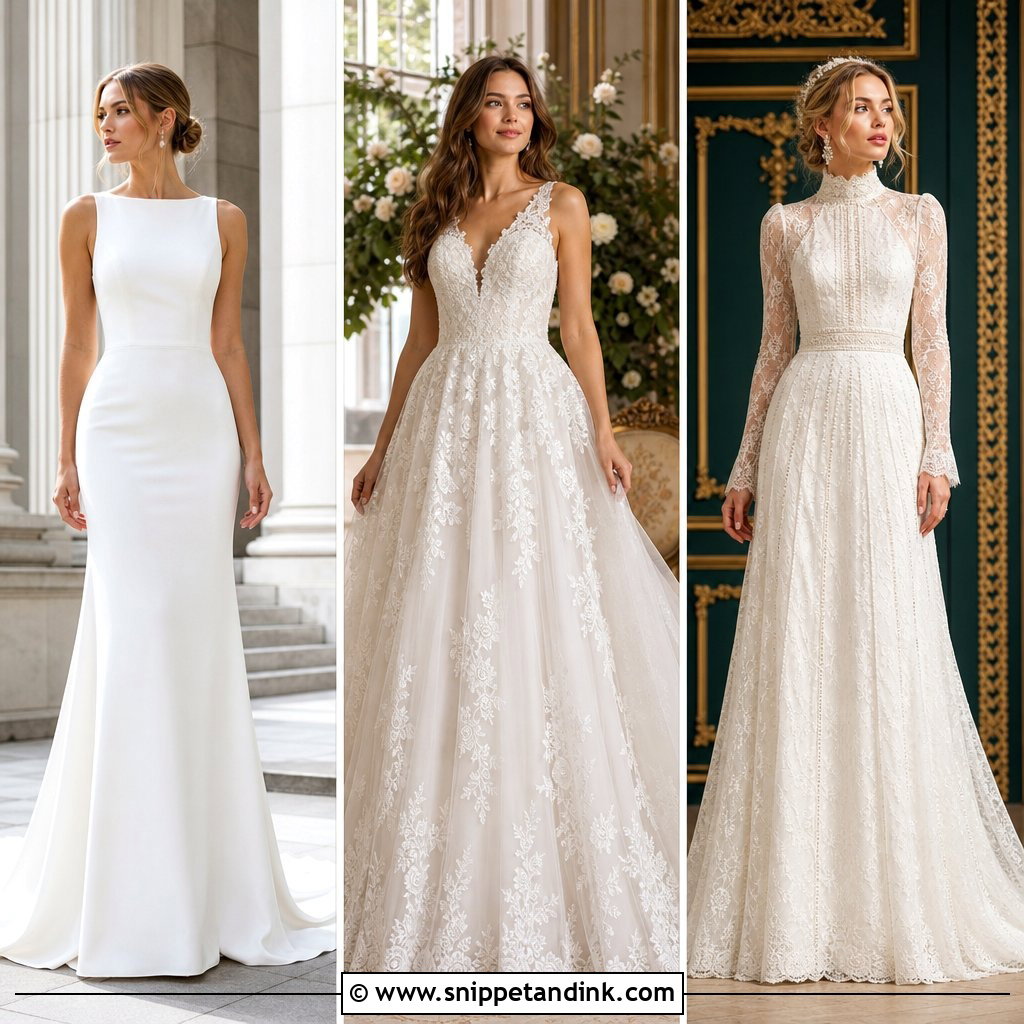
Satin slips show everything, including damp patches on a hot day, so in summer I often steer brides toward crepe, which drapes the same way and hides more. The 1990s slip is the easiest vintage aesthetic to wear now: thin straps, a soft scoop or cowl front, nothing fussy. Strappy heels, a tiny clutch, delicate earrings and a sheer veil complete it, with a cropped cashmere wrap or tailored coat for cool weather. Fit and fabric quality are everything here. Soft waves and glowing skin finish it.
13. 1990s Square Neck Wedding Dress
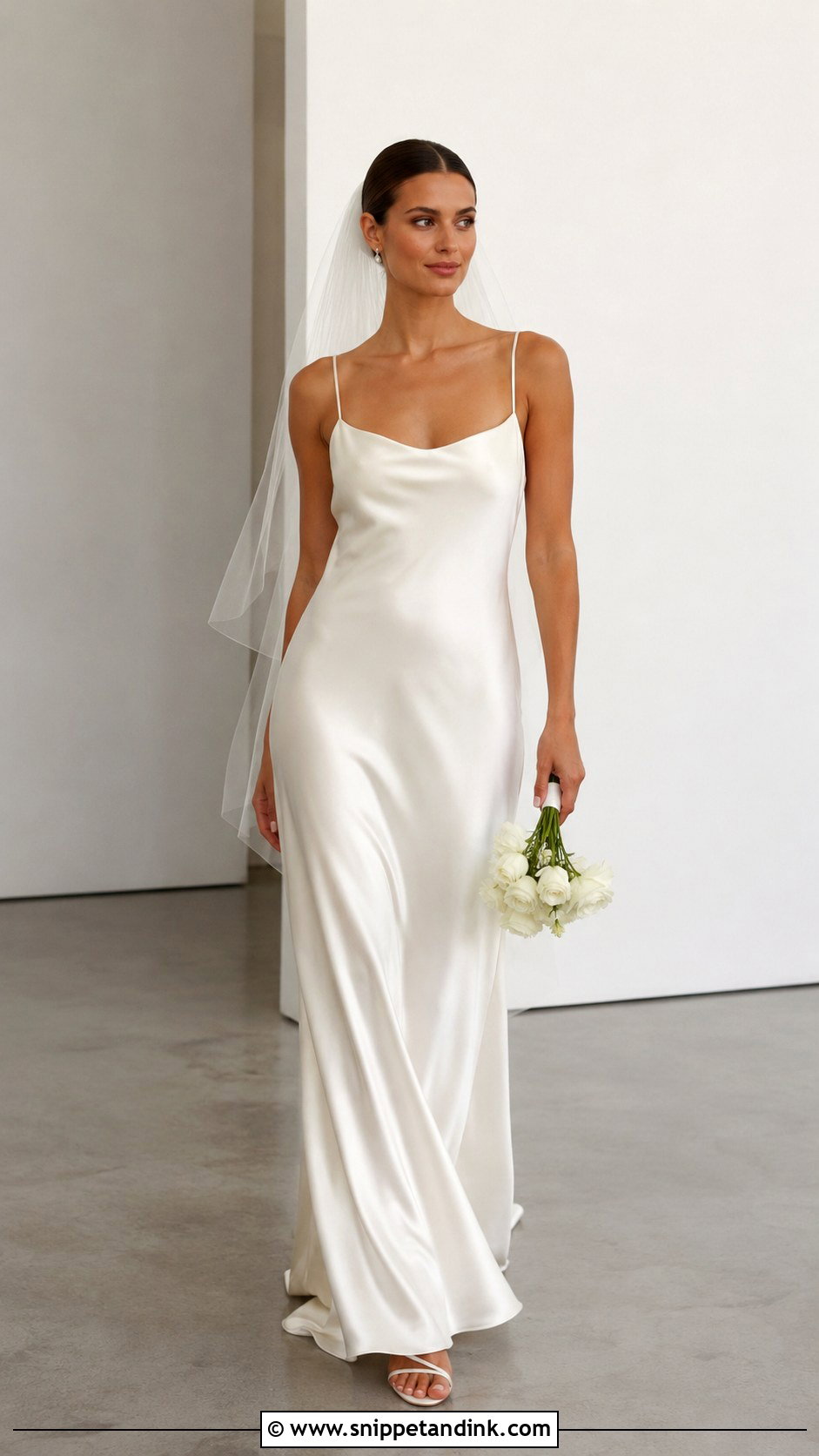
Mikado is a heavy silk blend with a slight sheen, and it holds a square neckline crisply without needing boning everywhere. A column, A-line or fitted bodice with wide straps all suit the 1990s square neck. Low pearl earrings, pointed heels, a slim veil and a neat bouquet keep it minimal, and a simple chignon or tucked bob shows the neckline. Brides who want vintage feeling without lace or beading often land here. Detachable sleeves or a sheer organza scarf add softness for the ceremony and come off for dancing.
14. Victorian High Neck Lace Wedding Dress
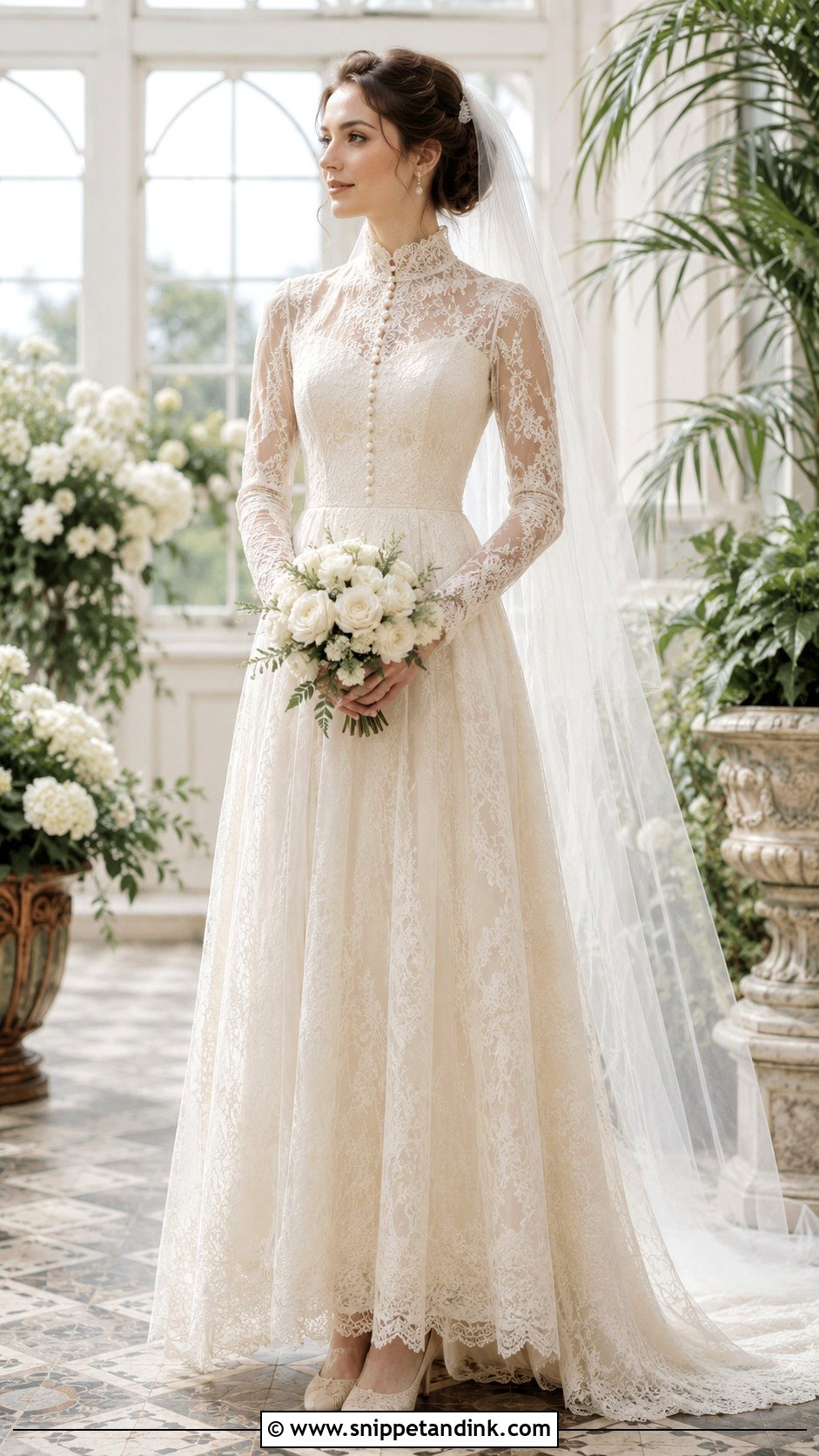
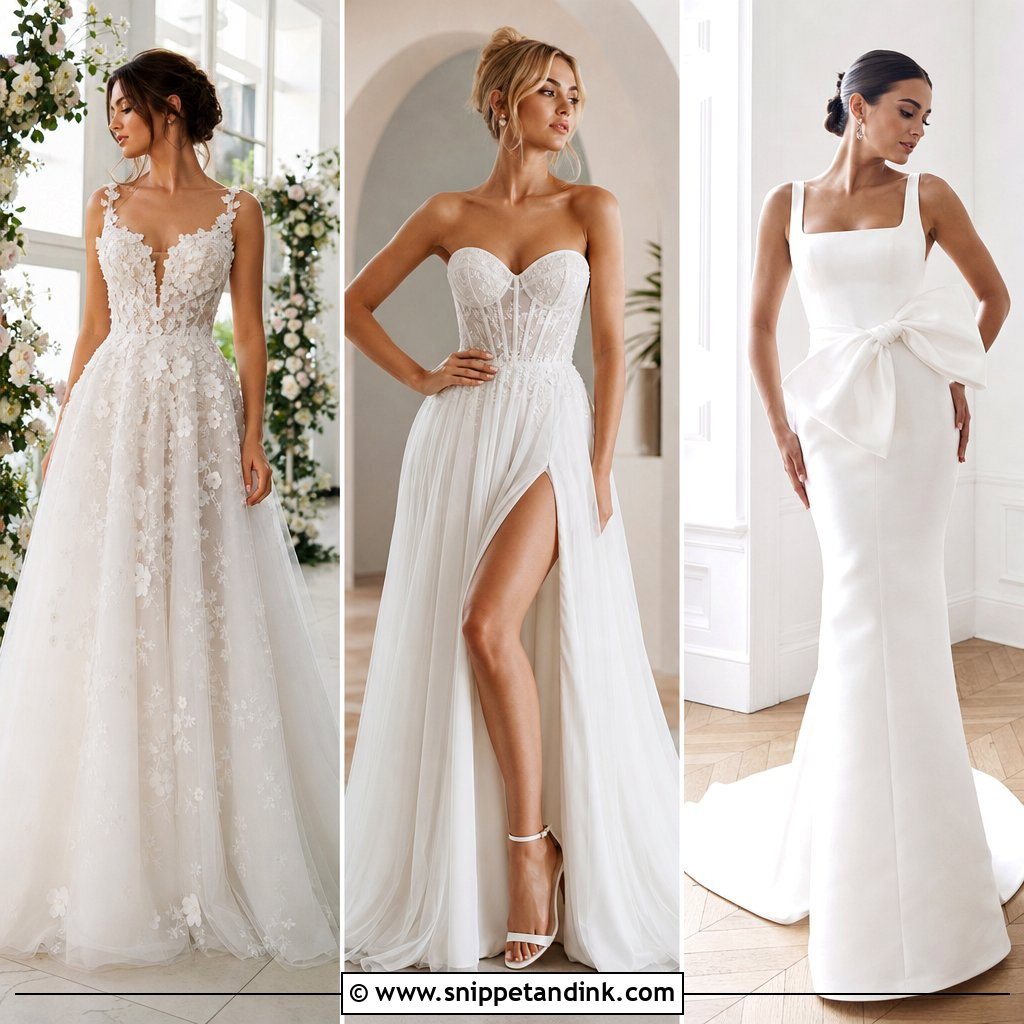
Long lace sleeves and a high collar can get hot, which is the main thing I discuss with summer brides who love a Victorian high neck lace wedding dress. Cotton lace and a light lining breathe far better than heavy synthetic lace. Modern versions use softer lining and lighter lace, which helps. Closed-toe heels, pearl buttons, a long veil and soft white flowers complete it, with minimal jewelry. A center-parted bun or soft updo suits the collar. Historic homes and conservatories frame it well.
15. Edwardian Lace Wedding Dress
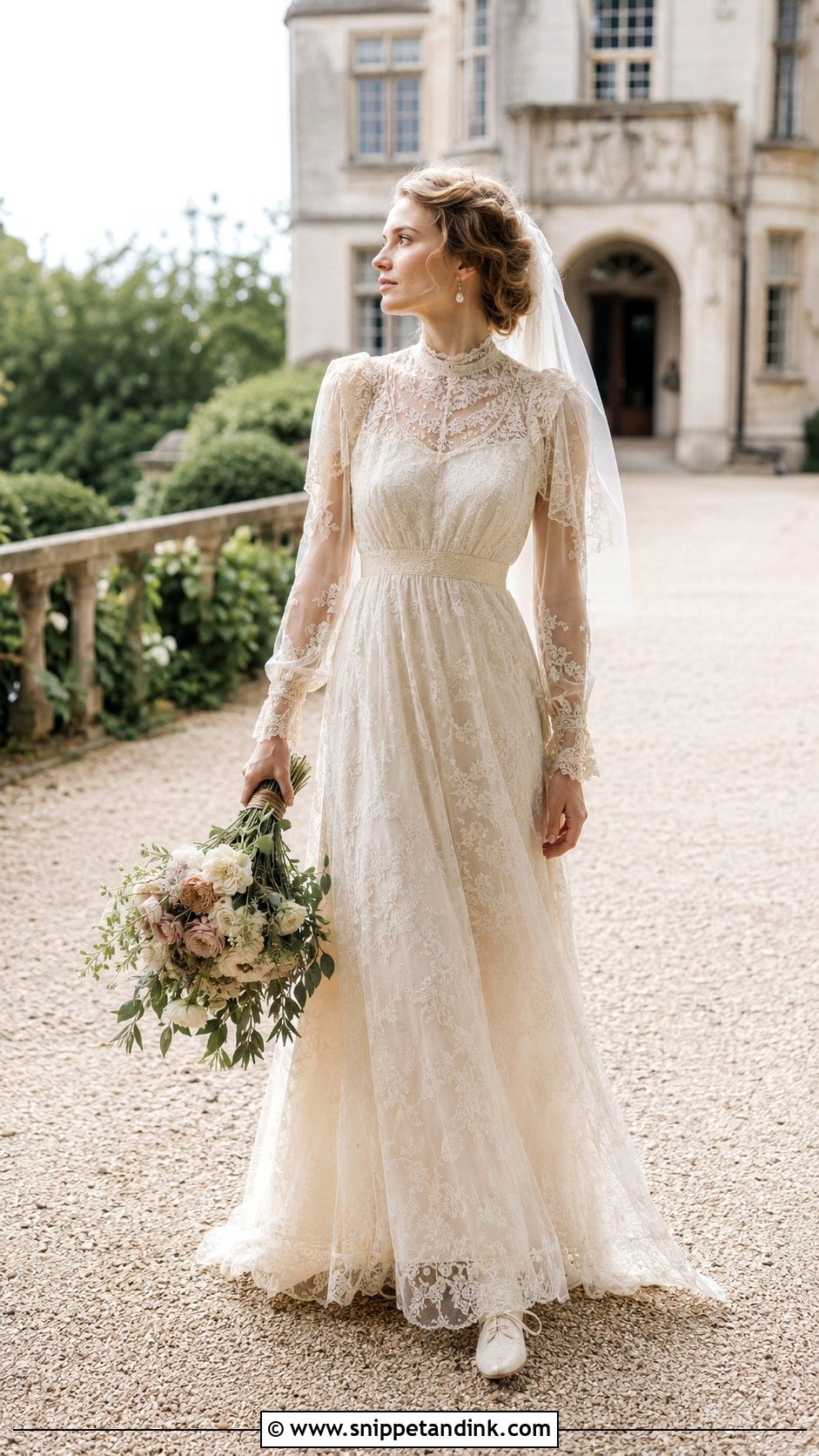
Edwardian dresses were made for afternoon light and garden parties, and they still look their best outdoors in daytime. A raised waistline, soft lace, delicate sleeves and a skirt that floats away from the body give the shape. Ivory, cream and antique white suit it more than bright white, which can look stark against old lace. Lace-up heels, small pearl earrings, a soft veil and a loose bouquet finish it. A ribbon at the waist adds definition. Keep the makeup fresh so the whole look stays light.
16. Art Deco Wedding Dress
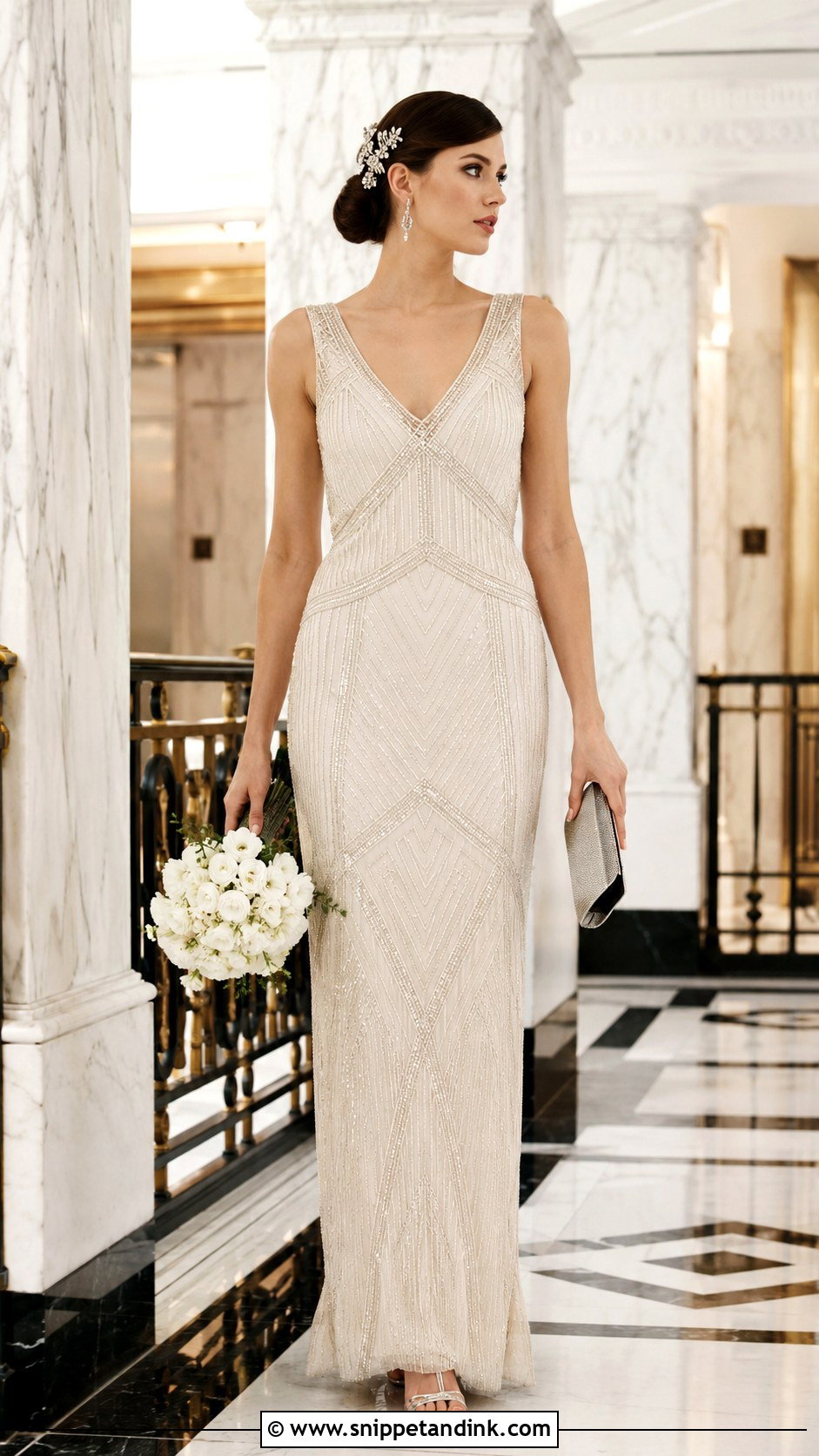
Choose the bead metal to match your rings. Silver beading next to a gold band, or the other way round, looks unplanned in close-up hand shots. Art Deco gowns are about clean lines and geometric beading on a column, sheath or softly flared skirt, in silver, pearl or champagne. Metallic heels, a beaded comb, drop earrings and a sleek clutch complete it, with smooth waves. Evening receptions suit the shine. Stick to one embellishment color and a simple white bouquet.
17. Old Hollywood Wedding Dress
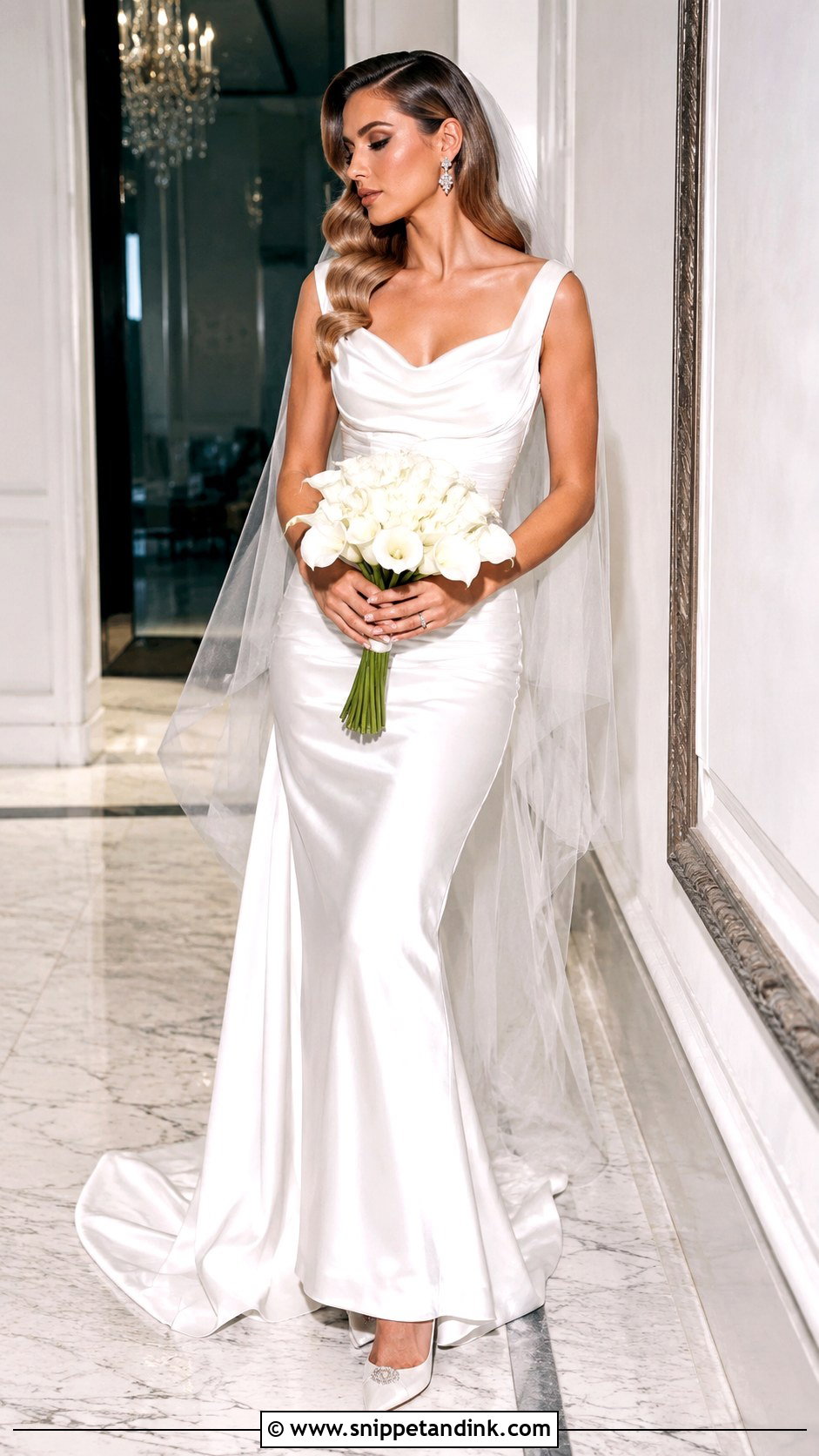
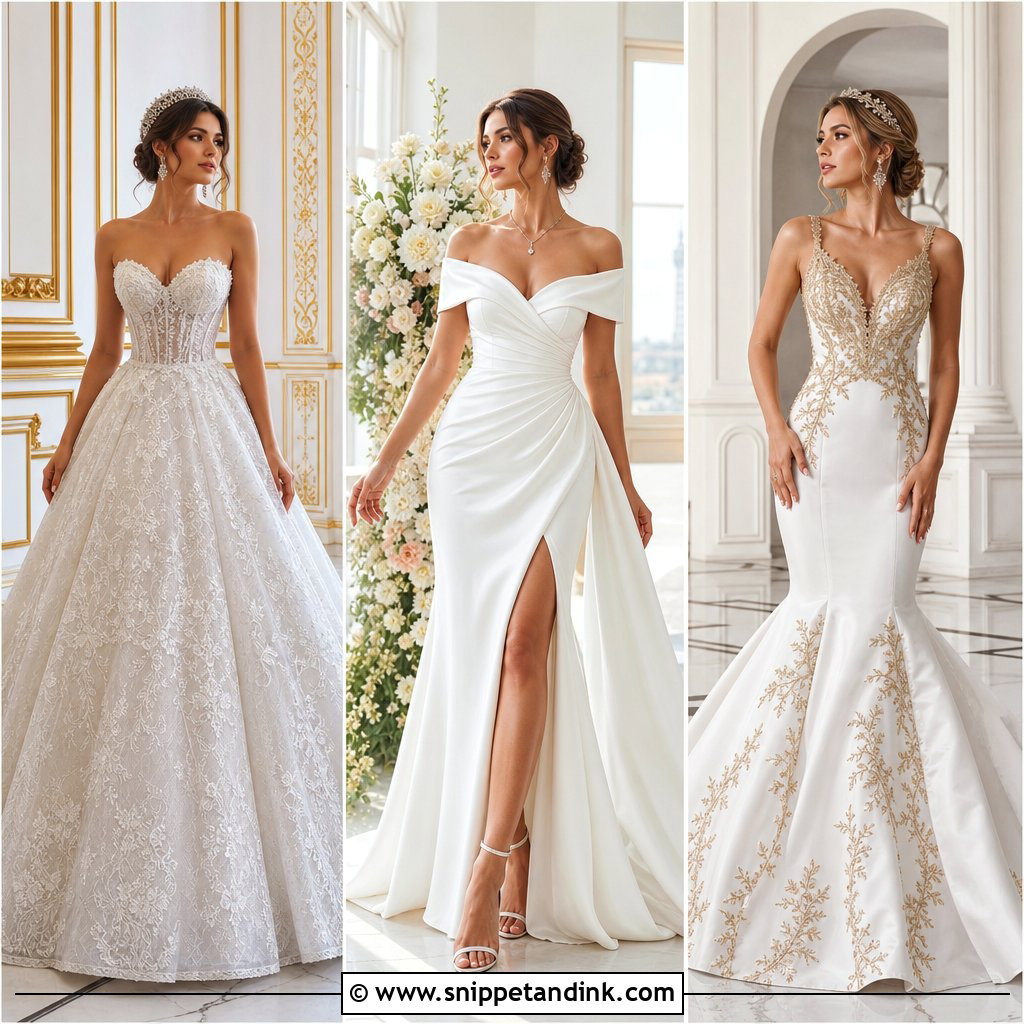
Old Hollywood glamour comes from cut, not decoration. A satin or crepe gown with a draped neckline, fitted waist or soft mermaid shape does the work. Pointed heels, pearl or crystal earrings, a smooth veil and a sleek bouquet keep it clean, and brushed waves with a side part finish it. For more drama add a cape, long gloves or a faux-fur wrap. Gloves come off for the meal, so decide in advance who holds them. Ivory, pearl and soft champagne keep the palette cinematic.
18. Vintage Corset Wedding Dress
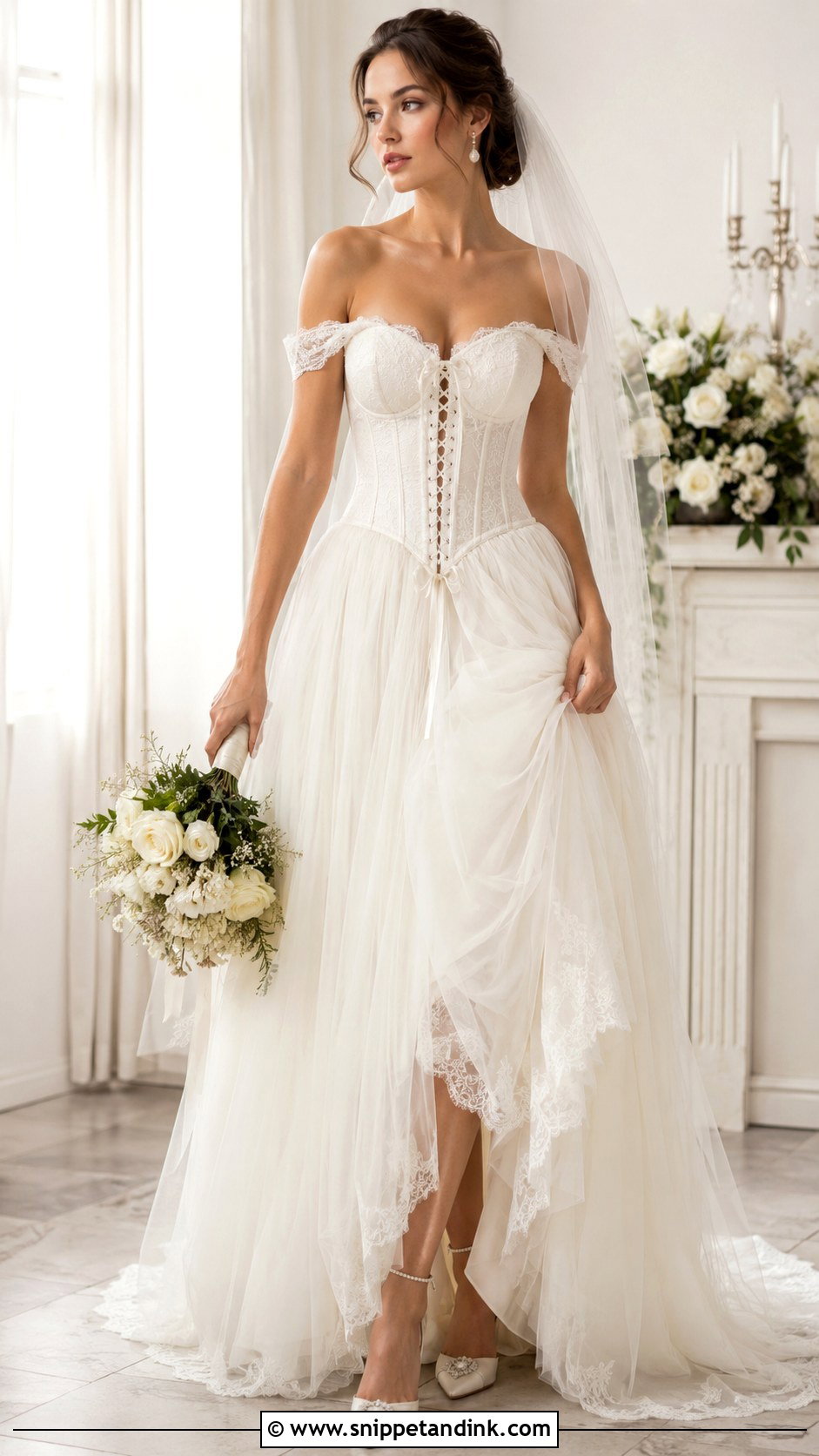
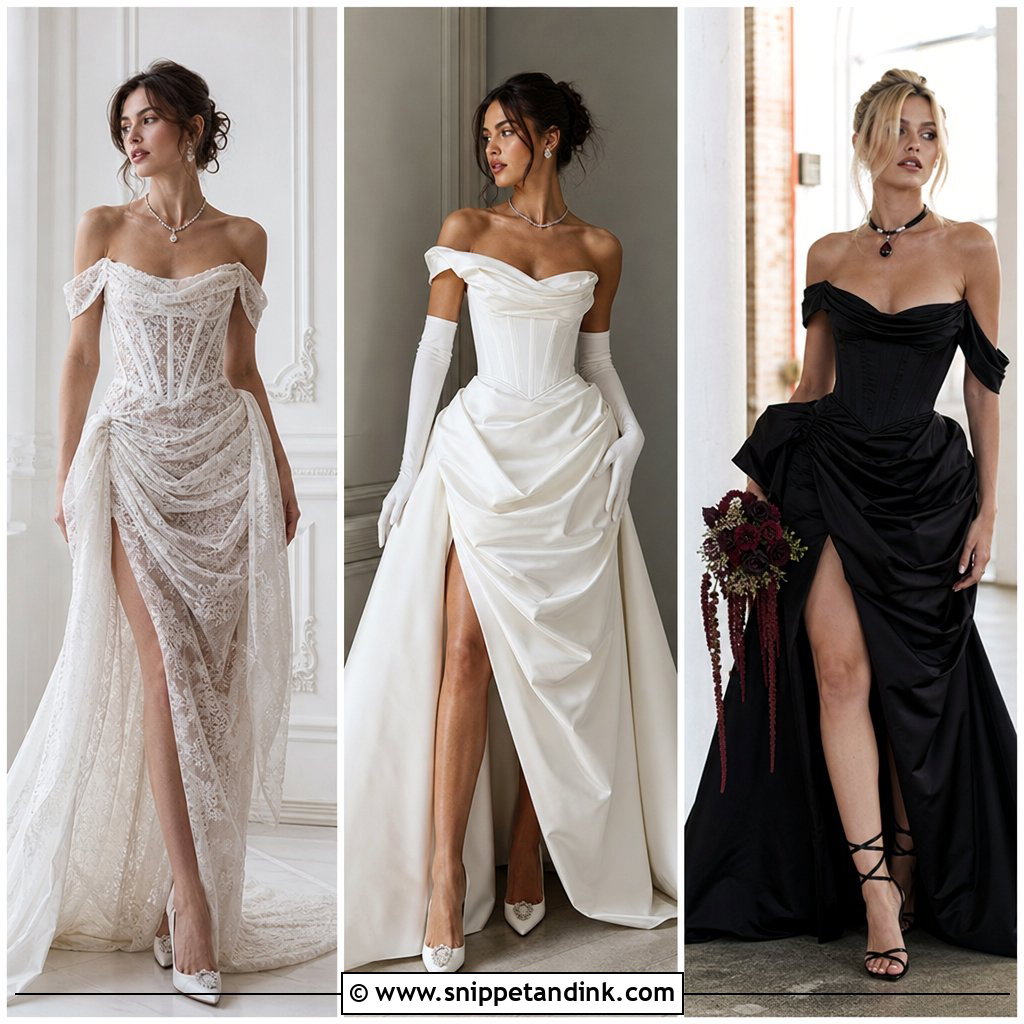
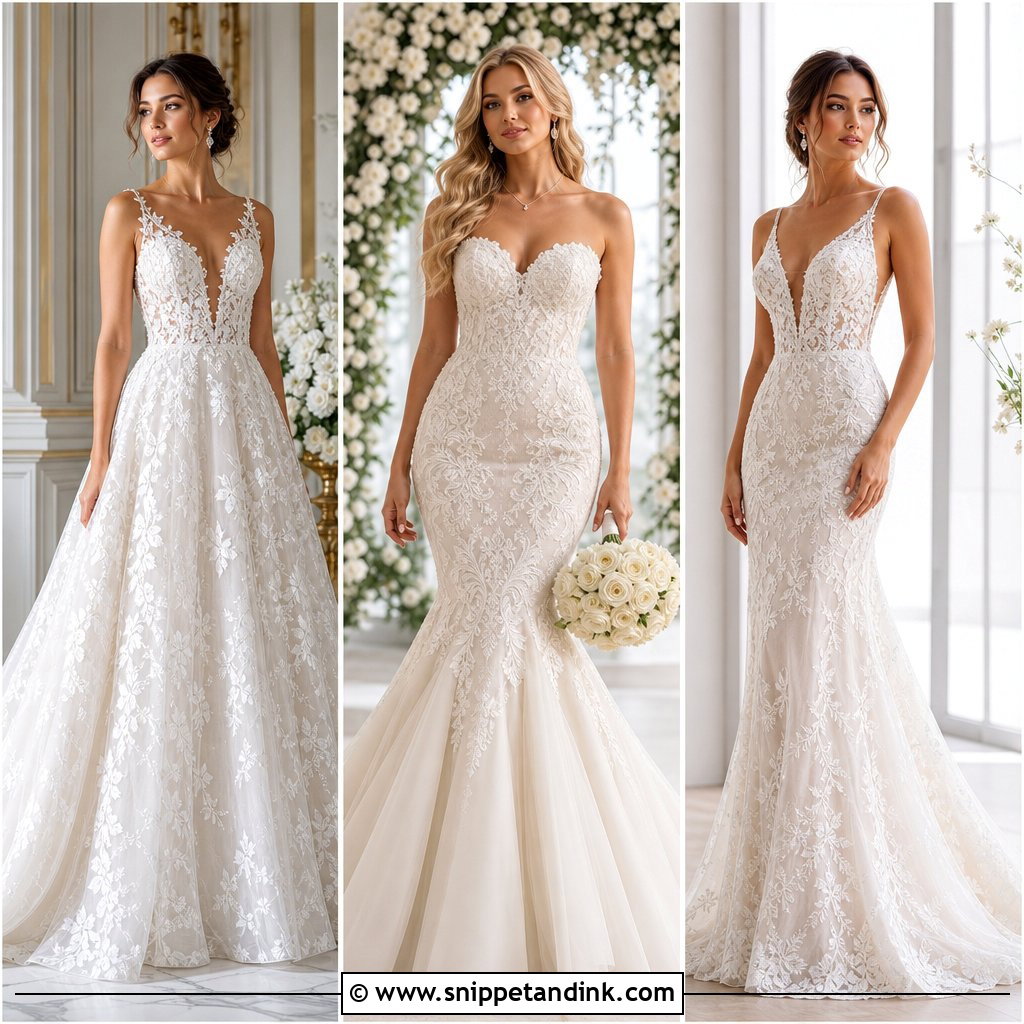
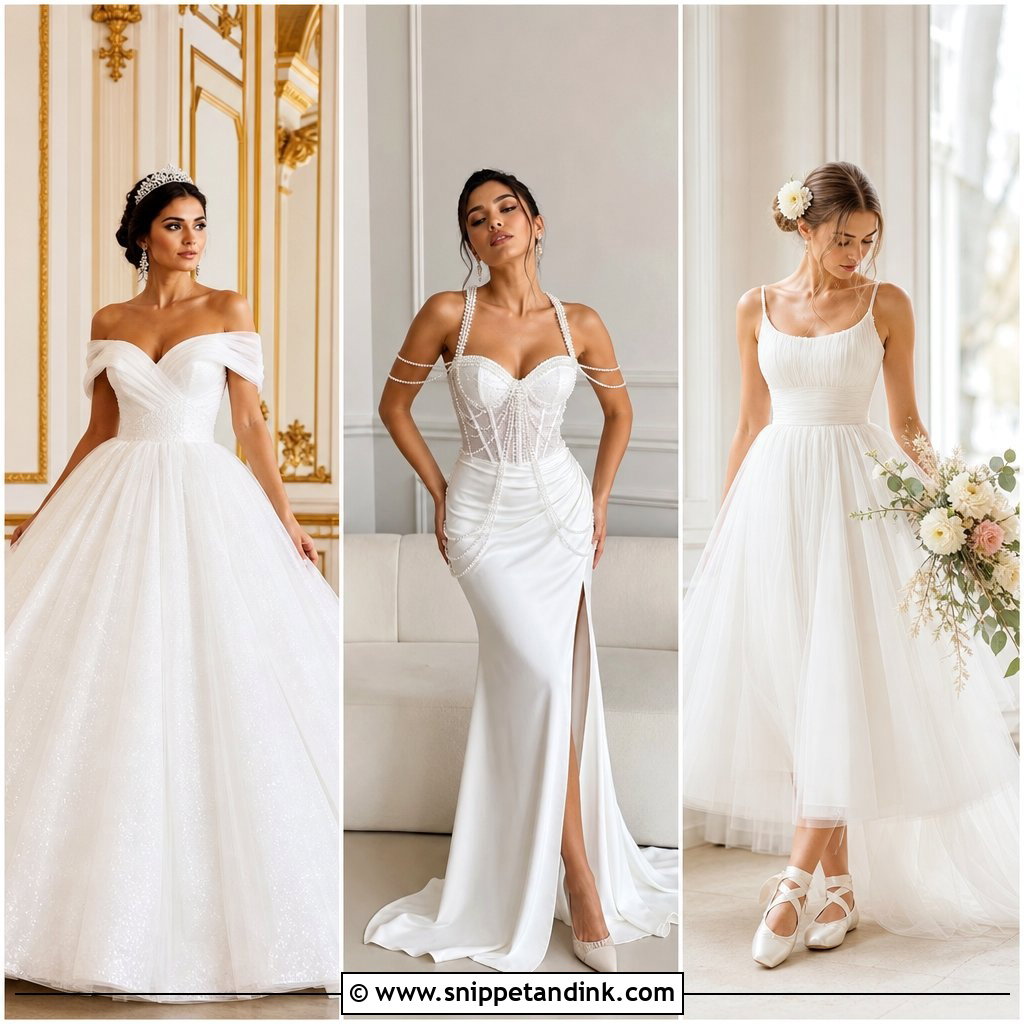
Ask what the boning is made of. Plastic boning can warp from body heat over a long day and leave visible ridges, while spiral steel bends with you and keeps its line. A lace-up or boned bodice with a full skirt in lace, satin or tulle gives the romantic structure. A good corset defines the waist and supports the bust, so many figures suit it. Pair it with off-shoulder sleeves, long lace sleeves or a square neck. Delicate heels, a sheer veil, pearl earrings and a soft bouquet keep the bodice as the focus.
19. Vintage Drop Waist Wedding Dress
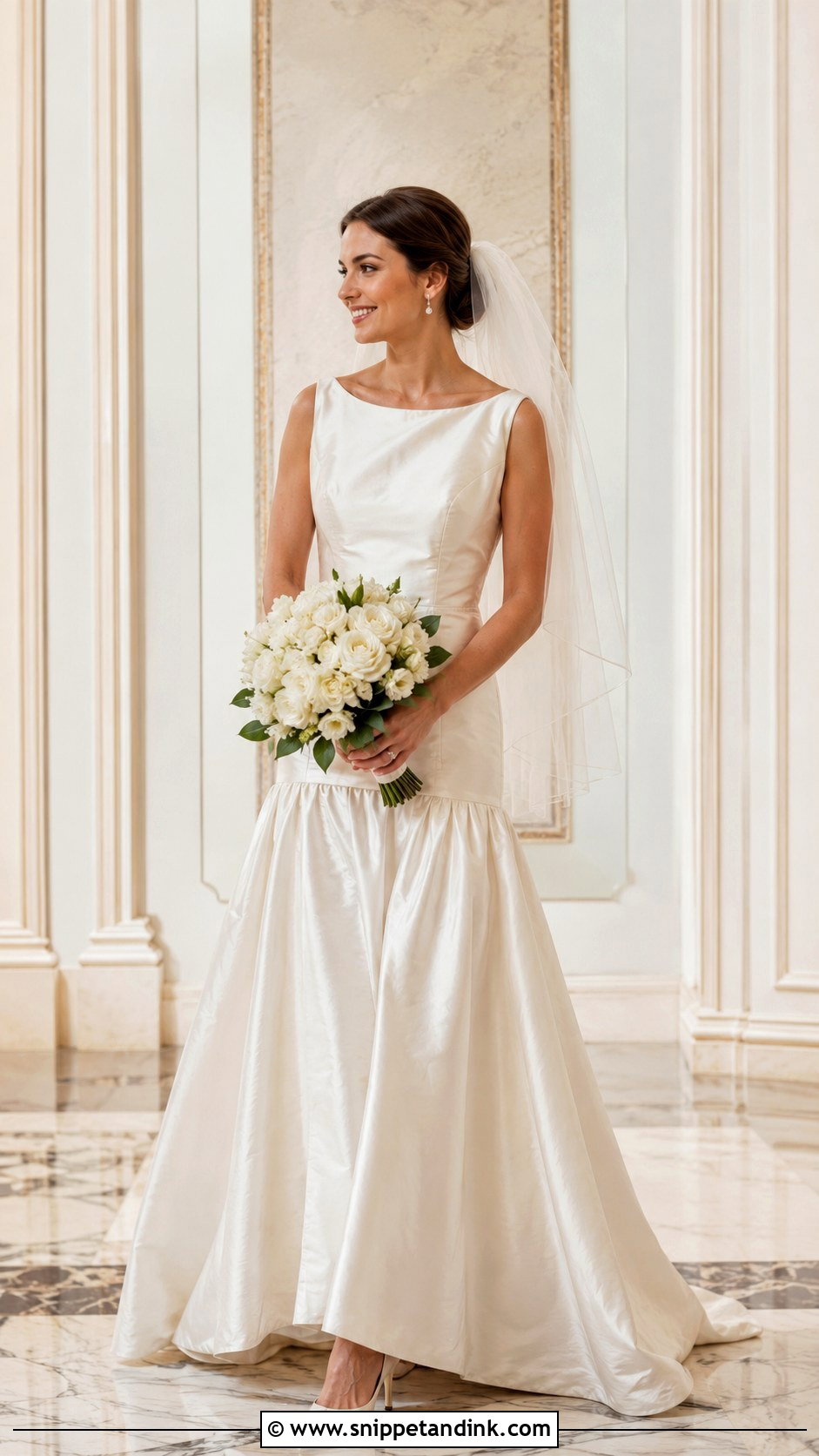
Before suggesting a drop waist, I measure from shoulder to hip. Brides with a long torso carry the low seam naturally; short-waisted brides can look cut in half, and a curved seam usually helps them. The waistline sits on the hips, creating a long body and a soft skirt, in satin, lace, crepe or tulle. Slim heels, a simple veil, delicate earrings and a neat bouquet complete it. The bodice must fit smoothly without pulling, so allow time for careful tailoring.

20. Vintage Off Shoulder Wedding Dress
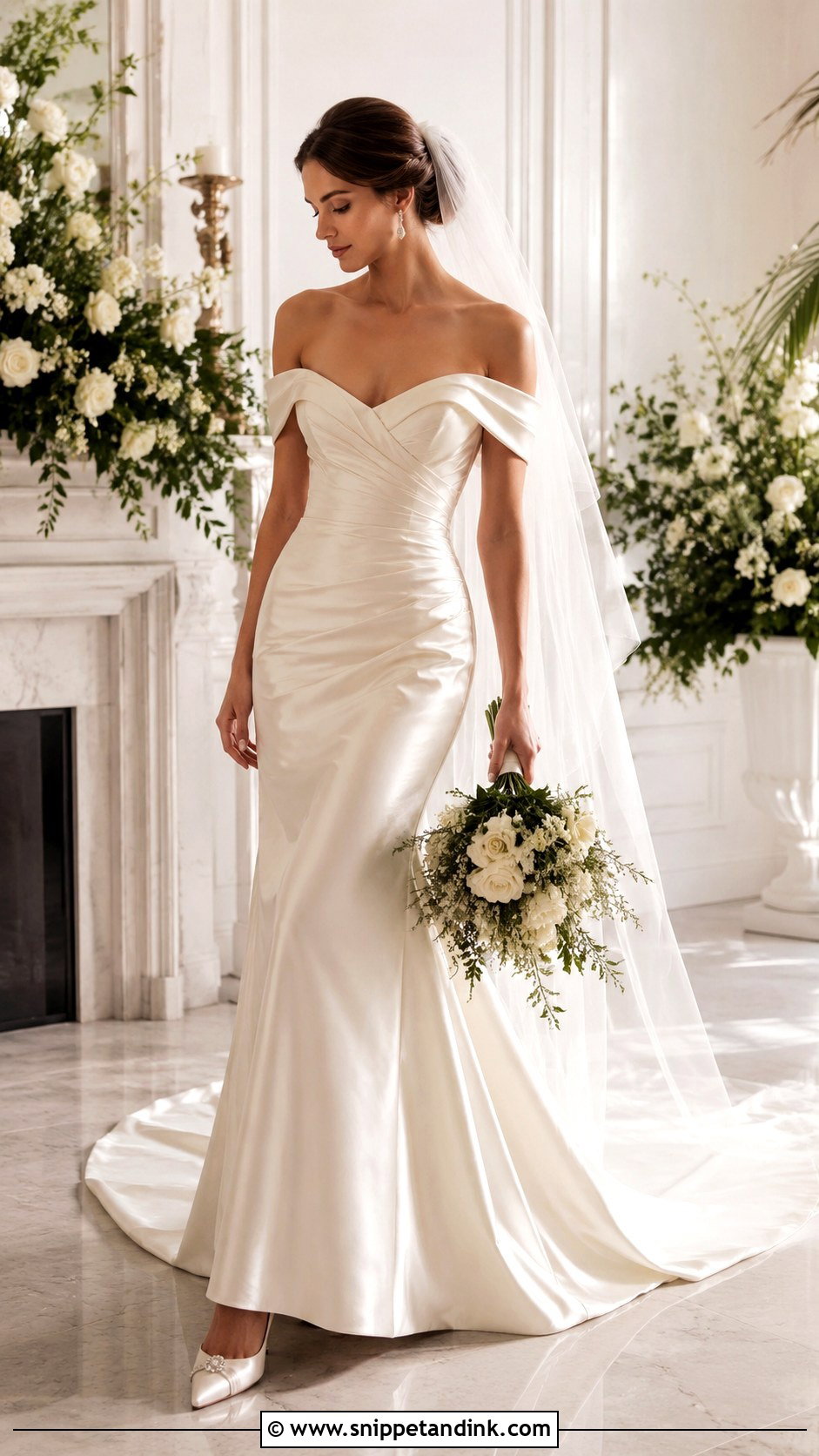
Off-shoulder sleeves hold your upper arms down a little, which you notice the first time you try to wave or hold a glass high. I check reach in the fitting room before anything else. Lace, satin or taffeta with a fitted bodice over a full skirt or slim column suit the neckline, which works across eras from 1950s glamour to 1980s romance. Built-in structure or detachable off-shoulder sleeves give support. Drop earrings, a soft veil, pointed heels and a soft updo finish it. Hold the bouquet at hip height so the neckline stays visible in portraits.
21. Vintage Cape Wedding Dress
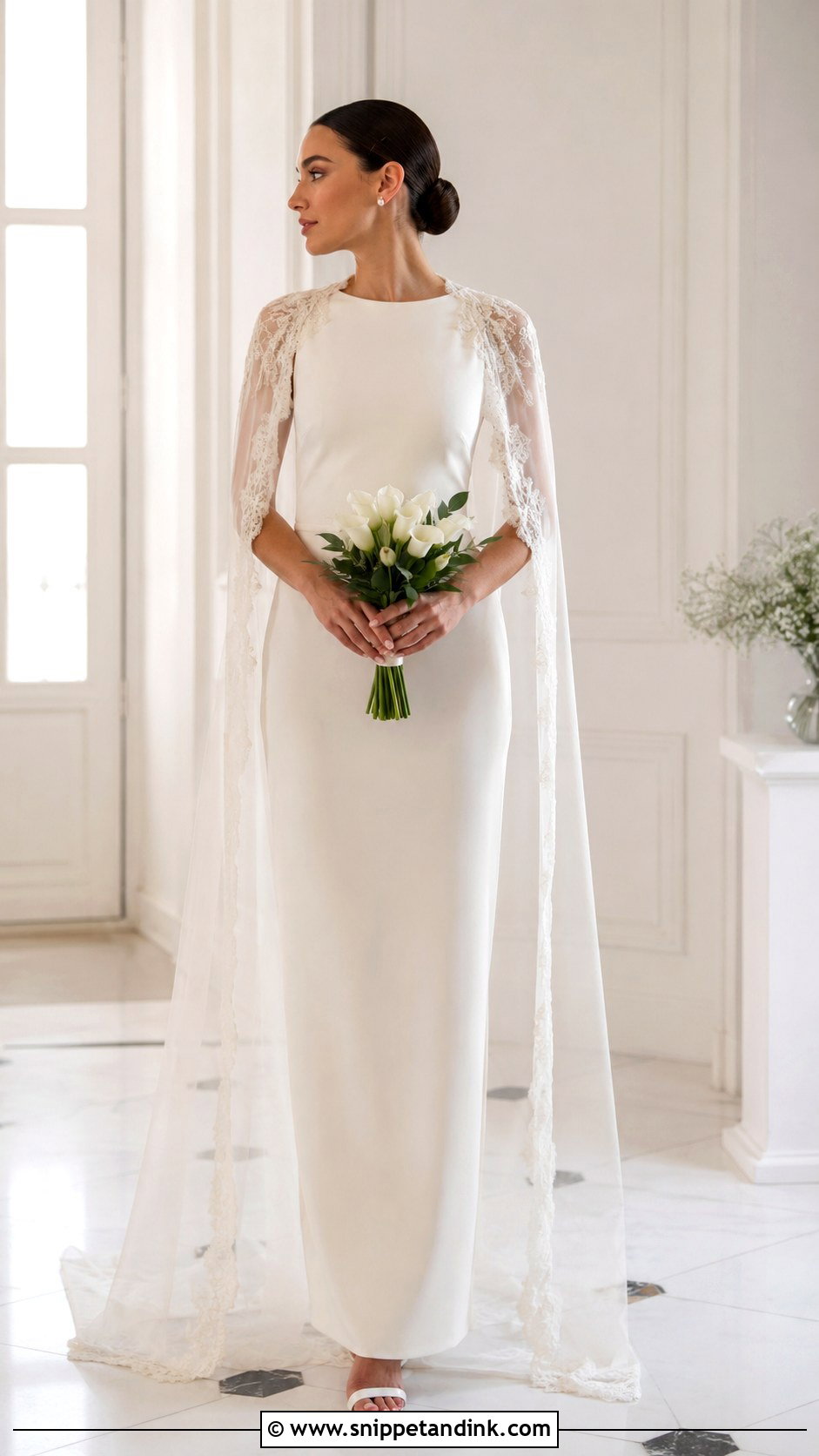
Capes catch wind. For an outdoor ceremony, I ask for small weights sewn into the hem or a few discreet snaps to the dress so the cape doesn’t wrap around the bride’s face mid-vow. Sheer, lace-trimmed, satin or lightly beaded capes suit a simple column, slip or fitted crepe dress. Clean heels, small earrings and a sleek bouquet complete it, with a low bun or smooth waves. A chapel-length cape is dramatic; a short shoulder cape is easier. It replaces a veil and adds coverage on cooler days.
22. Vintage Pearl Wedding Dress
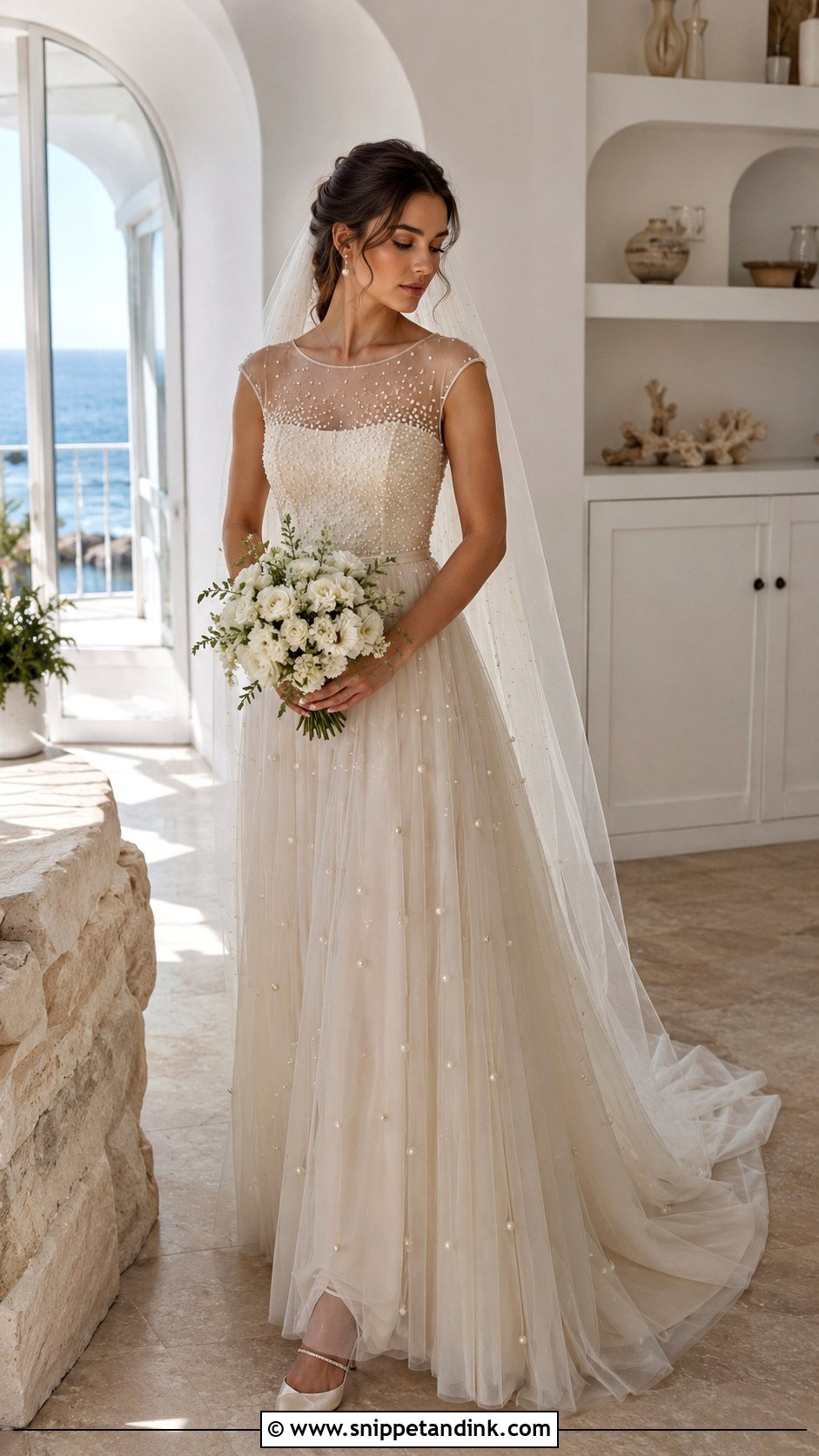
Pearl themes are easy to overdo, so I choose one main pearl detail and keep everything else clean. Scattered pearls on tulle, pearl buttons on satin or pearl trim around the neckline and sleeves all work. Pearl earrings, satin heels, a sheer veil and a simple bouquet complete it. If the dress is plain, a pearl headband or comb can carry the theme instead. Pearls catch light gently, which suits coastal settings and candlelit rooms.
23. Vintage Floral Embroidered Wedding Dress
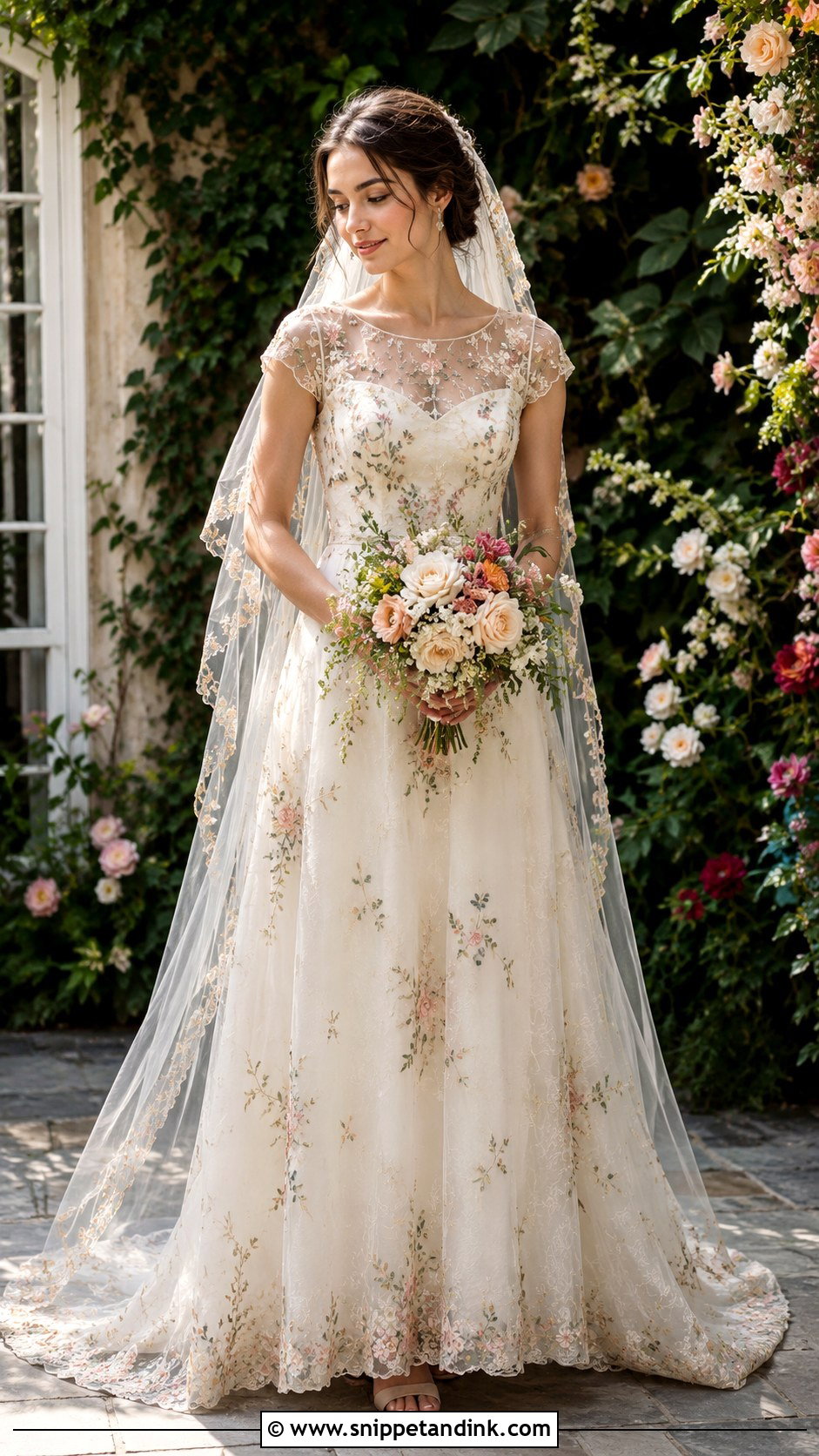
Colored thread photographs differently than it looks in person. Pale blush and soft green can almost disappear on camera, so I ask brides to snap a phone photo of the embroidery in daylight before deciding. Ivory embroidery is classic; blush, champagne or green thread is more romantic. Simple heels, small earrings, a veil with matching trim and a bouquet echoing the embroidered flowers suit it. Bold embroidery wants a simple silhouette, and a dramatic shape wants quieter stitching. Spring gardens suit it best.
24. Vintage Two Piece Wedding Dress
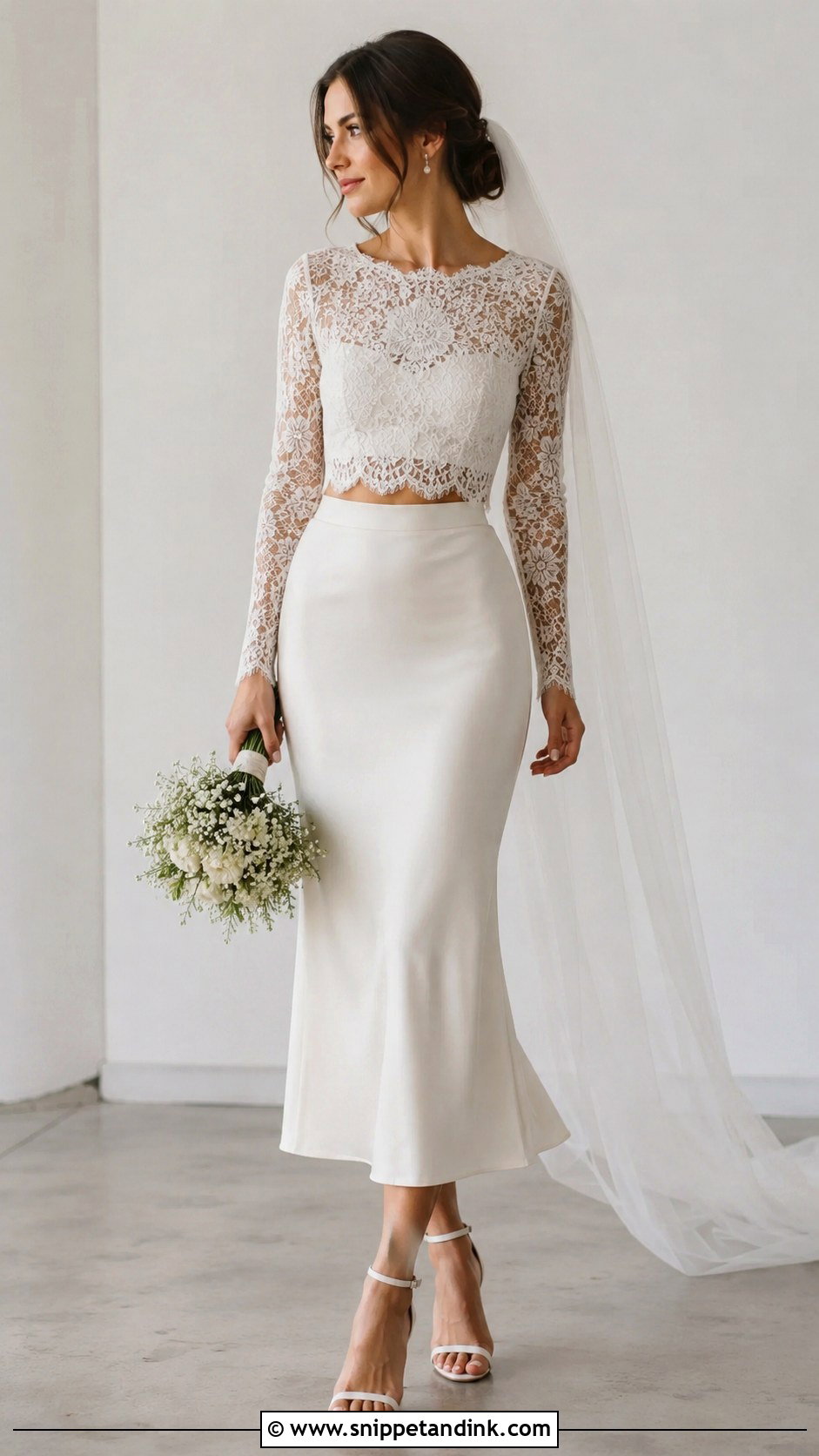
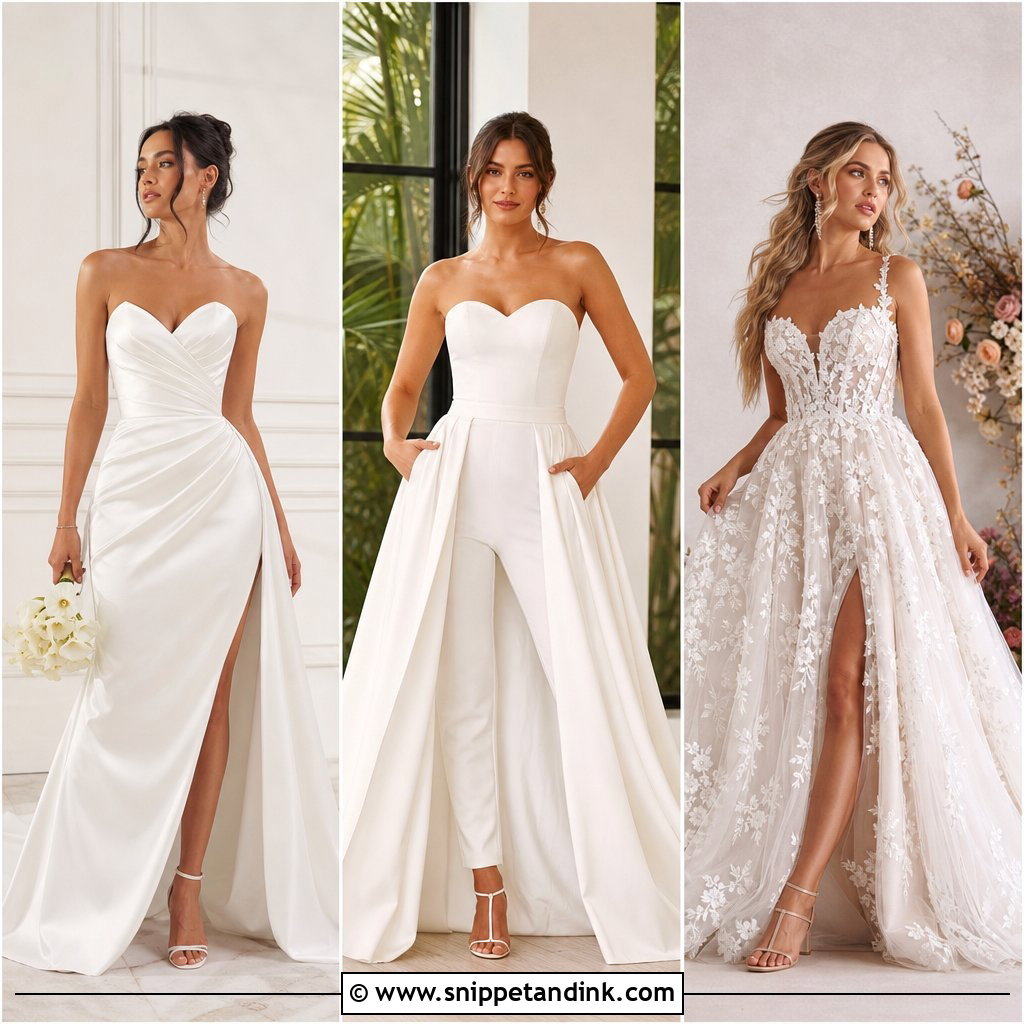
Raise your arms in a two-piece before you buy it. A gap between top and skirt opens up surprisingly fast, and that may or may not be the look you want. A lace crop top with a high-waist skirt, a satin blouse with a column skirt or a beaded top with soft crepe can all work if both halves share a color, texture or era. Elegant heels, a veil, delicate jewelry and a small bouquet complete it. Courthouse ceremonies and small celebrations suit it. A clean waistline and good tailoring make it look deliberate.
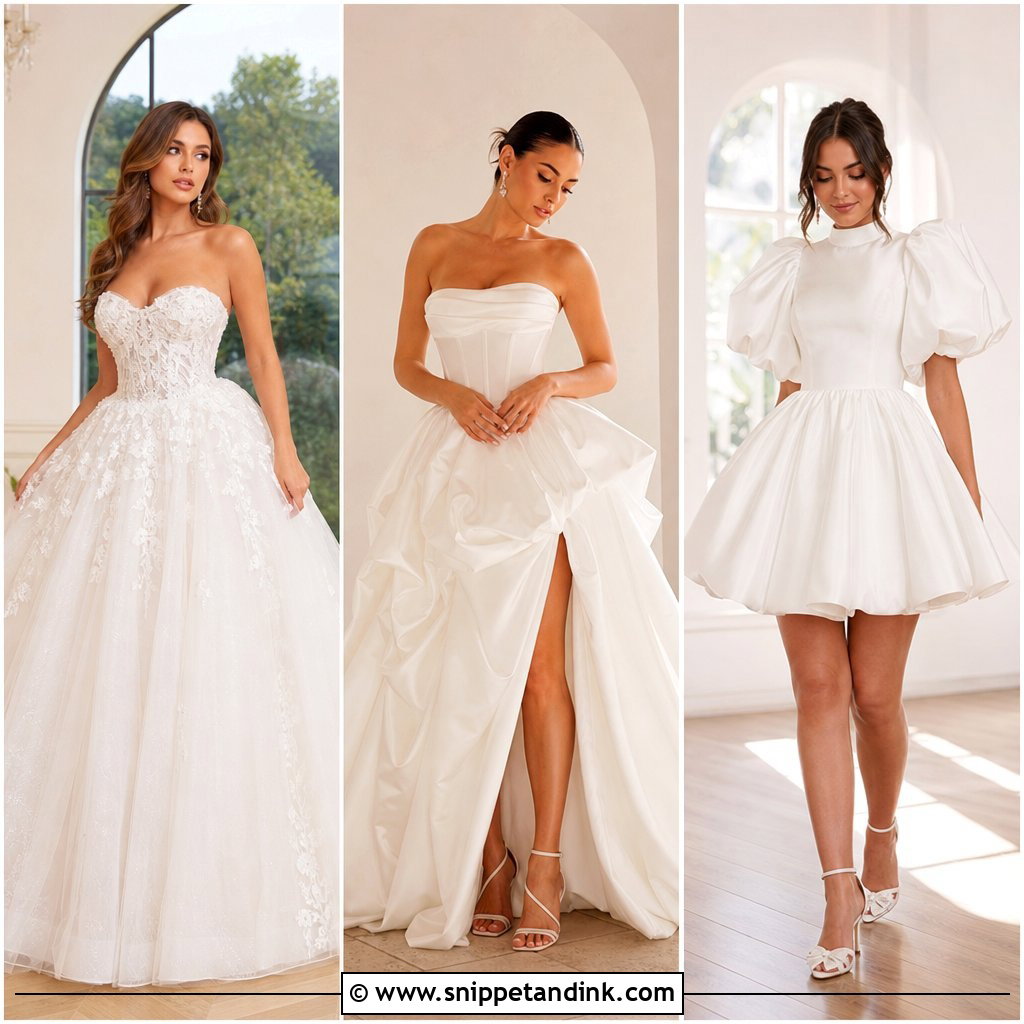
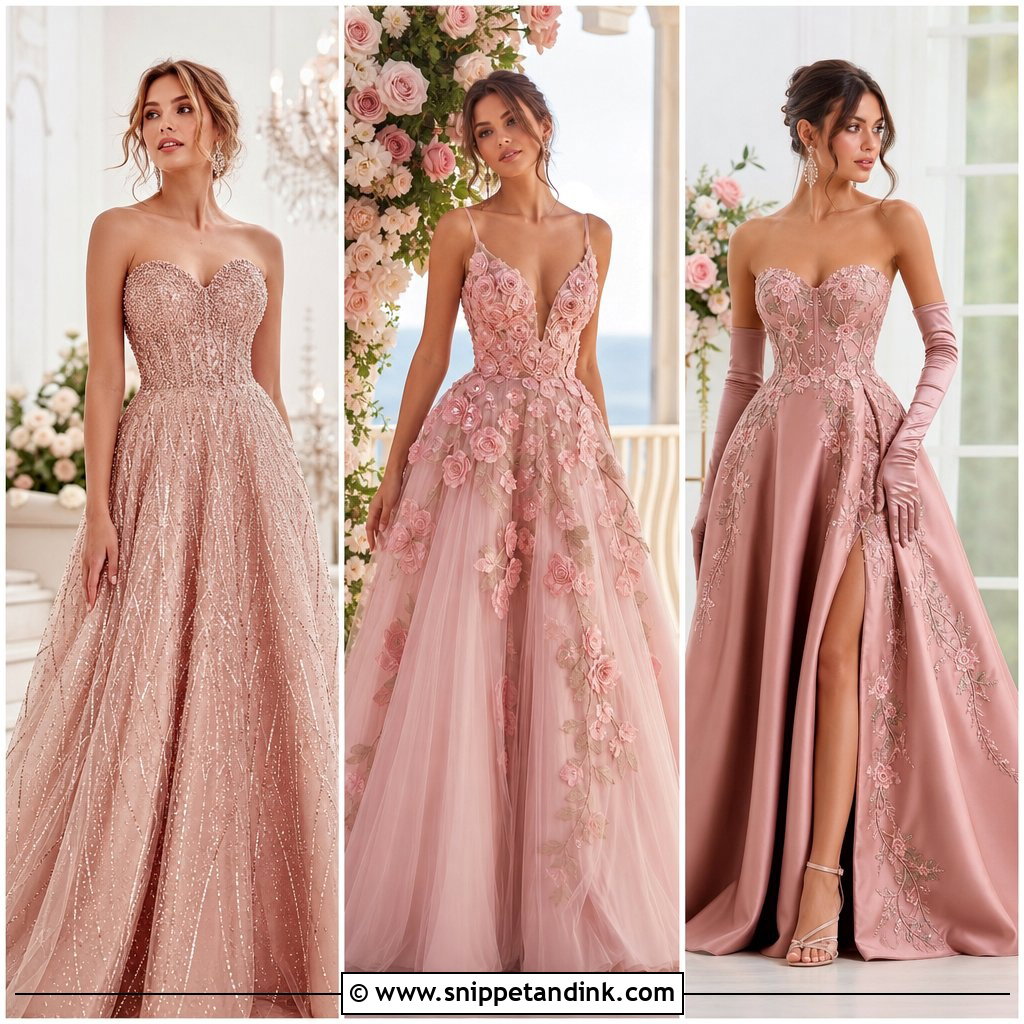

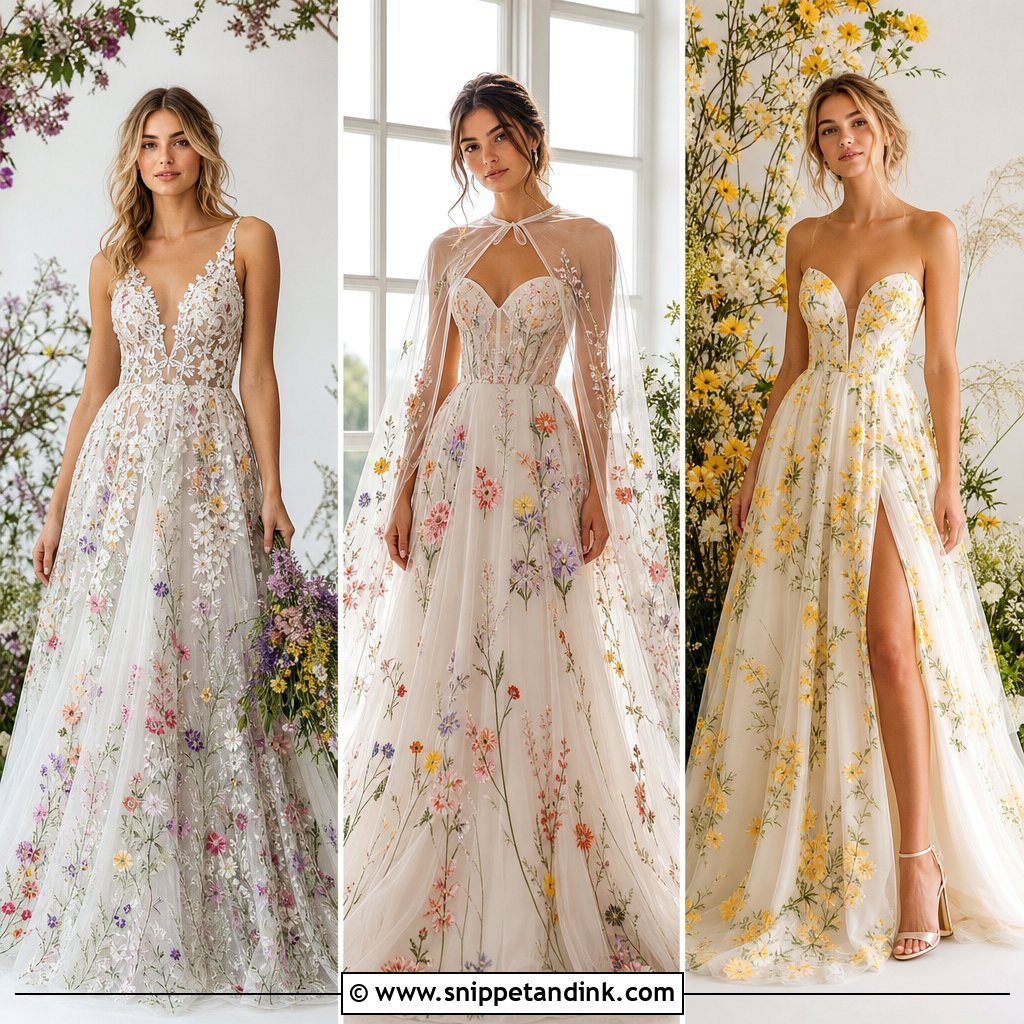
25. Vintage Courthouse Wedding Dress
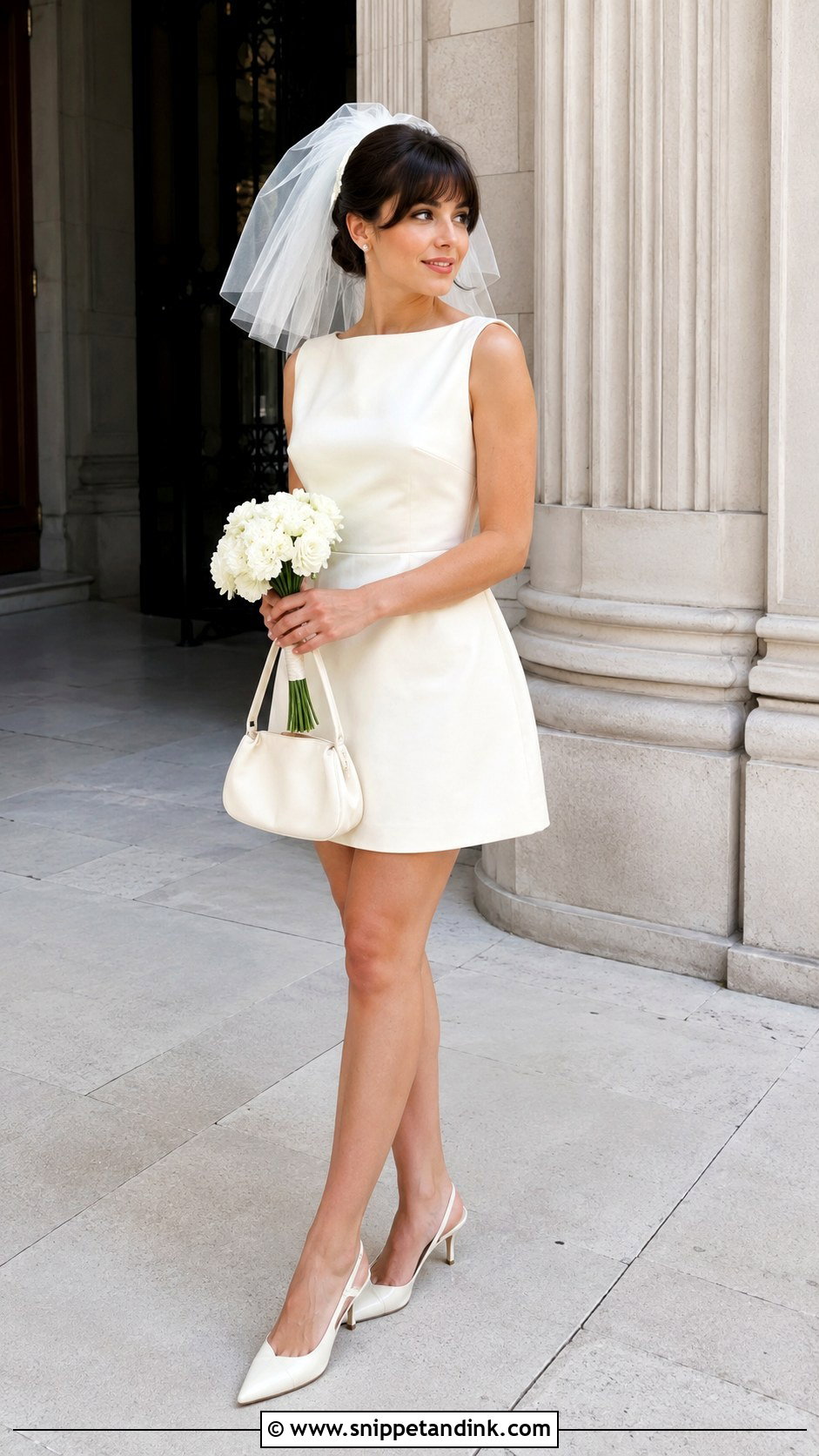
Courthouses tend to have harsh overhead lighting and plain walls, so texture and shape matter more than shine. A 1960s mini, a 1990s slip, a tea-length lace dress or a tailored ivory suit dress all work. Block heels or slingbacks, a small handbag, pearl earrings and a short veil or hair bow suit the setting. A bouquet of white flowers makes it bridal without formality. I like a piece you’ll wear again, and choosing one with that in mind changes how you shop: look for a cut that still works without the veil.
Decade Hair and Makeup Without the Costume
The dress already says which era you love. If the hair and makeup say it just as loudly, the result tips into fancy dress. I usually suggest taking one era cue for the face or hair and keeping the rest modern. Talk it through with your hair and makeup artist at the trial, with a photo of the dress in hand.
- 1920s: a deep side part or soft finger waves, or a berry lip. Pick one of the two, and keep the skin fresh rather than powdered flat.
- 1930s and 1940s: glossy, brushed-out waves or rolled curls. Defined brows suit both.
- 1950s: winged liner or a red lip, with soft, set curls. Doing both is fine if the hair stays simple.
- 1960s: lifted volume at the crown and a stronger eye, with pale lips.
- 1970s: a center part and bronzed, glowing skin, with very little on the eyes.
- 1990s: a sleek low knot or loose straight hair, and a neutral brown-toned lip.
Whatever the era, ask your makeup artist to test the look in flash photos at the trial. Matte red lips and strong brows read heavier on camera than in the mirror.
A Decade Worn Your Own Way
Vintage bridal style can be glamorous, modest, playful or minimal, and the decade matters less than how the pieces balance. A dress you love, shoes you can stand in, accessories with restraint, and hair and makeup that nod to the era without copying it. A beaded 1920s gown, a 1950s tea-length dress, a 1970s lace shape and a 1990s slip are all good answers if the fit is right and the look feels like you on the day.
You'll Like These Ideas:






Leave a Reply