
A vintage bride is rarely just a dress. In my work the look comes together from several places: an inherited veil, a secondhand gown, a grandmother’s earrings, a suit someone spotted in a consignment shop. The outfits below borrow from Edwardian lace and 1920s beading through 1950s tea lengths and loose 1970s gowns, and a few skip the gown altogether. What holds each one together is a single clear era or mood, then shoes you can stand in, alterations that respect your shape and makeup that looks like you now. A formal ballroom, a field or a city hall can all host one of these.
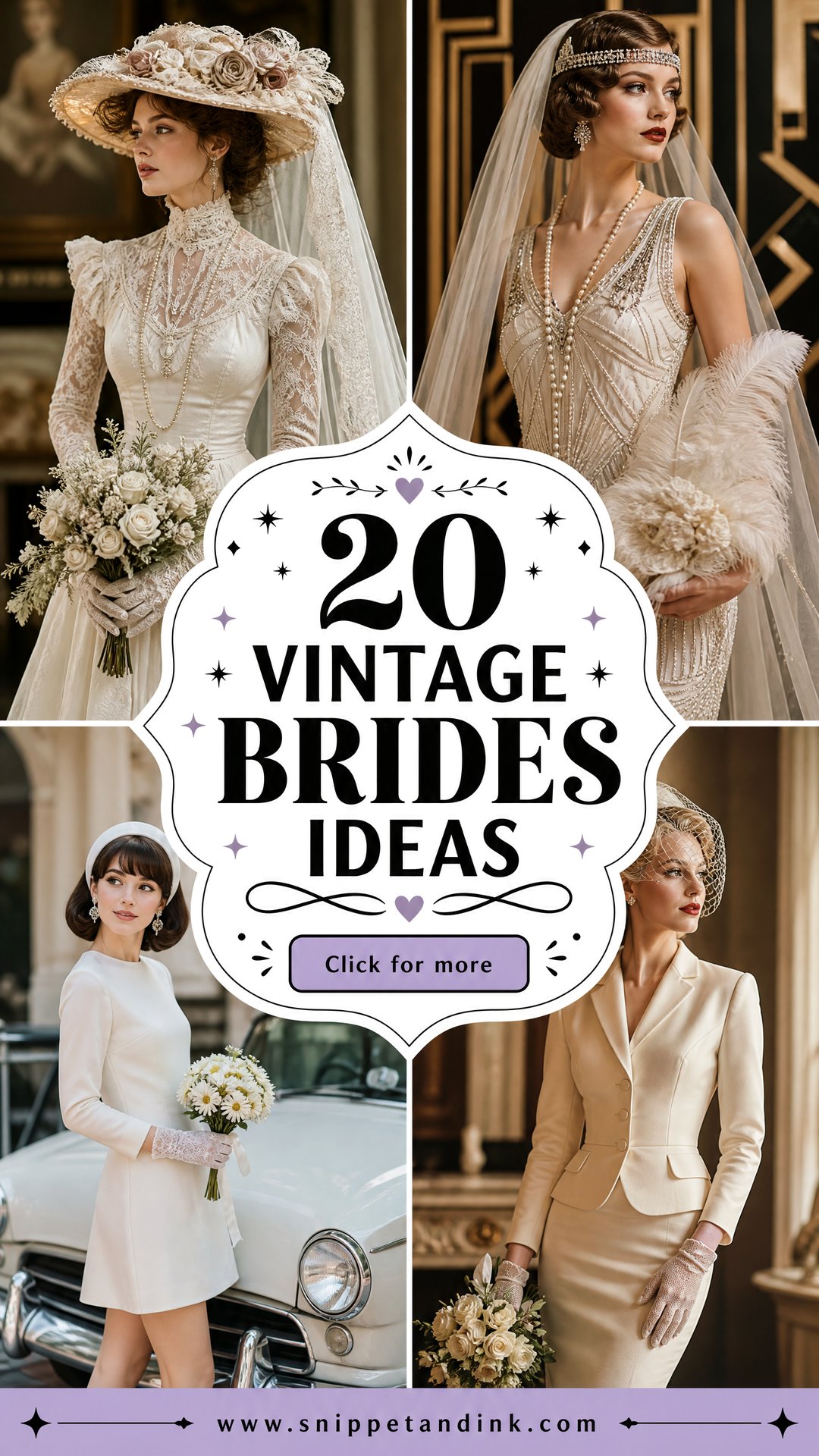
A Calendar for Sourcing and Altering Older Pieces
Vintage outfits take longer than new ones, mostly because you’re working with what exists rather than ordering a size. Timings vary with the seamstress and the state of the fabric, but this is roughly how I plan it with brides.
- Nine to twelve months out: start hunting. Consignment shops, estate sales and specialist vintage sellers turn up wedding pieces irregularly, and the right size can take months to appear.
- Six to eight months out: have the dress inspected and cleaned by a specialist before any alteration. Cleaning can shrink or shift old fabric, so it must come first.
- Four to six months out: first fitting. Older gowns usually need more fittings than new ones, often three or four, because each change on fragile fabric is done cautiously.
- Two months out: settle shoes, undergarments and any jacket or cape, and bring all of them to the next fitting.
- Two to three weeks out: final fitting and a full wear test. Sit, walk stairs and raise your arms.
If you’re starting later than this, I’d choose a new gown in a vintage style and put the heirloom element into the veil, jewelry or a small lace detail instead.
1. Edwardian Vintage Bride Outfit
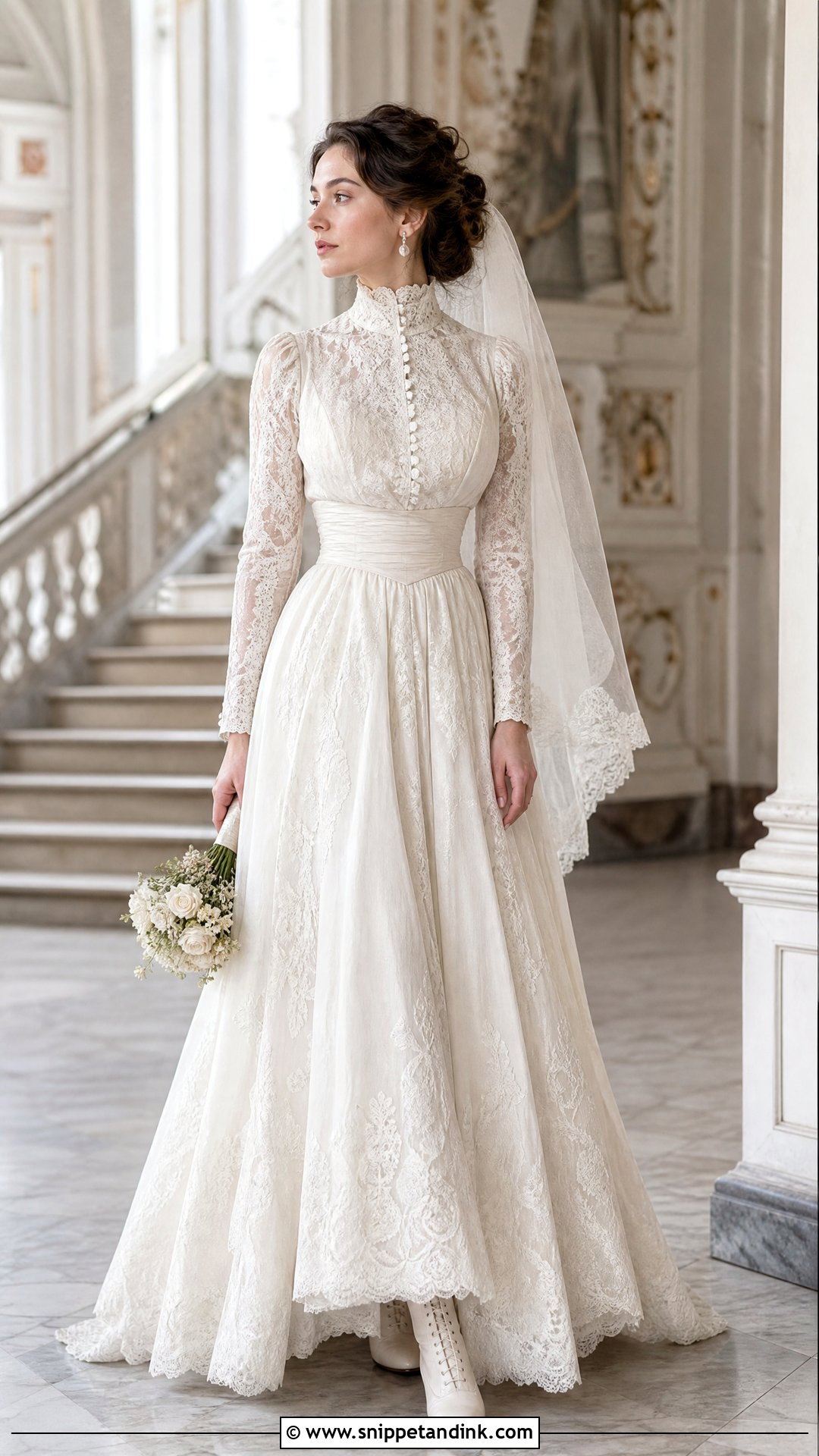
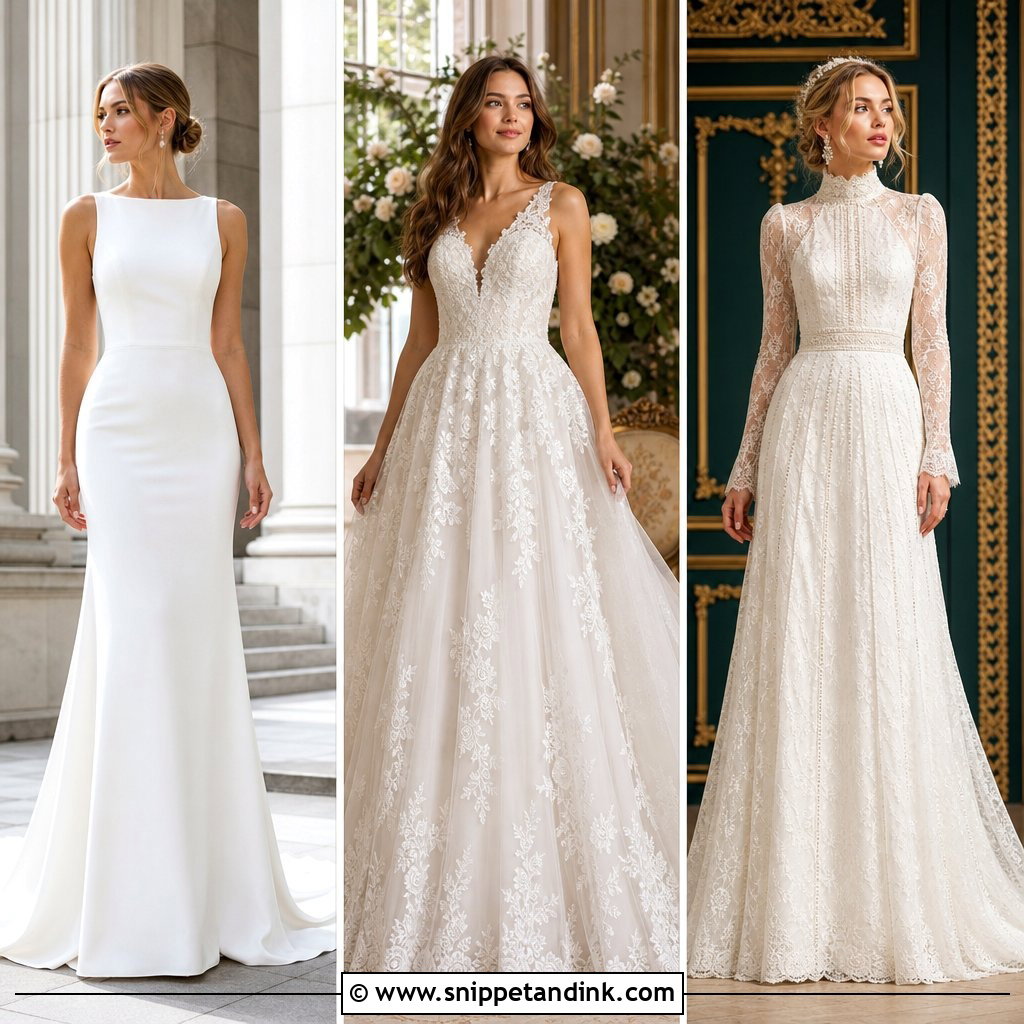
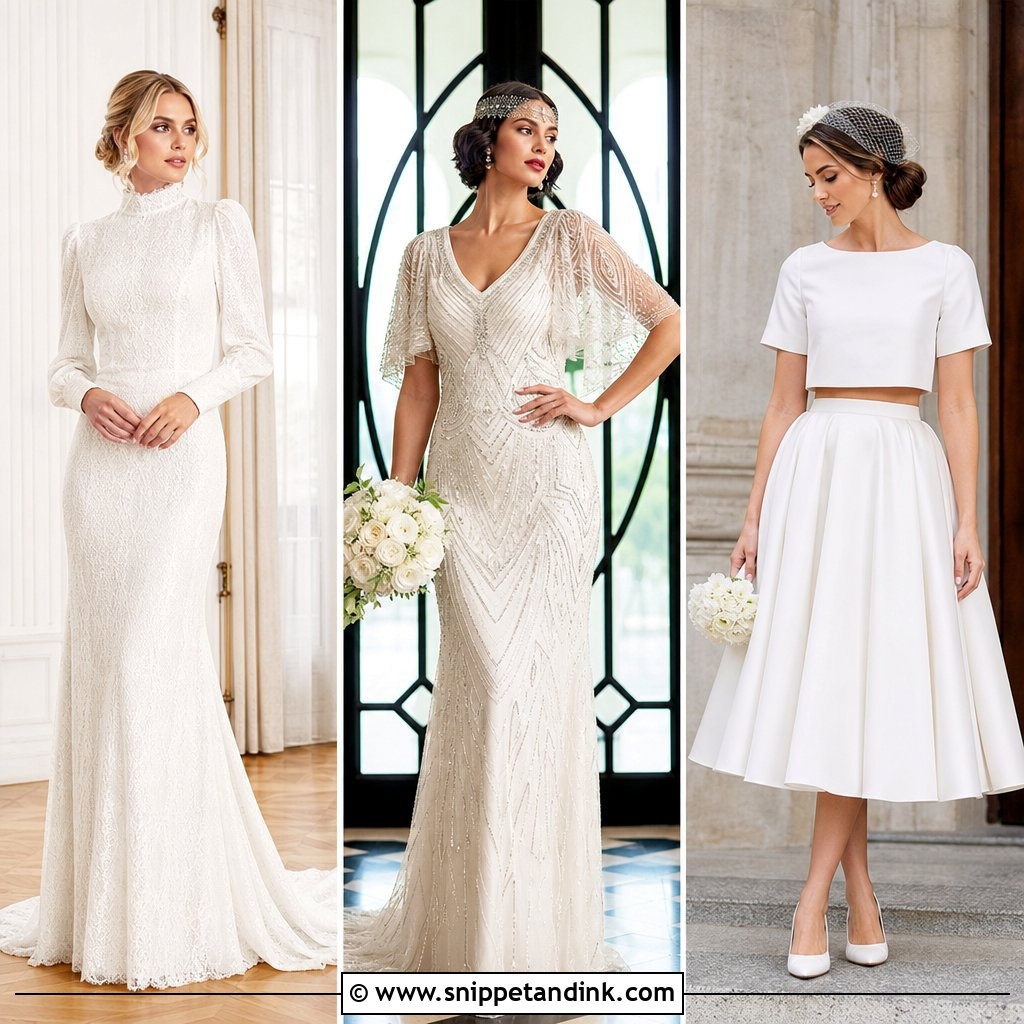
Coverage is the point of an Edwardian outfit, and it only works if the sleeves let you move. An ivory gown with a high lace neck, a soft waist and long fitted sleeves over a fluid A-line skirt sets it up. I ask the seamstress to check the sleeve with arms raised, because a structured bodice plus a tight sleeve can pin your elbows to your sides. Pearl drops, ivory lace-up boots and a fingertip veil under a loose chignon finish it. Skip the necklace if the collar is embroidered, and add a ribbon waistband only if you want more shape. Cream garden roses keep the bouquet soft.
2. 1920s Art Deco Vintage Bride Outfit
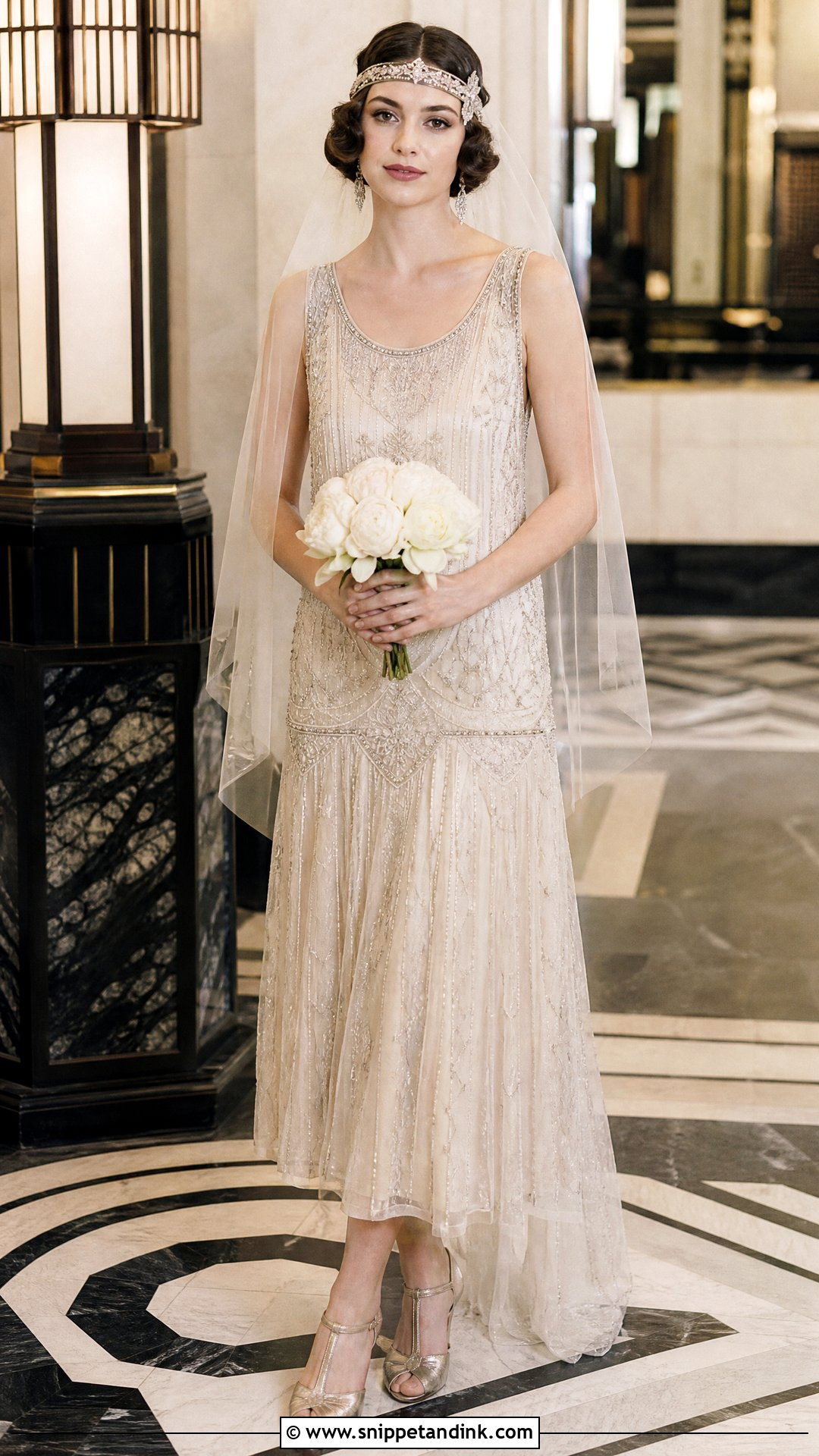
Beading that moves is what you want for a 1920s outfit, not beading that weighs. A straight or slightly dropped-waist gown with delicate sequins, pearls or Art Deco embroidery catches light as you walk. Dropped waists, geometric patterns and fluid lines are what make it read as Jazz Age. Low T-straps, a slim metallic clutch, crystal drops and a jeweled band across soft waves are plenty; a plain tulle veil keeps it bridal. I’d check that the lining covers every bead back, since bare thread knots scratch skin over a long evening.
3. 1930s Satin Vintage Bride Outfit
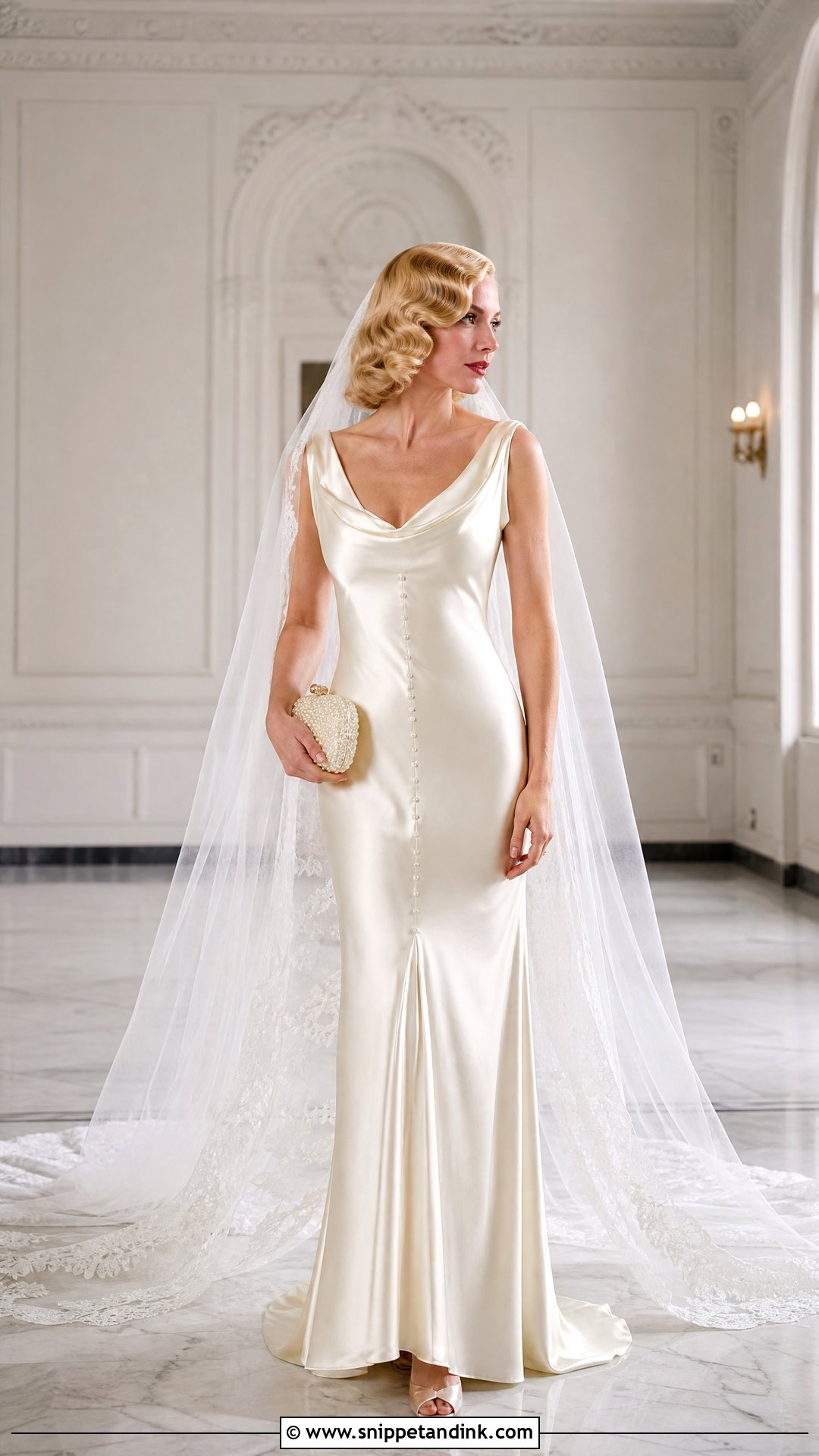
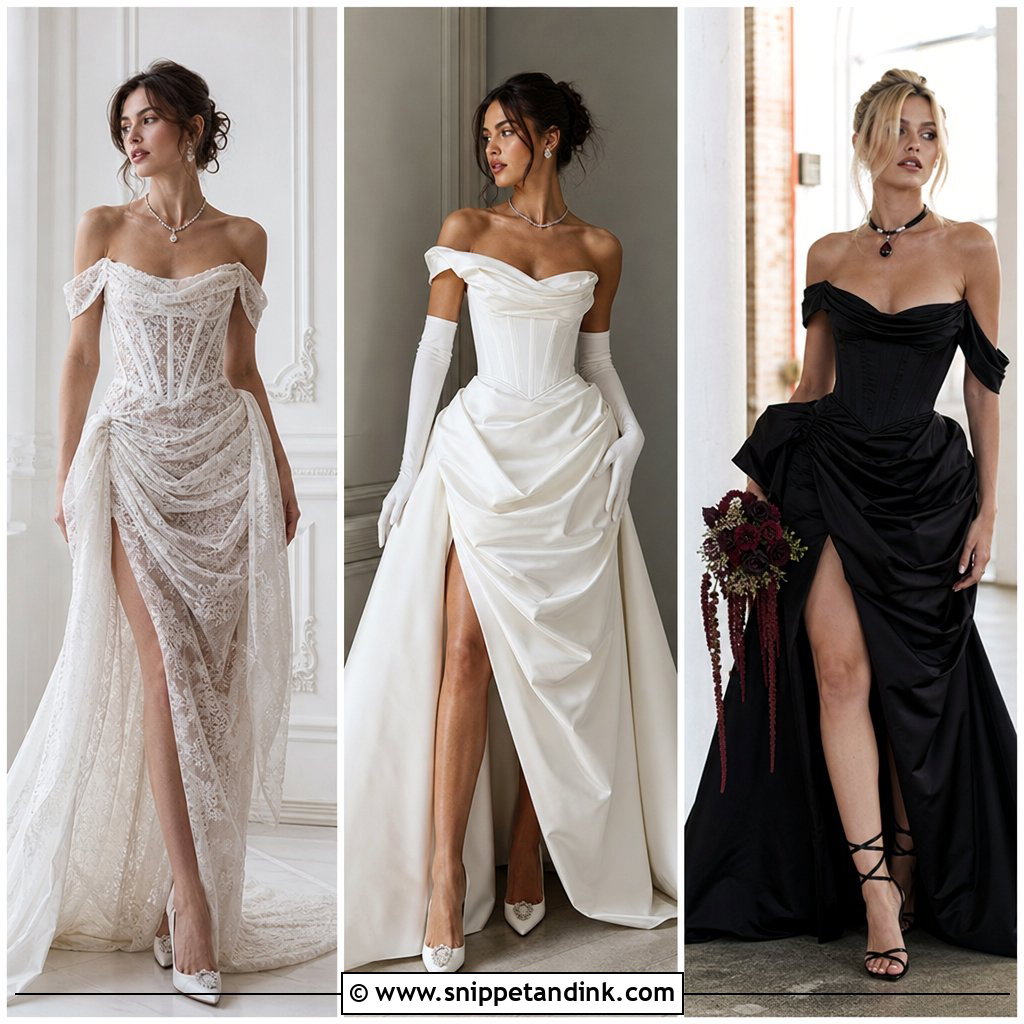
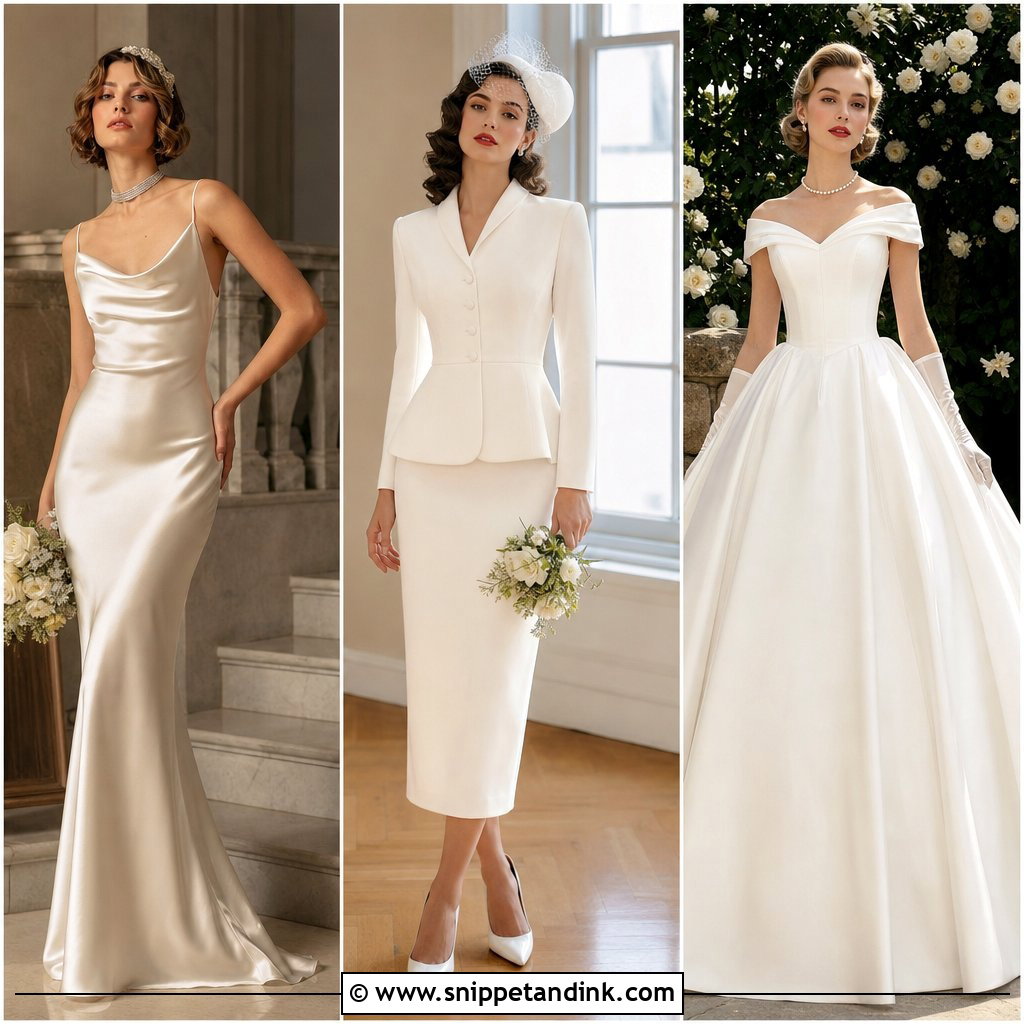
Bias-cut satin is the liquid line of the 1930s, and it is honest about what’s underneath. A gown with a modest V, covered buttons and a draped skirt that skims instead of grips is the version I’d look for. Fit it over smooth, skin-toned undergarments, and have the hem checked in your wedding shoes, since the cloth hangs differently with a heel. Ivory peep-toes, a small pearl clutch and fine drop earrings keep the shine understated. Choose a cathedral veil for drama or a shorter one for a small room, with side waves or a low rolled bun. Calla lilies match the long, clean shape.
4. 1940s Long Sleeve Vintage Bride Outfit
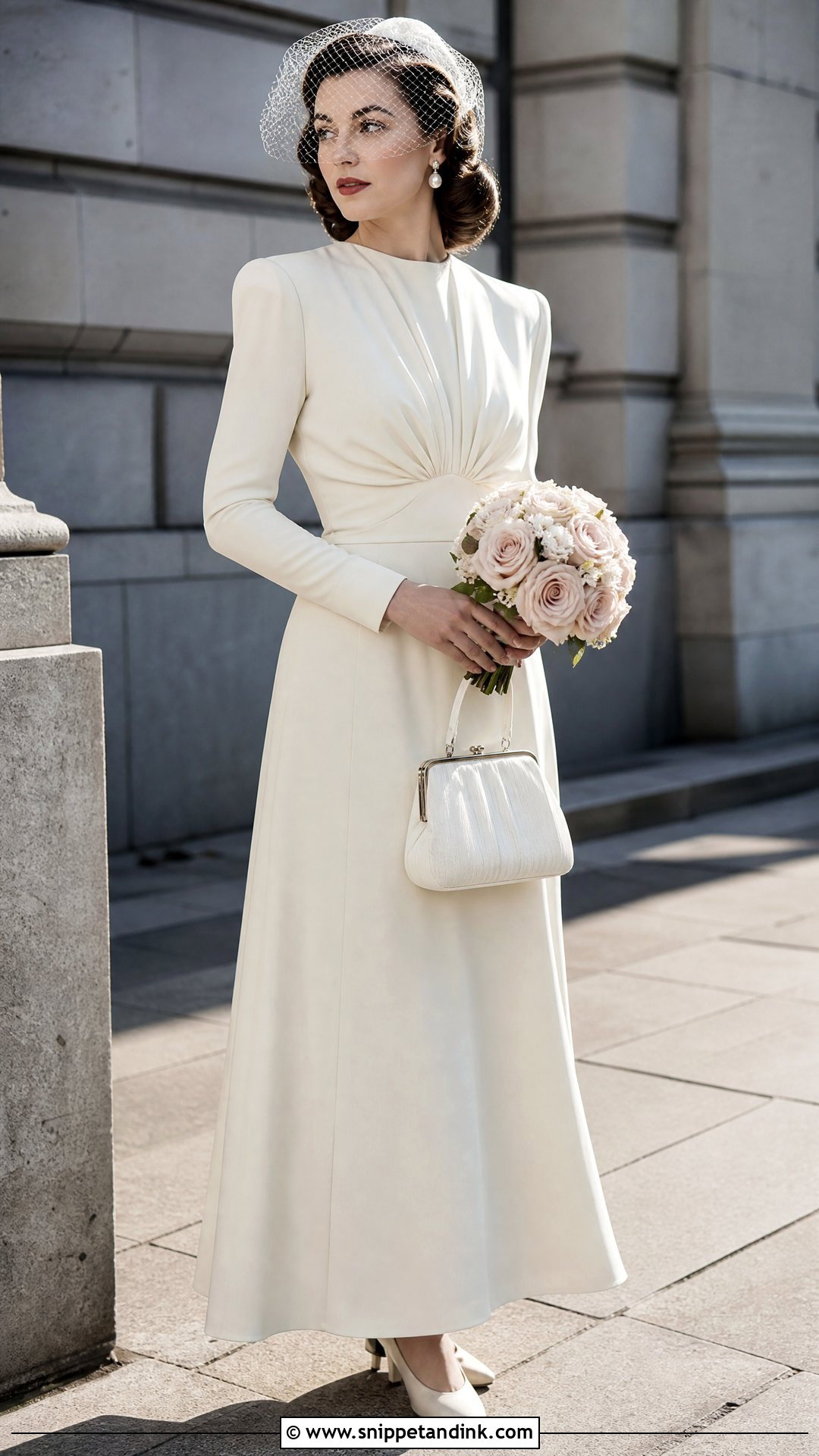
Shoulders are what make a 1940s outfit look right. A crepe or matte satin gown with structured shoulders, a defined waist, long sleeves and a gently flowing skirt is the base, with covered buttons and a gathered bodice for character. Low block-heel pumps, pearl studs and a small top-handle bag suit it, with a shoulder-length or birdcage veil. Rolled waves and a softly defined lip finish the period face without overdoing it. Separates are an authentic option too: a fitted ivory jacket over an ankle-length skirt is very much how many women married in that decade. Keep embellishment minimal so the waist and tailoring lead.
5. 1950s Tea Length Vintage Bride Outfit
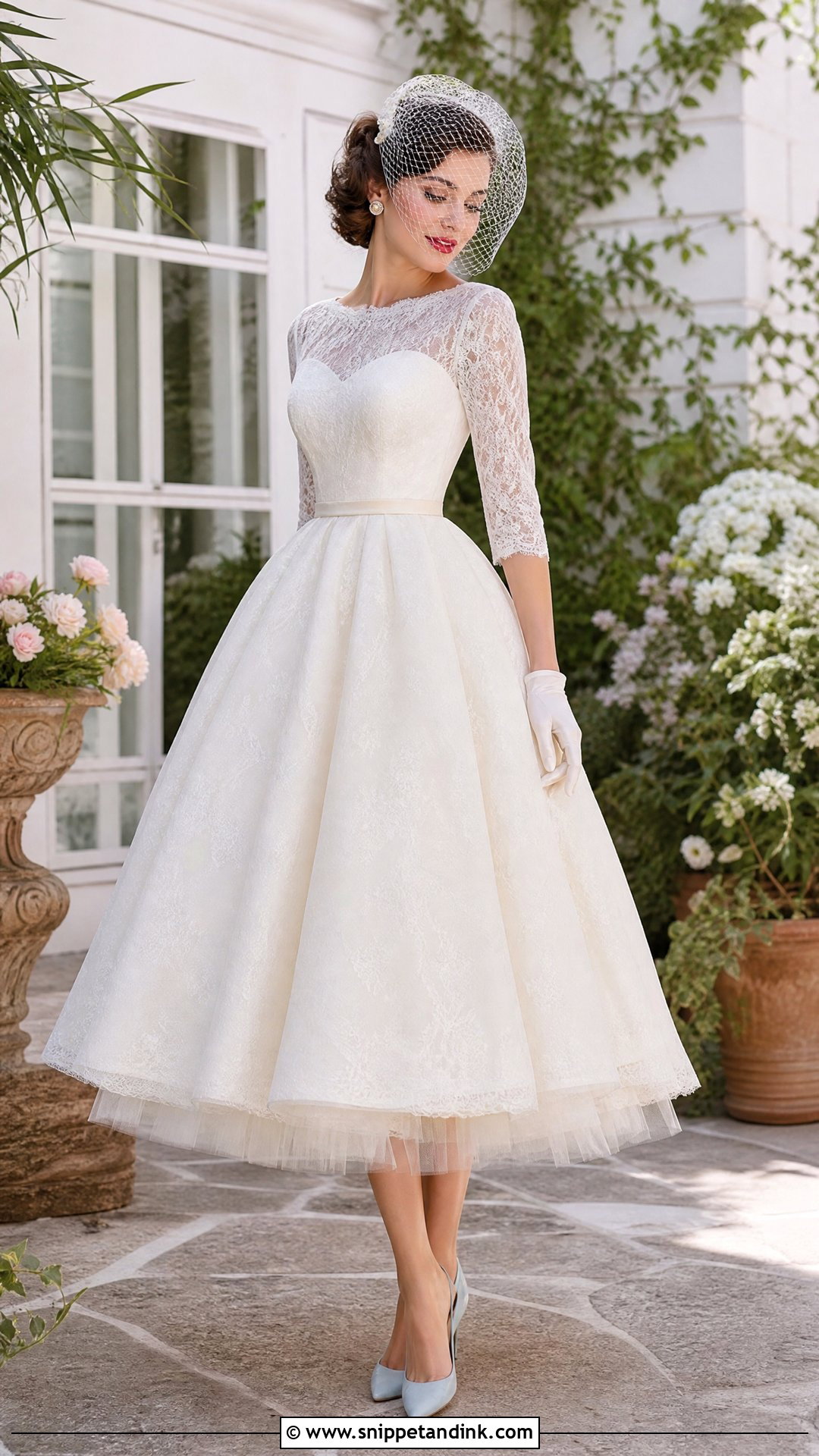
Tea length is the most dance-friendly gown in this list. A fitted bodice, a natural waist and a full skirt ending between knee and ankle are the essentials, with lace sleeves or a bateau neck giving it a 1950s finish. The shoes are on show, so this is the rare bridal look where pale blue or a soft metallic pump makes sense. Short gloves, pearl earrings and a small structured bag complete it. A birdcage veil suits a neat bun, a chin-length bob or set curls. I fit the petticoat with the final shoes on, because the skirt length changes with every layer added.
6. 1960s Mod Mini Vintage Bride Outfit
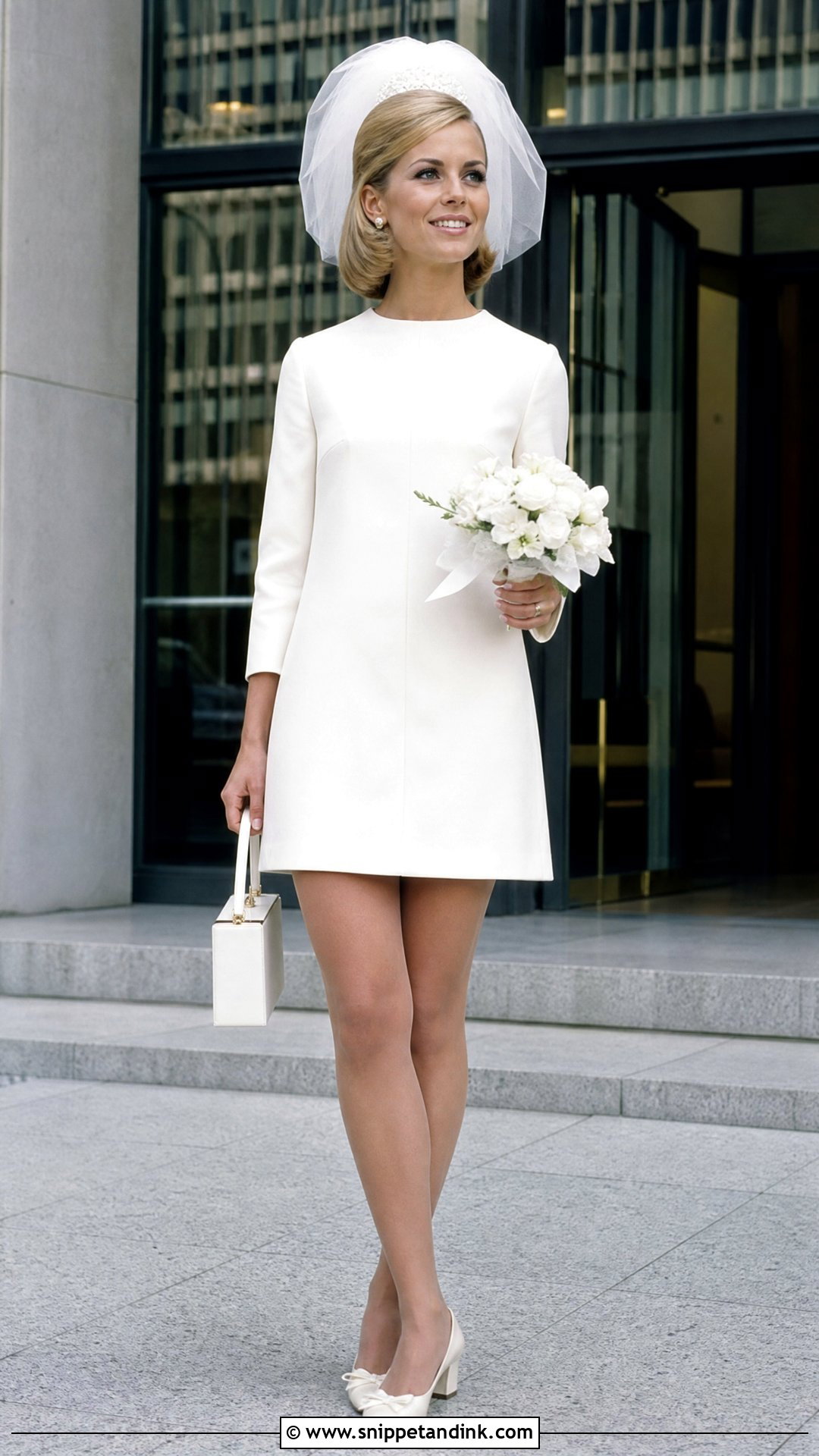
Short and structured is the whole idea of a 1960s-inspired bridal mini outfit. A white shift with a high neck, bracelet sleeves or a slight A-line, in a fabric with enough body to hold that clean edge, works for a civil ceremony or a reception change. Sit in it before you buy. Low block heels, sheer tights, pearl button earrings and a small box bag finish it, with a bubble veil or bow headband. A flipped bob, a sleek low ponytail or a little volume at the crown all suit the shape. If the mini feels too short, a matching coat dress or a hem just above the knee keeps the mod spirit.
7. 1970s Boho Vintage Bride Outfit
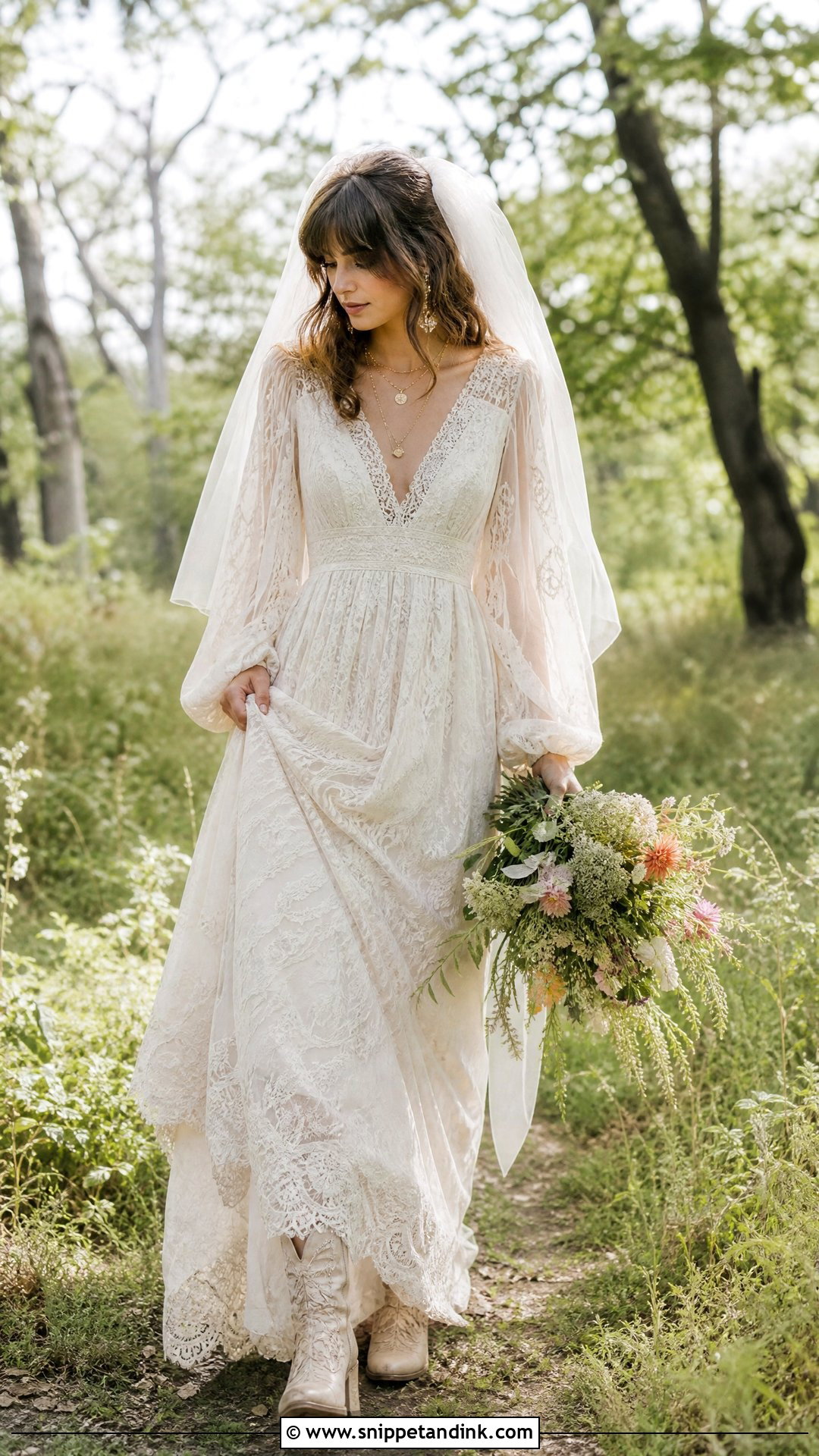
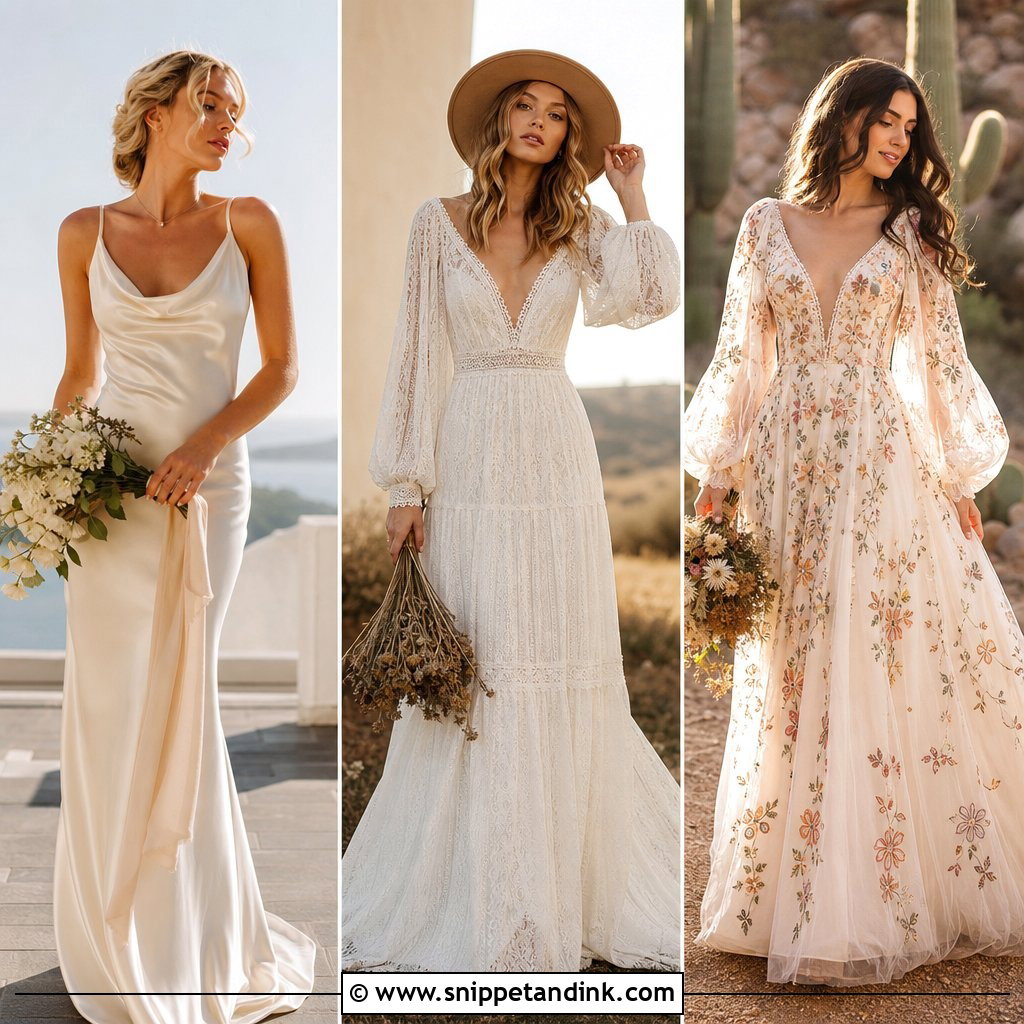
Ground decides the shoes for a 1970s outfit, and I ask about it before anything else. A flowing ivory gown with bishop sleeves, a gathered waist and floral lace or crochet panels, cut to skim and move, suits a garden or woodland. On grass, platform sandals or embroidered ankle boots beat a thin heel; on a terrace, leather block heels are fine. A delicate pendant, small gold earrings and loose wildflowers suit it. Long hair works in loose waves; shorter hair takes a simple floral comb. Billowing sleeves are the strongest cue of the decade, so attach the veil at the back where it won’t flatten them.
8. Victorian Lace Vintage Bride Outfit
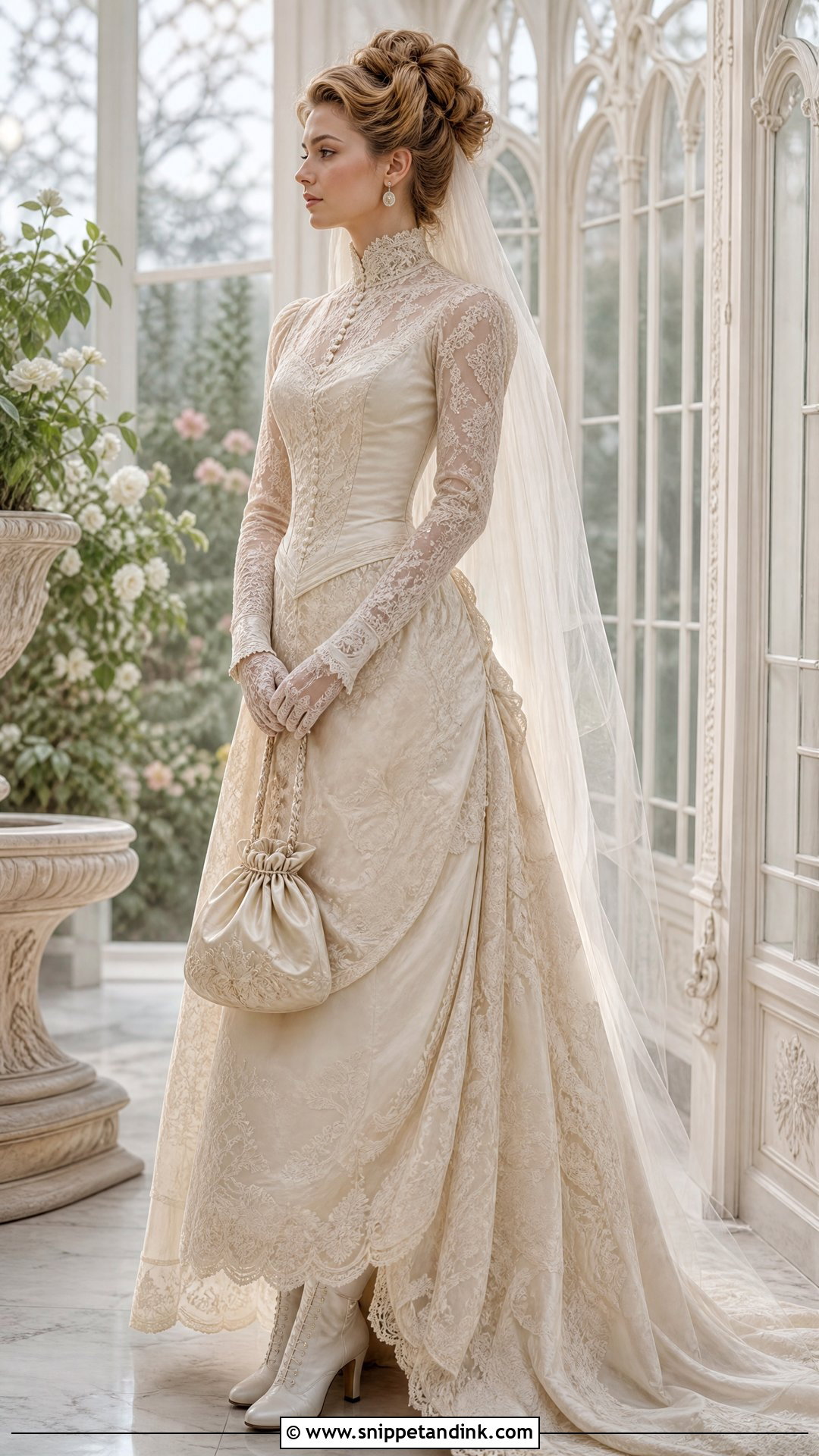
Victorian outfits get their drama from layered lace and a long skirt, but the corset is where modern brides should relax the rules. A high collar, long sleeves, a defined waist and a gently structured train give the shape. I’d have the bodice boned for support, not cinched, so you can breathe through a long dinner. Buttoned ankle boots, cameo earrings and a small velvet or satin bag finish it, with a long veil set beneath the updo. If the gown mixes several lace patterns, keep accessories in one metal. Sheer lace sleeves and an open back are a good way to lighten it.
9. Old Hollywood Vintage Bride Outfit
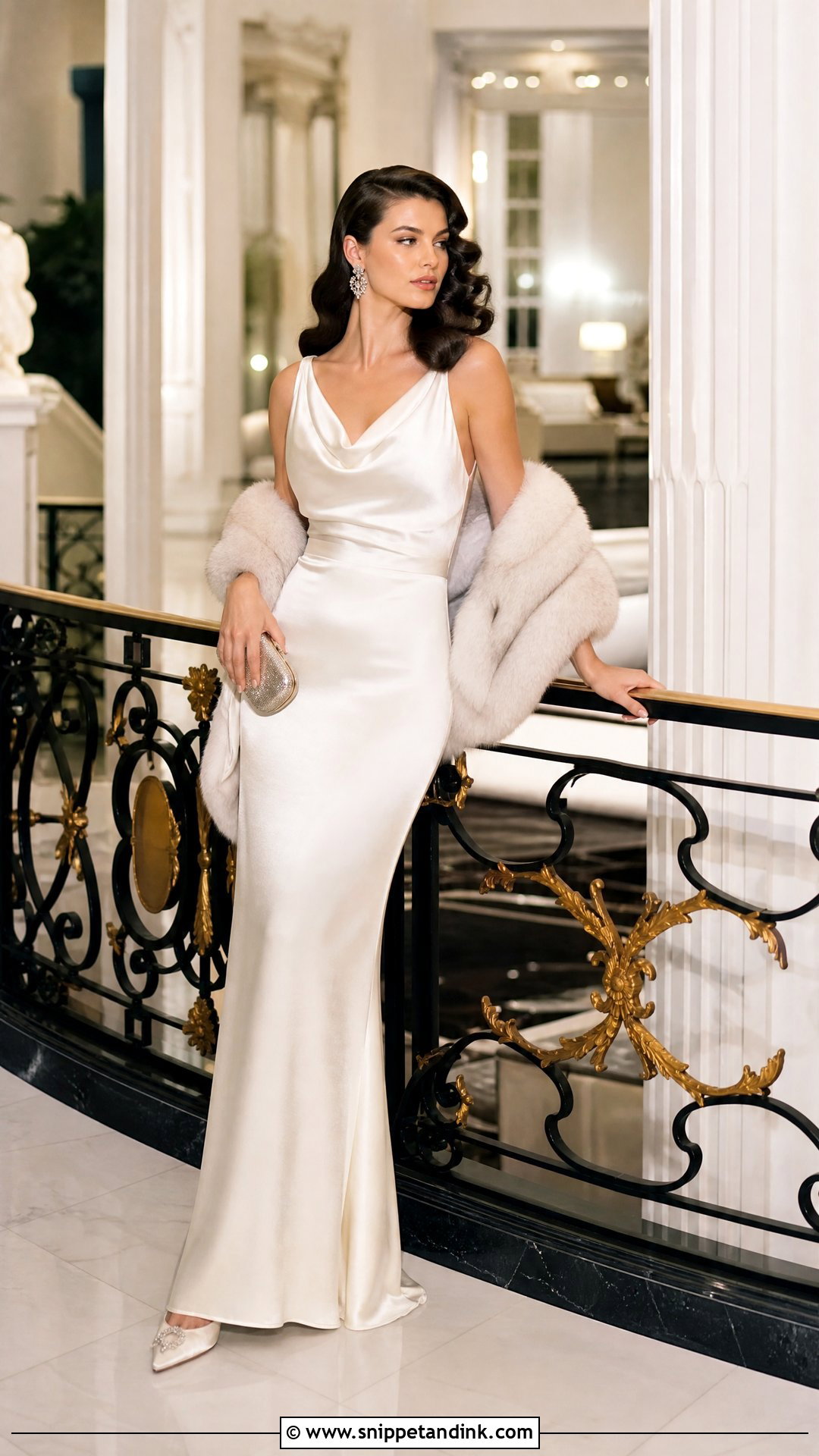
Imagine polished satin, confident movement and jewelry that catches the light without crowding the dress. An Old Hollywood outfit starts with a sleek ivory gown, a draped neckline, a fitted waist and a floor-length skirt, with a low back or short train. Crystal earrings, pointed satin pumps and a small metallic clutch suit it. A faux-fur wrap or structured cape covers you outside; take it off indoors so the silhouette shows. Side-parted waves and luminous skin are the finishing marks. I always tell brides to pick one statement, whether the neckline, the back or the earrings, and let the other two be quiet.
10. Grace Kelly Vintage Bride Outfit
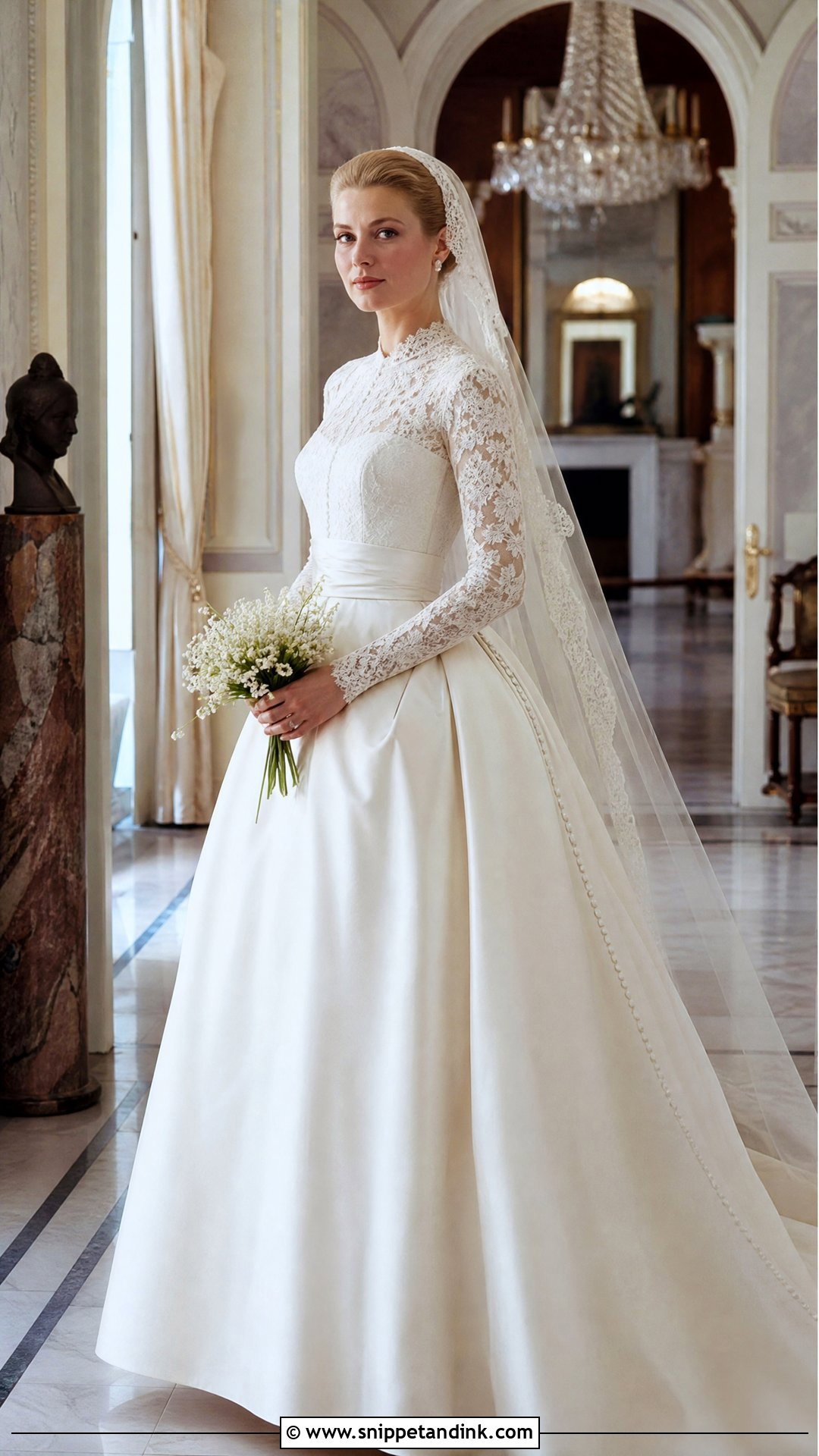
Long lace sleeves and a full skirt are the most traditional silhouette here. A fitted lace bodice with a high or bateau neck over a full satin or silk skirt, plus a narrow waist seam and covered buttons down the back, gives that regal outline. Lace on its own doesn’t hold a fuller bust; I’d ask for a built-in bra or light boning under it. Pointed ivory pumps, small pearl earrings and a cathedral veil edged with minimal lace suit it, with a smooth low chignon. A compact bouquet of white roses or lily of the valley keeps the proportions formal.
11. Audrey Hepburn Vintage Bride Outfit
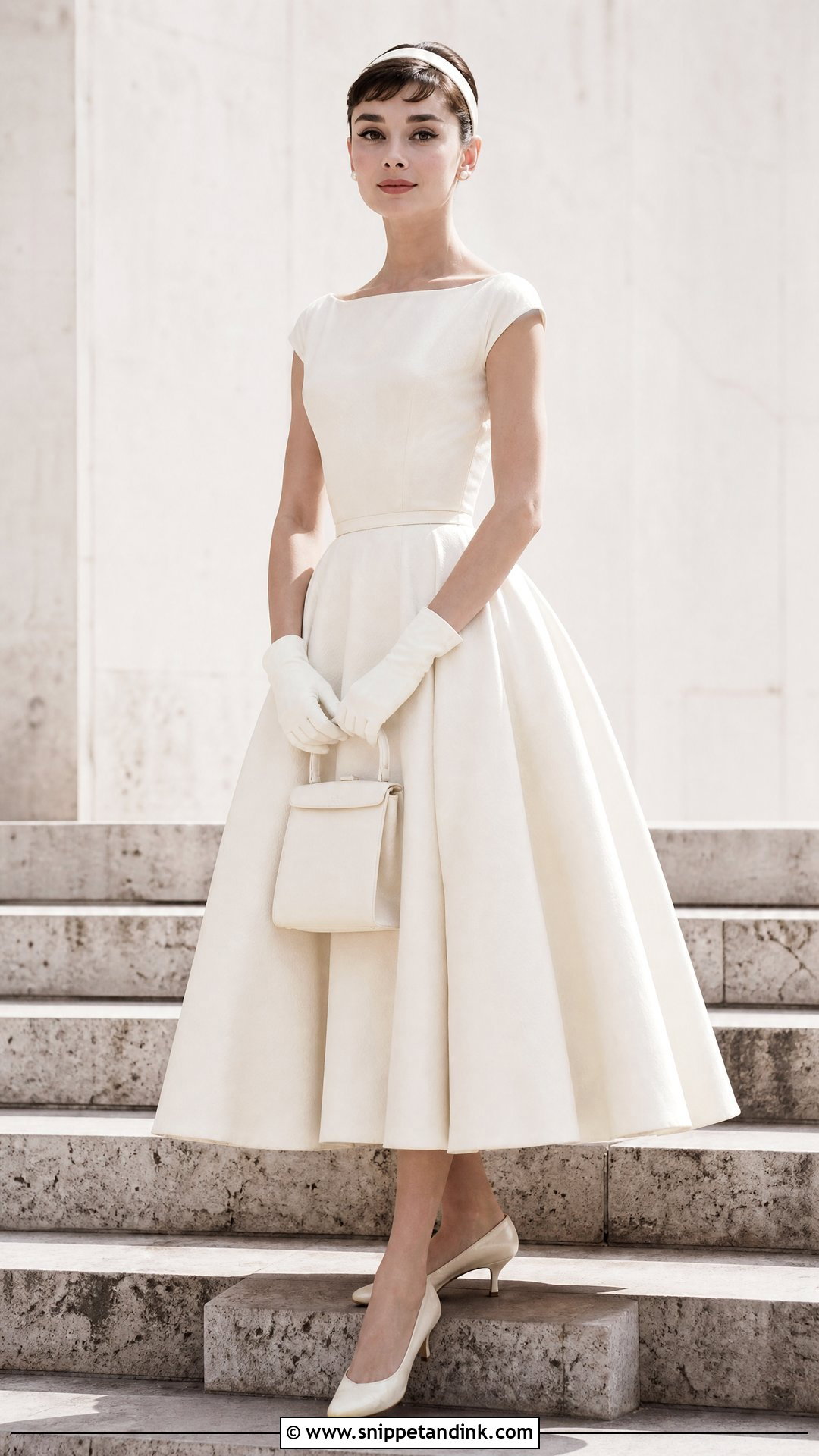
Neck and shoulders do the talking in an Audrey Hepburn-inspired bridal look. A structured ivory dress with a clean bateau neck, cap sleeves, a fitted waist and a controlled ankle-skimming skirt is the shape. Bateau necks only sit right when the shoulder width is fitted precisely; too wide and they slip toward the arm. Kitten heels, short gloves, pearl studs and a neat top-handle bag finish it, with a short veil, slim headband or small comb rather than a big headpiece. A smooth bun or short textured cut keeps the neck clear. It suits a courthouse or restaurant, and a cropped jacket adds coverage.
12. Vintage Courthouse Bride Outfit
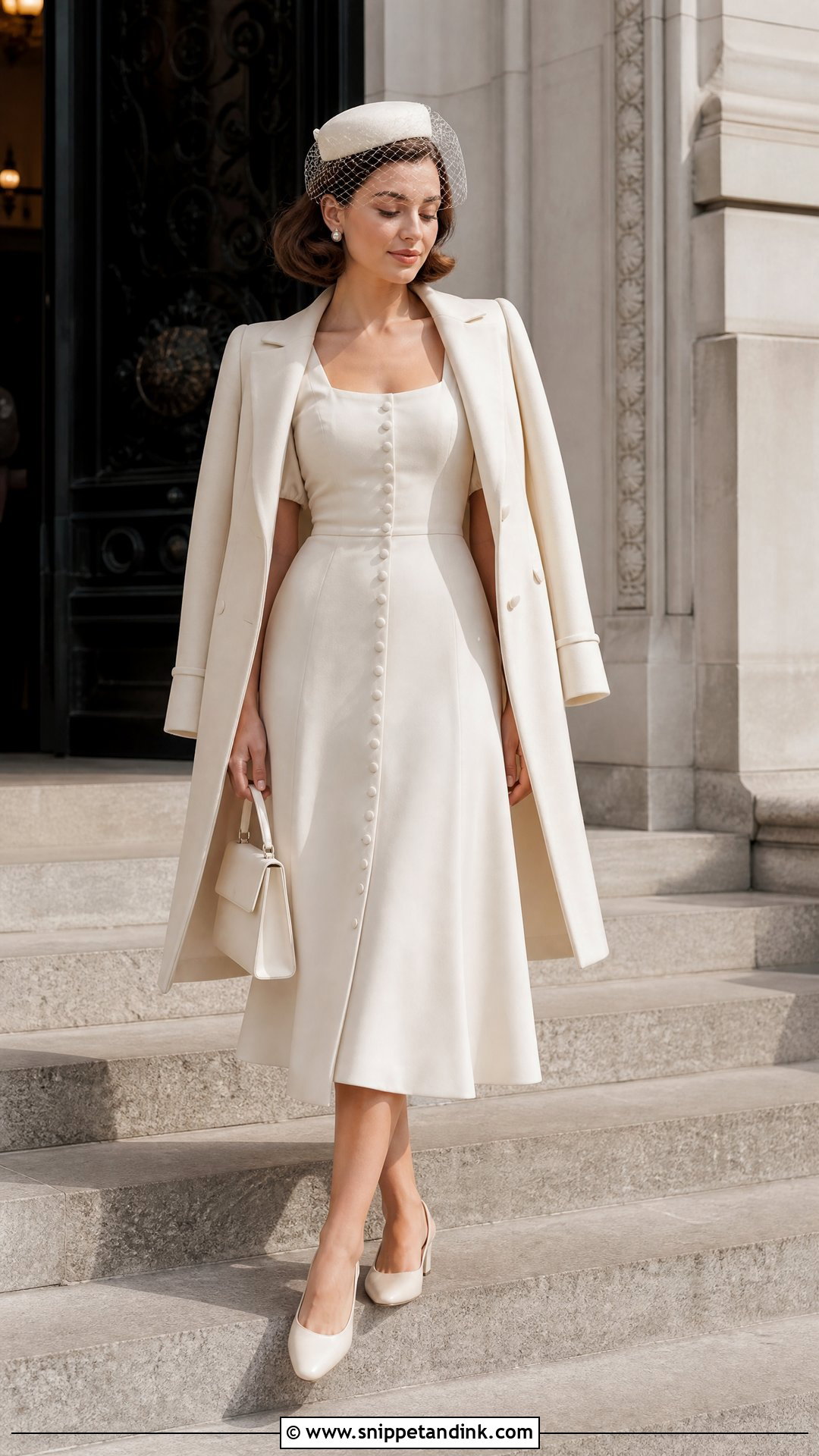
City hall days involve more walking and waiting than people expect, so the outfit has to be easy. An ivory midi with a square neck, covered buttons and soft puffed sleeves is a good base. Low slingbacks, a structured bag, pearl earrings and a short veil or pillbox hat give the vintage reference without an antique gown. A tailored cream coat adds polish in colder months and comes off for indoor photos. Pick a hem you can climb steps in. White tulips or a small rose posy keep the scale right.
13. Vintage Bridal Suit Outfit
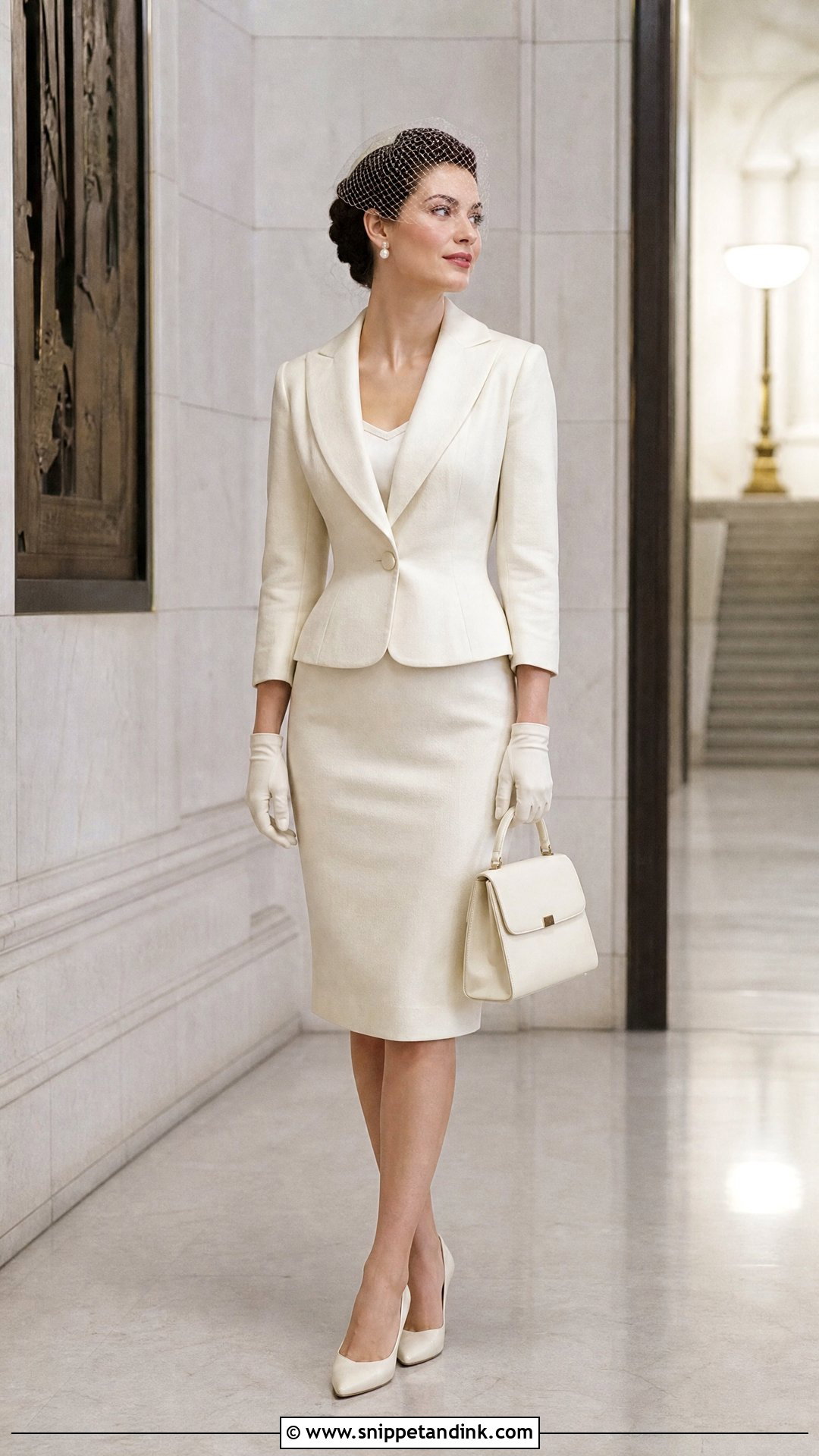
A suit is a strong choice, and it rewards precise tailoring more than any gown. A fitted ivory jacket with a defined waist over a matching pencil skirt or wide-leg trousers, with a silk camisole, lace shell or high-neck blouse beneath, sets the base. Pointed pumps, pearl earrings, short gloves and a top-handle bag complete it; a birdcage veil adds ceremony detail without fighting the lapels. For a softer version, look for covered buttons, rounded lapels or light embroidery. Lace carried across both jacket and skirt makes a two-piece feel distinctly bridal. I always have trouser hems marked in the final shoes, never in flats.
14. Vintage Winter Bride Outfit
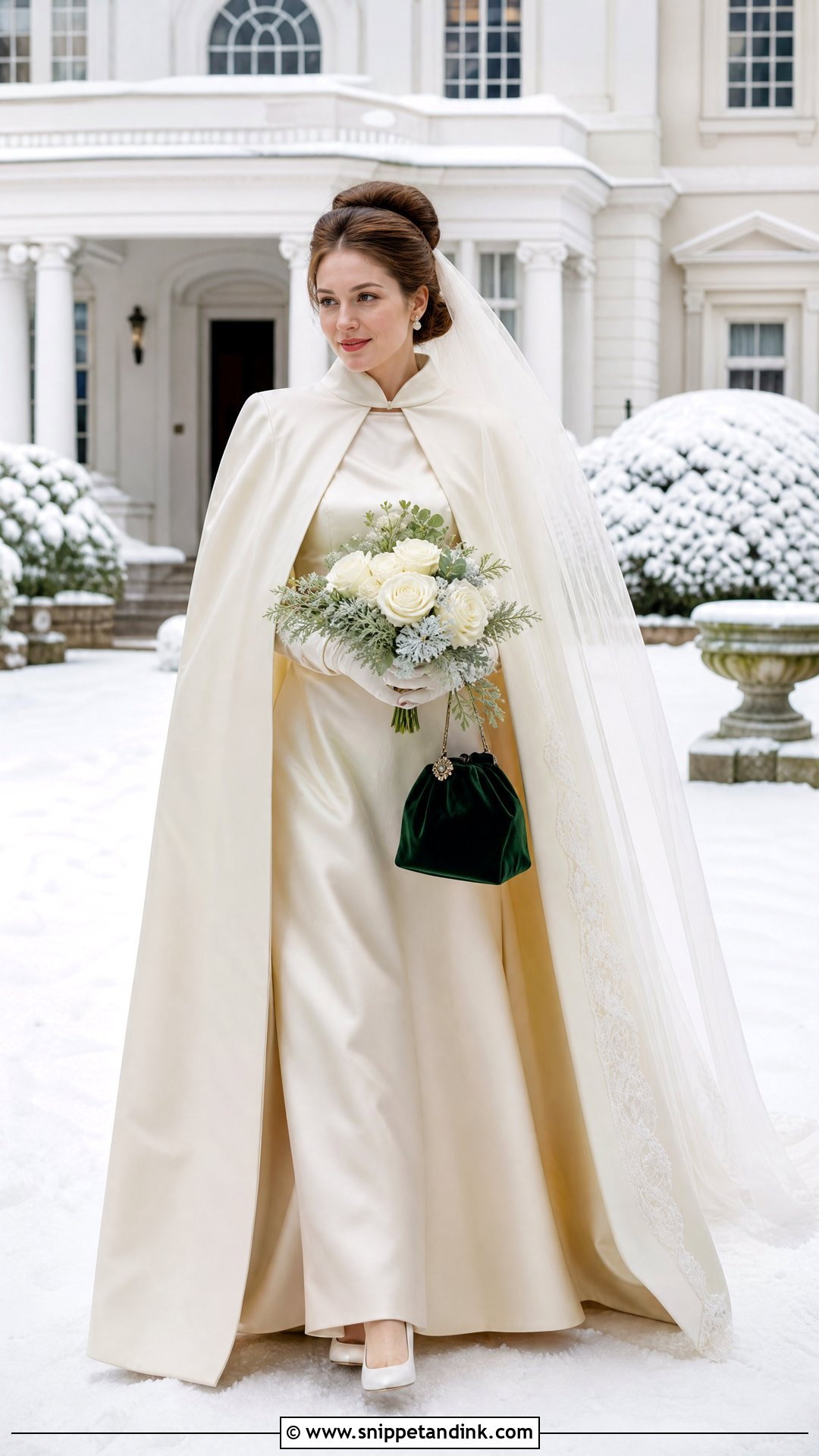
Winter lets you layer, and layering is where vintage outfits come alive. A long-sleeve satin or crepe gown with a high neck and soft waist is the base. Over it, a floor-length cream cape, a cropped faux-fur jacket or a tailored wool coat keeps you warm. Try every outer layer over the actual gown; a coat cut for street clothes can drag lace sleeves up and crush beadwork. Closed block heels or ankle boots suit cold ground. Pearl drops, a small velvet bag, a cathedral veil under an updo and roses with evergreen and silvery foliage finish it, with coat and dress kept in the same ivory.
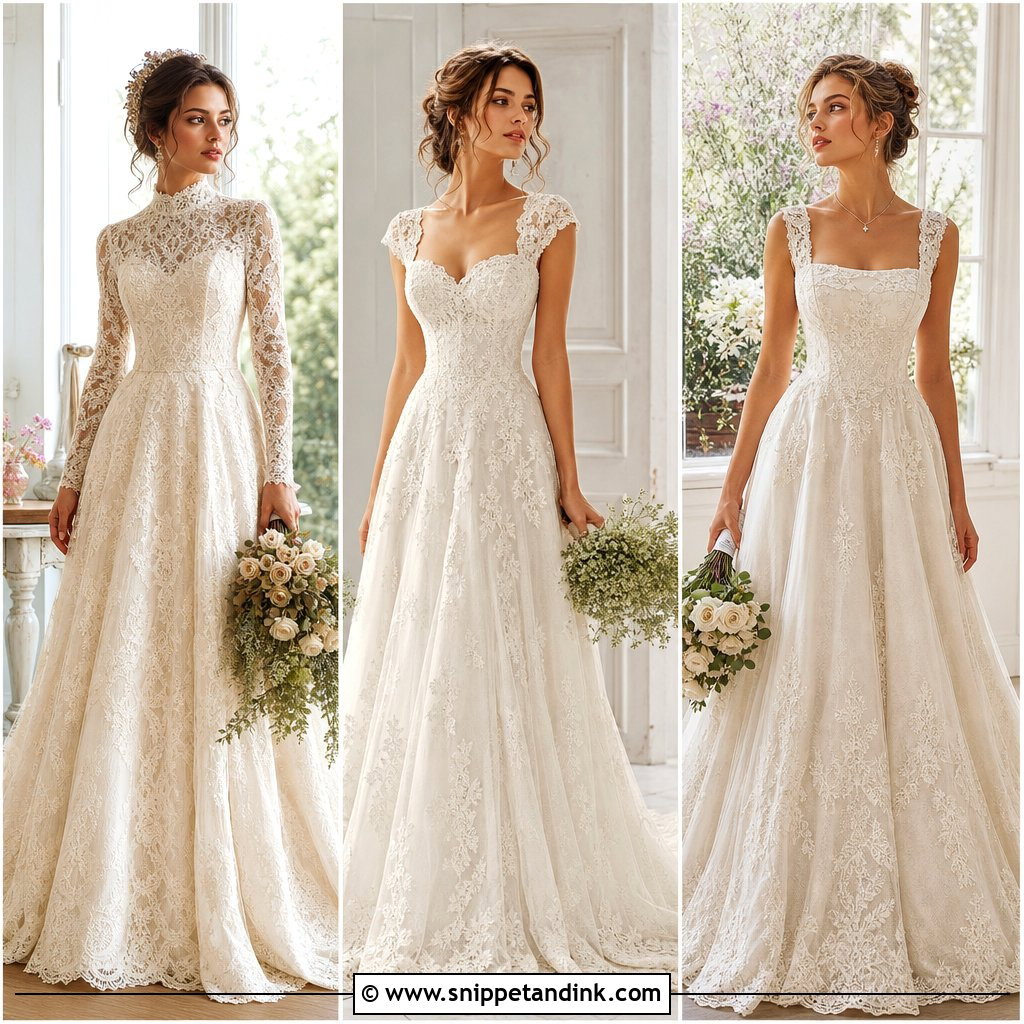

15. Vintage Garden Bride Outfit
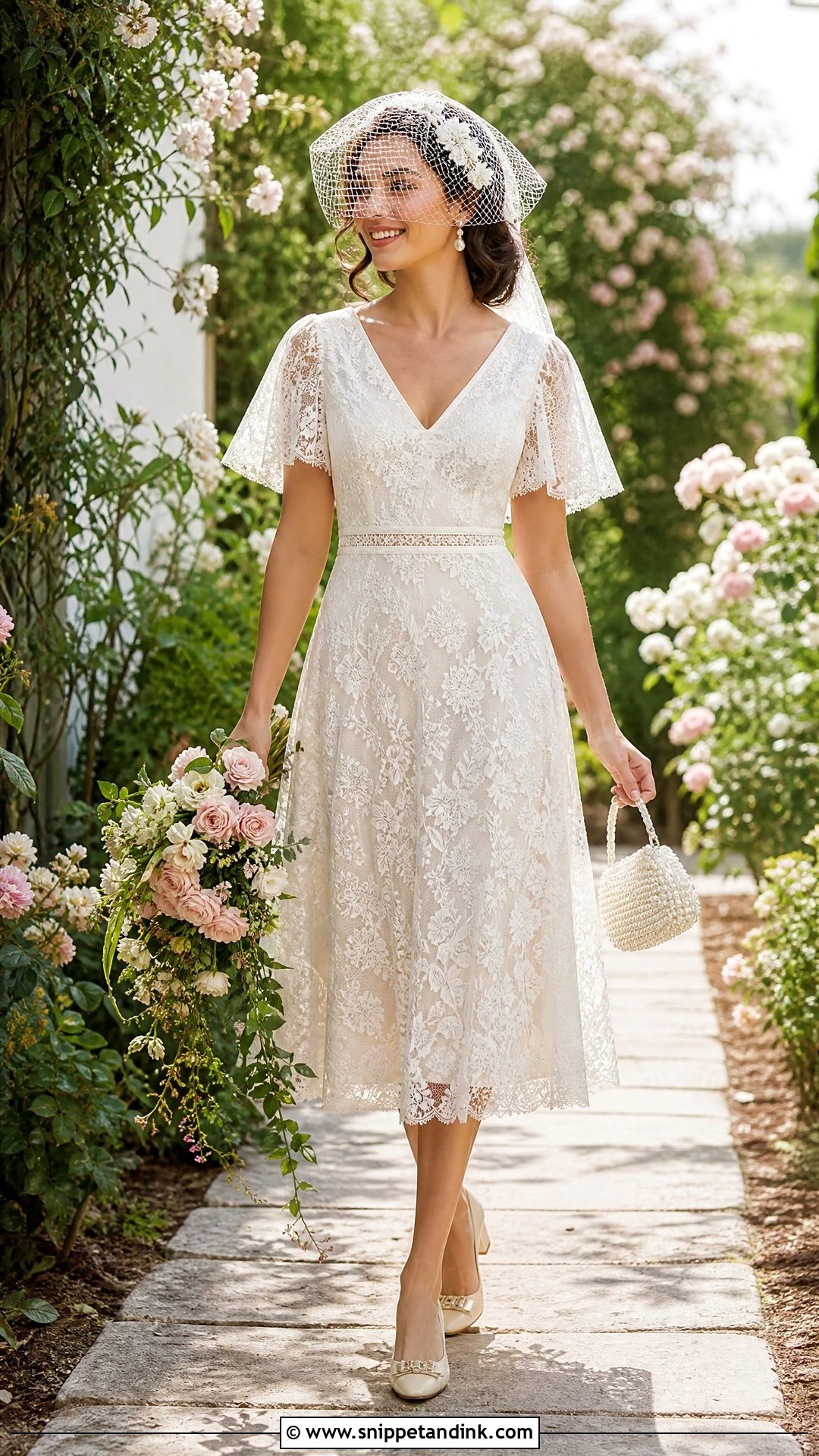
Garden weddings are hard on hems and heels. A tea-length or flowing A-line dress with floral embroidery, flutter sleeves and a defined waist works, paired with low block heels, lace-up boots or decorative flats that won’t sink. In bright sun, I check whether the lining turns see-through, which it often does with thin lace. A slightly shorter train avoids snagging on shrubs. A small pearl bag, floral earrings and a fingertip veil or flower-trimmed band suit it, with a loose bun or half-up style. Garden roses, sweet peas and fresh greenery belong in this bouquet.
16. Plus Size Vintage Bride Outfit
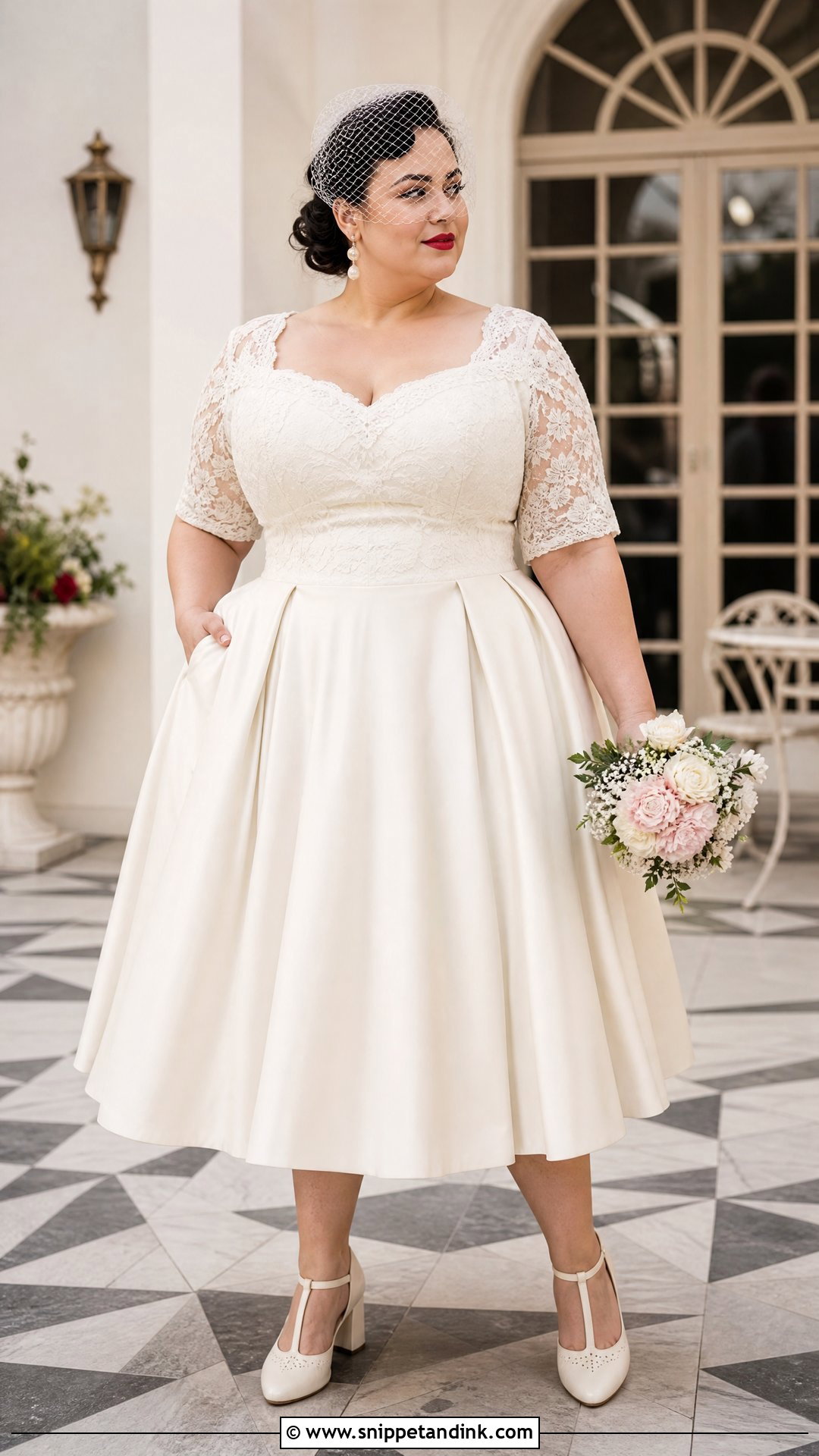
Fit and support come before any era rule in a plus-size vintage bridal look. Pick the silhouette you actually enjoy: a 1950s tea length, a draped 1930s gown or a 1970s A-line all work. A structured bodice, a waist seam placed where your waist actually is and properly fitted sleeves are what make it comfortable. My advice is to buy for your largest measurement, never a size down, because a seamstress can take in far more easily than let out. True vintage often has tiny seam allowances, so new vintage-style gowns usually offer better sizing and sturdier construction. Supportive block heels, statement earrings and a bouquet scaled to your frame finish it.
17. Mature Vintage Bride Outfit
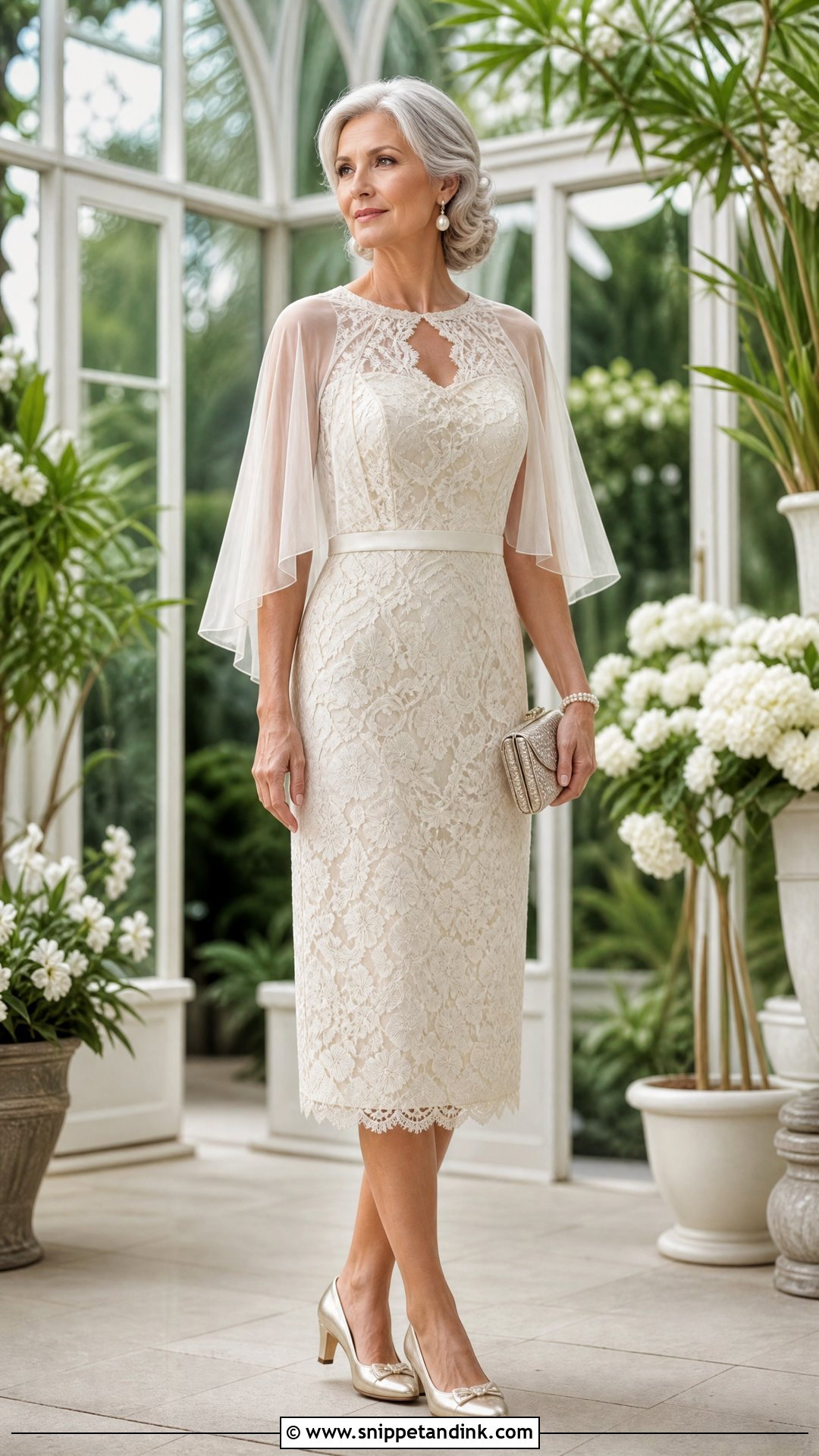
Older brides often tell me they want vintage without looking dressed for a period drama. An ivory column gown, a lace midi or a softly tailored trouser suit all do that. Bracelet sleeves and an open neckline give coverage while keeping the outfit light. Low metallic heels, pearl or crystal earrings and a structured clutch suit it, and a sheer cape, short veil or comb can replace a long veil. Wear your hair in a polished version of your everyday style and keep makeup naturally defined. A family brooch or earrings gives the look its vintage soul more than any gown detail.
18. Champagne Vintage Bride Outfit
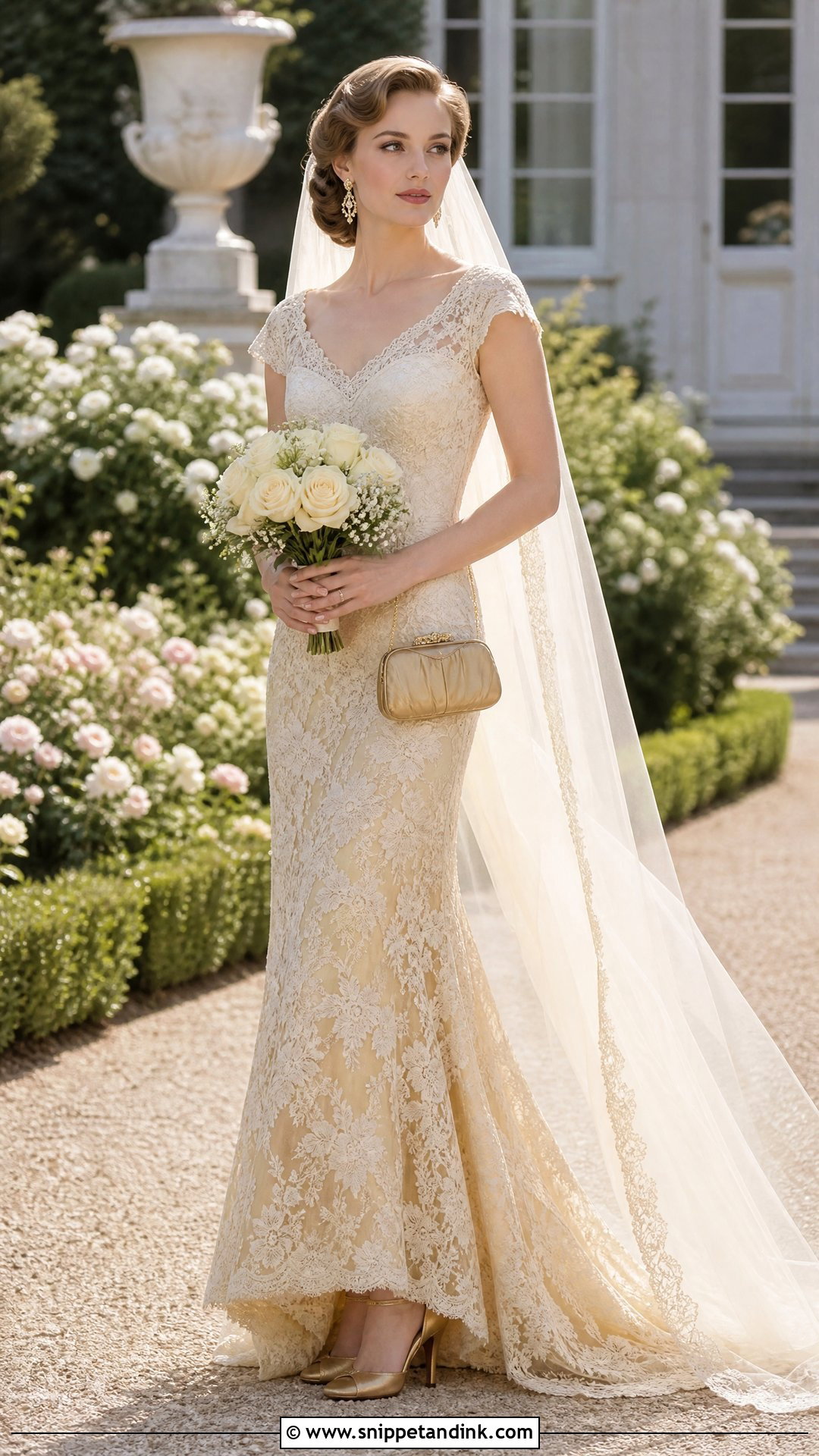
Champagne is a family of shades, not one color, and that is where outfits go wrong. A champagne gown with an ivory lace overlay, a fitted bodice and a soft flare suits ornate lace and beading. Before ordering accessories, I compare swatches in daylight, since champagne can lean pink, yellow or taupe depending on the dye lot. Gold-toned heels, antique-style earrings and a small satin clutch work, with a warm ivory veil rather than bright white. Keep one metal finish across shoes, jewelry and hairpiece. Cream roses with muted greenery and soft waves or a textured low bun finish it.
19. Antique Lace Vintage Bride Outfit
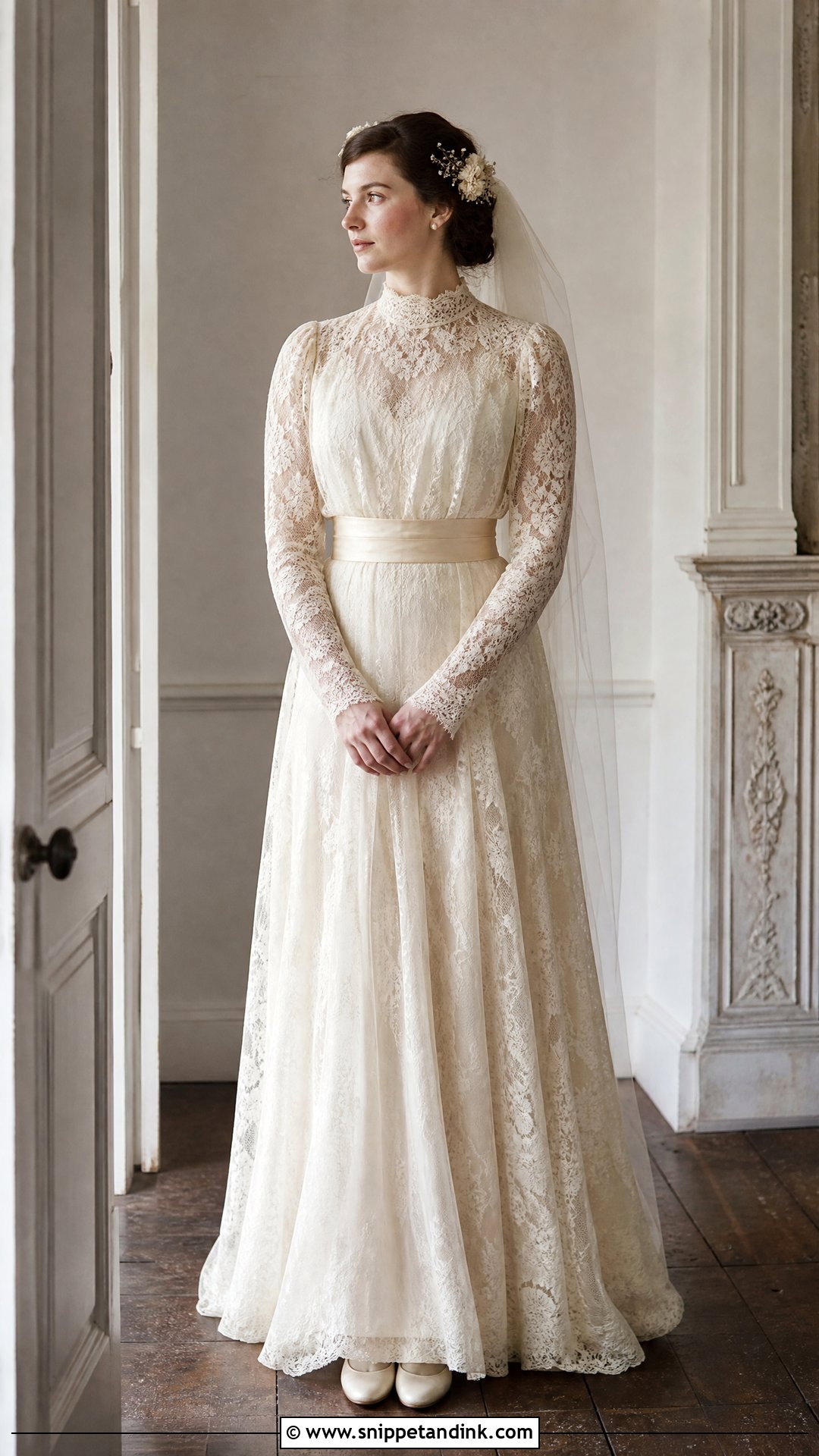
Antique lace guides the rest of the outfit, so I start by checking its condition: lace, lining, seams and closures. Older fabric and original construction often need a specialist seamstress, since they react differently from modern bridal materials when cut or pressed. Style the gown with simple ivory pumps, pearl studs and a plain veil. If the lace has a warm aged tone, cream, champagne or muted gold accessories blend better than white. Avoid stitching heavy beading onto fragile lace; a removable silk sash or a supported underlayer adds definition safely. A low bun and small floral comb keep attention on the gown.
20. Family Wedding Dress Remake Outfit
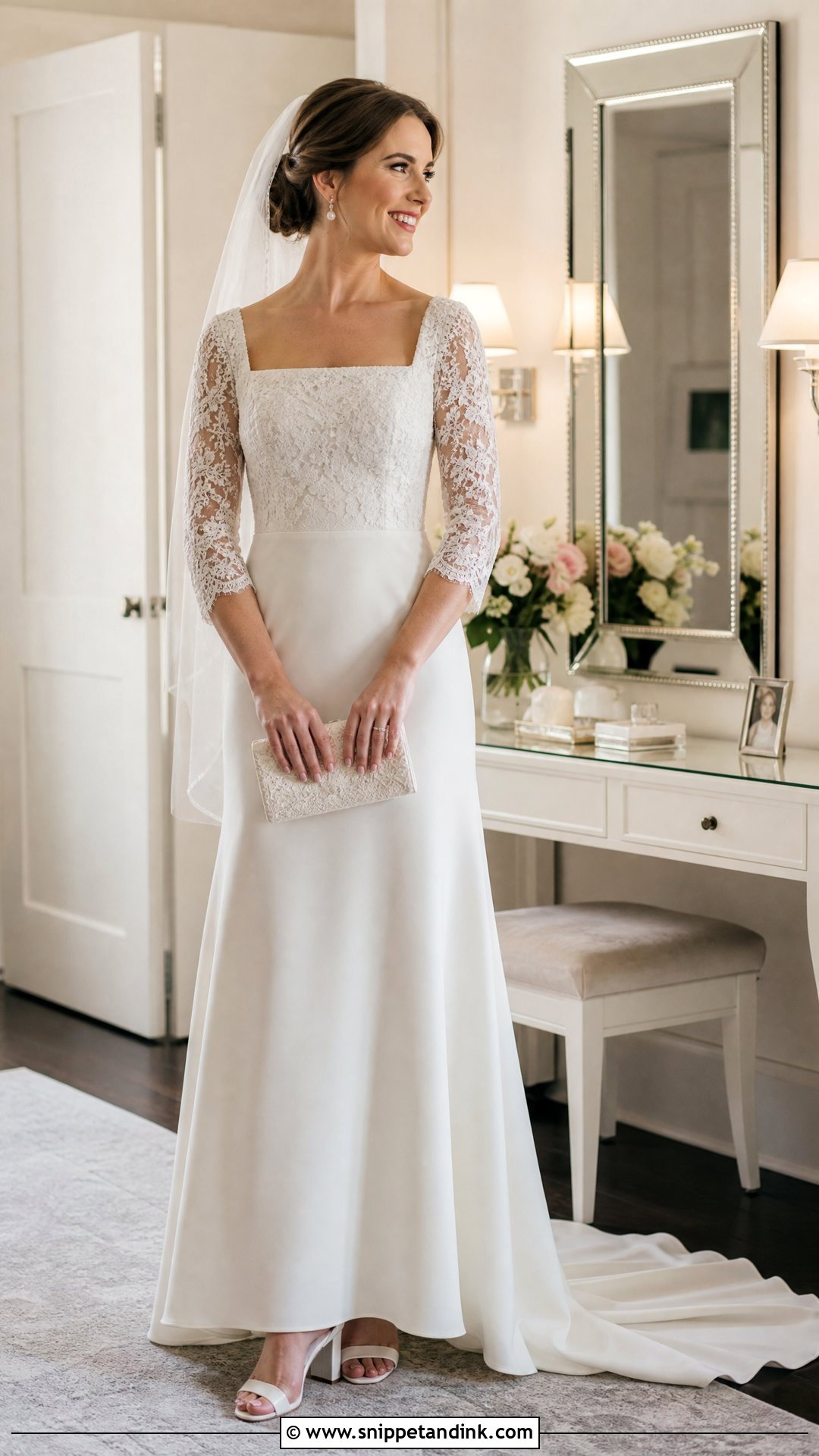
Remaking a family dress gives an outfit real history. A skilled bridal seamstress can reshape the neckline, take off oversized sleeves, adjust the skirt or move original lace onto a new bodice. Leftover fabric can become a clutch, a hair bow, a detachable collar or a bouquet wrap. Book the first assessment early, as old fabric may need cleaning, reinforcement or partial replacement first. I’d ask the seamstress to note which areas can be changed without touching important handwork. Contemporary block heels, inherited earrings and a simple veil let the preserved details lead.
Small Repairs on the Morning Itself
Older garments and vintage-style details fail in predictable ways: a covered button pops, a thread loop breaks, a bead strand lets go. None of it is a crisis if someone in the room has the right things in a small bag.
- A crochet hook or button hook for long rows of covered buttons. It makes fastening loops far faster and saves your helper’s fingernails.
- Ivory and white thread, a fine needle and a few spare hooks and eyes.
- Clear nail polish to stop a run in tulle or tights.
- A handheld steamer, never an iron. Heat and pressure on old satin or lace can leave shine marks that don’t come out.
- White tailor’s chalk to hide a small mark, or a gown-safe stain pen tested on an inside seam first.
Give the bag to a calm friend, not to the bride, and show her where the weak points of the outfit are the night before. If a bead strand starts to go, knot it off and tuck it under rather than trying to restring it on the spot.
One Era, One Fit, Then Everything Else
A vintage bridal look isn’t a pile of old-fashioned details. It’s one outfit shaped around a clear era, a fit that suits you and the practical demands of your day. Lace gowns, bias satin, tea lengths, suits, inherited pieces and retro accessories can all get you there. Begin with the dress or suit, then let shoes, jewelry, hair and veil support its strongest feature. Mix decades only if you mean to. Put money into skilled alterations and your own comfort before extras, and the outfit will look nostalgic without looking borrowed.
You'll Like These Ideas:







Leave a Reply