
The blouse is the smallest piece of a bridal saree or lehenga and the one I spend the most fitting time on. It decides how the drape sits, how the jewelry lies and whether you can lift your arms during the pheras without anything shifting. Necklines brides ask about most right now include deep V-necks, sweetheart cuts, high necks, full sleeves, corset shapes and decorated backs. Below are 20 designs with my notes on fabric, support, jewelry and what to tell your tailor. The right one works with the borders and motifs of your outfit instead of fighting them, and stays comfortable through hours of ritual.
A Muslin Trial Blouse Saves the Silk
Bridal silk and pre-embroidered panels can’t be recut if a tailor gets the neckline wrong, so I ask for a trial blouse in plain cotton or muslin first. It costs a little extra and catches almost every problem: a strap that slides, a back that gapes when you sit, a cup that sits too high for your bra. Once the trial fits, the pattern is transferred to the real fabric.
Bring these to the measuring appointment
- The exact bra or stick-on support you’ll wear on the day, or a request for built-in cups.
- The lehenga skirt or saree, so the tailor can see where the waistband sits and how long the blouse should be.
- The necklace you plan to wear, to set the depth of the front neckline around it.
- Pictures of the front, back and sleeves of the design, not just one angle.
Ask the tailor to leave a generous seam margin inside the side seams. Many brides lose or gain a little weight in the final weeks, and a margin lets the blouse be let out or taken in without unpicking the embroidery. I like the final fitting about two weeks before the wedding, close enough to be accurate and far enough to fix anything it shows.
1. Zardosi Silk Bridal Blouse
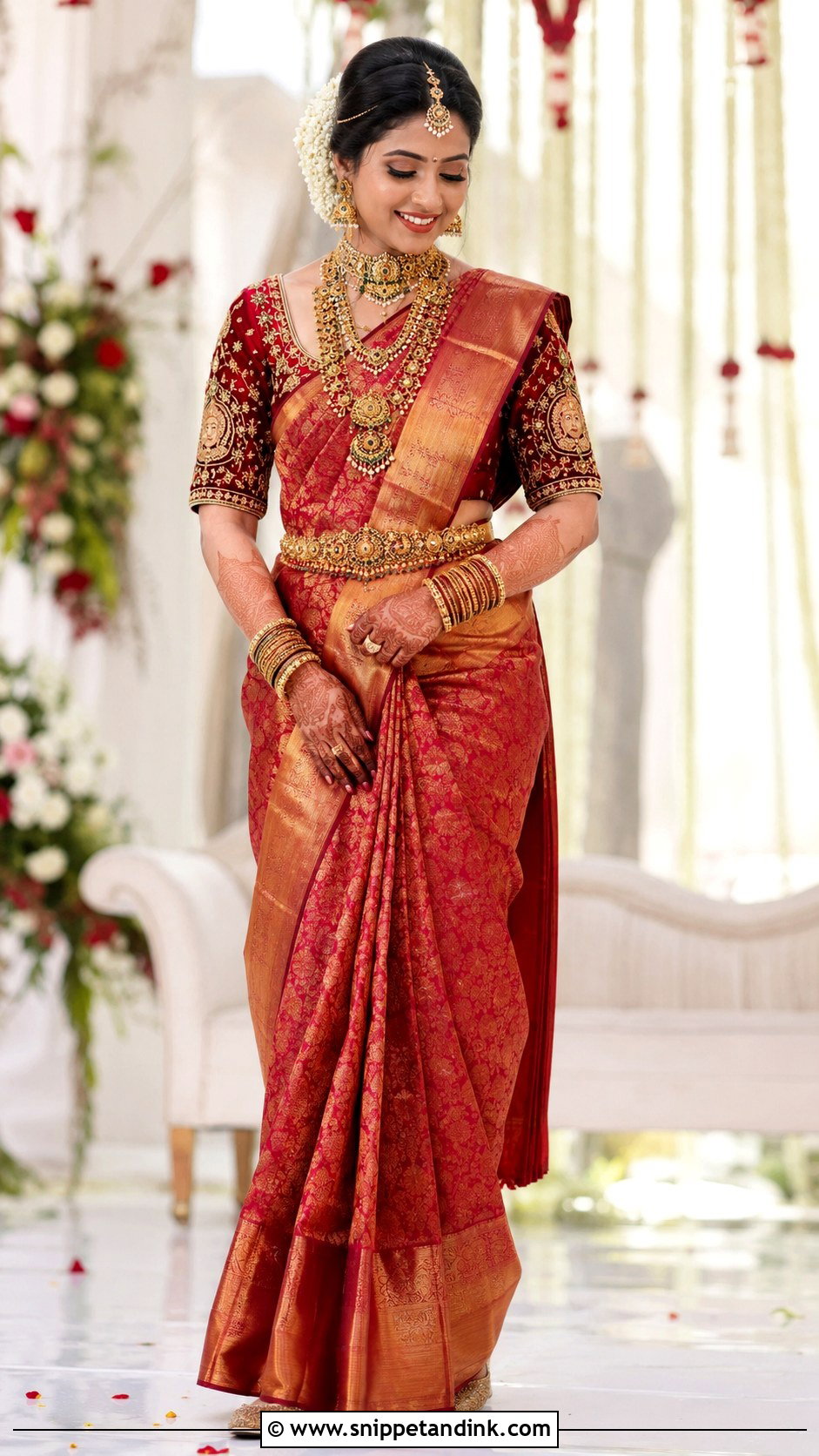
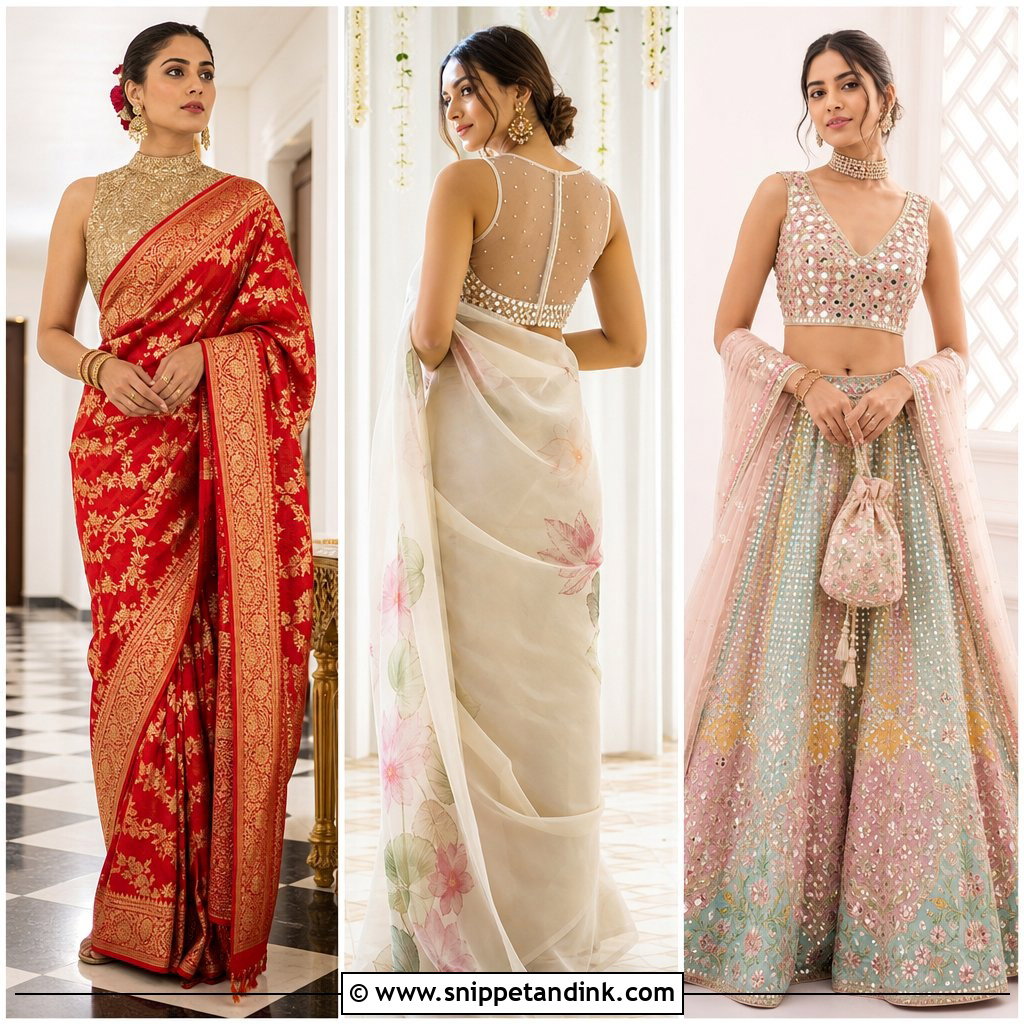
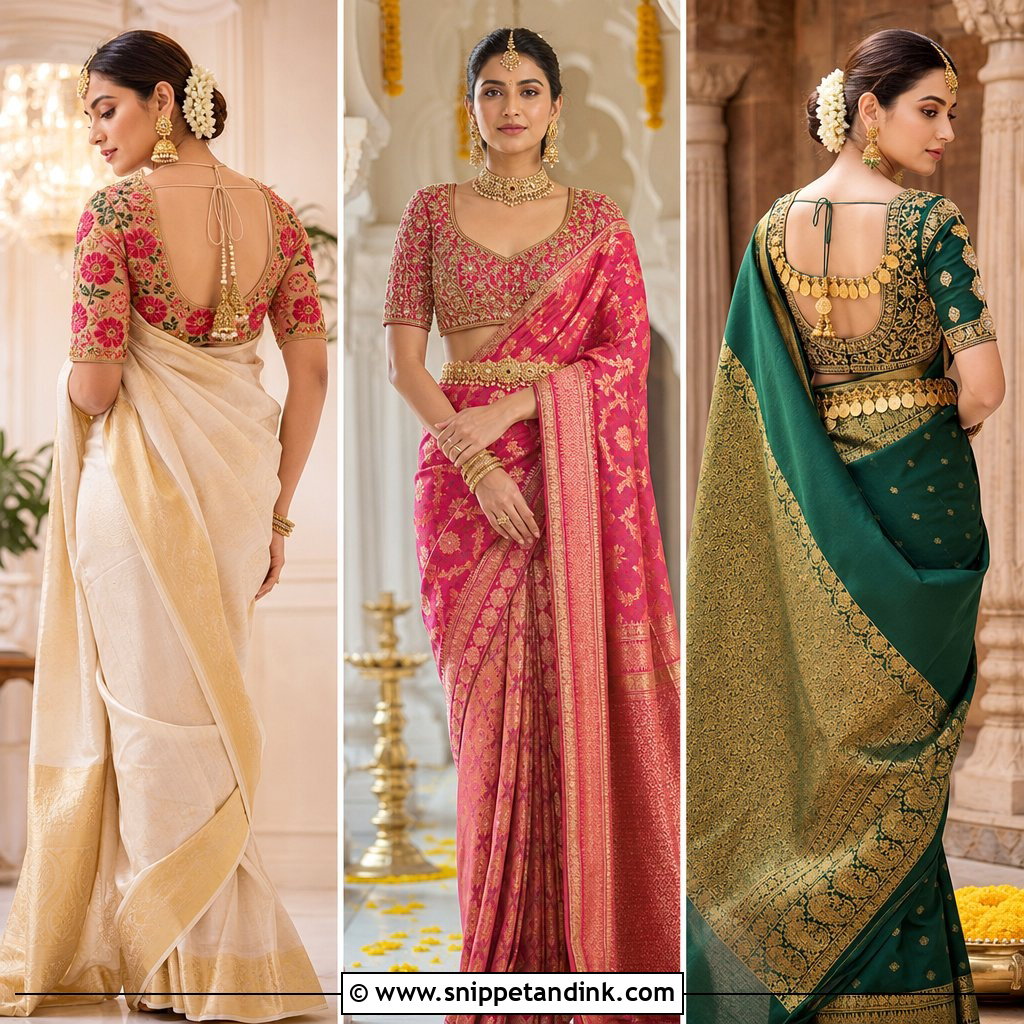
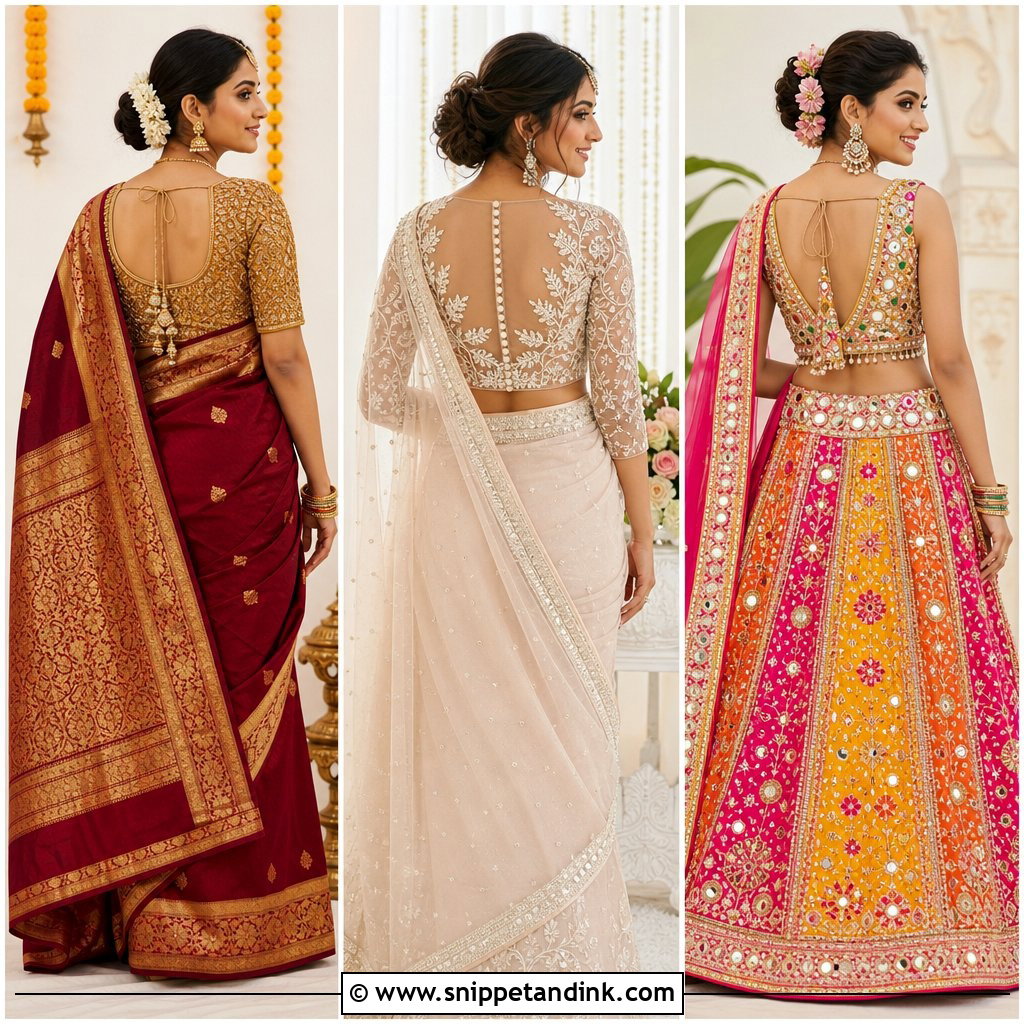
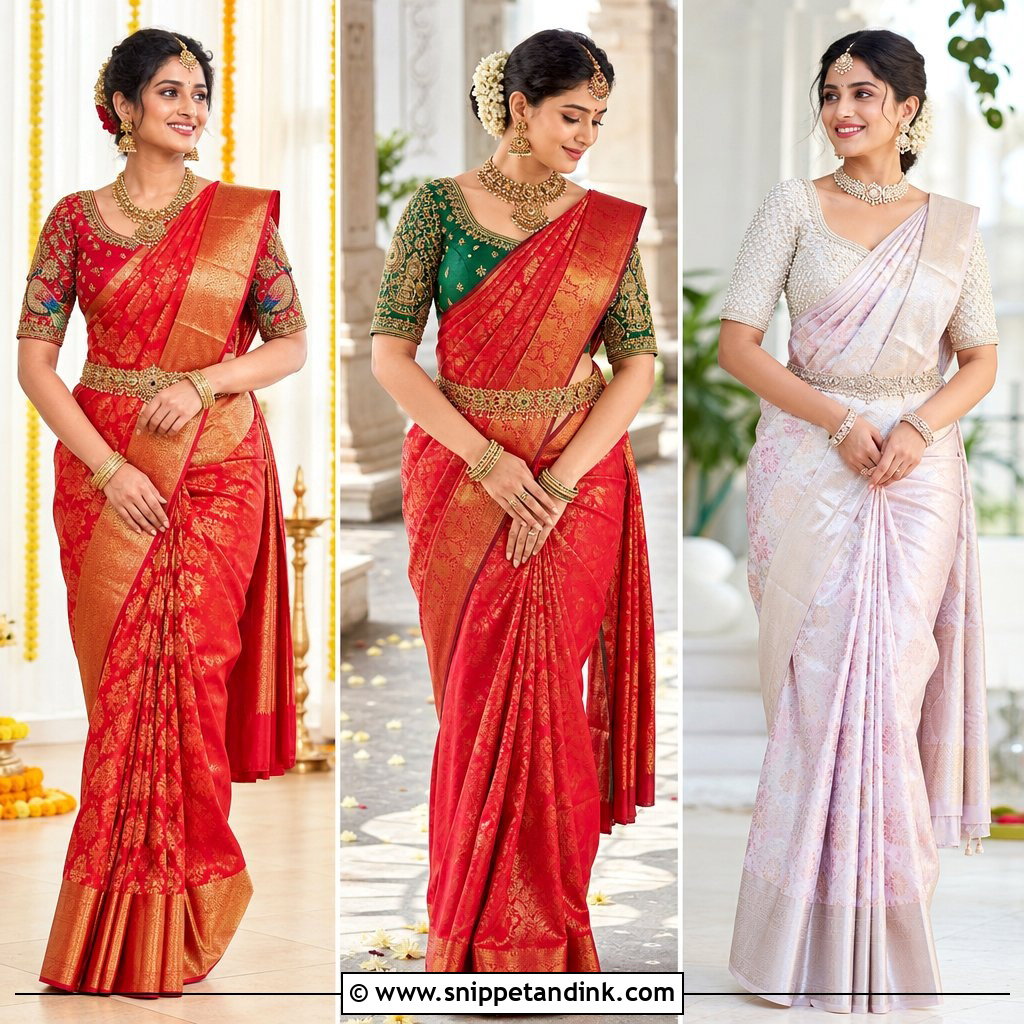
Zardosi is metal wire and thread worked by hand, which gives that deep antique-gold relief and also a scratchy underside. That’s why the first thing I ask for on a zardosi blouse is a soft cotton lining. Set it on deep red, maroon, emerald or royal blue silk, with work across the neckline, sleeves and back, and an elbow sleeve to give the embroidery room. It belongs with Kanjeevaram, Banarasi or other bridal silks, plus temple jewelry, a waist belt and embroidered juttis. Keep the saree border and blouse motifs related so the two read as one piece. A center-parted bun with fresh flowers leaves the neckline clear.
2. Sweetheart Neck Bridal Blouse
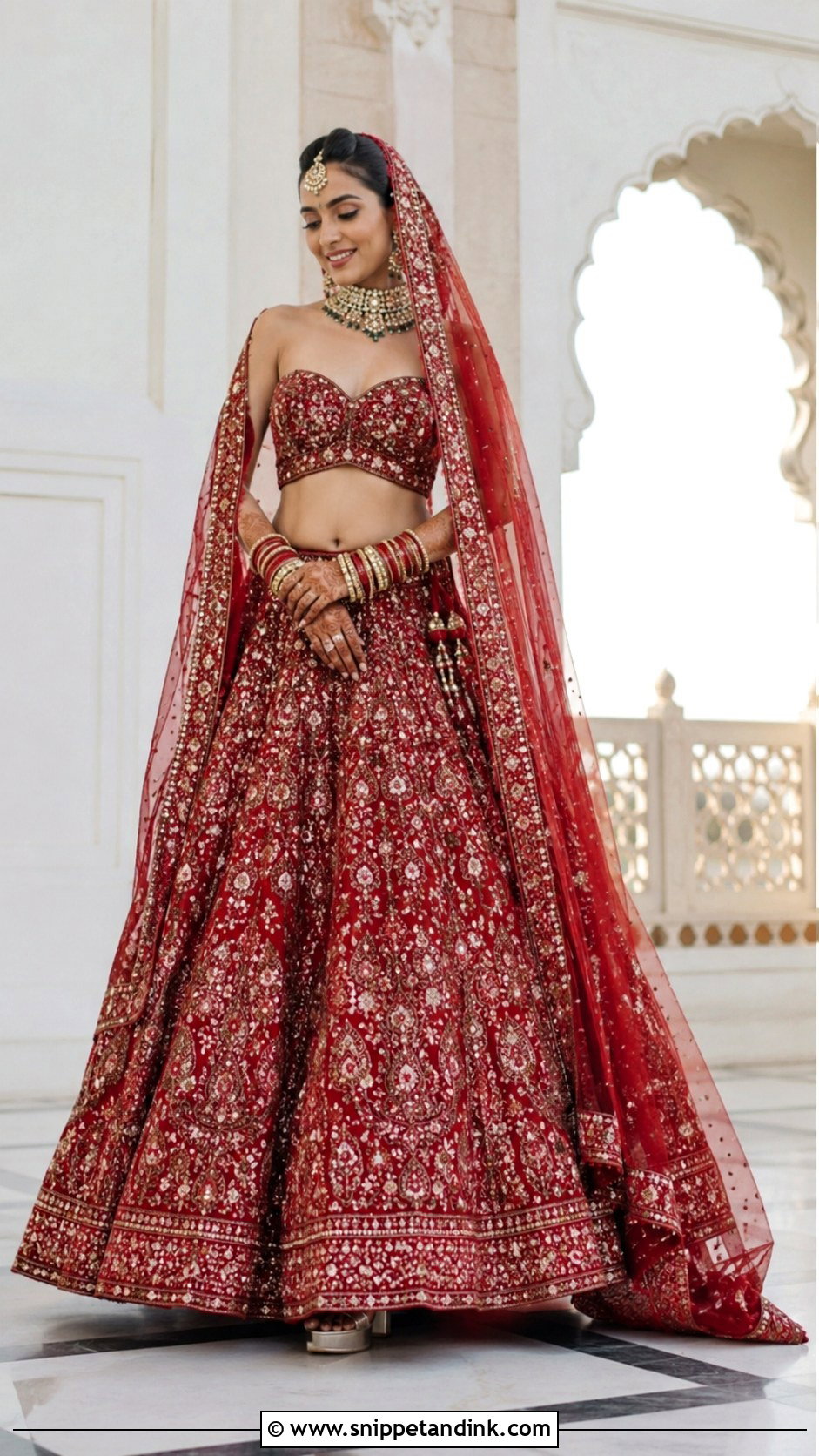
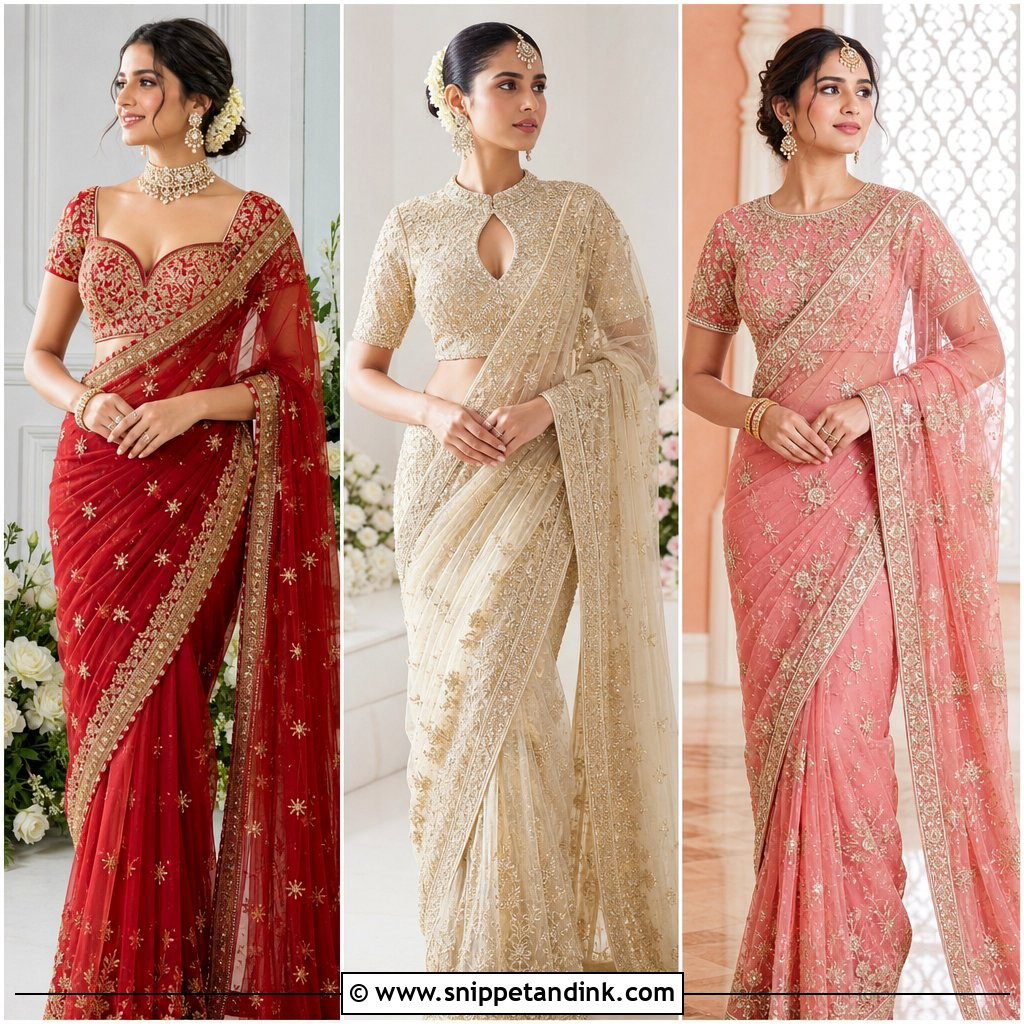
A sweetheart neckline stands or falls on its cups. The curve has to follow the bust exactly, so cup placement and light boning matter more than the embroidery on top, and I’d never accept fewer than two fittings for this cut. Short sleeves with floral threadwork, sequins or pearls suit it. Pair a ruby-red sweetheart blouse with a matching lehenga, a sheer dupatta and a second veil over the head. A choker naturally follows the curve, with drops and a maang tikka. Before you leave the fitting, raise both arms: the neckline should stay put without gaping or pinching.
3. Full Sleeve Bridal Blouse
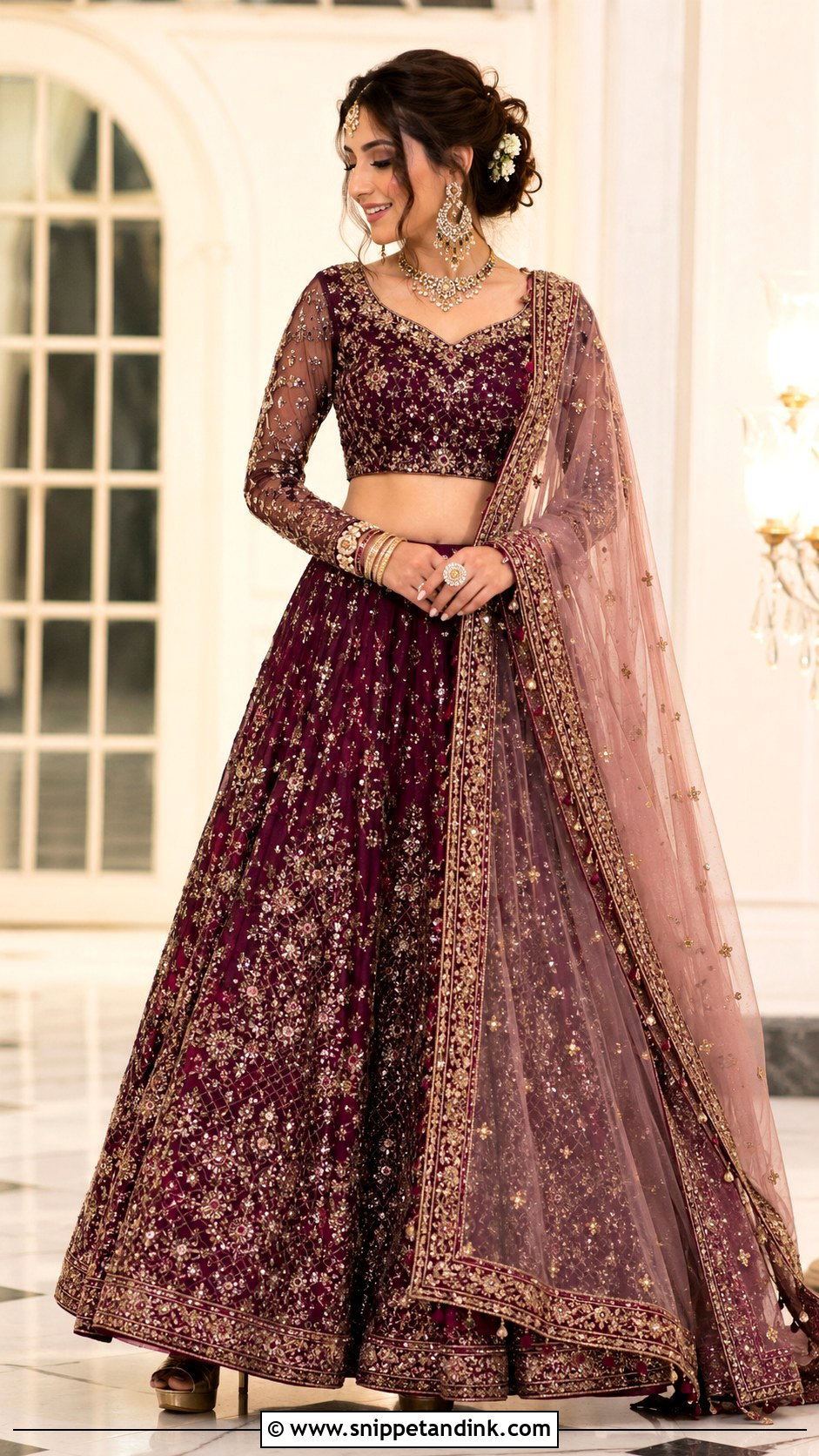
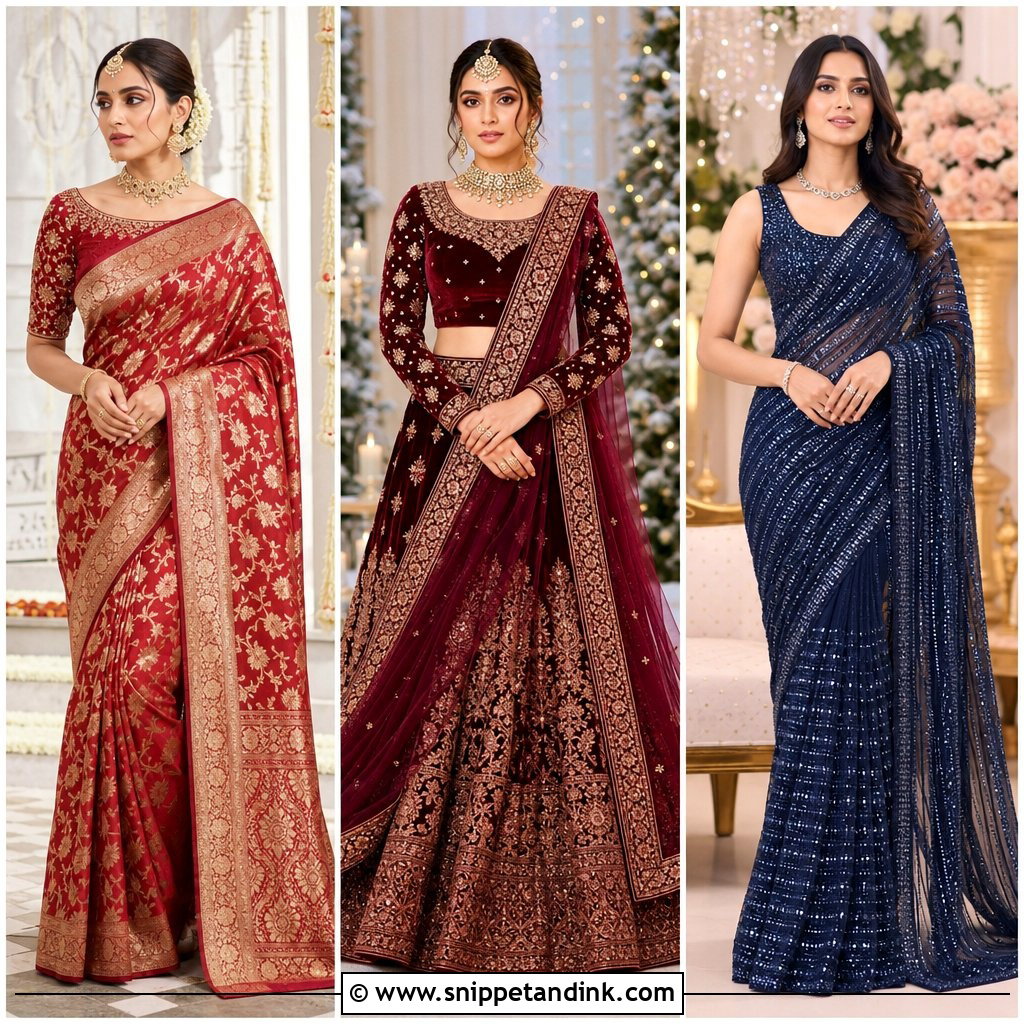
Sleeves to the wrist feel regal at a winter ceremony or an evening reception, and a full sleeve bridal blouse in embroidered net, velvet, raw silk or lightly worked tulle carries a jewel tone well. Open the neckline a little, round, square or a modest V, so you aren’t covered from chin to wrist. The detail I watch is embroidery placement: dense work at the cuffs and shoulders, lighter along the forearm, because a fully worked sleeve stiffens and bunches at the elbow when you fold your hands. Chandelier earrings, one statement necklace, stacked bangles and platform heels complete it.
4. Deep V Neck Bridal Blouse
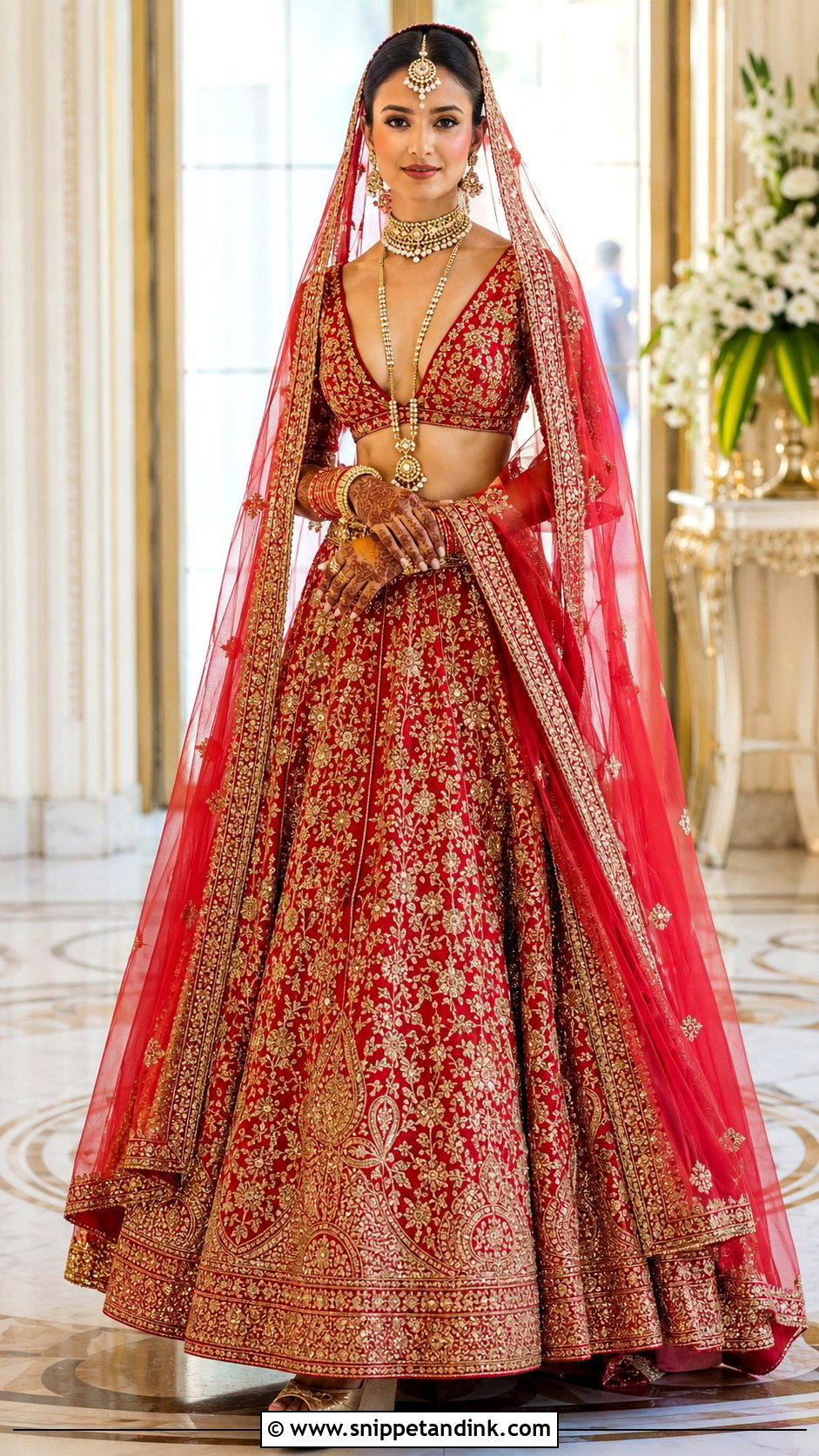
Volume in a high-waisted lehenga skirt needs a strong line at the top, and a deep V gives exactly that. It is not a cut to fake with a fragile fashion pattern. I’d insist on secure cups, wide straps and hidden support, then test it sitting, bending and lifting your arms before the final stitch. A gold embroidered V-neck over a red lehenga, with a kundan choker, a long necklace and comfortable wedges, is a classic pairing. Sleek hair or soft waves keep the front visible. If you want more coverage, a skin-toned mesh panel inside the V keeps the shape and adds modesty.
5. High Neck Bridal Blouse
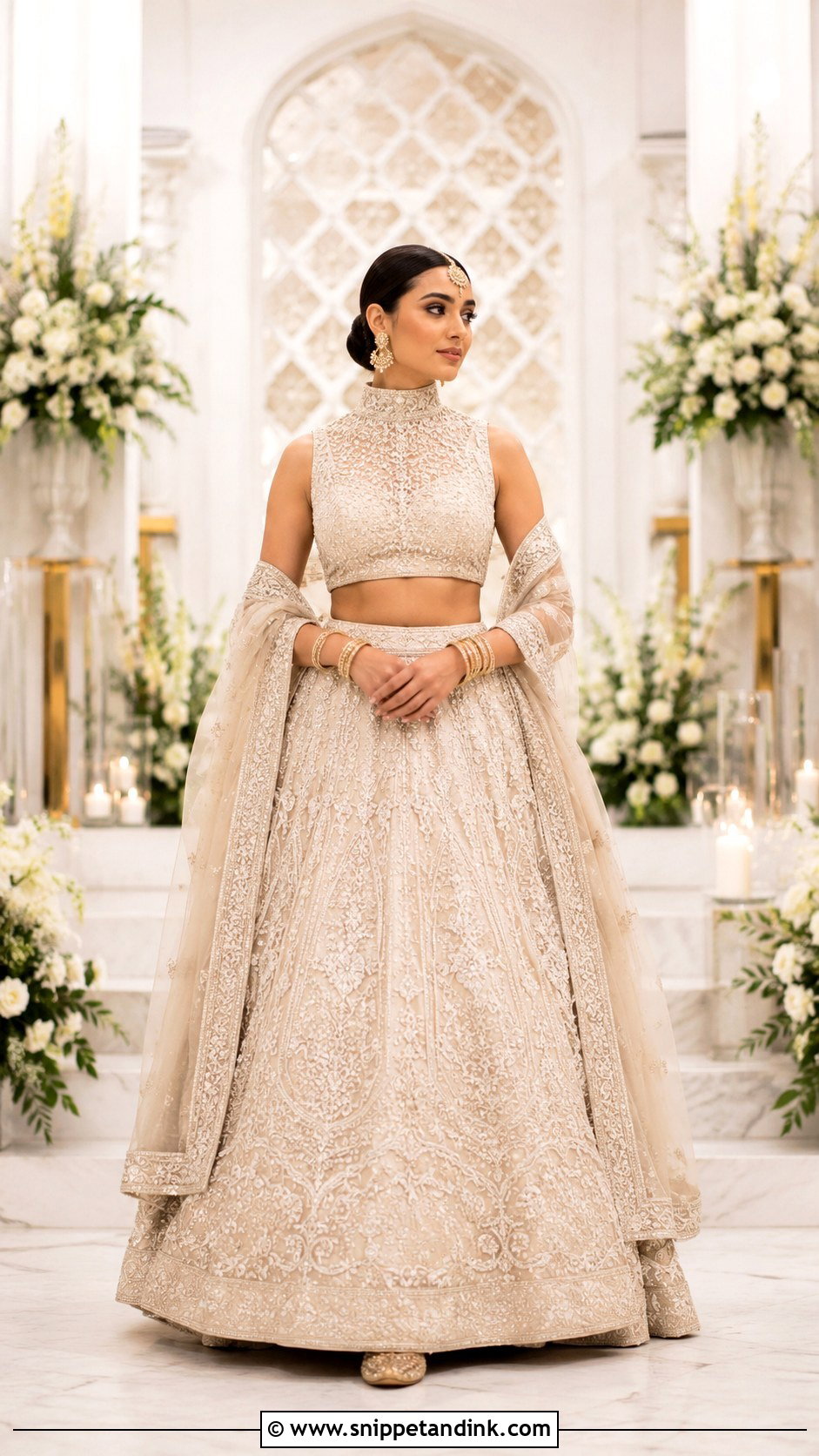
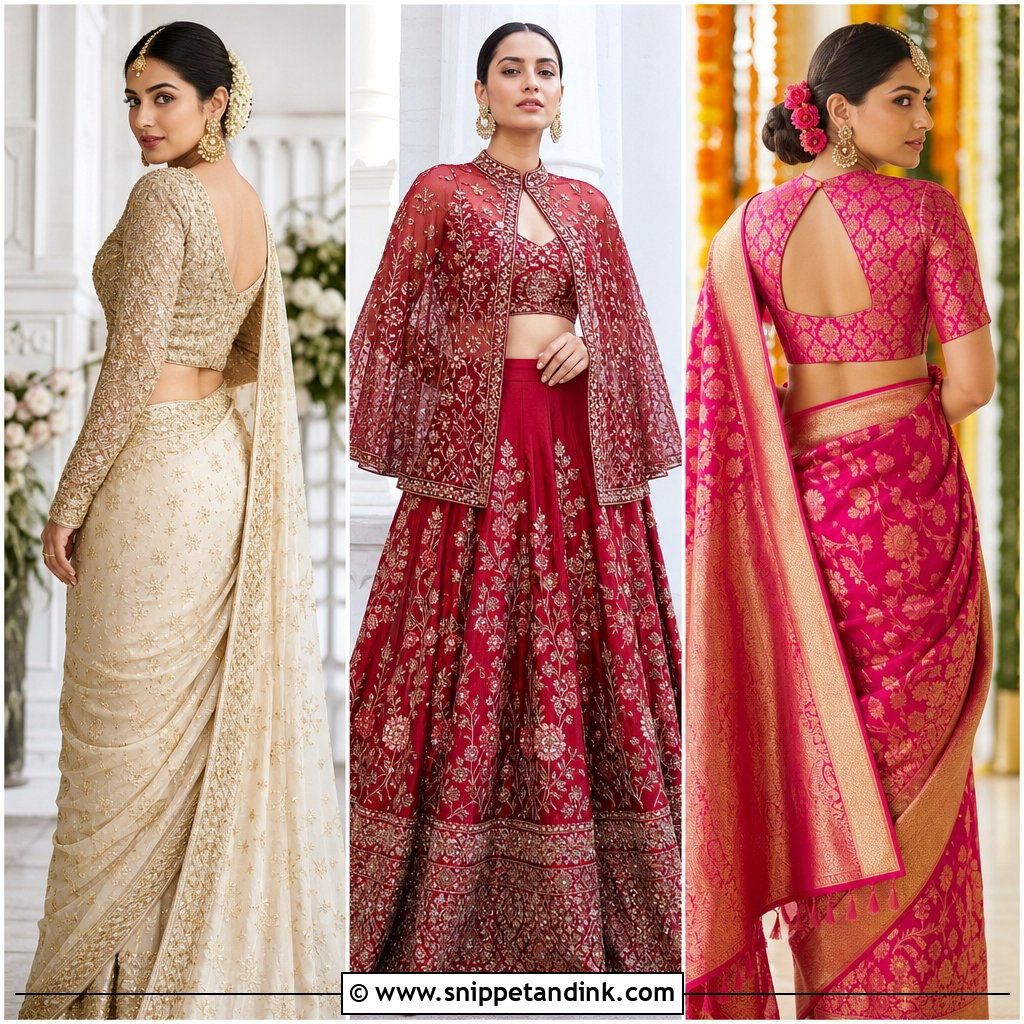
High necks frame embroidery like a picture mount. A band collar, jewel neckline or gently raised neck worked in pearls, zari, stones or resham gives the work a strong setting. With a gold high-neck blouse over an ivory lehenga, I skip the necklace entirely and let the collar act as the jewelry, adding statement earrings, a maang tikka and stacked bangles instead. Saree brides can drape the pallu over one shoulder to show more of it. In warm weather the collar must be lined in something soft and cut with a finger’s width of ease around the throat, or it becomes unbearable by the second ritual.
6. Sheer Back Bridal Blouse
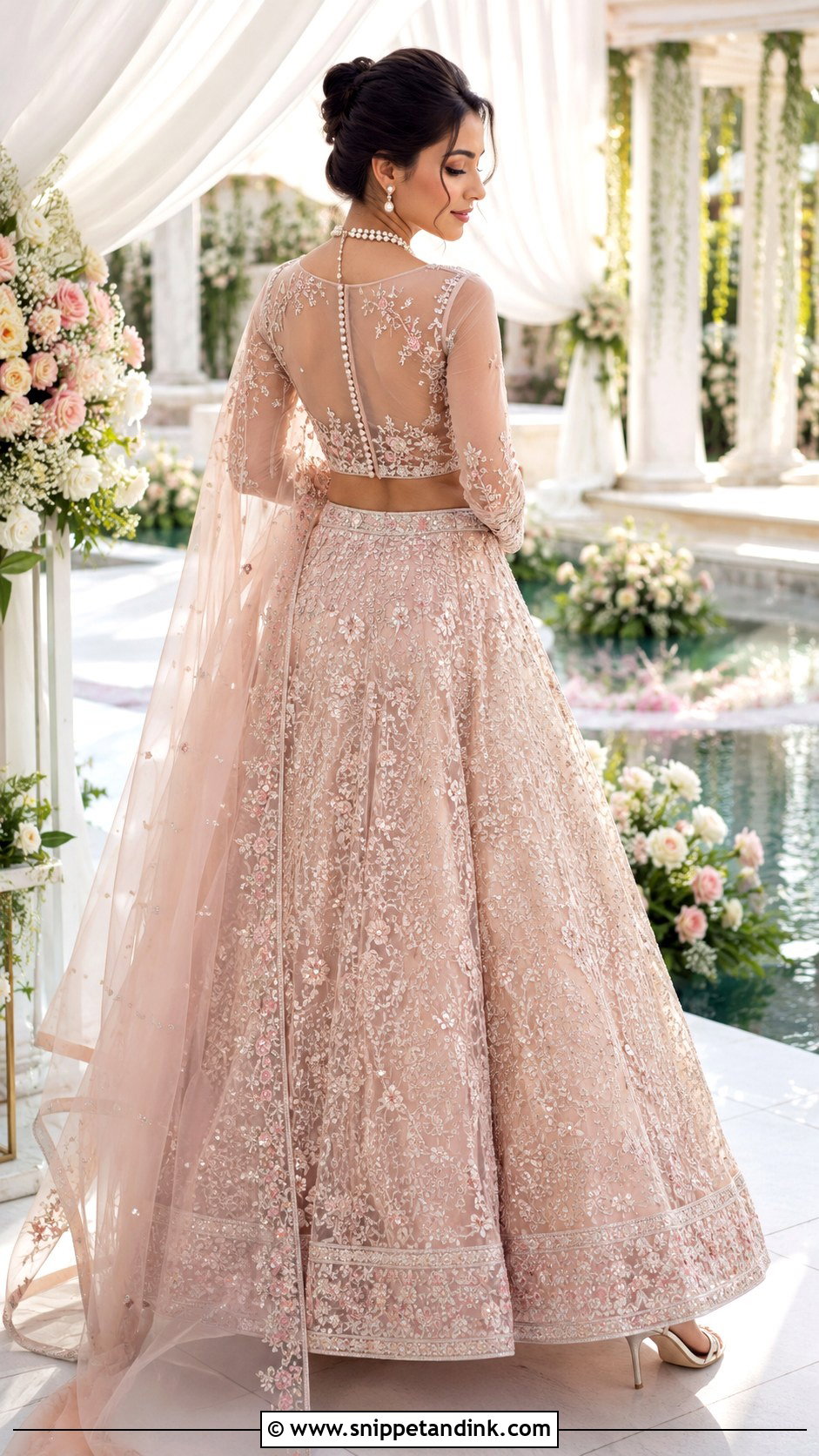
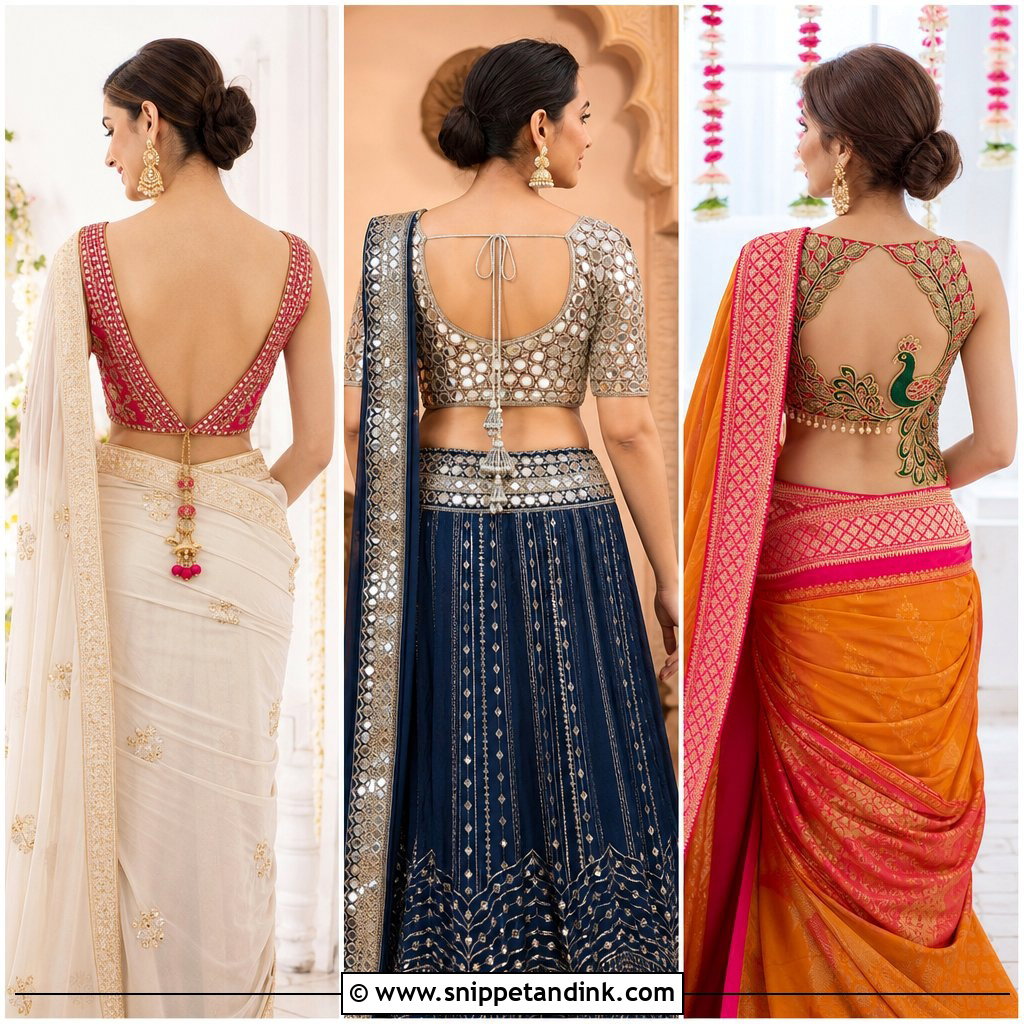
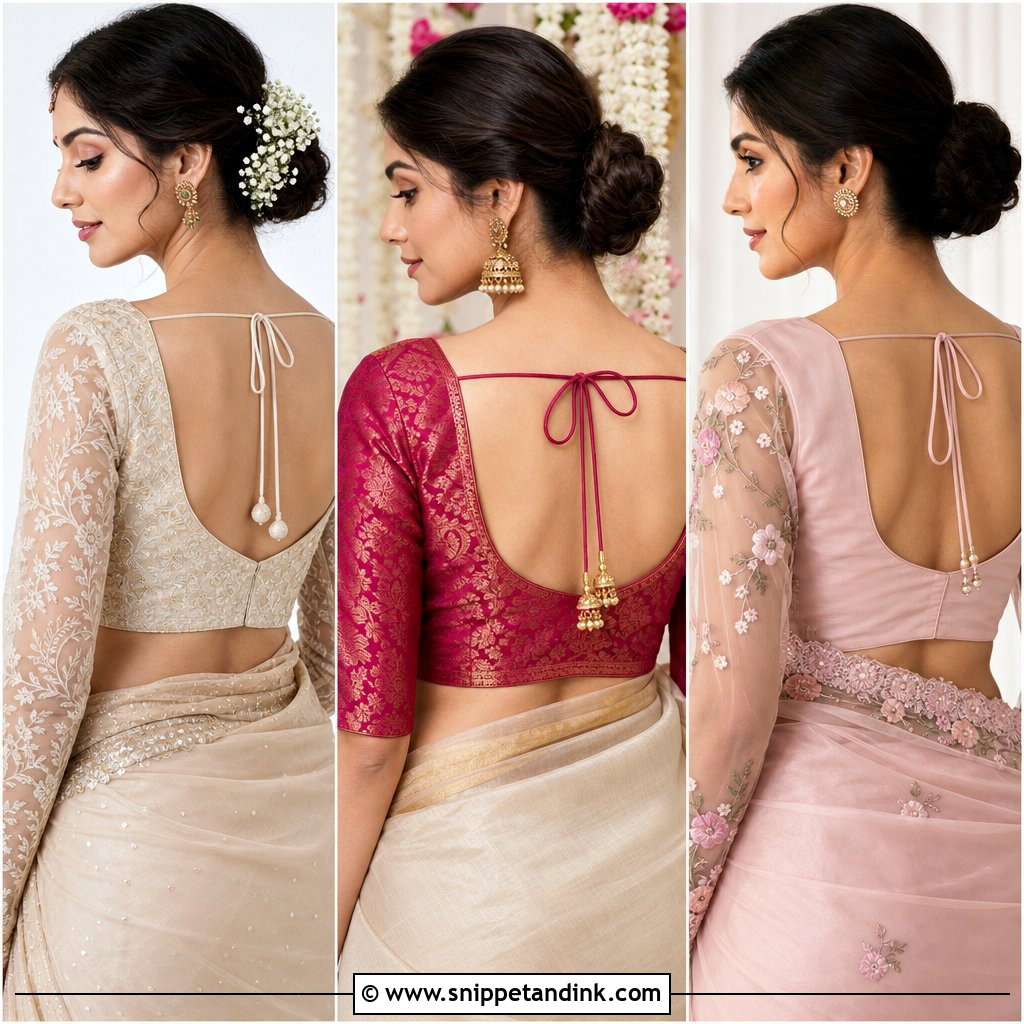
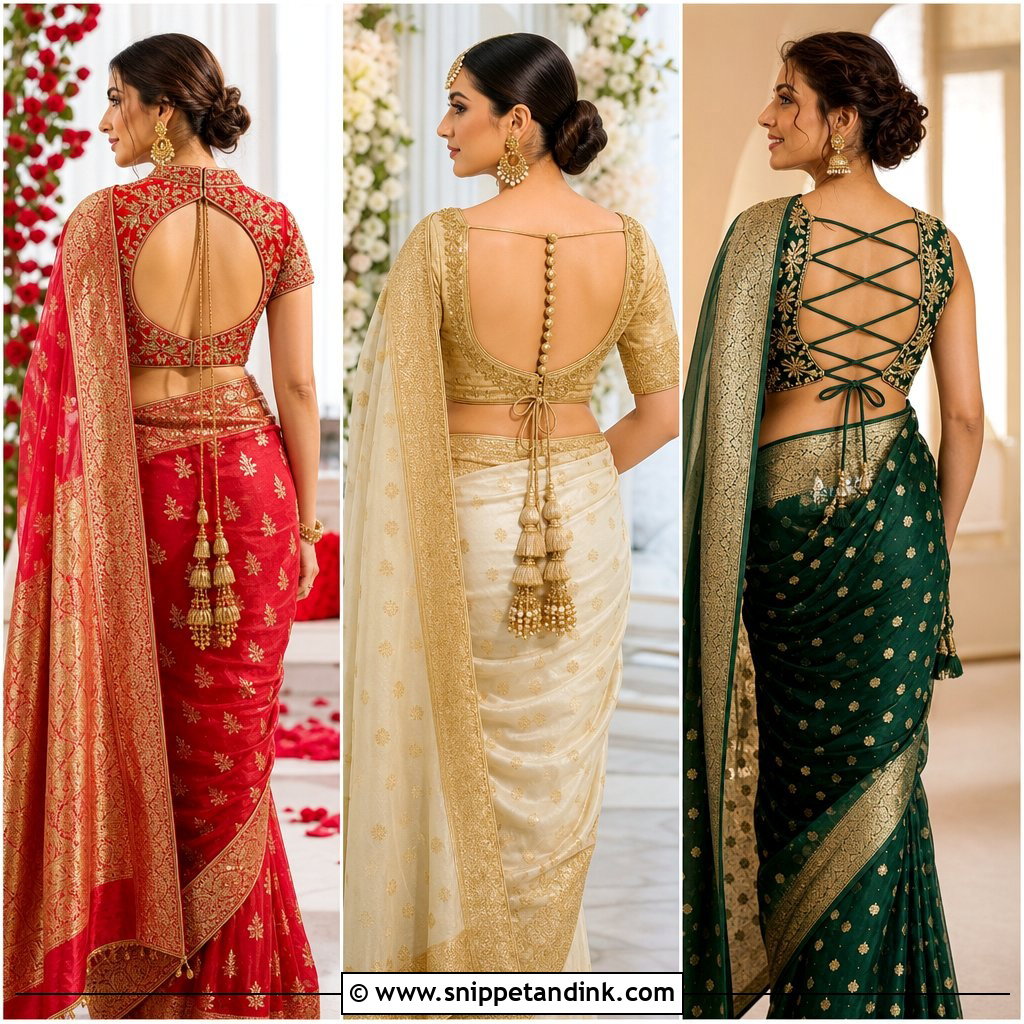
Illusion net only looks like skin if it matches your skin, so I take net swatches to the bride and check them on the back of her hand in daylight. On a sheer back, floral embroidery, tiny pearls or appliqués appear to float. A row of fabric-covered buttons down the center looks polished, but ask for a hidden hook closure beneath them so the buttons are decoration and the net takes no strain. The net should be reinforced firmly where it meets the main fabric. A pastel lehenga, an organza dupatta, pearls and metallic sandals suit it for a daytime wedding, with an updo to keep the back on show.
7. Mirror Work Bridal Blouse
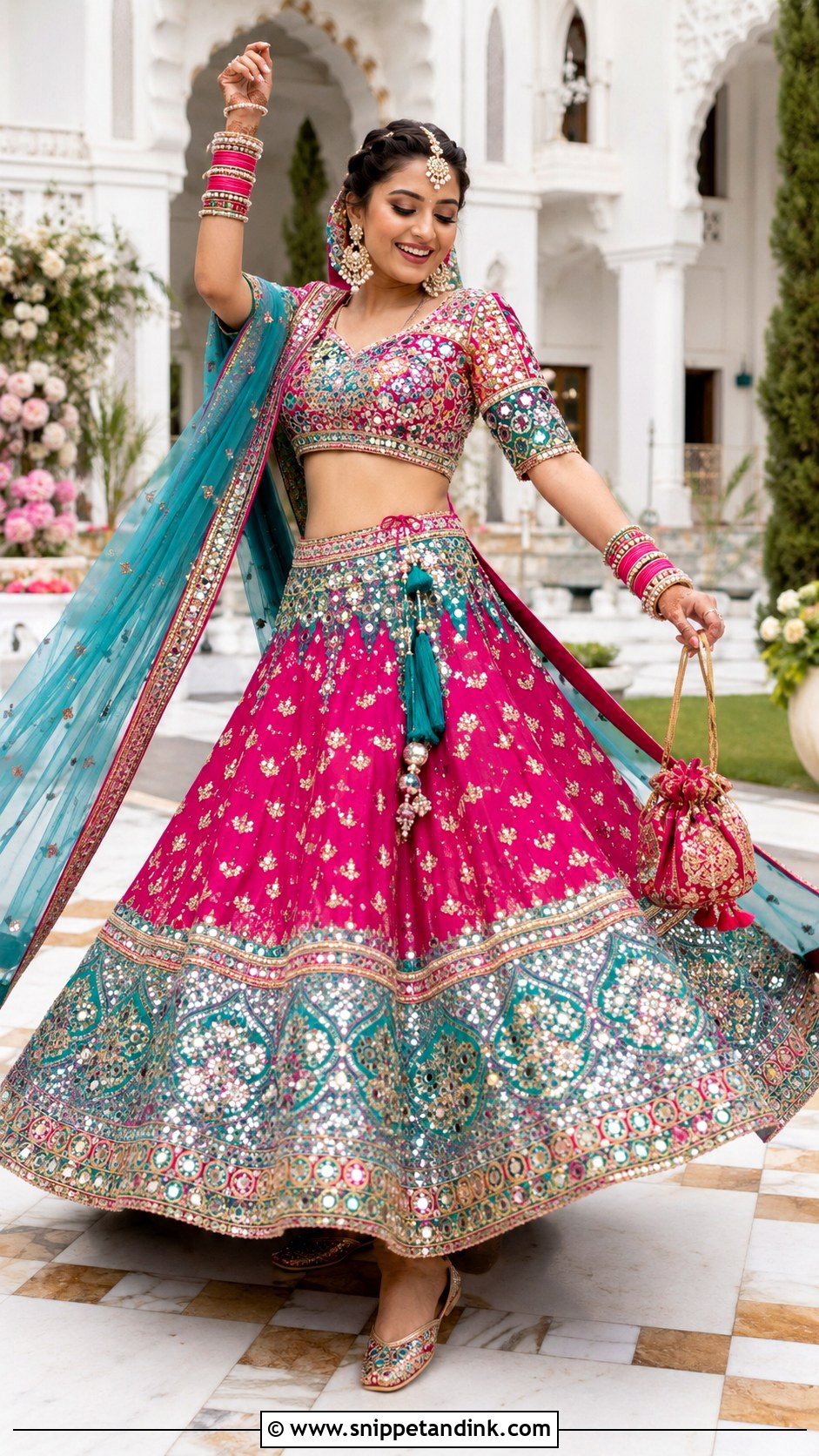
Mirror work is joyful and heavier than people expect. Small mirrors held with thread embroidery move with you; large ones pull the fabric and tilt as you breathe. A fuchsia, orange, teal or yellow mirror work blouse pairs well with a coordinated lehenga skirt and a lighter dupatta. Oxidized silver or kundan jewelry, stacked bangles, a potli and cushioned juttis suit the mood, as does a braid or loose waves. Don’t add crystal accessories; the mirrors already throw plenty of light. A soft lining and finished seam allowances keep the mirror edges off your skin.
8. Pearl Embroidered Bridal Blouse
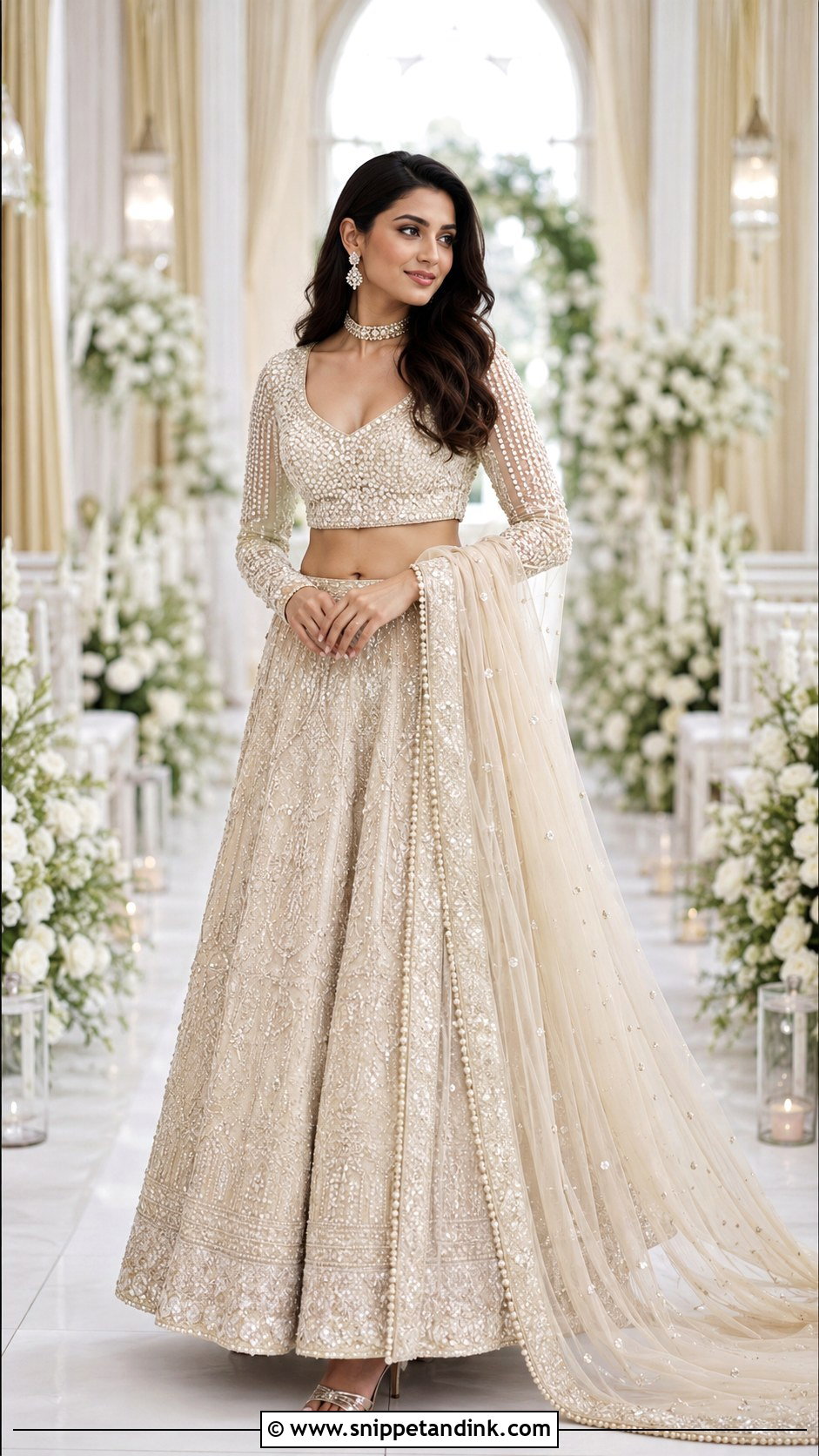
Pearls look refined without the glare of metal thread, but they add up in weight fast. I’d keep larger pearls on stable areas of the bodice and use small seed beads near the armholes, where the fabric has to flex. An ivory, blush, champagne or pale blue blouse with pearls at the neckline, sleeve edges and back pairs with a tonal lehenga and a sheer dupatta edged in small pearls. Crystal drops and a delicate choker suit it. Pointed metallic flats or low block heels keep you comfortable, and a soft curled bun or brushed waves finish it.
9. Boat Neck Bridal Blouse
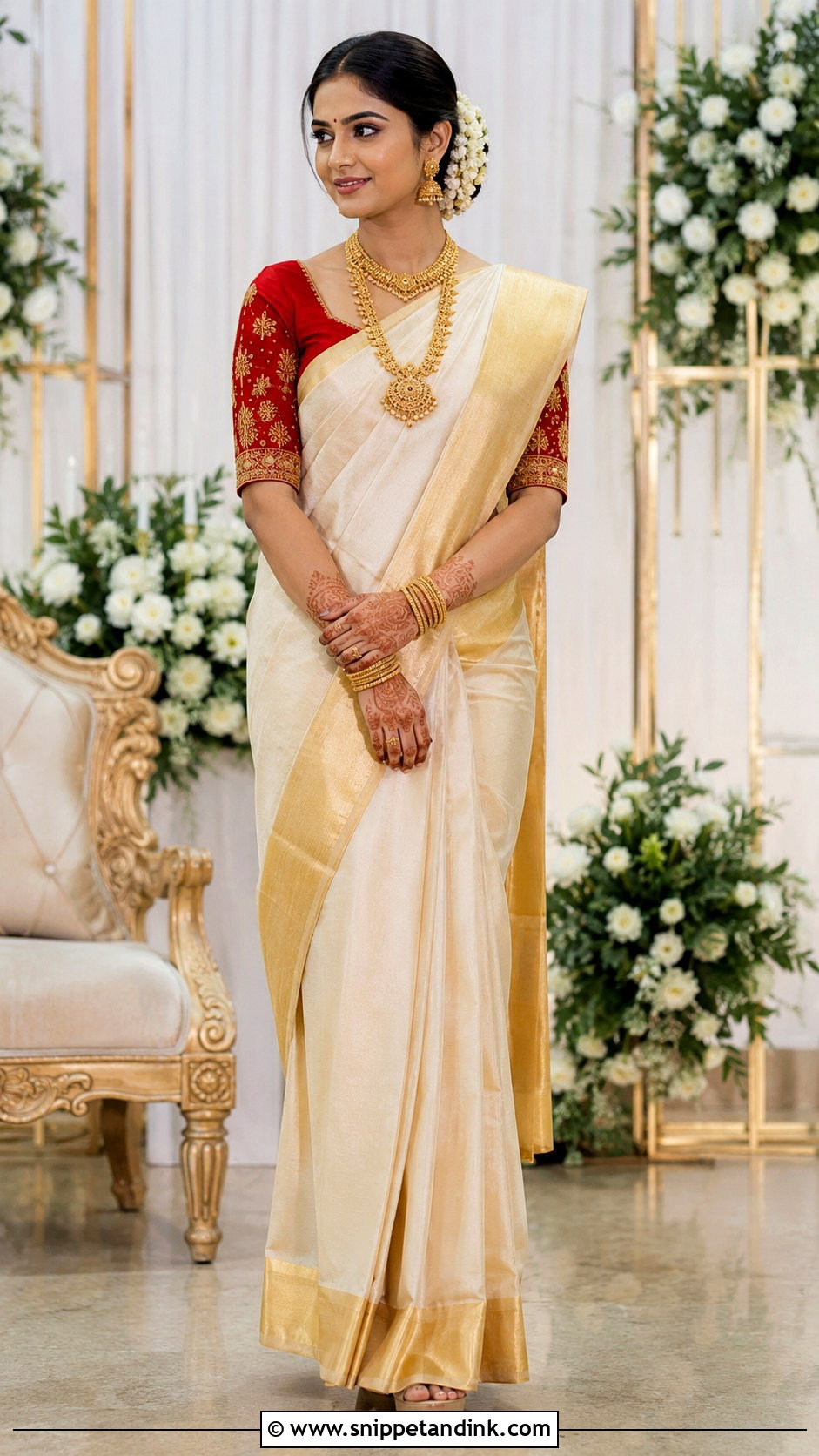
A boat neck bridal blouse draws a wide, clean line across the shoulders, and it goes wrong when that line runs too far out. Cut to the shoulder joint, it restricts every arm movement; I ask tailors to stop it a little short and curve it slightly, which is far more comfortable than a dead-straight edge. A red raw-silk blouse with gold embroidery, elbow sleeves and a medium-depth back suits a gold-bordered saree. With a worked neckline, wear the shorter necklace just below it so the two don’t overlap. Traditional earrings, bangles, platform sandals and a low bun with flowers complete it.
10. Corset Bridal Blouse
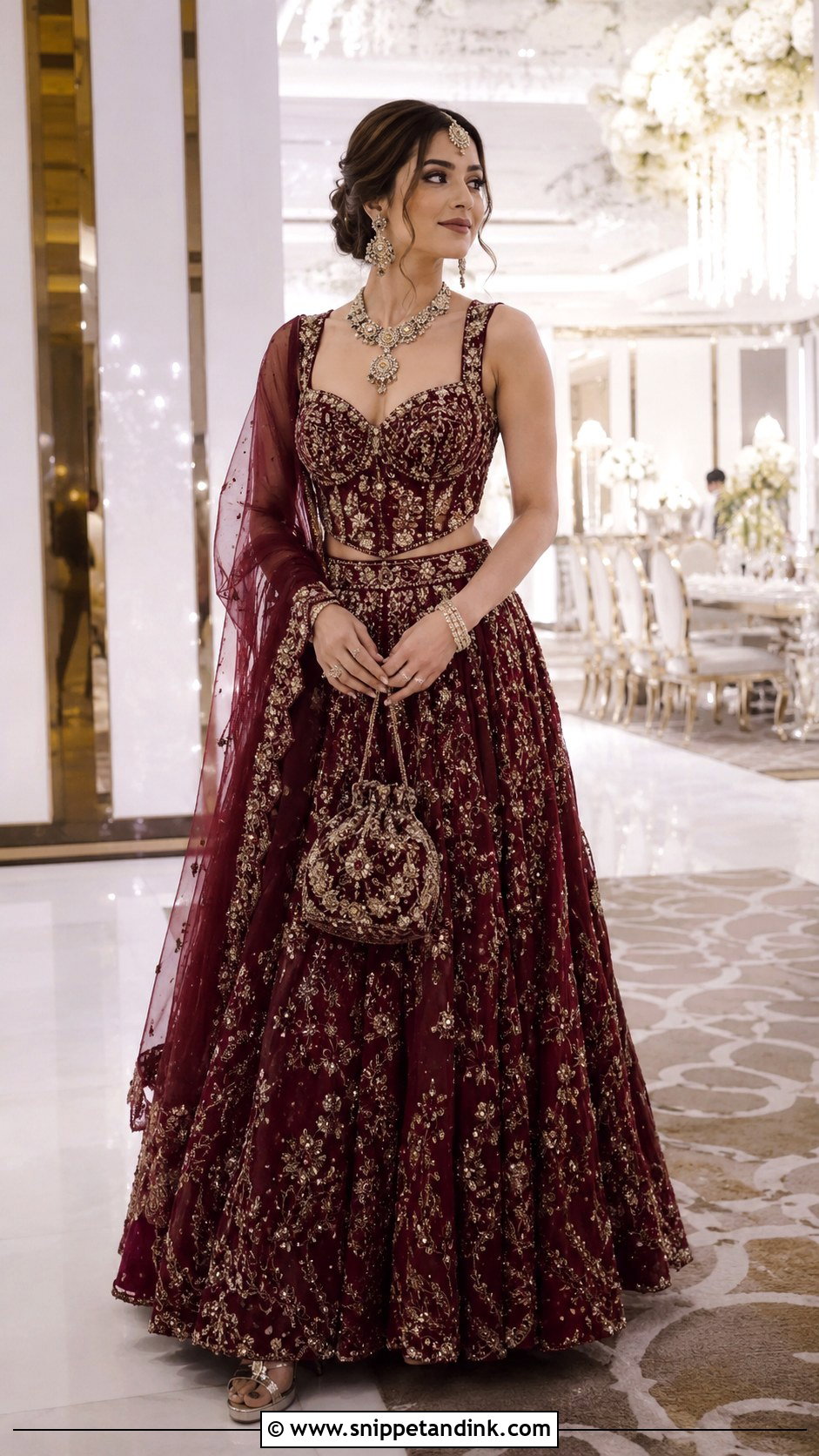
A corset blouse gives a lehenga a defined, modern shape, and the gap between a good one and a painful one is all in construction. Look for a longer bodice with internal boning, supportive cups, wide straps and a secure back closure. The lower edge should meet or slightly overlap the lehenga waistband. A burgundy corset with a high-waisted embroidered lehenga, a sheer dupatta over one shoulder, polki jewelry and matching block heels works well, and vertical embroidery echoes the boning without crowding it. I test every bridal corset seated on a low cushion, the way you’ll sit for the ceremony; if it digs into the ribs there, it needs more ease.
11. Puff Sleeve Bridal Blouse
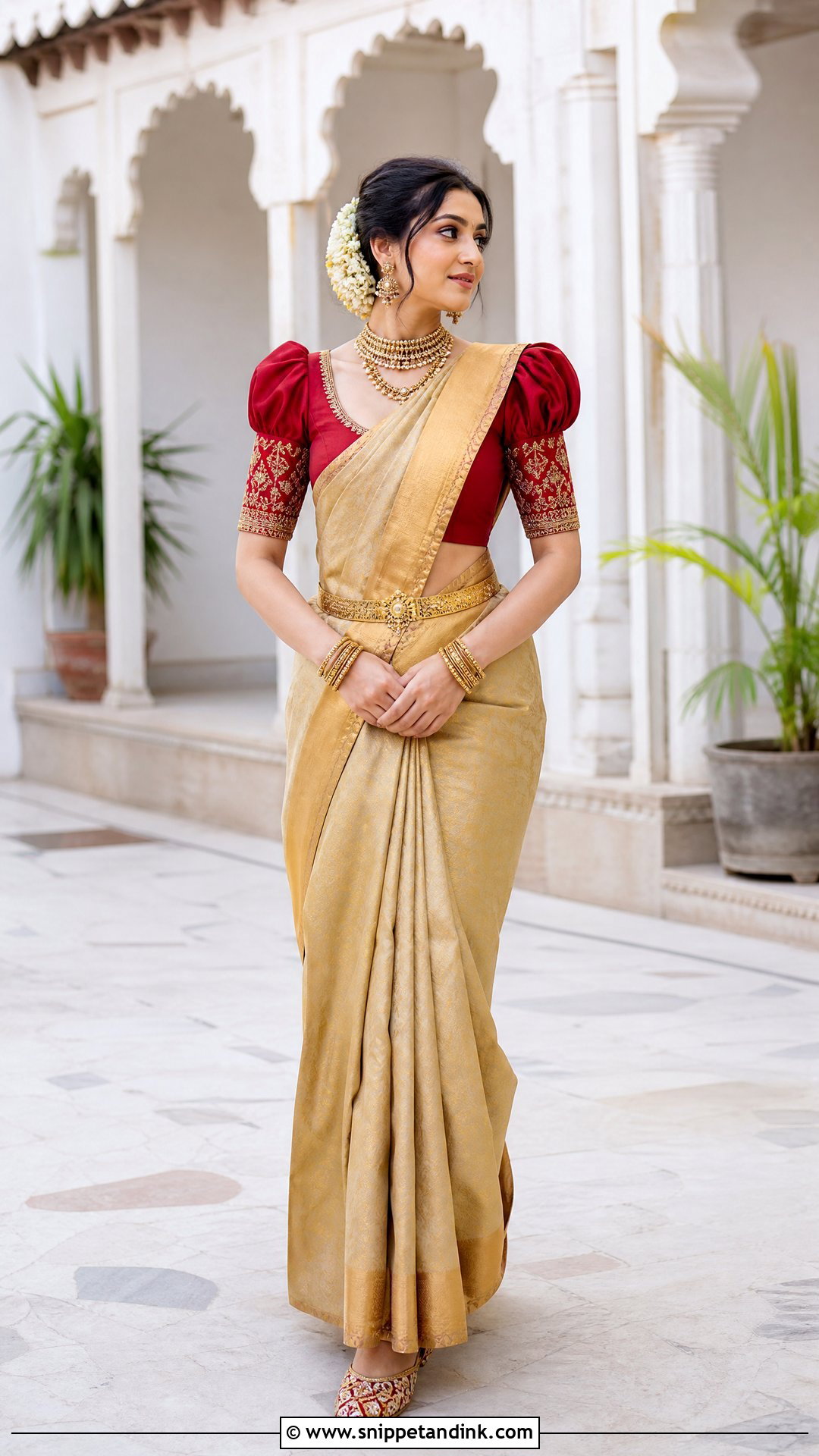
Puff sleeves add soft volume and a slightly vintage note. Keep the puffs short and controlled, especially with a heavily worked skirt or saree, and keep the embroidery near the cuffs so the upper sleeve stays airy. A red silk blouse with embroidered puffs suits a traditional gold saree, antique jewelry, a waist belt and juttis; organza puffs with a pastel lehenga and pearls make a lighter version. Shoulder seam placement is the detail that decides it. Set even slightly too far out, the puffs collapse and the blouse reads wider than you are. Ask for a smooth, breathable sleeve lining.
12. Square Neck Bridal Blouse
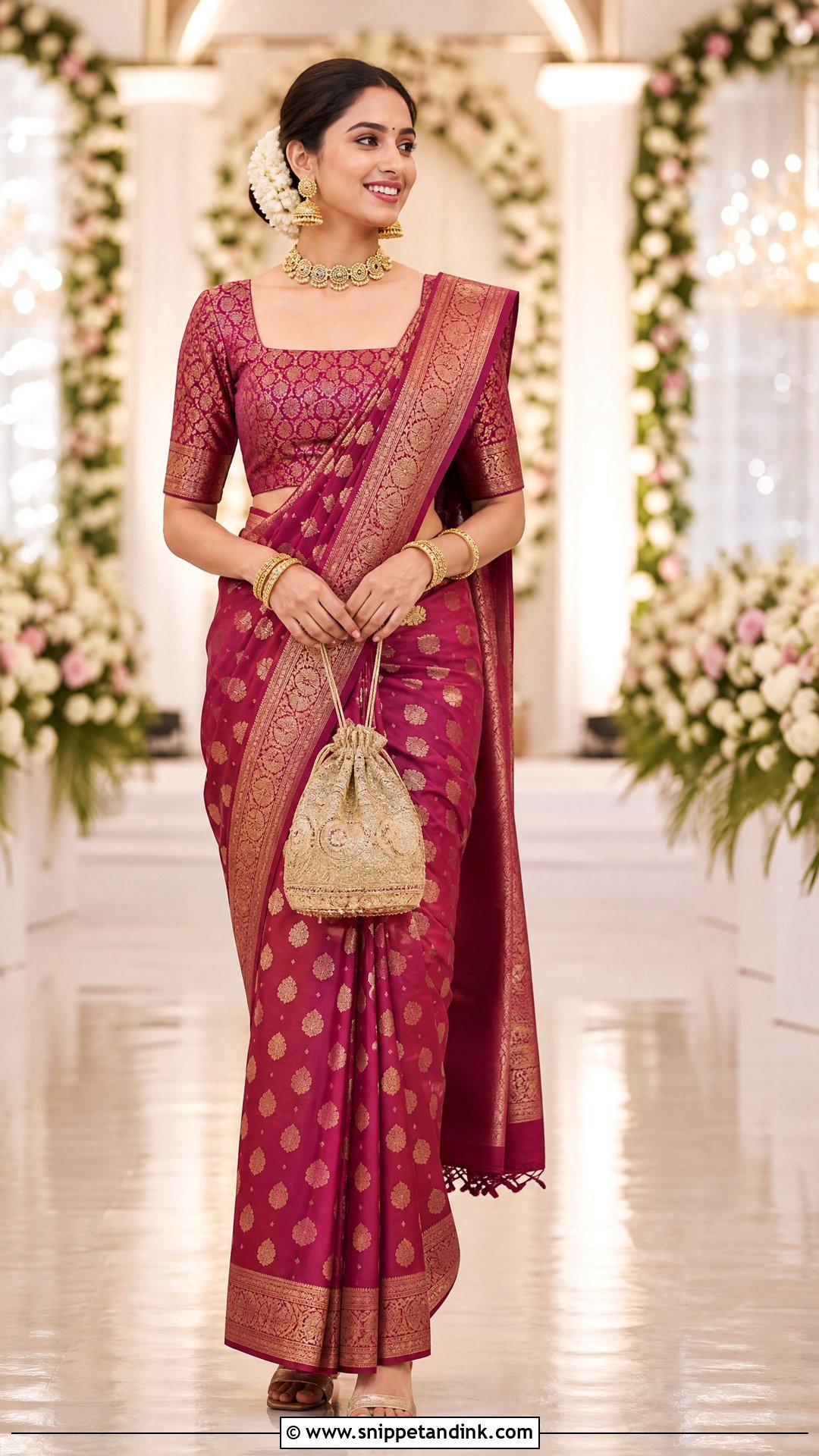
The corners are what make or break a square neck. If they curl outward, the shape looks homemade, so I ask for narrow piping around the edge and stay tape on the inside to hold it flat through hours of movement. Structured brocade or raw silk with medium straps and elbow sleeves gives a balanced silhouette. It frames a collar necklace and jhumkas with a jewel-toned Banarasi saree, gold bangles and comfortable heels. A neatly pinned pallu keeps the neckline visible. Lehenga brides can echo the square through embroidered borders or paneled skirt details.
13. Floral Embroidered Bridal Blouse
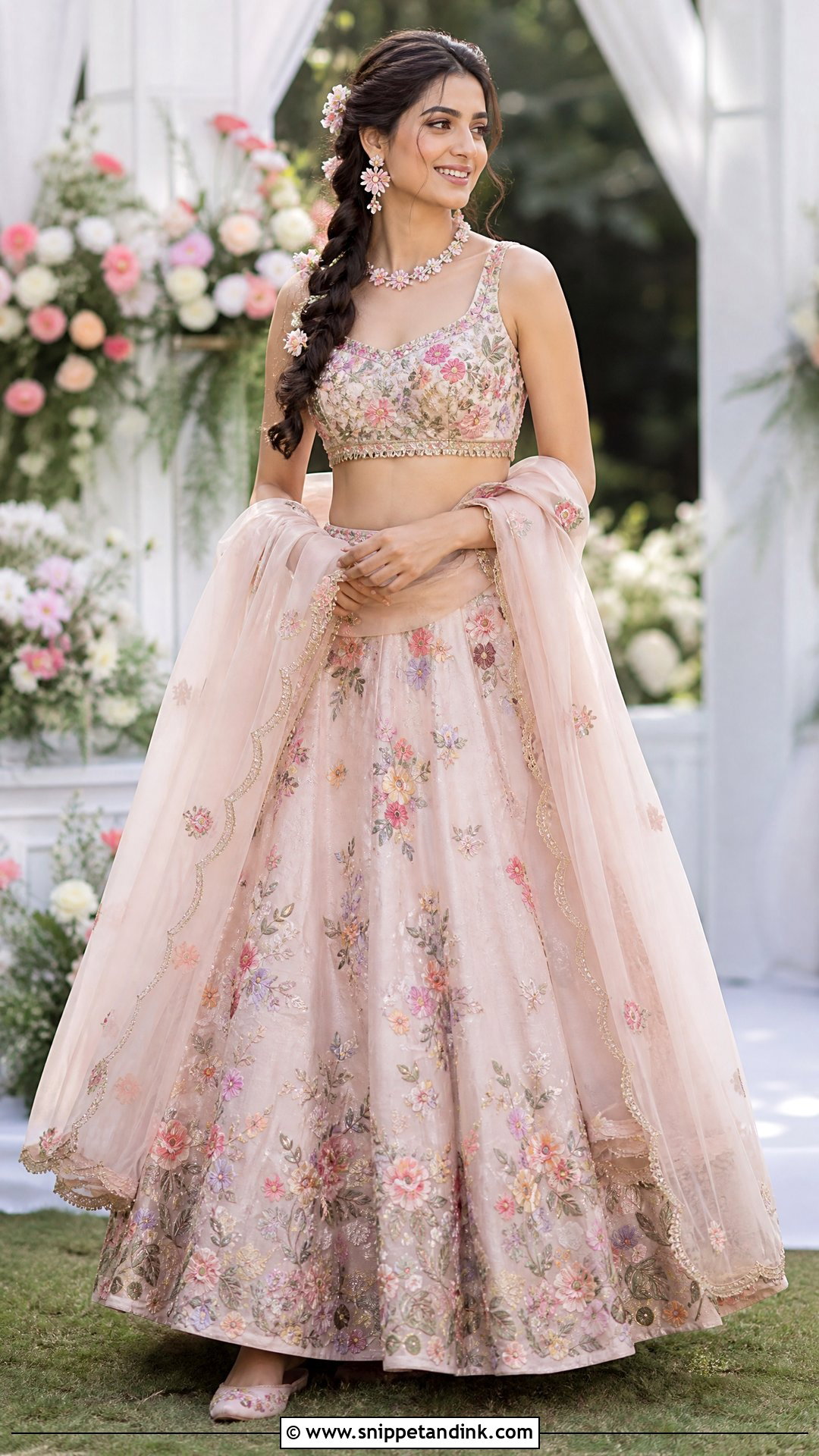
Floral embroidery suits daytime ceremonies and garden venues, on blush, mint, ivory, peach or powder blue with multicolored thread flowers and a few beads. Larger motifs go across the bodice; smaller ones near the shoulders and sleeves keep the scale right. Thread shades that looked perfect under shop lights can clash with the lehenga outdoors, so I compare every thread against the skirt and dupatta in daylight before the final stitching. A coordinated lehenga, an airy dupatta, floral earrings, a delicate necklace and pastel juttis complete it, with a loose braid scattered with small blossoms.
14. Velvet Bridal Blouse
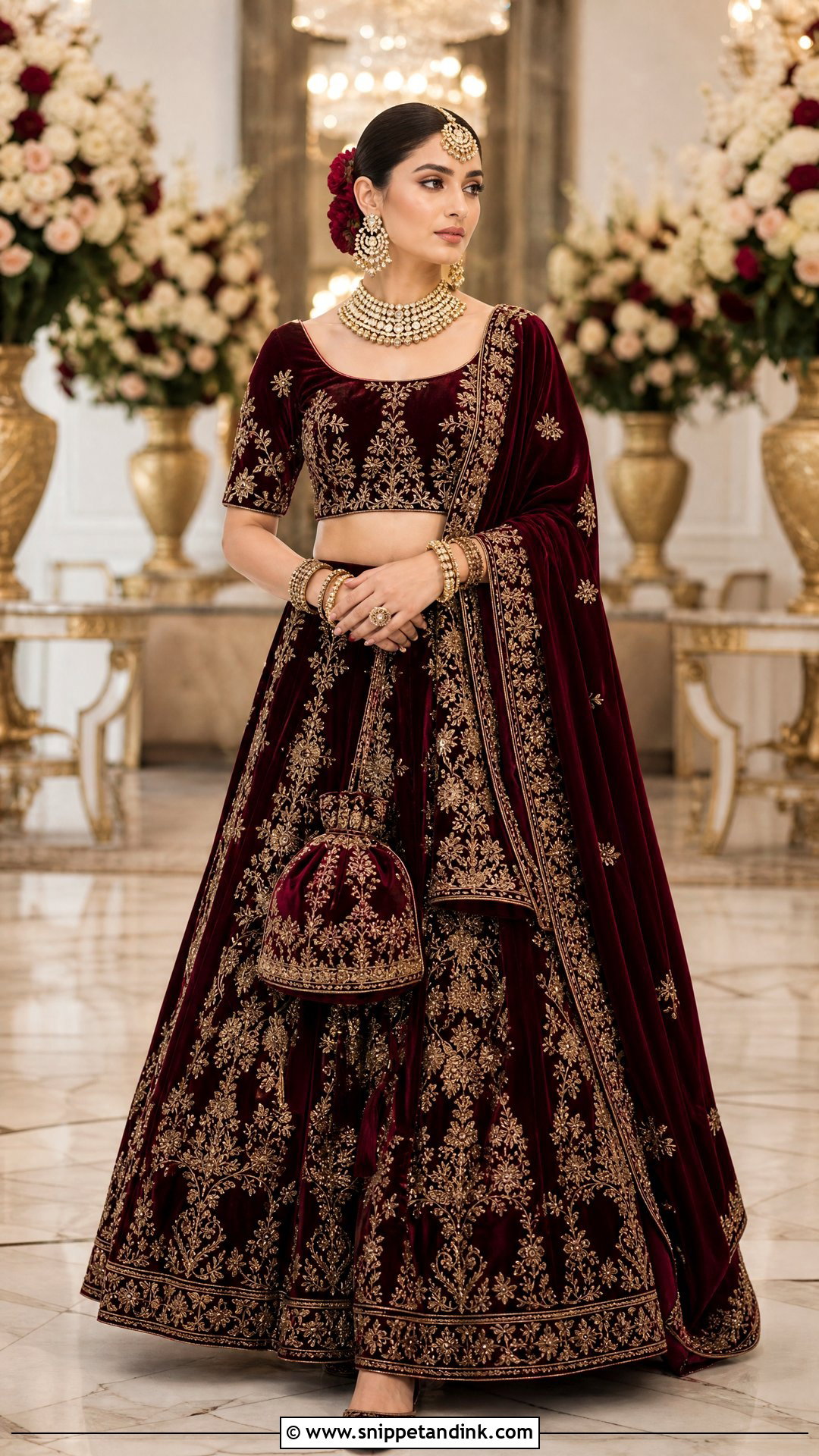
Velvet is a winter fabric. It traps heat and adds bulk, so I’d only suggest it for a cool venue or an evening ceremony. Burgundy, bottle green, navy, plum or deep maroon worked in antique-gold zardosi or fine beadwork look rich, with elbow or full sleeves and a neckline open enough to balance the weight. Pair it with a matching velvet lehenga or a contrasting silk saree, heritage jewelry, a structured potli and closed embroidered shoes. Velvet pile crushes under a hot iron, so ask the tailor to finish seams carefully and steam from the wrong side only. A sleek bun and defined earrings finish it.
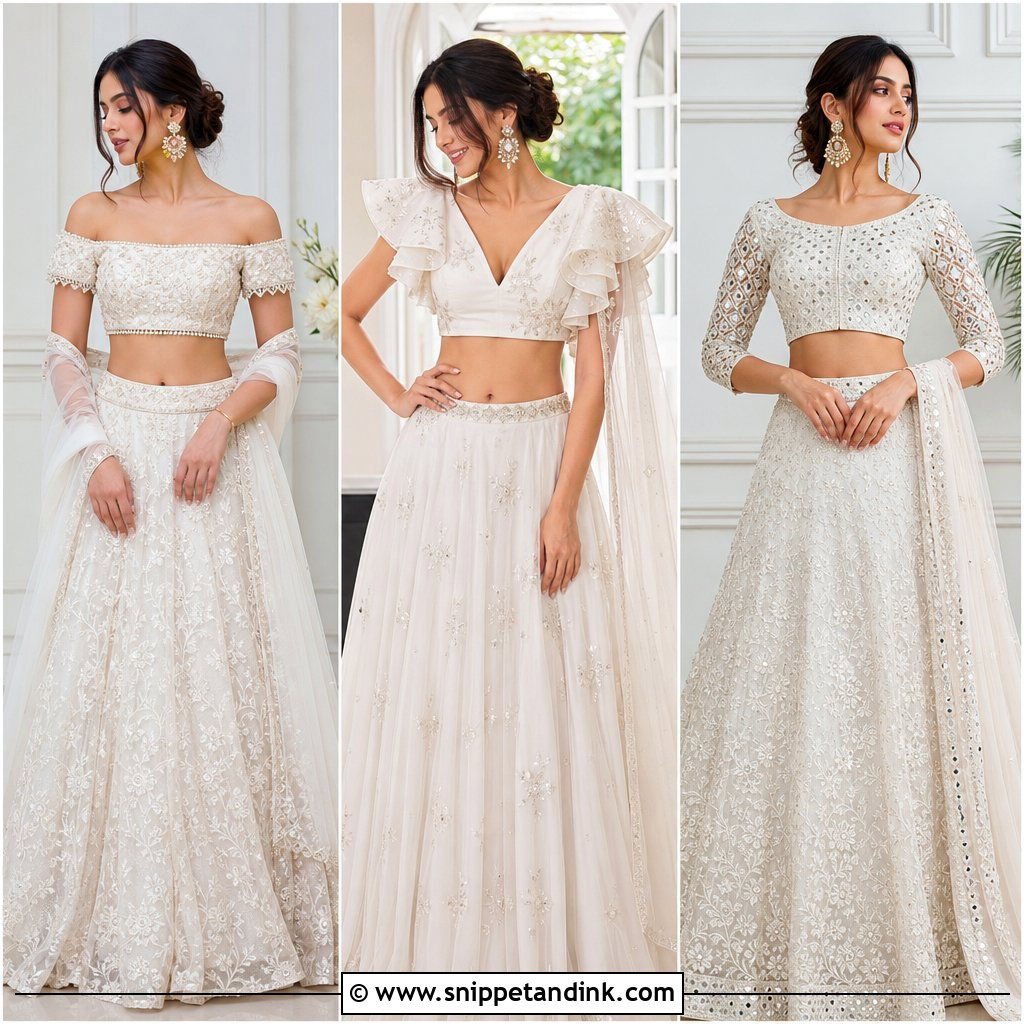
15. Cutwork Bridal Blouse
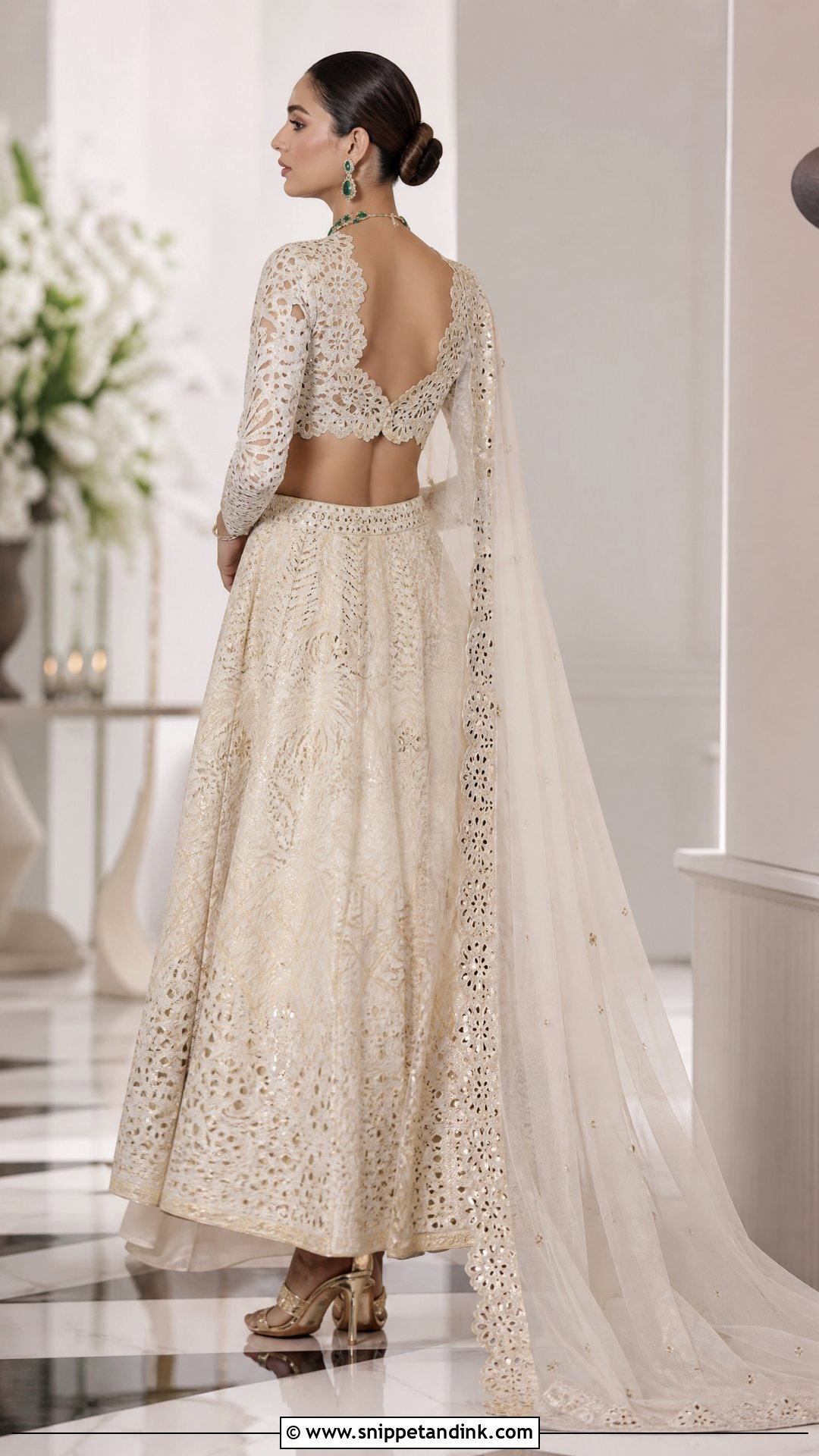
Cutwork shows best on a tonal blouse, where the open spaces and shaped edges are the decoration. An ivory cutwork blouse with a gold and ivory lehenga, a sheer veil, emerald jewelry and metallic heels is refined and quiet, and a clean bun keeps the back visible. Keep other accessories simple. Open areas need reinforcing with fine net or stable stitches near closures and shoulder seams. I’d never put fragile cutwork directly under the arm, where friction during hours of movement wears through it.
16. Cape Sleeve Bridal Blouse
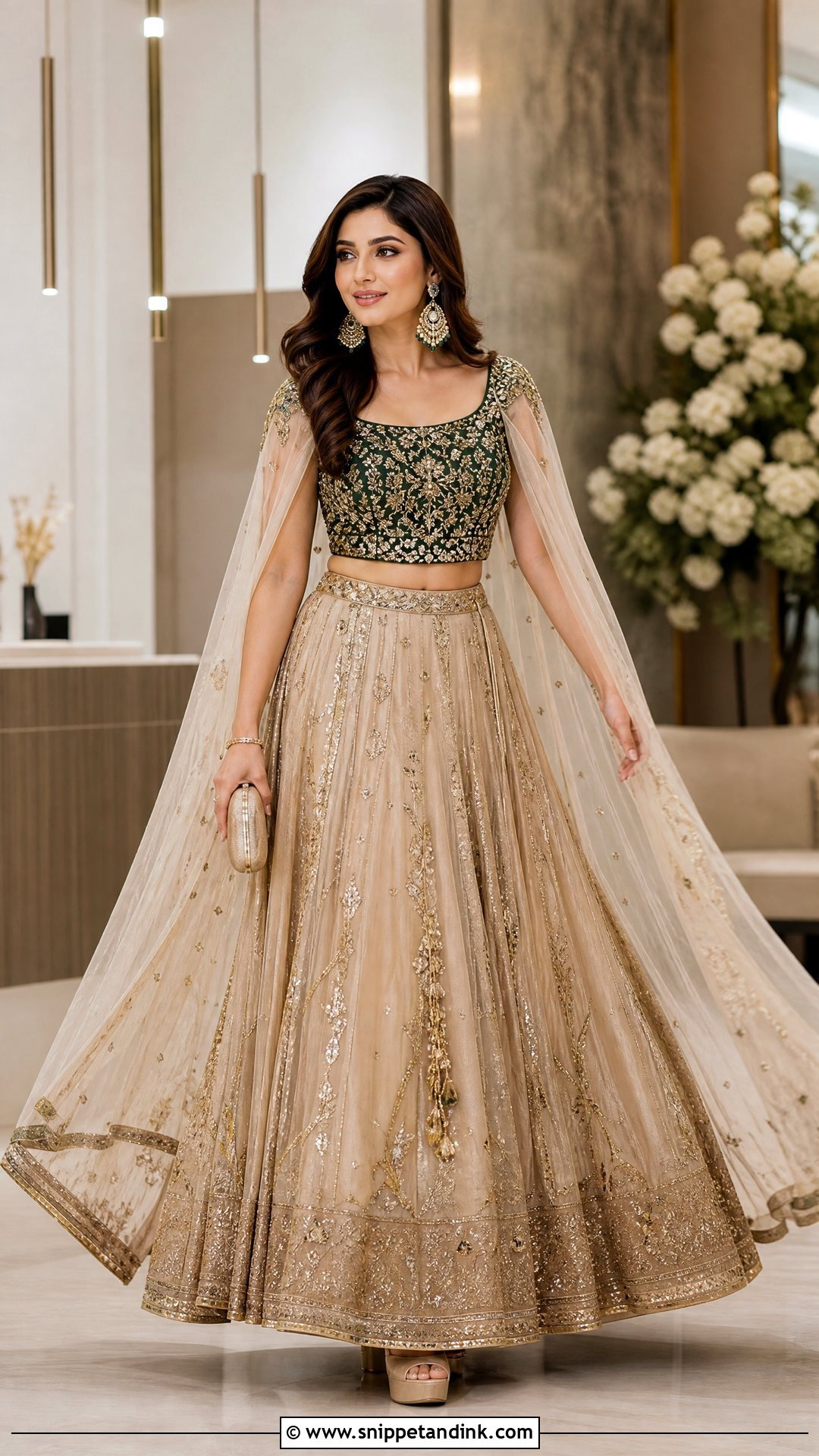
A cape gives coverage without the tight fit of a sleeve. The fitted embroidered bodice carries the structure, and a light chiffon, georgette or net cape falls from the shoulders. Pair it with a slim-panel lehenga or a neat saree drape; too much skirt volume plus a cape quickly overwhelms. A deep emerald blouse with a champagne skirt, statement earrings, a small clutch and platform heels makes a strong reception outfit, and if the cape has a decorated border, leave the neck bare. Keep the cape ending above the wrist or near the elbow so it stays out of your food and away from the havan fire.
17. Personalized Bridal Blouse
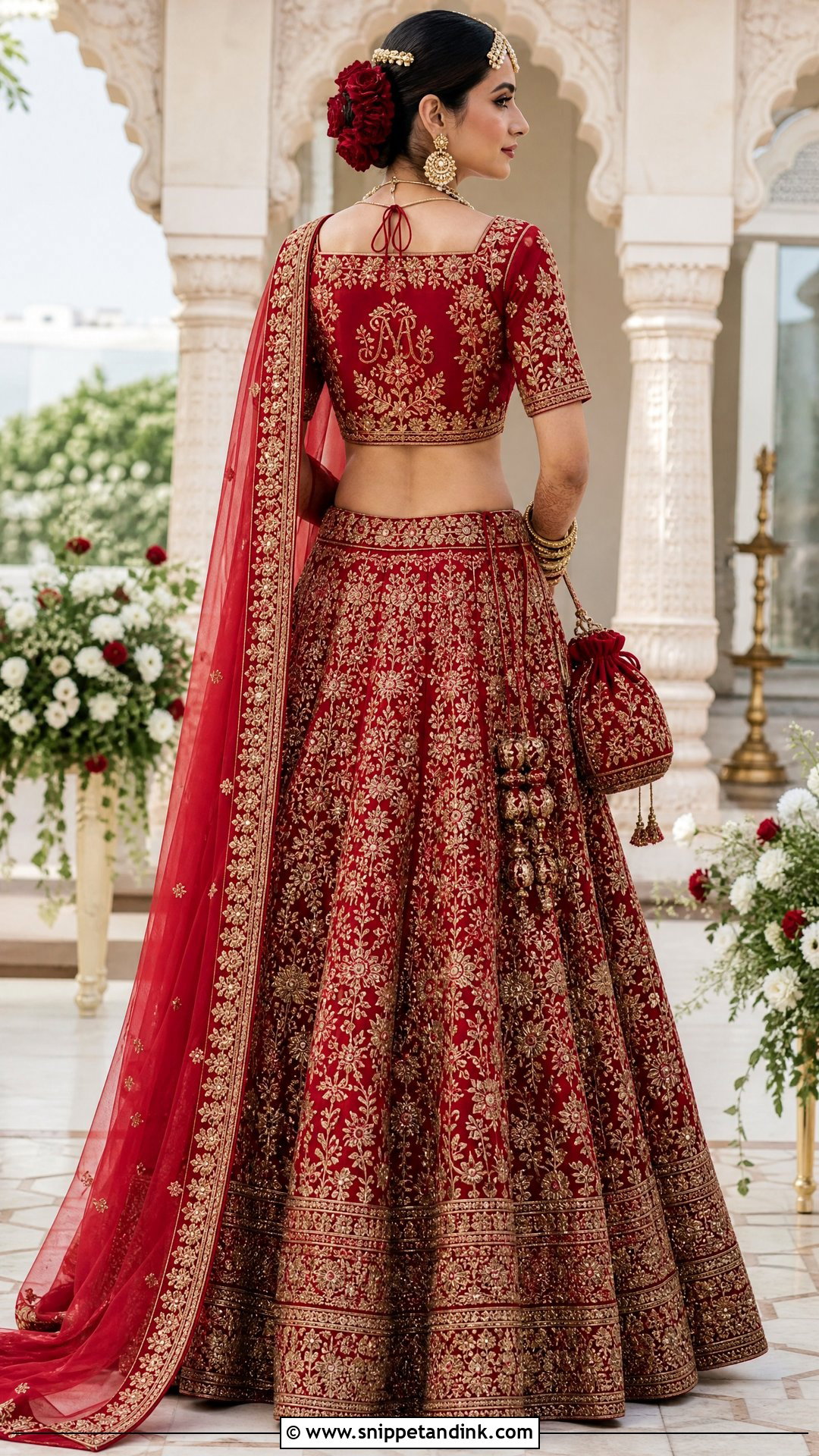
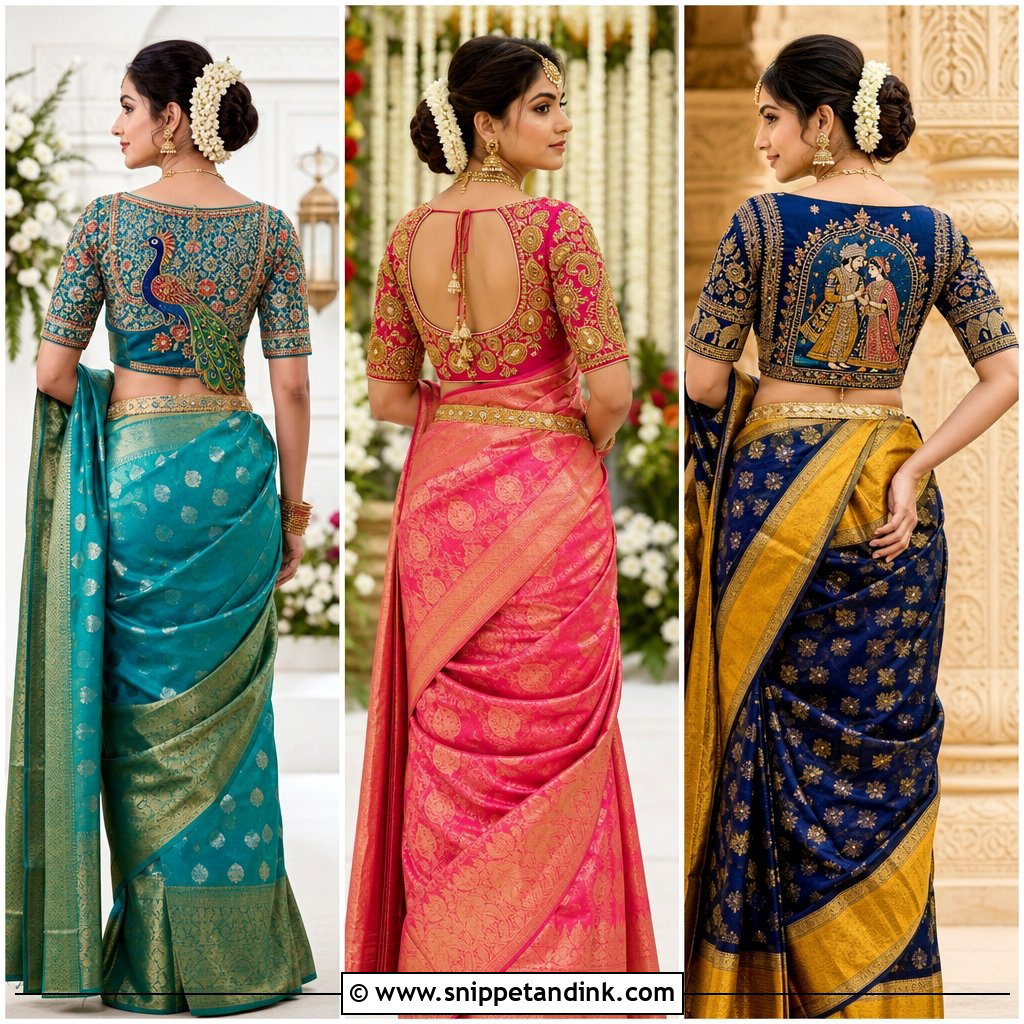
Personal embroidery should feel like it was always part of the blouse, not stitched on afterward. Initials, the wedding date, symbolic flowers, a skyline, a short phrase or small ceremony motifs can go on the sleeves or back. I keep it to one embroidery technique and a limited palette so it blends in. A customized red blouse with a matching lehenga, traditional jewelry, a veil, a potli and comfortable shoes is the classic setting. Give the artisan clear drawings, approve placement on paper before any stitching begins, and allow extra time; corrections to hand embroidery are slow.
18. Temple Motif Bridal Blouse
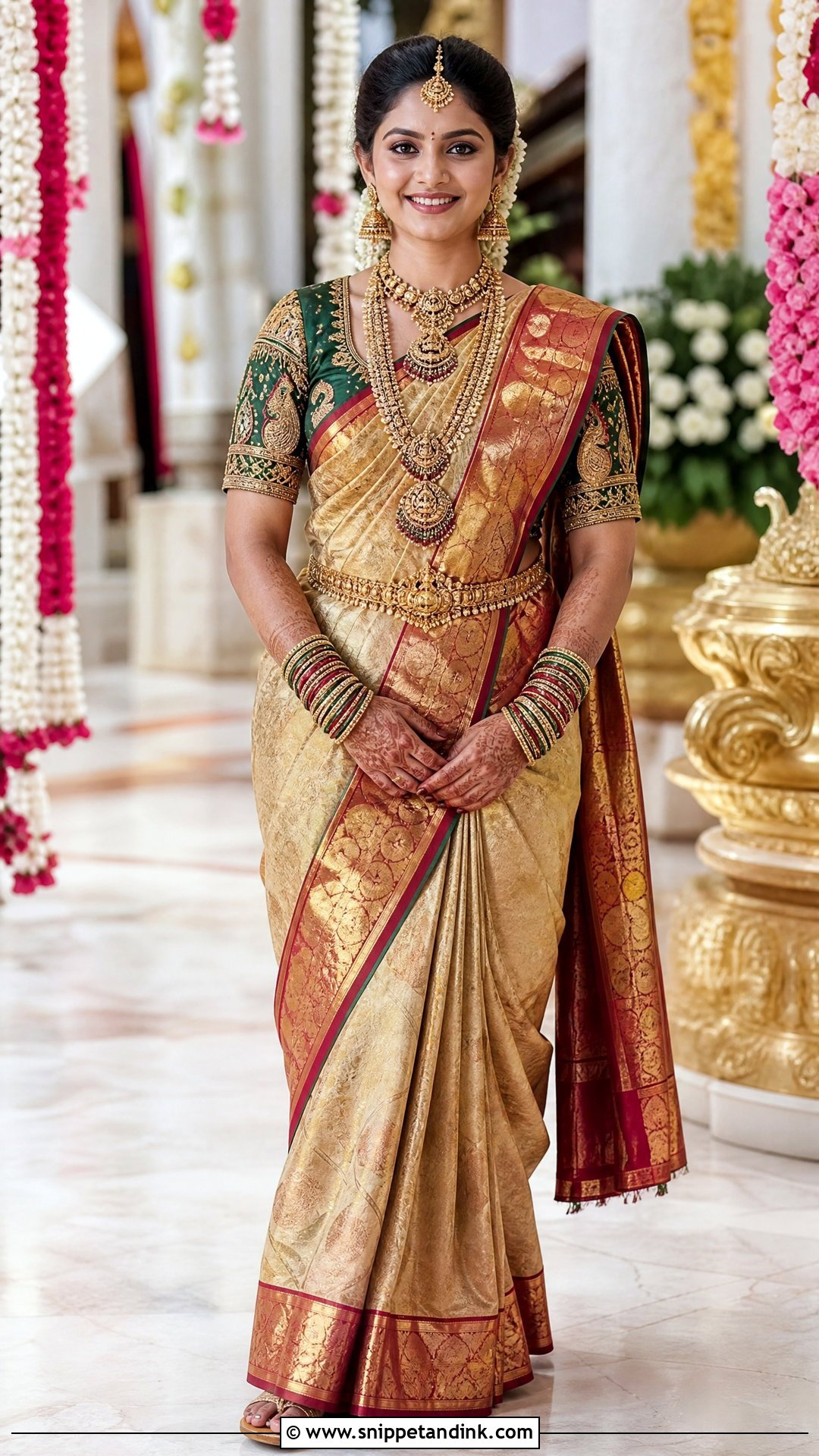
A temple motif bridal blouse belongs with a traditional silk saree. Arches, peacocks, lotuses, lamps or classical jewelry patterns in antique gold on red, green, purple or mustard silk carry centuries of meaning. Elbow sleeves give a broad surface for repeating borders. Scale is the thing I’d ask the artisan to adjust: motifs sized for a tall frame swamp a petite one. Line up the sleeve border with the saree border so the two meet cleanly. A Kanjeevaram, temple necklaces, jhumkas, a gold waist belt, stacked bangles and a long braid or flower-covered bun complete the look.
19. Contrast Color Bridal Blouse
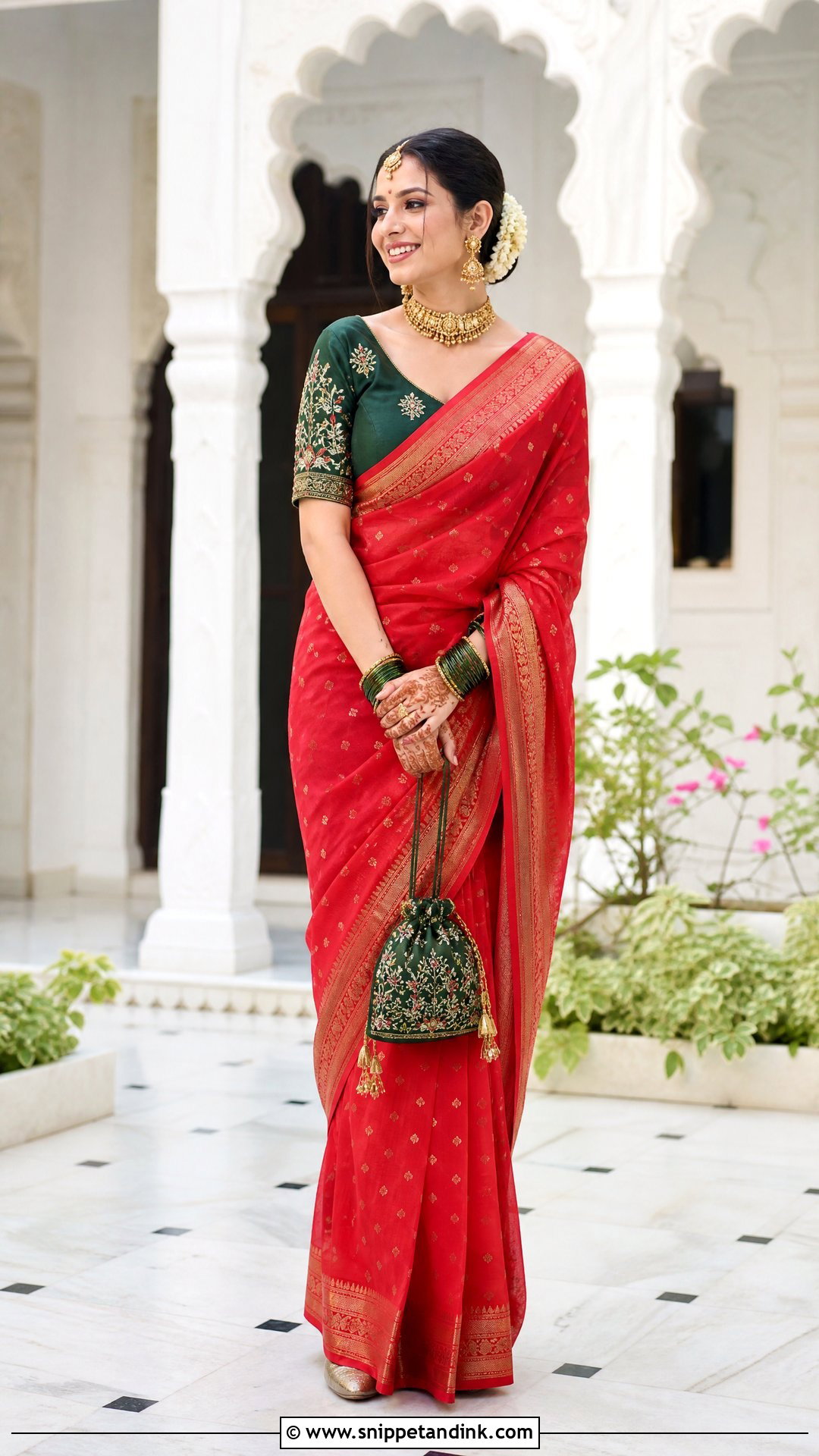
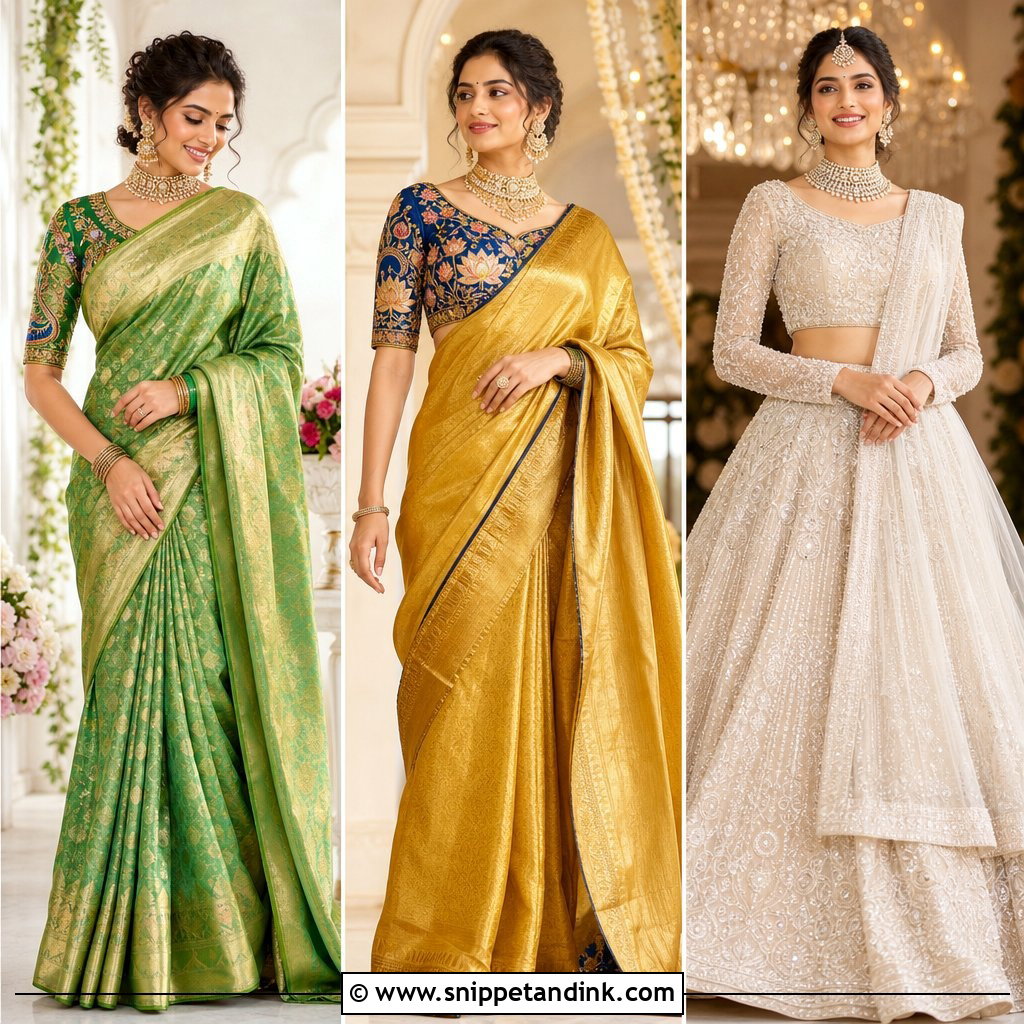
Contrast blouses pull out a color hidden in a saree’s border and make the whole outfit feel fresh. Red with emerald, gold with plum or pink with rust all work. Repeat the contrast once more, in the dupatta border, bangles, potli or shoes, so it looks planned. Keep the embroidery metal identical across every piece even when the fabrics differ. I always look at the fabrics together in both daylight and indoor light before cutting, since some greens and plums shift dramatically under warm bulbs. A simple fit, antique jewelry and a clean bun keep the contrast elegant.
20. Minimal Gold Bridal Blouse
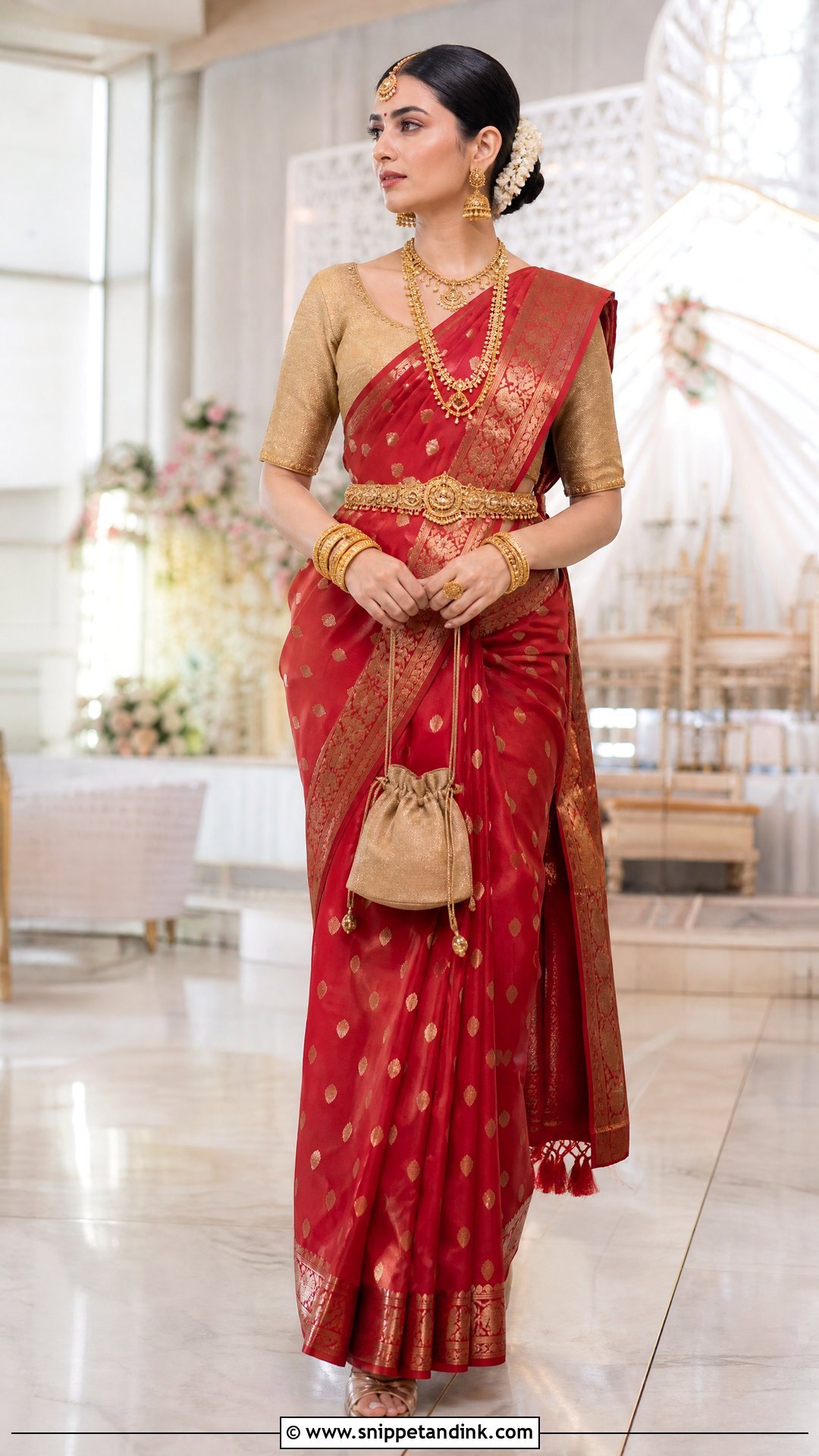
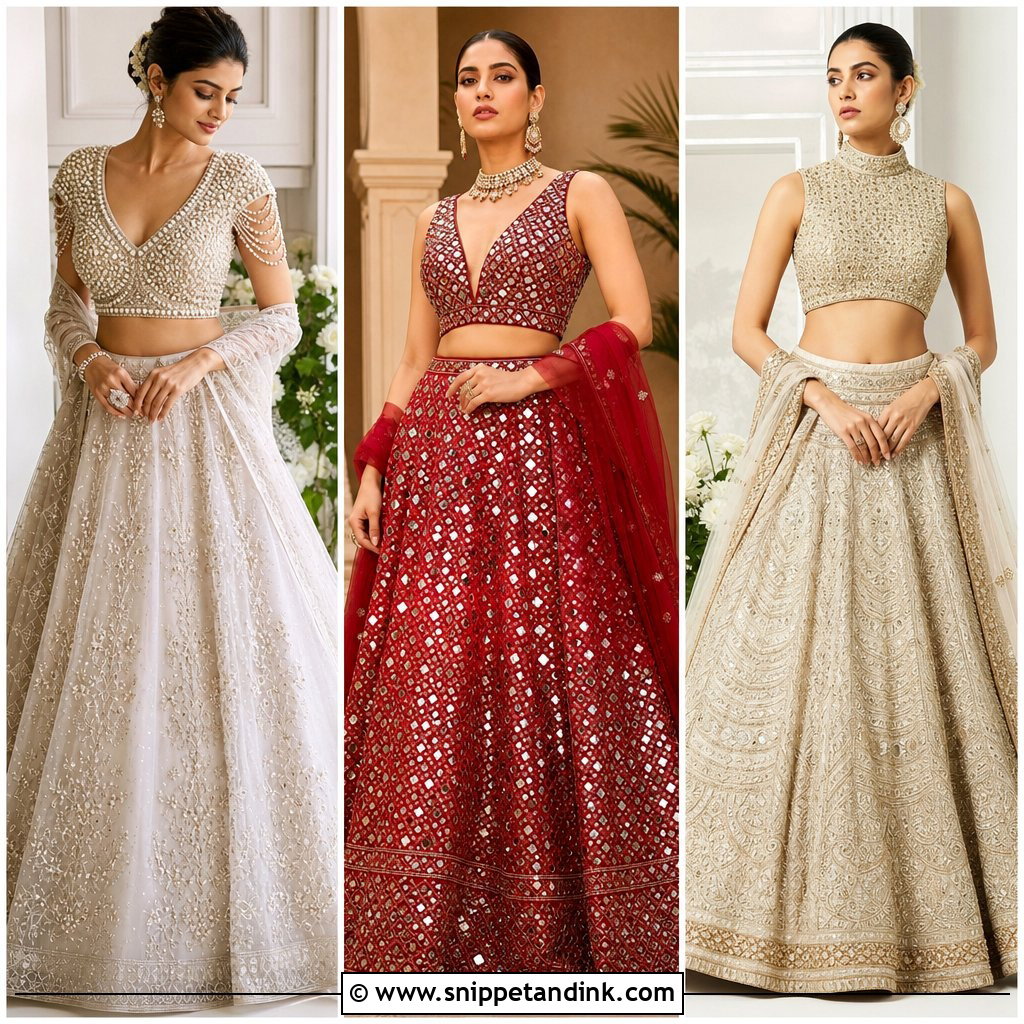
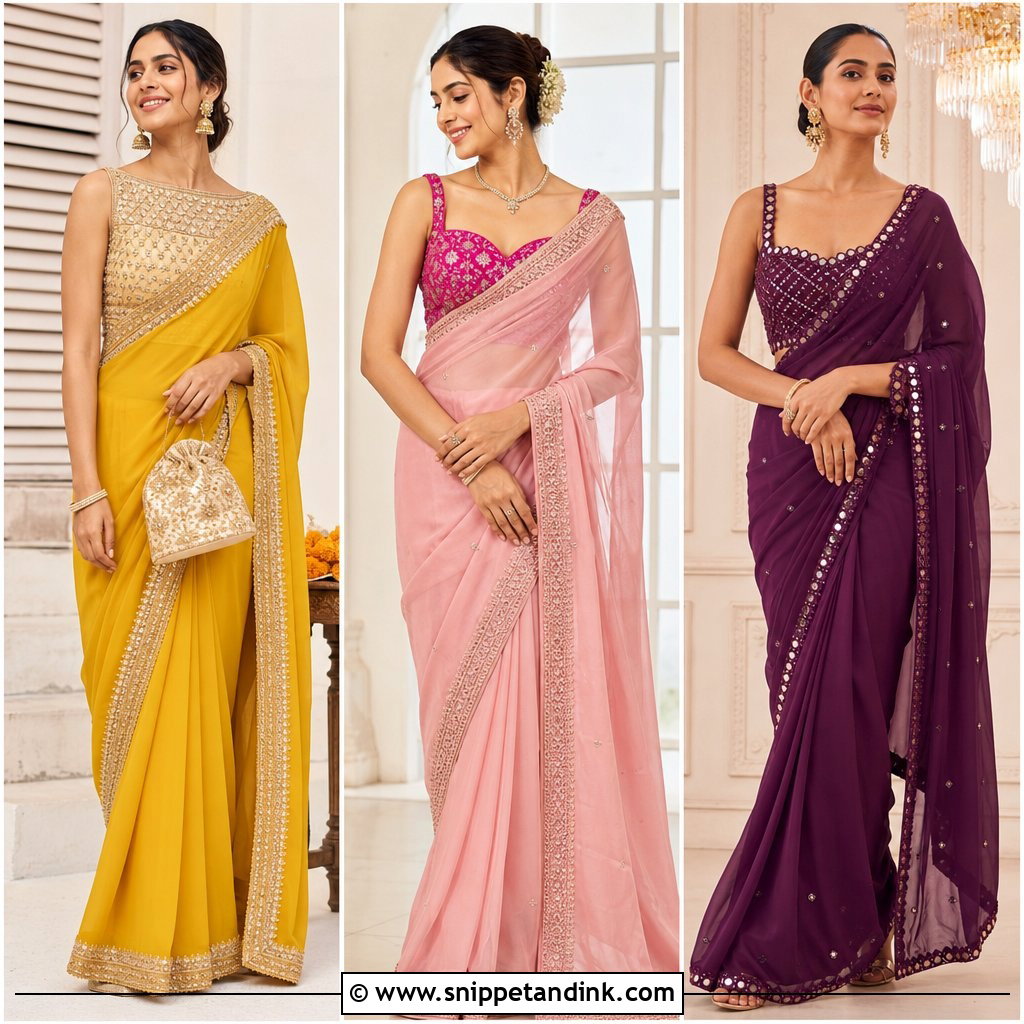
Not every blouse needs dense embroidery. A minimal gold bridal blouse in matte tissue, brocade, raw silk or satin-finish fabric, with fine work along the neckline and sleeves, lets a richly woven saree or worked lehenga speak. The trade-off is that plain gold shows every fitting fault, so clean darts, smooth lining and exact sleeve placement matter more here than anywhere else. Narrow contrast piping adds definition if needed. A red Banarasi, a structured waist belt, layered gold jewelry, a small potli and metallic sandals complete it, and it’s the blouse you’re most likely to wear again at family weddings.
If a Hook Gives Way Halfway Through the Pheras
Back hooks on a bridal blouse take a surprising amount of strain when you sit cross-legged, bend for rituals and get hugged by every aunt. One giving way is common and fixable, as long as someone close by has the right things in her bag.
- Ask the tailor for two spare hooks and eyes, and a small reel of thread matched to the blouse lining.
- Pack a few strong safety pins in gold and silver tones; pinned from the inside, they hold a back opening for hours.
- Have the person helping you dress check every hook after you sit for the first time, when strain shows.
- Keep double-sided fashion tape for a neckline that starts to lift.
After the wedding, air the blouse inside out before storing it, and wrap it in soft cotton, not plastic. Zari and zardosi dull in humid, sealed bags, and the blouse is the piece most worth keeping, since a good tailor can restyle it later with a different saree.
What Your Tailor Should See Before the First Cut
Fabric, neckline, sleeves, embroidery, fit and accessories all decide how a bridal blouse looks in the end. Start by matching it to the weight, color, border and formality of the saree or lehenga, then think about support, coverage, climate, jewelry and how long the ceremonies run. Bring your tailor clear front, back and sleeve references rather than one photograph. If they offer a trial blouse, take it, and test every fitting sitting, walking and with your arms raised. Decoration matters, but I’ve never seen embroidery rescue a blouse that doesn’t fit.
You'll Like These Ideas:





Leave a Reply